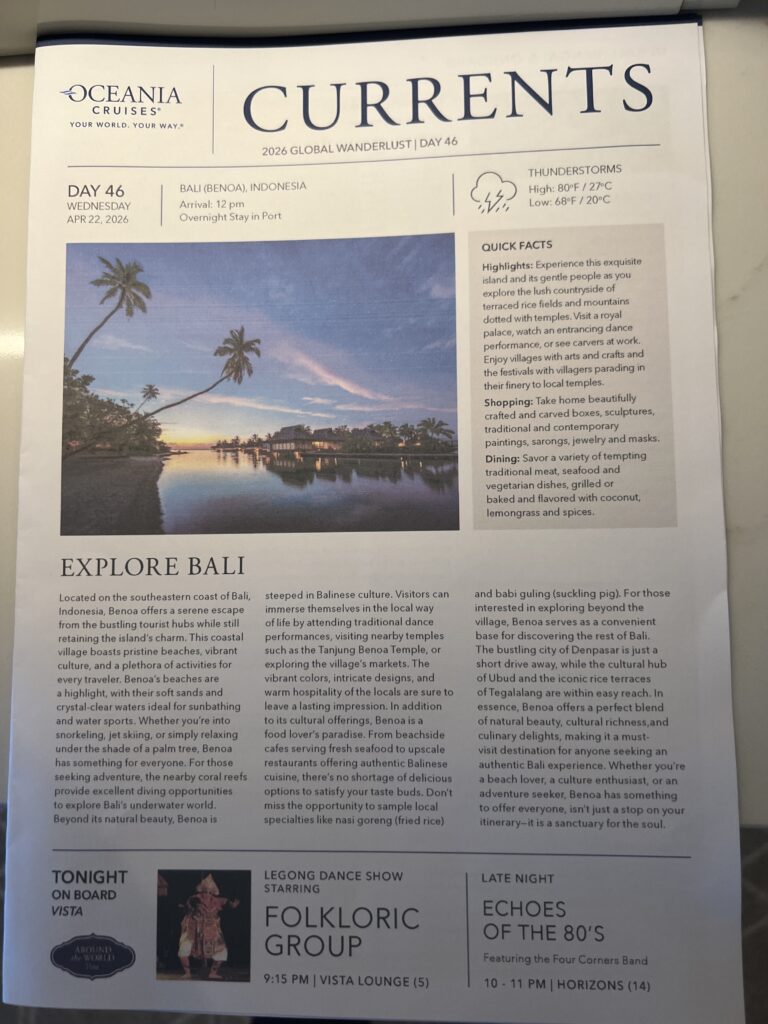
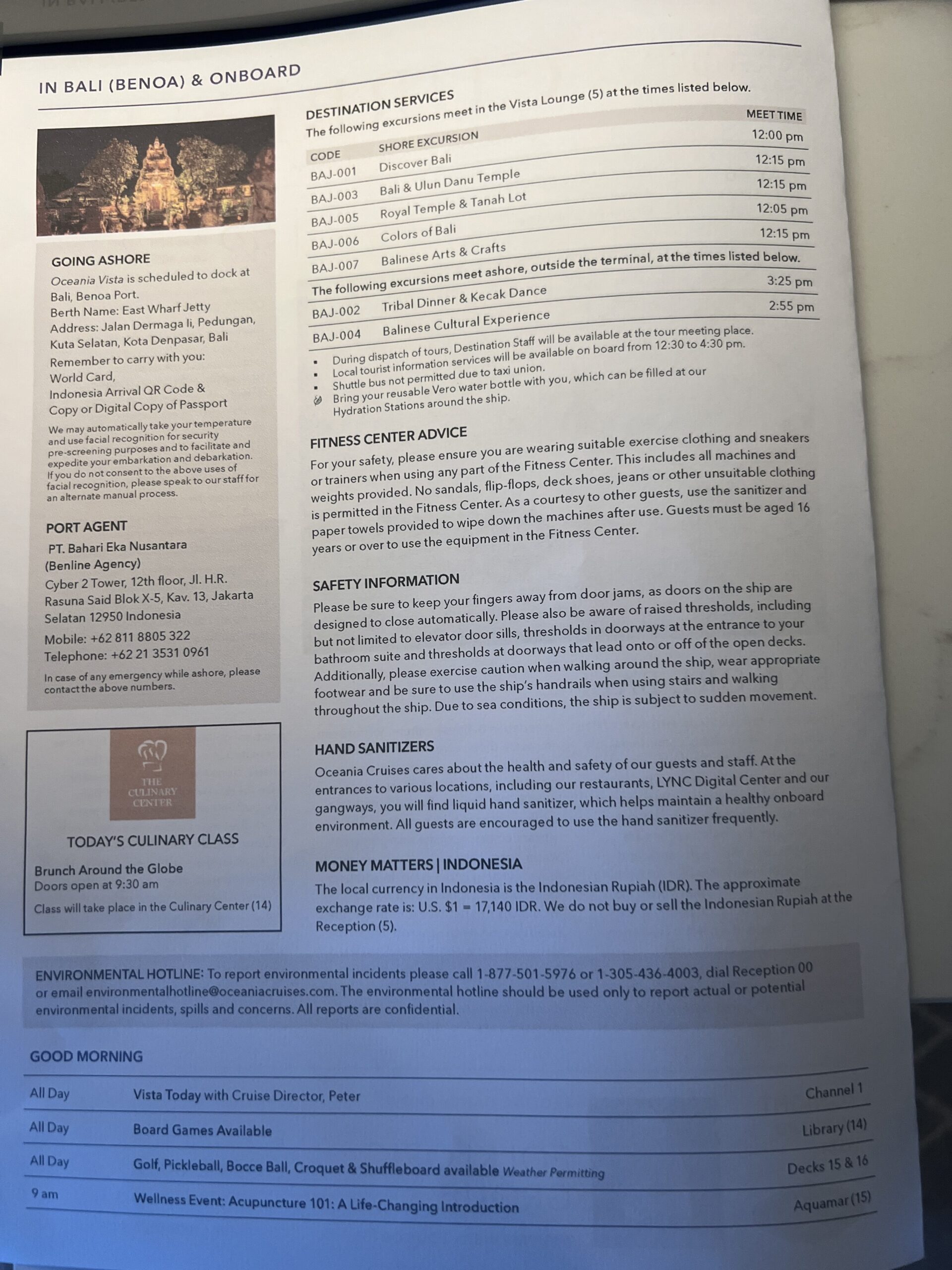
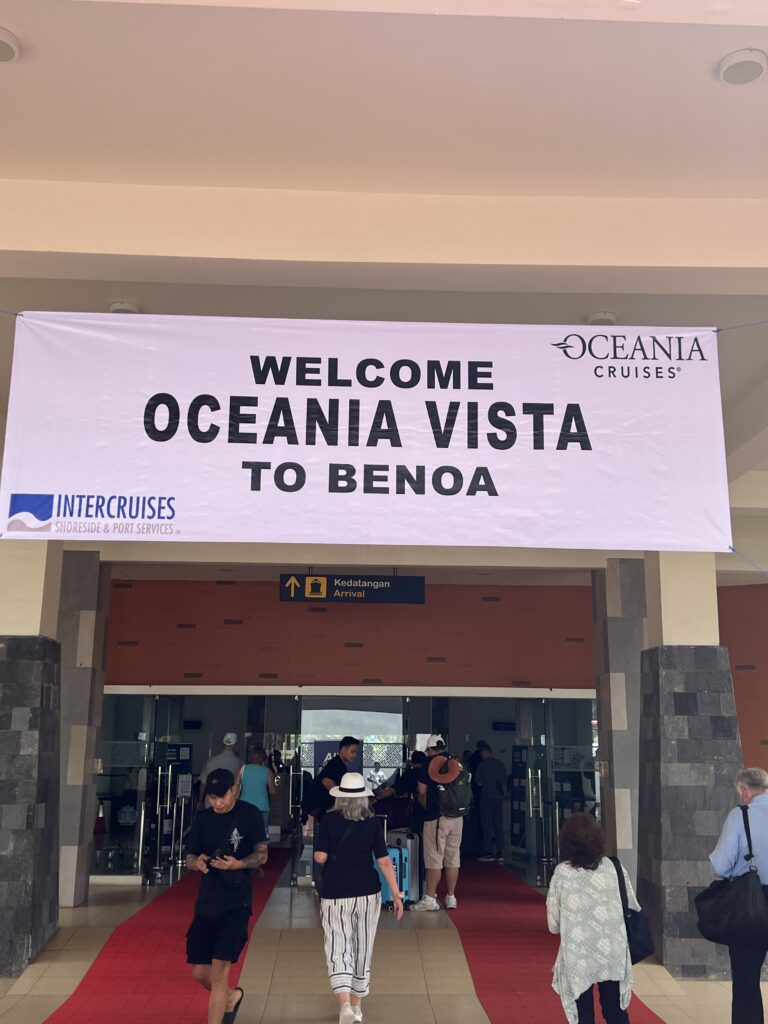
Day 47 Wednesday April 22nd (73 days to go) — We arrived to the cruise port of Benoa, Bali. We had decided a few months ago after viewing videos of BZ Travel that we wanted to use the private guide they had used and had made arrangements with Gede. It turned out to be a great decision as he was outstanding and added to our amazing visit to Bali. We had asked him to bring us to temples and a rice terrace that we had viewed through our YouTube research.
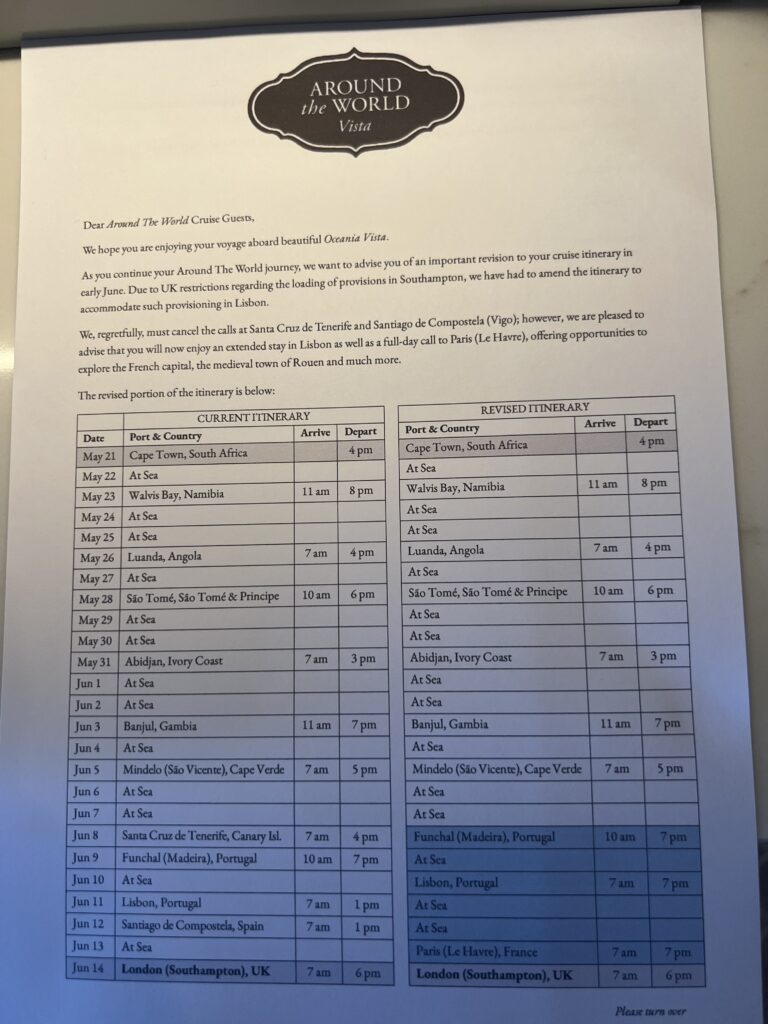
We received this information about an itinerary change. It brings up interesting discussion in the cabin as we love to perform our own itinerary deviations when we get the opportunity. We have time to think about a possible jump off the ship in Lisbon to explore a new place in Europe for a few days. More to come on this decision over the next few weeks.


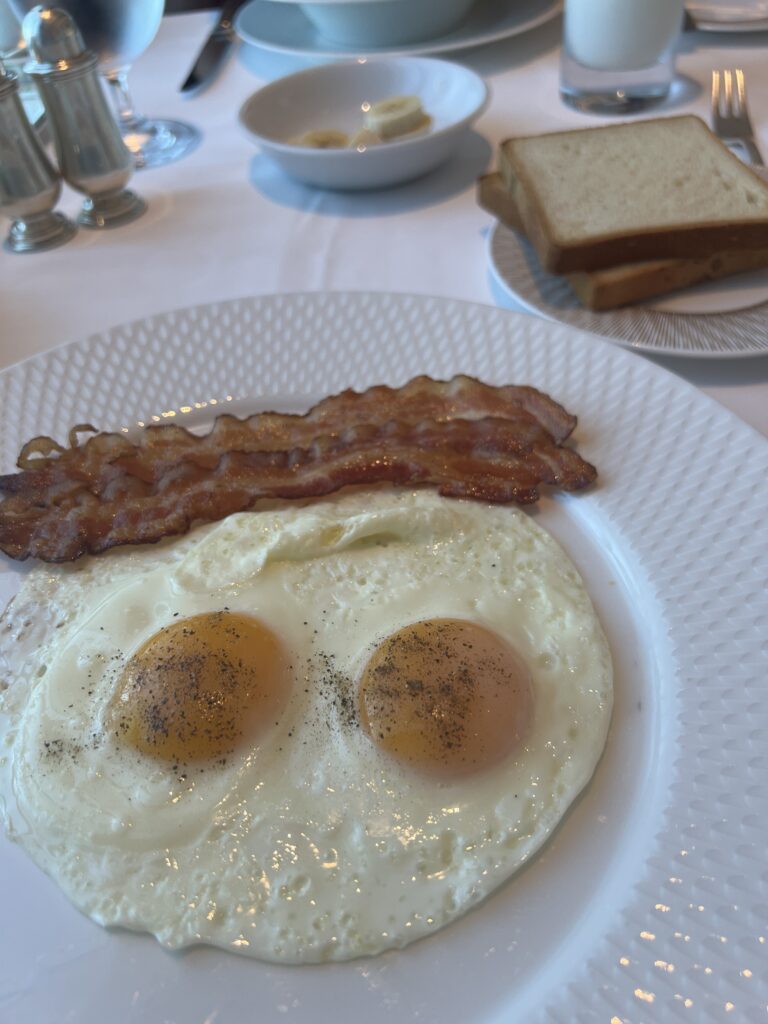
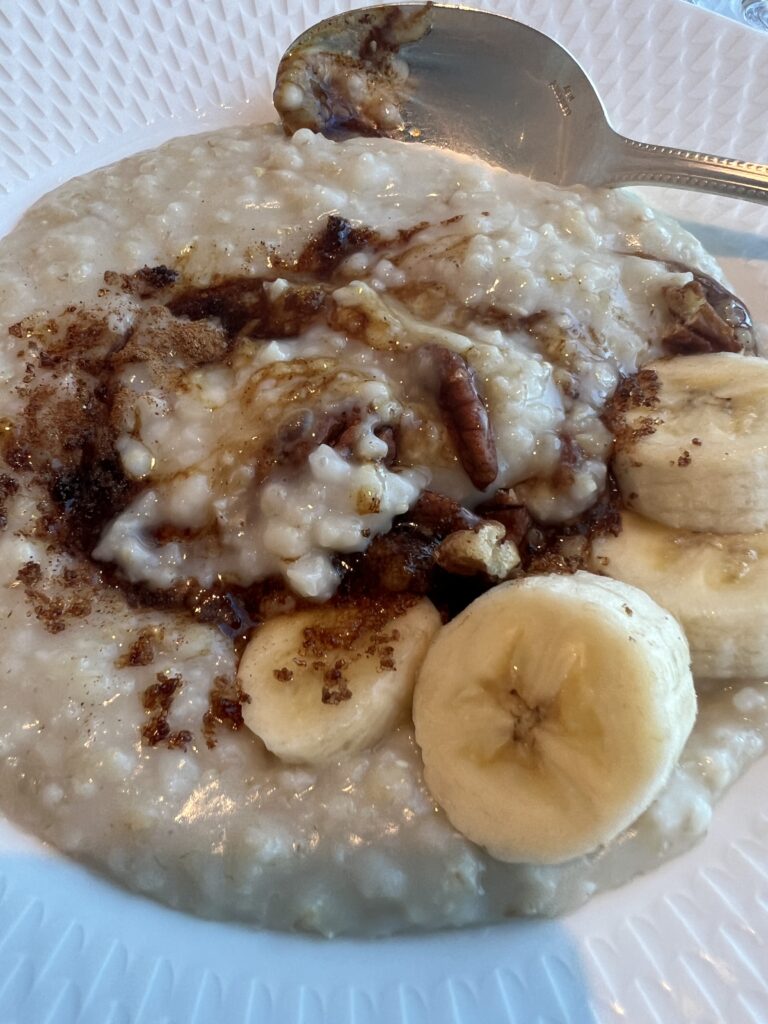
We ate breakfast in The Grand Dining Room and I changed it up a little today going with fried eggs and toast rather than oatmeal, but Jackie took my place and ordered the oatmeal.
Arriving into Benoa, Bali. I hope the video works on the page
A band greeted us on the dock as we disembarked off the ship.
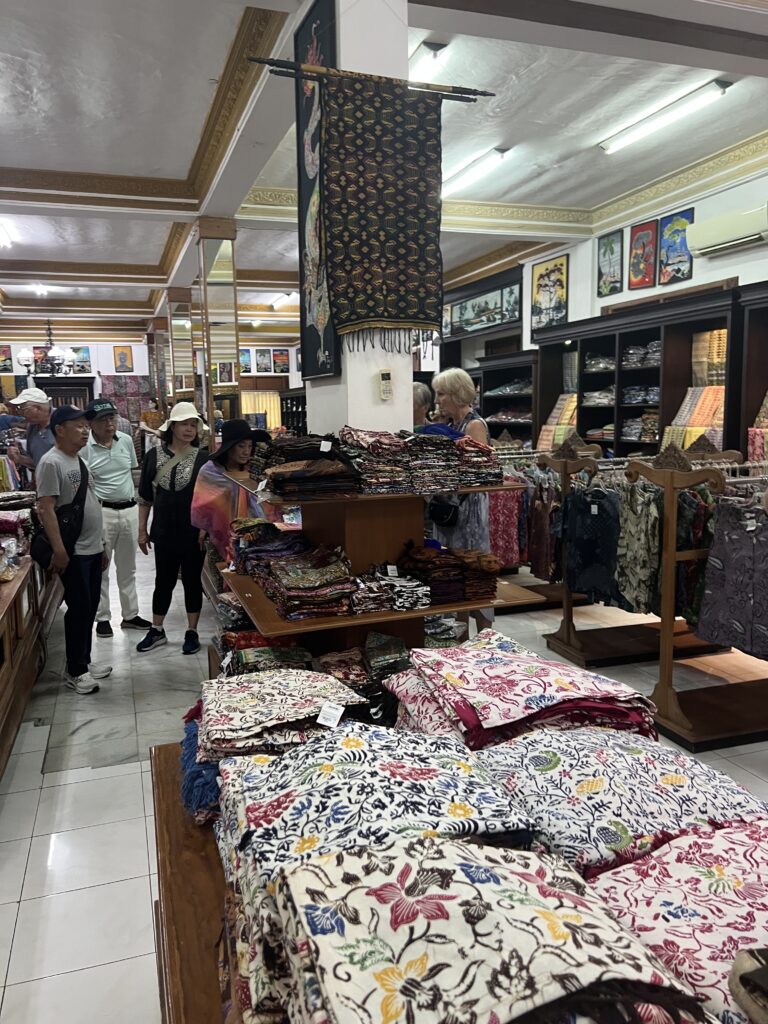
Our first stop was to a batik manufacturer
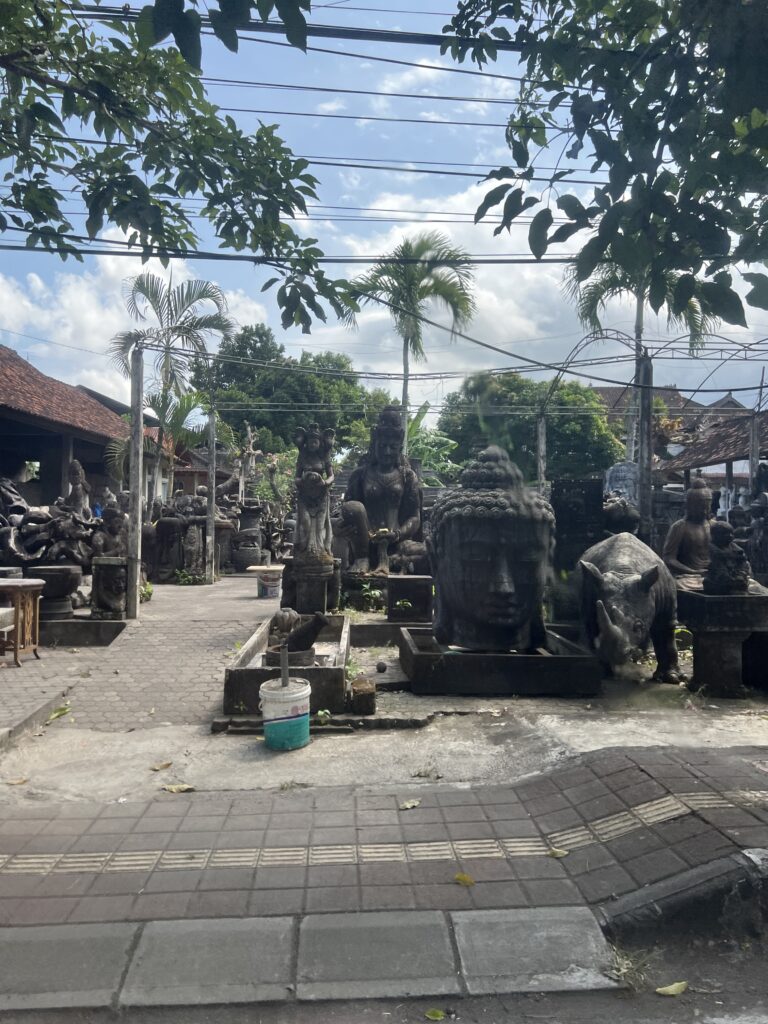
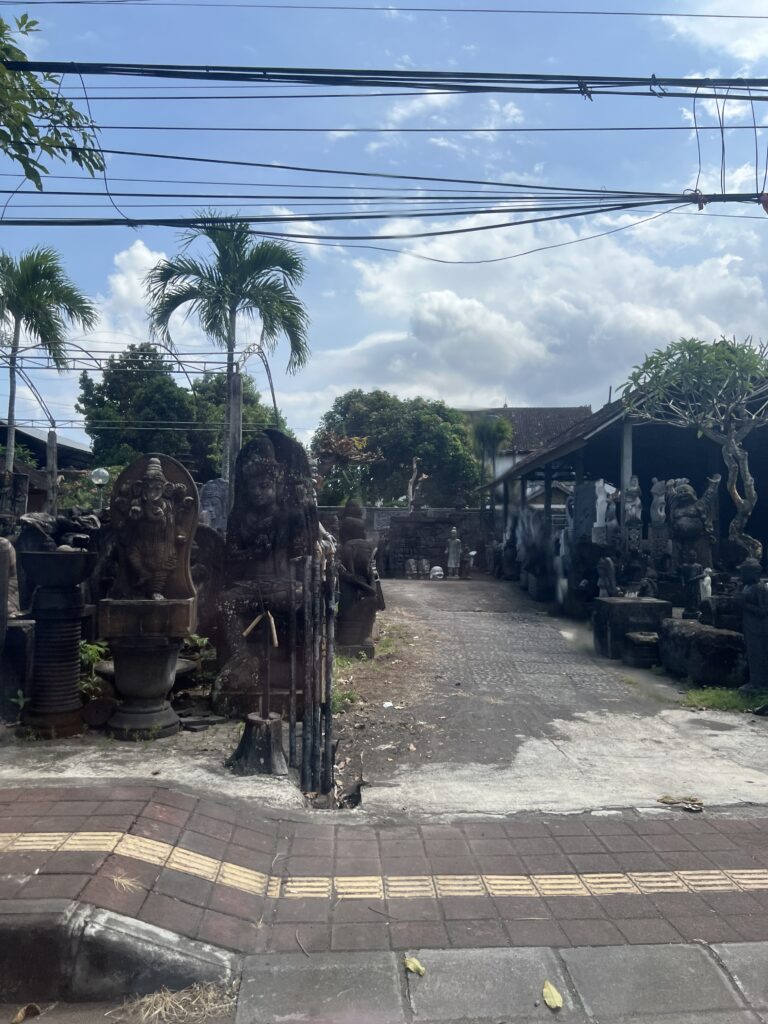
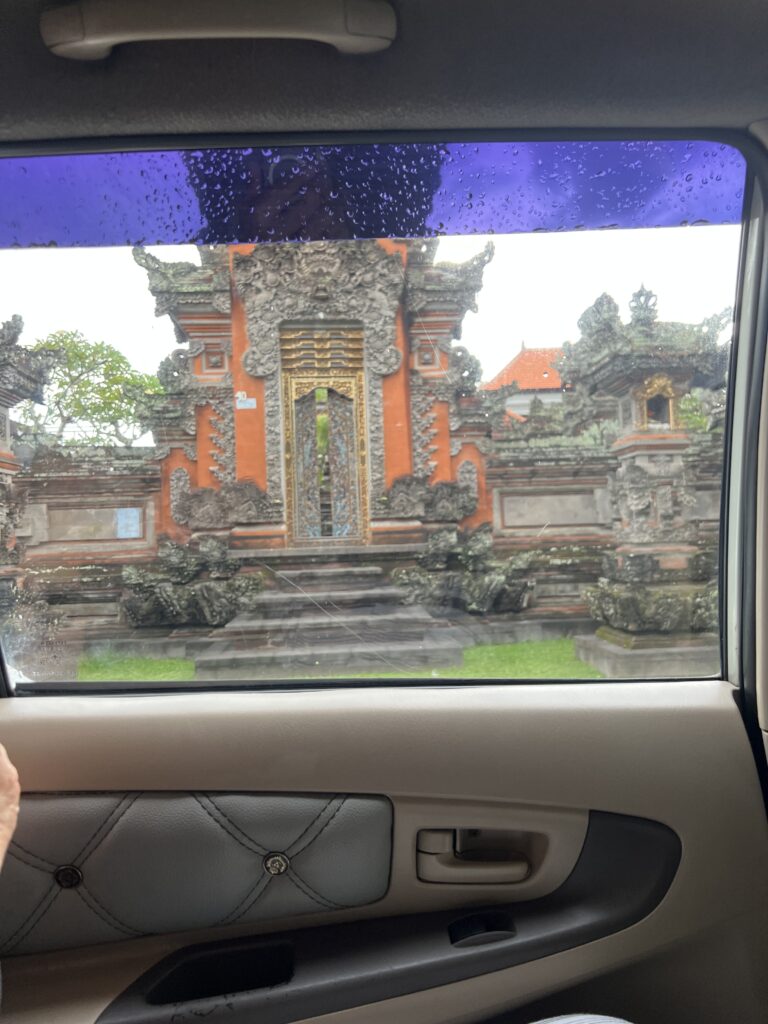
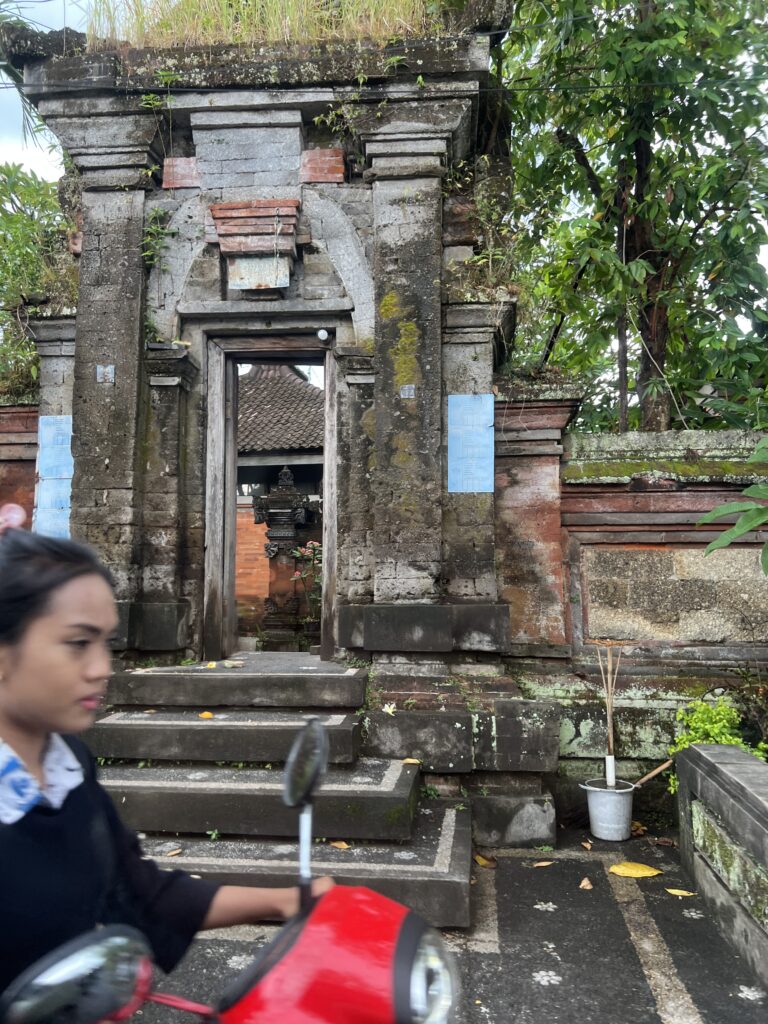
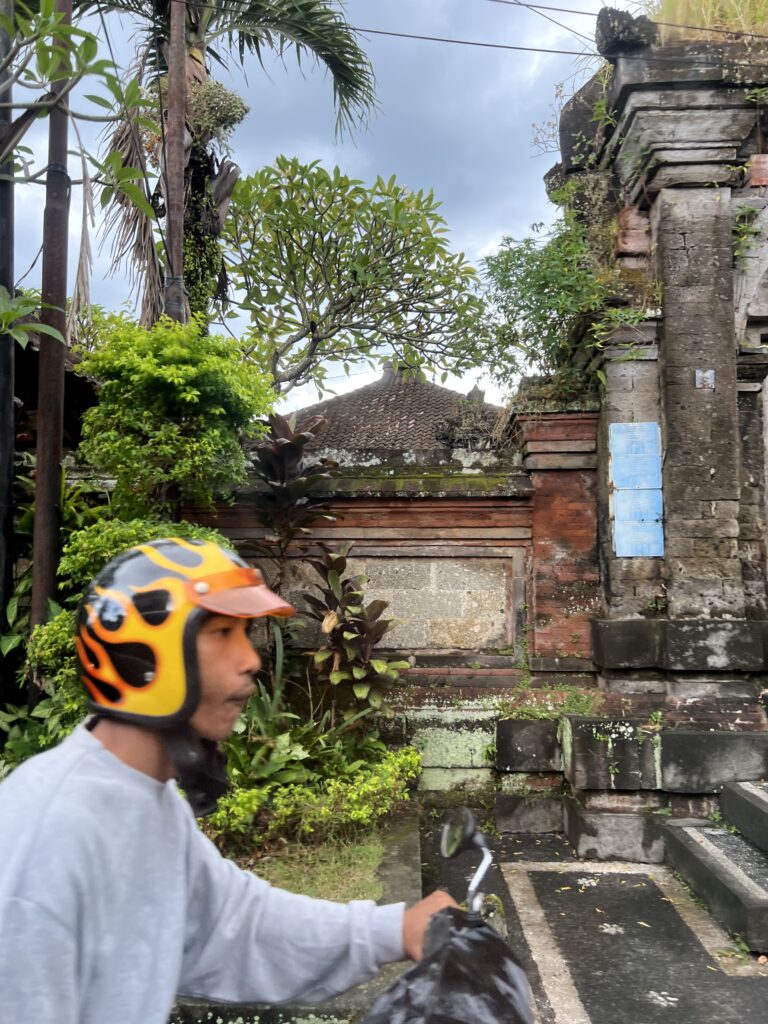
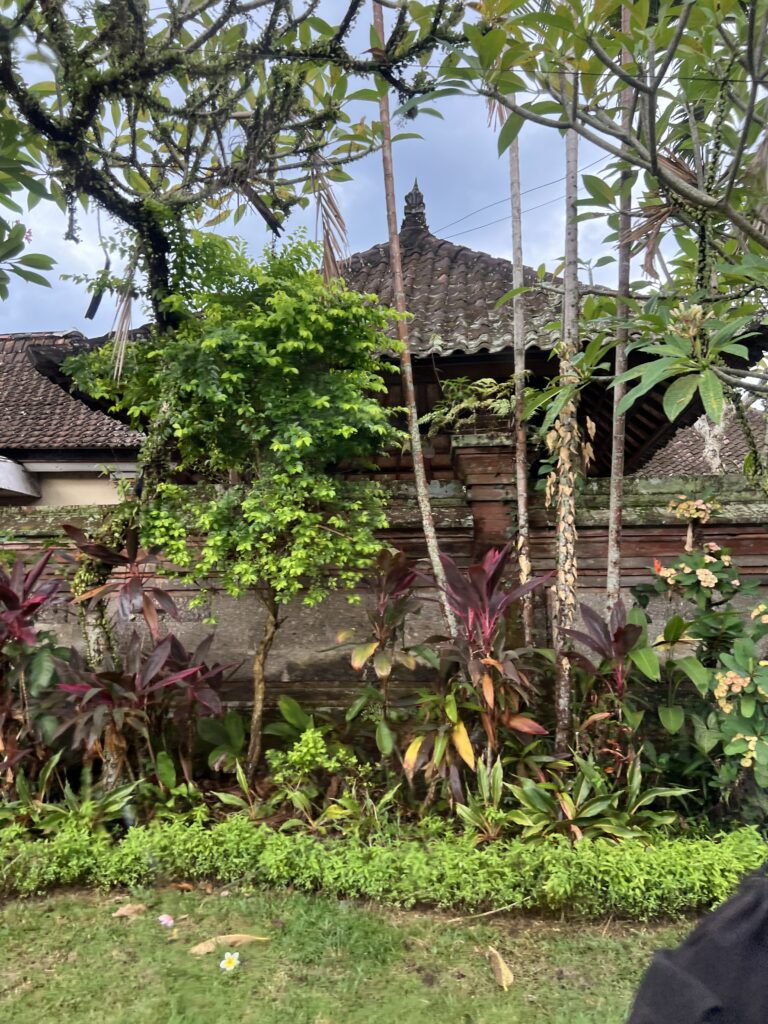
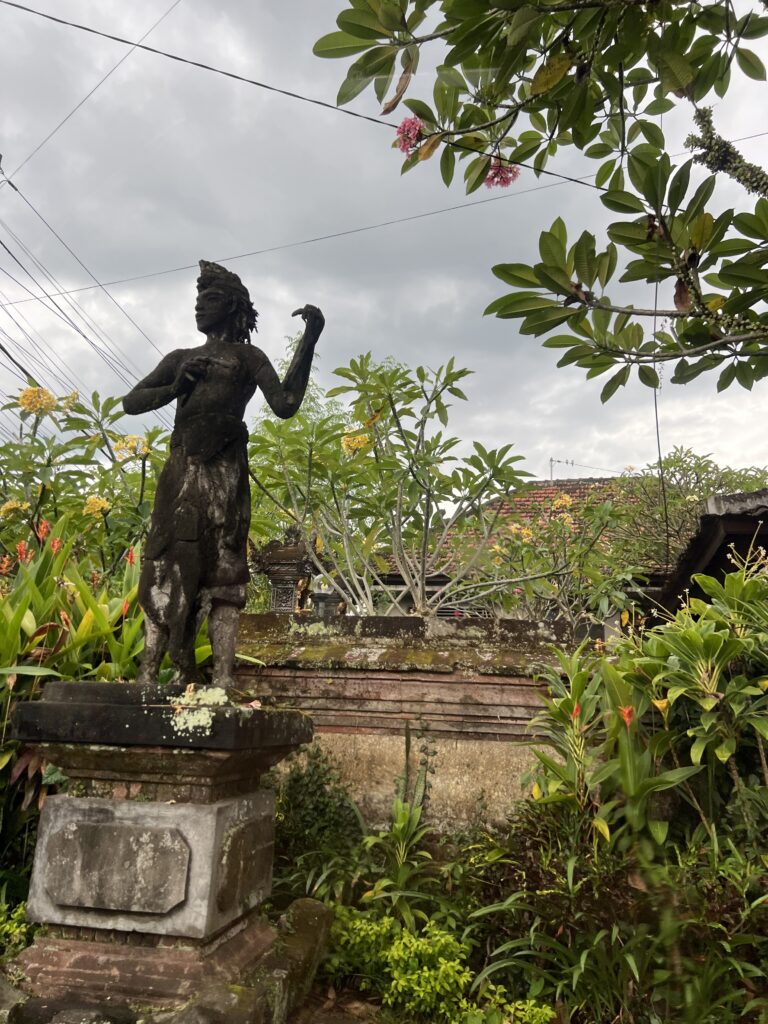
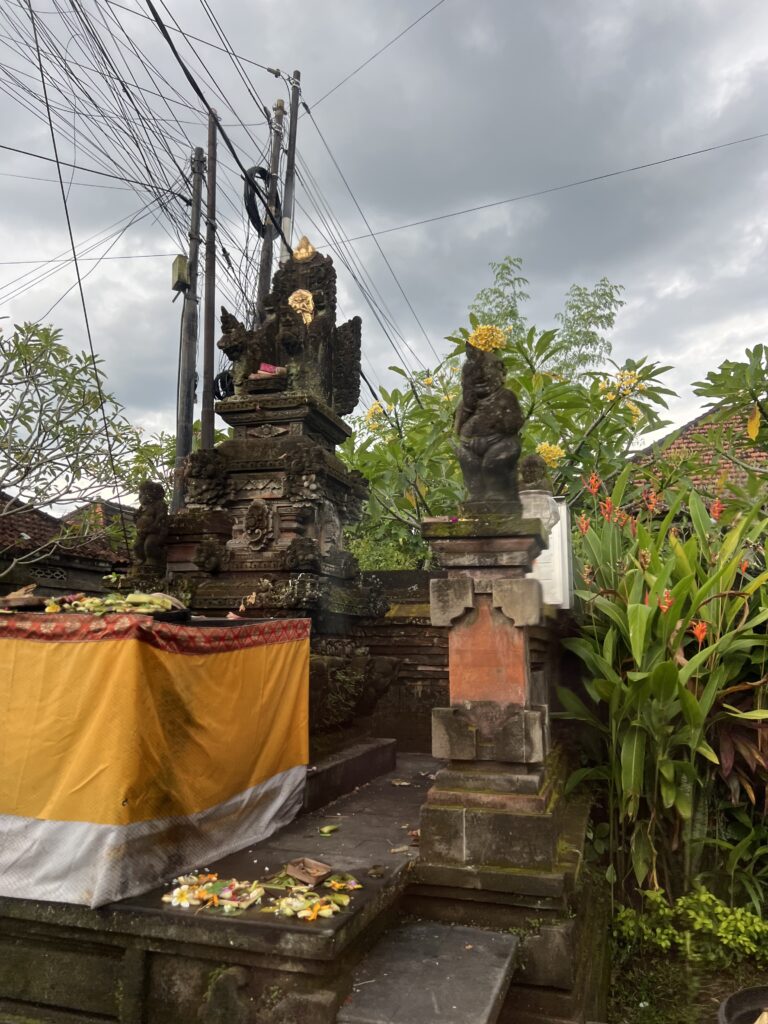
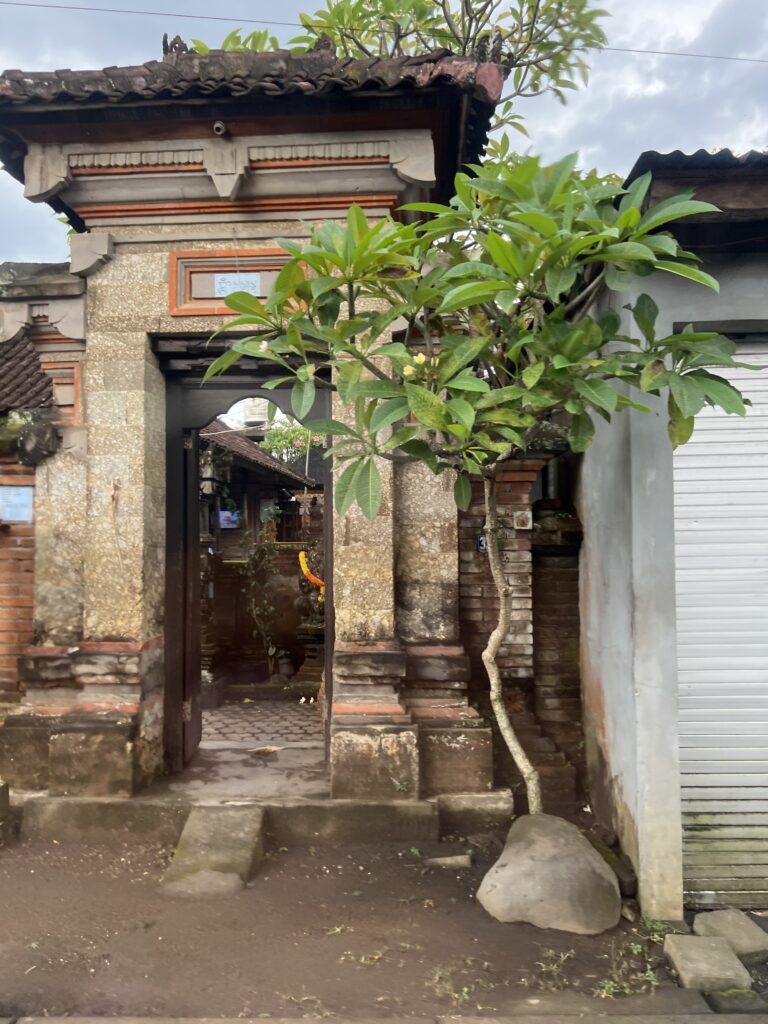
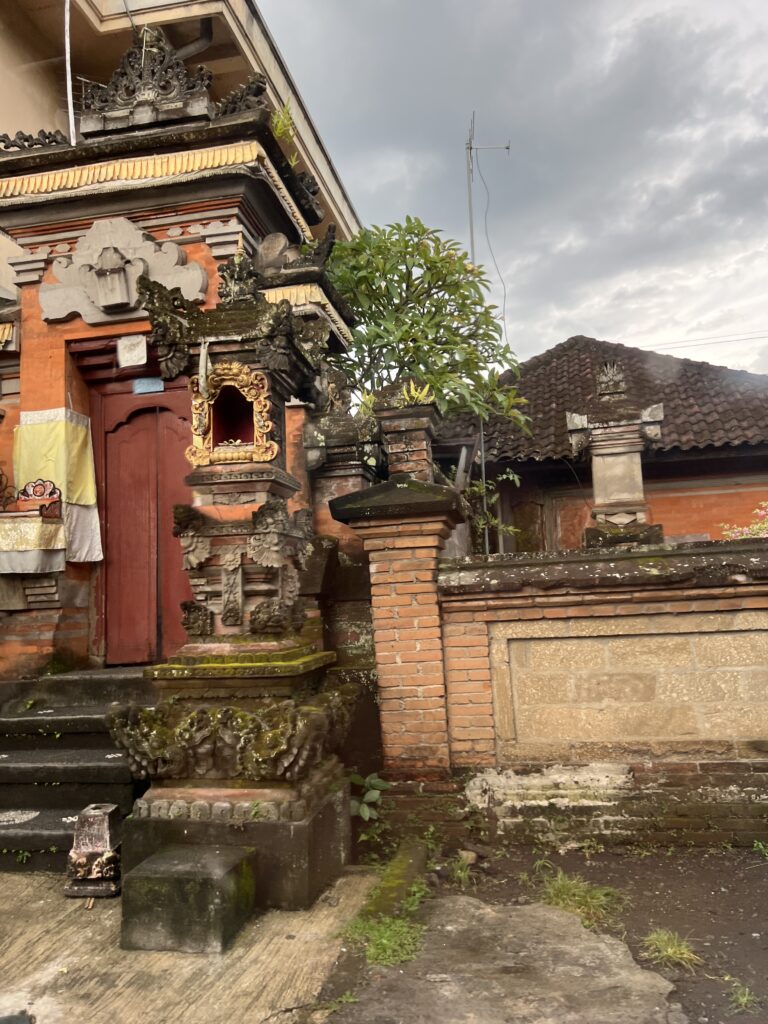
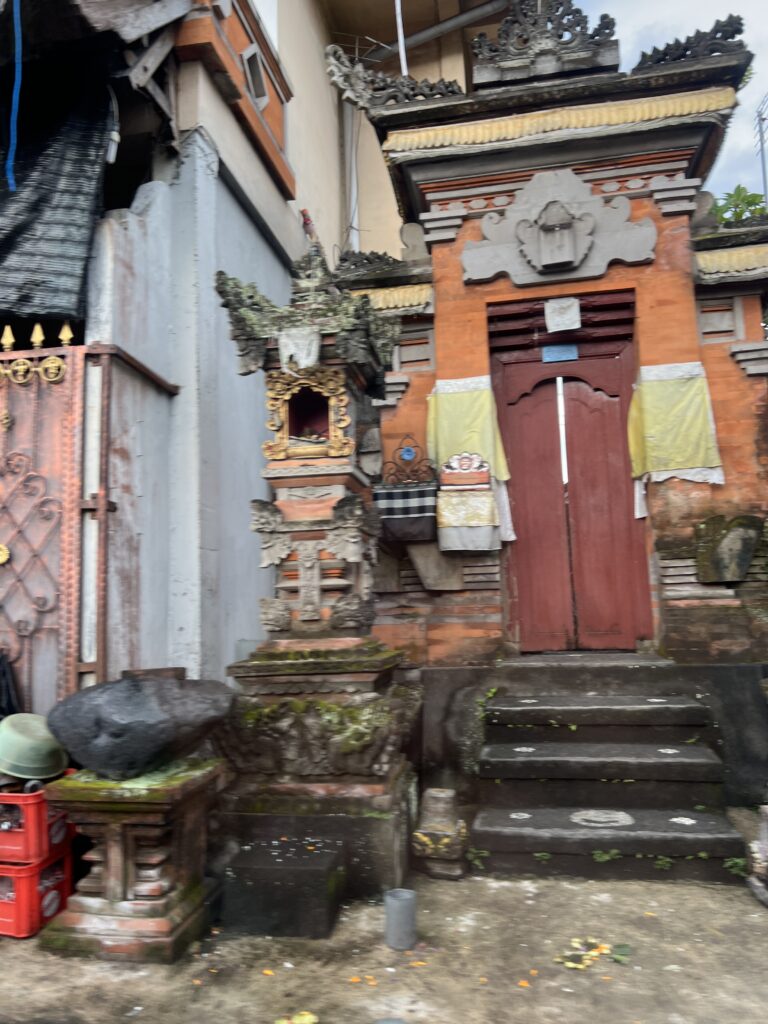
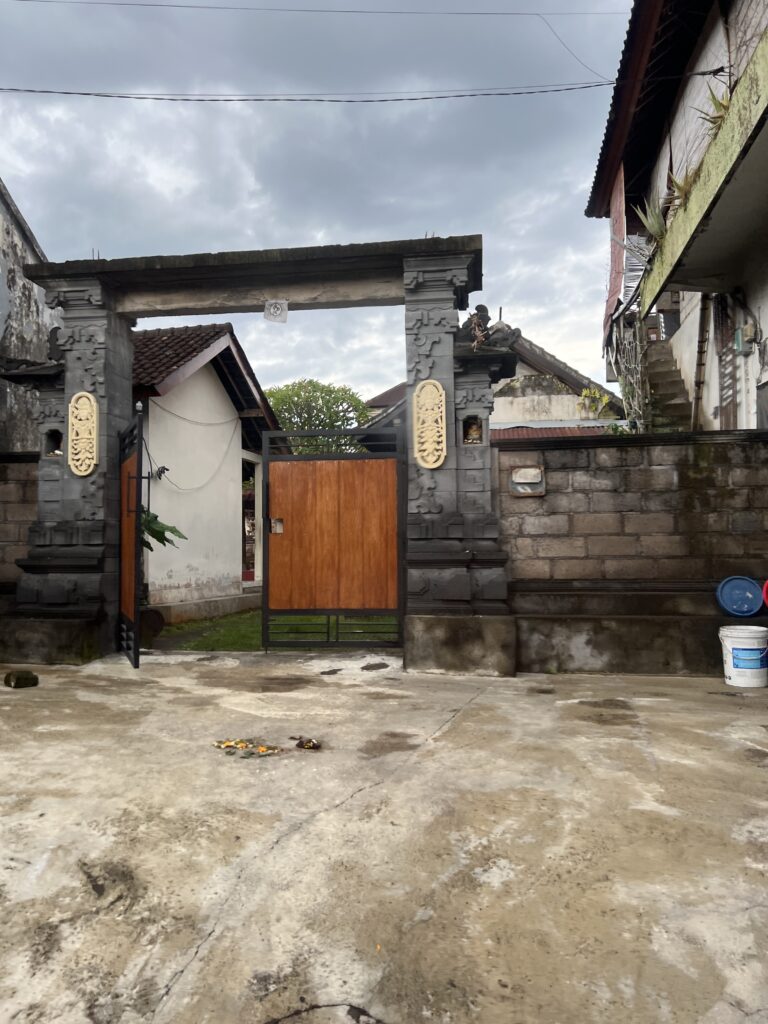
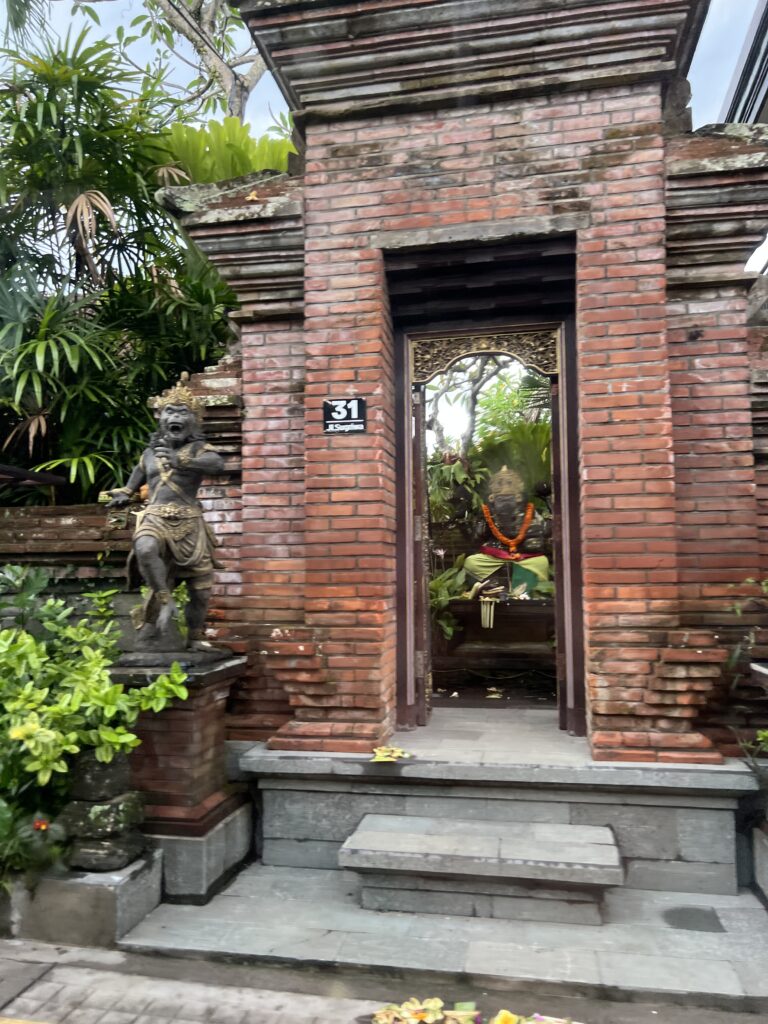
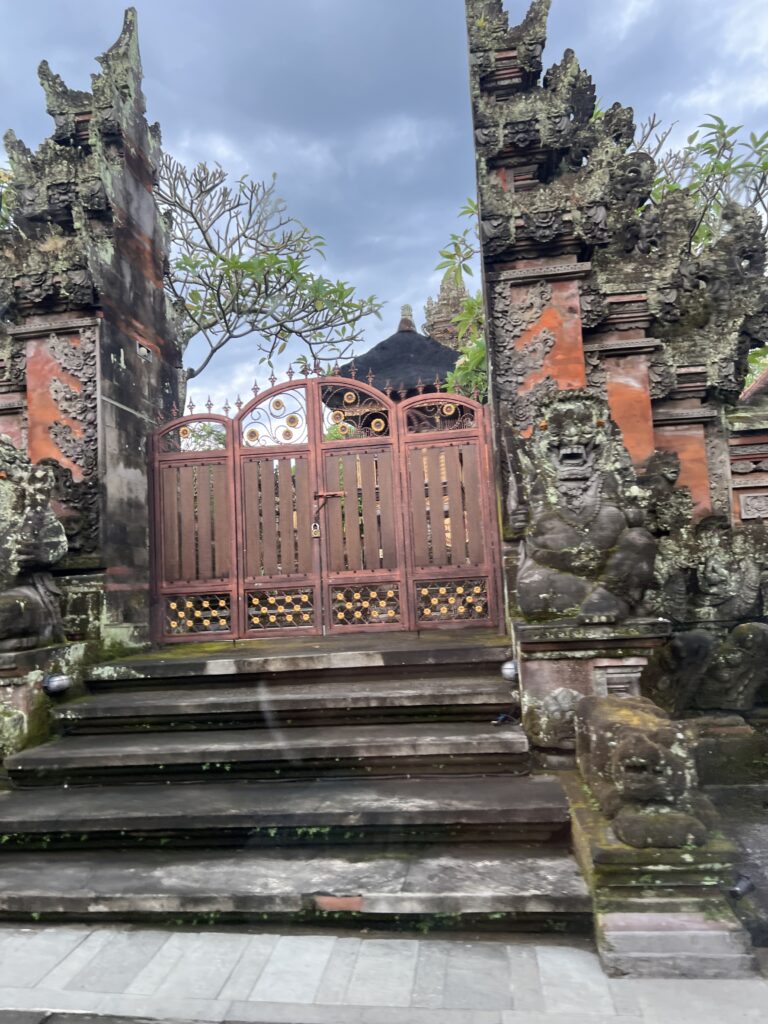
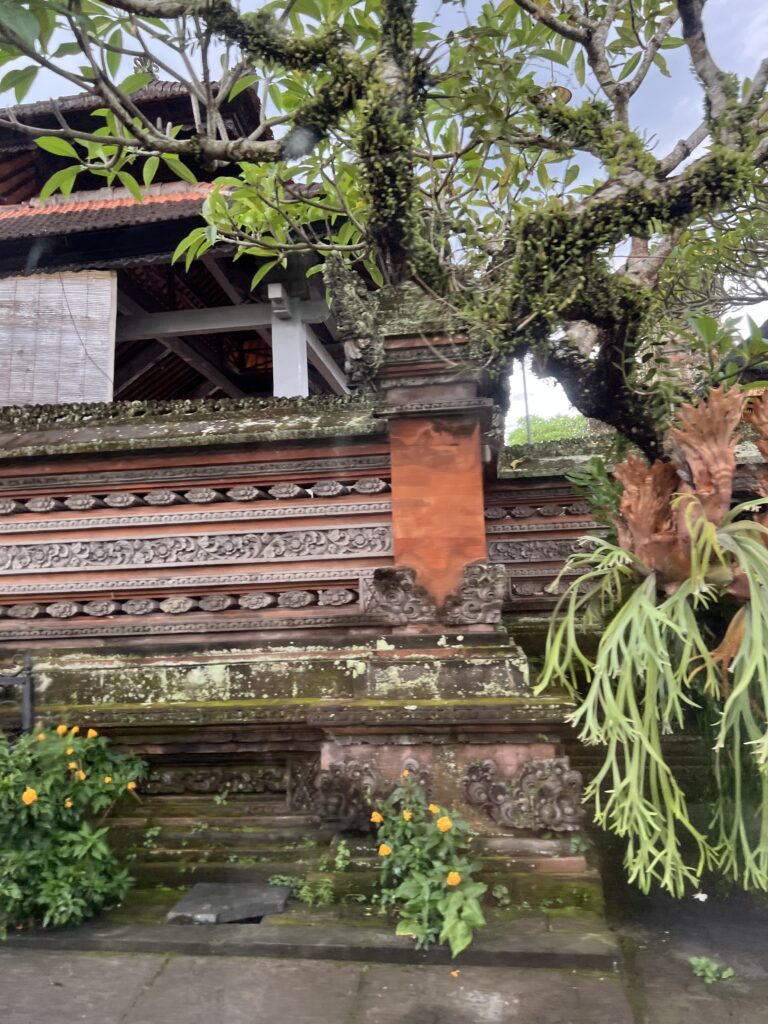
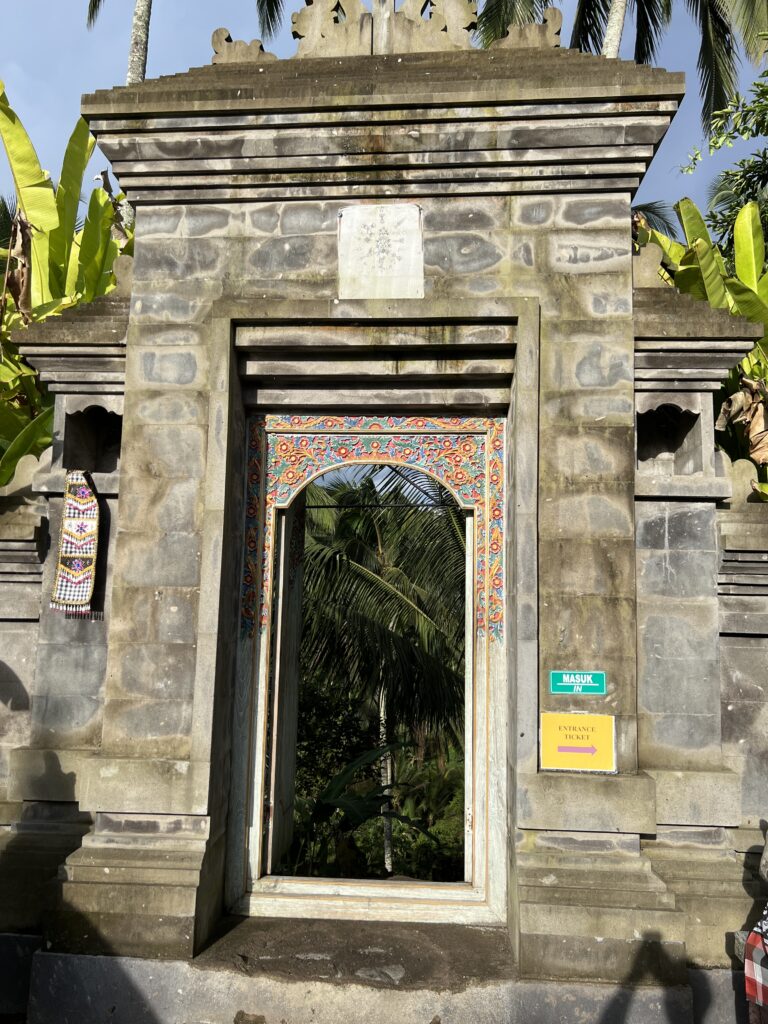
As we drove along the road we saw many of these buildings which are actually the fronts of compounds. The compounds are quite large and move from the street going back a long distance.
A traditional Balinese family compound, or kuren, is a walled community of multiple, separate open-air pavilions harboring several generations. These compounds, often found around cultural hubs like Ubud, are designed for harmony with nature and spirituality, typically featuring a shared courtyard, a family shrine in the northeast corner, and a central pavilion for ceremonies.
Key Features of Traditional Compounds
- Structure: Compounds often feature structures built with natural materials like bamboo, sandstone, and thatch.
- Layout: Based on Asta Kosala-Kosali (traditional spatial philosophy), the layout often includes a family temple (northeast), parent bedrooms (west), and a kitchen/social area (south).
- Social Structure: 3–4 generations may live under one roof, often governed by a family matriarch or patriarch.
- Cultural Significance: The compound acts as a sacred space where deceased family members are briefly placed in a central pavilion to allow the soul to journey to the family shrine.
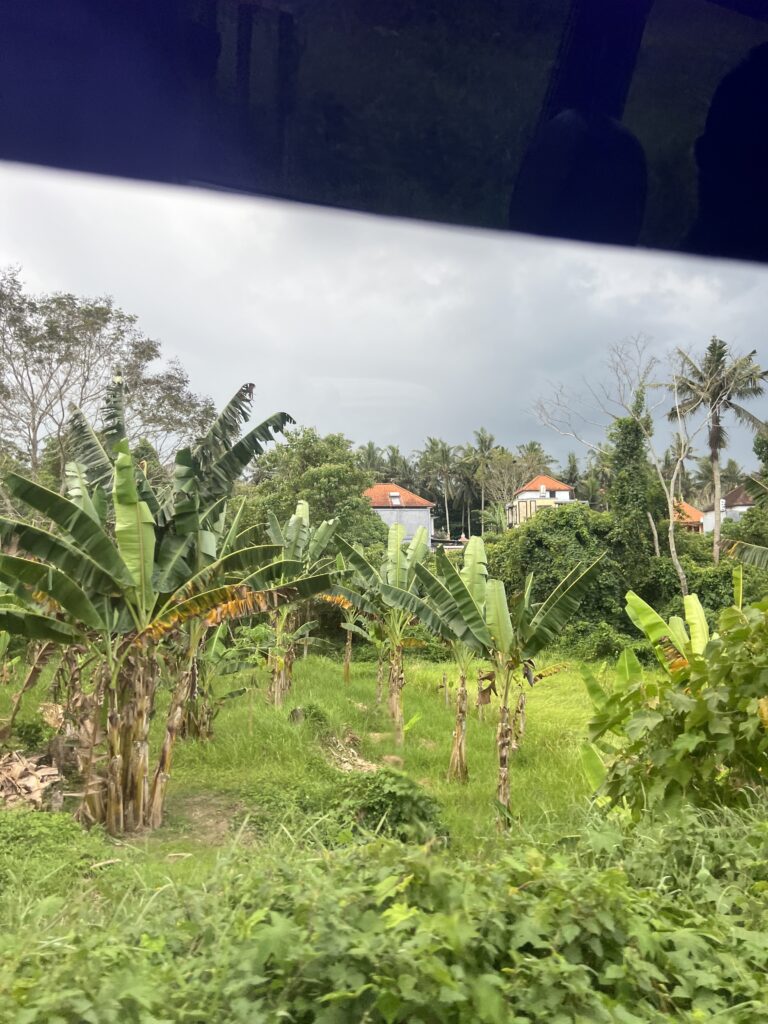
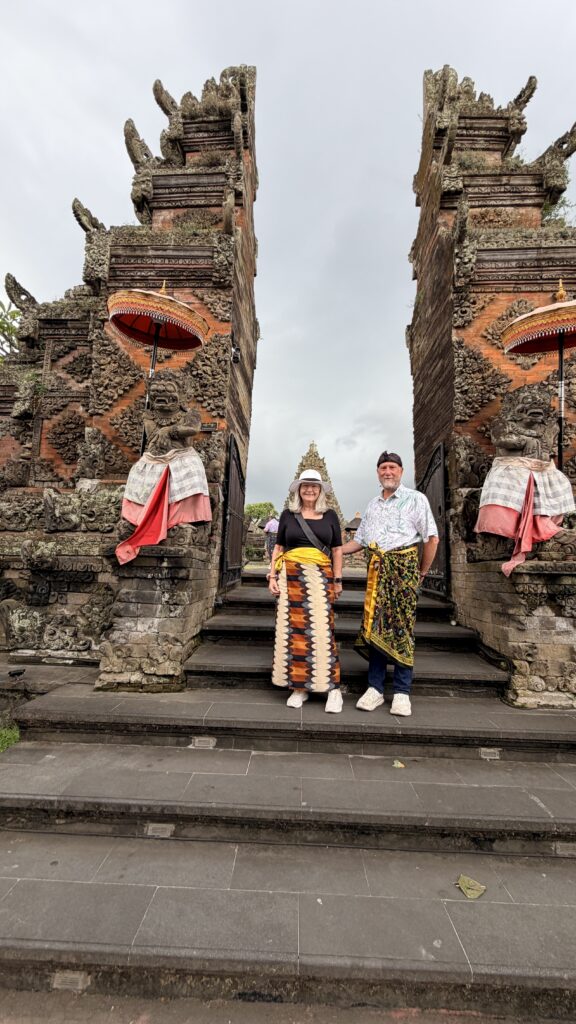
Our second stop was at the Batuan Temple. Unfortunately, not long after our arrival the heavy rains hit as you will see in the last couple of videos.
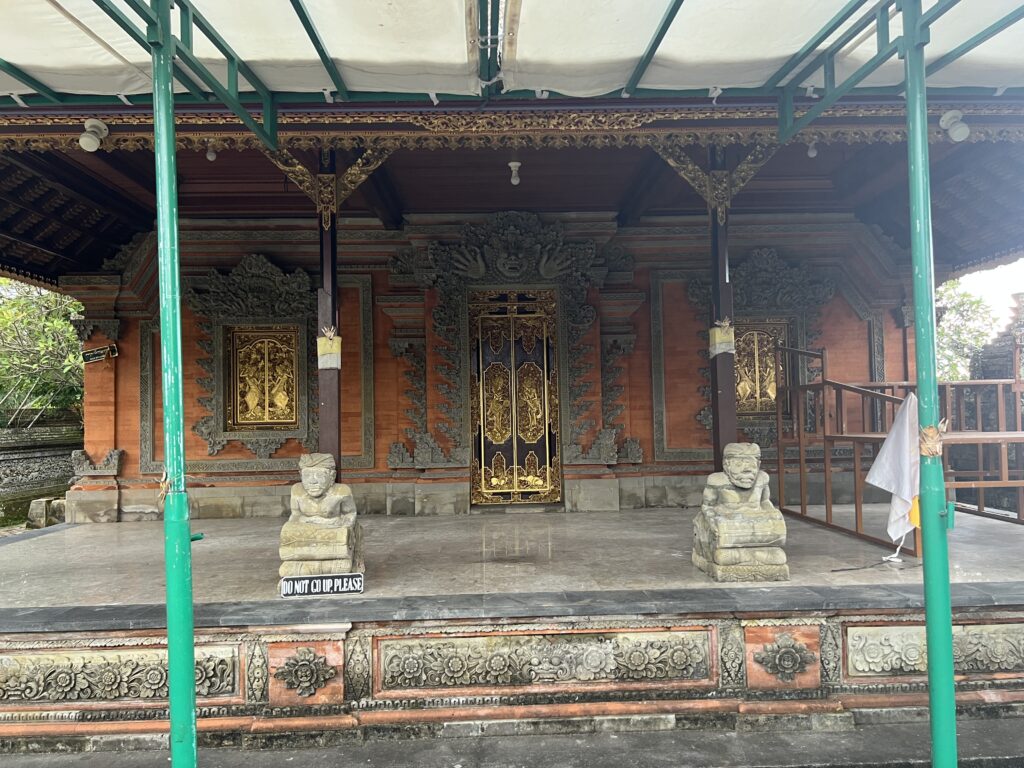
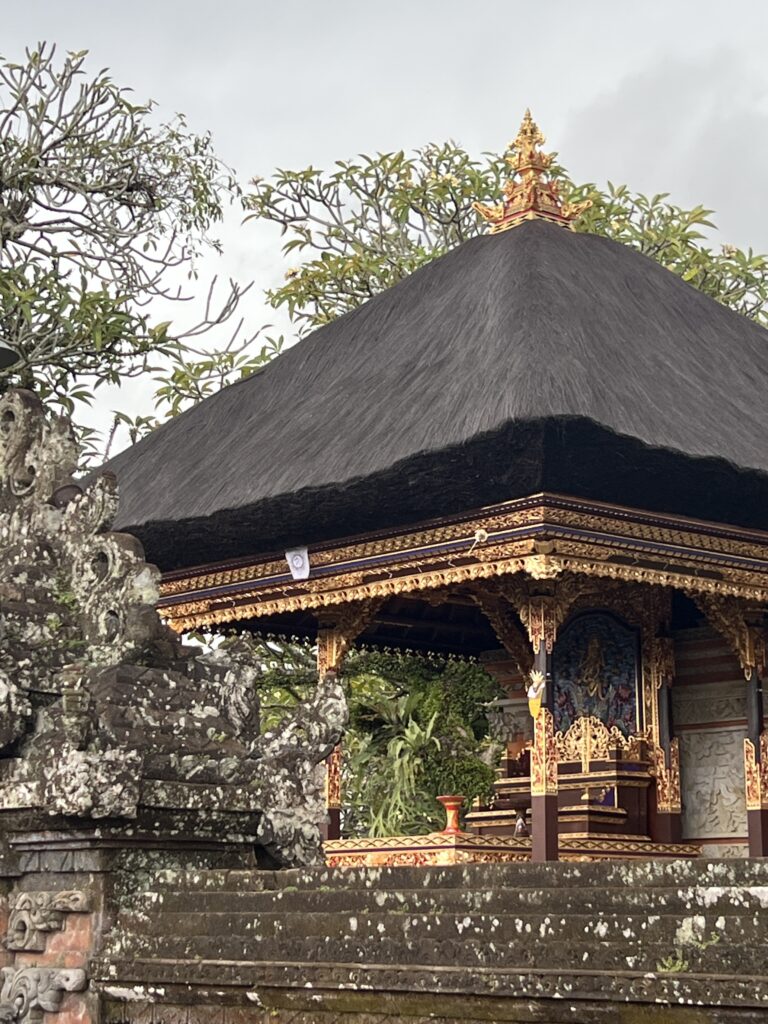
Batuan Temple or also known as Puseh Batuan Temple is a local Balinese Hindu temple looked after by the local resident of Batuan countryside. The temple is designed very beautiful with full of Balinese ornaments and the roof temple building is made from the fiber of chromatic black palm tree. It is strategically located beside of the main road from Denpasar to Ubud. For over a thousand years, Batuan has been a village of artists and craftsmen, old legends and mysterious tales. Batuan Temple has always been a tourist destination that is often visited because its location is very strategic where on the road to Ubud, many tourists stop at this Batuan temple to see the beauty and beauty of this Batuan temple, with complete facilities making this Batuan temple one of the best. temples that are often visited and are also often included in the tour program when visiting Ubud Village.
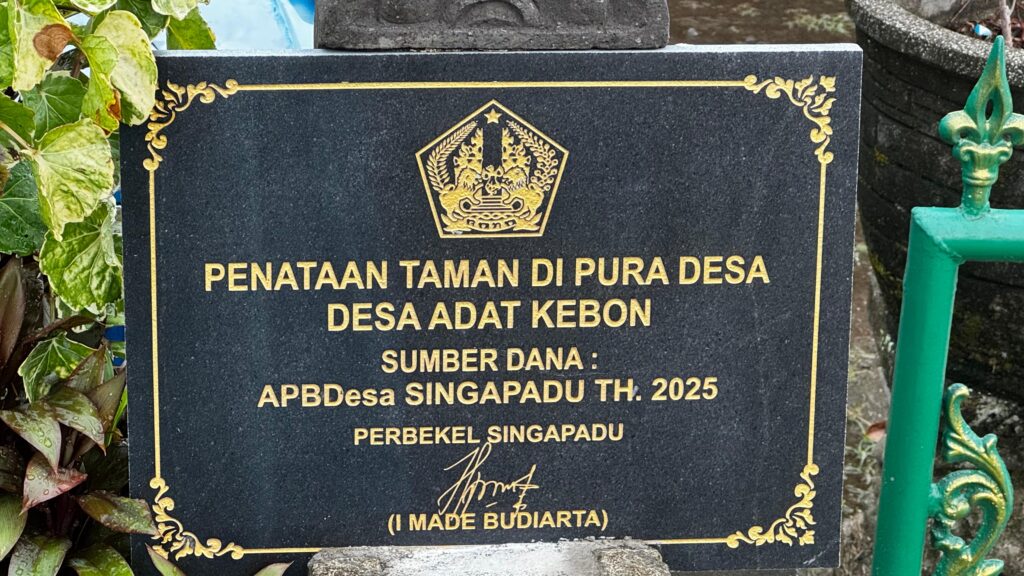
Batuan Temple History
Batuan Temple were founded in the year 944 isaka (1020 AD). Nearly 1000 years old. The Batuan Temple is a Puseh Temple category based on the concept of “Tri Kahyangan or Tri Murti” the concept of Pakraman Village, including the Tri Kahyangan Temple, was initiated and initiated by Mpu Kuturan who came to the island of Bali in 1001 AD. His goal is to unite the sects and community groups in Bali to worship God in his manifestation as Lord Brahma, Vishnu, and Shiva (Tri Murti Tatwa). Like this Batuan temple which is also a temple that is part of Tri Hita Kahyangan where this Batuan temple refers to the Puseh Temple which is in the batuan village, and is guarded, preserved by the local community in this batuan village.
As for the concept of Tri Kahyangan or Tri Murti including 3 temples
- Desa or Village Temple as a place to worship of God Brahma (the Creator)
- Puseh Temple to worship of God Vishnu (the Preserver)
- Dalem Temple to worship of Lord Shiva (the Destroyer)
If we look at the arrival of MPU Kuturan in Bali in 1001, of course it takes a process to spark religious concepts such as understanding Tri Murti and Pura Kahyangan Tiga. Parum-paruman (meetings) were also held which brought together leaders of groups, groups, and sects so that in the end the sects of Balinese society were united and united. The meeting place is now known as Samuan Tiga Temple. The location is in Blahbatuh, close to the tourism center of Ubud, Gianyar
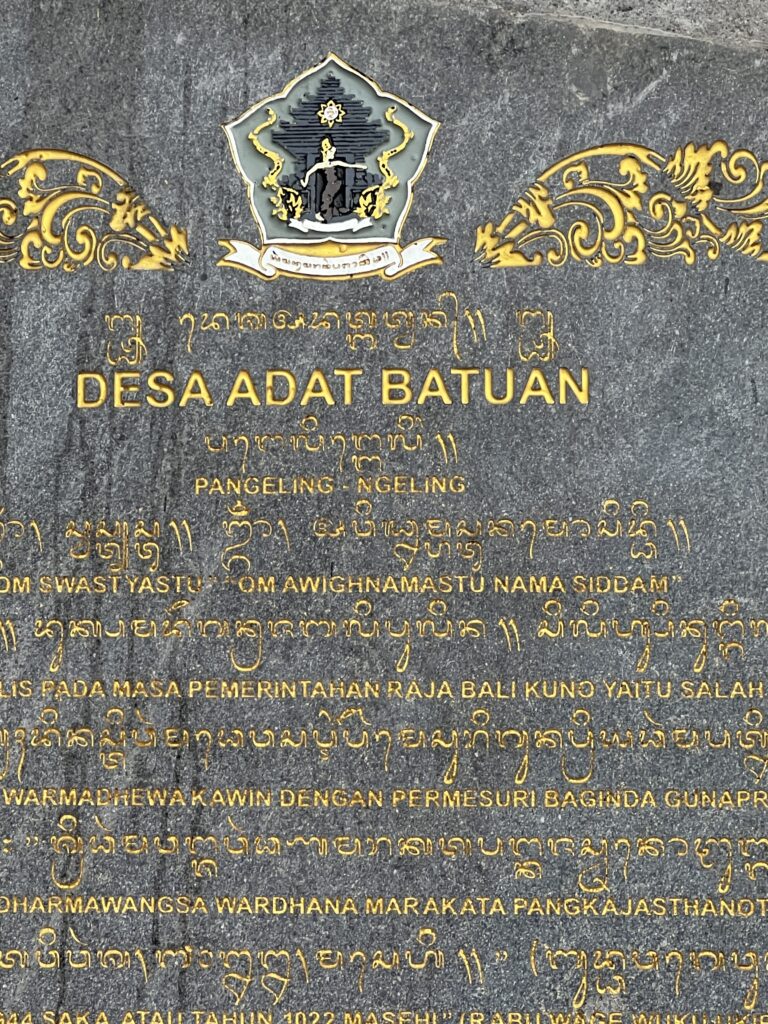
Meaning Name of Batuan
The name “Batuan” or “Baturan” mentioned here prompts villagers to joke about being “tough as stone” or “eating rocks” as batu means “stone” in Balinese. But it likely refers to an ancient megalithic tradition in which standing stones served as meeting places and ceremonial sites for the worship of ancestral spirits. Because Batuan became a center from which Buddhist priests and brahmans spread to the main court centers of south Bali, the village has an unusual preponderance of brahman. Local people are very concern about the care and preservation of the temple architecture and its environment. Not all existing buildings were old buildings here, there are some that have undergone renovation, renewal, and change from 10th century to 13th century and also 18th century AD. The structure and foundation of this temple are very tough and strong. It has the original Balinese ornament that beautifully craved on every building at this temple area. Some ornaments are reflection of The Ramayana Epic story and every holy building has different function philosophically.
Batuan is mentioned in historical records as far back as 1000 years. The Hindu and Indian influence in the region in the village is evident from the carvings and temples. In the 17th century, Batuan and southern Bali were controlled by the royal family until a priest’s curse led to their losing their control; eventually they dispersed to various parts of the country. During the period of 1947–1949, most of the Batuan people remained loyal to the Gianyar Regency and opposed nationalism
The Uniqueness of Batuan Village
The Batuan temple is located in the batuan village, where in addition to the very beautiful batuan temple, the batuan village also has other very interesting tourist destinations. Where in the Batuan Village you can see many traditional painting painters here. Most local residents of this batuan village work as painting artists, you can see along the road leading to this batuan temple there are many art galleries that sell various kinds of paintings from traditional, modern, abstract and others, you can also visit one of the places here and see the process of making from very famous paintings to foreign countries. It can also be said that the batuan village is the center of the art of painting, different from the village of Celuk Village which is the center of silver and gold handicrafts, although the locations of these two villages are not so far away, they have their own characteristics that make tourists often visit them.
Batuan Temple Dress Code
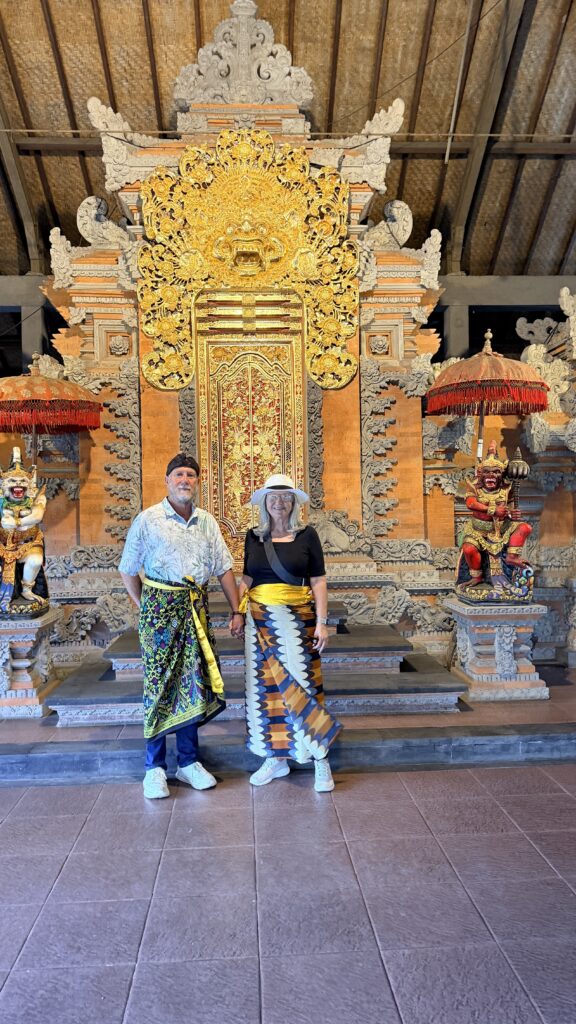
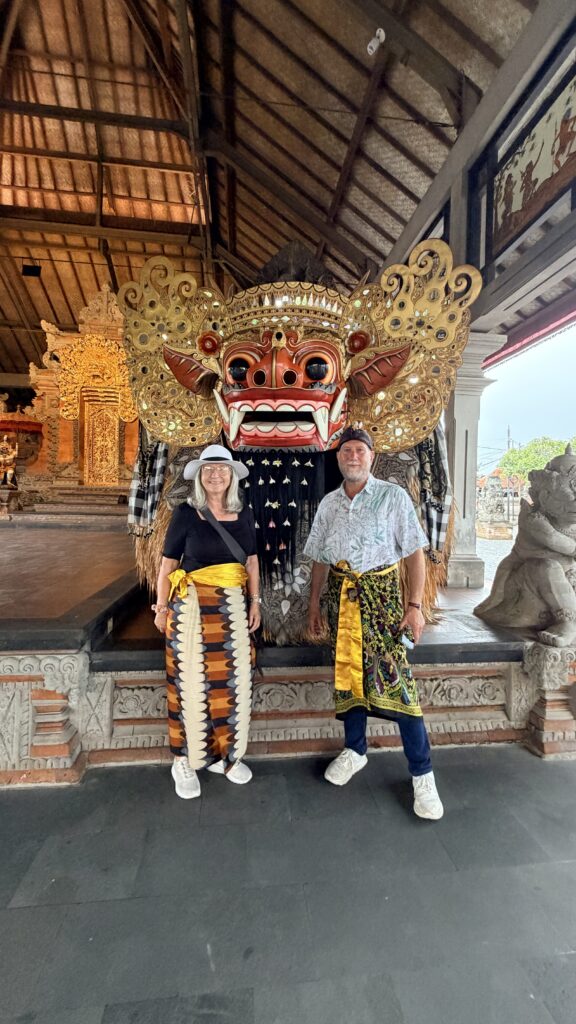
As for the dress code at the Batuan Temple, it is polite clothing and at Wantilan near the parking lot there are officers who will rent out sarongs and scarves for you to enter the temple, you can rent them so you can enter the batuan temple. And as you know that the temple is a sacred place for Hinduism and to enter the temple you have to wear traditional Balinese clothes such as sarong and shawl. To enter the batuan temple as well as that you will need a sarong and scarf to enter the temple as a respect for the holy place, you don’t worry because here are provided a sarong and a scarf that you can use to go inside. If you are inside you can take pictures with the background of this very enchanting rock temple, while the batuan temple is a temple that is purified by local residents, so it is expected that when you enter the temple area, please maintain good manners. Welcome to this batuan temple and enjoy seeing the beauty of this beautiful oldest temple
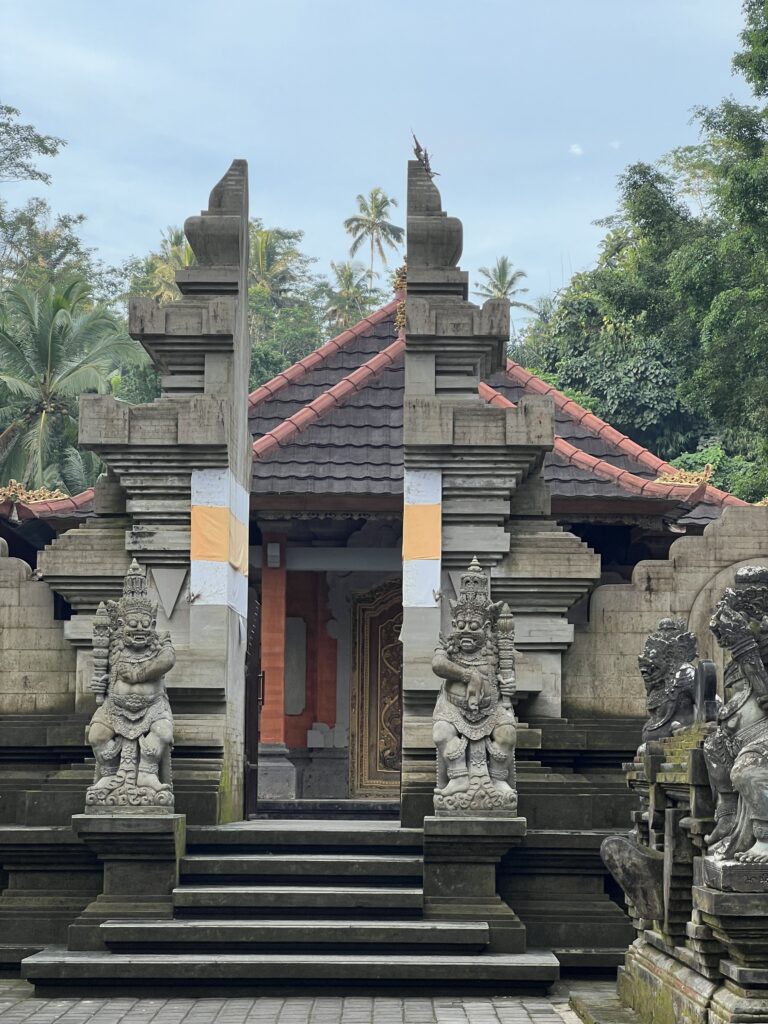
The entry gate to the temple appears as a split gate as if it was formed once as one gate that was split into two parts. This gate leads into a courtyard which has a garden and a galaxy of statues fixed at various locations. From the courtyard, there is another gateway spanned by an intricately carved arch with bass relief on the inset and intertwined with vines and a closed door. The entry to the sanctum is again through two gates. The sanctum is where the gods are enthroned during festival time through a special invitation to “come down into this world.” The gods invited during the festivals are venerated with deep devotion and offerings.
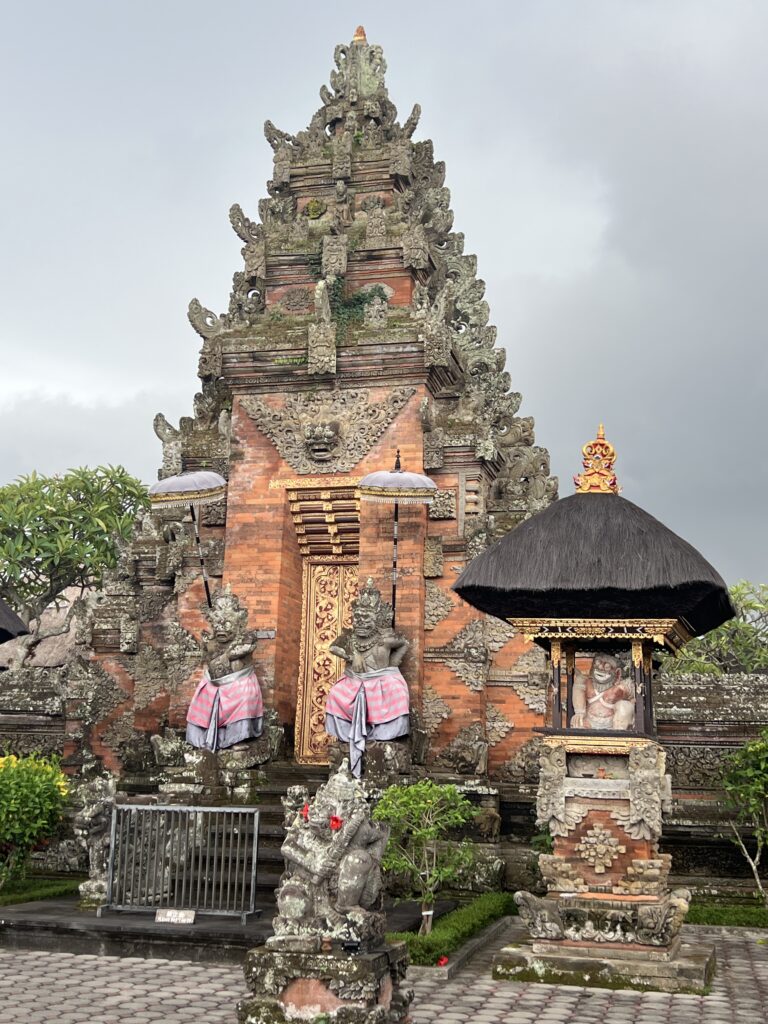
Check out the roof of these buildings. The roofs last about 25 years.
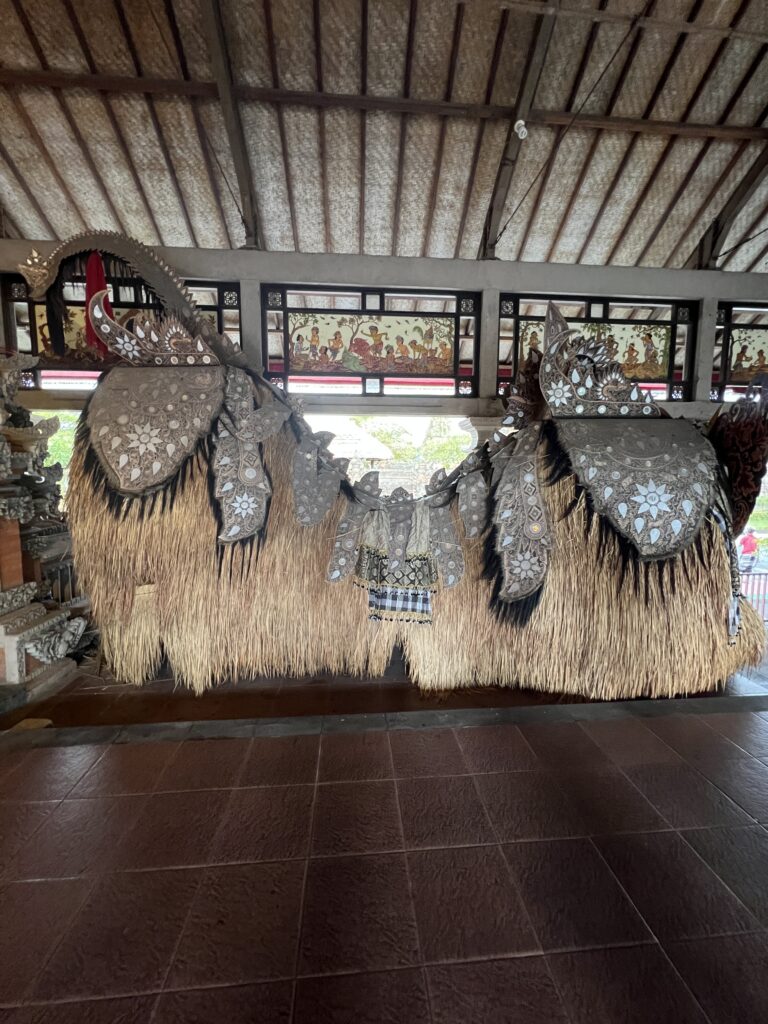
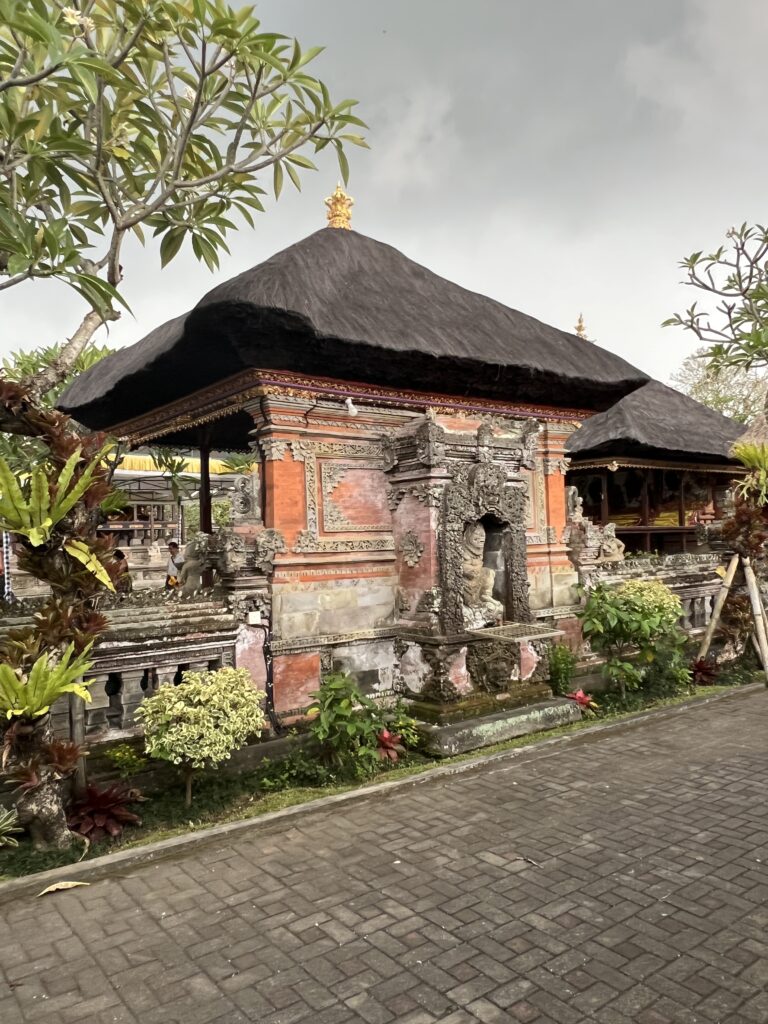
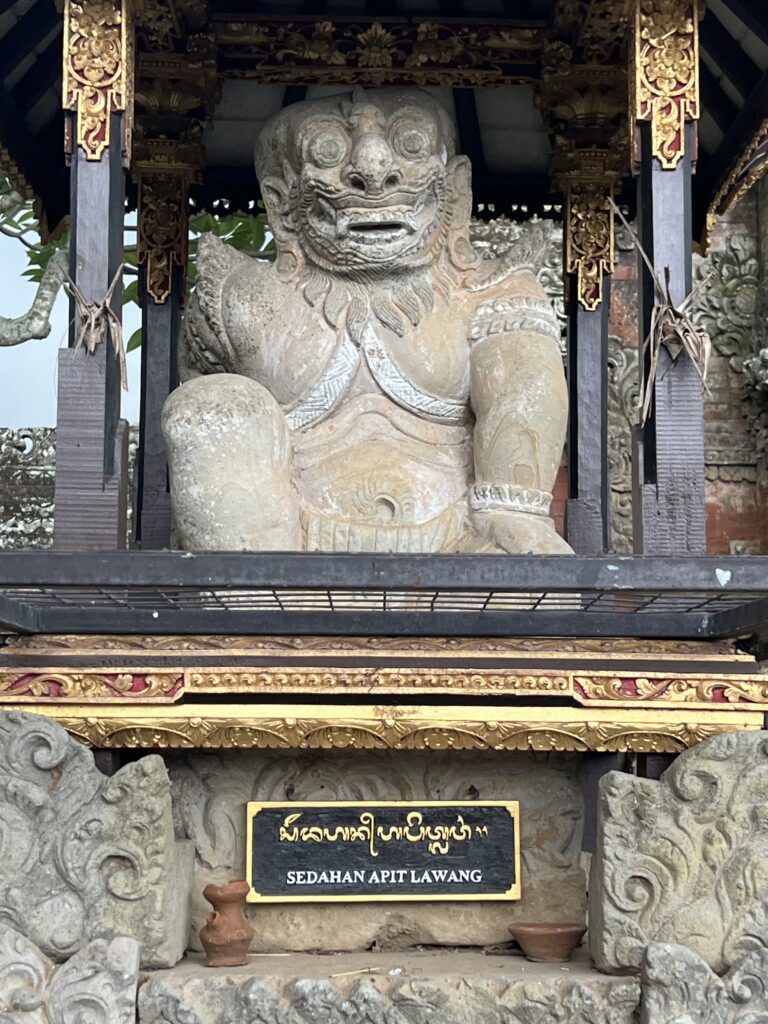
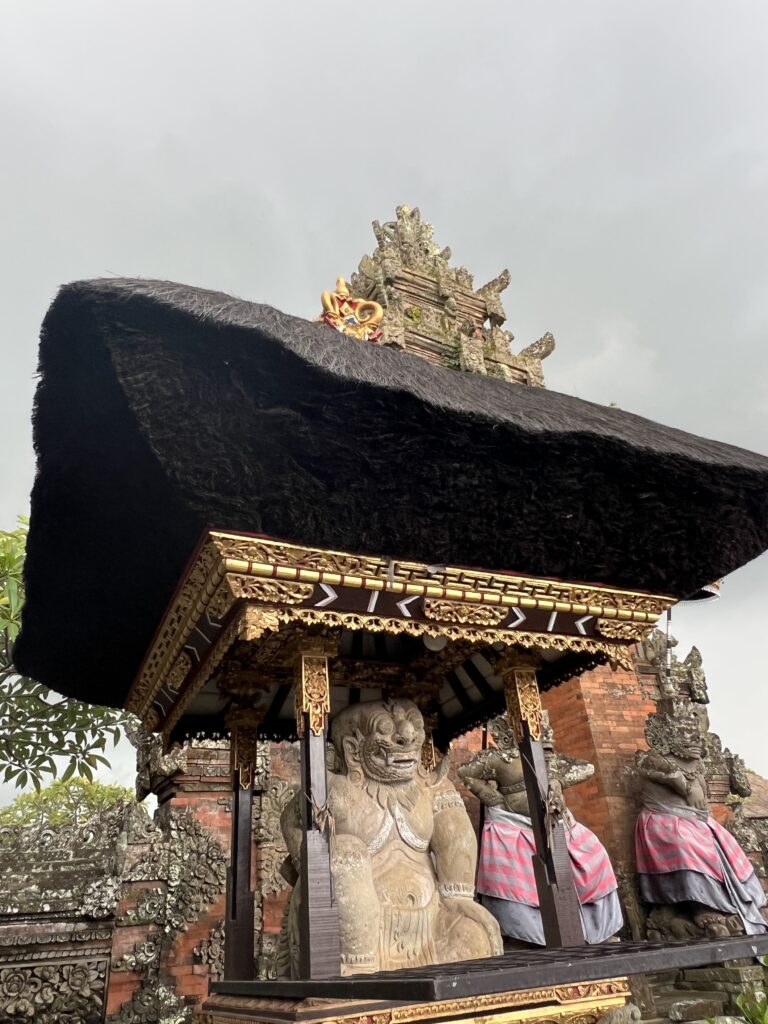
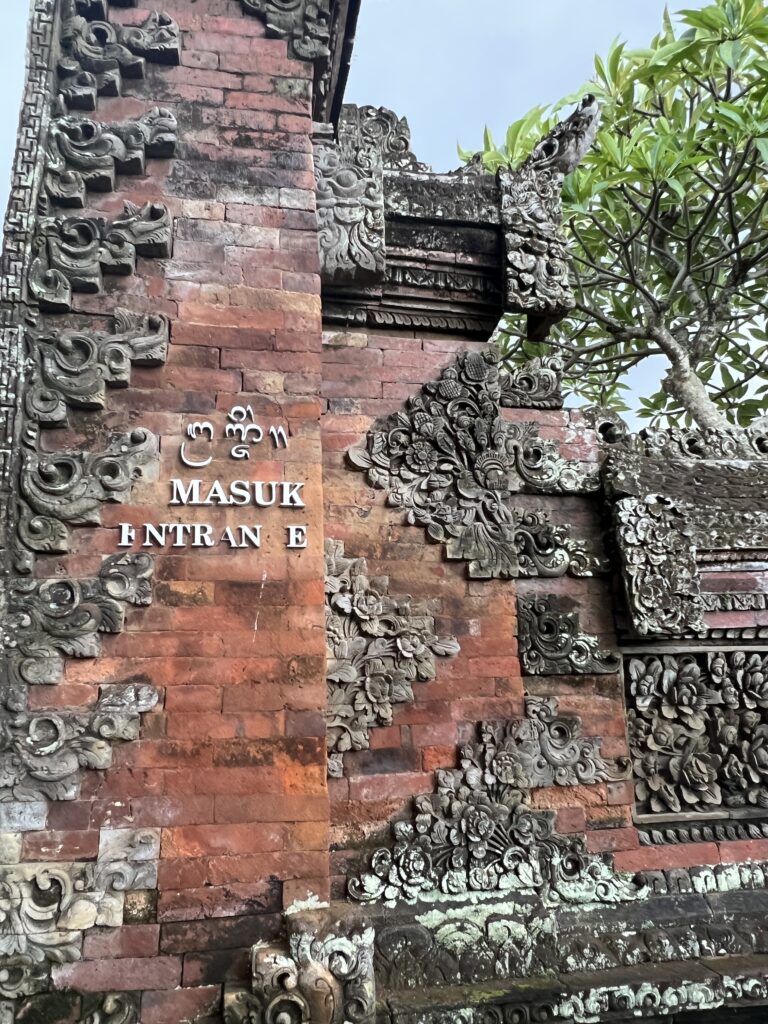
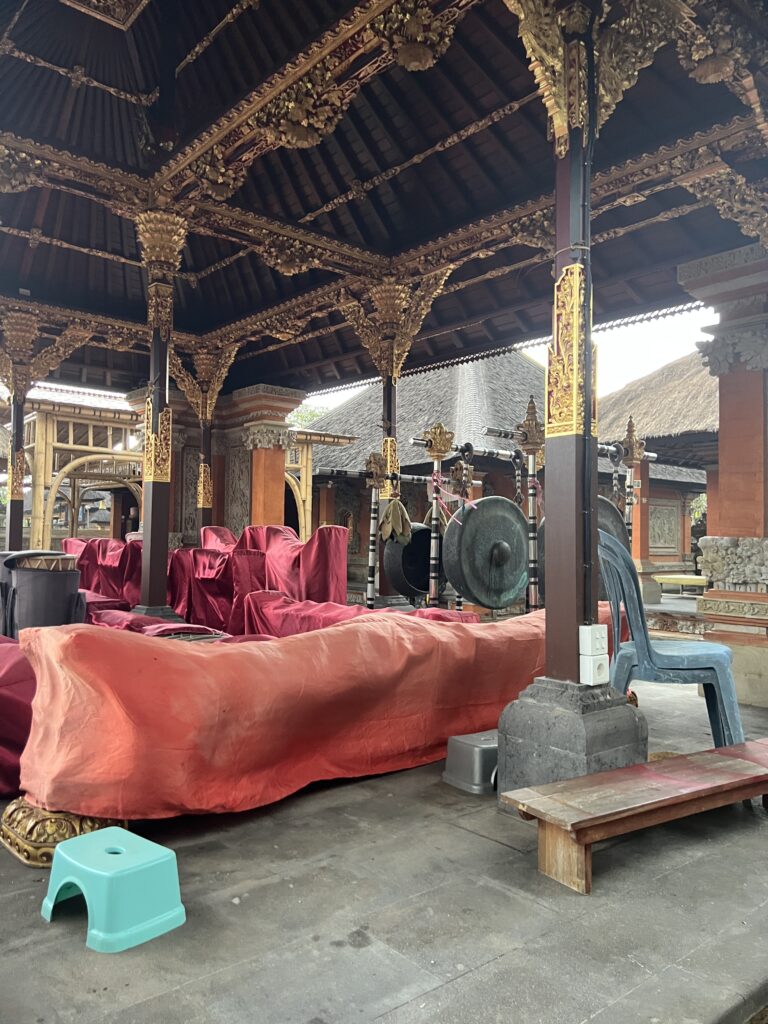
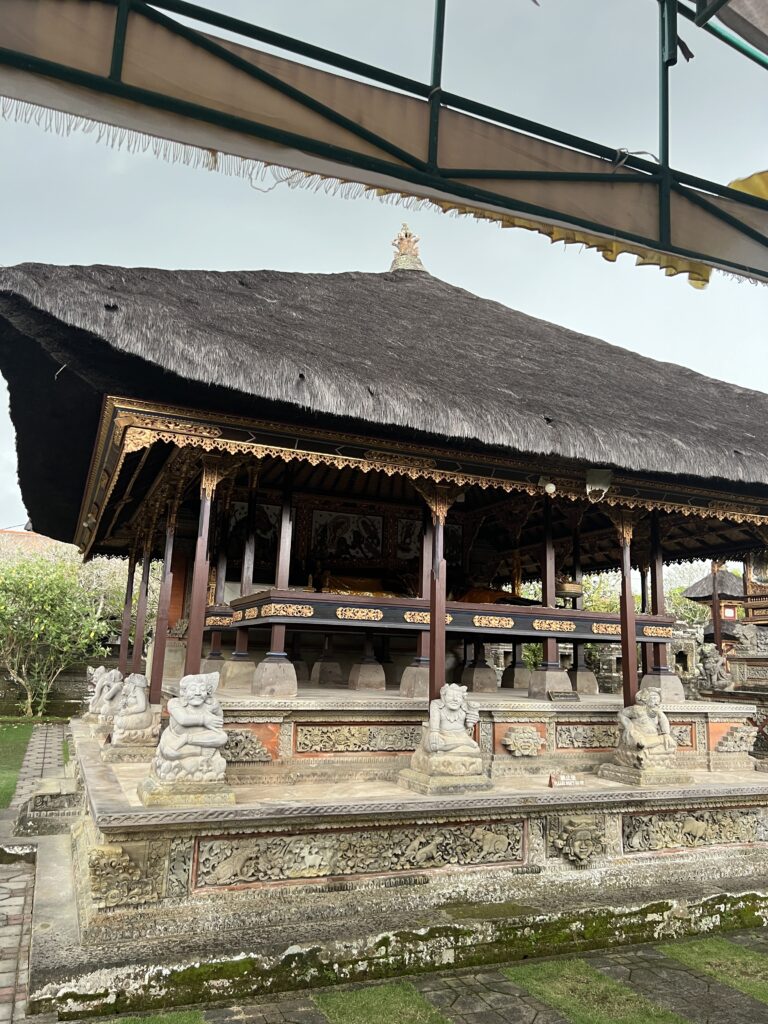
Weather is not looking good
There was a tent in the complex that saved us for a little while until it started leaking because of the heavy rain
Running back to the car, I was able to take a short video. Our shoes and socks were soaked the rest of the day.
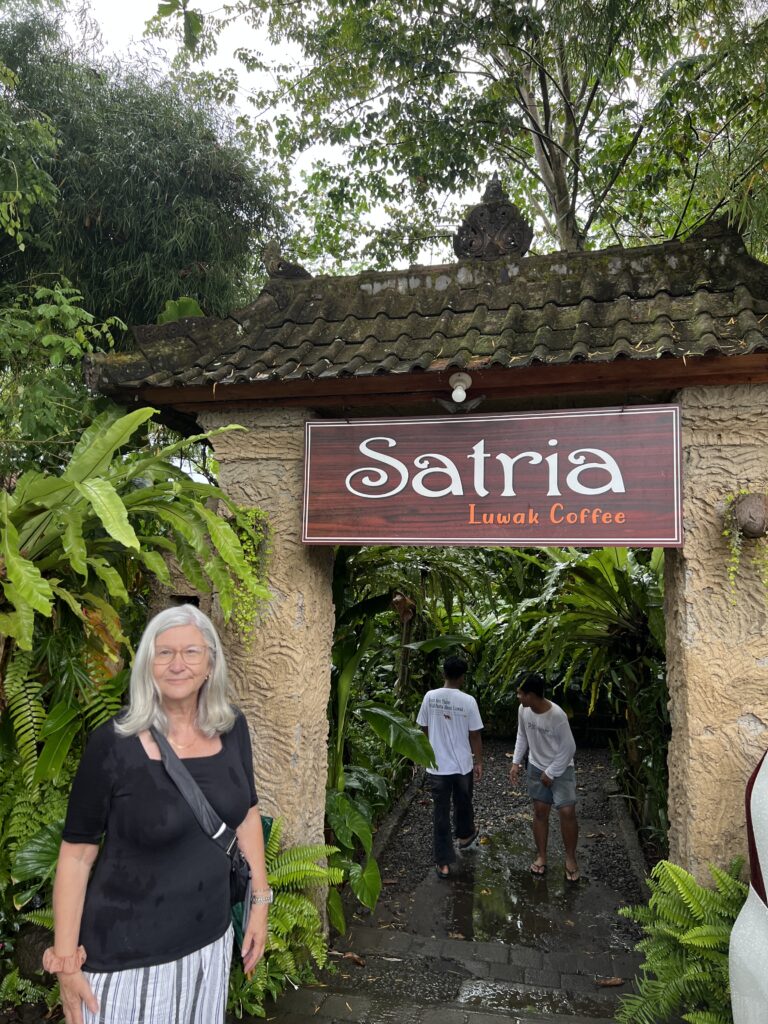
Satria Luwak Coffee is a renowned coffee plantation located in the scenic region of Banyuatis, Bali. The plantation specializes in Luwak coffee, made using a unique process involving civet cats that selectively consume and ferment coffee cherries. Visitors can take guided tours to learn about the coffee-making process, from planting to brewing. The site also features stunning views of the surrounding landscapes, providing a tranquil atmosphere for coffee enthusiasts and travelers alike. Tasting sessions and small boutiques selling coffee products enhance the experience for visitors seeking to indulge in the rich flavors of Bali.
Coffee beans growing in the trees
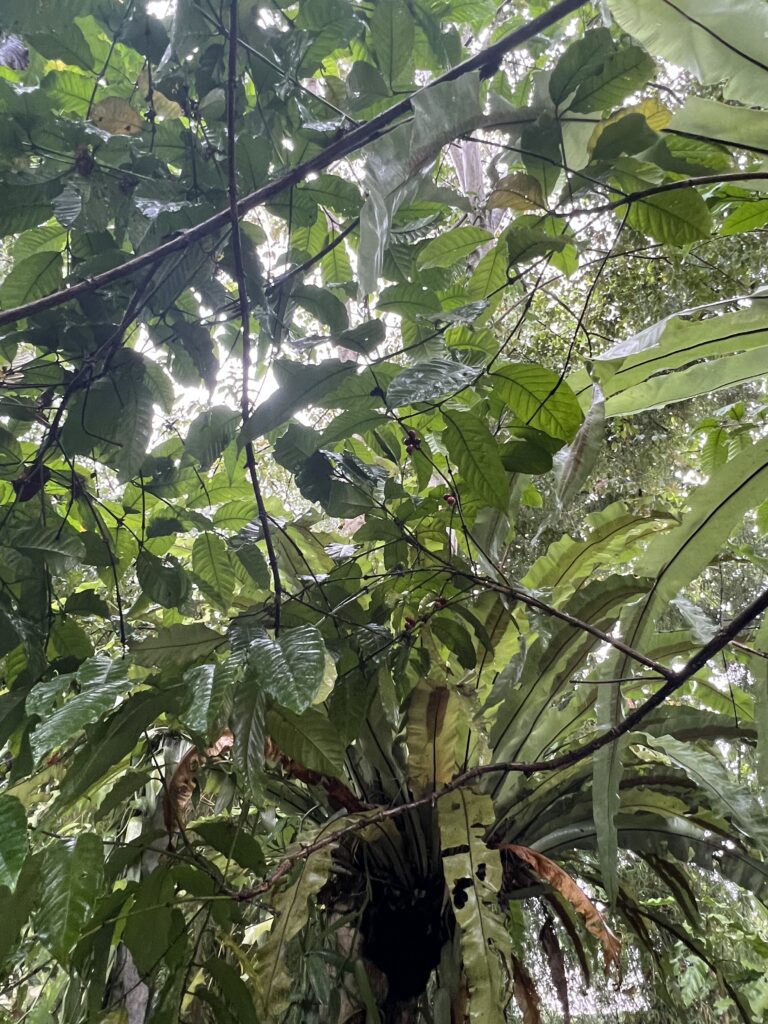
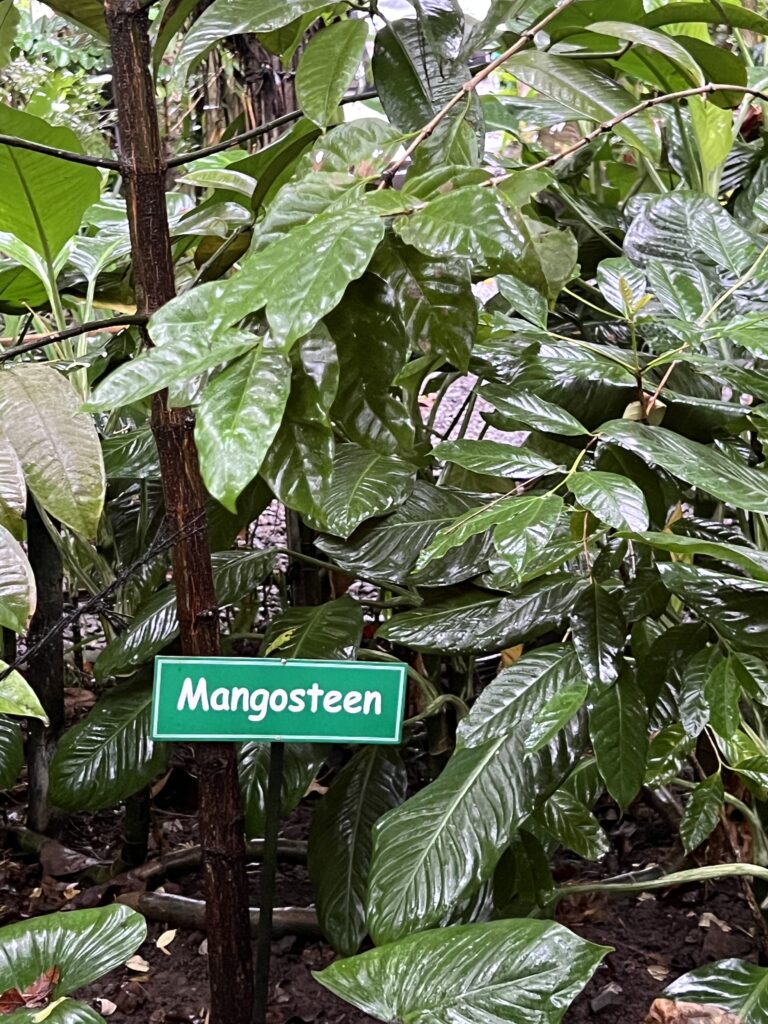
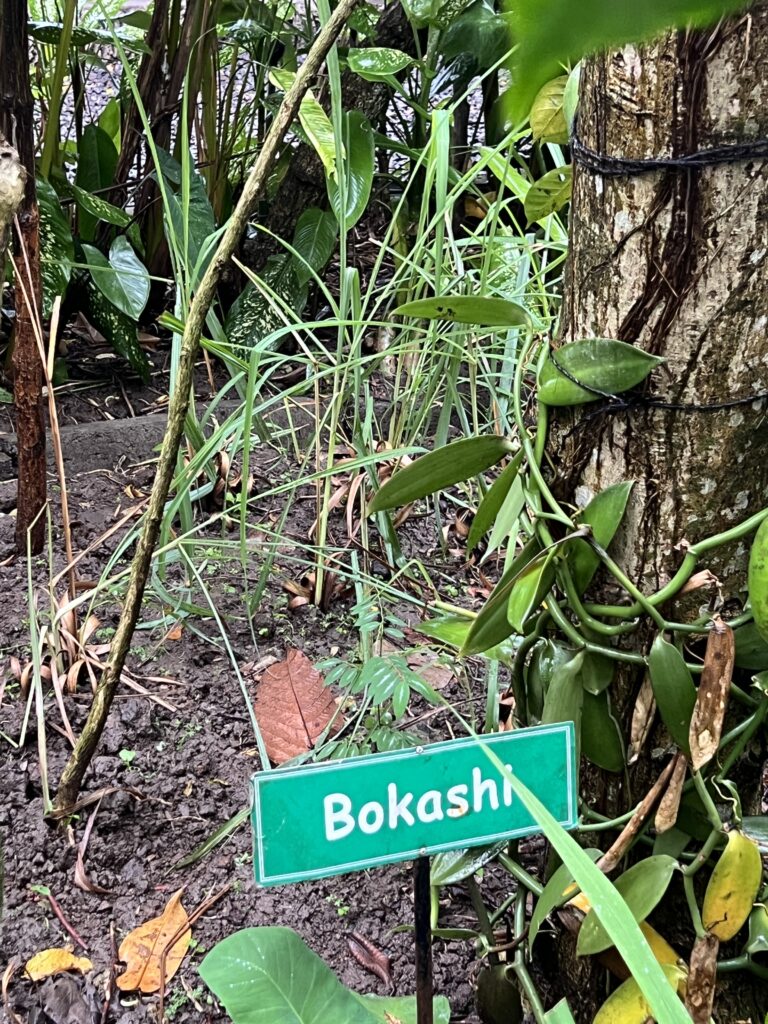
There were a number of different plants being grown. Each of the plants are used in different flavors of coffee or tea.
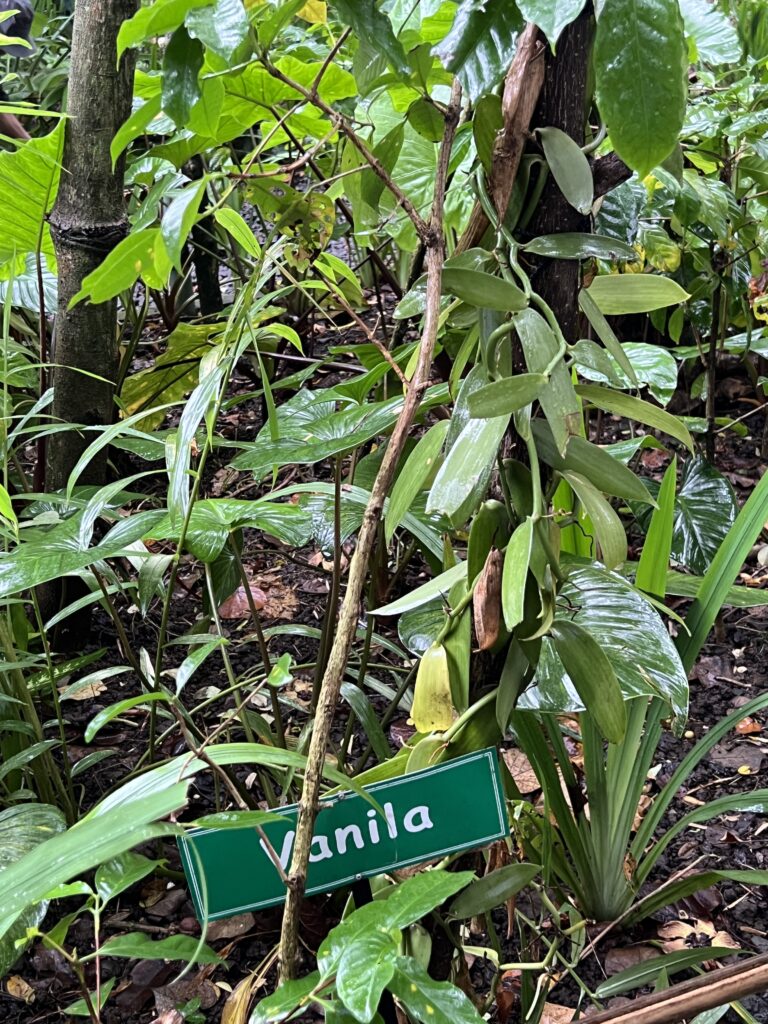
Curcuma in English is turmeric. It is a vibrant yellow-orange spice derived from the rhizome (root) of the Curcuma longa plant, which belongs to the ginger family (Zingiberaceae). Widely used in cooking and traditional medicine, it is renowned for its earthy flavor and the active compound curcumin.
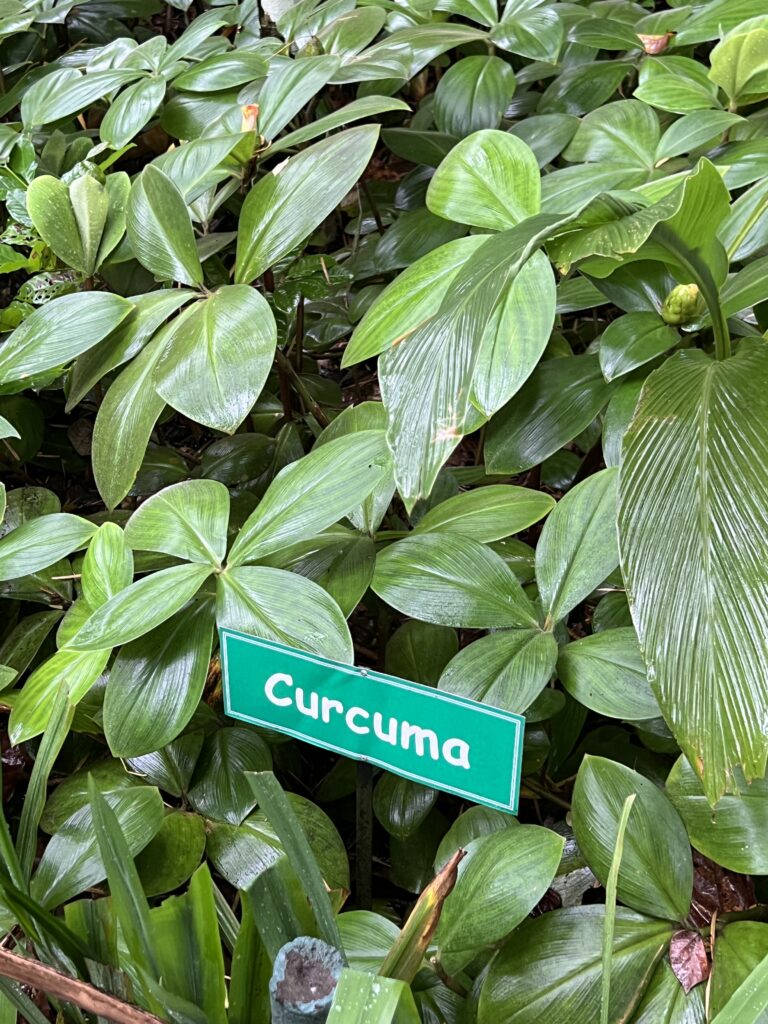
Ginseng is a popular, slow-growing root used in traditional medicine, particularly for boosting immunity, enhancing energy levels, and managing stress. It is believed to improve brain function, reduce inflammation, and manage blood sugar levels. While promising, consistent human studies are still needed to confirm its efficacy for many reported health benefits.
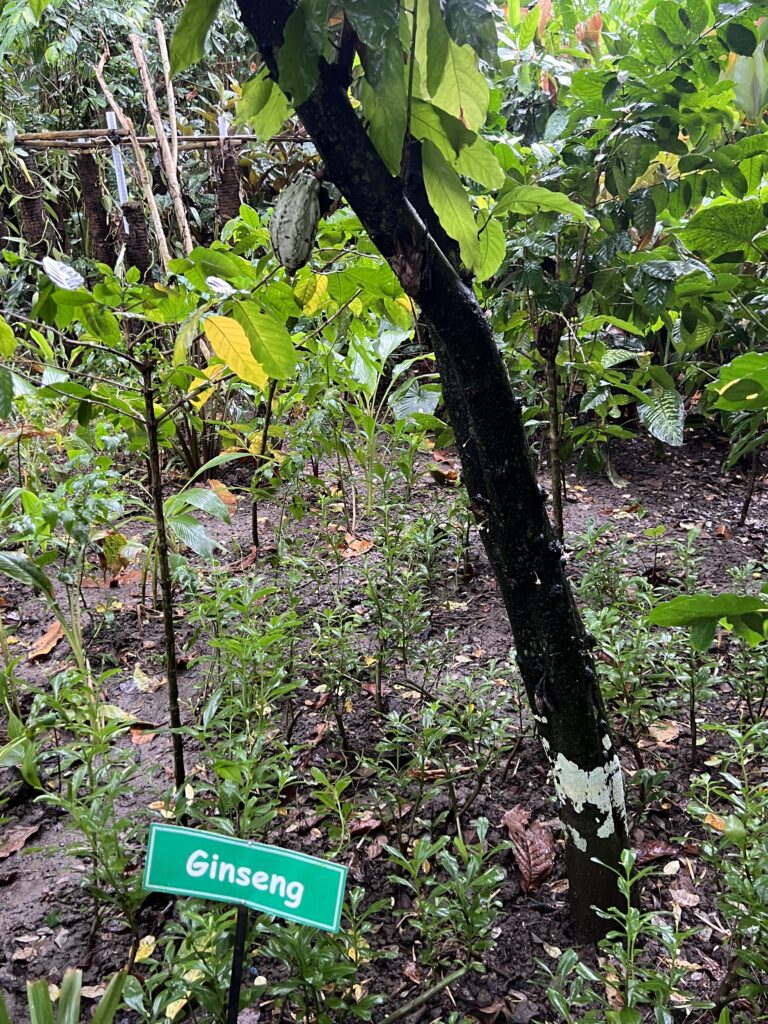
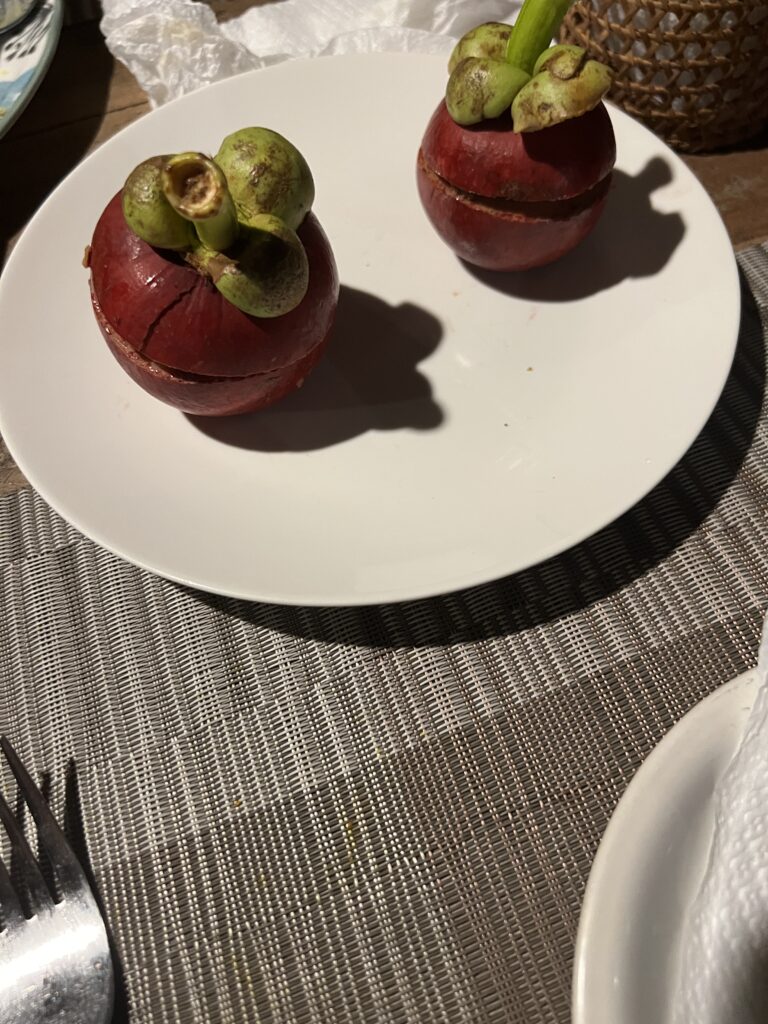
Mangosteen (Garcinia mangostana), sometimes rendered mangostan, and commonly known as the purple mangosteen, is a tropical evergreen tree with edible fruit native to the Malay Peninsula and Borneo. It has been cultivated extensively in tropical Asia since ancient times. It is grown mainly in Southeast Asia, southwest India and other tropical areas such as Colombia, Puerto Rico and Florida, where the tree has been introduced. The tree grows from 6 to 25 m (19.7 to 82.0 ft) tall.
The fruit of the mangosteen is sweet and tangy, juicy, somewhat fibrous, with fluid-filled vesicles and an inedible, deep reddish-purple colored rind (exocarp) when ripe. The fragrant edible flesh that surrounds each seed is the endocarp, i.e., the inner layer of the ovary. The seeds are of similar size and shape to almonds.
We had never eaten this before but had some later in the evening at dinner and liked it.
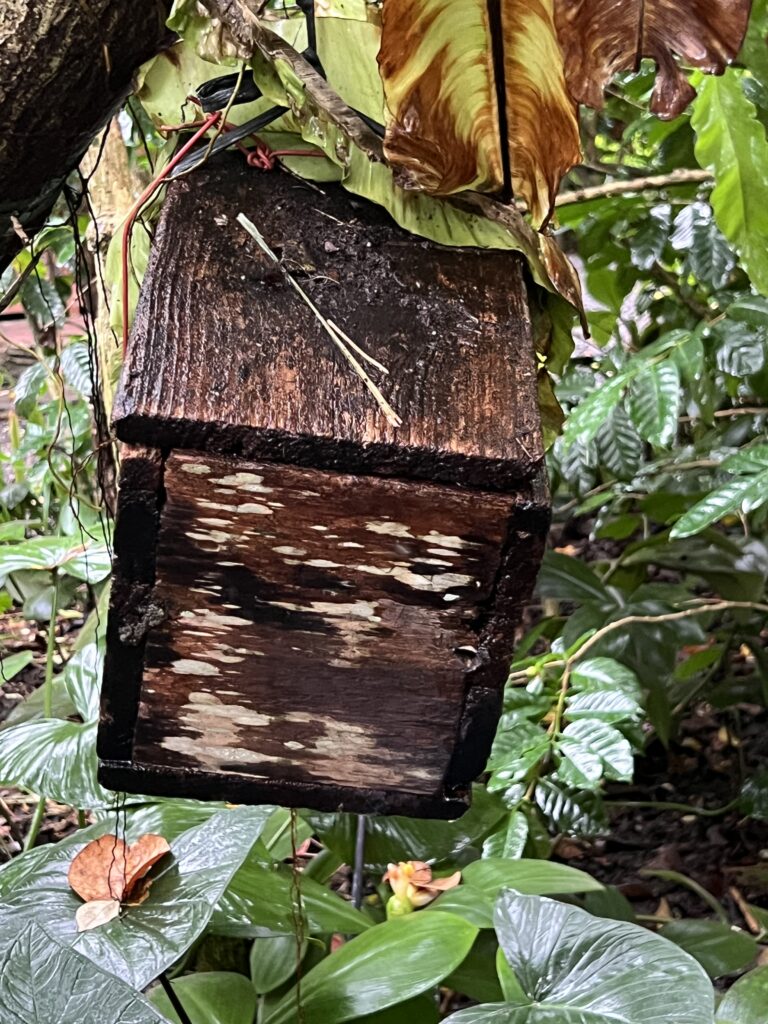
This a honey bee hive, but there are no honey bees. The “bees” that live in here produce honey but are the size of gnats and do not sting.
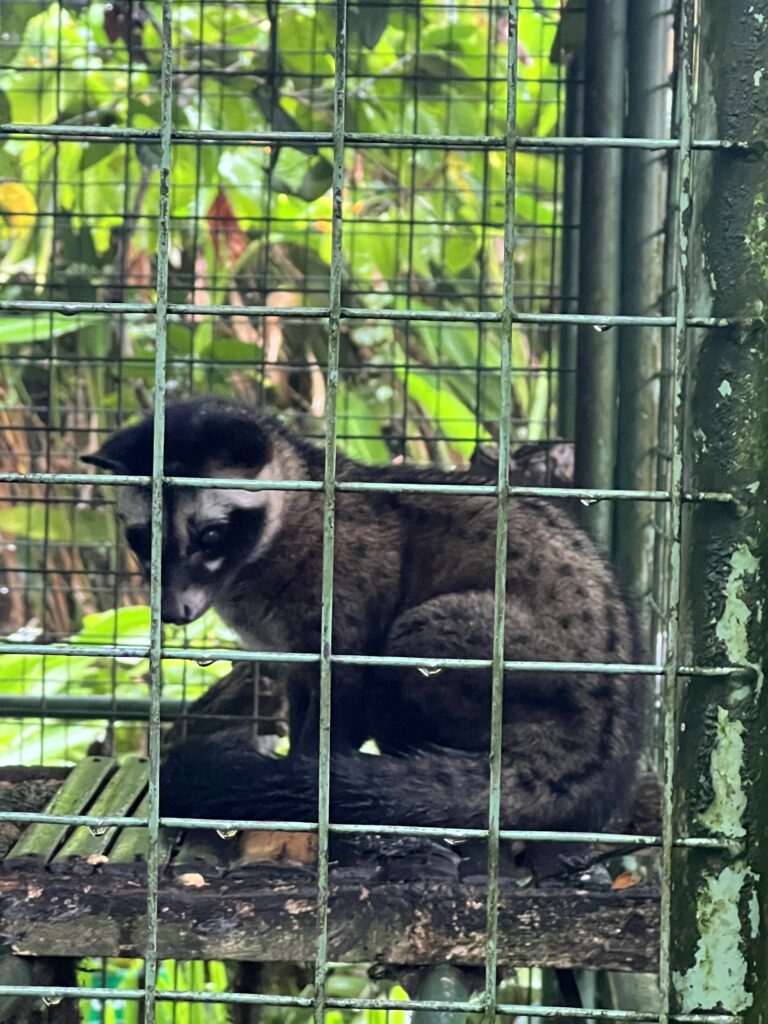
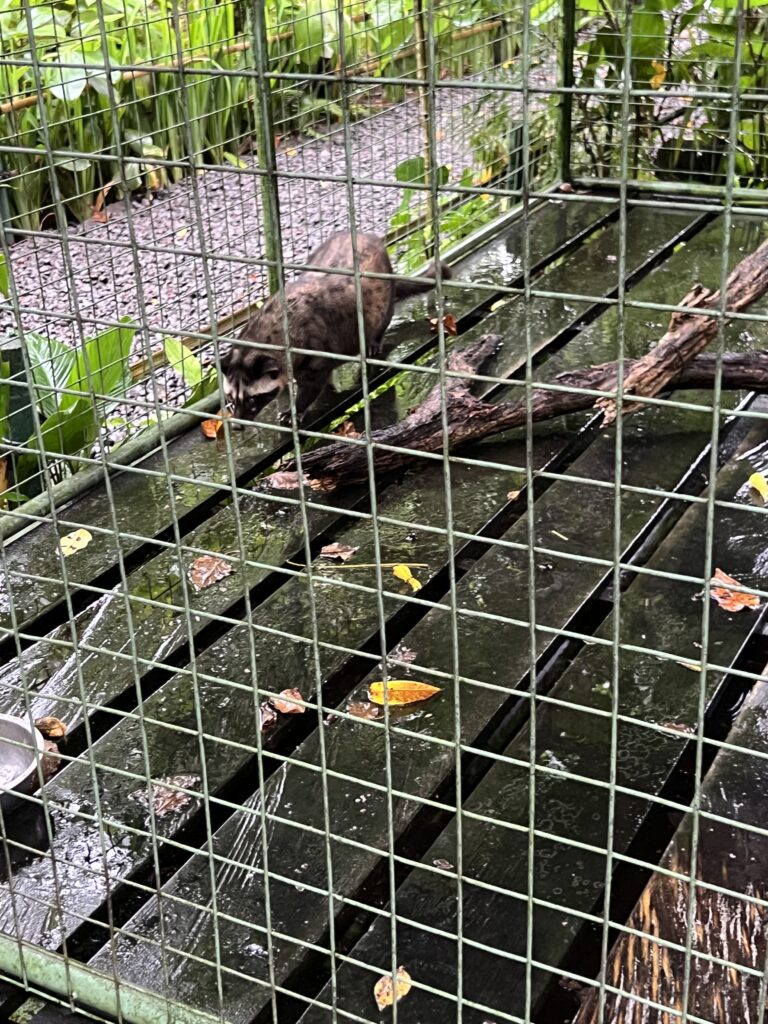
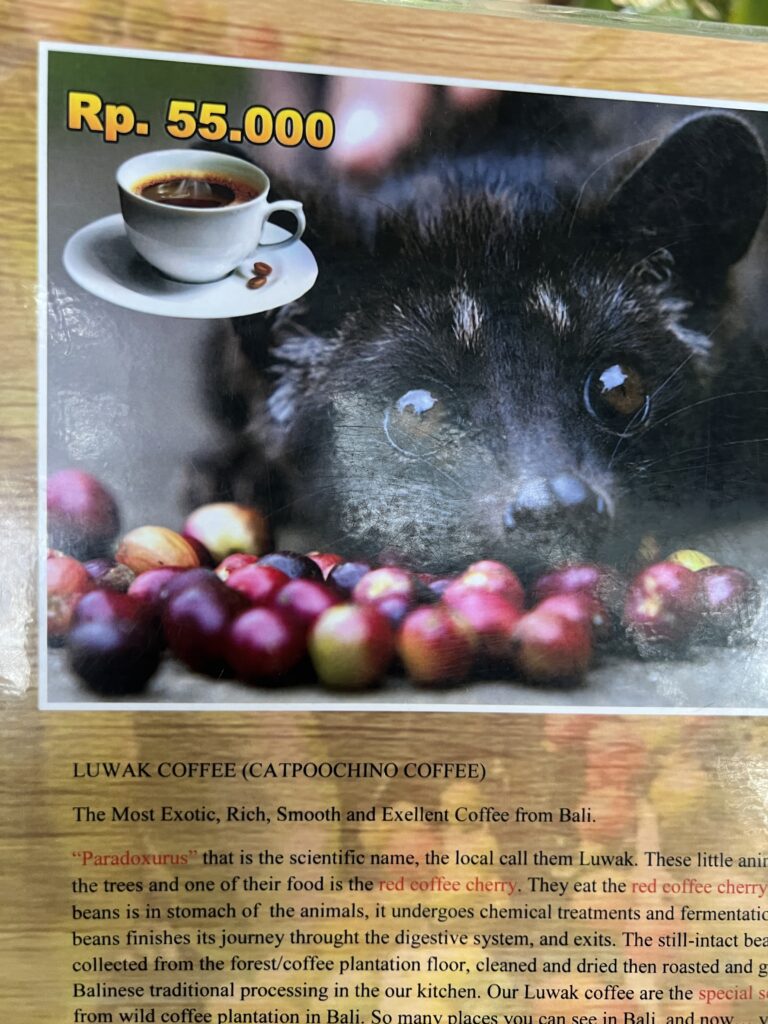
The coffee-making animal is the Asian palm civet (Paradoxurus hermaphroditus), a small, nocturnal mammal found in Southeast Asia. They consume ripe coffee cherries and partially digest them, defecating the beans which are then collected, cleaned, roasted, and ground to create Kopi Luwak, one of the world’s most expensive coffees.
These animals are captured weekly and then replaced with new animals that are captured. They are basically here to show tourist what they look like.
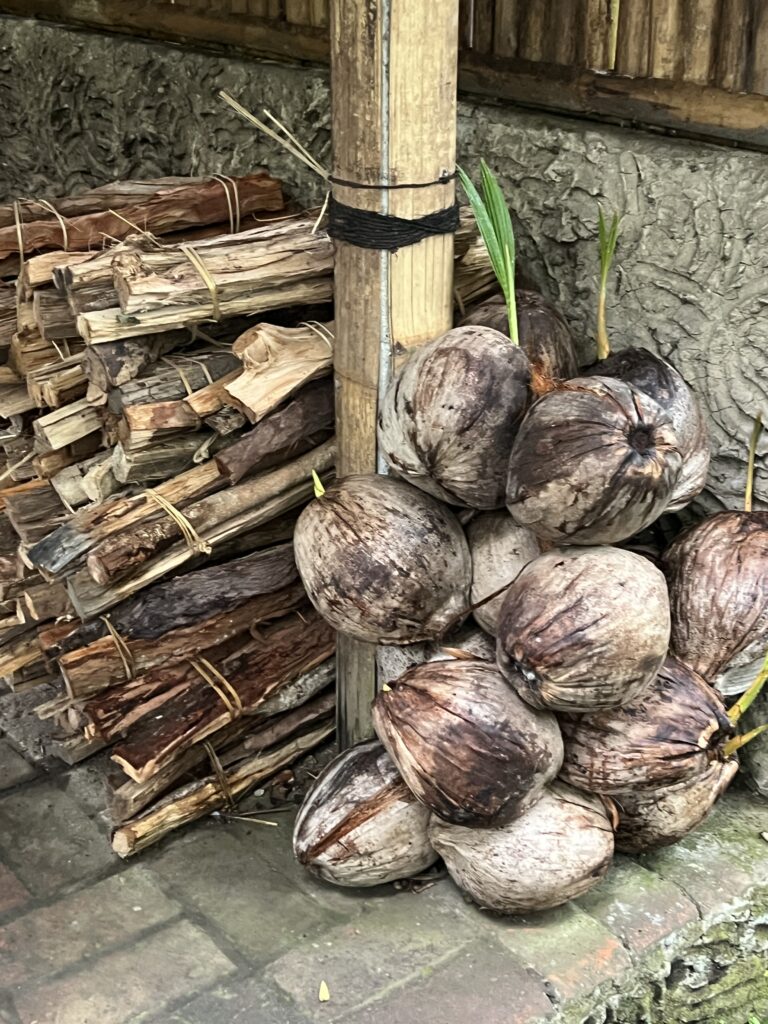
Wood and coconuts used to make the fire to dry roast the coffee beans
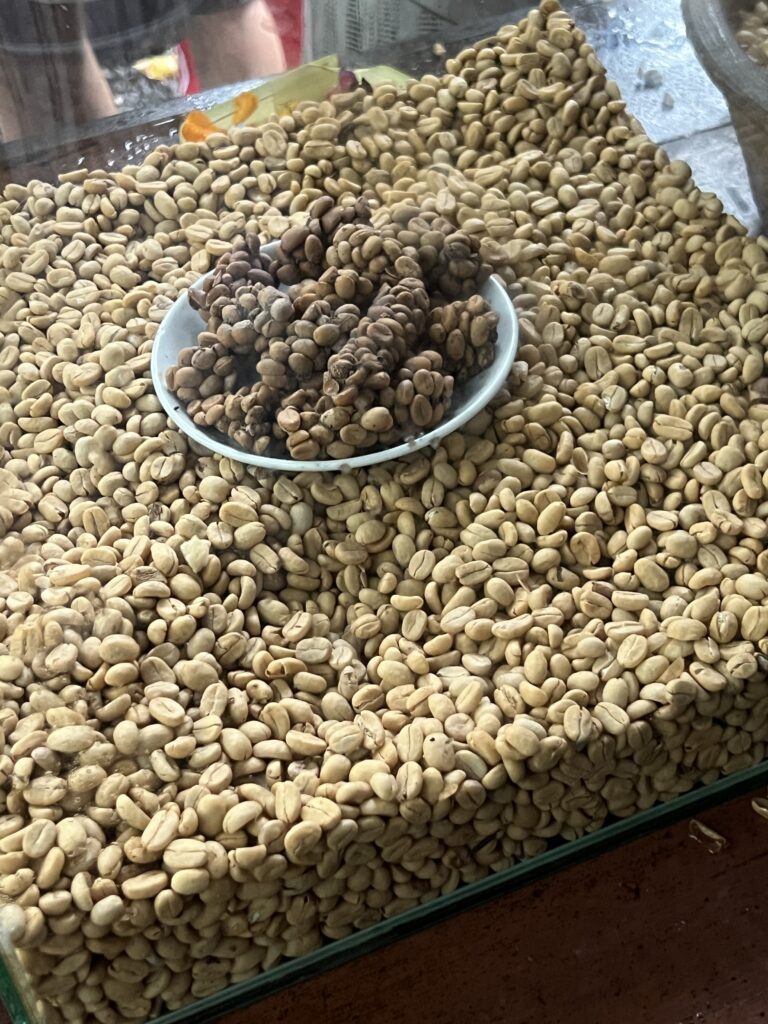
This is how the seeds or beans look before being eaten by the animals and how they look after being eaten, digested and passed.
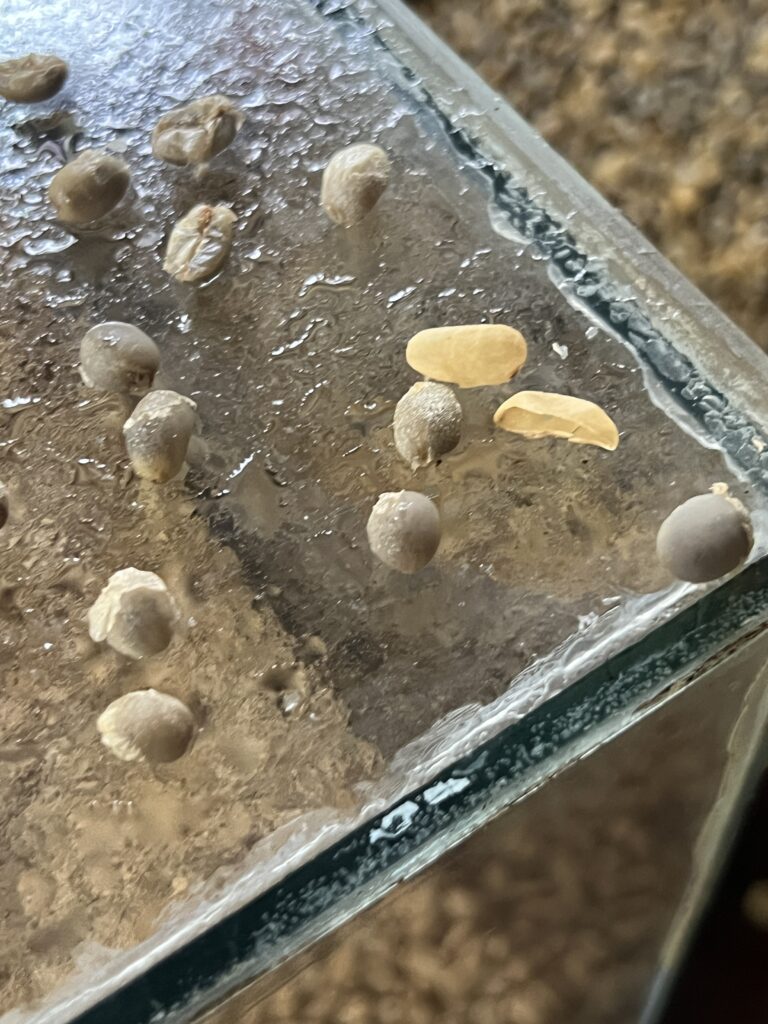
The animal does not digest the seeds and the core is removed to leave the bean that is used to make the coffee.
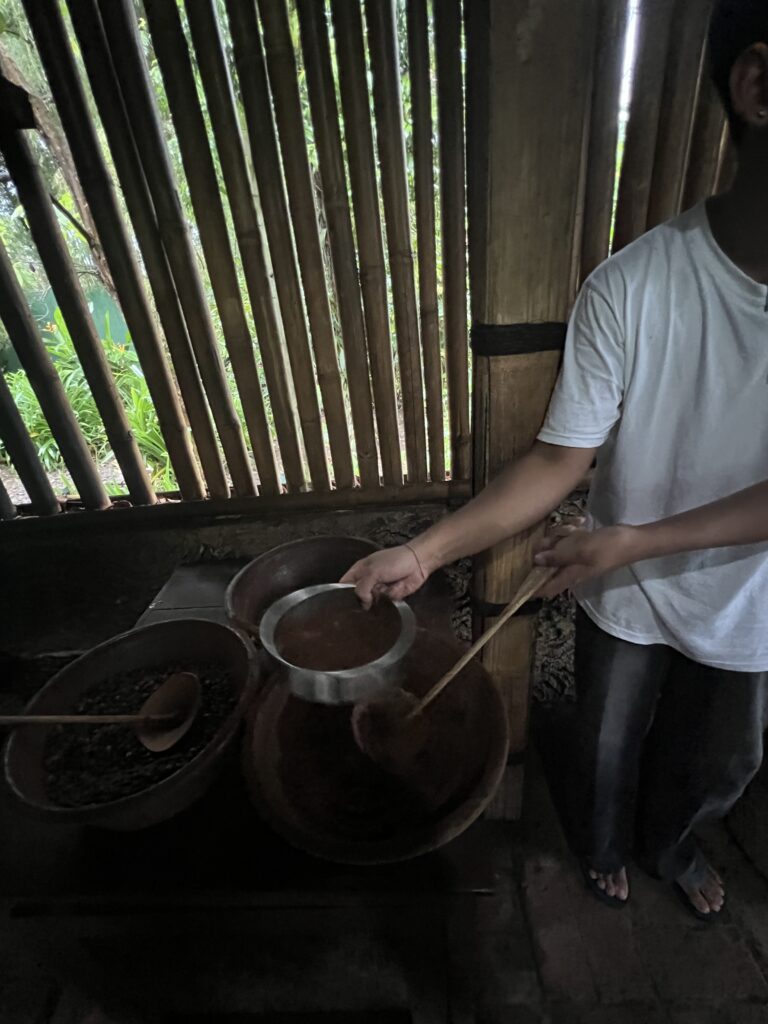
Process used to show the dry roasting
Thinking she can come out of retirement as I found another job for her besides being a bean counter, now she can become a bean roaster
After the beans are dry roasted, they are pounded into a fine powder and then passed through a sift to get an even finer coffee powder which is the final product of Luwak Coffee.
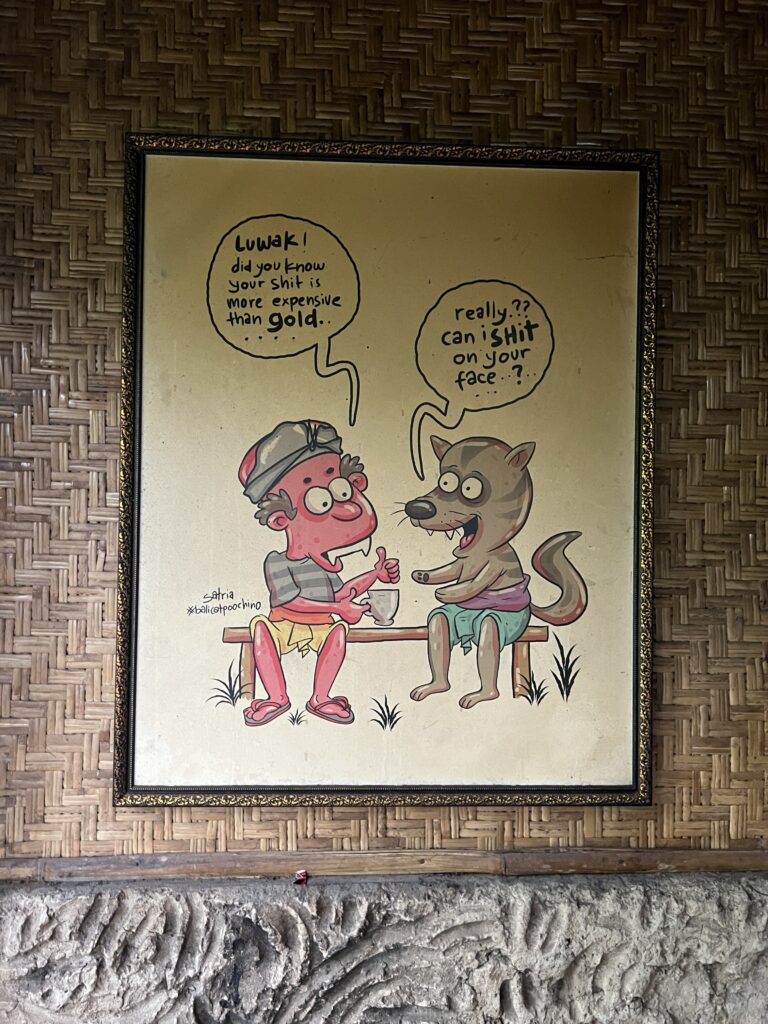
A sign hanging on the wall
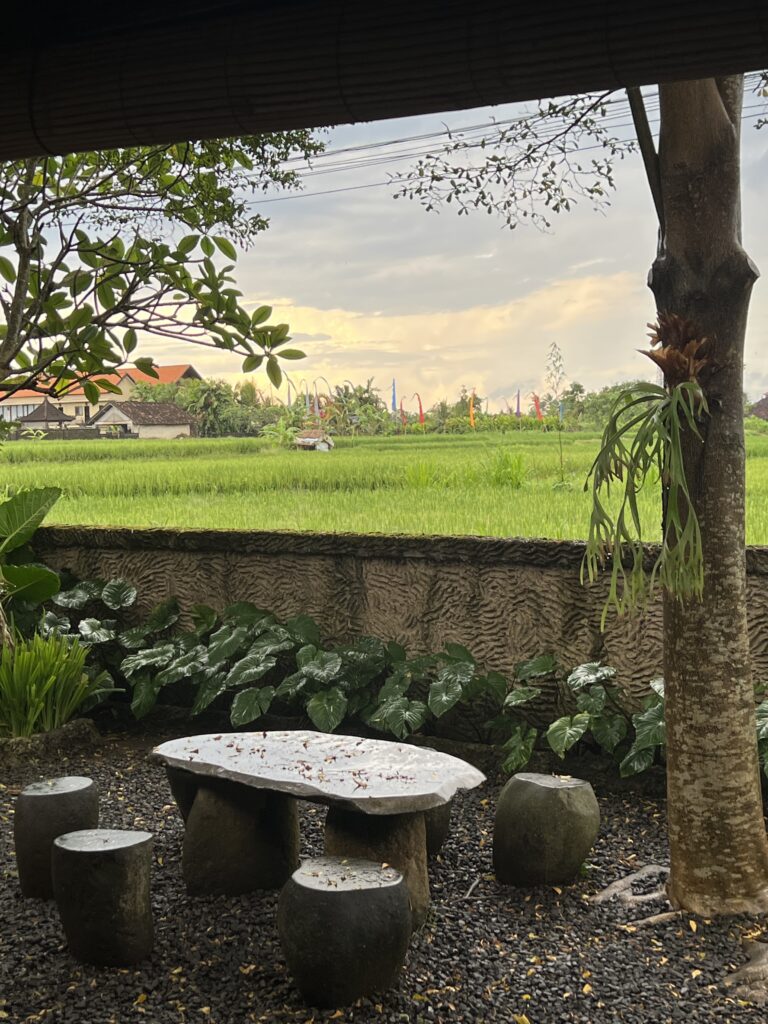
Rice field outside of the tasting area. There are rice fields located throughout Ubud. The fields are quite beautiful
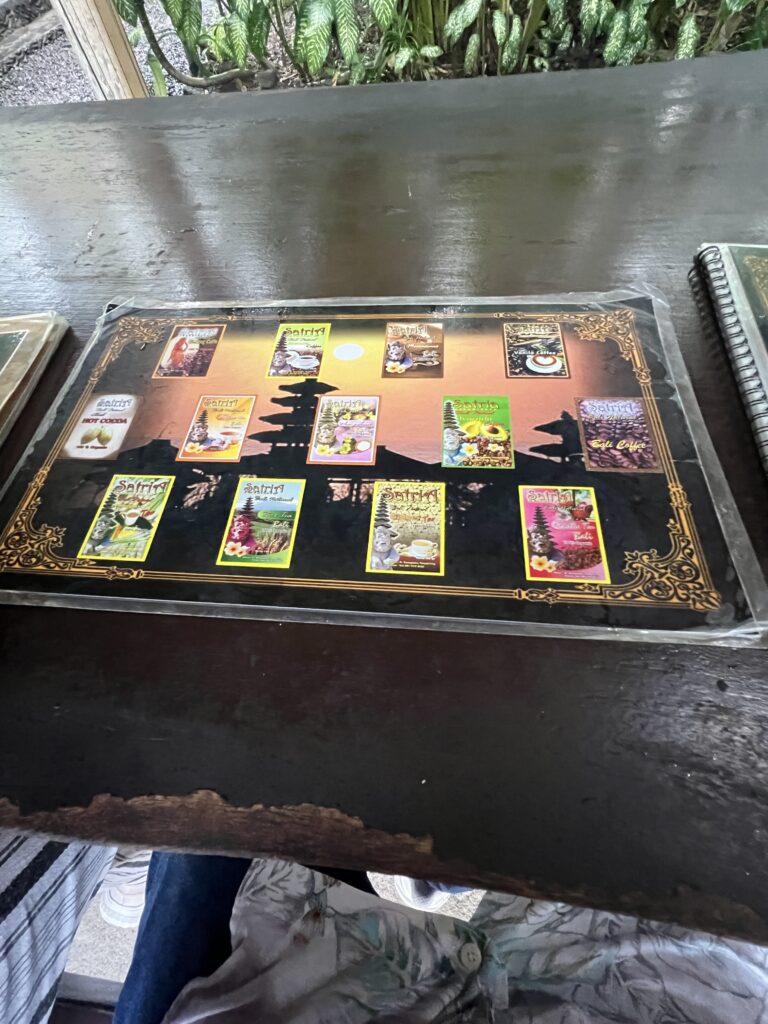
This is the placemat you are given to start and then samples of each are placed on the mat over the corresponding name
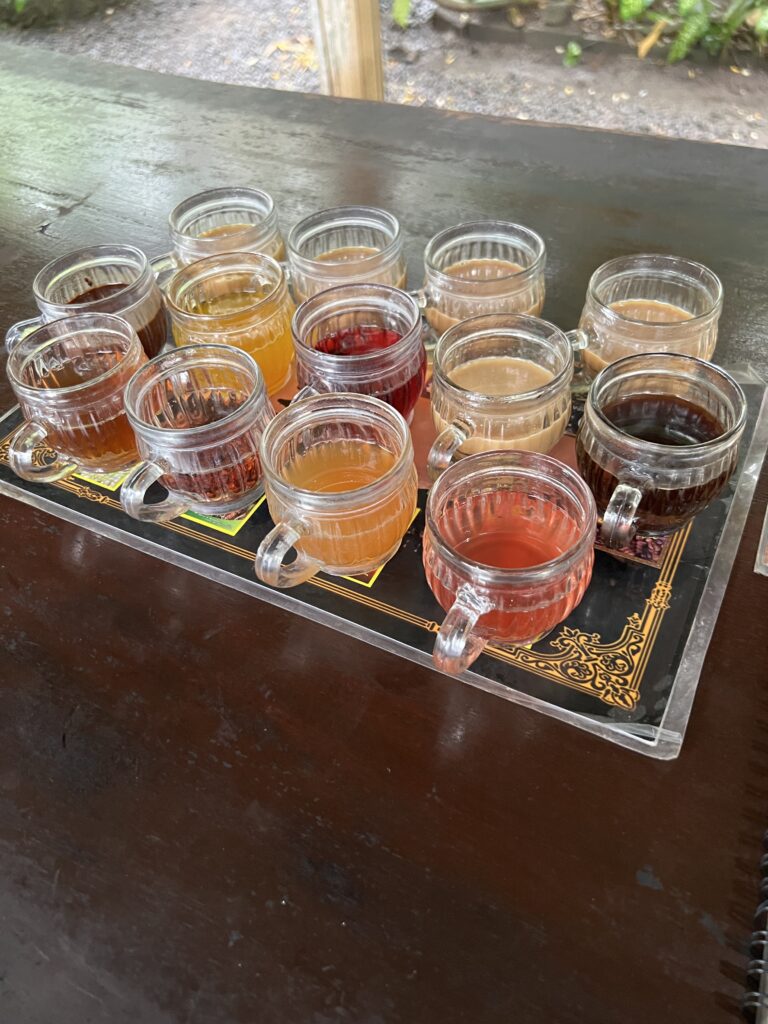
This is how the samples look. All of them were outstanding except for 2nd and 3rd on the first row which were rice tea and then the ginger tea which was very spicy. On the second row the first one was hot chocolate which tasted like we have at home without the sugar. The fifth sample was pure coffee with no sugar or cream and was very tough. The four on the back row were all good.
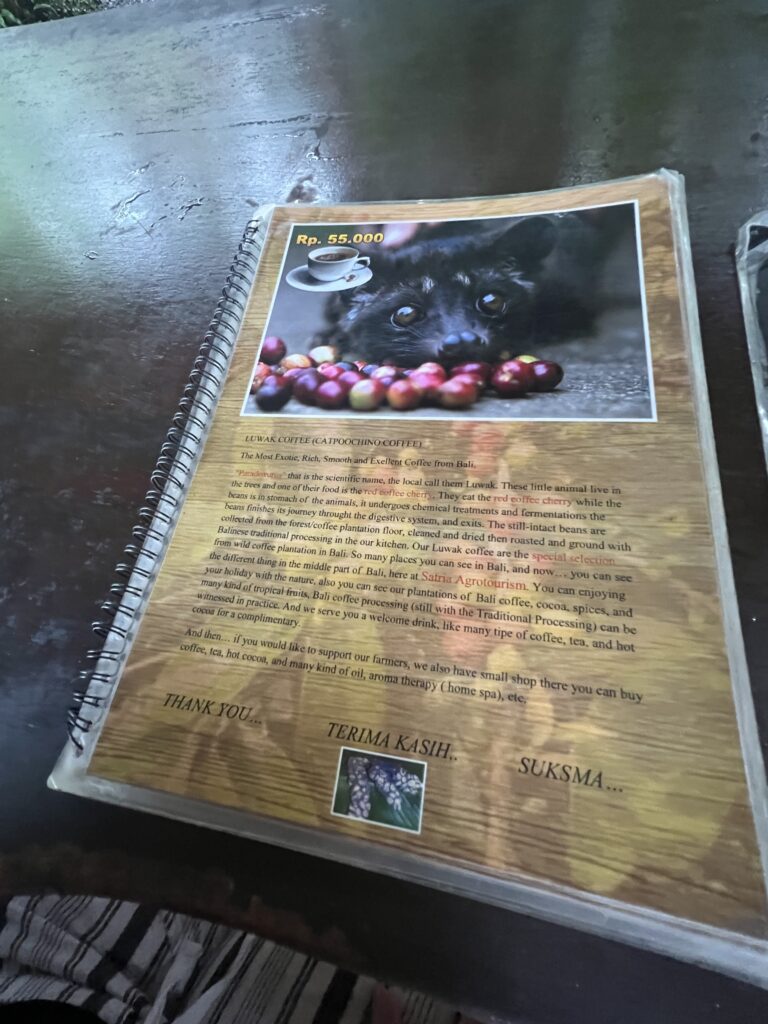
For a cup of Luwak coffee I had to pay 55,000 rupiah which is $3.18 USD for a “catpoochino” 🙂
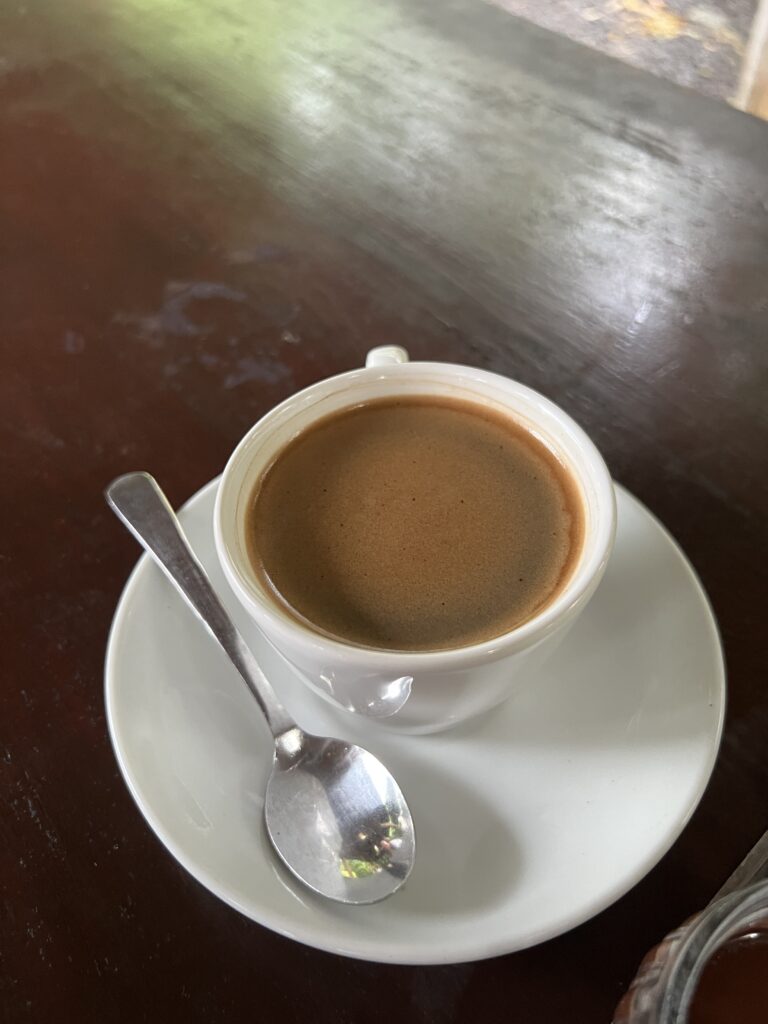
This is the Luwak coffee which actually tasted very good
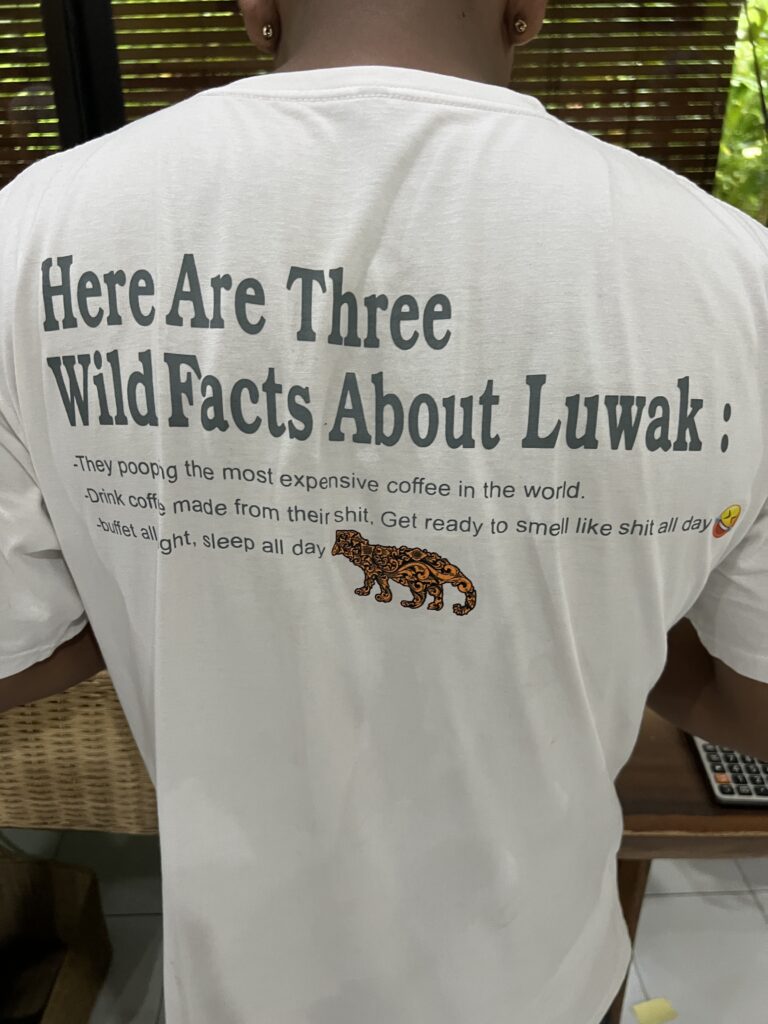
Wish I could have bought this t-shirt from the salesperson
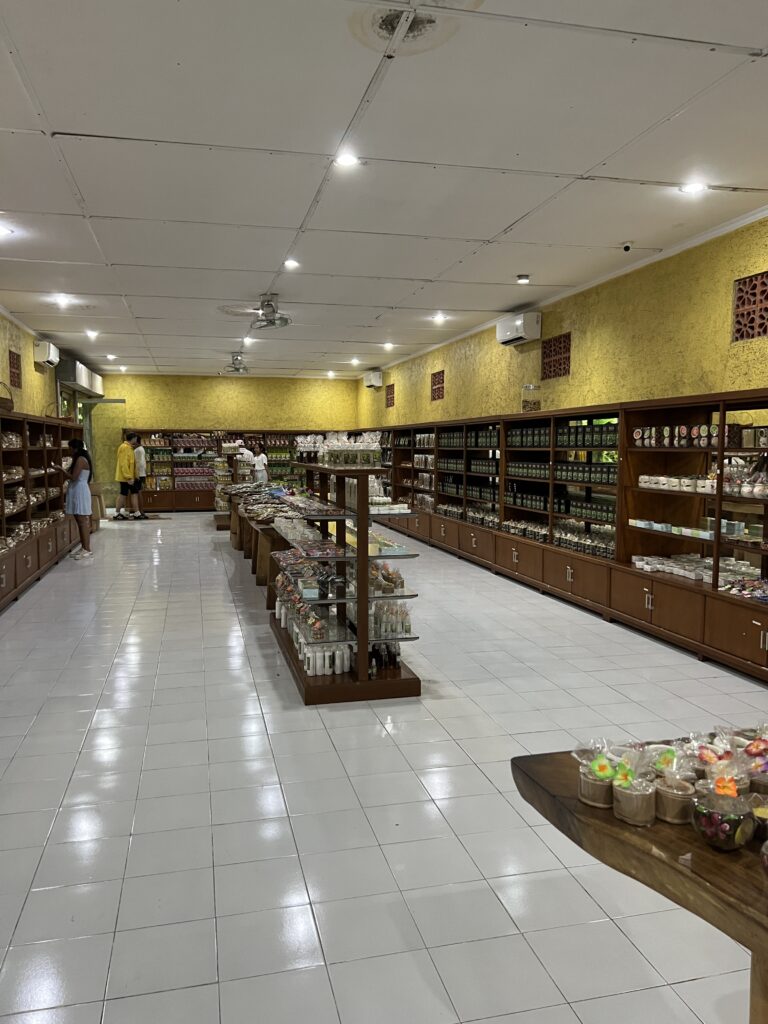
The coffee and tea store we visited
Video of me drinking the Luwak coffee
That is a rat nest of wires
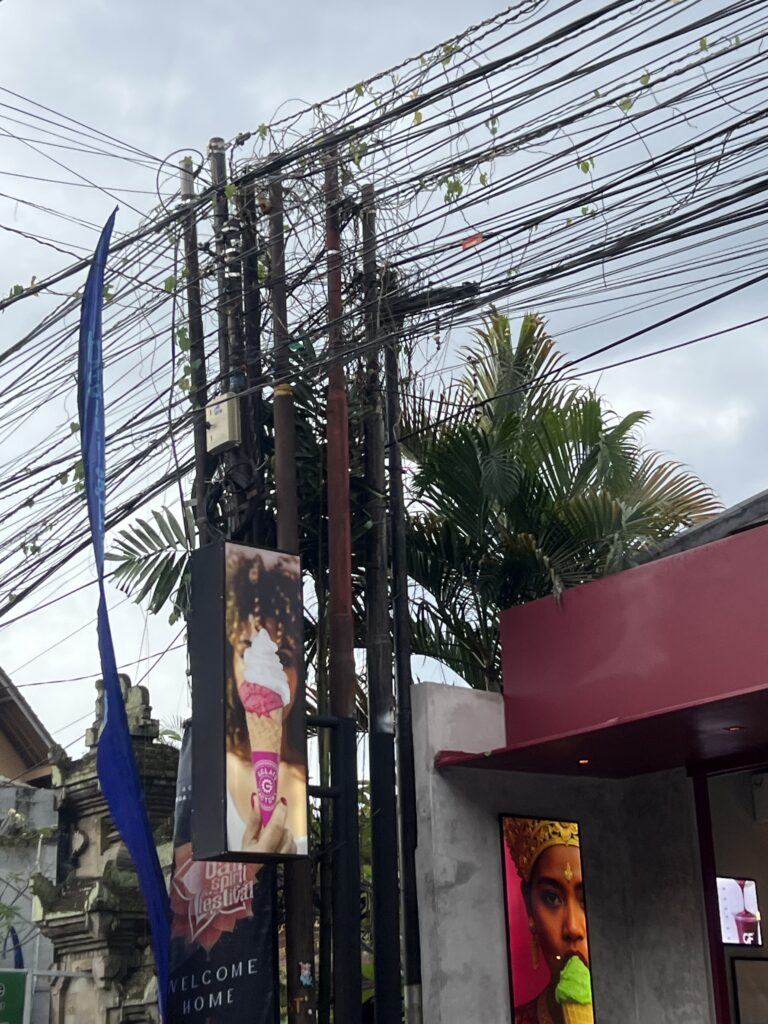
Here are a few photos showing the front of family compounds
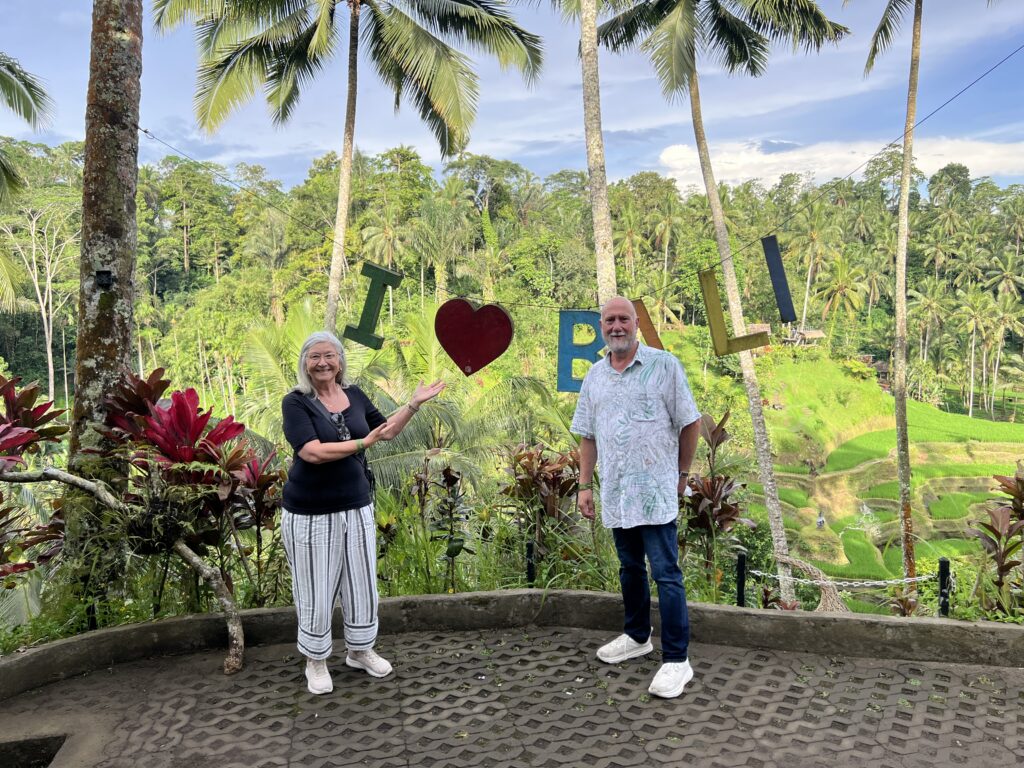
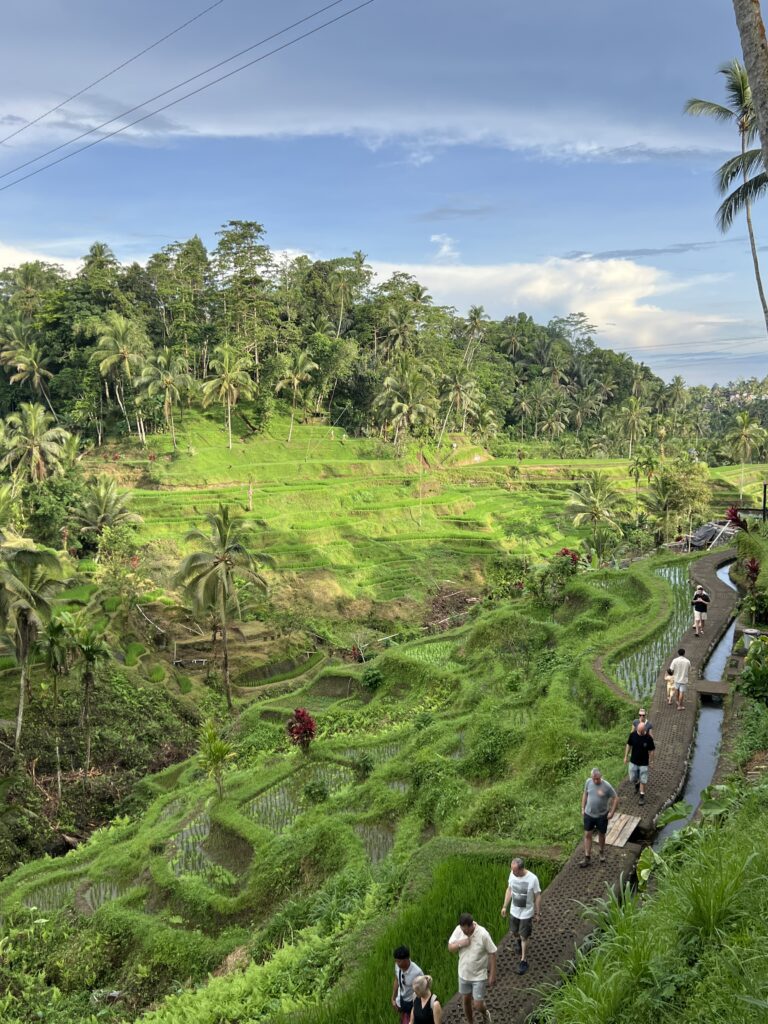
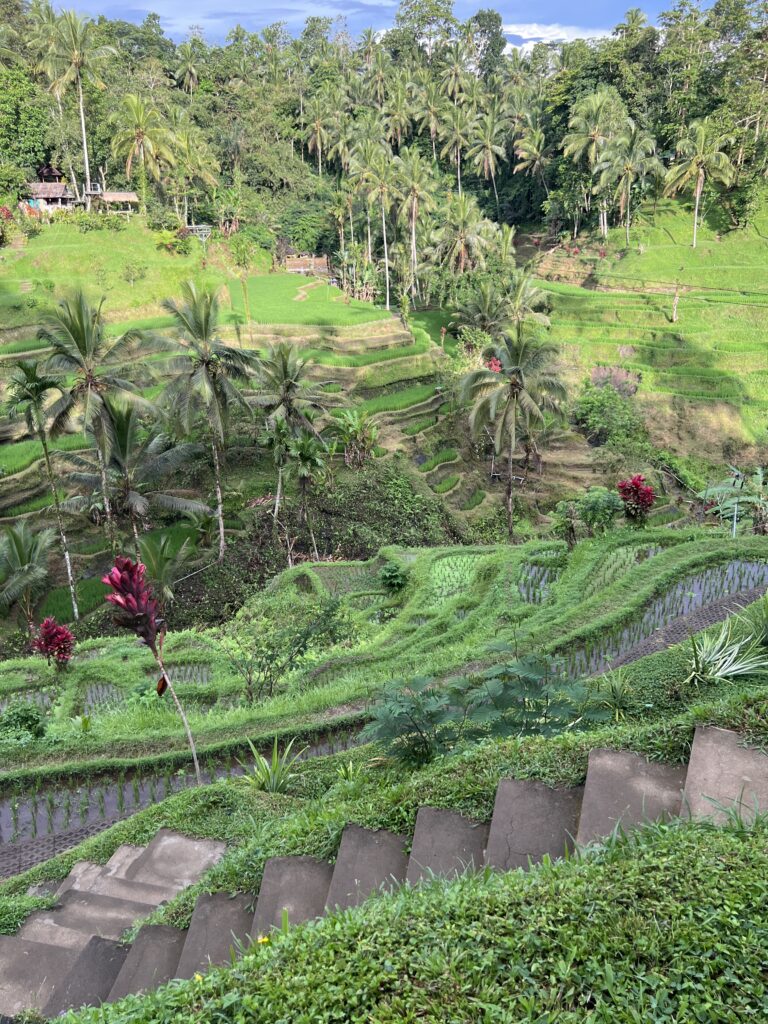
Also known as “Ubud Rice Fields”, Tegalalang Rice Terrace is located north of Ubud, the cultural centre of Bali. It has been cited as a UNESCO World Heritage Site & opens 7 days a week from 7:00 am to 6:00 pm. There is an entrance fee, possibly IDR15,000 (Aug 2020). The best times to visit is probably in the morning or after 5:00 pm when there are the least number of tourists & when it’s not so hot. Also, if you want to see the rice terrace at their greenest, consider going in the months of March & October as that’s when the paddy is about to harvest.
The traditional irrigation system is still being used right up to present day. According to history, it was started in the 8th century. The water comes from surrounding rivers & mountains. Farmers had built water canals to allow the water to flow from 1 field to the other. The pathway along the rice terrace is also very narrow.
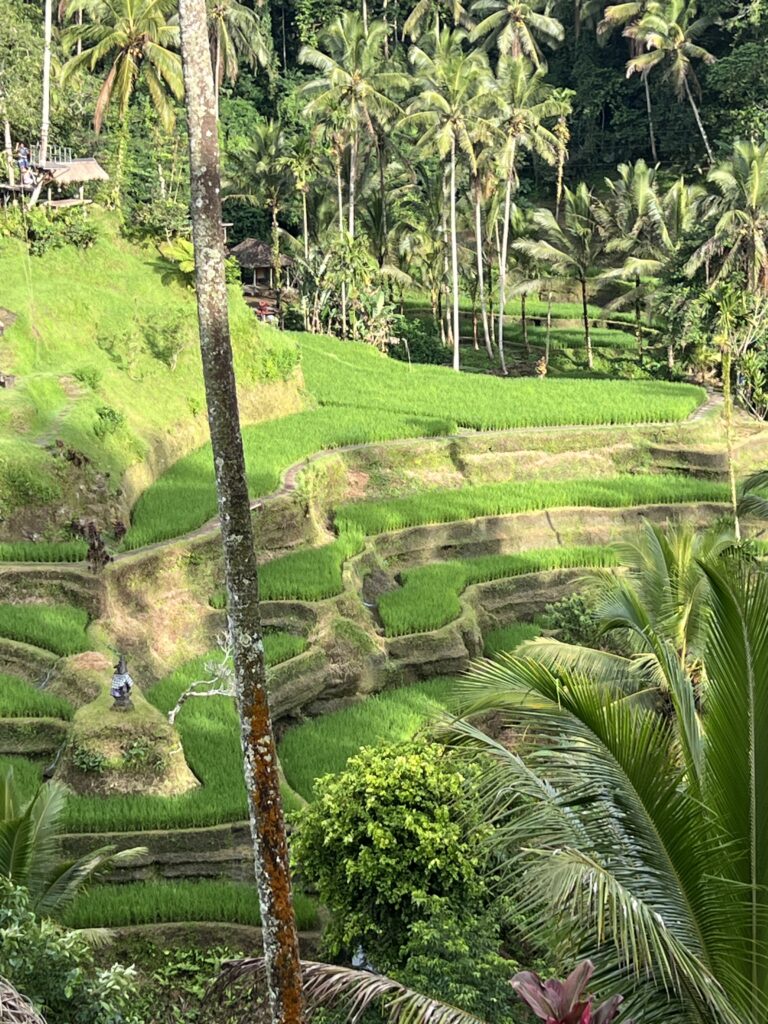
Ubud is most well-known by international travelers as the greenest part of Bali because it has a lot of tourist attractions with green features, such as lush forests, ridge walks, and rice terraces. One of the most popular green attractions here is Tegallalang Rice Fields. Also known as Tegallalang Rice Terrace, it is a series of beautifully arranged paddies which follows the traditional Balinese irrigation system called “subak.” The system is said to have been passed down by a sage named Rsi Markandeya in the 8th century.
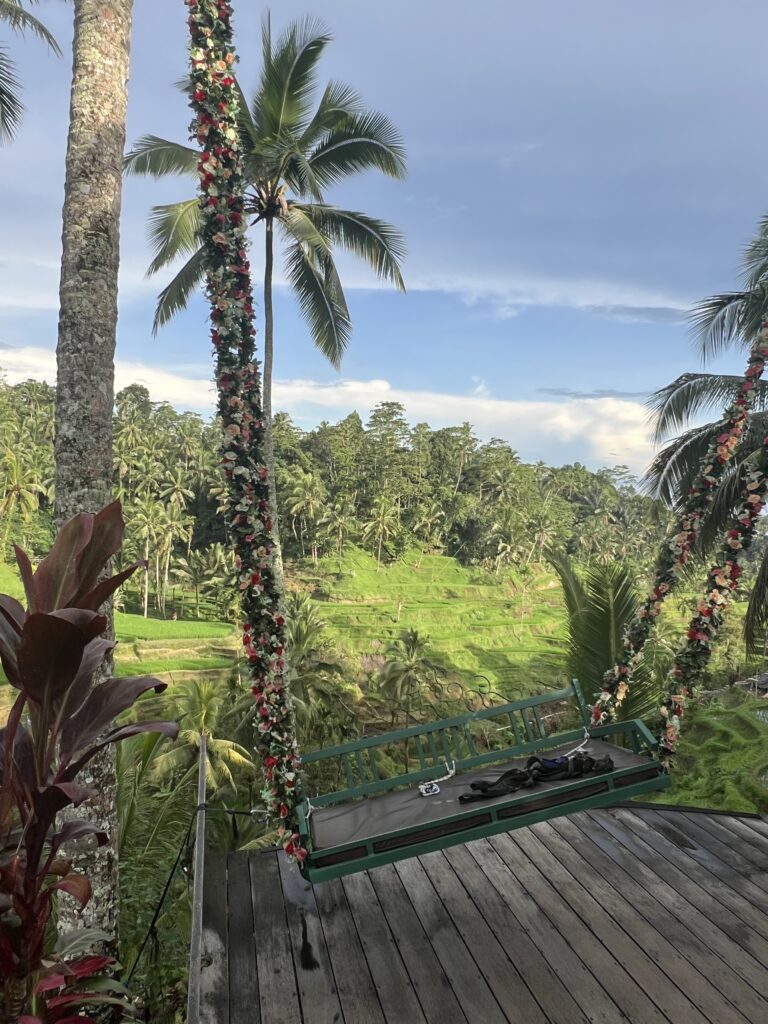
Tegallalang Rice Fields is situated in a valley that offers extraordinarily scenic lookouts over the terraces and surrounding green landscape. Along with the ones in the villages of Pejeng and Campuhan, Tegallalang Rice Fields form the three most stunning-looking terraced landscapes in Ubud region.
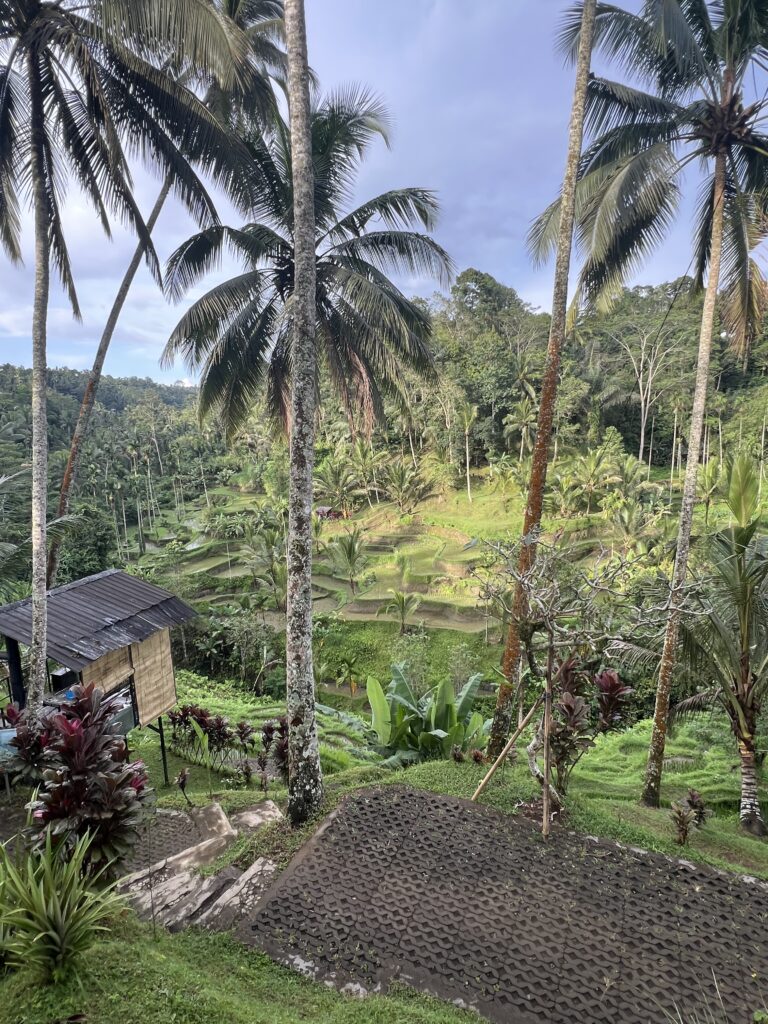
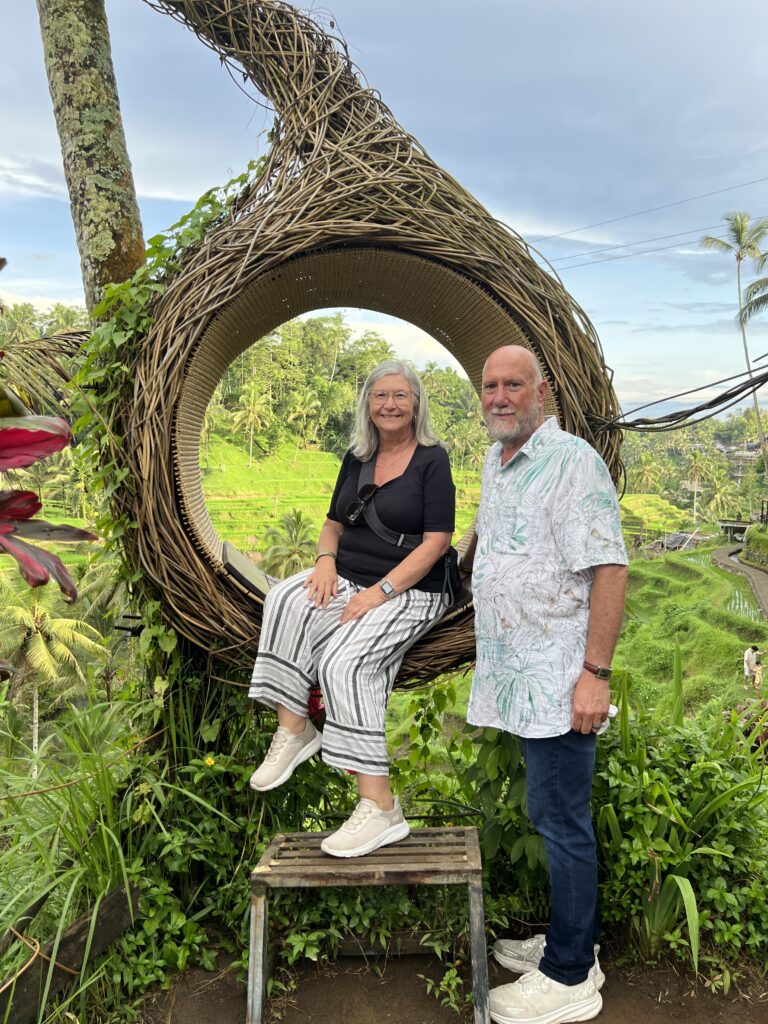
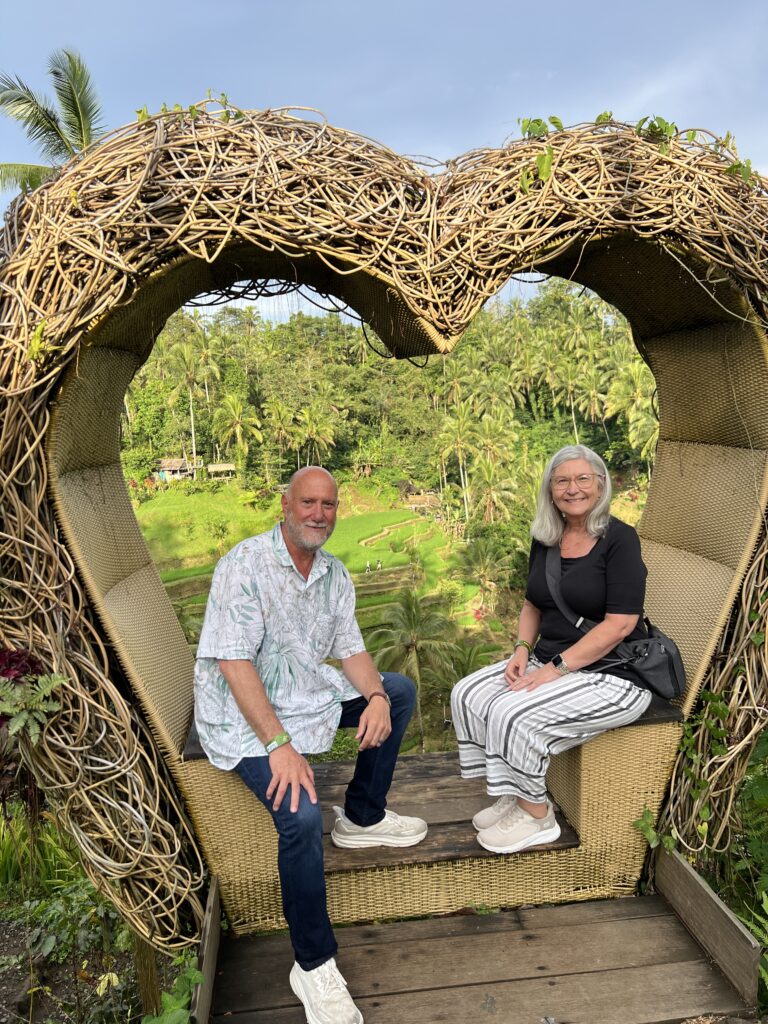
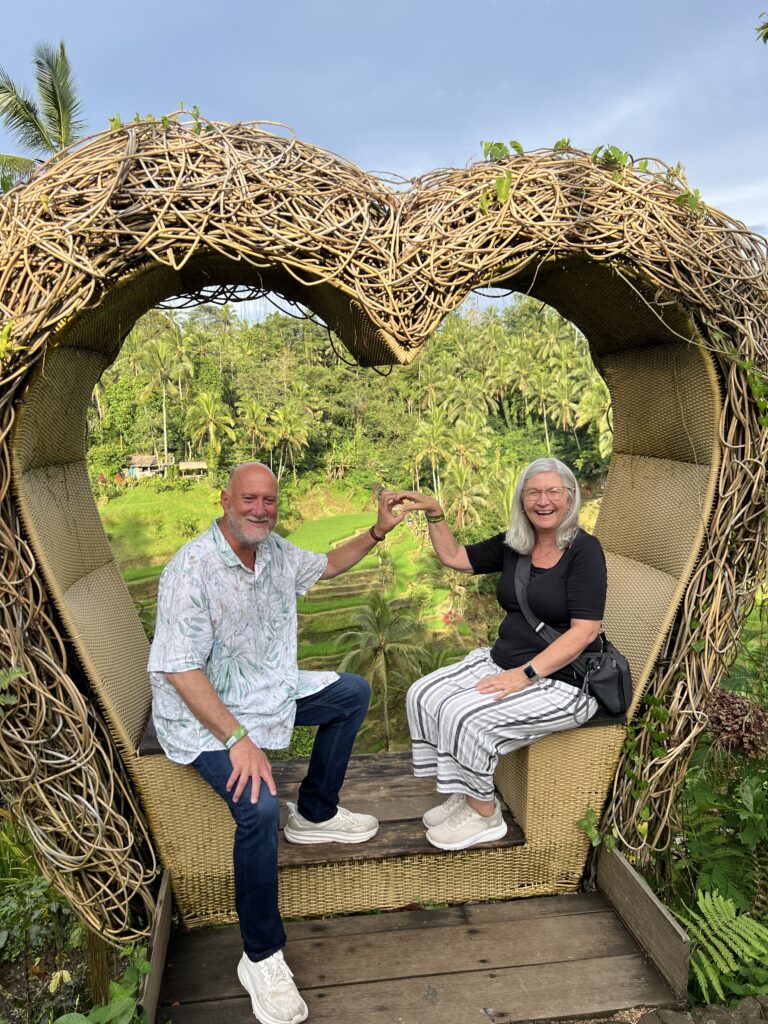
These photos do not show just how beautiful this place was.
Once you arrive at Tegalalang Rice Fields, the first thing you can obviously do is to savor the view from the top of the elevation. However, it’s also possible for you to cross a small stream and get to the rice fields on the other side. We would suggest you climb down and explore the area further to find cool spots for you to take pictures. You will need approximately 30 minutes to 1.5 hours to explore every corner of the area. It’s not that lengthy, considering what you’ll find along the exploration will make it worthwhile. Don’t forget to bring water and put on some sunscreen!
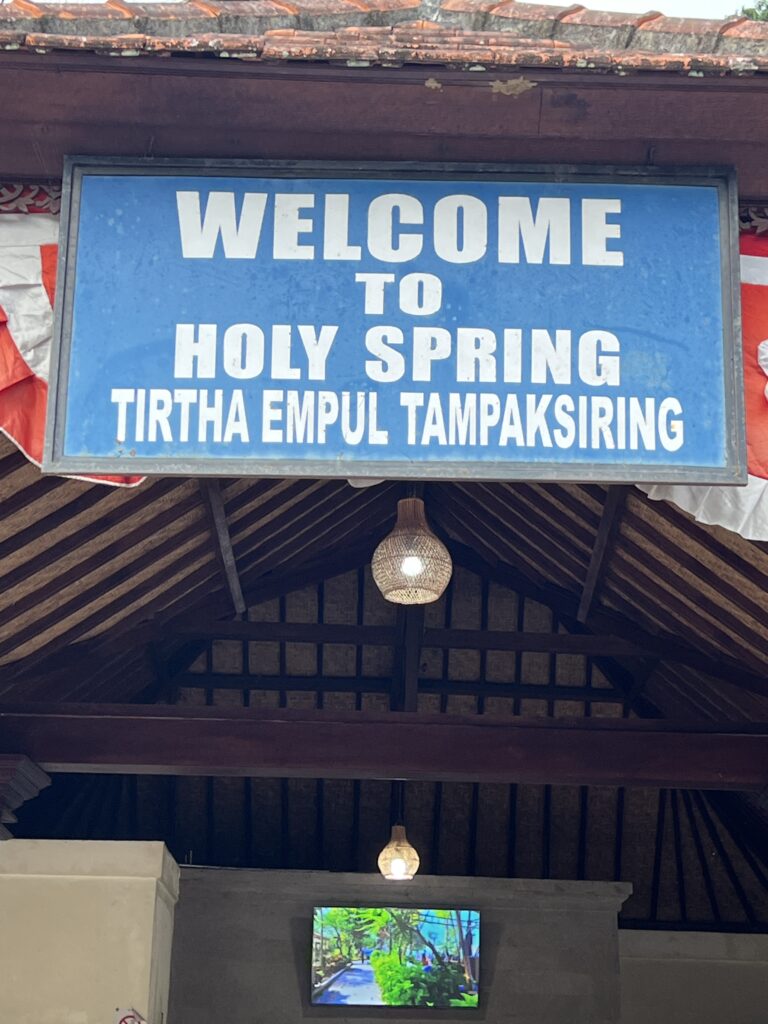
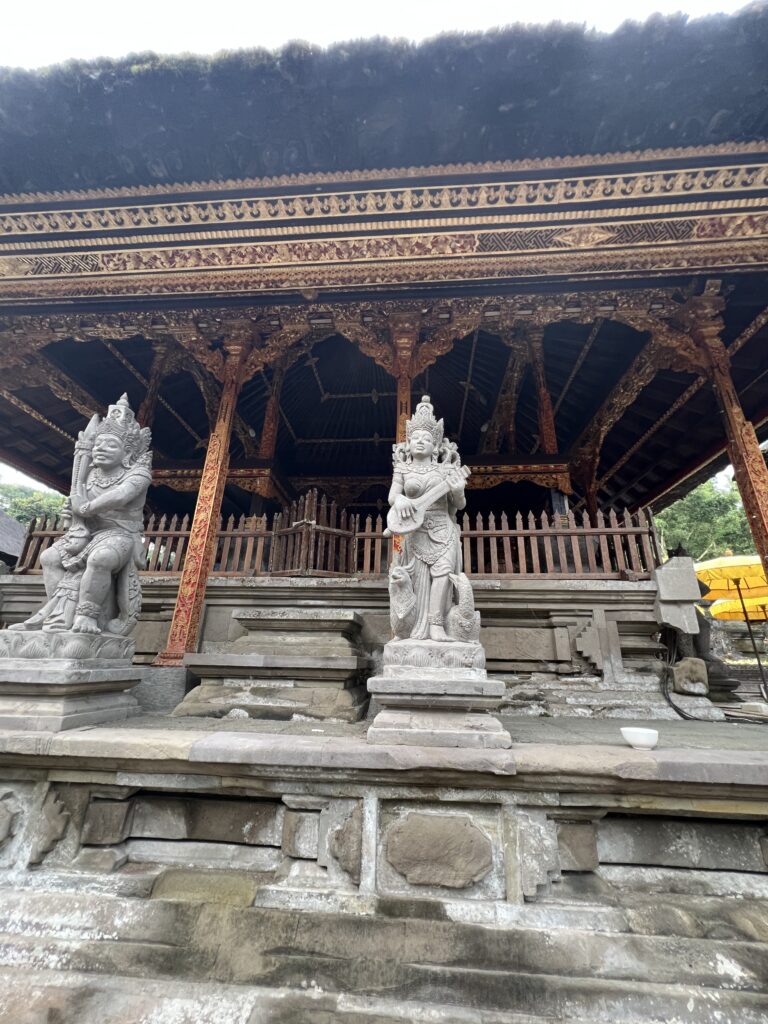
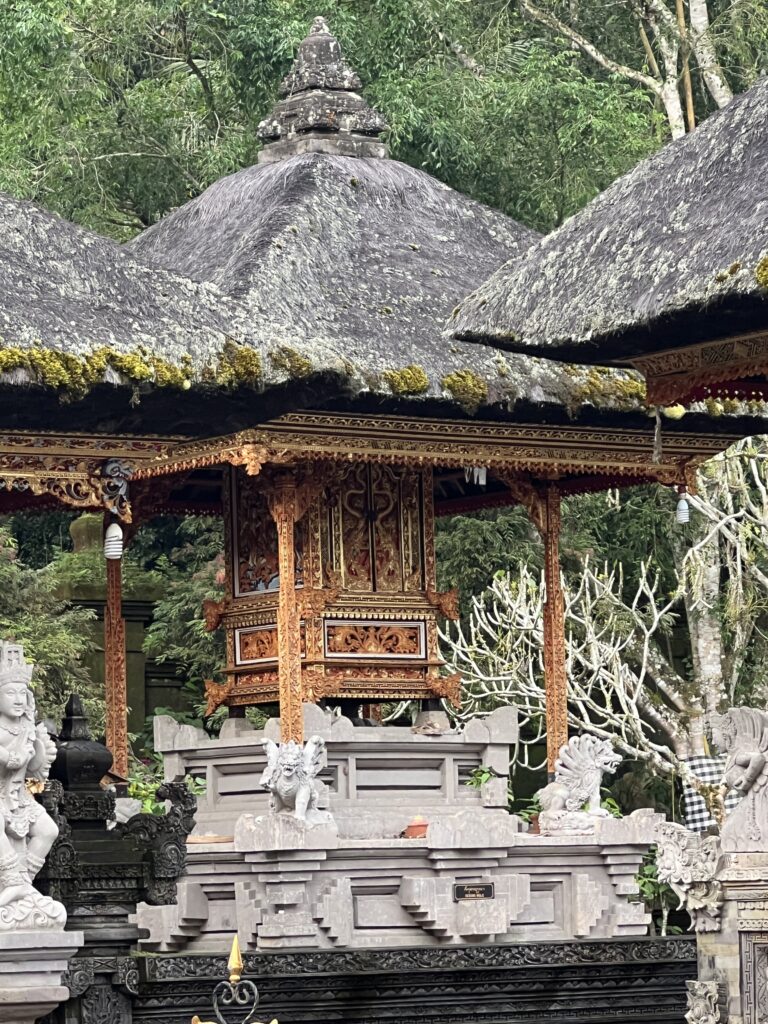
One of the busiest water temples in Indonesia, Tirta Empul is a temple considered sacred by Balinese Hindu community. The temple has several holy springs which are said to have been created by The God Indra and believed to be blessed water that could purify those who bathe there.
Tirta Empul is dedicated to Vishnu, the Hindu God of water. In the Balinese language, Tirta Empul loosely translated means water gushing from the earth, which for this reason Tirta Empul is regarded as a holy spring. The Tirta Empul Temple includes shrines to Shiva, Vishnu, Brahma, as well as one for Indra and Mount Batur. It is considered one of the five most holy temples in all of Bali and is considered one of the holiest water sources in Bali.
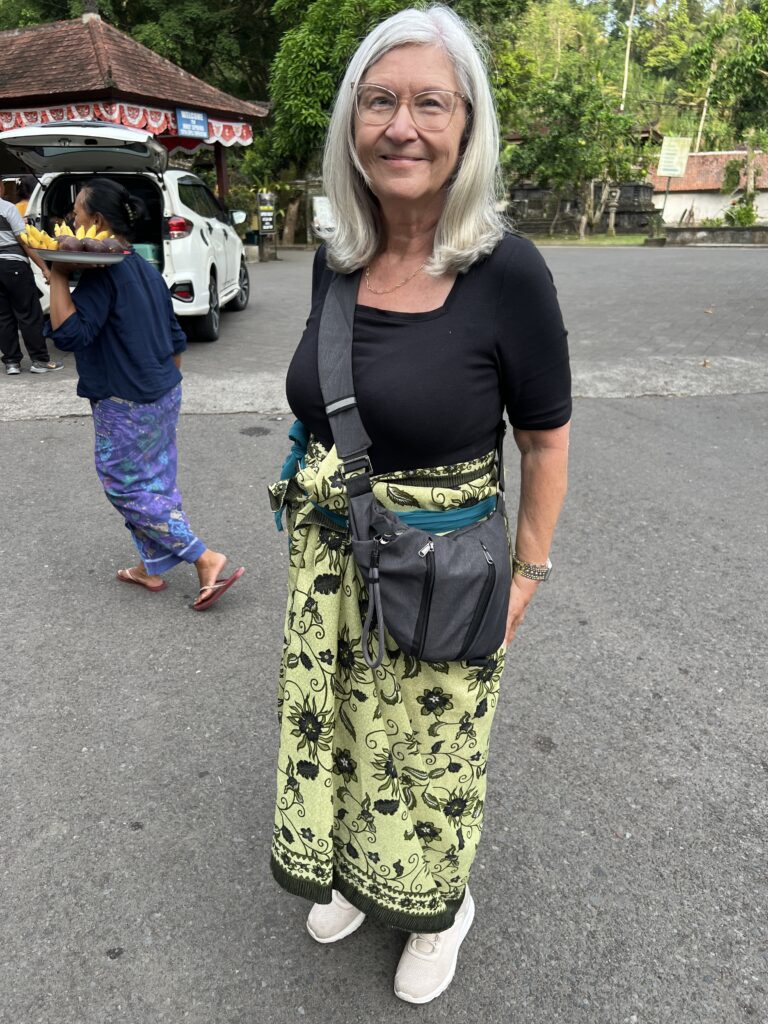
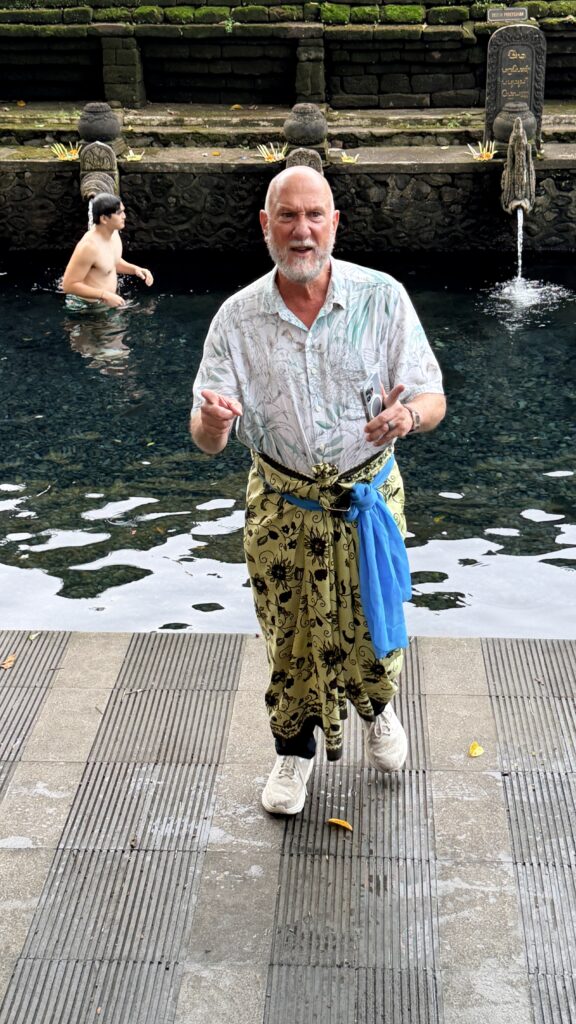
Gede tying the sarong for me
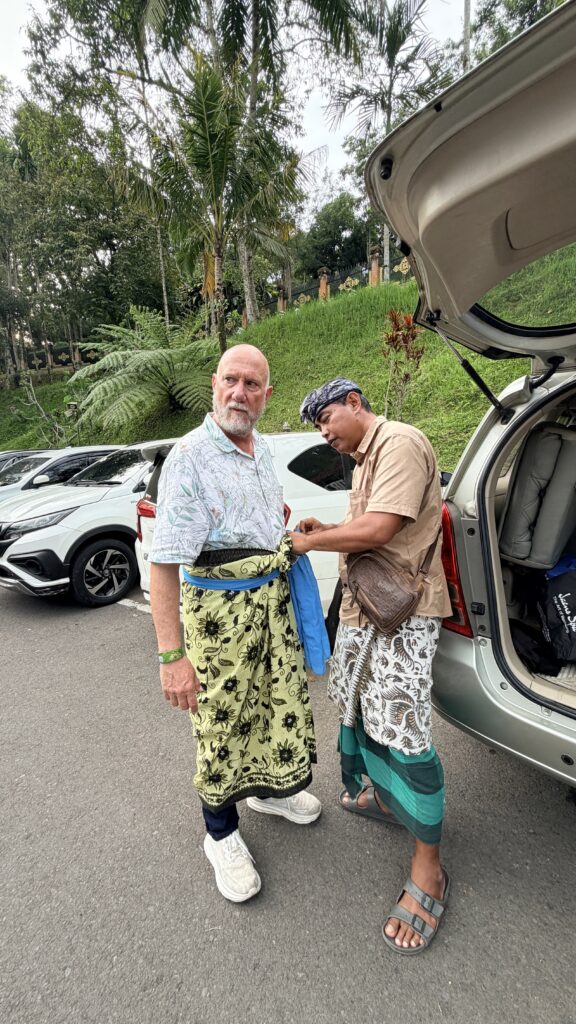
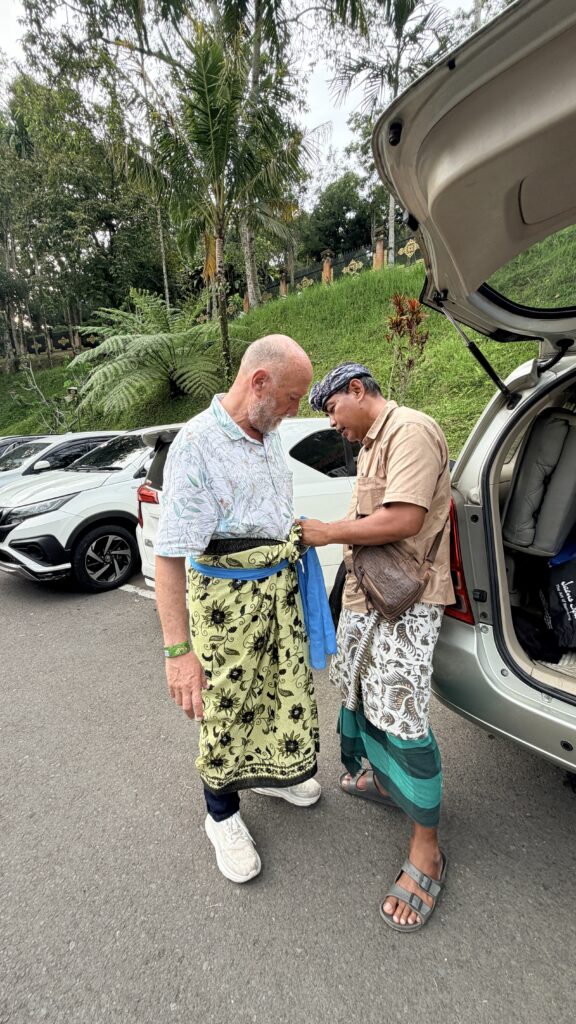
Tirta Empul temple (Indonesian: Pura Tirta Empul, Balinese script: ᬧᬸᬭᬢᬷᬃᬣᬳᭂᬫ᭄ᬧᬸᬮ᭄) is a Hindu Balinese water temple located near the town of Tampaksiring, Bali, Indonesia. The temple compound consists of a petirtaan or bathing structure, famous for its holy spring water, where Balinese Hindus go to for a ritual purification called Melukat. The temple pond has a spring which gives out fresh water regularly, which Balinese Hindus consider to be holy or amritha. Tirta Empul which means holy spring that arises from the ground.
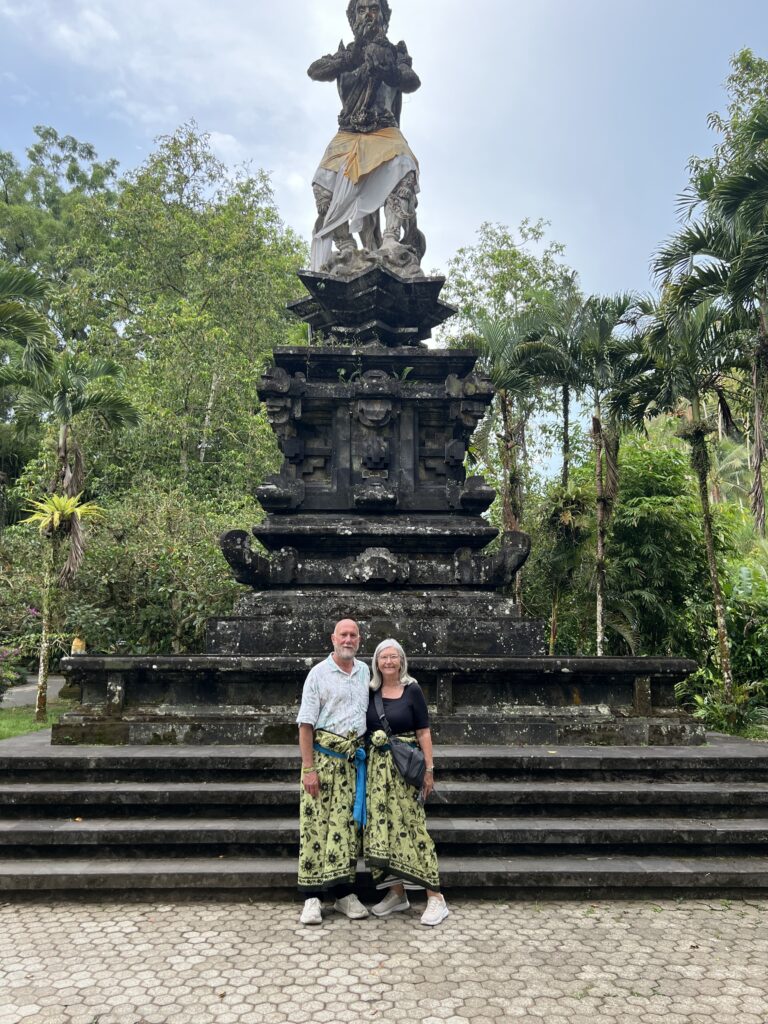
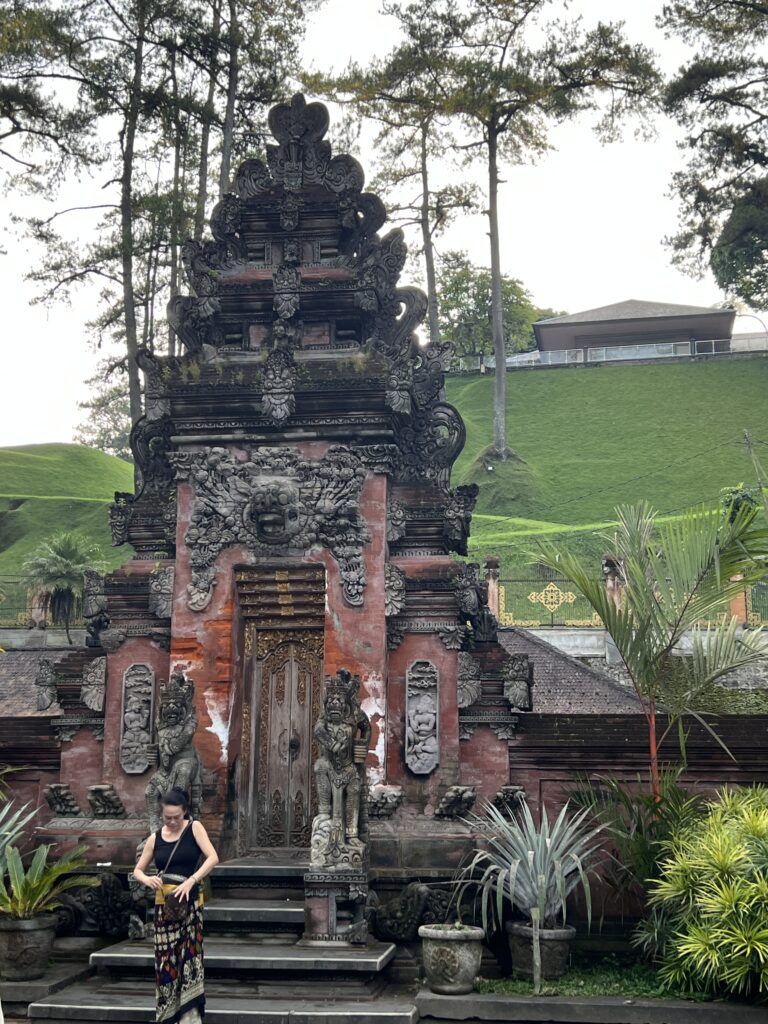
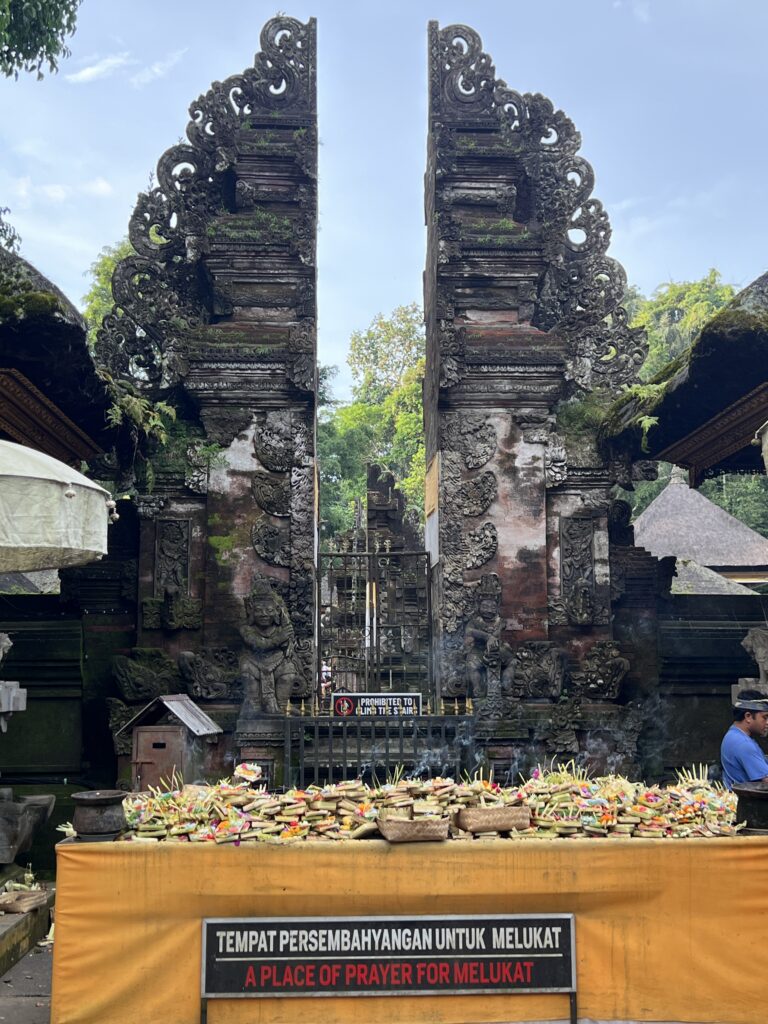
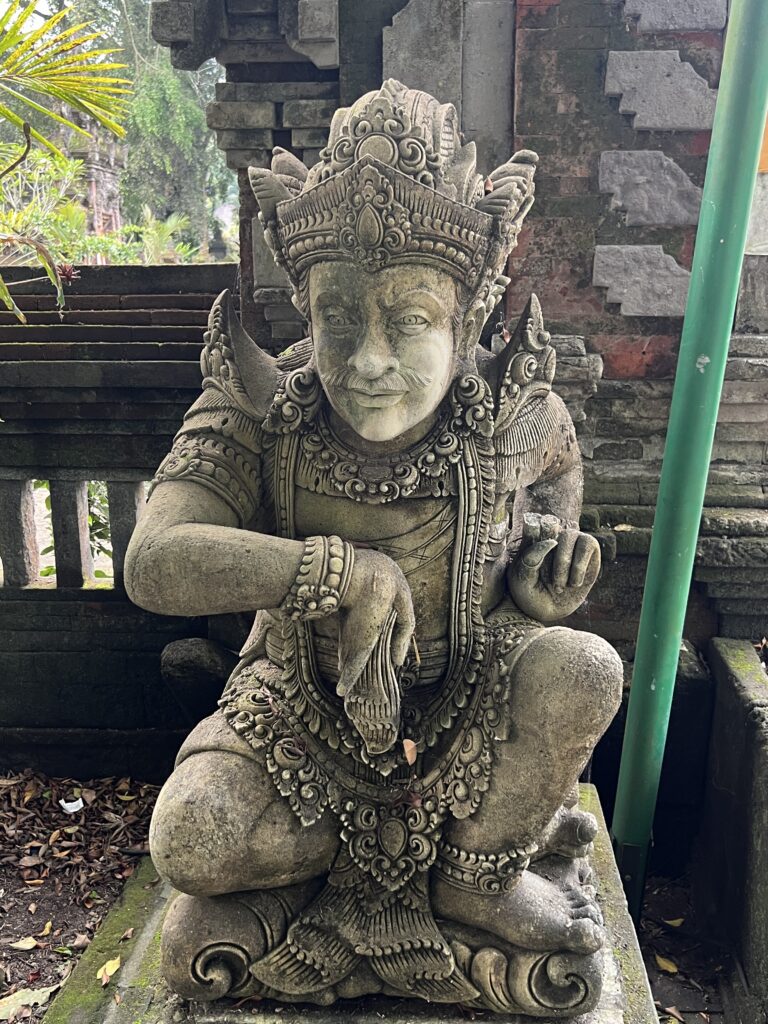
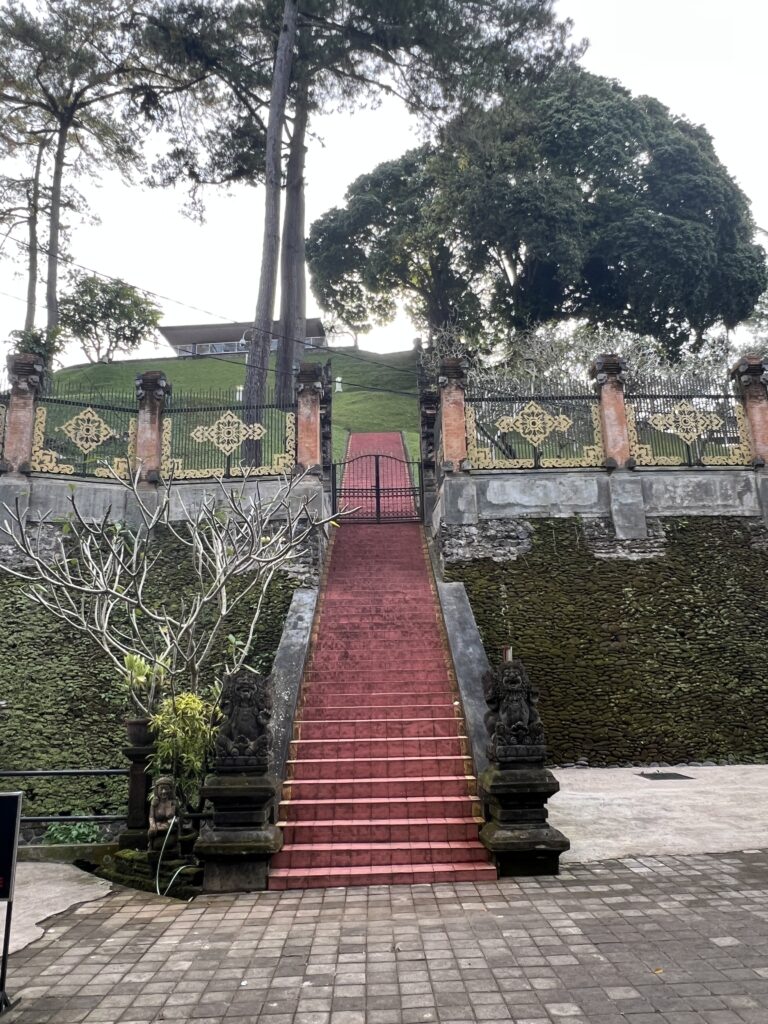
The temple is dedicated to Vishnu, another Hindu god name for the supreme consciousness Narayana. On a hill overlooking the temple, a modern villa was built for President Sukarno‘s visit in 1954. The villa is currently a rest house for important guests.
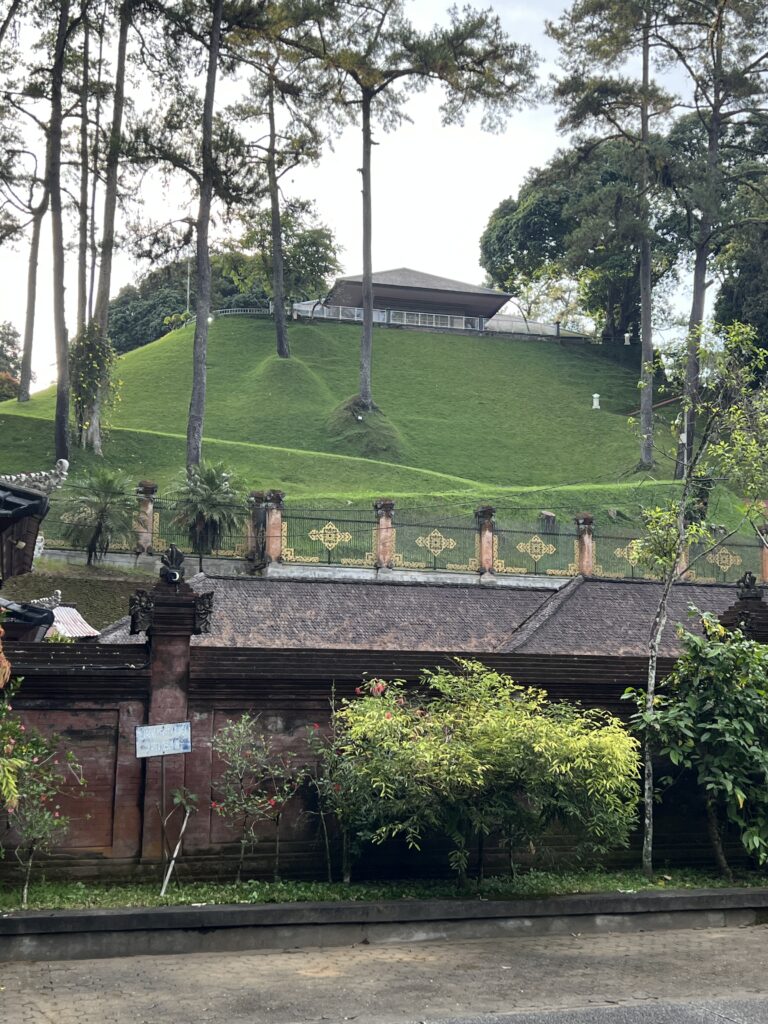
Tirta Empul Temple was founded around a large water spring in 962 A.D. during the Warmadewa dynasty (10th-14th centuries). The name of the temple comes from the ground water source named “Tirta Empul”. The spring is the source of the Pakerisan River [ban; ceb; id; ru]. The temple is divided into three sections: Jaba Pura (front yard), Jaba Tengah (central yard) and Jeroan (inner yard). Jaba Tengah contains 2 pools with 30 showers which are named accordingly: Pengelukatan, Pebersihan and Sudamala dan Pancuran Cetik (poison)
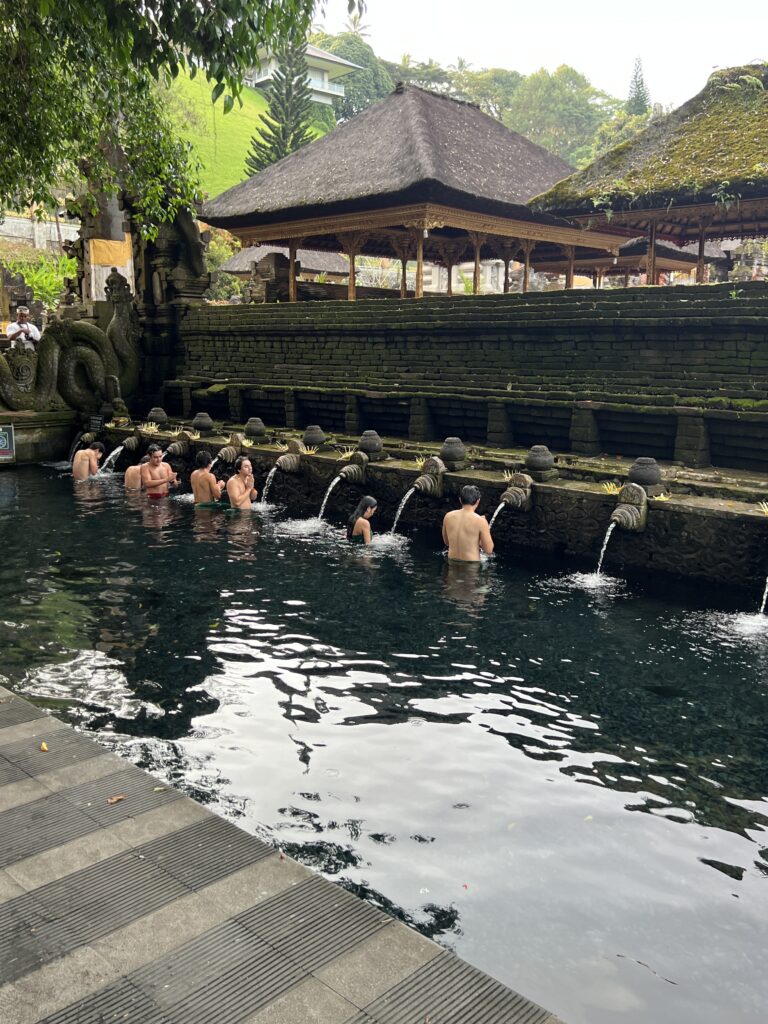
The name “Tirta Empul” translates to “holy water spring,” perfectly reflecting the temple’s essence and cultural significance. The holy spring continuously provides crystal-clear water to the temple’s intricately designed purification pools and fountains. This water is believed to hold potent healing properties, making it central to purification rituals like the Melukat Ceremony, where participants immerse themselves in a spiritual journey to cleanse their body, mind, and soul.
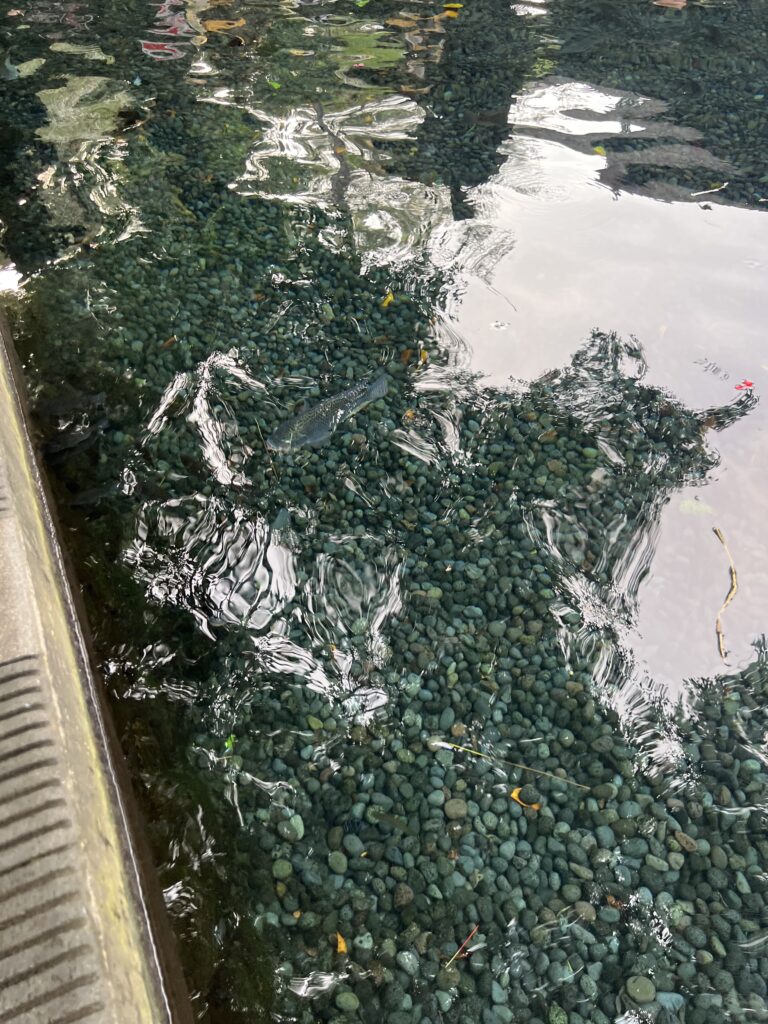
I think I remember saying after touching the cold water that I have not committed enough bad sins to have to go soak in that water…laughing. There are fish in the water where people are doing the showers and I am showing how big the fish are.
Steps up to the Presidential Palace
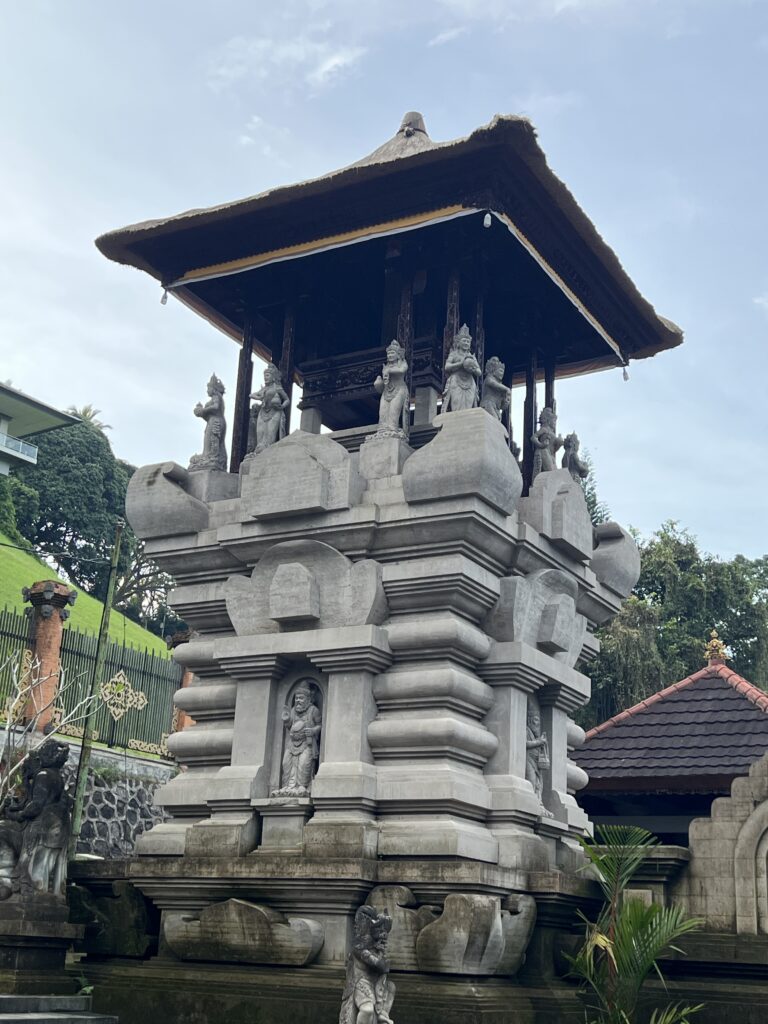
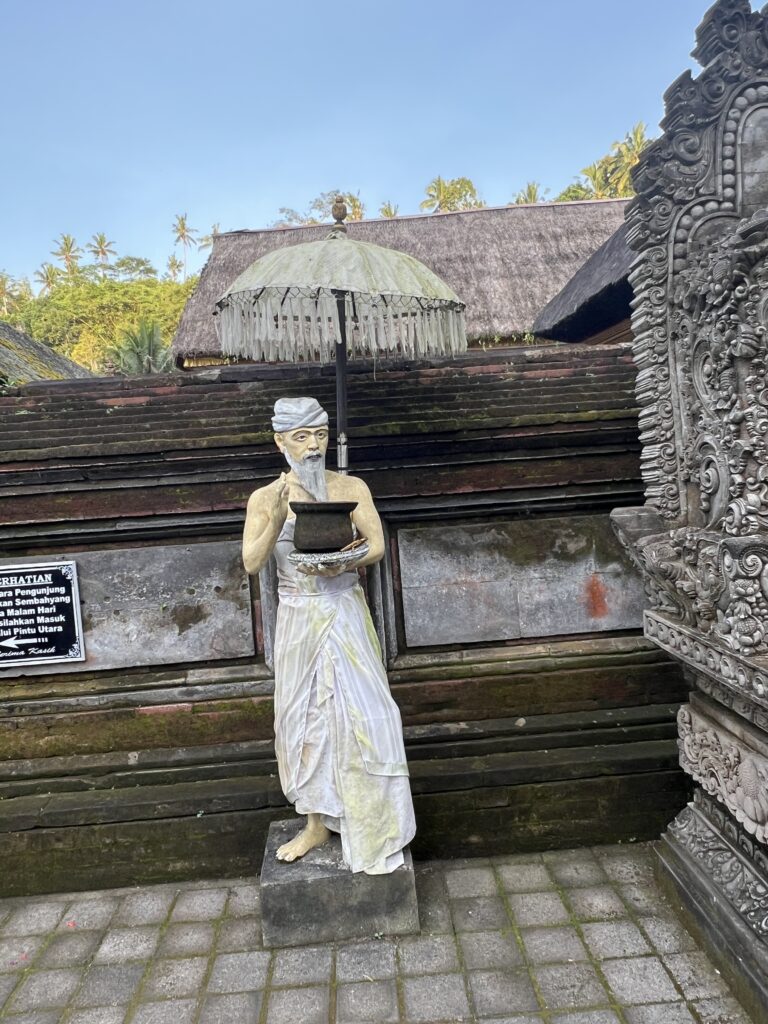
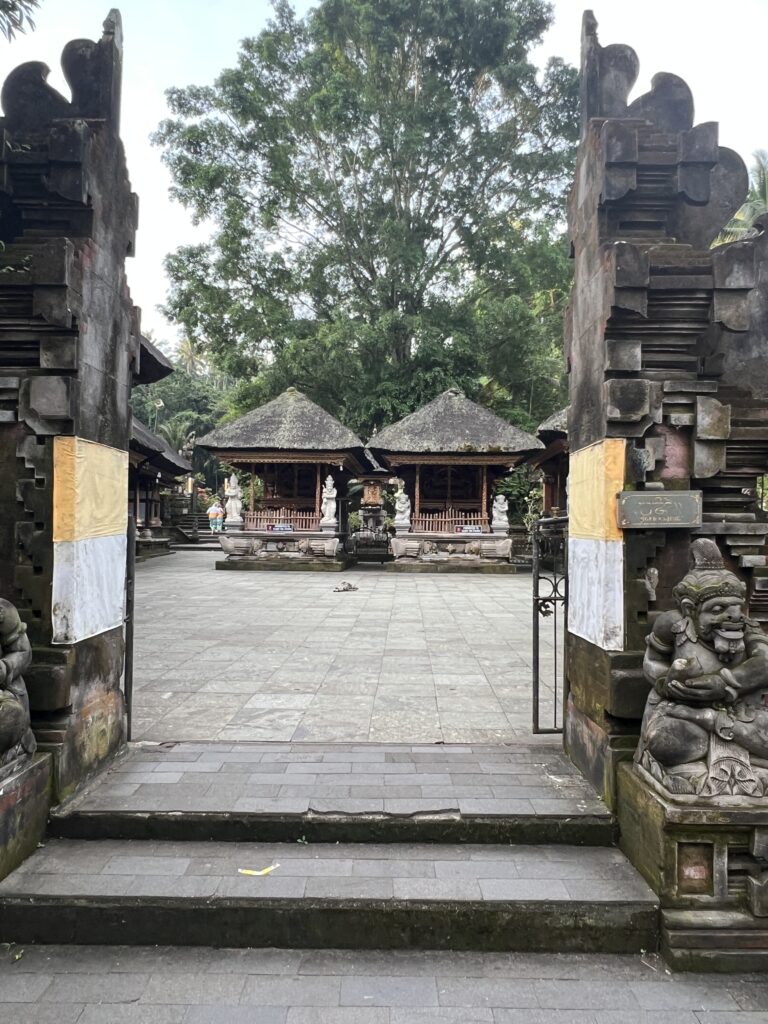
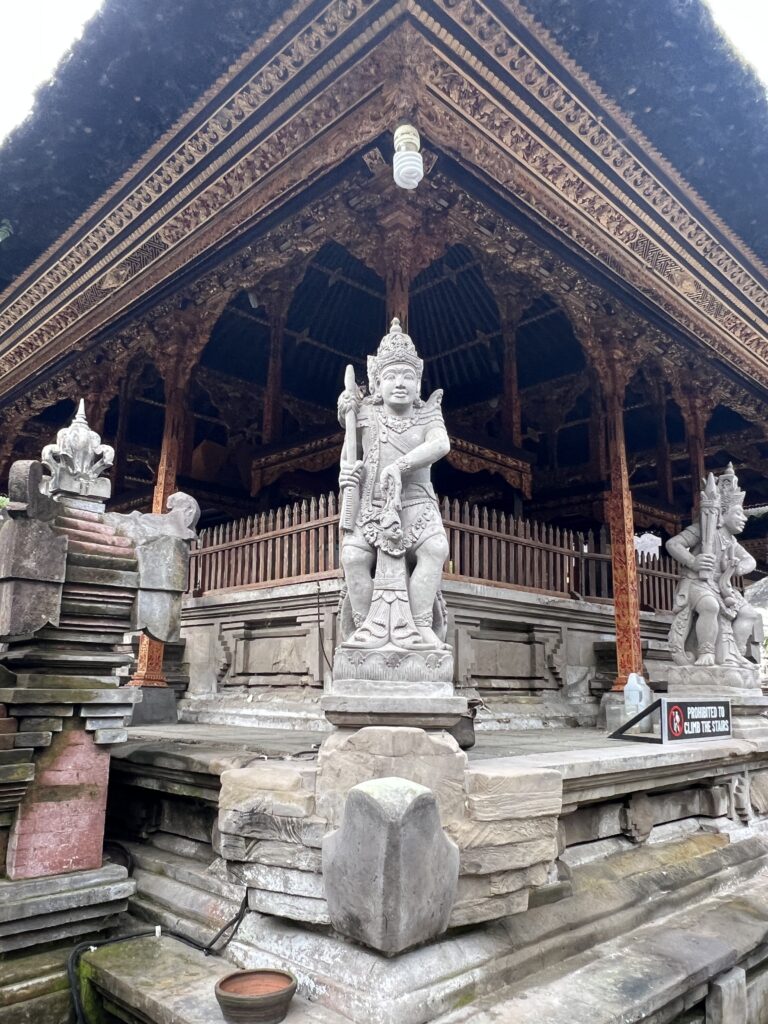
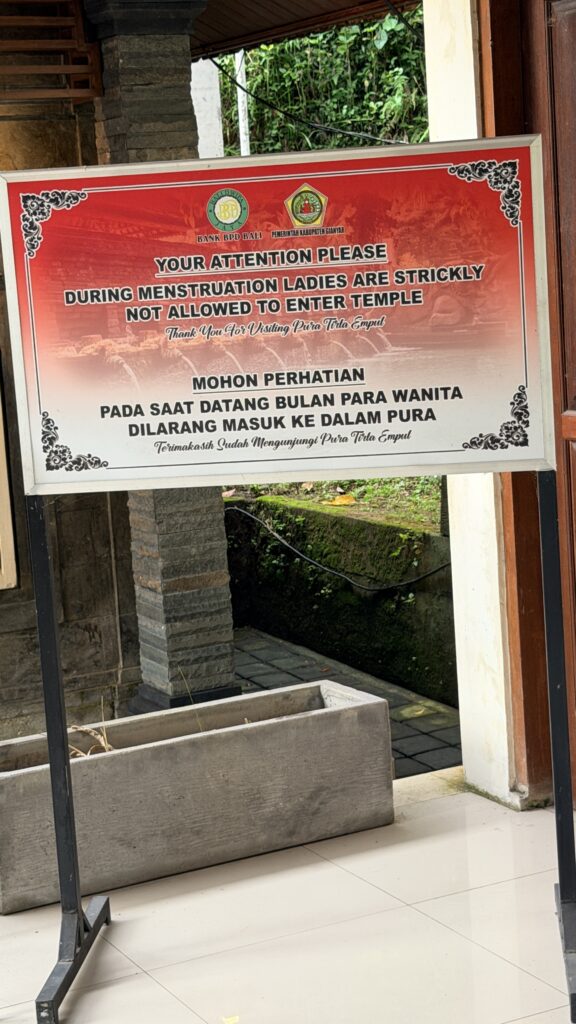
The Melukat Ceremony at Tirta Empul Temple is a unique Balinese purification ritual that utilizes holy water to cleanse the body, mind, and spirit of negative energies, promoting inner peace and balance. This deeply spiritual practice is essential for many Balinese Hindus, as it embodies the desire for renewal and healing.
At Tirta Empul Temple, participants are guided by friendly, experienced local guides who lead them through each stage of the ritual with care and significance. The ceremony begins with prayers, followed by purification under the sacred spring’s water. Each step of the ritual carries profound meaning, believed to heal emotional wounds, alleviate stress, and pave the way for a harmonious life. This ritual is also believed to help with both medical and non-medical ailments, support career and business endeavors, and even assist in matters of the heart.
This is the source of water that runs through the temple and people shower in for cleansing their souls and body
The Legend of Creation
Based on a manuscript called Usana Bali, the creation of Tirta Empul involves the myth of an epic battle between a powerful yet wicked king named Mayadenawa and a God, Bhatara Indra. The king did not believe in God, and forbade his subject from worshipping God. He was also dangerous. He possessed a spiritual power but was too drunk with his power and carelessly used it for black magic. Seeing the chaos, a priest named Sang Kulputih prayed to Bhatara Indra to put an end to the evil king.
Later, Bhatara Indra and his warriors came to attack Mayadenawa and dethroned him. Mayadenawa and his troops fled to the north of a village which is now known as ‘Tampak Siring’. At night, when Bhatara Indra’s army were deep asleep, Mayadenawa snuck into their camp and created a beautiful but poisonous spring that the army would drink from upon waking up. When Mayadenawa crept into the camp, he walked on the sides of his feet so as not to leave footprints–this is believed to be the origin of the village’s name, ‘Tampak Siring’, which translates as ’tilted footprint’.
In the morning, Bhatara Indra awoke to find his men were poisoned to death. It was then, through his power as a God that he pierced the ground with his staff, creating a sacred healing spring of holy water. The water was sprayed onto the dead army and they came back to life. This water source which is believed to have healing properties and a source of life came to be known as Tirta Empul.
Knowing that his plan had failed, Mayadenawa tried to transform himself into all sorts of different beings but to no avail, since Bhatara Indra continued to chase him. When at last he transformed himself into a boulder, Indra shot an arrow through it, and eventually killed the evil king. The blood of Mayadenawa that gushed from the boulder is believed to have formed the Petanu River, and for over a thousand years, the river was cursed making rice grow rapidly, but having an awful reek of blood. The Balinese Hindu people commemorate the death of Mayadenawa every 210 days in the Balinese traditional calendar as the day when Virtue triumphs over Evil in the ritual and ceremony called Galungan.
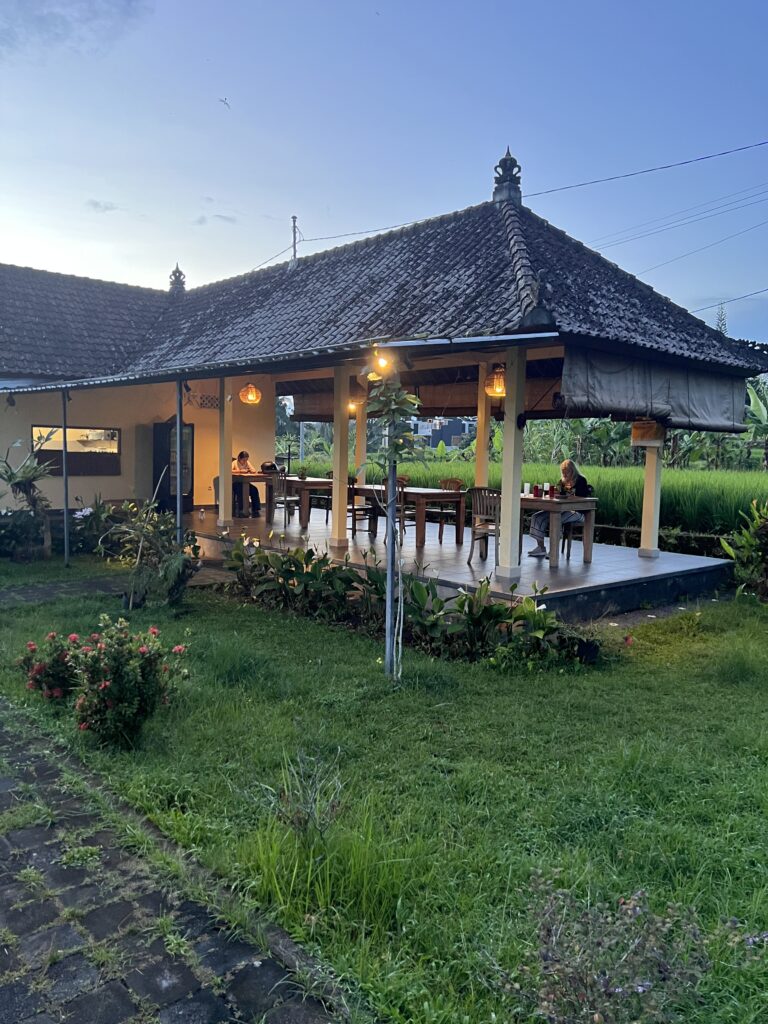
After visiting the Holy Spring, it was time to end the day and Gede suggested dinner at a small restaurant owned by his sister. It was a good suggestion as we enjoyed the small restaurant and awesome atmosphere in a rice field and excellent food.
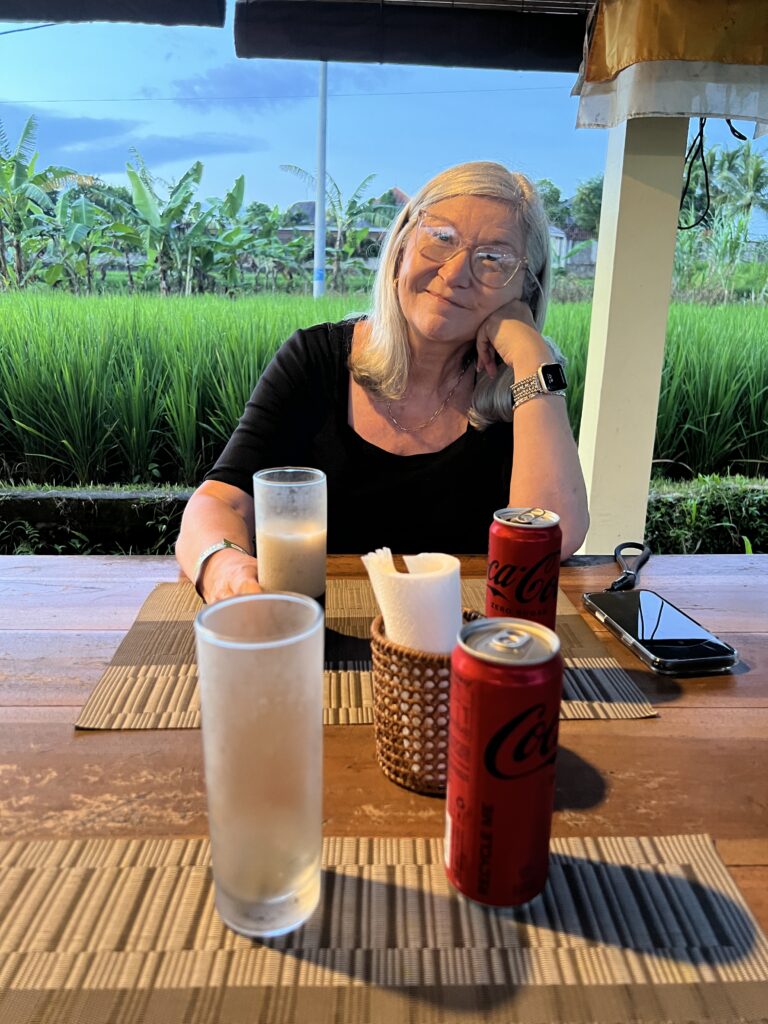
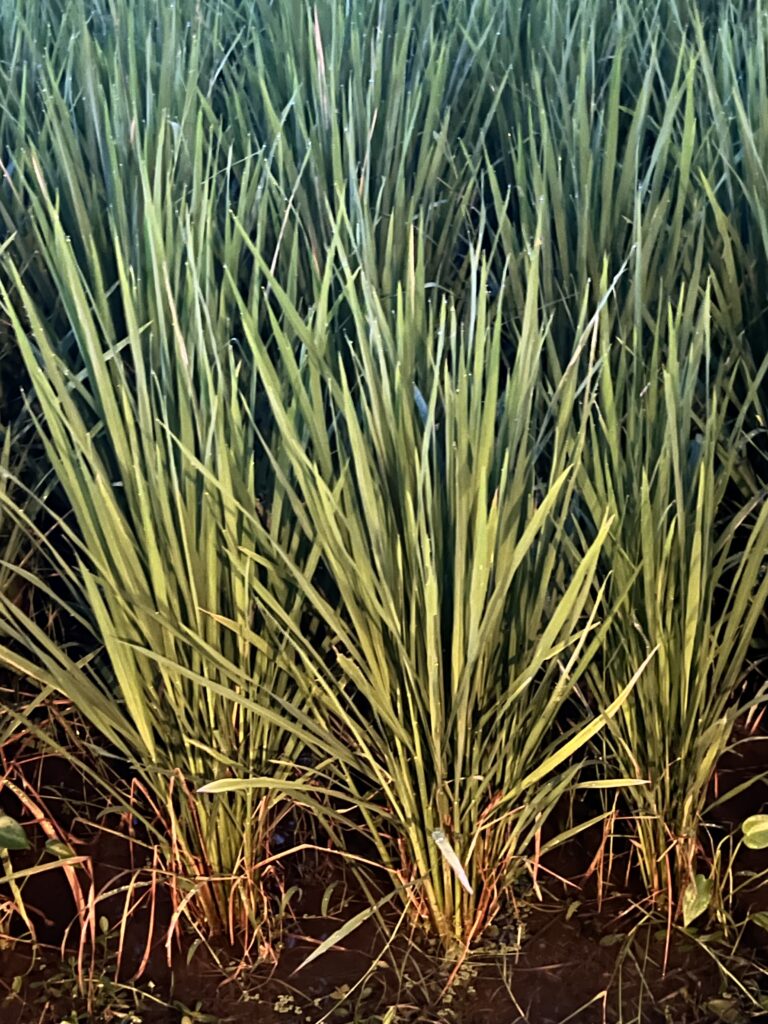
Look at the rice field behind Jackie. As it got darker, we could see fireflies in the rice.
Gede’s sister who owns the restaurant, her husband and their daughter
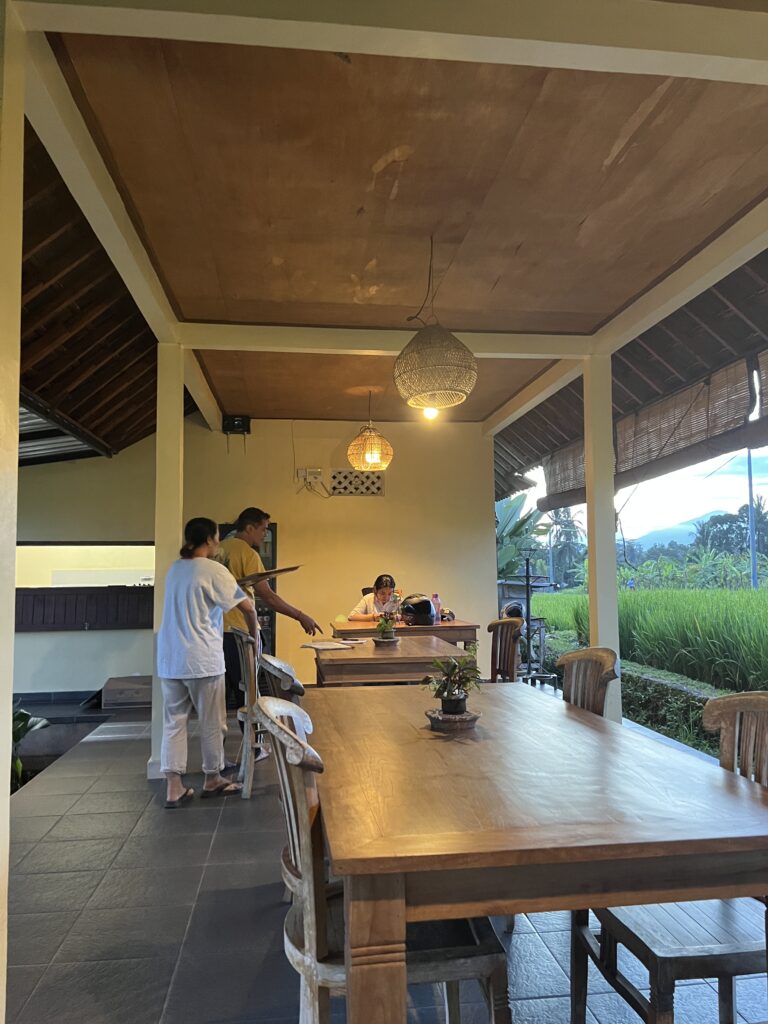
It was a quick but long day and we were both tired at this point
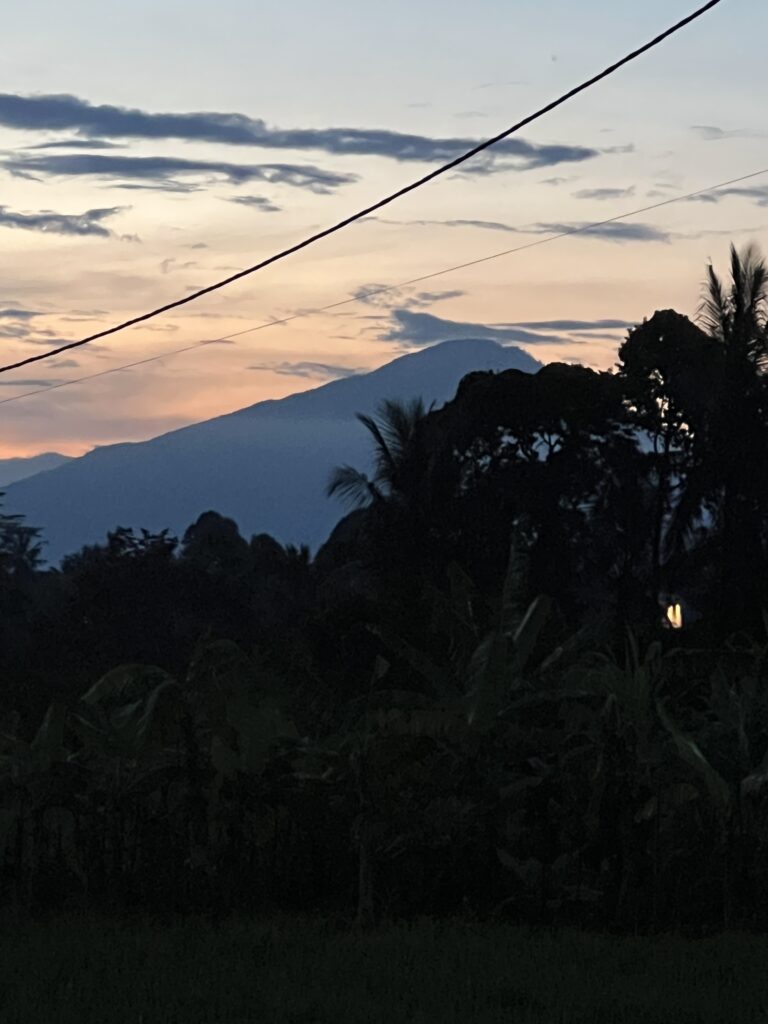
You could see three mountains from the restaurant and made for a beautiful photo as the sun dropped
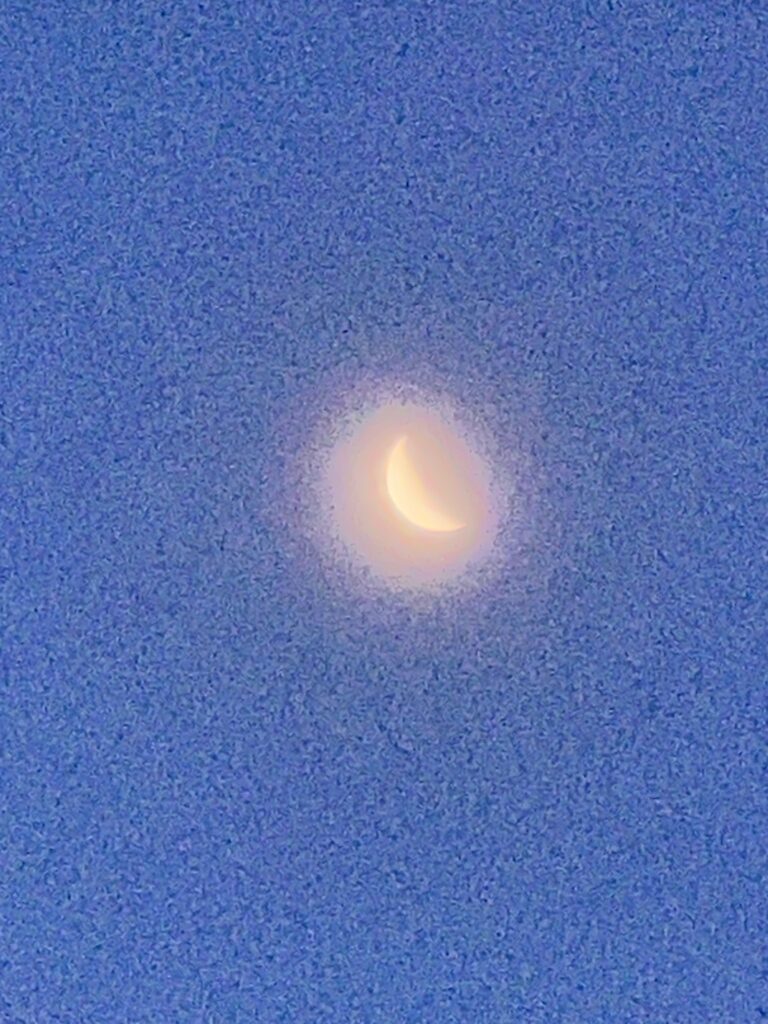
Captured a photo of the moon
The rice fields are all over Ubud and the surrounding area
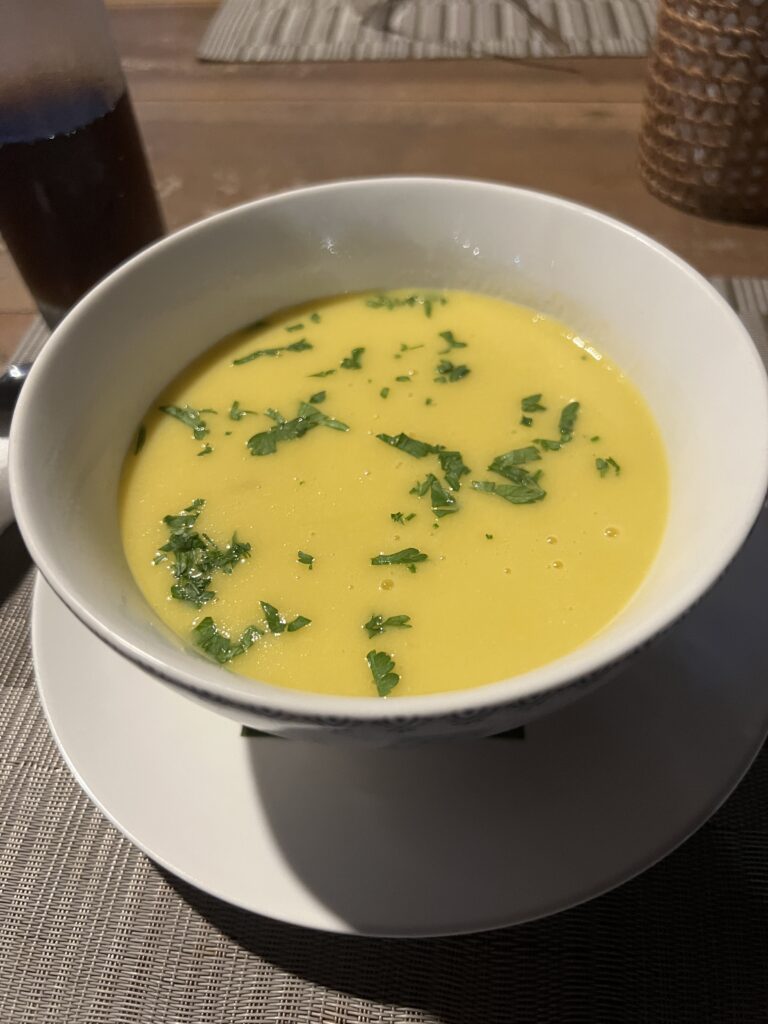
I started with sweet corn bisque which was great
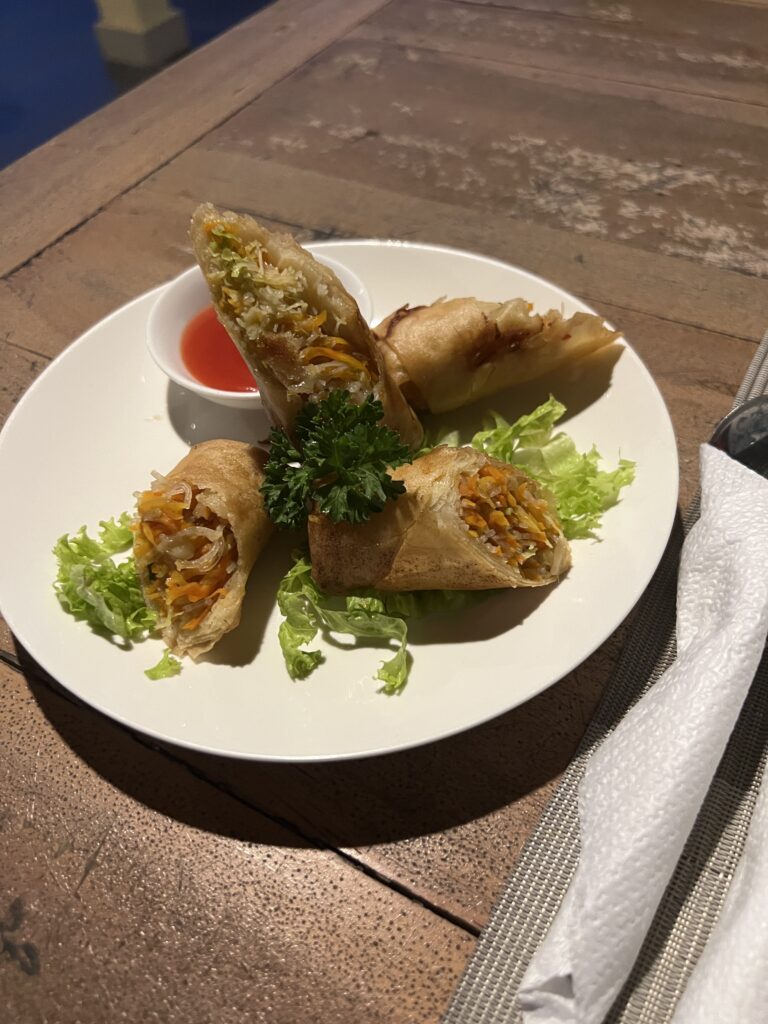
I also had vegetable egg rolls. These were also very good
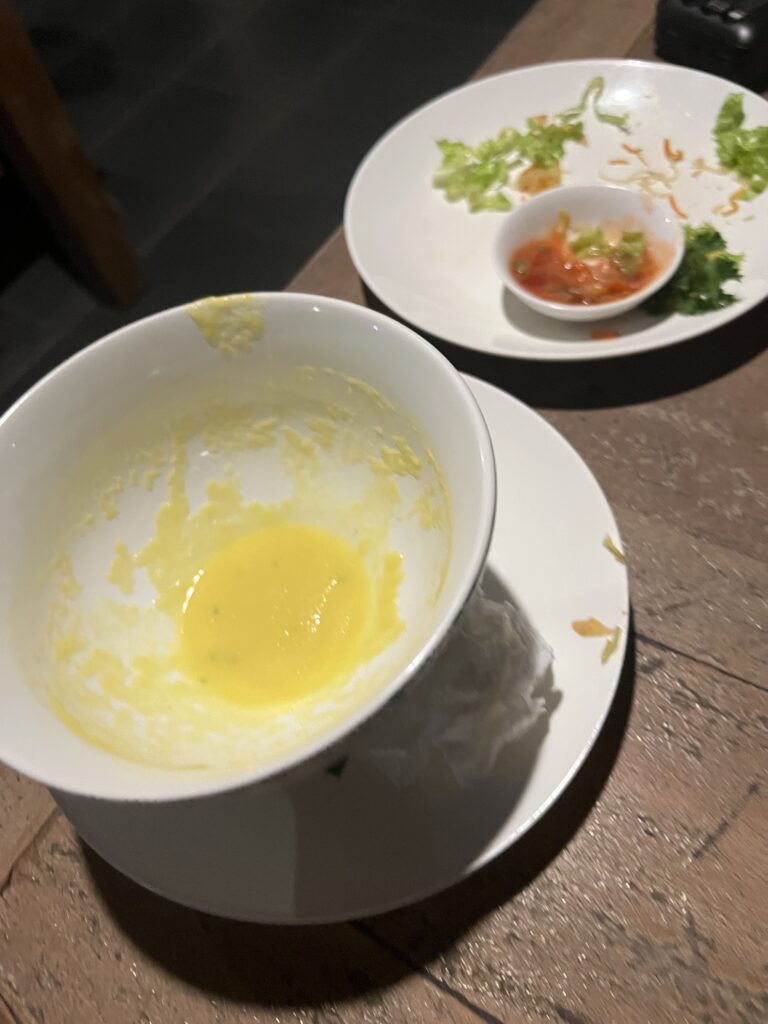
I guess you can say that I liked my dinner 🙂
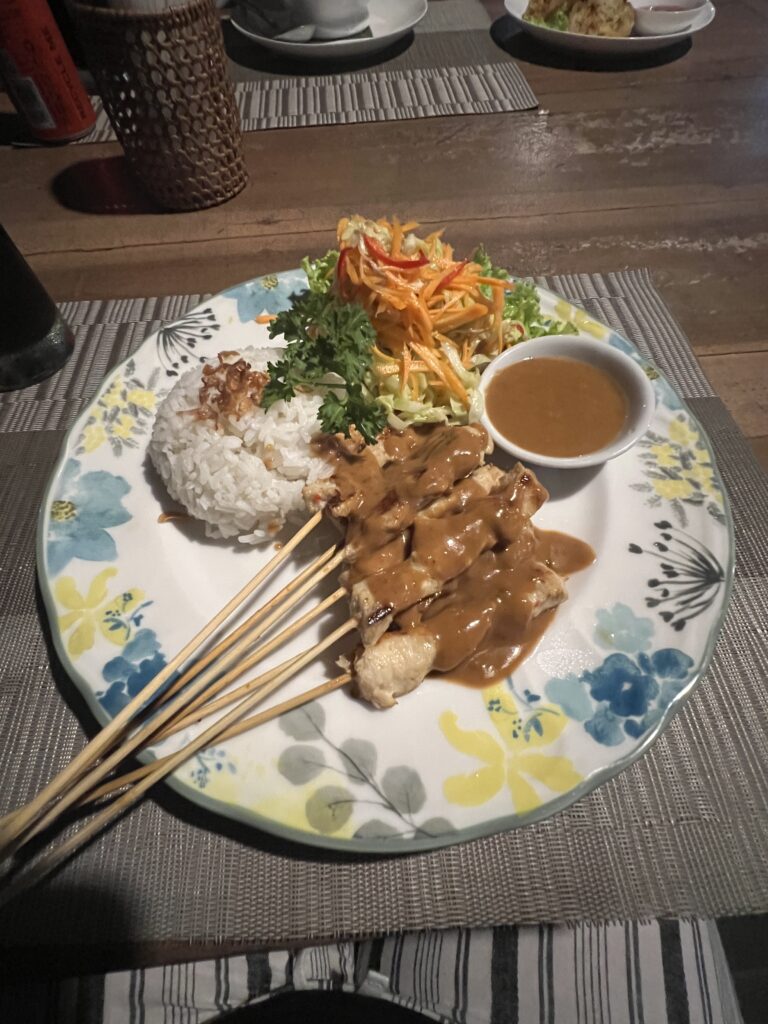
Jackie had chicken satay and she said it was very good
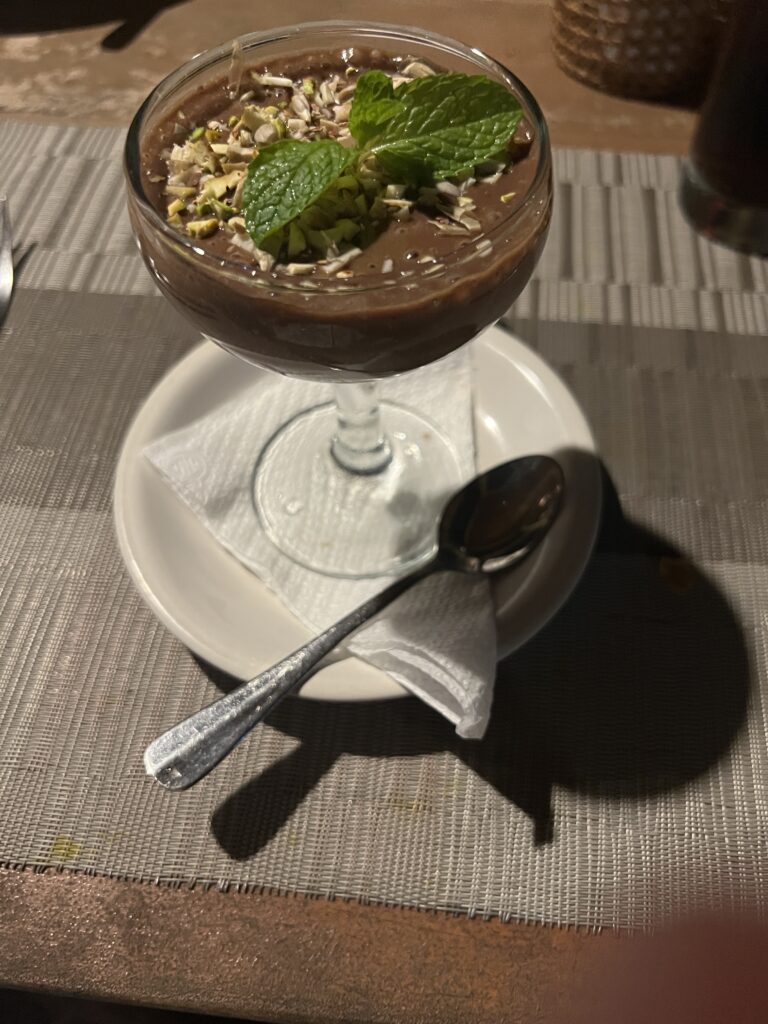
I had a chocolate pudding for dessert
Mangosteen fruit which we have never eaten before, but it was really great tasting
Gede and his wife
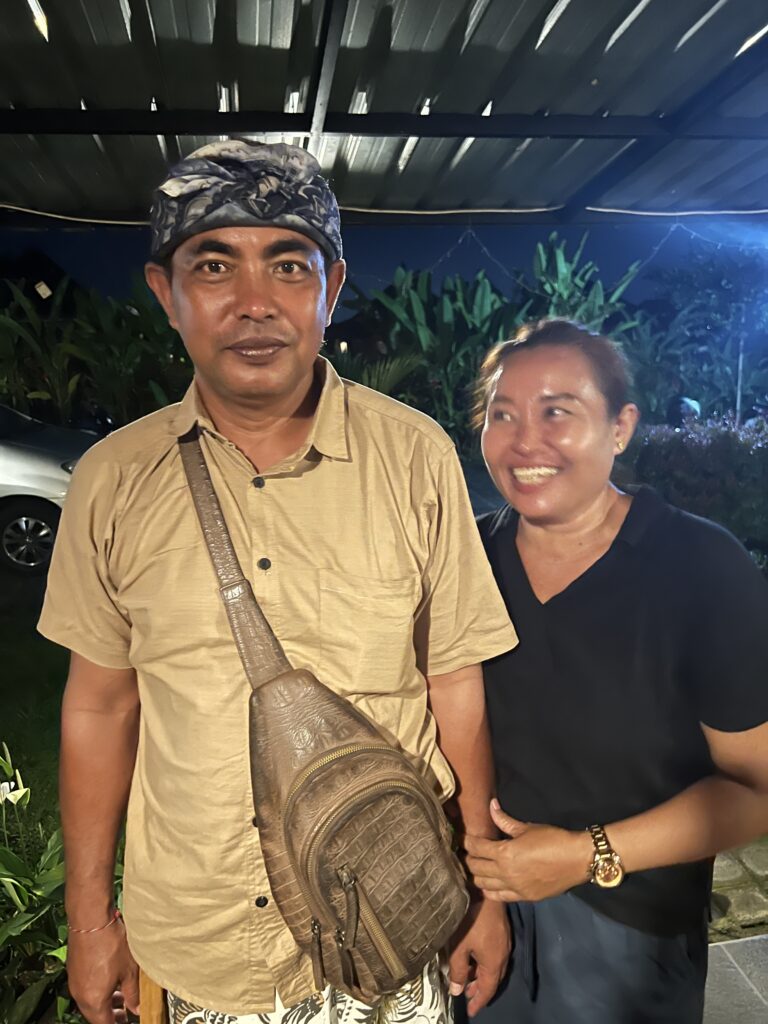
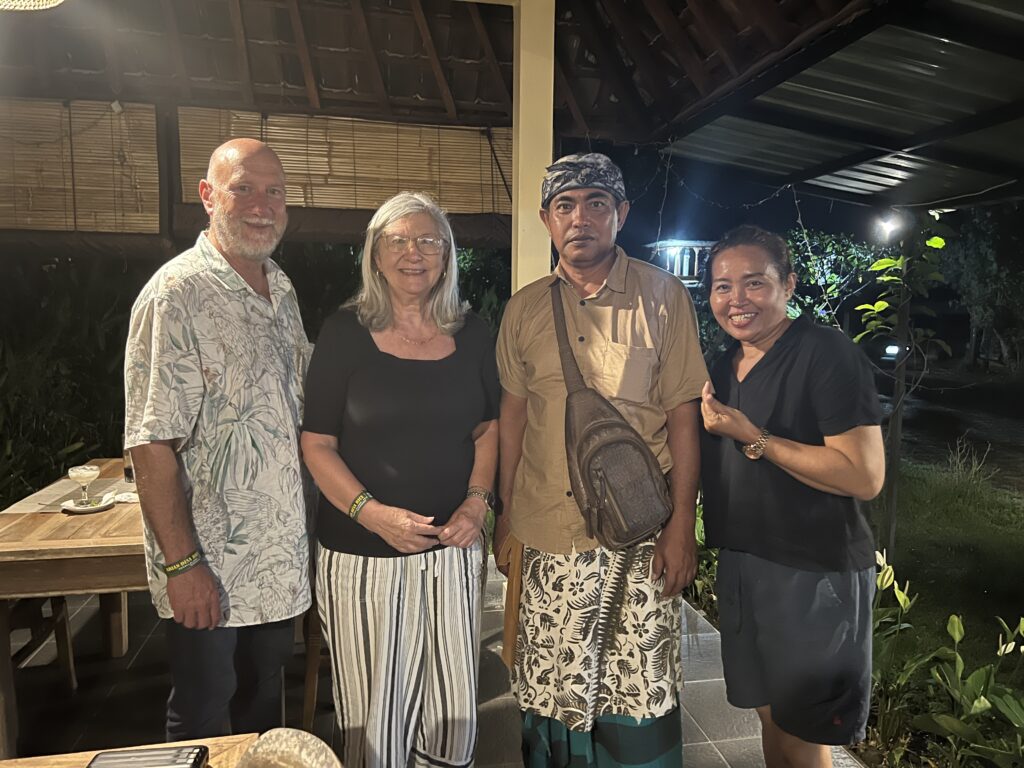
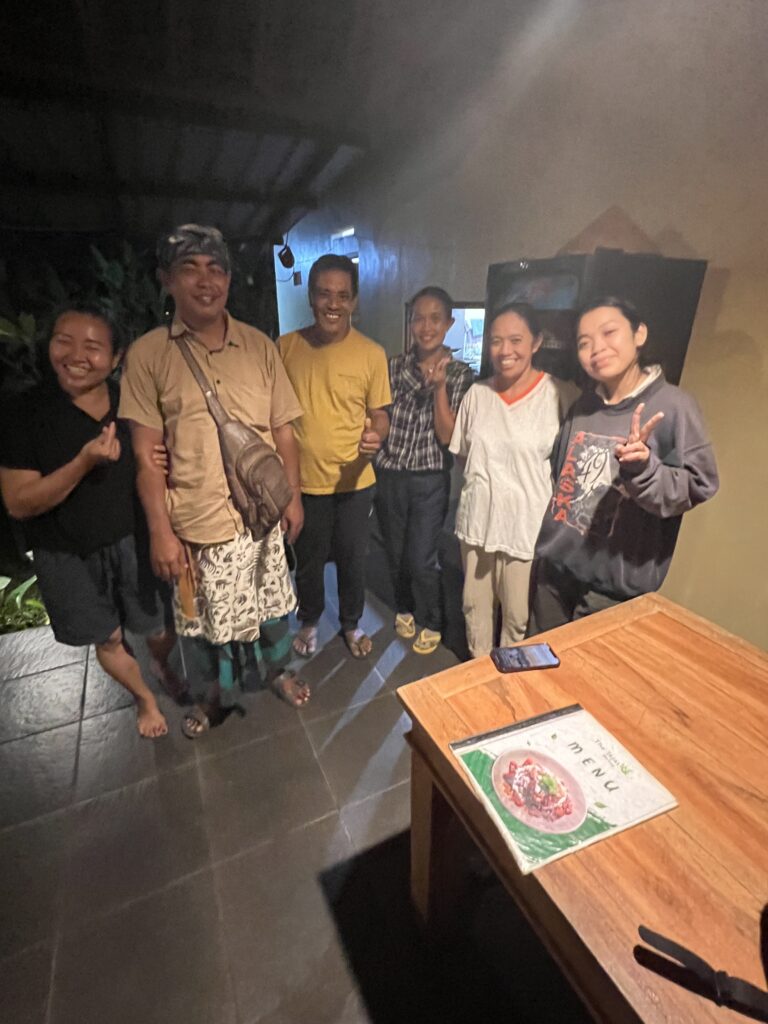
Gede’s wife, Gede, his brother in law and Gede’s sister (white t-shirt) along with the brother in law’s sister (plaid shirt) and his niece in the Alaska shirt
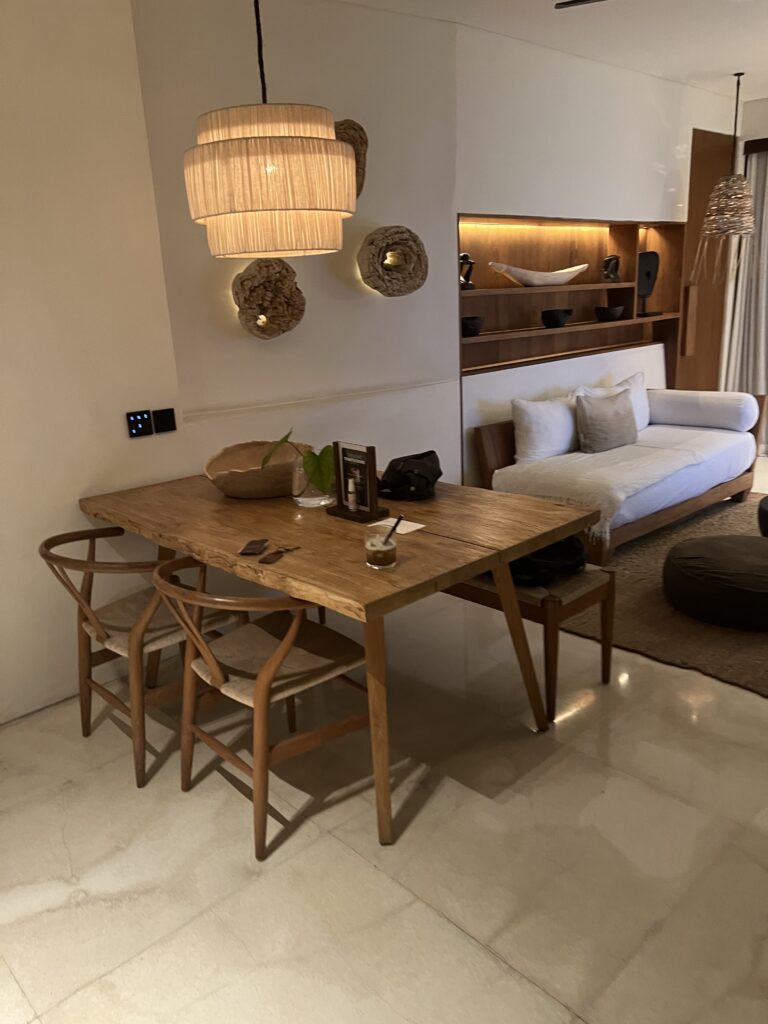
After dinner we were taken to the hotel we were staying in for the night. It was a very surprising stay, and we could not have enjoyed it any more than we did.
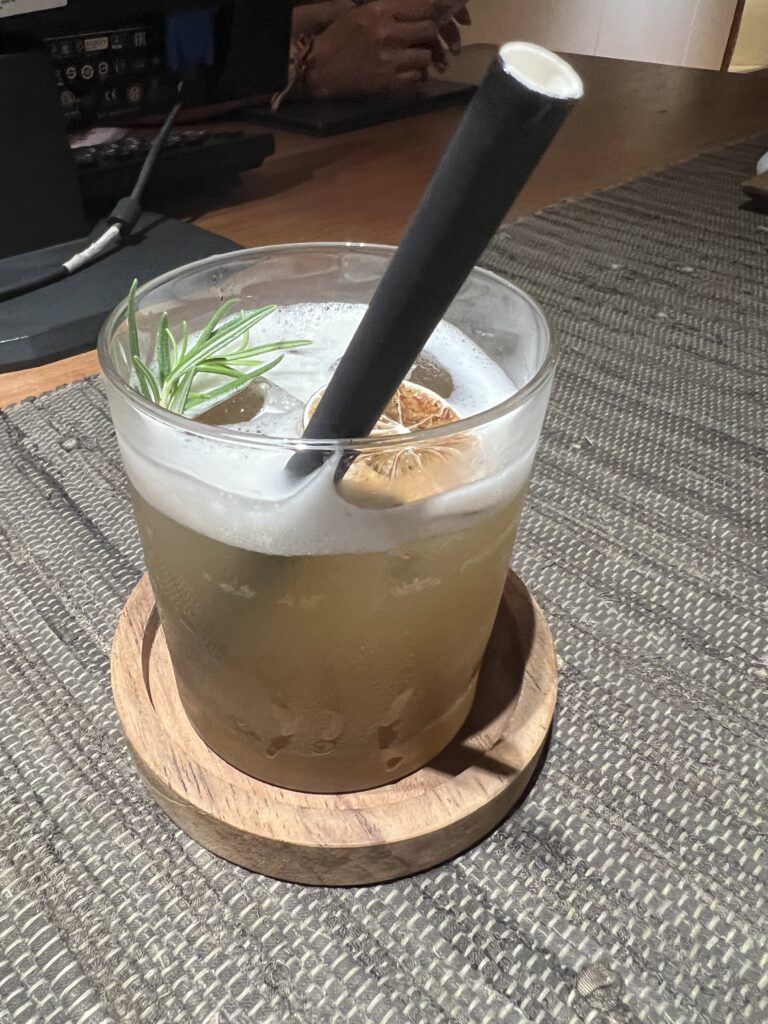
A welcome drink when we arrived
Hotel in Ubud, Bali | Bisma Eight — One Michelin Key Boutique Hotel
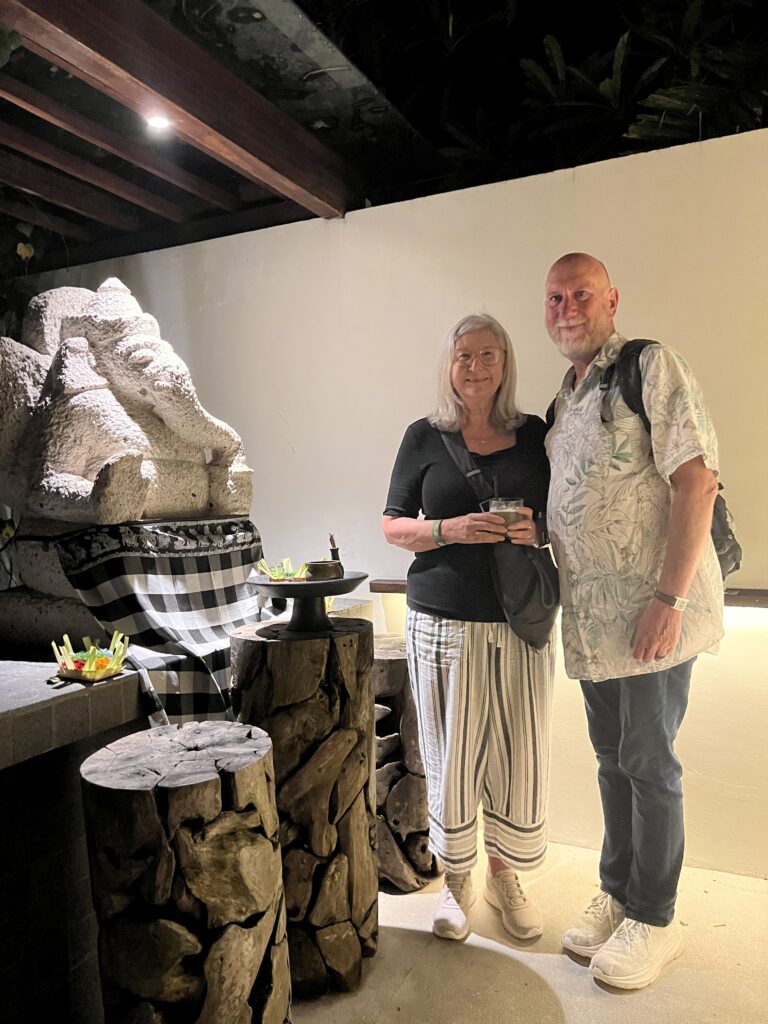
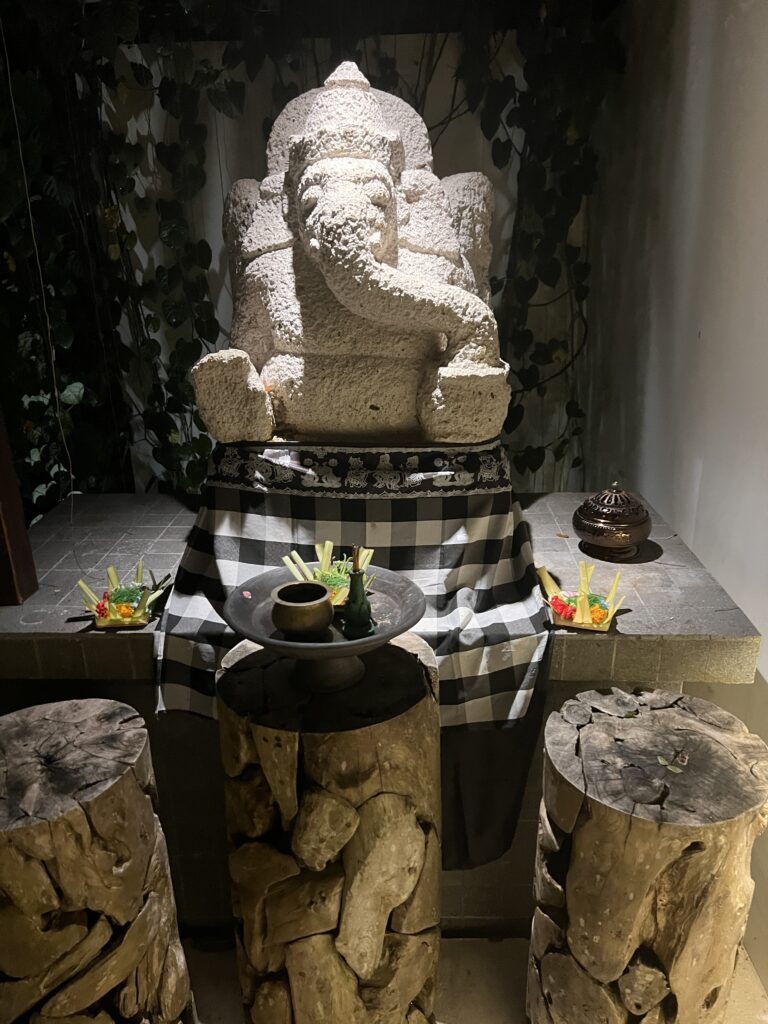
We were given offerings to place at this statue and say a silent prayer for a good evening and stay
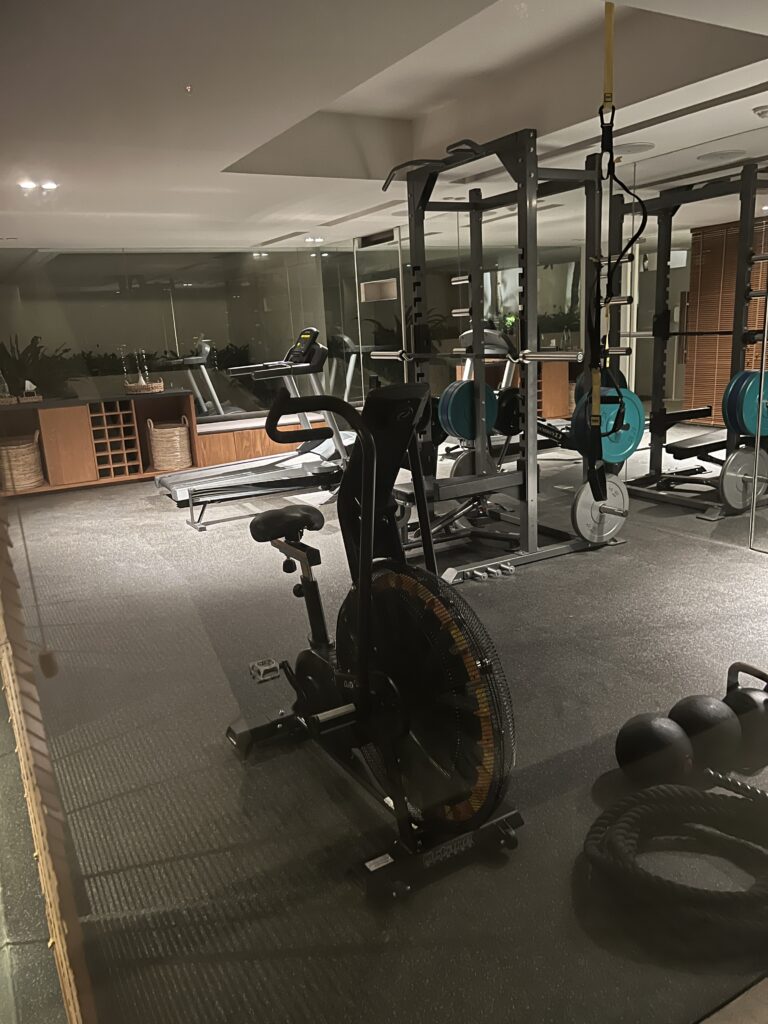
The workout/exercise room. I got all my exercise taking this photo
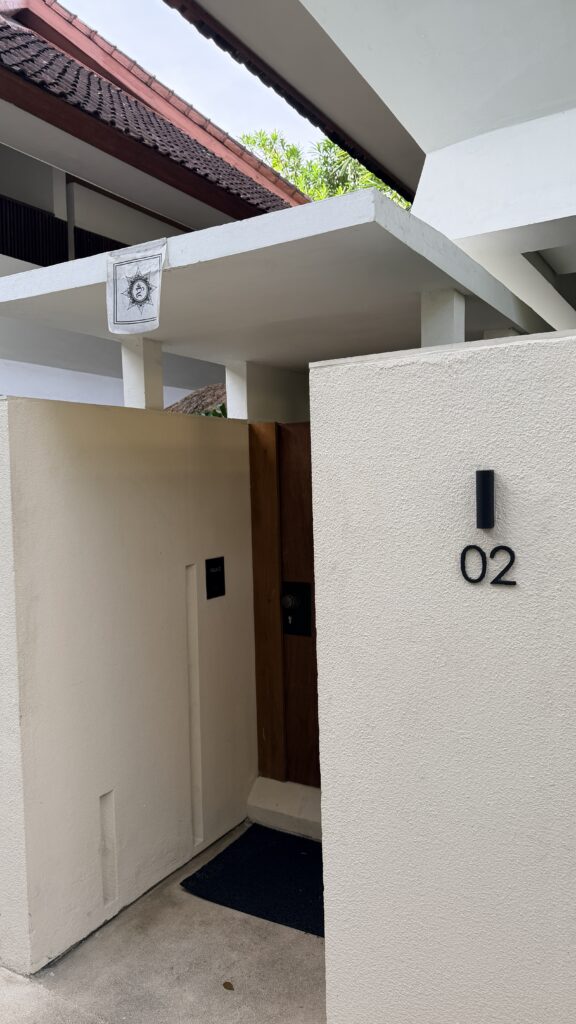
We were in room 02
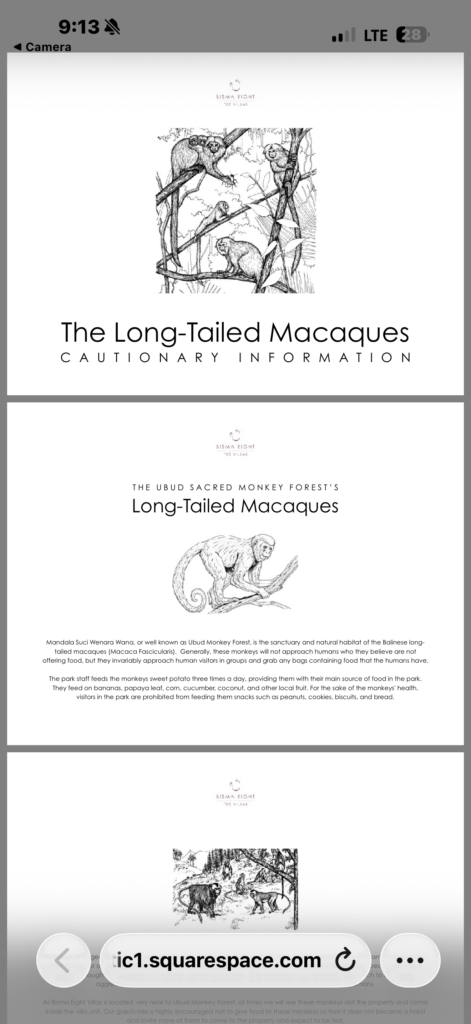
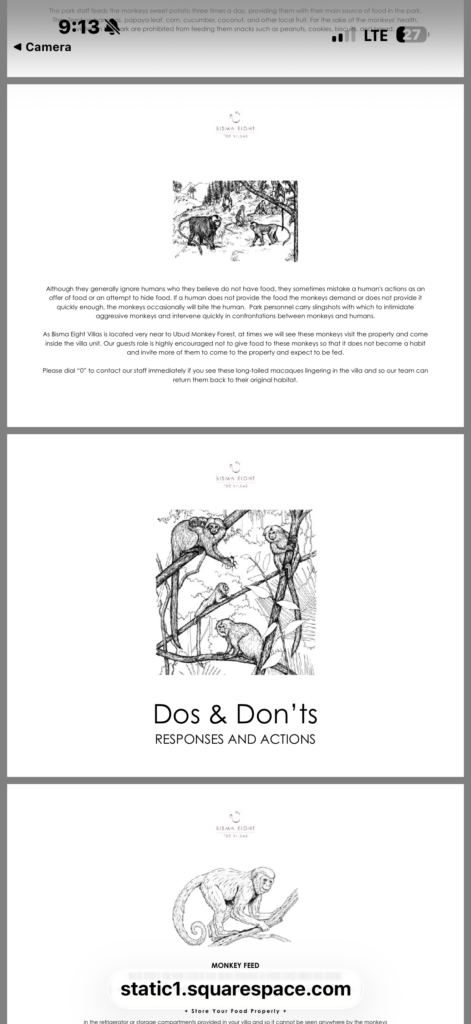
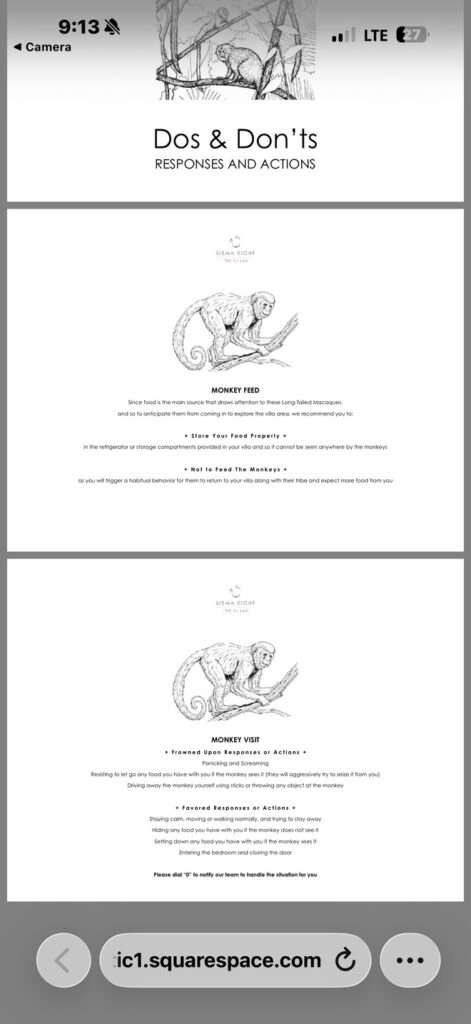
This was our warning about the monkeys in the area
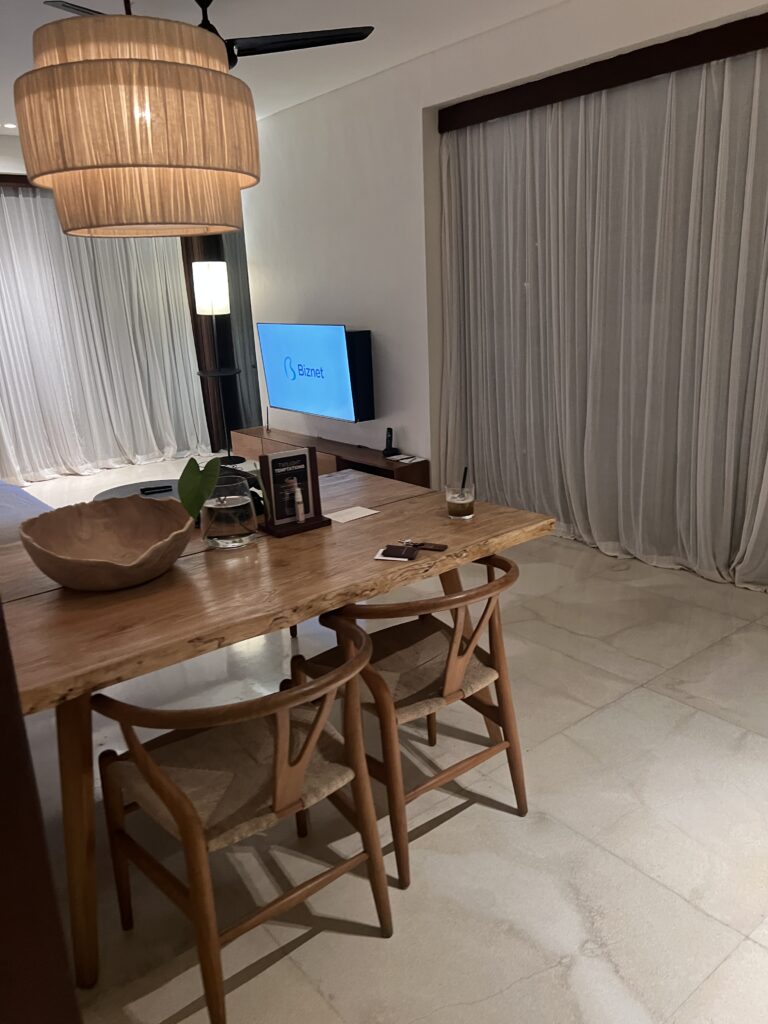
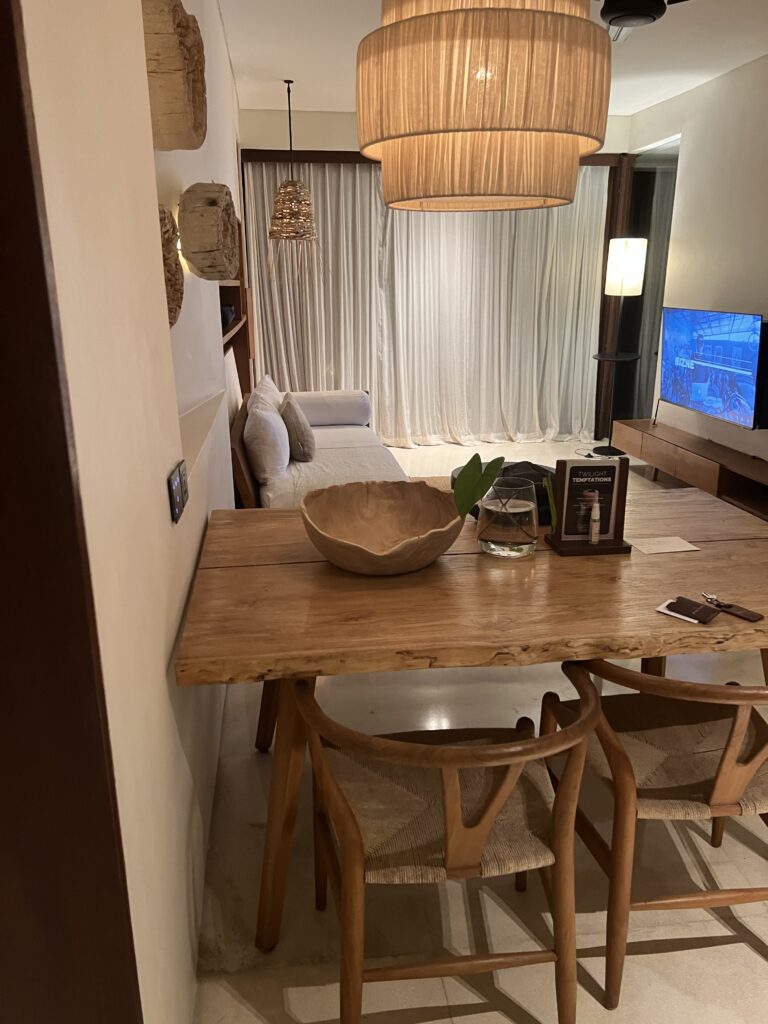
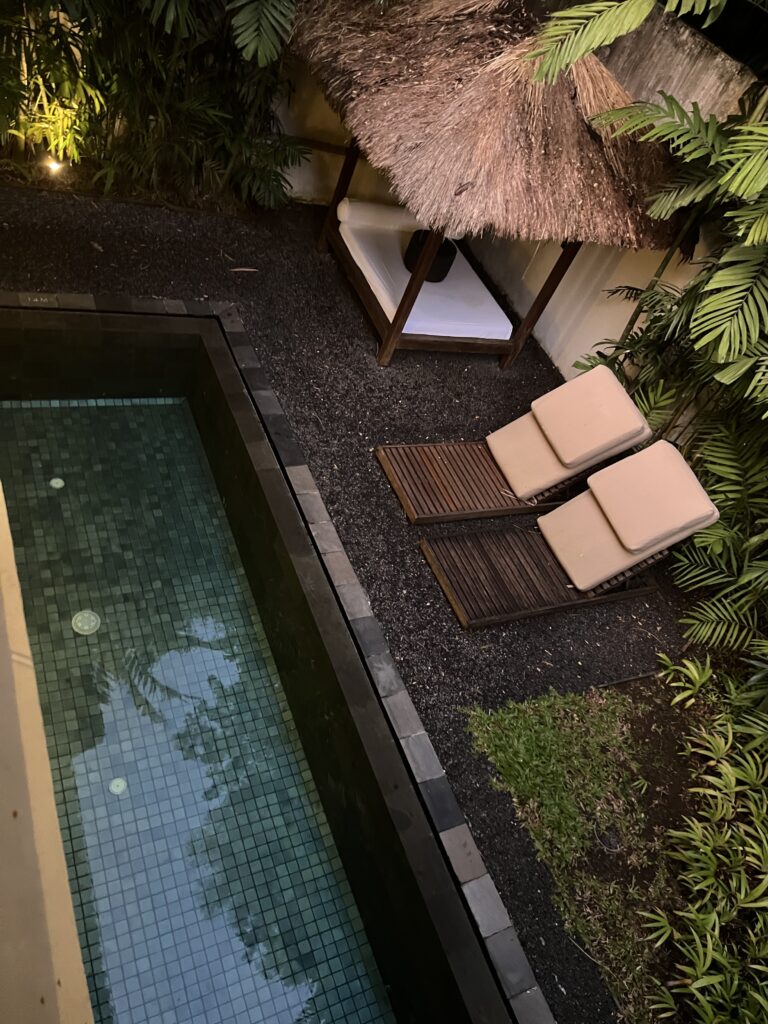
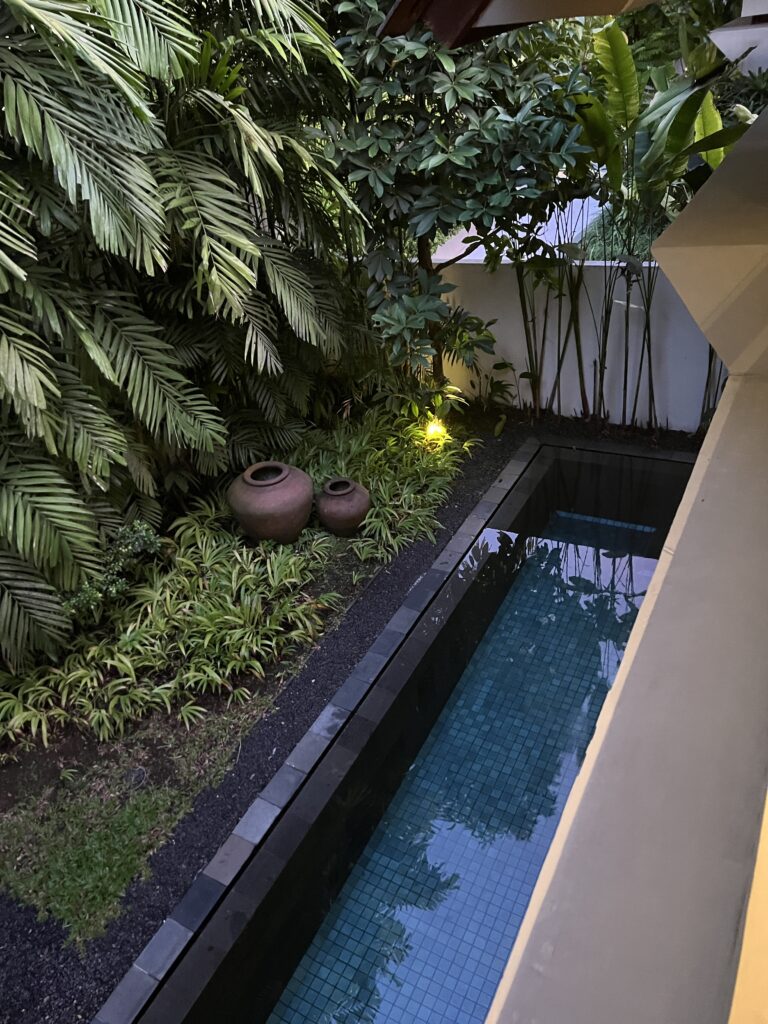
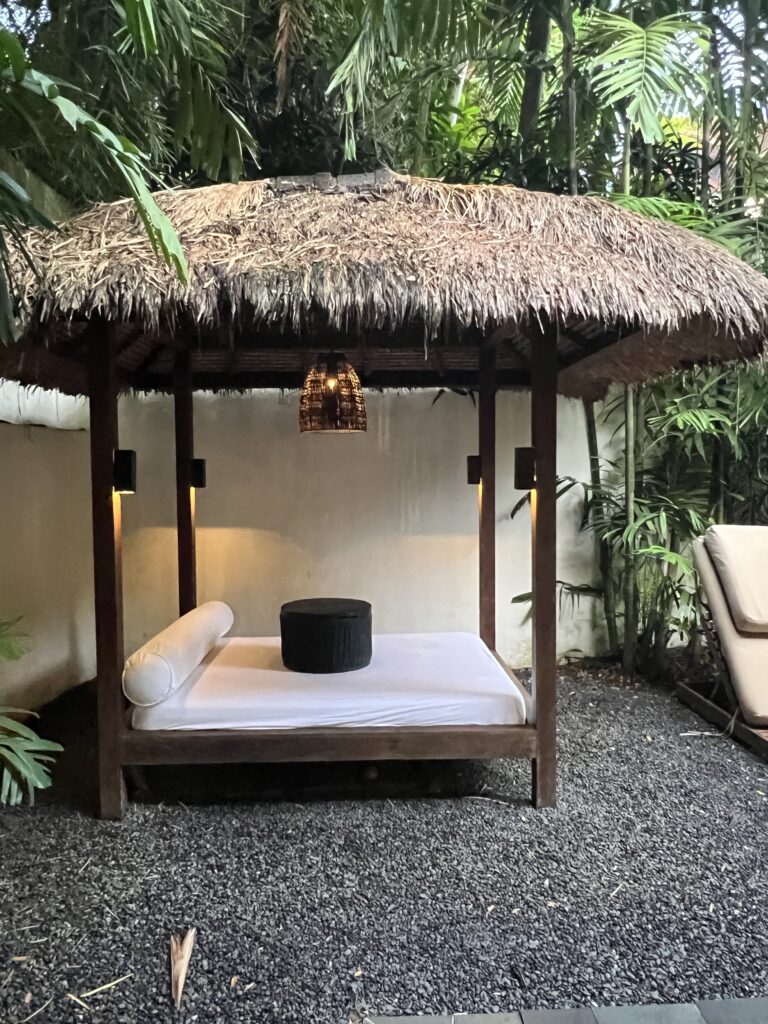
Video of when you walked into the room. The stairs led to the bedroom and master bathroom. The video shows the kitchen, dining area and living room with a doorway going out to a private plunge pool and relaxation bed
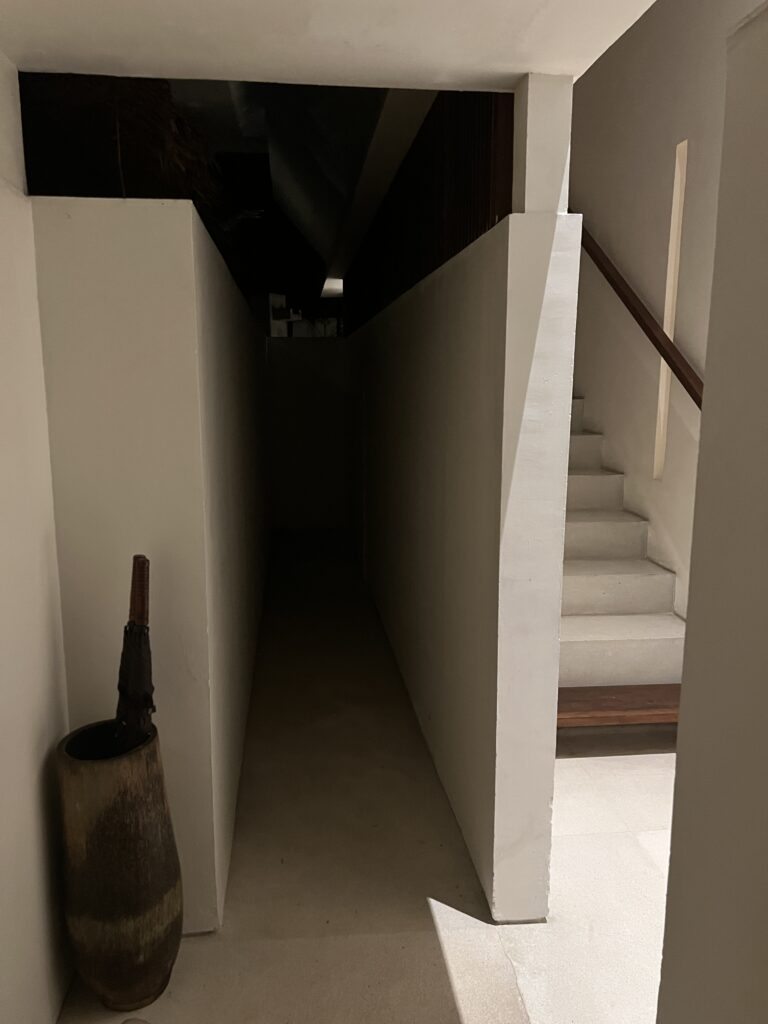
View of the downward staircase and also the openness of the suite
Bedroom video
Bathroom video, check out the bathtub. We decided not to use it as we were not sure we could get in it or out of it…laughing
View of the plunge pool from the balcony
This was sent to me by Holly Guidry showing what was playing on the TV. The Swamp People in Bali !!!!!