
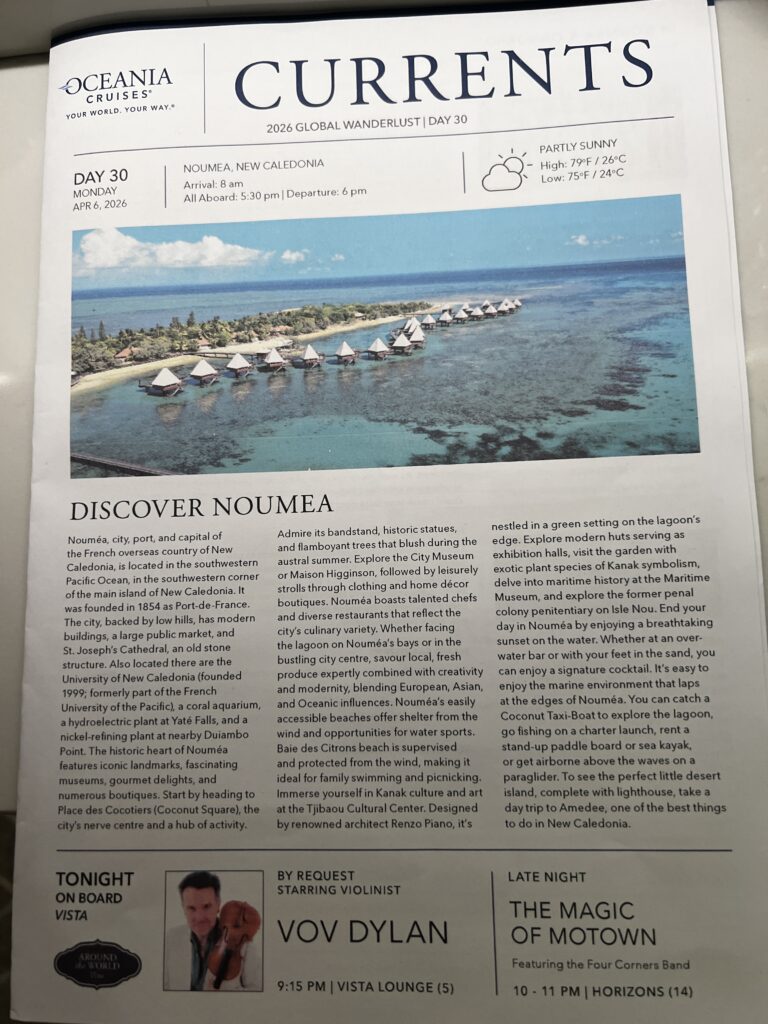
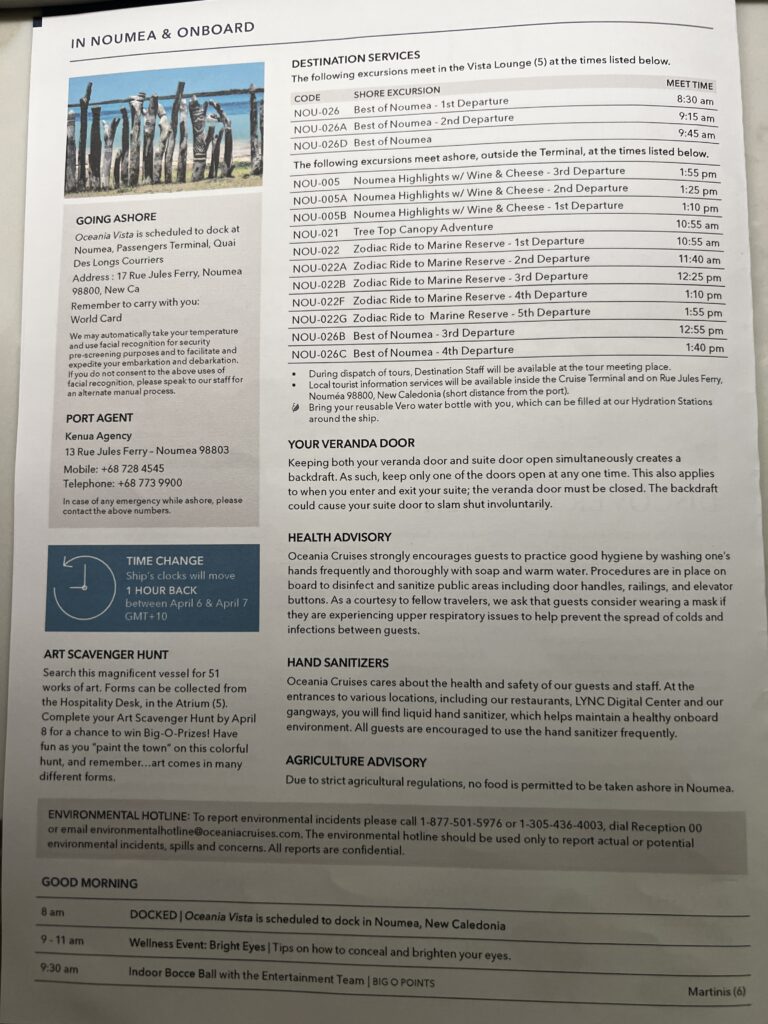
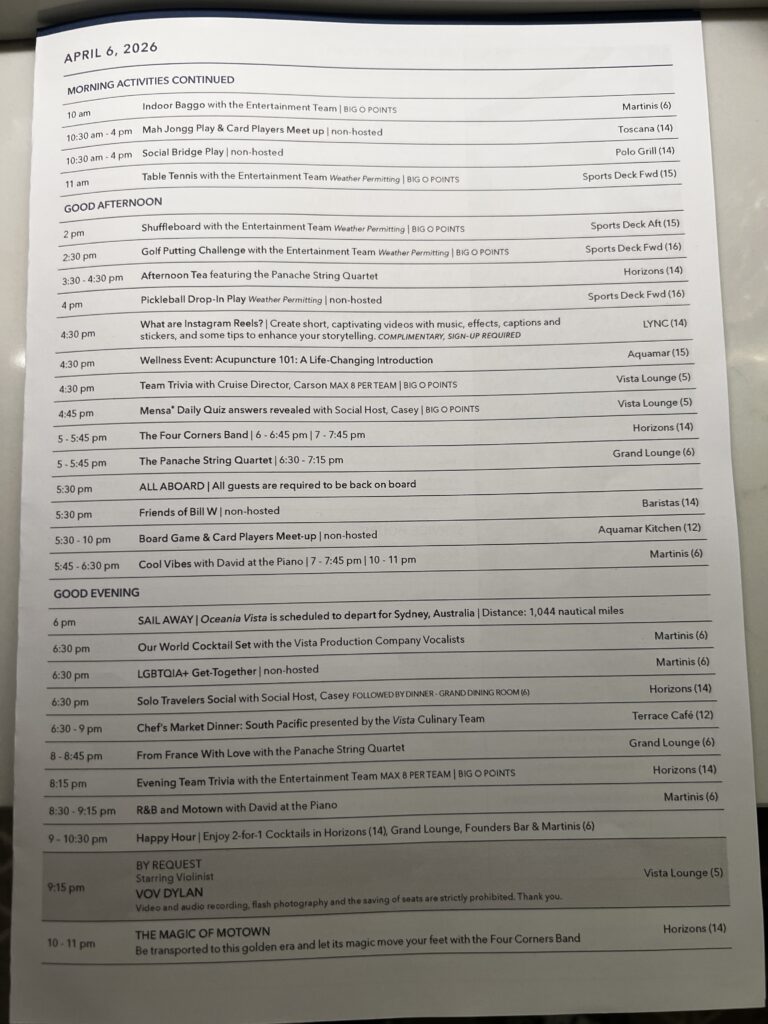
Day 31 Monday April 6th (89 days to go) — We arrived to Noumea and was able to dock (not tender) which is a BIG YEAH!!! We had an excursion in the afternoon to attend a wine and cheese tasting with a couple of stops at location. So, we grabbed a quick breakfast and headed out to see this new city. I cannot say new country as New Caledonia is a part of France. The good thing for the day are the citizens speak French and the bad thing is they celebrate Easter Monday as holiday. An estimation was that 98% of anything was closed. Below are the things we did today and I will caption the photos below.
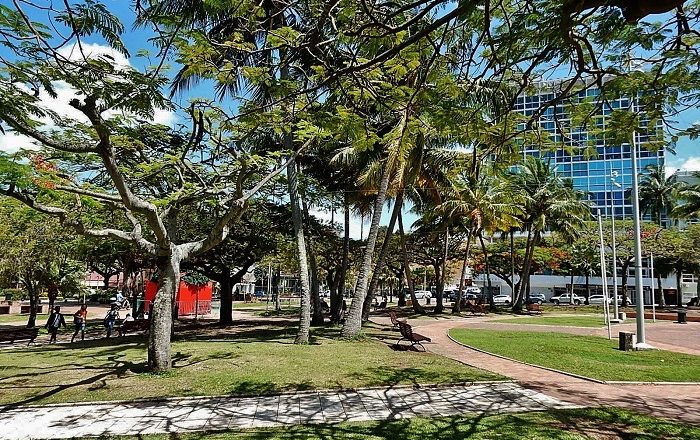
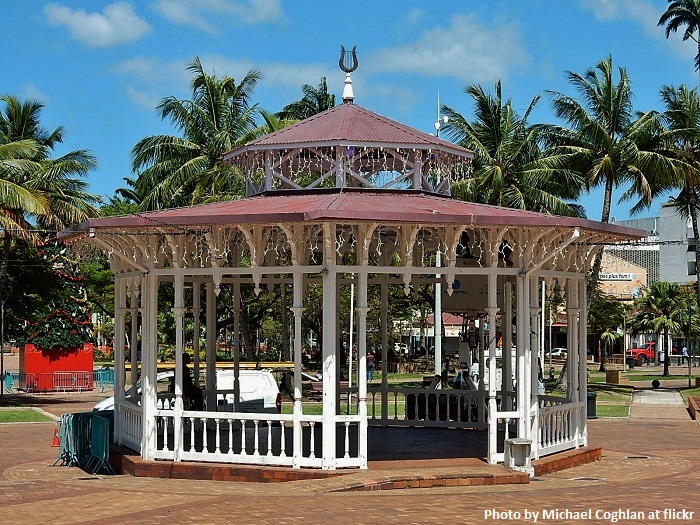
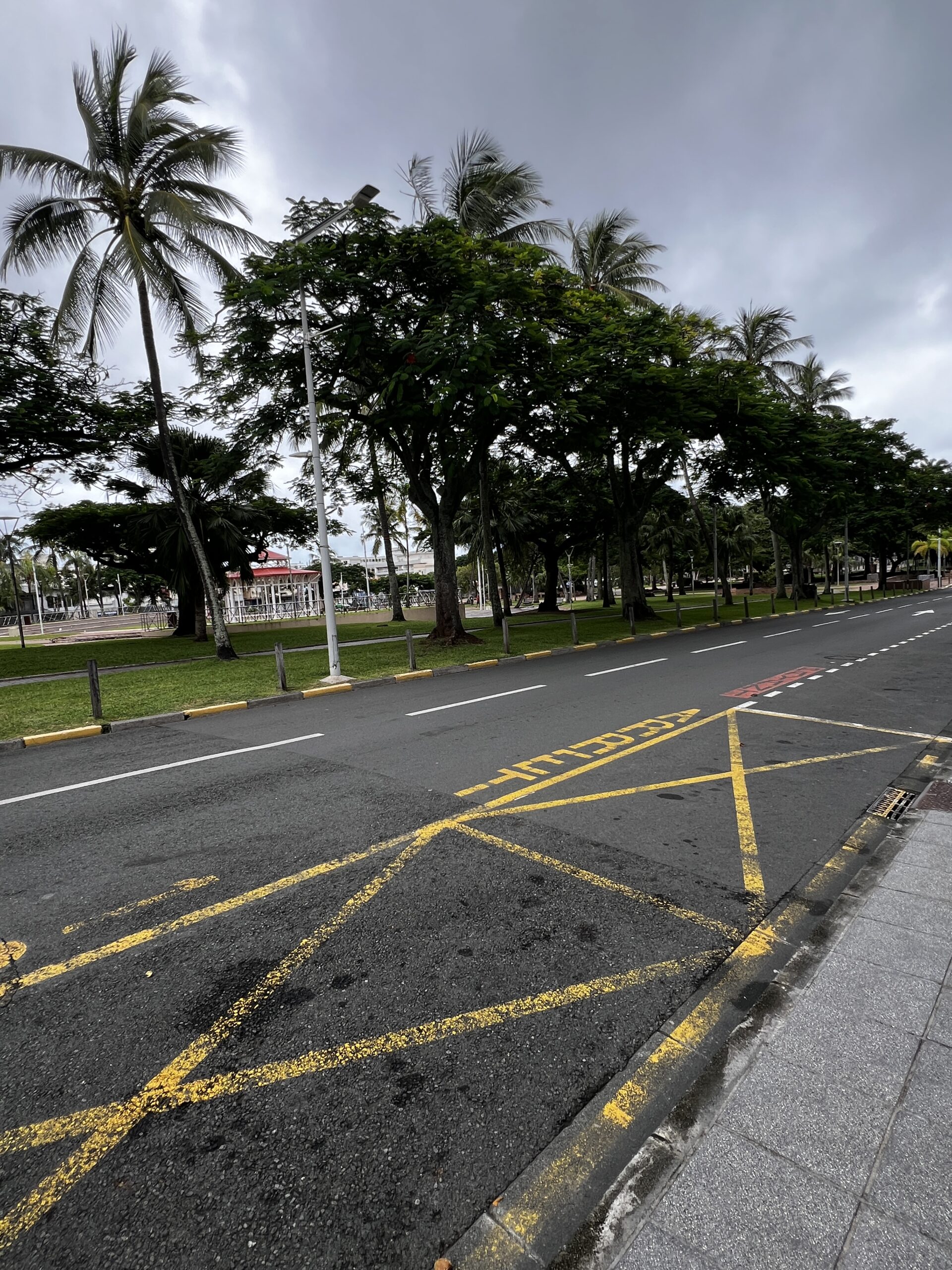
Coconut Square — This coconut lined square is immediately when you disembark the ship. It was a nice grassy area with a few significant items in the square. Outside the square there are a number of stores and restaurants, but not a single one was open. The same with a couple of museums right outside the square.
Noumea Cathedral — We walked from the Coconut Square to the Noumea Cathedral which might have been a mile in distance. Sadly, again because of the holiday, all businesses were closed for the day.
We returned to the ship to join our afternoon excursion which was an Oceania excursion to these three places.
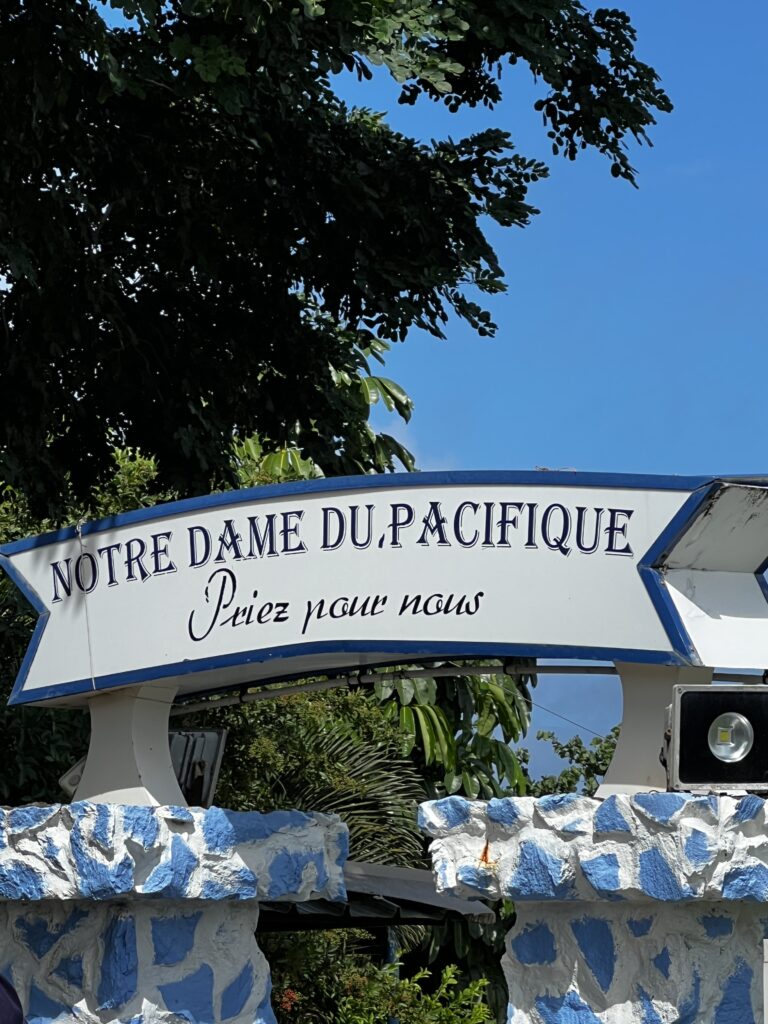
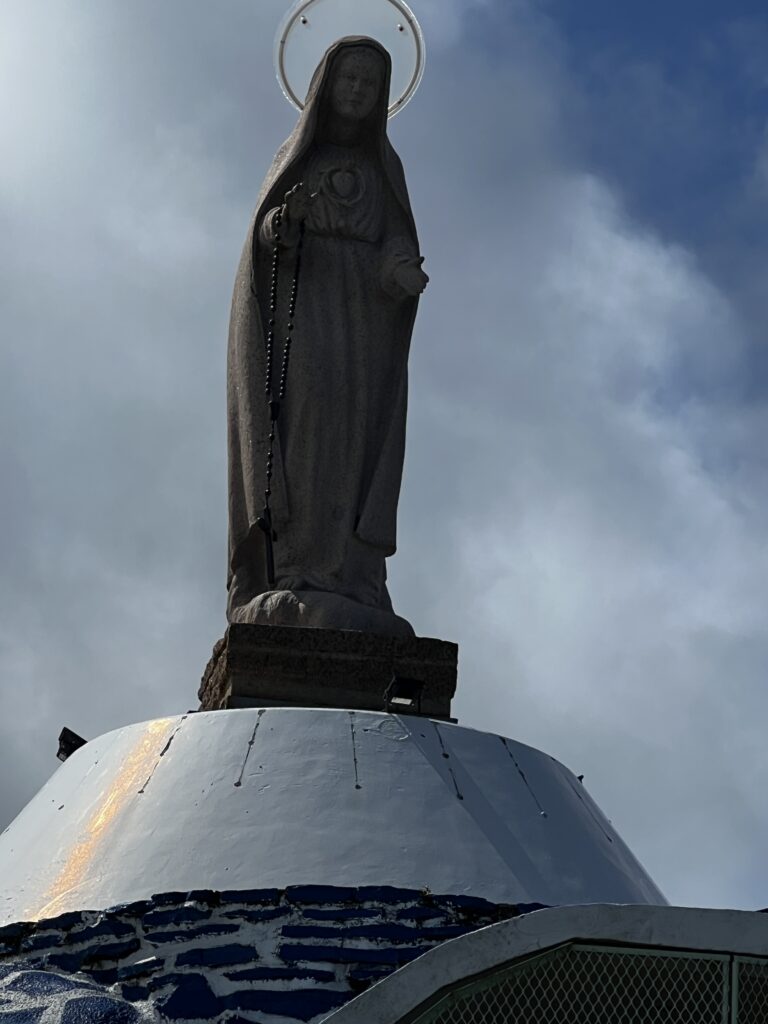
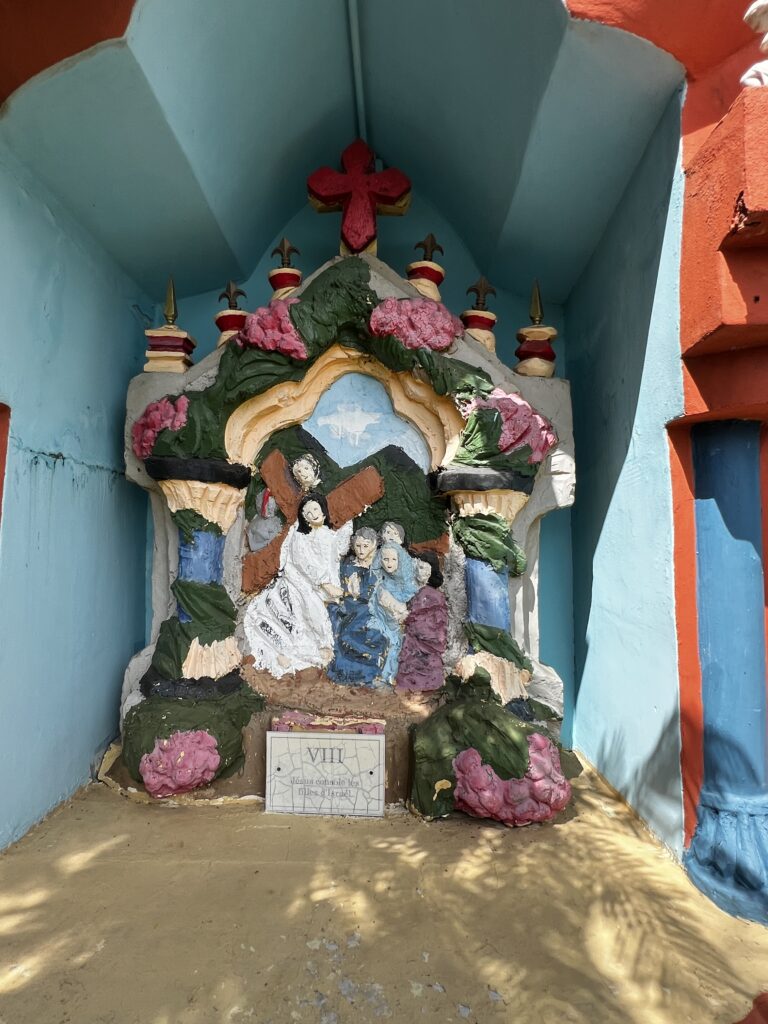
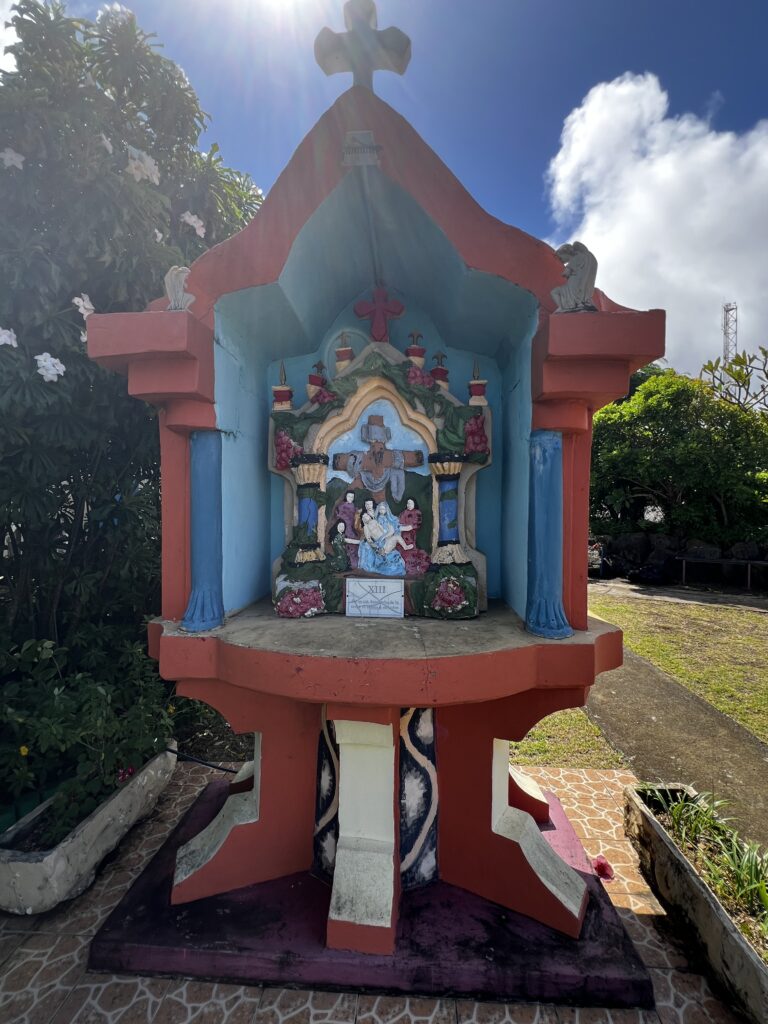
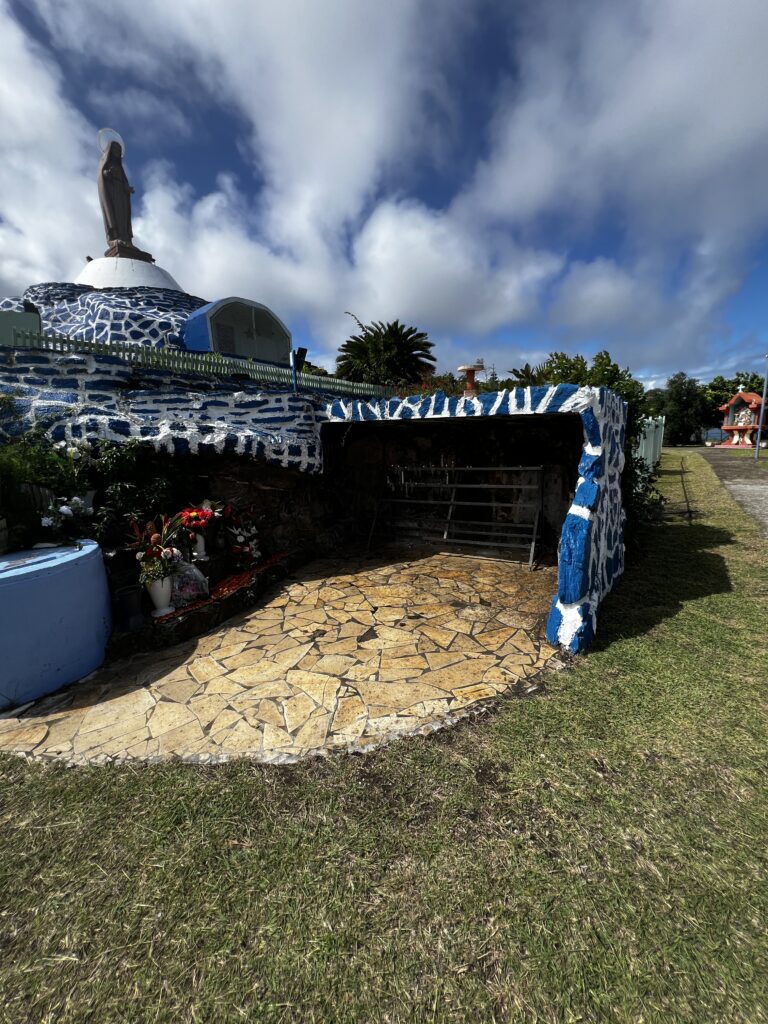
Notre Dame Du Pacifique — The excursion bus took us a steep climb to this location. It had a statue of Mary overlooking the city of Noumea and also there were 14 stations of the cross laid out in small scenes that were plaster and painted.
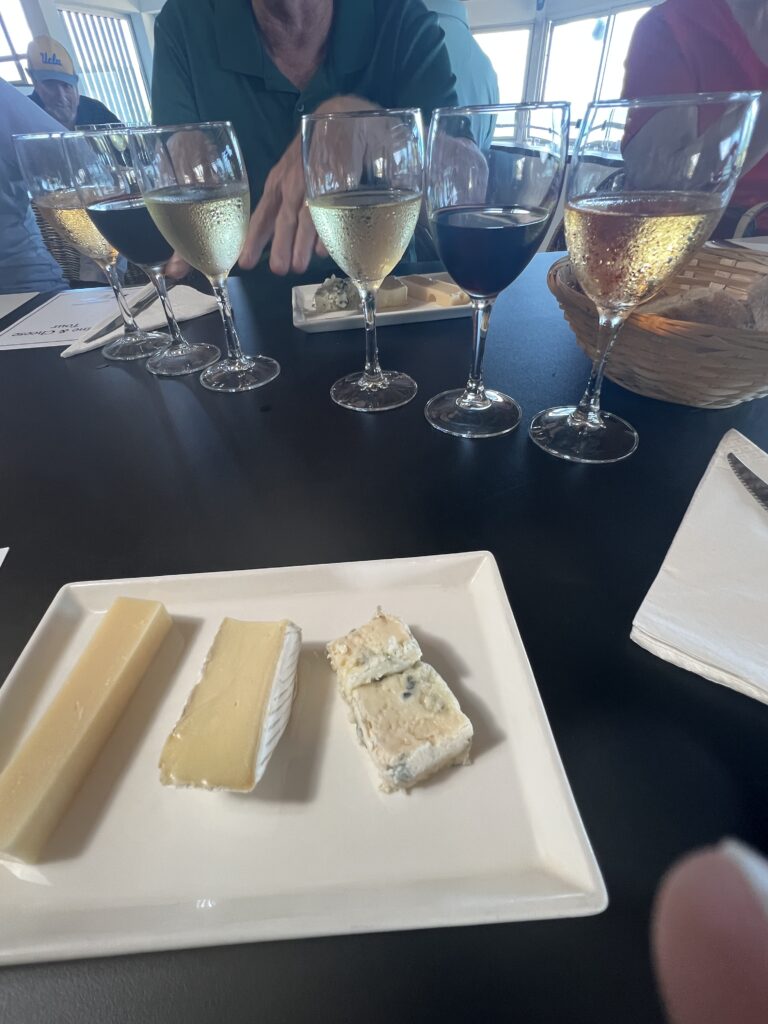
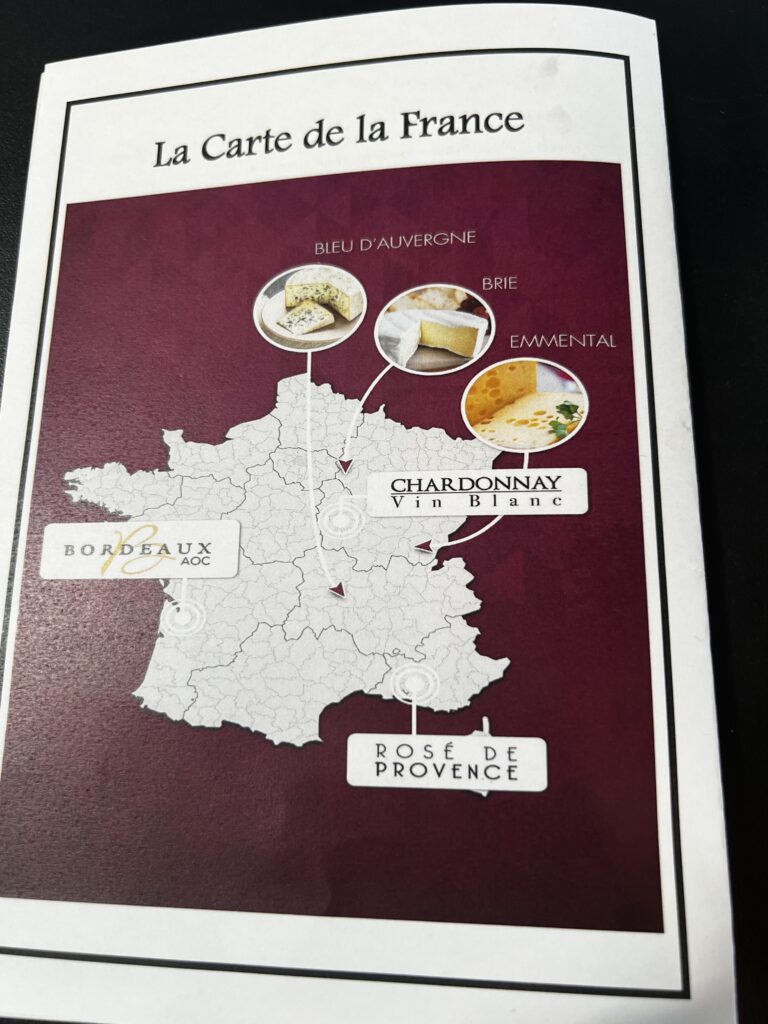
Wine and cheese tasting — The next stop was at Le Fun Restaurant where we each received three different wines and three different cheeses from France.
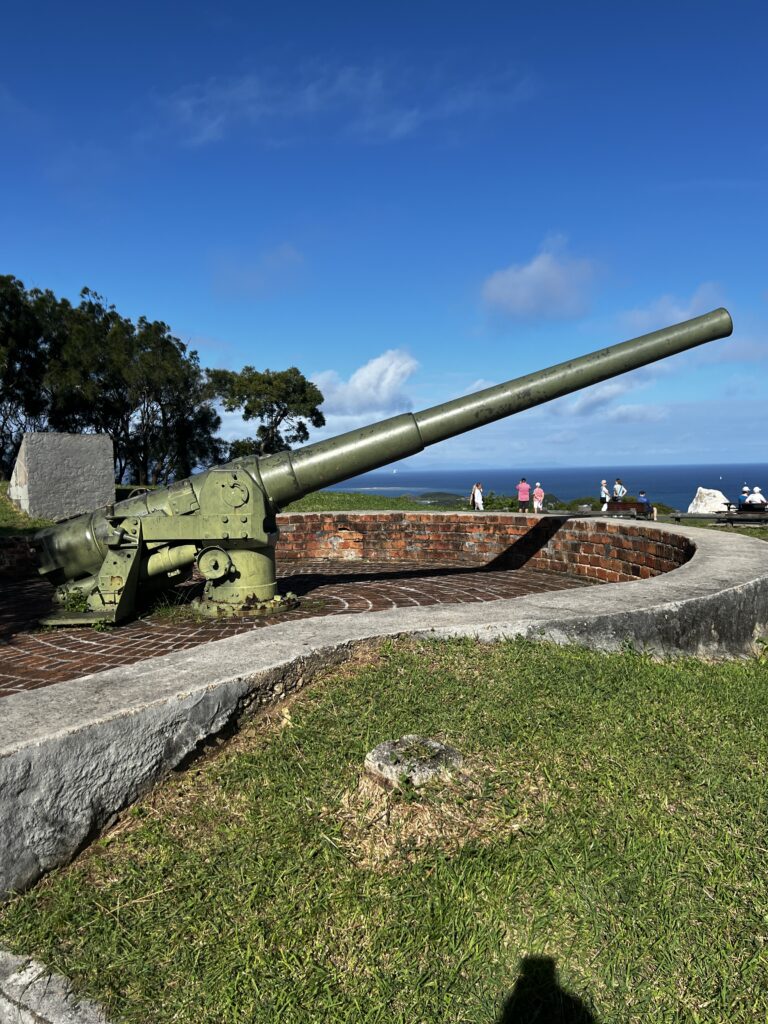
Ouen Toro Hill — This was our third stop on the excursion. It is currently a military base and in WWII had two large, mounted guns to protect against a Japanese attack.


Place des Cocotiers, also known as the Coconut Square, is the main and very important square that is located in the heart of the capital city of the special collectivity of France, New Caledonia, Nouméa. As it is precisely at the center of the entire capital, the Place des Cocotiers is the meeting ground for many of the Nouméa citizens, however, it is interesting that it also serves as a zero mileage point to the roads around New Caledonia. Since the end of the 19th century, Place des Cocotiers has been at the heart of Nouméa. Covering an area of about 4 hectares (and just 400 metres long from east to west), its vast, gently sloping esplanade is fully pedestrianised and a popular spot for meeting friends, enjoying the peace and quiet and attending special events throughout the year.
Spread over an area of about 4 hectares (10 acres), the square is some 400 meters (1,312 feet) long in the direction east-west, and around 100 meters (328 feet) wide. As the city began to develop by the end of 19 century, it was the grand plan of the French architect from Dunkirk, Paul Coffyn, to make the entire urban plans of what was at that time known as Port-de-France. Later in 1866, the city changed its name to Nouméa, and as small portion of the square was constructed, the military personnel planted plenty of coconut trees, which in turn made the locals to call it Place des Cocotiers.
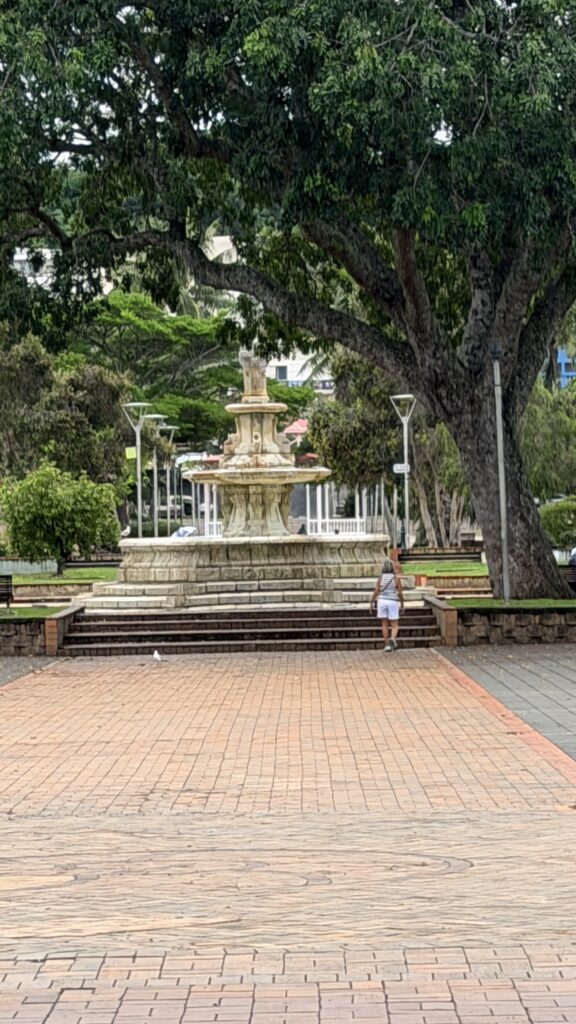
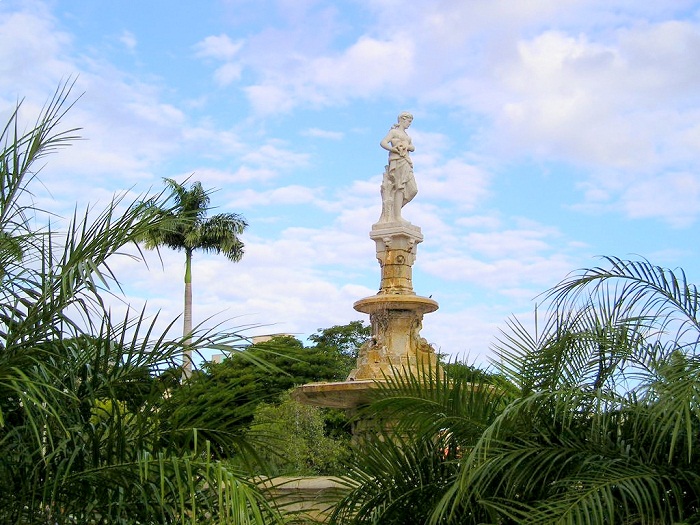
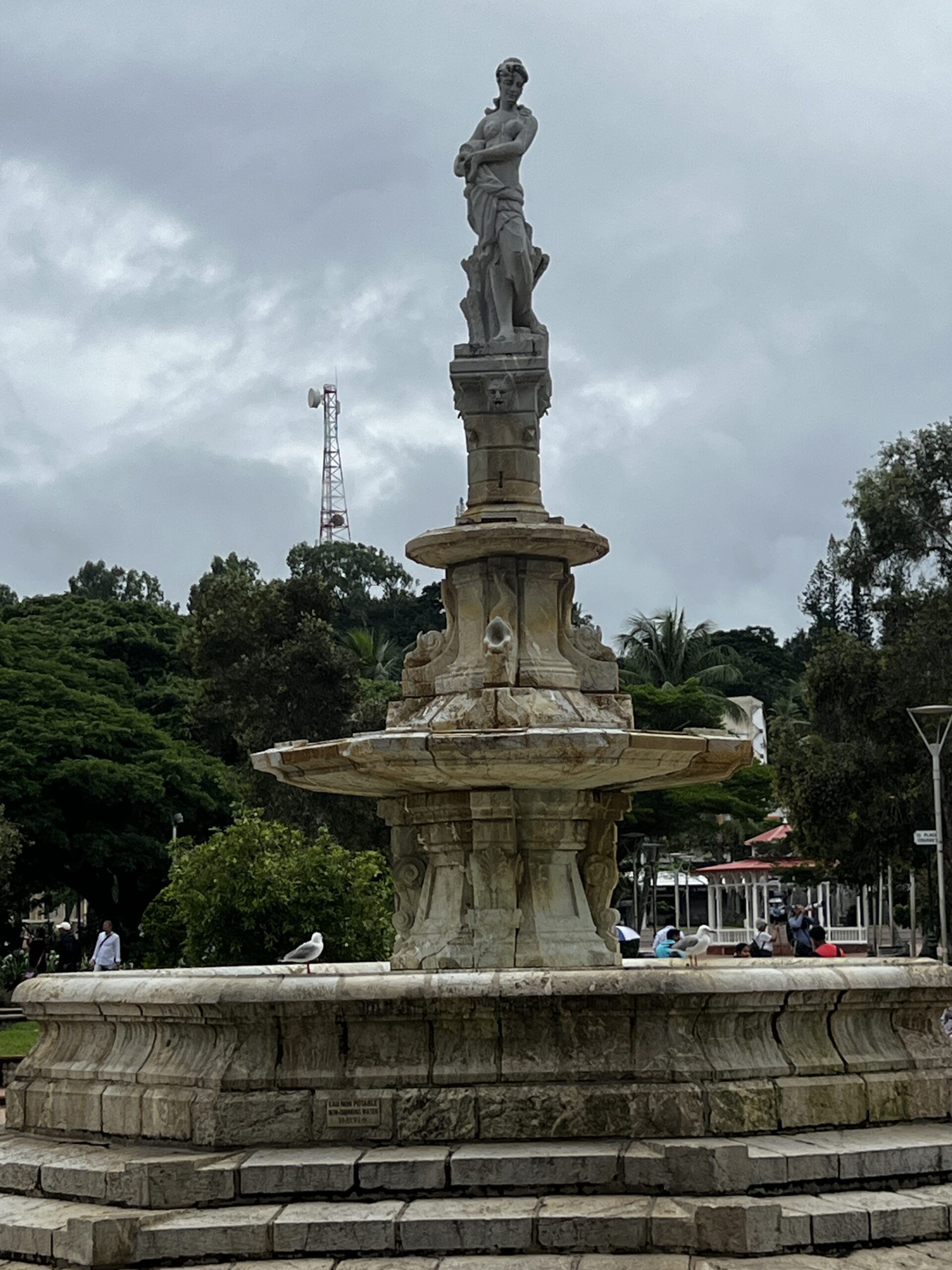
Located in the center of Place des Cocotiers, the Celestial Fountain is a monumental 26ft (8m) high fountain sculpted by a local artist, Paul Mahoux, from stones from a nearby quarry. Its portrayal of a half-naked woman – deemed scandalous at the time of its inauguration in September 1894 on the 40th anniversary of the takeover of New Caledonia by France – has become emblematic of the city. The model, Céleste Benyamina, gave her name to the fountain.
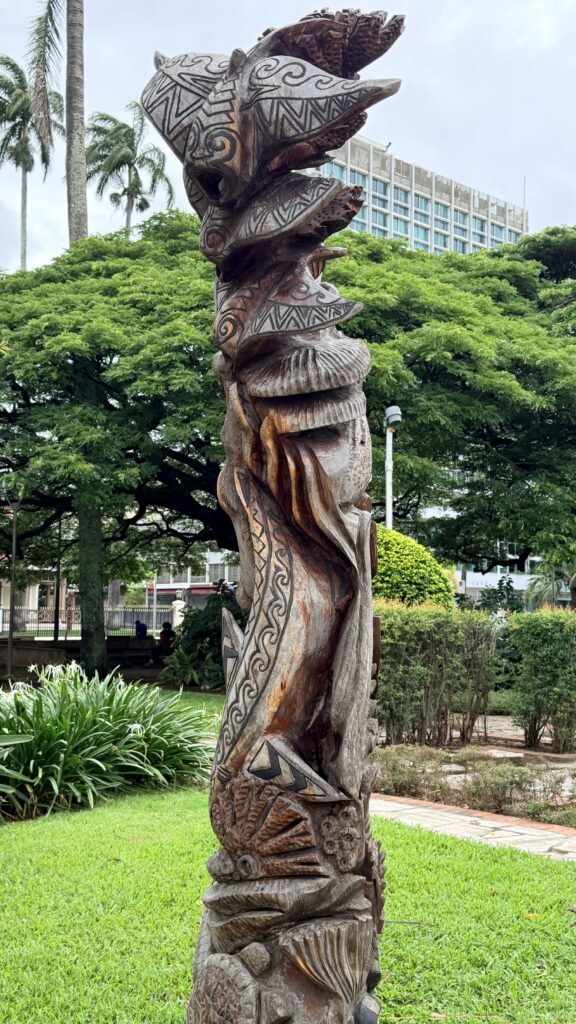
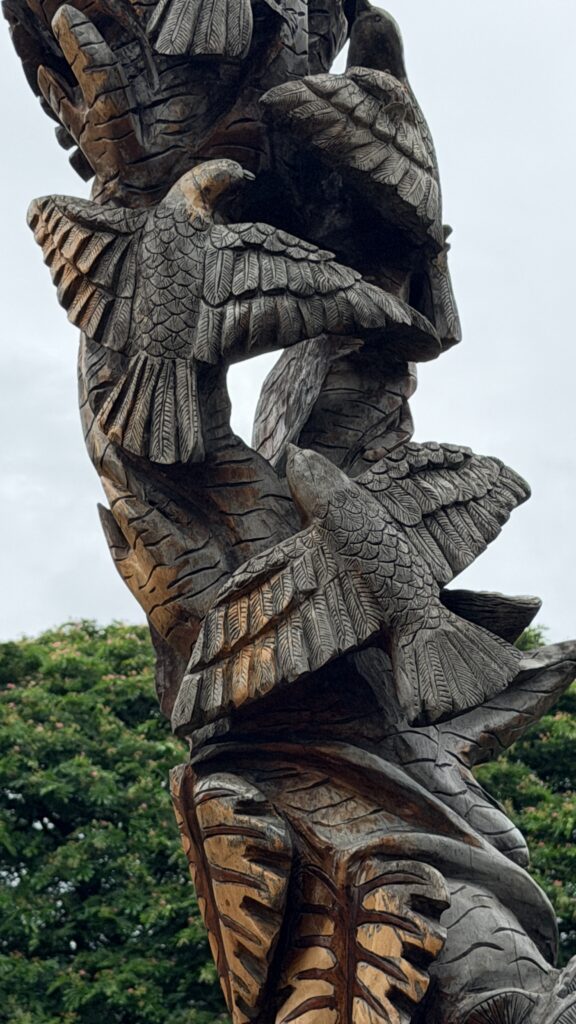
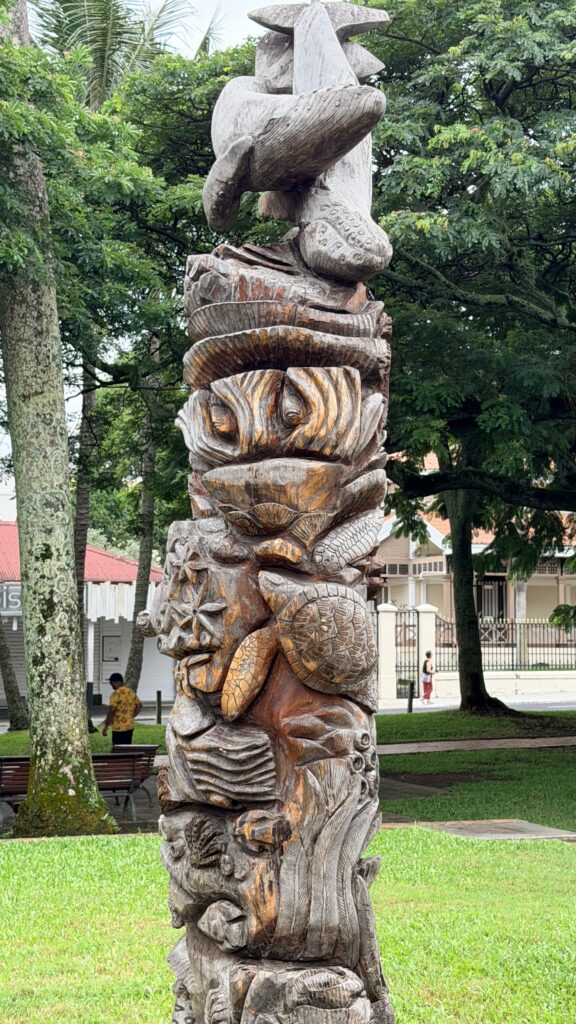
There are beautifully sculptured totem poles in the park
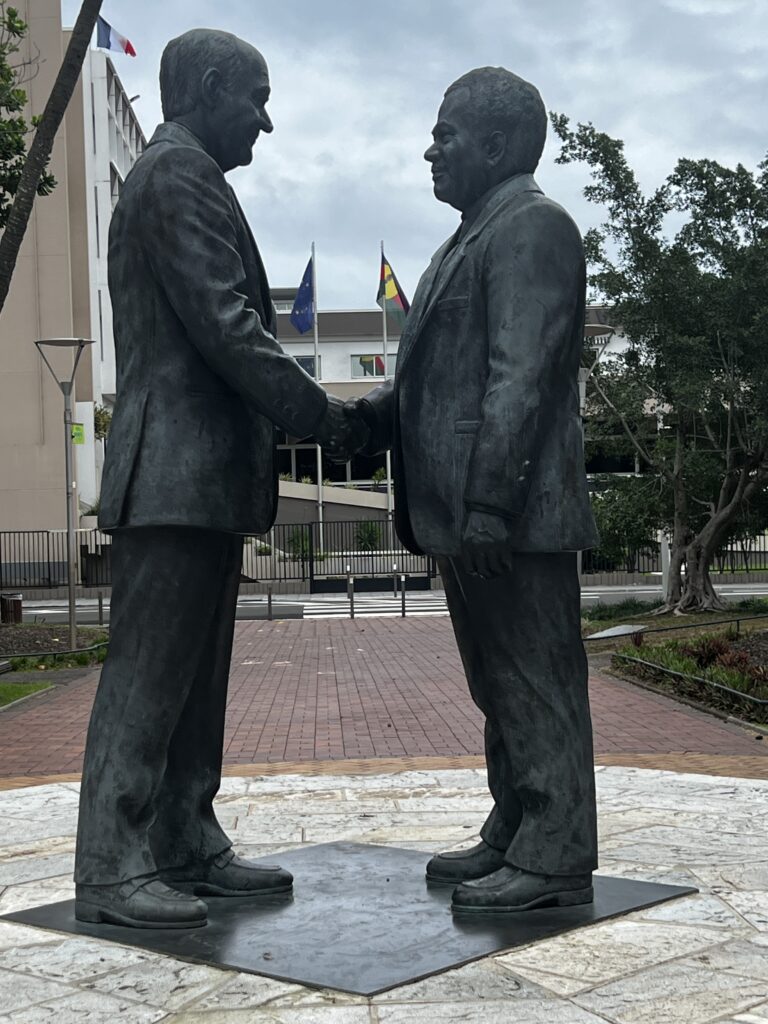
The main statue in Coconut Square (Place des Cocotiers) in Nouméa is the bronze statue symbolizing the handshake between Jean-Marie Tjibaou and Jacques Lafleur, representing the 1988 Matignon Accords, located in the Place de la Paix. The Matignon Agreements were agreements signed in the Hôtel Matignon by Jean-Marie Tjibaou and Jacques Lafleur on 26 June 1988 between loyalists who wanted to keep New Caledonia as a part of the French Republic, and separatists, who wanted independence. The agreements were arranged under the aegis of the Government of France as a result of discussions and compromises arranged by Christian Blanc, the negotiator for Michel Rocard‘s government.
The accords set up a ten-year period of development. Institutional and economical provisions were made for the Kanak community. The New Caledonians agreed not to raise the independence issue during this period.
The agreements provided amnesty for those involved in the Ouvéa cave hostage taking incident of 1988 and prohibited all proceedings in regard to the deaths of four gendarmes and 19 members of the independentist Kanaks.[1]
The Matignon Agreements were approved by French and New Caledonian voters in a referendum held on 6 November 1988 in which voters were asked, “Do you agree to allow New Caledonian residents to vote for self-determination in 1998?”. A majority voters – 80% – voted for New Caledonian residents to determine whether or not to institute self-determination. The voter participation in the referendum was 37%, with 12% of the ballots blank or void.
A year after signing the accords FLNKS leaders Jean-Marie Tjibaou and Yeiwéné Yeiwéné were assassinated by FLNKS militants who opposed to peace deal.
On 5 May 1998, the Nouméa Accord was signed under the aegis of Lionel Jospin. It scheduled a twenty-year transition until a planned vote on the transfer of sovereignty in 2018. The territory would be fully autonomous, except for the fields of the military, security, the judiciary and finance, which would remain competencies of France. The accord was approved by 72% of voters in referendum in New Caledonia that was held on 8 November.
We walked from the Coconut Square to the Noumea Cathedral. Here are a few photos I took during the walk.
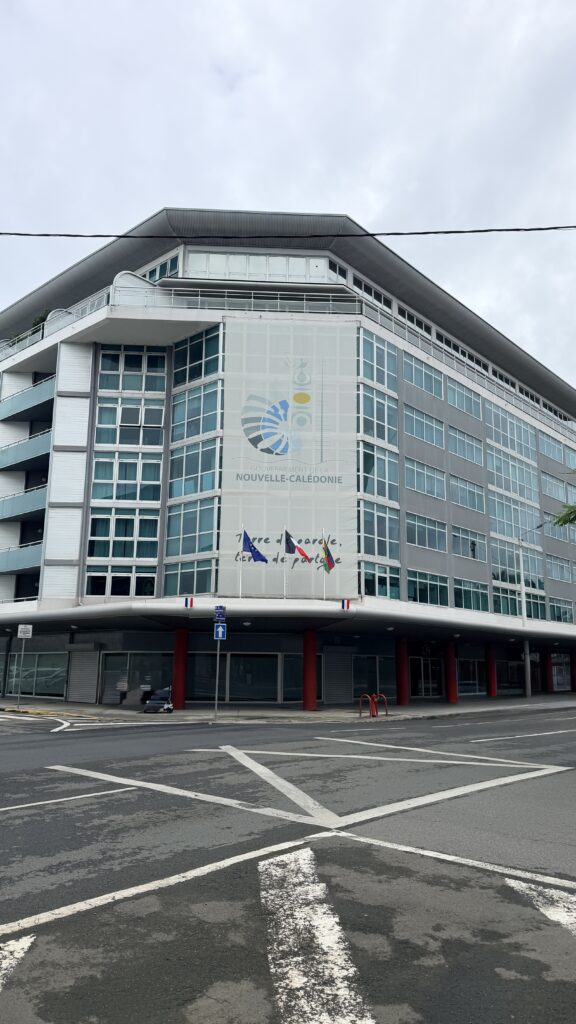
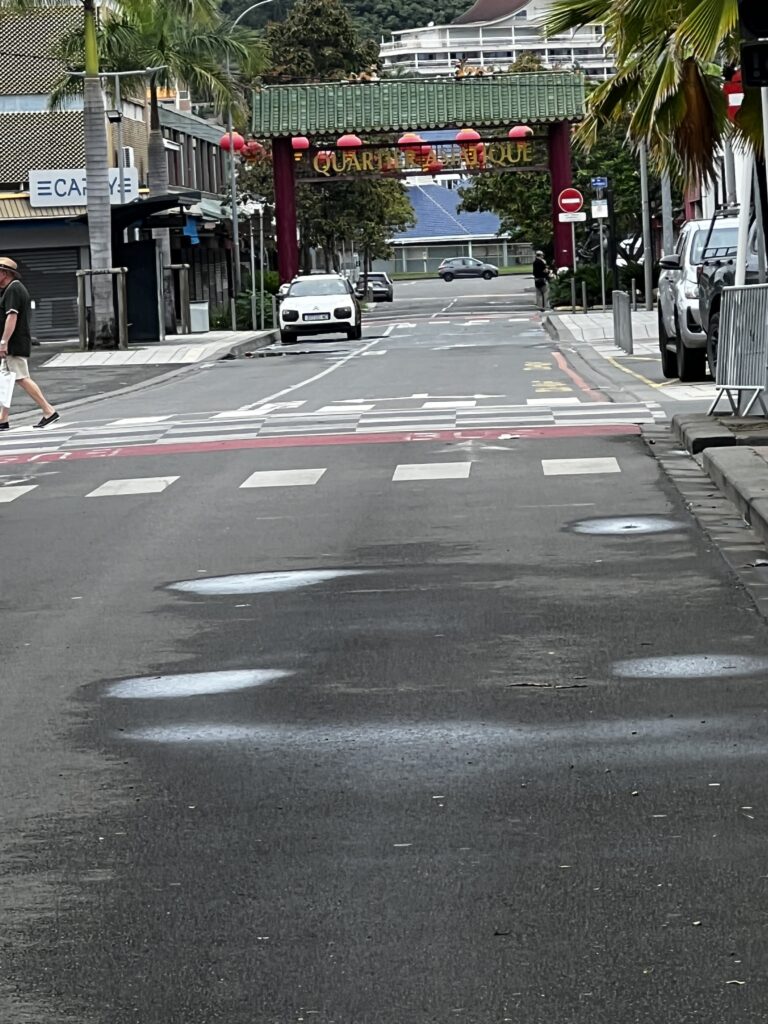
Entrance into Chinatown
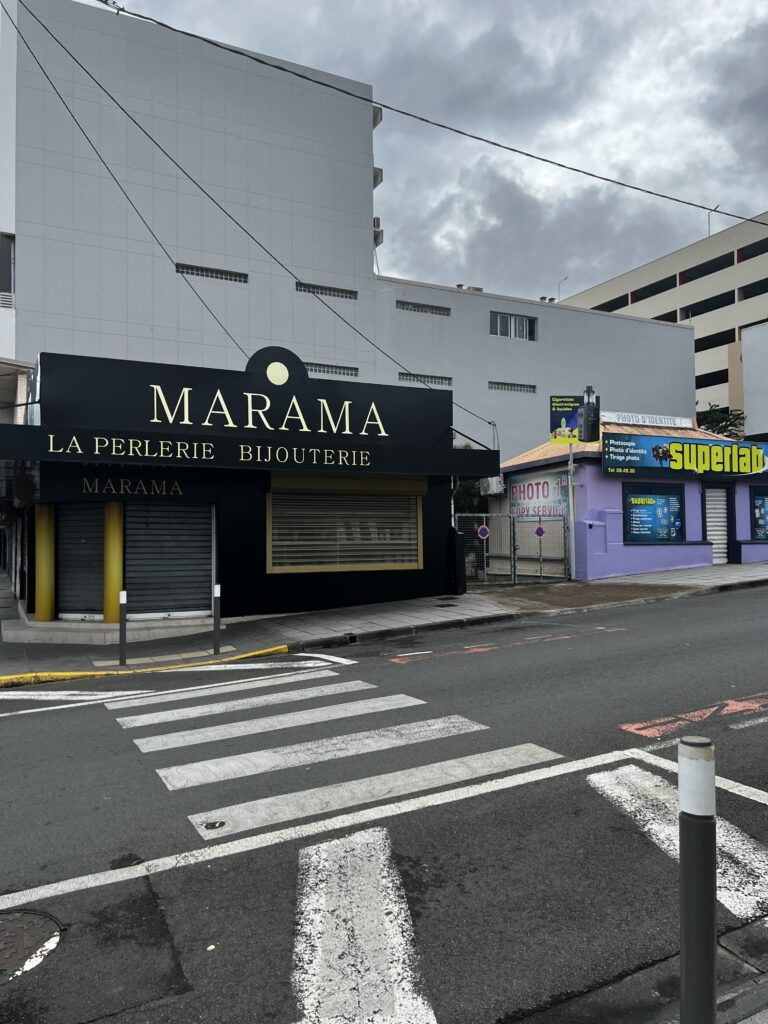
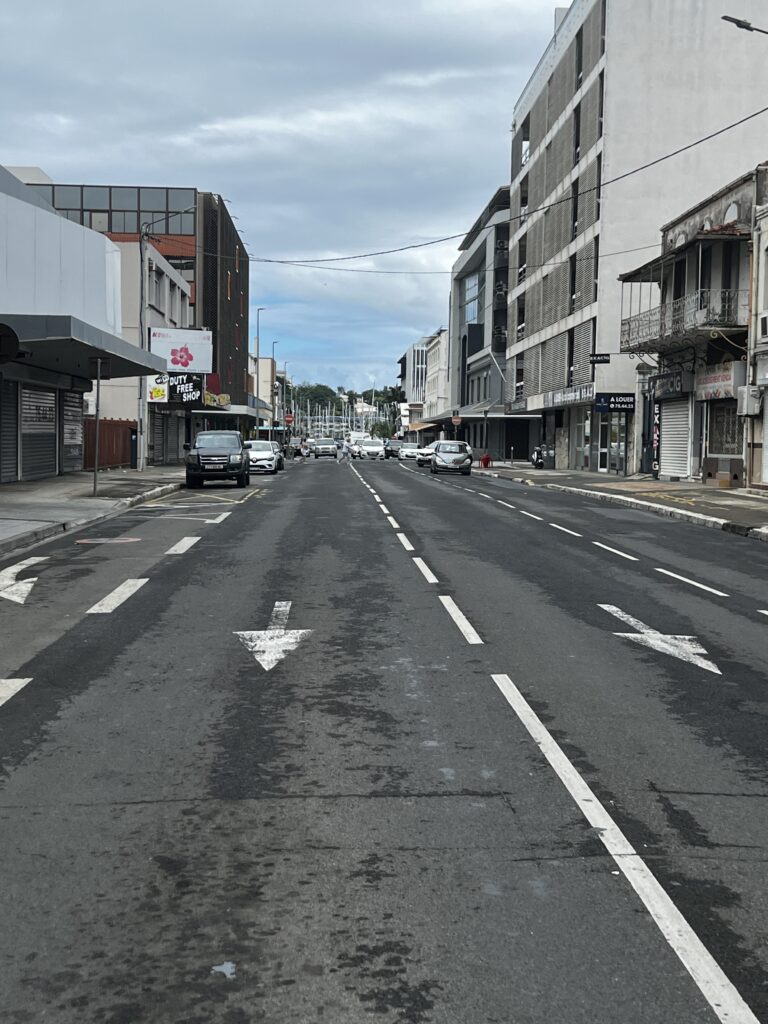
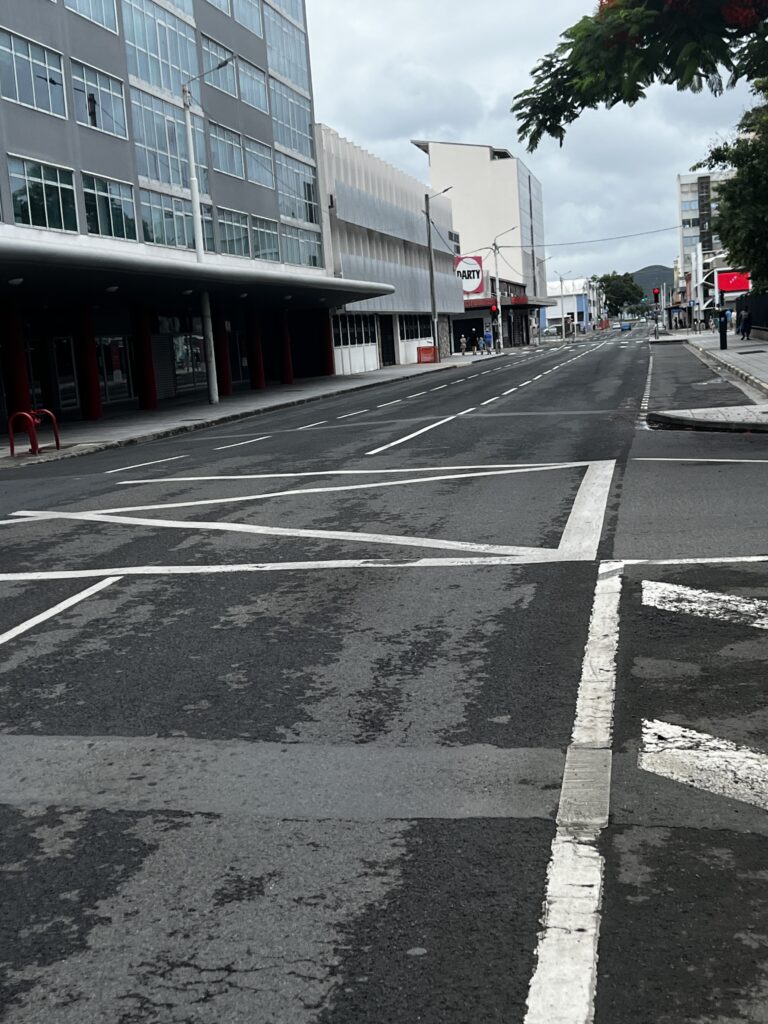
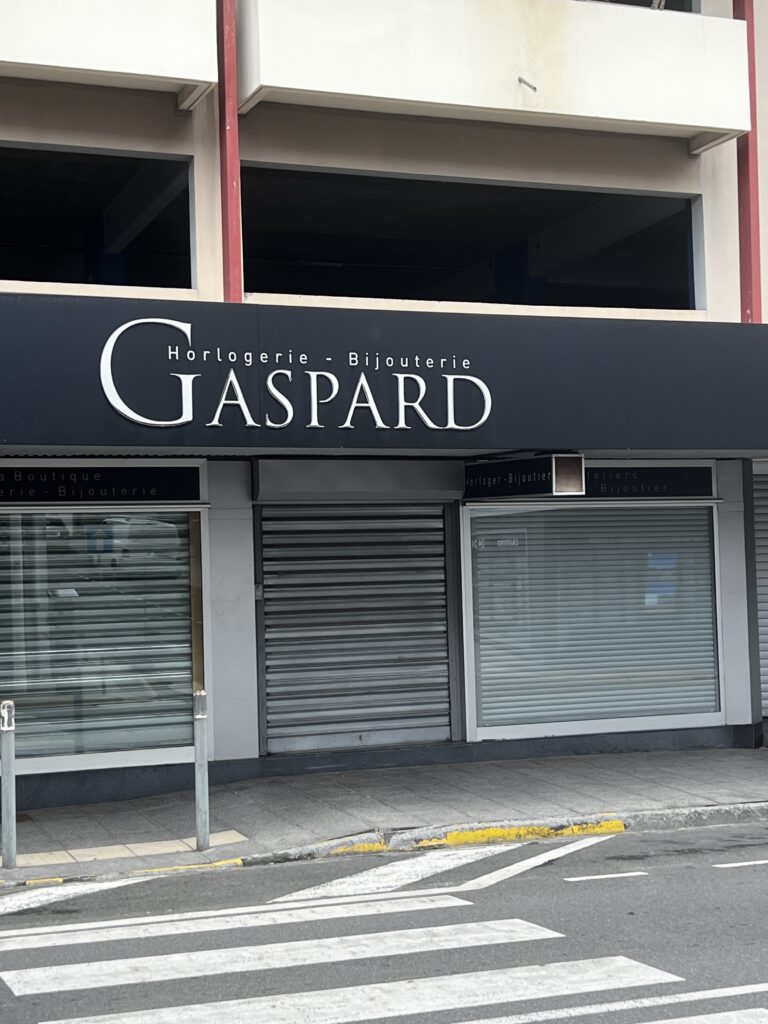
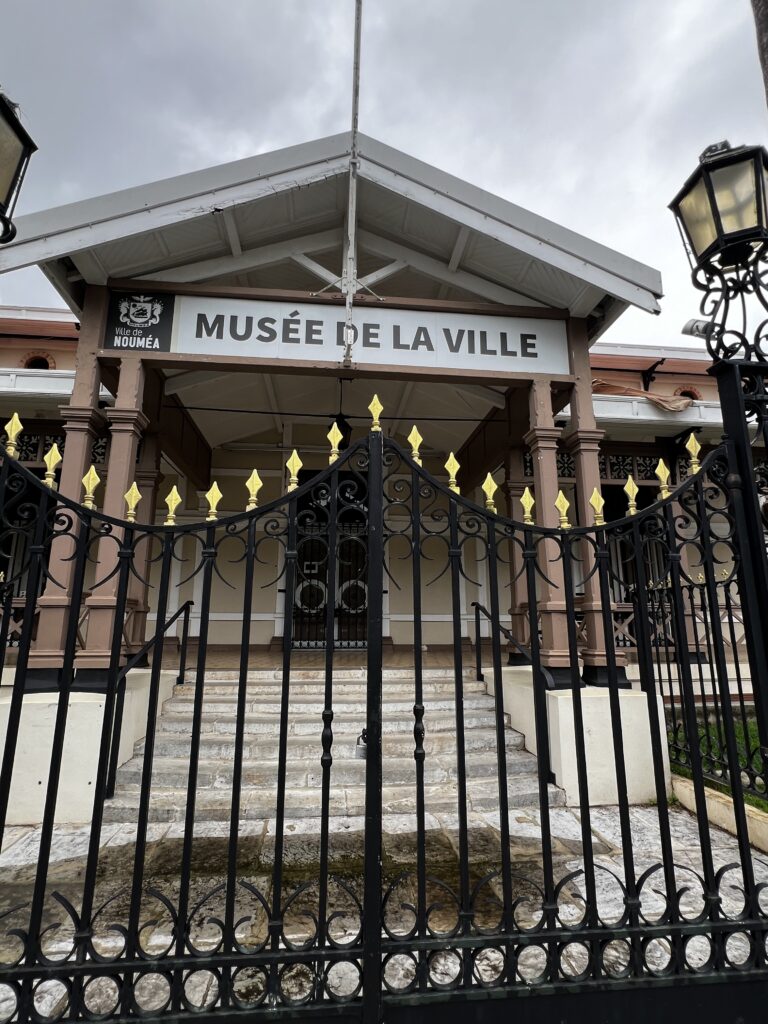
Noumea Museum (closed for the holiday)
Indoor mailbox
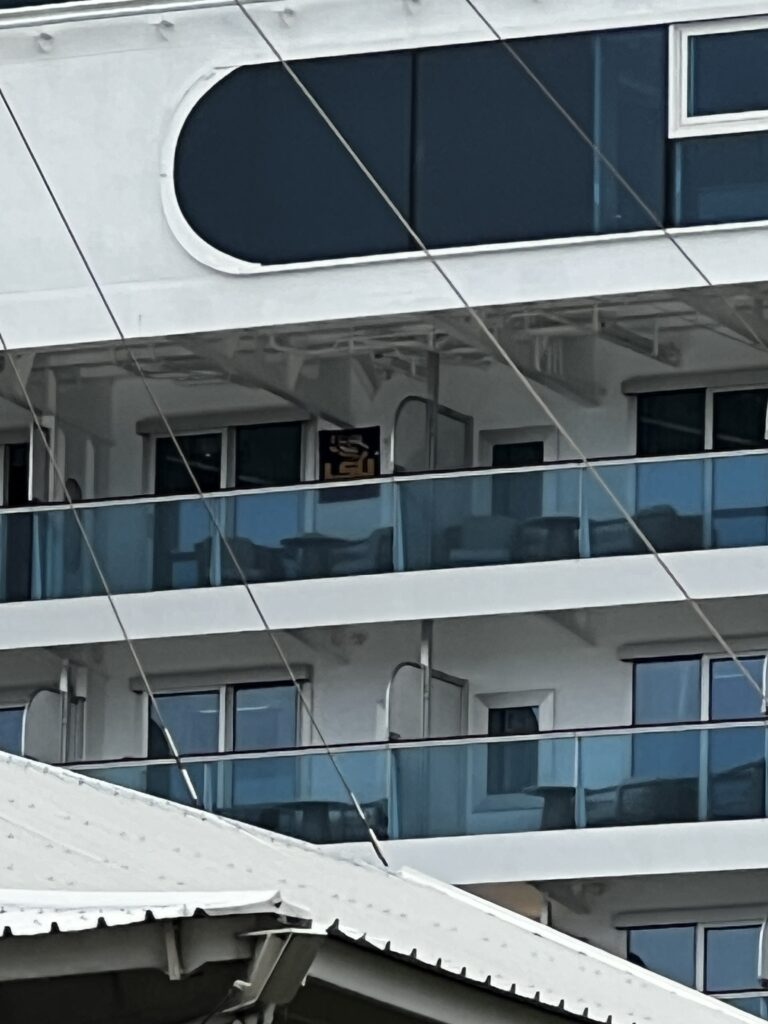
Photo of our cabin from the street
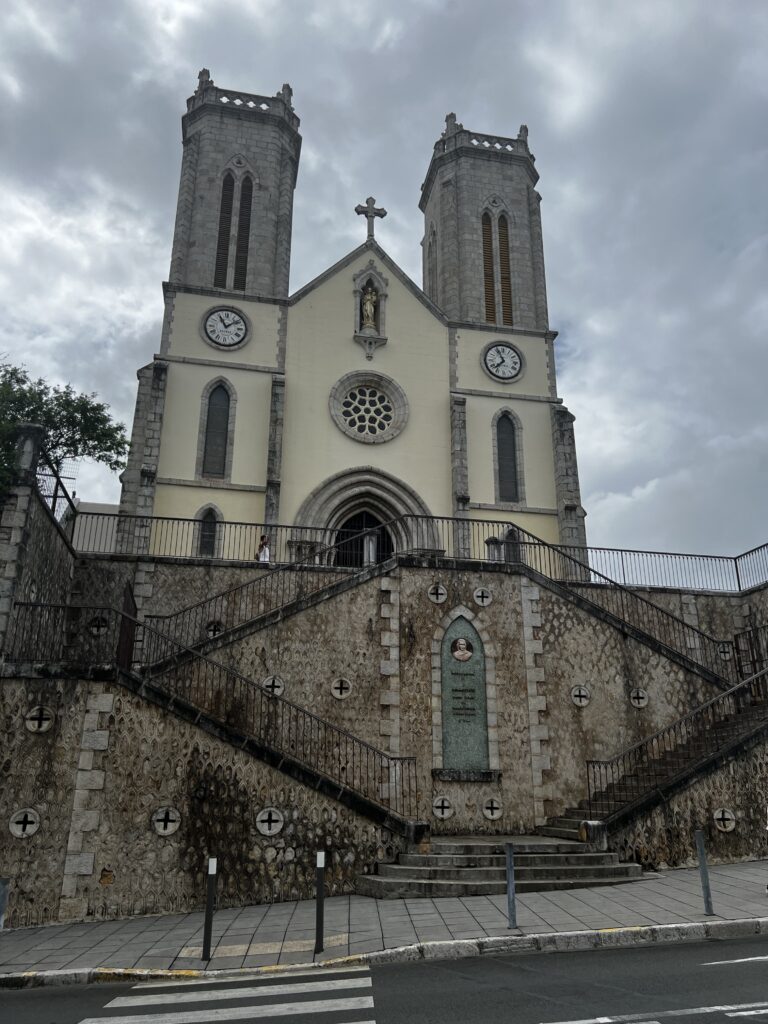
Noumea Cathedral front view from the street.
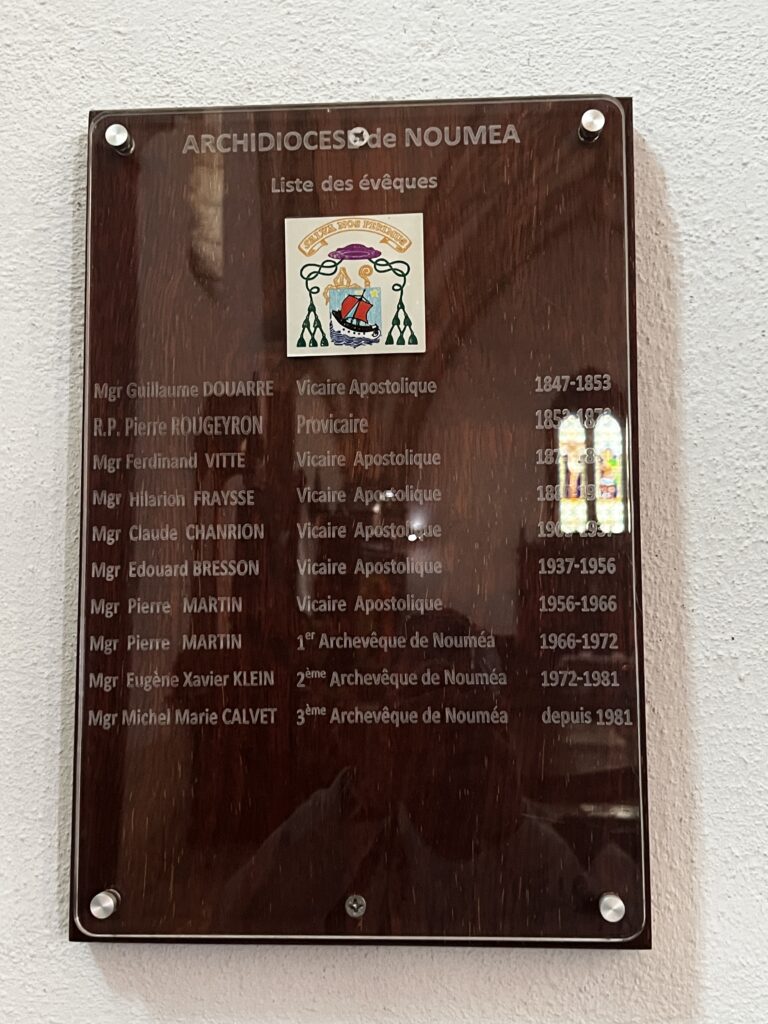
Nouméa Cathedral (French: Cathédrale Saint-Joseph de Nouméa) is a Catholic church in Nouméa, New Caledonia. It is dedicated to the Saint Joseph. The cathedral has been the seat since 1966 of the Archdiocese of Nouméa, to which the former Vicariate Apostolic of Nouvelle-Calédonie was elevated.
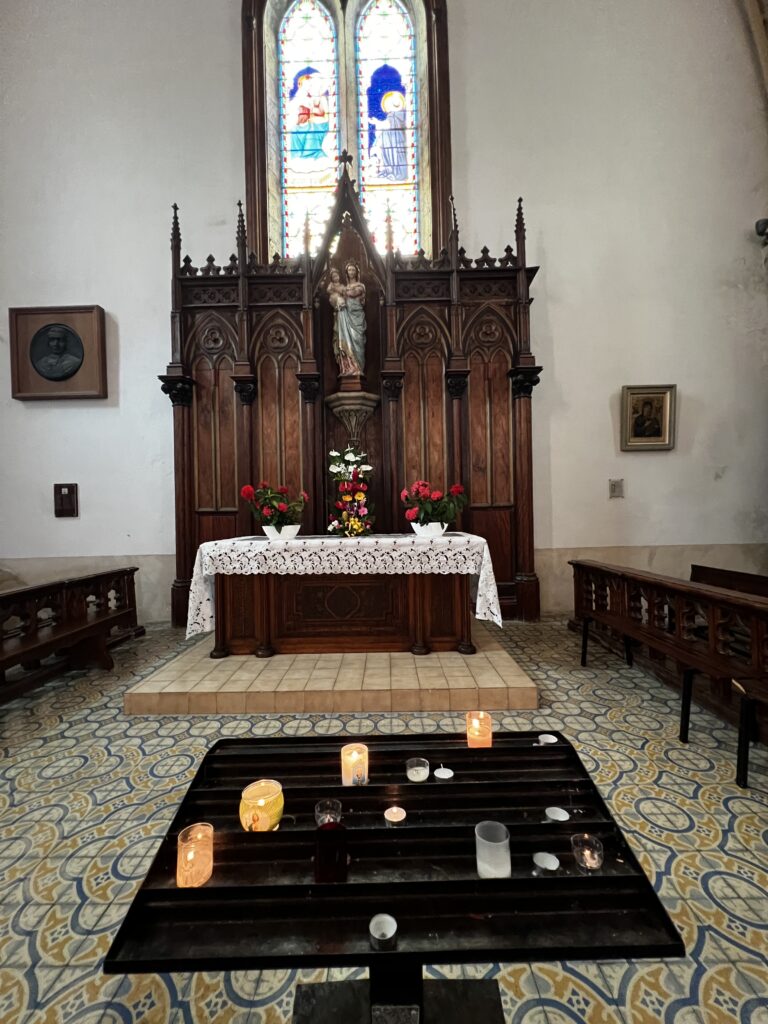
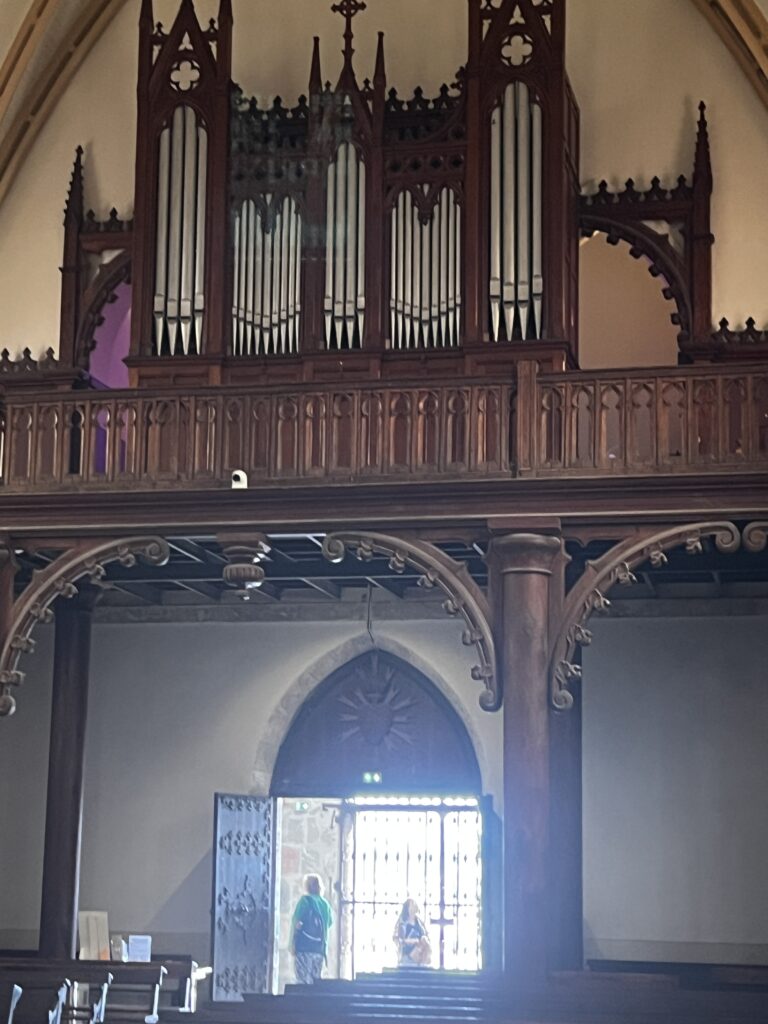
The cathedral is situated on an elevation dominating the town centre of Nouméa and is built on artificial terraces constructed between 1876 and 1887. It was classed as a monument historique on 20 August 1992, partly because of its outlook, partly because in its architecture it resembles several cathedrals of Latin America, and partly because of the quality of many of its furnishings. These include its high altar, sculpted in 1860, and inherited from the Mission de Saint-Louis, the first mother-church of the vicariate apostolic until the consecration of the cathedral in 1893. Other important furnishings are the carvings in tamanu wood; the choir; the bishop’s throne; the chapels, in which the giant holy water stoups are made from the shells of giant clams (Tridacna gigas); the chandelier, a replica of that of the Church of the Madeleine in Paris and made from one of the first pieces of nickel mined in New Caledonia; the carved lectern; and the organ loft.
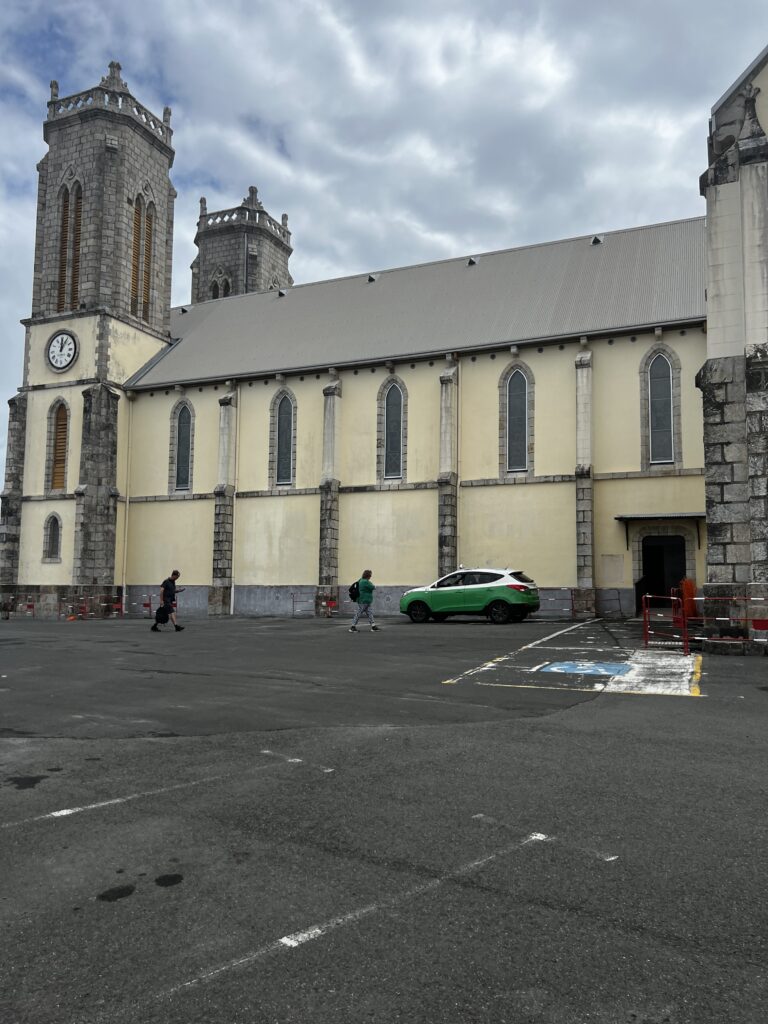
Side view of the cathedral
The cathedral, dedicated to Saint Joseph, the husband of the Virgin Mary, was built between 1887 and 1897 as the seat of the Vicar Apostolic of Nouvelle-Calédonie (created in 1847) with convict labour to plans by a former prisoner, a certain Labulle. It was blessed on 26 October 1890 by Père Xavier Montrouzier, almoner of the hospital, opened on the following All Saints Day, and consecrated in 1893 by the Vicar Apostolic of Fiji, Monseigneur Julien Vidal, before the façade and the bell towers were completely finished.
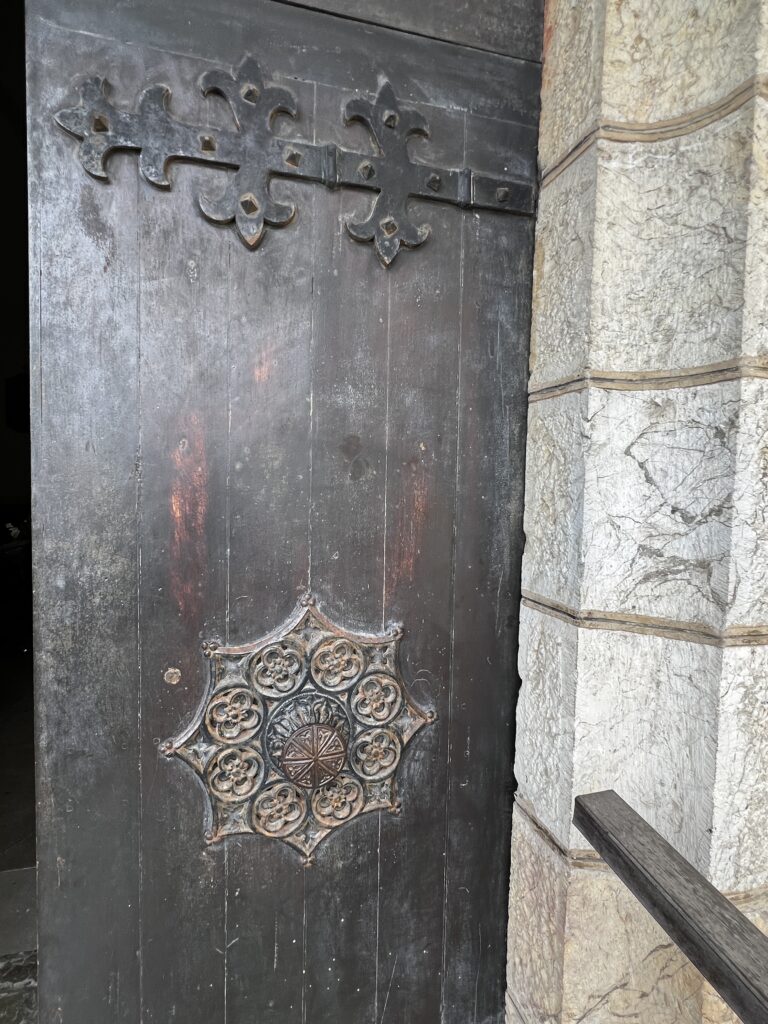
Entrance into the cathedral is through these large doors
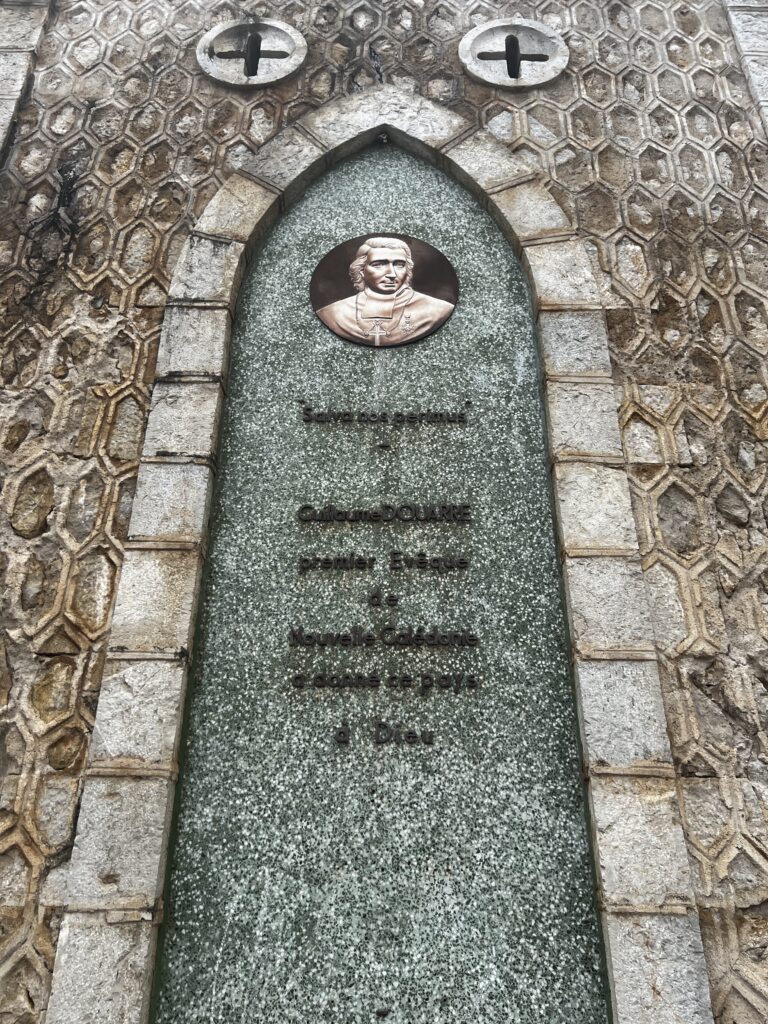
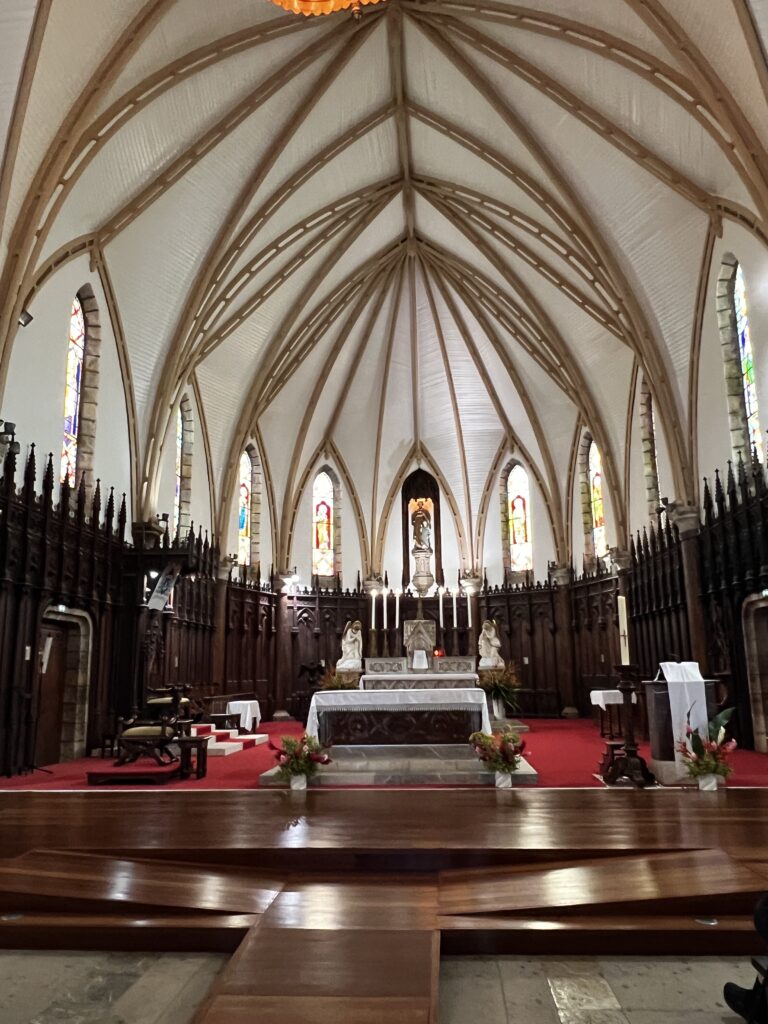
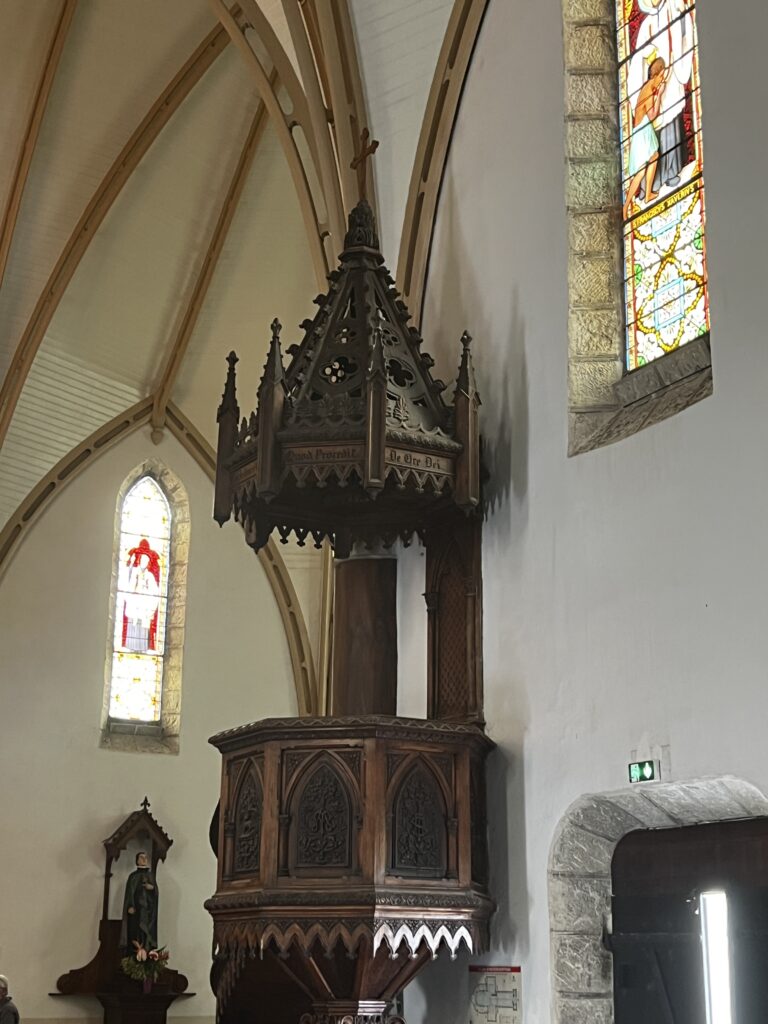
View of the cathedral’s alter. The cathedral has a Latin cross ground plan, and is 56 m (184 ft) long (five bays with sexpartite ogival vaults for the nave, two straight bays and five polygonal bays for the choir), with a transept 36 m (118 ft) wide, on a south-west–north-east axis. 15.5 m (51 ft) high, the building is flanked on its south-west façade to either side of the porch by two towers 25 m (82 ft) high with stone balustrades at the top. (Originally it was intended to add spires to the tops of the towers, but the idea was abandoned given the prevalence of cyclones). The two towers, the buttresses and the surrounds of the doors and windows are in dressed stone (typical of the buildings constructed by the convicts), while the other walls are of rubble masonry mortared with lime. The woodwork and the ogival vaults are in red kauri wood. The roof is made of corrugated metal.
A side of the cathedral
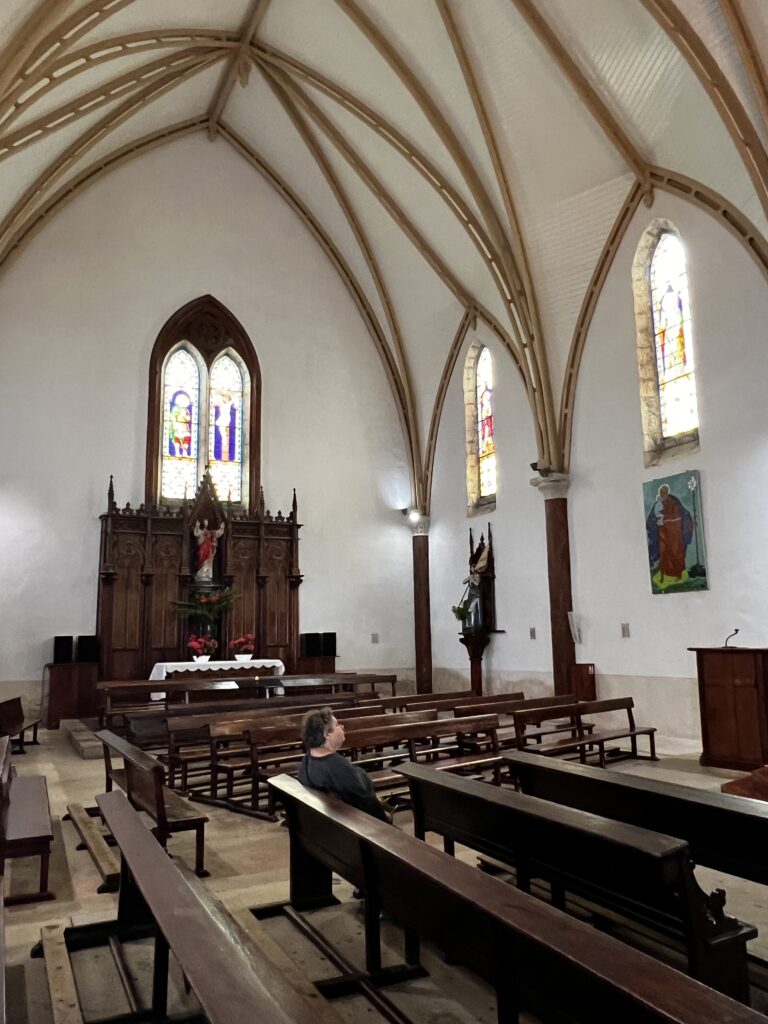
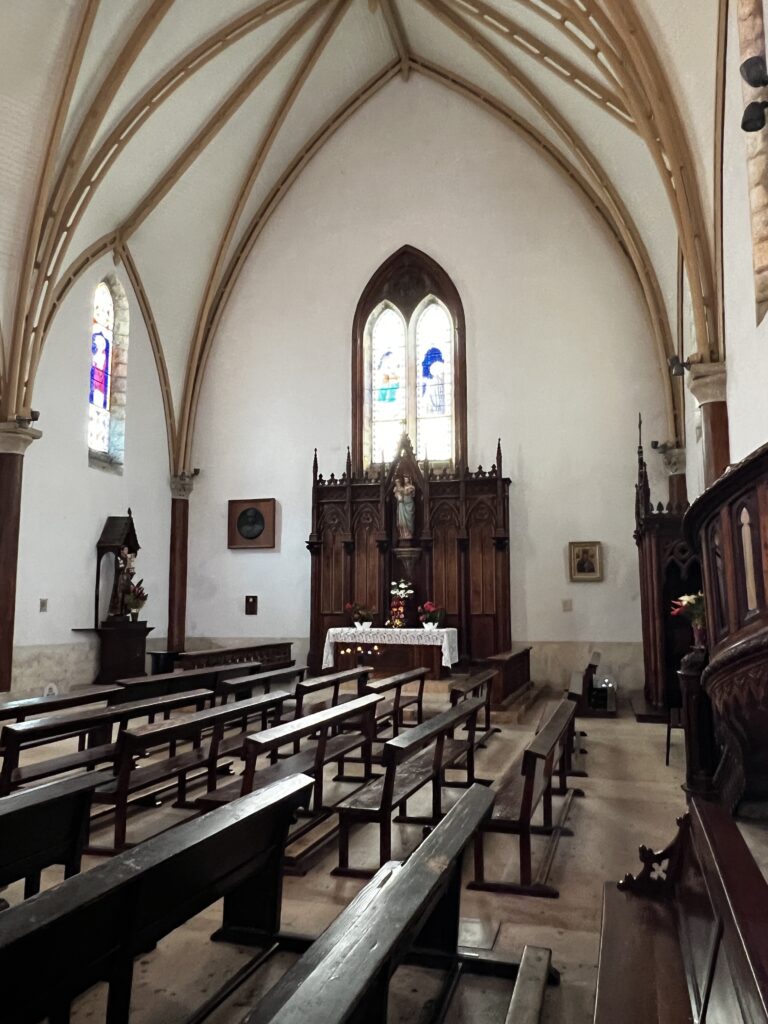
The first candles we have seen in a church on this cruise. Now, there was no place to buy a candle, so I had to relight one that had blown out
The cathedral’s organ
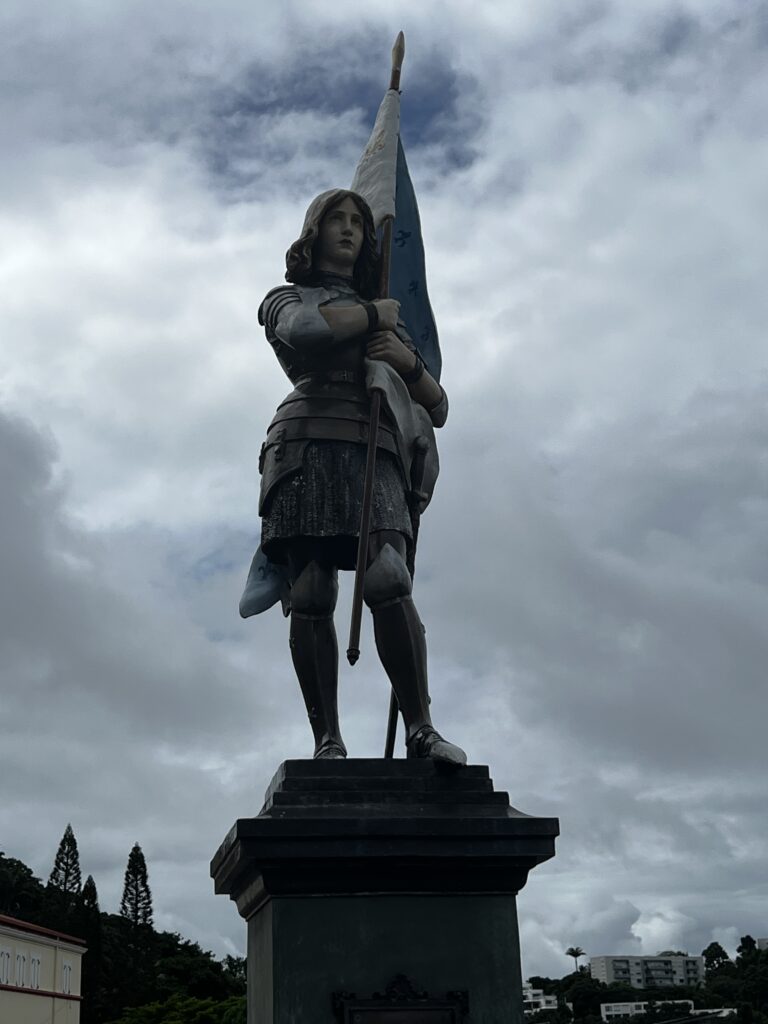
A statue of Joan of Arc outside the cathedral
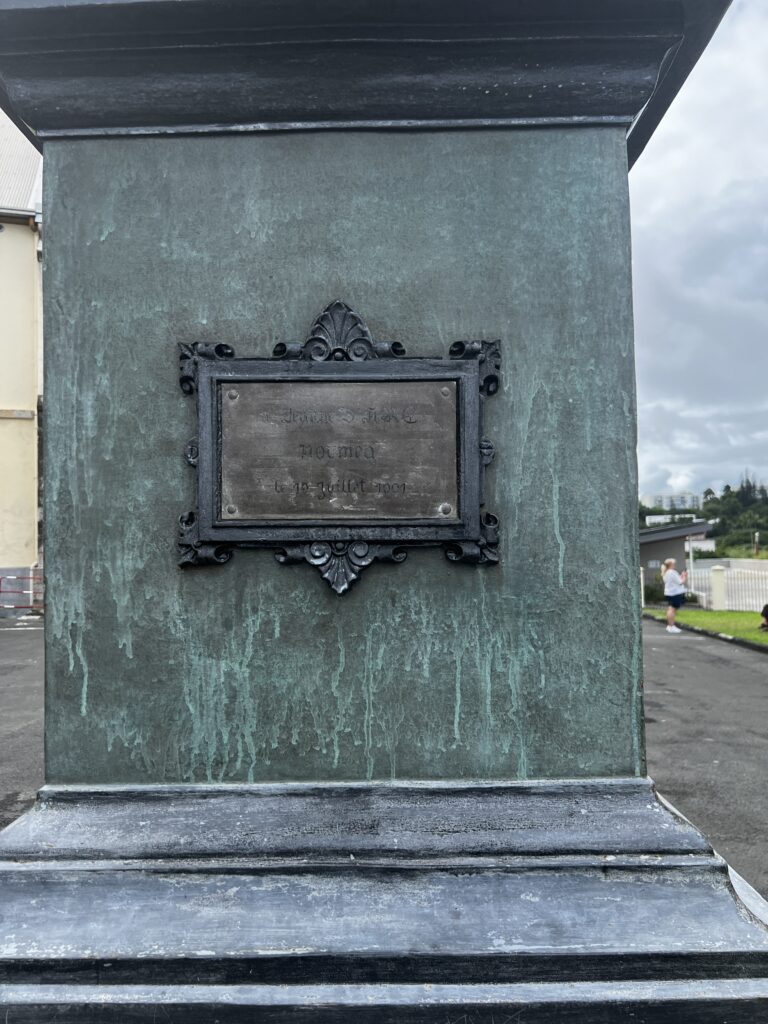
There is a statue of Joan of Arc in armour and bearing a standard on the terrace outside to the south. This was a gift from the Bishop of Orléans in 1901.
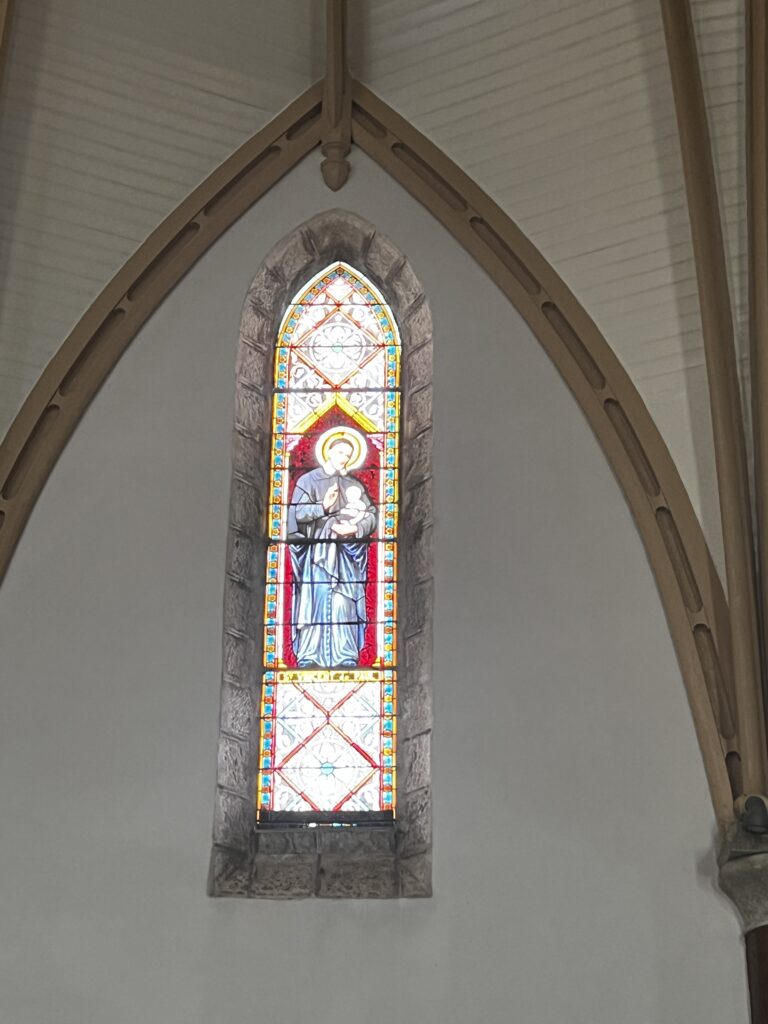
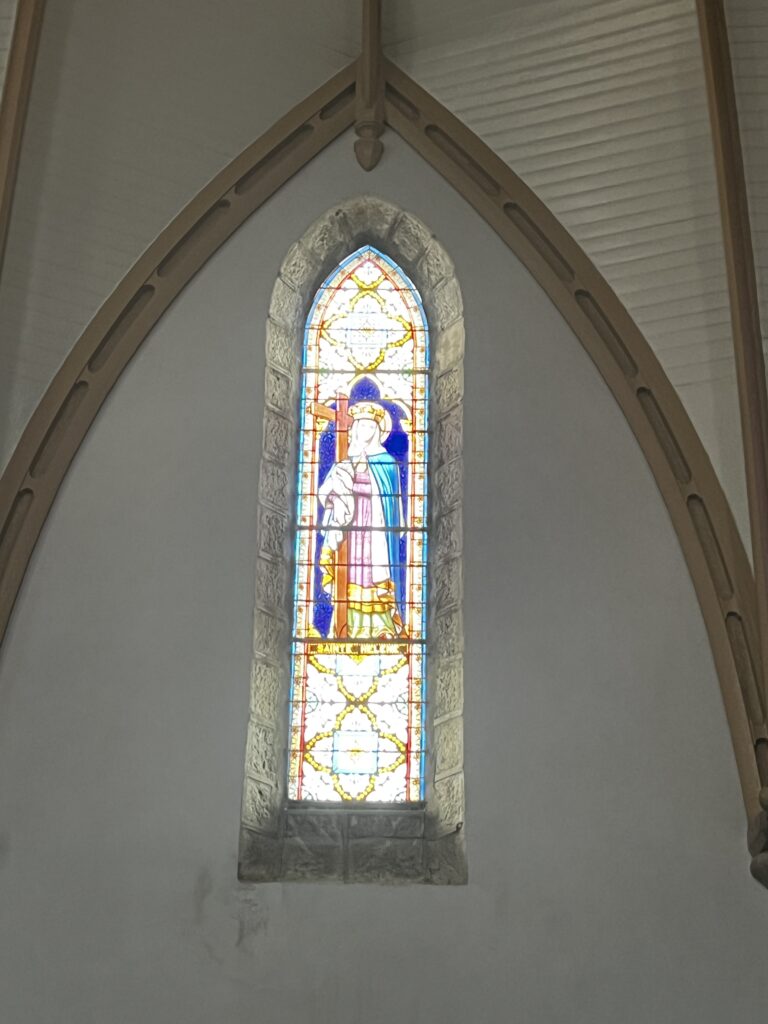
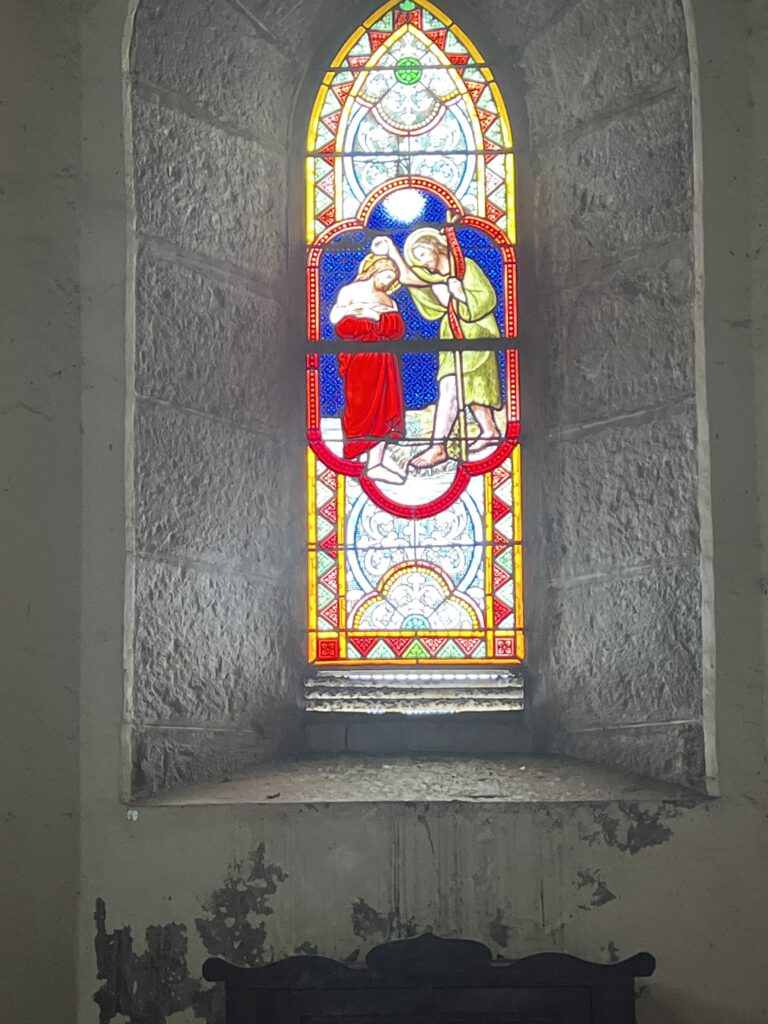
The building contains 28 stained glass windows depicting various saints and Biblical figures
Notre Dame Du Pacifique is a remarkable place of worship located in the vibrant city of Nouméa, New Caledonia. This serene and peaceful site is not only a significant religious institution but also serves as a stunning tourist attraction that draws visitors from around the globe. The church, perched on a hill, offers breathtaking panoramic views of the surrounding landscape, including the azure waters of the lagoon and the lush greenery that characterizes the region.
This is also known as the Virgin Mary Lookout. It’s on the way to the zoo and the botanical gardens. The statue is surrounded by the 14 stations of the cross, which depict various scenes.
It’s free to enter and the parking is also free.
A back view of the large statue of Mary that overlooks the city of Noumea
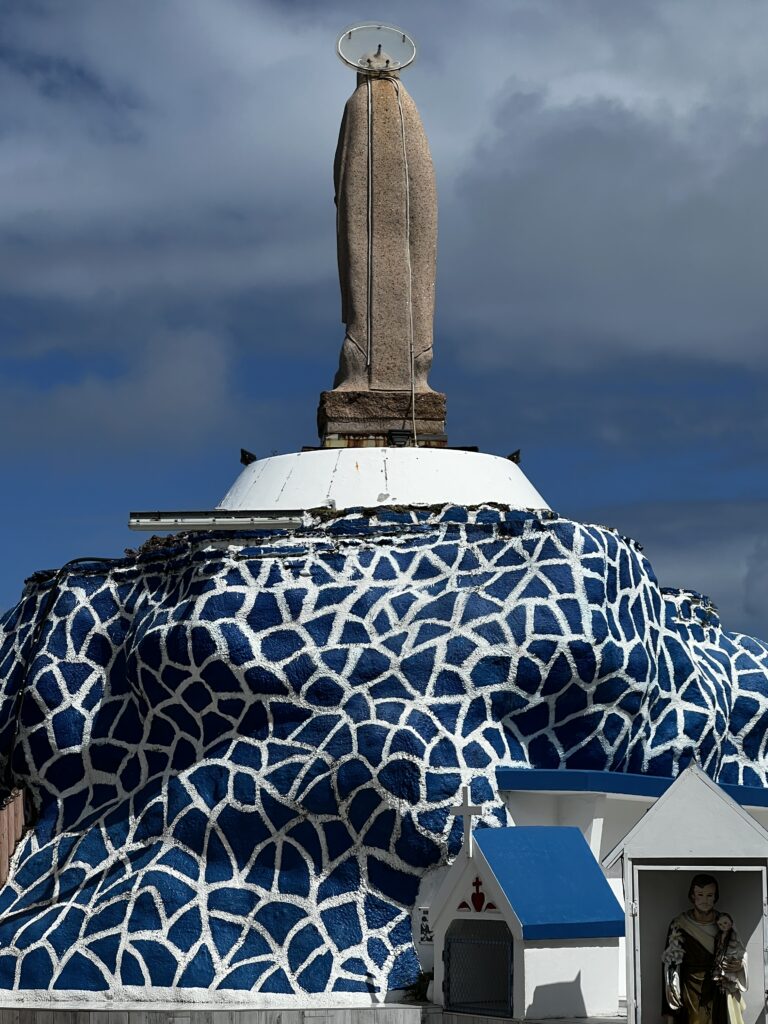
Standing atop a stunning azure rock, Notre Dame Du Pacifique is a breathtaking statue standing at 3.5 meters tall, offering panoramic views of Noumea and its picturesque bay. This serene spot is not just about the impressive statue; it’s also a place for quiet reflection and contemplation.
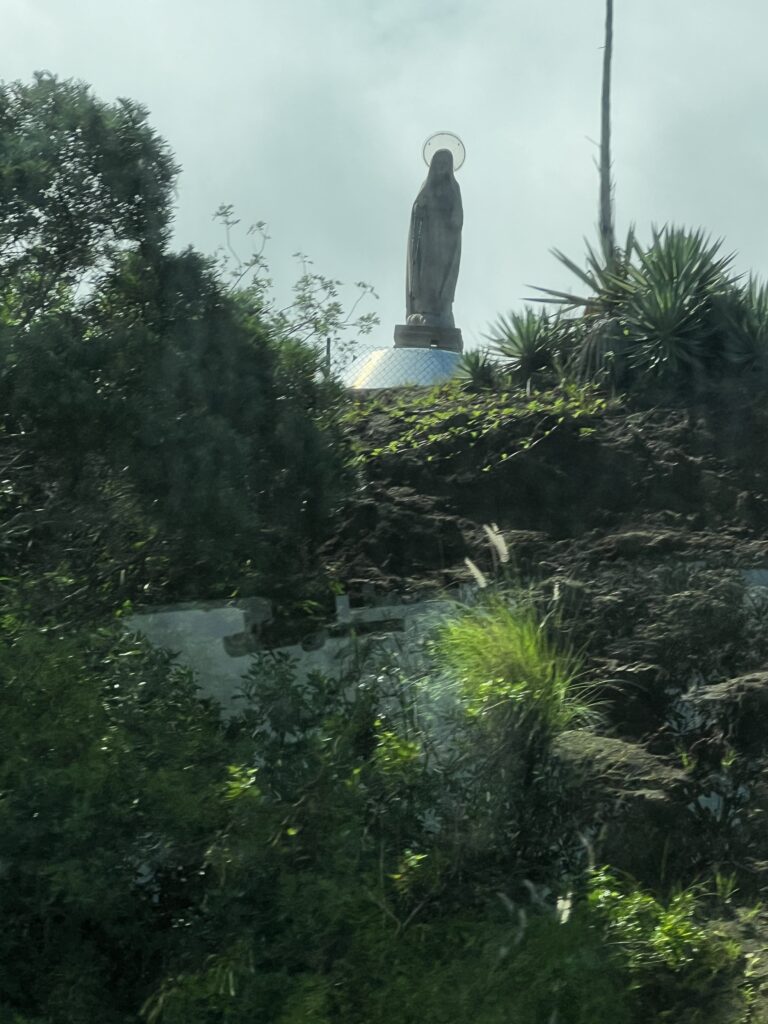
There were 14 stations of the cross scenes like these two below.
We were able to light two candles here under the statue
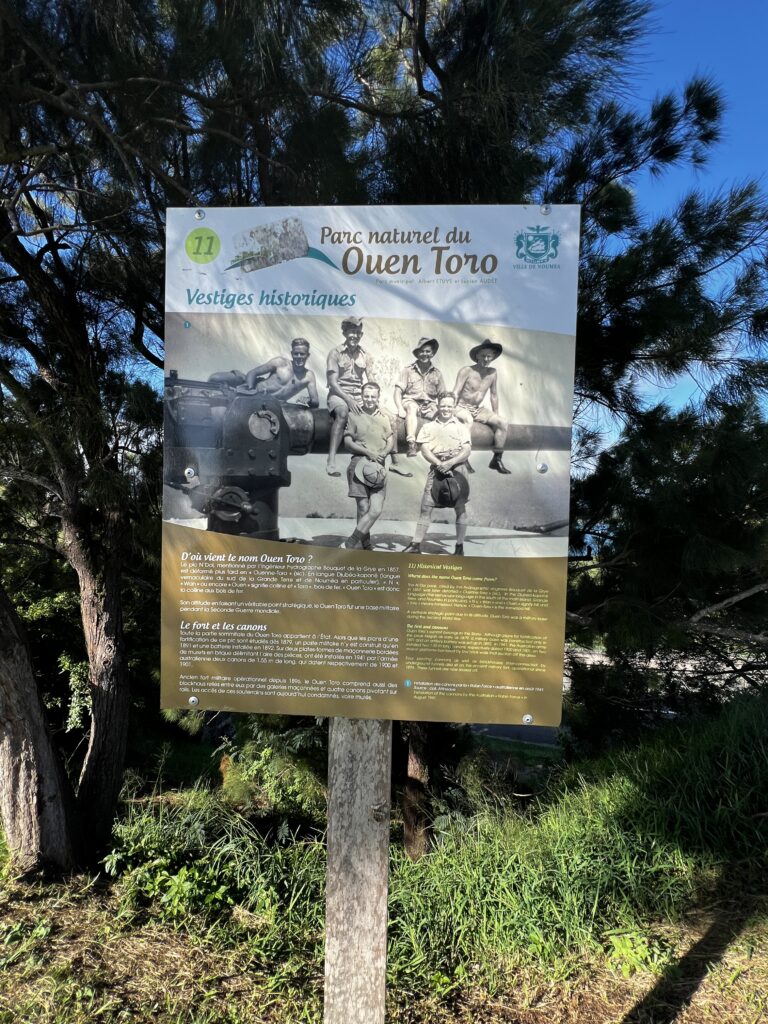
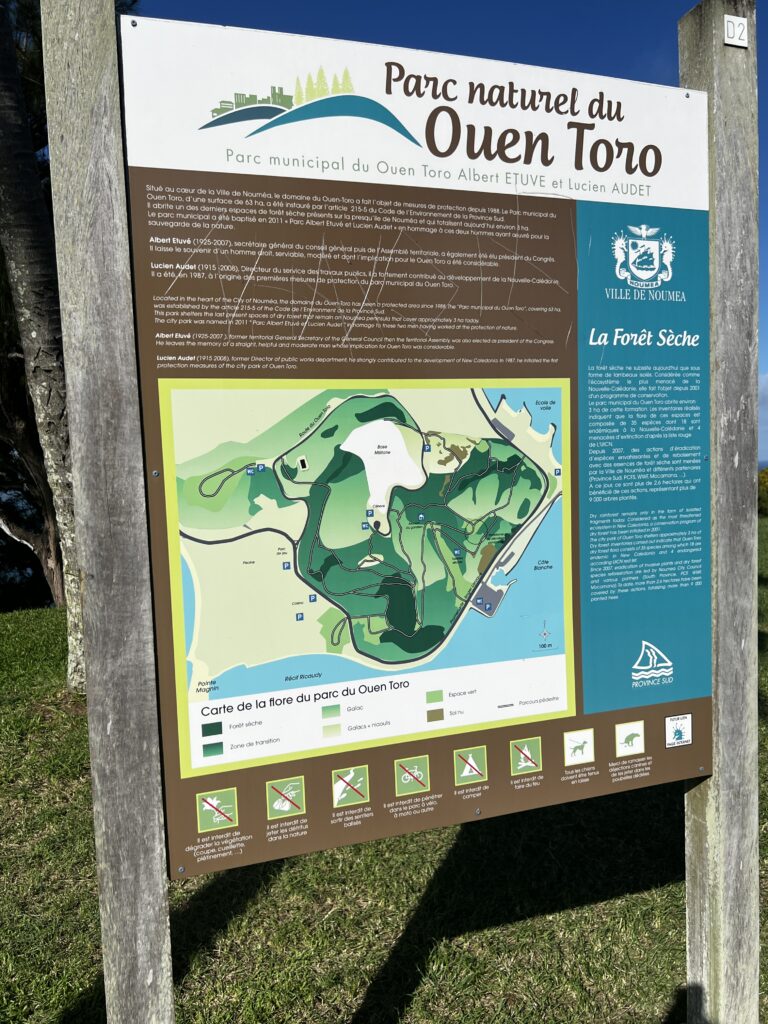
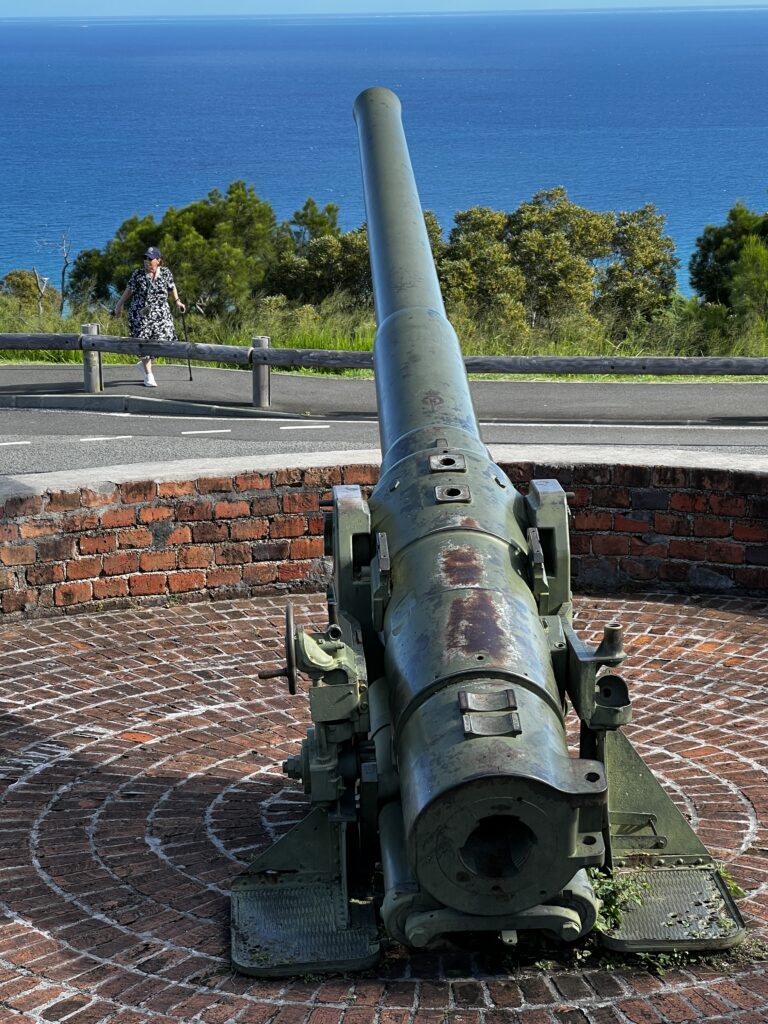
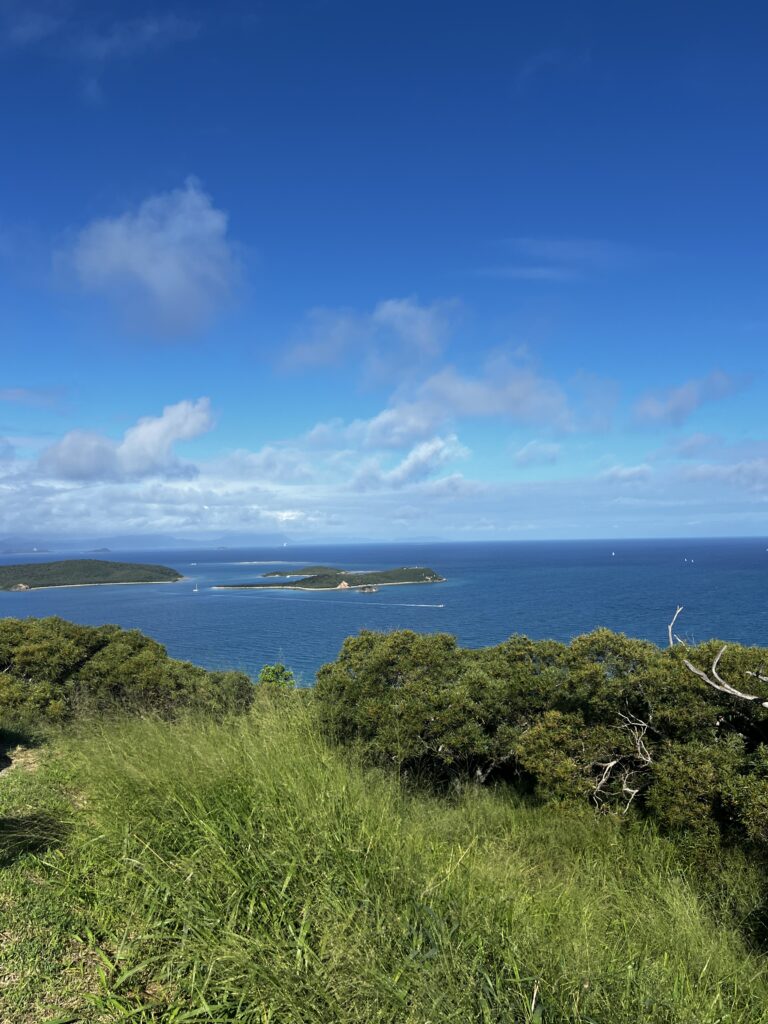
The highest view point called Ouen Toro which is a hill standing at the south side of Nouméa. The view from here was really great. Rising 132 metres above sea level, Ouen Toro is one of Nouméa’s most iconic lookouts. Easily accessible by car or along its marked walking trails, it offers sweeping views over the UNESCO World Heritage–listed lagoon, Anse Vata and Duck Island. A favourite spot for walkers, joggers and family outings, the site is also steeped in history, with military remains dating back to the Second World War. Surrounded by native flora, it’s a true nature escape right on the edge of the city.
At the peak of Ouen Toro during the Second War World, as part of Australia’s contribution, to the defense of New Caledonia, an Australian coastal artillery unit called “Robin Force” commanded by Captain Carty – Salmon spent seventh months on Ouen-Toro to install and operate two 6″ guns and to train the local.
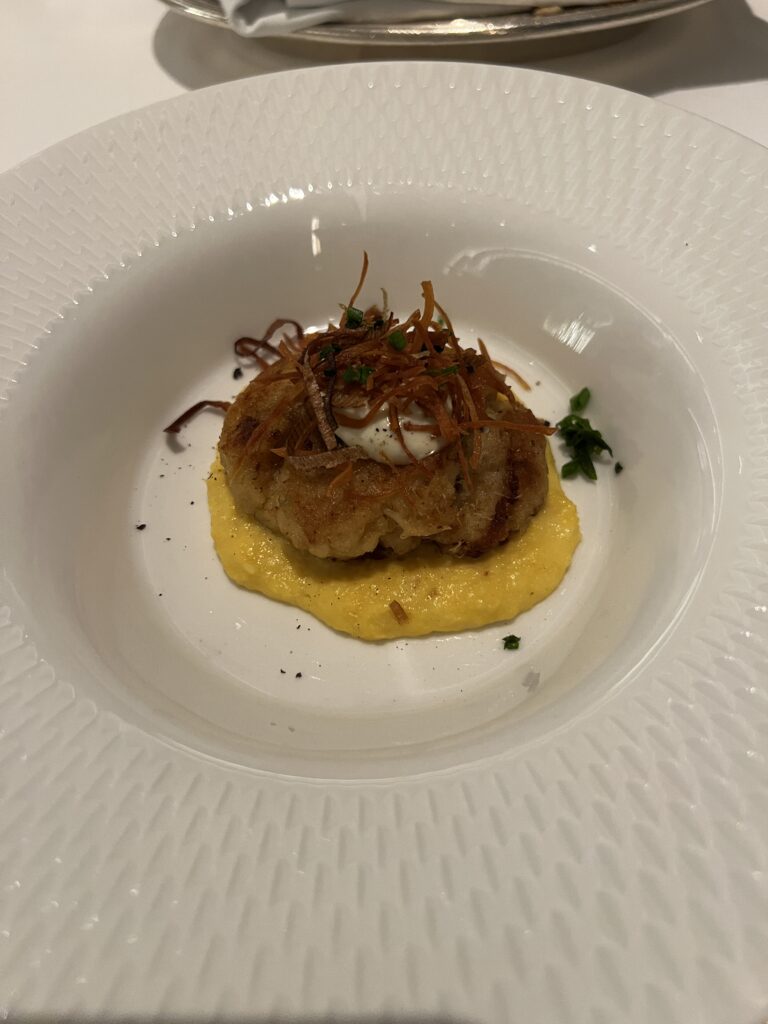
Dinner was in The Grand Dining Room. We both started with a crab cake as an appetizer
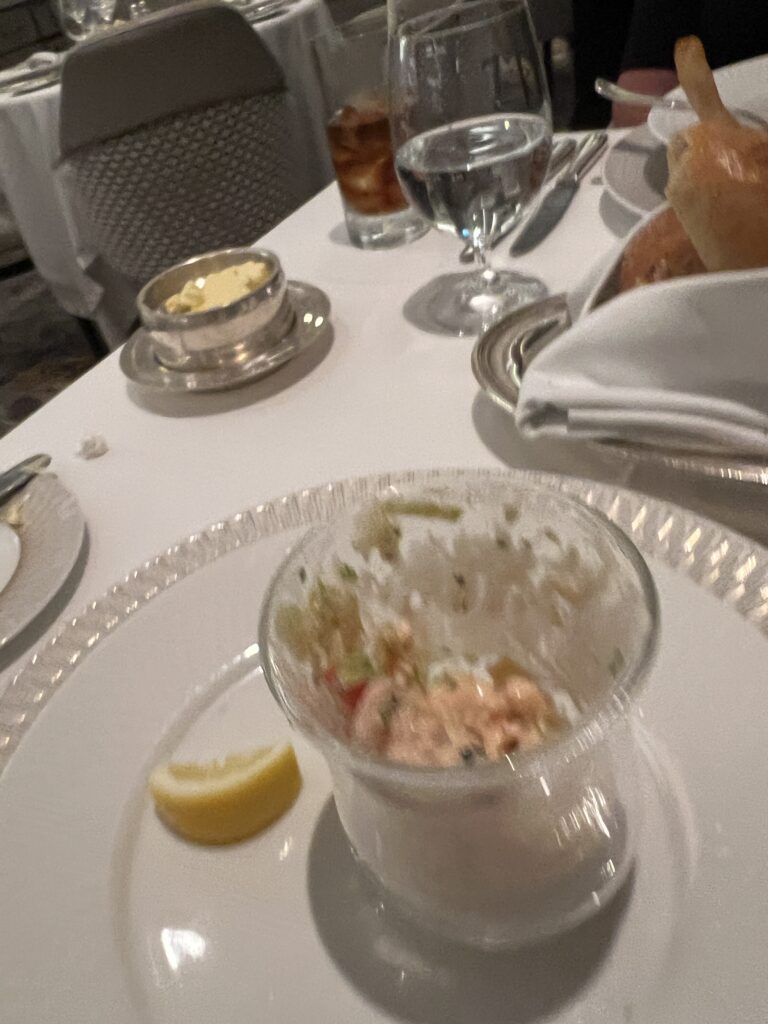
Lane also had a shrimp cocktail which was about all eaten when I remembered to take a picture
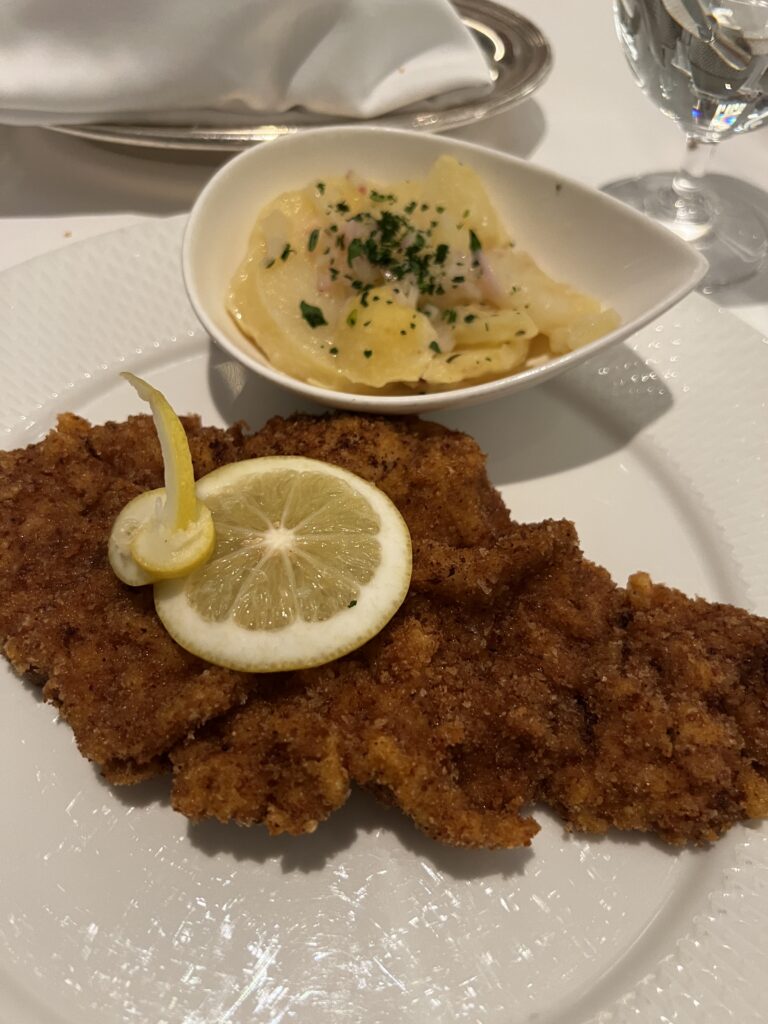
Jackie had Wiener Schnitzel is a traditional Austrian dish consisting of a thin, breaded, and pan-fried veal cutlet. It is famously served golden-brown, usually accompanied by lemon wedges, parsley, potato salad, or cucumber salad. This was something she had been waiting to see on the menu.
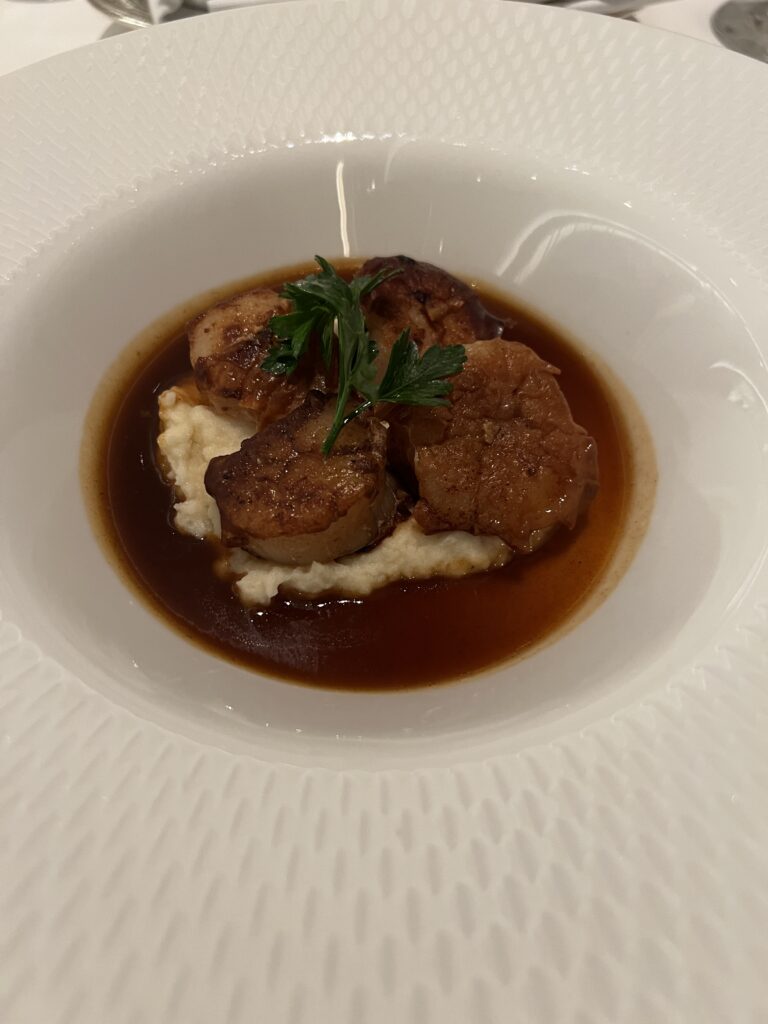
Lane had grilled scallops as the entree
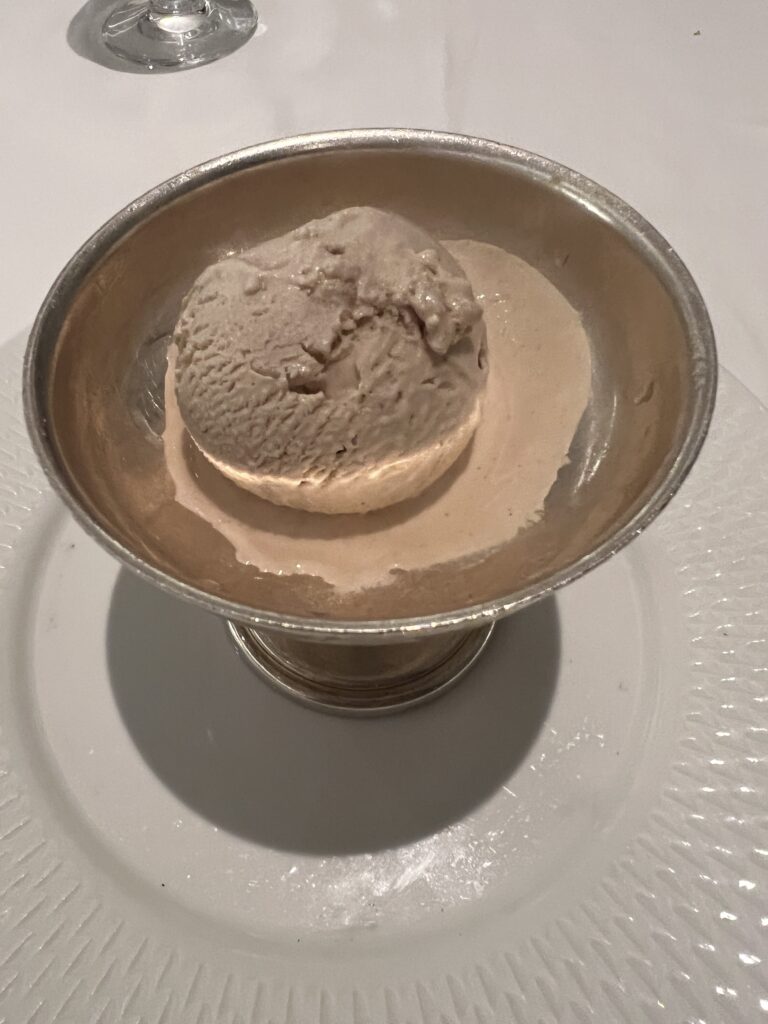
Praline ice cream to finish the meal
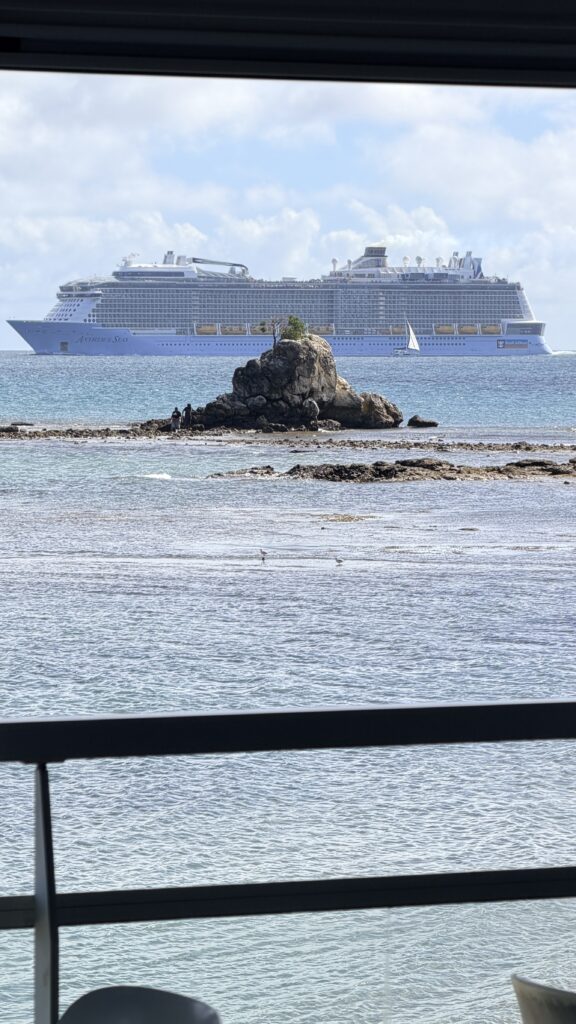
Anthem of the Seas leaving Nouvea
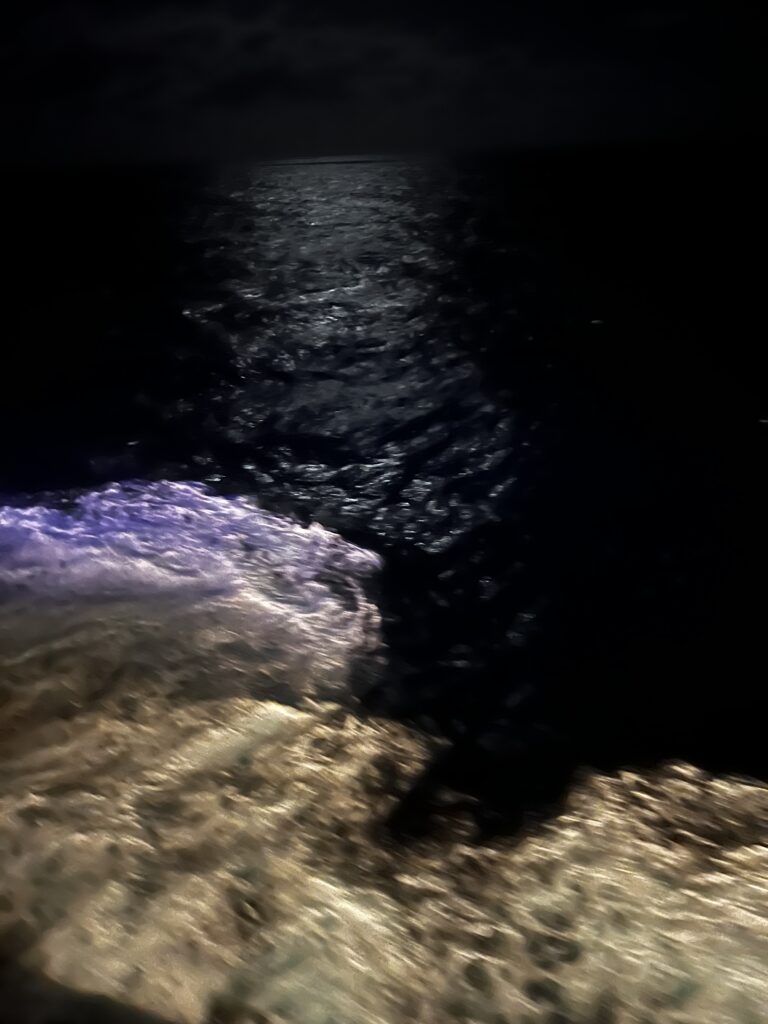
View of the ocean at night with the moonlight shining
One thought on “Day 31 April 6 – Noumea, New Caledonia”
It is mind boggling that people can create such huge buildings without todays tools.