
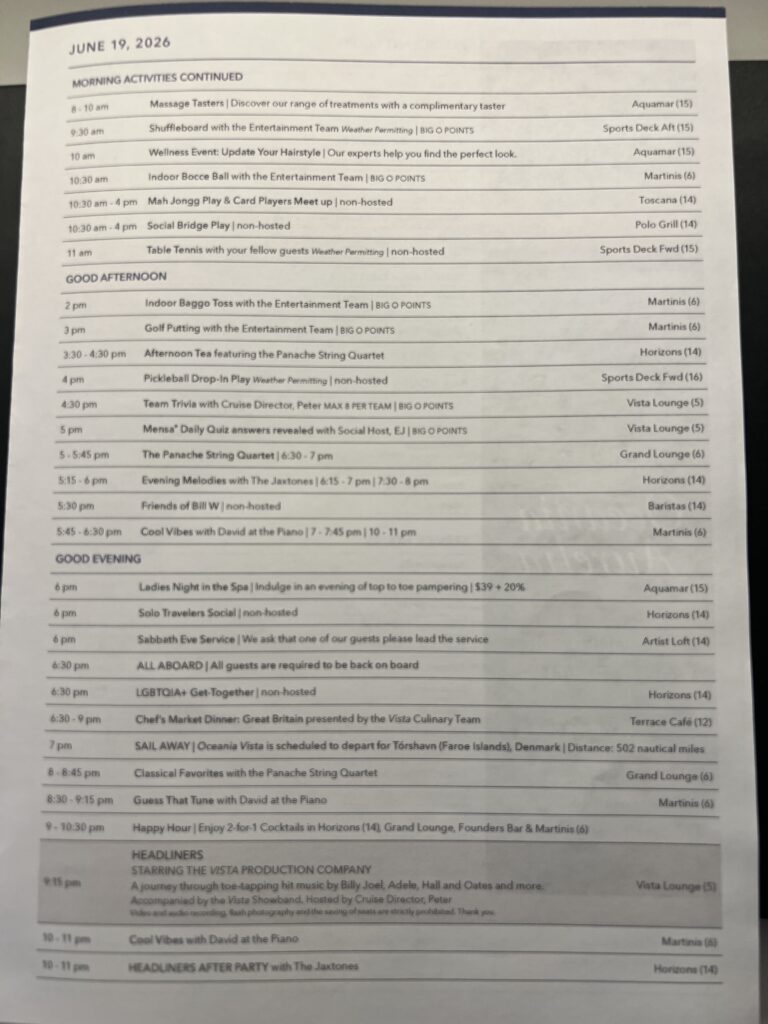
Day 104 Friday June 19th (16 days to go) — We arrived in Greenock, Scotland today which is the cruise port terminal for Glasgow. For the day we had a private tour booked to travel over to St. Andrews and Edinburgh, Scotland. The drive was 2 hours and 15 minutes to St. Andrews to start the day and then we drove down to Edinburgh before returning back to the ship.
Our driver and guide was David. We placed his photo in the Faces Around the World section of the blog. Sadly, the rain started early this morning making the drive a few minutes longer and while it let up for a few minutes in St. Andrews, it really never stopped the rest of the day. It forced us to spend more time in the car than what either we or David had hoped for, but he did a great job getting us around and showing us sites during the travels.
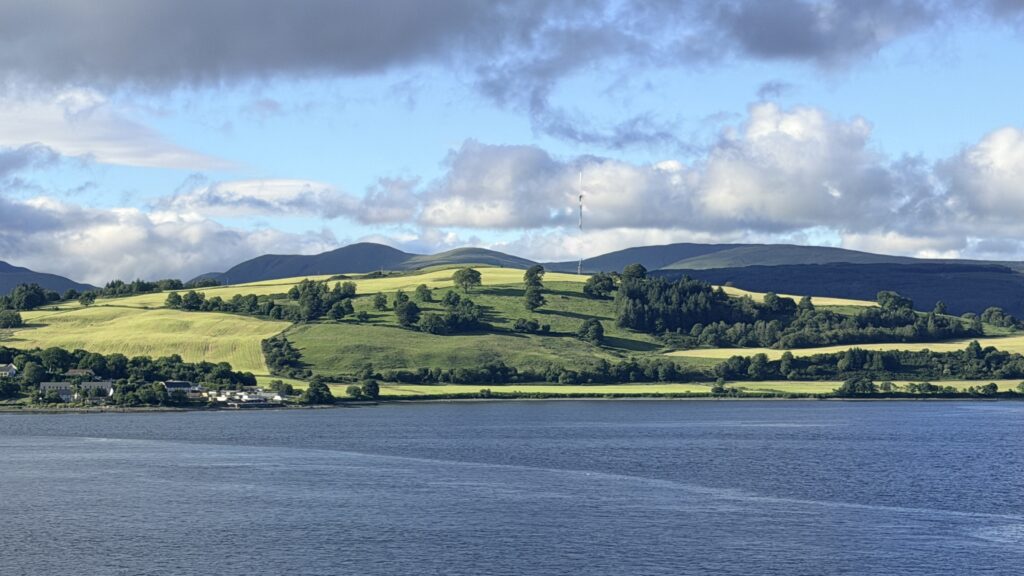
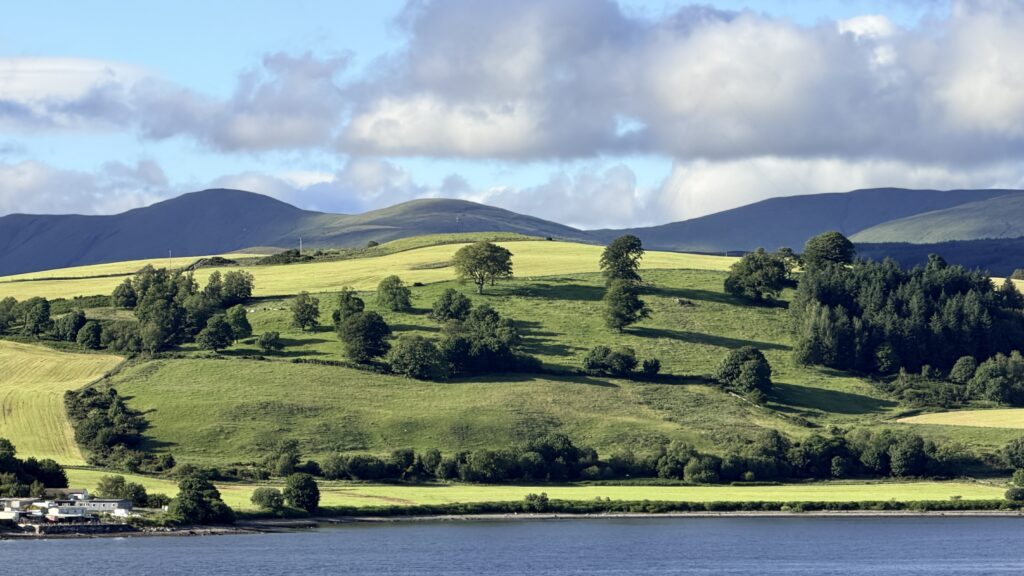
The scenery on the drive was very green and beautiful. The day left us thinking of a need to return one day to spend more time in the two cities we visited today.
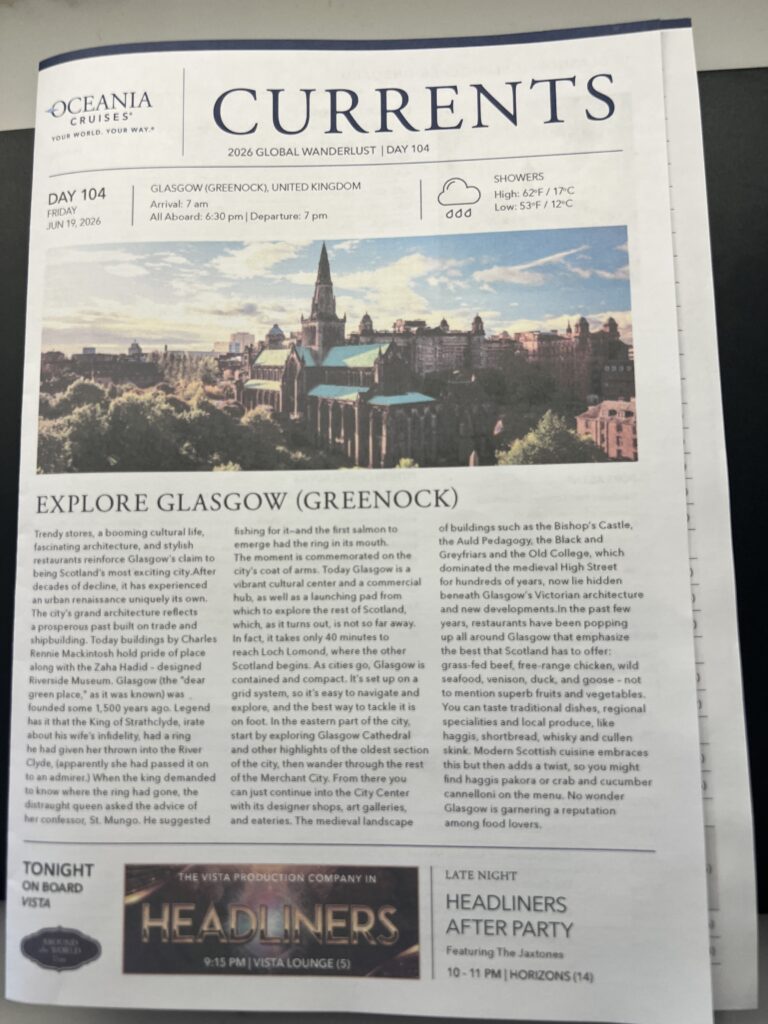
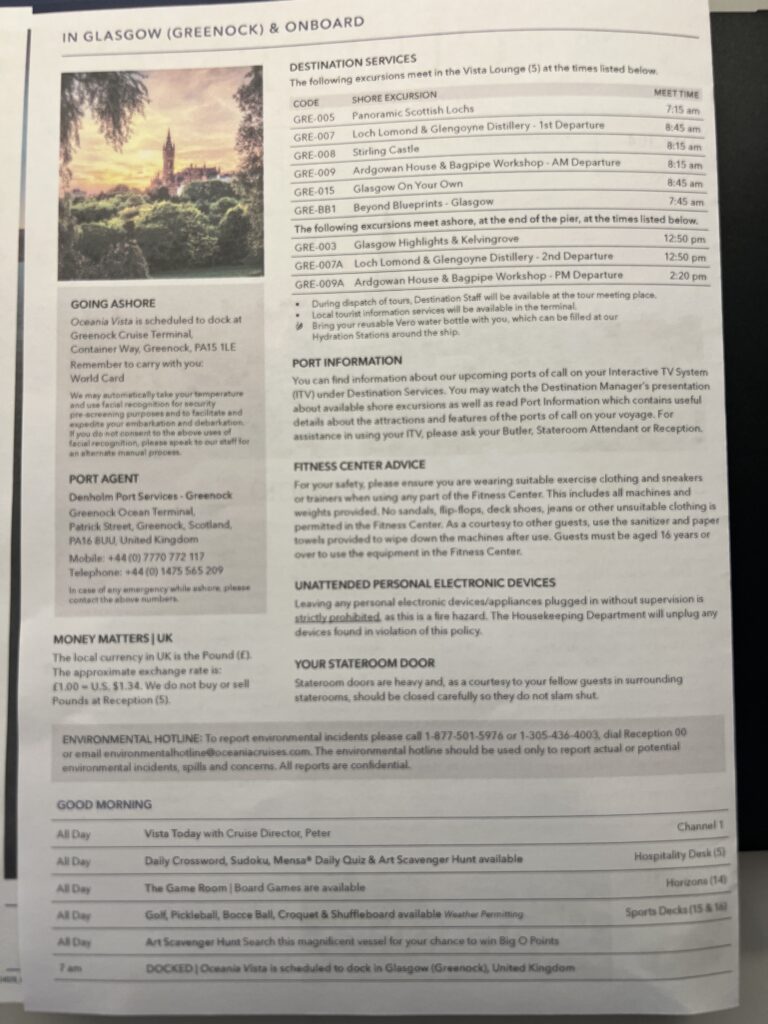

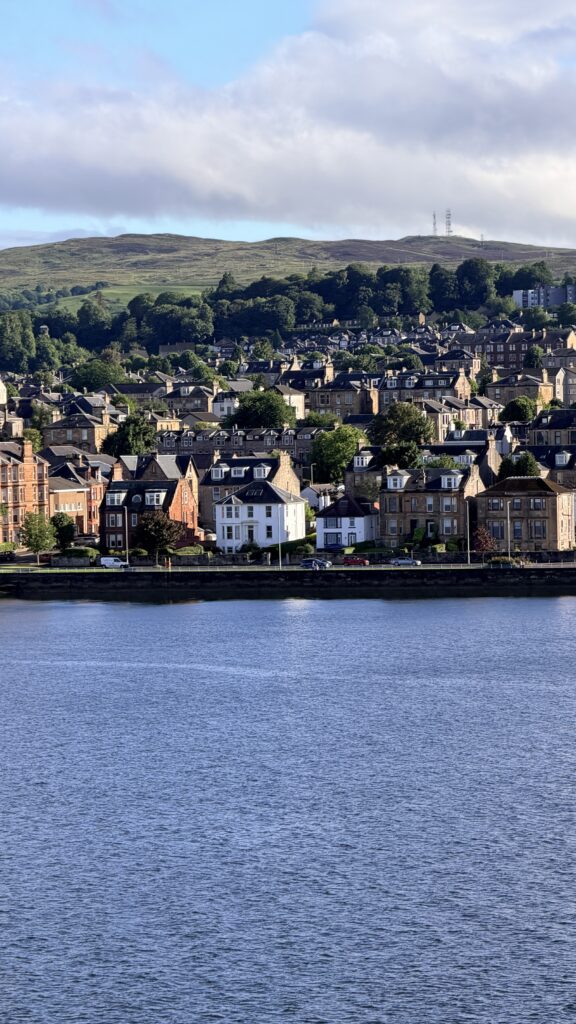
Video of Greenock, Scotland in the morning. It had stopped raining for a few minutes as you can see with the wet pavement.
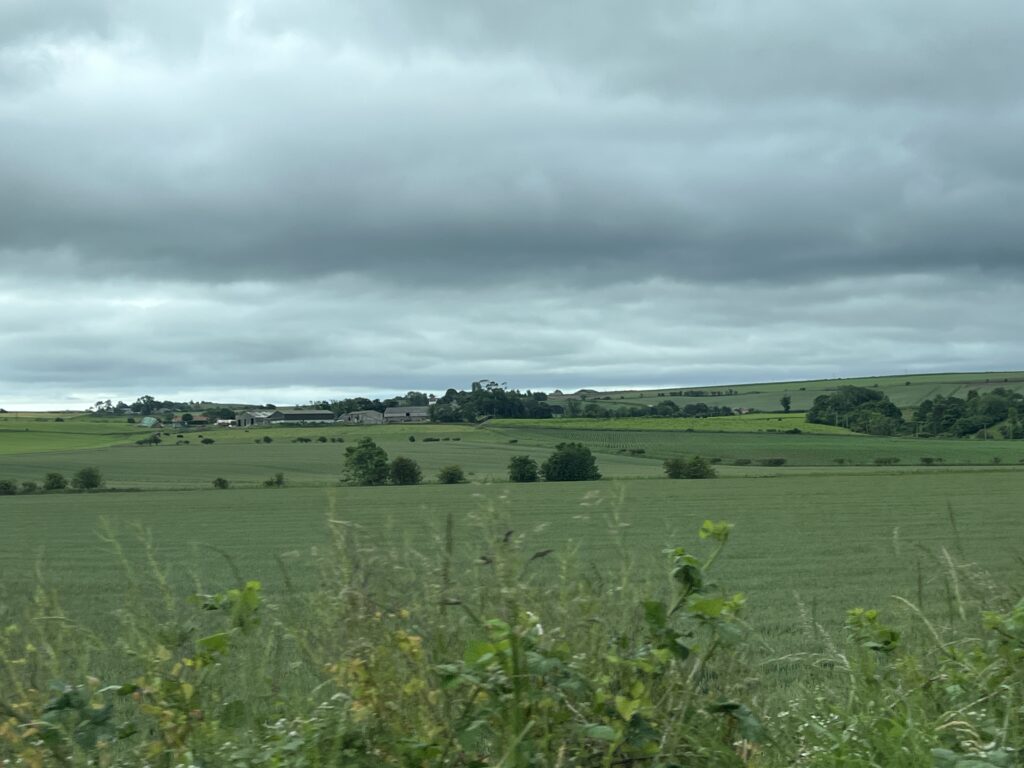
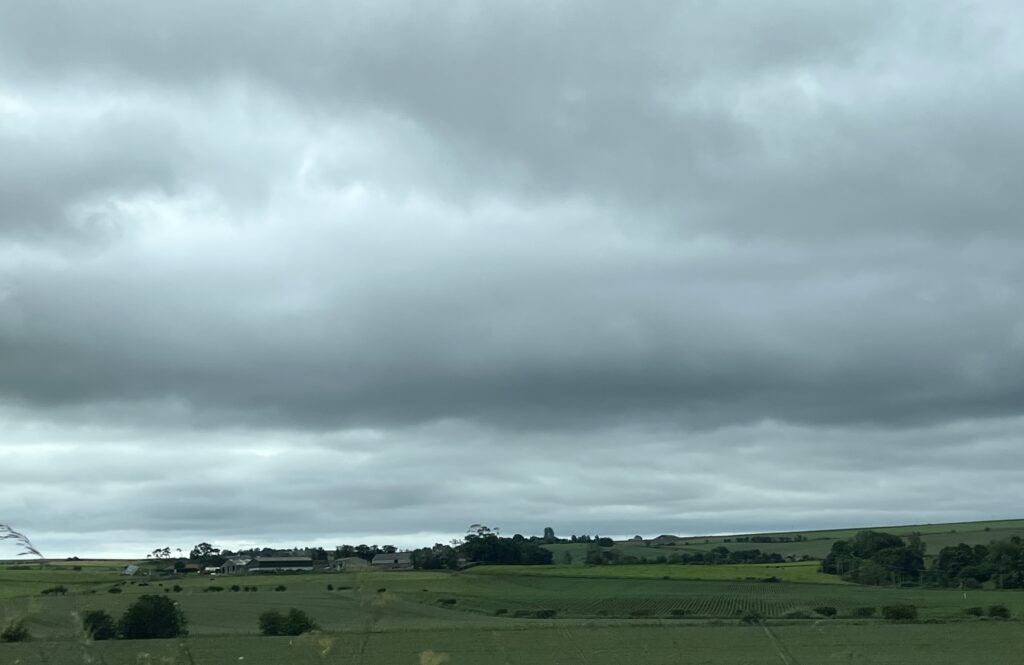
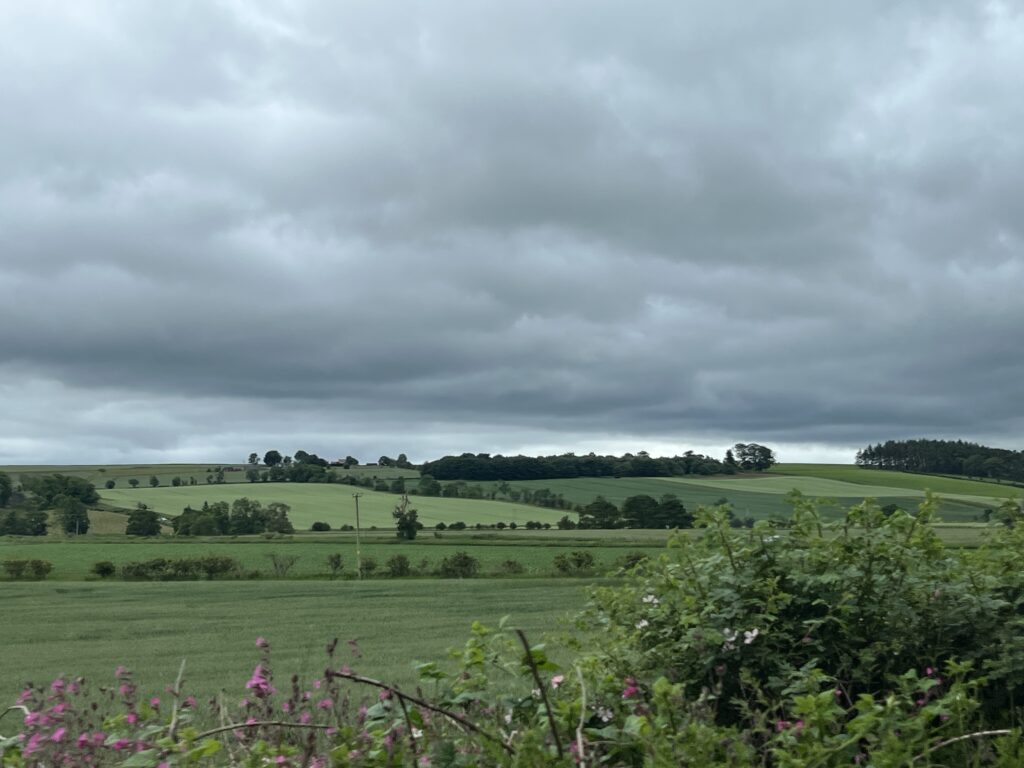
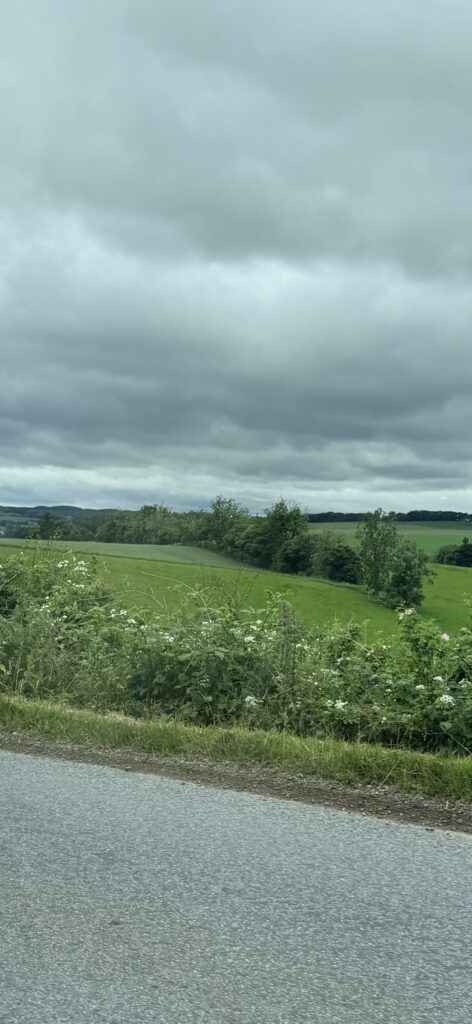
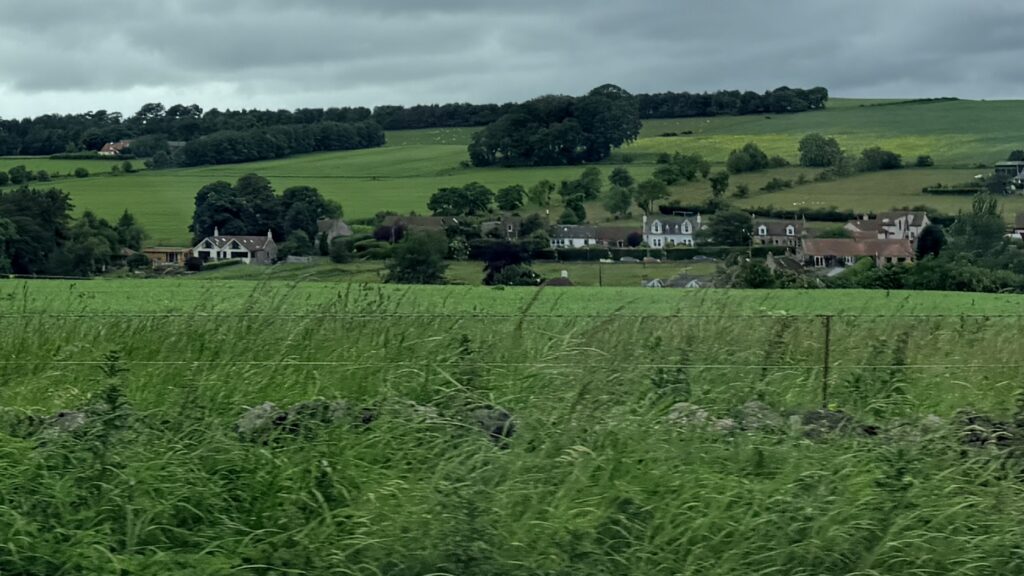
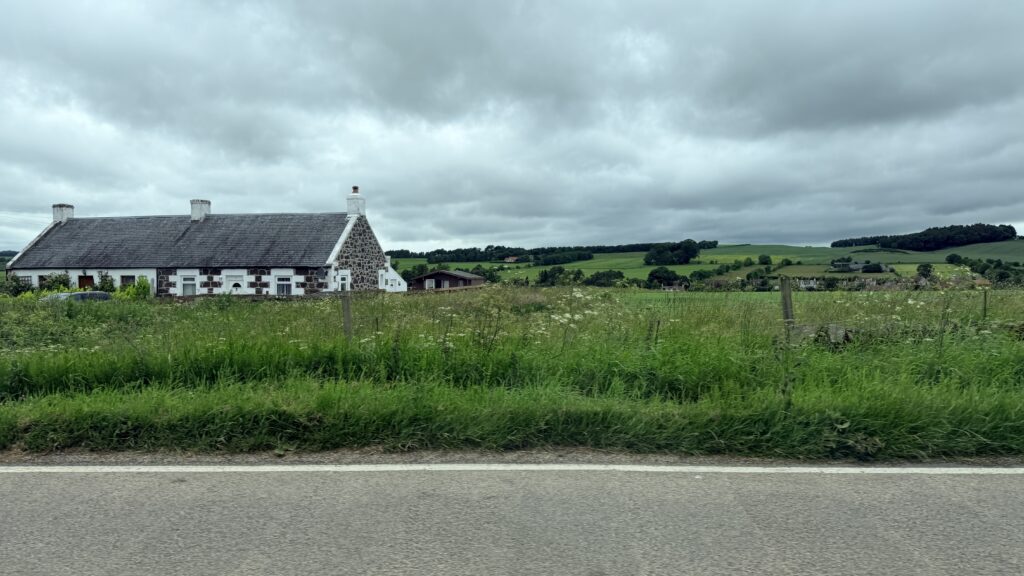
Scenery on our drive from Greenock to St. Andrews, Scotland
The beach next to The Old Course at St. Andrews. This is the beach seen in the opening scene of the movie Chariots of Fire.
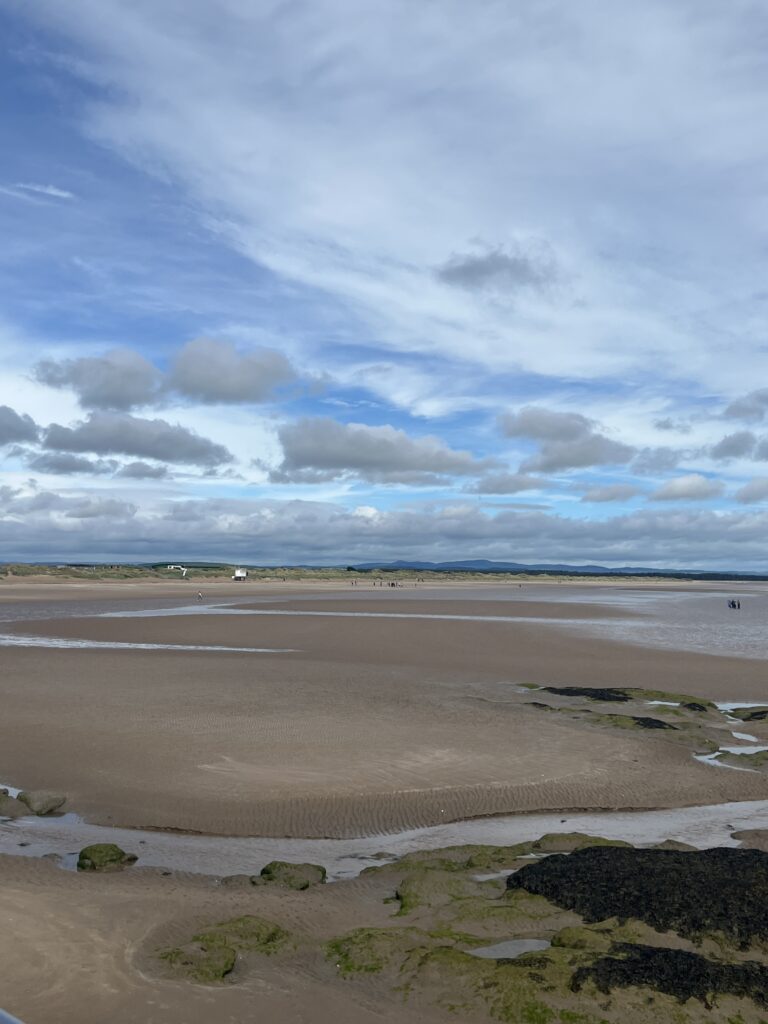
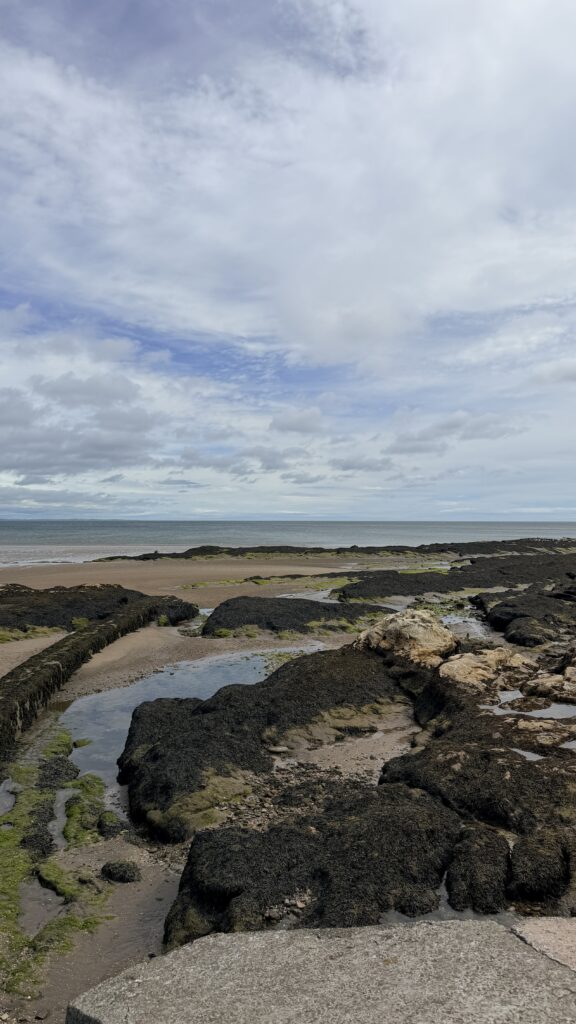
The beach run, which opens and closes Chariots of Fire, has become one of the most iconic scenes in British cinema, often imitated and, as a multi-Oscar winning film, widely recognized at home and overseas. For St Andrews, this short sequence, depicting a group of runners along the West Sands beach, may be the defining visual depiction of the town.
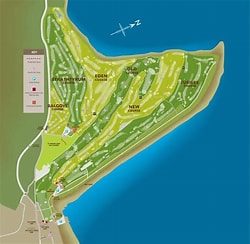
Map of The Old Course showing how close it is to the beach and water.
The Royal and Ancient Golf Club of St Andrews is one of the oldest golf clubs in the world. It is a private members-only club based in St Andrews in Scotland. It was previously known colloquially as “The R&A”, but in 2004, a new organization known as The R&A was spun off, assuming the club’s functions as one of the governing authorities of the game and organizer of tournaments such as The Open Championship. Despite this legal separation, one of the club’s objectives remains to contribute, through its members, to the governance, championship organization, and golf development roles now carried out by The R&A.
The club does not own any of the St Andrews Links courses, including the Old Course, which are golf courses owned by the local authority through the St Andrews Links Trust, and open to the general public.
The organization was founded in 1754 as the Society of St Andrews Golfers, a local golf club playing at St Andrews Links. The club quickly grew in importance. In 1834, King William IV recognized St Andrews as Royal and Ancient and The Royal Society of St Andrews Golfers grandly proclaimed it the Home of Golf.
Later it was referred to as The Royal and Ancient Golf Club of St Andrews. In 1897, the Society codified the rules of golf. Over the next 30 years, it was gradually invited to take control of the running of golf tournaments at other courses.
Claire Dowling was appointed to serve as the club’s first female captain, for 2026–27.
The Royal and Ancient Golf Club of St Andrews itself is now simply a golf club, although membership is by invitation only. It has 2,400 members from all over the world. Although the clubhouse is situated just behind the first tee of the Old Course, the club does not own any of the St Andrews courses.
St Andrews Links are public golf courses, and must share the tee times with members of other local clubs, residents and visitors alike. Responsibility for managing the courses is undertaken by the St Andrews Links Trust, a charitable organisation that owns and runs eight golf courses at St Andrews.
The Royal and Ancient Golf Club (but not The R&A) once had a male-only membership policy. In 2012, former British Prime Minister Gordon Brown called on the club to abandon this in favor of a non-discriminatory policy, as did Louise Richardson, the Principal and Vice-Chancellor of the University of St Andrews.
On 18 September 2014, the club voted in favour of admitting female members. In February 2015 the club’s first female honorary members were announced – Anne, Princess Royal; Laura Davies; Renee Powell; Belle Robertson; Lally Segard; Annika Sörenstam; and Louise Suggs. At that time the club also announced, “In addition to the honorary members, a number of women have been admitted as members of the club with more set to follow in the coming months.” Also in 2015, Lady Bonallack became the first woman to take part in a match as a member of the club; specifically, she was the first woman to play in the club’s annual match against the Links Trust.
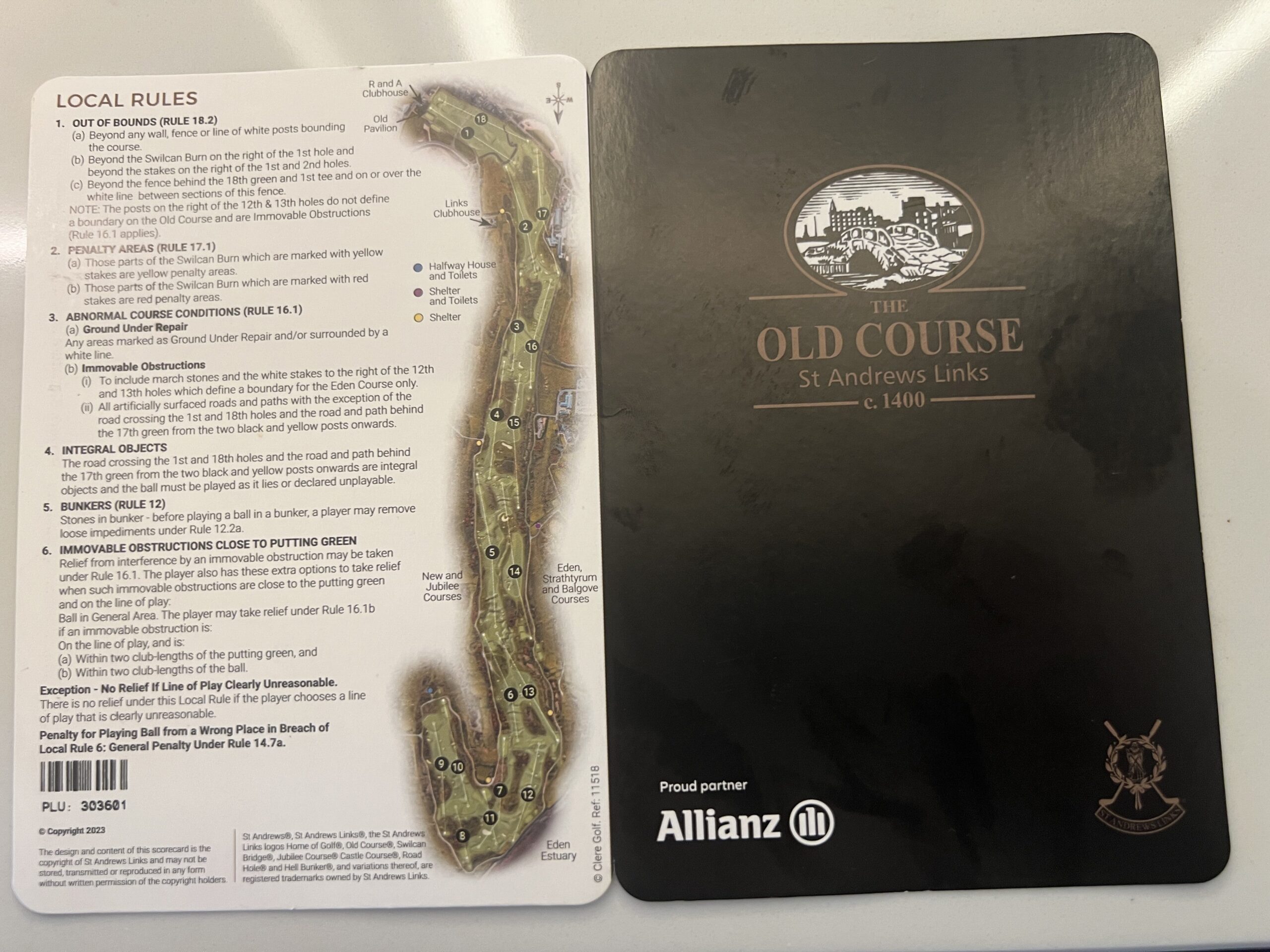
Old Course | St Andrews Links | The Home of Golf
The Old Course at St Andrews, is considered the oldest golf course in the world. It is a public course over common land in St Andrews, Fife, Scotland, and is held in trust by the St Andrews Links Trust under an act of Parliament. The Royal and Ancient Golf Club of St Andrews clubhouse sits adjacent to the first tee, although it is but one of many clubs (St Andrews Golf Club, the New Golf Club, St Regulus Ladies Golf Club and the St Rule Club are the others with clubhouses) that have playing privileges on the course, along with some other non-clubhouse owning golf clubs and the general public. Originally known as the “golfing grounds” of St Andrews, it was not until the New Course was opened in 1895 that it became known as the Old Course.
The Old Course at St Andrews is considered by many to be the “home of golf” because the sport was first played on the links at St Andrews in the early 15th century. Golf was becoming increasingly popular in Scotland until James II of Scotland banned the game in 1457 because he felt that young men were playing too much golf instead of practicing their archery. The ban was upheld by James III, and remained in force until 1502, when James IV became a golfer himself and removed the ban.
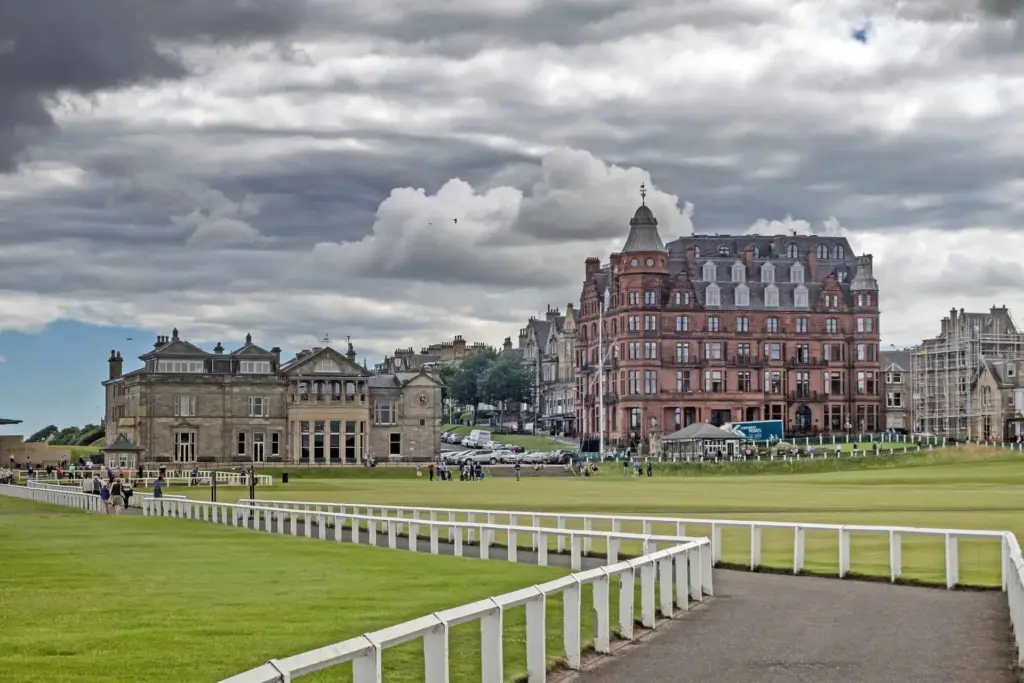
I will post some stock photos as we could not get on the course due to the weather.
Clubhouse on the left and The Hamilton Grand on the right is an apartment building
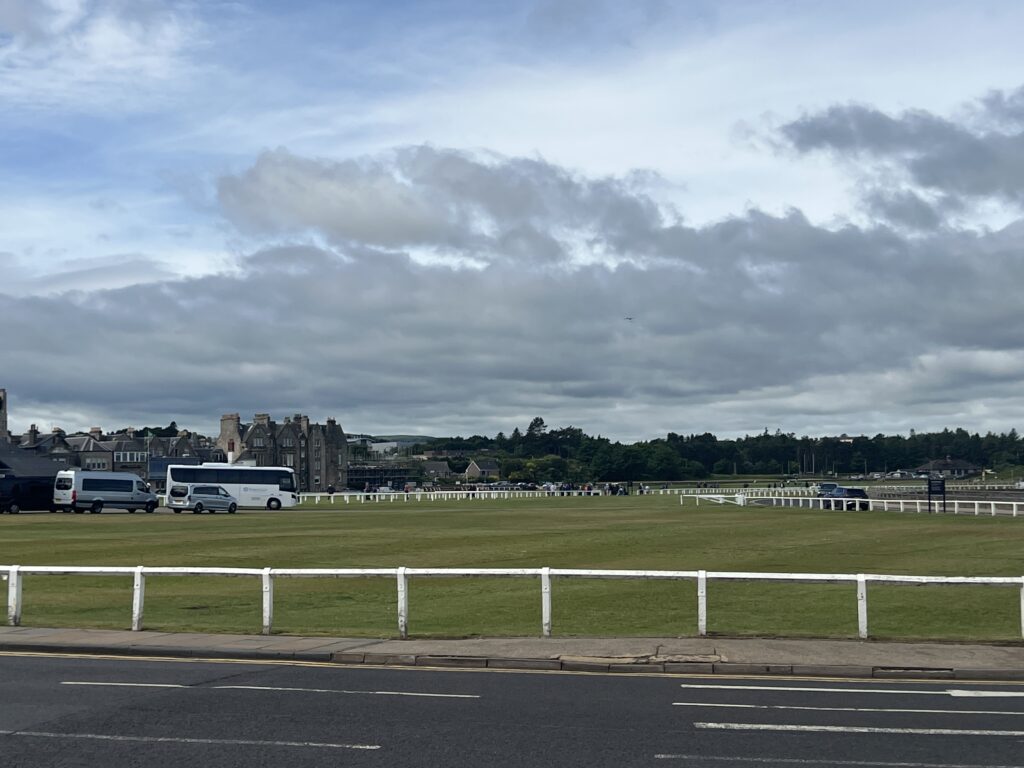
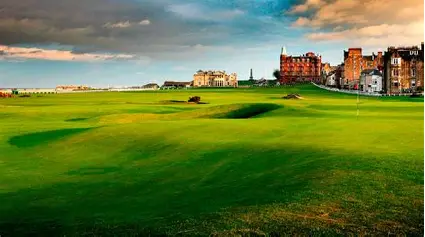
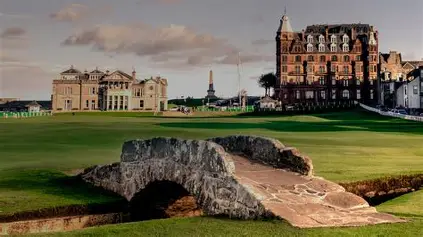
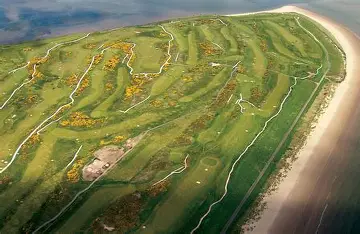
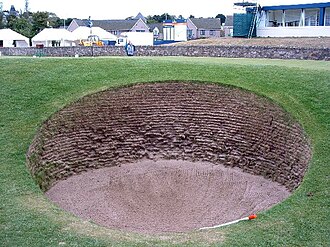
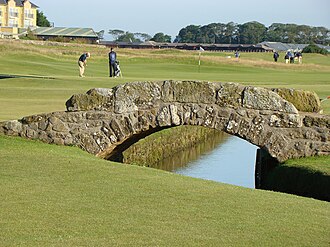
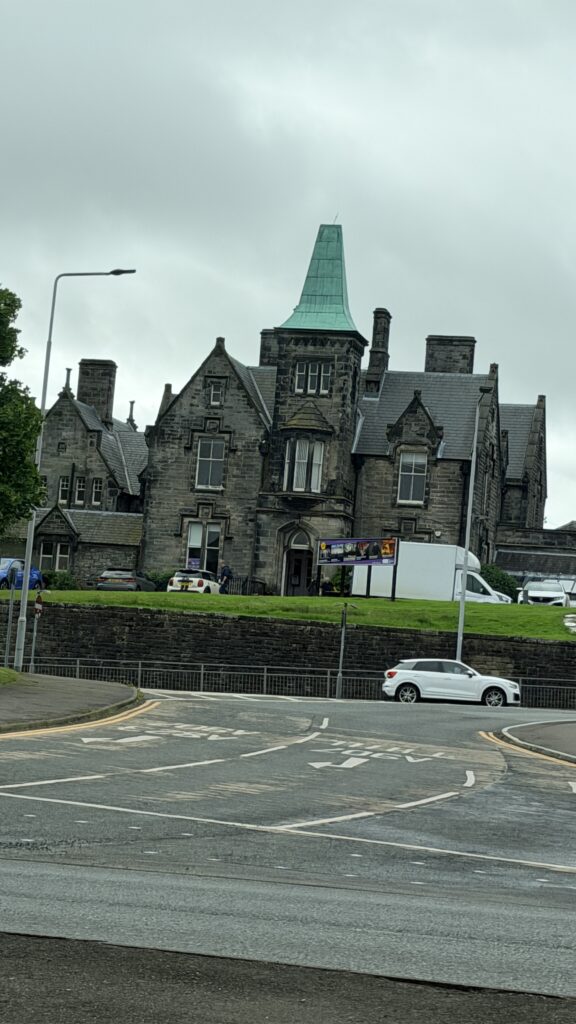
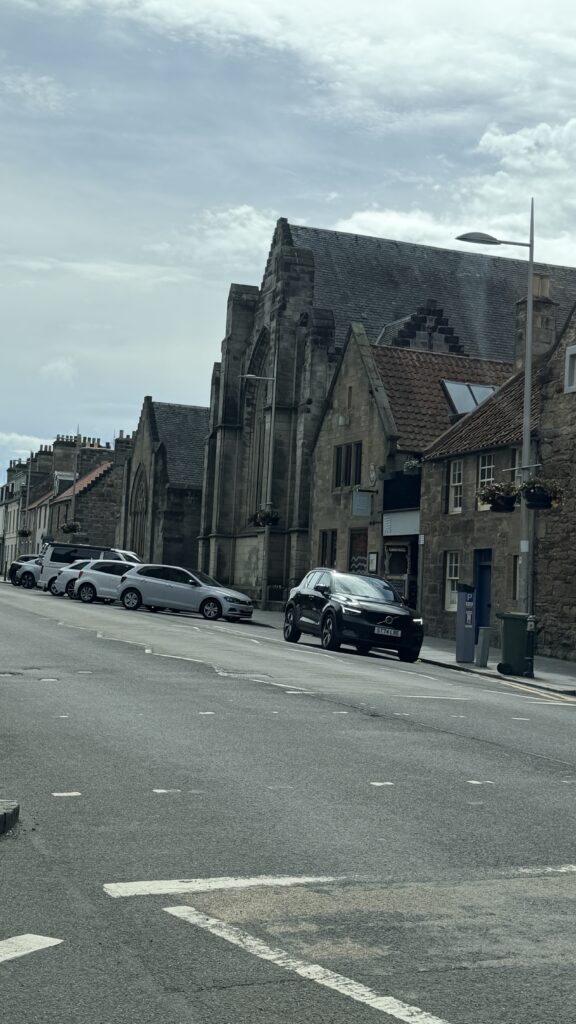
Photos around St. Andrews, Scotland
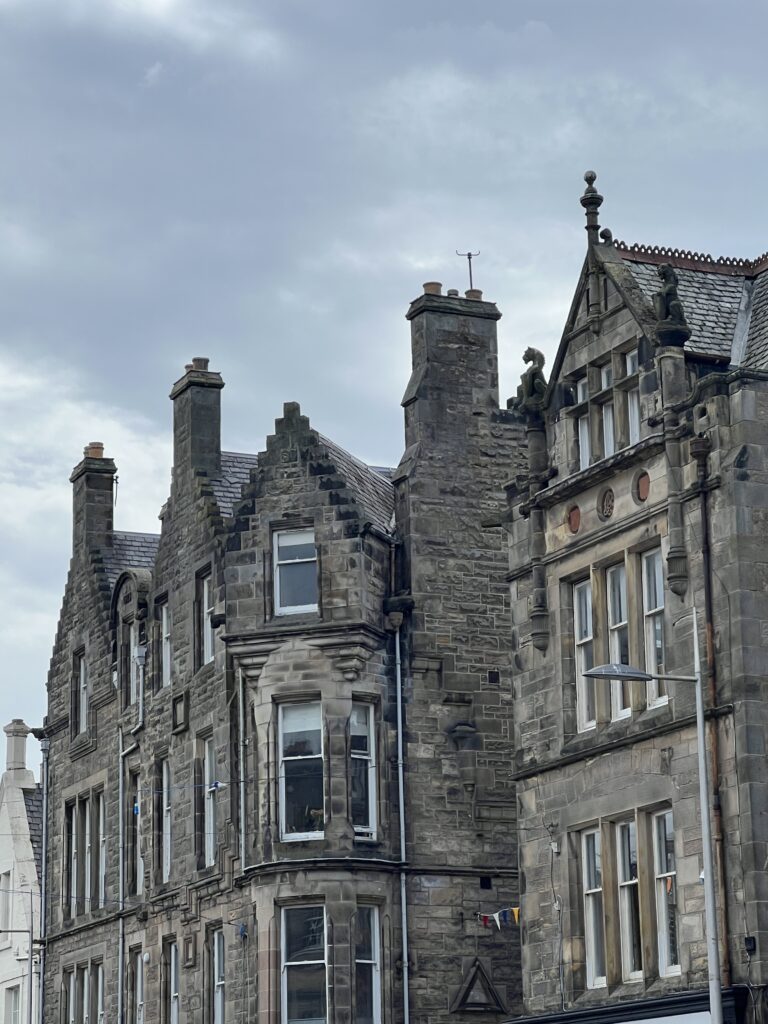
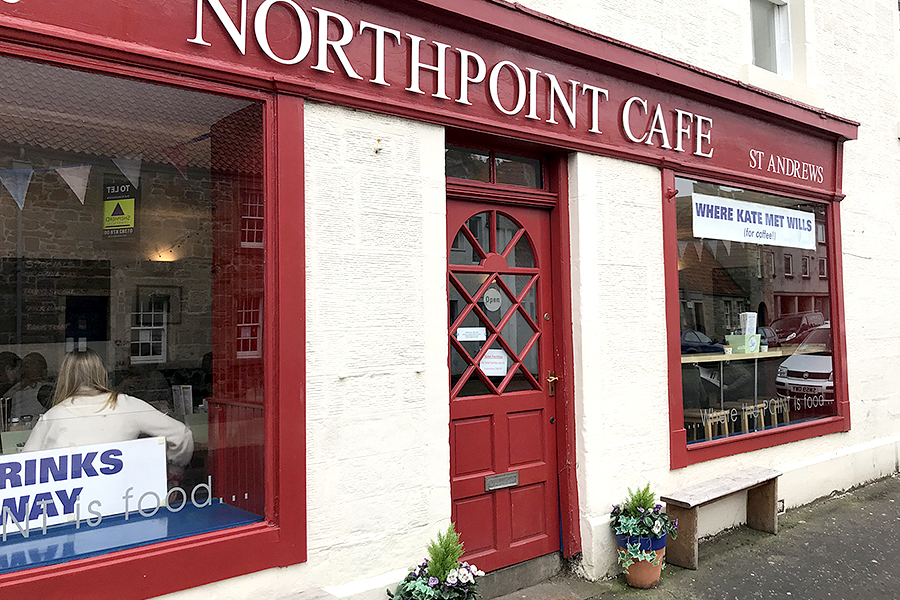
WELCOME TO NORTH POINT CAFE
The story goes that Prince William famously met his future wife, Kate Middleton here while they were both students at St Andrews. The cafe serves good coffee and a broad range of breakfast fare, from porridge topped with banana to toasted bagels, pancake stacks and classic fry-ups. It’s a busy and popular place to eat and hang out these days, so get in early for lunch to avoid disappointment.
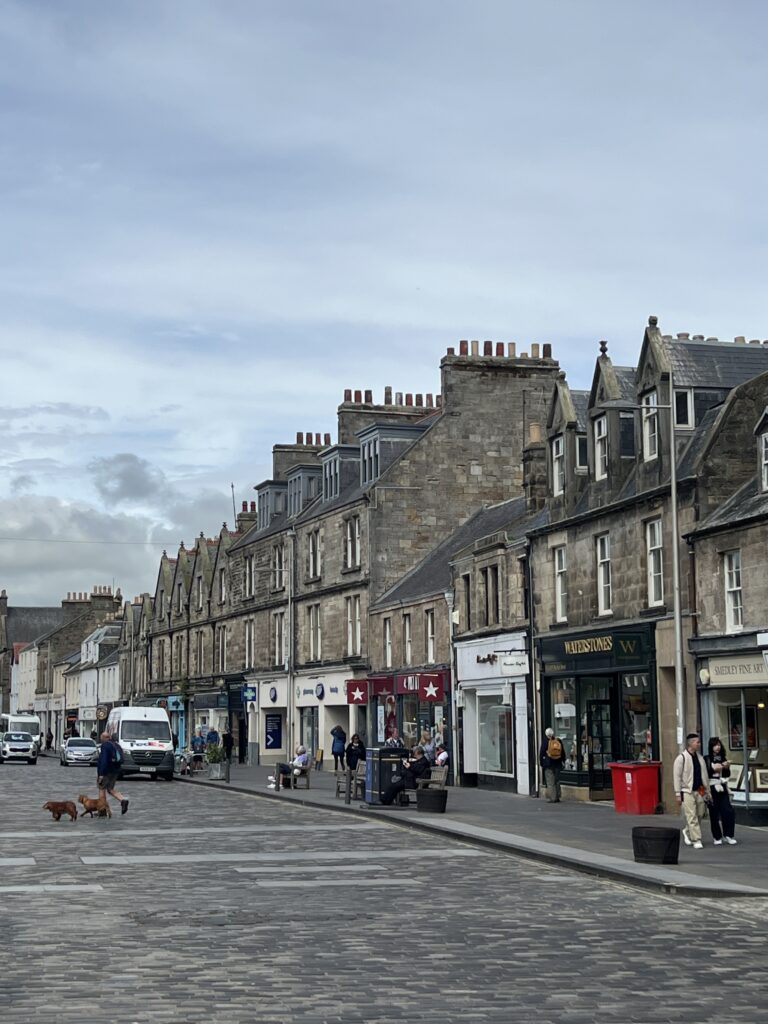
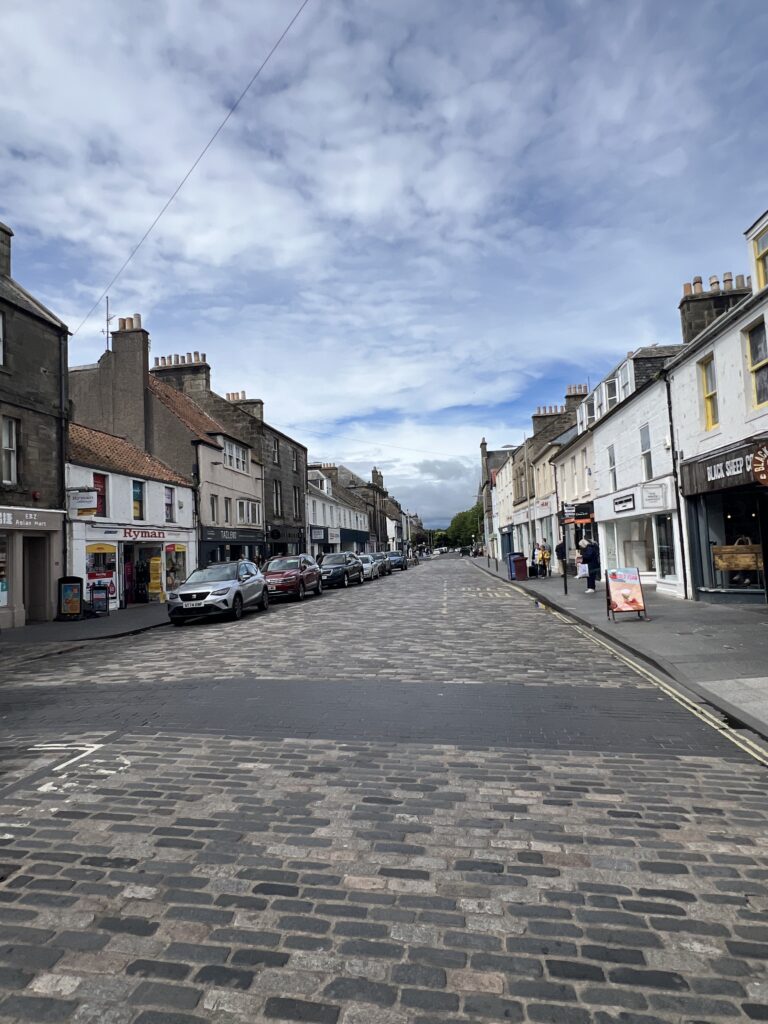
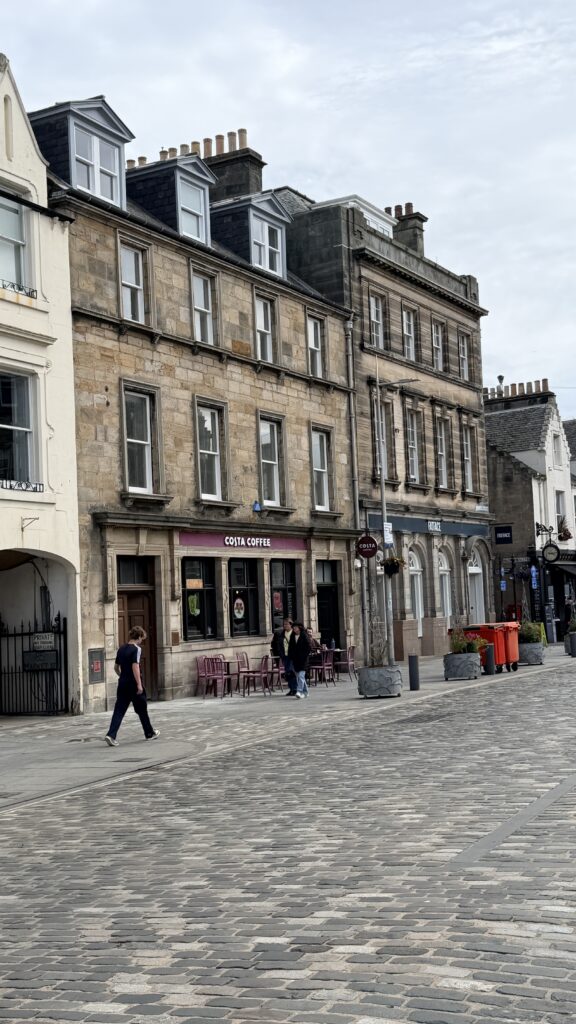
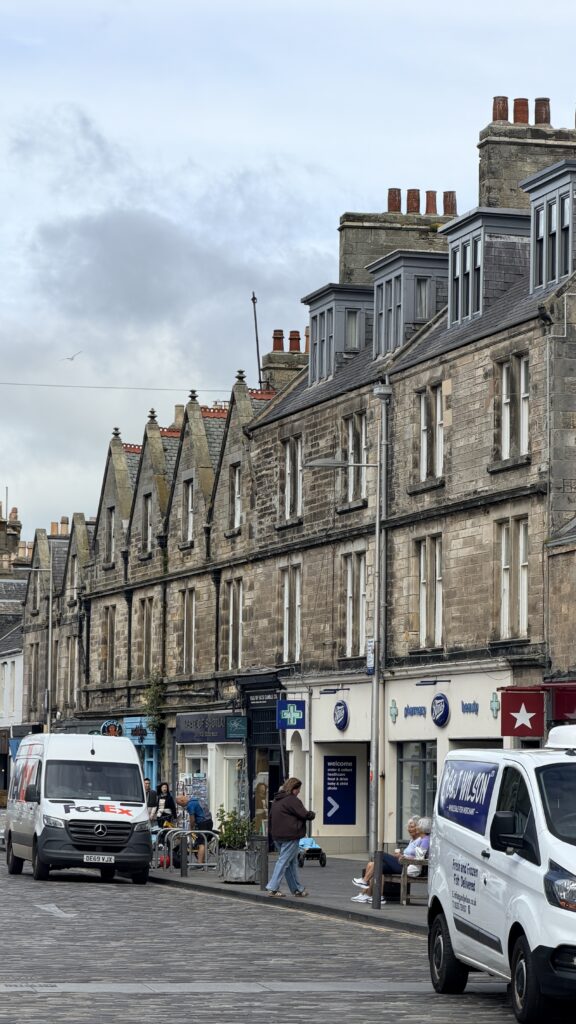
Market Street is the central of St Andrew’s three main shopping streets and as such contains many of the chain-retailers familiar around many UK high streets. As well as these useful outlets, one can find some individual or specialist businesses too. Greyfriars Garden is linked to Market Street to the North and connects it to the nearby North Street Area. Just beyond the western end of Market Street, approximately 1-2 minutes’ walk away is St Andrews bus station. This provides transportation to many surrounding areas.
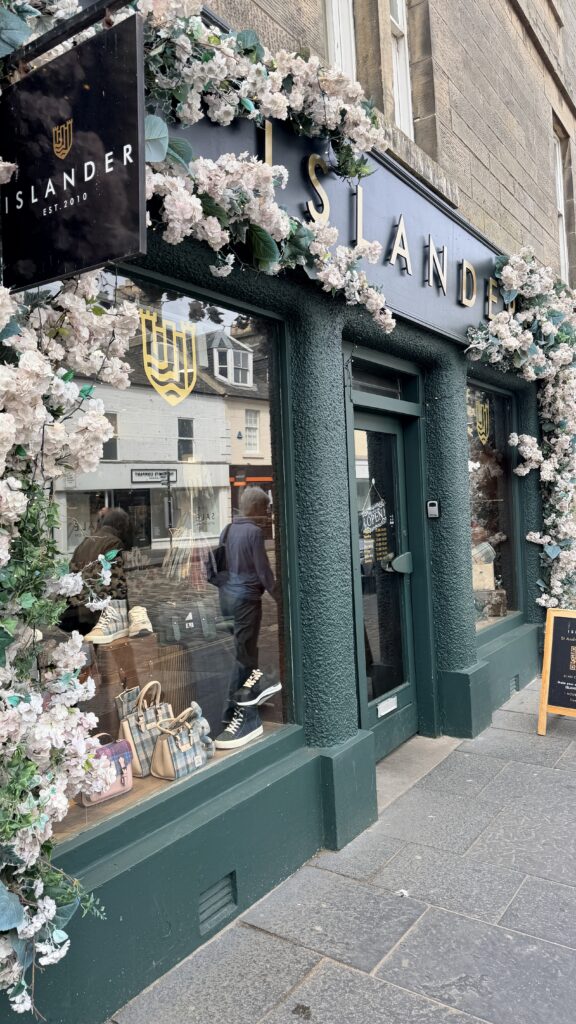
We stopped in here for a coffee and snack.
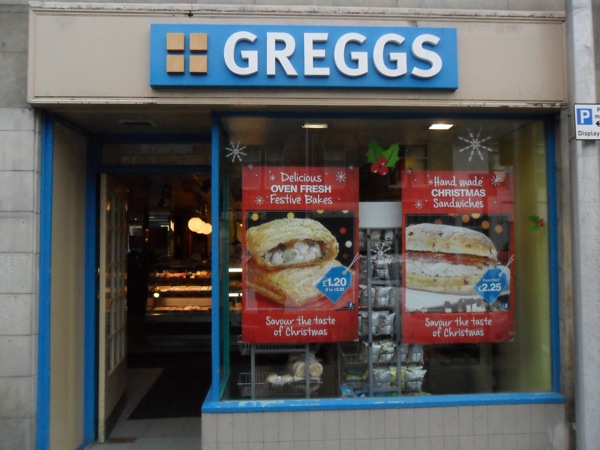
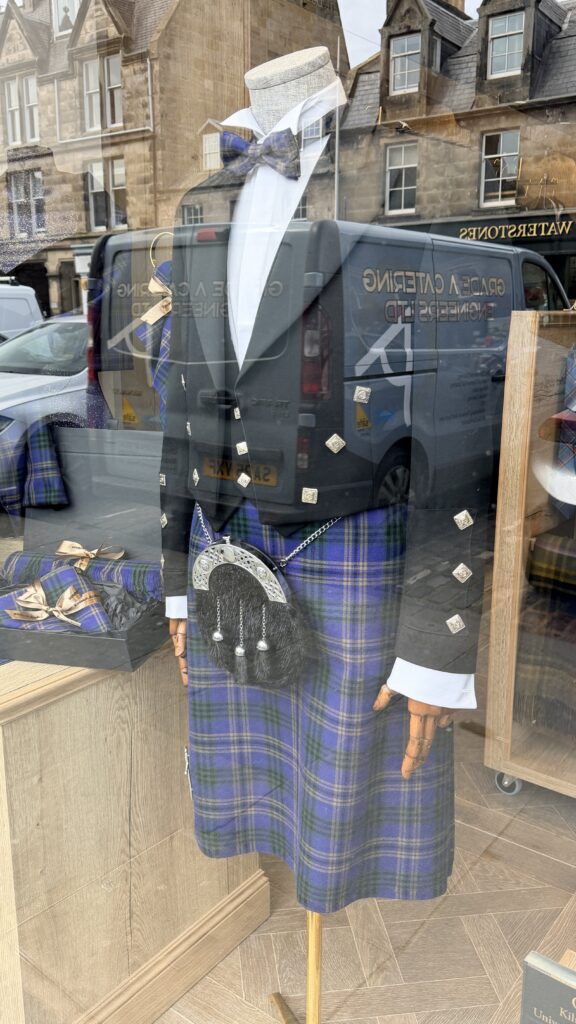
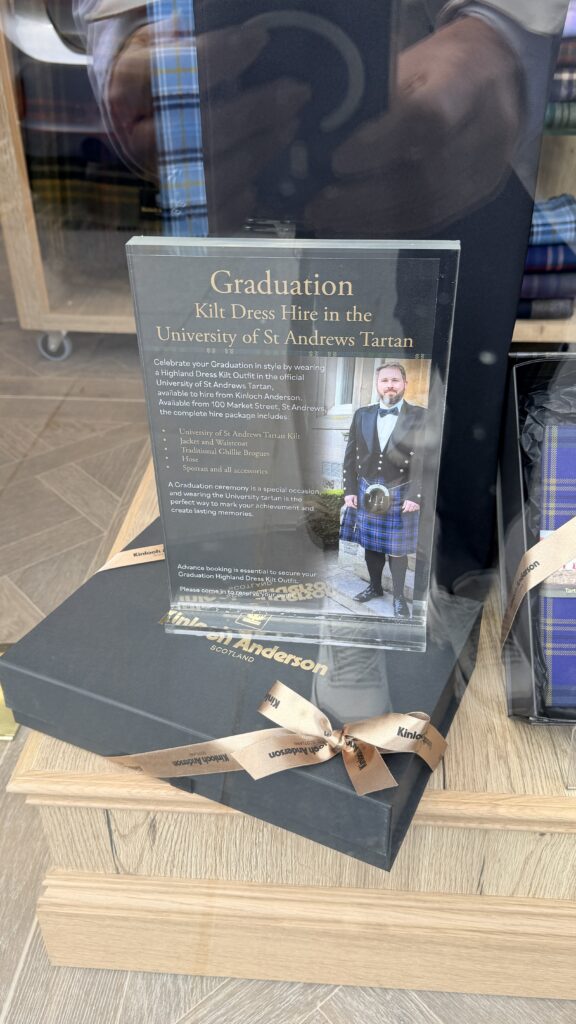
I thought this would be a great Halloween outfit, but Jackie said we already have those bought for this Halloween.
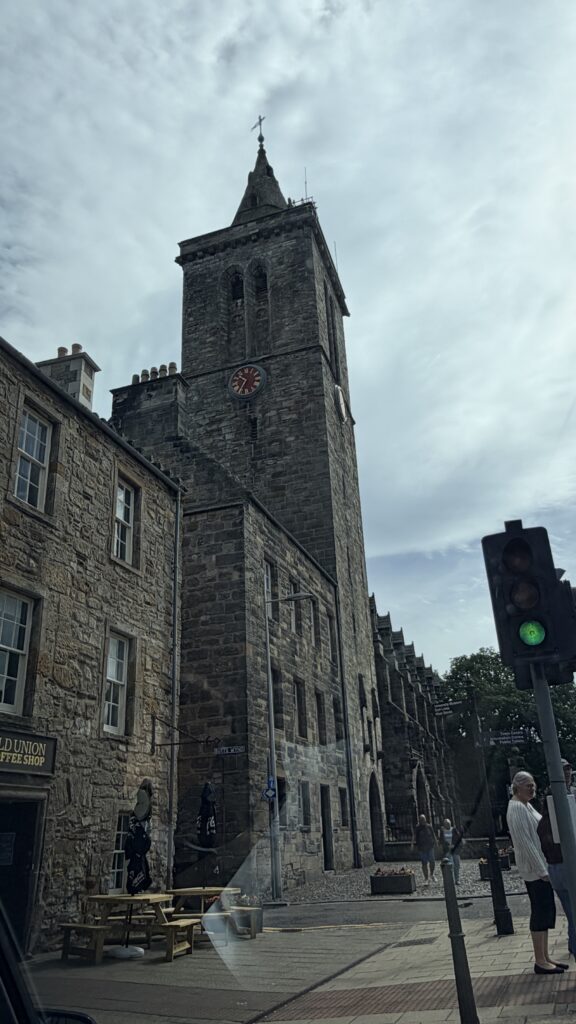
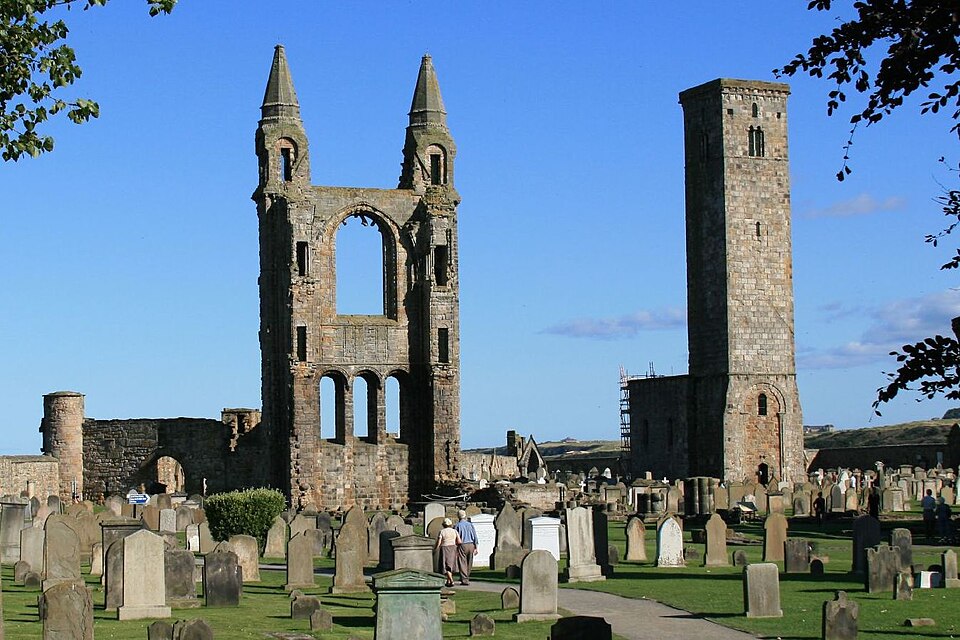
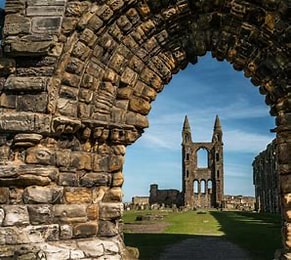
The Cathedral of St Andrew (often referred to as St Andrews Cathedral) is a ruined cathedral in St Andrews, Fife, Scotland. It was built in 1158 and became the centre of the Medieval Catholic Church in Scotland as the seat of the Archdiocese of St Andrews and the Bishops and Archbishops of St Andrews. It fell into disuse and ruin after the Catholic mass was outlawed during the 16th-century Scottish Reformation. It is a monument in the custody of Historic Environment Scotland. The ruins indicate that the building was approximately 119 m (390 ft) long, and is the largest church to have been built in Scotland.
The cathedral was founded to supply more accommodation than the older church of St. Regulus (St. Rule) afforded. This older church, located on what became the cathedral grounds, had been built in the Romanesque style. Today, there remains the square tower, 33 metres (108 feet) high, and the quire, of very diminutive proportions. On a plan of the town from about 1531, a chancel appears, and seals affixed to the city and college charters bear representations of other buildings attached. To the east is an even older religious site, the Church of St Mary on the Rock, the Culdee house that became a Collegiate Church.
Work began on the new cathedral in 1158 and continued for over a century. The west end was blown down in a storm and rebuilt between 1272 and 1279. The cathedral was finally completed in 1318 and featured a central tower and six turrets; of these remain two at the east and one of the two at the western extremity, rising to a height of 30 metres (100 feet). On the 5th of July it was consecrated in the presence of King Robert the Bruce, who, according to legend, rode up the aisle on his horse.
A fire partly destroyed the building in 1378; restoration and further embellishment were completed in 1440.
In June 1559 during the Reformation, a Protestant mob incited by the preaching of John Knox ransacked the cathedral; the interior of the building was destroyed. The cathedral fell into decline following the attack and became a source of building material for the town. By 1561 it had been abandoned and left to fall into ruin.
At about the end of the sixteenth century the central tower apparently gave way, carrying with it the north wall. Afterwards large portions of the ruins were taken away for building purposes, and nothing was done to preserve them until 1826. Since then it has been tended with scrupulous care, an interesting feature being the cutting out of the ground-plan in the turf. The principal portions extant, partly Norman and partly Early Scottish, are the east and west gables, the greater part of the south wall of the nave and the west wall of the south transept.
At the end of the seventeenth century some of the priory buildings remained entire and considerable remains of others existed, but nearly all traces have now disappeared except portions of the priory wall and the archways, known as The Pends.
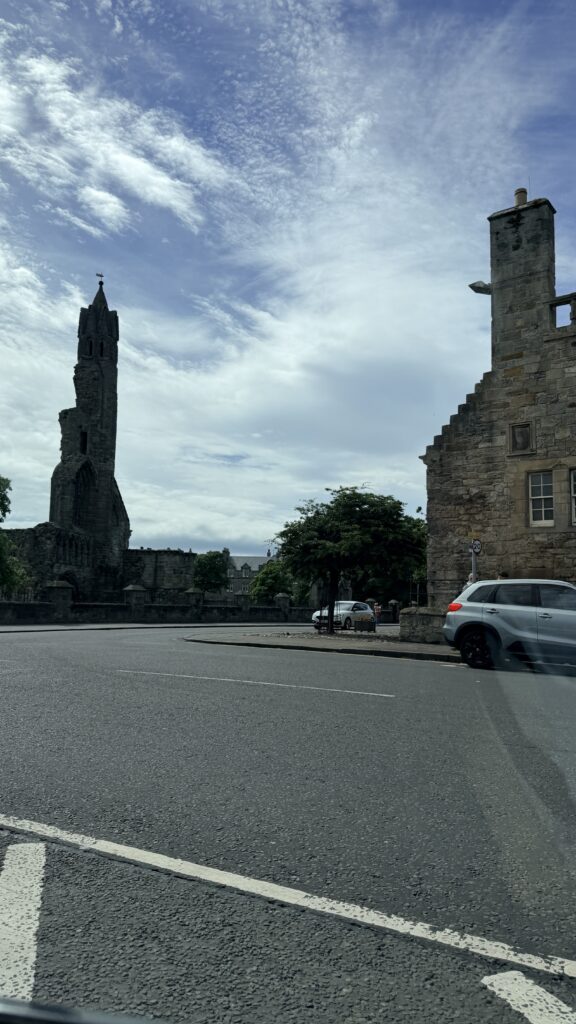
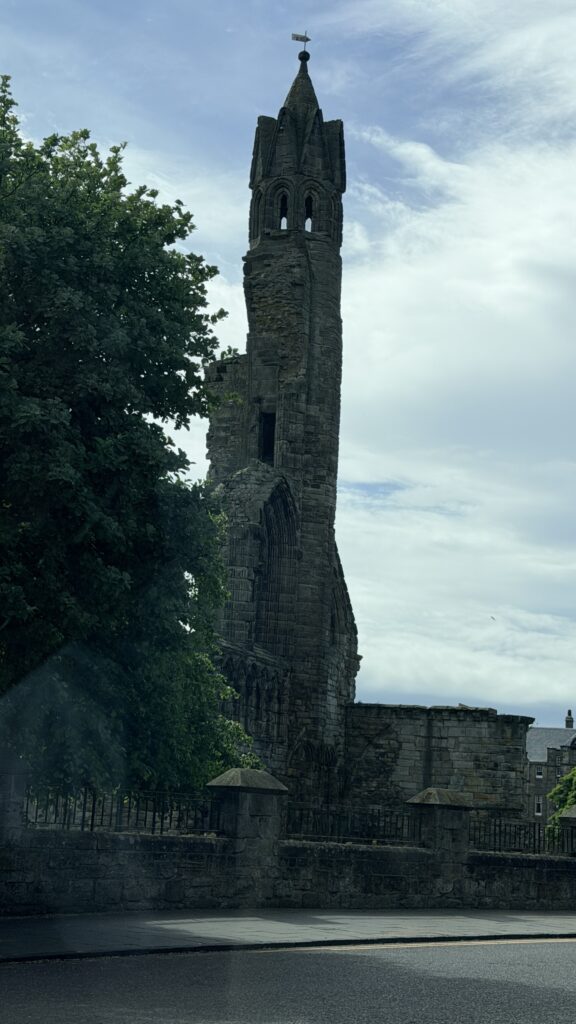
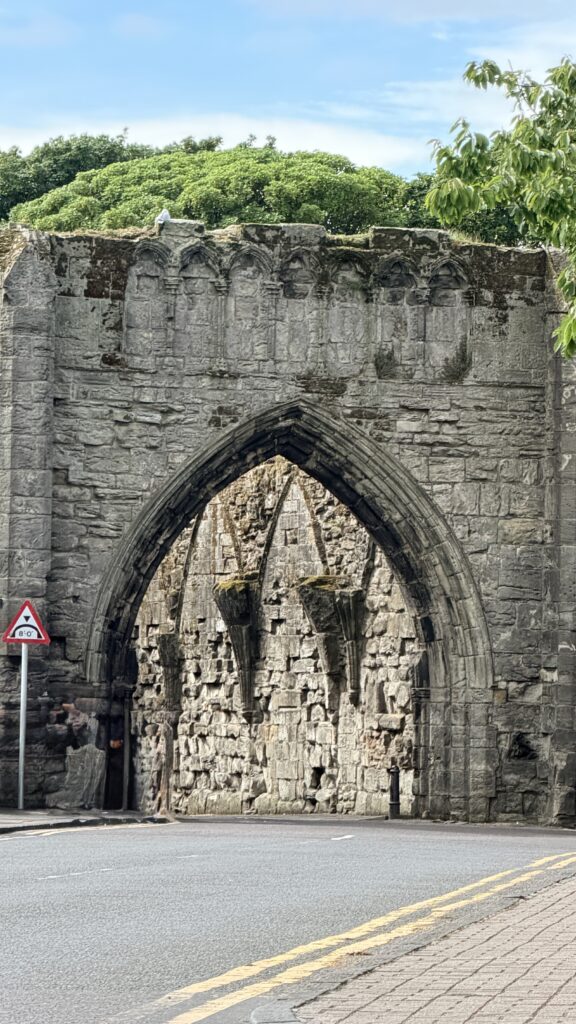
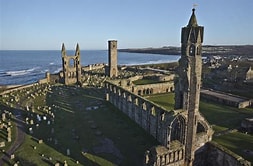
East tower of St Andrews Cathedral and St Rule’s Tower
Below is an excellent article about the St. Andrew’s Cathedral
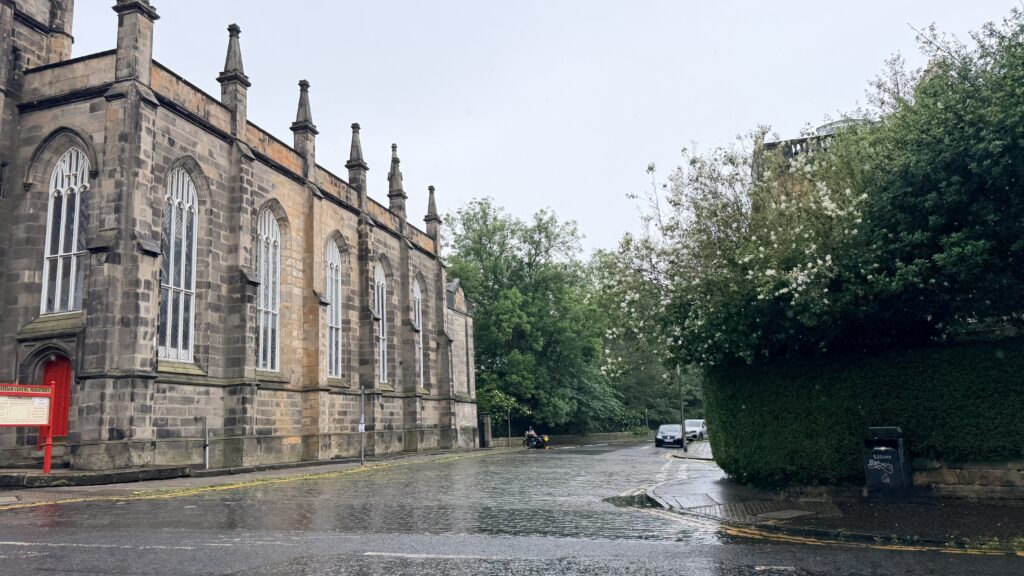
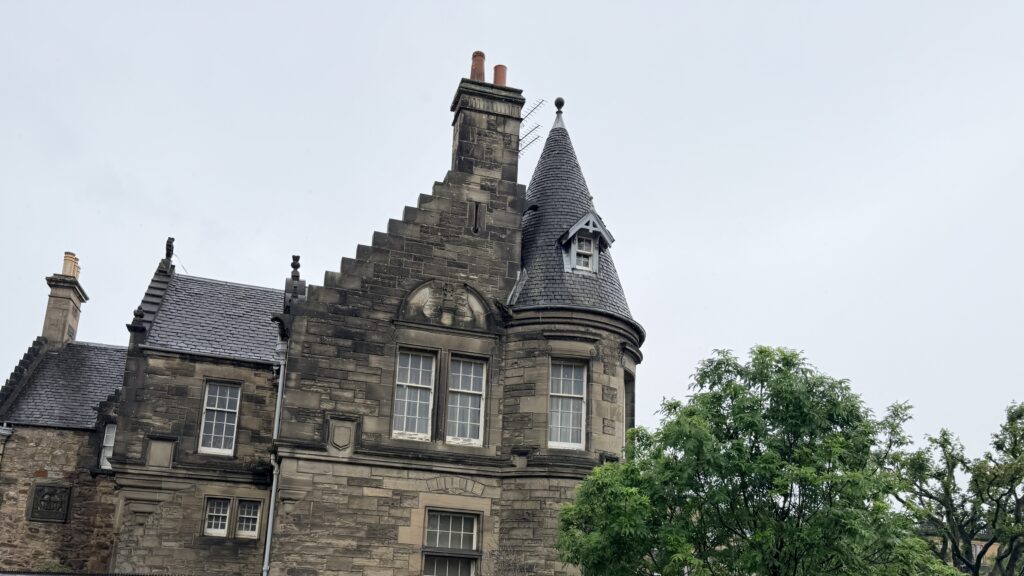
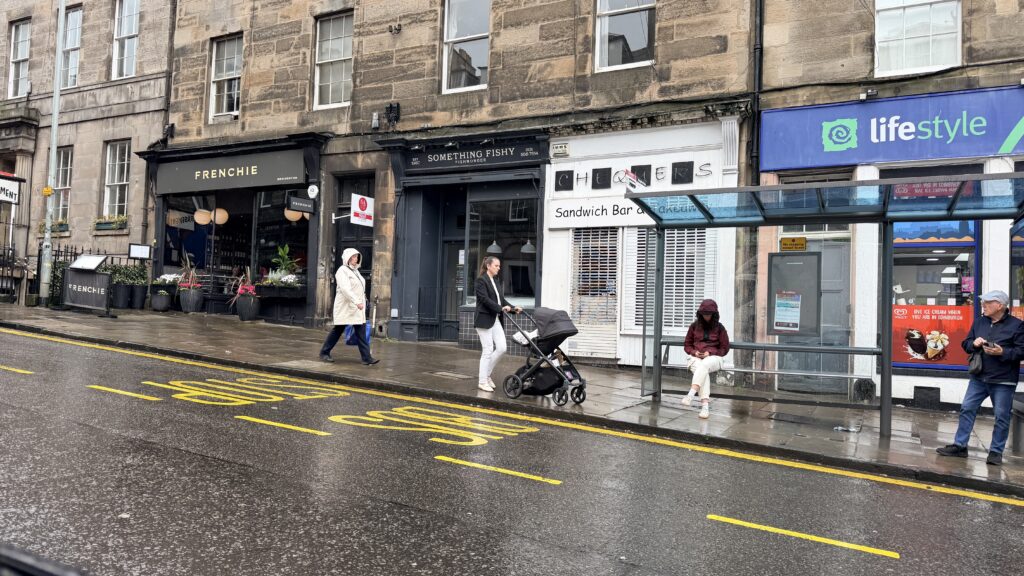
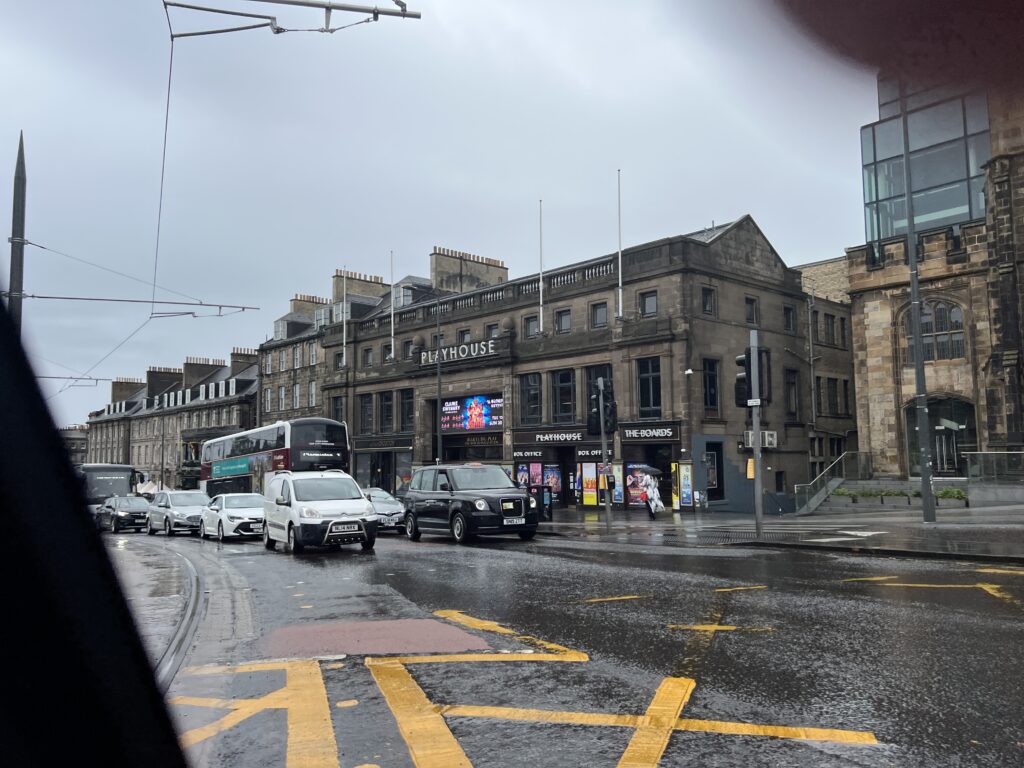
Photos taken while in Edinburgh, Scotland
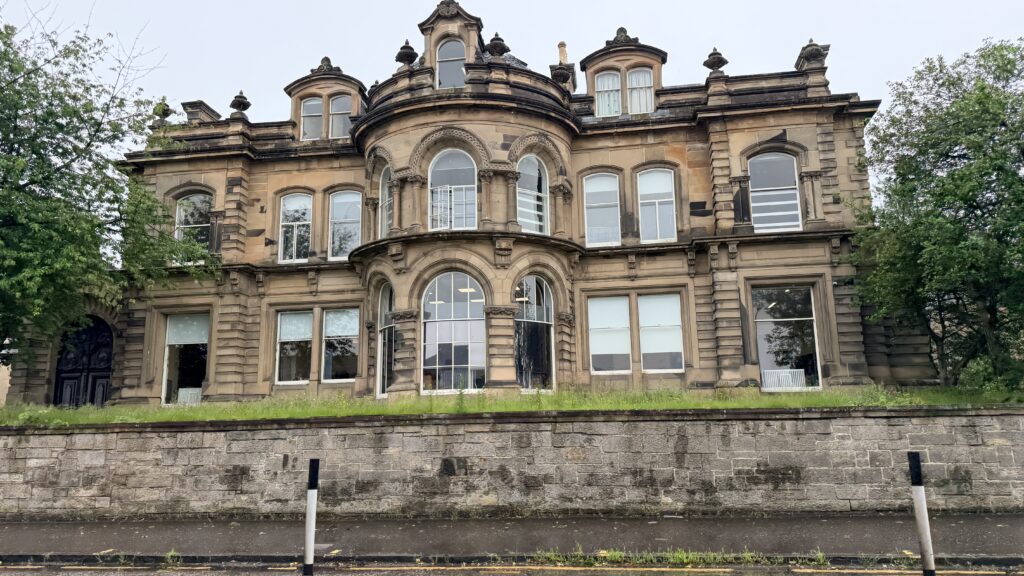
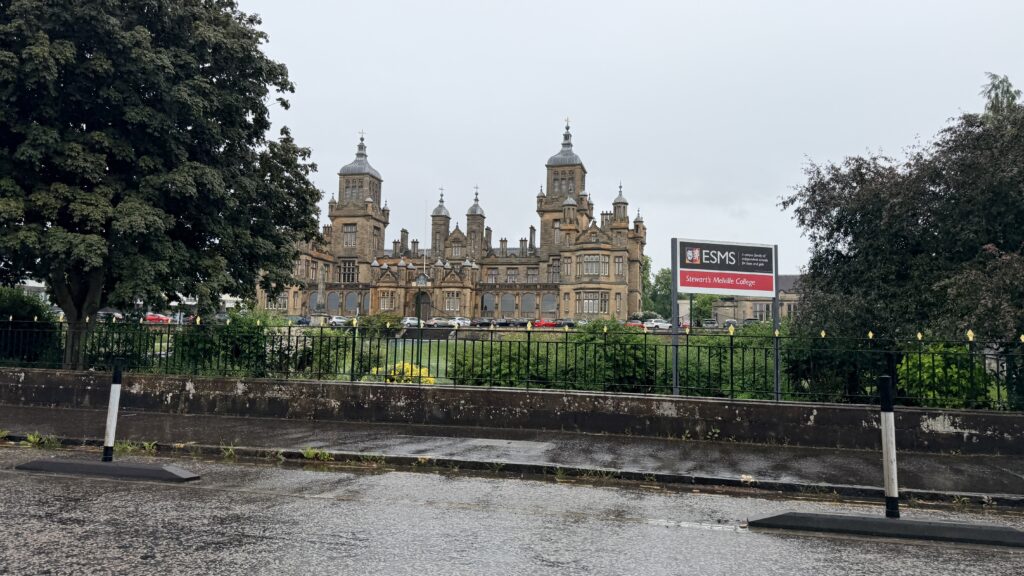
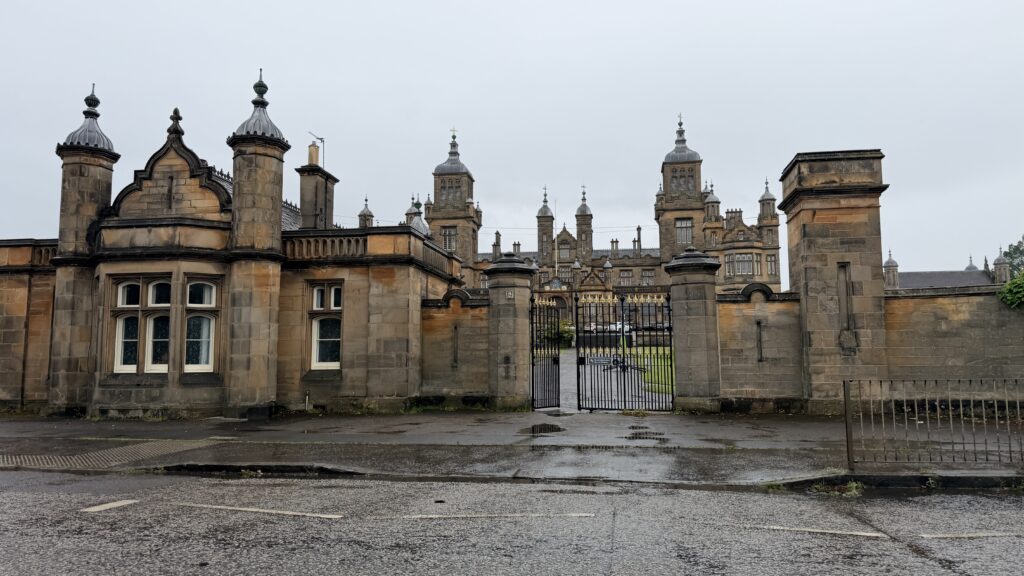
Erskine Stewart Melville (ESM) is an independent day school located in Edinburgh, Scotland managed by the Merchant Company of Edinburgh.
The coeducational school was formed through the merger of all-girls’ Mary Erskine School and the all-boys’ Stewart’s Melville College in 2026. The Mary Erskine School was founded in 1694 as the Merchant Maiden Hospital, whilst Stewart’s Meville College was founded in 1972 following the merger of Daniel’s Stewart’s College and Melville College. Daniel Stewart’s College opened as Daniel Stewart’s Hospital in 1848, being renamed to Daniel Stewart’s College in 1870. Melville College opened as the Edinburgh Institution for Languages and Mathematics in 1832, and acquired its final name in 1936. Prior to the 2026 merger, the schools shared a coeducational Junior School, Sixth Form, and extra-curricular program.
The school is spread across three campuses, with the Senior School located within David Rhind‘s 1855 Scots Baronial Old College at Comely Bank, the Junior School at Murrayfield, and the playing fields at Inverleith. In 2014, the combined school claimed to be the largest independent school in Europe.
In Scotland, colleges are equivalent to high schools in the United States
Erskine Stewart Melville (ESMS) | An all-through co-ed school in Edinburgh
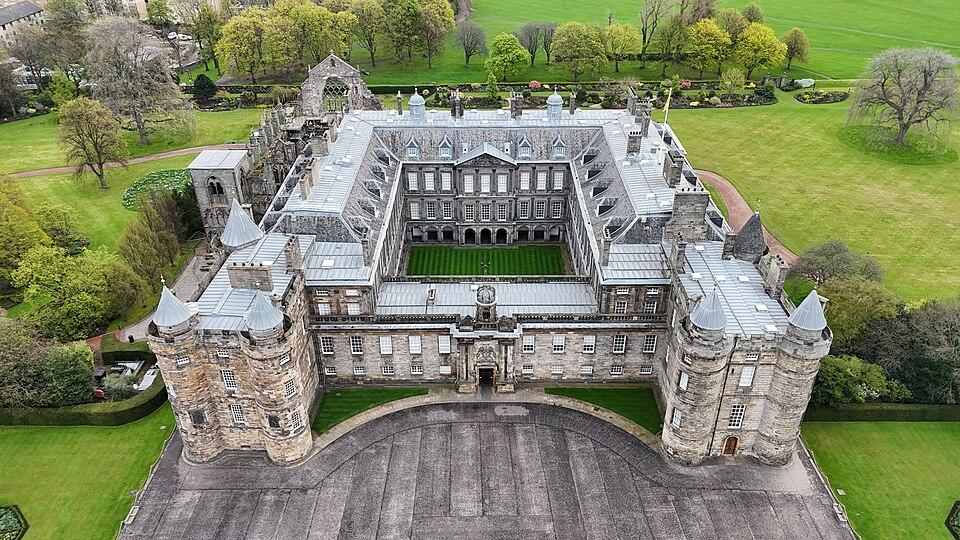
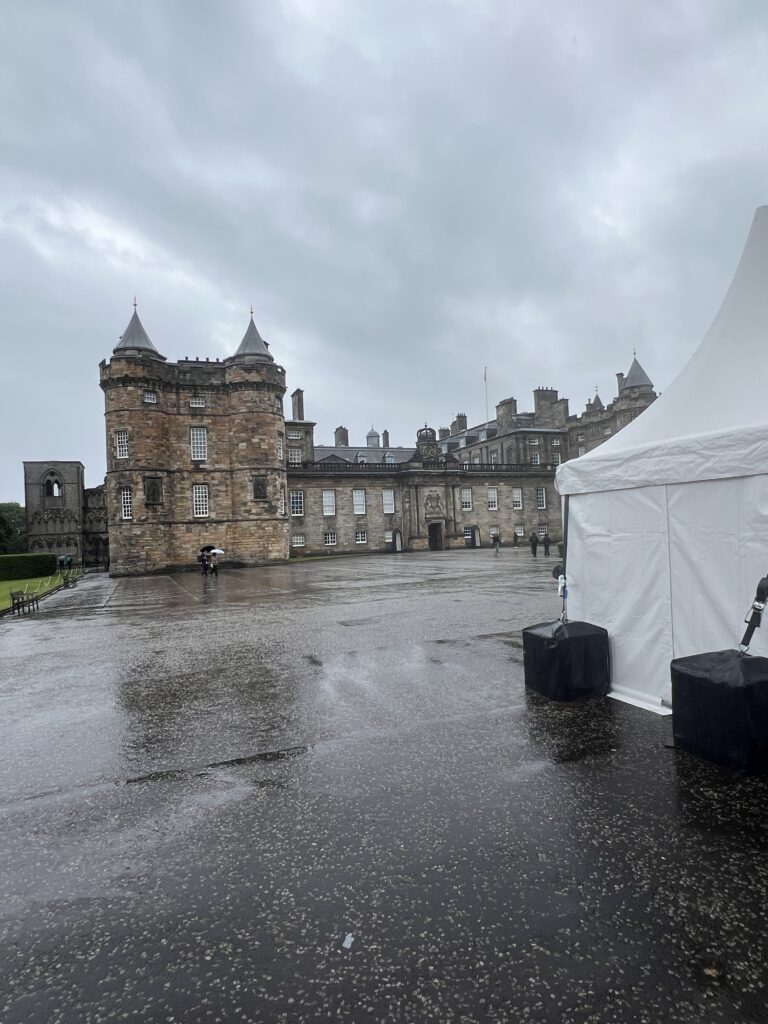
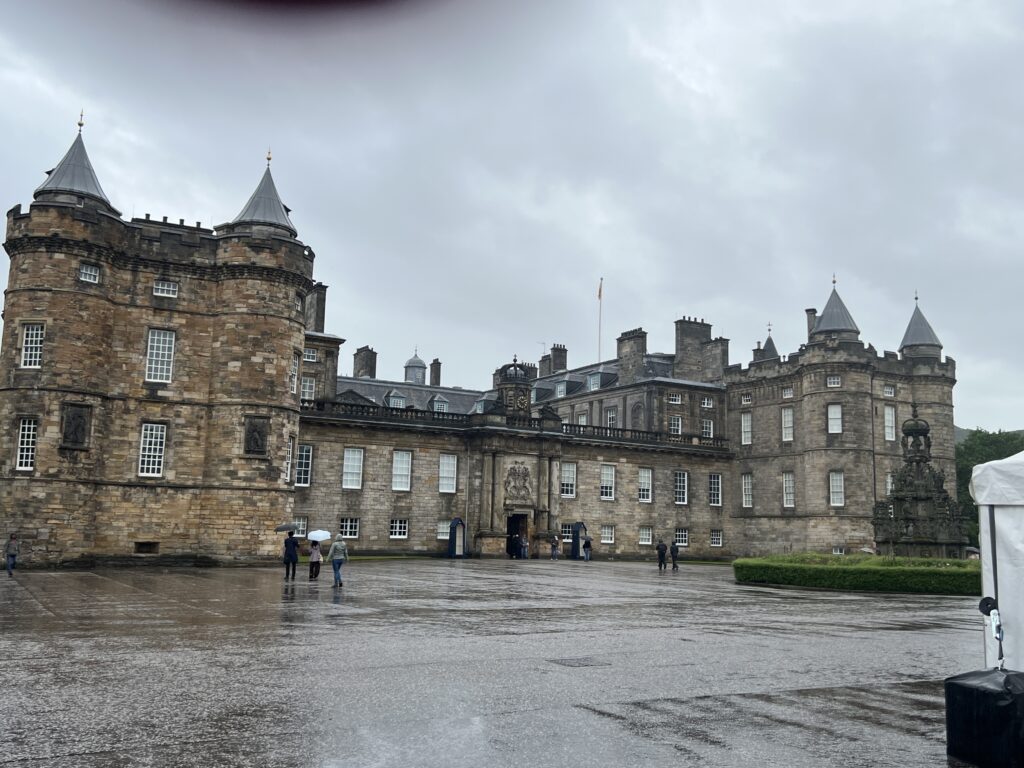
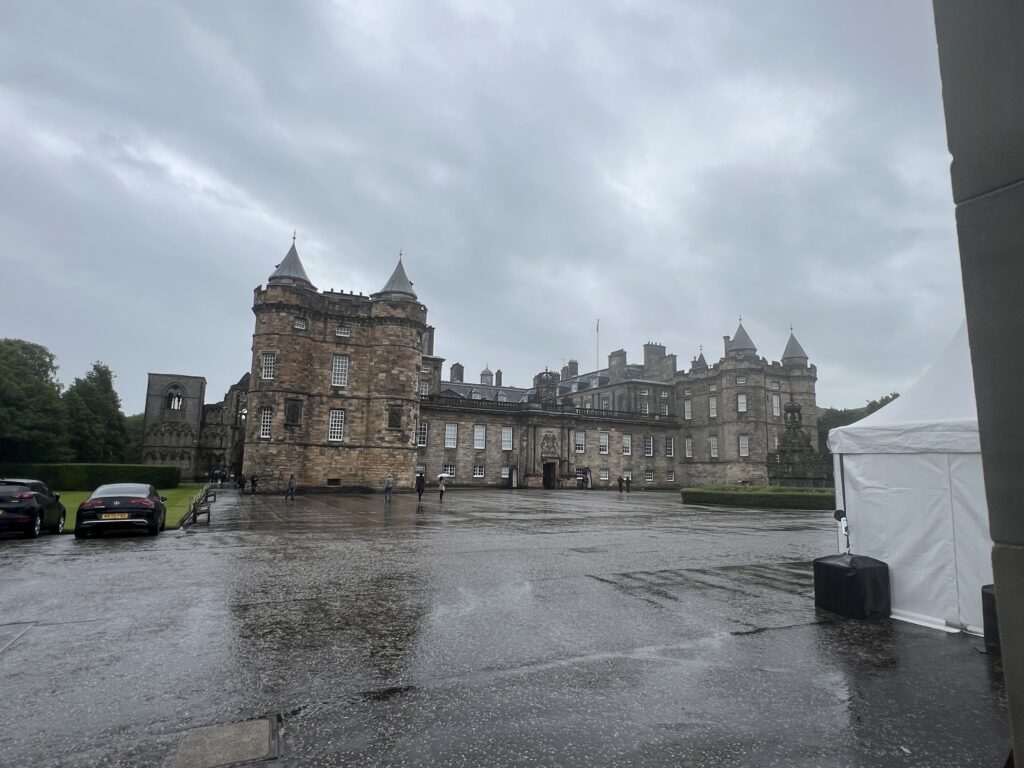
The Palace of Holyroodhouse (/ˈhɒlɪruːd/ or /ˈhoʊlɪruːd/), also known as Holyrood Palace, is the official residence of the monarch of the United Kingdom in Scotland. Located at the bottom of the Royal Mile in Edinburgh, at the opposite end to Edinburgh Castle, Holyrood has served as the principal royal residence in Scotland since the 16th century, and is a setting for state occasions and official entertaining.
The palace adjoins Holyrood Abbey, and the gardens are set within Holyrood Park. The King’s Gallery was converted from existing buildings at the western entrance to the palace and was opened in 2002 to exhibit works of art from the Royal Collection.
King Charles III spends one week in residence at Holyrood at the beginning of summer, where he carries out a range of official engagements and ceremonies. The 16th-century historic apartments of Mary, Queen of Scots, and the State Apartments, used for official and state entertaining, are open to the public throughout the year, except when members of the royal family are in residence. The palace also serves as the official residence of the Lord High Commissioner to the General Assembly of the Church of Scotland during the annual meeting of the General Assembly.
Aerial view of Holyrood Palace
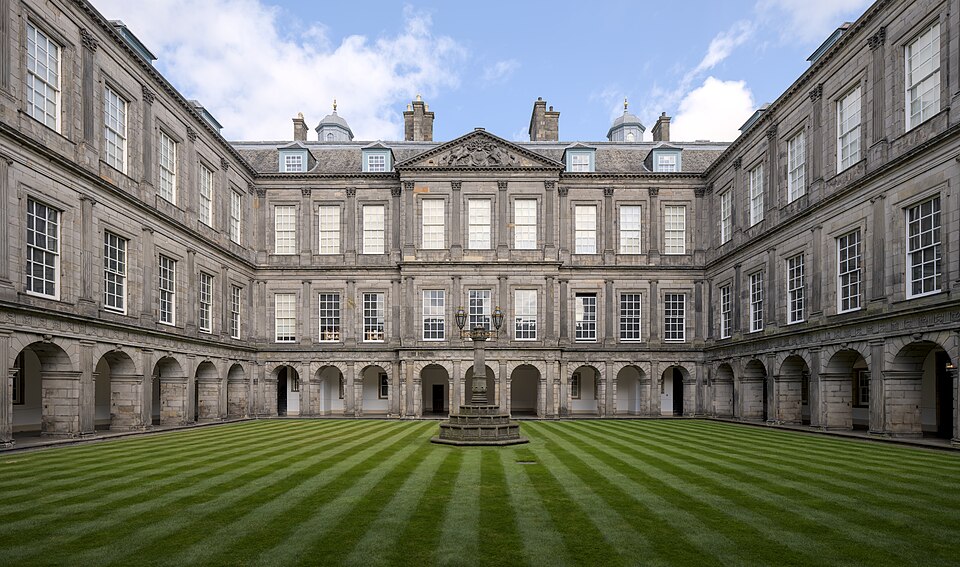
The Quadrangle, designed by Sir William Bruce, reflects the Palace’s monastic origins with its cloister-like layout
The palace as it stands today was designed by Sir William Bruce and built between 1671 and 1678, with the exception of the 16th-century north-west tower built by James V. The palace is laid out round a central, classical-style three-storey plus attic quadrangle layout. The palace extends approximately 230 feet (70 m) from north to south and 230 feet (70 m) from east to west. The 16th-century north-west tower is balanced with a matching south-west tower, each with a pair of circular angle turrets with ball-finialled, conical bell-cast roofs. The towers are linked by a recessed two-storey front, with the central principal entrance framed by giant Doric columns and surmounted by the carved Royal arms of Scotland. Above the arms a crowned cupola with a clock rises behind a broken pediment supported by dolphins, on which are two reclining figures.
The north and south fronts have symmetrical three-storey facades that rise behind to far left and right of the two-storey west front with regular arrangement of bays. General repairs were completed by the architect Robert Reid between 1824 and 1834 that included the partial rebuilding of the south-west corner tower and refacing of the entire south front in ashlar to match that of the east. The east (rear) elevation has 17 bays with lightly superimposed pilasters of the three classical orders on each floor. The ruins of the abbey church connect to the palace on the north-east corner. For the internal quadrangle, Bruce designed a colonnaded piazza of nine arches on the north, south and east facades with pilasters, again from the three classical orders, to indicate the importance of the three main floors. The plain Doric order is used for the services of the ground floor, the Ionic order is used for the State Apartments on the first floor, while the elaborate Corinthian order is used for the royal apartments on the second floor.
The British monarch spends one week (known as “Royal Week”) at the palace each summer. While serving as Duke of Rothesay, Charles III also stayed at Holyrood for one week a year, carrying out official duties. Following the death of Queen Elizabeth II at Balmoral Castle in September 2022, her coffin was transported to the palace, where it lay in repose in the Throne Room from 11 to 12 September, before being taken in procession to St Giles’ Cathedral. These were the first obsequies held in Scotland for a monarch since the burial of James V at Holyrood Abbey in January 1543.
The Edwardians: Age of Elegance: The King’s Gallery, Palace of Holyroodhouse
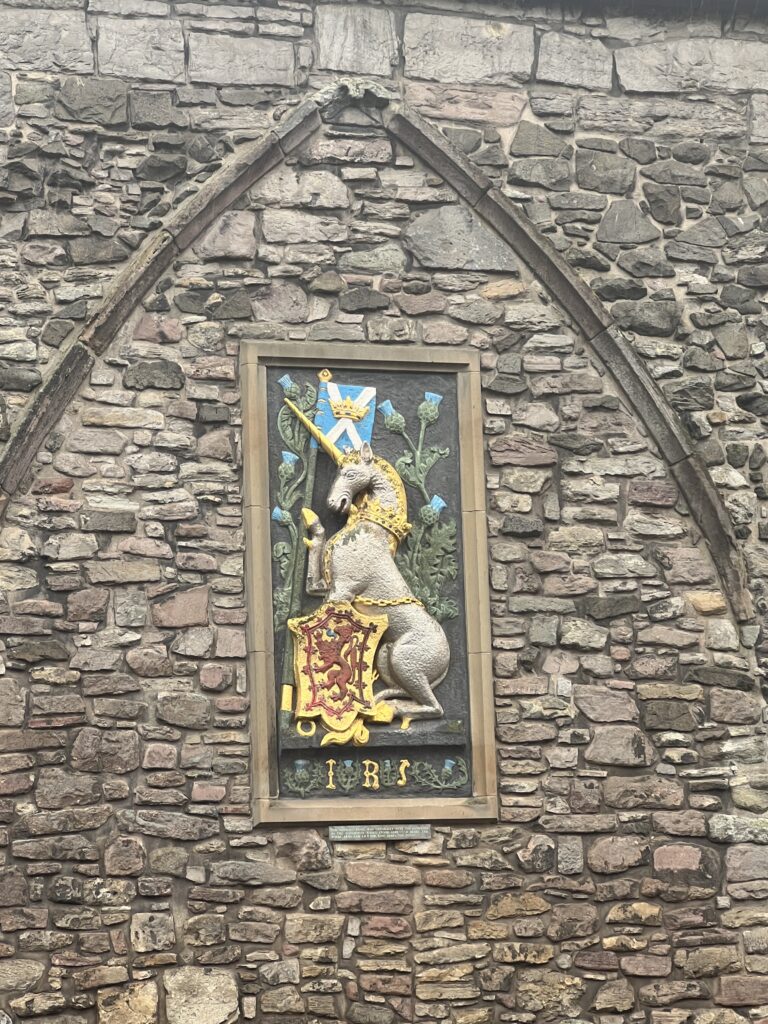
Pictures I took through the fence while the rain was falling
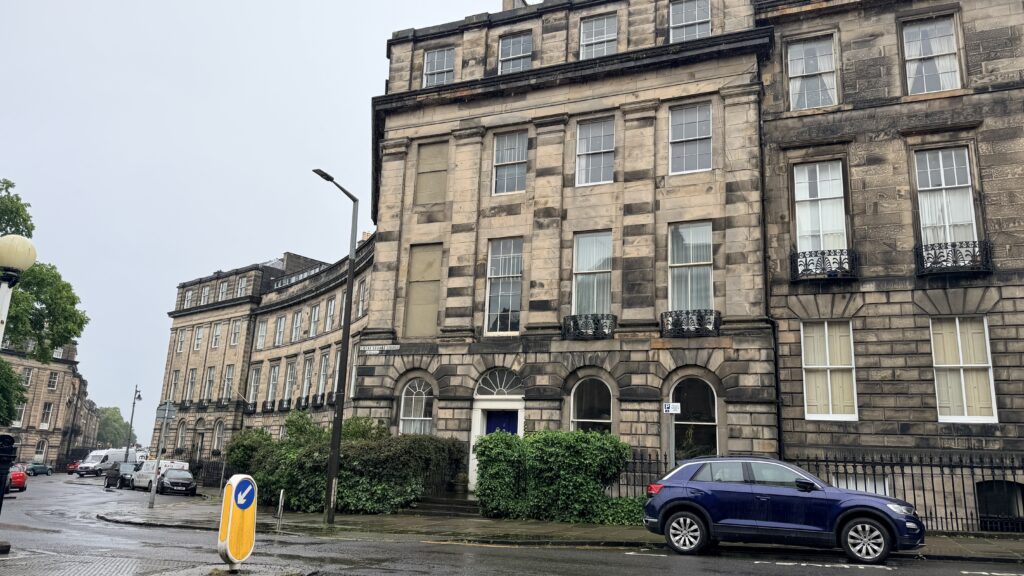
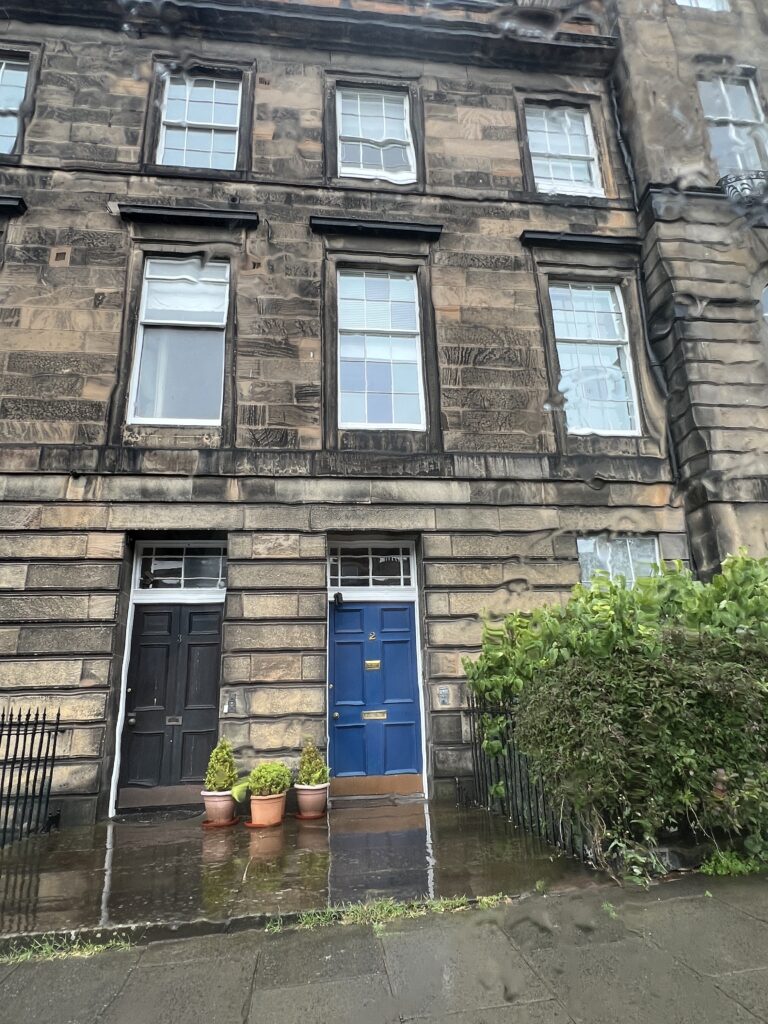
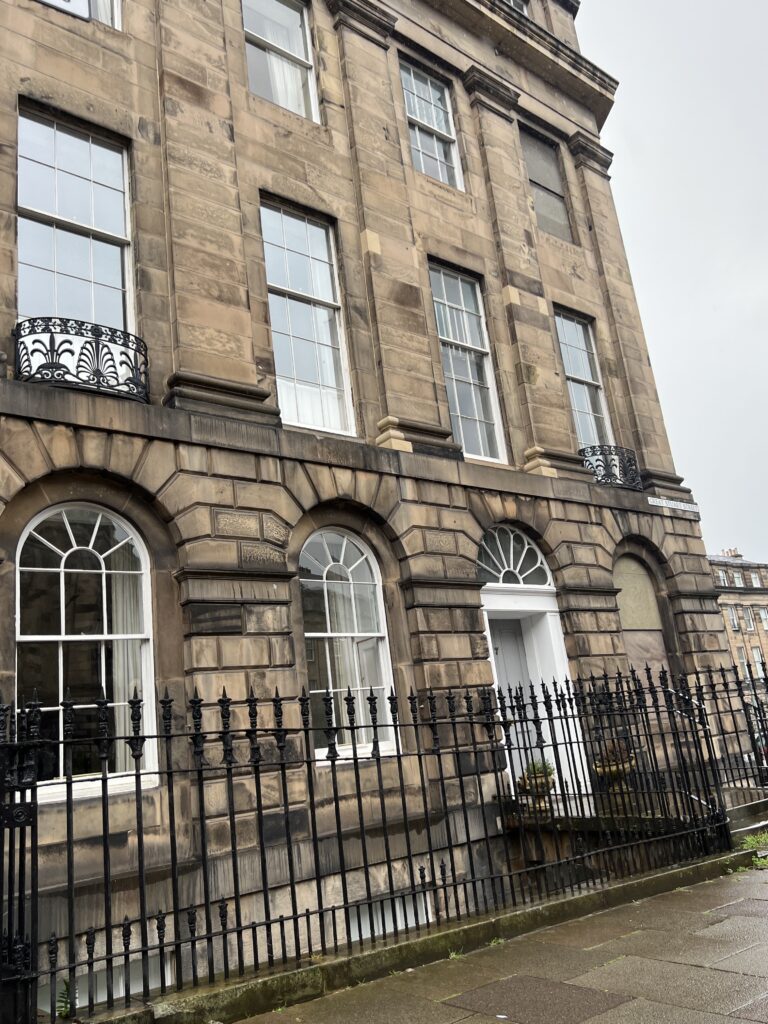
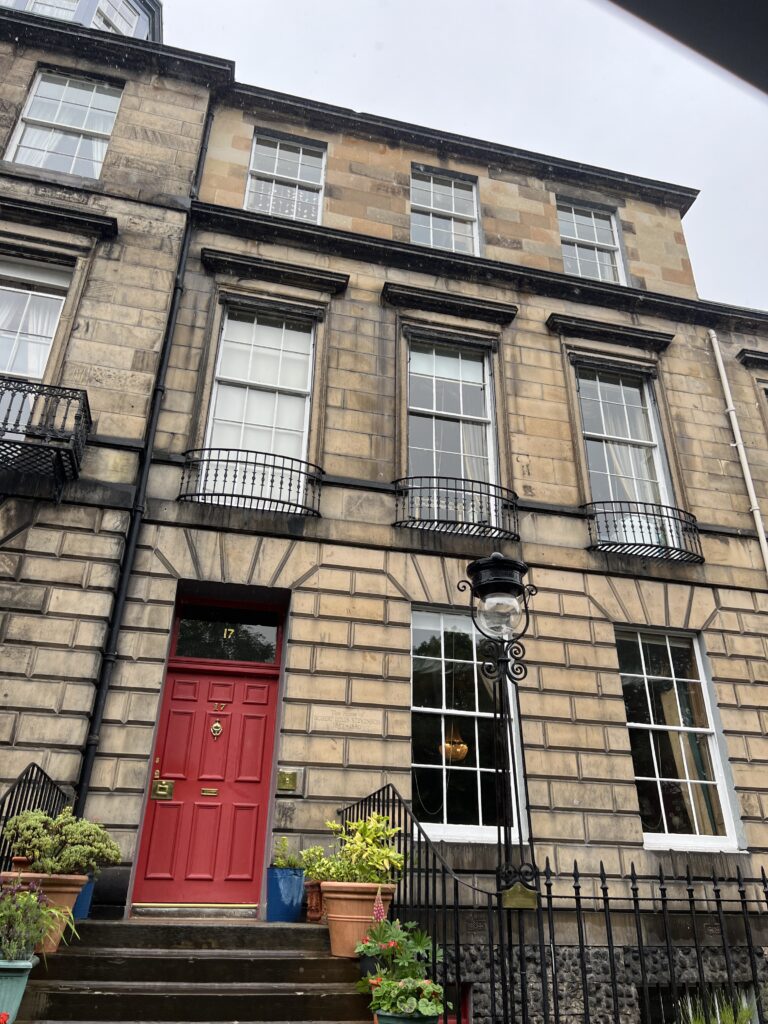
Robert Louis Stevenson’s most notable childhood home is 17 Heriot Row in Edinburgh, Scotland. The author lived here with his parents from 1857 until 1880. Today, the property operates as a private residence, bed and breakfast, and event venue. Often referred to as “Stevenson House,” this affluent New Town residence was the absolute center of his imagination. Confined to his bed by frequent bronchial illnesses, he wrote and dictated his earliest stories here, and the vivid nightmares he experienced in this home later inspired Dr. Jekyll and Mr. Hyde.
Visiting the Stevenson House in Edinburgh, Scotland – The Literary Tourist
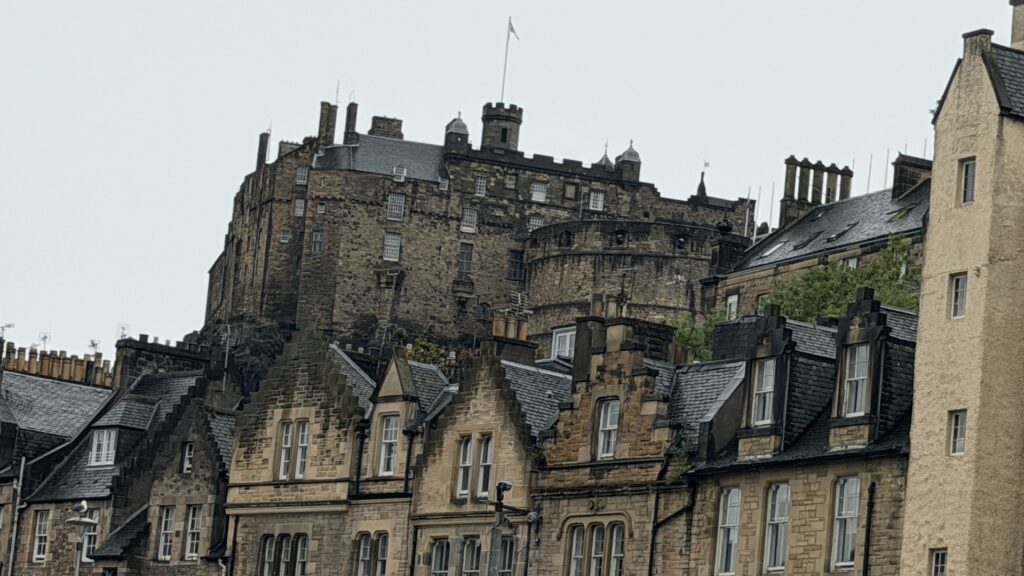
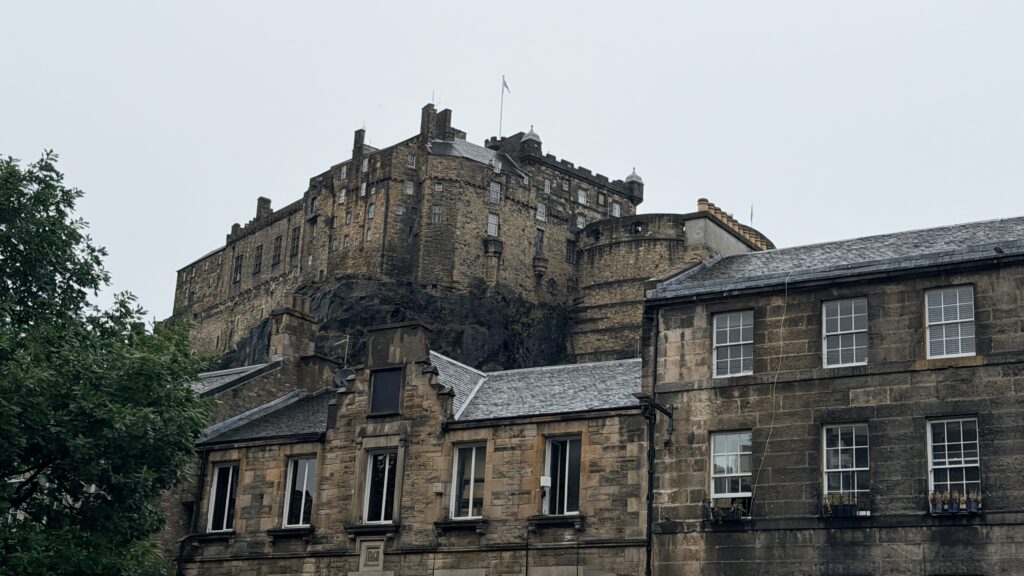
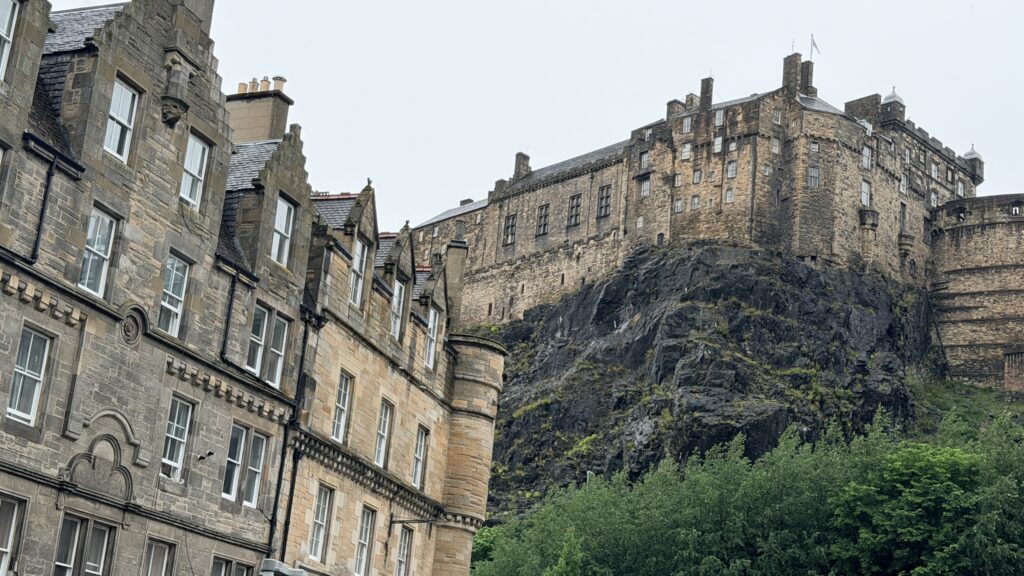
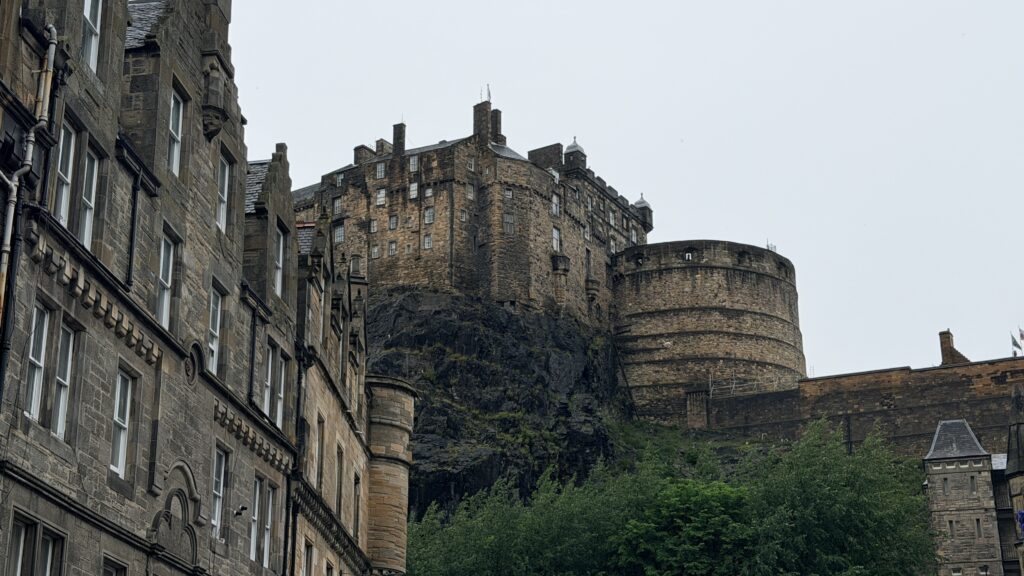
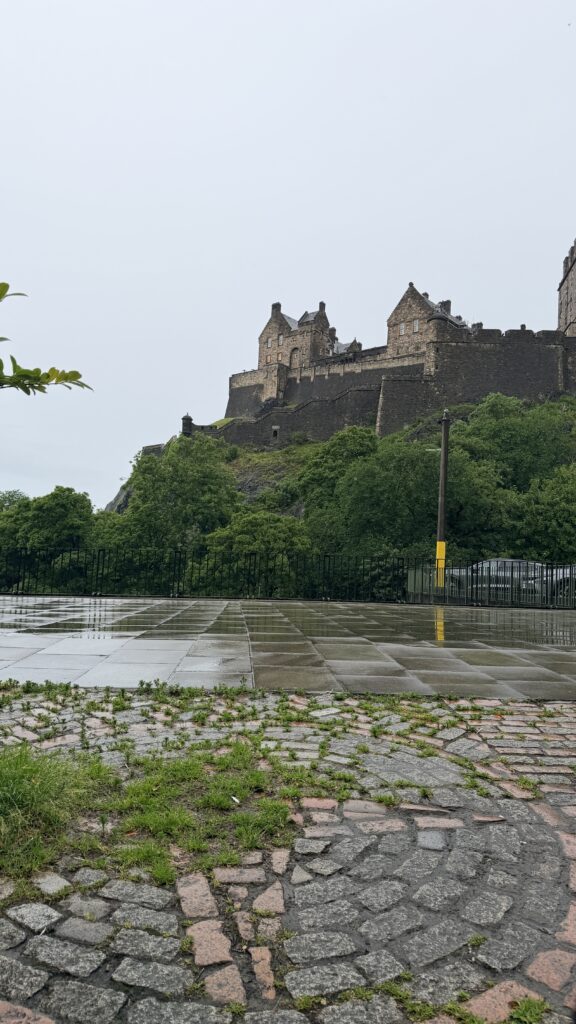
Edinburgh Castle (Scottish Gaelic: Caisteal Dhùn Èideann) is a historic castle in Edinburgh, Scotland. It stands on Castle Rock, which has been occupied by humans since at least the Iron Age. There has been a royal castle on the rock since the reign of Malcolm III in the 11th century, and the castle continued to be a royal residence until 1633. From the 15th century, the castle’s residential role declined, and by the 17th century it was principally used as a military garrison. Its importance as a part of Scotland’s national heritage was recognized increasingly from the early 19th century onwards, and various restoration programs have been carried out over the past century and a half.
Edinburgh Castle has played a prominent role in Scottish history, and has served variously as a royal residence, an arsenal, a treasury, a national archive, a mint, a prison, a military fortress, and the home of the Honours of Scotland – the Scottish regalia. As one of the most important strongholds in the Kingdom of Scotland, the castle was involved in many historical conflicts from the Wars of Scottish Independence in the 14th century to the Jacobite rising of 1745. Research undertaken in 2014 identified 26 sieges in its 1,100-year history, giving it a claim to having been “the most besieged place in Great Britain and one of the most attacked in the world”. Few of the present buildings’ pre-date the Lang Siege of 1573, when the medieval defenses were largely destroyed by artillery bombardment. The most notable exceptions are St Margaret’s Chapel from the early 12th century, which is regarded as the oldest building in Edinburgh, the Royal Palace, and the early 16th-century Great Hall. The castle is the site of the Scottish National War Memorial and the National War Museum. The British Army is still responsible for some parts of the castle, although its presence is now largely ceremonial and administrative. The castle is the regimental headquarters of the Royal Regiment of Scotland and the Royal Scots Dragoon Guards and houses their regimental museums, along with that of the Royal Scots.
Official Edinburgh Castle Website
The Shipbuilders of Port Glasgow (fondly known as “The Skelpies”) is a striking 10-meter (33-foot) stainless steel monument in Coronation Park, Scotland. Weighing 14 tons, it features two giant figures wielding riveting hammers, honoring the town’s world-famous industrial heritage along the River Clyde. Two colossal figures made of stainless steel plates with intricate structural detailing, standing just about 100 yards from the town’s last remaining shipbuilders.

Leaving the port of Greenock
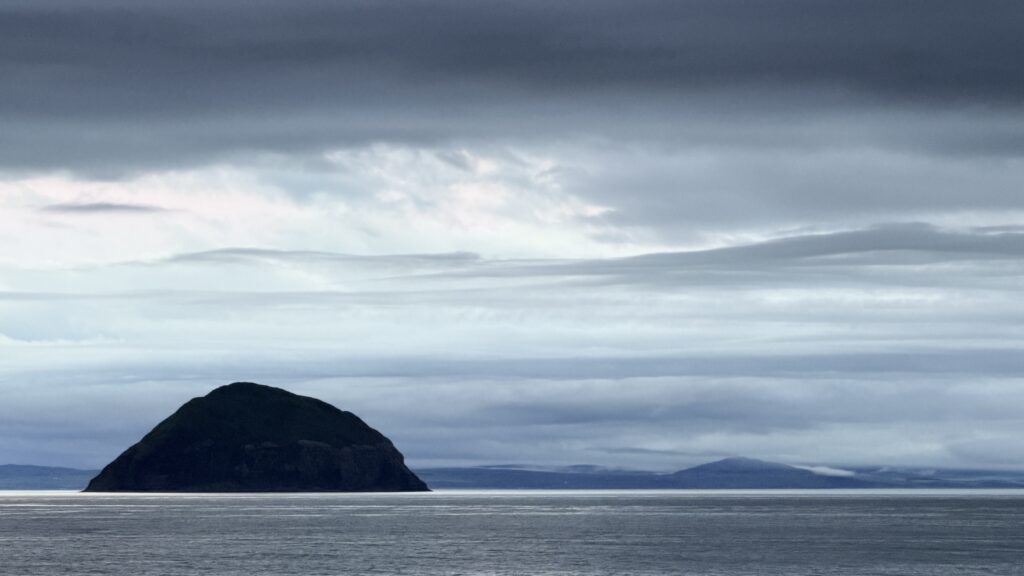
View from the back of the ship at dinner tonight
Jackie and Joan attending the performance tonight in The Vista Lounge.

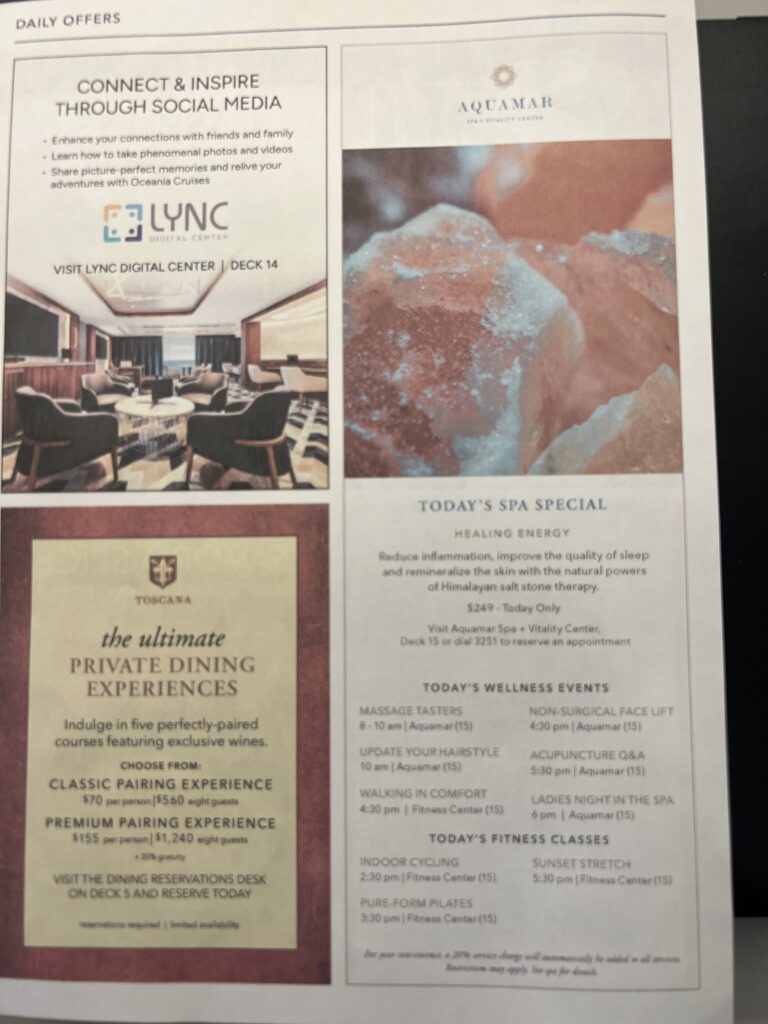
We have a sea day tomorrow, but have events scheduled for 10am, 1:30pm, 3:00pm and dinner tomorrow night at Toscano. Guess we will have to relax on Monday after Denmark

2 thoughts on “Day 104 June 19 – Glasgow (Greenock), Scotland”
Our granddaughter was visiting St Andrews today, too..
I love St. Andrews mainly for the Old Course, but on a day likewe had with the rain it was unfortunate as it was Jackie’s first visit.