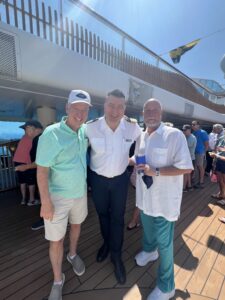
Day 93 Monday June 8th (27 days to go) — We decided to tour on our own today. Jackie had put together a list of places to visit and we checked those off the list. This island was remarkable and just not enough time to visit all the locations. It was a great day with wonderful weather. It has been added to the list of places that need to be visited again
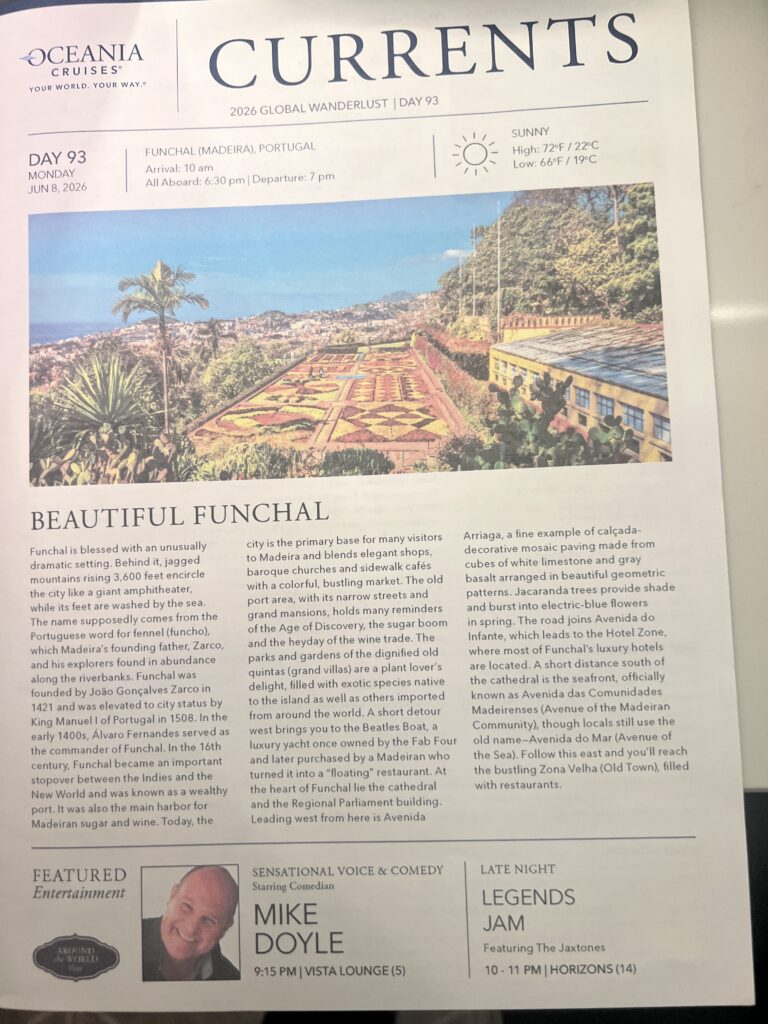
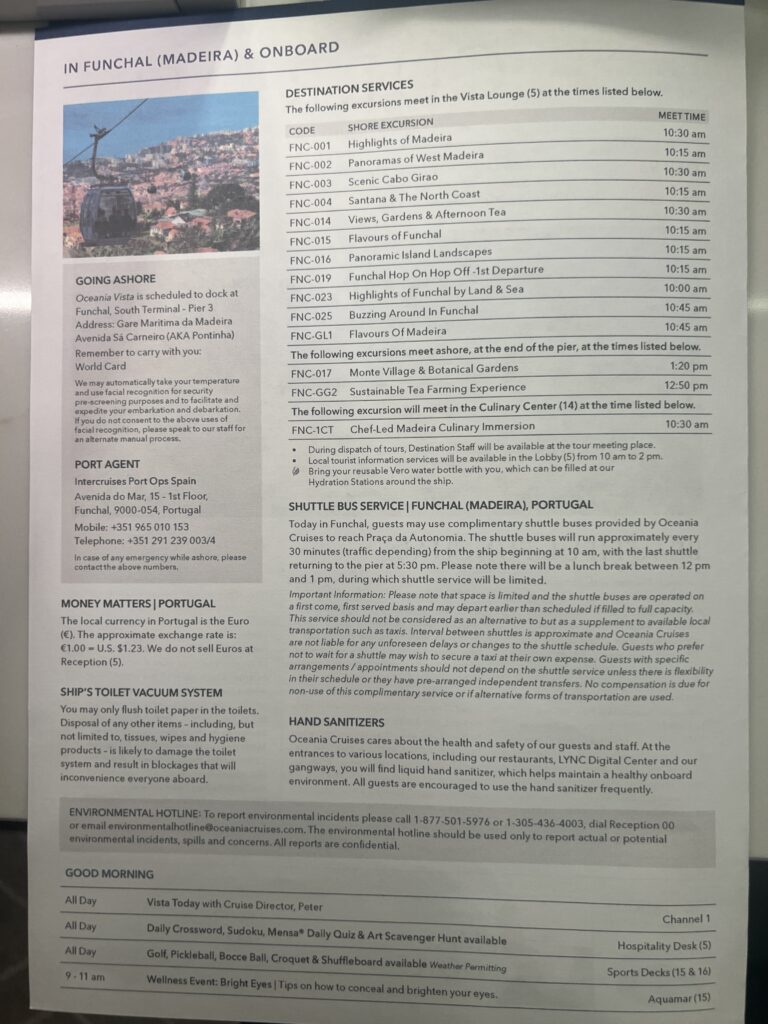
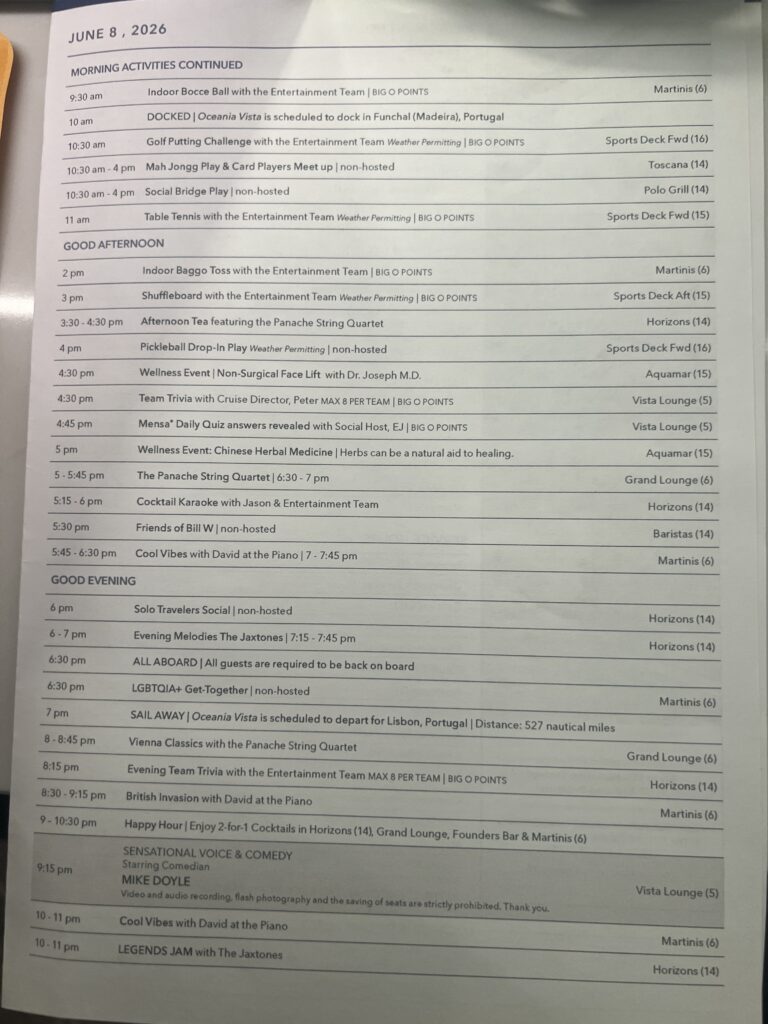

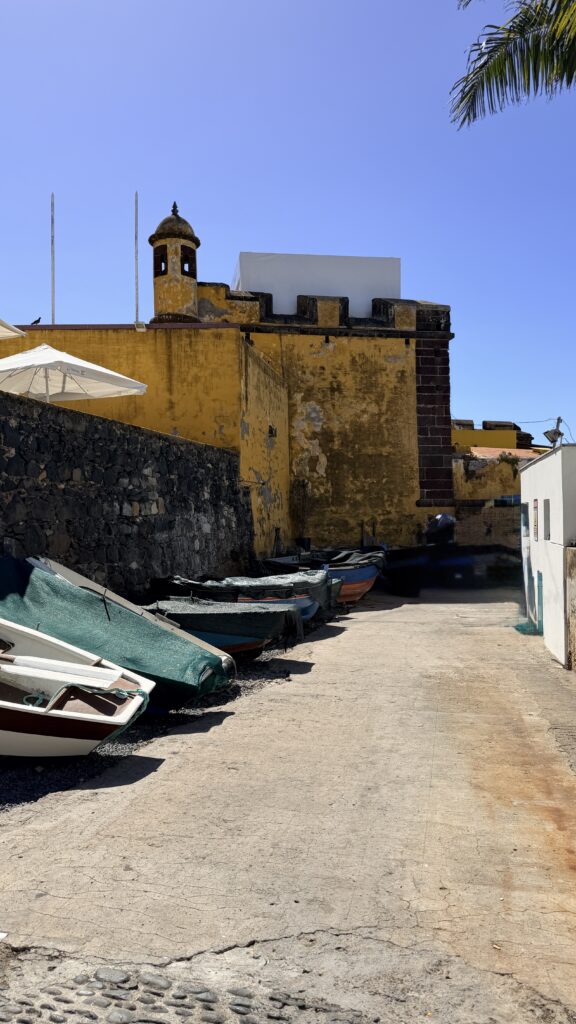
The Fort of São Tiago (Portuguese: Fortaleza de São Tiago) is a historic military fort located in the historical centre (Zona Velha) of Funchal, Madeira. Constructed in the early 17th century, the fort was built to protect the island against pirate attacks and foreign invasions. The fort is notable for its prominent yellow walls, which contrast with the surrounding architecture, and its strategic position overlooking the Atlantic Ocean. Today, Fort of São Tiago serves as both a cultural landmark and a popular tourist attraction, offering panoramic views of the sea and the city of Funchal.
Fort of São Tiago was constructed in 1614 during a period when Madeira held significant strategic importance in the Atlantic Ocean. The fort was commissioned by the Portuguese Crown to defend the island from pirate raids, as well as attacks from other European powers. Throughout the 17th and 18th centuries, it played a crucial role in protecting Funchal from corsairs and privateers, particularly during conflicts between Portugal and Spain.
The fort underwent extensive restoration in the 1990s, transforming it into a cultural venue. From 1994 until 2015, it housed the Madeira Museum of Contemporary Art (Museu de Arte Contemporânea da Madeira), which has since relocated to Calheta.
Fort of São Tiago is an example of 17th-century Portuguese military architecture. The structure is characterized by its robust stone walls and bastions, designed to withstand cannon fire and repel naval assaults. The most distinguishing feature of the fort is its vivid yellow exterior, a color scheme that was applied during its restoration in the late 20th century. This striking appearance sets it apart from the surrounding buildings in Funchal’s historic district.
The fort’s design includes multiple watchtowers and ramparts that once provided soldiers with clear views of the harbor and surrounding coastline. Inside the fort, visitors can explore its courtyards, battlements, and a small chapel that once served the religious needs of stationed soldiers. The strategic coastal location of Fort of São Tiago allowed early detection of approaching ships, ensuring its critical role in the island’s defense system.
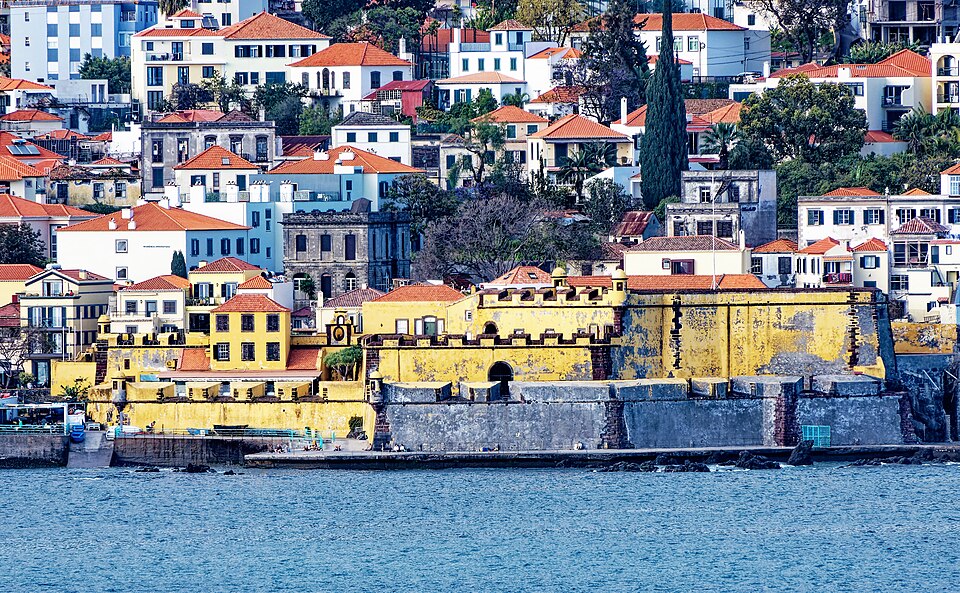
Entrance into the fort
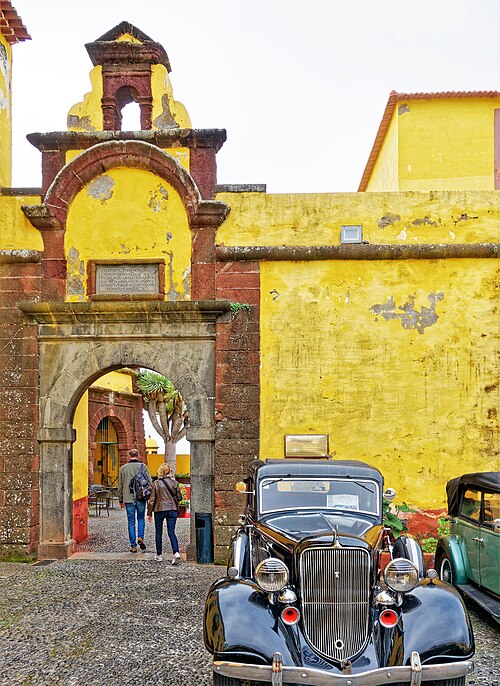
The fort and the port.
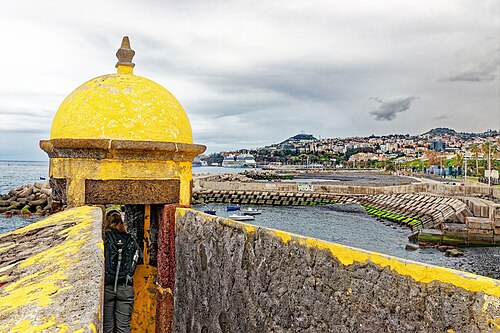
Pictures inside the fort
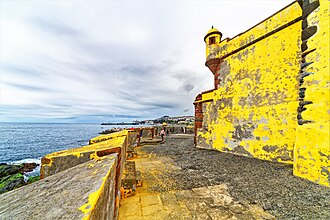
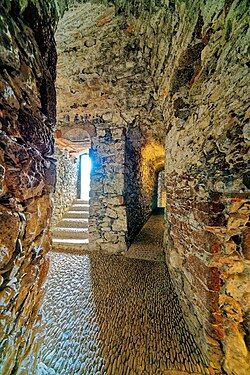
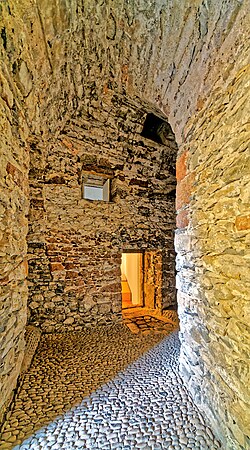
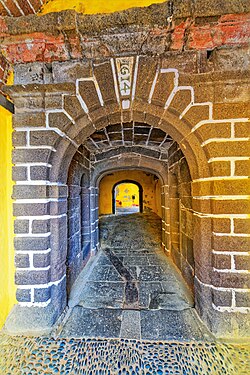
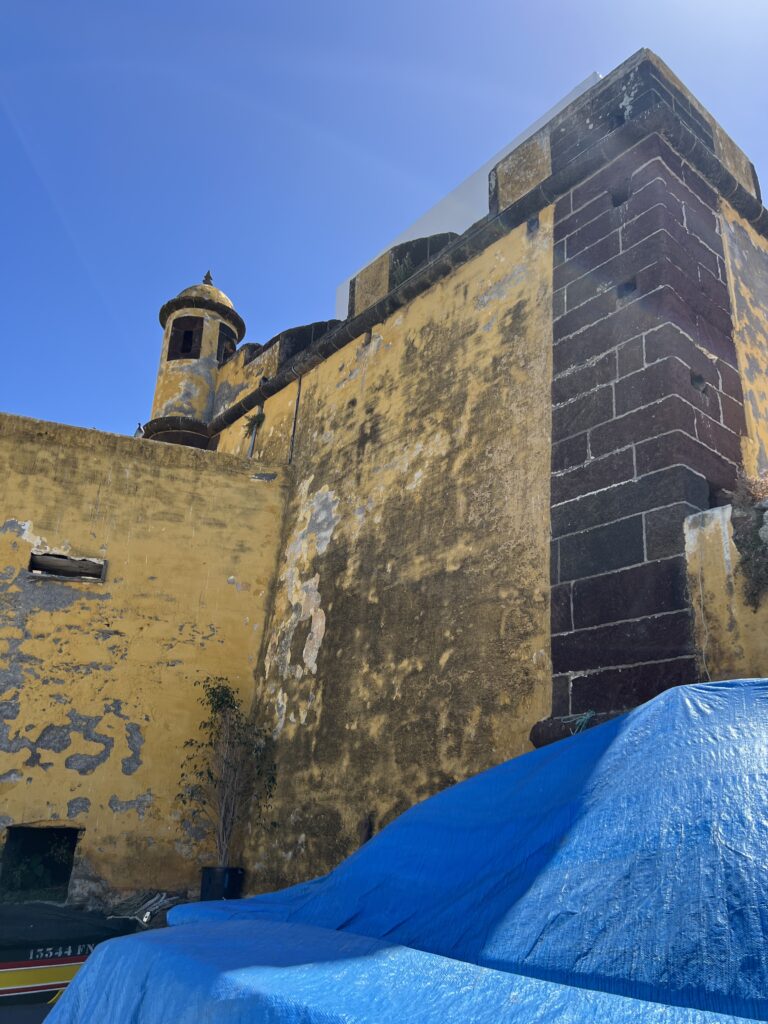
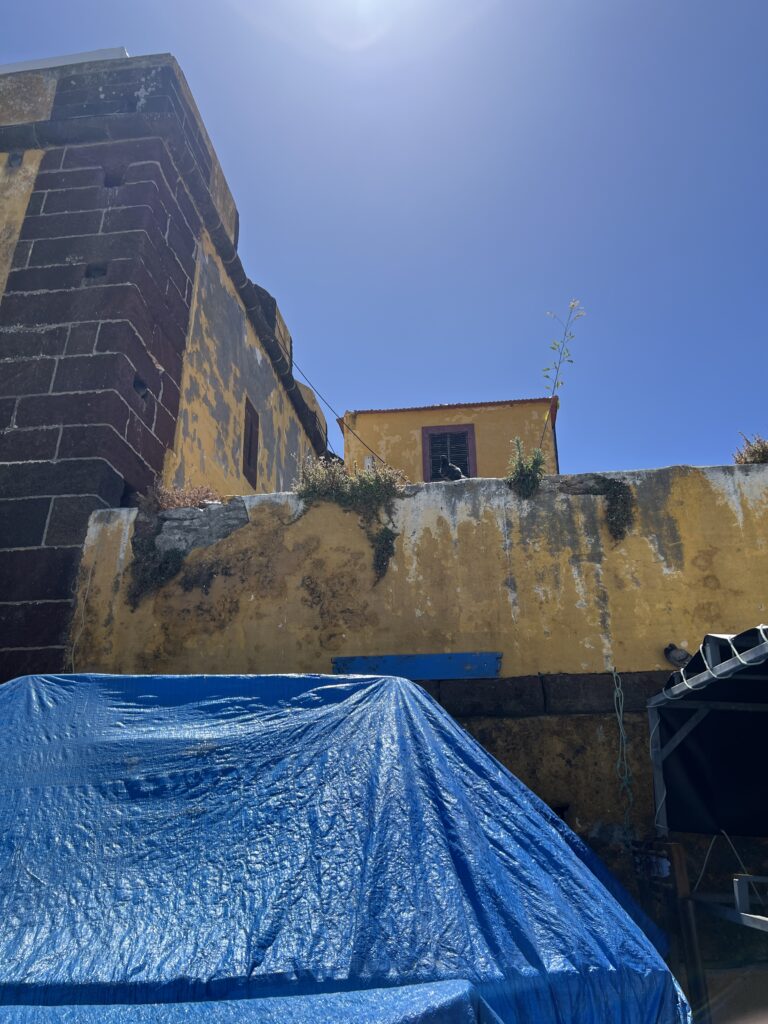
Guy was welding, but the audio will identify his music tastes 🙂
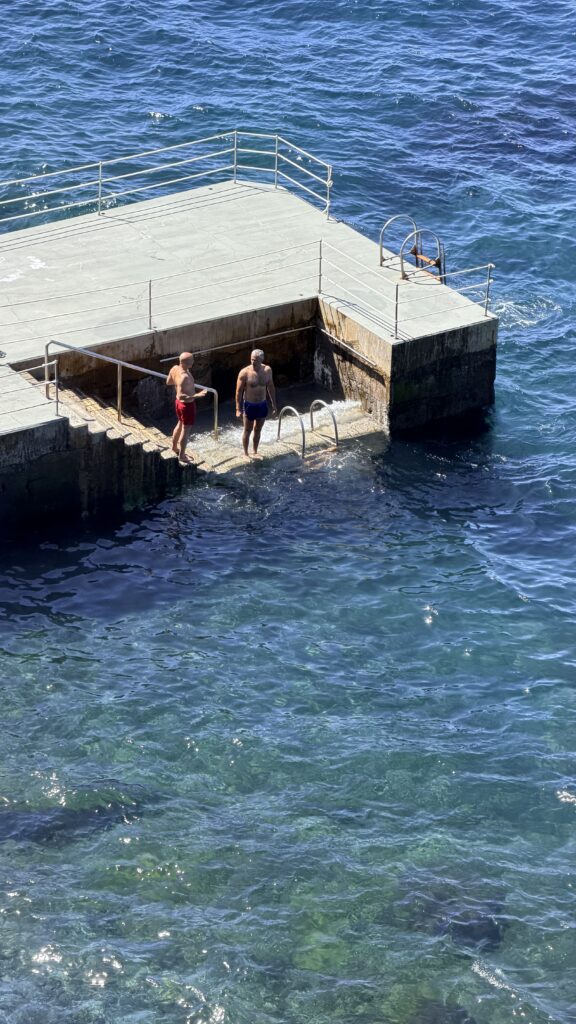
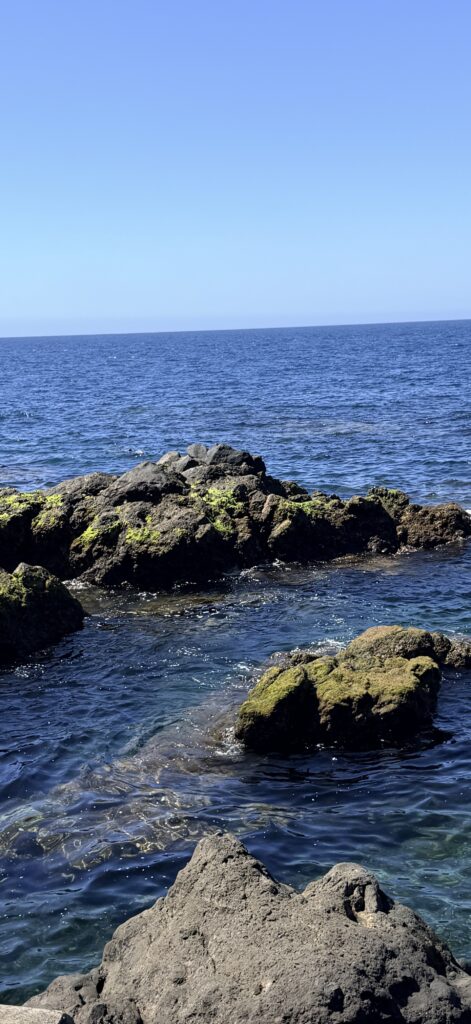
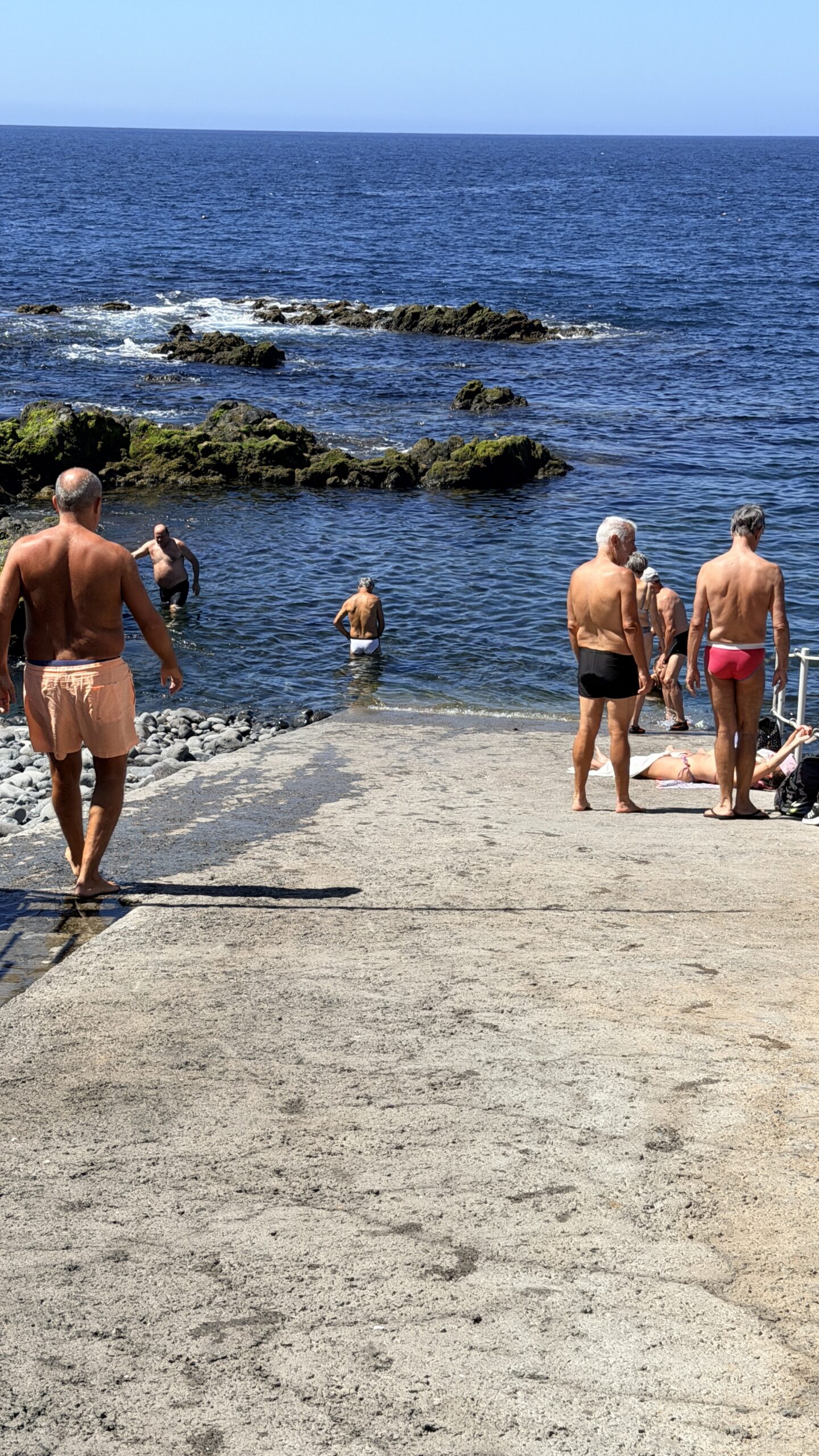
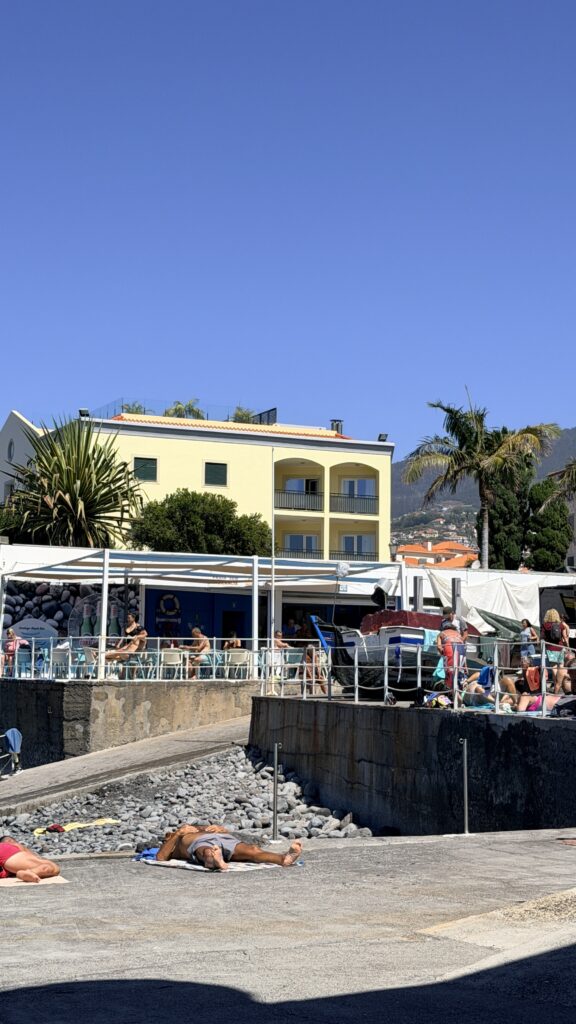
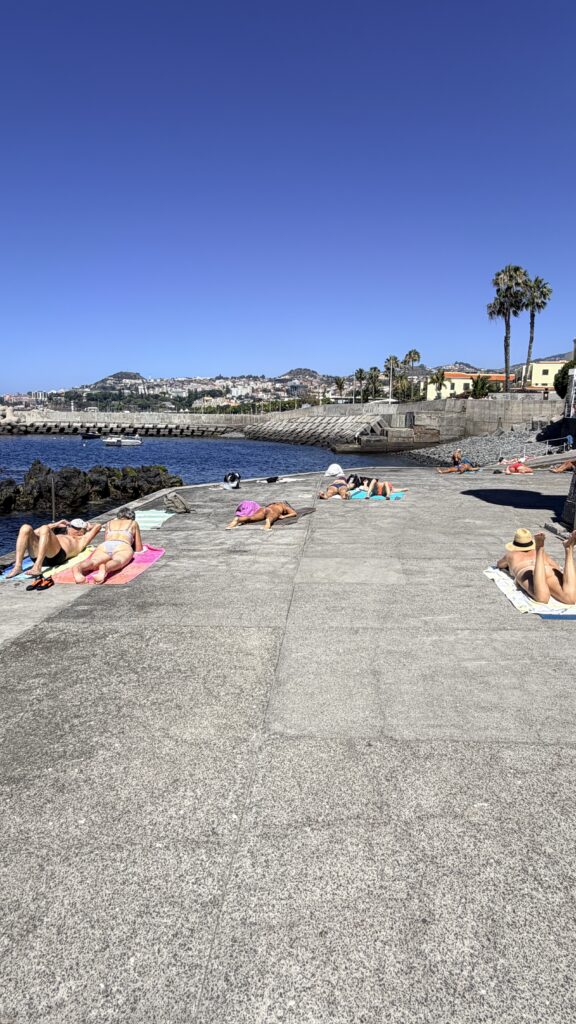
On the outside of the fort walls, people were swimming and sunbathing. I told Jackie it reminded me of the seals in San Francisco Bay 🙂
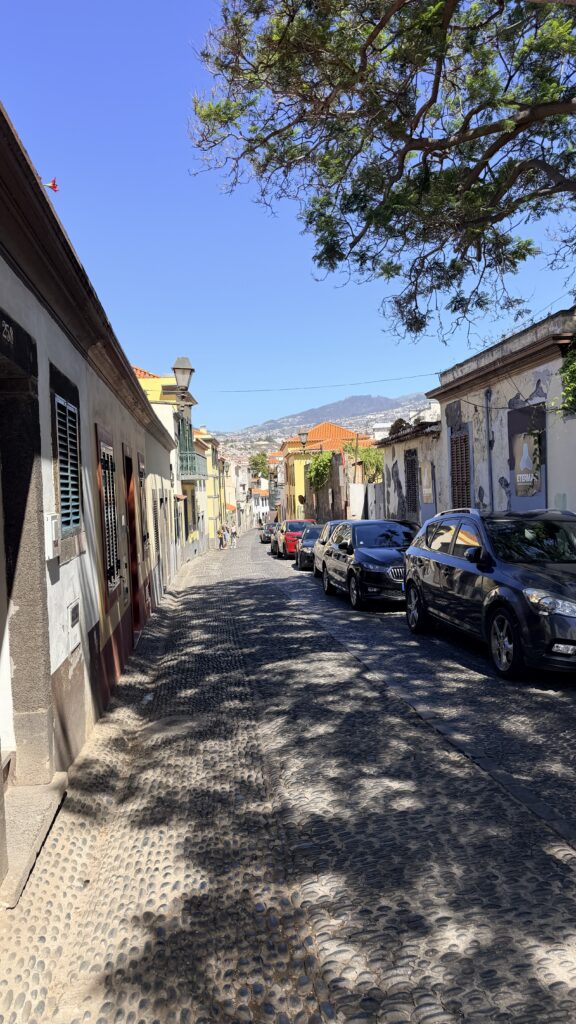
Street outside the fort heading back to the city
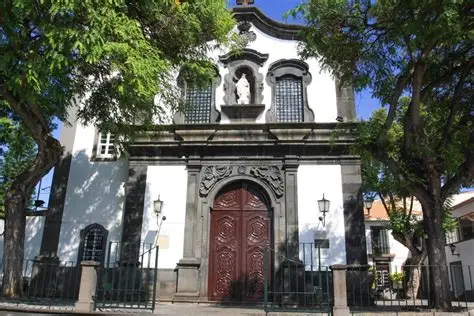
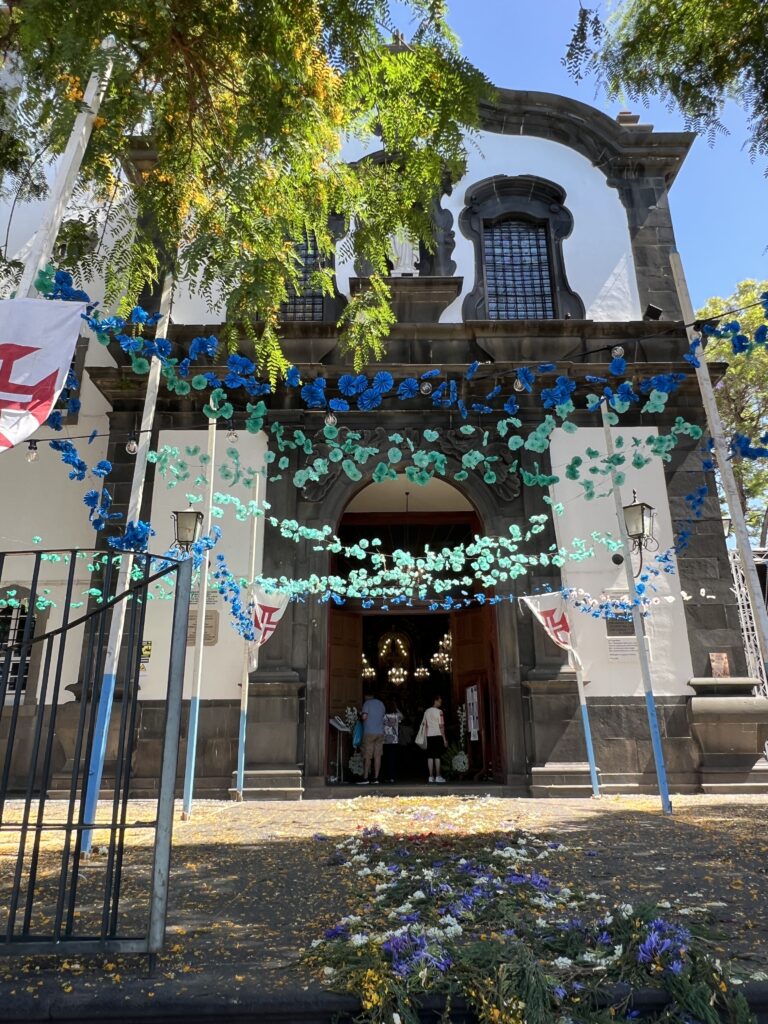
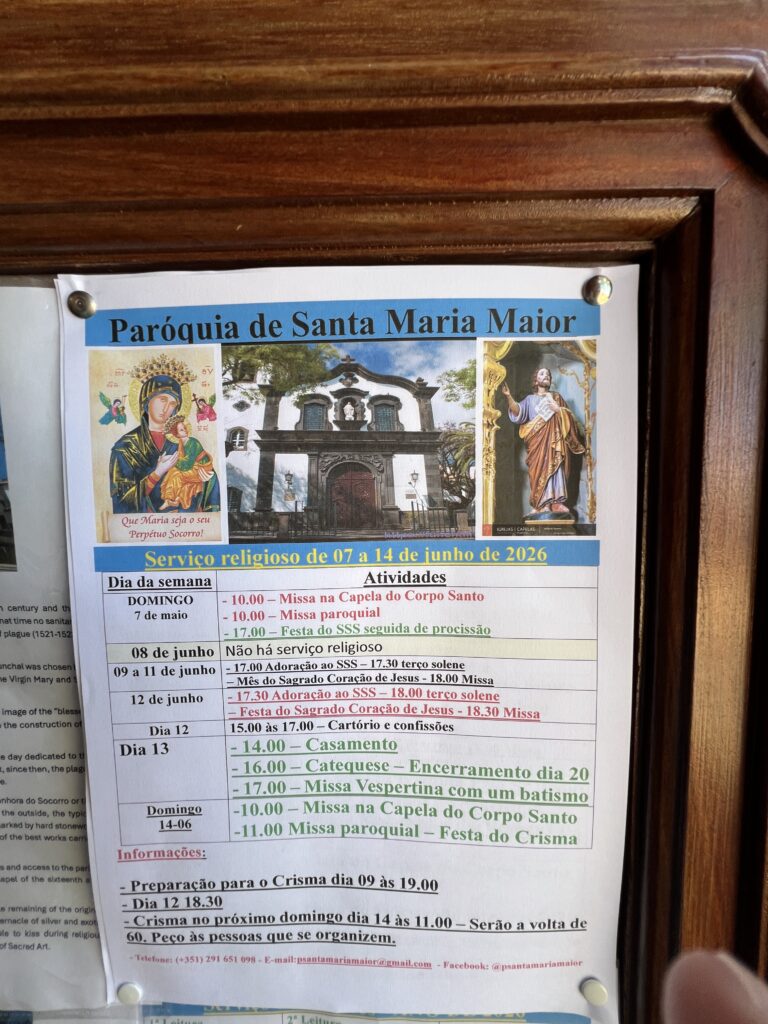
Igreja de Santa Maria Maior (also known as the Church of Socorro) is located across the street from the fortress. Located in Largo do Socorro, this church is associated with a vow made by the people of Funchal to São Tiago, in 1523, due to an outbreak of plague that ravaged the island, and an image of São Tiago was placed in the Church of Nossa Senhora do Calhau. This church was destroyed by a flood in 1803 and was replaced by the current Igreja do Socorro, completed in 1768, which housed the image of São Tiago and then became the Parish Church of Santa Maria Maior.
Towards the end of the 15th and the beginning of the 16th century, Funchal’s population grew rapidly. And, as usual at that time, the hygiene and health care facilities were not sufficient to cope with the constantly increasing number of inhabitants, which favoured a plague outbreak that devastated the island during the years from 1521 to 1523.
In the light of this catastrophe, in January 1523 the town’s authorities got together in the Sé Cathedral in order to choose the patron saint of Funchal. Like in a lottery, they put the names of the Saint Apostles, the Virgin Mary and Saint John The Baptist into a child’s hat.
This way Saint Tiago Minor (James the Younger) was chosen to protect the city of Funchal and on the 21st of July of the same year his image was carried in a big pilgrimage to the eastern limits of the town, where the construction of a small chapel to be dedicated to him had already been started.
Yet, the construction works were delayed and after an earthquake in 1538, the plague broke out again, so on the 1st of May, the day dedicated to the patron saint, it was decided to make another pilgrimage in order to renew the vote. The legend has it that no other plague case was known after that, and the 1st of May Pilgrimage is still taking place until today.
The church Santa Maria Maior, which we see there today, shows the typical features of a baroque construction of the middle of the 18th century, although influenced by the characteristic austerity of the insular constructions. The facade consists of old stone work hand cut in the traditional way, and the doors, still made of the original woods, represent one of the best wood works done on the island.
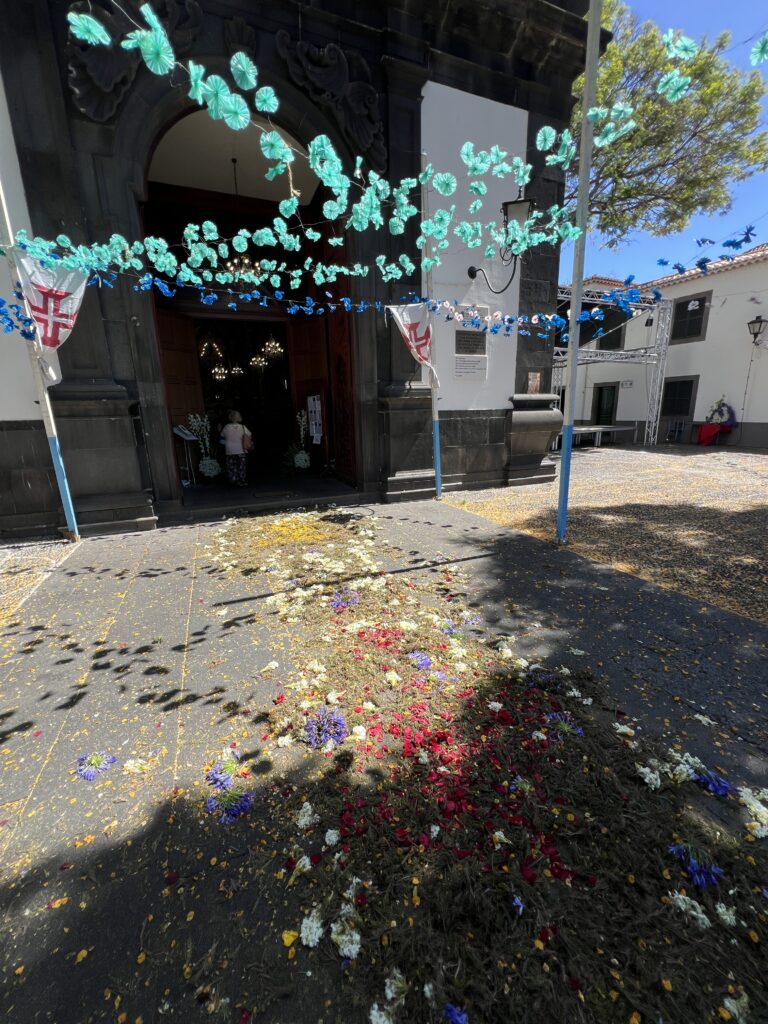
A few steps lead up to a small square with big leaf trees, which is enclosed with a fence with iron posts and gives access to community service facilities and the parochial residence, where you will find architectonic structures from the old chapel from the 16th and 17th century.
During the centuries the interior of the chapel was submitted to a lot of remodelling works so that there is very little left from the original chapel. All that remained is a big silver exotic wood sacrarium and a 16th century cross that was given to the people to kiss during religious ceremonies, now on exhibition in the Sacred Art Museum.
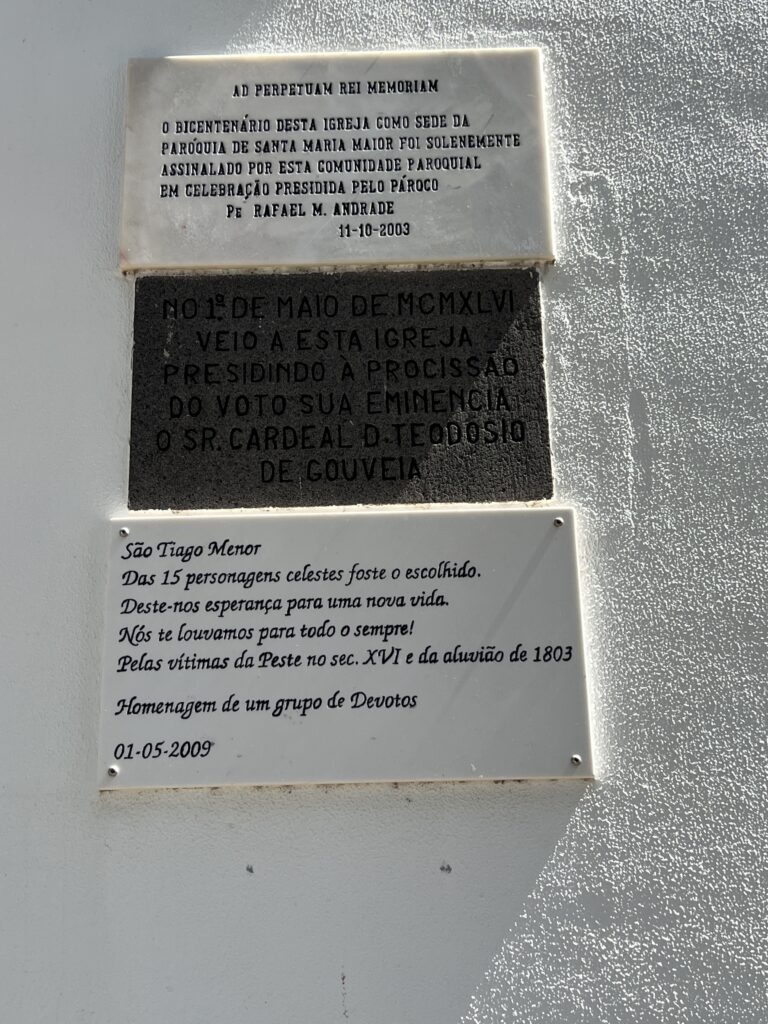
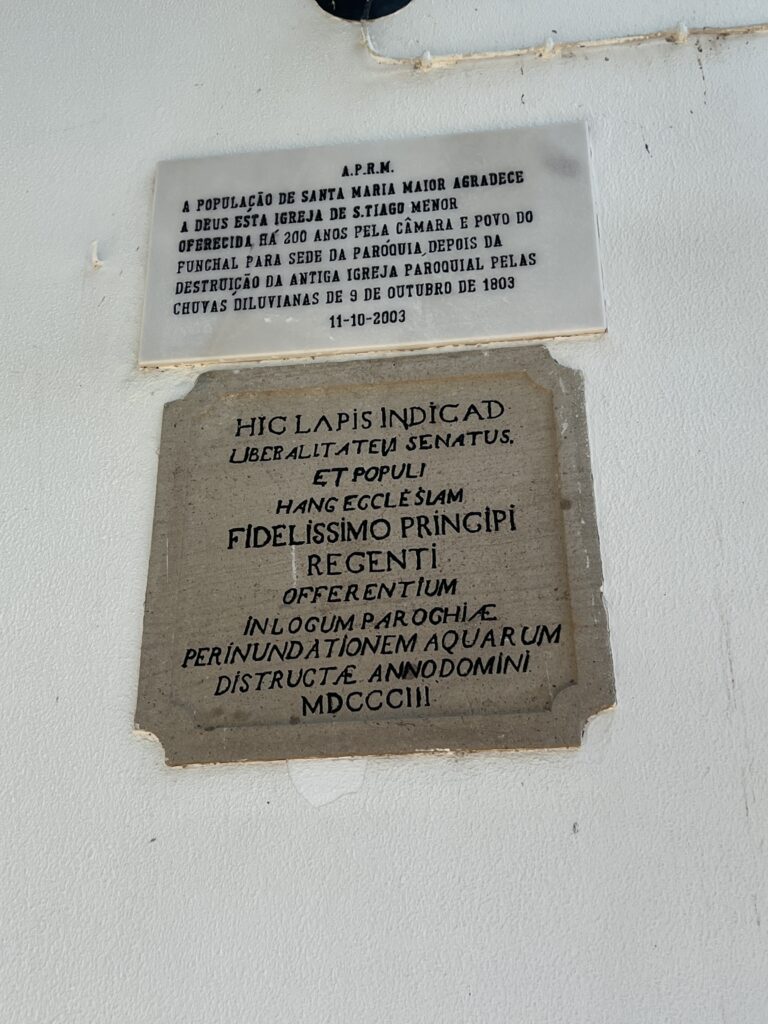
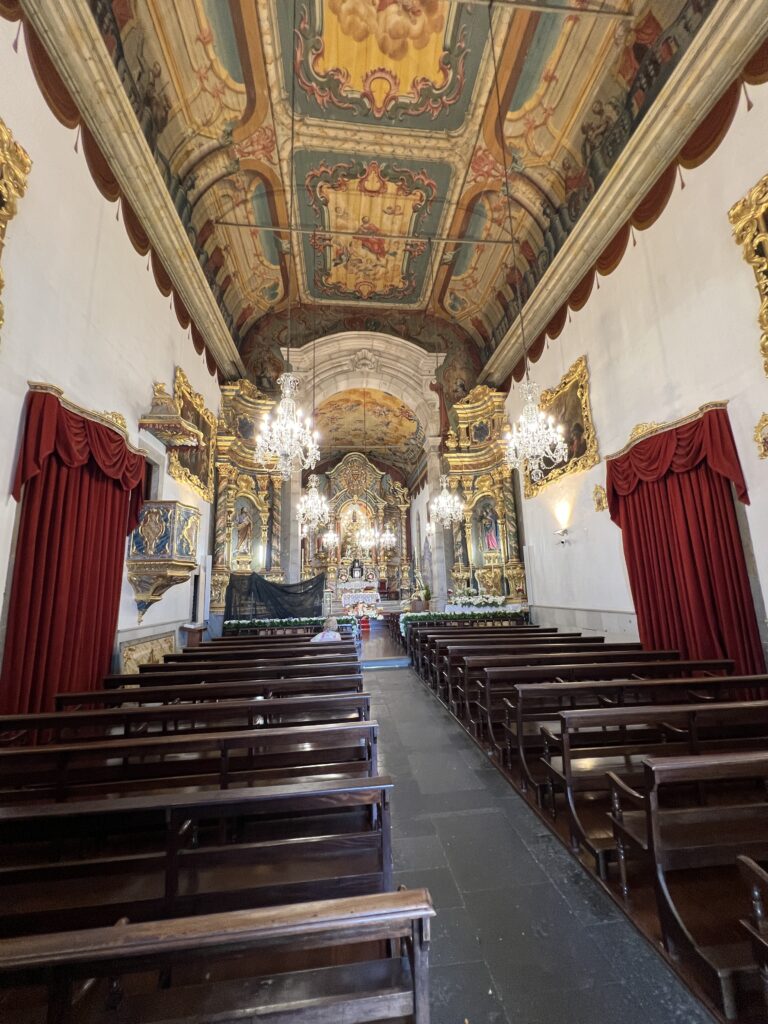
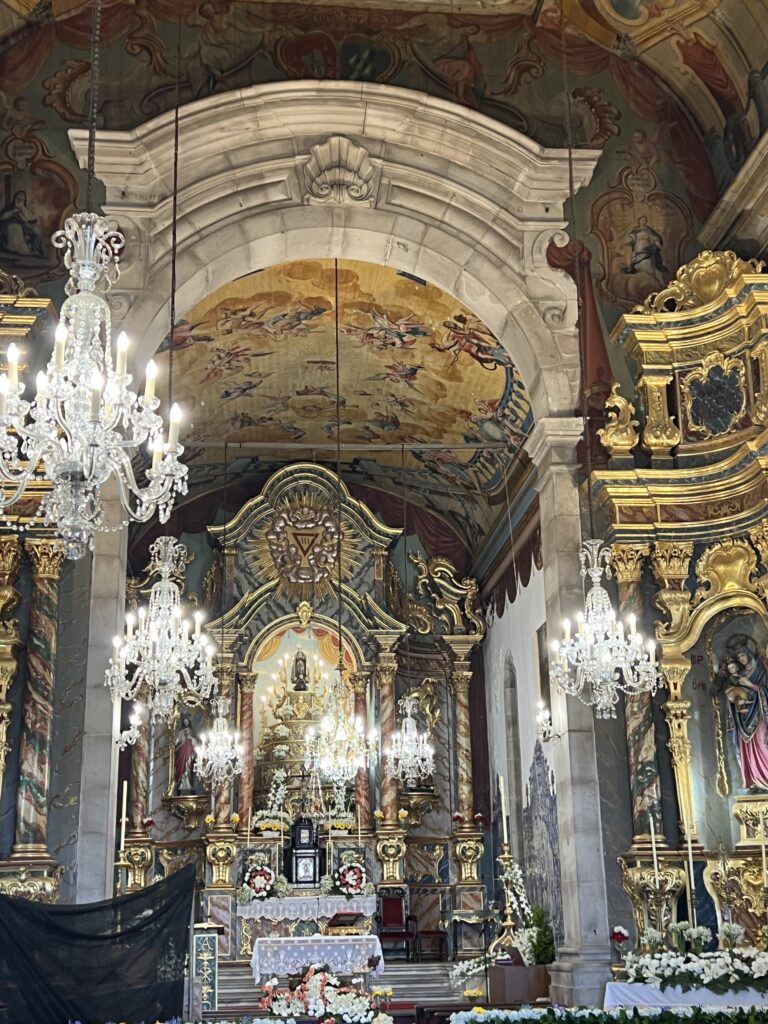
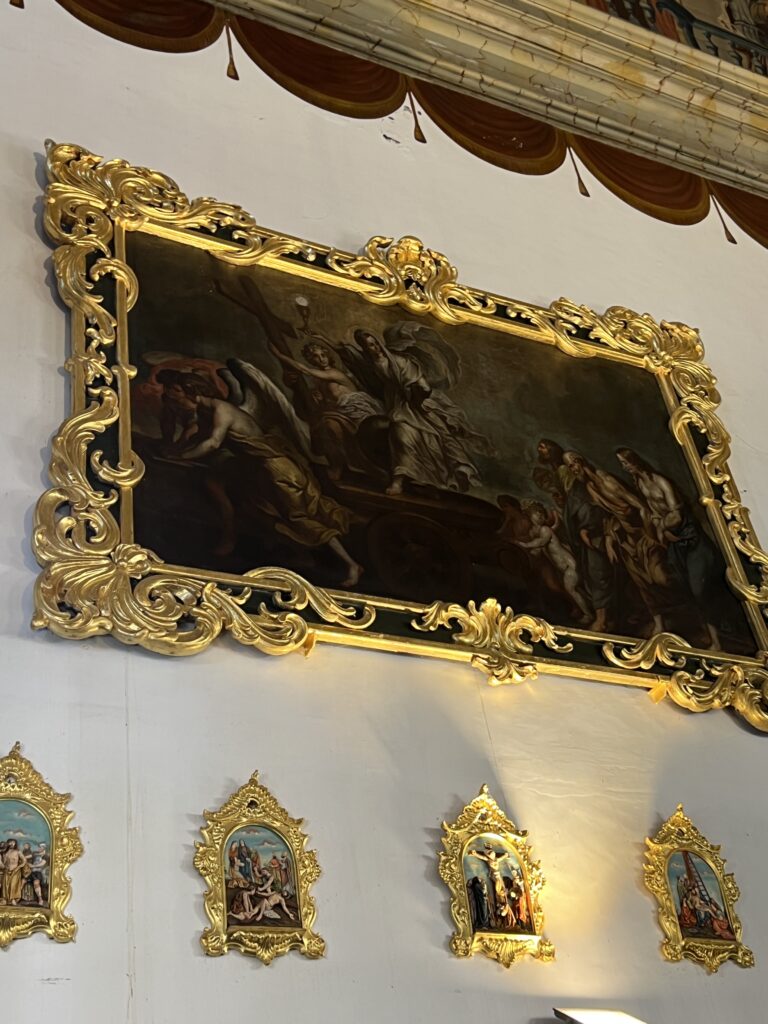
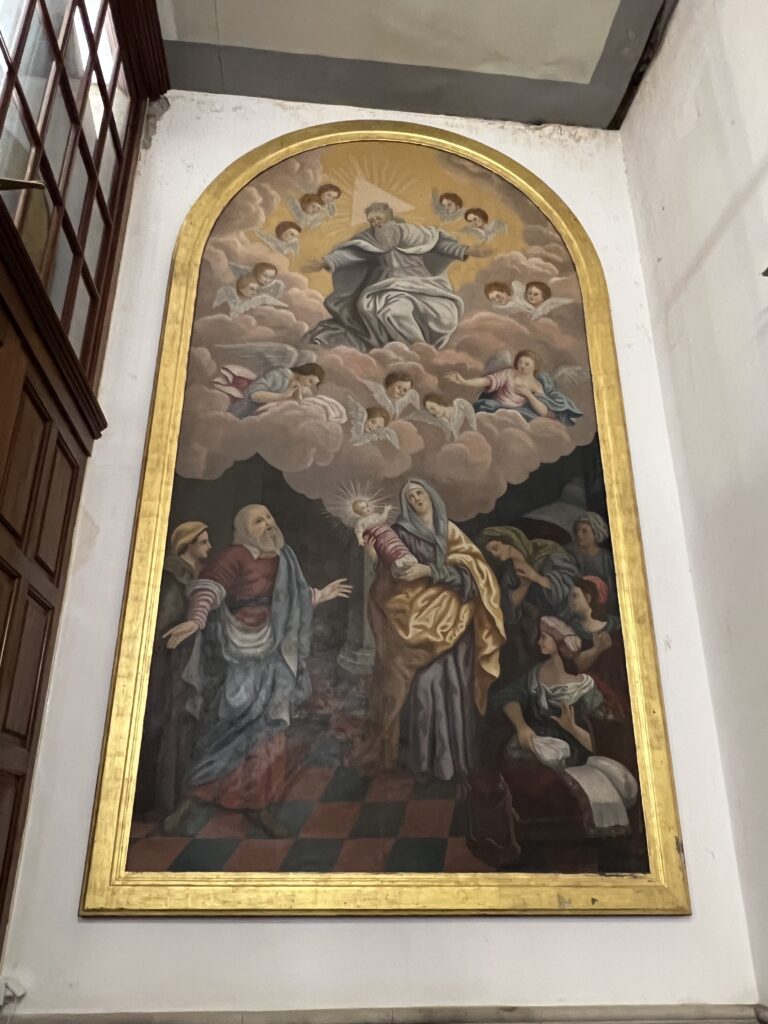
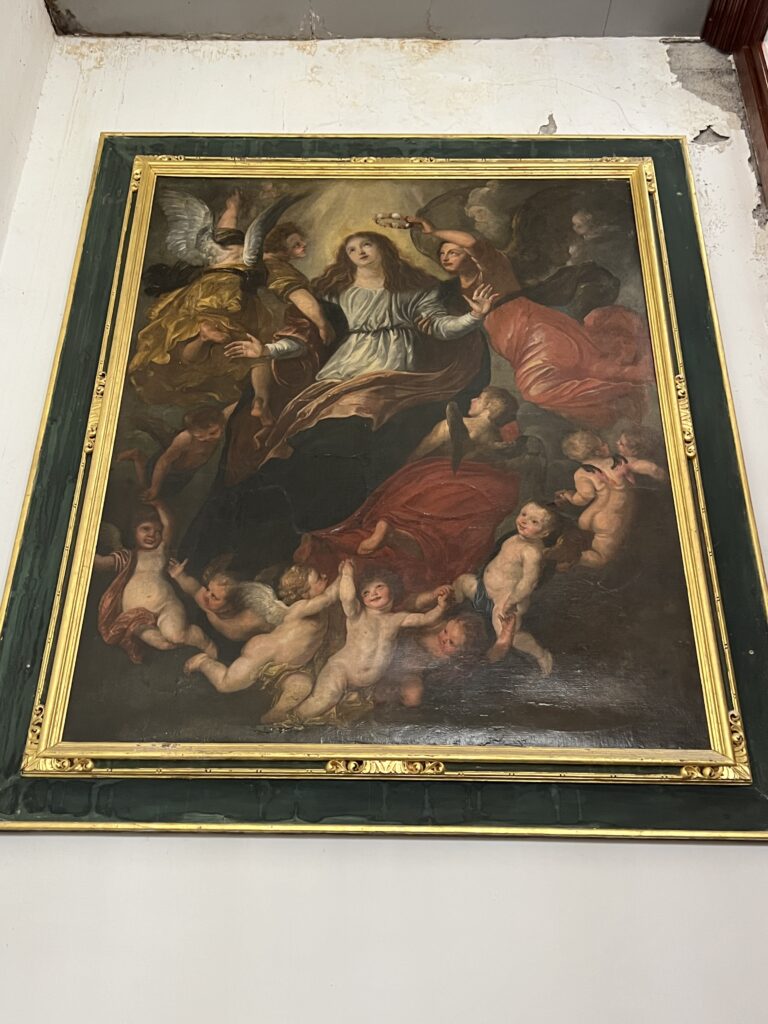
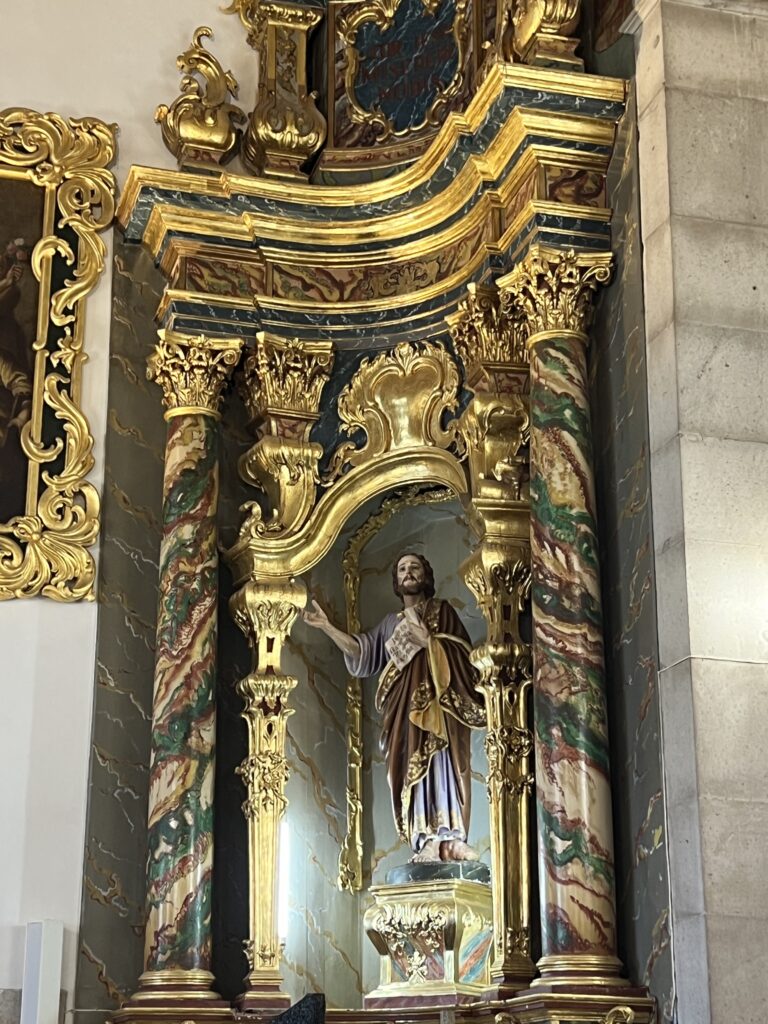
Although the church was small, it was really impressive inside.
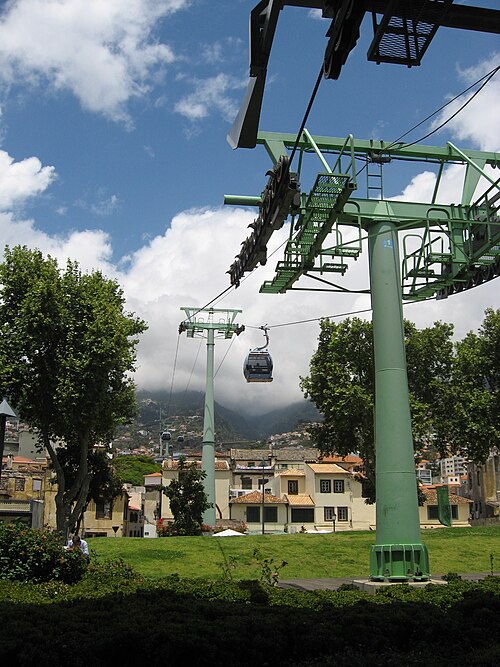
The Funchal Cable Car (Portuguese: Teleférico do Funchal), or Madeira Cable Car, is a gondola lift that transports people from the lower section of Funchal, Madeira to the suburb of Monte.
The route of the cable car was chosen to replace the old Monte Railway, which ran from 1886 to 1943.
Construction of the cable car system began in September 1999; it was opened in November 2000 and has been in service since then. The bottom station is located at Almirante Reis Park in central Funchal. The length of the cable car line is 3,173 m and the height difference is 560 m; the journey takes approx. 15 minutes. The cableway has over 39 cabins with 7 seats each, and can transport up to 800 passengers per hour.
Ground view of the Funchal Cable Car
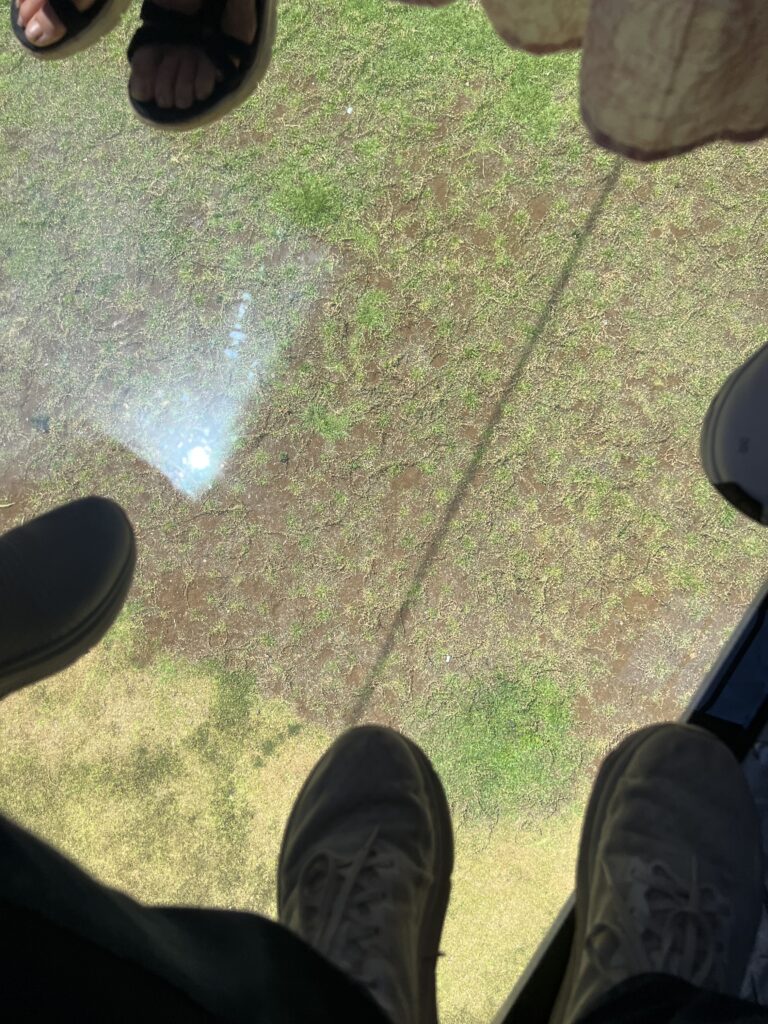
Looking out the bottom of the cable car as we began to lift off the ground
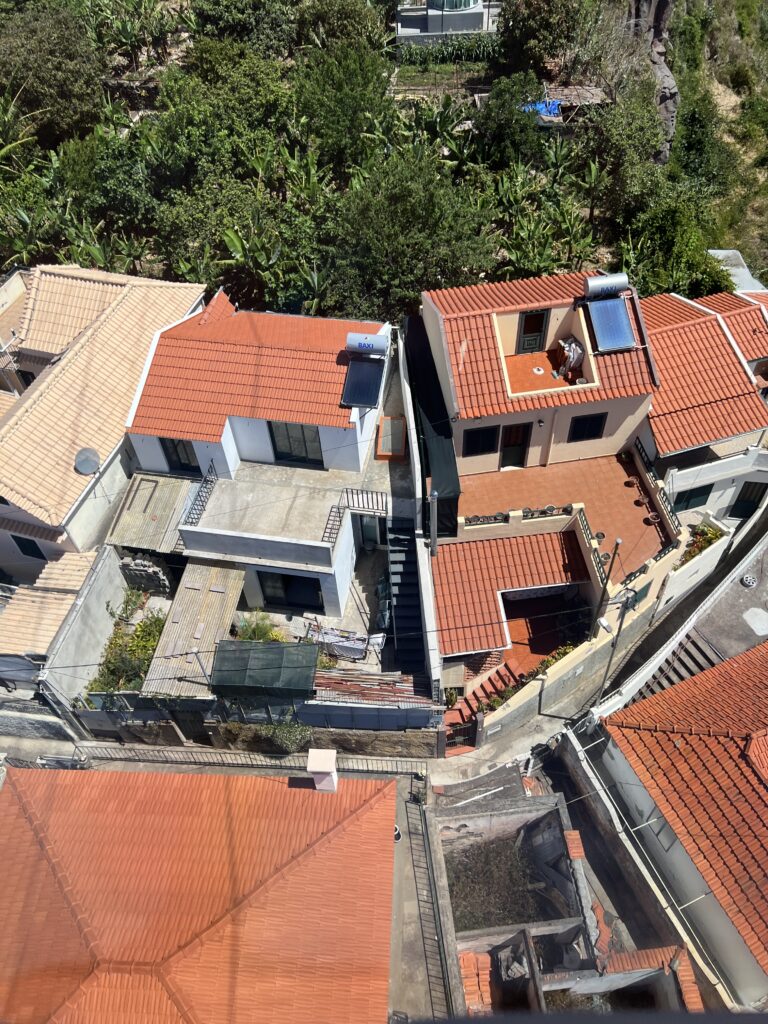
Could look down on the roofs and patios of the homes below
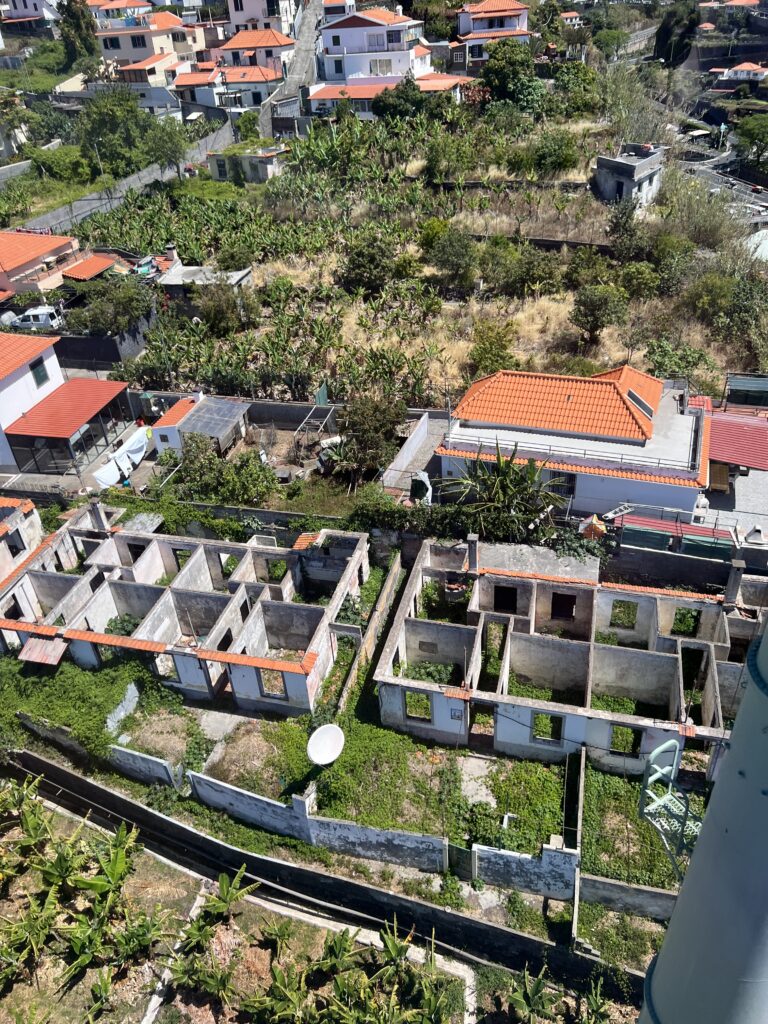
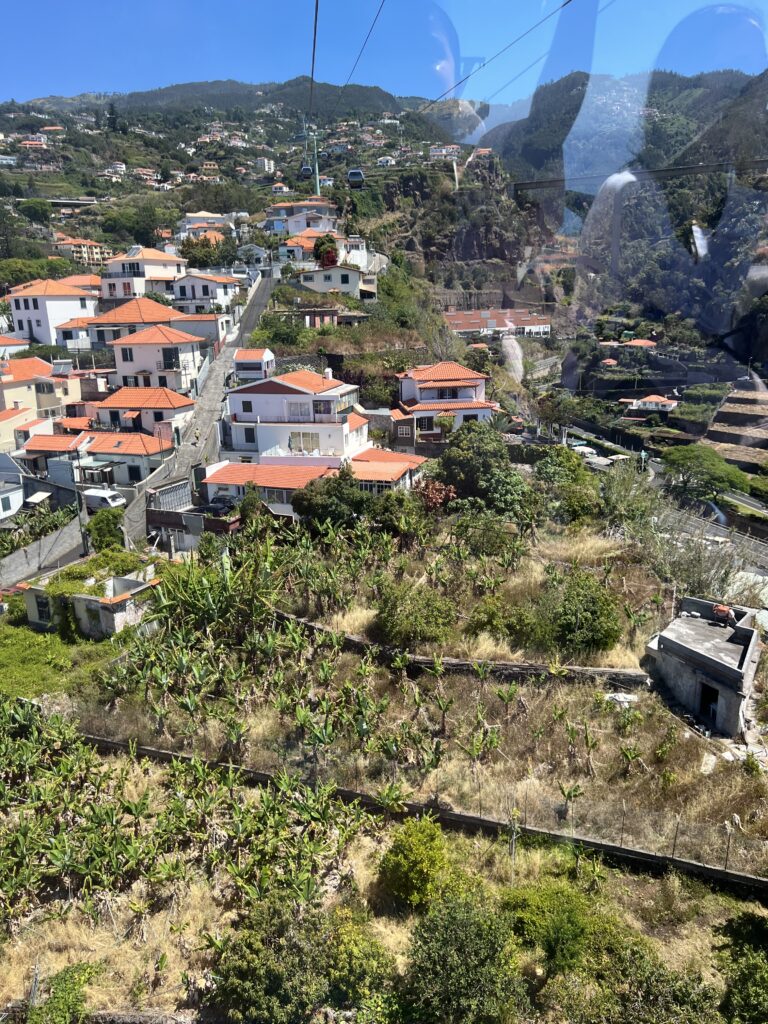
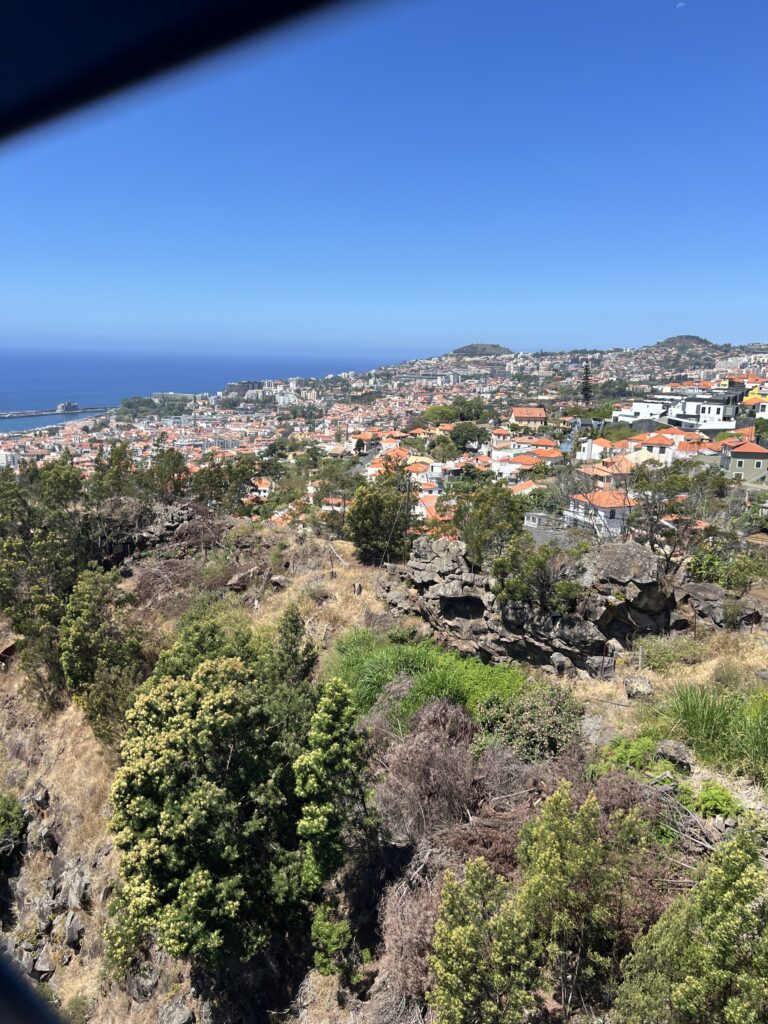
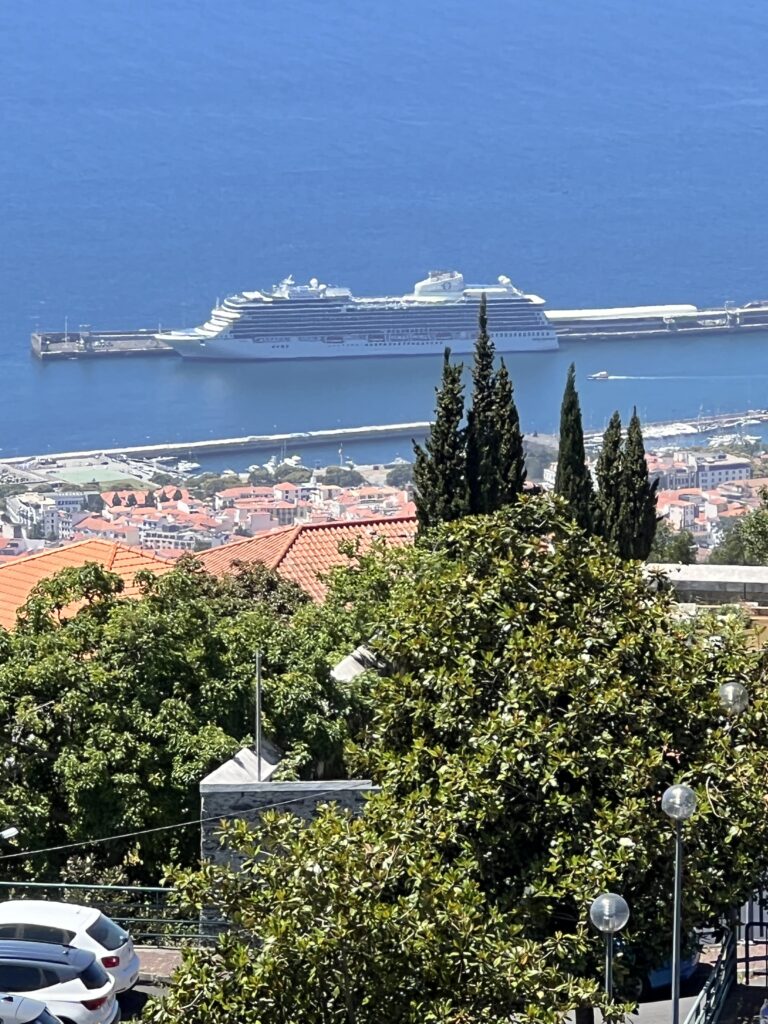
After surviving the cable car ride, we arrived at the suburb called Monte. Monte (English: Mount) is a civil parish in the municipality and a suburb of Funchal in the Portuguese archipelago of Madeira. Locally, the parish is also known as Nossa Senhora do Monte (English: Our Lady of the Mount). The population in 2011 was 6,701, in an area of 18.59 km2. Monte is located a few kilometers east of Funchal.
The parish of Nossa Senhora do Monte was created in 1565, turning itself into a summer refuge for many wealthy families of Funchal. Looking to discover a mild climate in the summers, these novo riche constructed summer cottages along the hills of the district. The oldest religious building, the main church Igreja de Nossa Senhora do Monte was constructed in 1741.
Monte was the final resting place for Emperor Charles I of Austria, last of the Habsburg rulers of the Austro-Hungarian Empire, who died in exile on 1 April 1922. His last residence on the island was the Quinta do Monte close to the parochial church. Similarly, the Madeirense poet, Herberto Hélder lived in a home in the parish. In 1850, the residents created an innovative method of moving rapidly between Monte and Funchal. These carros de cesto (literally, English: basket cars), baskets with seats on wooden skis which were slid the inclined streets of Monte, guided by two pilots from behind, began operating in the late 19th century to descend the three kilometres to Funchal. Between 1893 and 1943, the Monte was connected to Funchal by Madeira’s only cog railway (Monte Railway), which used to carry people between Funchal and Monte, but also to Terreiro da Luta (at 867 m above sea level), but was deactivated during the Second World War.
Monte is noted for its older gardens and greenspaces, with exotic plants and flowers, some open to the public. Monte is served by inclined cable car to Funchal and the Botanical Gardens. The parish is also criss-cross by old water channels constructed to transport water between Monte and Camaca, which pass through the Curral dos Romeiros. Central Monte, overlooking the neighboring Santa Luzia and Imaculade Coração, is peppered by various hotels, small restaurantes, and local institutions, including the Hospital dos Marmeleiros and the local health centre.
The parish of Monte literally extends along the mountainous foothills in the northeast corner of the municipality of Funchal, limited by the valley of Ribeira de João Gomes and west by the river-valley of Fundoa. The altimetry increases considerably from 300 to 1300 metres along its border, and the parish is marked by various cliffs, overlooks, ravines and water courses. Its picturesque vantage point has resulted, over the years, in the construction of many homes and buildings in conditions that are precarious or dangerous. This construction has degraded the natural forested areas and facilitated the movement of water that has resulted in natural catastrophes, such as the 2010 mudslides, which caused the death and injury of many in the parish. Similarly, in the summer, the hot dry climate has made the forests in the parish susceptible to forest fires.
Monte as seen from the center of Funchal
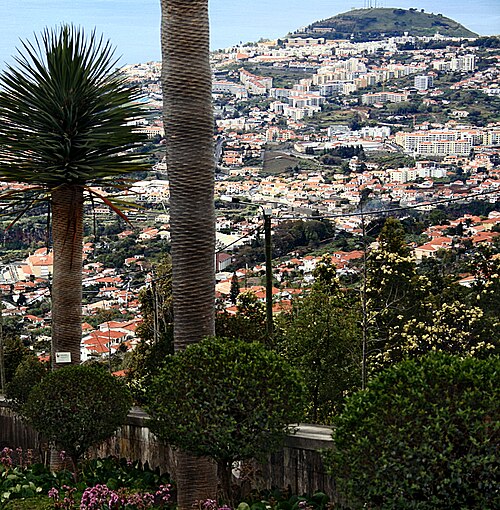
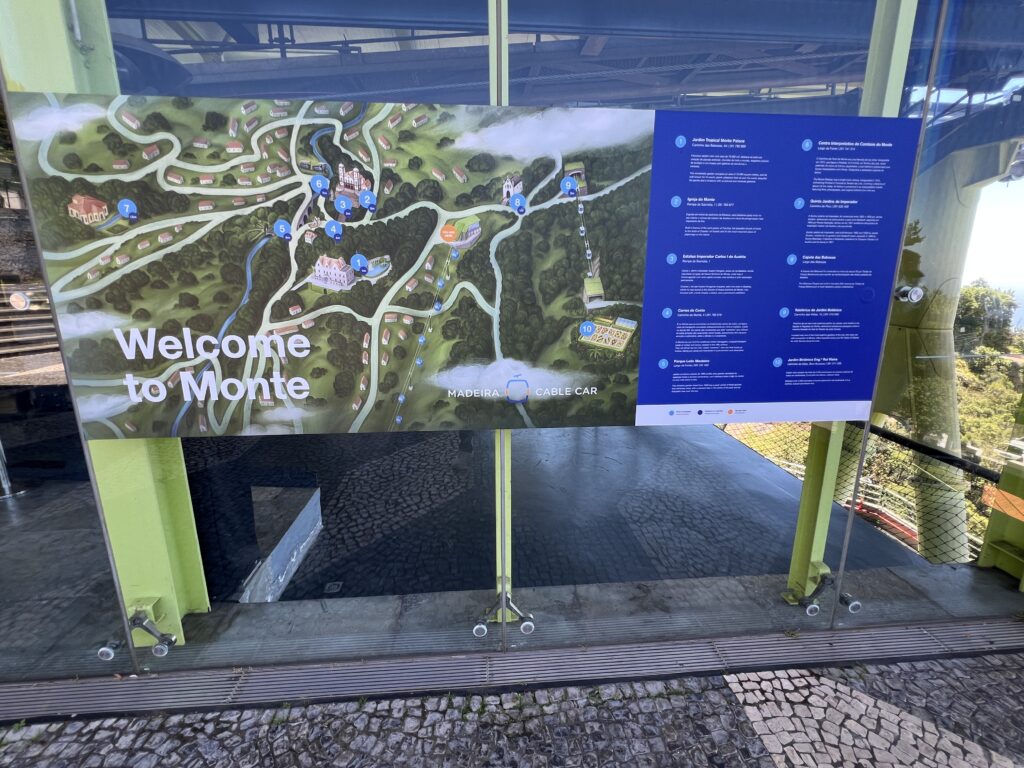
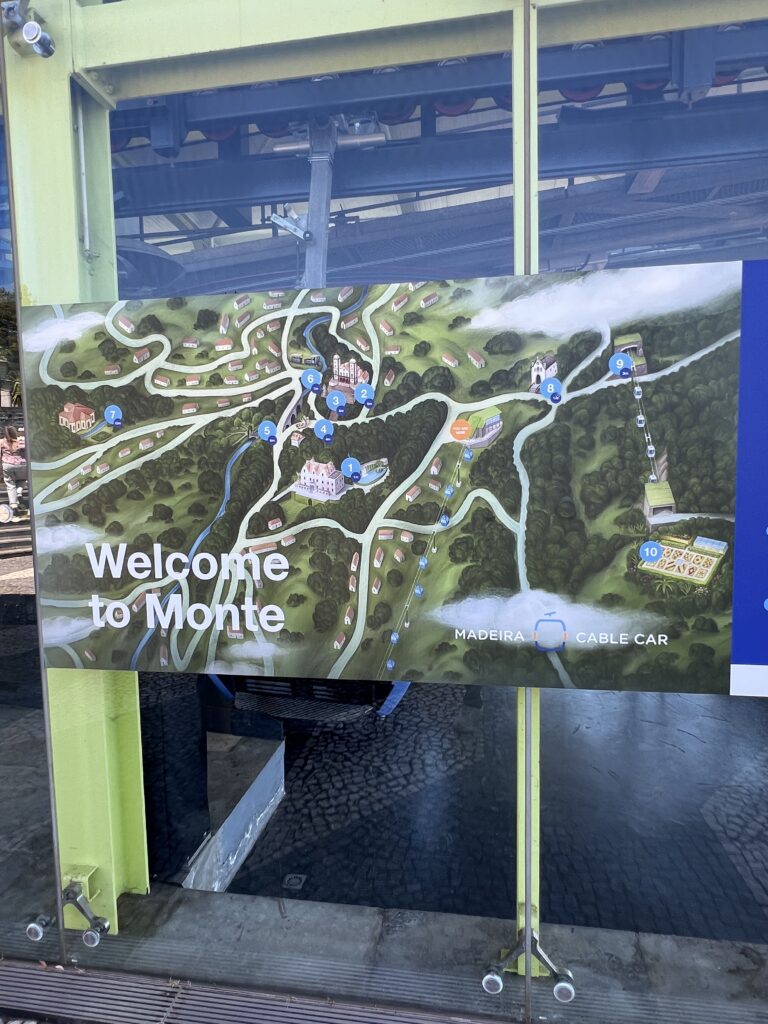
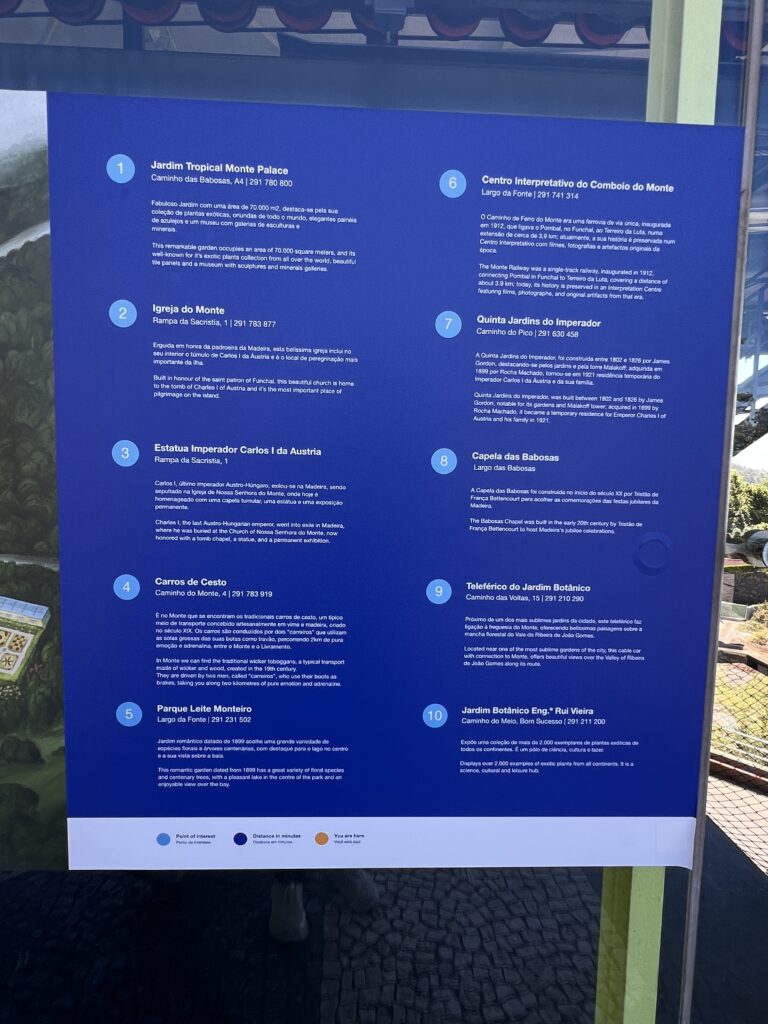
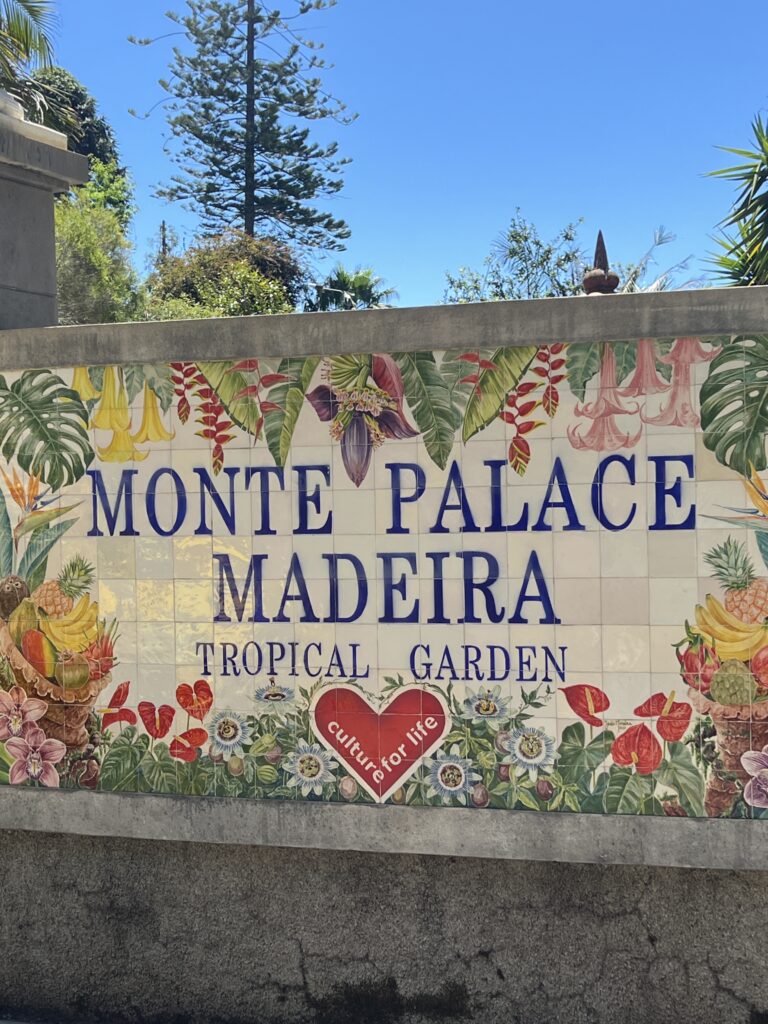
When we arrived at Monte, we had to decide because of a lack of time, either visit the Botanical Gardens which we have heard were amazing or the church located in Monte. We decided to visit the church and enjoyed the visit. Below is some information on the gardens:
Madeira Botanical Garden (Portuguese: Jardim Botânico da Madeira) is a botanical garden in Funchal, Madeira, opened to the public in 1960. The area was previously part of an estate belonging to the family of William Reid, founder of Reid’s Hotel.
The garden is divided into six areas:
- Madeiran indigenous and endemic species
- arboretum (collection of trees and shrubs)
- succulent plants
- agro-industrial plants
- medicinal and aromatic plants
- palm trees and cycads
Arboretum is located in the north part of the Garden, succulent plants in centre-east, agro-industrial plants in the center, palm trees in the south. Remaining parts of the Garden are covered with flowers other flora species.
The gardens include a bird park (Louro Bird Park) and a three-room Natural History Museum. There is a collection of around 300 exotic birds, including Blue and Yellow Macaw, Cockatoo, Parrots and Lory in the exotic bird park.
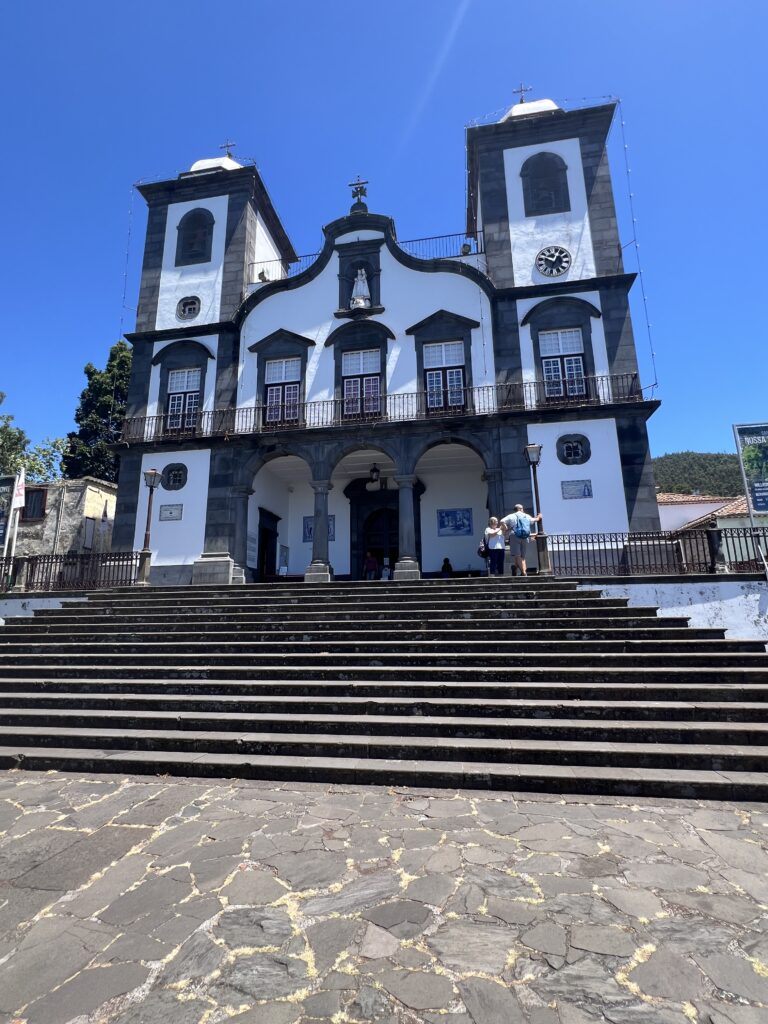
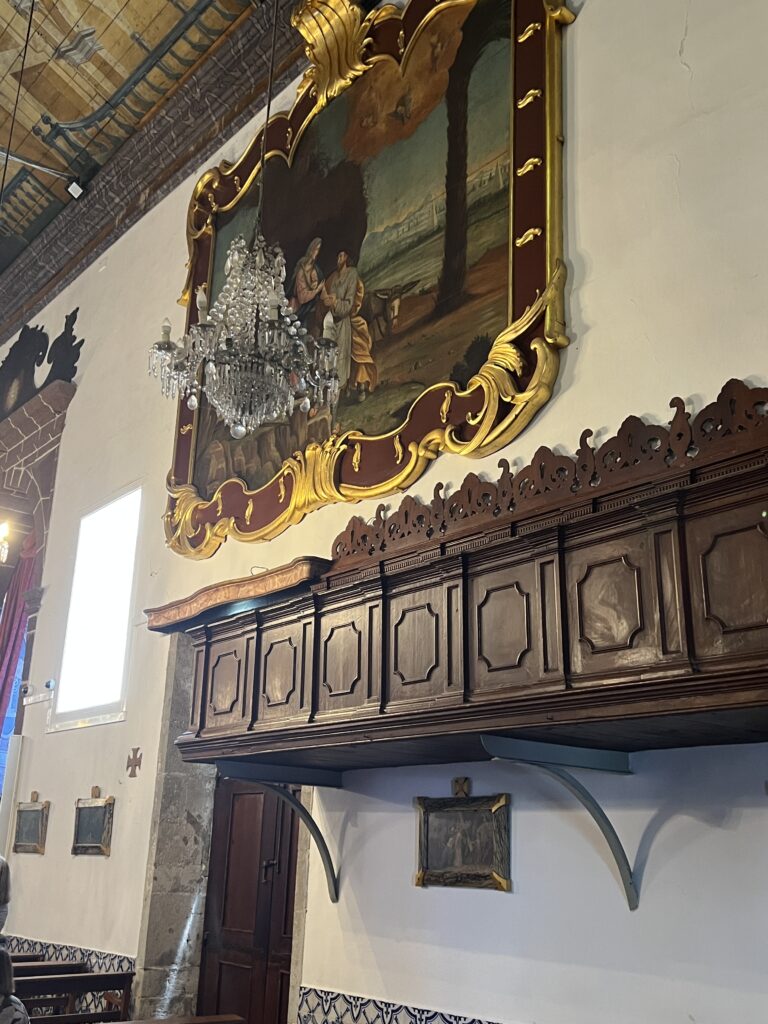
Igreja de Nossa Senhora do Monte. There are some great drone videos found on this site: PNSM – pnsm
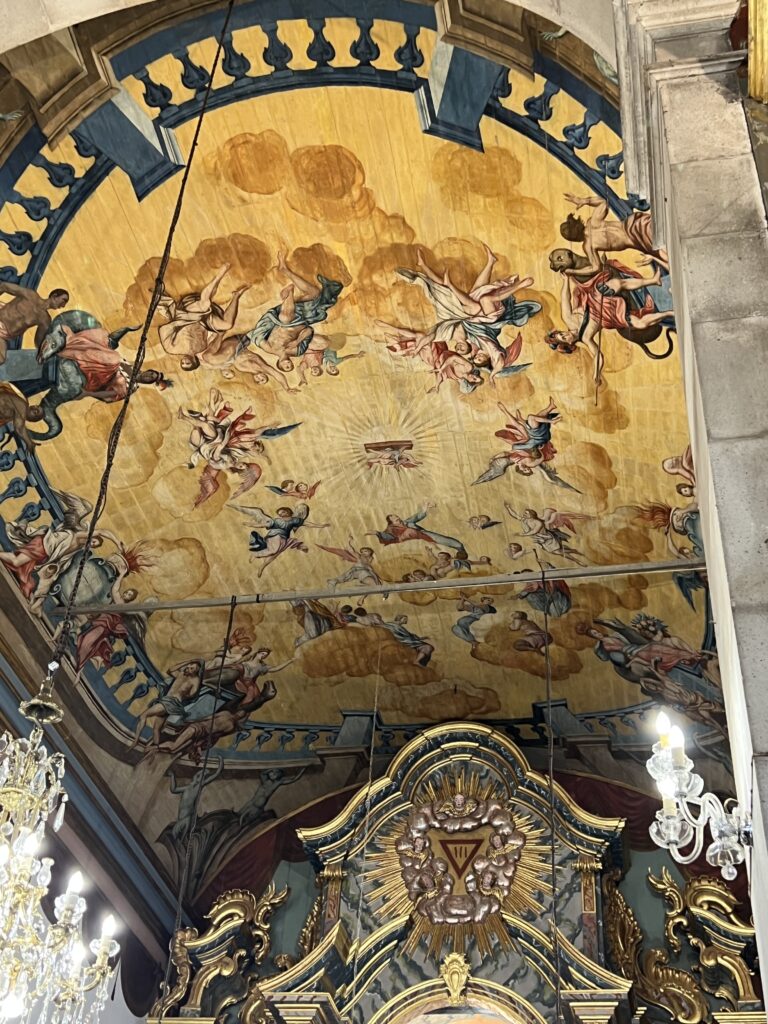
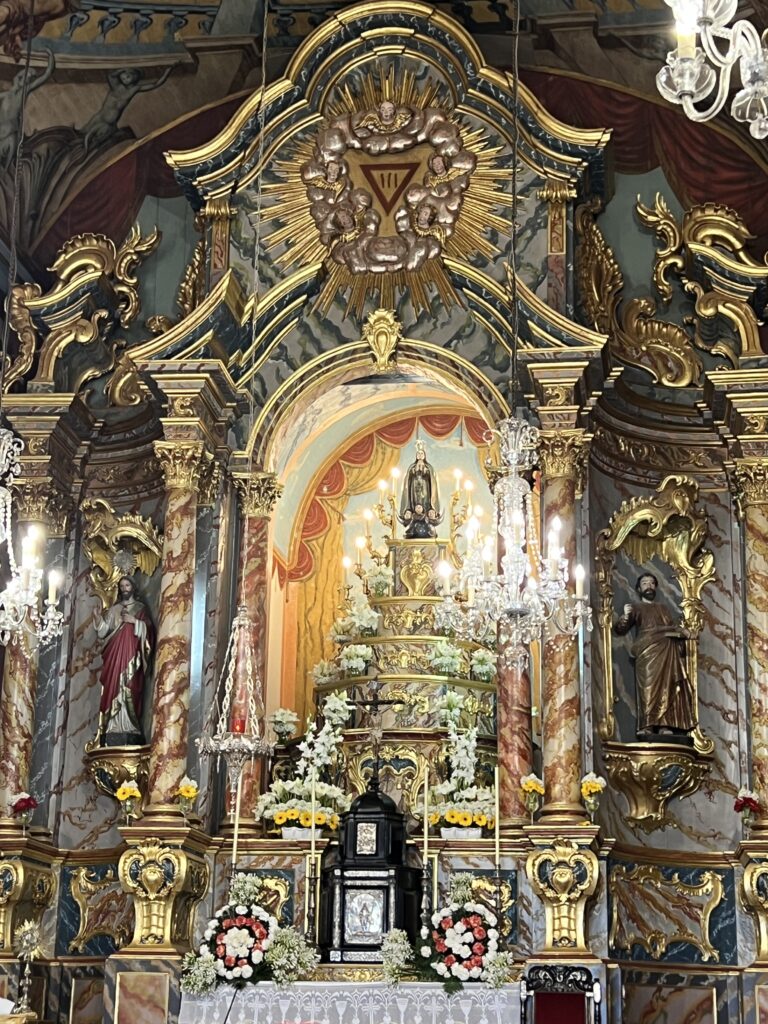
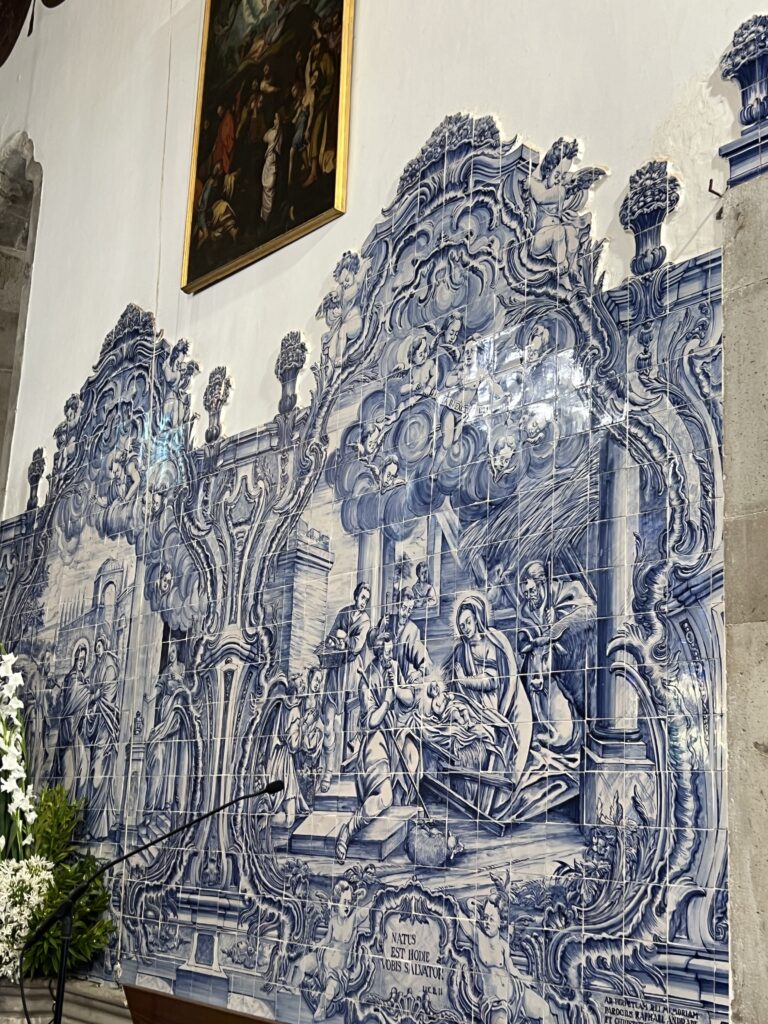
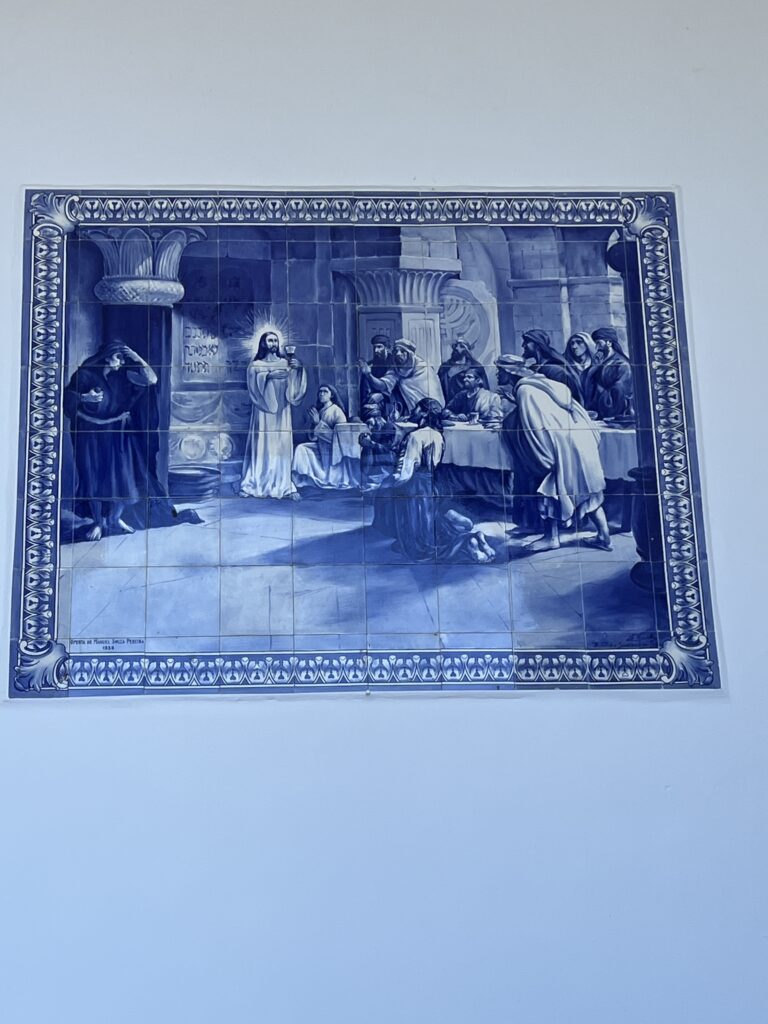
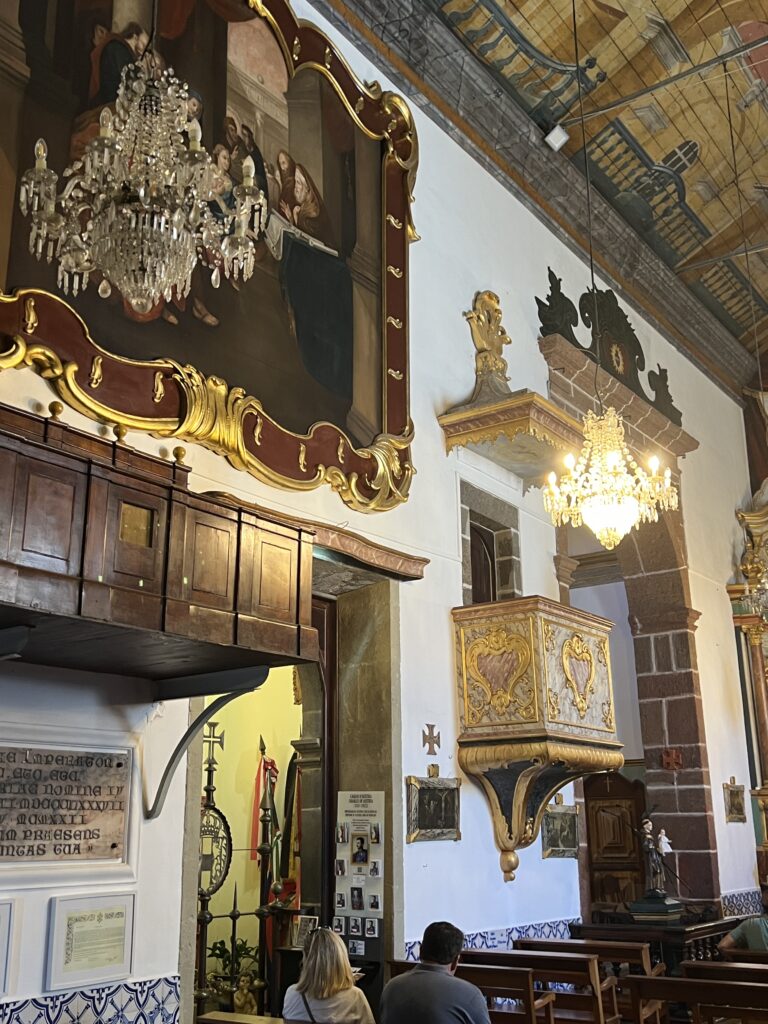
The Church of Our Lady of the Mount (Portuguese: Igreja de Nossa Senhora do Monte) is the main church in the civil parish of Monte, in Funchal, Madeira island.
Adão Gonçalves Ferreira, the first man born on Madeira island, dedicated the chapel to Our Lady of the Incarnation in 1470. Construction began on 10 June 1741. On 20 December 1818 the Church was consecrated by the Archbishop of Meliapor and administrator of the Diocese D. Frei Joaquim de Meneses e Ataíde.
Emperor Charles I of Austria died in exile on Madeira island and was laid to rest in the church.
The Assumption of Mary was first held on 15 August 1551 and has been held annually since. Fires are made by locals and local food is made such as Espetada, Bolo do caco, and Bacalhau
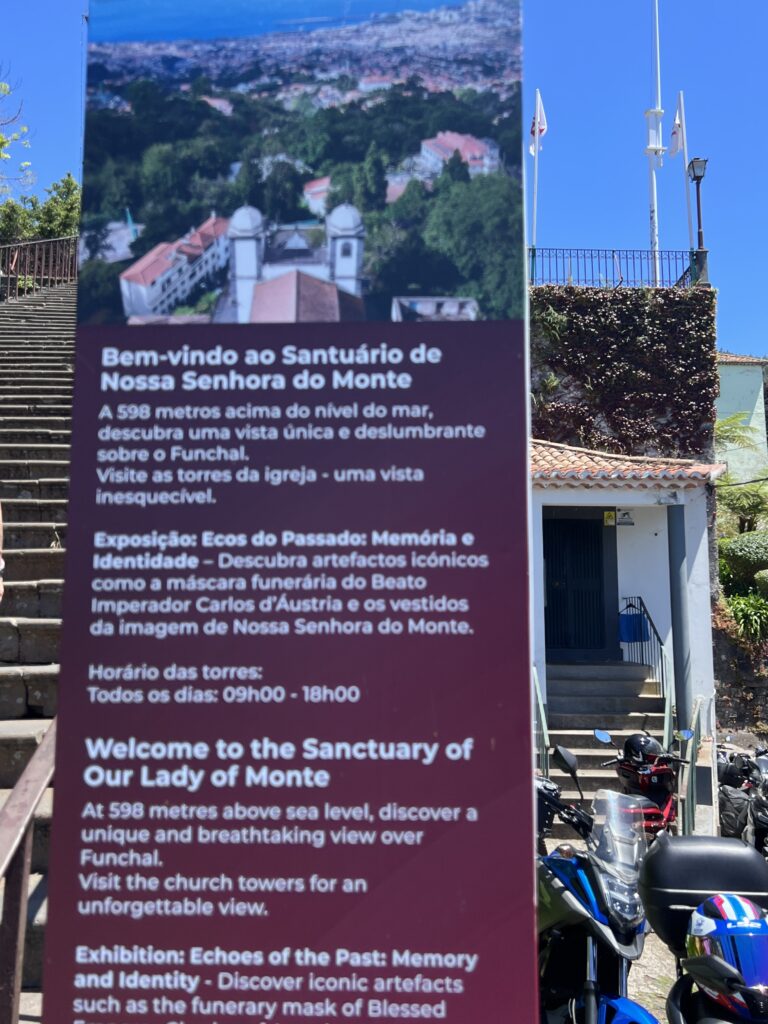
We were not sure how people with mobility issues would enter the church, but possibly there is a ramp in back of the church?
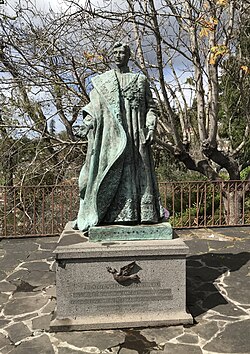
Statue of Charles I outside the church
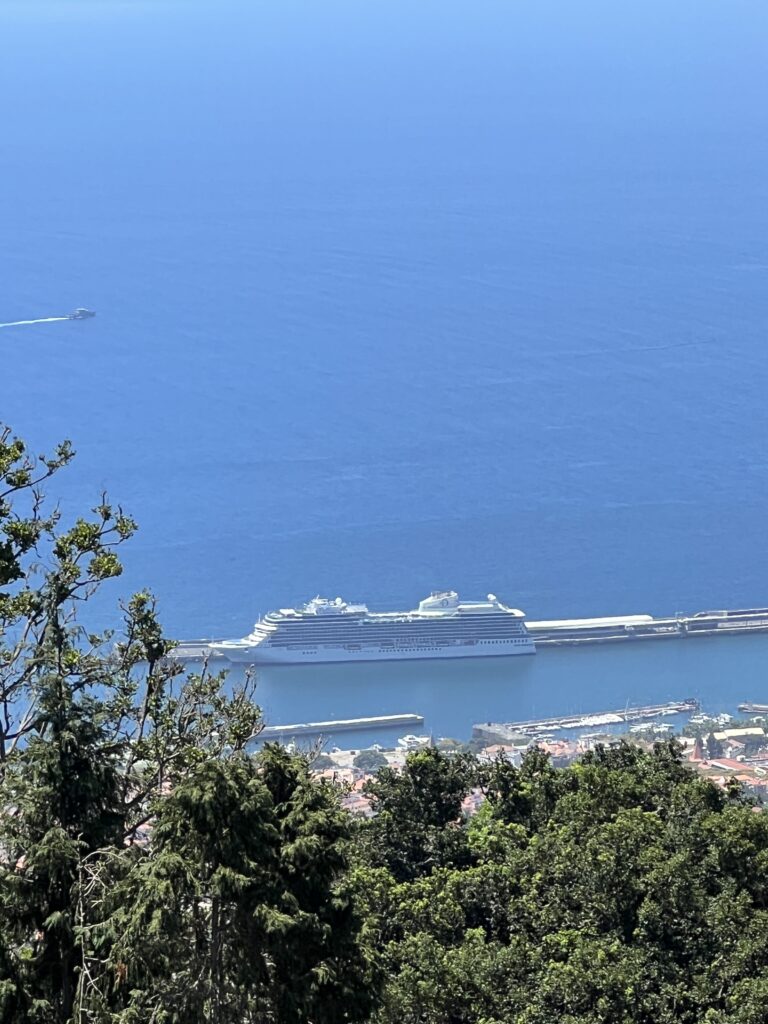
View of our ship standing outside the church
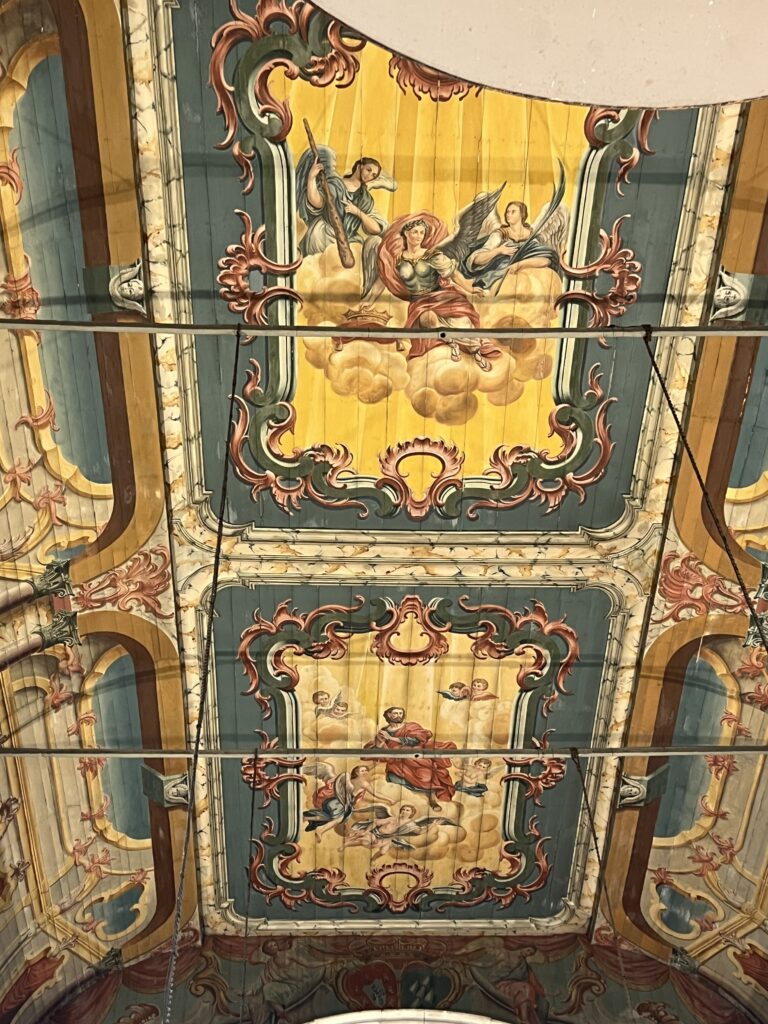
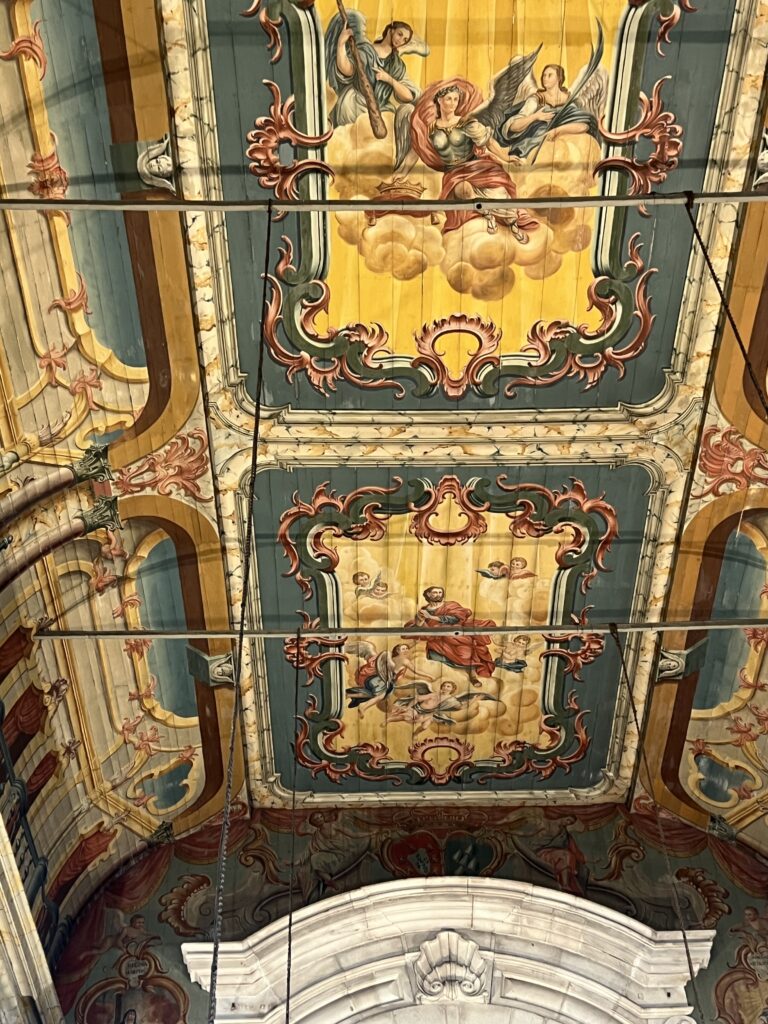
Ceiling of the church is made of wood
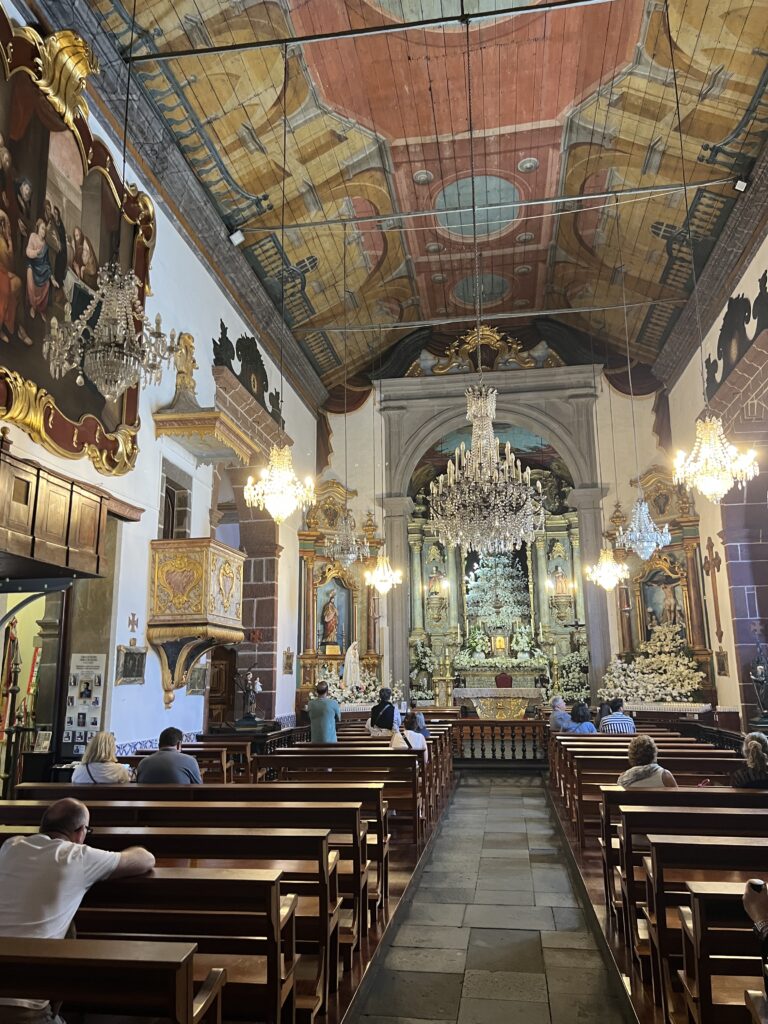
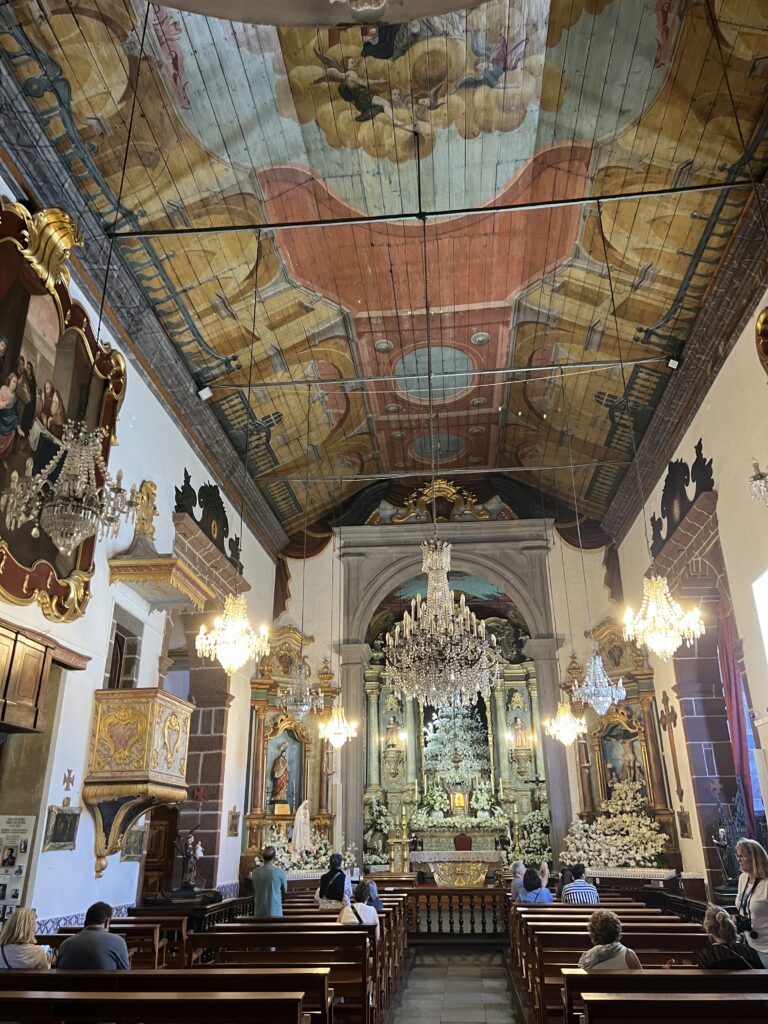
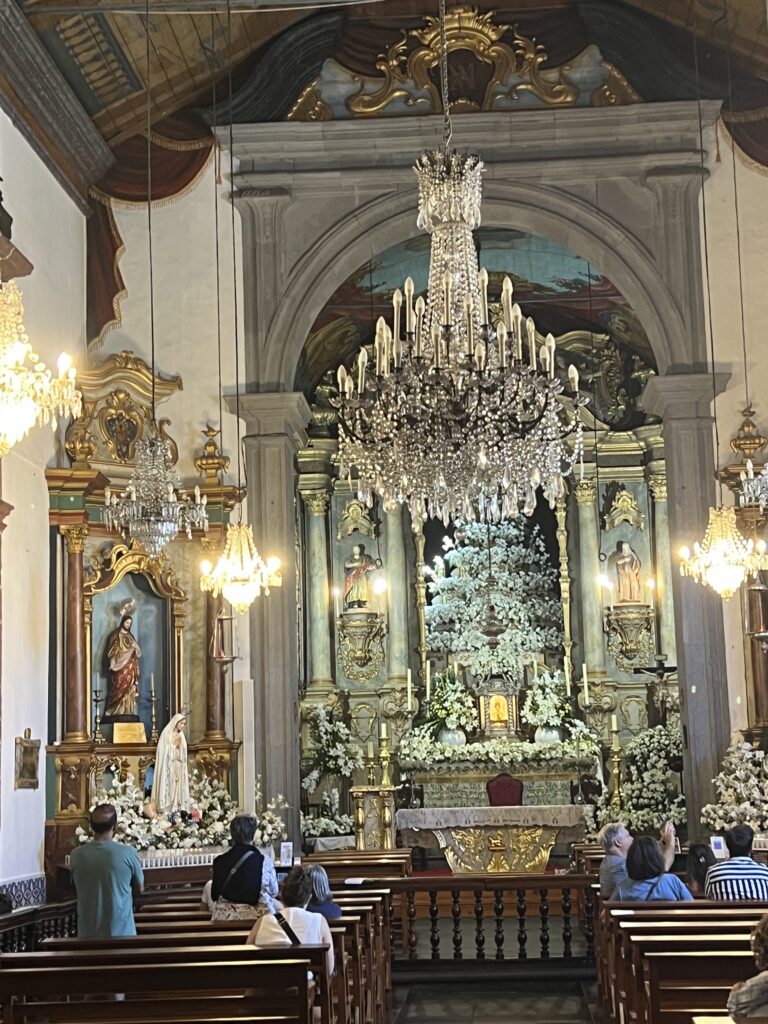
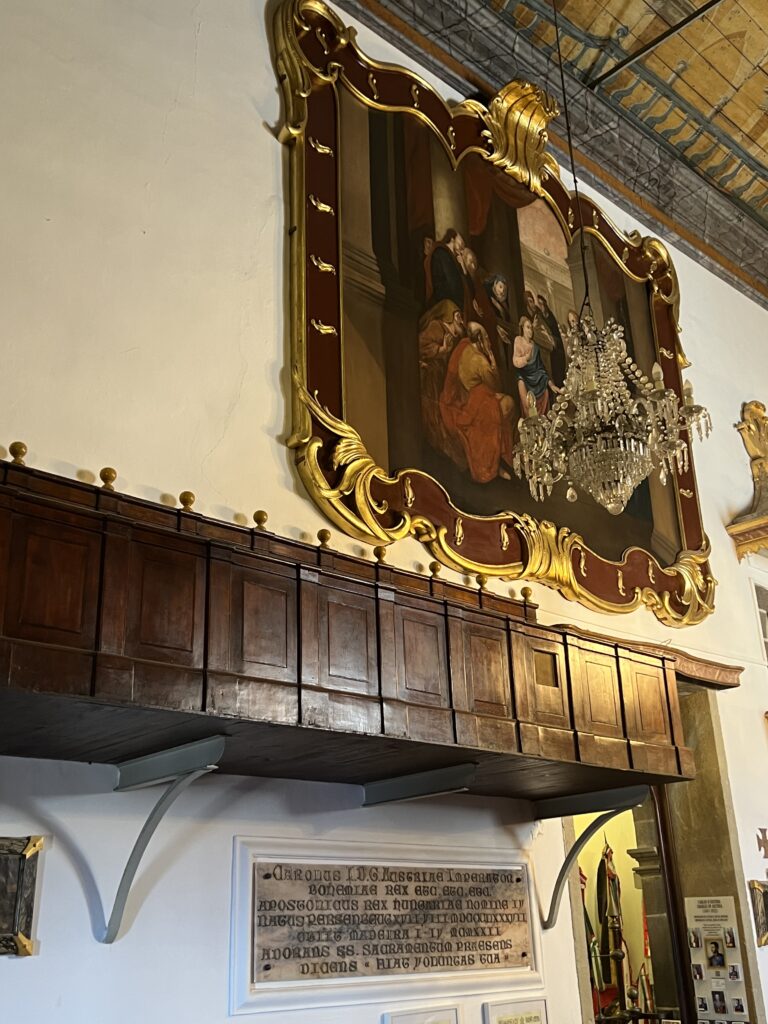
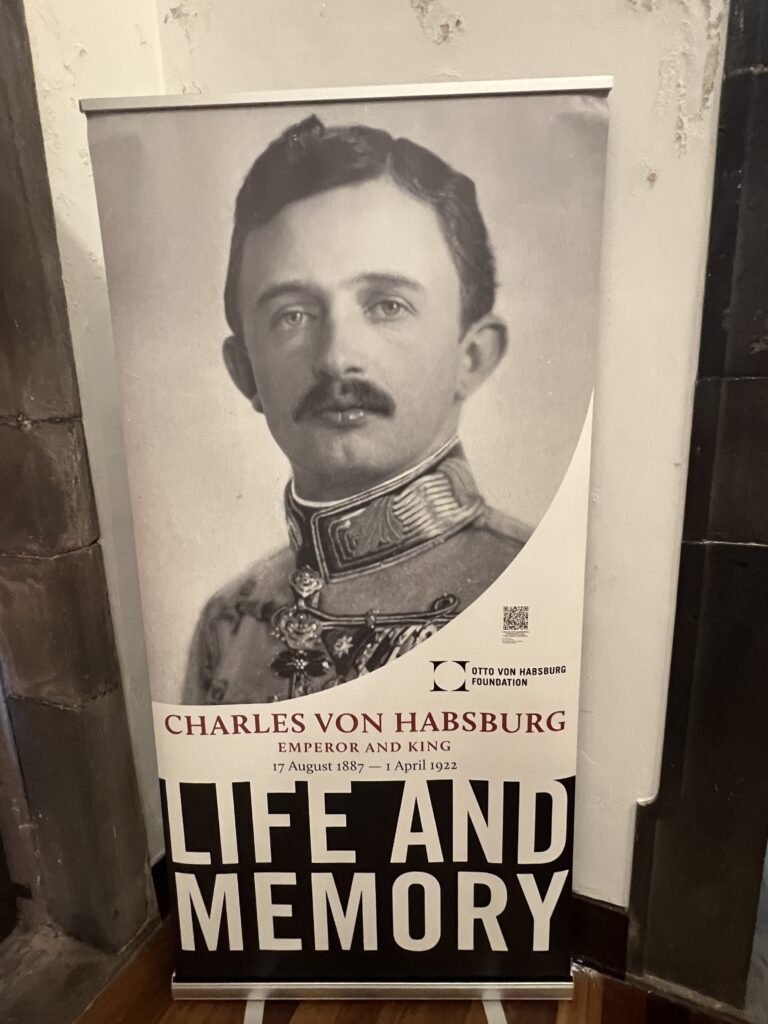
Charles (I) (born August 17, 1887, Persenbeug Castle, Austria—died April 1, 1922, Quinta do Monte, Madeira) was the emperor (Kaiser) of Austria and, as Charles IV, king of Hungary, the last ruler of the Austro-Hungarian monarchy (November 21, 1916–November 11, 1918).
A grandnephew of the emperor Franz Joseph, Charles became heir presumptive to the Habsburg throne upon the assassination of his uncle Franz Ferdinand (June 28, 1914), whose children were barred from succession because of his morganatic marriage. After his accession, Charles, a peace-loving man, made attempts to take Austria-Hungary out of World War I through secret overtures to the Allied powers, the most promising being through his brother-in-law, Prince Sixtus von Bourbon-Parma. All failed, largely because the emperor refused to cede any territories to Italy. Because he had also supported French claims to Alsace-Lorraine, his reputation both in Germany and at home suffered when his efforts were made public.
World War I accelerated the centrifugal forces of nationalism in Charles’s multinational empire. His solution, transformation of the western part of his empire into a federated state, announced in October 1918, proved insufficient and too late. On November 11, 1918, after the collapse of the Austro-Hungarian armies on the Italian front, Charles renounced all participation in affairs of state but did not abdicate. Exiled to Switzerland in March 1919, he was deposed by the Austrian parliament that April. In 1921 he twice tried to regain his Hungarian throne but failed and was sent to exile in Madeira, living there in very poor conditions and dying of pneumonia.
Upon Charles’s death in 1922, his widow, Zita von Bourbon-Parma (1892–1989), went into mourning and wore black for the rest of her life, dying at age 96 in Switzerland.
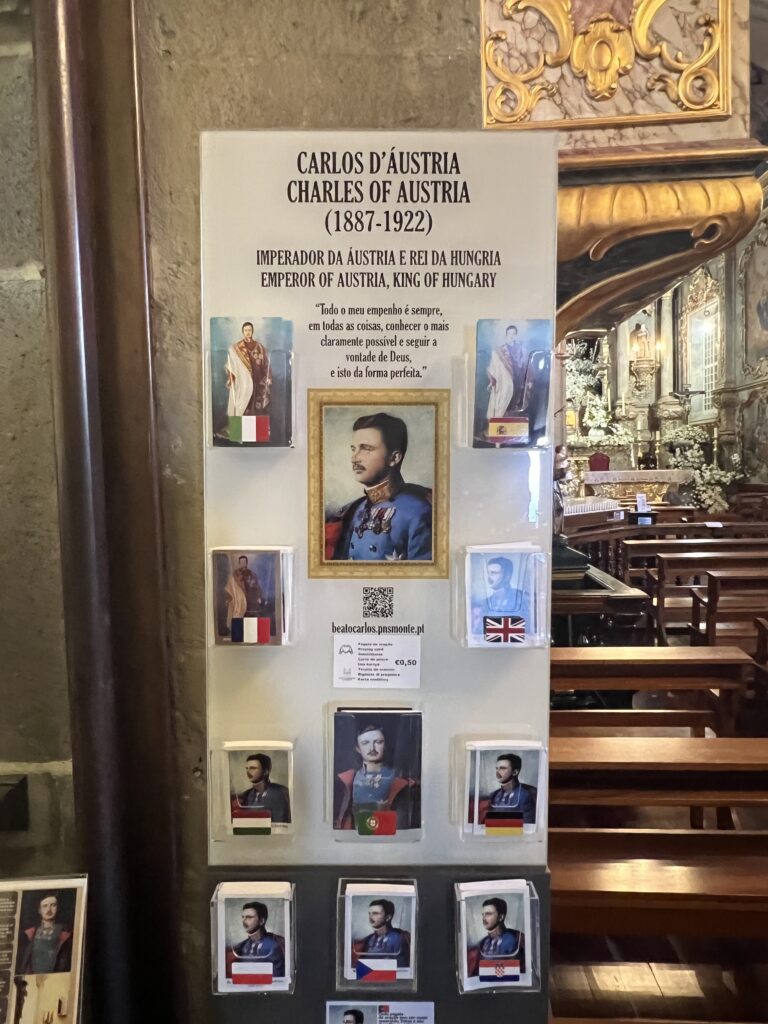
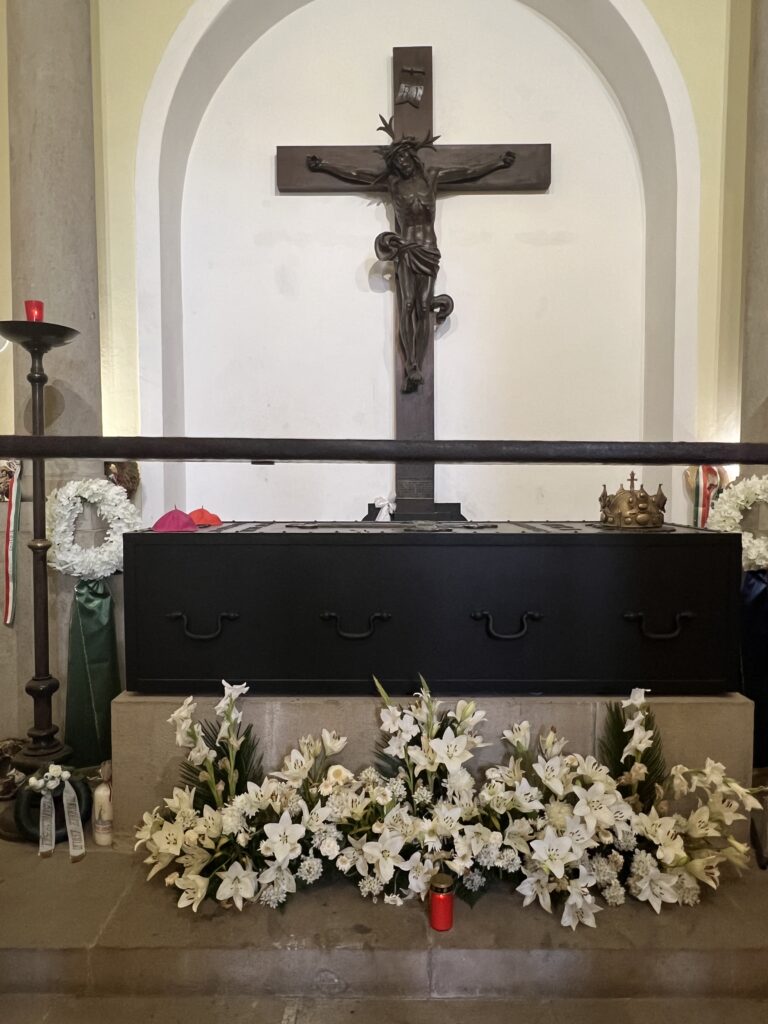
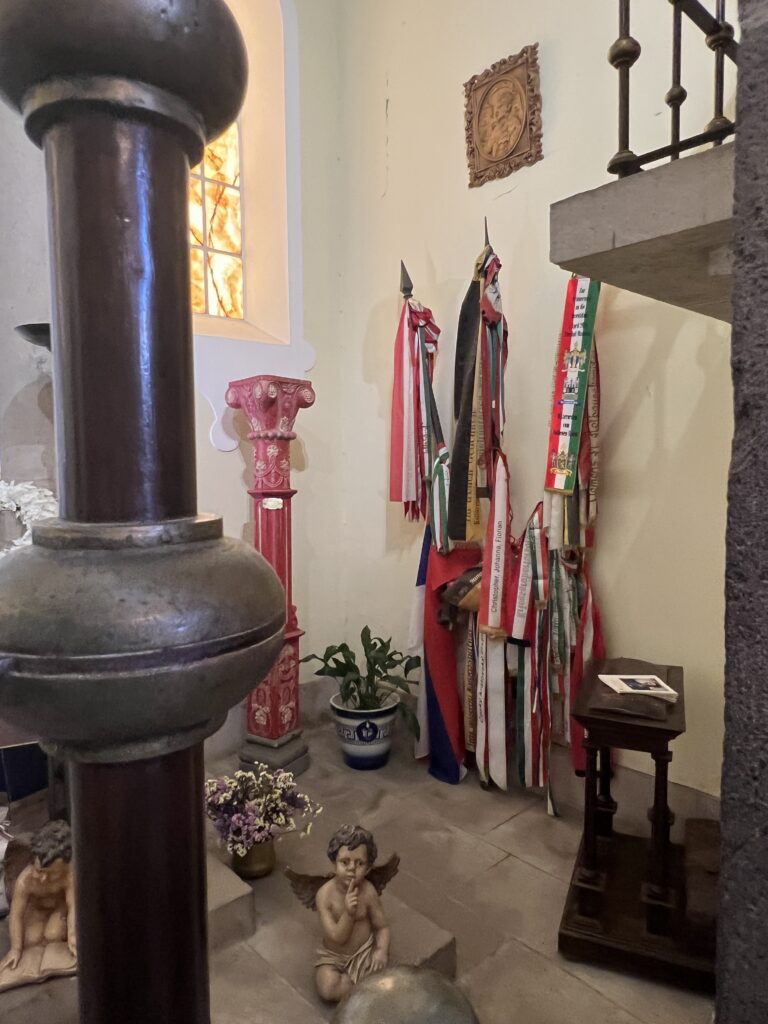
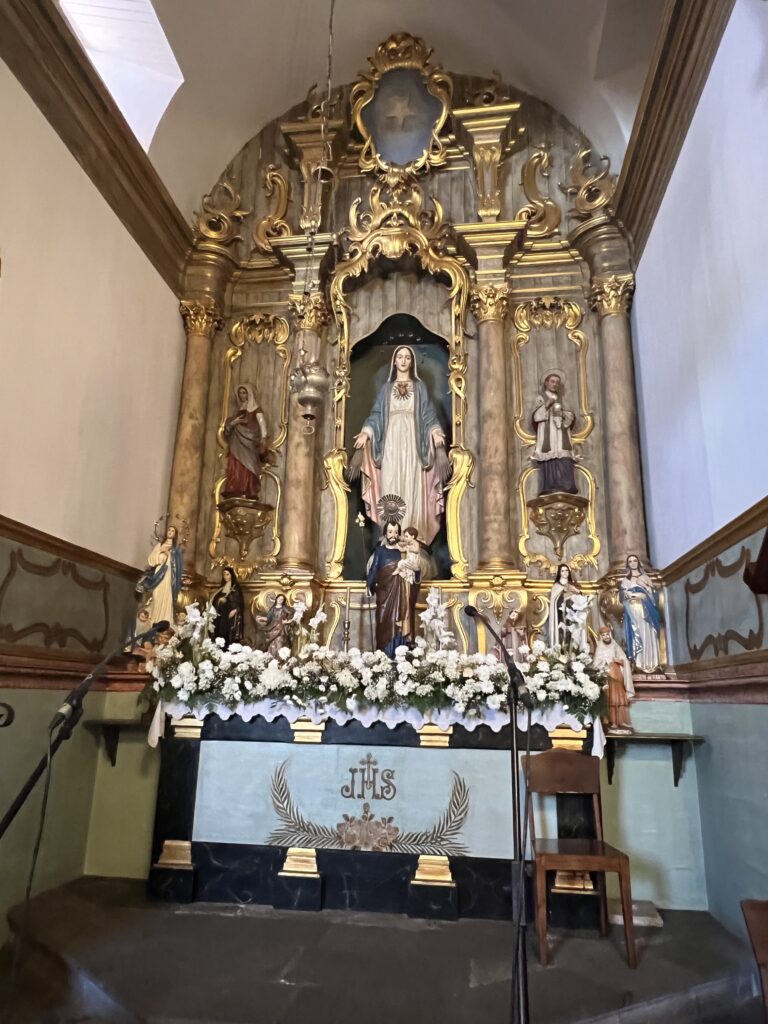
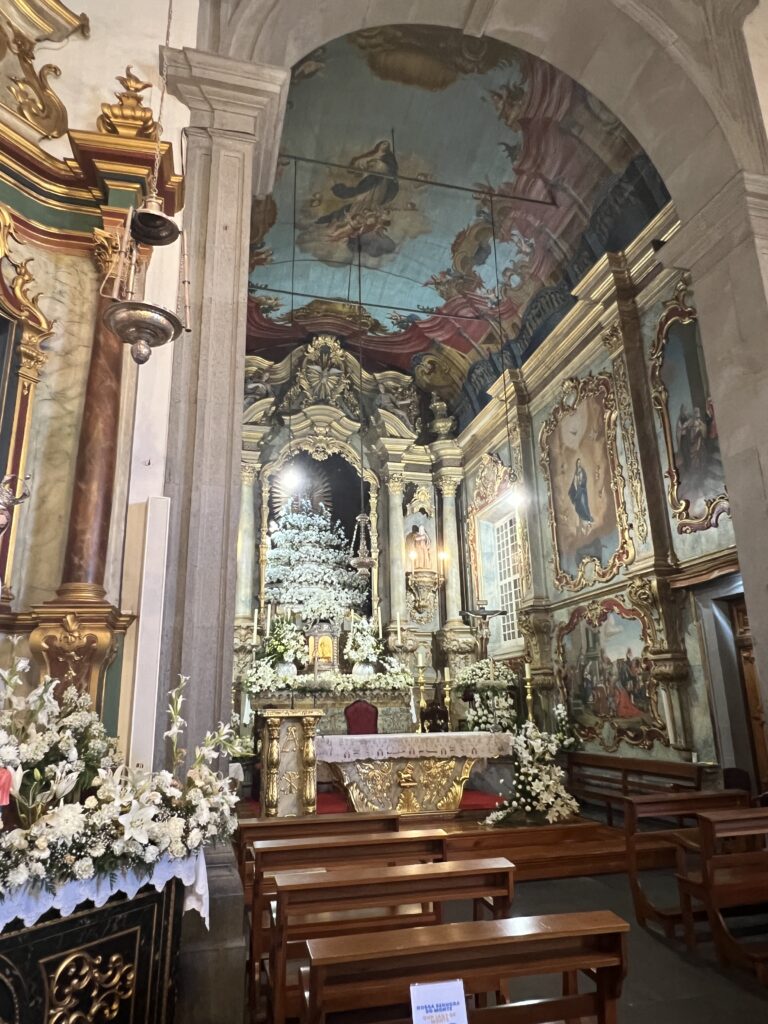
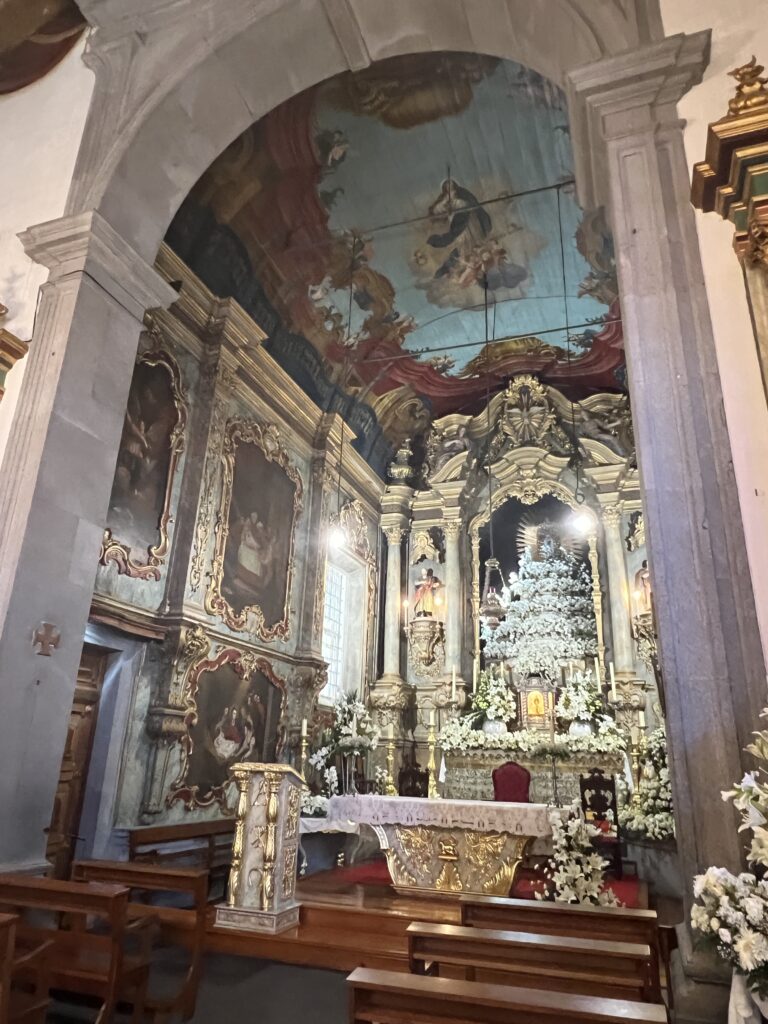
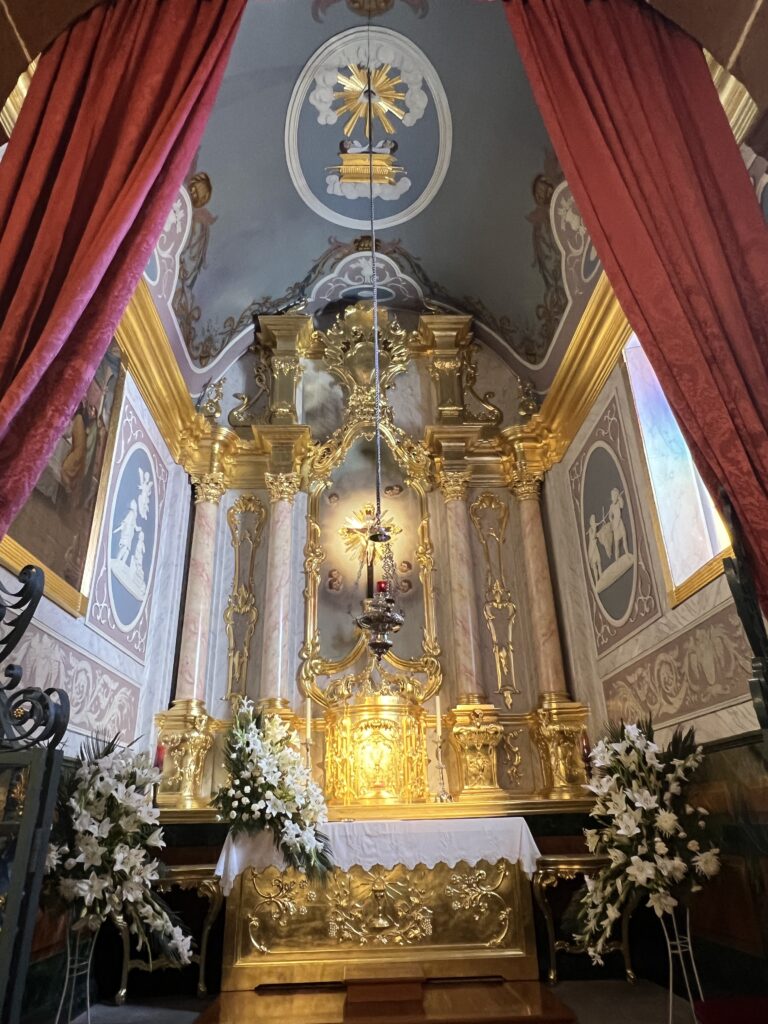
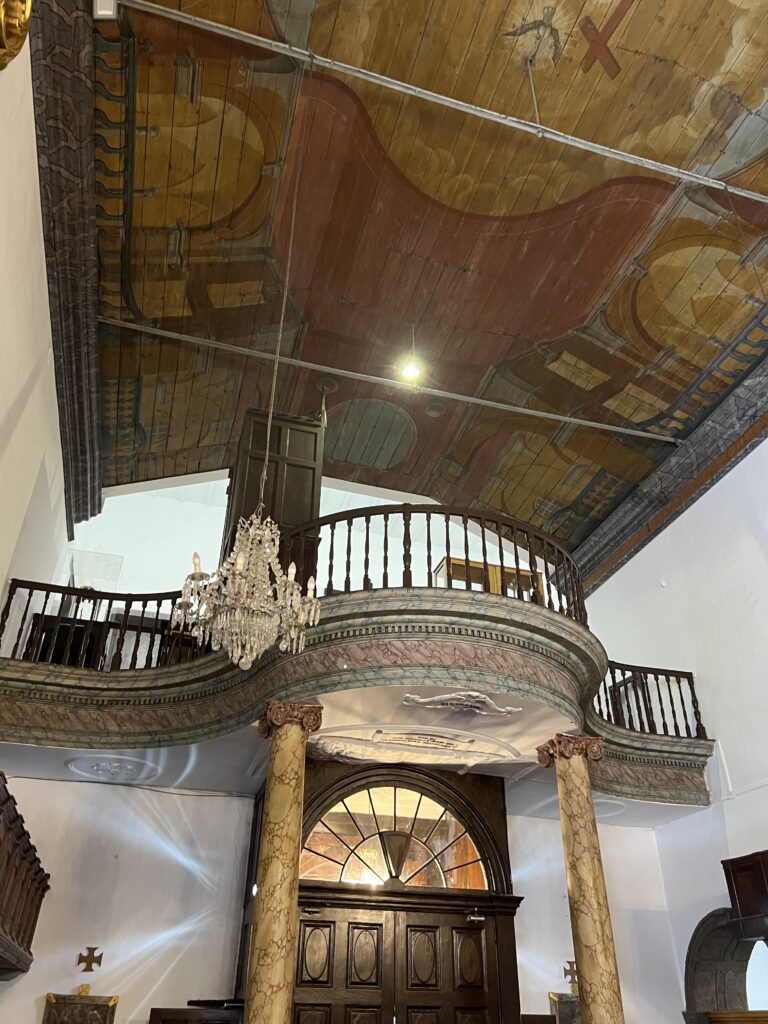
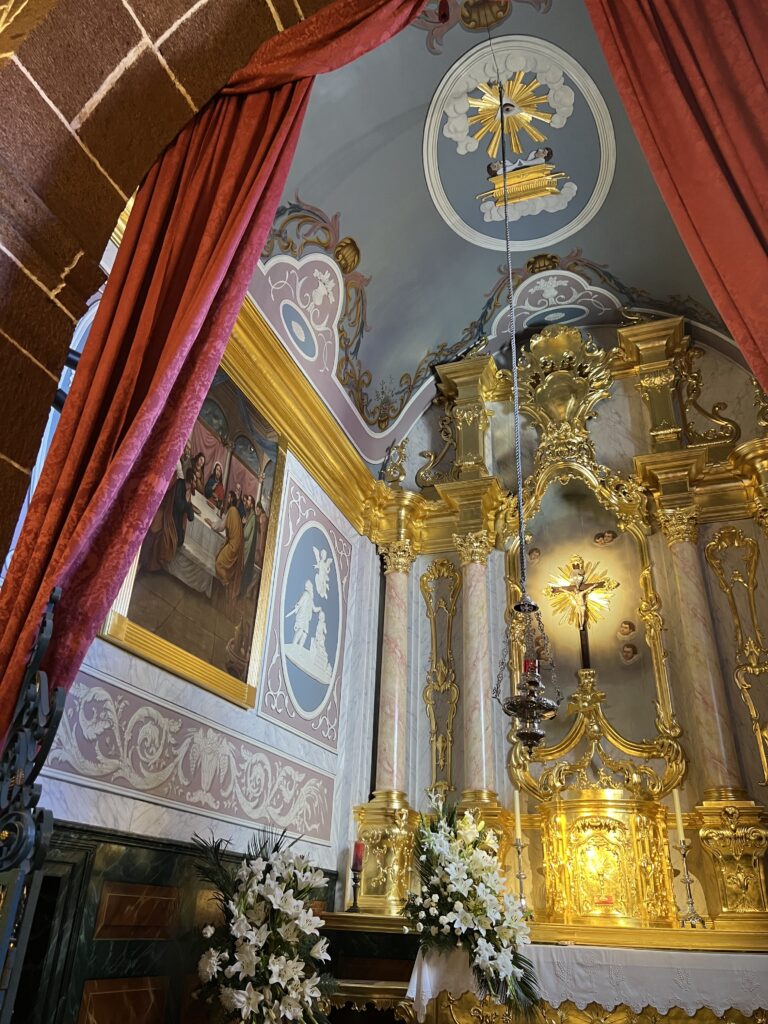
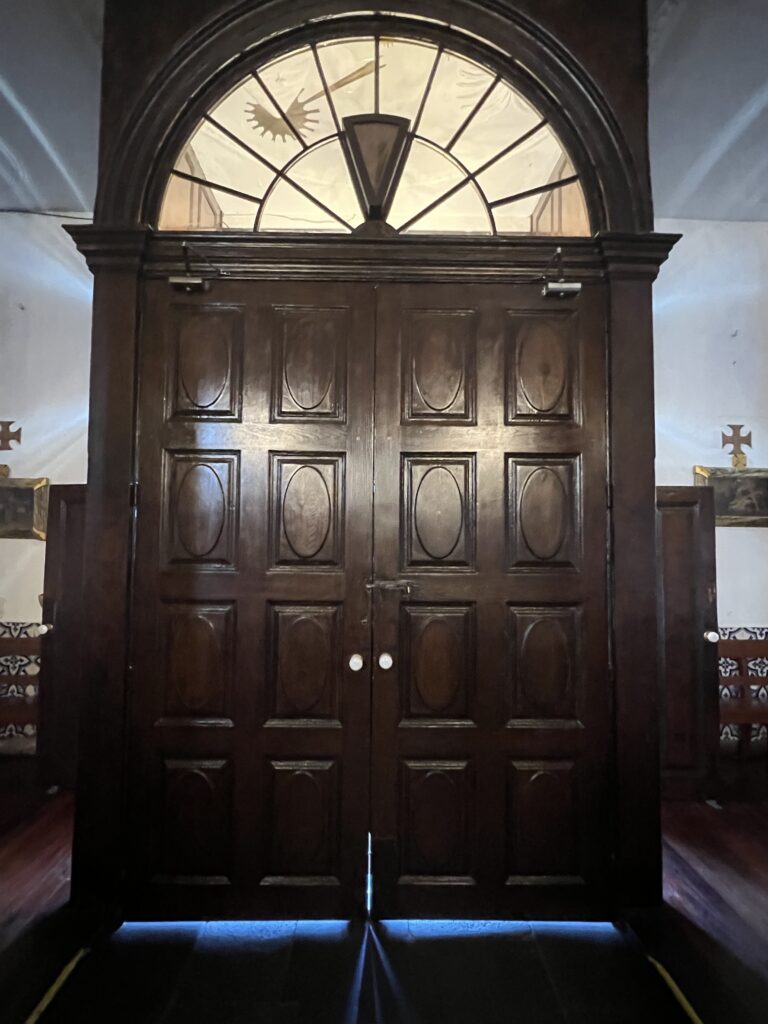
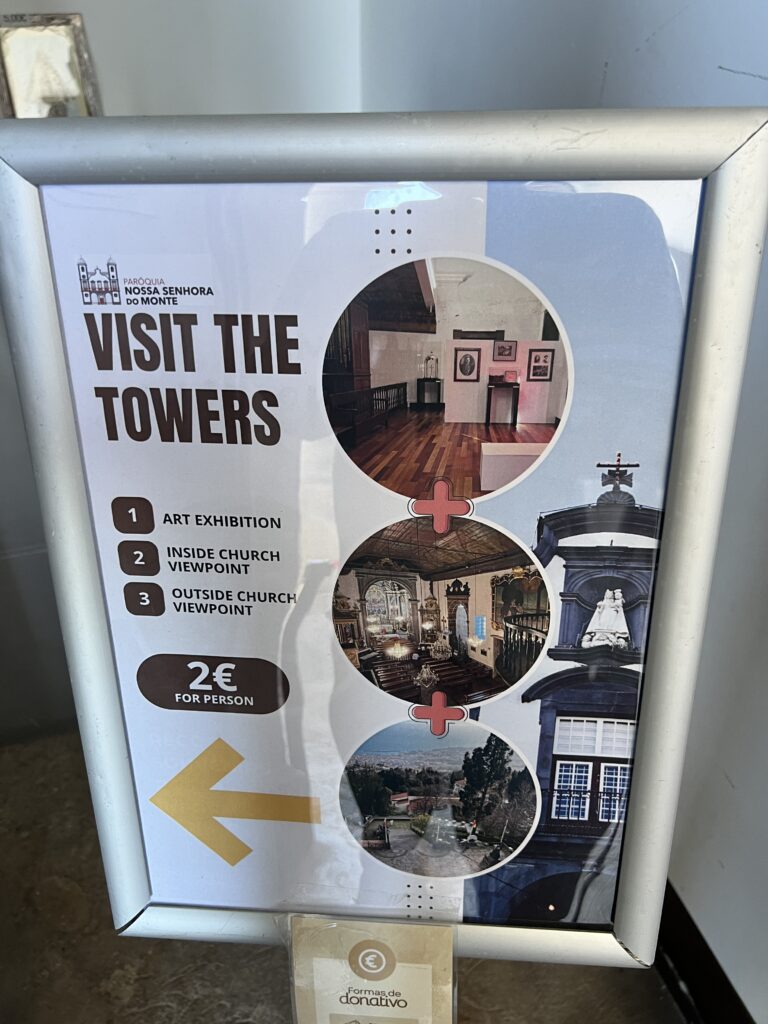
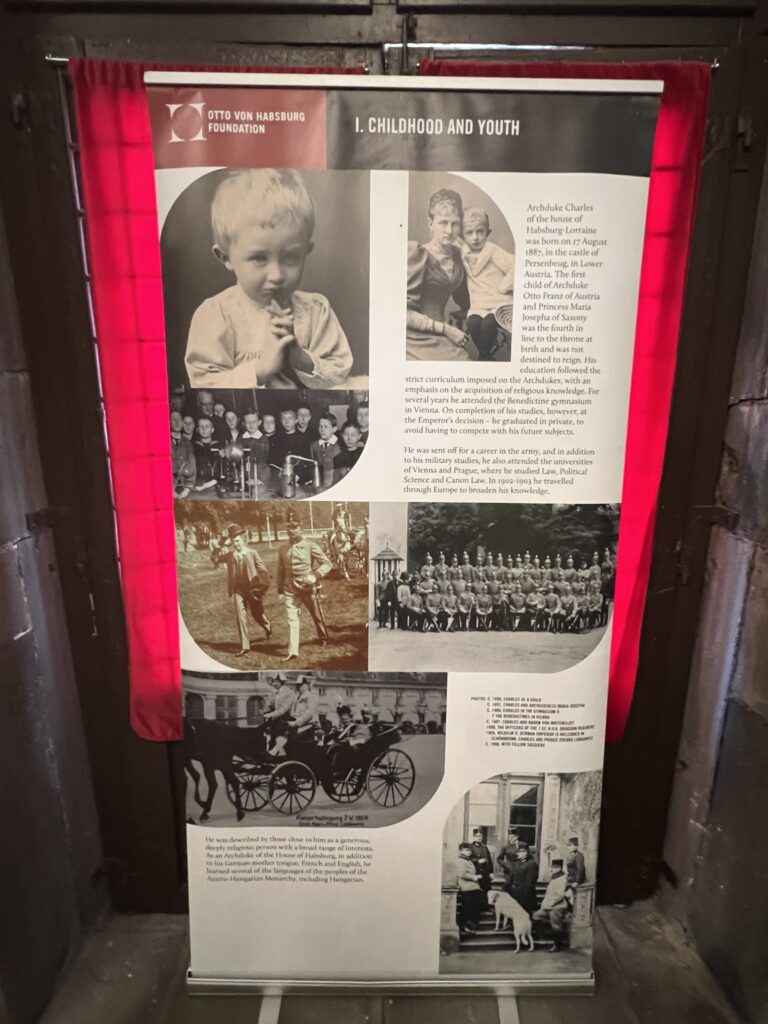
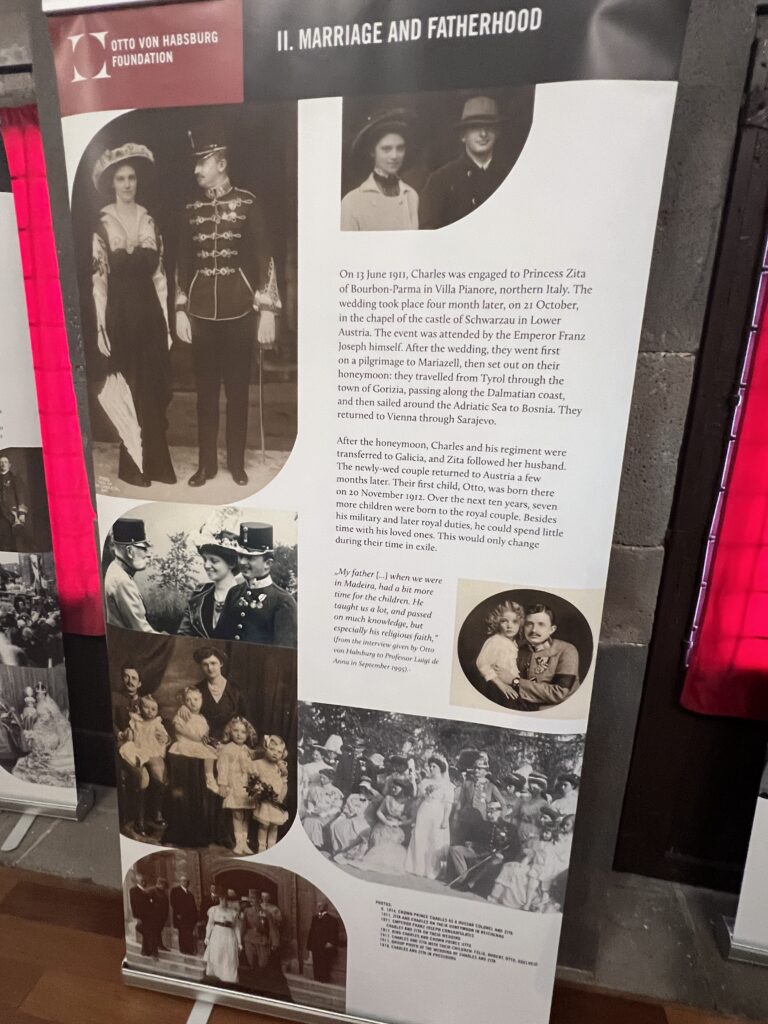
We were able to visit the two towers of the church and the area between the towers. The majority of the towers were exhibits for Charles I of Austria and his family. I will post a few of those photos.
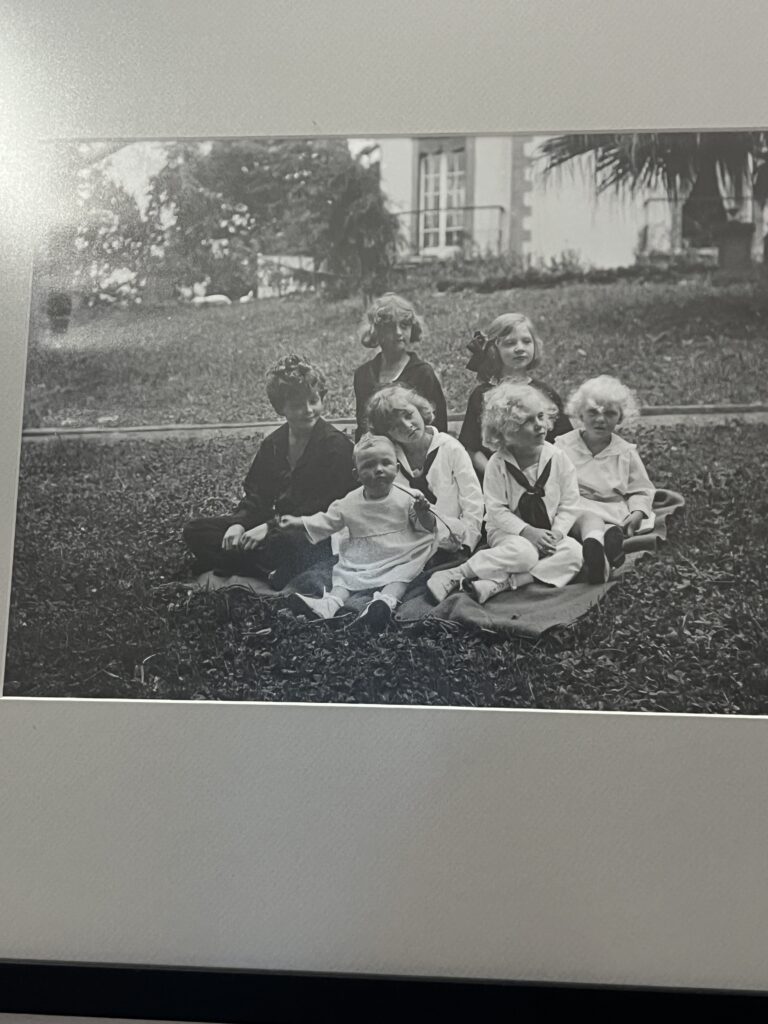
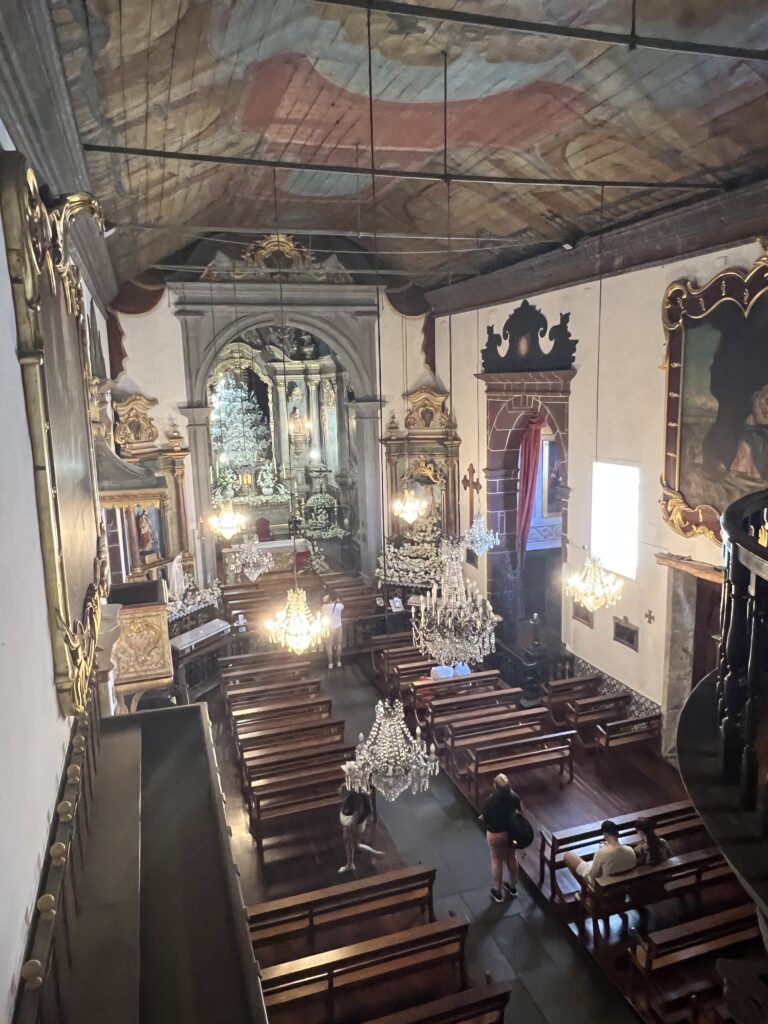
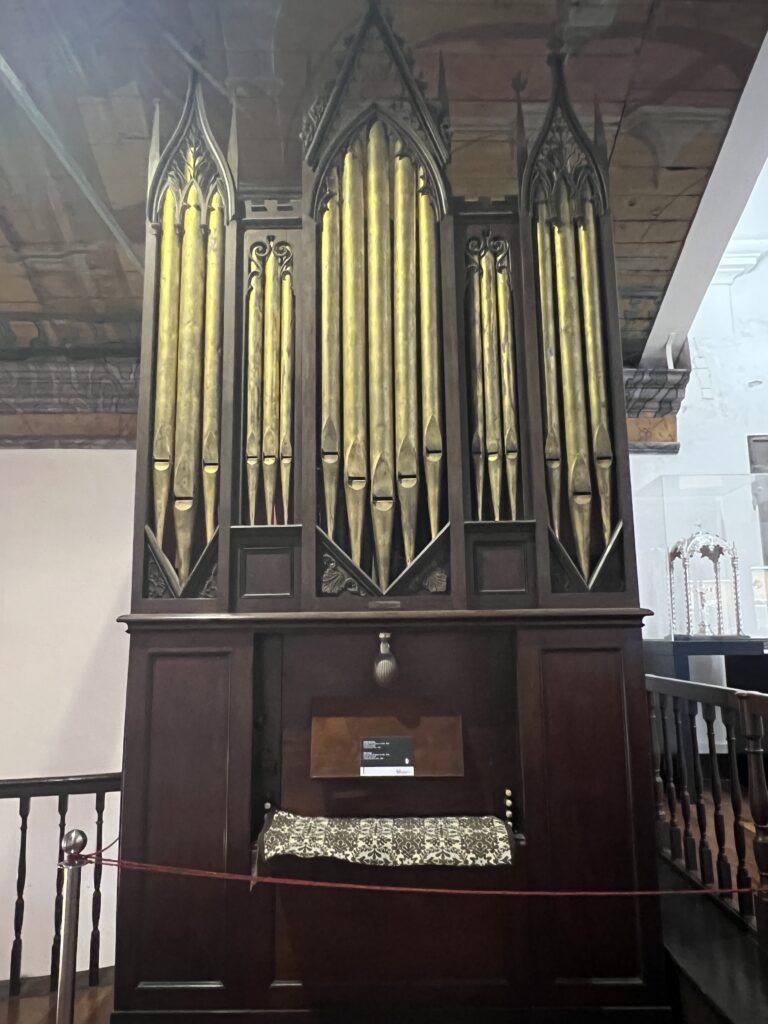
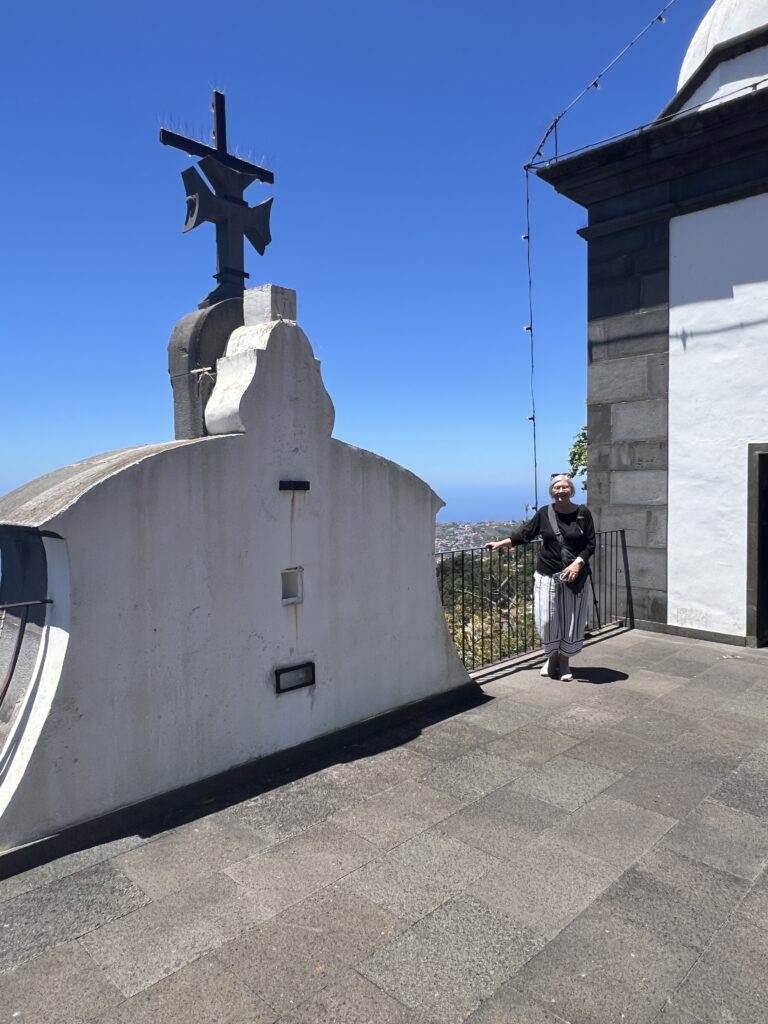
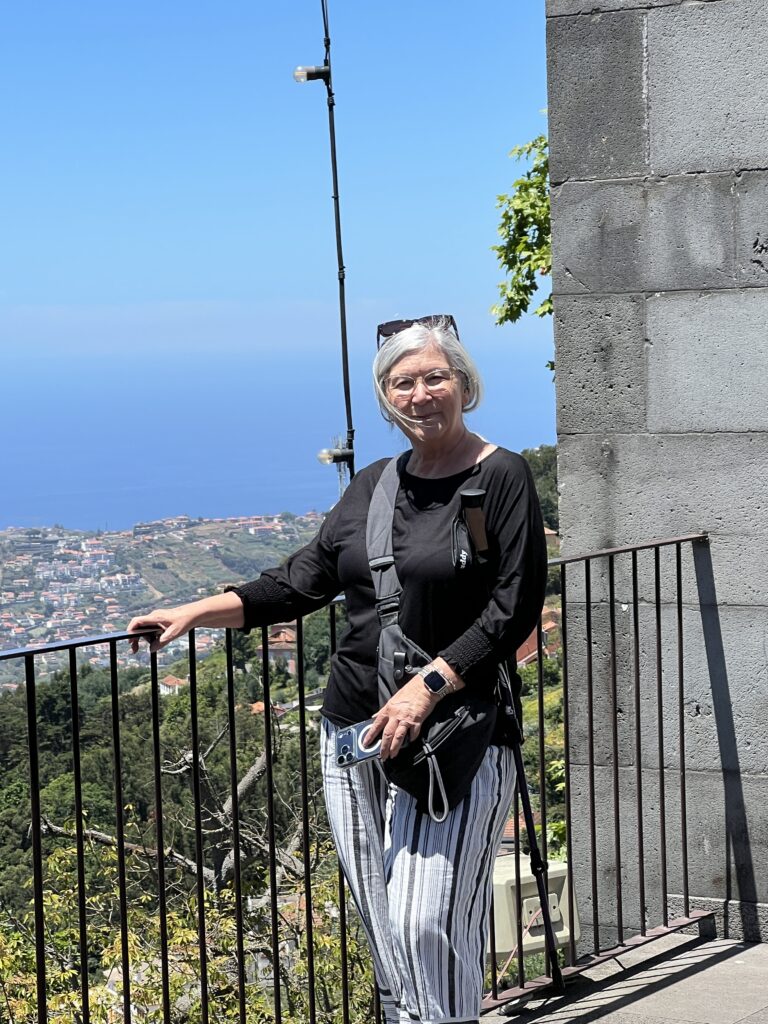
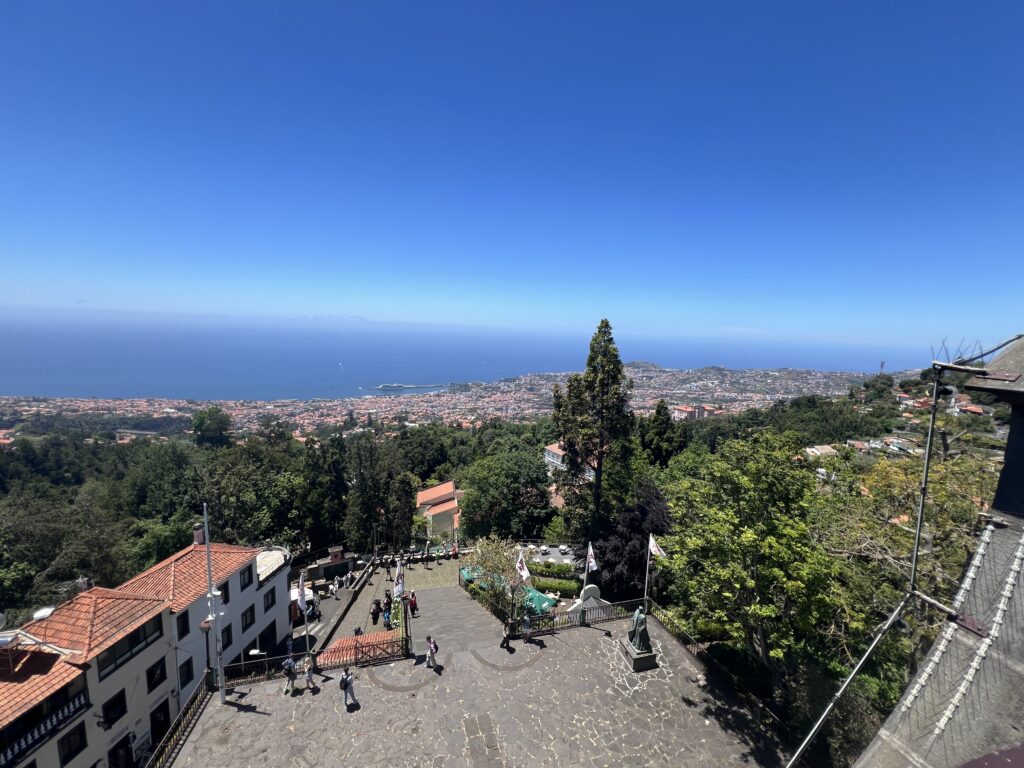
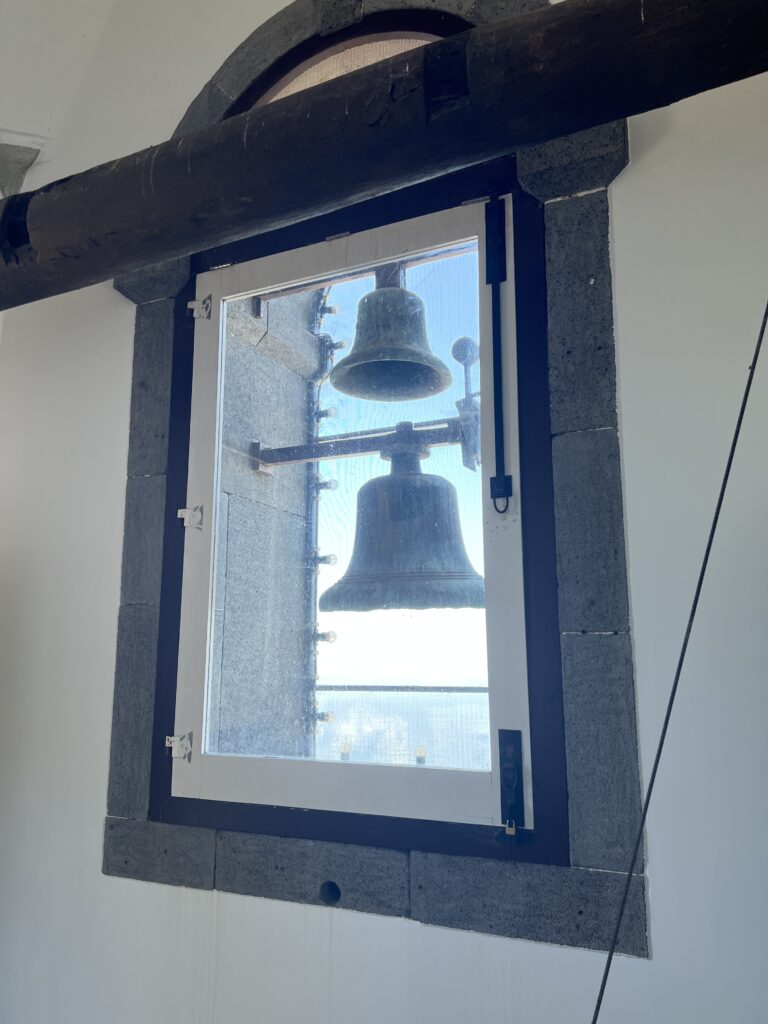
After visiting the church we rode a toboggan down the streets going to visit the Cathedral. Below are some photos and videos that may post out of order. The Funchal toboggan (or Carros de cesto do Monte) is an iconic Madeira activity. You ride in a traditional, handcrafted wicker basket mounted on wooden runners down steep, winding streets from the hilltop village of Monte to the suburbs of Funchal. The ride covers about 2km and takes about 15 minutes. You are guided by two Carreiros—local drivers dressed in traditional white garments and straw hats who use their thick, rubber-soled boots as brakes and steering.
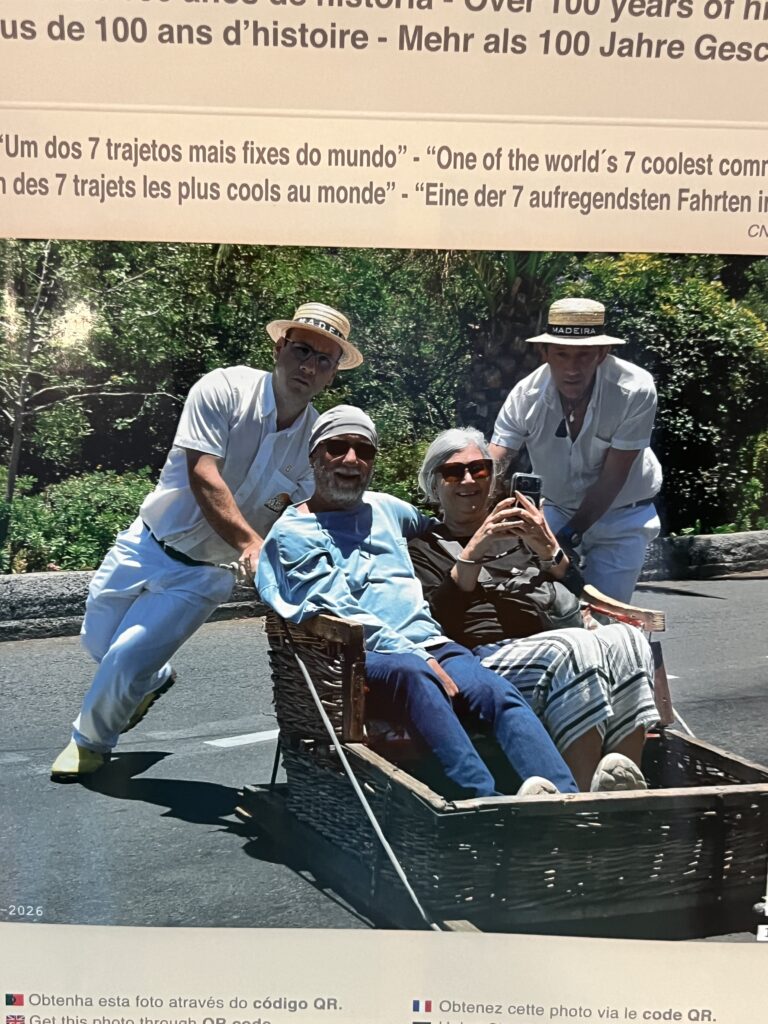
These are the carts used for the ride. No wheels and you can smell the wood burning on the way down
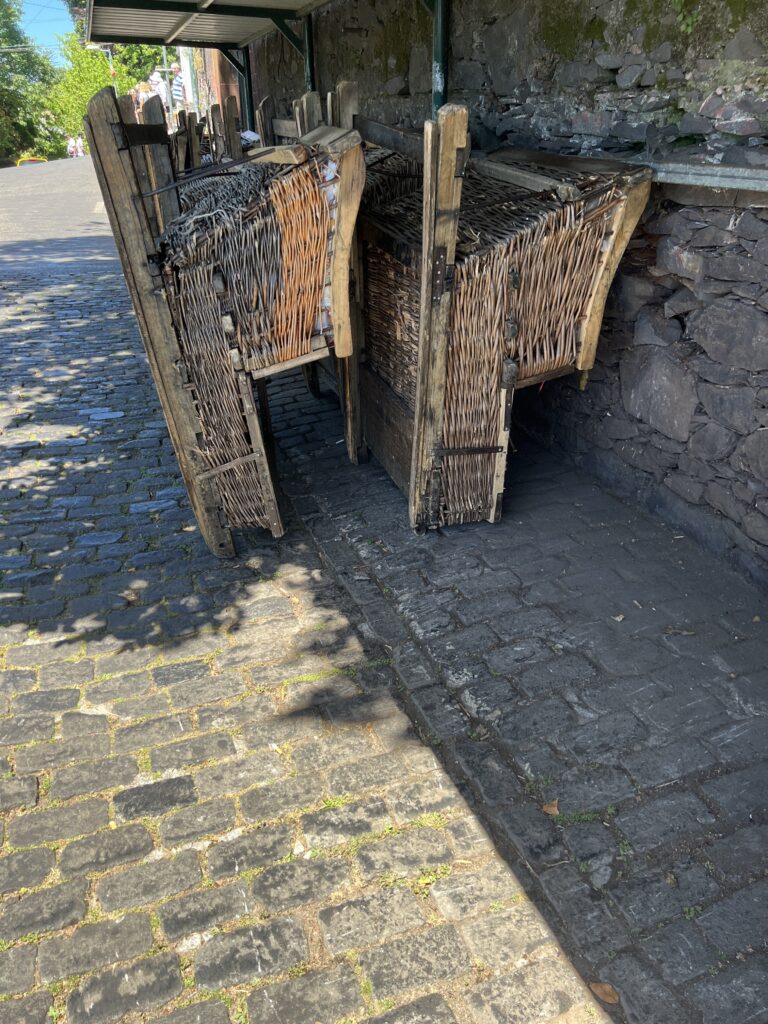
After the ride we took a cab to get further down the mountain so we could visit the Cathedral
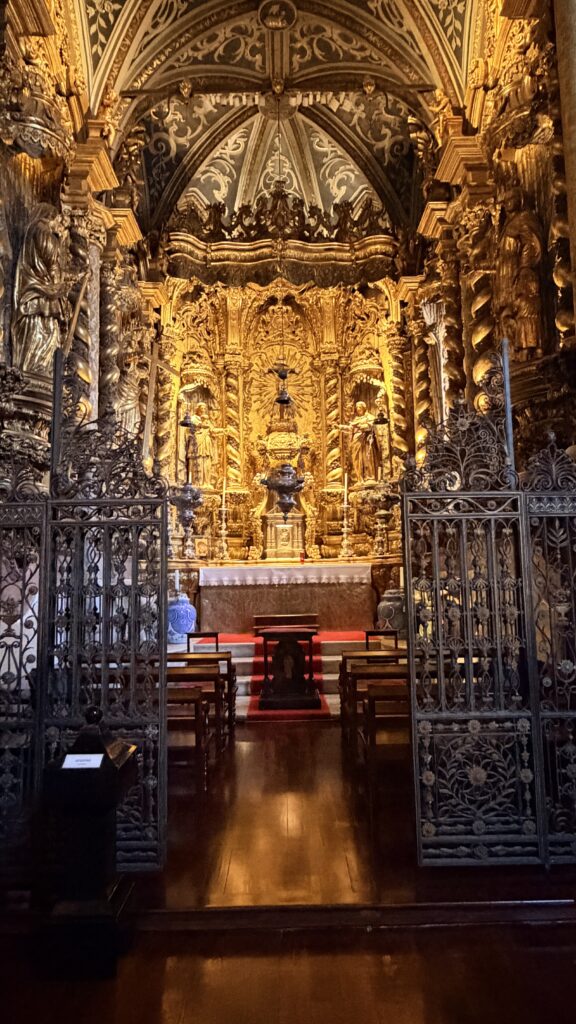
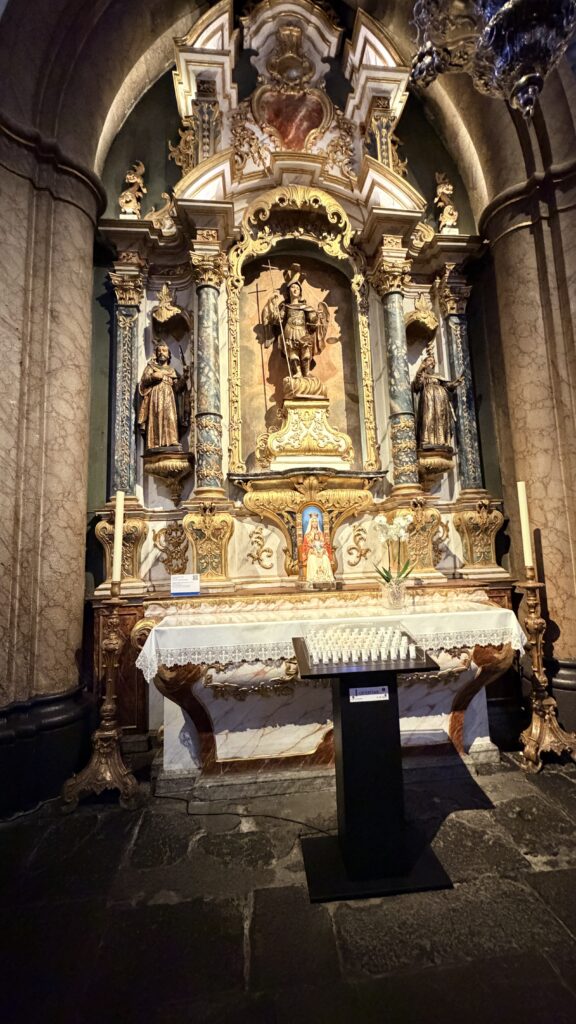
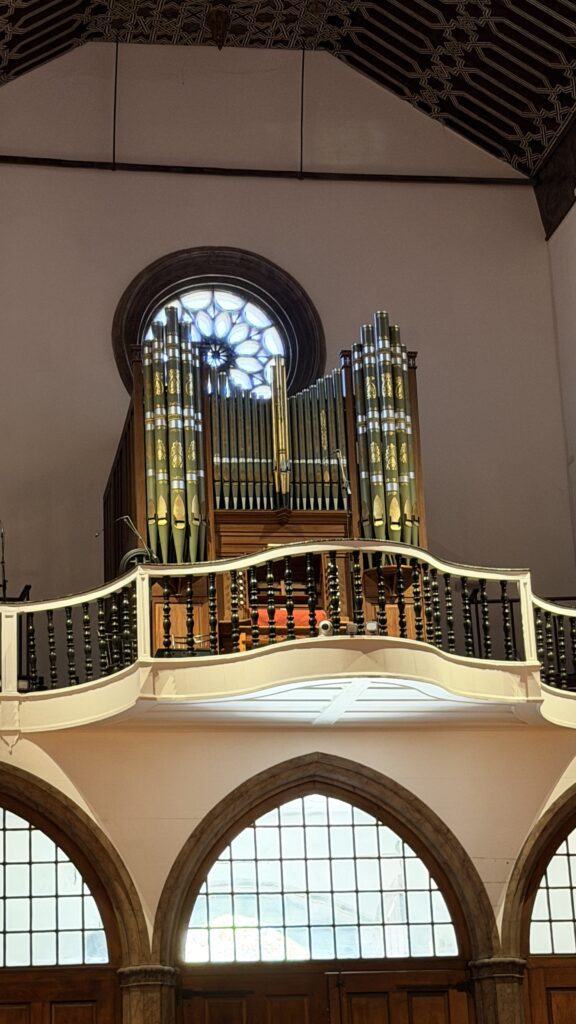
The Cathedral of Our Lady of the Assumption (Portuguese: Sé Catedral de Nossa Senhora da Assunção) in Sé, Funchal, Madeira, Portugal, is the cathedral of the Roman Catholic Diocese of Funchal, which encompasses all of the Autonomous Region of Madeira. The late fifteenth-century cathedral is one of the few structures that survives virtually intact since the early period of colonization of Madeira. The patron of the cathedral is Our Lady of the Assumption (Portuguese: Nossa Senhora da Assunção).
The construction of a new church in Funchal was a response to the town’s significant population and economic growth in the mid-15th century. The project was initiated in 1486 under the administration of Duke of Viseu and of Beja, the future King Manuel I of Portugal. The chosen site, known as “Chão do Duque,” had previously been used for sugarcane cultivation experiments. Plans included the construction of a “great church,” a municipal chamber, and a plaza. However, political instability, including disputes over the division of overseas territories between Portugal and Spain, delayed the project. Financial challenges also played a role, as the construction required significant resources from the local population.
Initial debates centered around whether to expand existing churches or build a completely new structure. By 1488, local officials reached a consensus to proceed with a new church at a lower site, referred to as the “sé,” signaling early plans to establish a diocese. These ambitions aligned with correspondence from the 1470s, when attempts by the Bishop of Tangier to include Madeira in his diocese were blocked by the Portuguese Crown, emphasizing plans for a future bishopric tied to the Order of Christ.
Significant progress began only after Manuel ascended to the throne in 1495. His reign brought renewed focus on Funchal’s development, including administrative reforms on Madeira and efforts to integrate the island into Portugal’s broader imperial strategy. By 1508, the church walls were complete, and Funchal was elevated to city status. That same year, the Bishop of Tangier, D. João Lobo, blessed the church, further marking its importance.
The church was formally elevated to cathedral status on June 12, 1514, by a papal bull issued by Pope Leo X, officially establishing the Diocese of Funchal. This diocese would play a pivotal role as the “Diocese of the Discoveries,” reflecting Madeira’s strategic significance in Portugal’s maritime expansion.
The cathedral’s construction was a collaborative effort involving royal oversight, local contributions, and skilled craftsmen. Master builder João Gonçalves initially led the project, later replaced by Pêro Anes (or Gil Enes), a royal carpenter, who introduced advanced methods seen on the mainland. The financing model included contributions from the Crown via customs revenues and local funding through individual donations and confraternities. In 1501, the King allocated revenue from newly created towns on the island, such as Ponta do Sol and Calheta, to fund the church’s construction.
The cathedral was structurally complete in 1514. Prior to completion, however, by 1508, when Funchal was elevated to the status of a city, the cathedral was already being used for the celebration of Mass.
By 1517, the main altar was consecrated, and the church’s interior was nearly complete, featuring intricate woodwork and silver items funded by island revenues rather than direct royal gifts. The cathedral’s design reflects Gothic and Manueline architectural styles, symbolizing Madeira’s religious and economic prominence during Portugal’s Age of Discoveries.
The cathedral is designed in a Gothic style and has three naves. The building was constructed using thousands of blocks of volcanic rocks carried from the cliffs at Cabo Girão, namely trachybasalt, trachyandesite, trachyte, tephrite and ashes, lapilli and breccia tuff. The facades are predominantly plastered and painted white, with stonework corners.
The roof of the cathedral features a Mudéjar-inspired design and is of cedar wood. The wooden choir stalls depict prophets, saints and apostles in 16th-century garb. In the decorative details of the seats and armrests, aspects of Madeira’s life can also be seen, such as cherubs carrying a bunch of bananas or a wineskin.
The opening to the chancel is defined by a triumphal arch of handmade artwork in the form of boards and chairs that are divided into two rows, the first reserved for the capitulars and the lower one for the chaplains. The backrests are decorated with images of the Apostles and Prophets, without neglecting the arms of the chairs, which are crafted to the smallest detail with influences from the Middle Ages.
The cathedral contains a silver processional cross donated by King Manuel I of Portugal, considered one of the masterpieces of Manueline liturgical silverwork.
The Cathedral of Funchal, has been classified as a National Monument since 1910.
As Pope John Paul II visited Madeira in 1991, a statue of Pope was built to remember the event. It is located outside the cathedral, which was moved to its current position after formerly being installed in the urban area of Funchal adjacent to the waterfront.
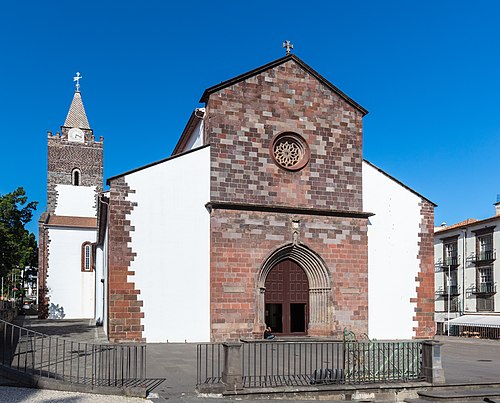
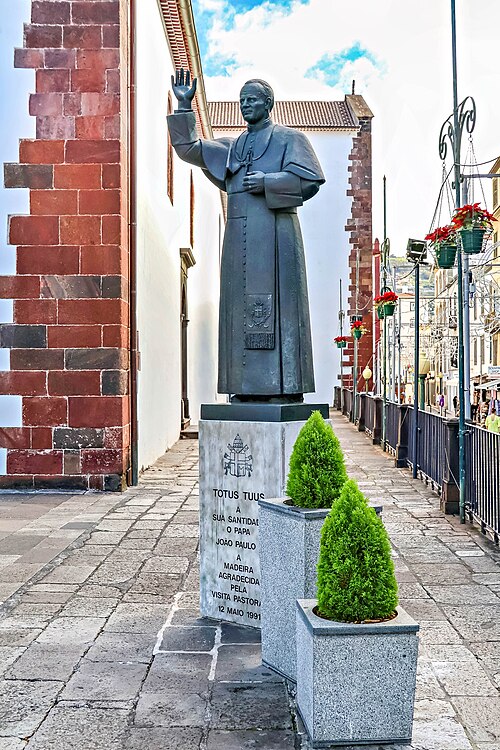
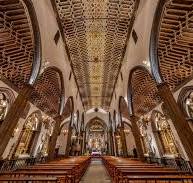
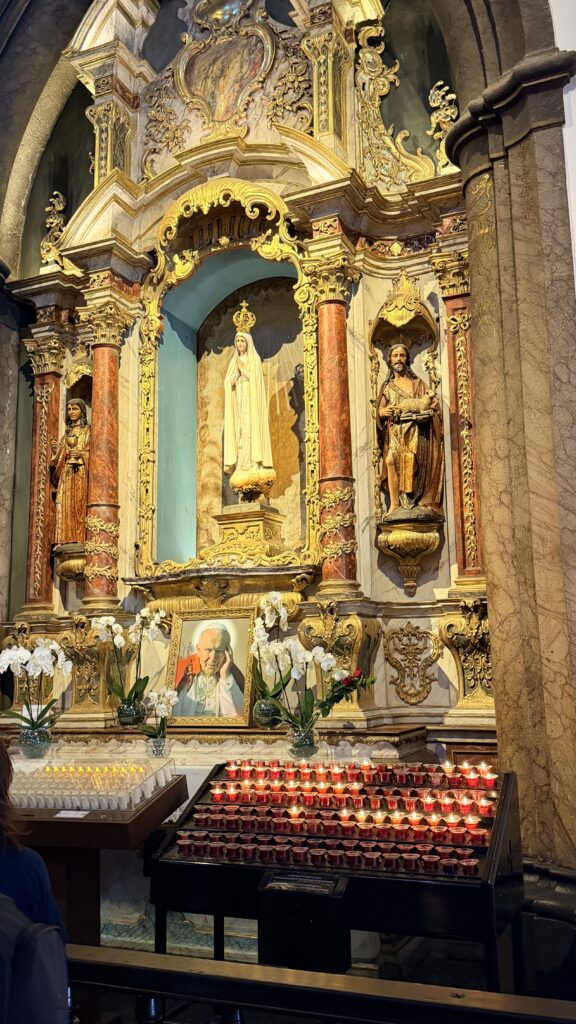
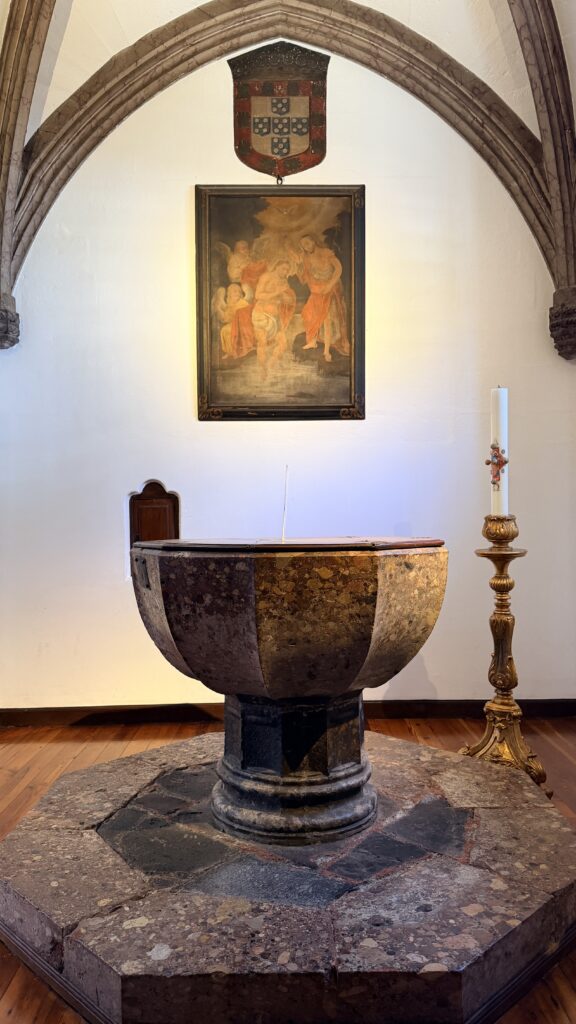
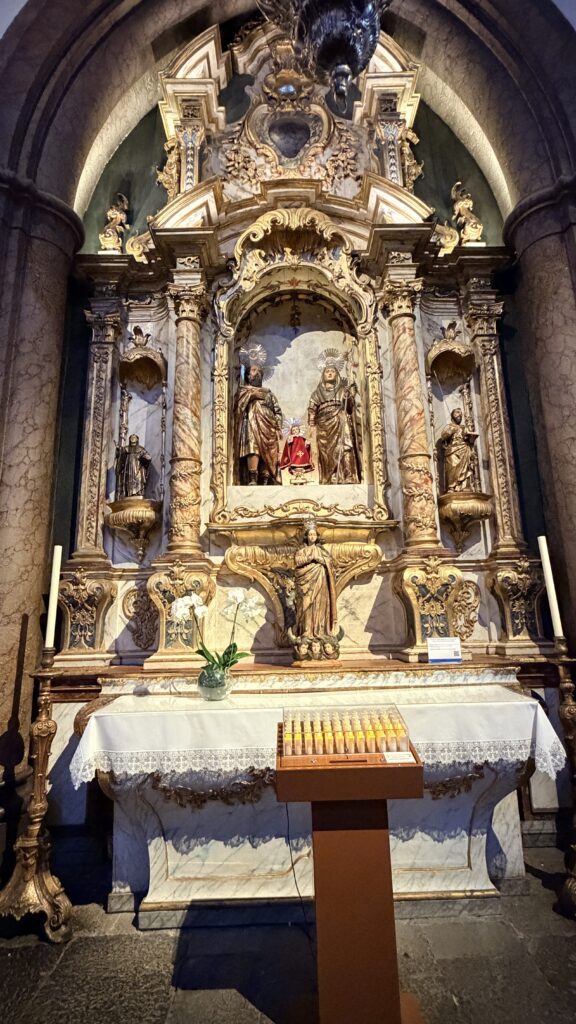
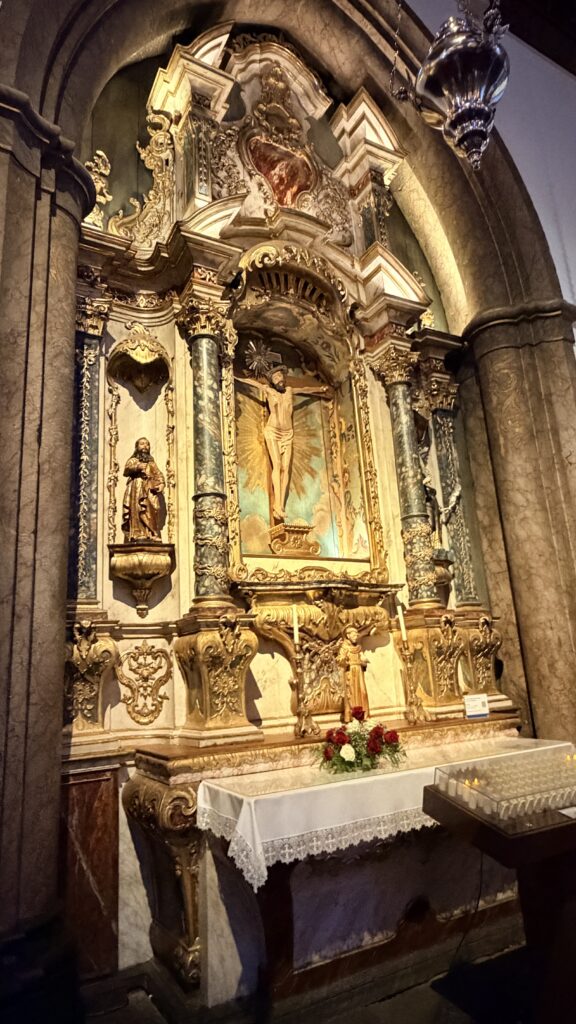
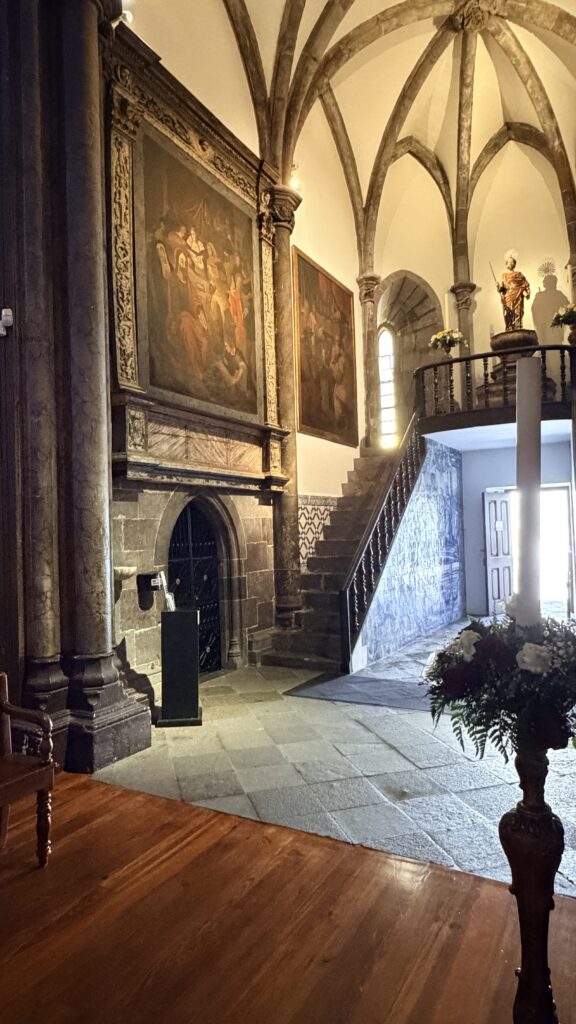
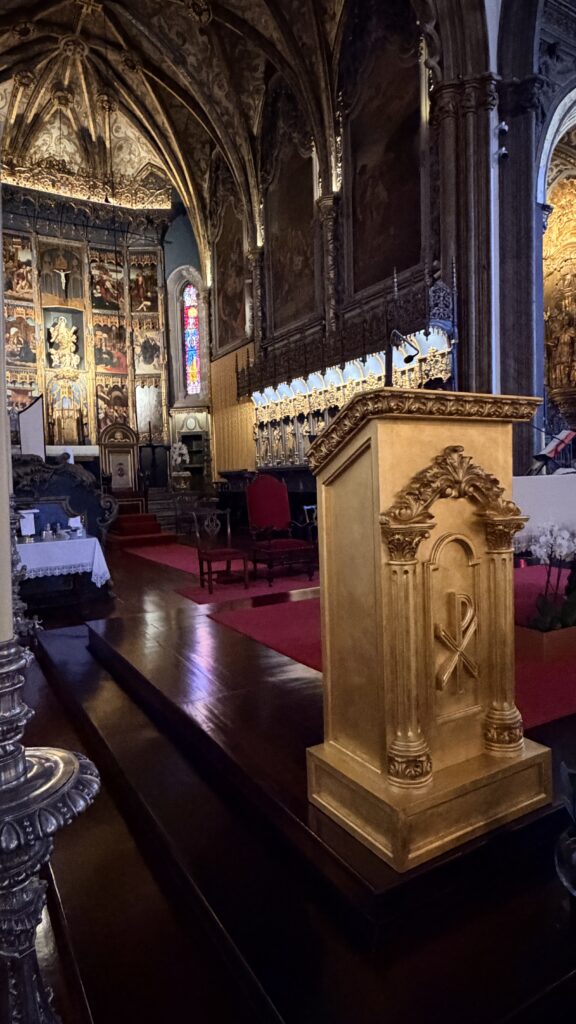
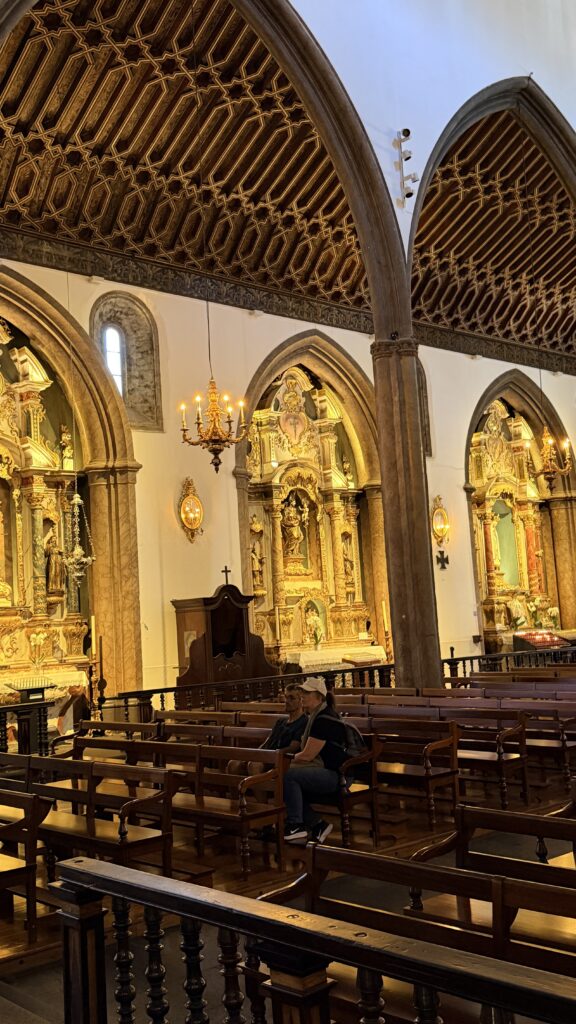
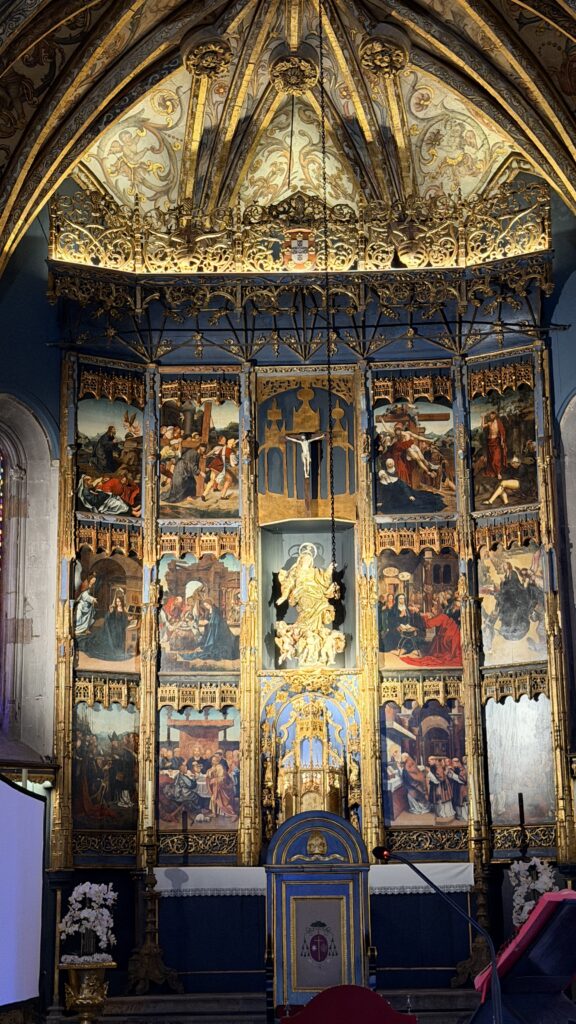
After visiting the cathedral, we walked back to the ship, but first had to stop in for a Pastel de Nata
Pastel de nata (Portuguese: [pɐʃˈtɛl dɨ ˈnatɐ]; literally, cream pastry; pl.: pastéis de nata) is a Portuguese egg custard tart pastry, optionally dusted with cinnamon.
Pastéis de nata tarts are pastries inspired by an original recipe called pastéis de Belém, which were created before the 18th century by Catholic monks at the Jerónimos Monastery in the civil parish of Belém, in Lisbon. At the time, convents and monasteries used large quantities of egg-whites for starching clothes, such as friars and nuns‘ religious habits. It was quite common for monasteries and convents to use the leftover egg yolks to make cakes and pastries, resulting in the proliferation of sweet pastry recipes throughout the country.
In the aftermath of the Liberal Revolution of 1820, following the dissolution of religious orders and in the face of the impending closure of many convents and monasteries, the monks started selling pastéis de nata at a nearby sugar refinery to bring in revenue. In 1834, the monastery was closed and the recipe sold to the sugar refinery, whose owners opened the Fábrica de Pastéis de Belém in 1837. The descendants own the business to this day.
Since the opening of Fábrica de Pastéis de Belém, the original recipe that inspired pastel de nata varieties is kept in a secret room. The Fábrica de Pastéis de Belém is, therefore, the only place in the world that produces the original pastry that inspired many variations commonly known as “pastéis de nata“; the shop is located just a short three-minute walk from the Jerónimos Monastery. The shop offers both takeout and sit-in services and sells over 20,000 pastéis a day.
In 2009, The Guardian listed pastéis de Belém as one of the 50 “best things to eat” in the world. In 2011, following the result of a public vote, the pastry was announced as one of Portugal’s Seven Wonders of Gastronomy, further cementing it as one of the country’s most popular national dishes.
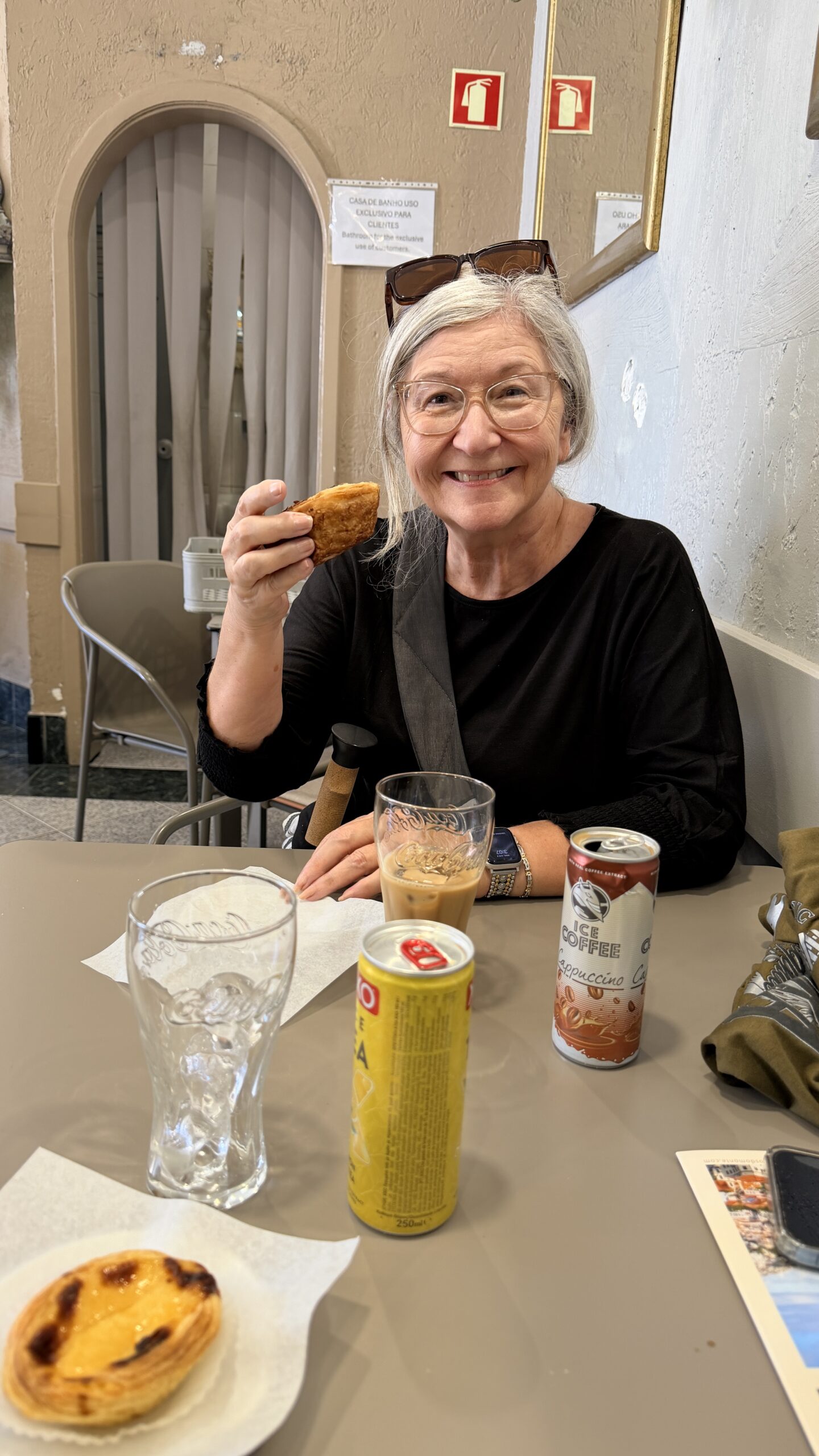
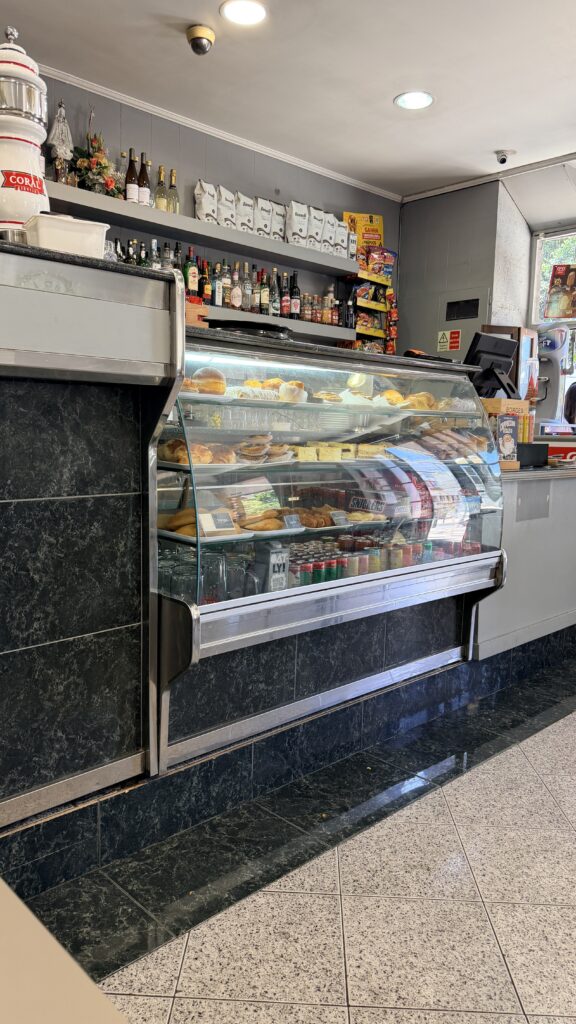
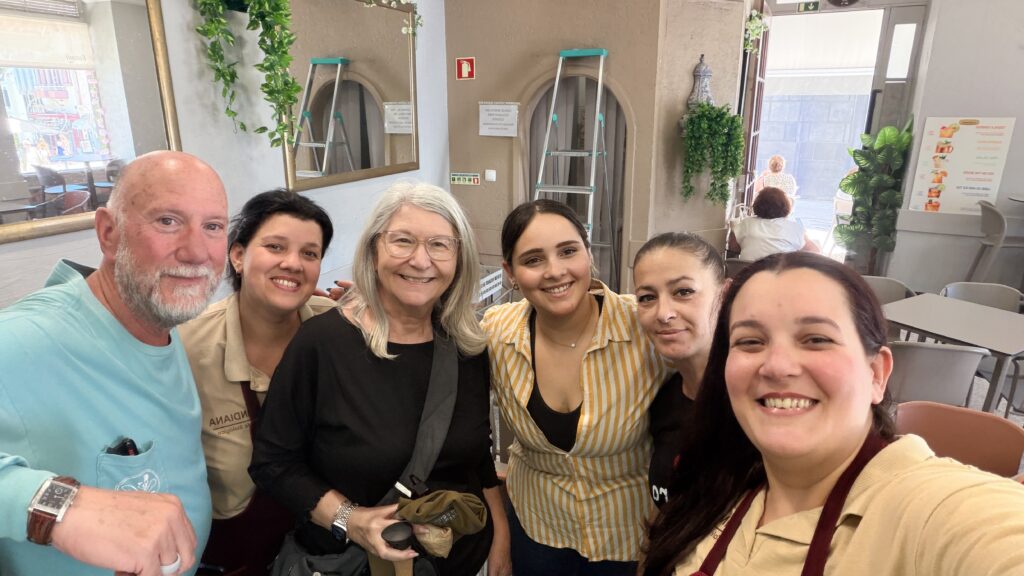
The staff where we ate the Pastel de nata. Definitely will be a Faces Around the World photo
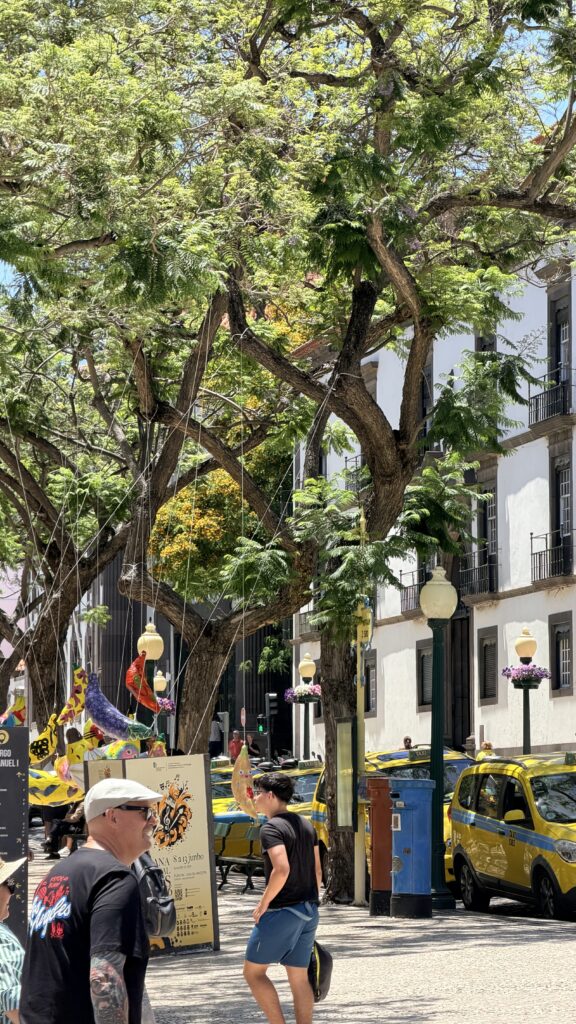
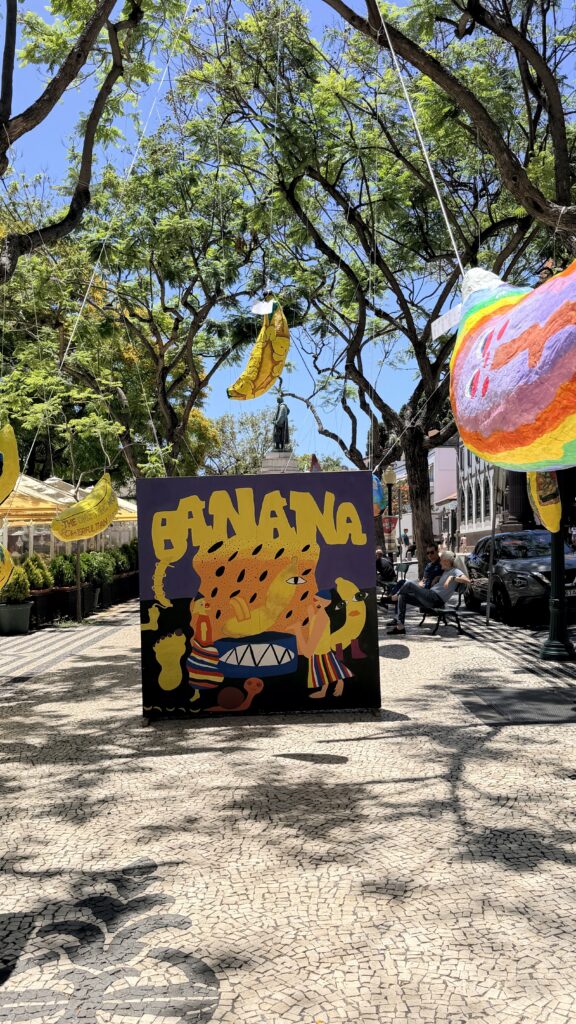
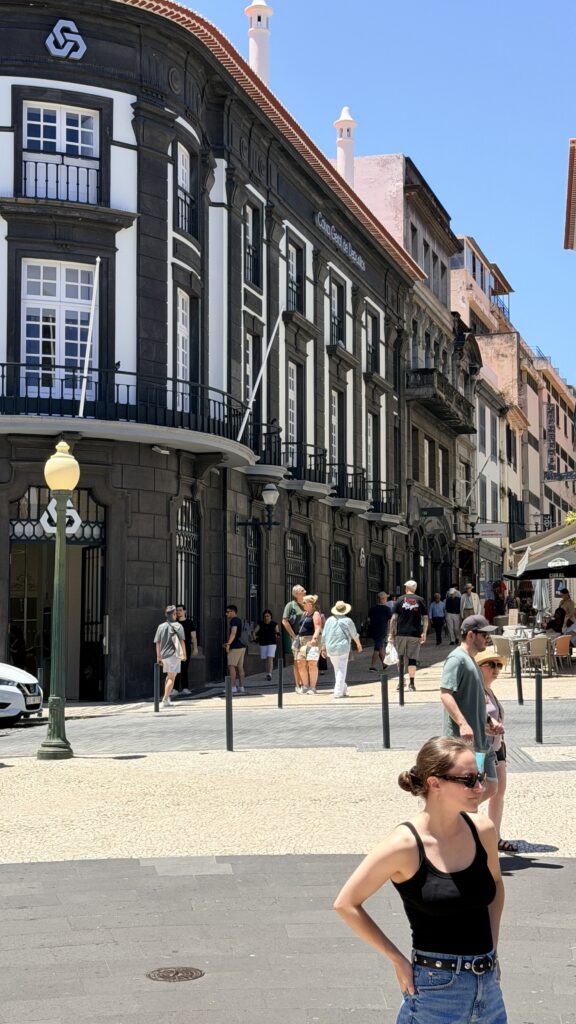
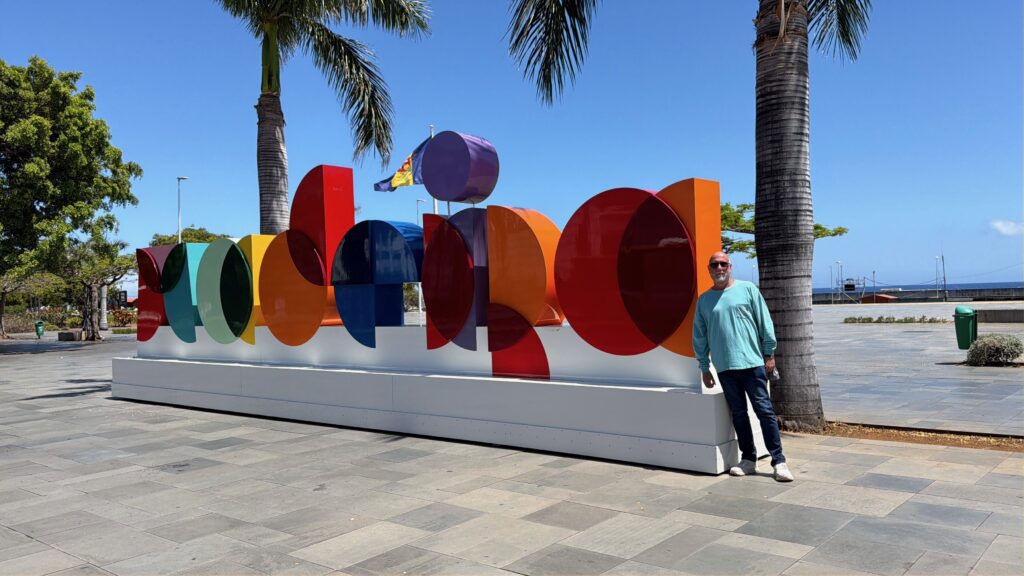
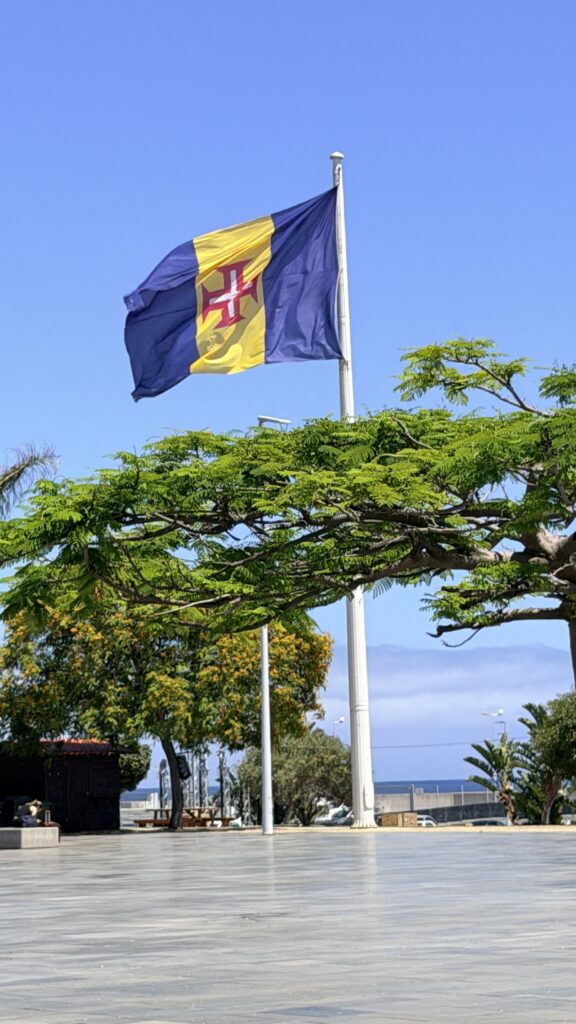
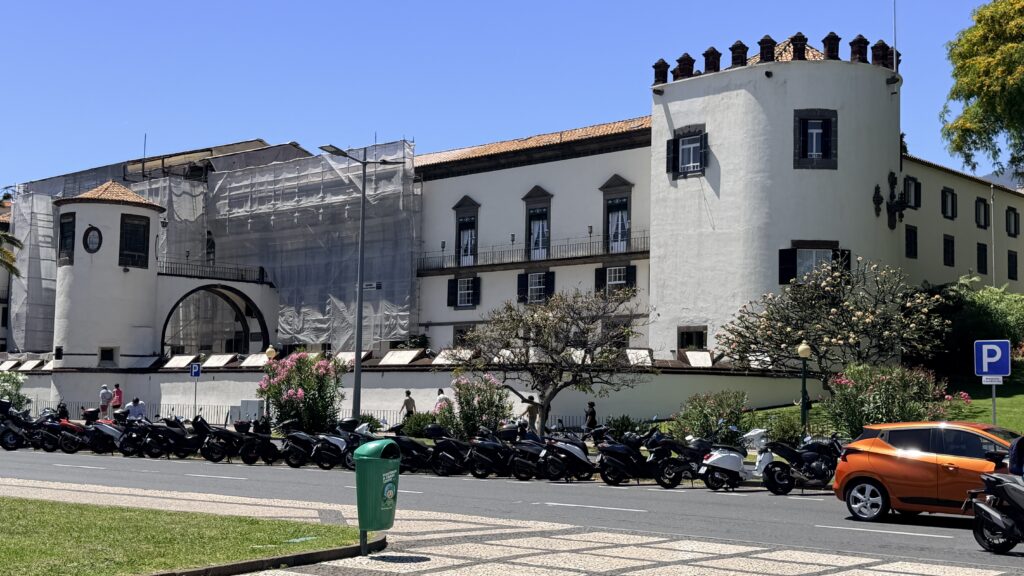
Random photos as we walked back to the ship
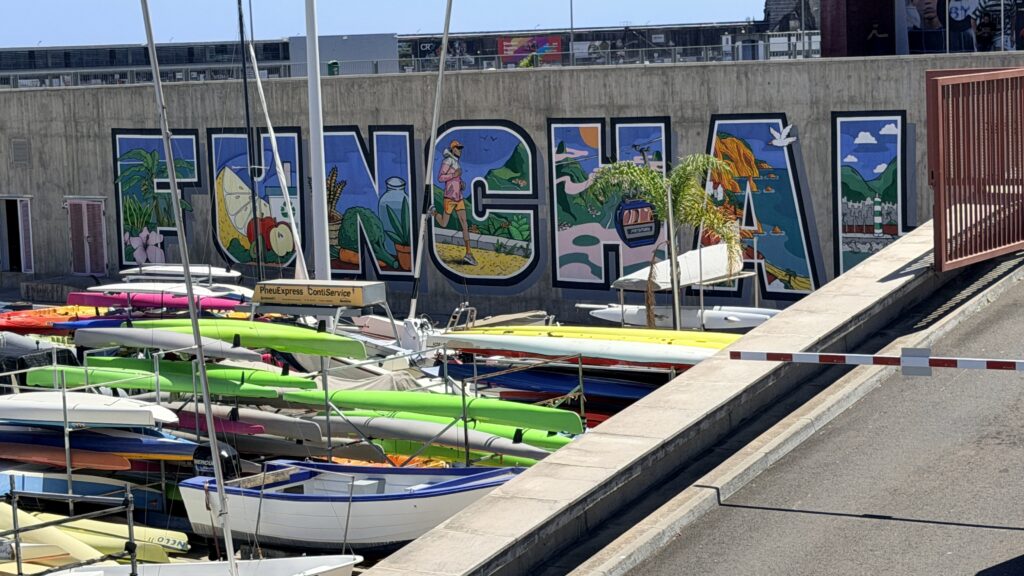
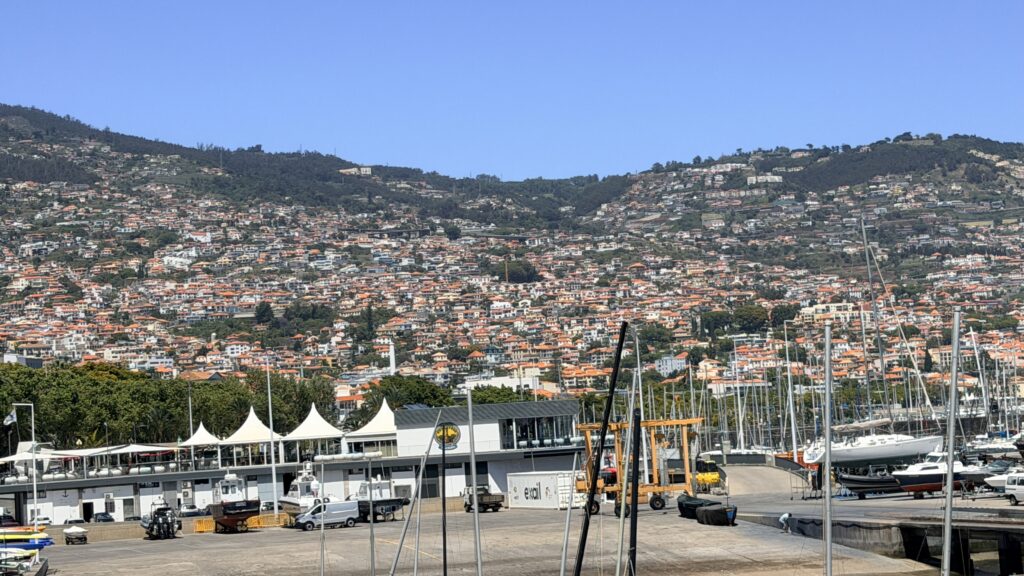
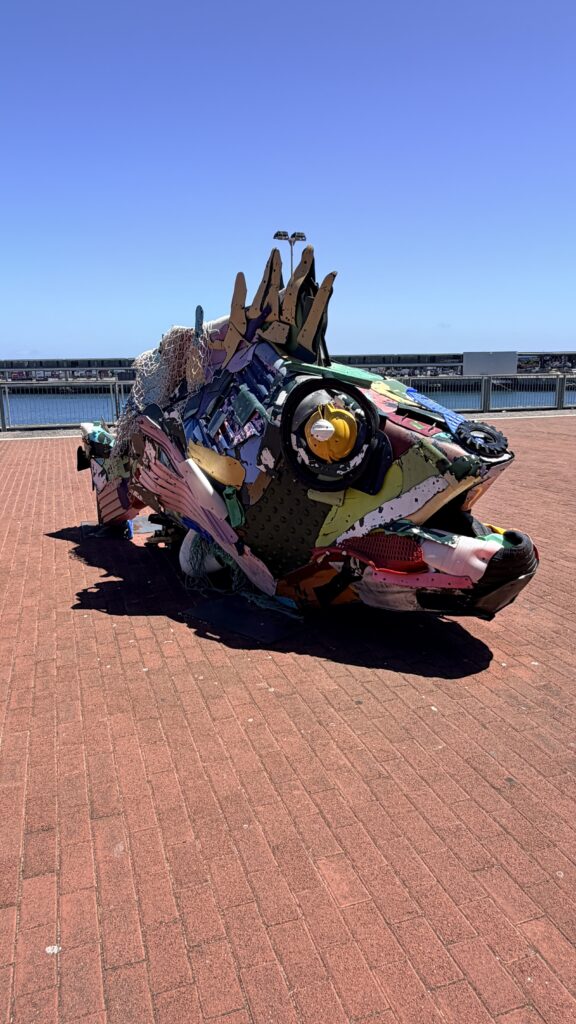
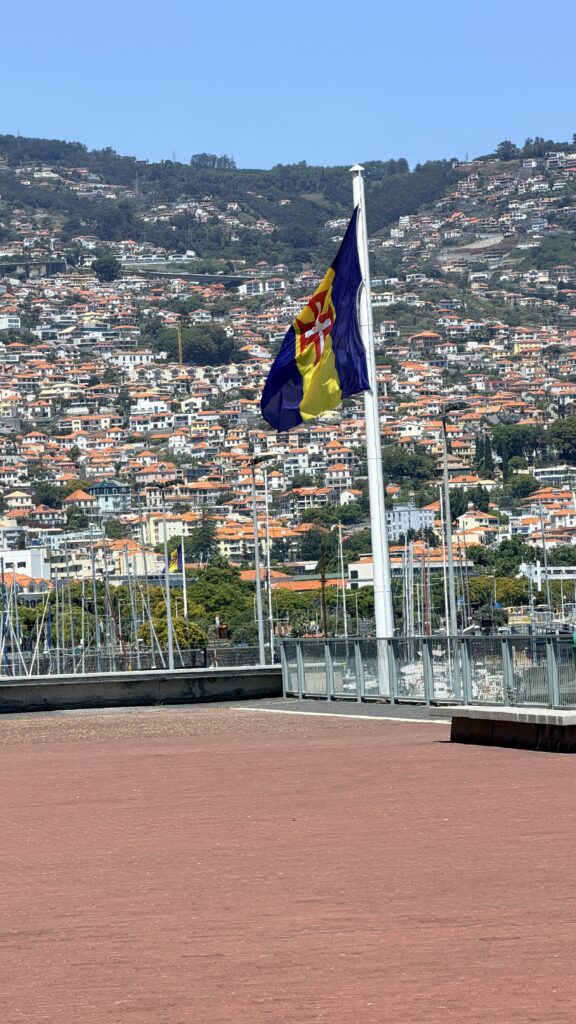
Once we got back to the ship, we changed and headed to the spa deck to relax tired legs in the jacuzzi. Here is a video taken from the spa deck and photos taken on Funchal. We totally enjoyed this port. Like David Chen said, what a difference 300 miles makes from what we have been visiting on mainland Africa.
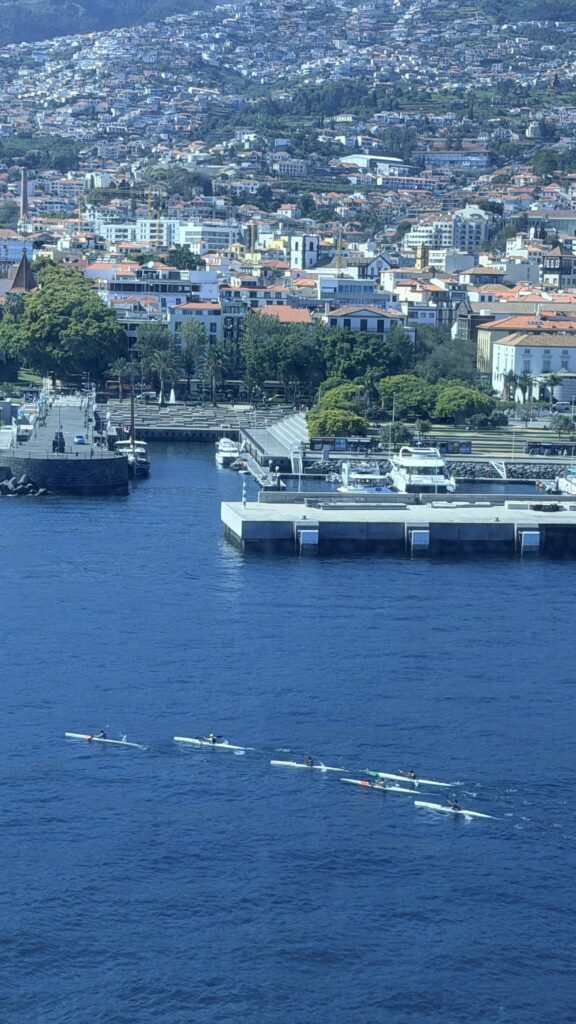
Fortress we visited earlier in the day
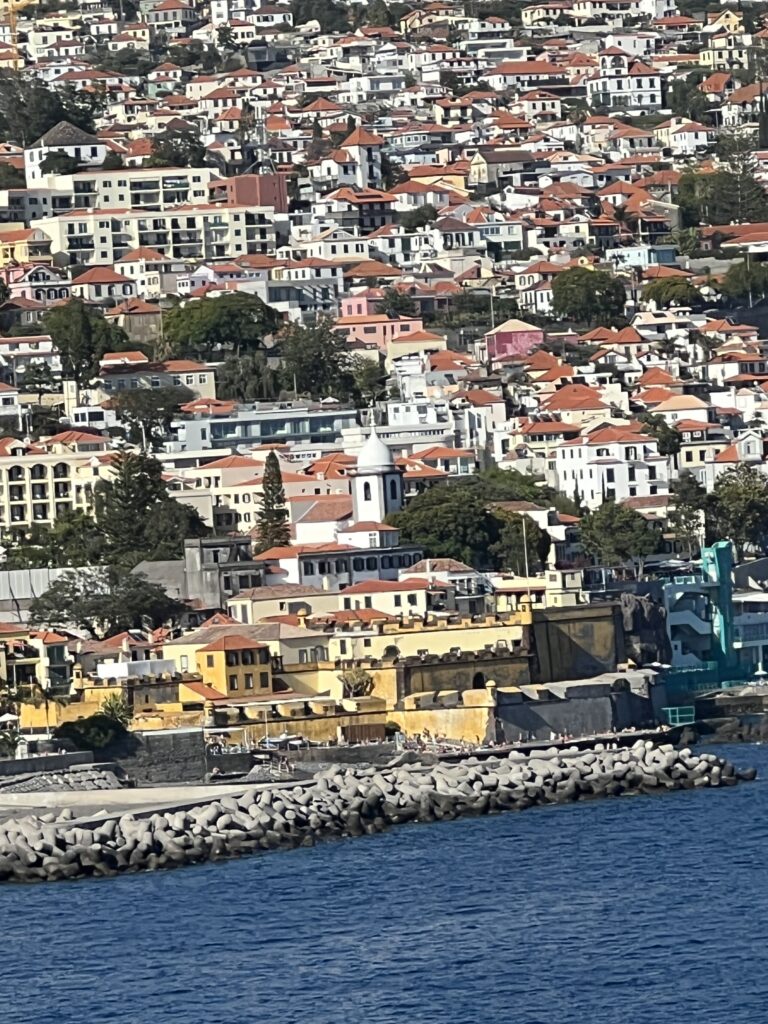
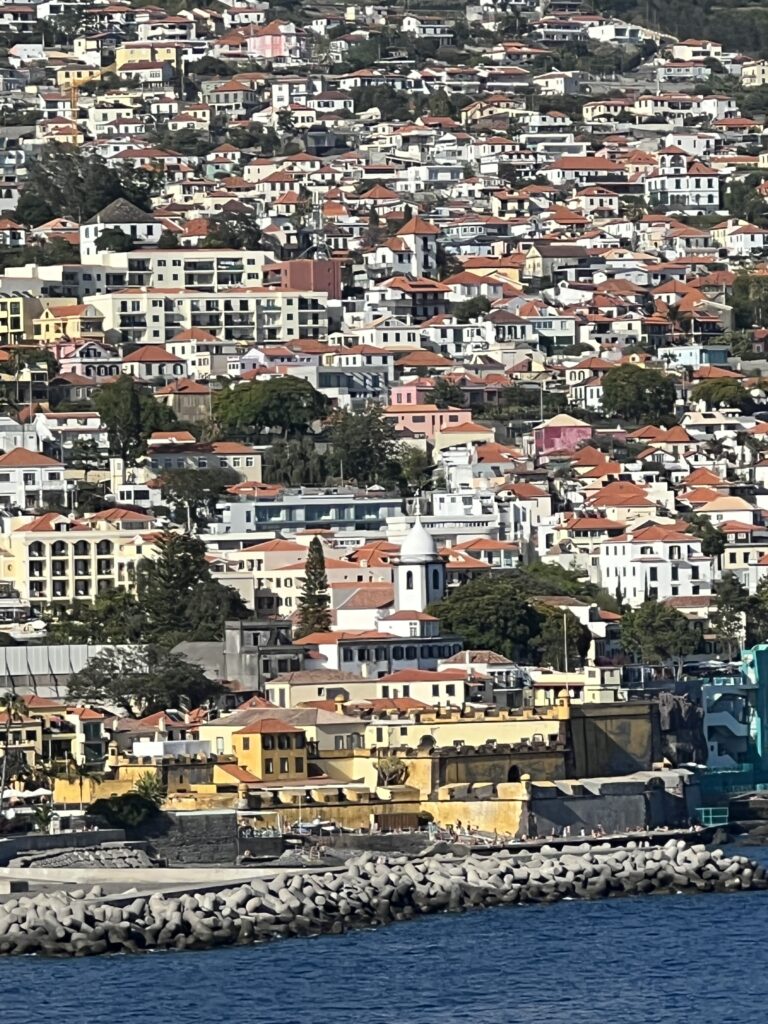
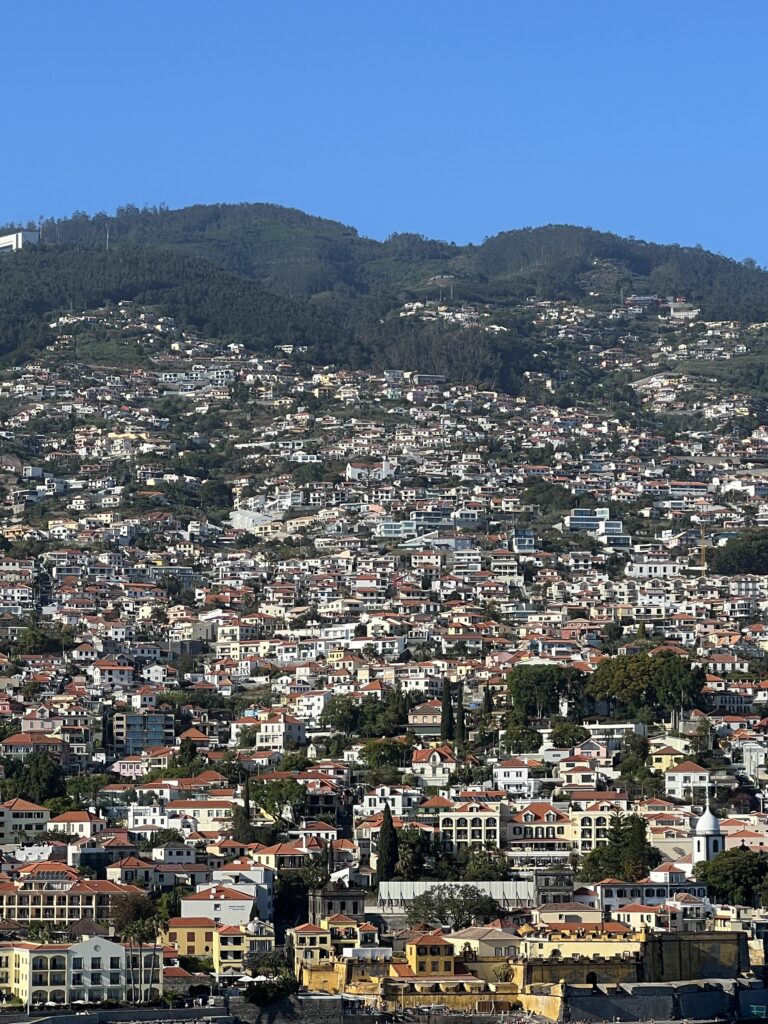
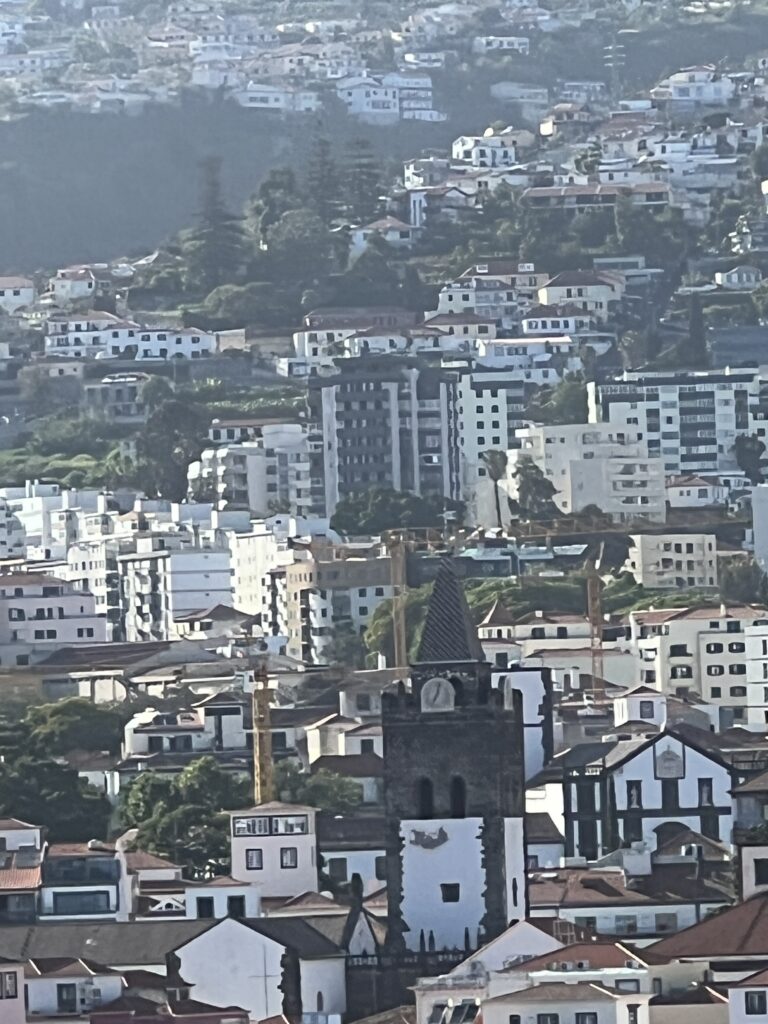
Church in Monte on the left
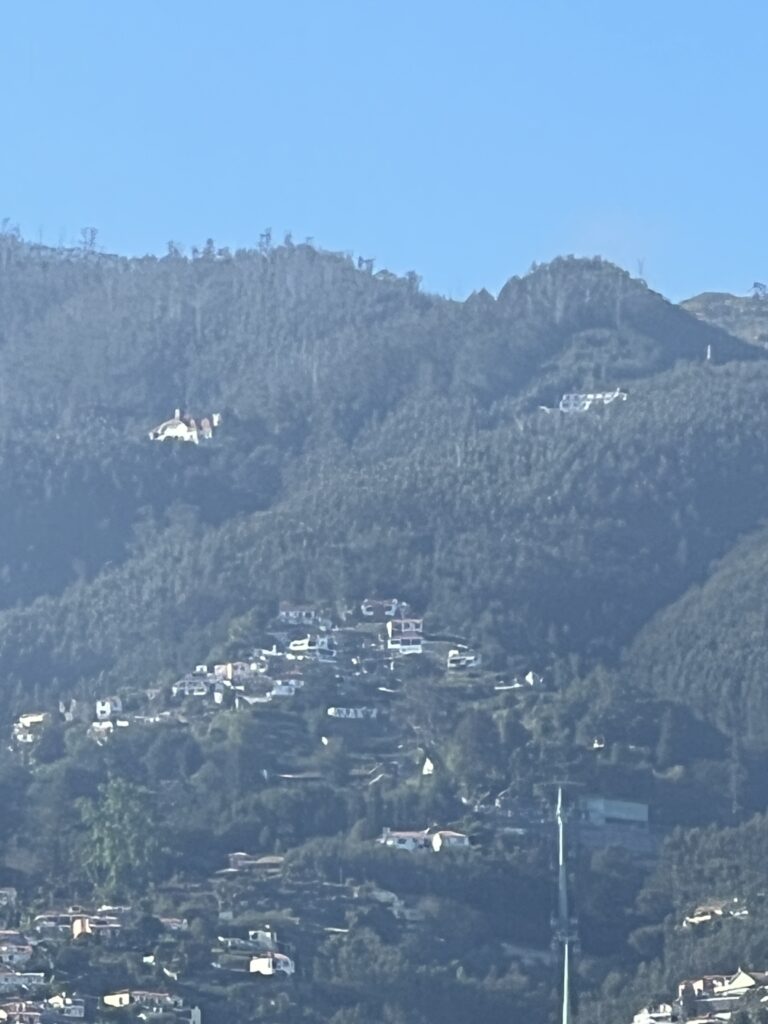
The cable car route
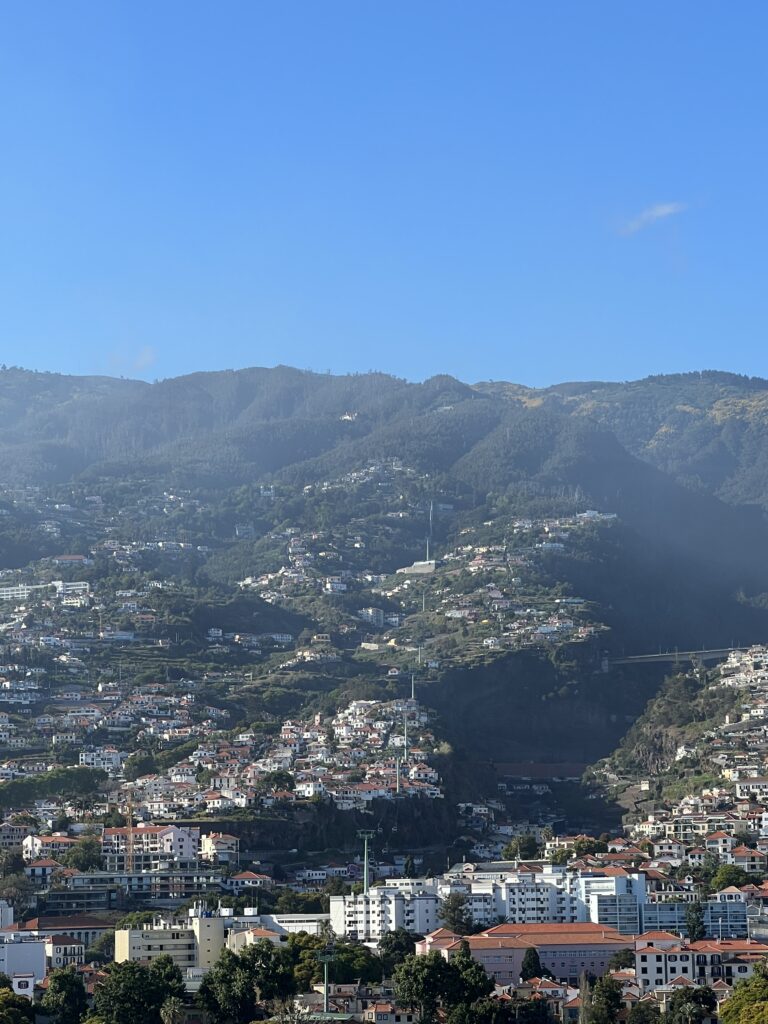
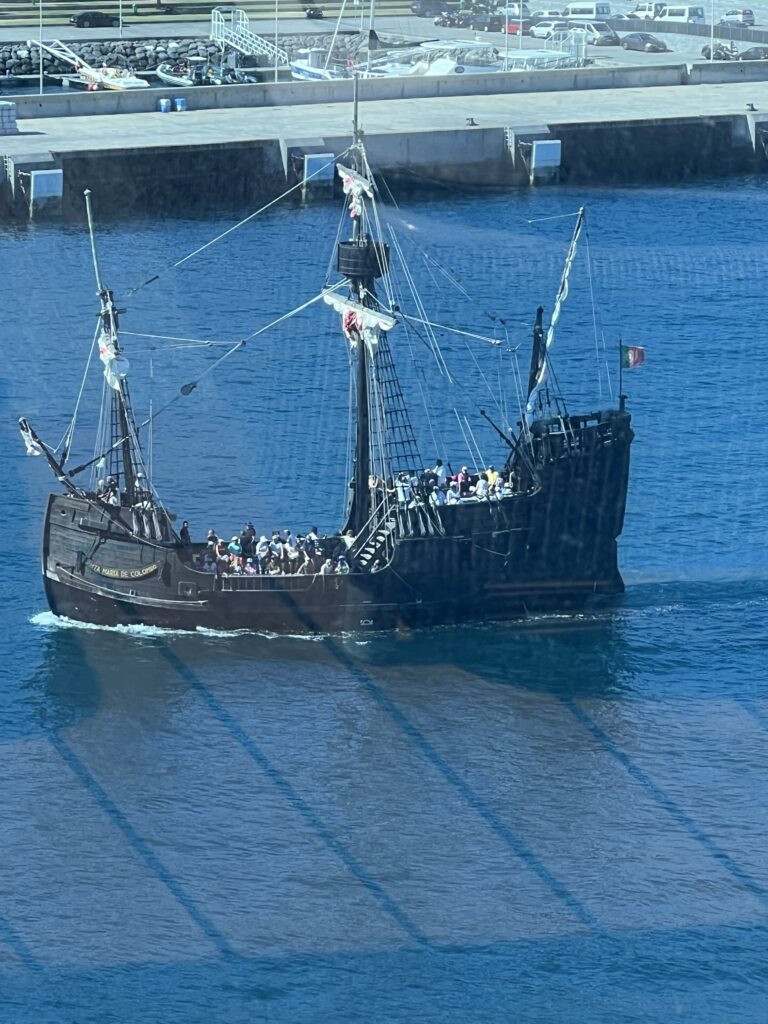
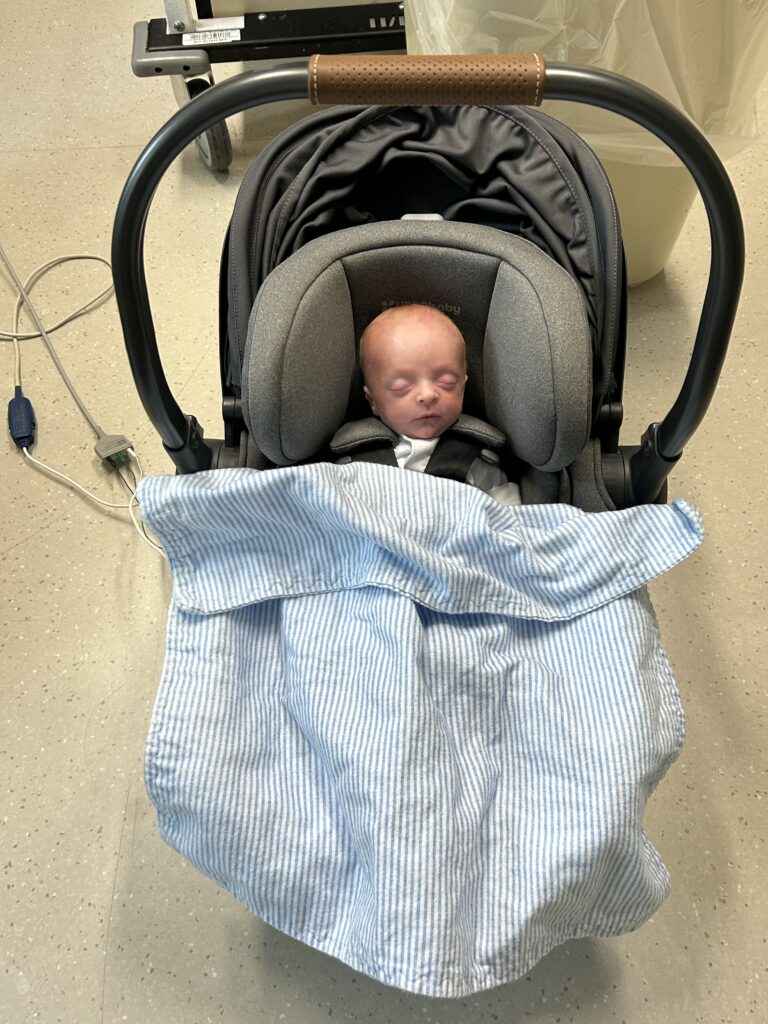
Finish up our blog for the day with a photo of Aiden who went home today, checking in at over 4 pounds. Also, a Happy Birthday to Caroline!!!