
Day 34 Thursday April 9th (86 days to go) — We had a fantastic day in Sydney. It was our first visit to Australia and it was our 7th continent, so we have now visited all seven in the world. We had a private tour with Nicole Yardley and could not have asked for a better guide. We started at 8am and went a full nine hours. We return next week for three days as part of a side trip from the ship in Townsville. I told Jackie three days? Hell, we need three months…laughing.
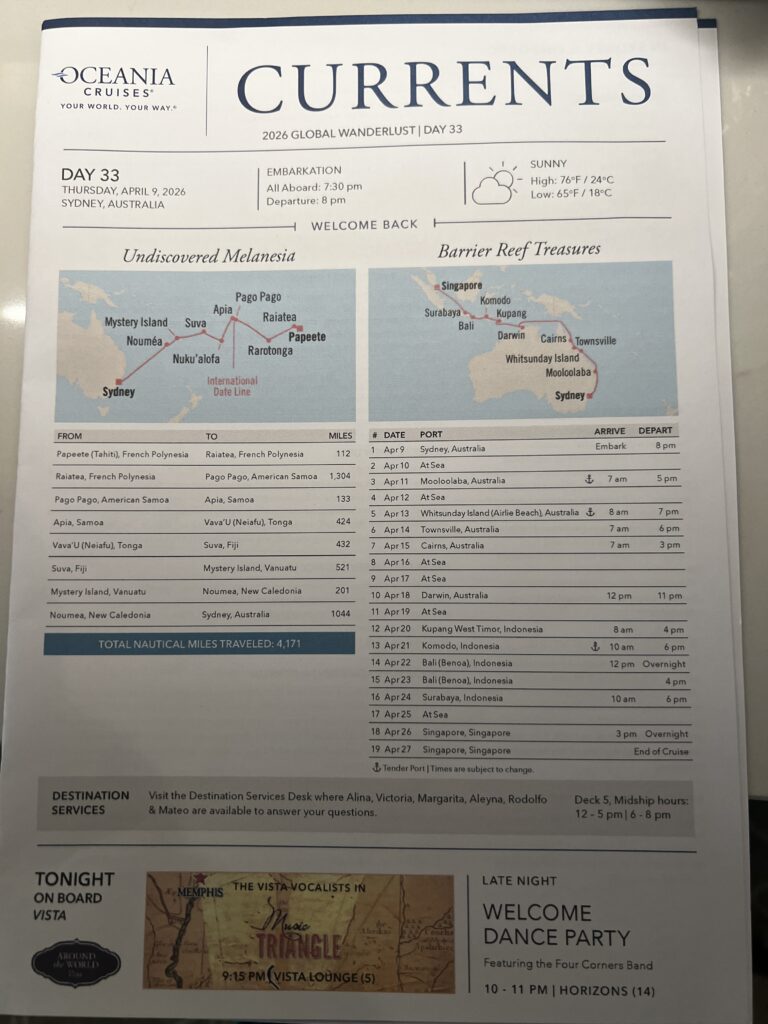
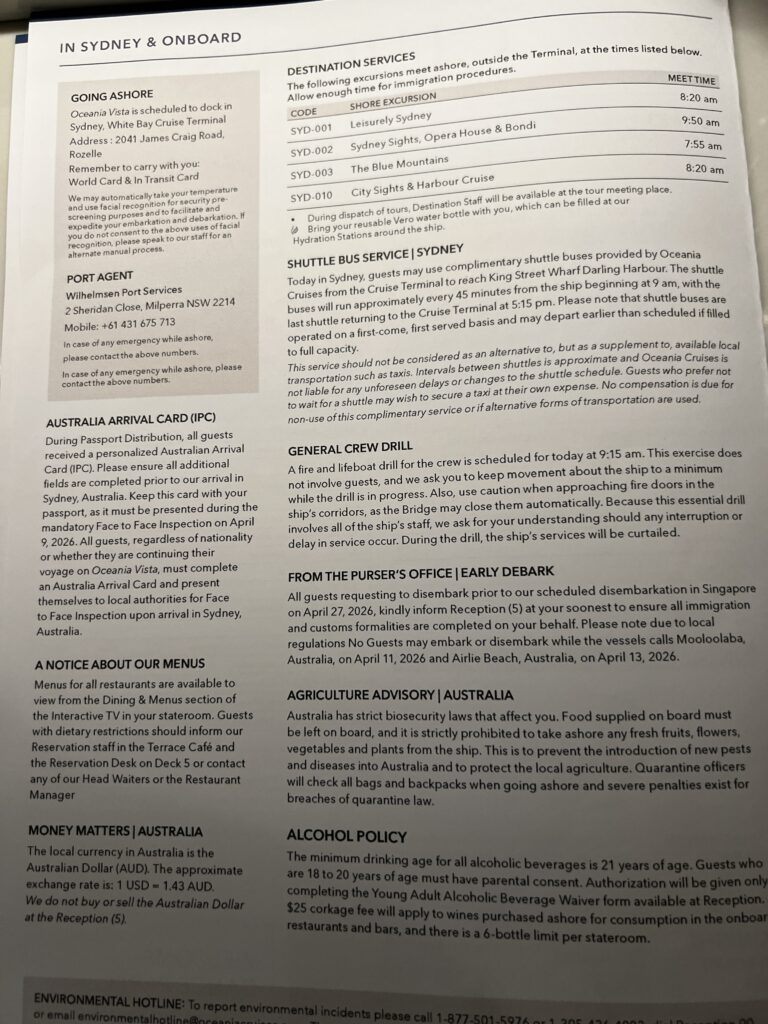
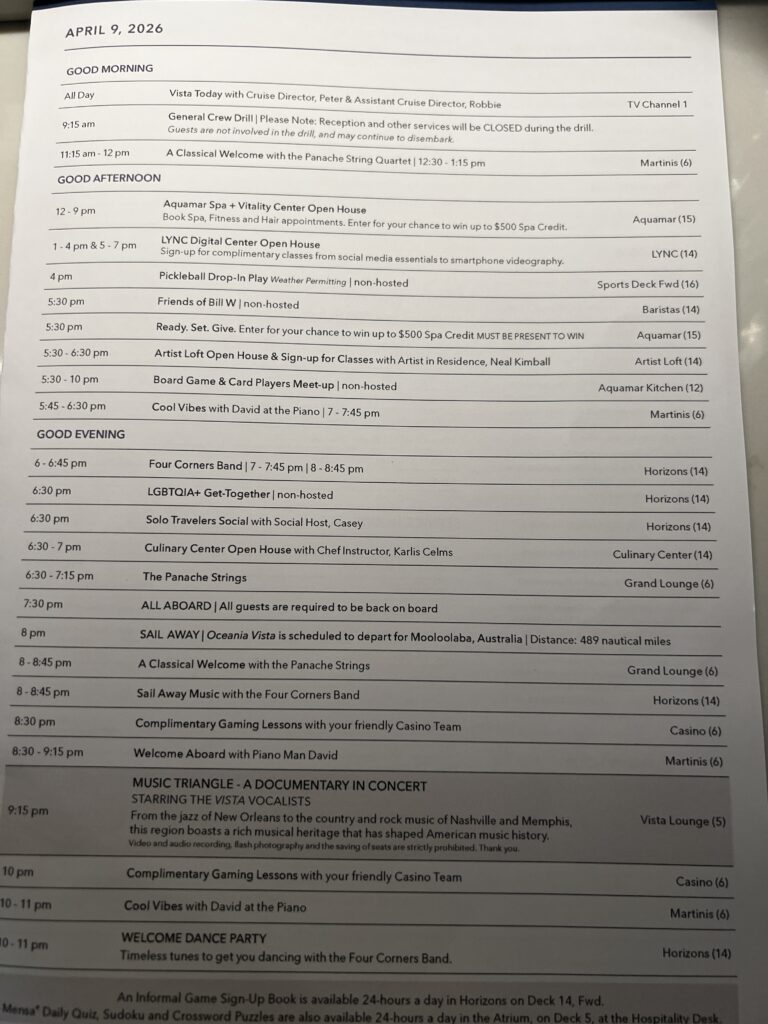
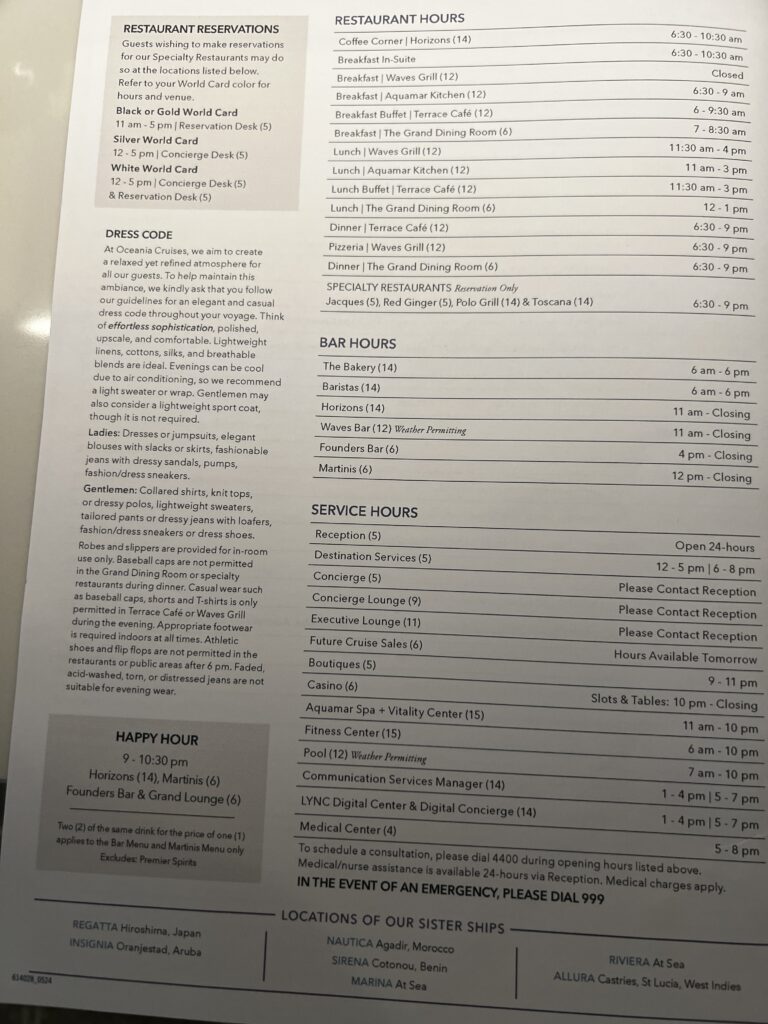
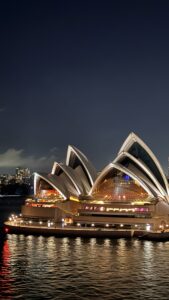
We arrived into Sydney Harbor around 5:30am and was able to capture this sunrise before turning our attention to the site it seems like the entire ship wanted to see…..The Sydney Opera House
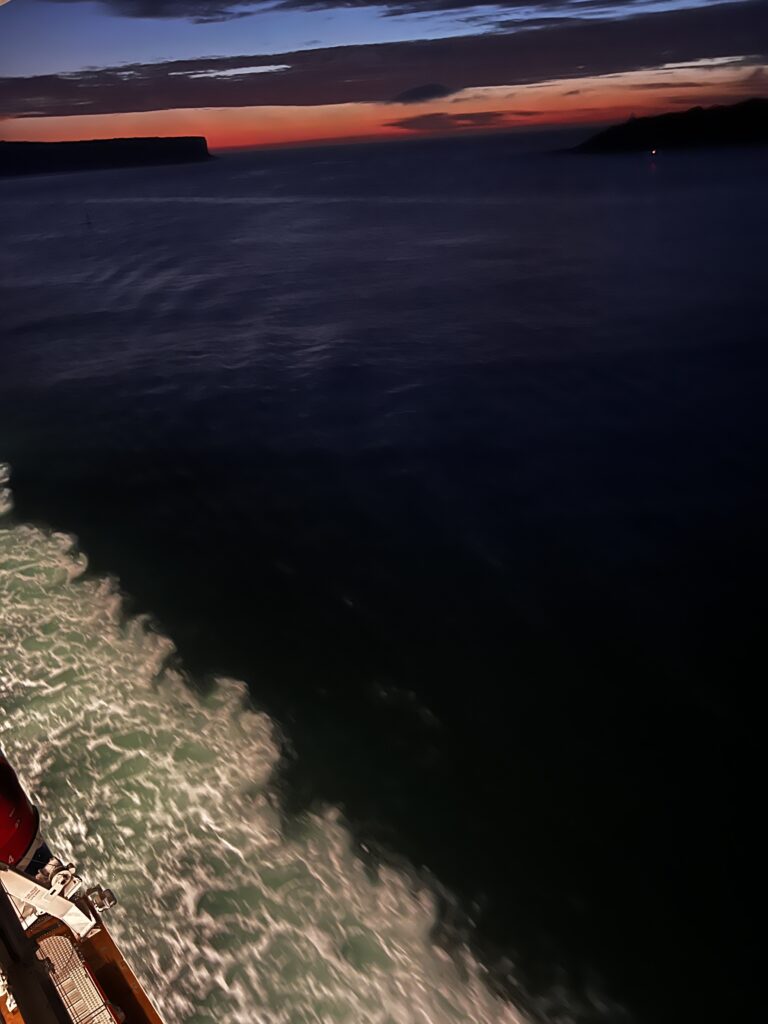
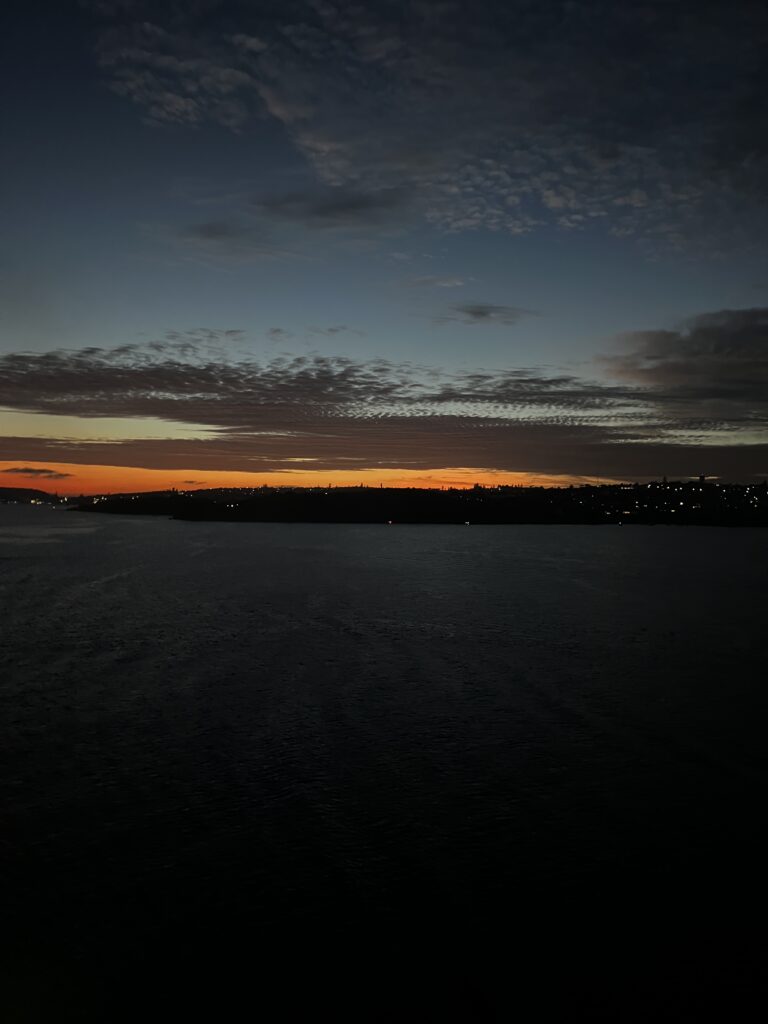
You could hear a pin drop as we sailed into the harbor. The anticipation of the ship’s passengers was high and once we could see it, the excitement was hard to contain.
The Celebrity Solstice was already docked. I am unsure but possibly they did an overnight in Sydney, which is great for them if this was the case.
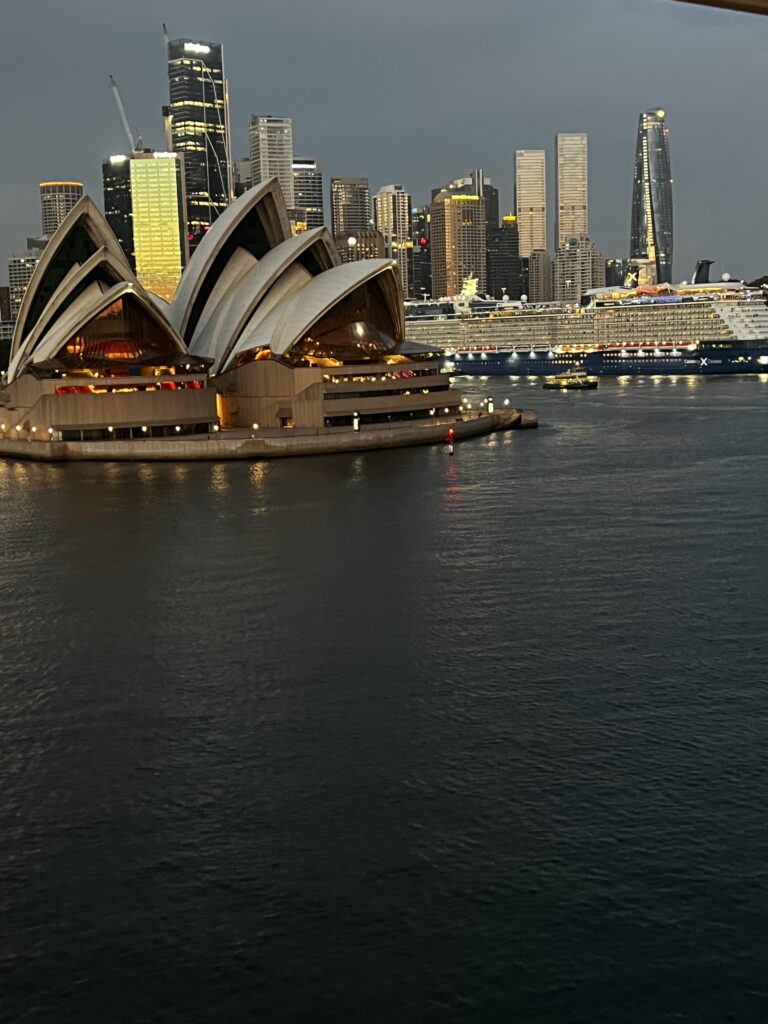
The city of Sydney was beautiful as the sun rose and hit the buildings.
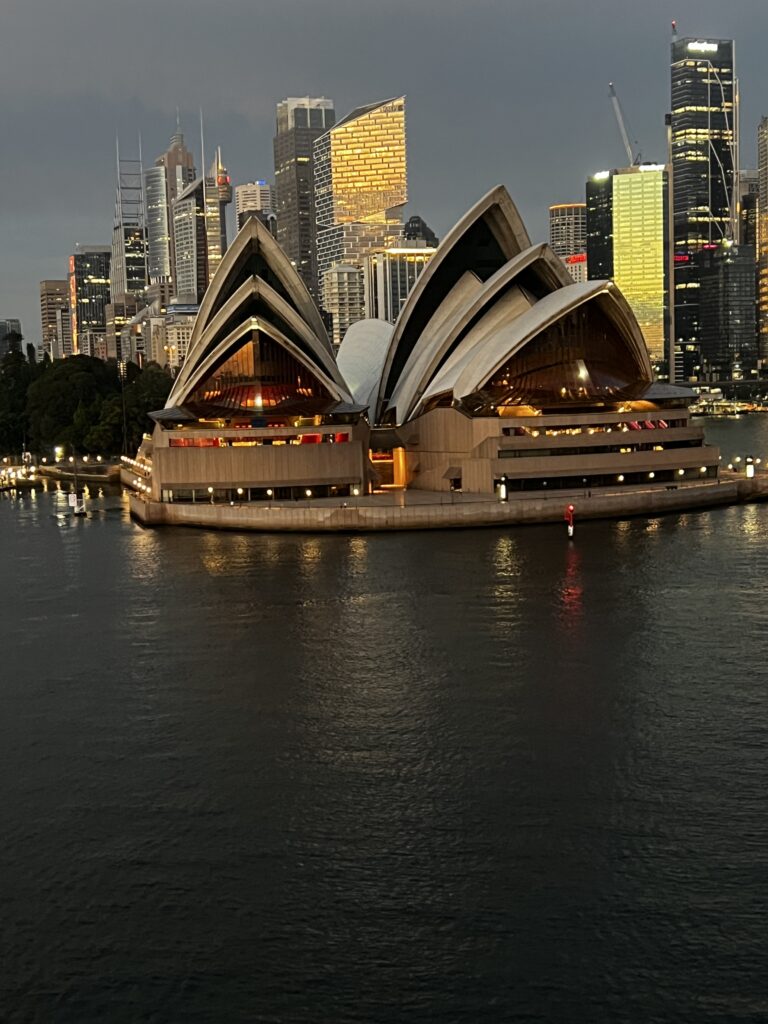
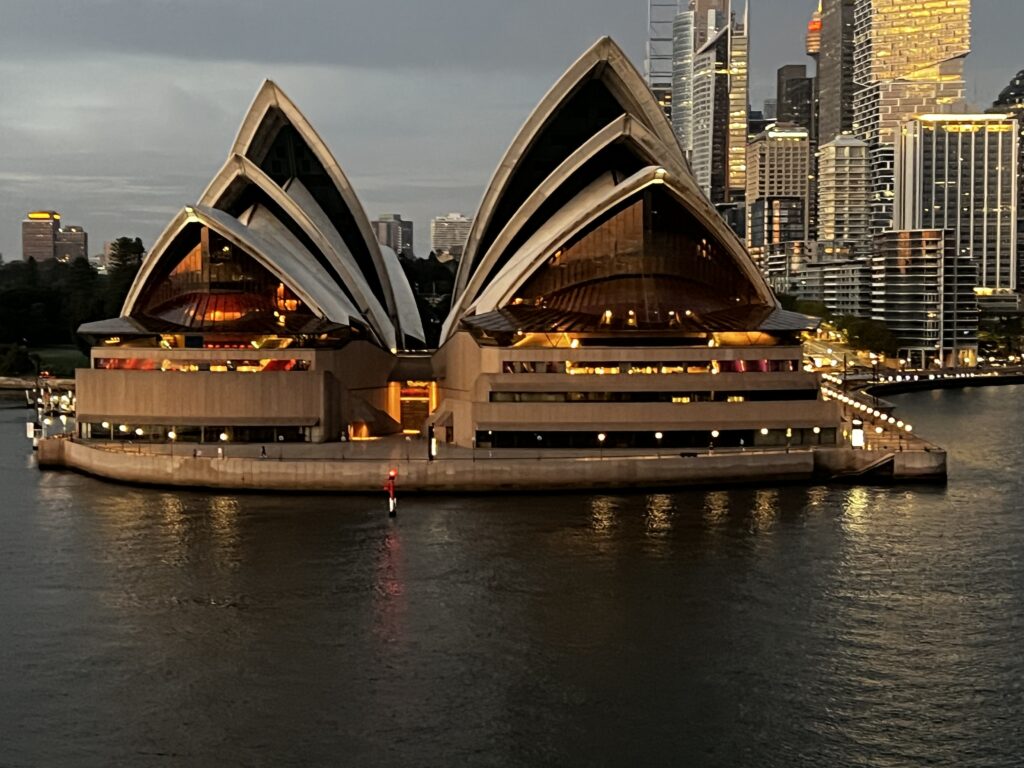
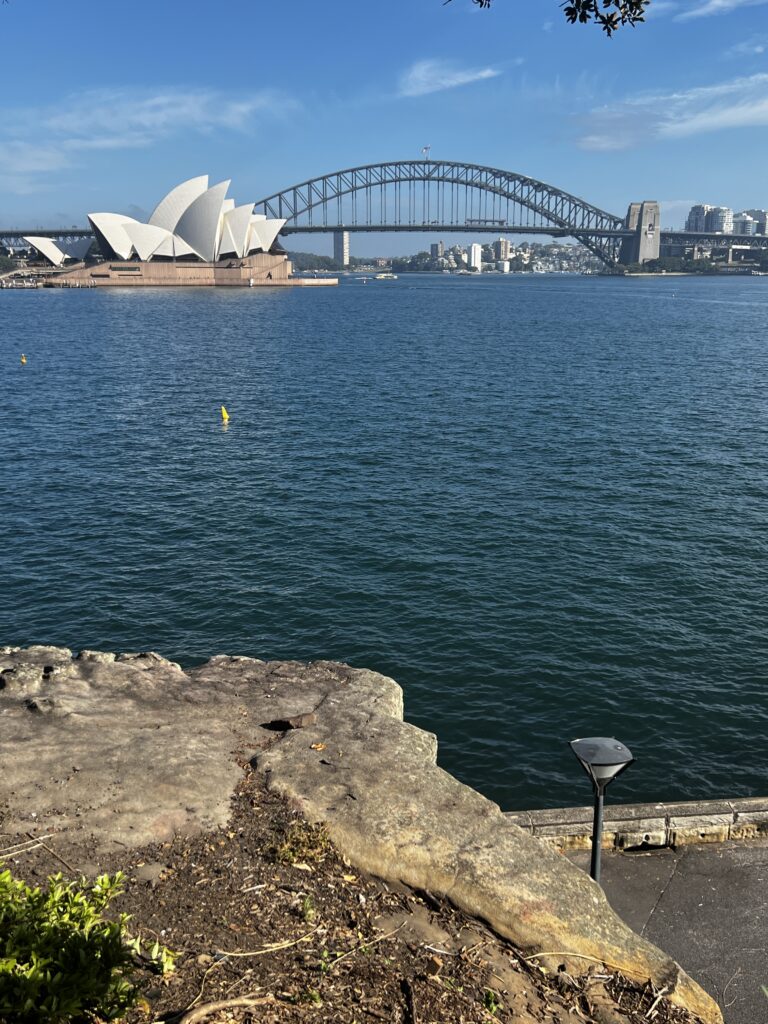
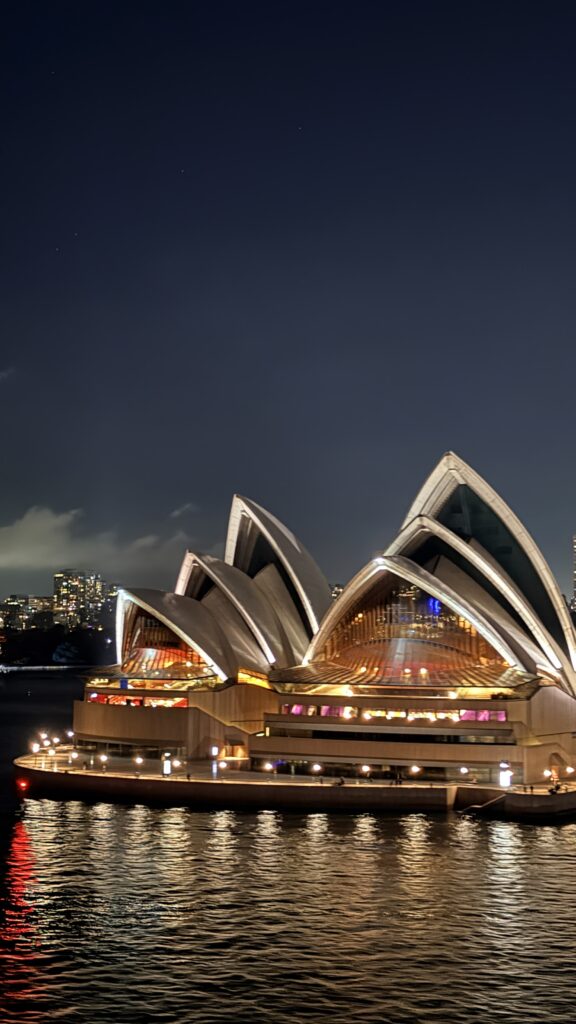
The Sydney Opera House is a multi-venue performing arts centre in Sydney, New South Wales, Australia. Located on the foreshore of Sydney Harbour, it is widely regarded as one of the world’s most famous and distinctive buildings, and a masterpiece of 20th-century architecture.
Designed by Danish architect Jørn Utzon and completed by an Australian architectural team headed by Peter Hall, the building was formally opened by Queen Elizabeth II on 20 October 1973, 16 years after Utzon’s 1957 selection as winner of an international design competition. The Government of New South Wales, led by the premier, Joseph Cahill, authorized work to begin in 1958 with Utzon directing construction. The government’s decision to build Utzon’s design is often overshadowed by circumstances that followed, including cost and scheduling overruns as well as the architect’s ultimate resignation.
The building and its surrounds occupy the whole of Bennelong Point on Sydney Harbour, between Sydney Cove and Farm Cove, adjacent to the Sydney central business district and the Royal Botanic Garden, and near to the Sydney Harbour Bridge.
The building comprises multiple performance venues, which together host over 1,800 performances annually, attended by more than 1.4 million people. Performances are presented by numerous performing artists, with many resident companies such as Opera Australia, the Sydney Theatre Company and the Sydney Symphony Orchestra. As one of the most popular visitor attractions in Australia, the site is visited by more than ten million people annually, and approximately 350,000 visitors take a guided tour of the building each year. The building is managed by the Sydney Opera House Trust, an agency of the New South Wales State Government.
In 2007, the Sydney Opera House became a UNESCO World Heritage Site, having been listed on the (now defunct) Register of the National Estate since 1980, the National Trust of Australia register since 1983, the City of Sydney Heritage Inventory since 2000, the New South Wales State Heritage Register since 2003, and the Australian National Heritage List since 2005. The Opera House was also a finalist in the New 7 Wonders of the World campaign list
Was going to get a sneak photo of David, but he saw me and gave me the awesome David Chen smile. He has been super excited to get to Sydney as he was climbing the Sydney Harbour Bridge today.
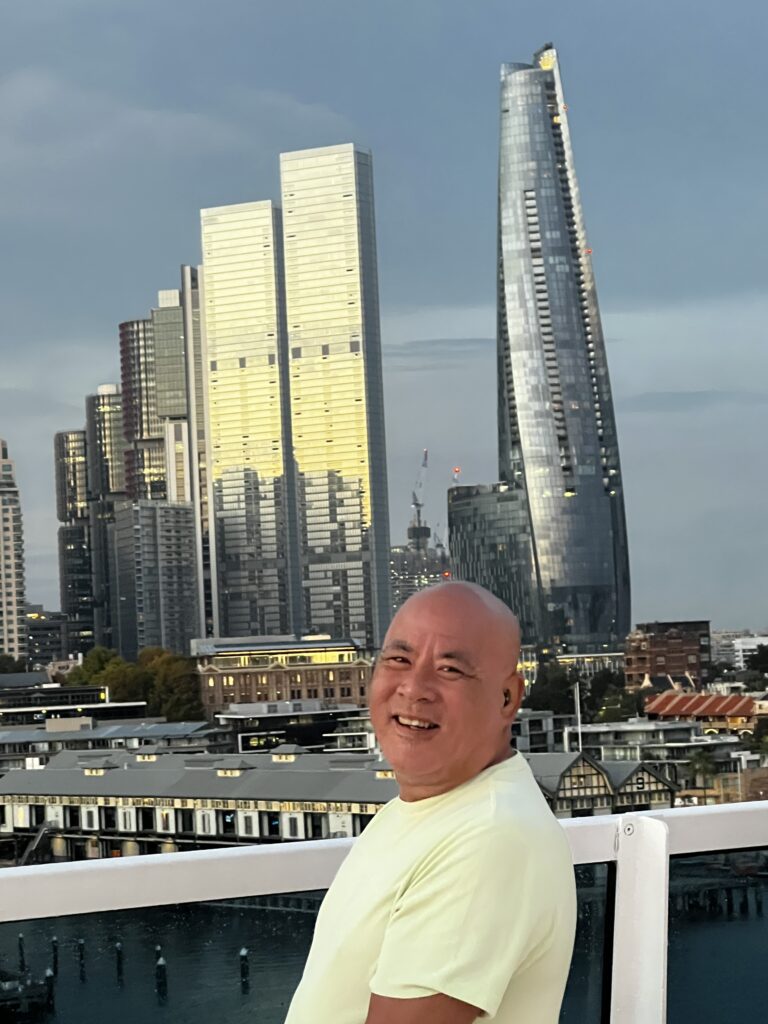
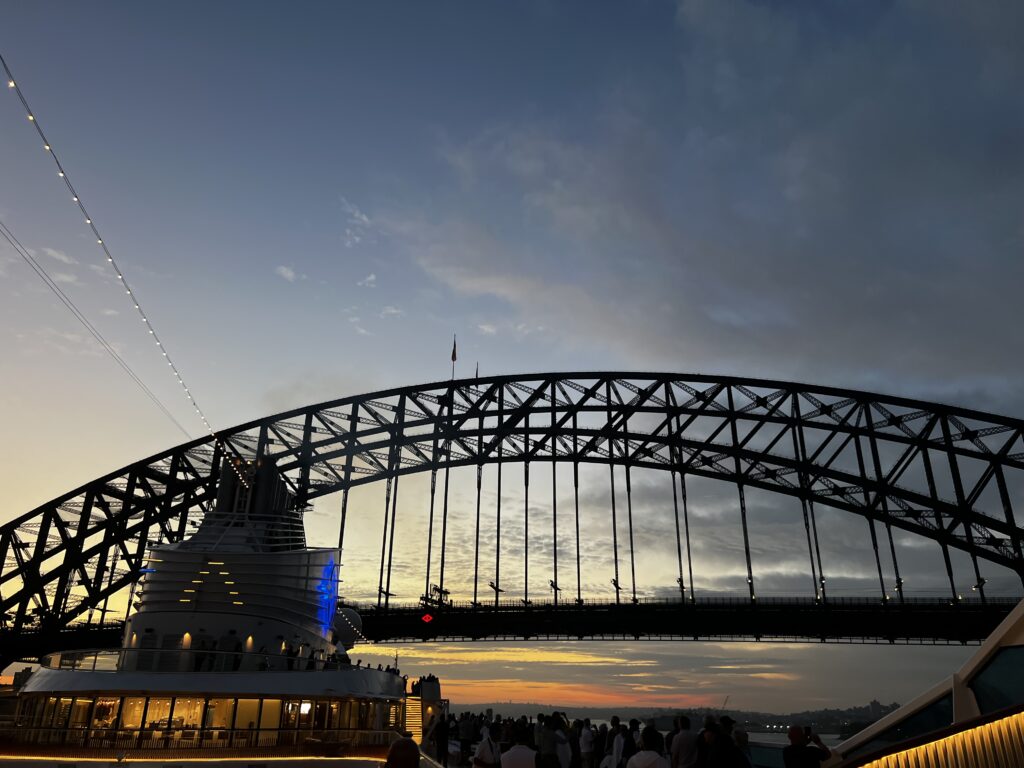
After sailing past the Sydney Opera House, we set our sights on the Sydney Harbour Bridge.
The Sydney Harbour Bridge is a steel through arch bridge in Sydney, Australia, spanning Sydney Harbour from the central business district (CBD) to the North Shore. The view of the bridge, the harbour, and the nearby Sydney Opera House is widely regarded as an iconic image of Sydney, and of Australia itself. Nicknamed “the Coathanger” because of its arch-based design, the bridge carries rail, vehicular, bicycle and pedestrian traffic.
Under the direction of John Bradfield of the New South Wales Department of Public Works, the bridge was designed and built by British firm Dorman Long of Middlesbrough, and opened in 1932. The bridge’s general design, which Bradfield tasked the NSW Department of Public Works with producing, was a rough copy of the Hell Gate Bridge in New York City. The design chosen from the tender responses was original work created by Dorman Long, who leveraged some of the design from its own Tyne Bridge.
It is the eleventh-longest spanning-arch bridge in the world and the tallest steel arch bridge, measuring 134 m (440 ft) from top to water level. It was also the world’s widest long-span bridge, at 48.8 m (160 ft) wide, until construction of the new Port Mann Bridge in Vancouver was completed in 2012.
It was close or it seemed to be close as we sailed under the bridge. I am not sure the Celebrity Solstice would have fit and possibly that is why they were docked downtown and we had to go five miles away.
The Sydney Harbour Bridge – DCCEEW
History of The Sydney Harbour Bridge
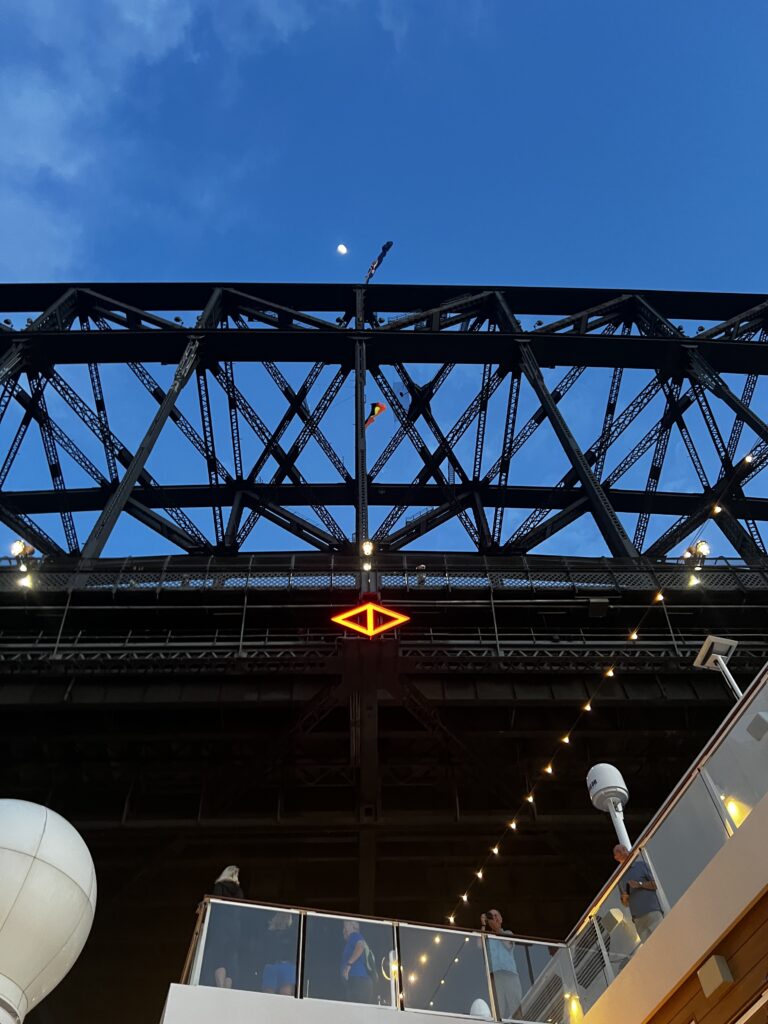
The arch is composed of two 28-panel arch trusses; their heights vary from 18 m (59 ft) at the center of the arch, to 57 m (187 ft) at the ends next to the pylons.
The arch has a span of 504 m (1,654 ft), and its summit is 134 m (440 ft) above mean sea level; expansion of the steel structure on hot days can increase the height of the arch by 18 cm (7.1 in).
The total weight of the steelwork of the bridge, including the arch and approach spans, is 52,800 tonnes (52,000 long tons; 58,200 short tons), with the arch itself weighing 39,000 tonnes (38,000 long tons; 43,000 short tons). About 79% of the steel, specifically those technical sections constituting the curve of the arch, was imported pre-formed from England, with the rest being sourced from the Newcastle Steelworks. On site, Dorman Long & Co set up two workshops at Milsons Point, at the site of the present-day Luna Park, and fabricated the steel into the girders and other required parts.
A photo of the Sydney Opera House and Sydney Harbour Bridge taken later in the day during our tour of the city. The photos do not capture this truly amazing and beautiful scene.
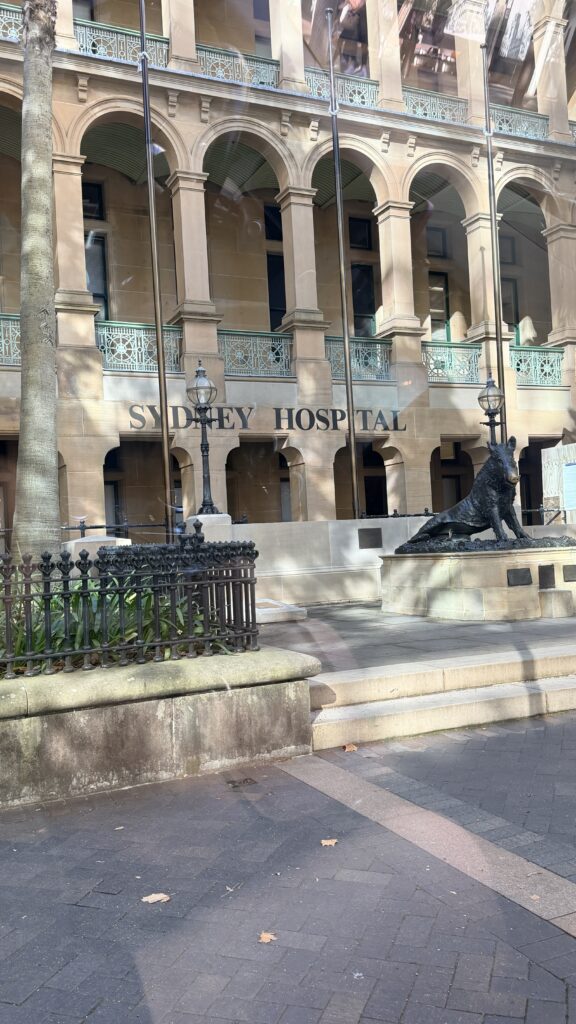
Sydney Hospital, historically known as the Rum Hospital, is a major hospital in Sydney, Australia, located on Macquarie Street in the Sydney central business district. It is the oldest hospital in Australia, dating back to 1788, and has been at its current location since 1811. It first received the name Sydney Hospital in 1881.
Currently the hospital comprises 113 inpatient beds. There are about 400 staff members. Specialist services attract patients from all over New South Wales. It specializes in ophthalmology and hand surgery and is a referral hospital for patients requiring these services. It also houses a rudimentary 6-bed Emergency Department.
Sydney Hospital became a teaching hospital of the University of Sydney in 1909. Sydney Hospital is associated with Sydney Medical School of the University of Sydney through the Discipline of Clinical Ophthalmology and Eye Health and Save Sight Institute.[2] It is also the location of a number of research institutes associated with the University, including the Heart Research Institute, the Centenary Institute for Cancer Medicine and Cell Biology, the Kanematsu Memorial Institute of Pathology and the General Endocrinology Group.
1788 and the Tent Hospital
Many of the 736 convicts who survived the voyage of the First Fleet from Portsmouth, England arrived suffering from dysentery, smallpox, scurvy, and typhoid. Soon after landing Governor Phillip and Surgeon-General John White established a tent hospital along what is now George Street in The Rocks to care for the worst cases. Subsequent convict boatloads had even higher rates of death and disease. A portable hospital which was prefabricated in England from wood and copper arrived in Sydney with the Second Fleet in 1790. Present-day Nurses Walk in The Rocks cuts across where the site of the early hospital once was. John White was Surgeon-General at Sydney Cove between 1788 and 1794.
Upon his arrival in the Colony of New South Wales at the beginning of 1810, Governor Macquarie discovered that the Sydney Cove’s hospital was an affair of tents and temporary buildings. Macquarie set aside land on the western edge of the Government Domain for a new hospital and created a new road – Macquarie Street – to provide access to it. Plans were drawn up but the British Government refused to provide funds to build the hospital. Consequently, Macquarie entered into a contract with a consortium of businessmen–Garnham Blaxcell, Alexander Riley and, later, D’Arcy Wentworth–to erect the new hospital. They were to receive convict labour and supplies and a monopoly on rum imports from which they expected to recoup the cost of the building and gain considerable profits. The contract allowed them to import 45,000 (later increased to 60,000) gallons of rum to sell to colonists and was signed on 6 November 1810. In the event, the hospital did not turn out to be very profitable for the contractors. Convict patients were transferred to Governor Macquarie’s new hospital in 1816.
It is unclear who prepared the design for the three Old Colonial Georgian buildings comprising the Sydney Hospital complex, but there were apparently many involved with its construction. There is speculation that both Governor Macquarie and John O’Hearen contributed to the design. John O’Hearen is probably the stronger contender for being the building’s designer, for he not only defended the methods of its construction against critics but also signed himself as ‘Architect’ in related correspondence.
As the hospital was nearing completion in 1815, the now famous convict architect Francis Greenway was asked to report on the quality of the work. He condemned it, claiming that it “must soon fall into ruin”. Short-cuts had been taken with the construction and there were weak joints in the structural beams, rotting stonework, feeble foundations, and dry rot in the timbers. Macquarie ordered the contractors to remedy these defects but by 1820 the southern wing was deemed particularly unsafe, with reports that some of it had collapsed and had to be rebuilt. Around this time, Greenway was commissioned to undertake repairs to both the wings of the hospital, including alterations to the roof of the southern wing and the rearrangement of its internal spaces. More substantial repairs were carried out on the southern wing in 1826. Many defects present from the original construction remained hidden away until the extensive restoration of the 1980s.
Sydney Hospital & Sydney Eye Hospital | South Eastern Sydney Local Health District
We both laughed and said “We do not miss this” 🙂
Il Porcellino, meaning ‘the little pig’, is a larger than life-sized bronze wild boar, anatomically realistic and resting on its left haunch and front legs. It sits outside Sydney Hospital, facing Macquarie Street. People rub the nose of the pig for good luck and good health
We met Nicole after getting off the ship and started our tour of the city with a visit to the Royal Botanic Gardens. On our return to Sydney next week we will capture photos of the gardens.
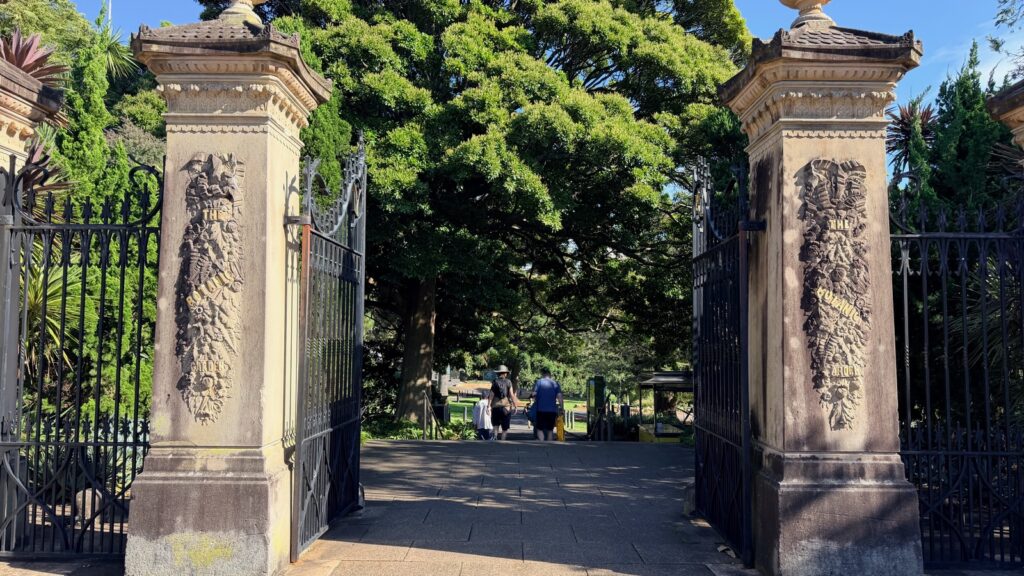
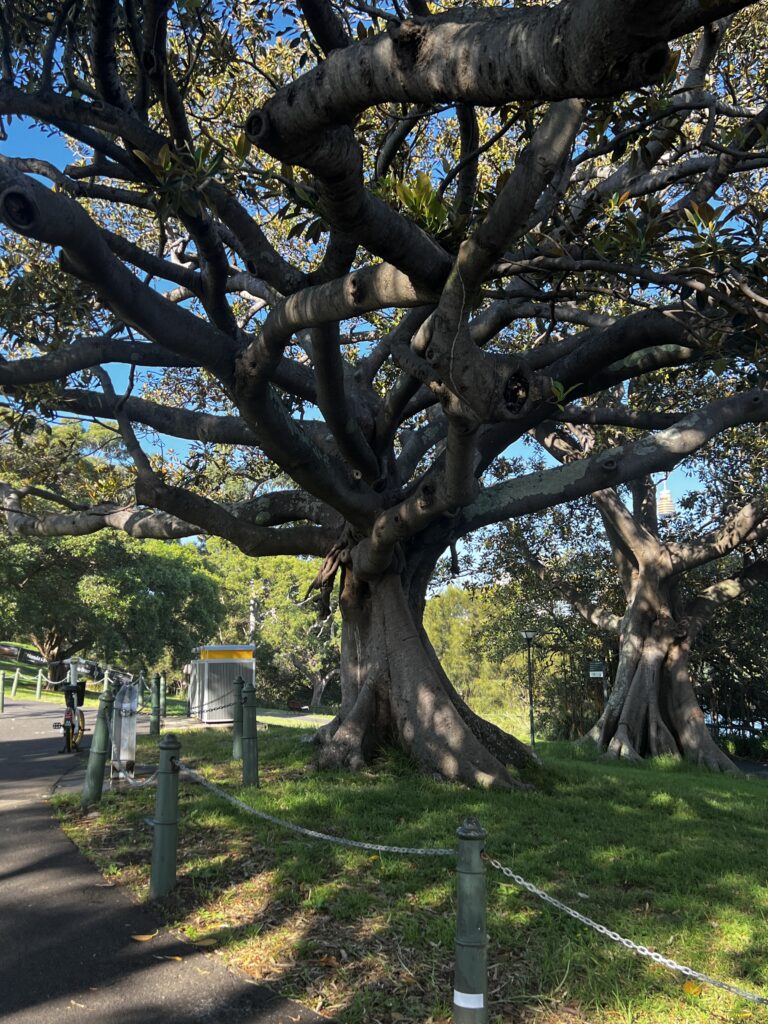
Below is a FIG tree, definitely not a Fig tree from down the bayou.
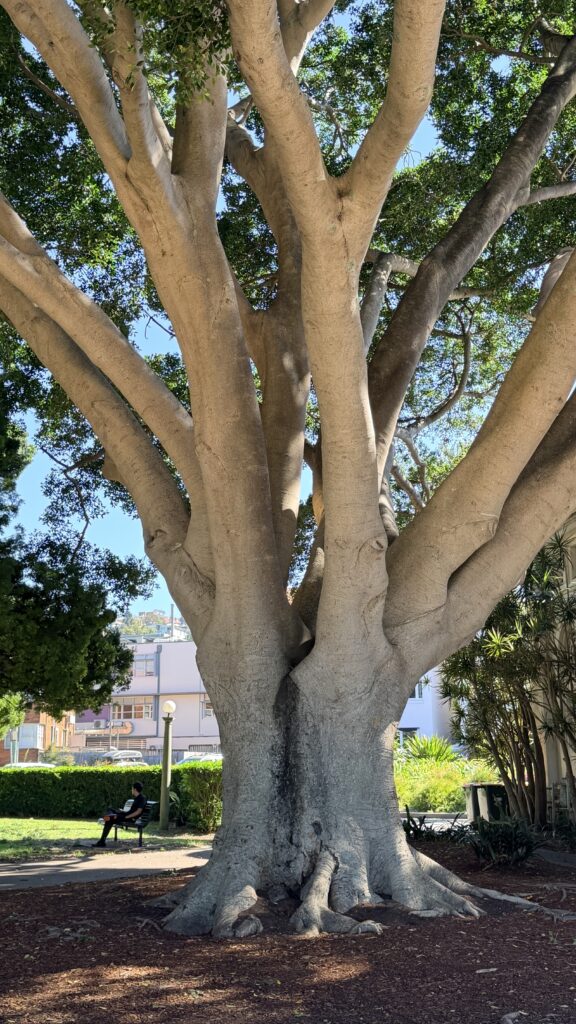
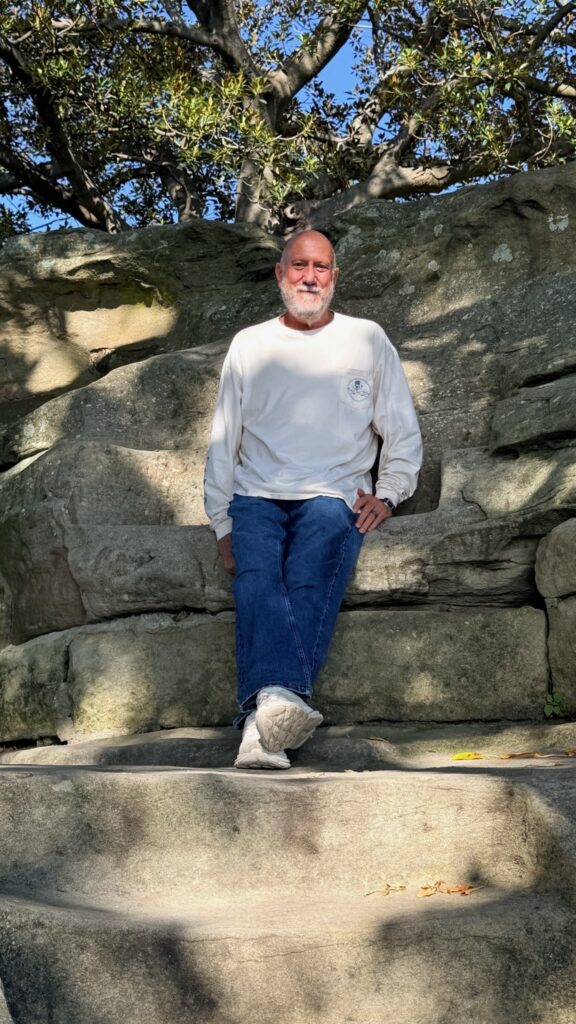
Mrs Macquarie’s Chair is a Sydney landmark. The chair was carved out of a sandstone rock ledge by convicts in 1810. Specially commissioned by Governor Macquarie for his wife Elizabeth who was known to love the area this is one of the best vantage points to view the sights of Sydney Harbour.
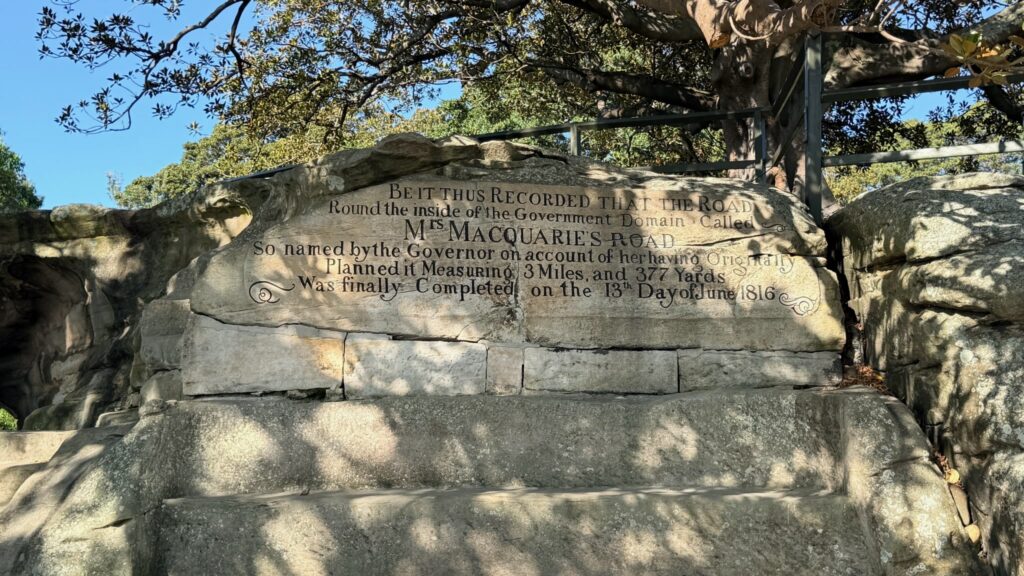
Nicole told us that Mrs. Macquarie really missed England and would sit here waiting and watching for ships arriving from England. Her husband had convicts construct a place for her to sit to look for the ships.
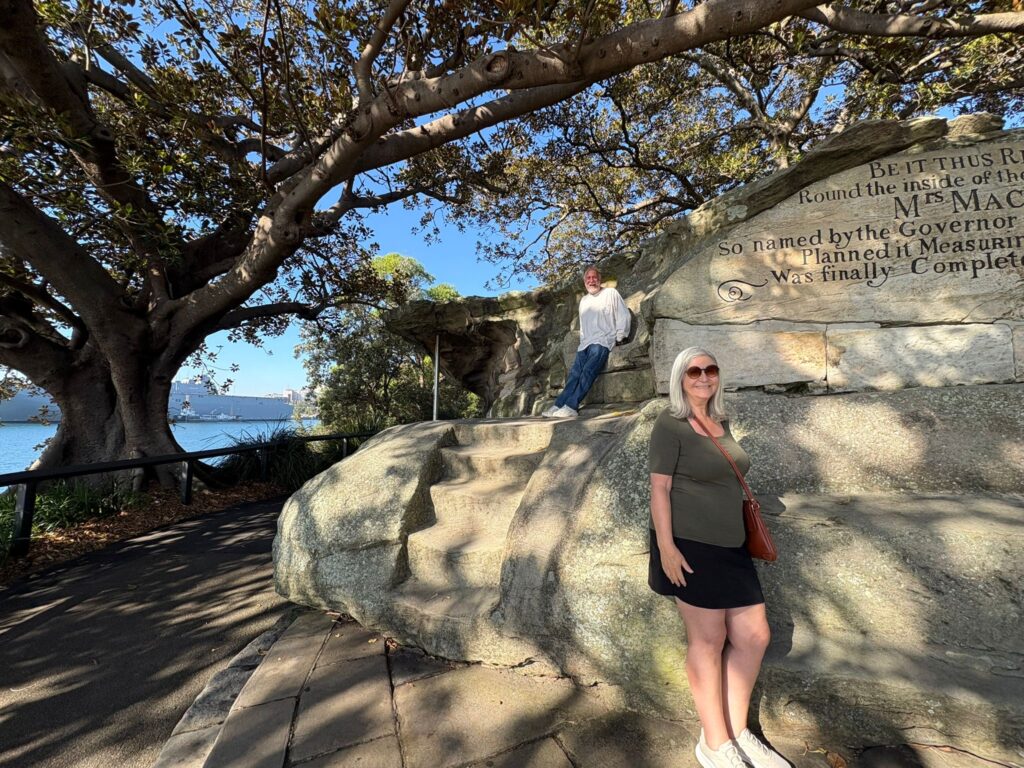
Lane sitting in Mrs. Macquarie’s chair
After leaving this area Nicole took us to The Sydney Opera House for our 9:30am tour which lasted a hour. We were six inches off the ground as we walked through this magnificent building on the tour.
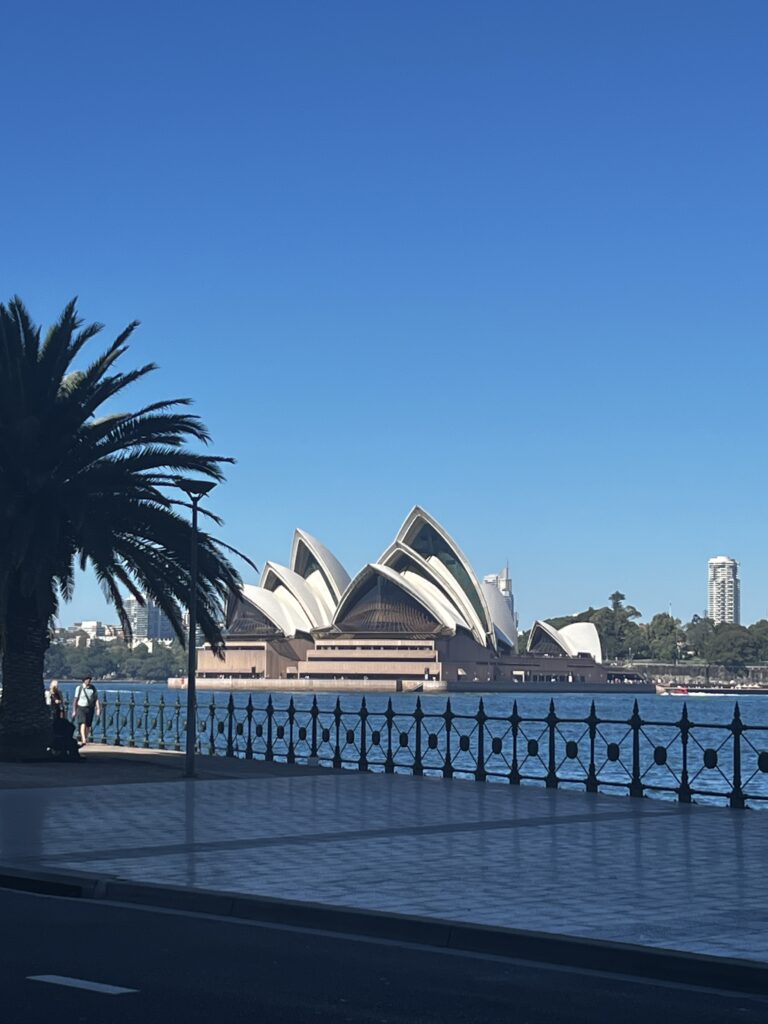
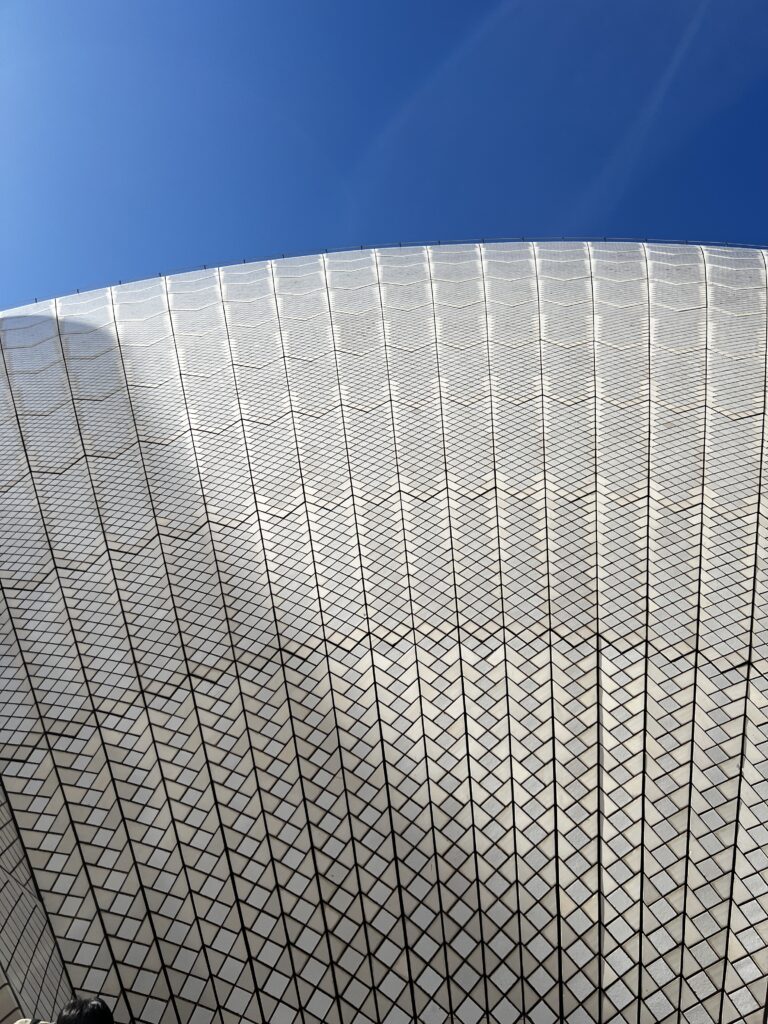
The facility features a modern expressionist design, with a series of large precast concrete “shells”, each composed of sections of a sphere of 75.2 meters (246 ft 8.6 in) radius, forming the roofs of the structure, set on a monumental podium. The building covers 1.8 hectares (4.4 acres) of land and is 183 m (600 ft) long and 120 m (394 ft) wide at its widest point. It is supported on 588 concrete piers sunk as much as 25 m (82 ft) below sea level. The highest roof point is 67 meters above sea-level which is the same height as that of a 22-storey building. The roof is made of 2,194 pre-cast concrete sections, which weigh up to 15 tons each.
Although the roof structures are commonly referred to as “shells” (as in this article), they are precast concrete panels supported by precast concrete ribs, not shells in a strictly structural sense. Though the shells appear uniformly white from a distance, they actually feature a subtle chevron pattern composed of 1,056,006 tiles in two colors: glossy white and matte cream. The tiles were manufactured by the Swedish company Höganäs AB which generally produced stoneware tiles for the paper-mill industry.
Apart from the tile of the shells and the glass curtain walls of the foyer spaces, the building’s exterior is largely clad with aggregate panels composed of pink granite quarried at Tarana. Significant interior surface treatments also include off-form concrete, Australian white birch plywood supplied from Wauchope in northern New South Wales, and brush box glulam.
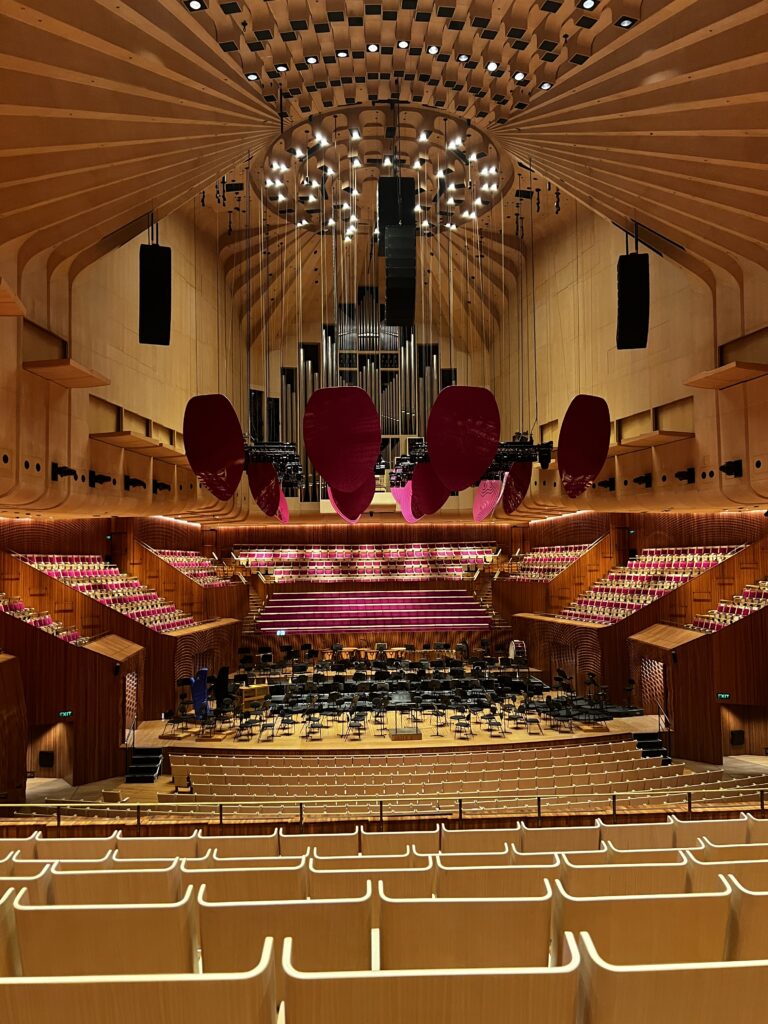
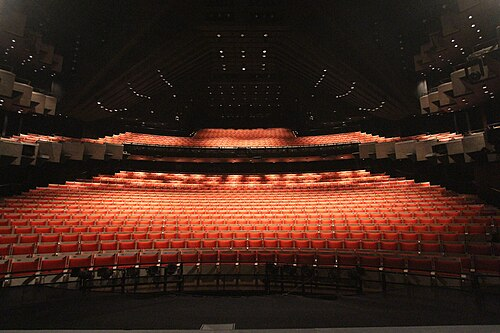
Concert Hall: With 2,679 seats, the home of the Sydney Symphony Orchestra and used by a large number of other concert presenters. It contains the Sydney Opera House Grand Organ, the largest mechanical tracker action organ in the world, with over 10,000 pipes. We will return to the concert hall next Wednesday evening when we attend a symphony performance.
Drama Theatre: A proscenium theatre with 544 seats, used by the Sydney Theatre Company and other dance and theatrical presenters.
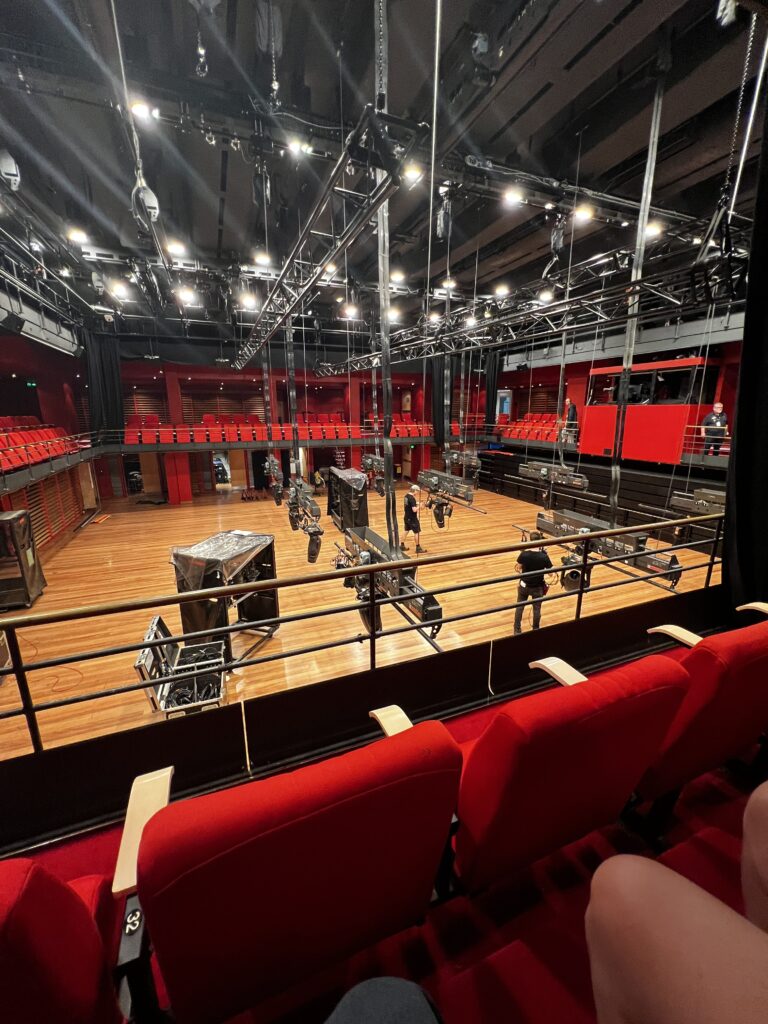
Joan Sutherland Theatre: A proscenium theatre with 1,507 seats, the Sydney home of Opera Australia and The Australian Ballet. Until 17 October 2012 it was known as the Opera Theatre. We will return to this theatre next Friday for a ballet performance called Flora. Since I was late in Oslo, maybe I can audition on Friday night? 🙂
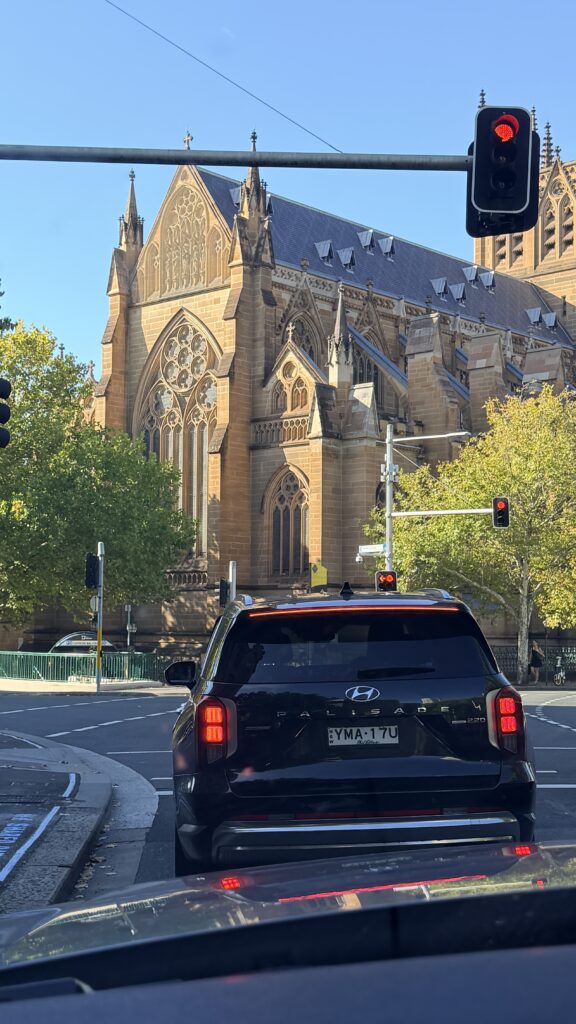
We only caught a glimpse of St. Mary’s Church while driving but we will return next week to take a look inside.
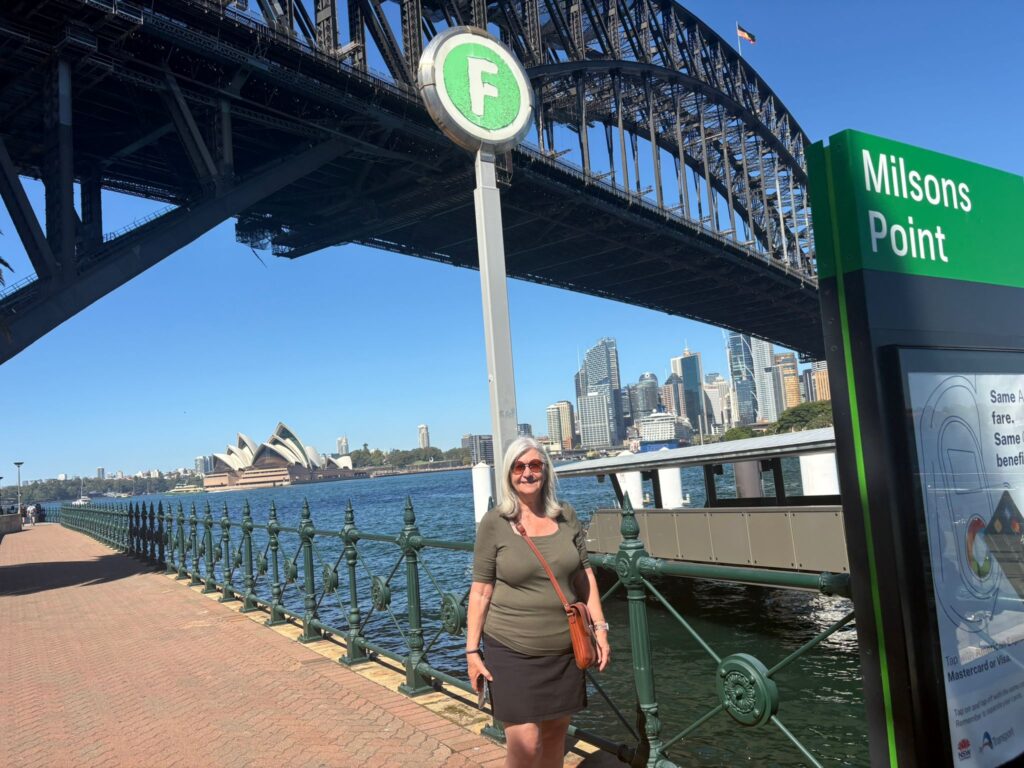
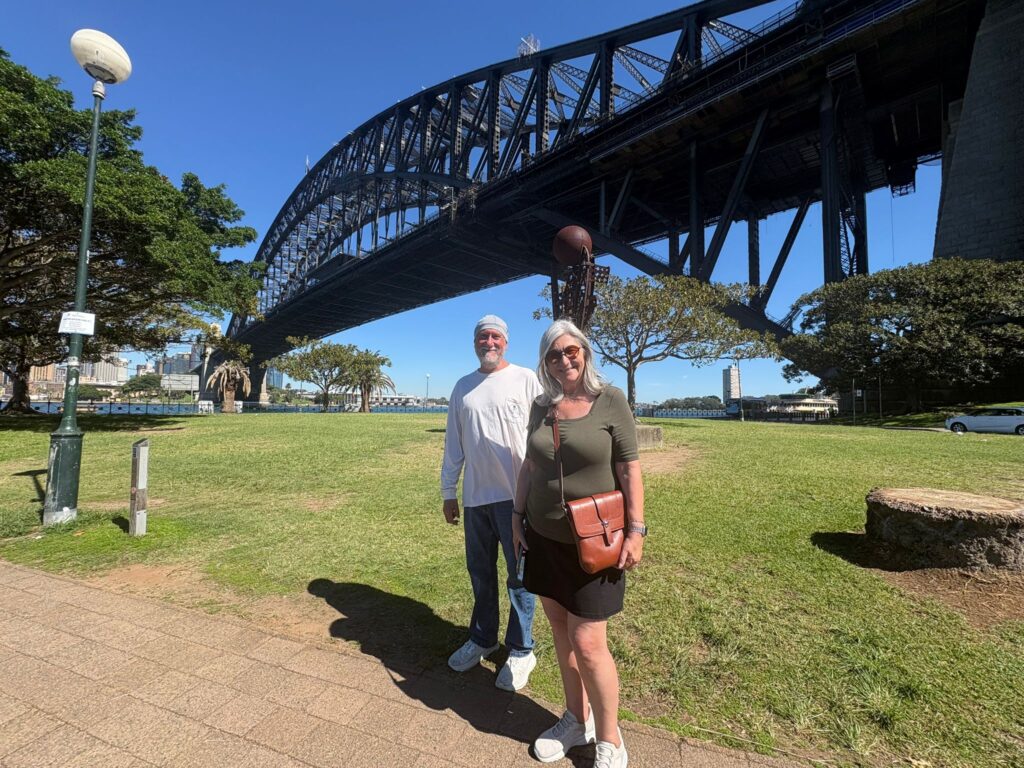
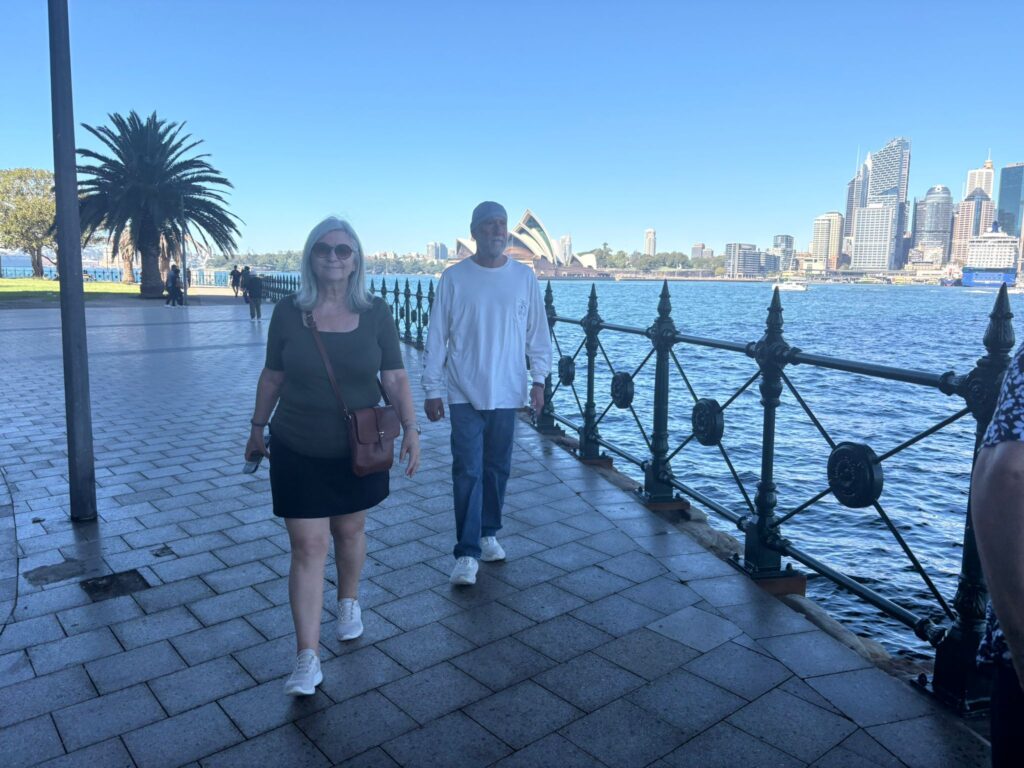
After our visit to the Sydney Opera House, we walked along the harbor under and around the Sydney Harbour Bridge. It was fun as Nicole took photos and videos of us walking around. People were looking at us trying to figure who was this famous couple. 🙂
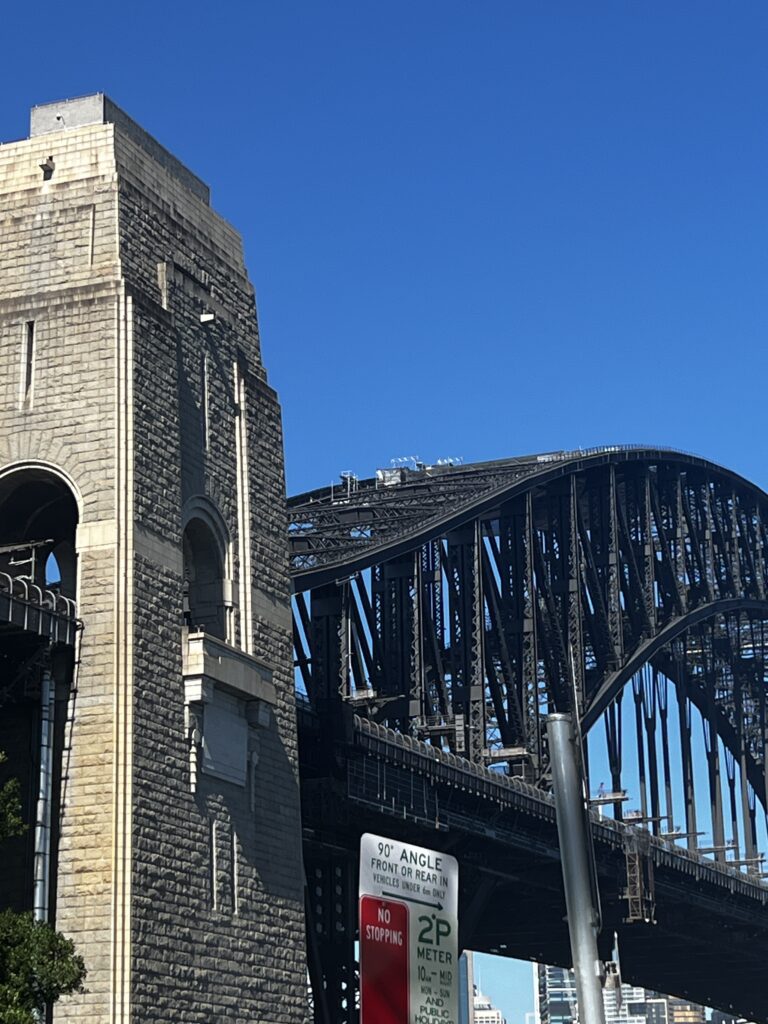
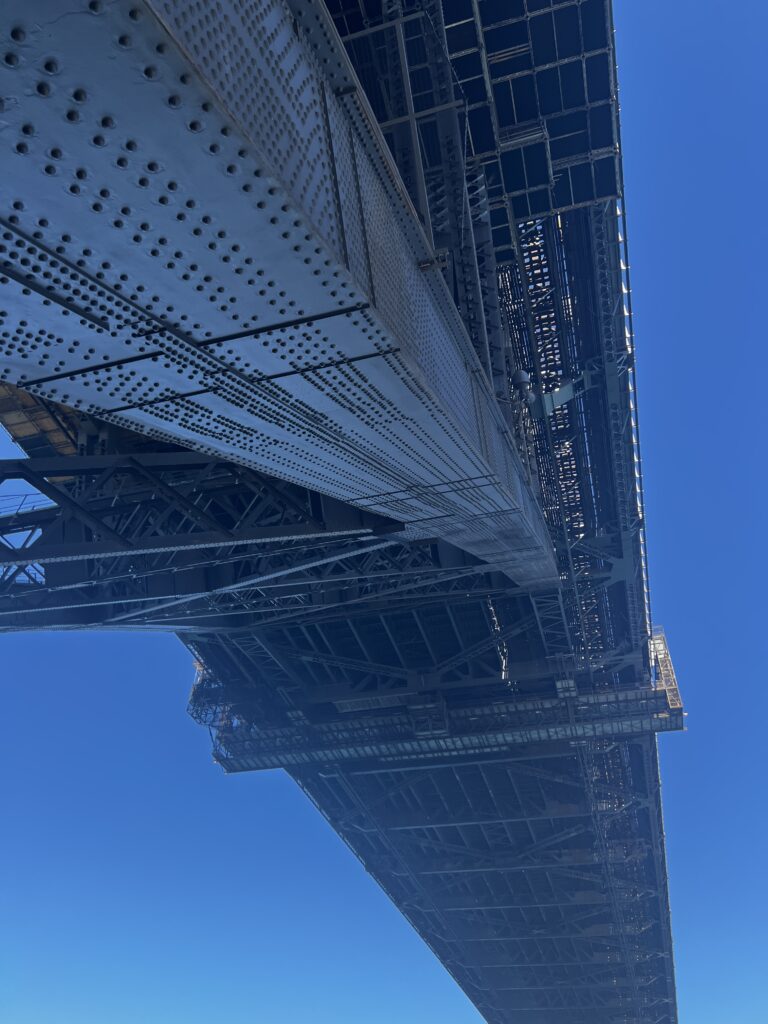
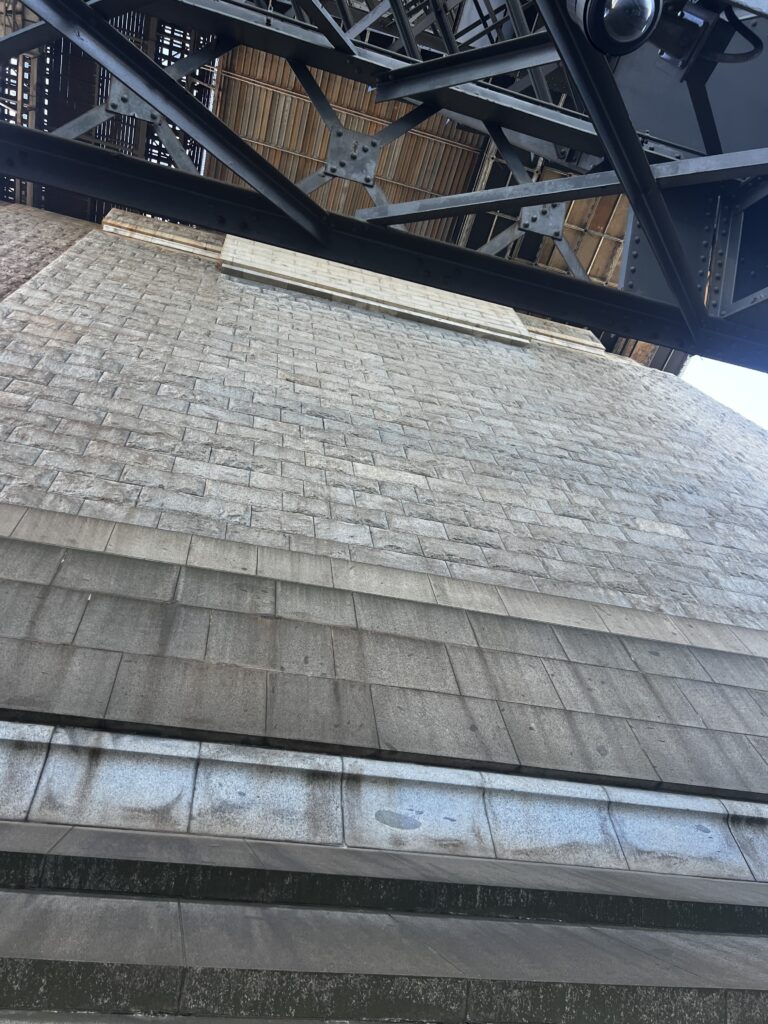
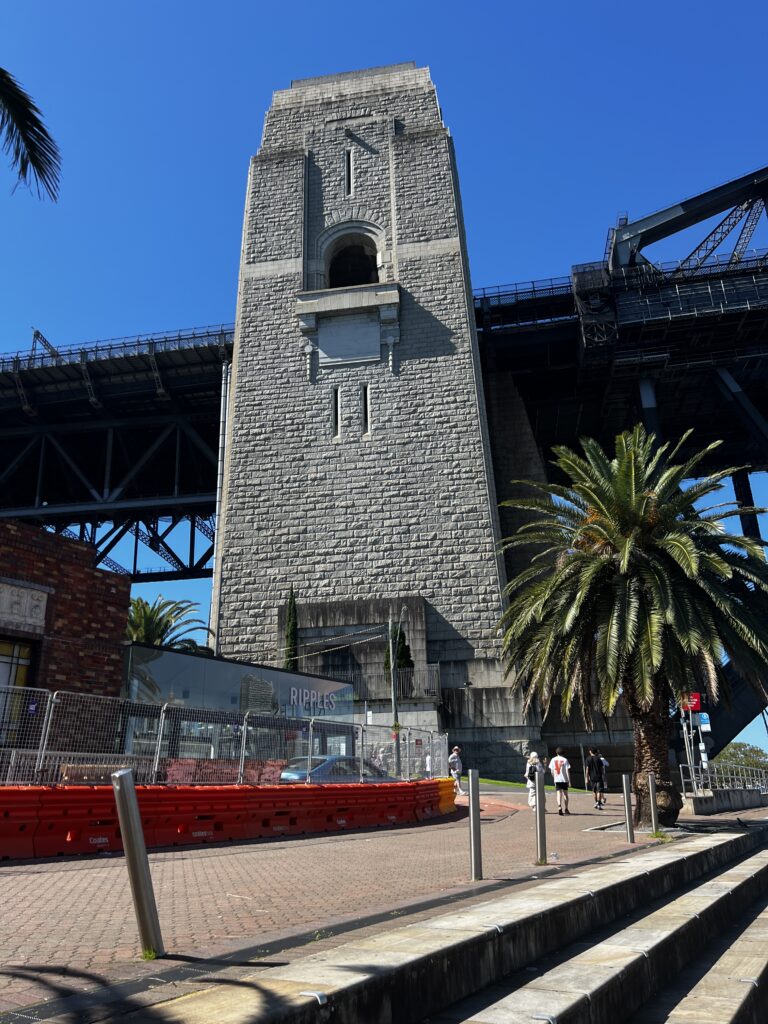
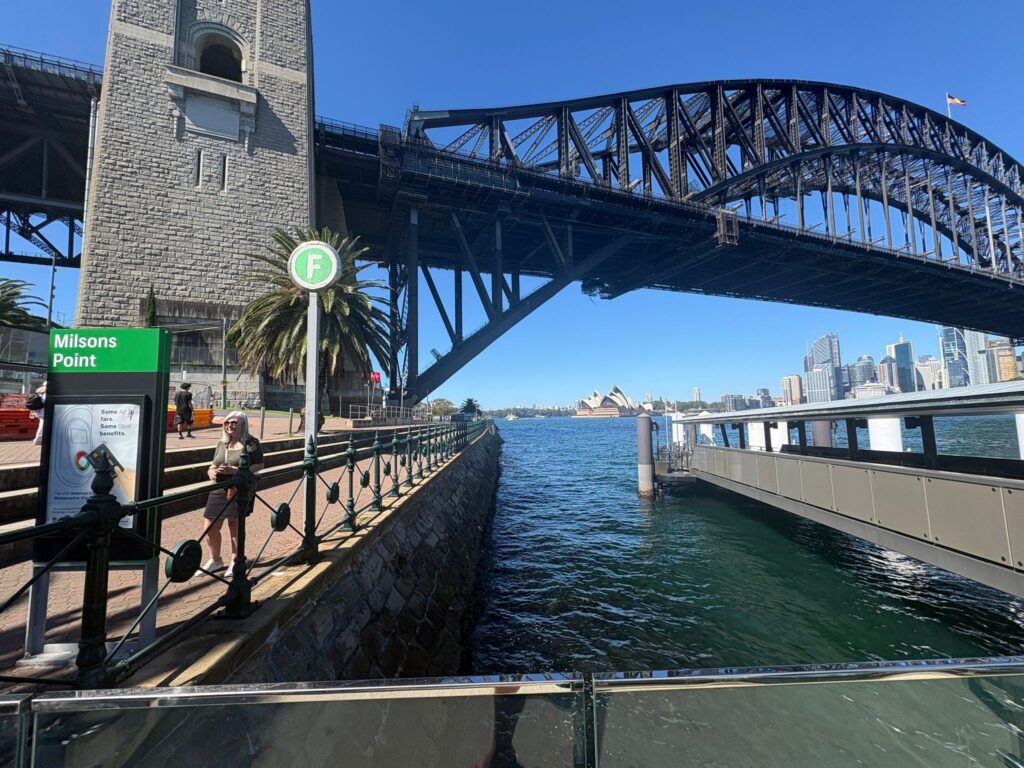
Prior to the opening of the Sydney Harbour Bridge in 1932, the waterways of the harbour linked north and south Sydney. Row boats and ferries crossed the harbour as a way of life, forever establishing the lower shores of North Sydney as a major transport hub.
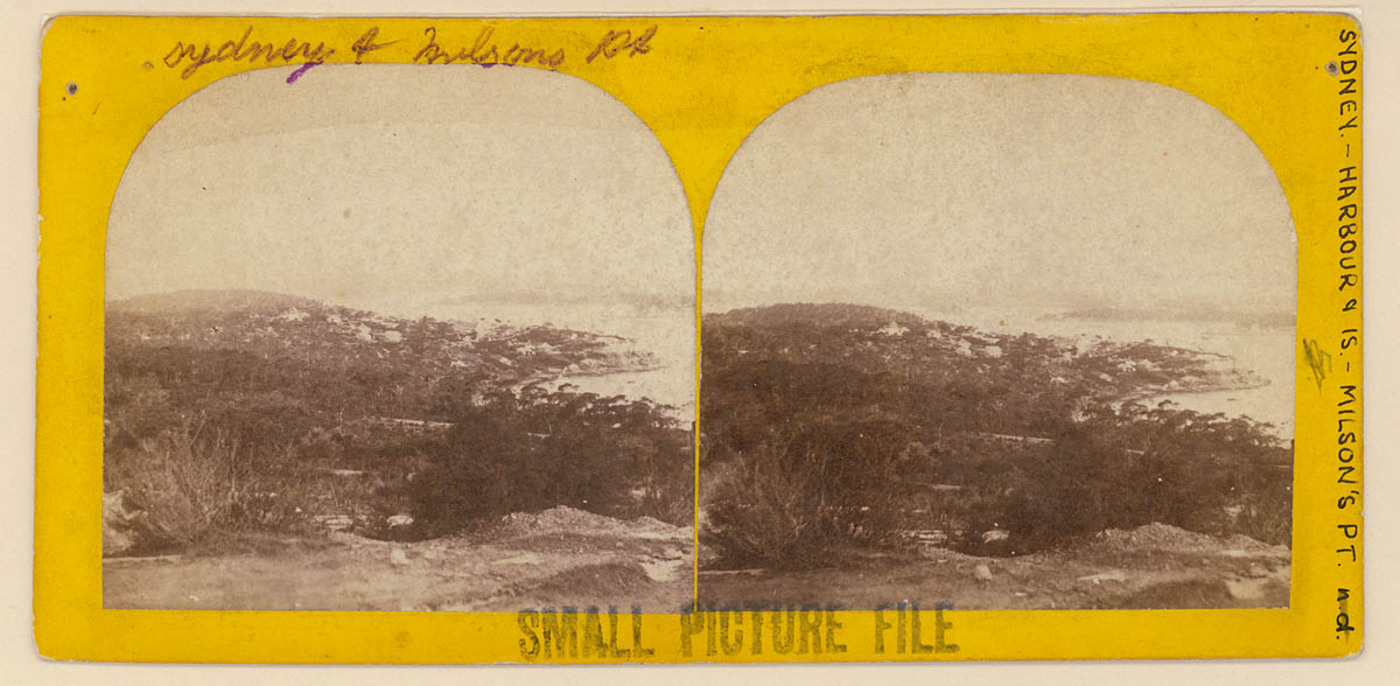
The original inhabitants of these foreshores, rocky cliffs and points were known as the Cammeraygal. Their land covered most of the lower north shore and included the area of Milsons Point and Kirribilli. As early as the 1790s, soon after European settlement in Port Jackson, large land grants displaced the Cammeraygal, as did the land granted to James Milson for whom Milsons Point is named. Watkin Tench rightly observed ‘that the Cammeraygal possessed the best fishing grounds in Port Jackson.’ Perhaps this accounts for its Aboriginal name, for the Cammeraygals knew this land as Kiarabilli or Kiarabilly, believed to translate into English as ‘a good fishing spot.’
Milsons Point and Kirribilli form part of the bay and peninsula on the lower edge of North Sydney, located under the northern approaches of the Sydney Harbour Bridge. Milsons Point is to the bridge’s west and Kirribilli to its east. The point is located in North Sydney Council boundaries and, prior to 1890, it was within the boundaries of the Borough of East St Leonards.
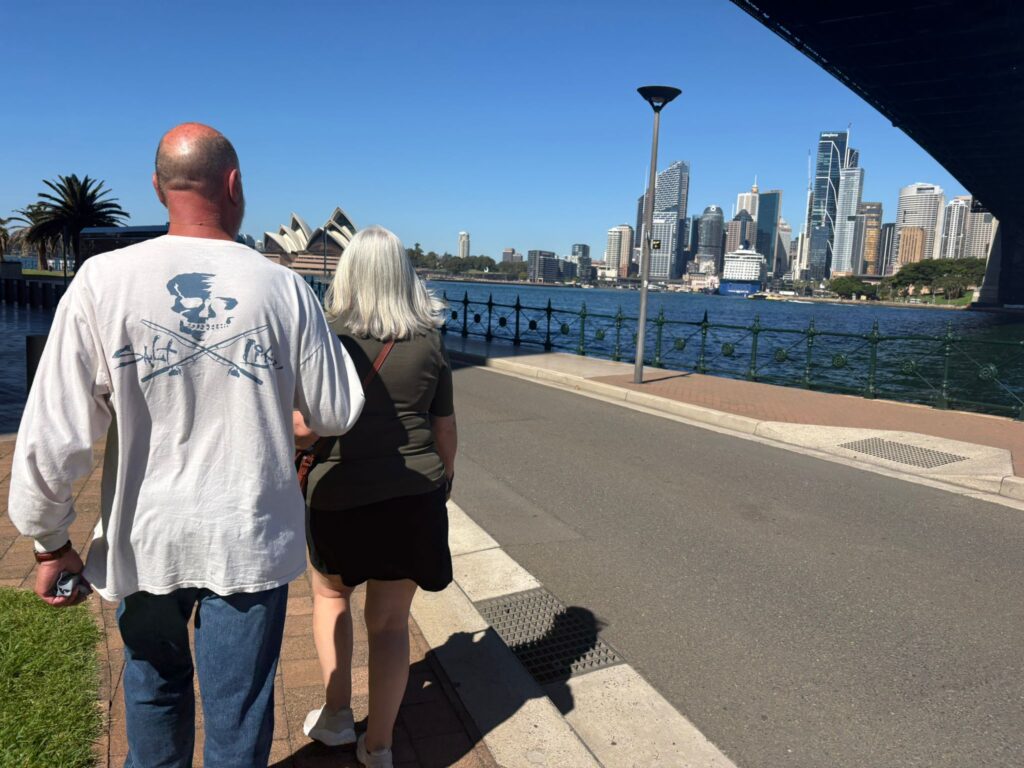
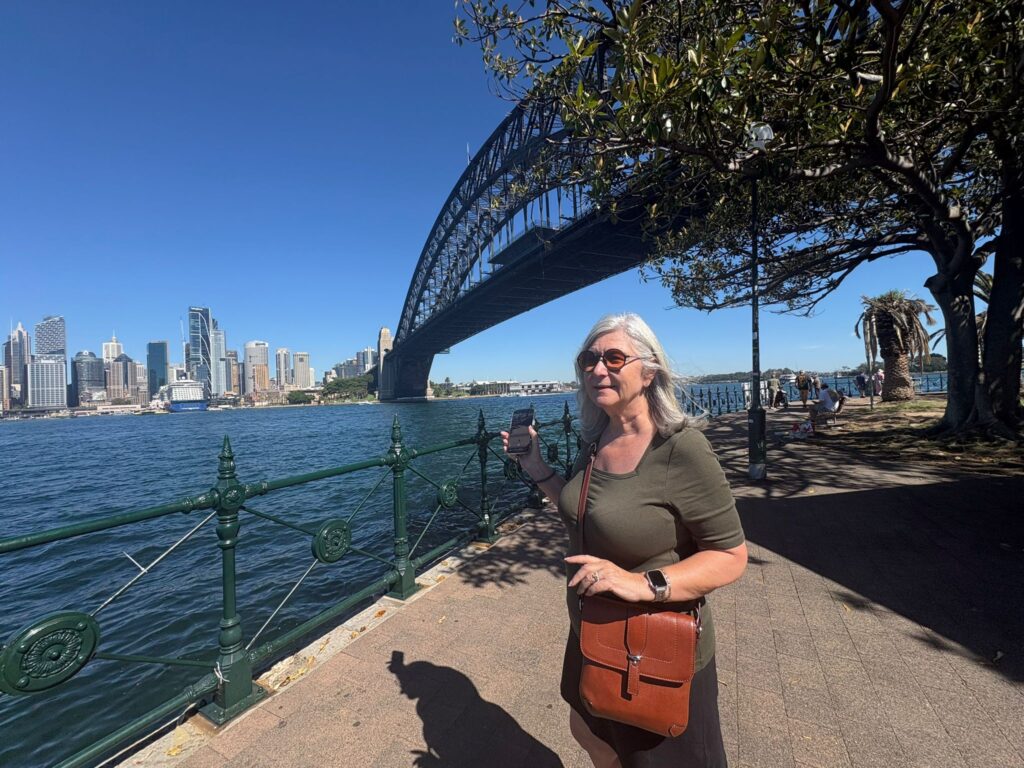
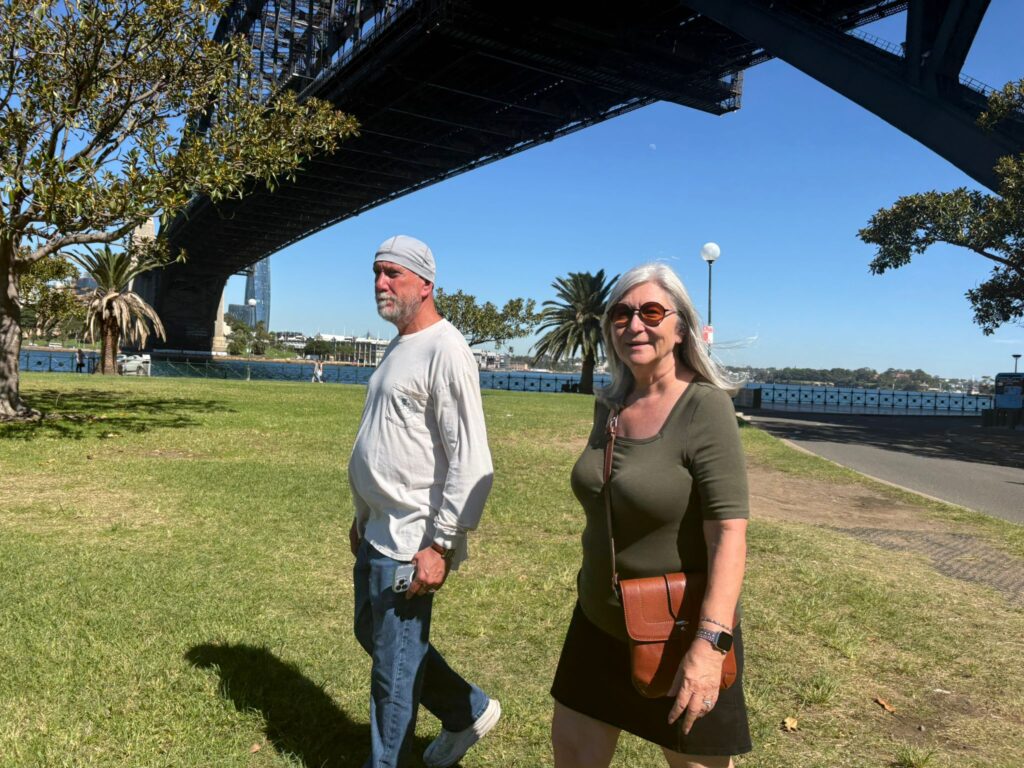
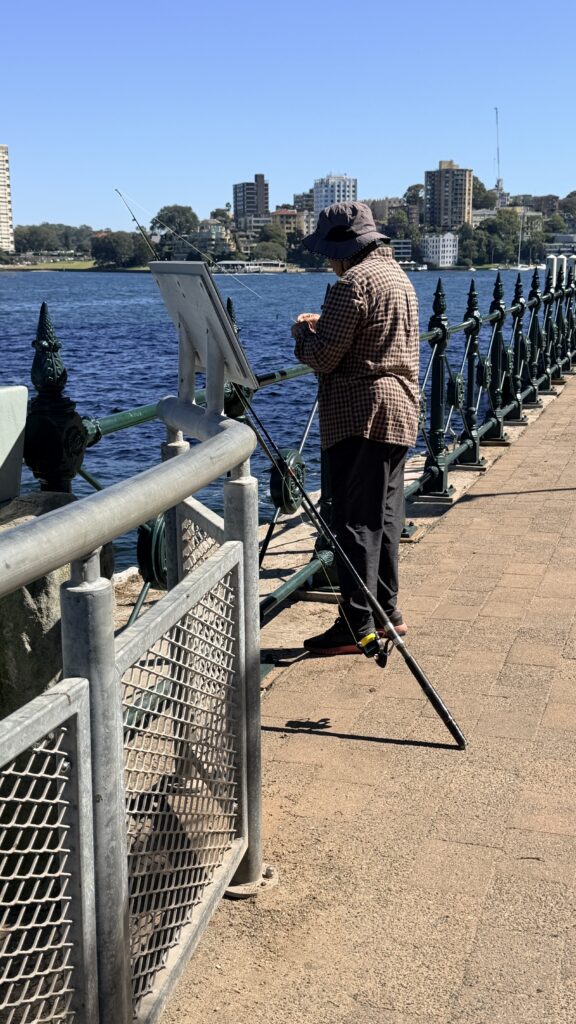
Knowing that Marie and David both loved to fish, seeing this man fishing brought a smile to our faces. I wanted to get a photo of his face for the Faces Around the World section, but he was tying a hook to his line so I didn’t bother him.
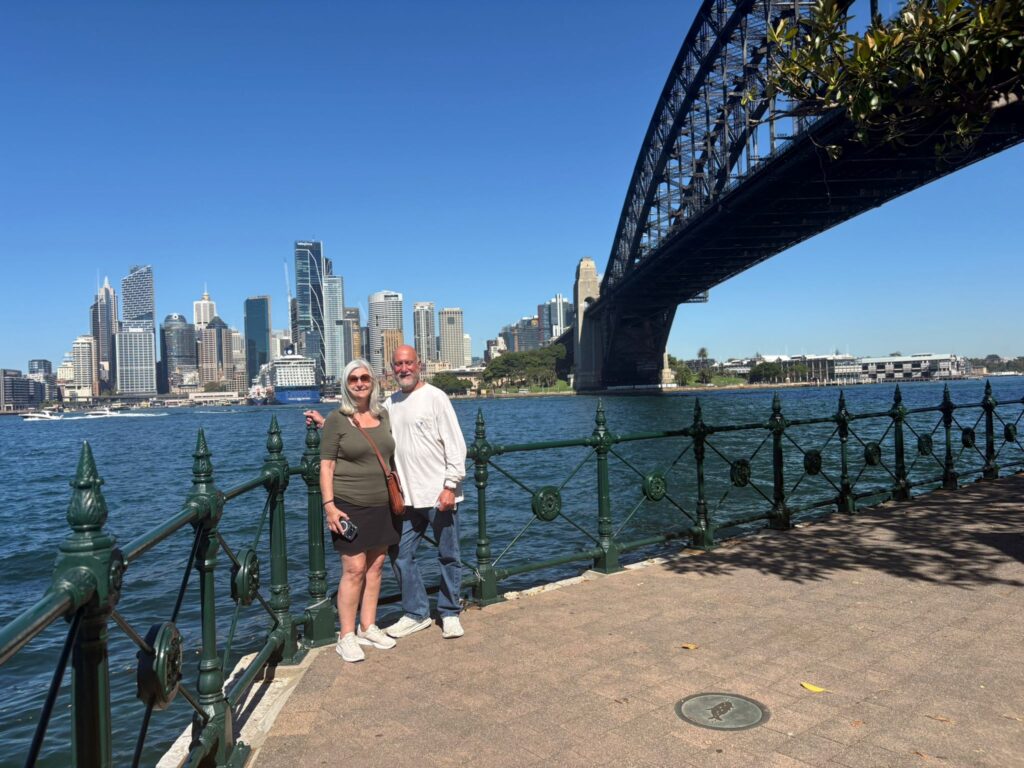
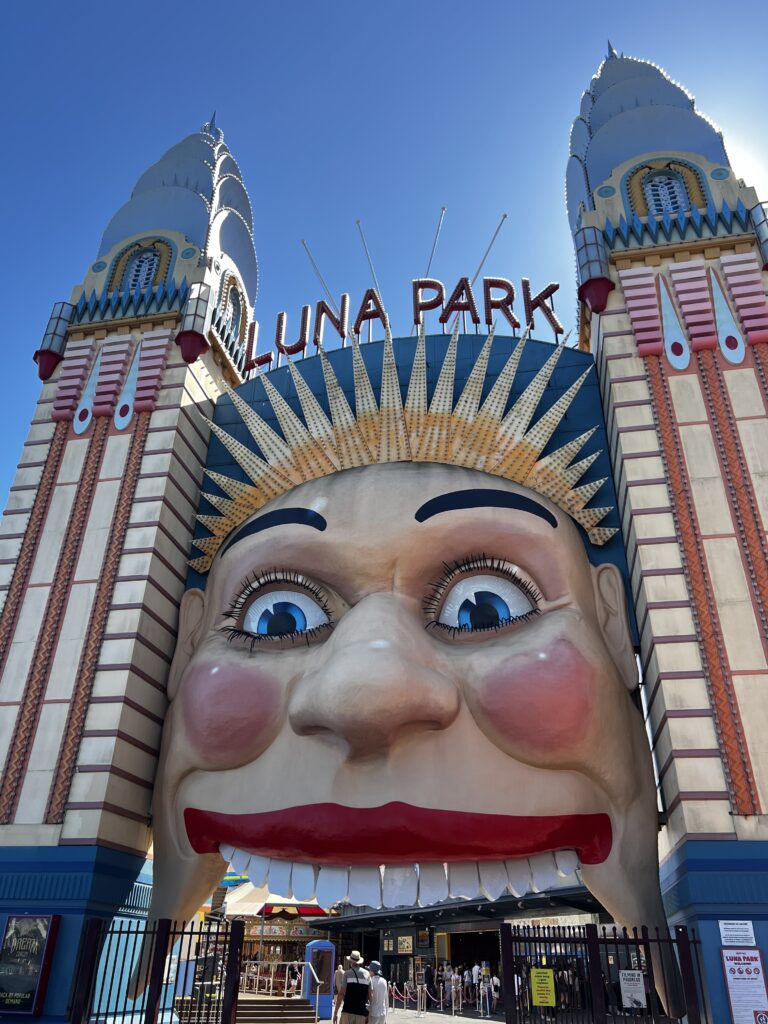
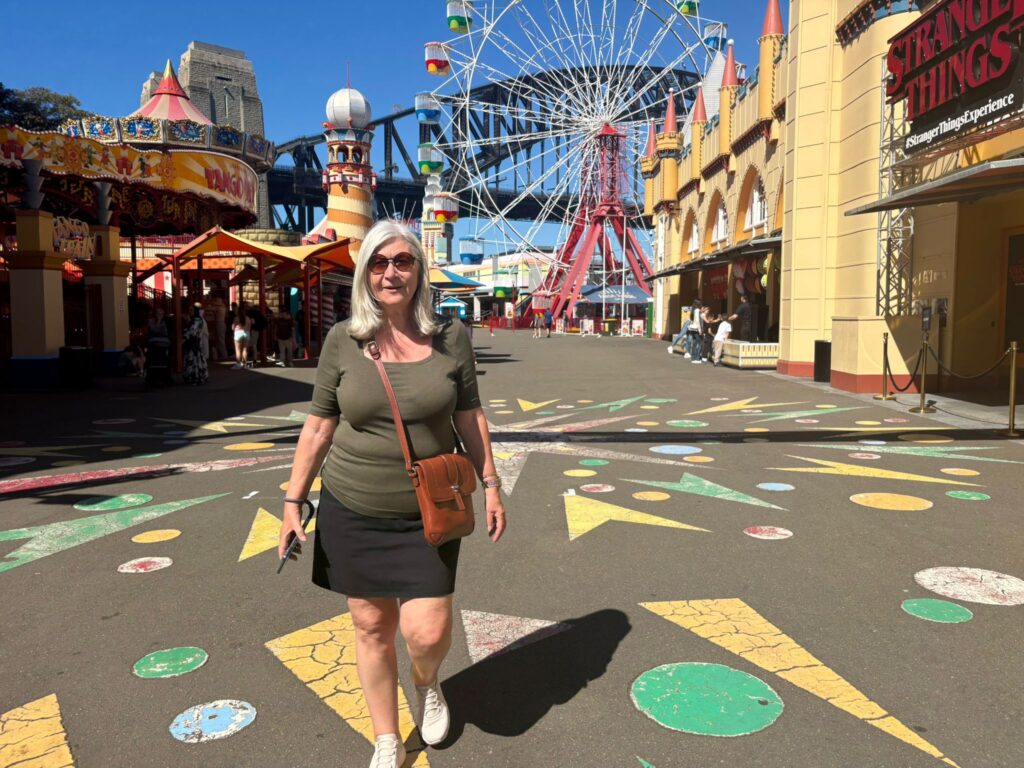
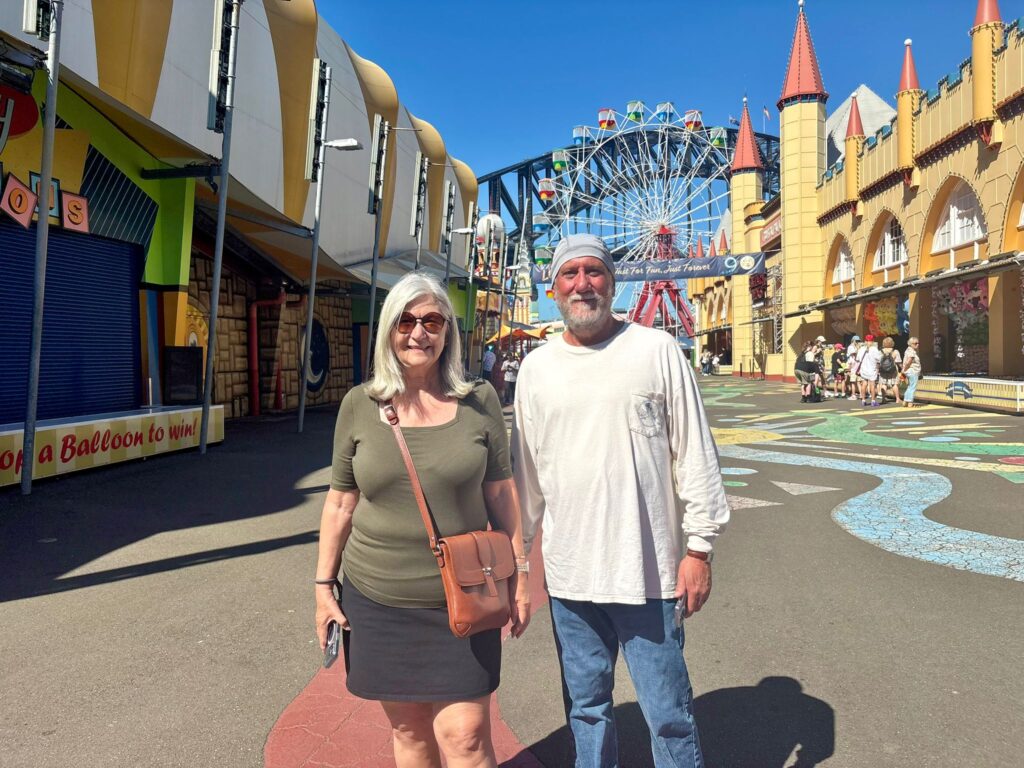
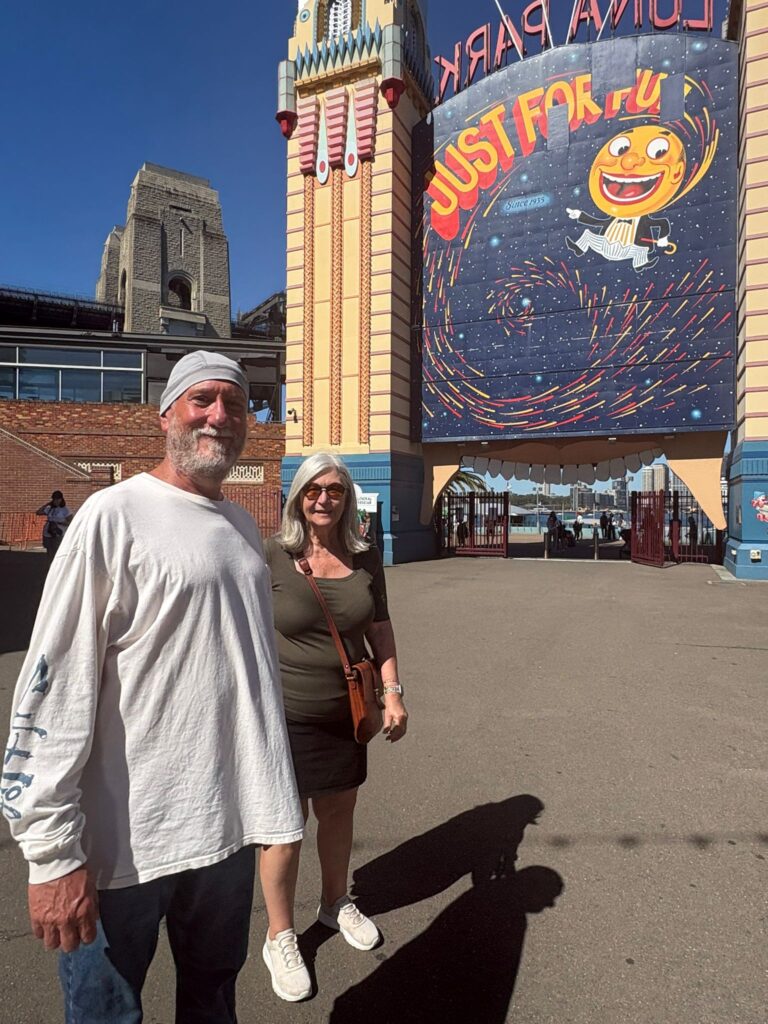
As we walked along the harbour the next stop was Luna Park.
With spectacular views of the harbour, Sydney’s much-loved Luna Park is a rare heritage-listed Amusement Park and one of it’s kind in the southern hemisphere. Since the 1930s, Luna Park Sydney has been part of the social and cultural fabric of Sydney – entertaining many generations with rides, entertainment and all-new immersive experiences.
Jackie has some great photos and videos in her Facebook post. I will try and link her video here (fingers crossed it works and if not, please let me know).
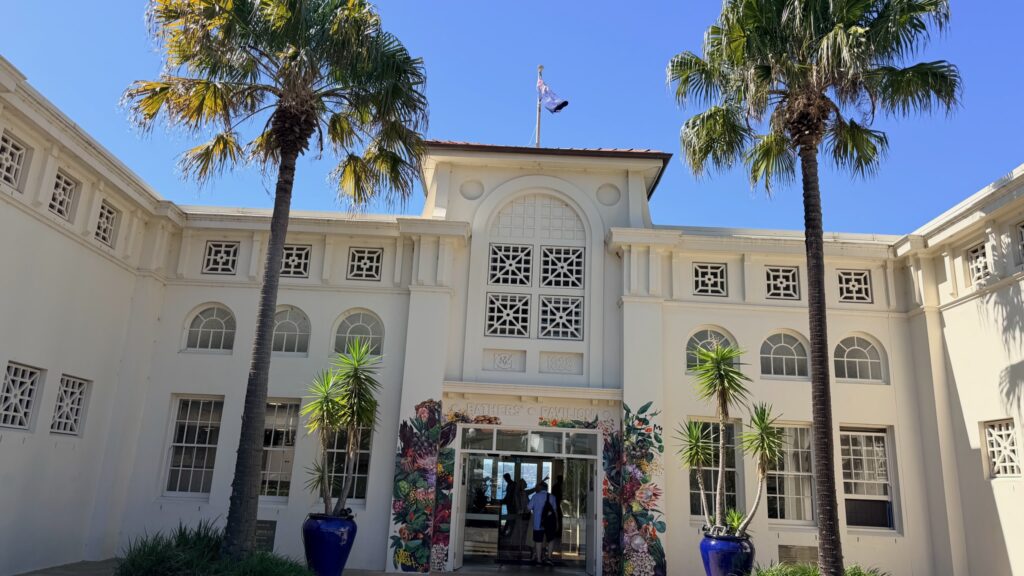
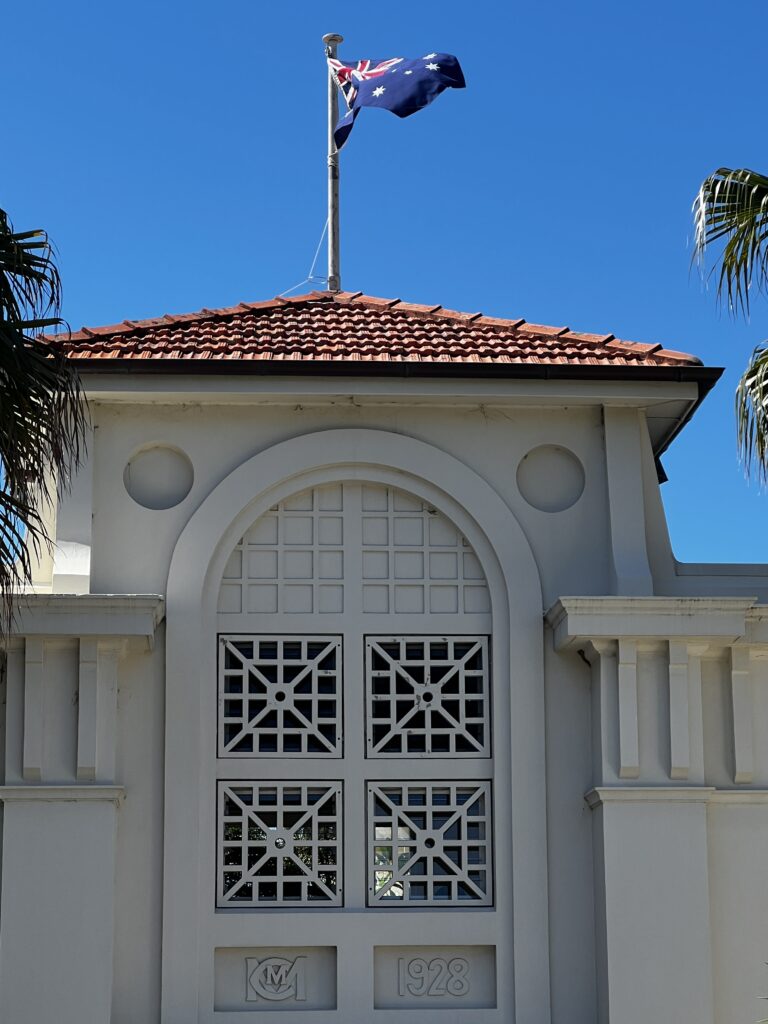
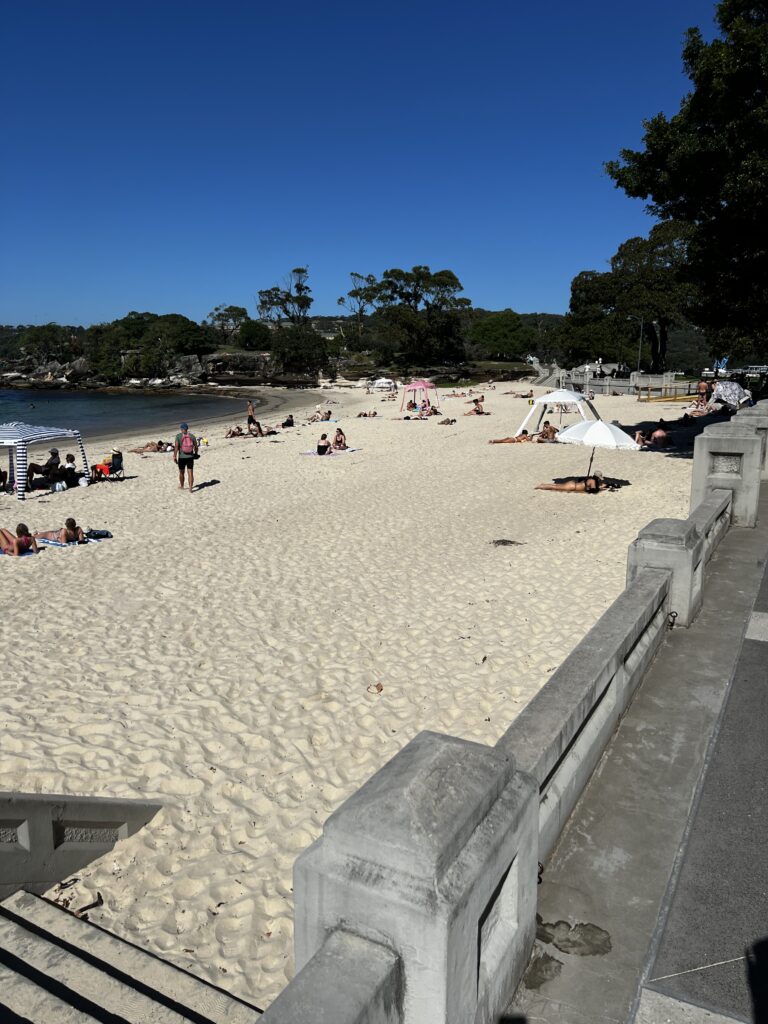
Our next stop was for lunch at The Balmoral Bathers Pavilion is a heritage-listed former bathers’ pavilion and restaurant located at The Esplanade, Balmoral, New South Wales, a suburb of Sydney, Australia. It was designed by Alfred H. Hale, the Mosman Council Architect and Building Surveyor and built from 1928 to 1929 by Girvan Brothers, Master Builders.
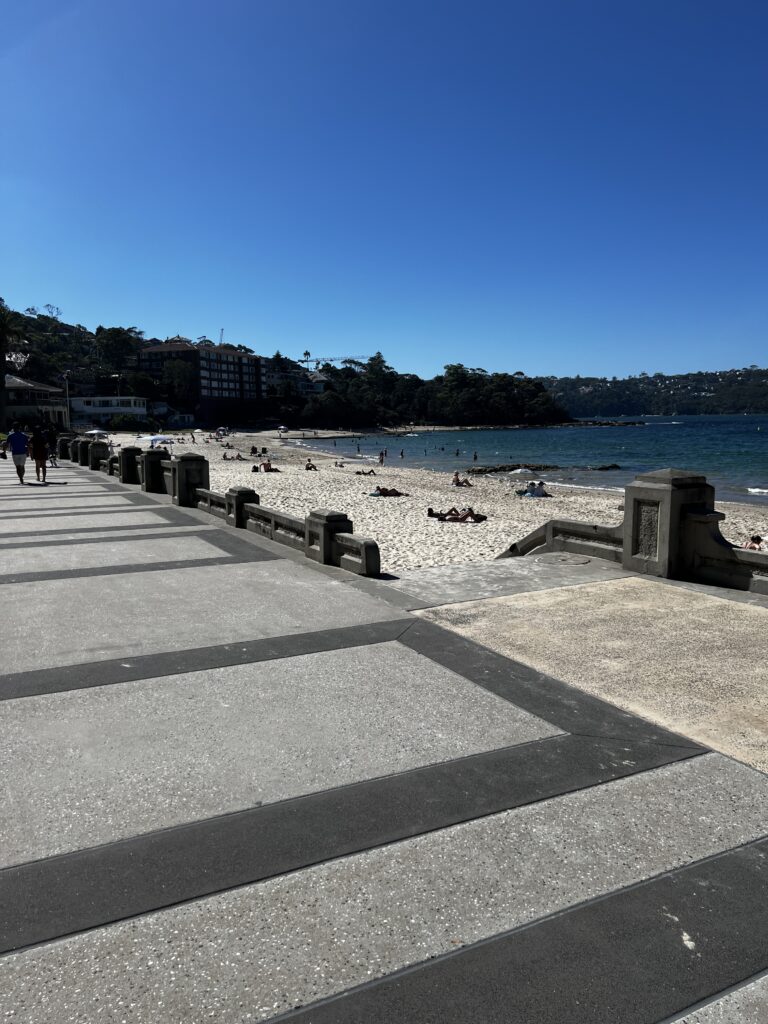
Views of Balmoral Beach outside the restaurant
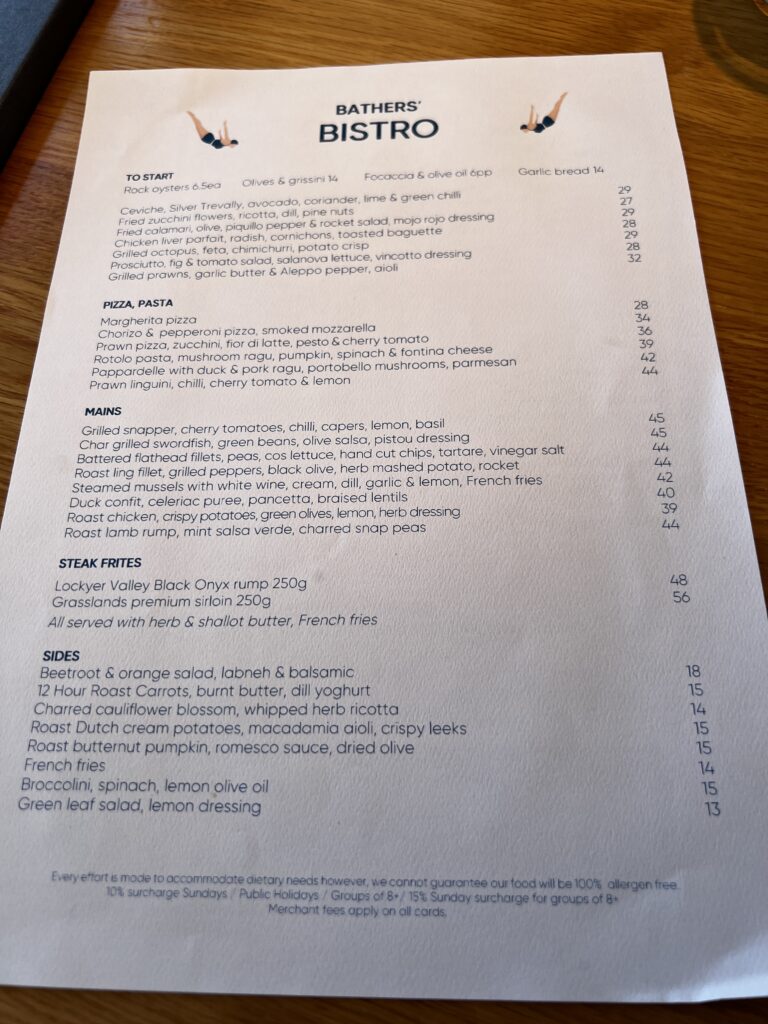
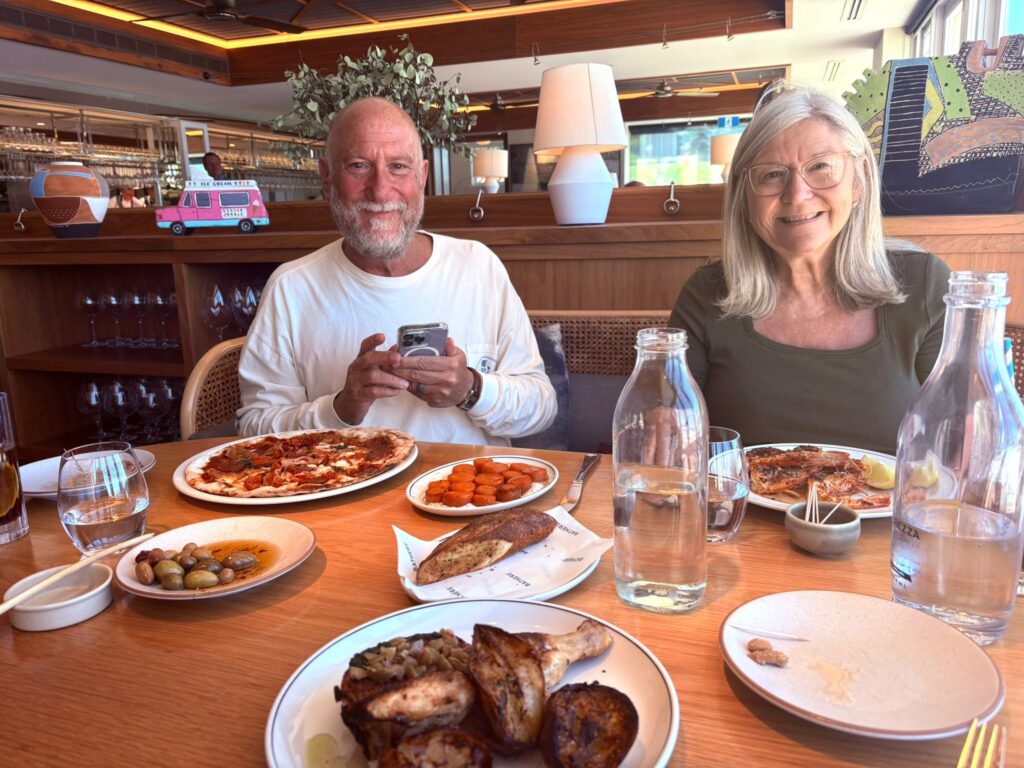
We tried olives & grissini, grilled prawns and the chorizo & pepperoni pizza. Almost forgot the BEST garlic bread I have ever eaten. Also, a side of 12-hour carrots that were out of this world.
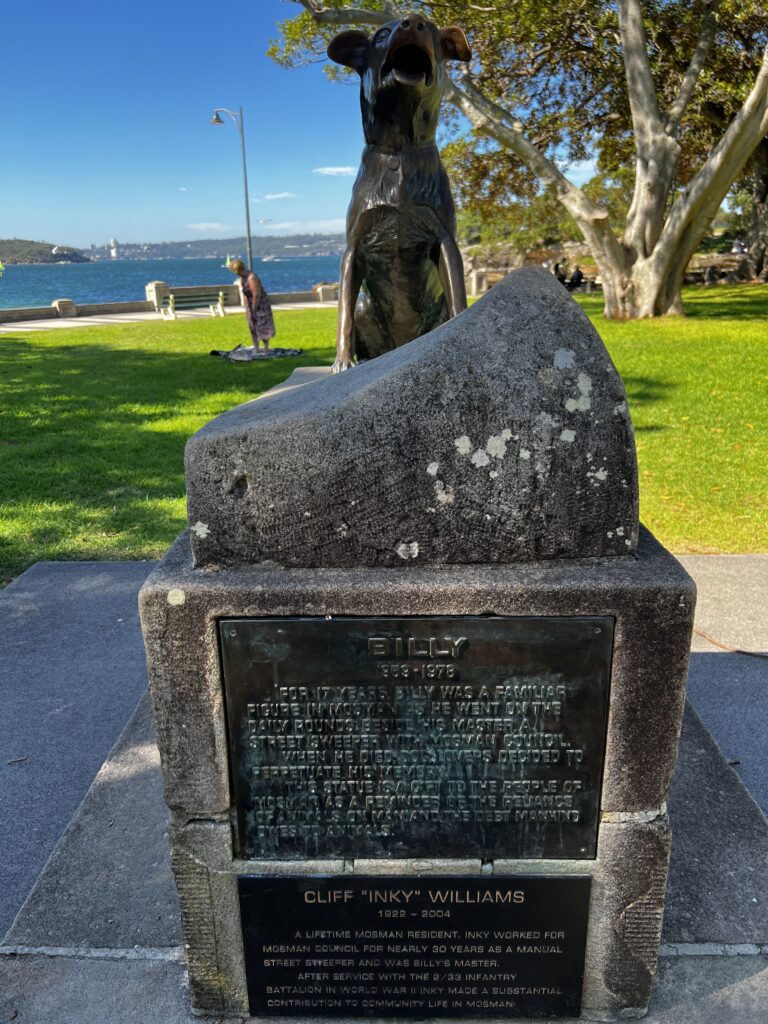
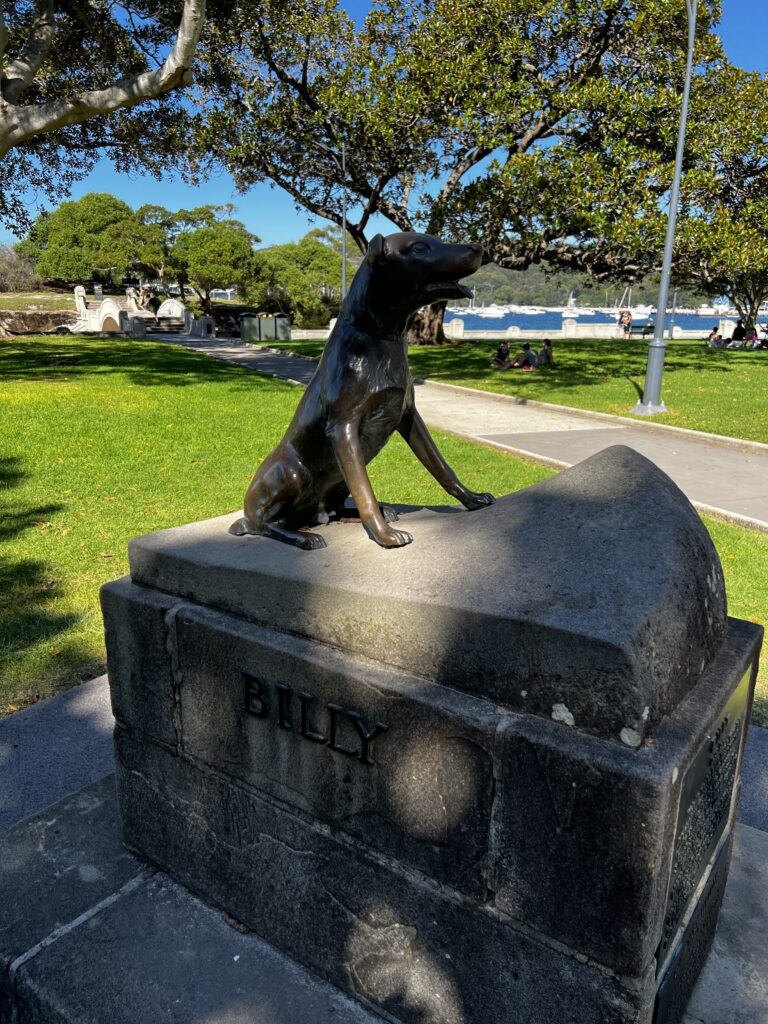
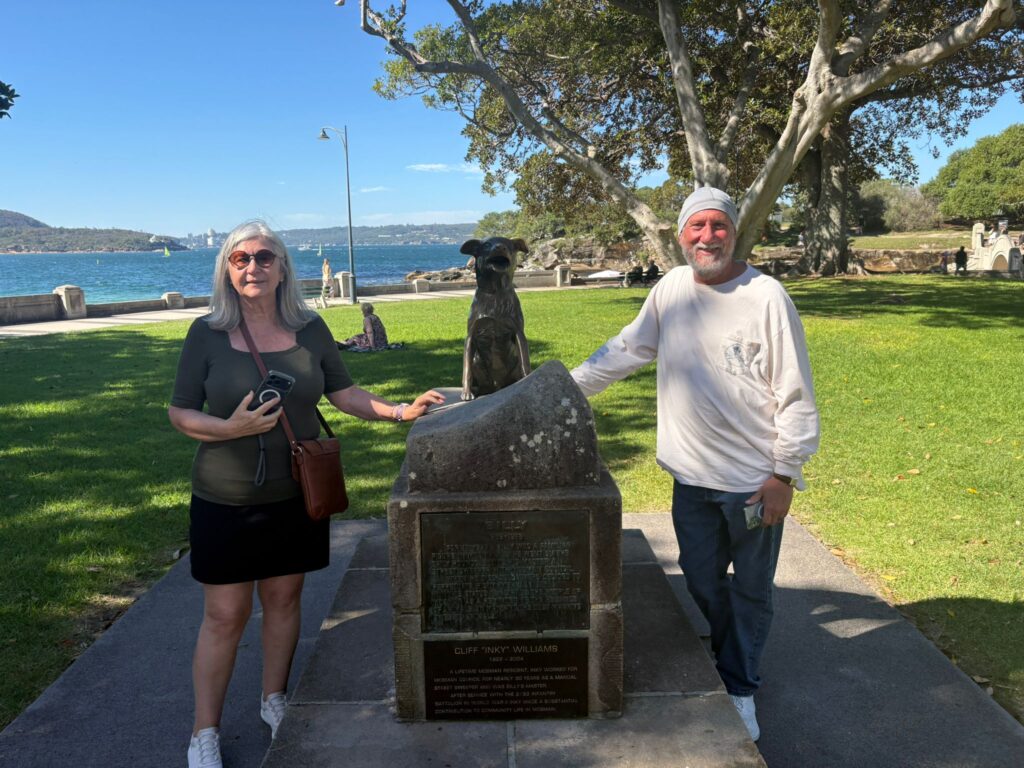
The sculpture of “Billy” the dog was a gift to the people of Mosman as a reminder of the reliance of animals on man and the debt mankind owes to animals. When he died dog lovers decided to perpetuate his memory.
Billy went on the daily rounds with his master, a Mosman Council Street sweeper, between 1959 and 1978.
An additional plaque was added at a later date to commemorate Cliff “Inky ” Williams, the owner of Billy who died in 2004. It is located outside the restaurant along the beach.
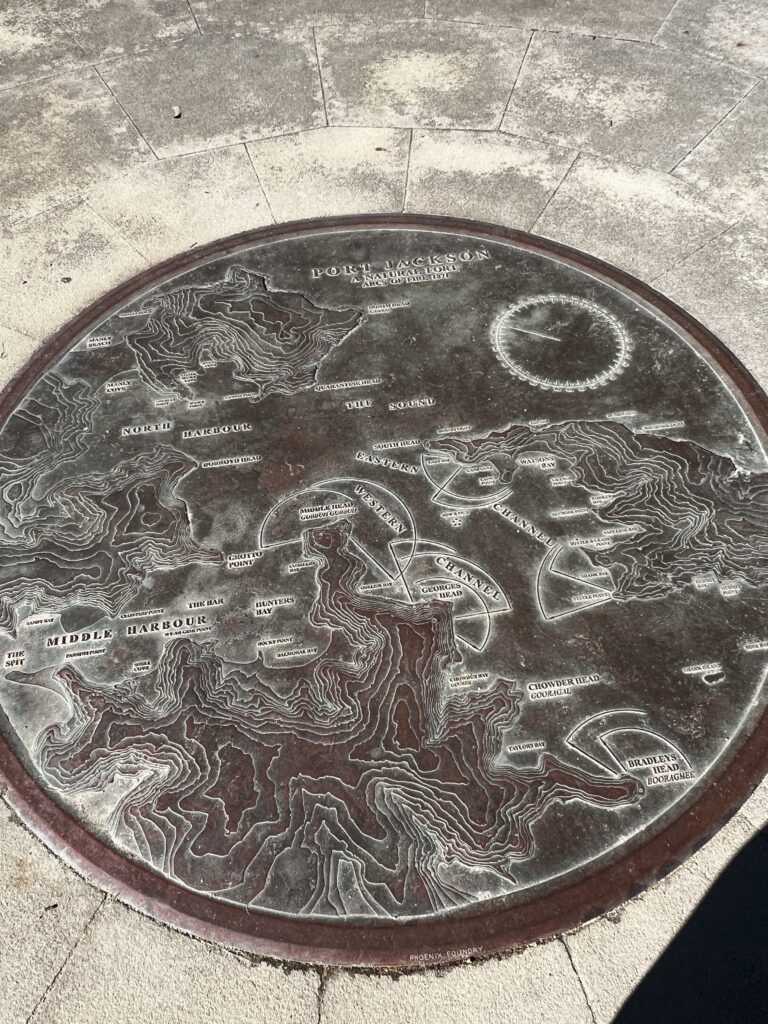
After lunch we drove to Headland Park. It is one of Sydney’s great harborside attractions. Located on the Mosman peninsula, homeland of the Borogegal People, Headland Park comprises of 3 precincts – Georges Heights, Middle Head and Chowder Bay.
Formerly occupied by defences forces, Headland Park features military remnants, coastal bush walks with distinctive harbour views and heritage buildings, sympathetically re-purposed by artists, cafes and other local businesses.
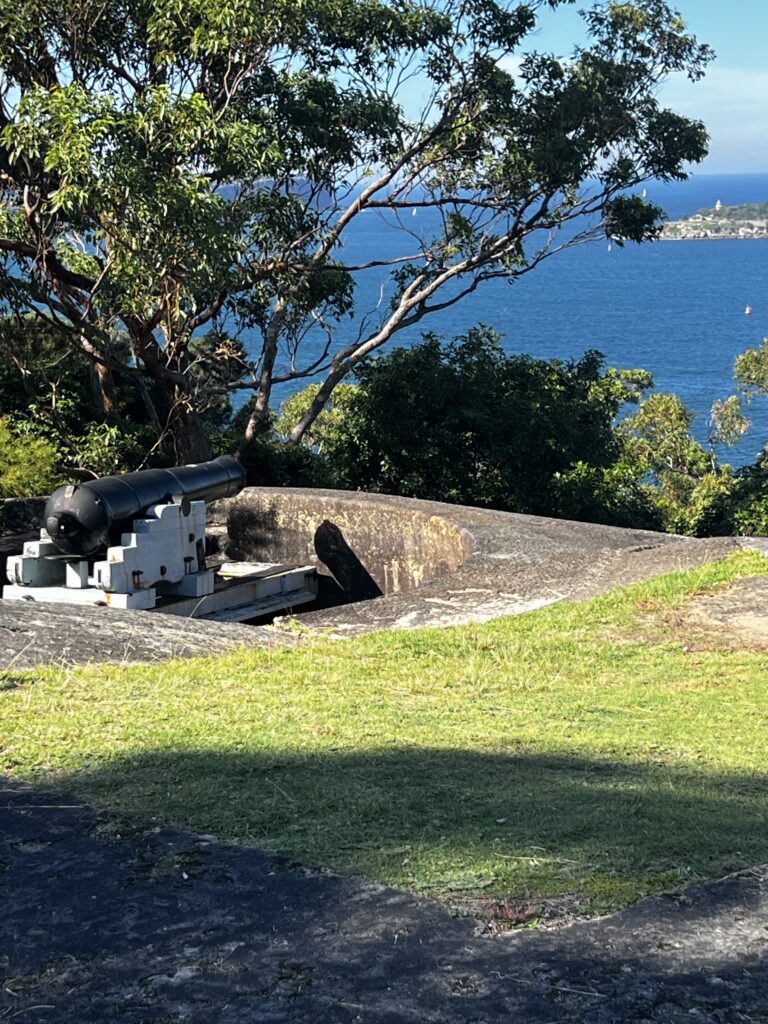
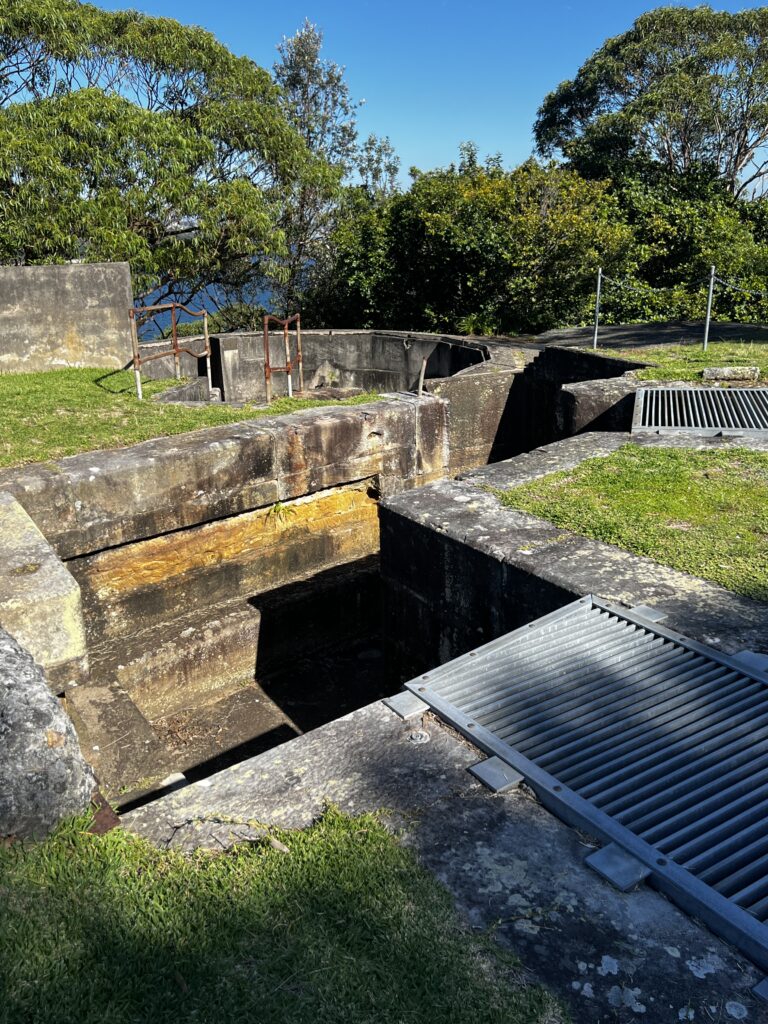
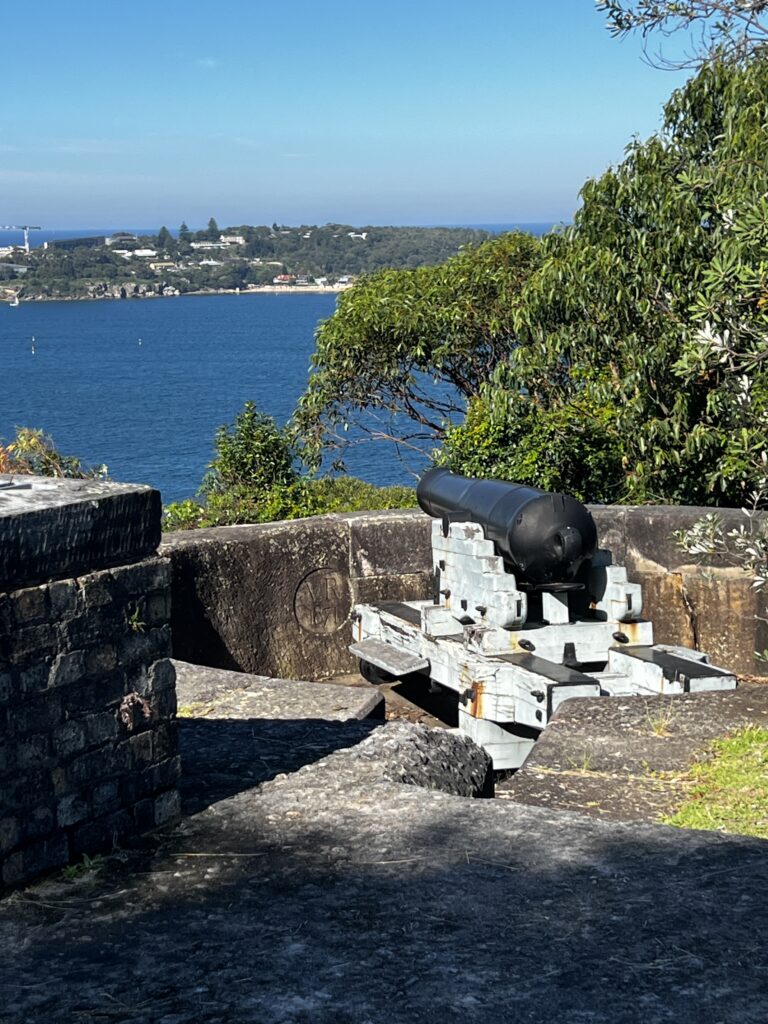
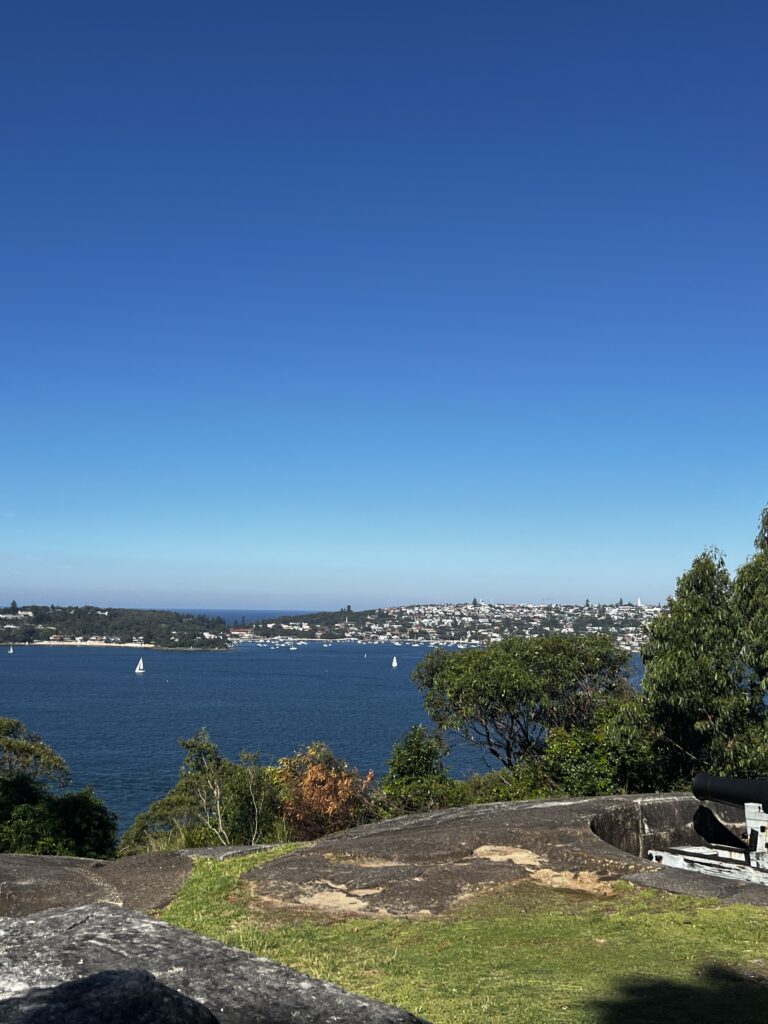
We wandered along peaceful walking tracks that took us through natural bushland and scenic outlooks with spectacular harbor views. We visited the locations of defense history, including a WWI-era military hospital and underground defense forts. Going back to WWI the Australians were concerned about attacks from Russia and built these cannon locations.
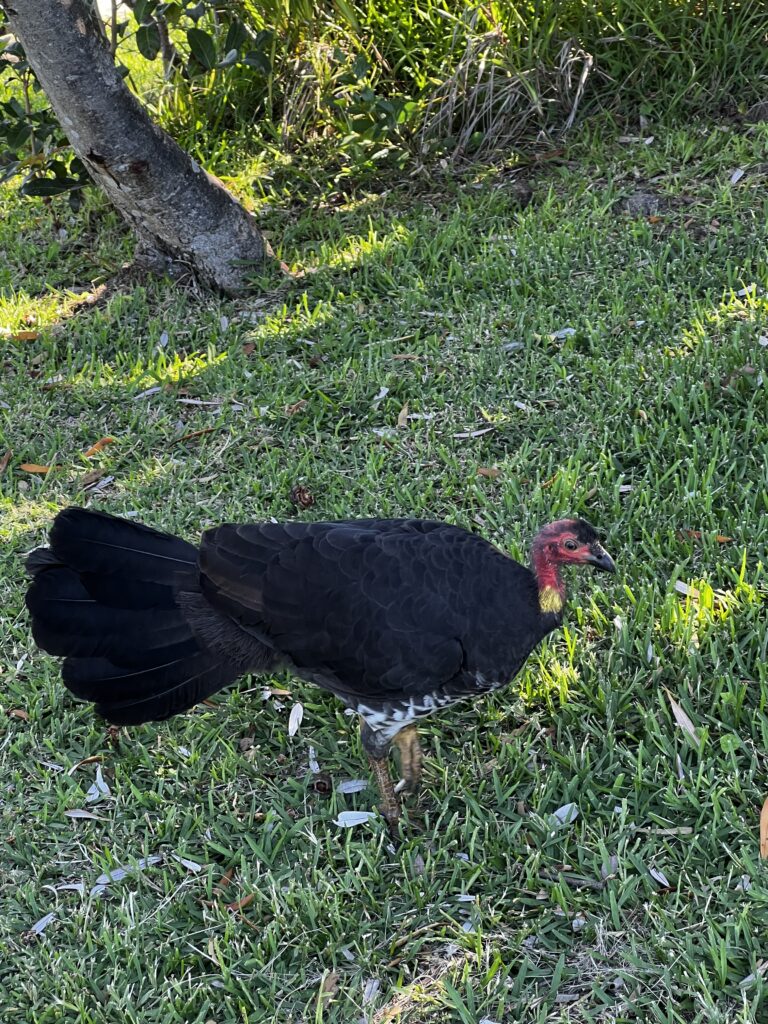
The Australian Brush-turkey has a mainly black body plumage, bare red head, yellow throat wattle (pale blue in northern birds) and laterally flattened tail. The Australian Brush-turkey is not easily confused with any other Australian bird. It is the largest of Australia’s three megapodes (Family Megapodiidae). The megapodes are a distinct family of the group of fowl-like birds (Order Galliformes), which includes quails, turkeys, peafowl and junglefowl.
As with other megapodes, the Australian Brush-turkey incubates its eggs in a large mound. The male usually builds a single large mound of organic matter, approximately 4 m in diameter and 1 m high. Some males have been recorded with more than one mound, but this is not common. Eggs are laid by several females in a single mound. The eggs are incubated by the heat given off by the rotting vegetation. The male maintains a constant temperature of 33 – 38°C by digging holes in the mound and inserting his bill to check the heat, then adding and removing vegetable matter as required. Before the eggs hatch, many fall prey to burrowing predators such as goannas. After hatching, the chicks burrow out of the mound, at which point they are left to fend for themselves. These hatchlings are fully feathered and are able to walk and fend for themselves immediately. Remarkably, they are able to fly just a few hours after hatching.
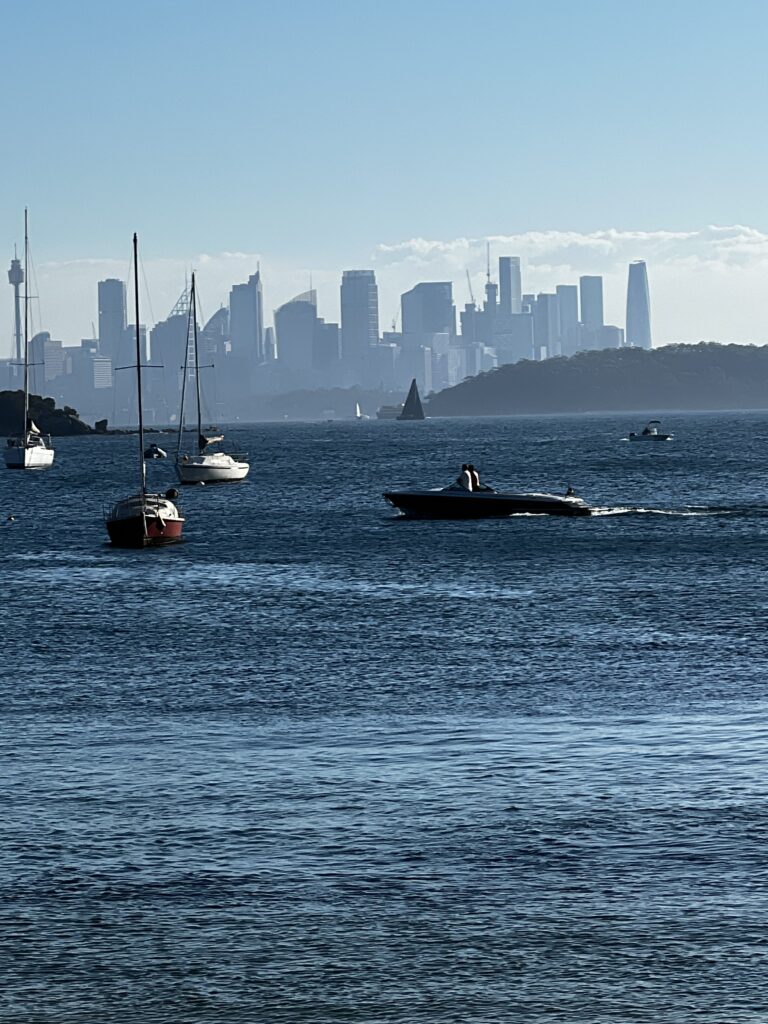
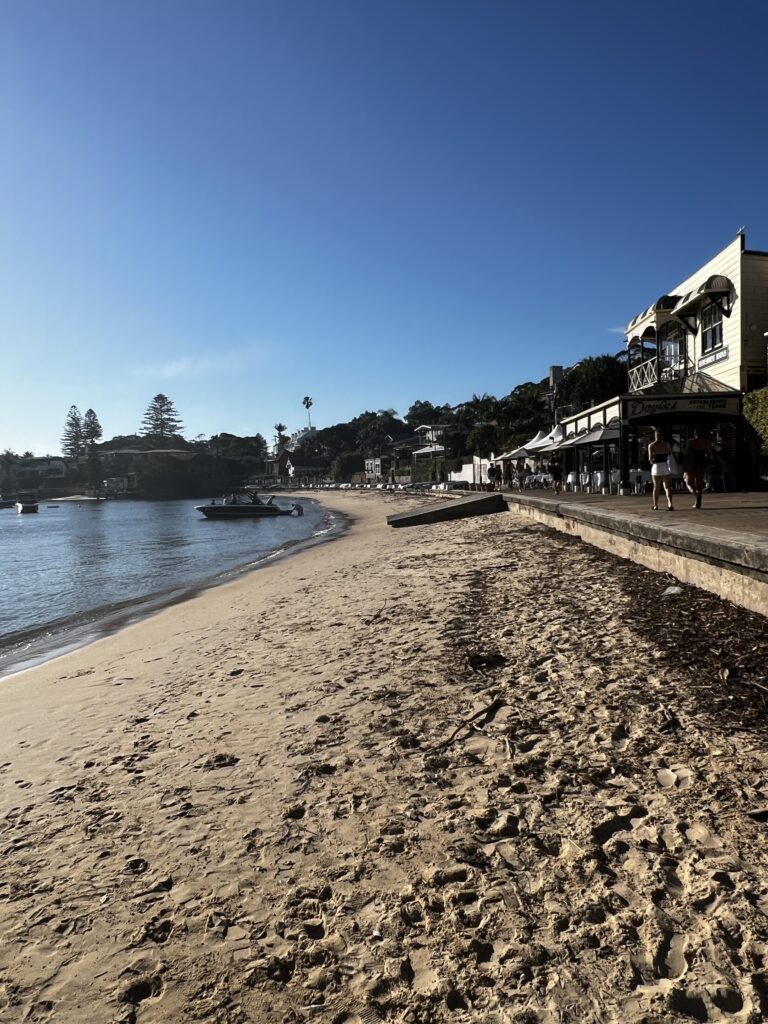
Next we drove to Watson’s Bay for a walk around the beach. Again, just beautiful place.
Watsons Bay | The Dictionary of Sydney
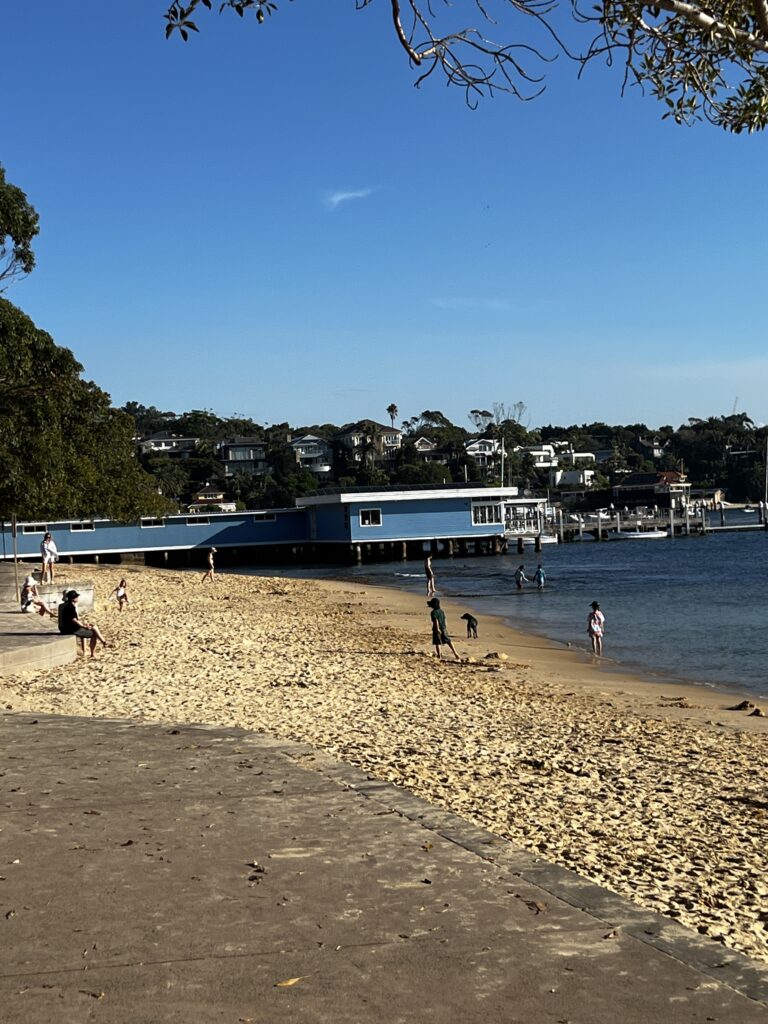
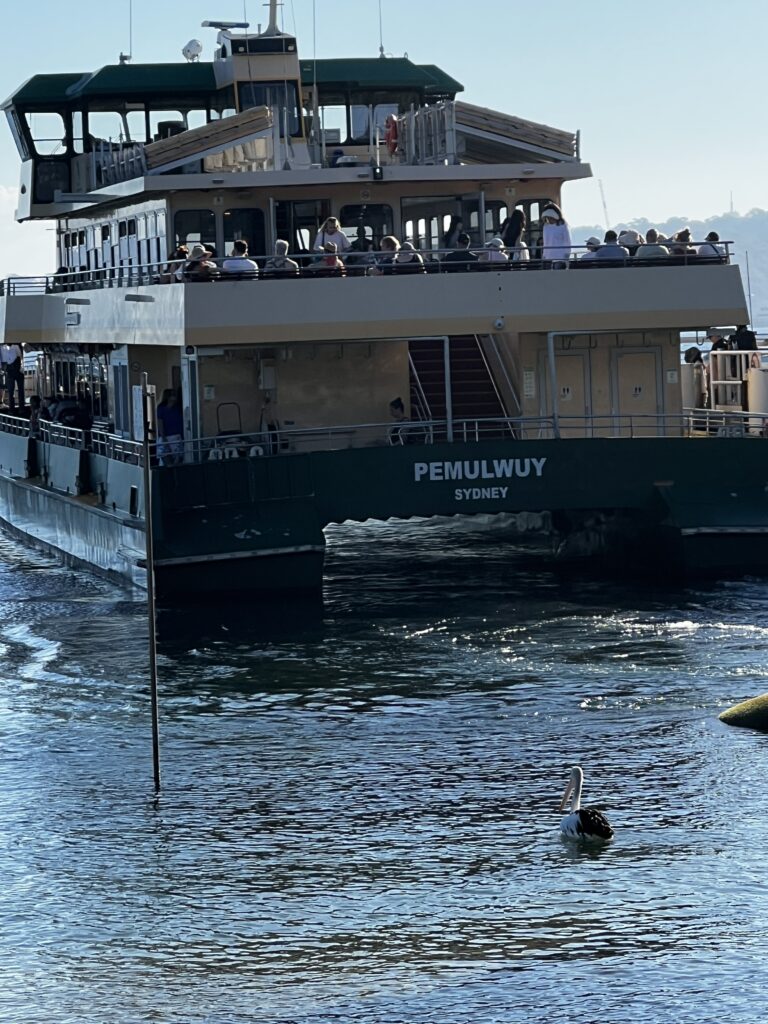
Watson’s Bay Ferry that transports people to the downtown harbor.
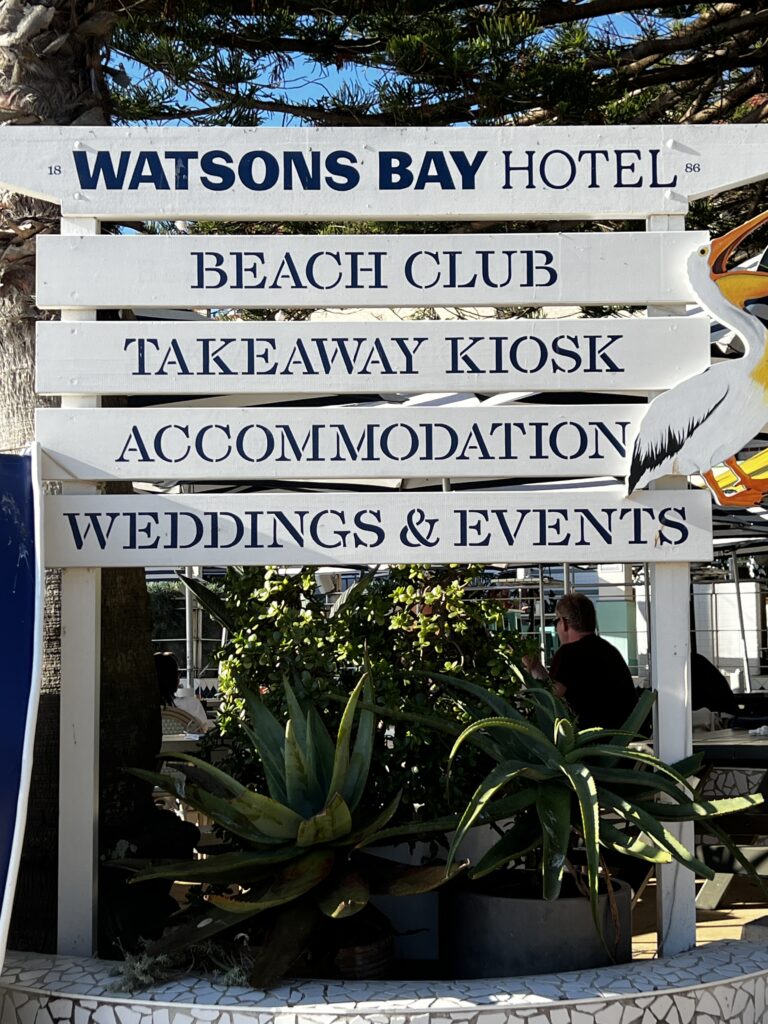
Discover Watsons Bay Hotel | Views, Dining, Relaxation
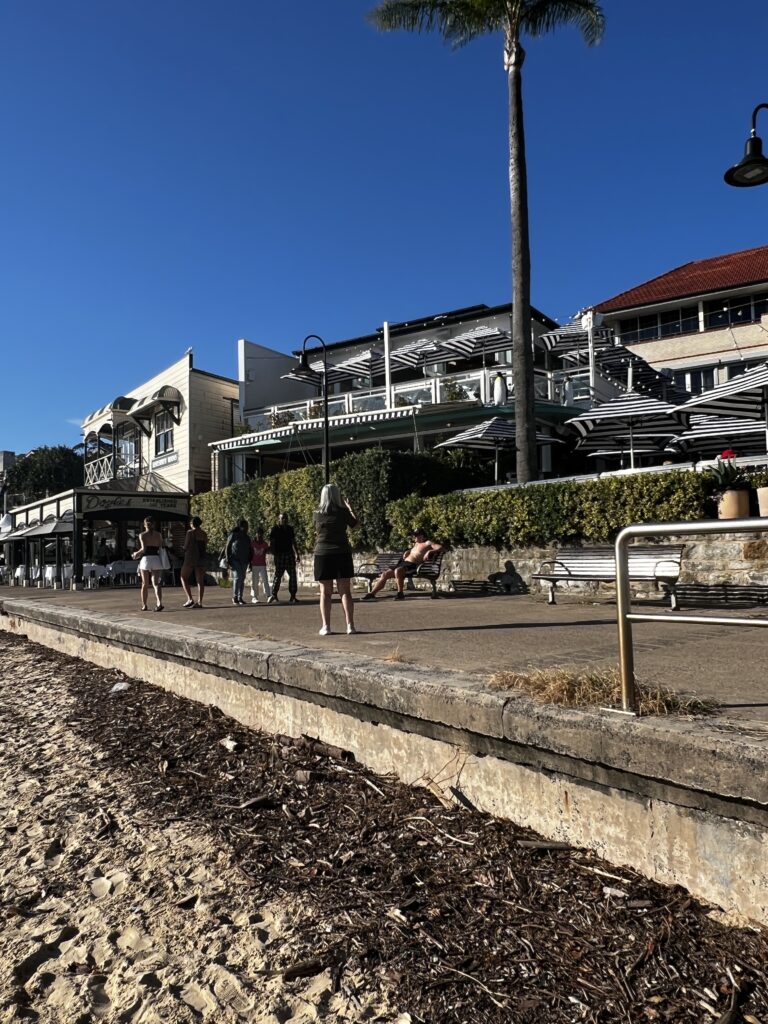
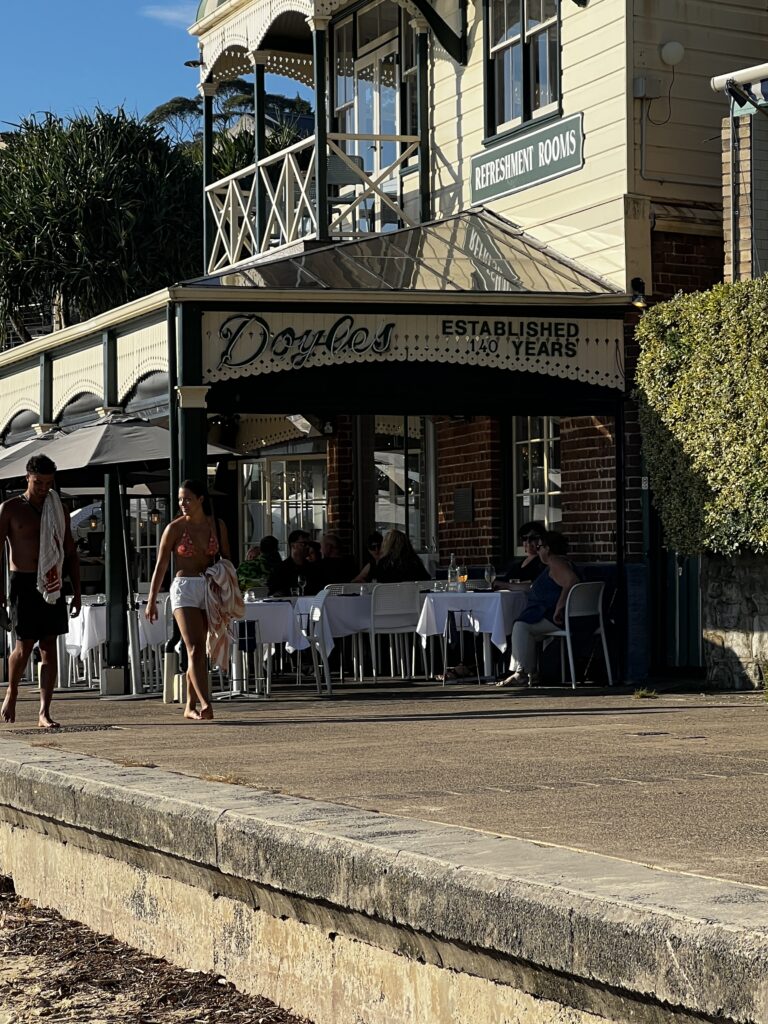
Doyles on the Beach is an Australian seafood restaurant founded in 1885. Located on Marine Parade in Watsons Bay, Sydney, it is Australia’s oldest continually running fish and chip shop, currently owned by Michael Doyle. There is both an à la carte restaurant and a garden bar at the Marine Parade establishment.
In 2021, the restaurant was named in GQ‘s list of the “18 most expensive restaurants in Australia”.[5]
One of the restaurant’s attractions is the view over Sydney Harbour of the downtown Sydney skyline four miles to the east.
Doyles – Always the finest catch
The Gap is an ocean cliff at South Head in the Eastern Suburbs of Sydney, Australia. The area, which faces the Tasman Sea, is located in the suburb of Watsons Bay. Although the cliff is a popular tourist destination, it has infamy for suicides.
It is disappointing that I have great videos but cannot upload due to the ship’s WI-Fi
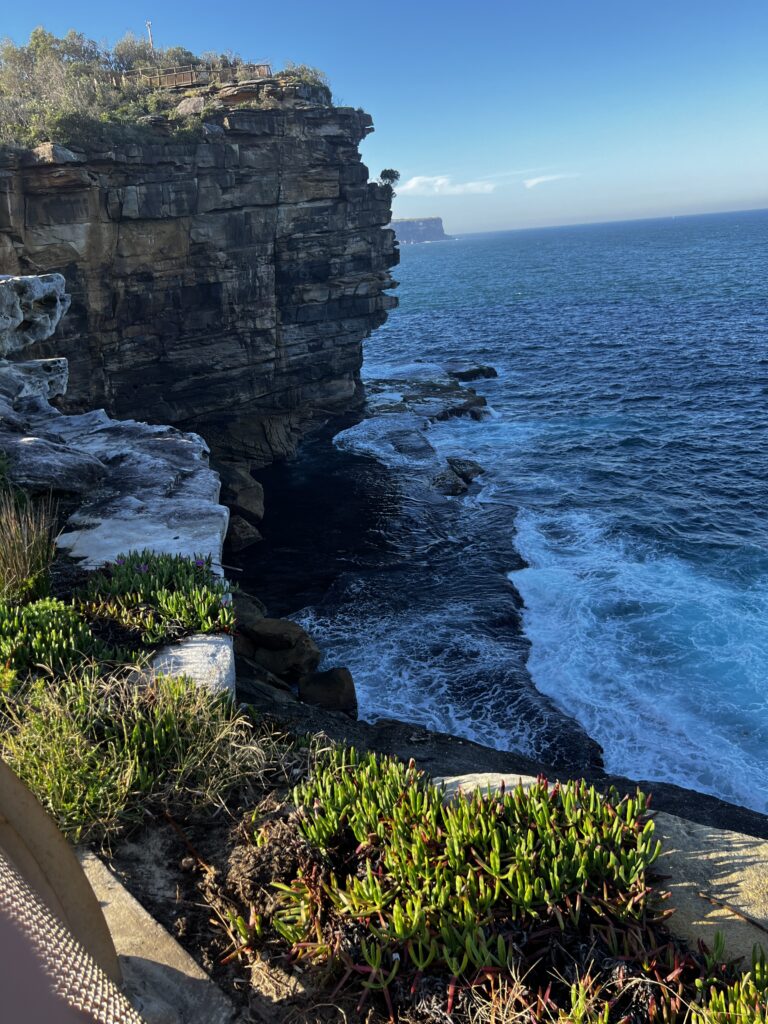
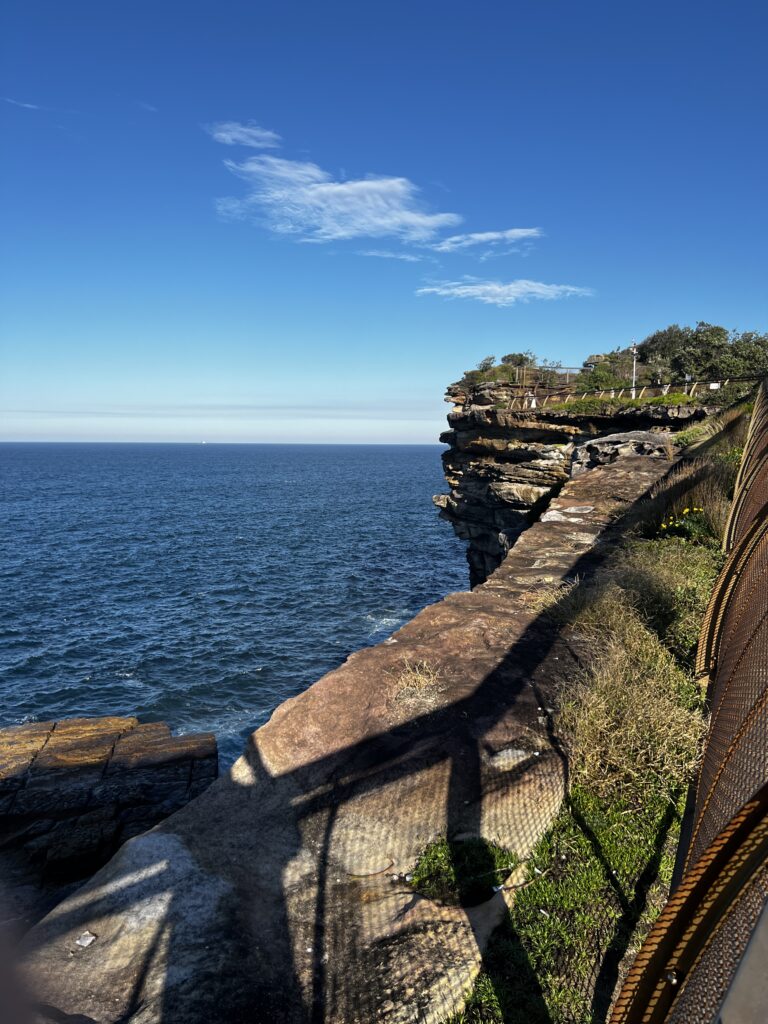
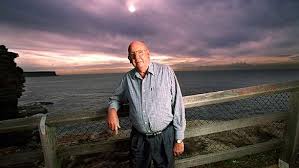
Donald Taylor Ritchie OAM (9 June 1926 – 13 May 2012) was an Australian who intervened in many suicide attempts. He officially rescued at least 180 people but his family says he helped save up to 500 people who had intended to attempt suicide at The Gap. Ritchie resided next to The Gap, a location in Sydney, Australia, known for multiple suicide attempts.
Upon seeing someone on the cliff in distress, Ritchie would cross the road from his property and engage them in conversation, often beginning with the words, “Can I help you in some way?” Afterwards Ritchie would invite them back to his home for a cup of tea and a chat. Some of the people he helped would return years later to thank him for his efforts in talking them out of their decision.
Ritchie explained his intervention in suicide attempts saying, “You can’t just sit there and watch them.
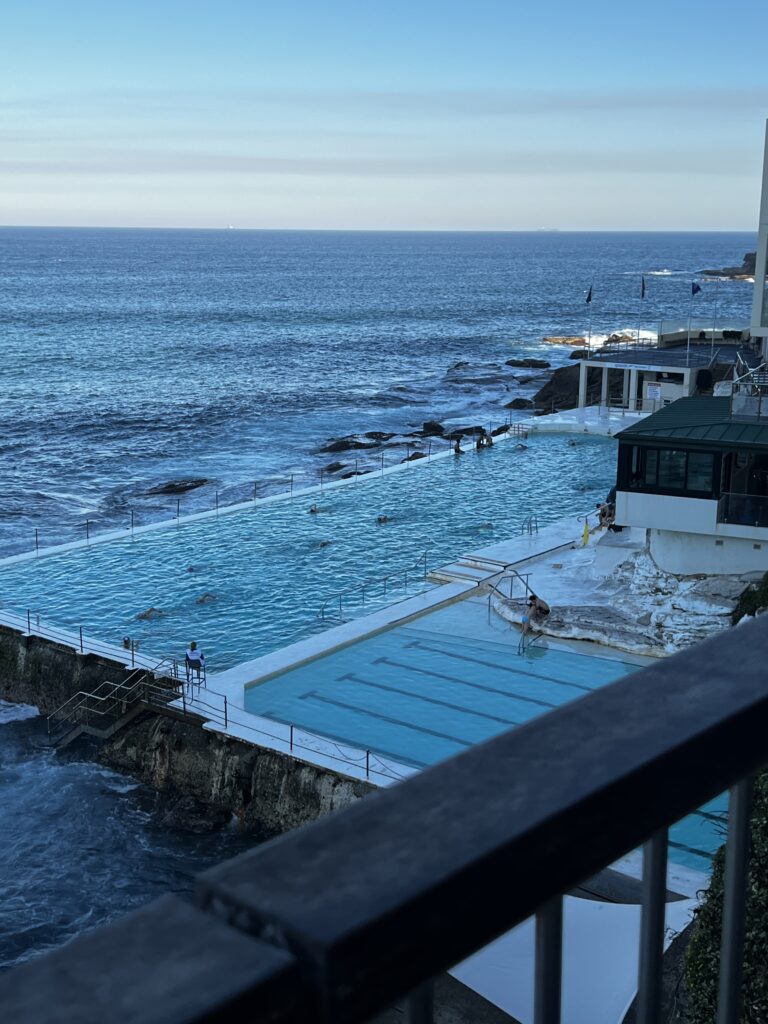
We finished our day visiting Bondi Beach. Bondi Beach (/ˈbɒndaɪ/) is a beach and the surrounding suburb in Sydney, Australia. Bondi Beach is located 7 kilometres (4 miles) east of the Sydney central business district, in the local government area of Waverley Council, in the Eastern Suburbs. Bondi Beach is one of the most famous beaches in the world. Framed within rocky headlands it has come to be seen both nationally and internationally as part of the Australian way of life and leisure.
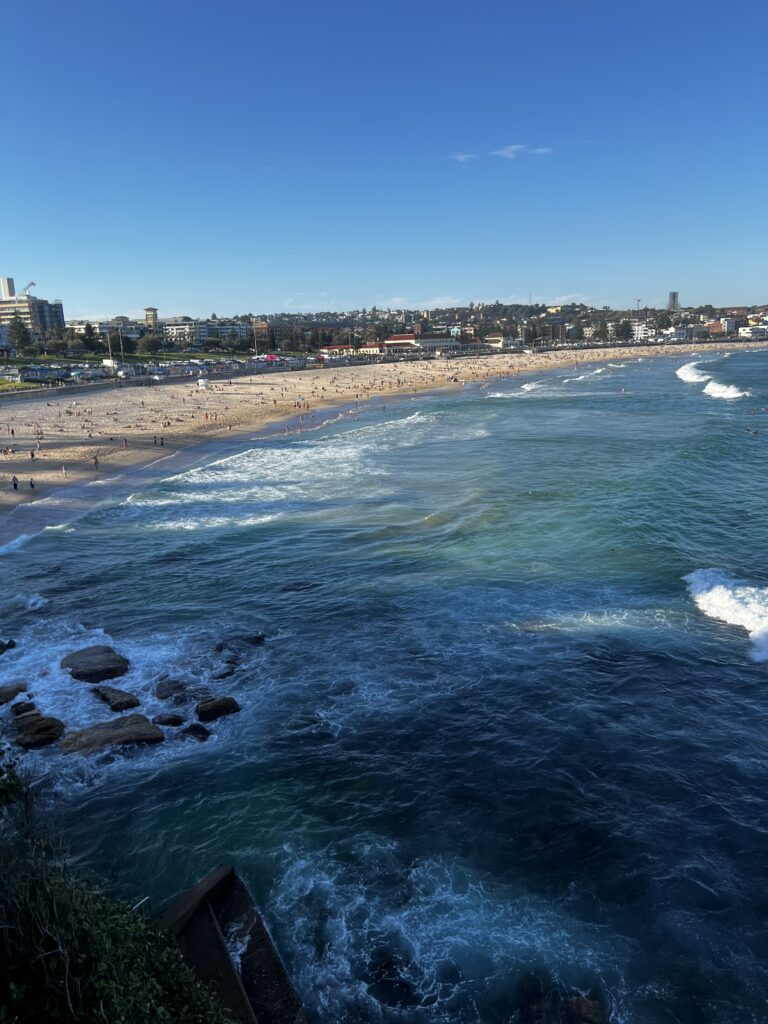
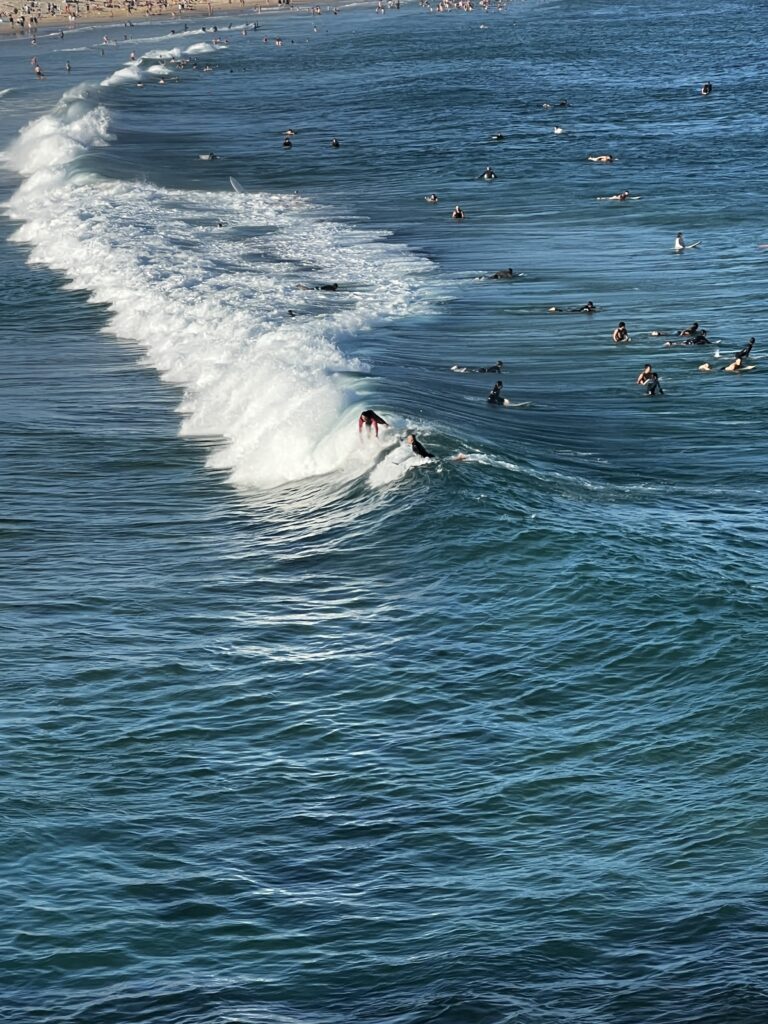
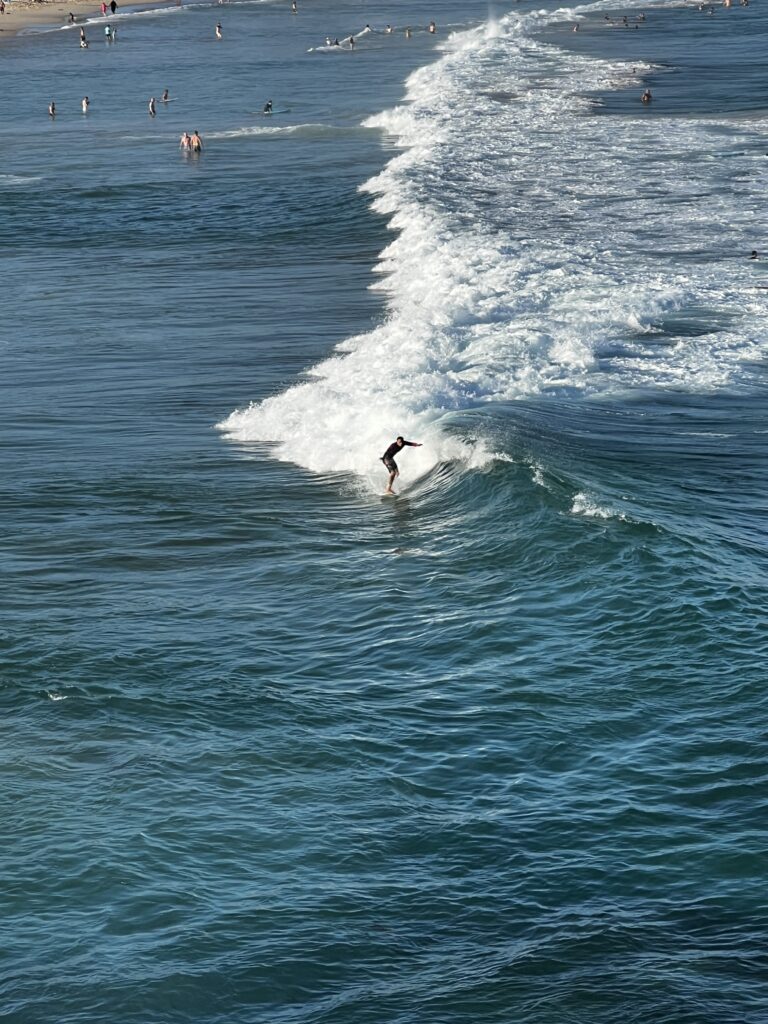
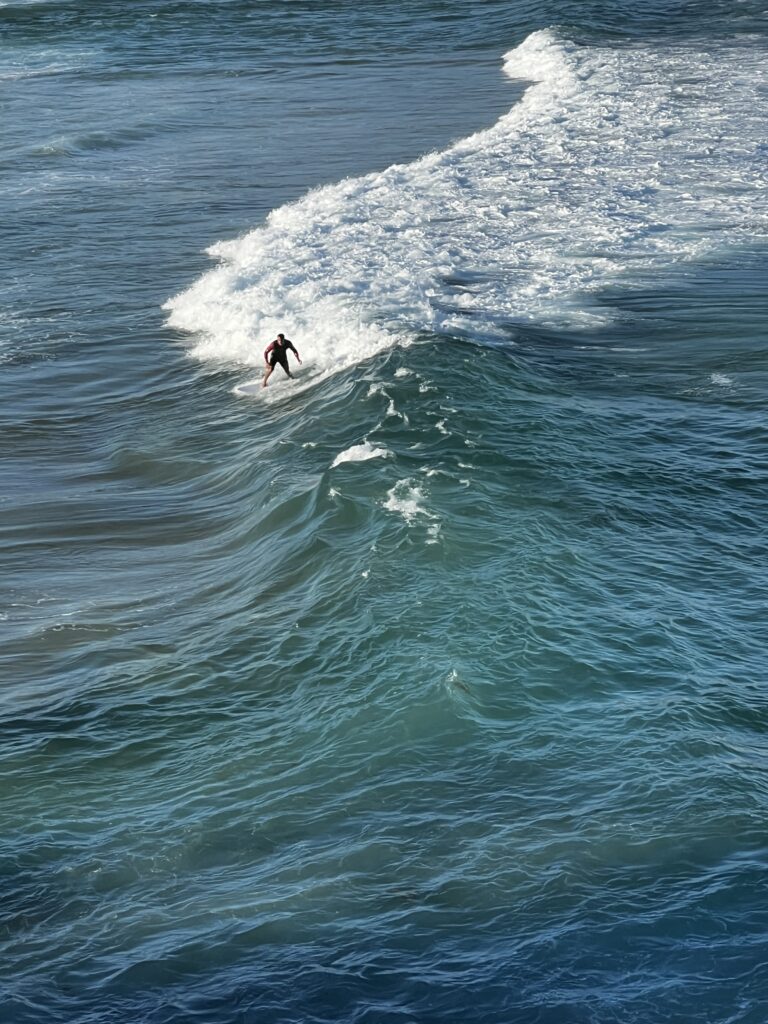
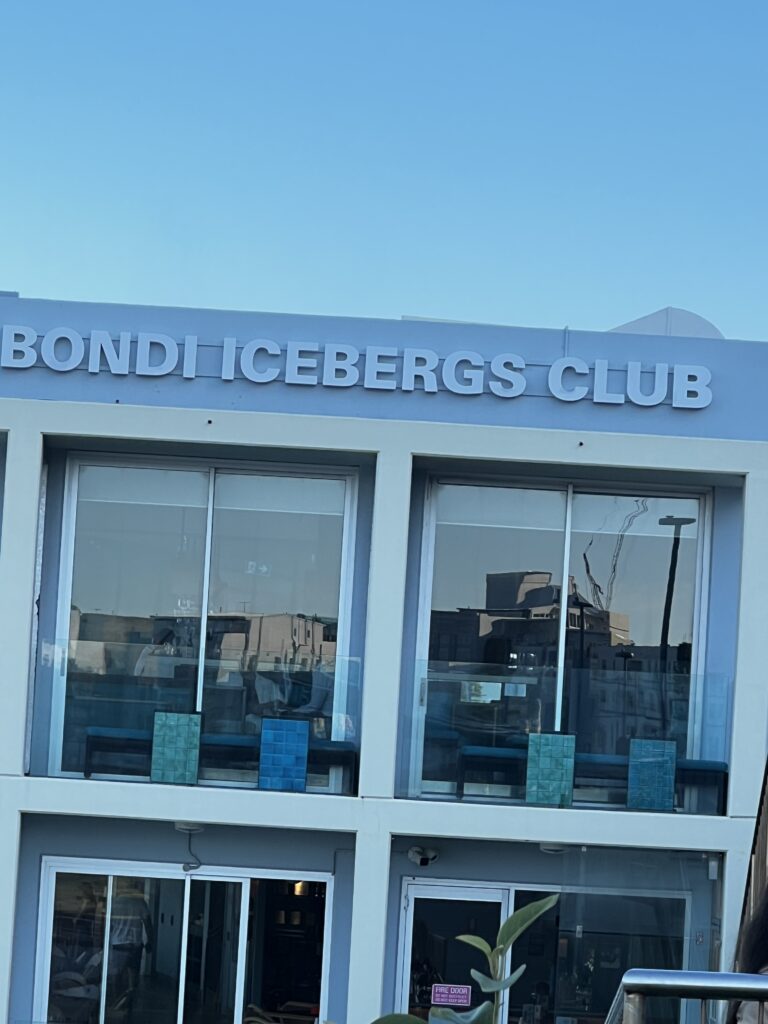
The Bondi Icebergs Swimming Club is an Australian winter swimmers club, located at the southern end of Bondi Beach in Sydney, New South Wales. The swimming club was established in 1929 and has a small museum on the first floor. A defining characteristic of the Club is a rule that to maintain membership it was mandatory that swimmers compete on three Sundays out of four for a period of five years.
Bondi Icebergs – Bondi Icebergs Club & Swim School
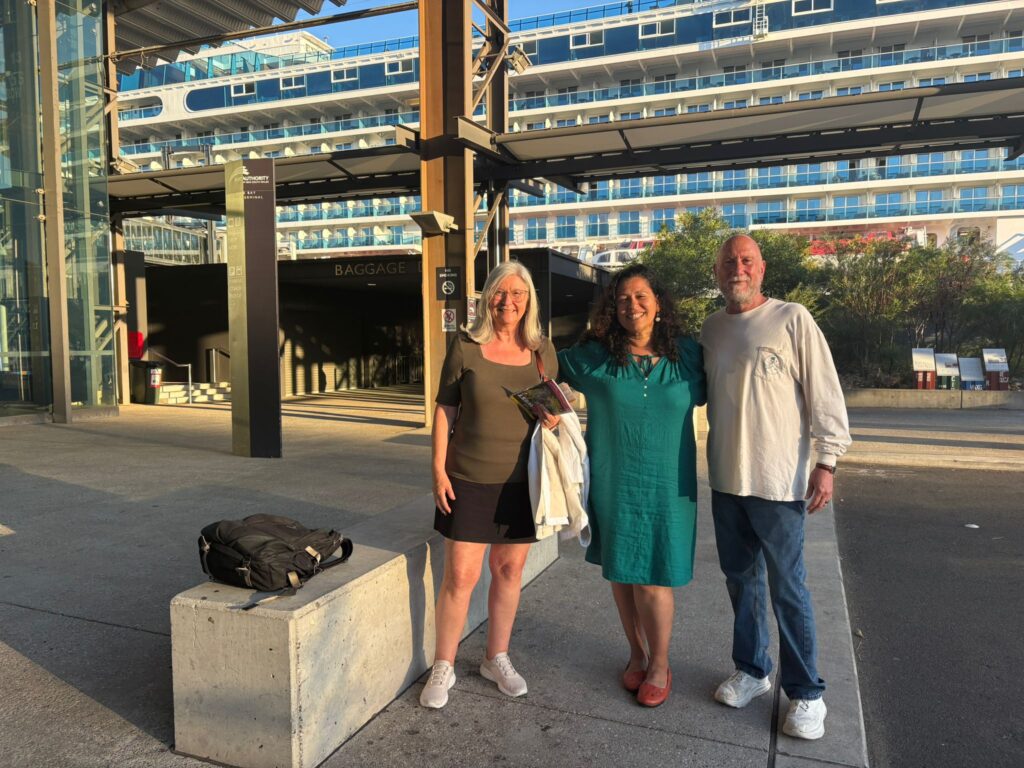
We finished our day of touring with a photo of us with Nicole, our guide for the day. As you can see from the photos I posted, we covered ALOT of ground and got back to the ship wiped out. We sat on our balcony for over a hour not moving or talking….laughing
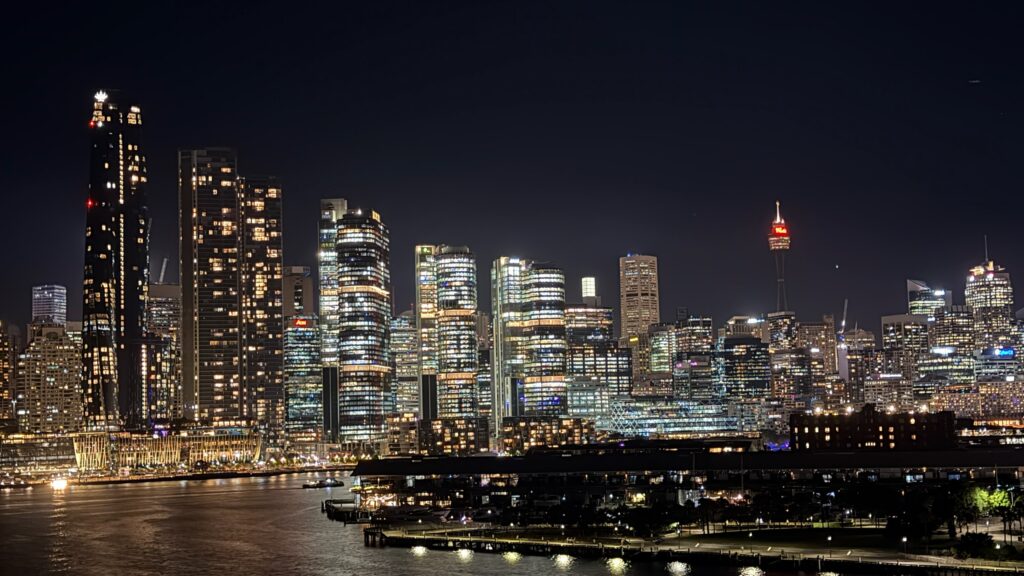
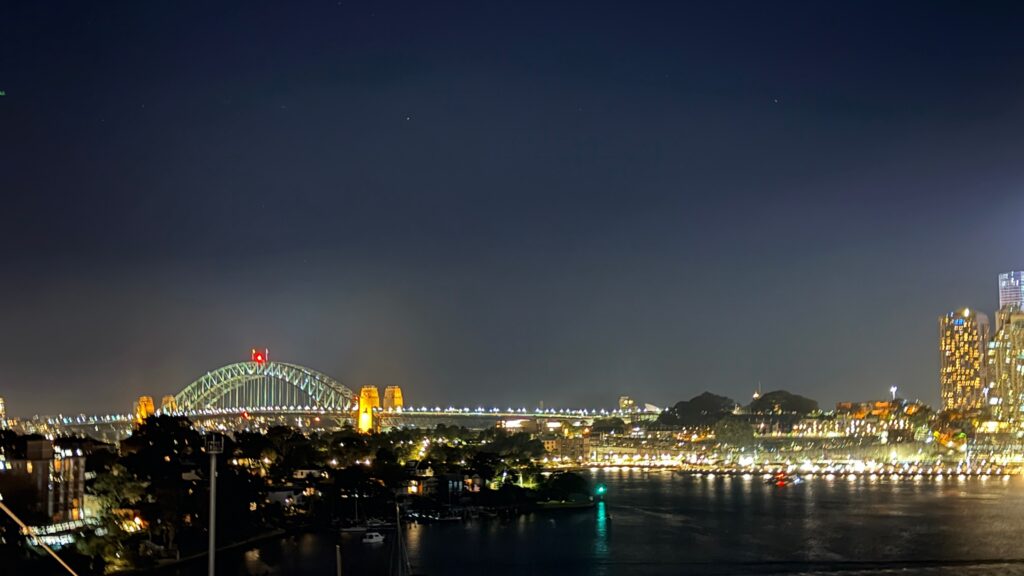
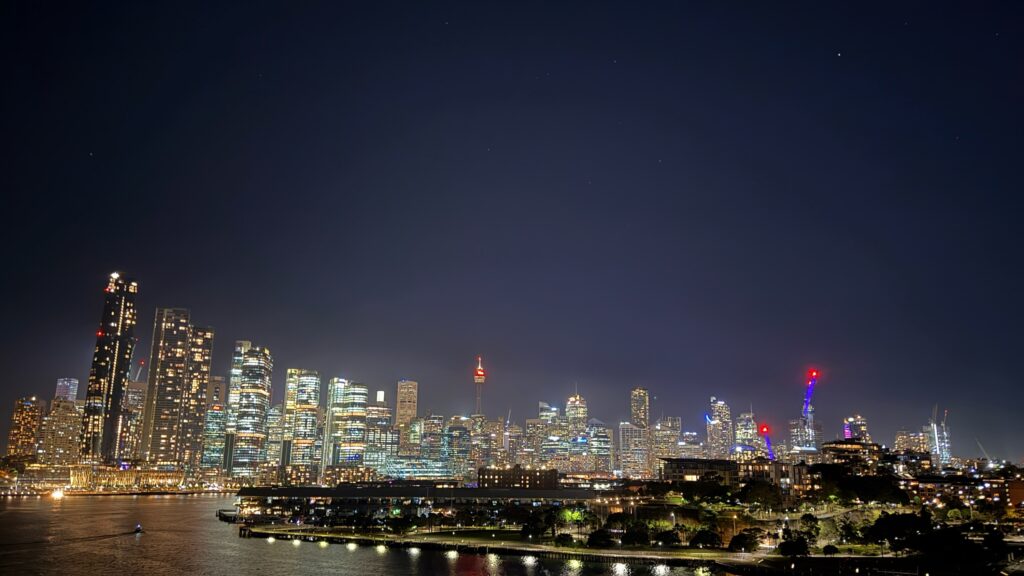
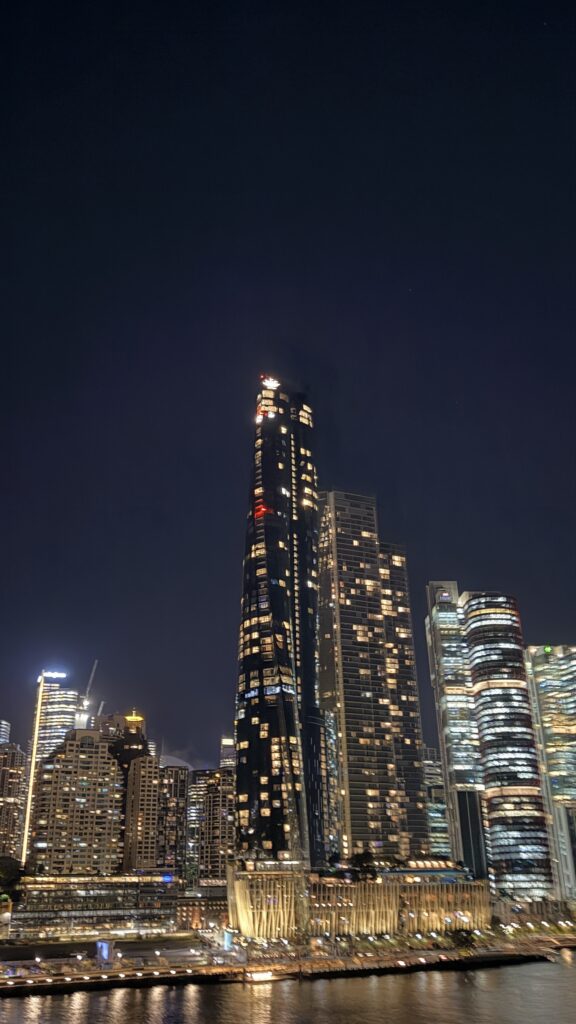
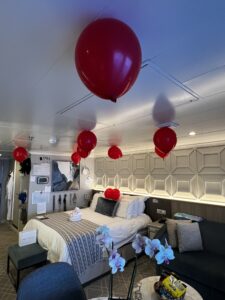
A perfect end to our day was leaving the Sydney Harbor and capturing some photos as we sailed away. We cannot wait to get back next week.
7 thoughts on “Day 34 April 9 – Sydney, Australia”
Wow! What an awesome post. The city looks amazing!
Wow’ big difference from the islands you guys have just left from!!
laughing….no kidding. We enjoyed the islands but were ready to see a big city
So what’s the plan … your diversion back to Sydney ??? Are you doing something different and not going to Africa?
No, it is just a side trip. We will jump off the ship on Tuesday in Townsville and fly back to Sydney for three days. We are still going to sail around Africa and have some excursions planned.
Is the opera house constructed on a barge?
No, built on land on side of the harbor