
Day 48 Thursday April 23rd (72 days to go) — Our second day in Bali started early as we were driving another hour or more north away from the port. We only had one request for the day and that was to visit The Beratan Temple in Bedugul, Bali.
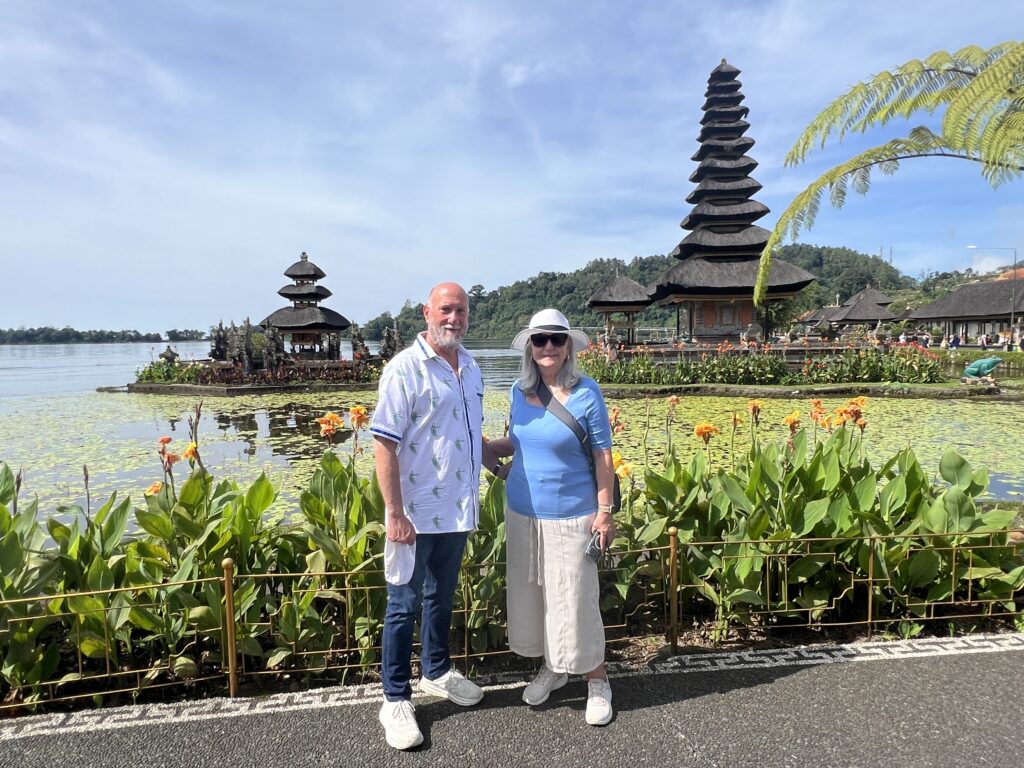
After a short night of rest, we were up early at 6am for a quick morning breakfast and out the door heading to the temple. The Beratan Temple was very beautiful, and we are glad that we took the opportunity to see it while in Bali. Gede was our guide and driver again today and he did a great job getting us in and out of places.
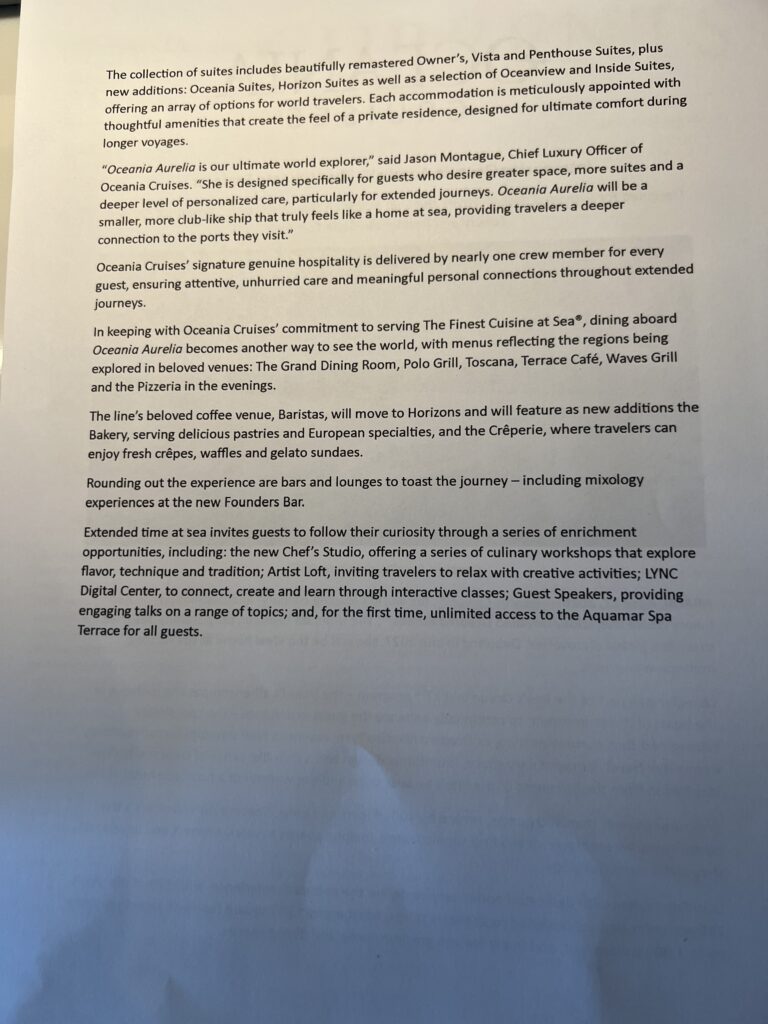
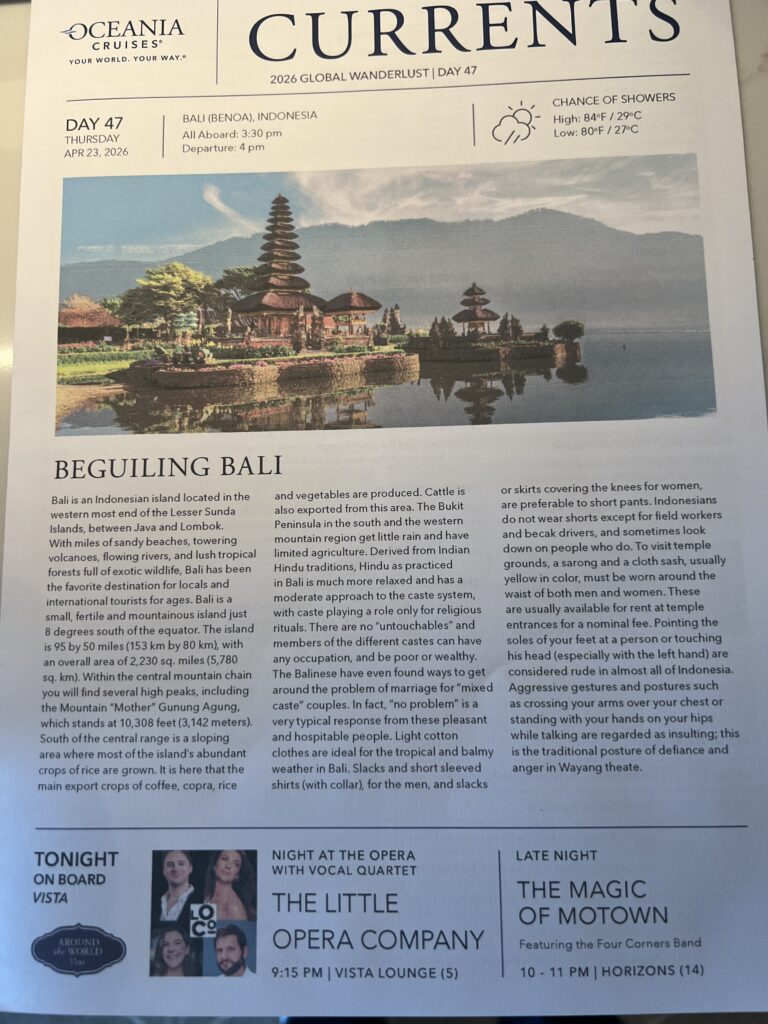
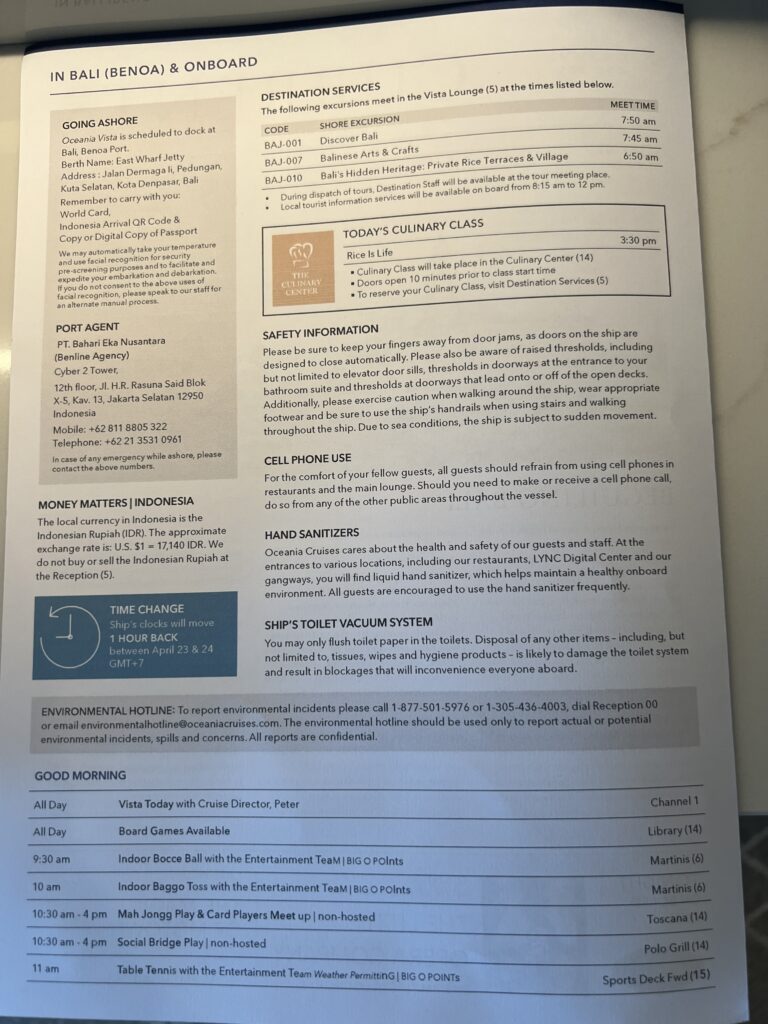
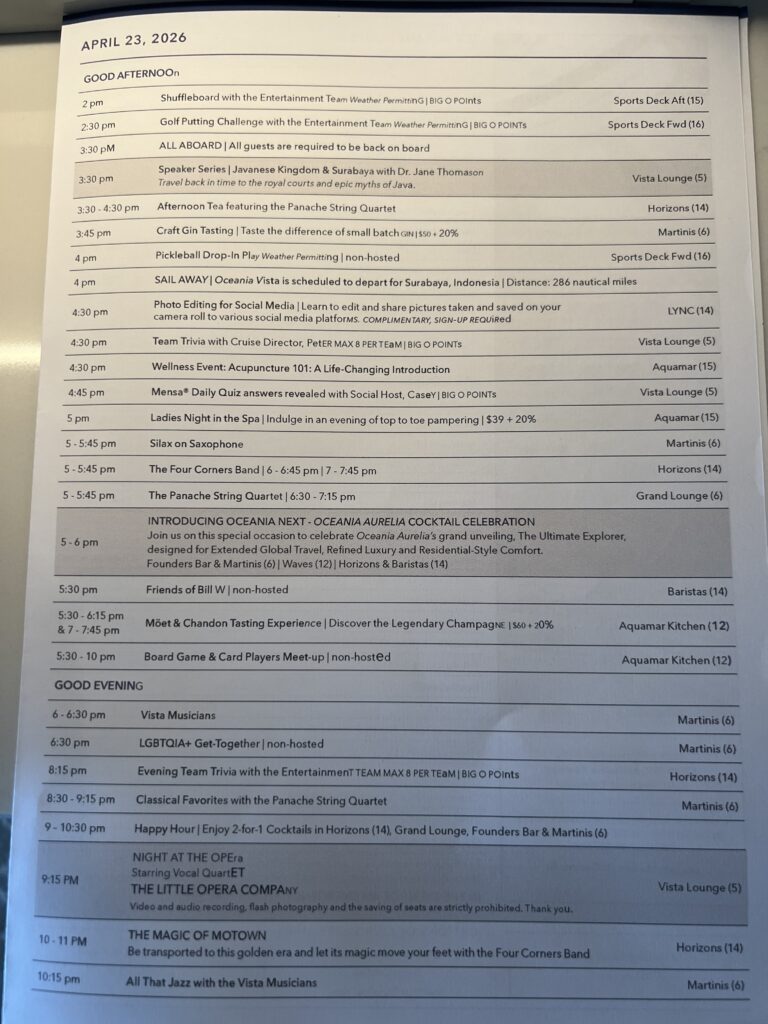
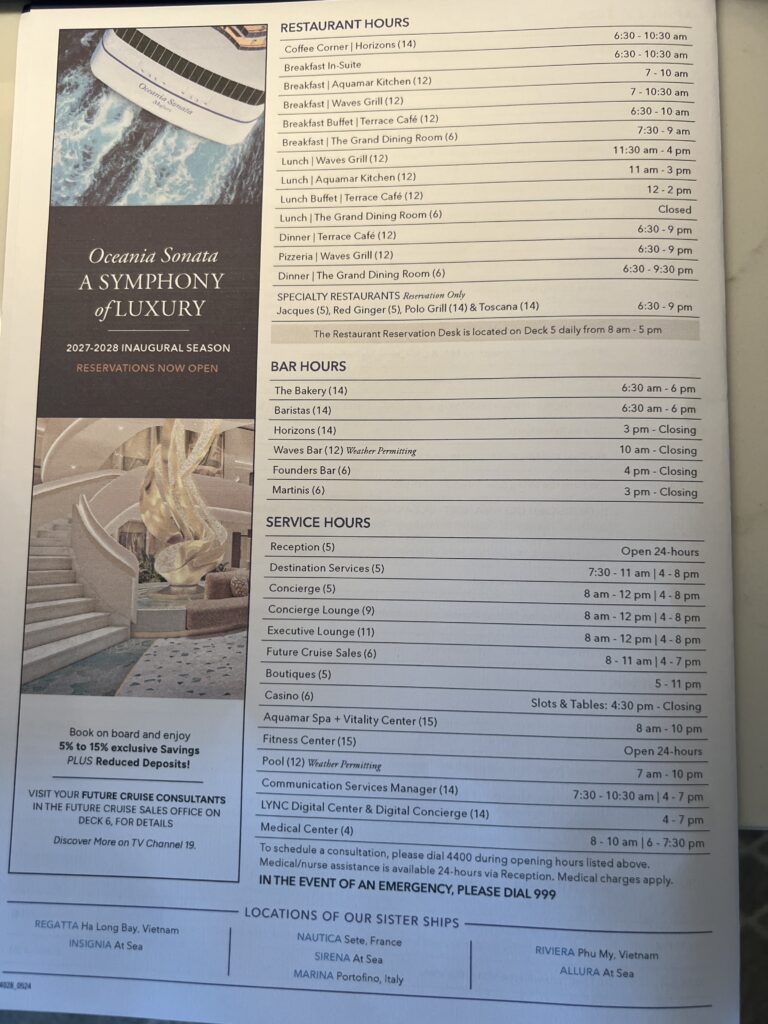
These are the sheets we found in our cabin upon our return. It looks like Oceania is renovating an existing ship (Nautica) to do exclusively World Cruise. Nautica is the first Oceania ship I ever sailed on. It will be a great ship with its small size and low passenger capacity for future World Cruises. Passengers I spoke to this evening about the new ship had the same question that I had. Is there going to be working Wi-Fi on this ship?



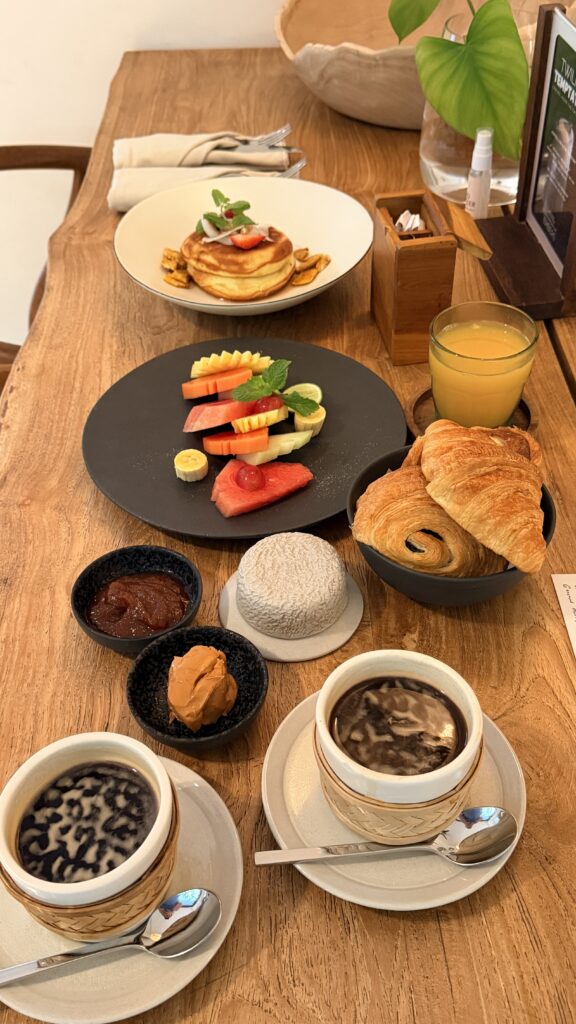
We had to order our breakfast the night before so it could be delivered to our hotel room when the restaurant opened. Jackie had banana pancakes and I had fruit and pastries. It was an excellent breakfast although the coffee was not Luwak Coffee. I bring this up because we had a good laugh about it tonight with Kevin, Holly, David and Marta over dinner. We told them Saturday at 1:30pm everyone has to drink some or they are no longer part of the cool group…laughing

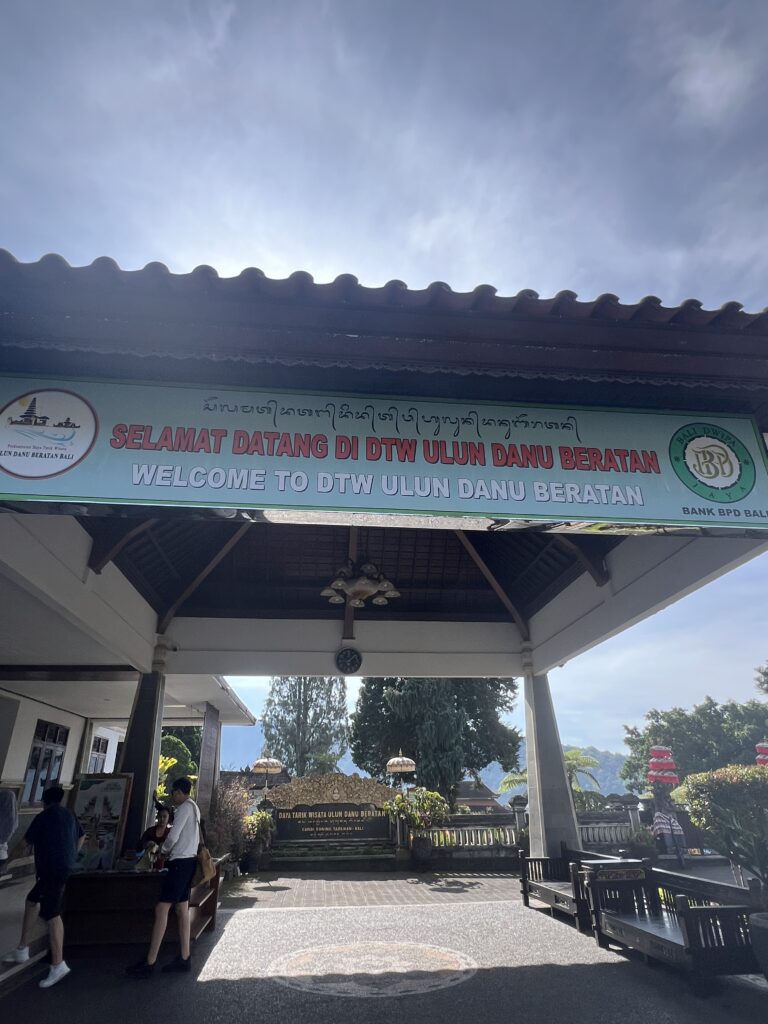
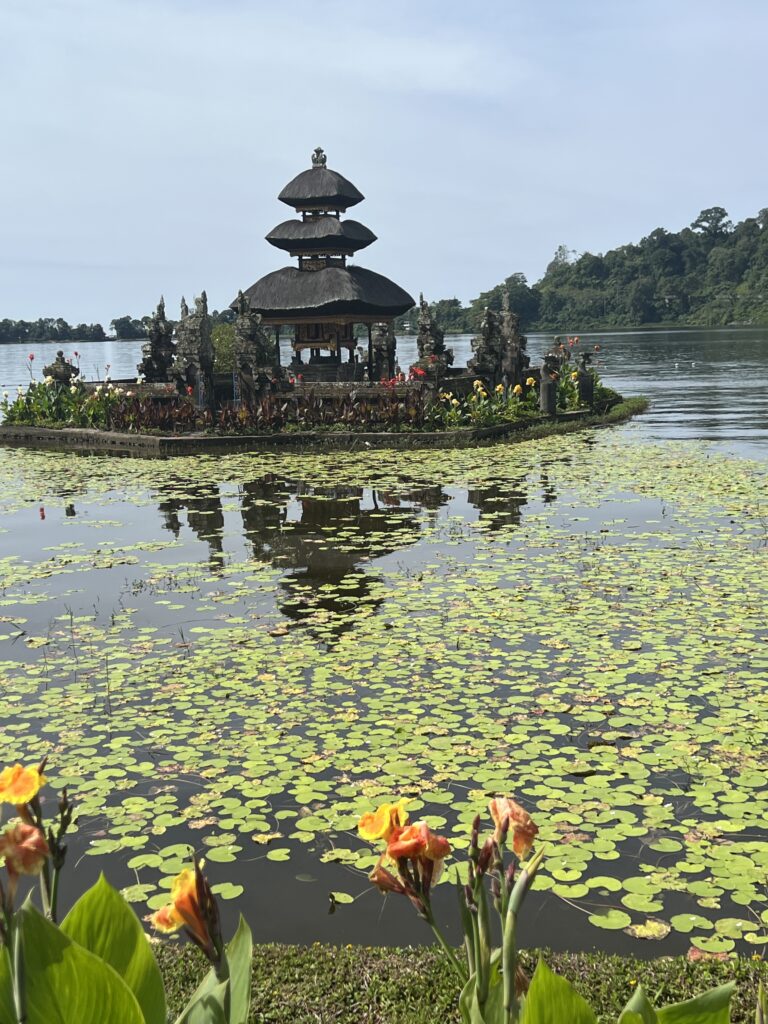
Pura Ulun Danu Beratan, or Pura Bratan (Balinese script: ᬧᬸᬭᬉᬮᬸᬦ᭄ᬤᬦᬸᬩ᭄ᬭᬢᬦ᭄), is a major Hindu Shaivite temple in Bali, Indonesia. The temple complex is on the shores of Lake Beratan in the mountains near Bedugul. The water from the lake serves the entire region in the outflow area; downstream there are many smaller water temples that are specific to each irrigation association
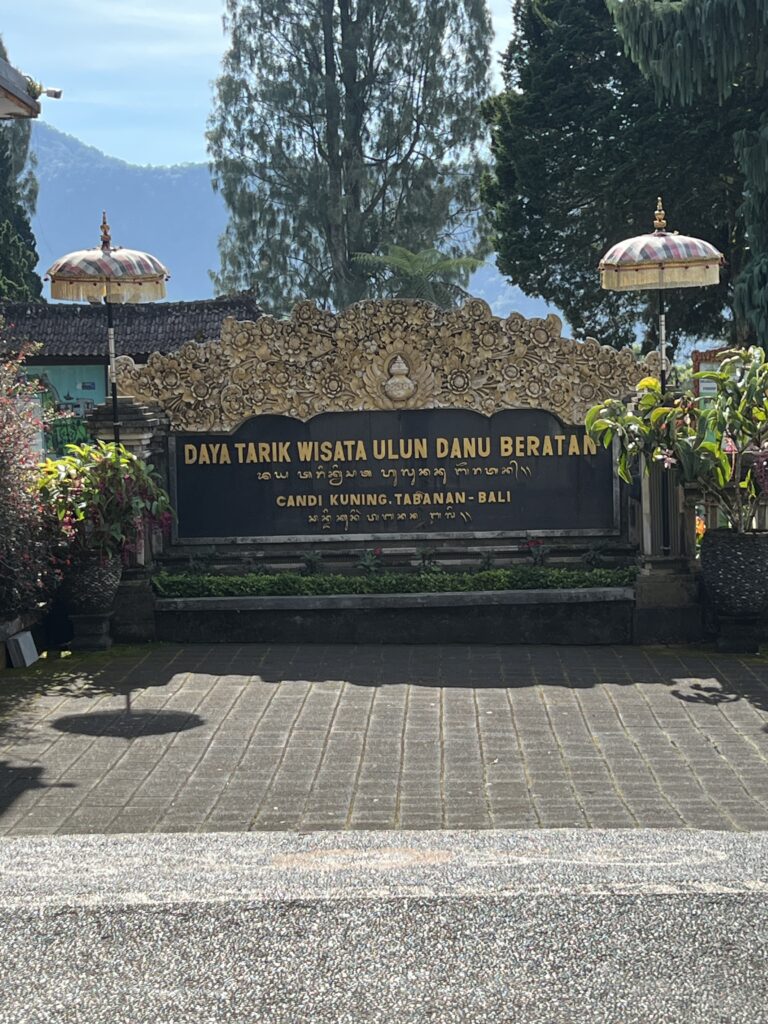
Ulun Danu Beratan Temple is dedicated to Dewi Danu, the goddess of lakes and rivers. To see the temple in person is to understand how important water is to Balinese life—irrigation, rice fields, spiritual balance.
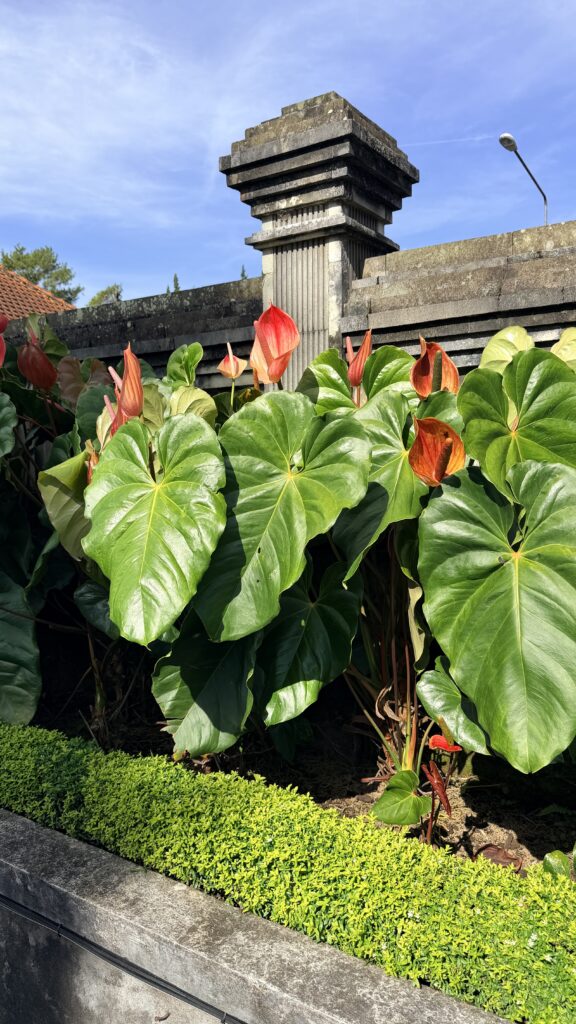
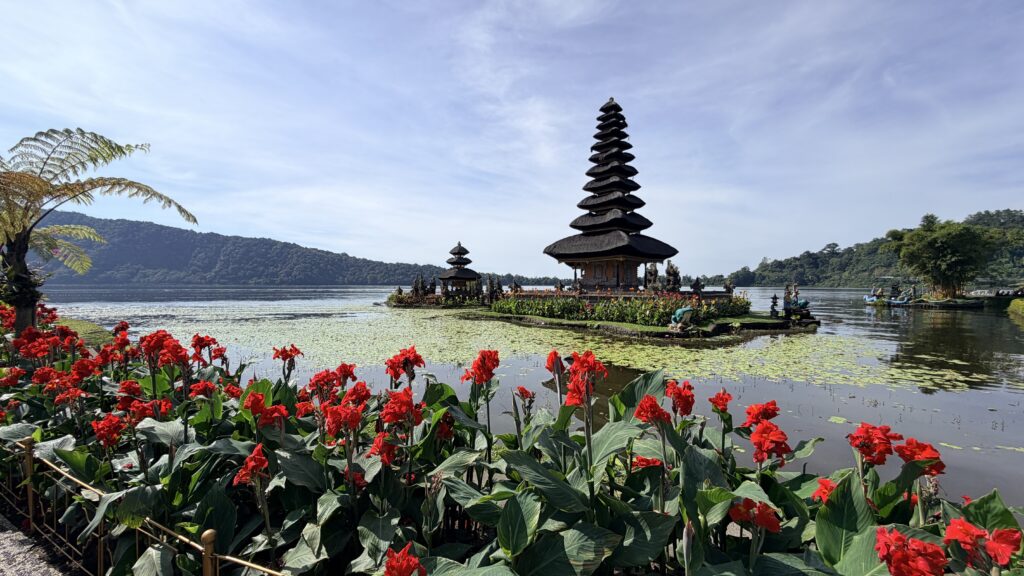
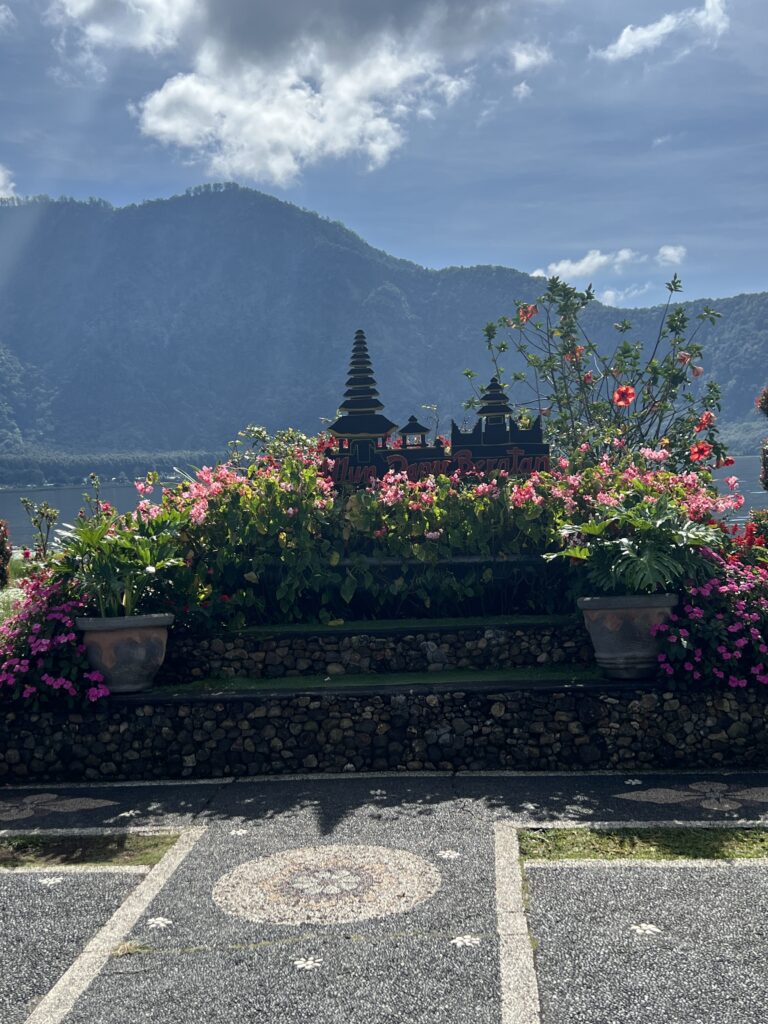
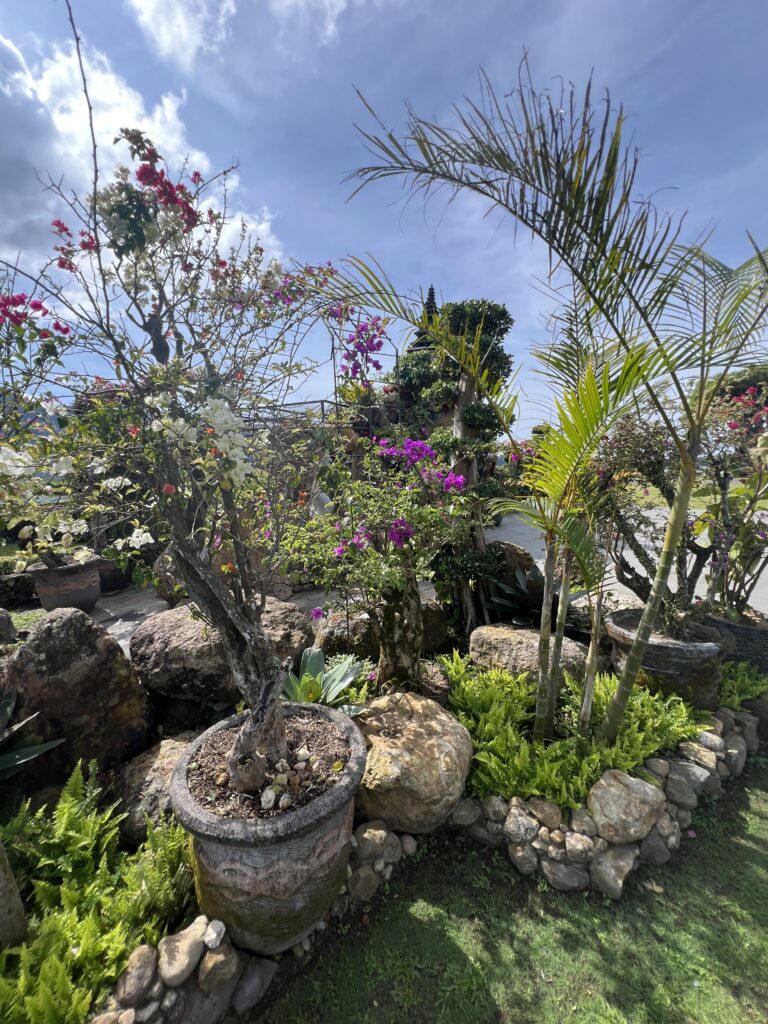
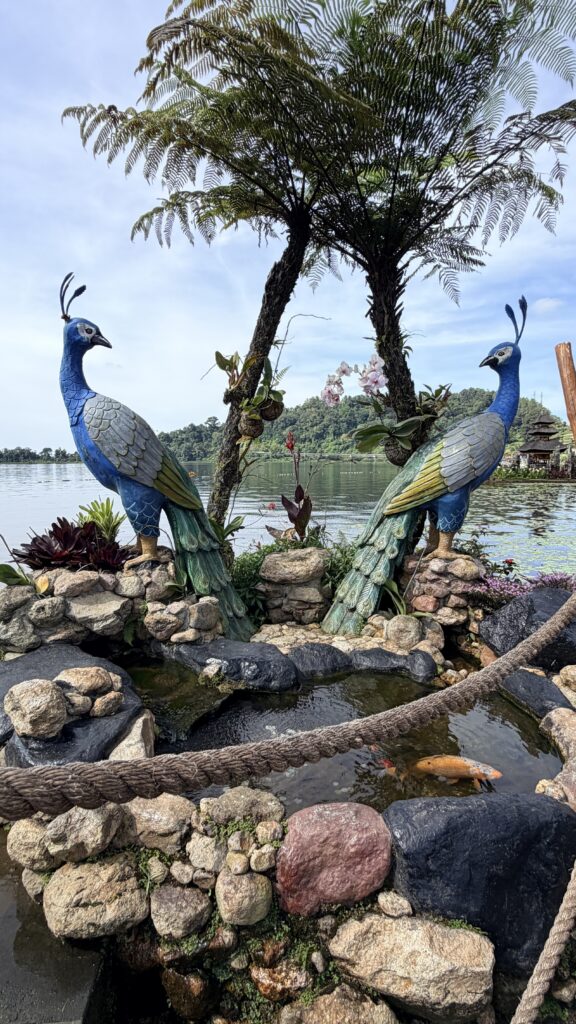
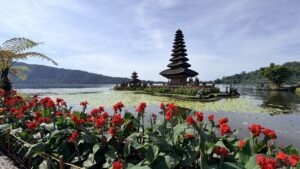
The plants and flowers are plentiful and beautiful due to the climate at this altitude
As of 2026, the entrance fee for Ulun Danu Beratan Temple is IDR 75,000 for foreign adults, and IDR 50,000 for foreign child.
Your entrance fees include access to the main temple complex and the beautifully landscaped gardens around it.
Entrance fees are paid at the small office after the parking booth. Payments can be made in IDR cash or international cards.
Ulun Danu Beratan is open every day from 7:00 am to 7:00 pm.
Unlike most Bali temples, you don’t necessarily need to follow the usual Bali temple etiquette here. Since you won’t be entering the designated worship areas, you can dress as you please.
However, it is recommended you dress respectfully. No bikinis, shirtless selfies, or outfits better suited for a beach club. Think, modest, comfortable clothing that still shows a little cultural awareness.
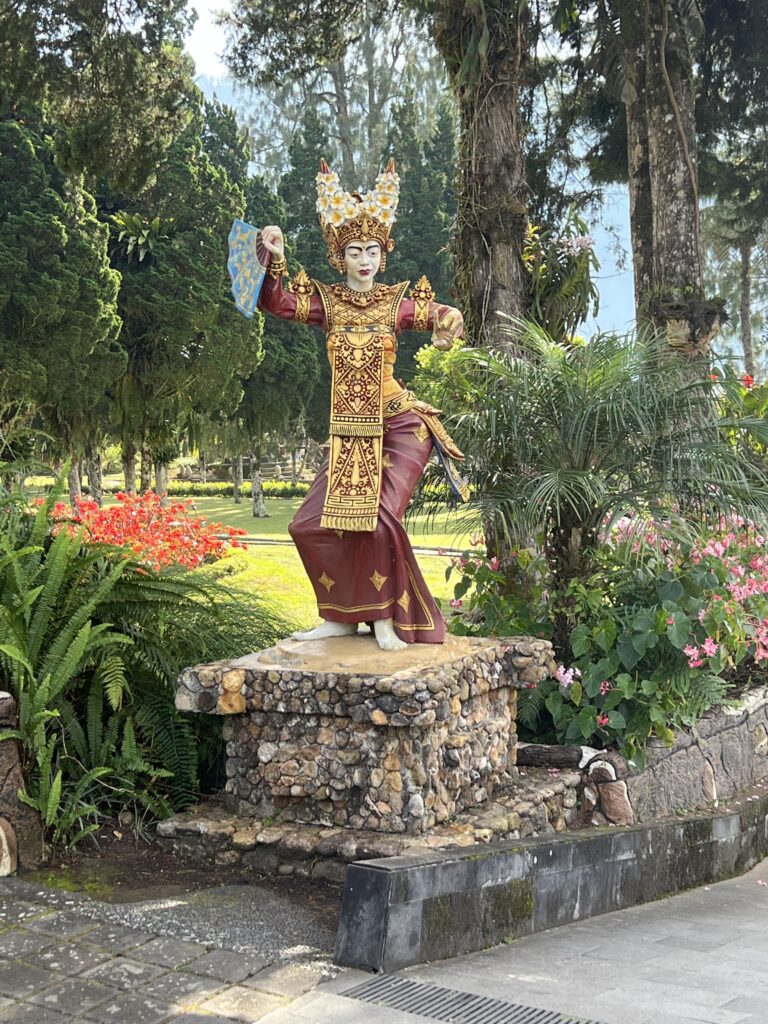
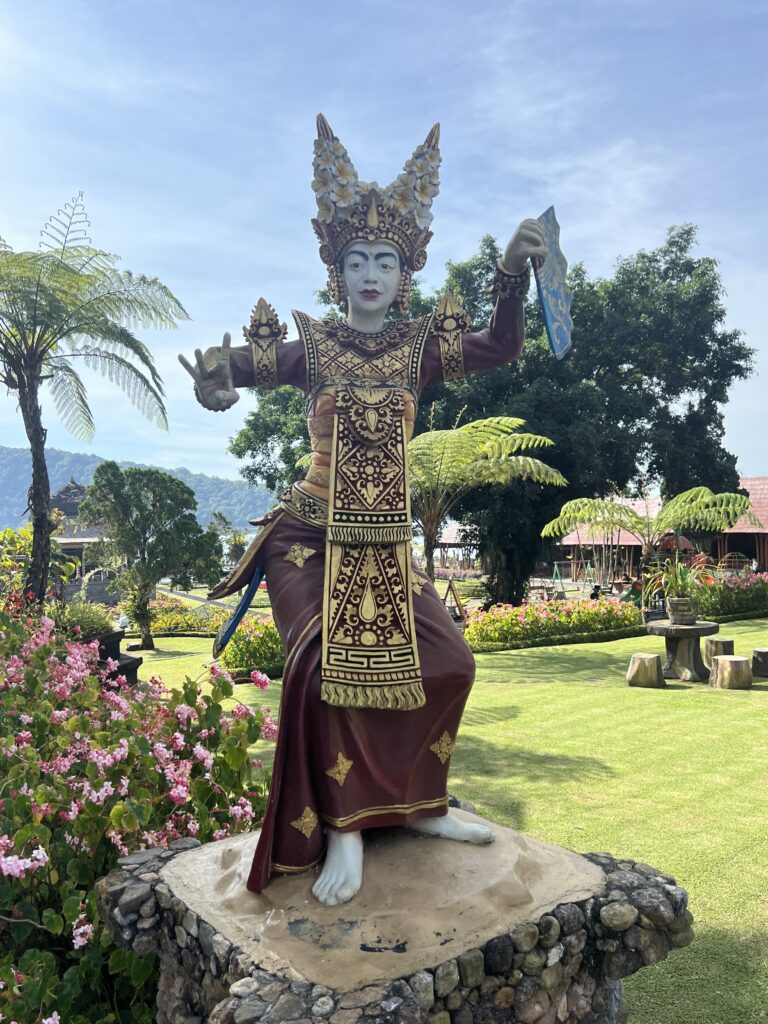
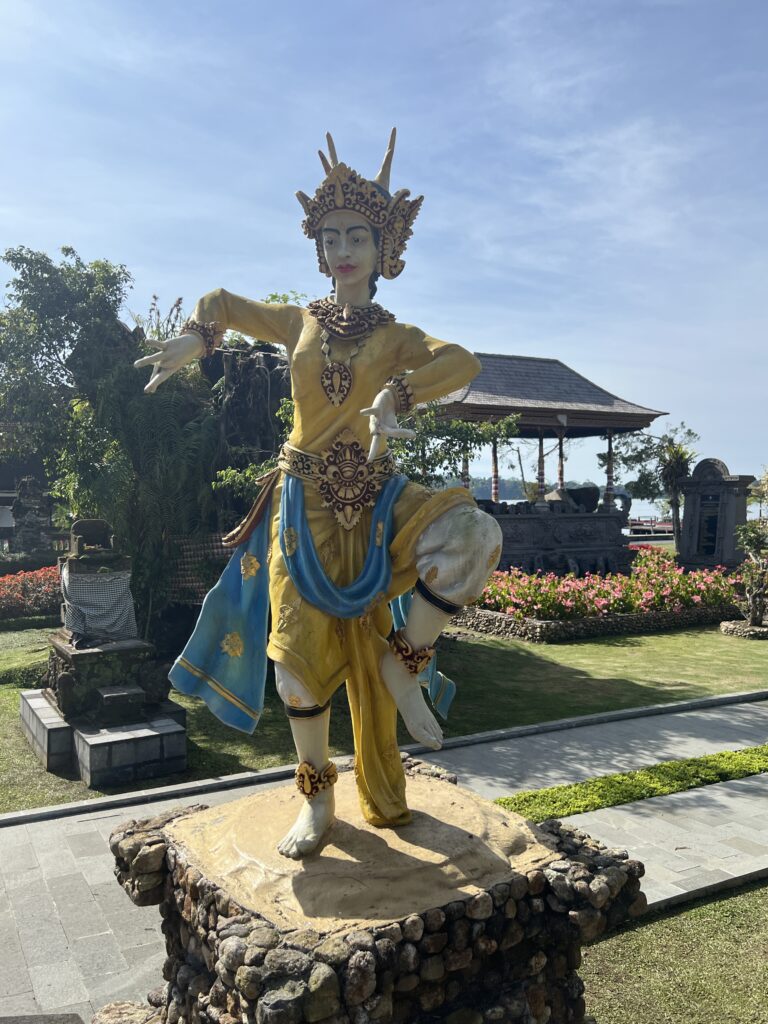
Sarong rentals and traditional outfits (pakaian adat Bail) are available to rent. If you’re seeking a cultural look for your photos, this is it!
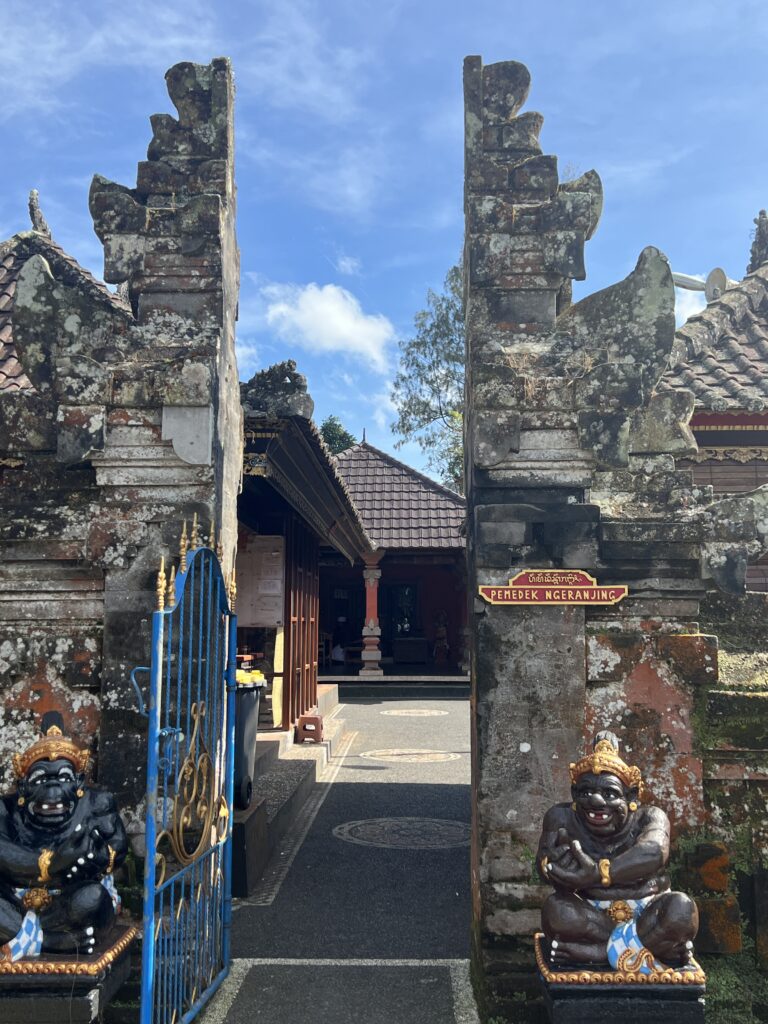
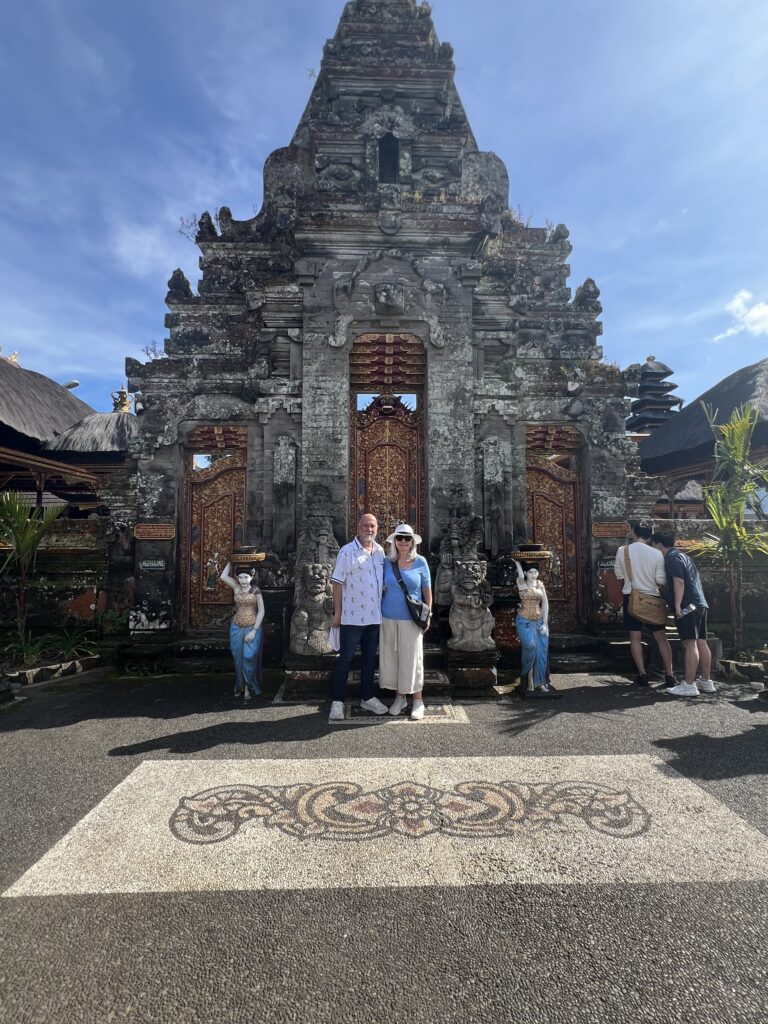
In Bali, Hindu temples are known as “pura“, being designed as open-air places of worship in walled compounds. The compound walls have a series of intricately decorated gates without doors for the devotee to enter. The design and plan of the holy pura follows a square layout. A typical temple is laid out according to ancient Lontar texts with three courtyards separated by low walls pierced by ornate gateways. The outer courtyard is for secular pursuits, with pavilions used for meetings, resting performers and musicians at festivals. Food stalls are set up here during festivals. The middle courtyard is a transition zone between the human and divine sections; here offerings are prepared and temple paraphernalia are stored. The inner courtyard is the site of the shrines and religious ceremonies. The shrines are known as merus and are square structures with brick bases and multiple pagoda-style thatched roofs; the number of roofs reflects the status of the deity, and is always an odd number. The temple complex consists of five various shrines dedicated to other Hindu gods as well.
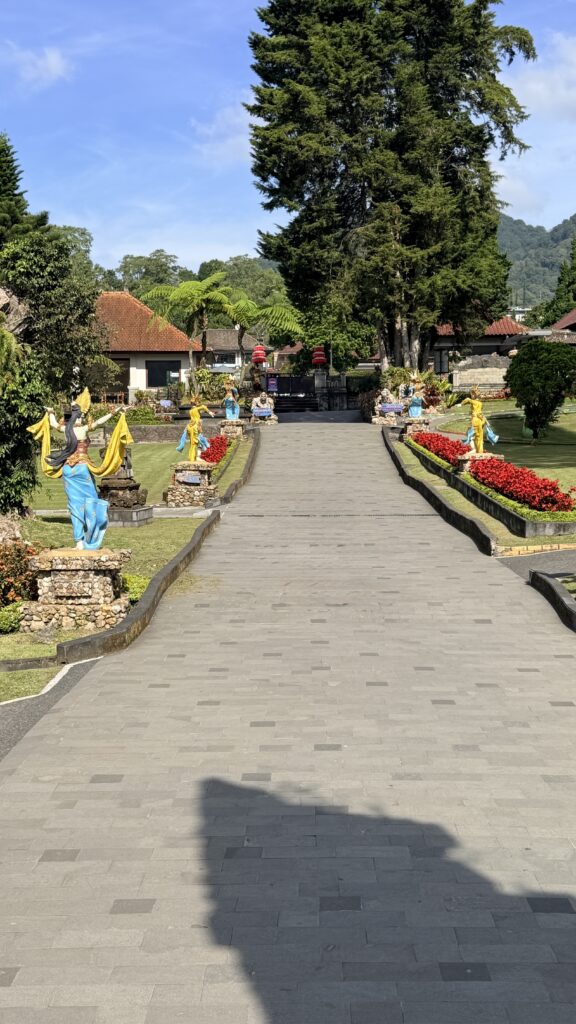
Ulun Danu Beratan Temple is located in the mountainous region of Bedugul, Bali, in the Tabanan region.
Sitting at an elevation of around 1,200 meters above sea level, the area is know for its cool, misty climate and lush surroundings.
The temple rests right on the western edge of Lake Beratan, Bali’s second-largest lake, making it uniquely positioned for both spiritual and aesthetic reasons.
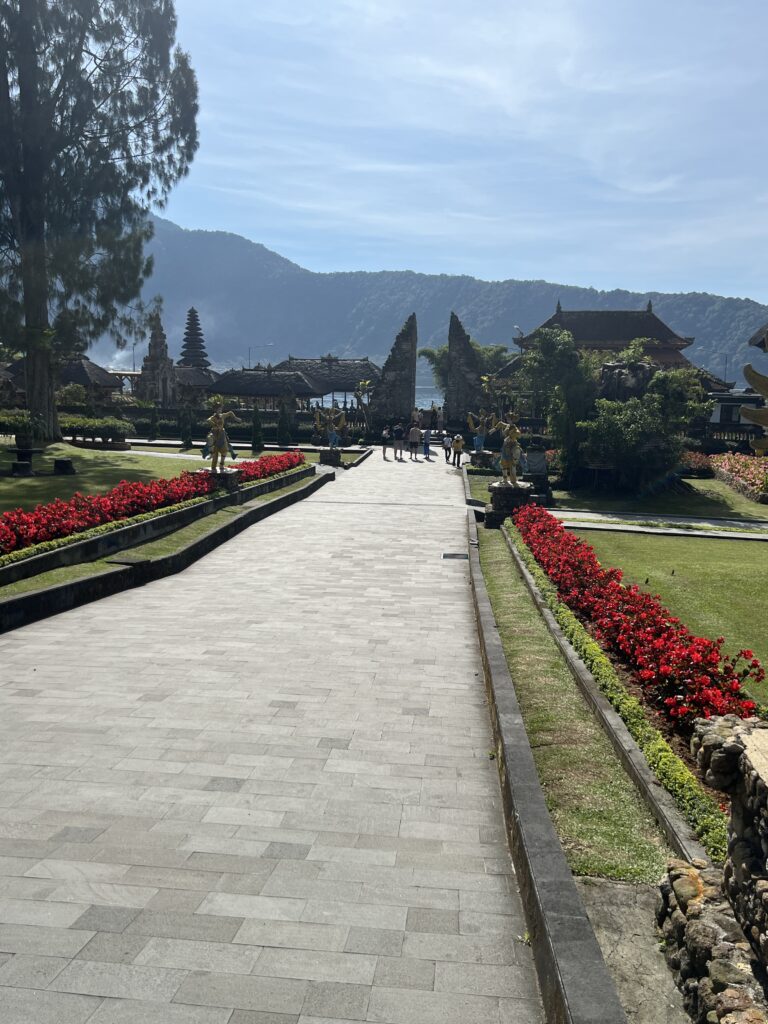
If you’re driving from Ubud or the southern Bali hotspots like Seminyak or Canggu, expect a scenic two to three-hour drive, depending on traffic.
The journey to Ulun Danu Beratan Temple is a visual treat in itself—think terraced rice fields, winding mountain roads, and thick, highland jungle.
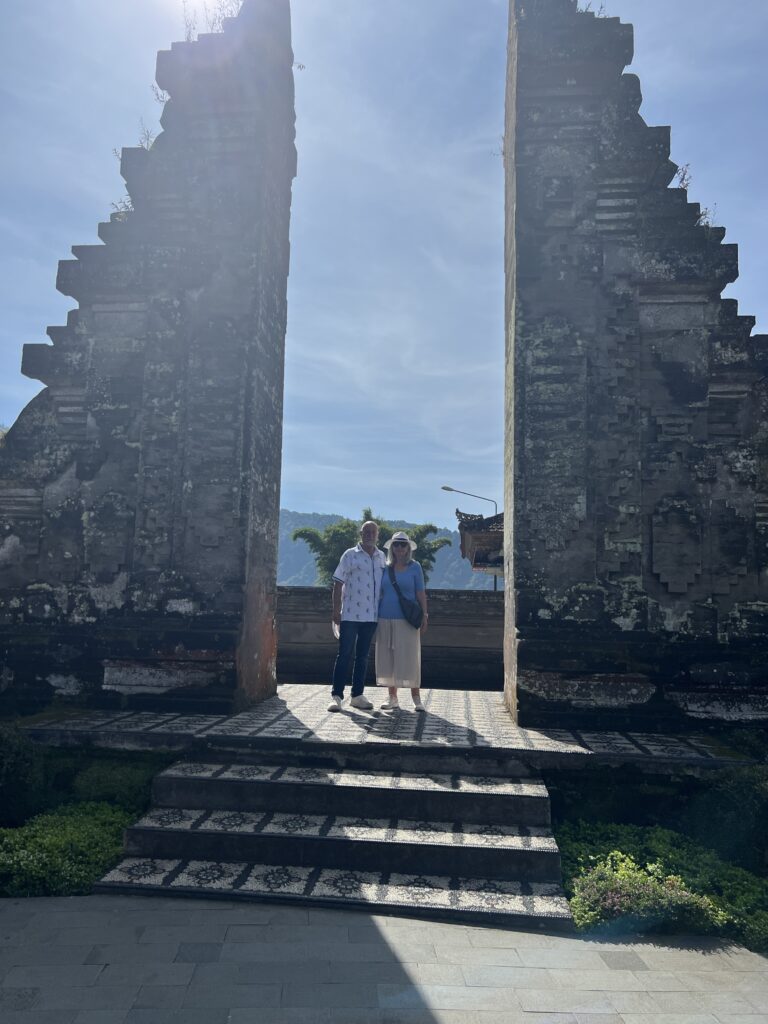
Pura Ulun Danu was built in adoration of the Goddess Danu. Danu, in the Balinese tongue, means lake, while the goddess Danu is queen of water, lakes and rivers. The temple complex consists of four sacred buildings. Linga Pura stands three levels high, and is a place of worship to the god Shiva. Pura Puncak Mangu stands 11 levels high, and was built in dedication to the god Vishnu. PuraTeratai Bang is the main temple, and Pura Dalem Purwa is built in worship to Sang Hyang Widhi. This last temple is also a site for those who pray for fertility, prosperity and well-being.
The style of the building follows the Trimurti belief; three holy colors to represent the three gods: Shiva, Brahma and Vishnu. The first color is red, to the lord Brahma, The Creator. Second, is black. The symbol of the lord Vishnu, the balance and preserver of the universe.Finally, white for the god Shiva, The Destroyer.
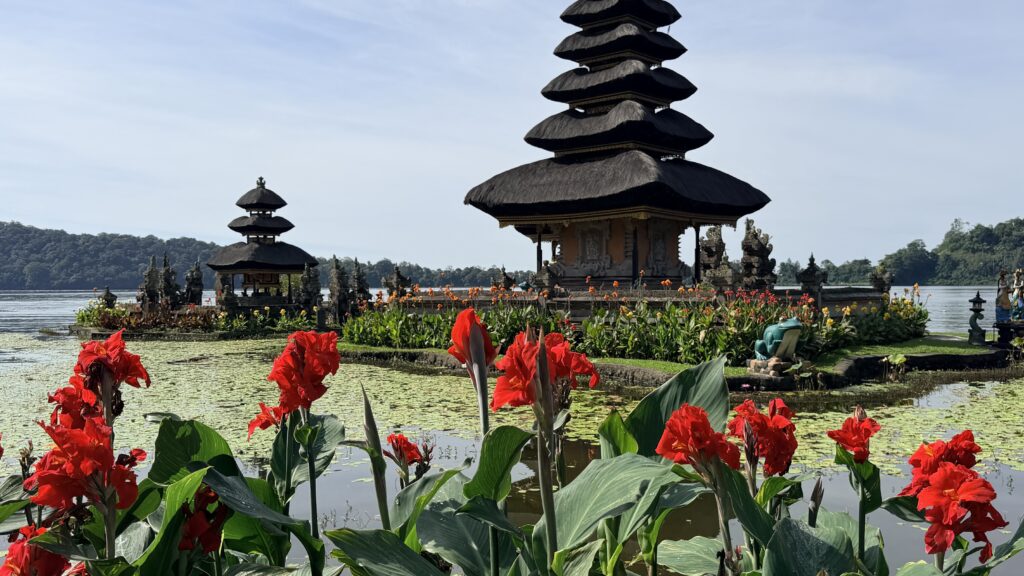
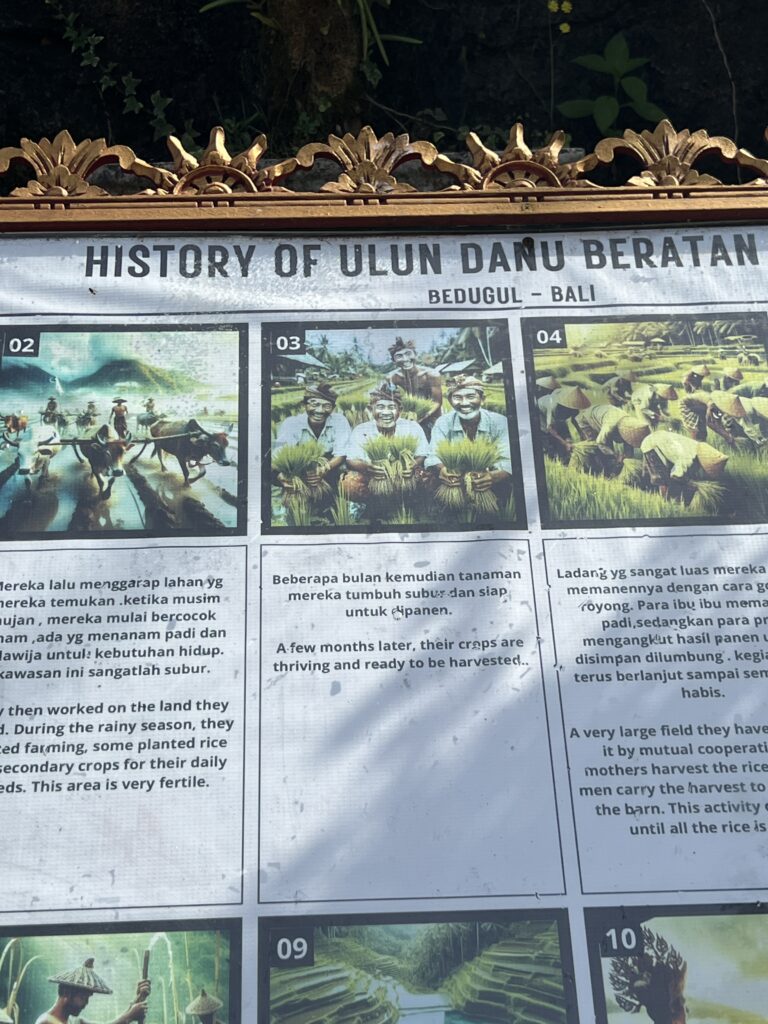
Built in 1633, the temple is used for offerings and ceremonies dedicated to the Balinese water, lake and river goddess Dewi Danu, due to the importance of Lake Bratan as a main source of irrigation in central Bali. The 11-storey pelinggih meru in the complex is dedicated to Shiva and his consort Parvathi. Buddha‘s statue is also enshrined in this temple. This temple is also called the “Bali temple on the Lake” because it looks as if it is floating when the Bratan River rises
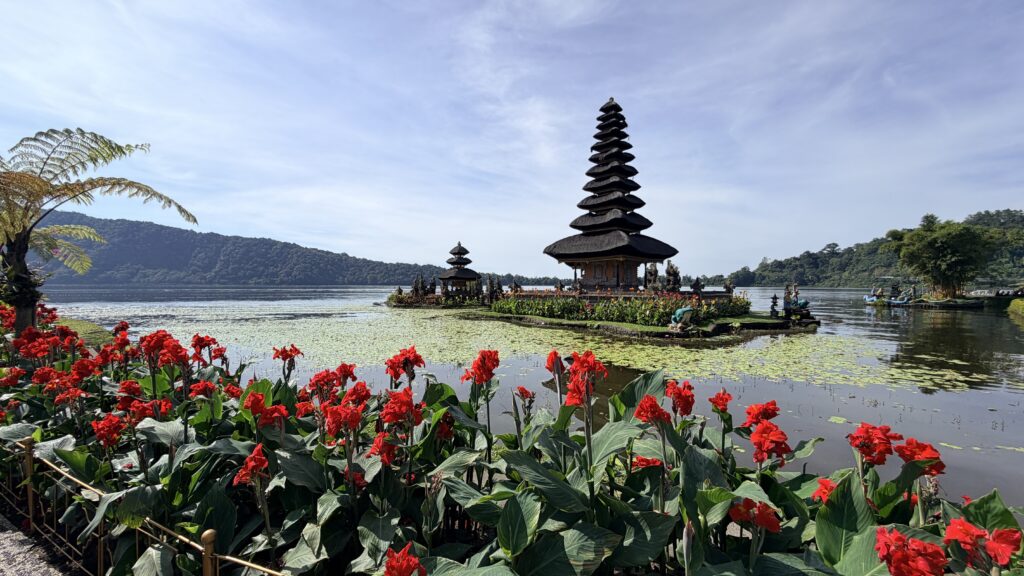
The area surrounding the temple is believed to have been a site of worship and center for religious rituals since the megalithic period. To the left of the temple lies a sarcophagus as well as a stone slate that are dated to around 500 BC. The existence of the temple itself is has been recorded as early as 1556. In 1633, it was rebuilt by the King of Mengwi, I Gusti Agung Putu, with a mixture of Hindu and Buddhist architectural styles. Despite its age, the temple remains clean and in good condition, well kept by the local community. Ulun Danu Temple is one of the icons of the island of Bali, and is pictured on the 50,000 rupiah bill.
The best time to visit Ulun Danu Beratan Temple depends on how picky you are for your photos.
Generally, the dry season is the best (from April to October). The skies are clearer and you’ll get a panoramic view of the surrounding mountains.
Rainy season also has its perks, when the mountains are surrounded by clouds and the lake is misty – a very dramatic image!
Arriving early in the morning helps you beat the crowds. Around 7:00 – 8:00 am it will likely be just you and the temple staff. The sun is also less harsh.
For a full-on cultural immersion, aim to visit during the Piodalan ceremony. This is a temple’s anniversary. Dates will vary every year so it’s best to ask the locals when it’s coming up.
Lake Beratan is the second largest lake in Bali, and is the source of irrigation for rice fields and plantations across the entire Bedugul Village. The mountain on which it sits is often referred to as “the holy mountain” as the weather is cool and the soil rich and fertile. In early times, Lake Beratan was the largest lake in Bali, until a devastating earthquake occurred, dividing the lake into three sections: Beratan, Buyan and Tamblingan. The name Beratan comes from the word Brata, which means to conduct one’s self to fill the 9 primary needs in life. The word is used in the term “Tapa Brata,” which is to meditate and be united with nature.
Pura Ulun Danu Beratan (or Ulun Danu Beratan Temple in English) is hands-down one of the best temples in Bali, beautifully floating on the shoes of Lake Beratan.
It’s also known as Danu Beratan Temple, Ulun Danu Bratan, Bedugul Temple, and due to its appearance – The Floating Temple.
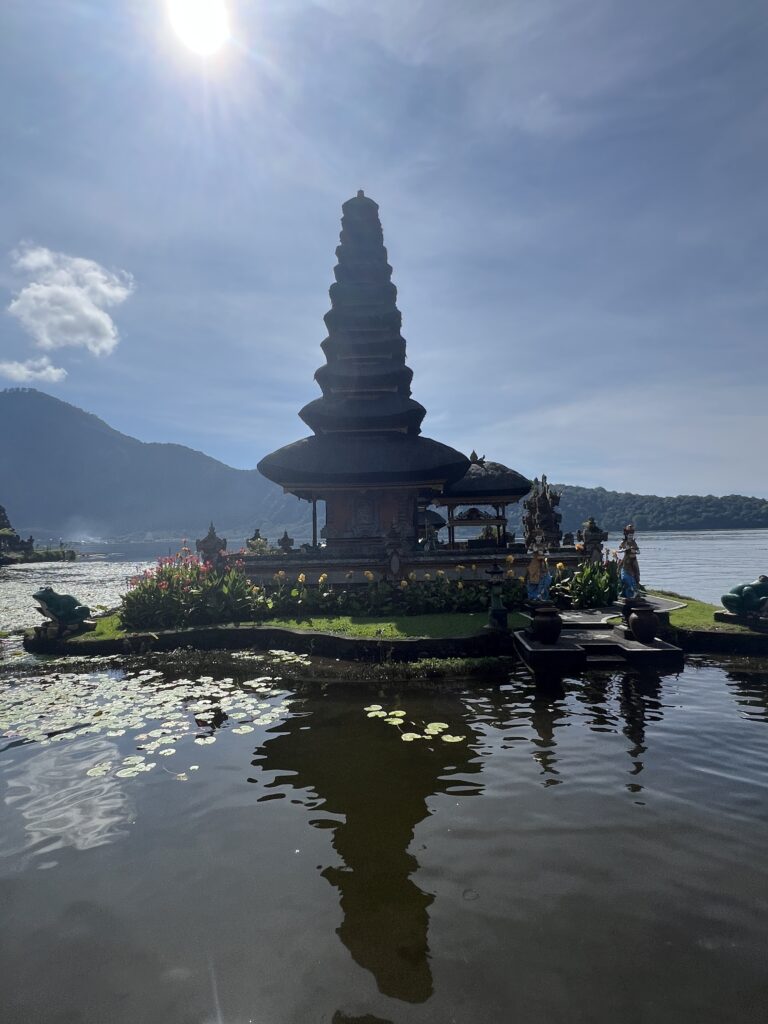
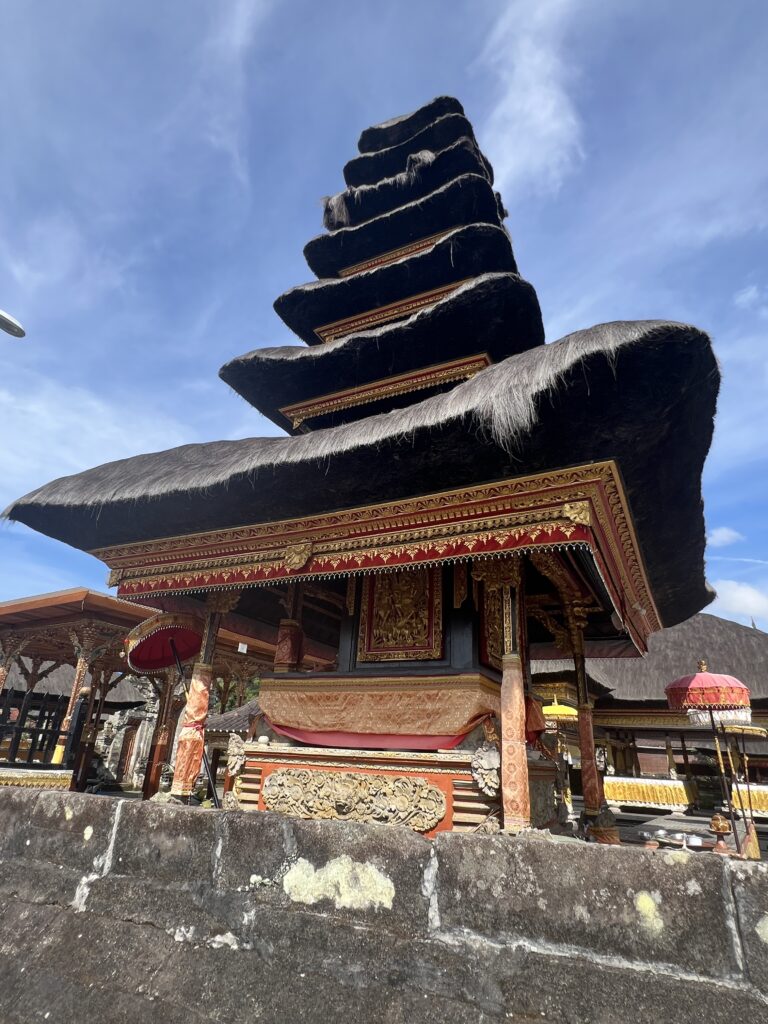
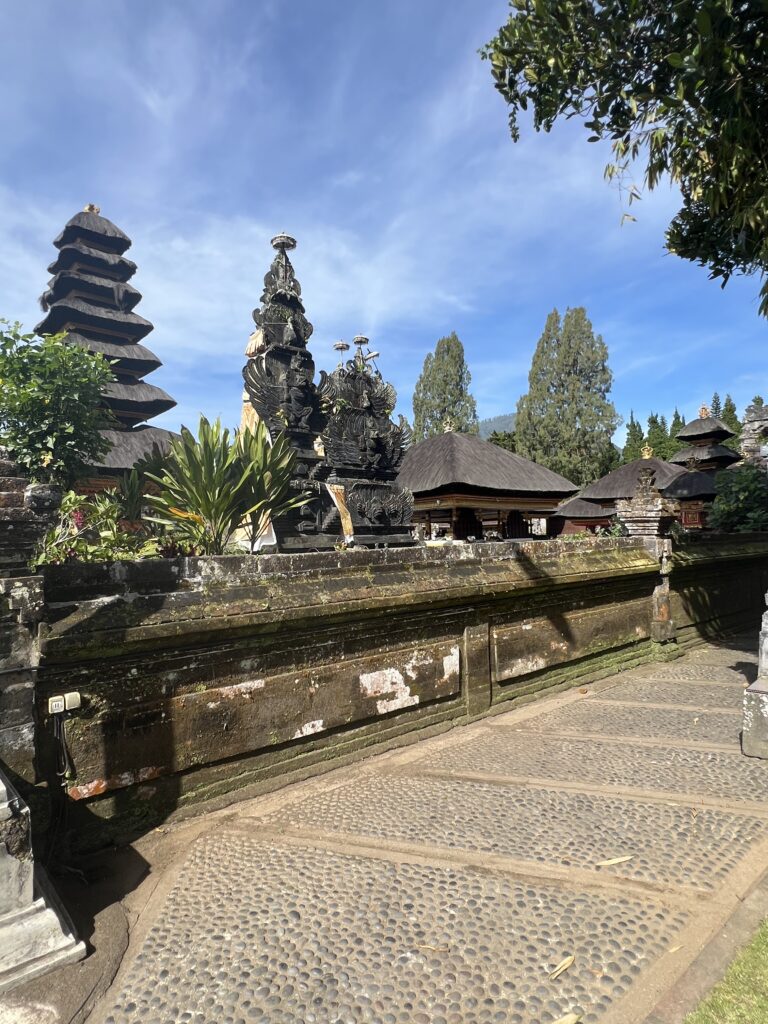
Lake Beratan is a sacred body of water that nourishes much of Central Bali. The lake is considered the home of Dewi Danu, the goddess of water and fertility.
In an island society heavily reliant on agriculture, particularly the ancient subak irrigation system, honoring the goddess of water is crucial.
Ulun Danu Beratan Temple plays a central role in appeasing Dewi Danu to ensure a steady water supply for the island’s rice fields and gardens.
It’s not just symbolic. The ceremonies here are believed to directly impact agricultural success.
That’s why Ulun Danu Beratan Temple isn’t merely a tourist attraction; it’s a living, breathing part of Bali’s spiritual ecosystem.
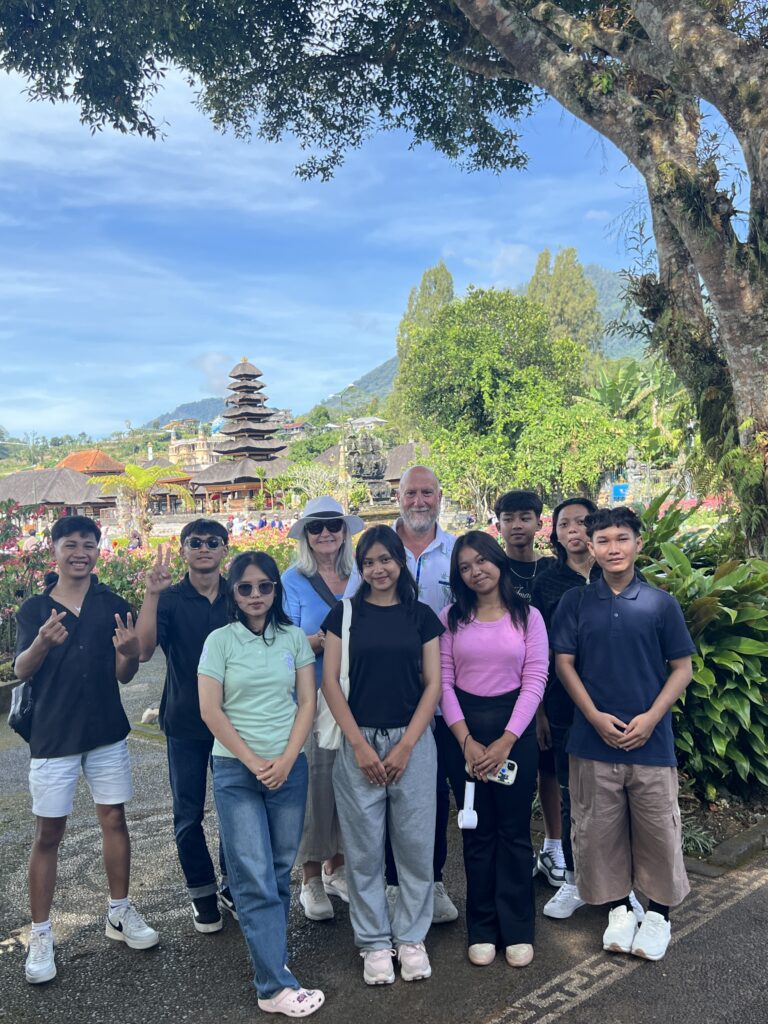
This was a great part of our visit. We noticed school age teenagers staring at us and whispering. I asked Gede why they were doing this and he said for two reasons: They want to take photos with you as they are interested in foreign tourists, and they want to practice their English by speaking to you. So, if you look at the Faces Around the World section you will see many of these students that we met. The students come over on a ferry from Java, Indonesia. We gave them the web address for this page so hopefully they are going to follow us and also view their photos.
Ulun Danu Beratan Temple dates back to the 17th century, during the reign of the Mengwi Kingdom. King I Gusti Agung Putu is credited with the construction of this temple, and it has served as a major site of worship for centuries.
The temple’s purpose was clear from the start: to honor the water goddess Dewi Danu and ensure agricultural prosperity through blessings on the water source.
Though the temple has undergone several restorations due to age and natural conditions, most of its original design and layout remains intact.
The historical significance of Ulun Danu Beratan Temple is woven into the very soil it sits upon, and its enduring relevance is a testament to the strength of Balinese Hindu traditions.
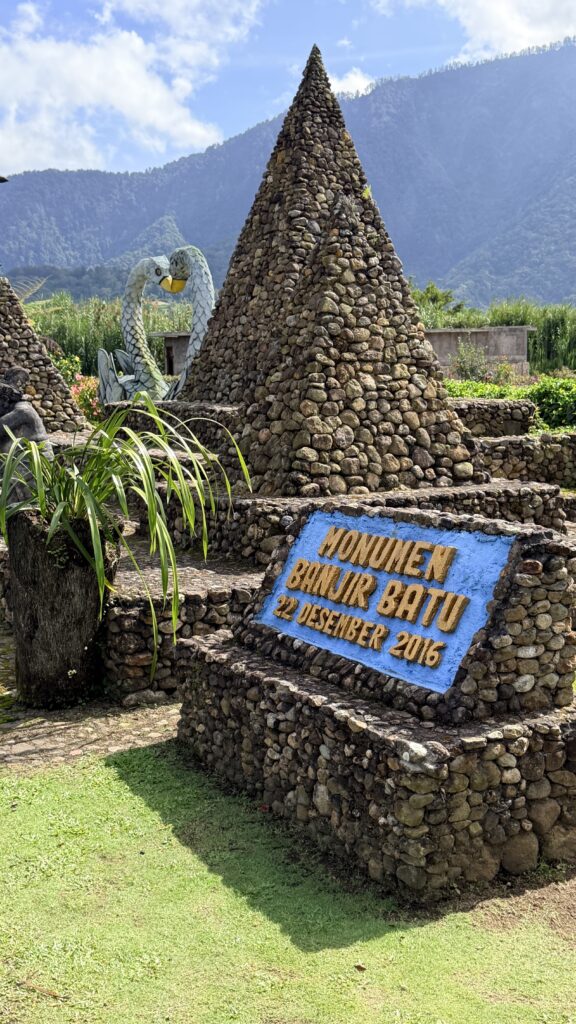
The Flash Flood Monument (often called Pathok Loding) in some dams are Pyramid-shaped stone piles arranged as historical markers of flood disasters. This monument was built from hilly rock material that was carried away by the previous flash flood, as well as an educational and photo spot.
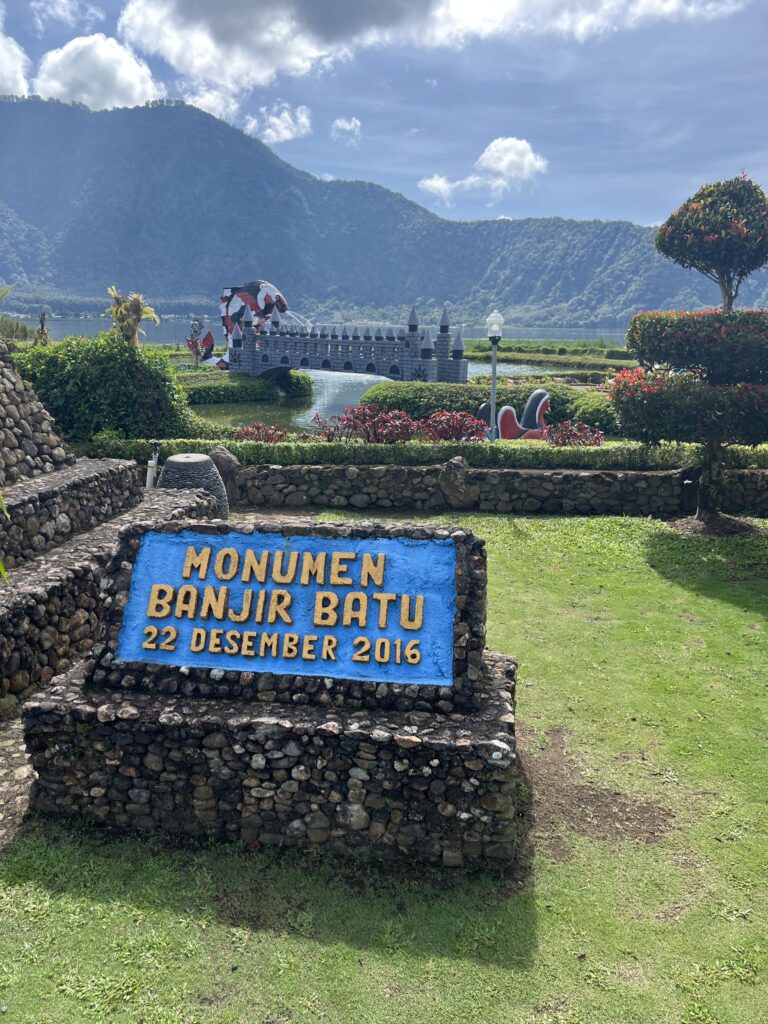
Important Points of the Bandang Flood Monument:
- Function:Remembering the major flood event and as a warning sign.
- Shape:A pyramid with a pile of stones on top.
- Location:Commonly found in managed dam areasTirta I Services.
This monument is also known as
Pathok Lodingbecause of its shape that resembles a peg.
These three students approached us with questions that appeared to be part of a school assignment.

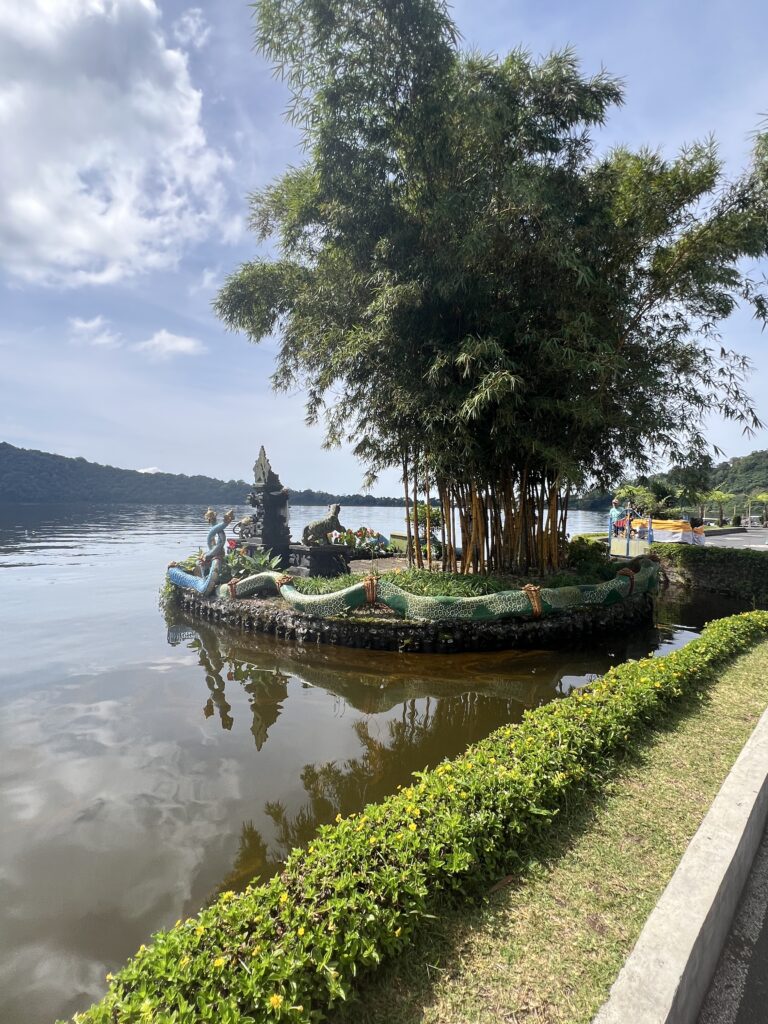
Our one and half days left us wanting more and has been added as a location we would love to return one day. Like we said about Sydney here in Bali one and half days should be one and half months.
Tomorrow we finish our time in Indonesia with a visit to Surbaya. We have a private tour to visit the city.


2 thoughts on “Day 48 April 23 – Benoa, Bali”
Beautiful…. What a great experience !!
Thanks for sharing.
Thank you for viewing our page and following our journey