
Day 49 Friday April 24th (71 days to go) — Another good day with a private guide Kawid and a driver Har. We started as soon as the ship arrived at 10:00am and we got back to the ship right on time although we had some concern due to traffic. We enjoyed the day and the locations we visited. It is certainly a bustling city with motorbikes and cars coming at you from every direction.
A significant part of the Surabaya and Indonesia history is getting their independence in 1945. We visited a number of locations attached to this event which started in October 1945 but took on increased intensity on November 10, 1945. You will see quite a few references and photos below related to their struggle to gain this independence. The citizens of Surabaya are quite proud of this independence and take the time to realize the struggle the citizens suffered, including the unfortunate deaths of many young people to gain their independence.
I tried to include videos with the photos as I have learned a little more about uploading and saving while off the ship. The battery in my iPhone does not like the process. 🙂 Unfortunately, once videos are in place and I am on the ship, it is impossible to make changes to the videos and photos I have uploaded. This means some items might be out of order and I will explain this in the notes. I only have 71 days to figure out how to do this correctly. 🙂
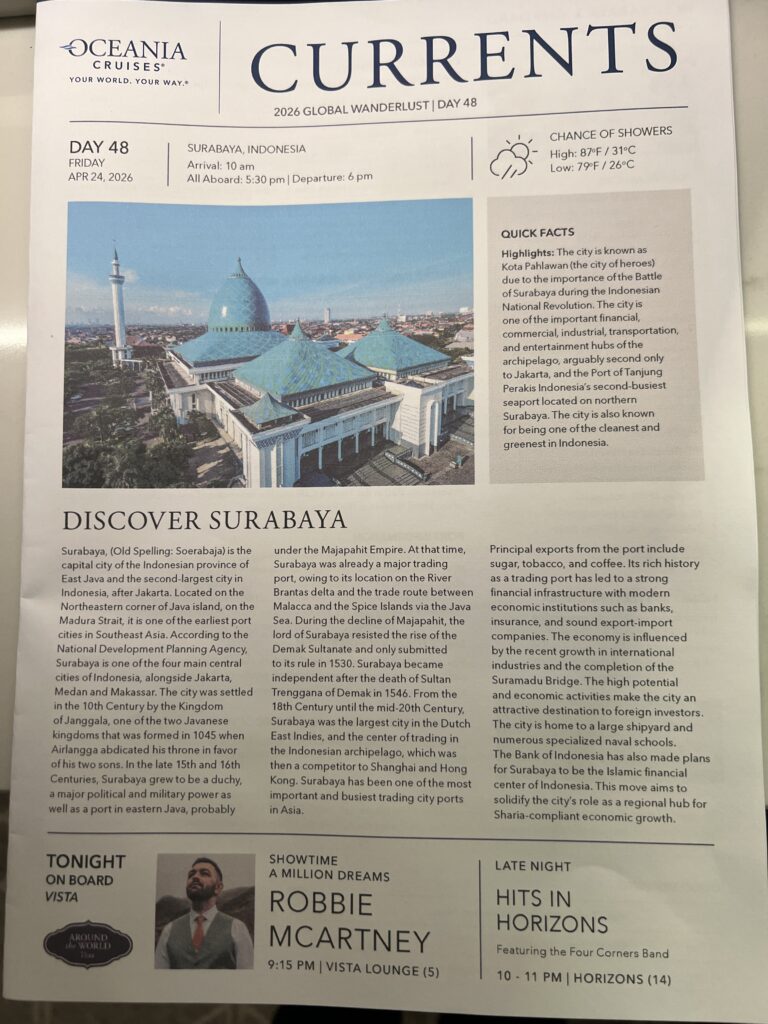
Surabaya is the capital and largest city of East Java province and the second-largest city in Indonesia, after Jakarta. Located on the northeastern corner of Java island, on the Madura Strait, it is one of the earliest port cities in Southeast Asia. According to the National Development Planning Agency, Surabaya is one of the four main central cities of Indonesia, alongside Jakarta, Medan, and Makassar. The city covers a land area of 335.93 km2, and had a population of 2,874,314 within its city limits at the 2020 census. With 3,018,022 people living in the city as of mid 2024 (comprising 1,494,734 males and 1,523,288 females) and over 10 million in the extended Surabaya metropolitan area, according to the latest official estimate, Surabaya is the second-largest metropolitan area in Indonesia.
From the 18th century until the mid-20th century, Surabaya was the largest city in the Dutch East Indies and the main trading hub for the Indonesian archipelago, competing with Shanghai and Hong Kong.
Japan occupied the city in 1942, as part of the Japanese occupation of the Dutch East Indies, and it was bombed by the Allies in 1944. After the surrender of Japan at the end of World War II, Surabaya was seized by Indonesian nationalists. The young nation soon came into conflict with the British, who had become caretakers of the Dutch colony after the Japanese surrender.[42]
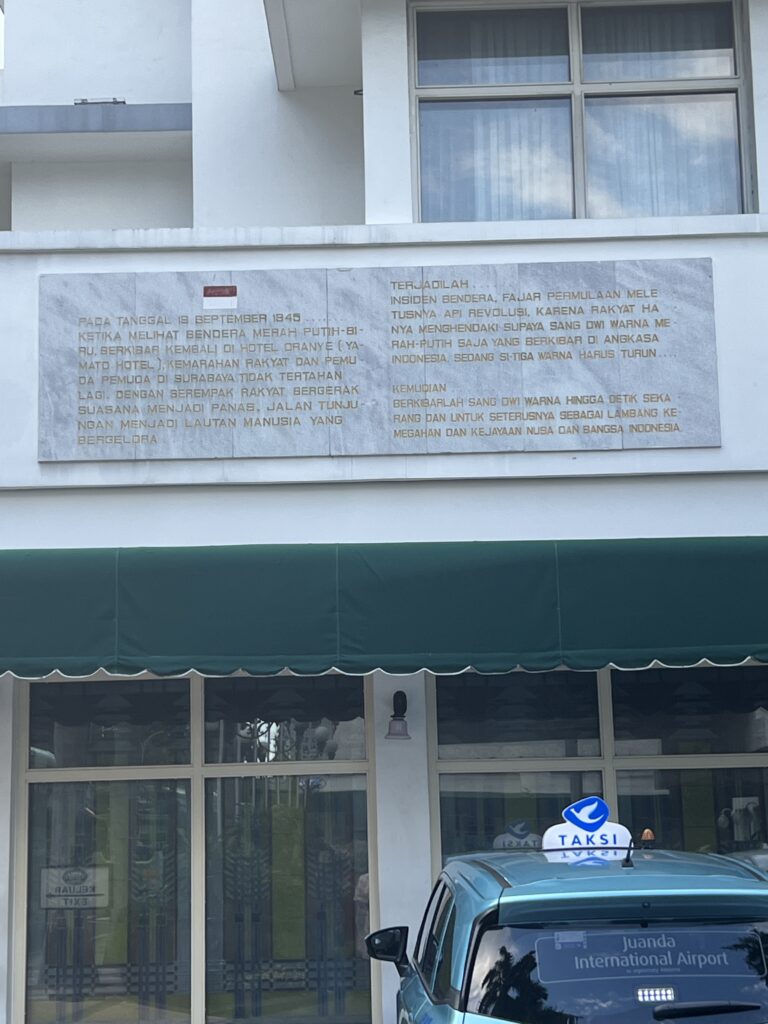
The Battle of Surabaya, started after the Arek-Arek Suroboyo (lit. ’Young People (or just people) of Surabaya’) killed British Brigadier Aubertin Mallaby on 30 October 1945, near Jembatan Merah, allegedly with a stray bullet. The Allies gave an ultimatum to the Republicans inside the city to surrender, but they refused. The ensuing battle, which cost thousands of lives, took place on 10 November, which Indonesians subsequently celebrate as Hari Pahlawan (Heroes’ Day). The incident of the red-white flag (the Dutch flag at the top of Yamato Hotel’s tower that was torn into the Indonesian red-white flag) by Bung Tomo is also recorded as a heroic feat during the struggle over the city.
The city is known as Kota Pahlawan (lit. ’The City of Heroes’) due to the importance of the Battle of Surabaya in galvanizing Indonesian and international support for Indonesian independence during the Indonesian National Revolution.
Here is the Wikipedia for The Battle of Surabaya if you are interested
Battle of Surabaya – Wikipedia
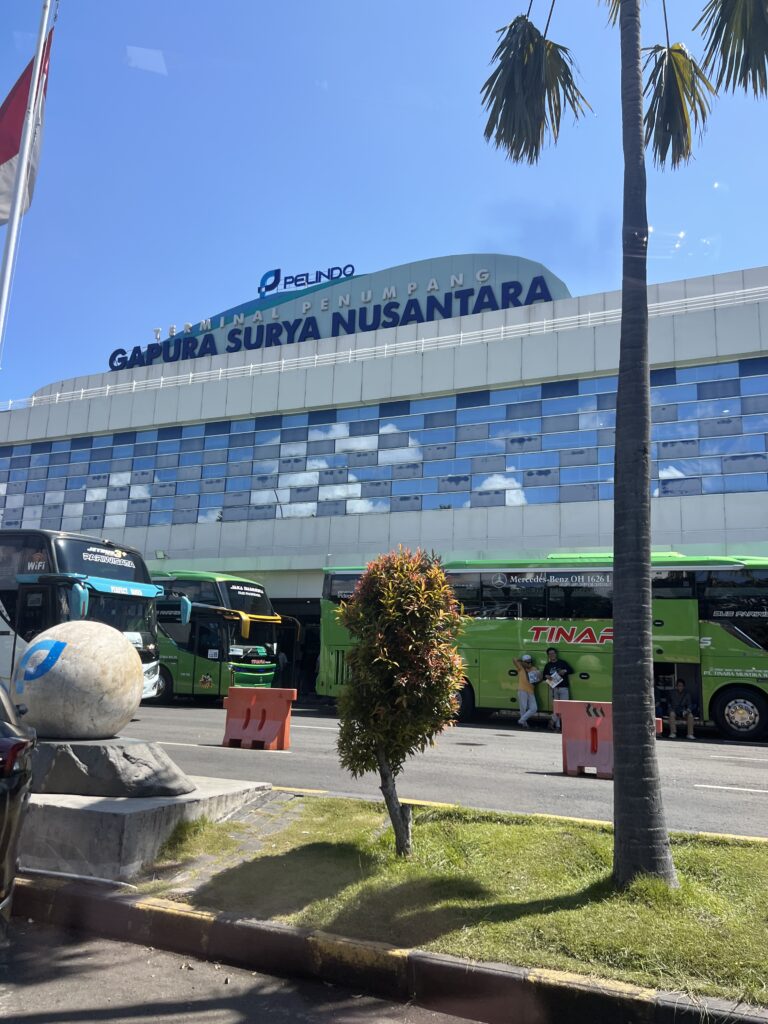
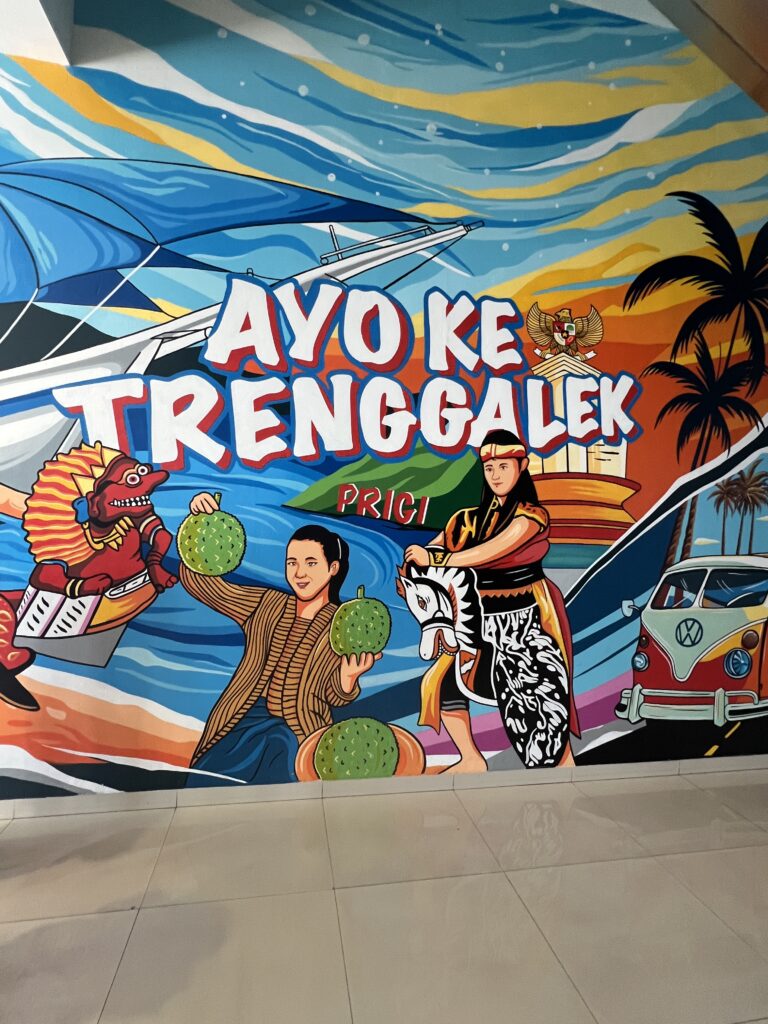
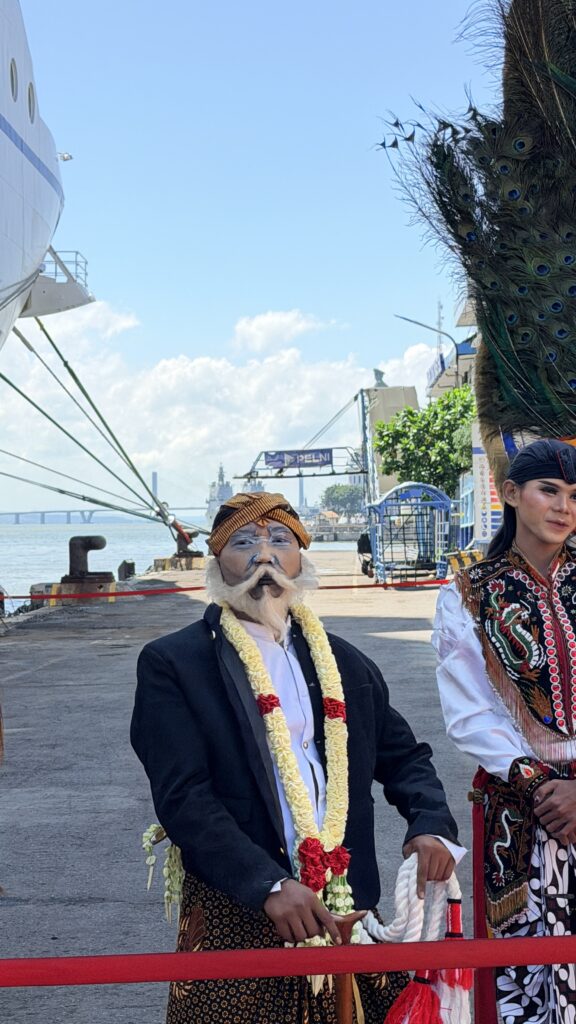
Surabaya Cruise Port Terminal
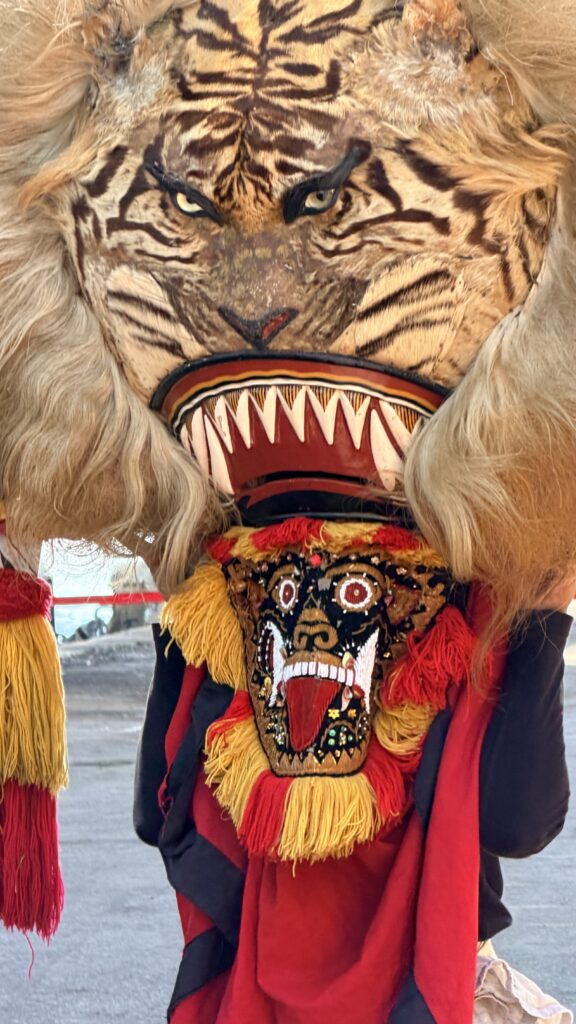
The Luwak crawling around her neck in the cruise port terminal.
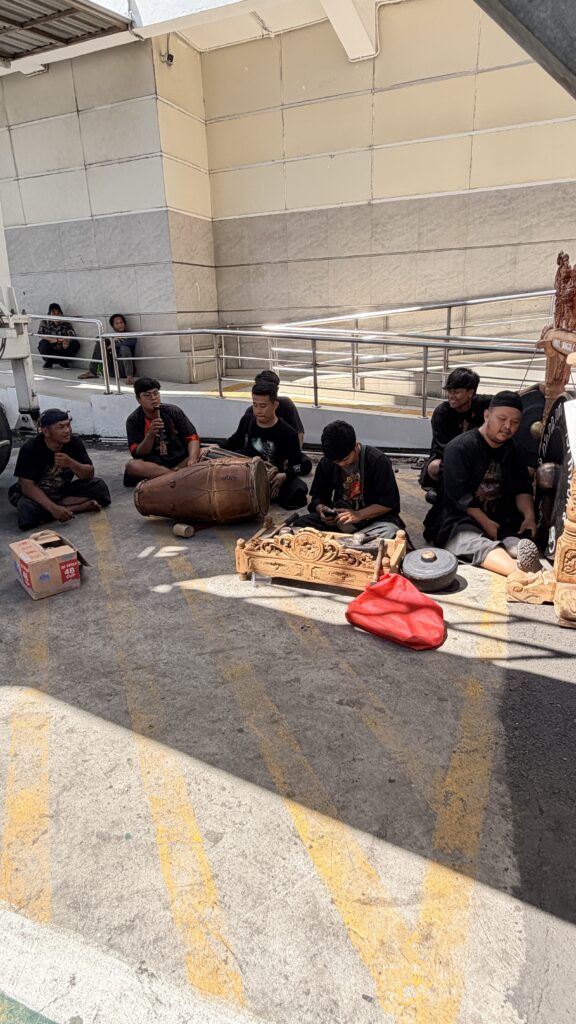
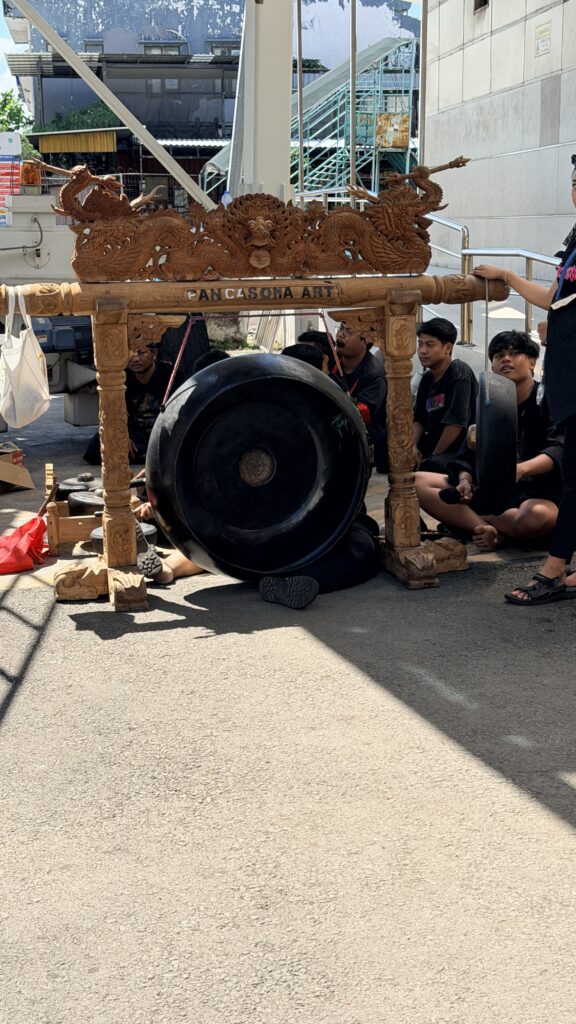
Our first stop was the Red Bridge which played an important part in the fight for independence. It is where the British General in charge of the British forces died. With a slight smile I will tell you that we were told he died under mysterious conditions. I am unsure how mysterious can be claimed when his car blew up. It raised the stakes in the fight for the independence against the British and the Dutch forces as it caused the British to launch an invasion into the city of Surabaya.
Roode Brug (Red Bridge) is a historic landmark in Surabaya, Indonesia, spanning the Kalimas River, famous as a key site during the city’s independence struggle. It was originally painted red by the Dutch and served as a major commercial access point, now serving as a prominent symbol of Surabaya’s history, often highlighted on historical tours.
Translated as The Red Bridge which located at North Surabaya, in whose surrounding is one the most savage fightings ever seen on Java. Further down the red bridge is the China town which surrounding packed with buildings of typical Chinese architectural and construction. It is still the most crowded business and trade center.
Key Details About Roode Brug & Associated History:
- Location: Spans the Kalimas River, connecting areas in the old city of Surabaya, often referred to as Jembatan Merah.
- Significance: It was a crucial location during the Battle of Surabaya (1945), including events surrounding the death of British Brigadier A.W.S. Mallaby.
- Roodebrug Soerabaia: A prominent history community founded in 2010 by Ady Setyawan, named after this bridge, dedicated to preserving and educating on the history of the 1945 struggle.
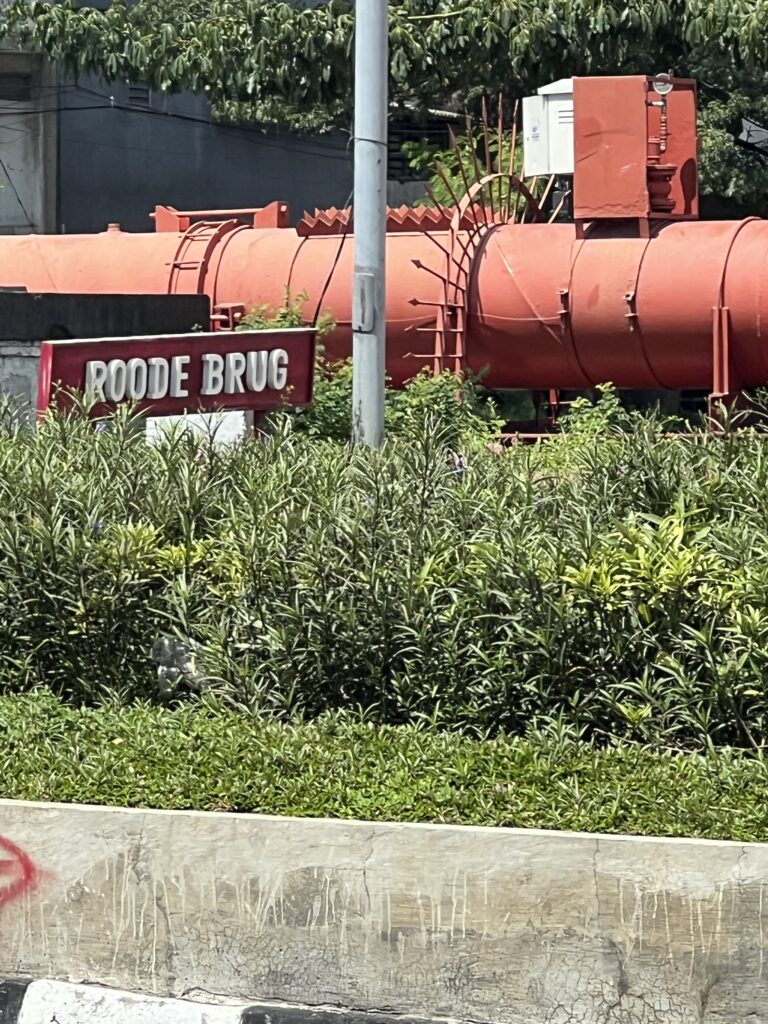
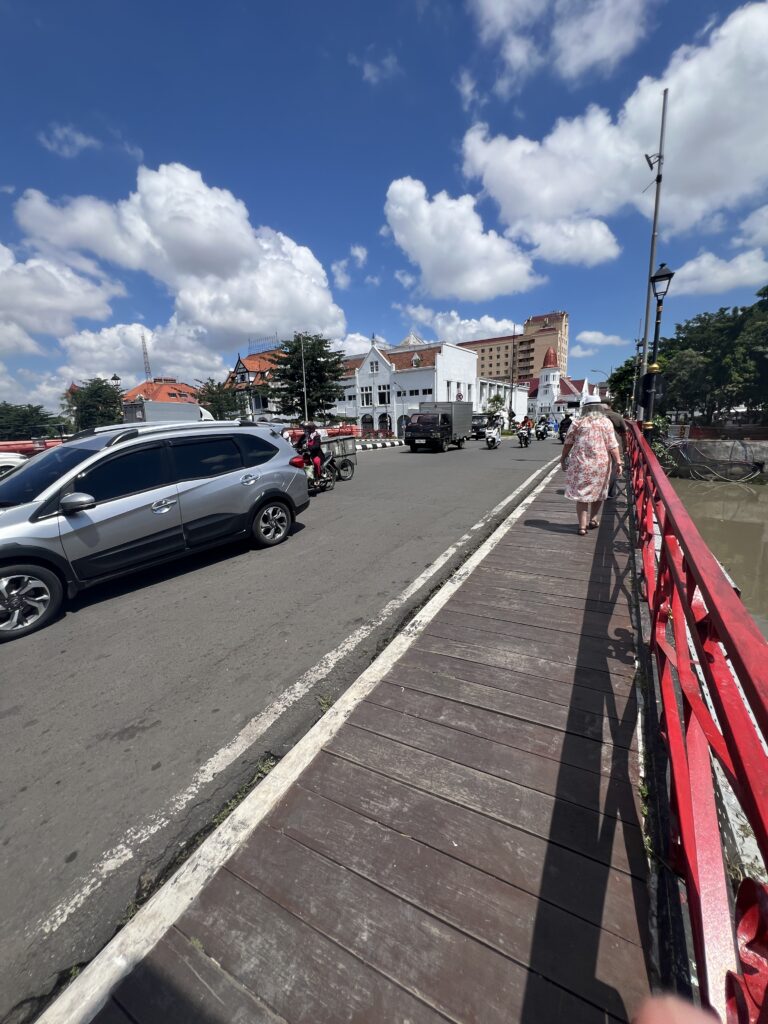
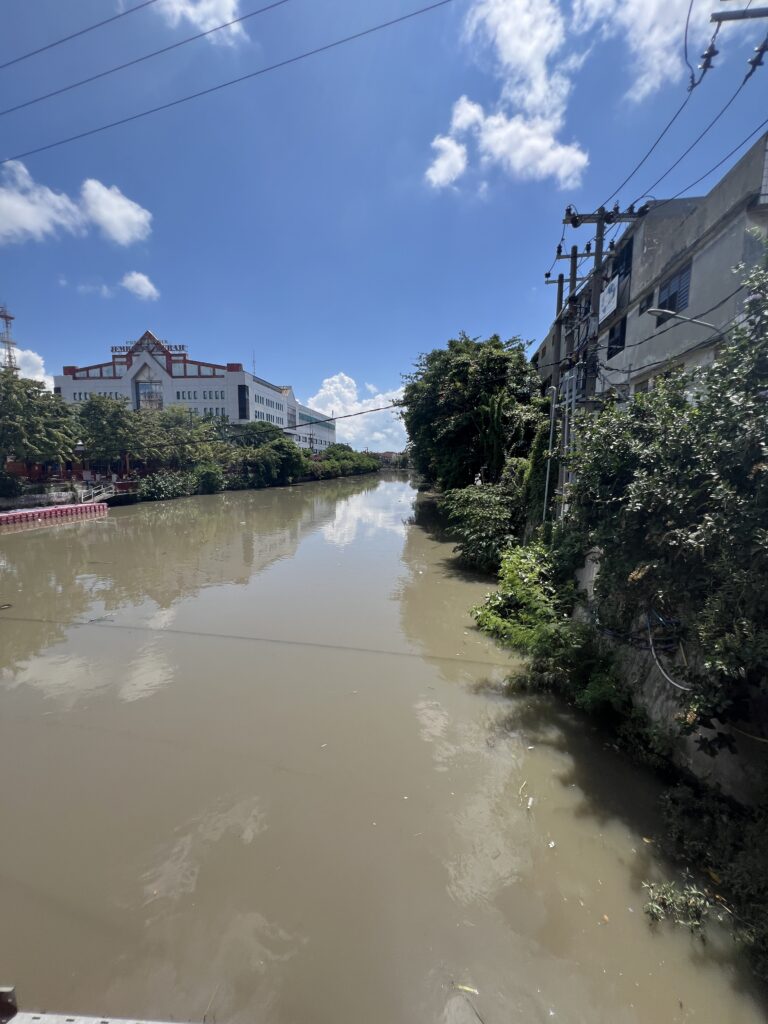
The battle of Surabaya began on 10th November 1945, less than three months after the proclamation of the Indonesian independence day which readed in Jakarta and it was right here that Brigadir General Mallaby from England was killed.
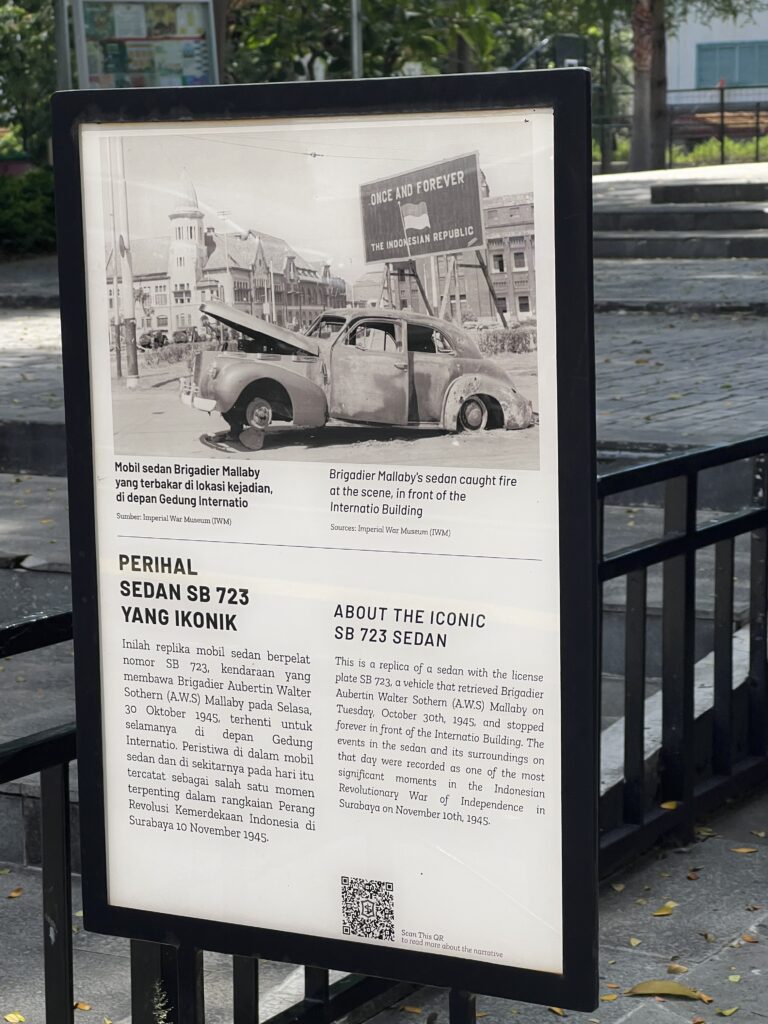
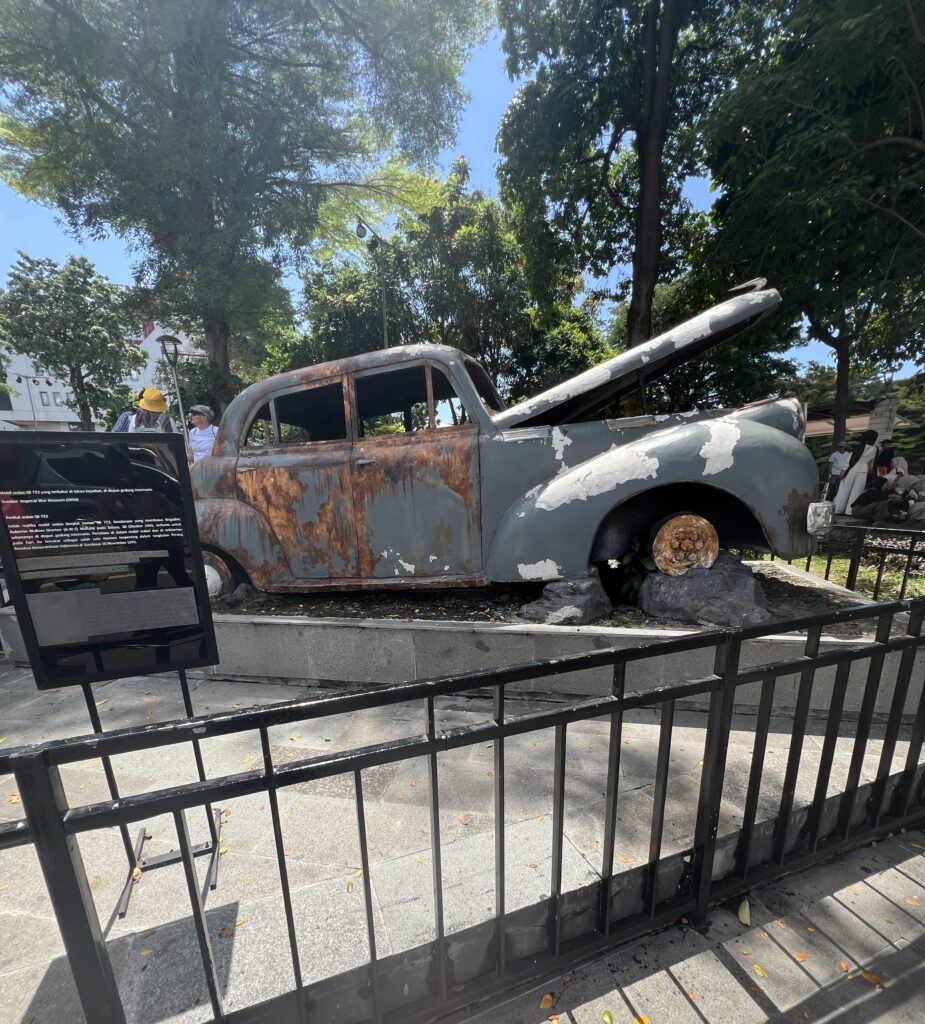
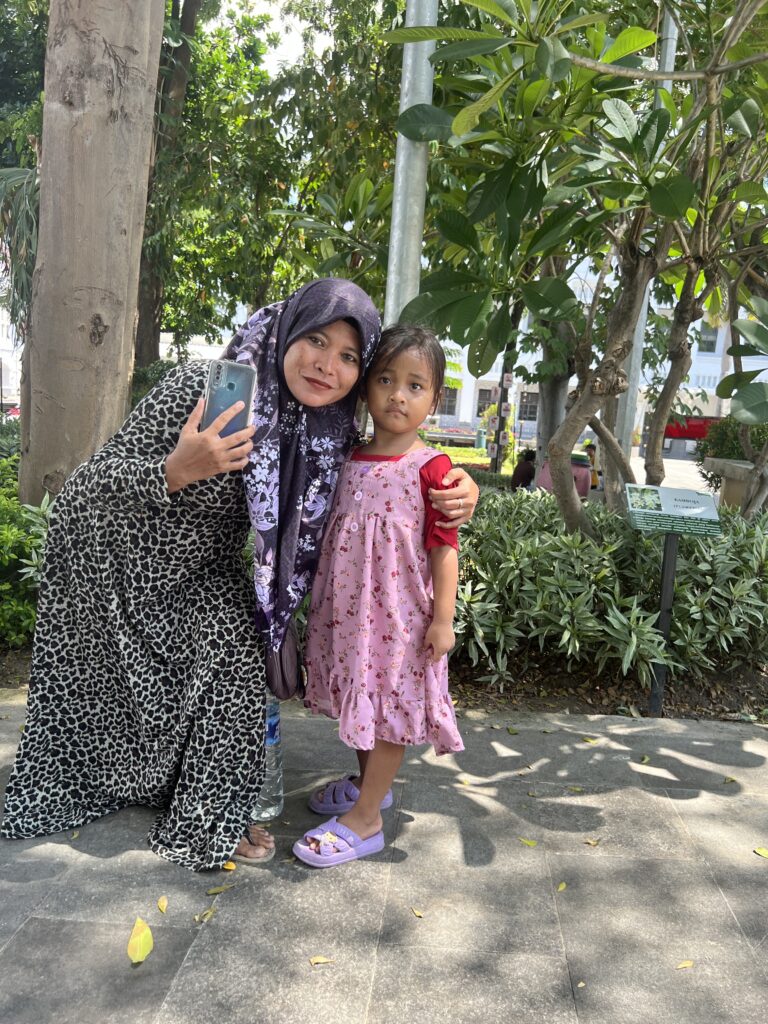
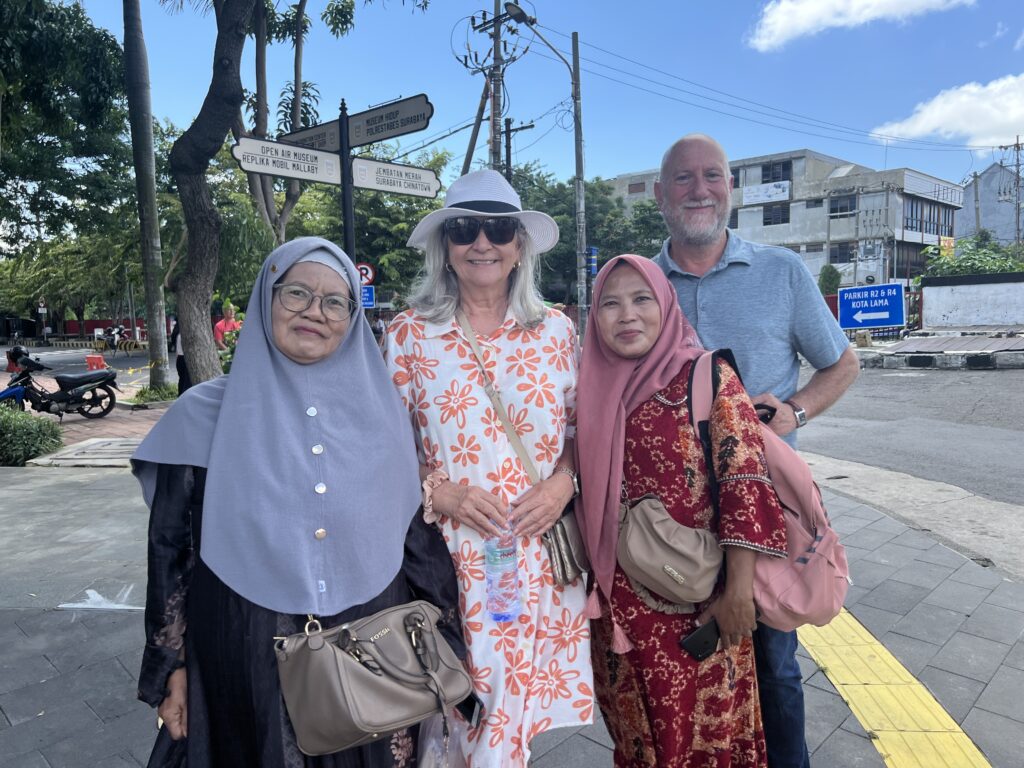
Our leaving the Red Bridge we started walking to out next stop. But one of the things we have noticed in Indonesia are people staring at us and some gaining the confidence to ask if they could take a photo with us.
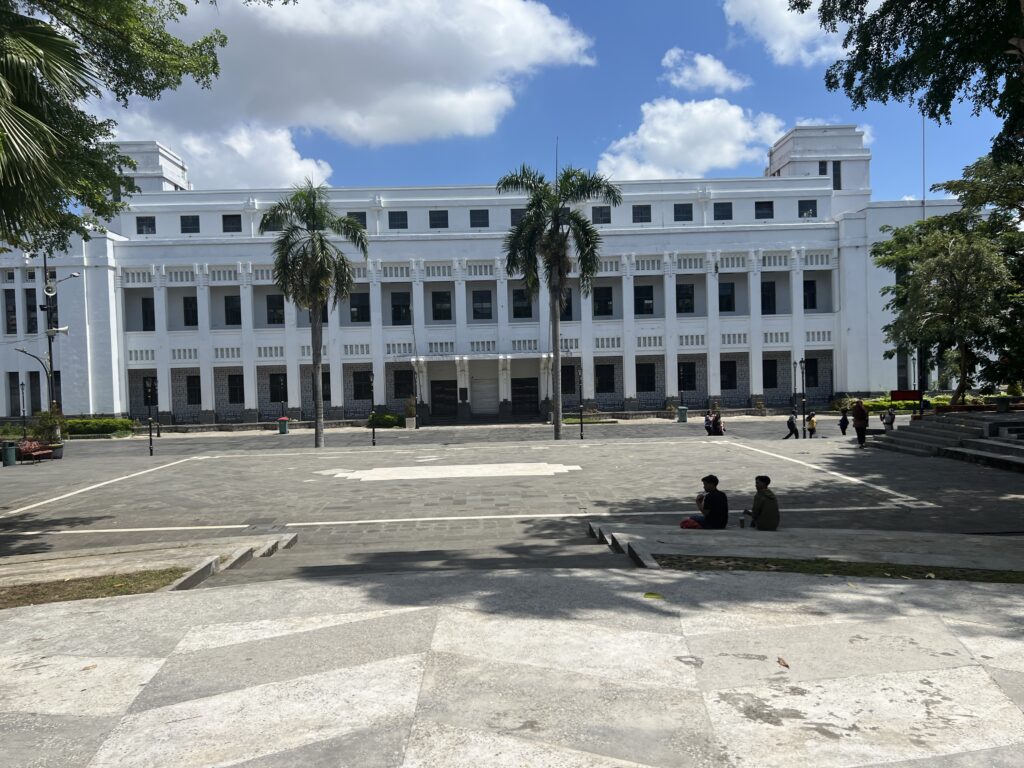
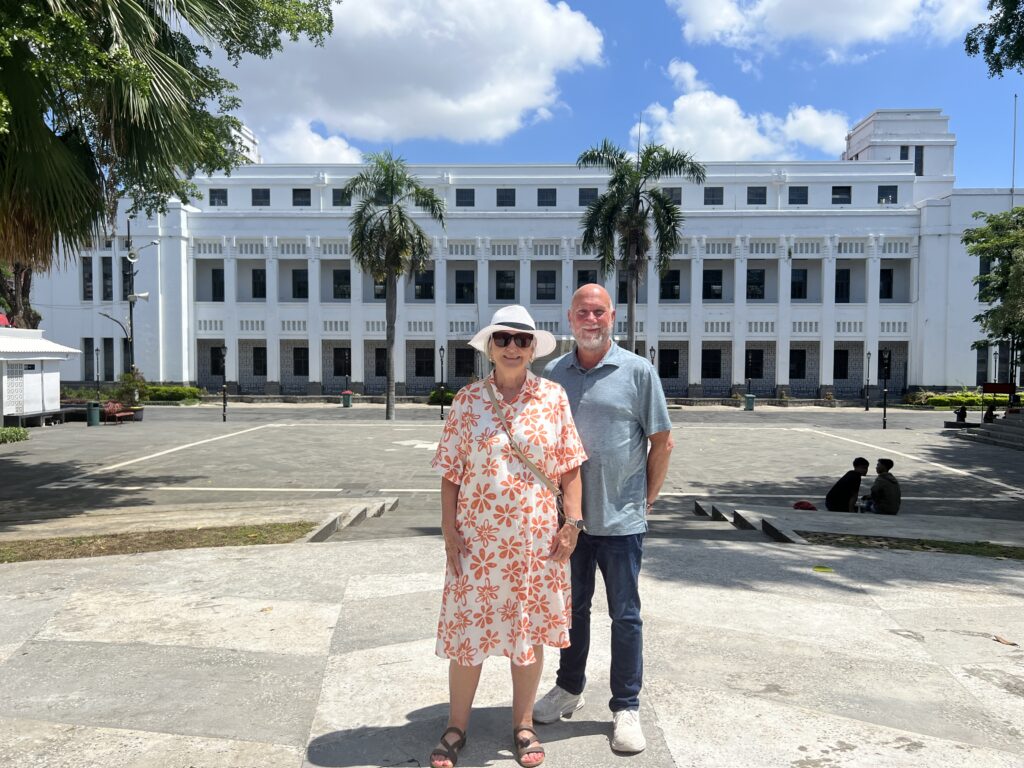
The white building in Surabaya where a peace settlement was attempted in October 1945 is the Internatio Building (Gedung Internatio), located near the Red Bridge (Jembatan Merah). It served as the British Army’s headquarters where Brigadier General Mallaby held talks with local leaders to end clashes, leading to a temporary truce before his death on October 30.
- Location: The Internatio Building is in North Surabaya near the Red Bridge and Jembatan Merah.
- The Building: It was a modern, white-colored European-style trading office (Internationale Crediet-en Handels-Vereeniging Rotterdam) taken over by the British troops.
- The Settlement: A truce was negotiated there on October 29, 1945, to stop fighting, but the agreement was not enough to prevent the escalating violence leading to November 10th.
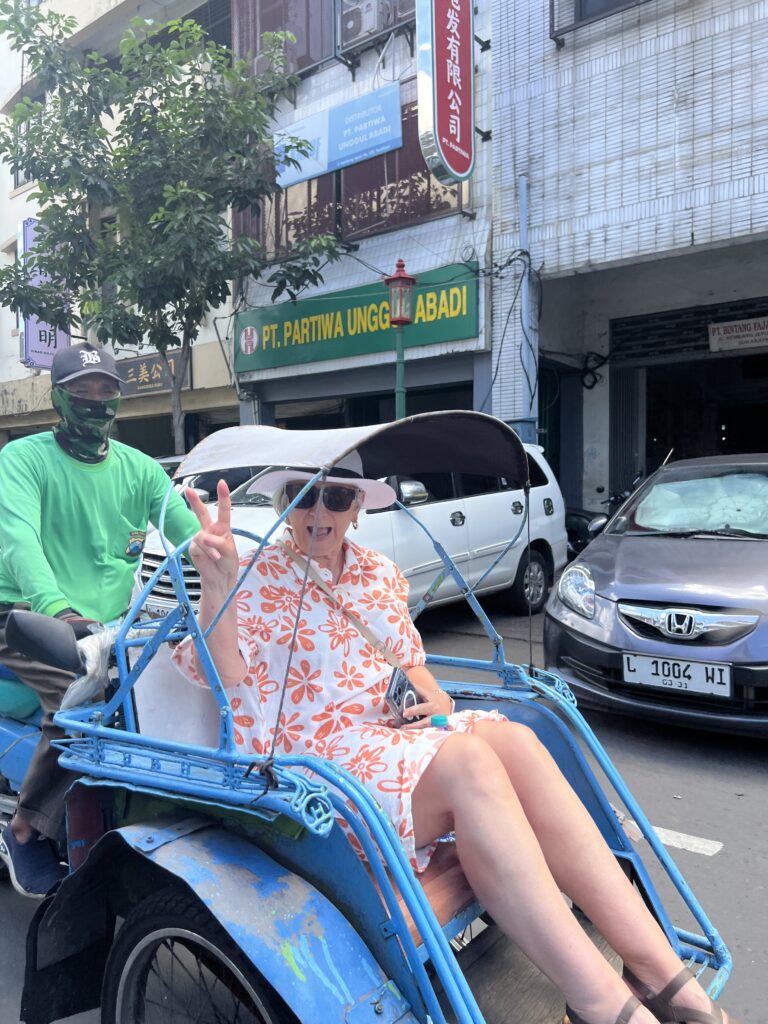
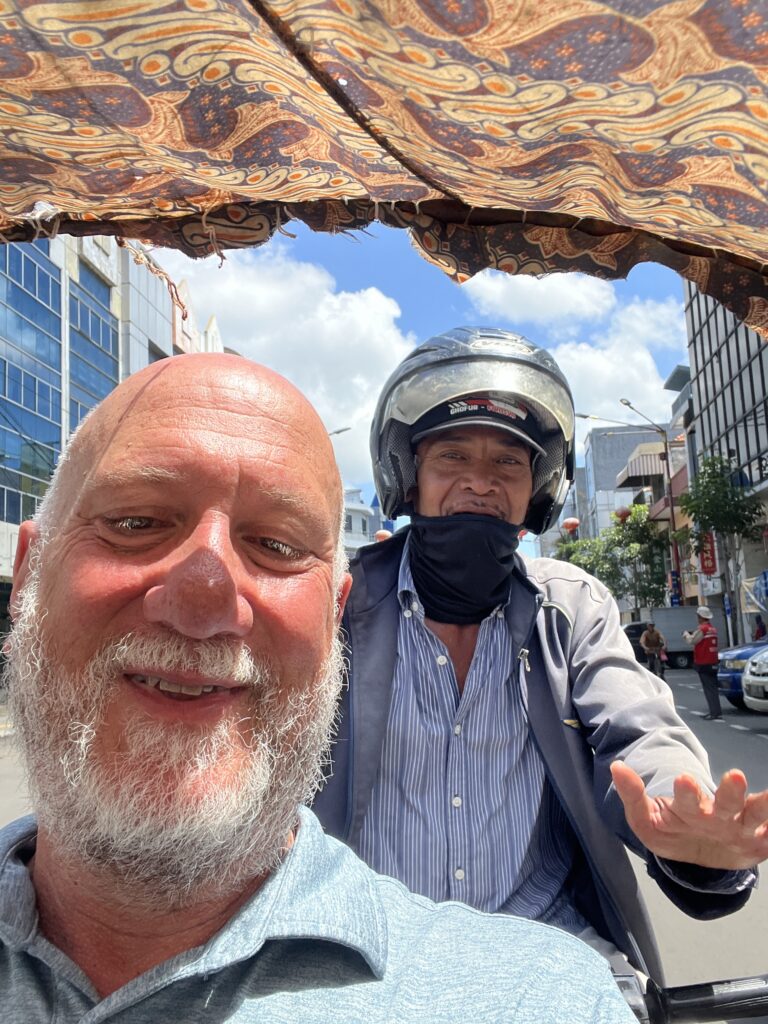
We then jumped back into the car and Har drove us to just outside Chinatown where we jumped into what they call pedicabs, but these were motorized. I hope the videos work for you.
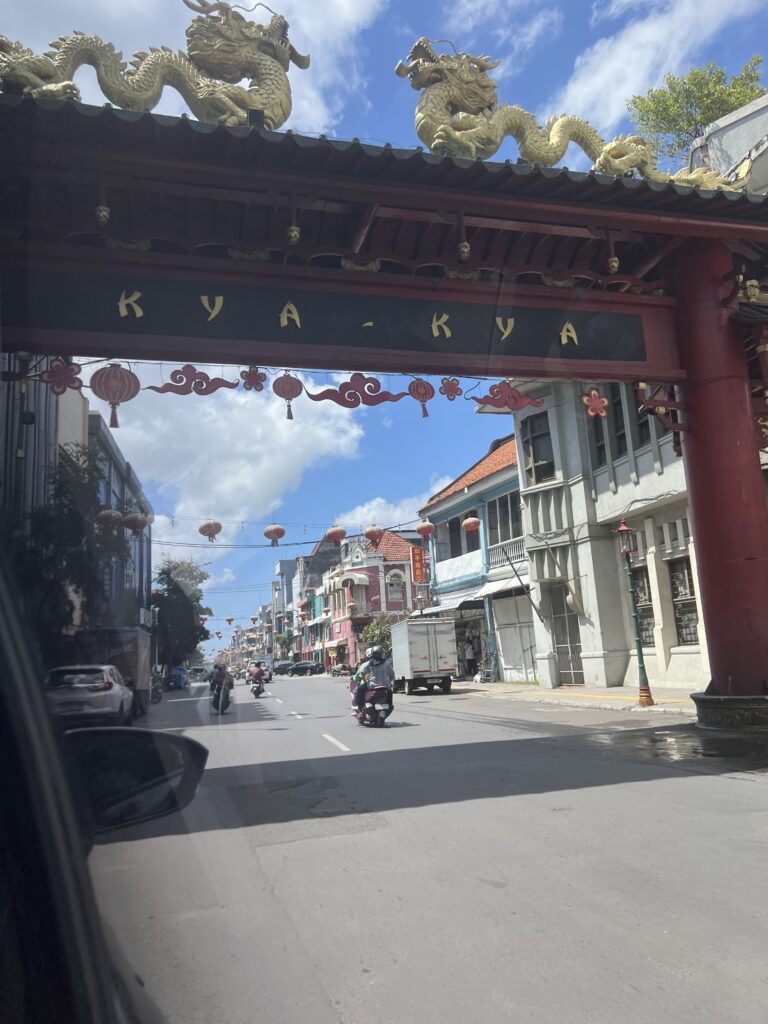
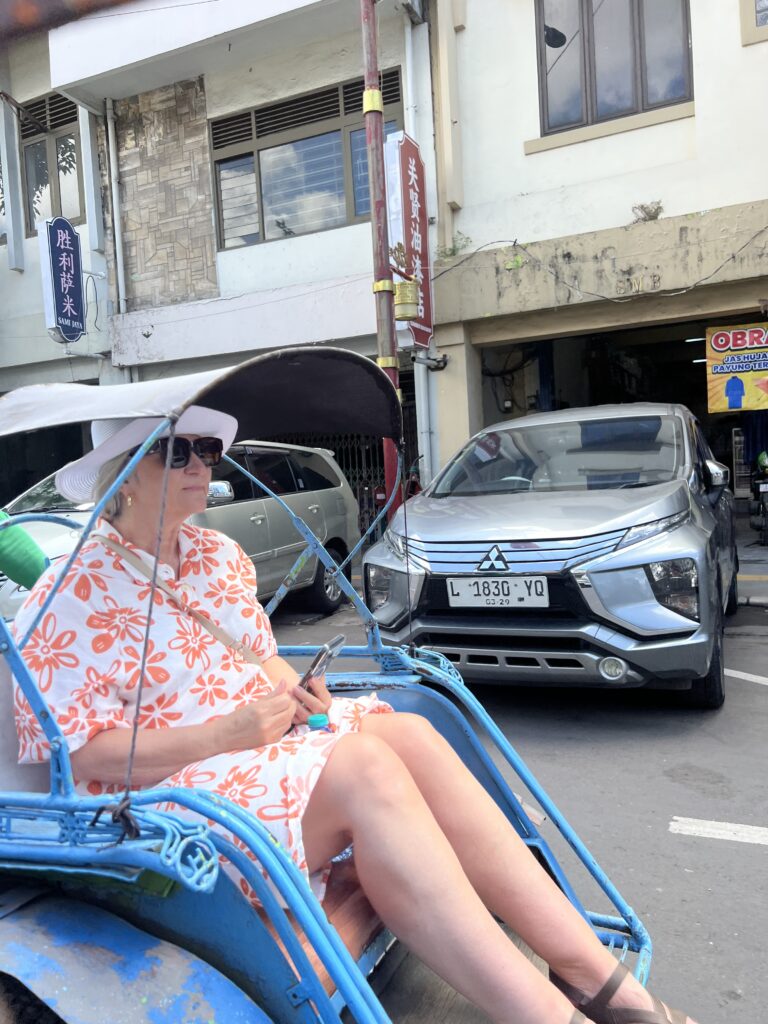
Jackie’s driver kept calling her Brenda and asking her to give him $3
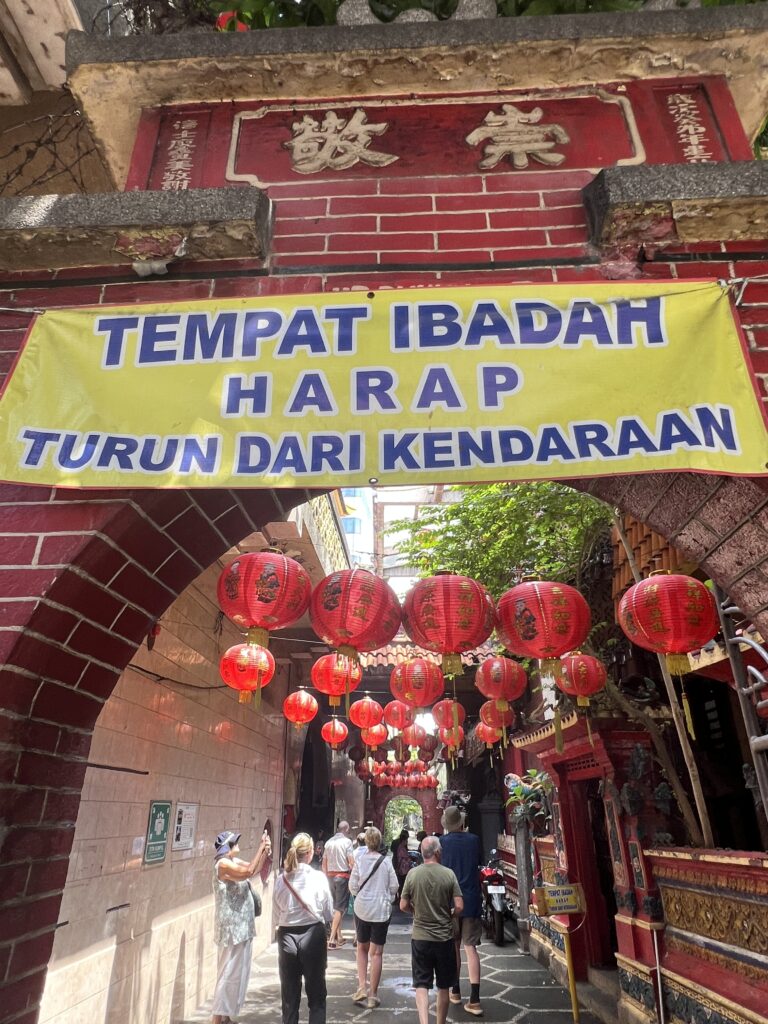
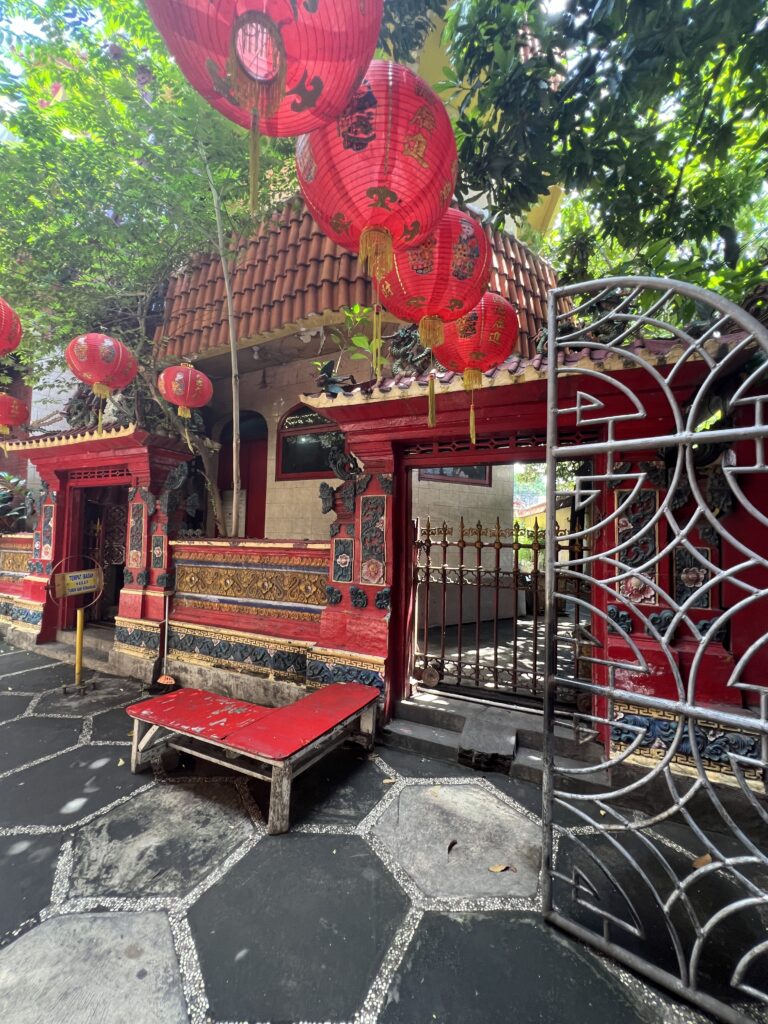
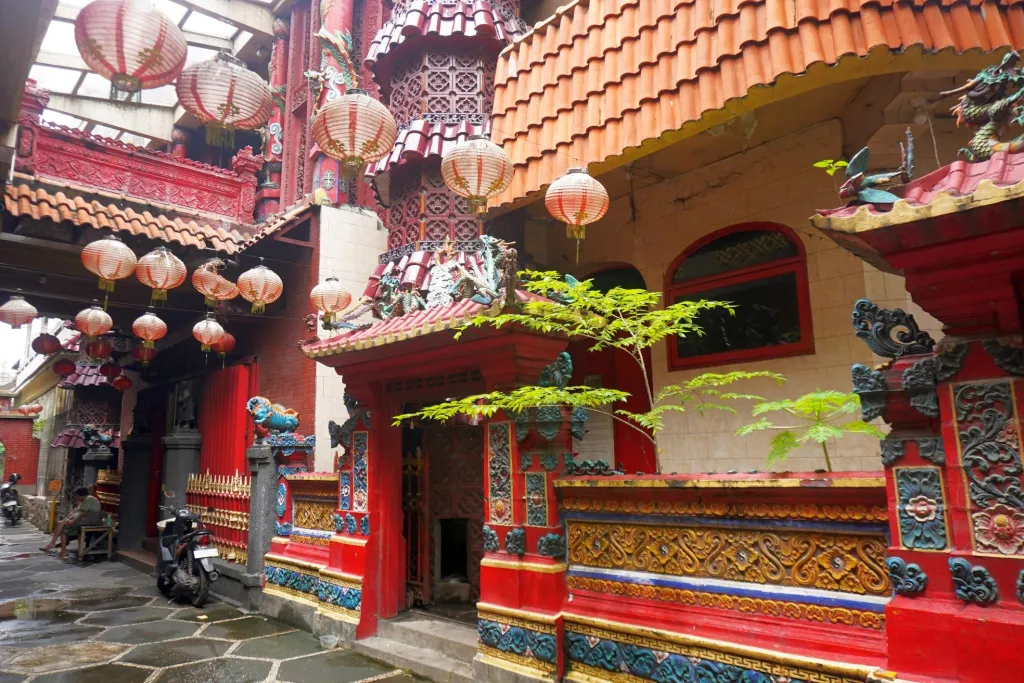
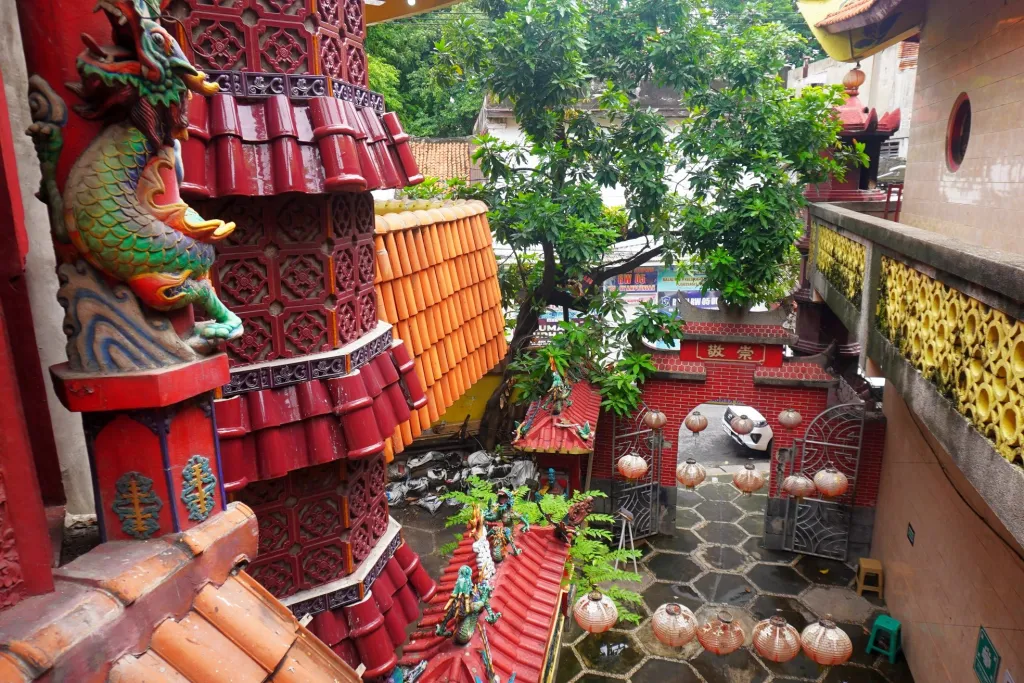
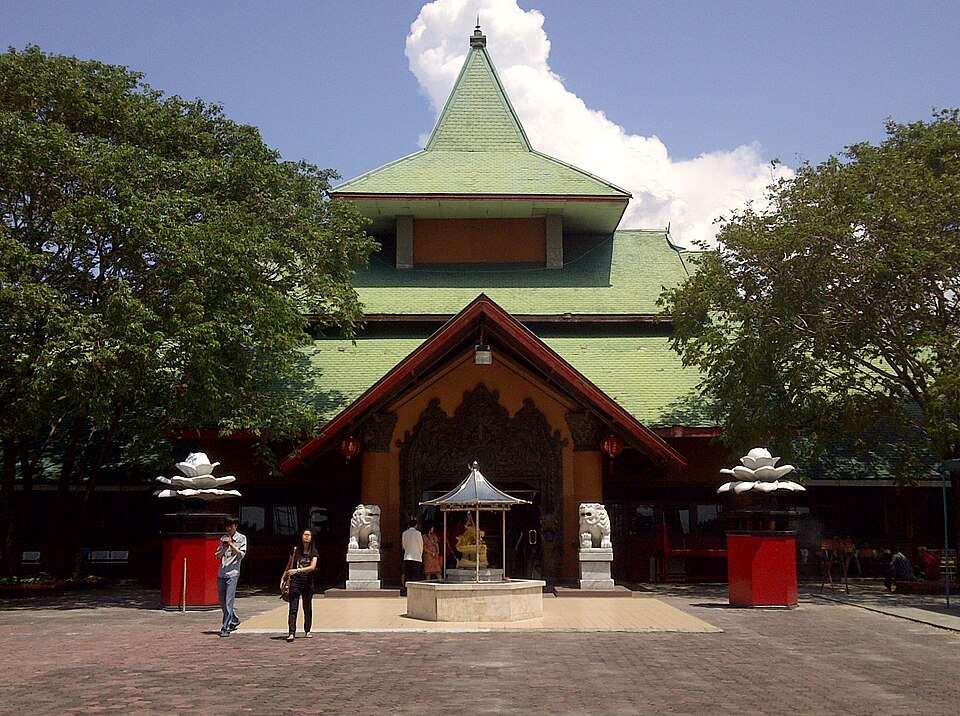
The pedicabs dropped us off at The Hong Tiek Hian Temple which is the oldest temple in Surabaya which was built by Tartar troop on Khu Bilai Khan emperor era on the early of Mojopahit Kingdom. Established in the 13th century, this temple is a vibrant center for worship and community gatherings, adorned with intricate carvings and traditional Chinese architecture. Visitors are drawn to its historical significance and the serene atmosphere that offers a glimpse into the spiritual life of the local Chinese community.
This religious place is visited by many people. Every day there is Pho Tee Hi Wayang show with Chinese stories. It located on Jl. Dukuh (North Surabaya) near Chinese Town. We walked in just as this show was starting and I was able to catch some videos (probably too many videos but they never stopped playing…laughing). Again, I am unsure if the videos will play because we cannot see the videos on the ship.
Wayang Potehi is a traditional Chinese glove puppet show that has been part of Indonesian culture for centuries, particularly in Java.
- Origin: The name “Potehi” comes from the Hokkien words po (cloth), te (bag), and hi (play), meaning “cloth puppet play”.
- History: The tradition was brought by Chinese immigrants from southern China, specifically the Fujian region, and has been performed in Indonesia since around the 16th to 18th century.
- Cultural Significance: Wayang Potehi is a symbol of acculturation between Chinese tradition and Indonesian (specifically Javanese) culture.
- Performance: The puppets are three-dimensional and worn on the hand, similar to glove puppets. The performances often tell stories from ancient Chinese legends, romance, and folk tales, such as C Jinqui. The puppets are played using all five fingers; the three middle fingers of the puppeteer control the head, while the thumbs and little finger control both hands of the puppets. The musical accompaniment for the performance consist of: gembreng, kecer or cymbals, cheh and puah, guitar, rebab, tambourine, trumpet, and piak-kok.
- Location: While traditionally performed in Chinese temples (pagodas) during religious ceremonies, efforts are being made to preserve the art form by performing in other venues.
- Preservation: The art is being actively preserved by communities like “Gogh Pot” (Gopotehi) and other local puppet masters in East and Central Java to introduce it to younger generations.
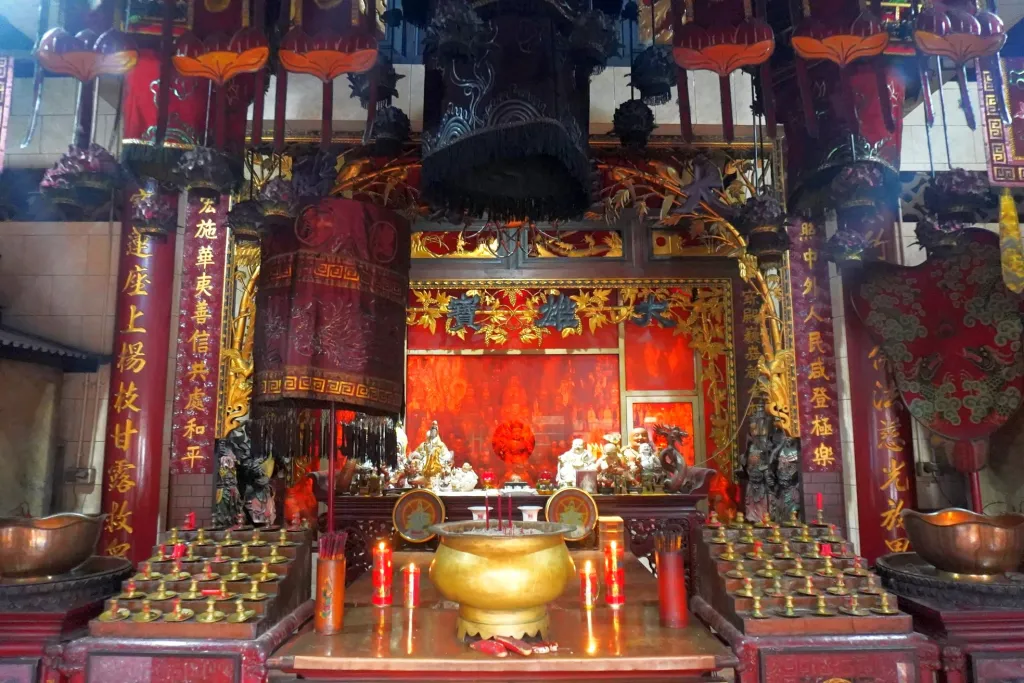
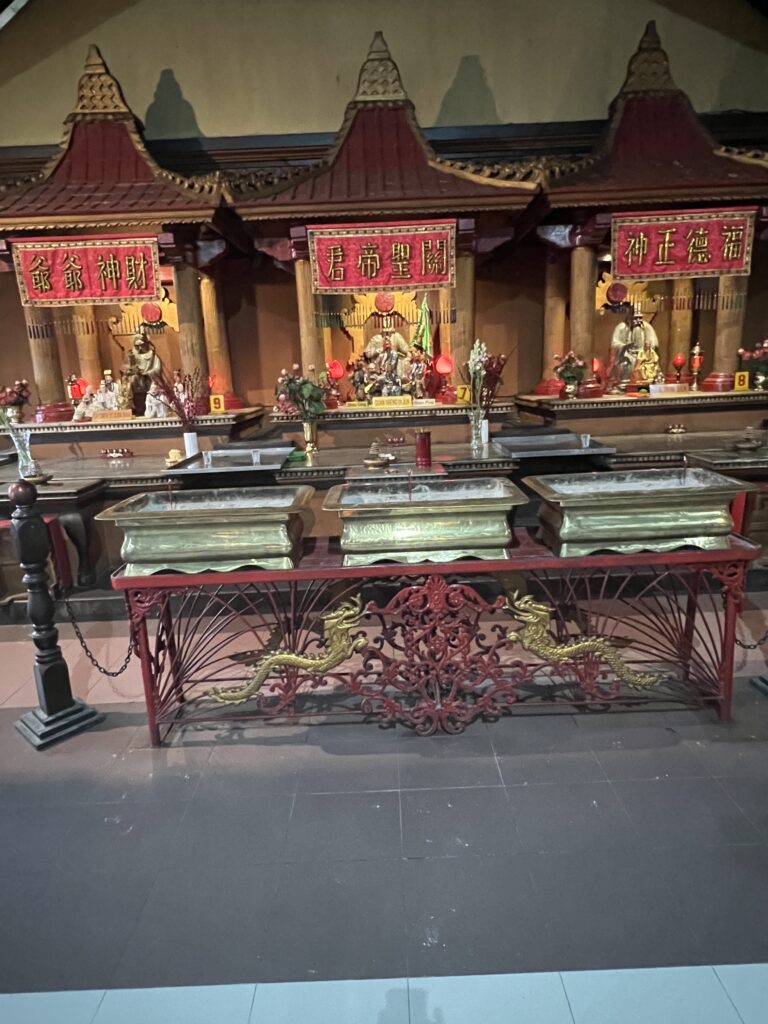
After watching puppet show we started walking through the temple and were amazed at the number of candles we saw. We asked the guide about the candles and then if we could purchase candles.
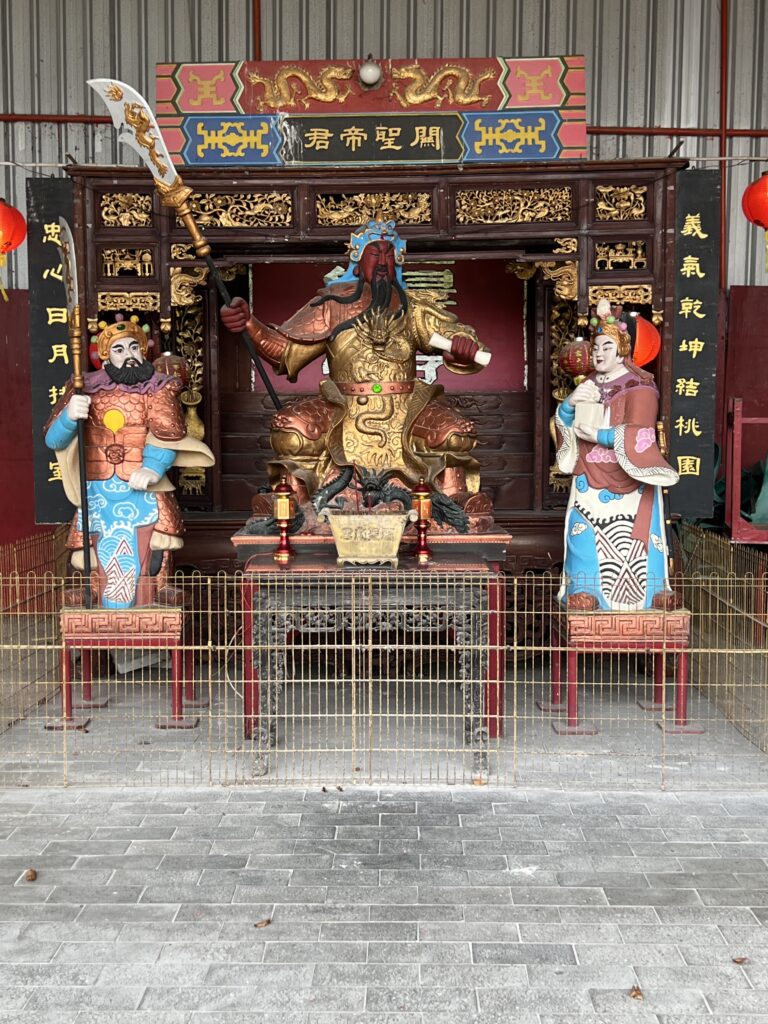
These are Gods of War
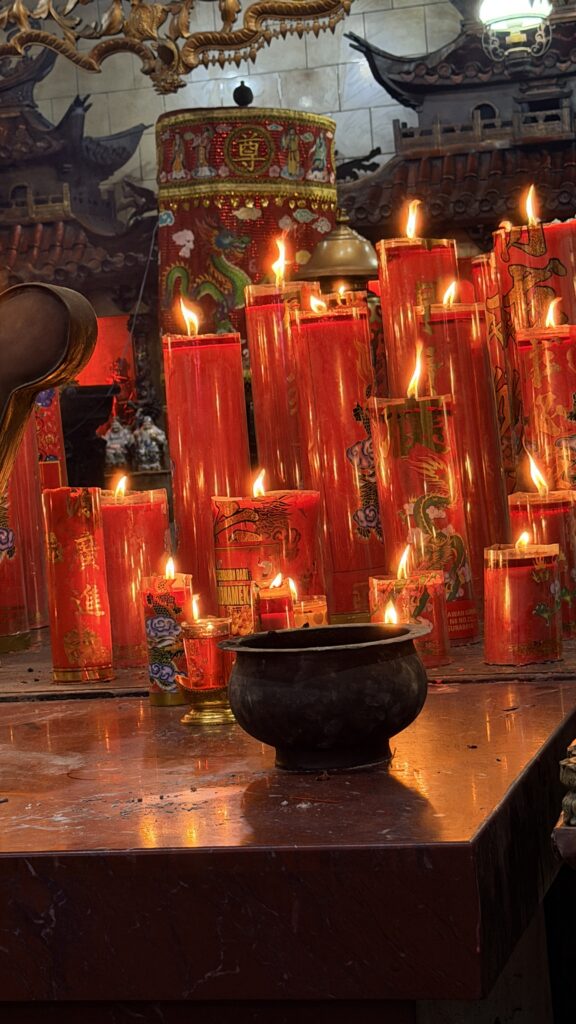
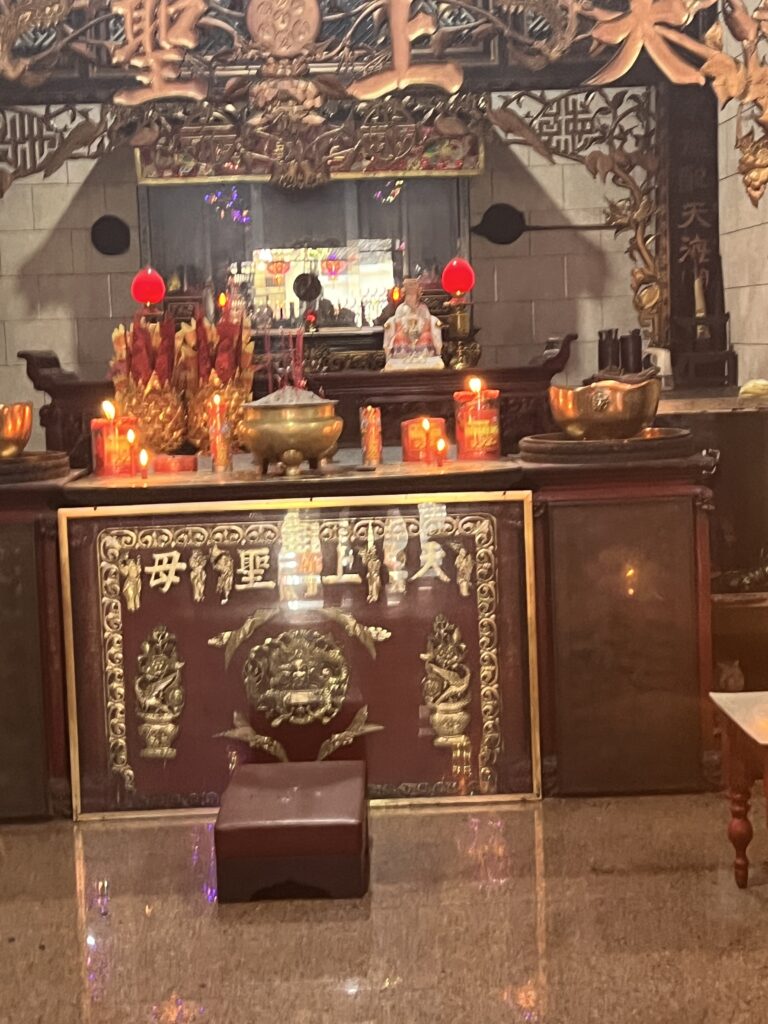
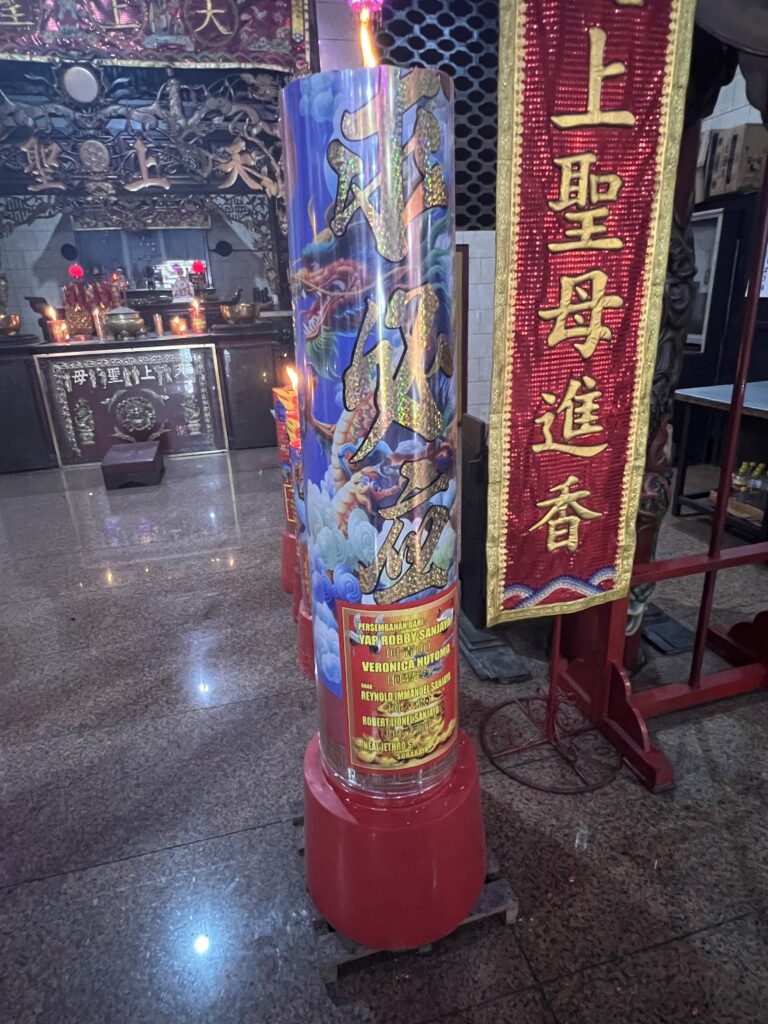
After our guide spoke to the gentleman (video later on about this) and explained what we were seeking (size of the candle, reasons and the names to place on the candles) we then began the process of lighting the candles and then entering into a prayer.
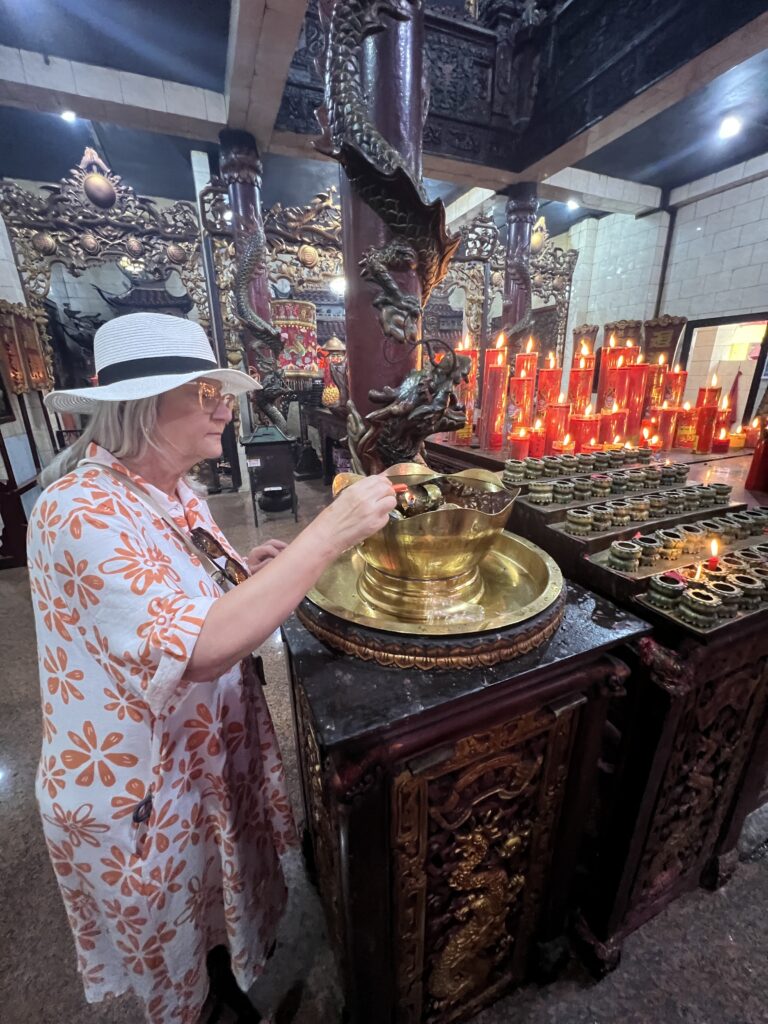
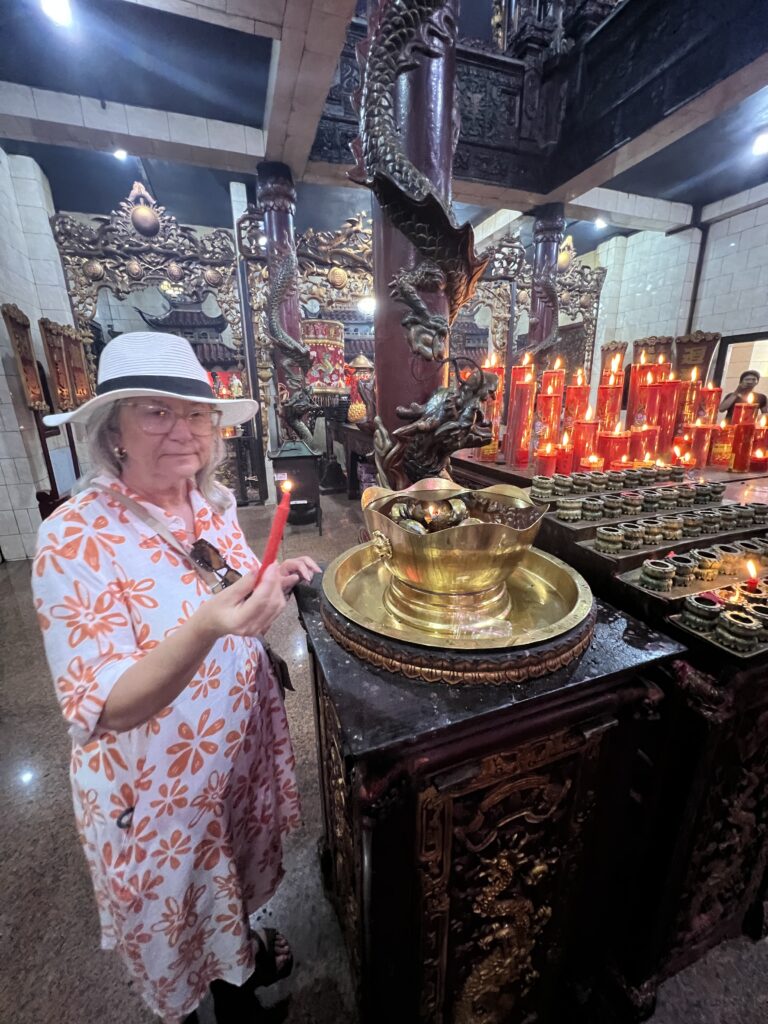
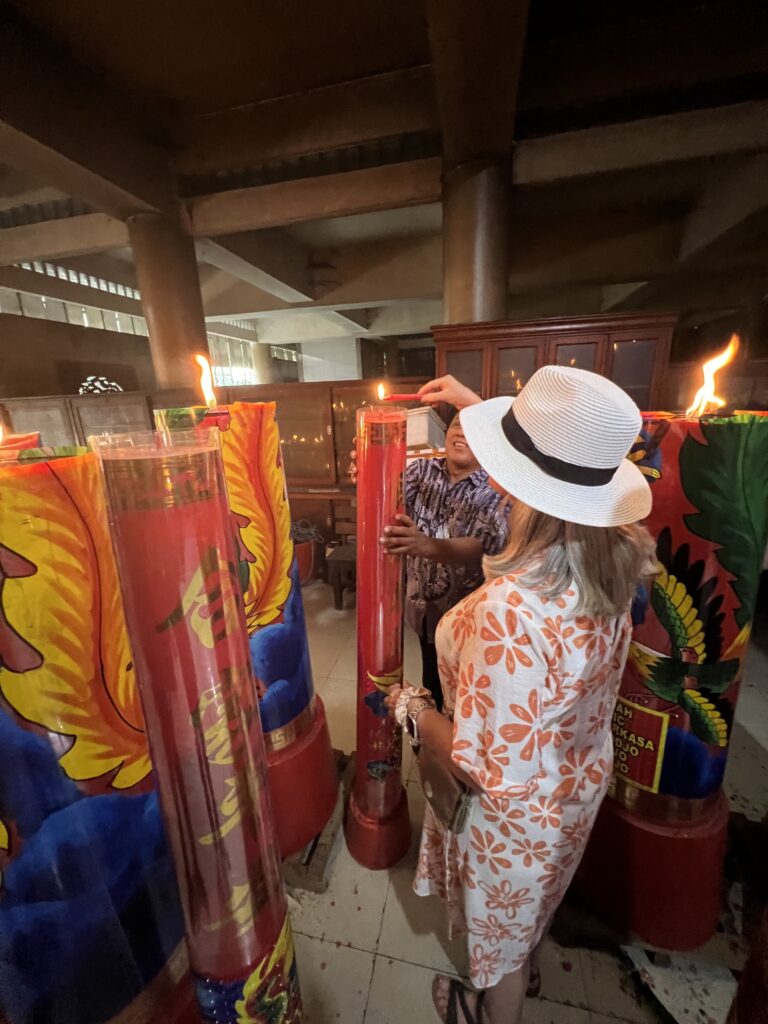
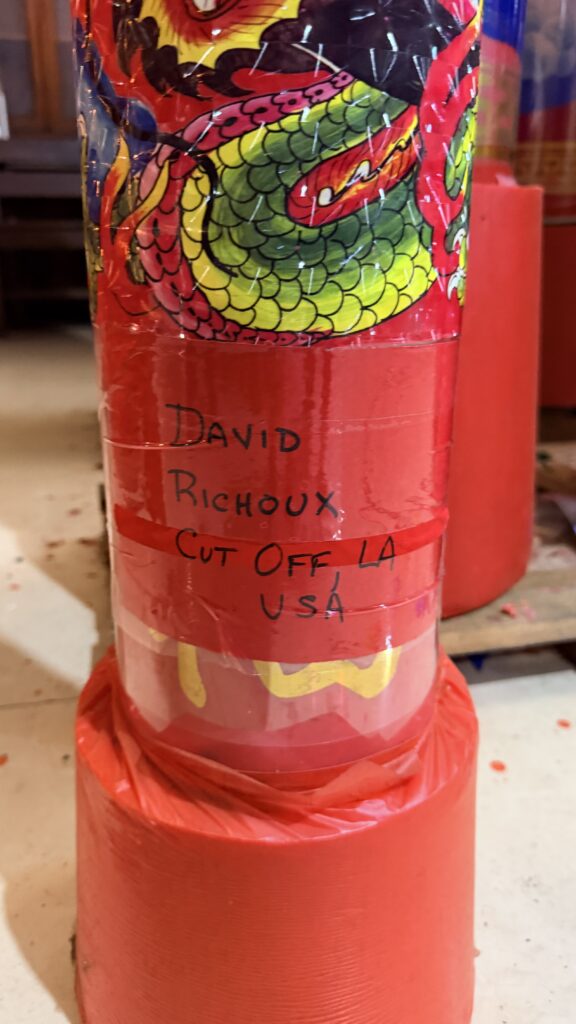
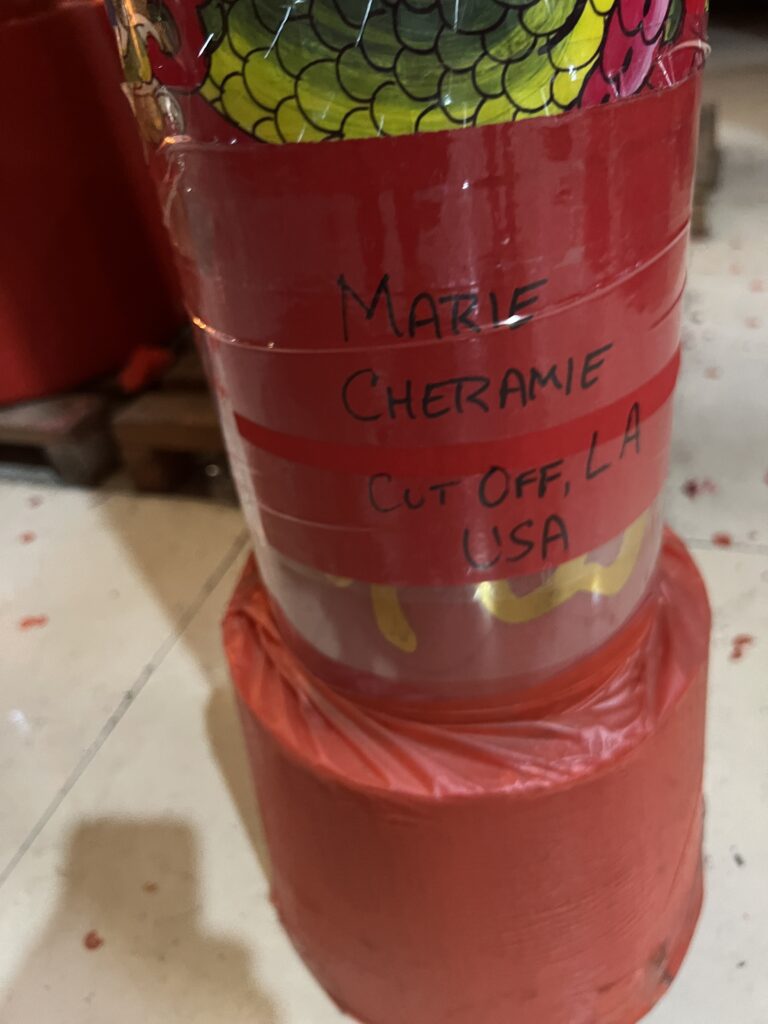
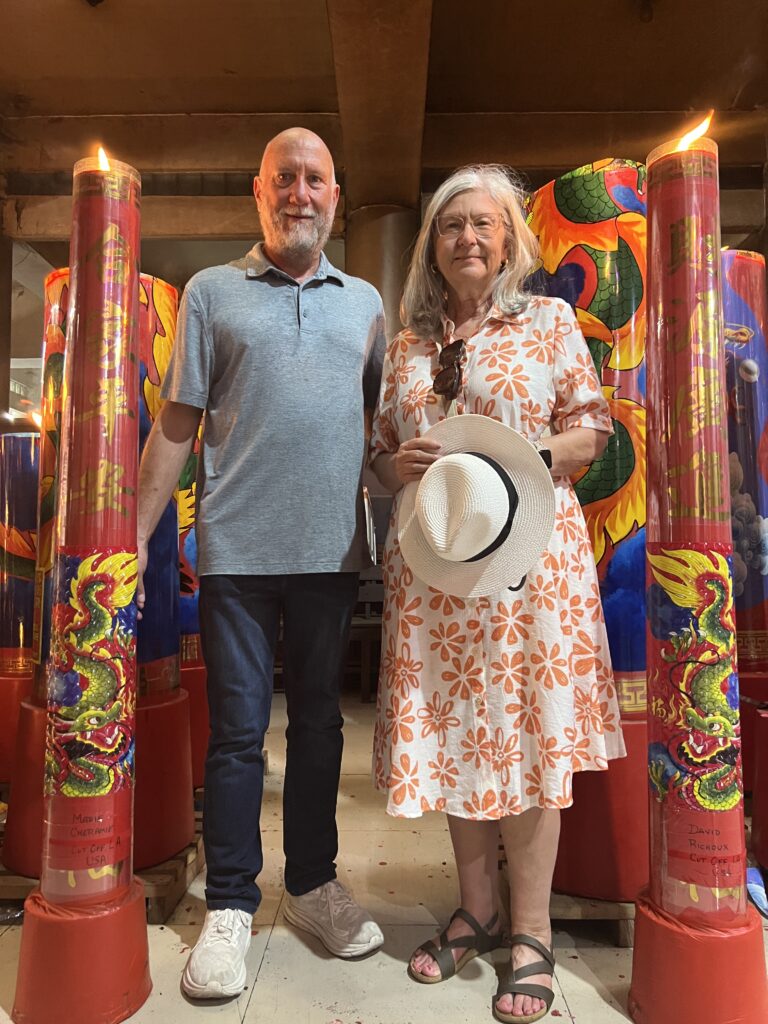
I included this video as we had a good laugh about it. Our guide is on the right and is trying to explain to the person selling candles why we (a married couple) wanted to buy candles for our deceased spouses as obviously we were not deceased and standing here together. It took him three explanations for the man to understand we were married before and the candles were for our deceased (previous) spouses.
This video is out of sequence, but it is a short video of the people behind the puppet show playing the instruments you hear in the videos.
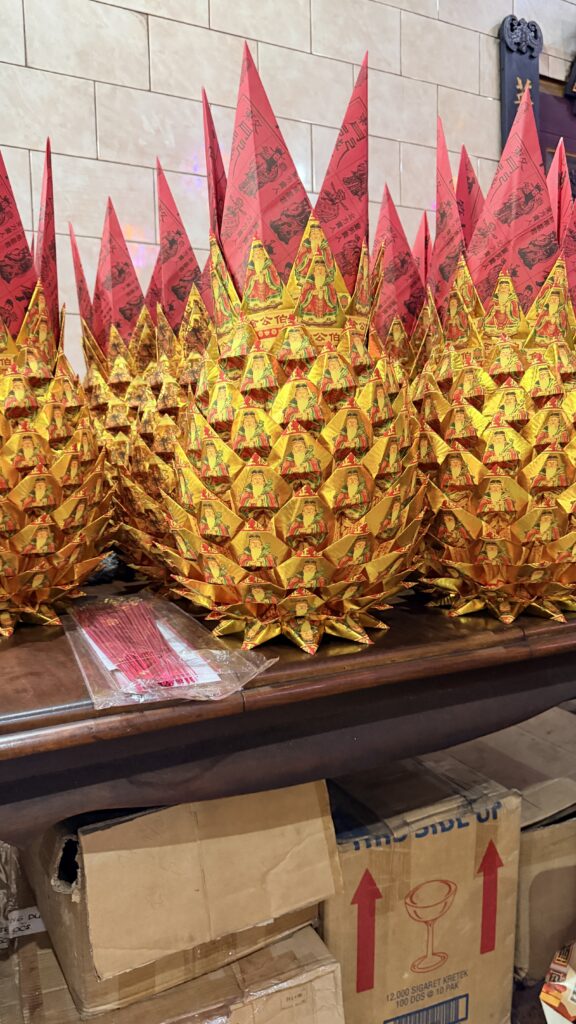
These pineapples are made of paper and wax. These are burned by individuals for good luck for their businesses.
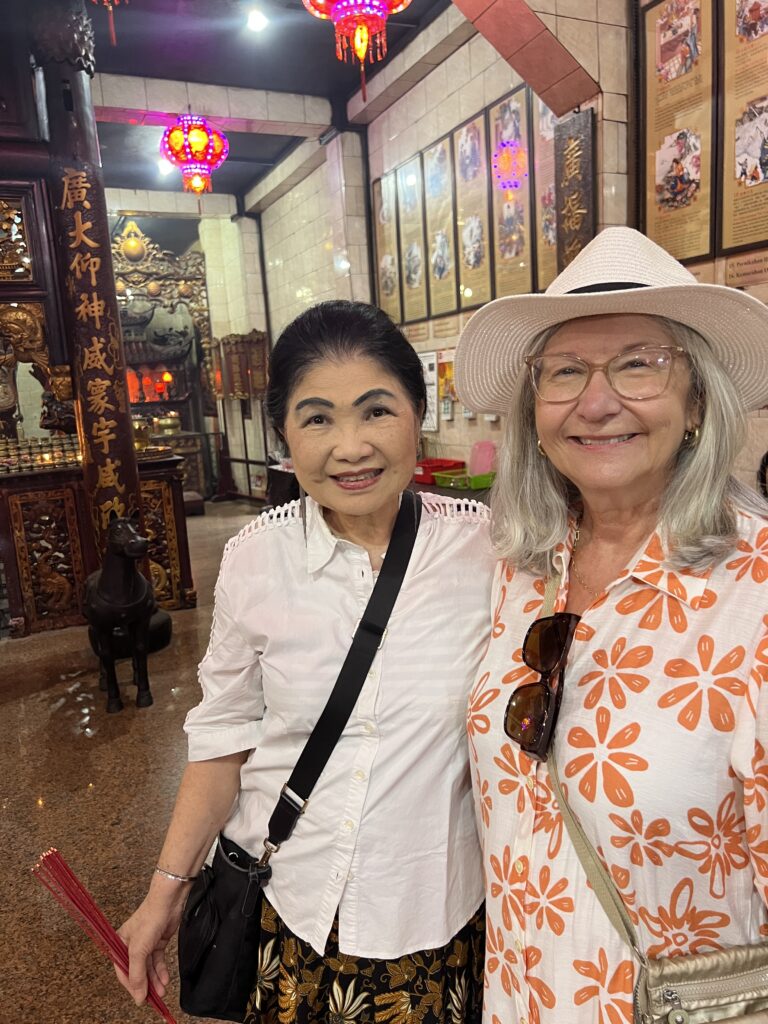
Before leaving the temple, Jackie was stopped by this lady and asked if she could take a picture with Jackie. This whole time I thought that I was person they wanted a photo with, but it is Jackie who they think is a movie star…laughing
10 seconds of “Call to Prayer” which is done five times a day over loudspeakers throughout the city
The warrior monument is located in Tembaan Street. It had built for the agenda of giving high respect to all warriors that had killed during big encounter to fight against ally army being hitchhiked by NICA, which wish to occupy Surabaya in 10 Novembers 1945. It is located in front of luxury Gubenur office. Besides as the big monument as high as 45 foot/feet, for the same purpose, in some famous places as battlefield at that time, have been made a heroic statue like Jayengrono garden (Red Bridge), Plaza Contong, in Tais Nasution street (Sharp-pointed Bamboo), Foreland and in Kombes Pol. M . Duriyat street.
Heroes Monument is built in “overturn nail” form, seen have monumental philosophic value. This Heroes Monument have of 40,45 meters height or 45 yards, with diameter under 3,10 meters and diameter to 1,30 meters. At underside of the monument is decorated with ‘”Trisula” engraving pictorial, ‘”Cakra”, ‘”Stamba” and ‘”Padma” as fire struggle symbol.
The overturned nail is a warning to anyone coming to Indonesia to create problems that you will step onto the nail.
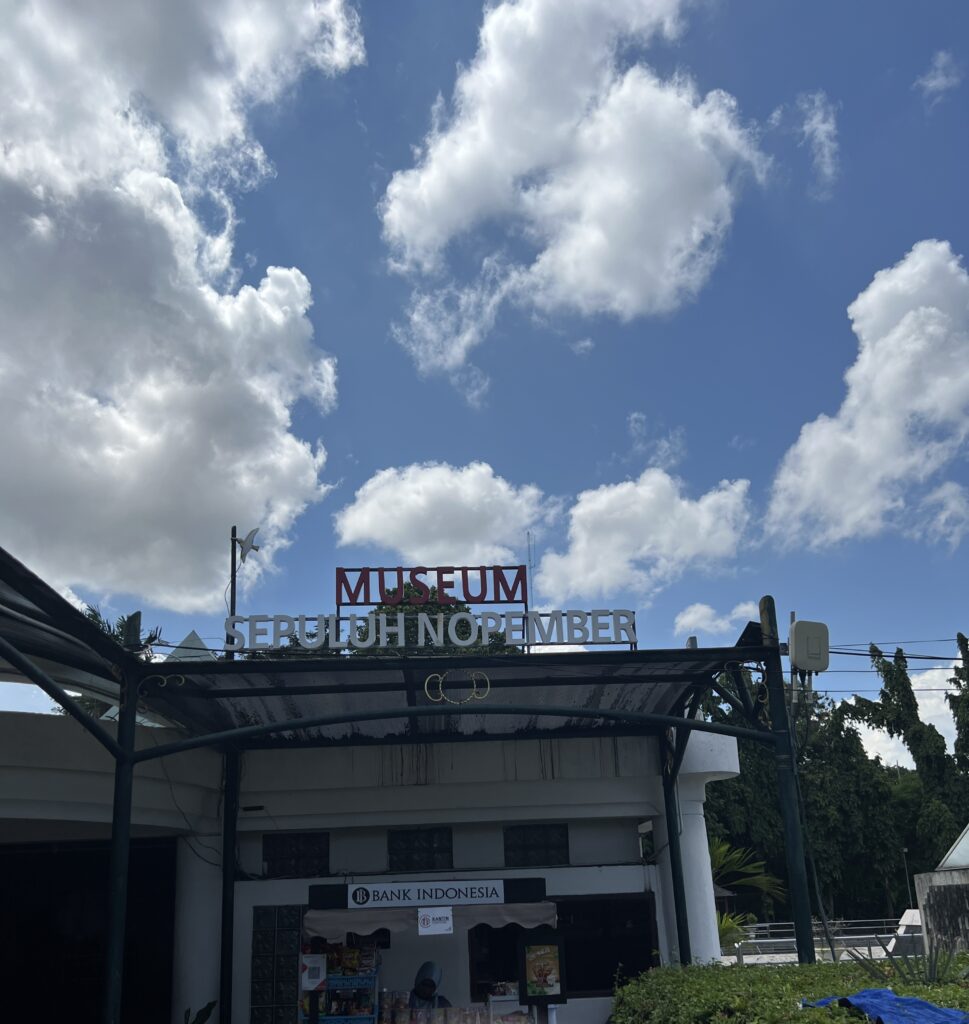
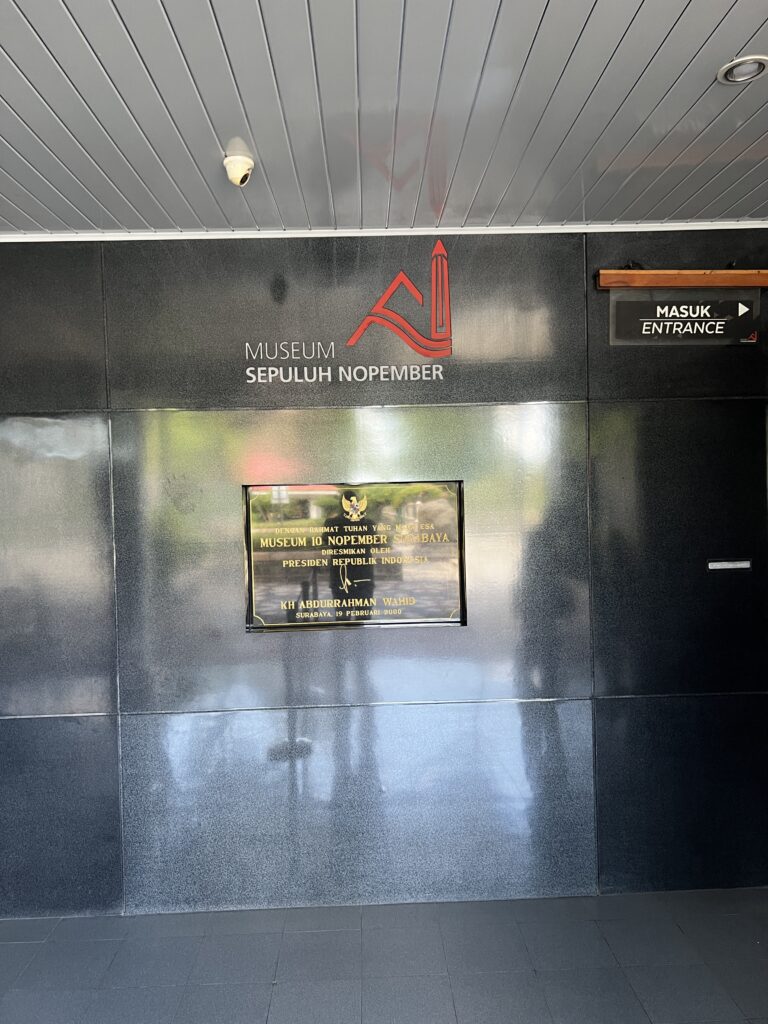
Sepuluh Nopember Museum built to clarify the existence of Heroes Monument to study the network of 10 November 1945 encounter event in Surabaya. The museum building consisted of 2 floors that is floor 1 applied for 10 statue exhibition bunches symbolized the spirit of Surabaya people struggle and the oration social of Bung TOMO drama and encounter film that show of 10 Novembers 1945 struggle (electronic diorama) and space auditorium in second floor as exhibit weapon space, reproduction of documenter photographs and exhibition of Bung TOMO omission collection. Besides, there are two states diorama spaces that presents eight event that happened around of 10 November 1945 Surabaya encounter, complete with its narration.
Museum 10 November is one of Indonesia’s most significant historical museums, symbolizing the courage and resilience of the people of Surabaya during the struggle for independence. The museum commemorates the historic Battle of 10 November 1945, a defining moment that later became Indonesia’s National Heroes’ Day.
More than a repository of historical objects, Museum 10 November serves as an educational space that introduces visitors to the values of patriotism, sacrifice, and national unity. Integrated with the iconic Heroes Monument, the museum offers a meaningful and immersive historical experience.
Designed underground, the museum preserves the integrity of the Heroes Monument while housing valuable historical materials. Museum 10 November preserves memories and artifacts from the days leading up to and during the fierce battle of 10 November 1945.
Museum 10 November is a specialized museum established to preserve and present the history of the Battle of Surabaya on 10 November 1945. Its primary role is to document and educate the public about the heroic resistance of Surabaya’s citizens against Allied forces.
Located in Surabaya City, East Java, the museum is officially registered under the National Museum Registration Number (NPNM) 35.78.K.05.0061. Uniquely, the museum is built underground beside the Heroes Monument to maintain the monument’s visual prominence.
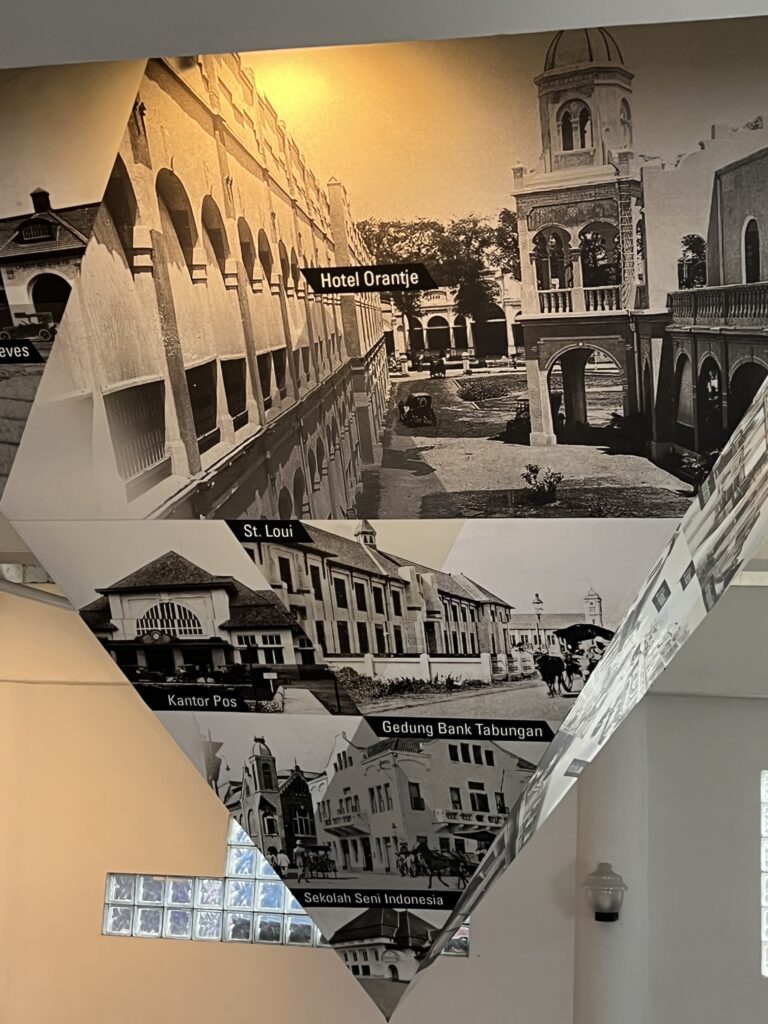
This Hotel Orantje showed in this photo played a HUGE part in the decision to fight for independence. I will show the hotel today in later photos and explain the important part it played.
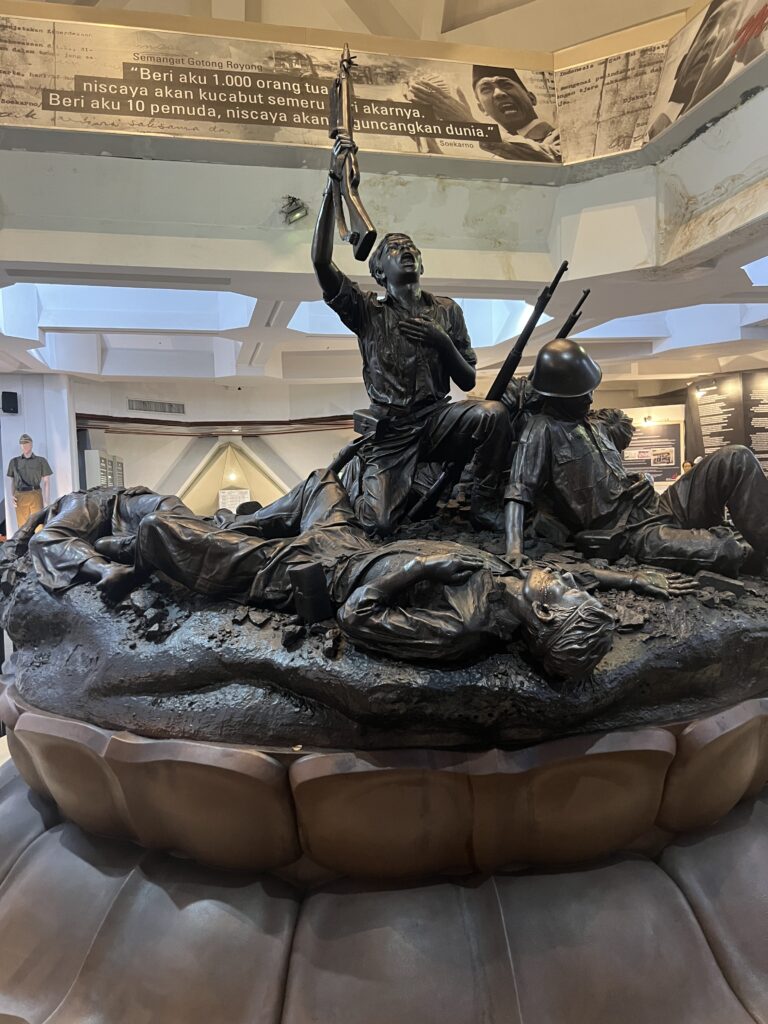
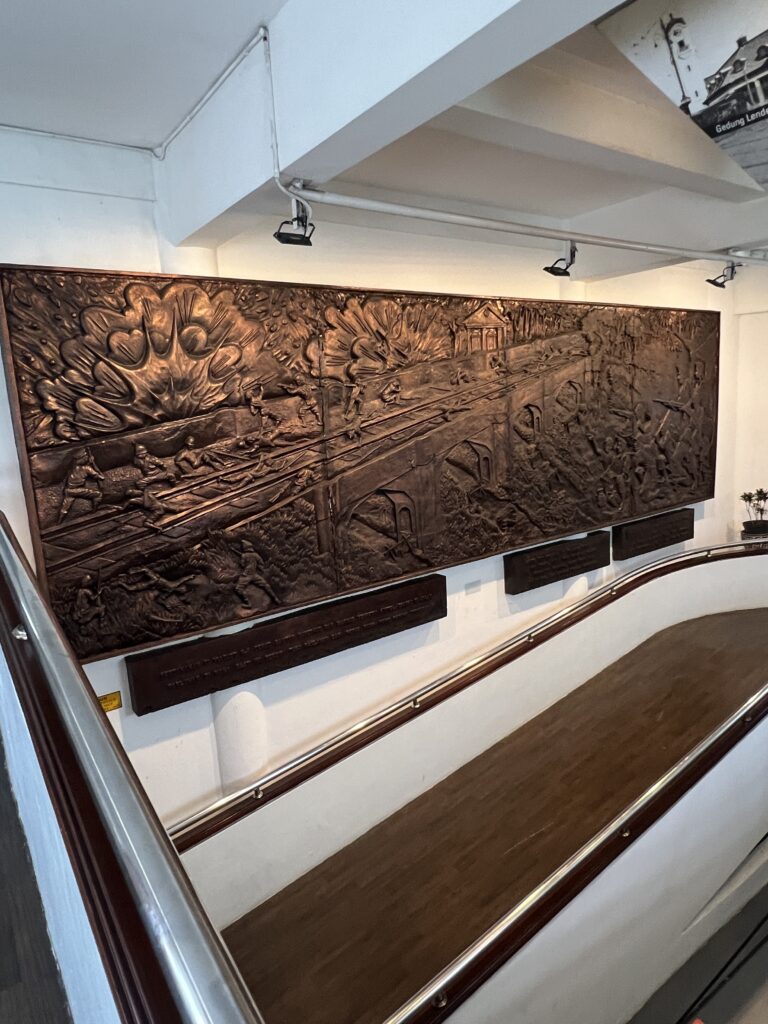
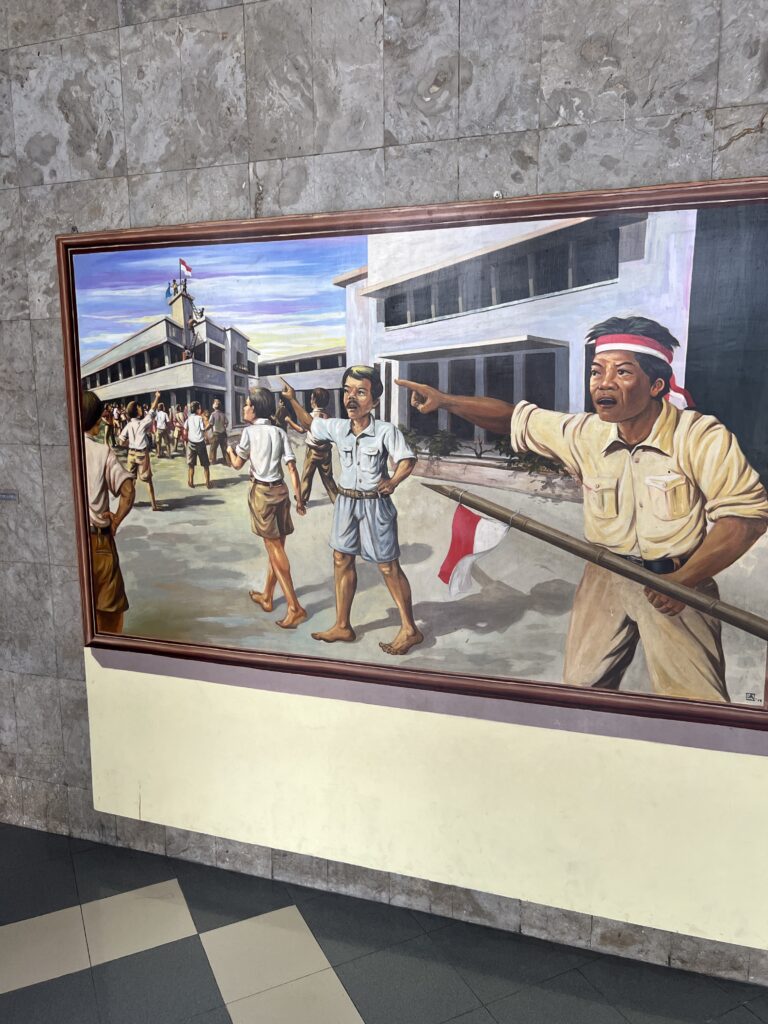
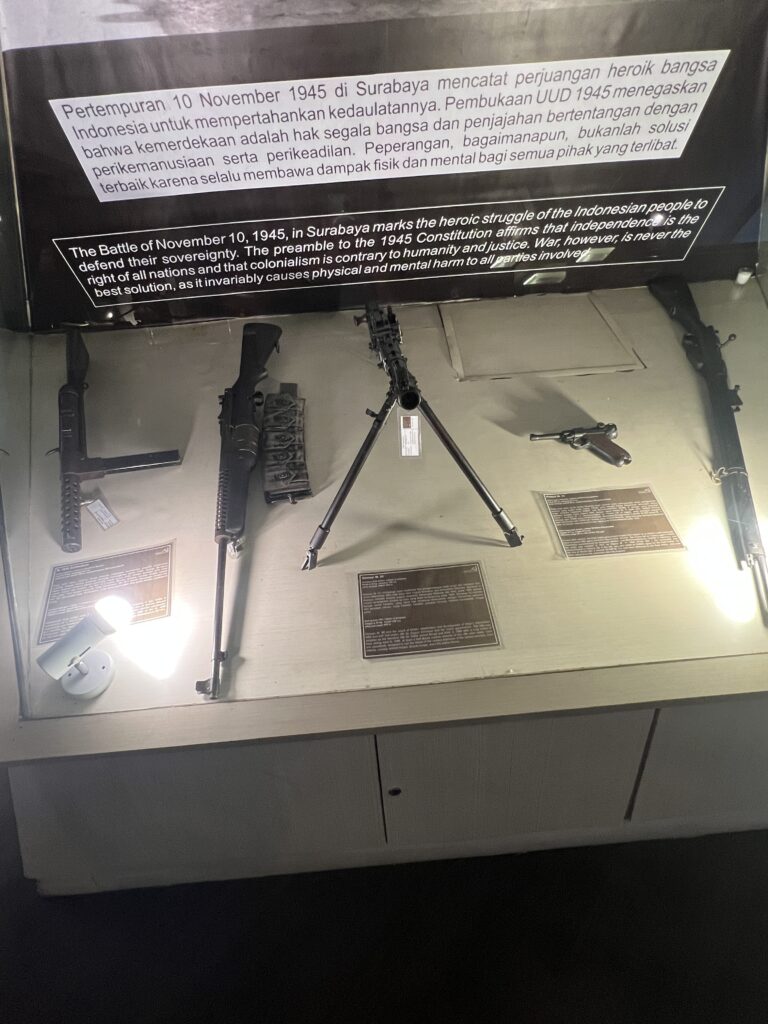
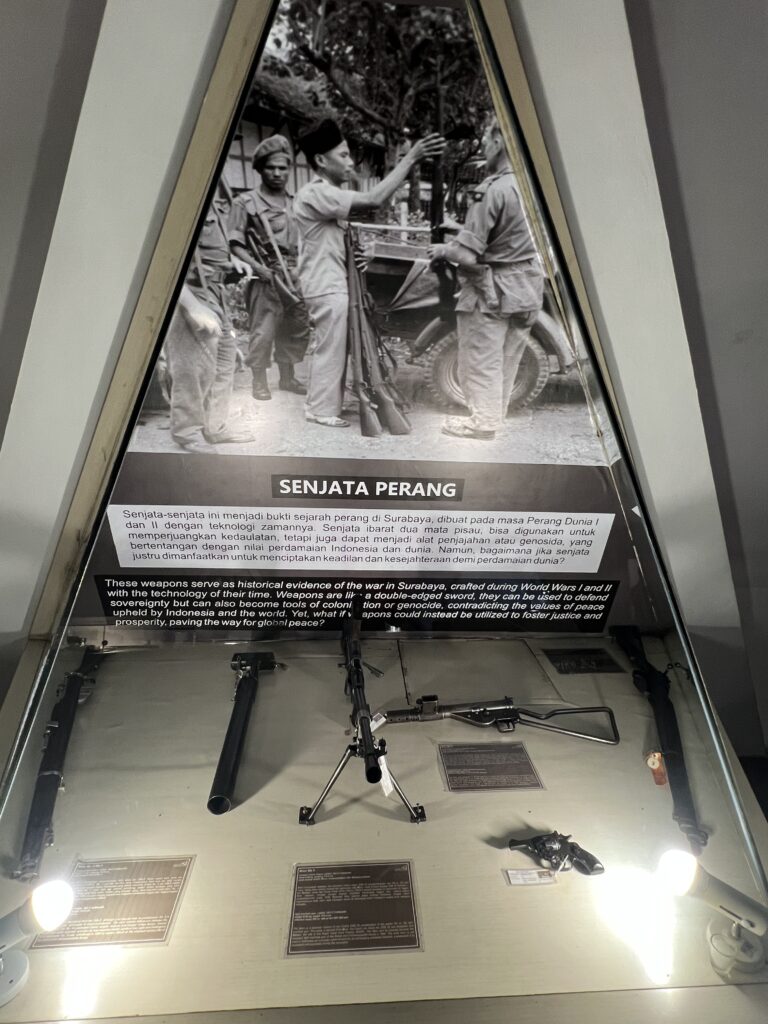
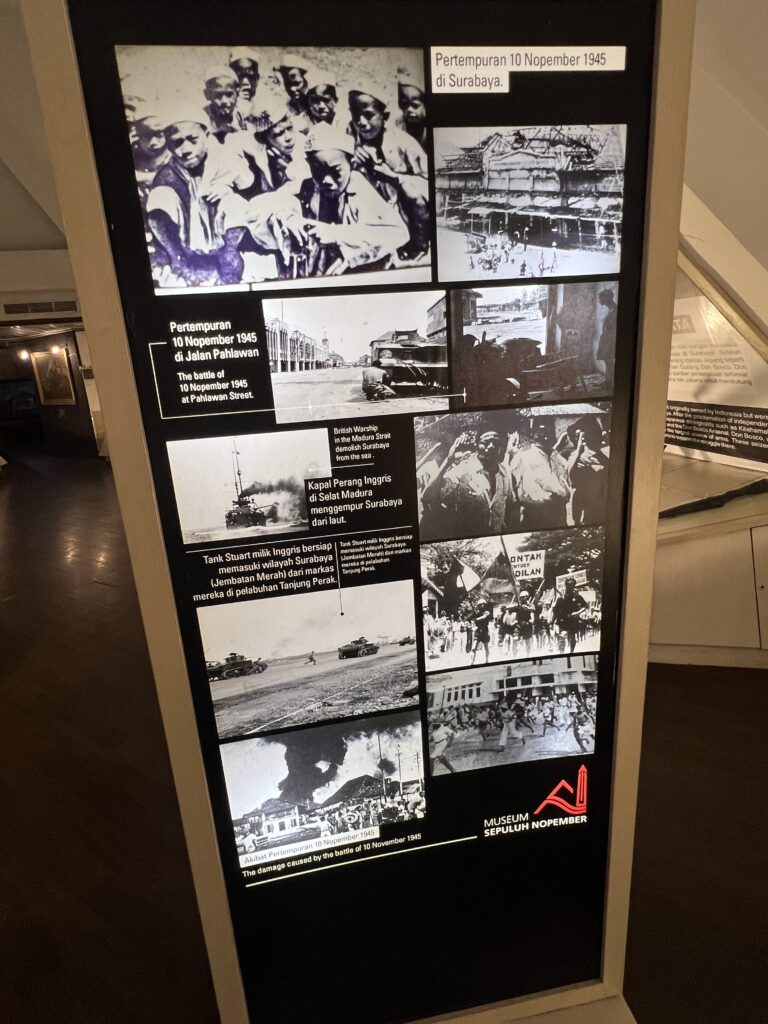
This set of photos was deeply moving if you look at the top left photo. Look at the ages of these young boys fighting for the independence of Indonesia.
The hotel was founded in 1910 as the Hotel Oranje by Lucas Martin Sarkies, the son of Martin Sarkies of the Sarkies brothers, who commissioned Regent Alfred John Bidwell to design the hotel. It opened in 1911.Two wings were added from 1923 to 1926 and an Art Deco lobby extension was opened in 1930. The opening was celebrated with a royal party attended by Crown Prince Leopold III from Belgium, Princess Astrid from Sweden and Charlie Chaplin.
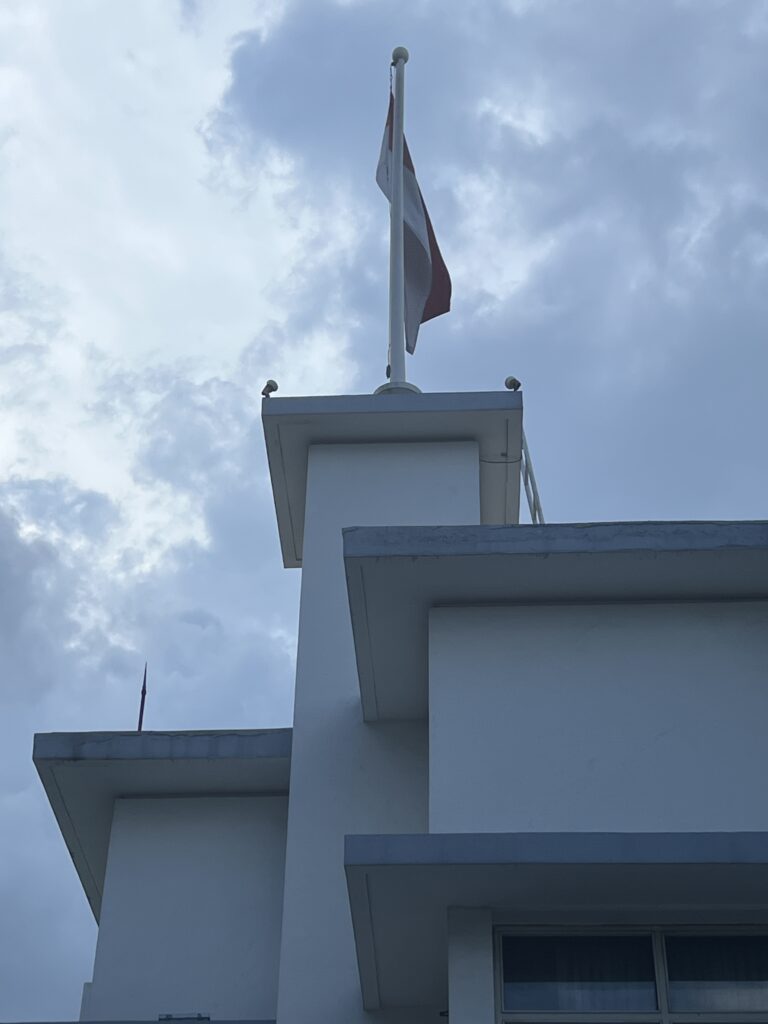
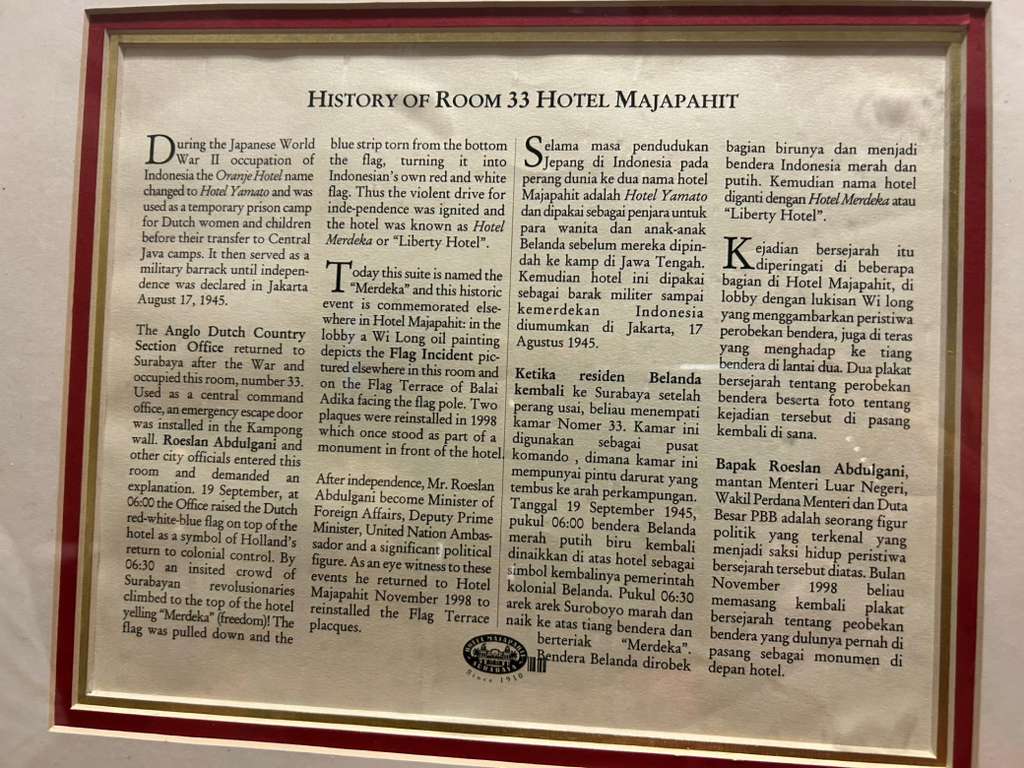
During the WWII Japanese occupation of the Dutch East Indies from 1942 to 1945, the hotel was renamed Hotel Yamato. It was used as the headquarters of the Japanese forces in East Java. The hotel was the site of the famous “Hotel Yamato Incident” on 19 September 1945 when pro-nationalist Indonesian youth revolutionaries tore away the blue portion of the Dutch flag flown above the hotel to change it to the red-and-white Indonesian flag in the lead-up to the Battle of Surabaya. Following this incident, the hotel was renamed the Hotel Merdeka (Independence Hotel).
In 1946 the Sarkies family returned to manage the hotel and renamed it the L. M. S. Hotel for Lucas Martin Sarkies. In 1969, Mantrust Holdings Co. bought the hotel and renamed it Hotel Majapahit, after the historic kingdom of Majapahit. The hotel was restored in 1994 by Harry Susilo, a prominent local ethnic Chinese businessman, at a cost of $51 million. It reopened on 19 January 1996 as the Mandarin Oriental Hotel Majapahit Surabaya, managed by the Mandarin Oriental Hotel Group. It was bought by the CCM Group in 2006 and renamed Hotel Majapahit.
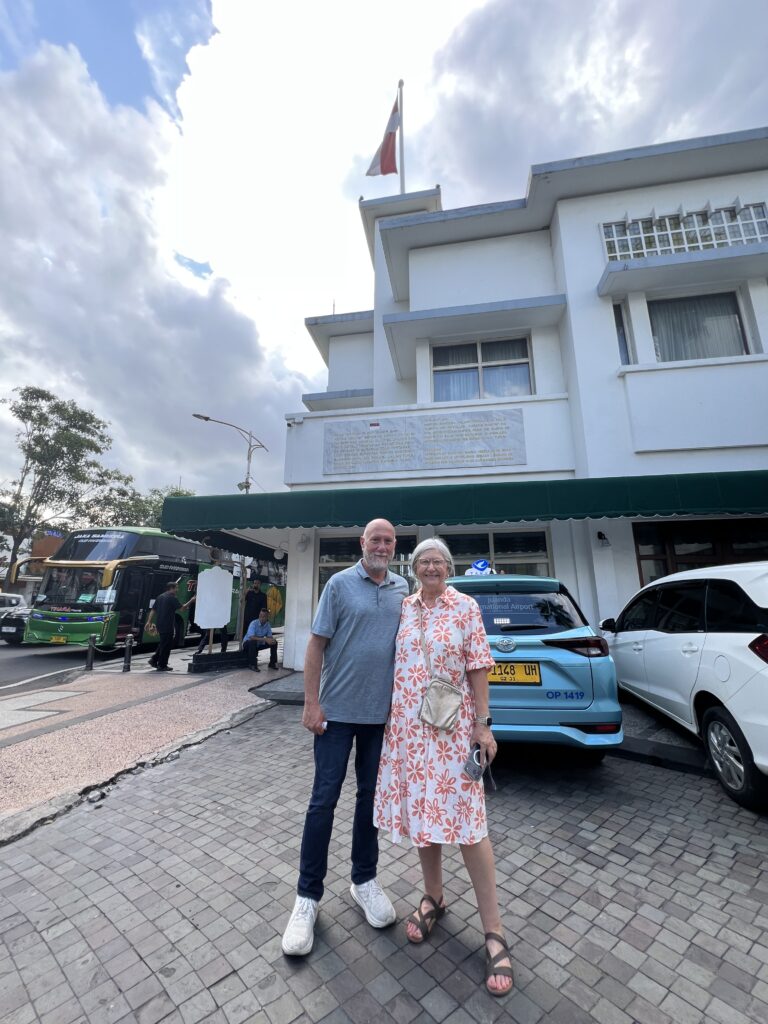
The Dutch flag is red, white and blue. The young revolutionists climb to this flagpole above the hotel and tore the blue color off the flag creating the new Indonesian and current flag of Indonesia. It also was a spark to begin the fight for independence.
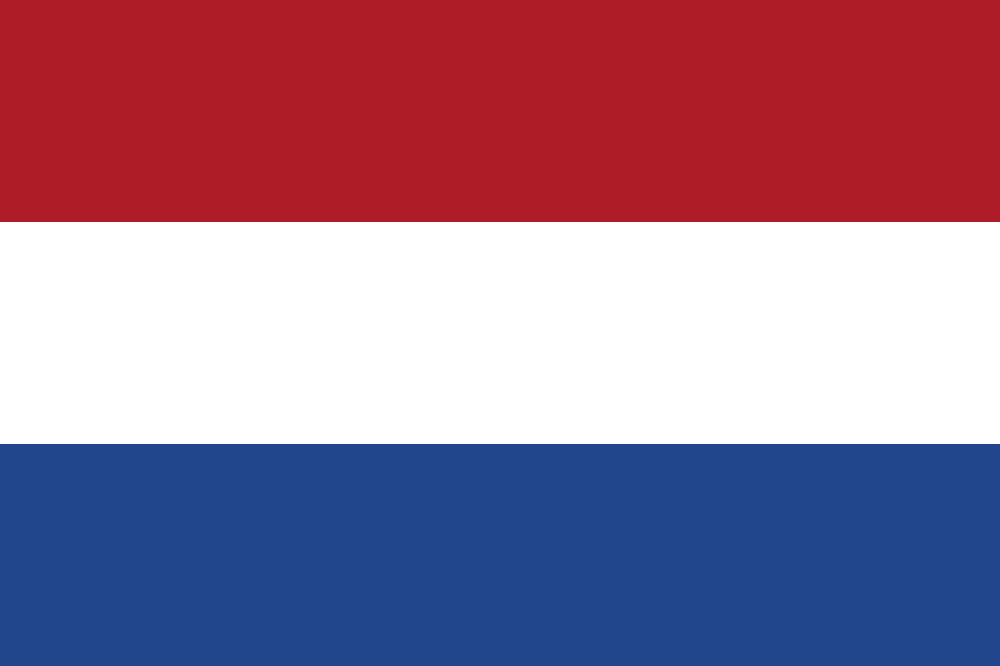
Flag of The Netherlands
Flag of Indonesia. First hoisted on Aug 17, 1945, during the proclamation of independence. The flag featured in a well-known incident during the Indonesian War of Independence when during the lead-up to the Battle of Surabaya in late 1945, Indonesian youths removed a colonial Dutch flag flying over the Yamato Hotel, tore off the blue strip and re-hoisted it as an Indonesian flag. The hotel was subsequently renamed briefly as Hotel Merdeka, meaning “independence hotel”.

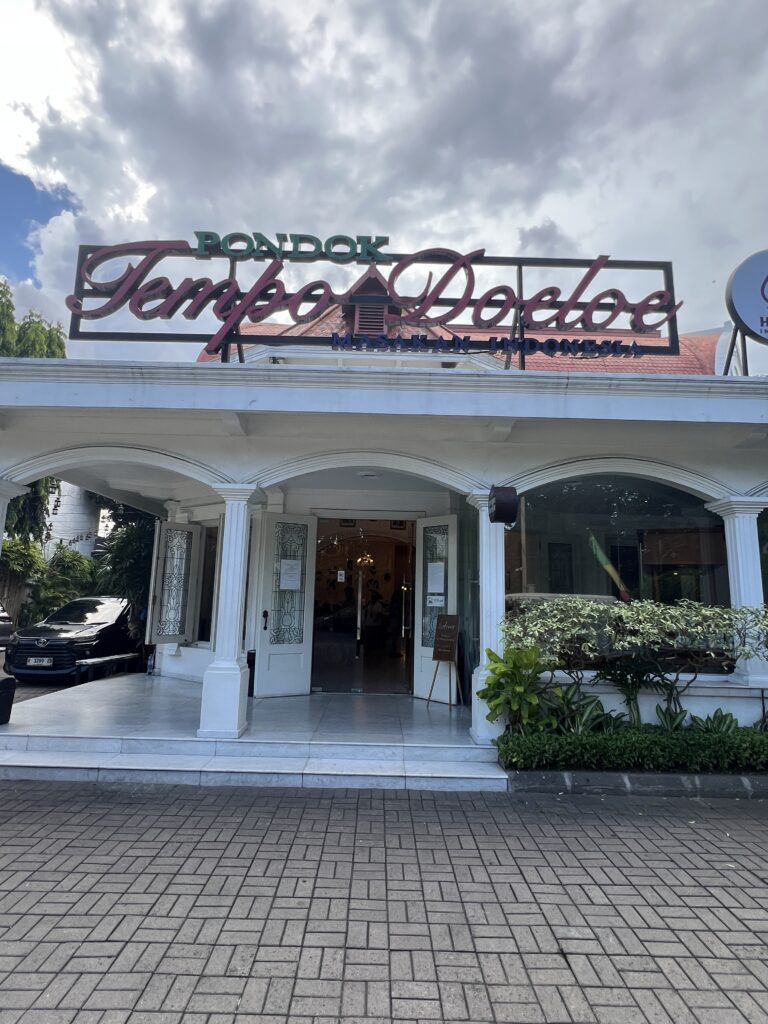
After visiting this hotel, we went off for lunch.
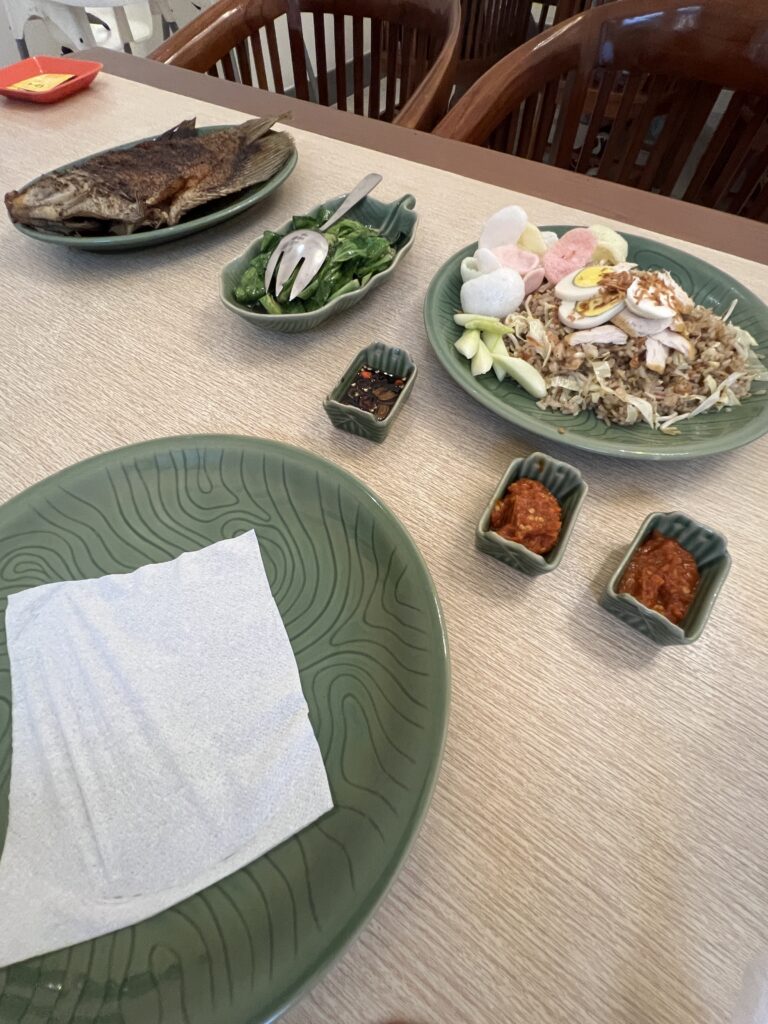
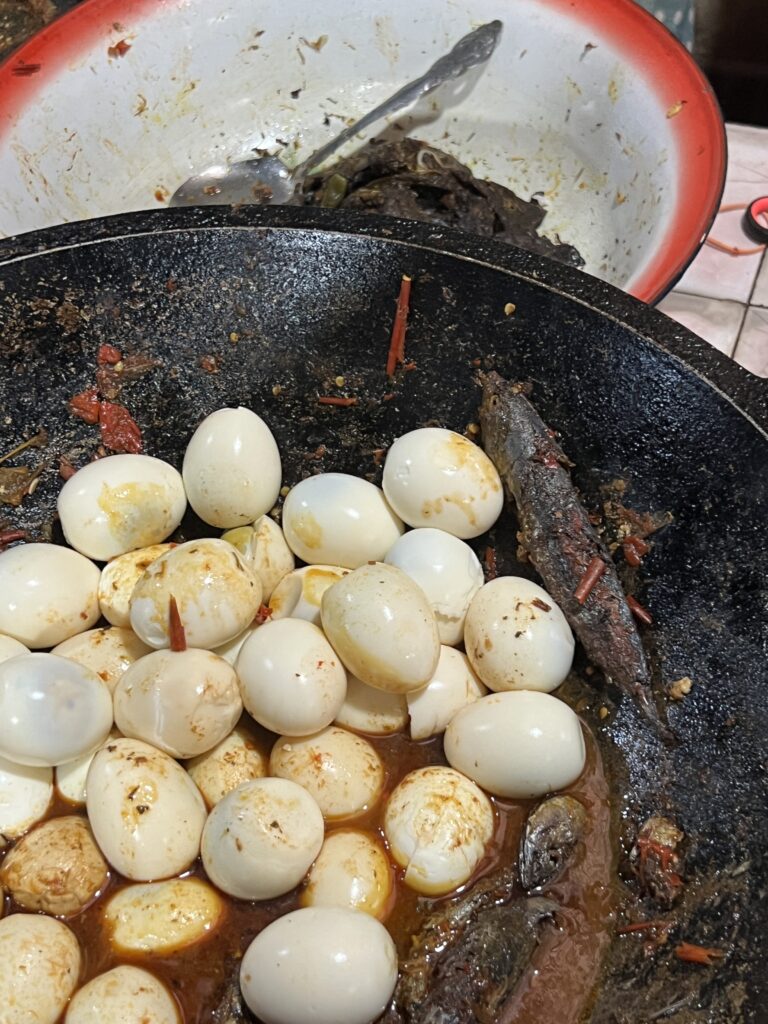
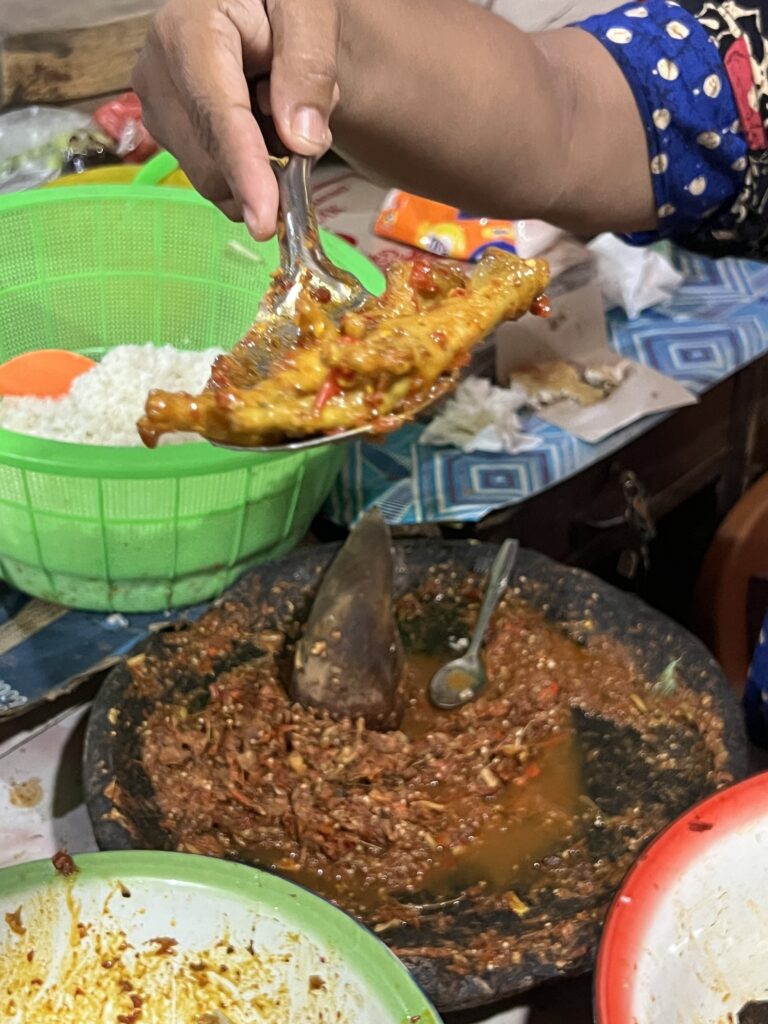
Our lunch was good according to Jackie. I had issues with the 6,372,194 bones in the fish (was like the Jesus fish in Jerusalem), the rice was great except for the chicken in the rice, the vegetable was different and the best part of the lunch for me were the rice crackers (could have eaten a sack of those things). Let’s not forget the three sauces as the one on the left was the mildest and registered near the top of the Scoville scale. The one on the right was too hot to be on the scale.
Our waitress
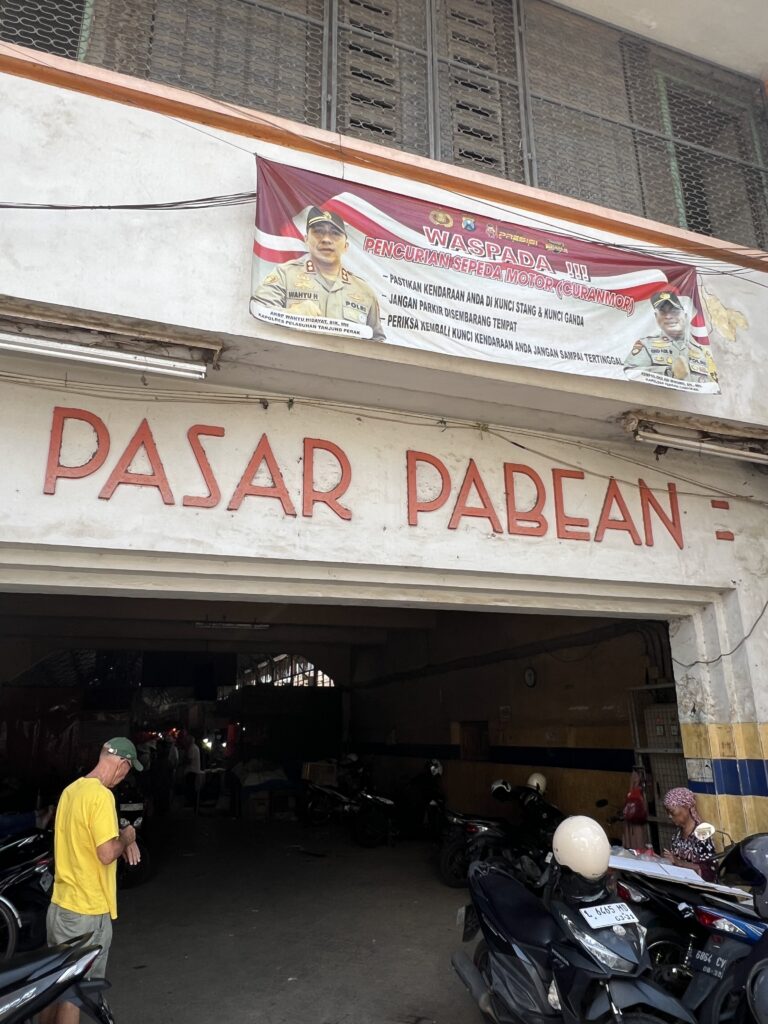
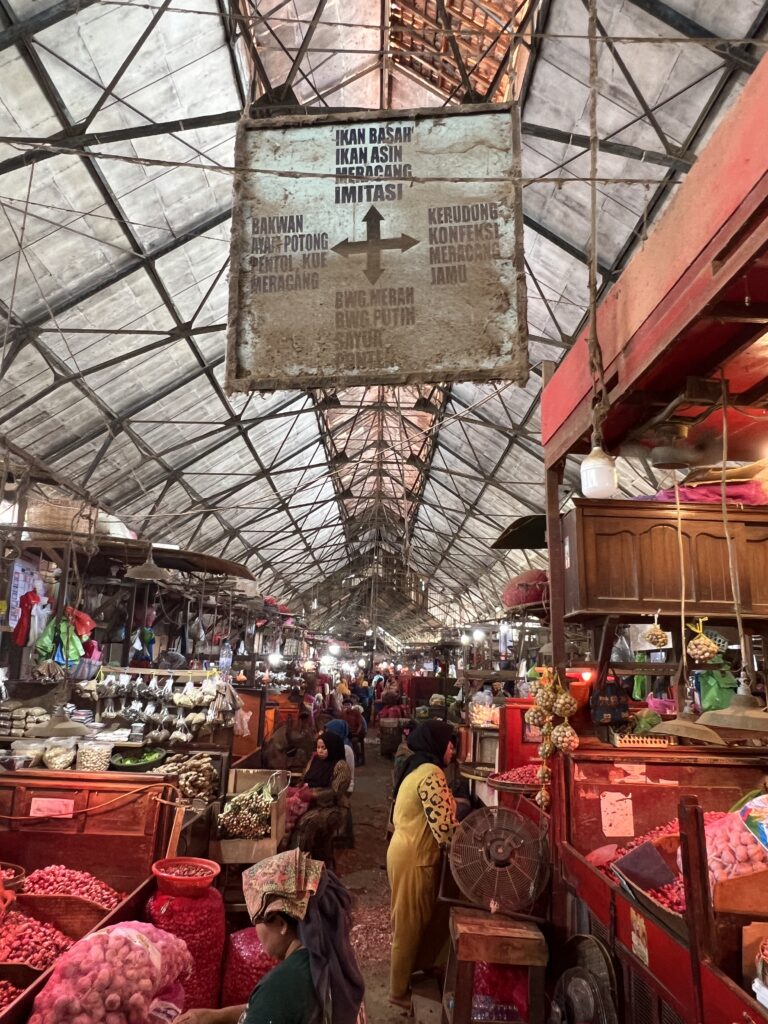
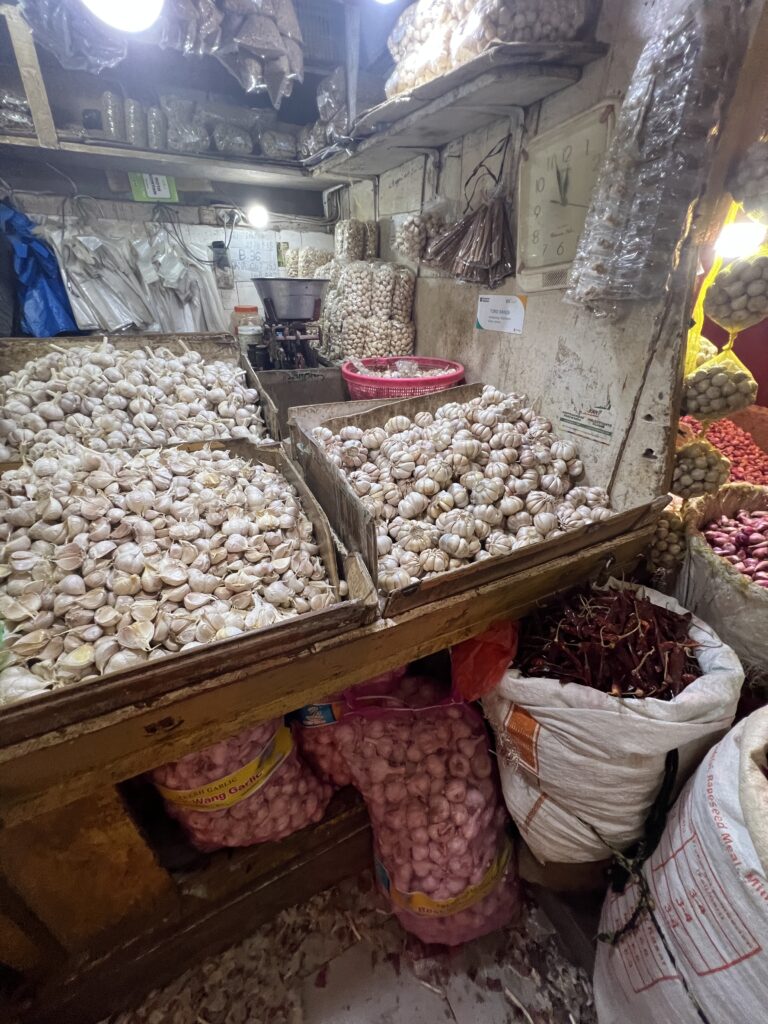
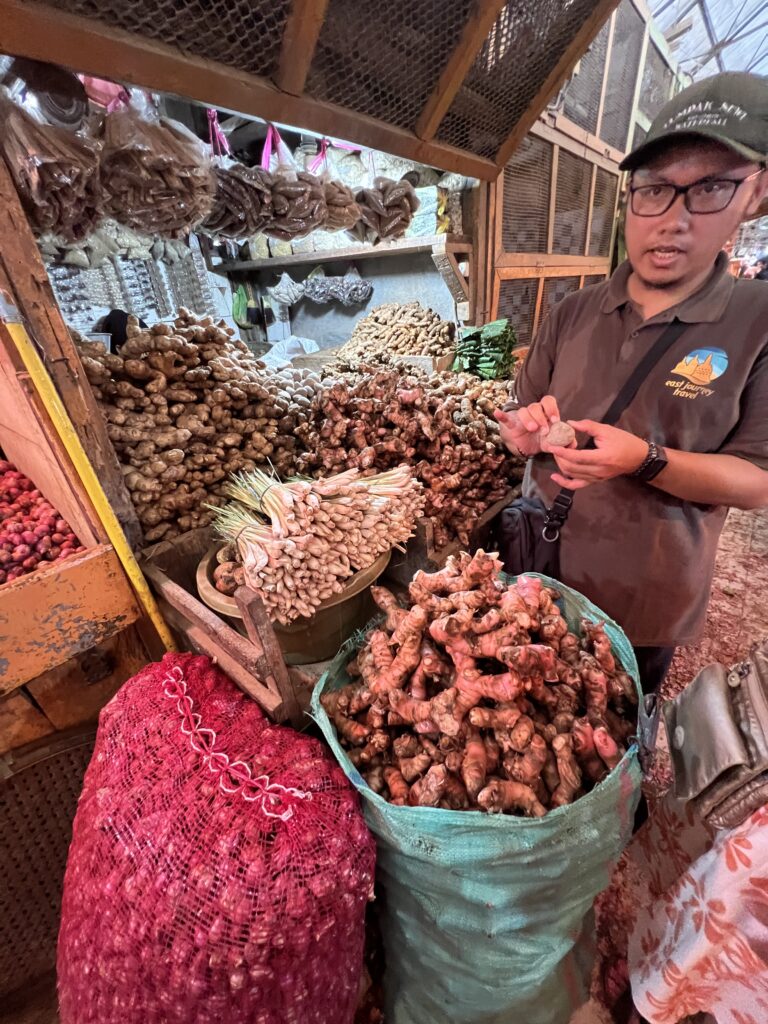
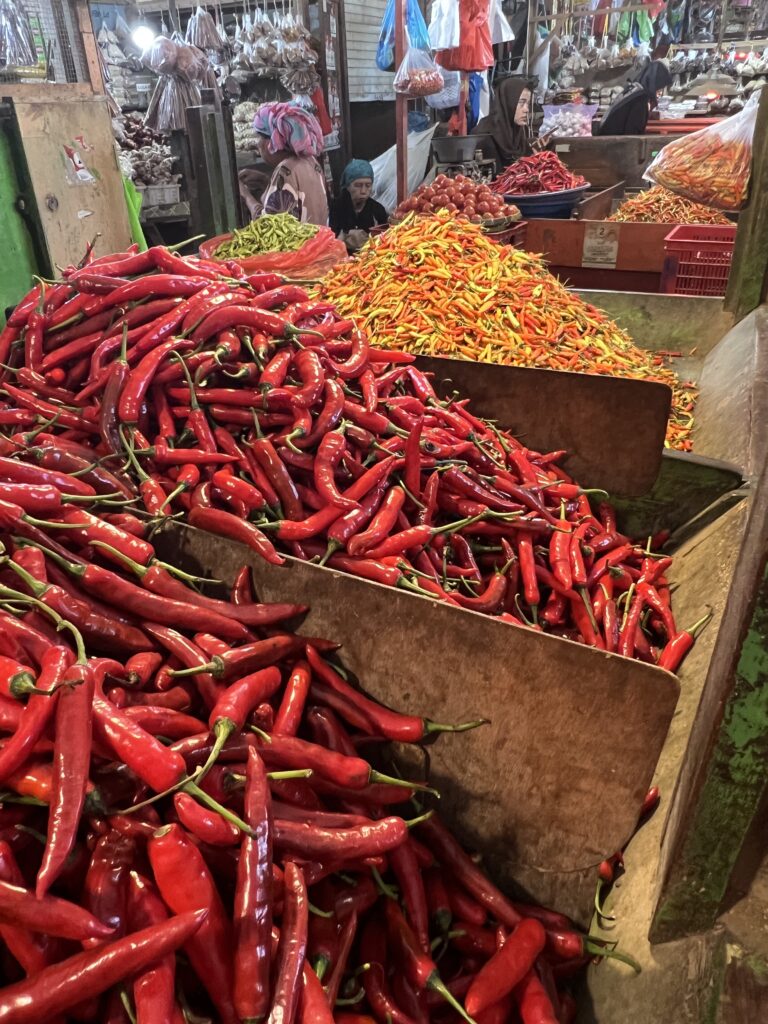
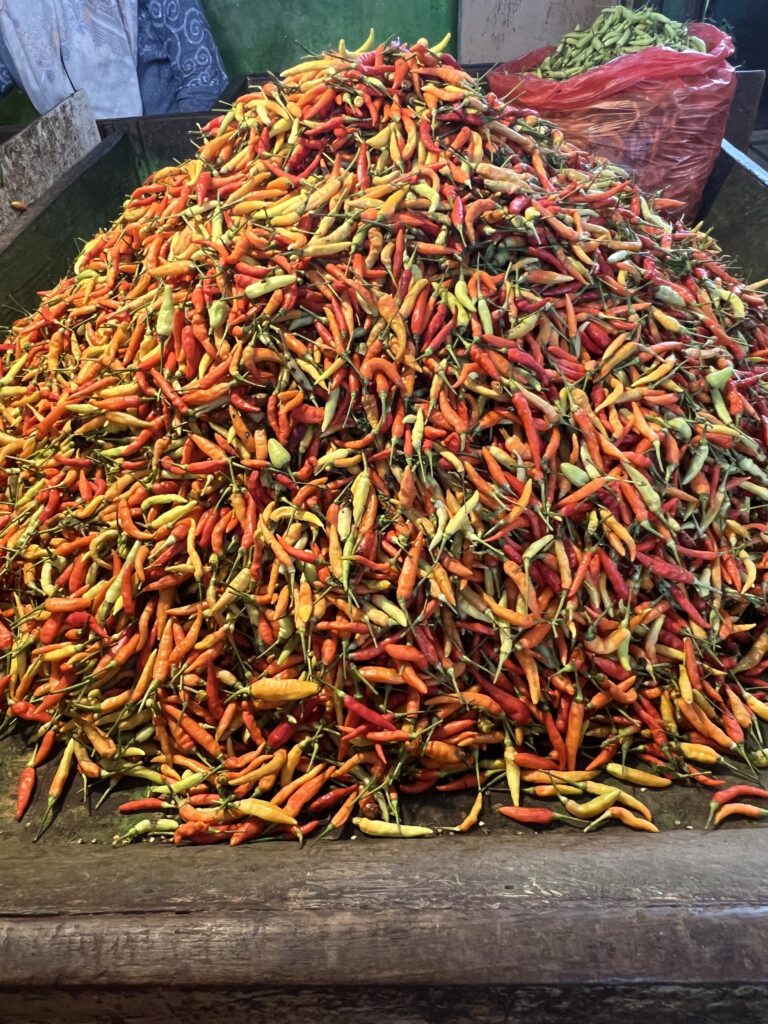
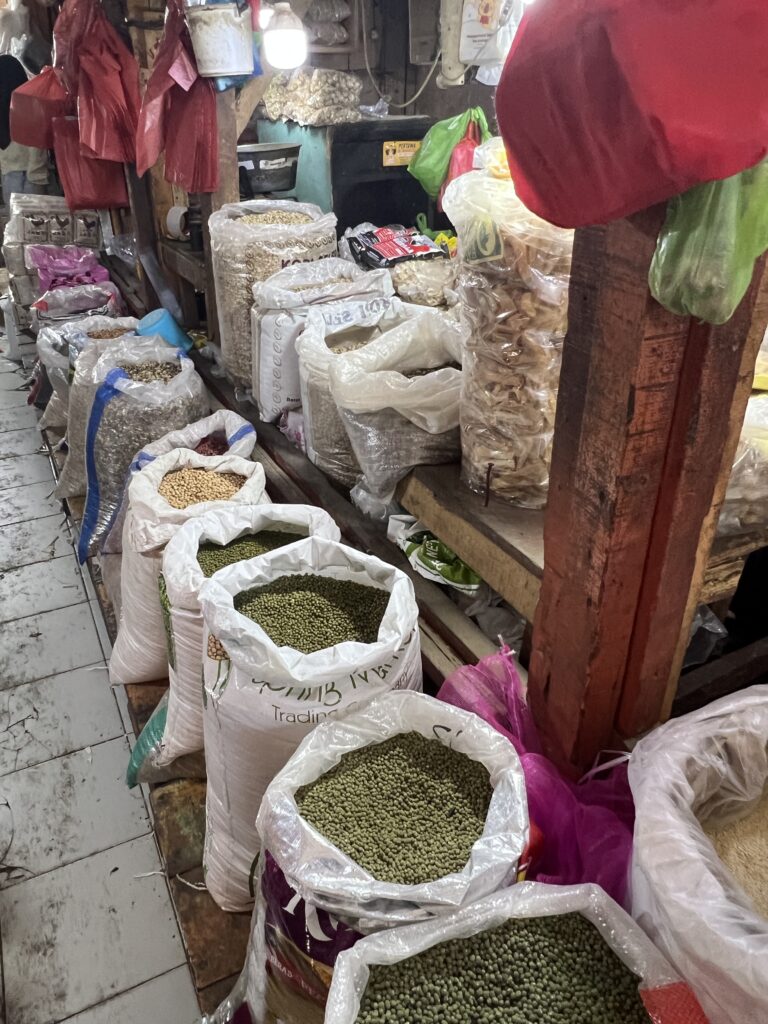
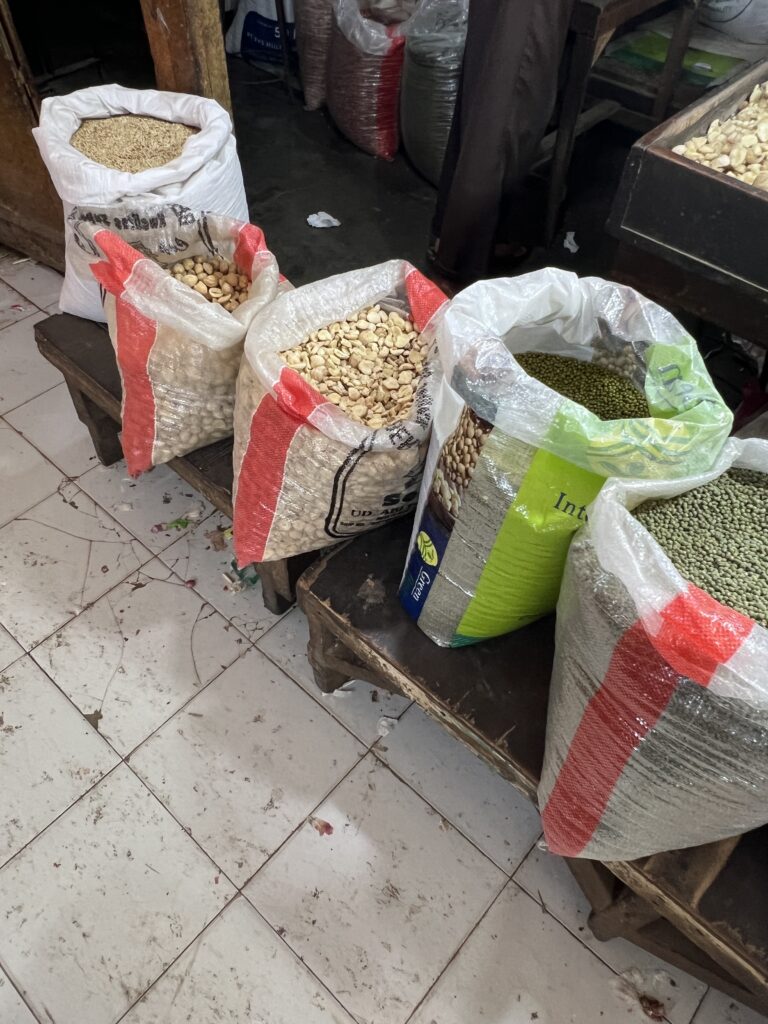
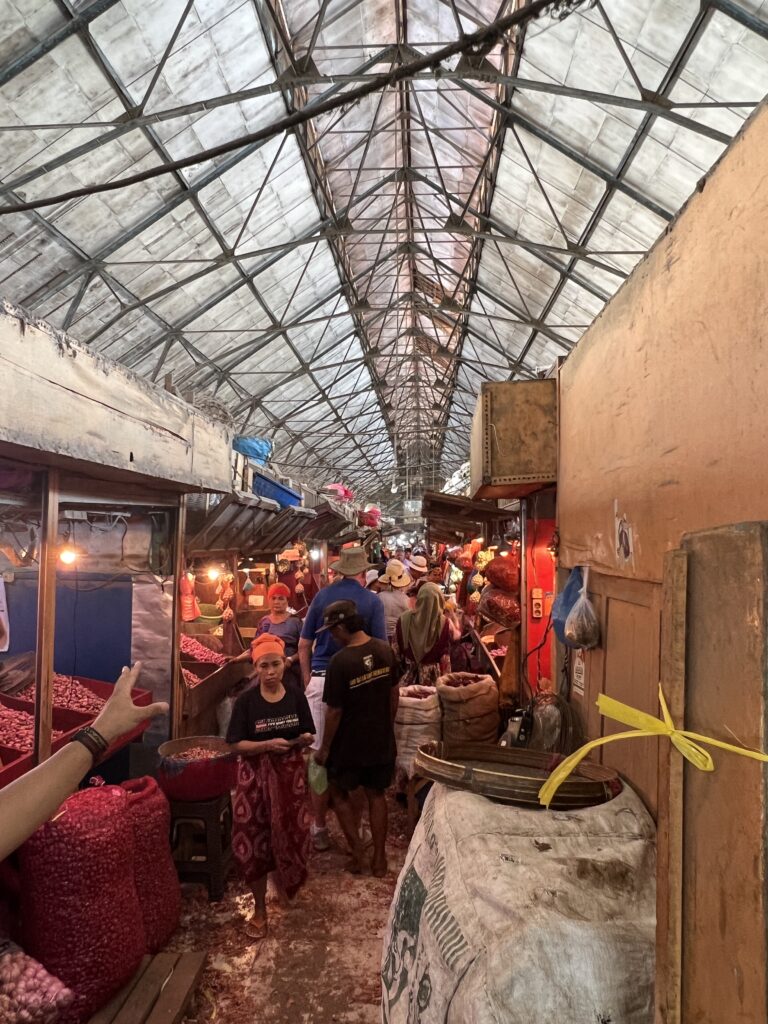
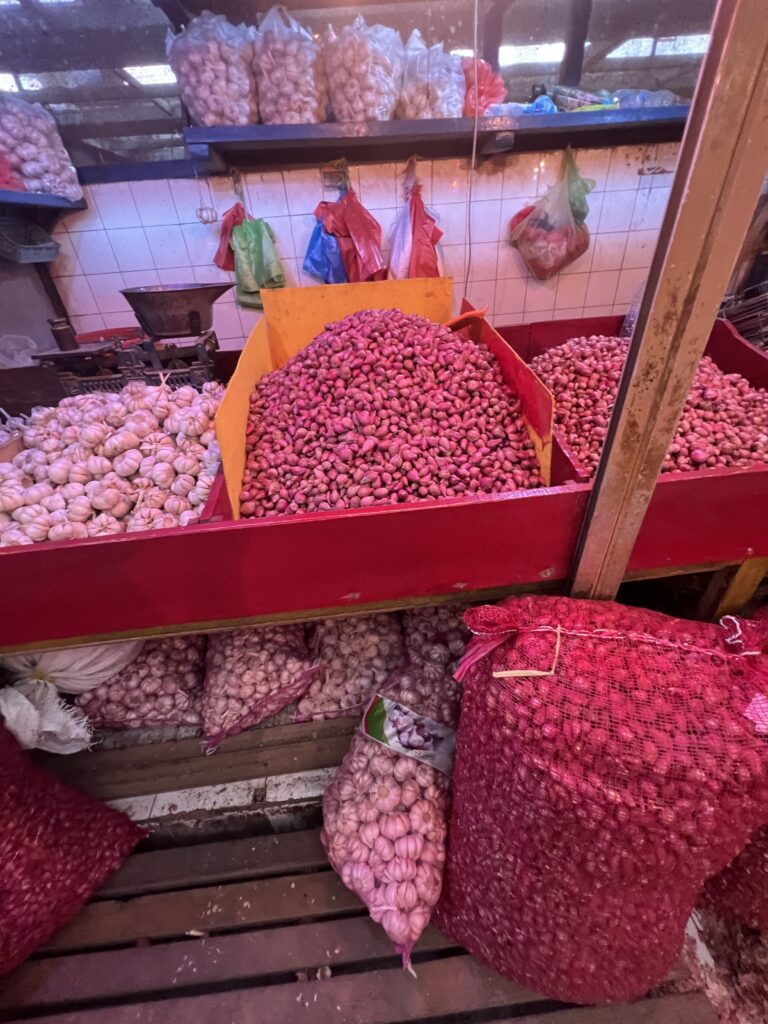
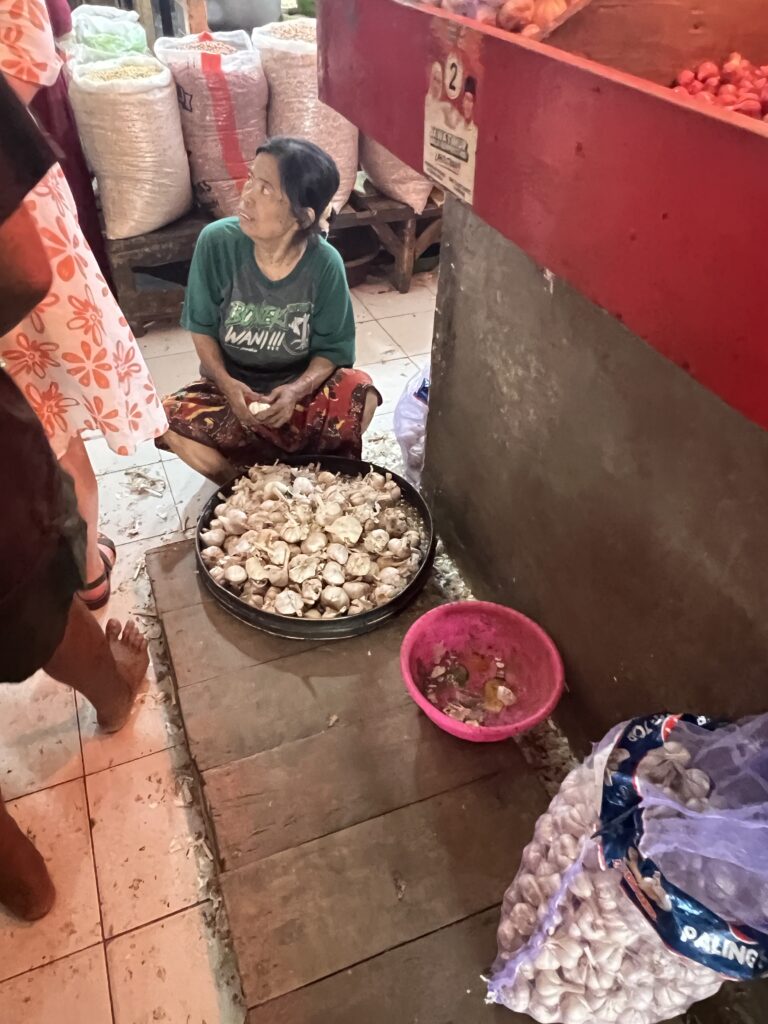
After our lunch or before (now I cannot remember) we visited a market. I have never seen so many cloves of garlic in my life. We were walking on a carpet of garlic peels.
Pasar Pabean is a sprawling, darkly lit market, which links the Chinese and Arab Quarters, where you can buy everything from Madurese chickens to Chinese crockery. An indoor market linking the Arab Quarter and Chinatown, Pasar Pabean is a bustling mix of vendor’s stalls enveloped in the scent of fresh seafood. Fish, crabs, clams and other marine creatures are in abundance, along with various kinds of produce and knick-knacks.
Exploring the legendary of Pasar Pabean
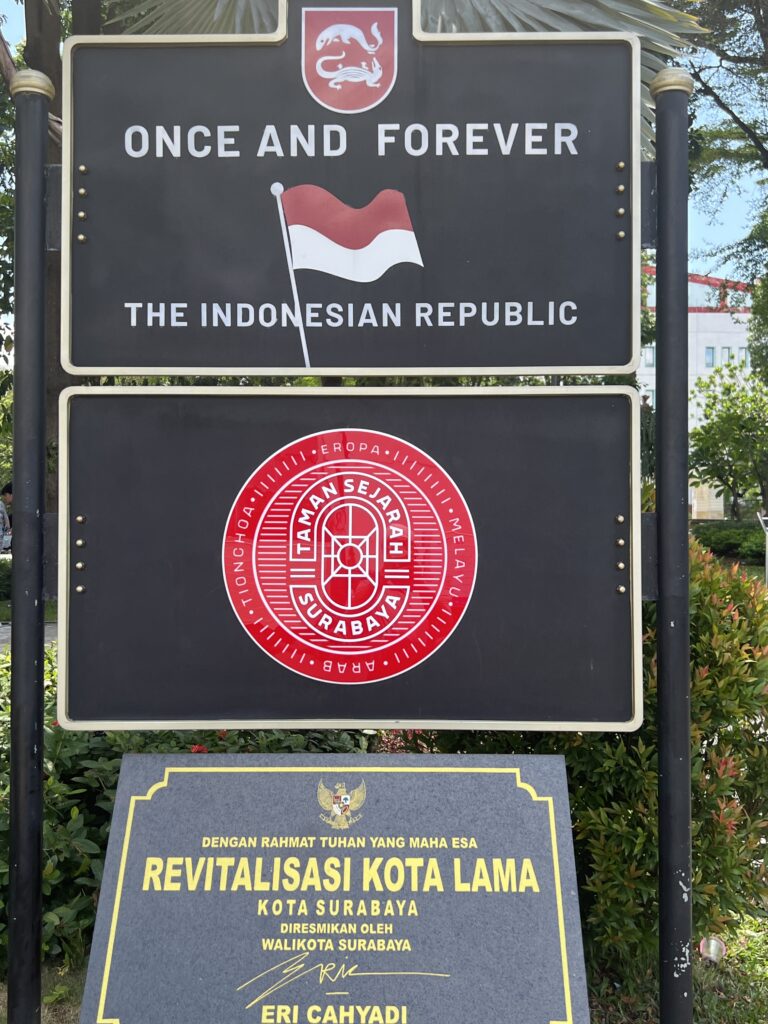
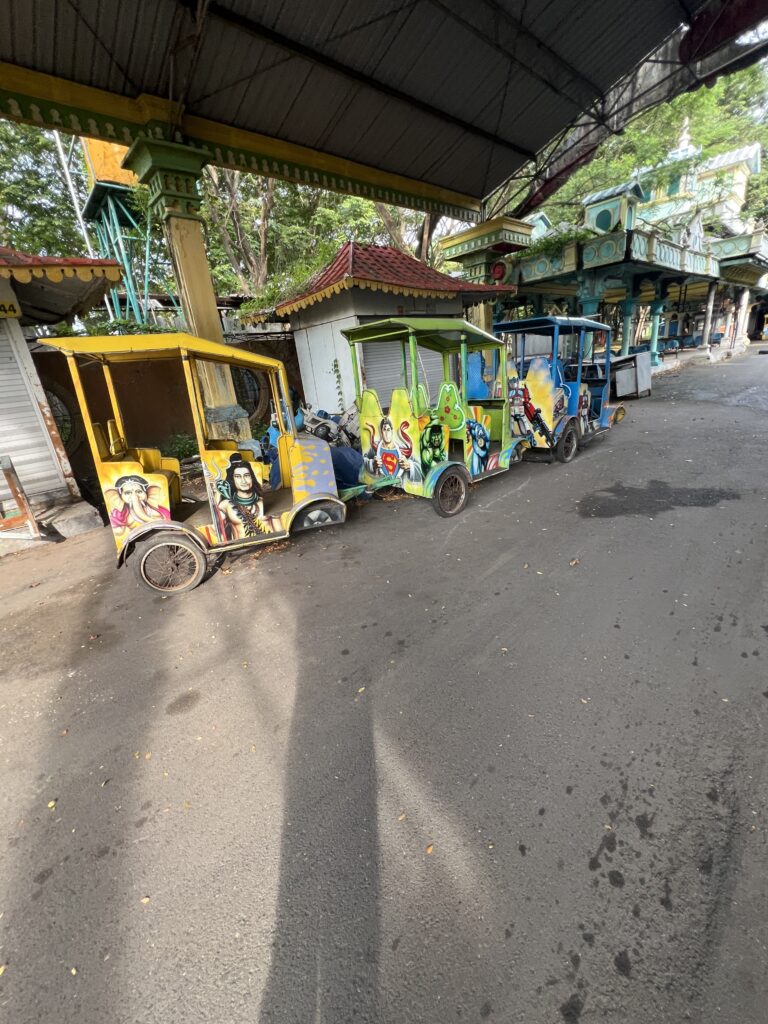
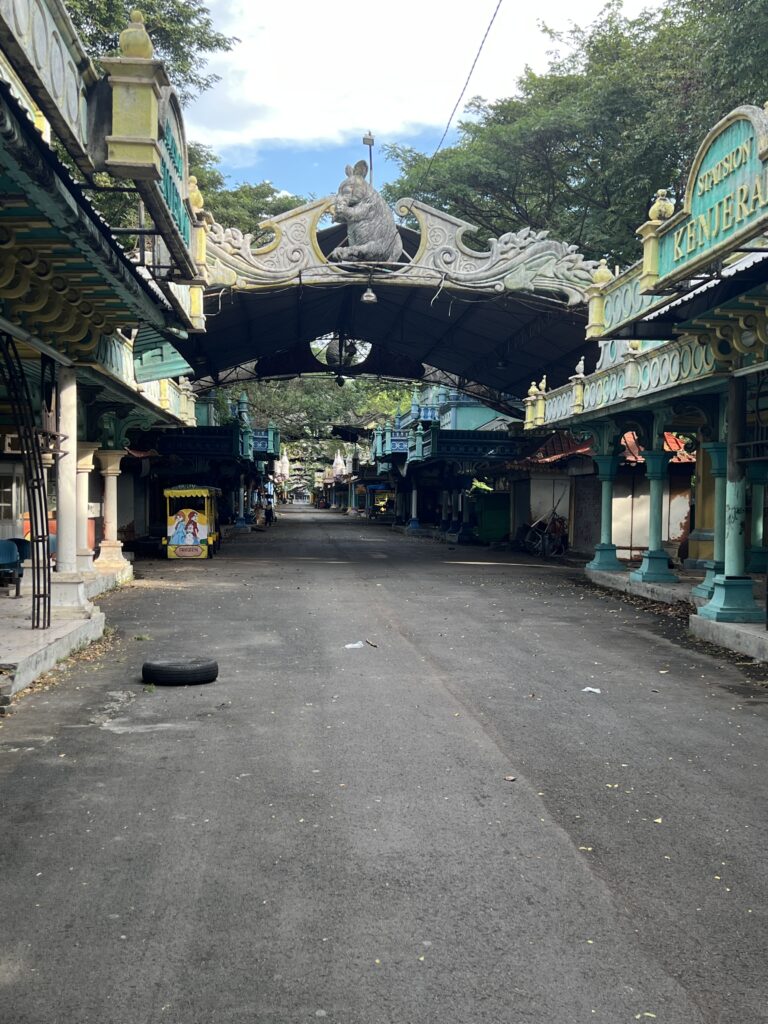
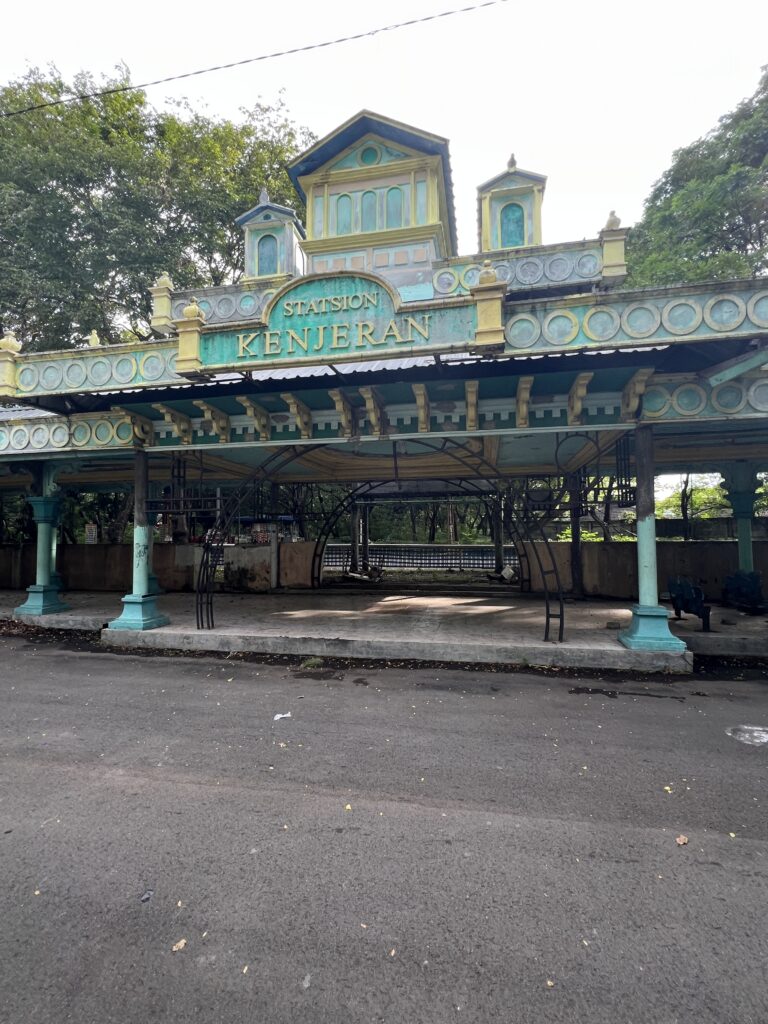
Our last stop for the day was at Klenteng Sanggar Agung Temple. This was a weird crazy location as it was located in an abandoned amusement park. First the temple and then the amusement park.
Sanggar Agung Temple or Hong San Tang (Chinese: 宏善堂) is a Chinese temple in Surabaya dedicated to Chinese deities and other Asian religious icons. It is located within the Pantai Ria amusement park and has become a tourist destination, even though it is originally a worship place for Tridharma followers. The name of Sanggar Agung is derived from Indonesian language which can be translated as Great Hall.
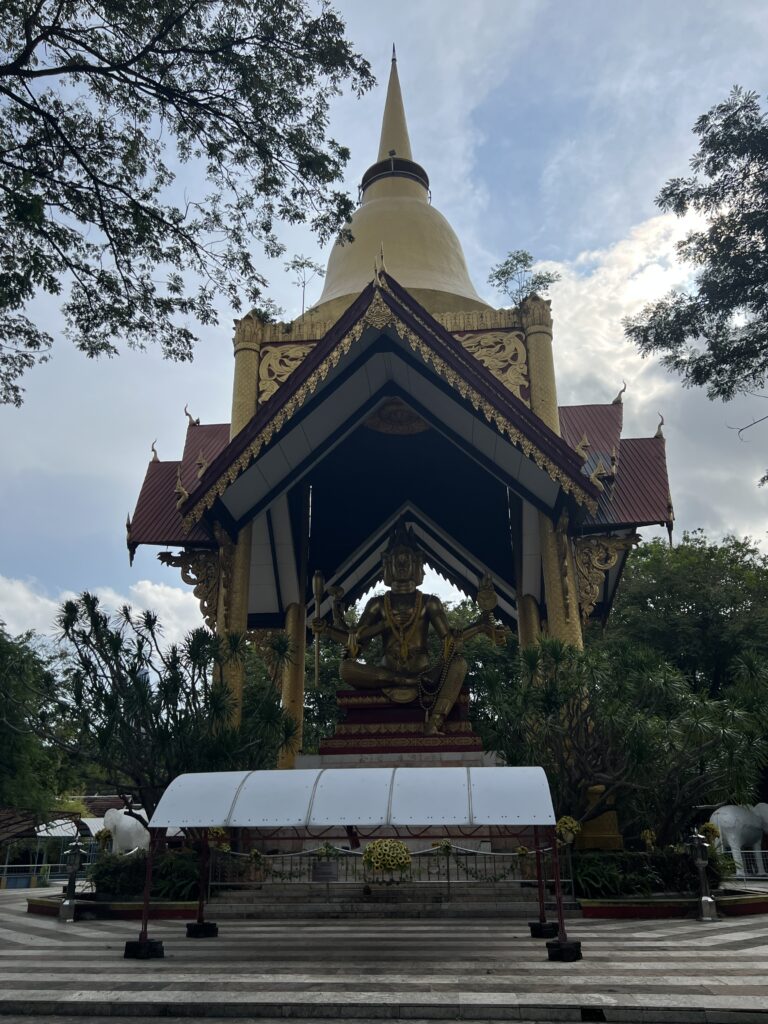
The main icon of this temple is a 20 meters tall statue of Guan Yin on the waterfront, as a symbol that this temple is dedicated to Nan Hai Guan Shi Yin Pu Sa or Guan Yin Bodhisattva of the South Sea. The giant statue was built after one of its employees saw a woman dressed in white walking on the sea as she was about closing the temple at night, believed as the appearance of Guan Yin herself. The other icon is the giant Phra Phrom statue covered with gold.
The ocean gate of Sanggar Agung decorated with giant Guan Yin statue with Long Nu and Sancai, Four Heavenly Kings, and a couple of Chinese dragons
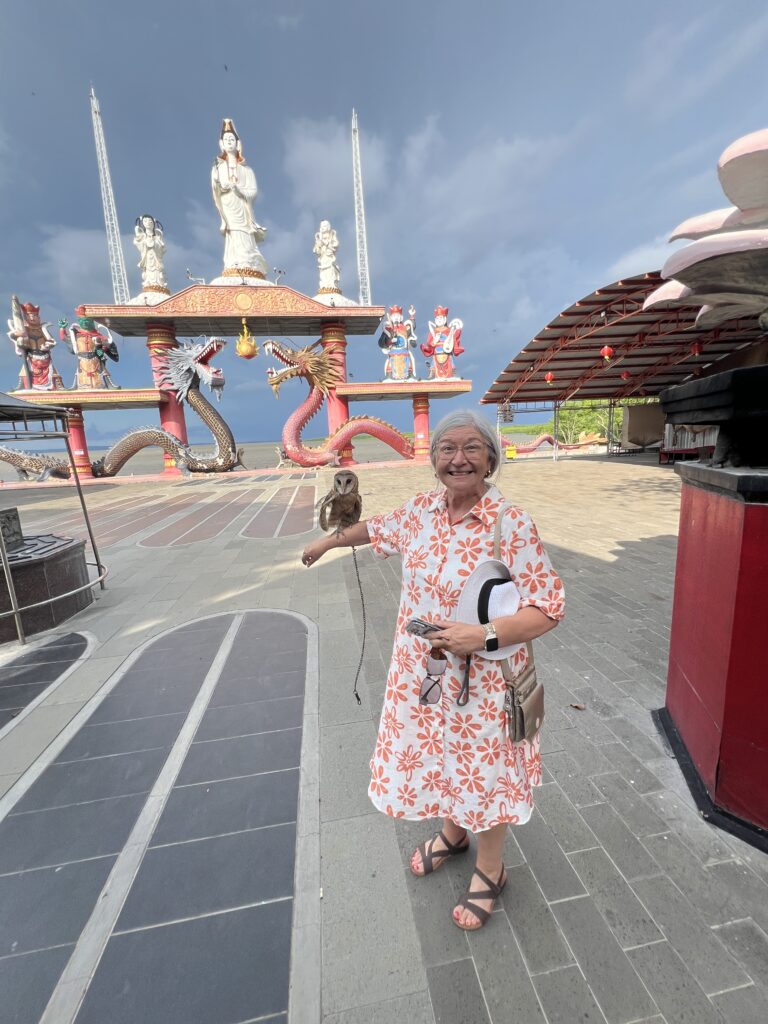
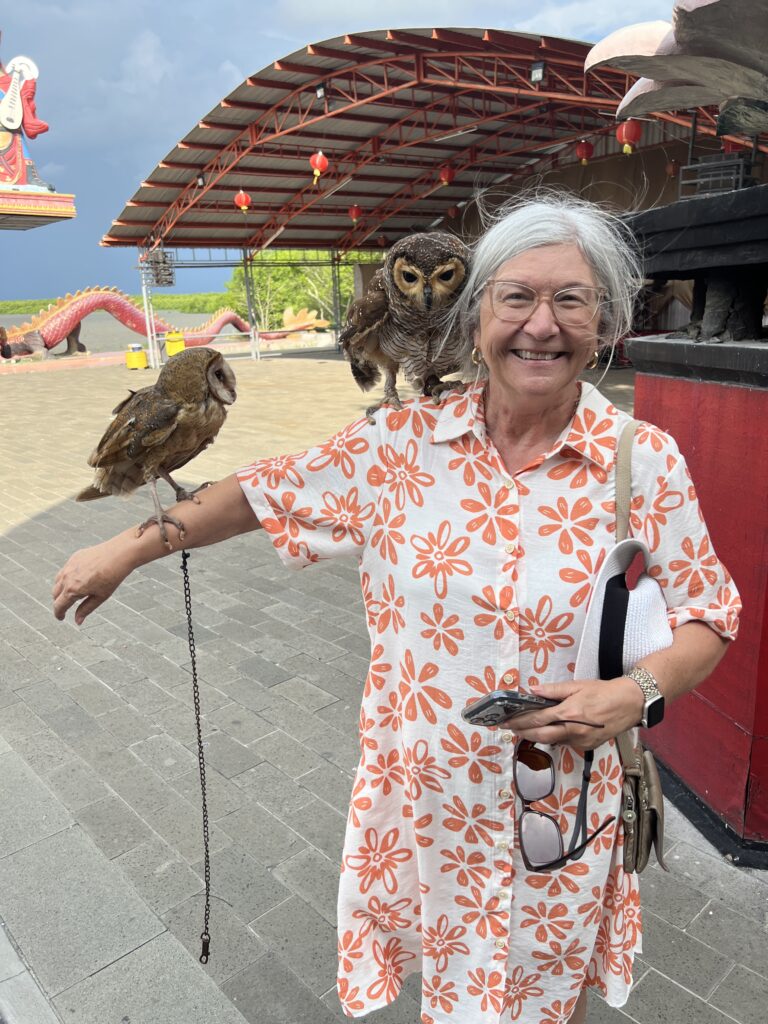
Jackie found two new friends
Gold covered giant Phra Phrom statue with Thai styled stupa
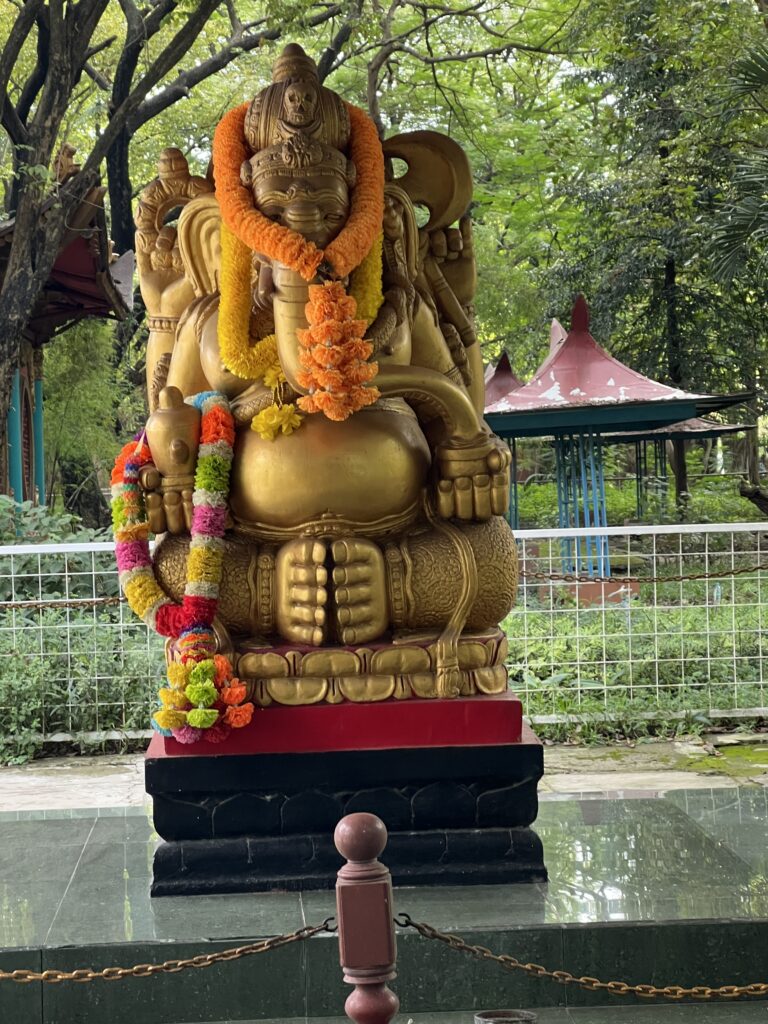
The altar of man-sized Ganesha statue, also worshipped by Hindus
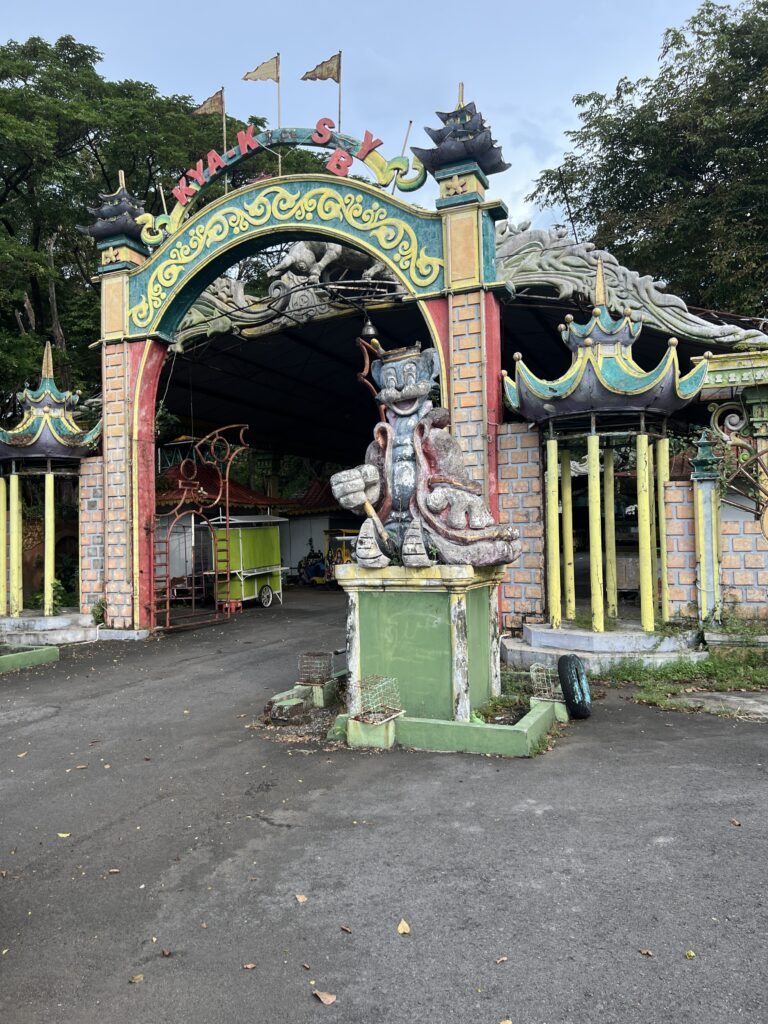
Kenjeran Park (Kenpark) in Surabaya, Indonesia, experienced a major incident in May 2022 when a water slide collapsed, injuring 17 people. The accident, caused by aged, deteriorated, and overloaded infrastructure, led to a temporary closure and police investigation. Following this, reports suggest some areas of the park have become dilapidated or abandoned.
Here is an interesting article and a YouTube video about the abandoned theme park
Photo Essay: The Nearly Abandoned Theme Park of Surabaya, Indonesia – A Long Way Back
🇮🇩 Exploring the Eerie Abandoned Theme Park at Kenjeran Park, Indonesia
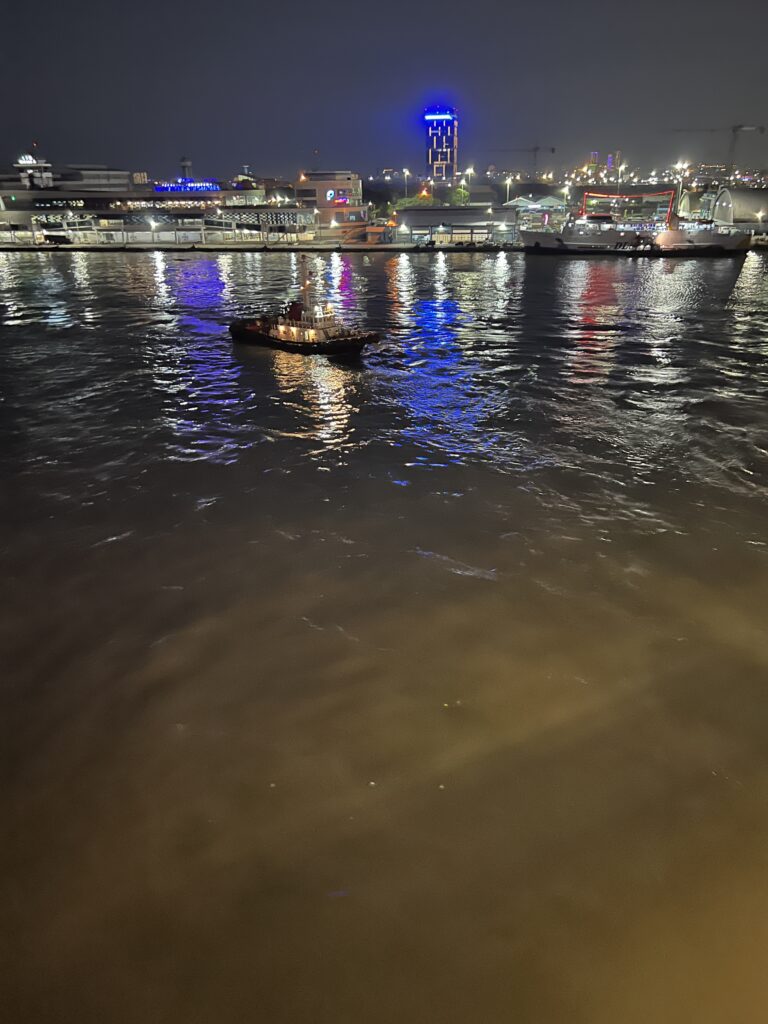
Sunset over the Surabaya Harbor
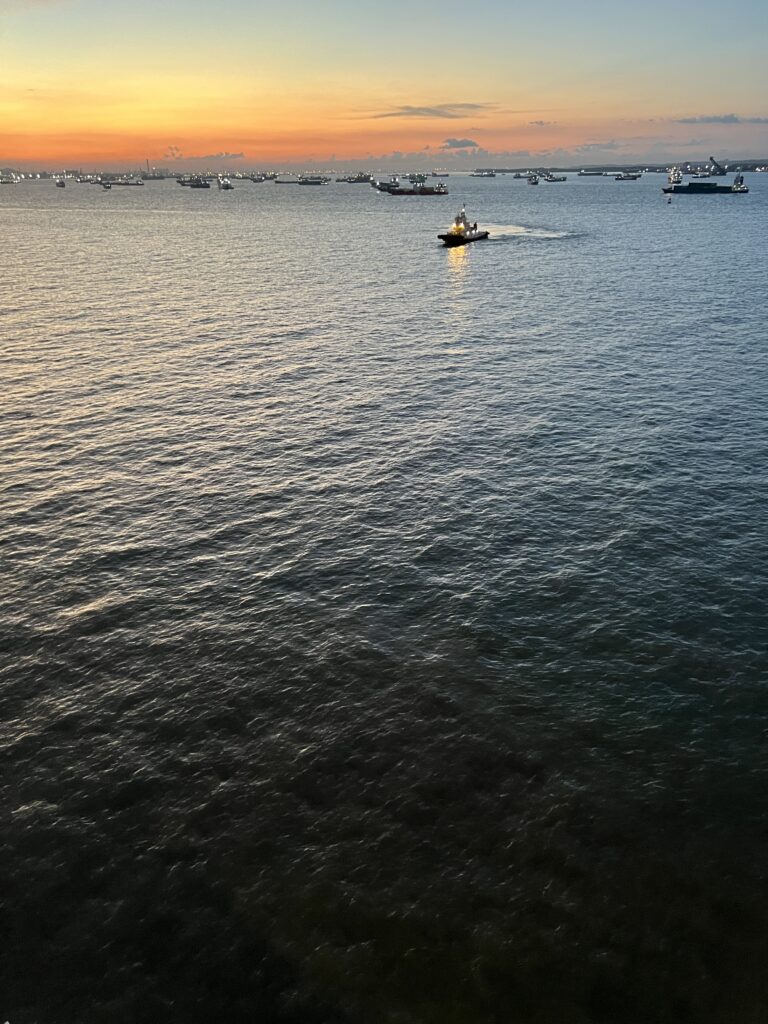
Sailing out of the port of Surabaya
3 thoughts on “Day 49 April 24 – Surabaya, Indonesia”
Thanks for sharing. When we went to Beijing a family asked my son Chad to take a picture with them…Lol
Very Interesting place. Is that a big city? I would have enjoy the market.
Thanks for sharing your adventures!!
You only live once, do it while you can 😎