
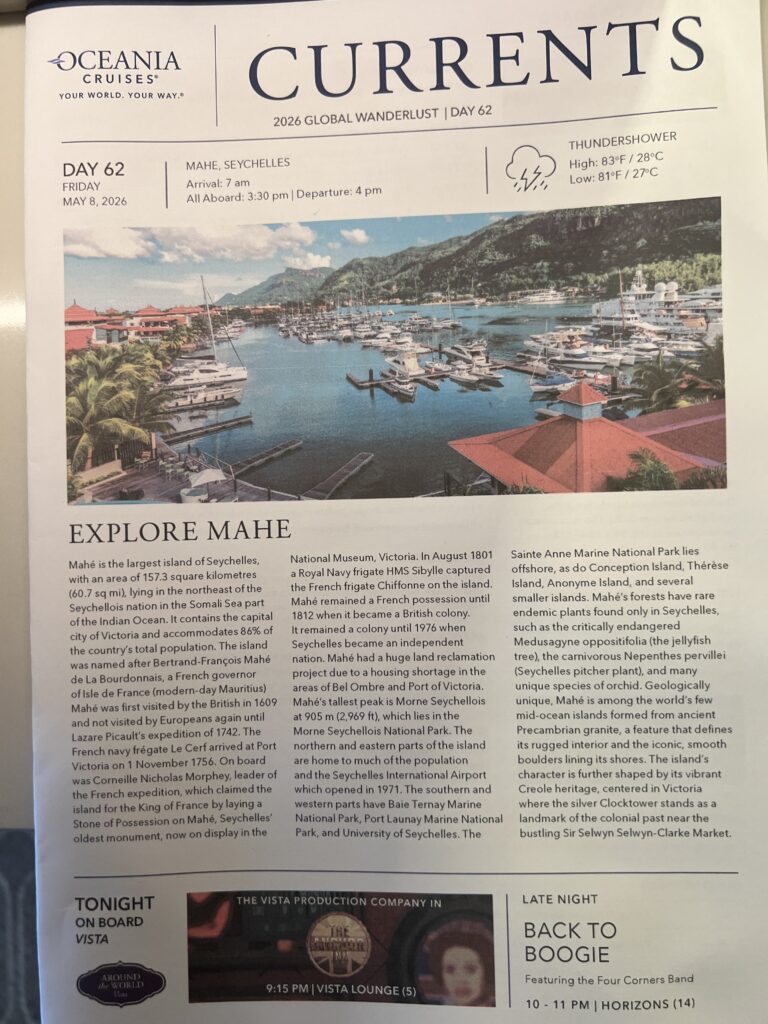
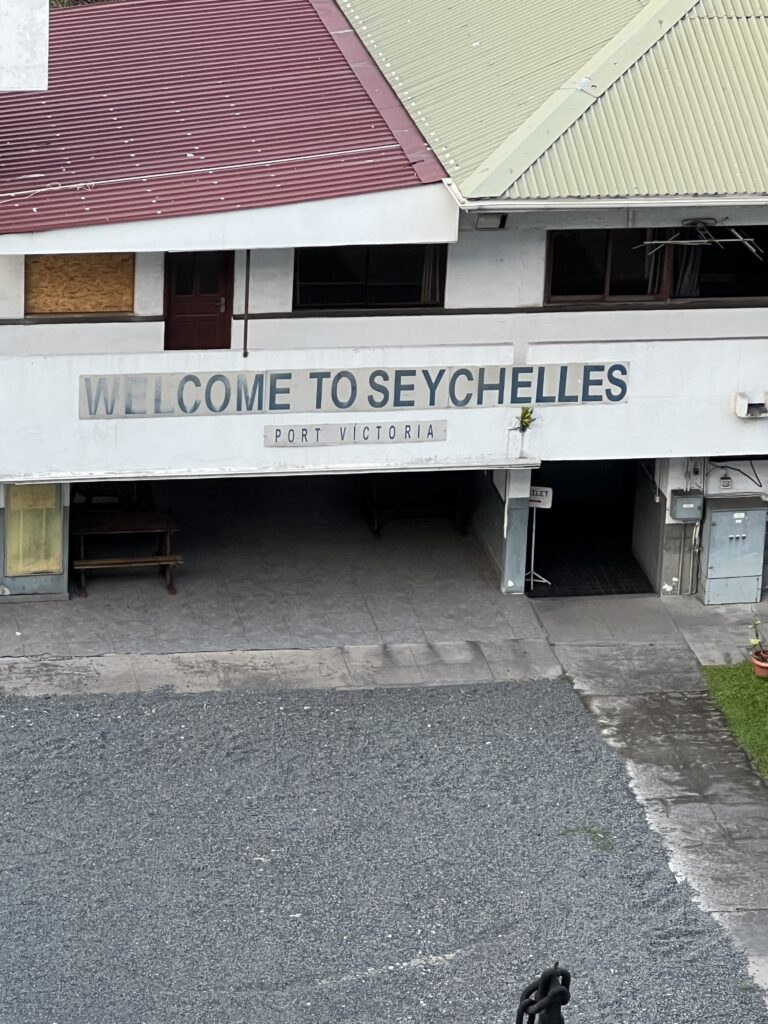
Day 62 Friday May 8th (58 days to go) — Today we stopped in The Seychelles, which is the smallest country in Africa. The port we docked at is the city of Victoria, which is the smallest capital in the world.
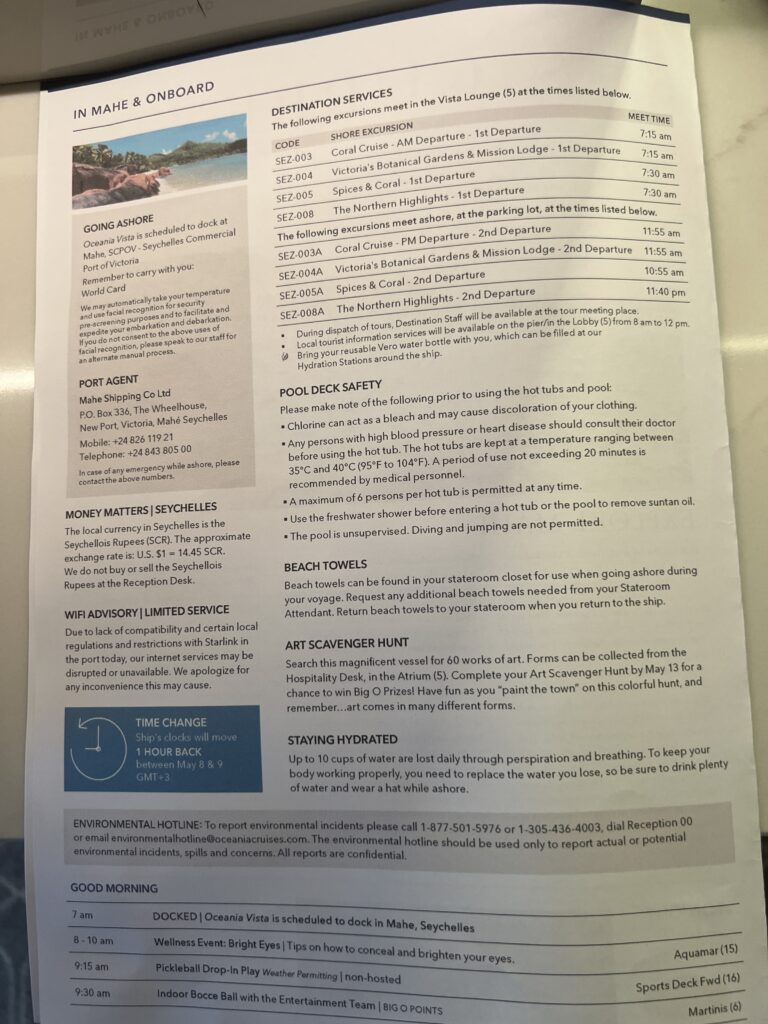
We had an Oceania excursion today which left at 7:30am. The excursion only lasted four hours and the original plan was to return and walk around the city of Victoria upon our return to the ship. As has been the case for the majority of ports on the world cruise, it started raining around noon and was off and on the rest of the afternoon, so we stayed on the ship after our return.
Our excursion for today brought us to the National Botanical Gardens, a walking tour through the city of Victoria and finally a beach stop at a resort on the northwest side of Mahe, which is The Seychelles island we stopped at today.

Seychelles officially the Republic of Seychelles is an archipelagic country consisting of 115 islands in the Indian Ocean. Its capital and largest city, Victoria, is 1,500 kilometers (800 nautical miles) east of mainland Africa. Seychelles is the smallest country in Africa as well as the least populated sovereign African country, with an estimated population of 100,600 in 2022.
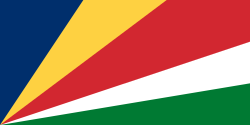
Flag of Seychelles
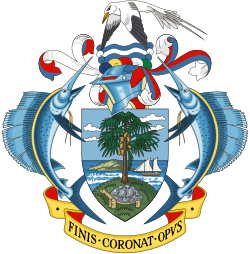
Seychelles Coat of Arms
Location of The Seychelles Islands
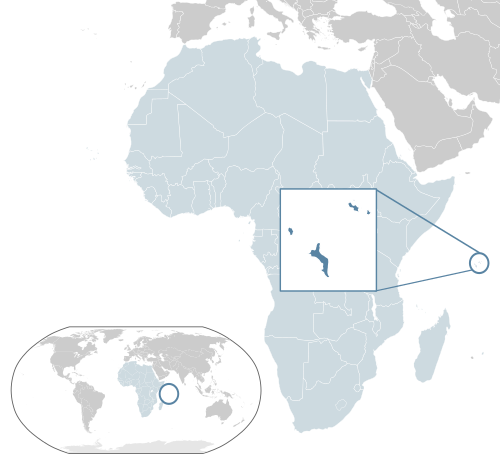
Mahé is the largest island of Seychelles, with an area of 157.3 square kilometres (60.7 sq mi), lying in the northeast of the Seychellois nation in the Somali Sea part of the Indian Ocean. The population of Mahé was 77,000, as of the 2010 census. It contains the capital city of Victoria and accommodates 86% of the country’s total population. The island was named after Bertrand-François Mahé de La Bourdonnais, a French governor of Isle de France (modern-day Mauritius).
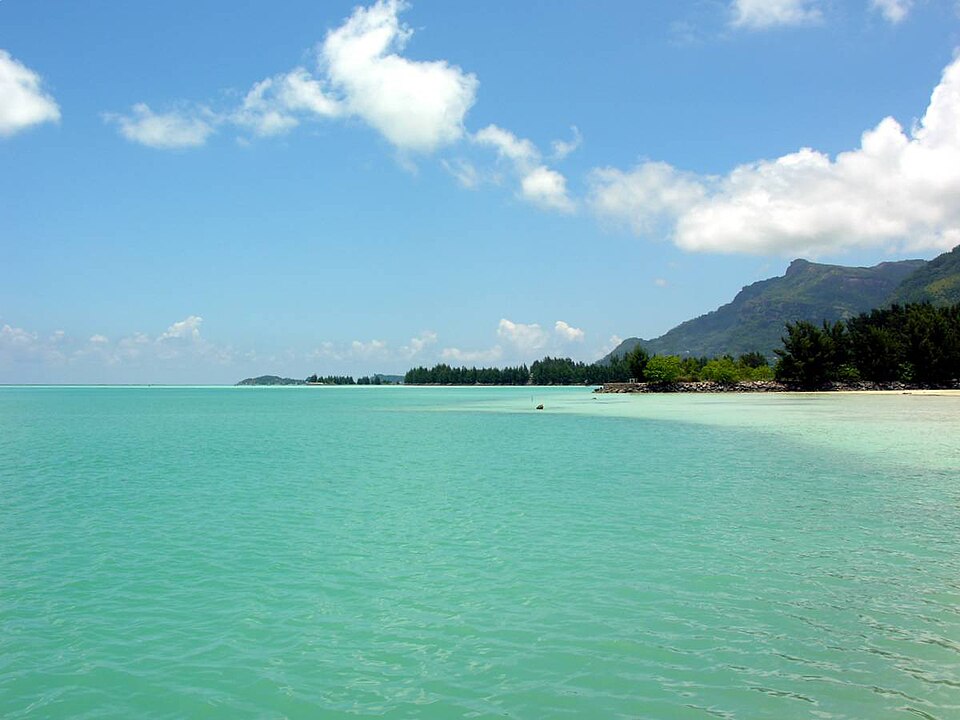
One of the Mahe beaches
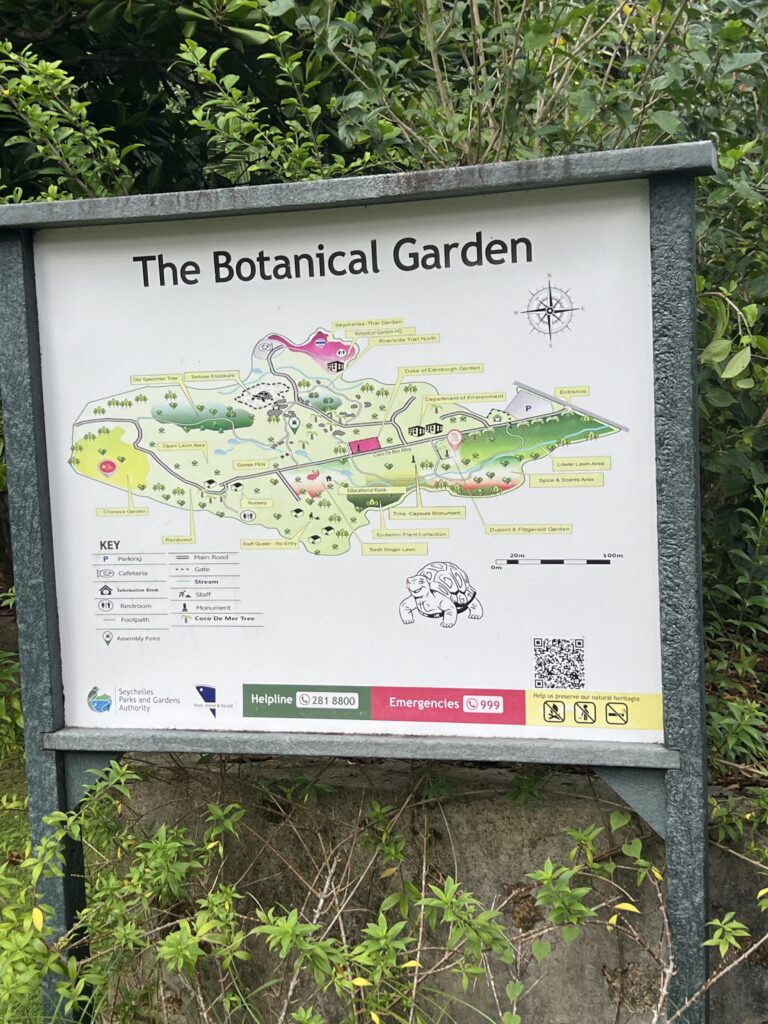
The National Botanical Garden of Seychelles (also known as Victoria Botanical Garden and Mont Fleuri Botanical Garden) in Mahé, Seychelles.
The garden was founded in 1901 by Mauritian agronomist Paul Evenor Rivalz Dupont, who served as the Director of Agricultural Services and Naturalist of Seychelles, with the aim of creating an agricultural station.
As of March 2024 the botanical garden accommodate both departments of Seychelles’ Ministry of Agriculture, Climate Change & Environment: the Department of Climate Change & Energy, and the Department of Environment, which is also tasked with overseeing the management of the place.
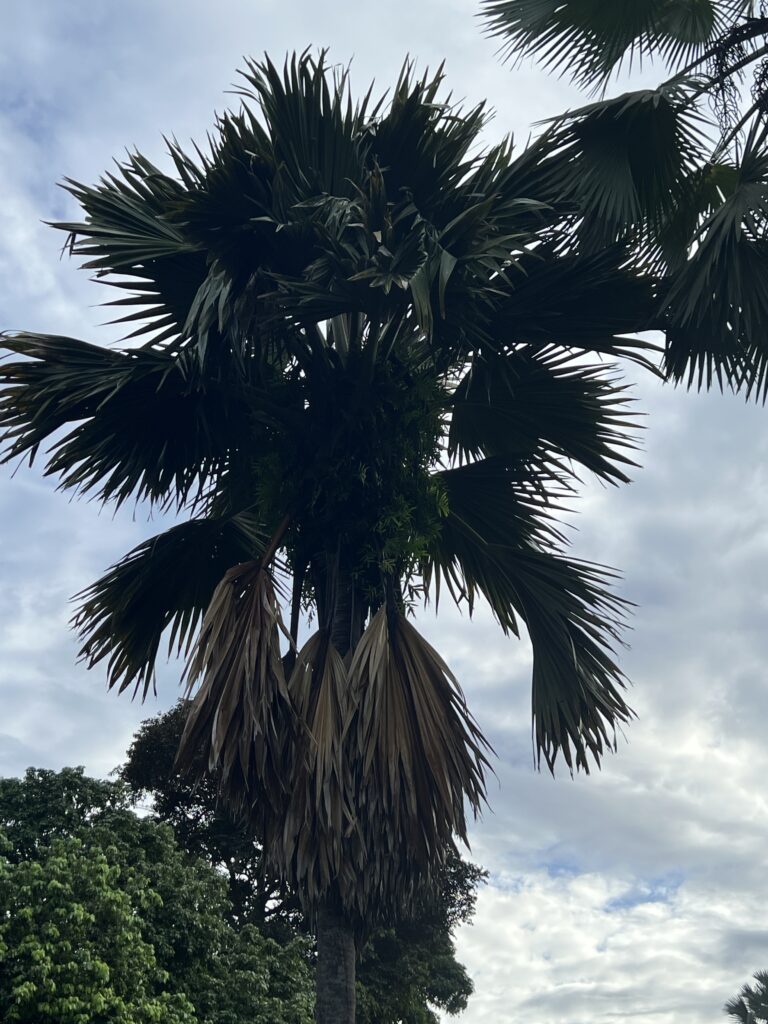
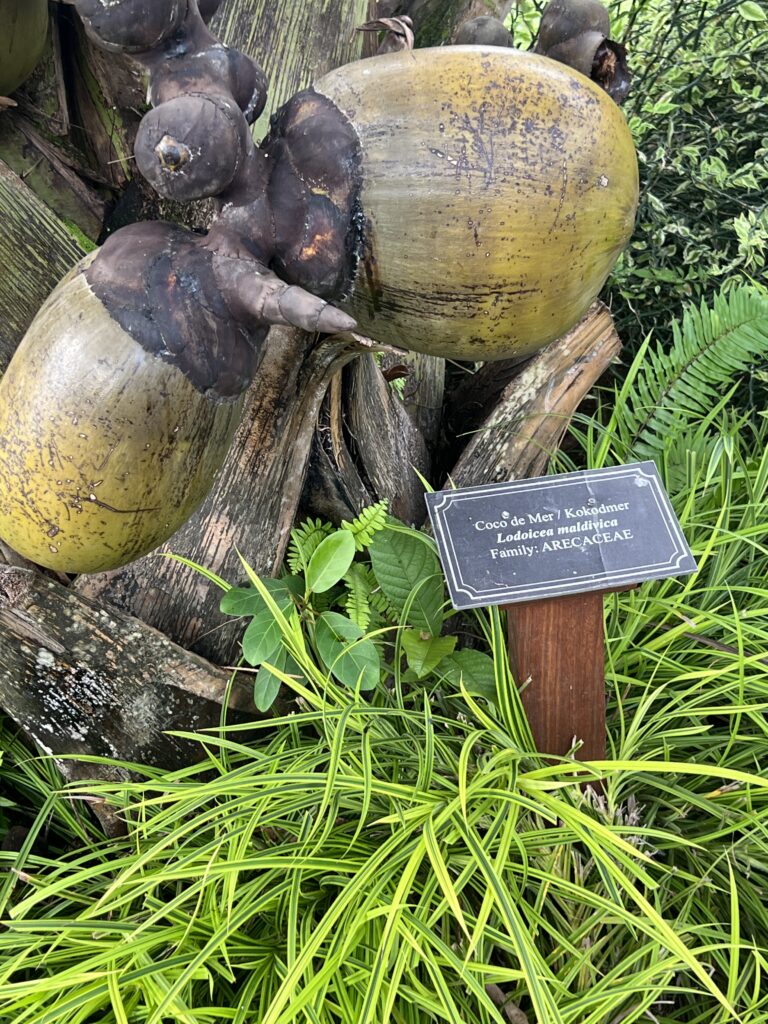
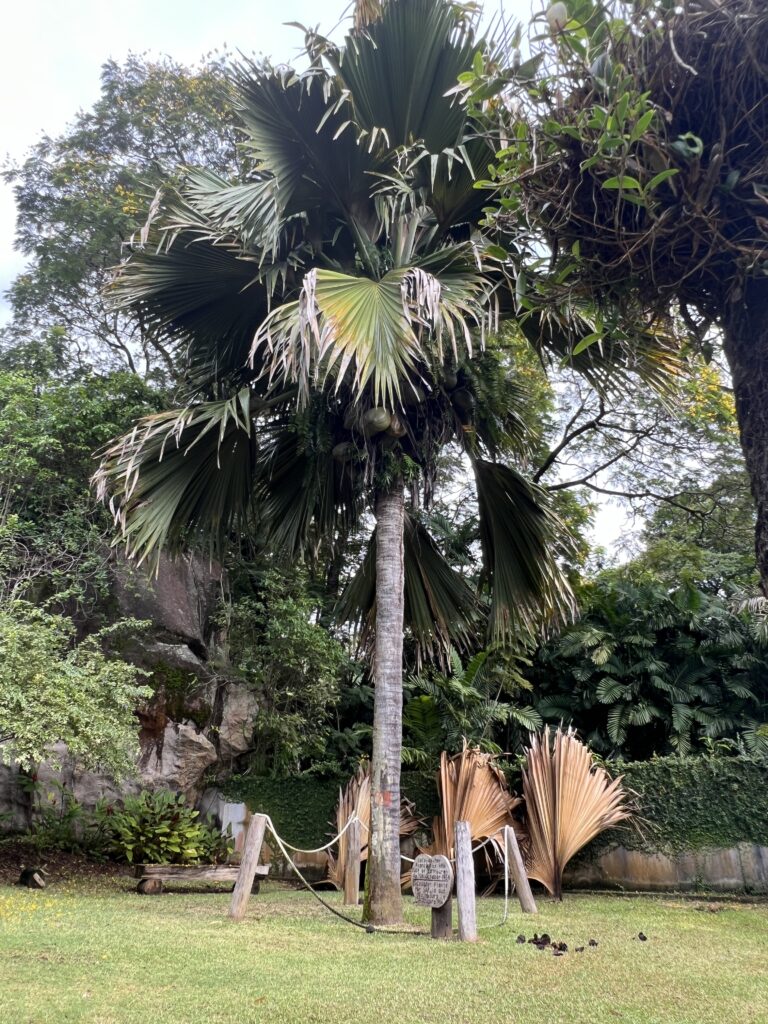
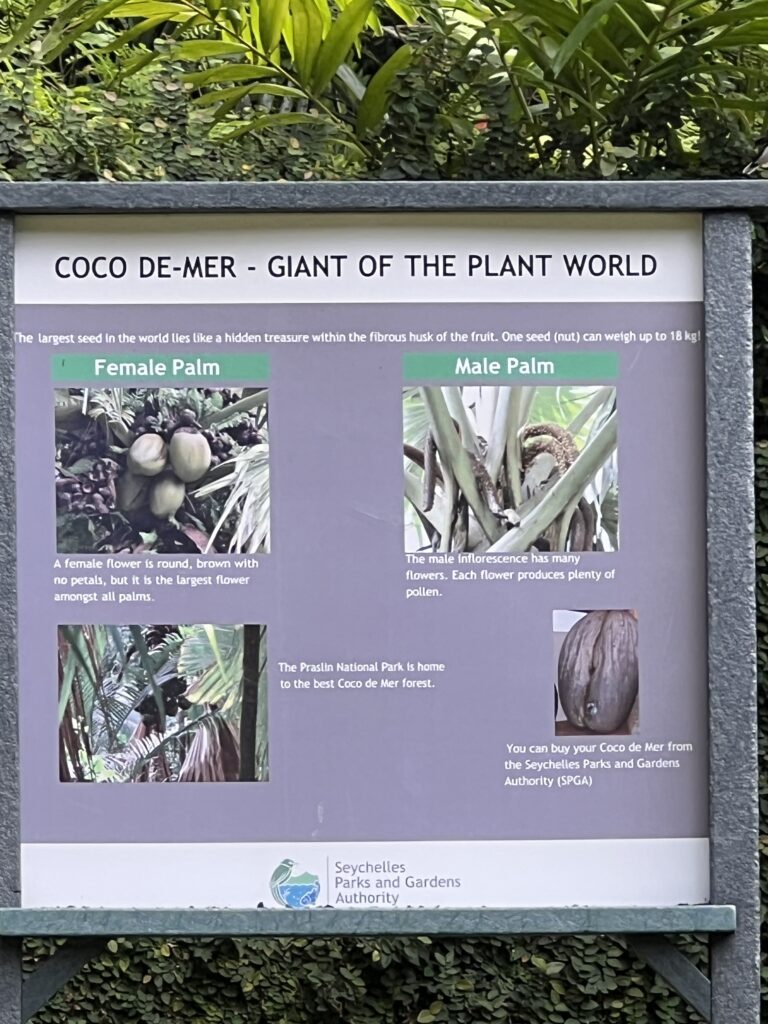
The nut and tree of the coco de mer is a rare species of palm tree native to Africa, in the Seychelles archipelago in the Indian Ocean. It is the subject of various legends and lore. Coco de mer is endemic to the Seychelles islands of Praslin and Curieuse. Before the Seychelles were discovered and settled, nuts of this species were sometimes carried by the ocean currents to distant shores, such as those of the Maldives, where the tree was unknown. These floating nuts did not germinate. The exceptional size and suggestive form of the nut, the circumstances of its discovery, and some unusual qualities of the trees have given rise to several legends.
This is the female tree. You are asking how do you tell the difference between the male and female trees. Wait, you will see in a few more photos.
The nut of the coco de mer is very large (the largest seed in the plant kingdom) and is oddly shaped, being the shape and size of a woman’s disembodied buttocks on one side, and a woman’s belly and thighs on the other side. Not surprisingly, this nut was viewed by people in other parts of the world as a rare and fascinating object with mythological and even magical properties. The nature and origin of this extraordinary nut was mysterious, and the propagation of the tree was not understood. A number of legends arose both about the nuts, and about the trees that produce them.
The coco de mer palm has separate male and female trees, unlike the coconut palm. And, unlike the fruit of the coconut tree, the coco de mer fruit is not adapted to disperse naturally by floating on the ocean water. When a coco de mer fruit falls into the sea, it cannot float because of its high density; instead it sinks to the bottom. However, after the fruit has been on the sea bed for a considerable period of time, the husk drops off, the internal parts of the nut decay, and the gases that form inside the nut cause the bare nut to rise up to the surface. At that time the nut can float, but is no longer fertile, thus when the ocean currents cause the nut to wash up on a distant beach, for example in the Maldives, a tree cannot, and does not, grow from the nut.
The name coco de mer is French, and means “coconut of the sea”. This tree below is the male tree.
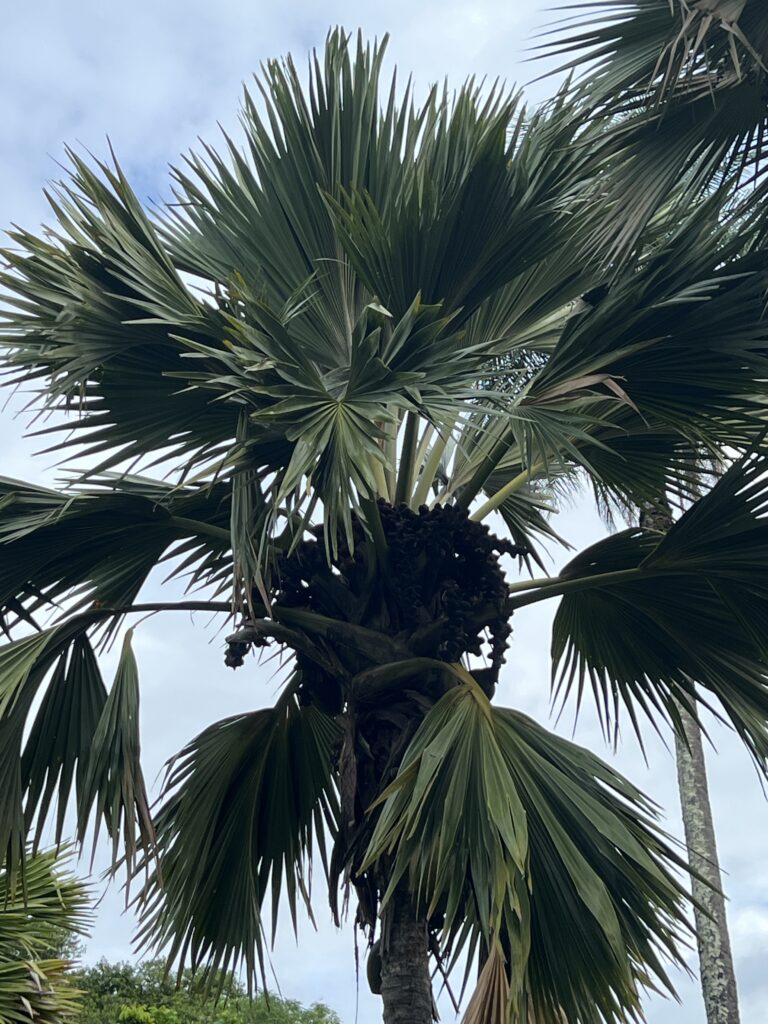
New legends about the coco de mer came into existence after 1743, when the real coco de mer trees were discovered. Fruits of coco de mer are developed only on female trees. Male trees have long phallic-looking catkins. Because of these unusual, erotic shapes, some people believed that the trees made passionate love on stormy nights. According to the legend, male trees uproot themselves, and approach female trees. Apparently the love-making trees are rather shy, and the legend has it that whoever sees the trees mating will die or go blind. The fact that even now the pollination of the coco de mer is not fully understood is one of the factors behind the legend.
In the Victorian era, General Charles George Gordon, who visited the Seychelles in 1881, believed that the Vallée de Mai on the island of Praslin was the original Garden of Eden as described in the Bible, and that the coco de mer was the forbidden fruit of the tree of the knowledge of good and evil. General Gordon wrote:
“externally the coco-de-mer represents the belly and thighs, the true seat of carnal desires”
It occurred to at least some of Gordon’s readers that if coco de mer was really the forbidden fruit, Eve would have had a very hard time handing this gigantic fruit (which weighs 15–30 kg) to Adam.
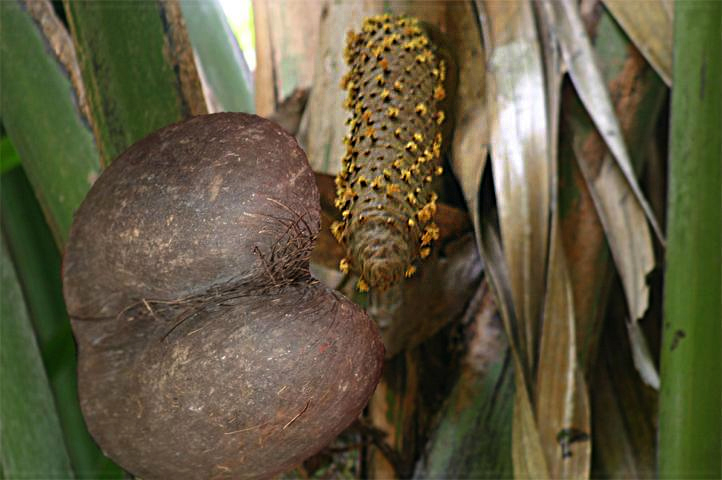
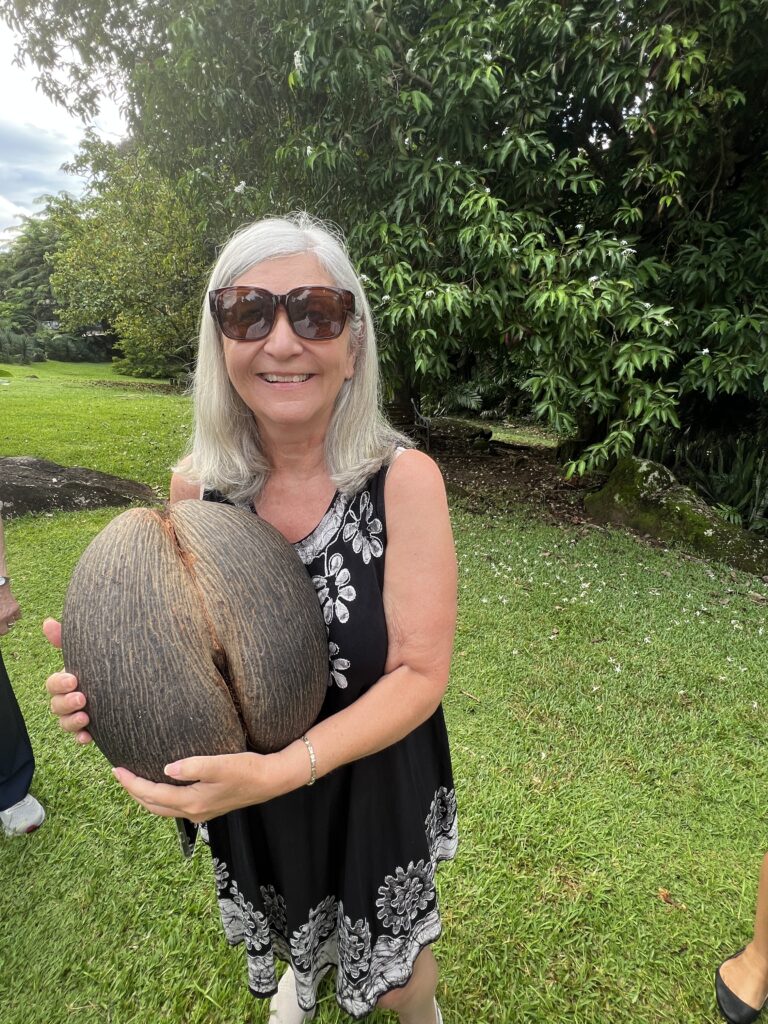
Jackie holding a female seed which weighed about 20 pounds. Imagine getting hit in the head when this falls from the tree.
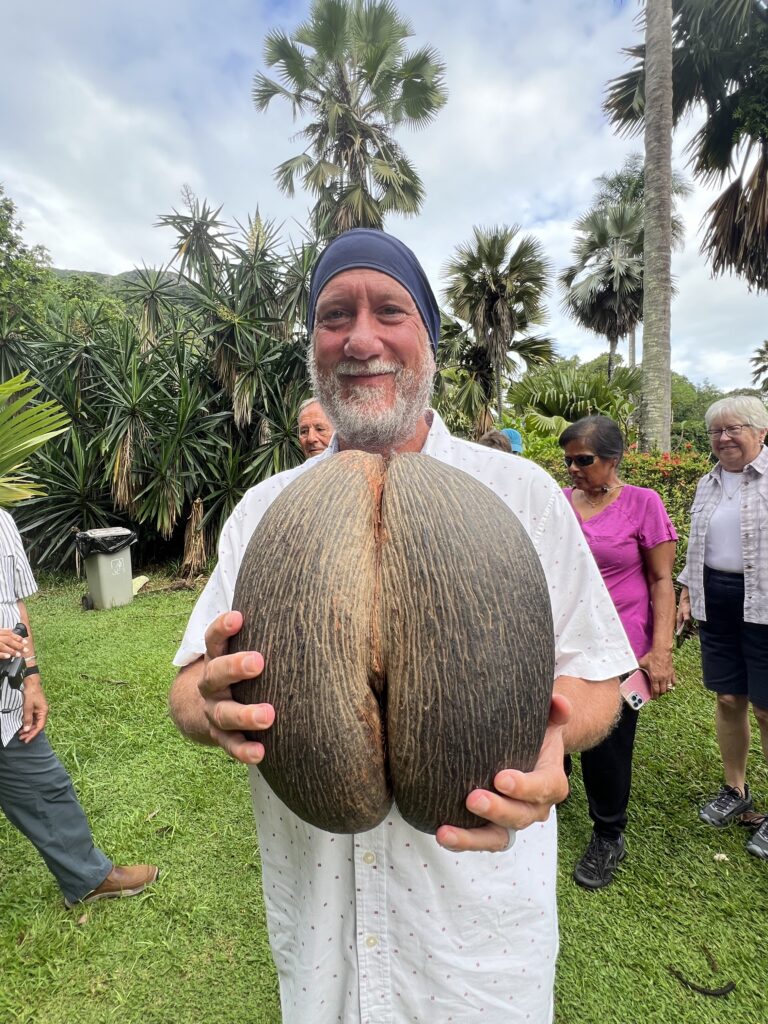
Jackie holding a male seed
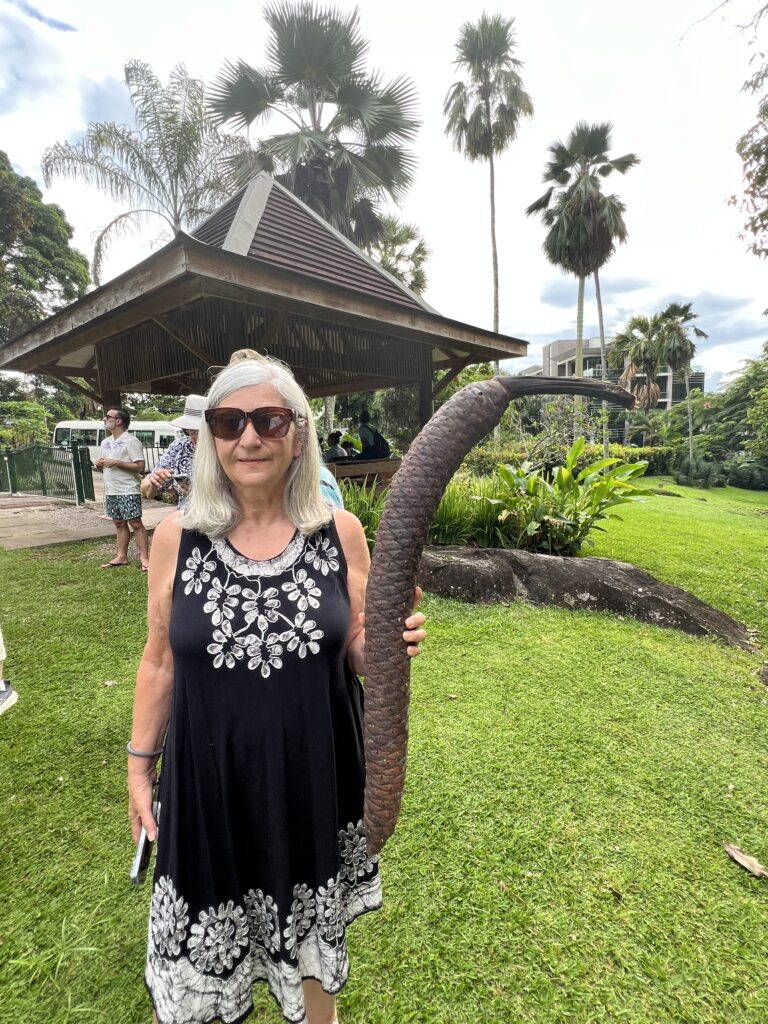
This coco de mer is four years old. You can tell this by the four growths and will continue to produce a new growth annually until about 15 years when a trunk begins to push up from the ground
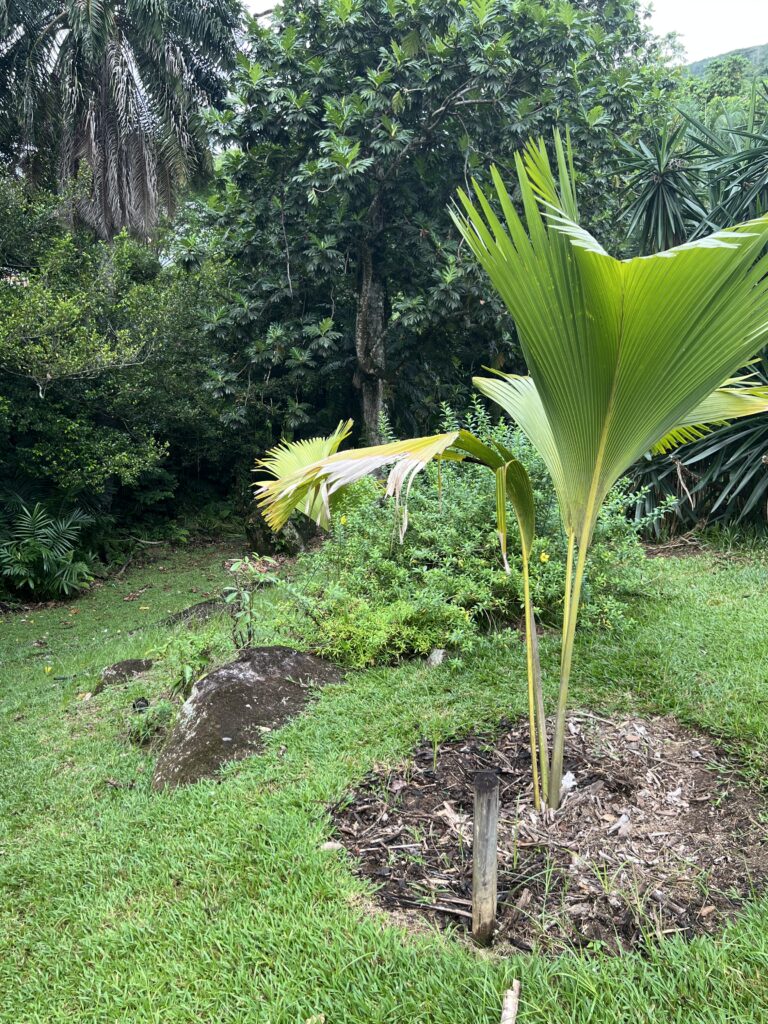
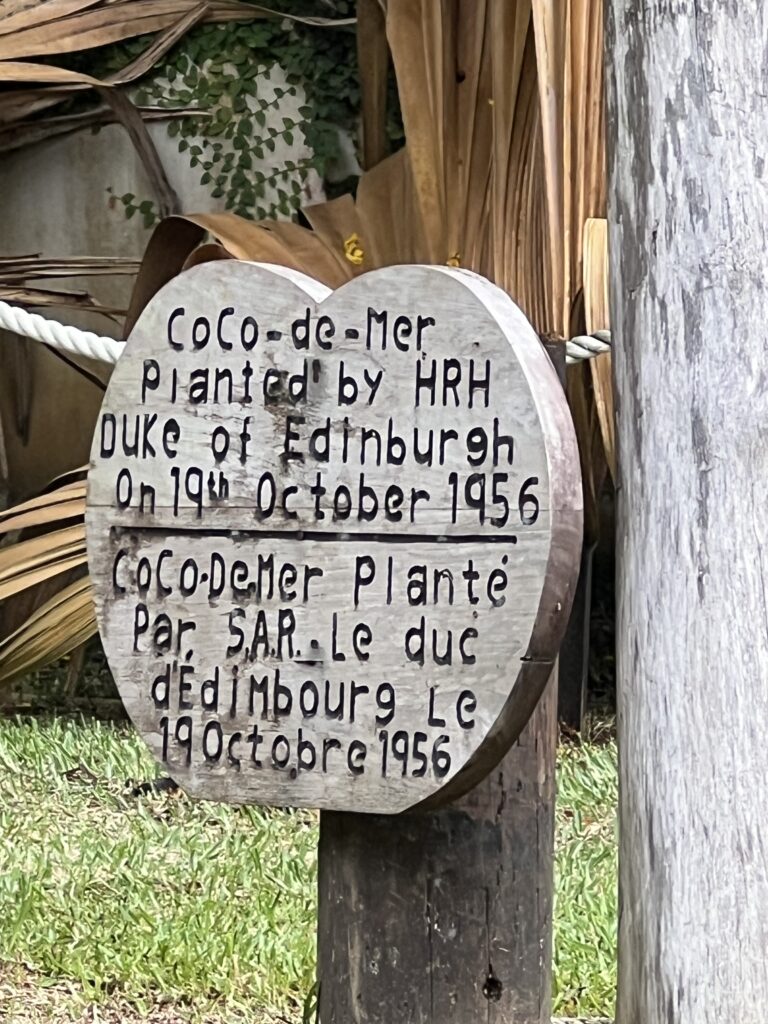
Prince Philip, Duke of Edinburgh, was the husband of Queen Elizabeth II and served as consort of the British monarch from her accession on 6 February 1952 until his death in 2021, making him the longest-serving royal consort in British history.
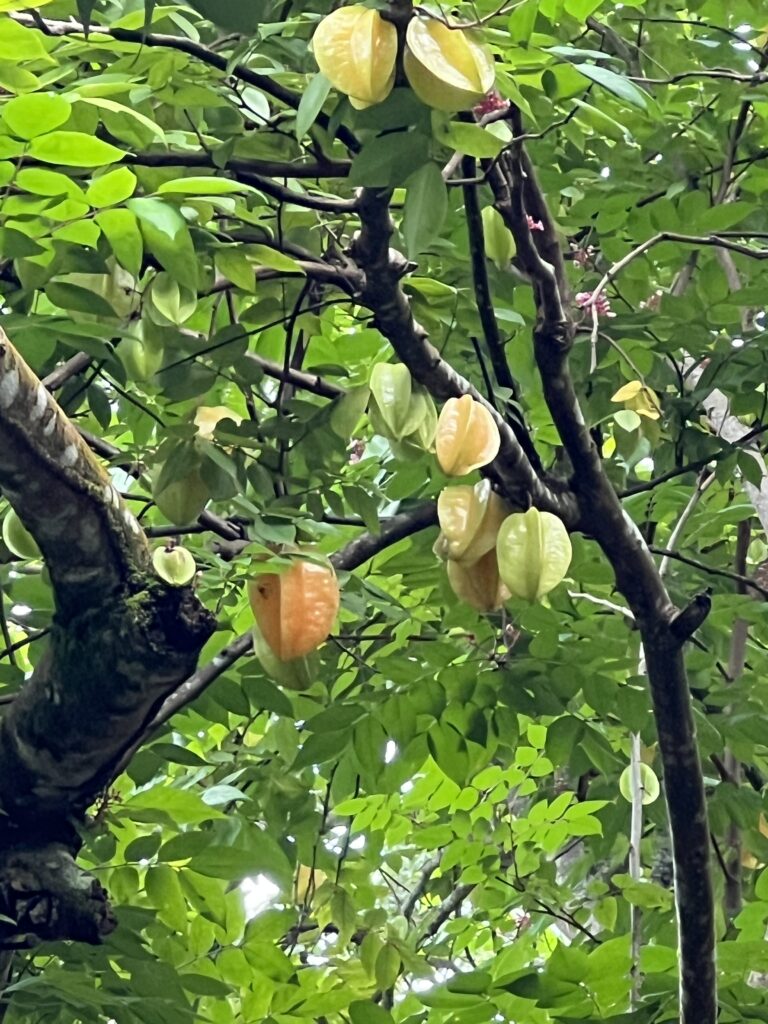
Carambola, also known as star fruit, is the fruit of Averrhoa carambola, a species of tree native to tropical Southeast Asia. The edible fruit has distinctive ridges running down its sides (usually 5–6). When cut in cross-section, it resembles a star, giving it the name of star fruit. The entire fruit is edible, usually raw, and may be cooked or made into relishes, preserves, garnish, and juices. It is commonly consumed in Southeast Asia, South Asia, the South Pacific, Micronesia, parts of East Asia, the United States, parts of Latin America, and the Caribbean. The tree is cultivated throughout tropical areas of the world.
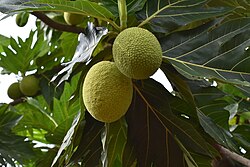
Breadfruit (Artocarpus altilis) is a species of flowering tree in the mulberry and jackfruit family (Moraceae) believed to have been selectively bred in Polynesia from the breadnut (Artocarpus camansi). Breadfruit was spread into Oceania via the Austronesian expansion and to further tropical areas during the Colonial Era. British and French navigators introduced a few Polynesian seedless varieties to Caribbean islands during the late 18th century.
It is grown in 90 countries throughout South and Southeast Asia, islands in the Pacific Ocean and Caribbean Sea, Central America, and Africa. Its name is derived from the texture of the moderately ripe fruit when cooked, similar to freshly baked bread and having a potato-like flavor.
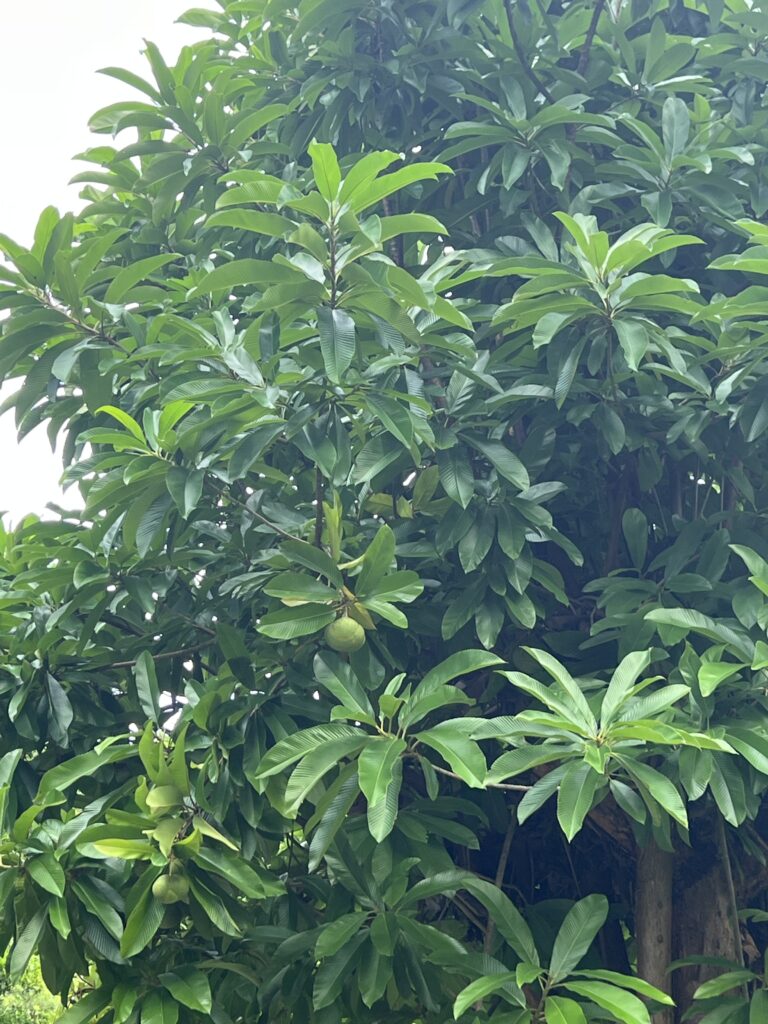
Breadfruit is one of the highest-yielding food plants, with a single tree producing up to 200 or more grapefruit-sized fruits per season, requiring limited care. In the South Pacific, the trees yield 50 to 150 fruits per year, usually round, oval, or oblong, and weighing 0.25 to 6.0 kg (0.55 to 13 lb).
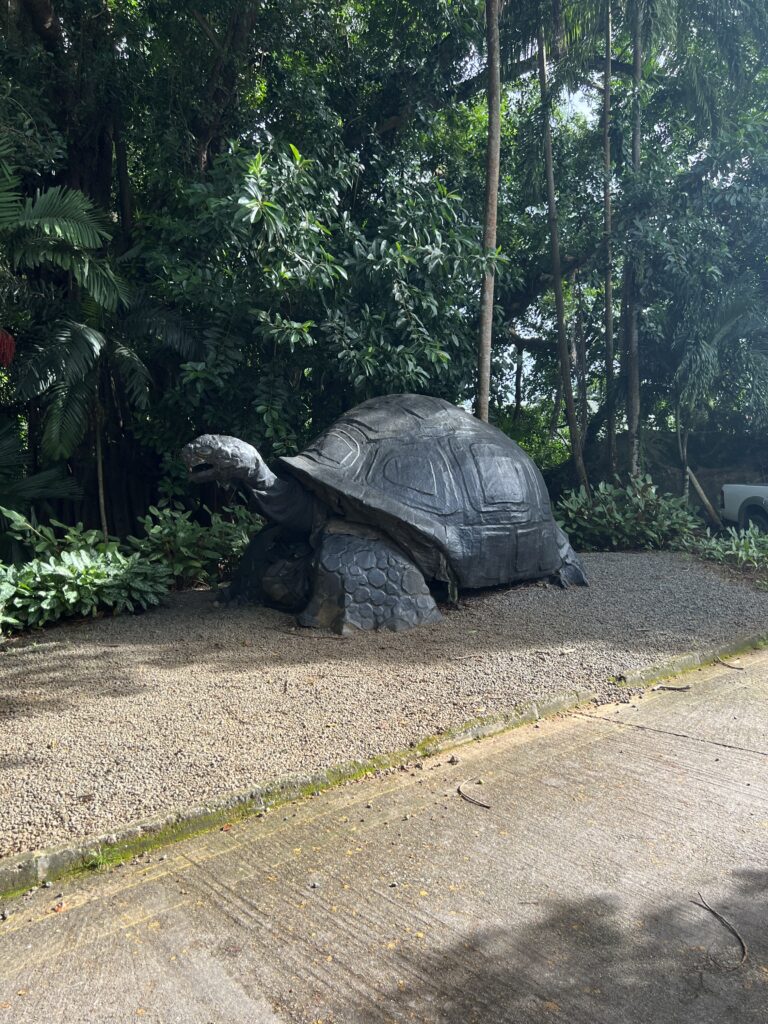
Adult males are generally larger and possess longer necks and more massive forearms compared to females. Adult males average weight is 550 pounds while female average weights is 300 pounds.
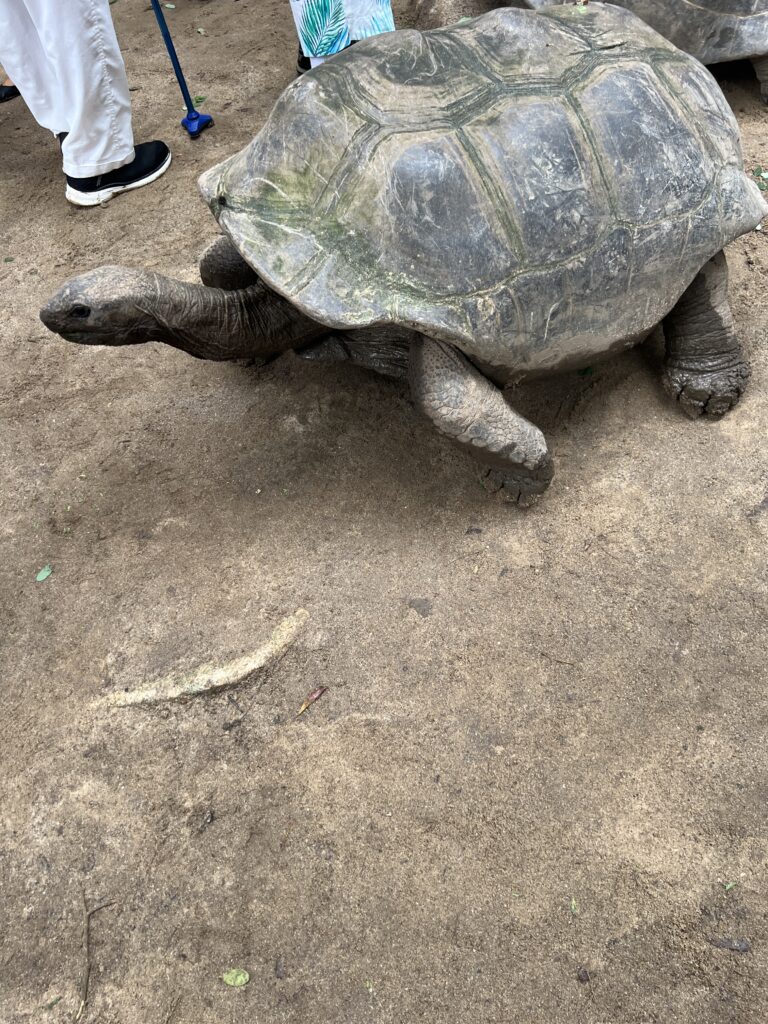
The female’s shell is more rounded and flat as compared to the male’s shell
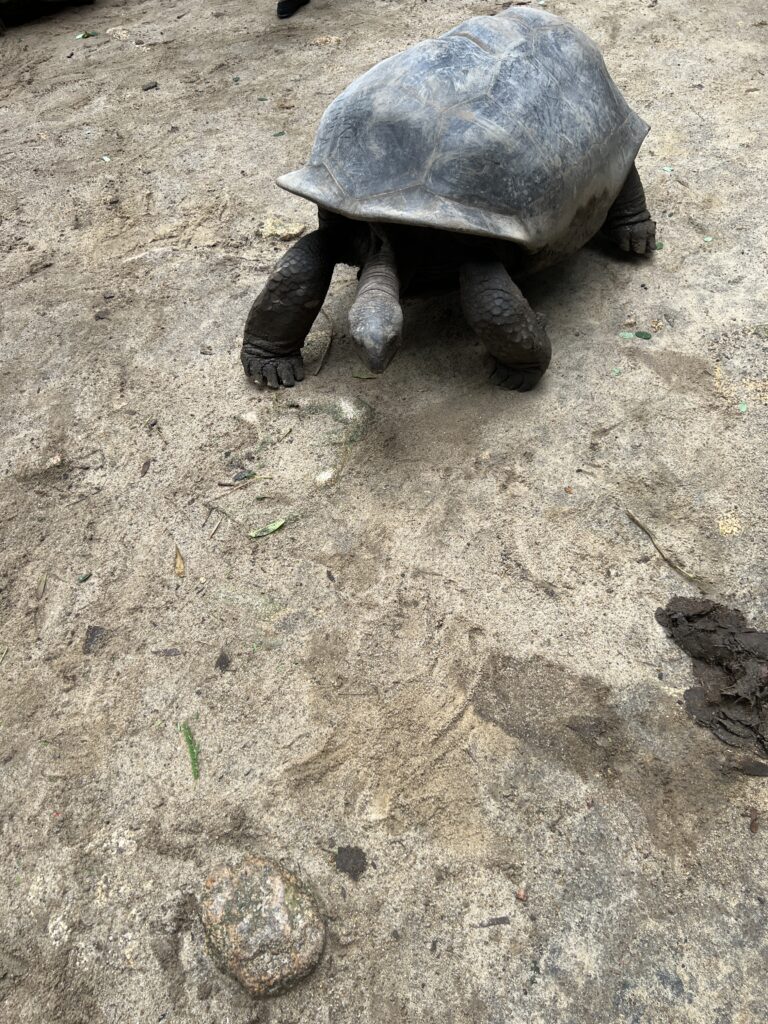
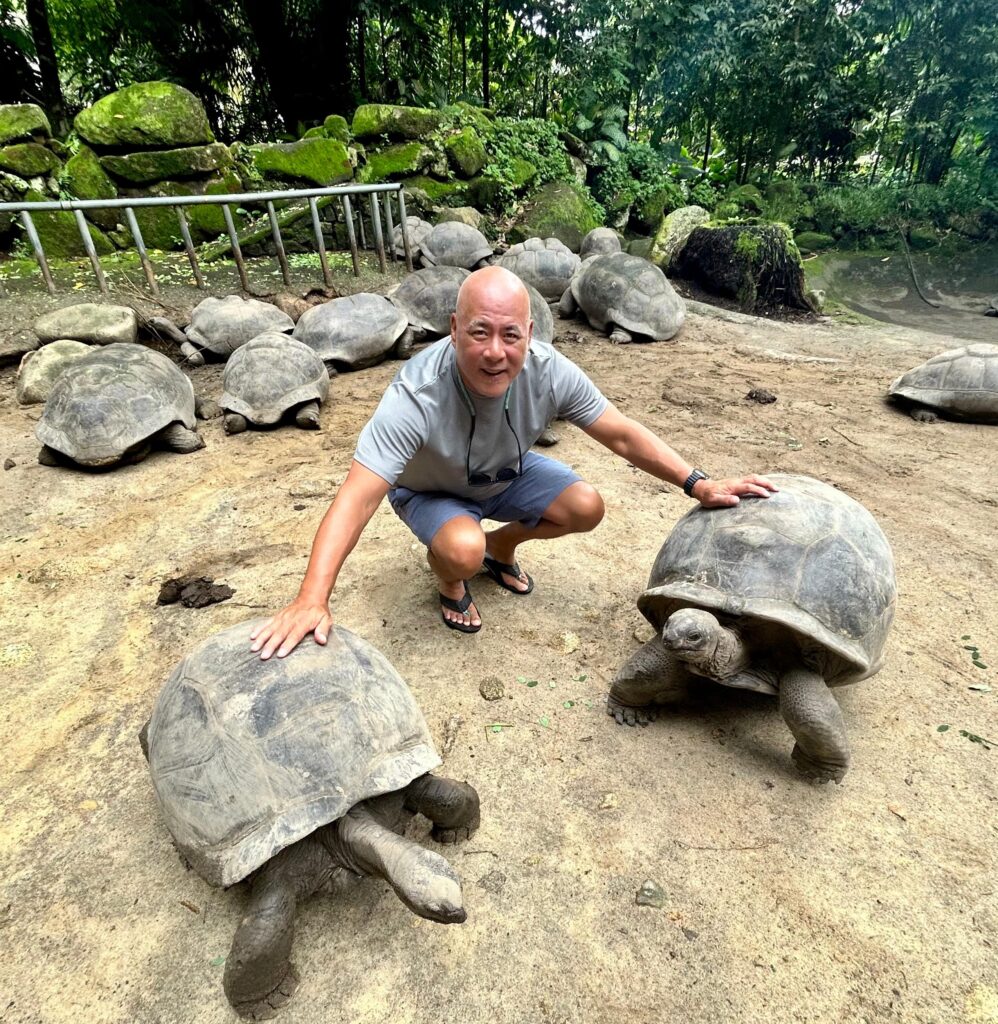
Giant tortoises are among the longest-lived animals on the planet. Some individual Aldabra giant tortoises are thought to be over 200 years of age, but this is difficult to verify because they tend to outlive their human observers.
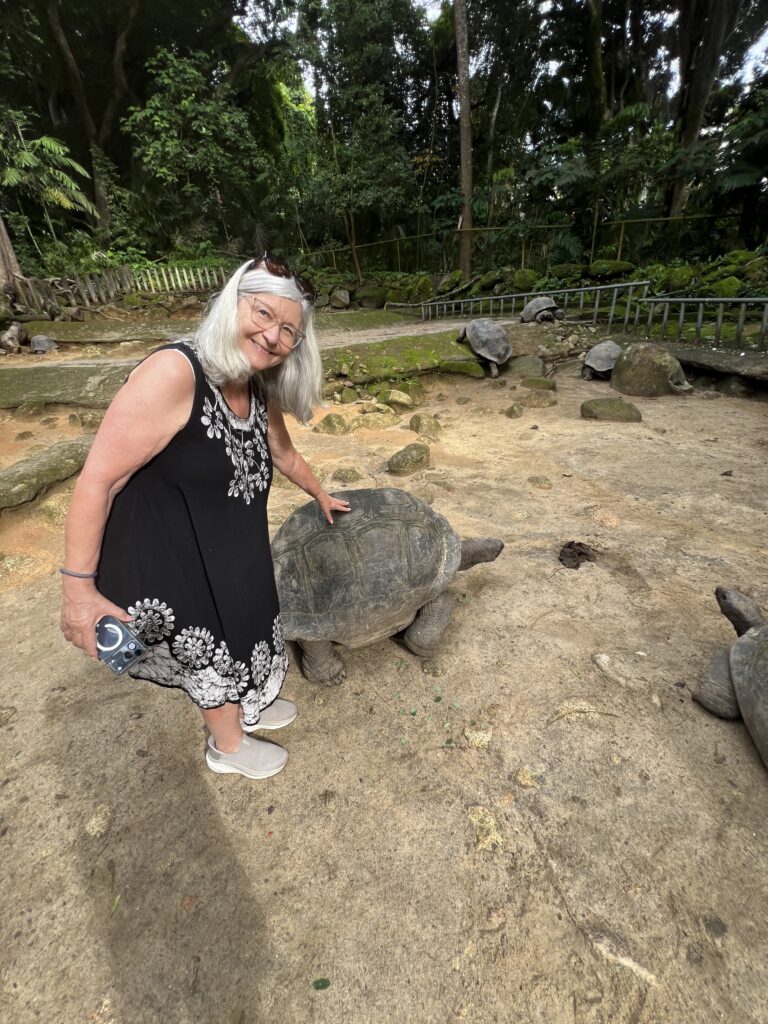
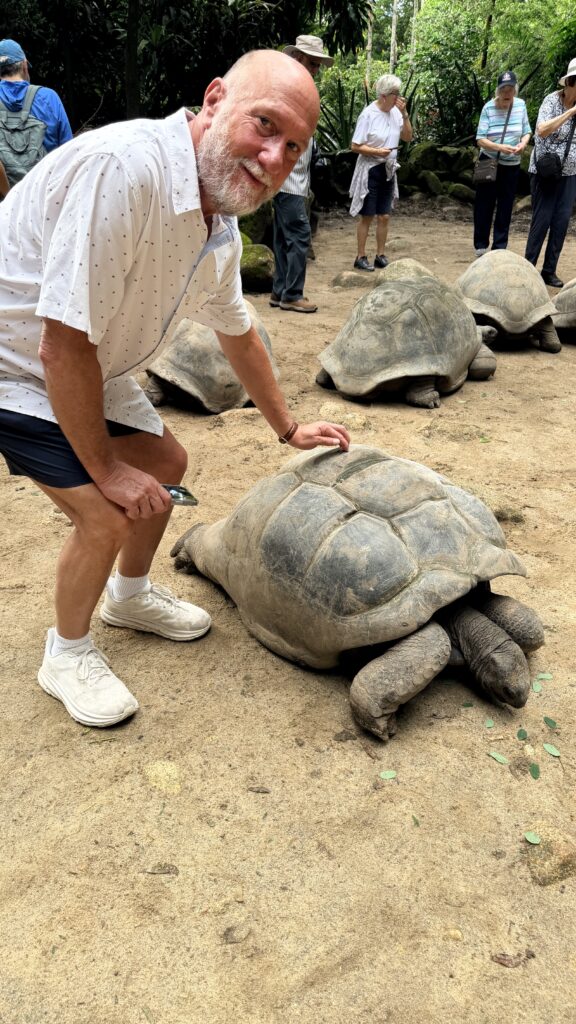
David Chen with two of them
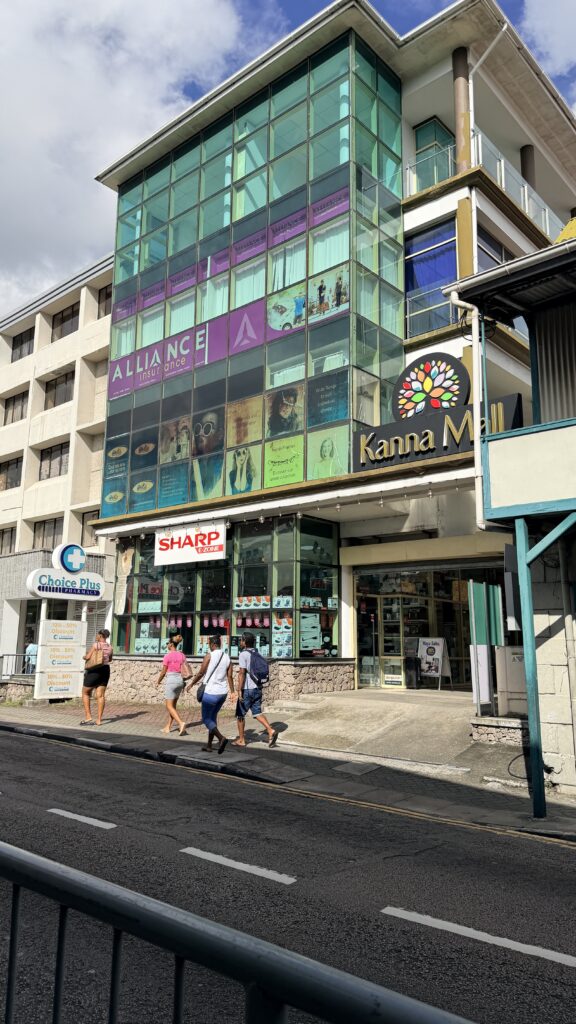
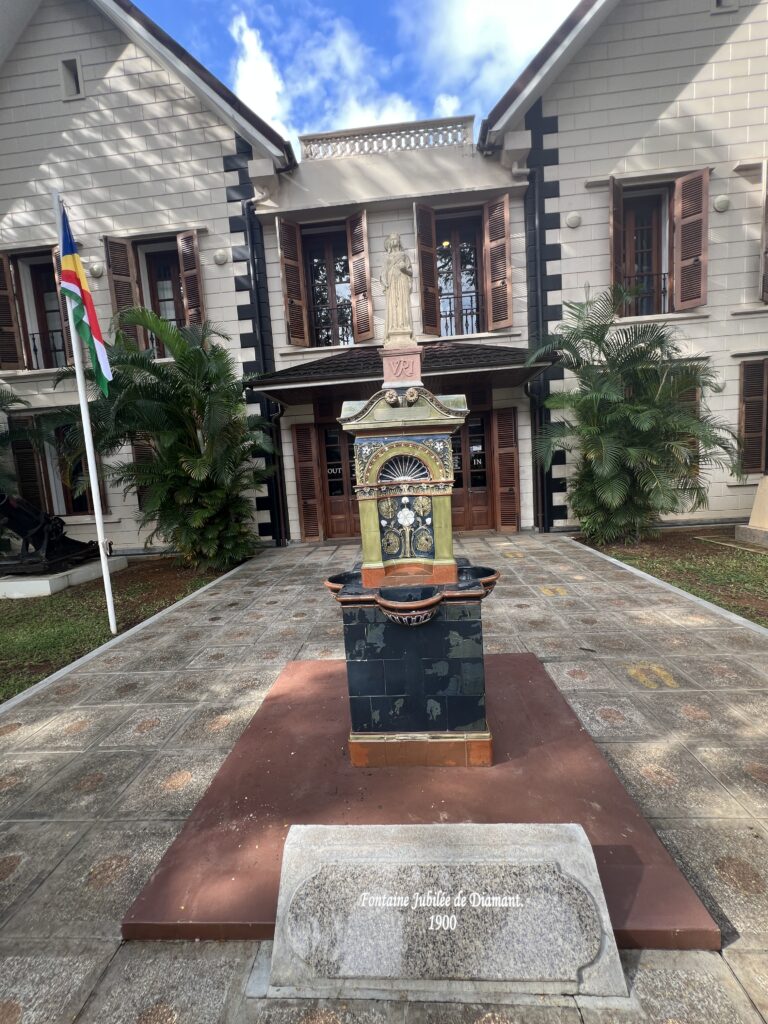
The next few photos are from walking through the city of Victoria.
Victoria is the capital and largest city of Seychelles, situated on the north-eastern side of Mahé, the archipelago’s main island. The city was first established as the seat of the British colonial government. In 2022, the Central region, comprising nine administrative districts within and around the capital, accounted for 30,145 (~30%) of the country’s total population of 102,612. The port is known as Port Victoria.
The area that would become Victoria was originally settled in 1778 by French colonists after they claimed the island in 1756. The town was called L’Établissement until 1841, when it was renamed to Victoria by the British, after Queen Victoria.
Tourism is an important sector of the economy. The principal exports of Victoria are vanilla, coconuts, coconut oil, fish and guano.
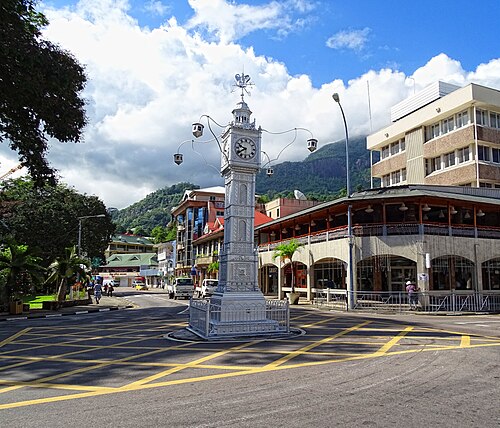
Attractions in the city include a clocktower modelled on Little Ben in London, the courthouse, the Botanical Gardens, the National Museum of History, the Natural History Museum and the Sir Selwyn Selwyn-Clarke Market. Victoria Market and the brightly coloured fish and fruit markets is the local hot spot for the Seychellois people.
This is a stock photo of the clock tower as it is being repaired and was not in this location during our visit.
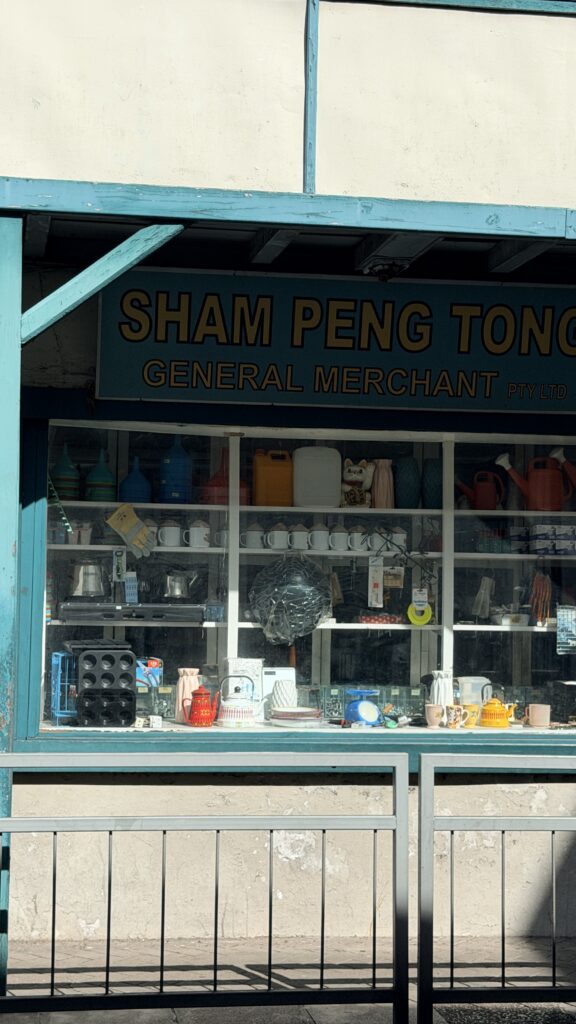
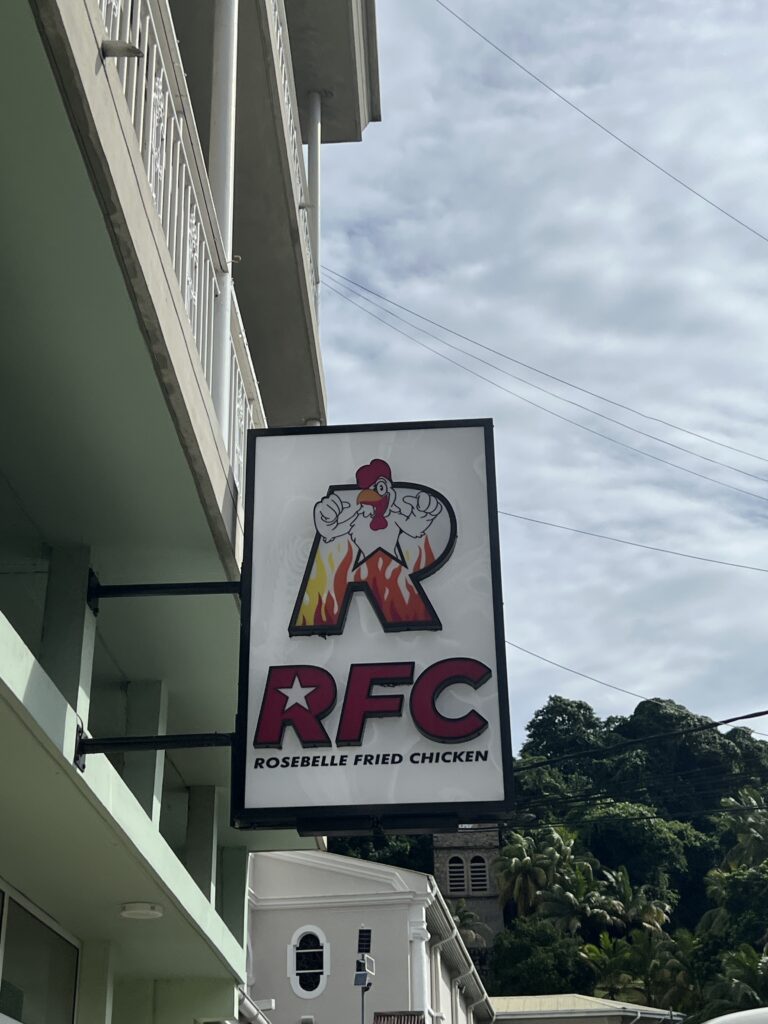
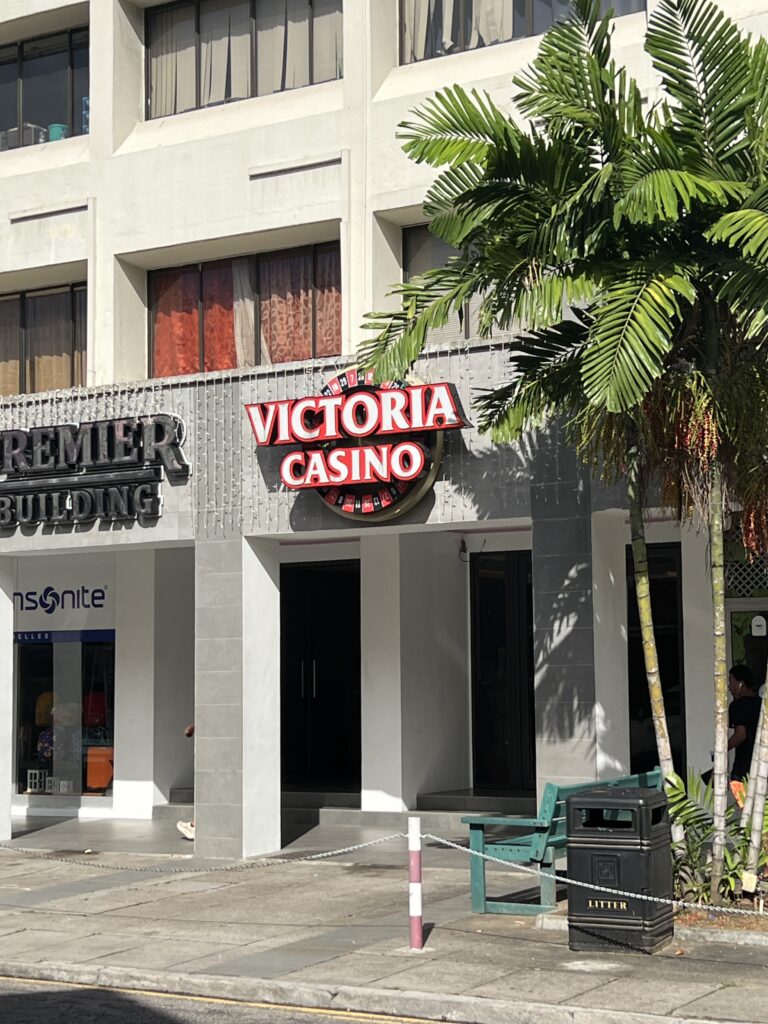
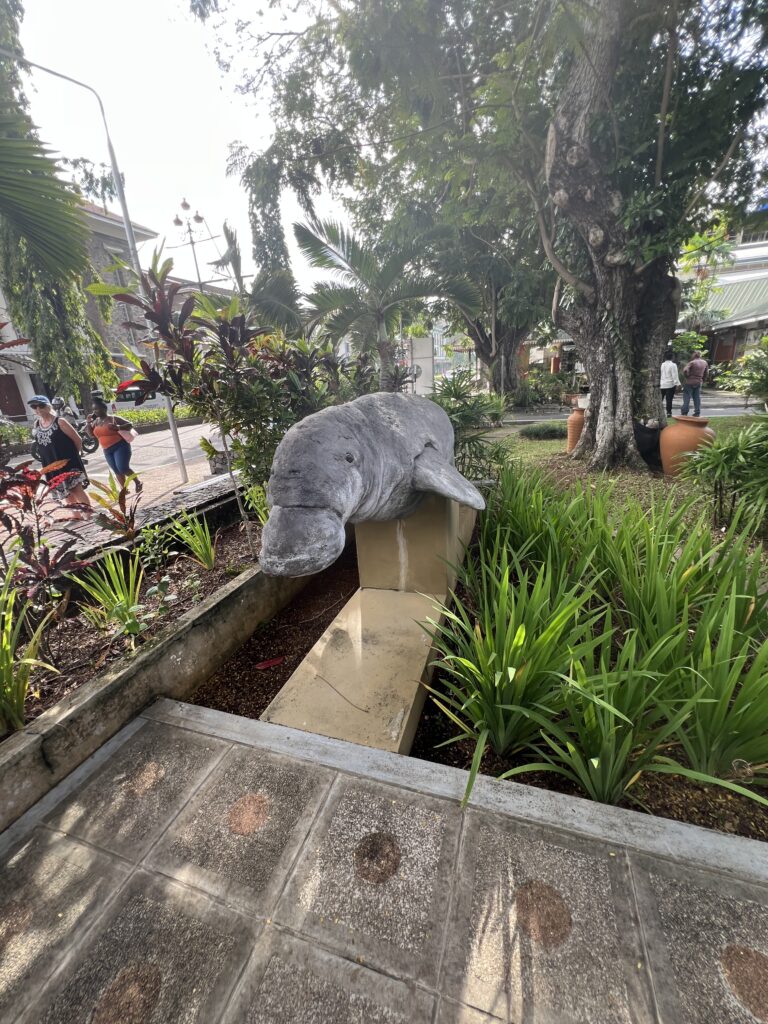
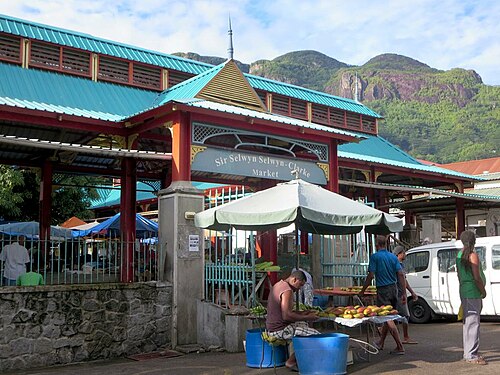
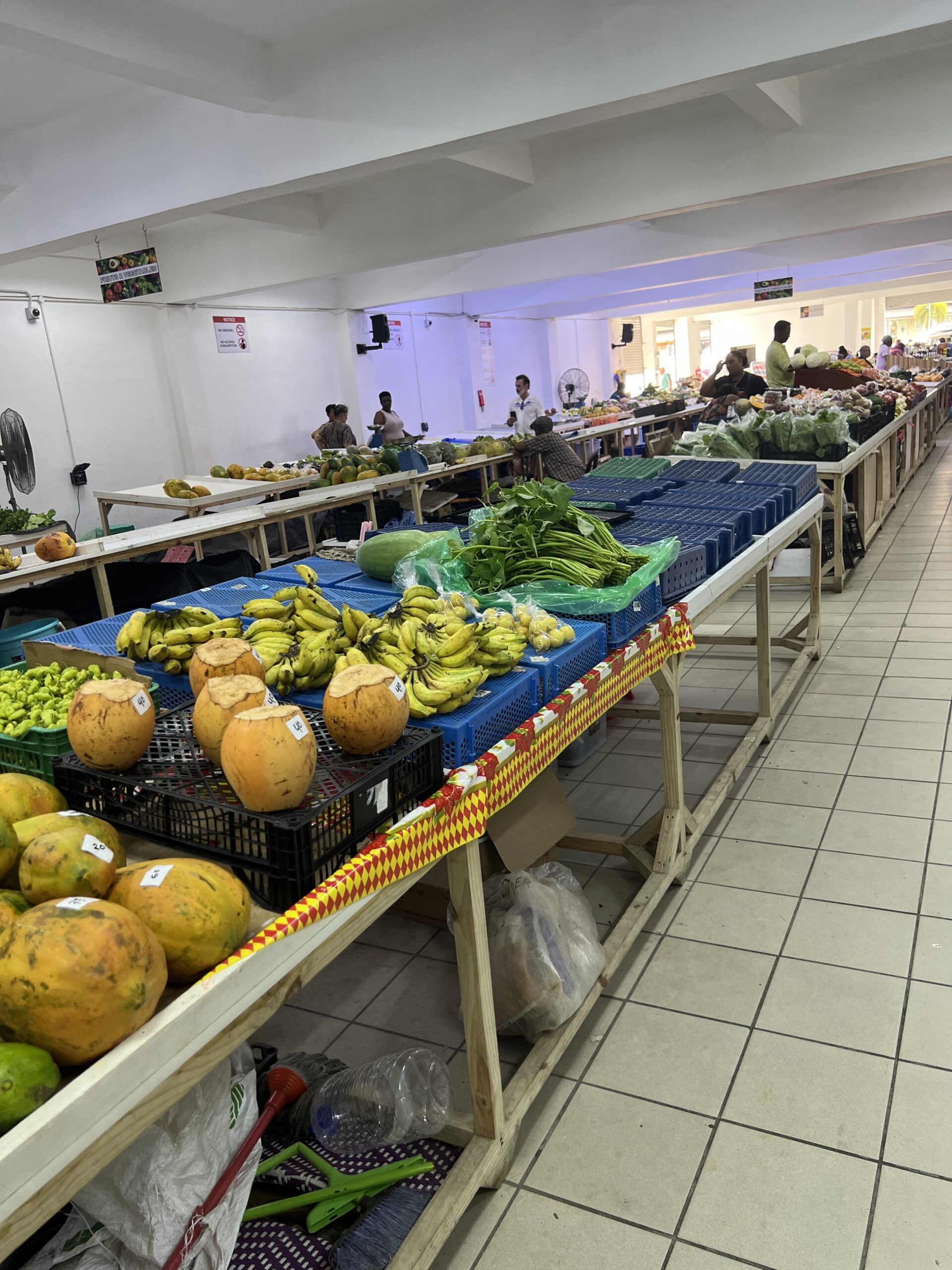
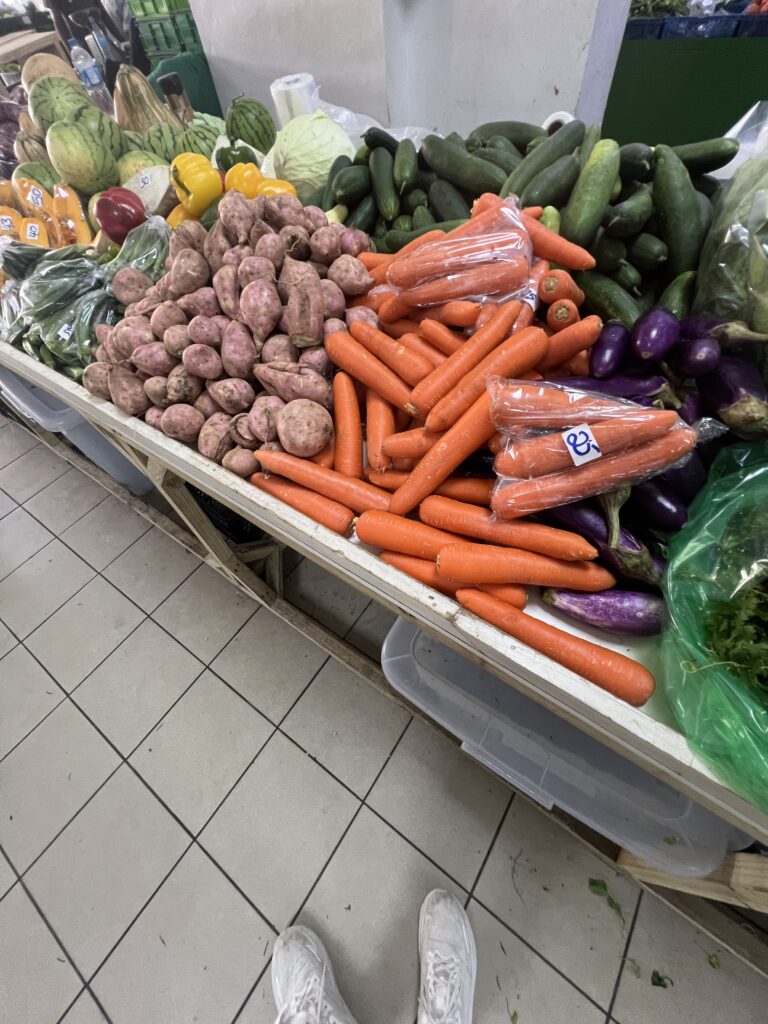
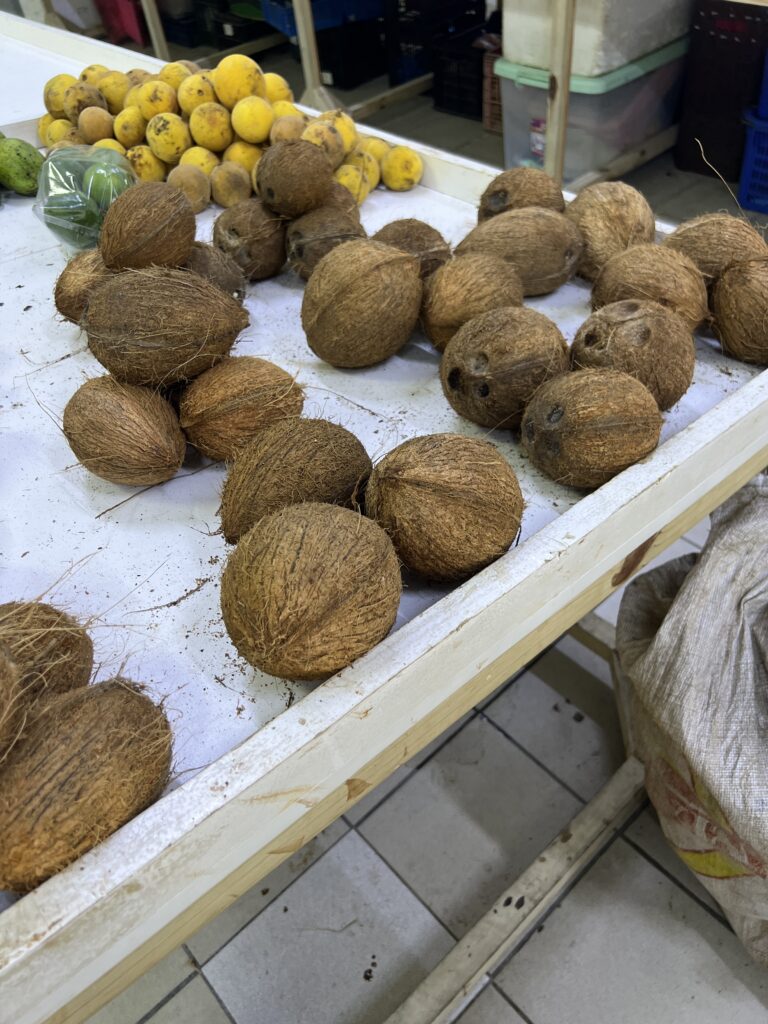
Sir Selwyn Selwyn-Clarke Market (also known as Victoria Market) is the main market of Victoria, Seychelles.
Built-in 1840 and renovated in 1999, this early-Victorian-style market offers fresh produce, fish, meat, spices, and affordable local crafts. The market was renamed the Selwyn-Clarke Market to honor Sir Selwyn Selwyn-Clarke as former Governor of Seychelles.
Open Monday to Friday until late afternoon, it’s busiest on Saturdays and usually closed on Sundays.
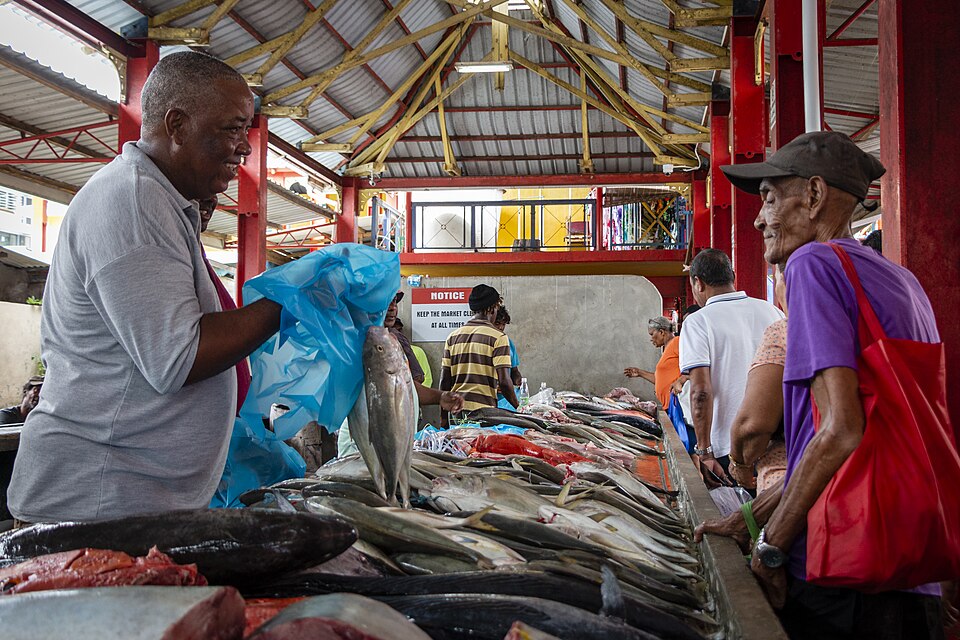
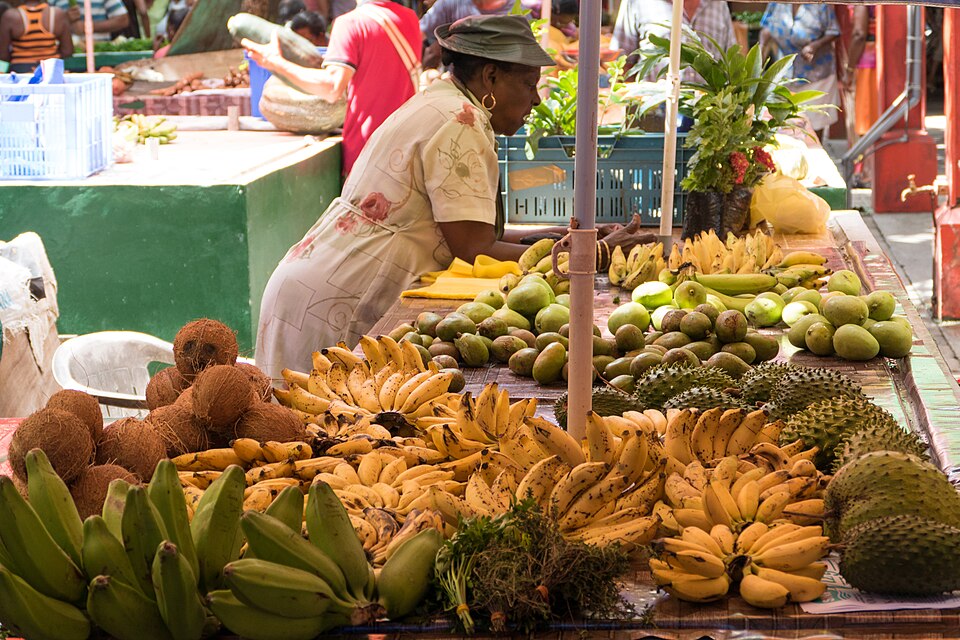
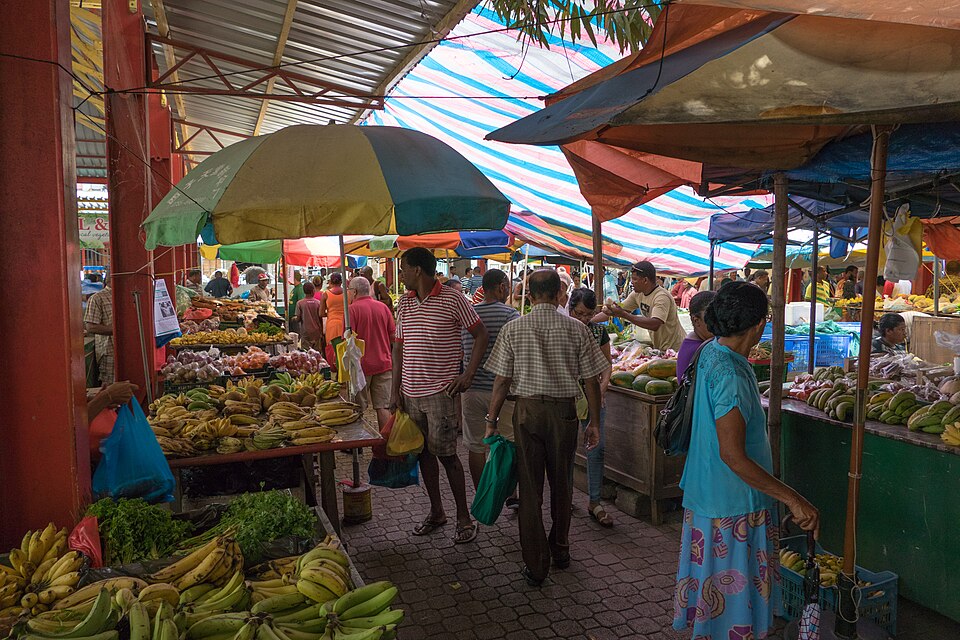
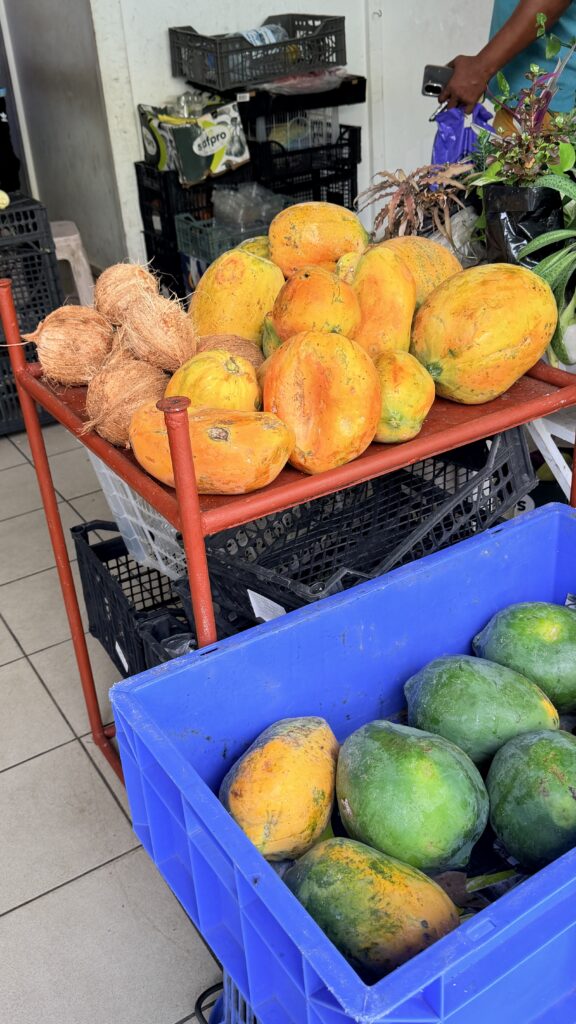
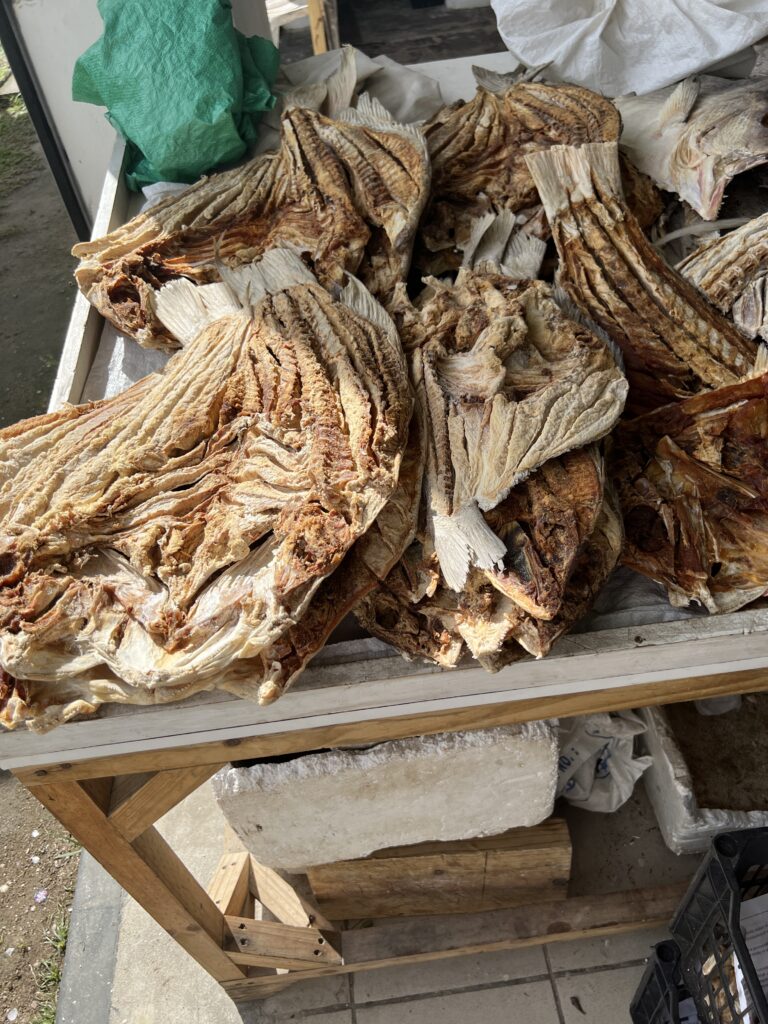
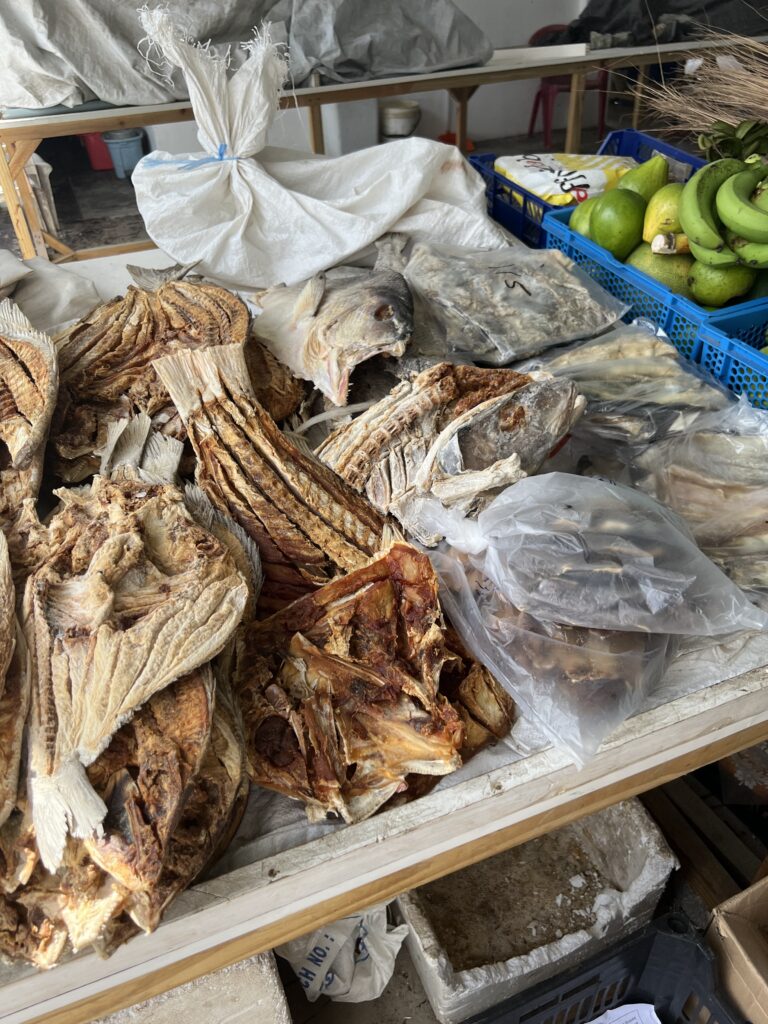
Drying fish outside the market
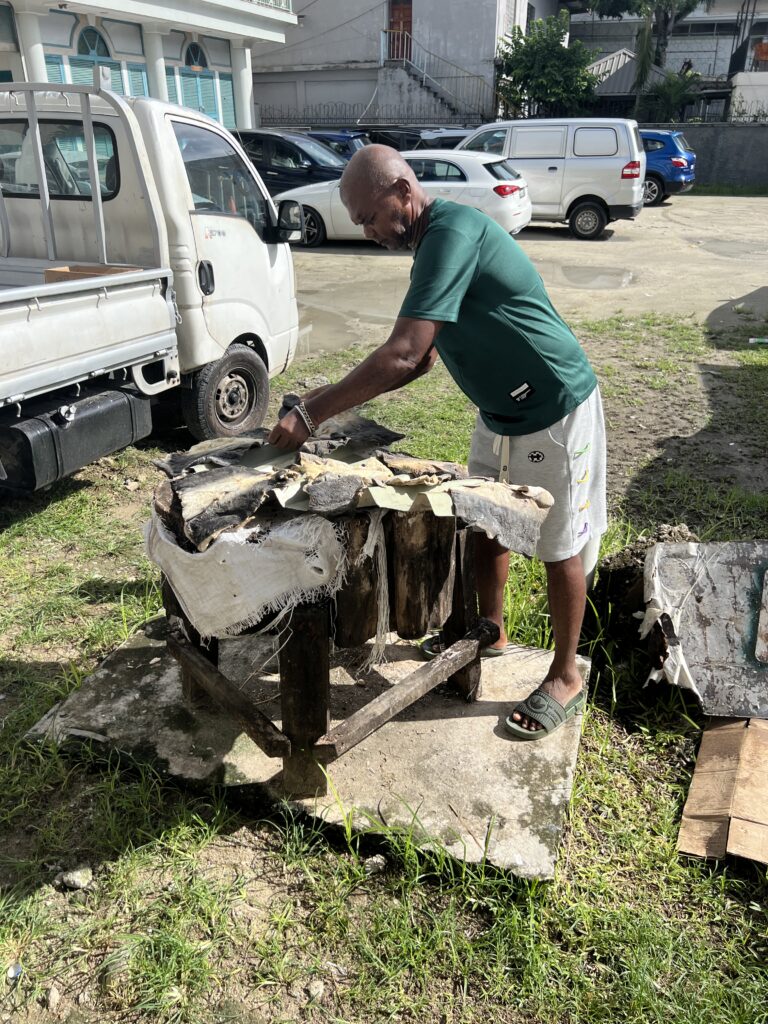
Dried fish
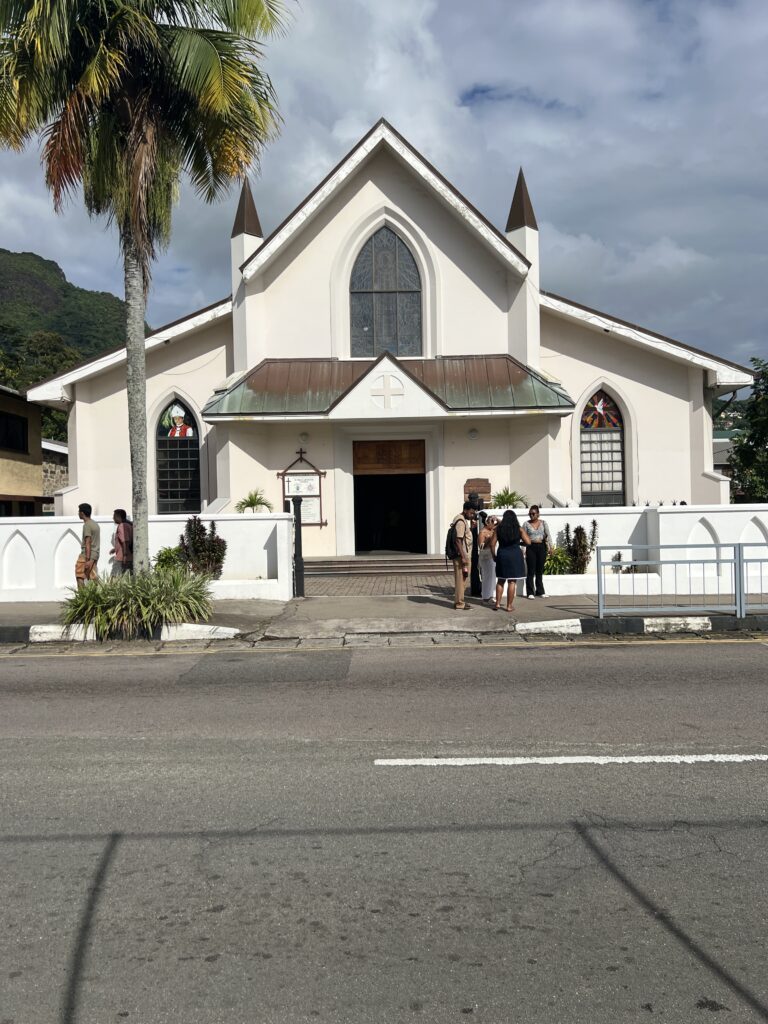
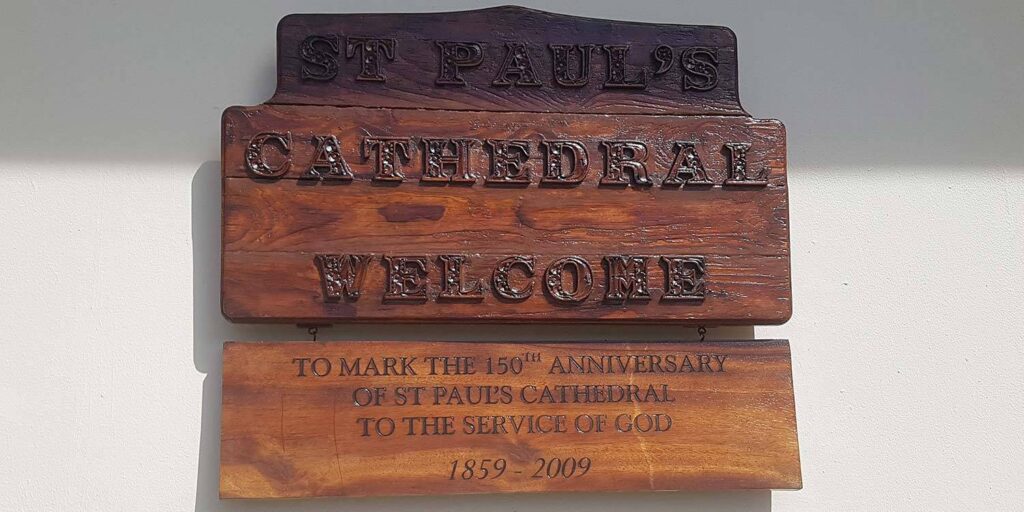
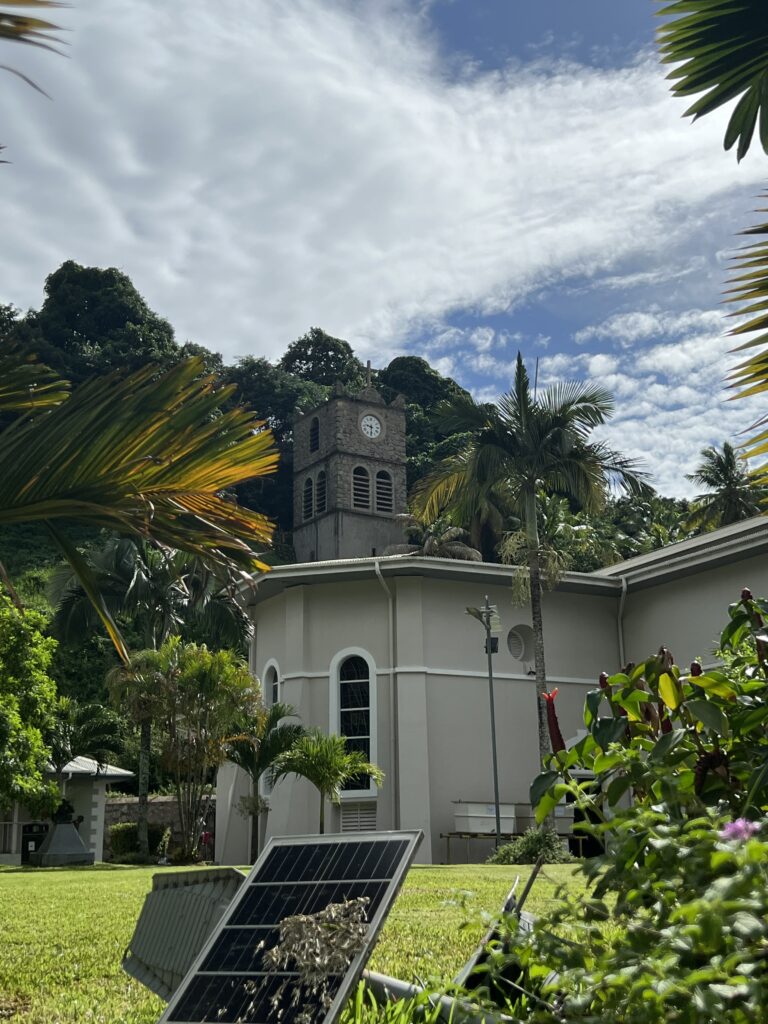
St. Paul’s Cathedral in Victoria, Mahé, is a key Anglican, white-walled landmark near the Clock Tower, serving as the seat of the Bishop of Seychelles. Originally consecrated in 1859, the modern, expanded structure was re-blessed in 2004, offering a calm, historic place of worship in the heart of the city.
A prominent landmark in Seychelles, St. Paul’s Cathedral, is the cathedral of the diocese and the main Anglican parish church of Victoria, Mahé. It is also the seat of the Bishop of Seychelles. The original church was once consecrated to the apostle St. Paul and stood on the site of the present church. It was blessed on 14 May 1859 by Vincent William Ryan, the first bishop of Mauritius. Over the years, the building has been extended twice: 1910 with a new tower and 1978 with an offset altar. In 1862, it withstood the Lavalas to provide shelter to families and the storage of food for people following the devastating landslide.
In December 1920 St. Paul’s became a pro-cathedral, and the name of the diocese changed from Diocese of Mauritius to the Diocese of Mauritius and the Seychelles. It was decided in 2001 to completely renew the structure. The cathedral, which was then blessed on 25 April 2004, was financed with generous donations from the government and private individuals and now offers double capacity for 800 people.
St Paul’s Cathedral is located within walking distance of the Clock tower on Albert Street. Parking is available at the Stadium Car Park on Francis Rachel Street.
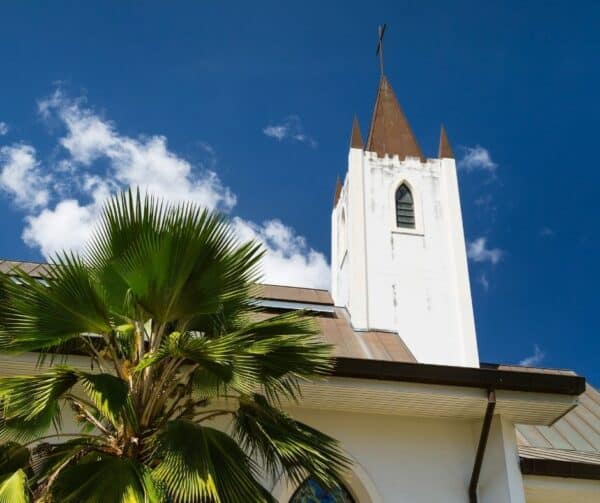
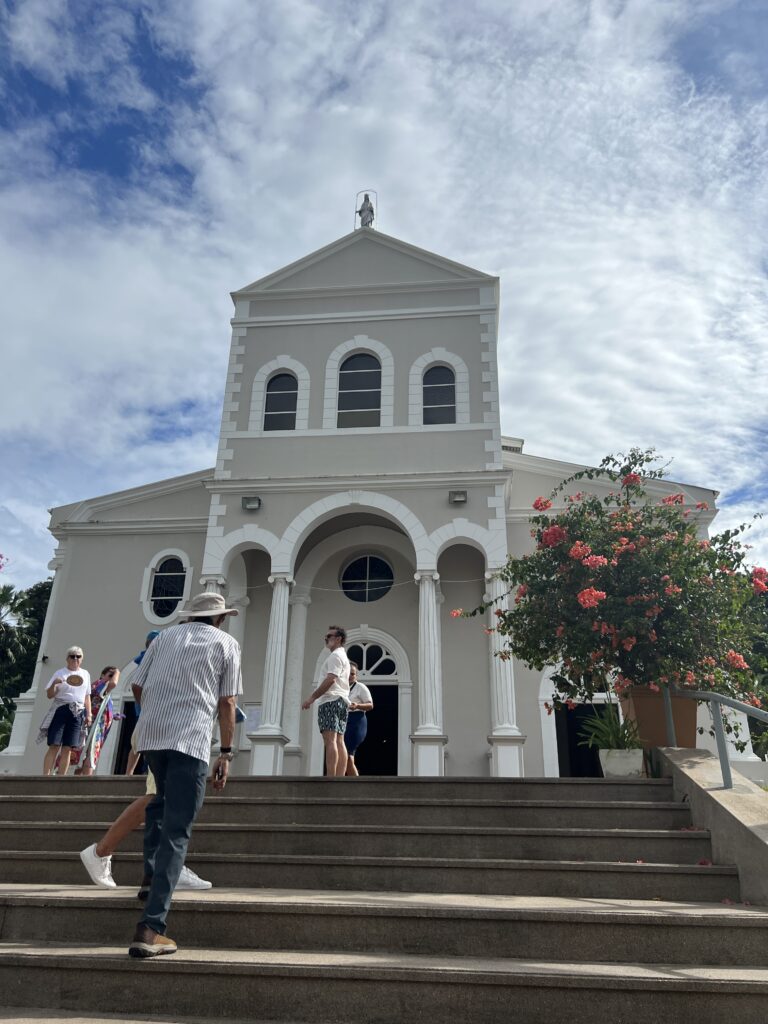
The Immaculate Conception Cathedral (French: Cathédrale de l’Immaculée-Conception de Victoria) or simply Cathedral of Victoria, is a religious building of the Catholic Church located in the town of Victoria.
The church was built in 1874 and recalls the French colonial style.
It is part of the Latin Church, and serves as the seat of the bishop of the Diocese of Port Victoria which was established in 1892 by Pope Leo XIII. The first reconstruction of the cathedral started in the same year. This imposing Cathedral is the Mother Church of the Catholic Diocese in Seychelles. Constructed on the site where Father Leon of Avanchers built the first vault in March 1851 that was devoted to the Virgin of the immaculate conception, the Cathedral is one of the first churches in Seychelles.
The first and only Seychellois Bishop, Felix Paul, who passed away on the 21st November 2001, is buried inside the cathedral in a tomb built in the flooring. The tomb is not visible but its location is marked by a special plaque.
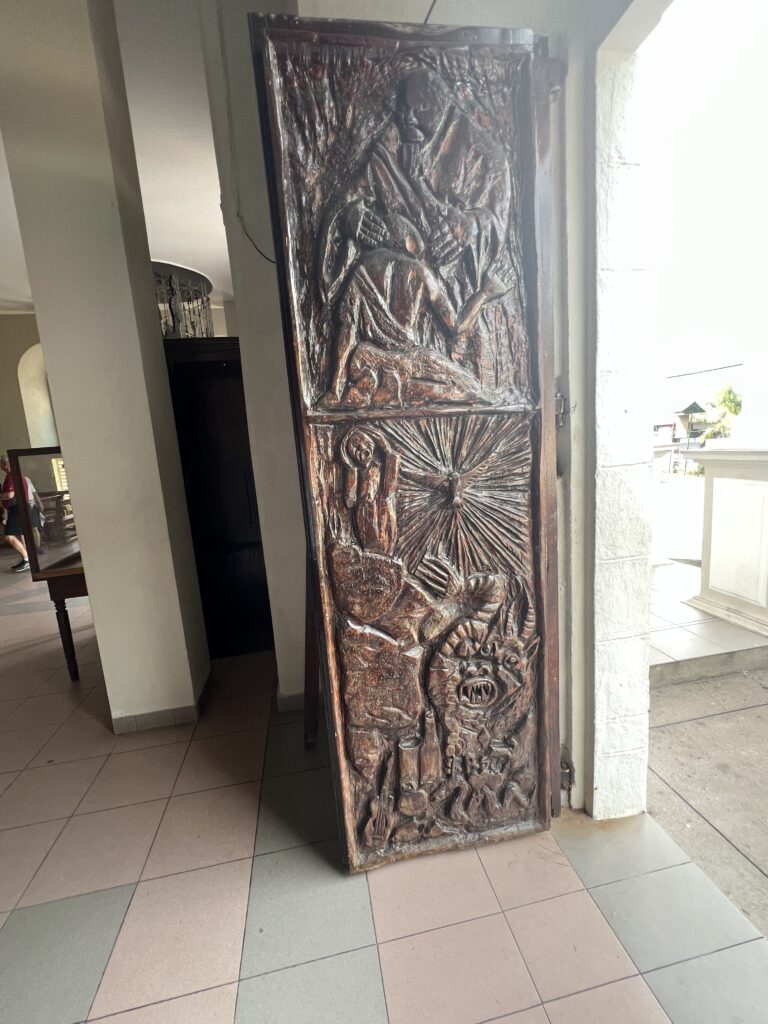
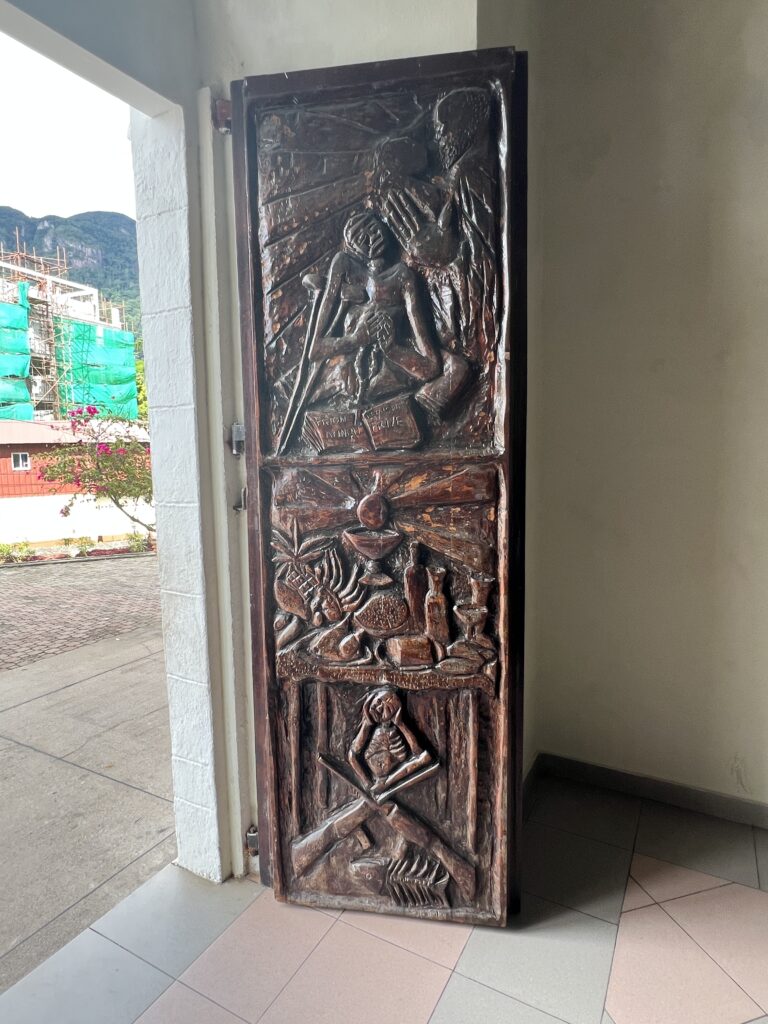
The Cathedral has undergone numerous renovations over the years. In 1993-94 it was completely renovated, except for the external walls. The last renovation was completed In 1995 when Seychellois sculptor, Egbert Marday fashioned the tabernacle and the carved doors.
One set of doors for the front entrance to the church.
There is no air conditioning in the church and the church is cooled by a number of fans.
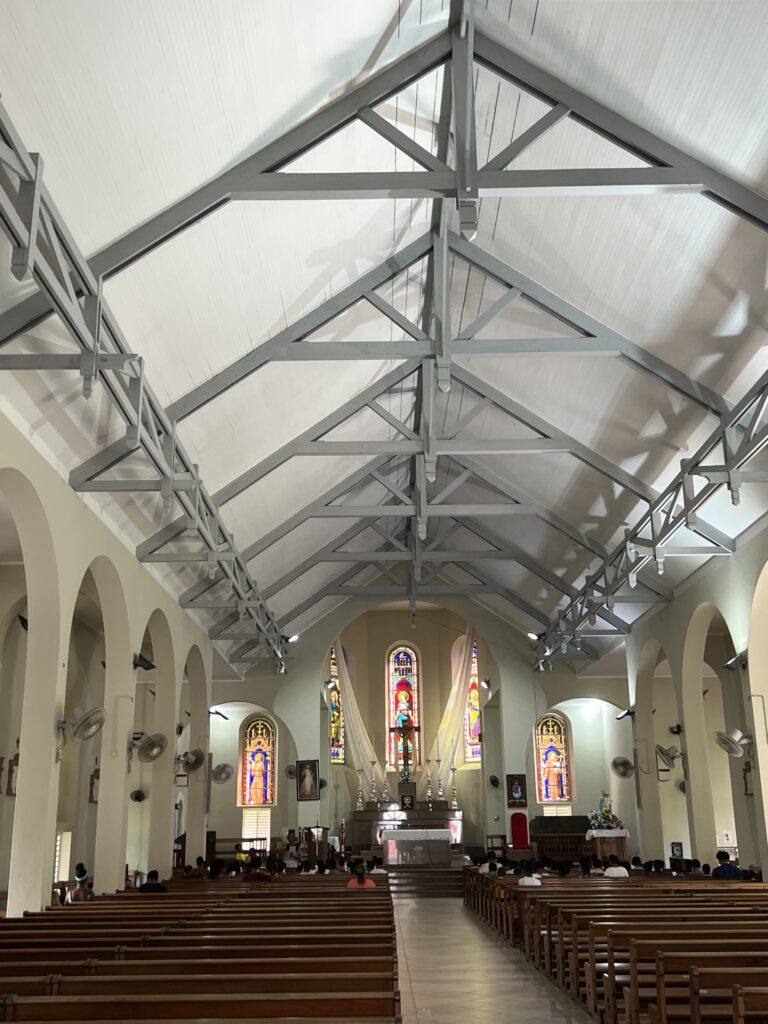
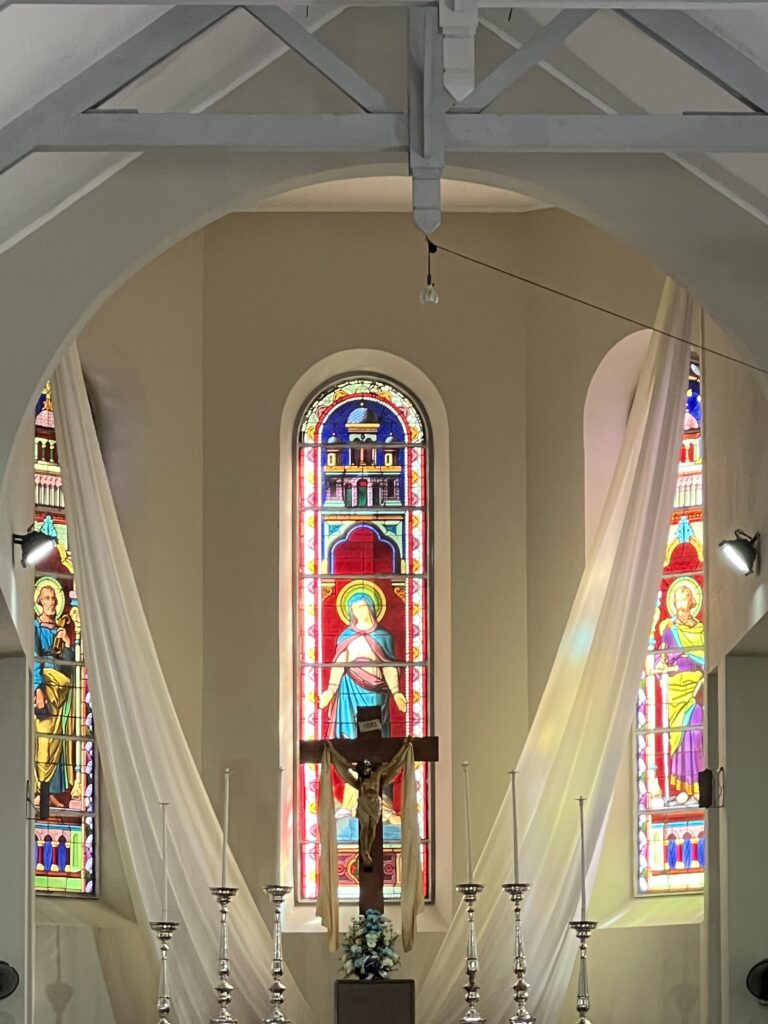
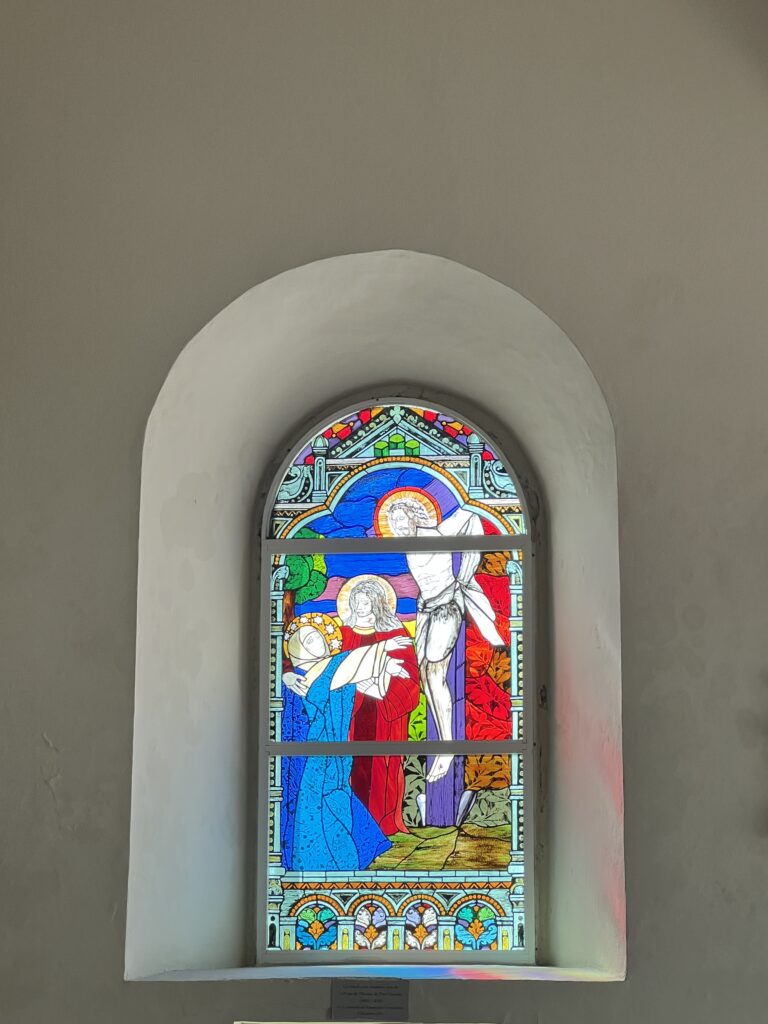
The stained glass was simple but quite bright in the sunshine.
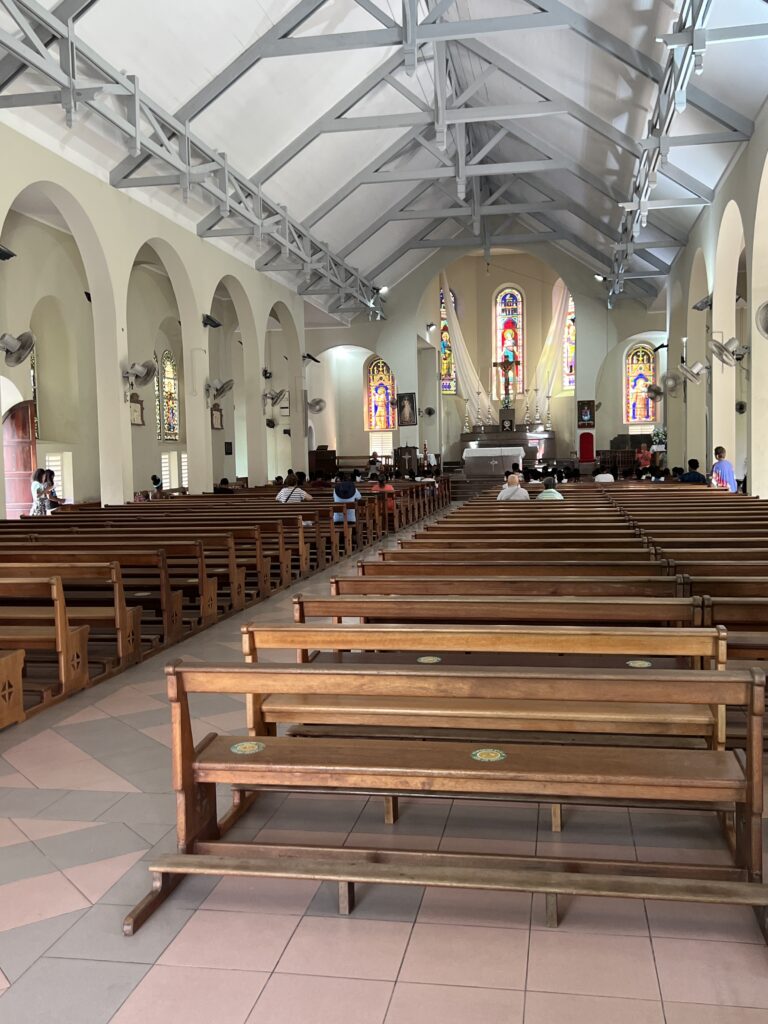
When we were visiting the church there was youth choir practice happening. We wish that we had more time to sit and listen to these kids as the teacher was doing an amazing job teaching them.
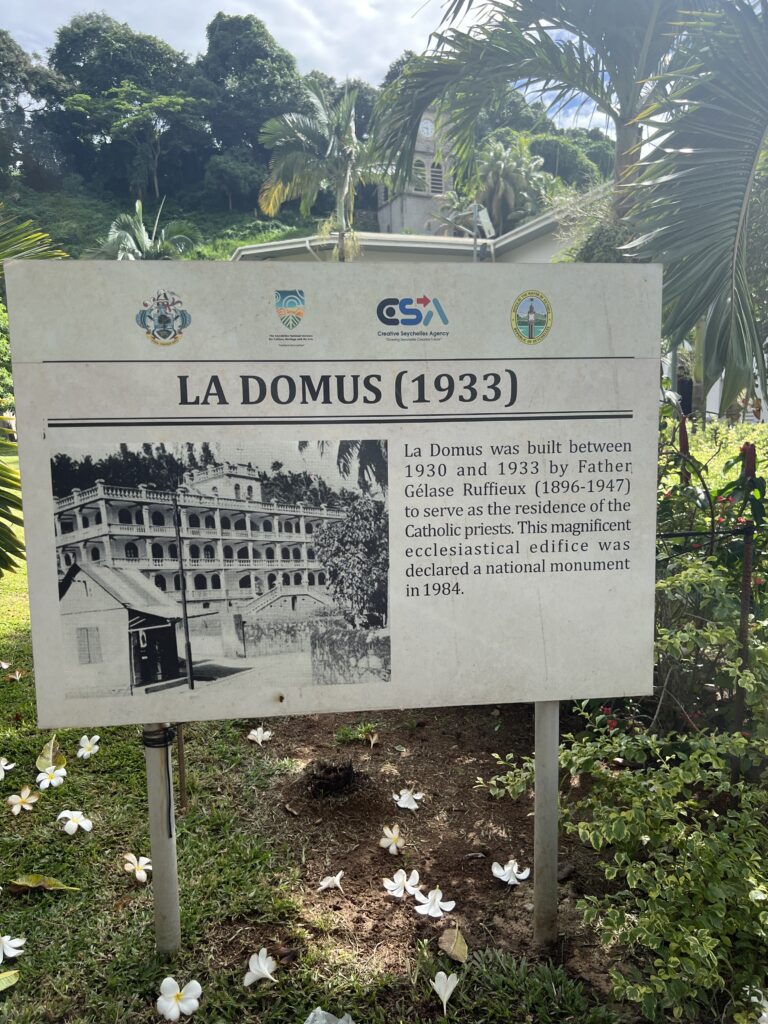
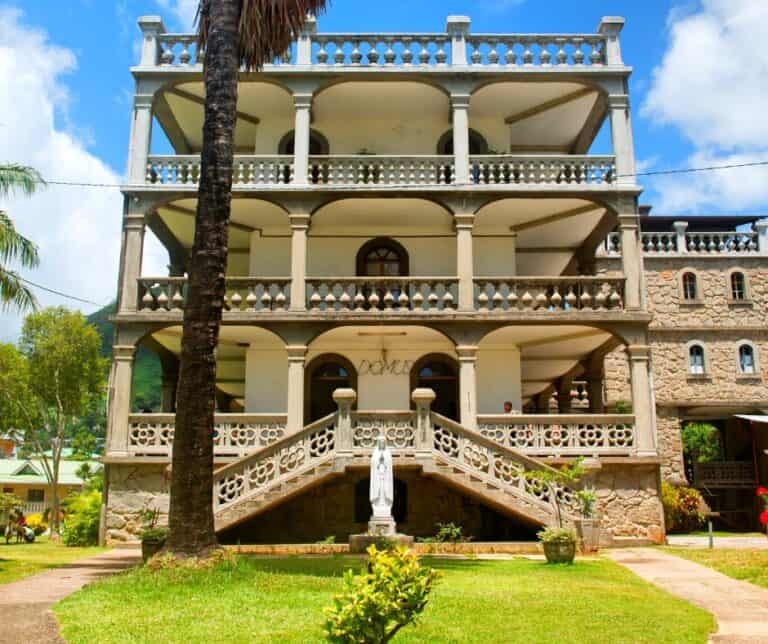
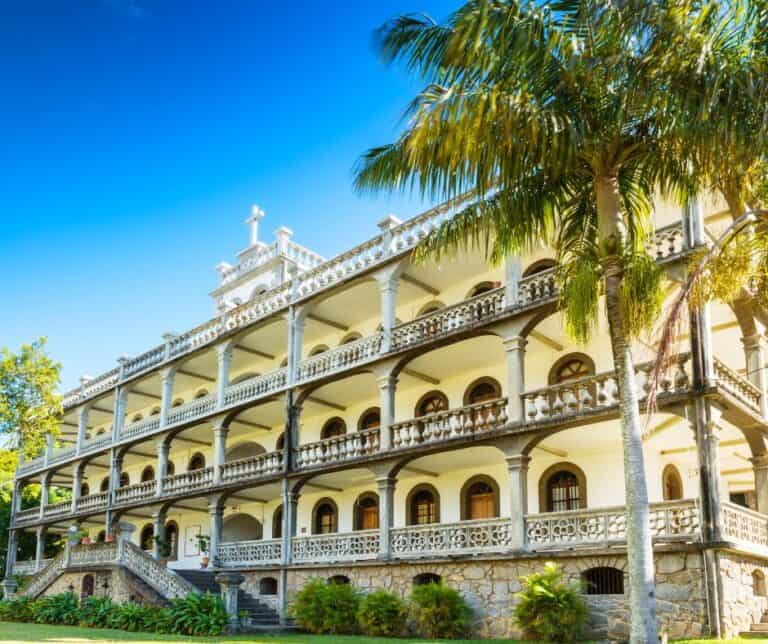
A magnificent and majestic building, the Domicilium is the residence of the Catholic Priests and a symbol of the early years that young Christian missionaries ventured on the shores of our regal islands to spread the gospel.
Brother Gélase was a Capuchin missionary from the province of Fribourg in western Switzerland, and arrived in Seychelles in November 1928, at a time when most parishes on the Island had a resident priest but no communal building to house them.
Brother Gelase noticed this and made it his mission to build a grand home for the missionaries. Thanks to him and the men who worked hard to build it, The Domicilium was built between 1930 and was completed around the end of 1934. As a result of the sheer hard work and its completion it became the first communal residence for the missionaries and the resident priest in Seychelles, and to this day remains so.
Truly unique and divine, the building is surmounted by an exceptional cross and represents the greatness of the Catholic Mission in Seychelles that has contributed to the strong Catholic Tradition on the Island.
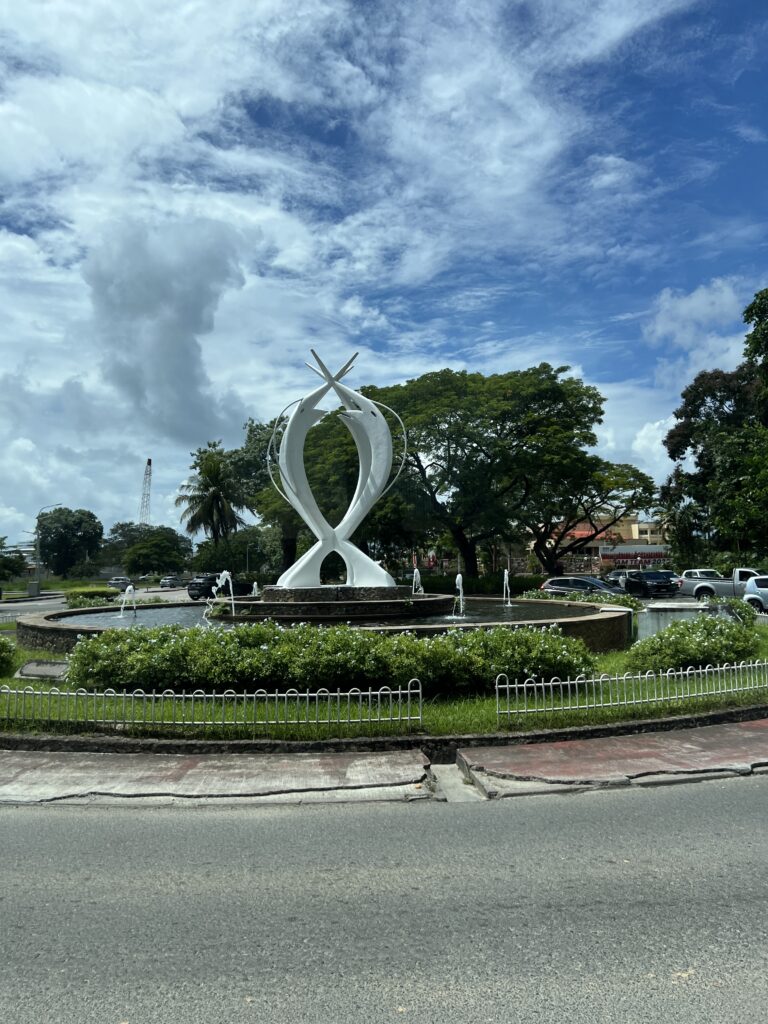
These art pieces are in the middle of the roundabouts in Victoria.
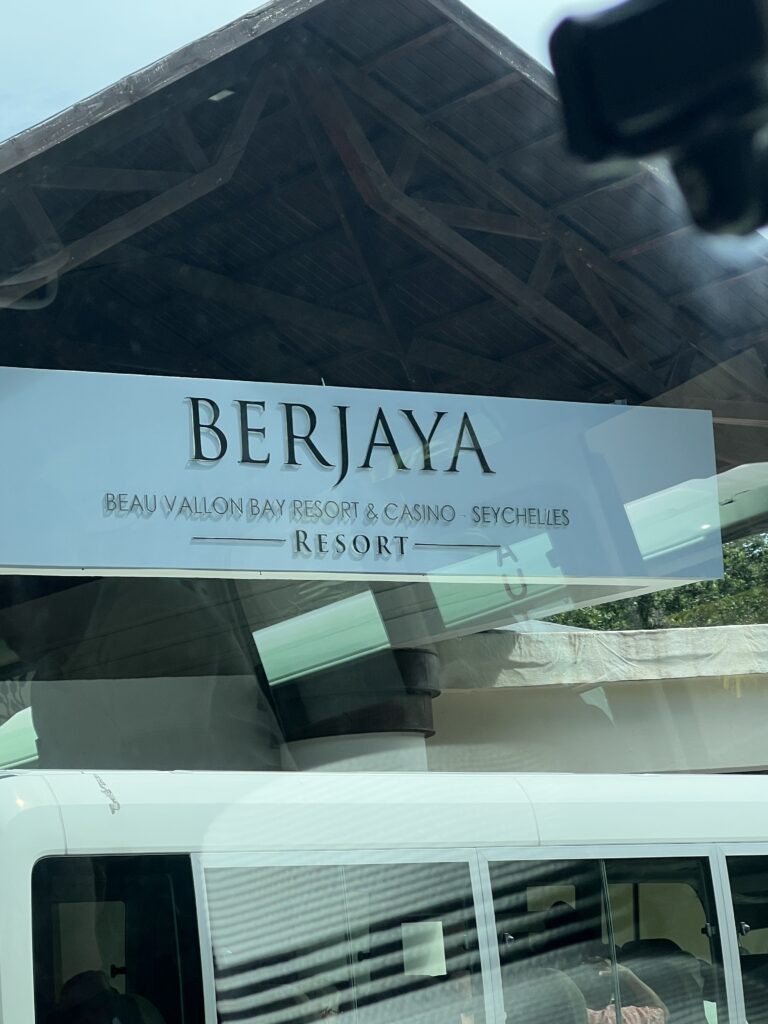
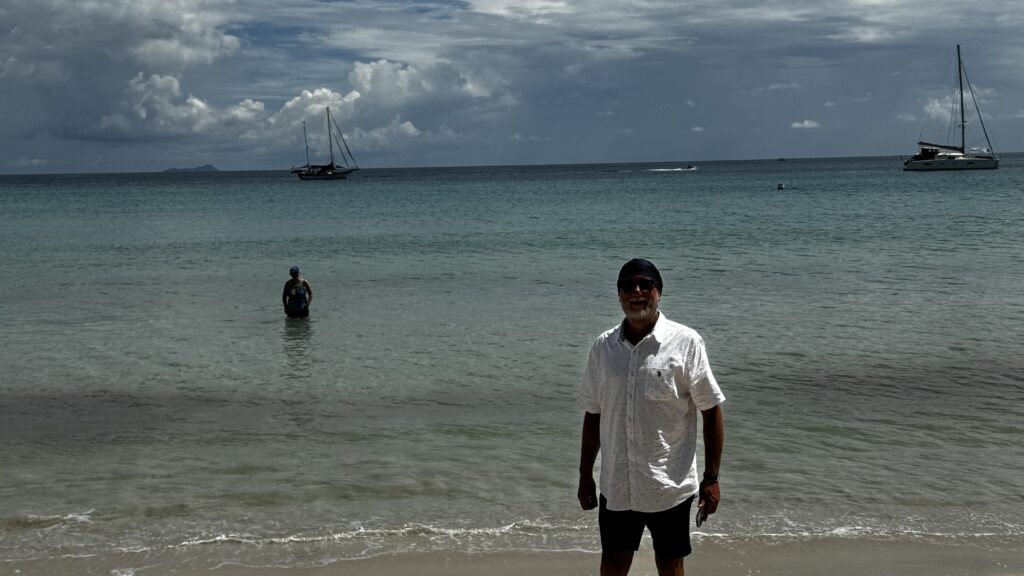
Situated at Beau Vallon Bay on the northwest coast of Mahé Island, Berjaya Beau Vallon Bay Resort & Casino is an absolute gem amidst the breathtaking landscapes in Seychelles. With year-round soothing climate, turquoise waters, and pristine beaches, this destination is highly recommended for an island getaway.
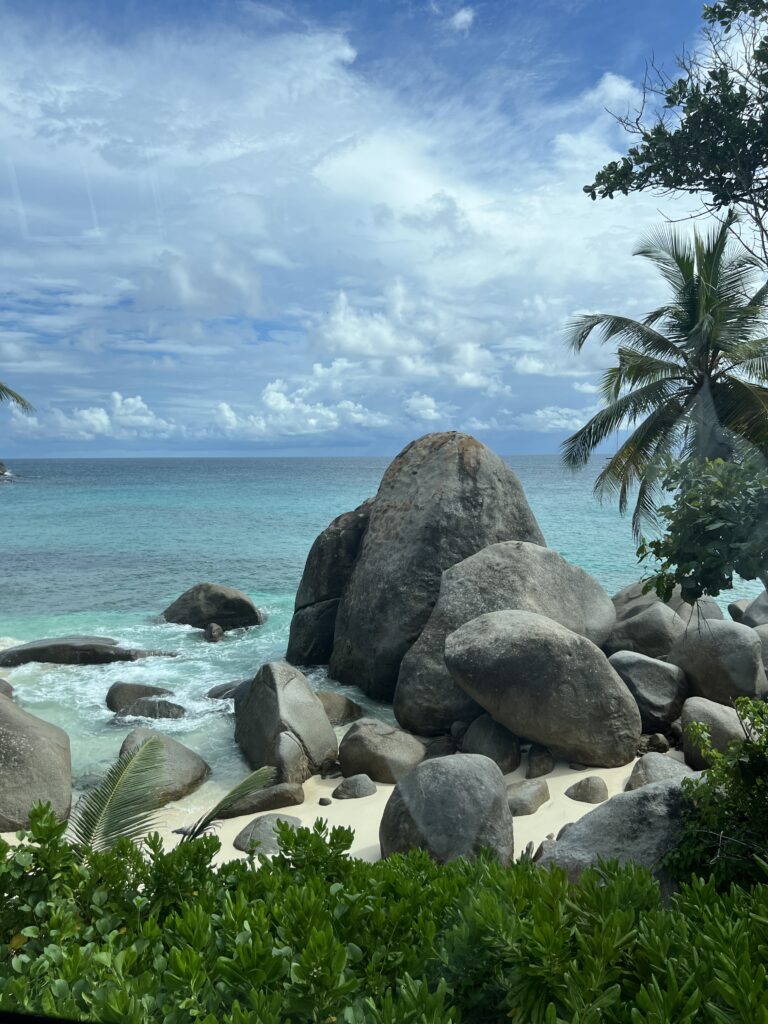
Jackie brought her bathing suit on the excursion. She said it is not every day you get to swim in The Seychelles.
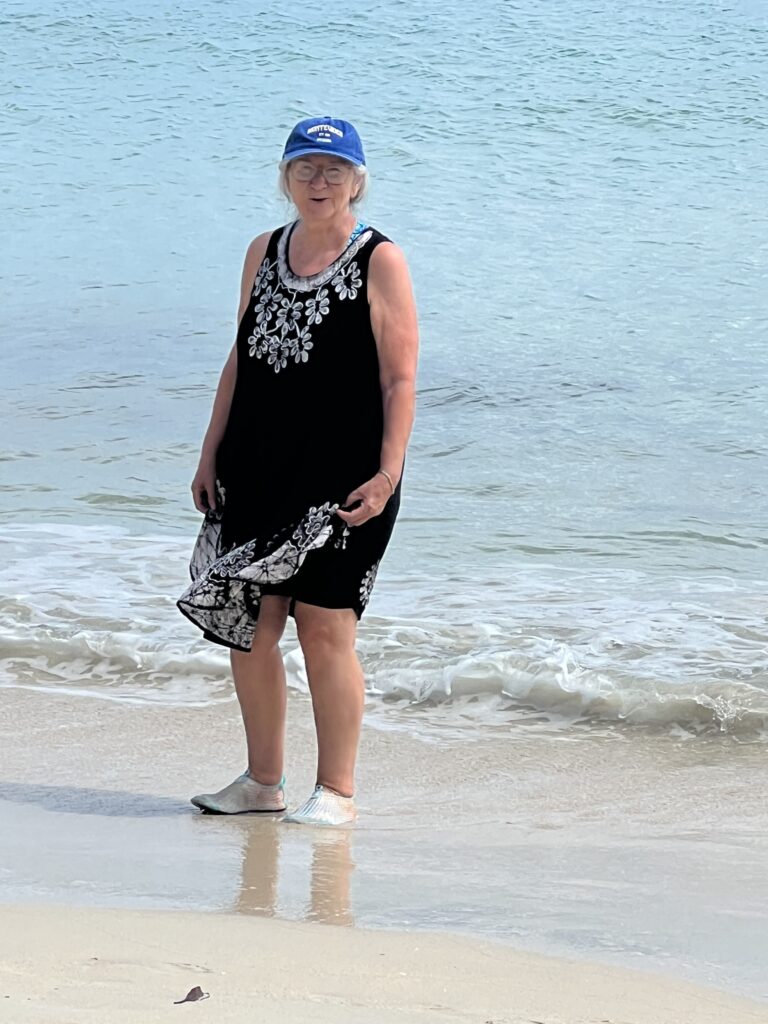
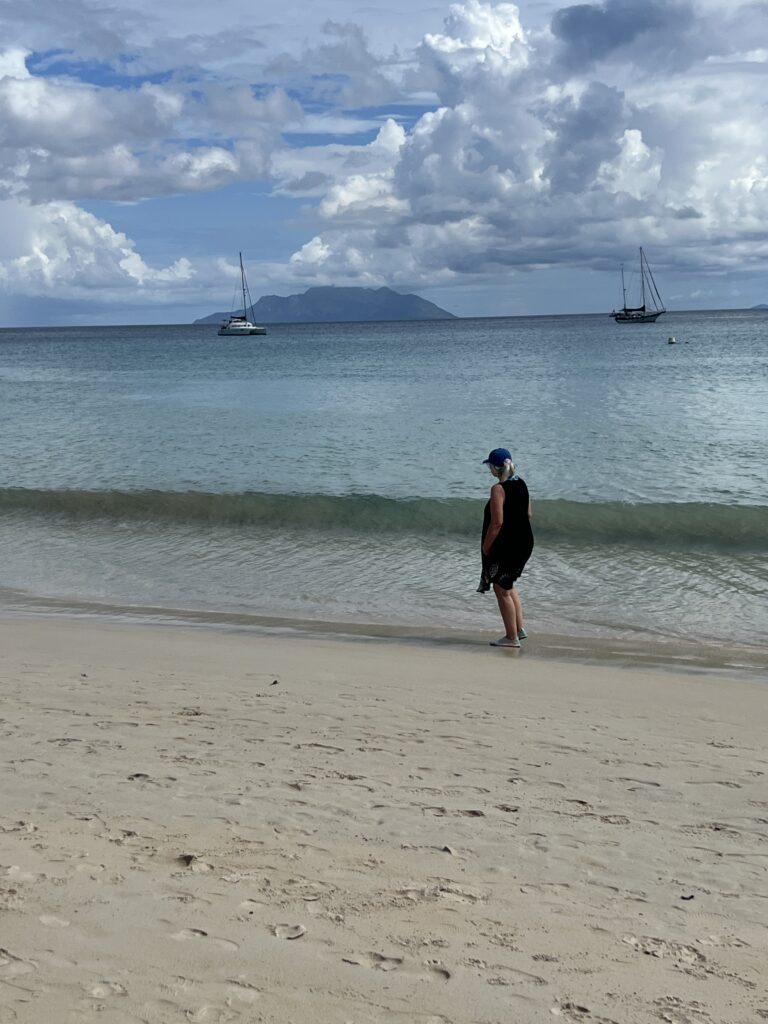
Jackie enjoyed her 45 minutes swimming in the waters of The Seychelles.
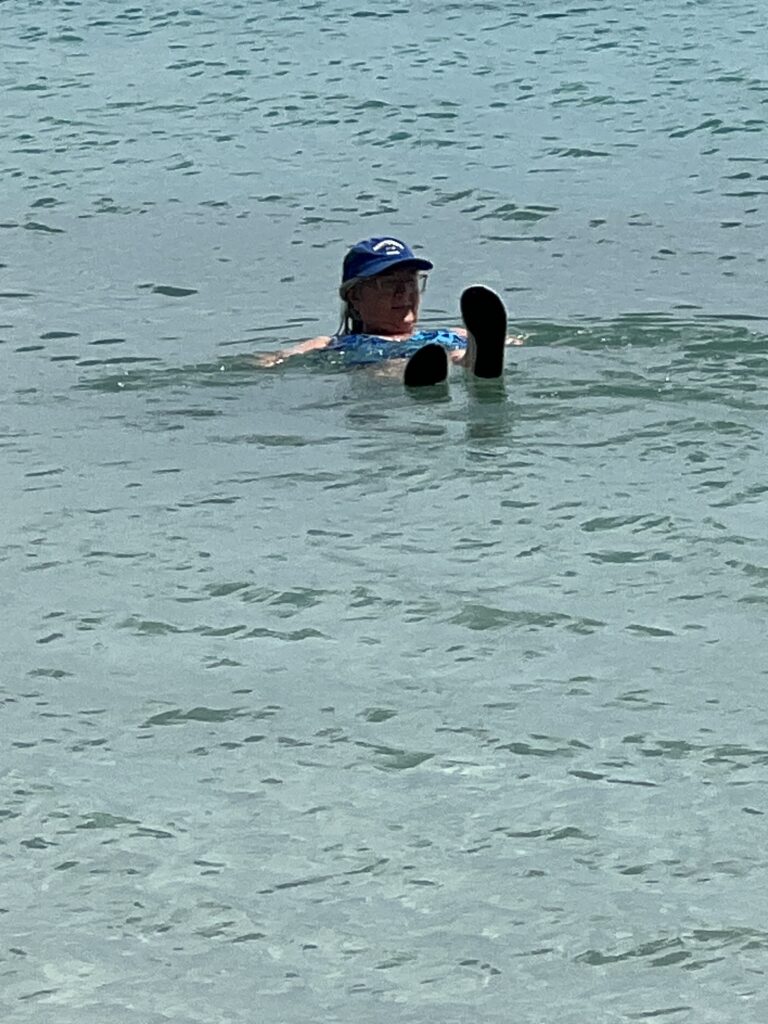
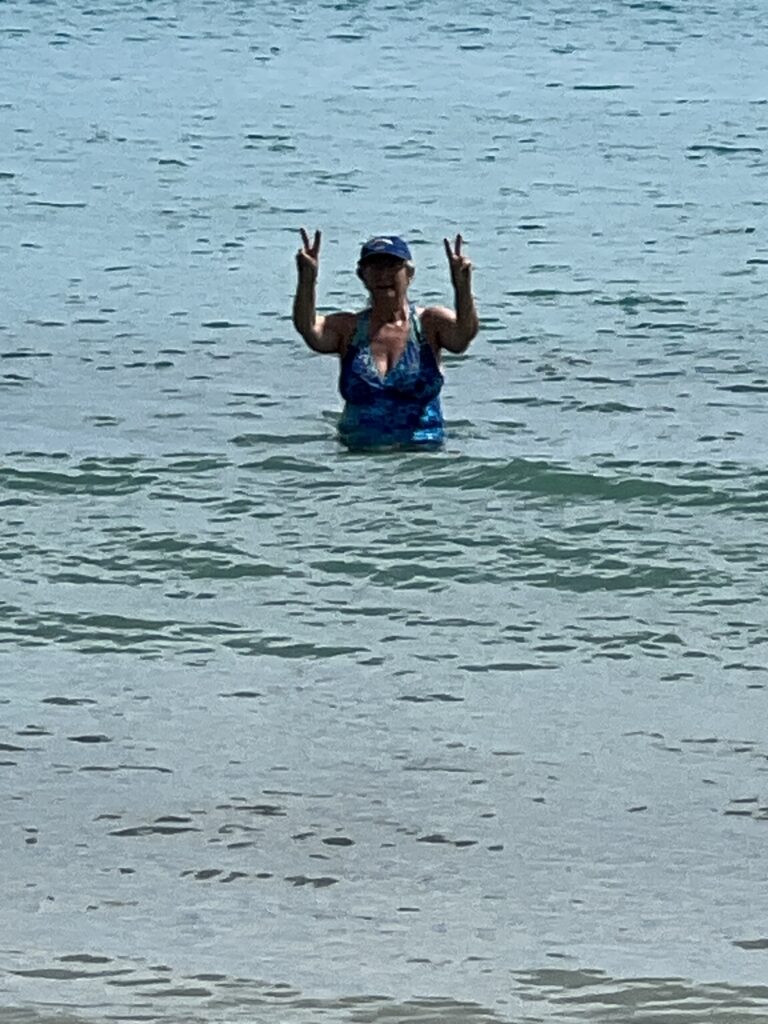
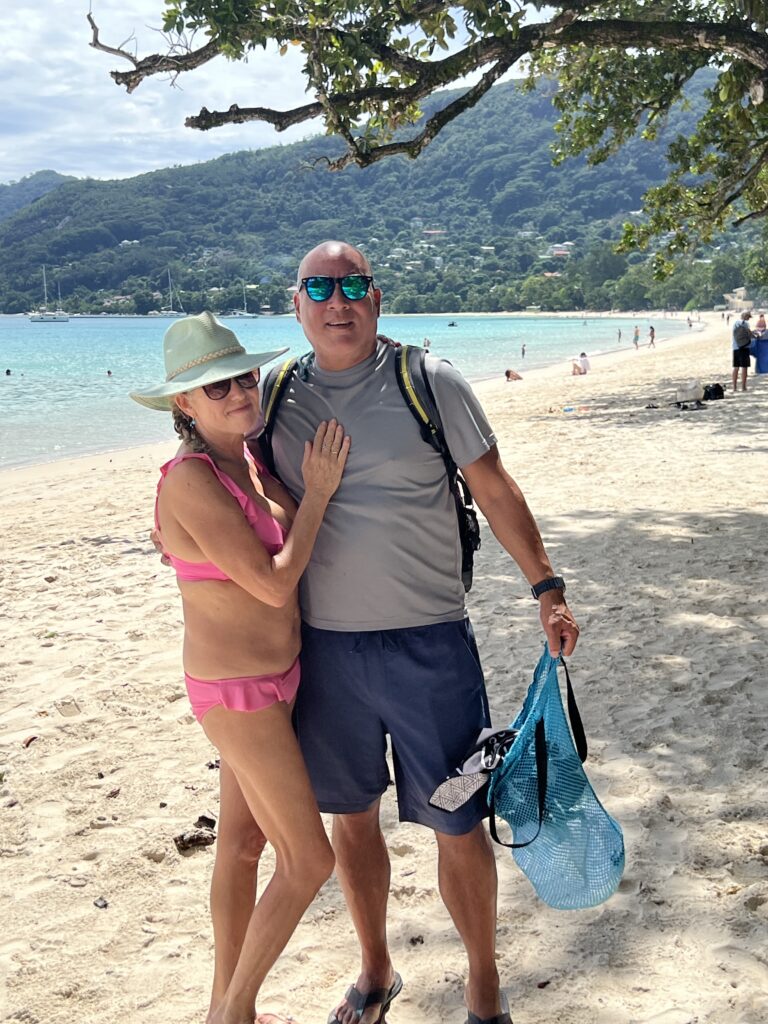
David Chen took these photos of Jackie and I
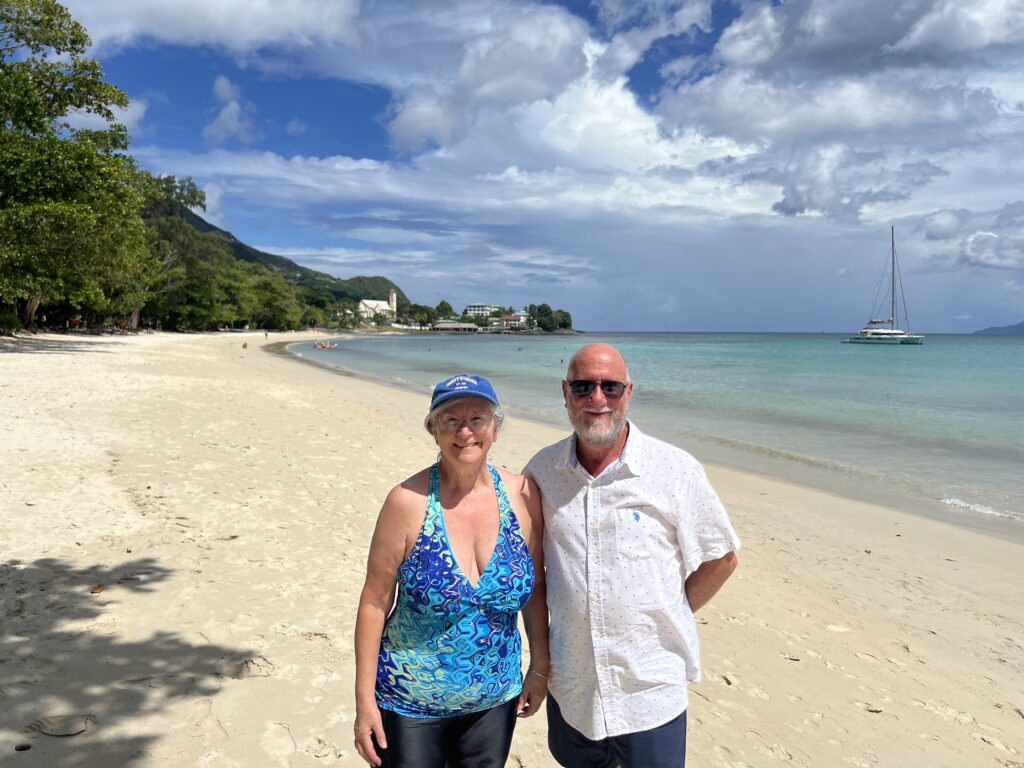
David and Marta were on the same excursion as us but at a different time, but we had the chance to hang with them for about 30 minutes on the beach. We have really enjoyed meeting them and always have great conversation and laughs when we are with them and the other two couples (Kevin/Holly and John/Joan).
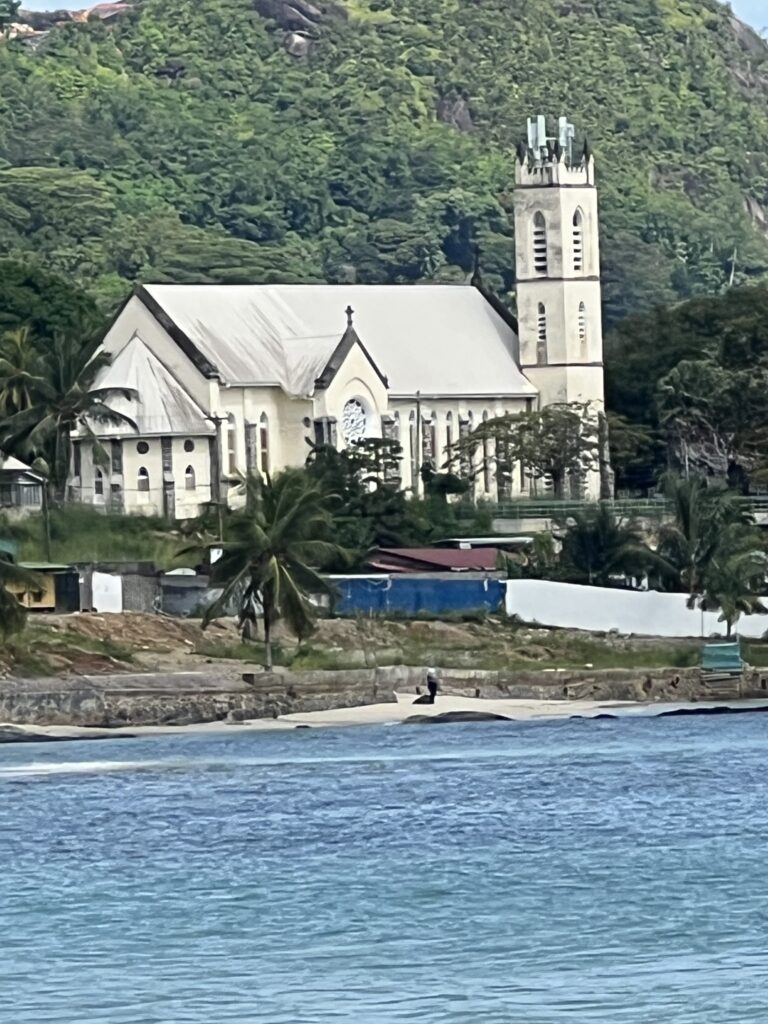
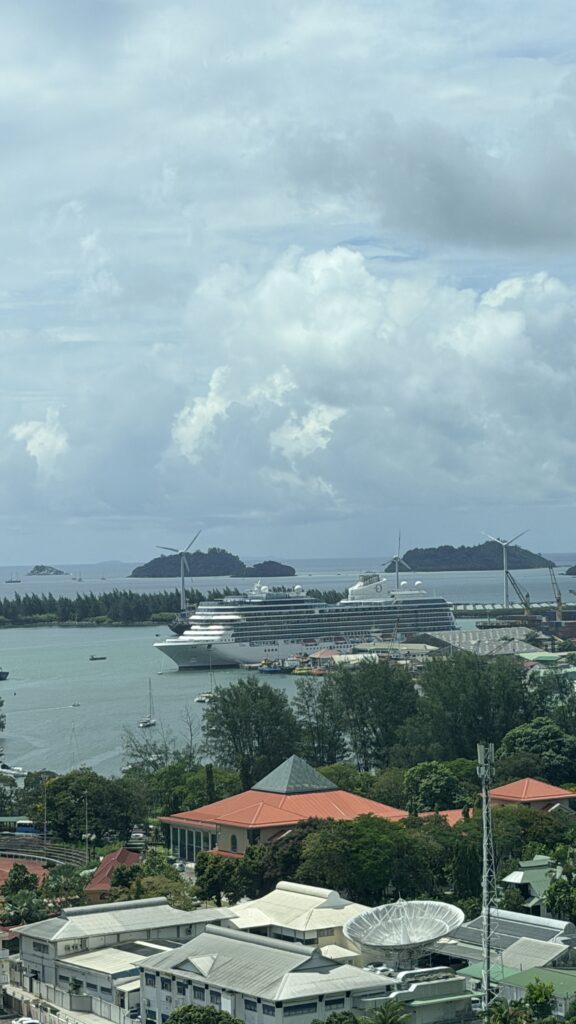
Jackie got a photo of The Vista on our way back to the ship
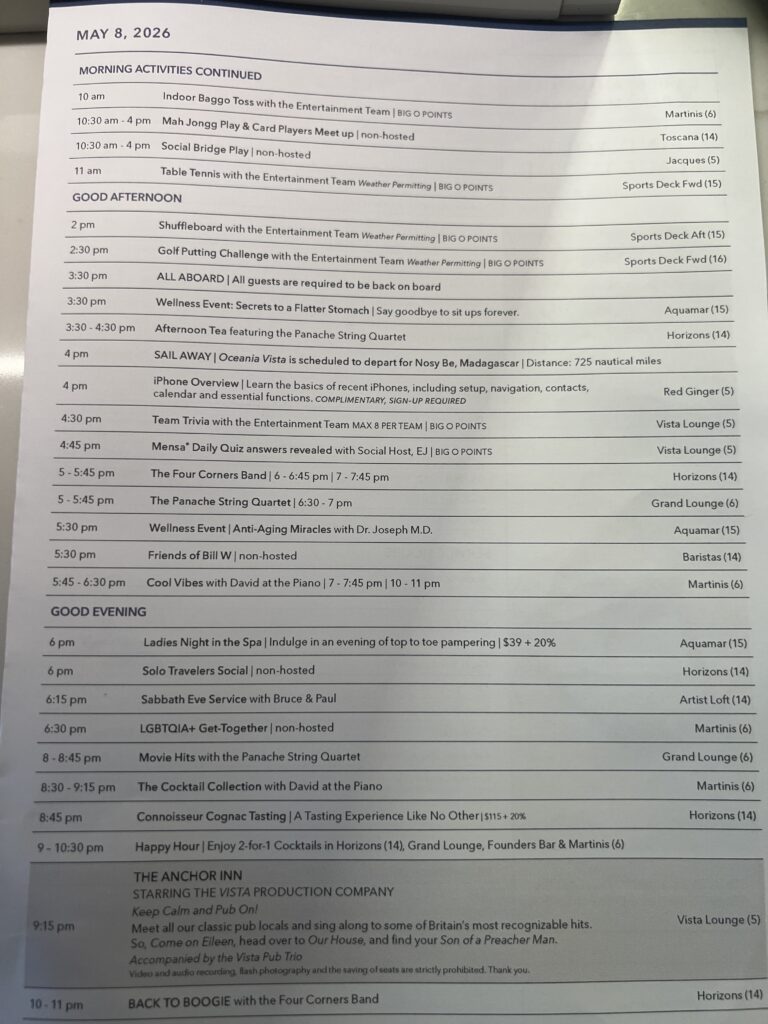
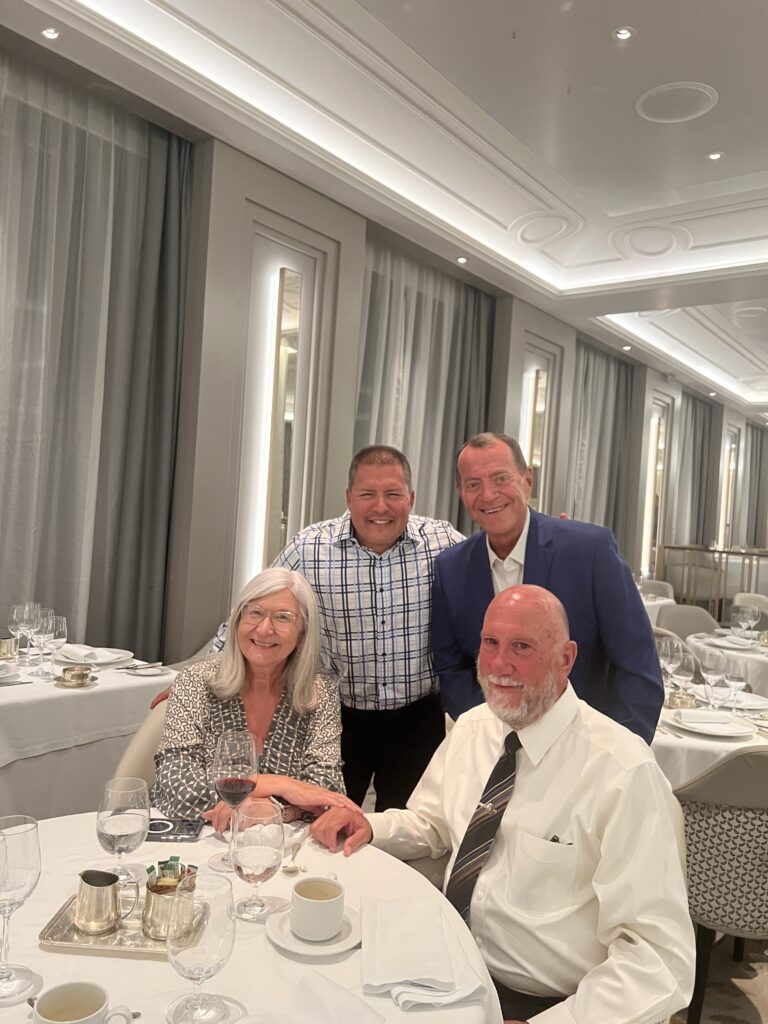
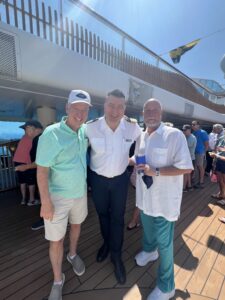
Tonight we had dinner with Willie (on the left) and Jim, who our next-door neighbors on the ship. We have seen each other almost every day and one day while passing by one another we said Hey, let’s do dinner one night. A really fun night sharing a meal with these two fine gentlemen who live in Mexico. Jackie and I were fascinated by their travels, and we enjoyed hearing and sharing travel stories and information. I am sure we will get together again for dinner before we get off the ship.
One of the big items we have enjoyed about this world cruise is just meeting people from around the world. It is awesome to be in one place with all these people who share a love of travel. The amount of knowledge among these passengers is remarkable.
We are at sea tomorrow with our next stop being Madagascar
One thought on “Day 62 May 8 – The Seychelles”
Sometimes we just happen to encounter the most special moments when we least expect it. The children’s choir was one of those moments.