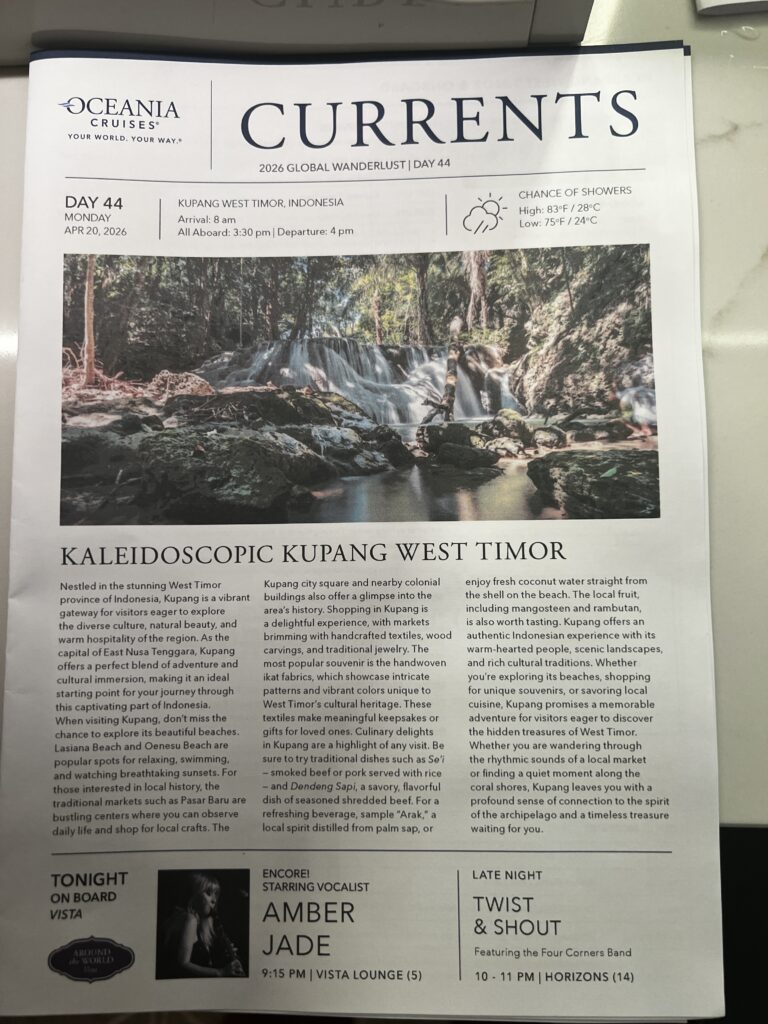
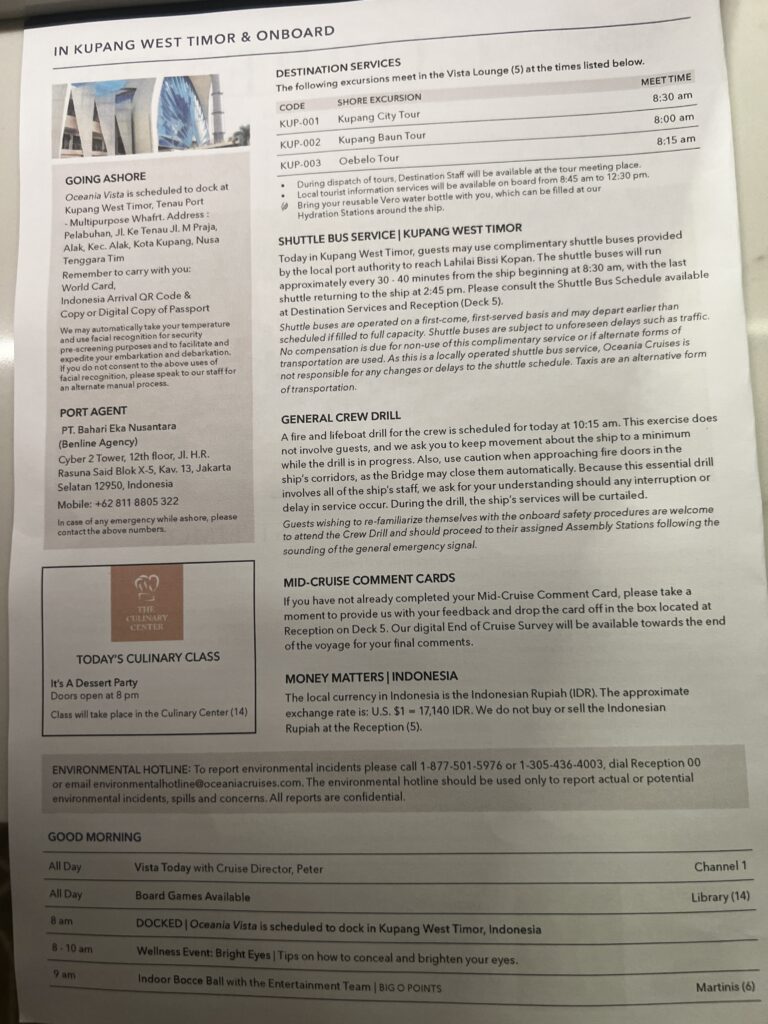
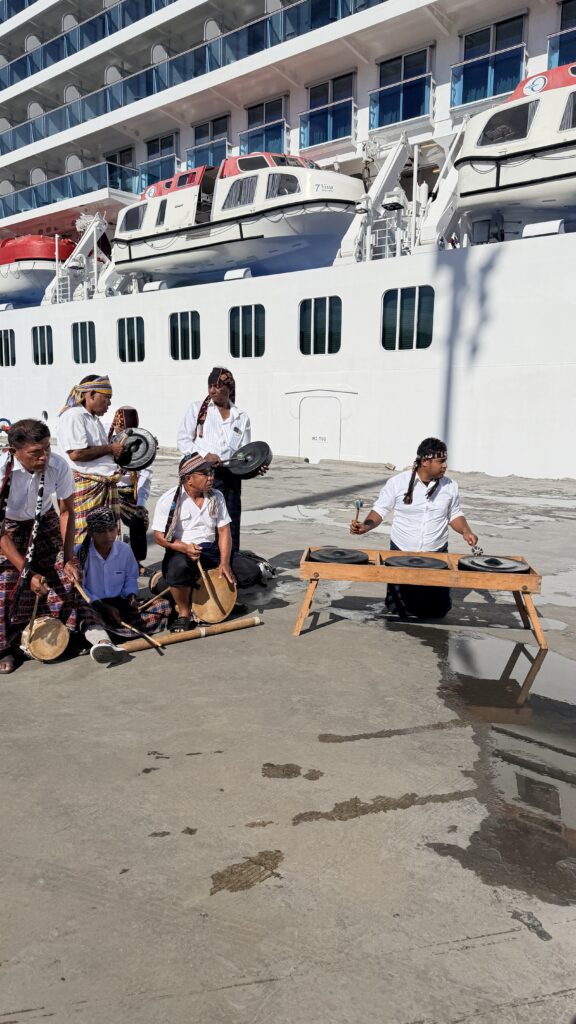
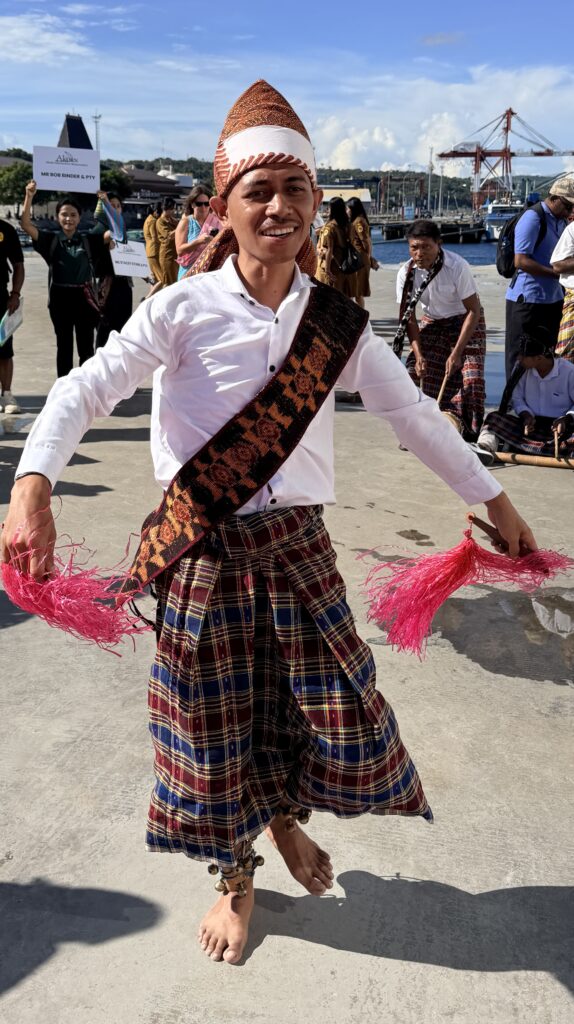
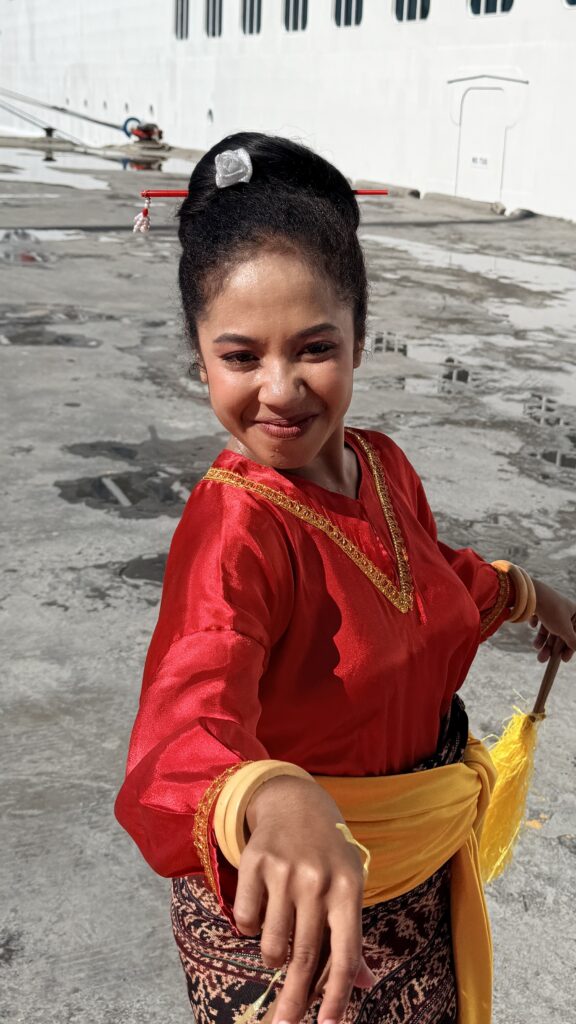
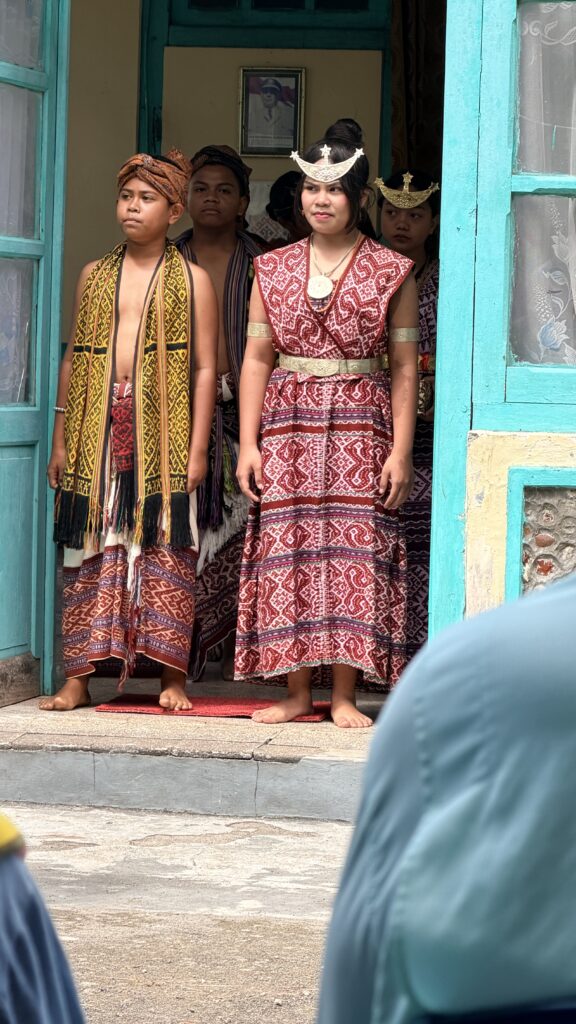
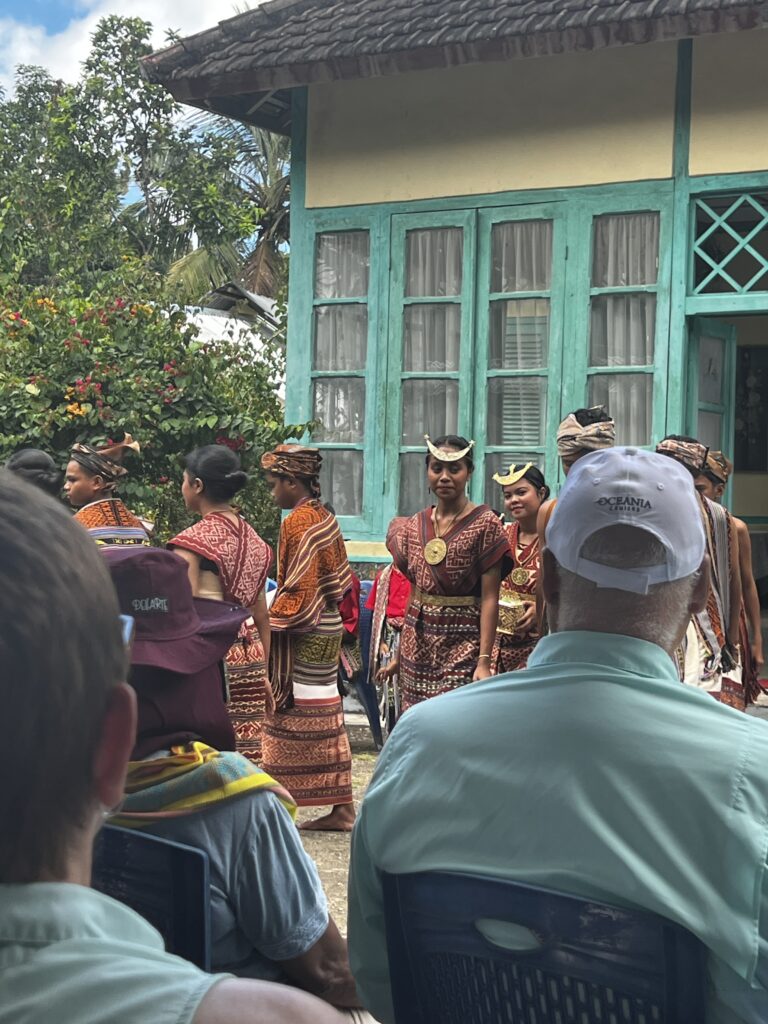
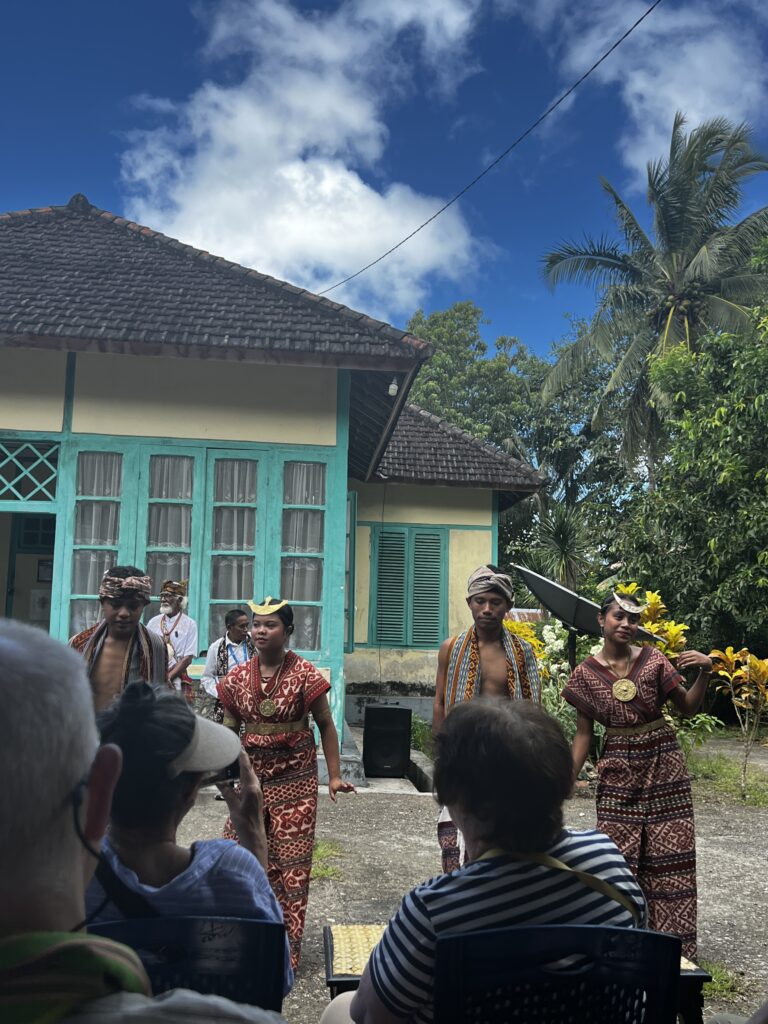
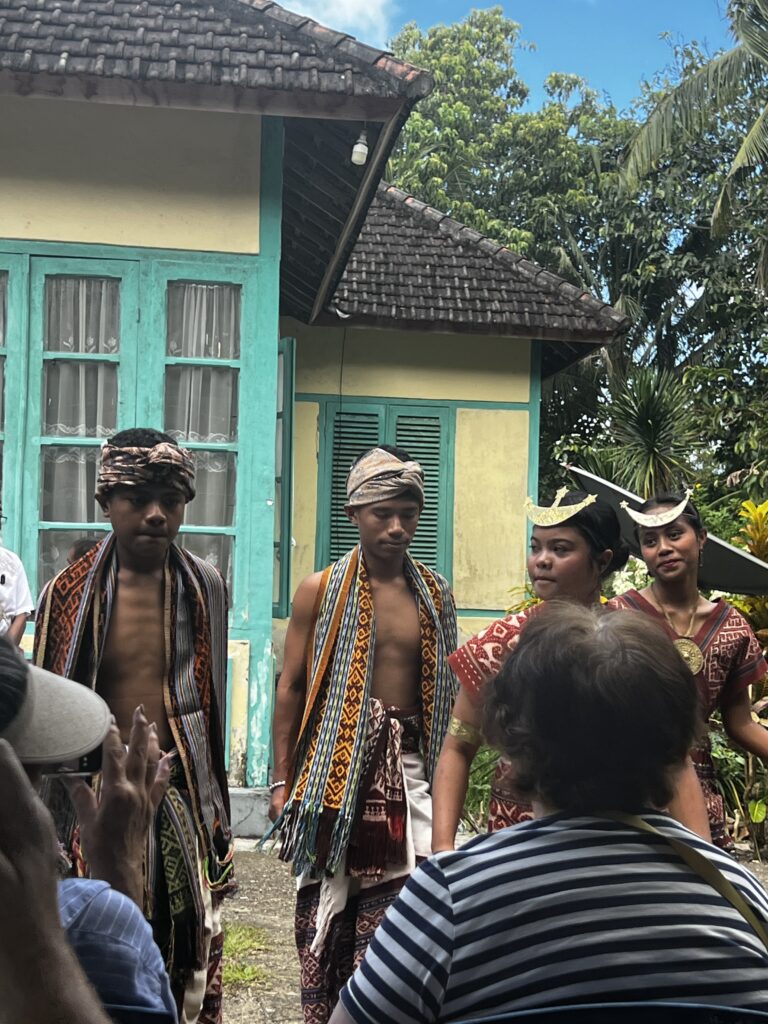
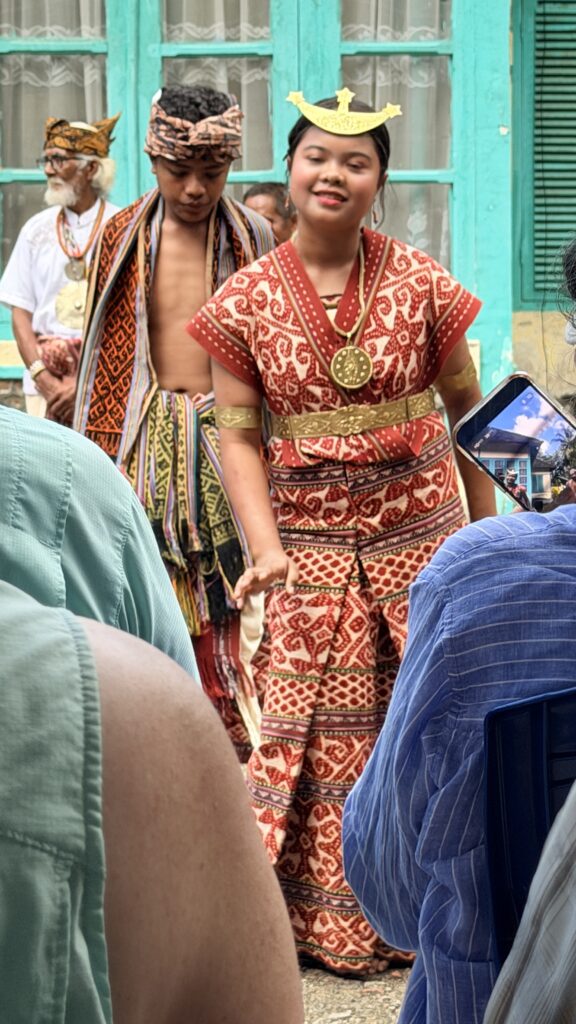
Day 45 Monday April 20th (75 days to go) — We went into today’s visit to Kupang with low expectations and ended up loving our day. We started off by visiting the remote village of Baun. It was wild as we were on one of twelve vans driving through the countryside to reach this village. Some places there was a road, some places there was something that resembled a road and some places there was no road. The ride was quite bumpy, and our guide was a very nice young lady who started the tour by apologizing for not speaking English very well. We thought this is going to be a long day. But when we reached this village the entire town was in the street waiting to greet us and we followed like a second line into the village. In the village of Baun the son of the village’s last king spoke through an interpreter and then young village children performed folkloric dances and elders gave a music performance. We loved seeing the excitement of the young children to see us and laughed as they had cameras and were taking photos of us while we took photos of them.
Baun is a small, culturally rich town in the Kupang Regency of West Timor, Indonesia, serving as the former administrative seat of the Amarasi Kingdom. Known for traditional ikat weaving, the Sonaf Baun palace, and local coffee, it is located about 90 minutes from Kupang. As the former Amarasi kingdom, we saw the Sonaf Baun (palace) and met the traditional Raja (king). Amarasi was a traditional princedom in West Timor, in present-day Indonesia. It had an important role in the political history of Timor during the 17th and 18th century, being a client state of the Portuguese colonialists, and later subjected to the Netherlands East Indies. In the first years after the achievement of Indonesian of independence in 1949, the Amarasi princedom survived as a self-ruling territory or swapraja, until 1962, when the unitary Indonesian republic abolished traditional forms of governance in this region. Today Amarasi is included in the kabupaten (regency) Kupang, and constitutes the kecamatan (districts) Amarasi, Amarasi Barat, Amarasi Selatan, and Amarasi Timur. The center of the region is the village Baun, where the last residence of the former rajas can still be seen.
While in Baun we had a chance to chew betel nut. Below is an AI on Betel nuts. We laughed tonight at dinner as the lime powder used to dip the betel nut into looked like cocaine. It numbed our lips and mouth. Well, you will see the photos below of our reactions. Here is the AI information:
Betel nut, also known as areca nut, is a psychoactive seed chewed for stimulant effects but carries significant health risks including addiction and cancer.
Overview and Cultural Significance
Betel nut is the seed of the Areca catechu palm and is widely used across Southeast Asia, South Asia, and the Pacific Islands. It is traditionally chewed in a preparation called a betel quid, which combines sliced or powdered areca nut with slaked lime and betel leaves (Piper betle). Additional ingredients like tobacco, cloves, cardamom, coconut, sugar, or fruit extracts may be added for flavor. Betel nut chewing is deeply embedded in social, religious, and ceremonial practices, symbolizing hospitality, respect, and celebration in communities such as India, Myanmar, and Taiwan.
Psychoactive Effects
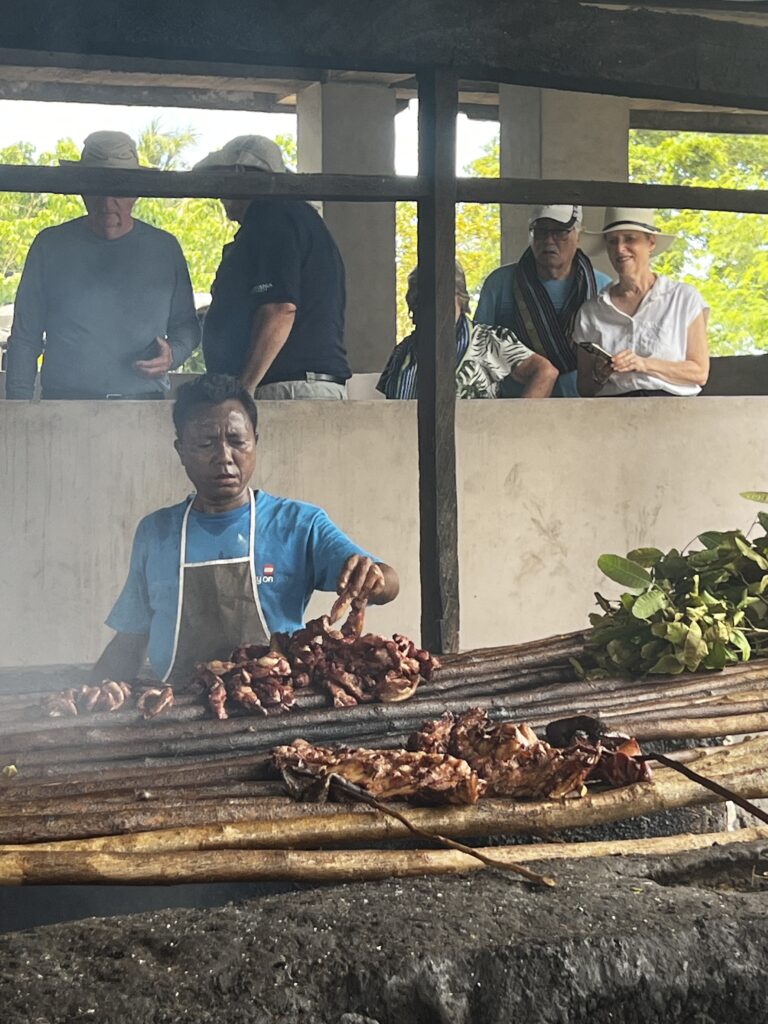
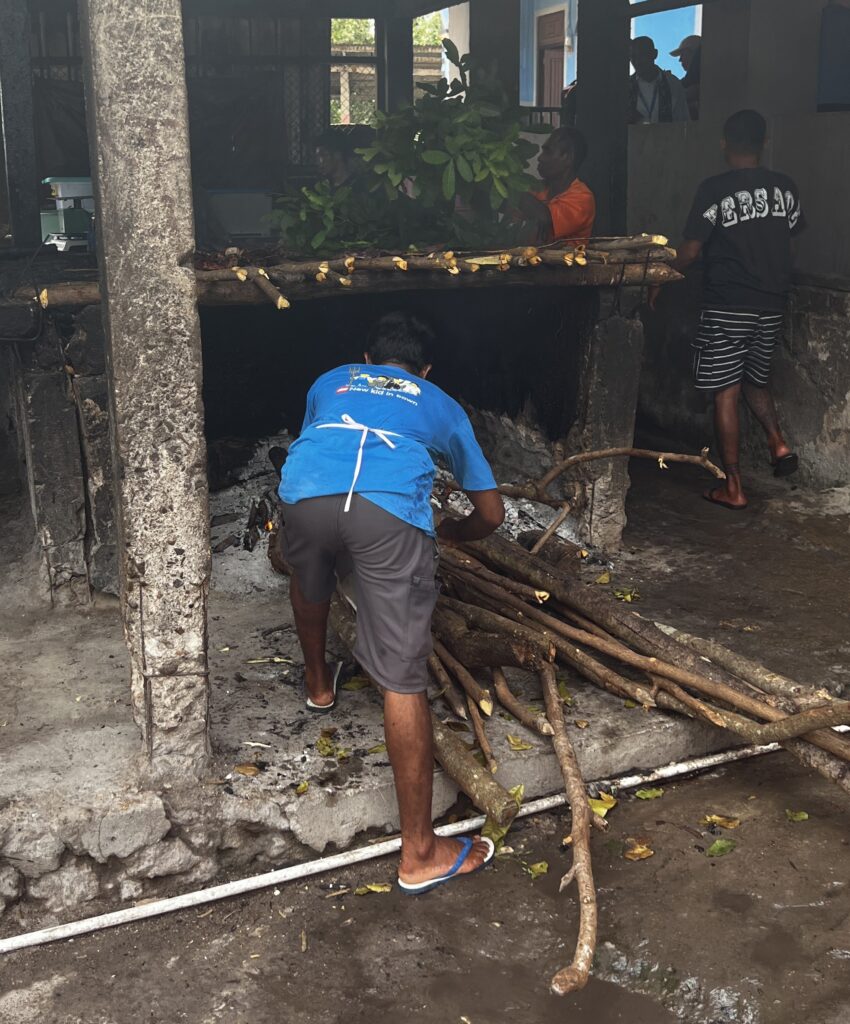
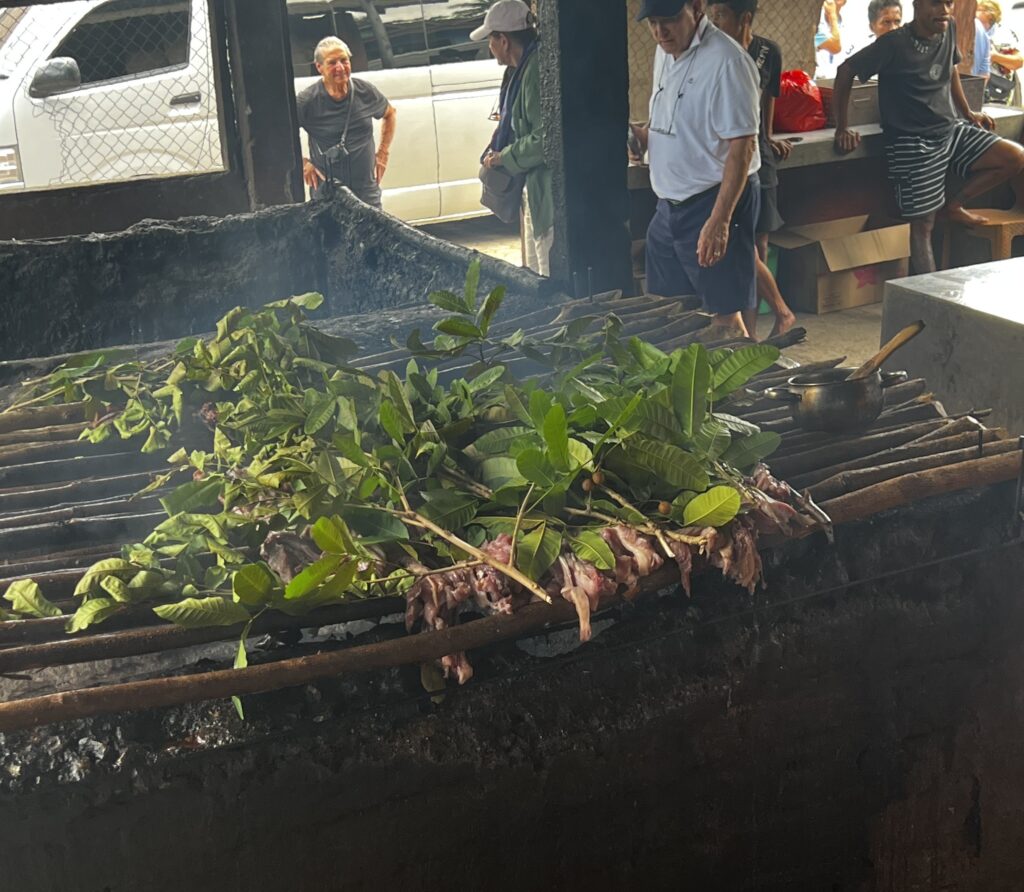
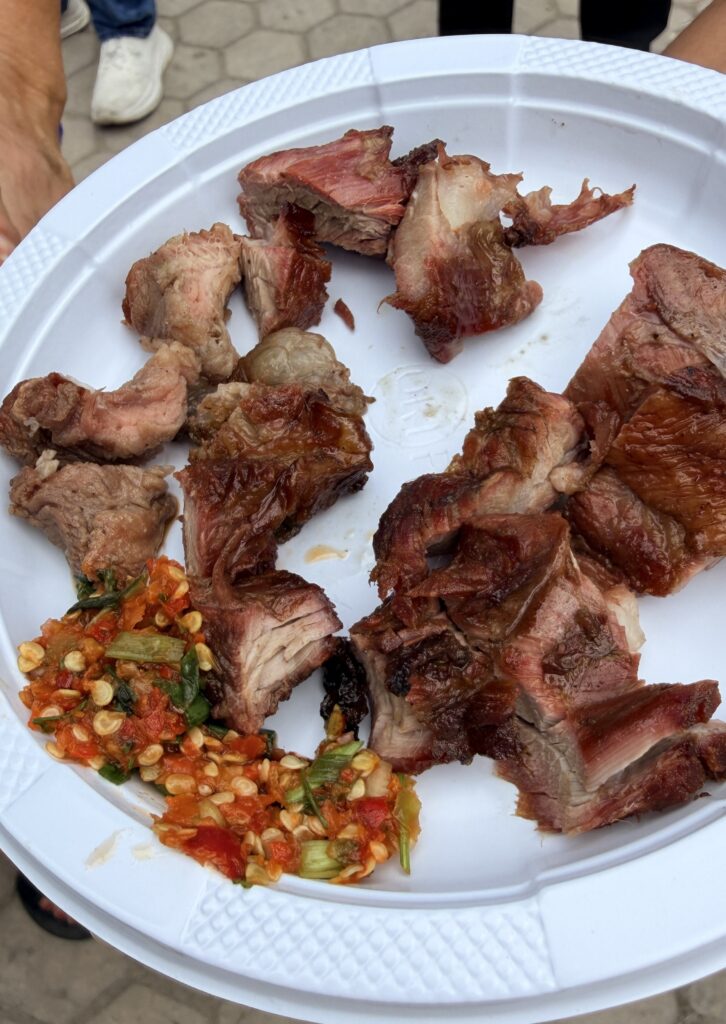
Our next stop was at a restaurant in Baun where pork was smoked on an open flame outside and covered with guava leaves. It was really good and we enjoyed taking photos here also.
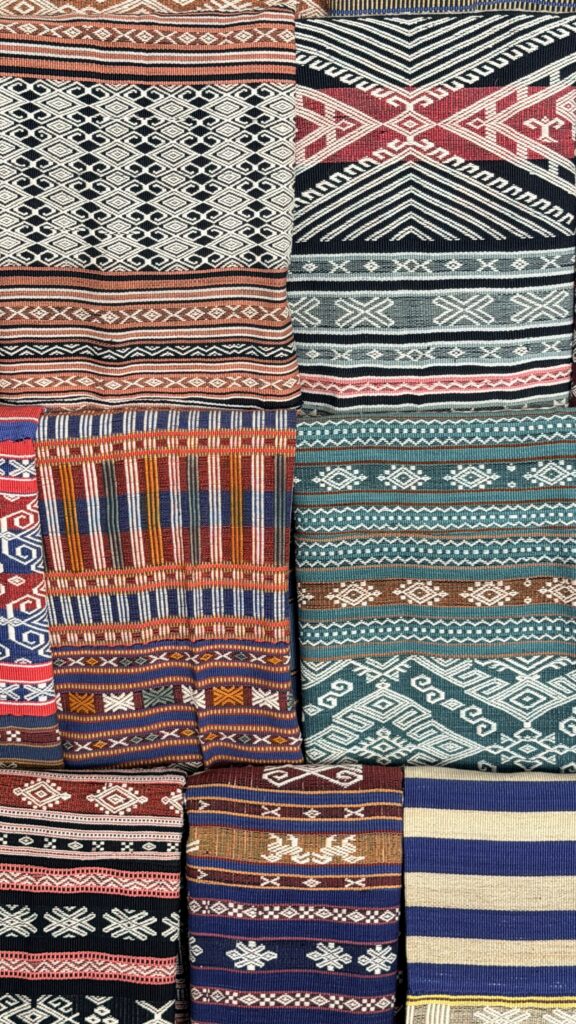
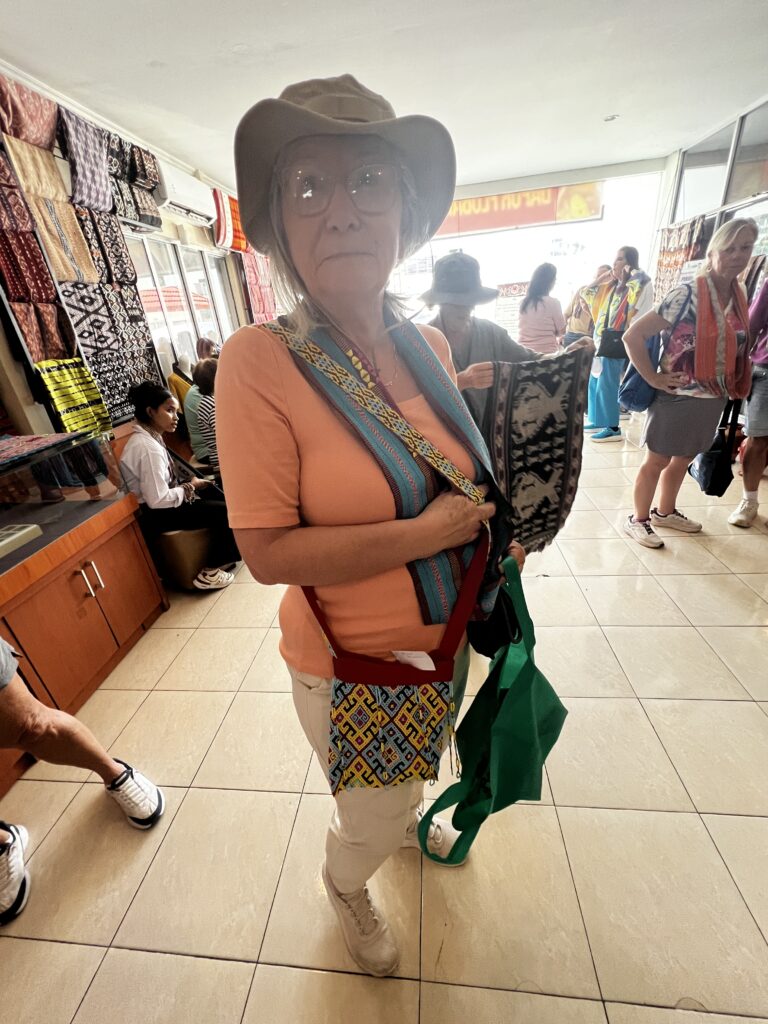
The last stop of the day was at a location where weaver’s worked making clothing, purses and other beautiful textiles. After this last stop we were back to the ship for a 4pm departure.

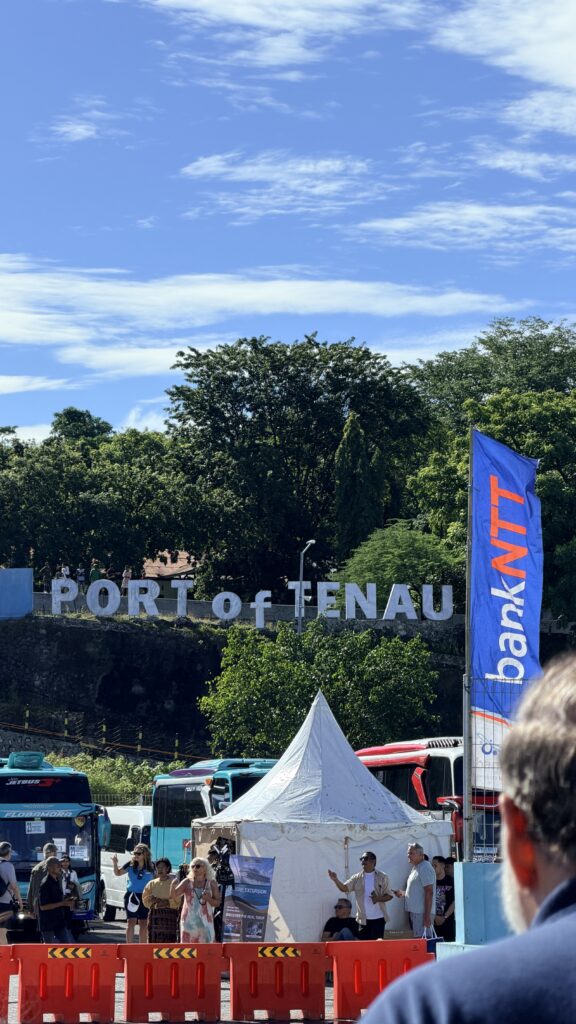
We were greeted by performers as we got off the ship.
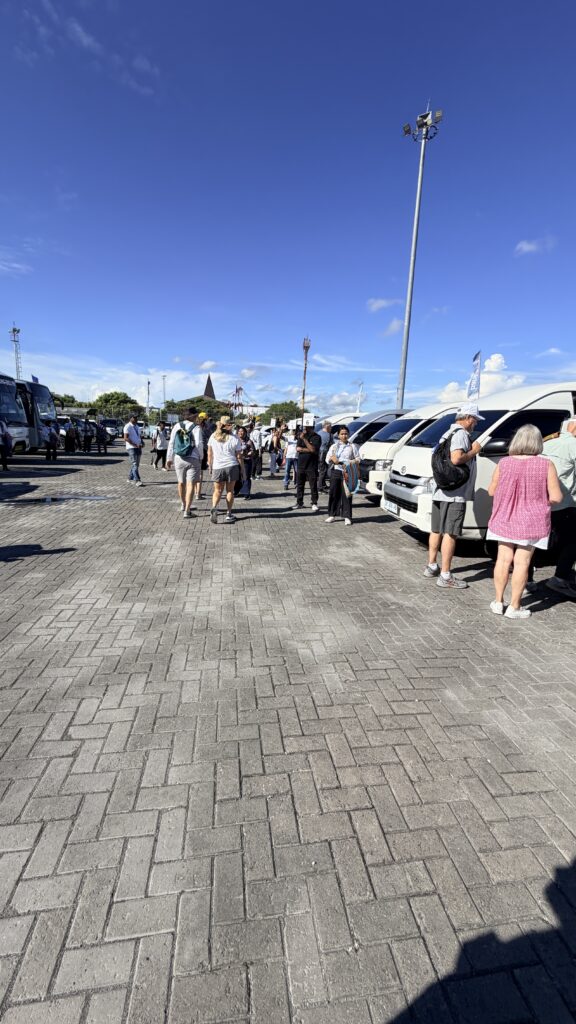
The caravan of vans that took around for the day. These vans took a beating on the roads and non-roads.
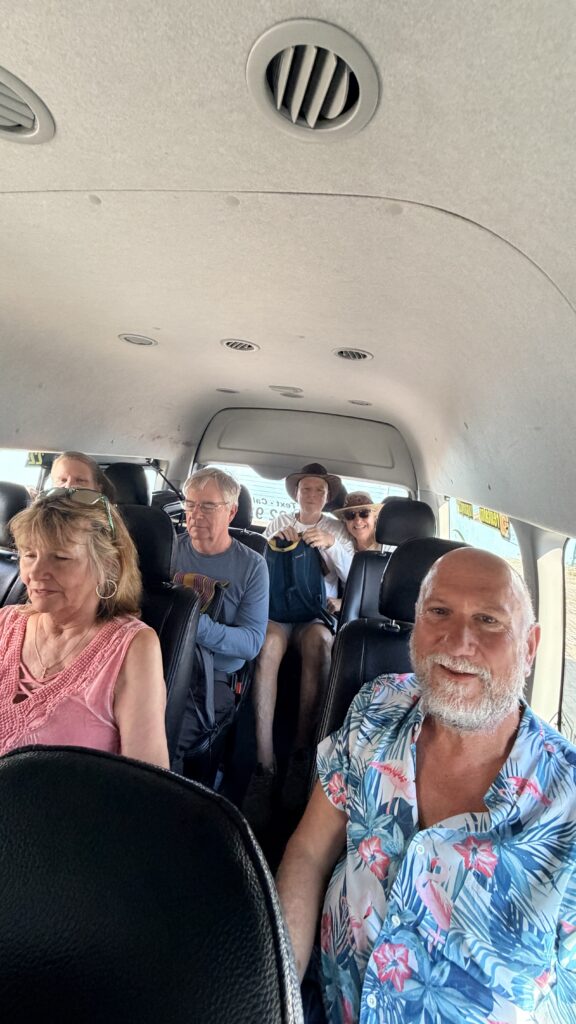
John and Joan were stuck in the back row and I had a seat where my feet were on the exit step of the van.
They were smiling but got rattled around throughout the day. We had fun on the excursion with them had many laughs and memories that will stay with us forever.
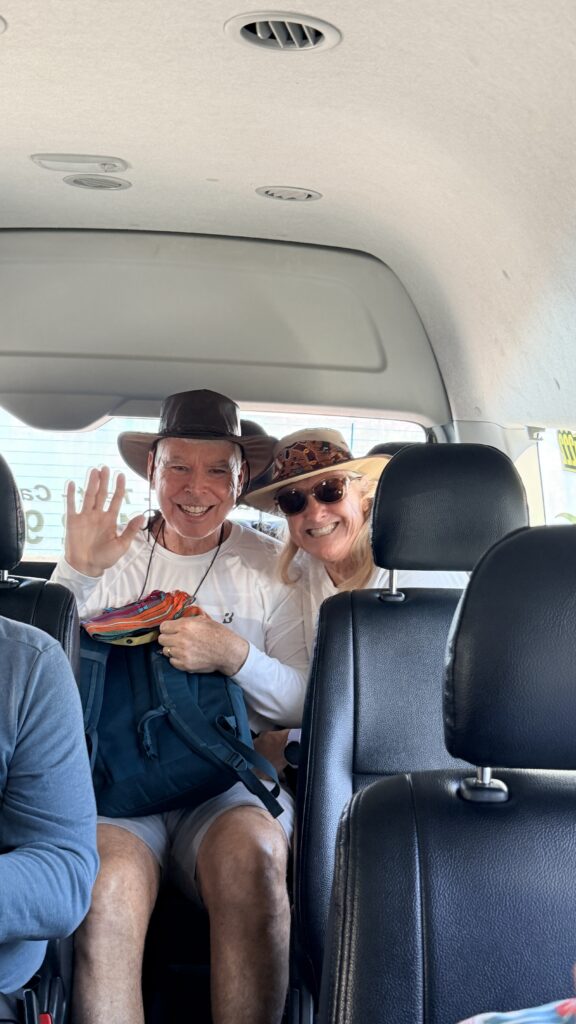
Photo of their local hospital
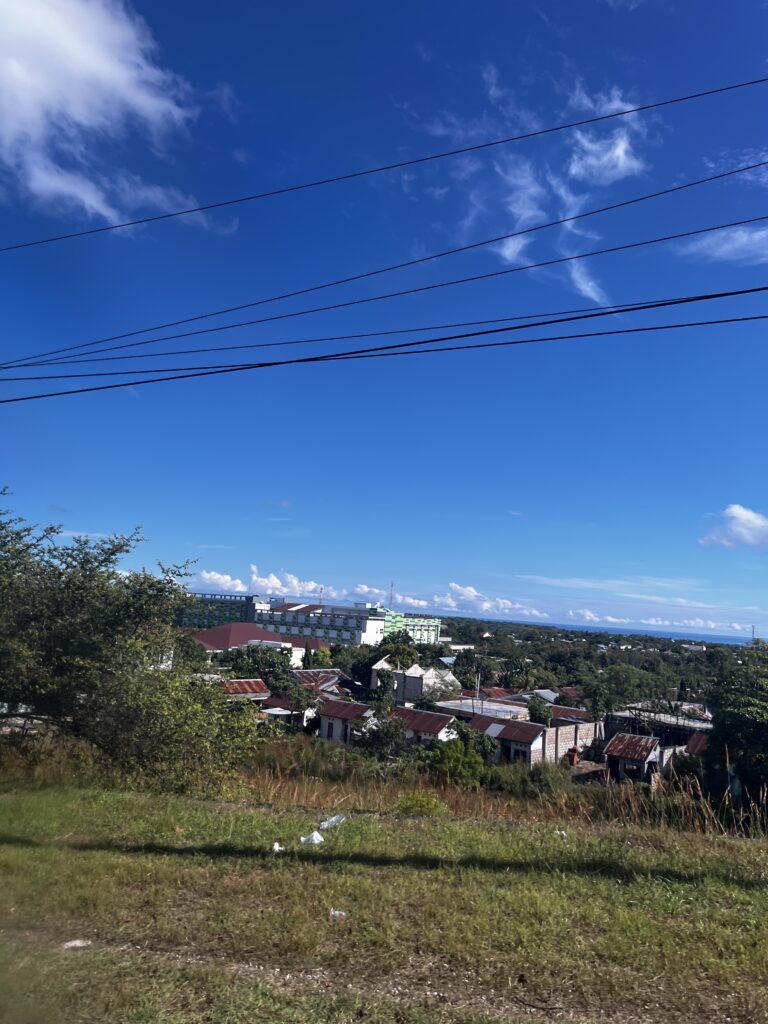
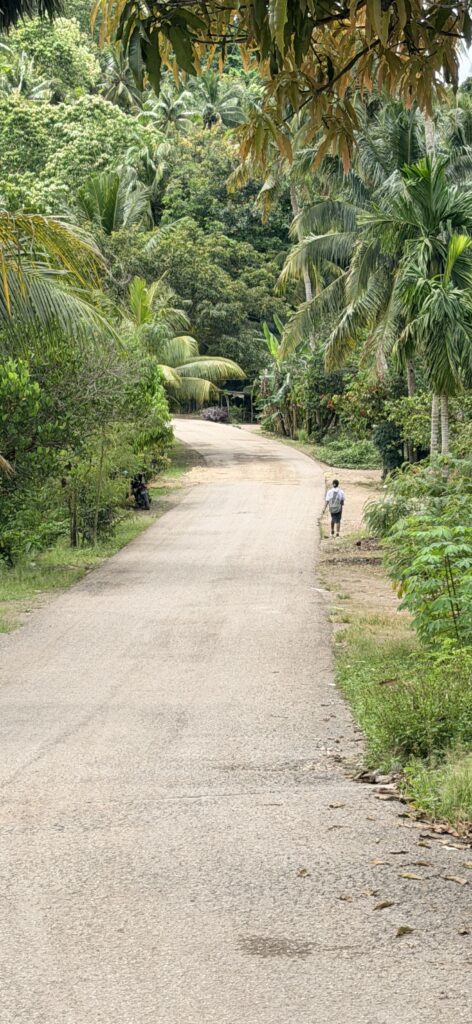
The road looked good for about three miles outside the city of Kupang but deteriorated quickly after this photo. Many times, the road was only one lane but since we had a police escort we were able to sneak through.
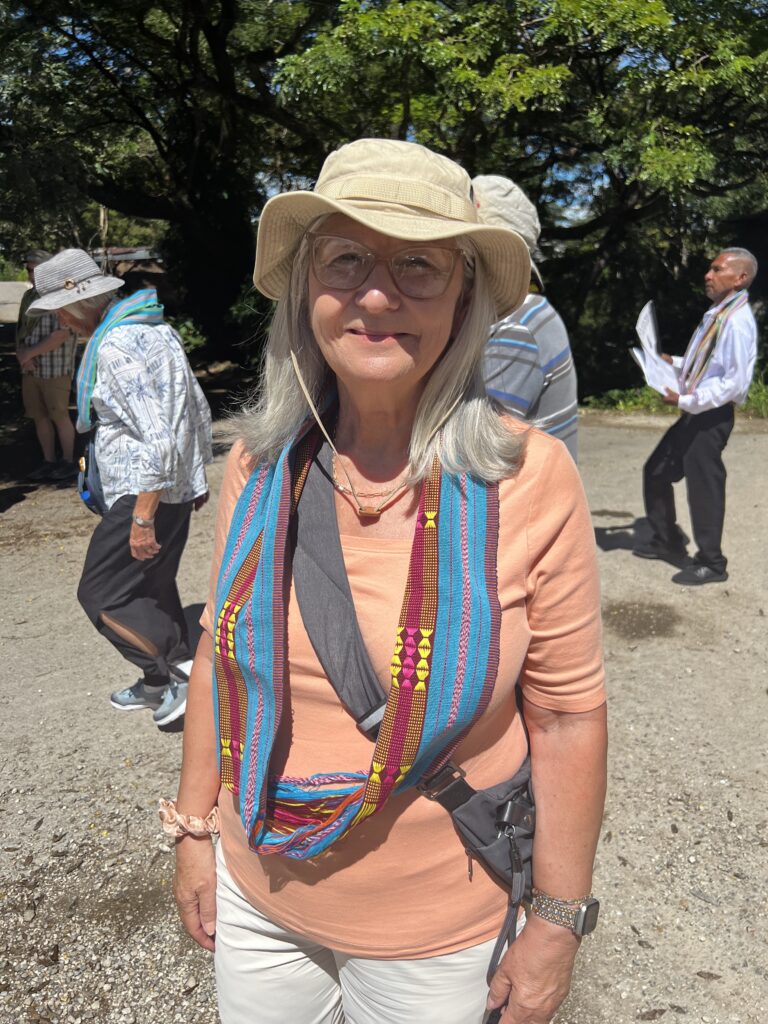
Each of us received a hand-woven scarf as a gift to begin the day.
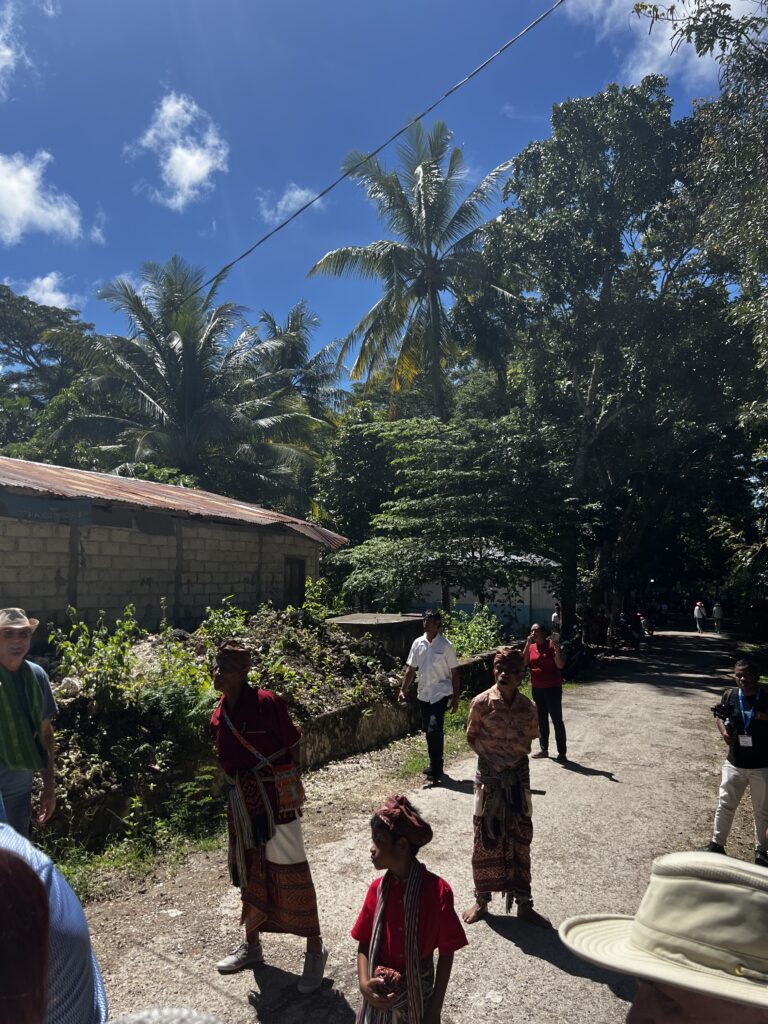
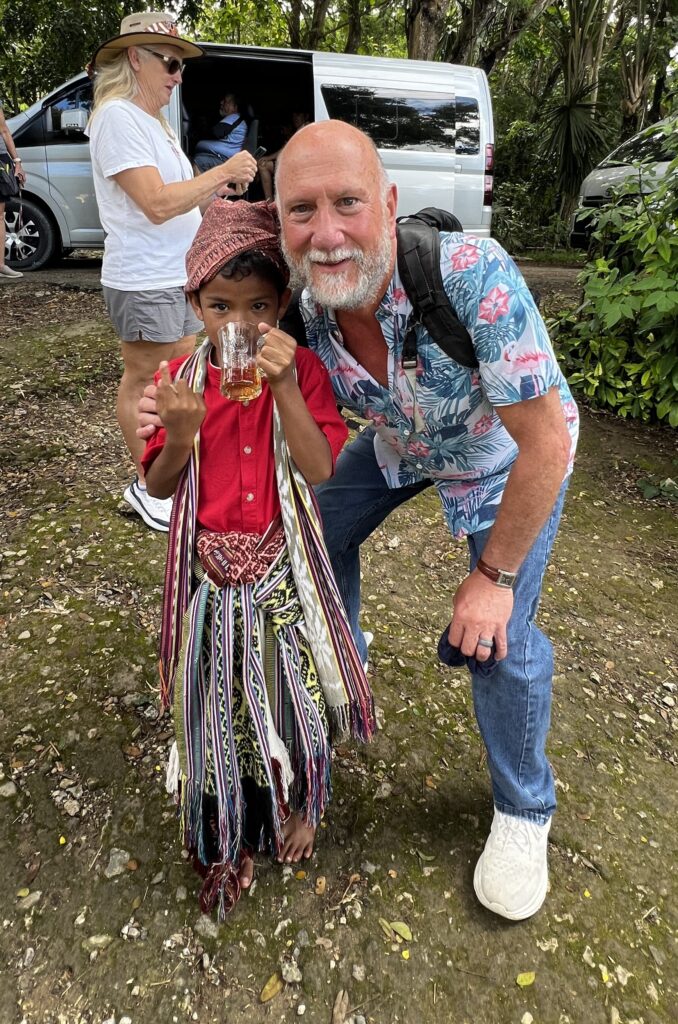
It makes me sick that I cannot upload a video as the one taken for the walk into village was great. Also, on the video you get a clear picture of the entire village waiting on the road for us to enter their village. In the distance you are able to see the village people on the road. The young boy in the photo lead the procession into the village. He seemed to play an important role in the day’s activities and we think he was maybe the grandson of the last king.
Below is a link to my Facebook post today that contains the video of us walking towards the village.
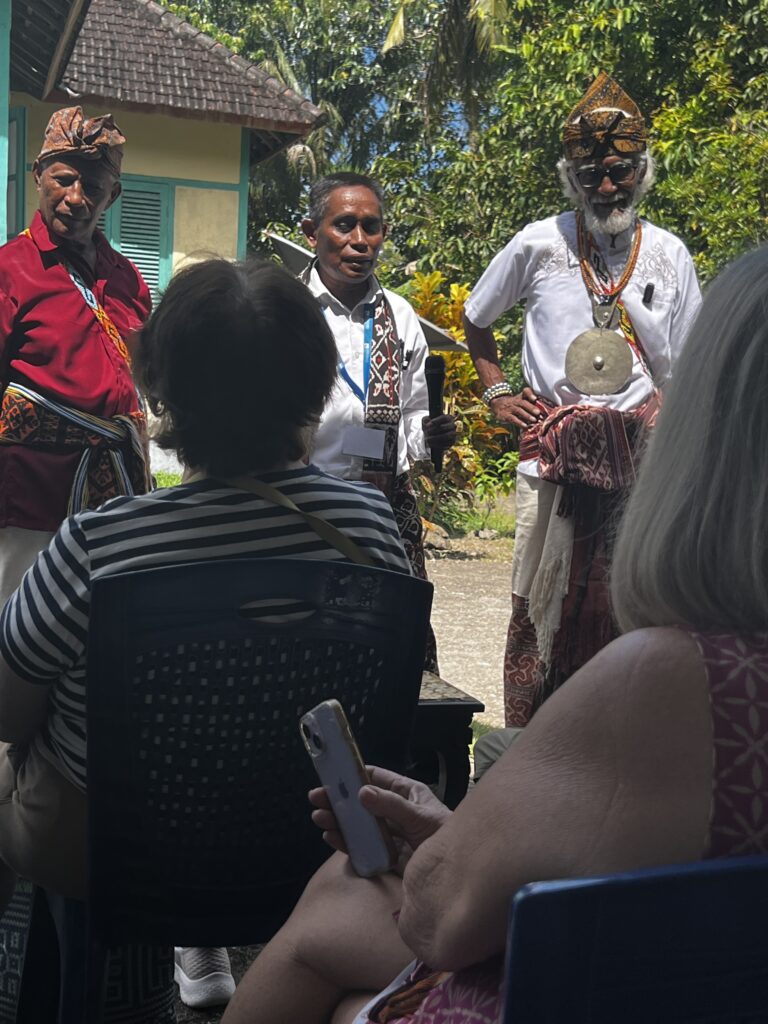
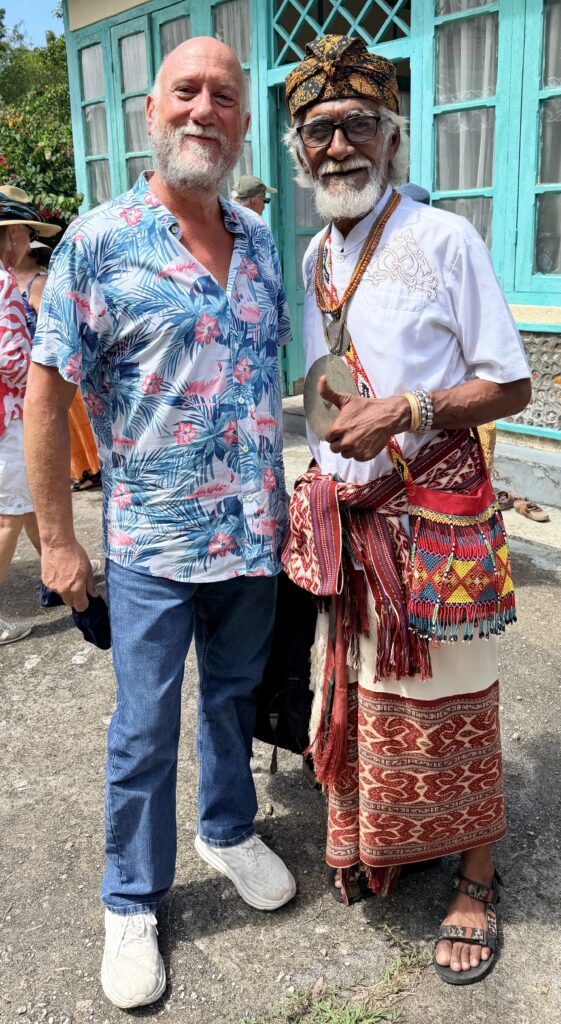
He is the son of the last king of Amarasi and he spoke to us and introduced the dancers and performers.
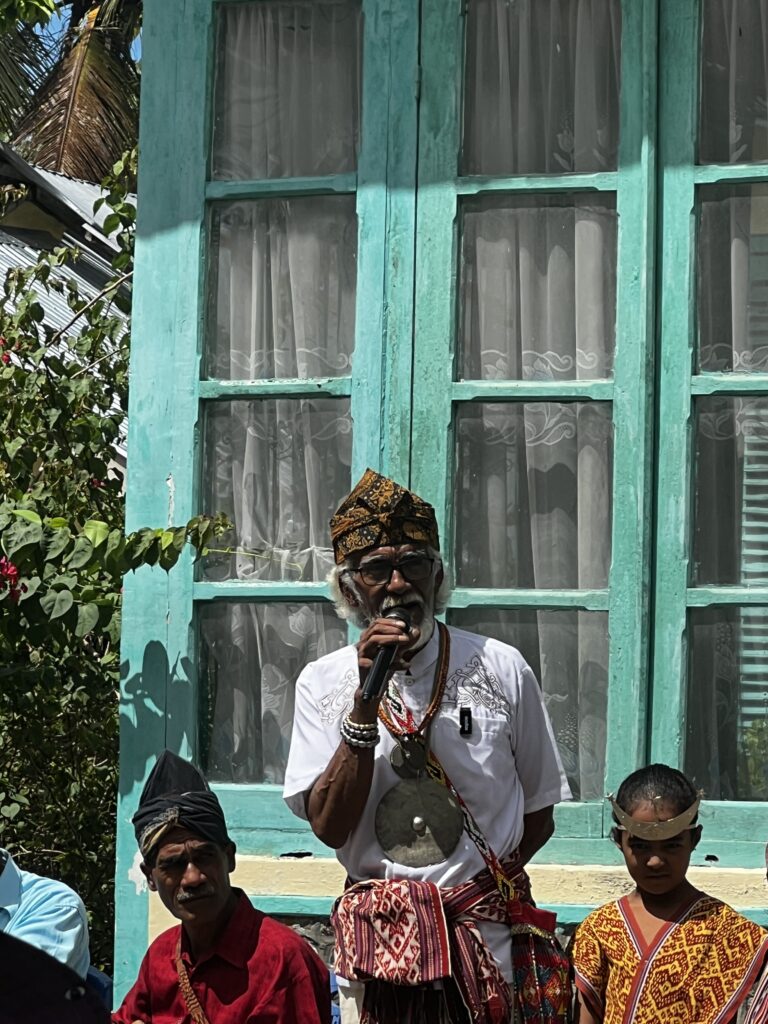
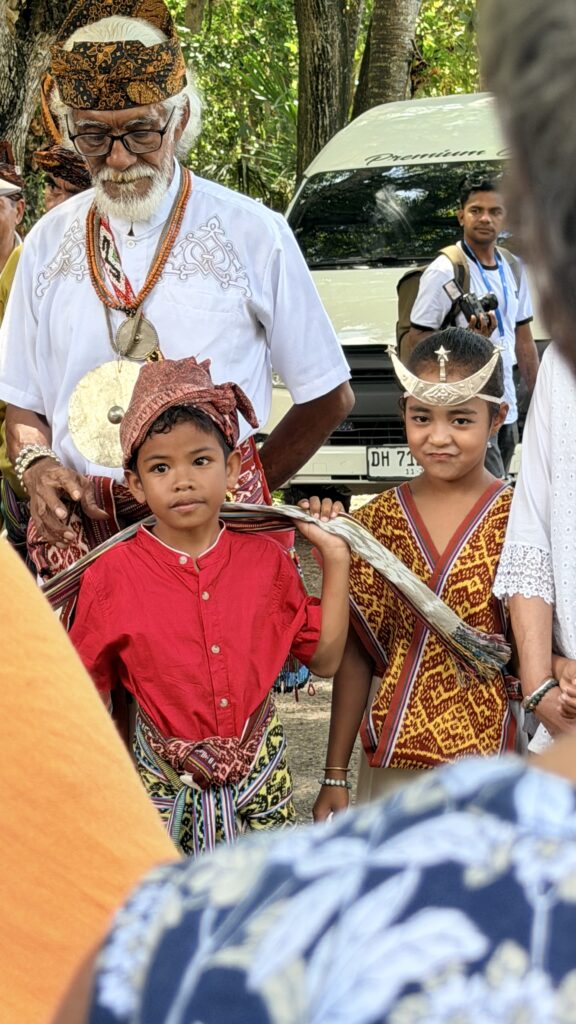
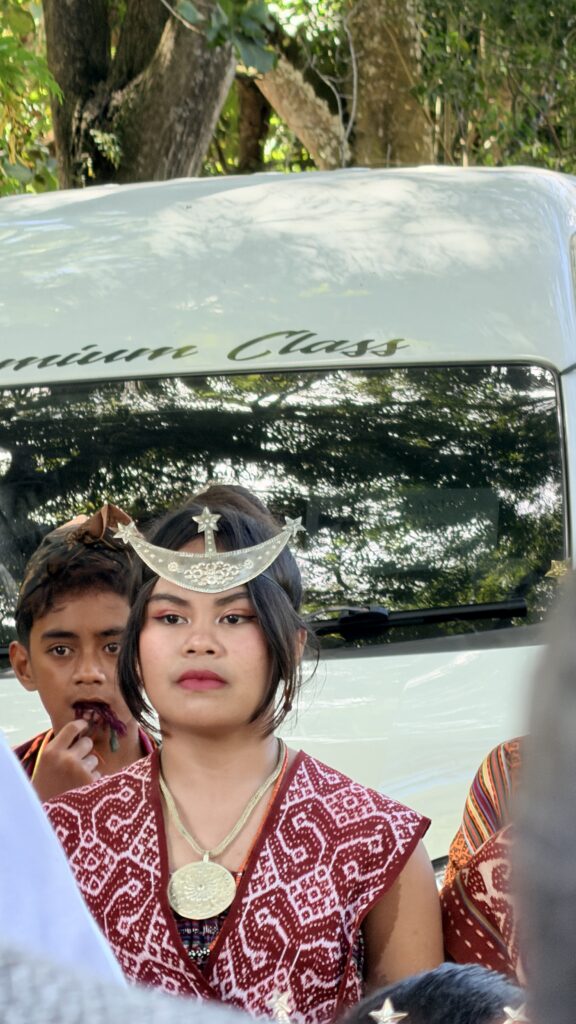
Photos of the young performers. Again, sad that videos cannot be uploaded on the ship.
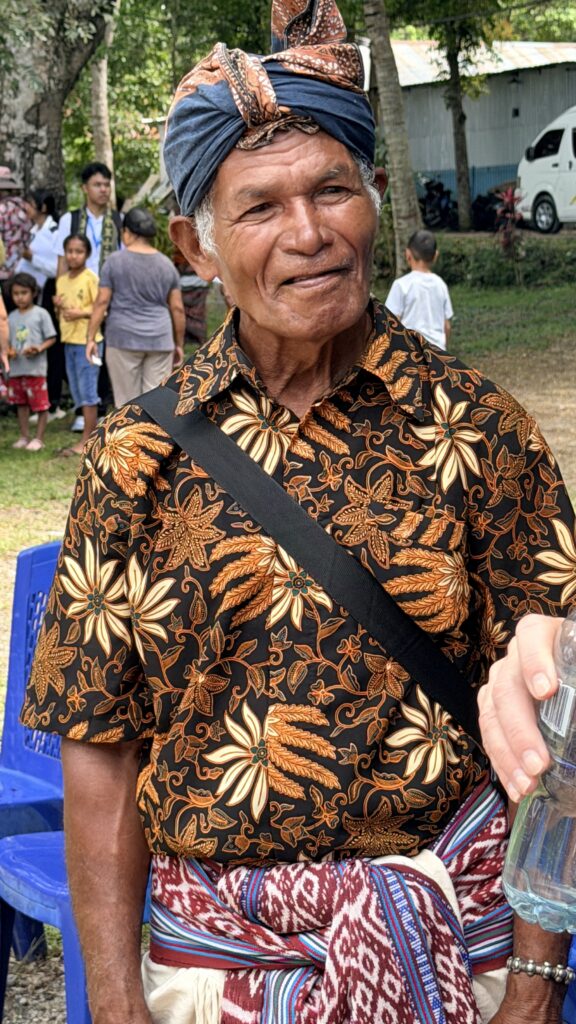
The last king’s son is on the right, the man in the middle was our interpreter and the man on the left we ended up having fun with at the end of our tour. They were explaining to us about the Betel Nut and the smile on the king’s son on the right should have been a warning 🙂
Betel Nut time and you do not see many passengers sticking around for this activity 🙂 Joan was the first person to try and look at her face.
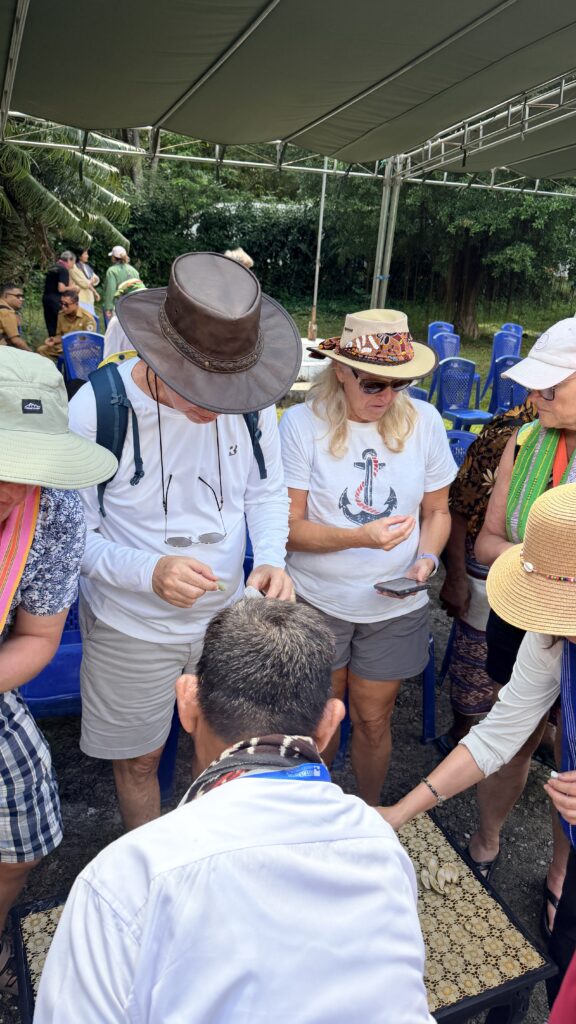
John had an even better face. By this time I should have walked away but I could not allow them to suffer alone. In his palm is the lime powder that we kidded tonight was really cocaine
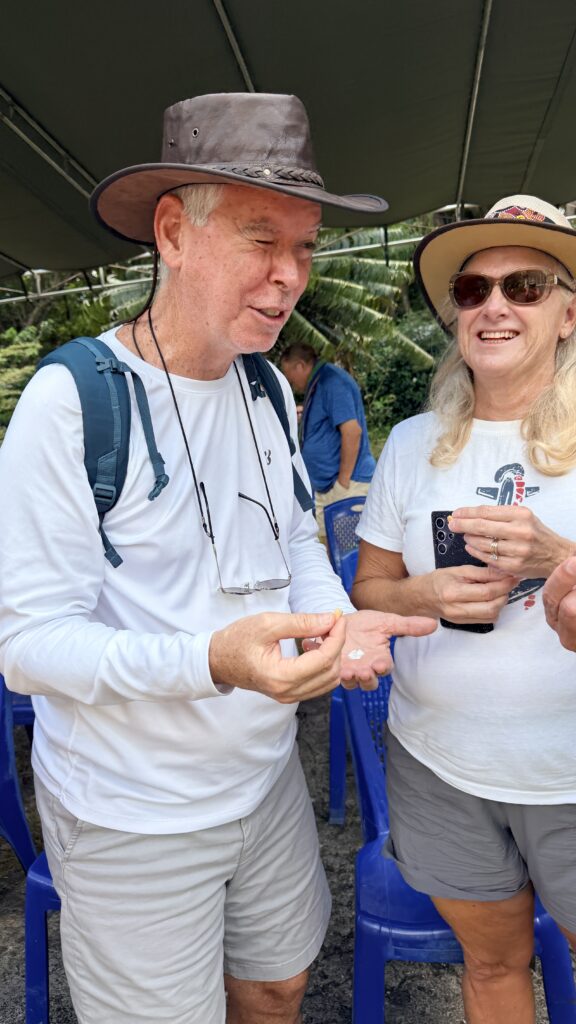
DON’T DO IT!!!!!
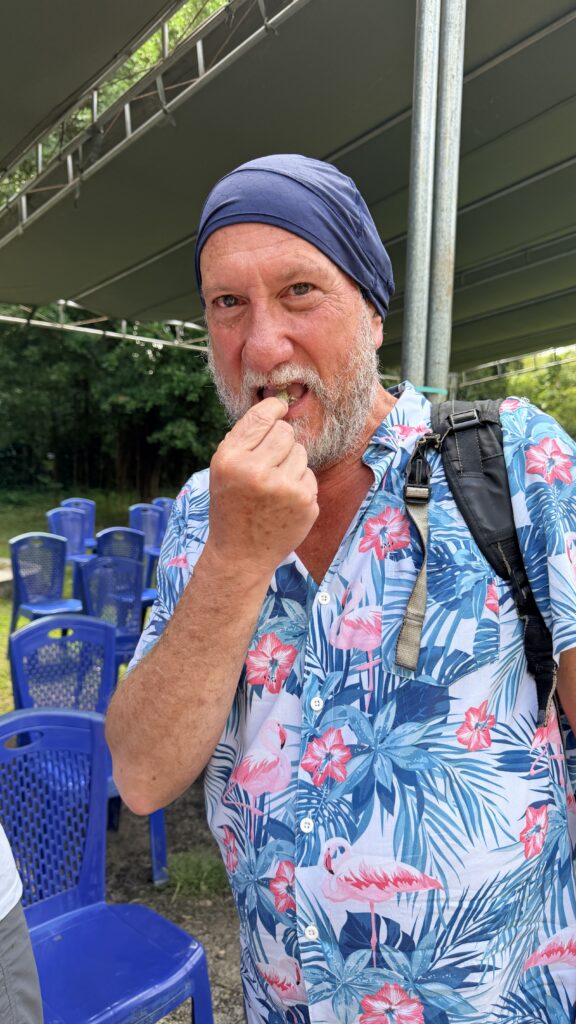
That was some nasty stuff and soon after this I lost feeling in my lips and mouth. Then, John and I lost all inhibitions and started walking through their buildings and taking pictures with the kids. It was a fun experience, but never tasting that stuff again
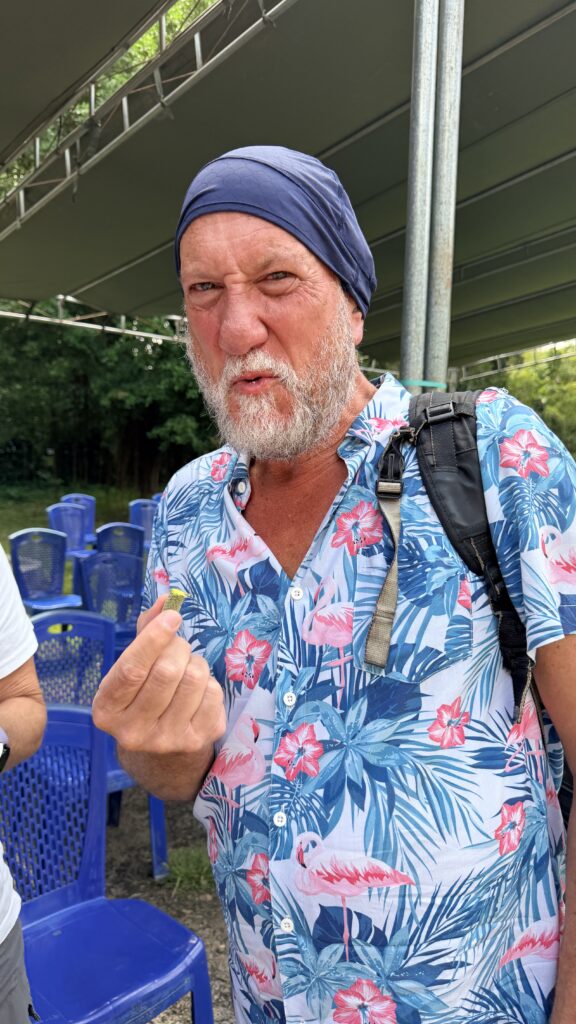
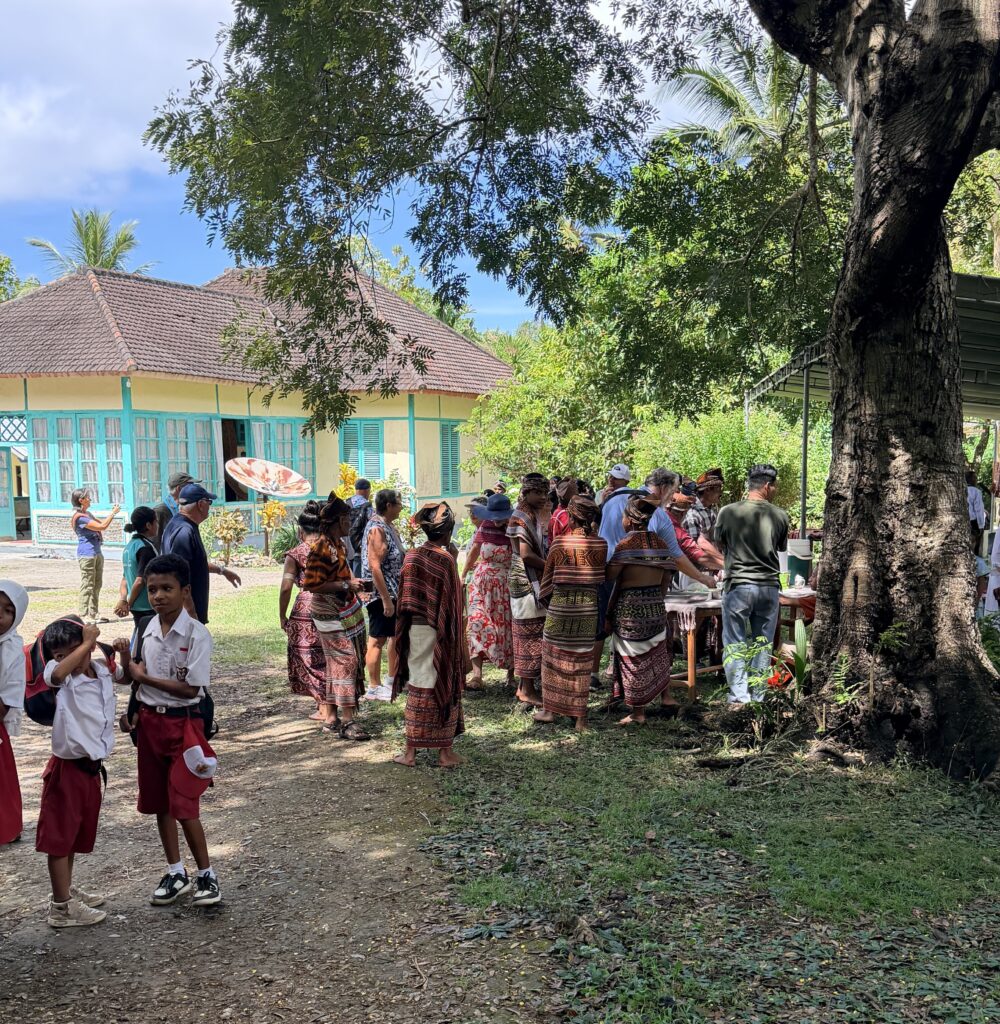
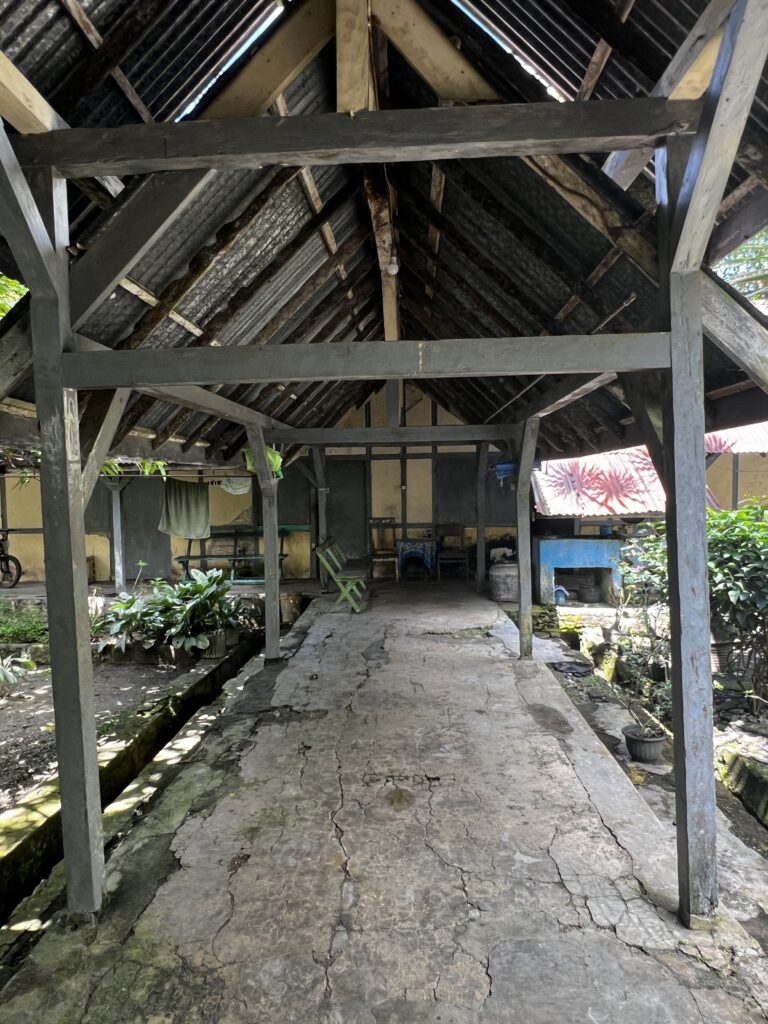
I never made it under this tent as we ran out of time, but the building in the back was for visitors of the king. After the Betel nut experience John and I decided it was time to explore and went into the building. First, we asked for permission to go in and if we needed to remove our shoes. We were given permission to enter and keep our shoes on, but honestly, we did not know because the man didn’t speak English and we didn’t speak Indonesian. 🙂
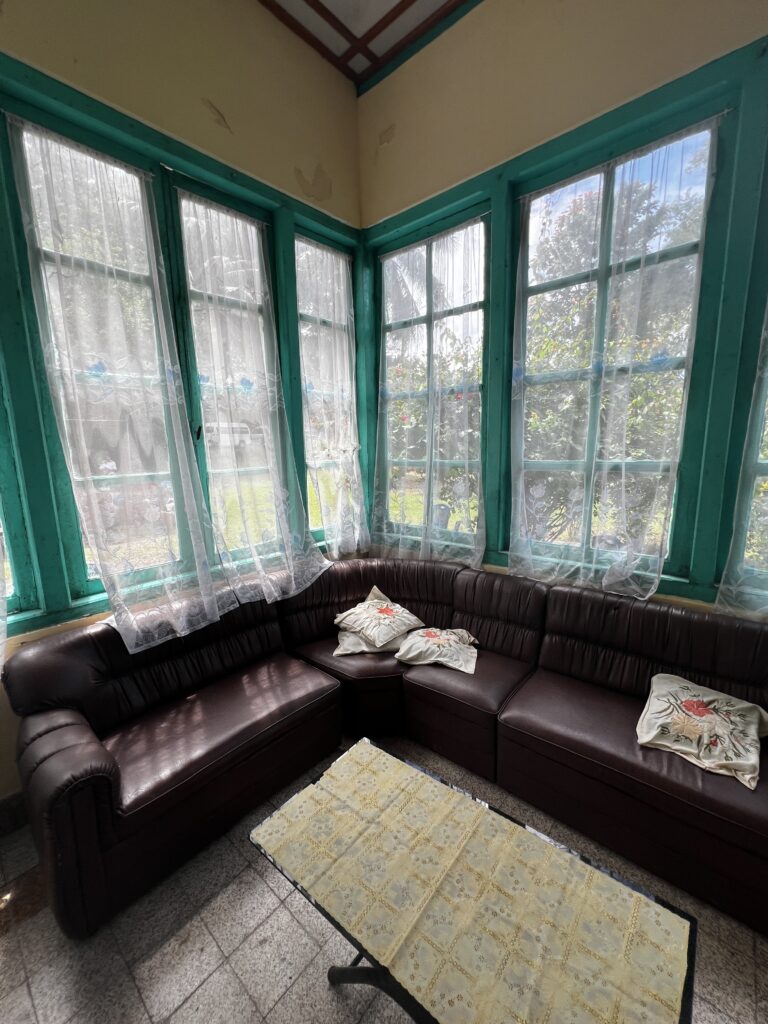
The first part of the building was a living room for the king’s visitors. Of course we were curious to what was behind the curtains, so we asked permission check it out.
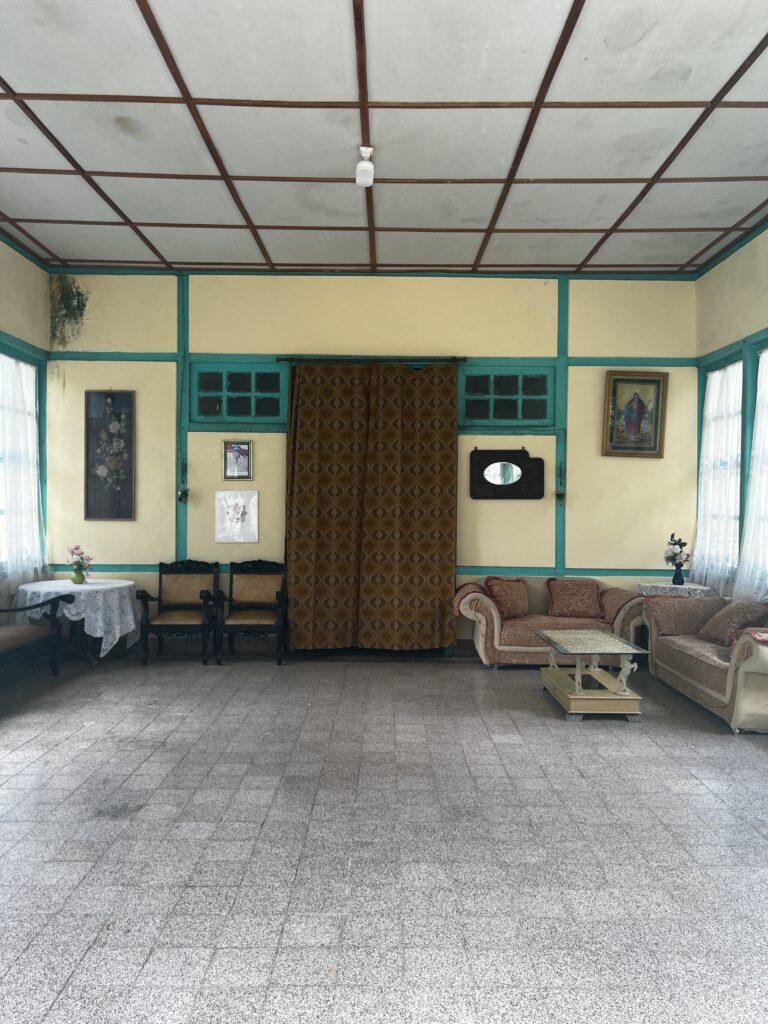
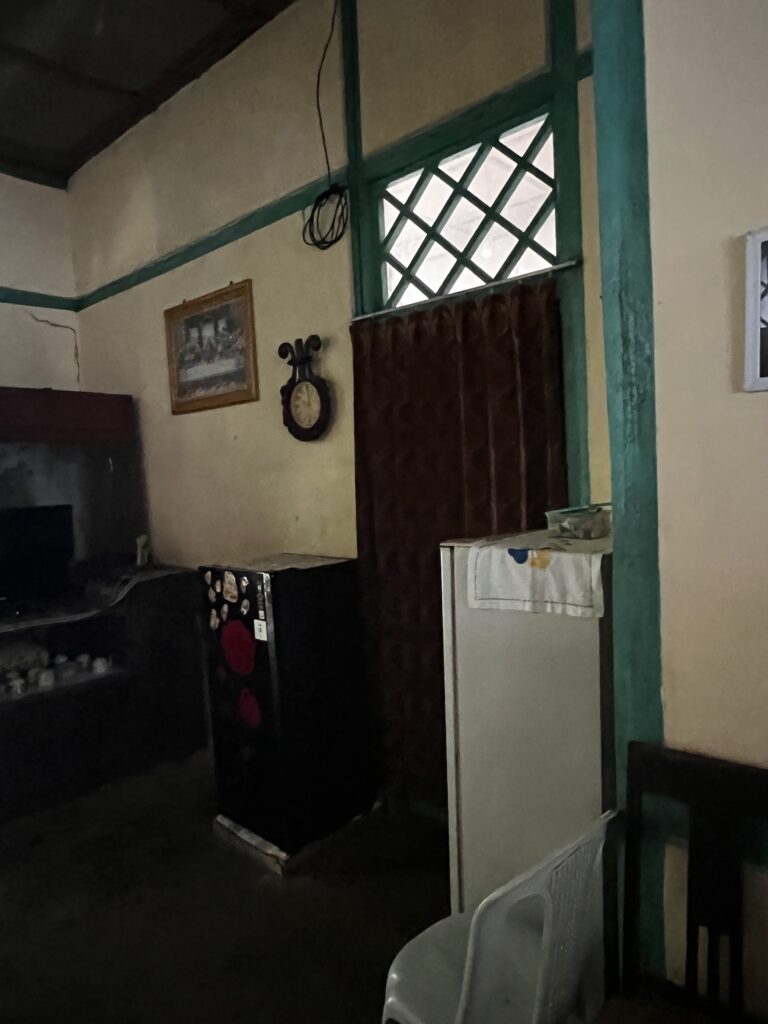
Behind the curtain was the dining room where the king would eat meals with the visitors
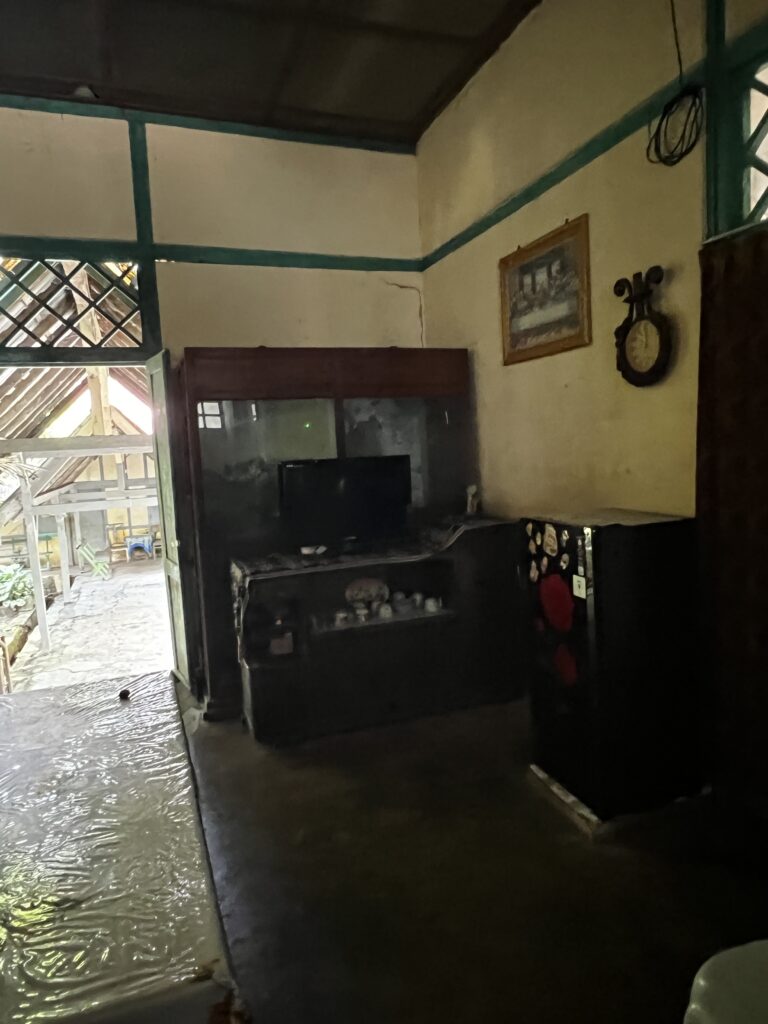
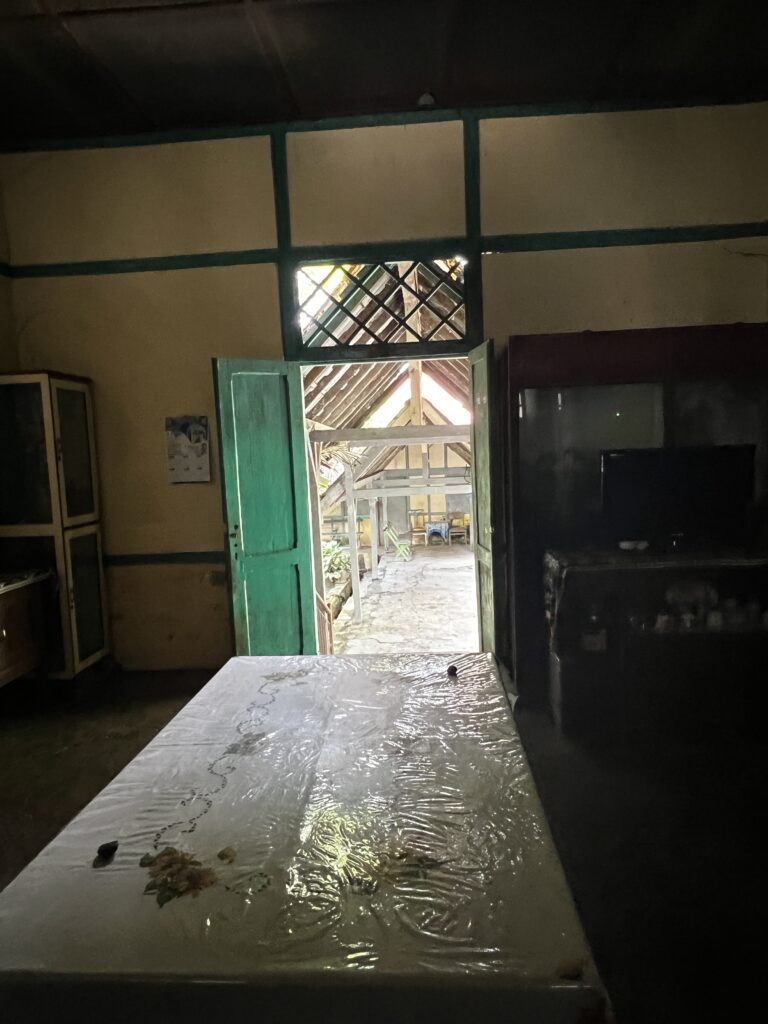
Outside the dining room was a courtyard area
It was getting time to leave. Villagers, especially children wanted photos of us and we took photos of them. This is the man from an earlier photo who we assume was a village leader as he was hanging around with the king’s son. He was funny and kept hand slapping with us and shaking our hands in different ways. Check out his lips which are red stained from chewing the betel nuts.
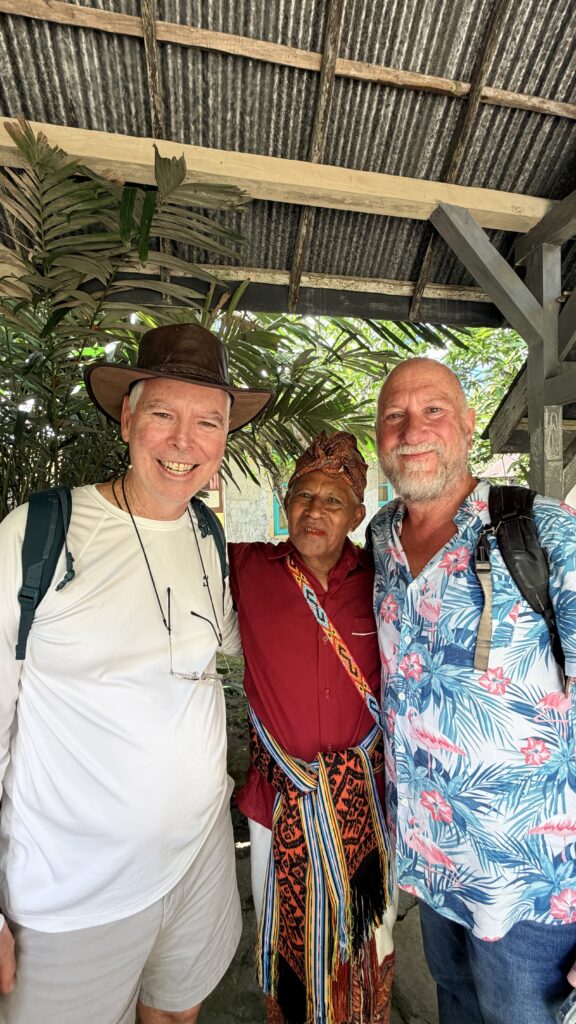
Photo with the last king’s son
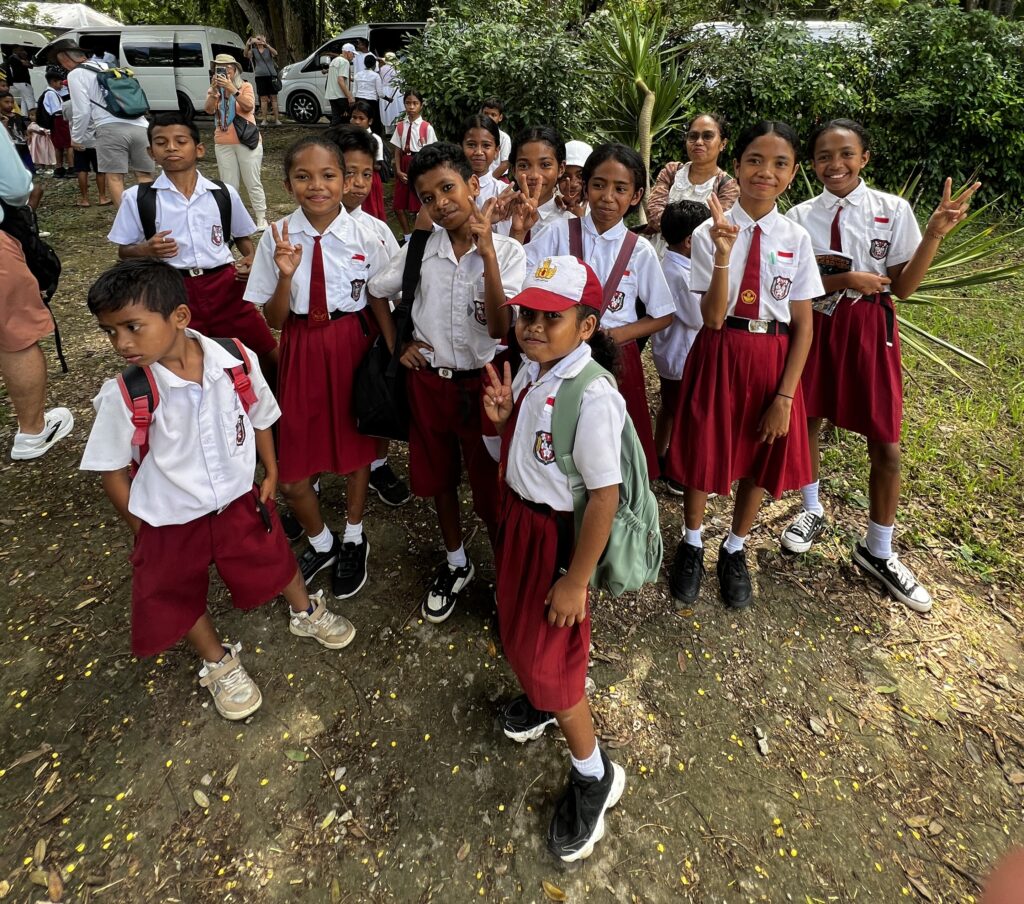
As we leaving, the children began asking to take photos of me and John. Also, Jackie captured me taking the kid’s pictures. We were having a blast and if they had not made us get into the van, we might still be there tonight. 🙂
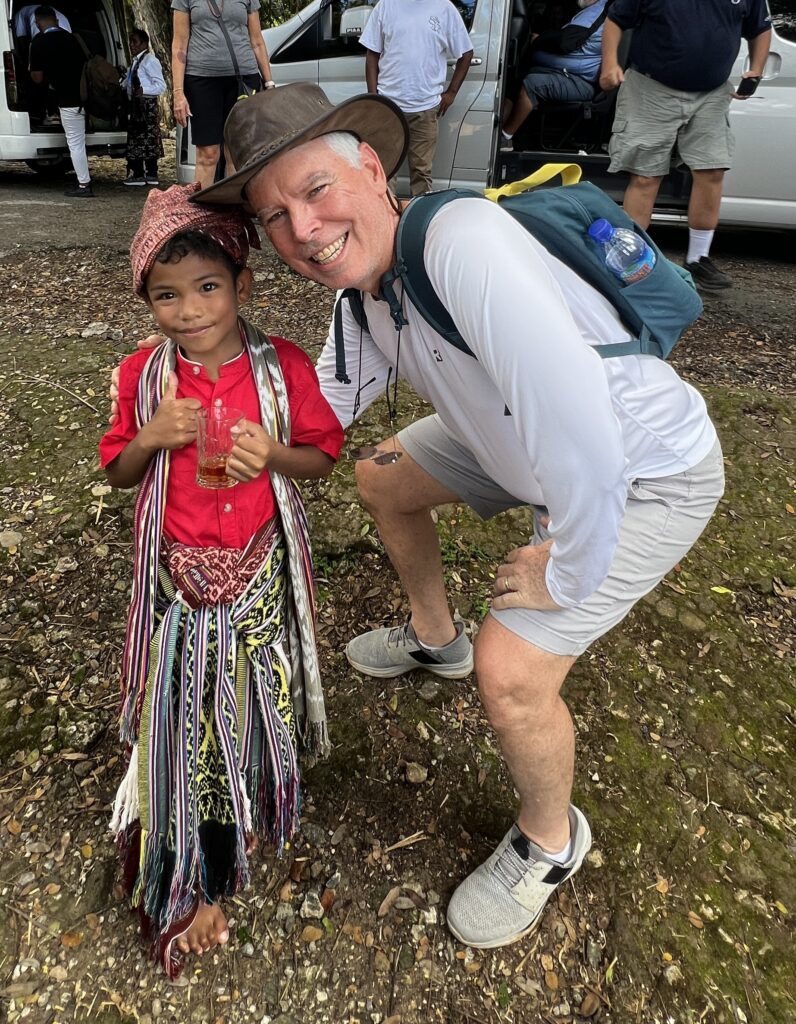
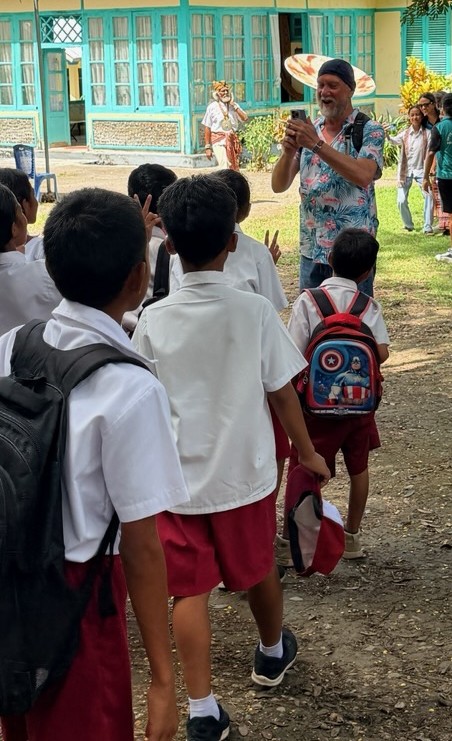
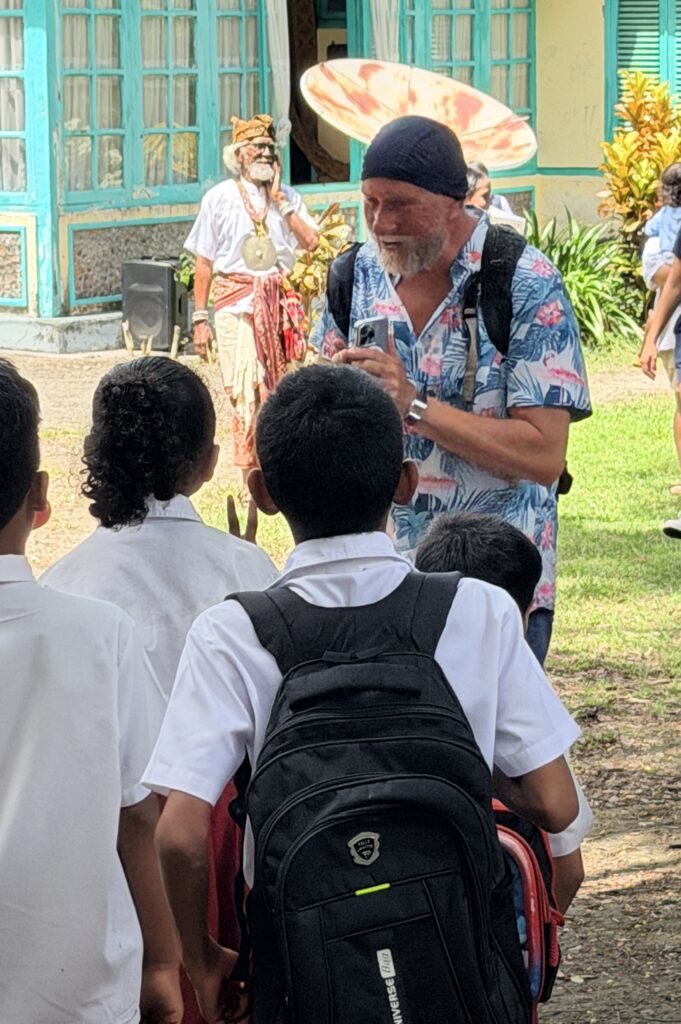
You can see Jackie in the background taking me taking my picture while I take the picture of the kids
This was our next stop
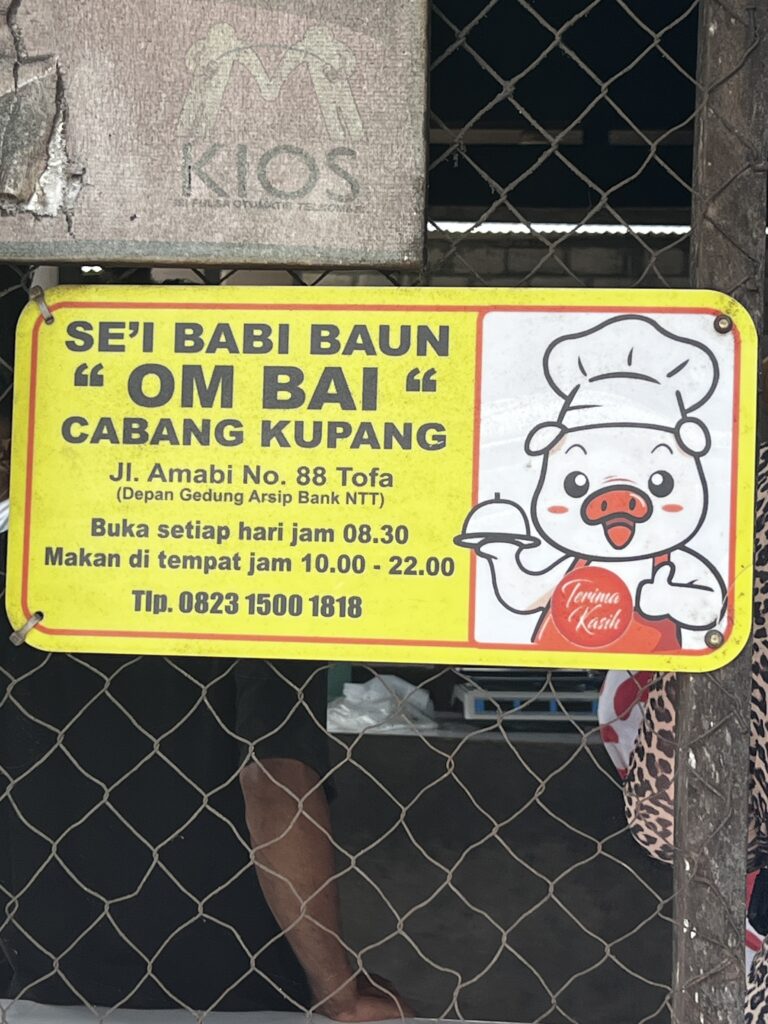
Sei Babi Om Bai Baun is a renowned restaurant in East Nusa Tenggara, known for its authentic smoked pork dishes. The establishment has been serving se’i since 1997 and maintains the original meat-used and smoking-method, offering well-cooked se’i with a very original taste. Reviewers praise the amazing flavor of the pork, which is smoked on coffee tree branches, as well as the balanced sayur (vegetables) and typical sambal luat (spicy sauce). While some mention that the atmosphere can get cramped during busy times, overall, visitors appreciate the delicious food at reasonable prices.
They cook (smoke) strips of pork over an open fire
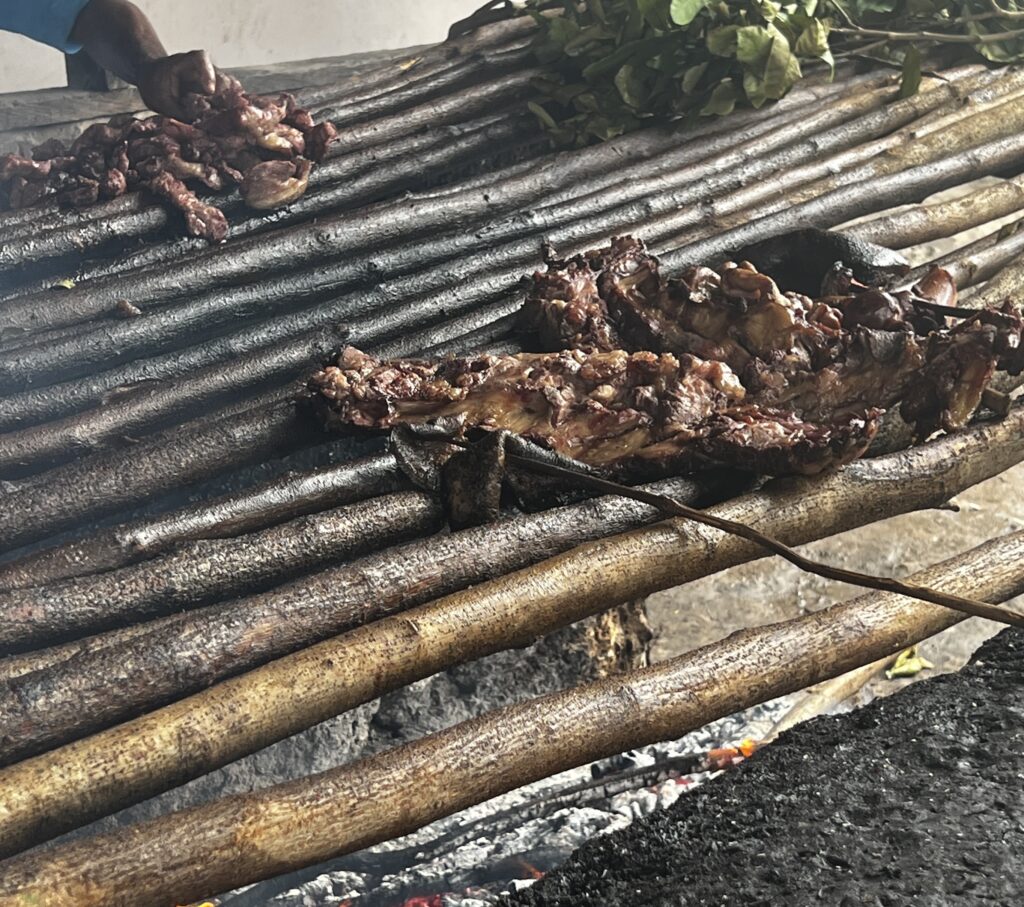
They placed new strips of pork on the bamboo
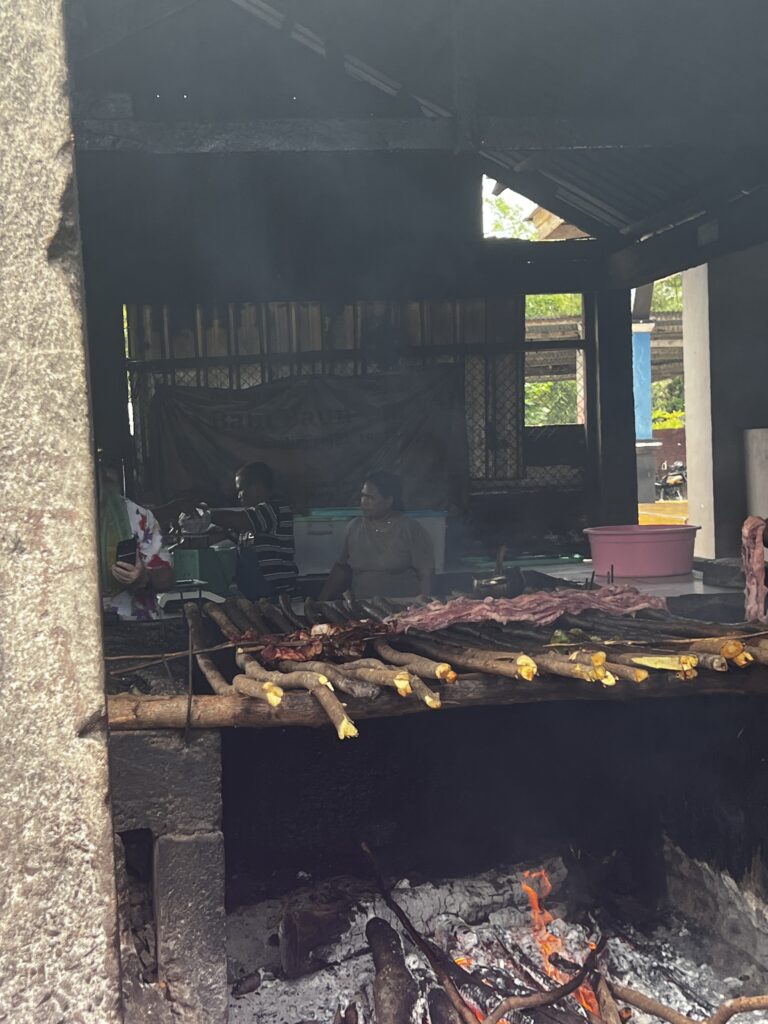
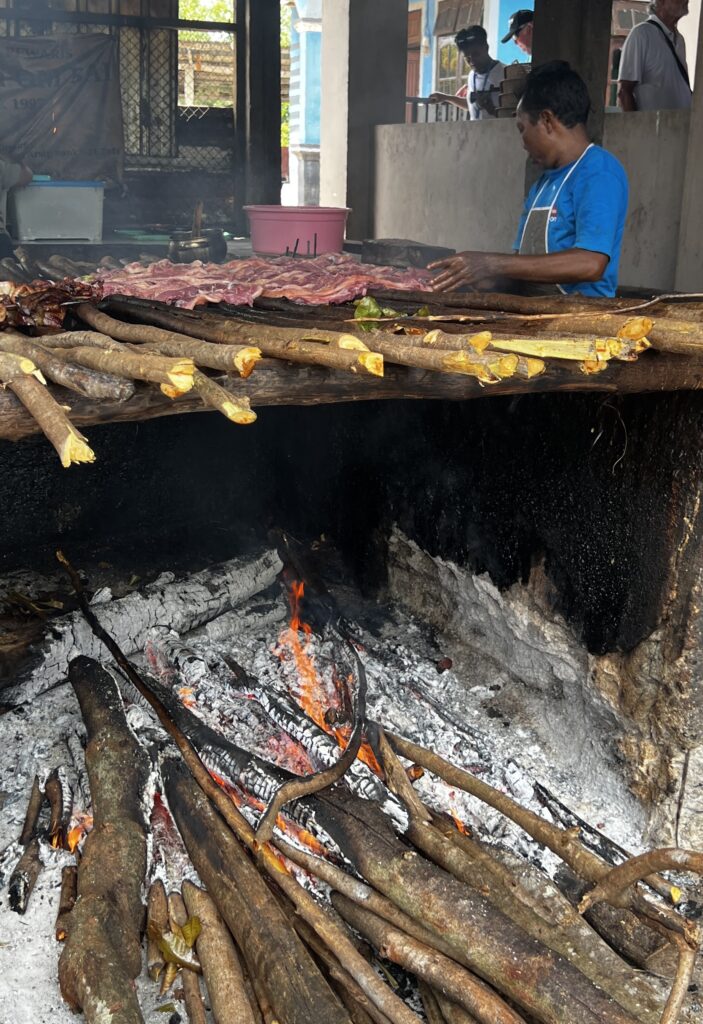
Adding more wood to the fire
Cover the meat with guava leaves and smoke it for four hours
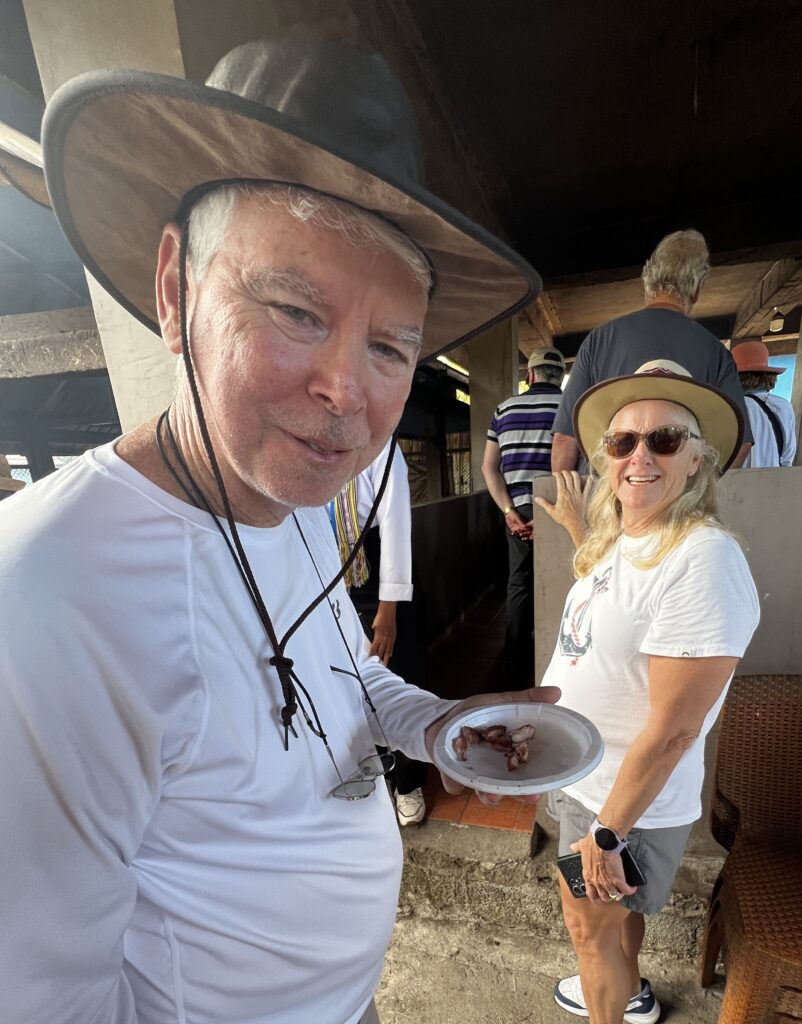
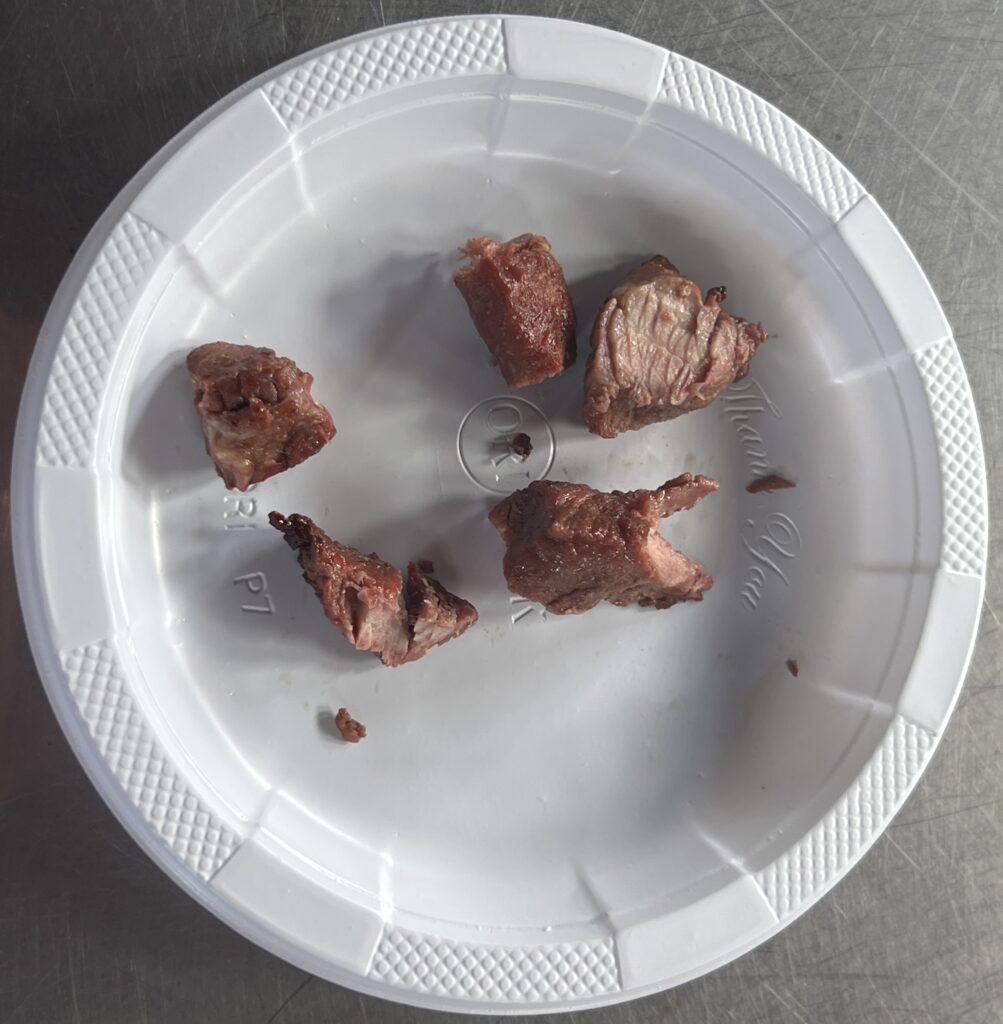
The pork was very good and we ate a couple of plates
Our last stop was at a textile factory. The weavers were quite skilled and created a number of different products.
Jackie bought a bag that she said would be to carry her betel nuts. It was a good joke because the purse’s price was 400,000 Indonesian rupees which is $23 USD
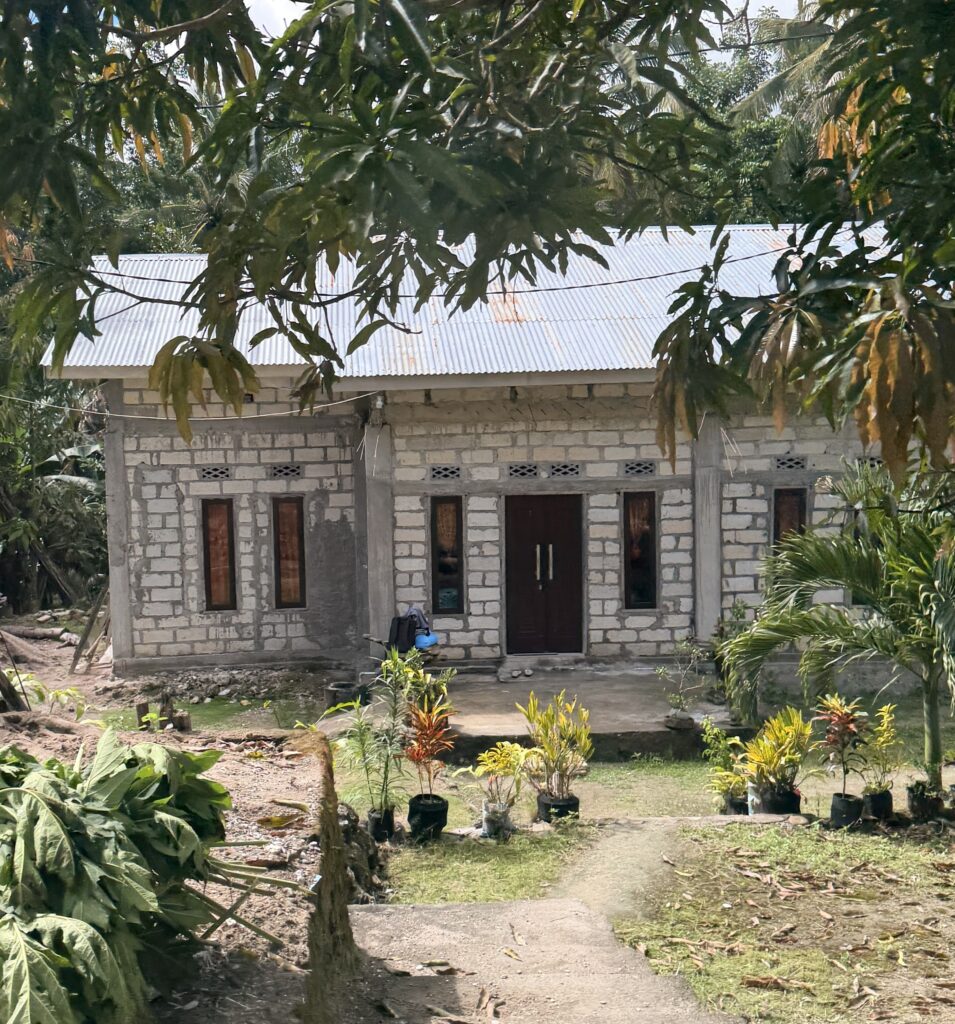
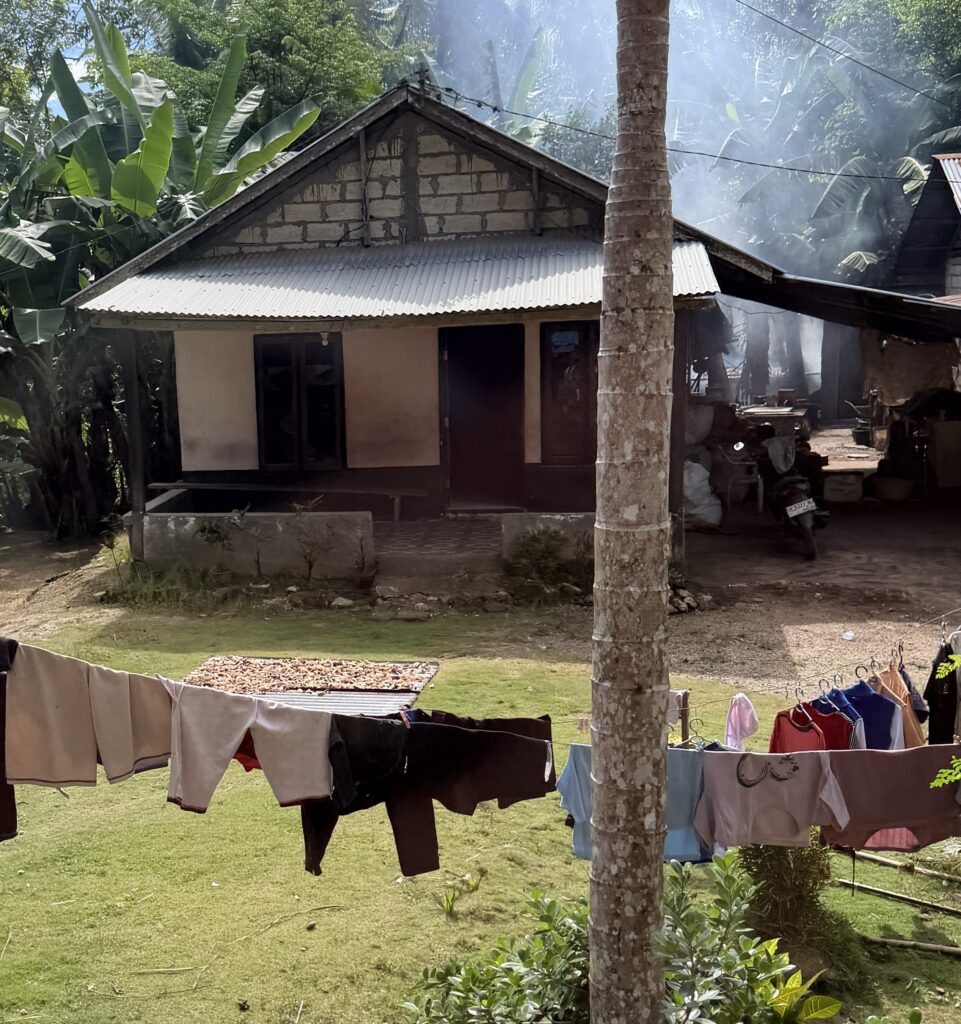
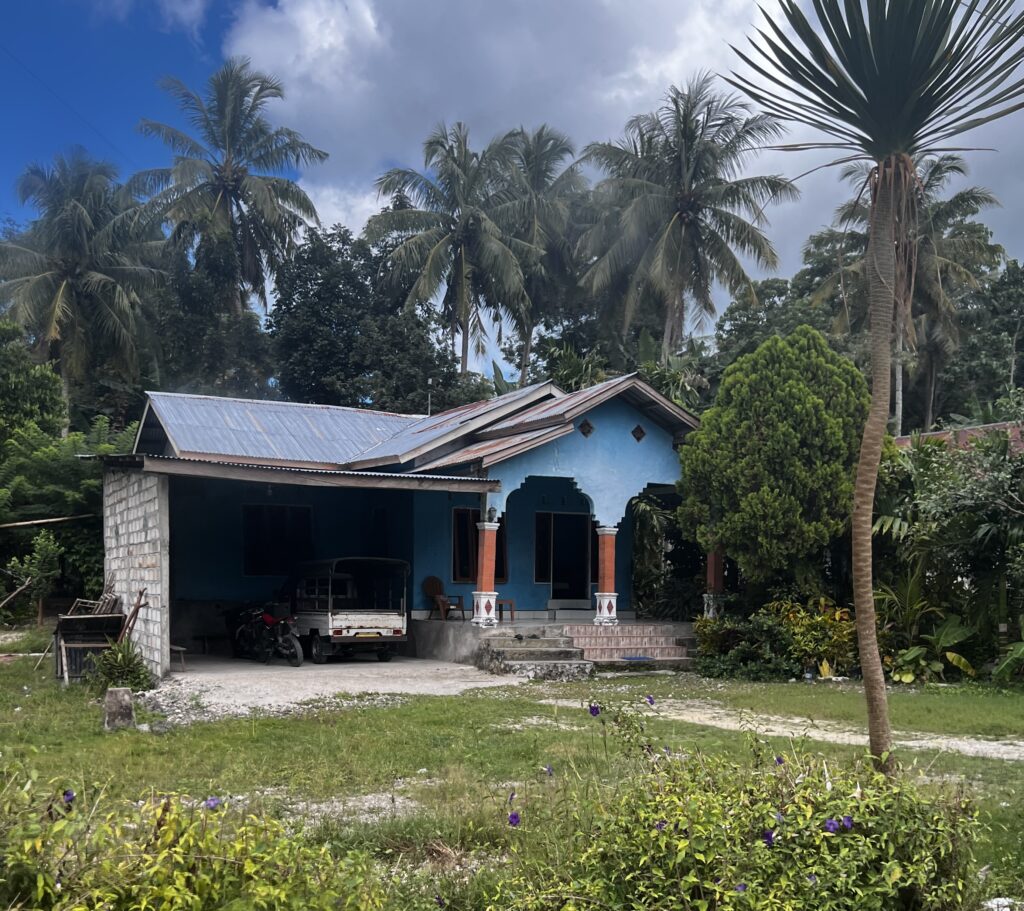
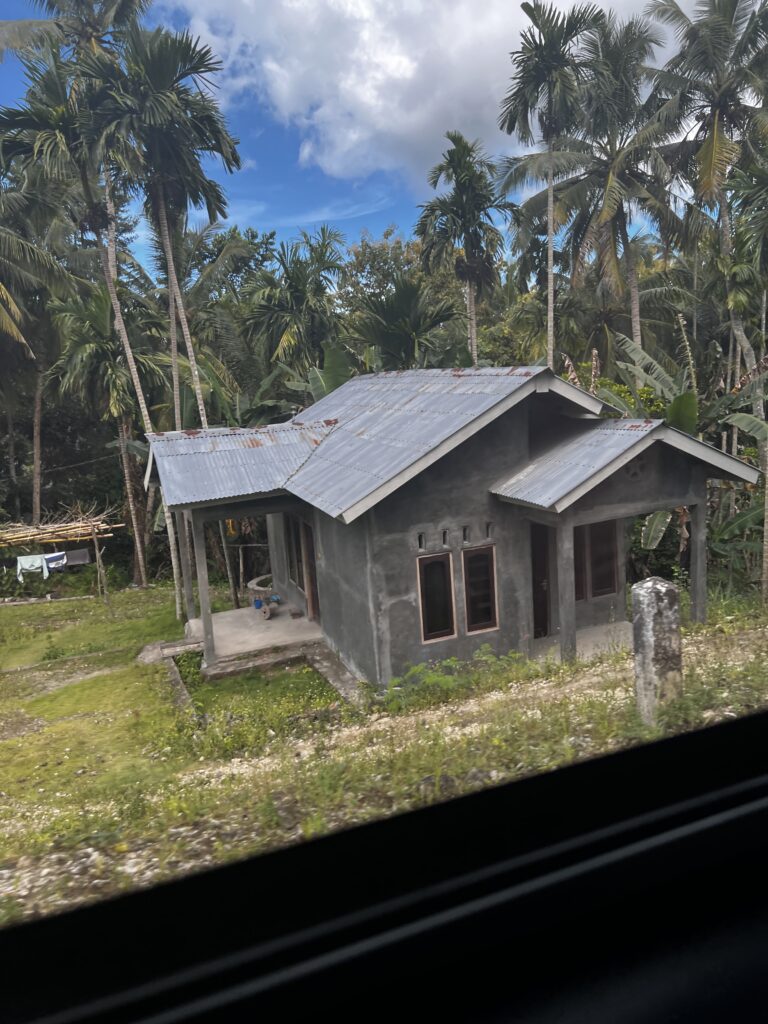
We have quite a number of house pictures but because of the slow Wi-Fi I can only upload a few. We were surprised as the homes were quite nice. We are unsure if there is electricity or running water to all of the homes.
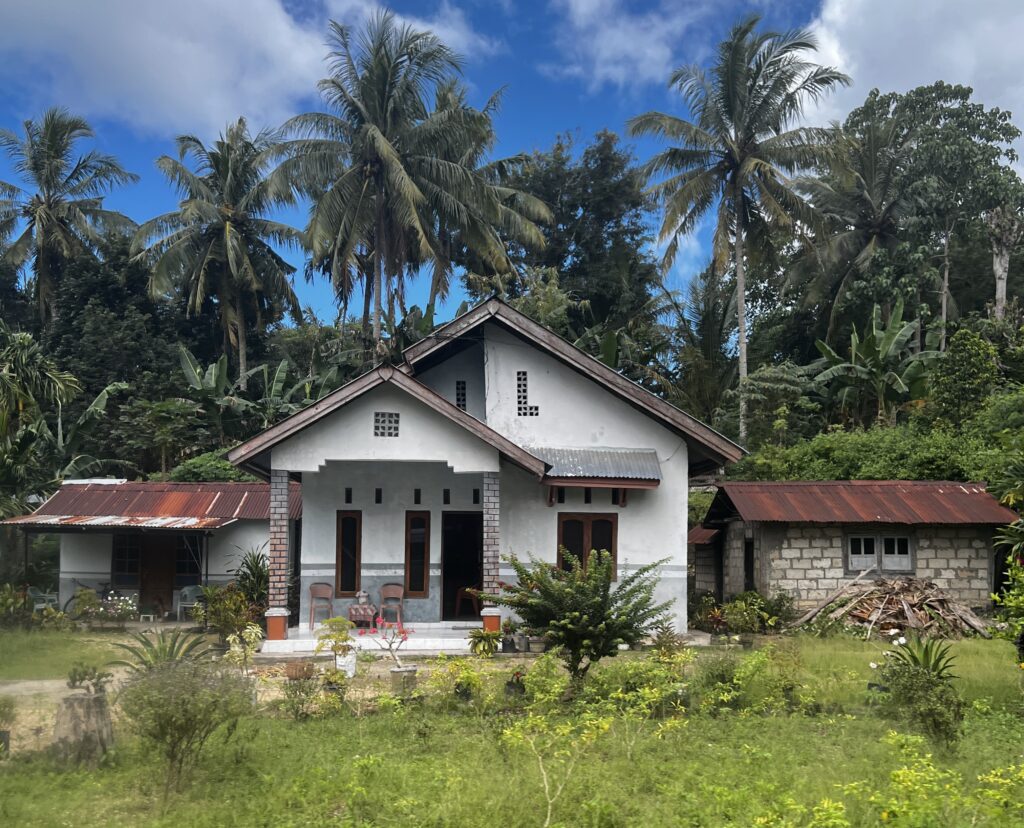
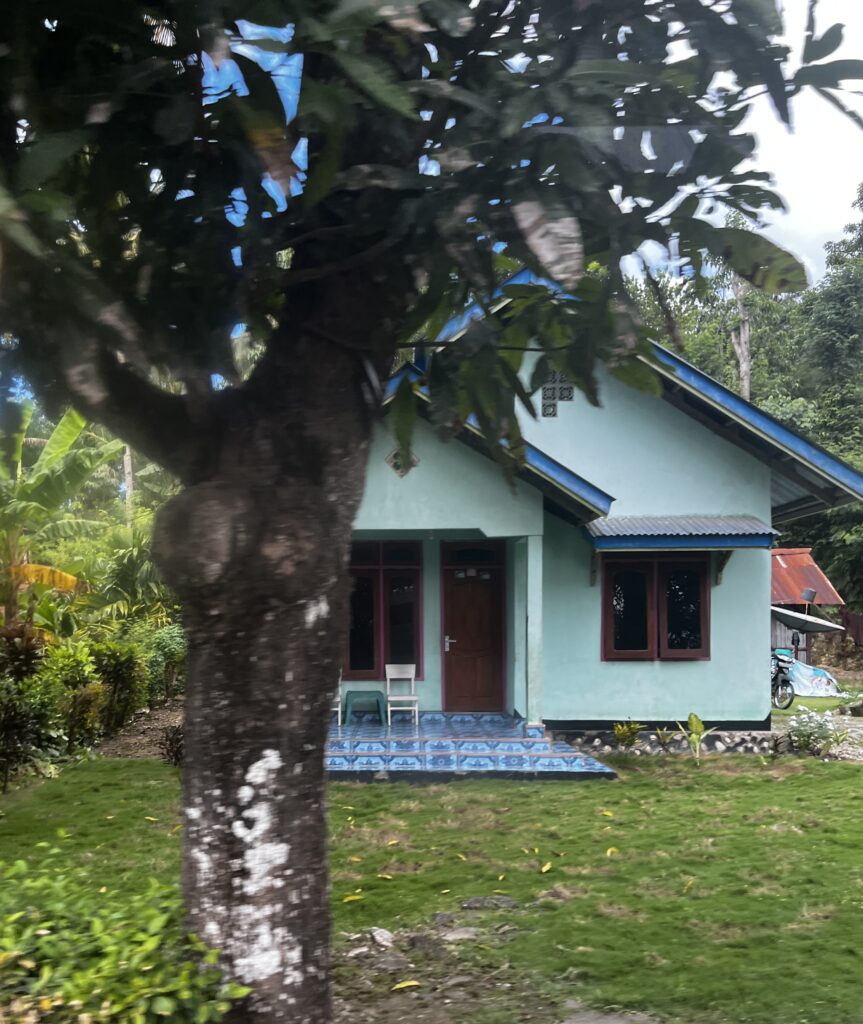
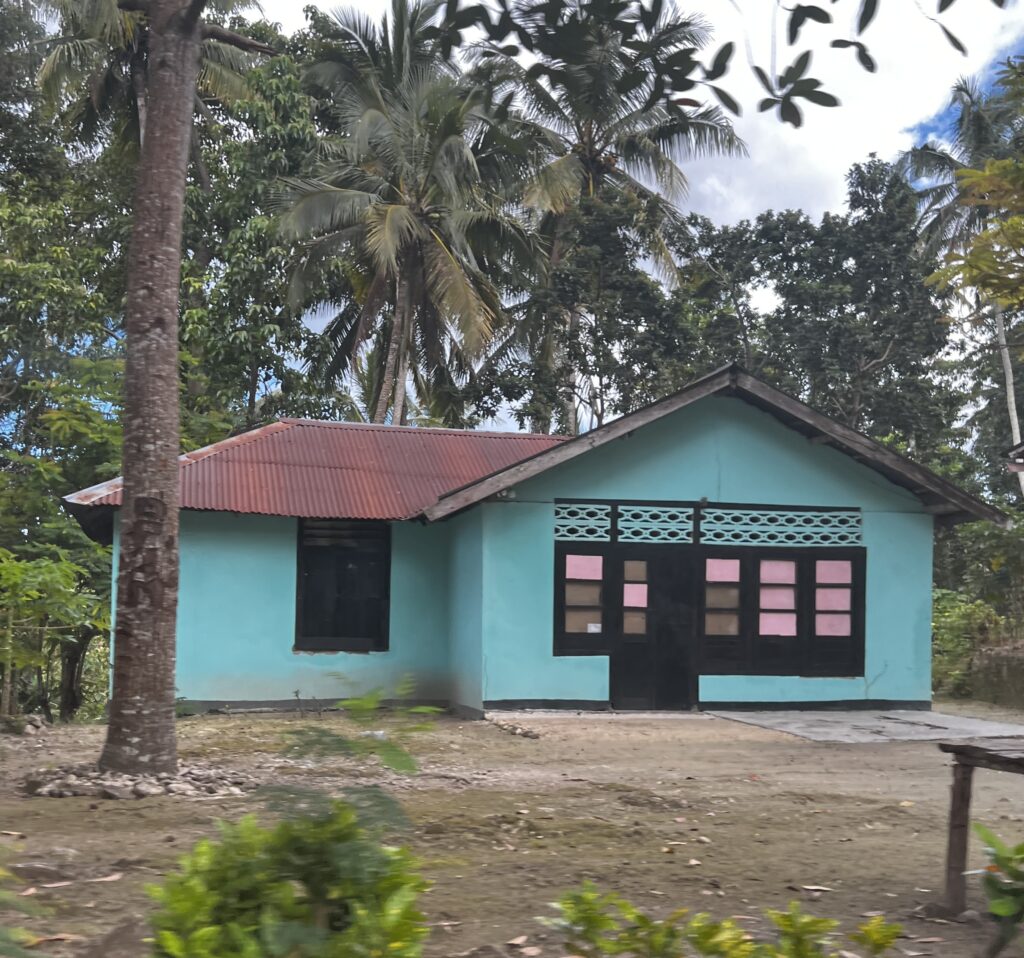
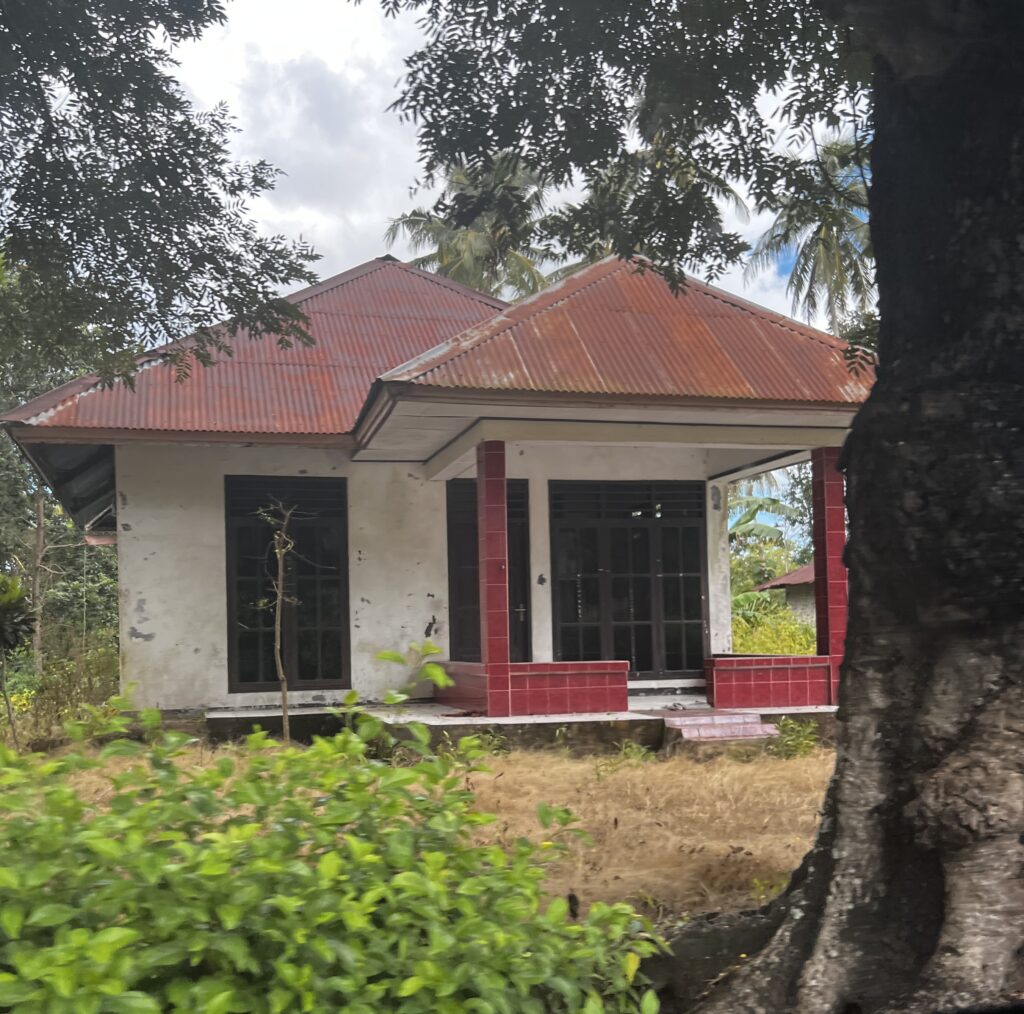
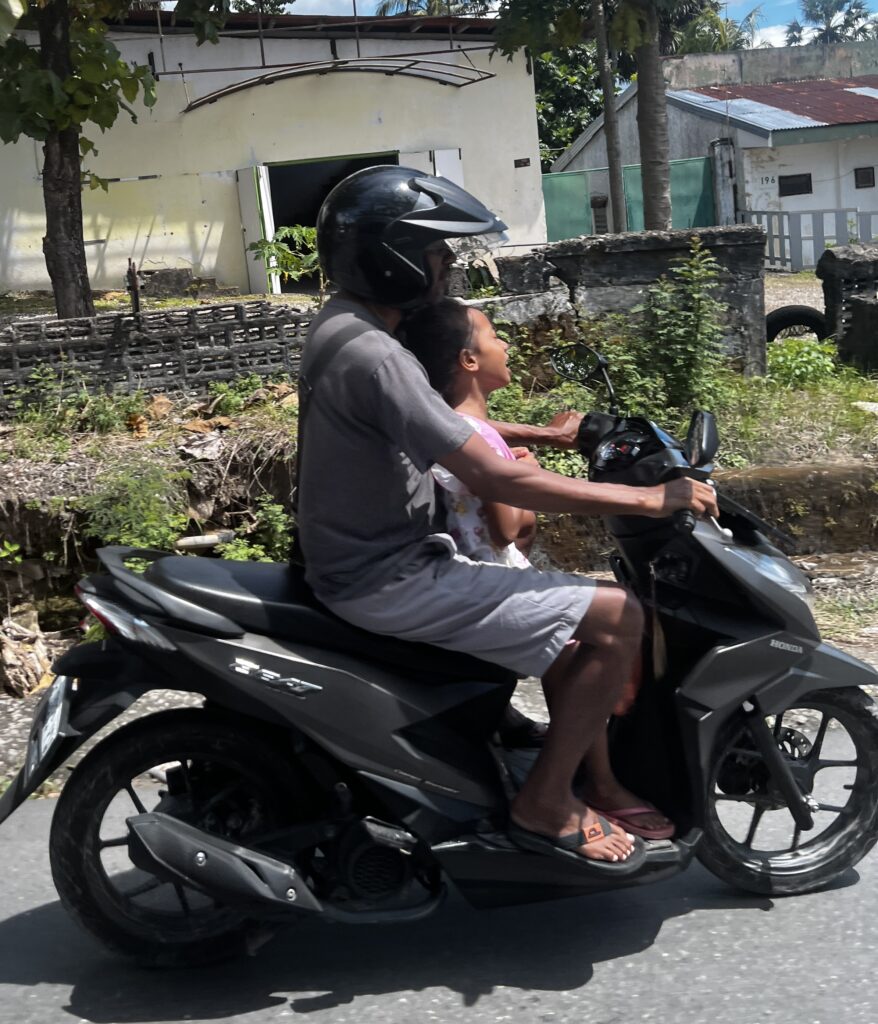
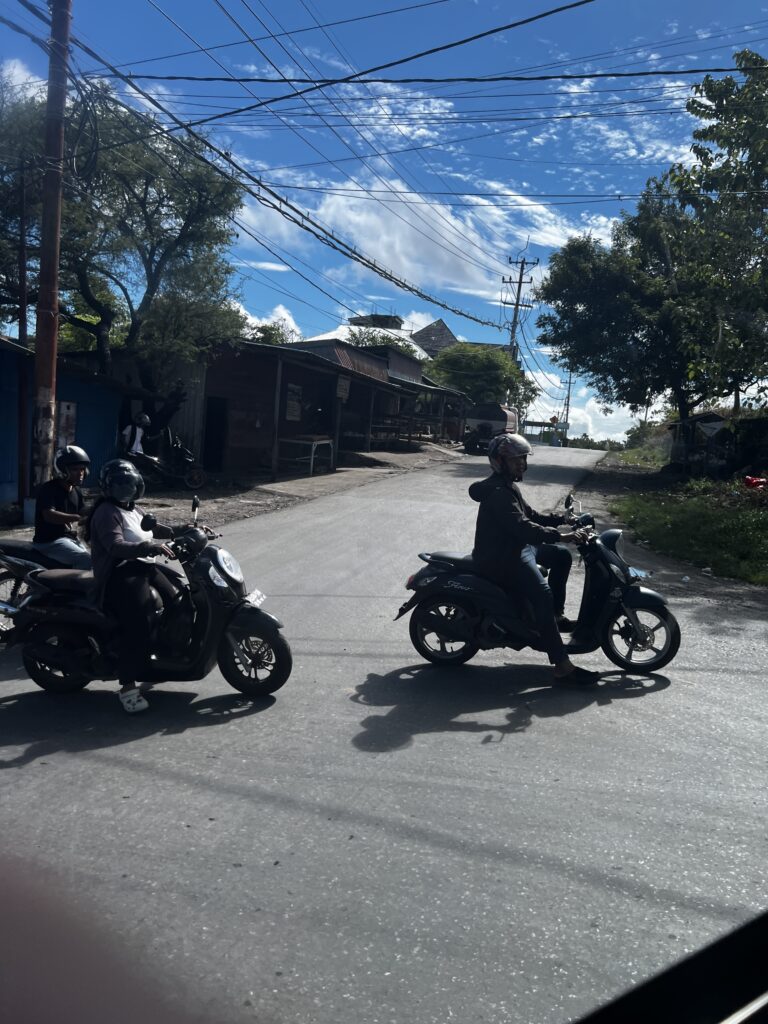
This was a common scene. The driver had a helmet and the passenger usually a child did not have a helmet.
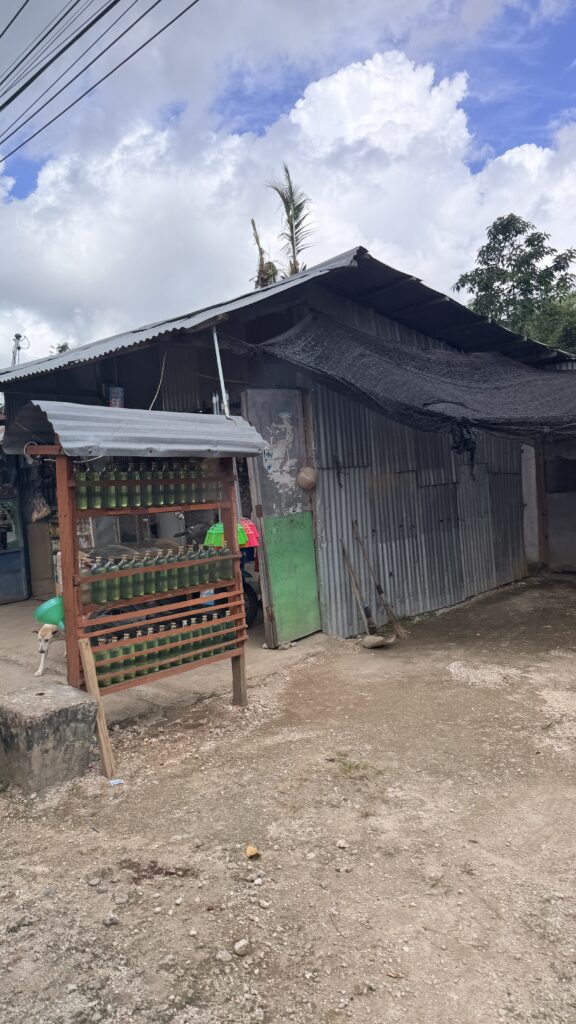
Away from the city stores sell gasoline in bottles like Coke bottles for the motorbikes. These have a top to the bottles, but many locations only have rolled up paper towels stuffed into the bottle.
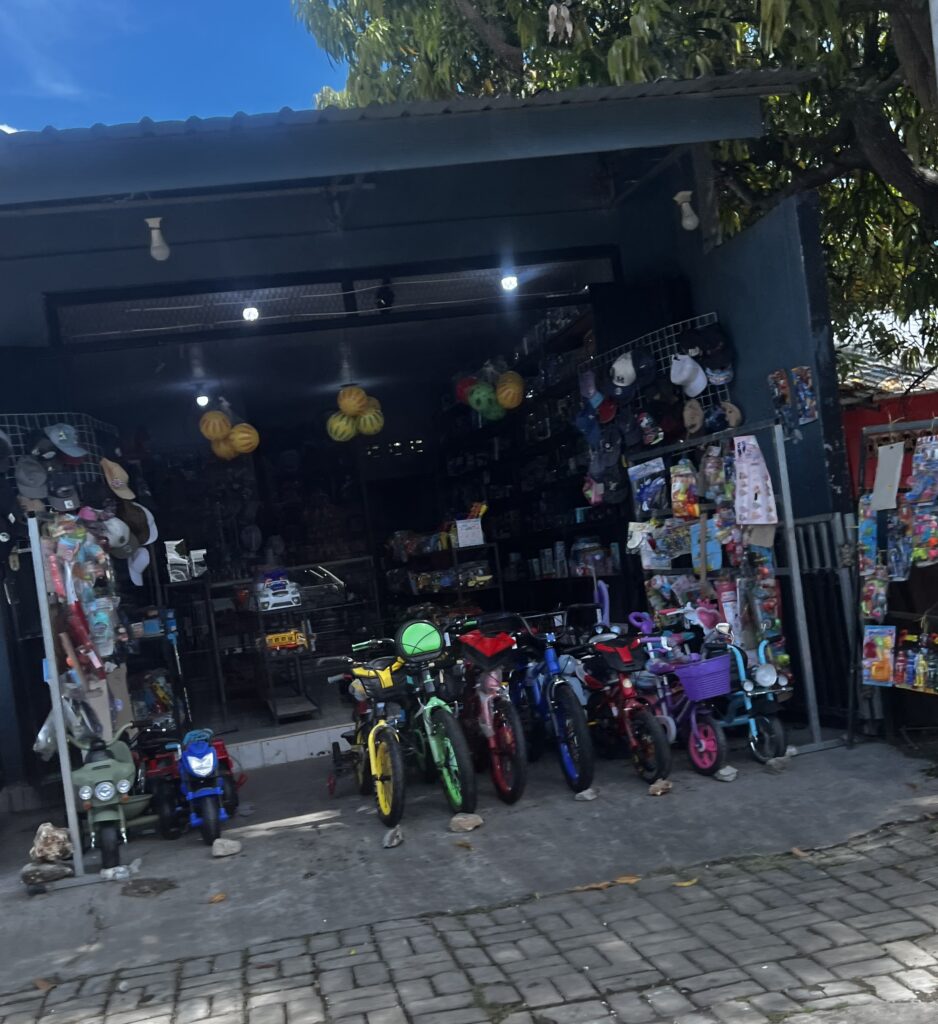
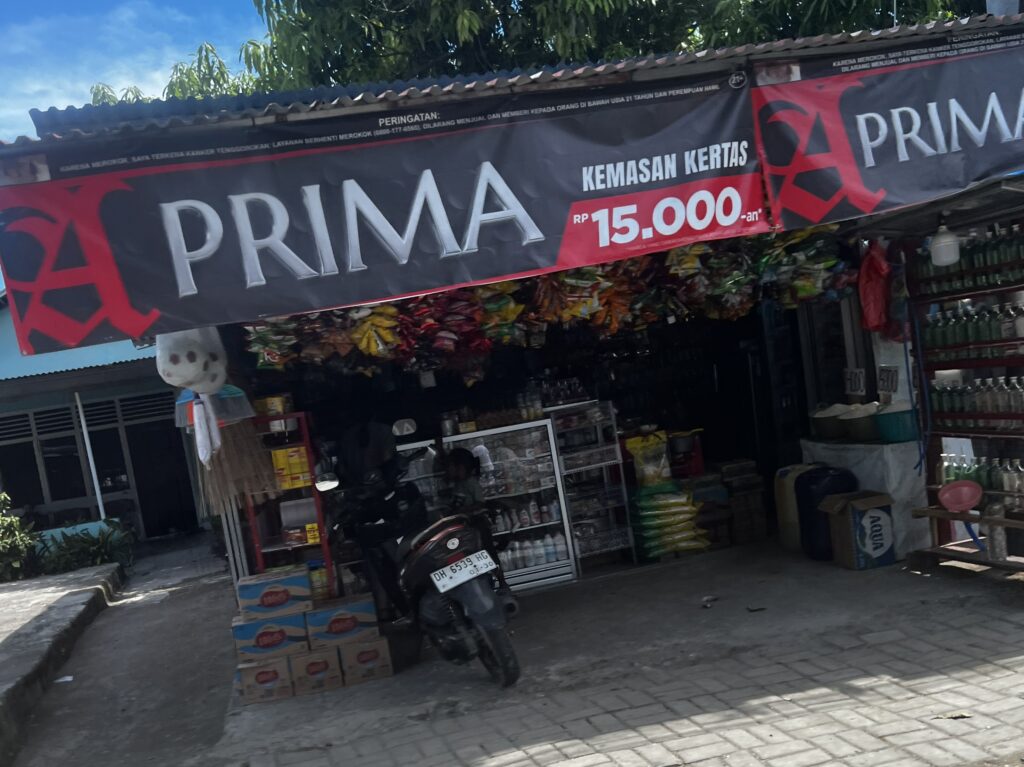
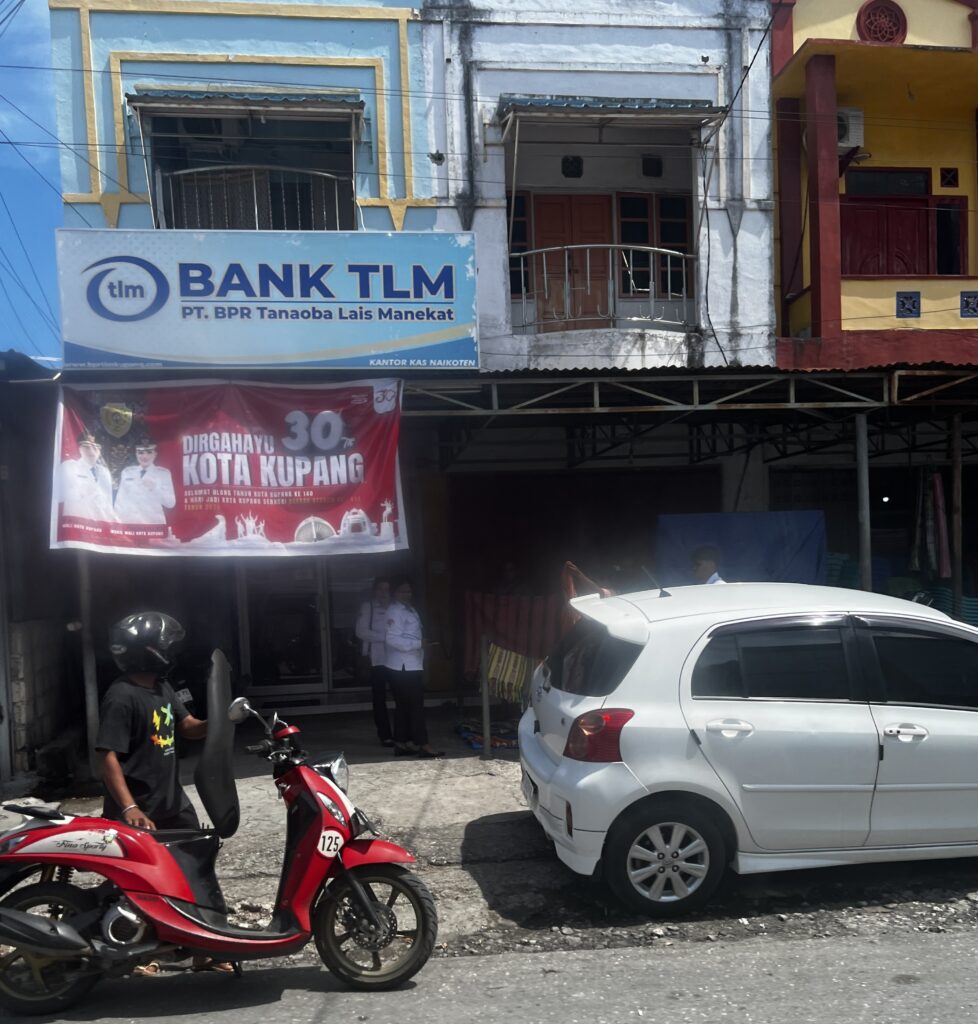
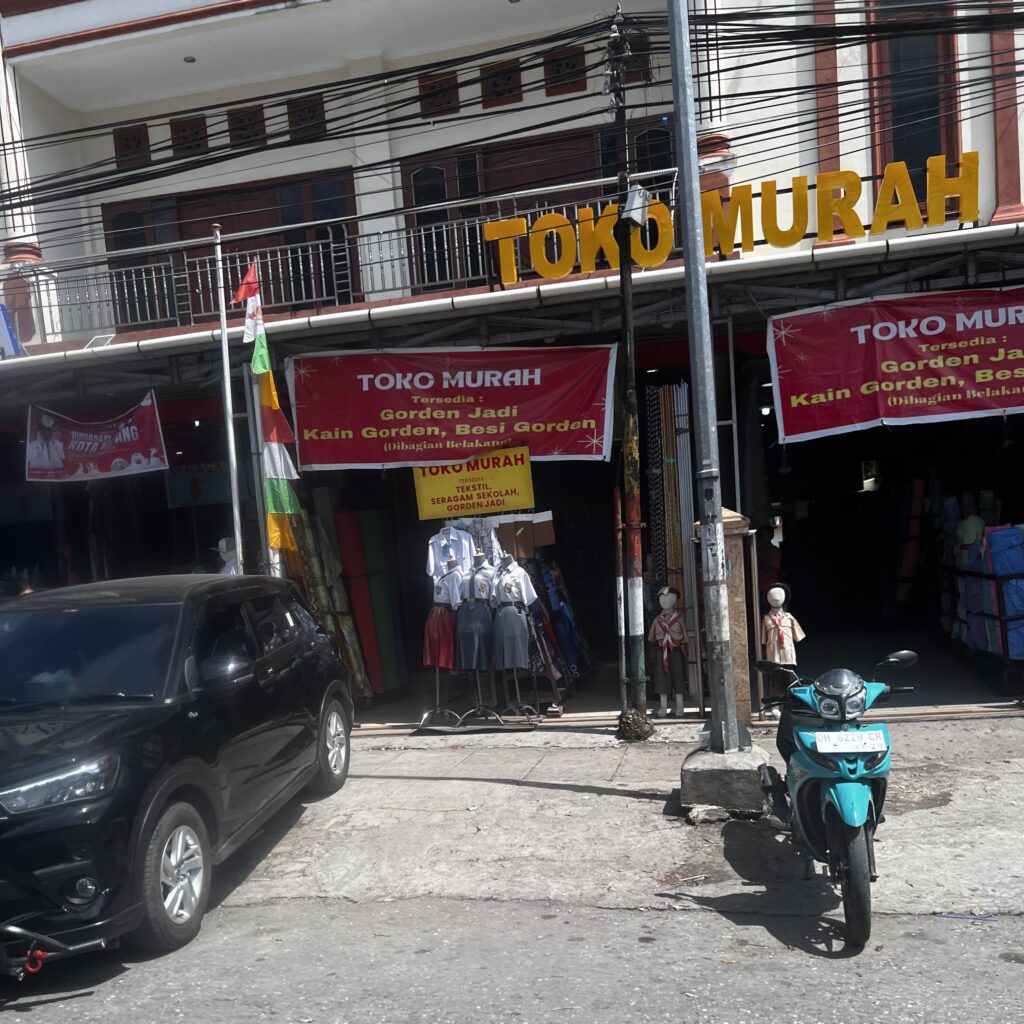
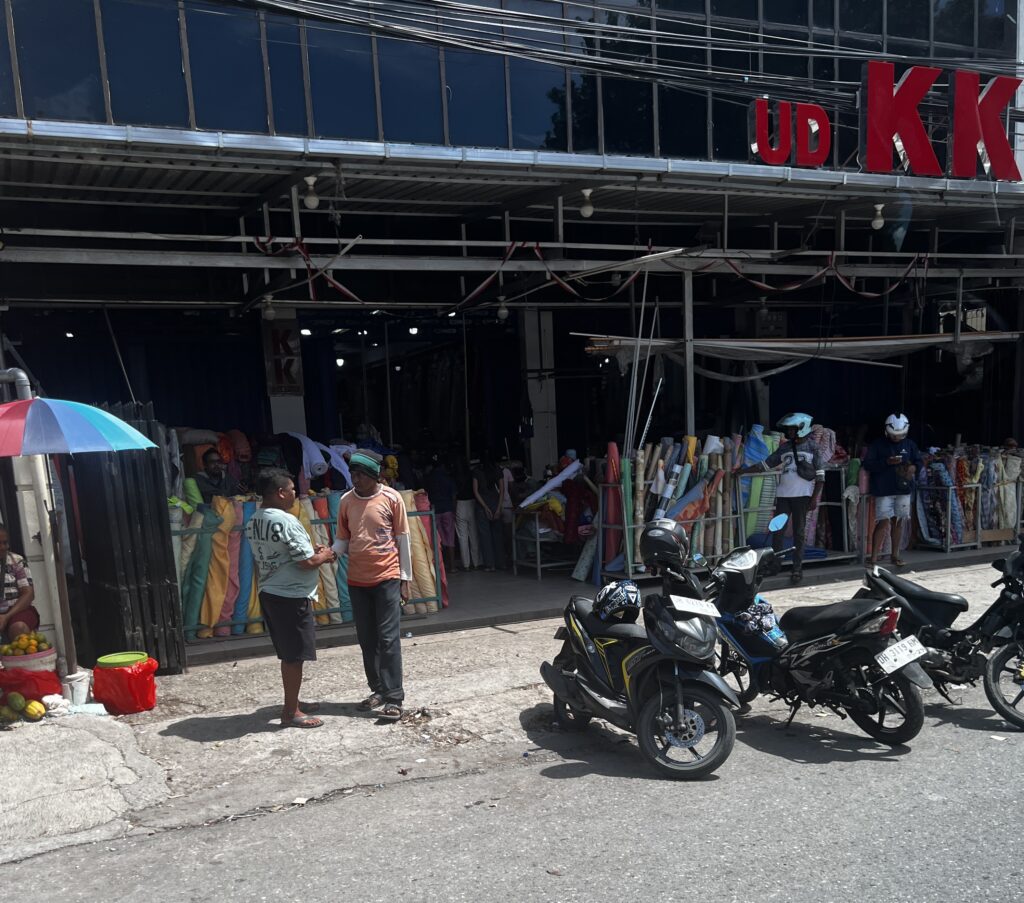
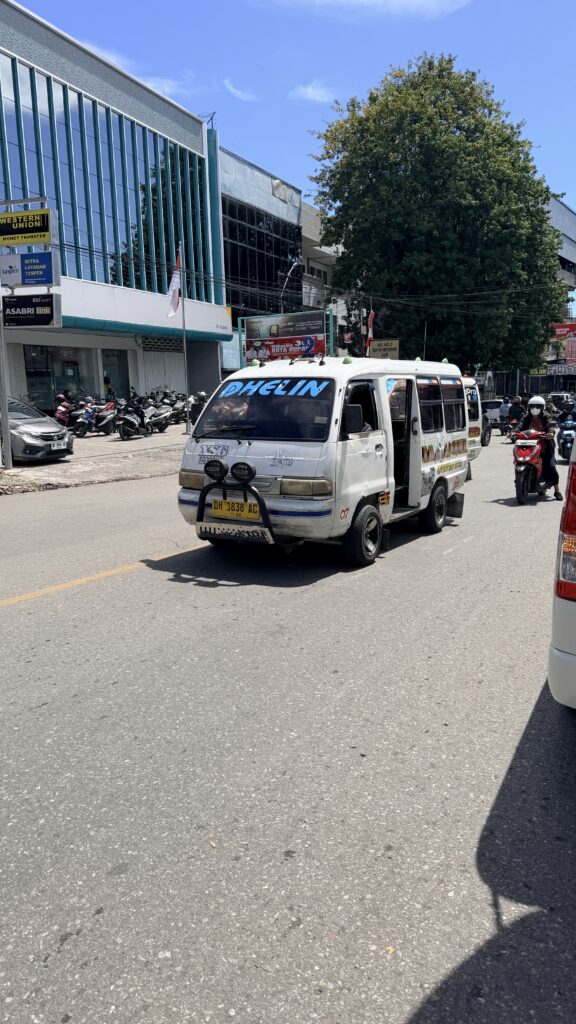
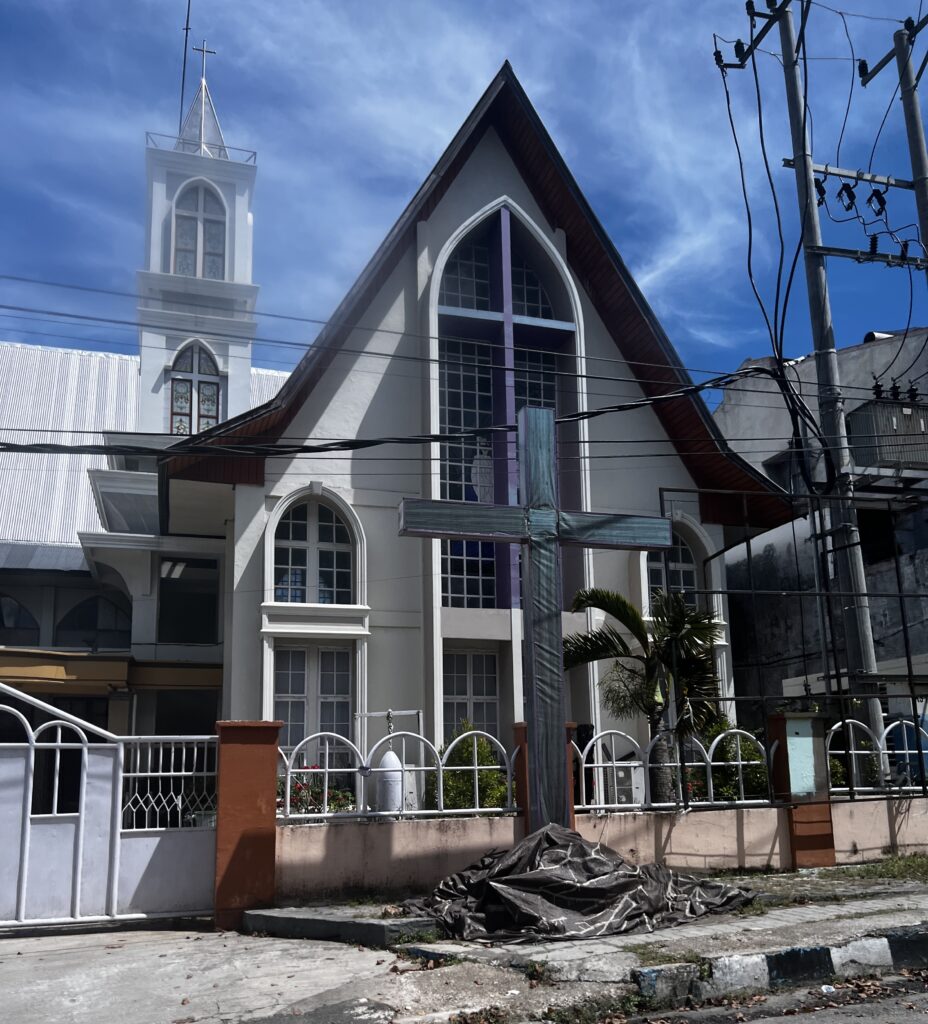
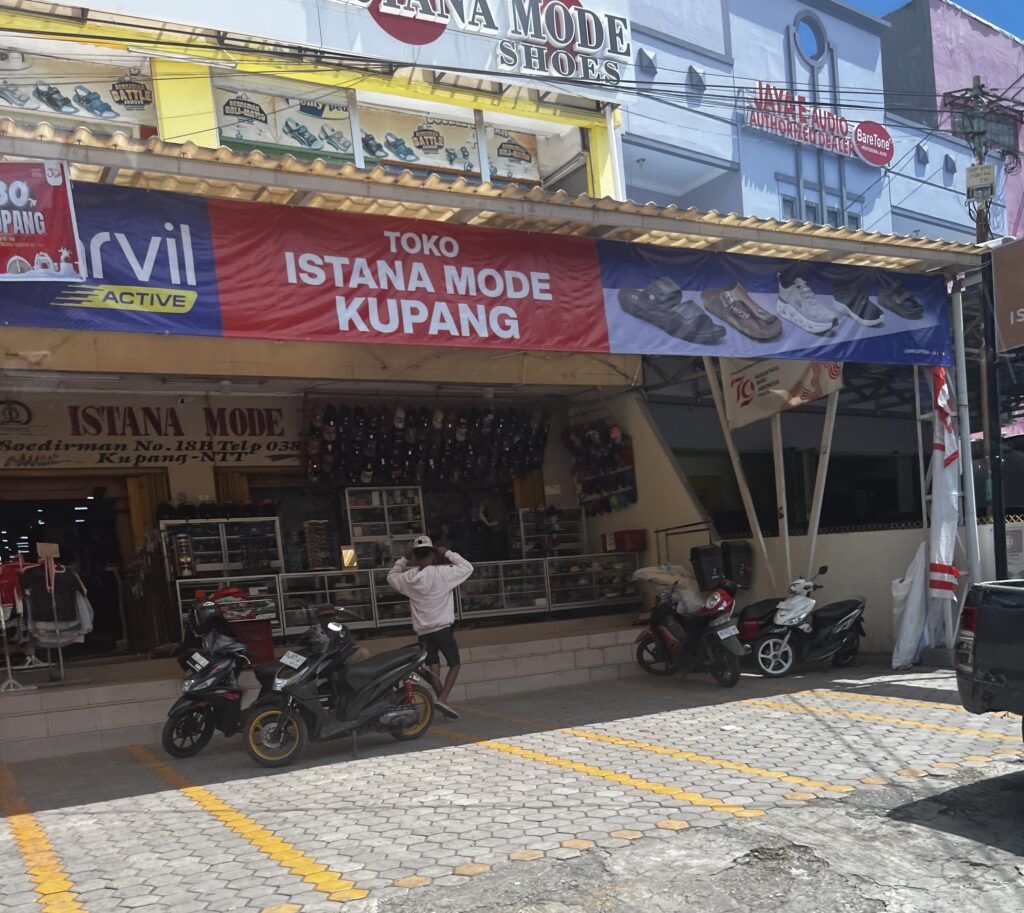
Photos taken from the van in the city of Kupang.
Kupang (Indonesian: Kota Kupang, Indonesian pronunciation: [ˈkupaŋ]), formerly known as Koepang, is the capital of the Indonesian province of East Nusa Tenggara. At the 2020 Census, it had a population of 442,758; the official estimate as of mid-2024 was 474,801 (comprising 238,997 males and 235,804 females). It is the largest city and port (actually the only independent city in the province) on the island of Timor, and is a part of the Timor Leste–Indonesia–Australia Growth Triangle free trade zone. Geographically, Kupang is the southernmost large city in Indonesia, as well as the closest to Australia.
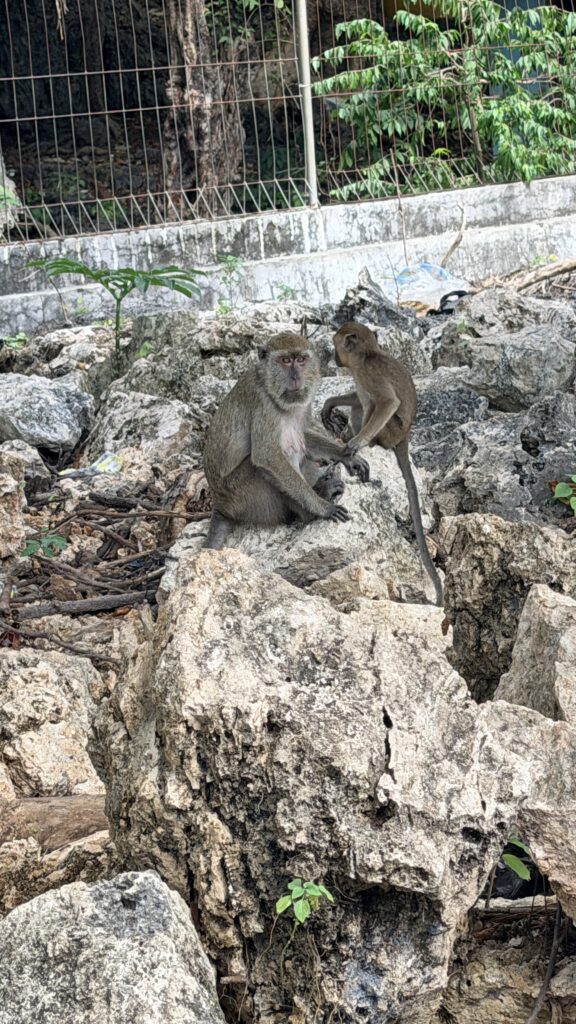
On the way back to the port we came across an area where monkeys lived in caves and came out every afternoon and evening.
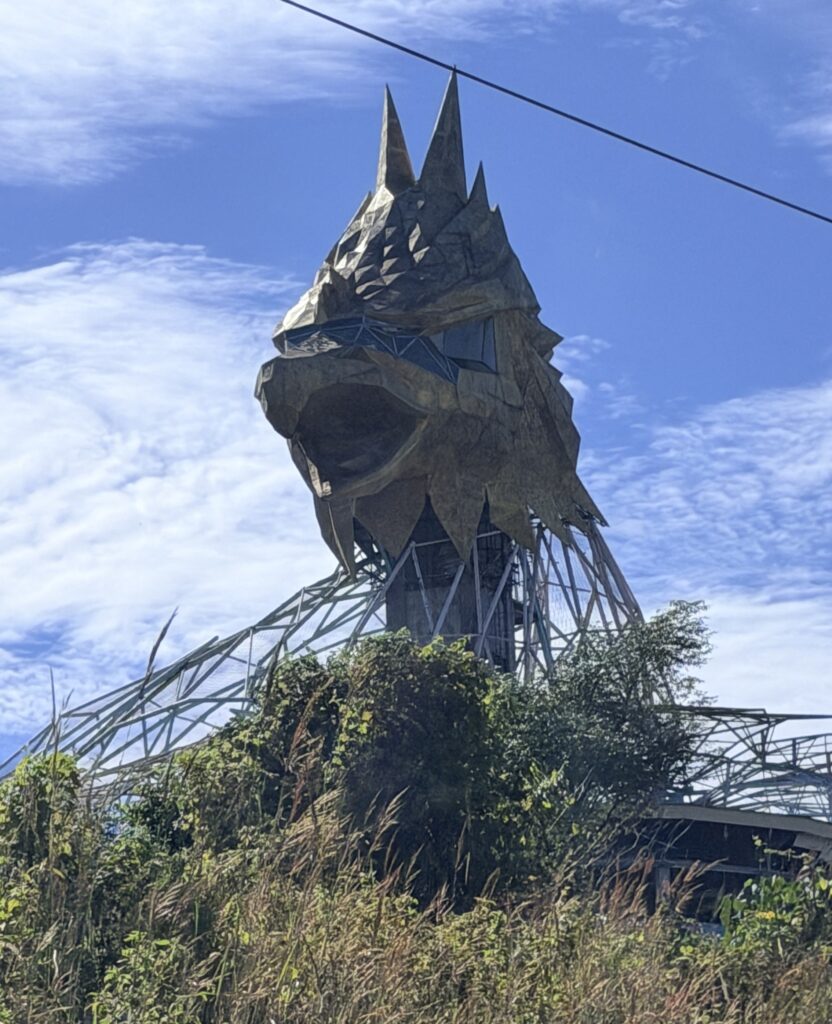
Jackie said this was a project that was started and never finished due to a budget issue
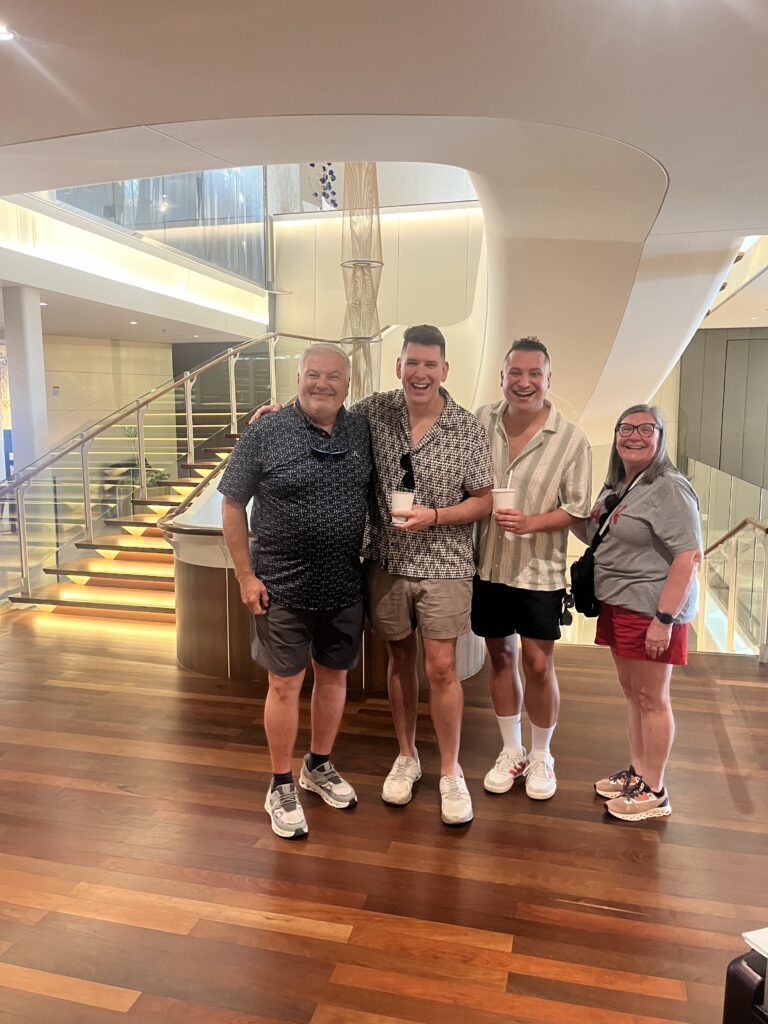
Final picture for the day is a shout out to Steve and Cindy Lefort on the Celebrity Beyond. Here they are with Jordan and Jared of JJ Cruises who we met last June. They are the travel agents for Steve and Cindy and currently on the same cruise. Hope you guys have a blast!!!!
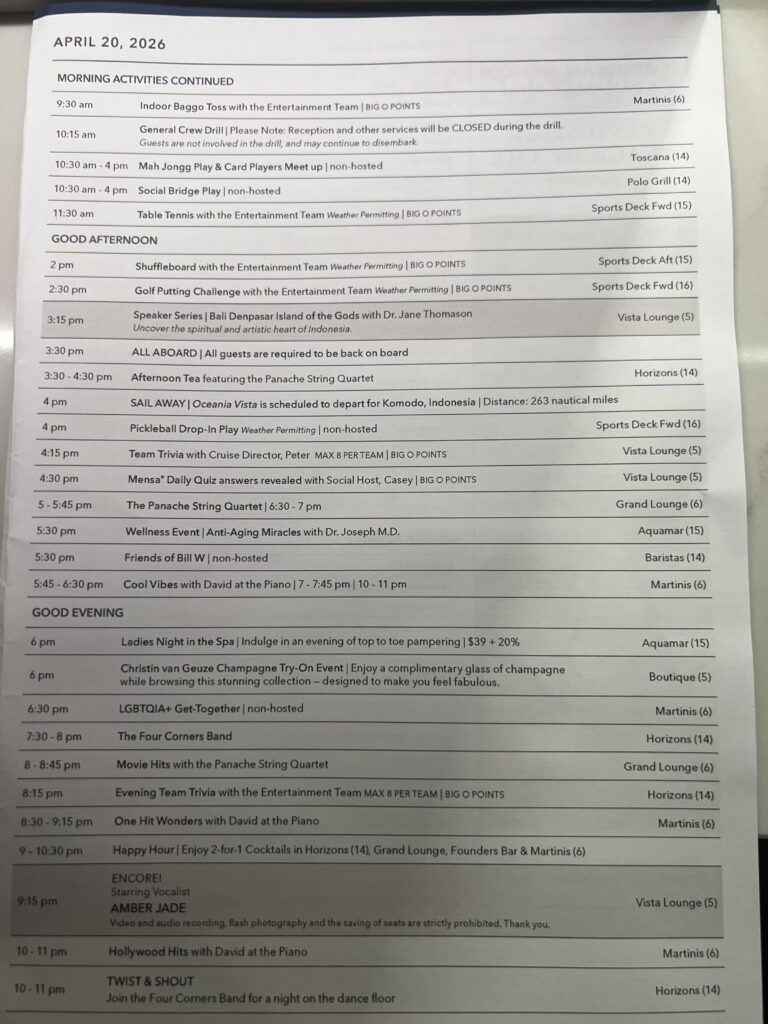
Tomorrow is a tender port as we are in Komodo, Indonesia. We are on a short excursion to see Komodo Dragons.
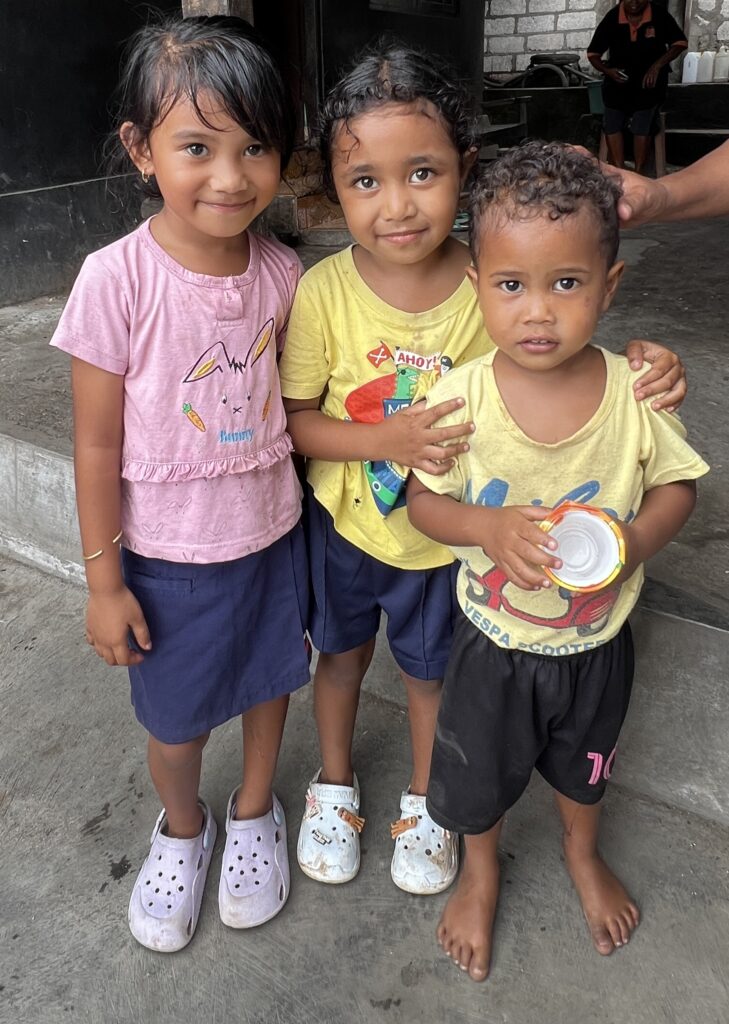
Be sure to check out today’s Faces Around the World as we were able to take some excellent kid’s photos