
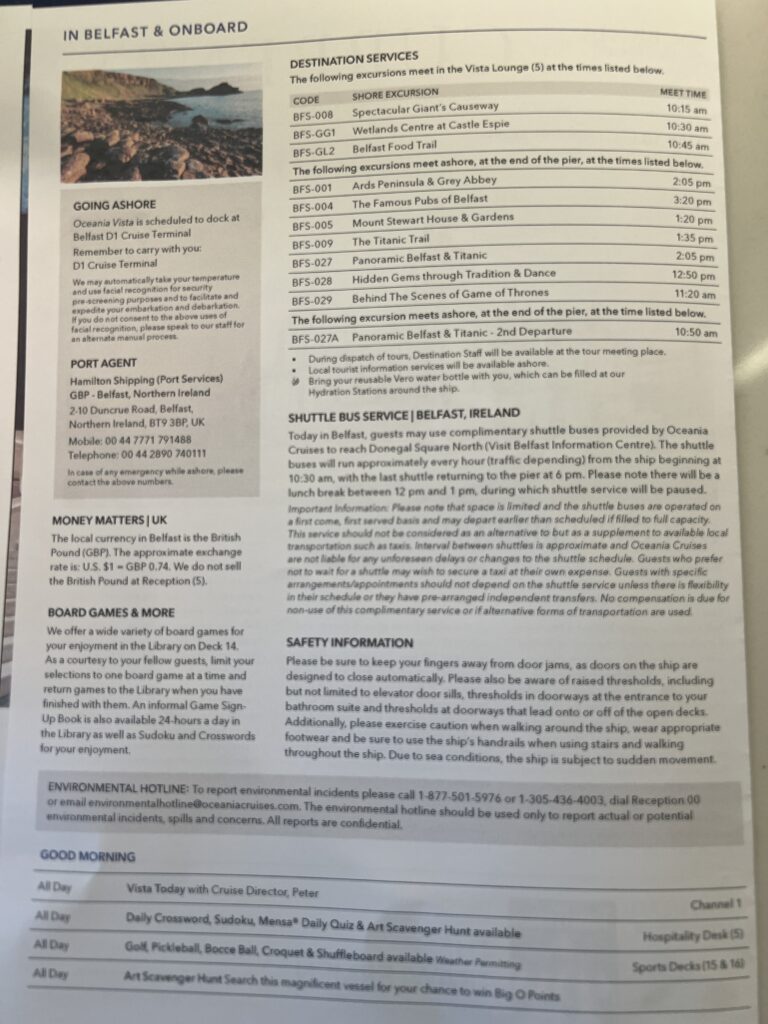
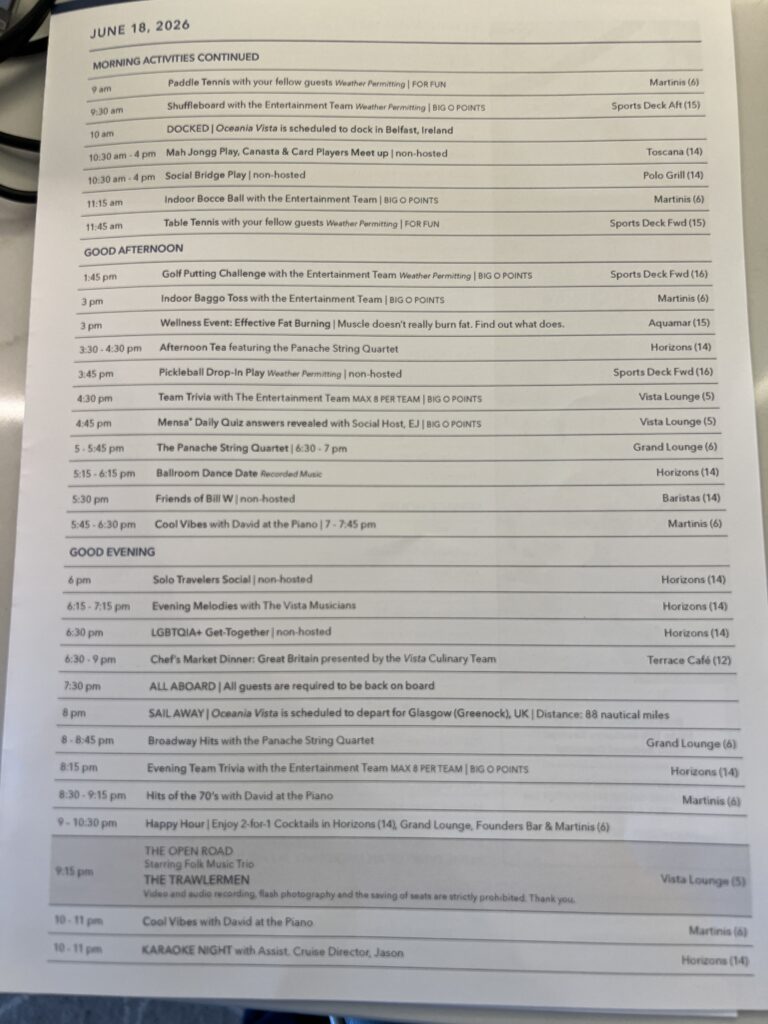
Day 103 Thursday June 18th (17 days to go) —What a wet cold day we had today as we visited Belfast, Northern Ireland. The plan was to get to the downtown area and spend time walking around and visiting some sites that Jackie had identified. But the weather caused us to change our plans as we attempted to stay dry and still do some touring. We had reservations for 3pm at the Belfast Titanic Museum which we made, but after doing our private tour and visiting the SS Nomadic (Titanic Tendering Boat) our visit inside the Titanic Museum was cut short due to a fire alarm which caused everyone to evacuate the building.
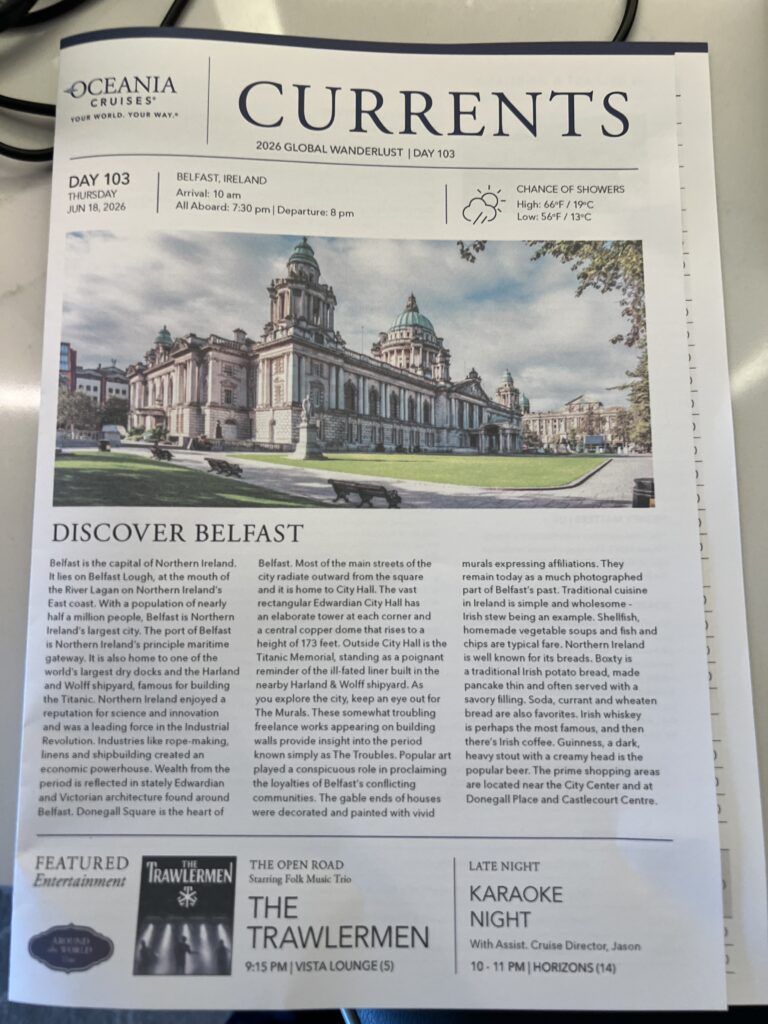
First photo taken from the bus that brough us downtown was of the Belfast City Hall.
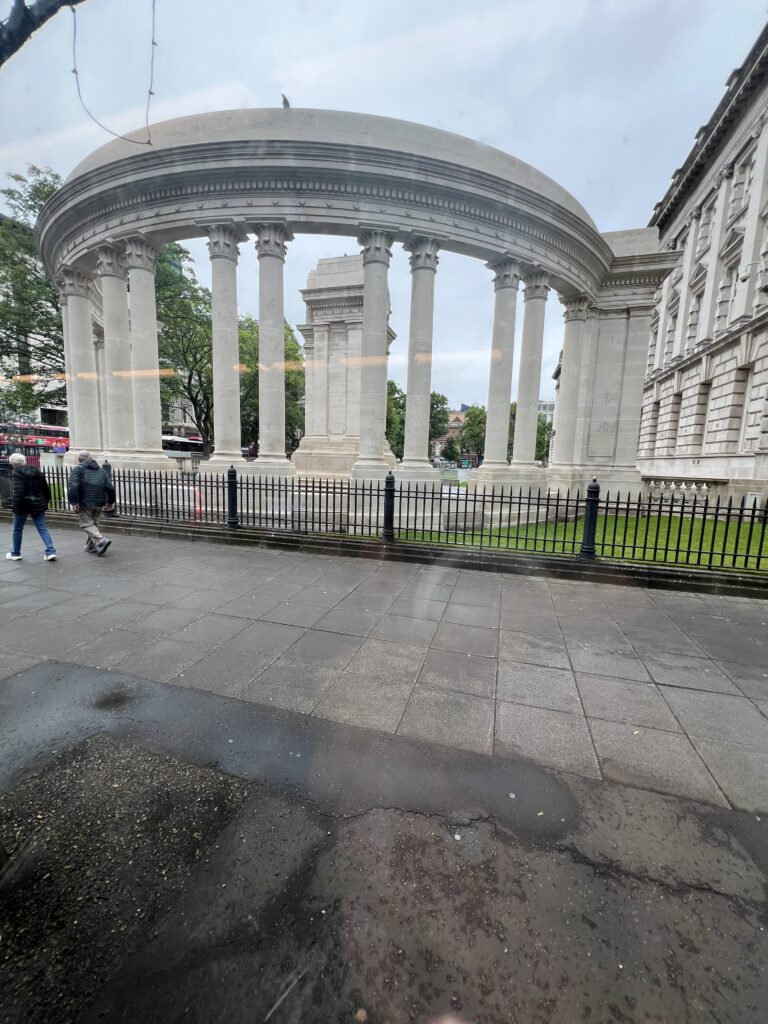
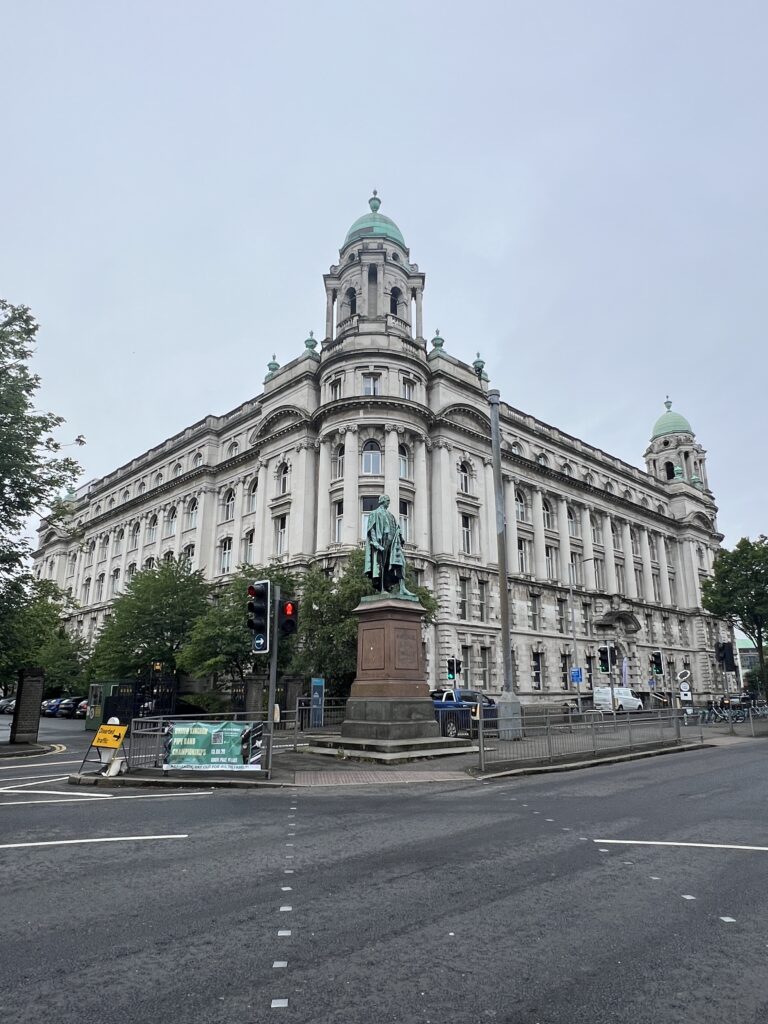
The Scottish Provident Institution Building in Belfast, Northern Ireland (located at 7 Donegall Square West) is a grand, late-Victorian architectural masterpiece situated directly opposite Belfast City Hall. Completed in 1902 by architects Young & Mackenzie, the sandstone and copper-roofed landmark is celebrated for its symbolic sculptural carvings and twin bronze sphinxes on the roof.
Era: Built in stages between 1897 and 1902, predating the adjacent City Hall by four years.
Style: Italian Renaissance (Italianate).
Exterior Details: Features Glasgow blonde sandstone, ornate carvings representing Belfast’s historical industries (shipbuilding, rope-making, printing, and spinning), and two distinctive sphinx statues on the roof.
While originally the headquarters for the Scottish Provident Institution, the restored property is currently one of Belfast’s premier serviced office providers, managed by the company venYou. It offers private office space, virtual offices, and meeting rooms for local entrepreneurs and businesses.
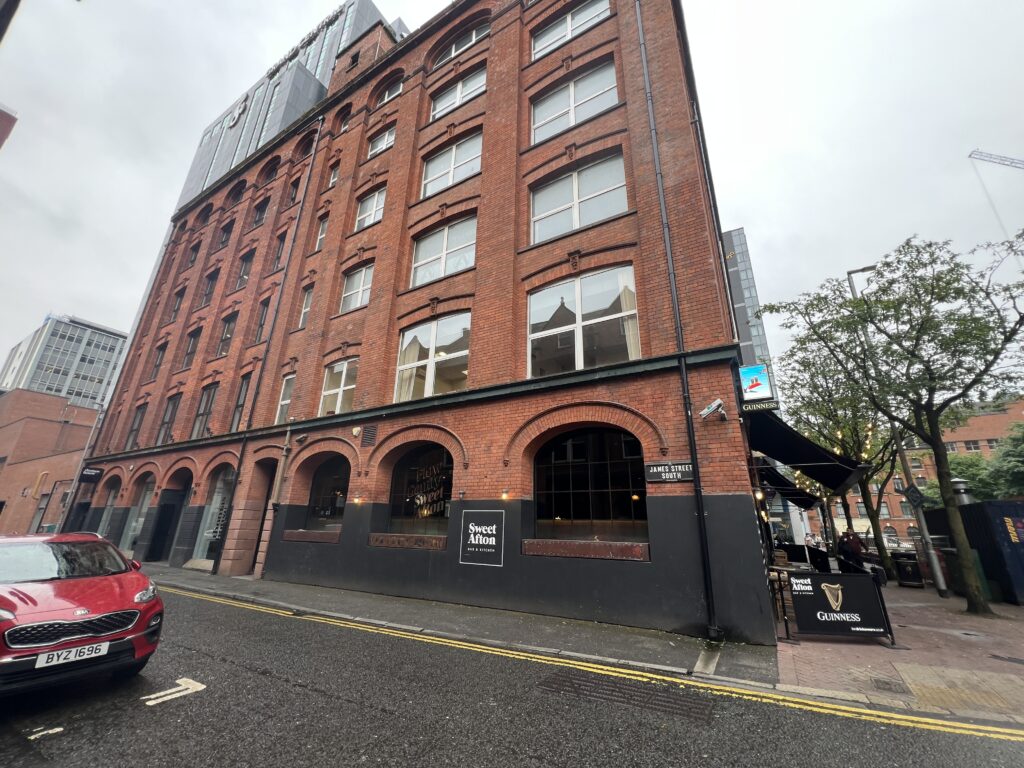
Sweet Afton Bar & Kitchen is a popular gastropub located at Franklin House, 12 Brunswick Street in Belfast’s historic Linen Quarter. Named after a Robert Burns poem, it is housed in the iconic Linen House building (formerly the Ulster Female Penitentiary) and serves hearty pub food, cocktails, and craft beer.
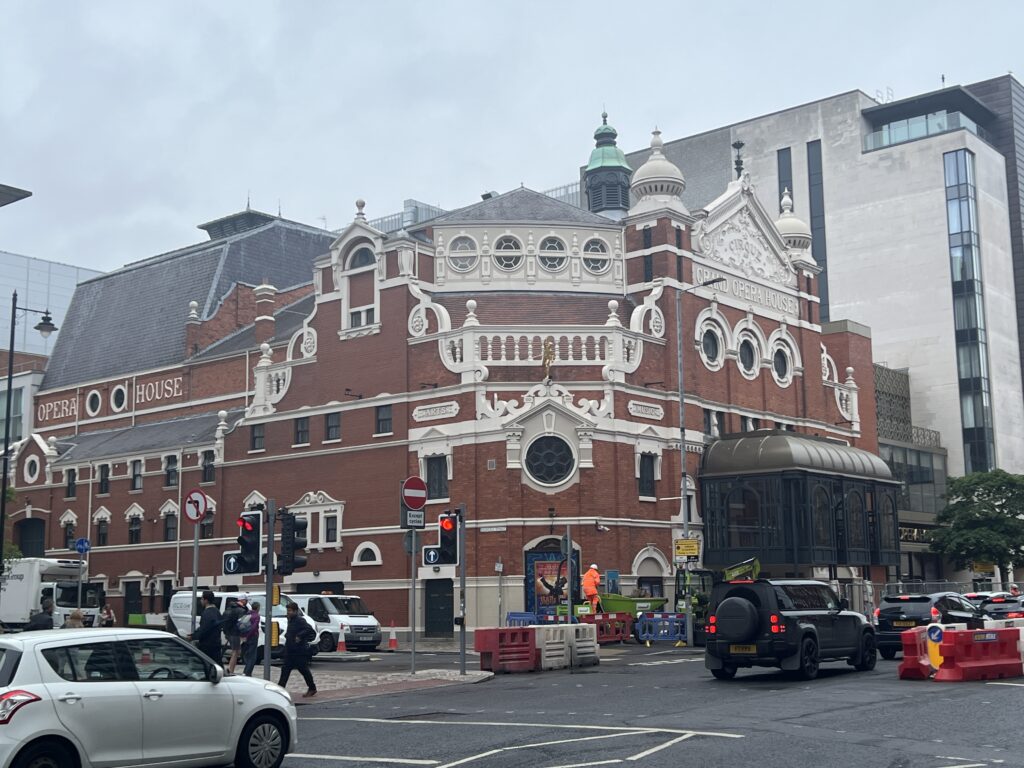
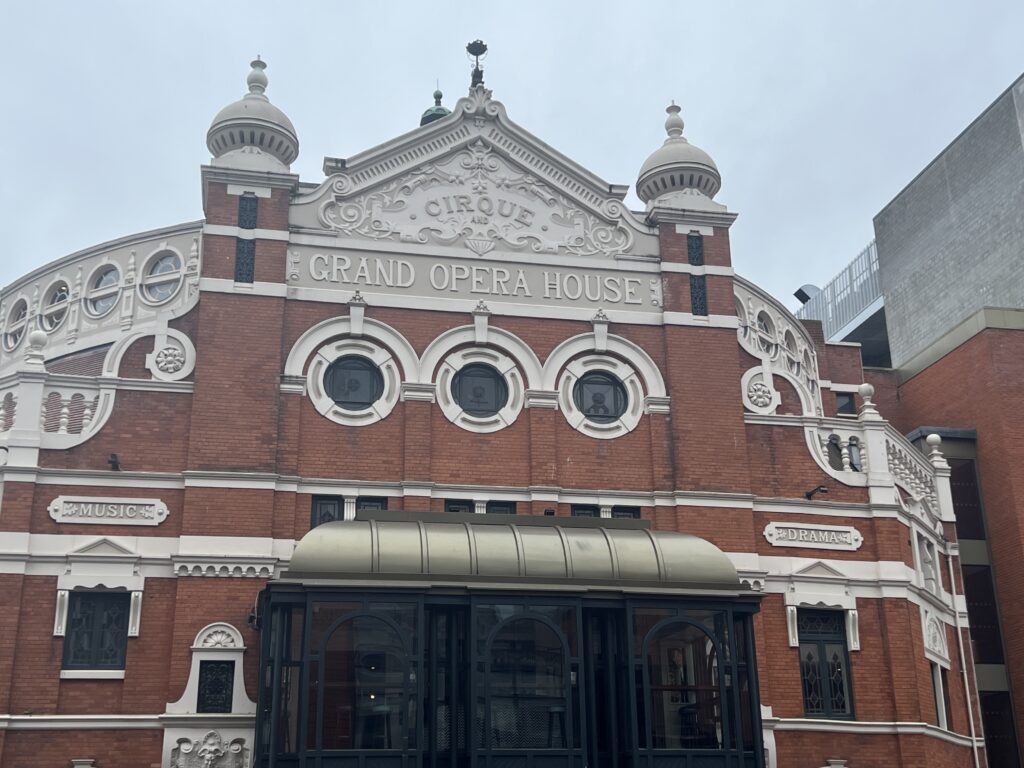
The Grand Opera House was closed when we visited Belfast. Below is information about the building and the website for the Opera House.
The Grand Opera House is a theatre in Belfast, Northern Ireland, designed by the most prolific theatre architect of the period, Frank Matcham. It opened on 23 December 1895. According to the Theatres Trust, the “magnificent auditorium is probably the best surviving example in the United Kingdom of the oriental style applied to theatre architecture”. The auditorium was restored to its former glory, and the foyer spaces and bars were reimagined and developed as part of a £12.2 million project in 2020/2021, generously supported by the National Lottery Heritage Fund.
The venue hosts musicals, drama, ballet, opera and comedy performances as well as educational events and tours. The theatre’s annual pantomime, which has been performed since its opening in 1895, remains the most popular show each year. The theatre’s capacity is 1,058.
Originally called the New Grand Opera House and Cirque, it was renamed the Palace of Varieties in 1904, changing its name to the Grand Opera House in 1909. Charlie Chaplin performed there in 1908, and although Variety programmes dominated the pre-war years, entertainers as diverse as Nellie Melba, Sarah Bernhardt, Ralph Richardson and Gracie Fields performed there regularly. It became a repertory theatre during World War II and at the celebrations to mark the end of the war, Eisenhower, Montgomery and Alanbrooke attended gala performances at the theatre. Lena Horne performed here in the 1940s on her way to and from her travels to France.
After the war, stars of stage and screen returned to the theatre, with notably highlights including performances by Laurel and Hardy, Vera Lynn, Orson Welles, and Luciano Pavarotti in his UK debut. In 1965 the National Theatre brought its production of Love for Love to the Grand Opera House with a cast boasting Laurence Olivier, Lyn Redgrave, Albert Finney, Geraldine McEwan and a young Anthony Hopkins.
The Grand Opera House was acquired by the Rank Organisation, which led to its use as a cinema between 1961 and 1972.
As business slowed in the early 1970s with the onset of the Troubles, Rank initiated plans to sell the theatre to a property developer, who proposed that the building be pulled down and replaced with an office block. However, following the action of Kenneth Jamison (director of the Arts Council of Northern Ireland) and Charles Brett (founder member of the Ulster Architectural Heritage Society and ACNI board member), the building was bought by the Arts Council of Northern Ireland and listed in 1974. The Permanent Secretary of the Department of Education, Arthur Brooke, lent his support to the project and his department provided the funding for extensive renovatation of the theatre. The Grand Opera House reopened in 1980, and in the years that followed many leading performers appeared on its stage, including Van Morrison, Liam Neeson, Rowan Atkinson, Kenneth Branagh, Emma Thompson, Ian McKellen, Darcey Bussell and Lesley Garrett. The building has been damaged by bombs on several occasions, usually when the nearby Europa Hotel had been targeted. It was badly damaged by bomb blasts in 1991 and 1993. The theatre continued, however, to host musicals, plays, pantomimes and live music.
Grand Opera House | Belfast Theatre | Theatre Tickets
The Presbyterian Church in Ireland is the largest Presbyterian denomination in the Republic of Ireland, and the largest Protestant denomination in Northern Ireland. Like most Christian churches in Ireland, it is organised on an all-island basis, in both Northern Ireland and the Republic of Ireland. The church has approximately 210,000 members.
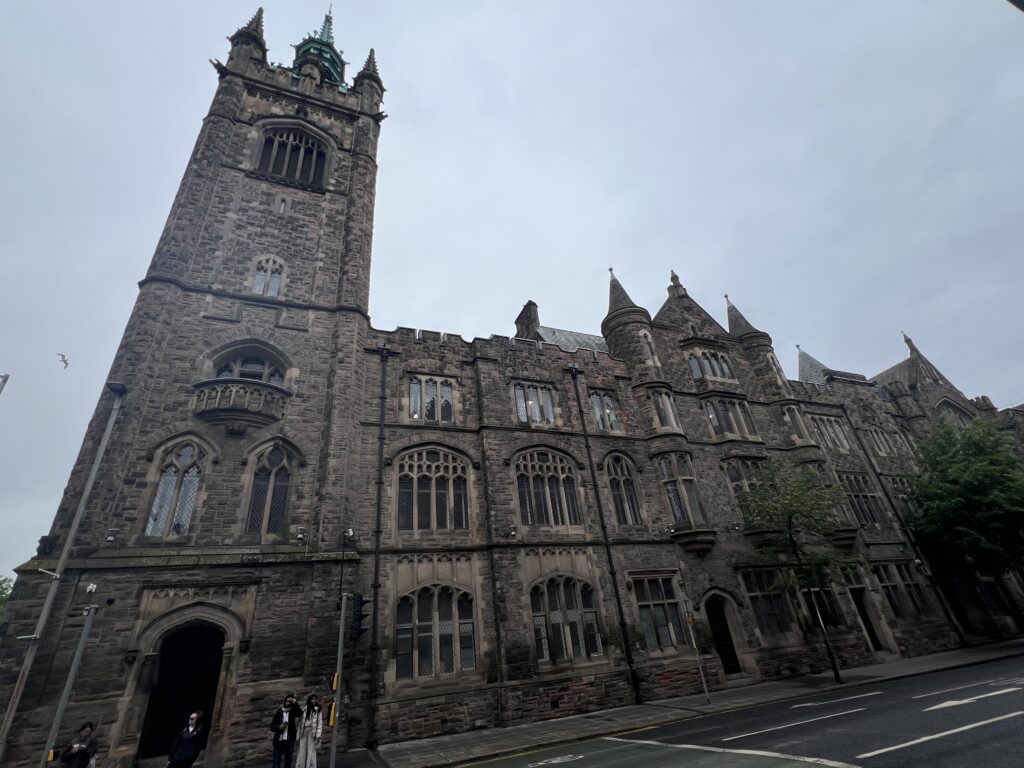
The Church has a membership of approximately 210,000 people in 534 congregations in 403 charges across both Northern Ireland and the Republic of Ireland. About 96% of the membership is in Northern Ireland. It is the second-largest church in Northern Ireland after the Catholic Church, and the second-largest Protestant denomination in the Republic, after the Church of Ireland. All the congregations of the church are represented up to the General Assembly (the church’s government).
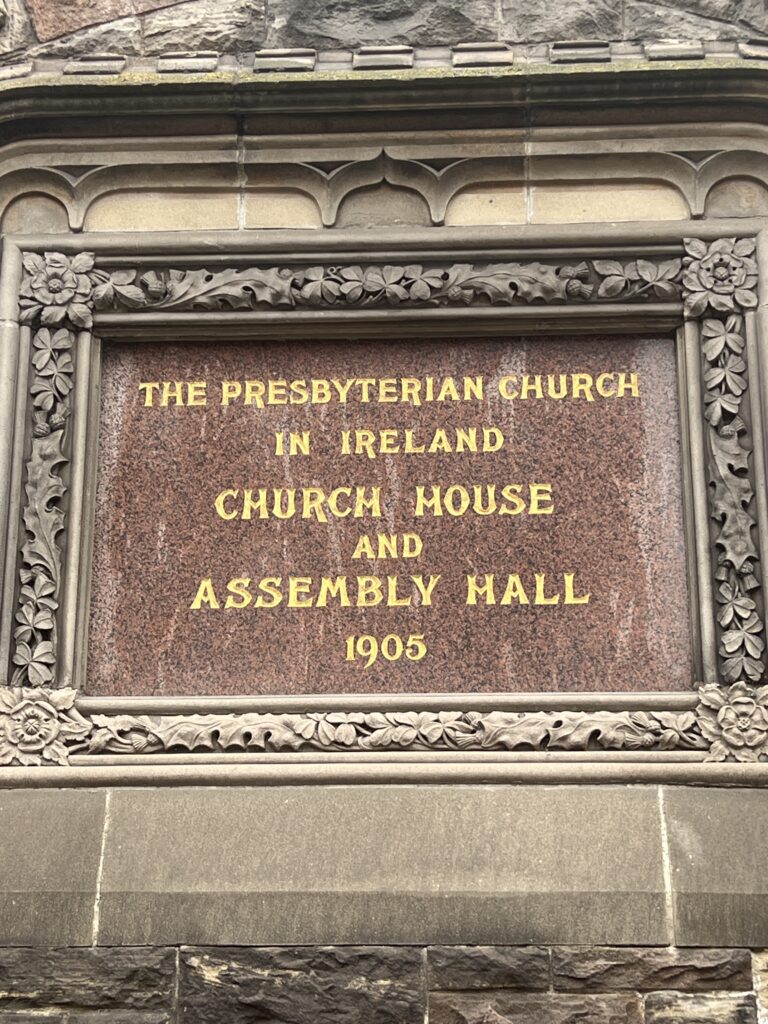
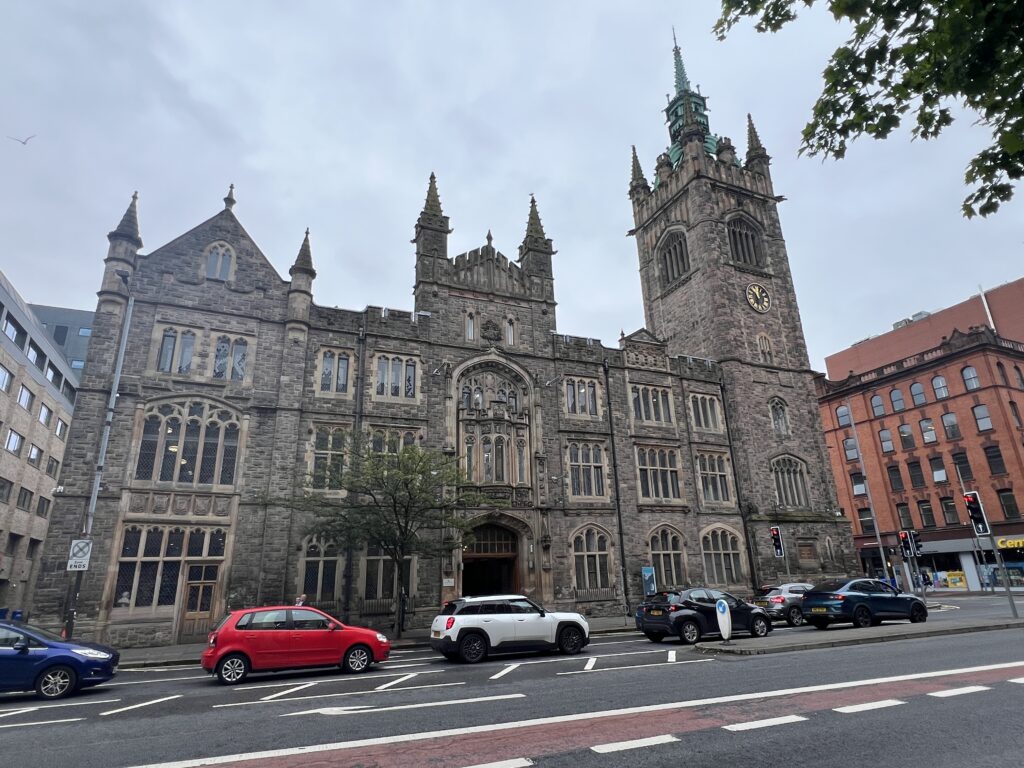
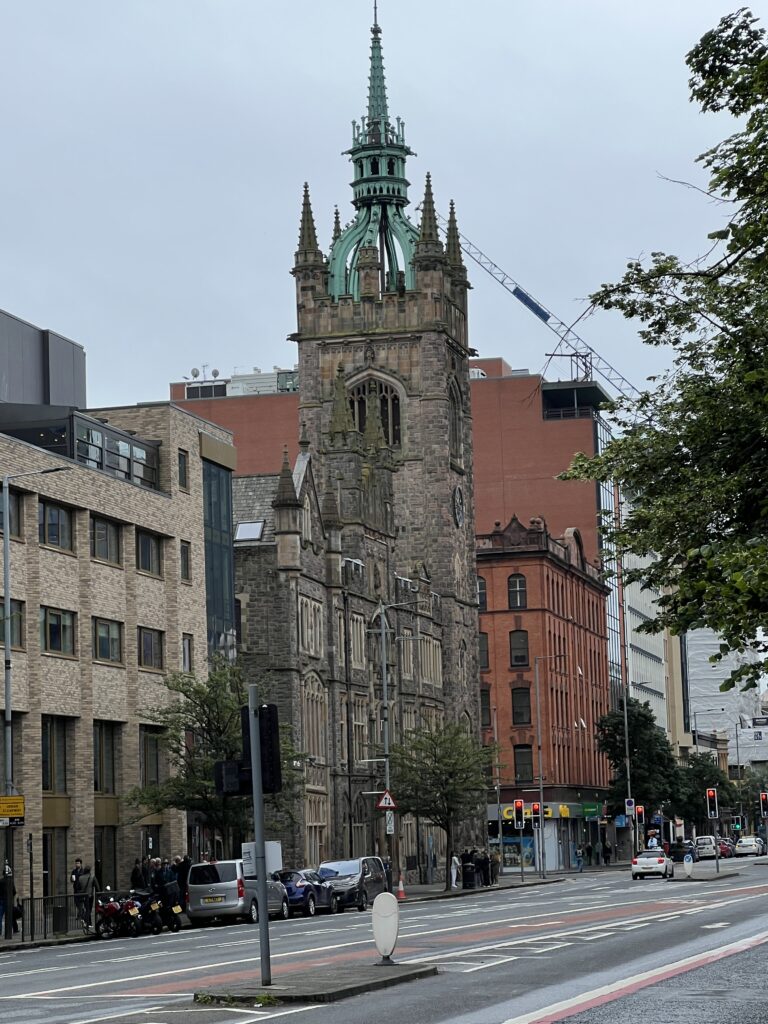
Although the signage indicated a church, it was more of an office and assembly building. There was a small area with some information that we were allowed to visit.
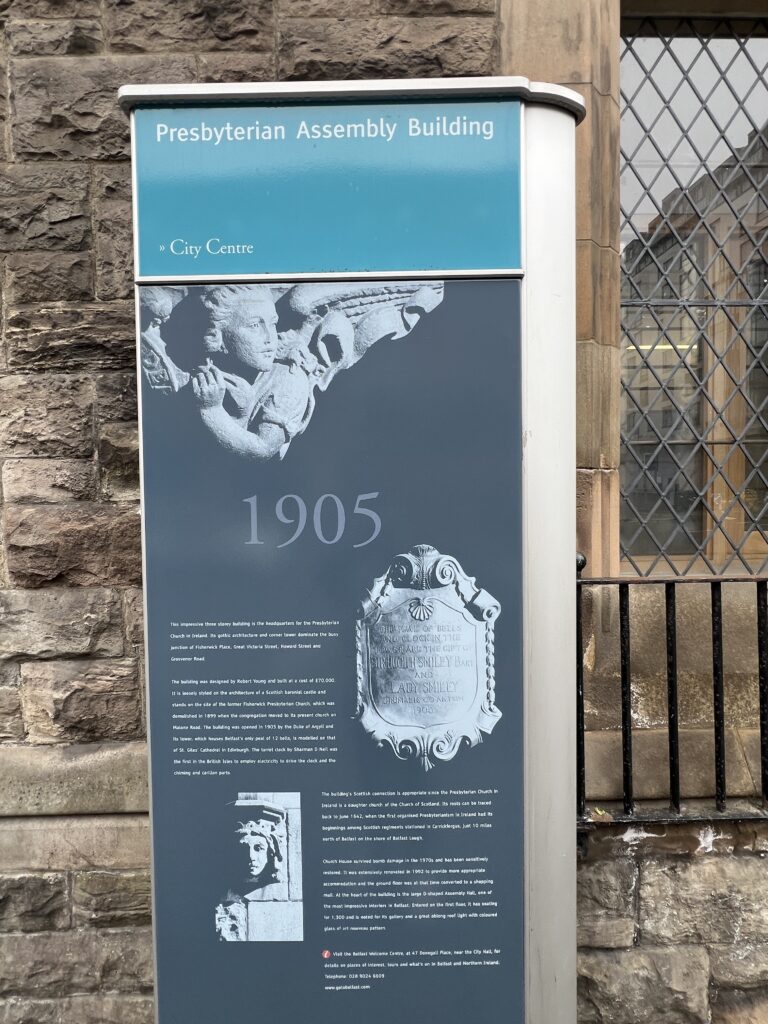
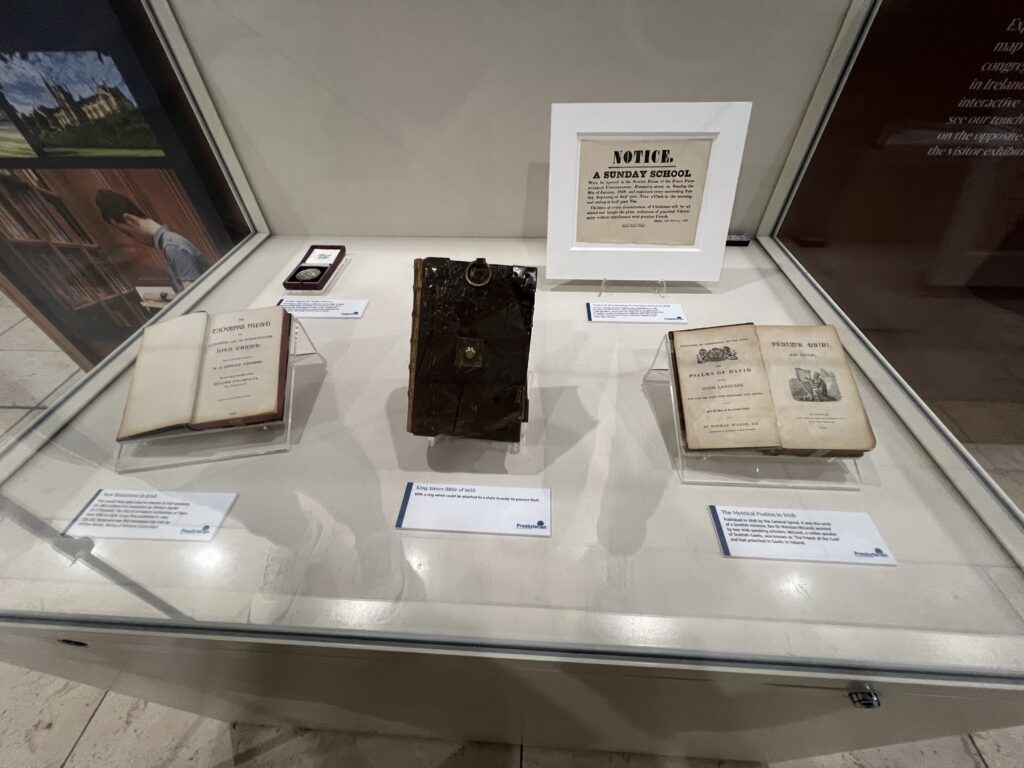
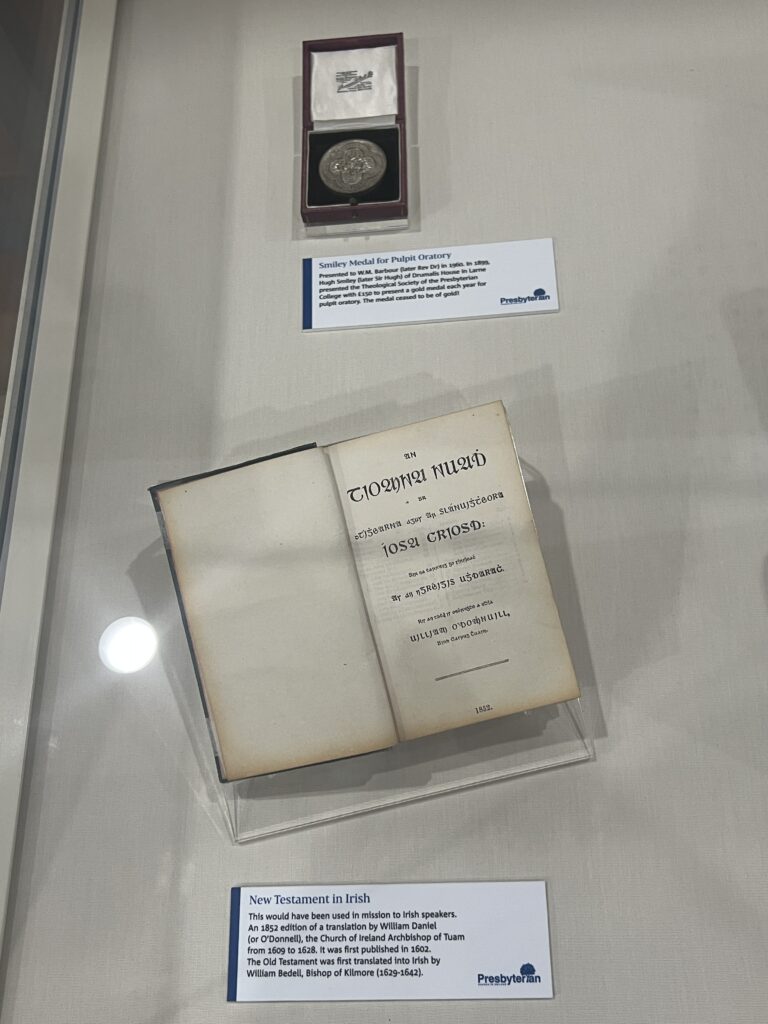
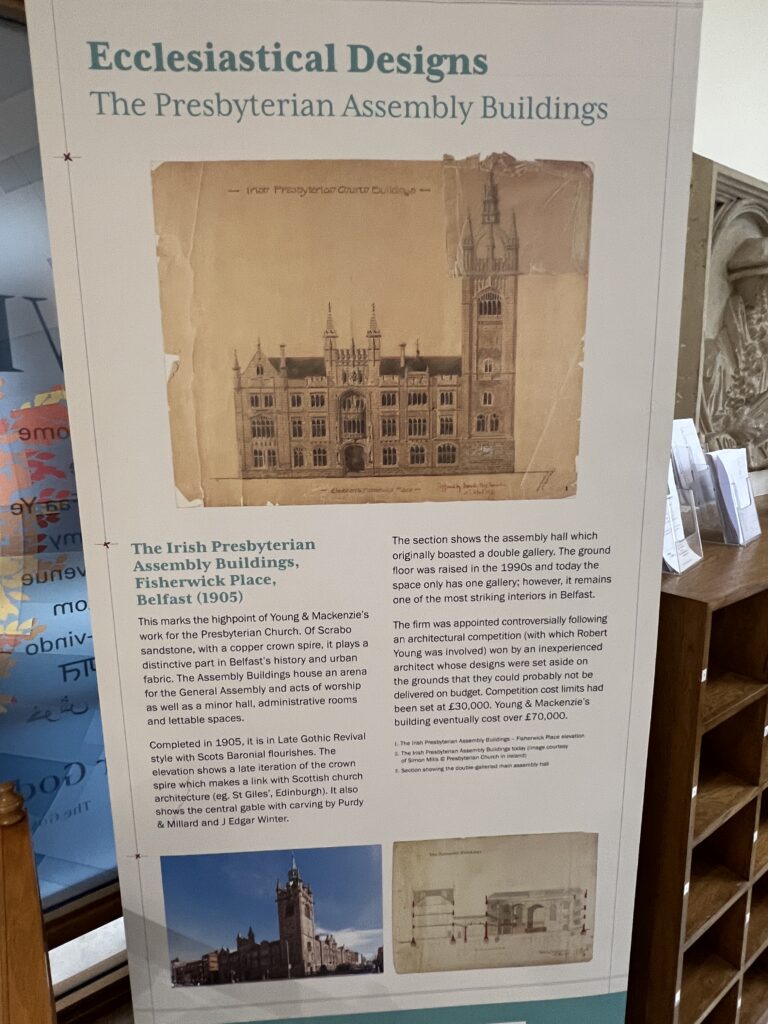
Around in Belfast are these blue historical markers on buildings.
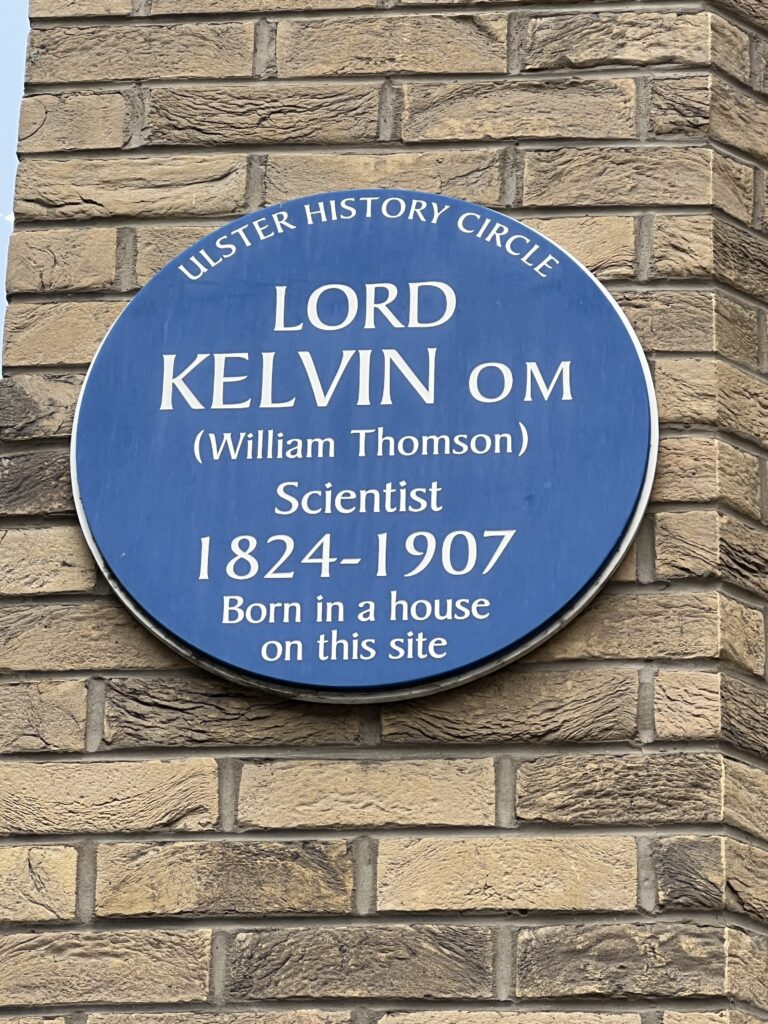
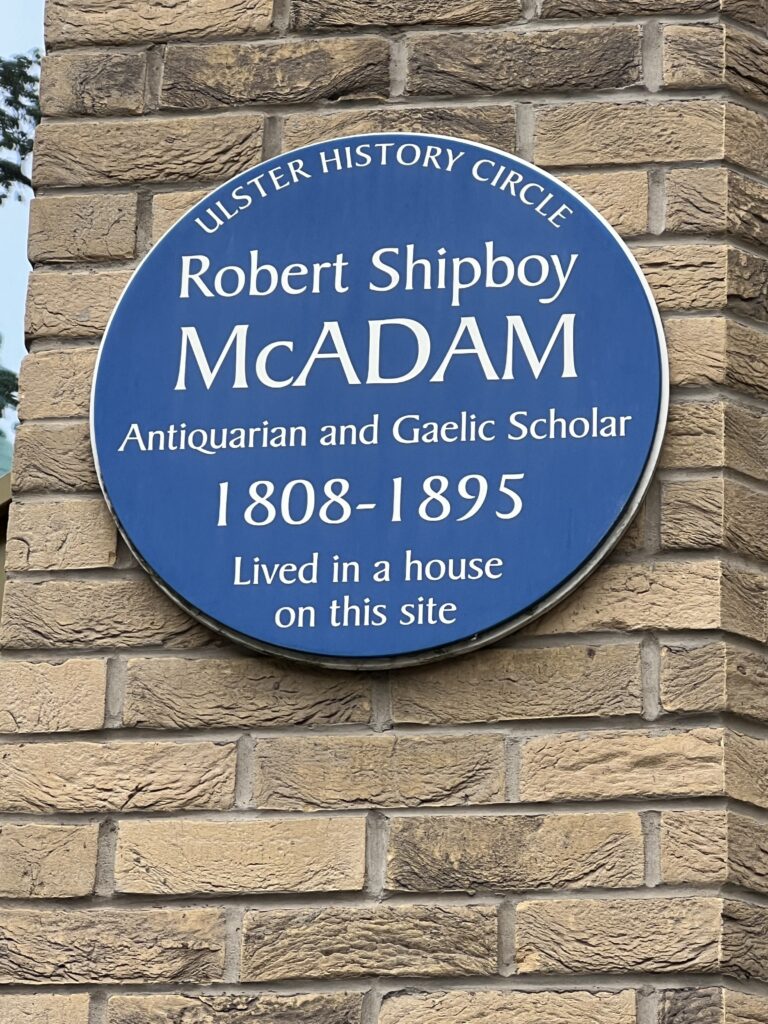
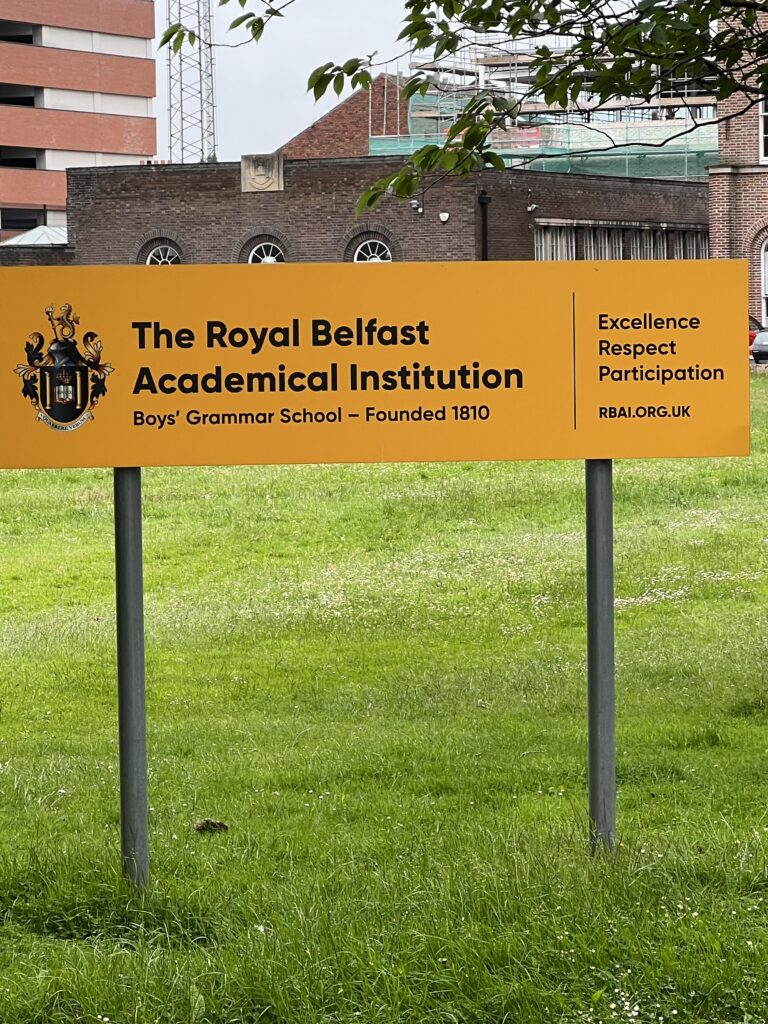
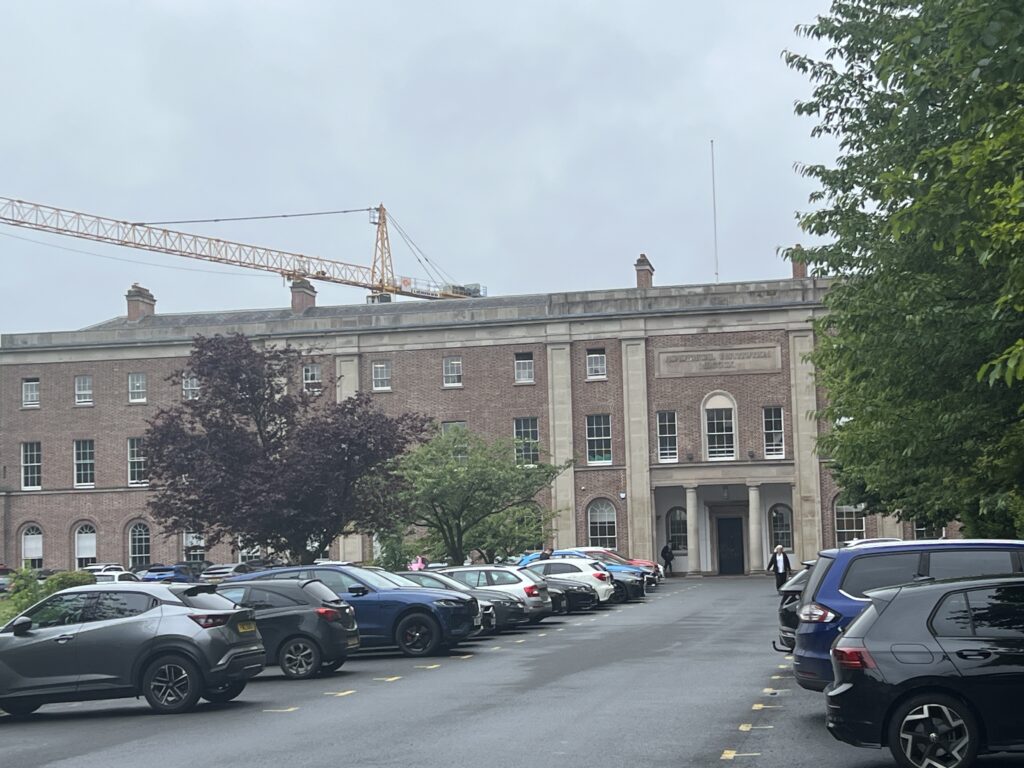
The Royal Belfast Academical Institution, known locally as Inst, is an independent grammar school in Belfast, Northern Ireland. With the support of Belfast’s leading reformers and democrats, it opened its doors in 1814. Until 1849, when it was superseded by what today is Queen’s University, the institution pioneered Belfast’s first programme of collegiate education.The modern school educates boys from ages 11 to 18. It is one of the eight Northern Irish schools represented on the Headmasters’ and Headmistresses’ Conference. The school occupies an 18-acre site in the centre of the city on which its first buildings were erected.
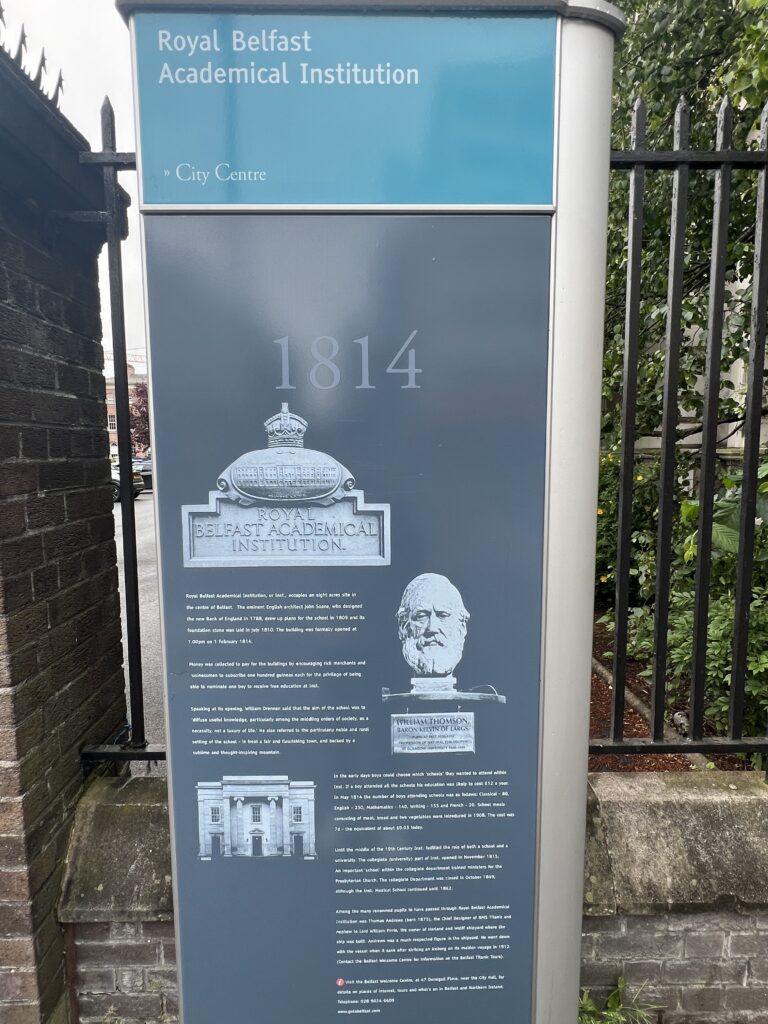
The Royal Belfast Academical Institution | Excellence, Respect & Participation
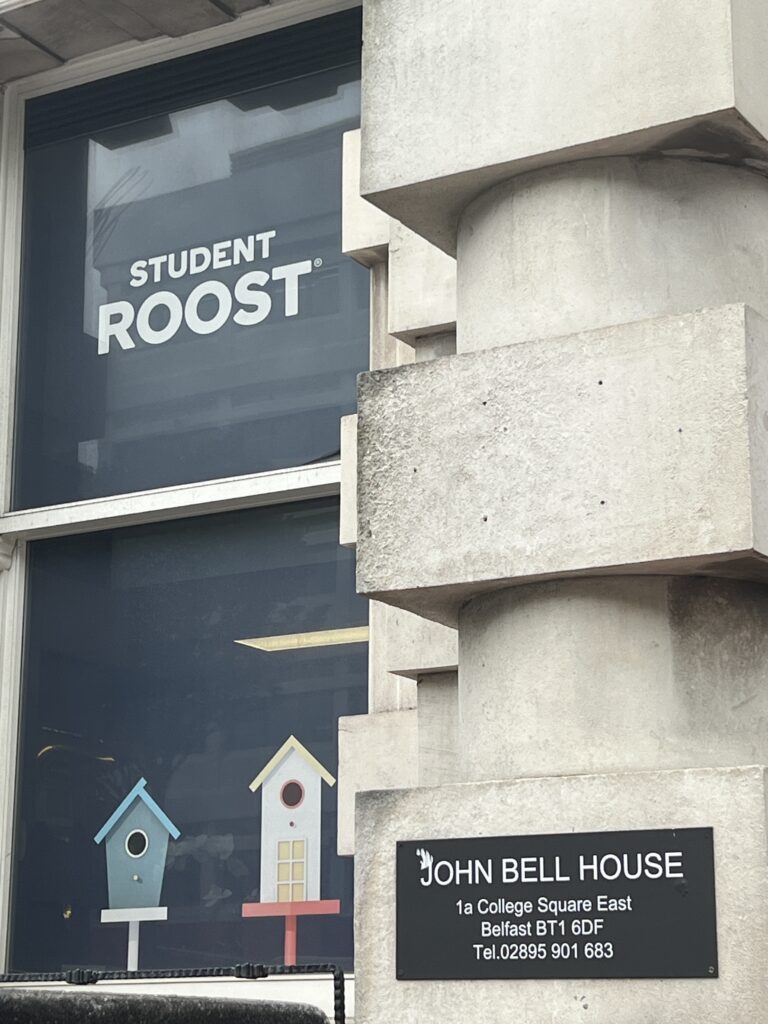
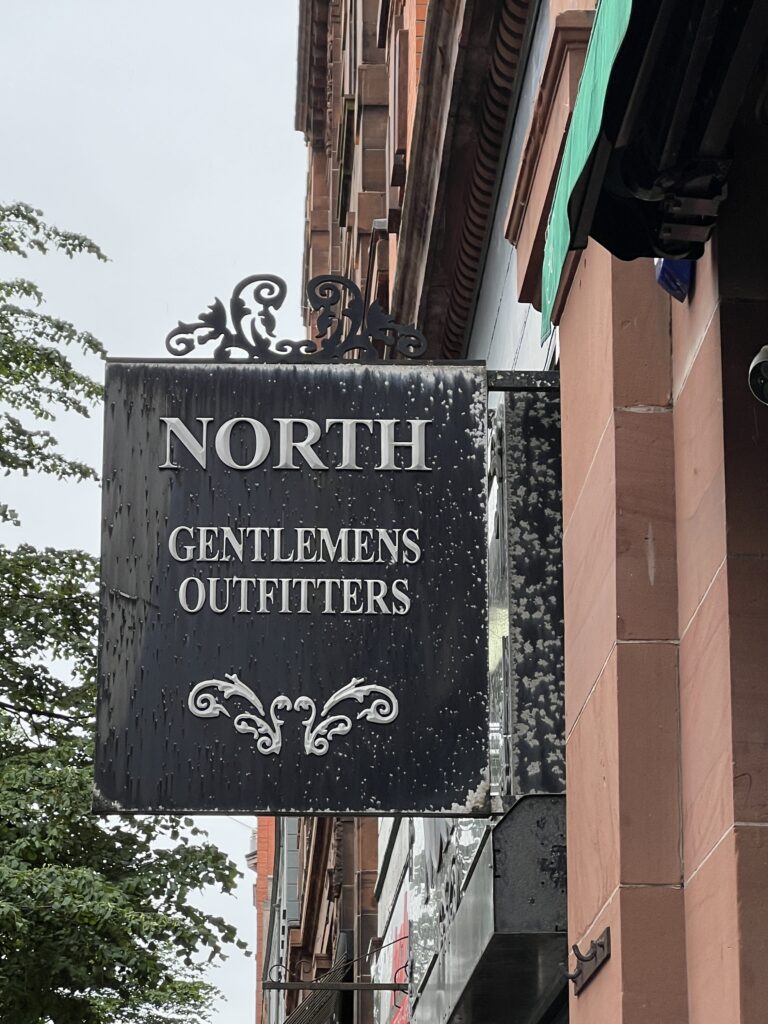
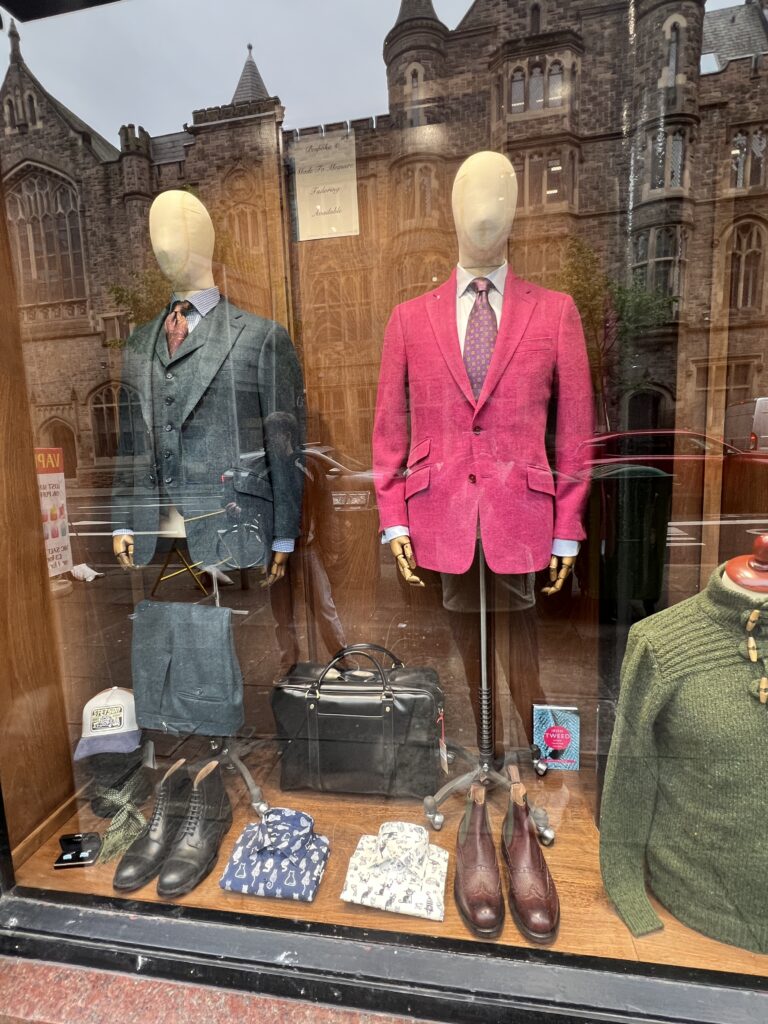
Passed by this store and probably a good thing we did not have enough time to stop in 🙂
North Clothing Belfast – Gentlemen’s Outfitters – North Gentlemen’s Outfitters
Belfast City Hall is the civic building of Belfast City Council located in Donegall Square, Belfast, Northern Ireland. It faces North and effectively divides the commercial and business areas of the city center. One of Belfast’s most iconic buildings, Belfast City Hall first opened its doors in August 1906 and is Belfast’s civic building.
The city hall app Belfast City Hall | Visitor exhibition offers self-guided tours of our stained-glass window collection, the monuments and memorials in City Hall grounds artworks and artefacts.
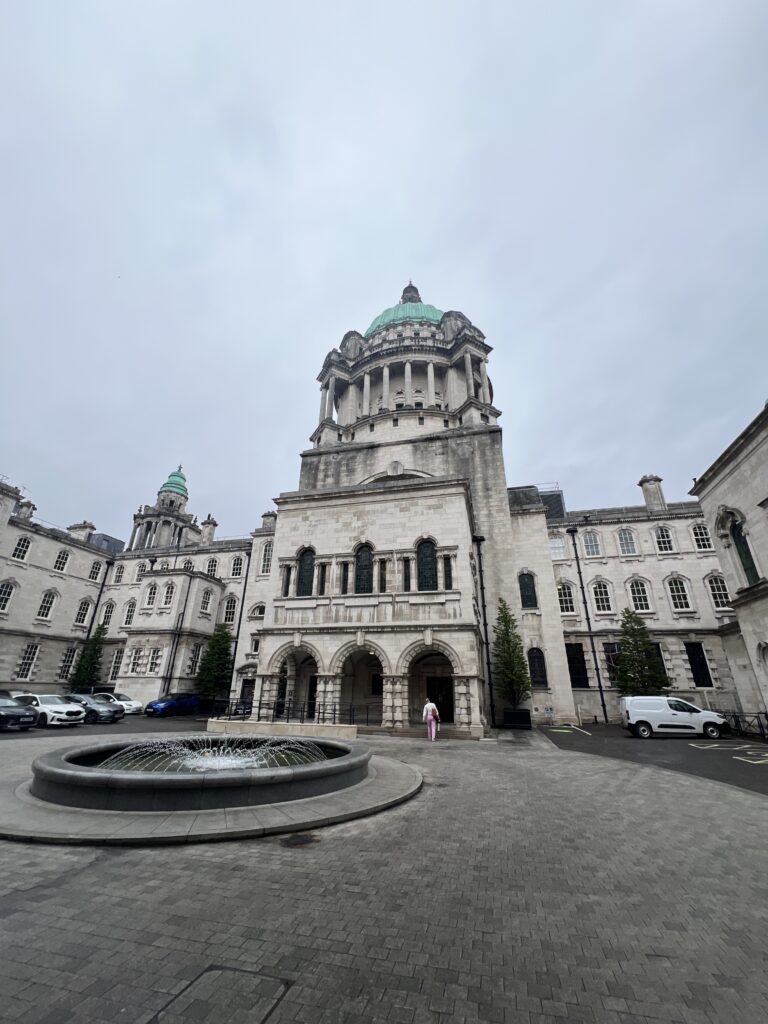
Main entrance
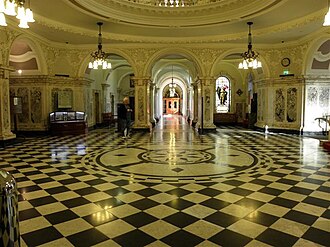
First floor rotunda
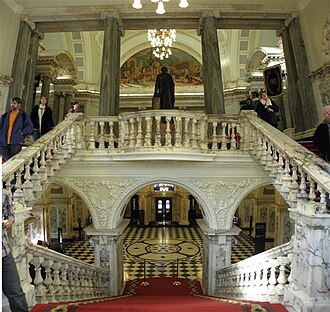
Central staircase
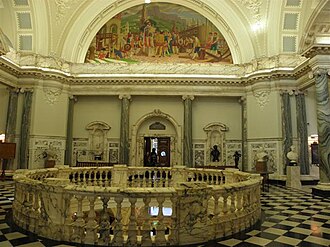
City Hall Dome
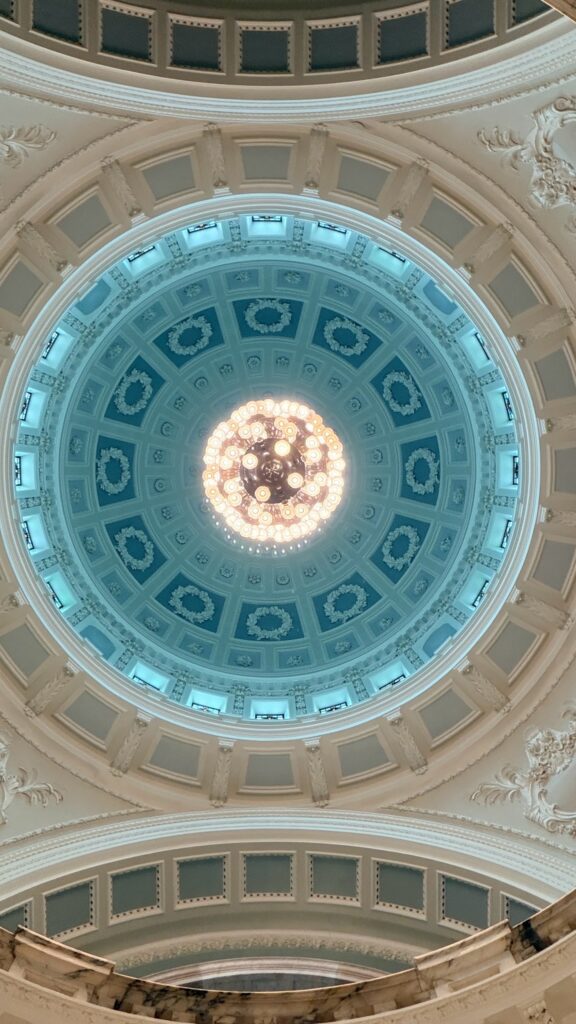
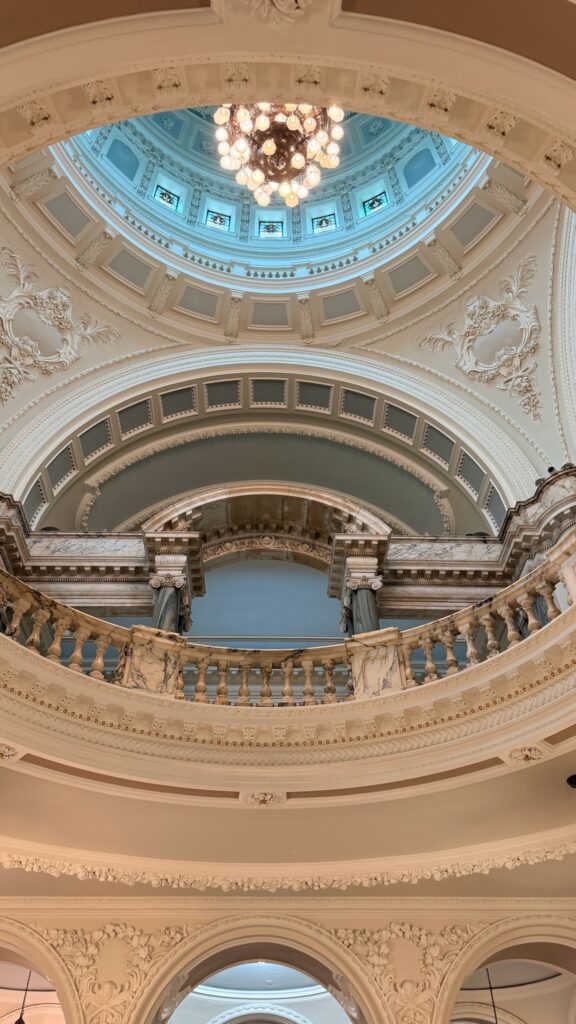
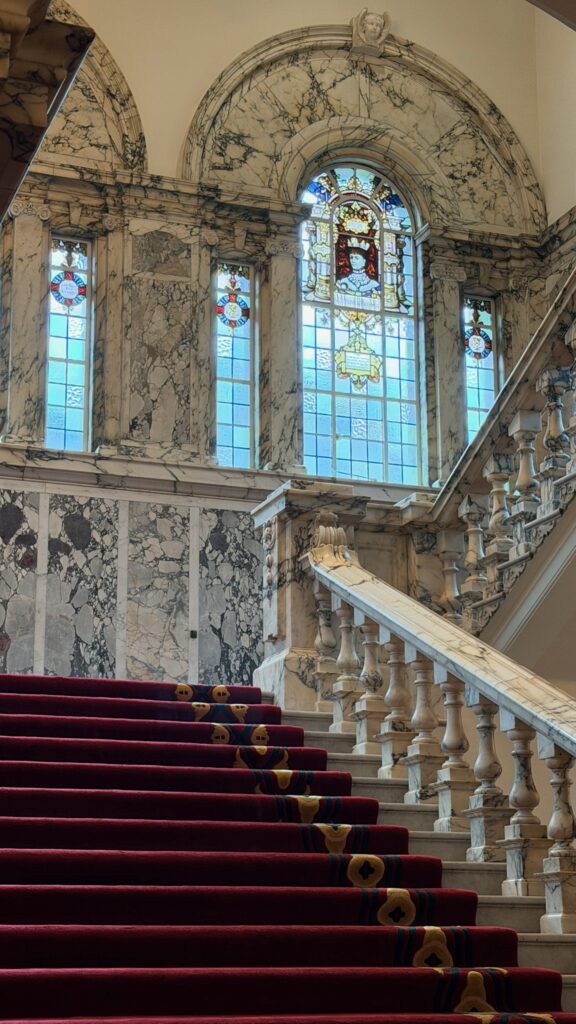
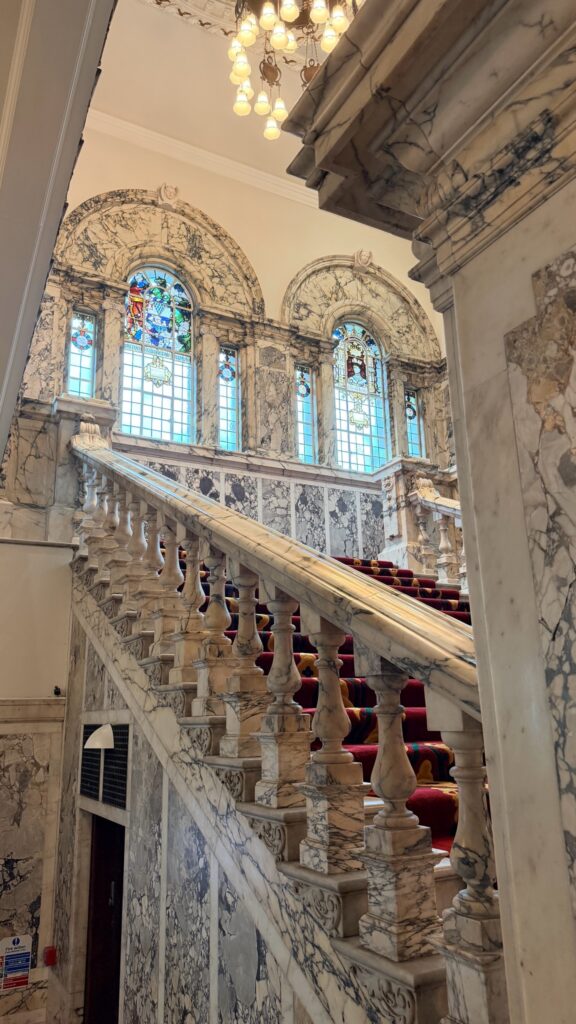
Some of the stained-glass windows of city hall taken from stock photos
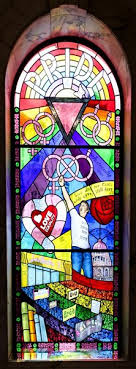
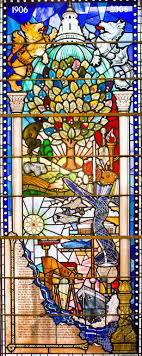
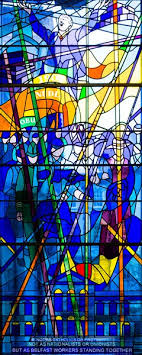
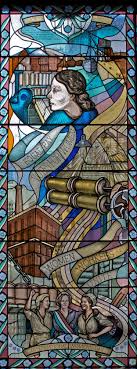
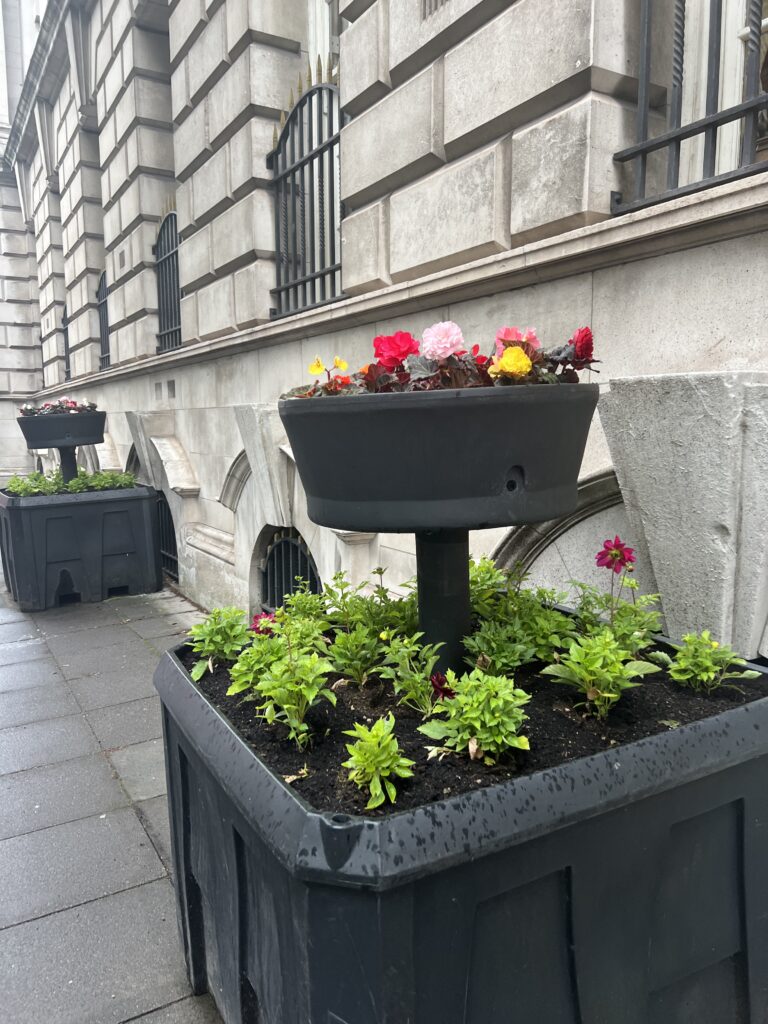
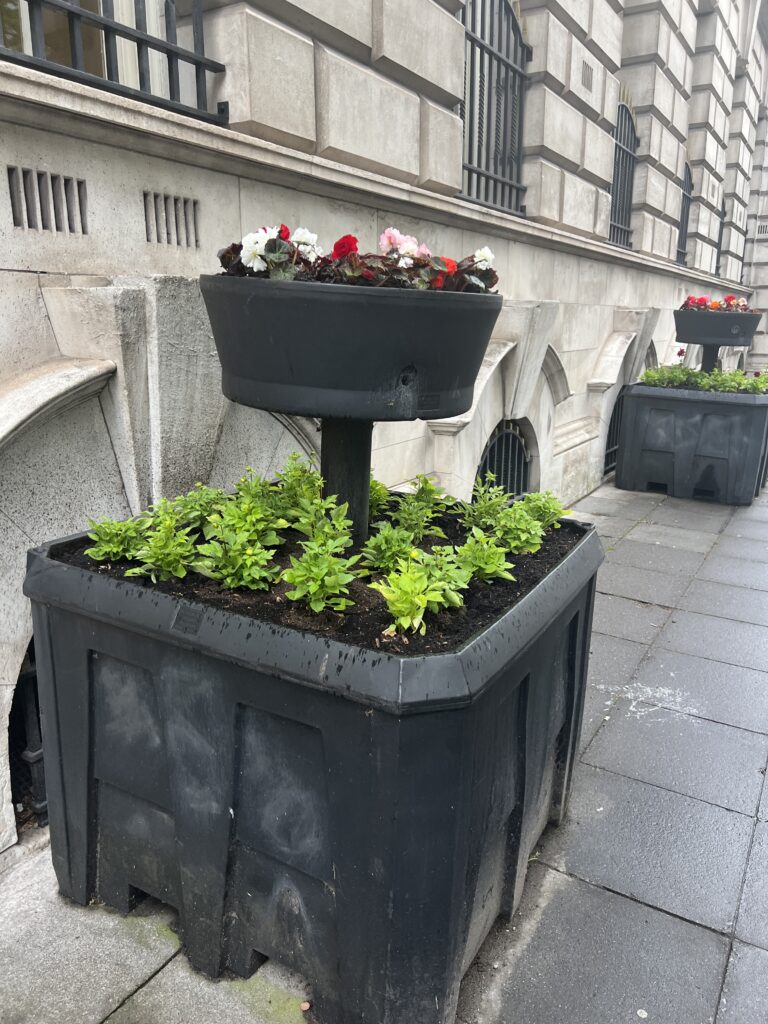
Outside of the city hall flowers planted in pots on the sidewalk
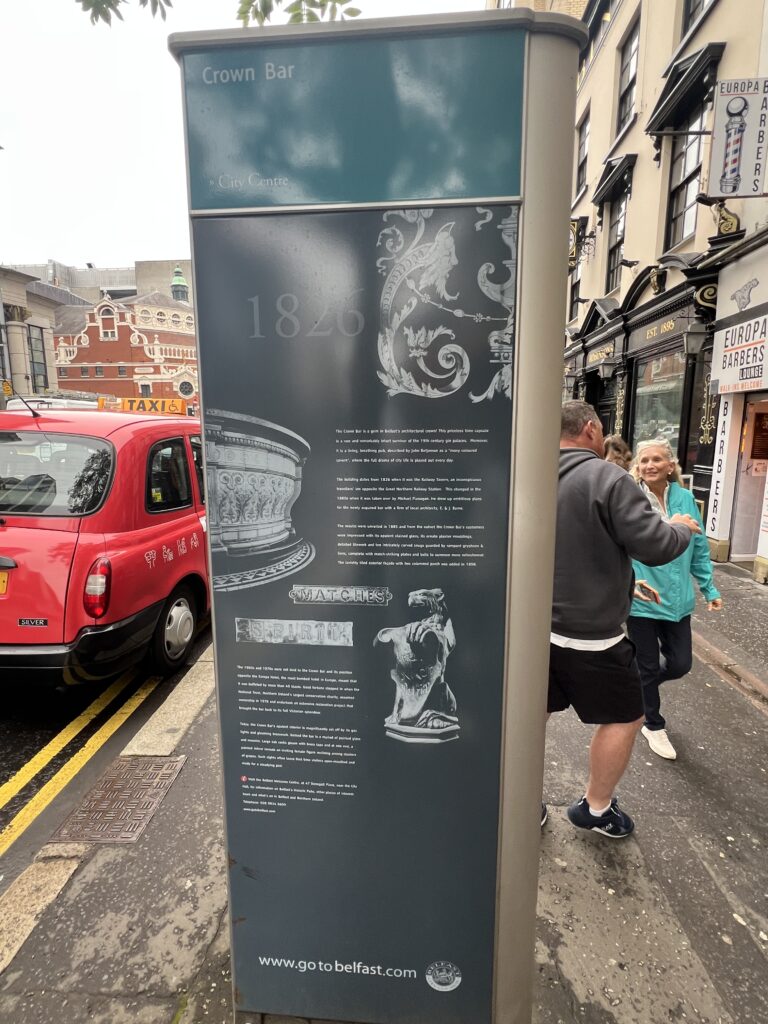
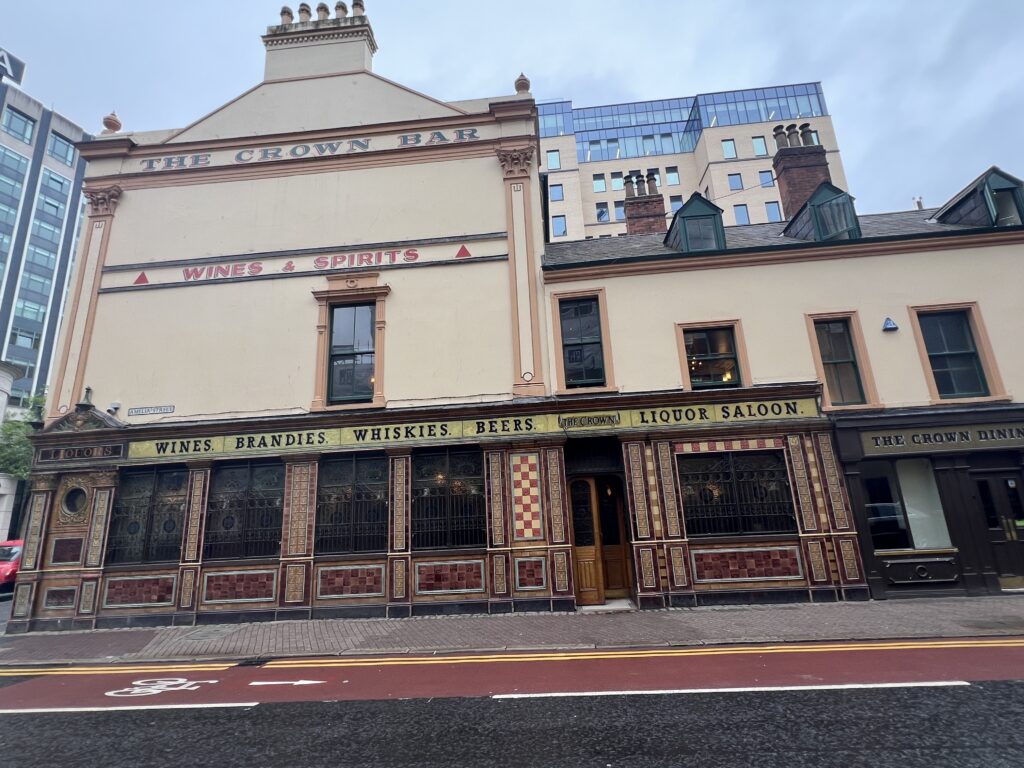
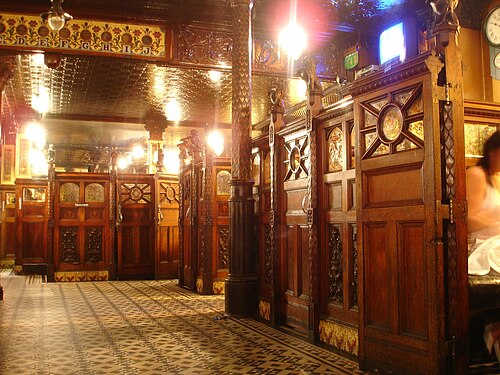
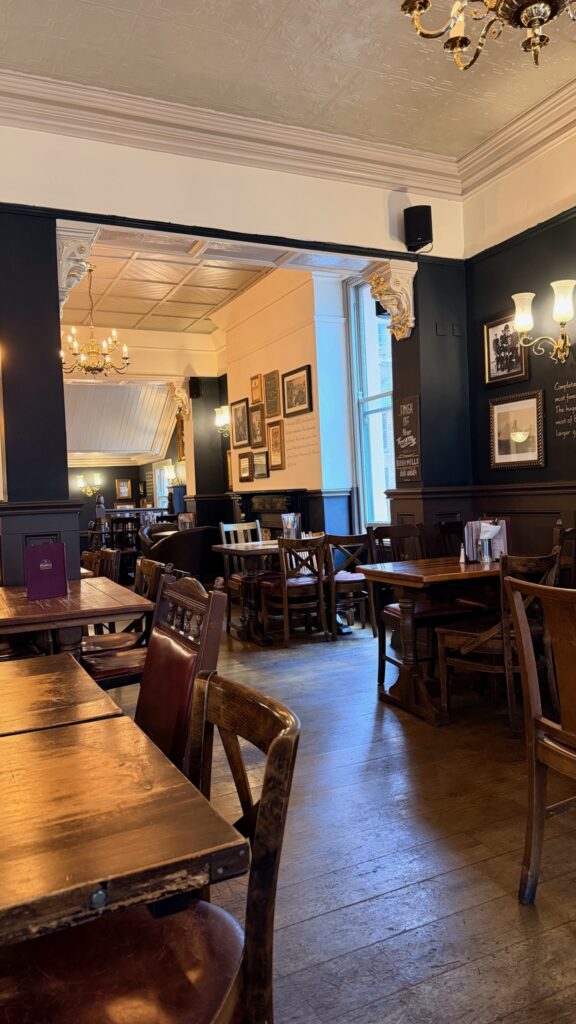
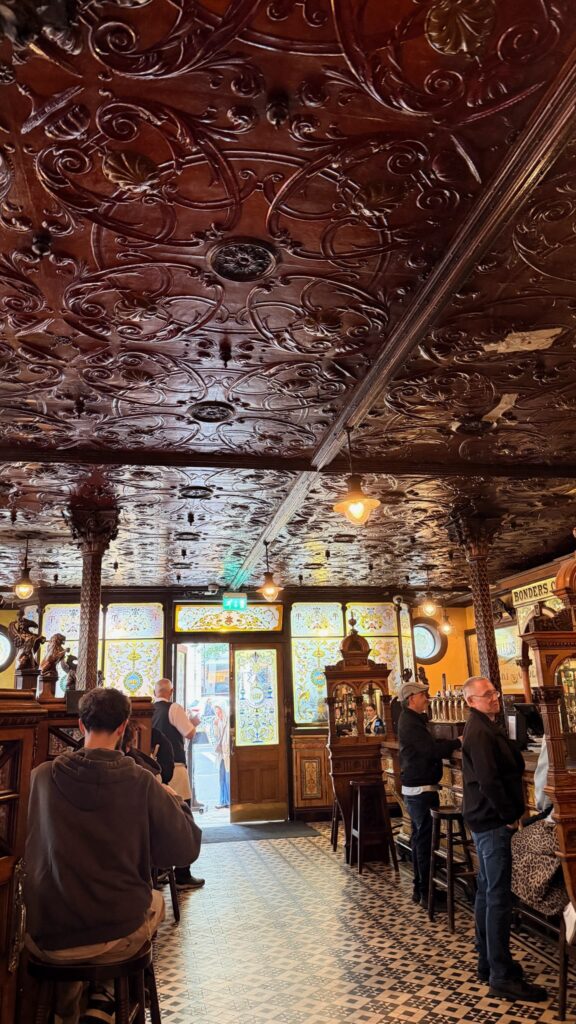
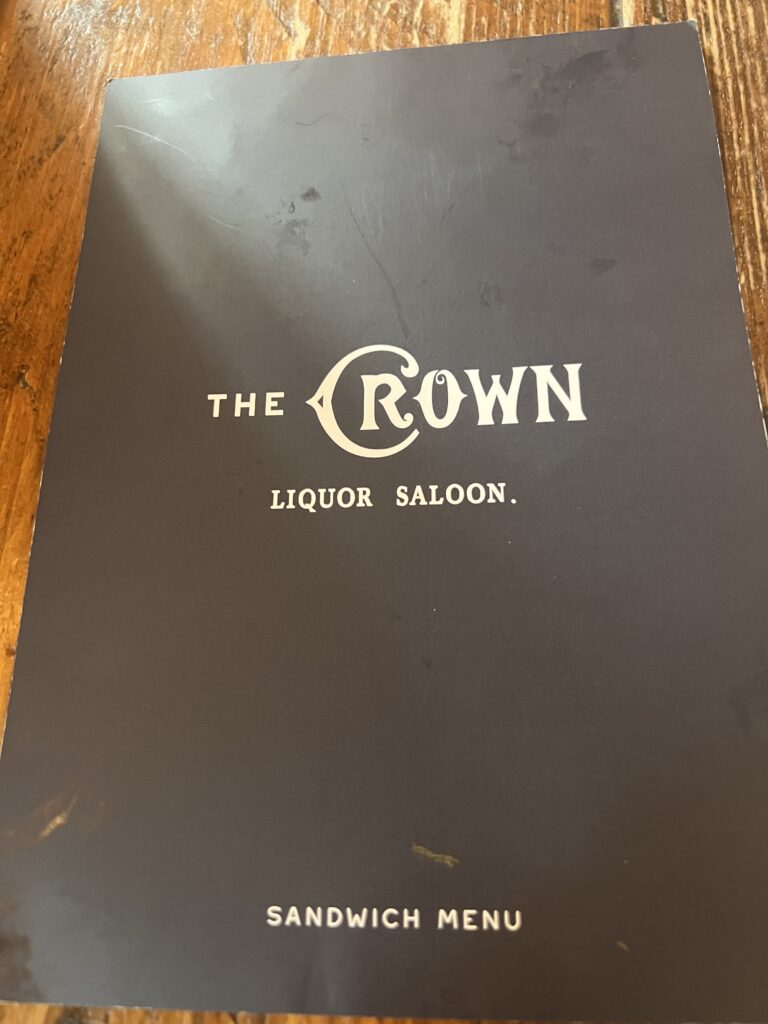
After leaving city hall we walked to The Crown Bar for lunch. The Crown Liquor Saloon, also known as the Crown Bar, is a pub in Great Victoria Street in Belfast, Northern Ireland. Refurbished in 1885, and at least twice since, it is an outstanding example of a Victorian gin palace, and one of Northern Ireland’s best-known pubs. It is owned by the National Trust and is leased to Mitchells & Butlers who run it as a Nicholson’s pub.
Opened by Felix O’Hanlon as The Railway Tavern, the pub was then bought by Michael Flanagan. Flanagan’s son Patrick renamed and renovated it in 1885.
The Crown owes its elaborate tiling, stained glass and woodwork to the Italian craftsmen whom Flanagan persuaded to work on the pub after hours. These craftsmen were brought to Ireland to work on the many new churches being built in Belfast at the time. It was this high standard of work that gave the Crown the reputation of being one of the finest Victorian gin palaces of its time.
The Italian Touch (1885): When Patrick Flanigan took over the pub, he persuaded Italian craftsmen (who were in Belfast working on local churches) to decorate the pub after hours. Their work resulted in the pub’s signature stained glass, mosaic tilework, and intricate wood carvings.
The “Crown” Disagreement: Flanigan, a Catholic, wanted to name the pub, but his Protestant wife disliked his initial ideas. She eventually chose “The Crown,” though Flanigan had the last laugh by subtly embedding crowns into the floor mosaics so patrons are forced to step on them as they enter.
Victorian Snugs: The pub features ten distinct, private wooden booths (“snugs”) lettered A to J. These feature antique bell systems for service and gunmetal plates for striking matches. Built to accommodate the pub’s more reserved customers during the austere Victorian period, the snugs feature the original gun metal plates for striking matches and an antique bell system for alerting staff. Extra privacy was then afforded by the pub’s etched and stained glass windows which feature painted shells, fairies, pineapples, fleurs-de-lis and clowns.
The Crown Liquor Saloon (located at 46 Great Victoria Street) was never directly bombed, but it famously suffered collateral damage and shattered windows dozens of times during the Troubles. Because it was located directly across from the Europa Hotel—which was bombed over 30 times—it earned a reputation as one of Belfast’s most frequently damaged pubs.
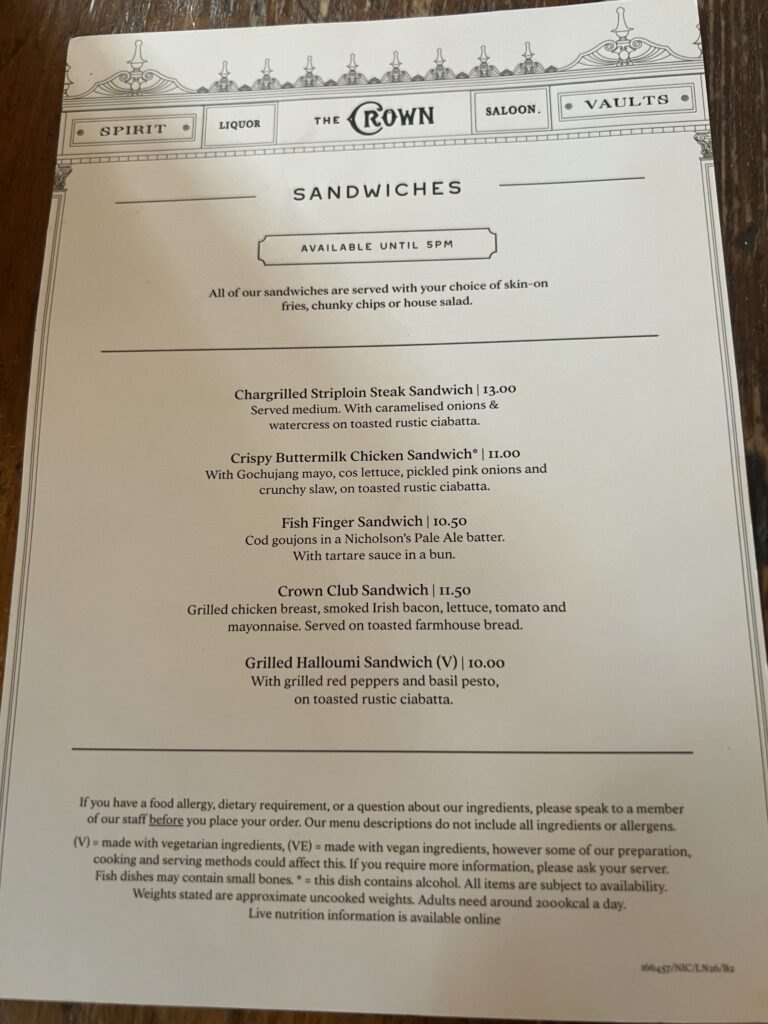
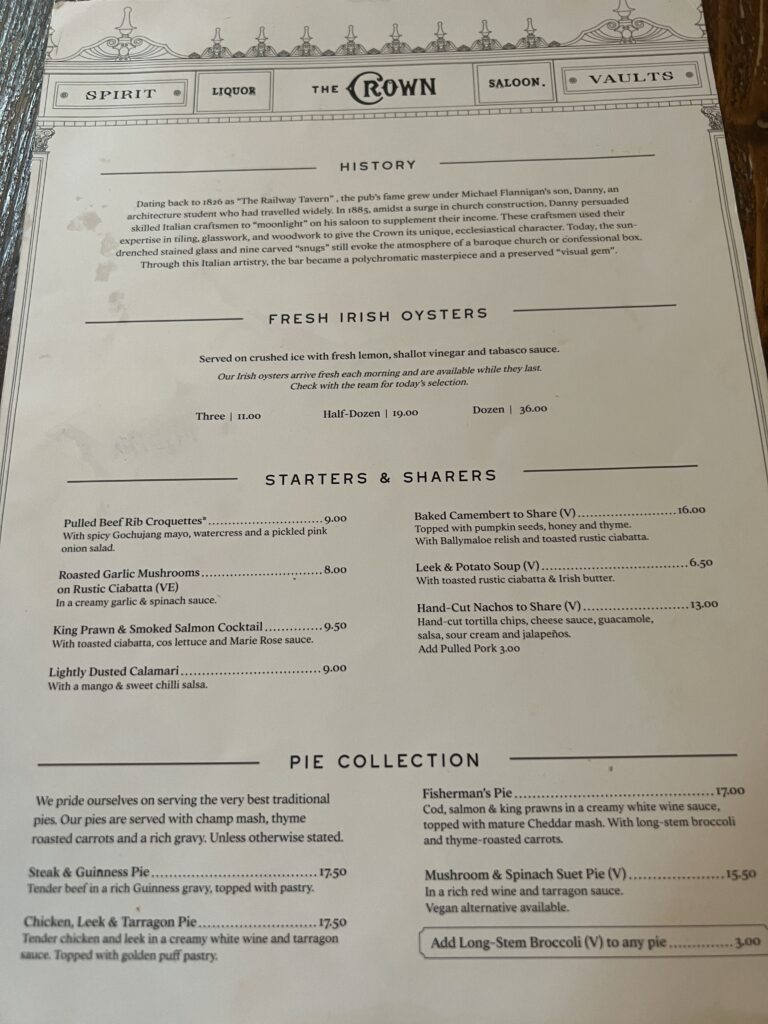
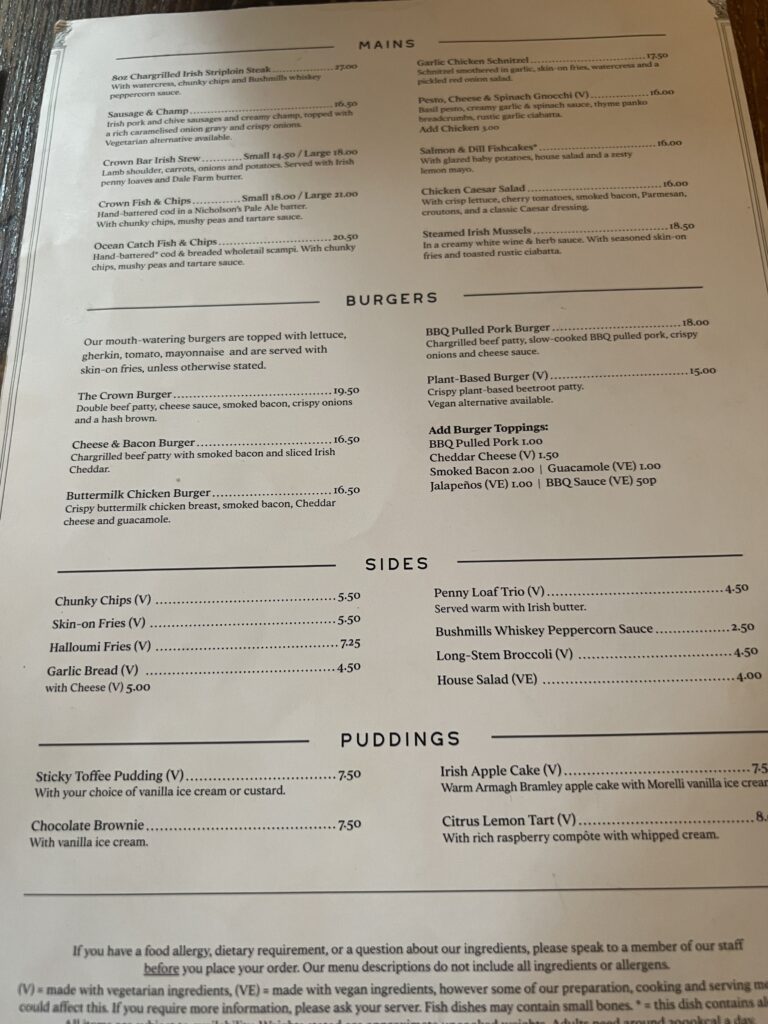
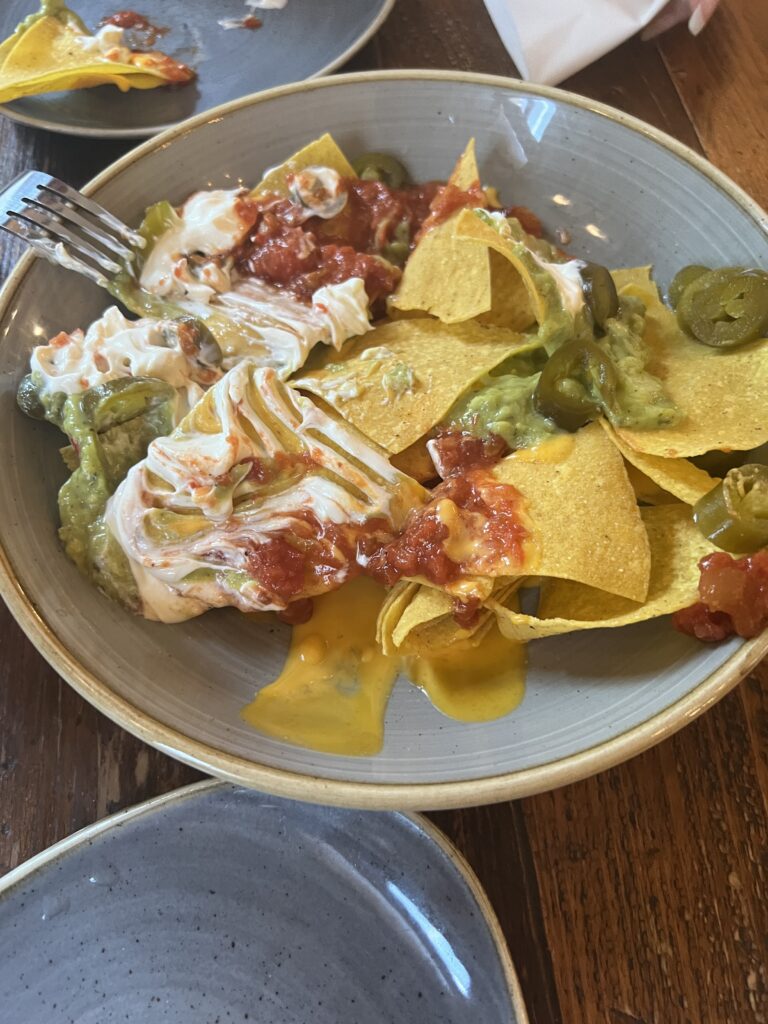
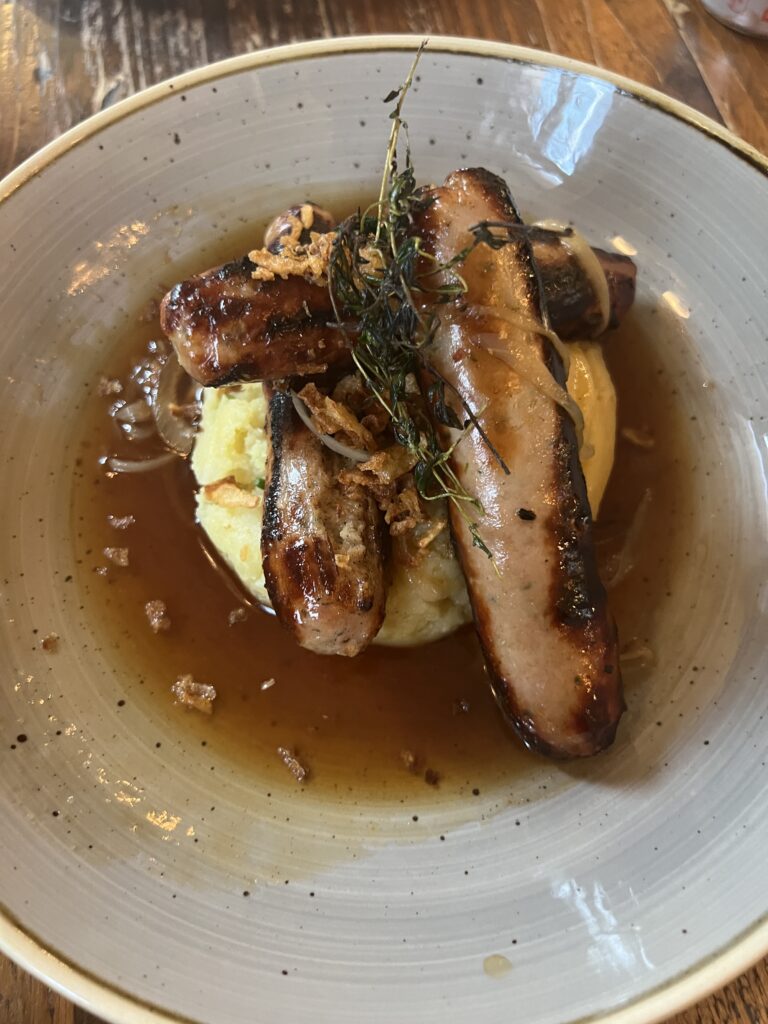
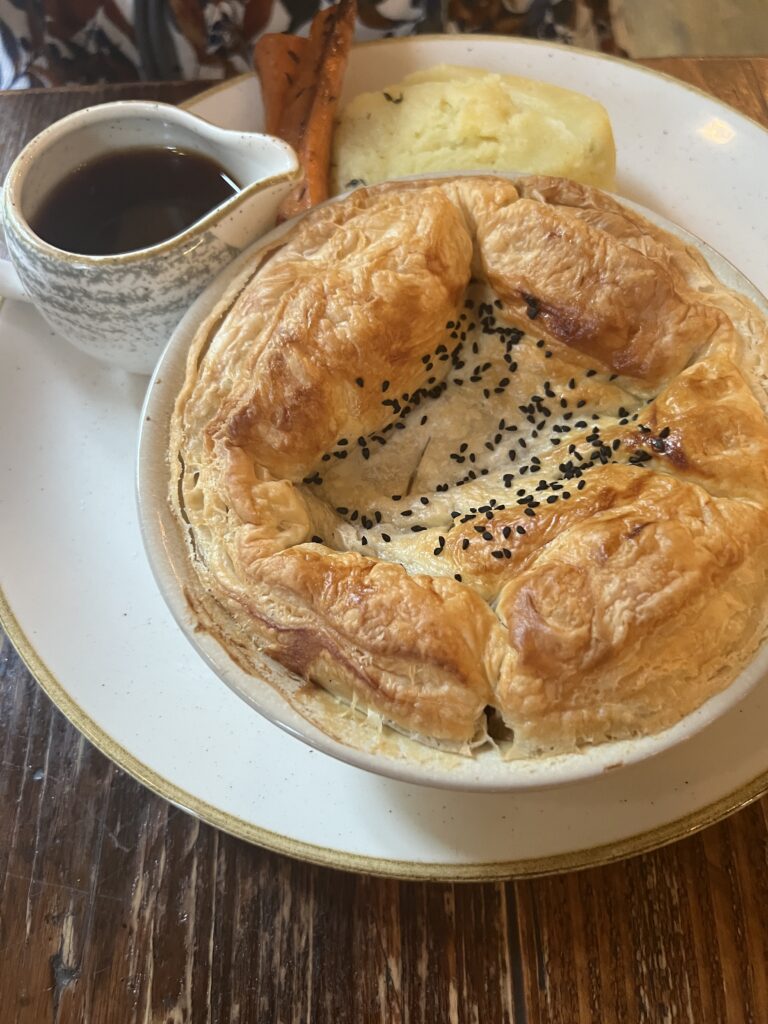
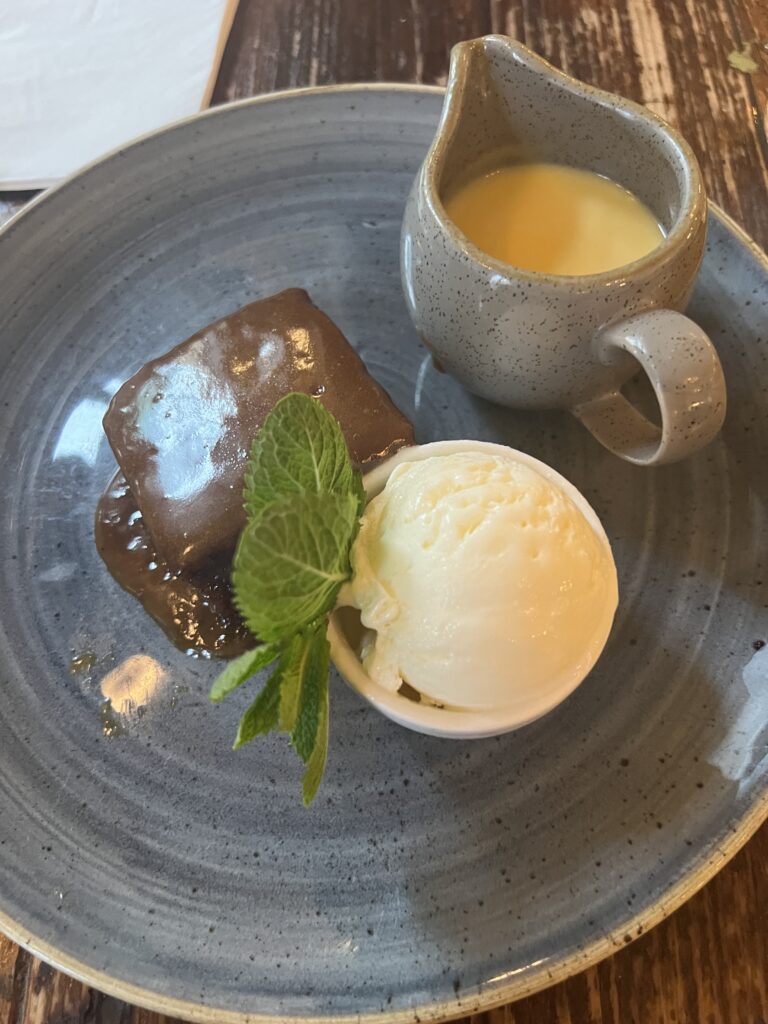
After lunch we took an Uber to St. Anne’s Cathedral. It was only one mile away but the rain was coming down hard by the time we left The Crown.
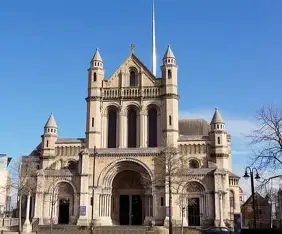
St Anne’s Cathedral is a Romanesque-style Anglican cathedral in Donegall Street, Belfast, Northern Ireland. It is unusual in serving two separate dioceses (Connor and Down and Dromore). It is the focal point of Belfast’s Cathedral Quarter.
Belfast Cathedral – The Cathedral Church of St. Anne
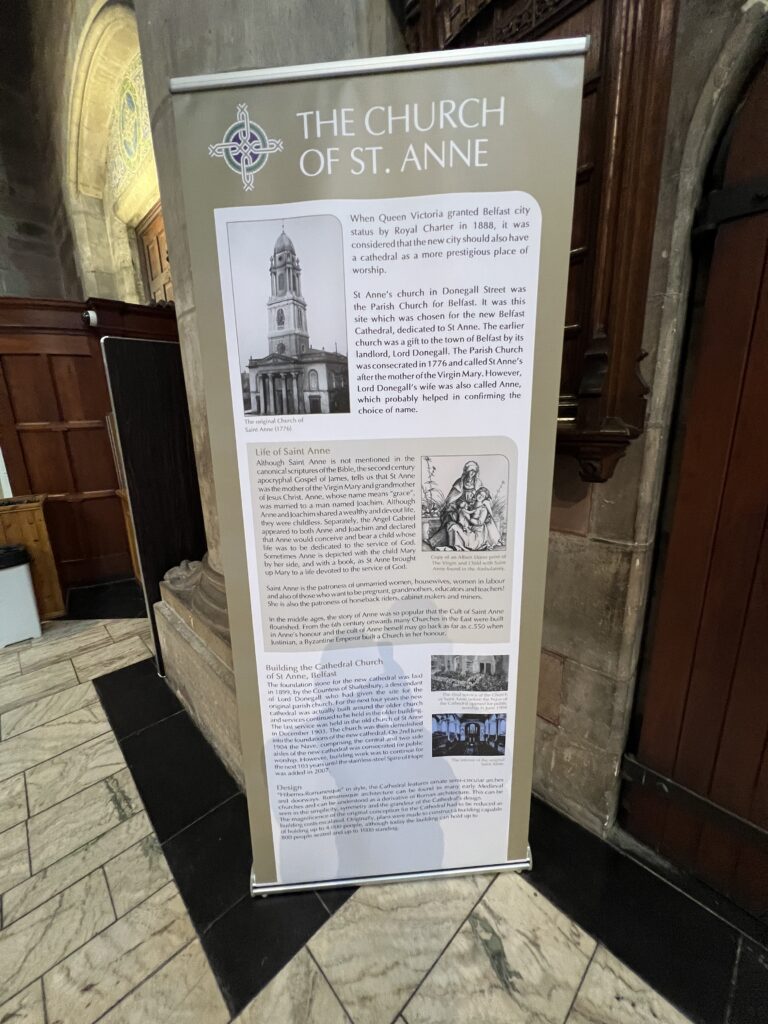
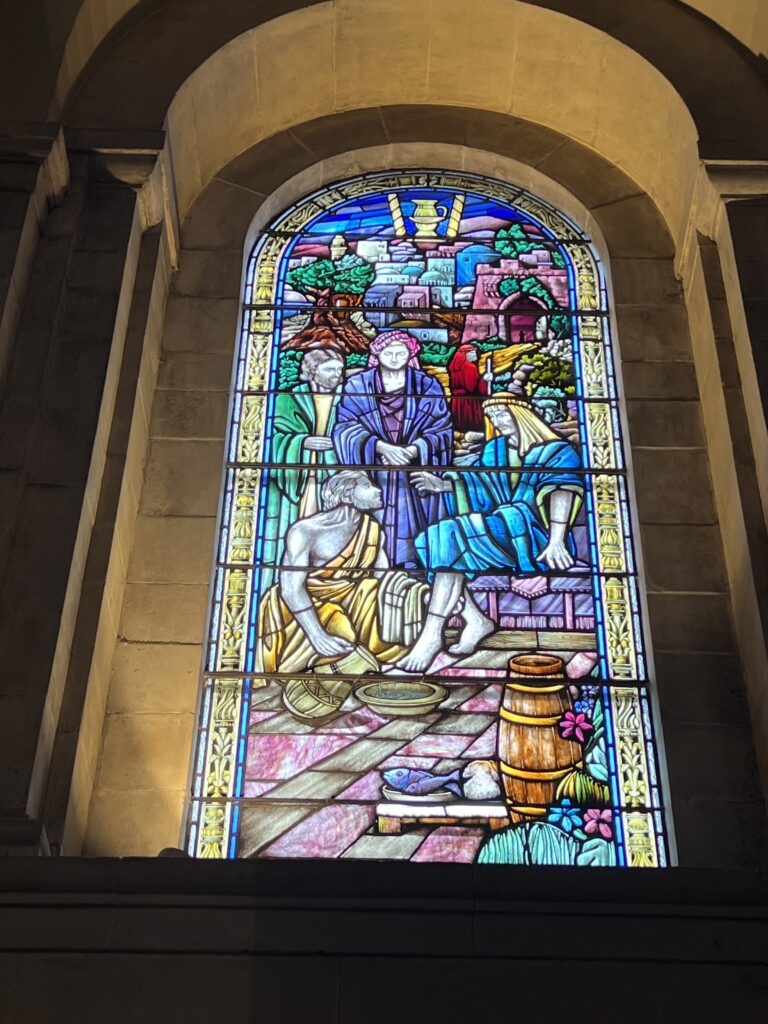
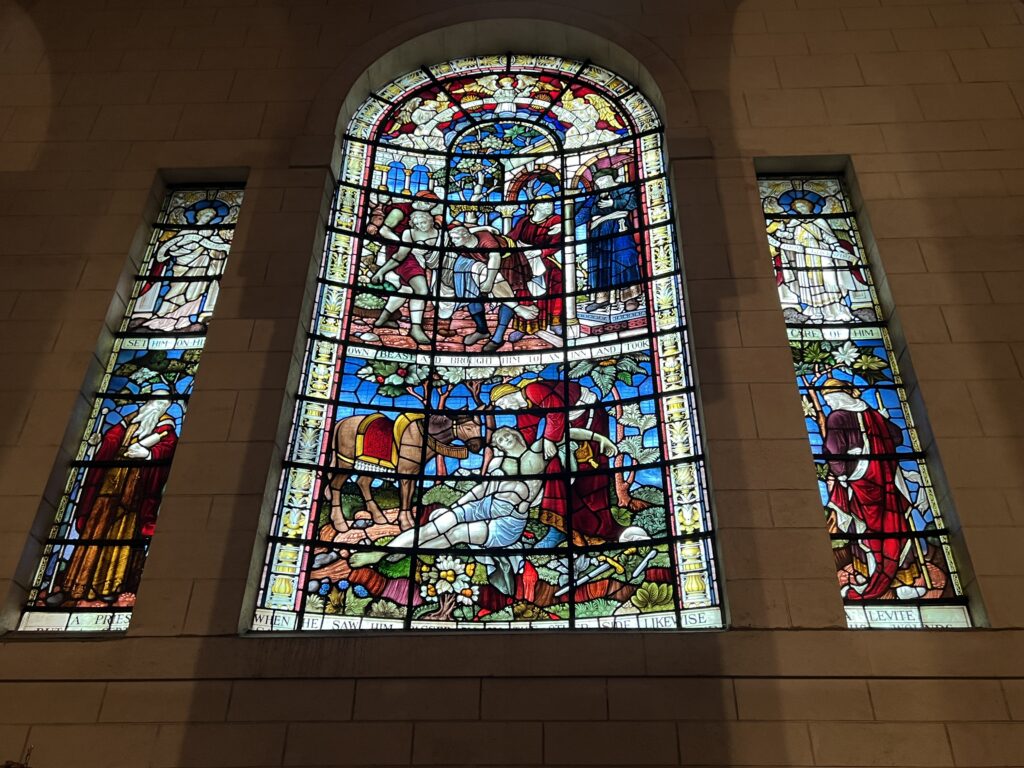
The first architect was Sir Thomas Drew, the foundation stone being laid on 6 September 1899 by the Countess of Shaftesbury. The old parish church of St Anne by Francis Hiorne of 1776 had continued in use, up until 31 December 1903, while the new cathedral was constructed around it; the old church was then demolished. The Good Samaritan window, to be seen in the sanctuary, is the only feature of the old church to be retained in the cathedral. Initially, only the nave of the cathedral was built, and this was consecrated on 2 June 1904.
In 1924 it was decided to build the west front of the cathedral as a memorial to the Ulstermen and women who had served and died in the Great War. The foundation stone for this was laid by the 3rd Duke of Abercorn, Governor of Northern Ireland, on 2 June 1925 and the completed facade, to an amended design by the architect Sir Charles Archibald Nicholson, was dedicated in June 1927.
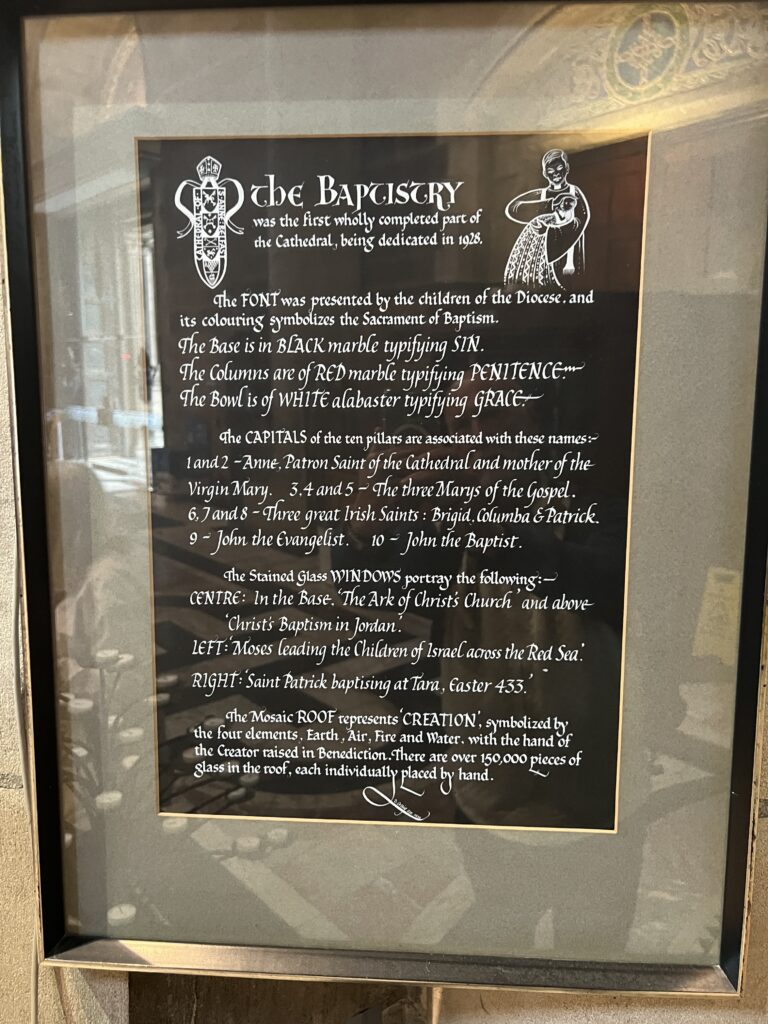
In the meantime, the central crossing, in which the choir sits, was built between 1922 and 1924. The Baptistery, to plans drawn up by the late W.H. Lynn, who had assisted Sir Thomas Drew, was dedicated in 1928, and the Chapel of the Holy Spirit, with its beautiful mosaics depicting Saint Patrick, was dedicated on 5 July 1932, the 1500th anniversary of the arrival of St Patrick in Ireland.
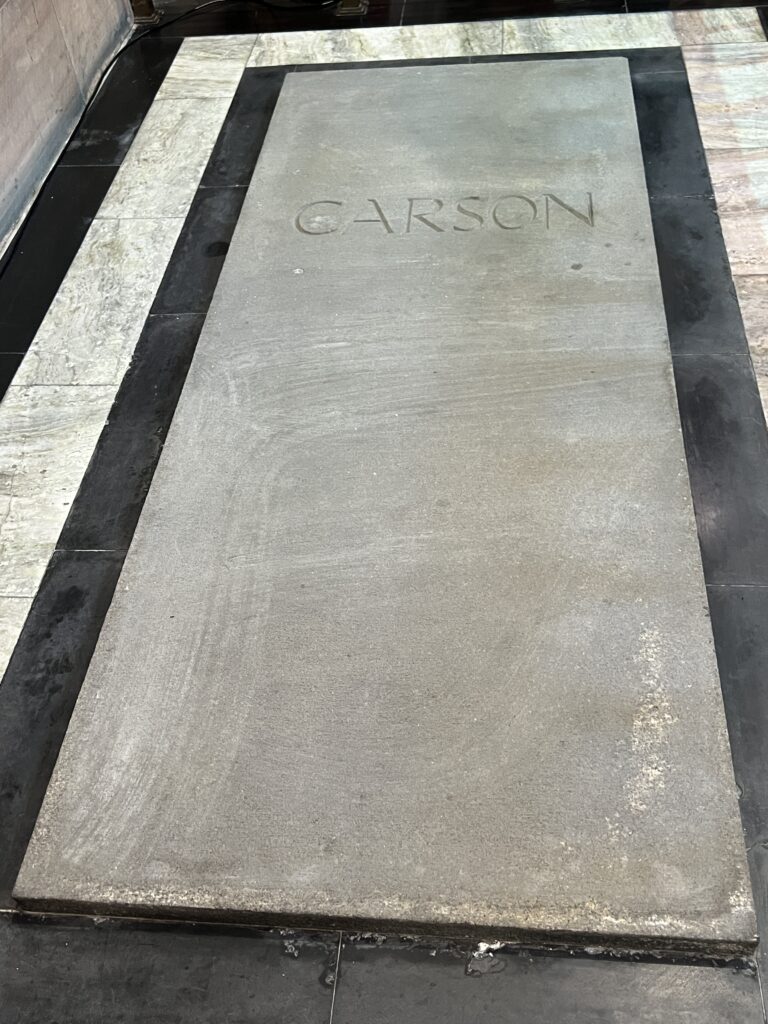
Edward, Lord Carson, the leader of the Unionist cause at the time of the Home Rule Crisis, was buried (with a state funeral) in the south aisle of the cathedral in 1935. In 1941 the cathedral was almost destroyed by a German bomb, which caused extensive damage to surrounding properties. In 1955 work began on the construction of the ambulatory, at the east end of the cathedral. This work was dedicated in 1959, but it was not for another ten years that it was possible to begin work on the north and south transepts. The Troubles and inflation led to long delays and major problems with the financing of this work.
The south transept, containing the Chapel of Unity, and with the organ loft above, was dedicated in 1974, and the north transept, with the large Celtic cross designed by John MacGeagh on the exterior, and housing the Chapel of the Royal Irish Rifles, was completed in 1981.
In April 2007 a 40-metre stainless steel spire was installed on top of the cathedral. Named the “Spire of Hope”, the structure is illuminated at night and is part of a wider redevelopment planned for the Cathedral Quarter. The base section of the spire protrudes through a glass platform in the cathedral’s roof directly above the choir stalls, allowing visitors to view it from the nave.
Because of the rain falling we could not take a photo of the cathedral’s outside look so I am using two stock photos.
The Nave was the first part of the Cathedral to be completed in 1904. Each of the ten pillars on the side of either side of the Nave represents a different industry, or a theme that was important in Belfast at the start of the 20th century.
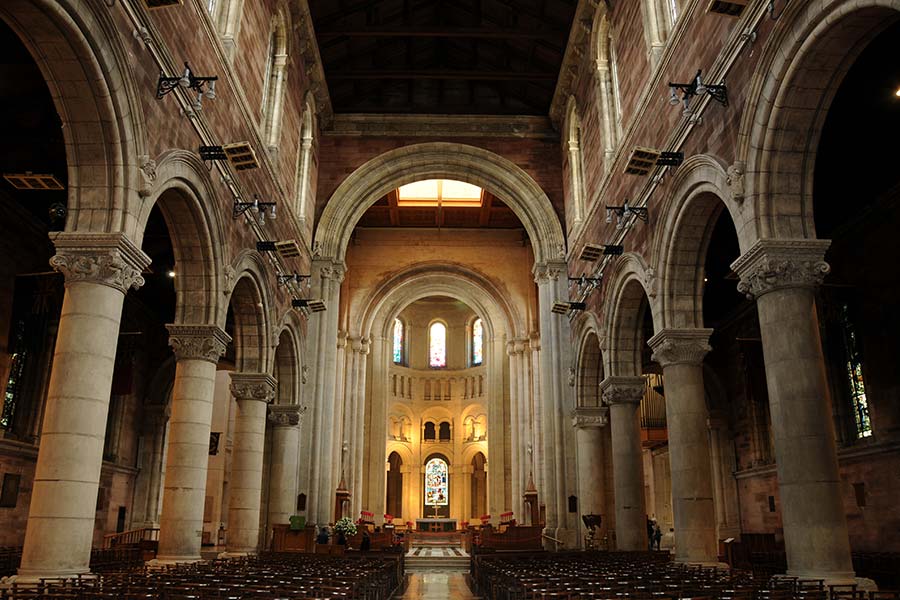
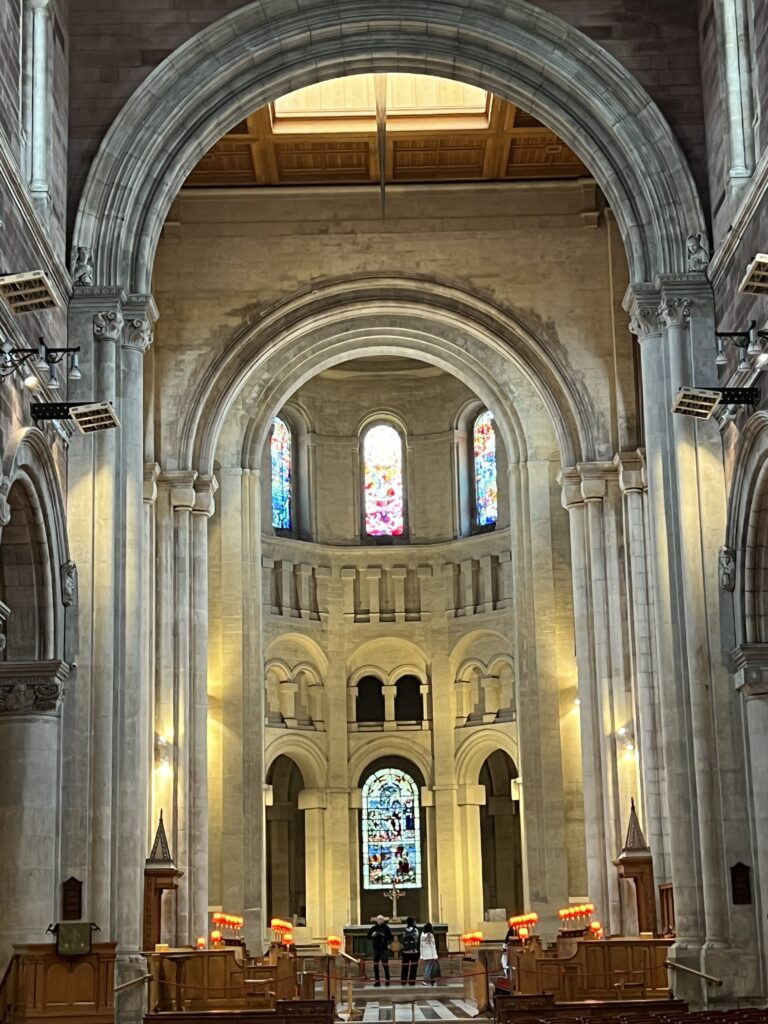
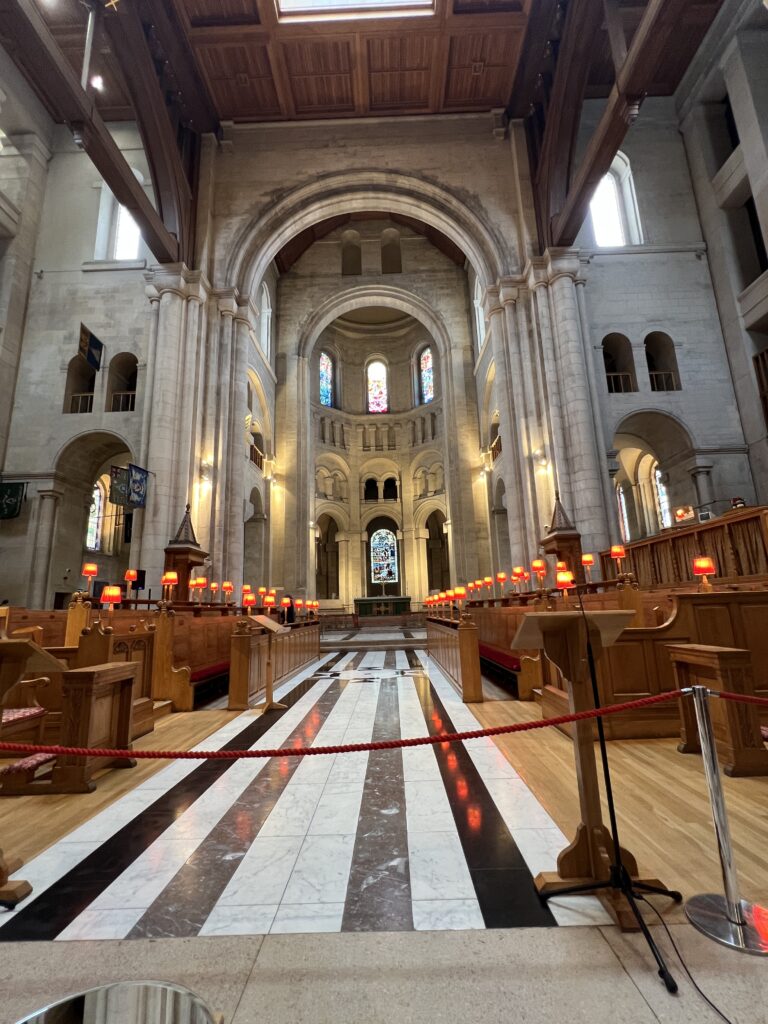
Looking towards the entrance of The Cathedral
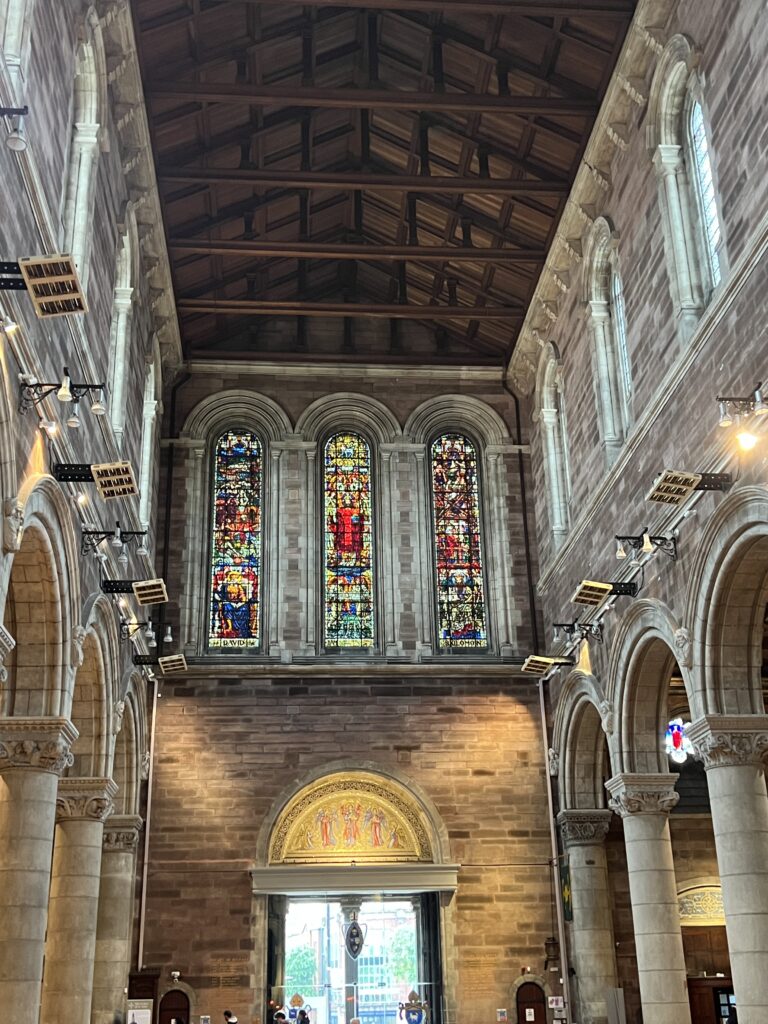
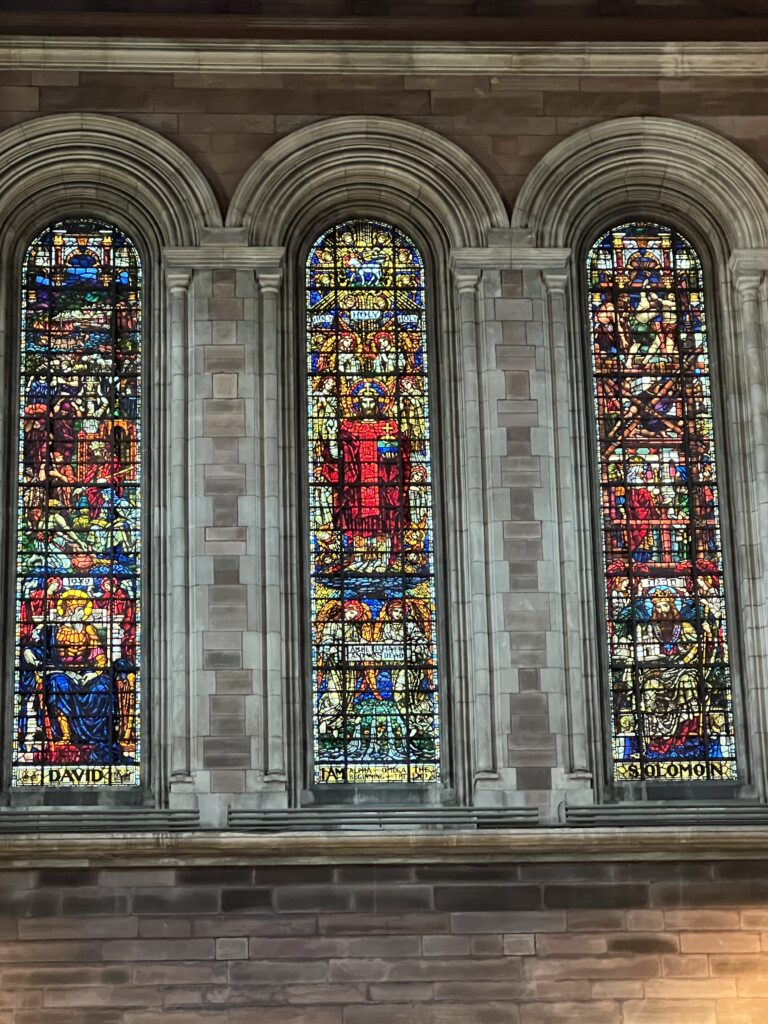
Ceiling of The Cathedral
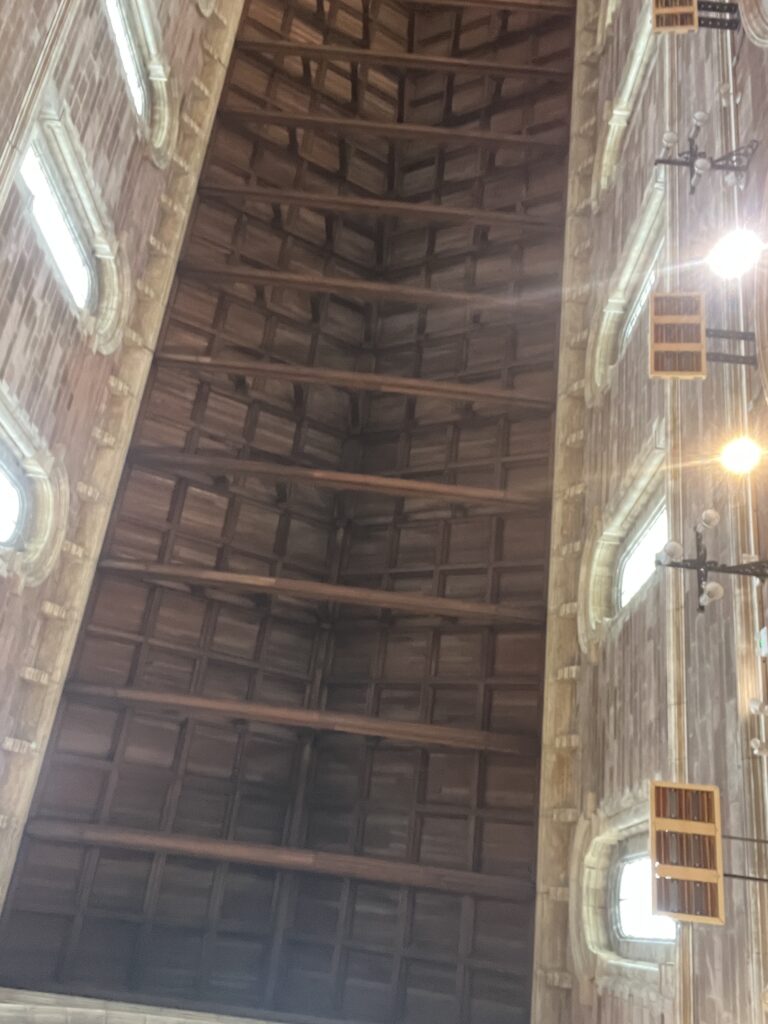
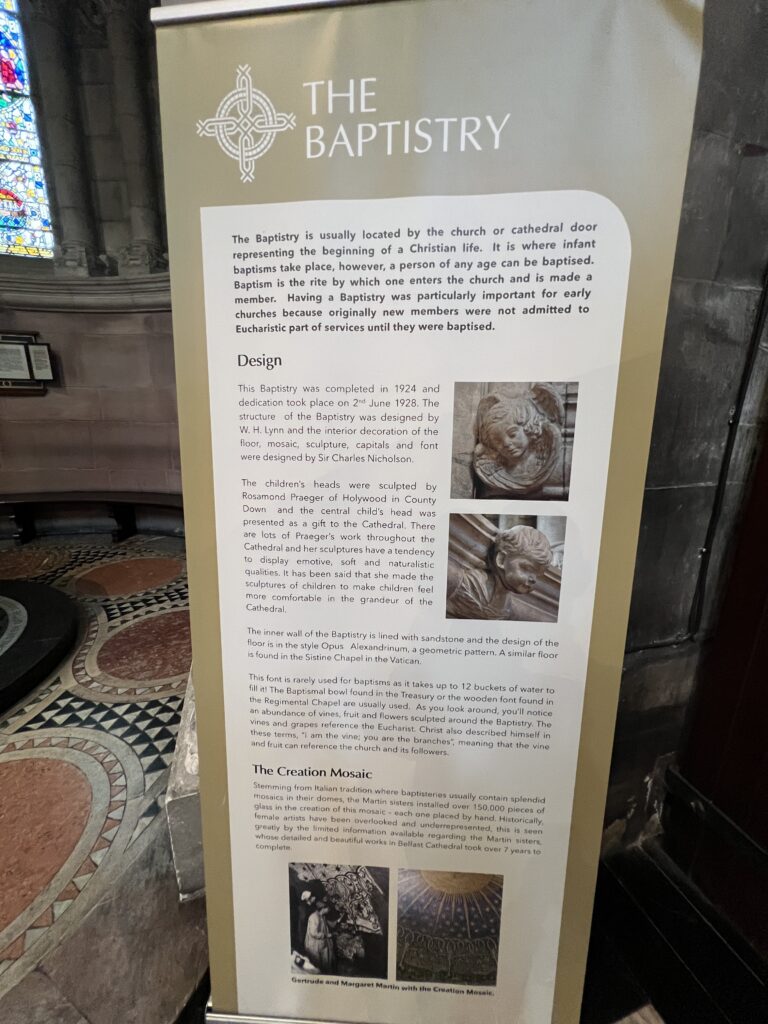
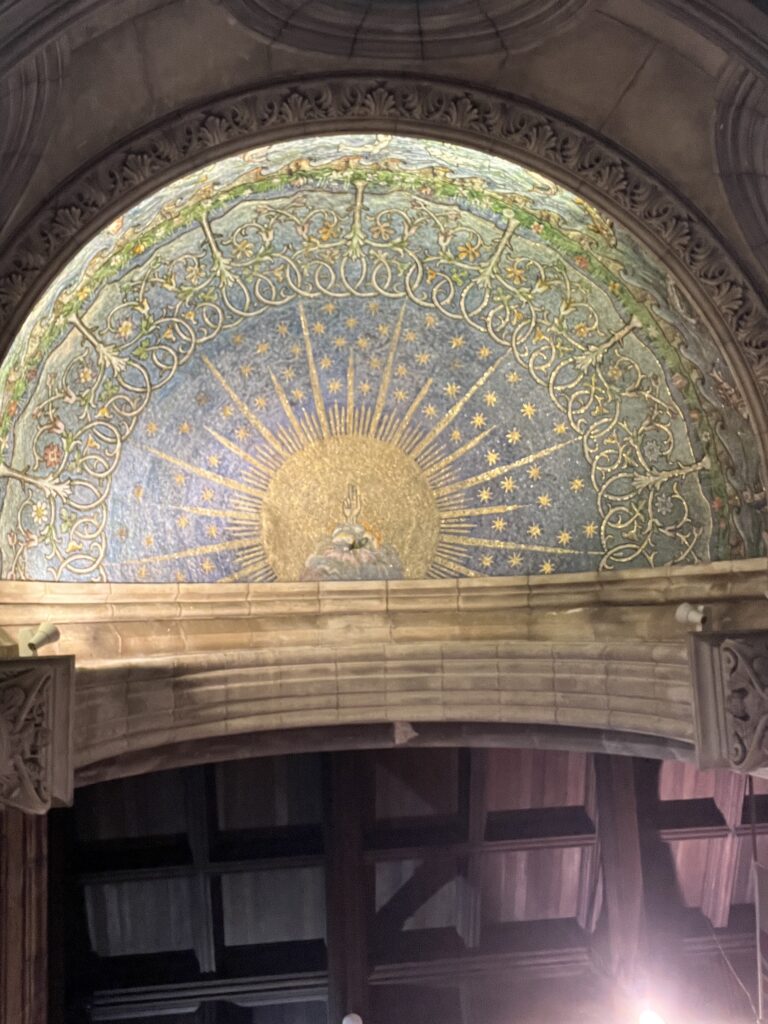
The roof itself is composed of 150,000 pieces of glass representing Creation and symbolising Earth, Fire, and Water and overall is the hand of the Creator raised in Blessing.
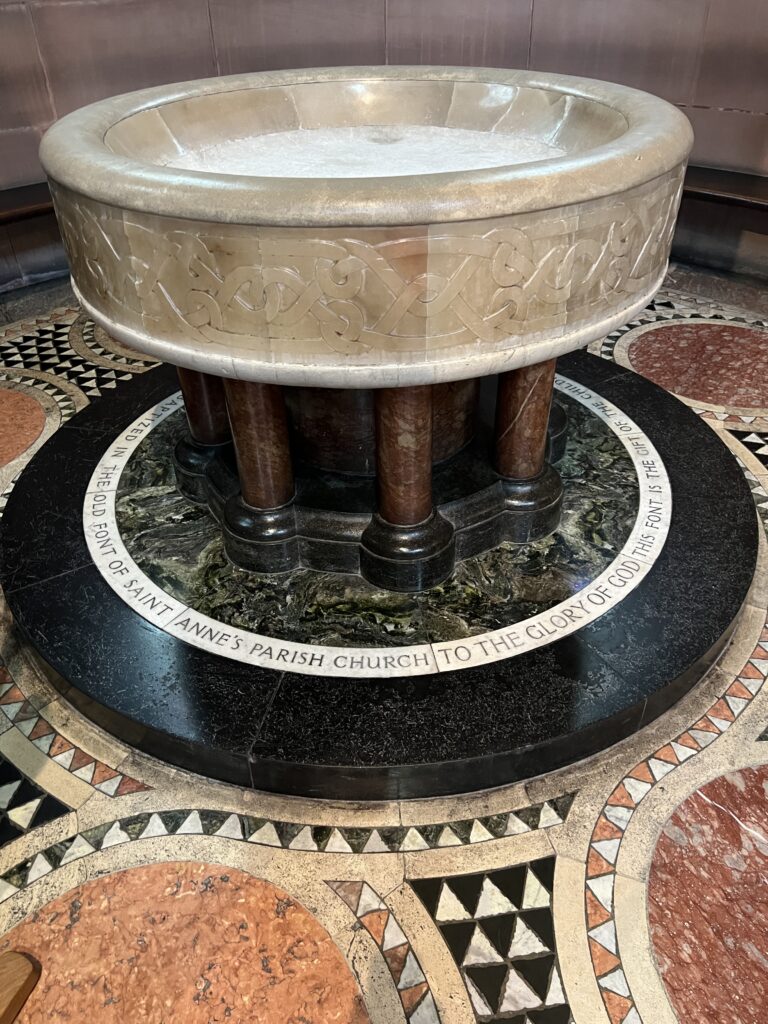
The Font is fashioned out of marble taken from various parts of Ireland; its colouring is symbolic of the Sacrament of Baptism. The base is of black marble, representing sin. The columns are of red marble, representing Christ’s saving blood shed on Calvary, therefore penitence. The bowl is of white alabaster, representing new life and re-birth after the sacrament of baptism (grace).
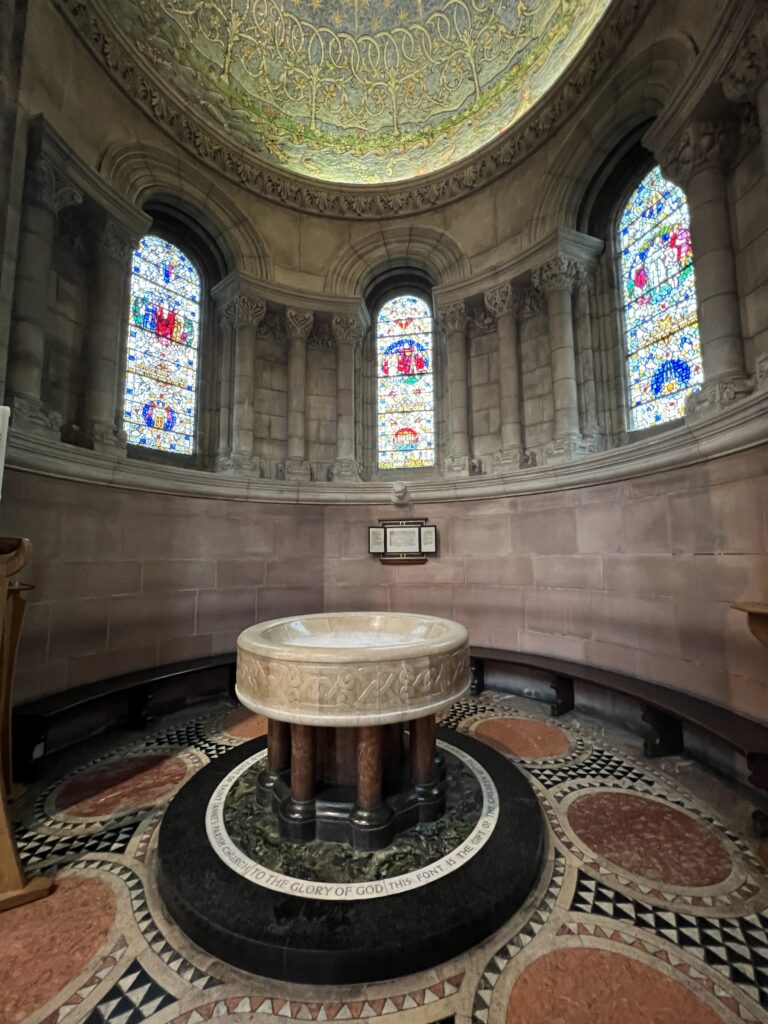
Ceiling of The Baptistry. Each of the 150,000 pieces of Italian glass was hand-placed by two London sisters, Gertrude and Margaret Martin.
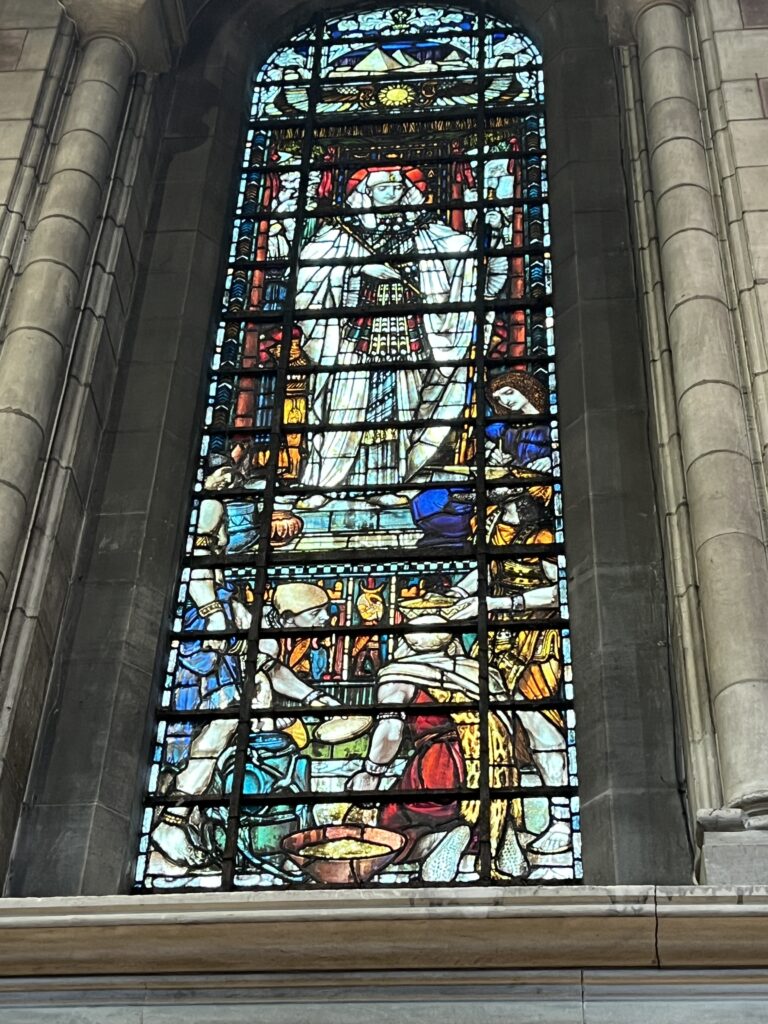
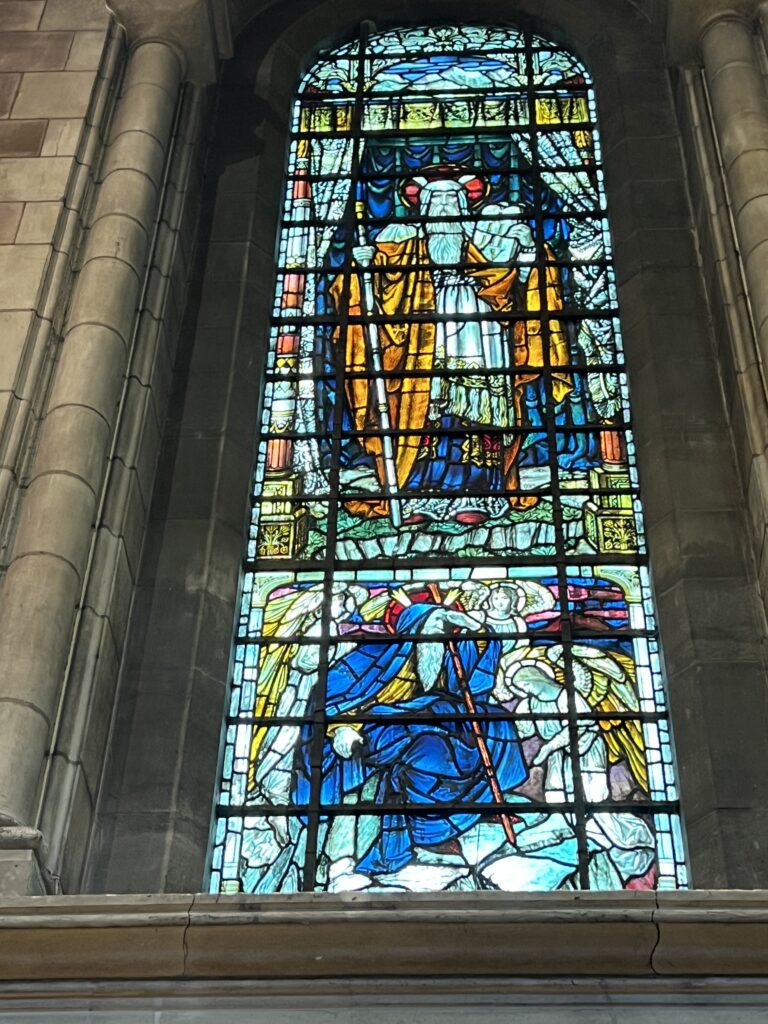
One of the stained glasses in The Baptistry
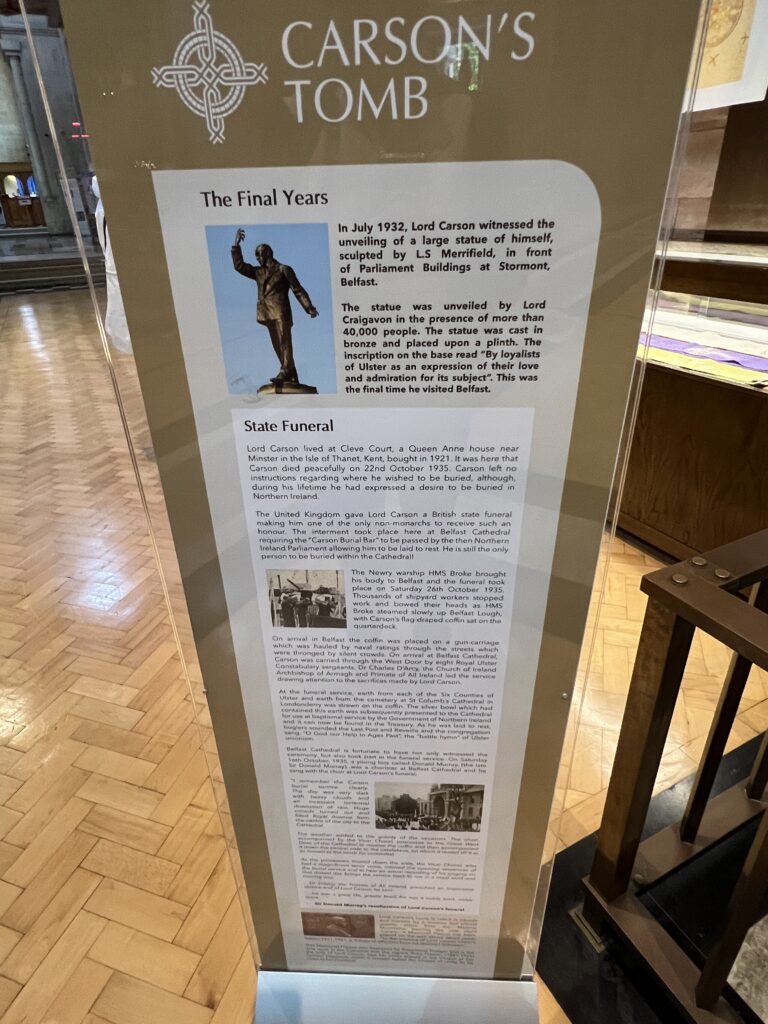
Unlike most Cathedrals, there is only one Tomb in the Cathedral – that of Lord Carson of Duncairn. Lord Carson was an Irish Unionist politician, barrister and judge.
Carson was born in February 1854 in Dublin. Trained as a barrister, Carson led the anti-Home Rule movement in Westminster where he stood as a Member of Parliament. A natural leader, Carson came to dominate the Unionist cause in Ulster.
Historian John Brown says that ‘his larger than life-size statue, erected in his own lifetime in front of the Northern Ireland parliament at Stormont, symbolizes the widely held perception that Northern Ireland is Carson’s creation’.
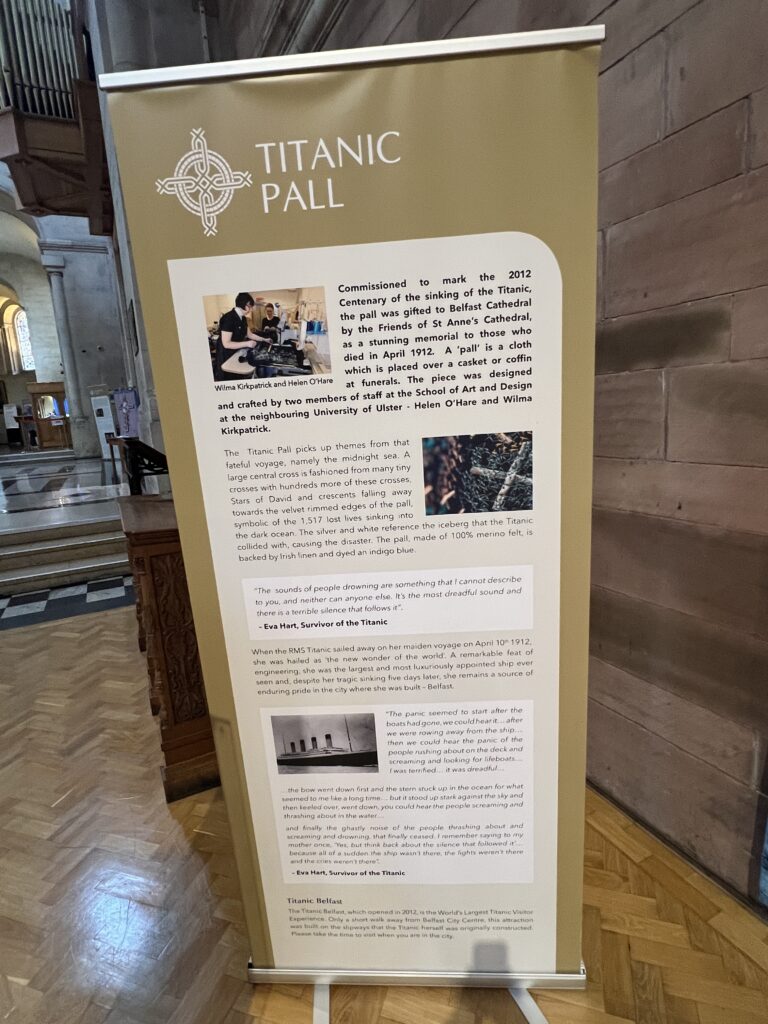
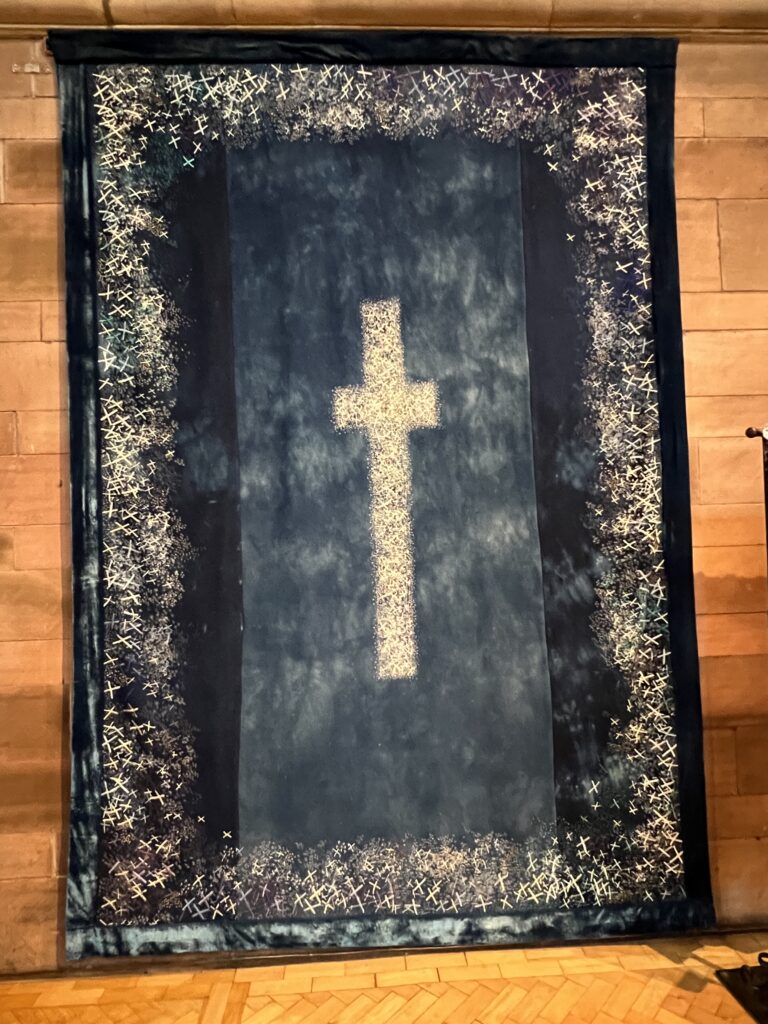
The 1,517 lives lost in the tragic sinking of the Titanic, built here in Belfast, are commemorated in a beautiful hand-crafted funeral pall which was dedicated in St Anne’s Cathedral a century after the disaster.
The pall, made of 100 per cent Merino felt, is backed with Irish linen and dyed an indigo blue, evoking an image of the midnight sea in which the Titanic finally came to rest.
This stunning memorial to those who died when the historic ship hit an iceberg in April 1912 has been made by Helen O’Hare and Wilma Kirkpatrick, textile artists at the University of Ulster. The 12ft X 8ft pall was the gift of the Friends of St Anne’s Cathedral, and it was dedicated on April, 15th 2012.
A large central cross is fashioned from lots of tiny crosses and hundreds more of these crosses, in different sizes and shapes, each individually stitched in silk, rayon, metallic and cotton threads, fall away towards the velvet rimmed edges of the pall, symbolic of lost lives sinking into the dark ocean.
The theme of the lost lives was inspired by Philip Hammond’s new Requiem for the Lost Souls of the Titanic, which was performed for the first time in the Cathedral on April 14, 2012.
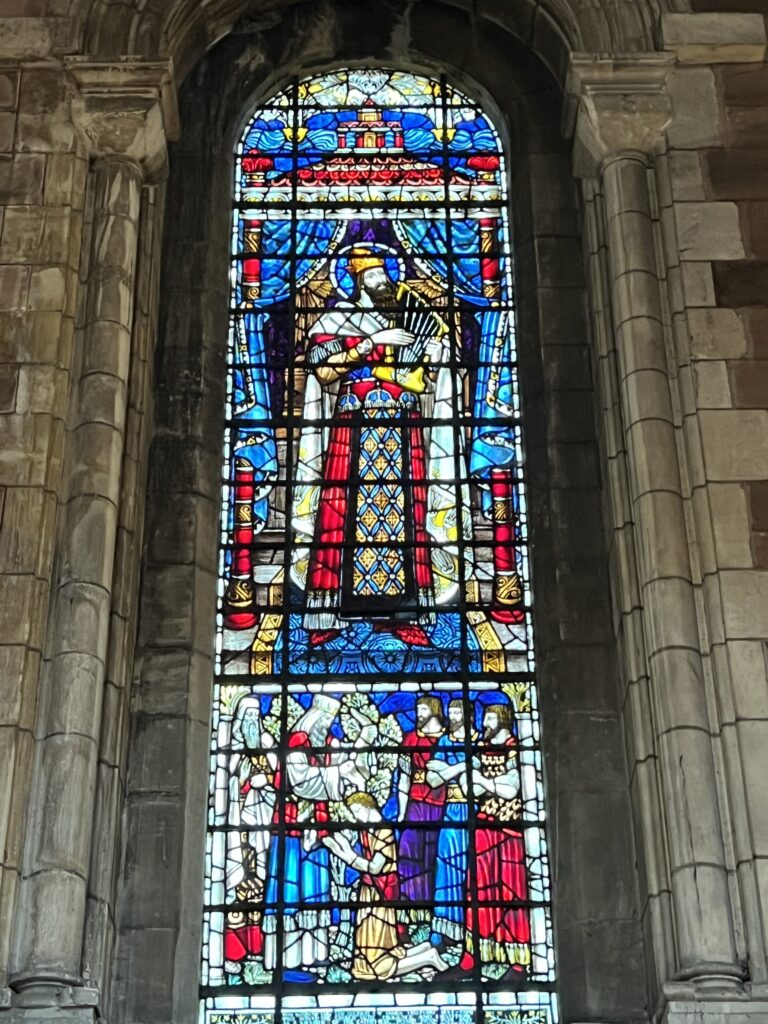
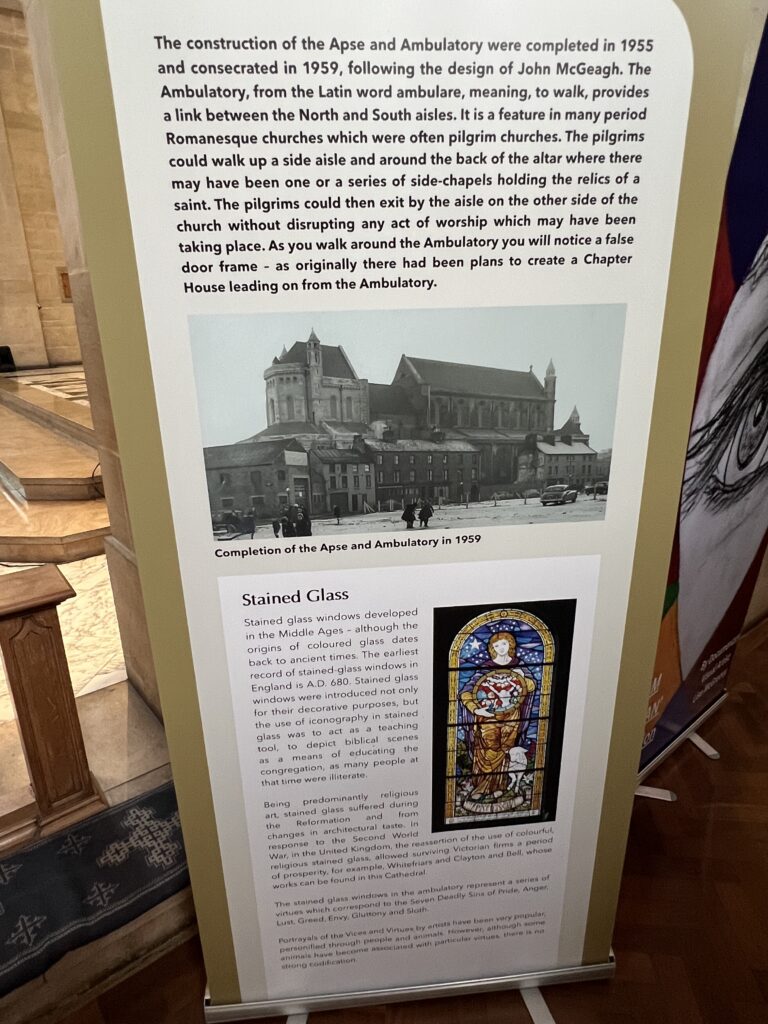
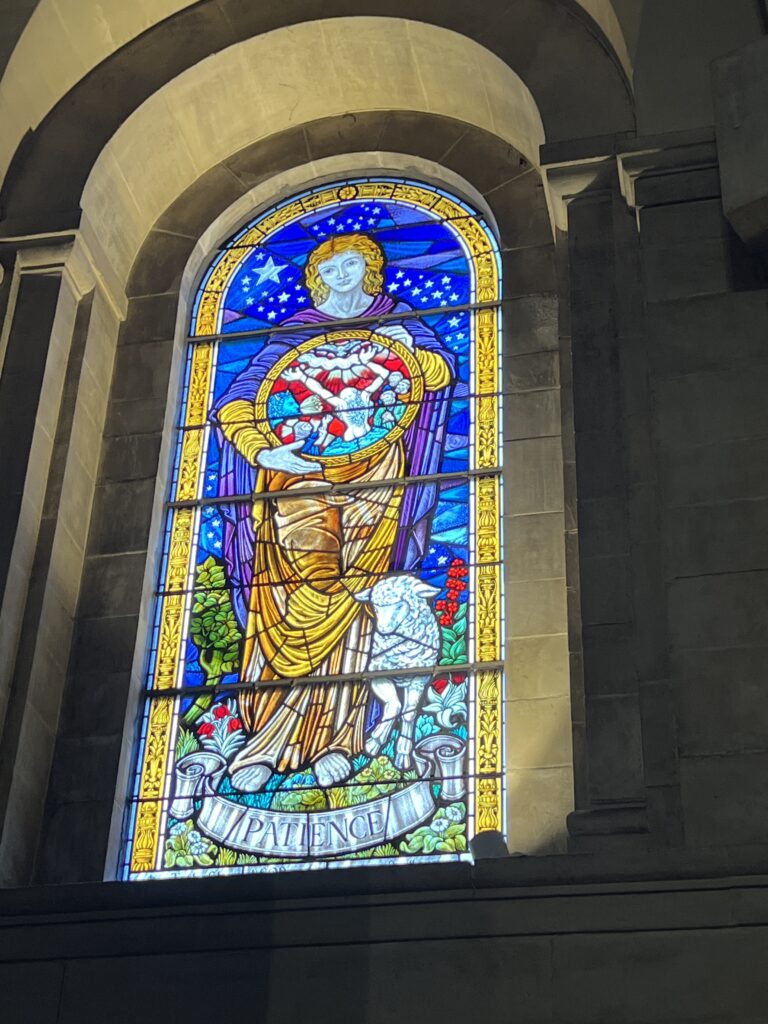
Photos of some of the stained-glass windows
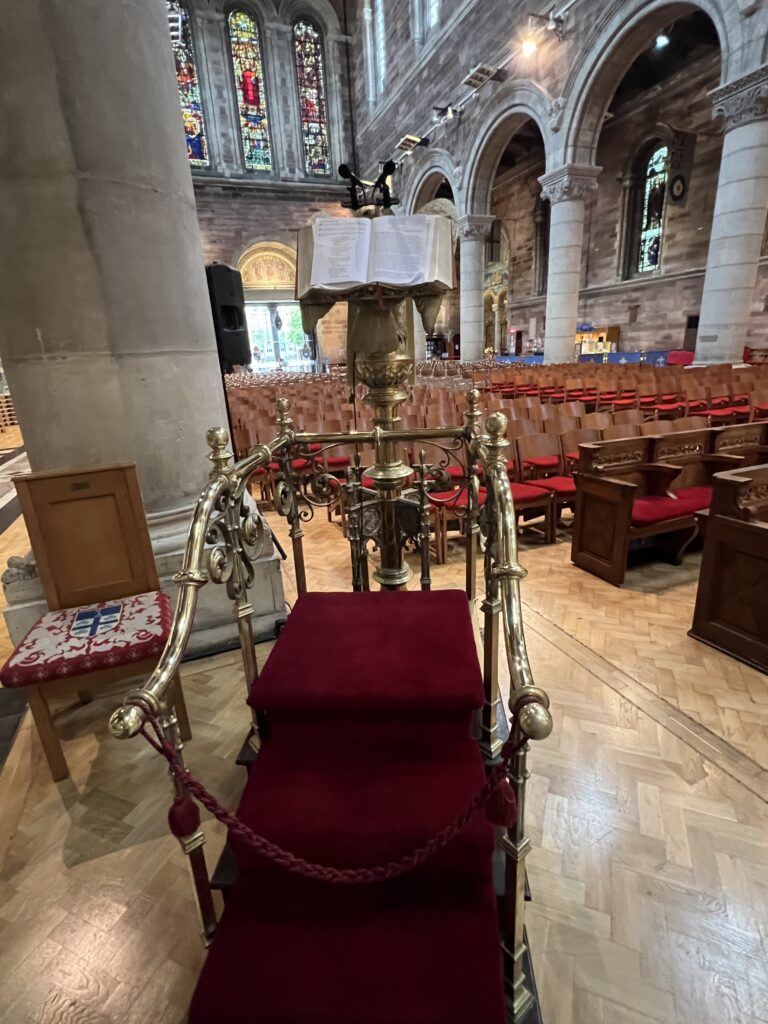
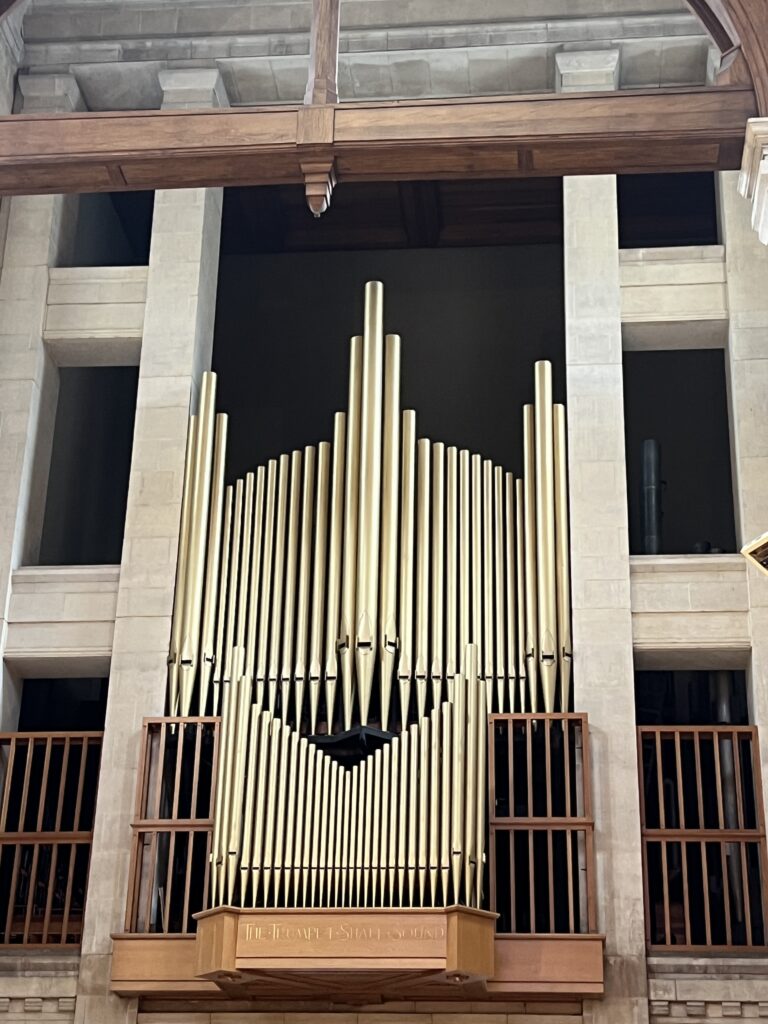
The cathedral’s organ with four manuals is the second largest pipe-organ in Northern Ireland. It was built by Harrison and Harrison in 1907 and rebuilt in 1969–1975.
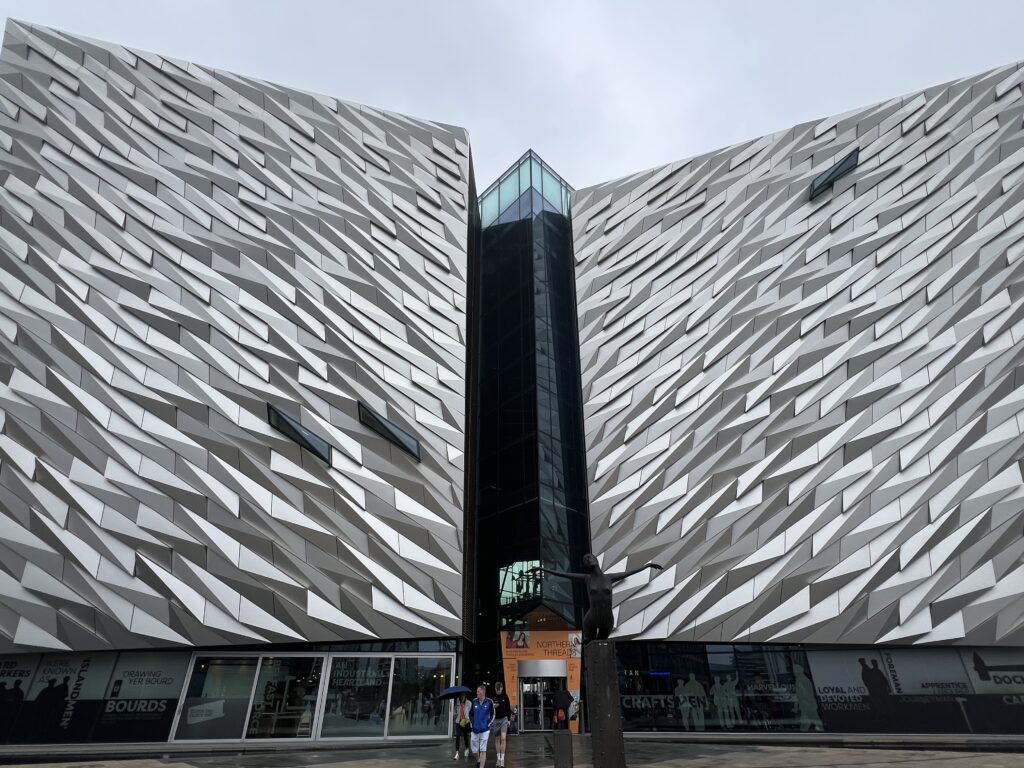
Titanic Belfast is a visitor attraction in Belfast, Northern Ireland which opened in 2012. It is a monument to Belfast’s maritime heritage on the site of the former Harland & Wolff shipyard in the city’s Titanic Quarter where the RMS Titanic was built. It tells the stories of the Titanic, which hit an iceberg and sank during her maiden voyage in 1912, and her sister ships RMS Olympic and HMHS Britannic. RMS Olympic and HMHS Britannic. The building contains more than 12,000 square meters (130,000 sq ft) of floor space, most of which is occupied by a series of galleries, private function rooms and community facilities.
Titanic Belfast’s exhibition was designed by London-based exhibition designers Event Communications and consists of nine interpretative and interactive galleries, covering the following themes:
- Boomtown Belfast – the city at the start of the 20th century
The first gallery recreates scenes from Belfast at the time of Titanic‘s construction in 1909–11. It illustrates the city’s major industries before leading through an original set of gates from the Harland and Wolff shipyard into an interactive floor presenting Titanic‘s construction plans, along with original drawings and scale models of the ship.
- The Shipyard – a ride aboard a mini-car up and around a replica of Titanic‘s rudder
The second gallery is dominated by a steel scaffold standing 20 meters (66 ft), which alludes to the Arrol Gantry built to aid the construction of Titanic and Olympic. The actual gantry was four times the height of the gallery’s representation. A lift carries visitors to the top of the gantry, where scenes of shipbuilding are displayed through audio and images. The visit continues on a six-seater car which takes the visitor on a ride through a recreation of a shipyard which moves through a scale replica of Titanic‘s enormous rudder.
- The Launch – how Titanic was launched on 31 May 1911
The Launch gallery portrays scenes from the Spring day when Titanic was launched into Belfast Lough, watched by 100,000 people. It overlooks the slipway from which Titanic was launched and a window enables visitors to see the slipways and docks as they appear now.
- The Fit-Out – the fitting-out of Titanic from her launch through to April 1912
The fourth gallery presents a large-scale model of Titanic to illustrate how the ship appeared to its passengers and crew, depicting all three classes of cabins. A central feature in the gallery presents a 360-degree computer-generated tour around Titanic through all the levels of the vessel, from the engine room to the dining saloons and the bridge.
- The Maiden Voyage – the journey from Belfast to Southampton, and from there to Cherbourg, Cobh and westwards
The ship’s disastrous maiden voyage is depicted in the fifth gallery, which depicts the ship’s boat deck. Visitors can walk across the wooden deck, sit on benches or look out at a view across the docks and harbour. The gallery also presents photographs of the ship by the Jesuit photographer Father Francis Browne, who was aboard Titanic for the leg from Southampton to Cobh in southern Ireland.
- The Sinking – the disaster of 14/15 April 1912
The sixth gallery portrays the sinking of the Titanic with the background sound of Morse code SOS messages being sent to other ships. Images of the sinking are combined with audio of survivors telling their stories and illustrations of the confused press reporting of the disaster. The iceberg is evoked by a wall of 400 replica life-jackets, on which an image of the sinking ship is projected.
- The Aftermath – the legacy of the disaster
The aftermath of the sinking is documented in the seventh gallery, which is dominated by a full-size replica of one of the lifeboats used to evacuate passengers from the ship. The American and British inquiries into the disaster are portrayed on either side of the lifeboat through videos and information panels. Visitors can use interactive screens to search the passenger, and crew lists to find out if one of their relatives was aboard the ship. The gallery also presents information on the subsequent histories of Harland & Wolff and Titanic‘s sister ships.
- Myths & Legends – the facts behind some of the stories about the Titanic
The disaster gave rise to numerous legends and myths, perpetuated through films, plays, books and poems. With Celine Dion‘s song My Heart Will Go On playing in the background, visitors are able to explore aspects of the popular culture inspired by Titanic. Interactive screens also enable the visitor to explore myths about the ship.
- Titanic Beneath – about the wreck of the Titanic and its rediscovery
The last gallery presents Titanic as she is now, 12,000 feet (3,700 m) below the surface of the North Atlantic. Presented in conjunction with the discoverer of the wreck of Titanic, Dr Robert Ballard, the gallery illustrates his expeditions to the ship through footage, audio and images. A fish-eye view of the wreck is set under the glass floor. Below the floor is the Ocean Exploration Centre, Titanic Belfast’s principal educational facility, which shows marine biology and exploration in Northern Ireland’s coastal waters as well as Ballard’s various expeditions around the world.
We took a private tour of the Titanic Interactive Museum which was outside of the main building.
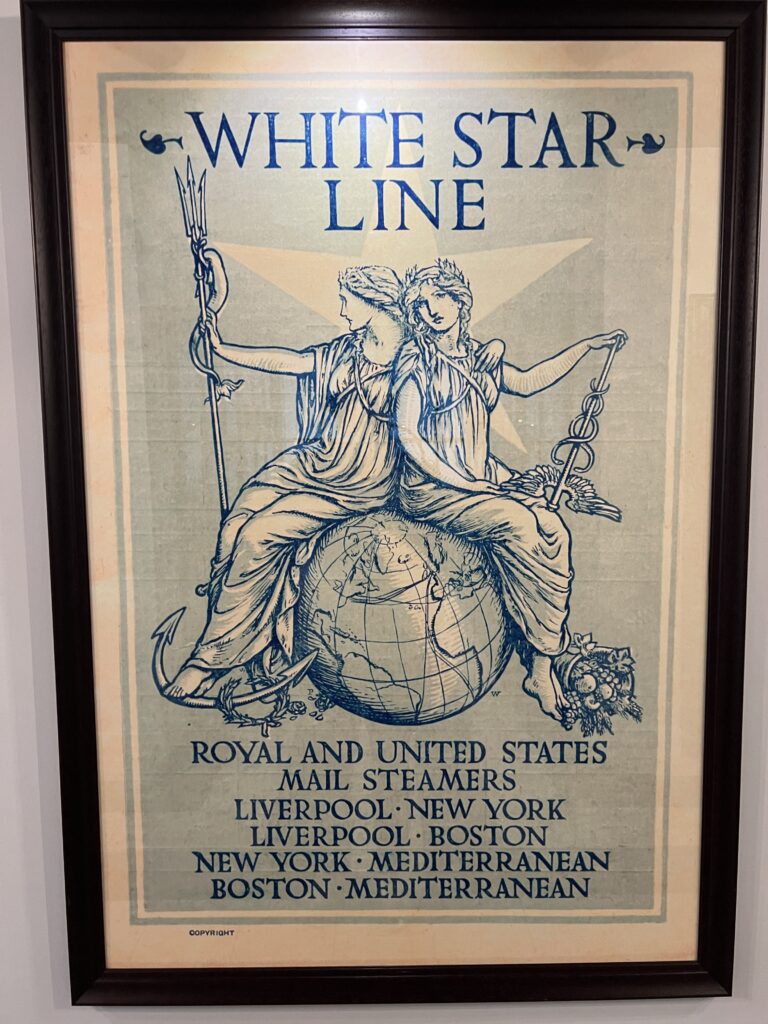
There were two White Star Offices that were used to design and monitor the building of the Titanic and her two sister ships. This was one of the offices which has been turned into a bar in The Titanic Hotel. The office being used in seen in the webpage of the hotel below
Luxury 4 star Hotel in Belfast City Centre | Titanic Hotel Belfast
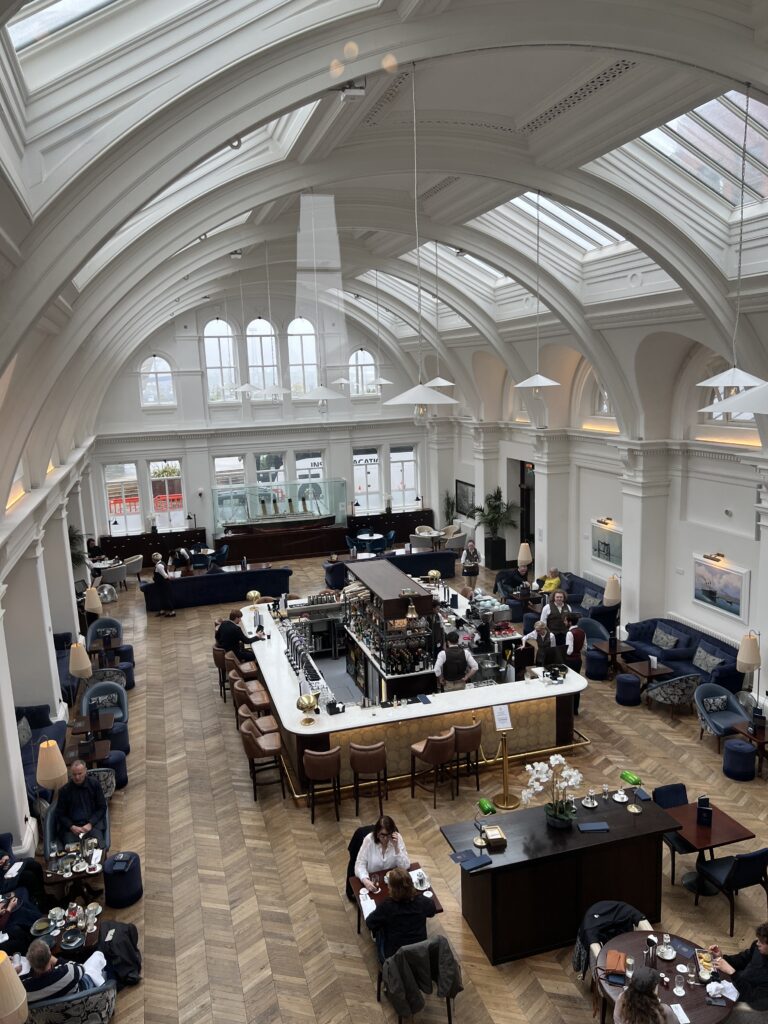
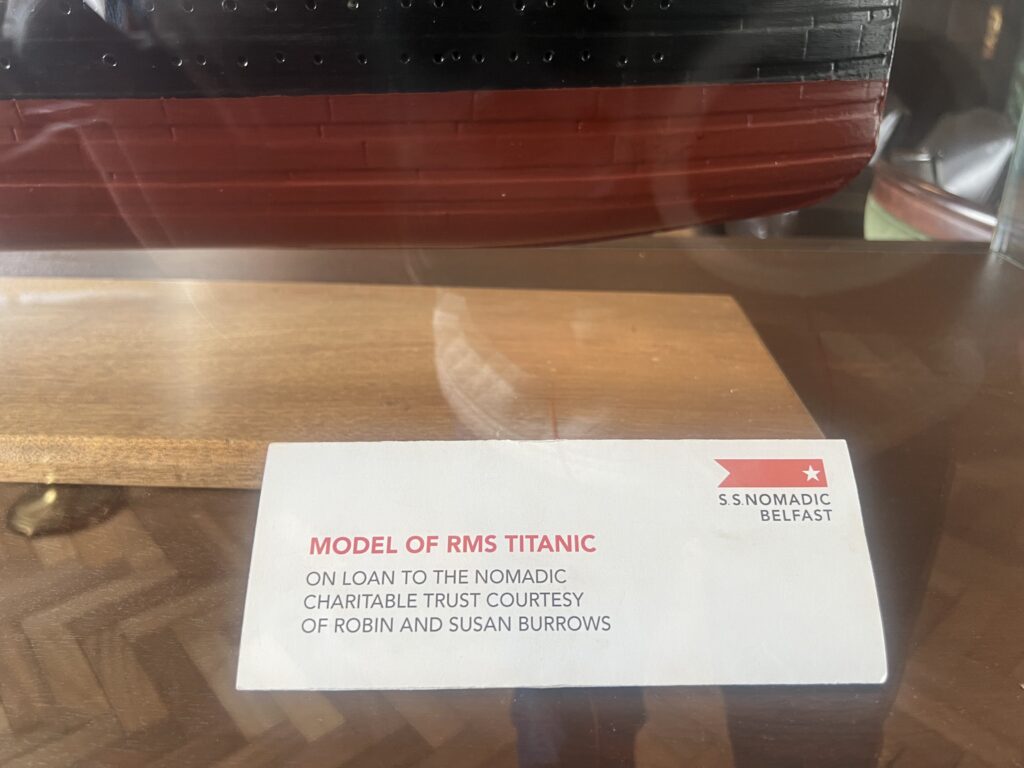
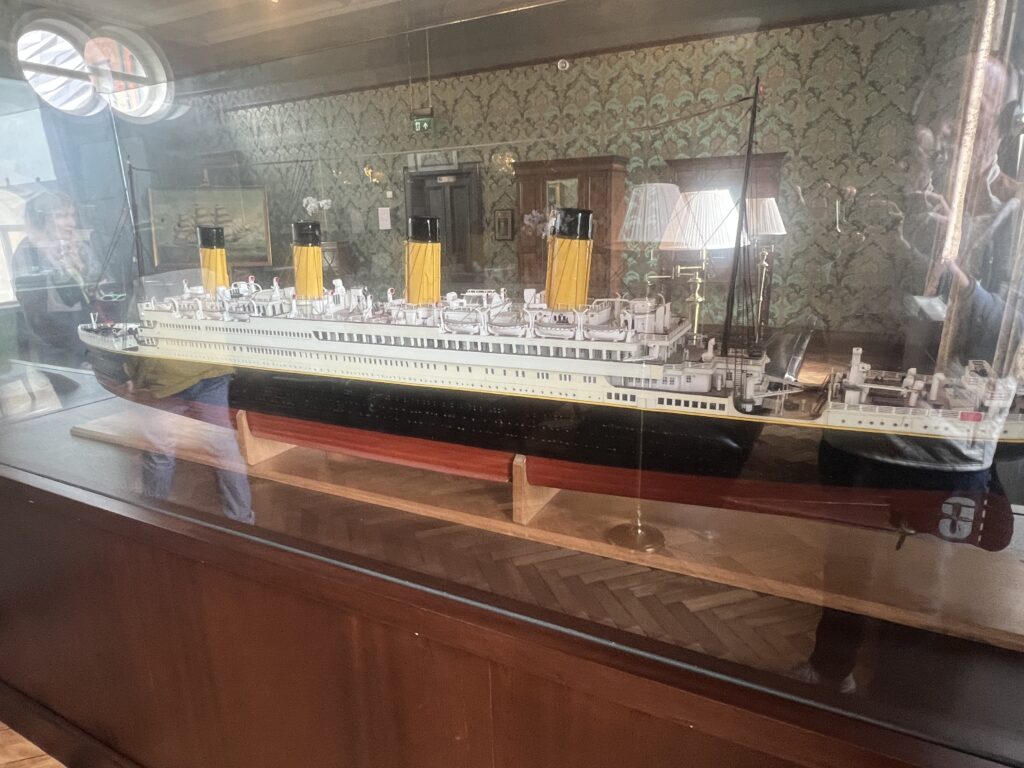
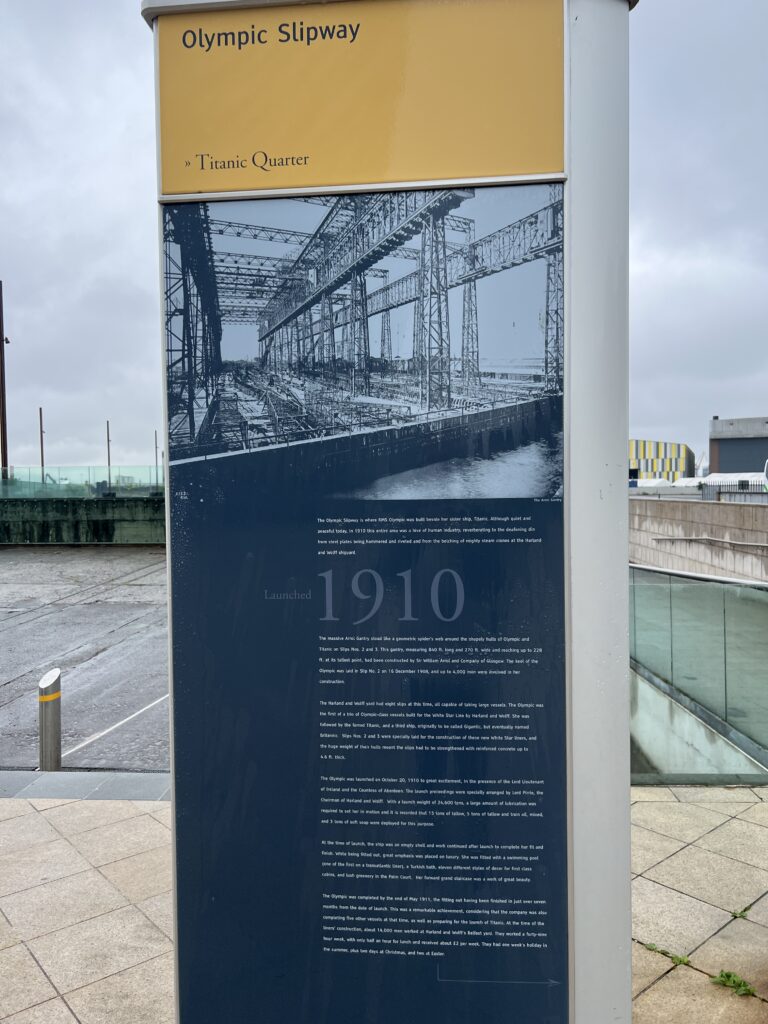
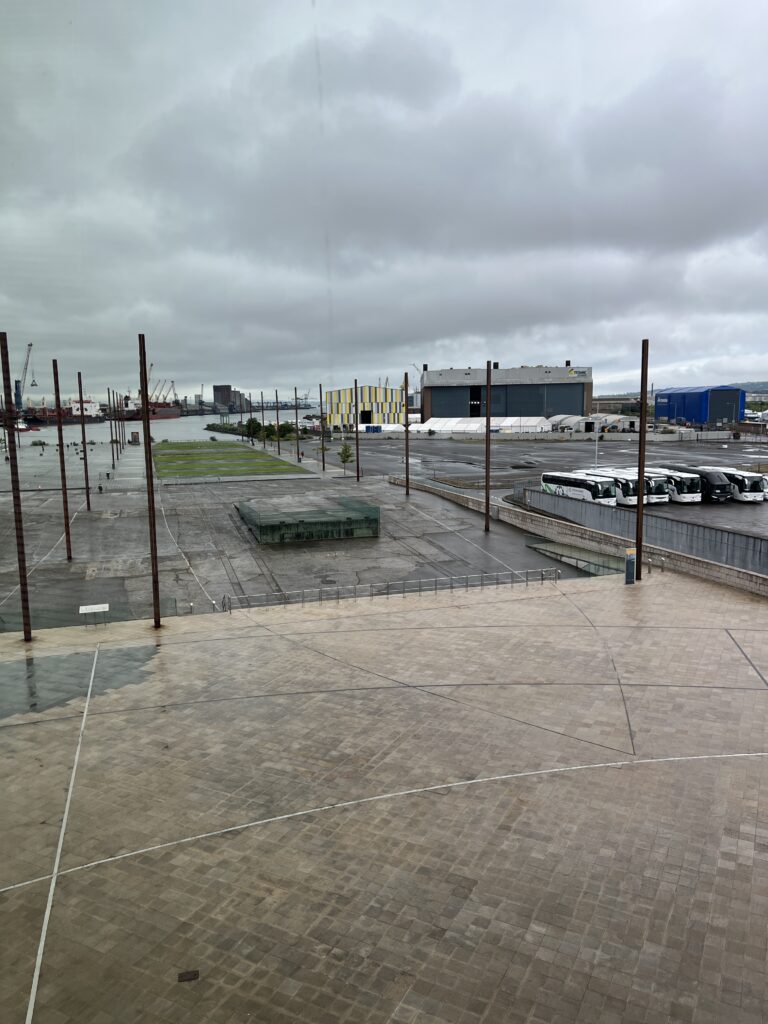
This was the slipway that the Titanic was launched from.
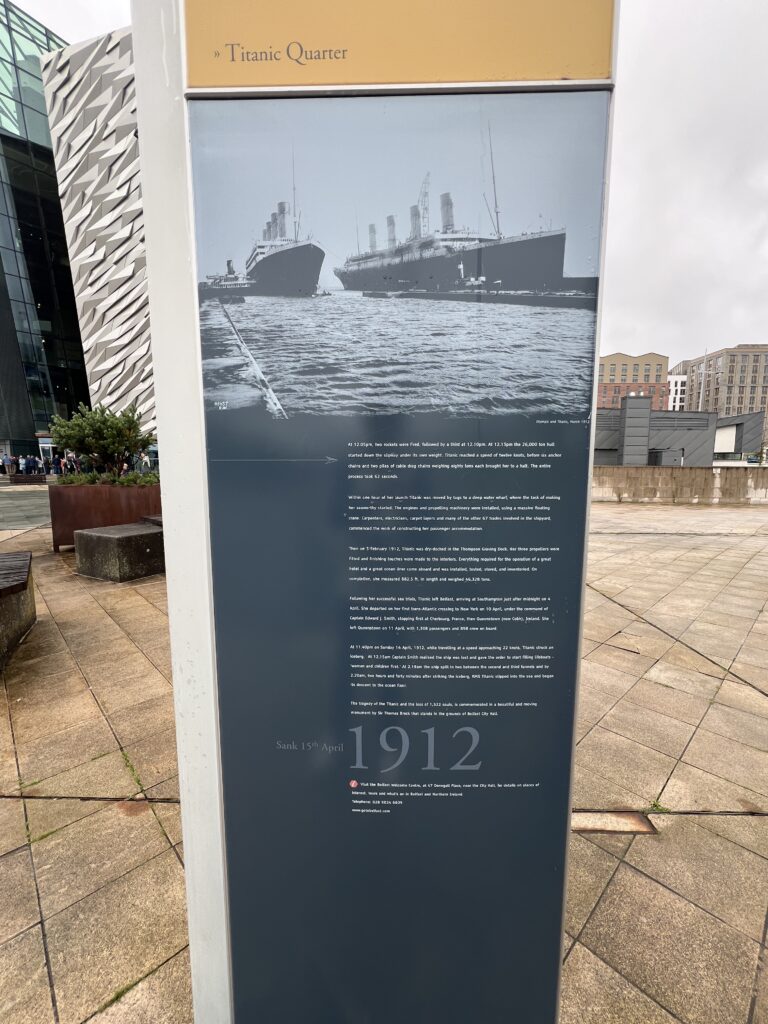
This is how the slipway looks today along with the outline of the shipyard building where the Titanic was built
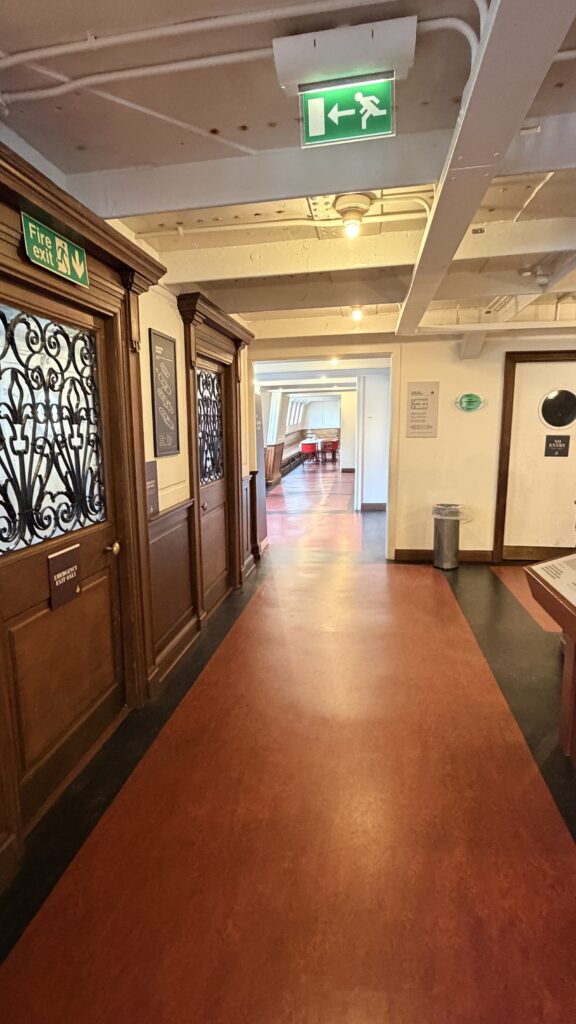
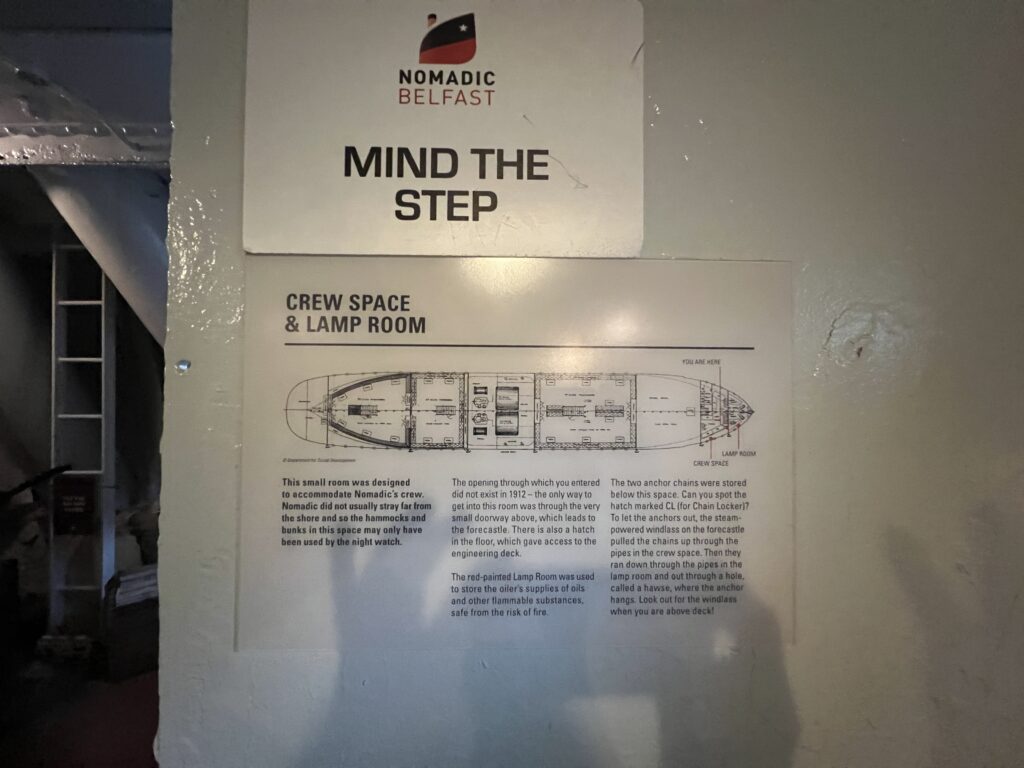
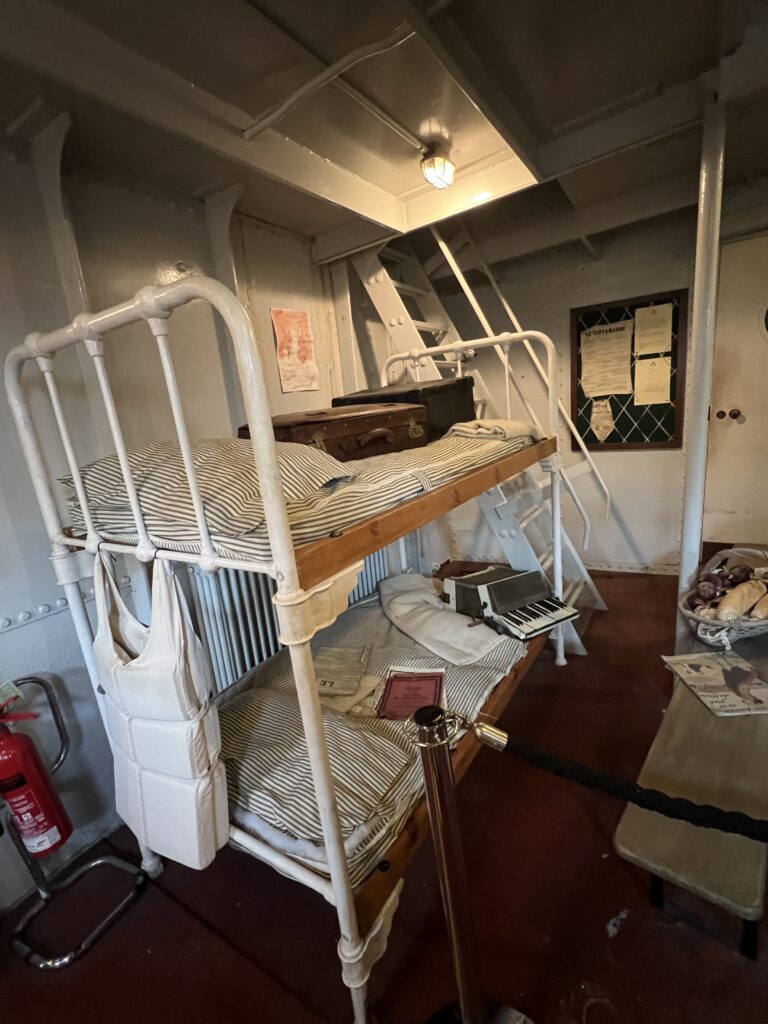
SS Nomadic is a former tender of the White Star Line, launched on 25 April 1911 at Belfast, that is now on display in Belfast’s Titanic Quarter. She was built to transfer passengers and mail to and from the ocean liners RMS Olympic and RMS Titanic. She is the only surviving vessel designed by Thomas Andrews, who also helped design those two ocean liners, and the last White Star Line vessel in existence today.
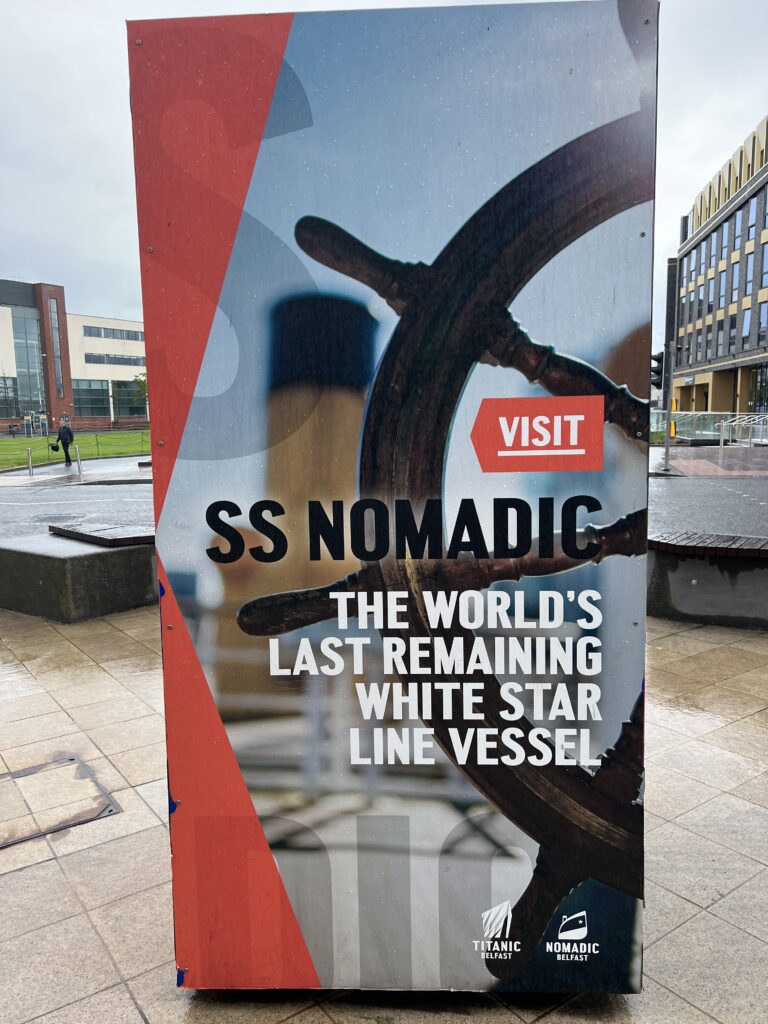
Nomadic was one of two vessels commissioned by the White Star Line in 1910 to tender for their new ocean liners RMS Olympic and RMS Titanic, which were too large to dock in Cherbourg Harbour. She and her running mate SS Traffic ferried passengers, their baggage, mail and ship’s supplies to and from large ocean liners anchored offshore.
The keel of Nomadic was laid down in the Harland and Wolff shipyards, Belfast in 1910 (yard number 422). She was built on slipway No. 1 alongside RMS Olympic and RMS Titanic, which were constructed on slipways 2 and 3, of the Arrol Gantry, respectively. She was launched on 25 April 1911 and delivered to the White Star Line on 27 May, following sea trials.
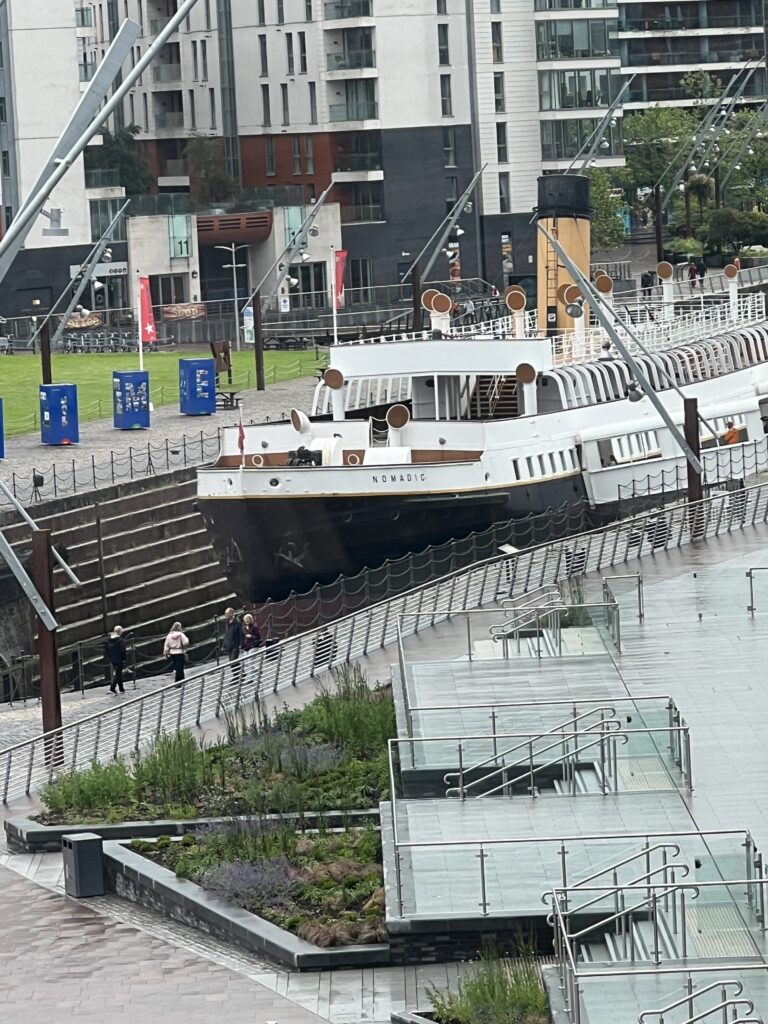
The ship is 220 feet (67 m) long overall and 37 feet (11 m) wide, with a gross registered tonnage of 1,273 tons. Propulsion was provided by two single-ended coal-fired boilers and two compound steam engines, each driving two triple-bladed propellers of 7 feet (2.1 m) in diameter, which gave a service speed of 12 knots (14 mph; 22 km/h).
Nomadic is of steel construction, with steel frames, beams, bulkheads and riveted hull plating. She had four working decks with various hold spaces beneath. She could carry up to 1,000 passengers when fully loaded.
Passenger accommodation consisted of lower- and upper-deck passenger lounges and open deck areas on the bridge and flying bridge decks. The vessel was divided into first- and second-class passenger areas, with first-class passengers enjoying the fore areas of the ship. A small area in the aft end of the lower deck was assigned for overspill of third-class passengers from SS Traffic.
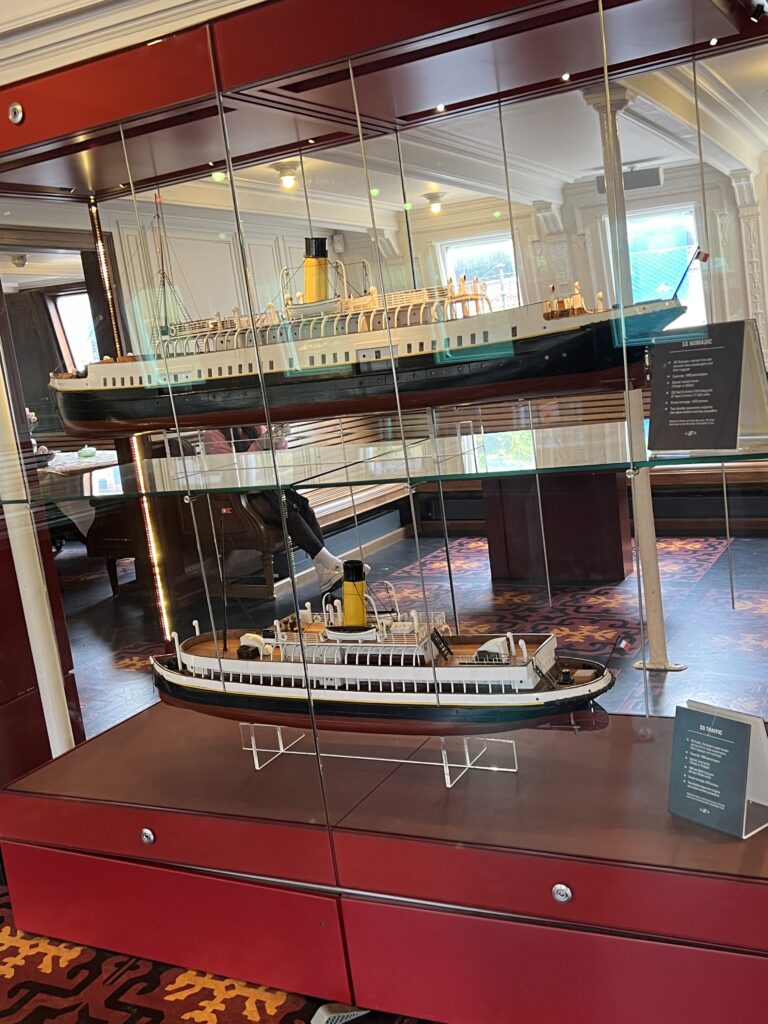
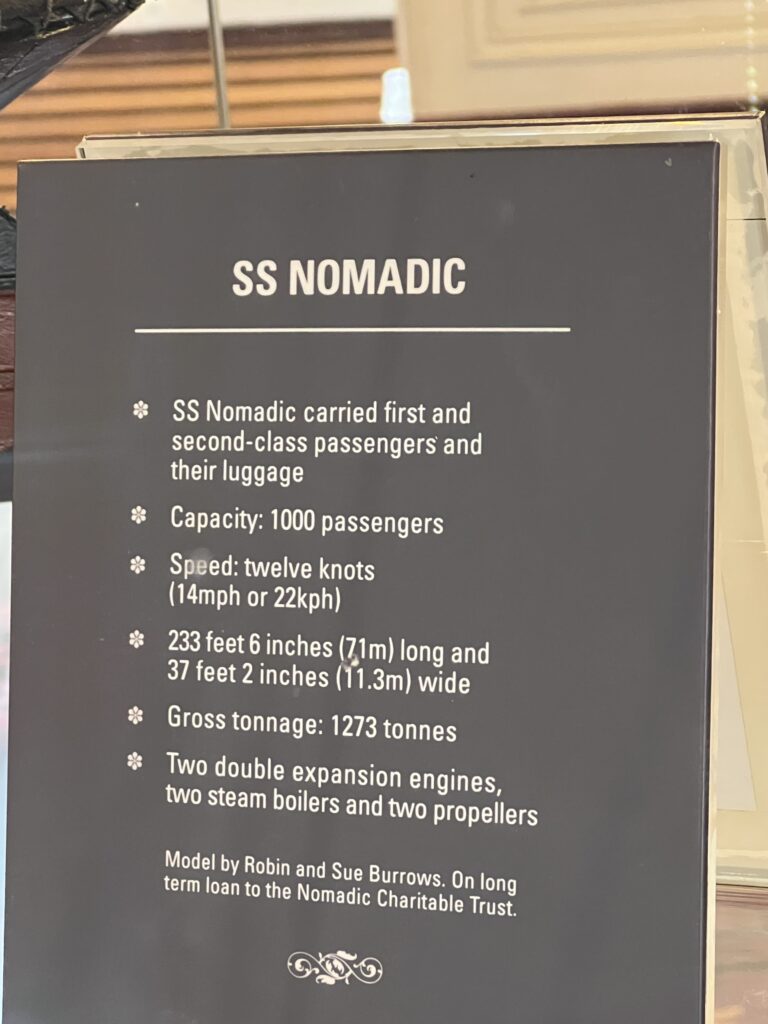
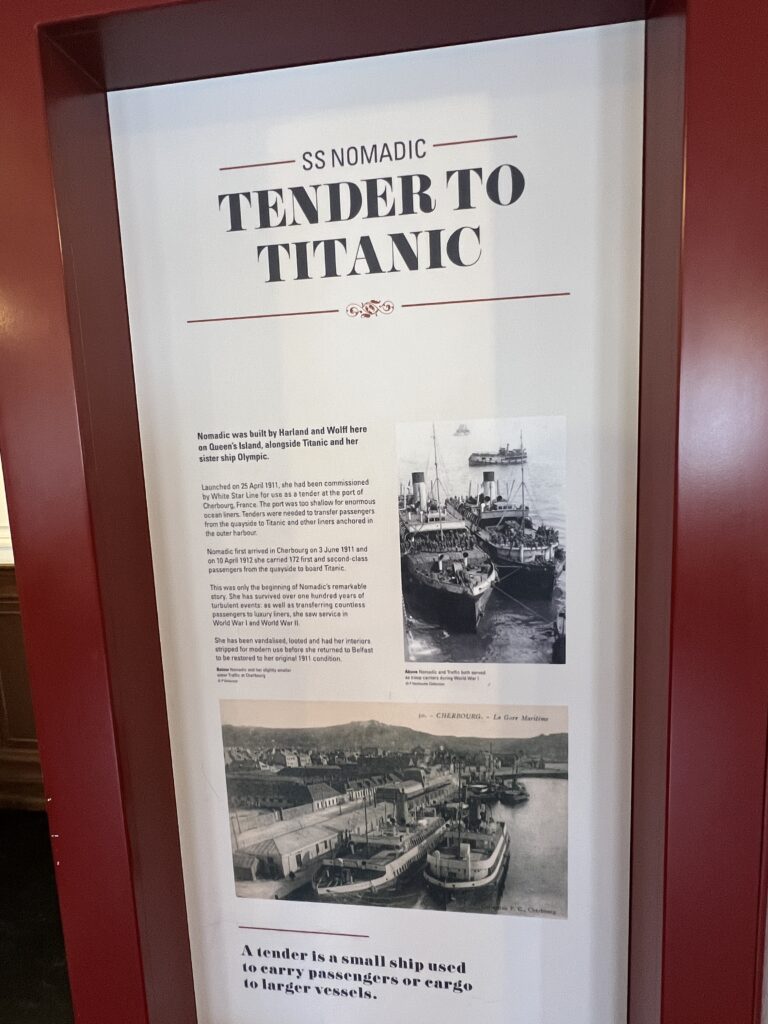
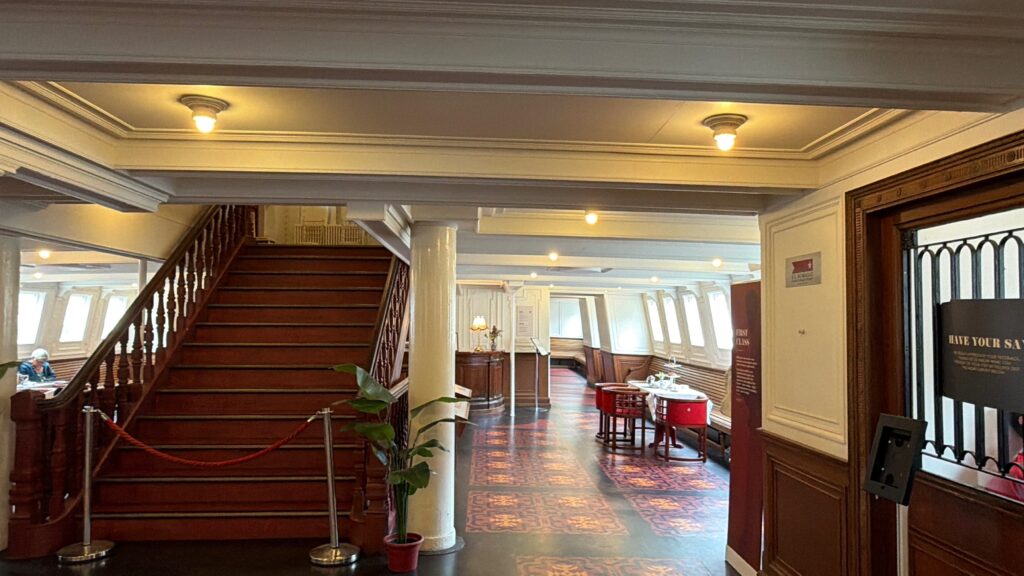
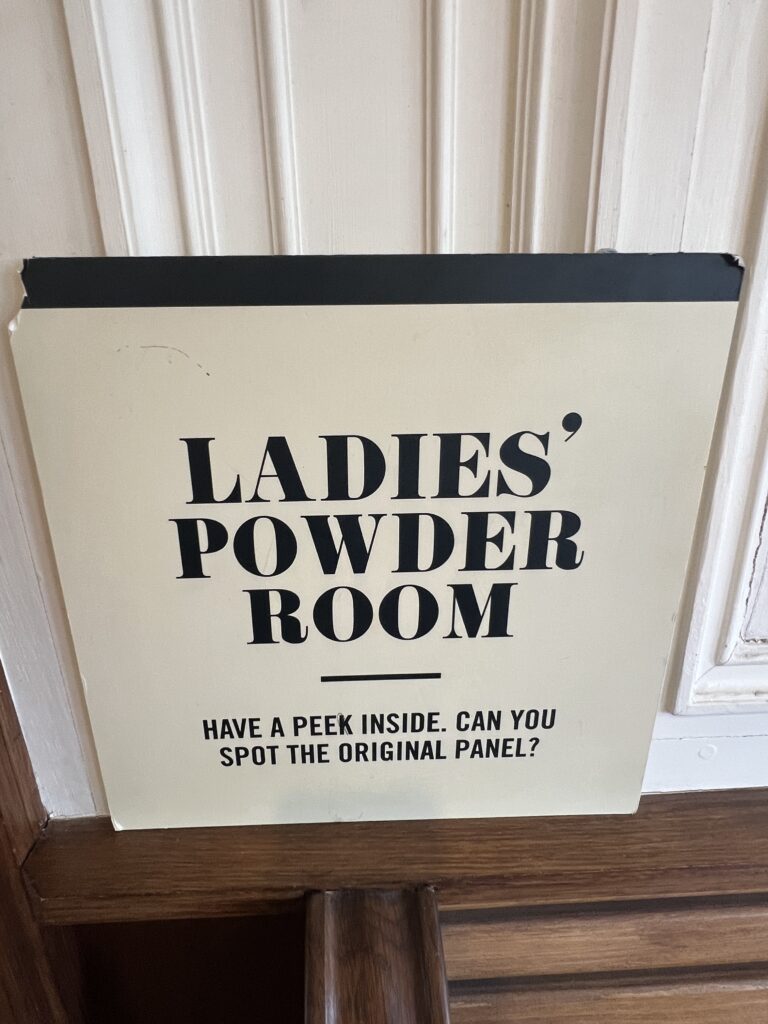
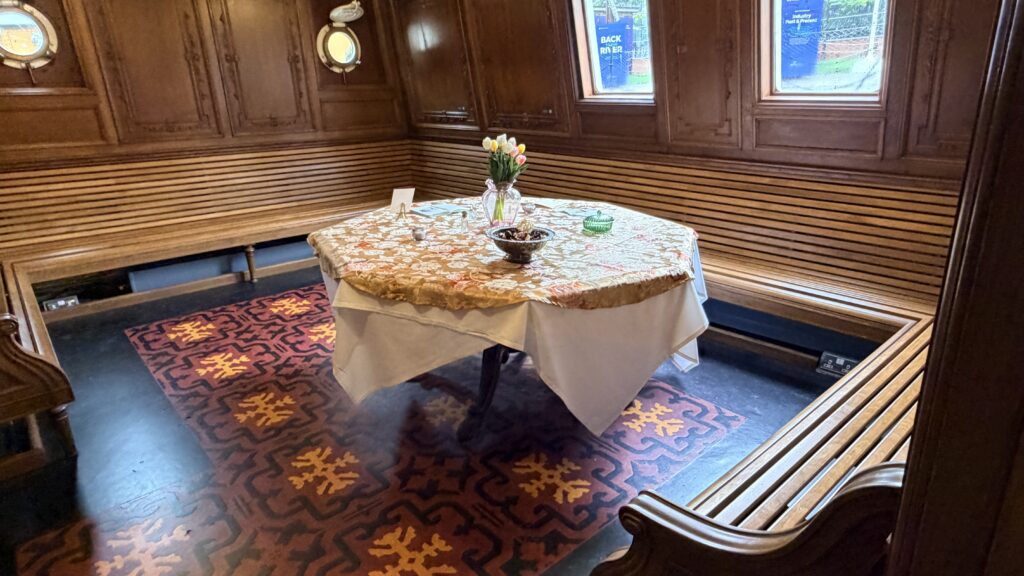
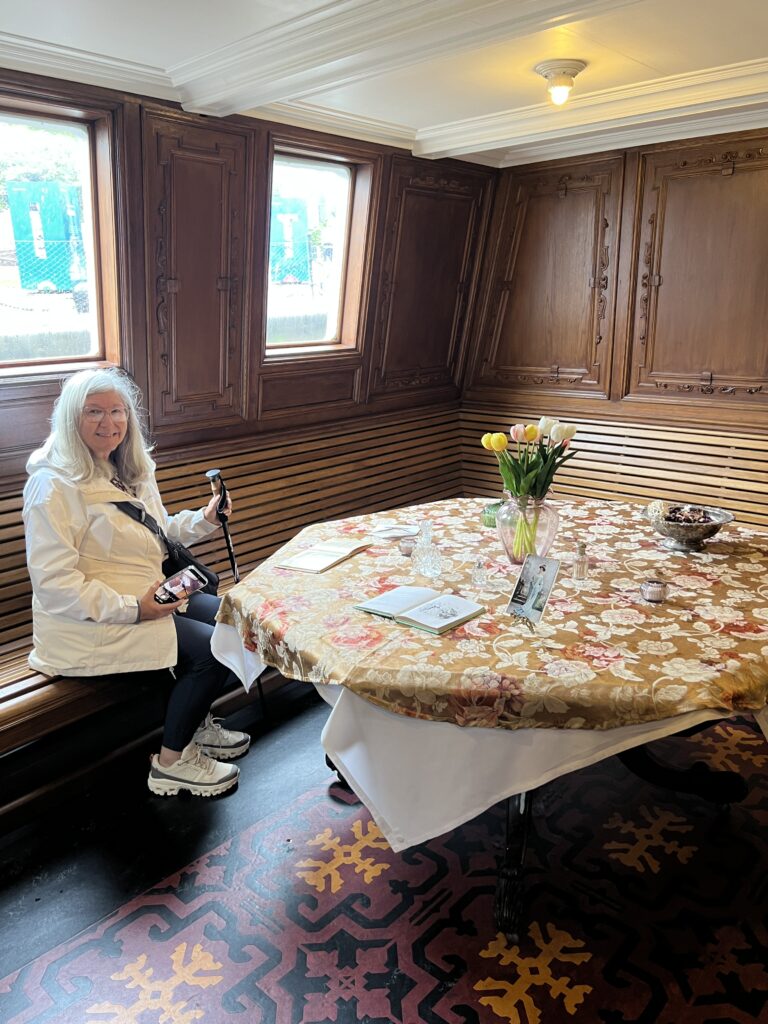
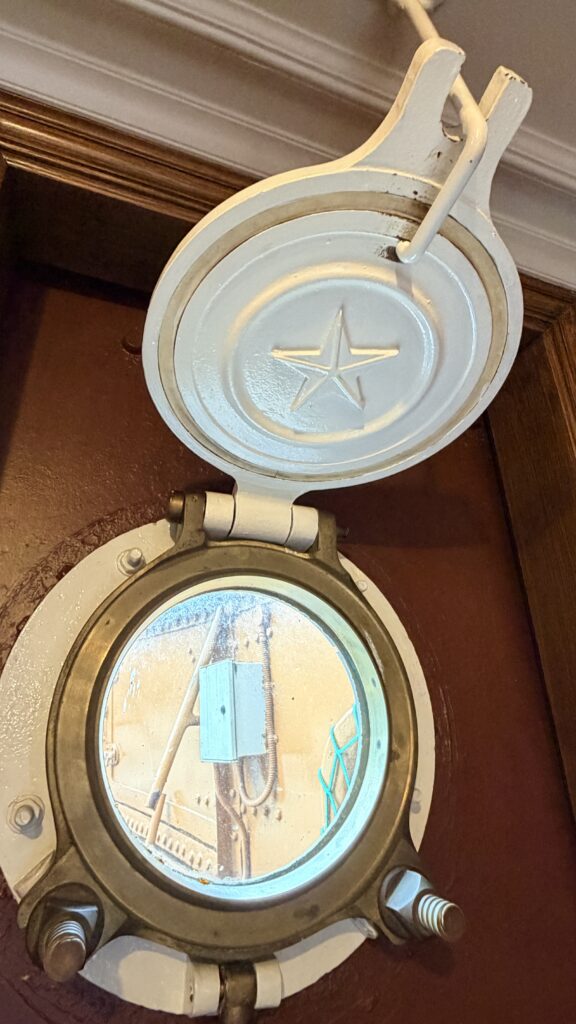
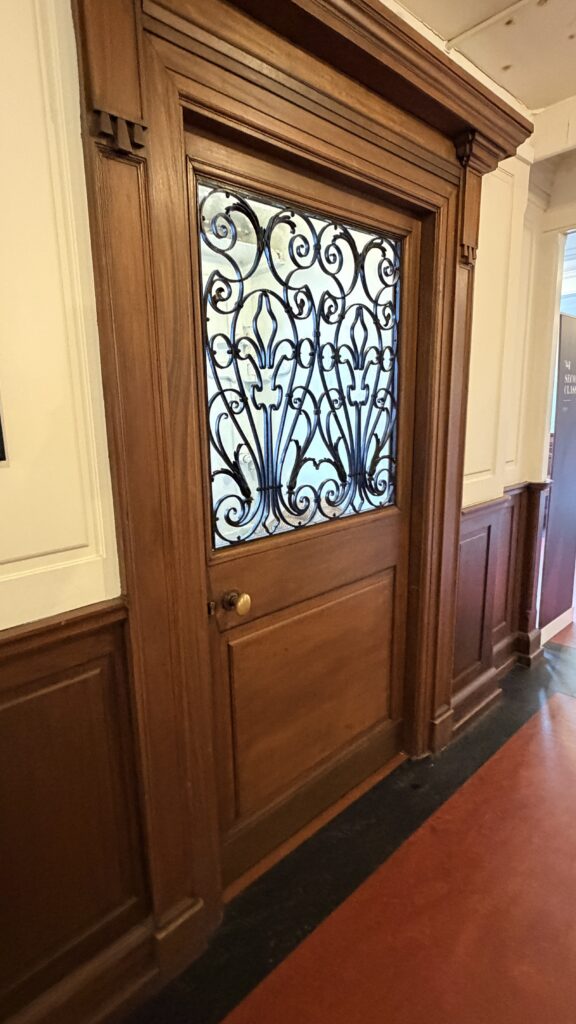
Internally, Nomadic was fitted out to a similar standard as the liners Olympic and Titanic, which she was built to serve. As such, she had more luxuries than most tenders of her day, with cushioned benches, tables, porcelain water fountains, sex-specific bathrooms and a buffet bar. She contained ornate decorative joinery and plasterwork, particularly in the first-class lounges of the ship.
Nomadic was built in the United Kingdom, but as she was operated in French coastal waters by a French crew, she had a number of peculiarities, such as imperial and metric draught marks on opposing sides of the hull.
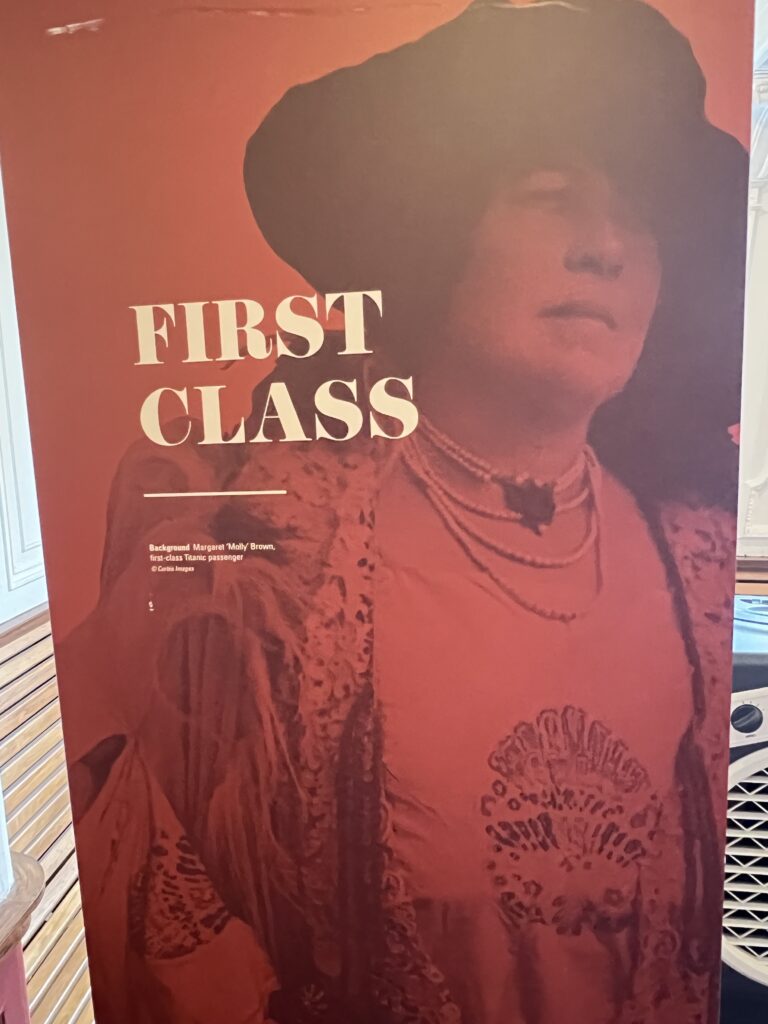
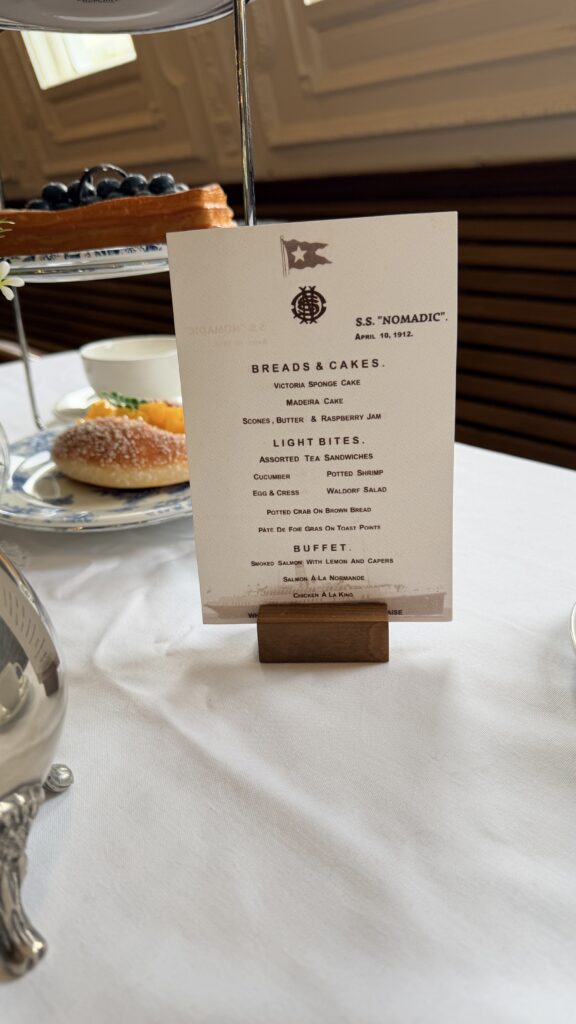
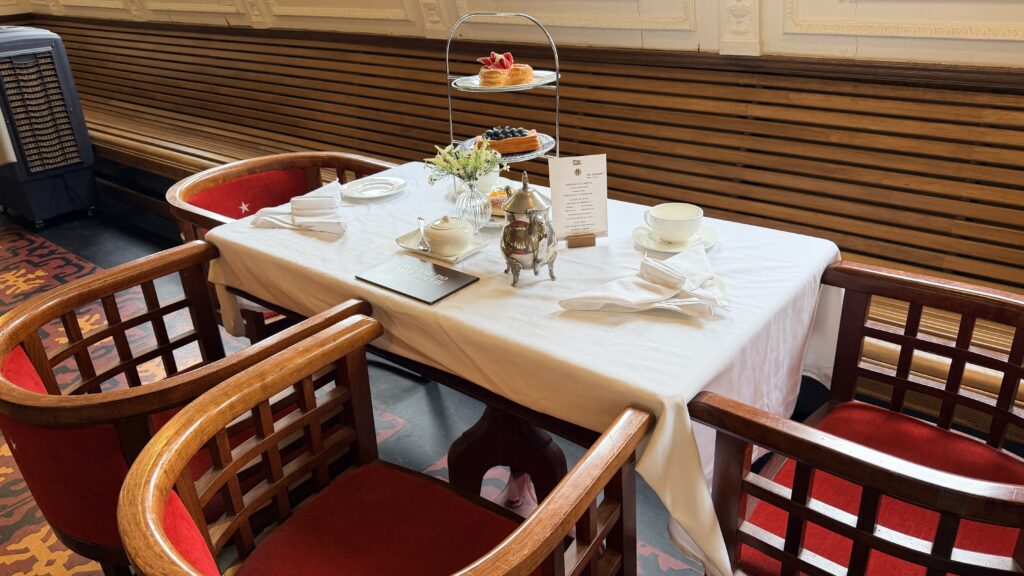
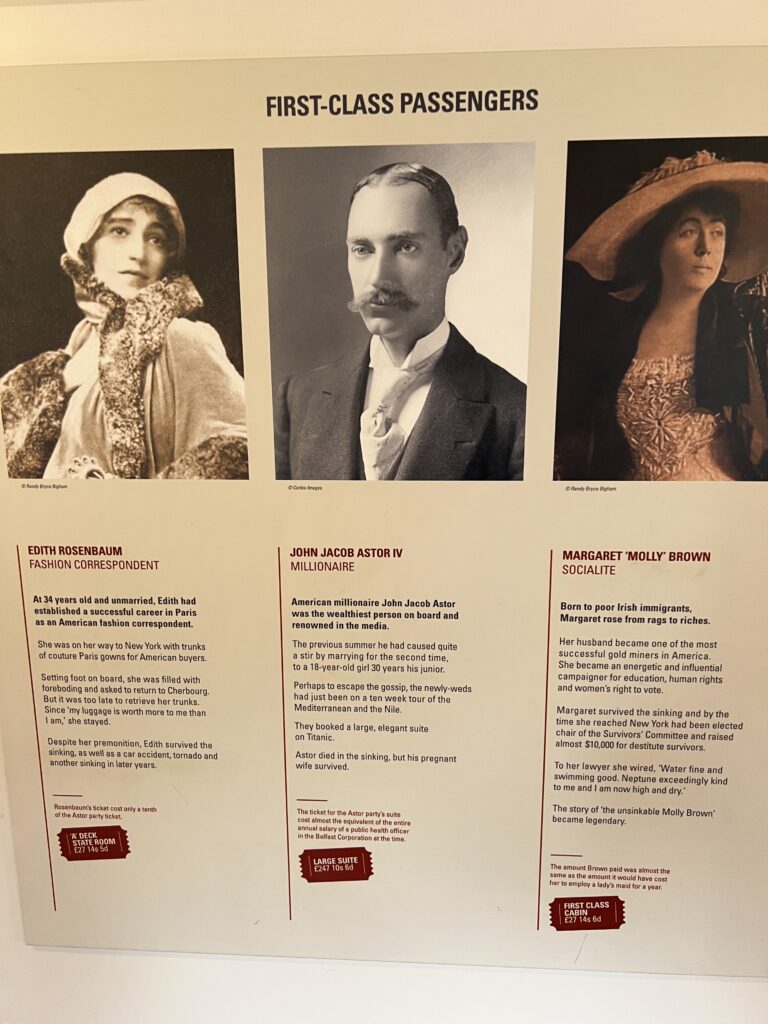
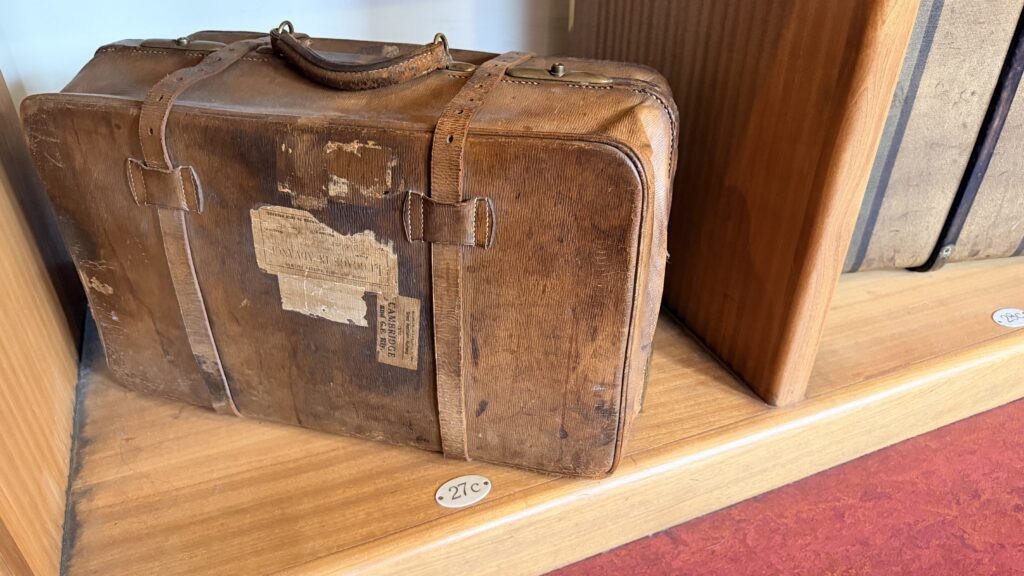
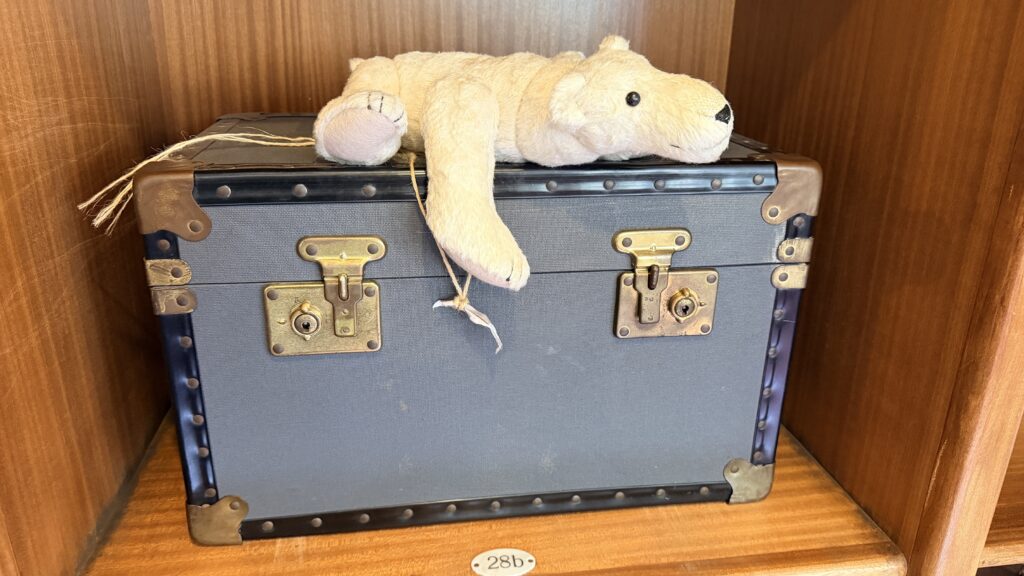

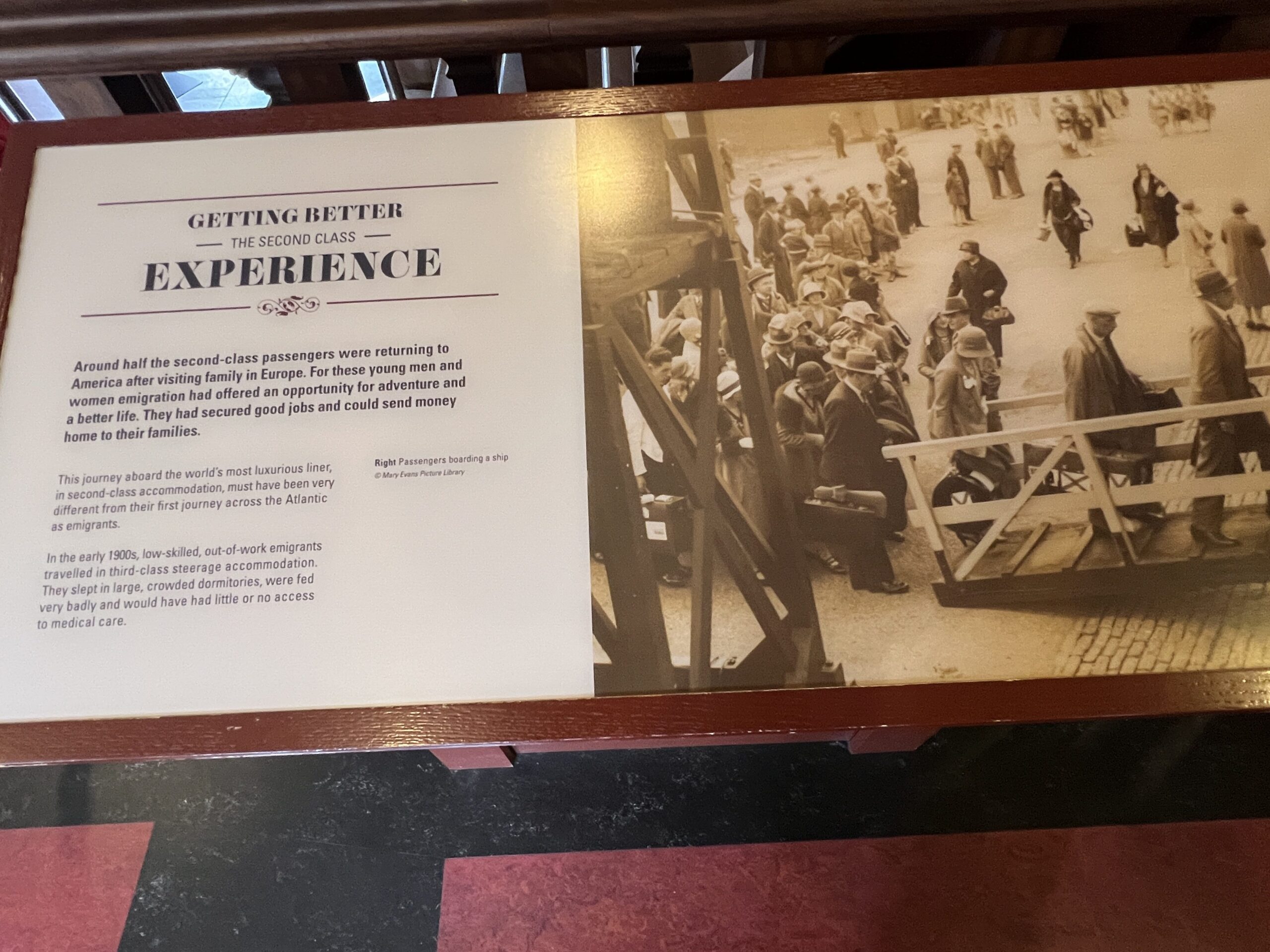
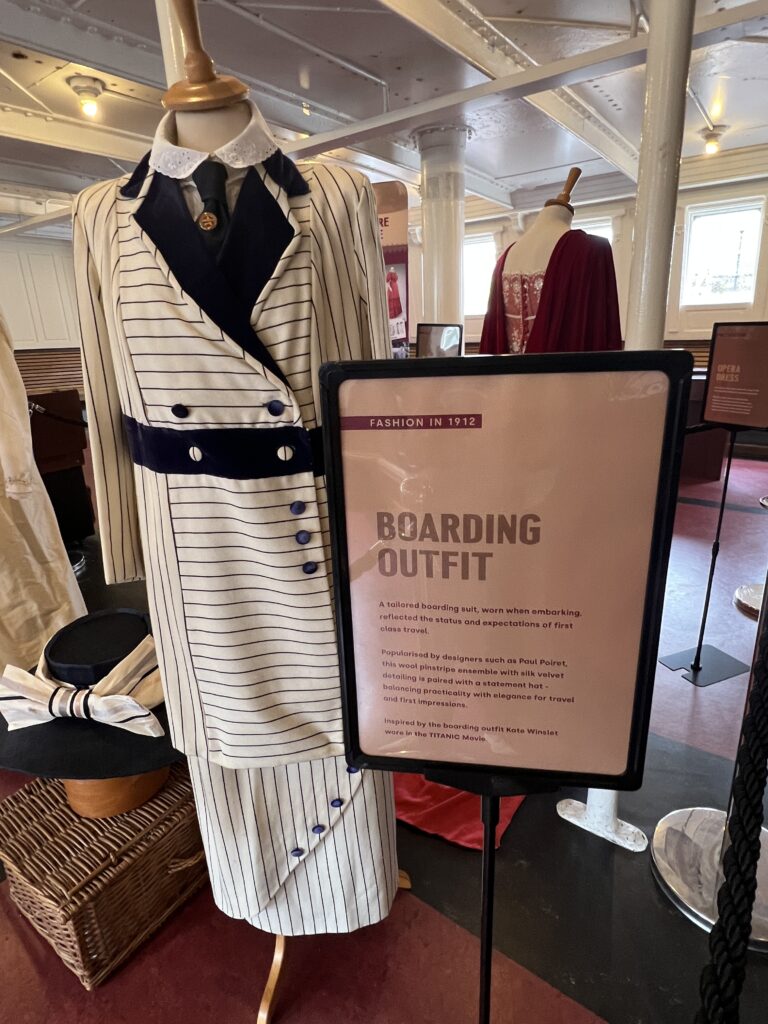
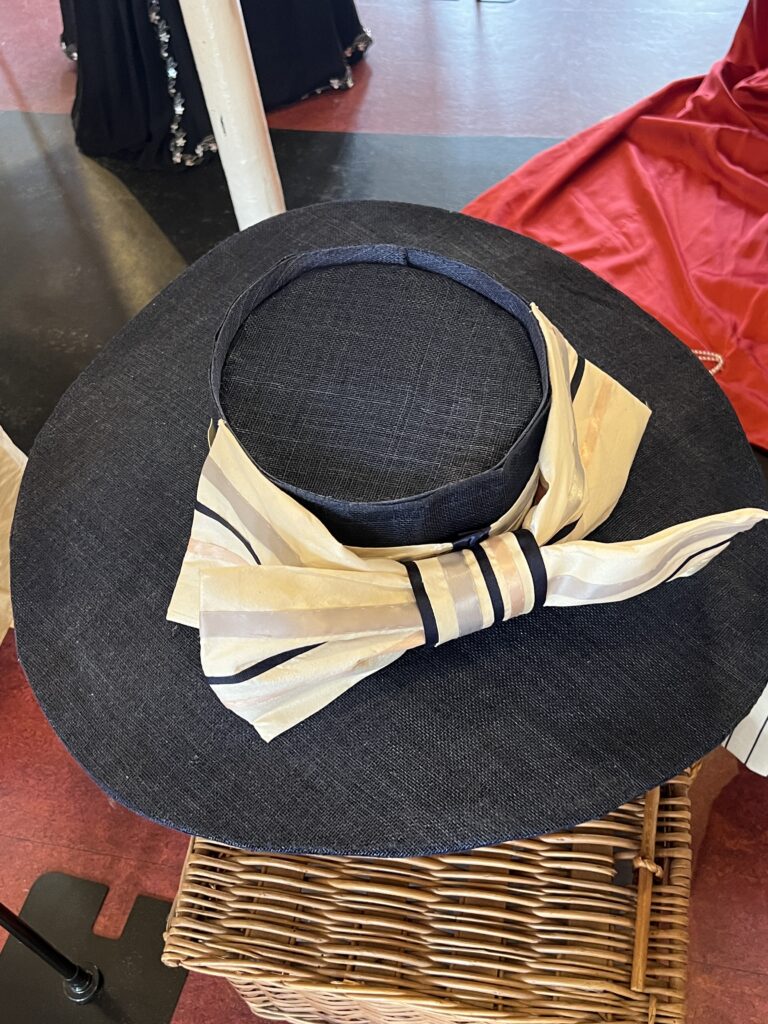
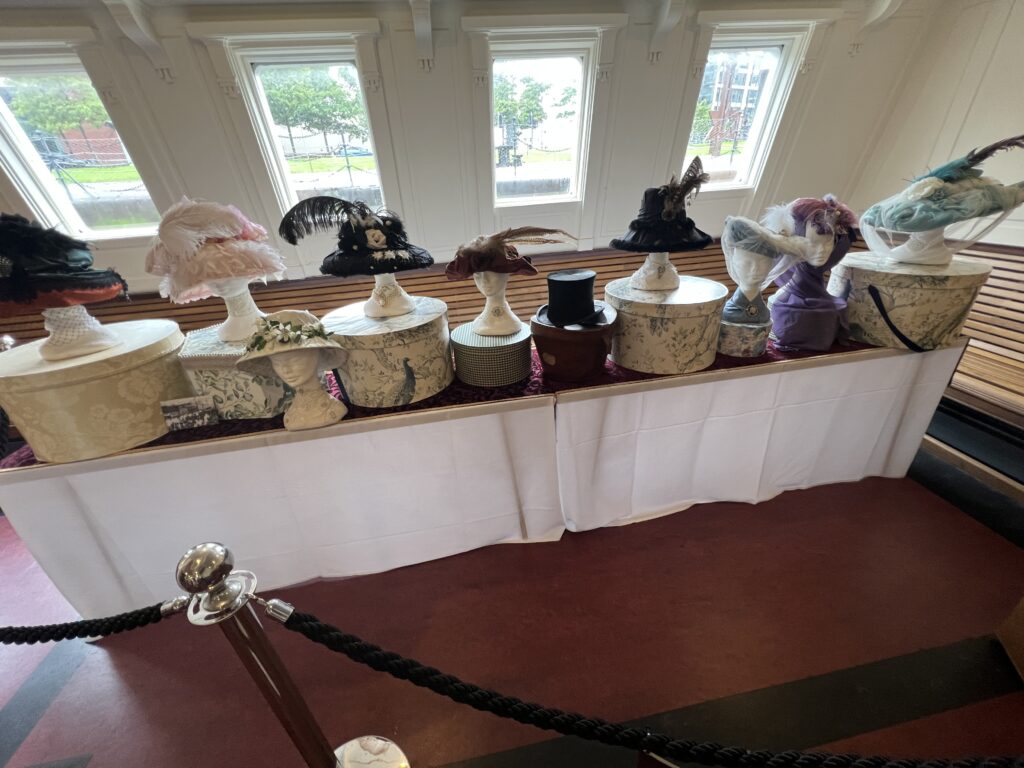
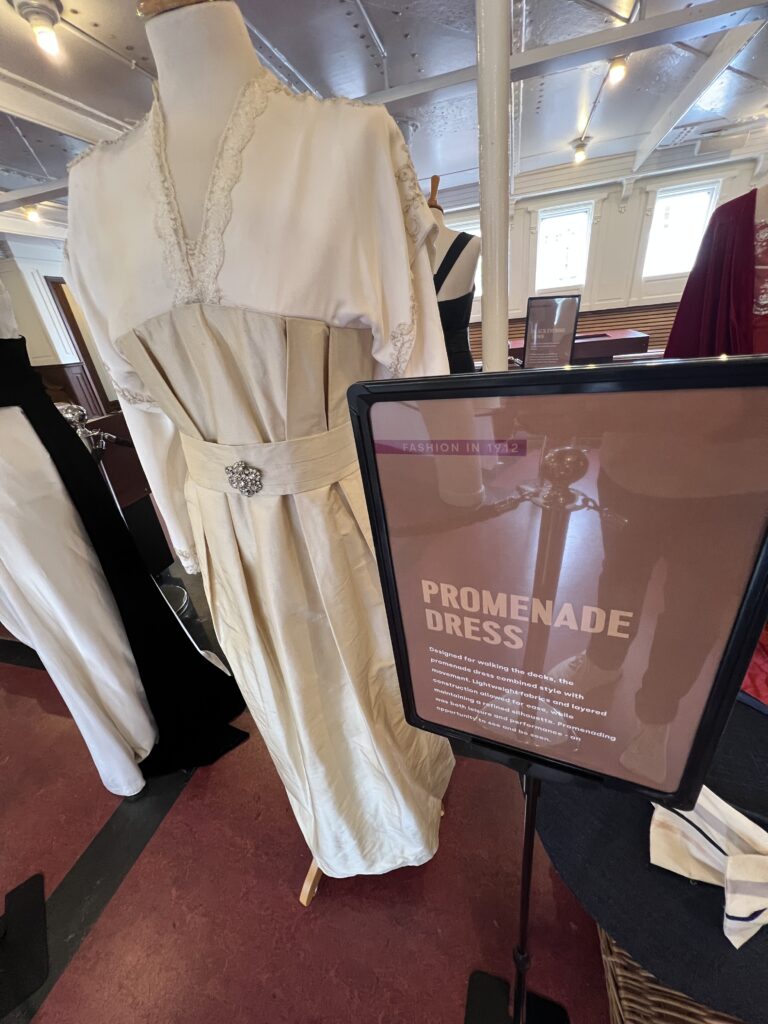
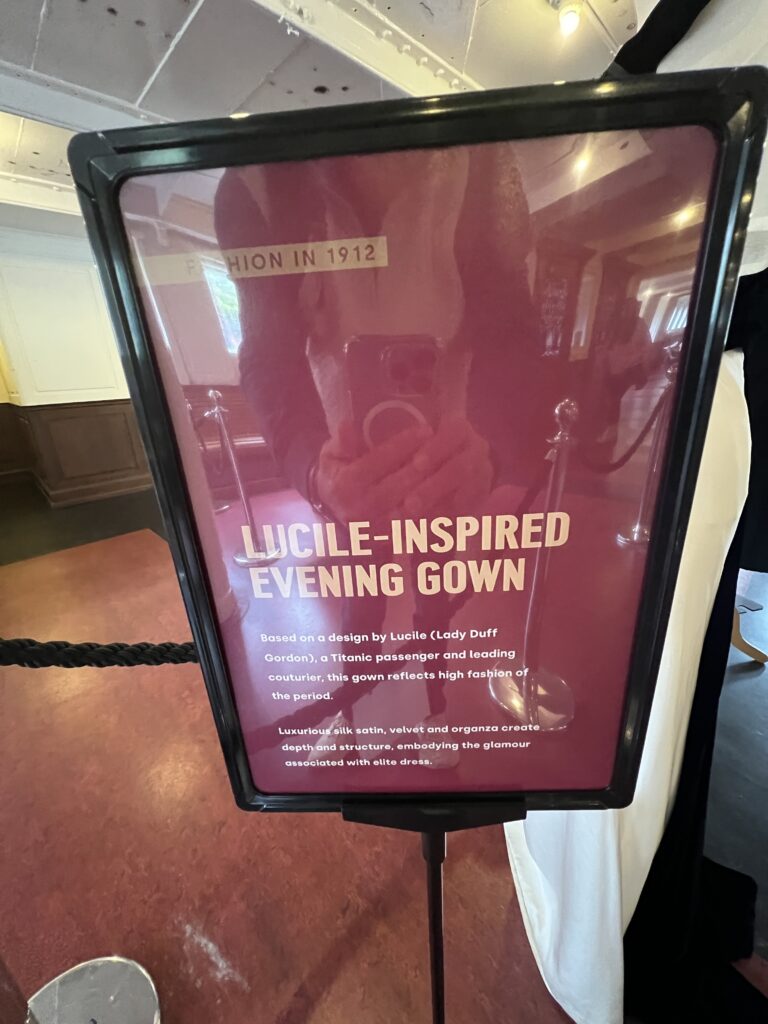
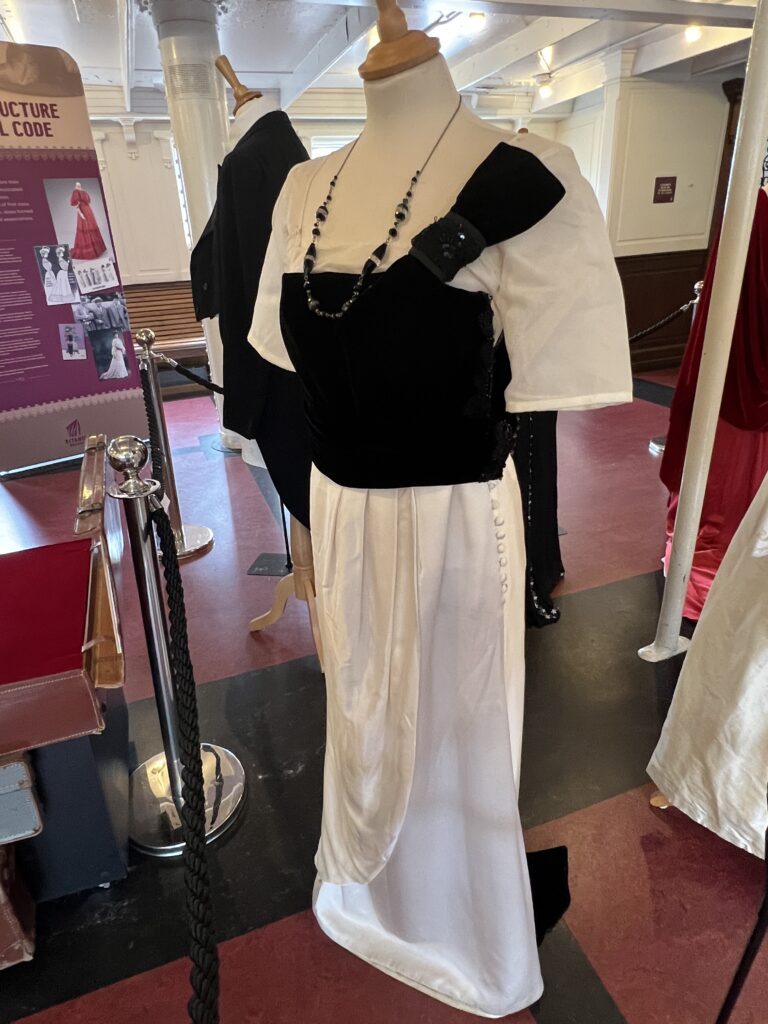
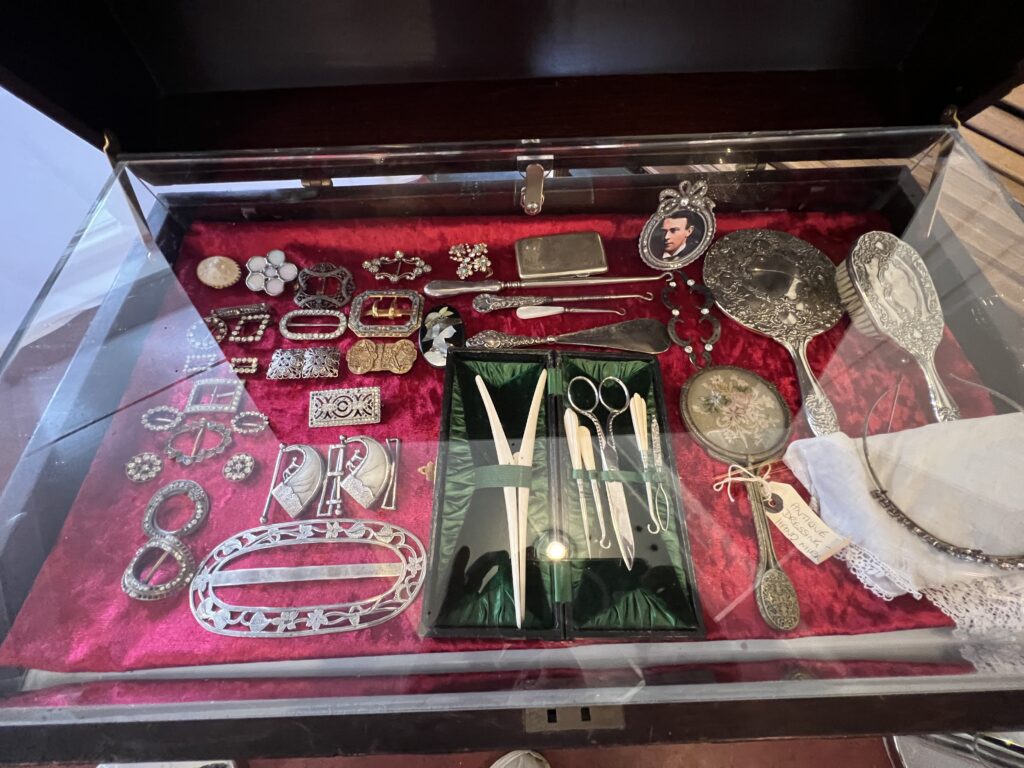
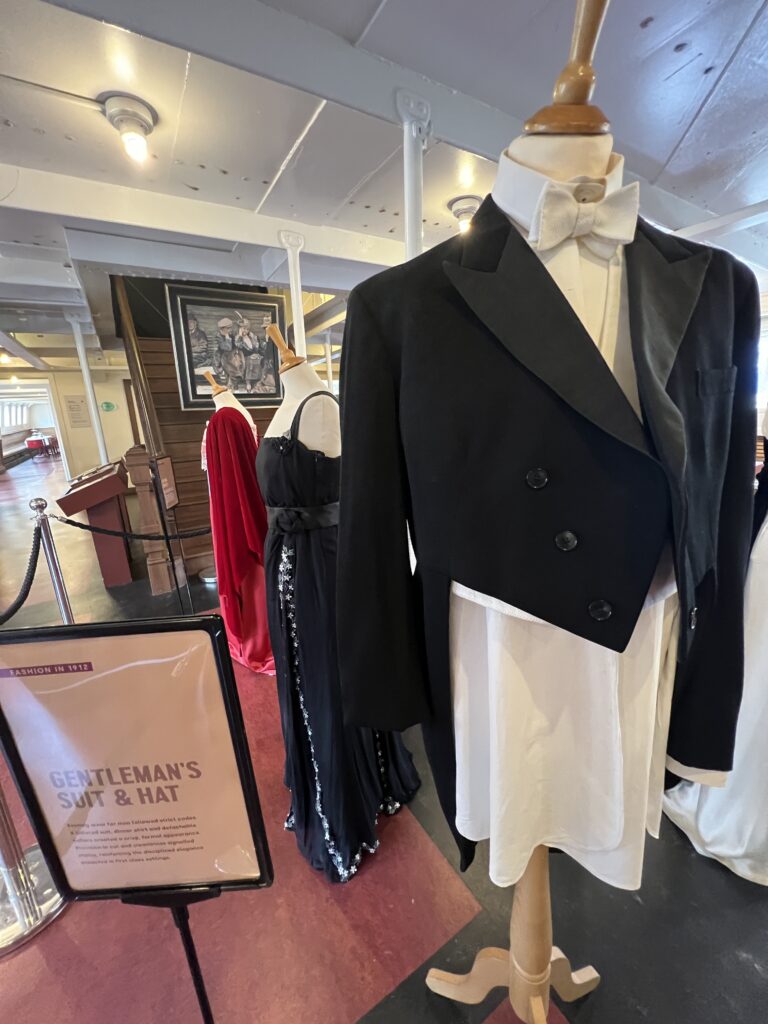
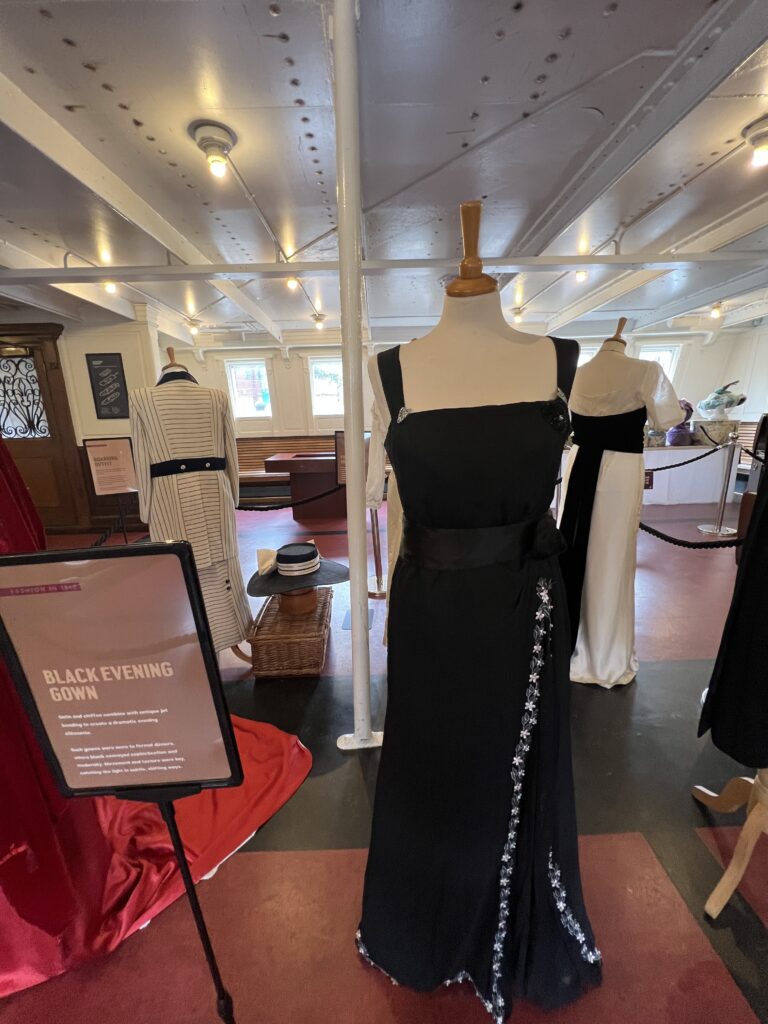
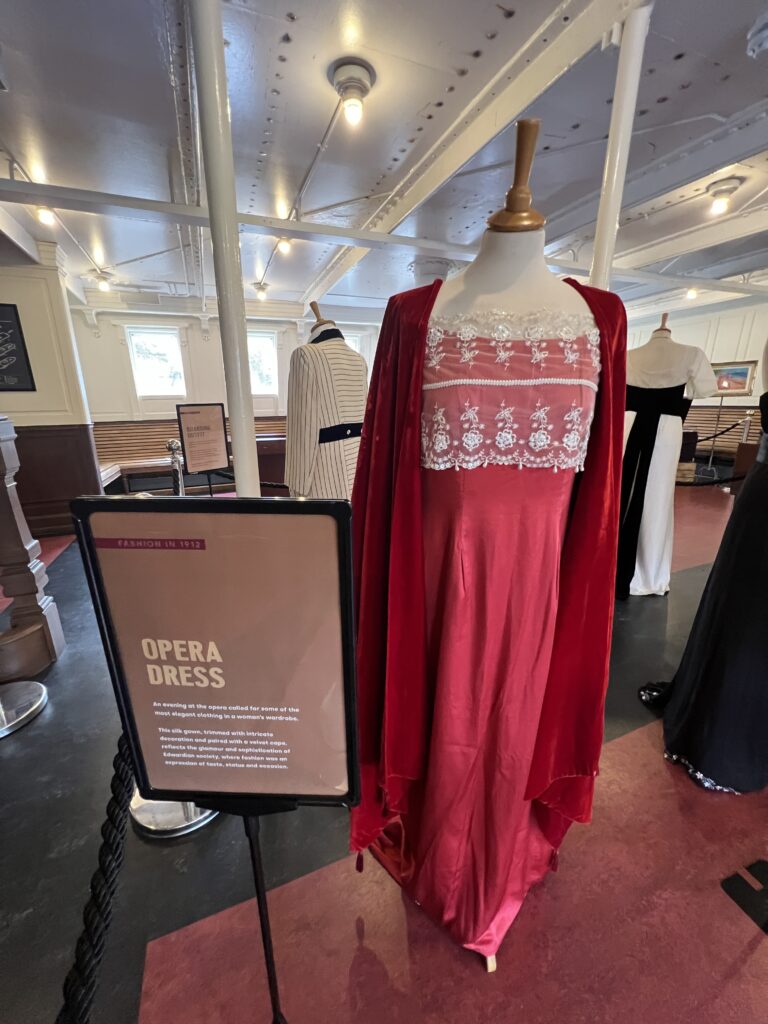
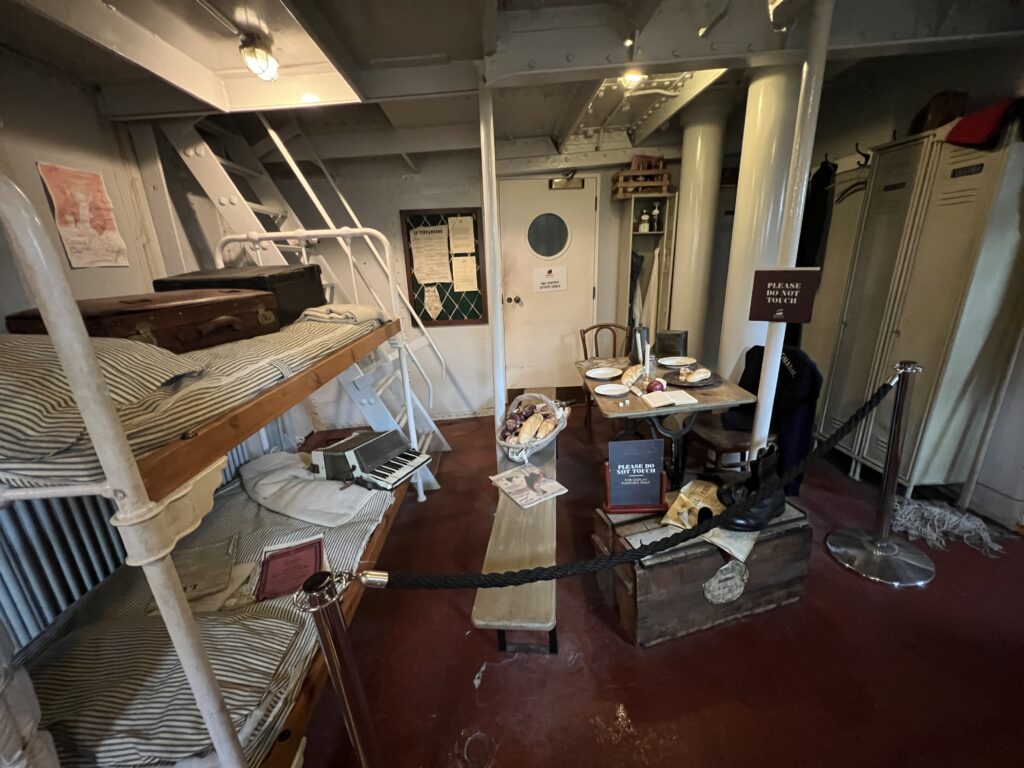
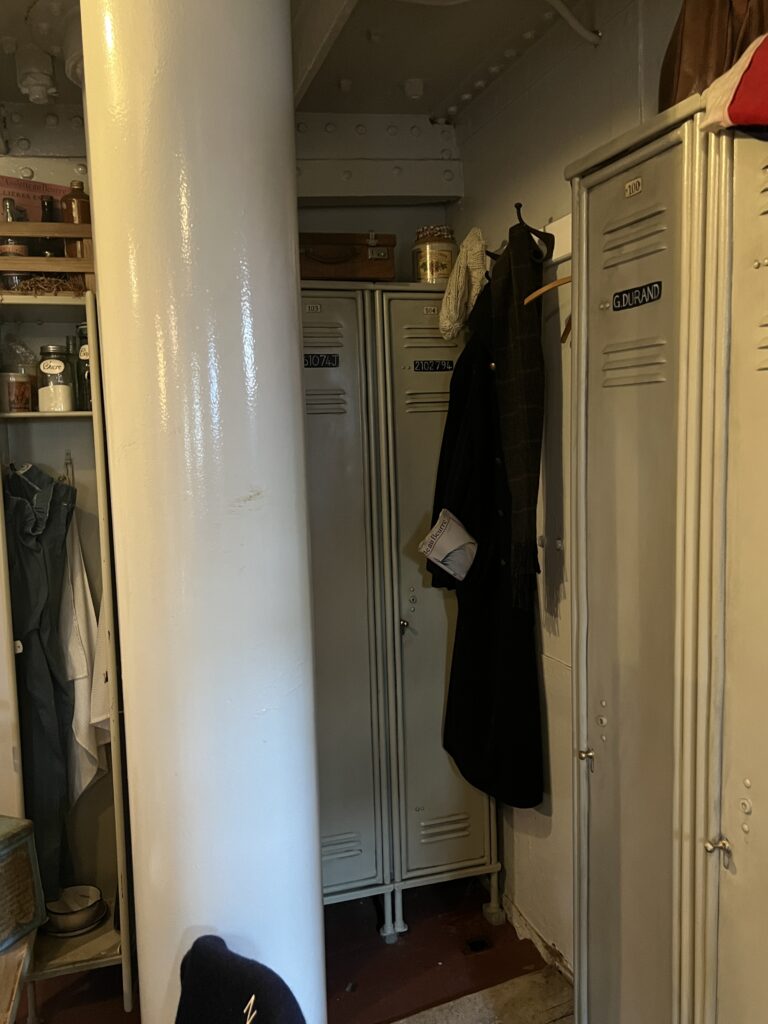
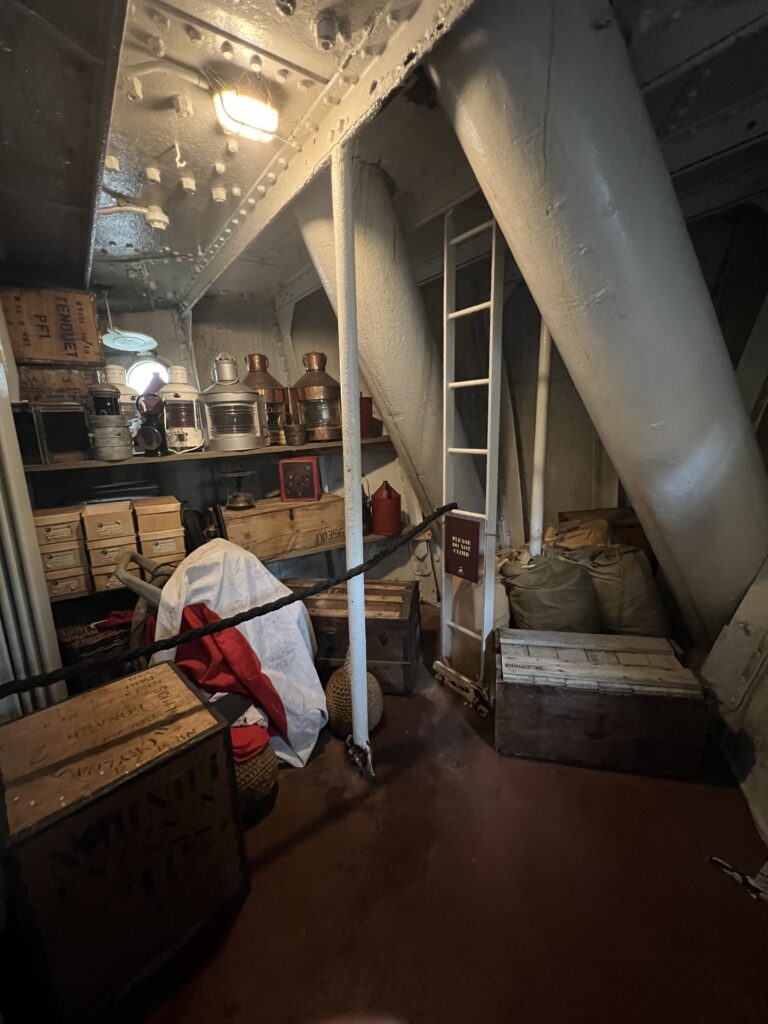
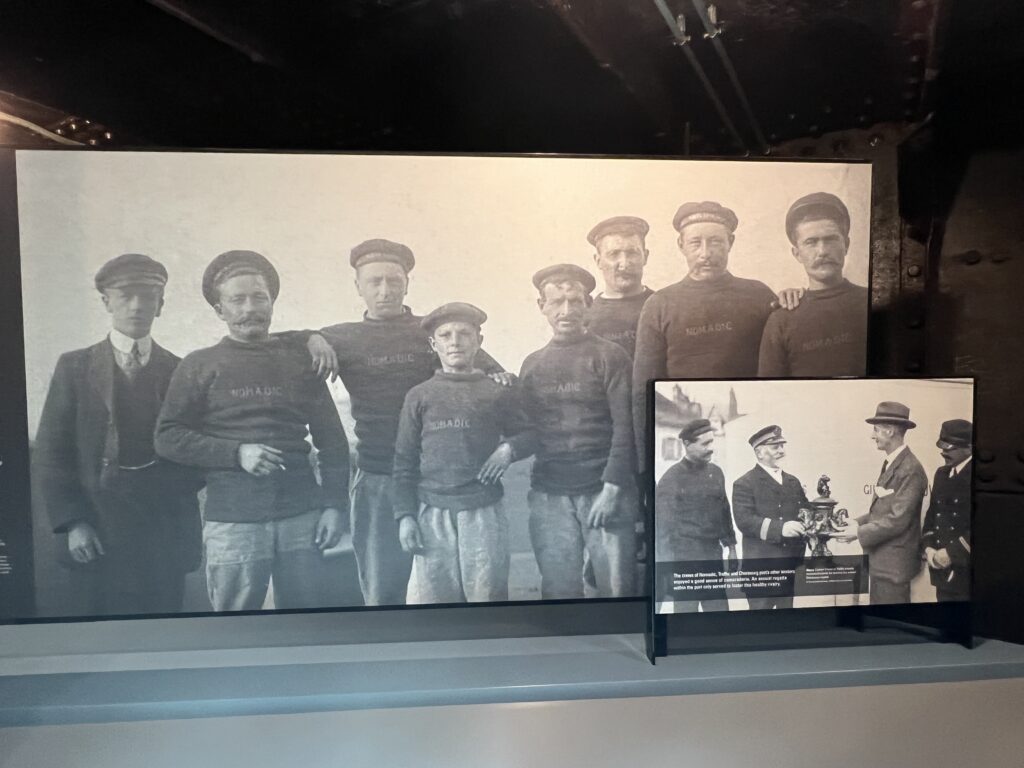
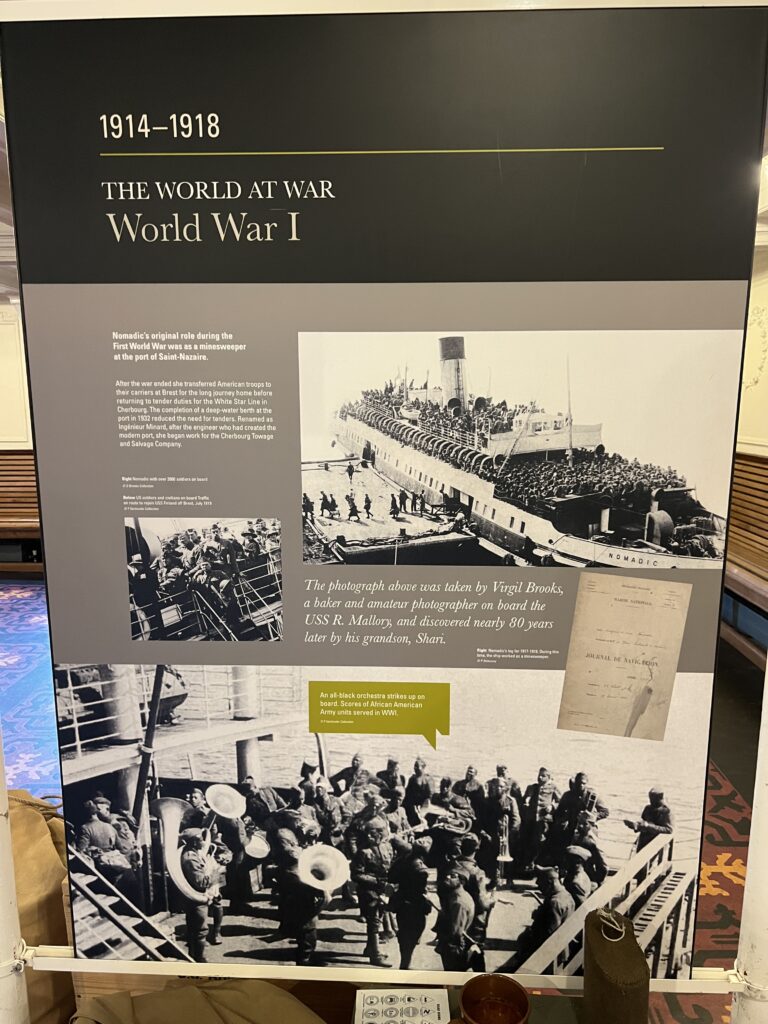
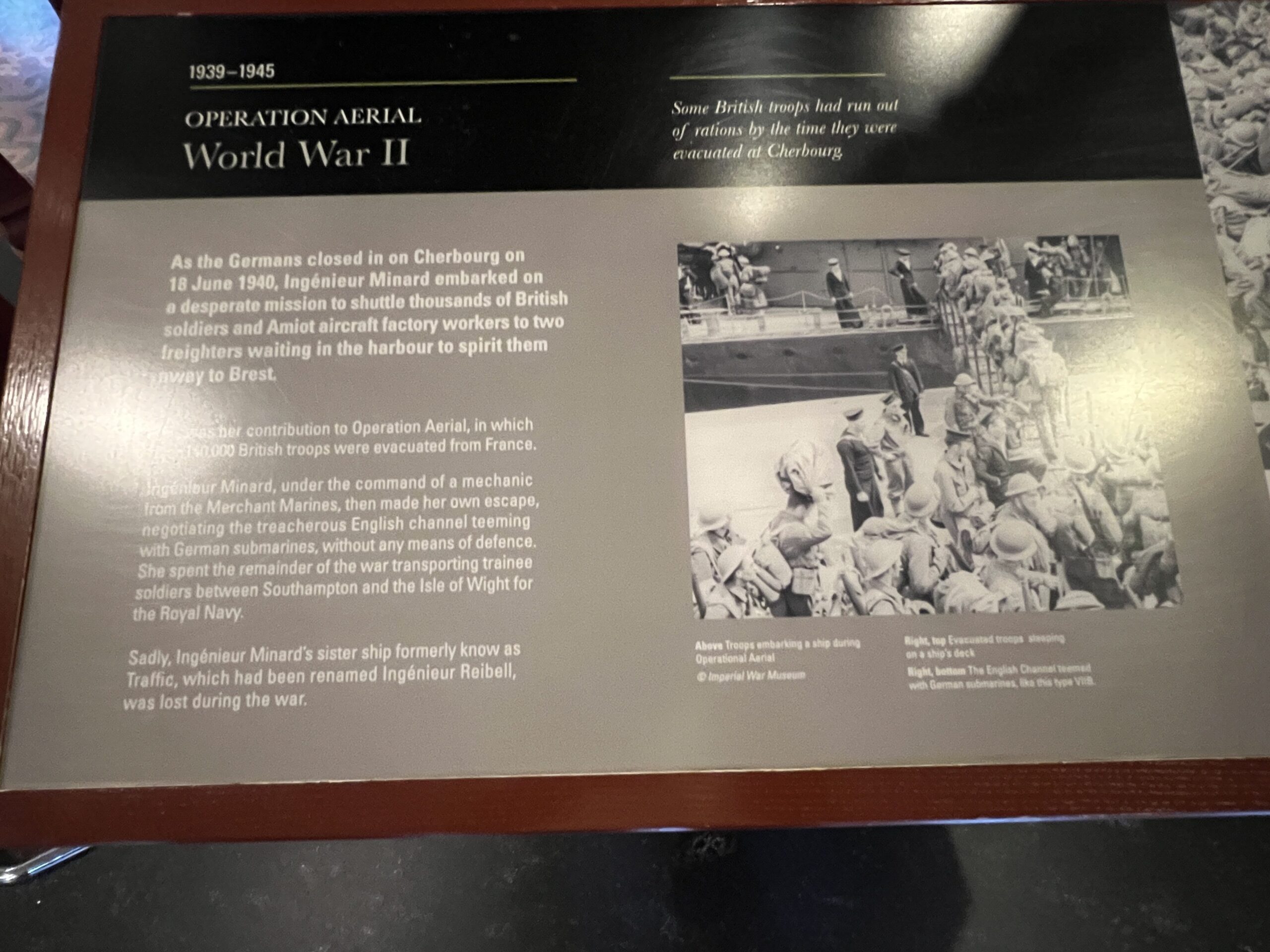
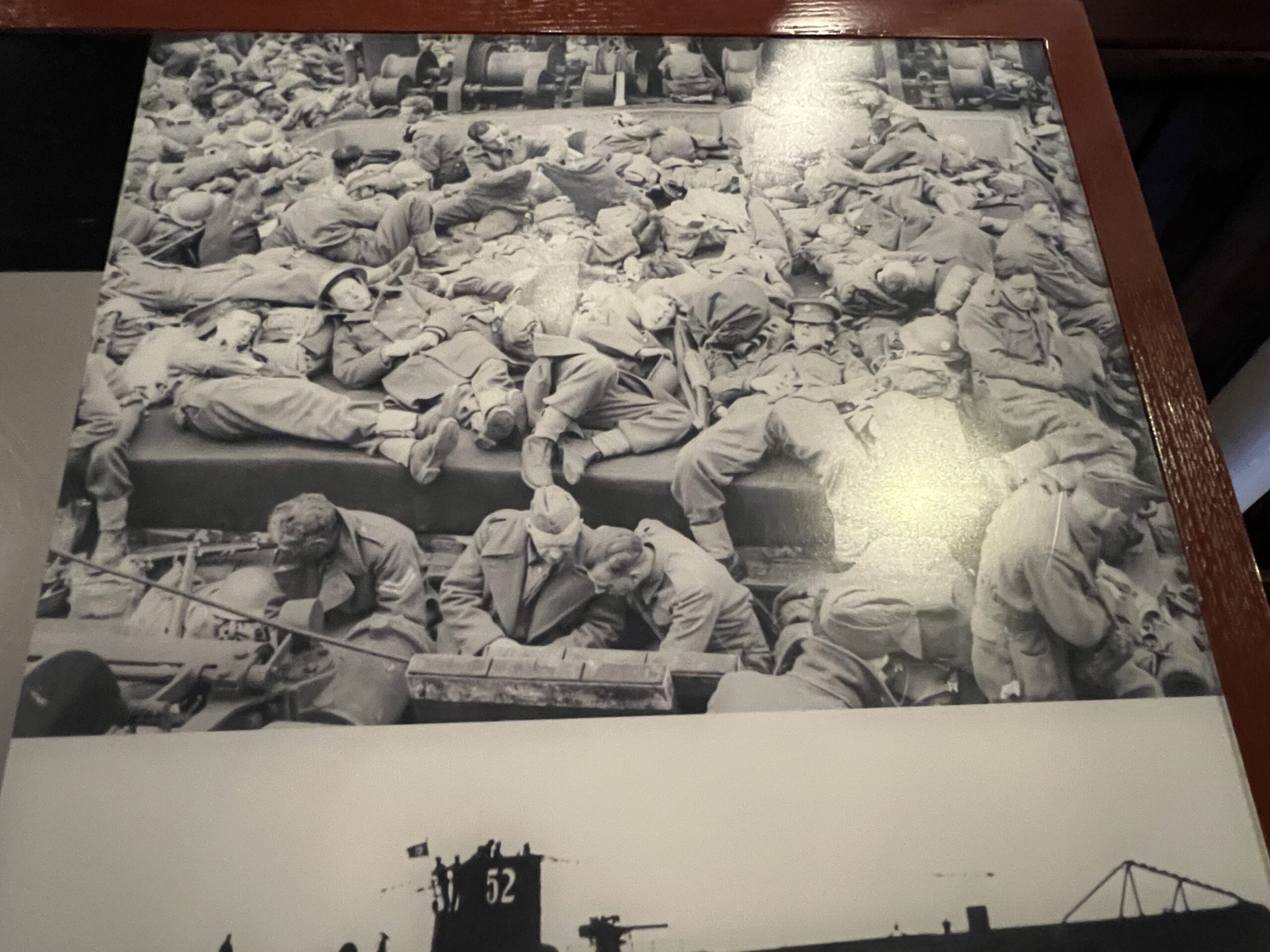
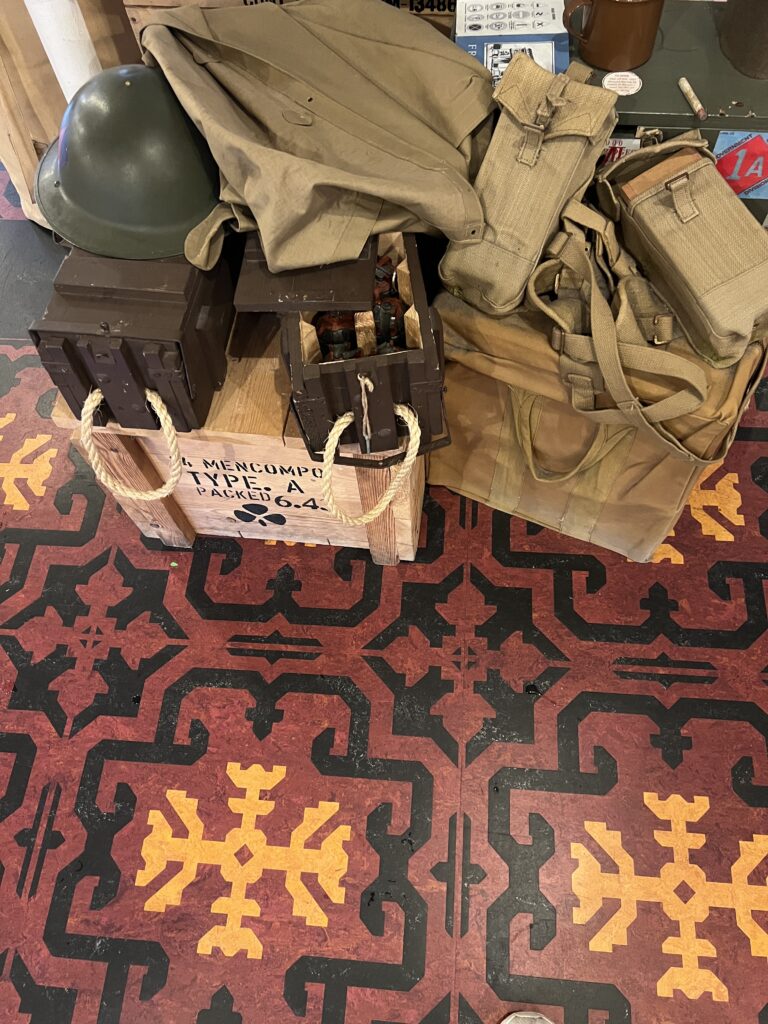
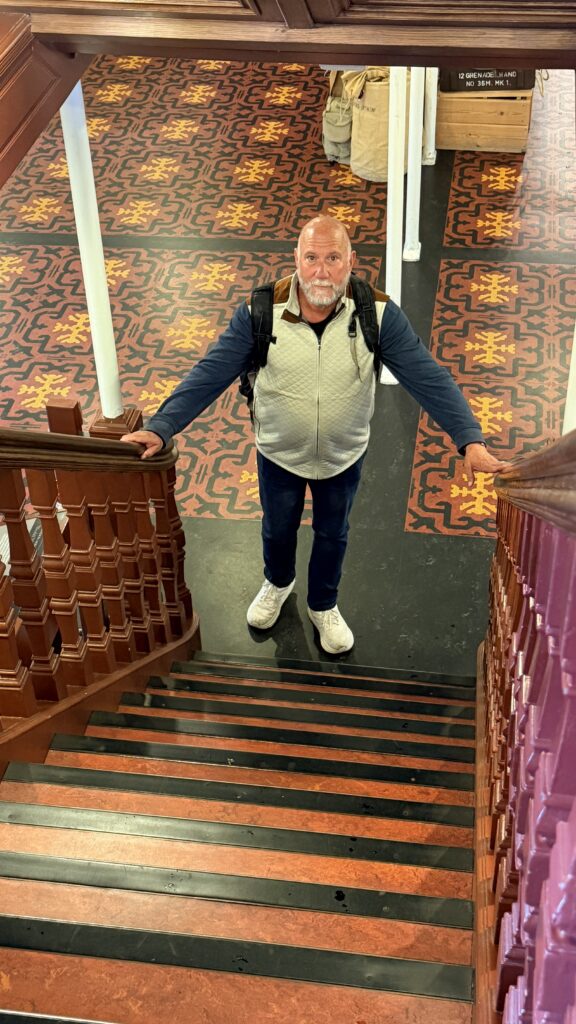
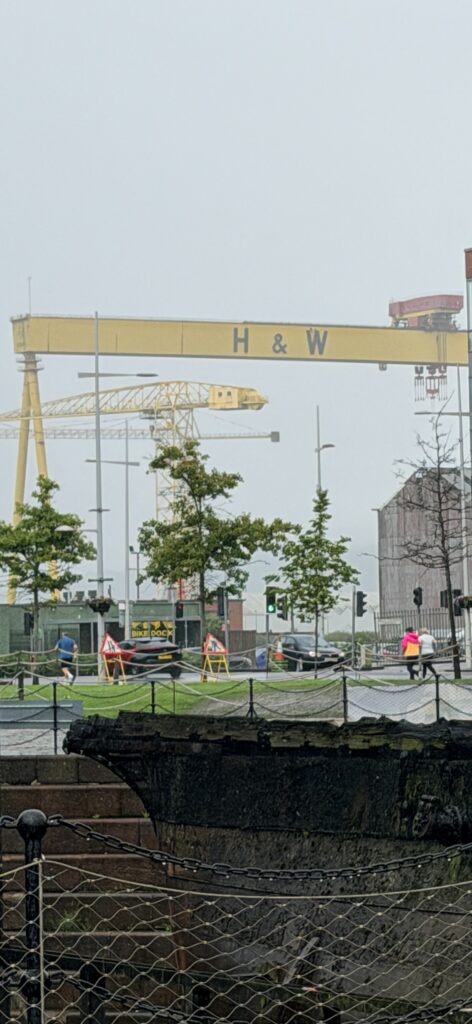
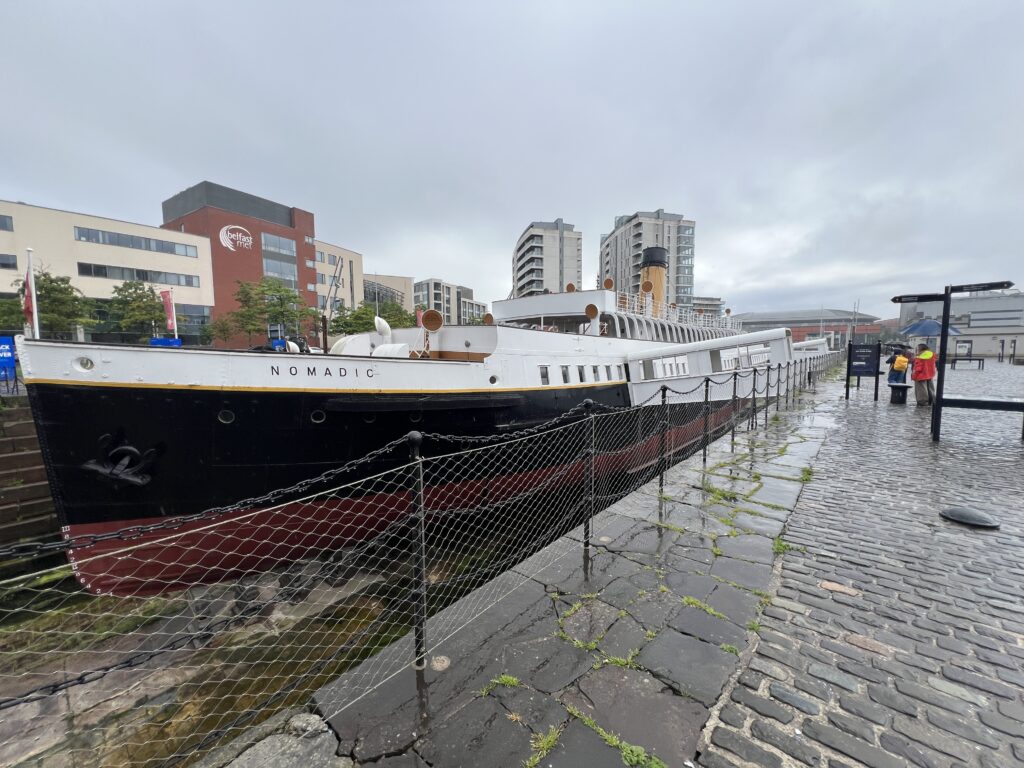
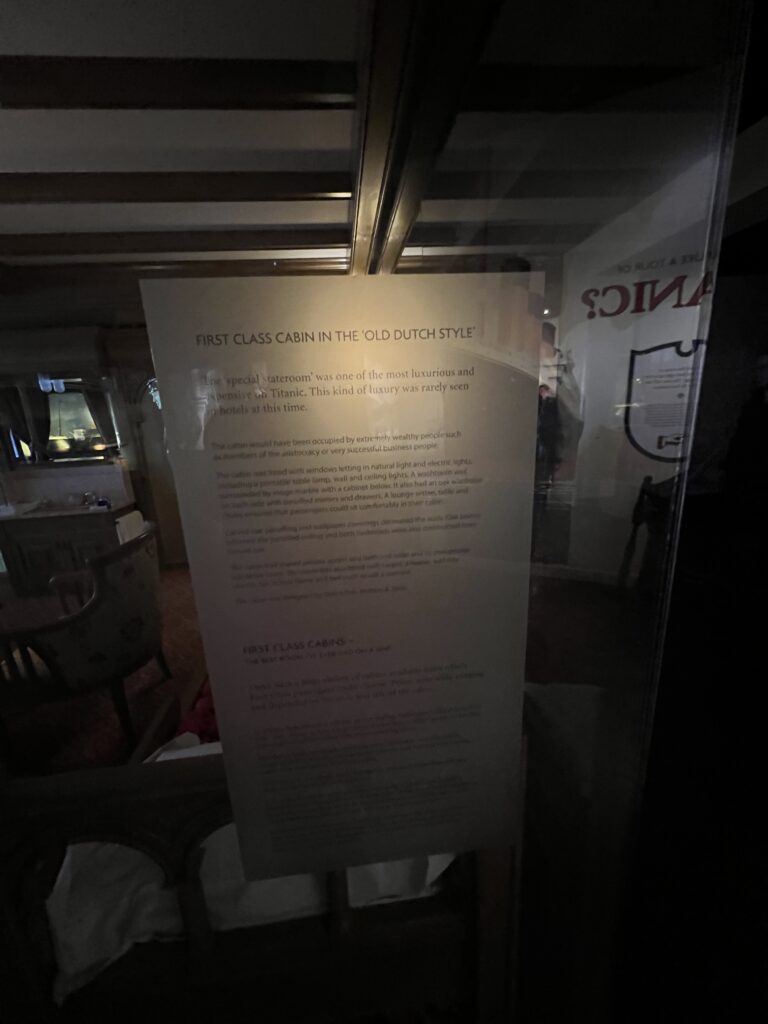
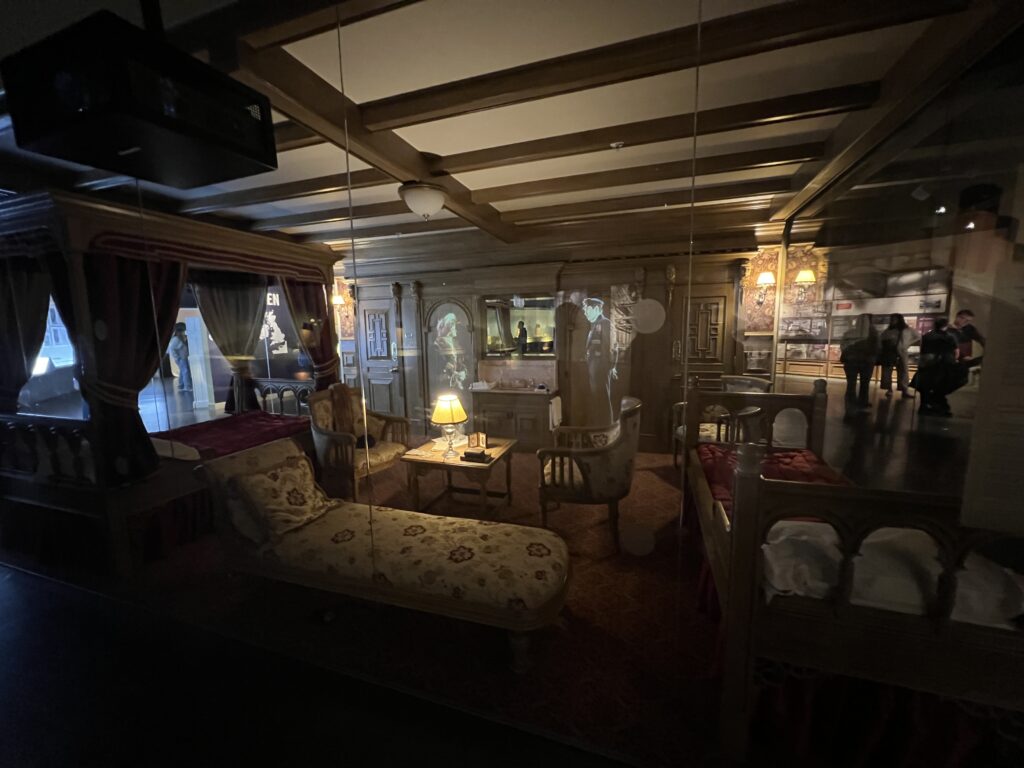
After touring the SS Nomadic we returned to the Titanic Museum Building to continue our tour on our own. Below are the only two photos taken before we had to evacuate the building due to the fire alarm.
Windstar ship leaving the port as we prepared to also leave.
Tomorrow we are in Greenock (Glasgow), Scotland
One thought on “Day 103 June 18 – Belfast, Northern Ireland”
❤️
We have visited Belfast but haven’t had a chance to see all of these sites. We’ve taken tours out to the coast.