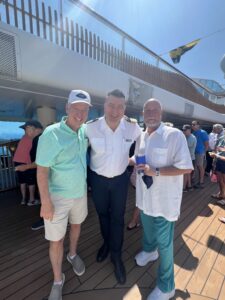
Day 112 Saturday June 27th (8 days to go) — We gained another hour last night was we continue moving westward and used the hour for extra sleep this morning. Woke up for a late breakfast in the Terrace Buffet. A couple of things at breakfast this morning, I had an employee thank me for buying her lunch in a port. I had forgotten and Jackie reminded me it was in Cobh. I told the employee thank you for seeking me out to tell me and I asked her if the meal was good. She said it was extra good since it was paid for. 🙂 Last night during the magician/comedian performance he brought a lady to the stage, and she was great in performing with him. We saw her in The Terrace and told her good job last night. While we were eating her husband came by and asked where in Louisiana, we were from and we told him Cut Off. They are from Abita Springs. We think the number of Louisiana people on the ship now stands at 14, that we are aware of.
Today we have lunch scheduled with the group who did the Chobe Game Lodge overland excursion in Africa. Then, we meet Joan and John for Italian wine tasting and we will attend the comedian/magician show at 3:30pm. Later this evening we have dinner with Sylvia and Romulo in Jacques, the French restaurant.
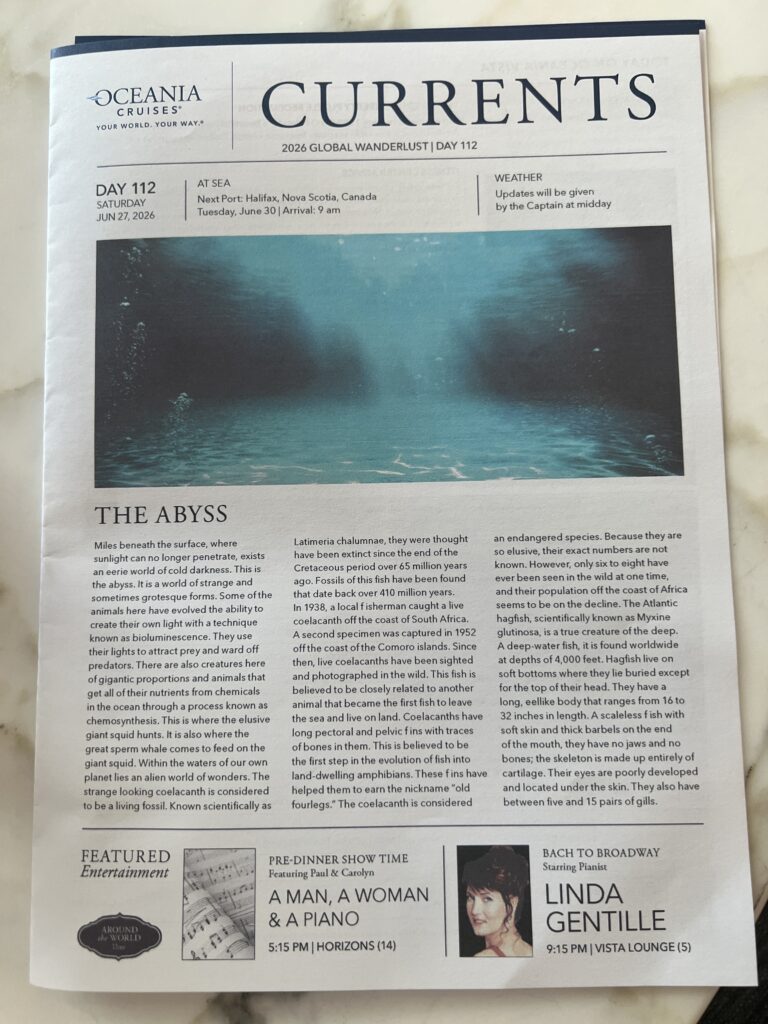
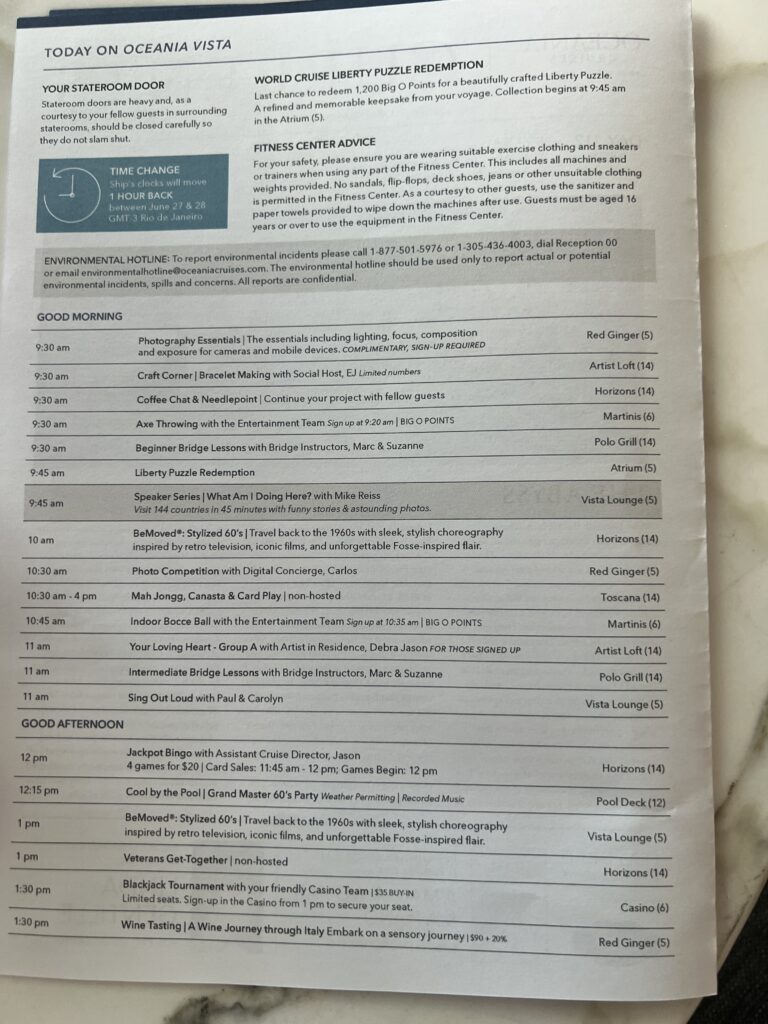
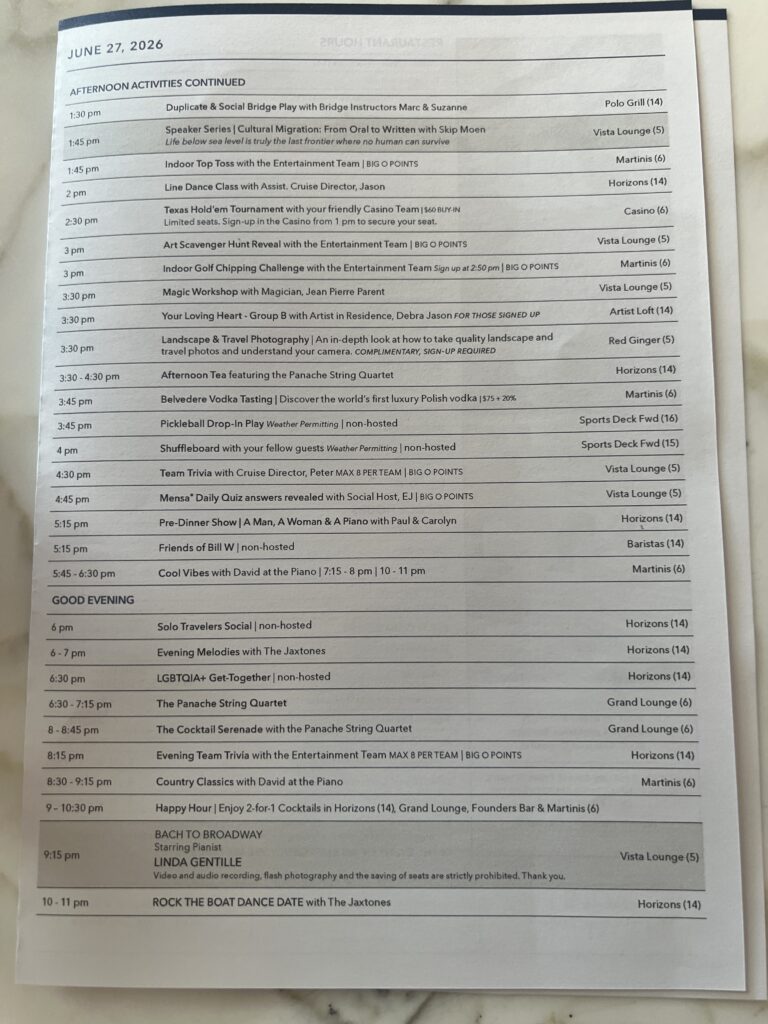
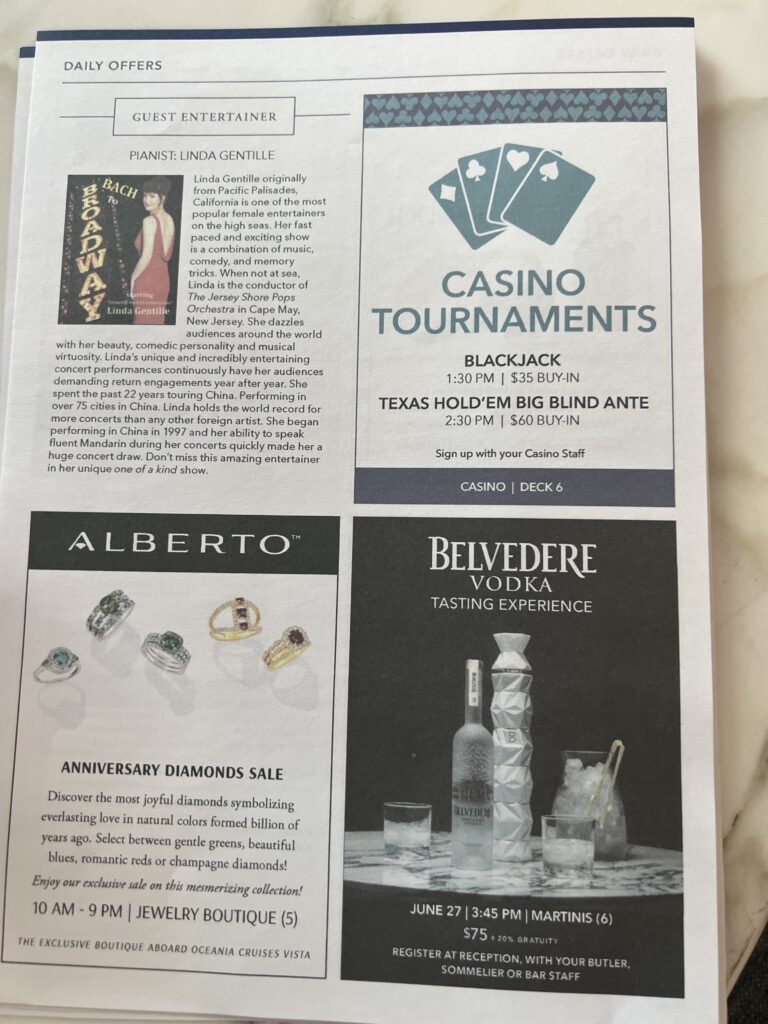
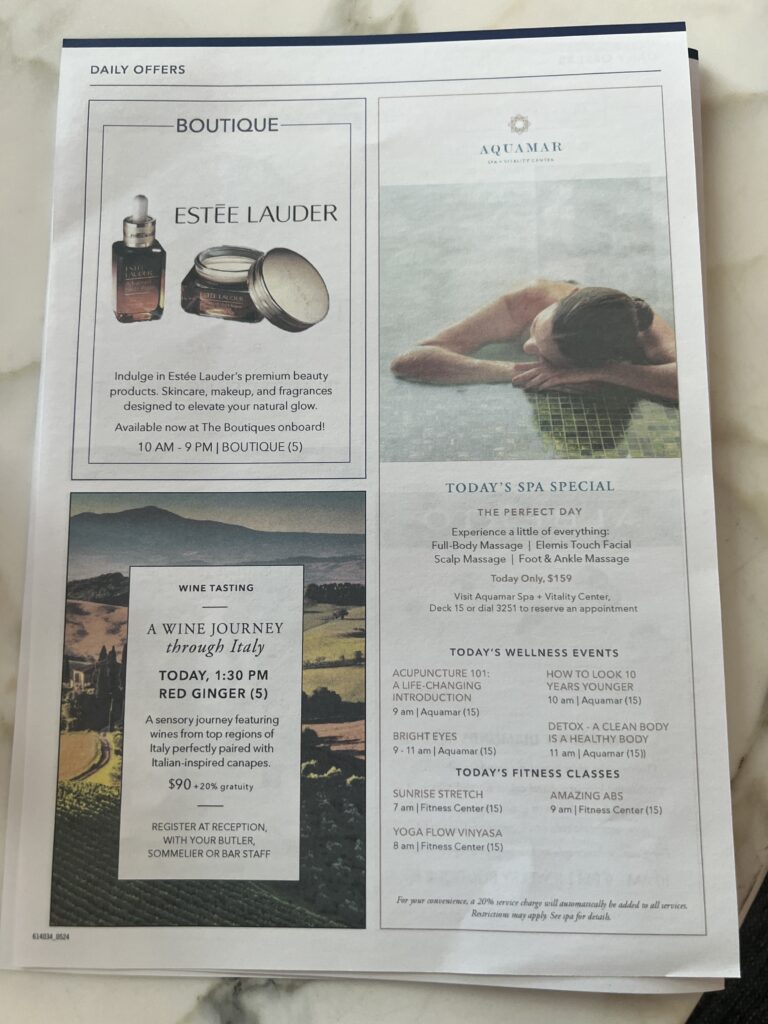
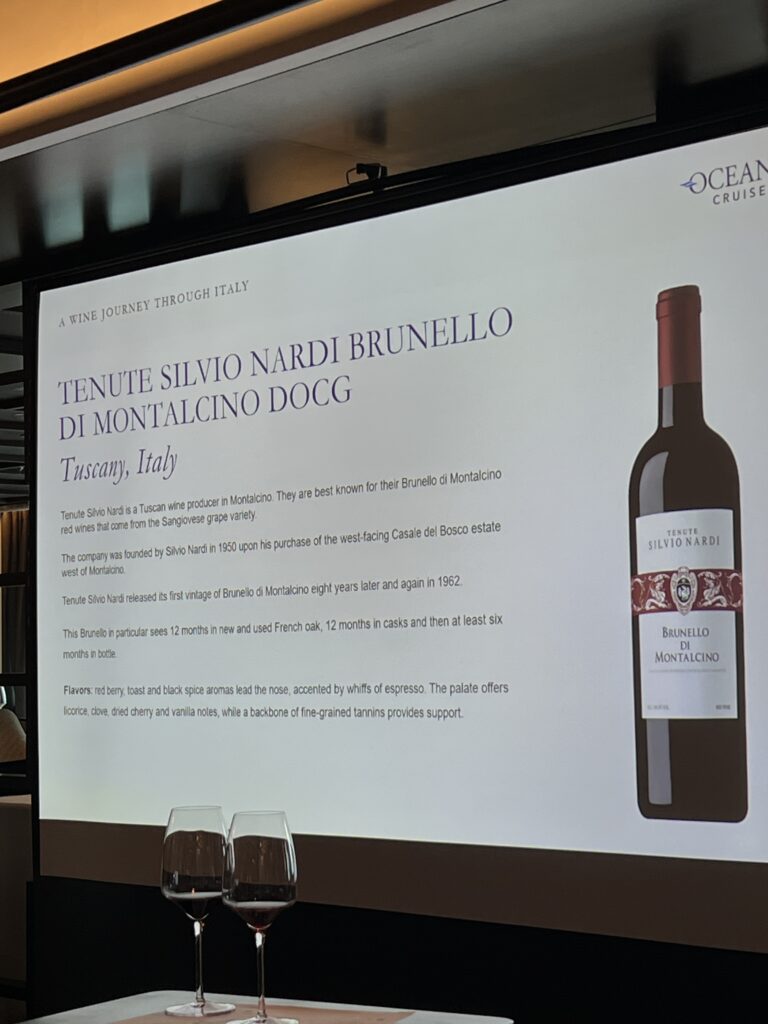
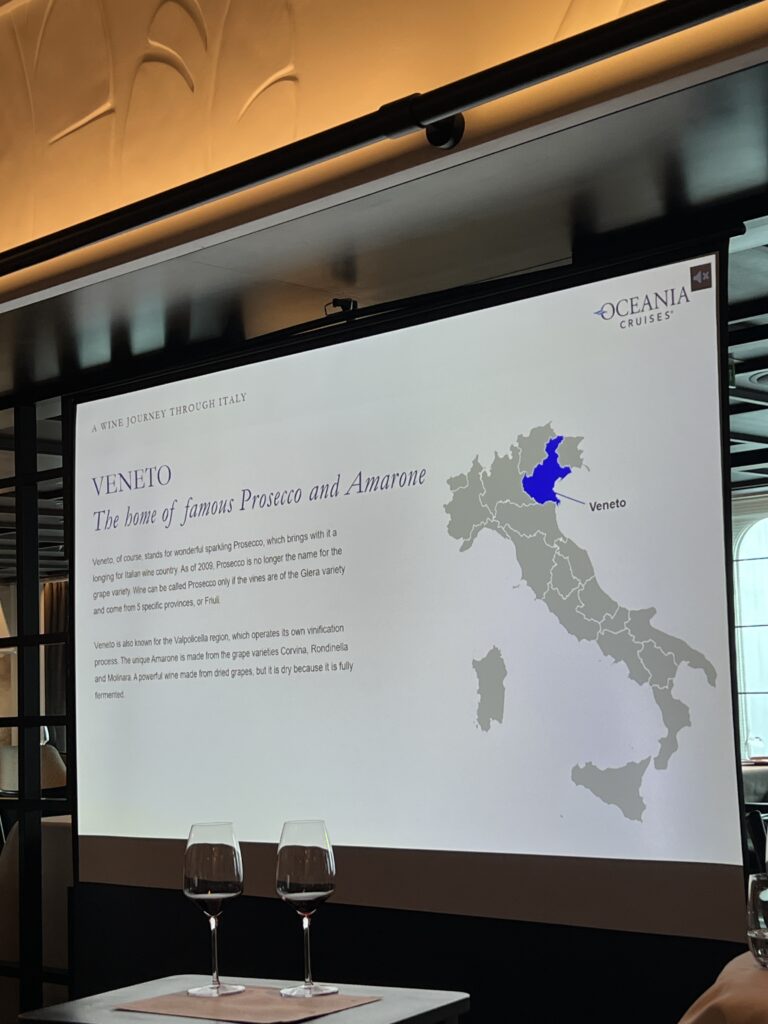
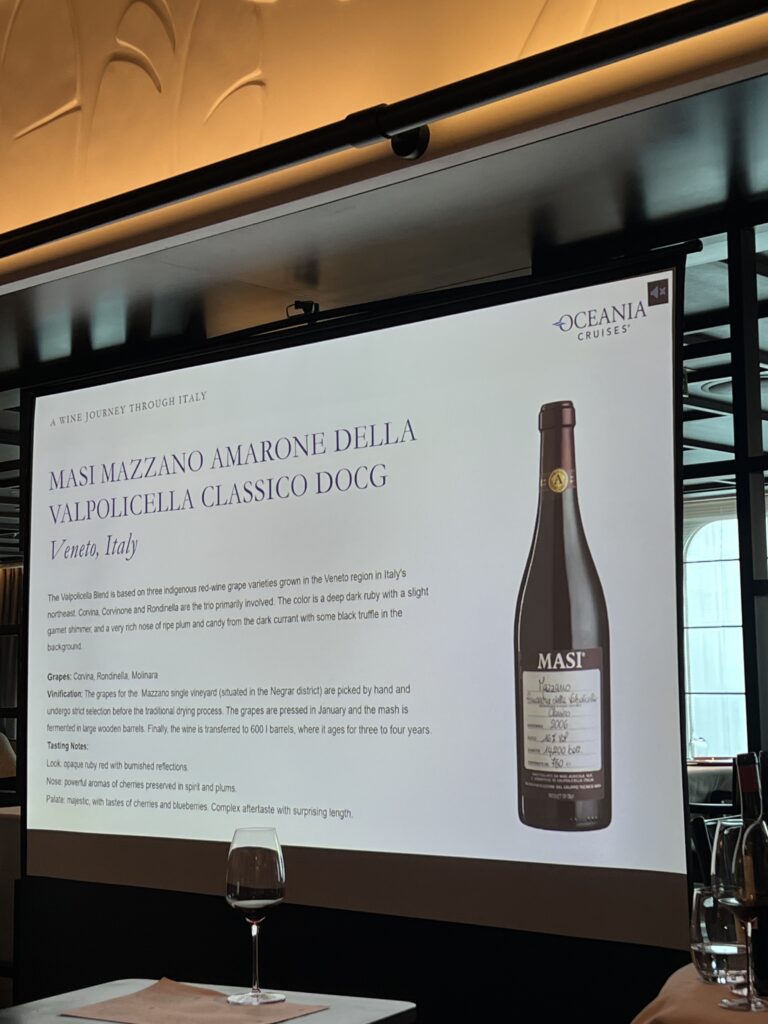
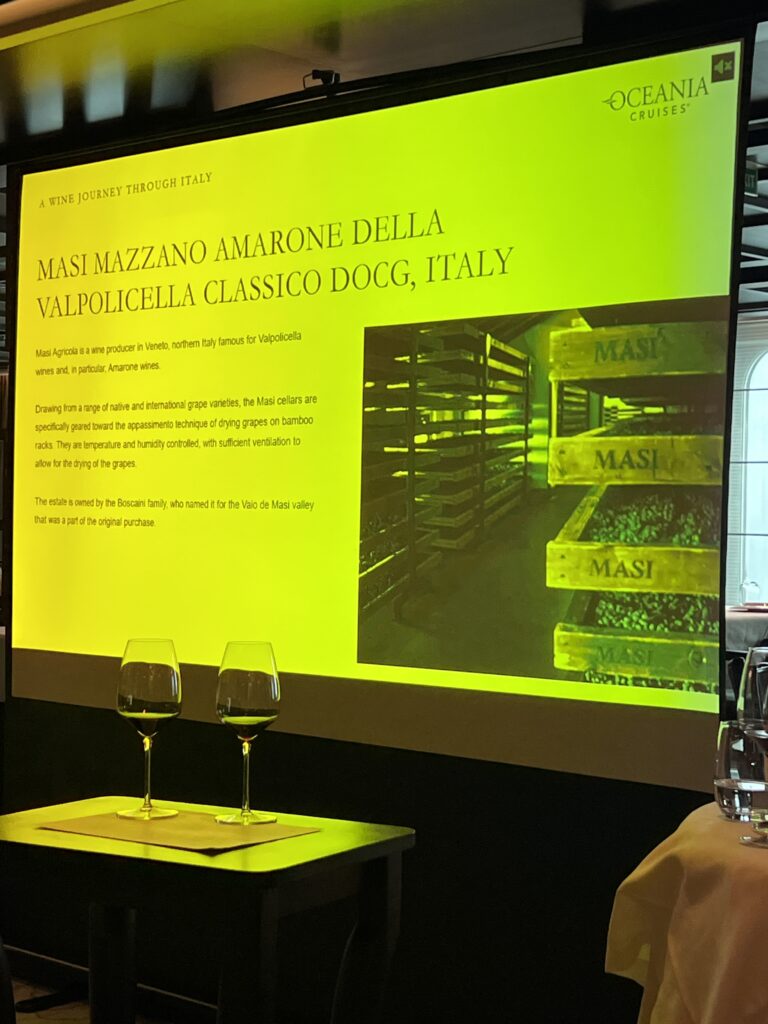
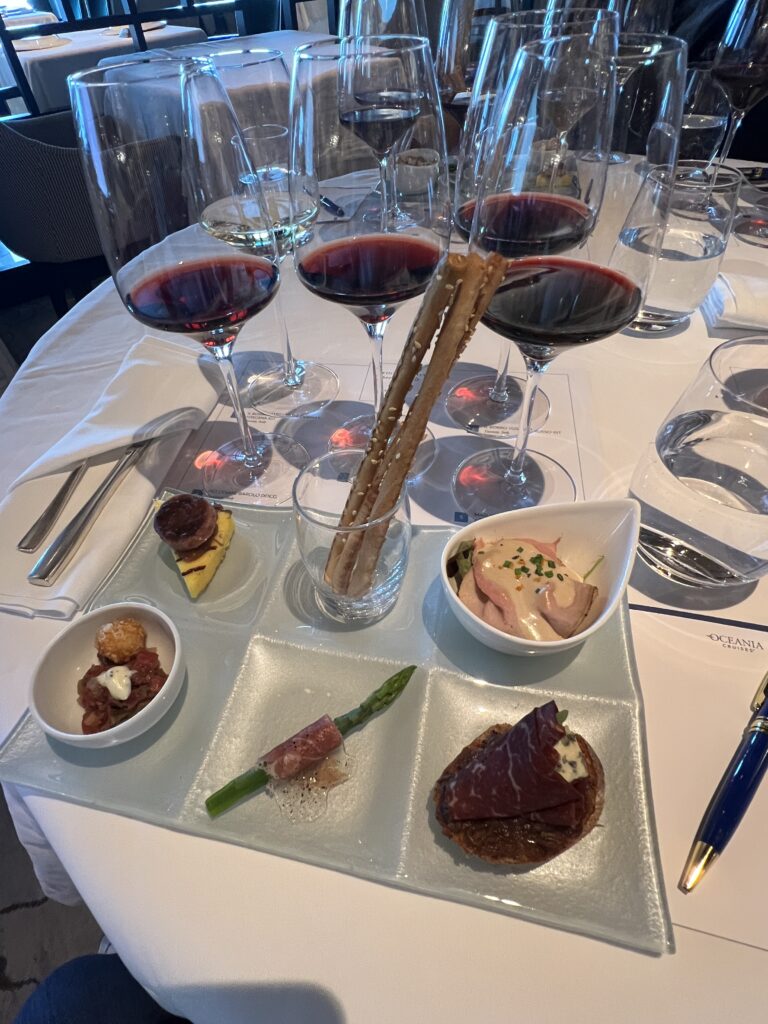
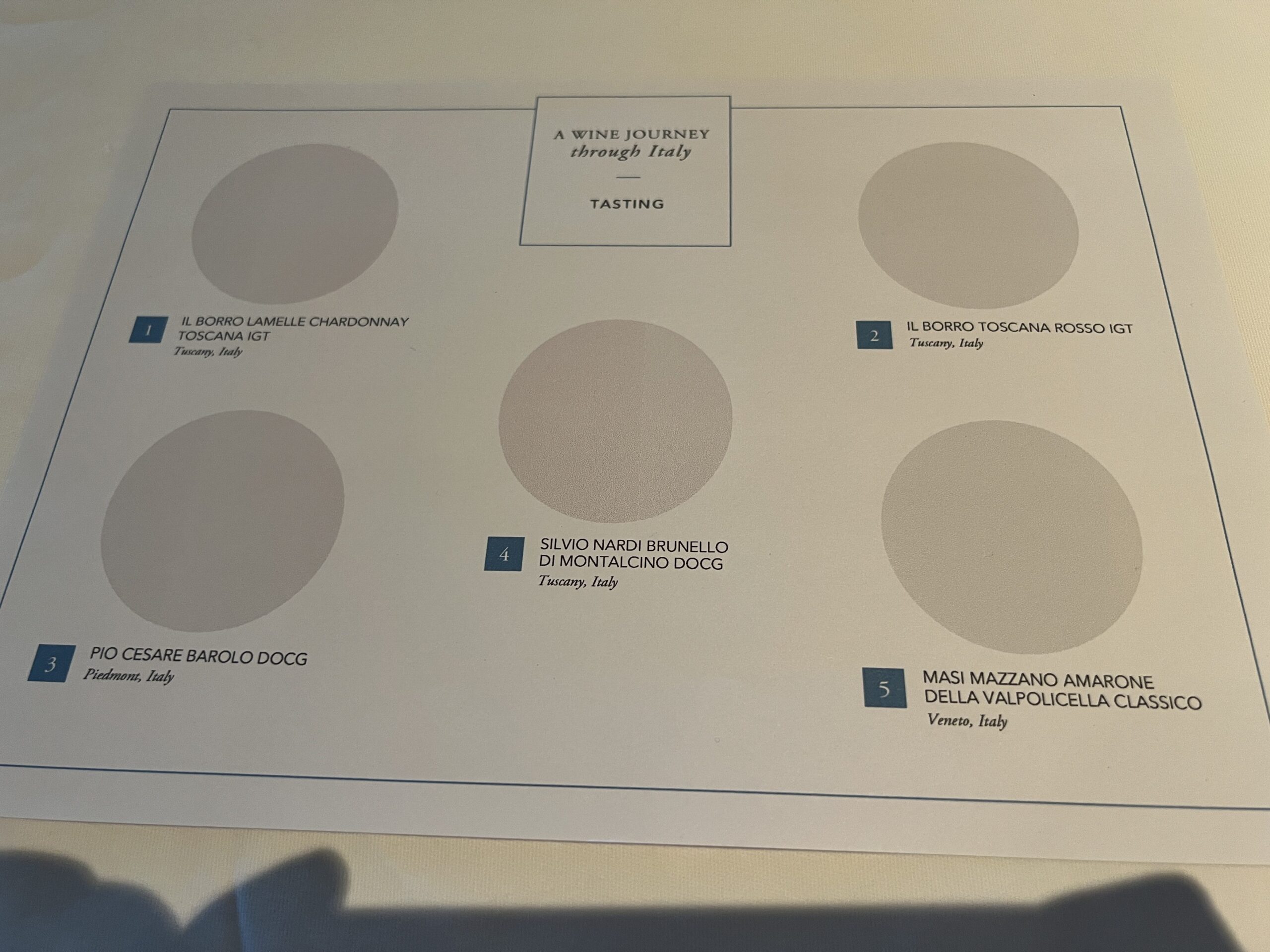
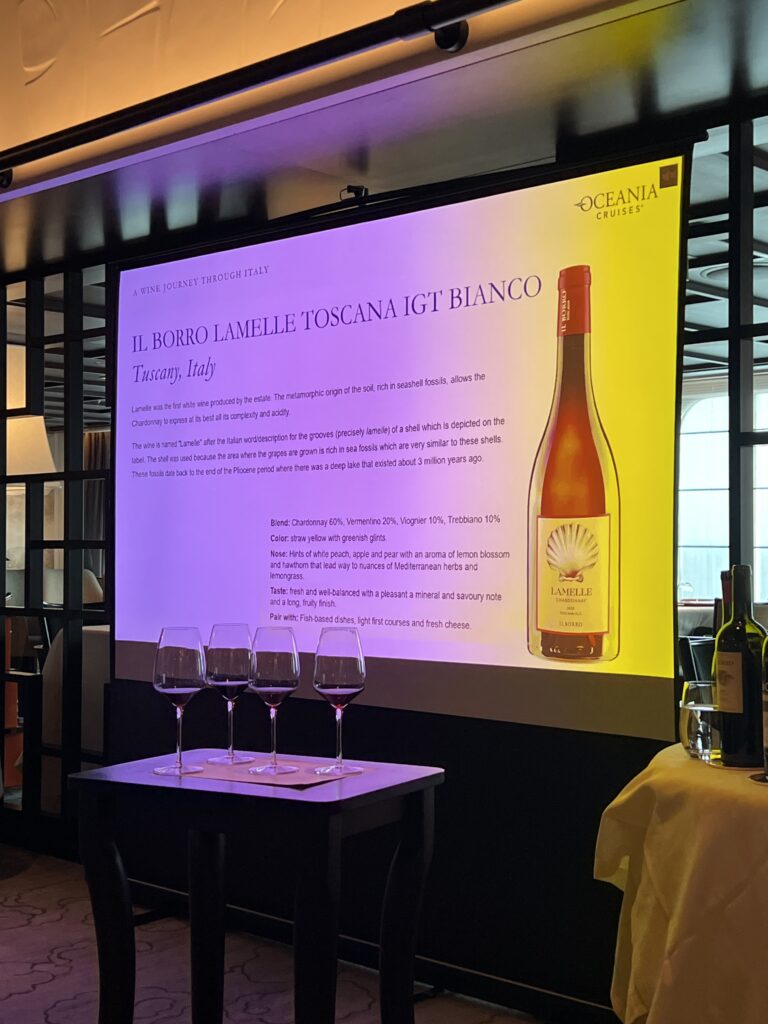
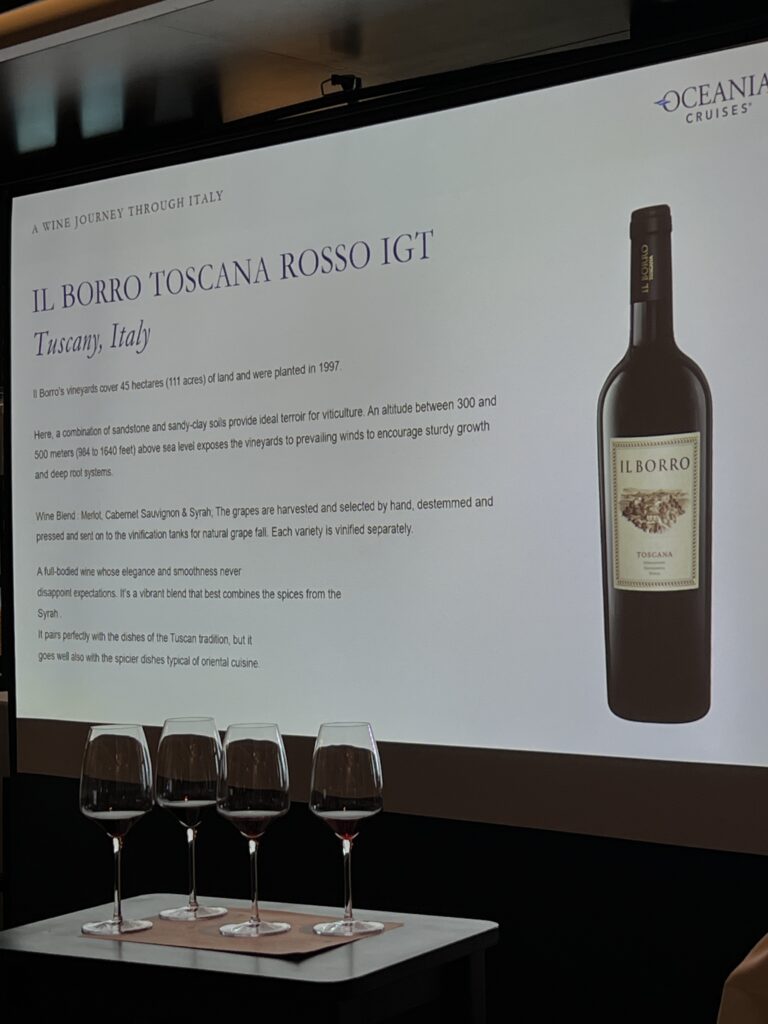
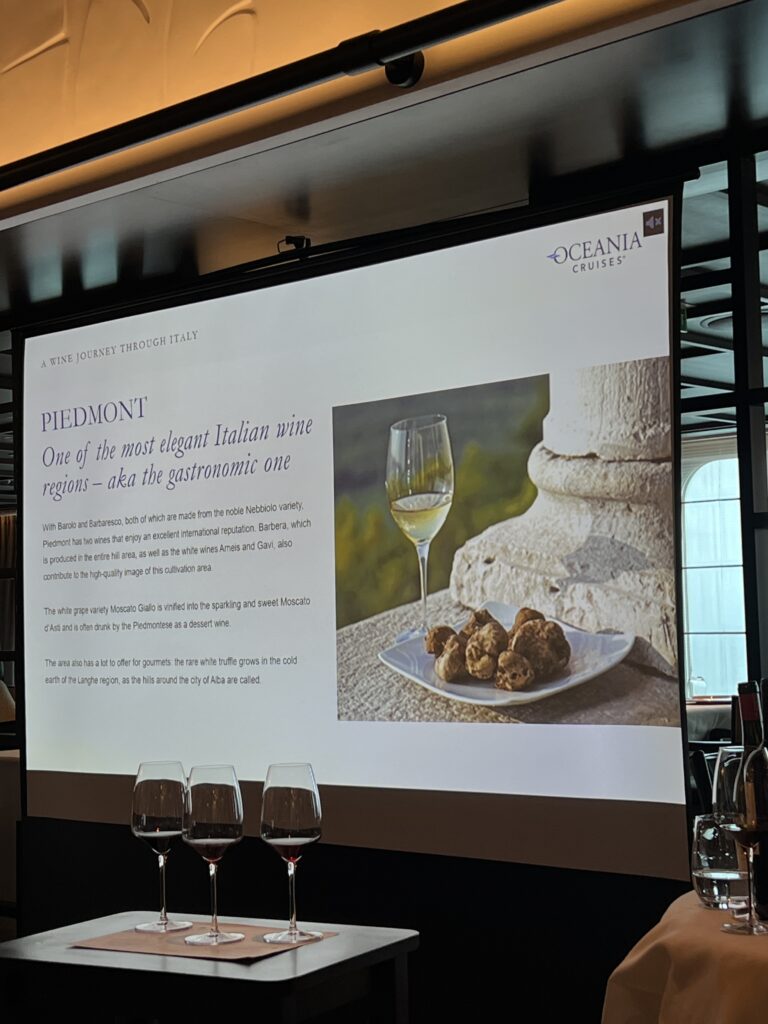
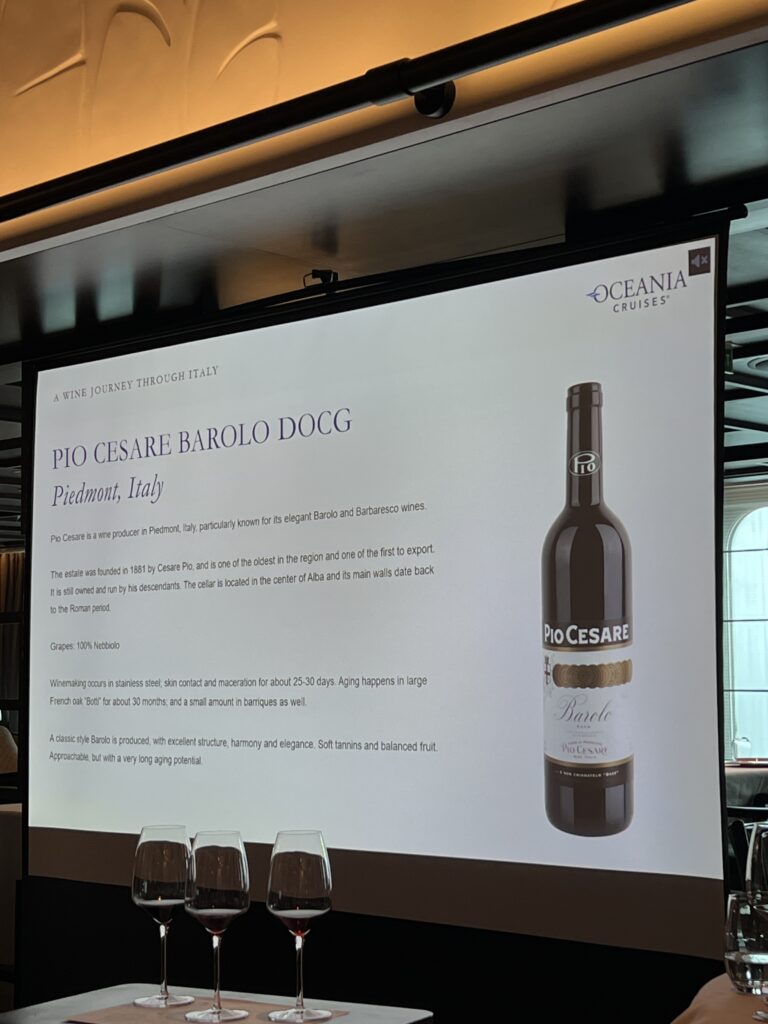
Photos of the wine tasing today in Red Ginger. The tasting was called A Wine Journey through Italy. It was fun with Joan and John and the wine was fantastic. I posted the slide show that the Sommelier presented during the tasting.
In 2008, while the world was in the midst of the financial crisis, a different kind of scandal was brewing in one of Italy’s most beautiful and prominent wine regions. Brunellogate, as the English-speaking press labelled it, was supposed to bring down the subregion as a wine making force, with reverberations for decades to come. So, what exactly happened and how is it affecting the region today?
Did you know that the Italian version of adding “Gate” to a scandal, referring, of course, to Watergate, is “Poli”? “Poli” is a reference to the Tangentopoli political scandal of the early 90’s and seemed to be affixed permanently to the Brunello brand in 2008, thus it became known as Brunellopoli in Italy and Brunellogate elsewhere. The scandal was such that it shook the industry to its foundations and threatened to put to bed the centuries old estates, some of the finest that Italy has to offer. So why, just over ten years later, has the story been largely forgotten?
Regulations for Brunello di Montalcino
Brunello, the diminutive of Bruno, or brown, is essentially the same grape as the Sangiovese, but the name has stuck, being synonymous with the Tuscan’s wine’s high quality and purity. Brunello wine dates back to the 15th century, and therefore has developed a style that only the very best old-world wines can produce, learned through many centuries of experimentation and expertise.
DOCG regulations are infamous and ensure the purity of Italian wines across the country. In essence, the DOCG will refuse to give their approval to a wine that is not made from 100% of the same grape, in the case of Brunello di Montalcino, the Sangiovese grape. Such strict rules led to rebellion and invention of the Super Tuscans, wines that are heavily influenced by the blending practices of the world famous Bordeaux wine region in France. For Brunello di Montalcino, however they were – and still are – one of the flagship wines with the much-coveted DOCG label, meaning they were made from 100% local grapes.
Brunellogate
It was March 2008, when American wine critic James Suckling and Italian journalist Franco Ziliani broke the story that would soon become known as Brunellogate. Brunello was, at the time, considered among the very best red wines on the planet, not to mention one of the most expensive, so it left more than a few of its most ardent supporters red faced, for more than one reason.
It was claimed that a raft of Brunello’s top producers, 20 by the time the investigation was fully up and running, were blending their wines with both foreign and domestic grapes, which was said to make it more appealing to the international market. This was a serious accusation of fraud and carried with it the possibility of lengthy prison sentences, not to mention the ruin of some of the country’s most famous producers.
The Reaction
The backlash was swift, with the American market refusing to import the wine unless it could be conclusively proven that the wine was, as the label claimed, 100% Sangiovese. Pretty soon vineyards were quarantined, with hundreds of bottles seized, as the region’s top producers became subject to enormous scrutiny.
The reaction from the press and public and producers was substantial and enormously consequential, at least in the short term. Some sections of the press made wild accusations, including inferring that the wine being passed off as Brunello came with health risks, something that the Consorzio del Vino Brunello di Montalcino – Consortium of Brunello di Montalcino Wine – sued two publications for claiming.
Wine critics, who had been asking serious question over the suspiciously dark reds produced there for many decades, reacted with scepticism to the “Fake” outrage shown by many in the industry.
Meanwhile, producers in the region were, at this point, openly challenging the importance of the DOCG label, with some pushing for a rejection of the strict practices that had “Forced upon them” the rules of 100% purity. At a vote in 2008, they decided, however, to vote overwhelmingly in favour of keeping the practice insisted upon by the DOCG, maintaining the standards purity required to acquire the classification.
The Aftermath
Some producers, most notably Arigiano, were found not guilty due to a complete lack of evidence, some 5 years after the story first broke. When asked about the impact the whole scandal had on the region, the producer Gianfranco Soldera’s son claimed that there was no visible impact. Tourism was up, sales were at least steady, including exports, and the quality of the wine has remained impeccable.
Around a fifth of producers simply lost their DOCG label and for the most part, bargains were made and practices updated.
So what was the outcome of this episode? In essence, not a lot has changed, save for the transparency that the scandal inspired in the wine making process.
Wine is no stranger to scandal, of course, and, in some cases, cheap chemicals have been added to the produce that did come with genuine health risks. Most notoriously, there was the 1985 diethylene glycol scandal, whereby Austrian wineries added the toxic ingredient, found in antifreeze, to the produce. The scandal led to the destruction of 27,000,000 litres of wine, a ban on the sale of imported wine from Austria that took 15 years for the country’s industry to recover from and the story being referenced in The Simpsons.
Brunellogate was, by comparison, a high profile, but ultimately not very consequential event, one which may lingers in the distant memory, but is so easily forgotten with a glass or two of the region’s fabulous wine.