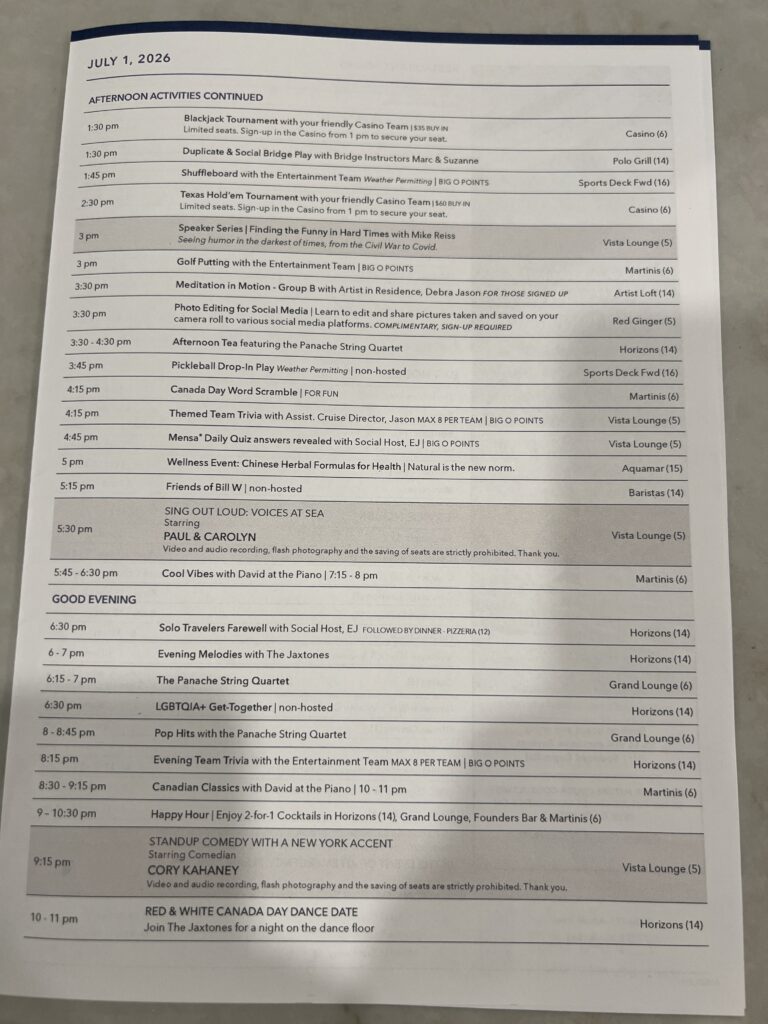
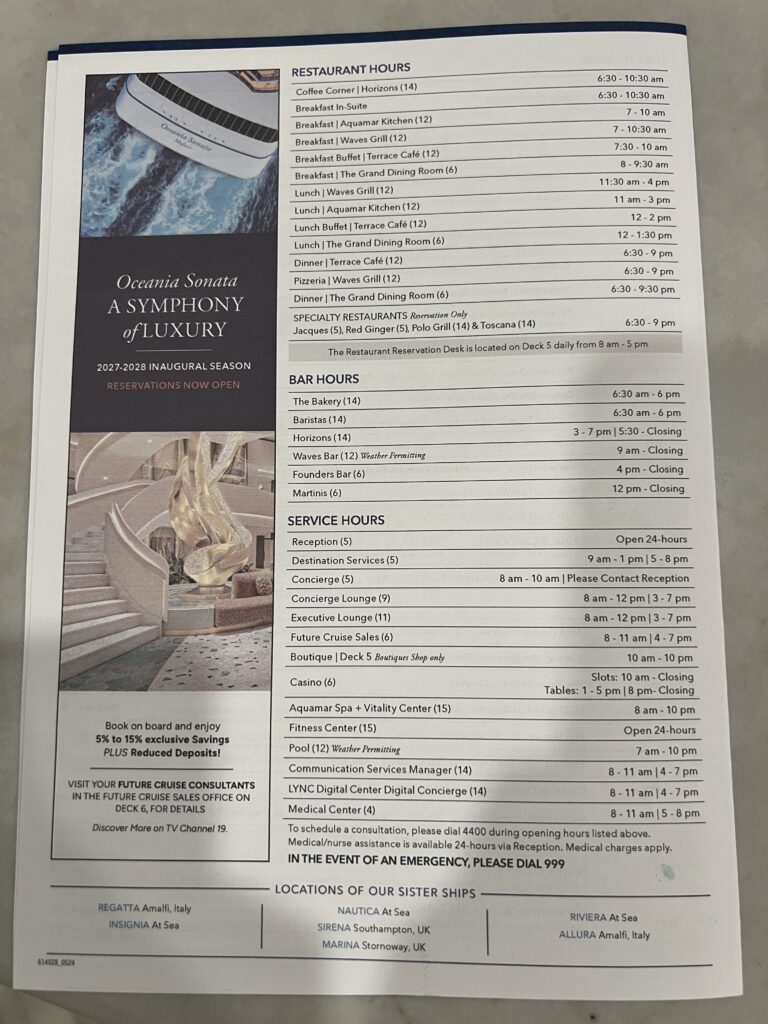
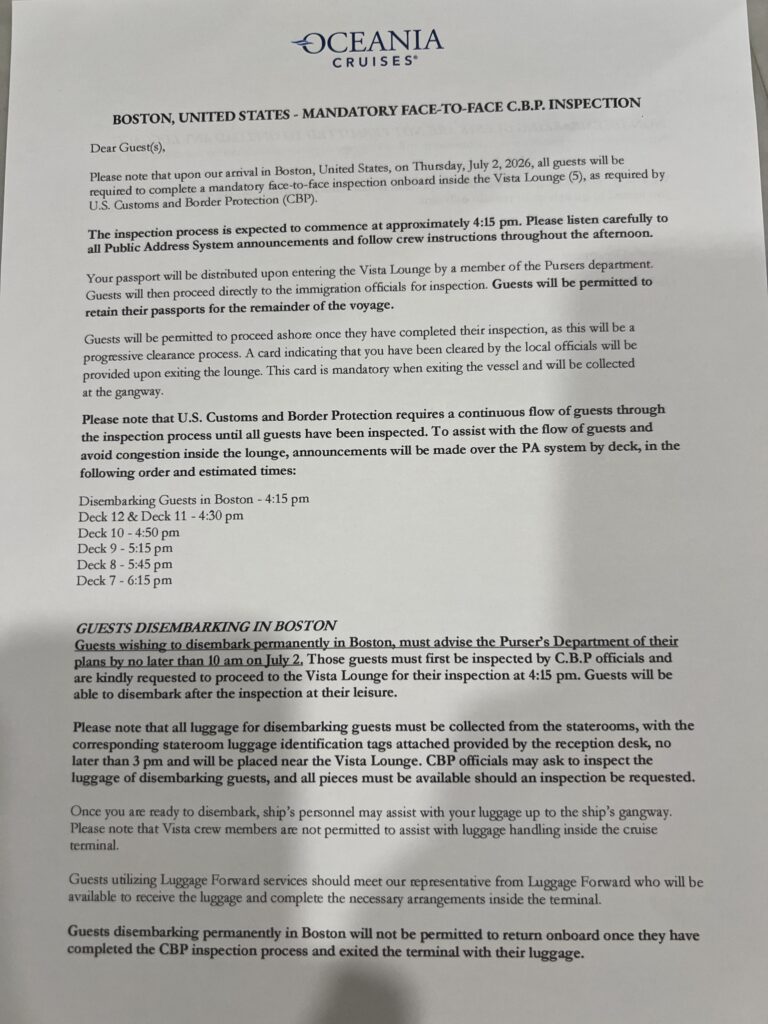
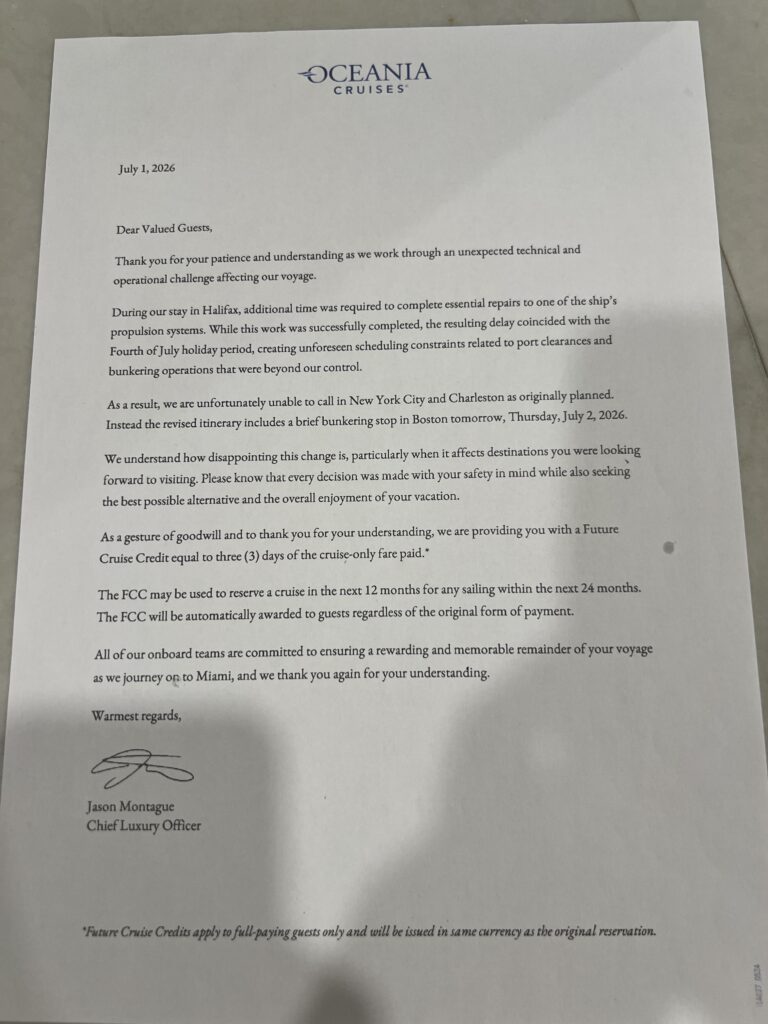
Day 116 Wednesday July 1st (4 days to go) — We started our second day in Halifax with the news that the on-board time was now 2pm, which gave us time to see a few things in the city. We were also told that we were going to Boston, Massachusetts on July 3rd with a 4pm arrival. The news kept getting better as were also told that we were skipping New York City and Charleston, South Carolina. It was a bummer as we were looking forward to sailing into Manhattan and then being in Charleston for the 4th of July. When we returned to the ship for 2pm as directed, we were then informed that we would not start sailing until 6pm, which actually became 8pm. So, we missed out on another 4-6 hours in Halifax. People have asked me if 120 days was too long and my answer is no, but with the continued bad news, I was ready just to fly home from Boston.
So, we spent the day walking around the city of Halifax. I think we surprised ourselves as we walked quite a bit and the terrain is much different than home where every step is flat. In Halifax, every step is either up or down.
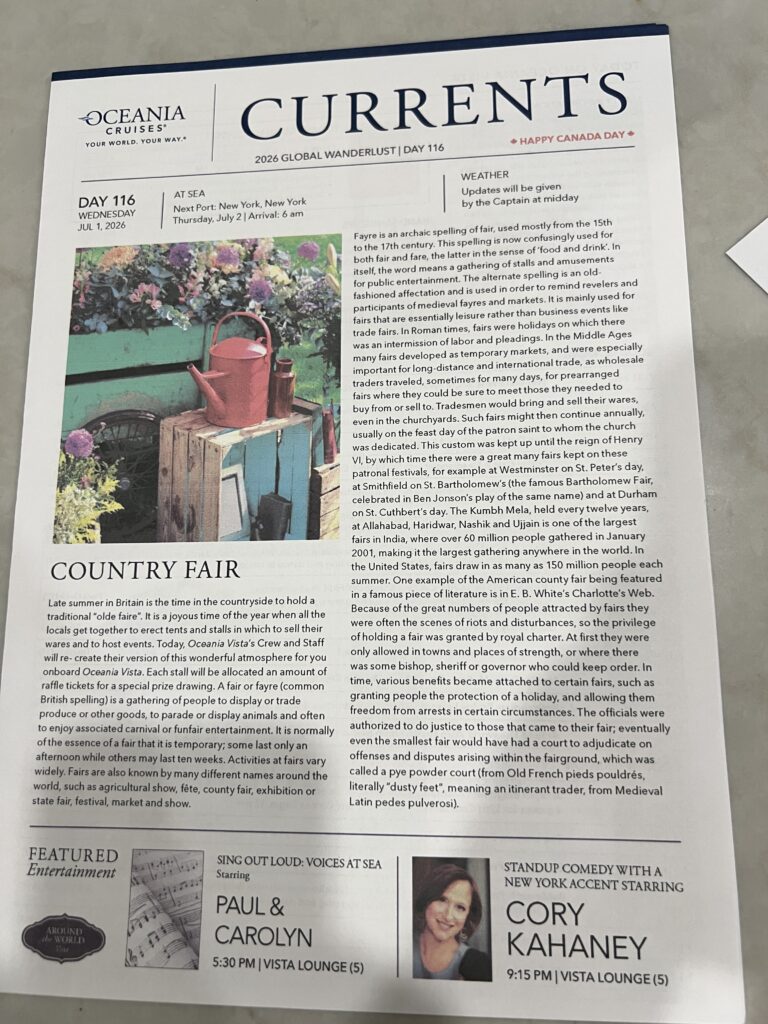
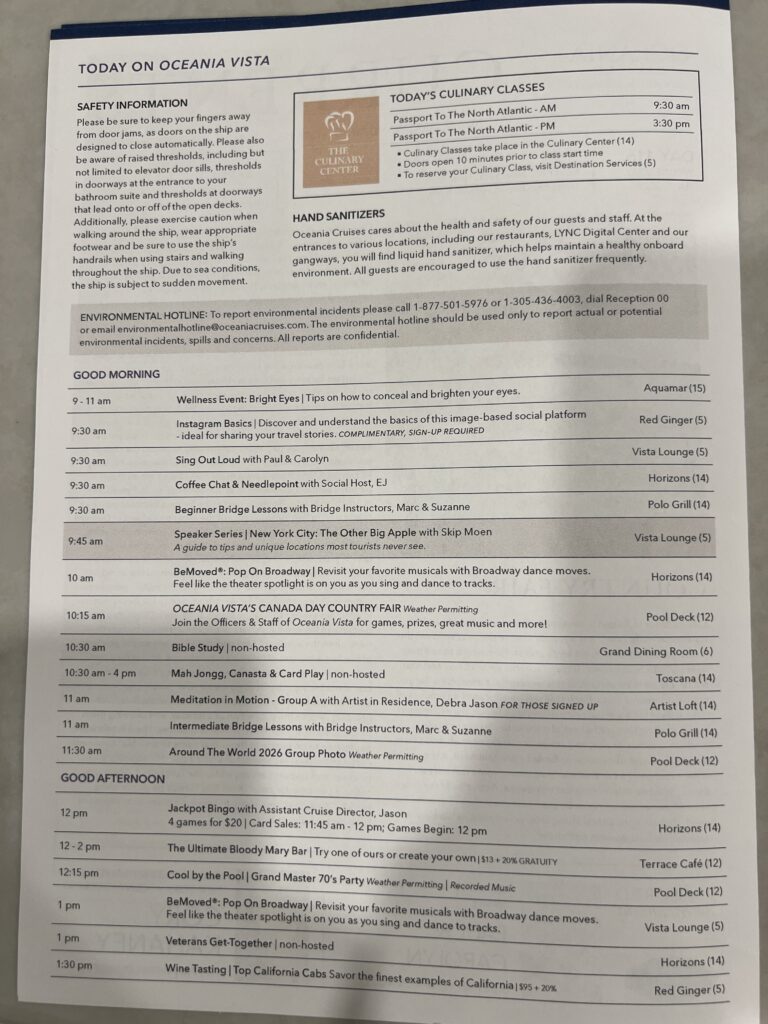
We spent what time we had in Halifax trying to take in as much of the city as possible in the 5-6 hours we had. This is the Currents we received for the second day in Halifax. Obviously, we were not at sea, nor going to New York or having a Country Fair today. 🙂


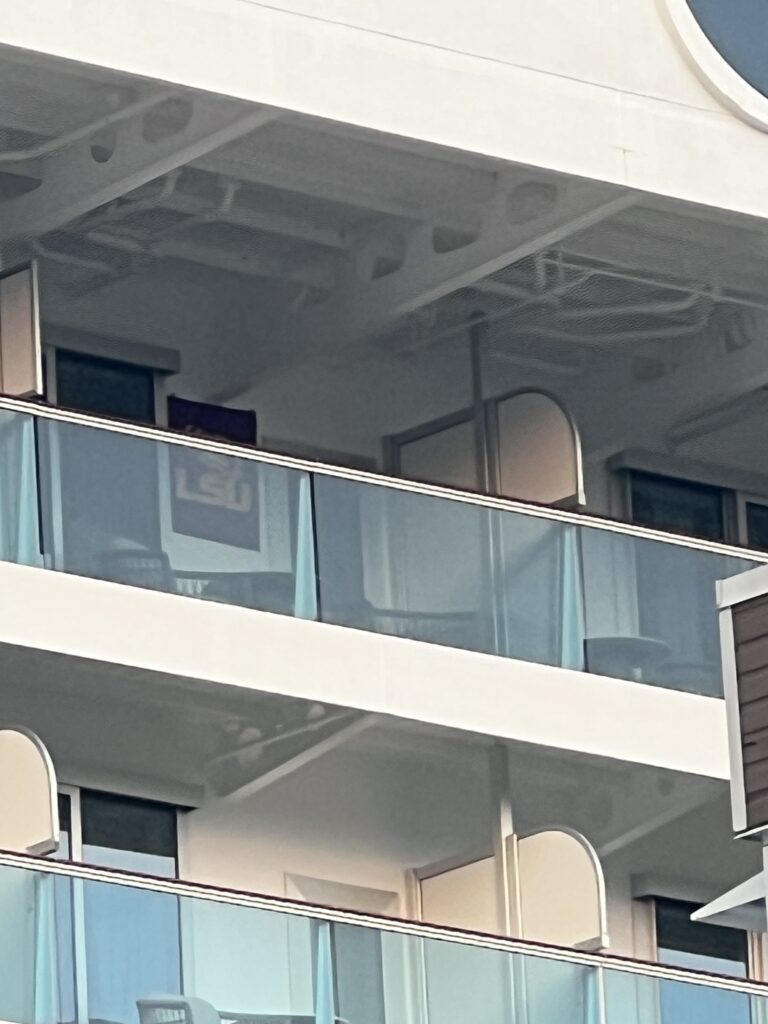
Walking off the ship catching a glimpse of our balcony and LSU flag
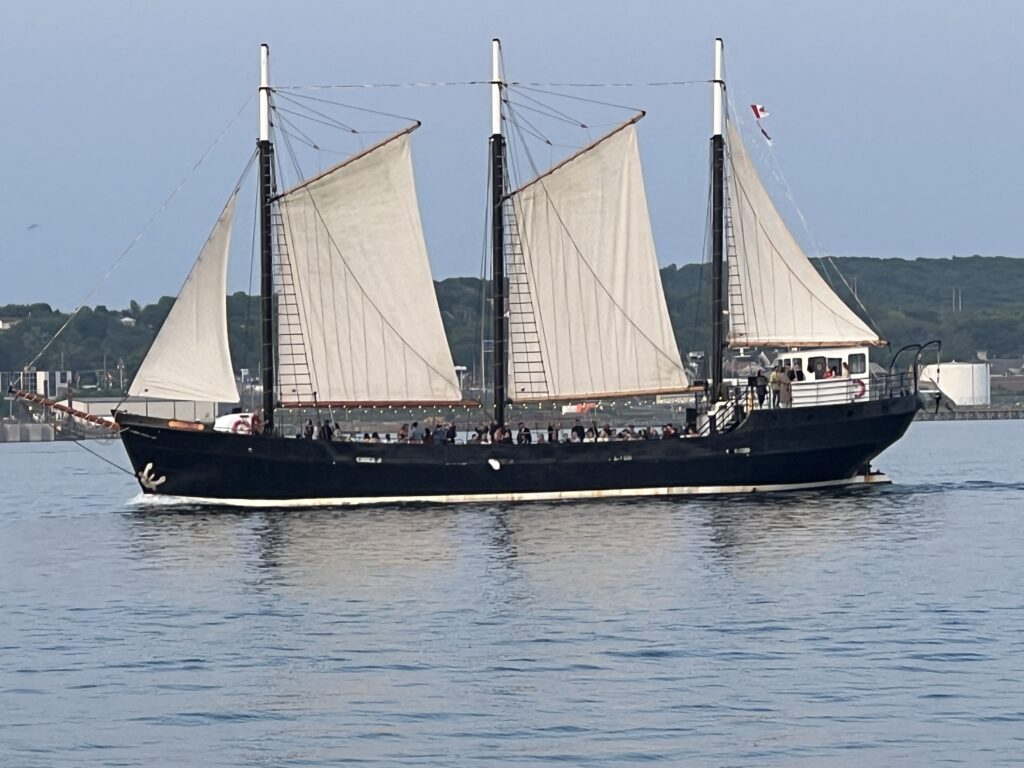
Sailing ship in the harbor
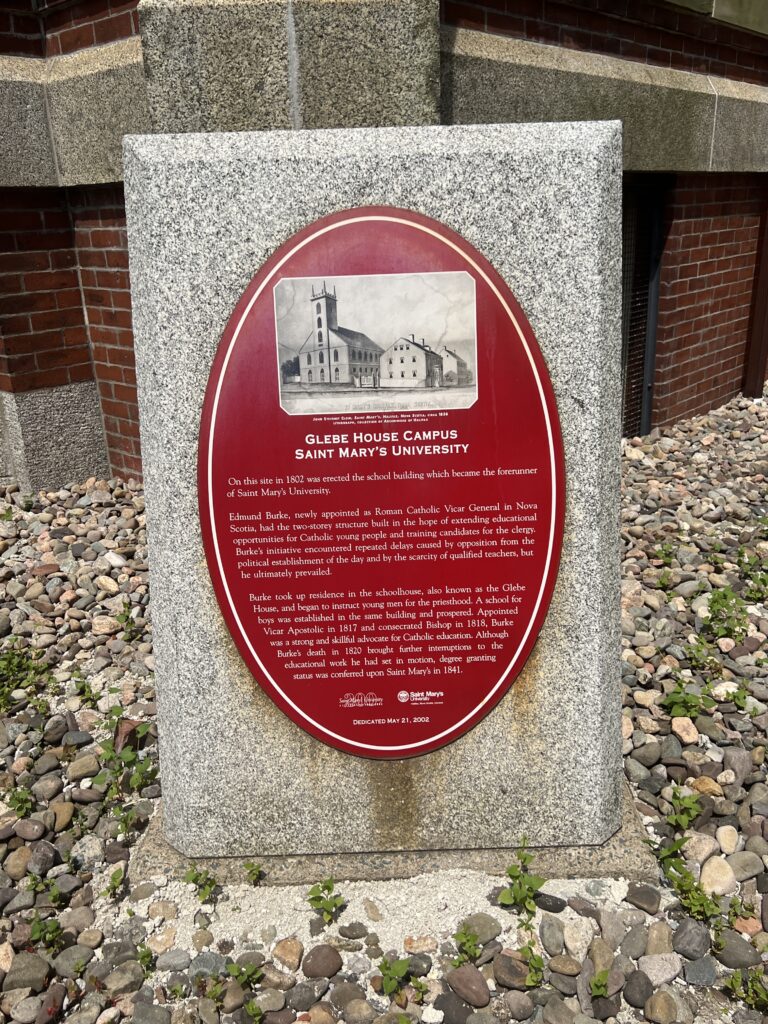
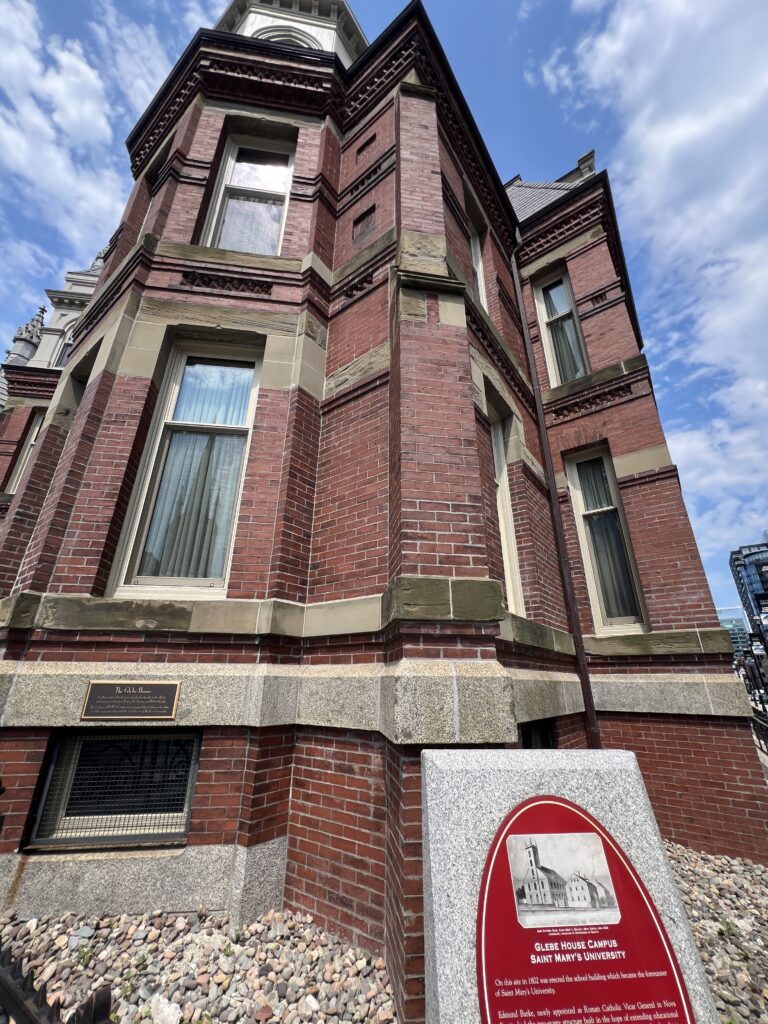
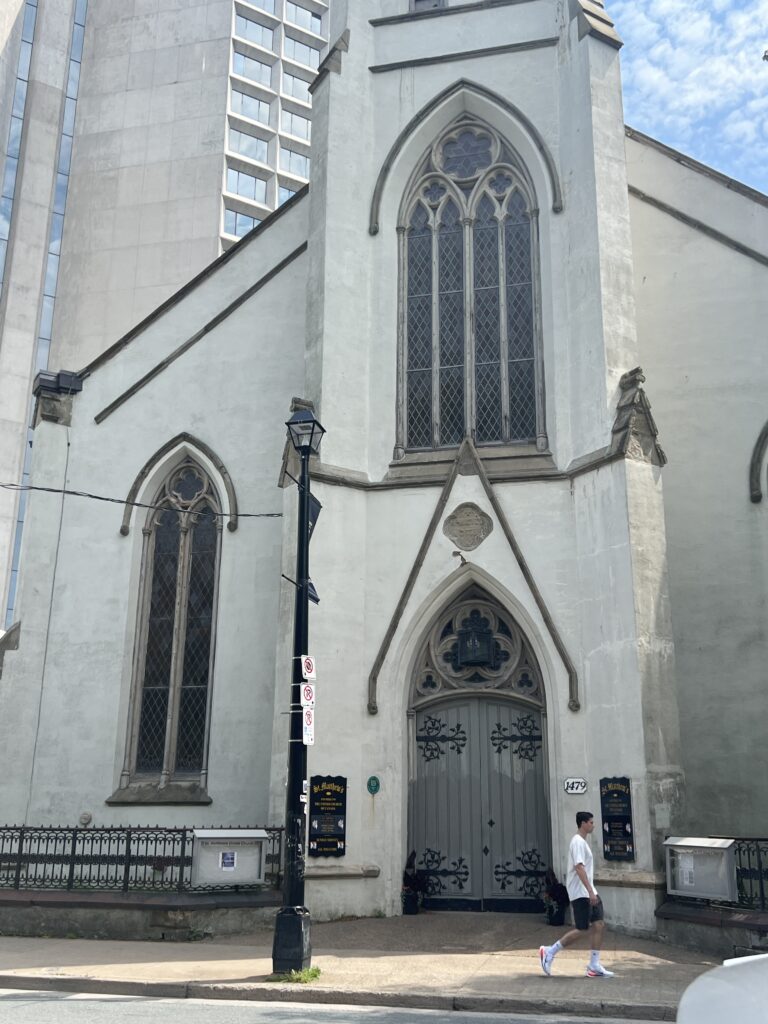
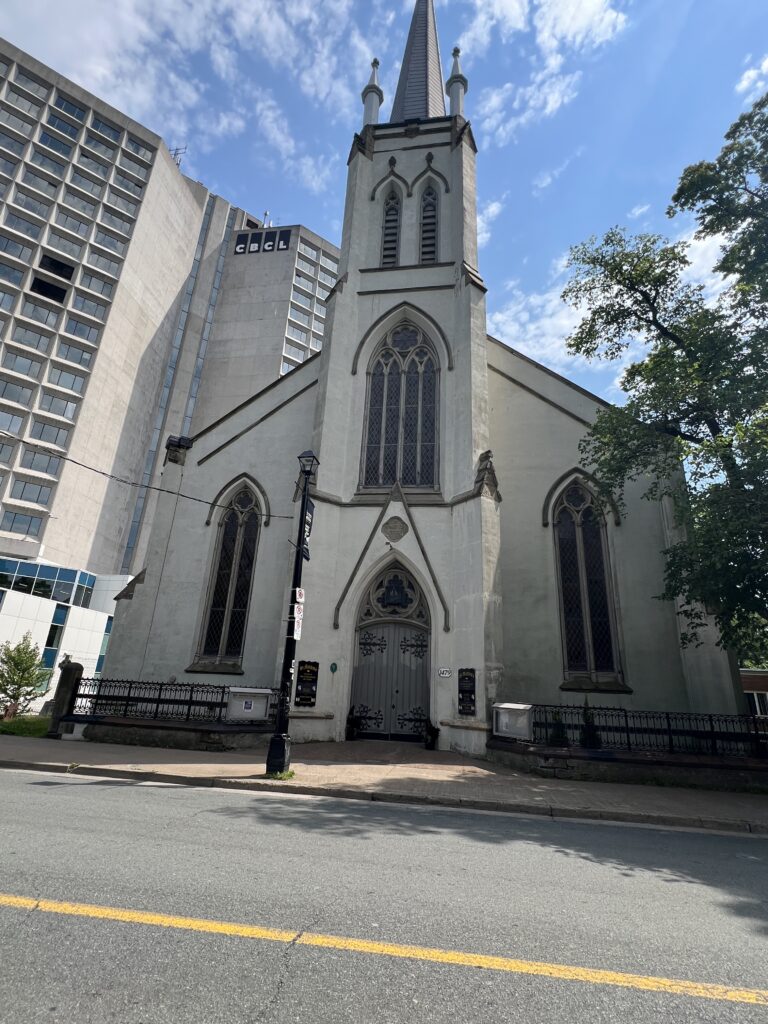
St. Matthew’s United Church is a United Church of Canada church in downtown Halifax, Nova Scotia. The church was founded at the same time as the original colony in 1749 as a home for the various groups of dissenting Protestants who were from New England and who did not follow the Church of England. It originally met Sunday afternoons in St. Paul’s Church, the Church of England building completed in 1750. The church got its own home in 1754 when a church was constructed at Hollis and Prince streets. This building was destroyed by fire in 1857, and a new church was built at the current location at 1479 Barrington Street, land parcelled off of the Black-Binney House estate by Bishop Hibbert Binney. The church used the Old Burying Ground (Halifax, Nova Scotia).
The church was originally an amalgam of various dissenting Protestant groups with it mostly being a mix of Scottish Presbyterians and Puritan Congregationalists from the American colonies. Over the course of the 19th century the number of Presbyterians gradually increased and they came to dominate the church. In 1787, an agreement was made to adhere closer to Church of Scotland polity. They formally joined the Church of Scotland in the 1830s and joined Presbyterian Church in Canada in 1875. In 1925, however, it returned somewhat to its roots when the United Church of Canada was formed uniting several of the major Protestant denominations including the Presbyterians and Congregationalists.
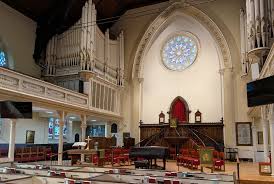
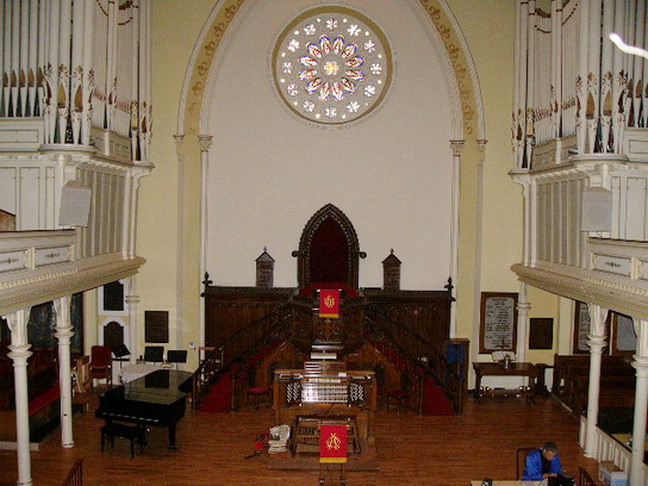
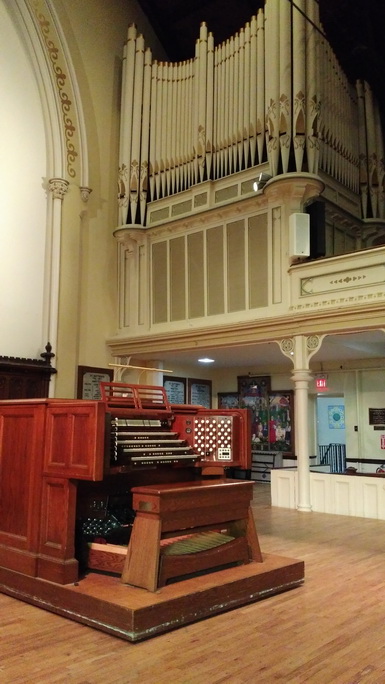
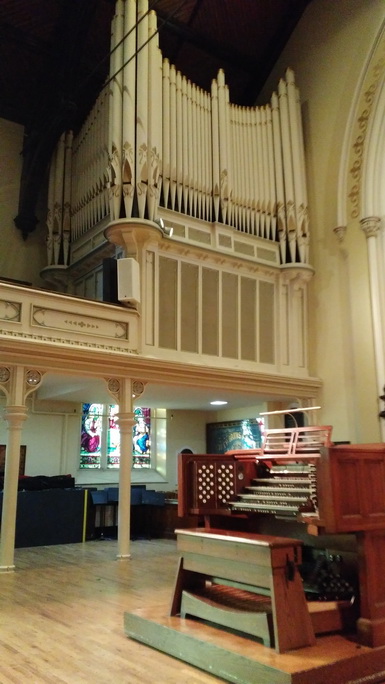
St. Matthew’s United Church features a spectacular Gothic Revival interior. Notable elements include a soaring high pulpit reached by graceful winged staircases, a wrap-around horseshoe gallery, original numbered box pews, and the city’s largest Casavant pipe organ. Since the church was locked I am posting two stock photos that I found online.
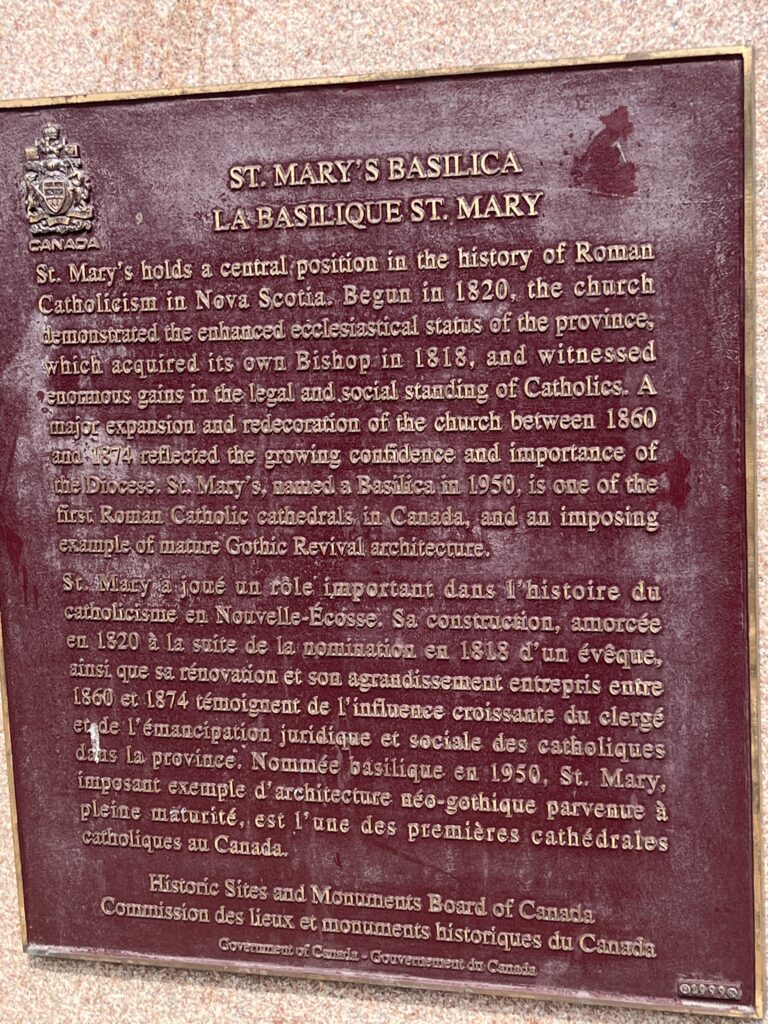
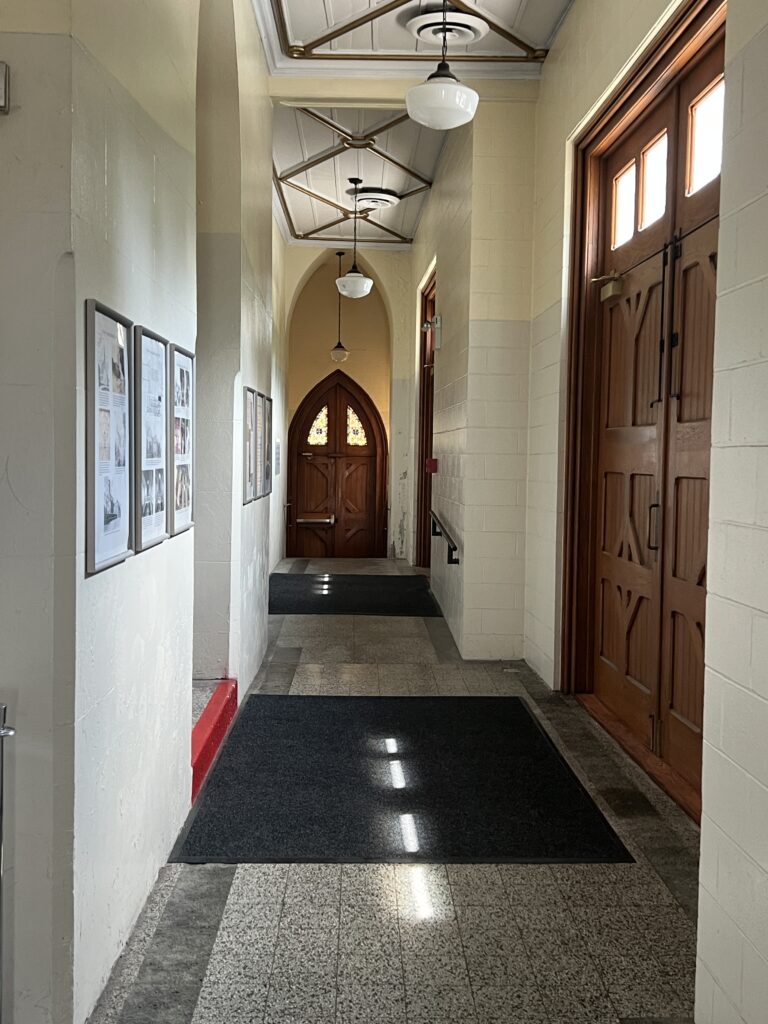
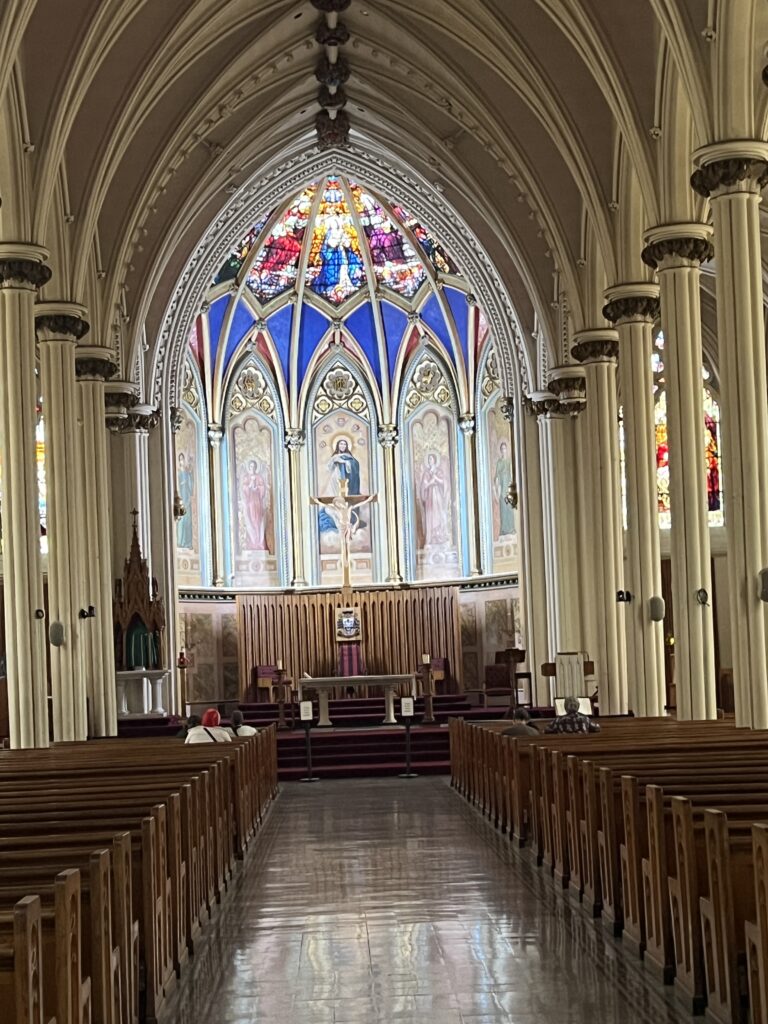
St. Mary’s Cathedral Basilica is a Gothic Revival Catholic cathedral located in the downtown core of Halifax, the capital of Nova Scotia. It is the cathedral of the Archdiocese of Halifax-Yarmouth and is the largest Catholic church in the Archdiocese. Consecrated on 19 October 1899.
Pope Pius XII raised the shrine to the status of Minor Basilica via his decree Quas Moles et Pulchritido on 14 June 1950. The decree was signed and notarized by Apostolic Chancellor Ermenegildo Brugnola.
The St. Mary’s Cathedral Basilica boasts the tallest granite spire in North America.
The church has been significantly expanded and altered over time. Originally constructed of wood, it was replaced by a stone structure beginning in 1820 inspired (as were many churches of the day) by Saint Martin in the Fields in London. It was expanded to its present size beginning in 1869, according to designs of Patrick Keely who introduced the Gothic Revival façade and spire. Besides the Gothic features, the spire also includes Norman and Germanic design elements.
The church enjoyed a papal visit from Pope John Paul II in September 1984; that year was the 200th anniversary of the precedent set by the laity of Halifax of forcing the repeal of the anti-Catholic legislation in Nova Scotia, and the British Empire.
The basilica was designated a National Historic Site of Canada in 1997.
The church was heavily damaged in the Halifax Explosion on 6 December 1917. All of the stained glass windows were shattered by the force of the blast, and tiny pieces of glass were embedded in the walls. In addition to being peppered by the glass shards, the paintings on the walls suffered water damage from a blizzard which entered the church through the broken windows. The murals were covered over with white paint in the 1950s. In June 2019, work was begun to remove the layers of white paint (using scalpels) and restore damaged portions of the paintings—a project expected to continue until 2024.
In 2024, Saint Mary’s Cathedral Basilica welcomed the relic of Saint Carlo Acutis as part of the Archdiocese of Halifax-Yarmouth’s Eucharistic congress.[
The stone structure from 1820 was inspired by Saint Martin in the Fields in London. In 1869, Patrick Keely introduced the Gothic Revival style to the structure in the façade and spire, which are notable for being built entirely of granite. Except for the three portals which have jamb shafts of pink Aberdeen granite, all of the stone was locally obtained. The granite spire with the height of 189 feet (58 m) is a prominent architectural feature of Halifax. There are 11 bells in the tower controlled by a carillon using a keyboard. The sounding notes are in the scale of F# major extending to the A# a major 10th above. There is also an F natural. When the keys are pressed, the notes sound an augmented 4th higher than played. Besides the Gothic features, the spire also includes Norman and Germanic design elements.
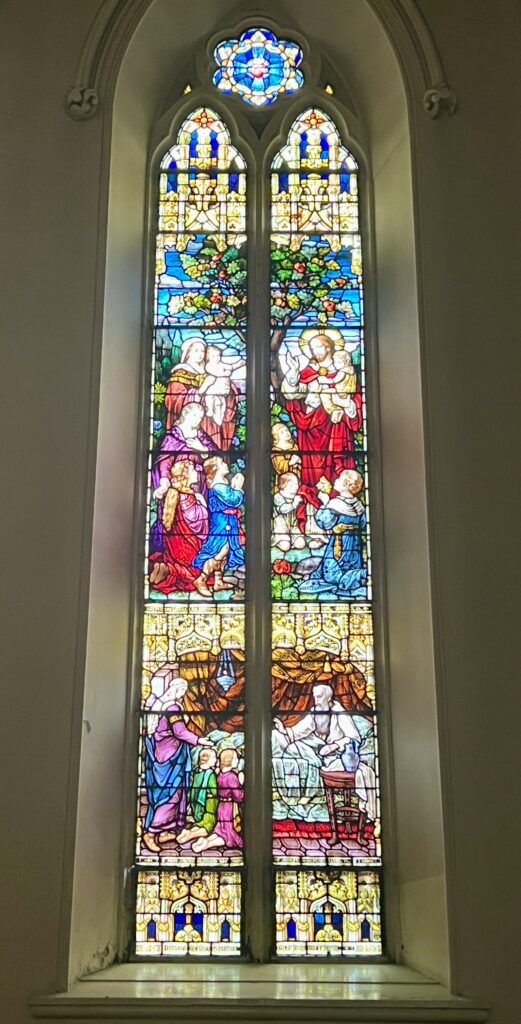
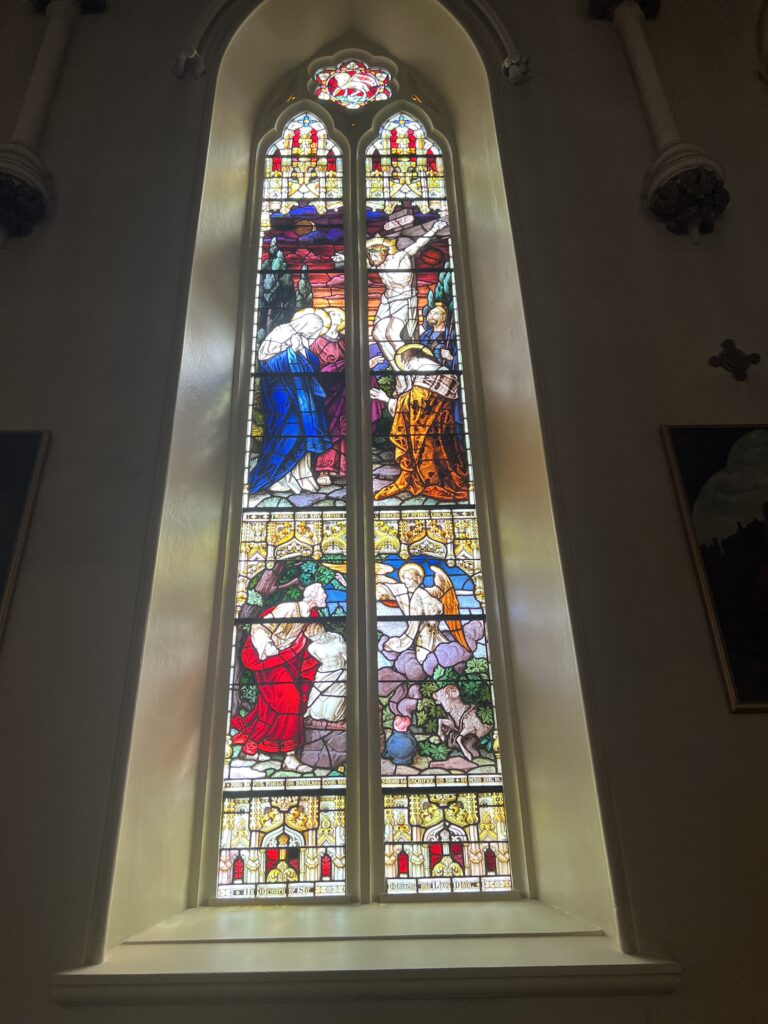
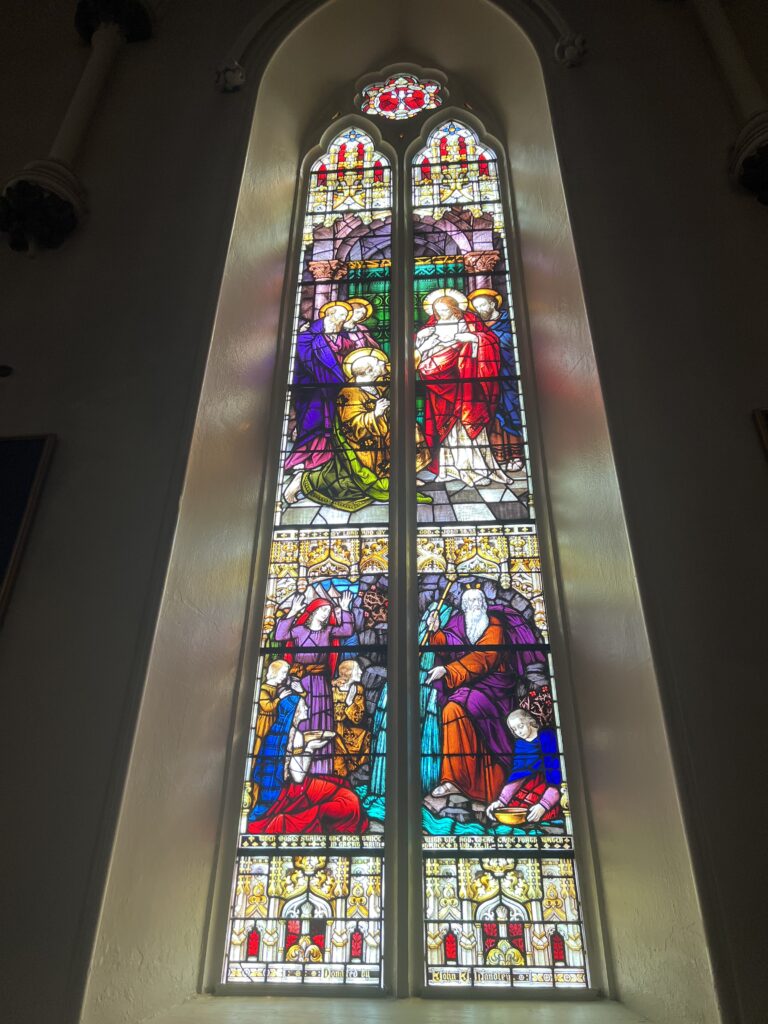
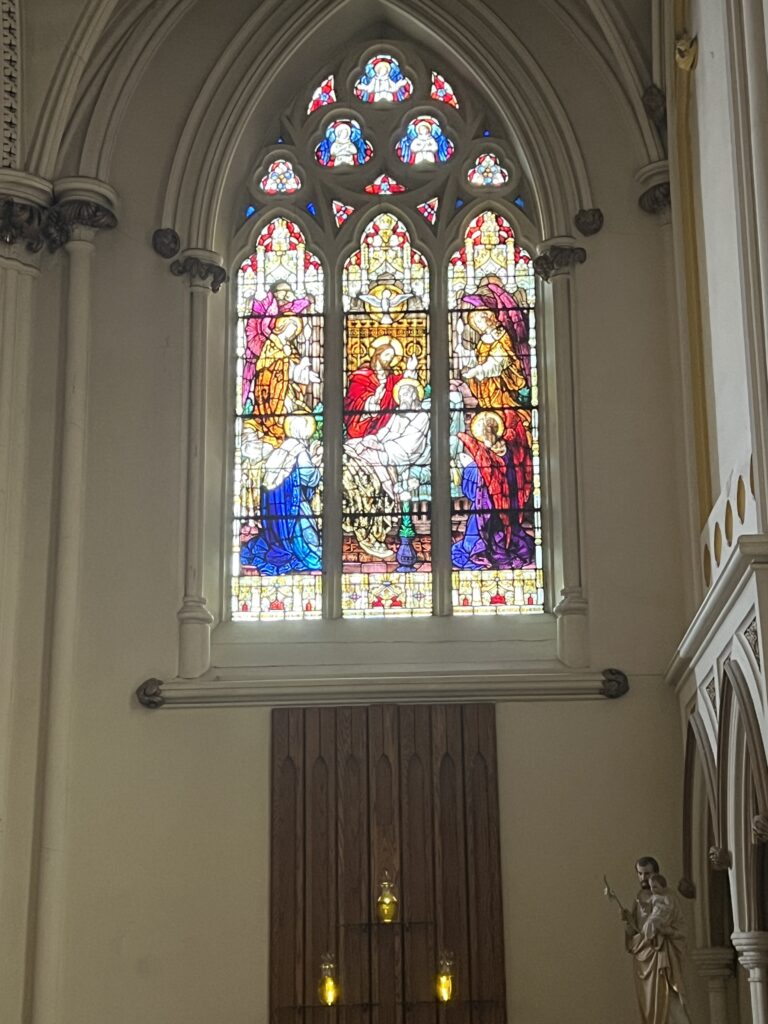
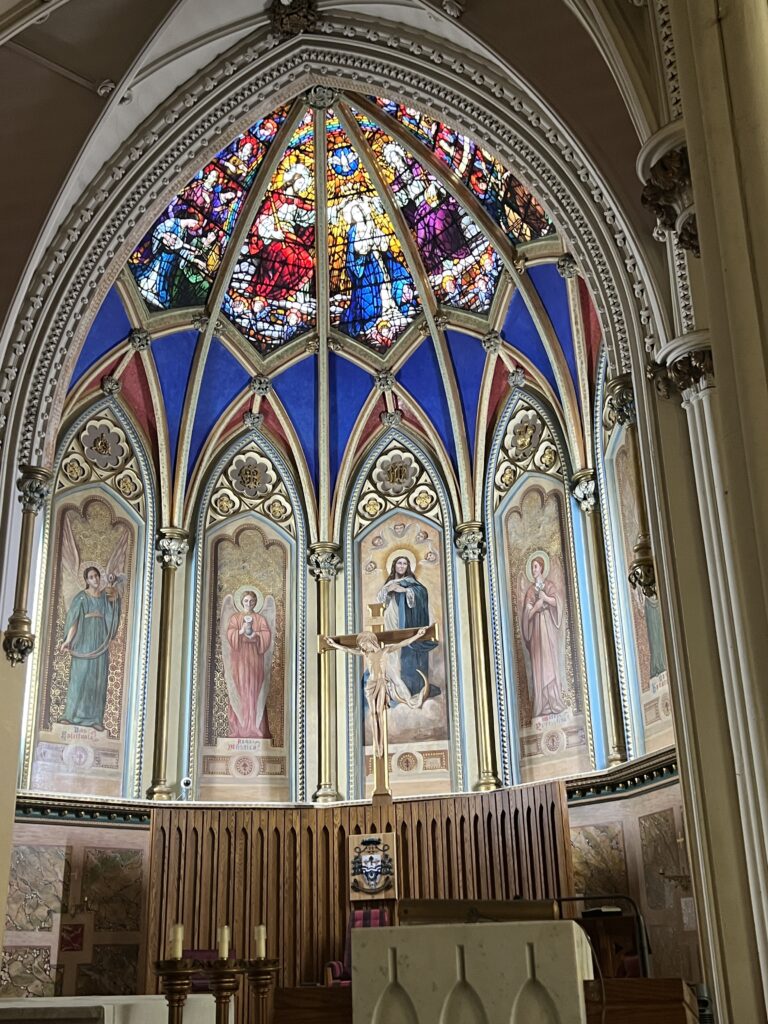
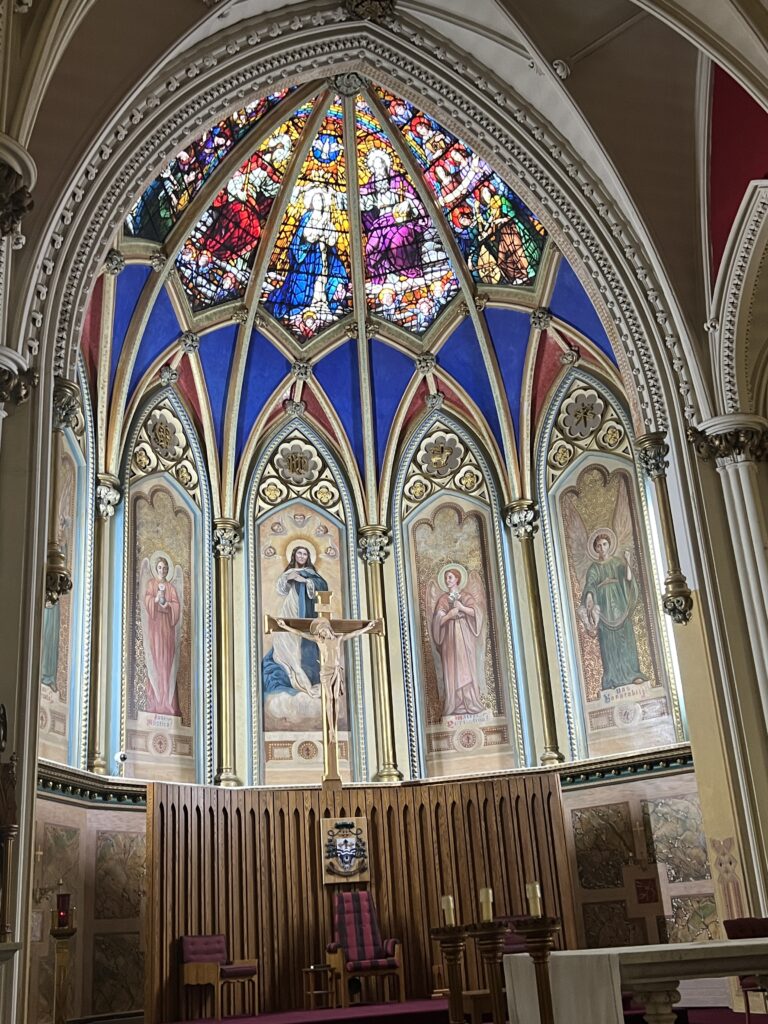
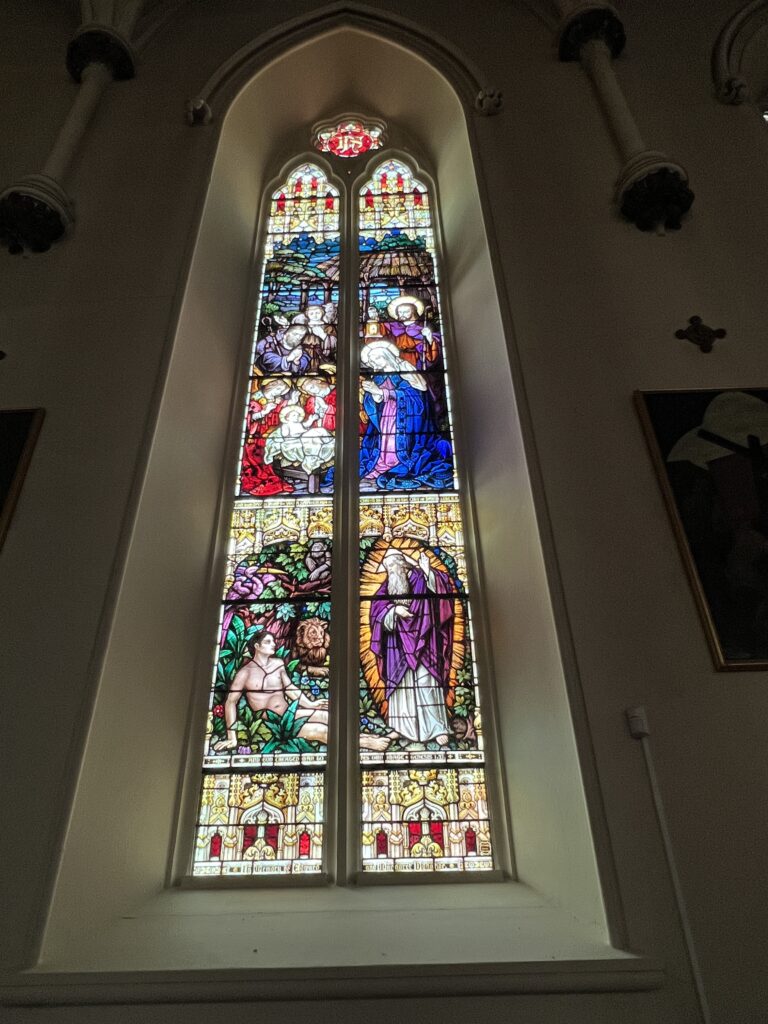
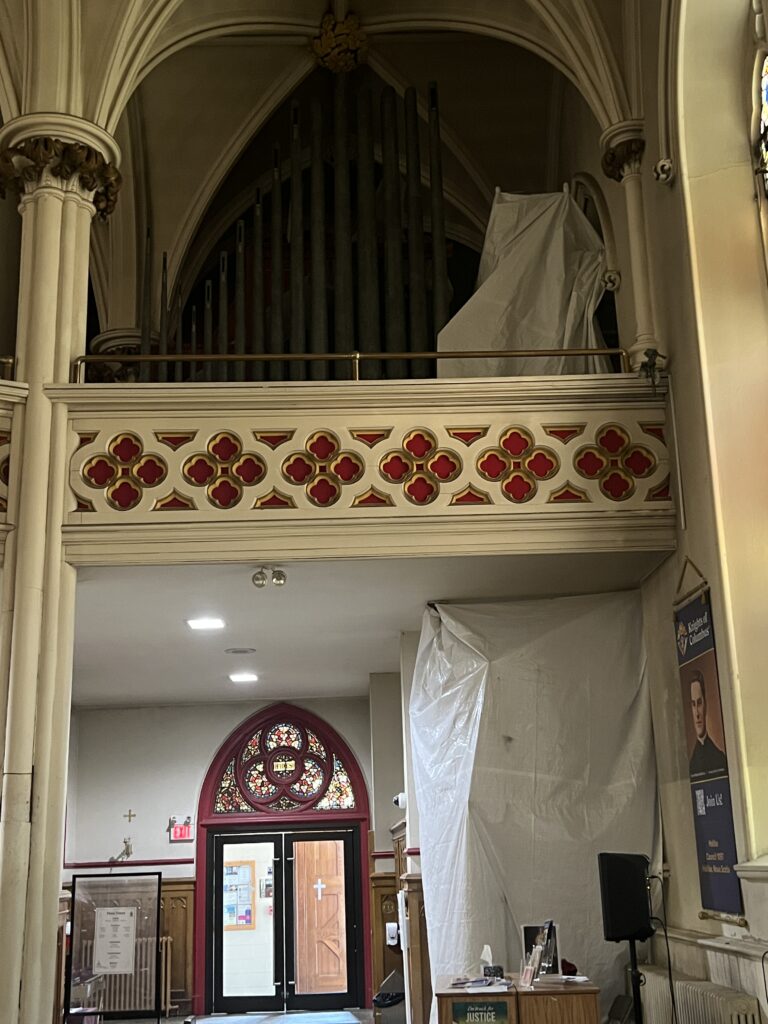
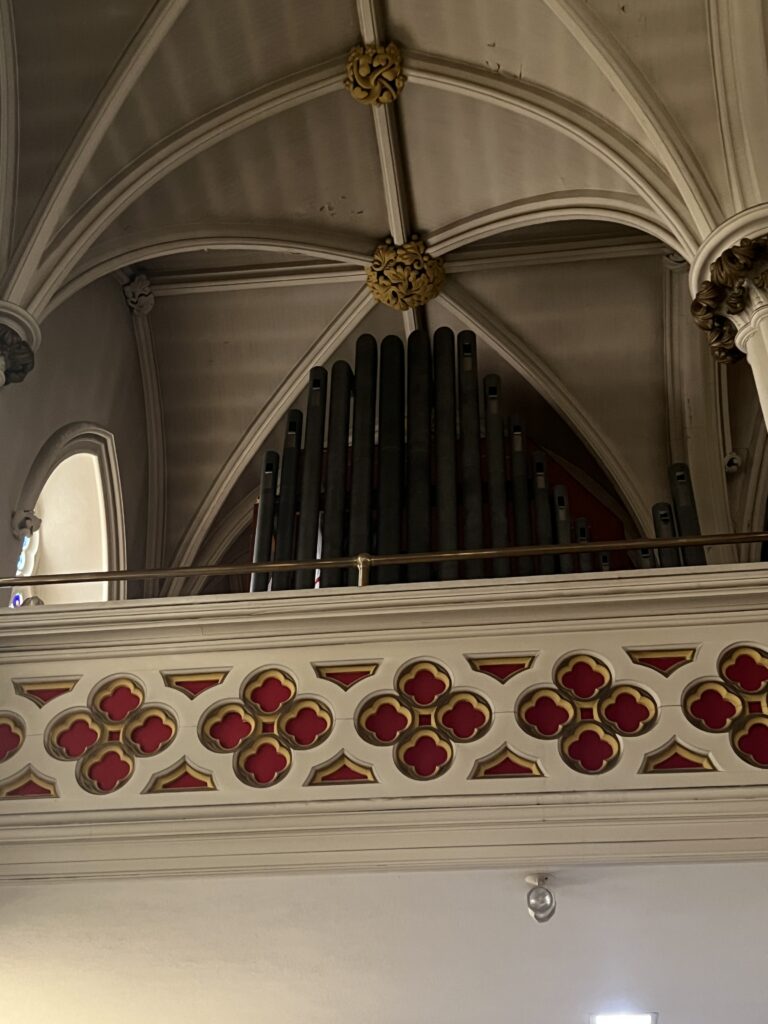
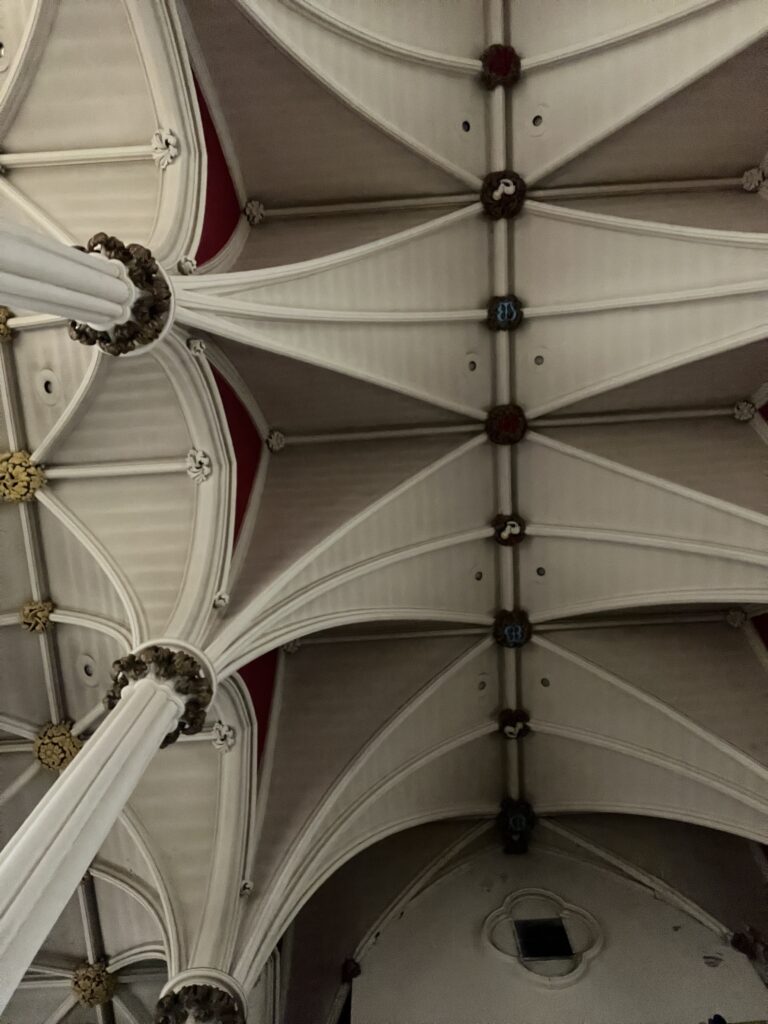
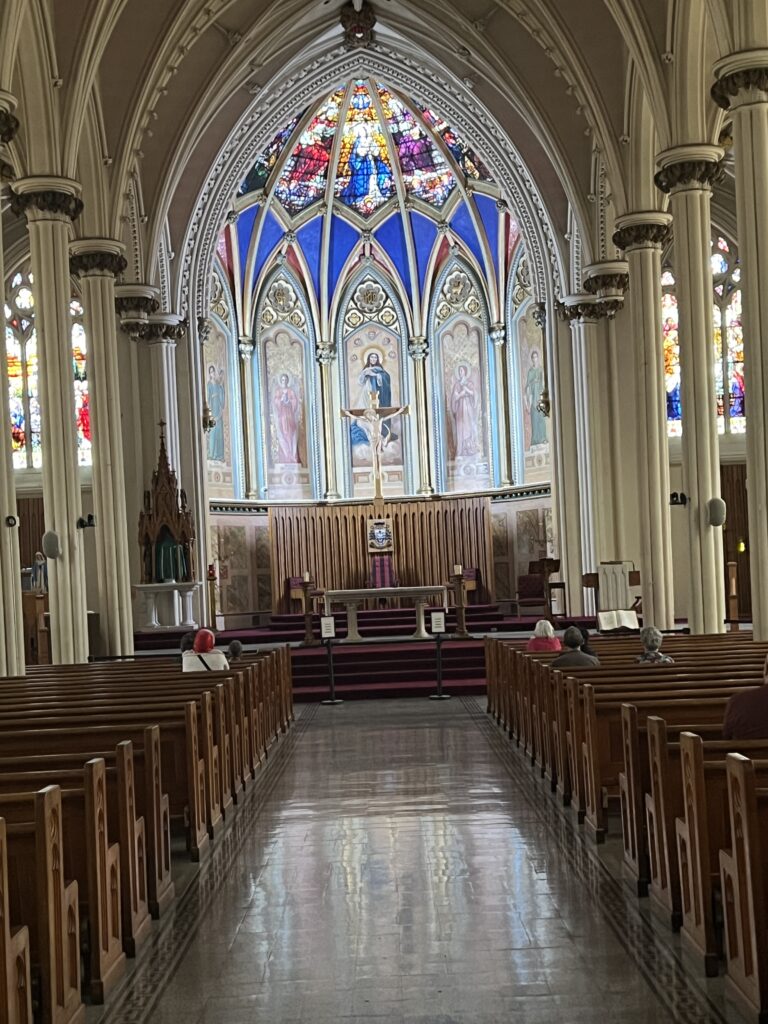
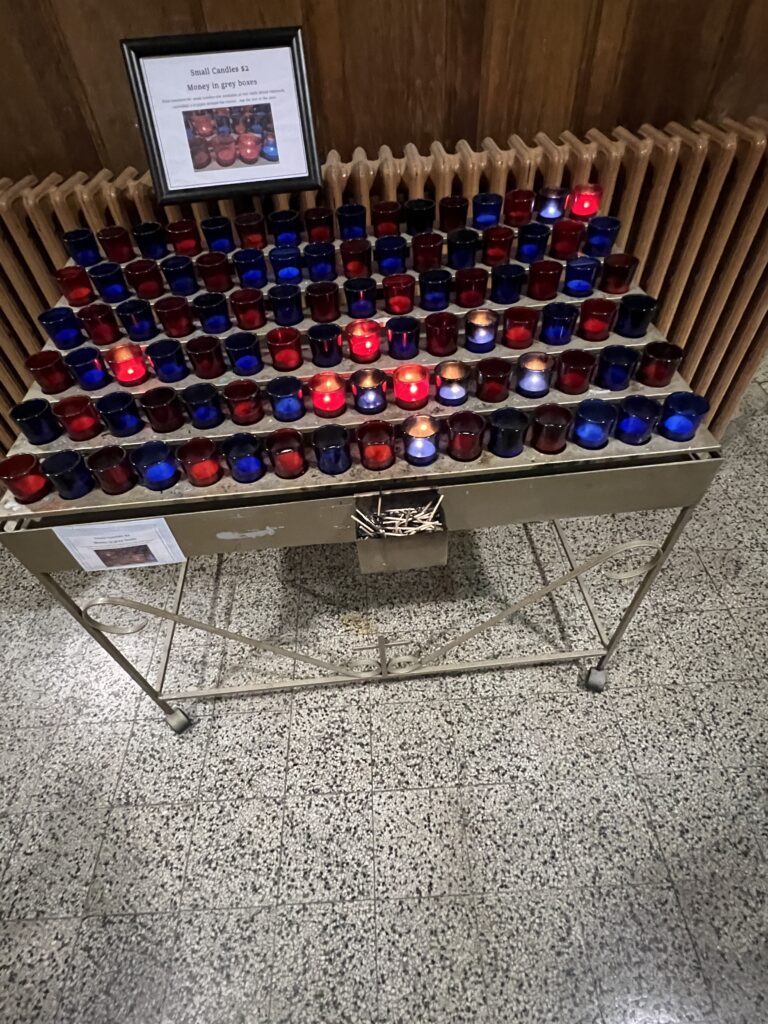
Top right corner are candles for Marie and David
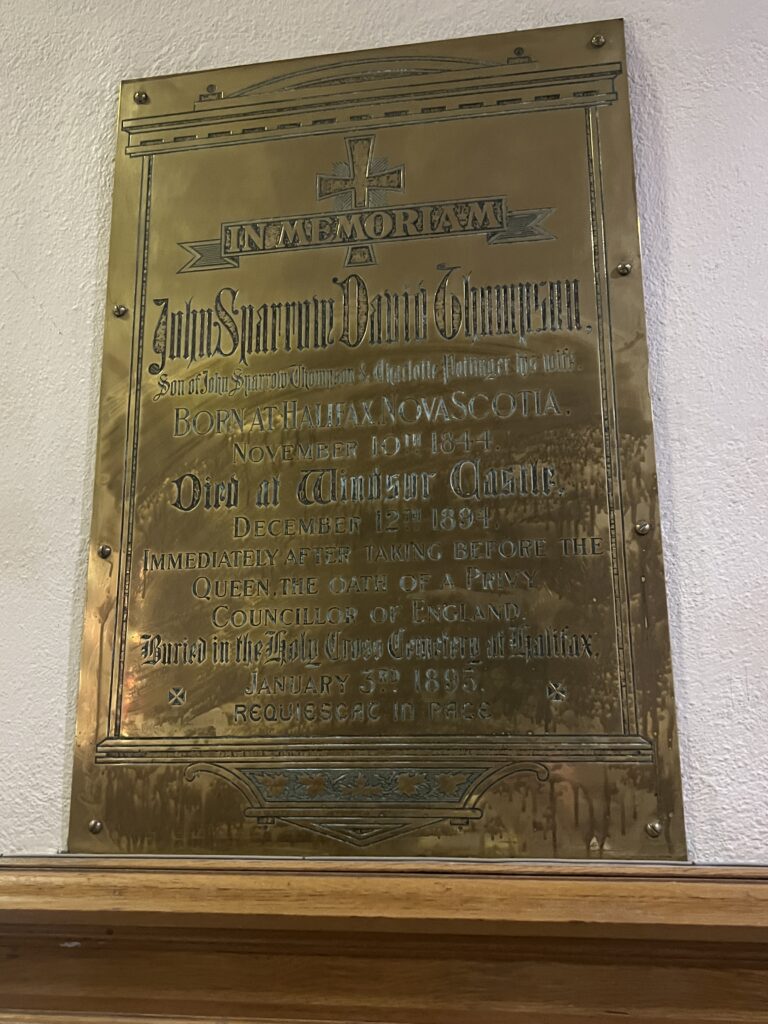
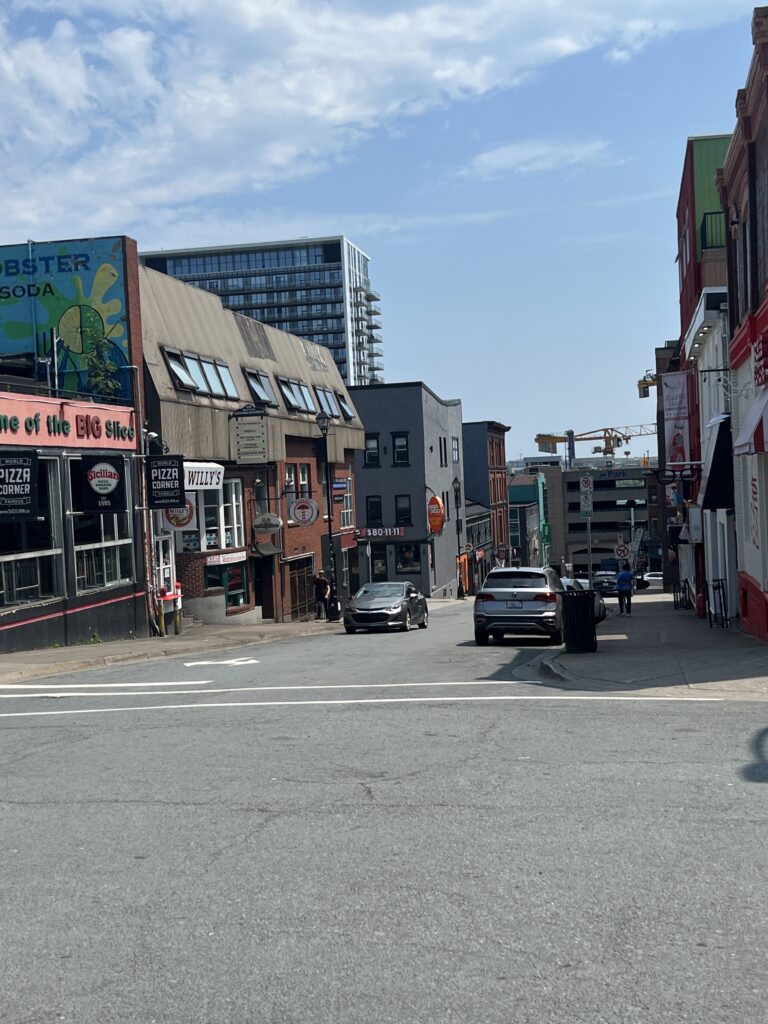
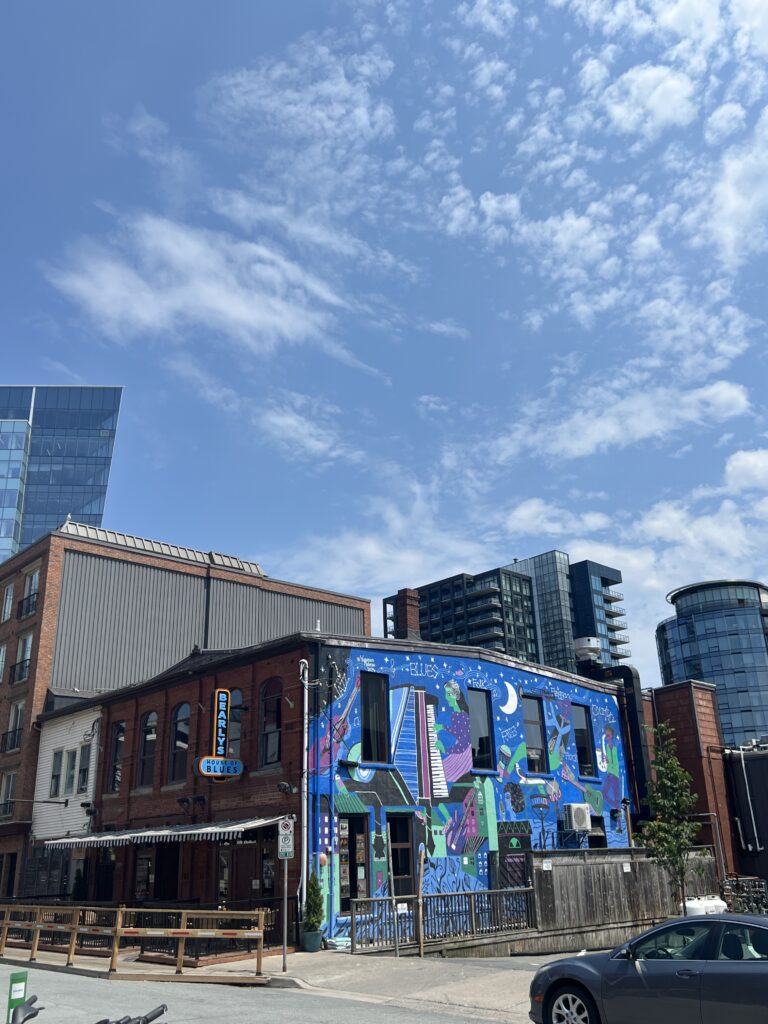
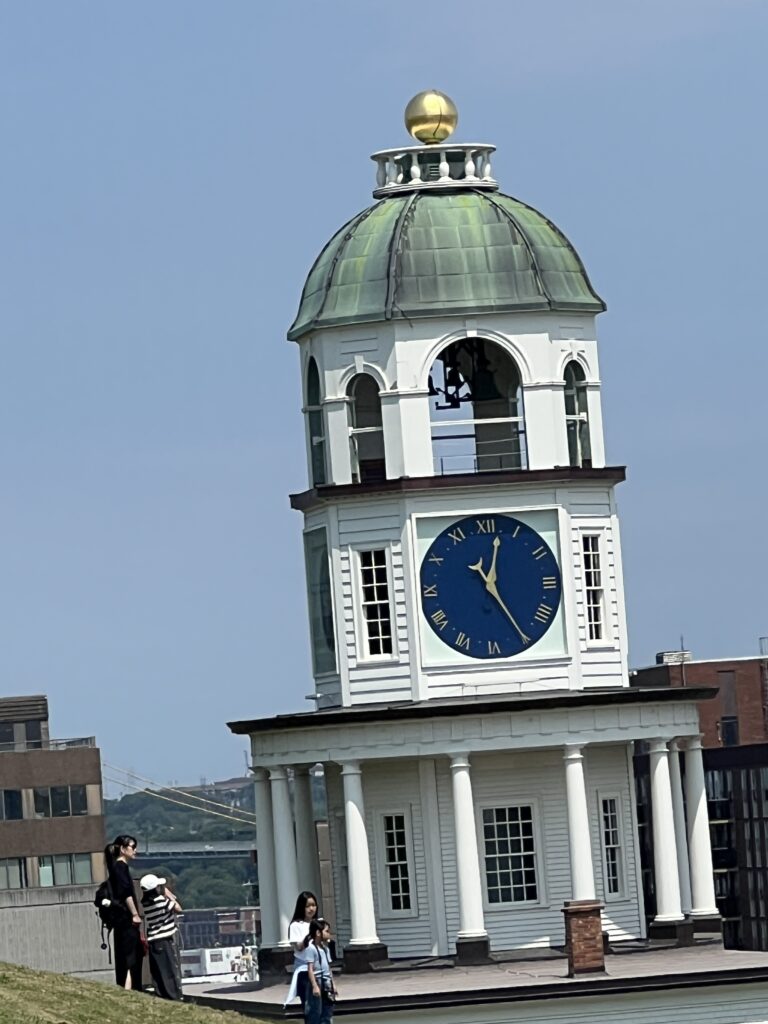
Built in 1803, the Halifax Town Clock is a major landmark built on the eastern slope of Citadel Hill.
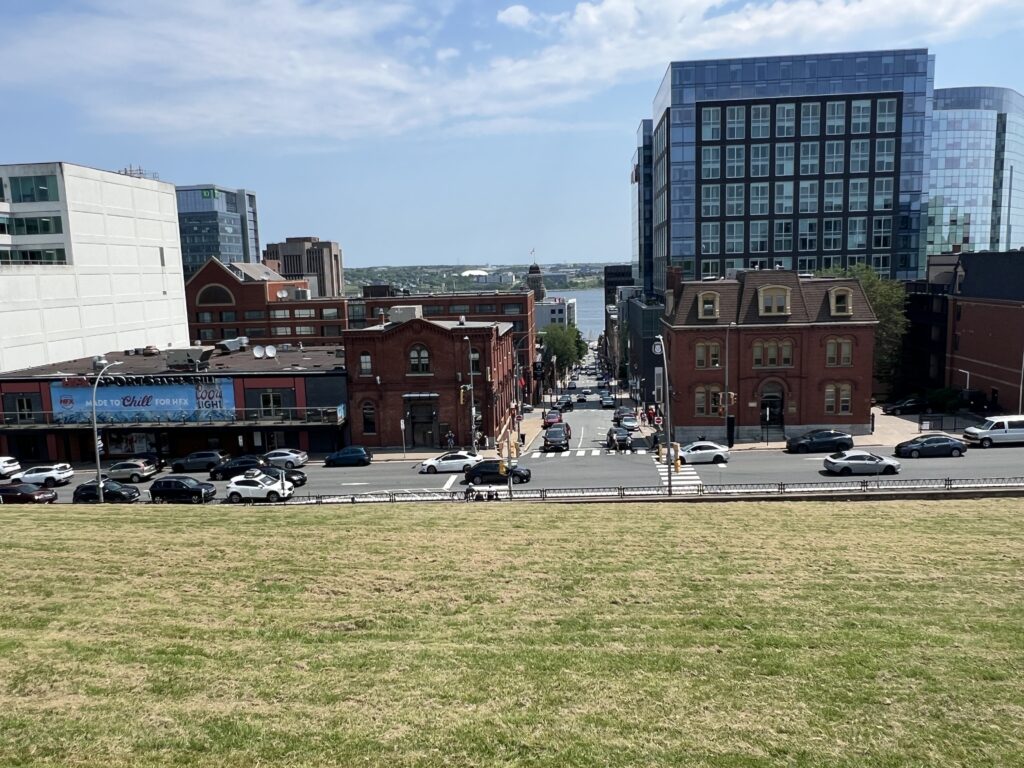
Citadel Hill is a National Historic Site in Halifax, Nova Scotia, Canada. Four fortifications have been constructed on Citadel Hill since the city was founded by the British in 1749, and were referred to as Fort George—but only the third fort (built between 1794 and 1800) was officially named Fort George. According to General Orders of October 20, 1798, it was named after King George III. The first two and the fourth and current fort, were officially called the Halifax Citadel. The last is a concrete star fort.
The Citadel is the fortified summit of Citadel Hill. The hill was first fortified in 1749, the year that Edward Cornwallis oversaw the development of the town of Halifax. Those fortifications were successively rebuilt to defend the town from various enemies. Construction and leveling have lowered the summit by ten to twelve metres. While never attacked, the Citadel was long the keystone to defence of the strategically important Halifax Harbour and its Royal Navy Dockyard.
Today, Parks Canada operates the site as the Halifax Citadel National Historic Site of Canada. It has restored the fort to its appearance when built in the Victorian era.
Halifax Citadel National Historic Site – Tourism Nova Scotia
Halifax Citadel National Historic Site
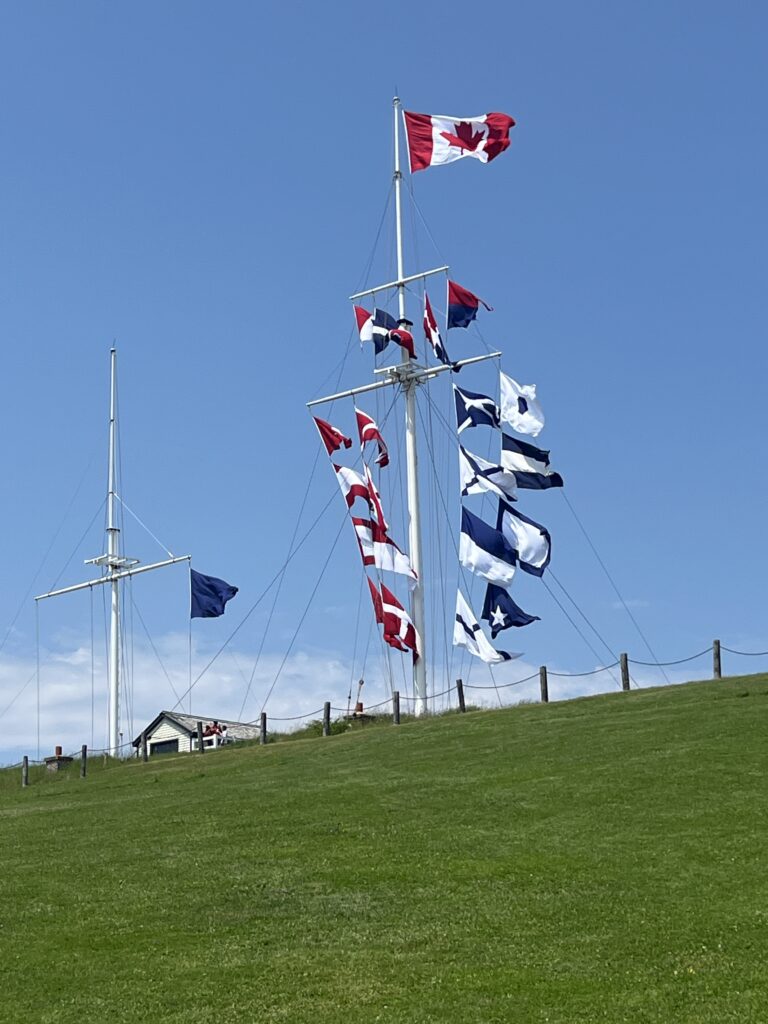
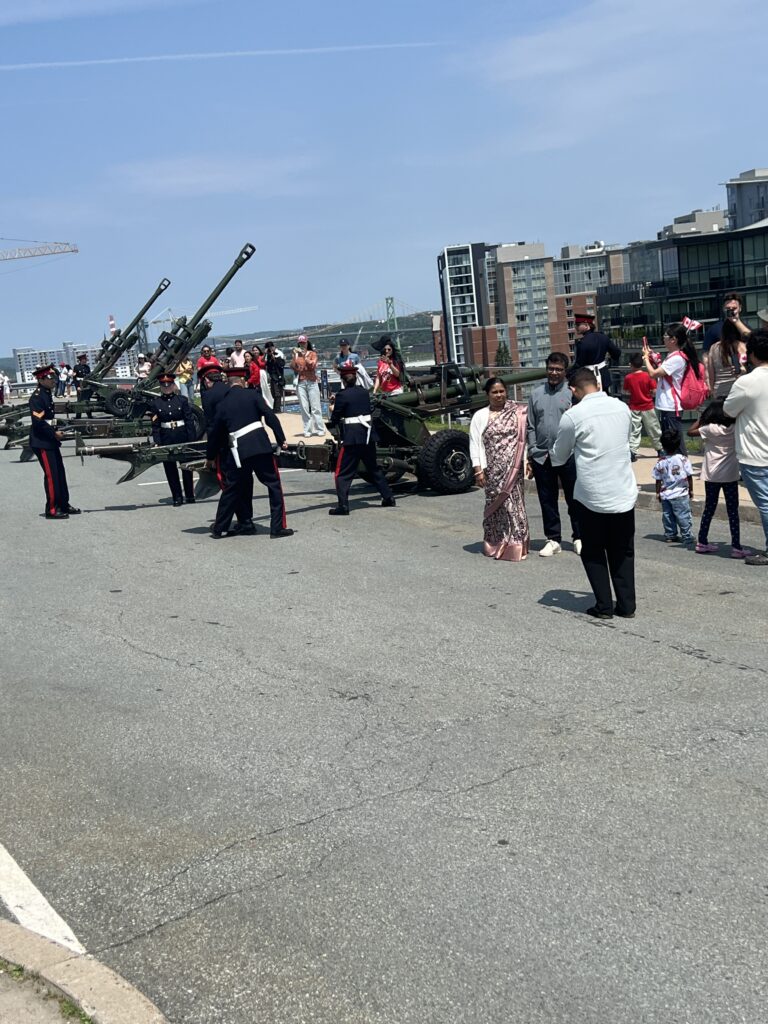
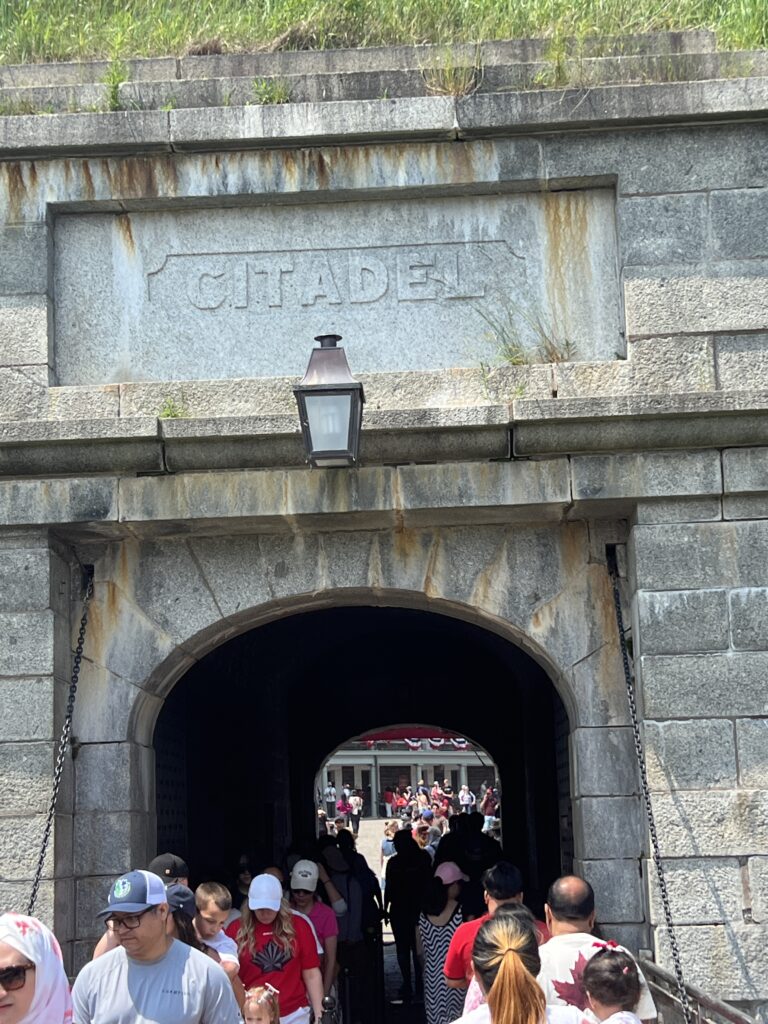
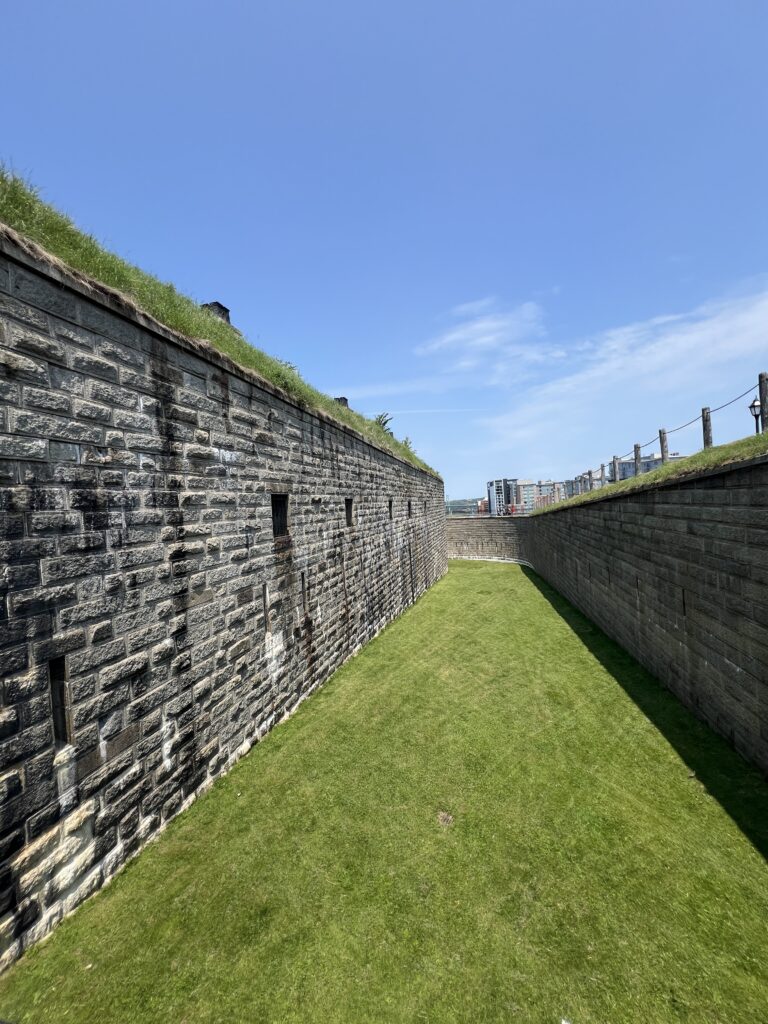
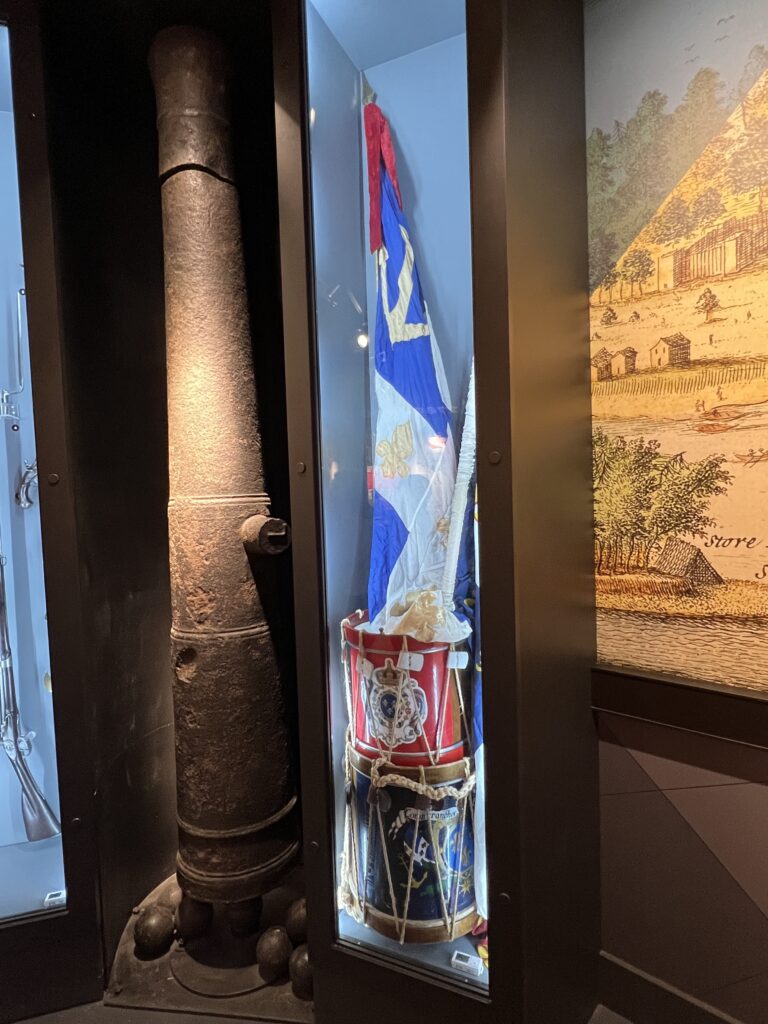
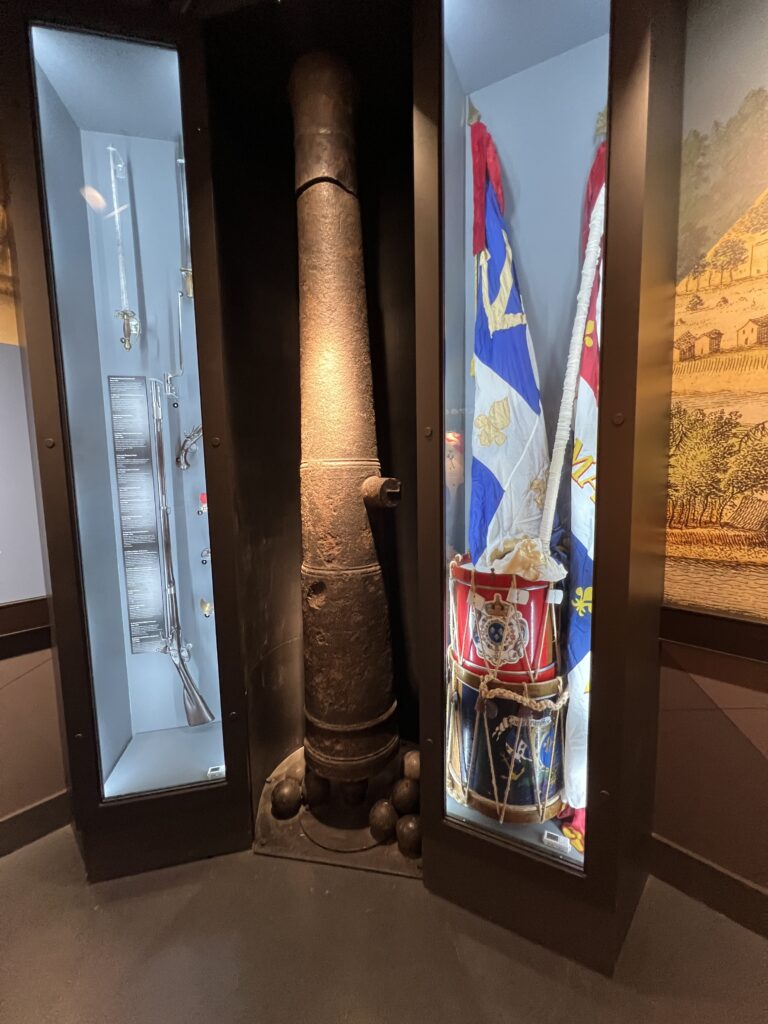
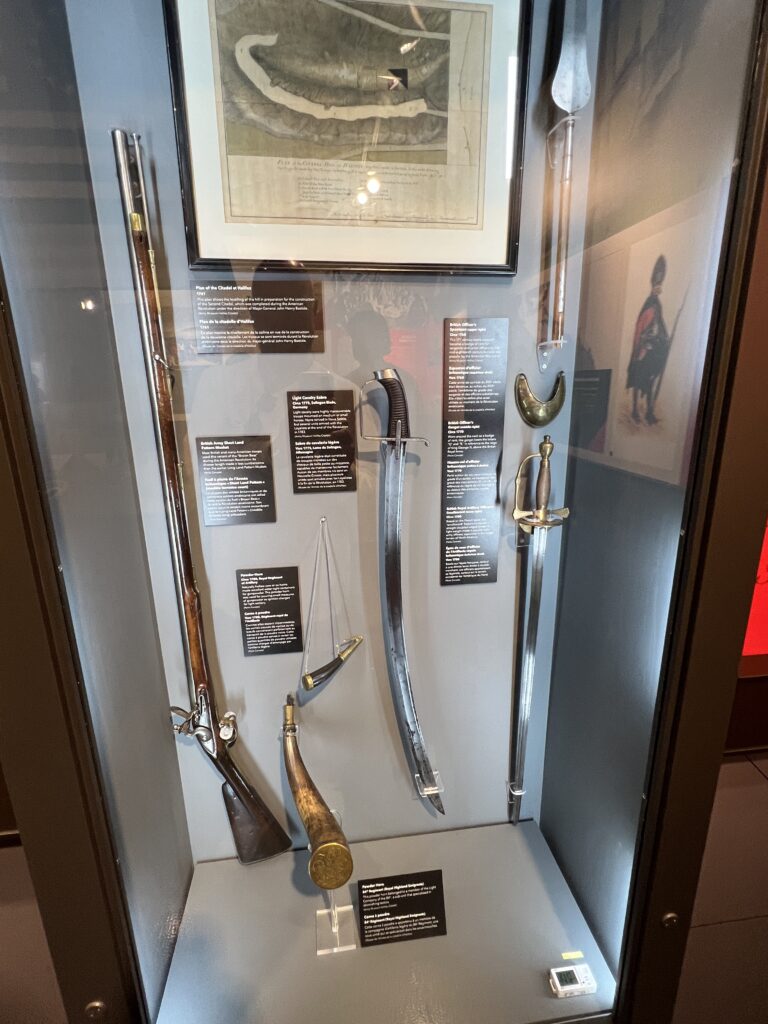
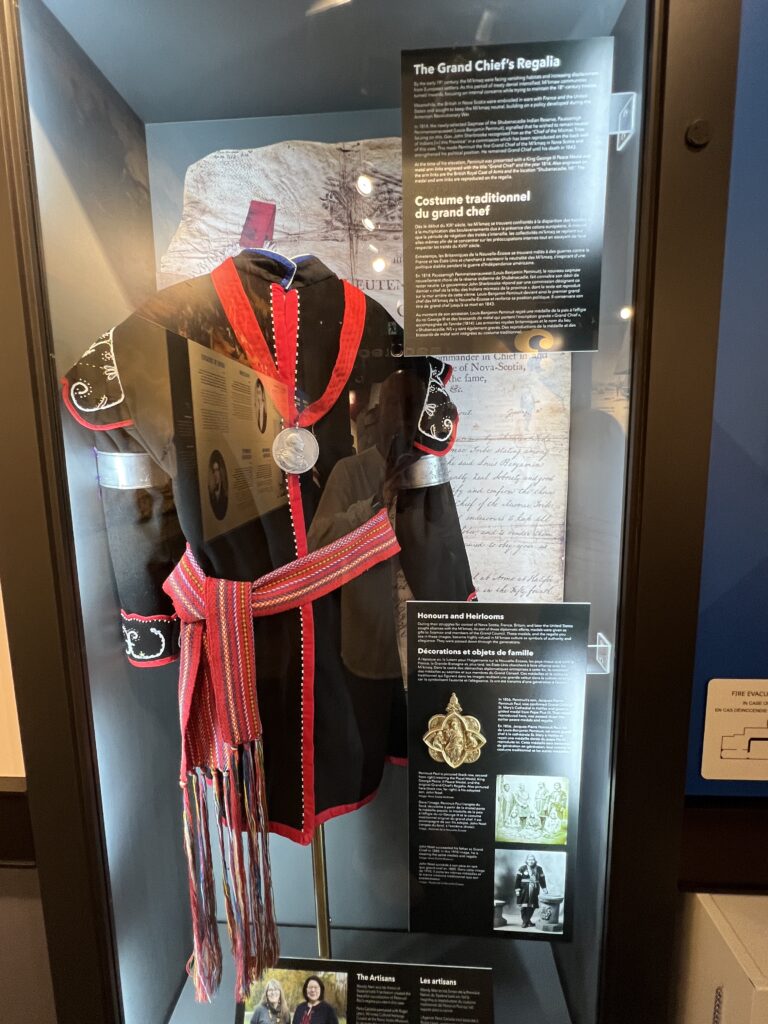
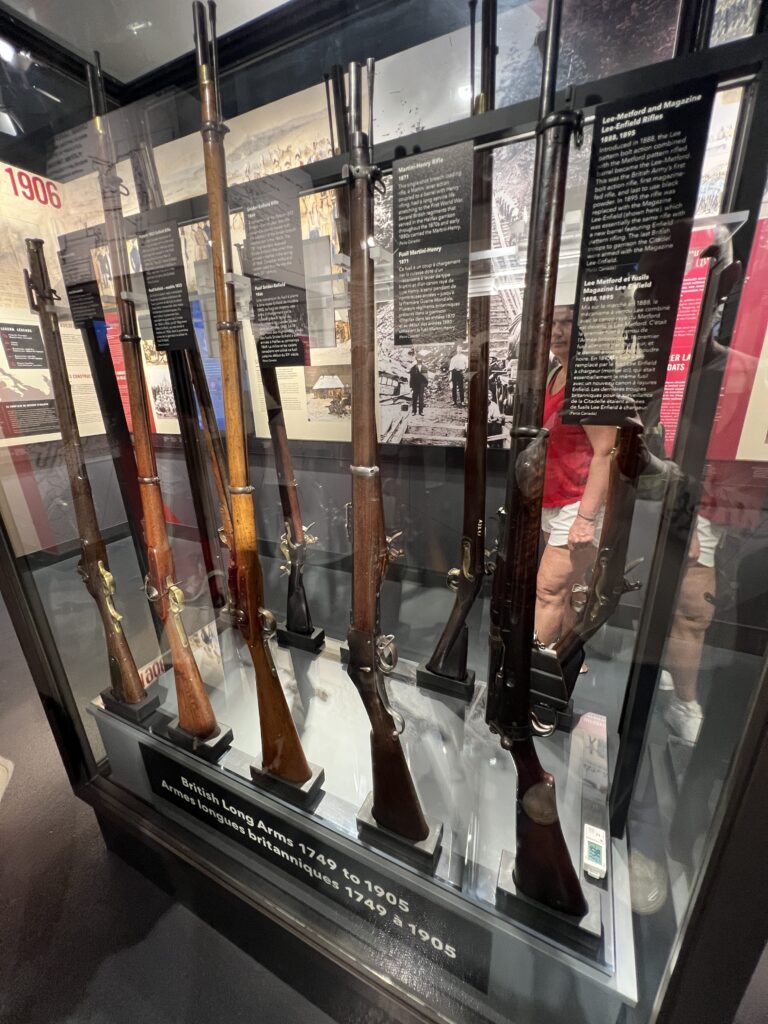
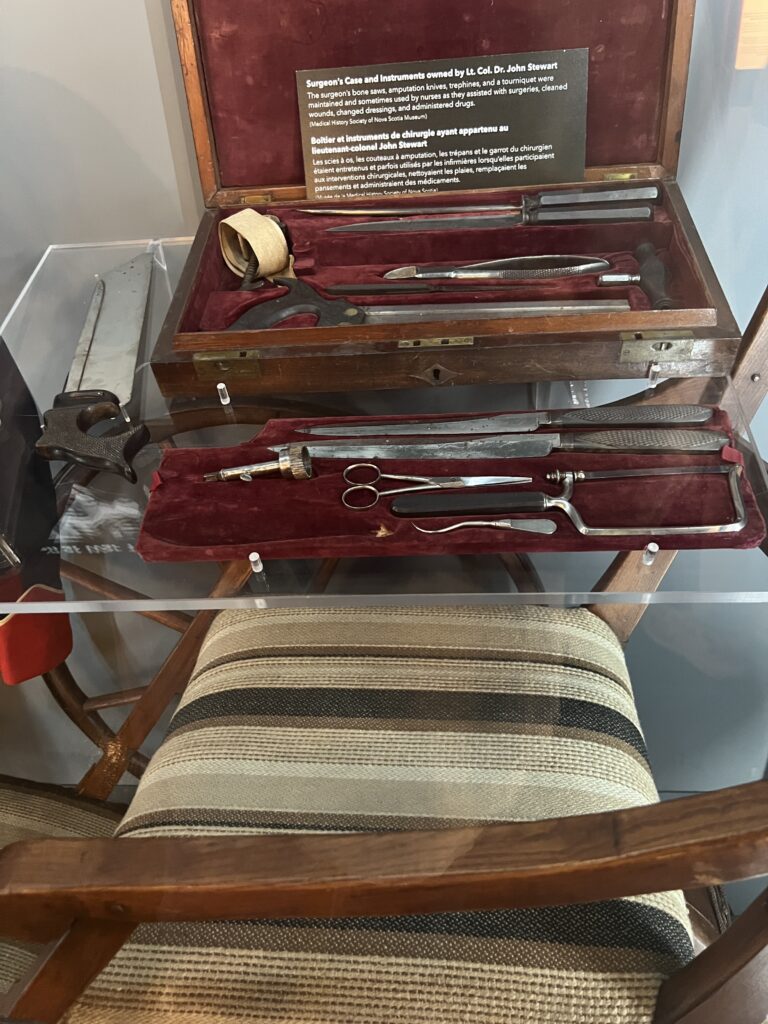
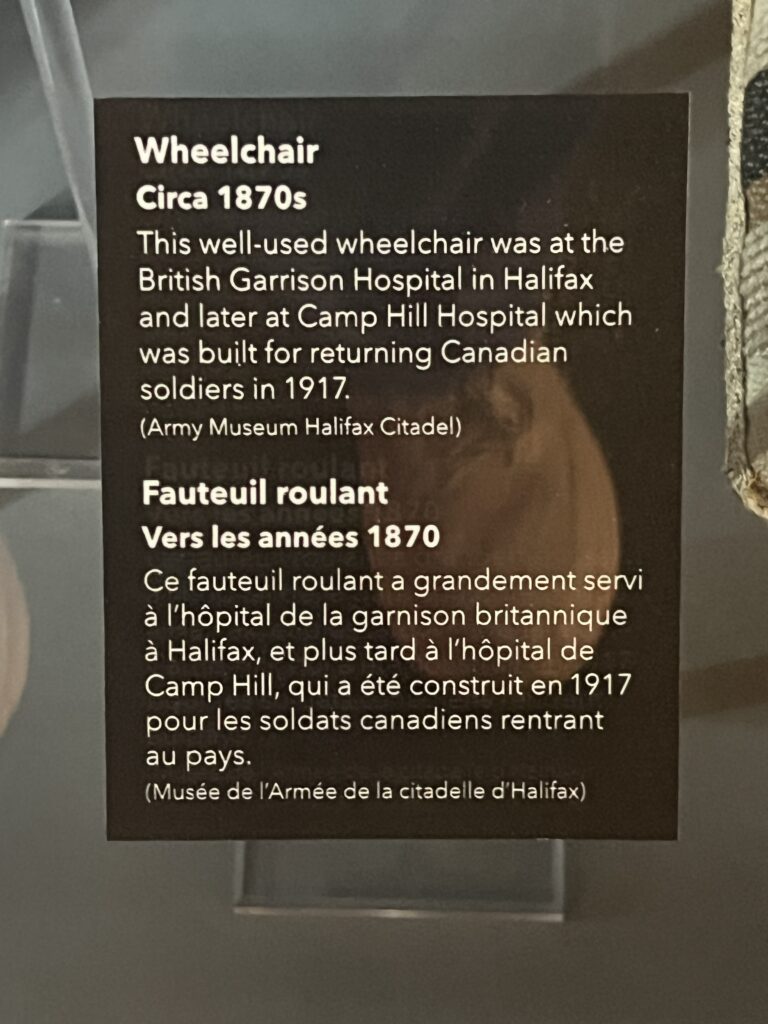
Re-enactors depicting soldiers of the 78th Highland Regiment. The Citadel opened in 1956 as a historic site and a living history museum.
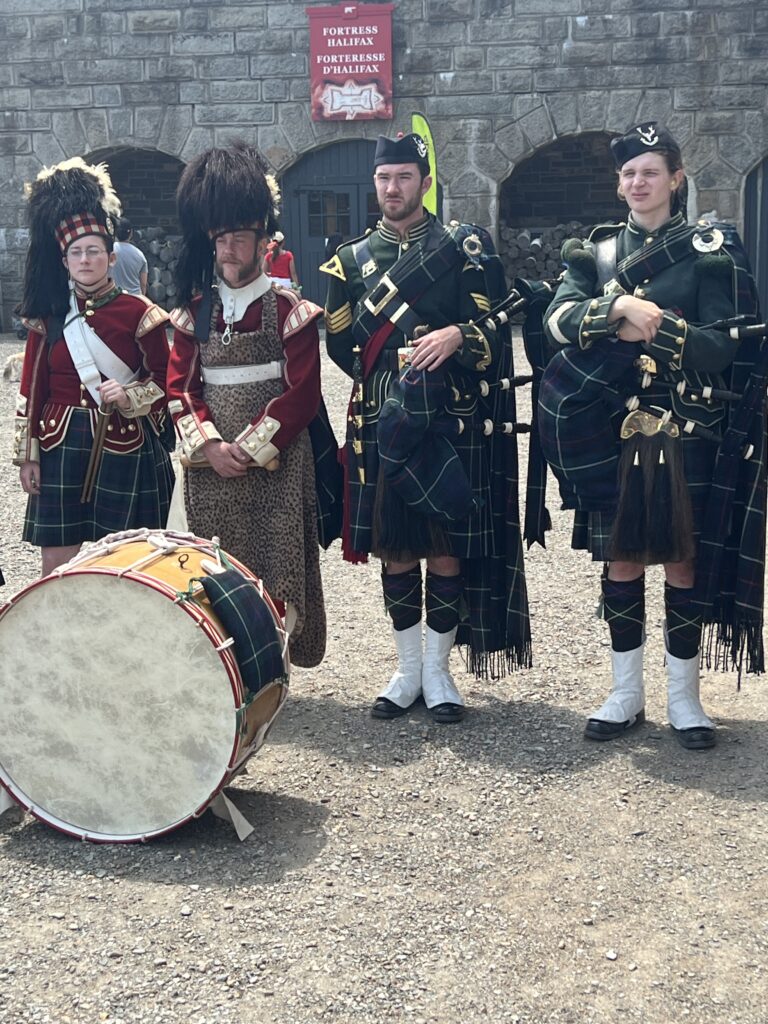
It was Canada Day, thus the large crowds of people and the extra celebrations
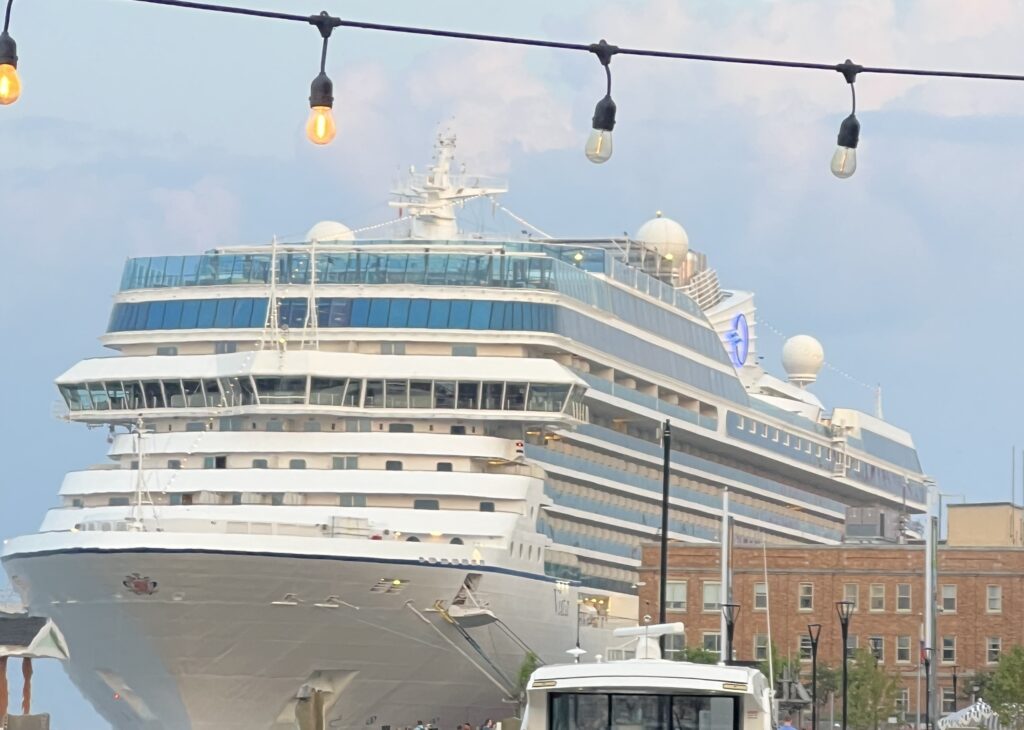
Walking back to the ship
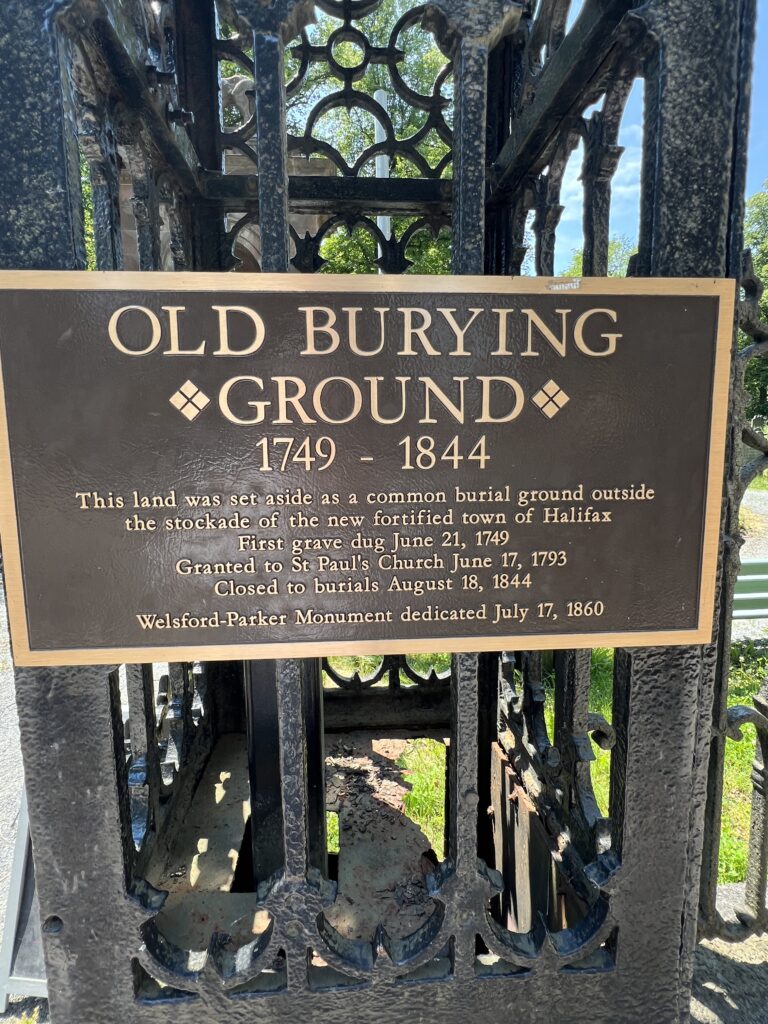
The Old Burying Ground (also known as St. Paul’s Church Cemetery) is a historic cemetery in Halifax, Nova Scotia, Canada. It is located at the intersection of Barrington Street and Spring Garden Road in Downtown Halifax.
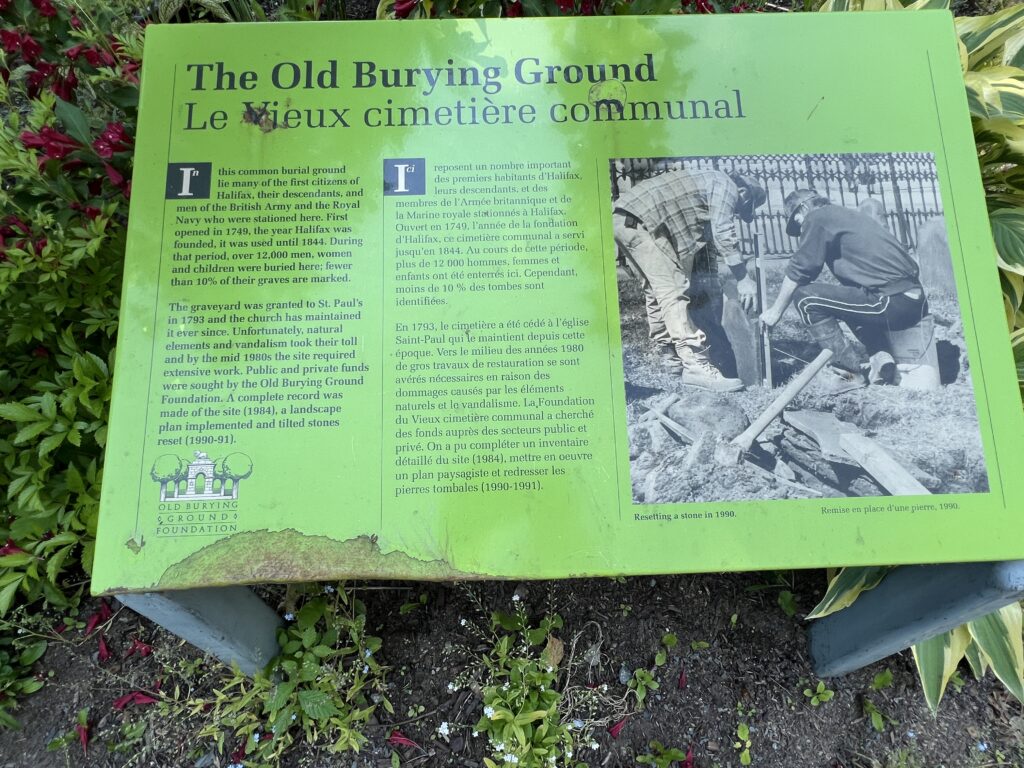
The Old Burying Ground was founded in 1749, the same year as the settlement, as the town’s first burial ground. It was originally non-denominational and for several decades was the only burial place for all Haligonians. (The burial ground was also used by St. Matthew’s United Church). In 1793 it was turned over to the Anglican St. Paul’s Church. The cemetery was closed in 1844 and the Camp Hill Cemetery established for subsequent burials. The site steadily declined until the 1980s when it was restored and refurbished by the Old Burying Ground Foundation, which now maintains the site and employ tour guides to interpret the site in the summer. Ongoing restoration of the rare 18th-century grave markers continues.
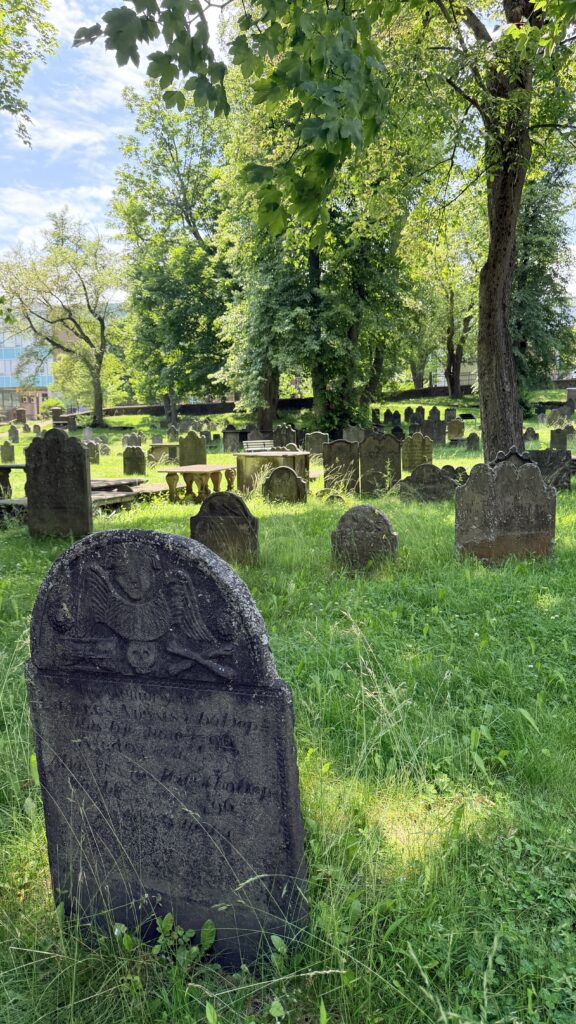
Over the decades some 12,000 people were interred in the Old Burial Ground. Today there are about 1,200 headstones, some having been lost and many others being buried with no headstone. Many notable residents are buried in the cemetery, including British Major General Robert Ross, who led the successful Washington Raid of 1814 and burned the White House before being killed in battle at Baltimore a few days later.
Commanders of three of the ships that served Governor Edward Cornwallis buried crew in unmarked graves: HMS Sphynx (1 crew), HMS Baltimore (1 crew) and HMS Albany (6 crew). HMS Sphynx was Cornwallis’ own ship and the crew member was buried on the day his ship arrived in Halifax on 21 June 1749. HMS Albany was a 14-gun sloop commanded by Nova Scotia’s senior naval officer, John Rous (1749–1753).
There are four recorded Mi’kmaq buried in the burial ground, including a Mi’kmaw Chief Francis [Muis]. There was also a “protestant Indian” named John Tray, possibly from John Gorham’s rangers.
There are also 167 recorded Black people buried in the graveyard, all with unmarked graves. (There is a grave marker, however, of the Huntingdonian Missionary who taught at the first school for Black students in Halifax, Reverend William Furmage.)
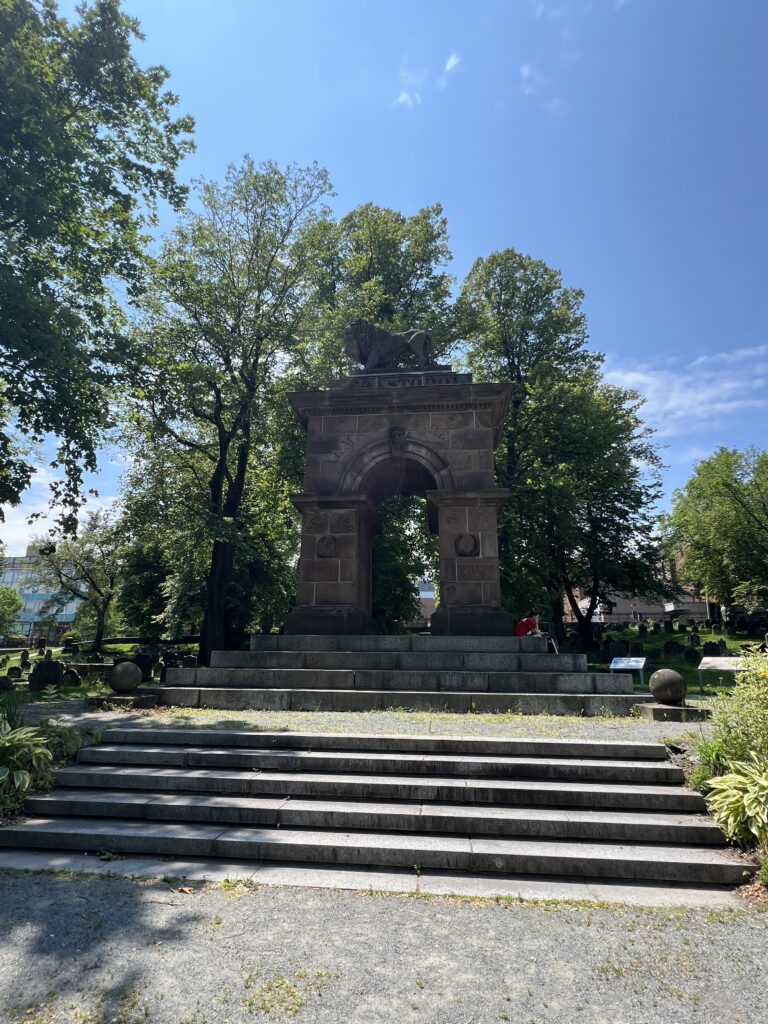
The last erected and most prominent burial marker is the Welsford-Parker Monument, a Triumphal arch standing at the entrance to the cemetery commemorating British victory in the Crimean War. This is the first public monument built in Nova Scotia and is the fourth oldest war monument in Canada. It is also the only monument to the Crimean War in North America. The arch was built in 1860, 16 years after the cemetery had officially closed. The arch was built by George Lang and is named after two Haligonians, Major Augustus Frederick Welsford and Captain William Buck Carthew Augustus Parker. Both Nova Scotians died in the Battle of the Great Redan during the Siege of Sevastopol (1854–1855). This monument was the last grave marker in the cemetery.
In 1938, the Grand Lodge of Massachusetts presented and dedicated a granite monument to Erasmus James Philipps, who is the earliest known settler of Nova Scotia (c. 1721) to be buried in the cemetery. He was also the founder of Freemasonry in present-day Canada (1737).
The Old Burying Ground – National Historic Site of Canada – Halifax, Nova Scotia
At the entrance stands the Welsford-Parker Monument, a memorial built in 1860 commemorating two Haligonians killed in the Crimean War.
View of Halifax from the cabin balcony
Video of the red moon from the previous night
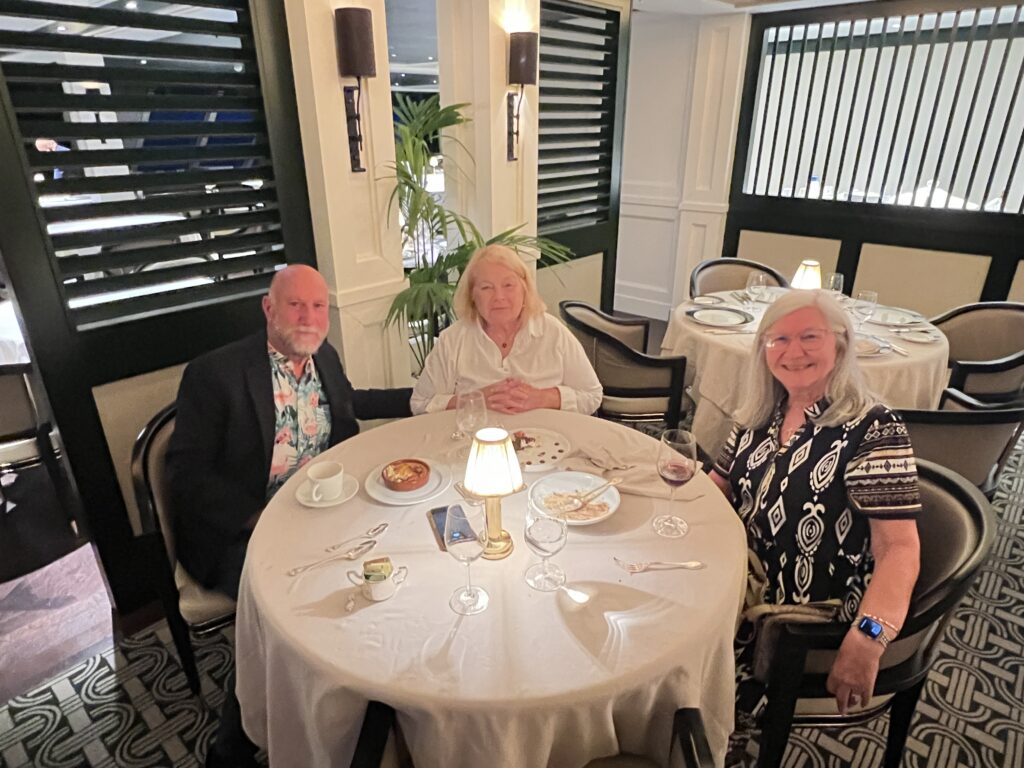
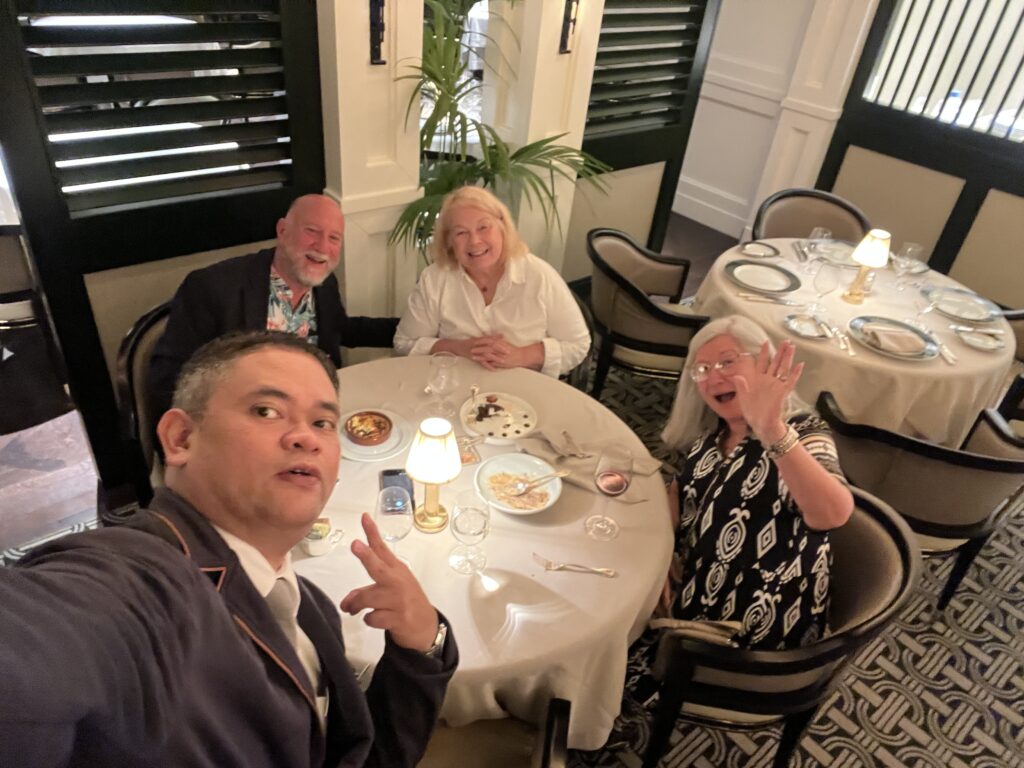
As we left Halifax we had dinner with Janet Zwar. I had posted earlier that we met Janet in Tahiti and did an excursion together. During the cruise we had the chance to spend time with her and loved the visits. So, we decided to have dinner in The Polo Grill before we got off the ship and celebrate a new friend for life.
Three videos as we leave Halifax. Be sure to check out the ship’s reflection in the second video
Tomorrow is a sea day on our way to Boston for a late afternoon arrival.