
Day 51 Monday April 27th (69 days to go) — We did not have an excursion for our second day in Singapore. Kevin and Holly Guidry from Houma joined up with us to do a world wind tour of some locations in Singapore. Basically, we were like gophers as we rode the subway, popped our heads out from the ground and visited some sites then scurried back under ground to the subway and headed off for the next stop. We had a great day, and we enjoyed watching their faces as we visited new places for them.
Thank you to Holly for these photos
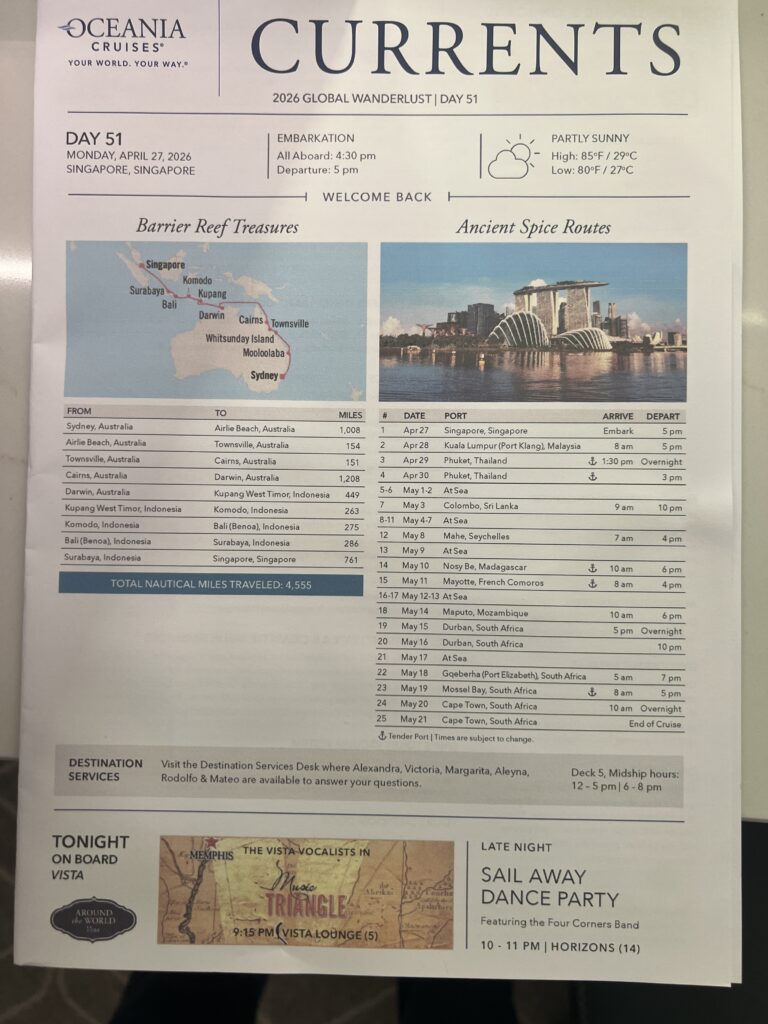
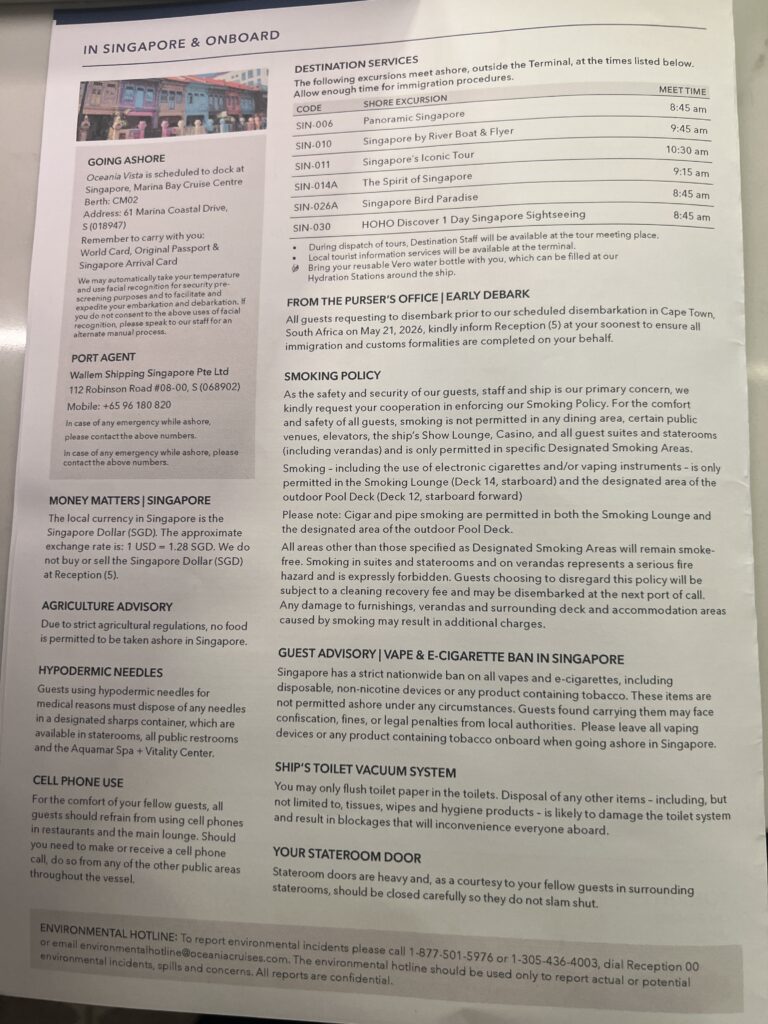
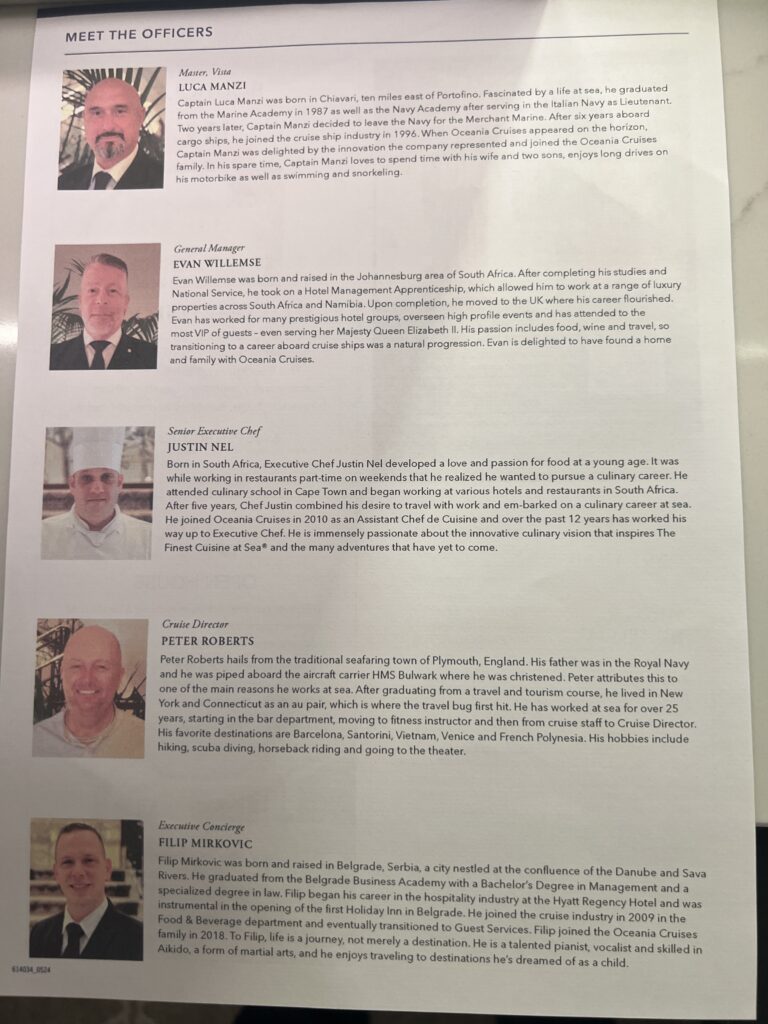
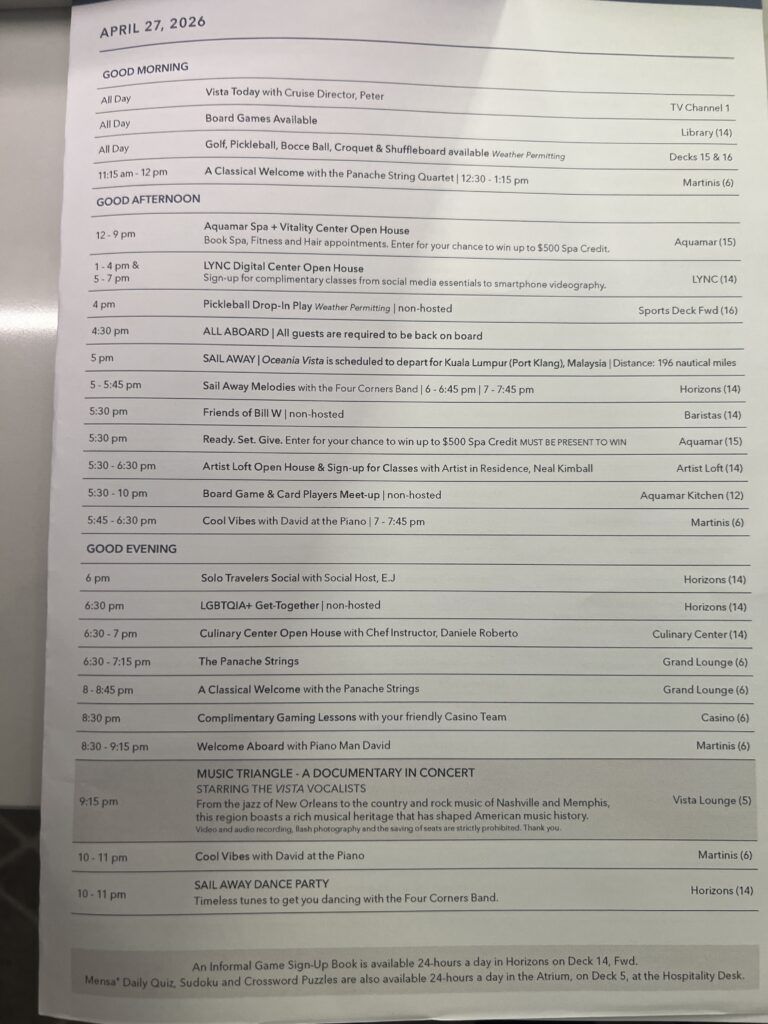
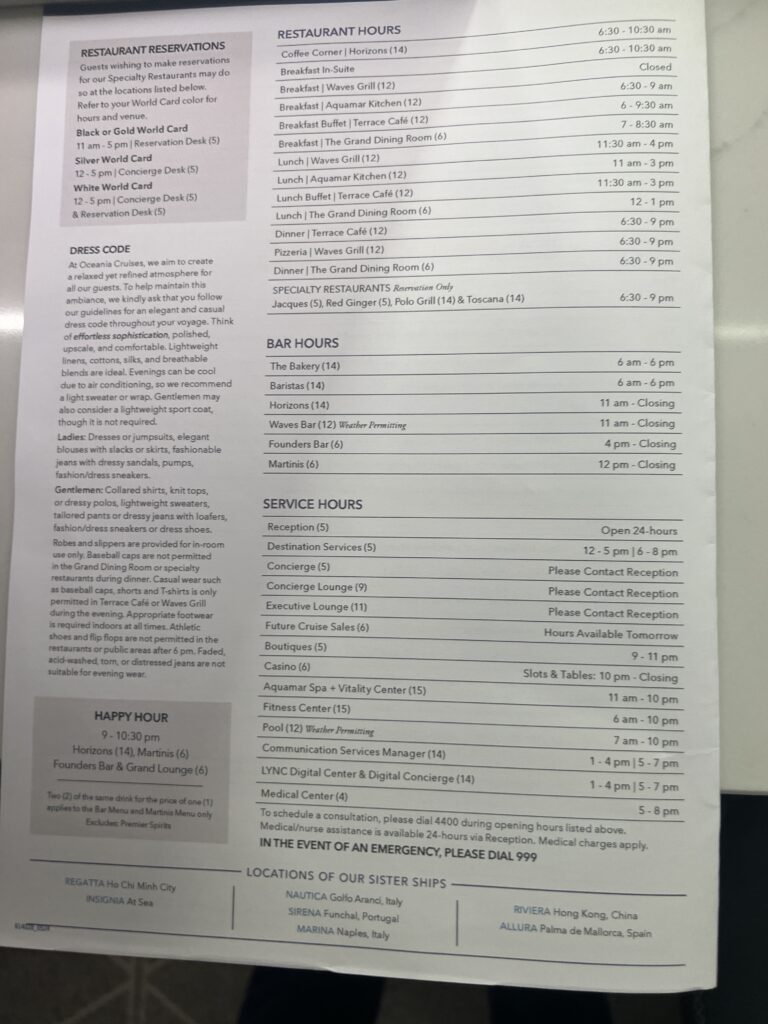
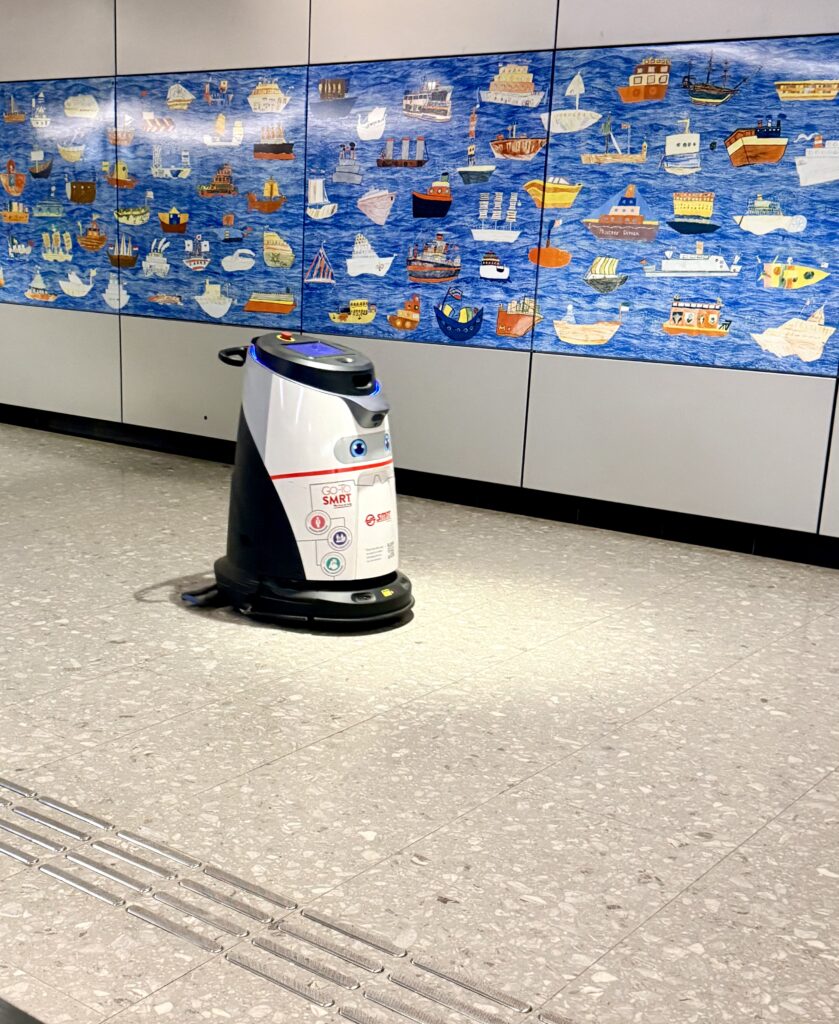
After walking from the ship about 600 meters we went down to the subway system to get around the city and saw this robot cleaning the floors.
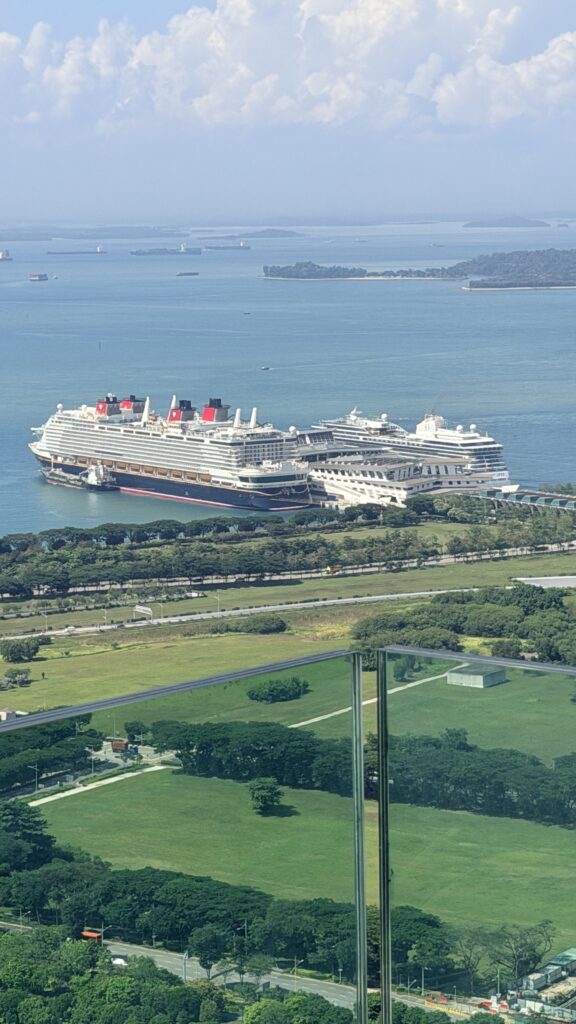
View of The Oceania Vista on the right and a Disney ship on the left
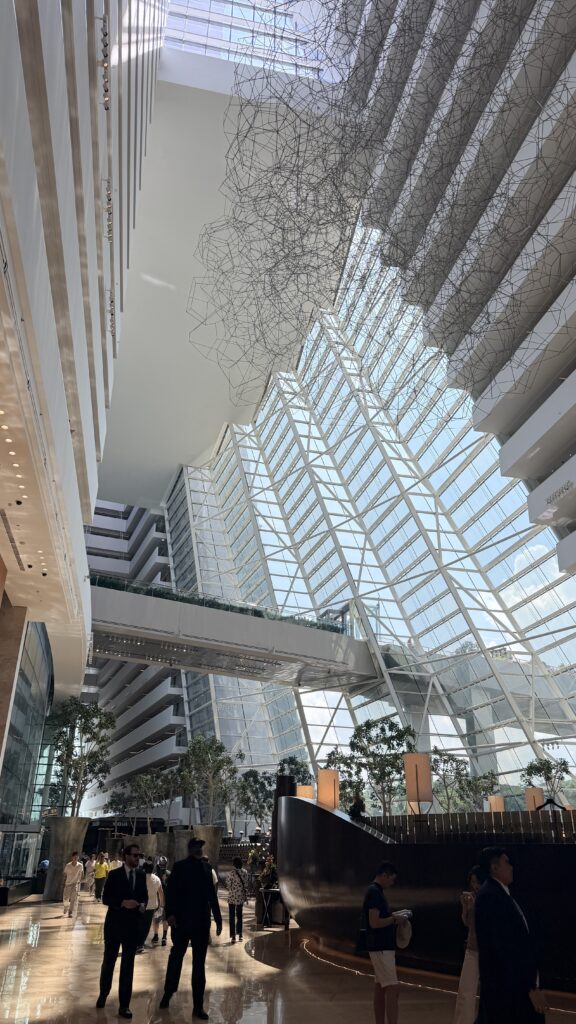
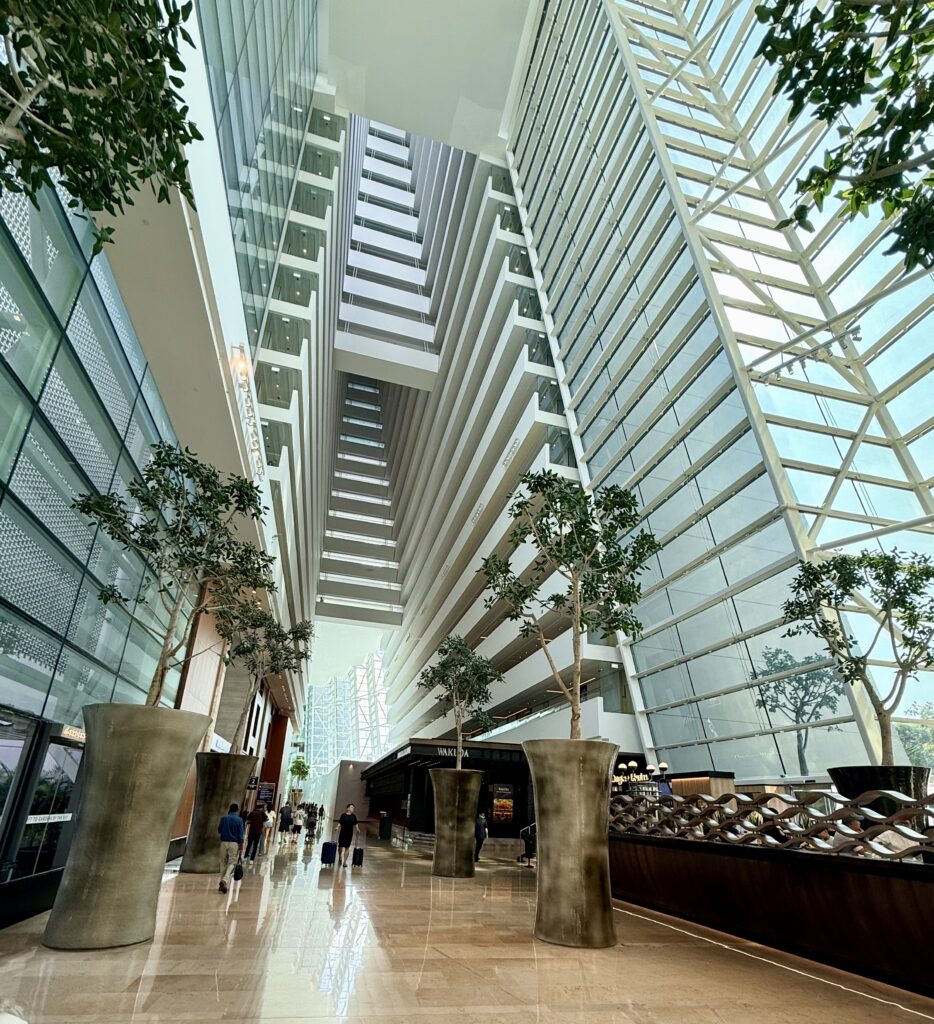
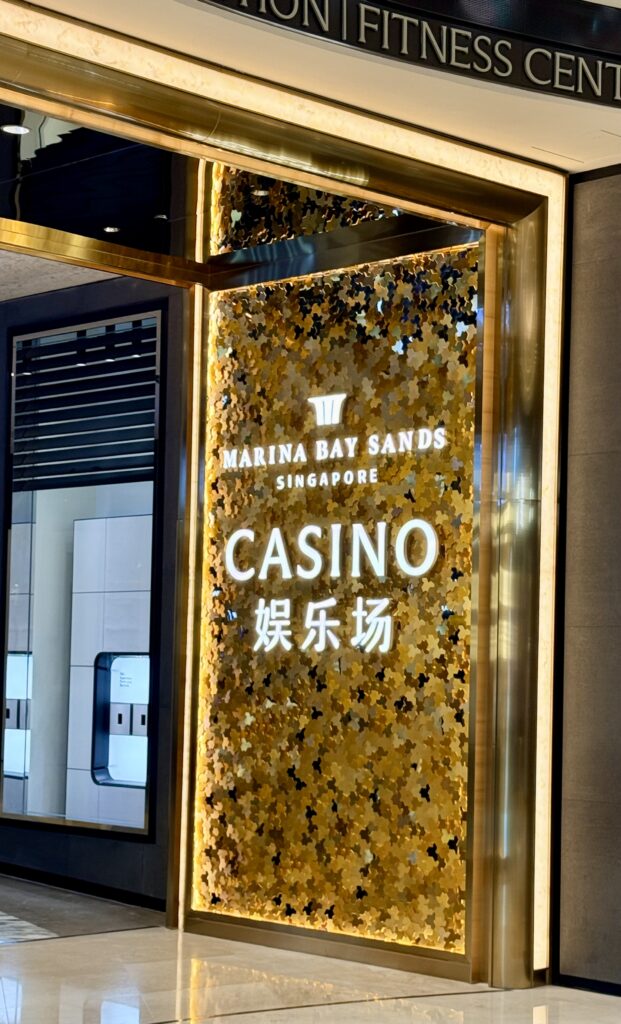
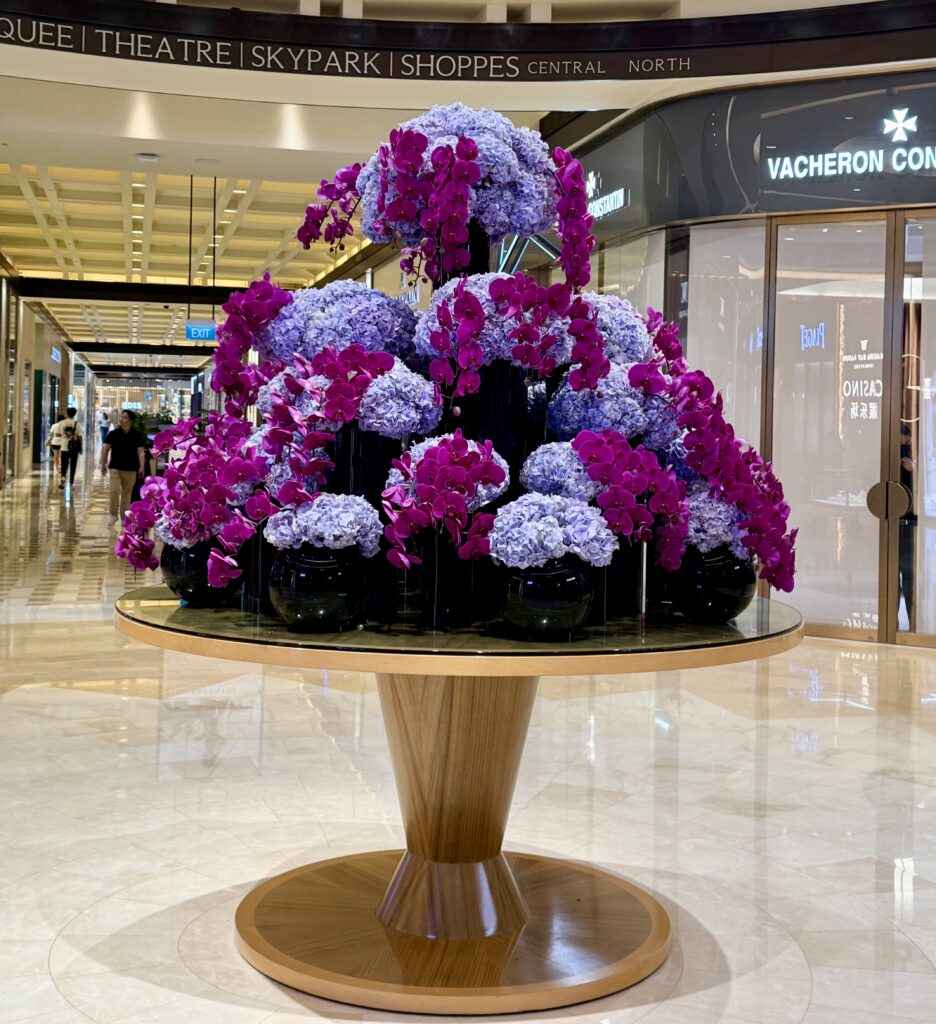
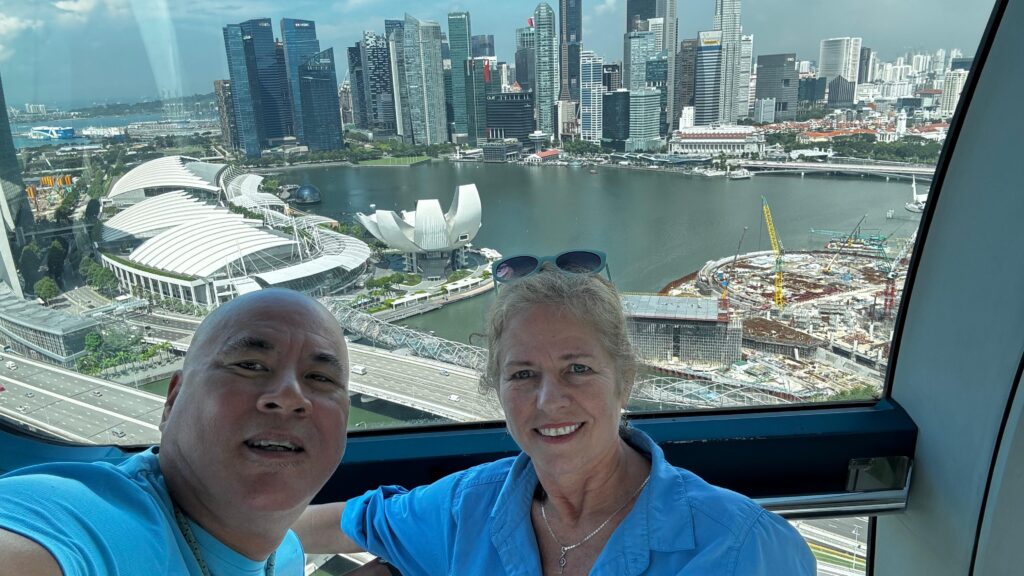
Inside the Marina Sands Resort
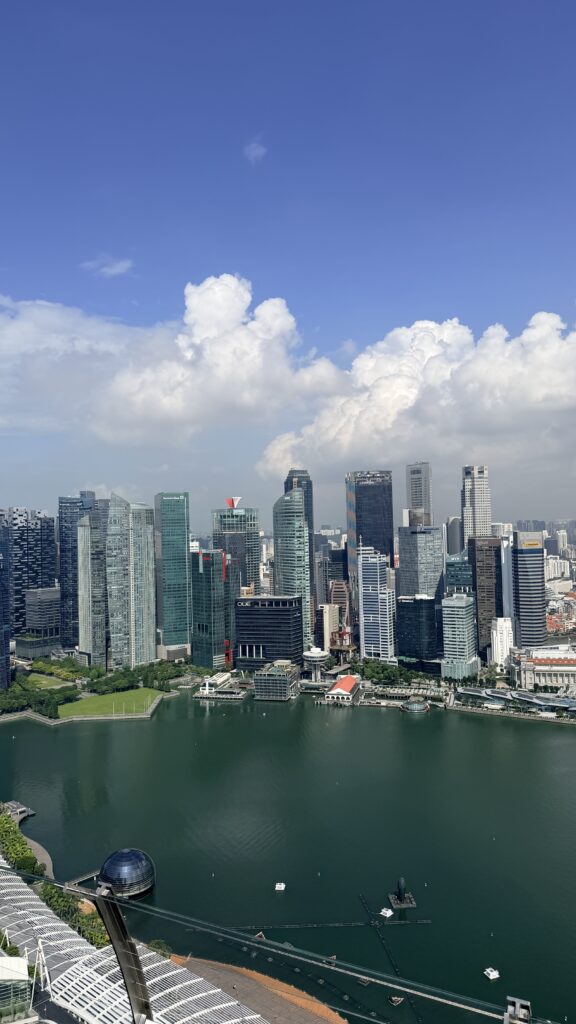
Photos from the platform deck of The Marina Sands Resort
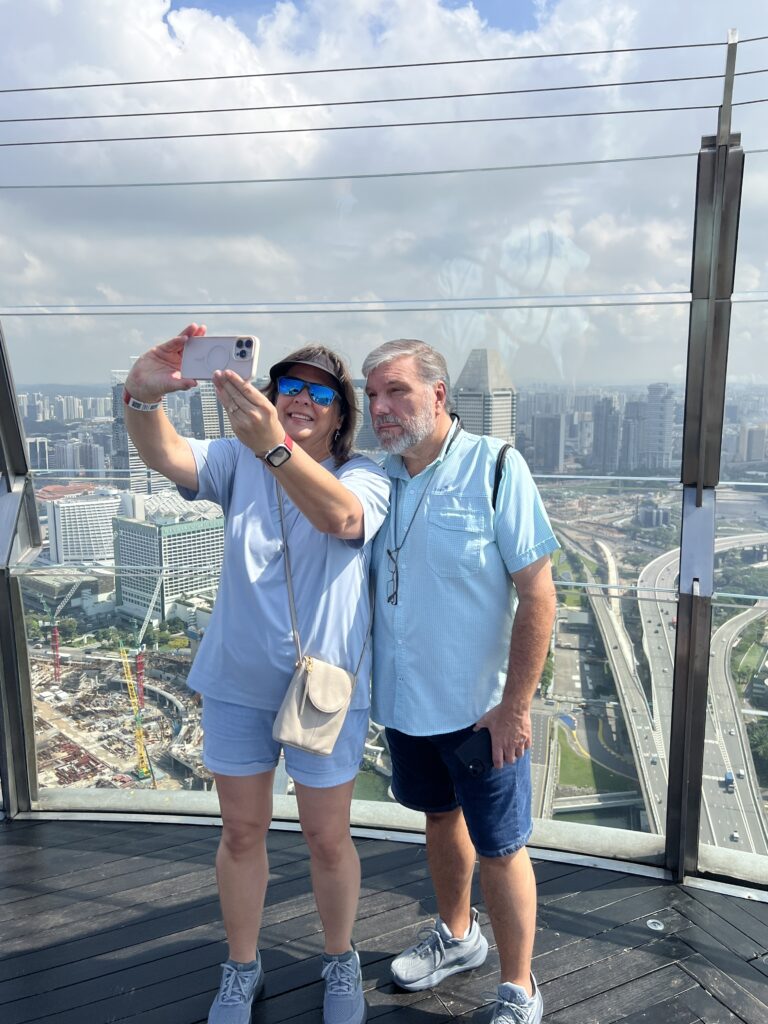
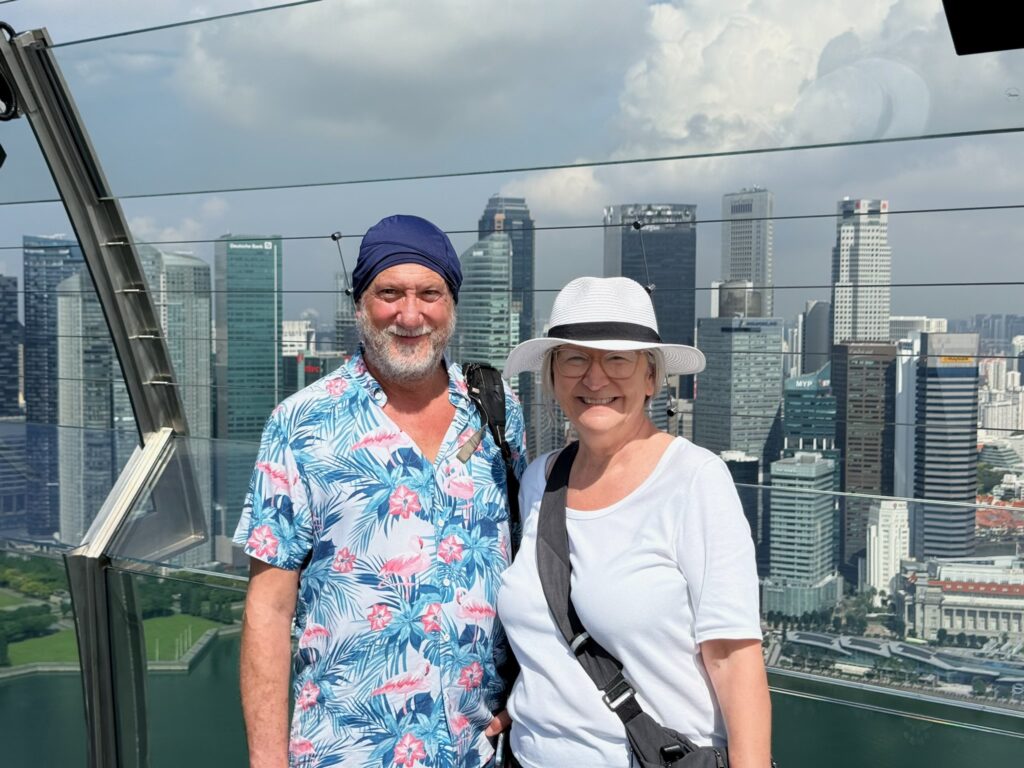
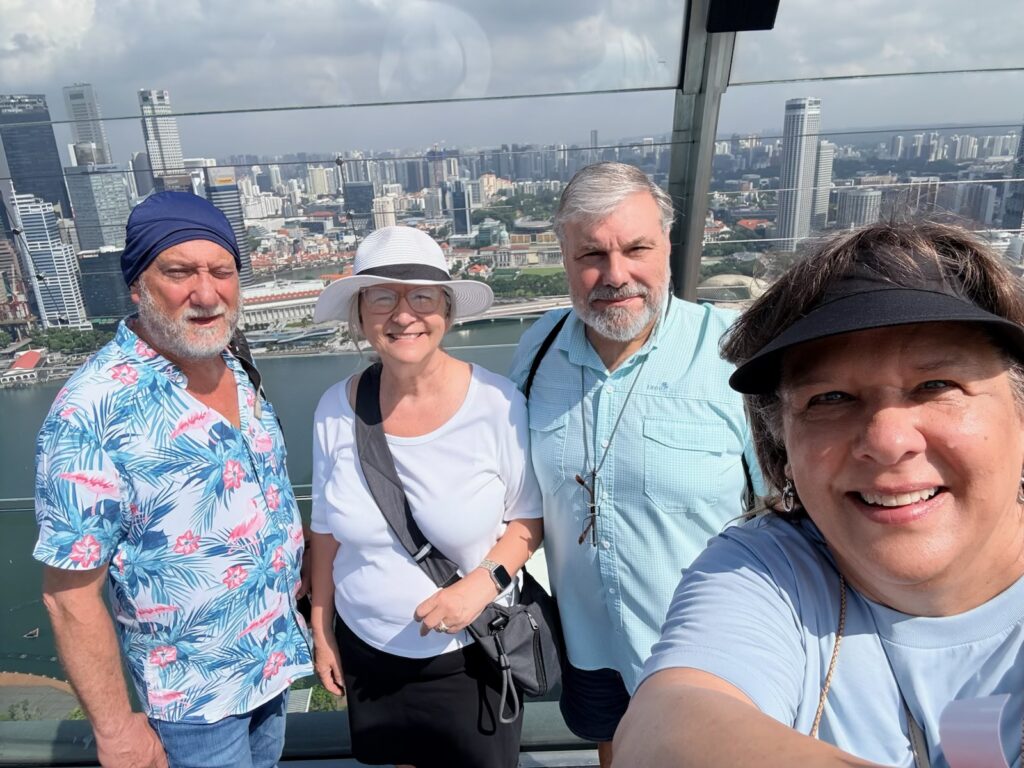
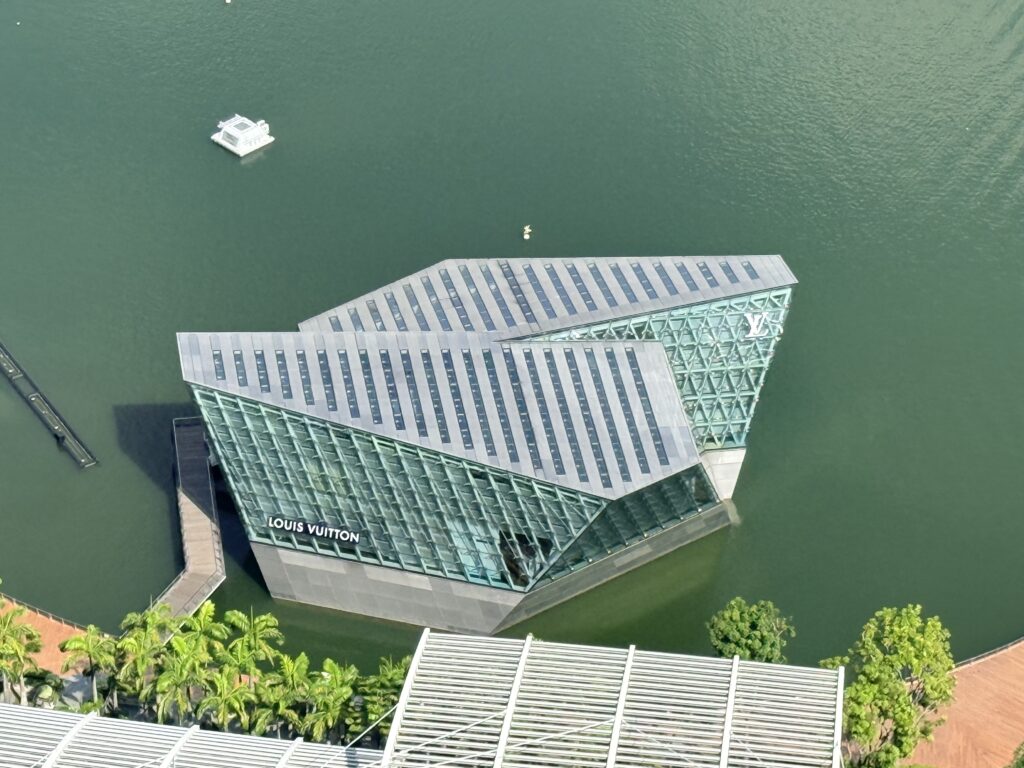
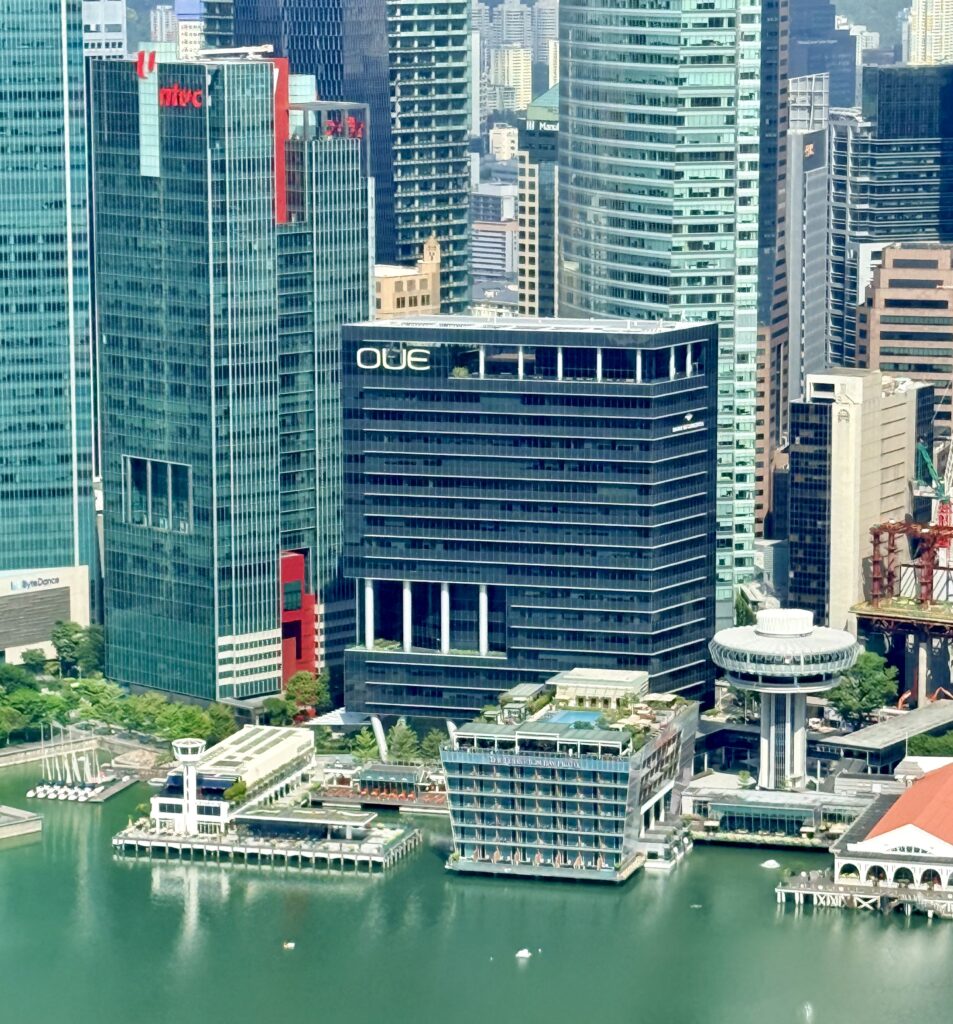
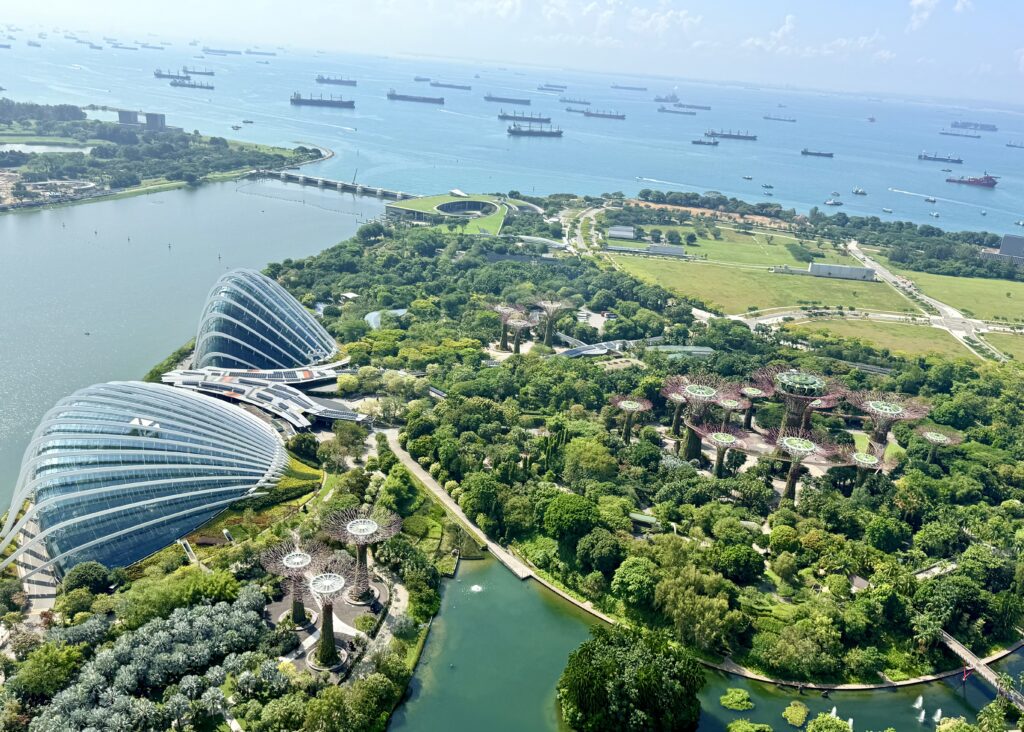
Dave and Marta also visited the Marina Bay Sands during the day and gave me these photos of their visit
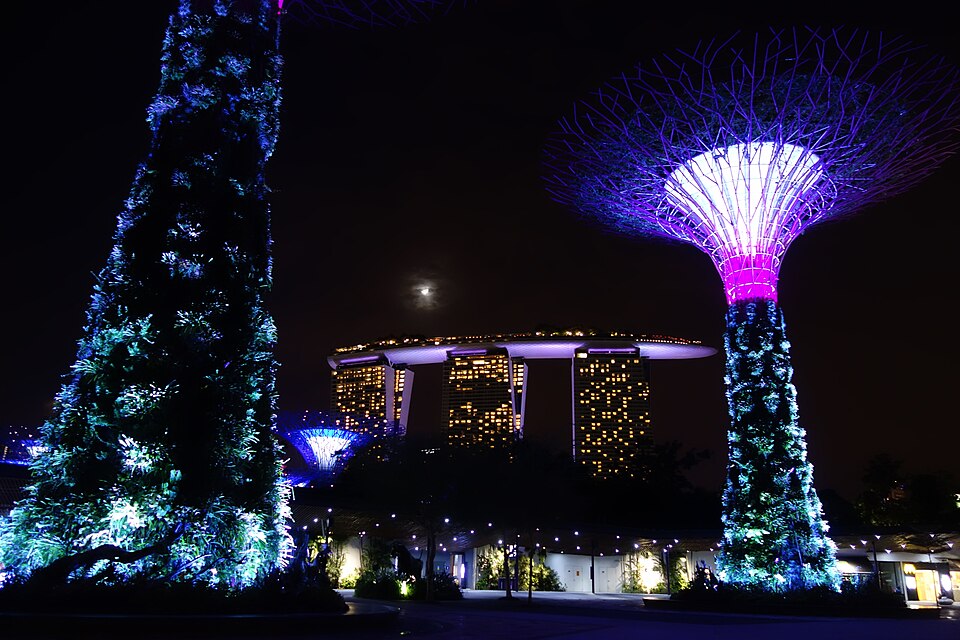
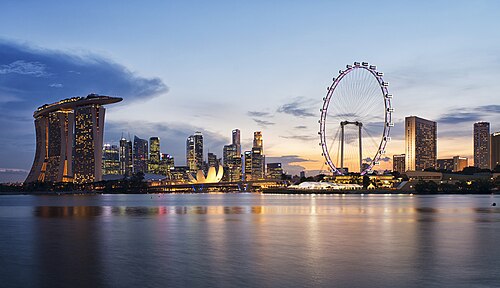
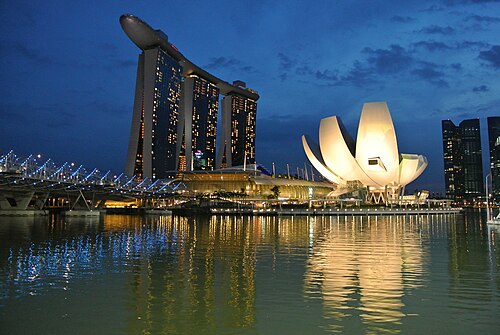
These three photos were taken by Dave and Marta after their night with the Oceania function. The went to visit the Super Grove and captured these photos.
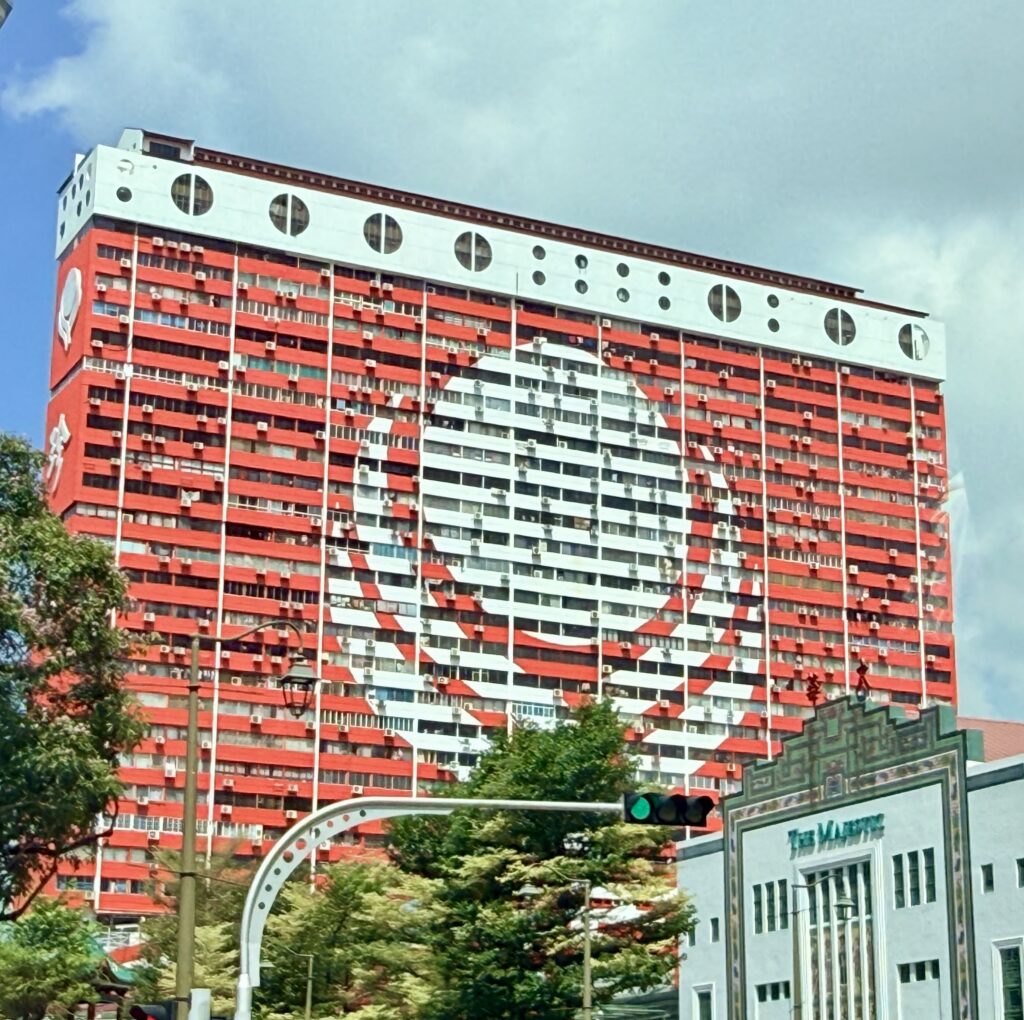
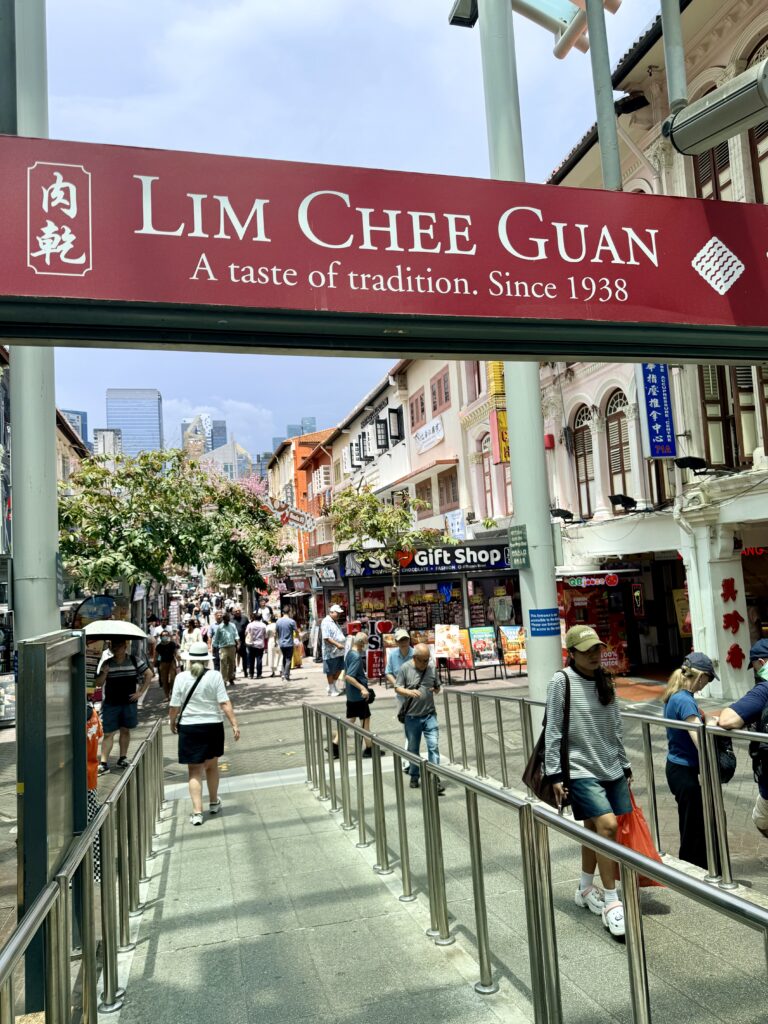
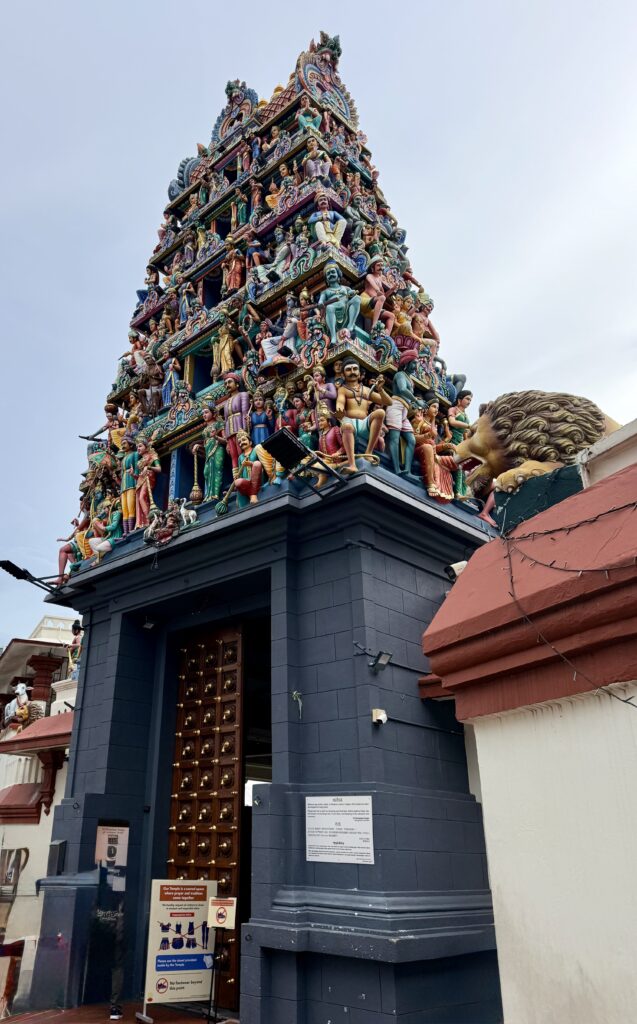
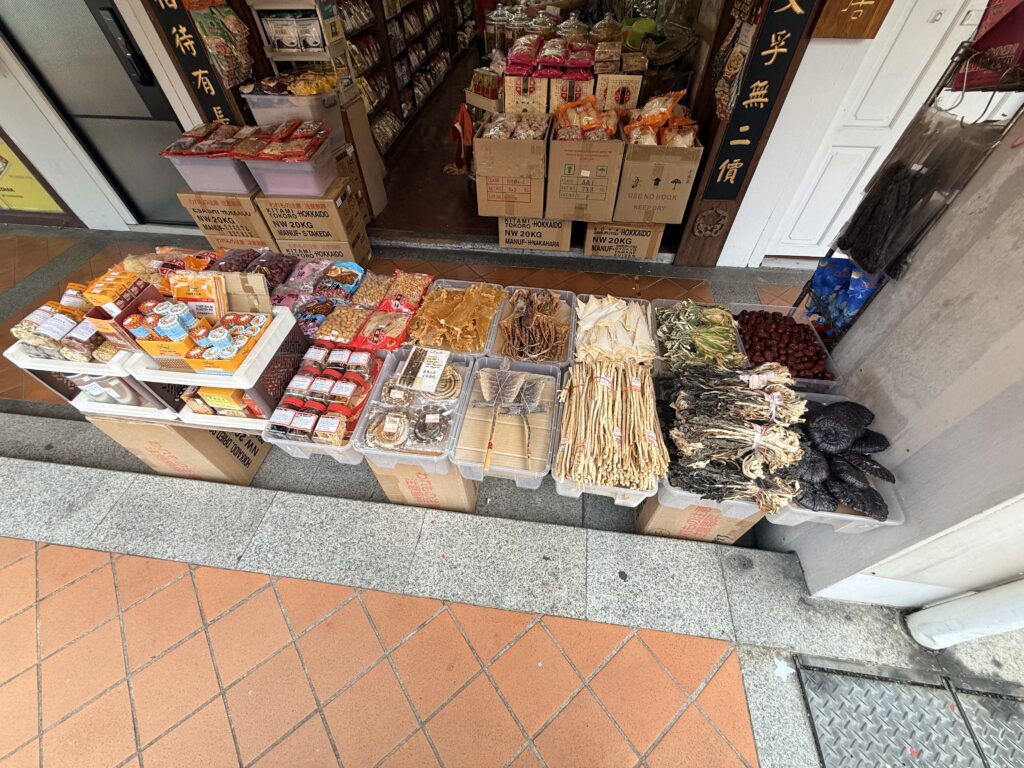
After leaving the Marina Bay Sands Resort, we took the subway and popped up in the middle of Chinatown
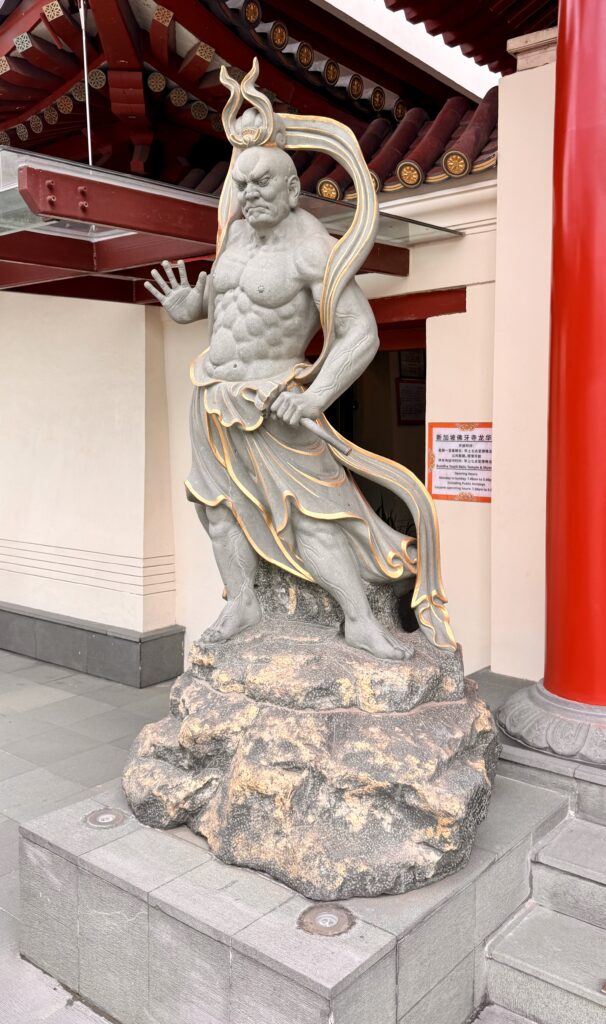
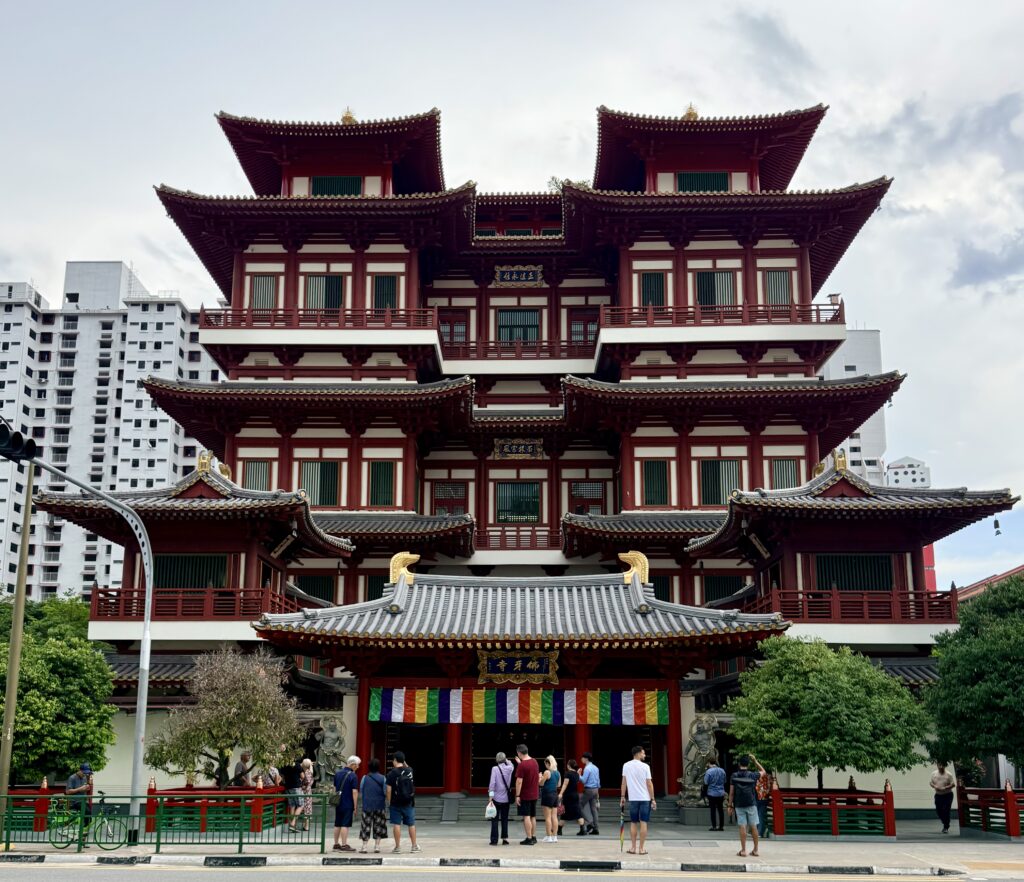
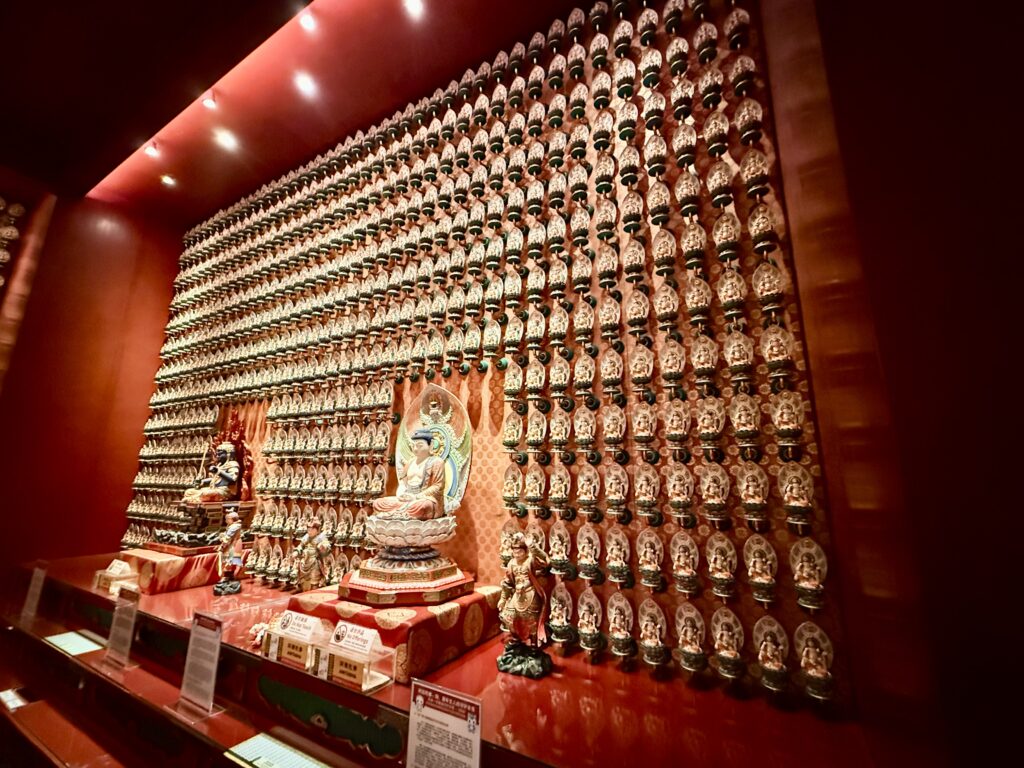
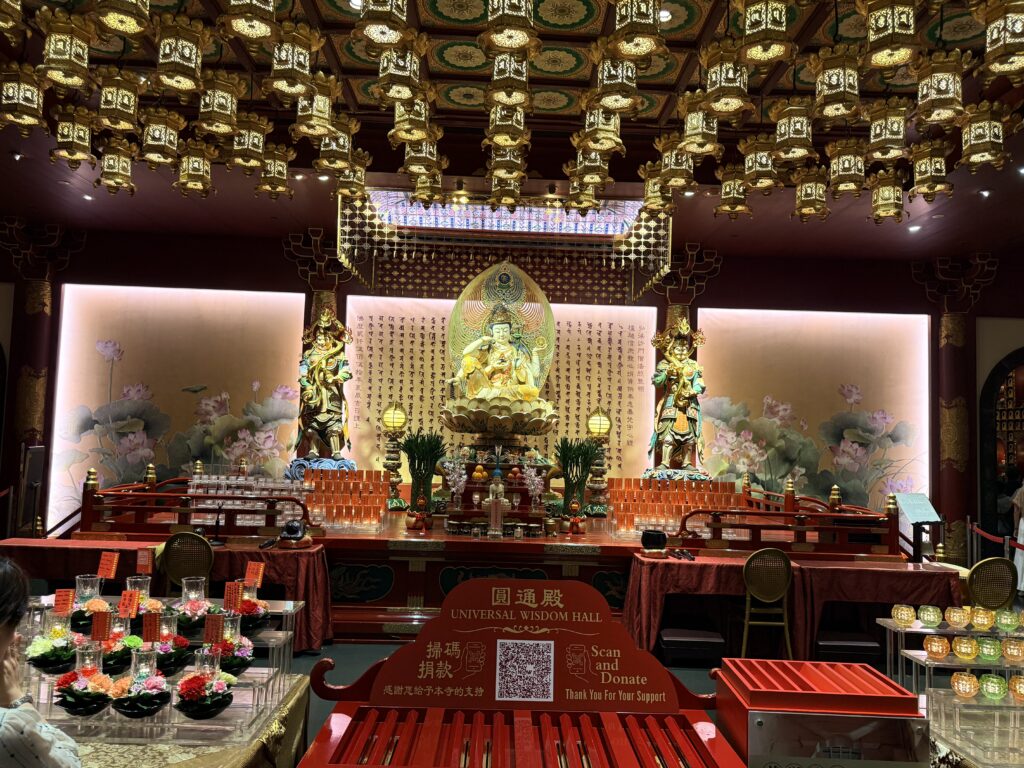
Located in the heart of Chinatown, the Buddha Tooth Relic Temple & Museum’s richly designed interiors and comprehensive exhibits on Buddhist art and history tell stories of culture over thousands of years old. This Tang-styled building’s design was inspired by the Buddhist Mandala, a symbol of Buddhist culture that represents the universe.
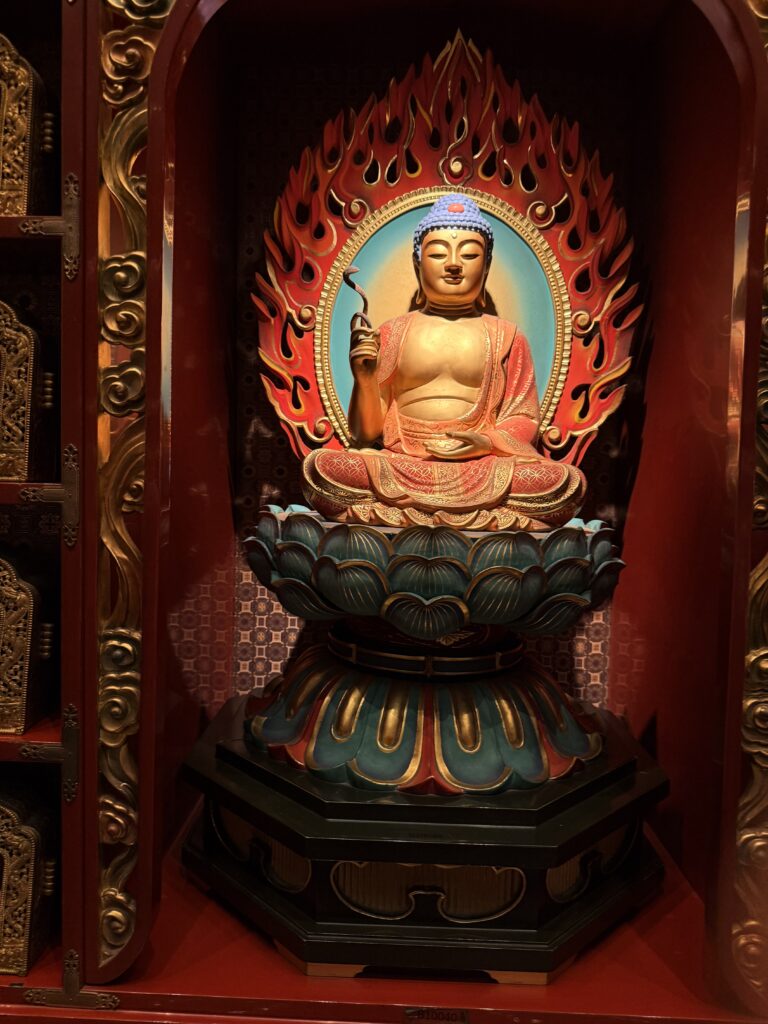
Built in 2007, the temple gets its name from what the Buddhists regard as the left canine tooth of Buddha, which has been recovered from his funeral pyre in Kushinagar, India and displayed on the temple’s grounds. The Buddha Tooth Relic is housed in a giant stupa weighing a whopping 3,500 kilograms and made from 320 kilograms of gold, of which 234 kilograms were donated by devotees.
If you’re looking for a little quiet contemplation amid Chinatown’s hubbub, the roof garden, with its pagoda and Buddha prayer wheel, offers a tranquil hideaway.
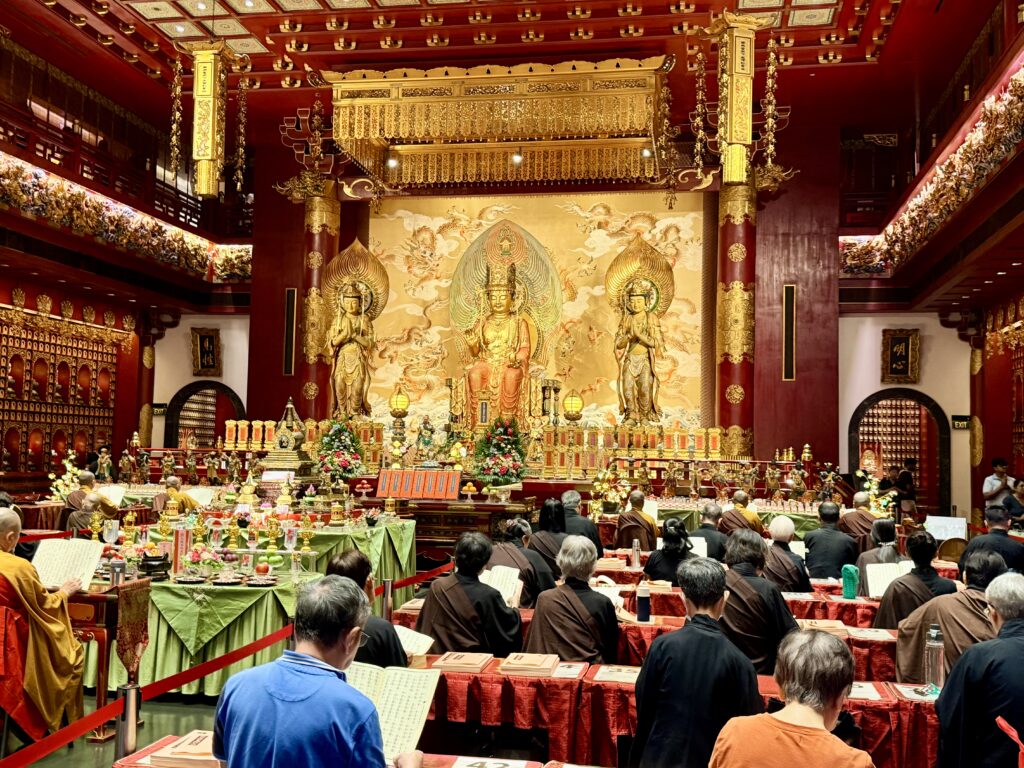
There was a prayer service going on and the chanting was very rhythmic and orderly. I think both Kevin and Holly were happy to view this.
Maxwell Hawkers Center
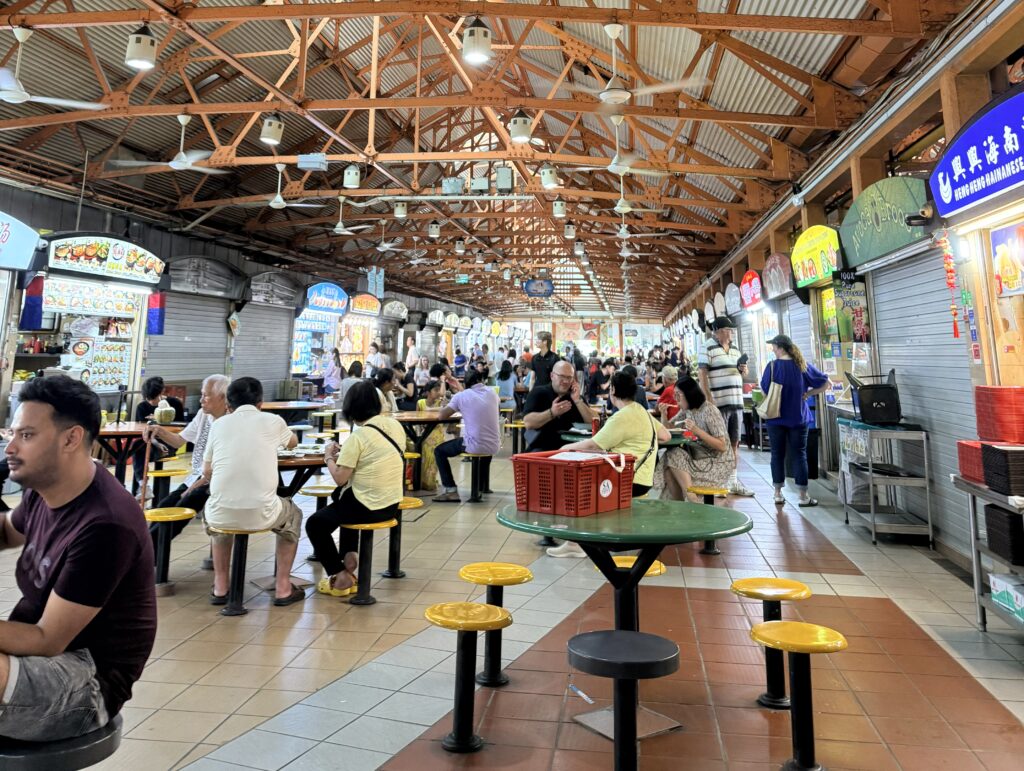
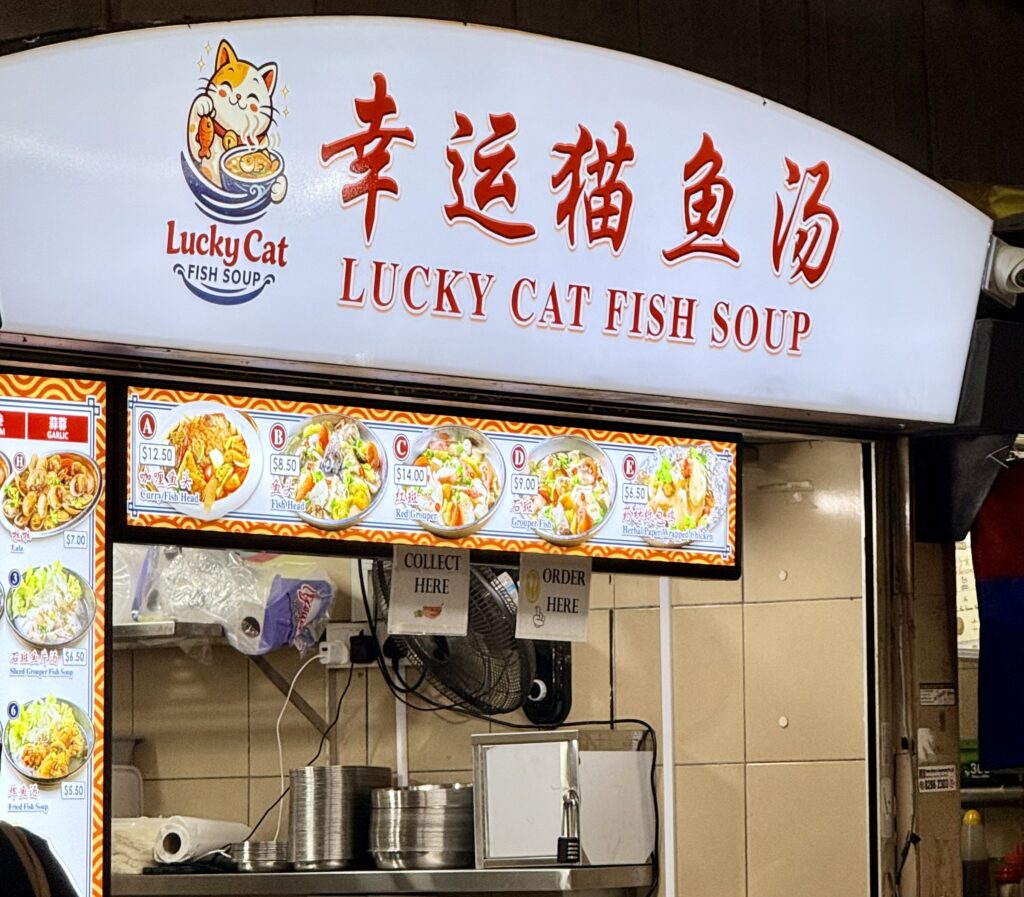
Maxwell Food Centre is a hawker centre located in Tanjong Pagar, at the junction of Maxwell Road and South Bridge Road. The hawker centre is part of the Downtown Core planning area.
Maxwell is one of the most popular hawker centres in Singapore, featuring 103 hawkers selling a wide variety of local and international cuisines. Popular dishes include ham chim peng, ngo hiang, and herbal broths made from home-brewed recipes.
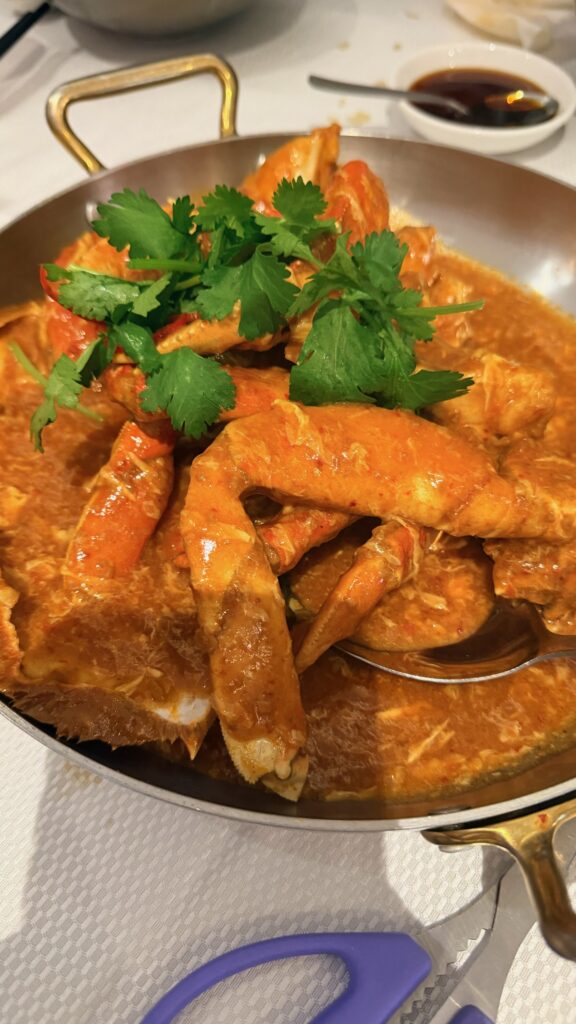
After visiting Chinatown and two temples it was time to head over to Jumbo’s Seafood for a Chili Crab. Jumbo’s is supposed to be the place in Singapore for Chili Crab.
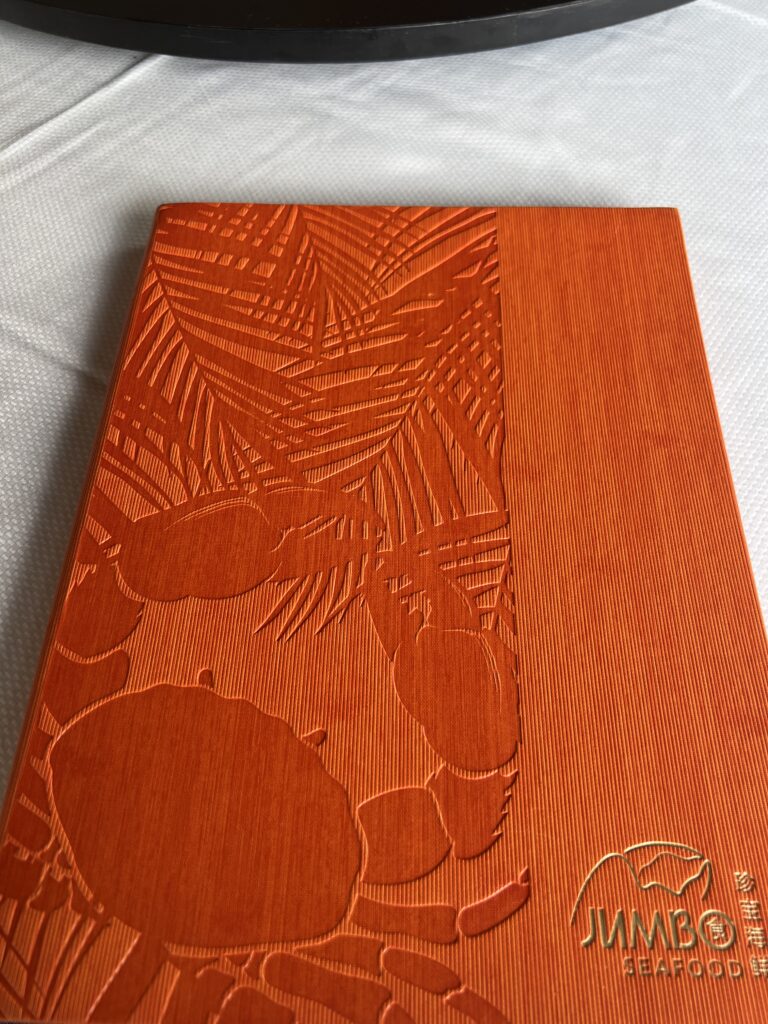
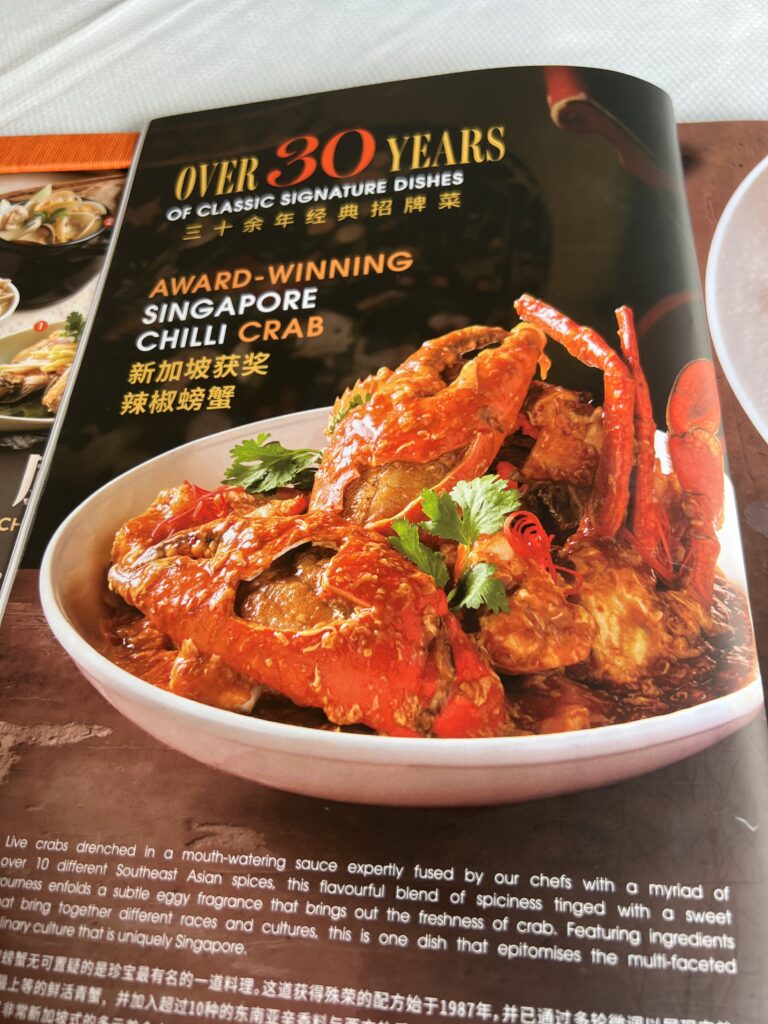
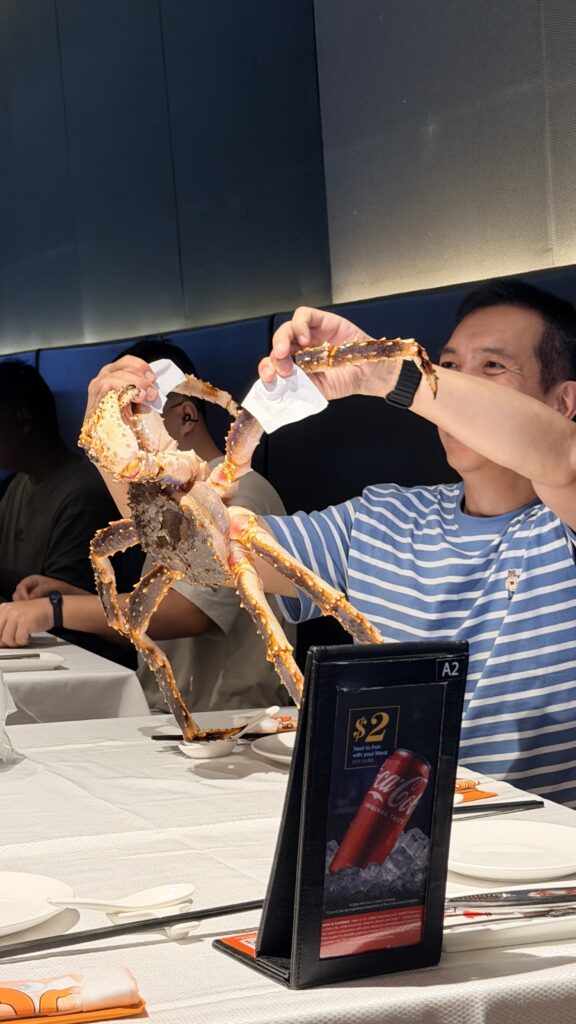
Table on the side of us got a chance to view their crab before it was cooked
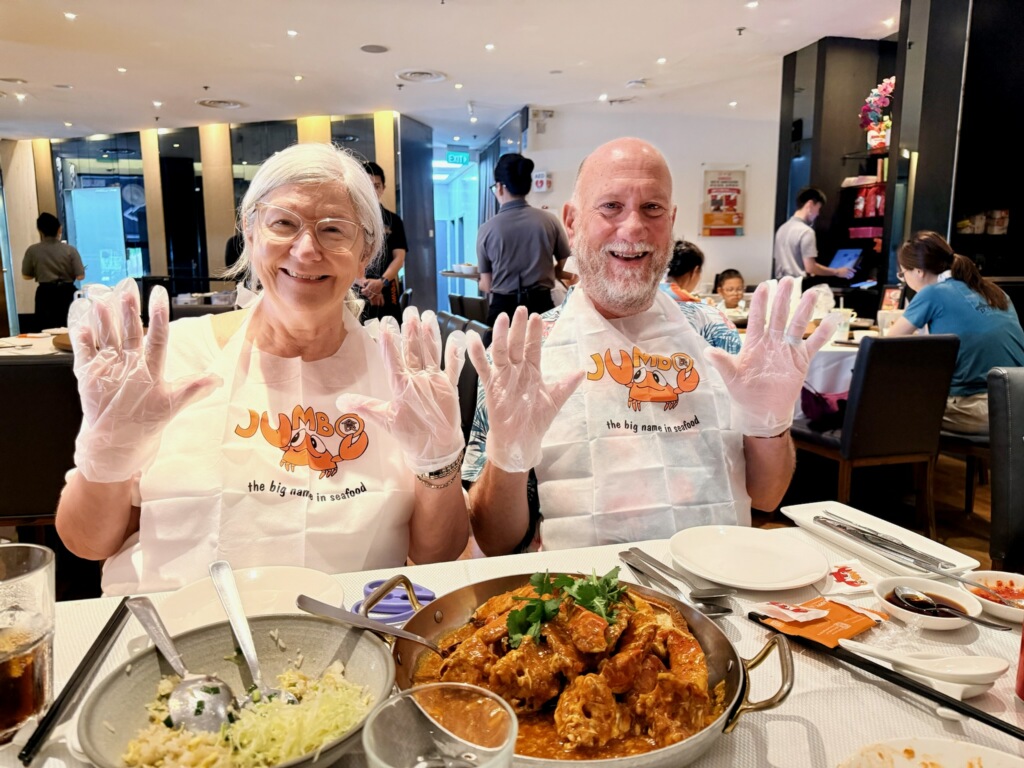
Chili Crab
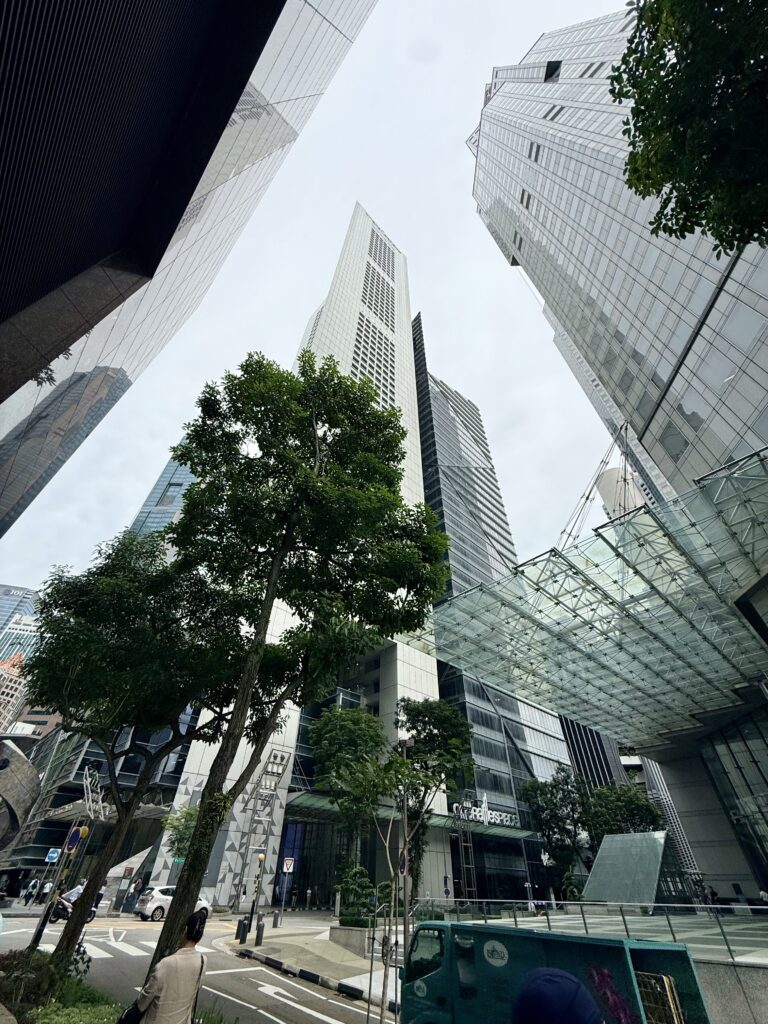
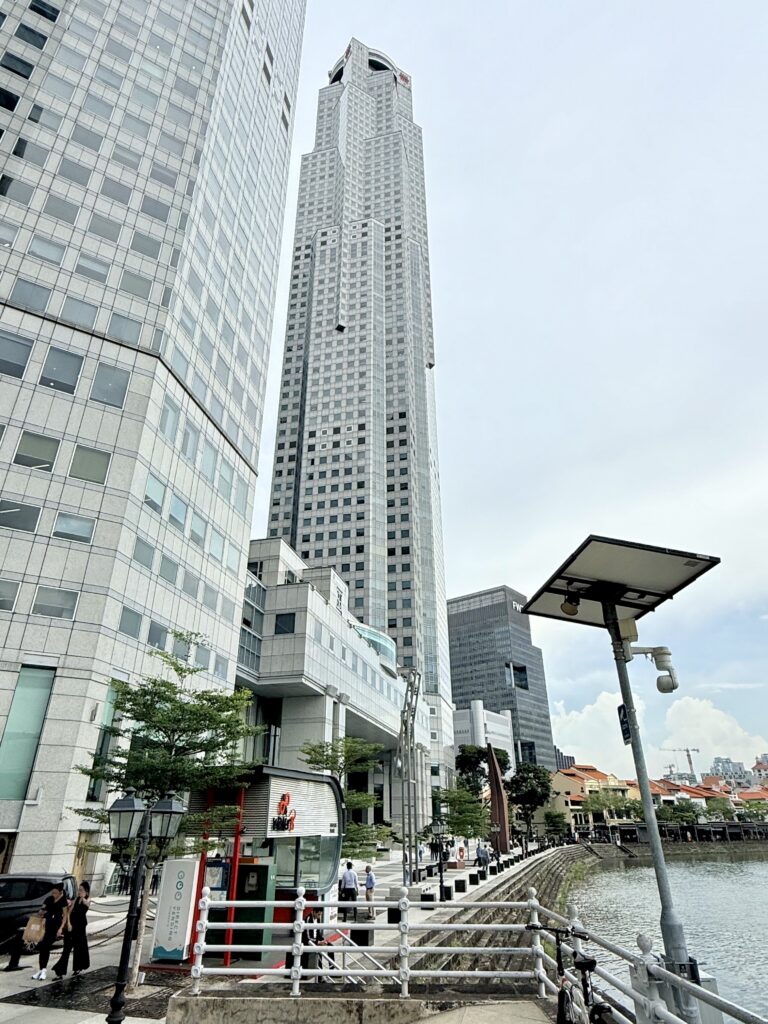
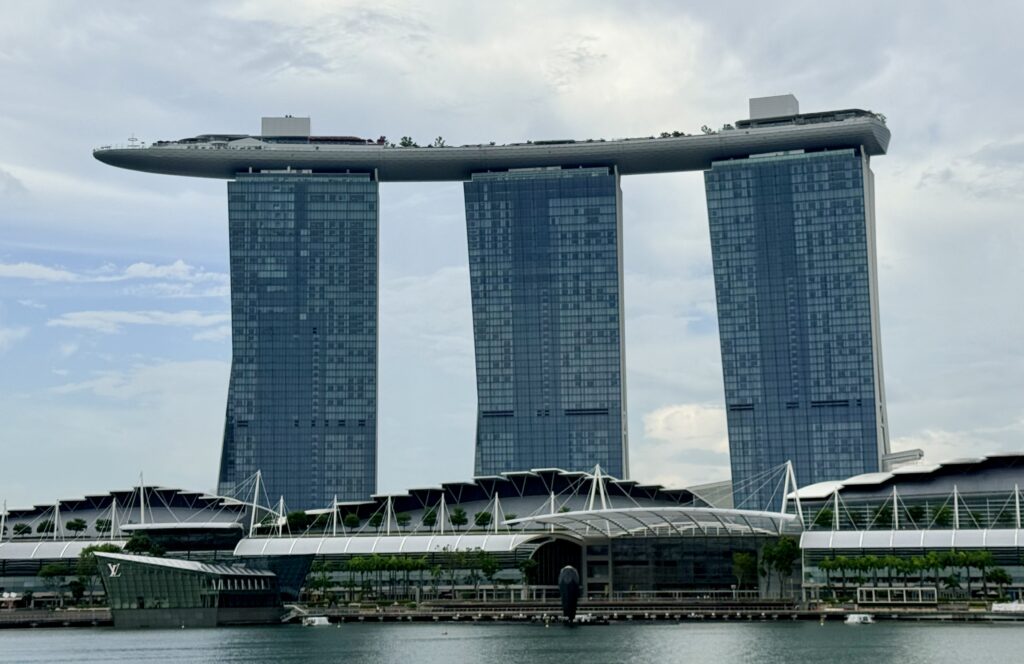
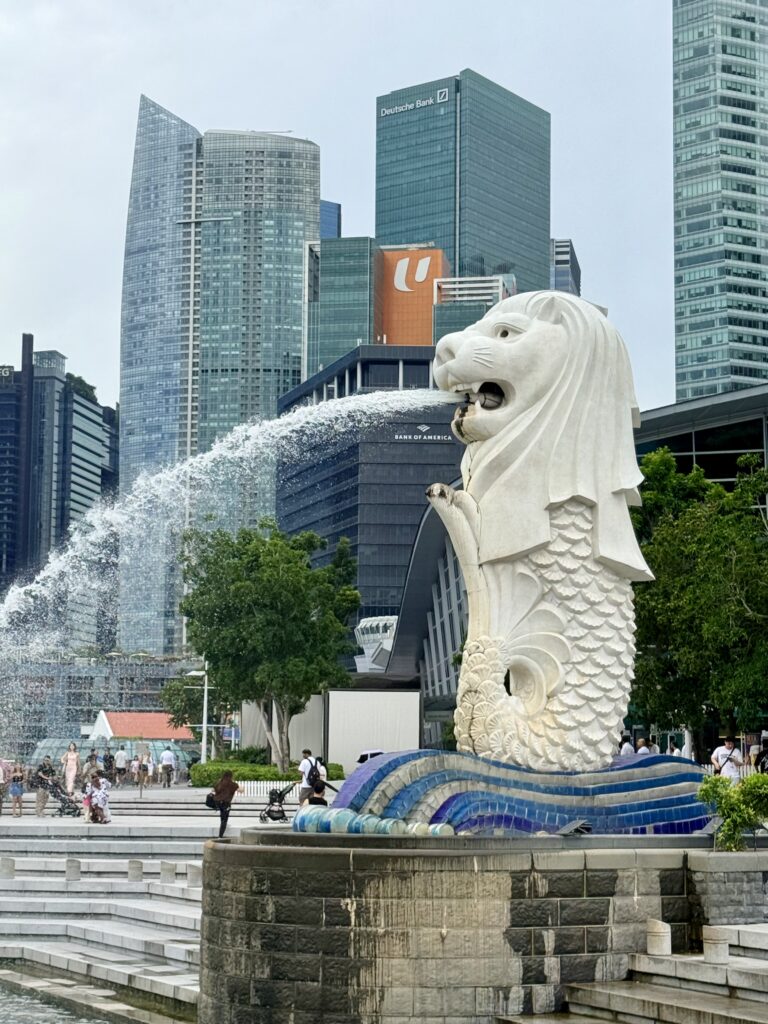
After eating our chili crab, it was getting closer to boarding time, so we made one last run to visit the Merlion statue. Here are some photos along the way.
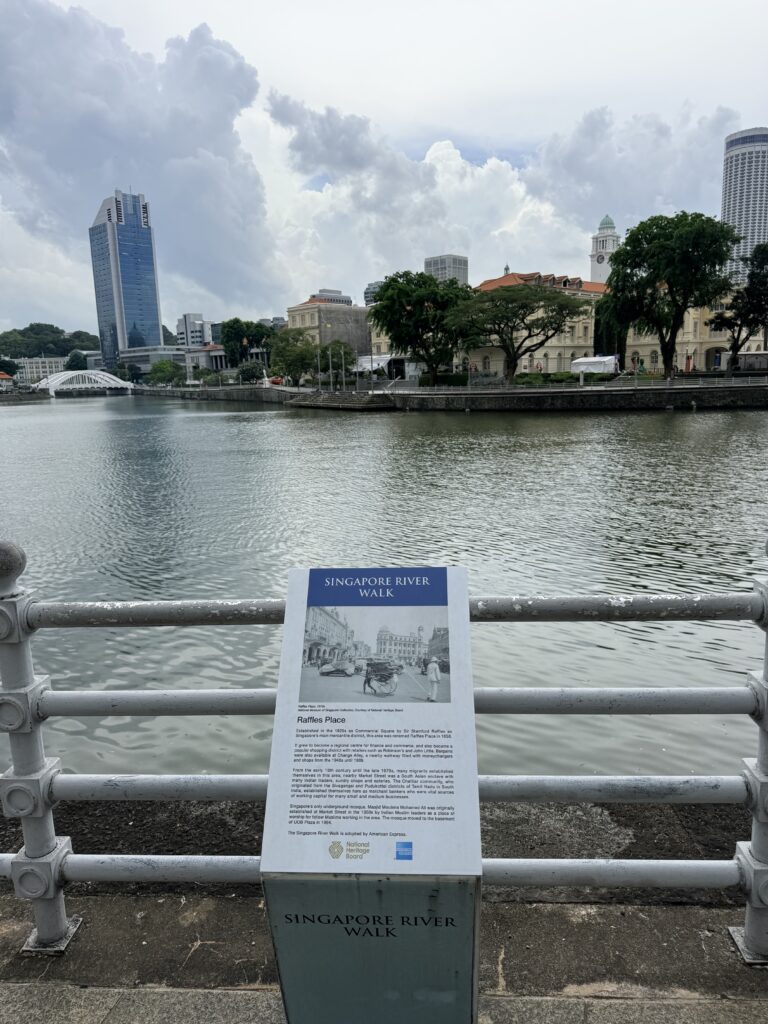
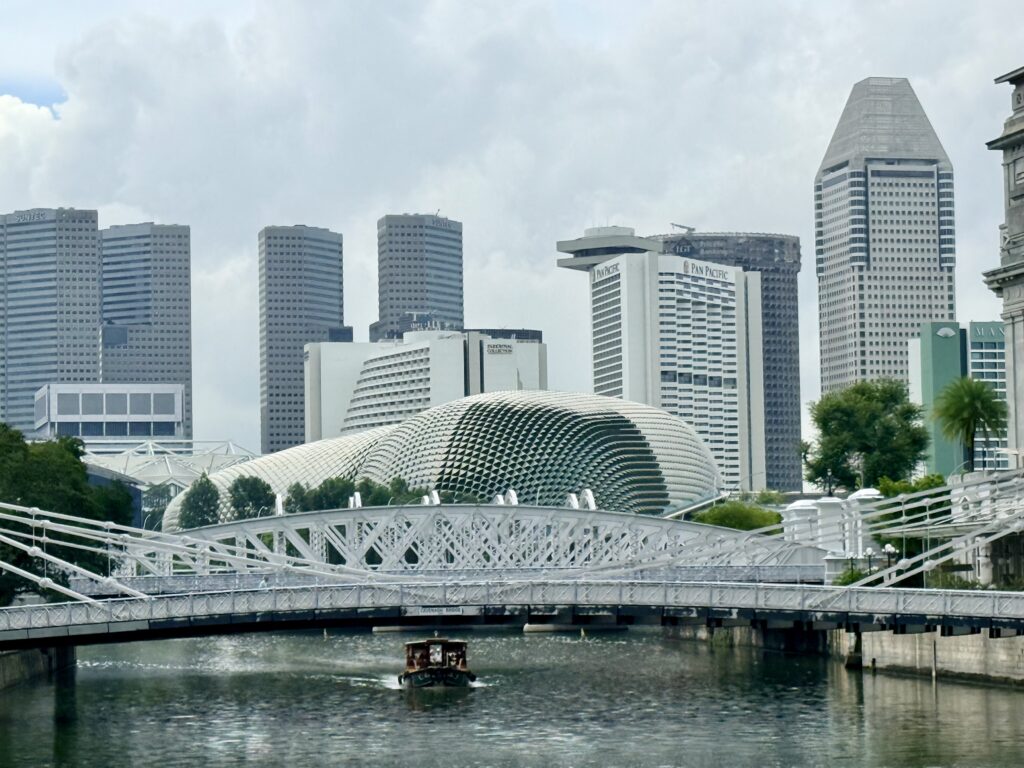
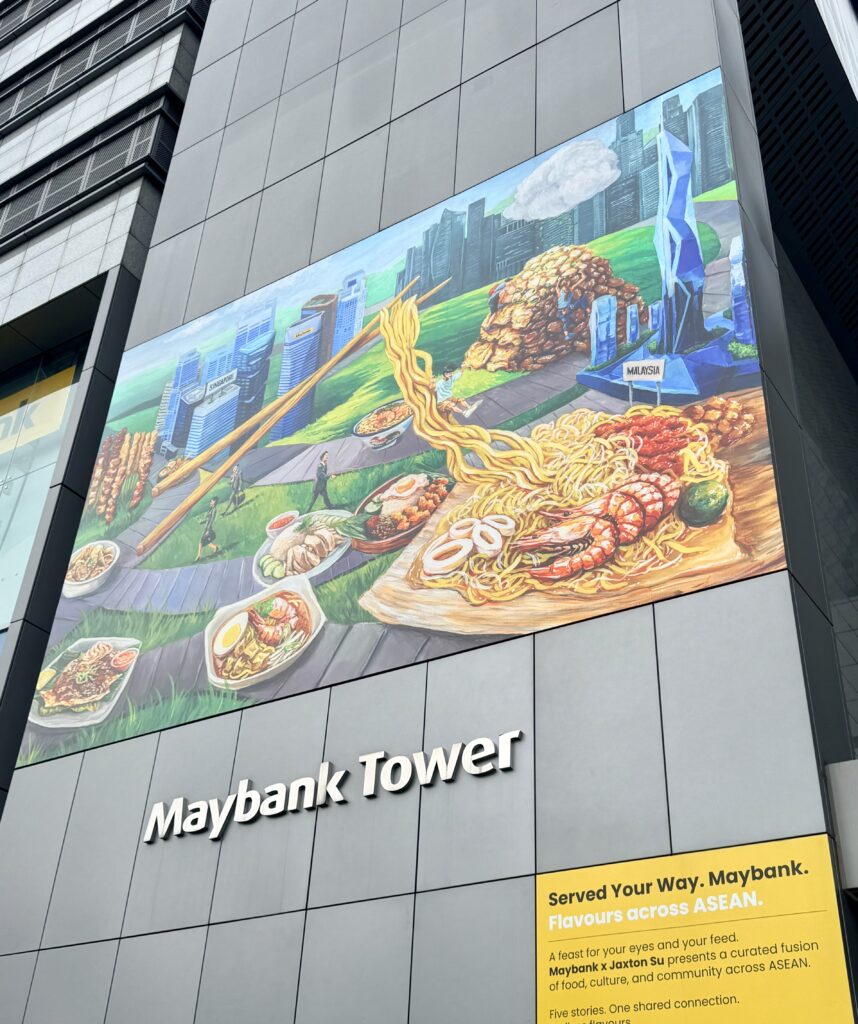
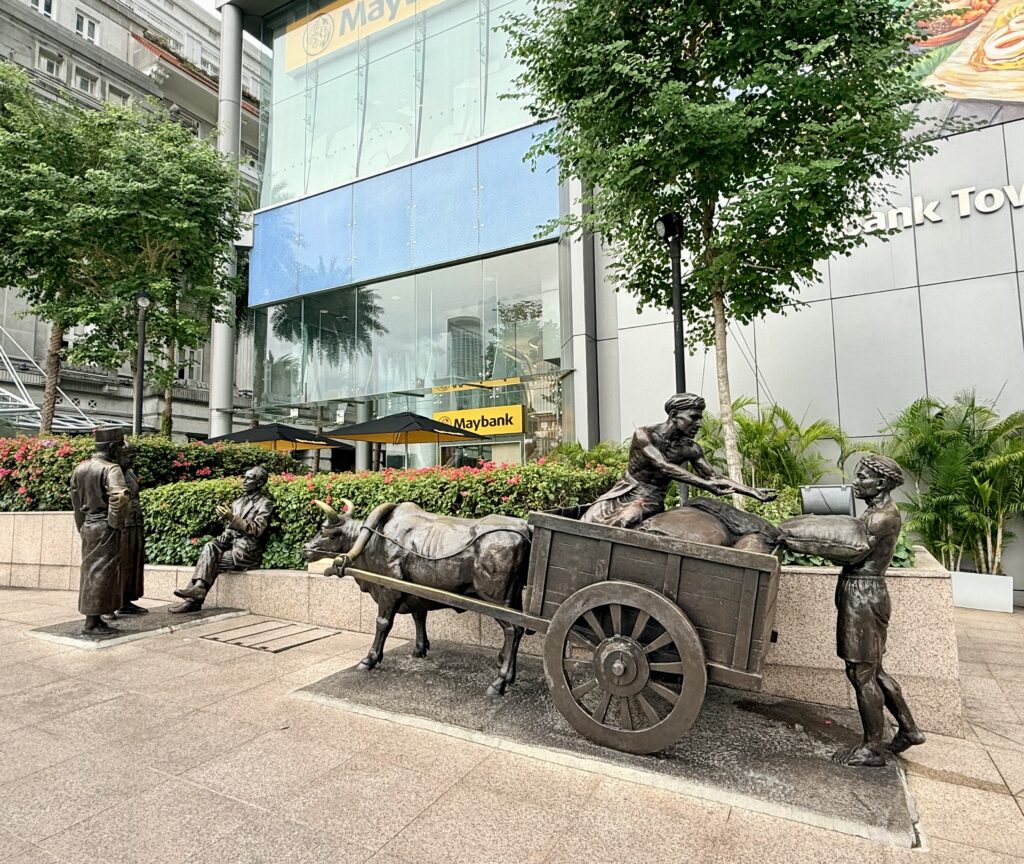
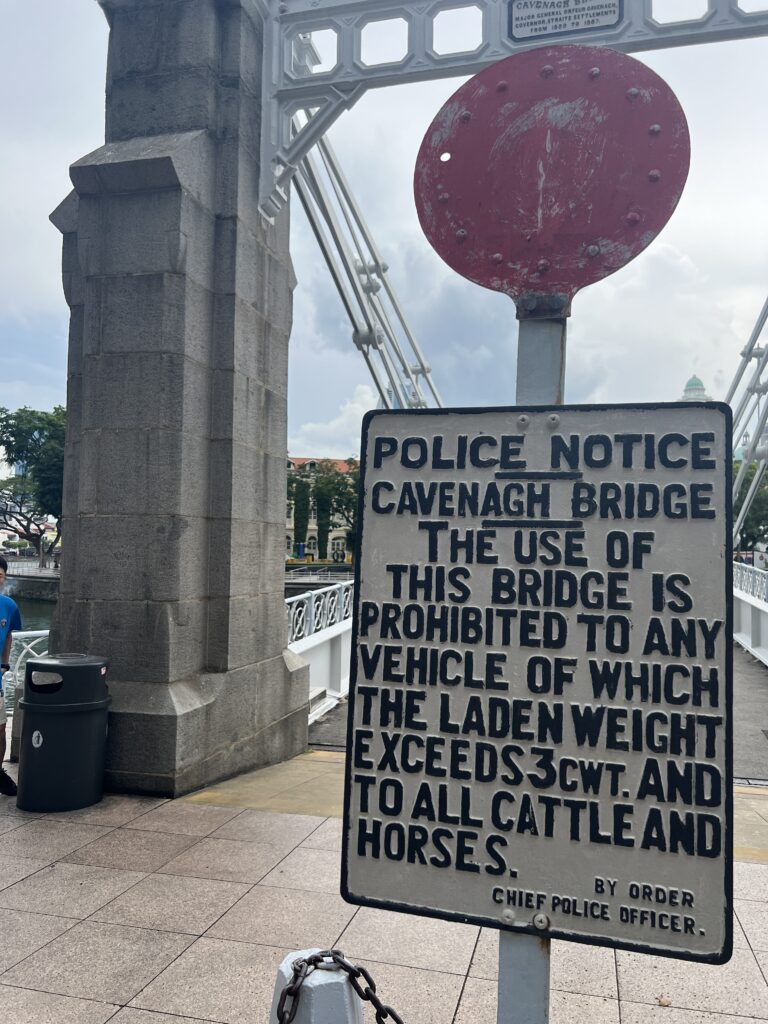
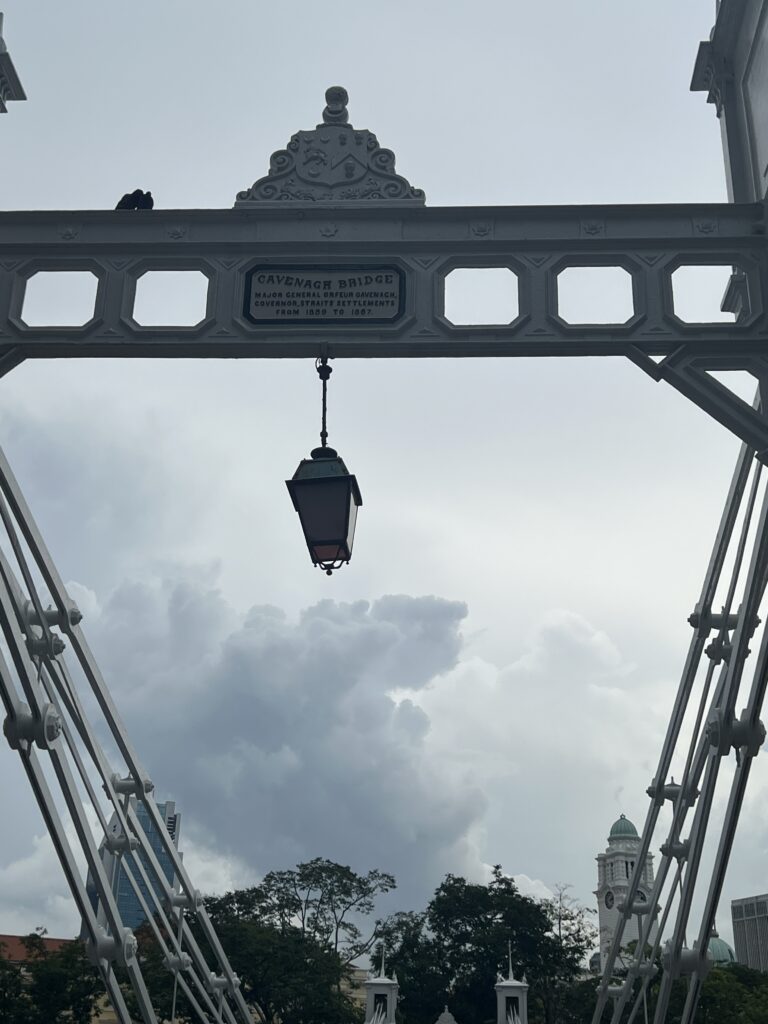
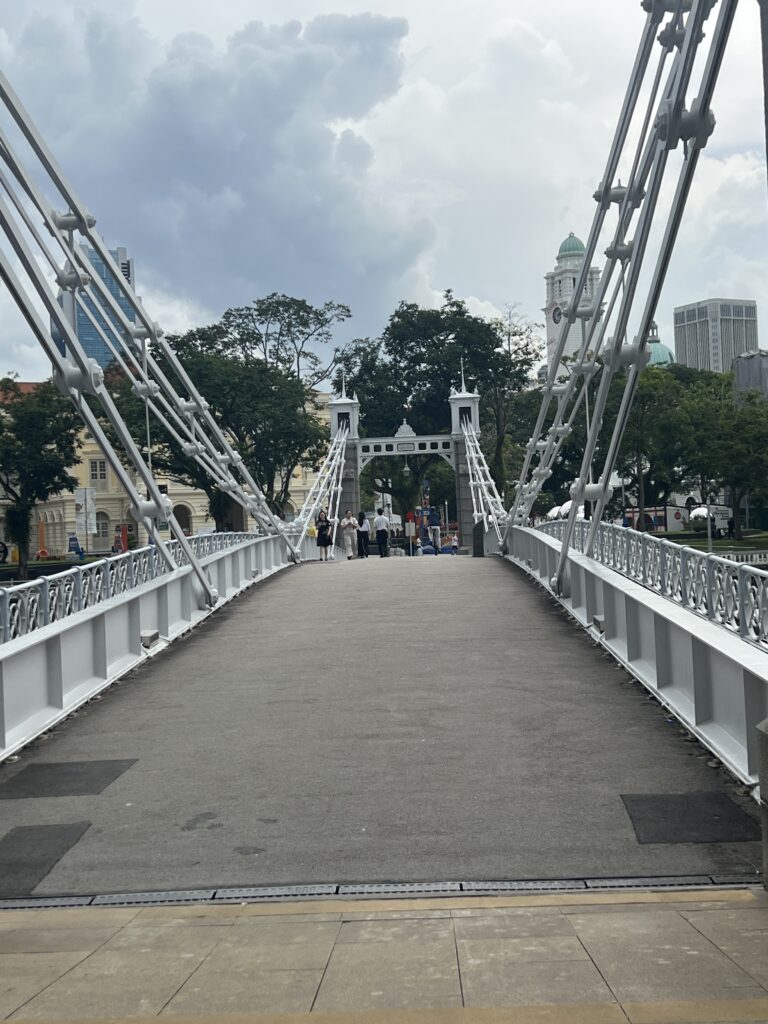
Cavenagh Bridge is a pedestrian bridge that spans across the Singapore River. Located near the river’s mouth in the Downtown Core Planning Area of Singapore’s Central Area, it is the oldest bridge in Singapore that exists in its original form. Opened in November 1869 to commemorate Singapore‘s Crown colony of the Straits Settlements status in 1867, the bridge’s steel structure was created in and imported from Glasgow, Scotland. It was designed by chief engineer George Chancellor Collyer and consulting engineer Rowland Mason Ordish.
Named after former governor Sir Orfeur Cavenagh, upon its opening the bridge was too low for larger boats to pass under during high tide. Its location and cost were criticised, as it was a longer route from the government offices and godowns as compared to the temporary bridge that was in place. By the 20th-century, Cavenagh Bridge carried the bulk of motor traffic and the congestion had worsened to a point where another bridge was needed. In 1910, Anderson Bridge was completed and motor traffic was redirected across it, while Cavenagh Bridge served pedestrian and rikisha traffic. A sign prohibiting motor vehicles and animals from crossing was erected at Cavenagh Bridge, while still stands to this day.
Prior to the creation of Cavenagh Bridge, people crossed the river via ferry, which cost a duit, or by Elgin Bridge, which was built in 1862. Cavenagh Bridge was first proposed in 1867, in commemoration of the creation of the Crown colony of the Straits Settlements that same year; Singapore was a part of the Straits Settlements. The bridge was planned to cross the Singapore River, at its mouth, and would connect Esplanade Park and Fullerton Square.
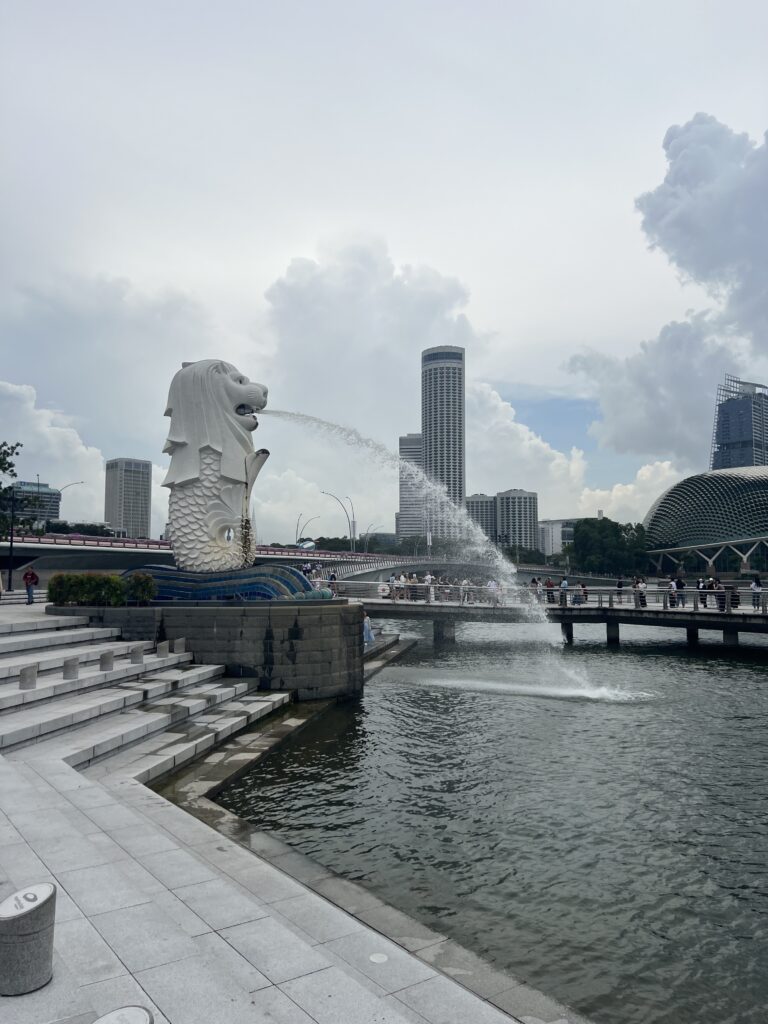
The Merlion is a 8.6-meter tall, 70-tonne mythical creature statue with a lion’s head and fish body located at Merlion Park, overlooking Marina Bay in Singapore. Unveiled in 1972, it symbolizes Singapore’s origins as a fishing village (Temasek) and its original name Singapura (Lion City). The statue, designed by Kwan Sai Kheong and built by Lim Nang Seng, is a key tourist landmark, frequently visited for its water-spouting fountain and panoramic city skyline views.
Key Facts & Information:
- Location: Merlion Park, near One Fullerton, Singapore.
- The Structure: The main statue is 8.6 meters tall and weighs 70 tonnes, accompanied by a 2-meter-tall “cub” statue nearby.
- Symbolism: The lion head represents the city’s history, while the fish body represents its origin as a fishing village.
- History: The statue was commissioned in 1971, completed in 1972, and officially installed by then-Prime Minister Lee Kuan Yew on September 15, 1972.
- Relocation: Originally located at the mouth of the Singapore River, it was moved 120 meters away to its current site in 2002 after the Esplanade Bridge obstructed its view from the waterfront.
- Other Statues: There are other official Merlion statues in Singapore, including one at Mount Faber and a pair in Ang Mo Kio.
After our day in Singapore it was time to head back to the ship. It was a fun day with Kevin and Holly as we visited under and above the city.
4 thoughts on “Day 51 April 27 – Singapore”
Looks like a great day!! Did you like the Chili Crab?
The Chili Crab was great!!! We had it for the first time last year and knew we needed to get it again.
I
Was Buda a real person? How did he become a God? I haven’t travel very far but Singapore looks pretty fancy to me. The public sign on the bridge is in English. What is the spoken language?
Doris lived in Singapore. I asked her about it she said that she stayed in her house most of the time. Knowing Doris, she must have been afraid to go out by herself except when O’Neil was home.
Yes, the Buddha was a real historical person—Siddhartha Gautama—who lived in northern India and Nepal roughly 2,500 years ago (c. 6th to 5th century BCE). While his life story includes legendary elements, scholars generally agree he was a human teacher whose teachings founded Buddhism.
Background: Born a prince (Siddhartha Gautama) in the Shakya clan.
Renunciation: He left a life of luxury at age 29 to seek the end of human suffering.
Enlightenment: He achieved “awakening” at age 35, becoming the Buddha.
Teaching: He spent 45 years teaching his philosophy before passing away.
He was not viewed as a god, but as an awakened human being.
Singapore has four official languages: English, Malay, Mandarin, and Tamil, reflecting its multi-ethnic society. English is the primary language of business, government, and education, while Malay is the national language, and Mandarin and Tamil serve their respective communities. Singlish (a localized English creole) is common in daily conversation