
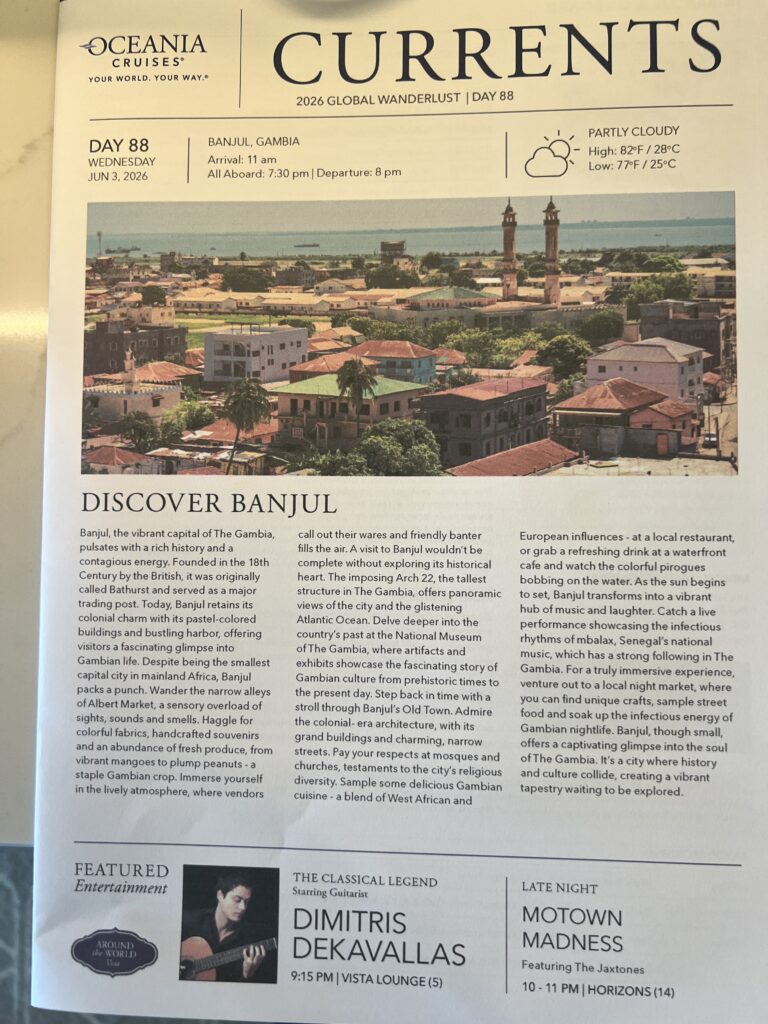
Day 88 Wednesday June 3rd (32 days to go) —We had decided to only take Oceania ship excursions while in the eastern and western African ports of call. Today was a good example as to why this was a smart decision. The country of The Gambia rivaled that on Madagascar in terms of poverty.
The Gambia, officially the Republic of The Gambia, is a country in West Africa. Geographically, the Gambia is the smallest country in continental Africa; it is bounded by Senegal on all sides except for the western part, which is bordered by the Atlantic Ocean.
Its territory is on both sides of the lower reaches of the Gambia River, which flows through the center of the country and empties into the Atlantic. The national namesake river demarcates the elongated shape of the country, which has an area of 11,300 square kilometers (4,400 sq mi) and a population of 2,422,712 people at the 1 May 2024 Census which is a 30.45% population increase from 2013. The capital city is the island Banjul, formerly called Bathurst during the colonial era, which is the most extensive metropolitan area in the country. The second- and third-largest cities are Serekunda and Brikama. Other significant cities are Kanifing and Farafenni in the north bank, Basse in Upper River Region, and Soma in lower river region.
Arab Muslim merchants traded with indigenous West Africans in the Gambia, under an arrangement known as the trans-Saharan trade, using a barter exchange system. Throughout the 9th and 10th centuries, Islam was introduced by the Arab traders to Western Sudan. In 1455, the Portuguese were the first Europeans to enter the Gambia, although they never established significant trade there. The British Empire established a colony in 1765. In 1965, 200 years later, the Gambia gained independence under the leadership of Dawda Jawara. Jawara remained the president, winning several elections, until he was overthrown by Yahya Jammeh in a bloodless coup on July 22, 1994.
Adama Barrow was elected as the Gambia’s third president in December 2016. He defeated Yahya Jammeh with the help of a coalition of other opposition political parties. Jammeh initially accepted the results, but then refused to leave office claiming he was cheated, triggering a constitutional crisis. The Economic Community of West African States (ECOWAS) conducted a military intervention and achieved Jammeh’s removal two days after his term was initially scheduled to end. In a swearing-in ceremony at the Gambian embassy in Dakar, Senegal, on January 19, 2017, Adama Barrow formally became president of the Gambia.
The Gambia’s economy is dominated by farming, fishing, and especially tourism. In 2022, 17.2% of the population lived in extreme poverty, defined as living on less than US$2.15 (2017 PPP) per day. The Gambia is a founding member of the ECOWAS. It rejoined the Commonwealth of Nations in 2018 after previously withdrawing in 2013. English is the country’s sole official language; it became widely used during British rule.
According to the World Health Organization, an estimated 78.3% of Gambian girls and women have suffered female genital mutilation.
LGBT activity is illegal, and punishable with life imprisonment, although the Barrow administration promised not to prosecute consenting same sex couples, it has also said it will not repeal the law.
The Daily Observer reporter Ebrima Manneh is believed by human rights organisations to have been arrested in July 2006 and secretly held in custody since then. Manneh was reportedly arrested by Gambia’s National Intelligence Agency after attempting to republish a BBC report criticizing President Yahya Jammeh. Amnesty International considers him to be a prisoner of conscience and named him a 2011 “priority case”. In 2019 The Gambian newspaper The Trumpet reported that Manneh had died in captivity at some point in mid-2008.
When The Gambia gained independence from Britain in 1965, there was a concern about confusion with another newly independent African country, Zambia. To avoid this, the Gambian government officially requested that the definite article “The” be retained in the country’s name. The Permanent Committee on Geographical Names, which advises the British government, accepted this request, making “The Gambia” the official short-form name
The Gambia is one of only two countries in the world where the definite article is officially part of the name, the other being The Bahamas
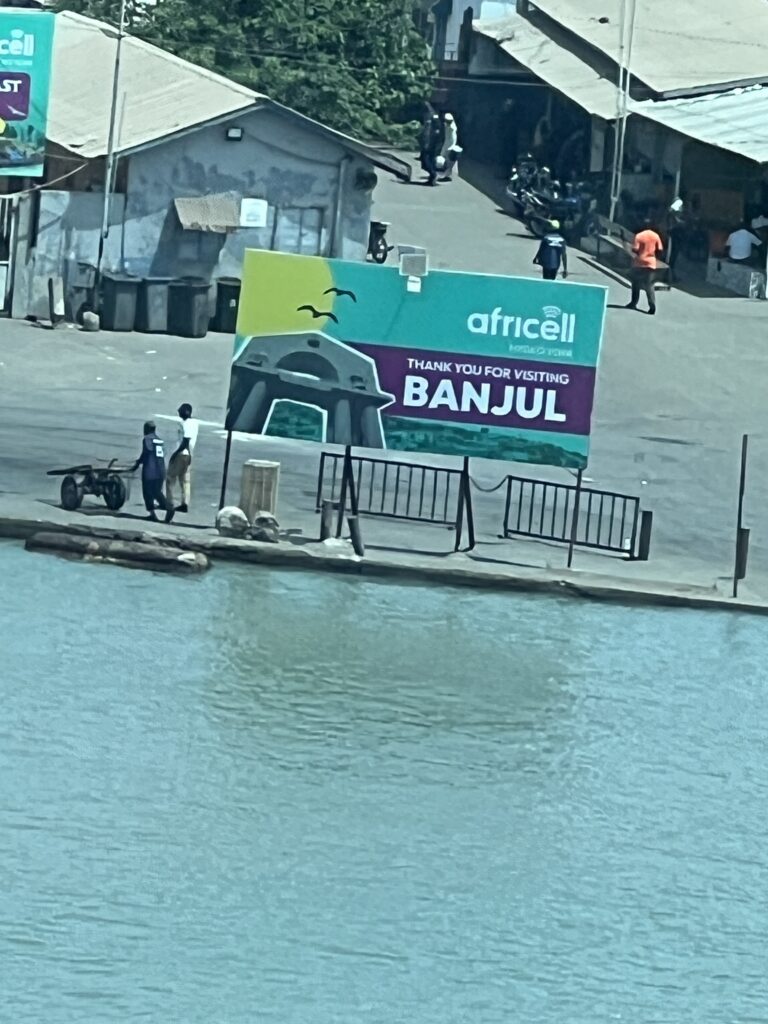
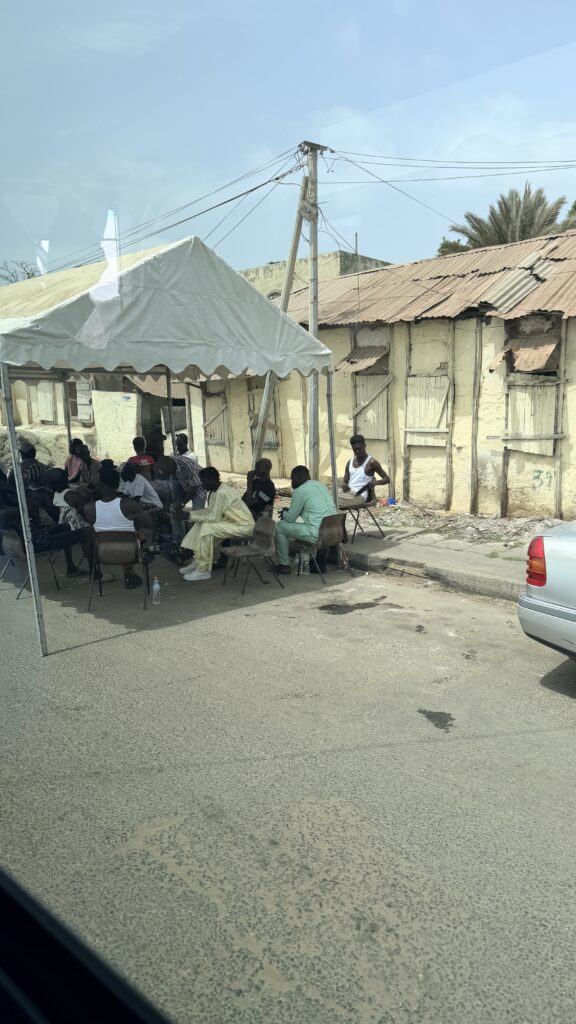
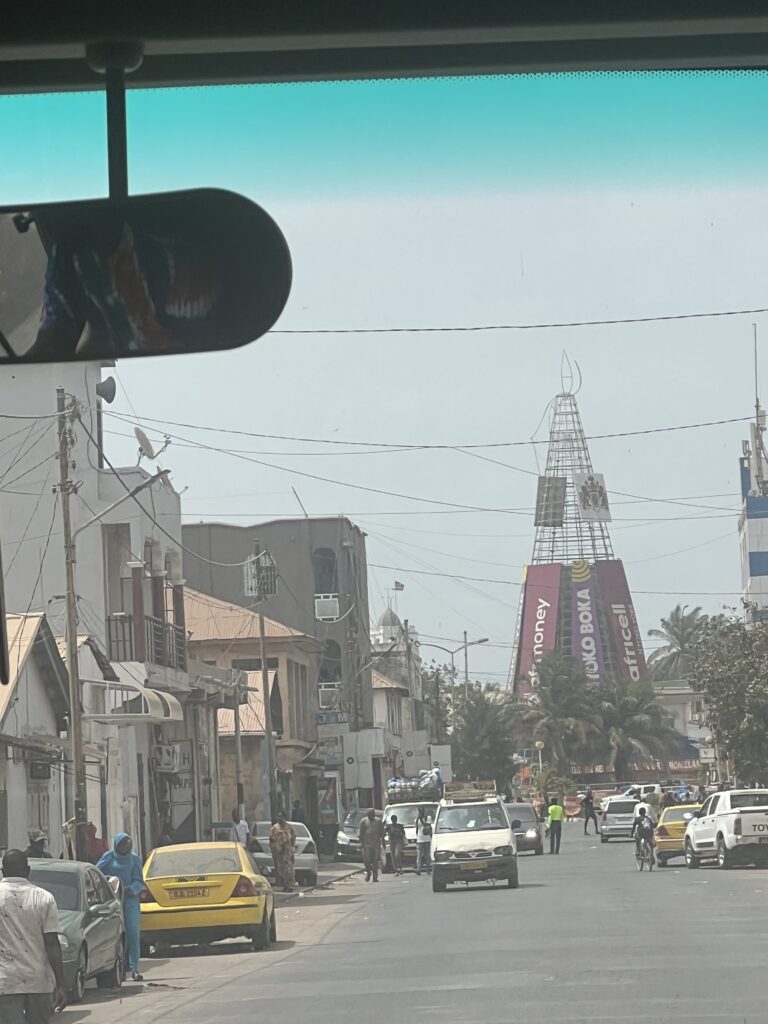
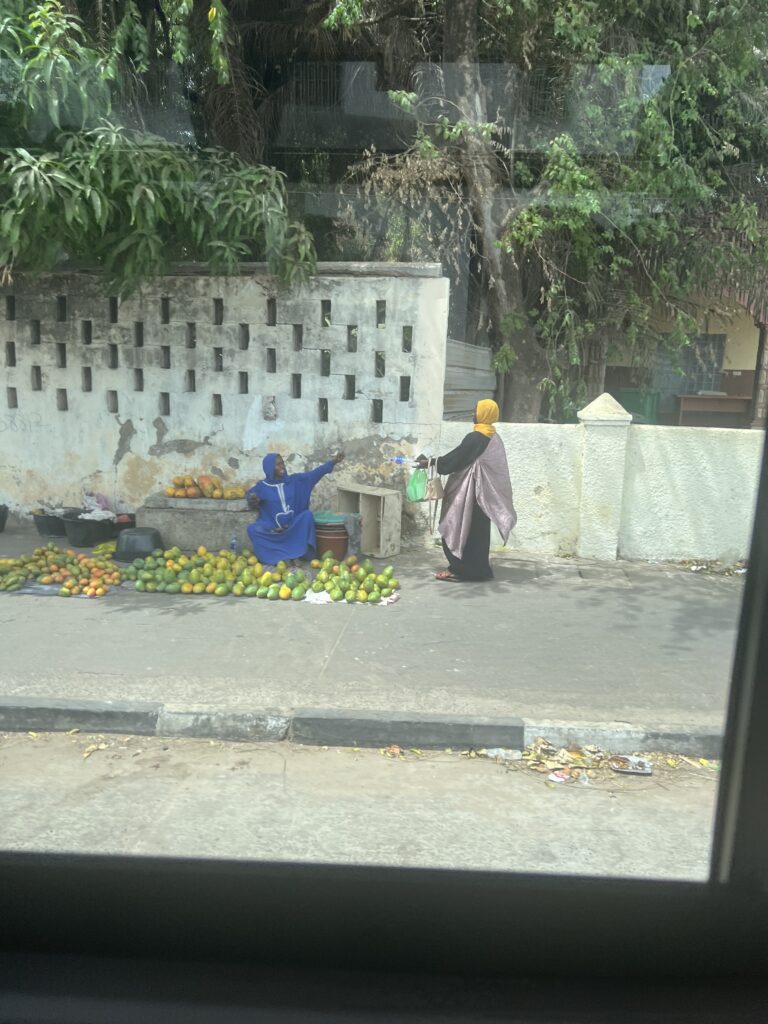
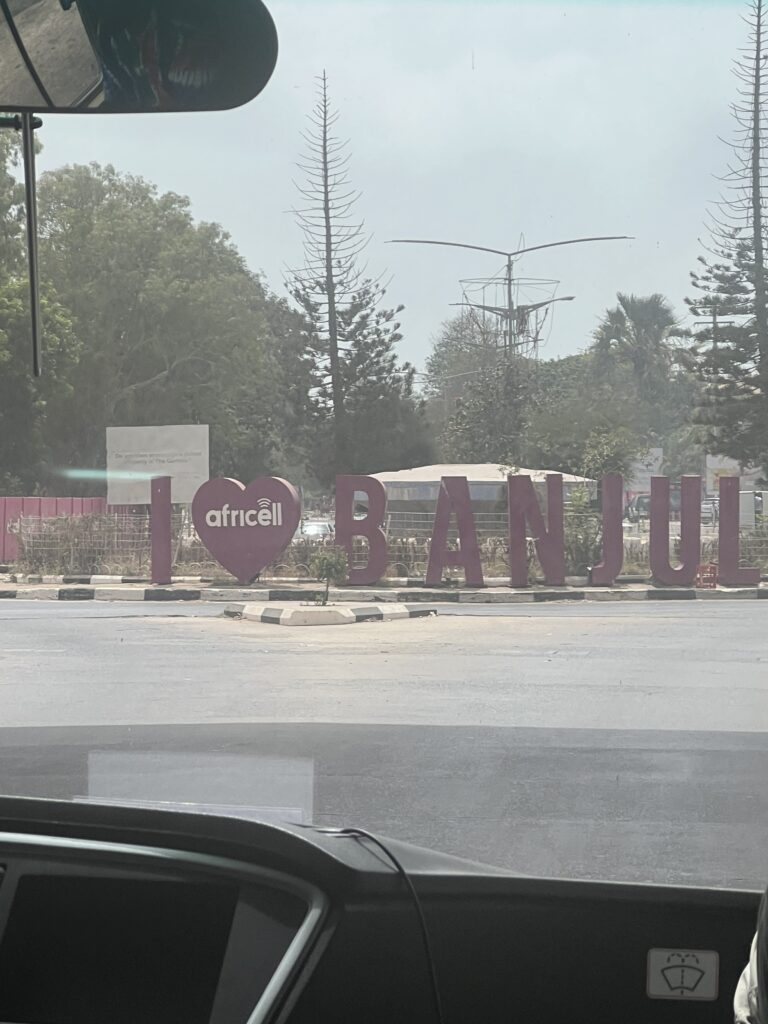
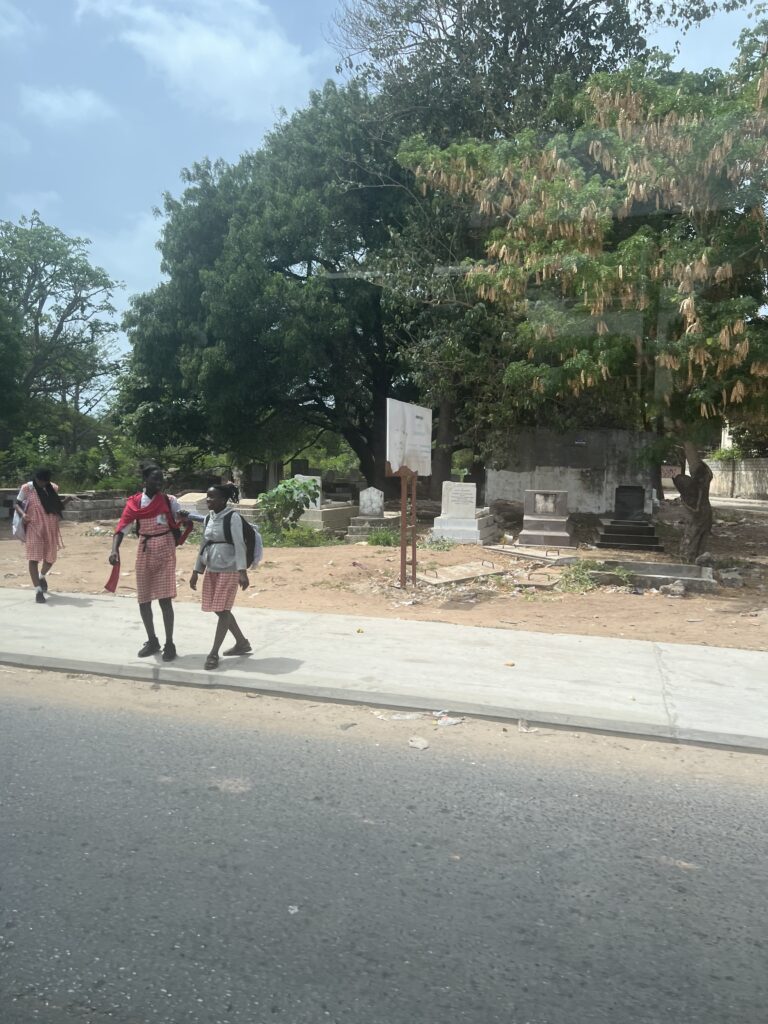
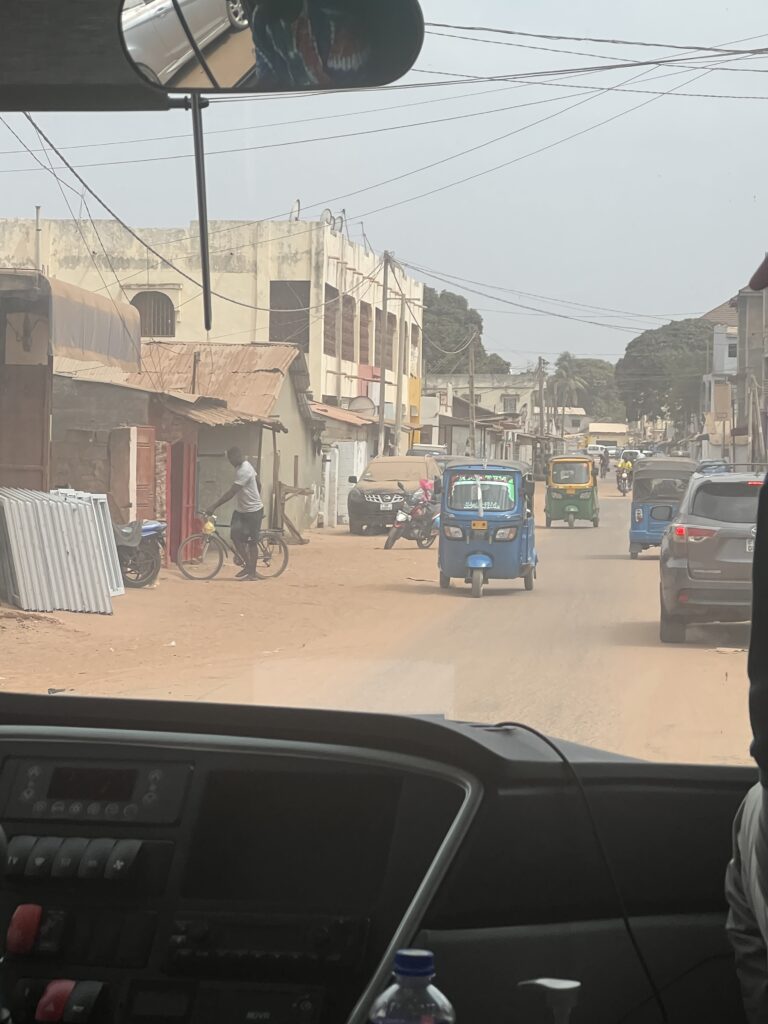
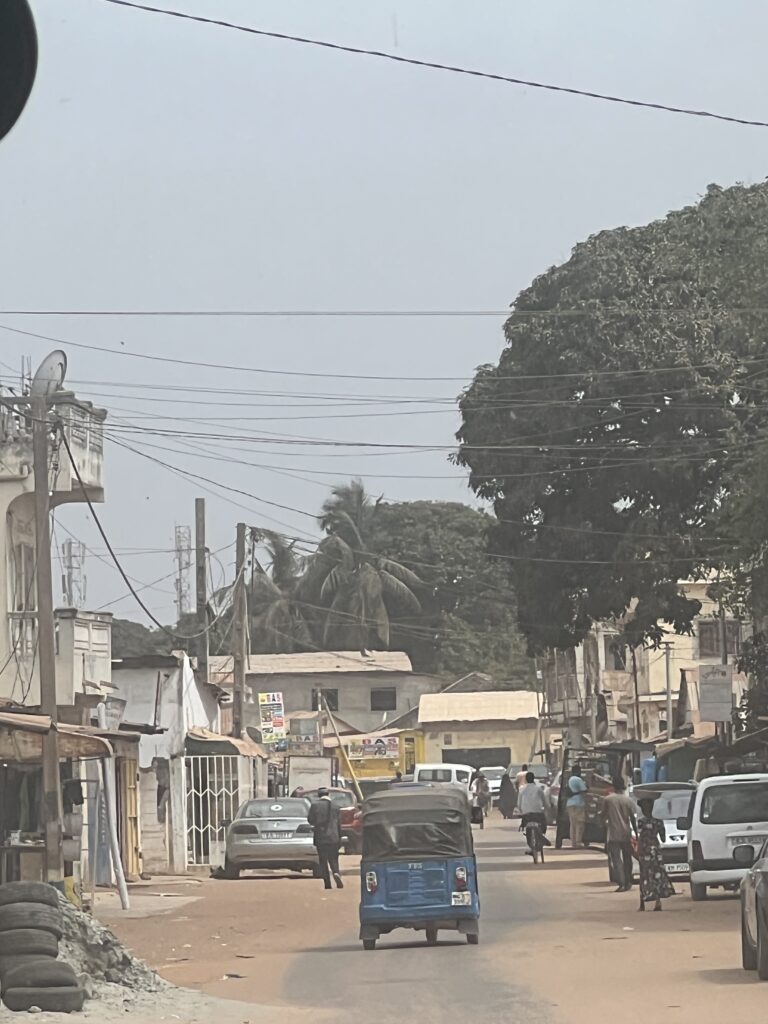
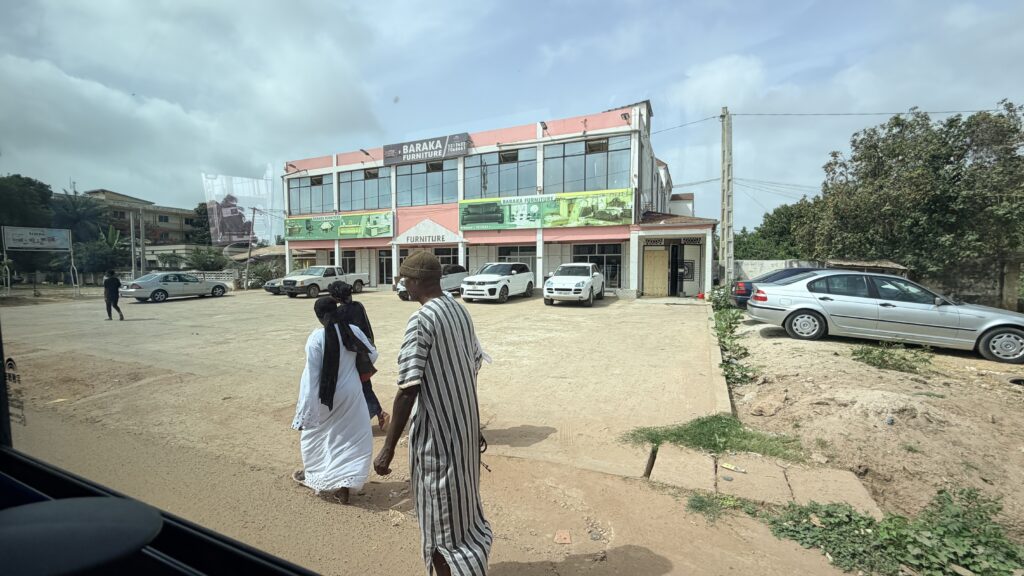
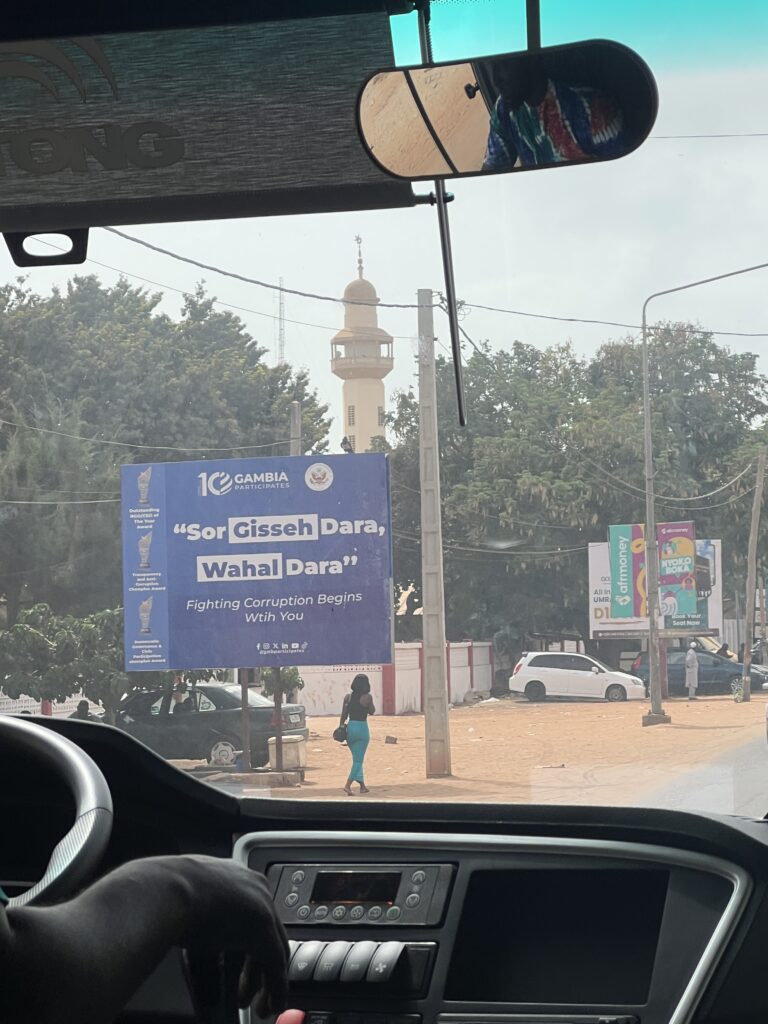
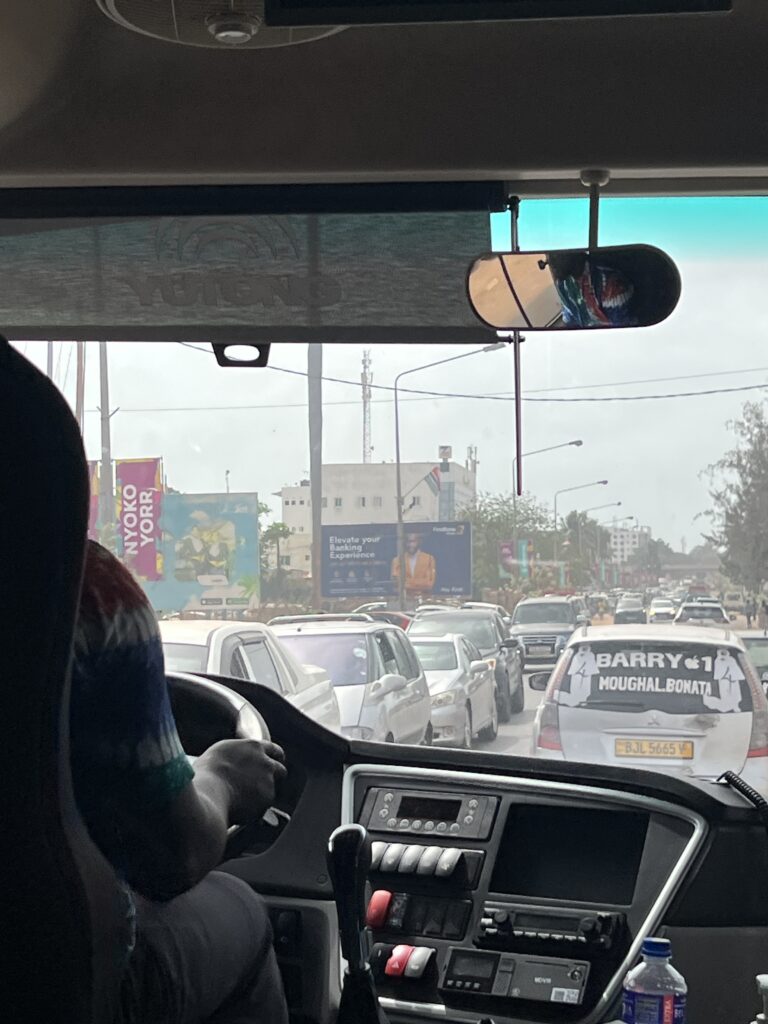
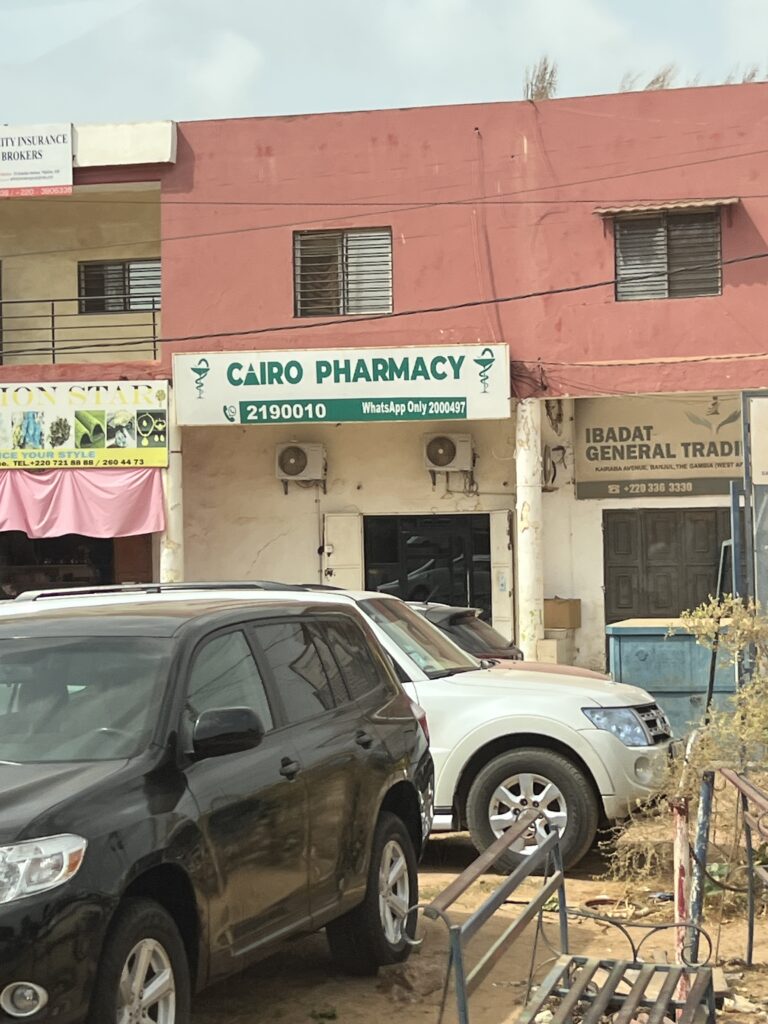
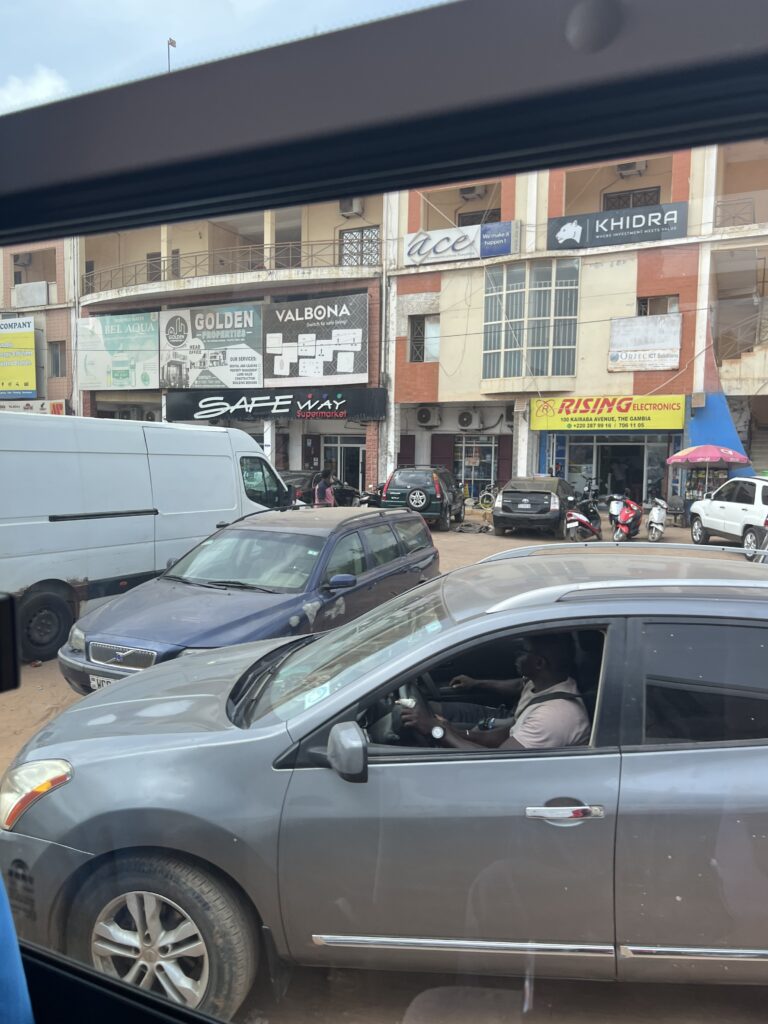
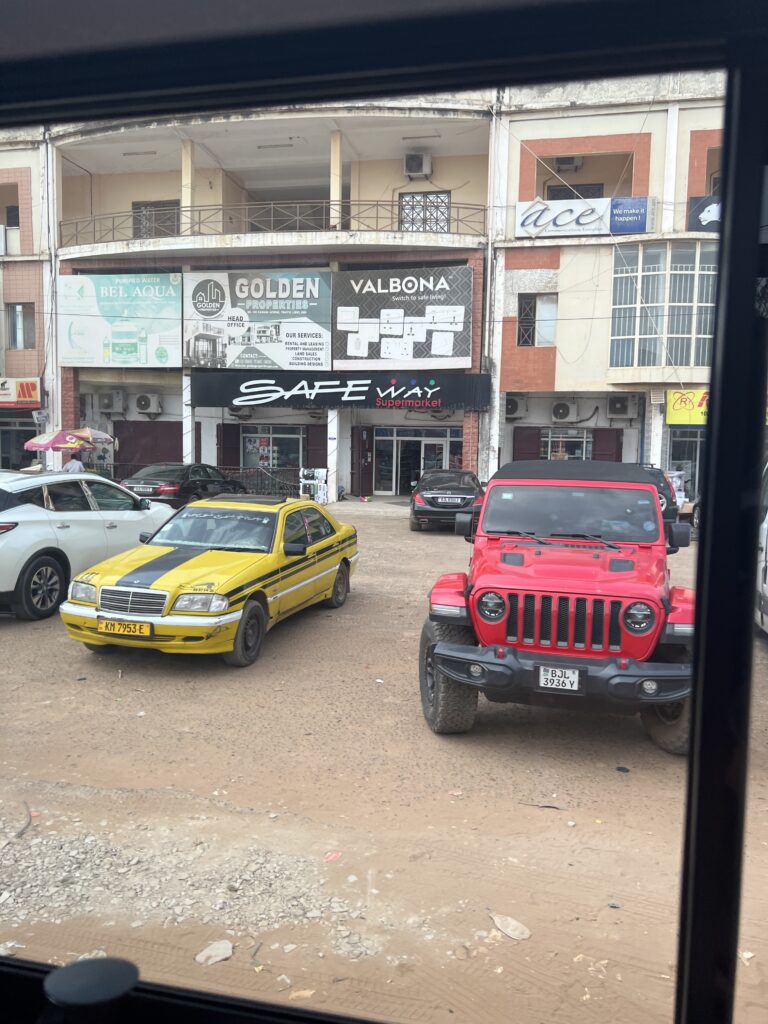
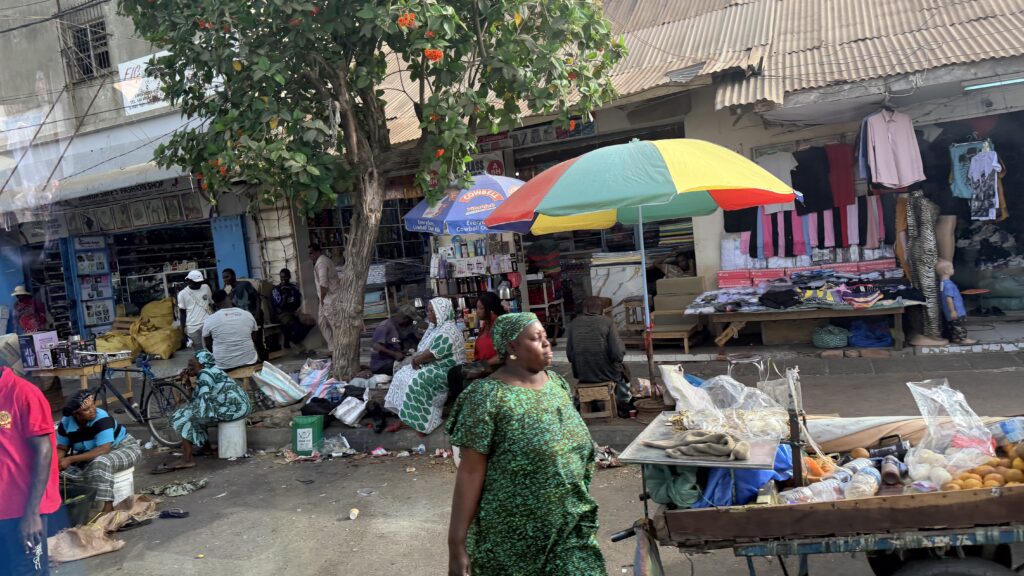
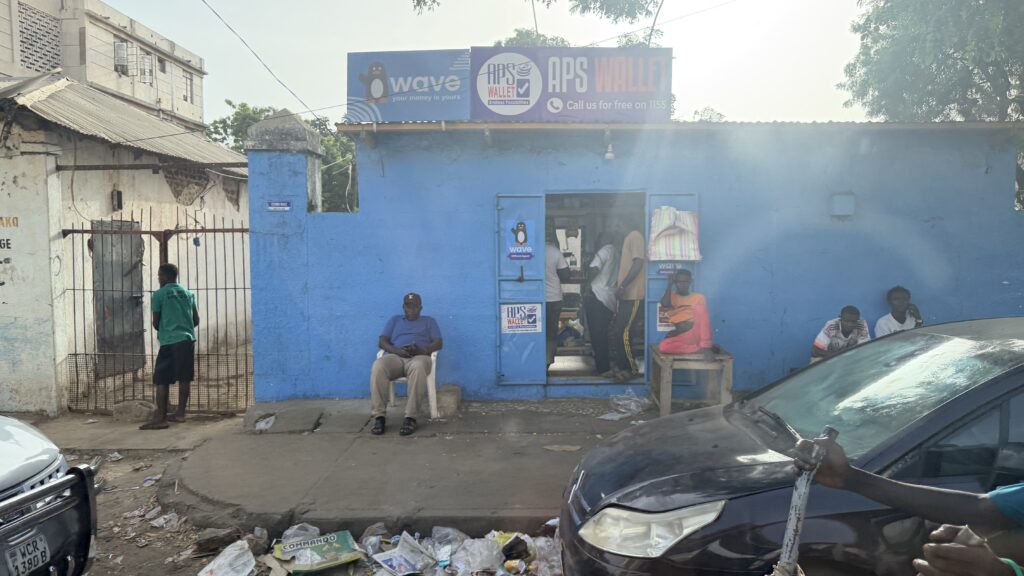
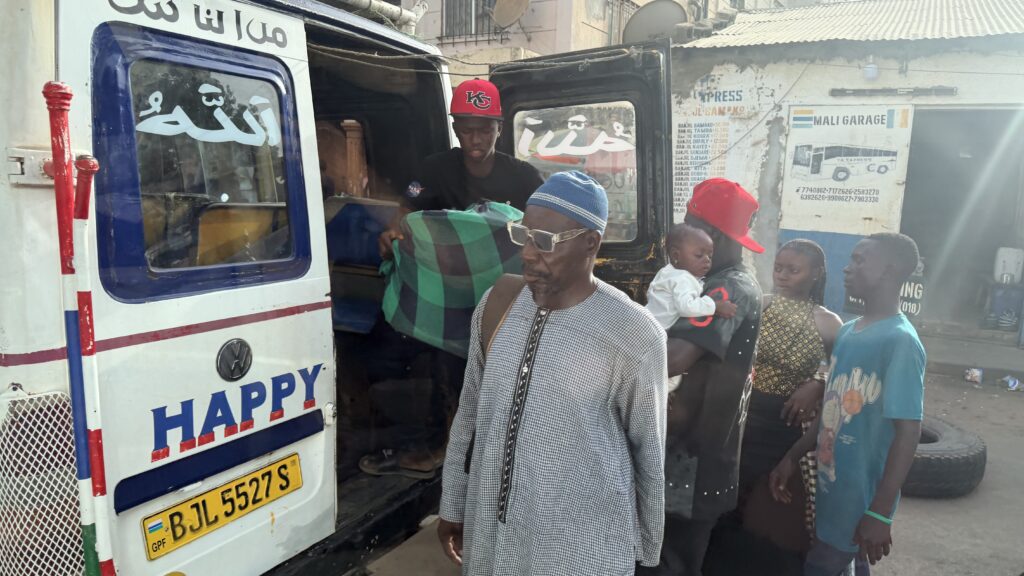
Photos and a video taken after we left the port and driving through the streets of Banjul on our way to the first excursion stop.
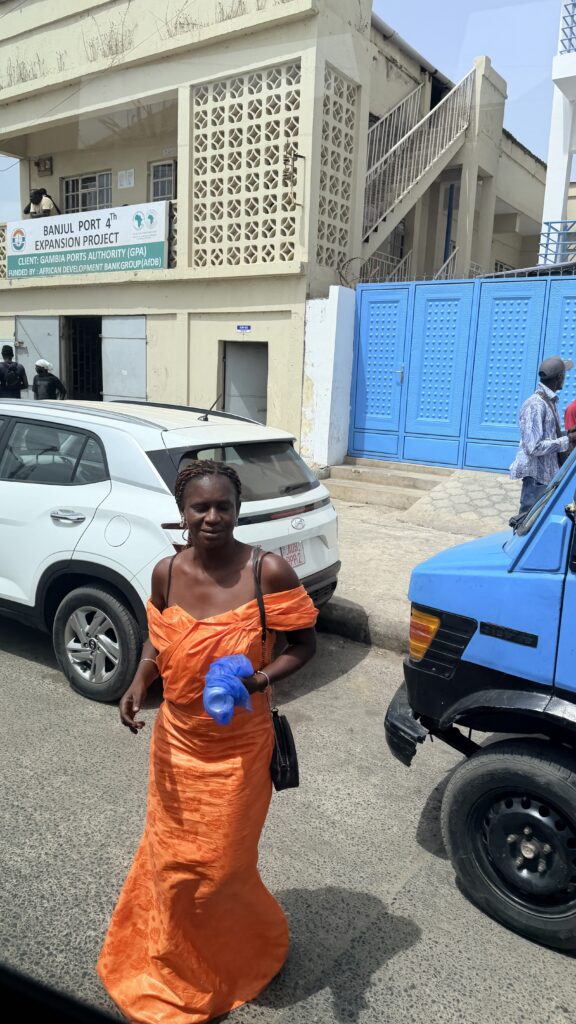
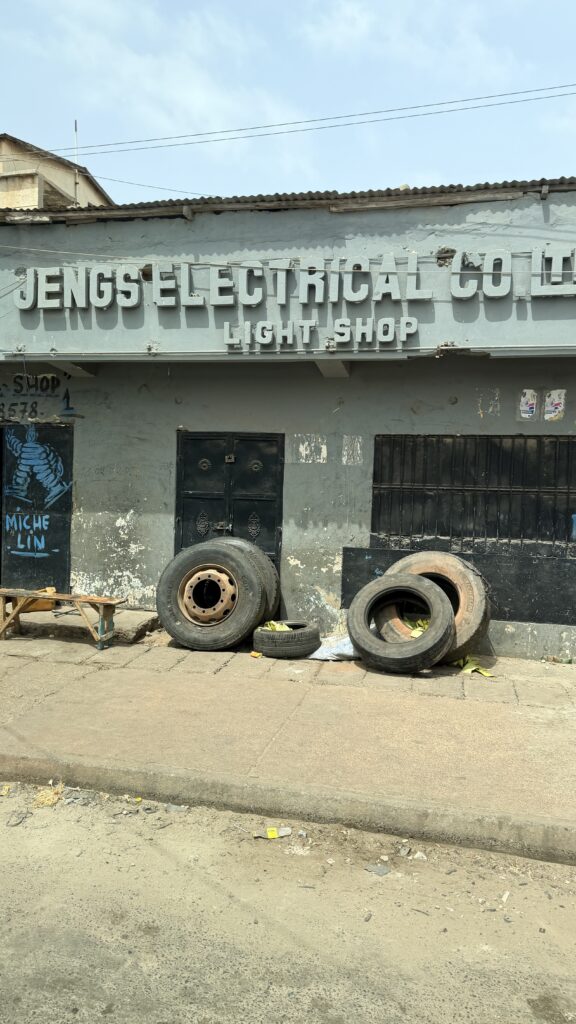
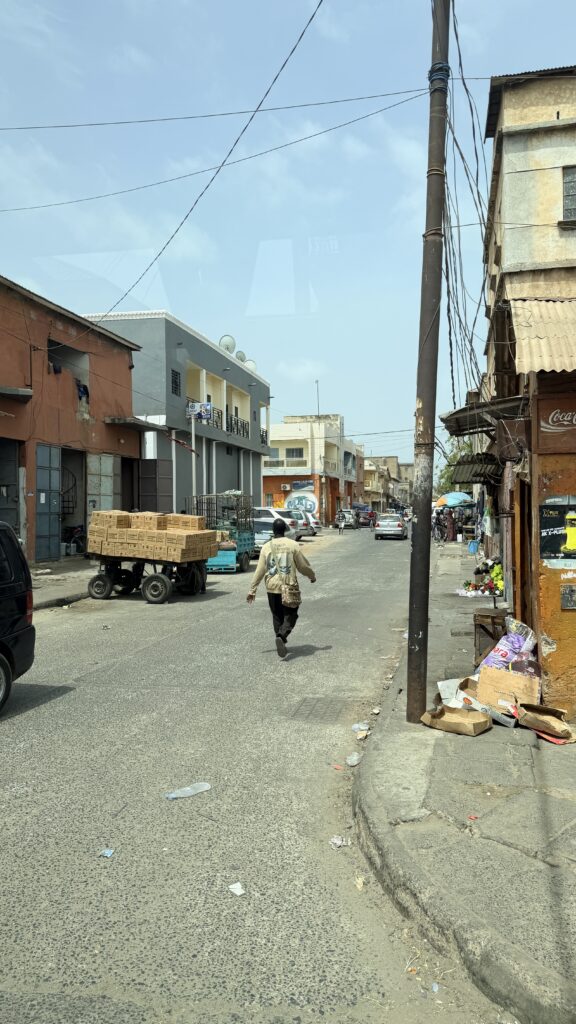
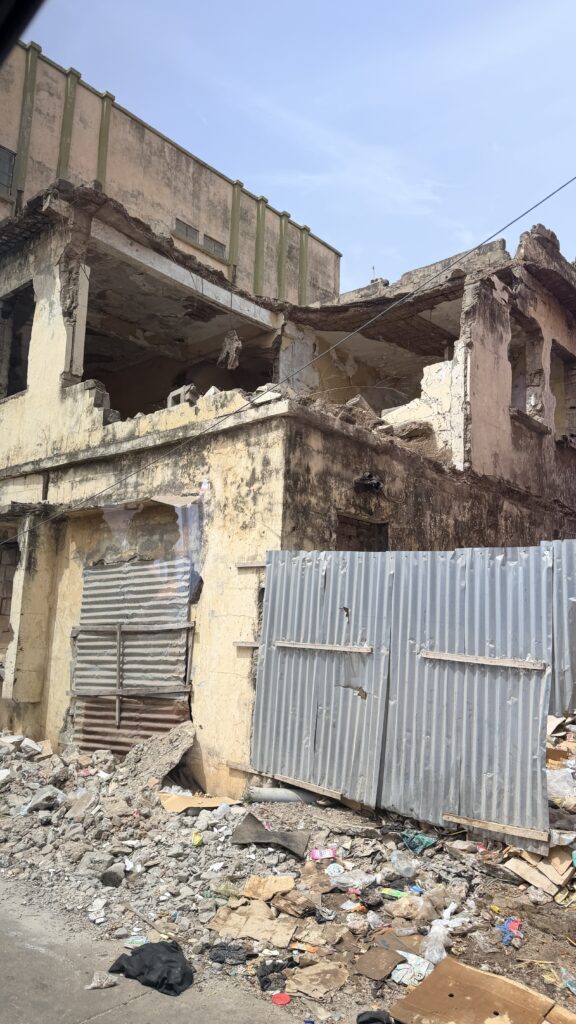
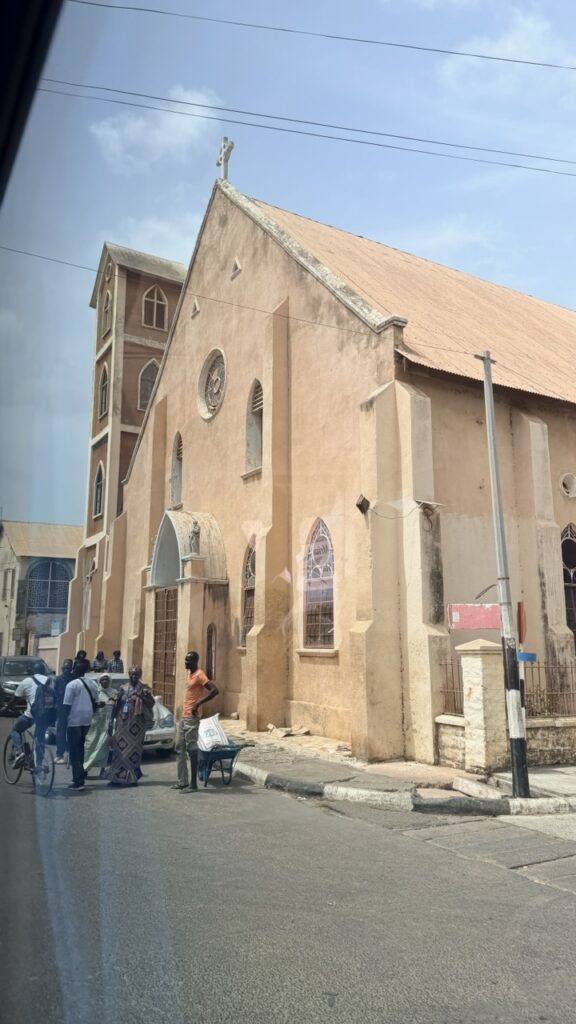
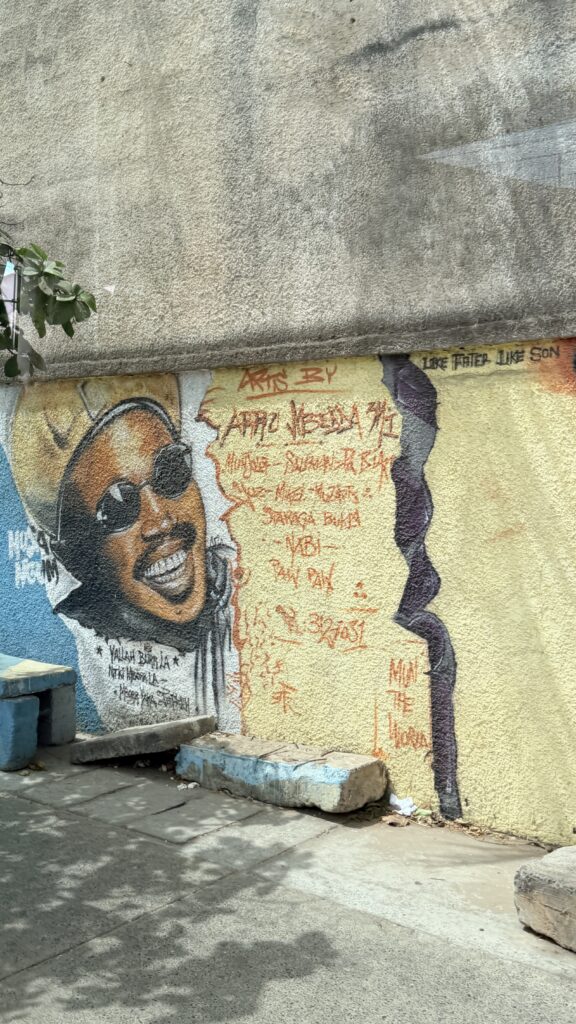
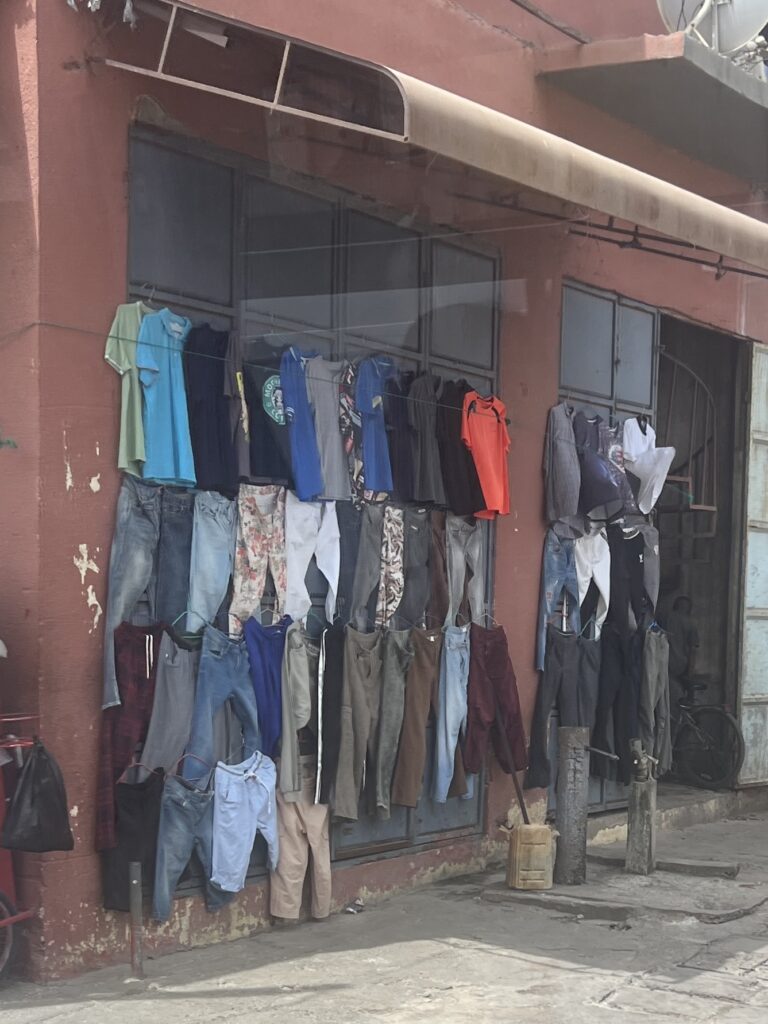
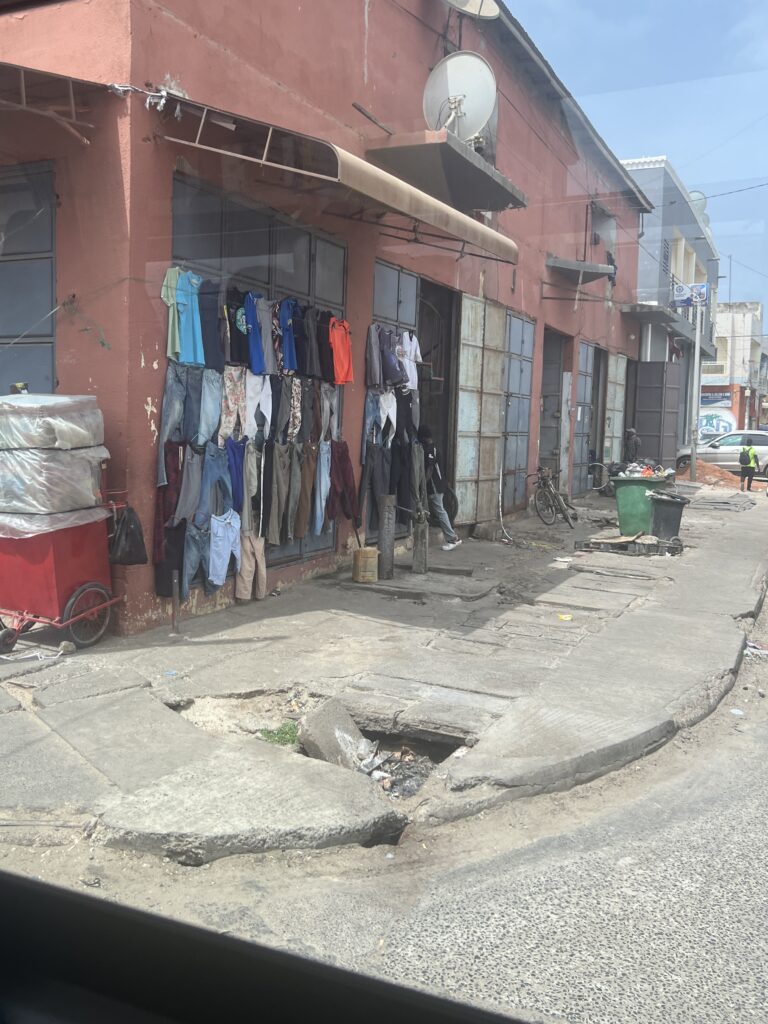
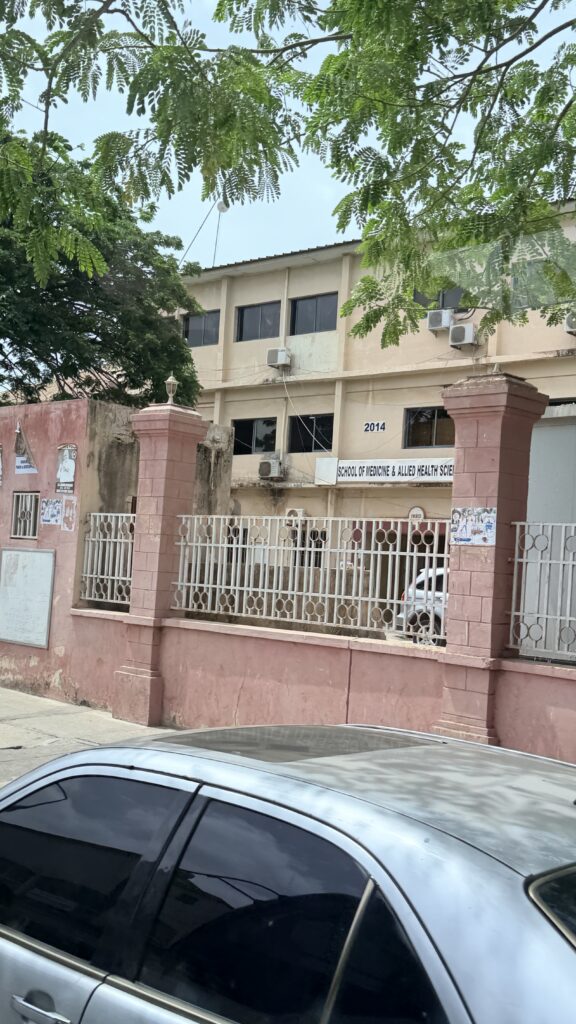
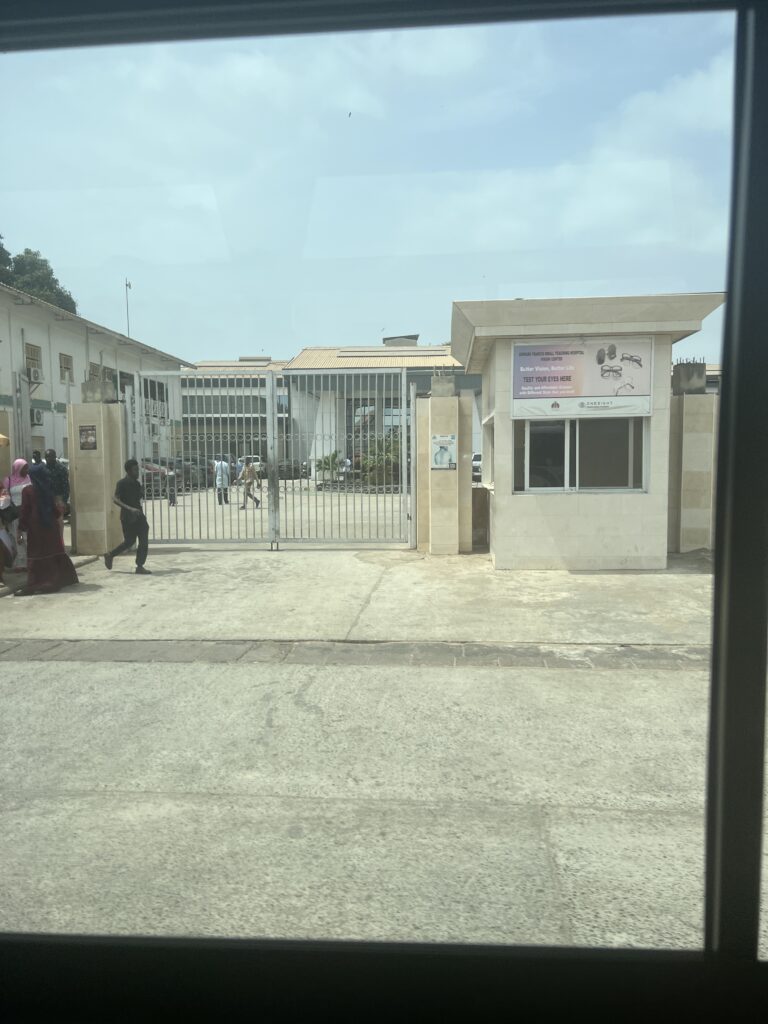
The University of The Gambia (UTG) School of Medicine and Allied Health Sciences (SMAHS), historically based at the Edward Francis Small Teaching Hospital in Banjul, is currently undergoing a massive transition to a new 6,600-student integrated campus at Faraba Banta.
The School of Medicine and Allied Health Sciences plays a vital role in addressing the healthcare needs of the nation, with a strong focus on both preventive and curative medicine. The school is also actively involved in research, particularly in the areas of tropical diseases and tropical medicine. Strategically located within the Edward Francis Small Teaching Hospital in Banjul, it offers students a unique opportunity to gain hand-on-clinical experience in a real-world medical environment.
The school comprises of three main departments: Medicine, Nursing and Pubic & Environmental Health. All departments operate under the leadership of the Provost, who provides academic and administrative oversight ensuring the highest standards of education and training are maintained.
Students from the school benefit from a diverse and highly qualified staff drawn from the within the country and international backgrounds. In addition to the home-based lecturers, the school houses experienced medical educators from countries such as Cuba and Nigeria, enriching the academic environment of students with global perspectives and expertise.
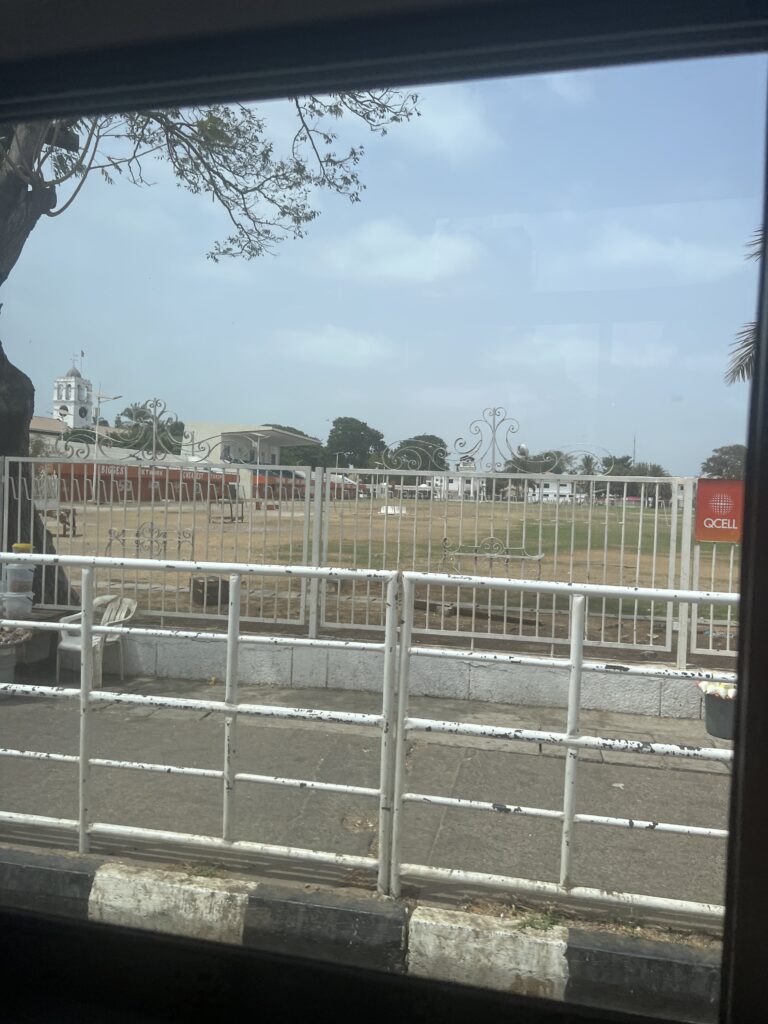
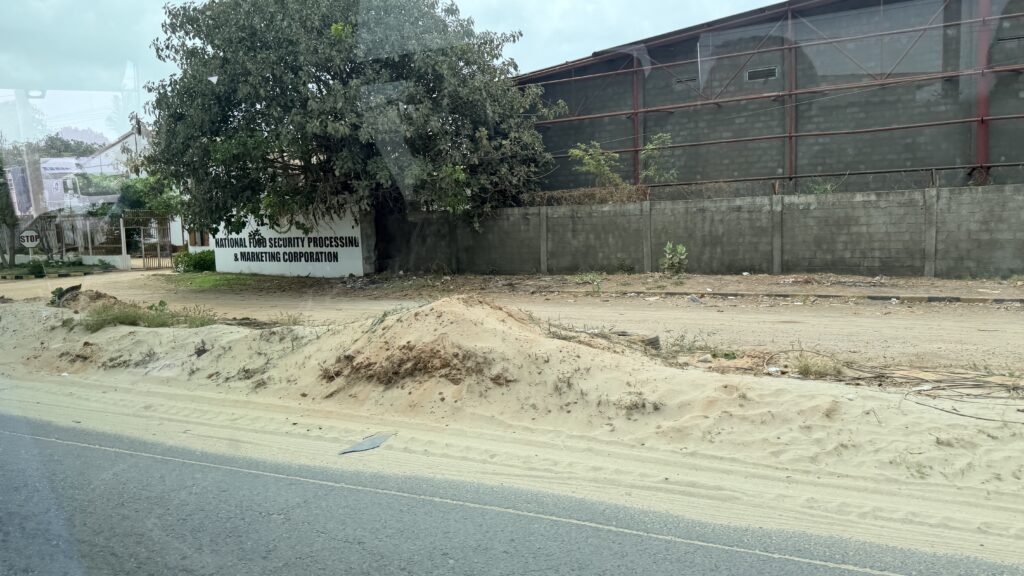
The National Food Security, Processing and Marketing Corporation (NFSPMC), formerly the Gambia Groundnut Corporation (GGC), is a Gambian state-owned enterprise. It drives the nation’s agribusiness, handling agricultural input distribution (like seeds and subsidized fertilizers), wholesale crop buying (notably groundnuts), and export processing.
The National Food Security Processing Marketing Corporation (NFSPMC) was established with the mandate to enhance food security through the processing, markting, and distribution of agricultural products across the nation
under the National Food Security Act. However, following key reforms in 2005 to modernize the agriculture and food sectors, the corporation’s mandate was largely streamlined to focus on food processing. This shift create a more conducive environment for private entities to enter the food marketing and distribution industries,
increasing competition and efficiency in the sector. Additionally, the reforms led to the establishment of separate entities to manage other functions.
The corporation’s distribution function evolved into the National Food Distribution Company (NFDC), while its marketing arm transitioned into the National Agricultural Marketing Agency (NAMA), both of which now operate independently but are affiliated with NFSPMC.
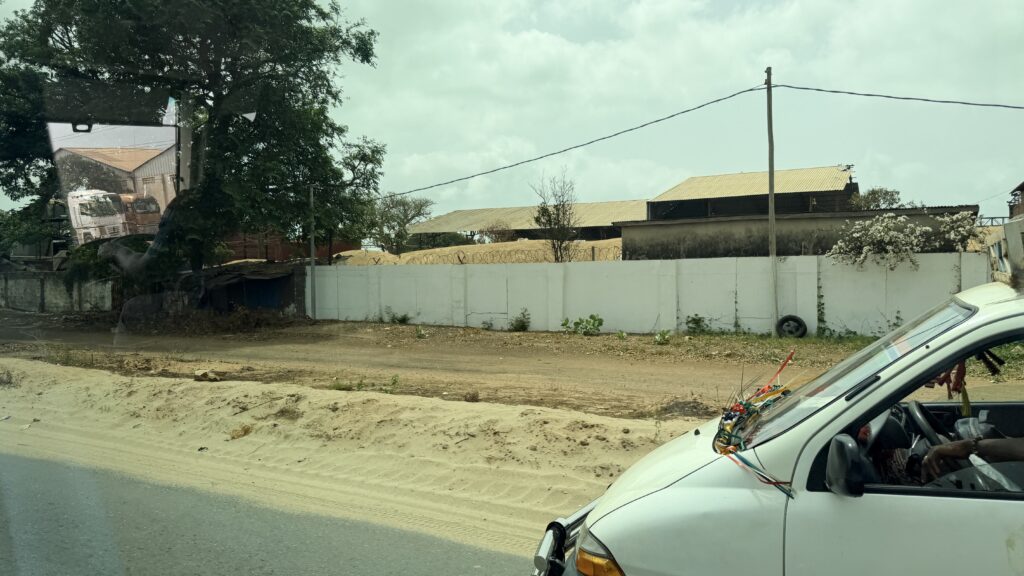
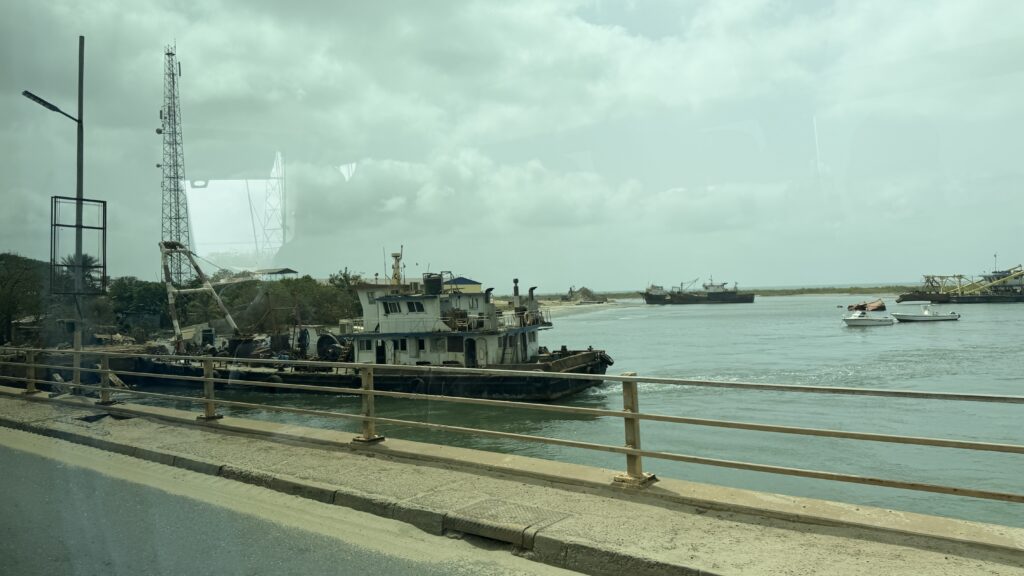
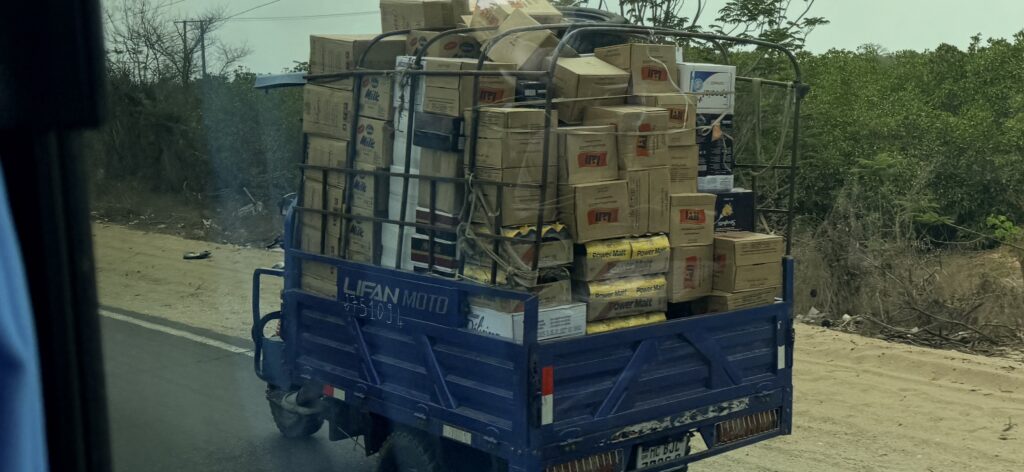
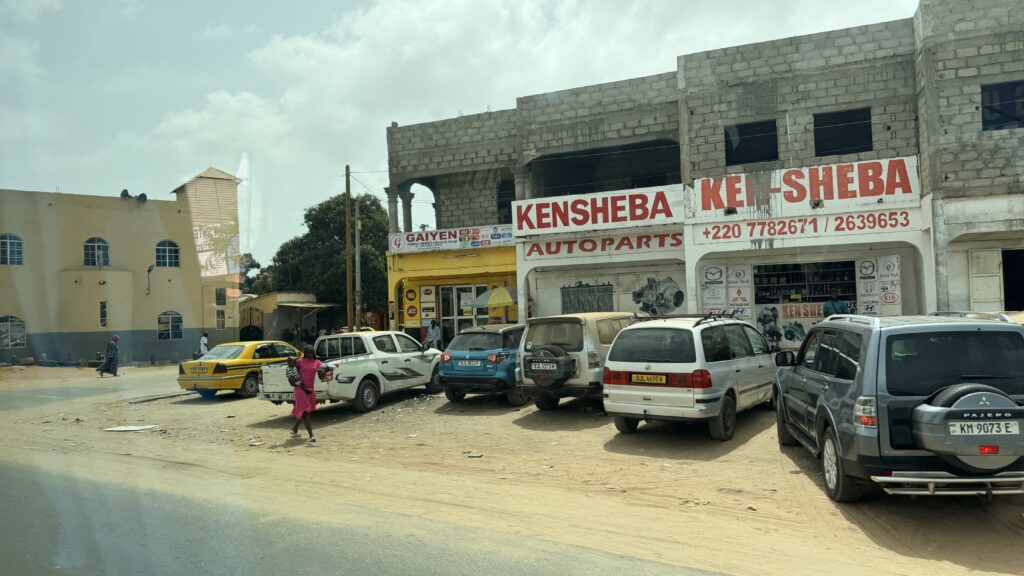
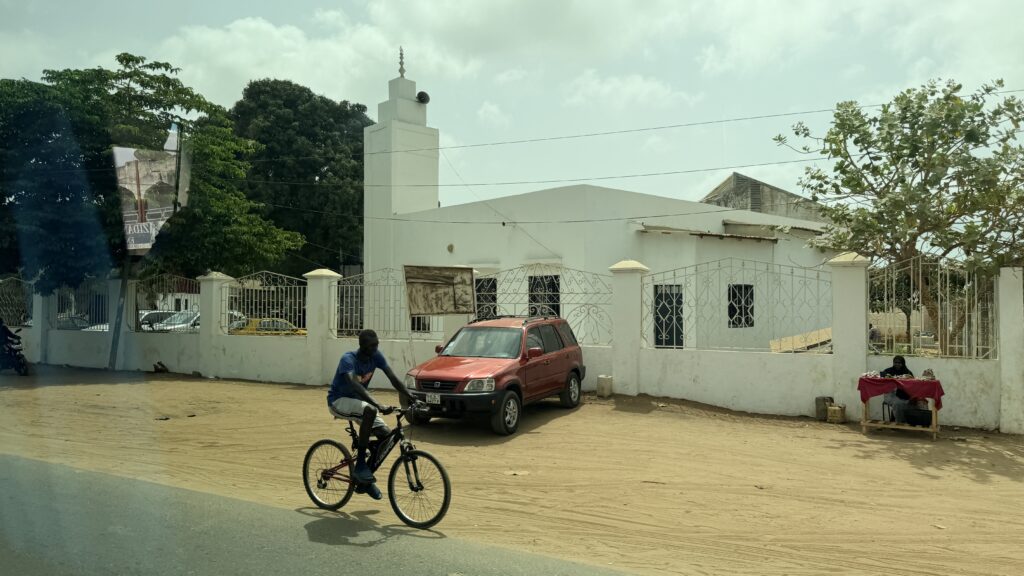
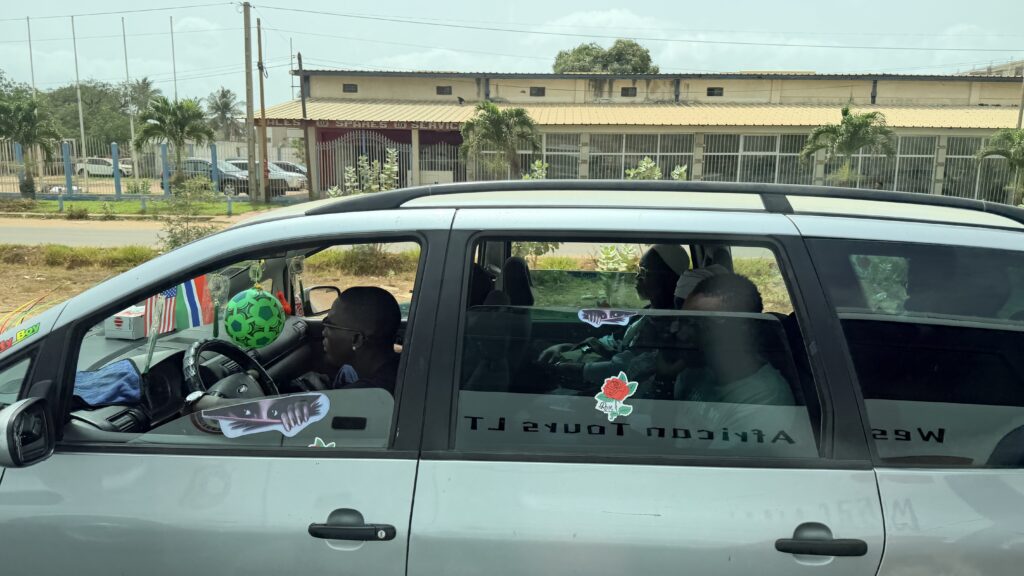
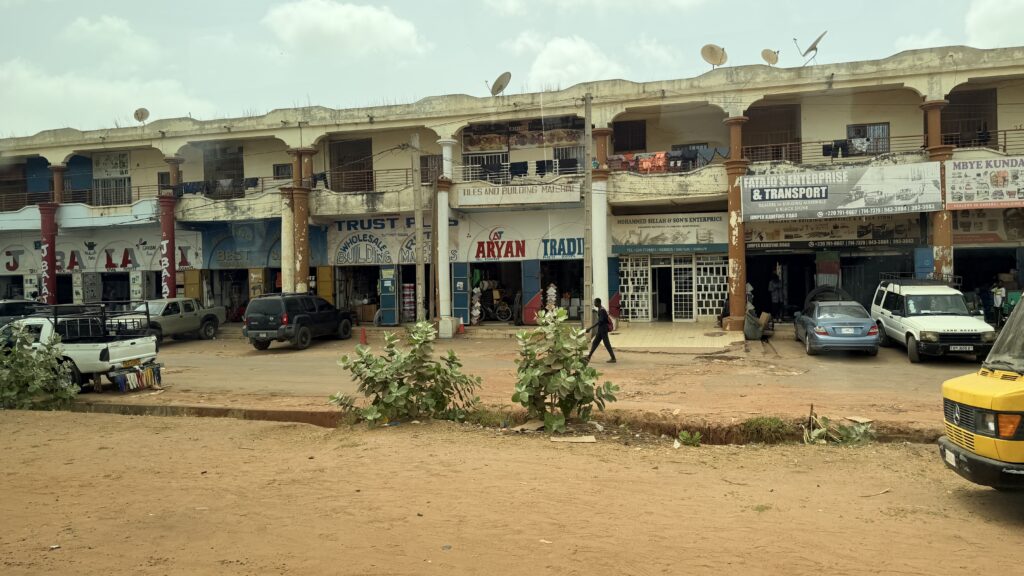
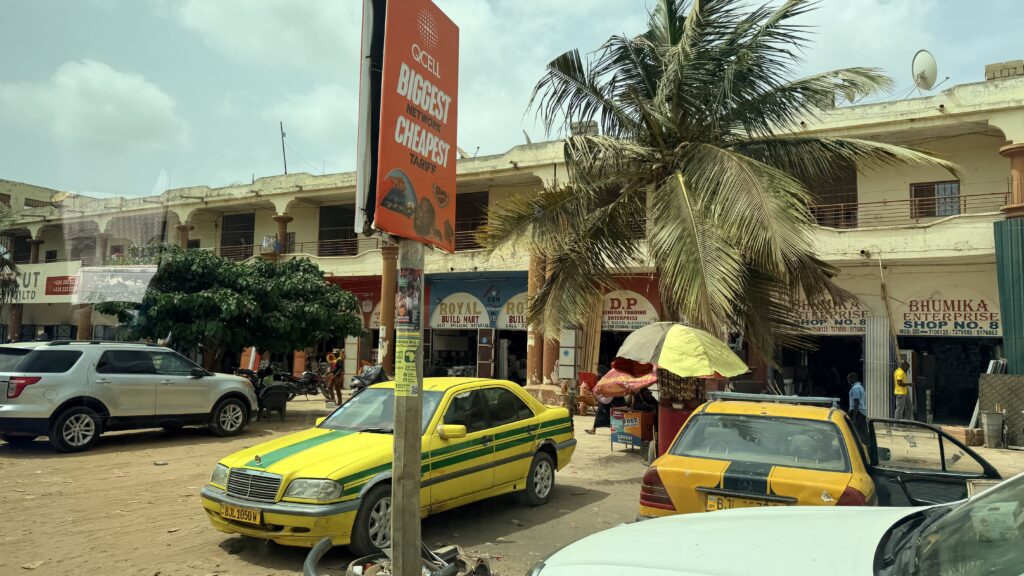
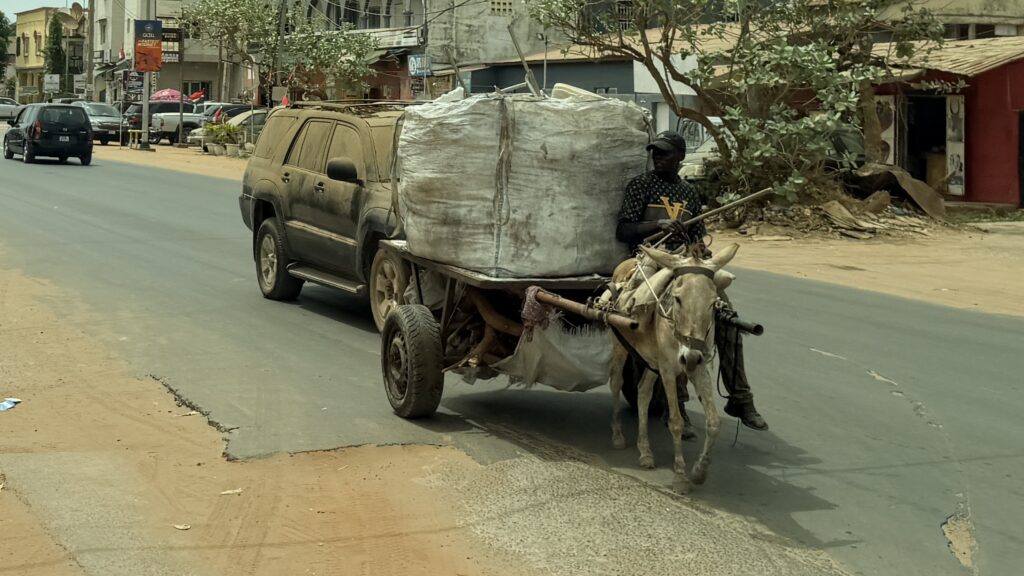
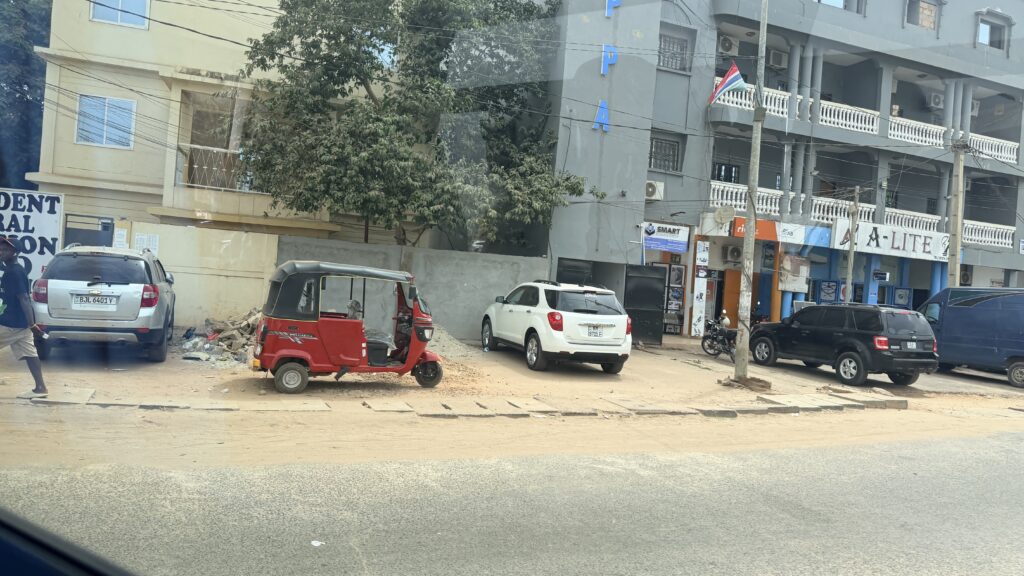
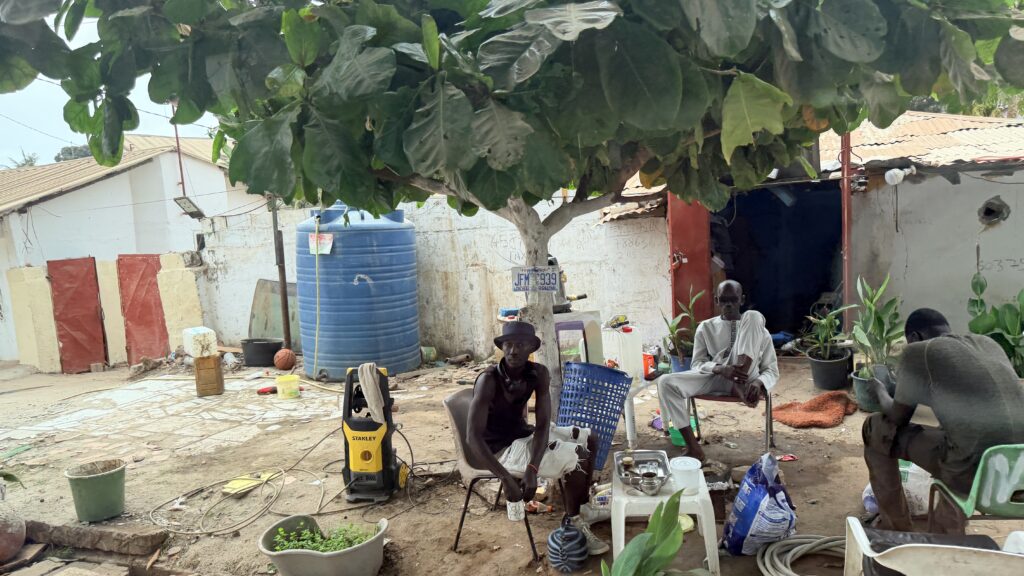
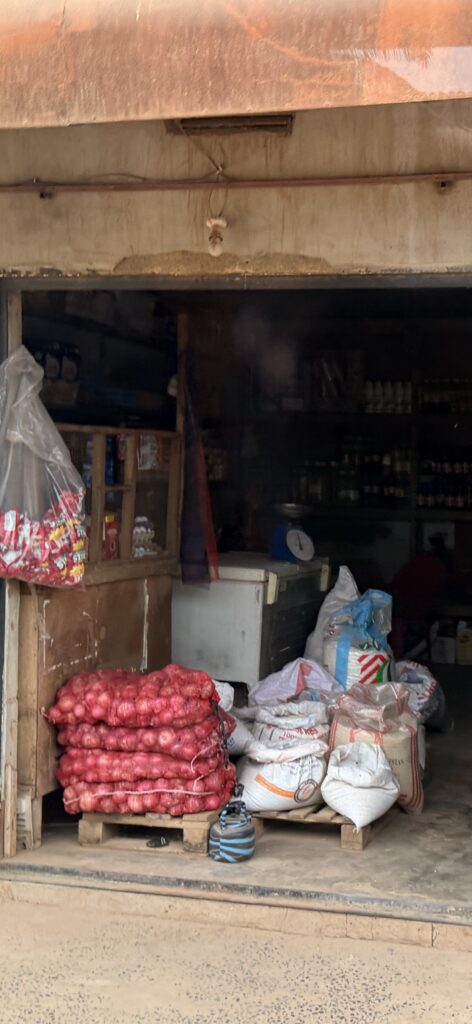
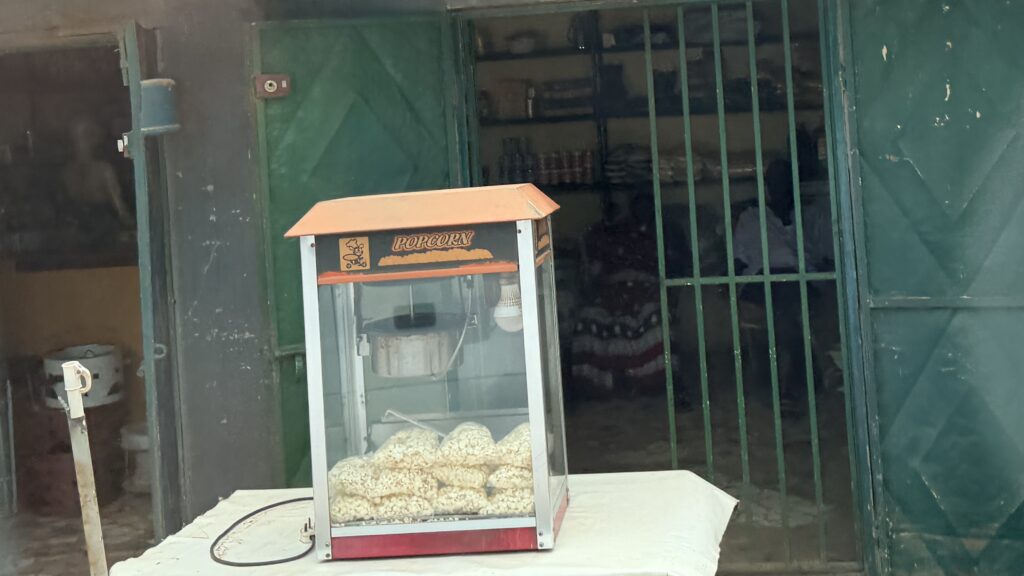
It had crossed my mind as riding the streets of The Gambia to open a popcorn stand, but now I see someone beat me to it
While there isn’t a standalone national building dedicated solely to batik, The Gambia’s rich fabric art is showcased at the Serekunda Batik Factory and the Tanje Village Museum. Visitors can watch artisans create traditional wax-resist dyed textiles and purchase vibrant, locally made pieces.
The Serekunda Batik Factory (often referred to as Musu Kebba Drammeh’s compound) is a local textile producer in the Dippa Kunda area of Serekunda, Gambia. It is a renowned spot where artisans create traditional West African batik and tie-dye fabrics
Location: Off Mosque Road in the Dippa Kunda section of Serekunda, Gambia.
The Experience: Visitors can watch local artisans use candle wax and natural dyes to produce vibrant wall hangings, clothing (such as sarongs and shirts), and household linens.
Cost: There is usually no mandatory entry fee, but a small tip for the craftspeople who demonstrate the process is customary and appreciated.
Shopping: You can purchase finished textiles directly from the workshop, and you are expected to barter for the best prices.
Local Consensus: Reviews on Tripadvisor are mixed. While some visitors enjoy the authentic, hands-on cultural experience of seeing indigo dyeing and tie-dyeing first-hand, others note that it is a brief stop tailored primarily for tourists.
Made in The Gambia: Batik | My Gambia
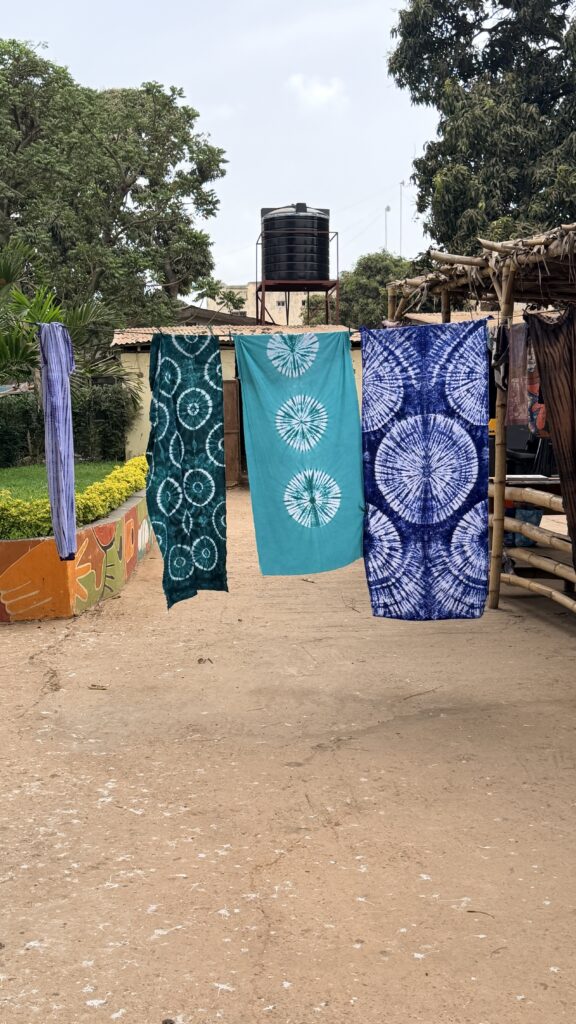
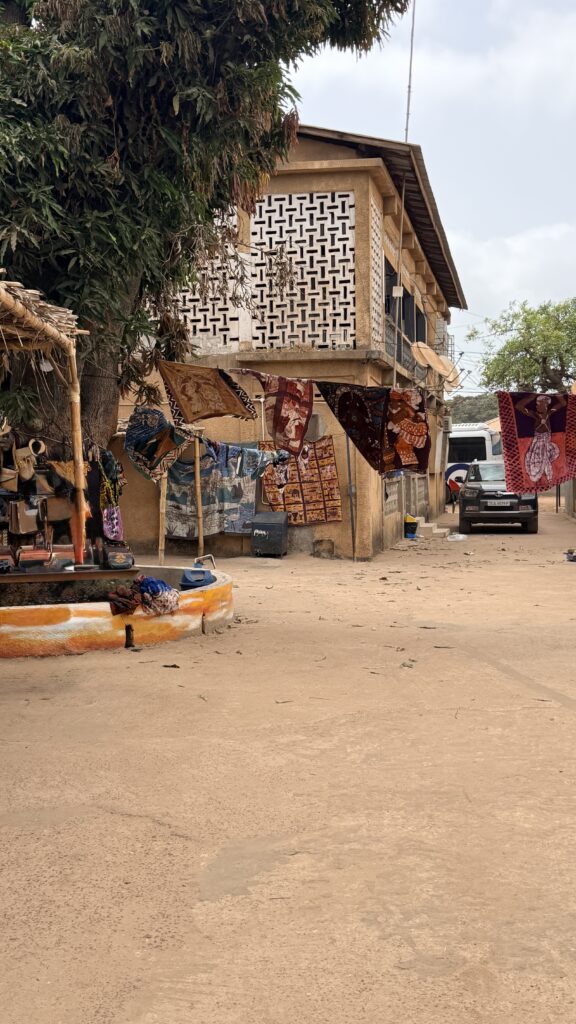
We were given an explanation of the process to determine which designs would be placed on each fabric
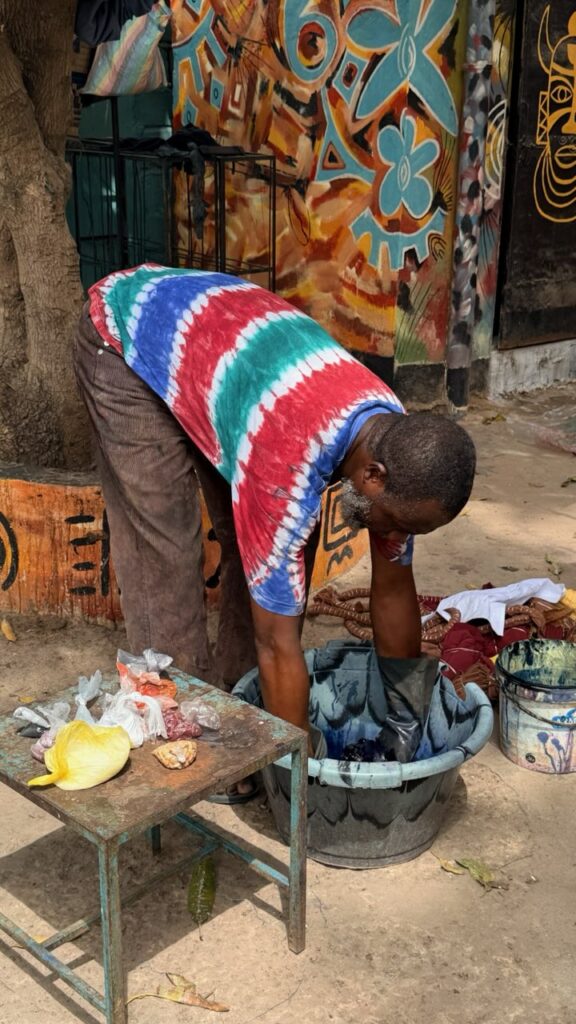
Applying the dye to the fabric. The designs are made by tying rubber bands in certain locations on the fabric. The tied off fabric is not touched by the dye leaving the patterns seen on the finished product
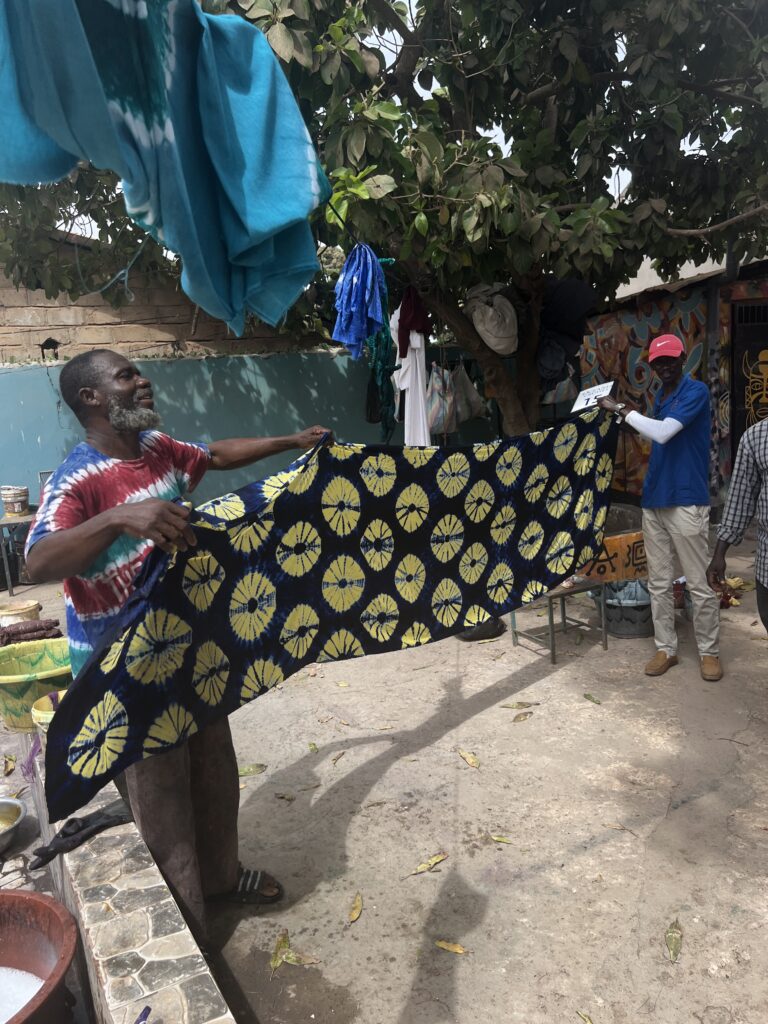
A finished tablecloth
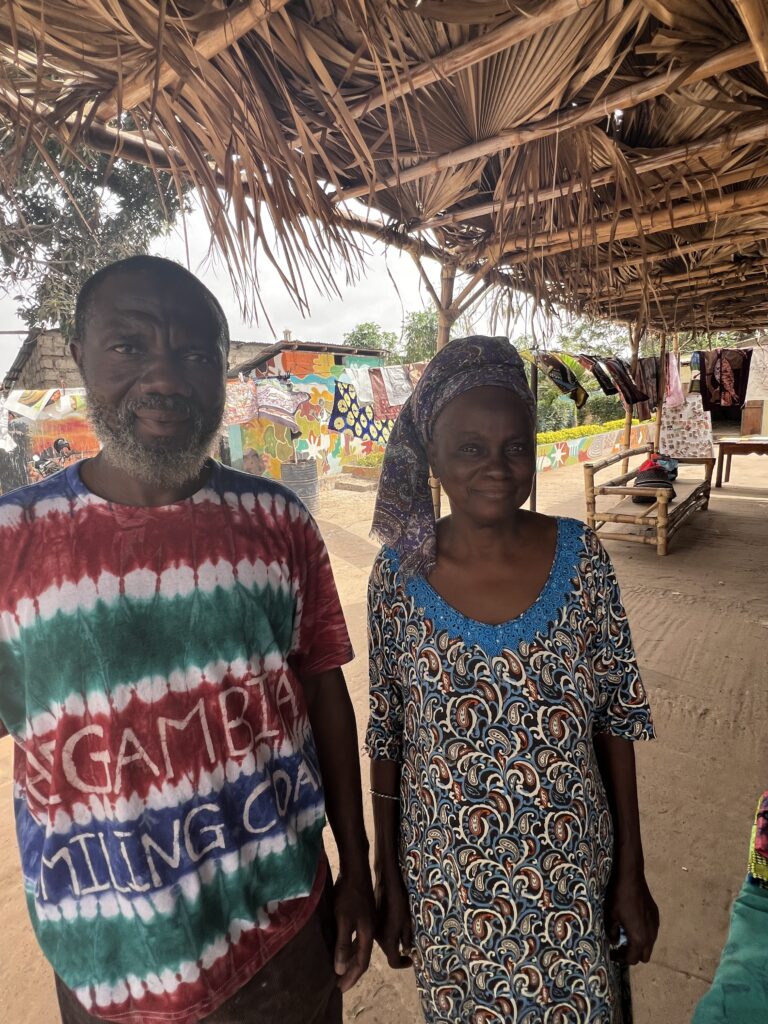
The man and his wife who helped Jackie find a tablecloth and a dress. After this photo the man asked me for a tip for his help. Thus, the shakedown excursion began. Later Jackie realized the dress was made in China. 🙂
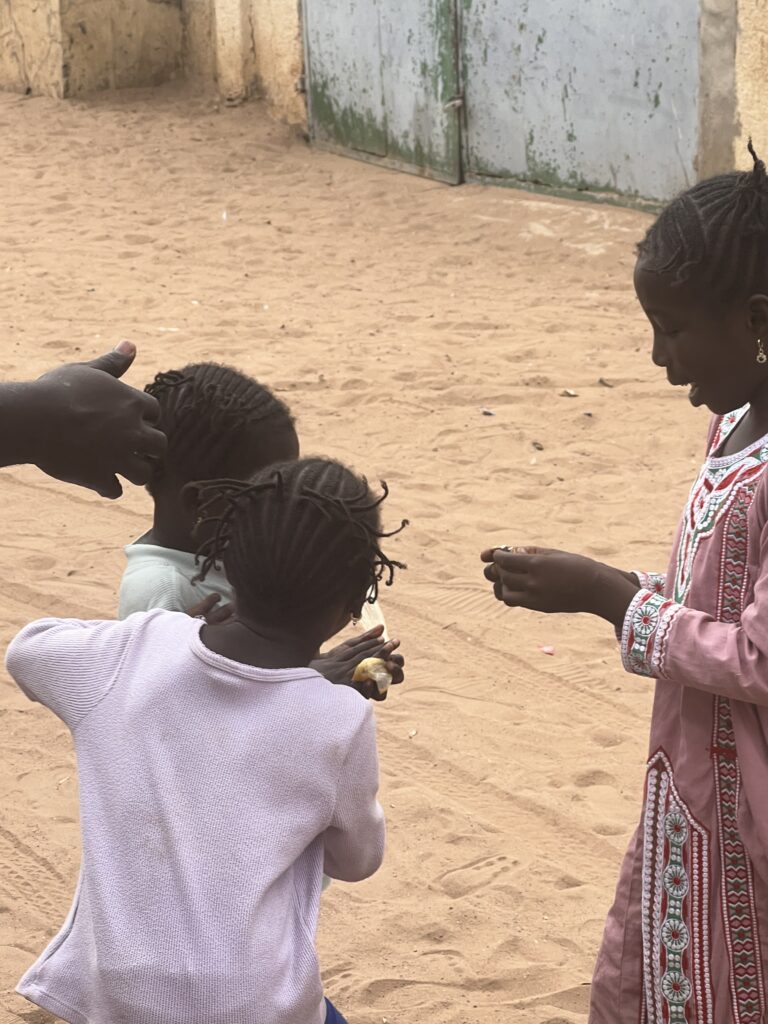
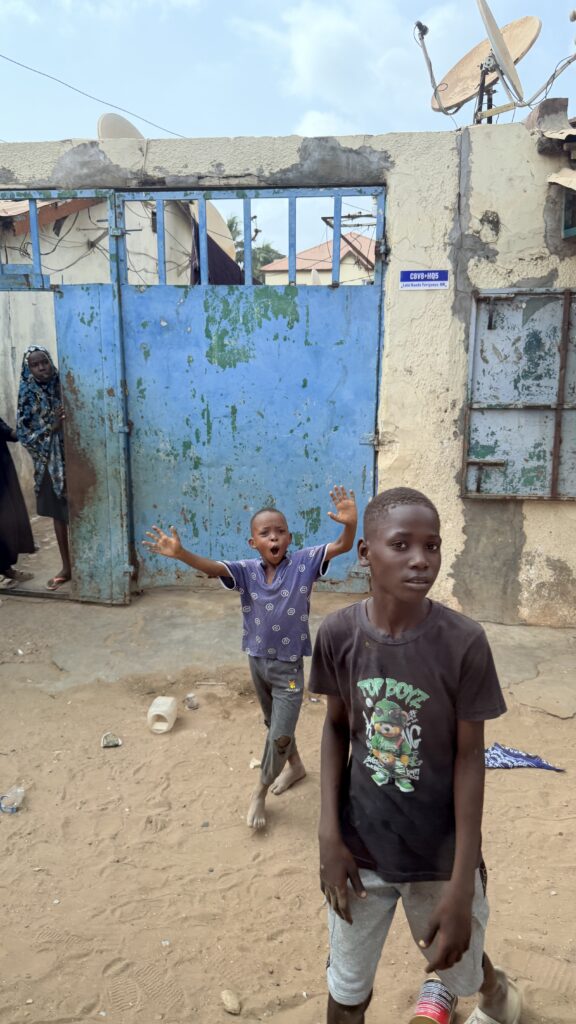
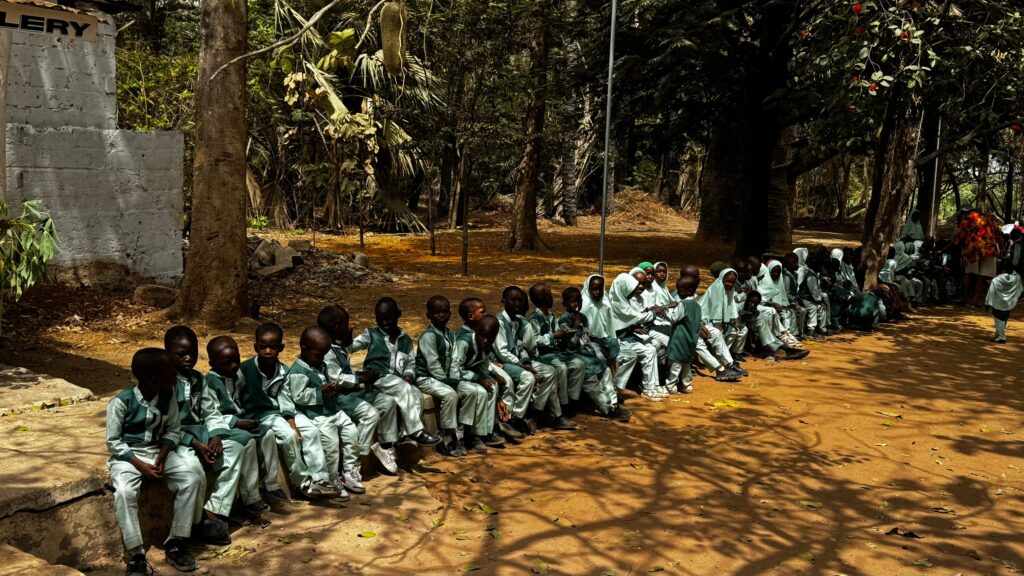
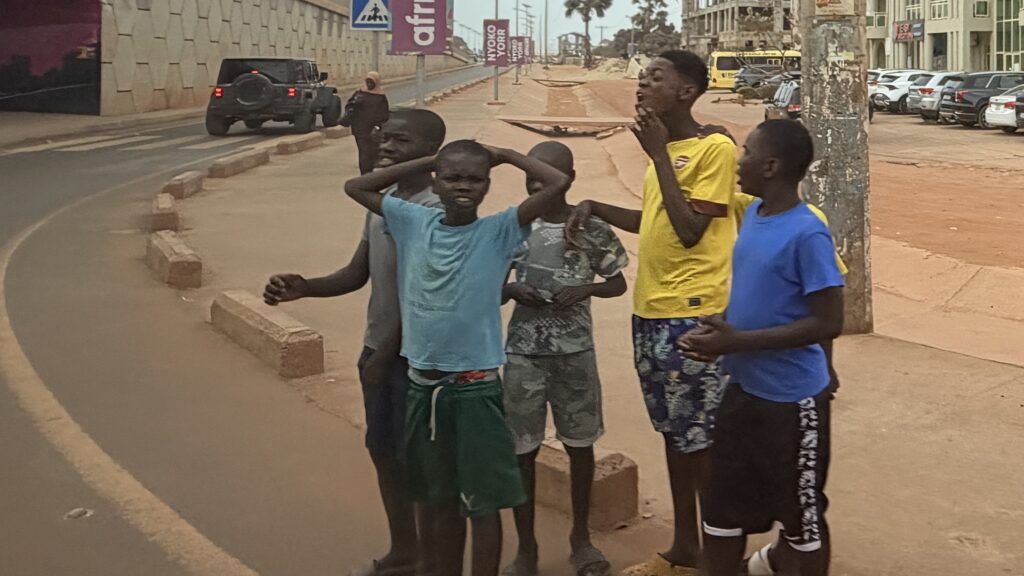
These kids were playing in the area. I asked a man if I could take his photo and he said yes. After the photo was taken he said I owed him $5 and I asked him why? He said because these are my children and you took their photo. Second time of the shakedown excursion
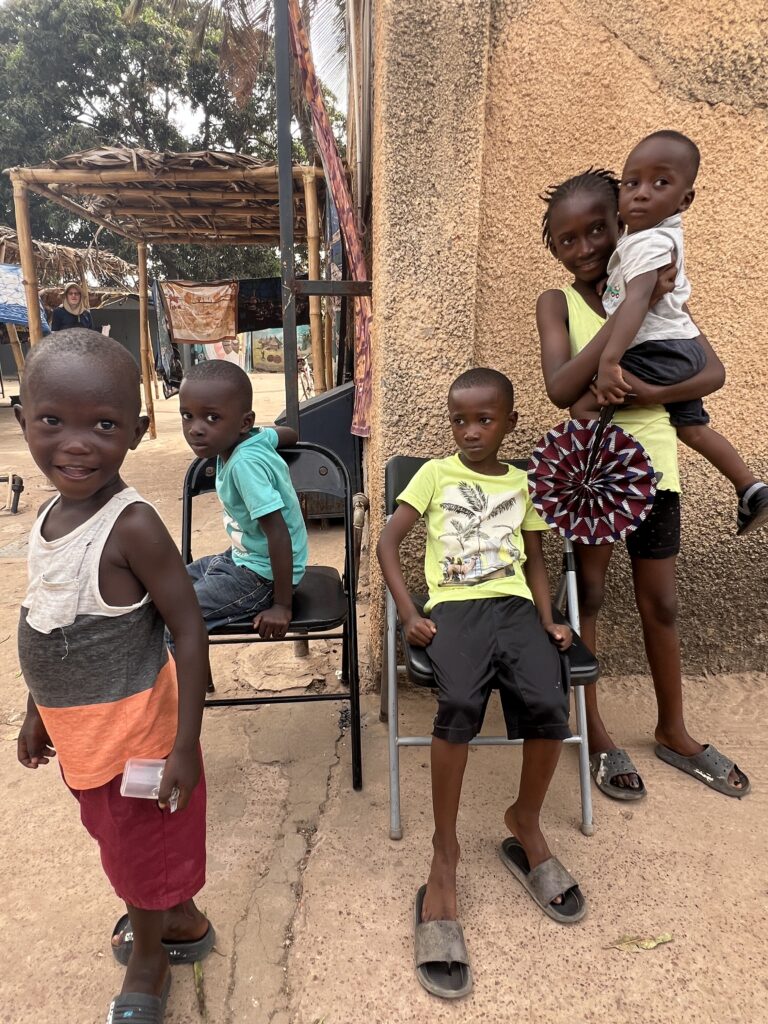
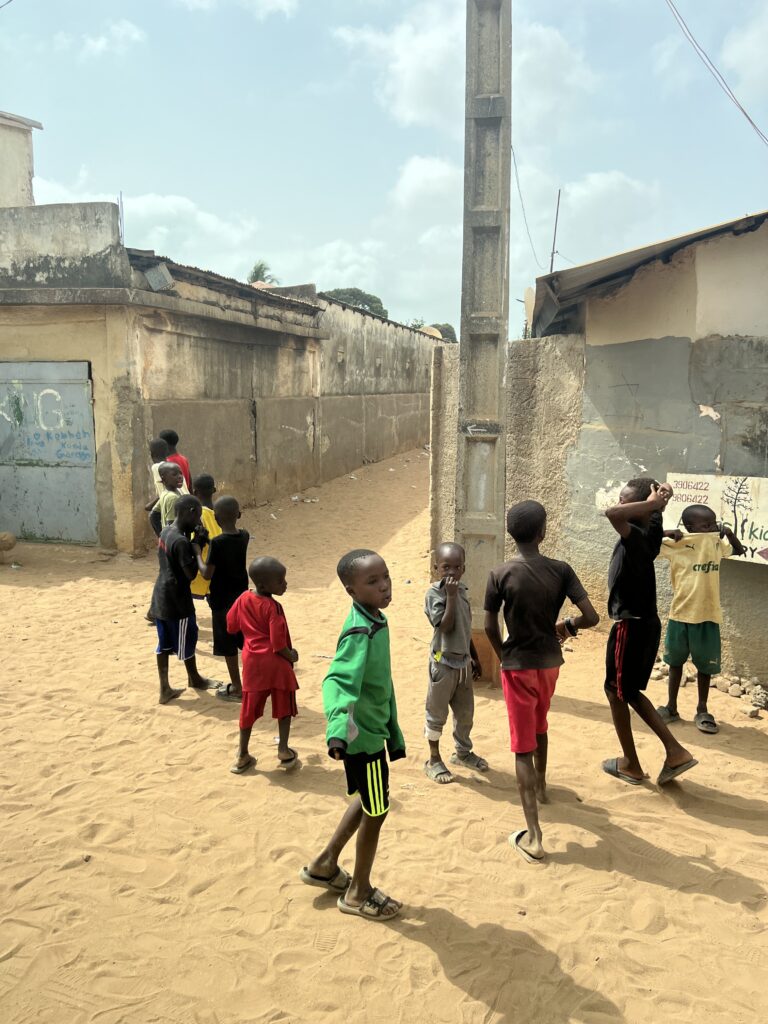
Even the children have learned to ask for money if they catch you looking in their direction
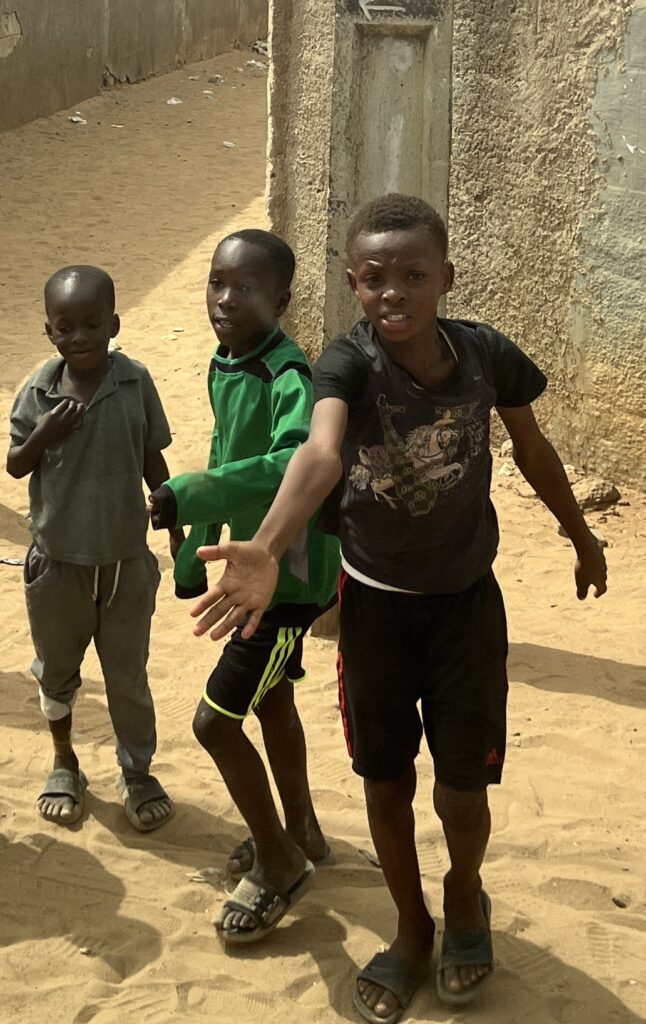
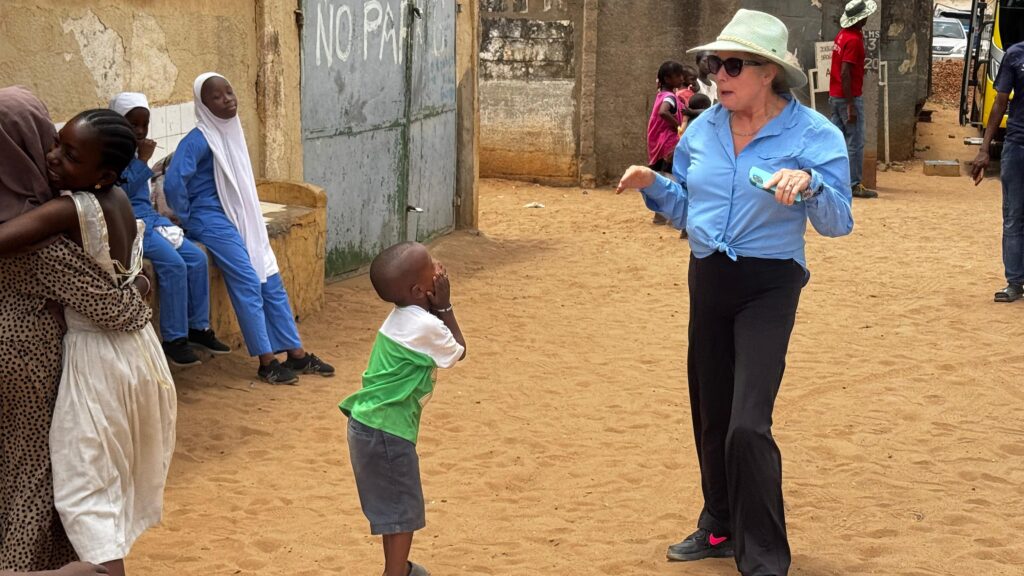
These next few photos were taken by Dave and Marta during their excursion
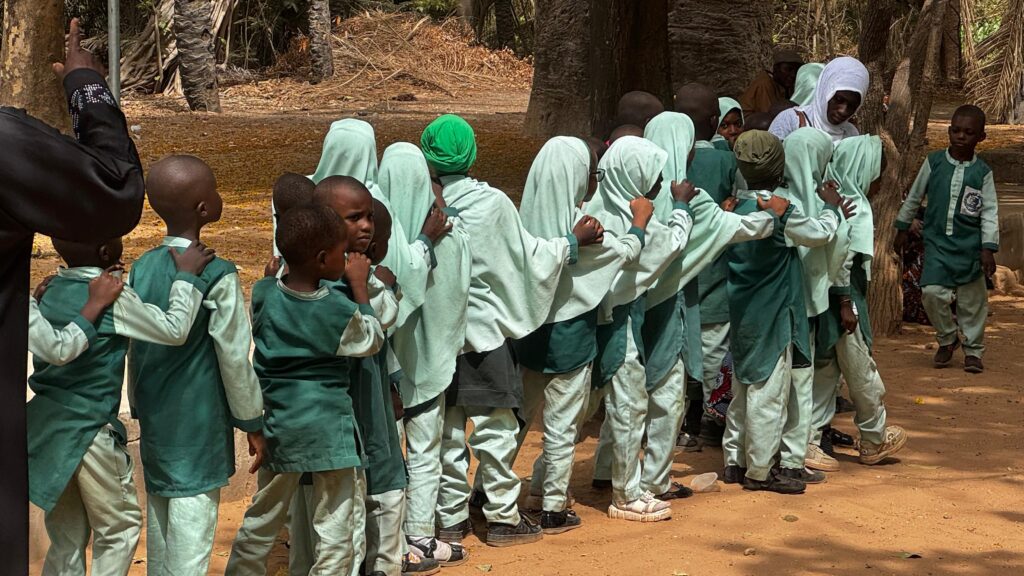
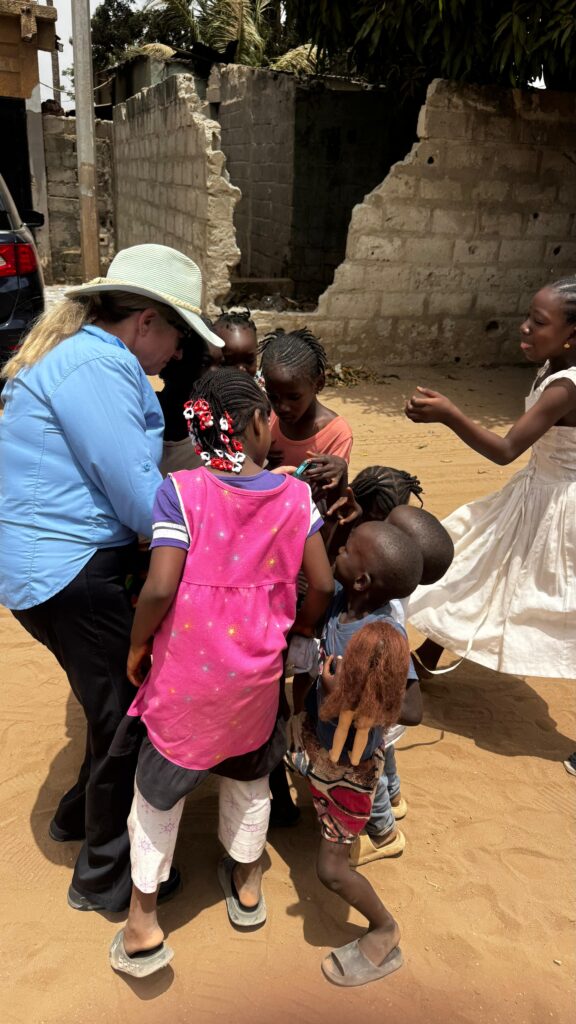
Since Marta is a schoolteacher, she thought that she would have some control as she handed out candy. She found out her teaching skills were of no use in The Gambia. 🙂
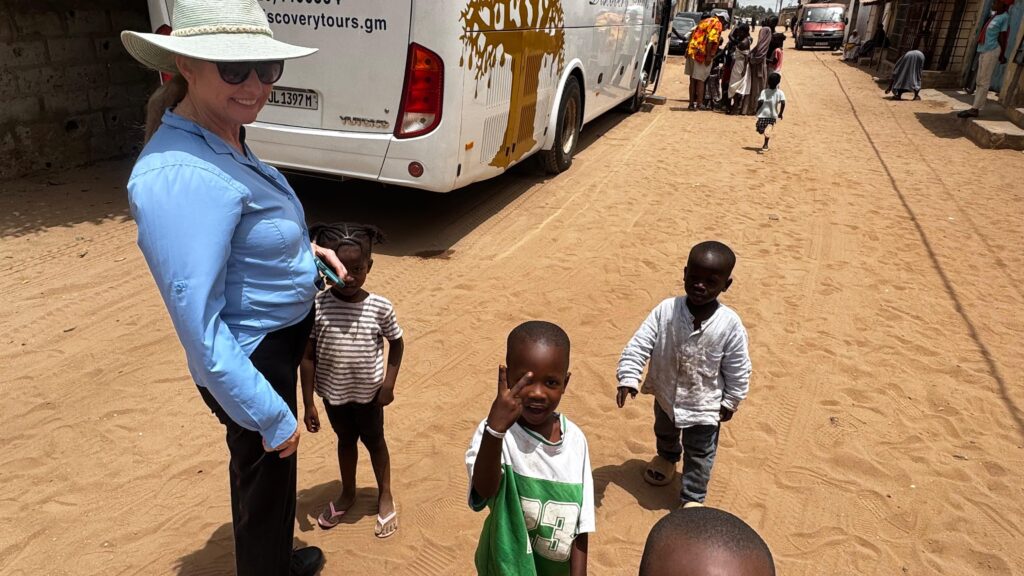
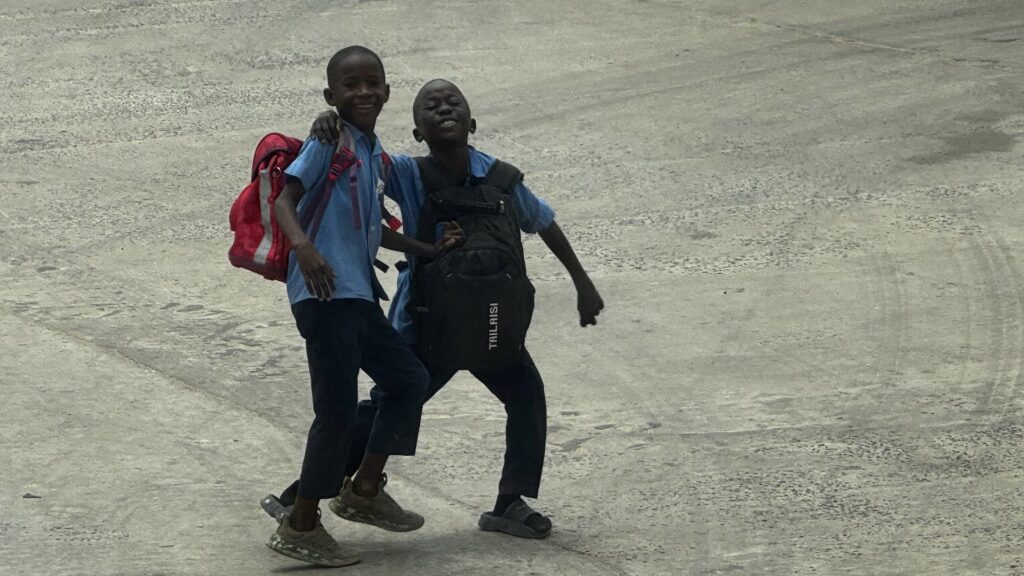
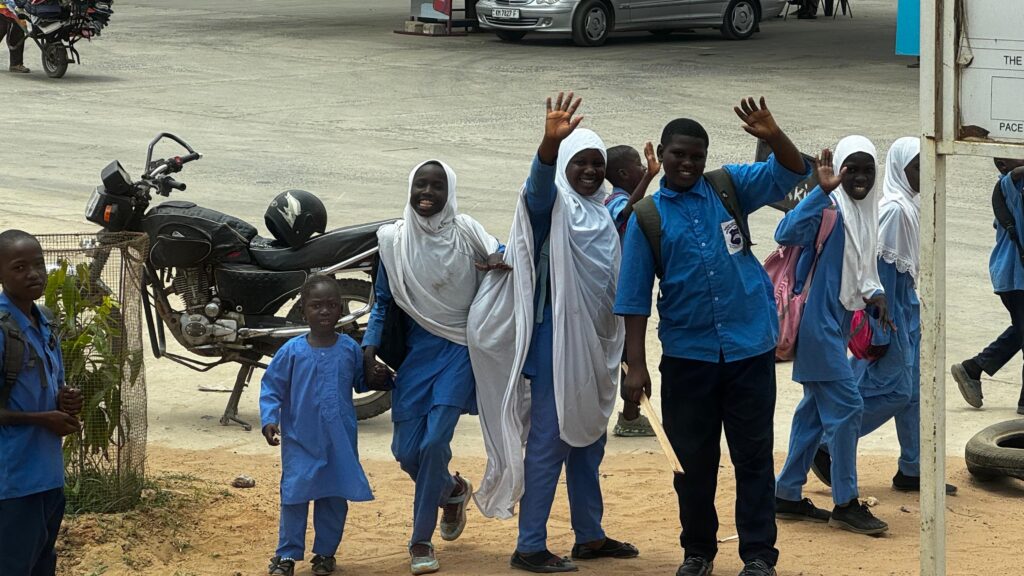
We all had a good laugh at this photo as Marta was trying to get the kid to her imitation of an elephant (which she does quite well). 🙂
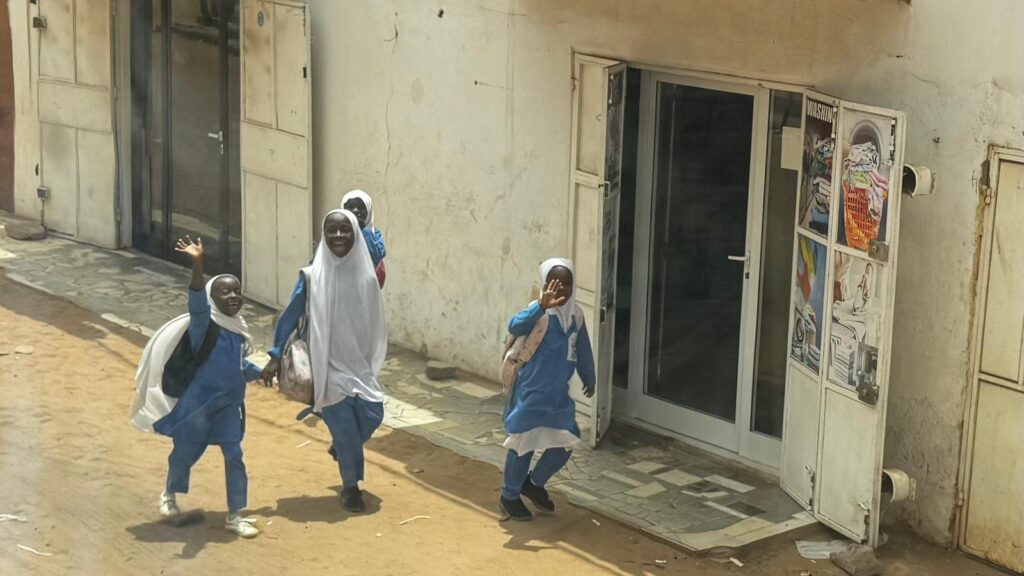
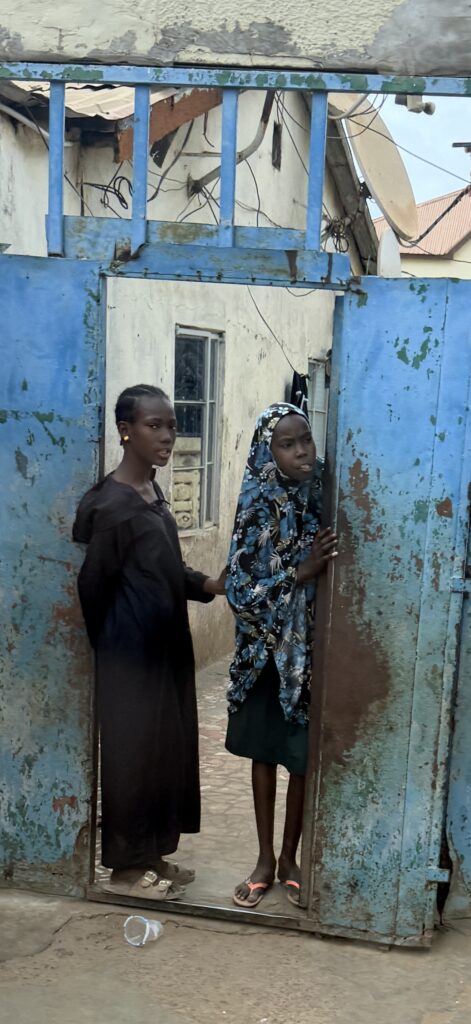
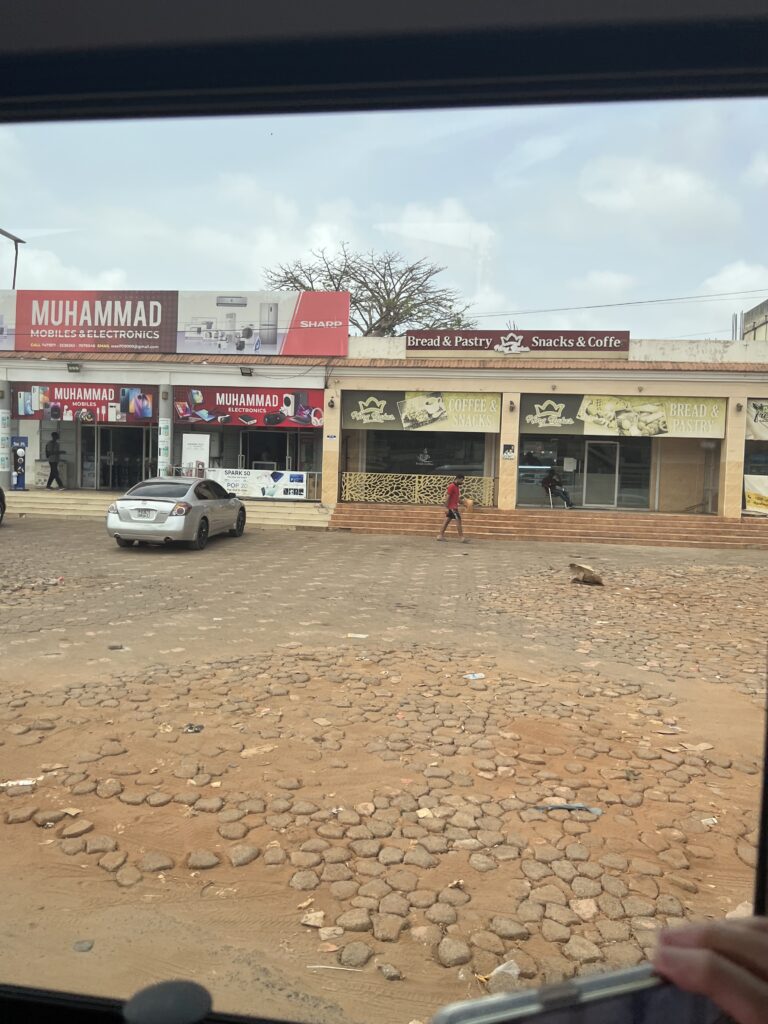
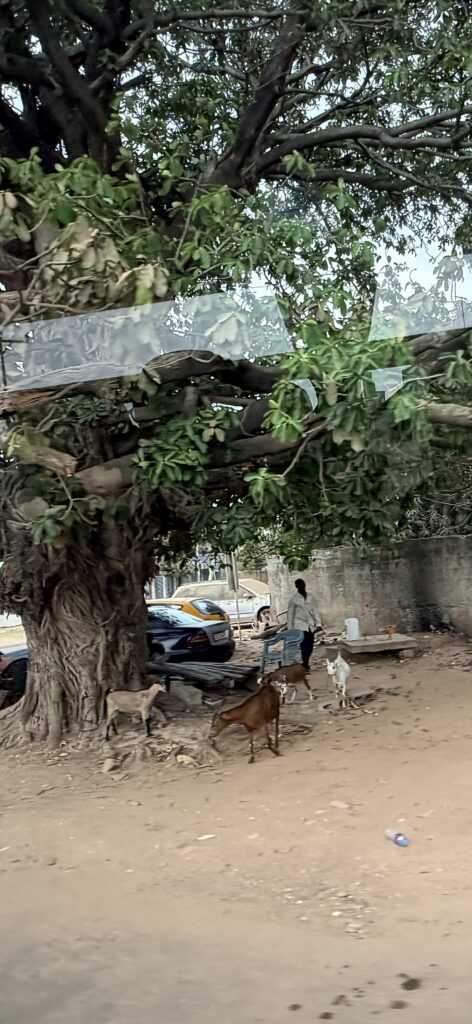
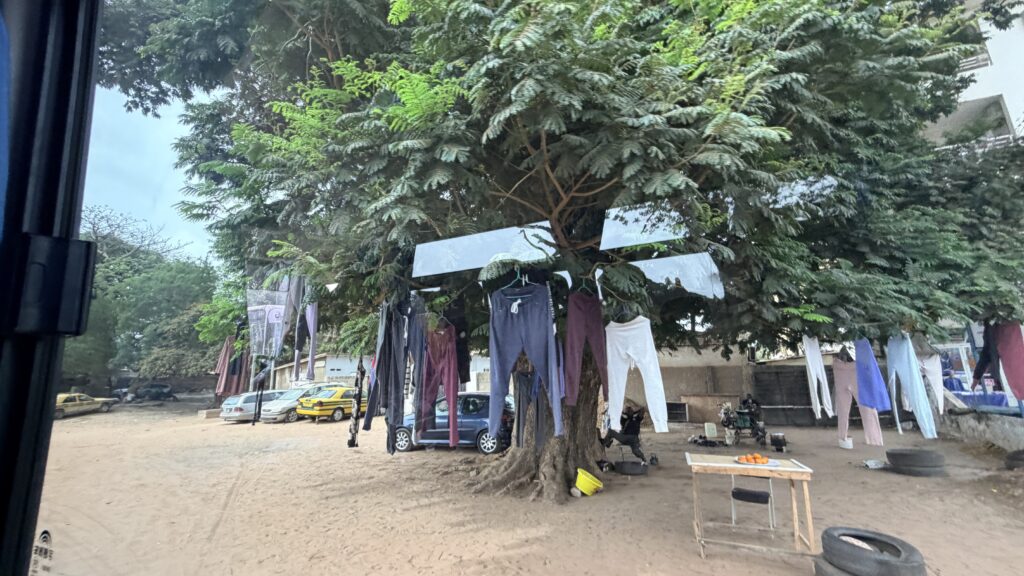
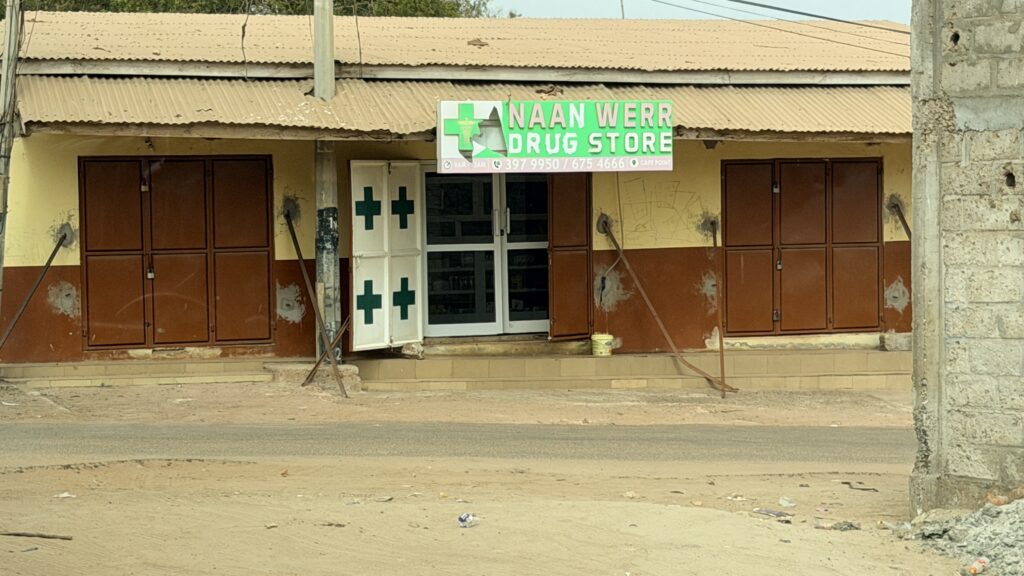
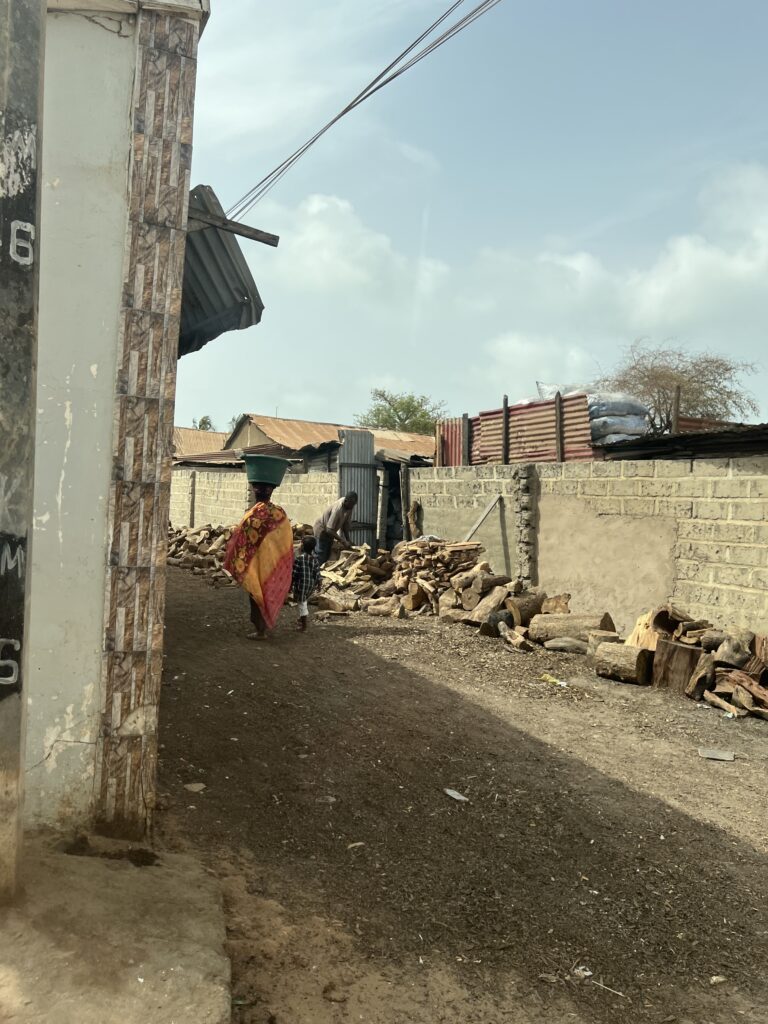
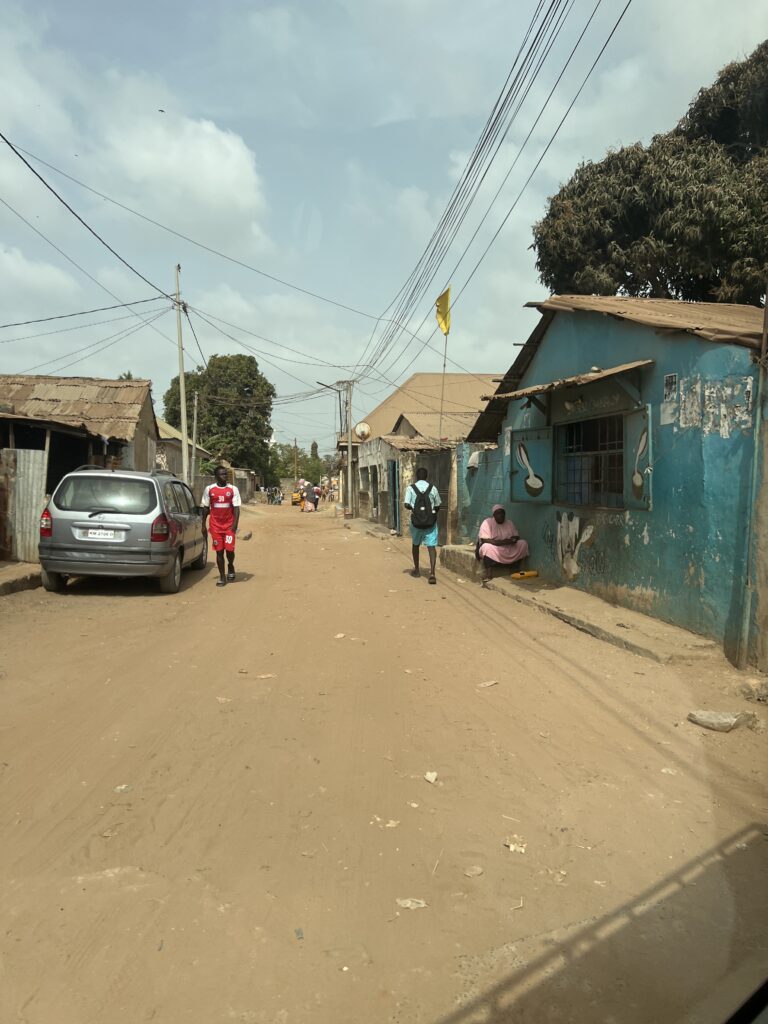
More street photos as we drove to our next stop on the day, the Kachikally crocodile pool
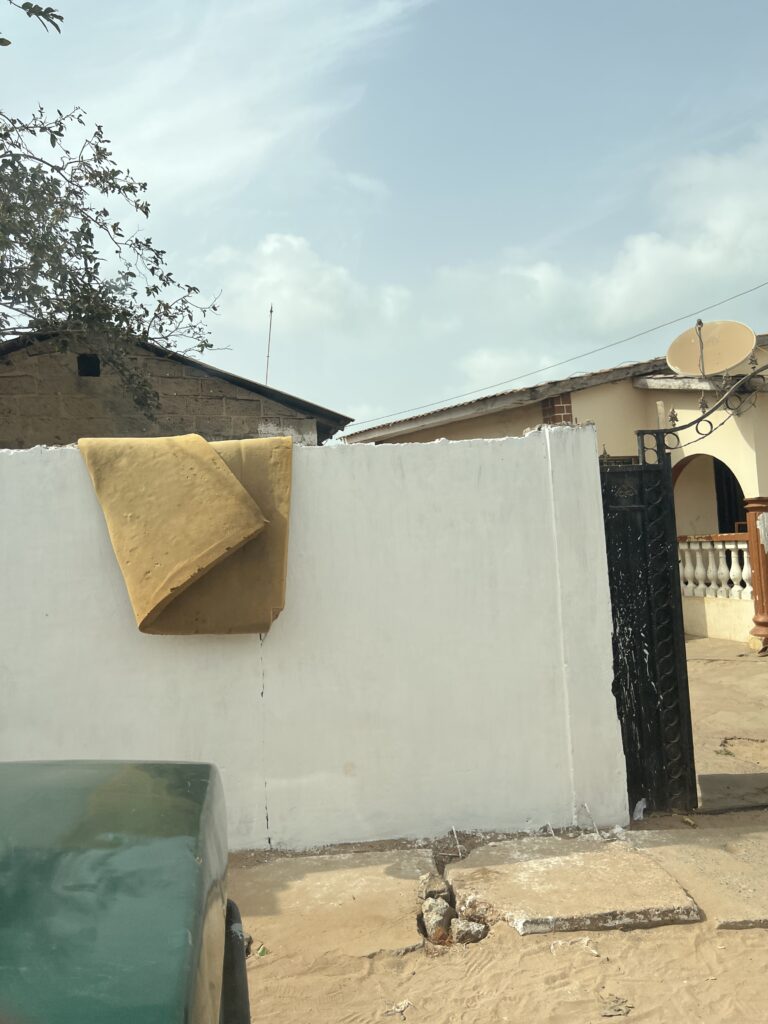
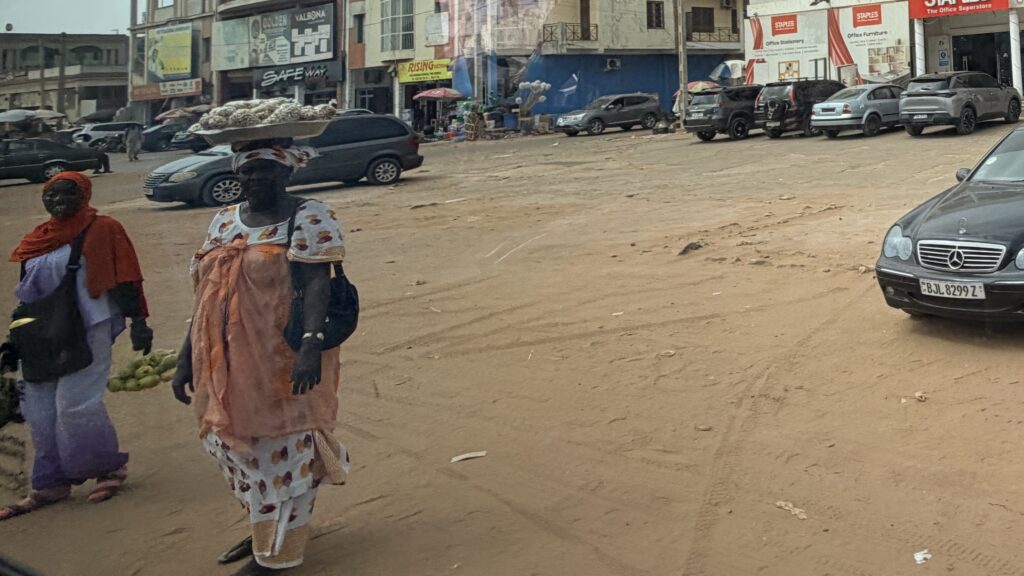
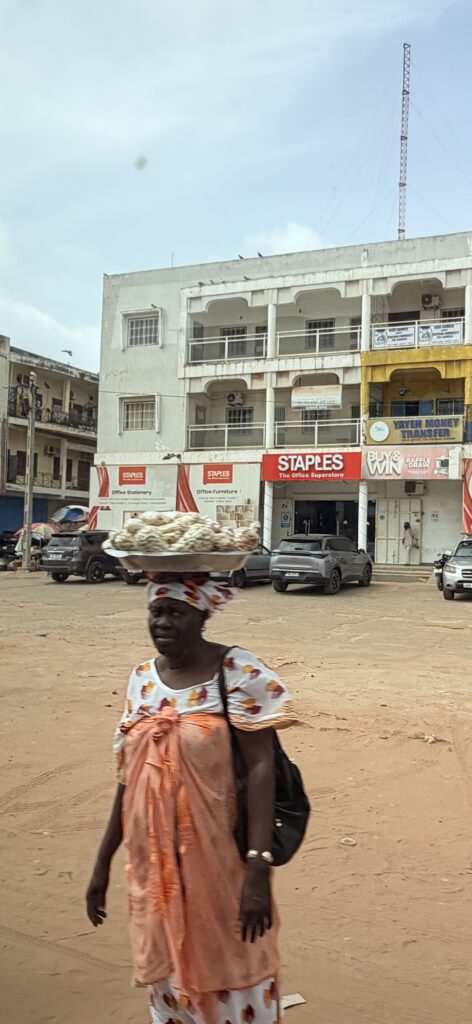
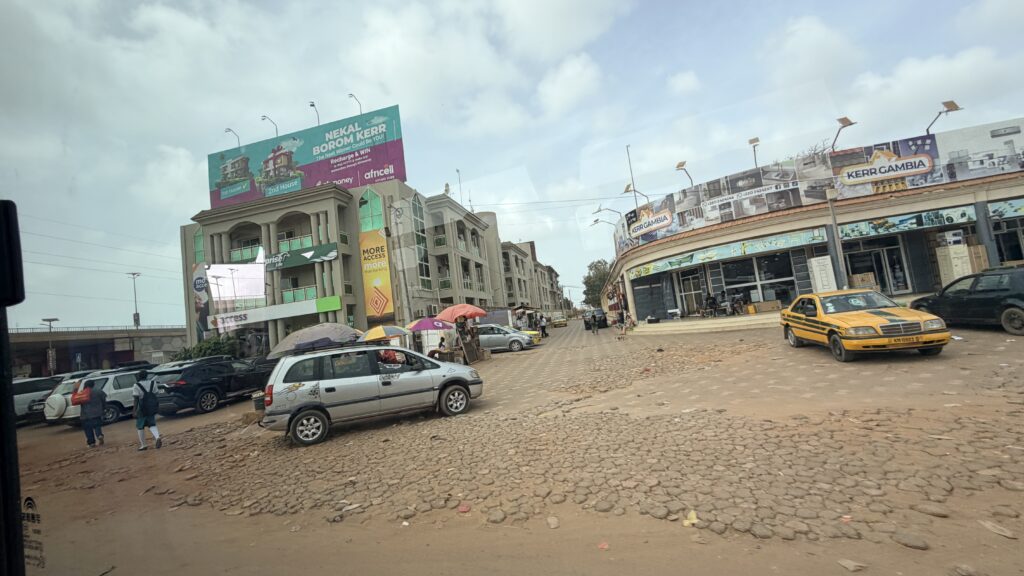
The Kachikally crocodile pool is located in the heart of Bakau, Gambia, about 10 miles (16km) from the capital Banjul. It is one of three sacred crocodile pools used as sites for fertility rituals. The others are Folonko in Kombo South and Berending on the north bank.
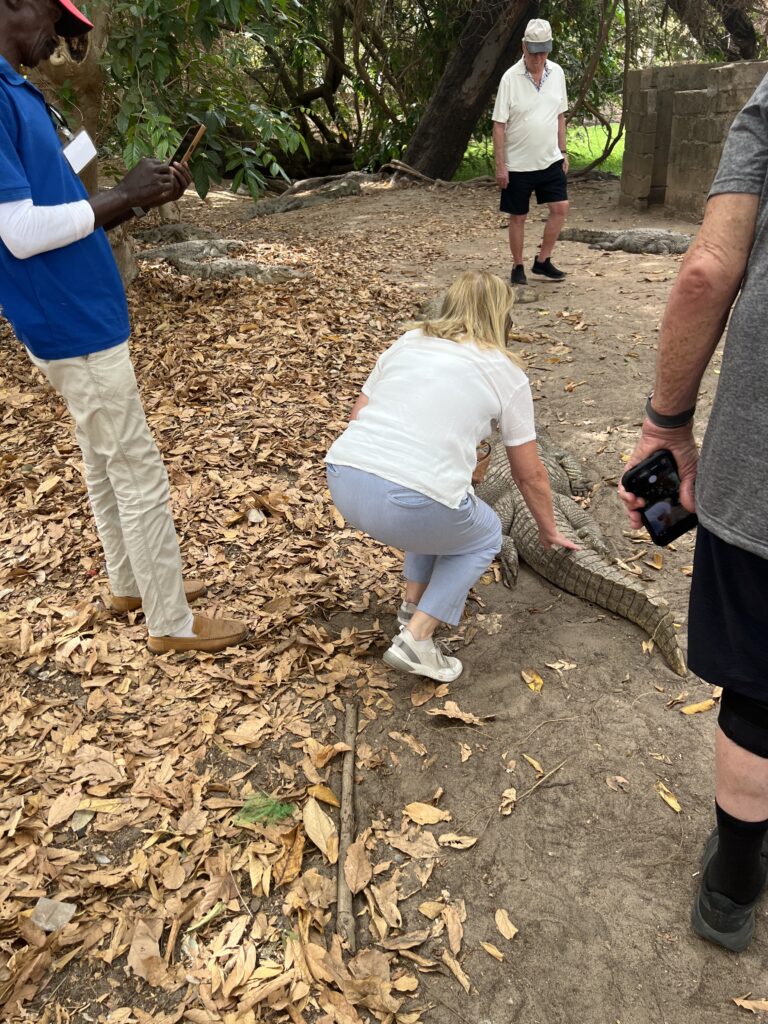
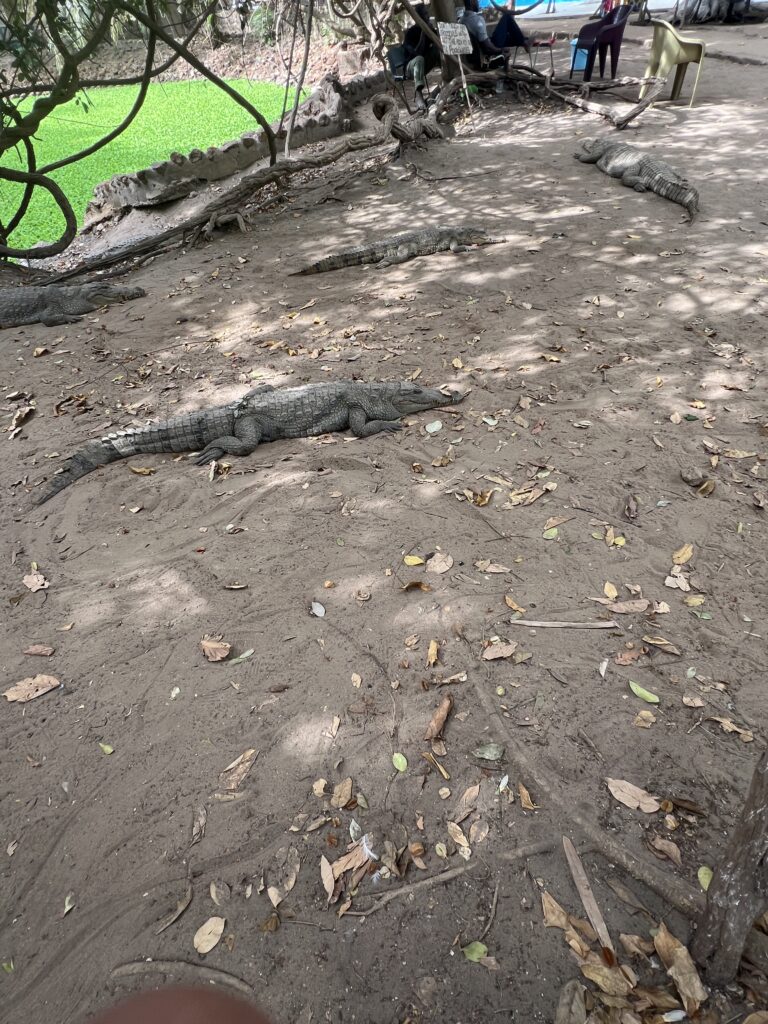
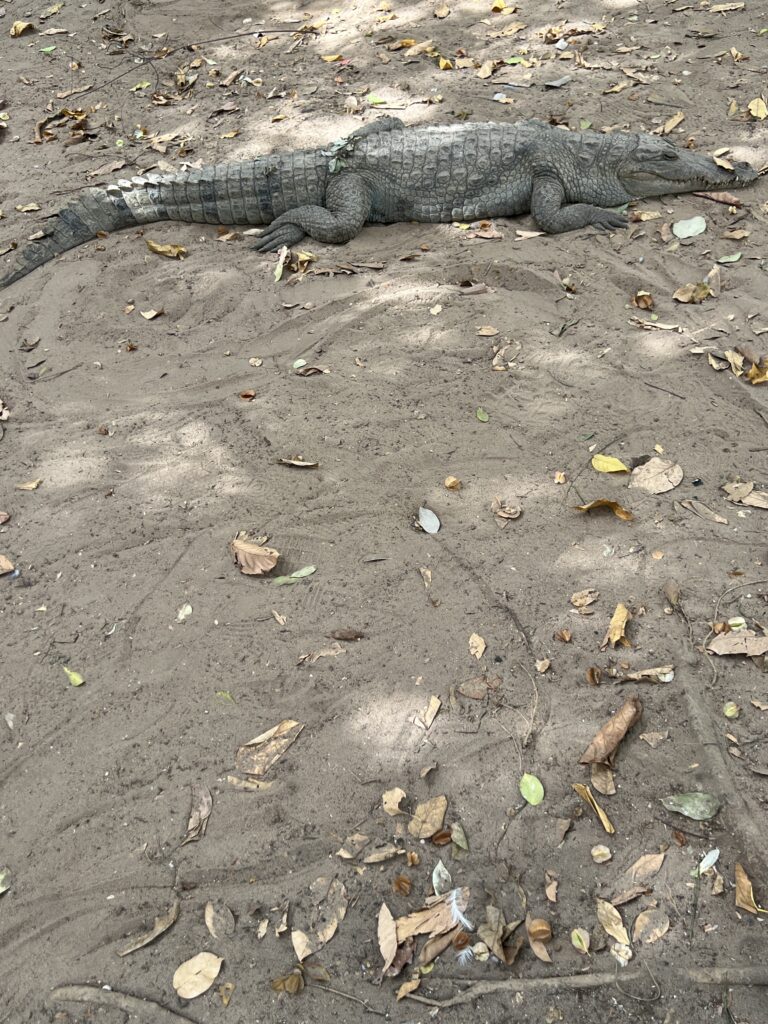
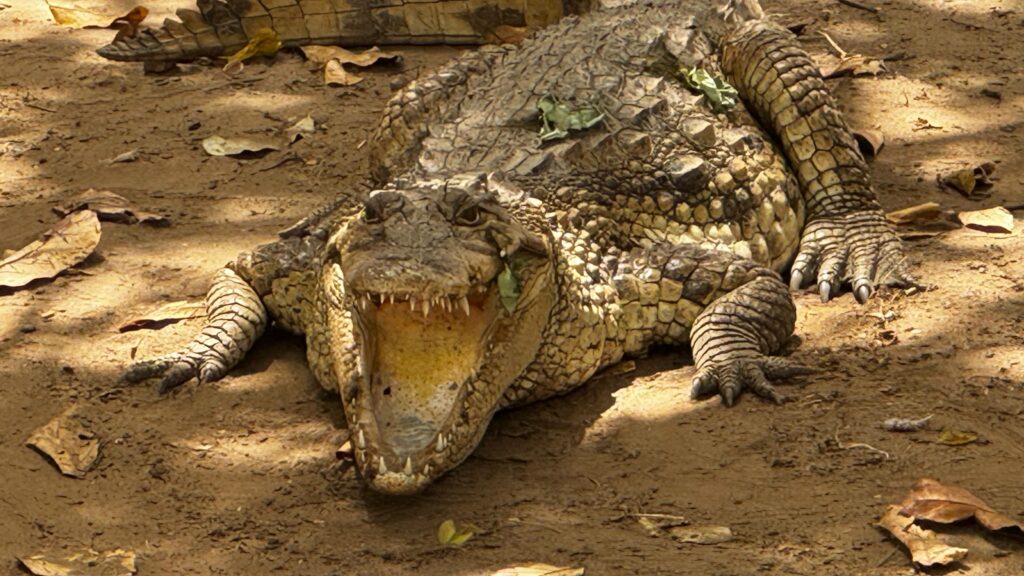
The exact number of crocodiles is not known but it is estimated that there are about 80. It was long claimed that all the animals are Nile crocodiles (Crocodylus niloticus), but research suggests they are a different species, namely the West African crocodile (Crocodylus suchus). There have been reports of the presence of albino crocodiles. Crocodiles are allowed to roam freely, and can be approached and touched by visitors. Crocodiles found in the wild are sometimes taken to and reared at the holy pools
Long before Islam became the dominant religion in The Gambia, local people practiced animist traditions – many of which still quietly persist today. These crocodile pools are part of that older belief system and local people come here for blessings, especially women who are struggling with infertility.
Water from the pools is believed to have spiritual power, and in some cases, the crocodiles themselves are thought to be connected to the ancestors. So even though especially Kachikally Pool now seems mainly aimed at tourists, it’s still a place that’s revered by many Gambians.
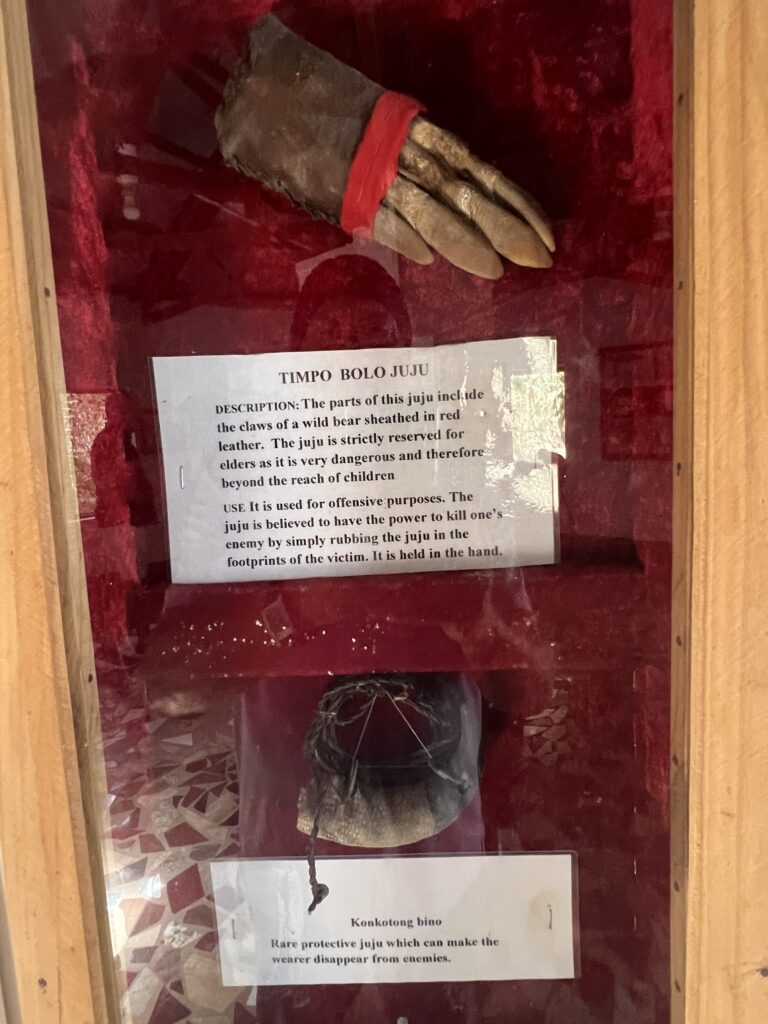
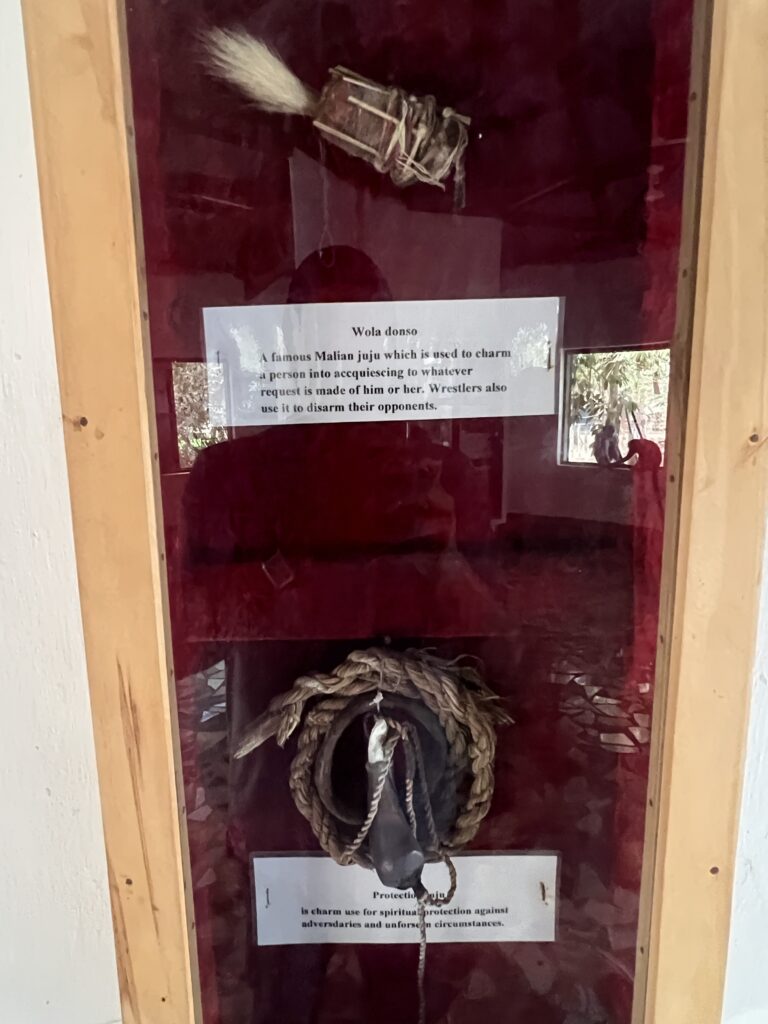
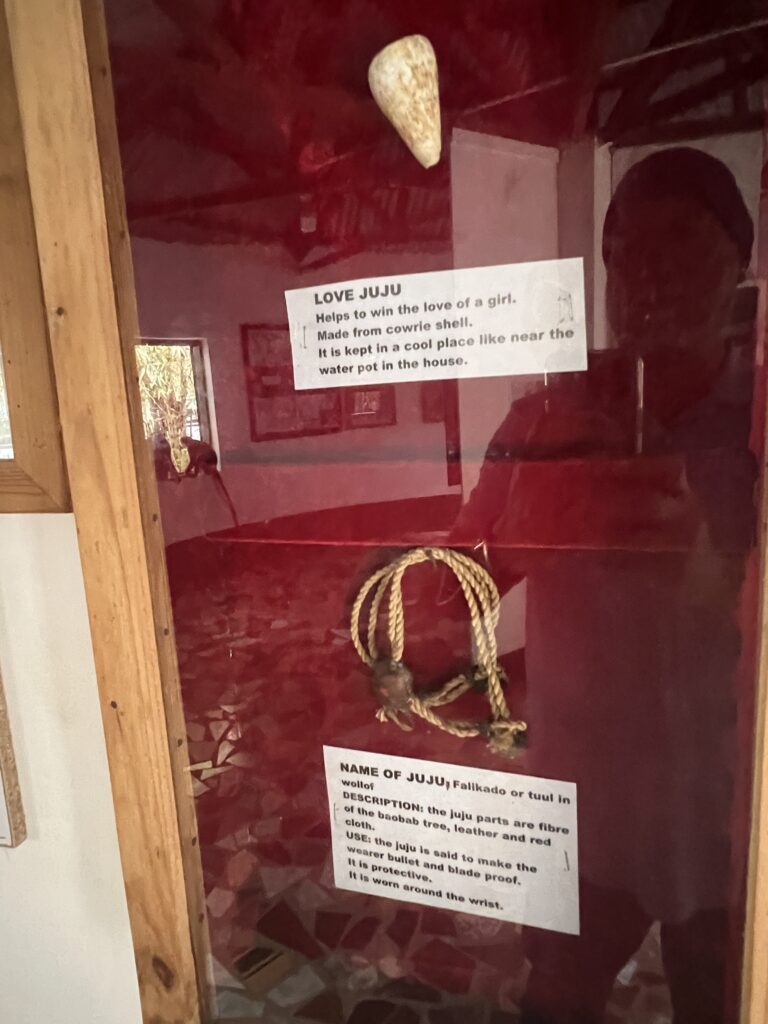
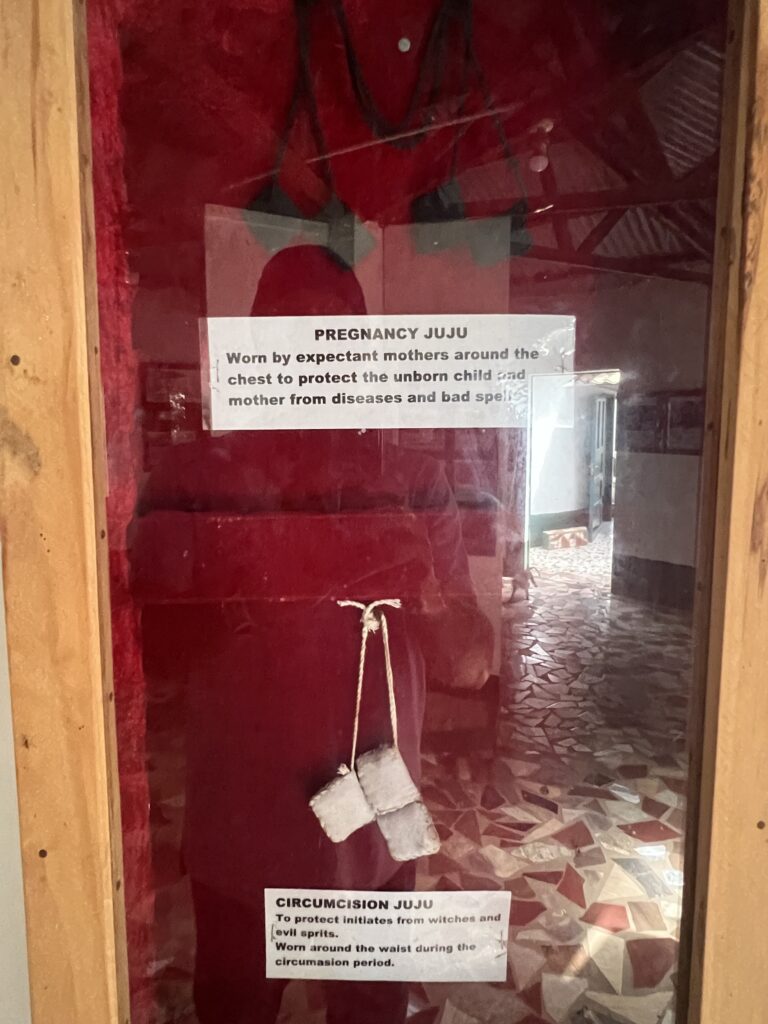
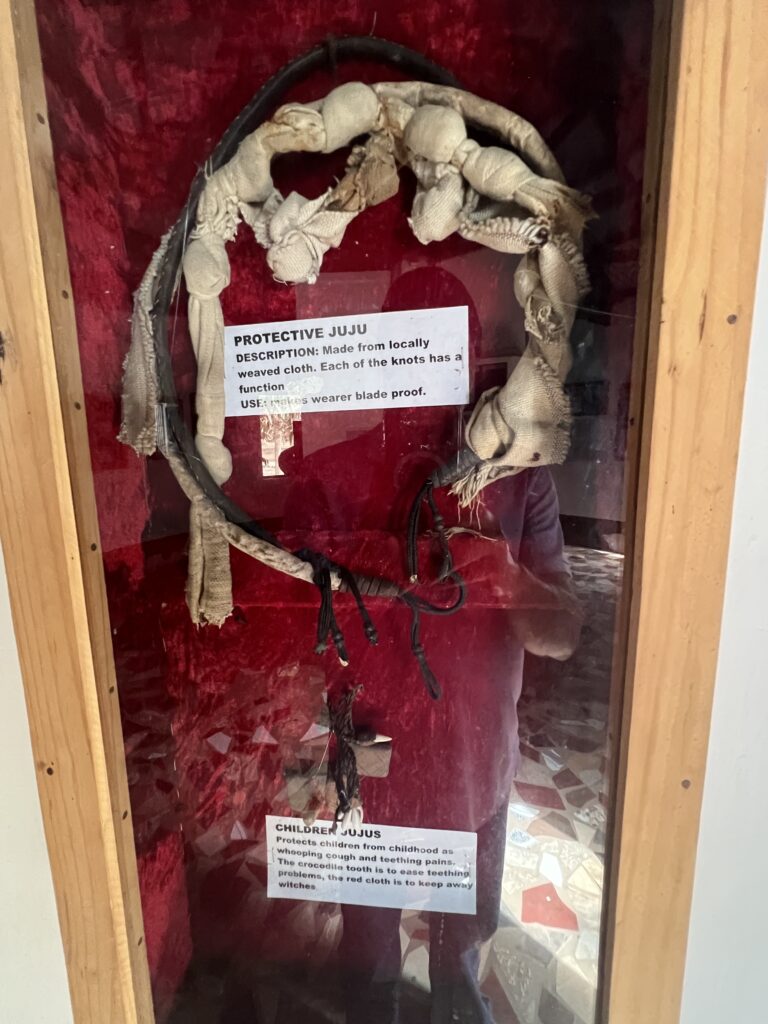
There are some cool masks and musical instruments on display, but you can see better examples of those at the National Museum in Banjul. What I found most interesting at the Kachikally museum, were the different jujus (religious talismans), including a dried monkey paw straight out of a Twilight Zone Episode.
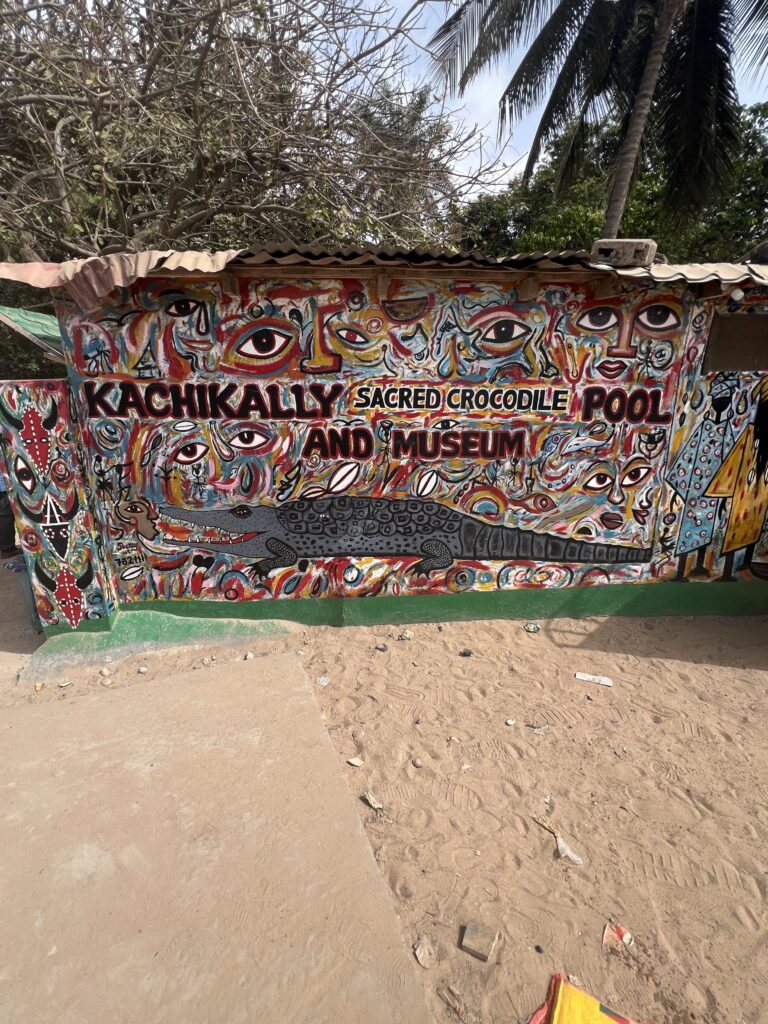
There is a small museum containing traditional costumes, jujus (magical amulets to protect wearers from harm), drums and other cultural artefacts.
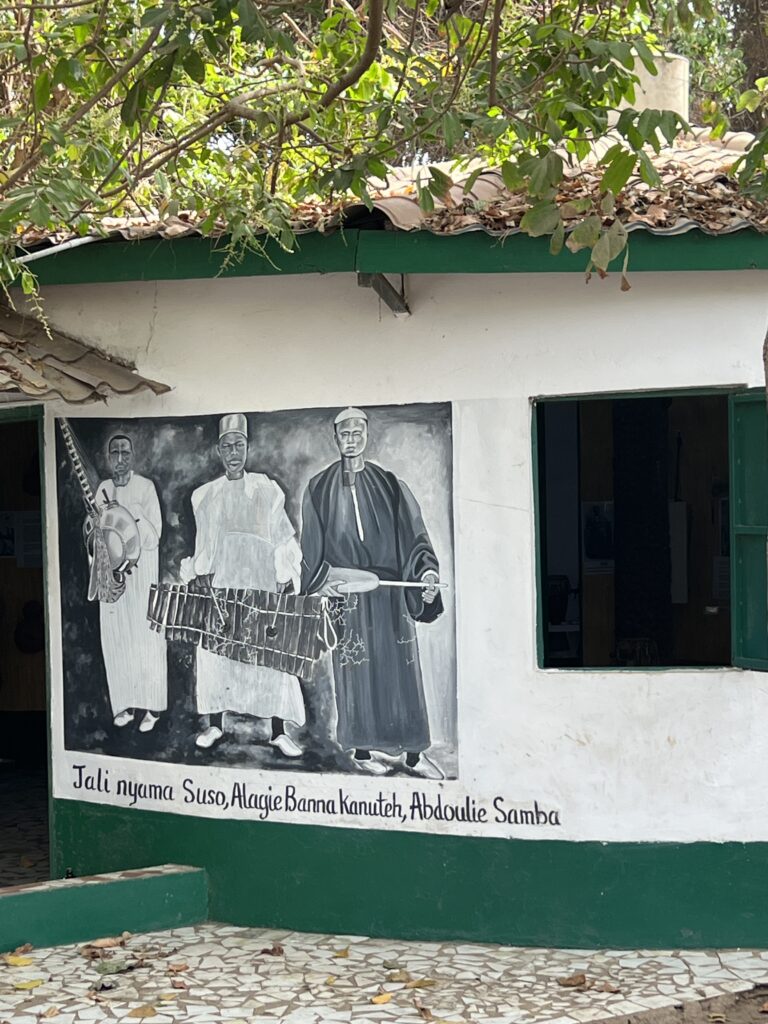
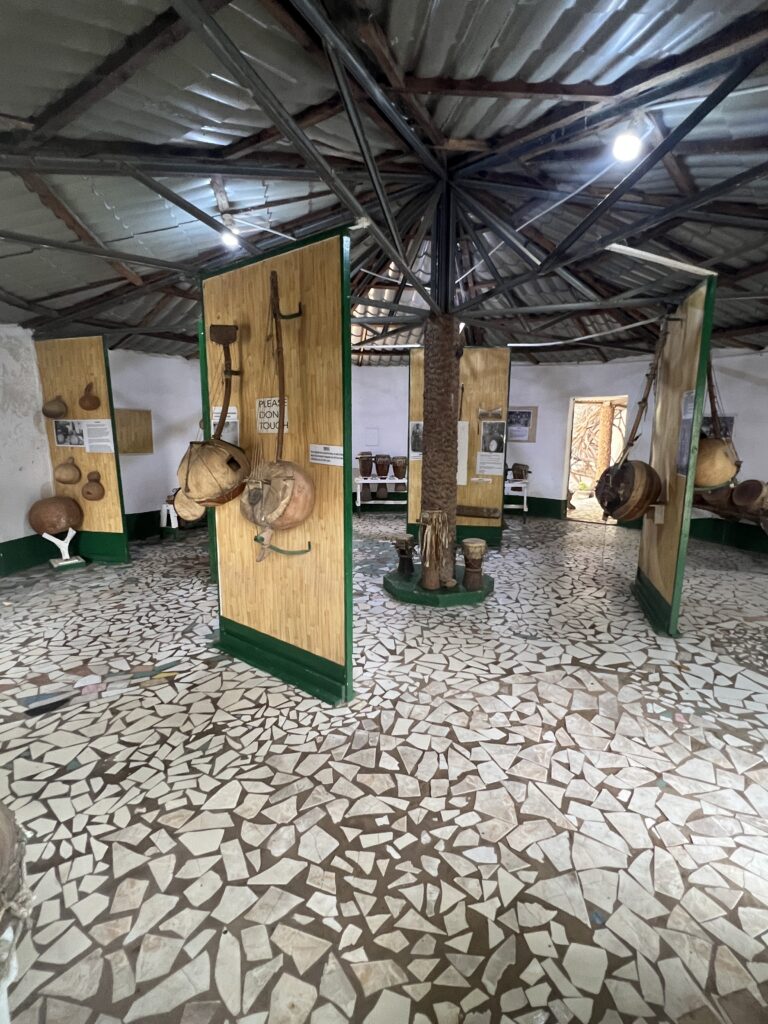
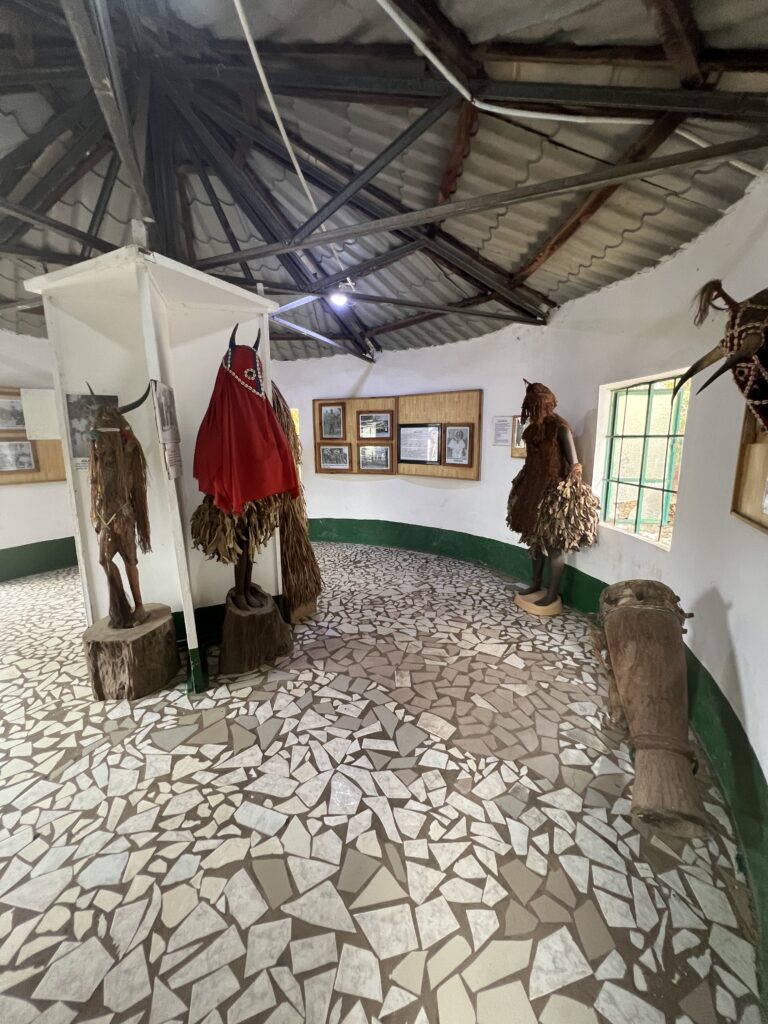
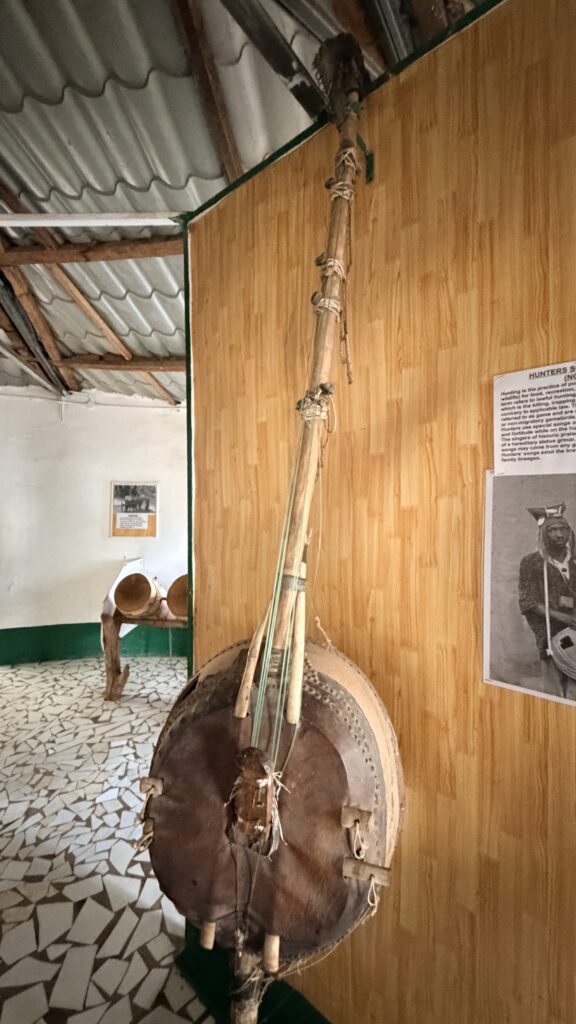
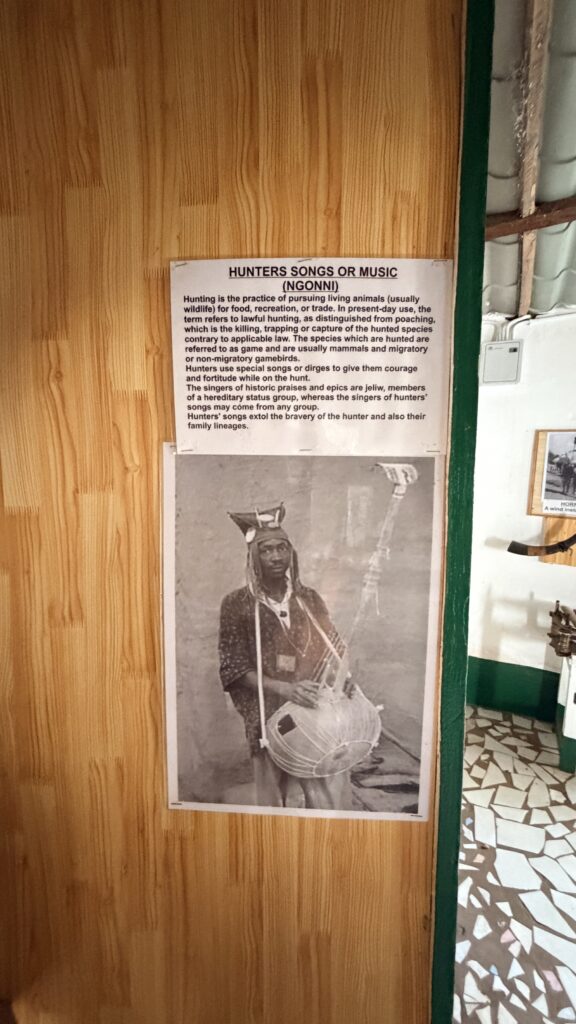
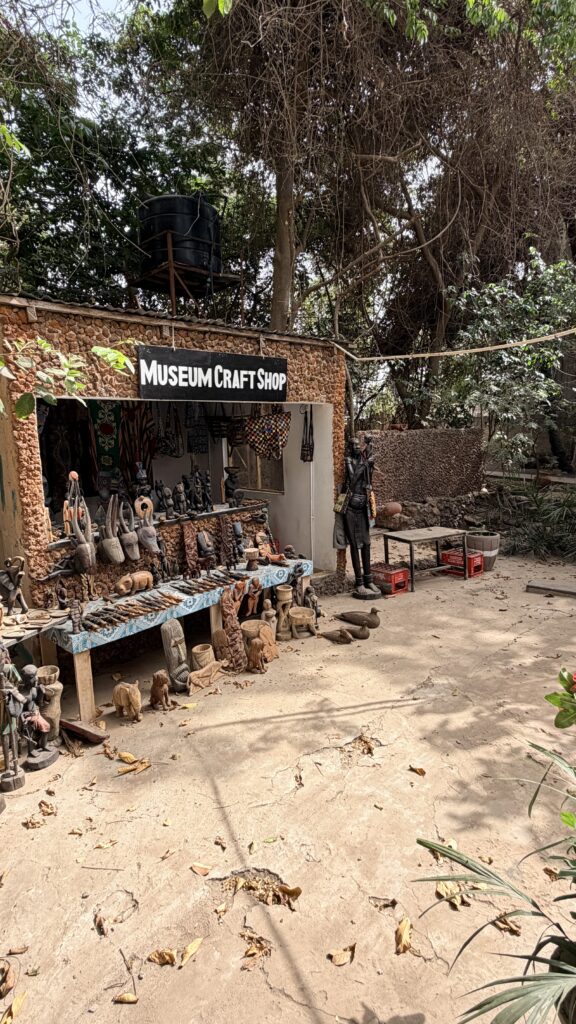
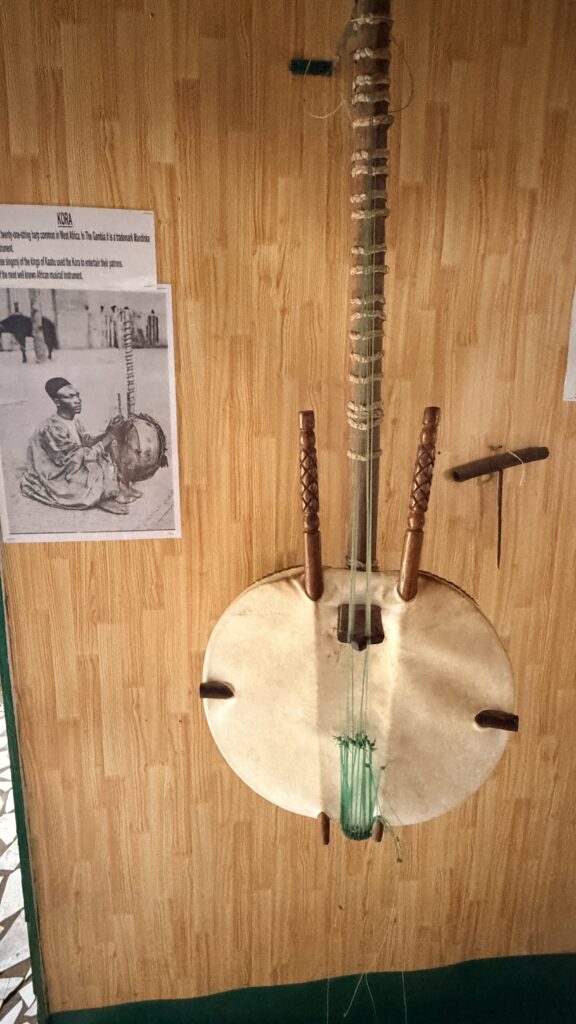
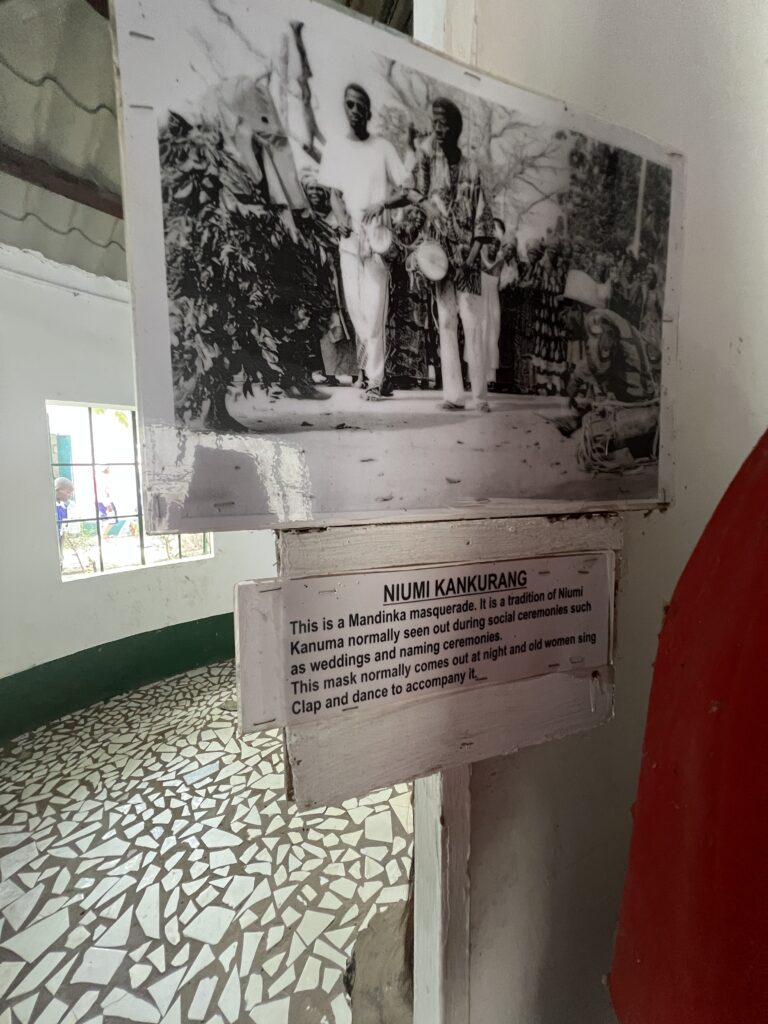
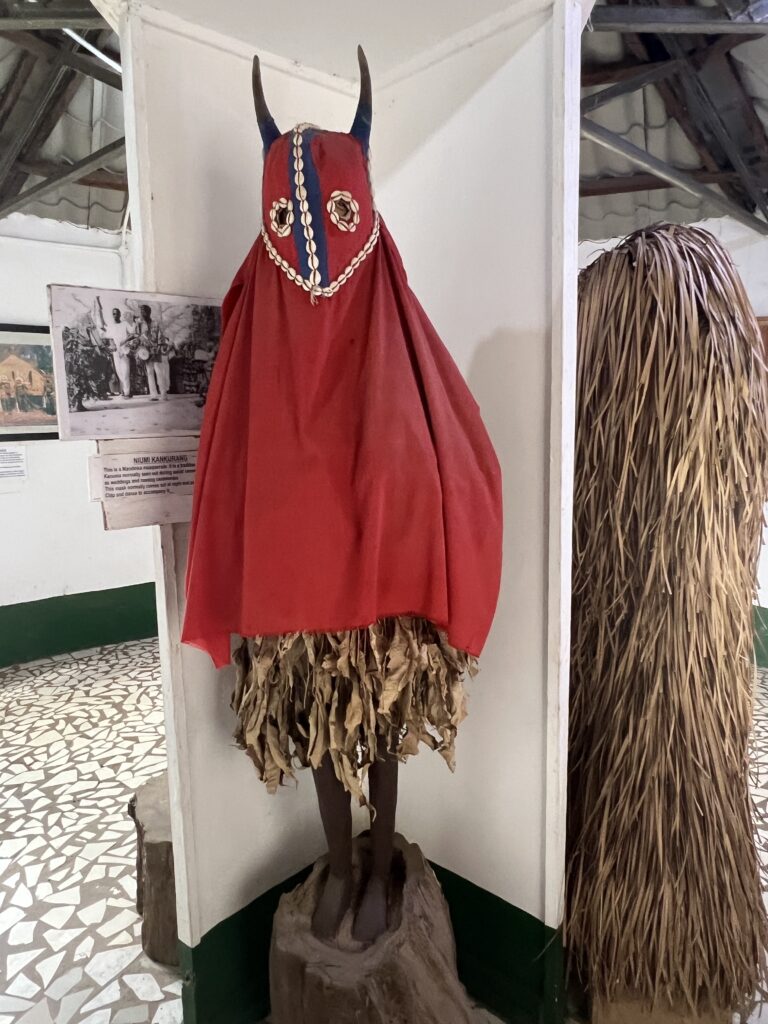
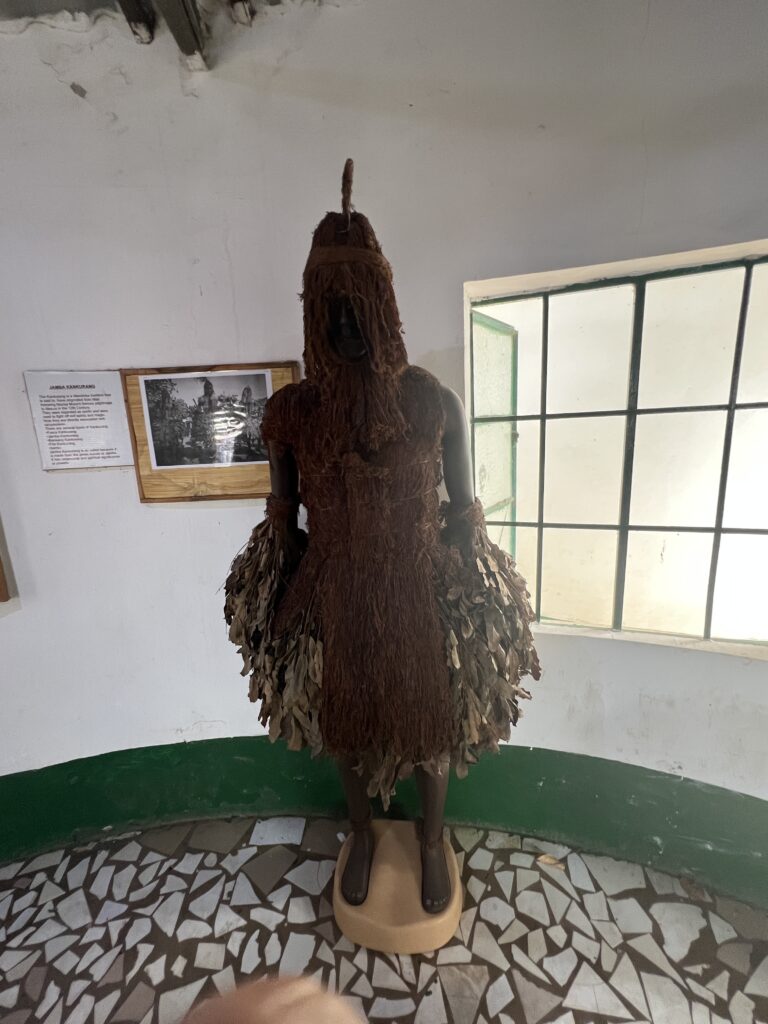
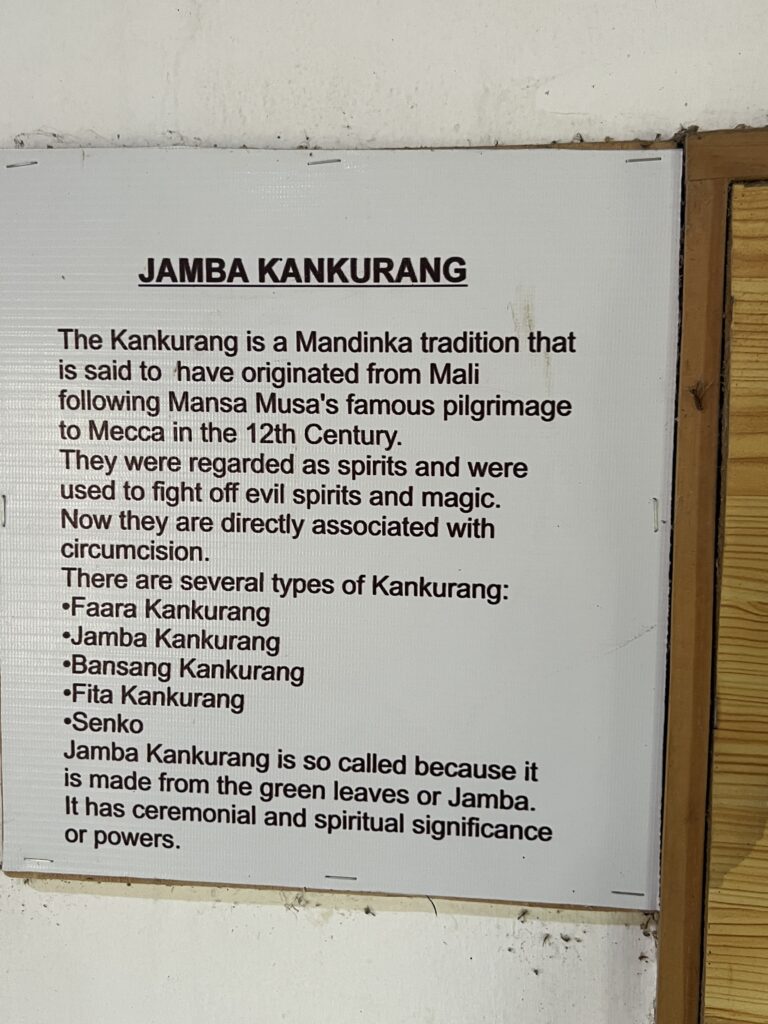
Rites of Passage: The museum’s cultural displays detail indigenous practices, including traditional circumcision ceremonies. It explains the historical and social significance of these rites, which have historically served as important purification and coming-of-age rituals in the region.
Male Circumcision & Masquerades: The exhibits detail the rite of passage for young men, which traditionally involves a period in the bush. The displays often include the masks and costumes of the Kankurang—a powerful and sacred spirit figure from the Mandinka and Jola traditions that appears to protect and guide boys during these ceremonies.
Female Circumcision (FGC): The museum’s educational panels address the historical and cultural significance of female circumcision among several Gambian ethnic groups (such as the Mandinka, Jola, Fula, and Serahuli). The exhibits explain the deep-rooted cultural beliefs behind the practice while noting the modern shift and pressures to abandon it
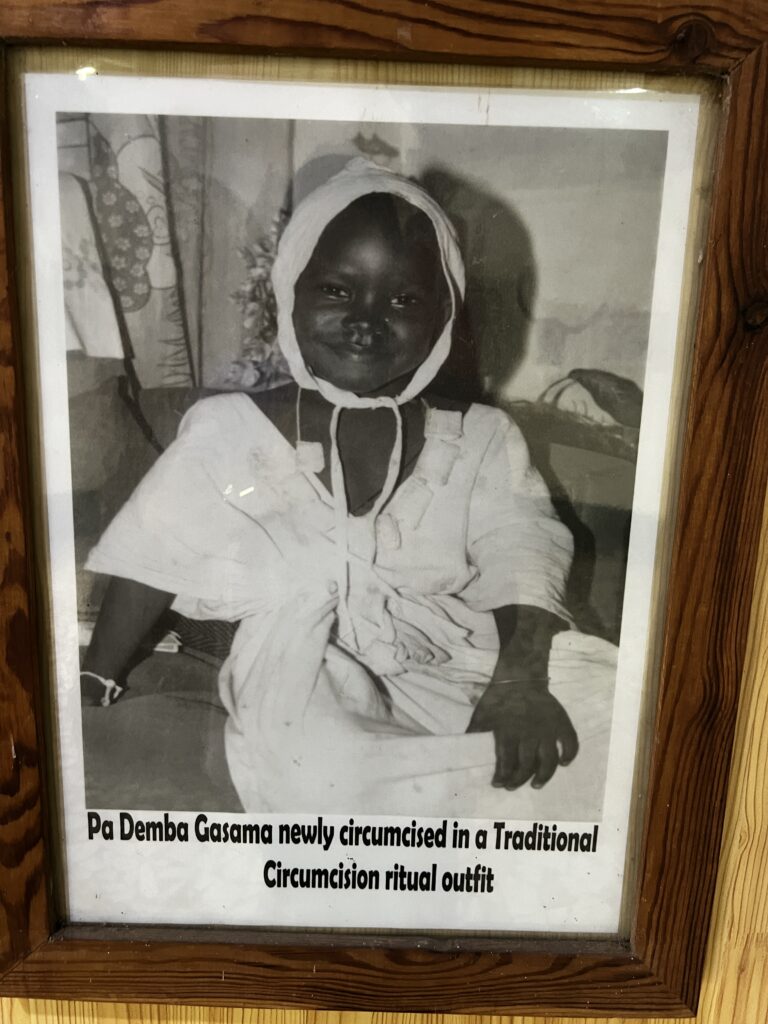
Historical Overview: Visitors receive a comprehensive overview of early Bakau history, traditional medicine, and tribal tools.
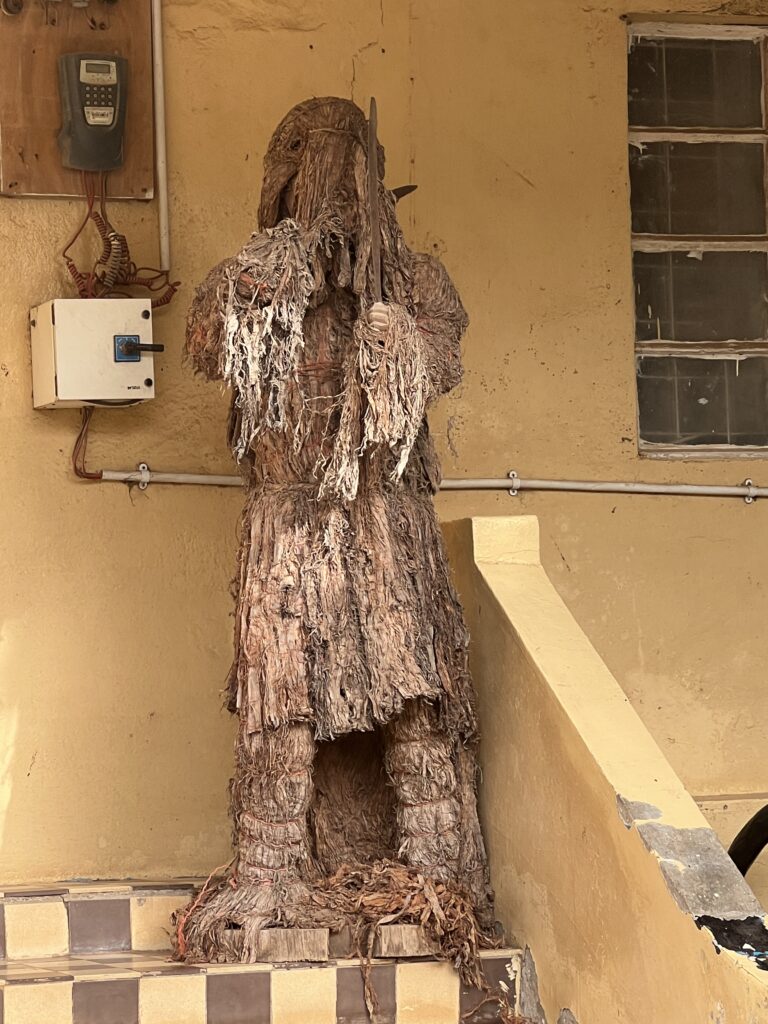
The Kumpo is a sacred, mythical forest spirit and masked dancer of the Jola (Diola) people, primarily found in the Casamance region of Senegal and the Foni districts of The Gambia. Covered entirely in dried palm leaves, it spins and dances to ward off evil spirits, resolve community disputes, and bring blessings.
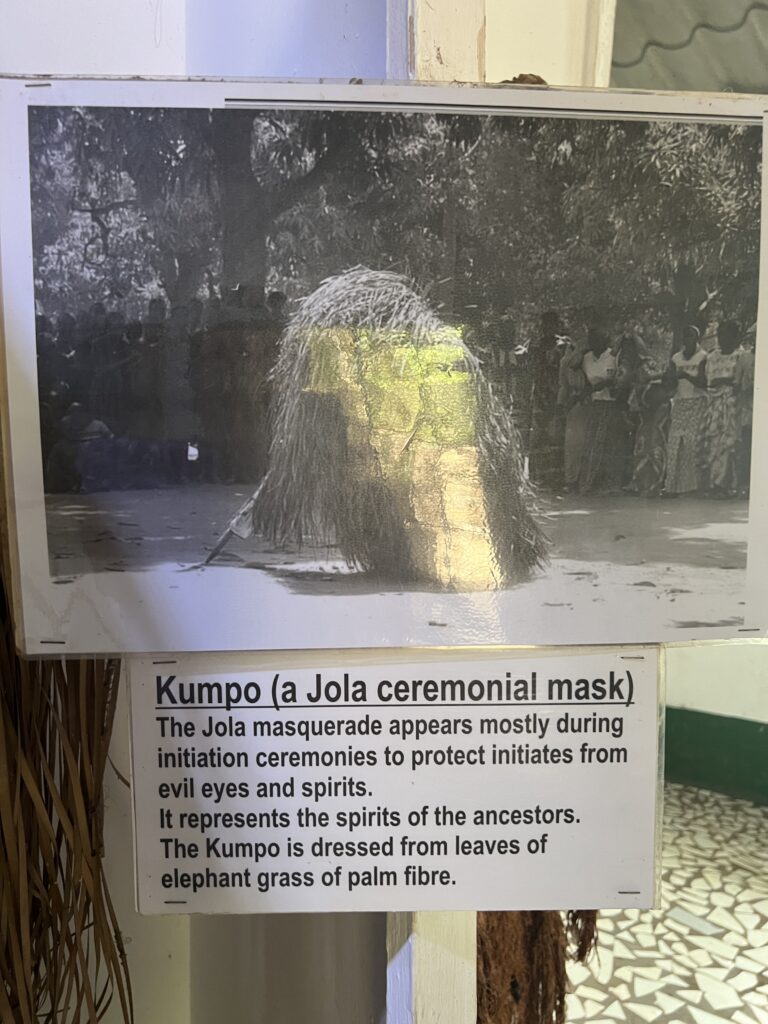
The Ekuompoi is one of three traditional figures (along with Samay, and the Niasse) in the mythology of the Diola people in the Casamance (Senegal) and in Gambia.
Multiple times in the course of the year, i.e. during the Journées culturelles, a folk festival in the village is organized. The Samay invites the people of the village to participate with the festivity.
The Ekoumpoi is dressed with palm leaves and wears a stick on his head. The Ekoumpoi is usually made from ronier leaves specifically. At the start of the dance, a young lady binds a colored flag on the stick. The Kumpo dances for hours with the stick and the flag on the head. He speaks a private, secret language and communicates through an interpreter with the spectators.
The Kumpo’s goal is to encourage the community to act as good villagers. He encourages the people of the village to participate in community life and provides well wishes. The festival is intended as a stimulus for the social community life, and not participating to the feast is seen as anti-social behavior. The whole community is invited and there are performances of rhythmical music and dance.
According to the tradition, the Kumpo is not a person, but rather a ghost. The entity is strongly associated with the bois sacré. It is considered taboo to question the real identity of the Kumpo. It is forbidden to touch the Kumpo, and it is considered sacrilege to look inside the palm leaves. To deter possible intruders, he defends himself with his stick by smashing the ground and pointing, making sharp, hazardous gestures.
At the end of the celebration, he says goodbye to the community and recedes back into the bois sacré.
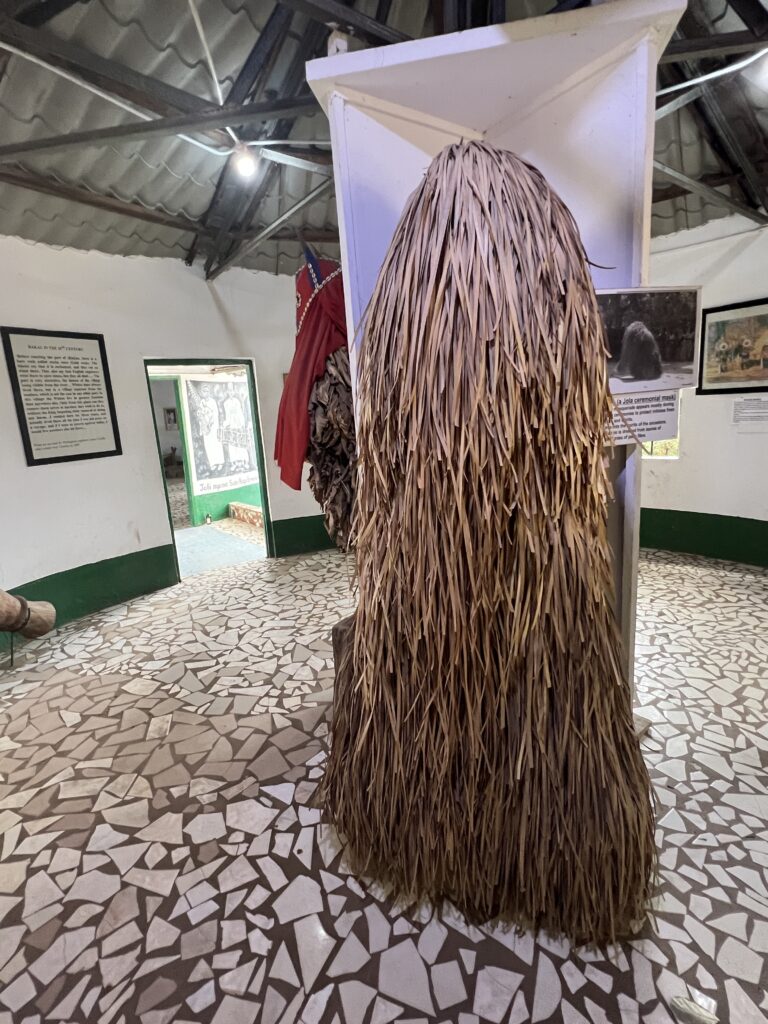
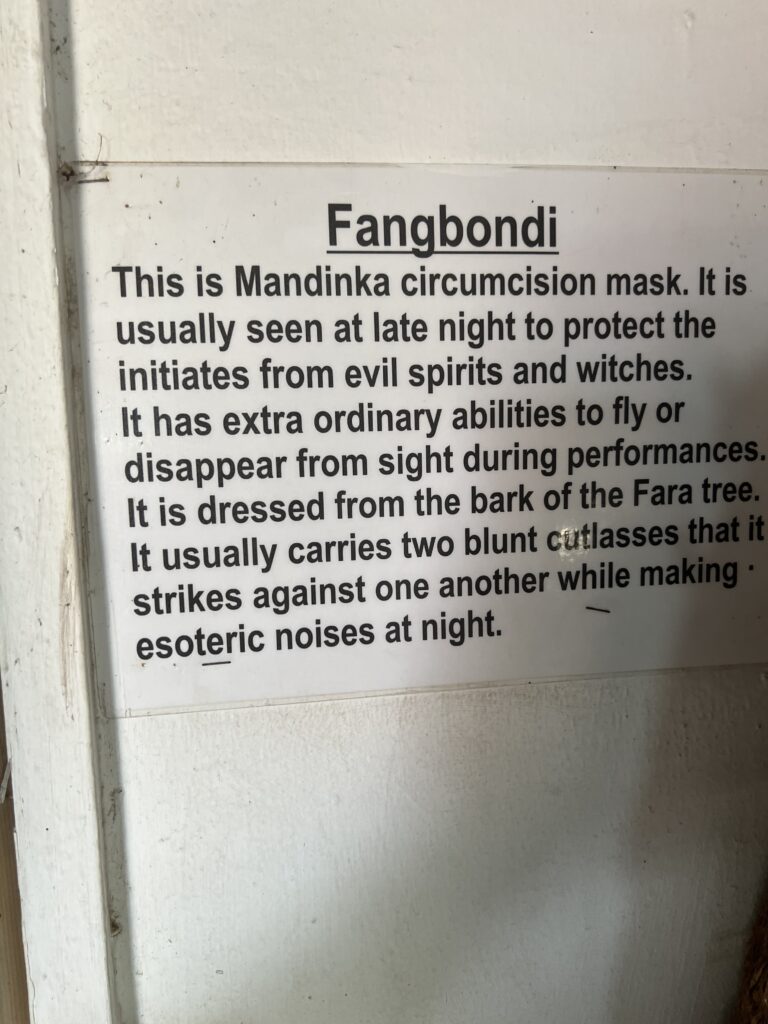
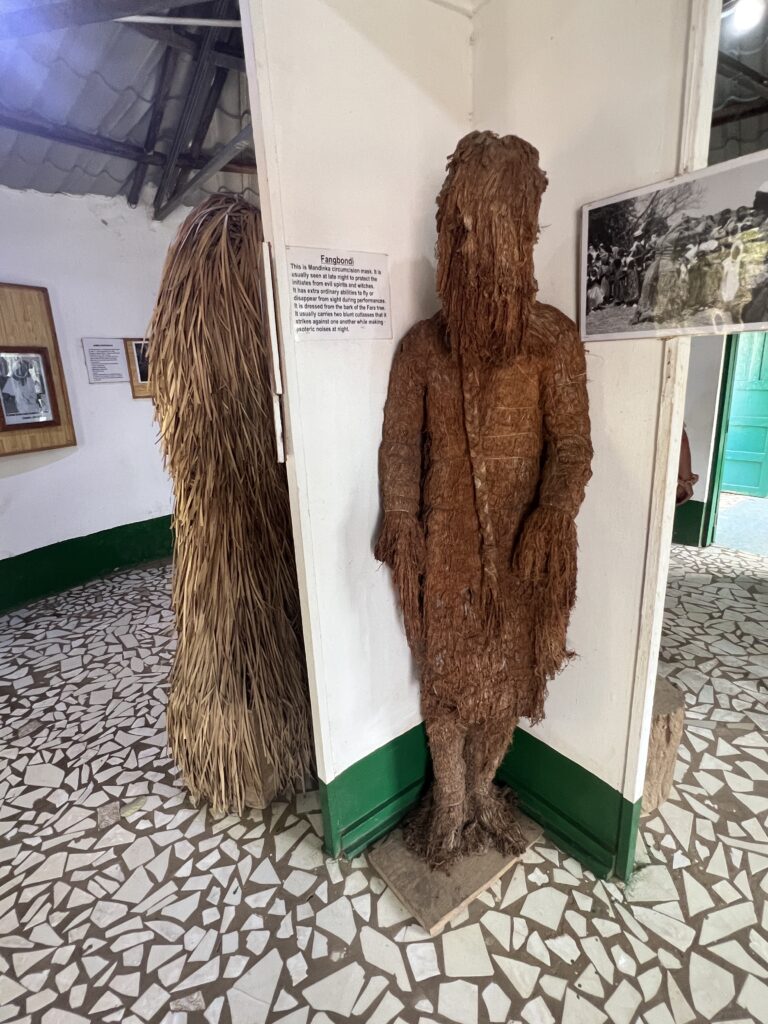
The terms refer to Kumpo and Fangbondi, which are sacred, traditional masquerades performed by ethnic groups in The Gambia and the Casamance region of Senegal. These figures are central to local culture, rites of passage, and spiritual harmony.
Who it is: Also known as the Kankurang, Fangbondi is an intimidating ceremonial mask primarily used by the Mandinka people.
Appearance: Depending on the specific tradition, the costume is made from the bark of the camel-foot tree (dyed with red ochre) or thick green leaves. The dancer carries a machete in one hand and a stick in the other.
Meaning: The Fangbondi/Kankurang is an initiatory figure central to the rite of passage for young boys. During circumcision and initiation rituals, the masquerade enters the village from the bush to maintain order, provide protection, and disseminate the rules of social behavior to the initiates.
Taboos: Like the Kumpo, it acts as a powerful protector of secrets and is treated with profound respect and fear.
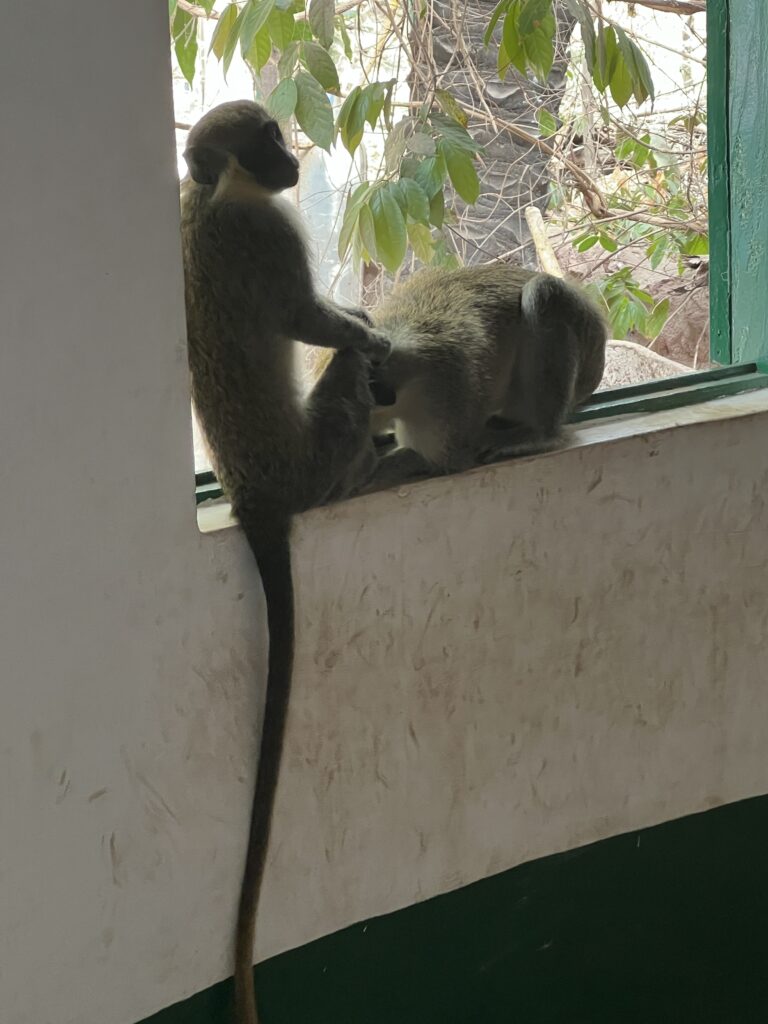
When visitors mention monkeys in The Gambia and “Kachikally,” they usually meet the highly interactive Green Vervet Monkeys roaming the grounds of the sacred Kachikally Crocodile Pool in Bakau
These monkeys were roaming through the open museum
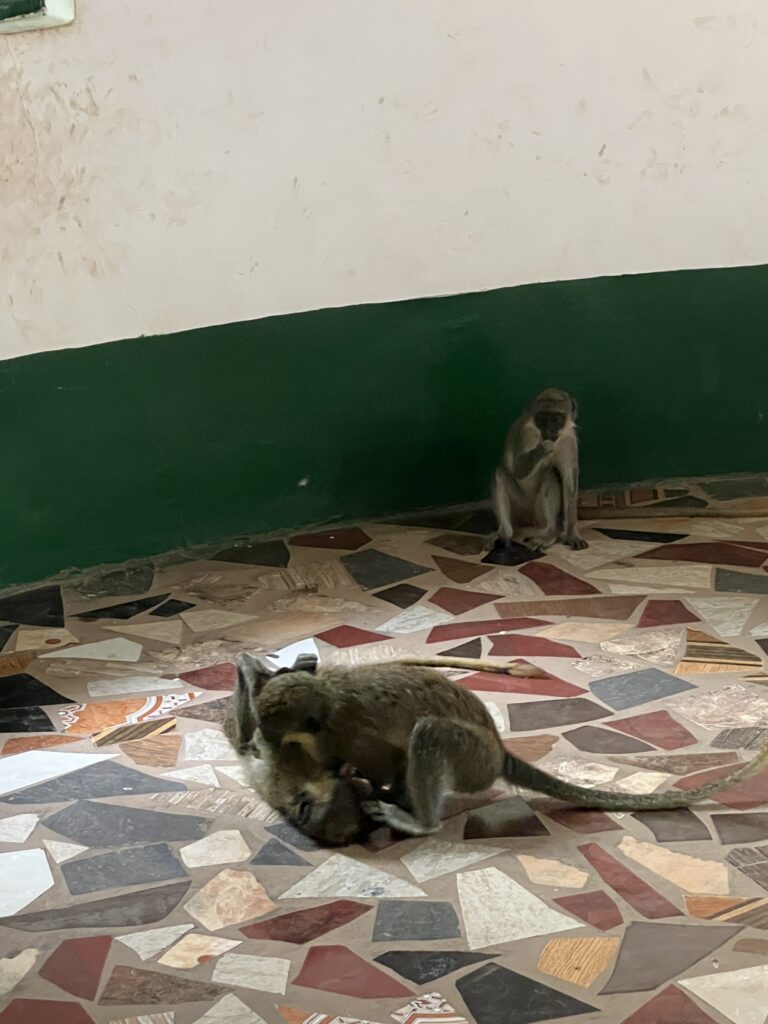
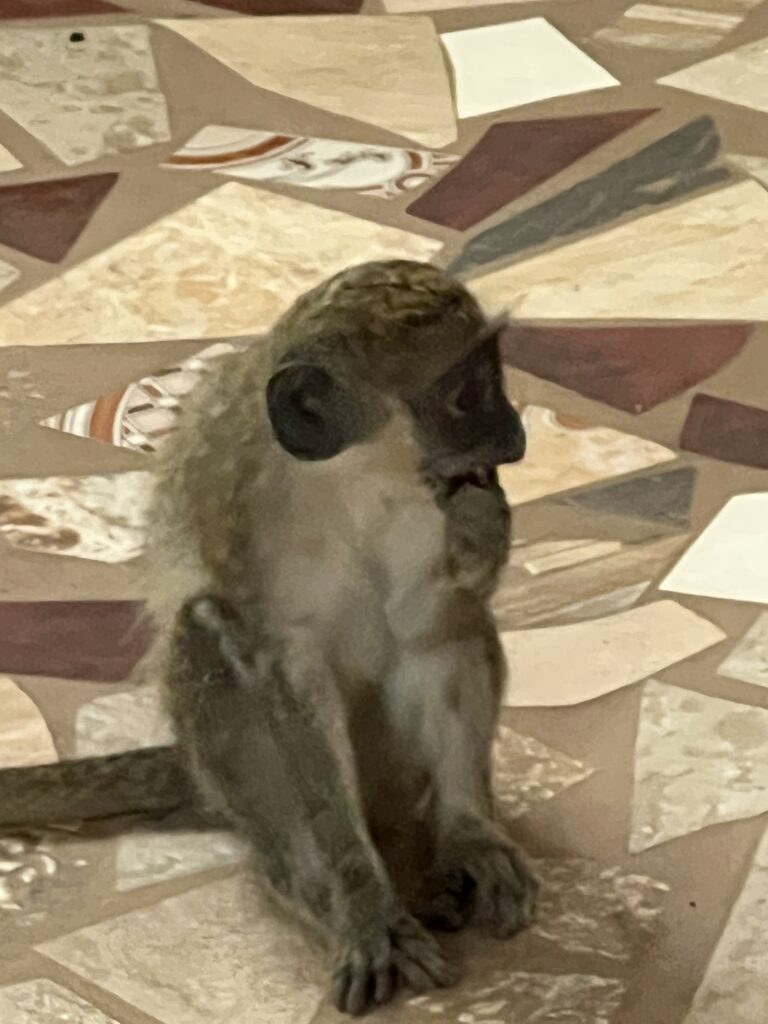
Ethnographic Displays: The on-site community-run museum features over 1,000 artifacts housed in traditional African round huts. It offers an educational journey through the history of The Gambia and its various ethnic groups (Mandinka, Jola, Fula, and Serahuli).
In the vibrant cultural tapestry of The Gambia, the sight of locals donning Juju’s is a common occurrence. These colourful and ornate accessories hold significant cultural and spiritual value for the Gambian people, representing tradition, identity, and protection.
Also known as amulets or charms, they are traditionally worn around the neck, wrist, or waist. They are crafted from a combination of different materials, including leather, beads, shells, feathers, and animal bones. Each one is unique, reflecting the personal beliefs and spiritual practices of the individual wearer.
One of the primary reasons locals in The Gambia wear juju’s is for protection. Many Gambians believe that these charms have the power to ward off evil spirits, provide spiritual guidance, and bring good fortune. They are often made by traditional healers or spiritual leaders who possess deep knowledge of the spiritual world and the different powers associated with various materials.
Interestingly, they are not limited to personal protection. They are also commonly used to bring luck and success in various aspects of life. For instance, farmers may wear them to ensure a bountiful harvest. Students may wear them to improve academic performance, and businessmen and women may wear them to attract prosperity and success in their endeavours. In this way, they serve as an important tool in shaping the outcomes of different life pursuits.
Moreover, they play a vital role in preserving cultural identity among Gambians. The wearing of these traditional charms is often deeply rooted in ancestral practices and beliefs, passed down through generations. By donning a Juju, Gambians feel a deep connection to their heritage and a sense of belonging to their community. They not only serve as personal adornments but also act as symbols of cultural continuity, reminding the wearer of their roots and the wisdom of their ancestors.
The practice of wearing a Juju is deeply ingrained in the country’s cultural fabric. These colourful and symbolic charms represent protection, luck, and cultural identity. By adorning themselves with Juju, Gambians connect with their heritage, seek spiritual guidance, and invite positive energies into their lives. The tradition of wearing a Juju is a fascinating aspect of Gambian culture. It contributes to the richness and diversity of this captivating West African nation.
Juju and Charms: Superstition in The Gambia | My Gambia
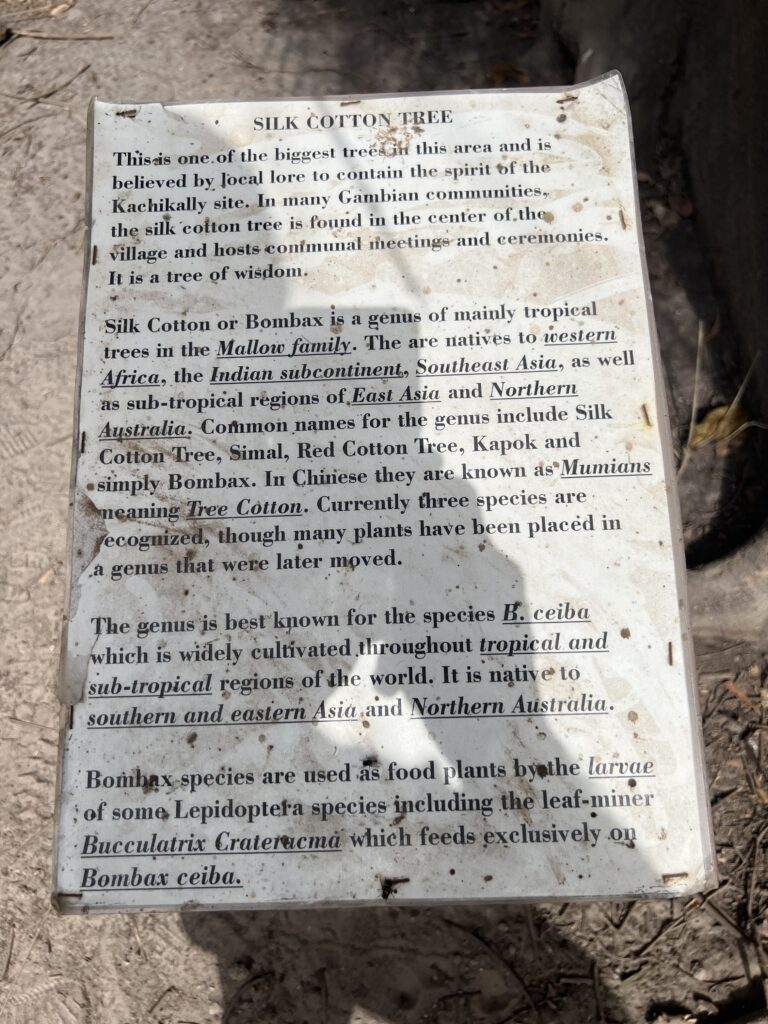
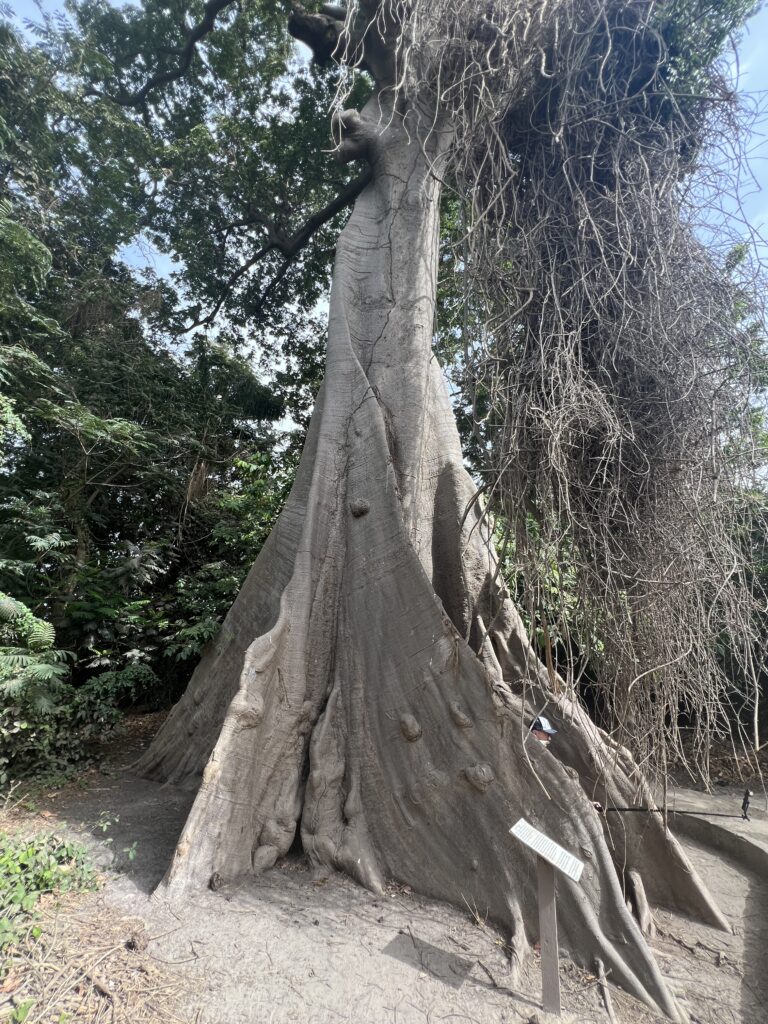
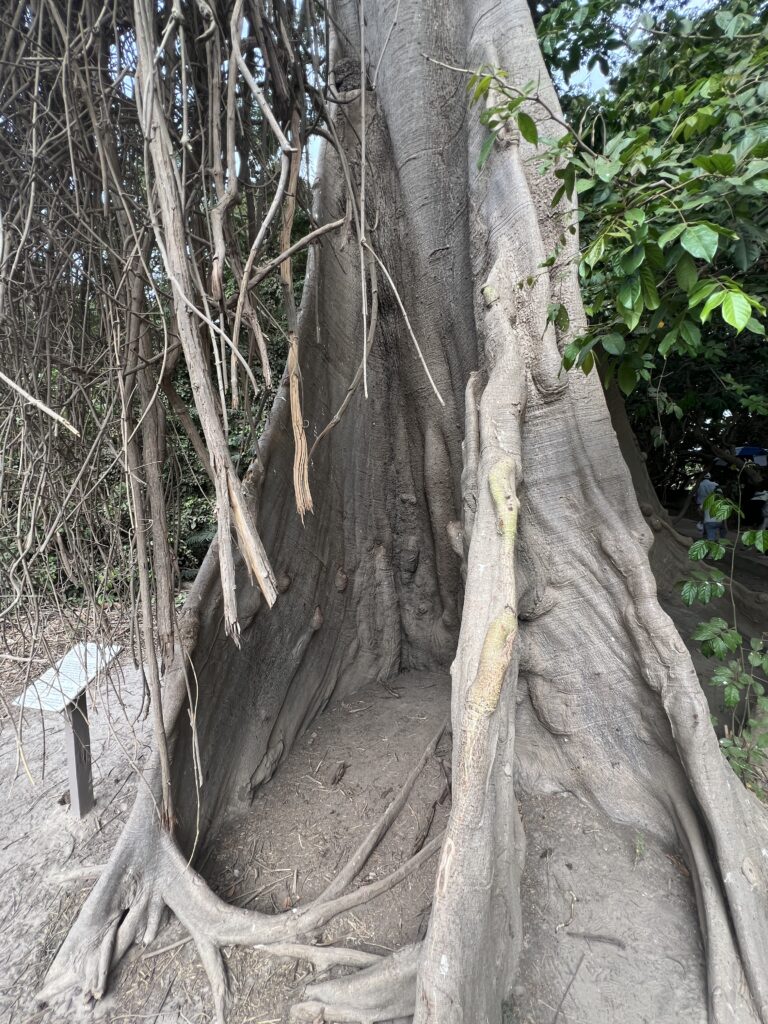
Behind the museum, a 5-minute nature trail leads through a small section of forest and past a huge silk cotton tree to the pool. The sacred Silk Cotton Tree (Ceiba pentandra) is a massive, centuries-old landmark steeped in local folklore. It is widely revered by locals for its perceived spiritual powers, serving as a site for healing, fertility rituals, and ancestral offerings.
Spiritual & Cultural Significance: The tree is believed to be the dwelling place of spirits and ancestors. Offerings are frequently placed at its base, and visitors often seek blessings for protection and good fortune.
Historical Communication: The trunk of the tree sounds hollow when struck. Historically, elders used this acoustic property as a “telephone” to transmit messages or signal emergencies across the surrounding areas.
Natural Wonder: Also commonly referred to as the Kapok or Elephant Tree, this towering specimen features vast root systems and a uniquely textured bark. It sits along the nature trail just before reaching the famous crocodile pond.
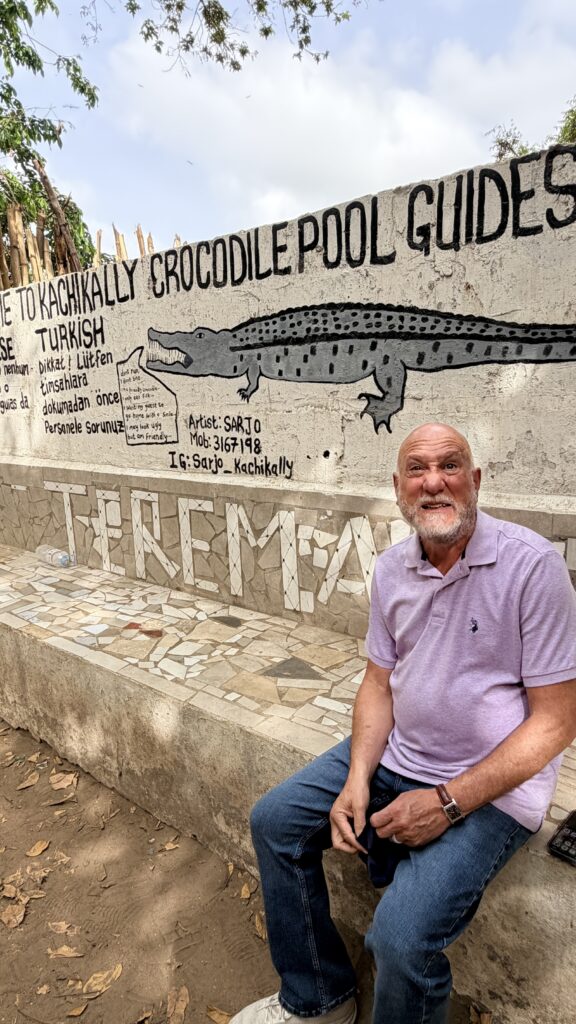
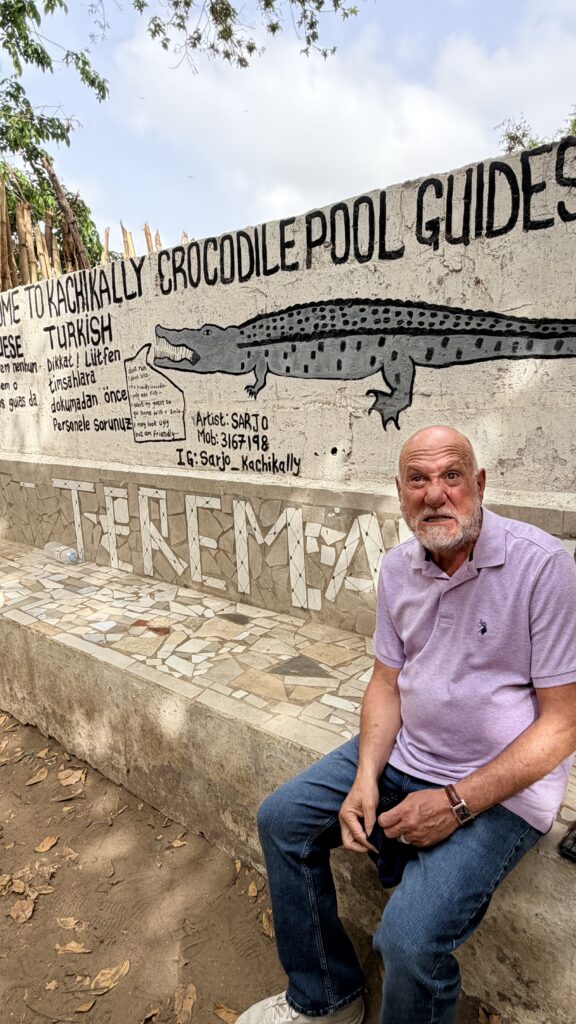
Trying my best to make a scared crocodile face. If you notice though, no photos of me touching a crocodile 🙂
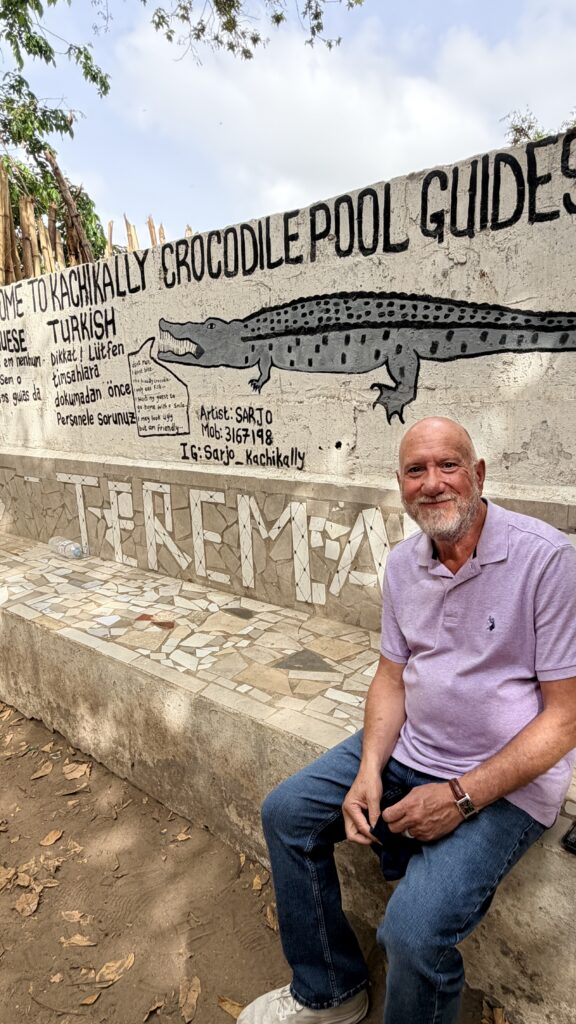
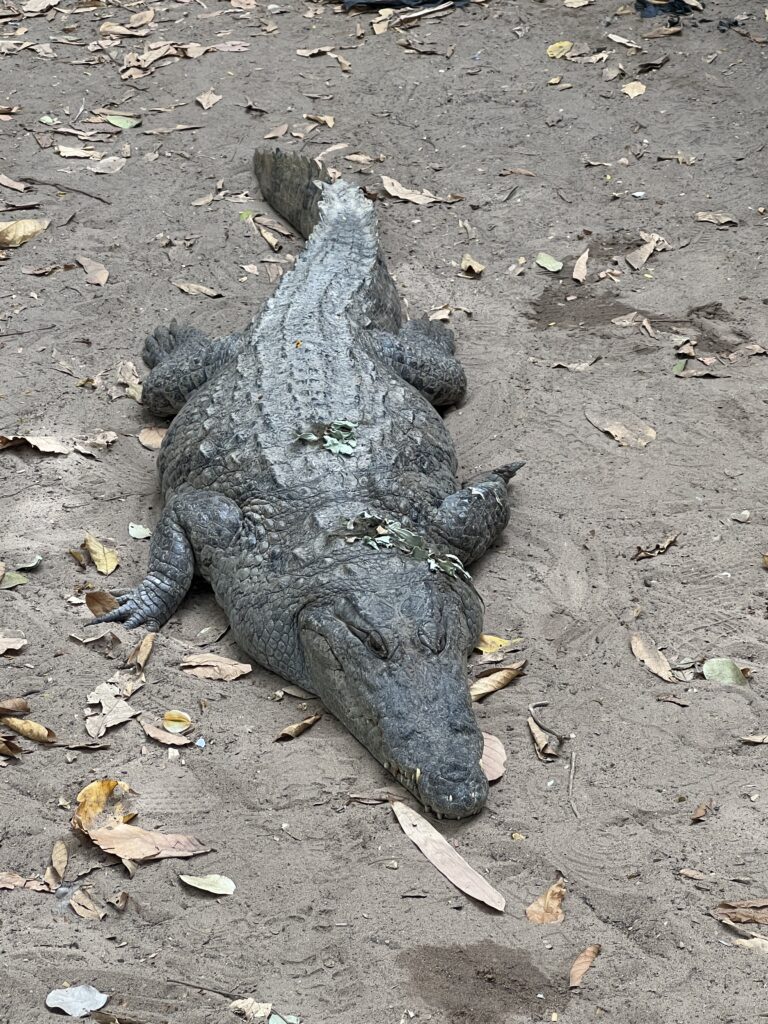
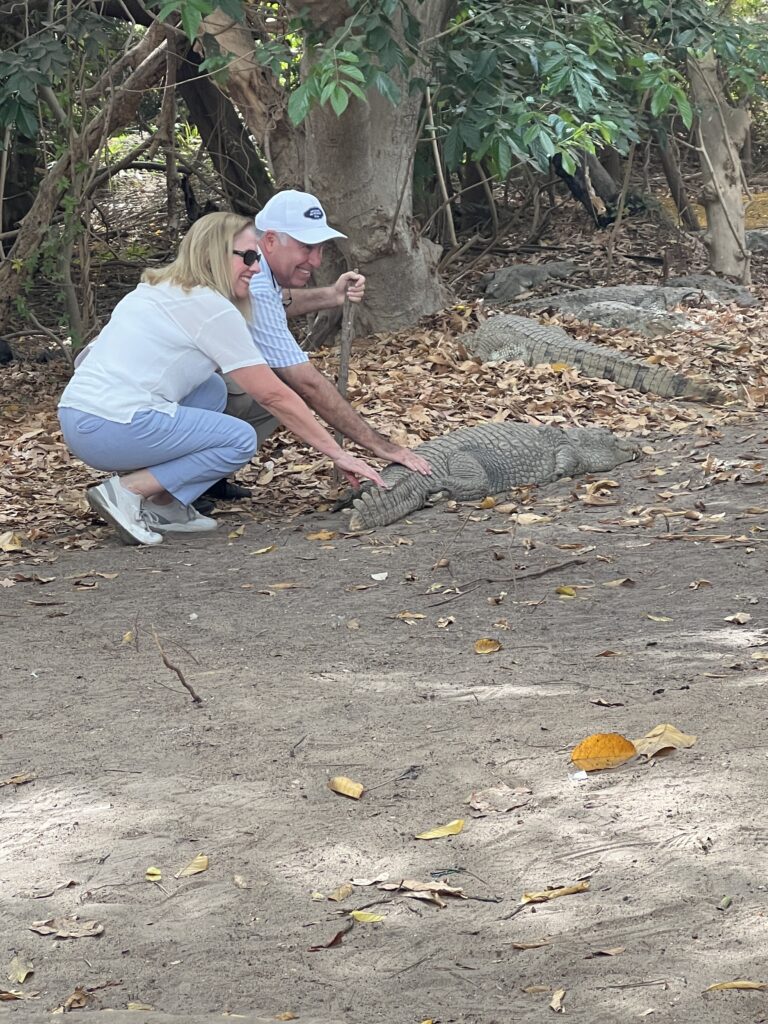
At the crocodile pool there are a large number of medium to large crocodiles, many basking out of the water and all seemingly so well fed that they are not interested in tourists. You will be walking in the midst of them. Guides will tell visitors which reptiles are safe to touch whilst the inevitable photos are taken but be warned that all the time the visitor is holding onto his or her stomach contents whilst being assaulted by the strong stench of rotting fish.
A couple from Monterrey, Mexico (Sylvia and Romulos) who we met at the CVS in San Diego before the around the world trip started. They are a great couple, and we enjoyed speaking to them and having dinner with them on the ship a few times. We were happy they were on this excursion with us.
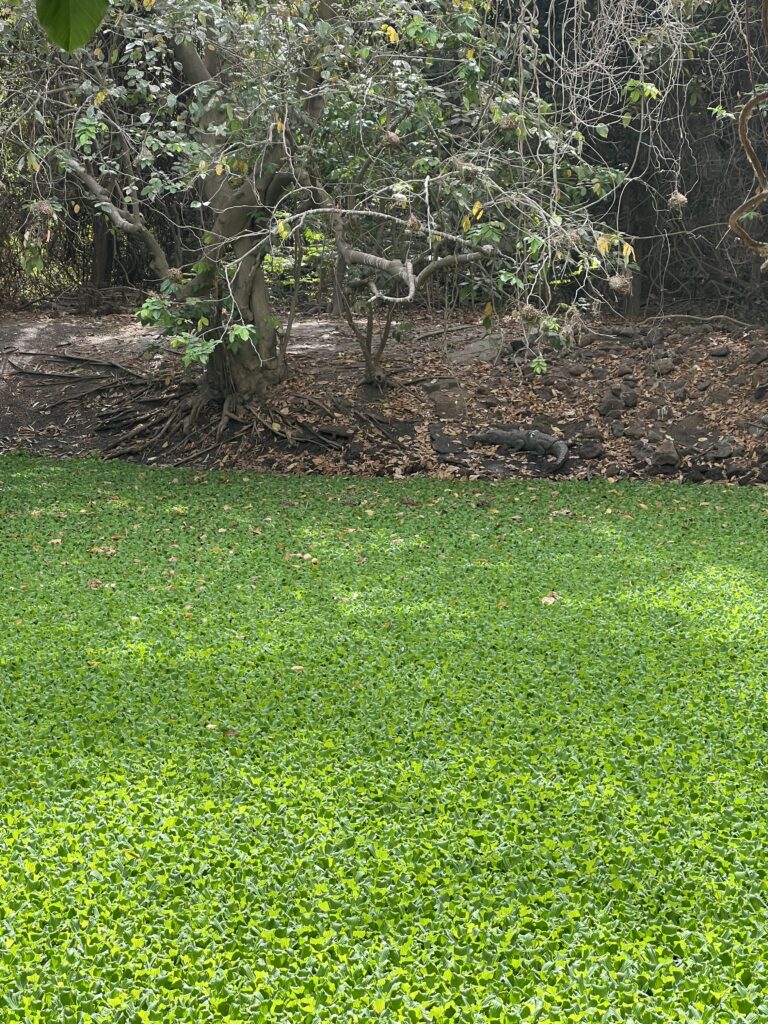
The pool of water that held the crocodiles.
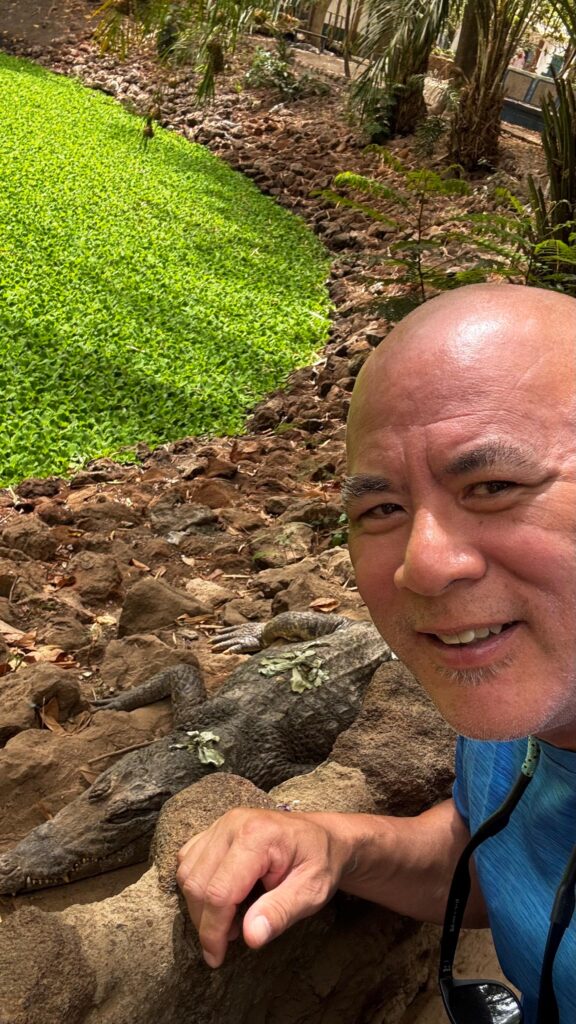
Our friend David Chen with one of the crocodiles. He and Marta were on the same excursion but at a different time.
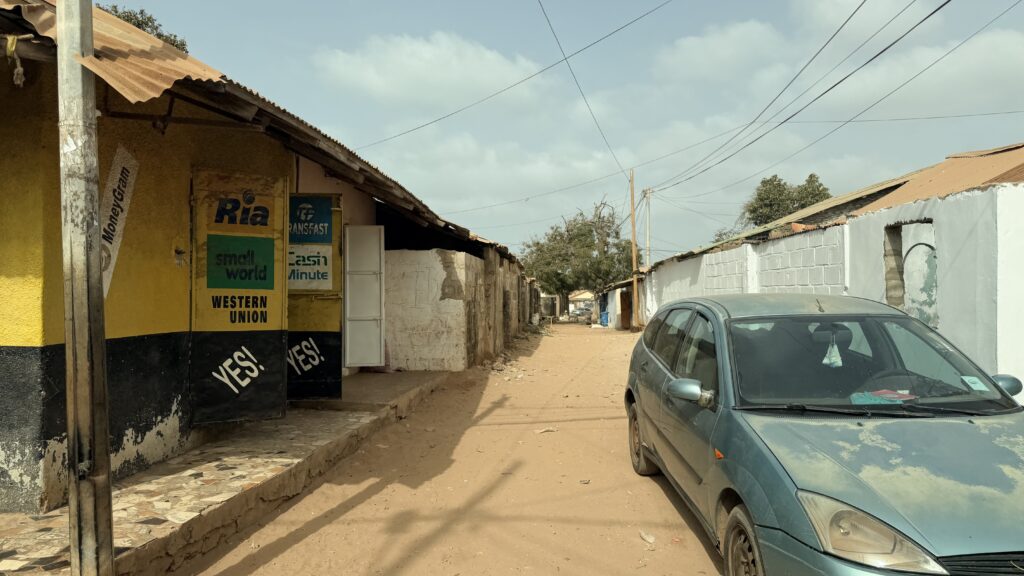
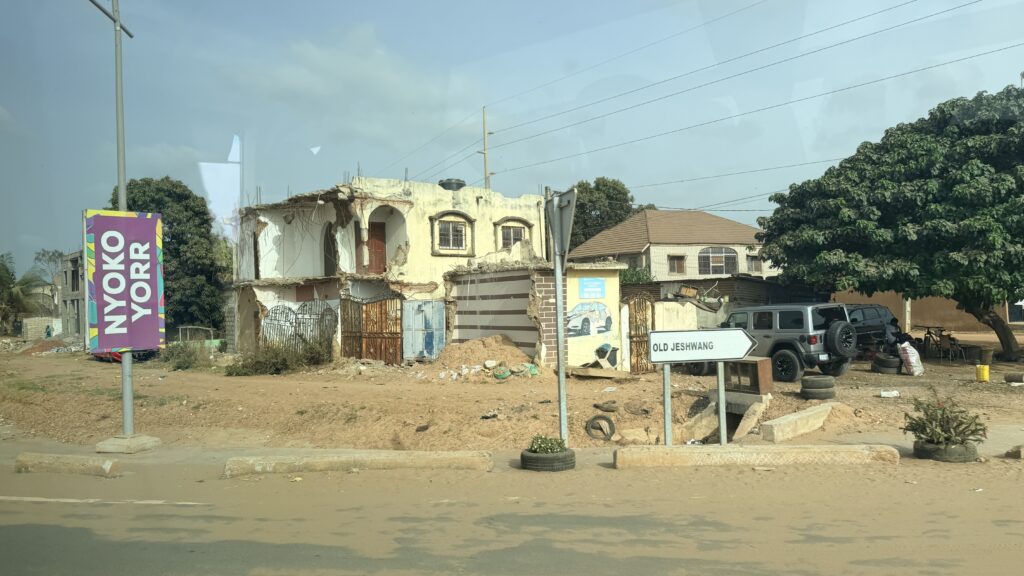
Couple of photos driving to our next location.
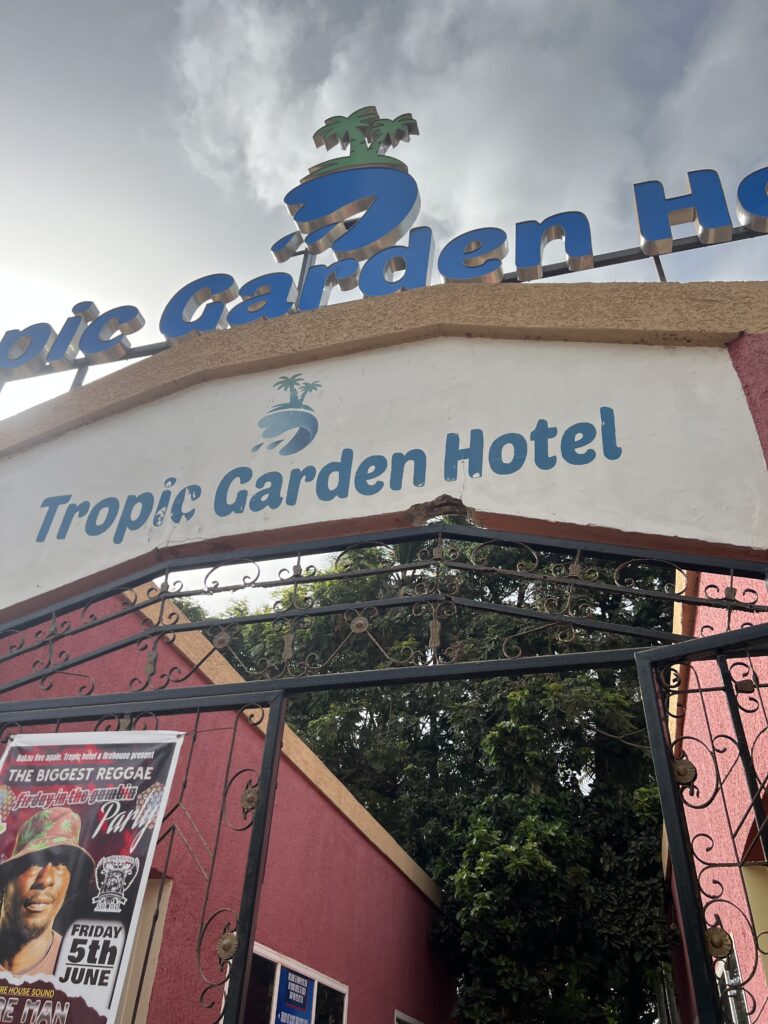
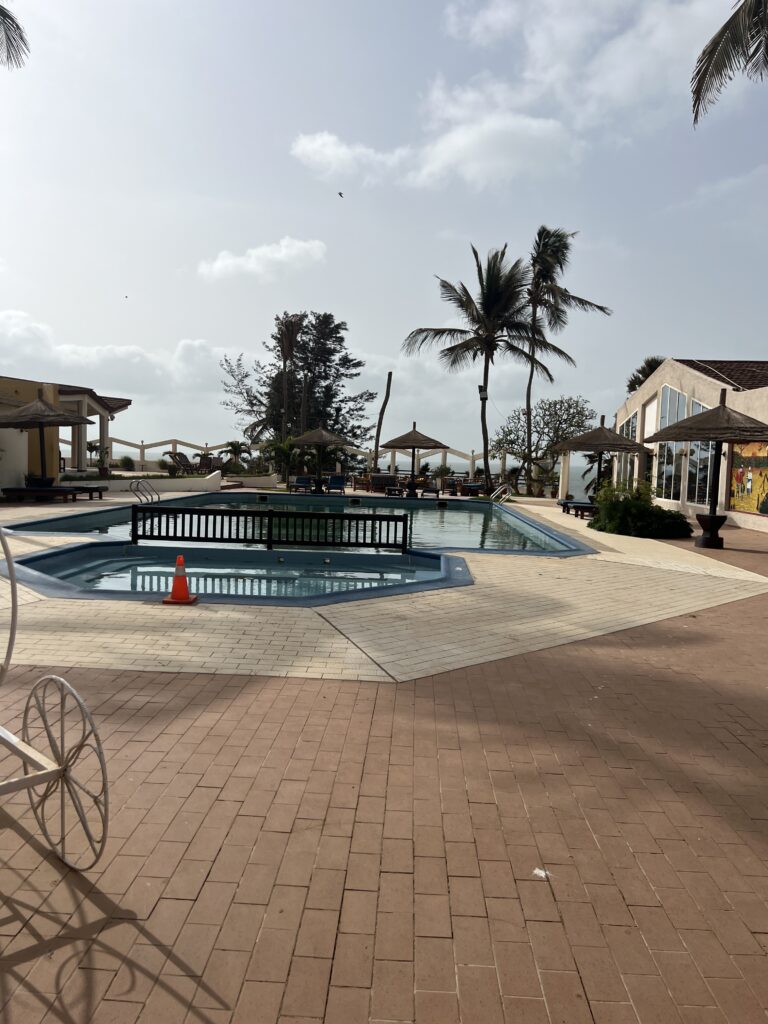
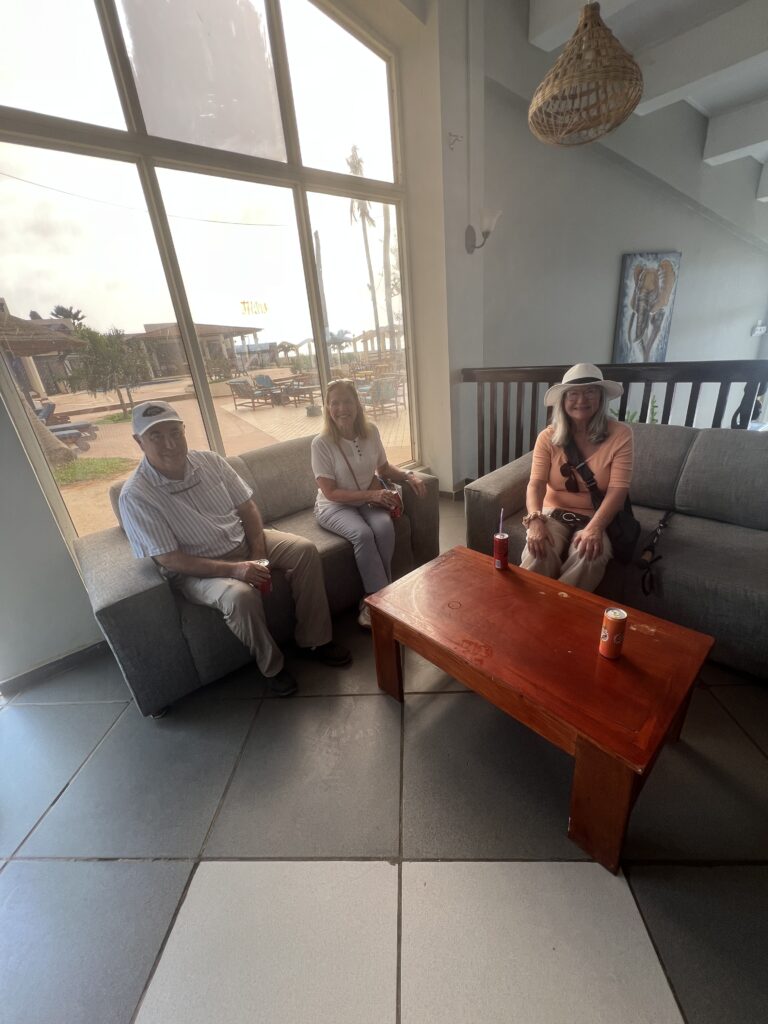
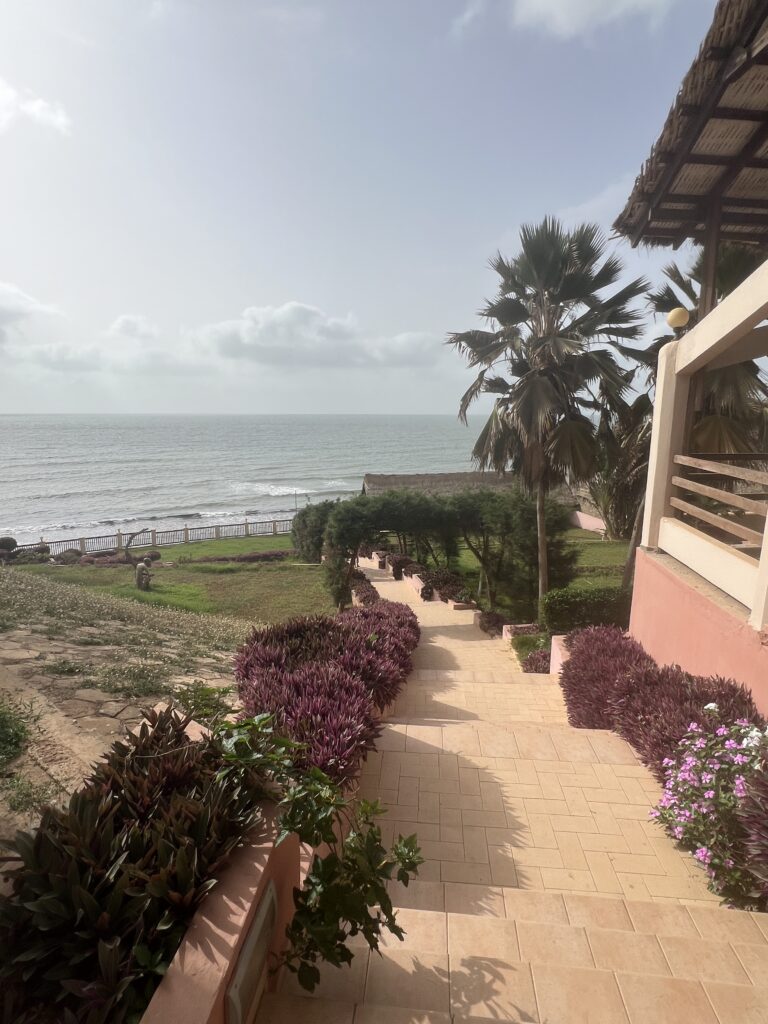
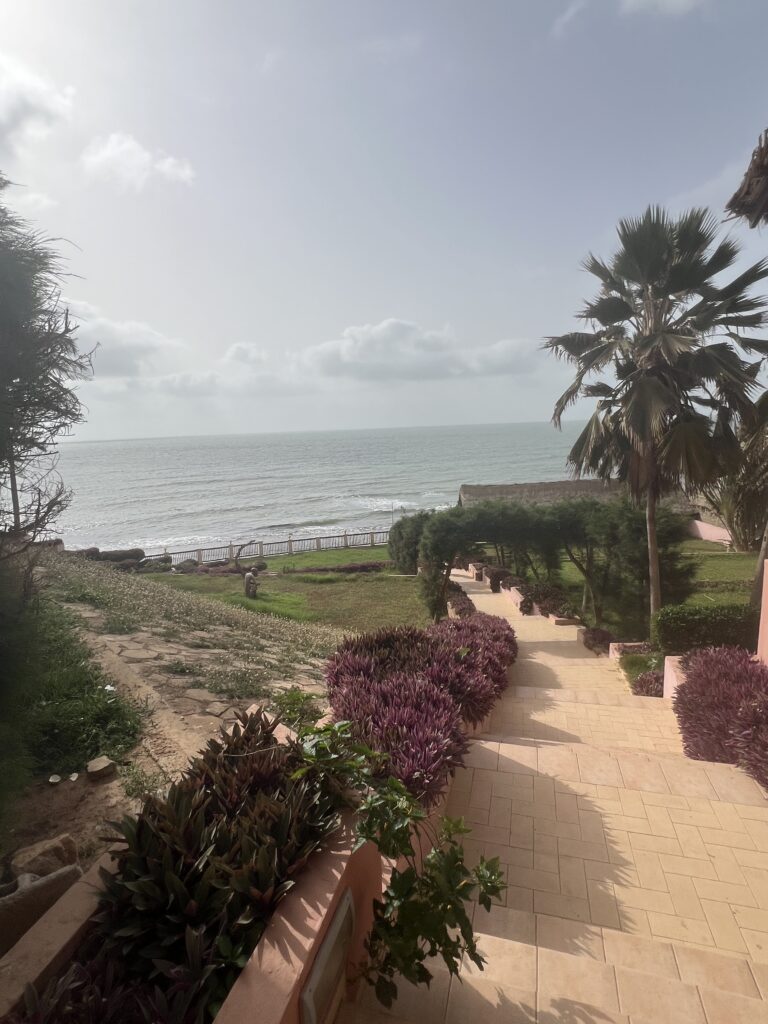
We were then brought to this hotel and resort for an afternoon beverage and to relax for about 30 minutes. The Tropic Garden Hotel is a mid-range 3-star property located on Atlantic Road in Fajara, Bakau, The Gambia. Perched directly on the oceanfront, it features an outdoor swimming pool, a large fitness center, and a restaurant with spectacular Atlantic views.
The website paints a much nicer picture of the actual hotel. 🙂
Home Beach Hotel – Tropic Garden Hotel | The best beach side hotel in The Gambia.
The pool was dirty and filled with algae
Jackie along with Sylvia and Romulos
While this was pretty it was not close to the picture seen on the hotel website 🙂
The King Fahad Mosque (also known as the Banjul Central Mosque) is the largest and most iconic Islamic place of worship in Banjul, Gambia. Located on Box Bar Road, it features striking architecture, two octagonal minarets that dominate the city’s skyline, and a capacity to hold up to 6,000 worshippers.
Key Features and Information
- Capacity: Up to 6,000 worshippers.
- Features: Two octagonal minarets, stunning Islamic design, and separate Wudu and prayer facilities for ladies.
- Events: The mosque is a focal point for the Banjul community, hosting regular Friday Jumu’ah prayers, Ramadan night prayers, and major Eid celebrations.
- Location: Box Bar Road, Banjul, Gambia (not far from Arch 22).
- Language of Service: Khutbahs and services are generally held in Arabic and English.
We were not allowed inside the closed gates so could not visit or take photos inside.
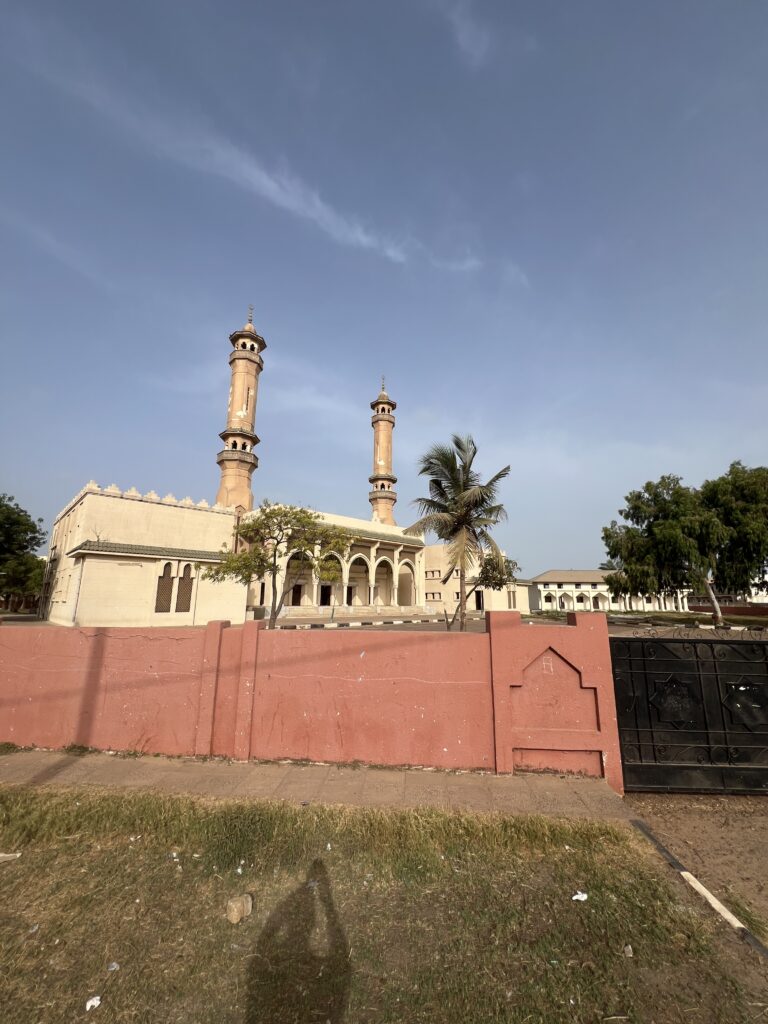
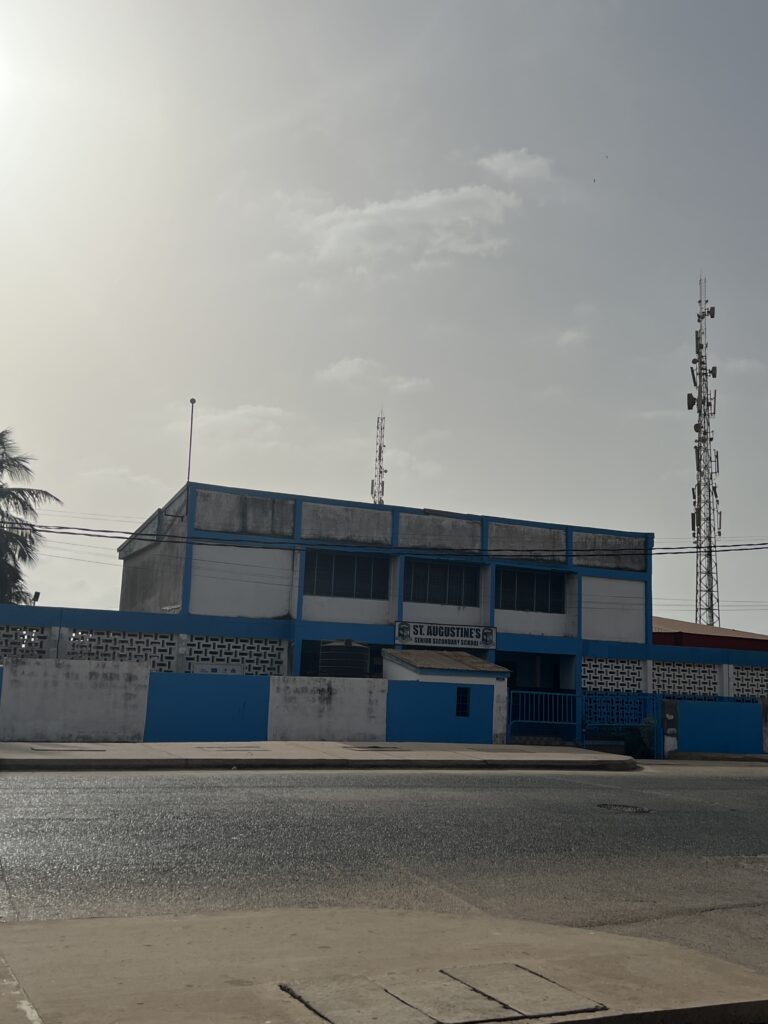
It was funny to see this school directly across the street from the huge mosque.
St. Augustine’s Senior Secondary School, located on 74 Daniel Goddard Street in Banjul, is a premier all-boys Catholic high school in The Gambia. Founded in 1929, it remains one of the country’s most respected academic and athletic institutions.
Reputation: Known as “Saints” among locals, it operates under the motto “Recta Sapere” (To relish what is right).
History: The school has a rich legacy and even hosted Pope John Paul II during his 1992 apostolic journey to The Gambia.
St. Augustine’s Senior Secondary School – Education is the key to success
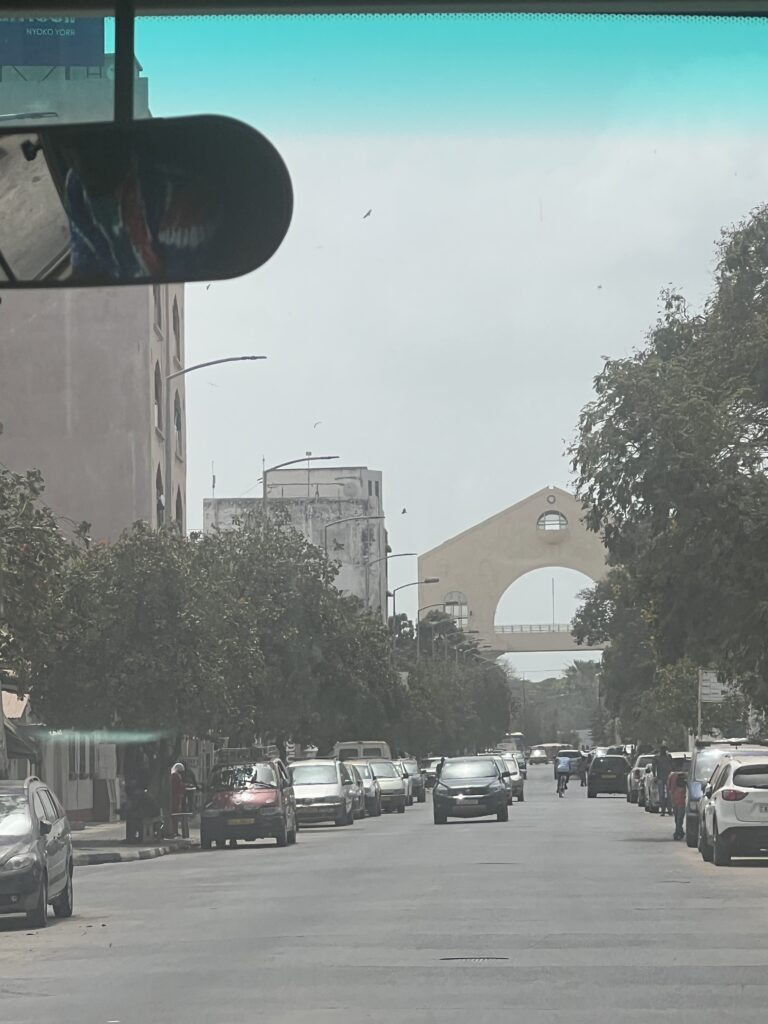
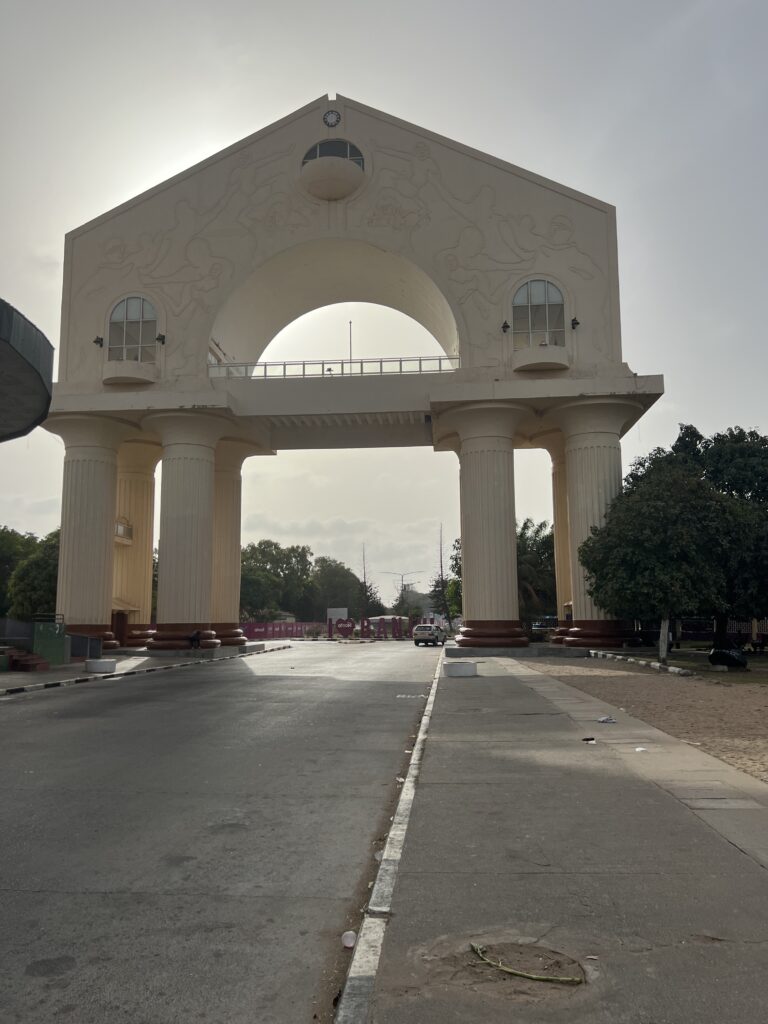
Arch 22 is a commemorative arch on the road into Banjul in the Gambia. It was built in 1996 to mark the military coup d’état of 22 July 1994, through which Yahya Jammeh and his Armed Forces Provisional Ruling Council overthrew the democratically elected Gambian government of President Sir Dawda Jawara.
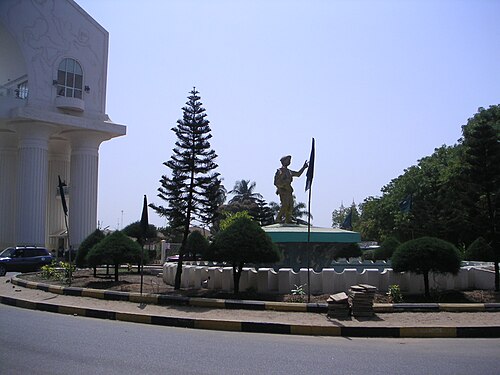
The arch stands on the Banjul-Serrekunda Highway, near the traffic island at the intersection with Box Bar Road, Independence Drive, and Marina Parade. A statue of the “unknown soldier” can be seen near the base of the arch: the soldier has a rifle strapped to his back and carries a baby in one hand while signaling victory (making a V-sign) with the other.
Arch 22 is depicted on the back of the 100-dalasis banknote.
The statue of the “unknown soldier” stands close to the base of the arch.
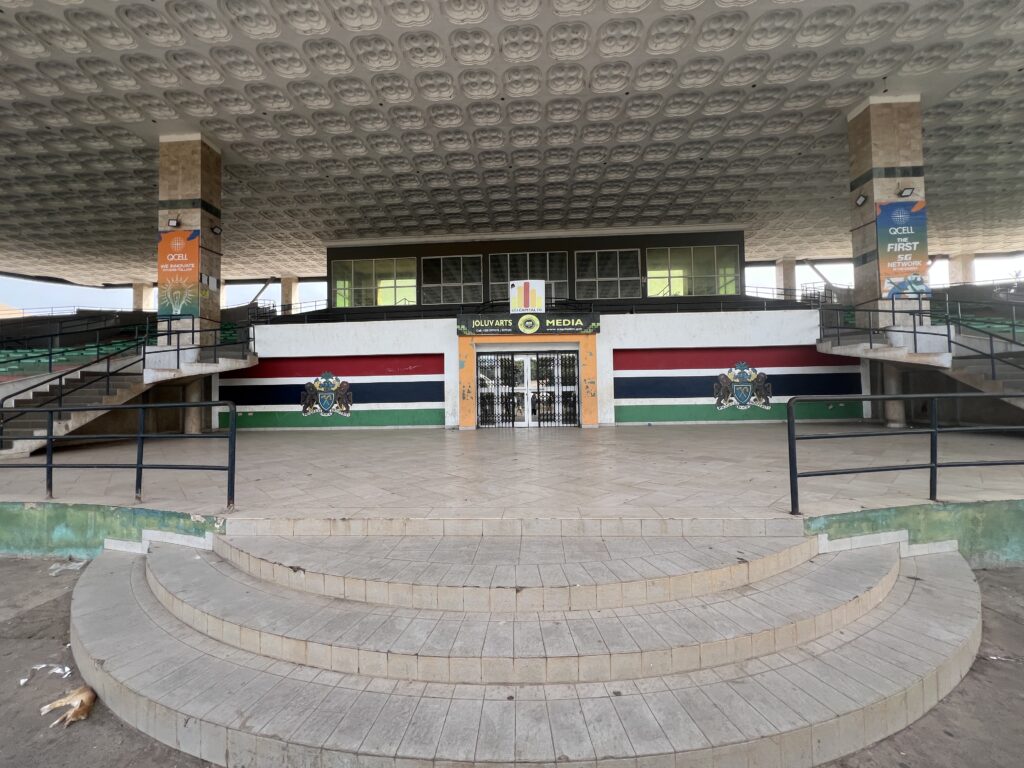
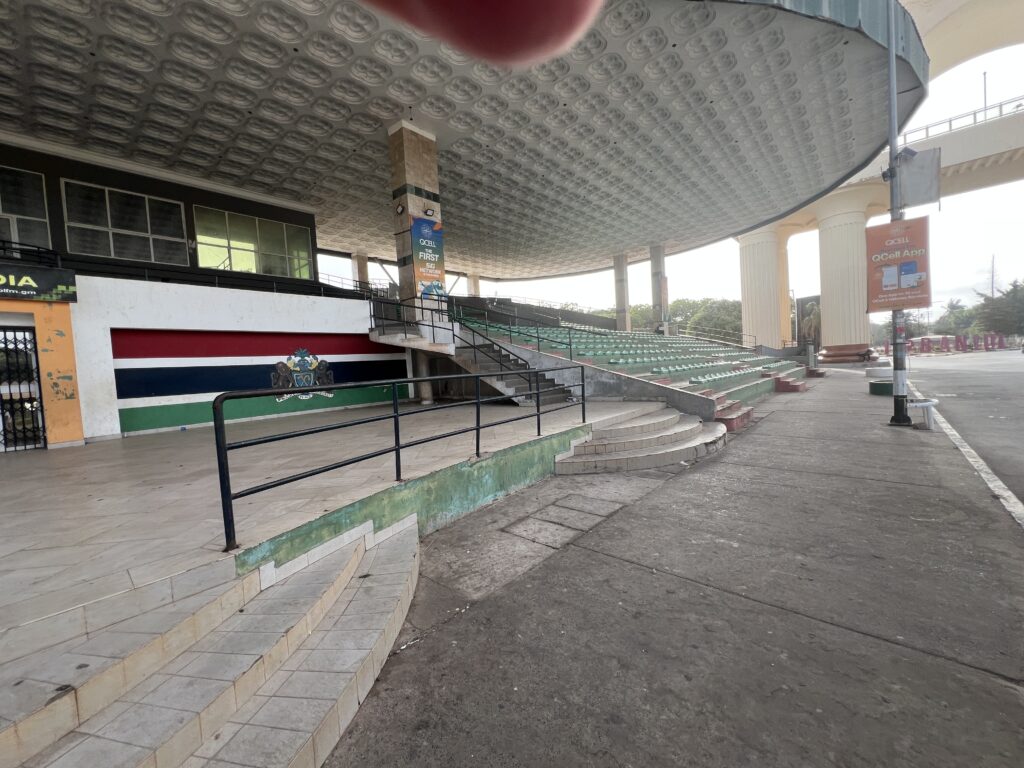
The reviewing stand in Banjul is located on the historic MacCarthy Square (also known as July 22nd Square). It is the focal point for official state ceremonies, national parades, and independence celebrations in The Gambia.
Formerly overseen by the Banjul City Council (BCC), the reviewing stand and the surrounding square were heavily renovated for the nation’s 60th Independence Anniversary. This refurbishment led to a highly publicized political dispute. The central government and the Office of the President took over direct management and security of the site to ensure it is “adequately protected”, which was strongly contested by the city’s Mayor and the BCC as an unjust seizure of municipal property.
When not hosting official functions, MacCarthy Square—and the area around the viewing structure—acts as the bustling, dusty civic heart of Banjul where locals play sports, board games, and sell street food. It is located in the center of the city, just a short walk or taxi ride from other major landmarks like the Banjul Arch 22.
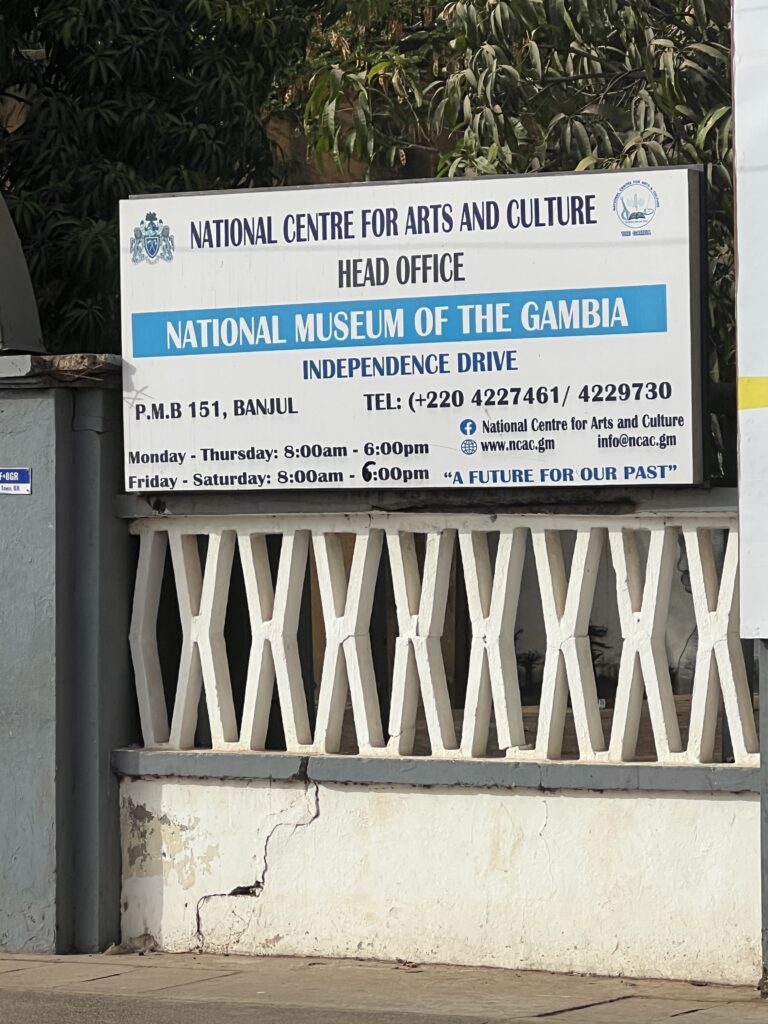
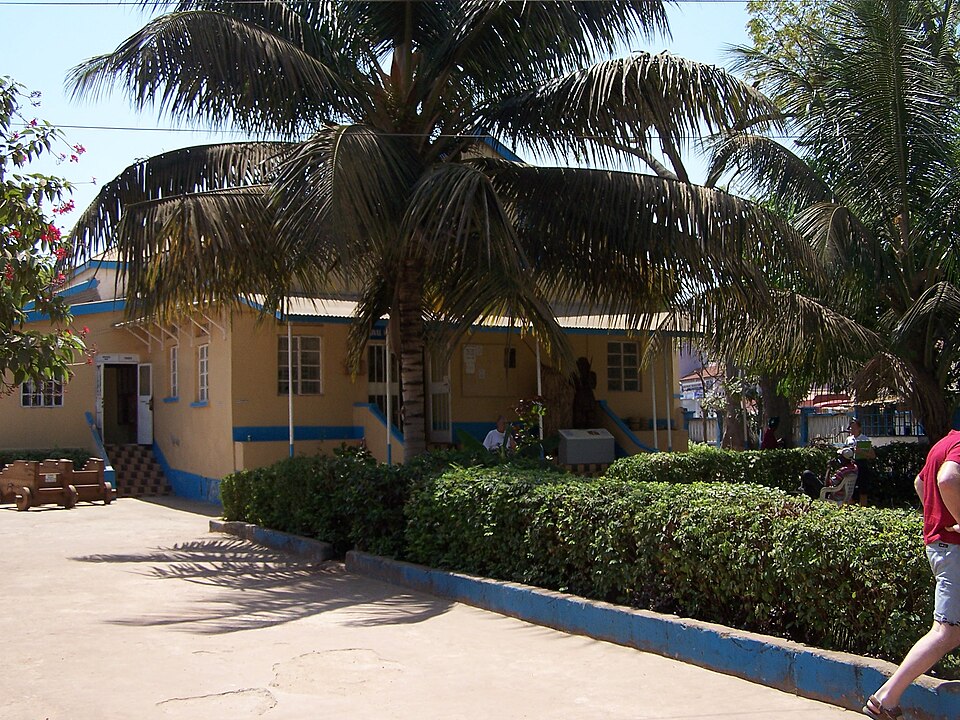
The National Museum of The Gambia is a Gambian cultural museum located in Banjul. It is home to historical documents and displays concerning the History of the Gambia.
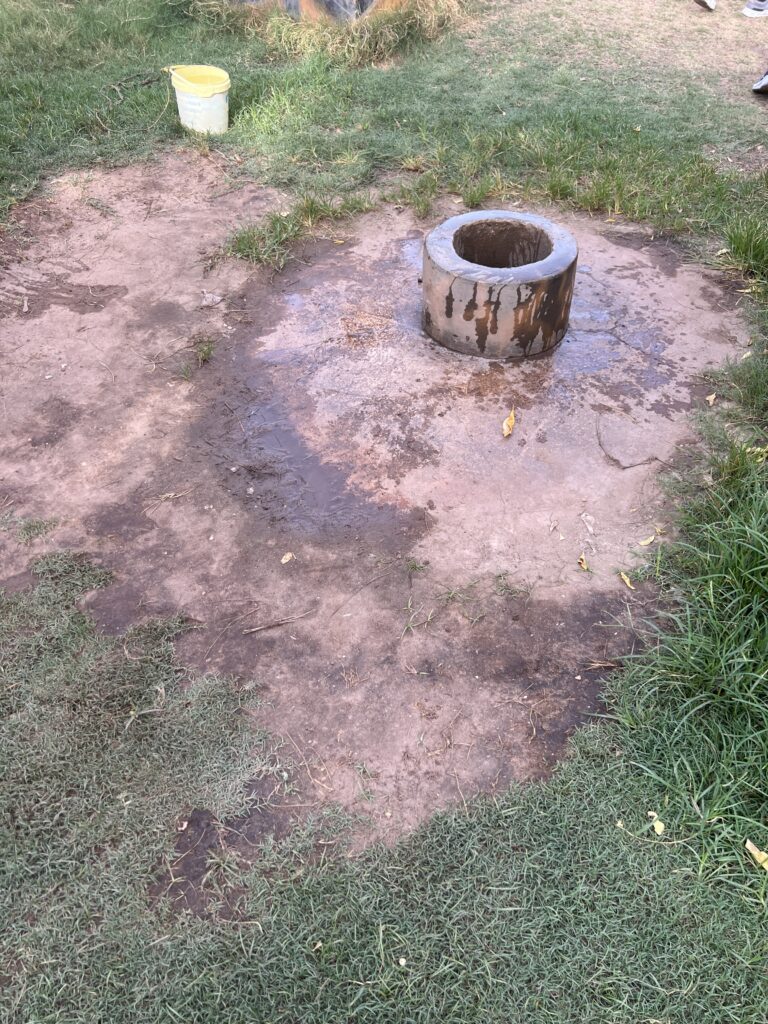
A water well on the property of The Gambia National Museum
The historic well located in front of the National Museum of The Gambia in Banjul was dug in 1824 by the British. This remarkably intact relic is still functioning and supplying fresh water to the surrounding community after nearly 200 years.
Key Details of the Historic Well
- Origin: Dug in 1820s by Pompey Amari Gaye, a Wollof water engineer and marabout.
- Depth & Design: Approximately 4 meters deep, tapped into a clean artisan spring, and lined with firebricks.
- Significance: It serves as a lasting relic of colonial-era water supply in the capital, which predates modern piped water infrastructure.
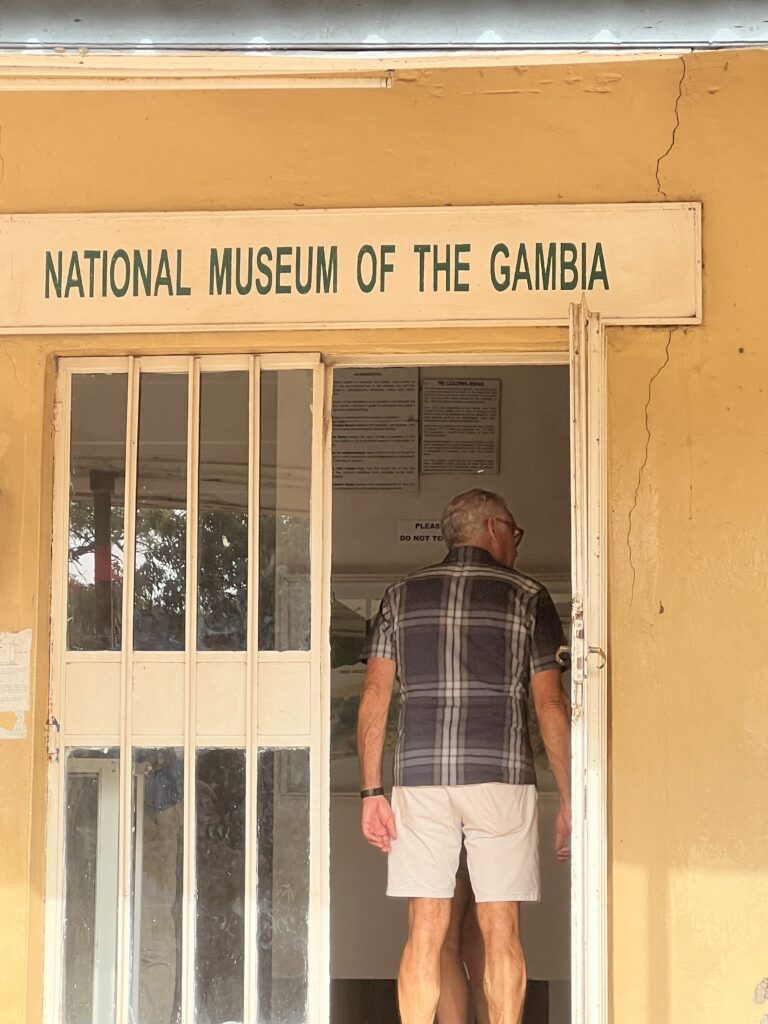
Only photo taken of an item in the national museum because they wanted us to pay $20 each to take photos. So, we walked around for about 20 minutes and were ready to return to the ship. The shake down excursion was finished.
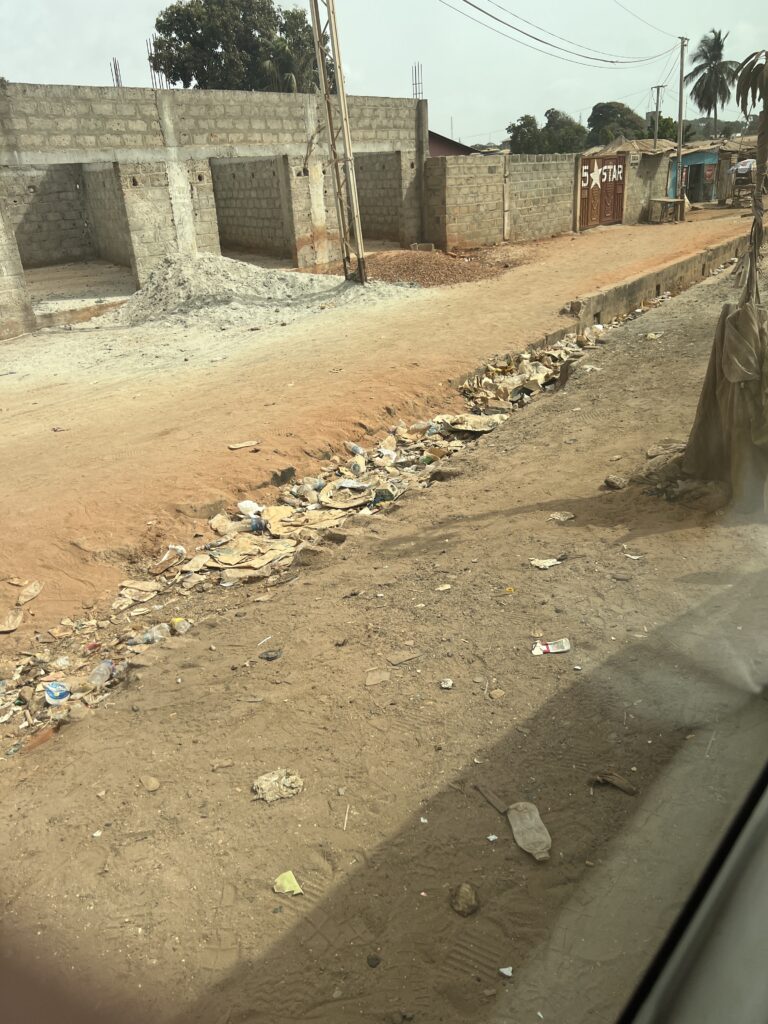
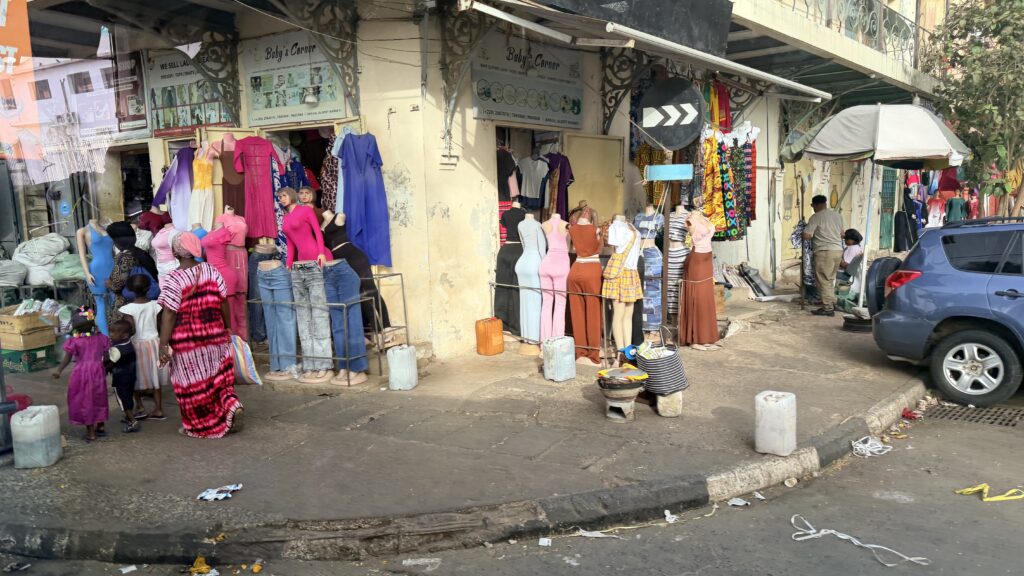
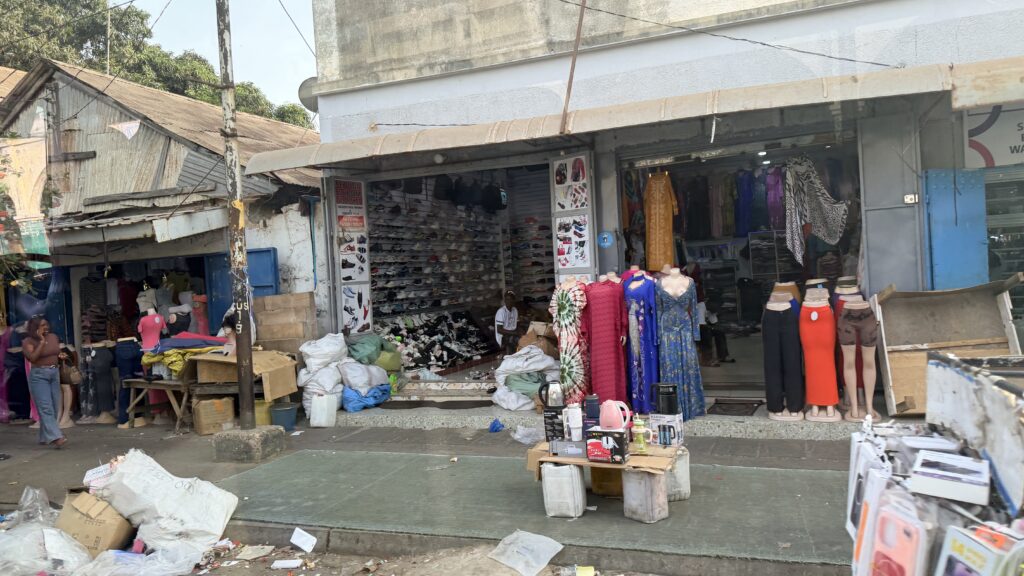
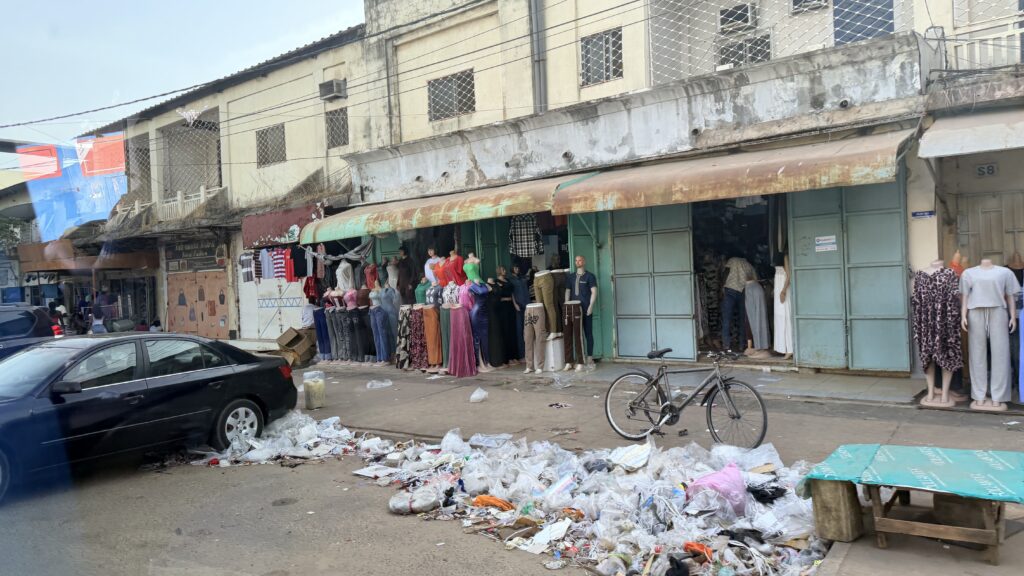
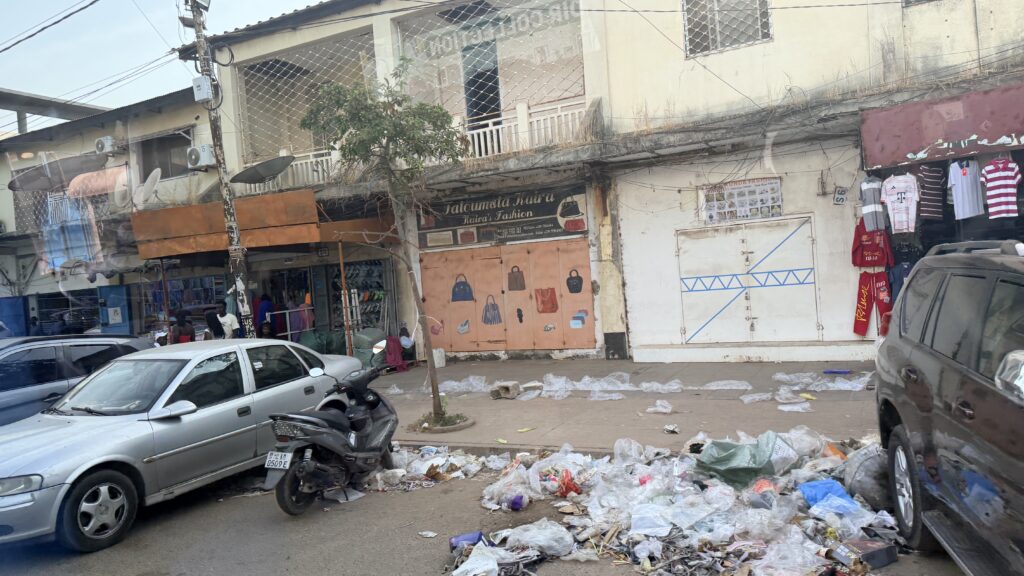
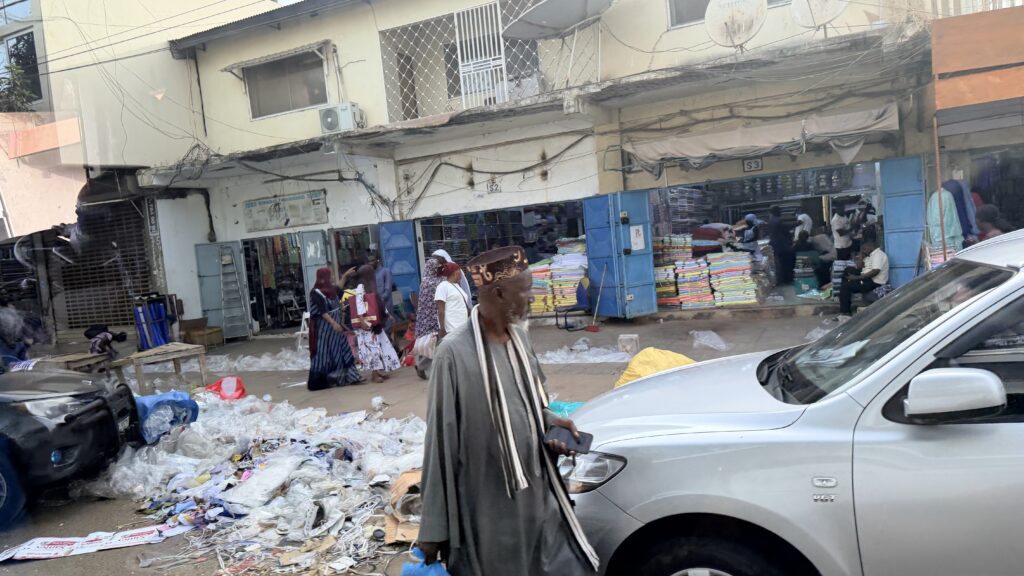
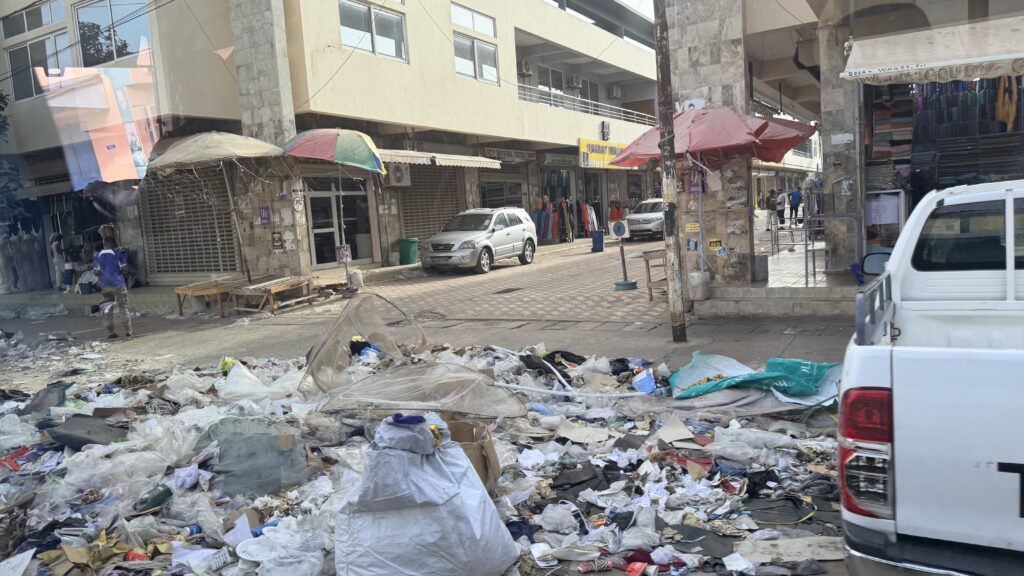
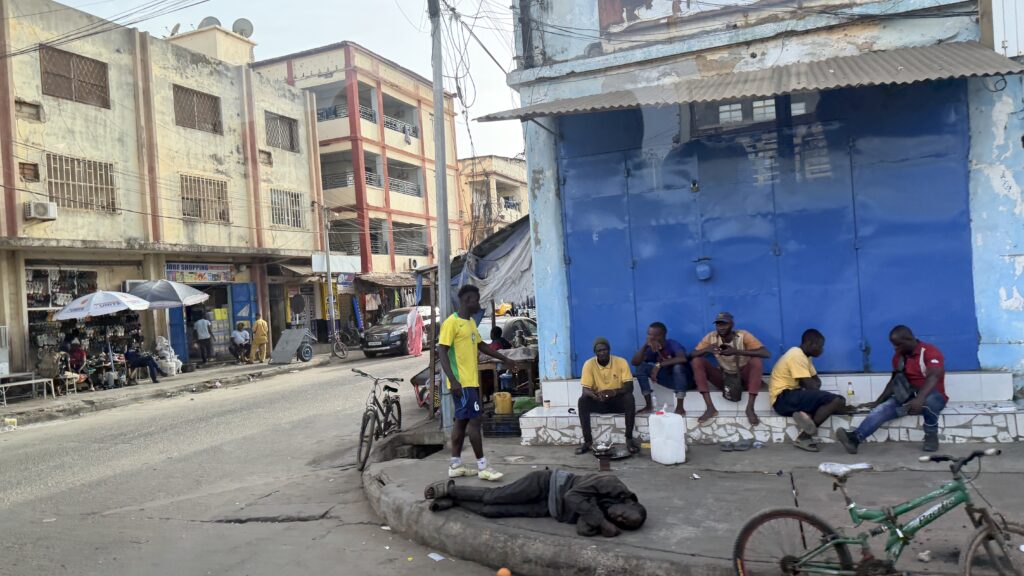
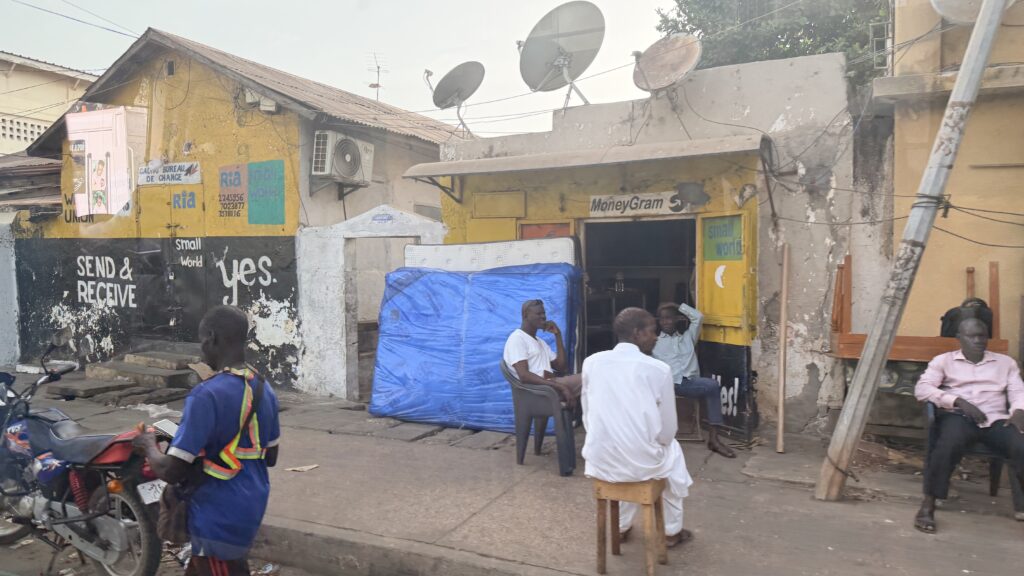
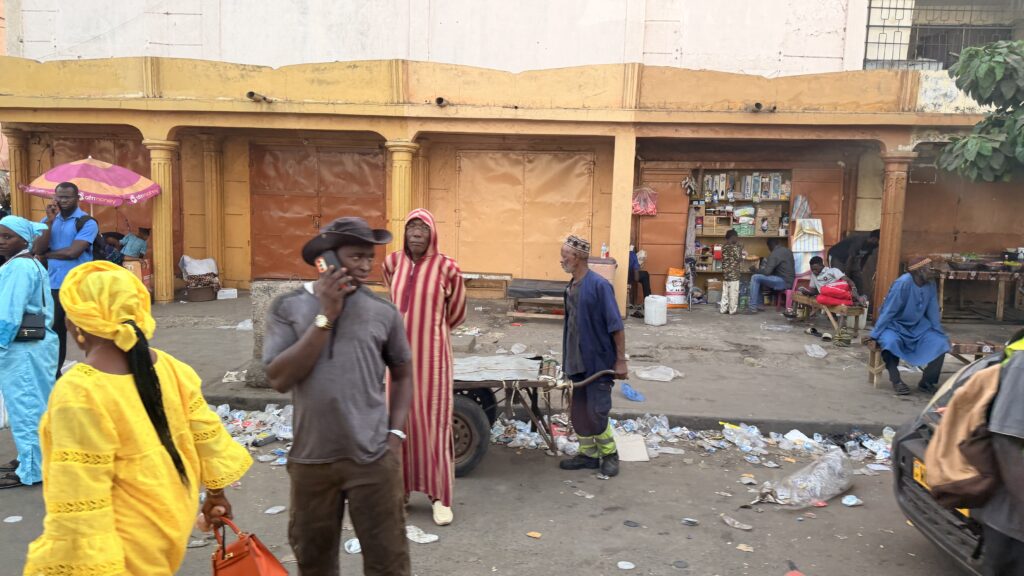
Photos as we drove back to the ship. Take note of the trash in the streets in some of the photos.
Where the ship was docked
The Gambia Ports Authority (GPA) is a government agency responsible for the governance and maintenance of the ports and port facilities of the Gambia, principally that of the Port of Banjul on the Gambia River. The GPA was founded in 1972 and it is a member of the Port Management Association of West and Central Africa. Ports Authority offices are in Banjul.
Principal facilities include the Banjul Wharf and the New Banjul Jetty and Extension; a container terminal, freight terminal, bonded warehouse complex, oil boom, workshops and a document handling centre. Expansion plans include jetty expansion; a new ferry terminal and head office building; new computer cabling and a new car and truck terminal area.
The Ports Authority sponsors Gambia Ports Authority F.C., a Banjul-based football team of the Gambian Championnat National D1
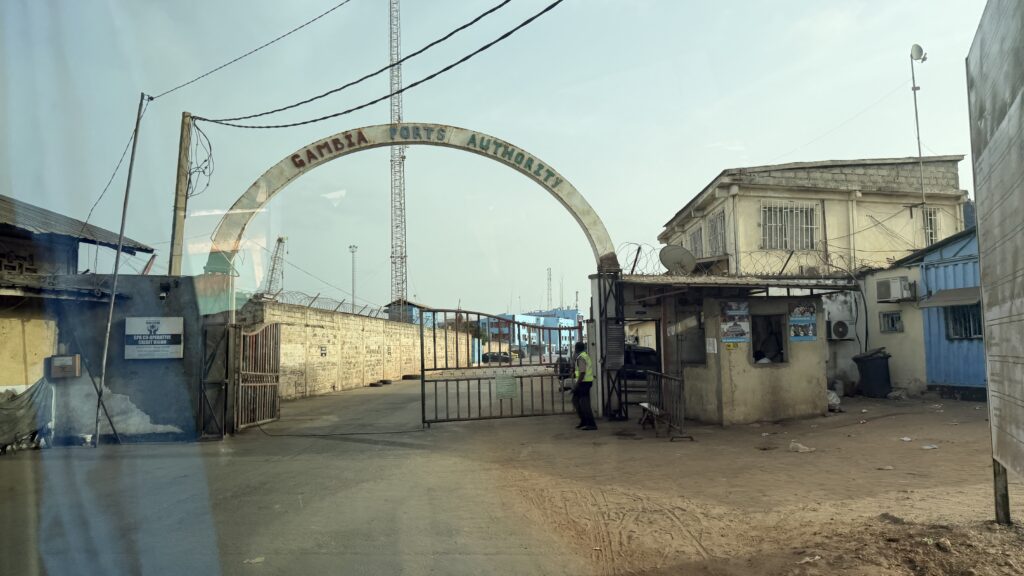
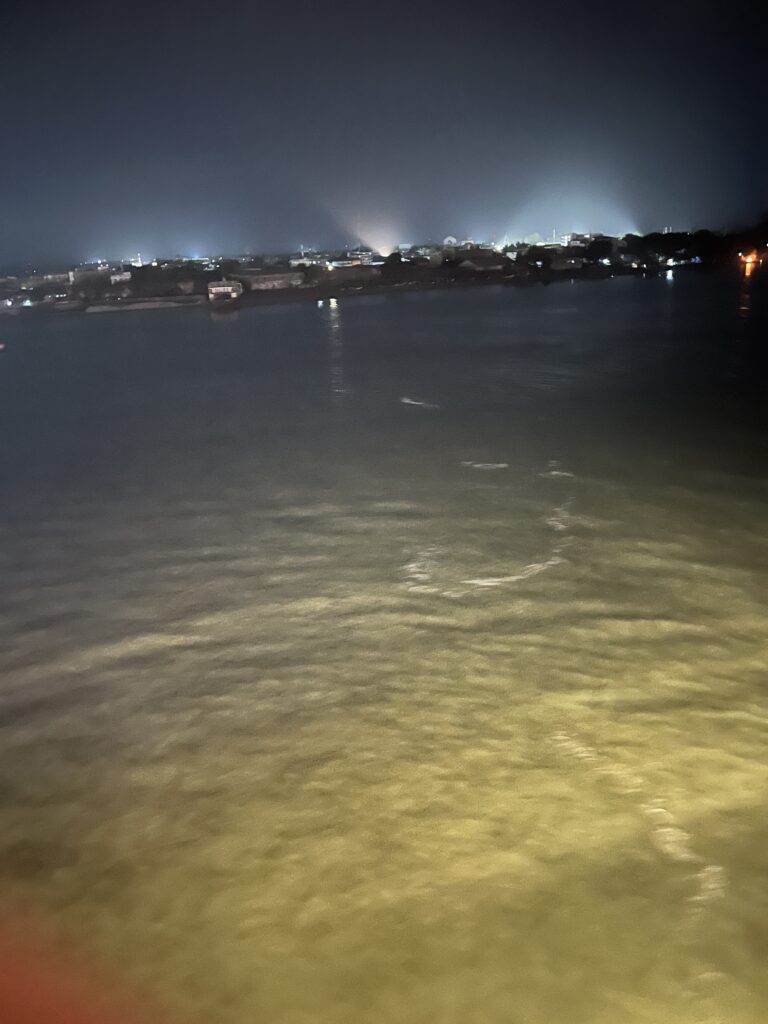
Photo taken at night as we were leaving the port. It was time to move on, a really poor port stop
2 thoughts on “Day 88 June 3 – Banjul, The Gambia”
wow. Appreciate the time and effort you put in this blog. So informative and sad on some areas. Tks again
Thank you for following our journey and blog