Day 95 Wednesday June 10th (25 days to go) — We booked an Oceania excursion to start our day in Lisbon. We have visited Lisbon for a three day stay a couple of years ago and today we wanted to venture outside the city in the morning. The Oceania excursion was a visit to the Medieval city of Obidos. Then, the plan was to return to the ship, grab a quick lunch and head back out on our own to visit Jerónimos Monastery and eat a Pastel de Nata at Pastéis de Belém®. In that area we also visited the Monument of Discoveries and the Belem Tower.
It was our second visit to Lisbon and we are really intrigued with the city and would hope to return one day for a longer visit.
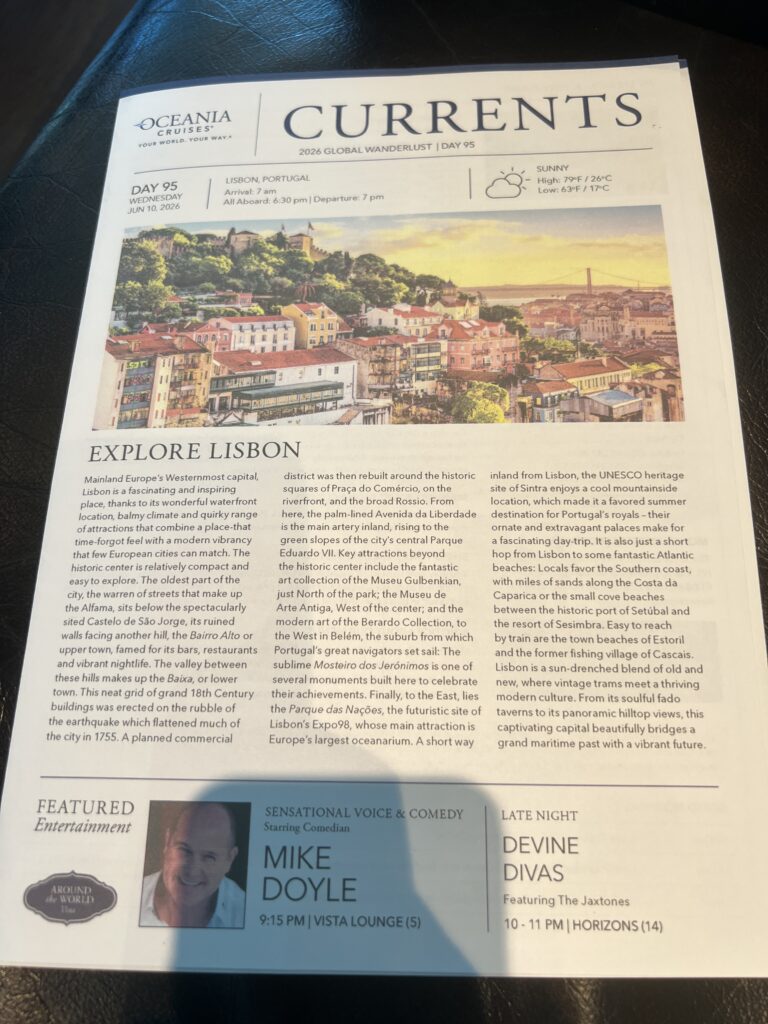
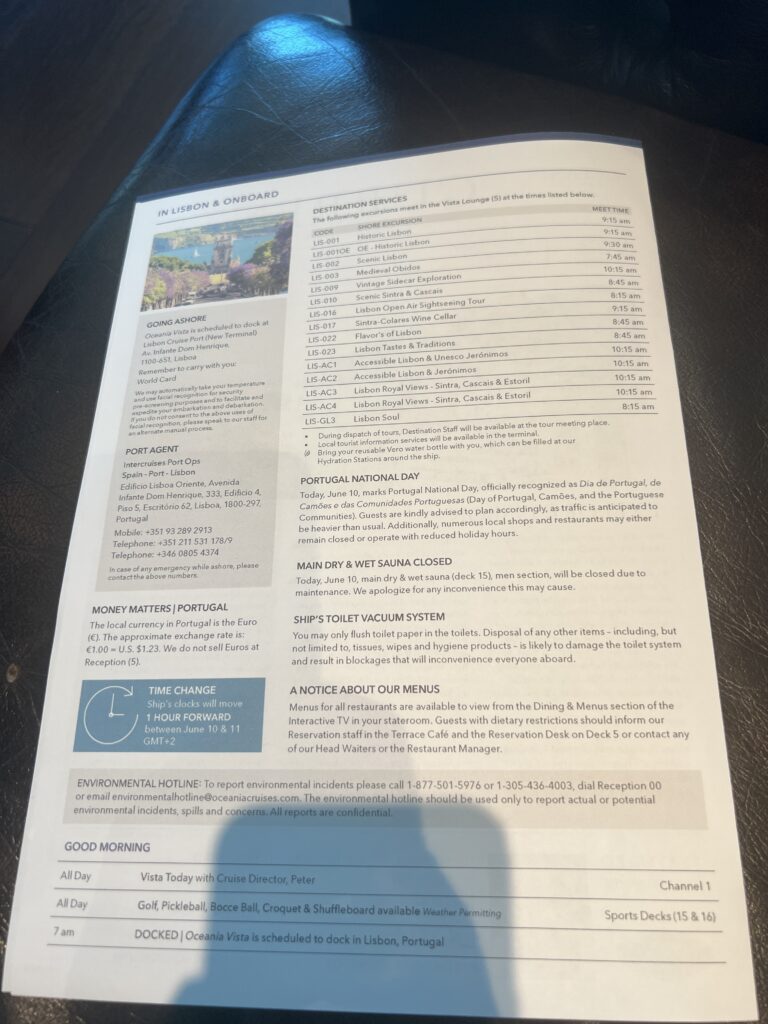
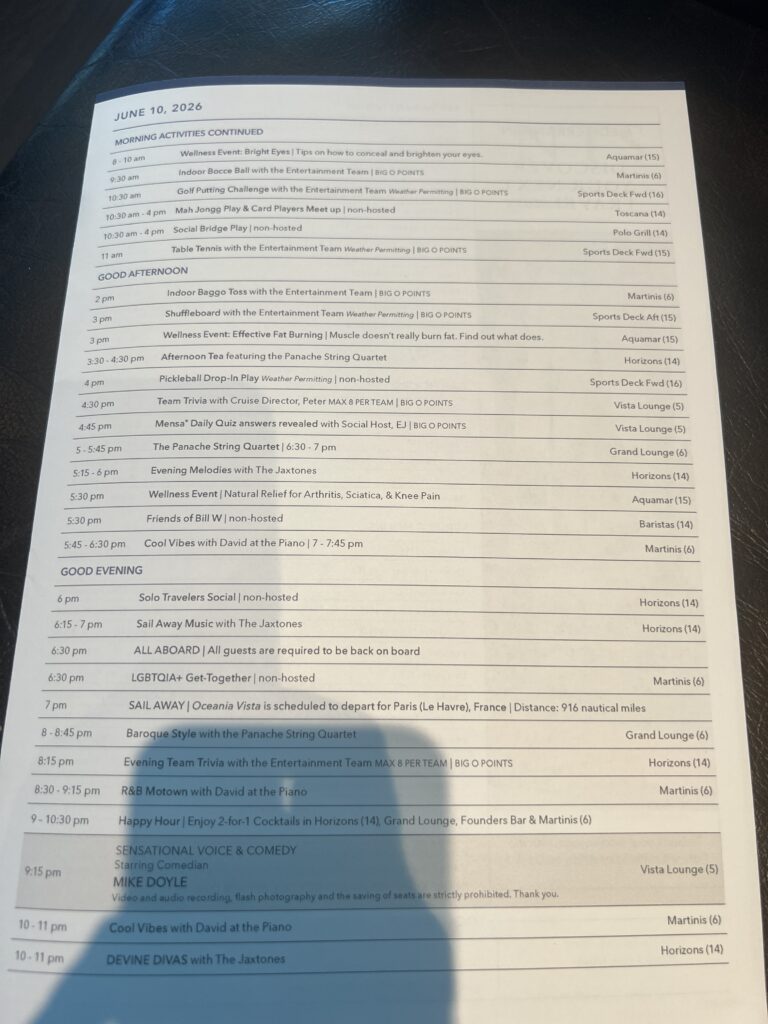
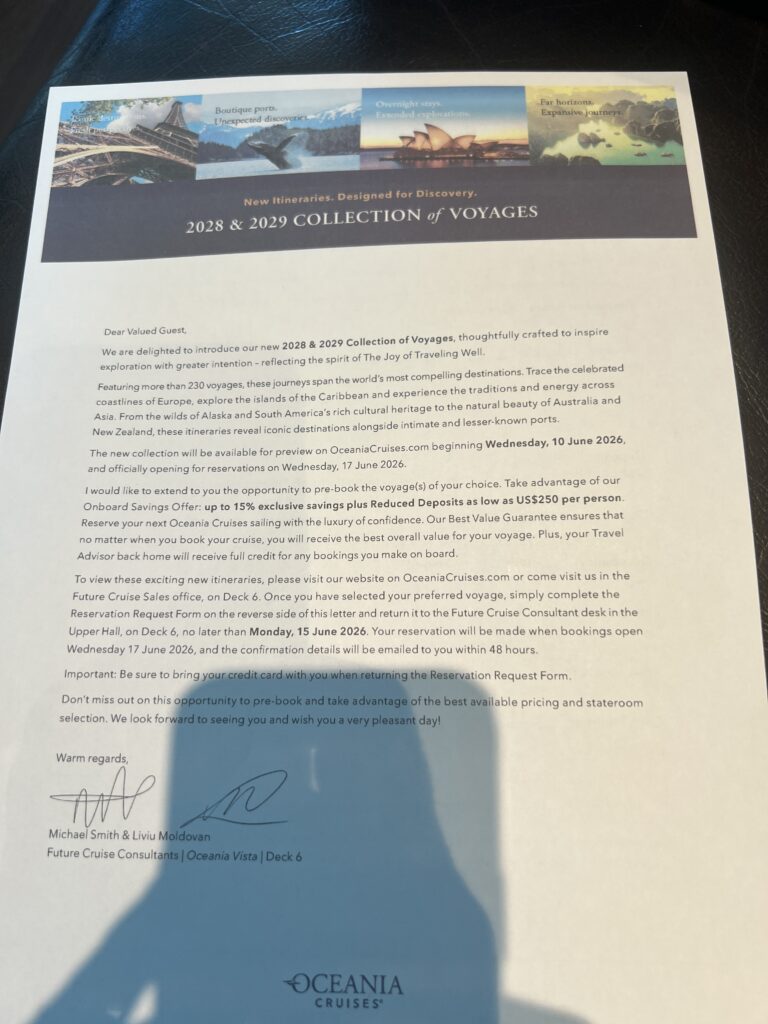


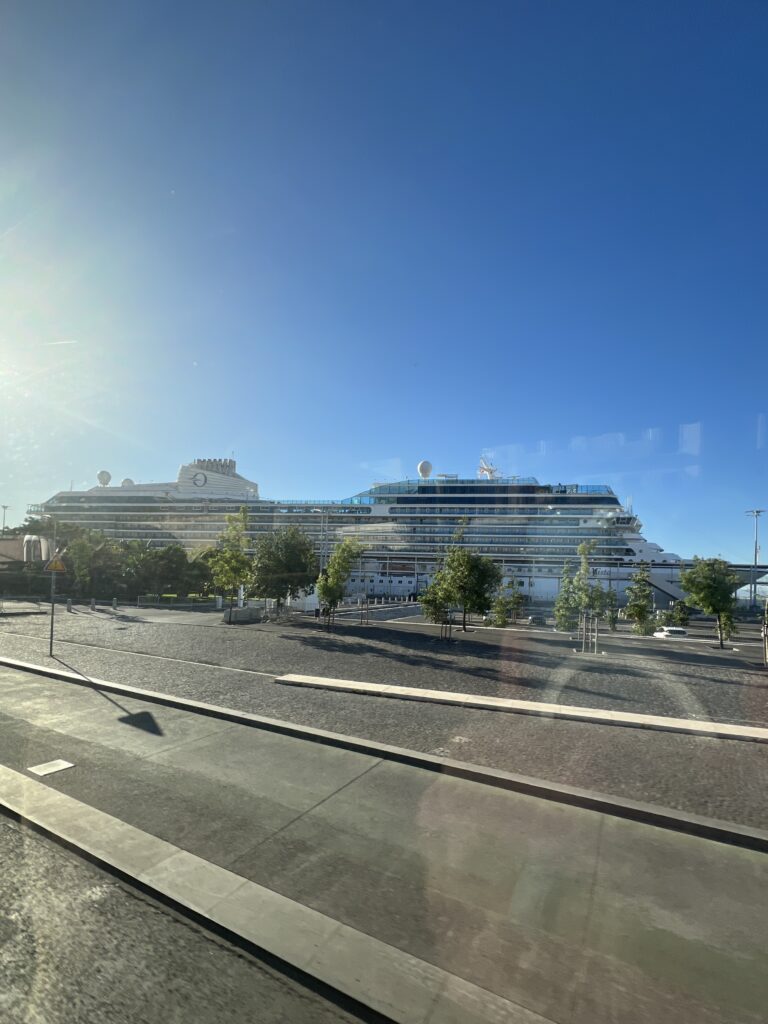
Our excursion began at 7:45am and the drive was a hour to reach Obidos. Below are some photos from our drive to the medieval city. Photo of The Vista in port as we left on the first excursion of the day.
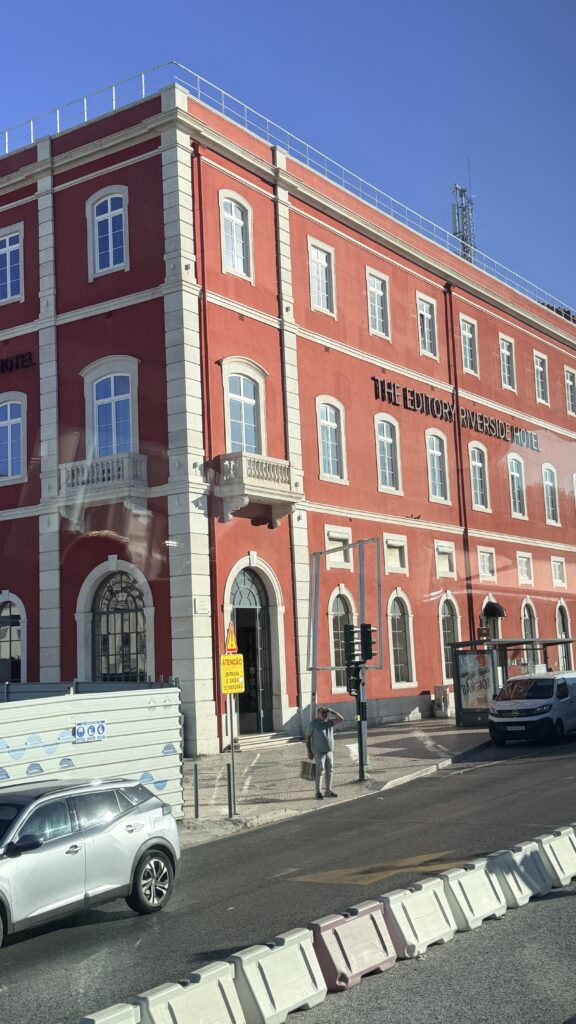
A main bus terminal built in Lisbon which was built in 1998 for the Expo 98 World Fair. More information on this site can be found at Lisbon Orient Station | Architectuul and Lisbon Bus Station – Lisbon Oriente Bus Station – Visit Lisbon
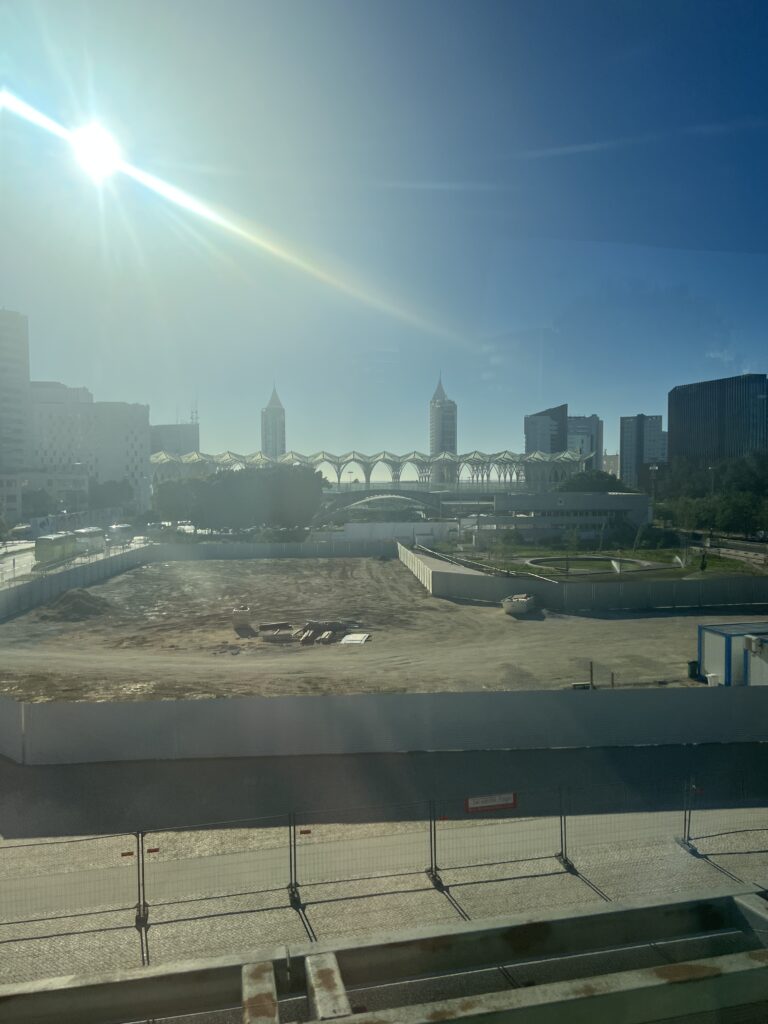
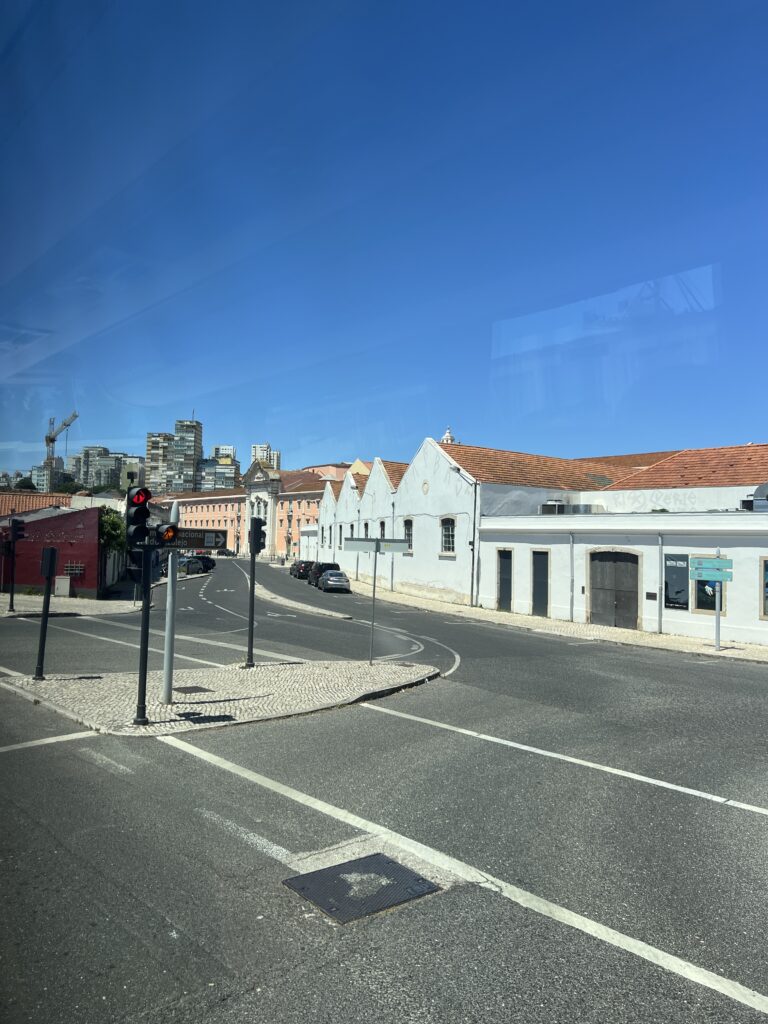
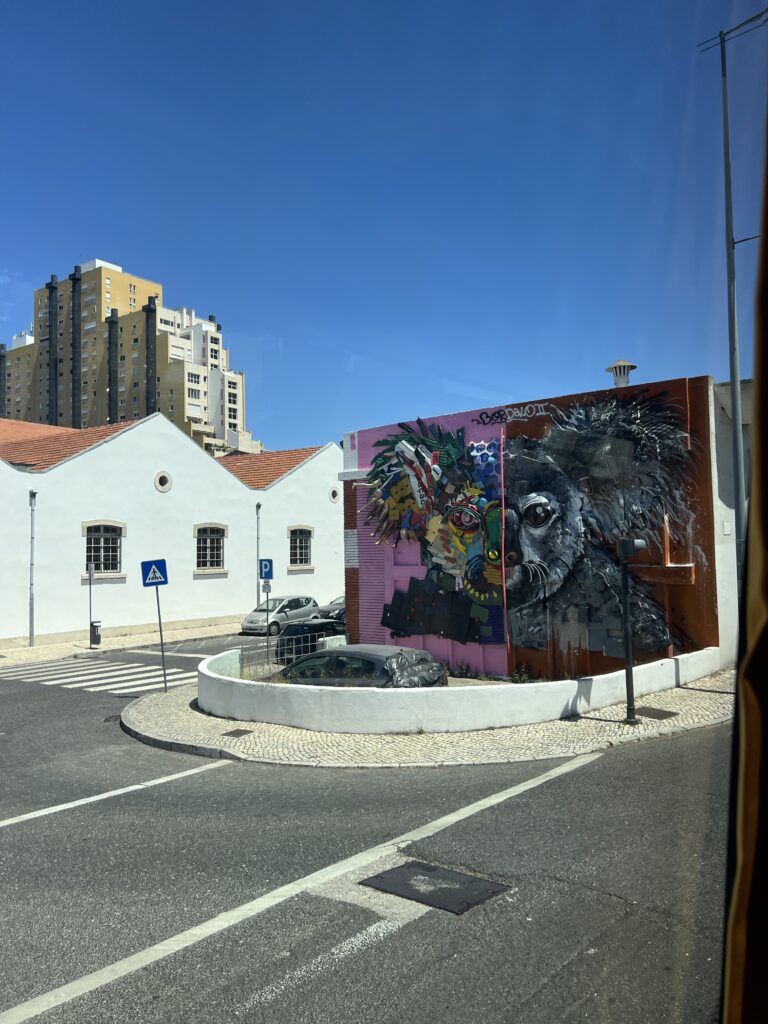
There were a number of train tracks near the port. There were trains lined up on the tracks
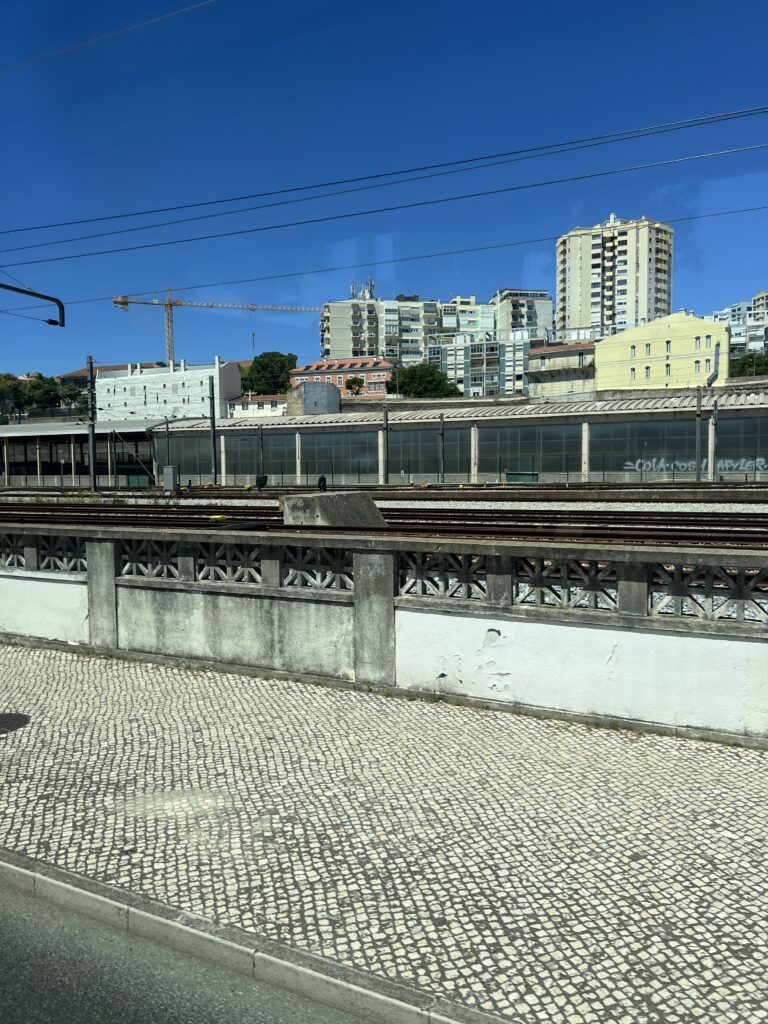
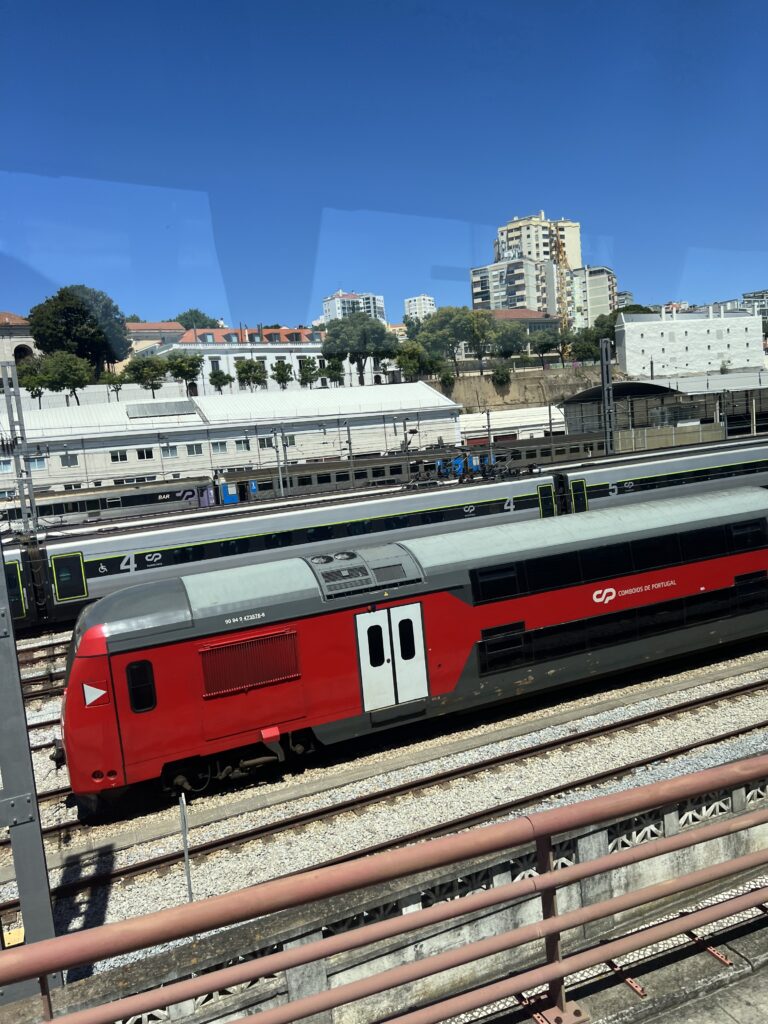
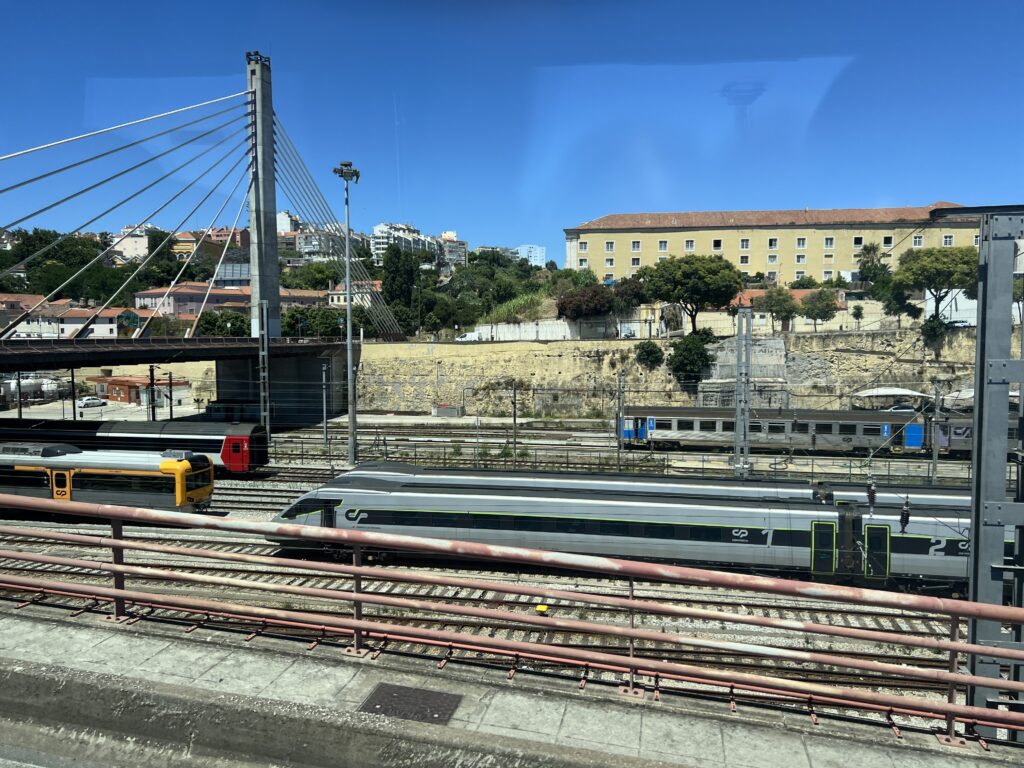
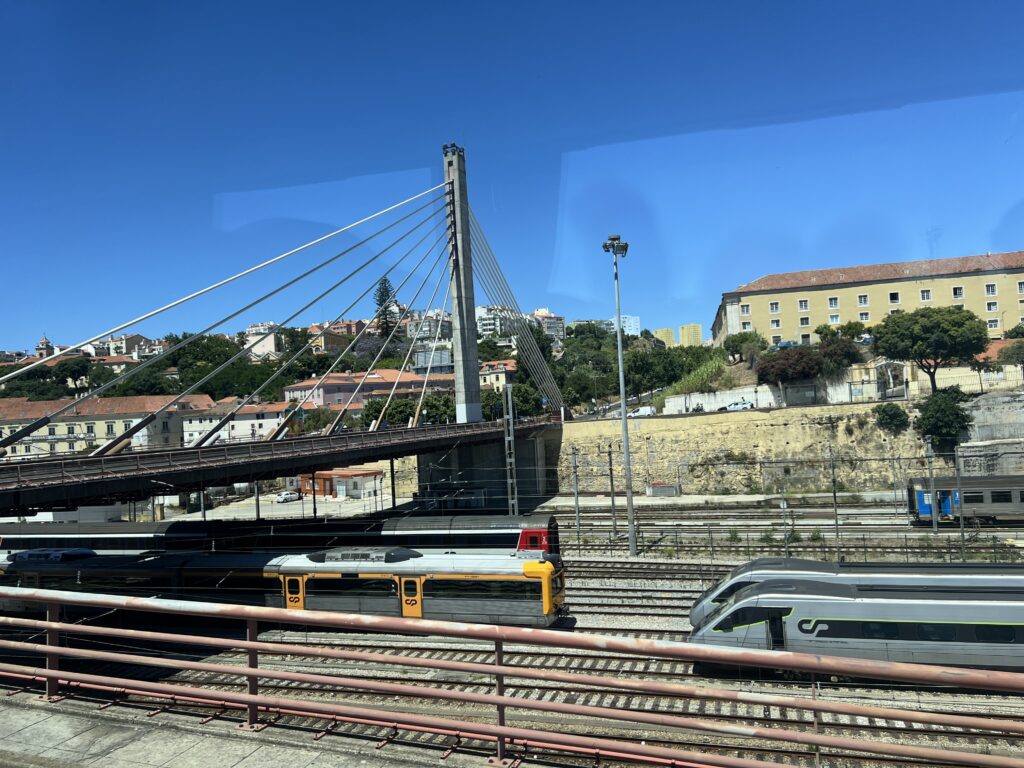
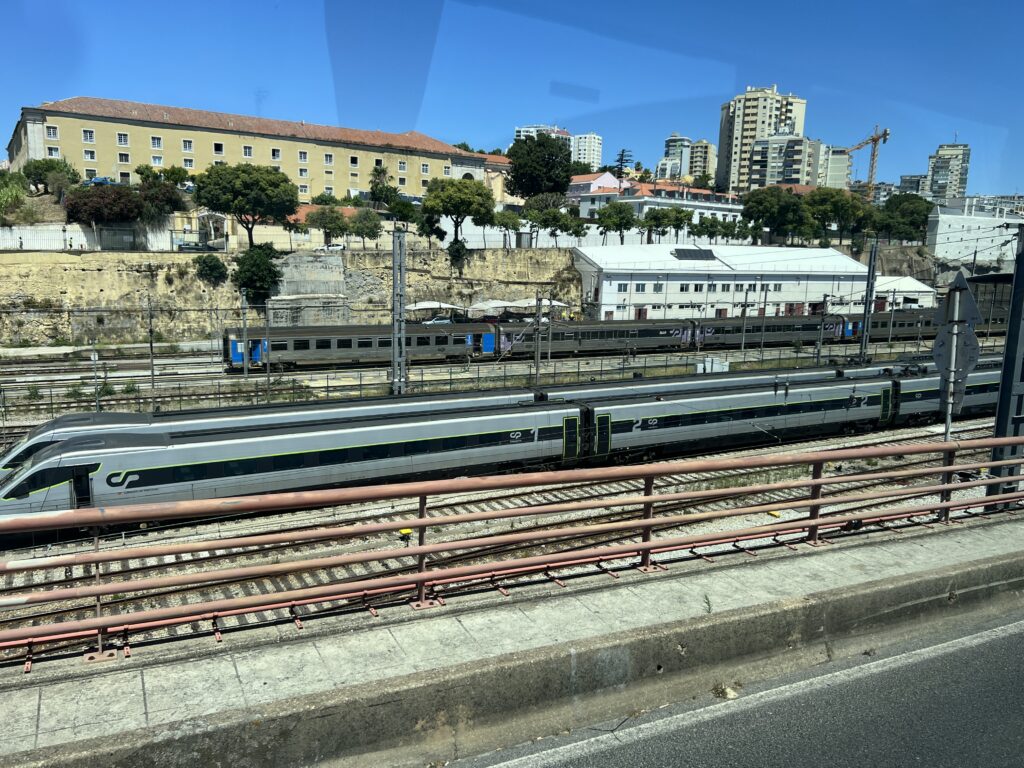
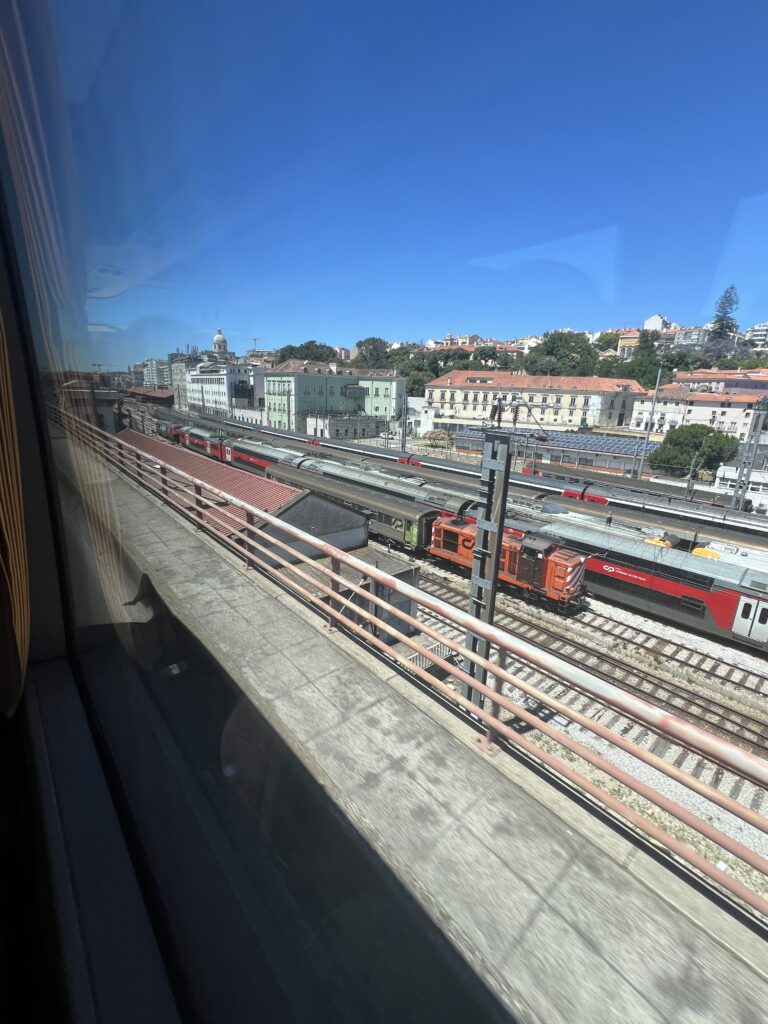
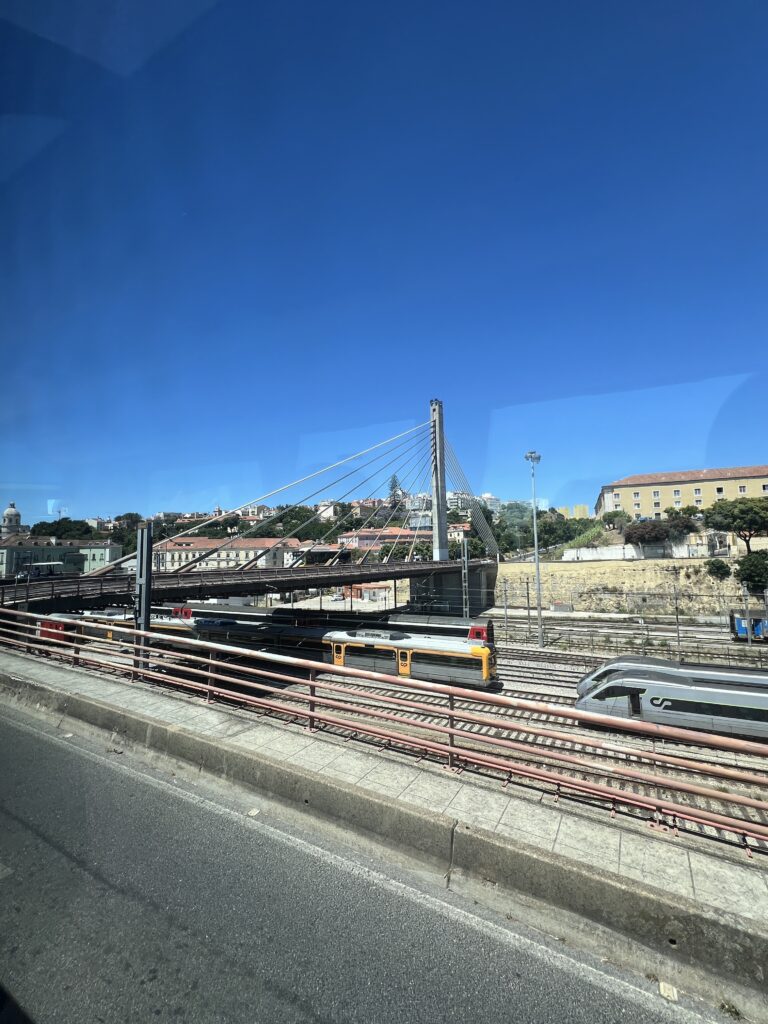
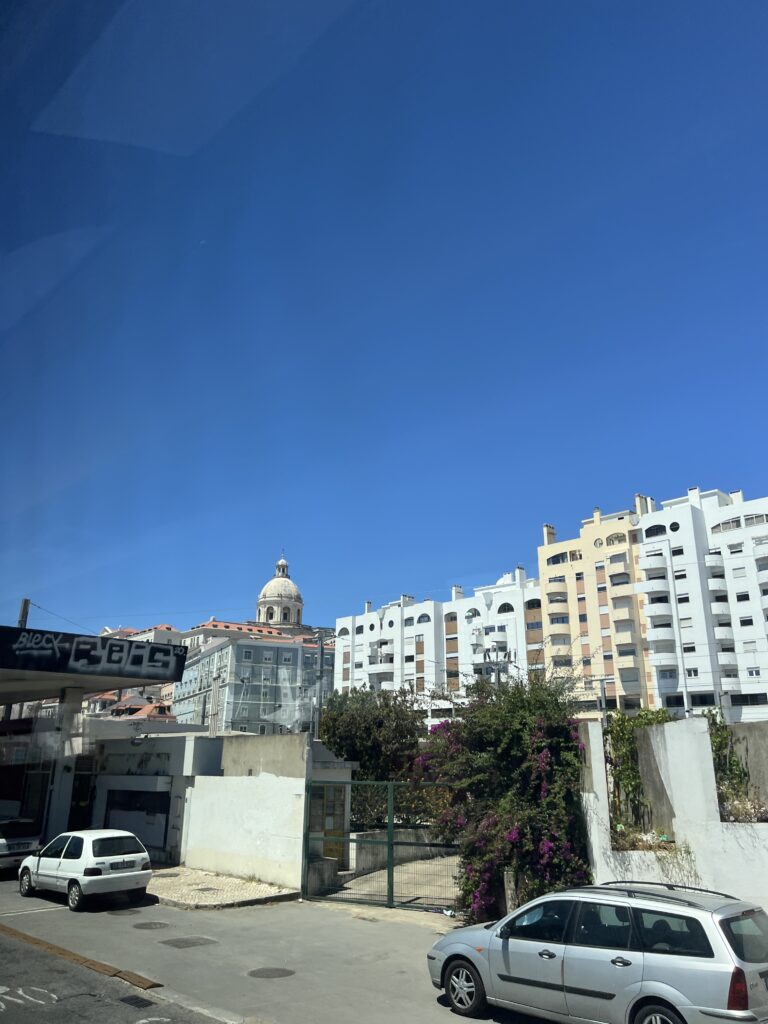
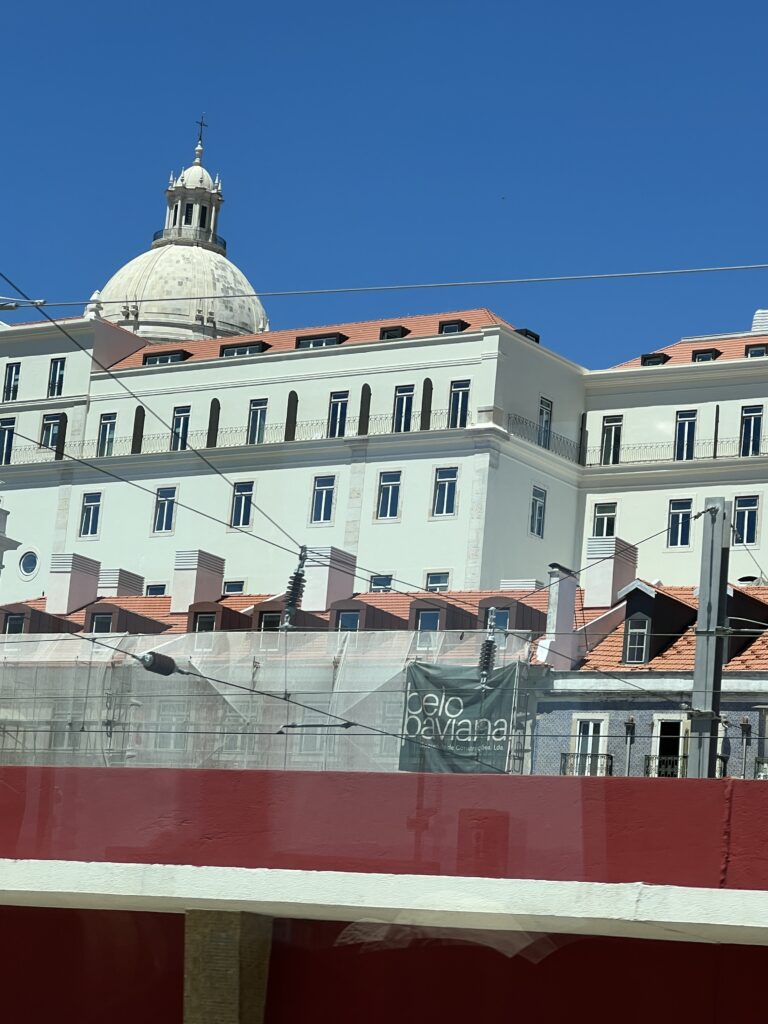
The Santa Apolónia Station is the oldest railway terminus in Portugal. It is situated in the civil parish of São Vicente, in the central part of the municipality of Lisbon, on the northern margin of the Tagus River in the historical district of Alfama.
In December 1844, under the initiative of José Bernardo da Costa Cabral, the Companhia das Obras Públicas was founded, with the purpose of constructing a rail line between Lisbon and Spain, in addition to intermodal station between rail and maritime services. The station was known as the Cais da América or Cais da Europa, and allowed rail passengers from Europe to offload to ships for America.
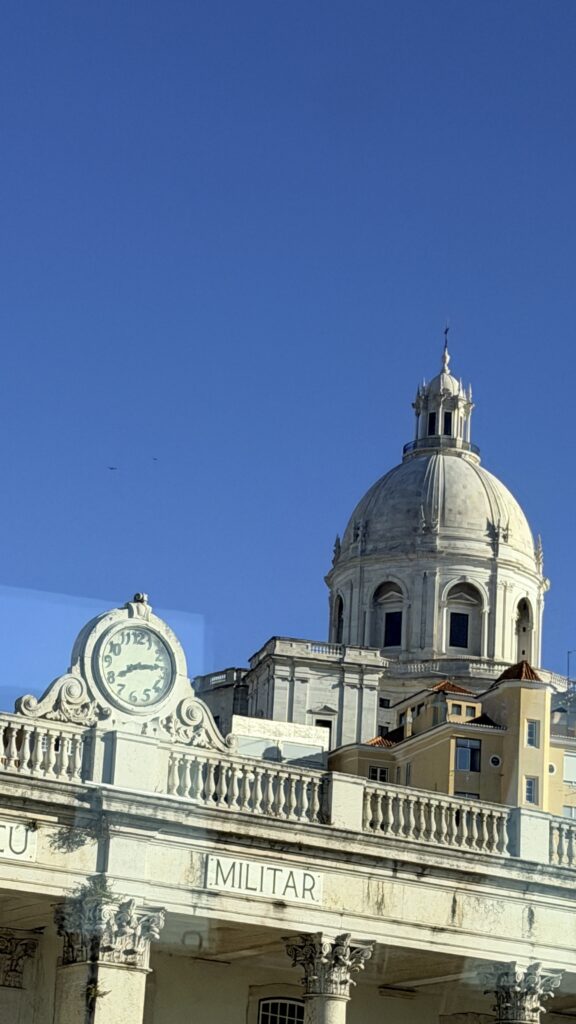
The initial project was for the construction at the Cais dos Soldados (Soldiers Wharf). Meanwhile, in December 1852, the engineer Thomaz Rumball proposed two alternatives, alongside the Museu Militar de Lisboa (Military Museum of Lisbon), or in the proximity of the Largo do Intendente. Another engineer, Harcourt White, also rejected the option of Cais dos Soldades in January 1853, because the location was too small to construct a station. He suggested that the station be situated along the river, after the Church of Anjos in Xabregas, where at the time there was free space. An executive committee was nominated to plan the construction of the Lisbon station, proposing the construction of a building along Rocha do Conde de Óbidos, with the capacity to receive passengers and commerce, with one of the lines continuing to area around the customs house in Terreiro do Paço. The construction project to Spain, therefore, began this year, under orders of Fontes Pereira de Melo,
The actual project to construct the station at Cais dos Soldados was approved by the government on 8 March 1854. The plan presented a station that included distinctive elements for commercial and passenger traffic, repair workshops, warehouses and services. For the passenger terminal, the government acquired the old Convent of Santa Apolónia, but the former army arsenal in the location was demolished to make way for the final design. From the beginning, the rail line and the commercial wharf required that land be reclaimed along the Tagus River.
At the inauguration of the first link of the Caminho de Ferro do Leste (Eastern line), between Carregado and Lisbon, on 28 September 1856, the construction of the station had not already begun. In the meantime, the terminal was installed in the provisionary building along the Palácio de Coimbra (Palace of Coimbra).
The project was designed by Angel Arribas Ugarte, and directed by director João Evangelista de Abreu, and his chief engineer Lecrenier, and constructed by the company Oppermann. The station was inaugurated on 1 May 1865, with the first line to the station beginning operation in 1873, to connect Santa Apolónia to Santos.
Between 1891 and 1957 most passenger services at Santa Apolónia moved to Rossio Train Station, then referred to as the Central Station. Santa Apolonia became one of several land transport hubs, that included Gare do Oriente, situated 6.5 kilometres (4.0 mi) northeast, Cais do Sodré, Rossio and Entrecampos.
From the 20th century, the national rail service Comboios de Portugal has operated different suburban, national and international routes (including links to Paris and Madrid, including the high-speed Alfa Pendular service. Santa Apolónia rail station is connected to the Lisbon Metro station of the same name, which opened in 2007. In January 2011, there were six means of transit, between 250–355 metres (820–1,165 ft) length; the platforms were between 172–348 metres (564–1,142 ft), and a height of 60–70 centimetres (24–28 in).
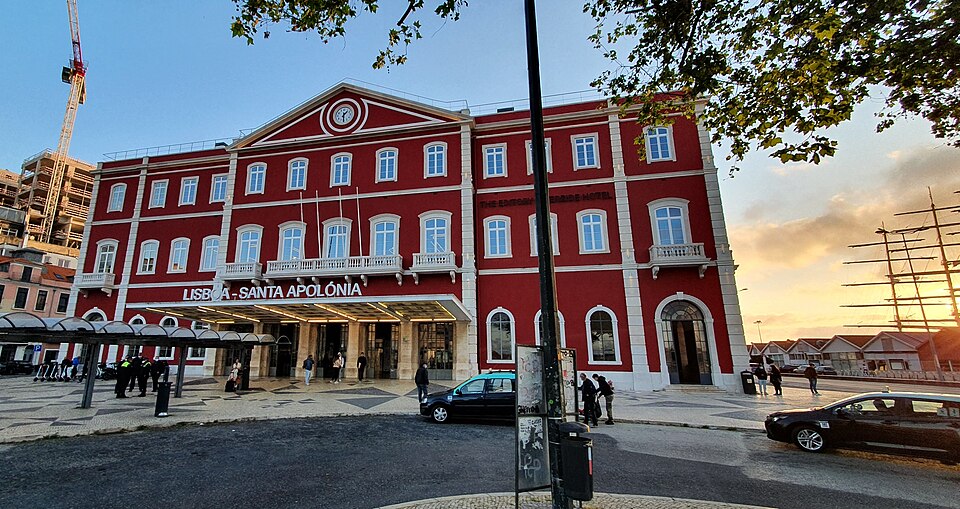
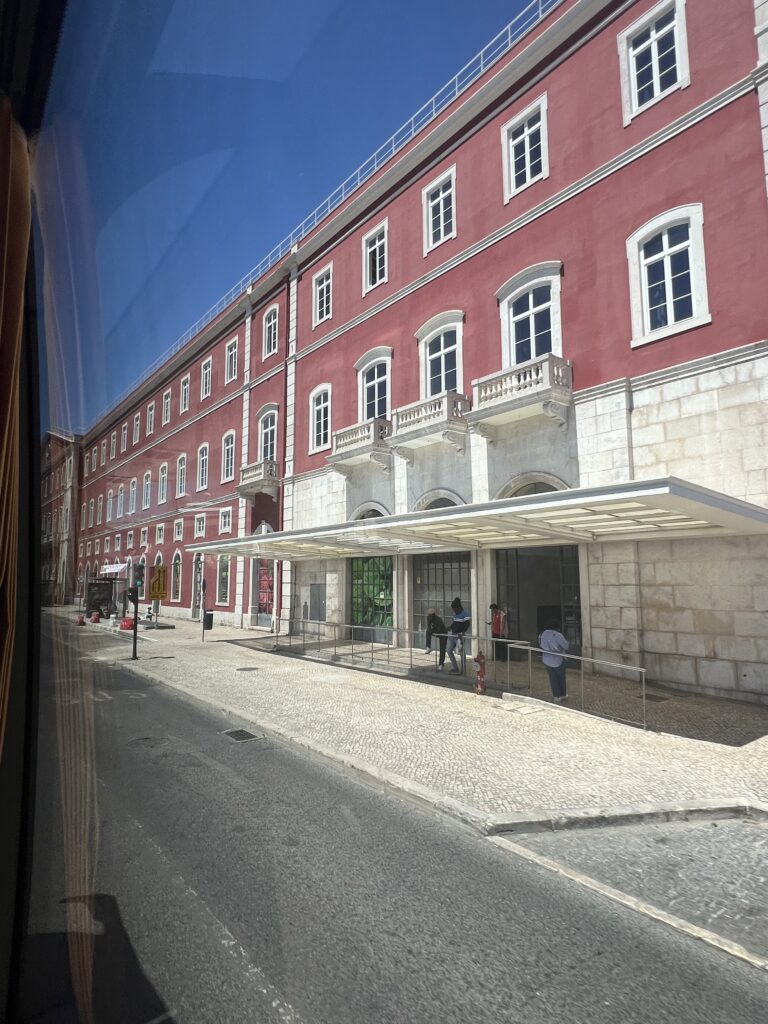
The station is situated along the northern margin of the Tagus River, in the Alfama district of Lisbon, integrated into the urban zone, along the Rua Caminhos de Ferro. Fronted by Rua Texeira Lopes, the three-register U-shaped building includes a short facade and long parallel wings extending around the rail platforms.
The principal symmetrical facade consists of a three-register Neoclassical, divided into five unequal veins. The first floor is dominated by five large rounded doorways, in addition to a lateral doorways on opposite ends of the facade, with rounded windows interspersed between the porticos. On the second floor are rounded windows, with the central and lateral windows much larger and with lintels. On the final floor includes a triangular pediment dominated by a clock. Similarly, the central and lateral vains include rounded windows, interlaced by square windows.
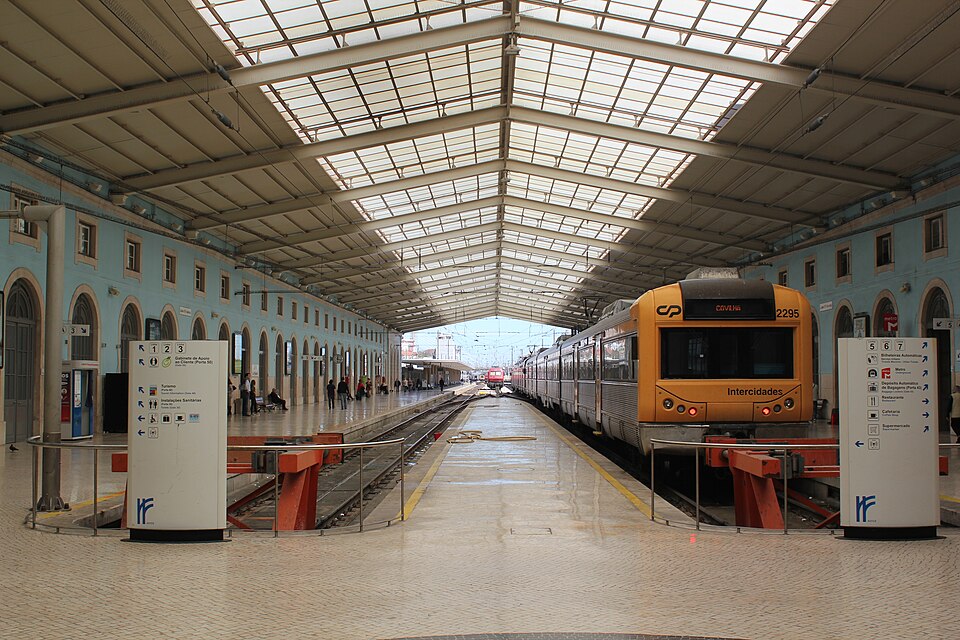
The main part of the building is dominated by a great nave, approximately 117 metres (384 ft) long, 24.6 metres (81 ft) wide and 13 metres (43 ft) tall, consisting of a lattice of wrought iron and glass, typical of the 19th century.
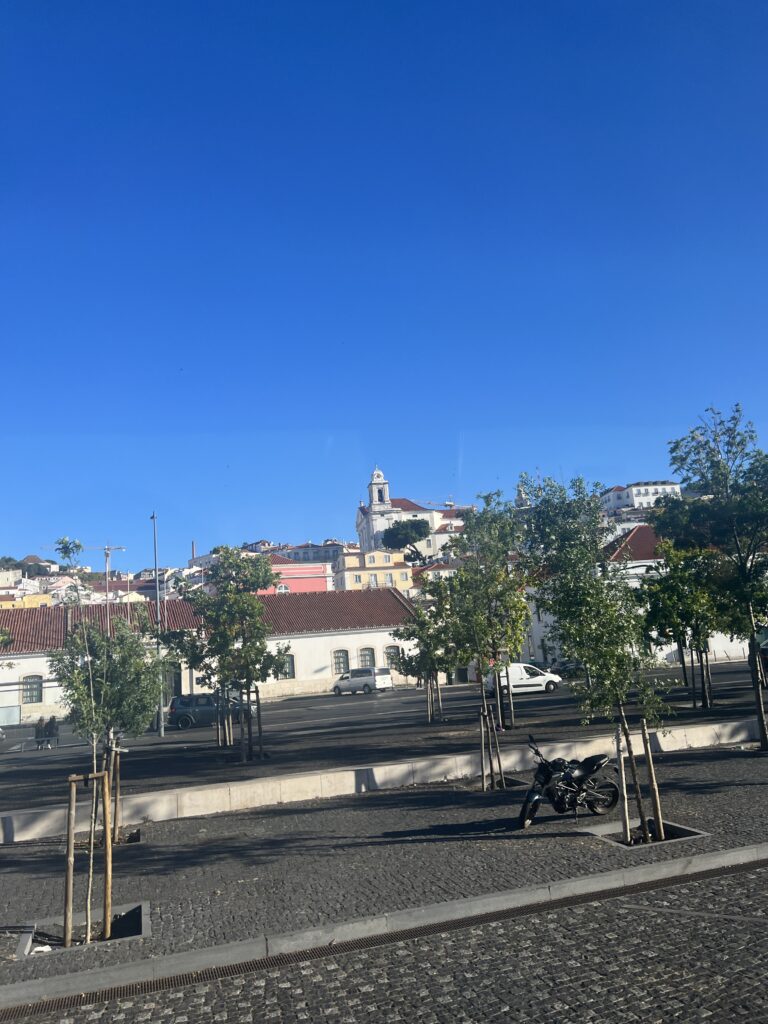
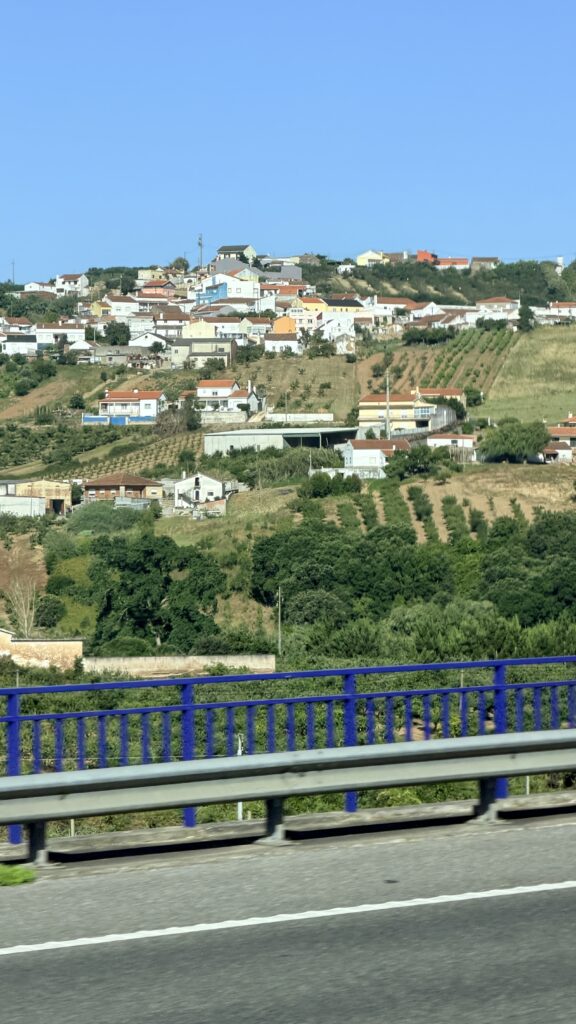
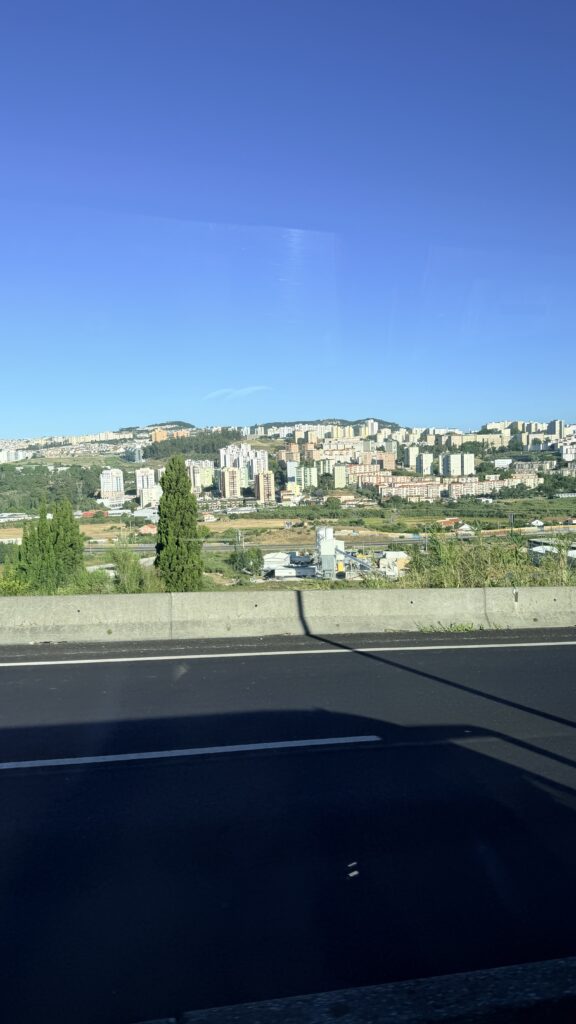
Couple of photos outside the city
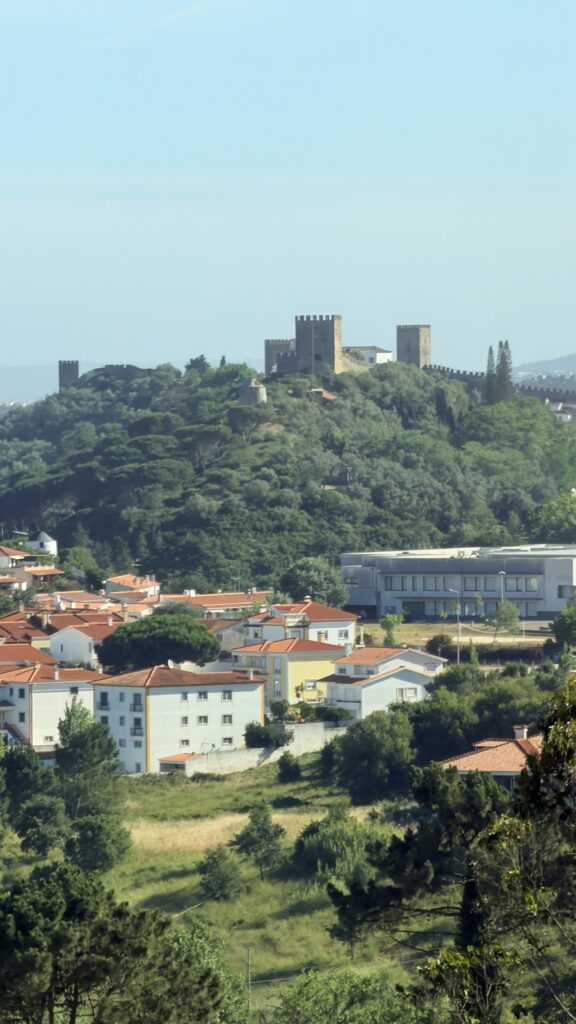
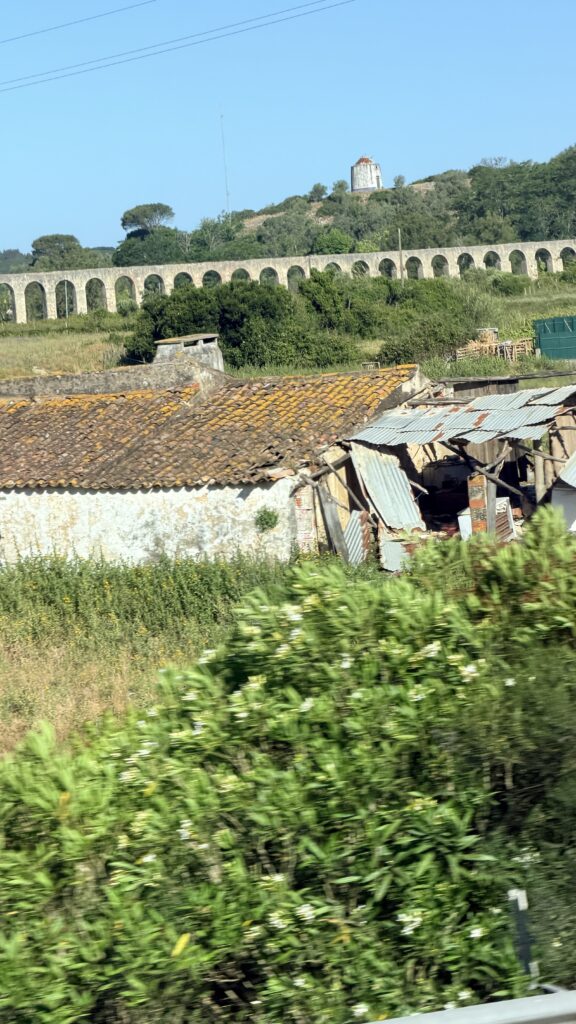
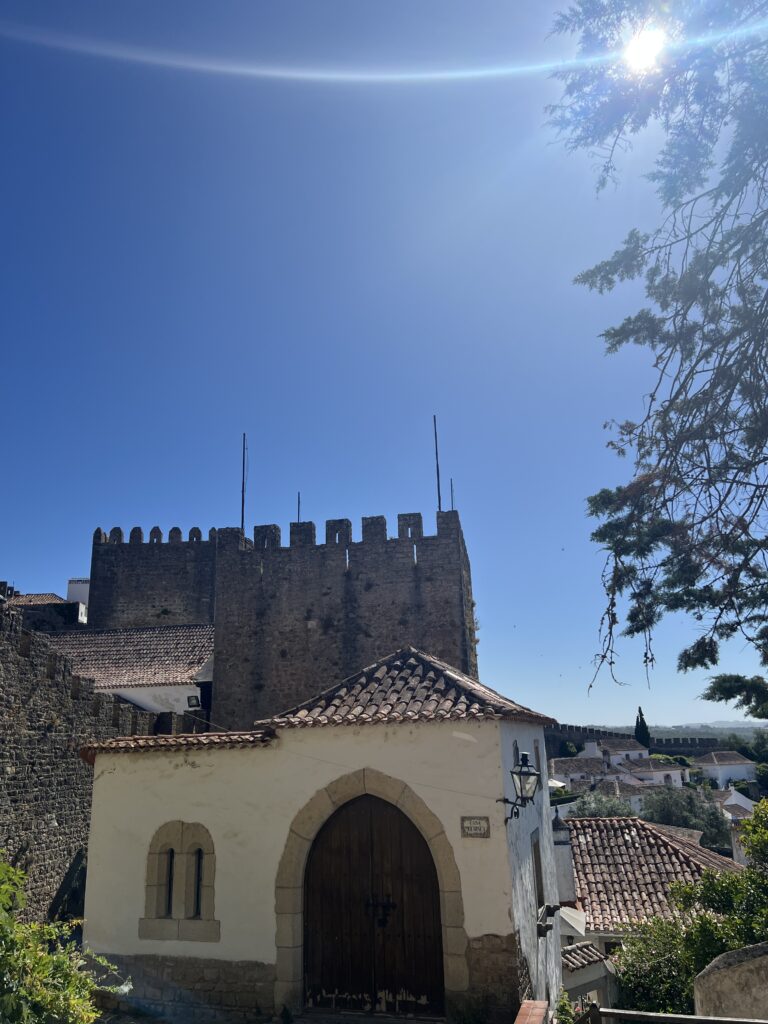
Our first view of Medieval Obidos
The Óbidos Aqueduct (Portuguese: Aqueduto de Óbidos) is a 16th-century aqueduct that spans the Portuguese municipality of Óbidos.
The Óbidos Aqueduct was built at the orders of Catherine of Austria in around 1570. It has been classified as a Property of Public Interest since 1962.
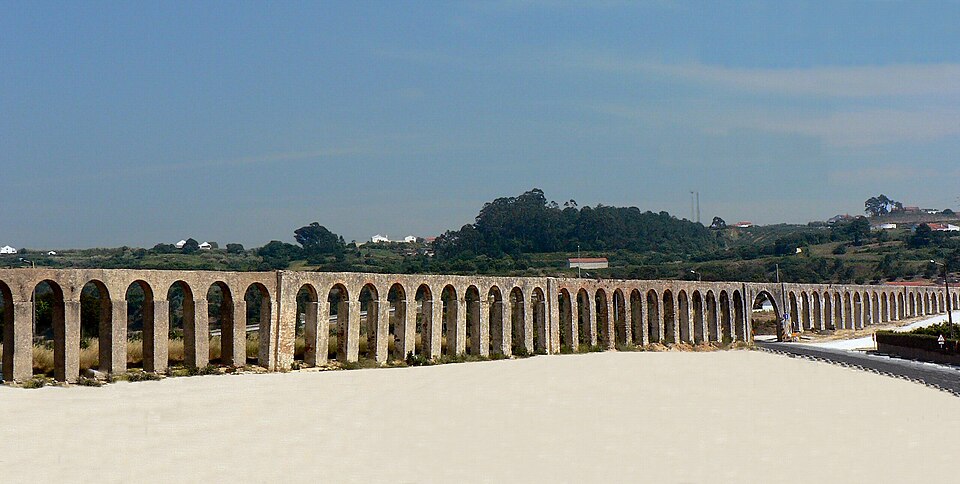
Óbidos (Portuguese pronunciation: [ˈɔβiðuʃ] ⓘ; Proto-Celtic: *Eburobrittium) is a town and a municipality in the Oeste region, historical province of Estremadura and the Leiria district. The town proper has approximately 3,100 inhabitants. The municipality population in 2011 was 11,772 covering an area of 141.55 square kilometres (54.65 square miles).
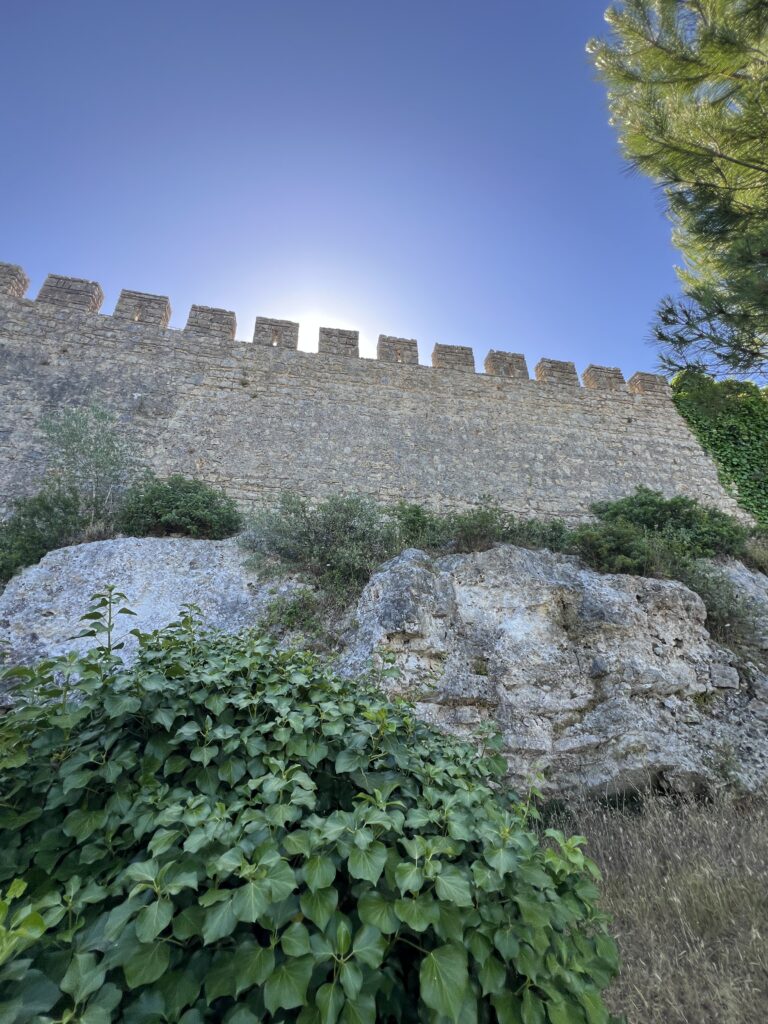
The area of the town of Óbidos is located on a hilltop, encircled by a fortified wall. Óbidos remains a well-preserved example of medieval architecture; its streets, squares, walls and its castle are popular tourist destinations. The castle now houses a pousada. The municipality is also home to the famous Praia d’El Rey golf complex, one of the top golf resorts in Europe.
The name “Óbidos” is a Latinised (oppidum, citadel) derivation of the older Celtic “Eburobricio”. The municipality grew from a Roman settlement near the foothills of an elevated escarpment. The region of Óbidos, extending from the Atlantic to the interior of Estremadura Province along the rivers and lakes has been inhabited since the late Paleolithic. A settlement, constructed by early Celt tribes, was later a centre of trade for the Phoenicians. Archeological evidence from the base of the medieval tower (south of Facho) at Óbidos Castle indicates Roman construction linked to an outpost of the Roman civitas of Eburobrittium, a large urban area that has been under excavation. Archeological surveys determined the remains of a forum, baths and other Roman structures near the settlement.
After the fall of Rome, the region came under the influence of the Visigoths, although specific records are missing. The Roman town of Eburobrittium was abandoned in the 5th century for the more secure hilltop where today the principal settlement is located. Sometime after 713 the Moors established a fortification on this mountain, while a Christian community of Mozarabs lived in the Moncharro neighbourhood.
The city was taken from the Moors during the reign of the first King of Portugal, Afonso Henriques, in 1148. Tradition states that one knight, Gonçalo Mendes da Maia, was responsible for the successful storming of the Moorish castle. The retaking of Óbidos was the final stage in the conquest of the Estremadura Province region, after the settlements of Santarém, Lisbon and Torres Vedras. Following the control of the region, the settlement received its first foral (charter) in 1195, during the reign of King Sancho I. In 1210, King Afonso II gave the title of this village to Queen Urraca. Since then, Óbidos has often been patronized by the Queens of Portugal, giving rise to its informal title as Vila das Rainhas (English: town of the Queens); several royal consorts enriched the village with donations from the Middle Ages until the 16th century.
The castle and walls of Óbidos were remodelled during the reign of King Dinis I. The limestone and marble structure was strengthened and elaborated, while the keep was created in the 14th century, by King Fernando. By the time of the first remodelling project, the settlement had also grown beyond the gates of the castle.
The Church of Santa Maria in Óbidos was the setting for the wedding of King Afonso V to his cousin, Princess Isabella of Coimbra, on 15 August 1441, when they were both still children aged 9 and 10, respectively. Administrative reforms conducted by King Manuel I at Óbidos in 1513, included the institution of a formal charter and major requalification of the urban area.
The 1755 earthquake caused damage to the village walls, a few churches, and many buildings, and resulted in the loss of architecture of Arab and Medieval inspiration. Similarly, the Peninsular Wars were fought in the vicinity of Óbidos, including the Battle of Roliça. More recently, the village was a center of government and meeting place for those involved in the 1974 Carnation Revolution, linking it to the armed forces movement revolt.
The name Óbidos comes from the Latin oppidum, meaning “fortified city.” In 1282, King Dinis gave the town to Queen Isabel as a wedding gift, beginning the tradition of Óbidos being part of the royal dowry for centuries.
History of Óbidos and the Medieval Market | The Cooltours
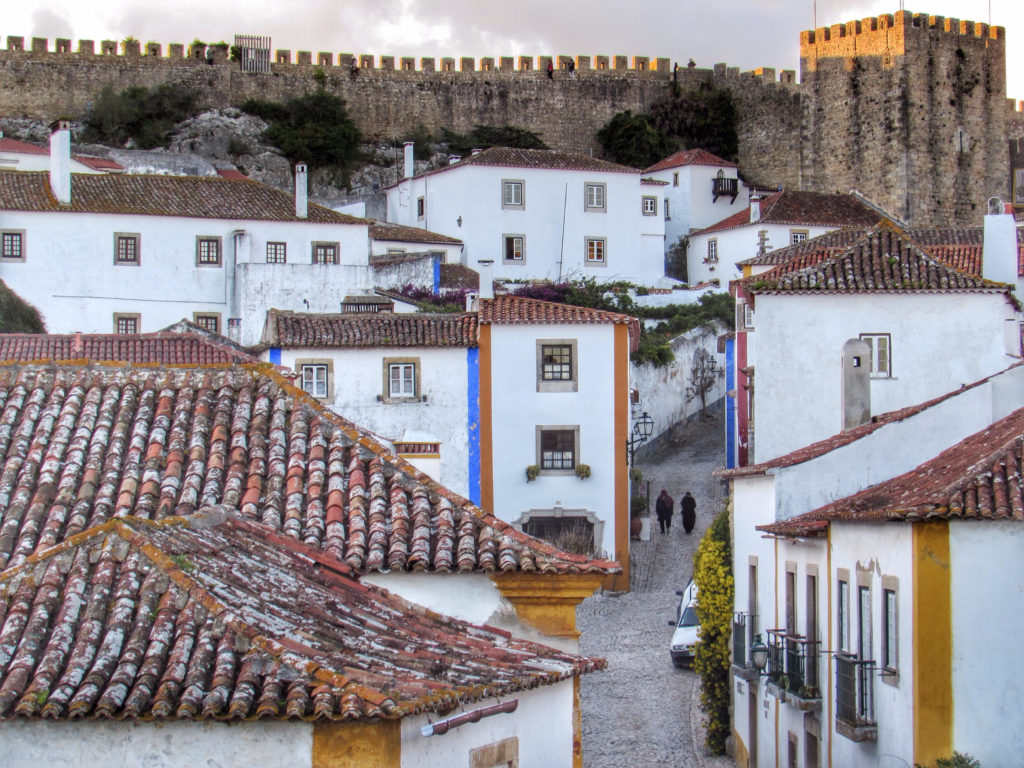
Below is a stock photo I pulled from a website
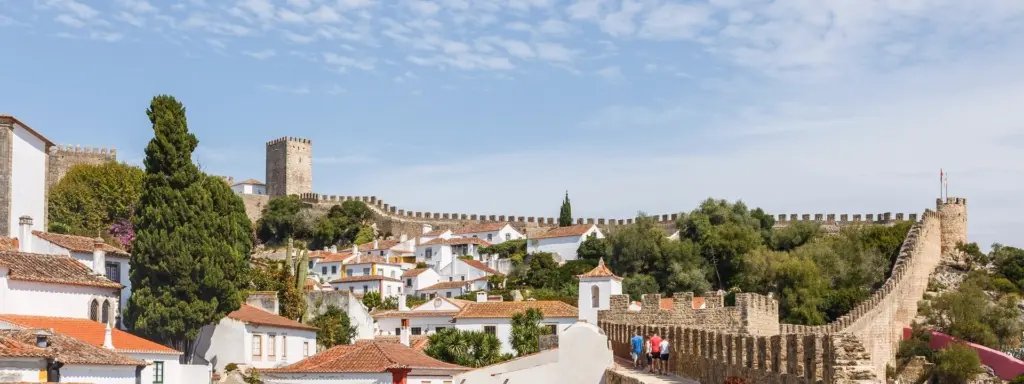
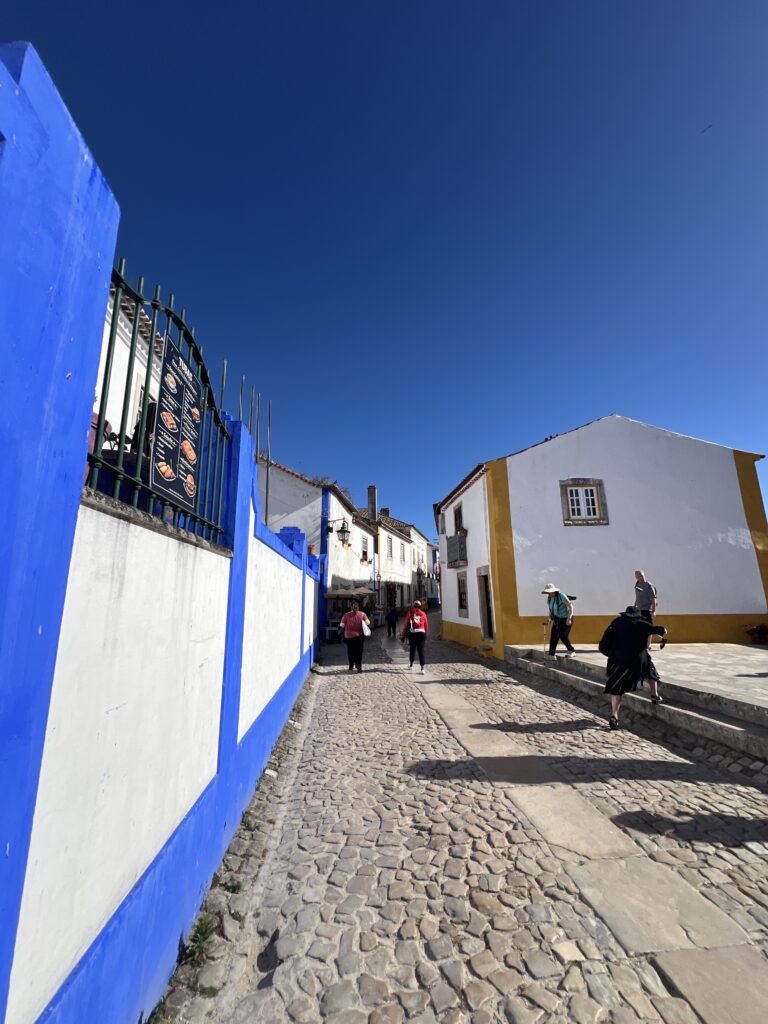
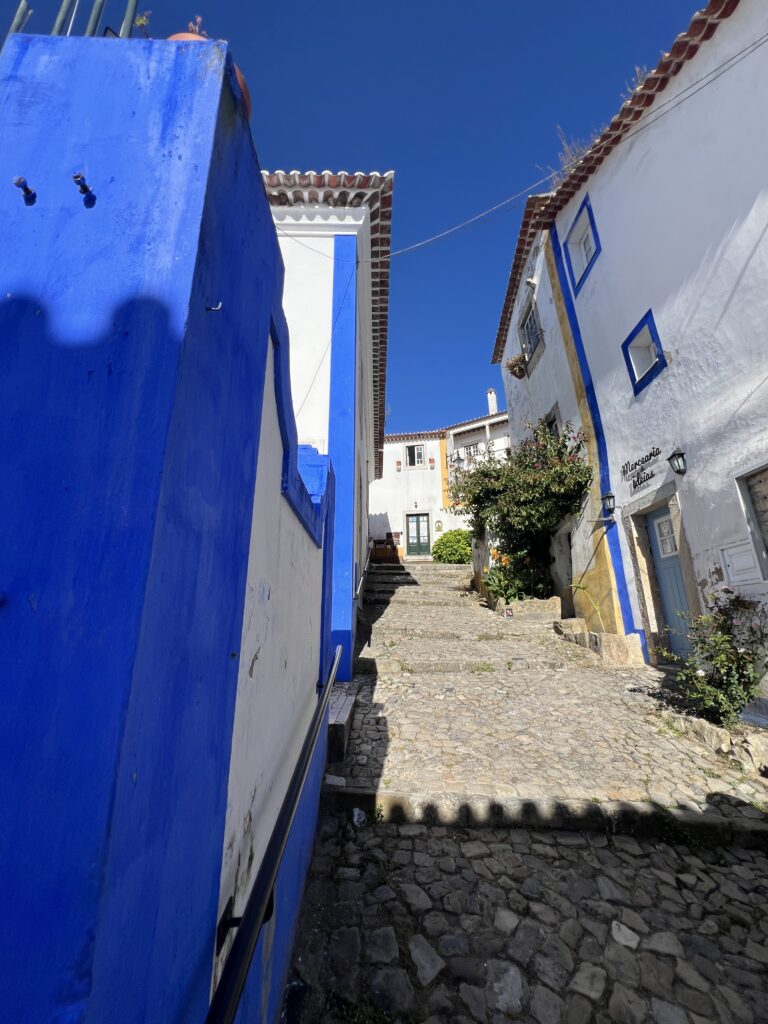
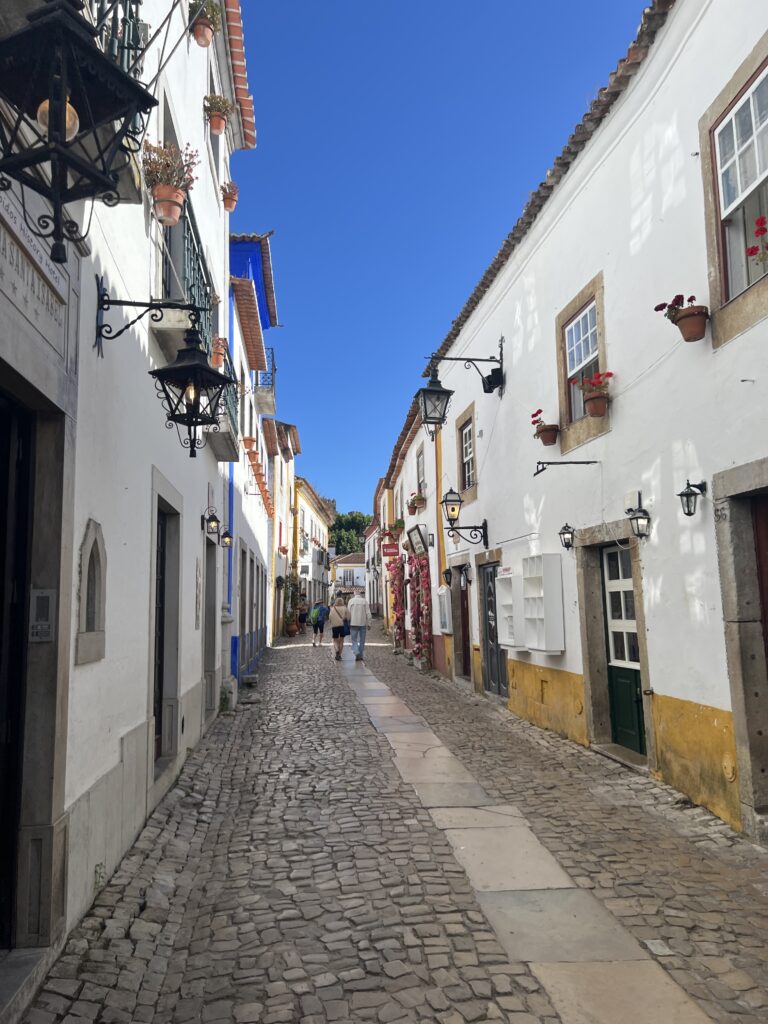
We had two hours to walk around inside the city walls. It was an amazing experience.
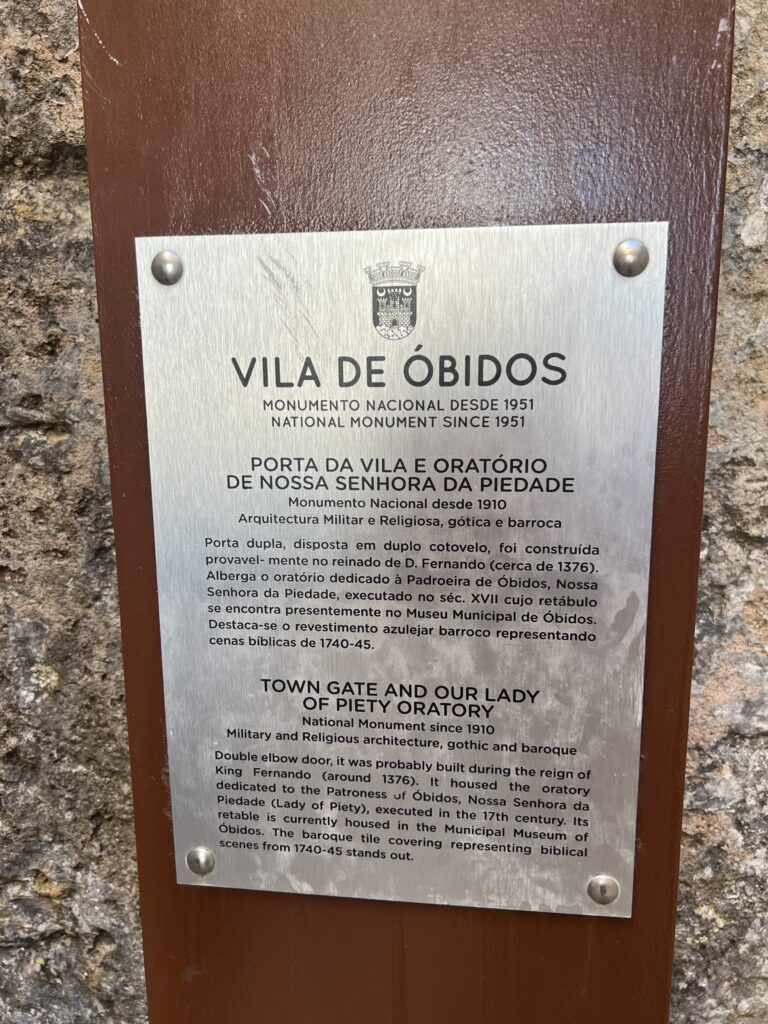
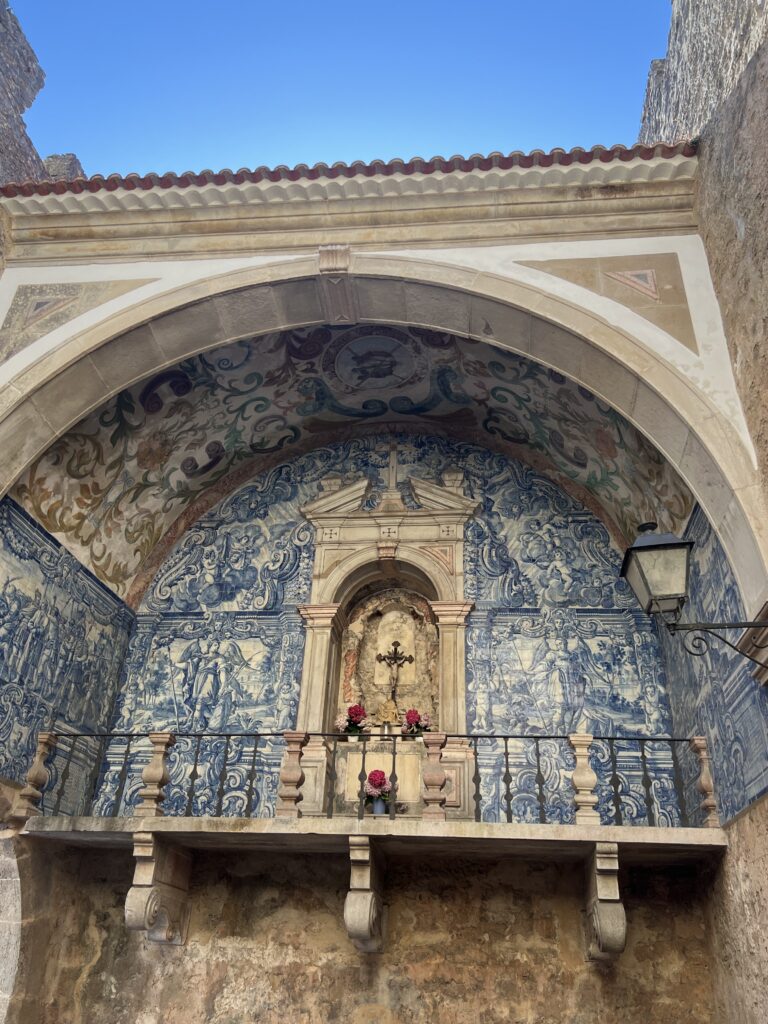
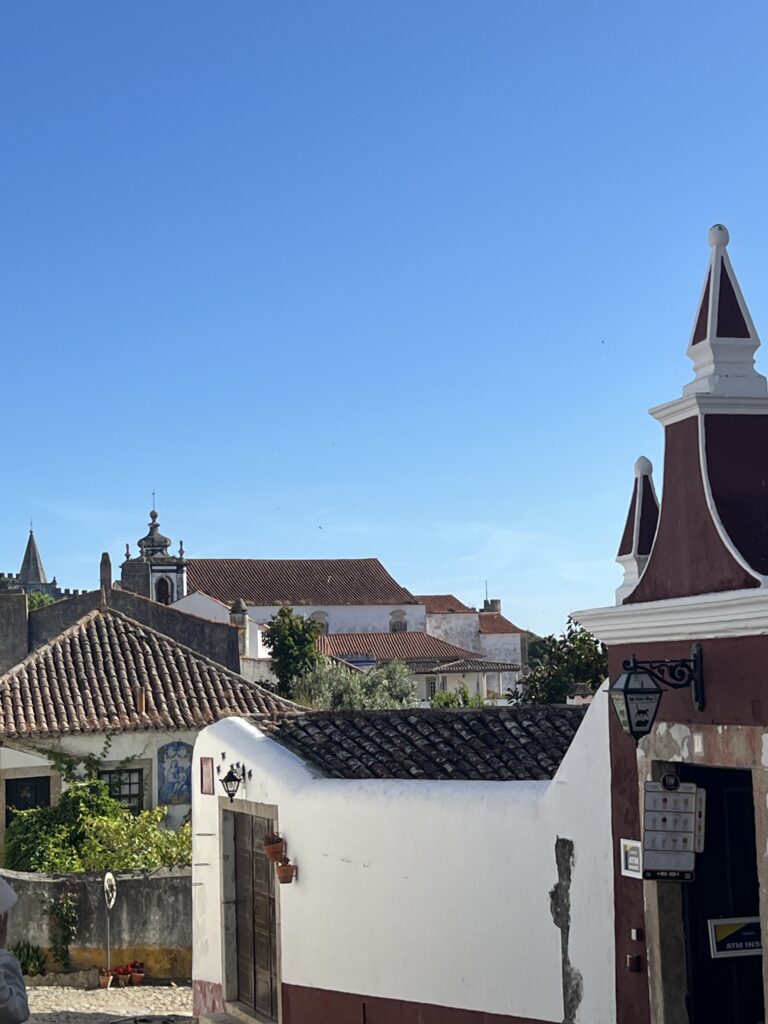
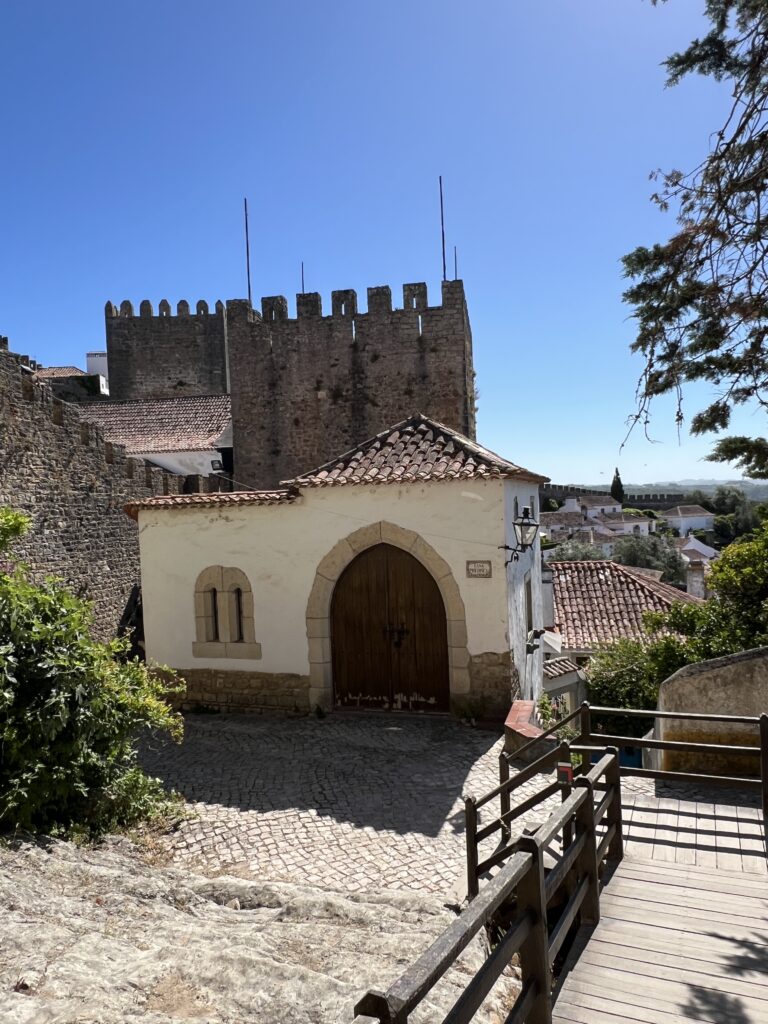
greja de Santa Maria, Matriz de Óbidos
According to tradition, the origin of this church dates back to the Visigothic period, having been converted into a mosque during the Muslim period and converted to Christianity after D. Afonso Henriques conquered the village in 1148, consecrating it to Marian Devotion.
From 1210, the town of Óbidos became part of the Casa das Rainhas, benefiting from the artistic and religious patronage of the Crown for the next six hundred years. The various modifications in the Church of Saint Mary are testament to this fact.
The temple that today sits in the Santa Maria Square, at the bottom of the Rua Direita main street, dates from the 16th century and was built by the initiative of Queen D. Leonor, wife of D. João II. It was in this church that, on August 15, 1441, the infant D. Afonso (later King D. Afonso V of Portugal) married his cousin D. Isabel, at the ages of ten and eight. From 1571, given its state of ruin, it was thoroughly renovated by order of Queen D. Catherine of Austria, to its present configuration.
At the entrance, on the Mannerist portal, one sees an image of Our Lady of the Assumption, patroness of the parish. Next to the altar the Renaissance tomb of D. João de Noronha (“The Lad”), captain of Óbidos in the 16th century, deserves to be admired. It is a masterpiece of Renaissance tomb sculptures, attributed to Frenchman Nicolau Chanterenne. In addition, one can observe paintings by Baltazar Gomes Figueira and the famous Josefa de Óbidos (1634-1684), which combined the profane and the sacred in atmospheres of soft sensuality and mysticism, as in the altarpiece dated 1611, which represents the Mystic Marriage of Santa Catarina, on show in the sacristy. Much of the work of this remarkable painter (and of the church’s collection) is preserved in museums, particularly in Óbidos. The walls, covered top to bottom with 17th century tiles and painted wood, create a beautiful decorative effect, designed by Francisco de Azevedo Caminha, also in the 17th century.
In the square to the front of the church, the stone pillory is decorated with a fishing net. D. Leonor wanted to pay tribute to the fishermen who gathered the body of her son D. Afonso, who had died following a horse fall near the Tagus, in a net.
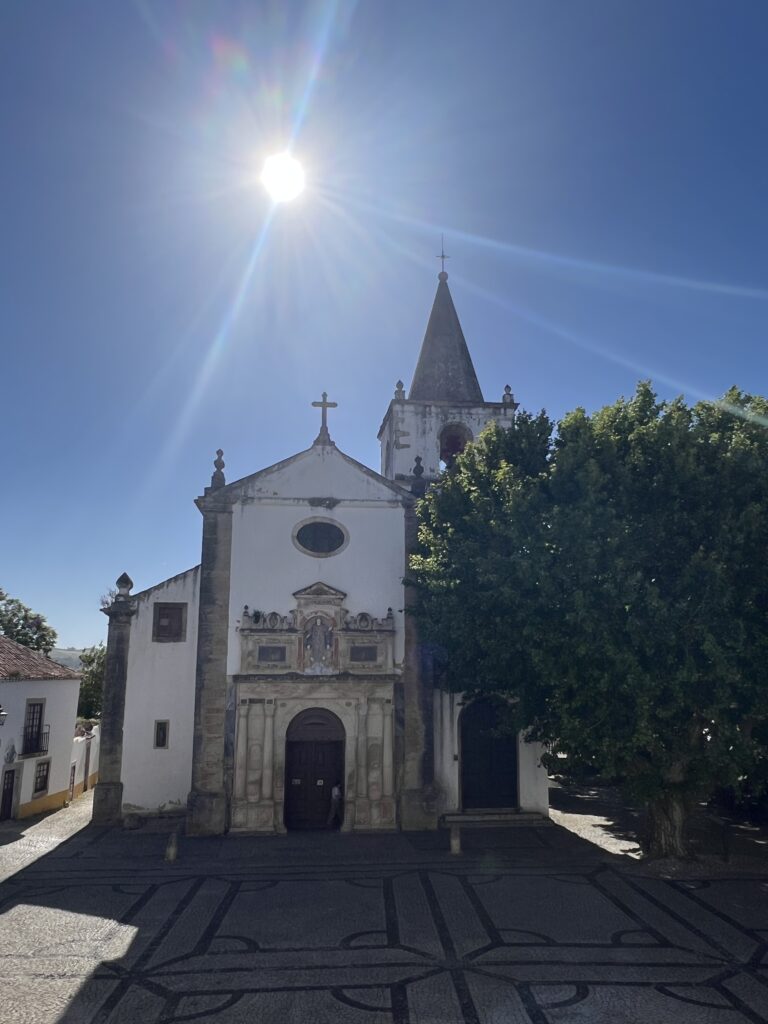
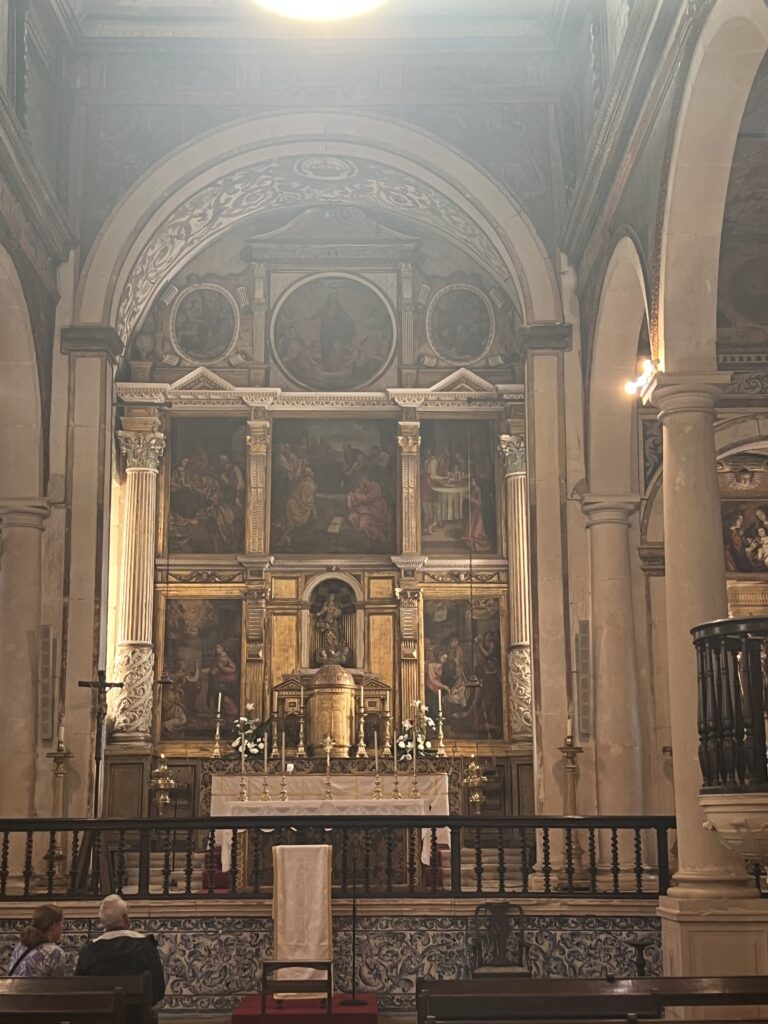
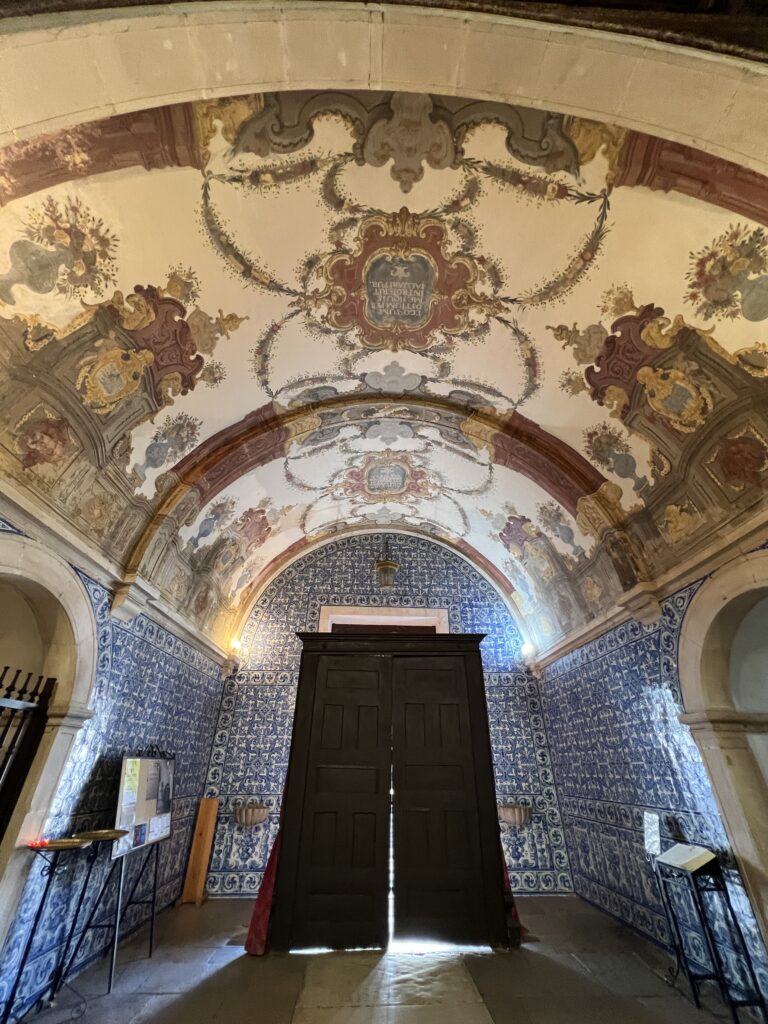
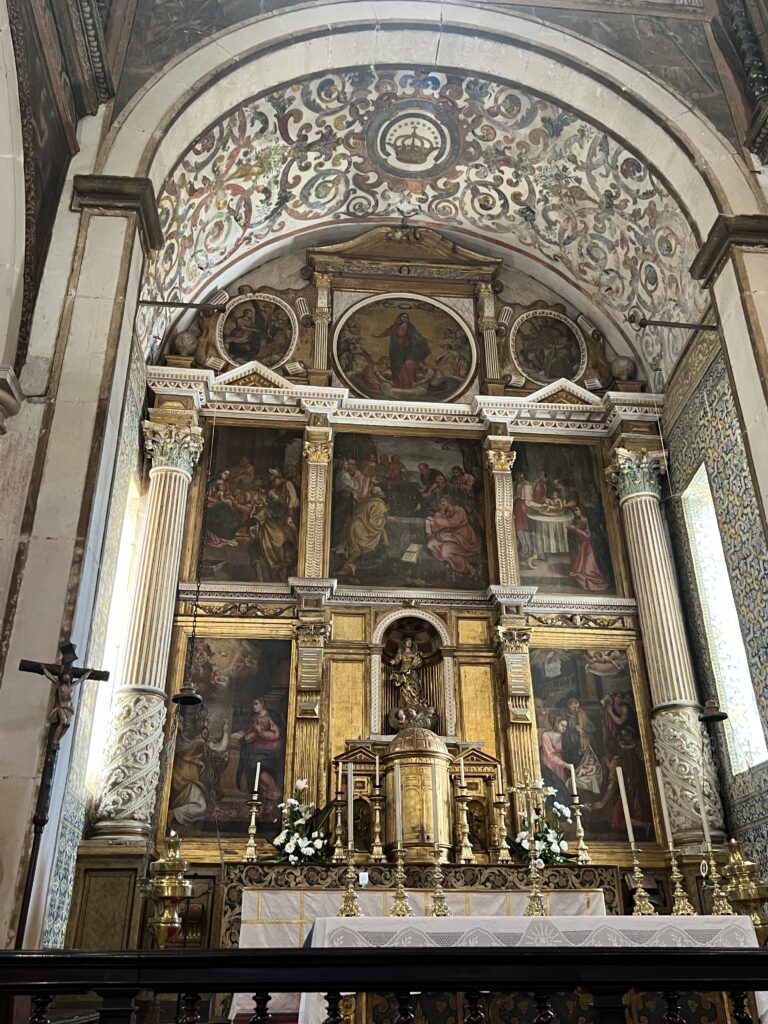
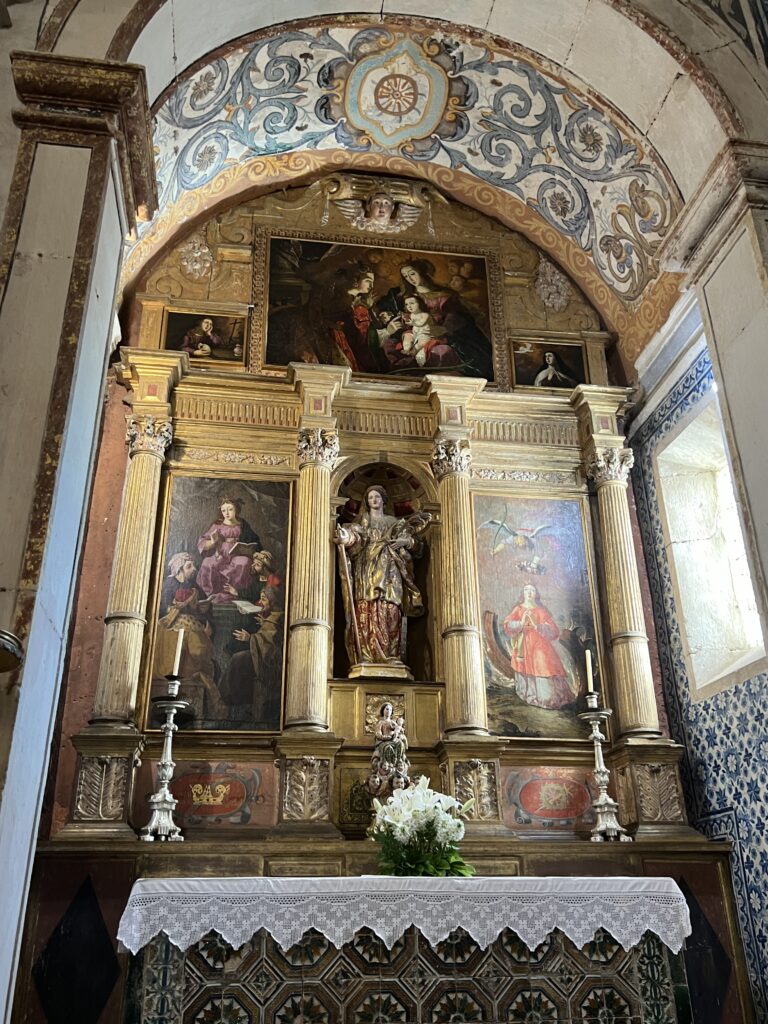
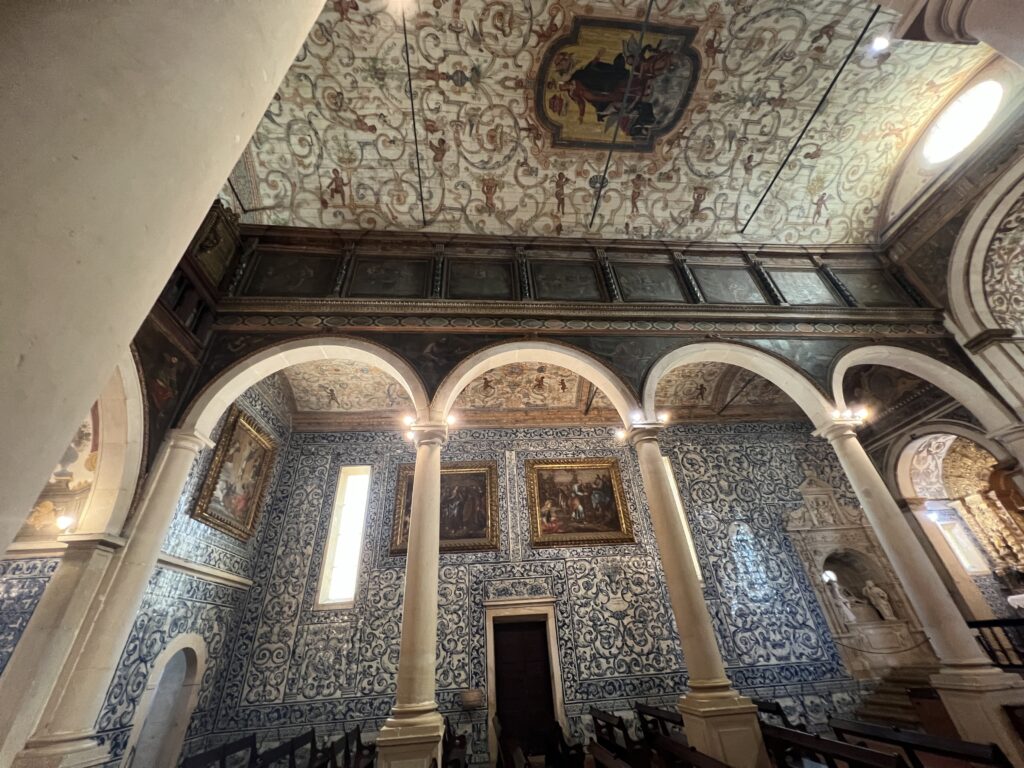
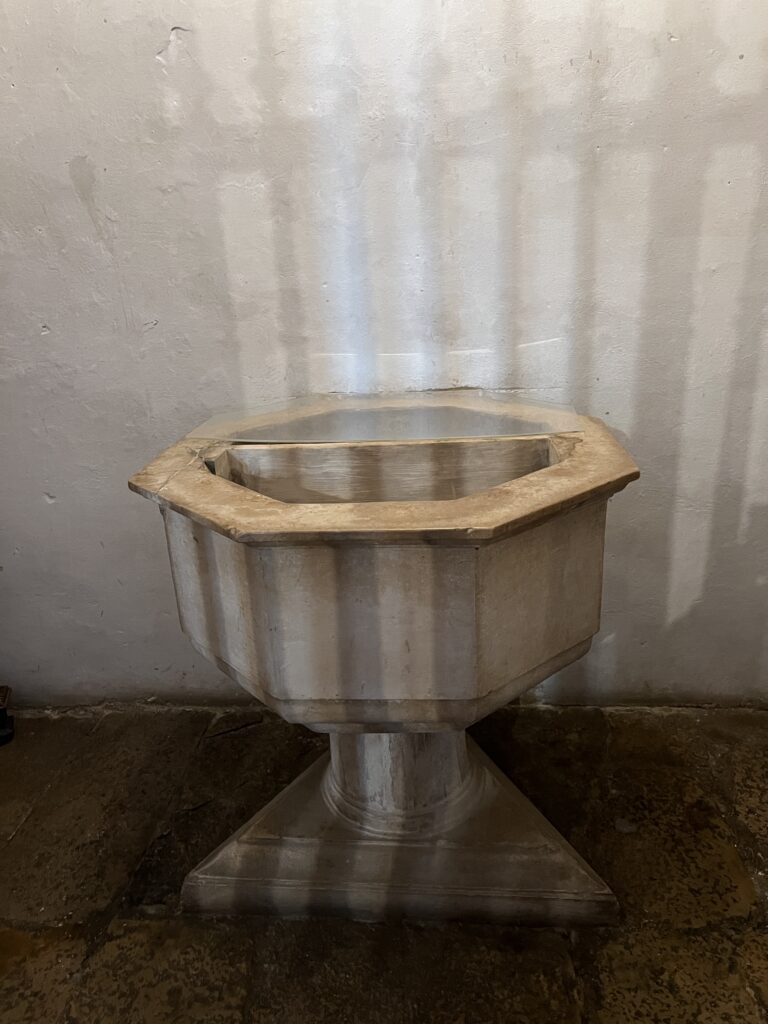
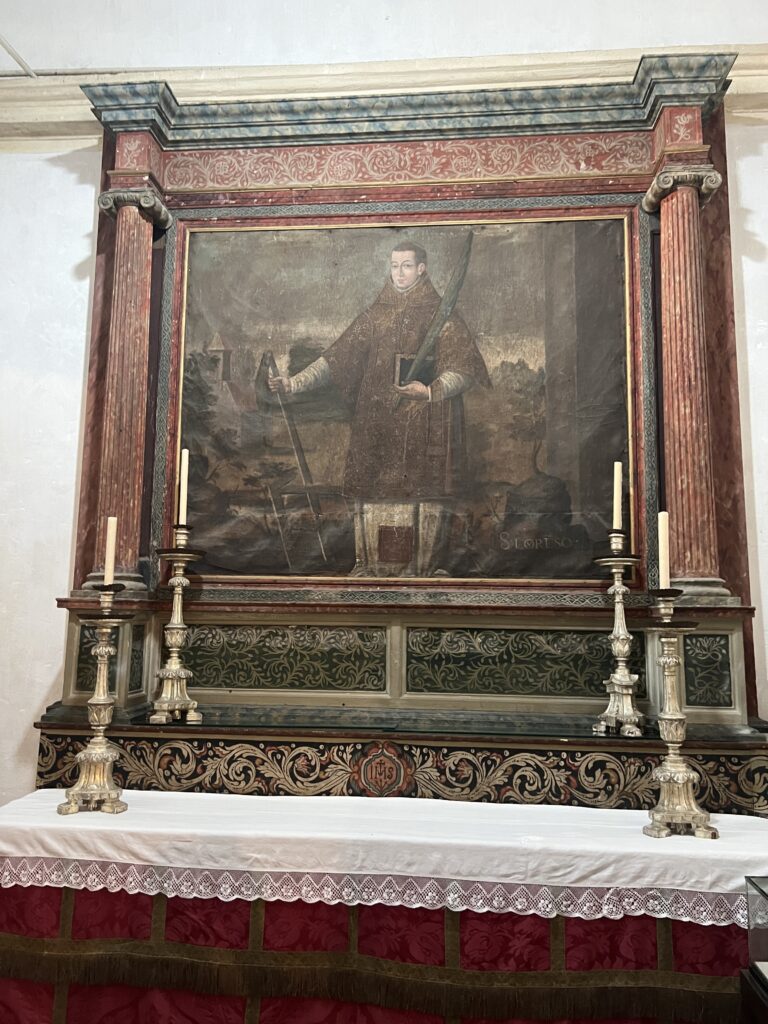
The square in front of the church
After visiting the church we started walking more through the medieval town
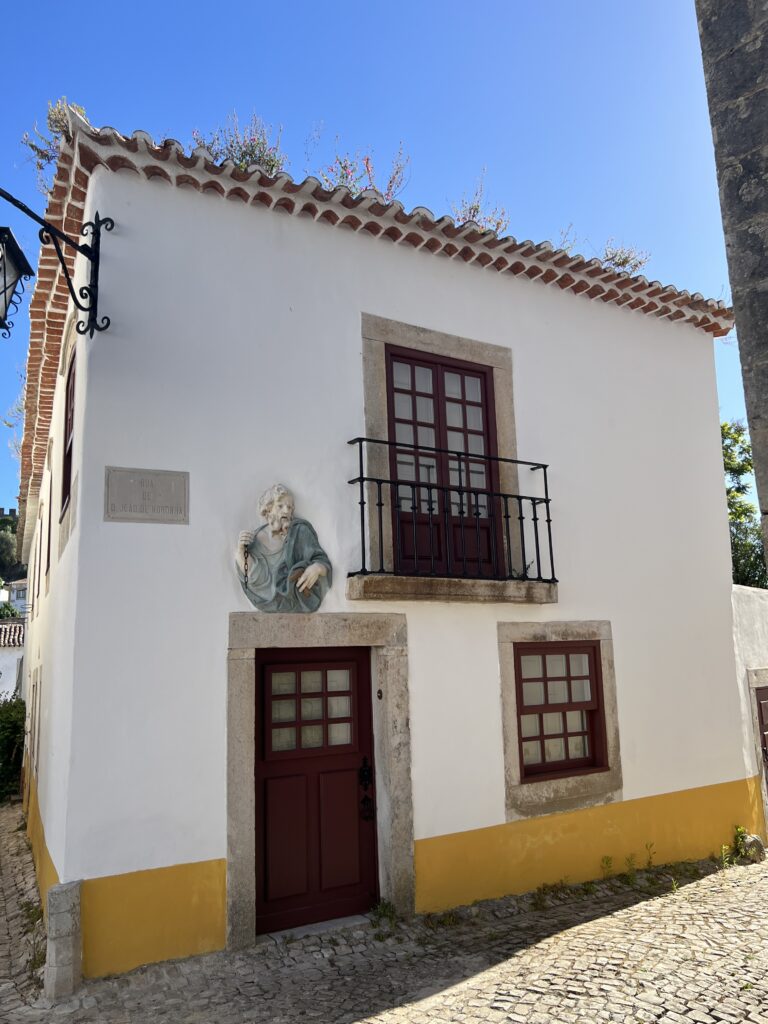
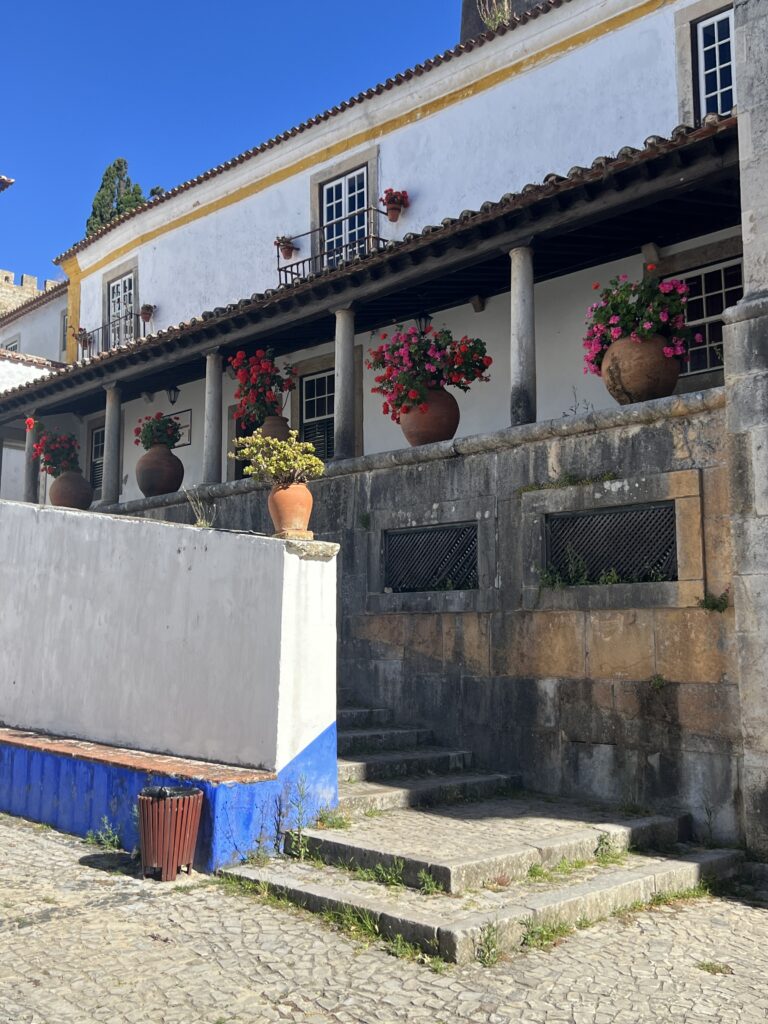
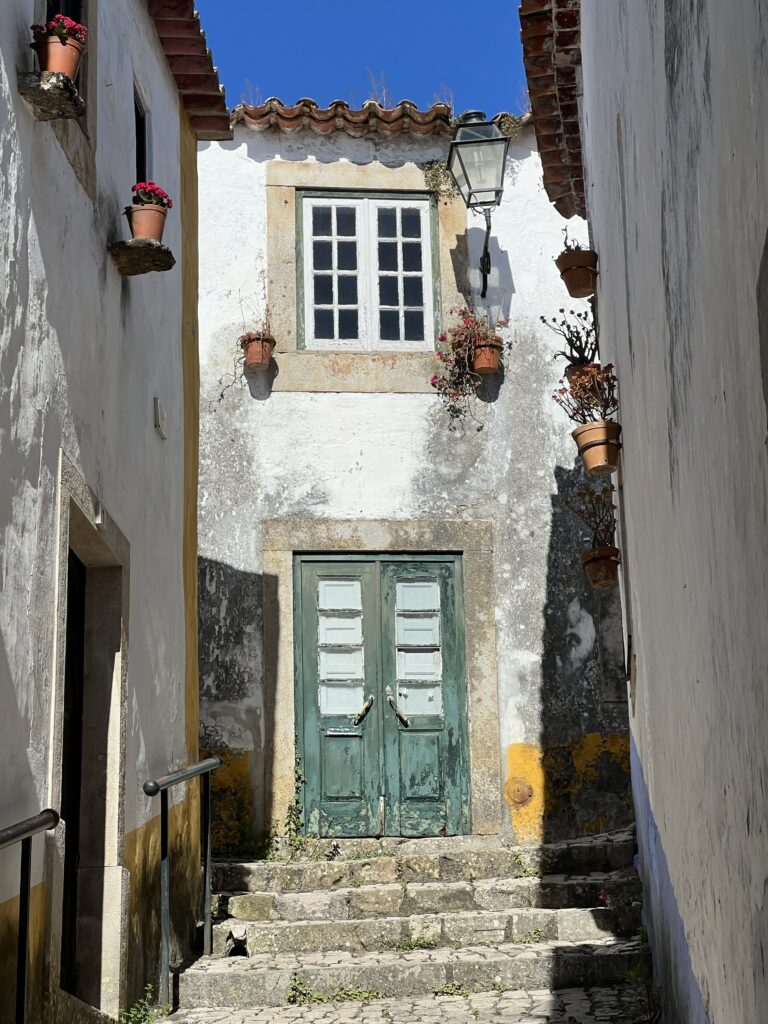
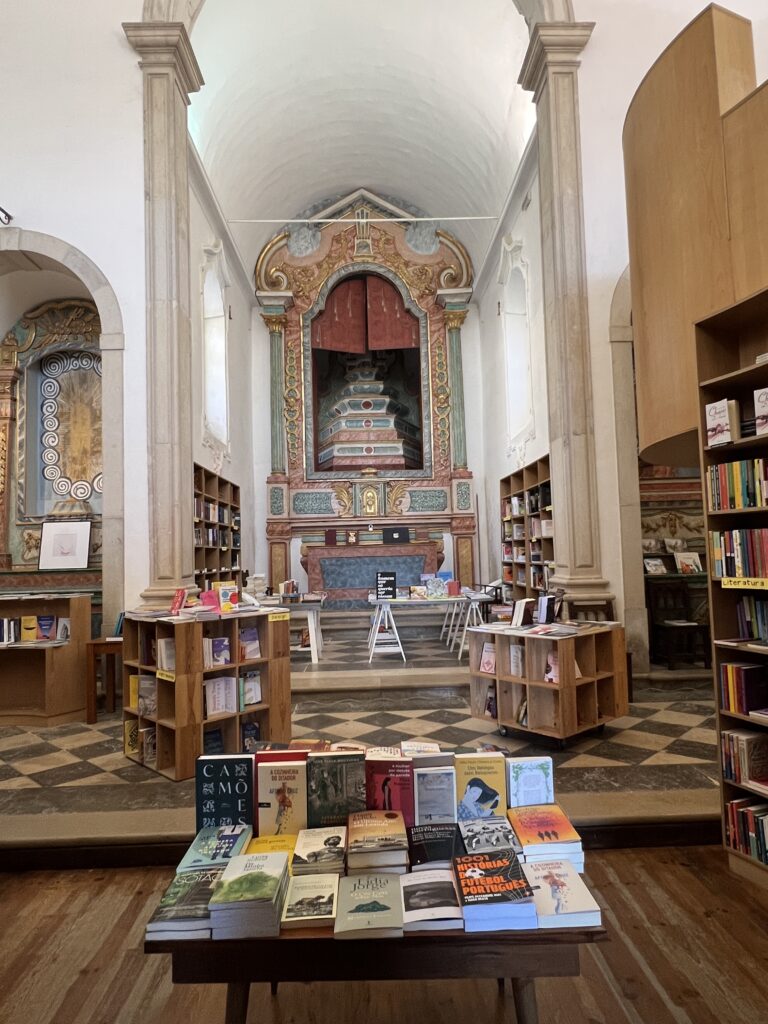
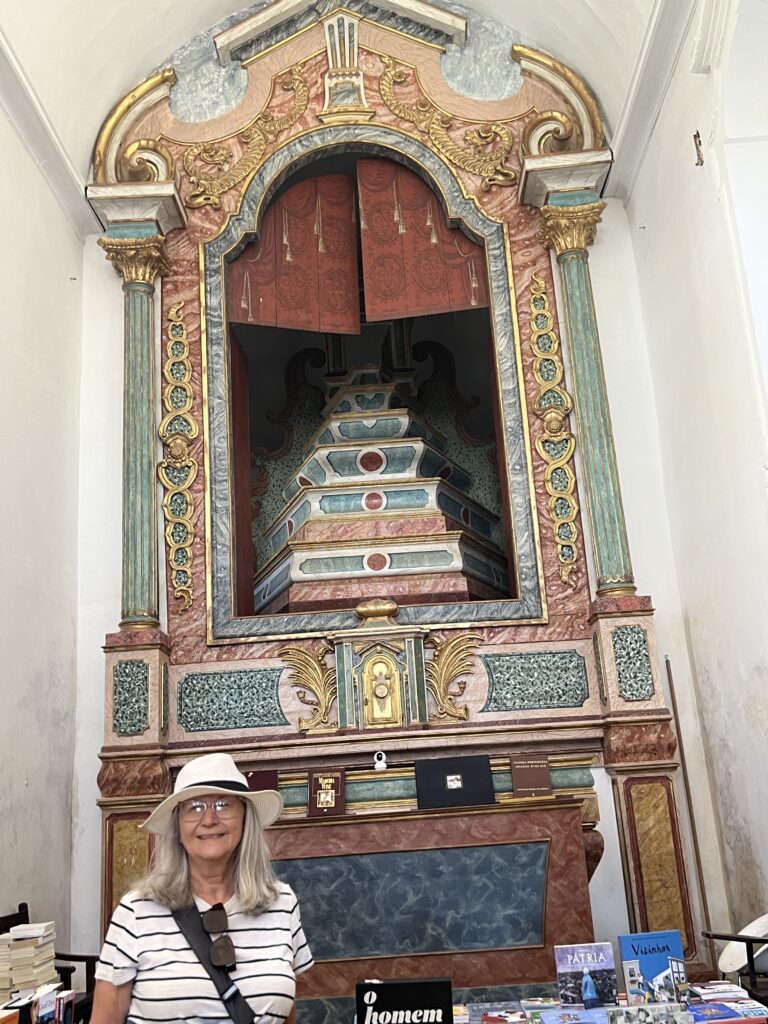
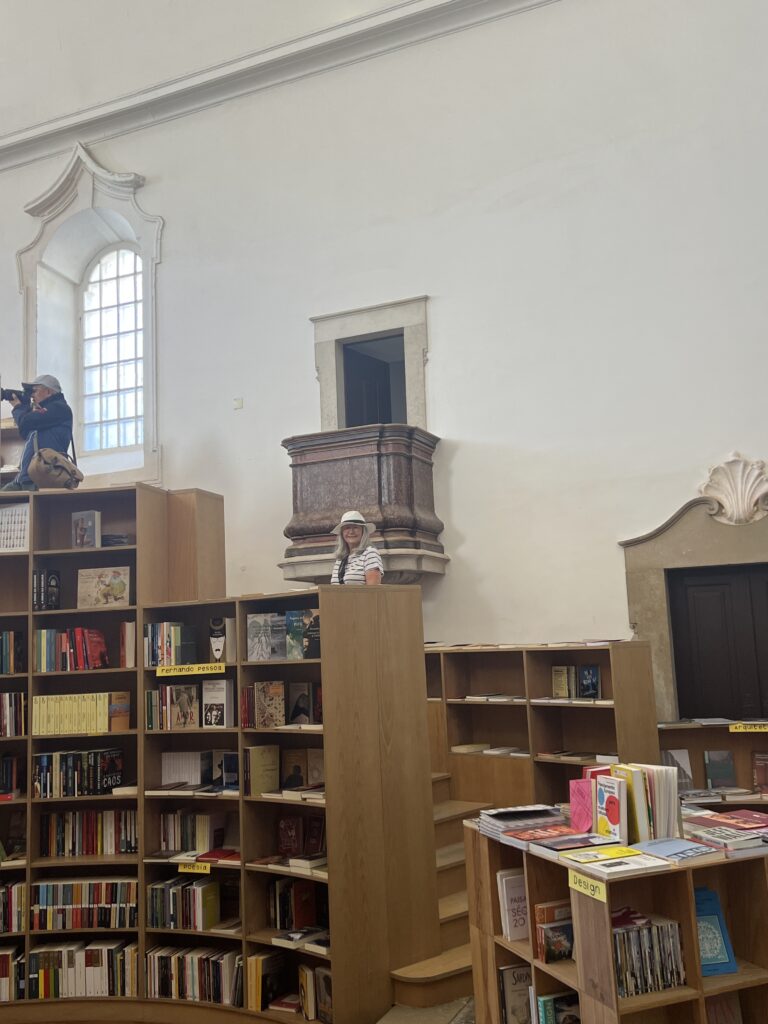
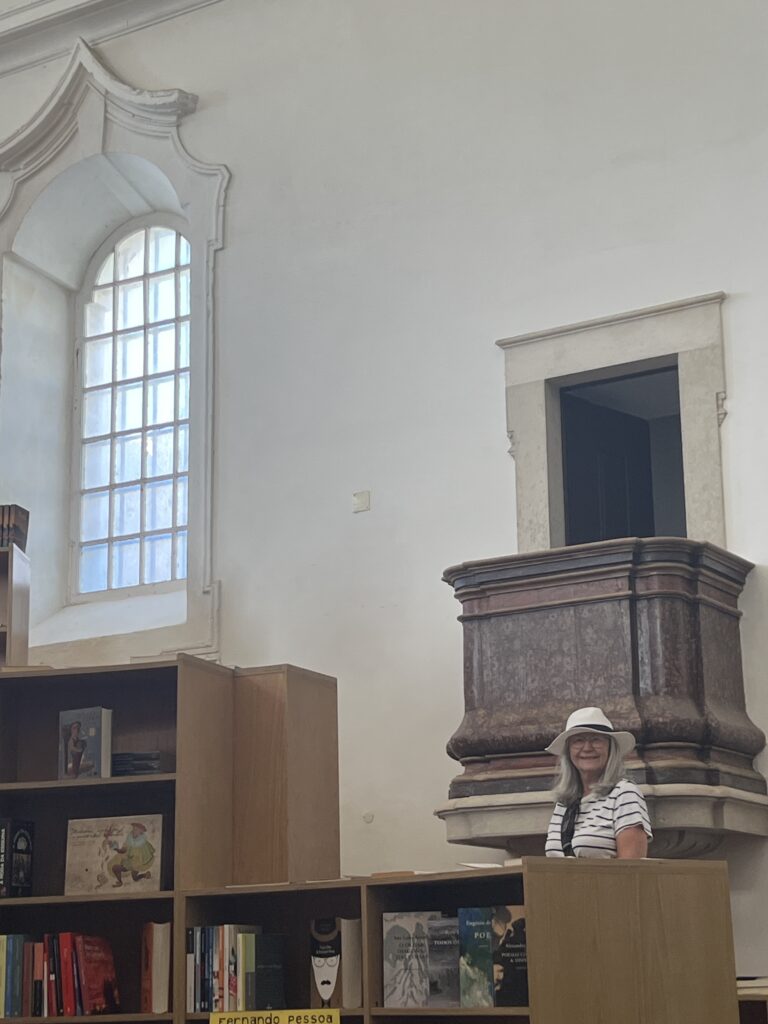
We thought this building was another church and at one time it was, but we were surprised by its use when we entered
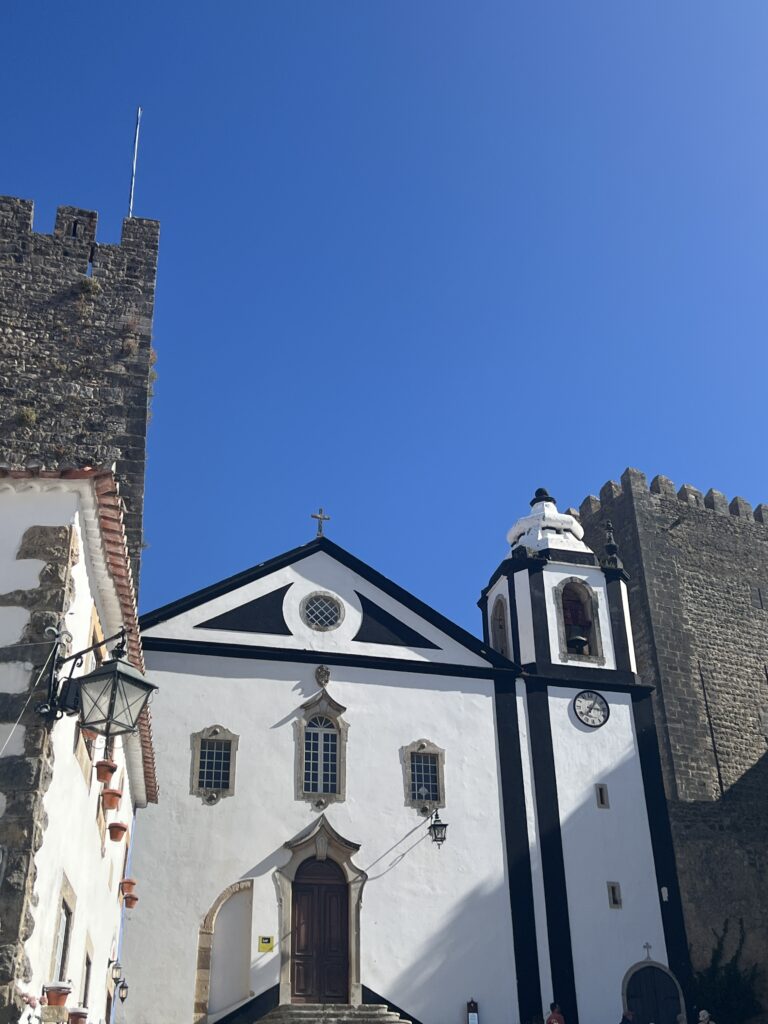
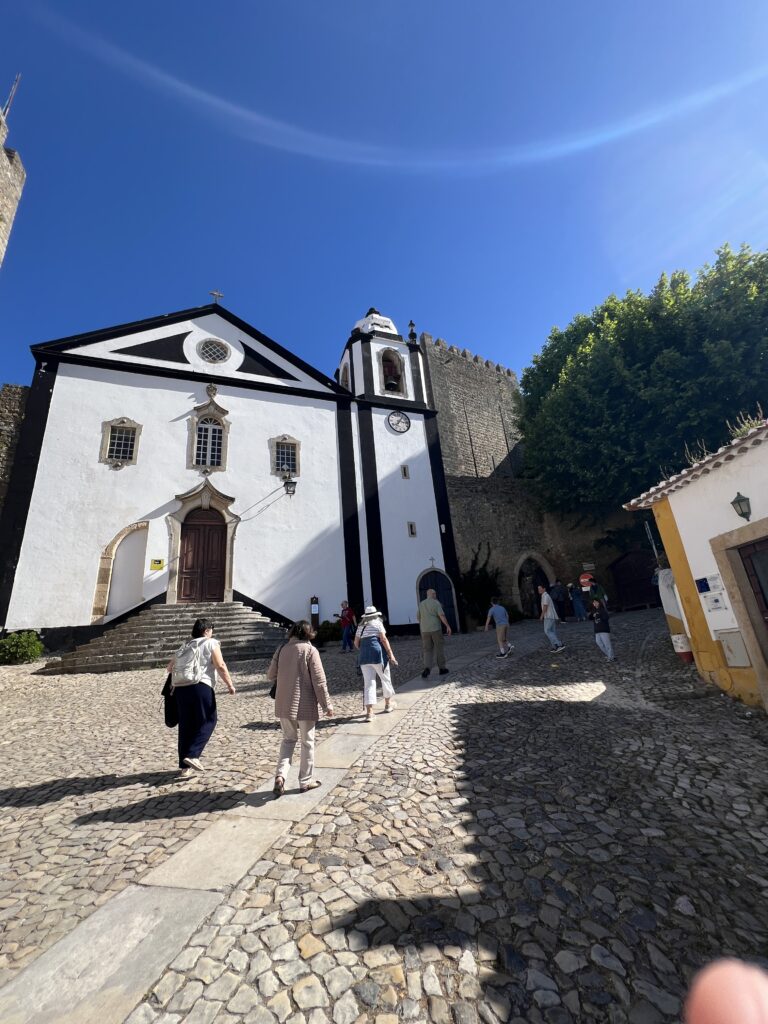
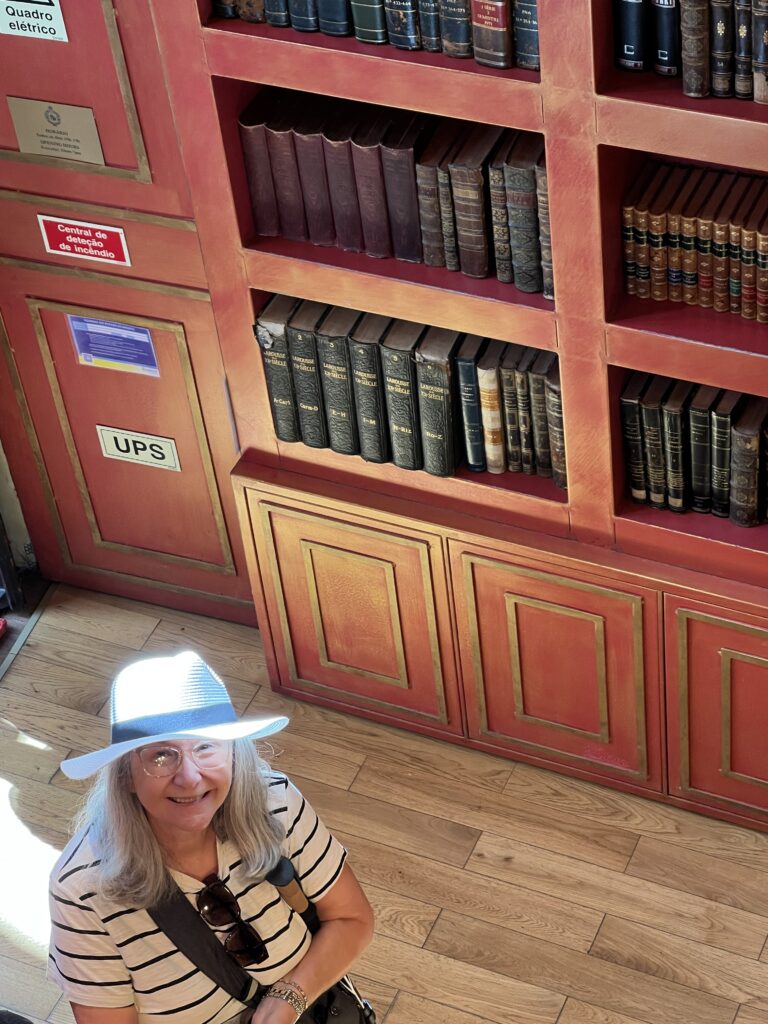
Óbidos is also famous for its bookstores. There are 14 bookstores, one of which is in a church, another one, the Livraria do Mercado Biológico, sells fish as well as books.
In 2013, the town administration of Óbidos developed a municipal literature programme which included the creation of an international literary festival. Since its first edition in 2015, the Fólio (Festival Literário Internacional de Óbidos) takes places every year in October.
In 2015, the UNESCO recognized Óbidos as the City of Literature.
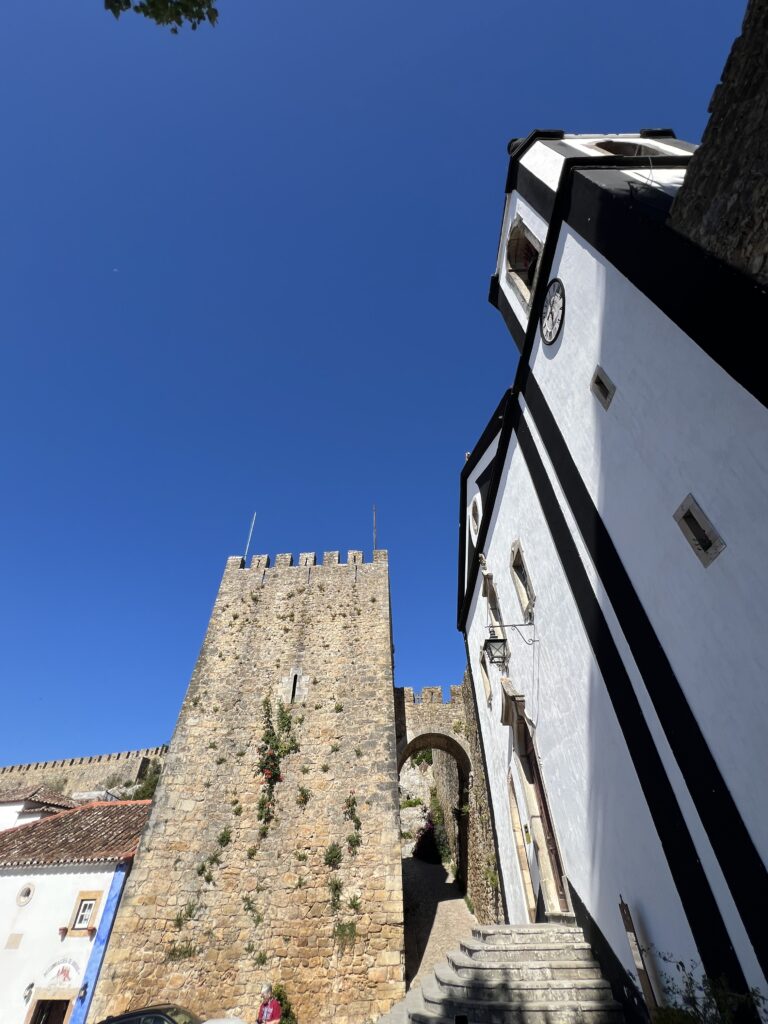
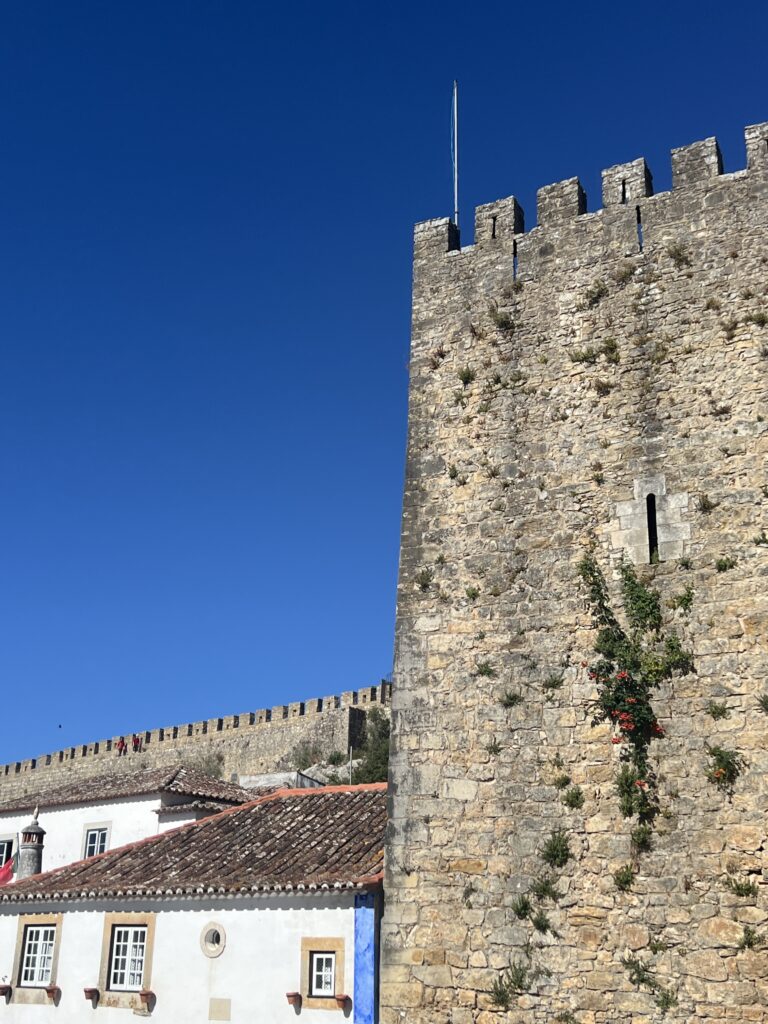
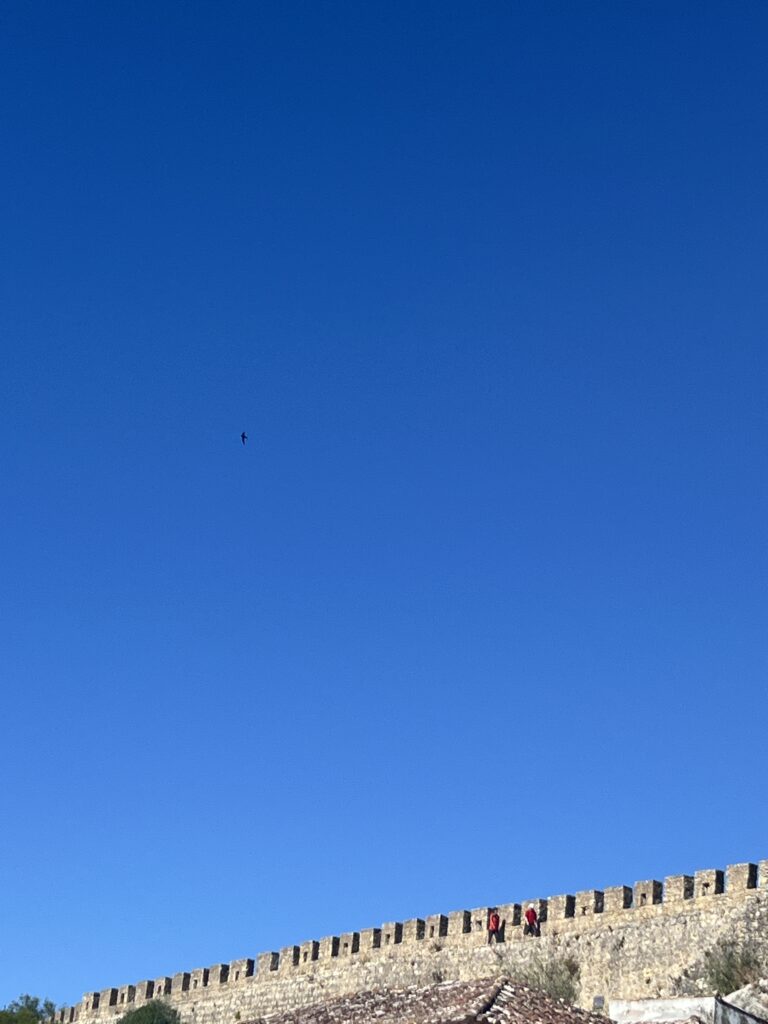
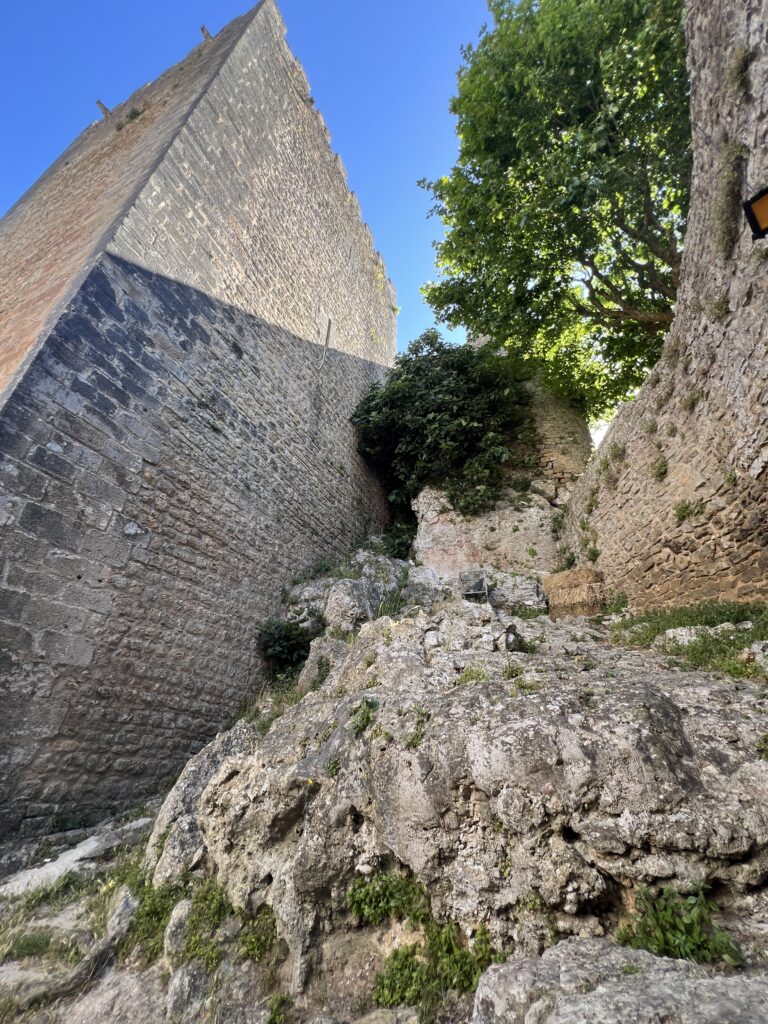
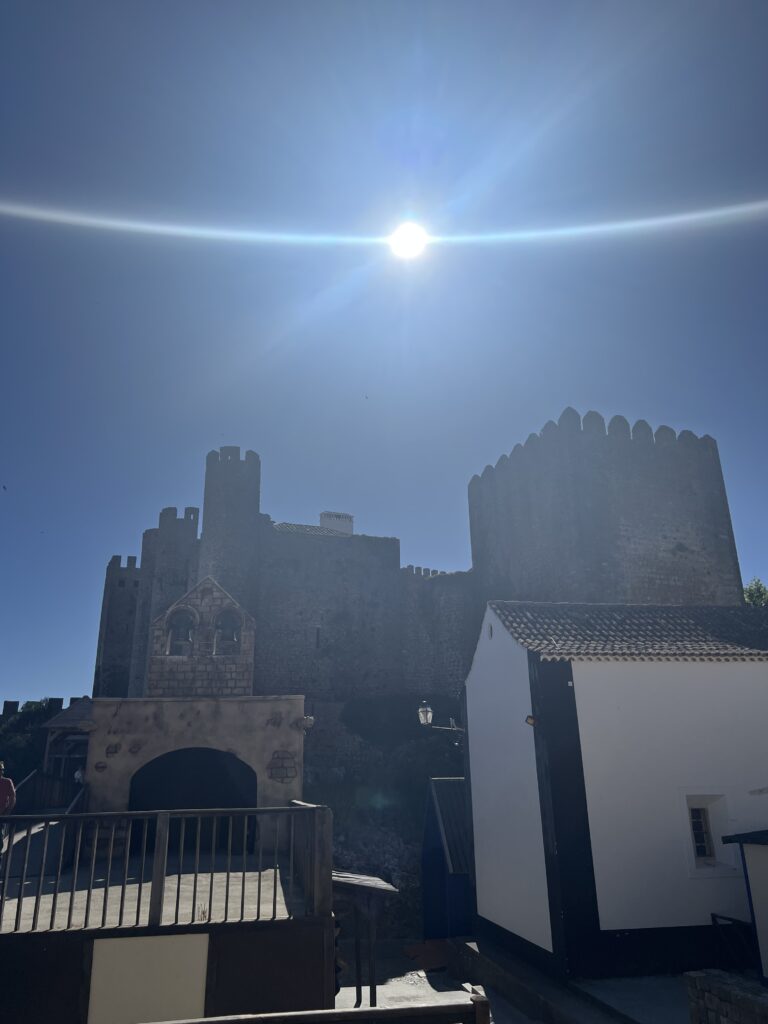

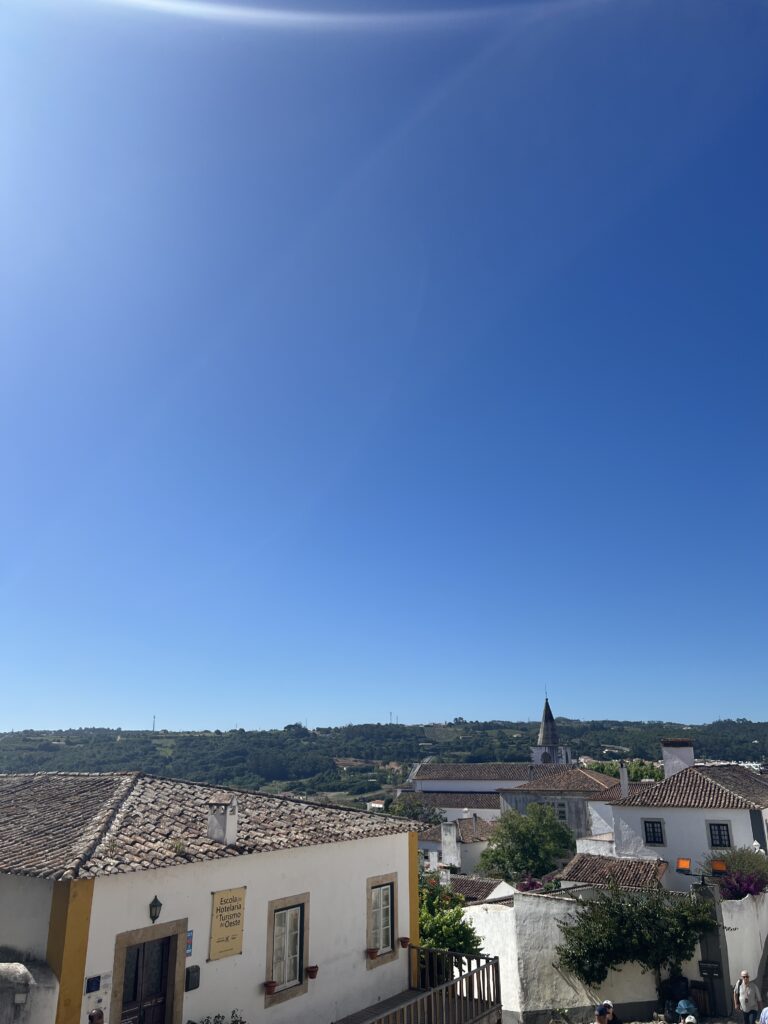

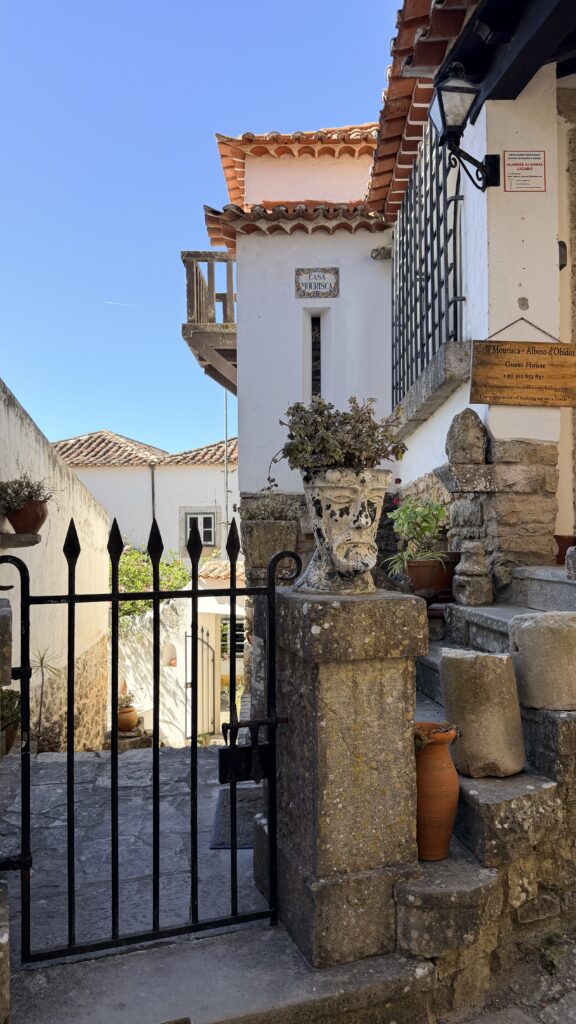
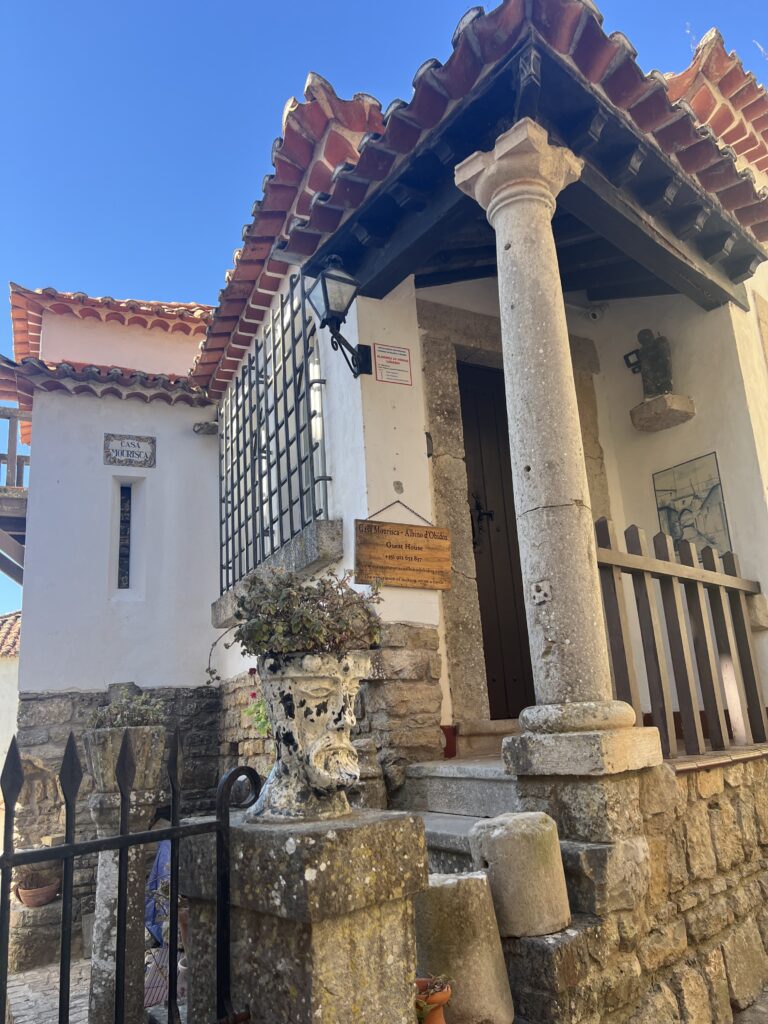
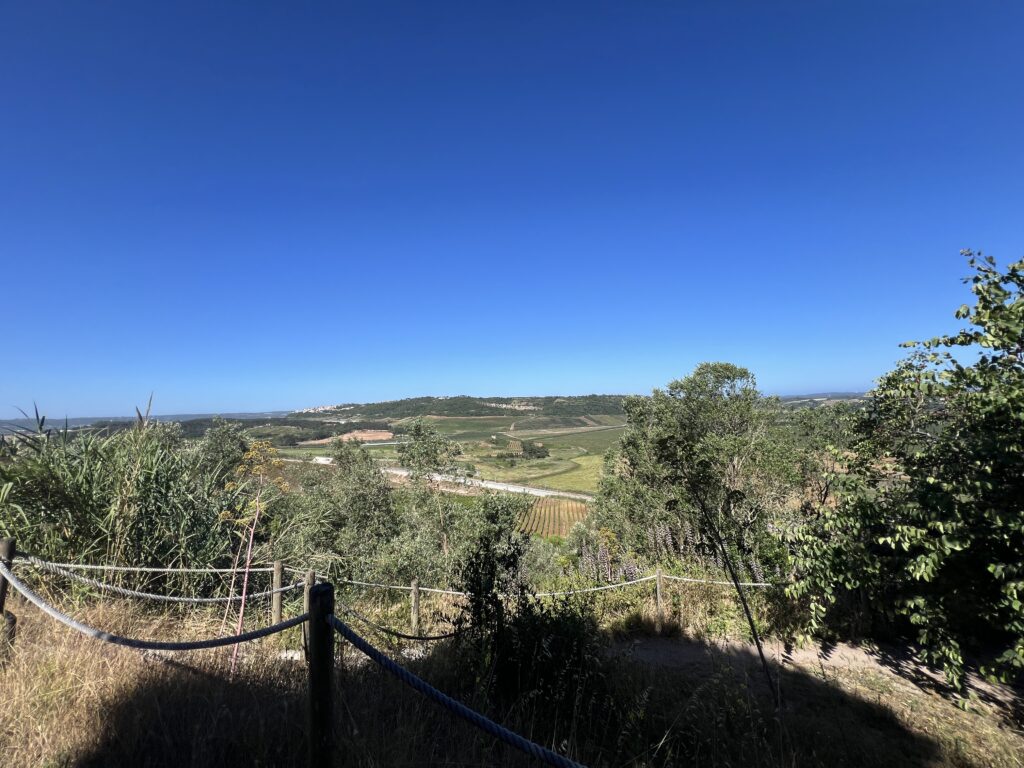
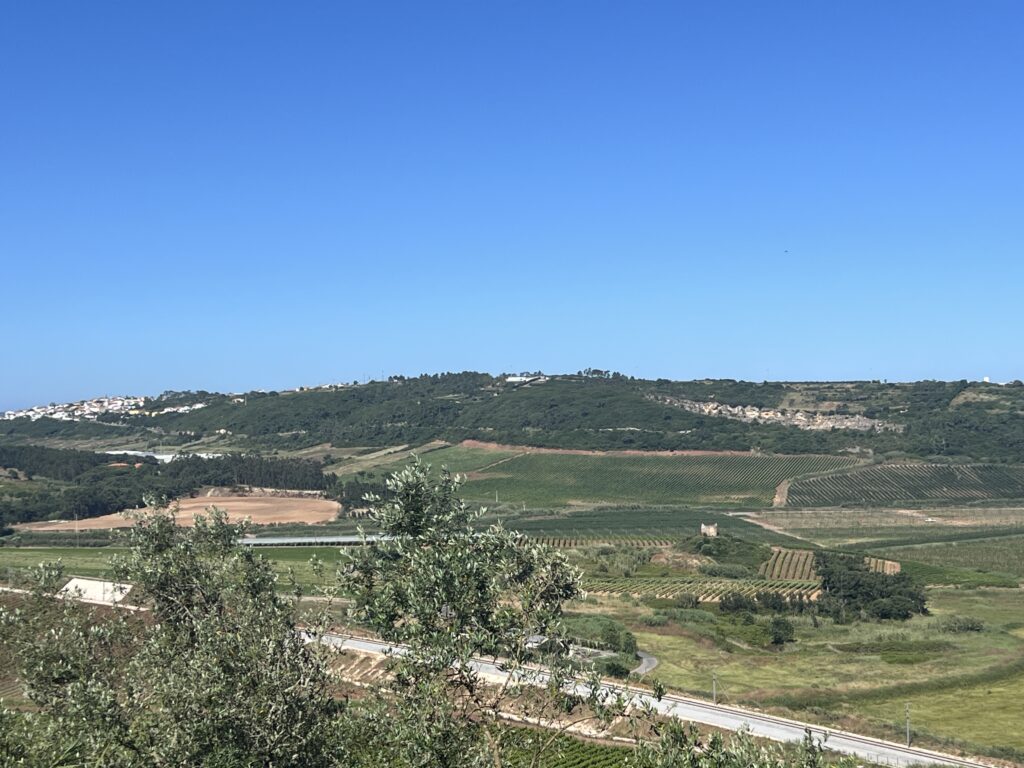
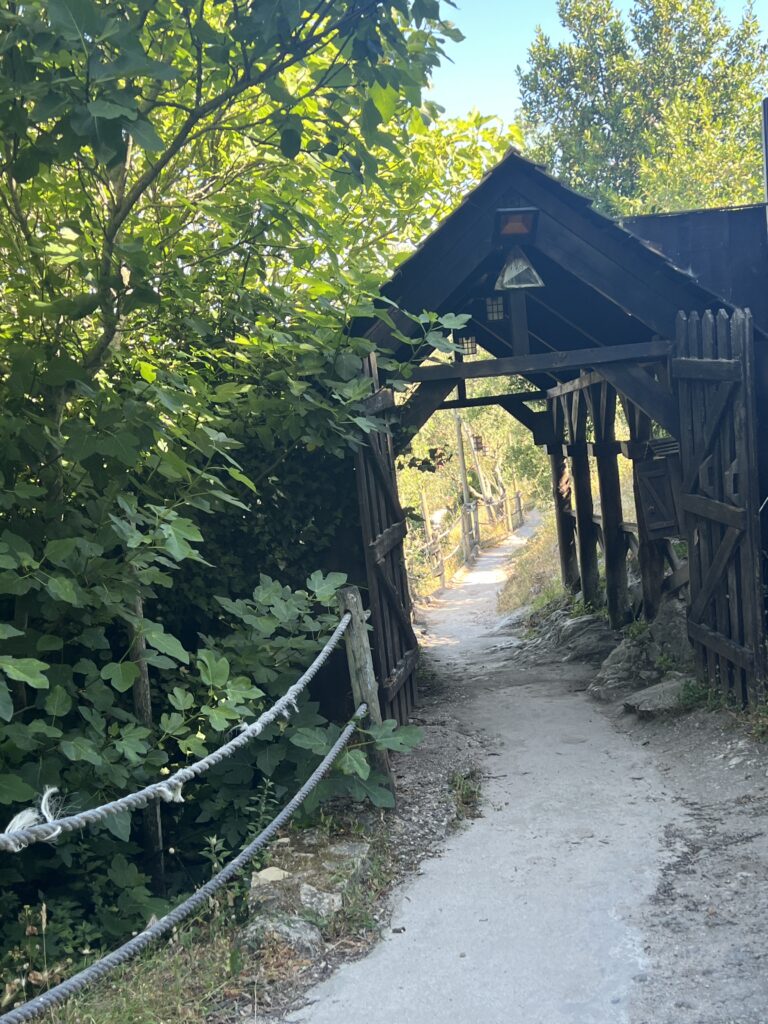
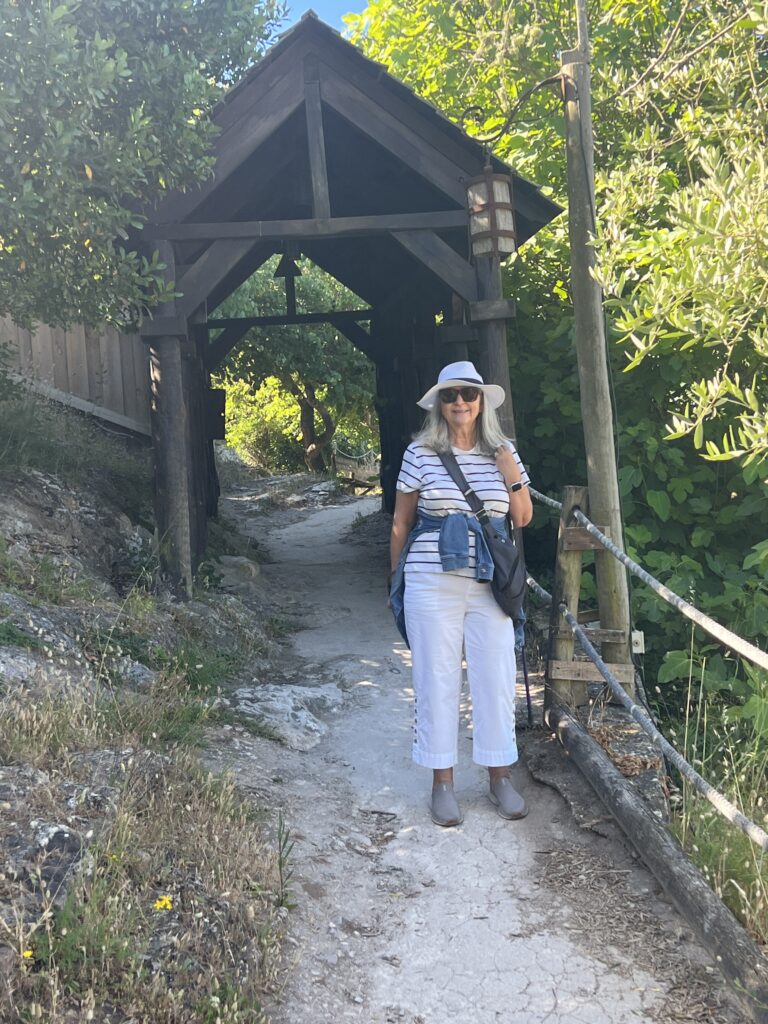
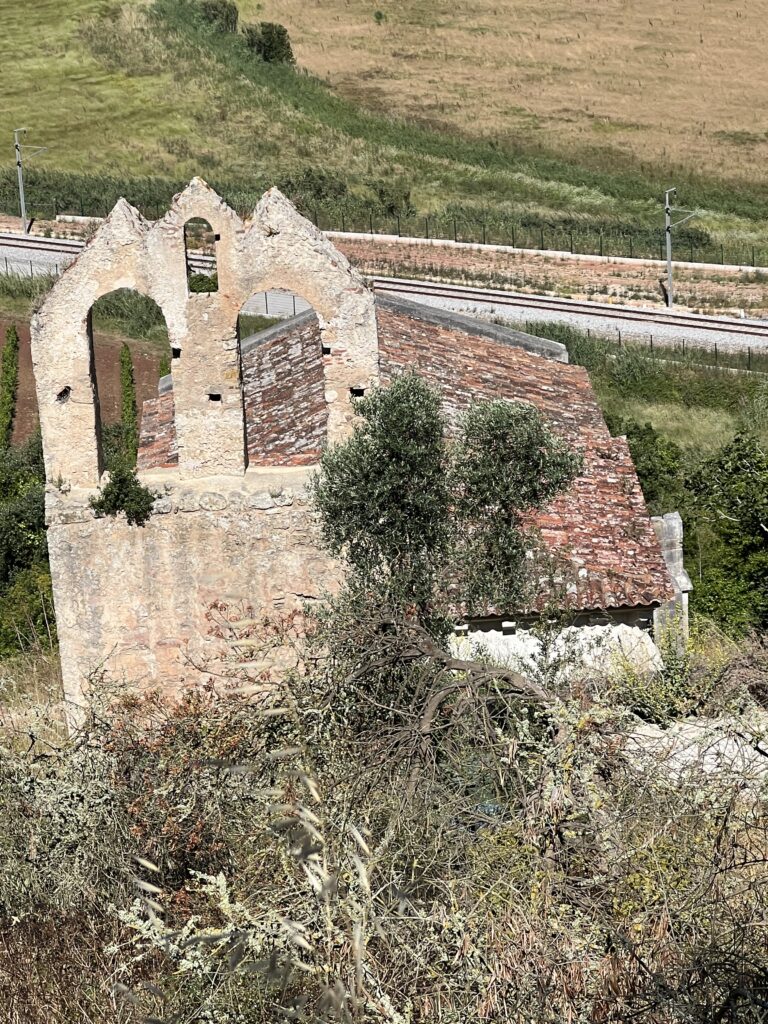
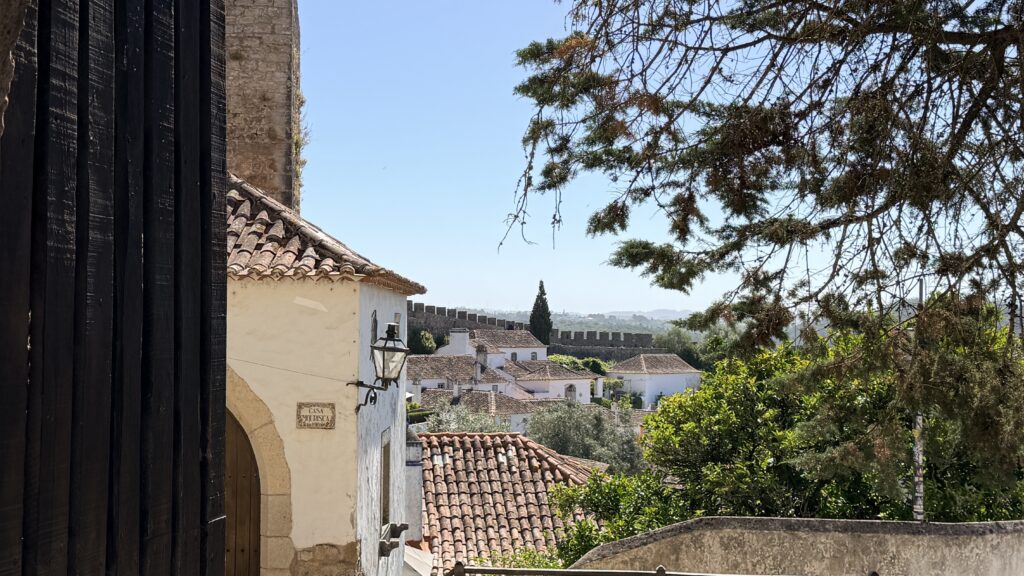
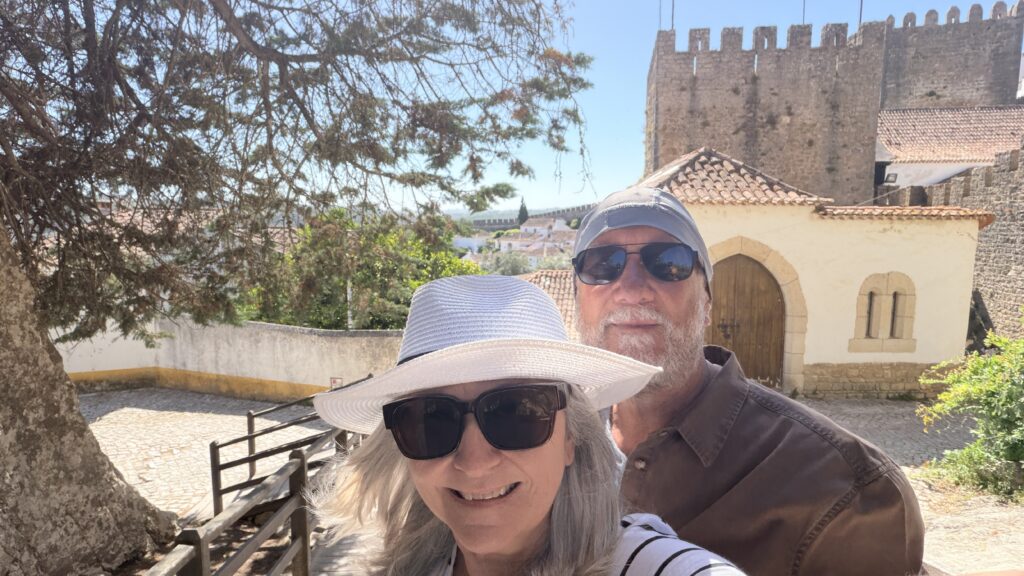
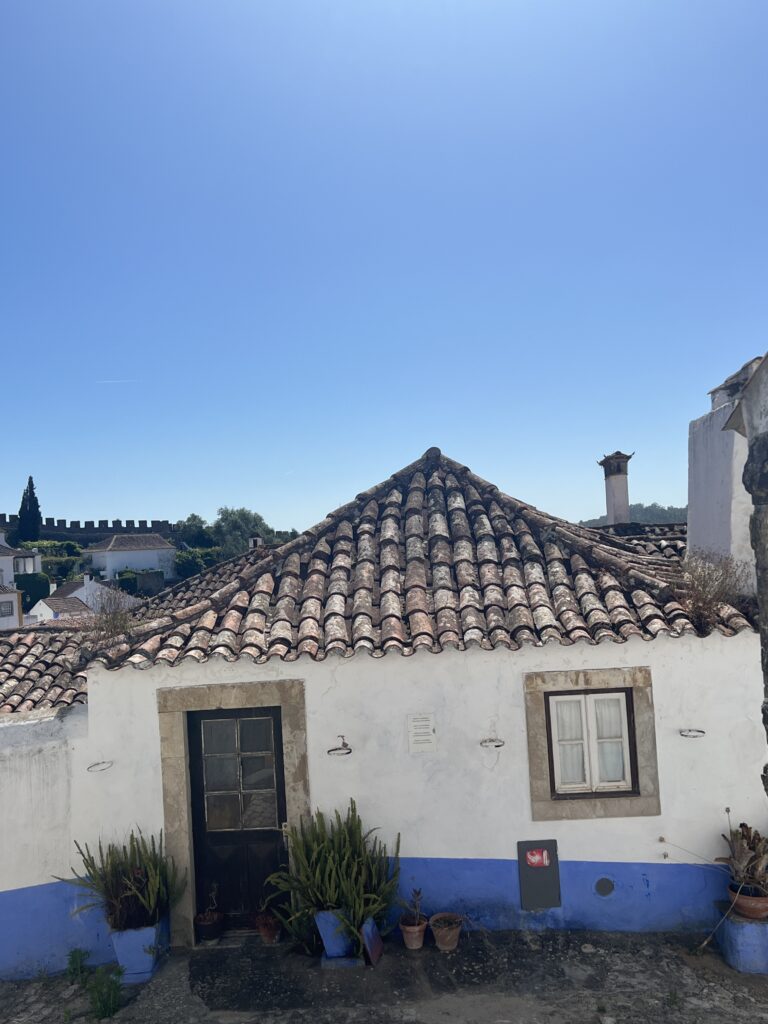
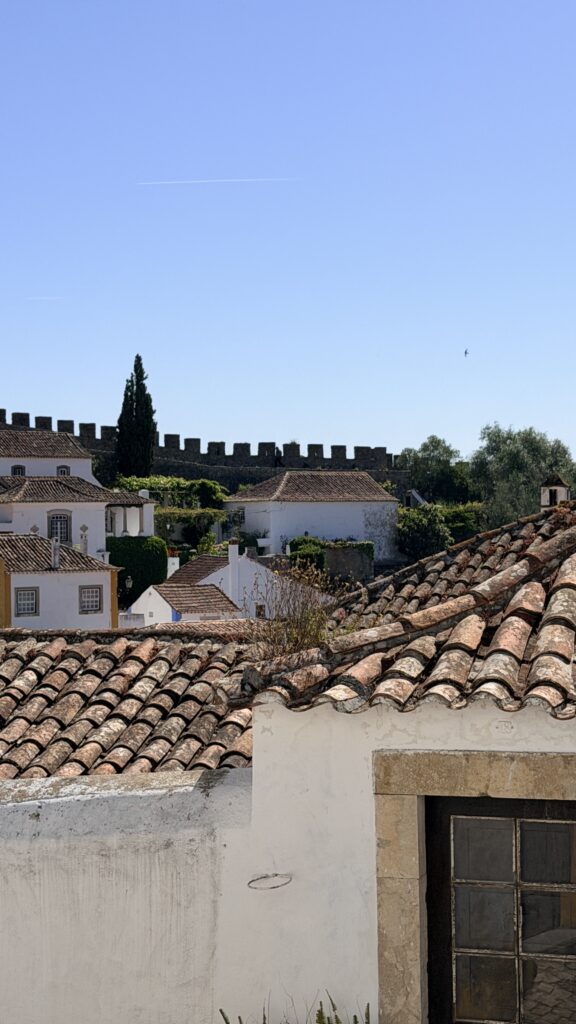
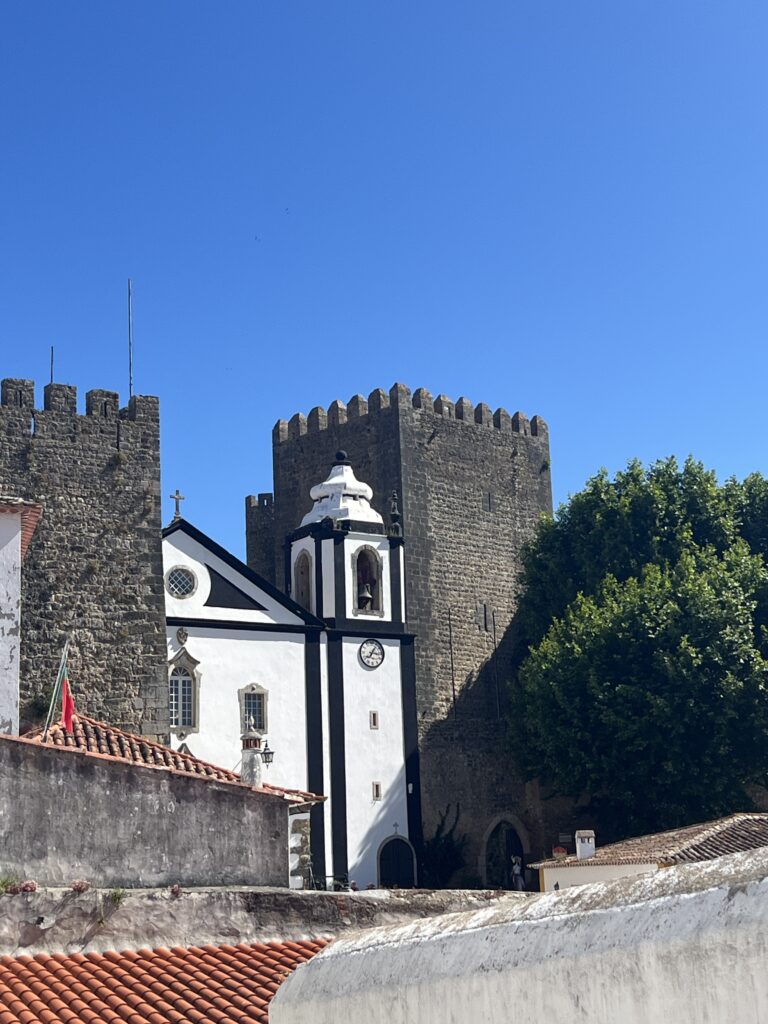
We walked outside the walls to get these beautiful photos of the lands outside
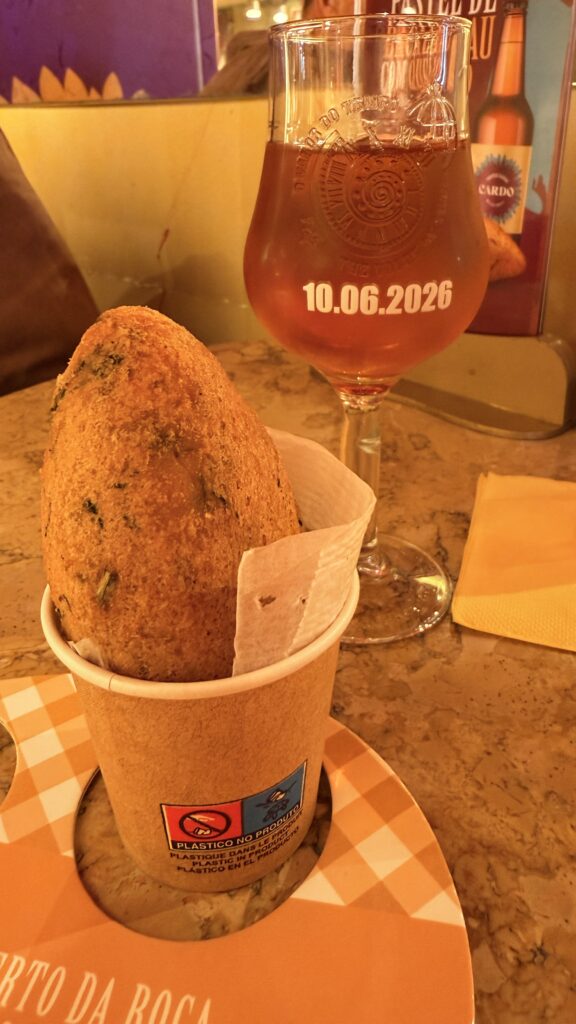
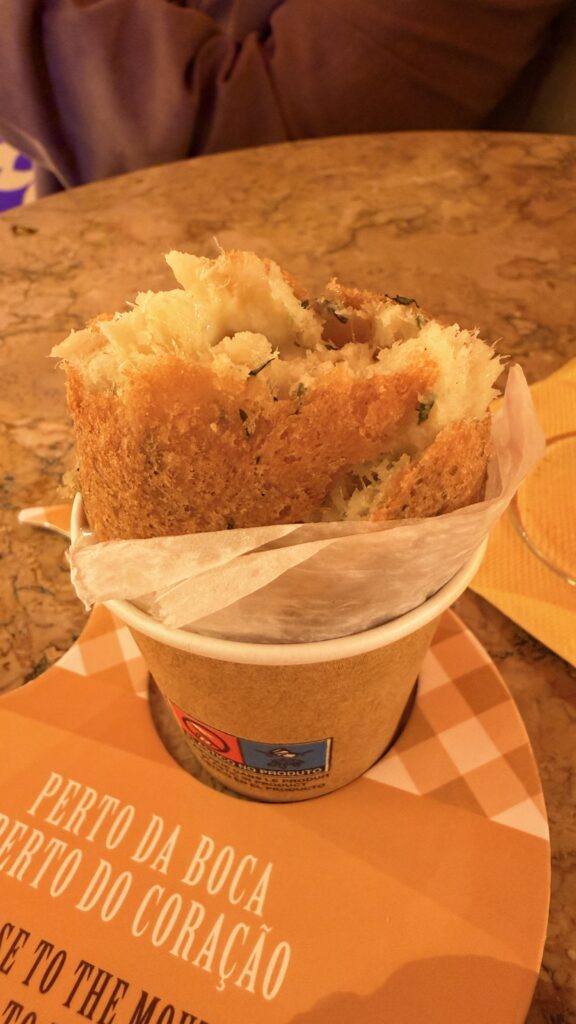
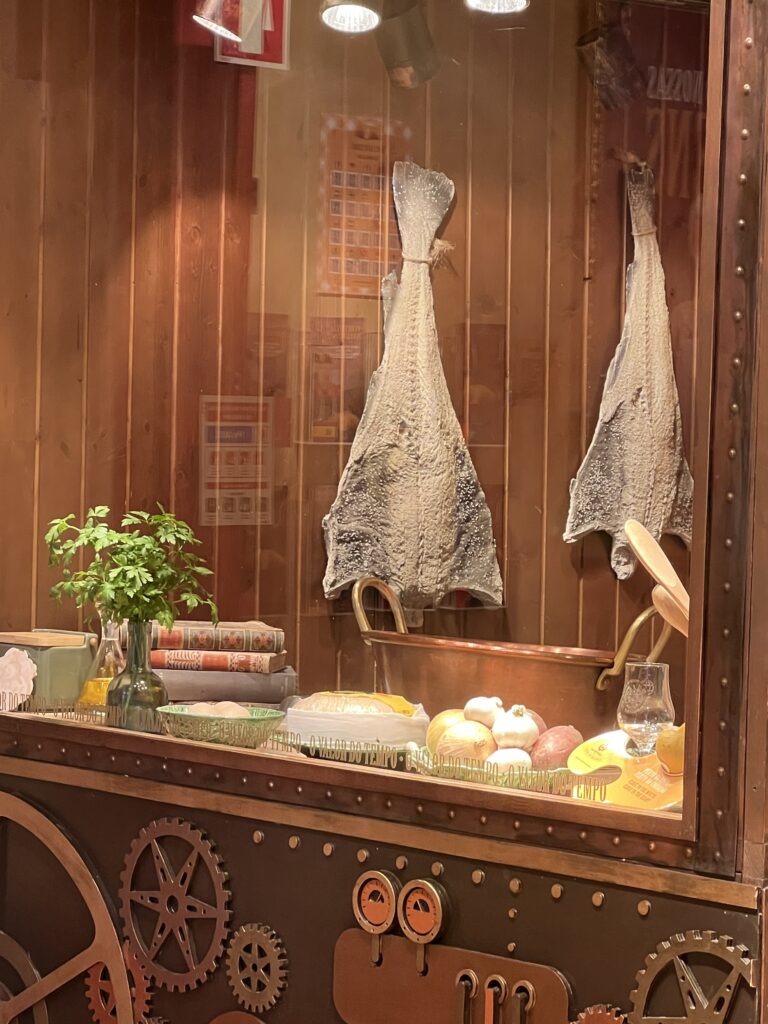
We stopped in this small restaurant where we had to taste the “Portuguese experience”. It was a pastel with codfish and cheese along with a port wine. Jackie ate the codfish and I drank her wine 🙂
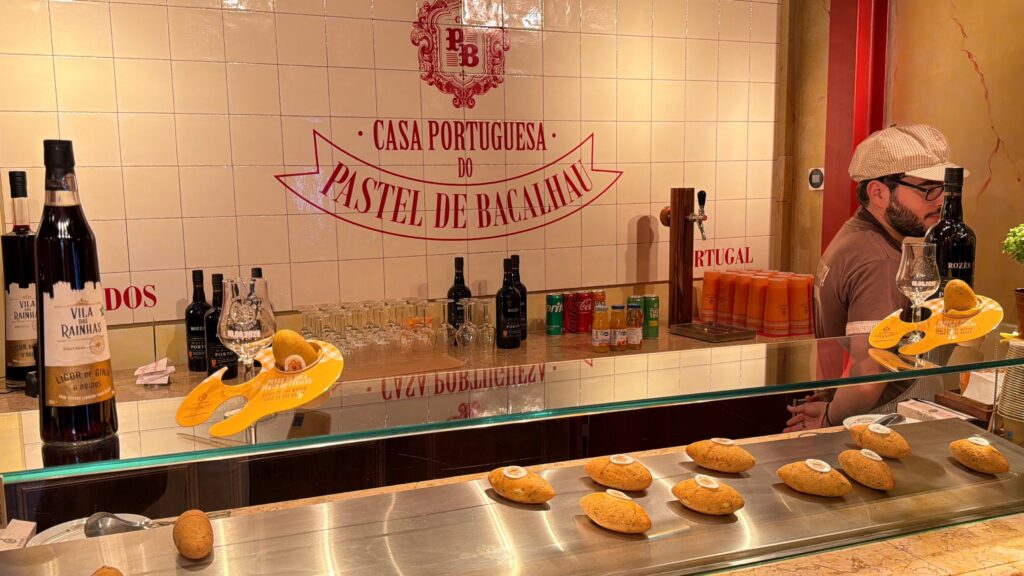
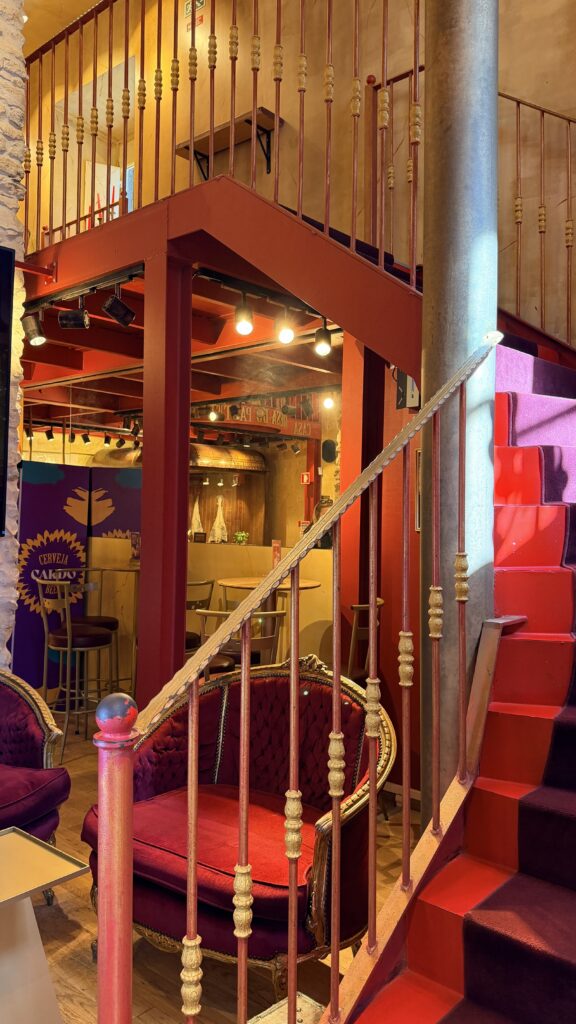
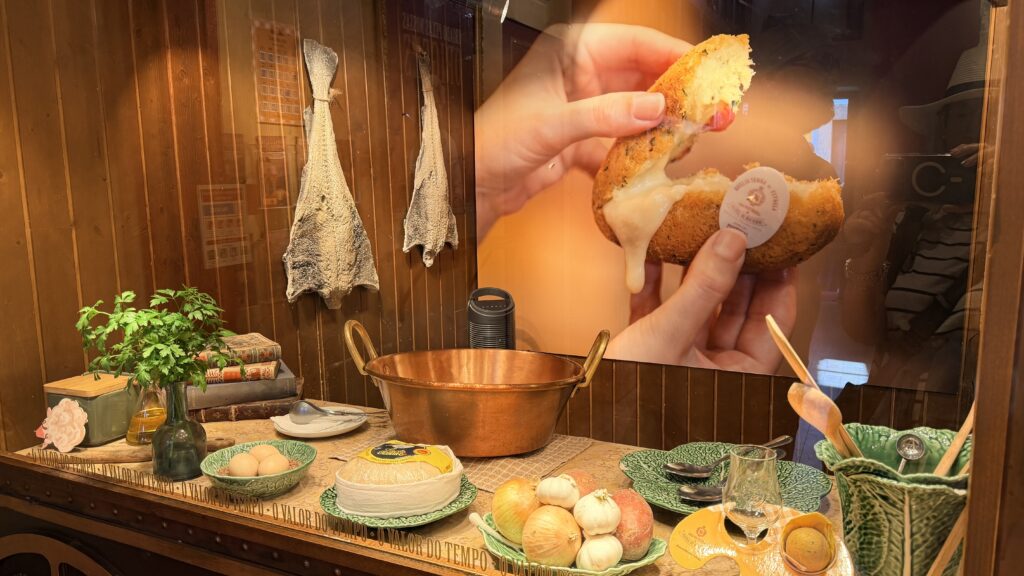
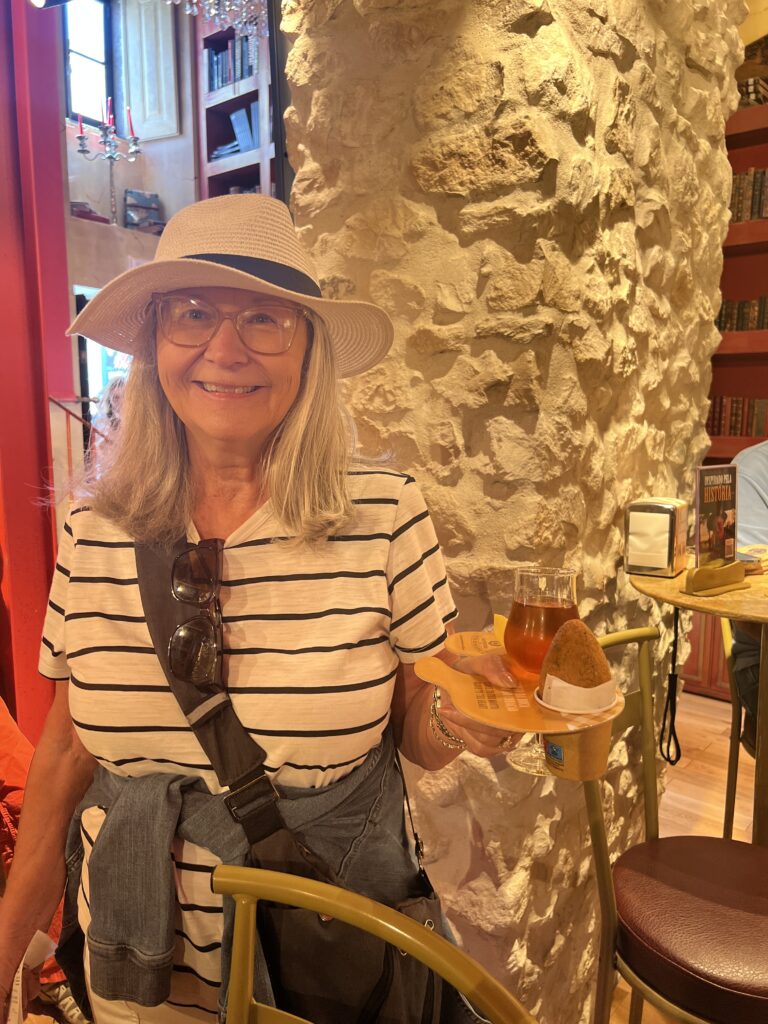
The wine glass has the date placed on it….so cool

Our two hours were up and it was time to head back to the ship for lunch before venturing out again into the city. While we like using Uber in other cities, we have a difficult time figuring out where to meet the Uber driver so we jumped in a Tuk Tuk to bring us to the monastery. It was a wild and sometimes rough ride over the cobblestone streets.
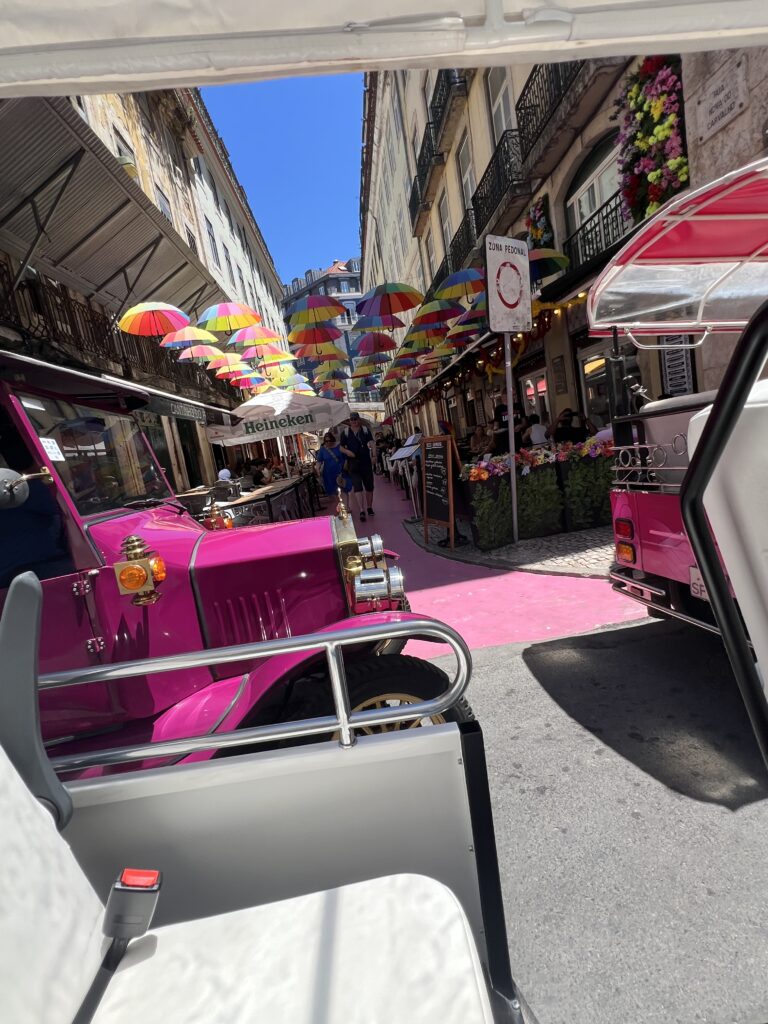
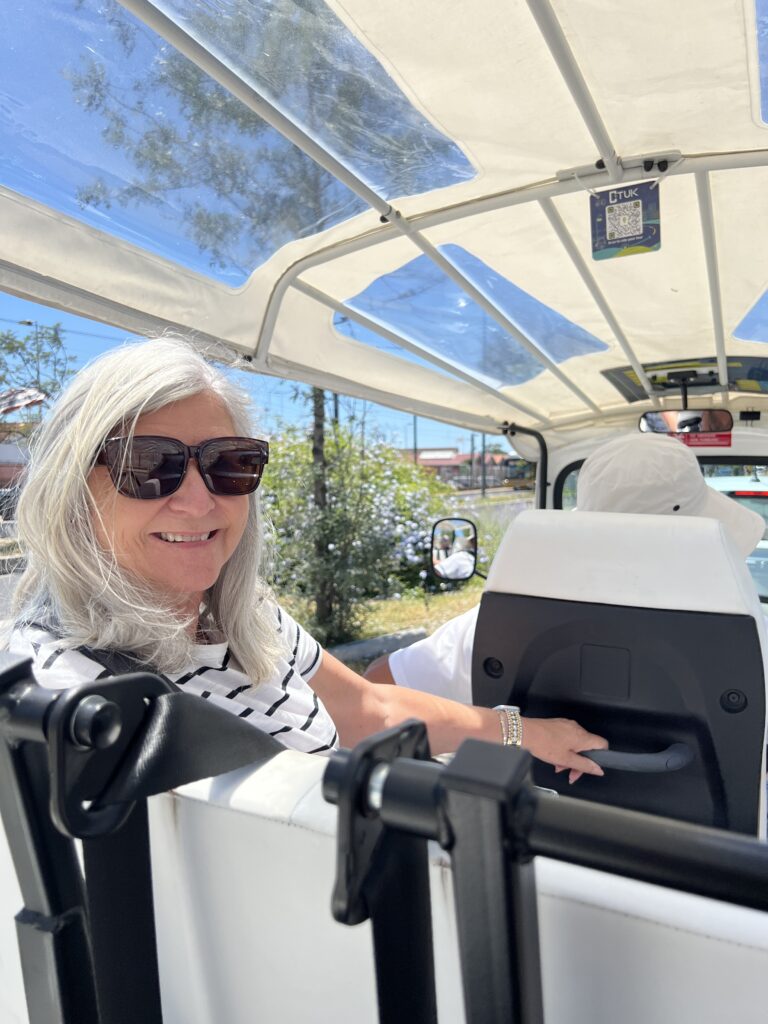
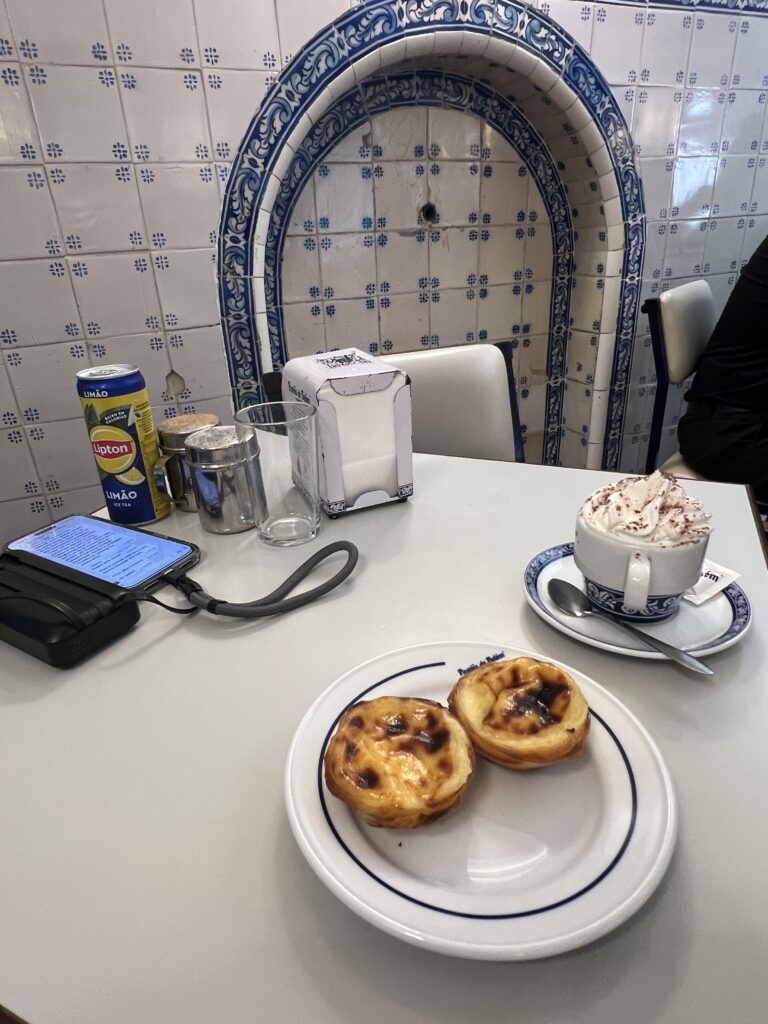
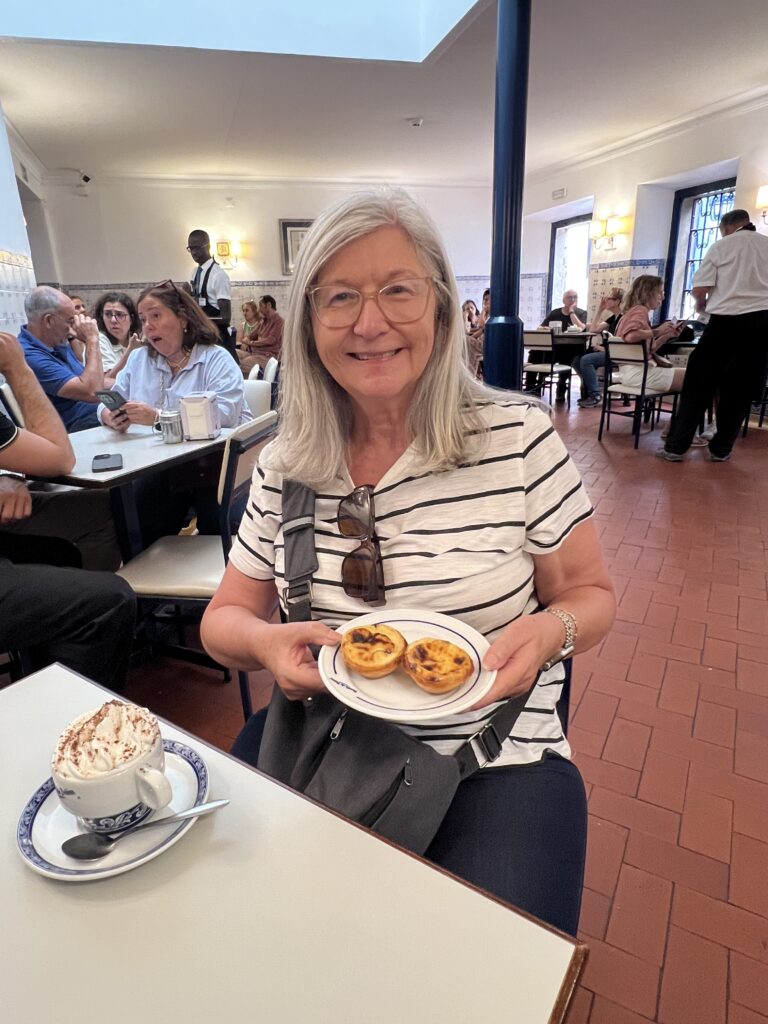
We were early for our 3:30pm tour of the monastery so we switched our plans and headed to Pasteis de Belem. If you ever visit Lisbon, this place is a must stop!!! Home | Pastéis de Belém®
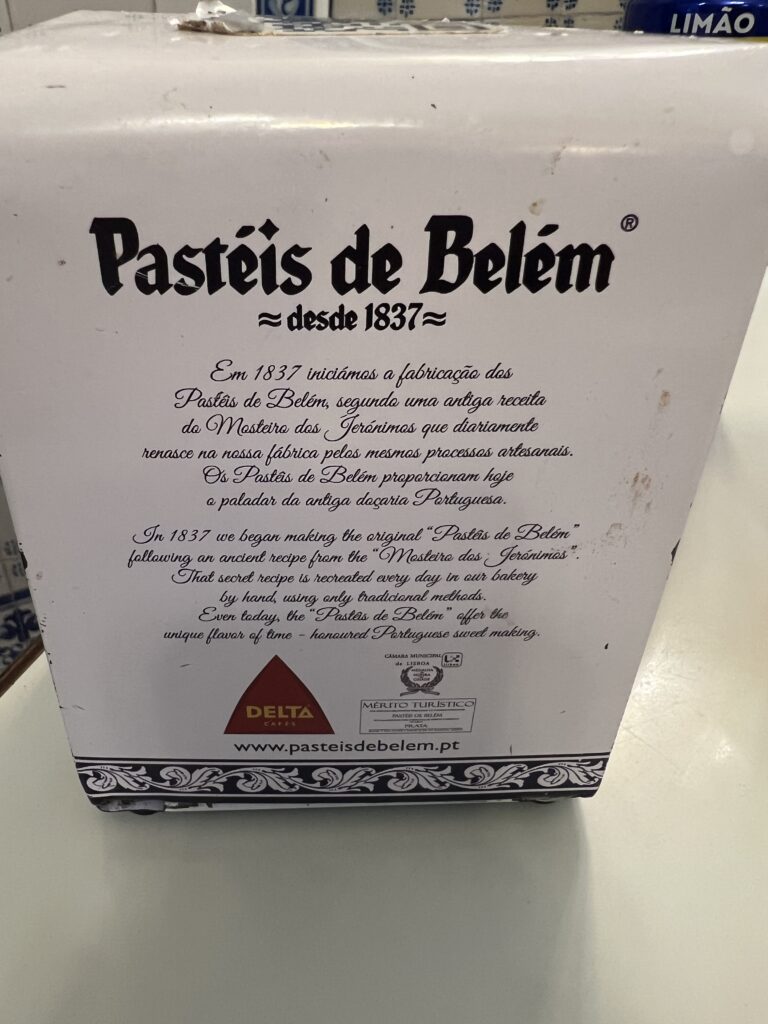
The Antiga Confeitaria de Belém is a historic pastry shop, known throughout Portugal for the recipe for “pastéis de nata“, otherwise called “pastéis de Belém” if produced by this pastry shop.
Its existence dates back to 1837, in Belém, then a town on the outskirts of Lisbon, where some monuments such as the Jerónimos Monastery and the Belém Tower are located. In the monastery, the monks produced sweets called “Pastéis de Belém”.
In 1834, with the closure of monasteries throughout Portugal, even the monks stopped producing their sweets that had become famous. It was then that a few tens of meters from the monastery, perhaps by someone who was aware of the ancient recipe for having worked with the monks, a pastry shop was opened that continued the tradition of what are now known as “Pastel de nata”, then called “Pastéis de Belém” from the place where they were and still are produced.
Belém was then outside the city of Lisbon and the only reason that attracted visitors were the historic monuments that insisted on its territory on the banks of the Tagus River, the tower of Belém and the Jeronimos monastery.
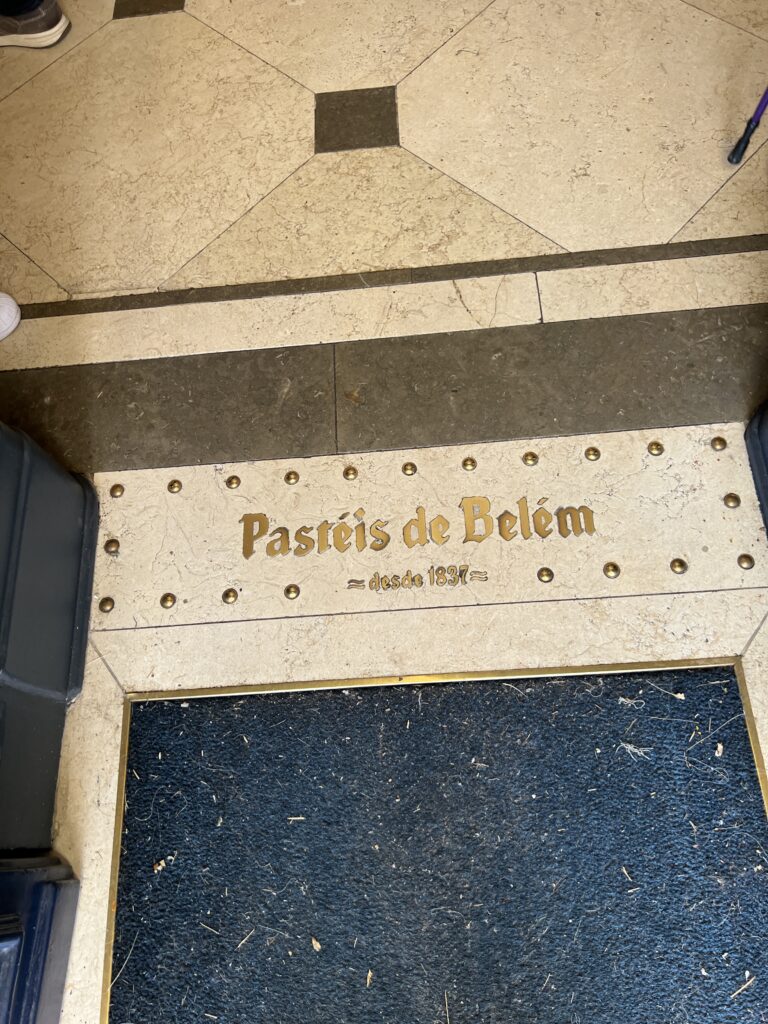
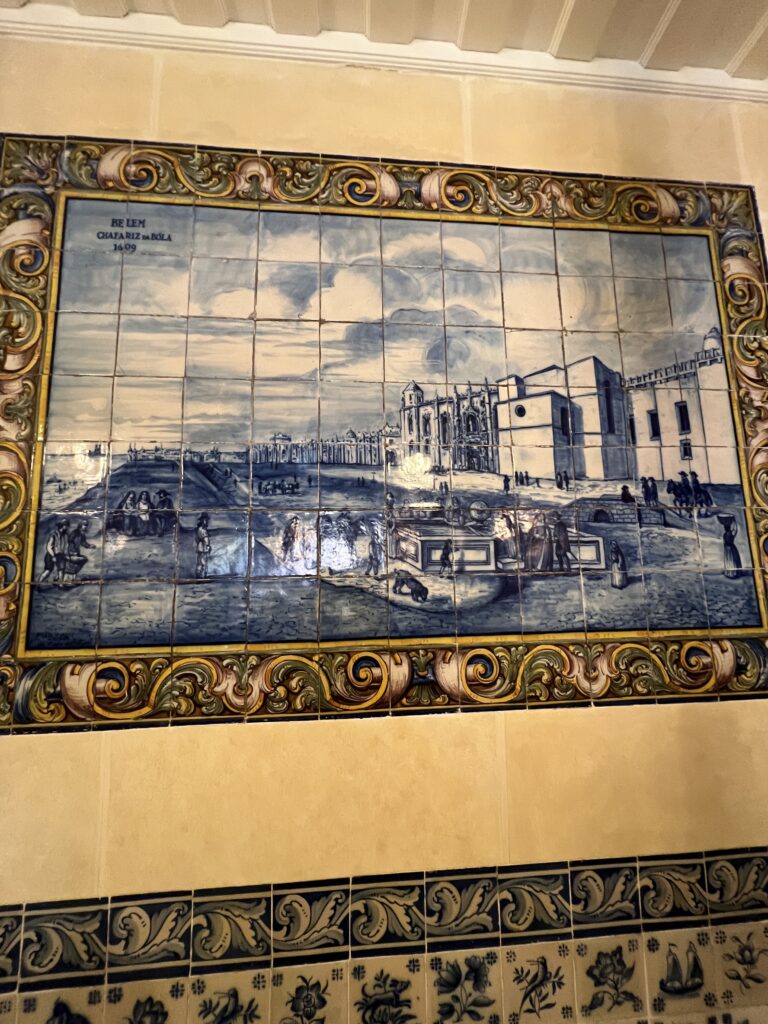
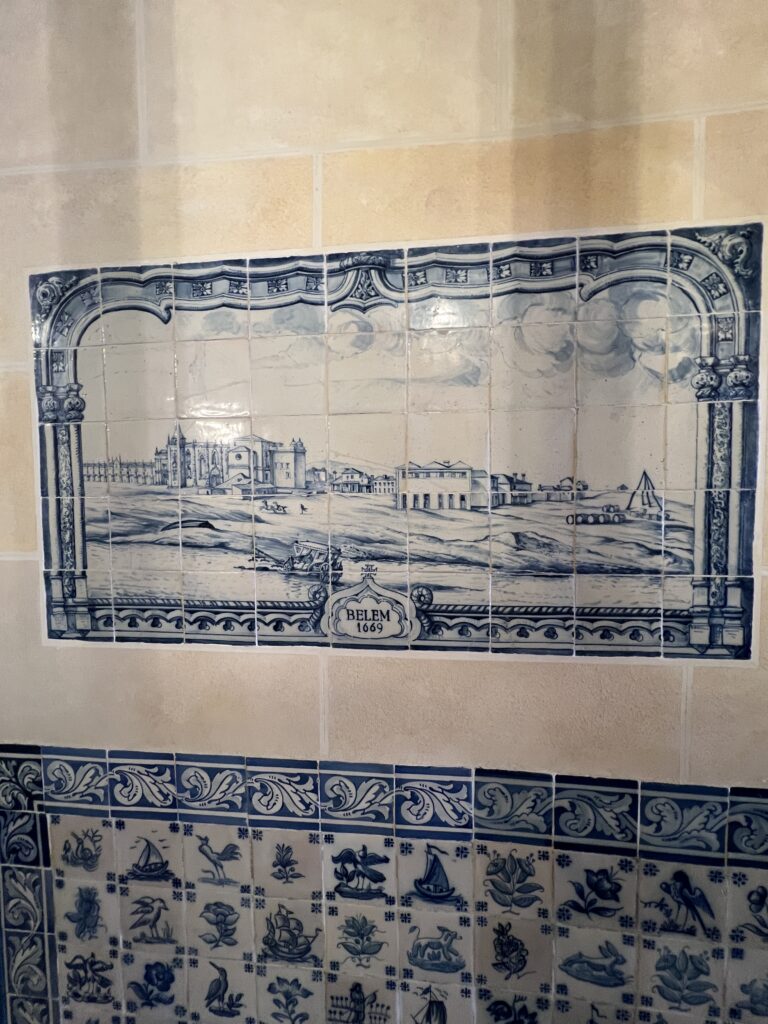
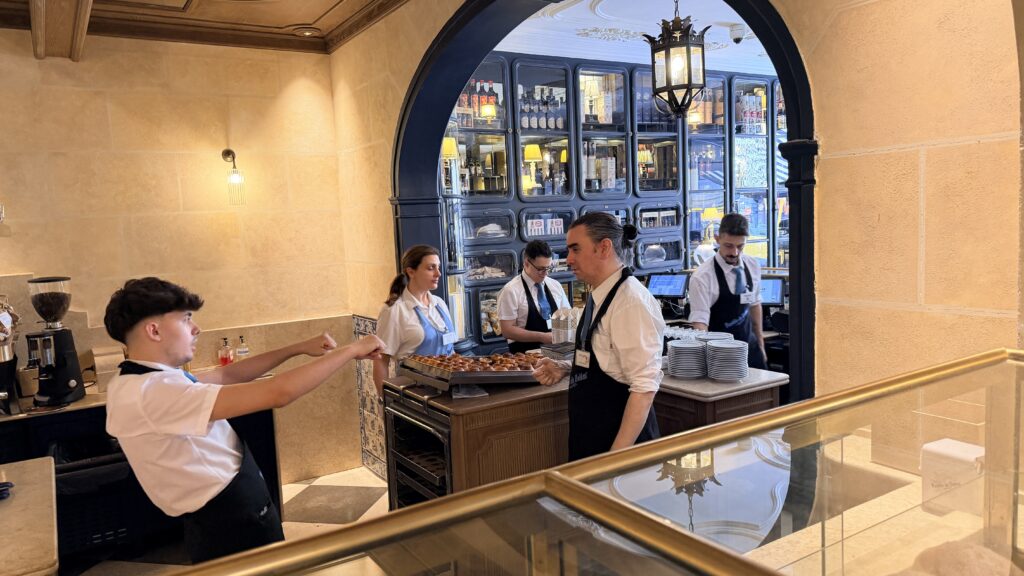
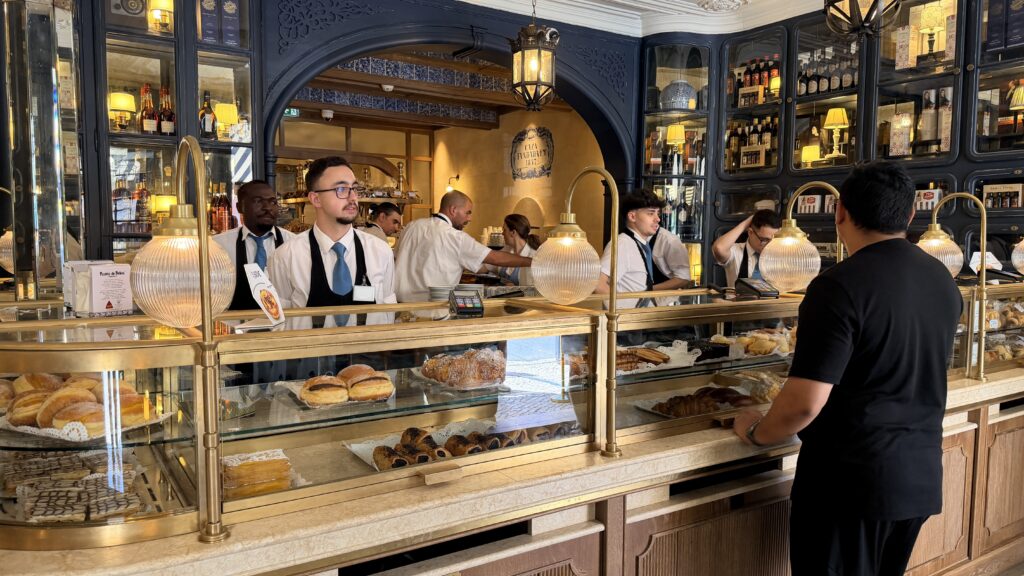
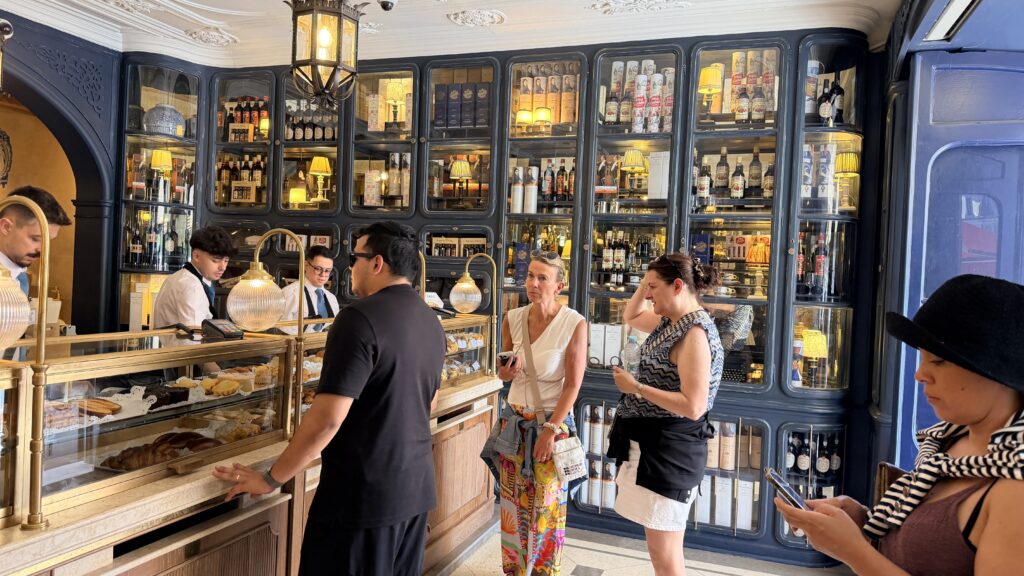
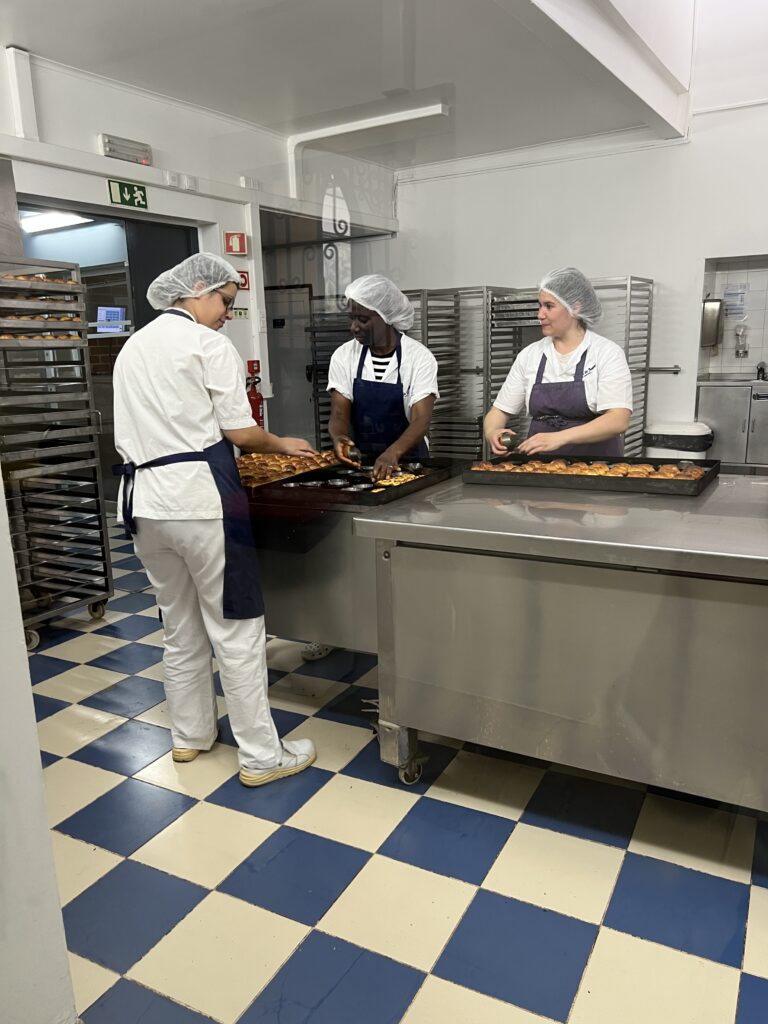
Almost heaven
The Jerónimos Monastery or Hieronymites Monastery (Portuguese: Mosteiro dos Jerónimos, pronounced [muʃˈtɐjɾu ðu(ʒ) ʒɨˈɾɔnimuʃ]) is a former monastery of the Order of Saint Jerome near the Tagus river in the parish of Belém, in the Lisbon Municipality, Portugal. It became the necropolis of the Portuguese royal dynasty of Aviz in the 16th century but was secularized on 28 December 1833 by state decree and its ownership transferred to the charitable institution, Real Casa Pia de Lisboa.
The Jerónimos Monastery is one of the most prominent examples of the late Portuguese Gothic Manueline style of architecture in Lisbon. It was erected in the early 1500s near the launch point of Vasco da Gama‘s first journey, and its construction funded by a tax on the profits of the yearly Portuguese India Armadas. In 1880, da Gama’s remains and those of the poet Luís de Camões (who celebrated da Gama’s first voyage in his 1572 epic poem The Lusiad), were moved to new carved tombs in the nave of the monastery’s church, only a few meters away from the tombs of the kings Manuel I and John III, whom da Gama had served. In 1983, the Jerónimos Monastery was classified as a UNESCO World Heritage Site, along with the nearby Tower of Belém.
The Jerónimos Monastery replaced the church formerly existing in the same place, which was dedicated to Santa Maria de Belém and where the monks of the military-religious Order of Christ provided assistance to seafarers in transit. The harbour of Praia do Restelo was an advantageous spot for mariners, with a safe anchorage and protection from the winds, sought after by ships entering the mouth of the Tagus. The existing structure was inaugurated on the orders of Manuel I (1469–1521) at the cortes of Montemor o Velho in 1495, as a final resting-place for members of the House of Aviz, in his belief that an Iberian dynastic kingdom would rule after his death. In 1496, King Manuel petitioned the Holy See for permission to construct a monastery at the site. The Hermitage of Restelo (Ermida do Restelo), as the church was known, was already in disrepair when Vasco da Gama and his men spent the night in prayer there before departing on their expedition to India in 1497.
The construction of the monastery and church began on 6 January 1501, and was completed 100 years later. King Manuel originally funded the project with money obtained from the Vintena da Pimenta, a 5 percent tax on commerce from Africa and the Orient, equivalent to 70 kilograms (150 lb) of gold per year, with the exception of those taxes collected on the importation of pepper, cinnamon and cloves, which went directly to the Crown. With the influx of such riches, the architects were not limited to small-scale plans, and resources already prescribed for the Monastery of Batalha, including the Aviz pantheon, were redirected to the project in Belém.
Manuel I selected the religious order of Hieronymite monks to occupy the monastery, whose role it was to pray for the King’s eternal soul and to provide spiritual assistance to navigators and sailors who departed from the port of Restelo to discover lands around the world. This the monks did for over four centuries until 1833, when the religious orders were dissolved and the monastery was abandoned.
The monastery was designed in a manner that later became known as Manueline: a richly ornate architectural style with complex sculptural themes incorporating maritime elements and objects discovered during naval expeditions, carved in limestone. Diogo de Boitaca, the architect, pioneered this style in the Monastery of Jesus in Setúbal. Boitaca was responsible for drawing the plans and contracting work on the monastery, the sacristy, and the refectory. For its construction he used calcário de lioz, a gold-coloured limestone quarried from Ajuda, the valley of Alcántara, Laveiras, Rio Seco and Tercena. Boitaca was succeeded by the Spaniard Juan de Castillo, who took charge of construction around 1517. Castilho gradually moved from the Manueline to the Spanish Plateresque style, an ornamentation that included lavish decorations suggesting the decorative features of silverware (plata). The construction came to a halt when King Manuel I died in 1521.
Several sculptors left their mark on this building: Nicolau Chanterene added depth with his Renaissance themes, while the architect Diogo de Torralva resumed construction of the monastery in 1550, adding the main chapel, the choir, and completing the two stories of the monastery, using only Renaissance motifs. Diogo de Torralva’s work was continued in 1571 by Jérôme de Rouen (also called Jerónimo de Ruão) who added some classical elements. The construction stopped in 1580 with the union of Spain and Portugal, as the building of the Escorial in Spain was now draining away all the allocated funds.
The church and the monastery, like the nearby Torre de Belém and Padrão dos Descobrimentos, symbolise the Portuguese Age of Discovery and are among the main tourist attractions of Lisbon. In 1983, UNESCO formally designated the Monastery of the Hieronymites and Tower of Belém as a World Heritage Site.
When Portugal joined the European Economic Community, the formal ceremonies were held in the cloister of the monument (1985).
Jerónimos Monastery History | Construction & Architecture
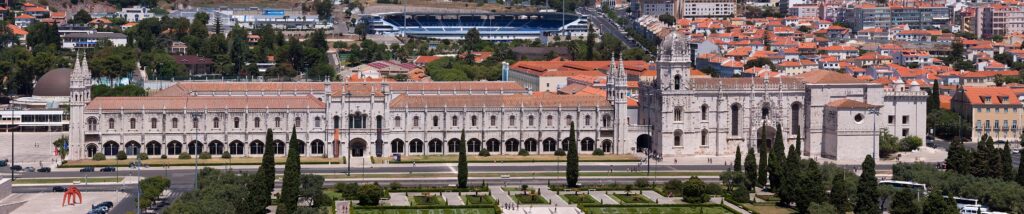
We first visited the cloister
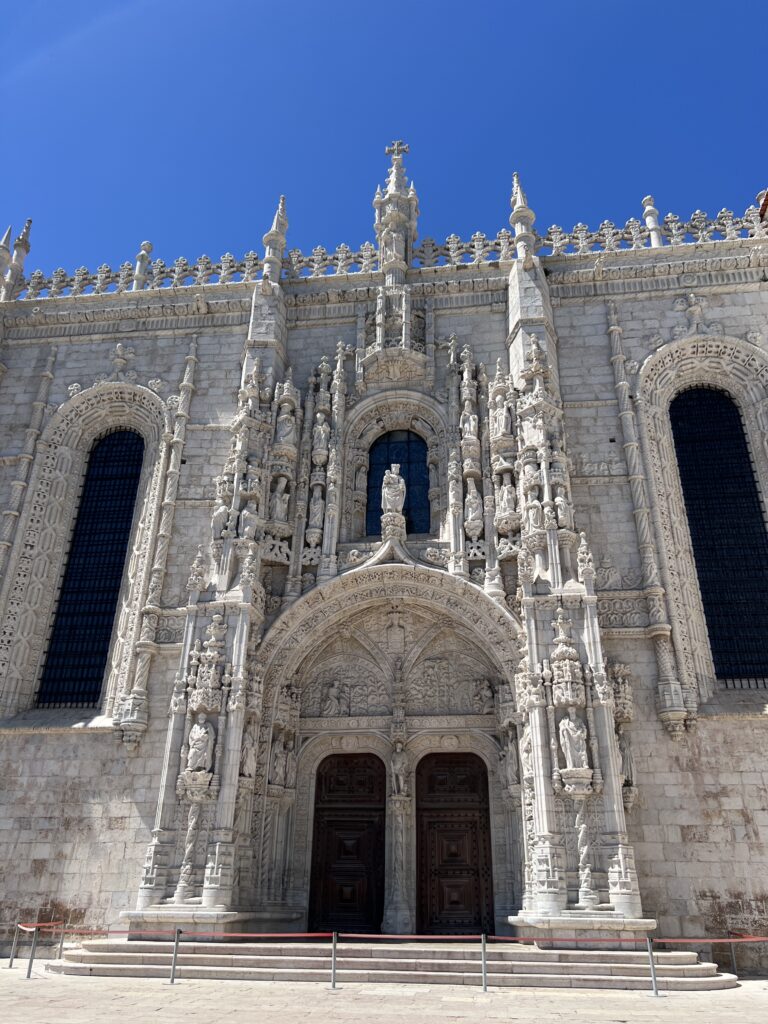
The ornate side entrance to the monastery was designed by Juan de Castillo and is considered one of the most significant of his time, but is not, in fact, the main entrance to the building. This shrine-like portal is large, 32 meters (105 ft) high and 12 meters (39 ft) wide, extending two stories. Its ornate features includes an abundance of gables and pinnacles, with many carved figures standing under a baldachin in carved niches, around a statue of Henry the Navigator, standing on a pedestal between the two doors.
The tympanum, above the double door, displays, in half-relief, two scenes from the life of Saint Jerome: on the left, the removal of the thorn from the lion’s paw and, on the right, the saint’s experience in the desert. In the spandrel between these scenes is the coat of arms of king Manuel I, while the archivolt and tympanum are covered in Manueline symbols and elements. The Madonna (Santa Maria de Belém) is on a pedestal on top of the archivolt, surmounted by the archangel Michael, while above the portal there is a cross of the Order of Christ. The portal is harmoniously flanked on each side by a large window with richly decorated mouldings.
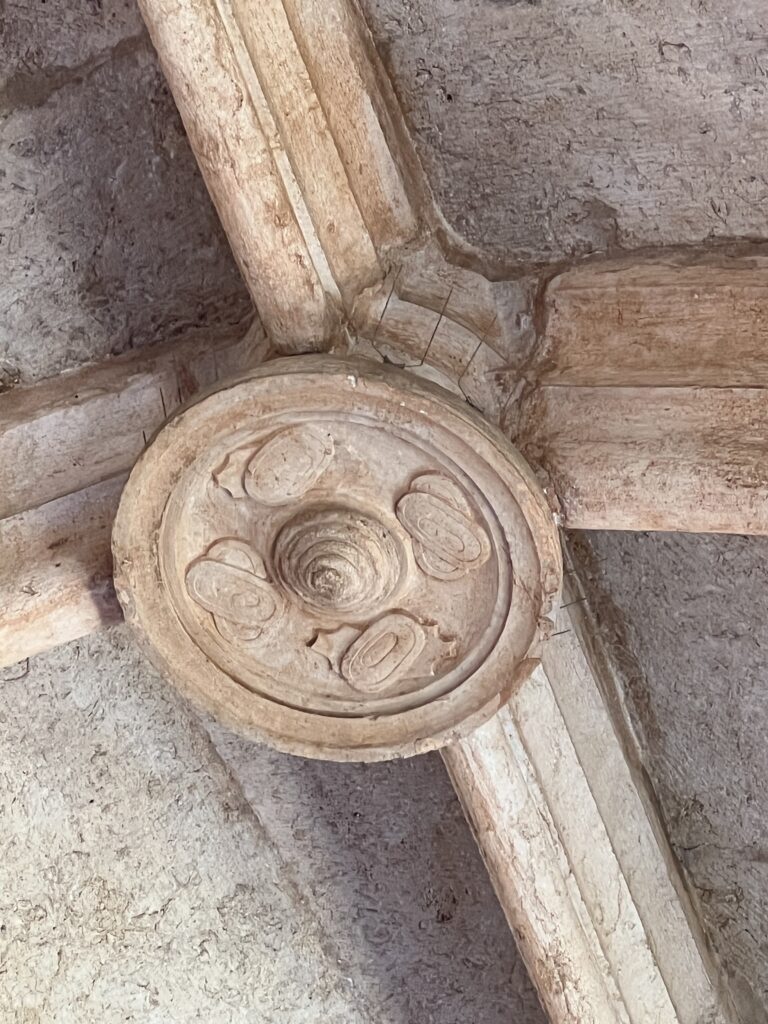
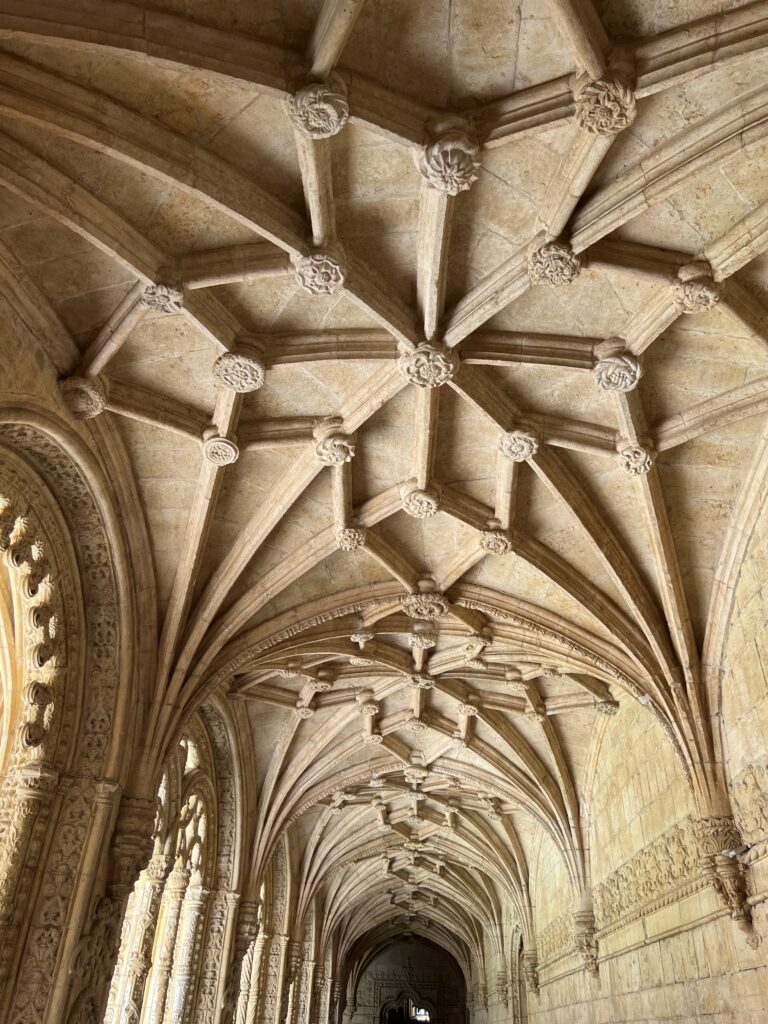
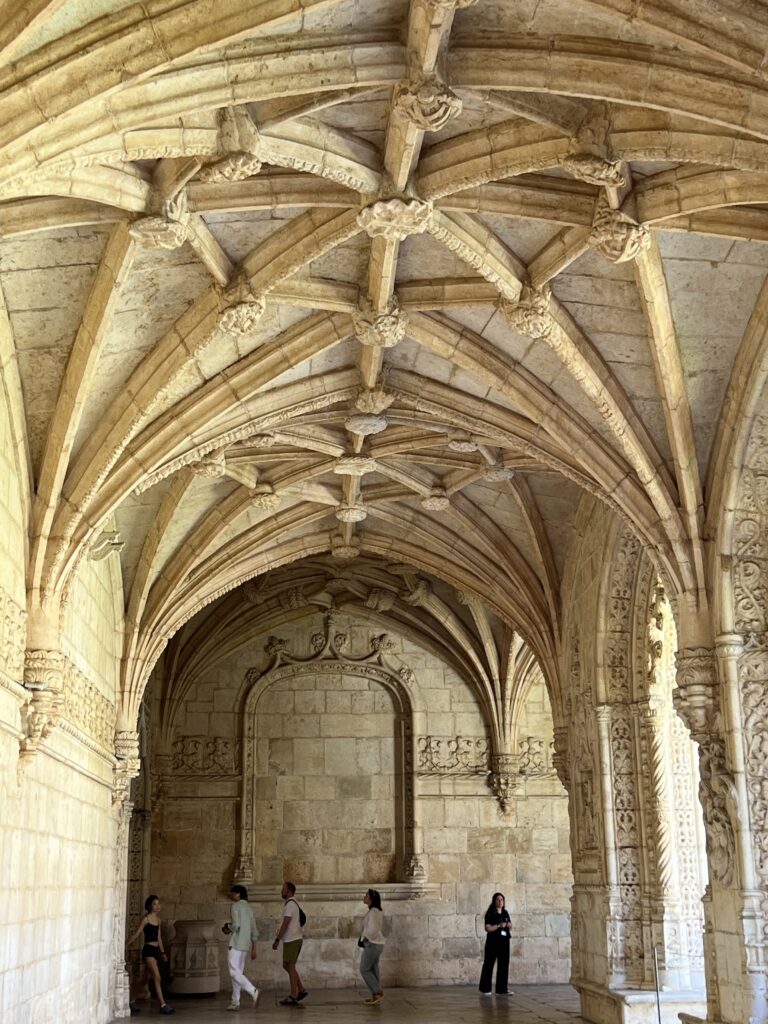
The ceilings were fascinating
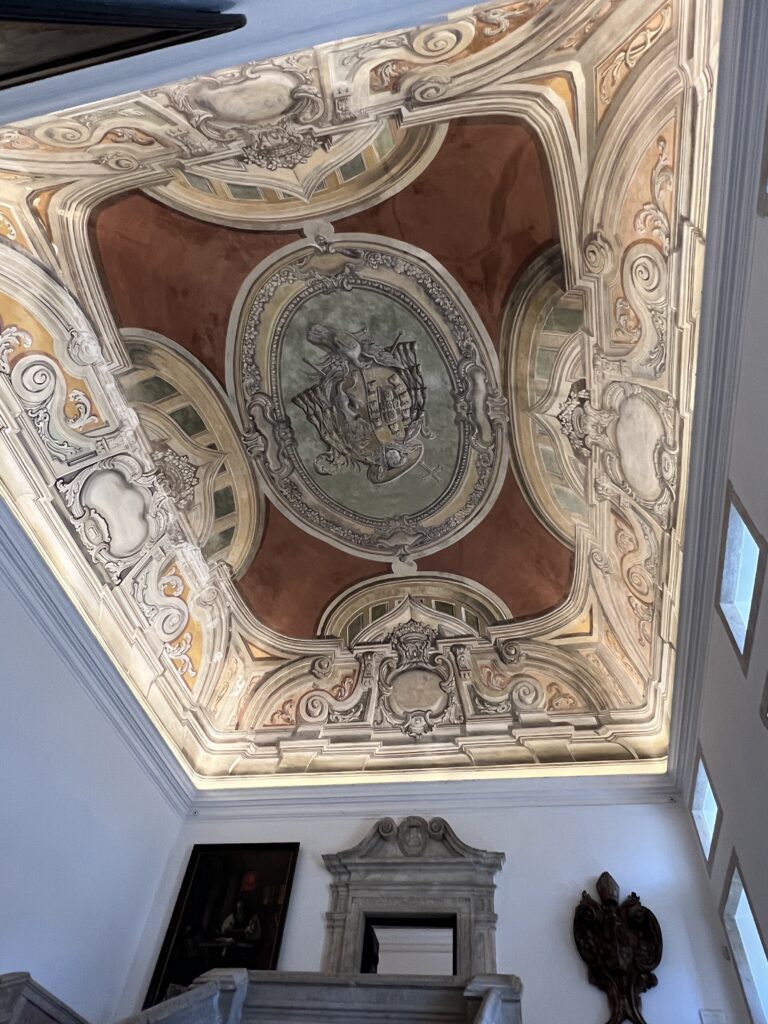
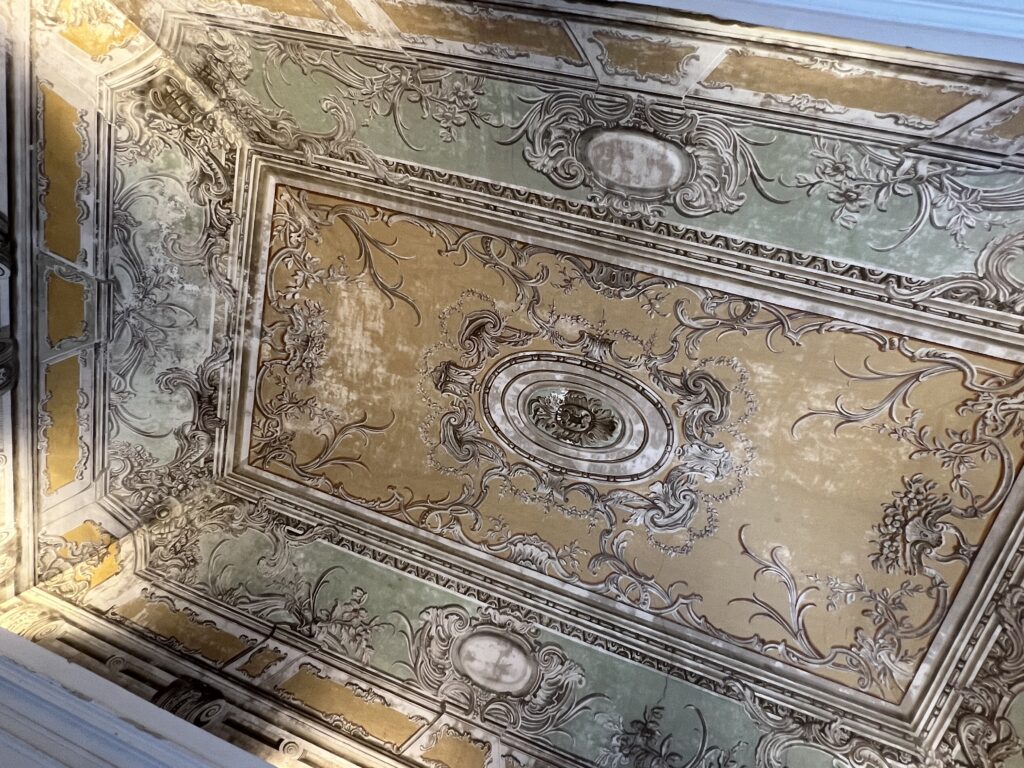
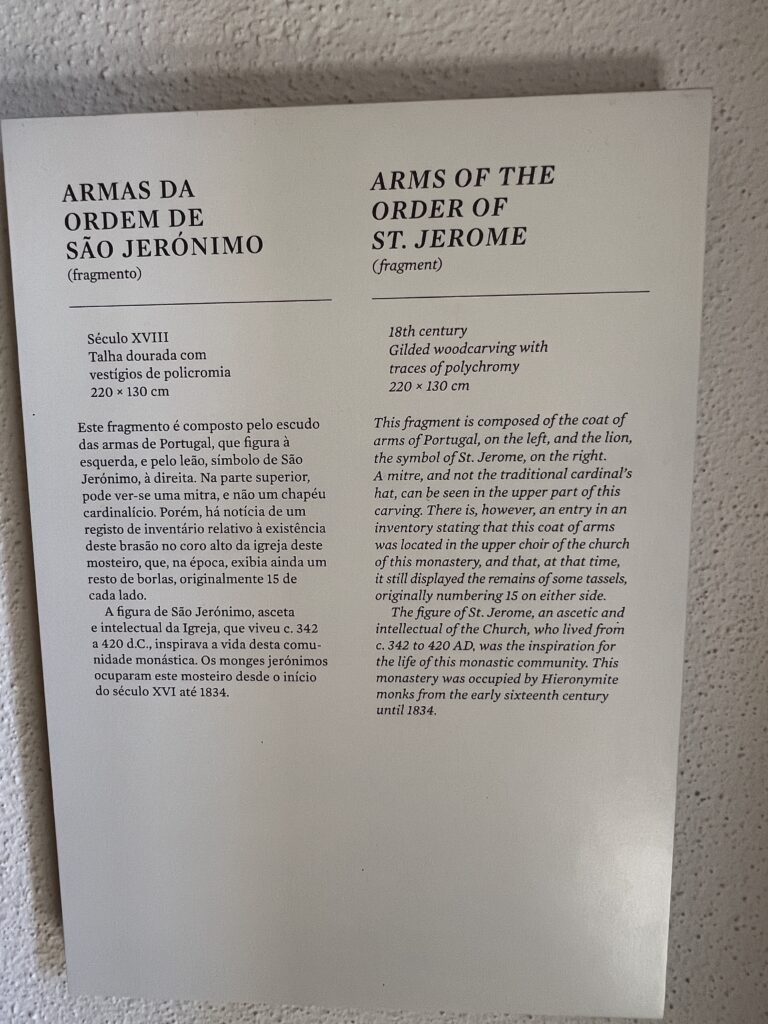
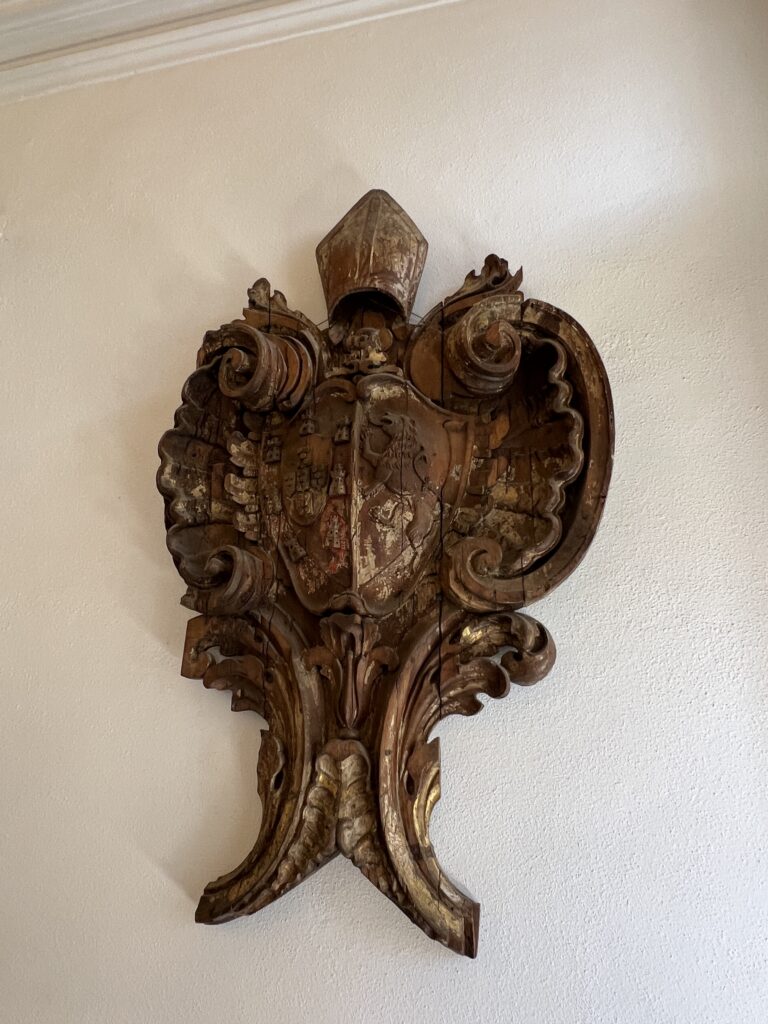
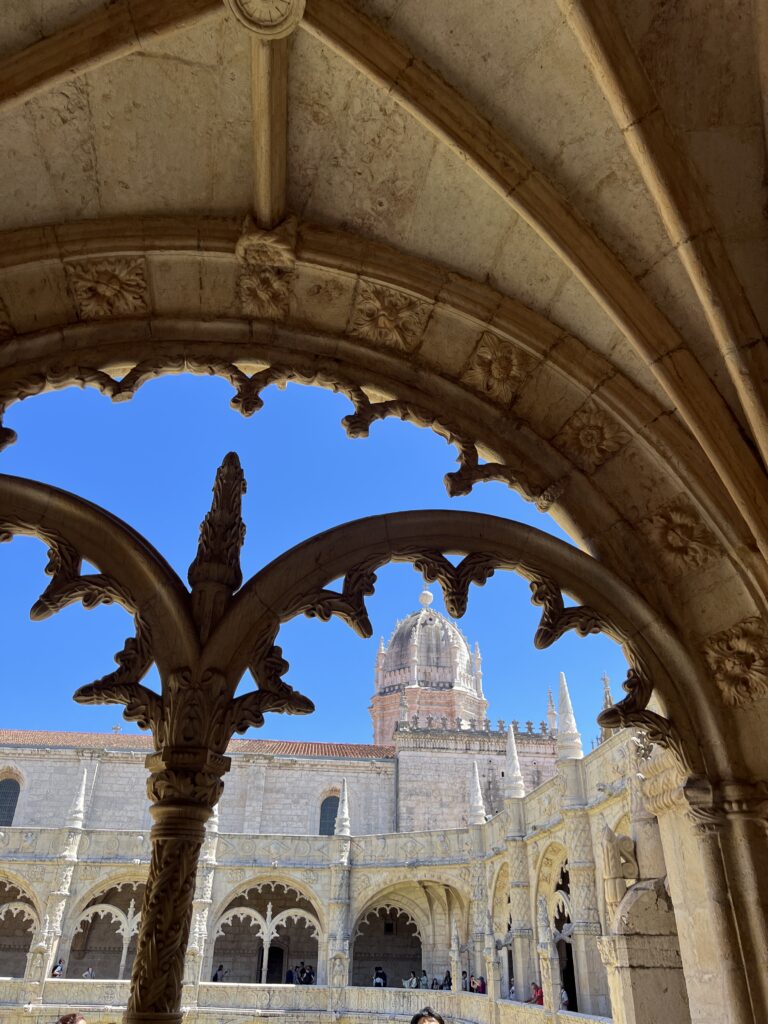
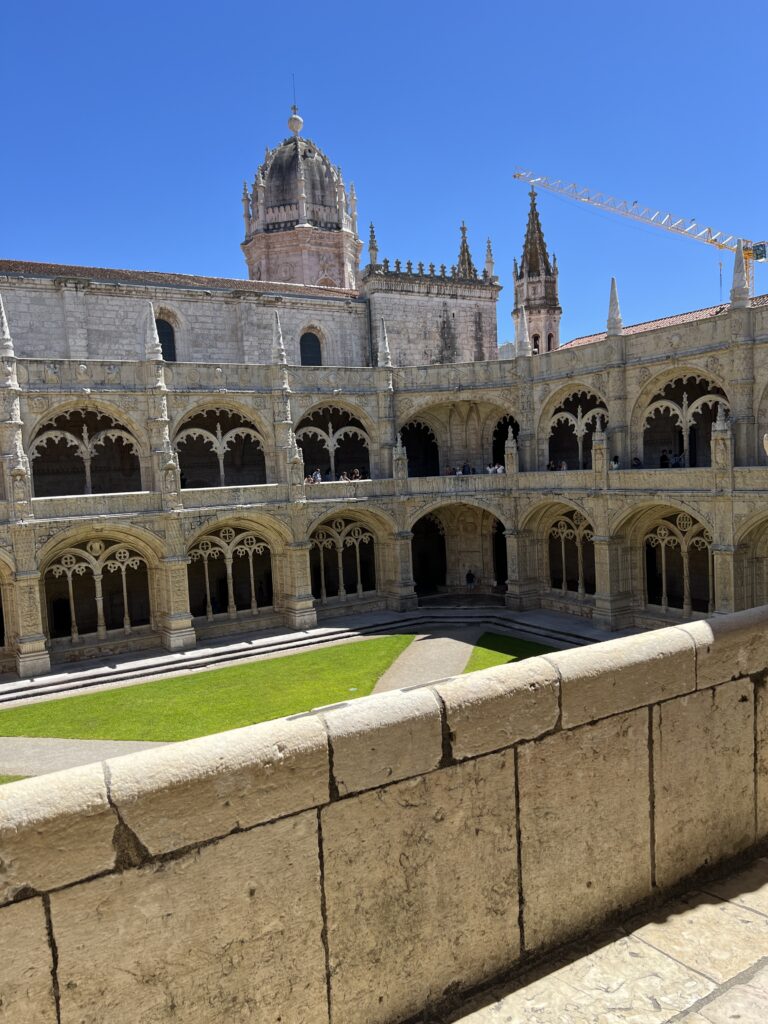
Work on the vast square cloister (55 × 55 m) of the monastery was begun by Boitac. He built the groin vaults with wide arches and windows with tracery resting on delicate mullions. Juan de Castilho finished the construction by giving the lower storey a classical overlay and building a more recessed upper storey. The construction of such a cloister was a novelty at the time. Castilho changed the original round columns of Boitac into rectangular ones, and embellished it with Plateresque-style ornamentation. Each wing consists of six bays with tracery vaults. The four inner bays rest on massive buttresses, forming broad arcades. The corner bays are linked by a diagonal arched construction and show the richly decorated corner pillars. The cloister had a religious function as well as a representative function by its decorative ornamentation and the dynastic symbolic motives, such as the armillarium, coat-of-arms, and the cross from the Order of Christ, showing the growing world power of Portugal.
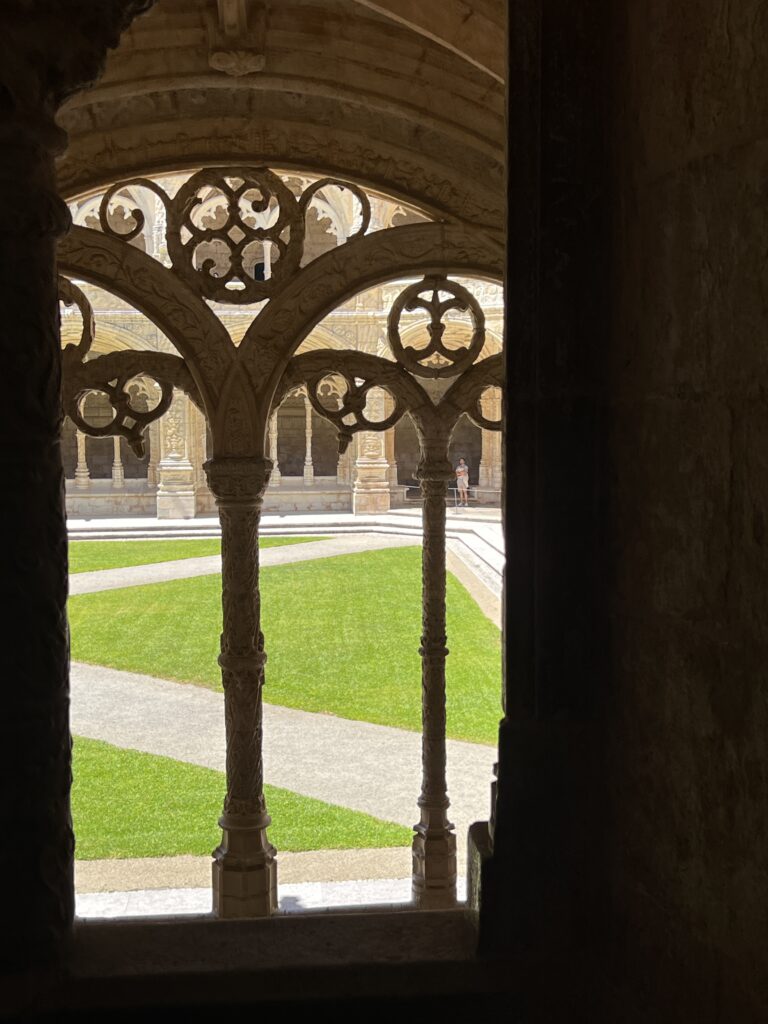
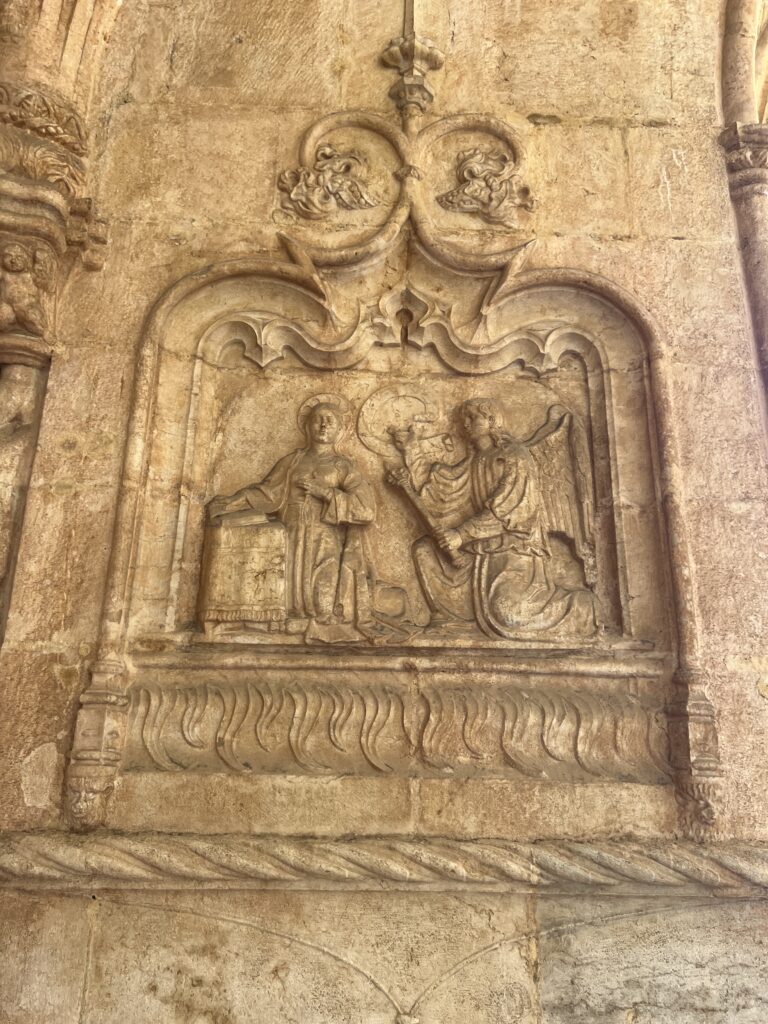
The inside walls of the cloister have a wealth of Manueline motives with nautical elements, in addition to European, Moorish and Eastern motifs. The round arches and the horizontal structure are clearly in line with the Renaissance architectural style, while at the same time there is also a relationship with Spanish architecture. The decorations on the outer walls of the inner courtyard were made in Plateresco style by Castilho: the arcades include traceried arches that give the construction a filigree aspect.
In one of these arcades is the sober tomb of the poet Fernando Pessoa, while several other tombs in the chapterhouse contain the remains of the poet and playwright Almeida Garrett (1799–1854), the writer-historian Alexandre Herculano (1810–1877), former presidents Teófilo Braga (1843–1924) and Óscar Carmona (1869–1951).
Photos of the cloister
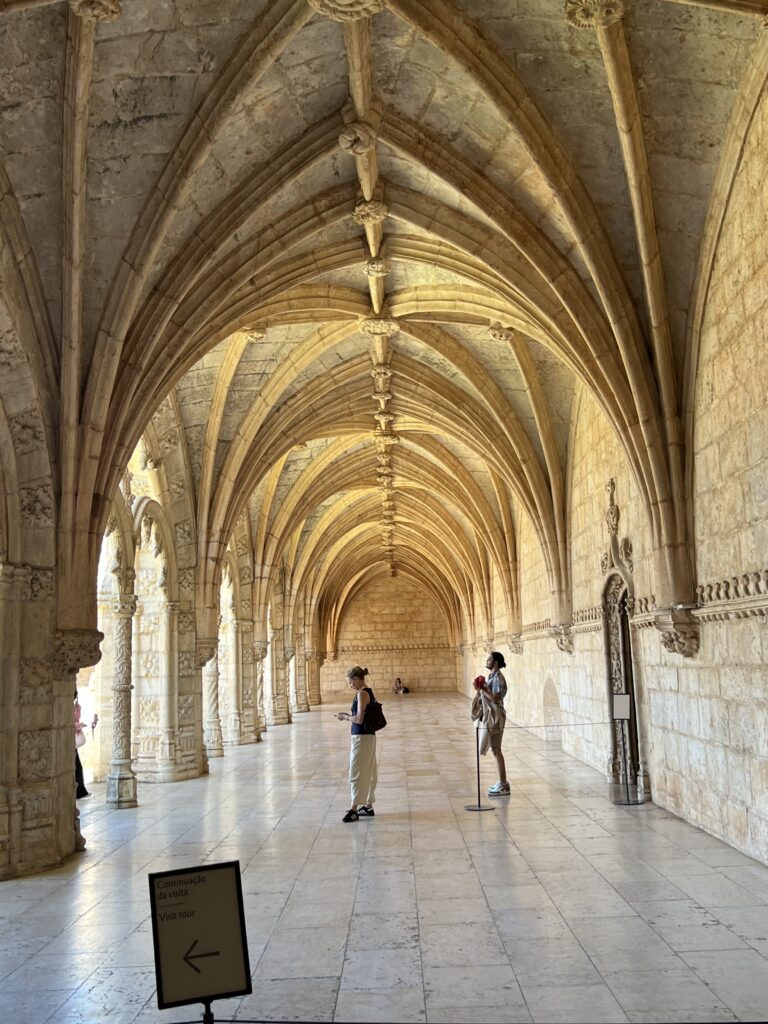
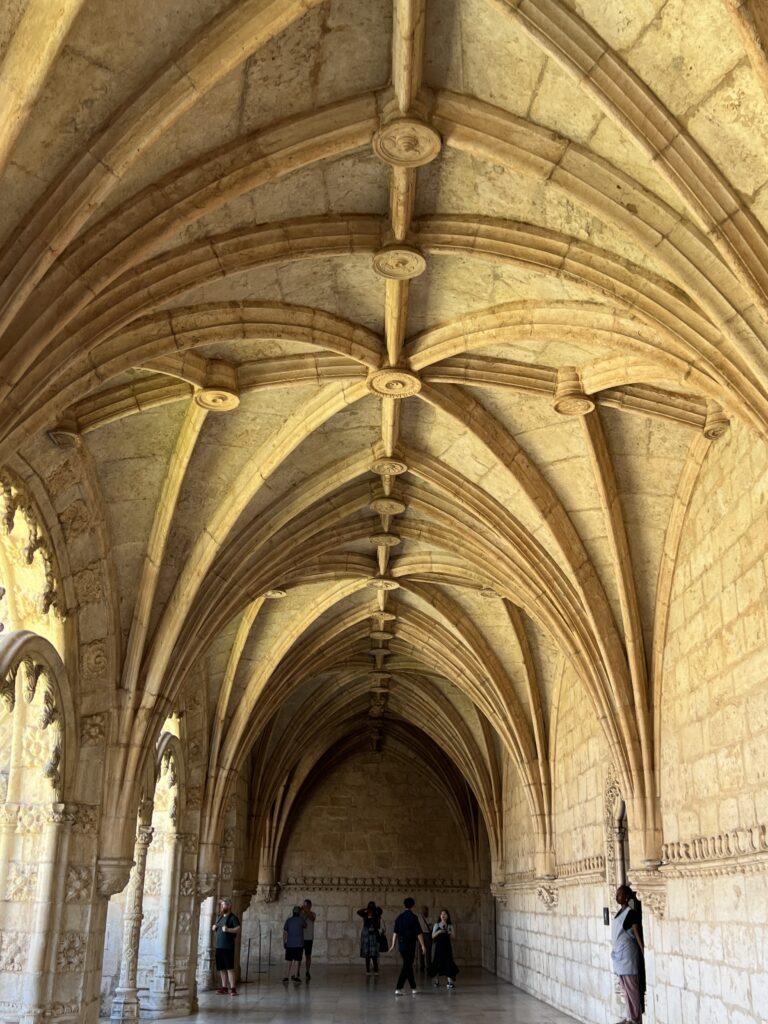
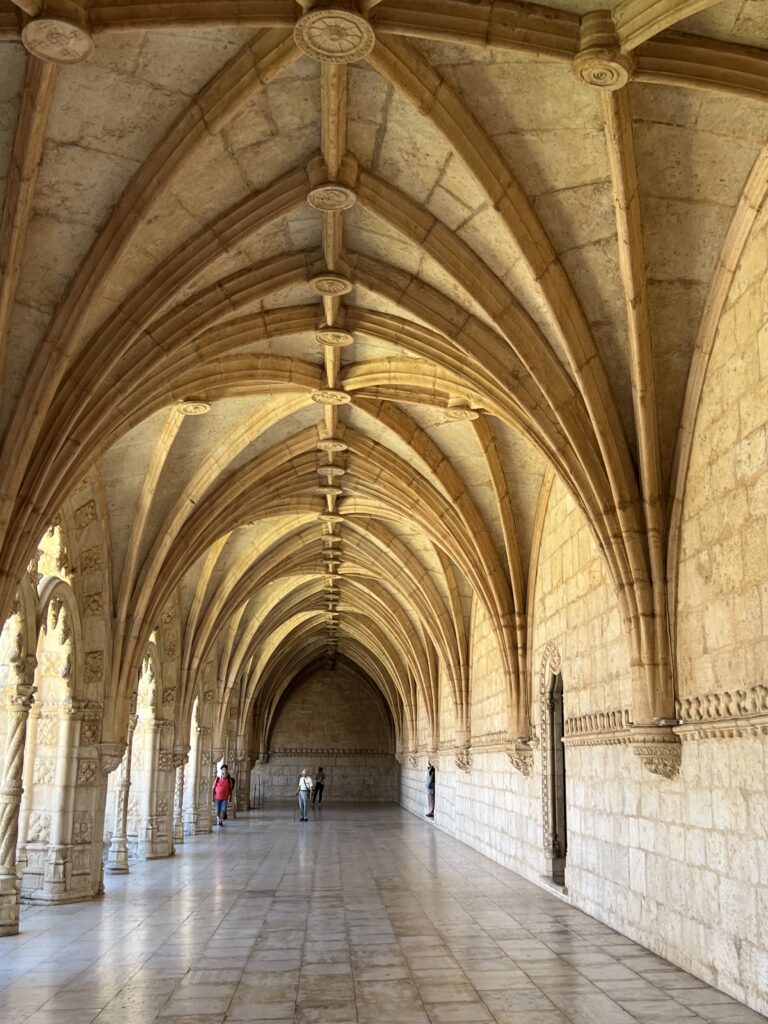
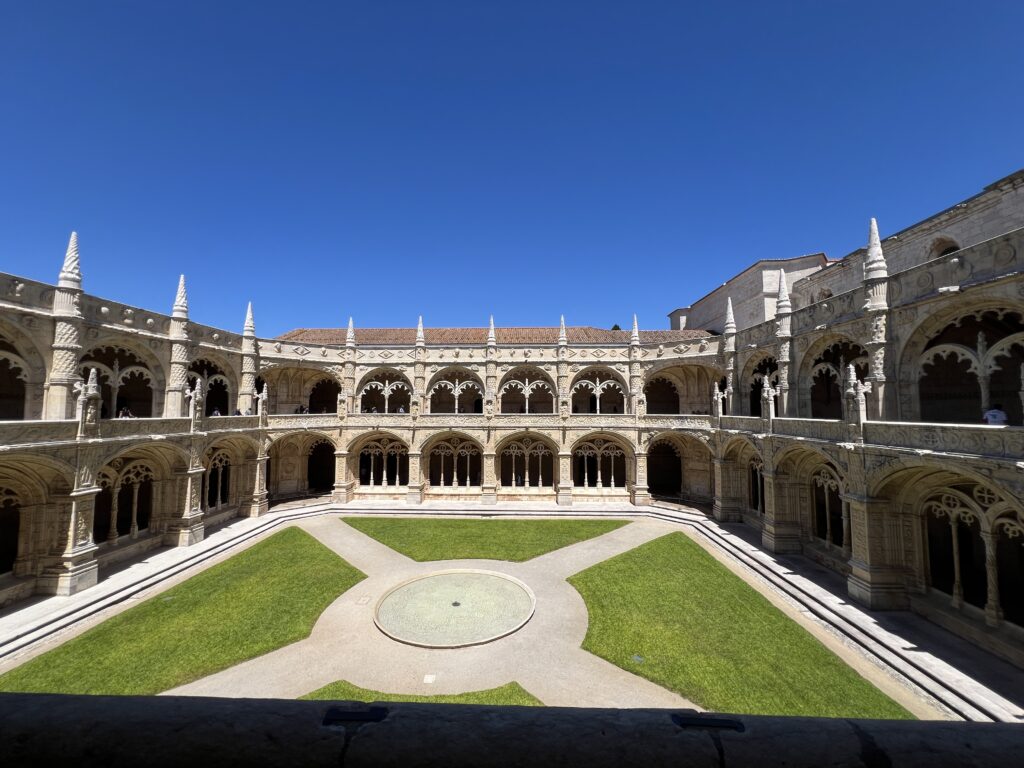
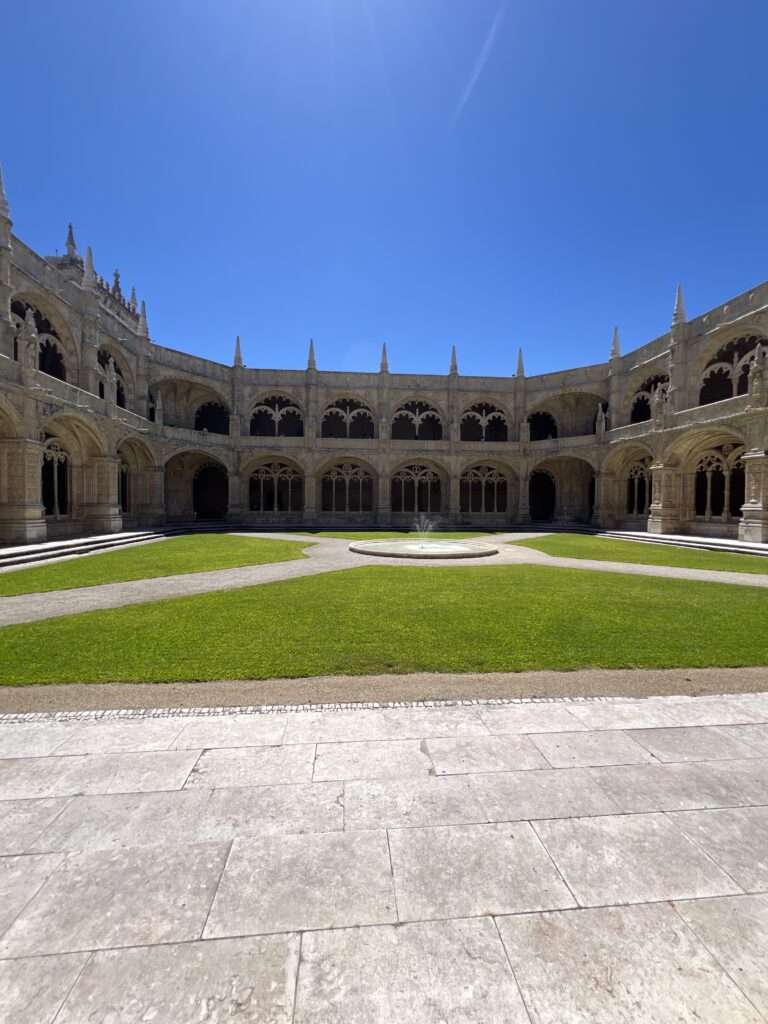
Where I threatened to lock her up if she made me go in high places again
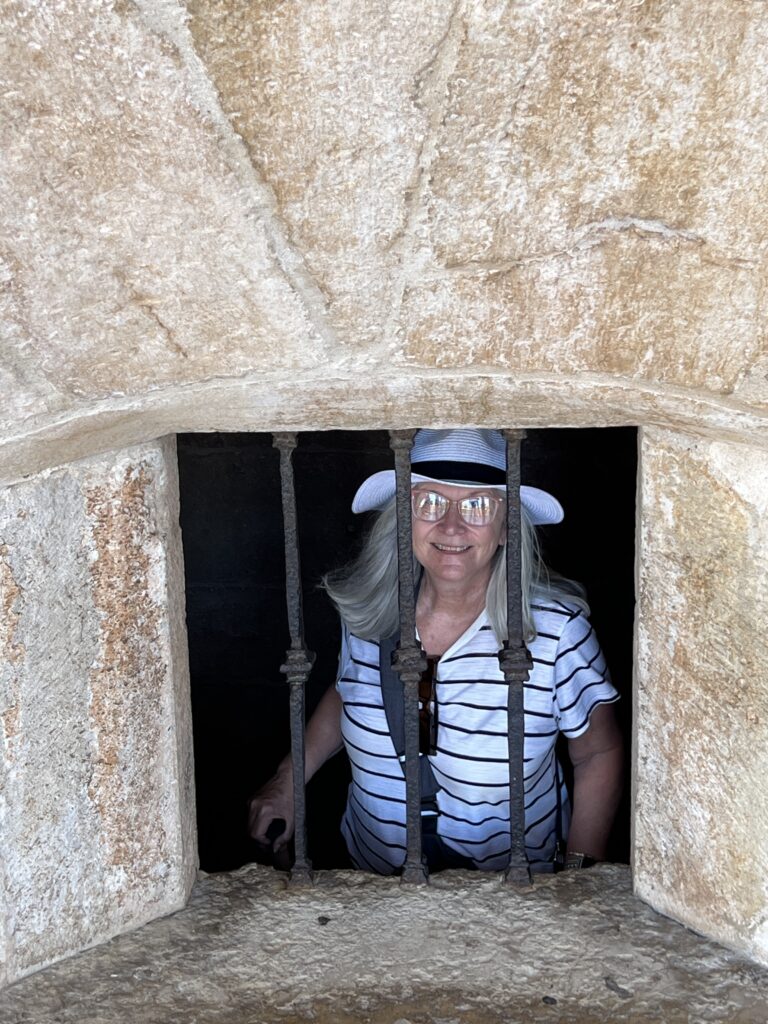
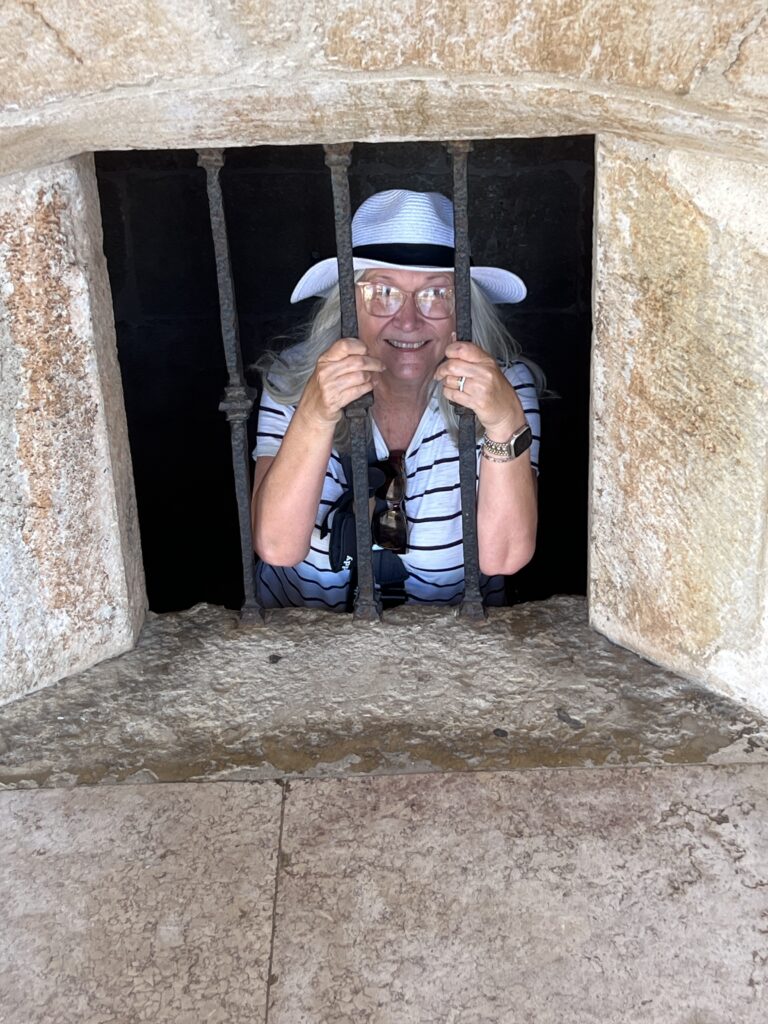
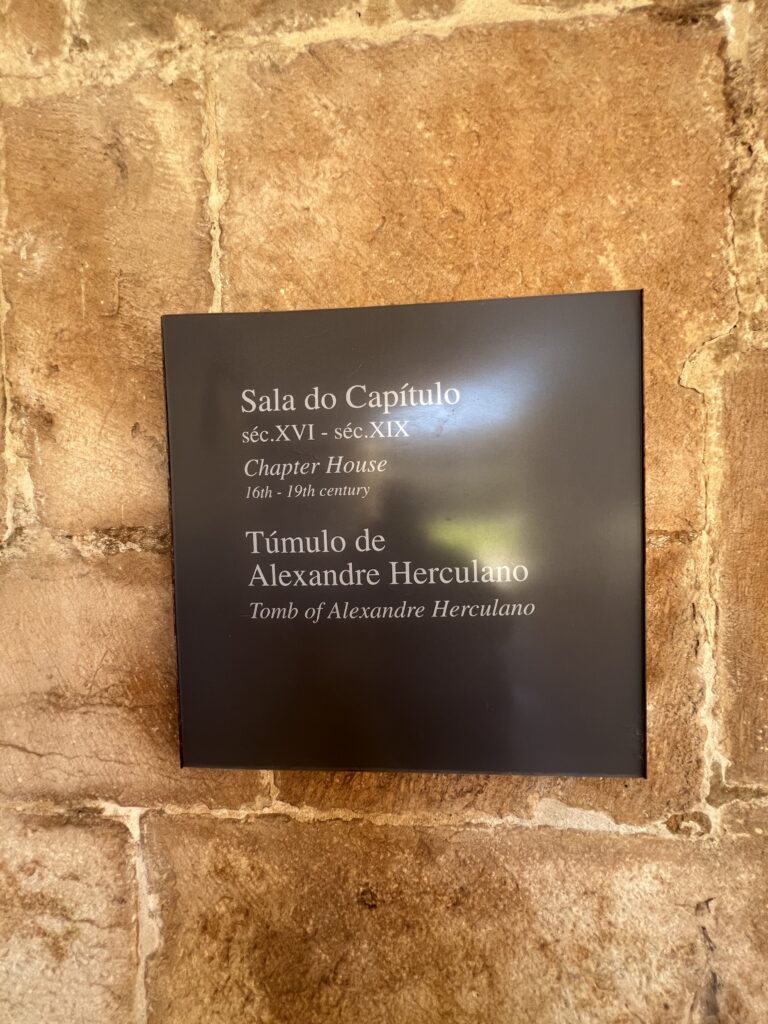
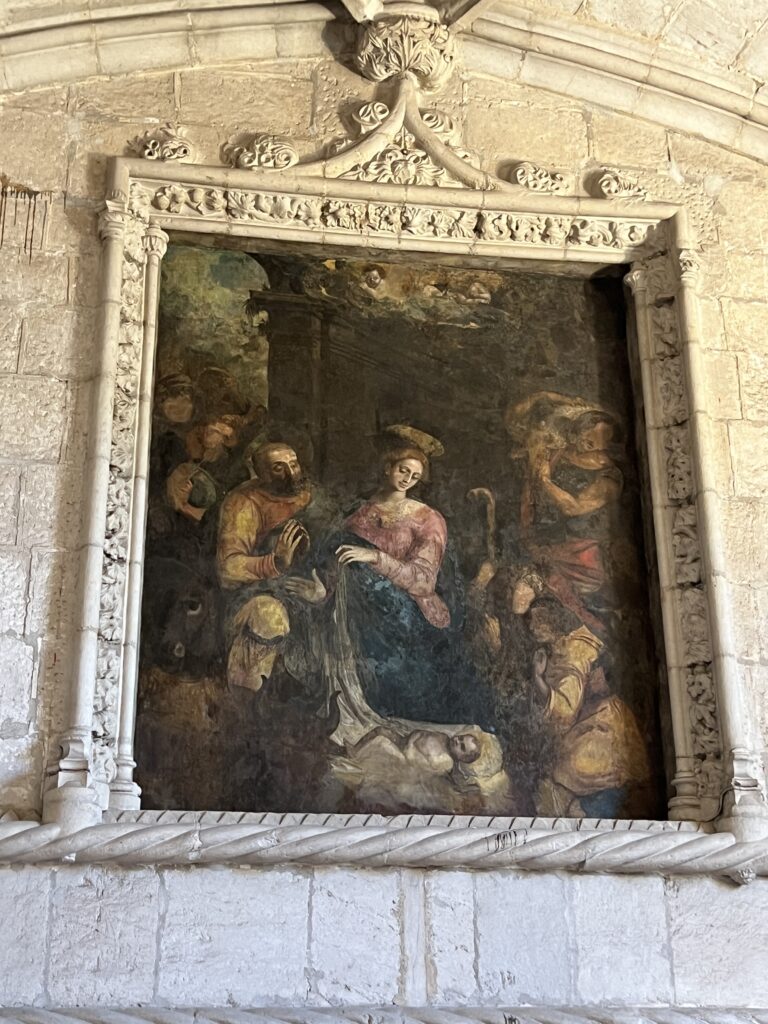
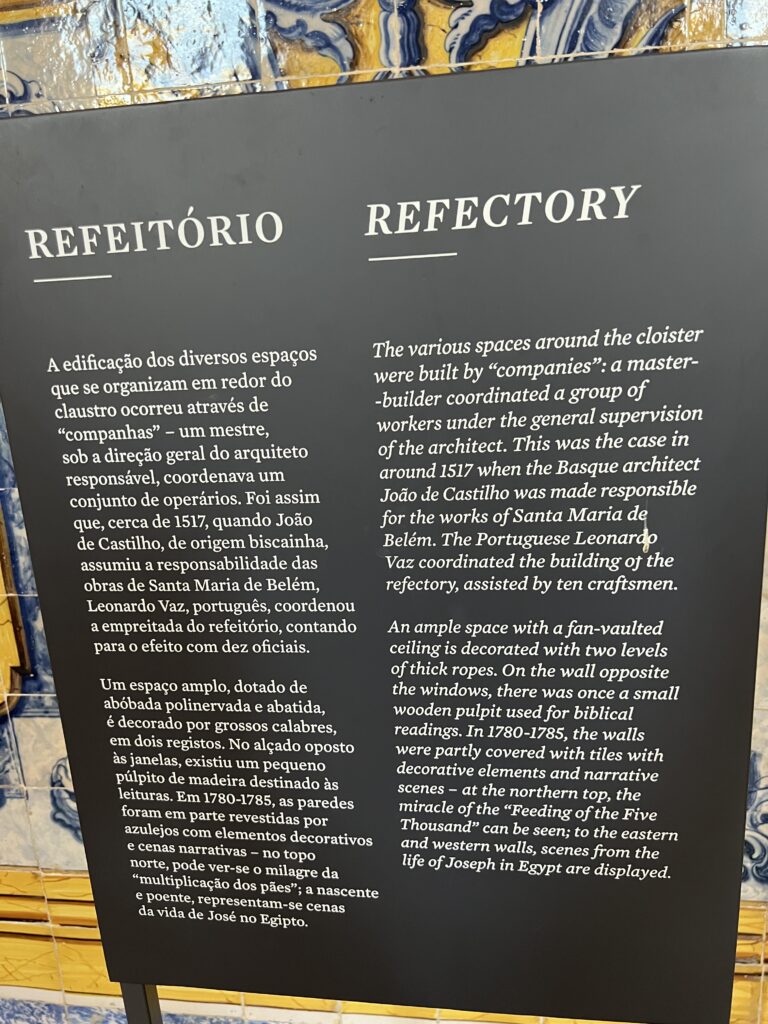
The refectory across the chapter house has several azulejos tiles from the 18th century.
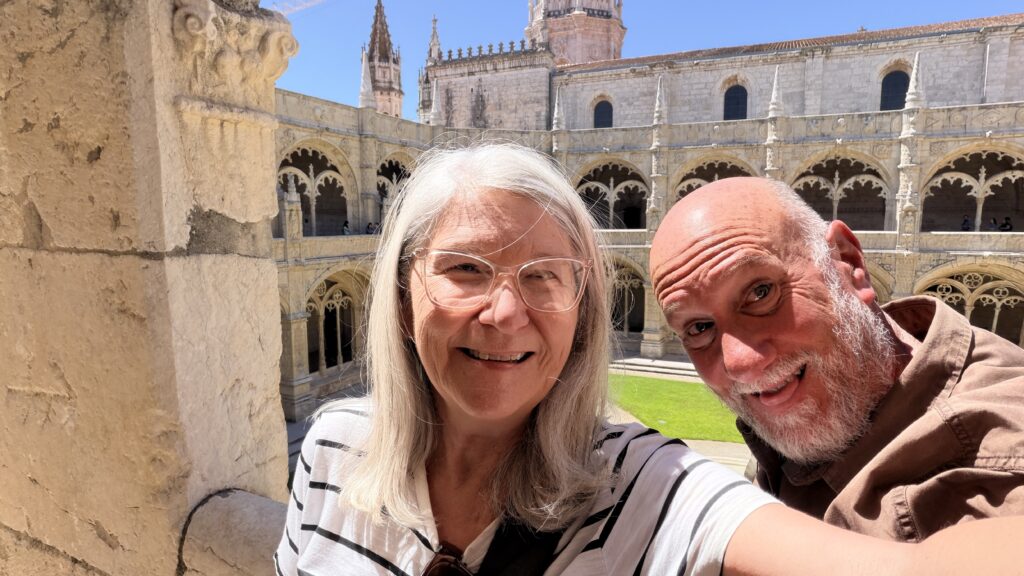
We were not doing well doing a selfie
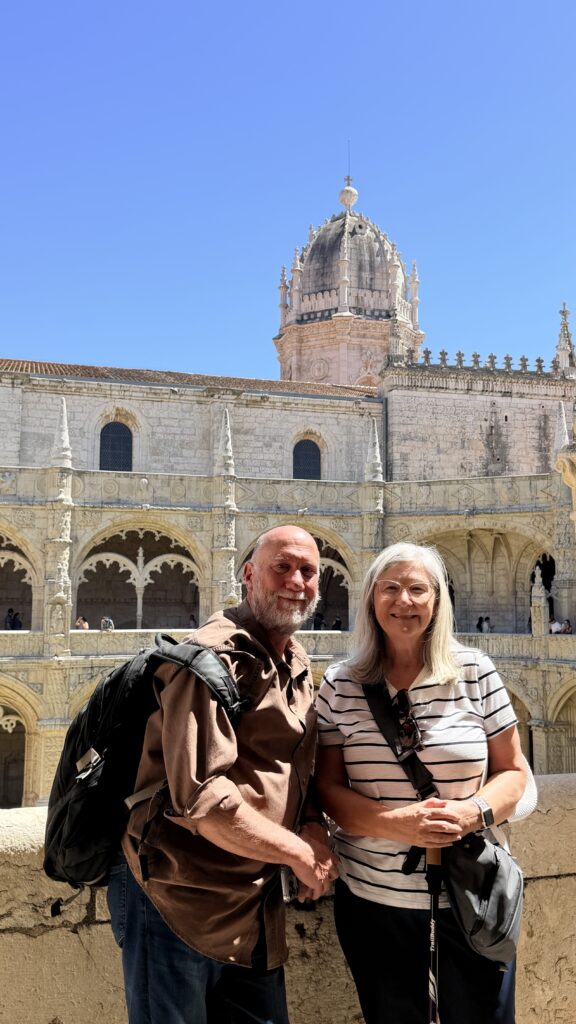
A lady who was a photographer offered to take the photo for us
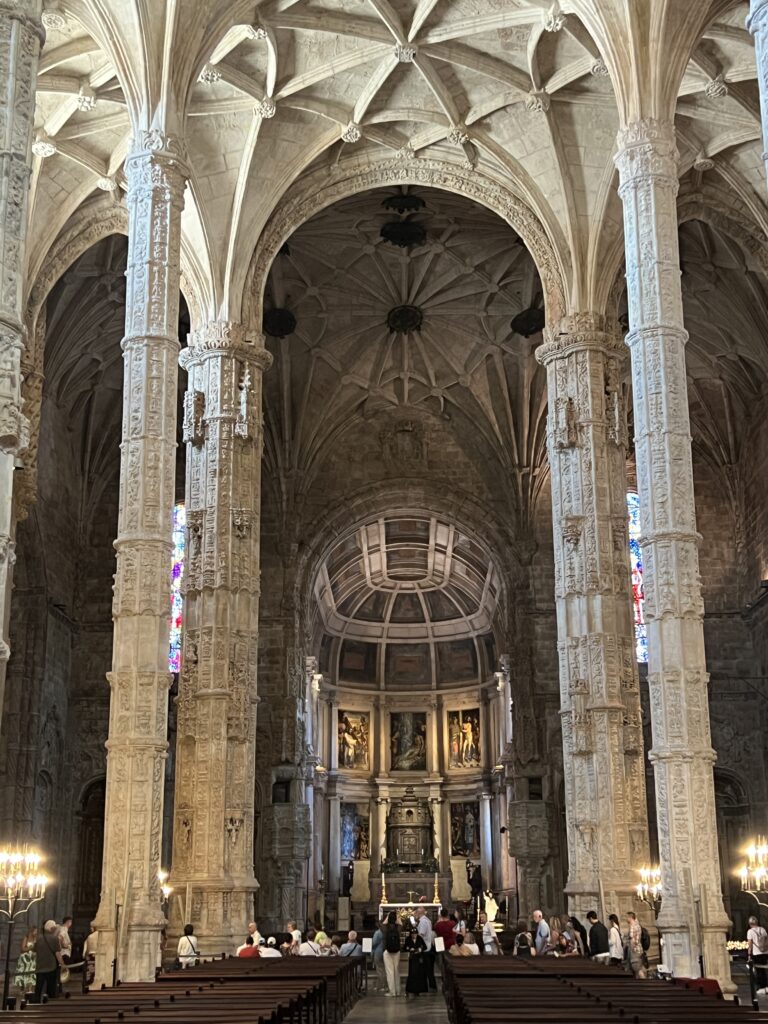
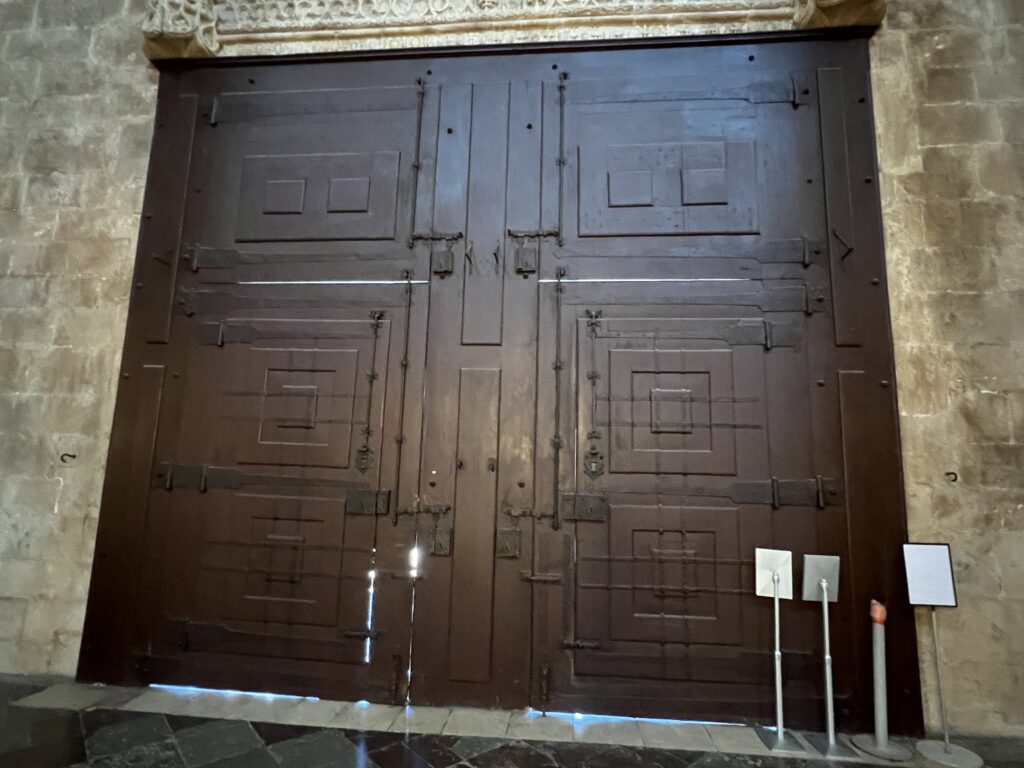
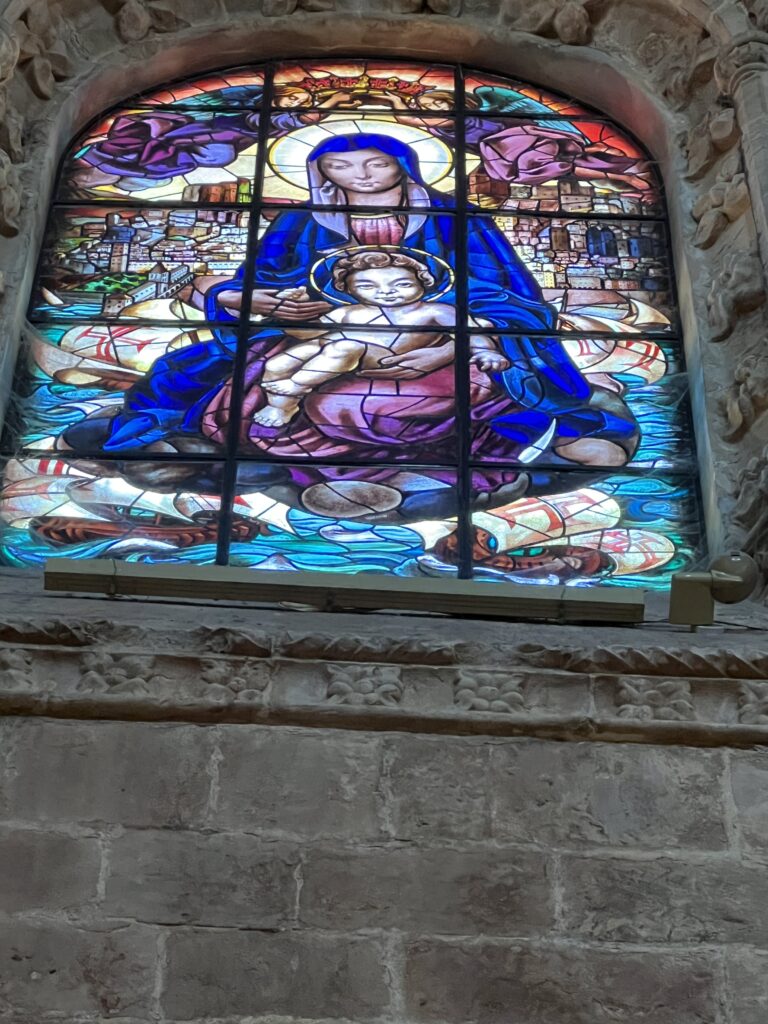
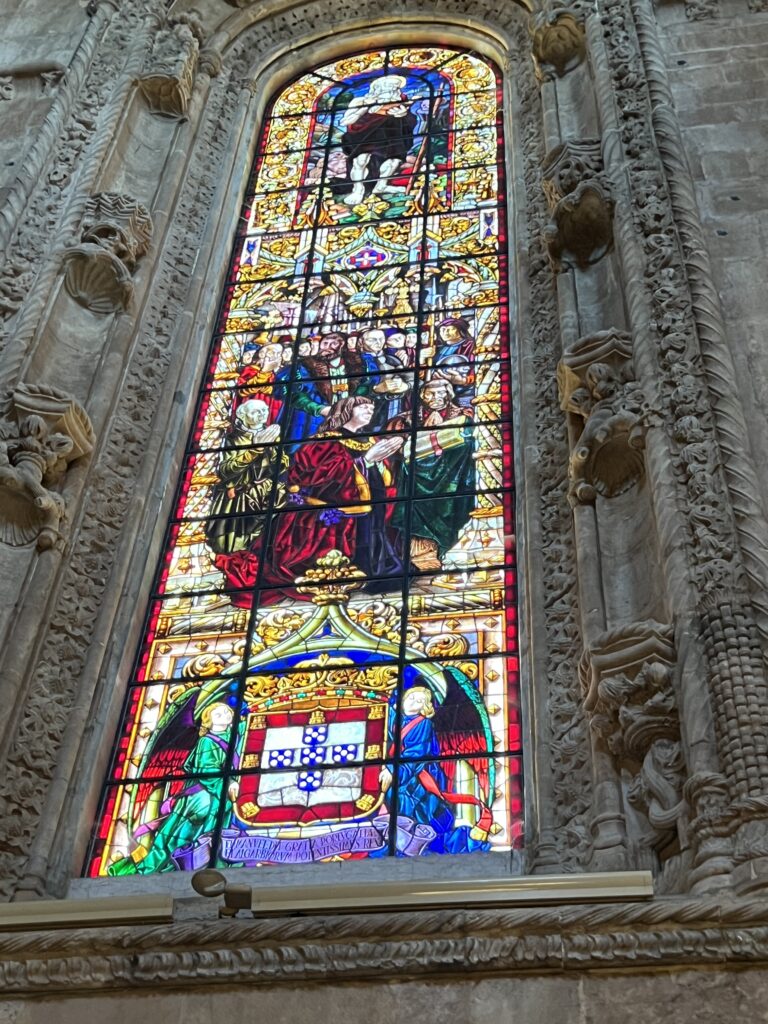
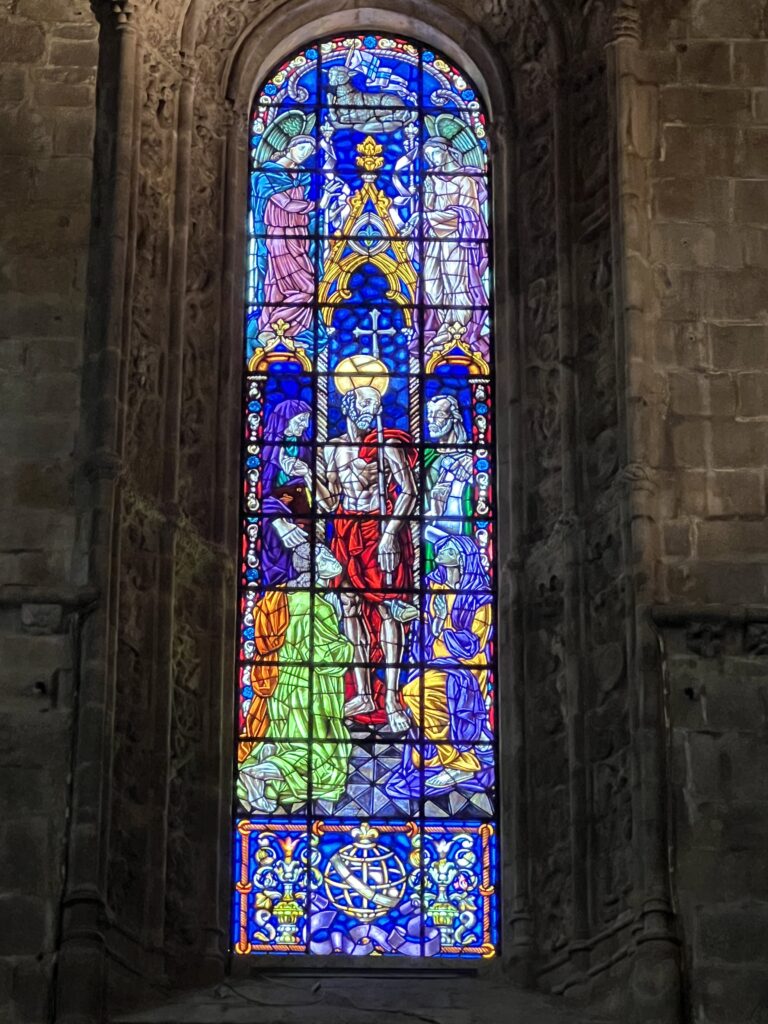
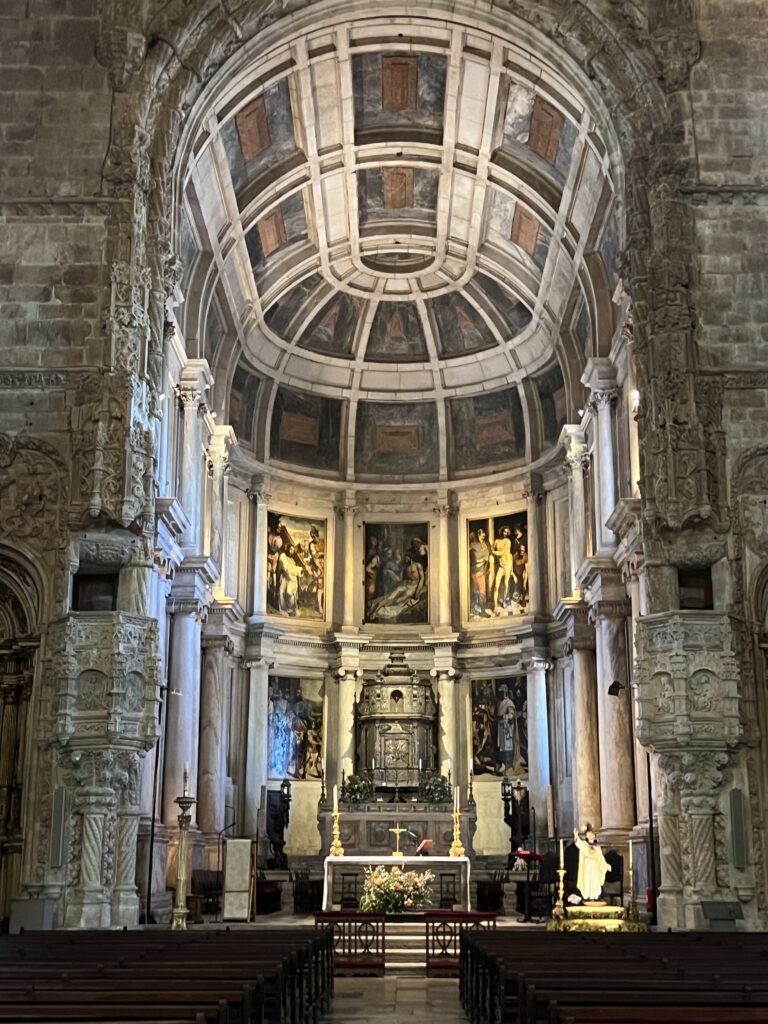
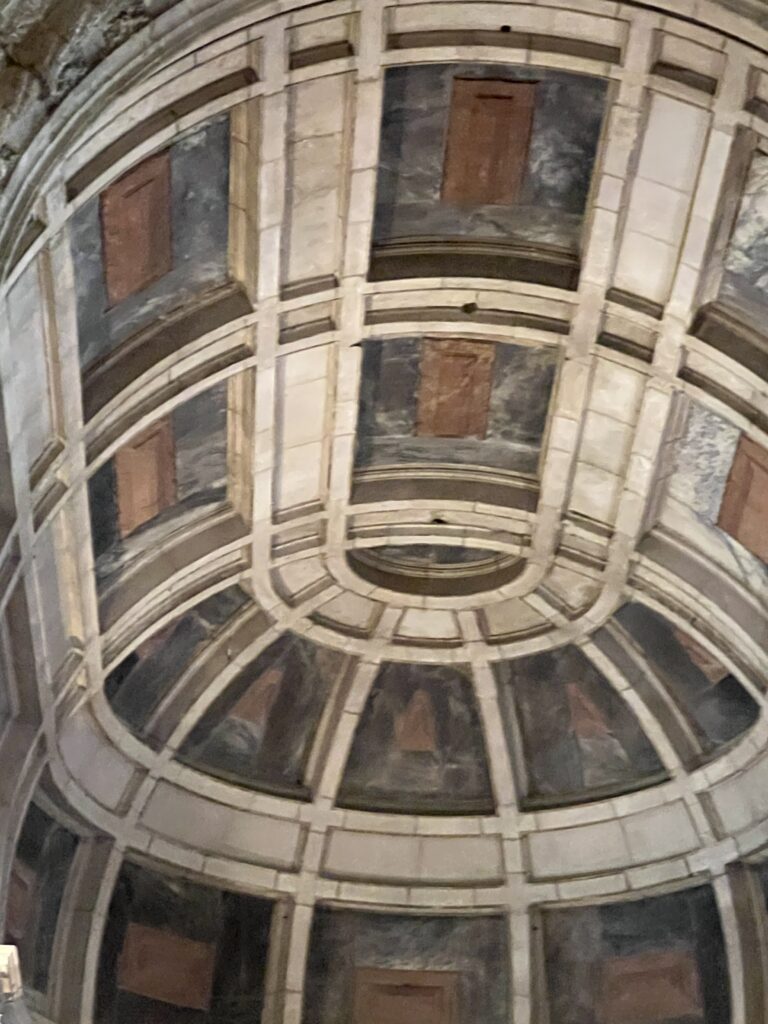
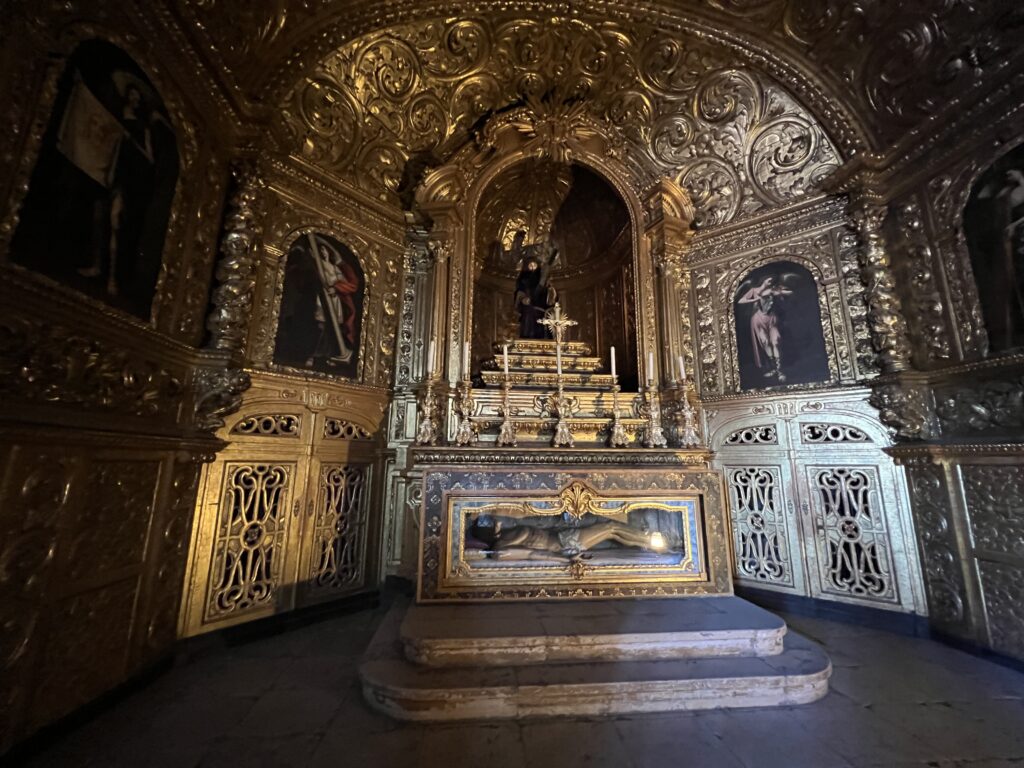
The Church of Santa Maria de Belém forms the spiritual core of the monastery and is one of the finest examples of Manueline architecture in Portugal. Despite its immense size, the interior feels light and unified, supported by elegant columns that rise into a richly vaulted ceiling.
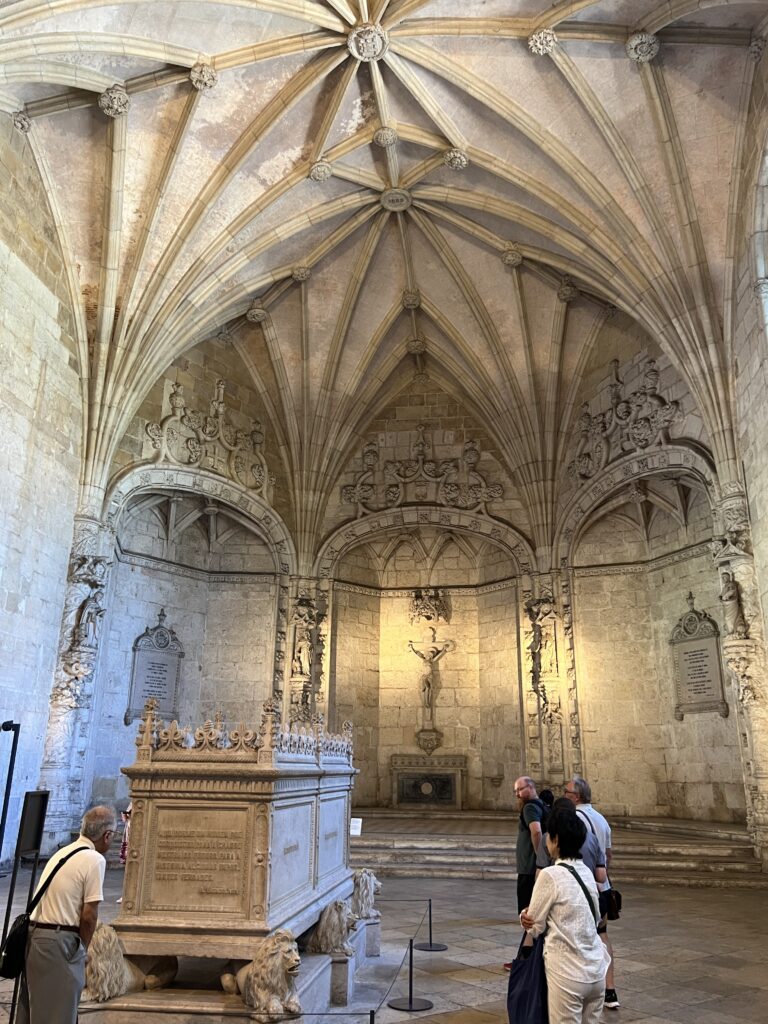
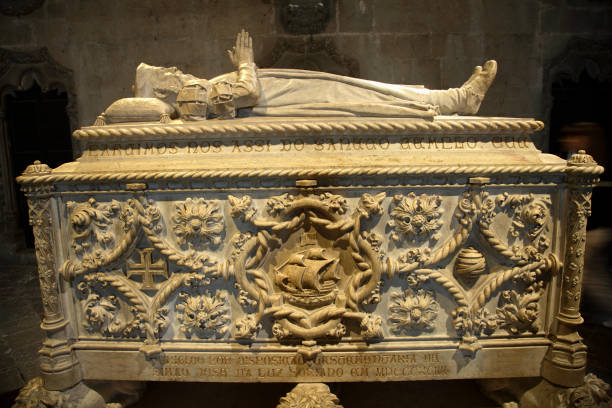
Inside the church, you’ll find the tomb of Vasco da Gama alongside royal tombs connected to the reign of King Manuel I. Entry to the church is free, and even a short visit offers a powerful introduction to the monument’s historical and symbolic importance.
The Western portal, transition from the Gothic style to Renaissance, by sculptor Nicolau Chanterene,

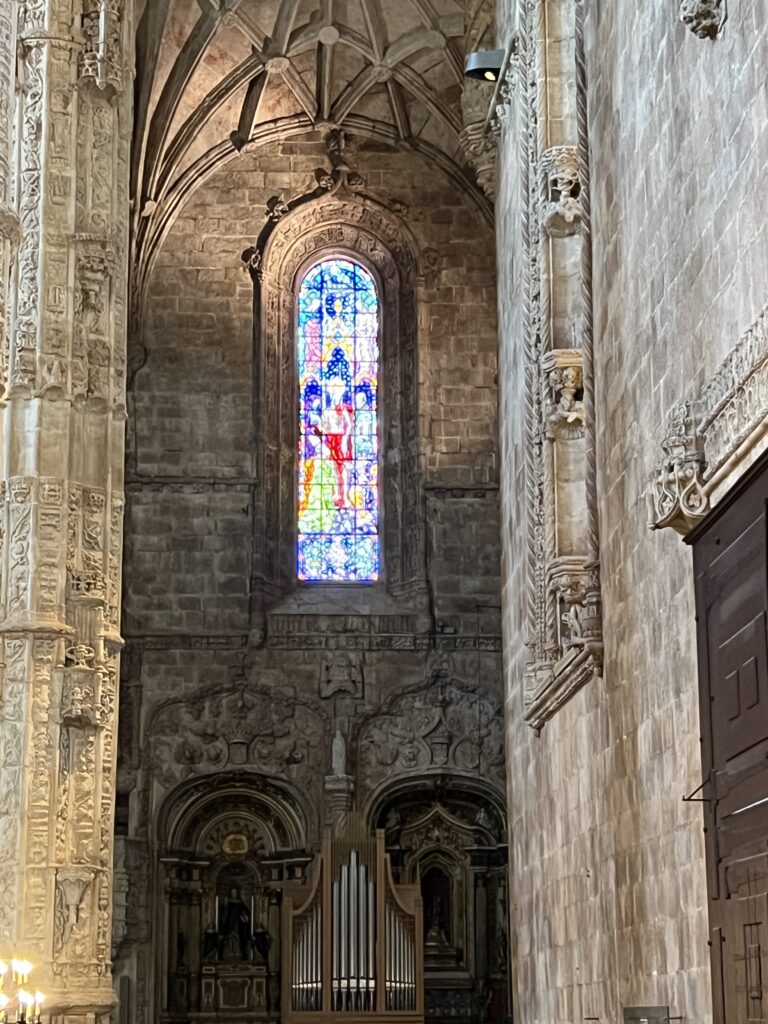
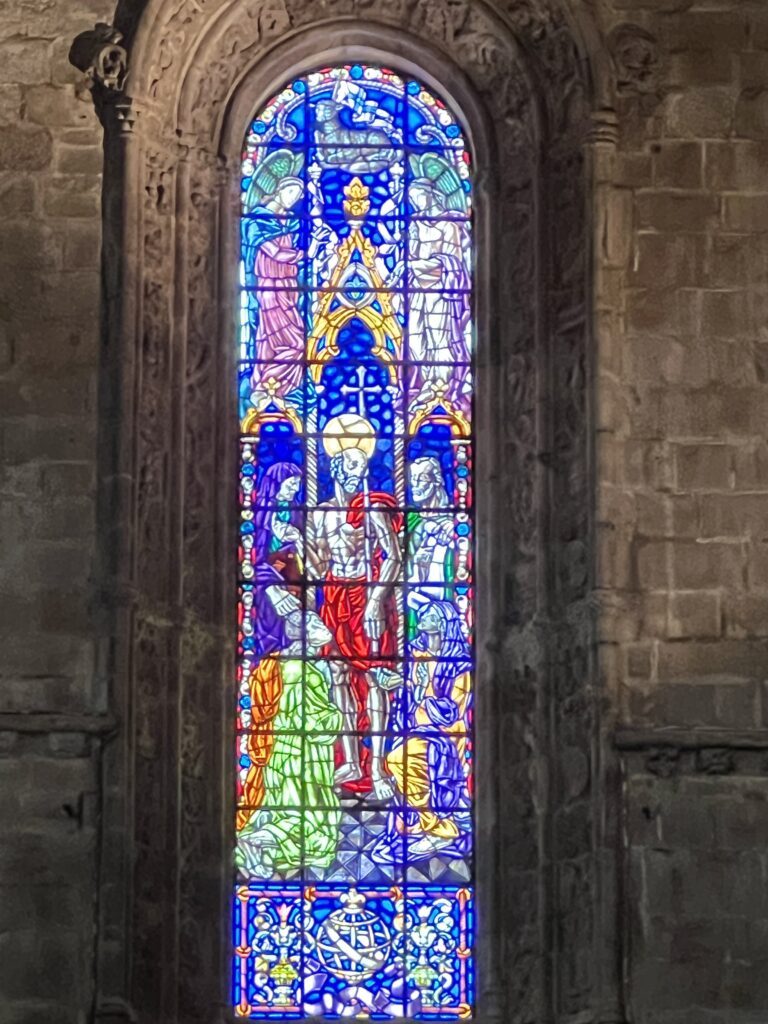
Interior of the church.

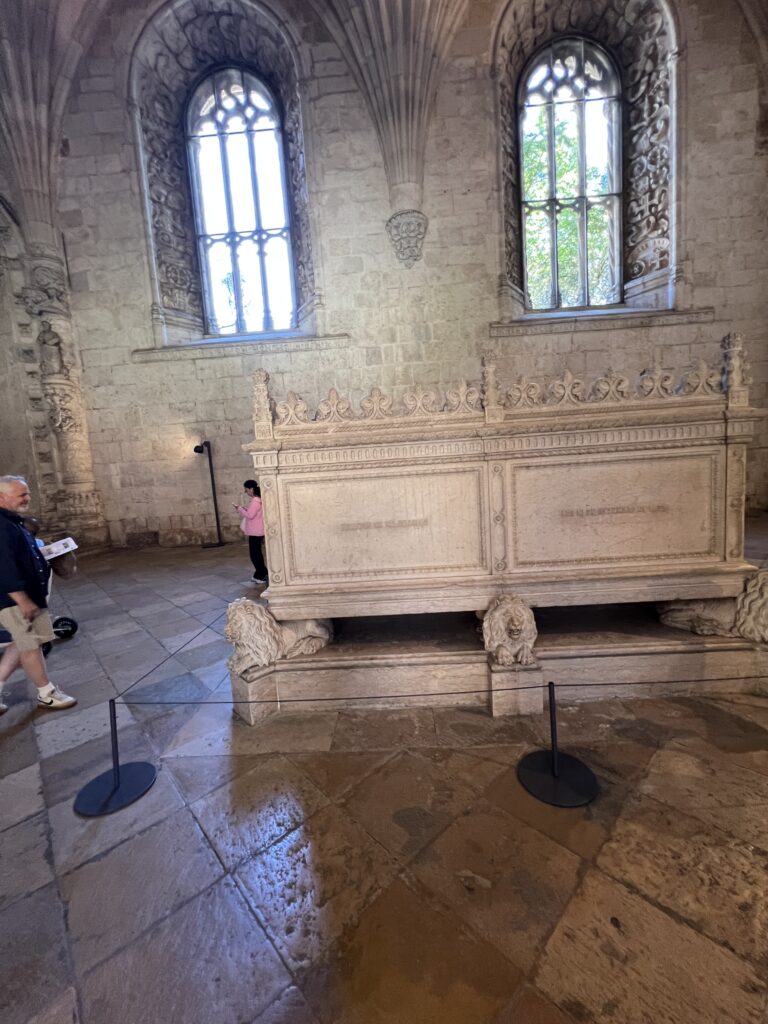
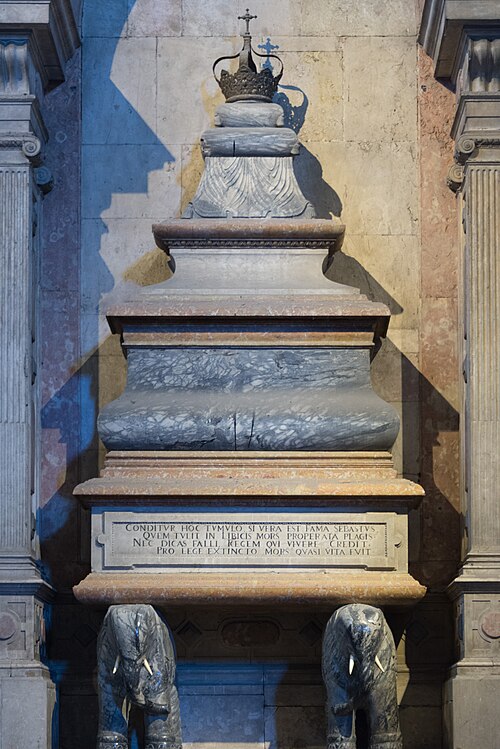
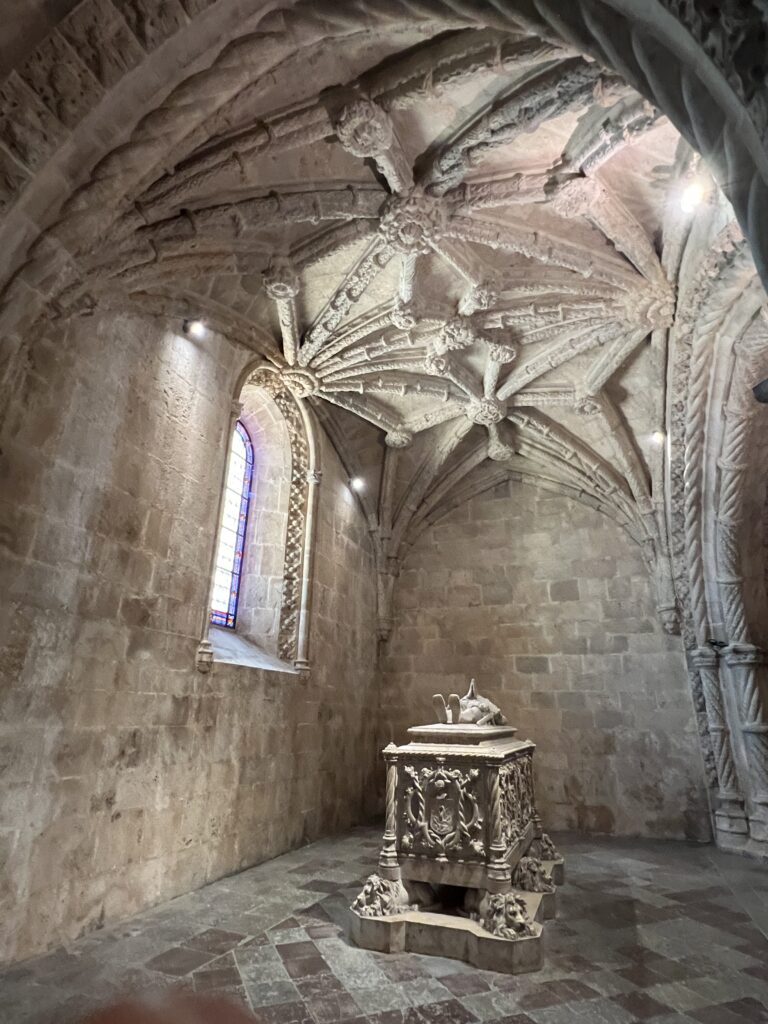
Royal tomb in the main chapel; the sarcophagus is held by two elephants
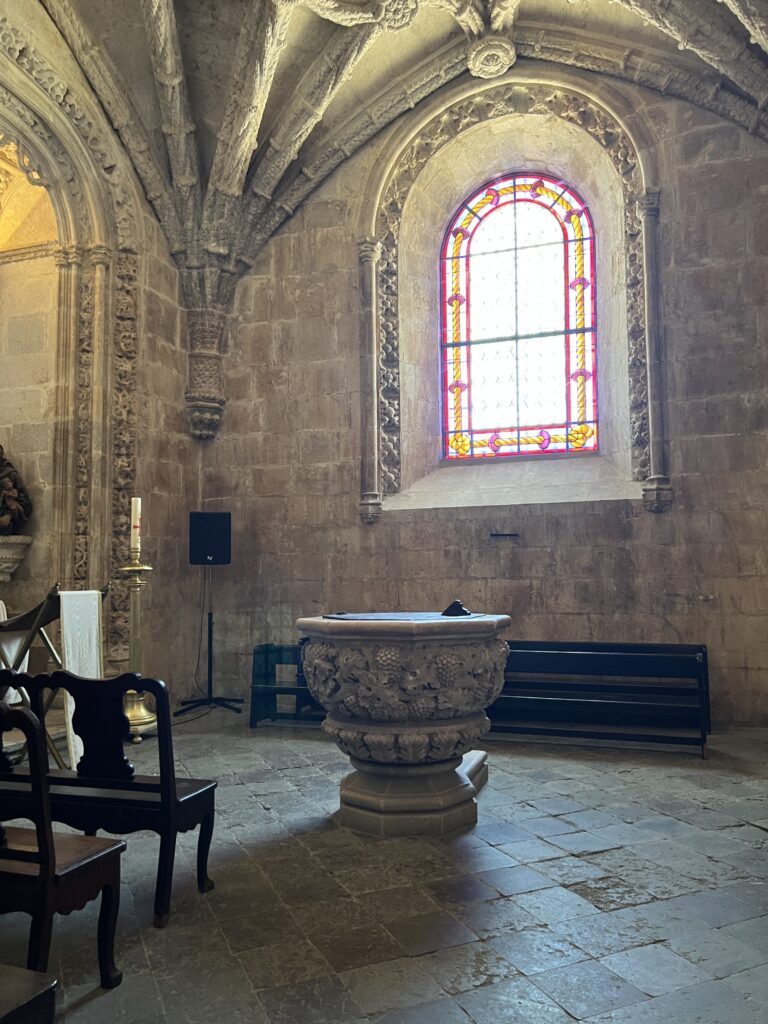
Luís Vaz de Camões (European Portuguese: [luˈiʒ ˈvaʒ ðɨ kaˈmõjʃ]; c. 1524 or 1525 – 10 June 1580), sometimes rendered in English as Camoens or Camoëns (/ˈkæmoʊənz/ KAM-oh-ənz), is considered Portugal‘s and the Portuguese language’s greatest poet. His mastery of verse has been compared to that of Shakespeare, Milton, Vondel, Homer, Virgil and Dante. He wrote a considerable amount of lyrical poetry and drama but is best remembered for his epic work Os Lusíadas (The Lusiads). His collection of poetry The Parnasum of Luís de Camões was lost during his life. The influence of his masterpiece Os Lusíadas is so profound that Portuguese is sometimes called the “language of Camões”.
The day of his death, 10 June, is Portugal’s national day.
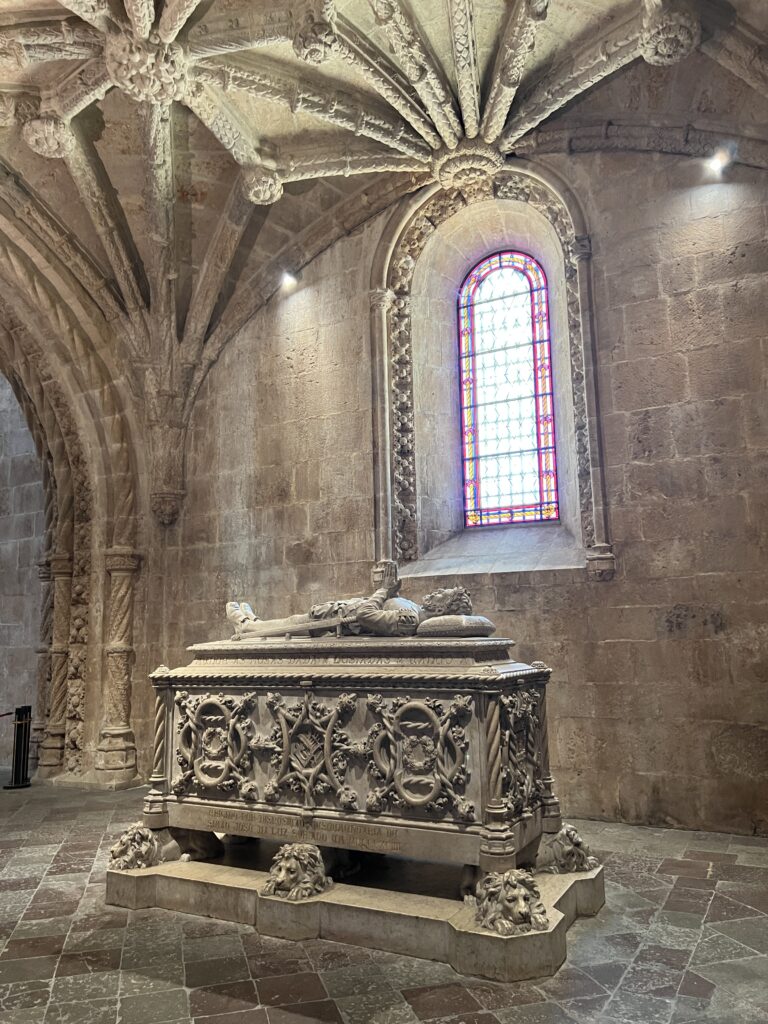
Vasco da Gama (/ˌvæsku də ˈɡɑːmə, -ɡæmə/ VAS-koo də GA(H)M-ə, European Portuguese: [ˈvaʃku ðɐ ˈɣɐmɐ]; c. 1460s – 24 December 1524) was a Portuguese mariner, explorer and nobleman. His discovery of the first direct maritime route between Europe and India via the Cape of Good Hope and across the Indian Ocean from Malindi in Kenya to Kozhikode was to open up European exploration of, and commerce with, India, and is considered a landmark event and a turning point in world history.
Da Gama’s remains were brought from India to the monastery of Nossa Senhora das Relíquias near the town of Vidigueira, where they remained for three centuries.

After visiting the church, we walked across the street to The Monument of the Discoveries.
The Monument of the Discoveries (Portuguese: Padrão dos Descobrimentos, Portuguese pronunciation: [pɐˈðɾɐ̃w duʒ ðɨʃkuβɾiˈmẽtuʃ]) is a monument on the northern bank of the Tagus River estuary, in the civil parish of Santa Maria de Belém, Lisbon. Located along the river where ships departed to explore and trade with India and the Orient, the monument celebrates the Portuguese Age of Discovery (or “Age of Exploration”) during the 15th and 16th centuries.
The monument was conceived in 1939 by Portuguese architect José Ângelo Cottinelli Telmo, and sculptor Leopoldo de Almeida, as a temporary beacon during the Portuguese World Exhibition opening in June 1940. The Monument to the Discoveries represented a romanticized idealization of the Portuguese exploration that was typical of the Estado Novo regime of António de Oliveira Salazar. It was originally constructed as a temporary construction, located in the Praça do Império as part of an urban renewal project favoured by minister Duarte Pacheco, but with the resistance of Cottinelli Telmo. Yet, by June 1943, the original structure was demolished after the exposition as there was no concrete formalization of the project.
Inaugurated on 9 August 1960, it was one of several projects nationwide that were intended to mark the Comemorações Henriquinas (the celebrations marking the anniversary of the death of Henry the Navigator). Yet it was not completely finished until 10 October 1960, being transferred to the responsibility of the Administração Geral do Porto de Lisboa (General Administration of the Port of Lisbon). Although in 1962, an accord was signed with the Câmara Municipal of Lisbon to transfer its title, between 1960 and 1979 nothing was done with the monument.
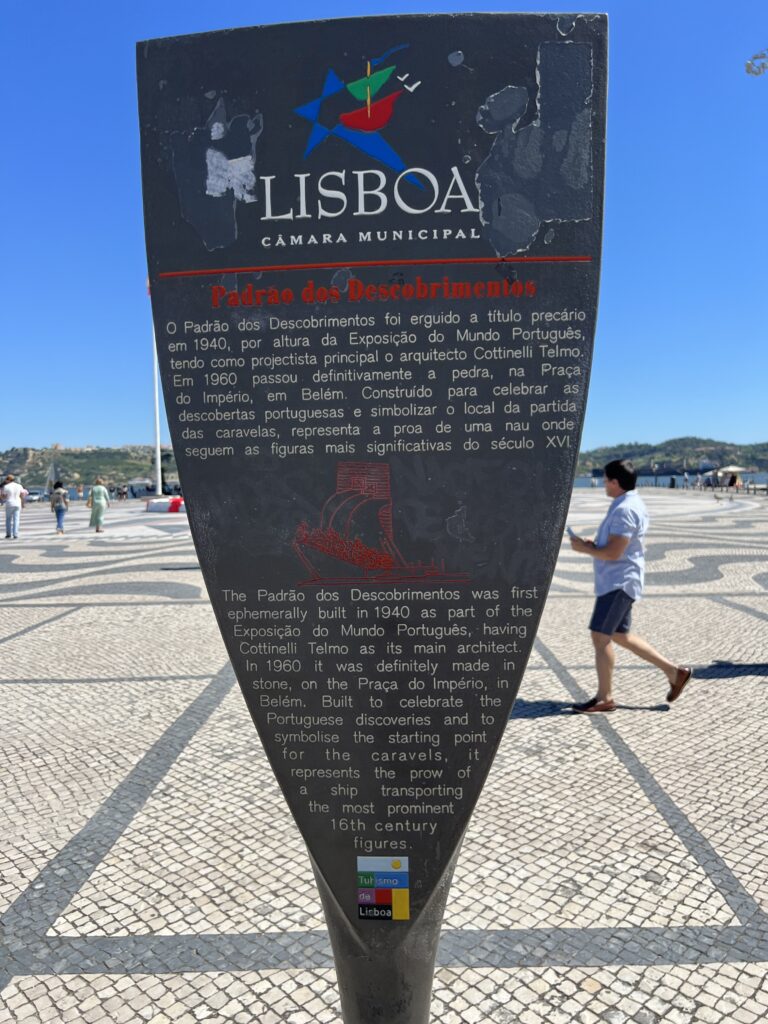

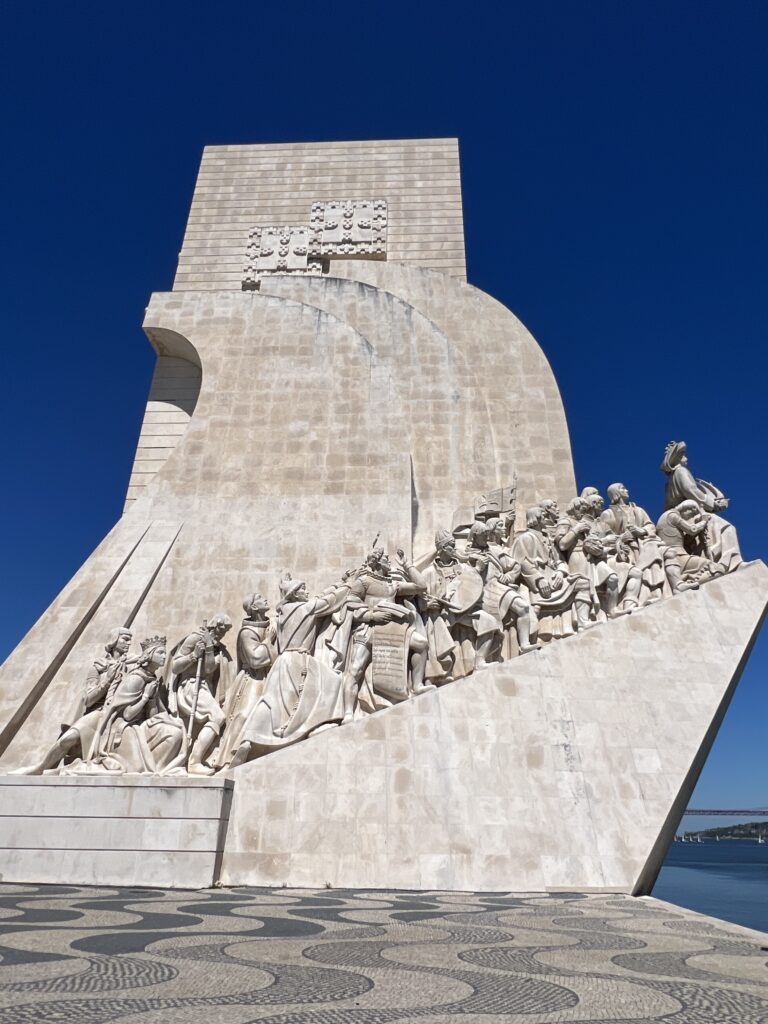
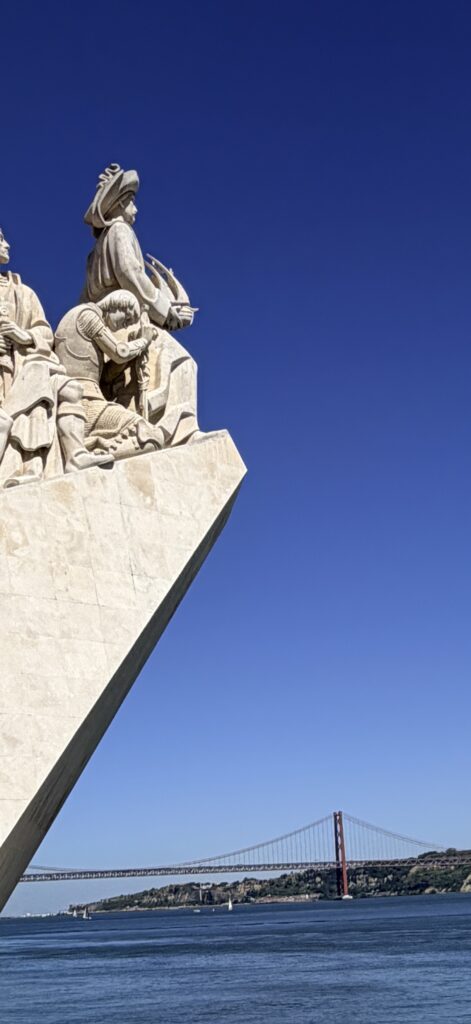
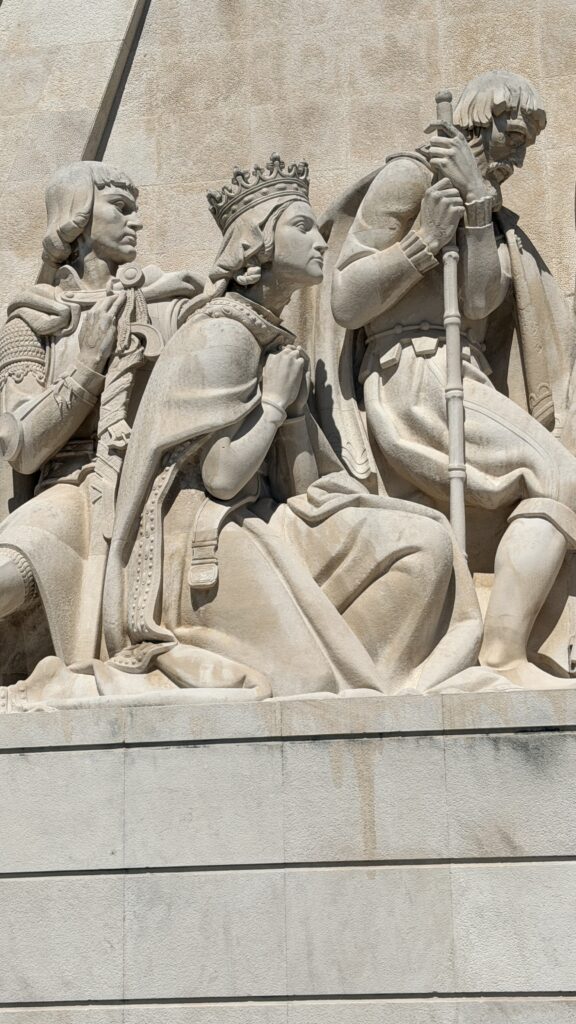
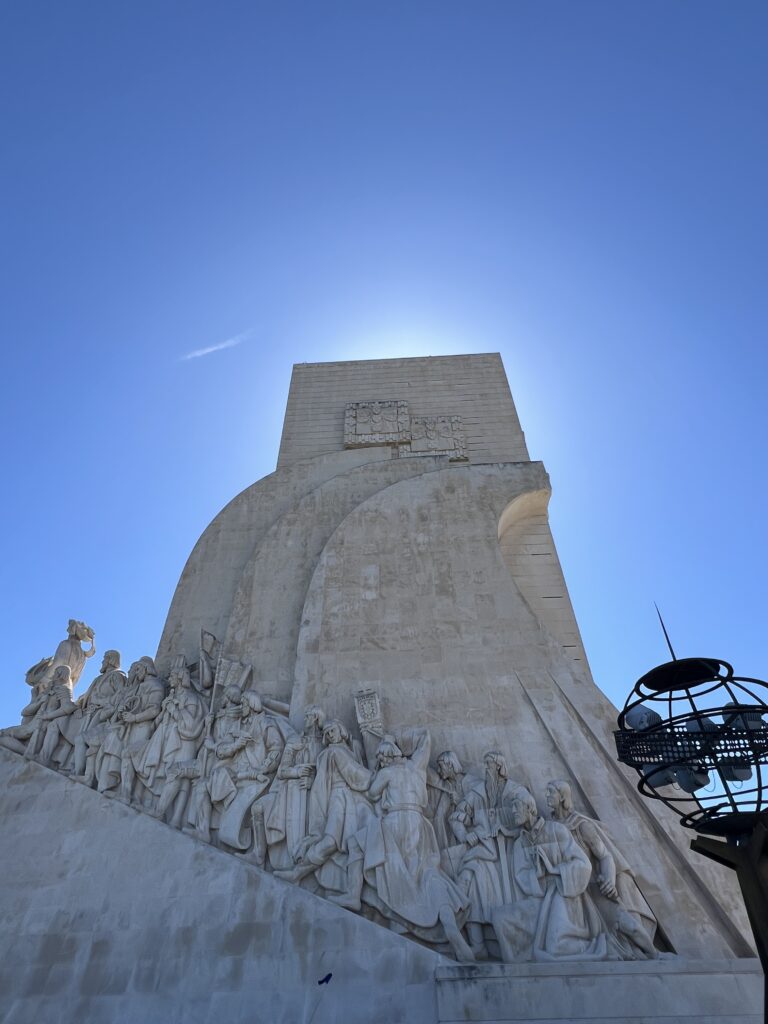
The area around the monument
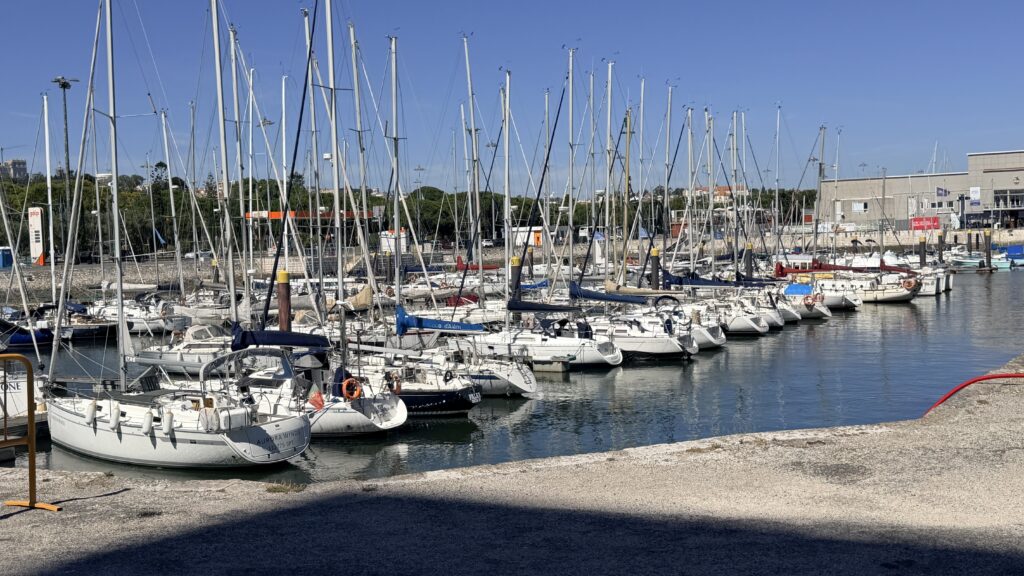
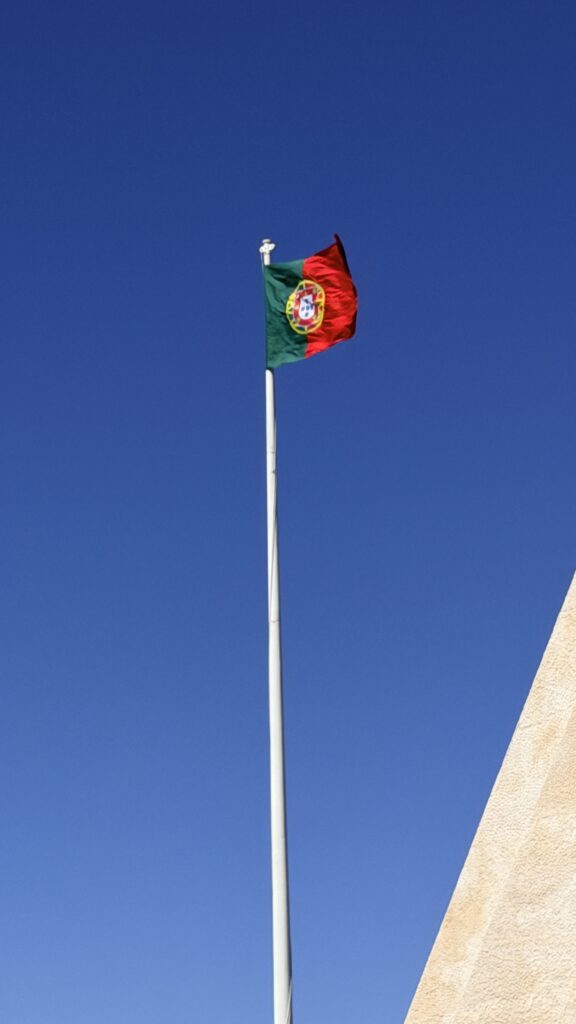
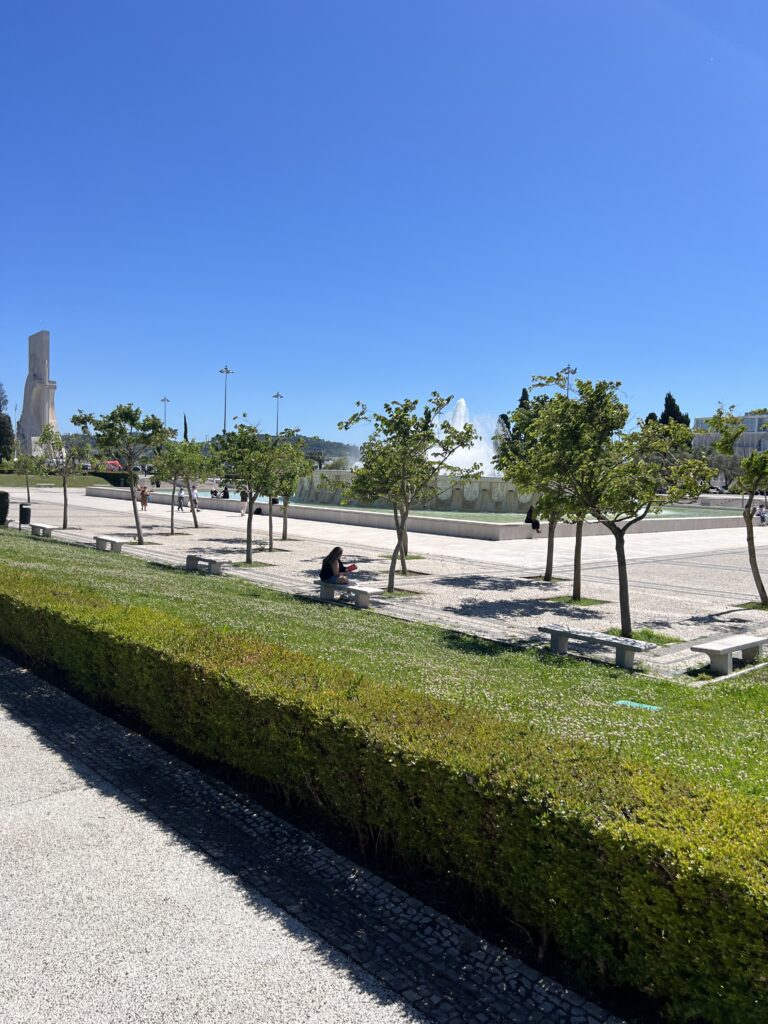
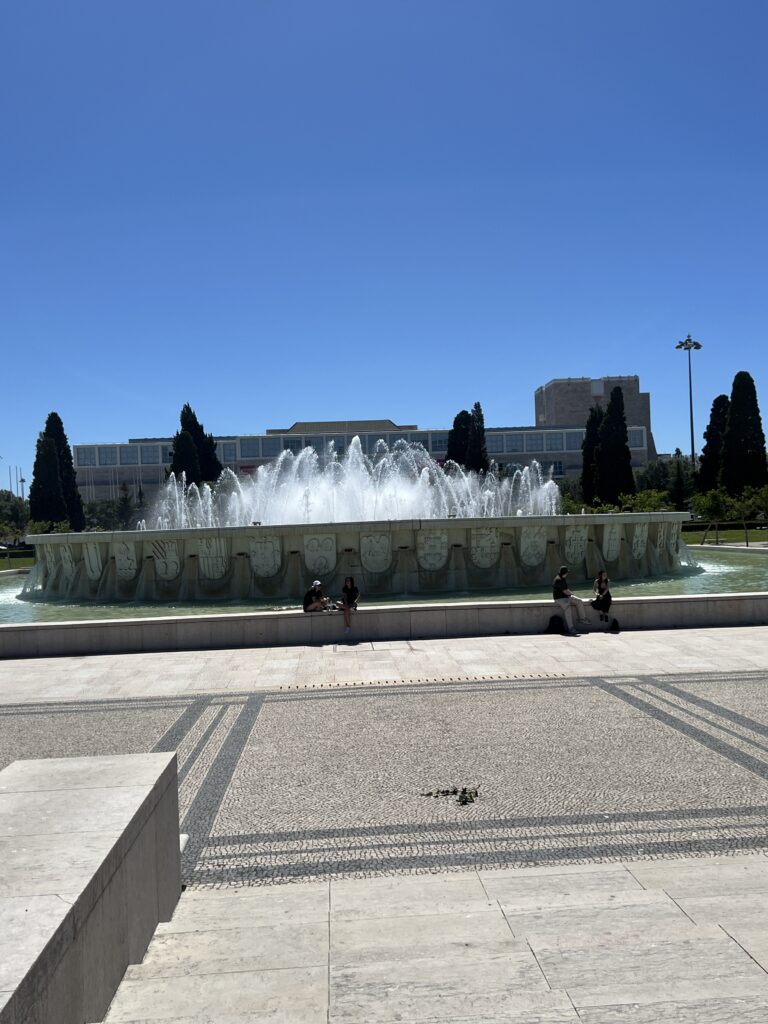


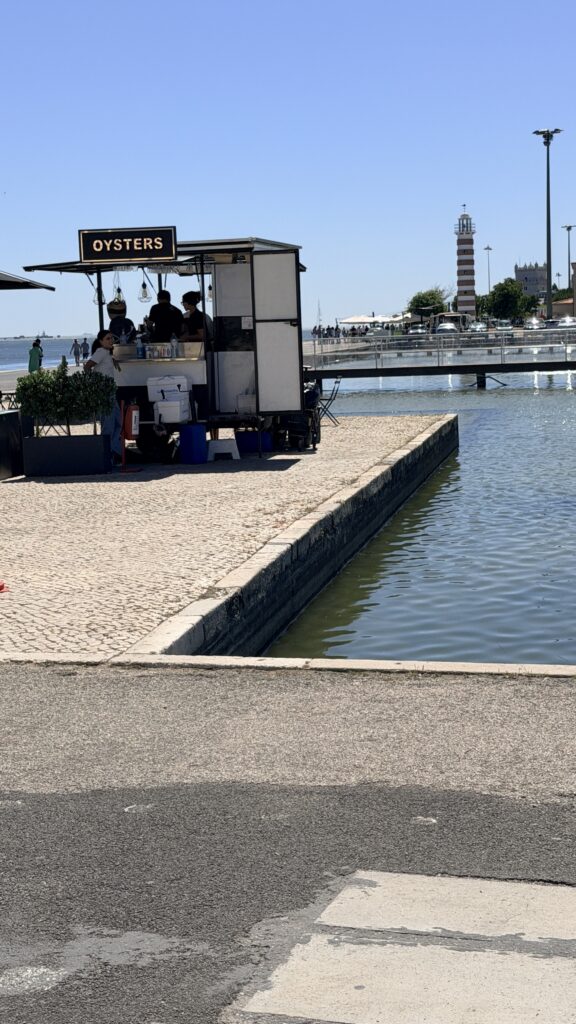
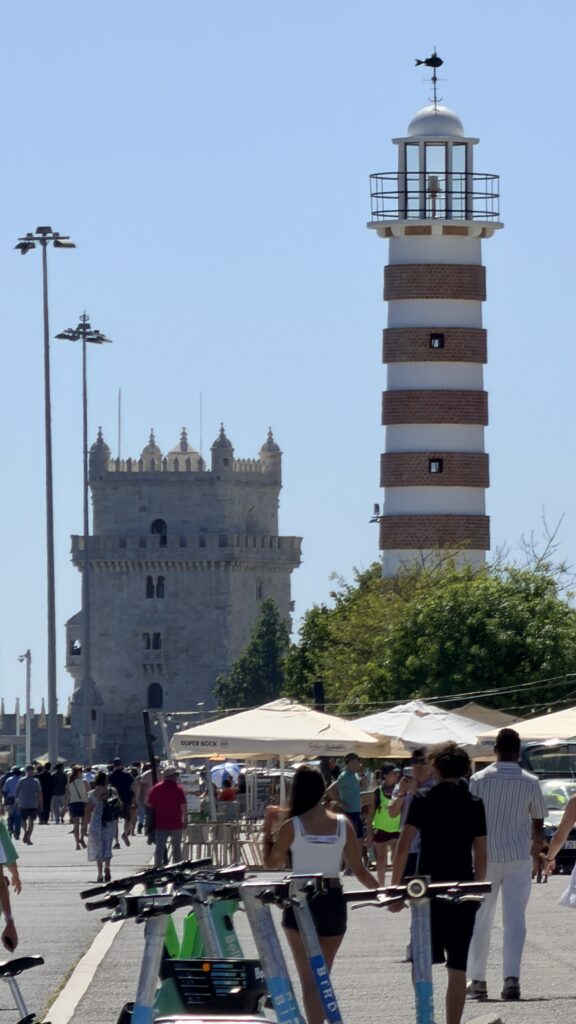
About 1/2 mile away is the Belem Tower. The tower is under massive renovations as the sea water has eaten away at the base.
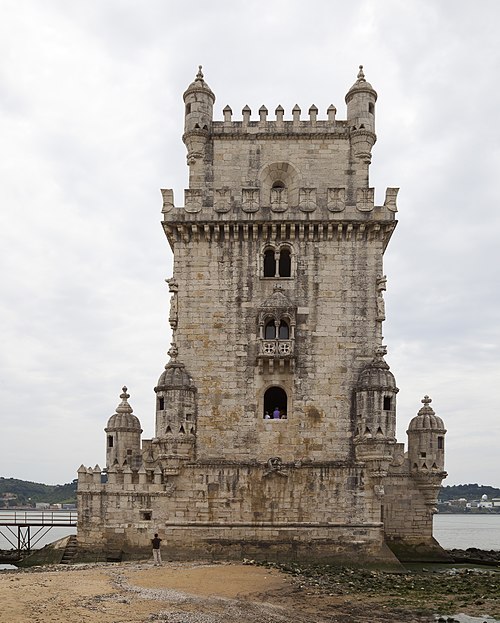
Belém Tower (Portuguese: Torre de Belém, pronounced [ˈtoʁɨ ðɨ βɨˈlɐ̃j]; literally: Bethlehem Tower), officially the Tower of Saint Vincent (Portuguese: Torre de São Vicente), is a 16th-century fortification located in Lisbon, Portugal, which served as a point of embarkation and disembarkation for Portuguese explorers and as a ceremonial gateway to Lisbon. The tower symbolizes Portugal’s maritime and colonial power in early modern Europe. It was built during the height of the Portuguese Renaissance and is a prominent example of the Portuguese Manueline style, but it also incorporates other architectural styles, such as the minarets, which are inspired by Moorish architecture. The structure was built from lioz limestone, a material local to the Lisbon region, and is composed of a bastion and a 30-metre (100 ft) four-story tower.
The Belém Tower, a UNESCO World Heritage Site, is one of Lisbon’s most striking monuments and the icon of a country historically moulded by its proximity to the ocean and its maritime discoveries of new worlds.
Discoveries by Portuguese navigators transformed Lisbon into the world’s main trade hub in the 15th and 16th centuries.
To protect the city, King João II conceived a pioneer project to defend Lisbon from enemy ships, a work completed in 1514 and which included the building of the Belém Tower, designed by architect Francisco de Arruda.
The tower’s unique design includes a modern and heavily armed bastion, protruding over the river.
King Manuel I clearly wished the Belém Tower to stand as a lasting symbol of his powerful reign by depicting the royal coat of arms, the armillary sphere and the cross of the Order of Christ.
Since 1983, the tower has been a UNESCO World Heritage Site, along with the Jerónimos Monastery. It is often portrayed as a symbol of Europe’s Age of Discoveries and as a metonym for Portugal or Lisbon, given its landmark status. It has incorrectly been stated that the tower was built in the middle of the Tagus and now sits near the shore because the river was redirected after the 1755 Lisbon earthquake. In fact, the tower was built on a small island in the Tagus river near the Lisbon shore.
Our day in Lisbon was finished and we contacted the Tuk Tuk driver to meet us and return us to the ship. His name was Maro.

Before getting on the ship we stopped at the duty free store in the terminal to pick up a few things including this