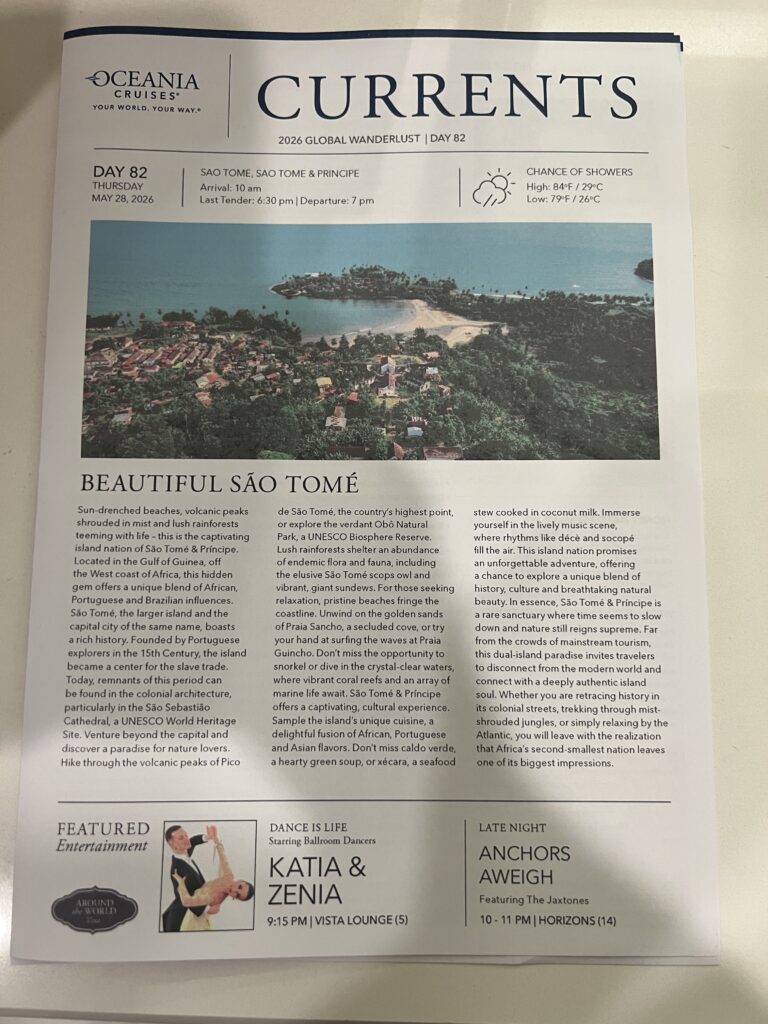
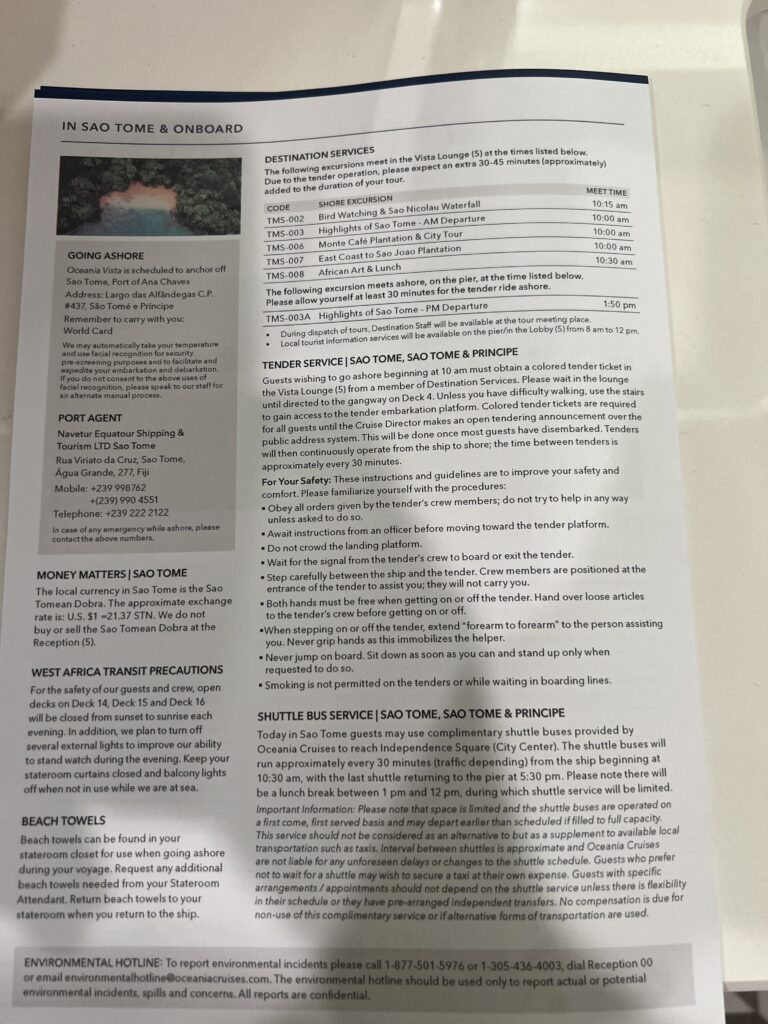
Day 82 Thursday May 28th (38 days to go) — Today we did an Oceania excursion called Highlights of Sao Tome. We were supposed to start the excursion by visiting the Sao Tome National Museum that is housed in the fortress, but the museum was closed so we missed the stop. The next stop was to a fishing village, and we viewed a folkloric dance. The visit to this village had a hilarious event and I will explain later. We also visited the Sao Tome Cathedral and a walk to Independence Square.
The morning excursions were late in starting so our afternoon excursion started 45 minutes late. Even with the late start the guide and driver did their best in providing us time to visit the other scheduled locations and made a couple of extra stops that were not scheduled.
Sadly, the city and country are quite poor. But, like we have seen in other ports when this is the case, people still have smiles on the faces as they go about their lives.
São Tomé and Príncipe, officially the Democratic Republic of Sao Tome and Principe, is an island country in the Gulf of Guinea, off the western equatorial coast of Central Africa. It consists of two archipelagos around the two main islands of São Tomé and Príncipe, about 81 nautical miles (150 km; 93 mi) apart and about 135 and 121 nautical miles (250 and 224 km; 155 and 139 mi) off the northwestern coast of Gabon. With a population of 201,800 (2018 official estimate), São Tomé and Príncipe is the second-smallest and second-least populous African sovereign state after Seychelles.
The islands were uninhabited until Portuguese explorers João de Santarém and Pedro Escobar became the first to discover them on 21 December 1470. Gradually colonized and settled throughout the 16th century, they collectively served as a vital commercial and trade center for the Atlantic slave trade. The rich volcanic soil and proximity to the equator made São Tomé and Príncipe ideal for sugar cultivation, followed later by cash crops such as coffee and cocoa. The lucrative plantation economy was heavily dependent upon enslaved Africans. Cycles of social unrest and economic instability throughout the 19th and 20th centuries culminated in peaceful independence in 1975 as a one-party communist state, which would remain in place until 1990. São Tomé and Príncipe has since remained one of Africa’s most stable and democratic countries. São Tomé and Príncipe is a developing economy with a medium Human Development Index.
The people of São Tomé and Príncipe are predominantly of African and mestiço (mixed European and African) descent, with most practicing Christianity. The legacy of Portuguese rule is also visible in the country’s culture, customs, and music, which fuse both European and African influences. São Tomé and Príncipe is a founding member state of the Community of Portuguese Language Countries.
The total population was estimated at 201,800 in May 2018. About 193,380 people live on São Tomé and 8,420 on Príncipe. The natural population increase is about 4,000 people per year.
Nearly all citizens are descended from people from different countries taken to the islands by the Portuguese from 1470 onwards. In the 1970s, two significant population movements occurred — the exodus of most of the 4,000 Portuguese residents and the influx of several hundred São Tomé refugees from Angola.
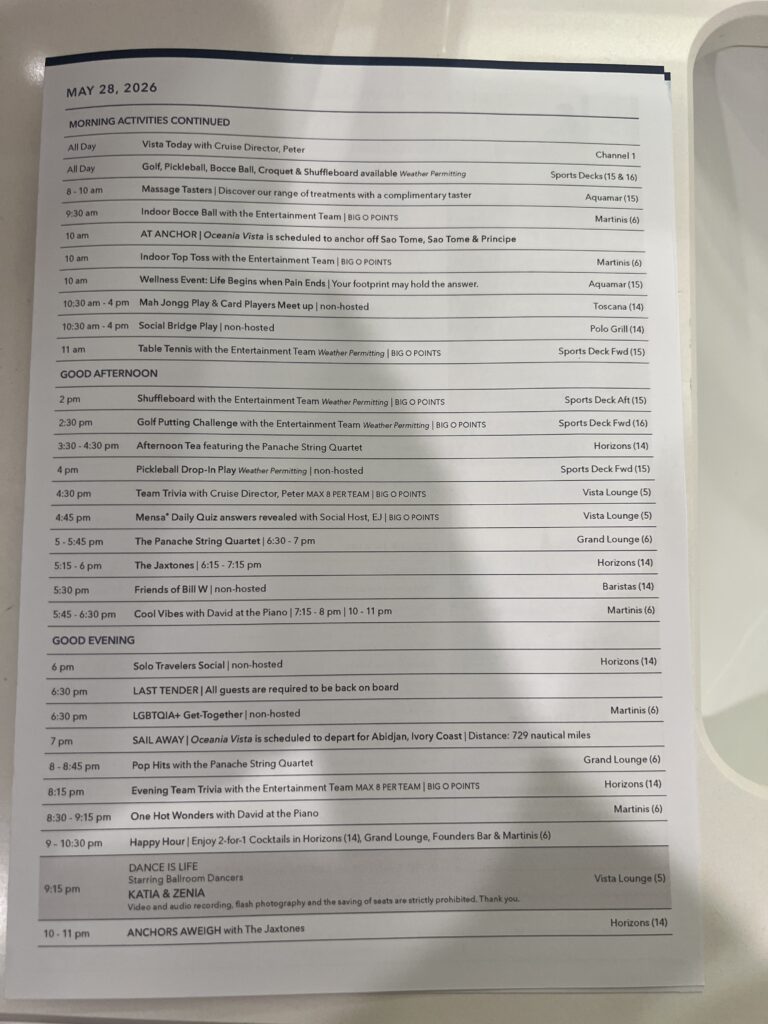
Three photos from the ship as we anchored off the coast of Sao Tome. The large rain cloud hung around most of the day, but we had no rain.
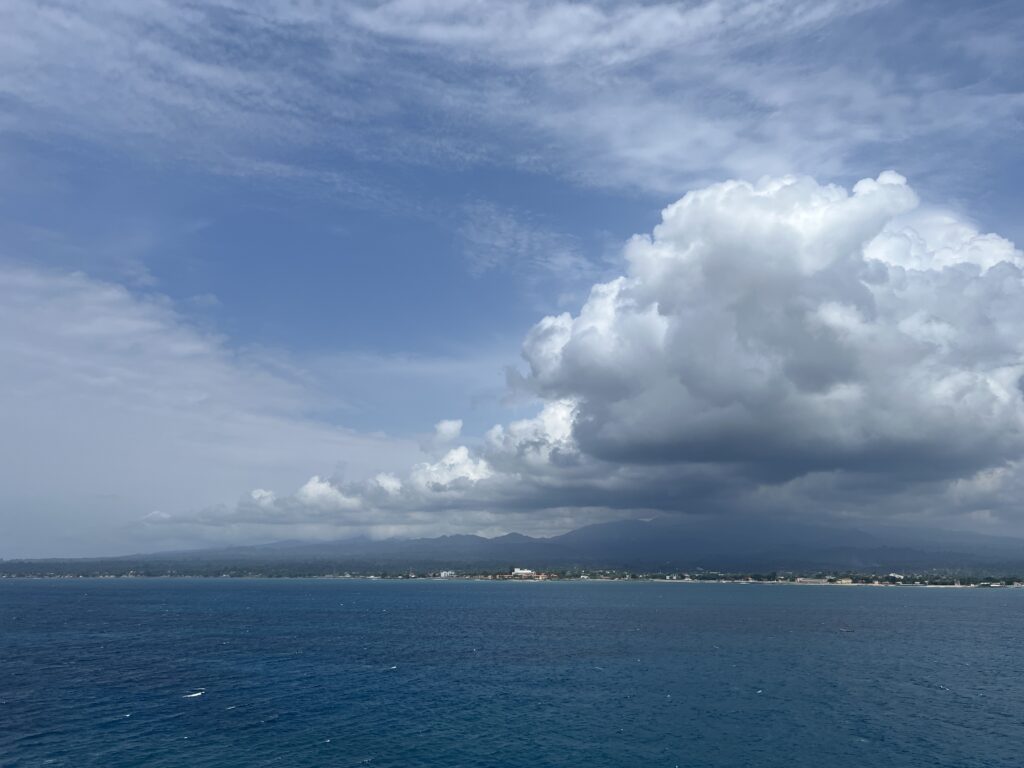
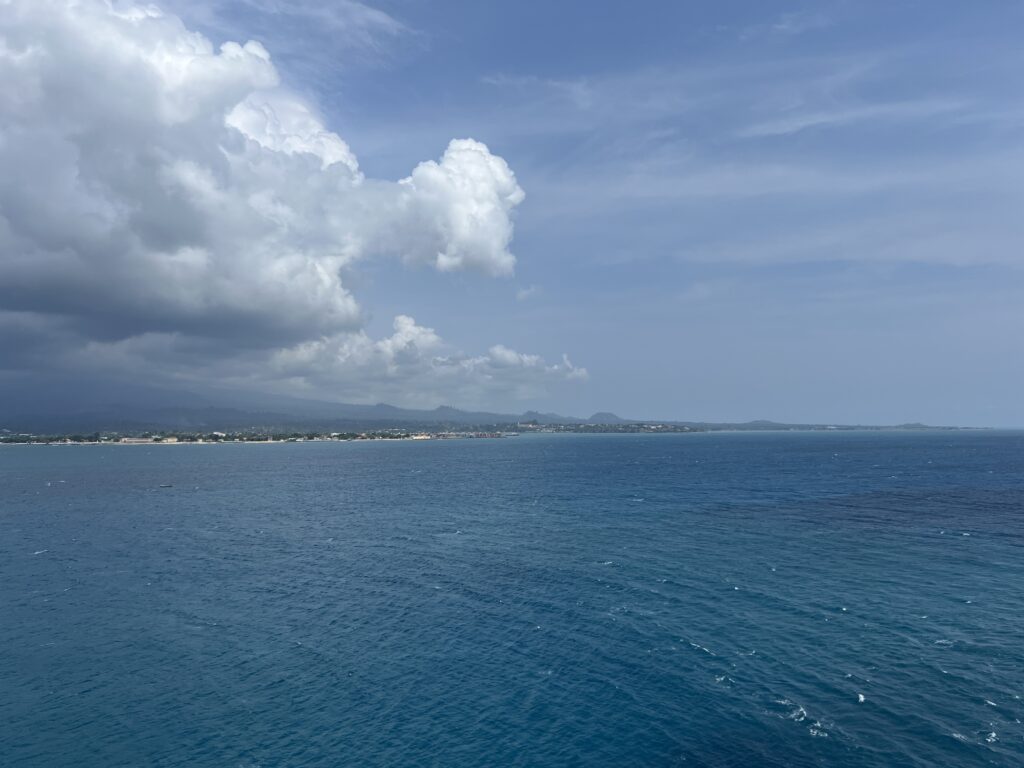
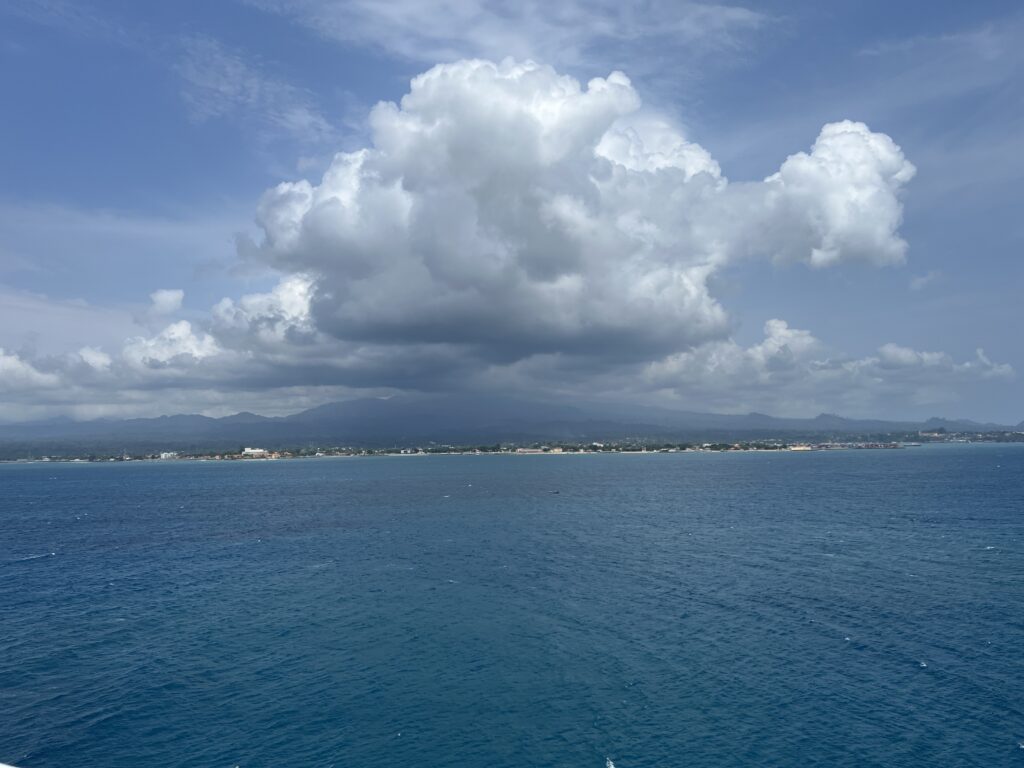
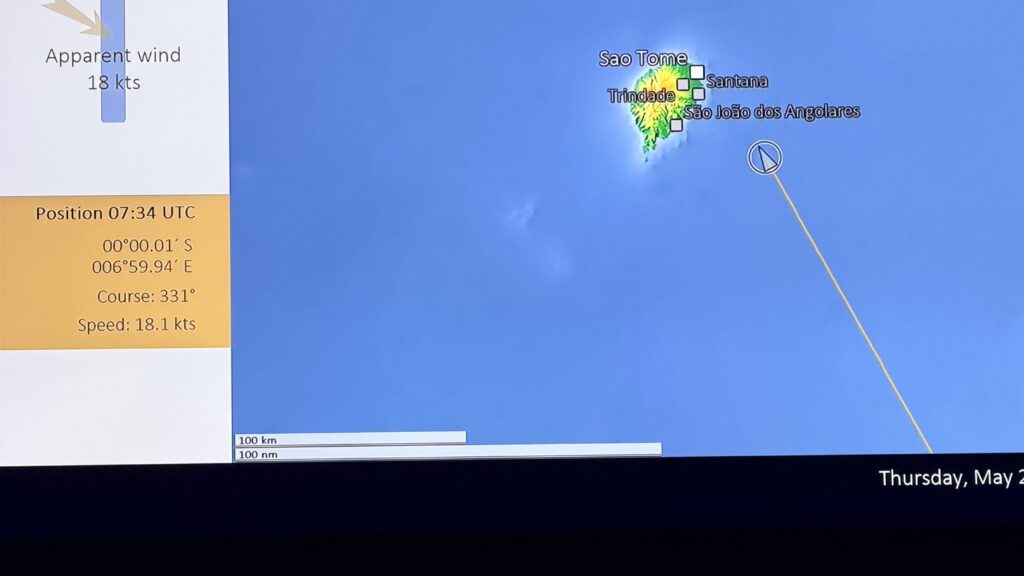
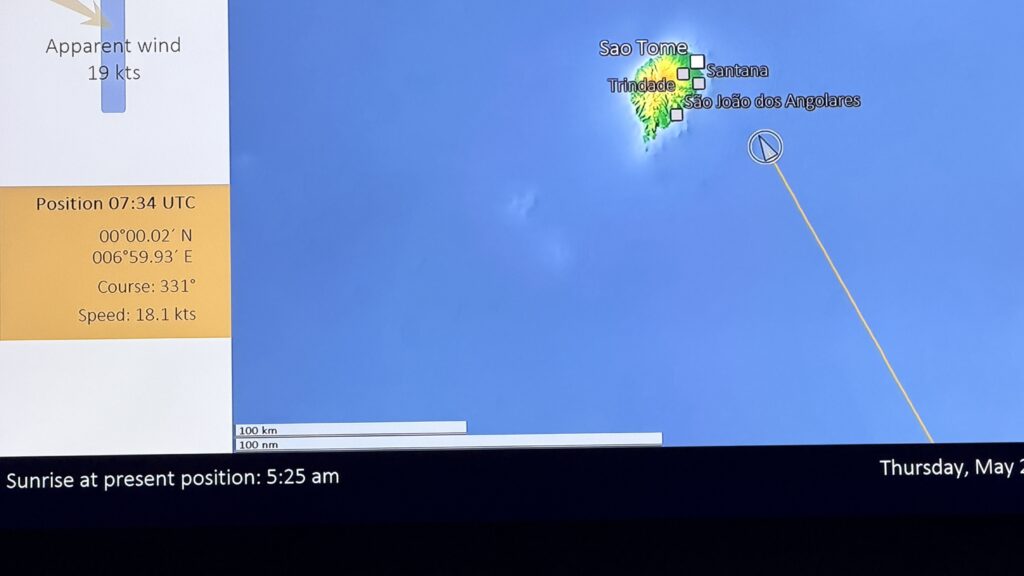
As we got closer to Sao Tome, we crossed the equator the 4th time on this world cruise
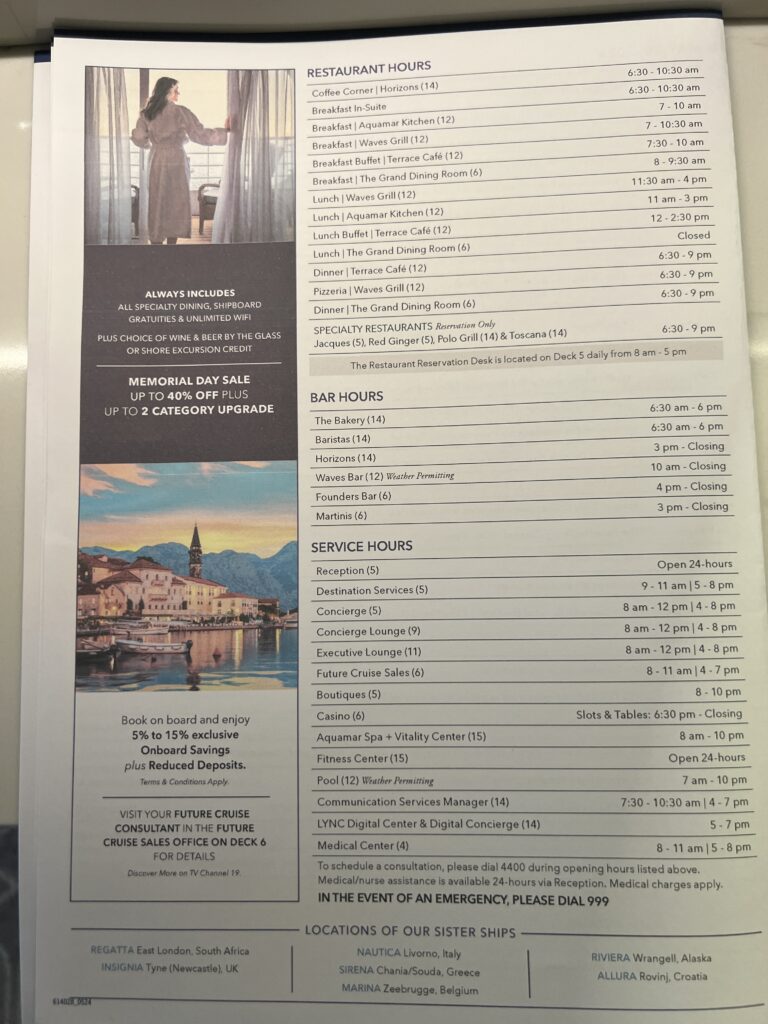
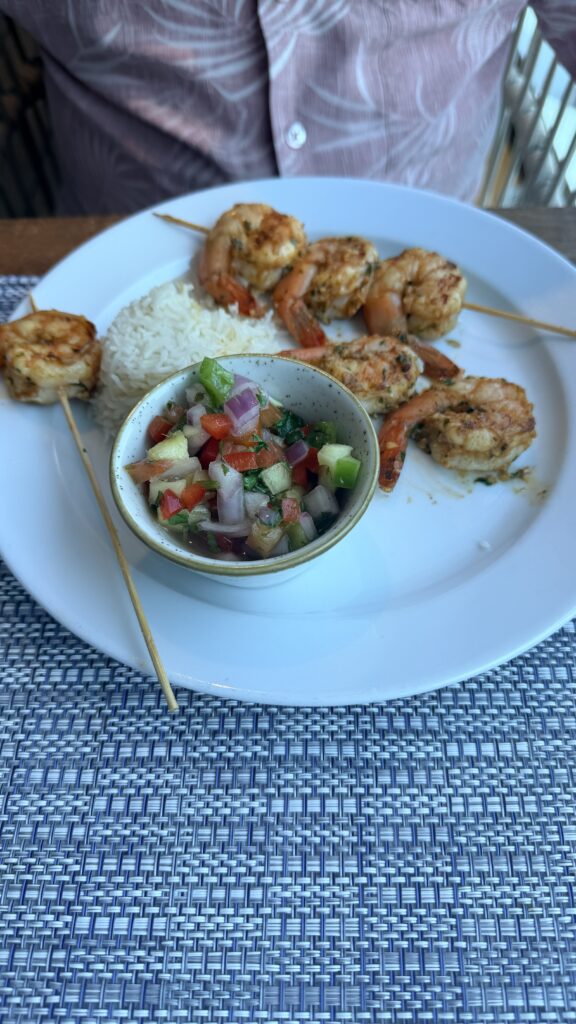
Lane’s lunch today was at Waves. Today’s special was grilled shrimp with white rice and a salsa. It was really good when all mixed together.
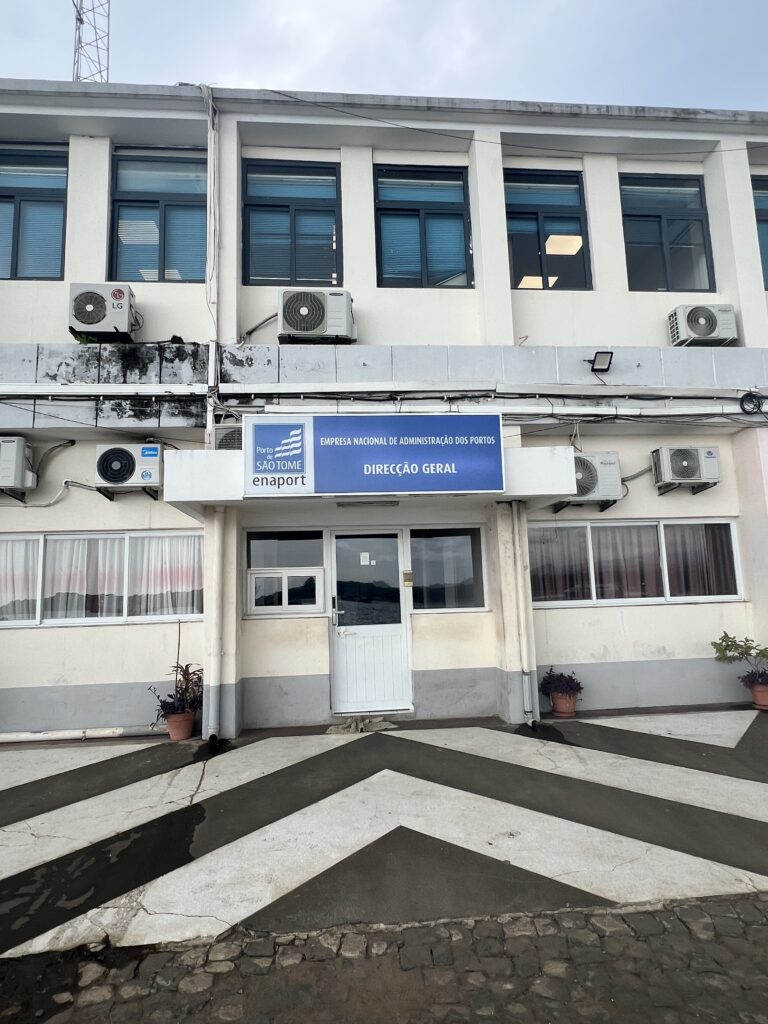
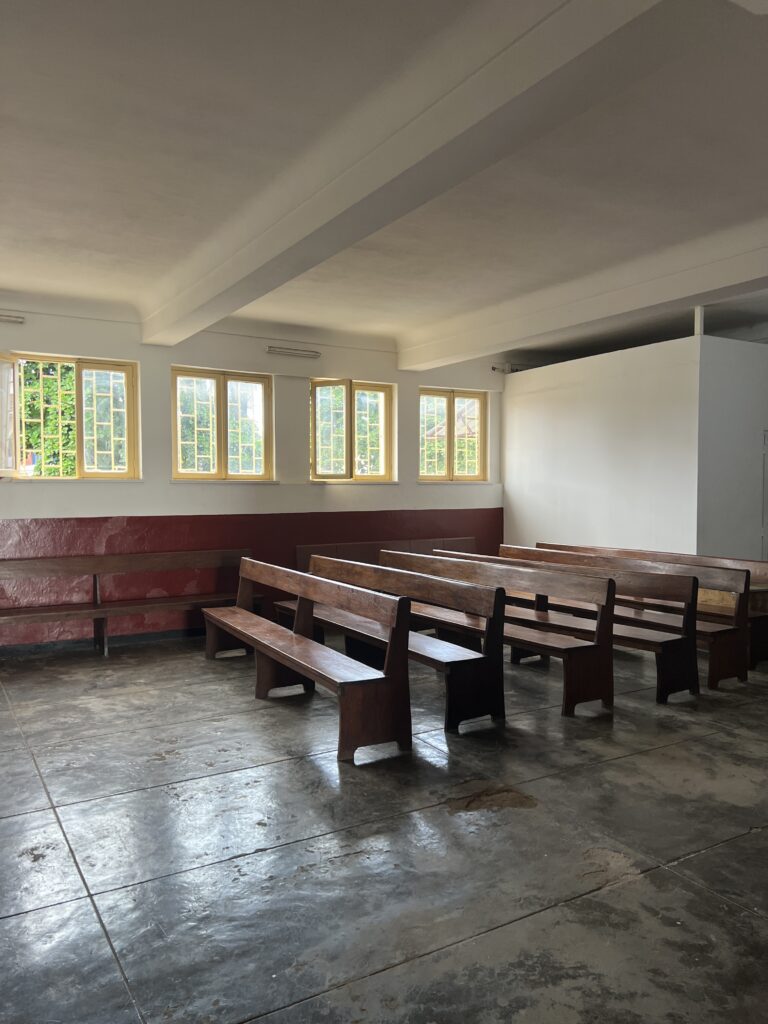
While we waited for the excursion to start we took a walk into the port terminal. There were opened boxes of paper and stacks of paperwork all over the place. I only took a photo of the seats that were used a long time ago.
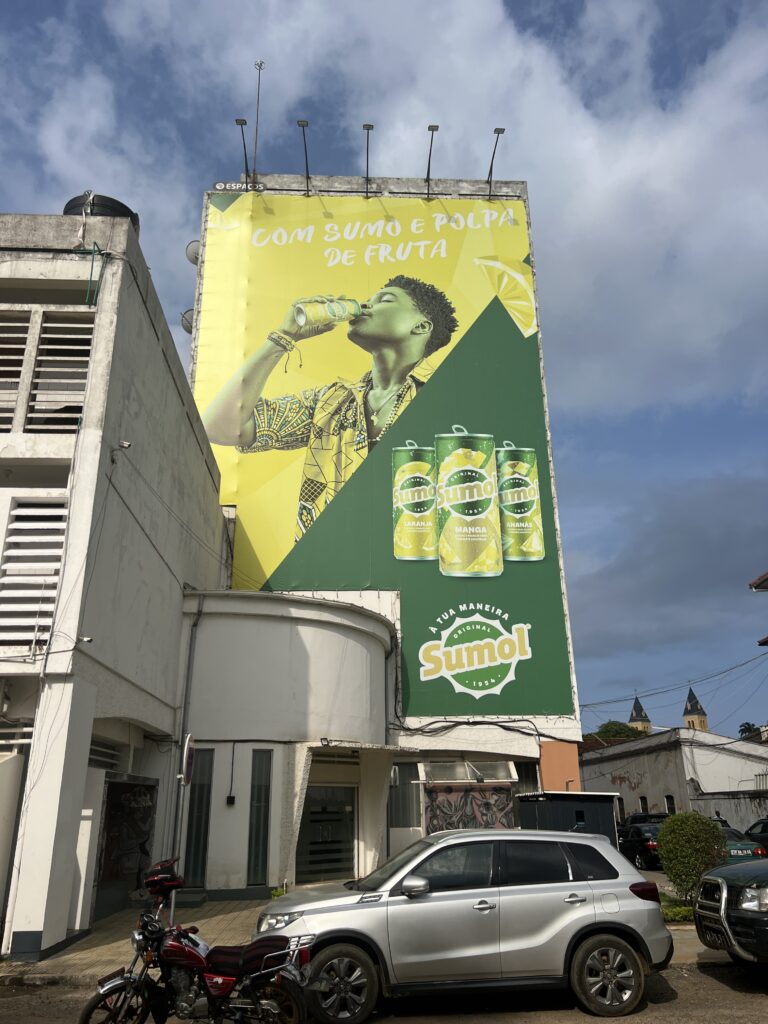
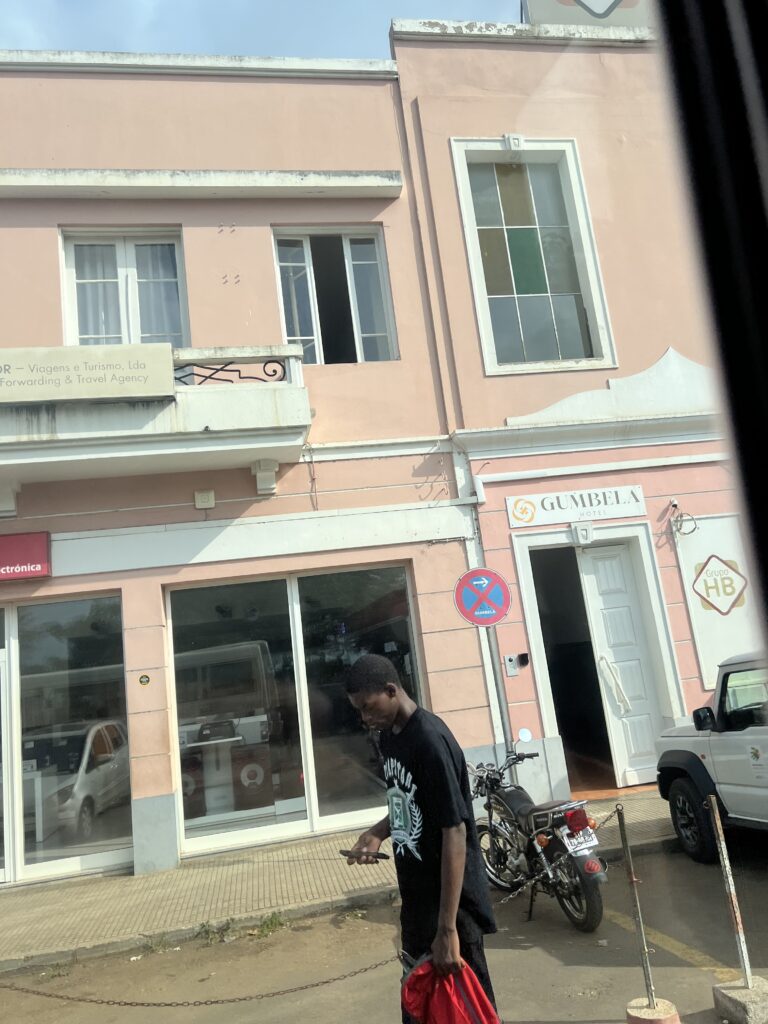
Driving through the streets of Sao Tome on the way to our first stop
The first of a few churches we saw that appear to be no longer in use.
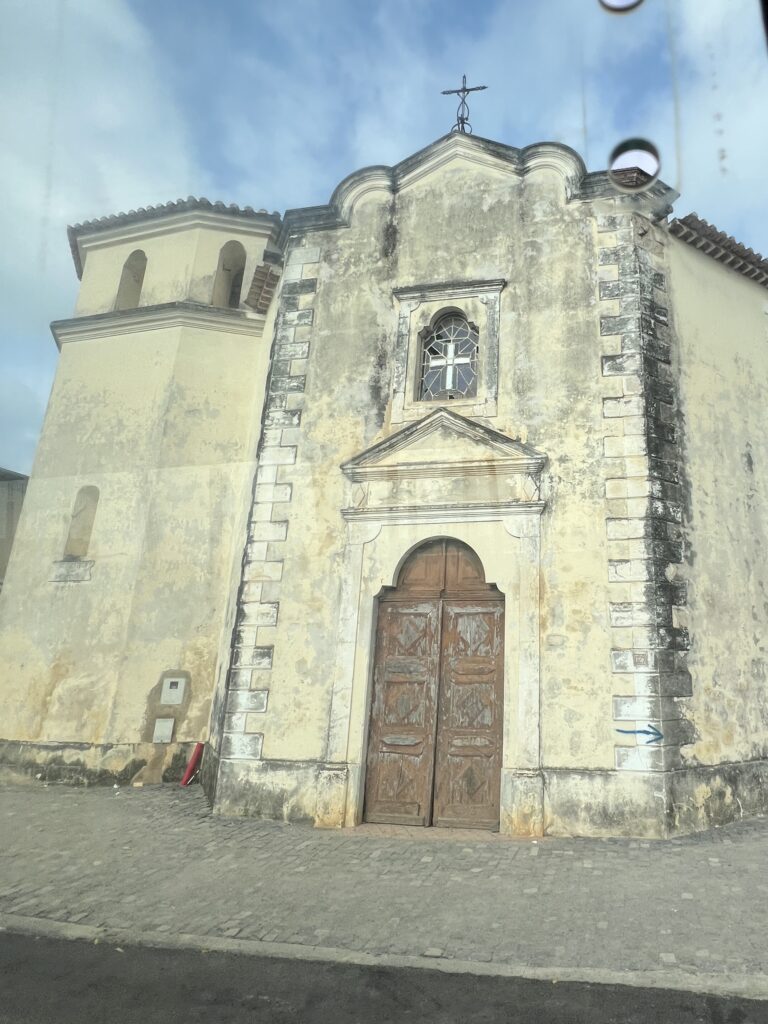
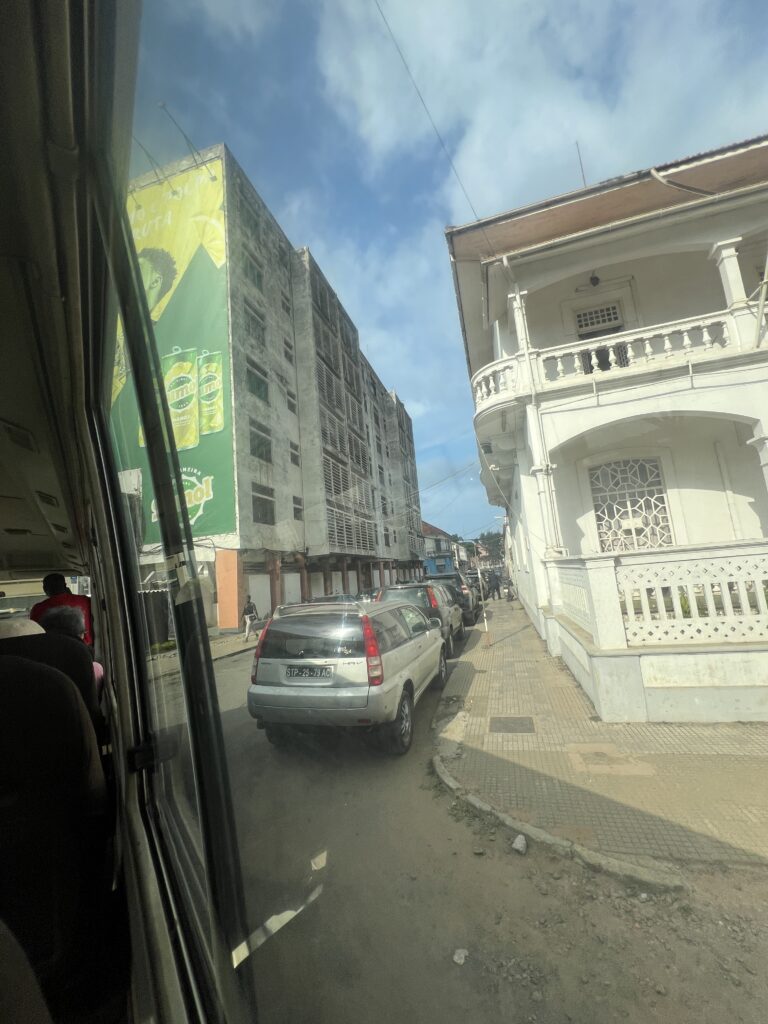
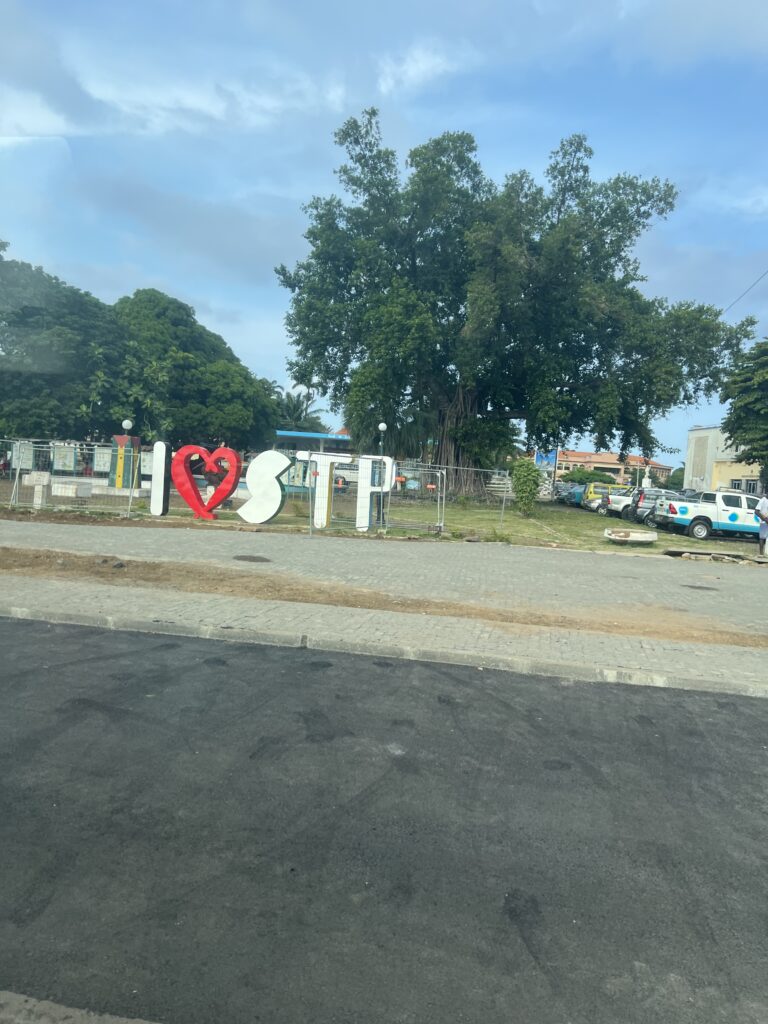
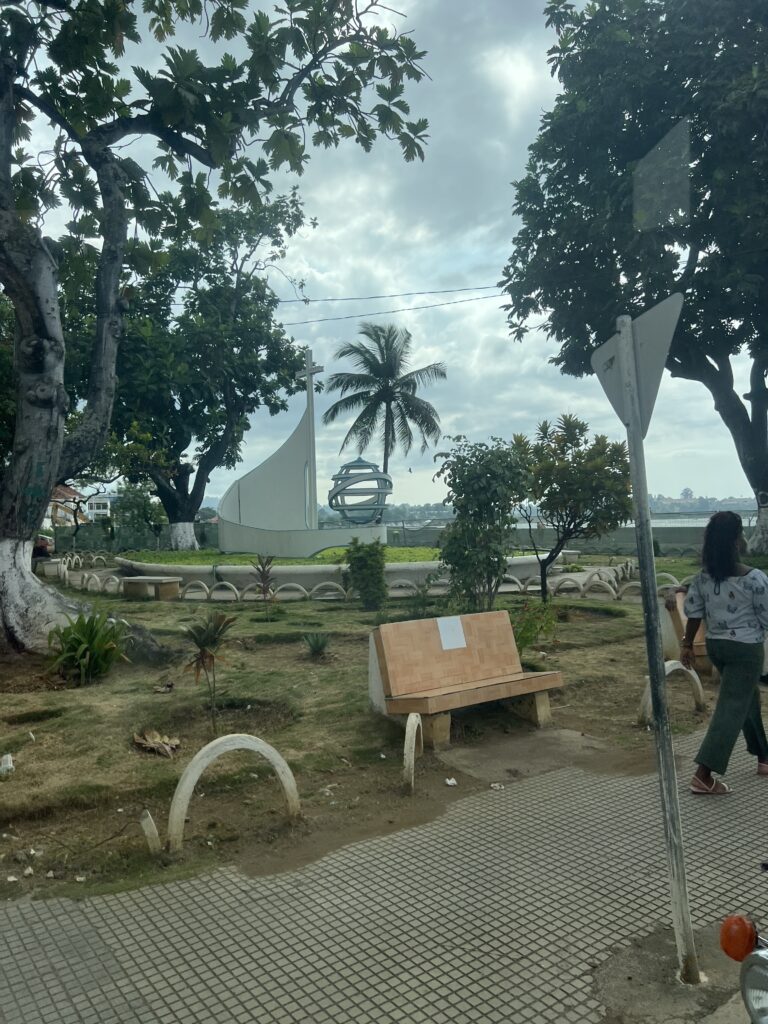
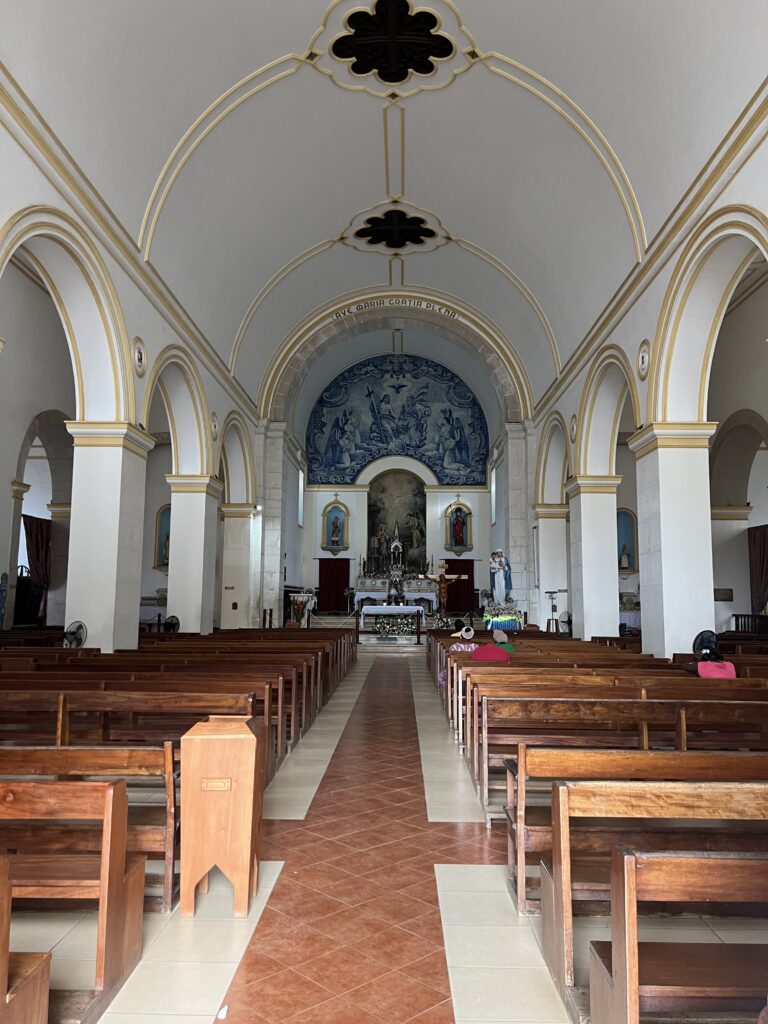
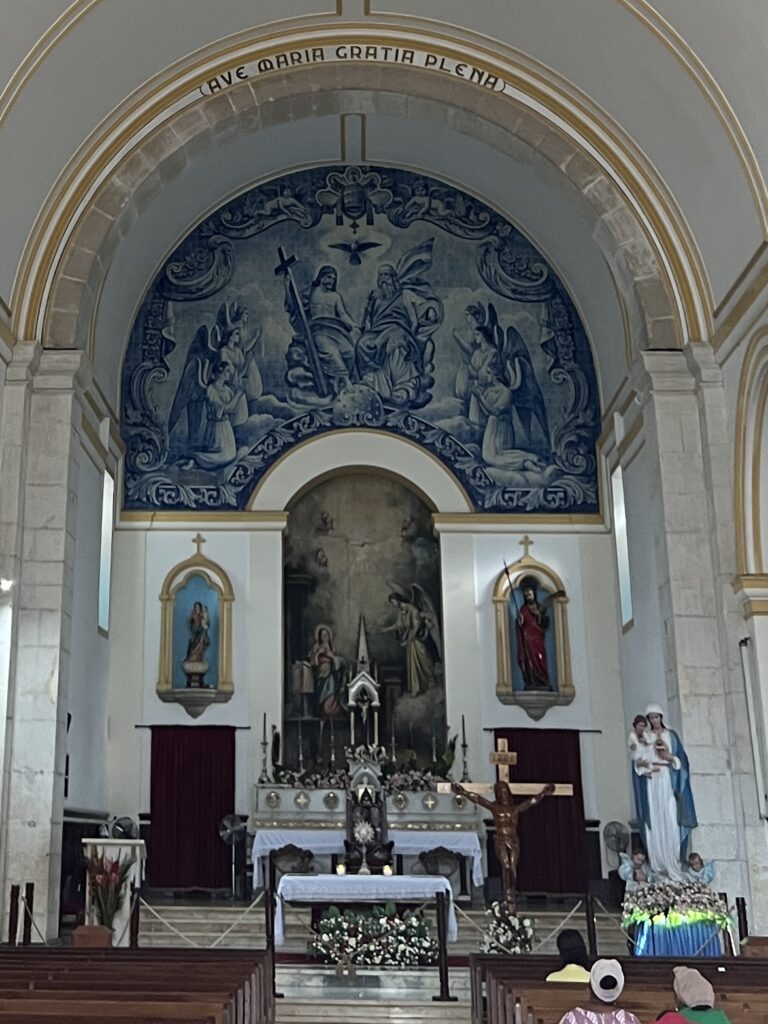
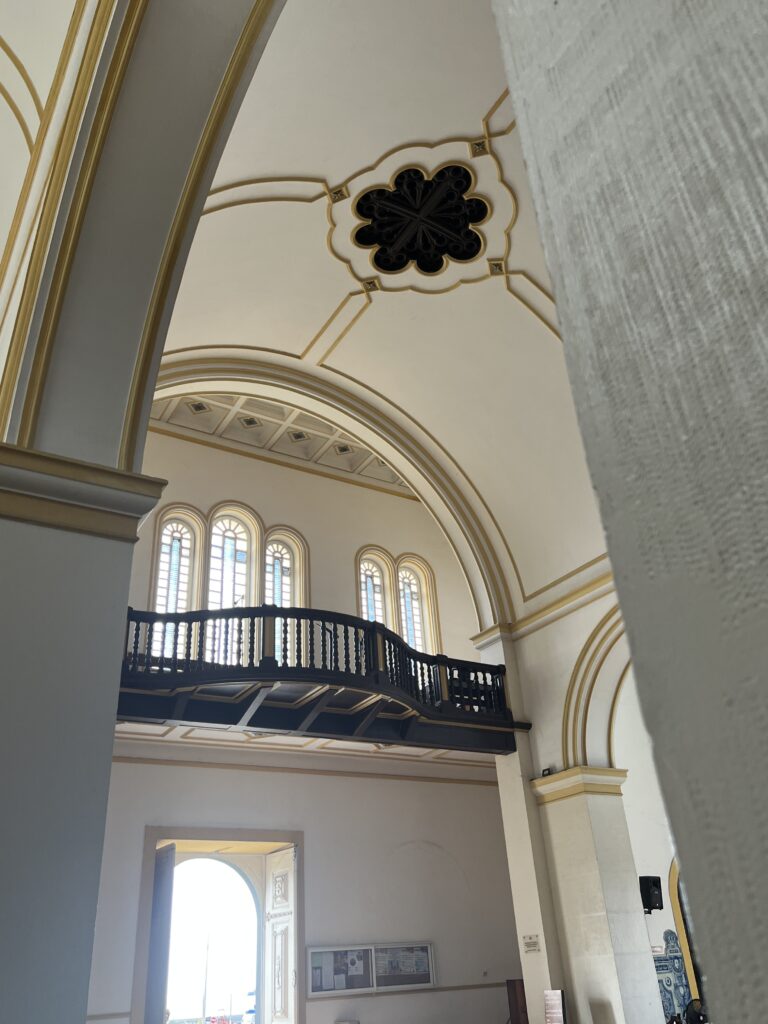
Our first stop was at the Sao Tome Cathedral. The church is not air conditioned and very few windows.
The majority of residents belong to the local branch of the Catholic Church, which in turn retains close ties with the church in Portugal. Sizeable Protestant minorities of Seventh-day Adventists and other Evangelical Protestants exist, as well as a small but growing Muslim population.
The Our Lady of Grace Cathedral (Portuguese: Sé Catedral de Nossa Senhora da Graça), also called Cathedral of São Tomé, is a Catholic church in the city of São Tomé, capital of the African and island country of São Tomé and Príncipe. It is the cathedral of the Roman Catholic Diocese of São Tomé and Príncipe. It stands at Praça do Povo (People’s Square) in the city center, close to the Presidential Palace.
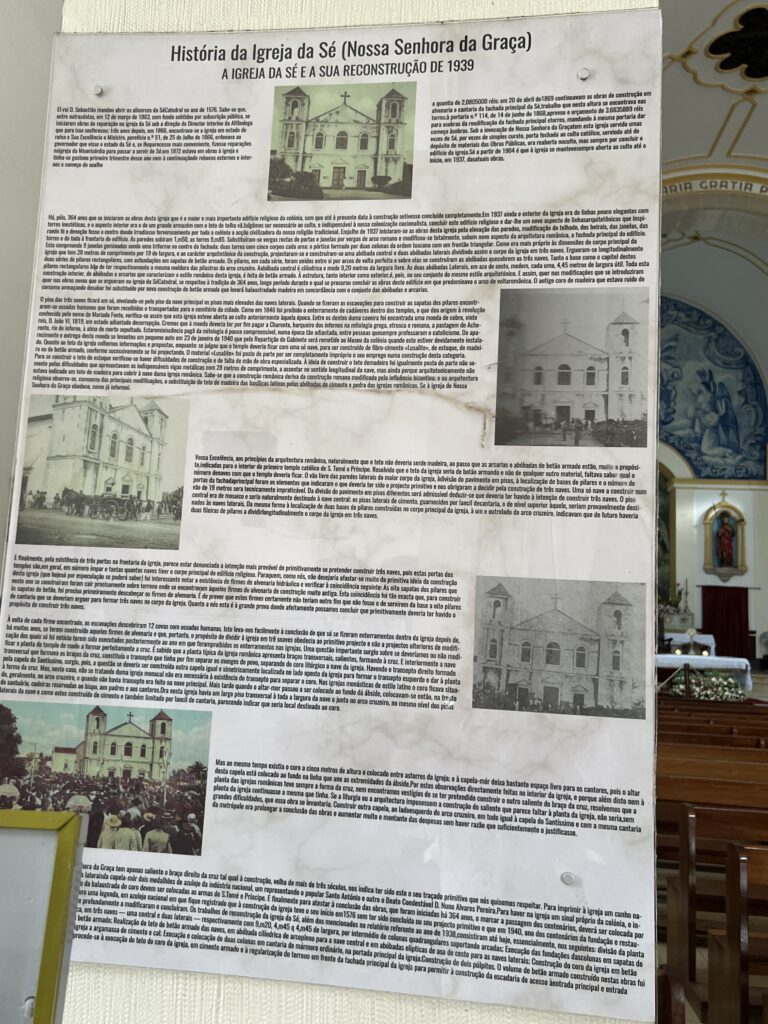
Construction of the first church of Our Lady of Grace was started at the end of the fifteenth century under Captain Álvaro de Caminha. This church was situated near the present cathedral. It became the seat of a diocese in 1534. The building was reconstructed between 1576 and 1578, during the reign of King Sebastian of Portugal. In 1784, it was in poor condition with the frontispiece broken. In 1814 it was rebuilt at the initiative of the local population. The last modification was made in 1956, when the church was remodeled in an eclectic revival style, with a neo-romanesque main façade.
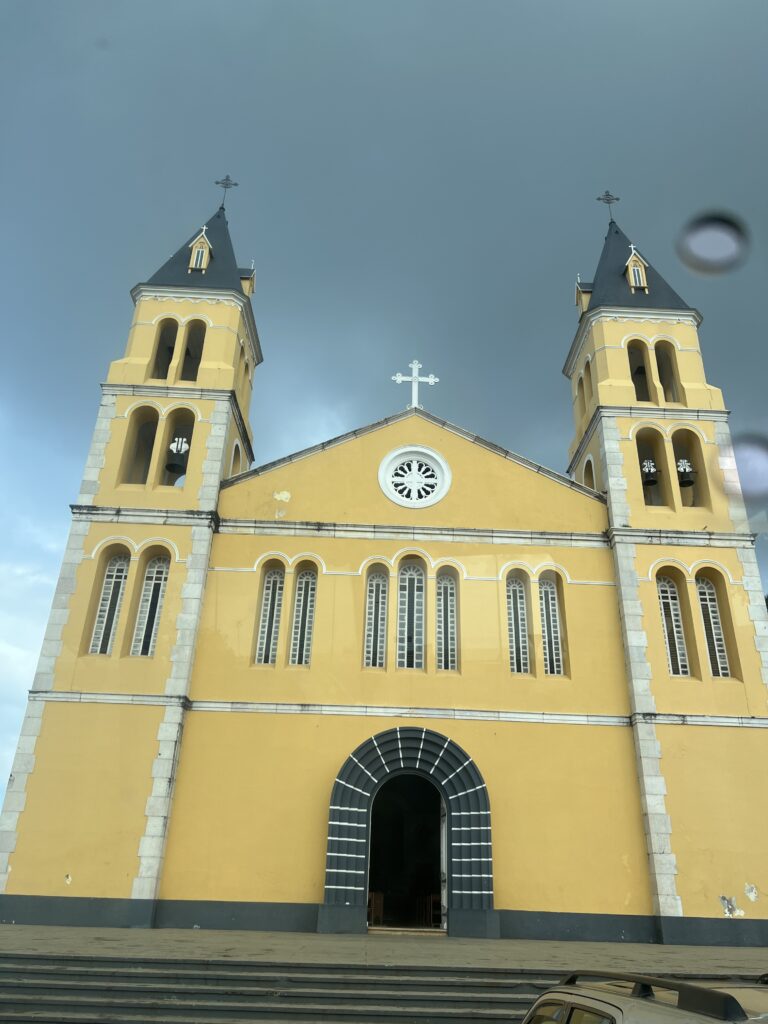
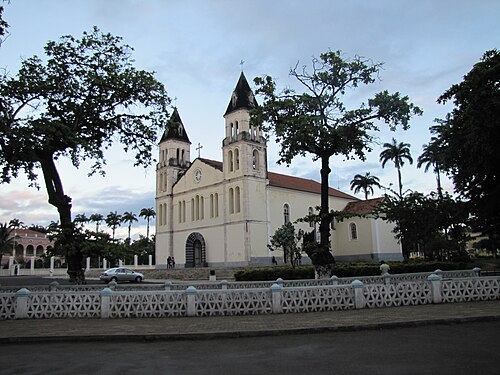
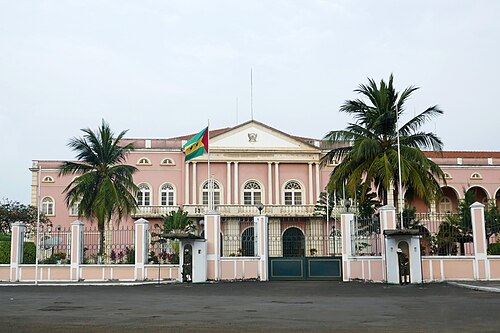
Stock photo of the cathedral with the Presidential Palace to the left in the photo
Baptismal area
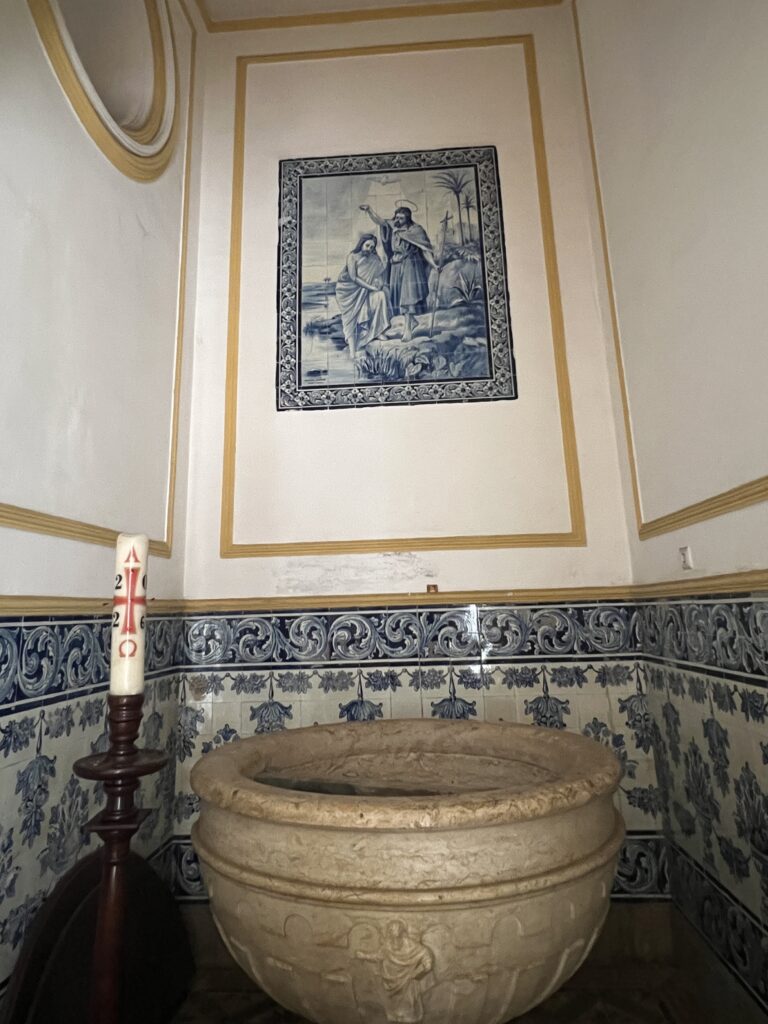
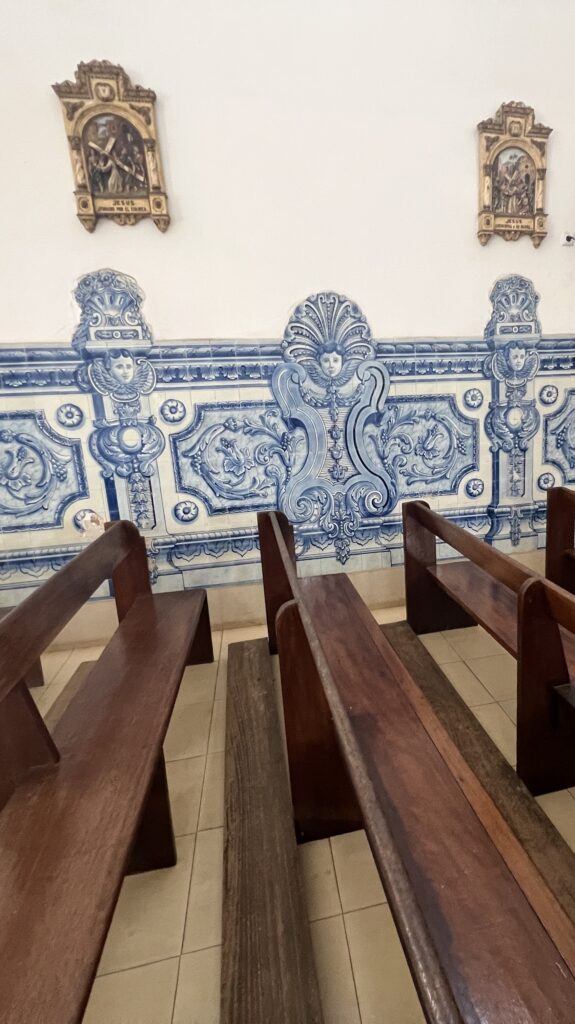
There is ceramic tile on the walls all around the church. The poor people who attend this church, there is no ac and no cushions on the kneelers.
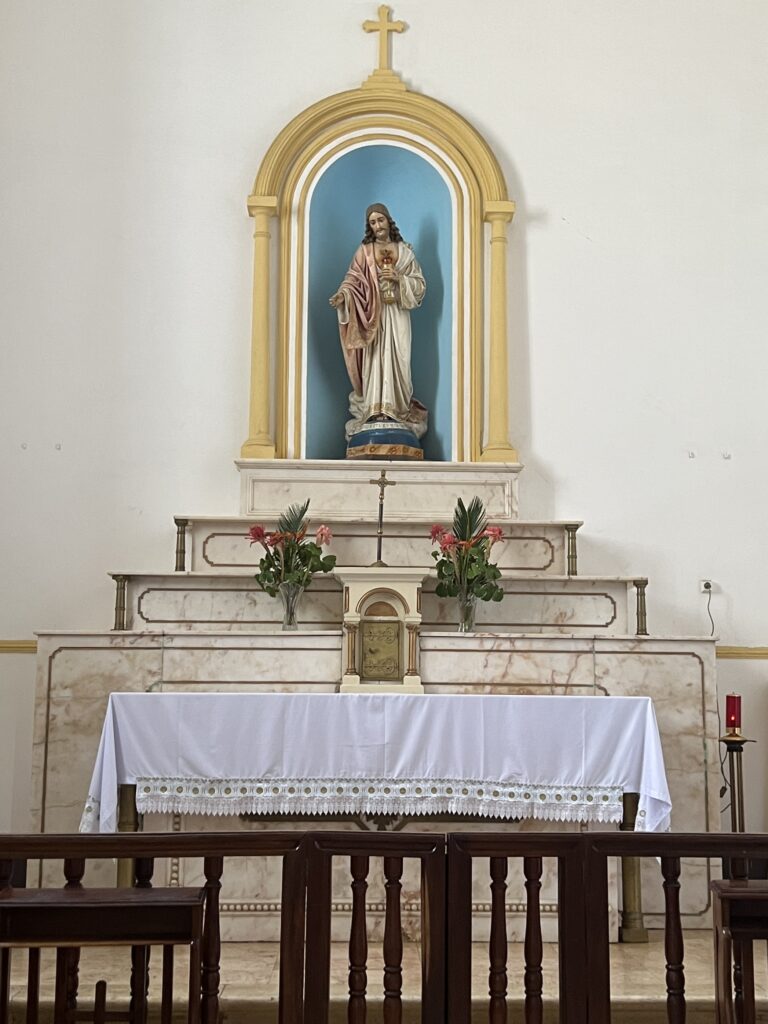
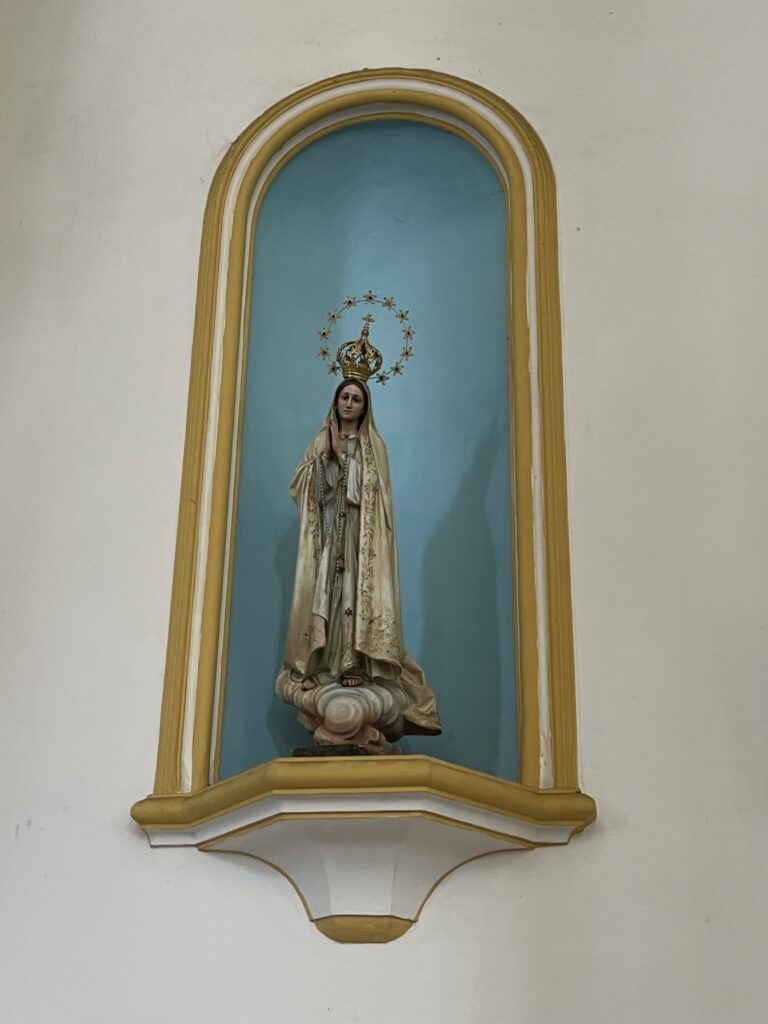
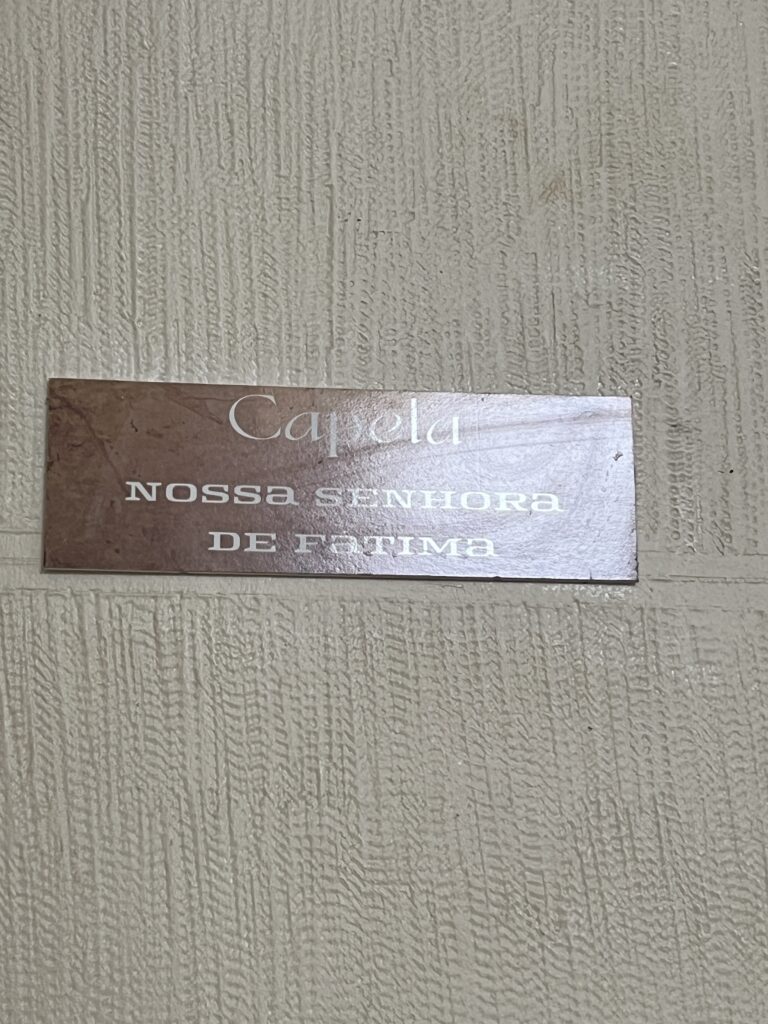
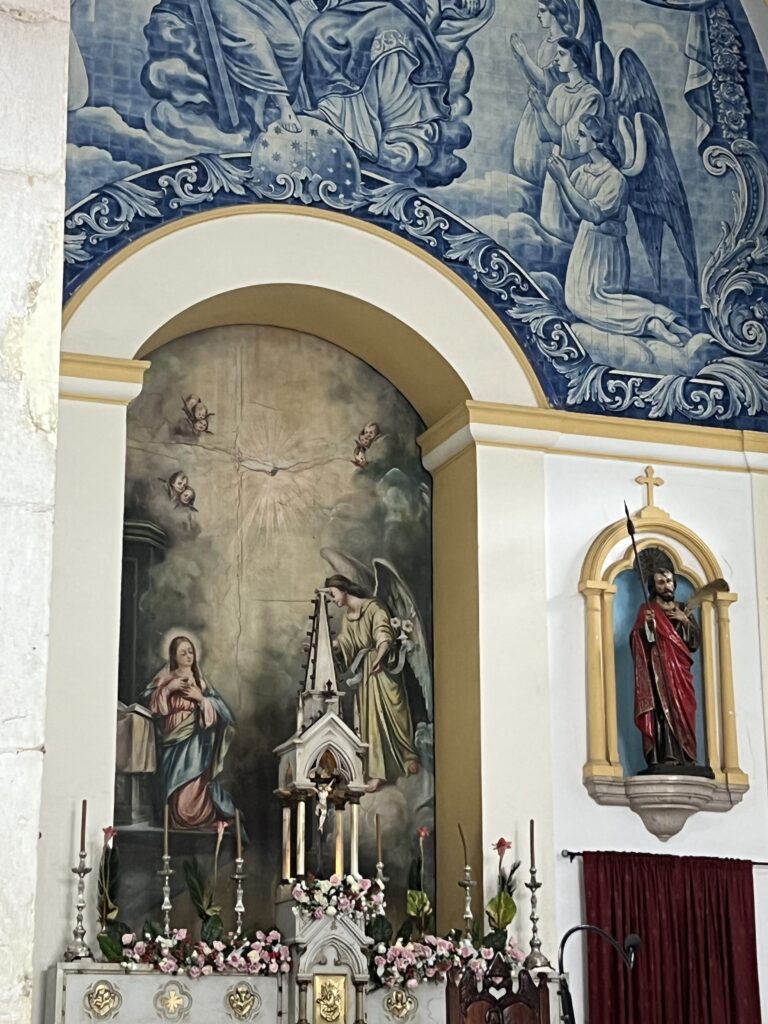
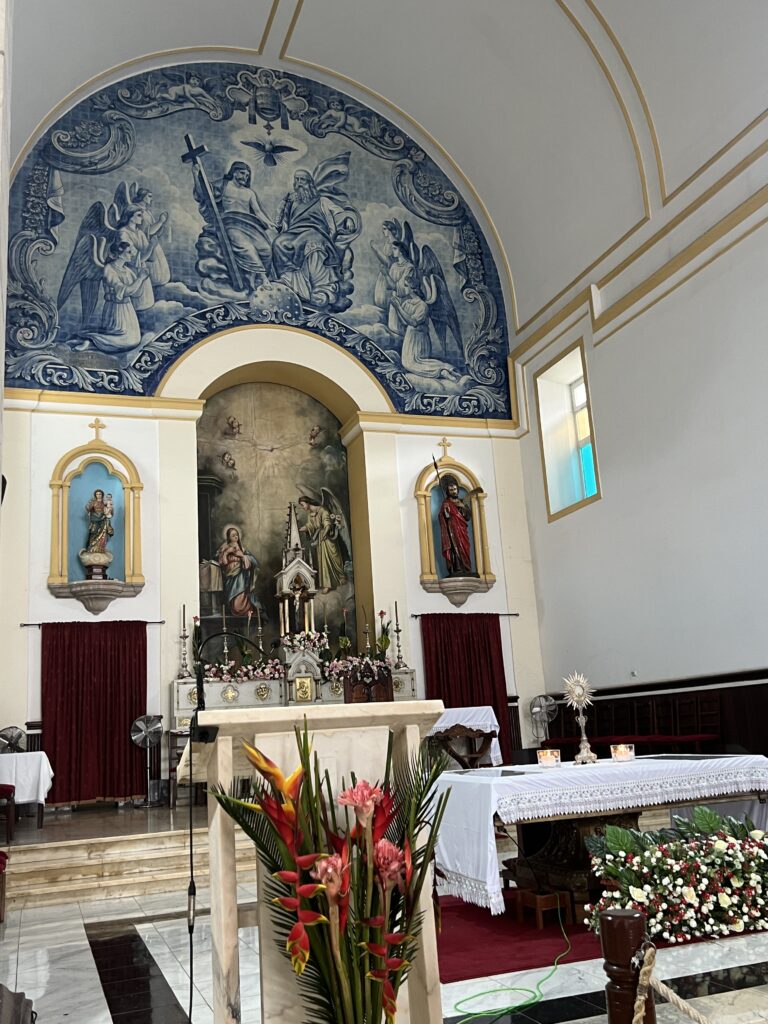
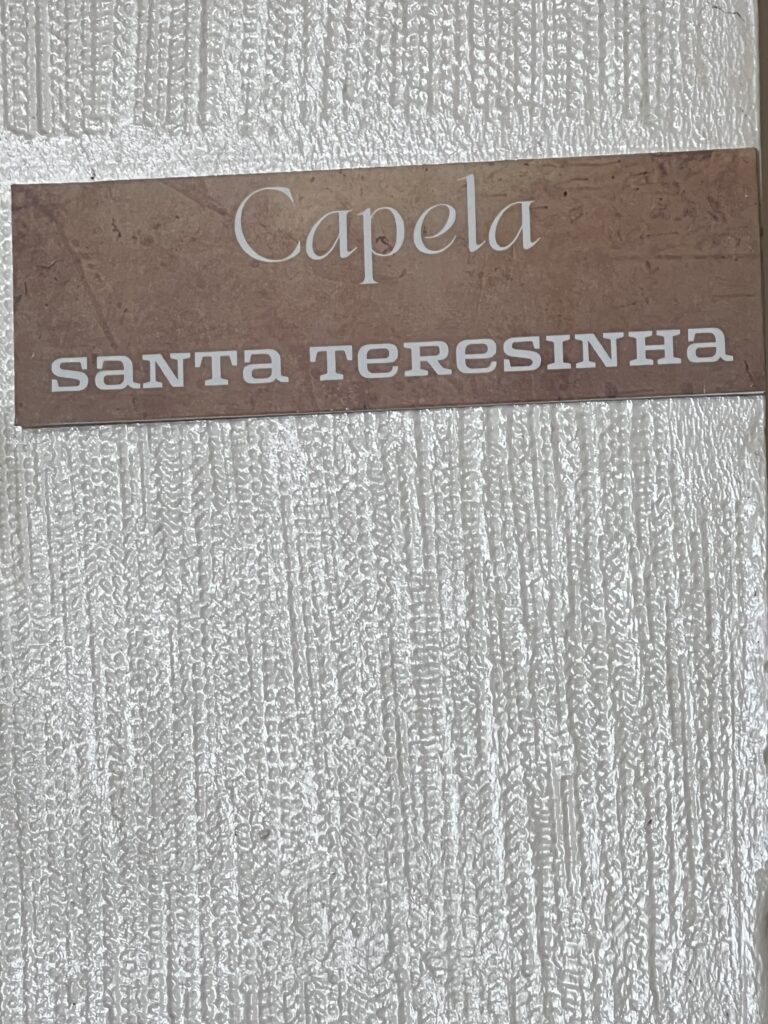
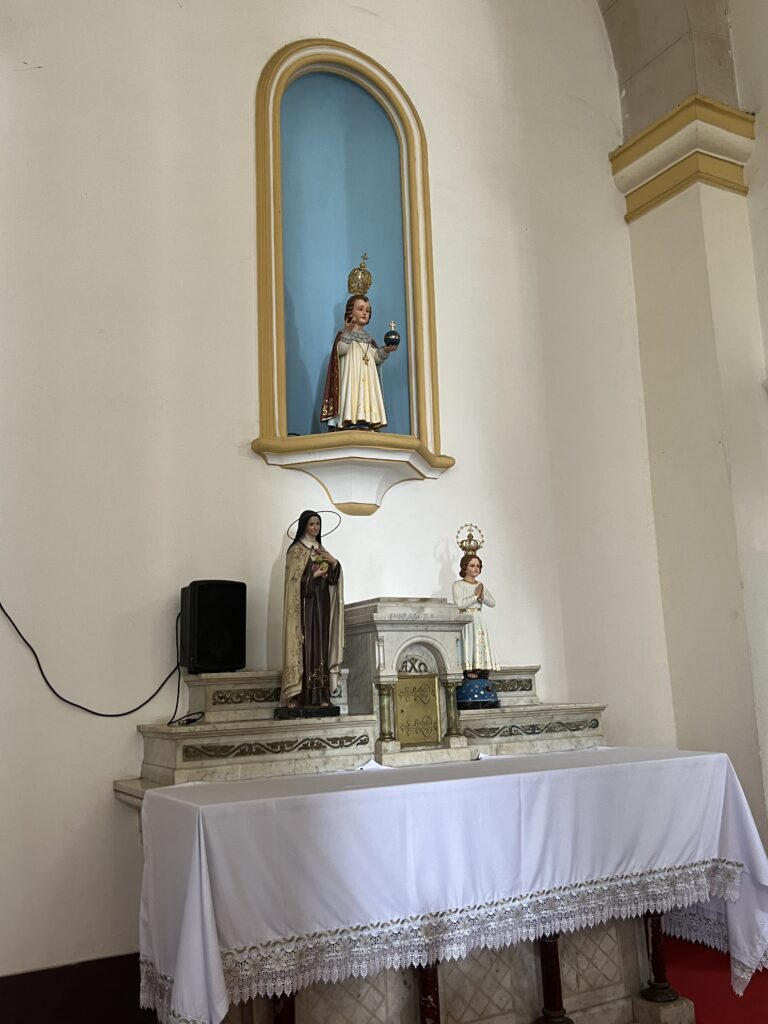
This video shows an area that was identified as a museum inside the cathedral. It was locked and I could not get in to identify the items on display.
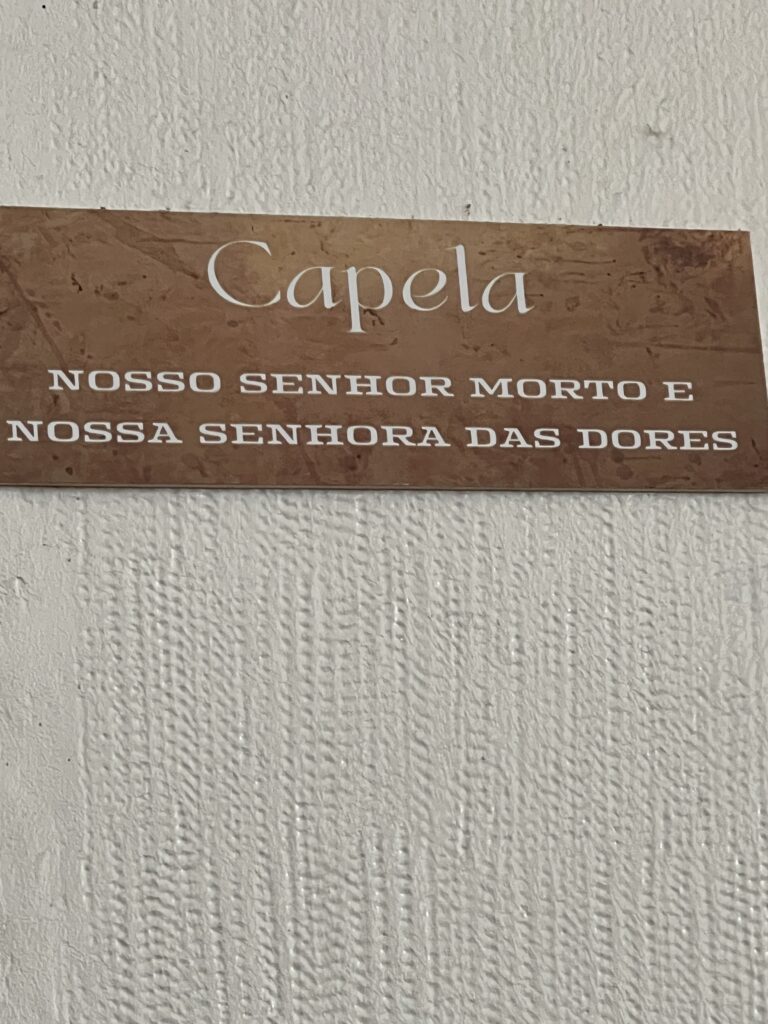
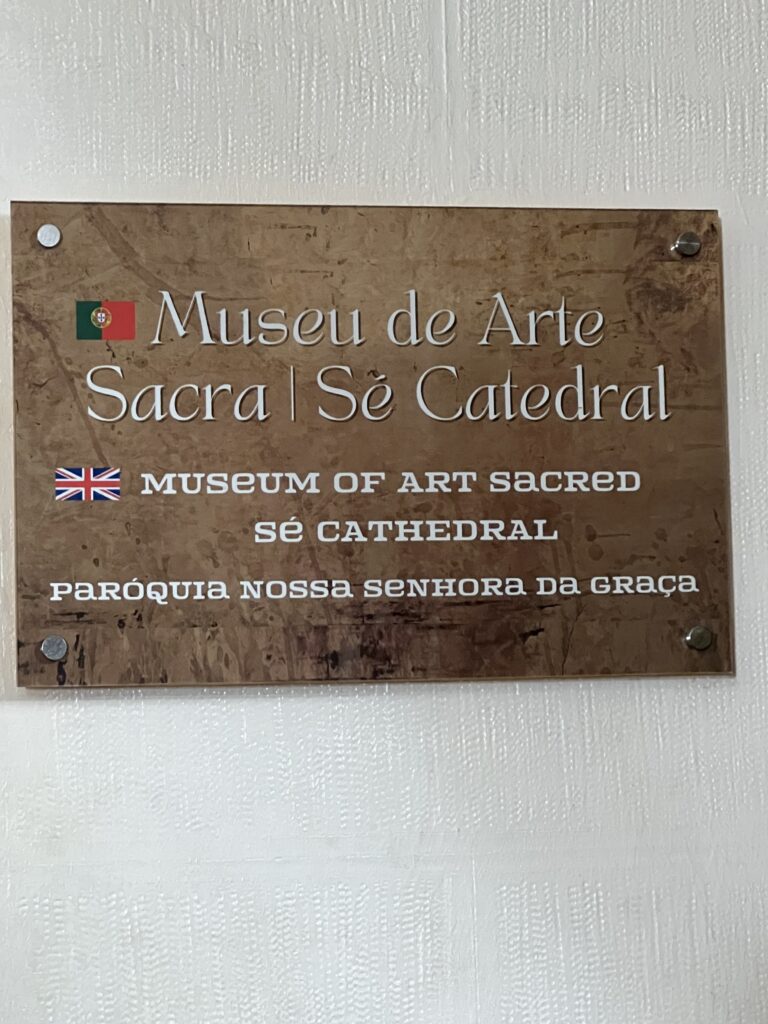
One last photo as I was leaving the Cathedral
Located next to the cathedral is the presidential palace. The Presidential Palace is not open to the public, and photography of the building is not permitted. 😉
The Presidential Palace of São Tomé e Príncipe (Portuguese: Palácio Presidencial de São Tomé e Príncipe, also known as Palácio do Povo) is the official residence of the president of São Tomé and Príncipe and located in the capital, São Tomé. The 19th-century Portuguese colonial style structure formerly served as the residence of the governor of Portuguese São Tomé and Príncipe, until 1975 when the country achieved independence.
The Presidential Palace is a large, L-shaped mansion surrounded by a large garden. The palace is two stories and has a rose-pink façade with simple neoclassical elements. It is surrounded by pink concrete columns and a high iron fence with a closely guarded entrance. It is located next to Praça do Povo (Square of the People) between Avenida da Independência and Avenida 12 de Julho with its principal façade facing Rua de St. António do Príncipe. It is in close proximity to Our Lady of Grace Cathedral and a block from Ana Chaves Bay.
The exact date of construction of the Presidential Palace is unknown. It is built on the site where Álvaro Caminha, an early administrator of Portuguese São Tomé and Príncipe, ordered the construction of the Torre do Capitão (Captain’s Tower) between 1492 and 1493. The tower fell into ruin, and Cunha Matos described a government building on the former tower site in 1835; he describes the palace as spacious but poorly furnished. A building appears in a drawing on the site in 1844 that corresponds to Cunha Matos’ description, but of a different design than the current Presidential Palace. The current structure appears in a photograph dated 1885. João Sousa Morais and Joana Bastos Malheiro, researchers on the architectural history of São Tomé e Príncipe, propose that the structure was built in the intervening period.
The building was known from its construction as the Palácio do Governo de São Tomé (Palace of the Governor of São Tomé), or more simply as the Palácio do Governo and was one of the few buildings in the colony in workable condition at the end of the 18th century. It was built as a mansion in a simple classical style typical of the Portuguese overseas territories, with two stories and a rose-pink façade.
After visiting the cathedral, we walked a short distance to the Independence Square where we saw a dance
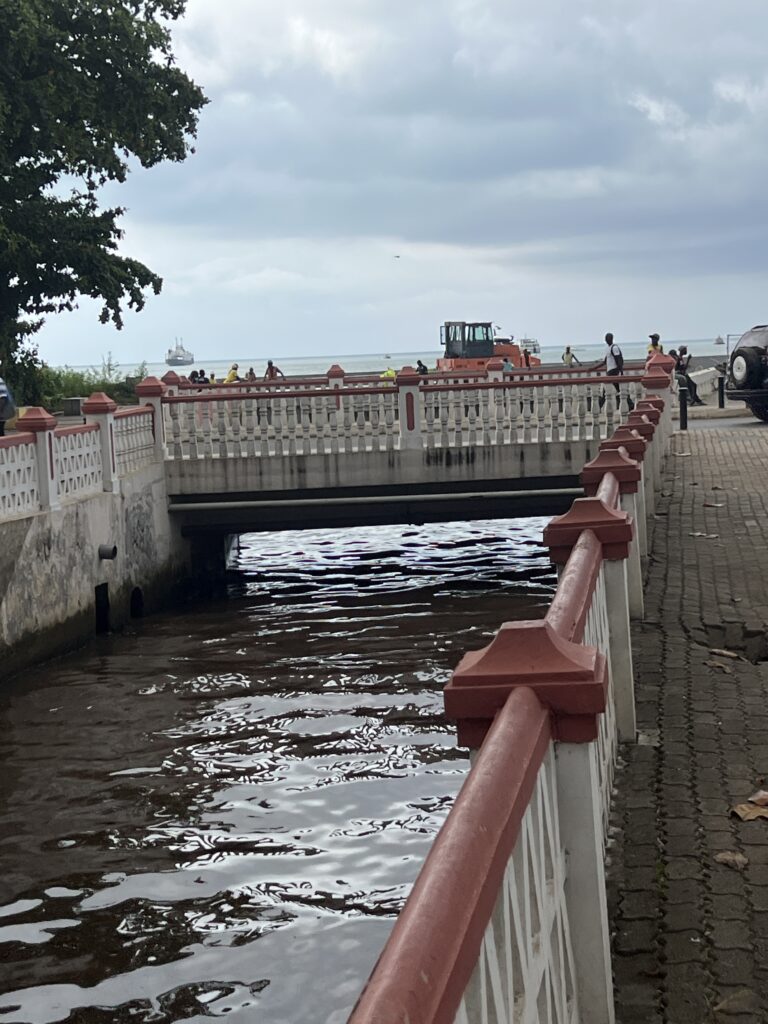
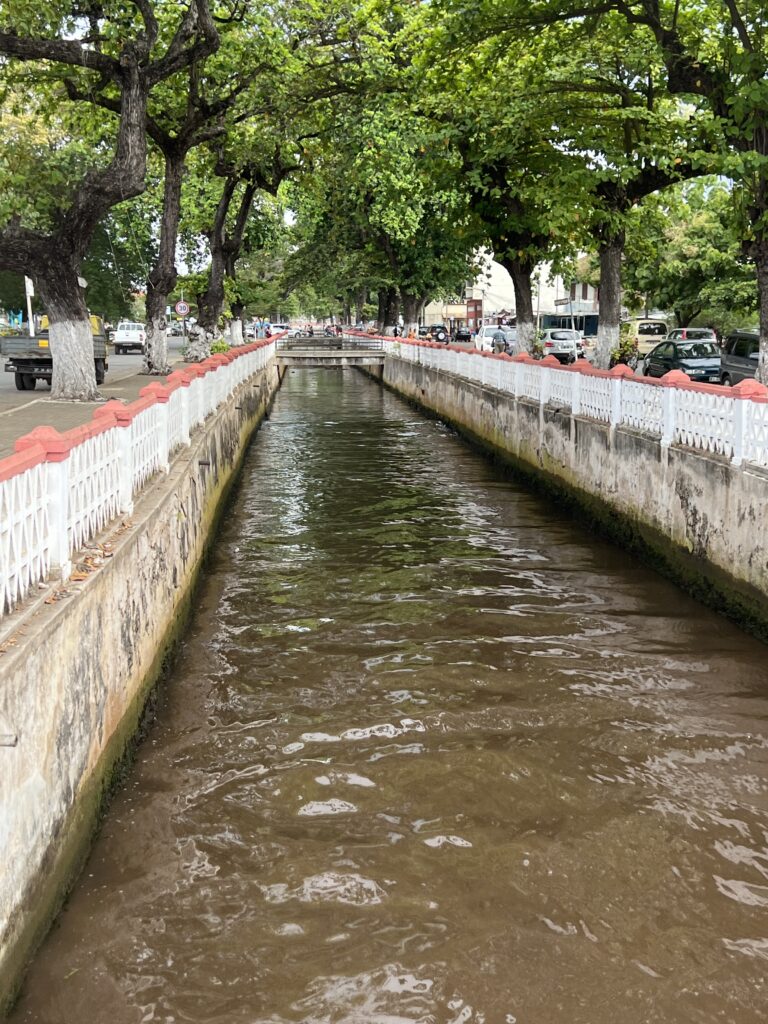
There was a canal that went from the sea into the city. The canal was located next to the cathedral.
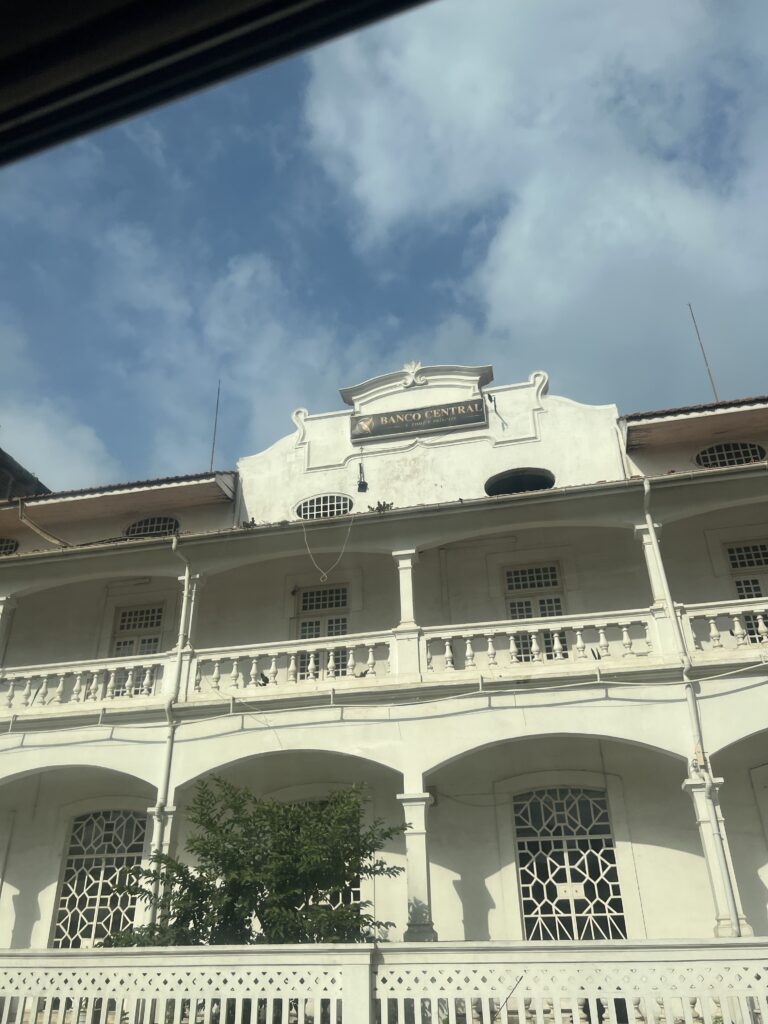
The Central Bank of São Tomé and Príncipe (Portuguese: Banco Central de São Tomé e Príncipe or BCSTP) is the central bank of São Tomé and Príncipe.
At independence in 1975, the government converted the local branch of the Portuguese colonial bank, Banco Nacional Ultramarino, into the National Bank of São Tomé and Príncipe, which took on the functions of central bank, development bank, and commercial bank. The government created a monobank by bringing the only other commercial bank in the country, the Banco Popular de Angola (formerly Banco Comercial de Angola and now Banco de Poupança e Crédito), under the control of Banco Nacional and by merging its savings bank, the Caixa de Crédito.
In 1992, a reform law resulted in the National Bank giving up its development and commercial banking functions, focusing on central banking. With that reform, the bank took on its present name.
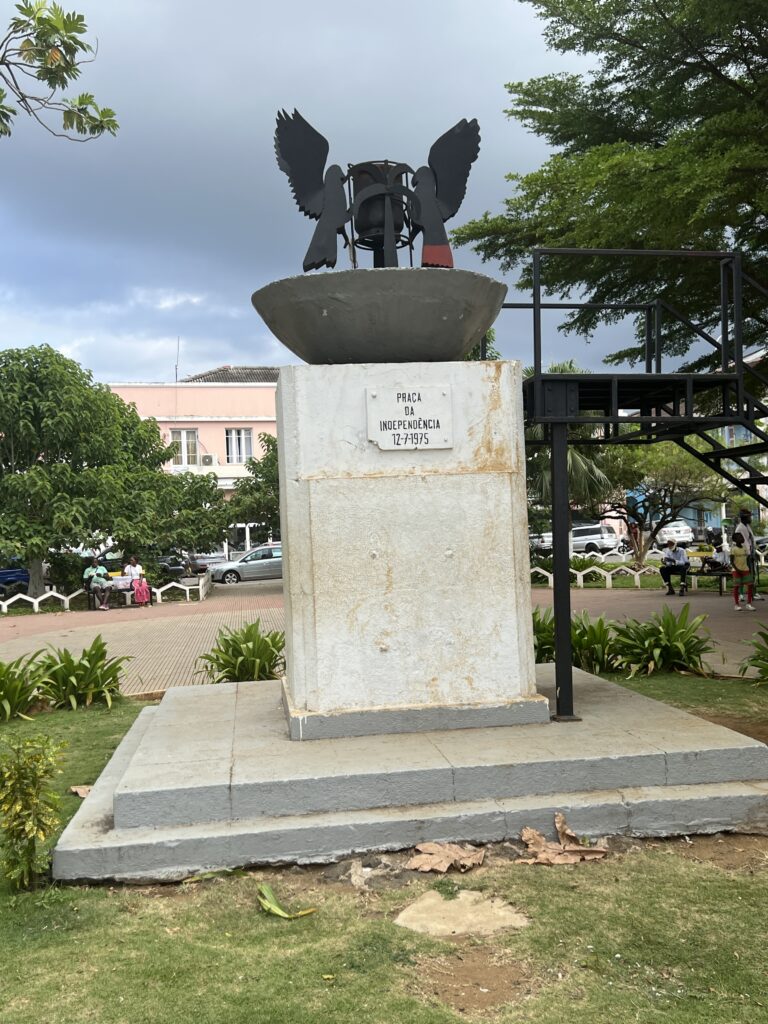
Independence Square (Praça da Independência) is a compact, culturally significant public square in the heart of São Tomé city. It marks the historic spot where São Tomé and Príncipe gained independence from Portugal in 1975. Today, it serves as a central hub for city sightseeing, local gatherings, and exploring historical landmarks.
Independence Monument: The focal point of the square features a memorial dedicated to the nation’s sovereignty. The Monument includes the country’s national coat of arms. The emblem proudly features two native birds: a falcon representing São Tomé and a grey parrot representing Príncipe.
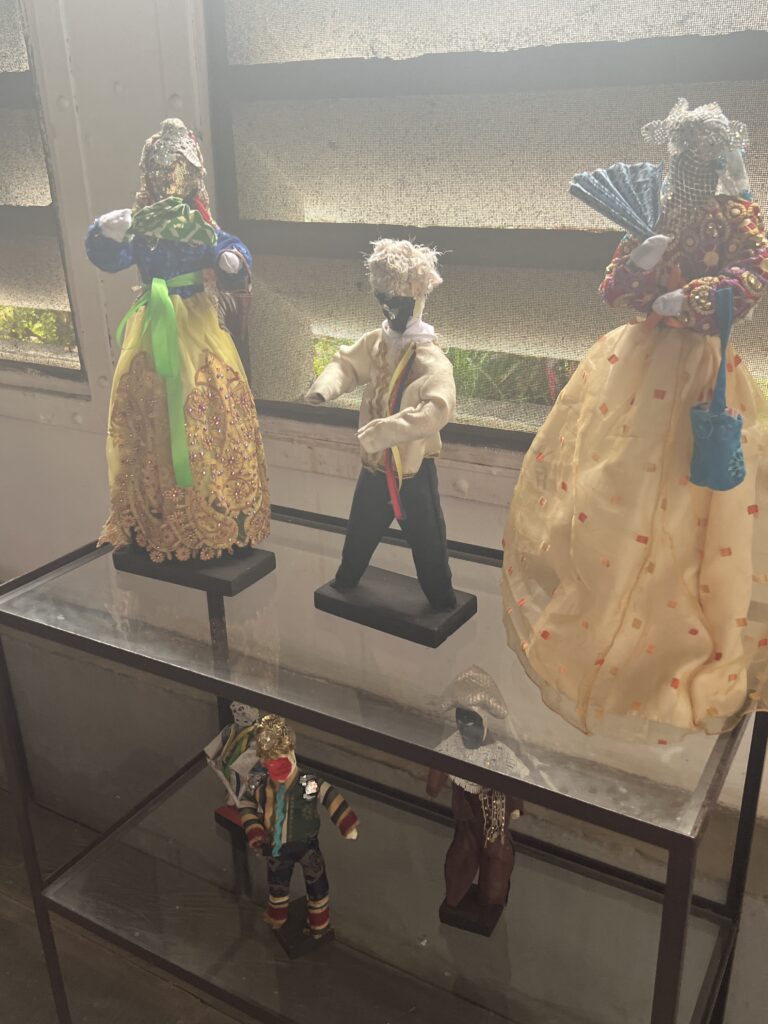
Tchiloli is a centuries-old, UNESCO-recognized open-air theater, music, and dance tradition unique to São Tomé and Príncipe. Blending European medieval storytelling with African rhythms and rites, it features an all-male cast enacting a dramatic, highly stylized murder trial over the course of many hours.
The performance is based on a 16th-century European play about the Tragedy of the Marquis of Mantua. It tells the story of Valdevinos, who is mistakenly murdered by Dom Carloto (the Emperor’s son) out of jealousy.
Portuguese explorers introduced the medieval play to the islands, but local Santomeans Africanized the performance. They infused it with traditional African rites, deeply energetic dance, and an emphasis on ancestors and community justice.
The Cast: In an exclusive tradition, all roles—including female characters—are played by men. Actors hold their roles for life and pass them down to their sons.
Visuals: The all-male cast dresses in extravagant, eclectic costumes that combine formal European frock coats, ribbons, and sequins with dark wire masks (similar to vintage fencing masks).
Music: The dances and theatrical movements are accompanied by a lively, rhythmic band utilizing traditional drums, bamboo flutes, and shaken instruments (sacaias) filled with shells and seeds.
Tchiloli of S.Tomé or Charlemagne in Africa | BUALA
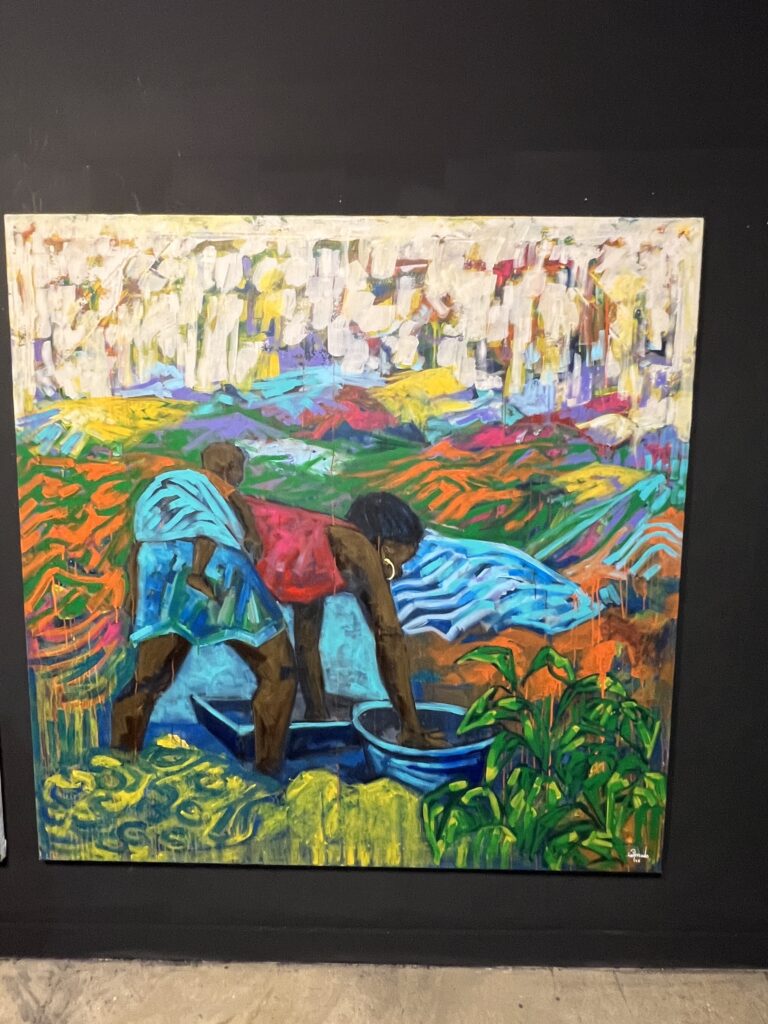
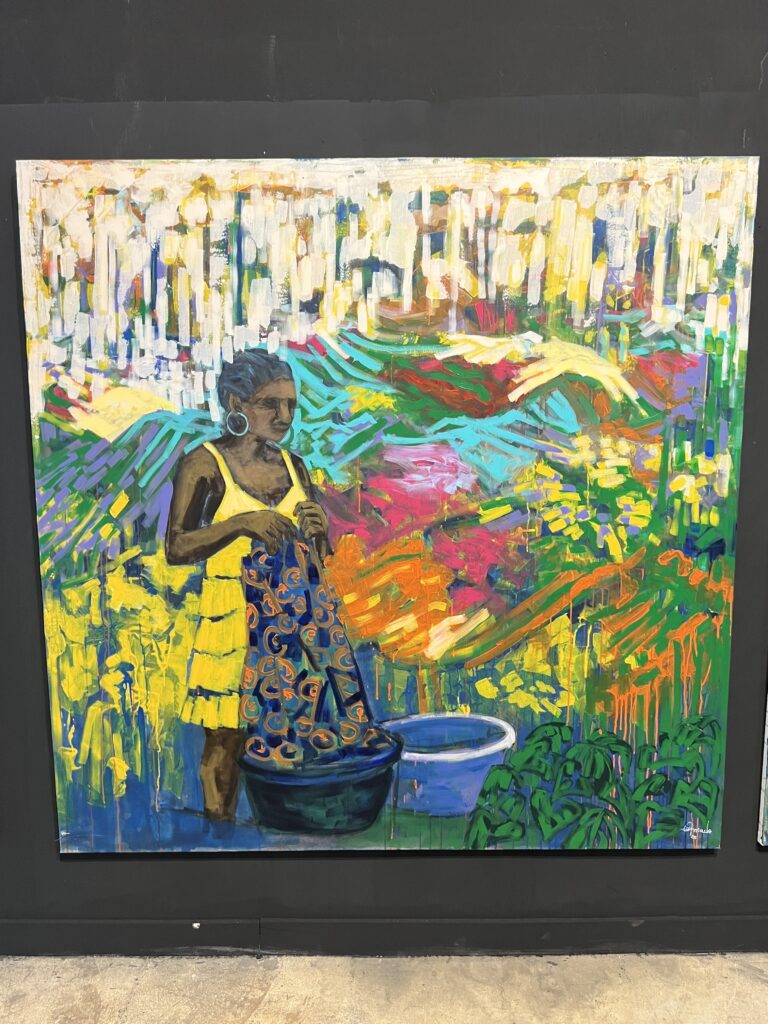
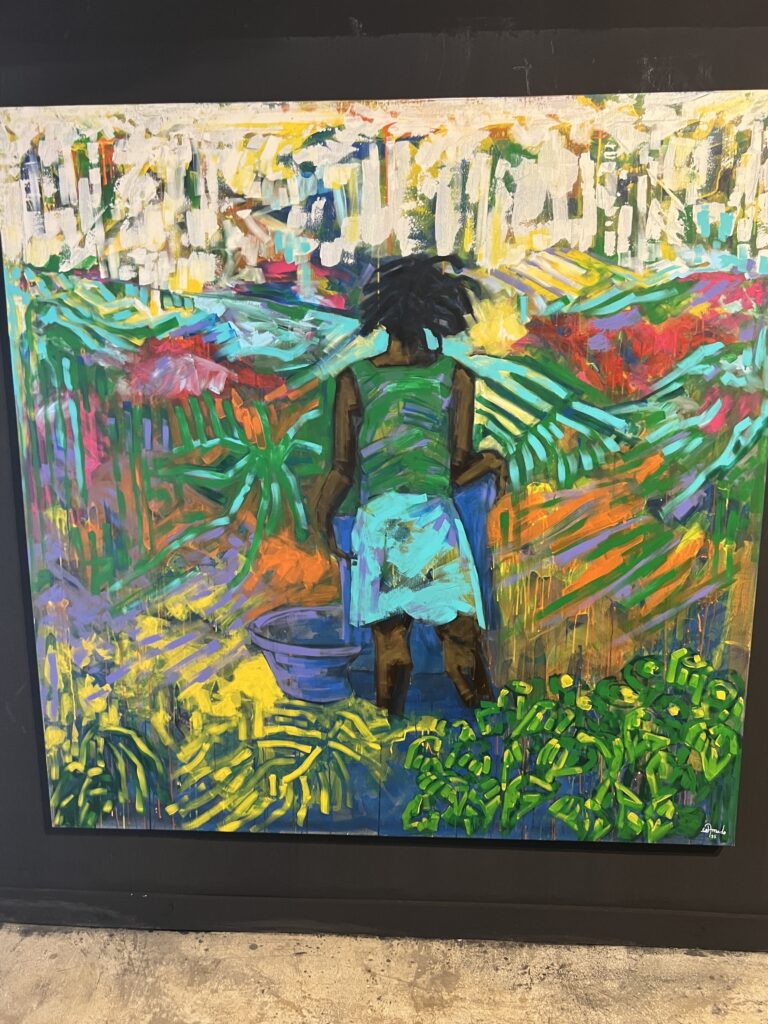
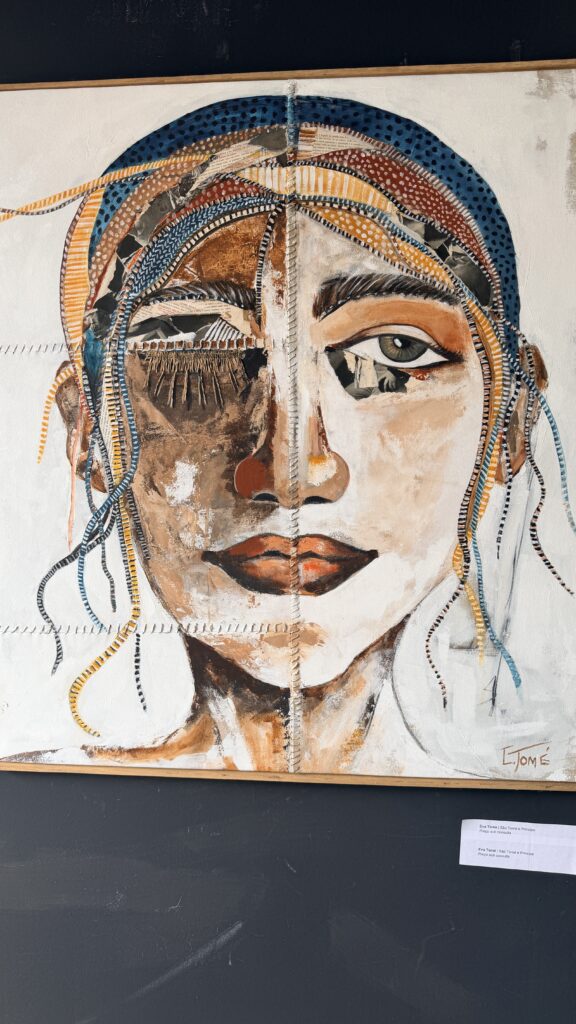
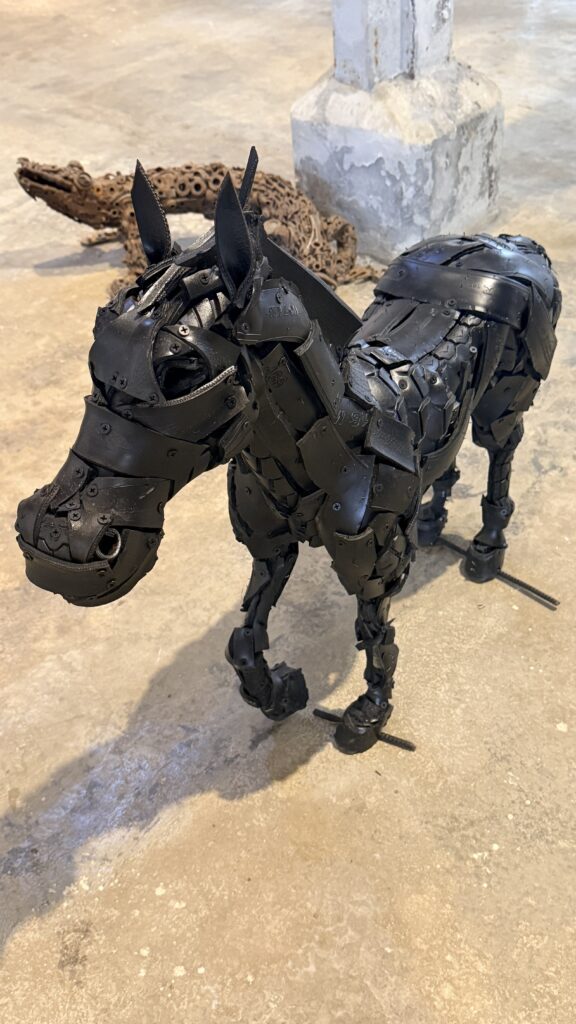
Our next stop was a place called CACAU (CASA DAS ARTES CRIAÇÃO AMBIENTE UTOPIAS). It was an art studio and museum located in this huge warehouse building. It was unfortunate that we could not purchase any of the paintings because of their size and the difficulty in getting them back home. The artists did great work.
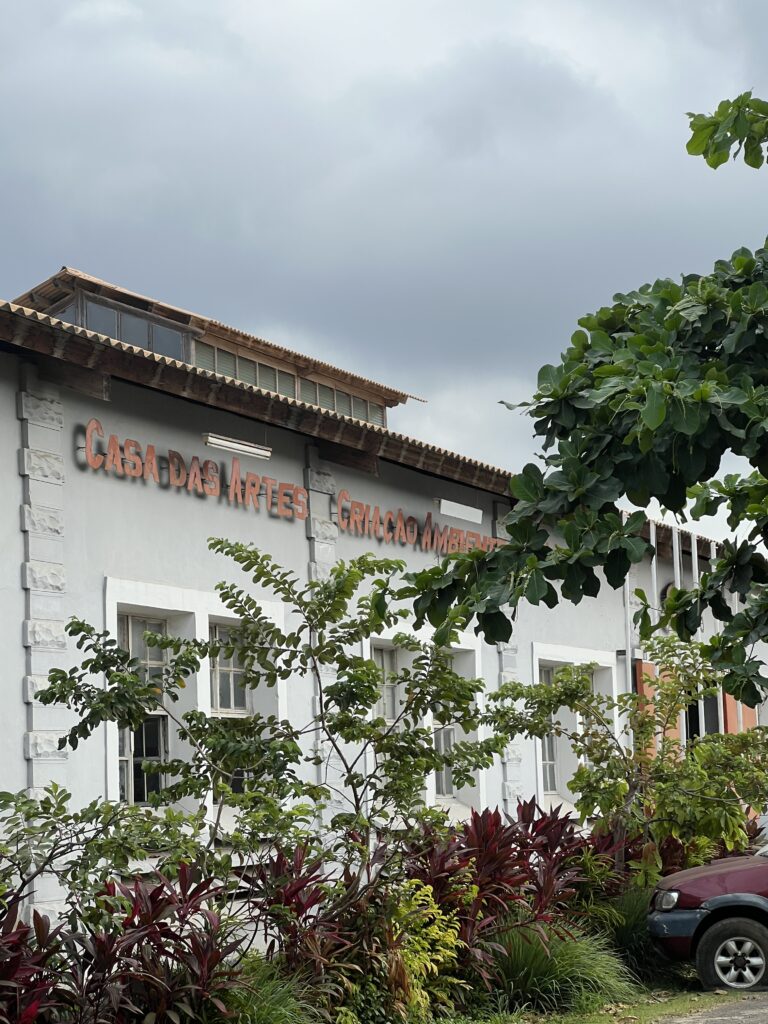
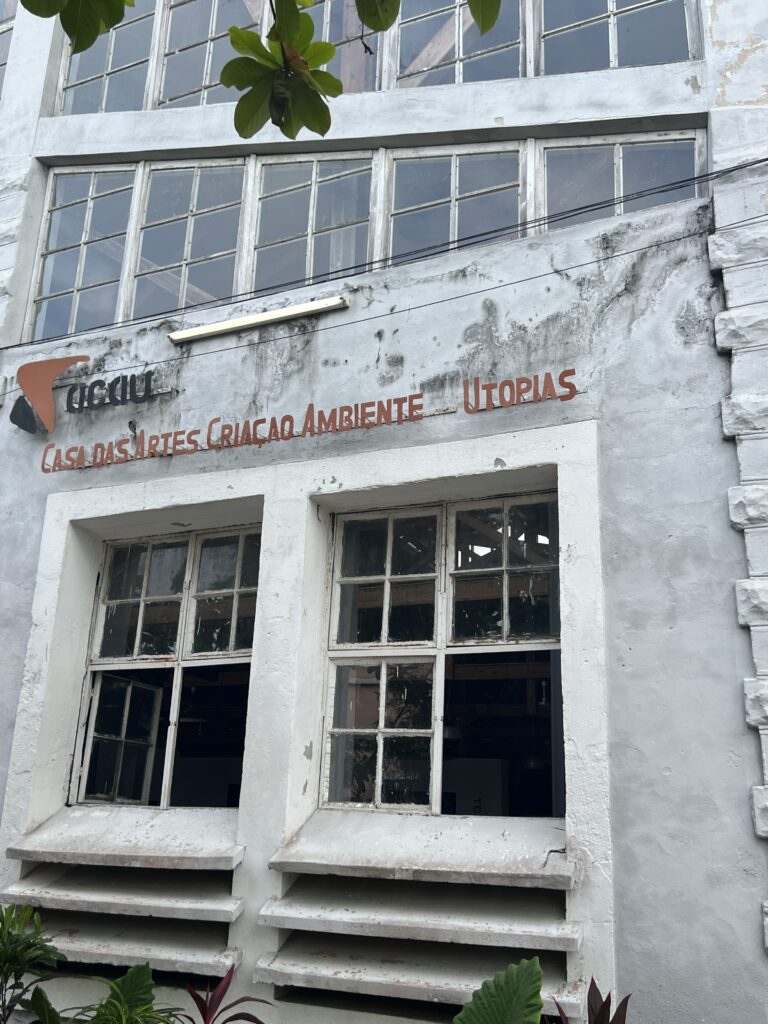
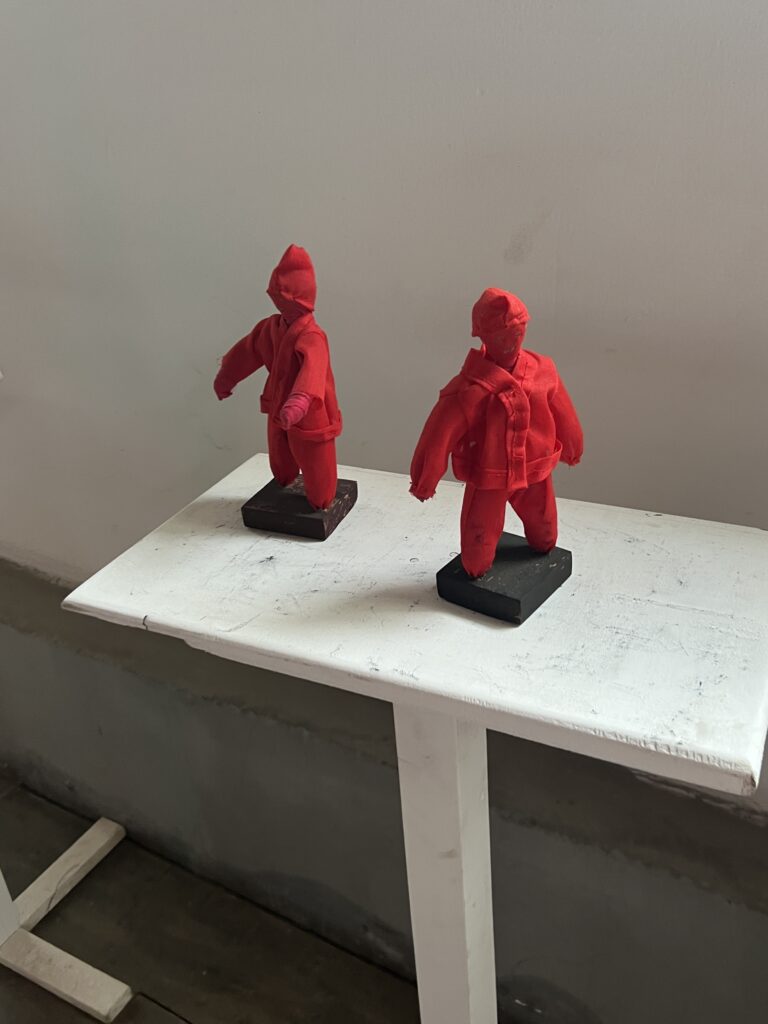
There were a number of pieces and photos related to the Tchiloli dance performance we saw in the Independence Square.
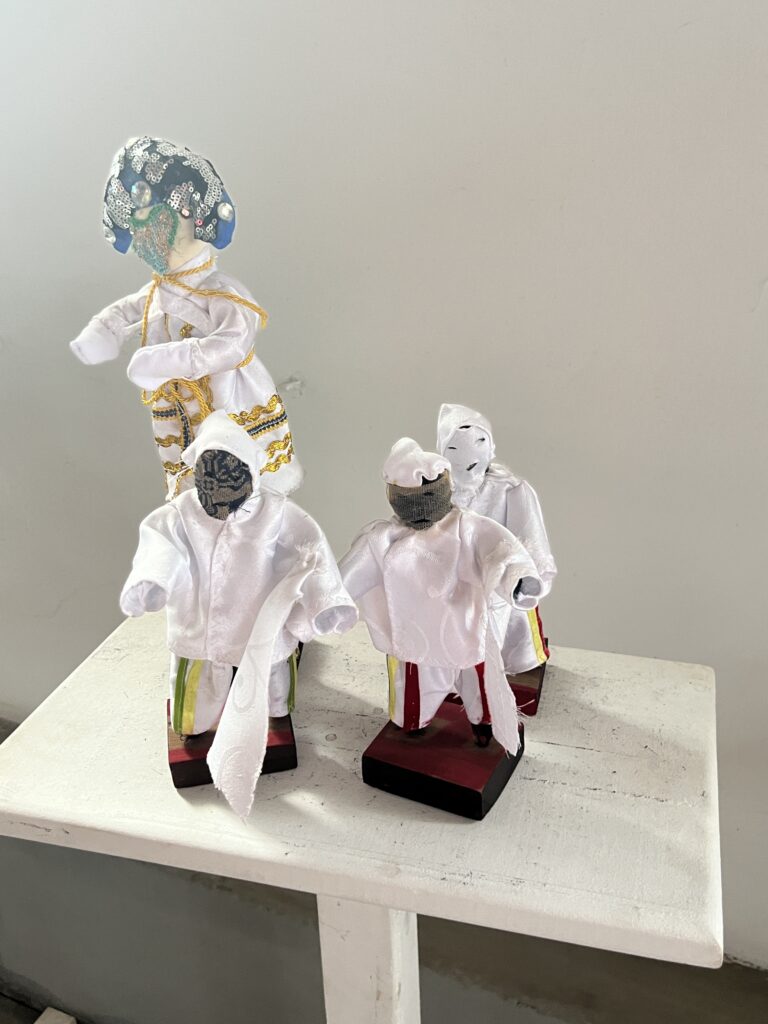
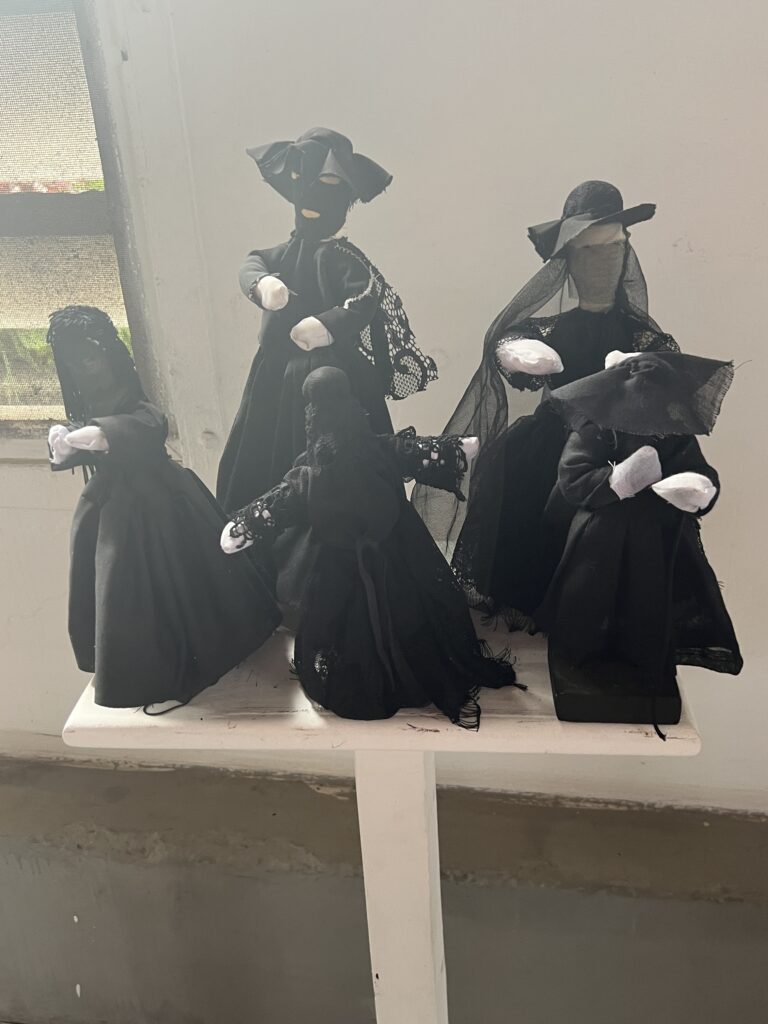
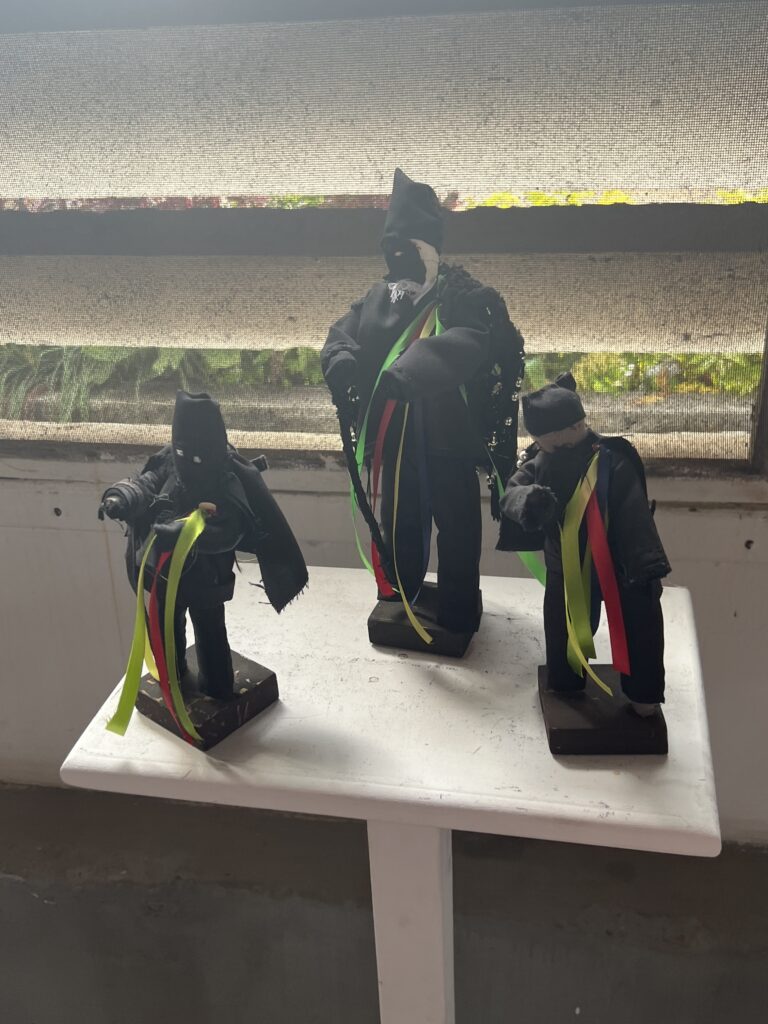
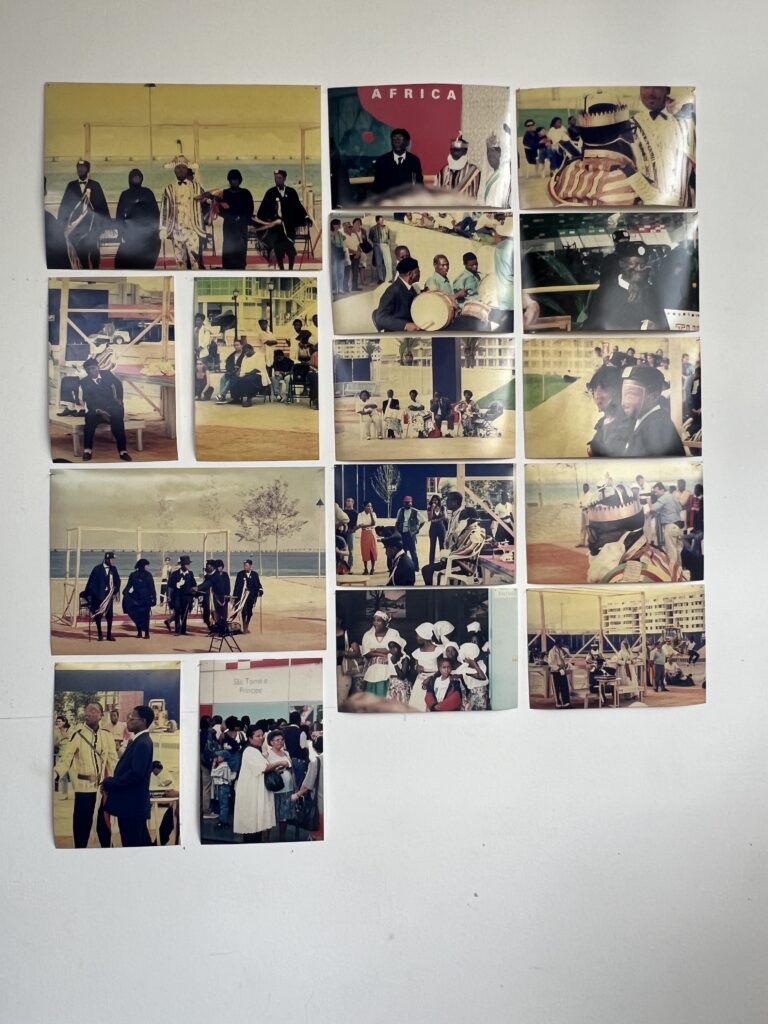
A few of the paintings that were available for purchase
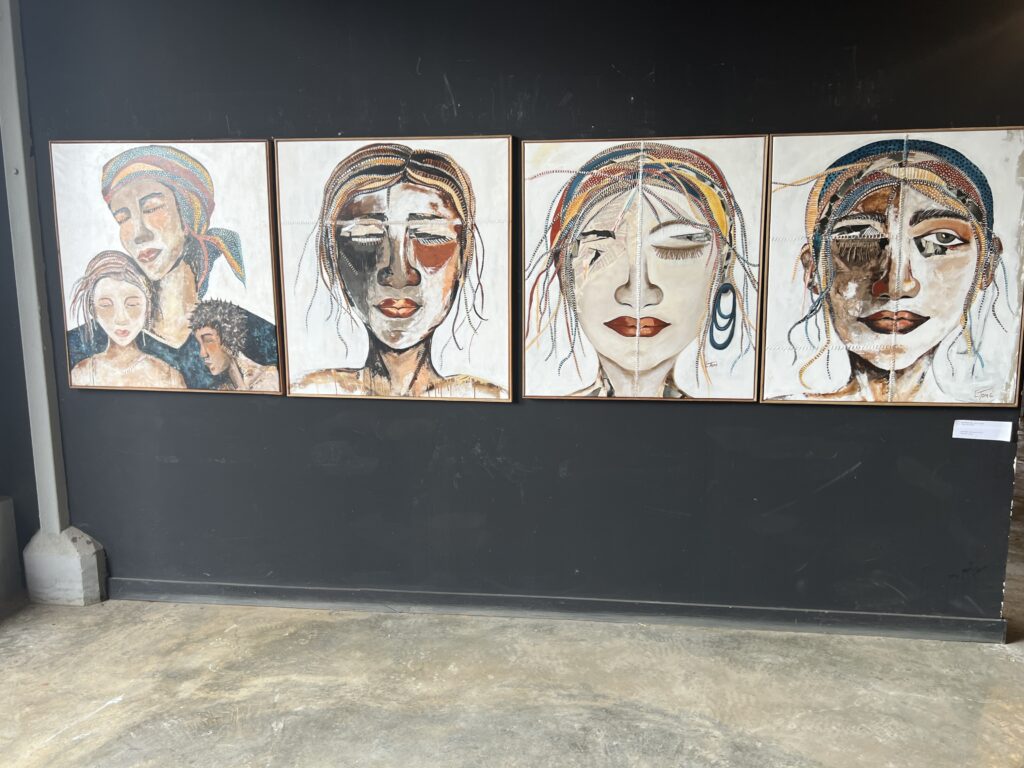
This horse is made out of an old tire
I wanted to take a video of some paintings and also to show the warehouse. I apologize as I moved too quickly while filming as we were walking out.
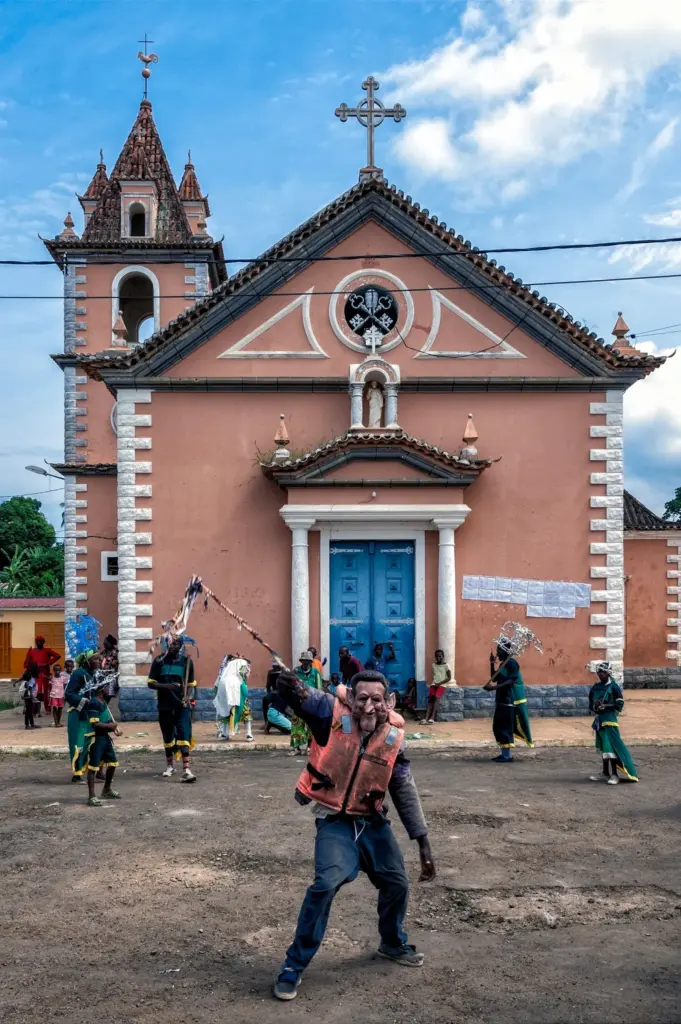
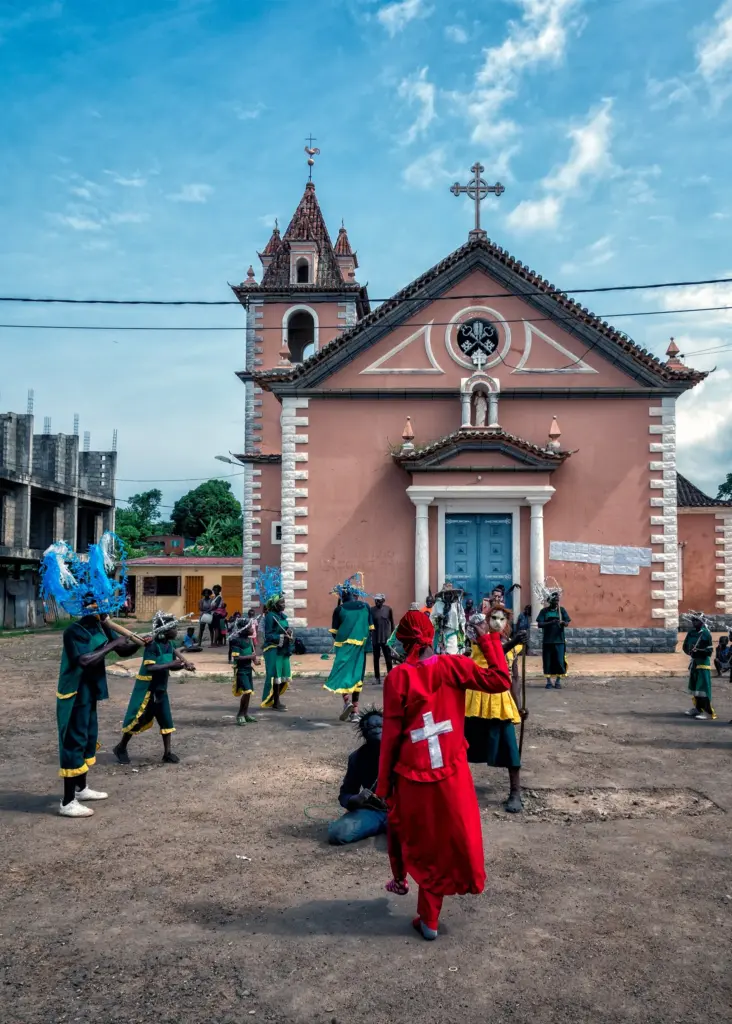
Pantufo is a small fishing village not far from the capital city of São Tomé. It is located on the coast, 3 km southeast from the capital São Tomé. Its population is 1,836 (2012 census). It is considered the only urban settlement in the country, apart from the capital.
During our visit, there is some sort of dance happening in front of St. Peter’s Church. The church’s architecture is typically colonial, featuring elements common to Portuguese church design, such as stone construction, simple yet elegant facades, and a modest bell tower. The first four photos before the videos are stock photos I found online when I was trying to determine what was the dance.
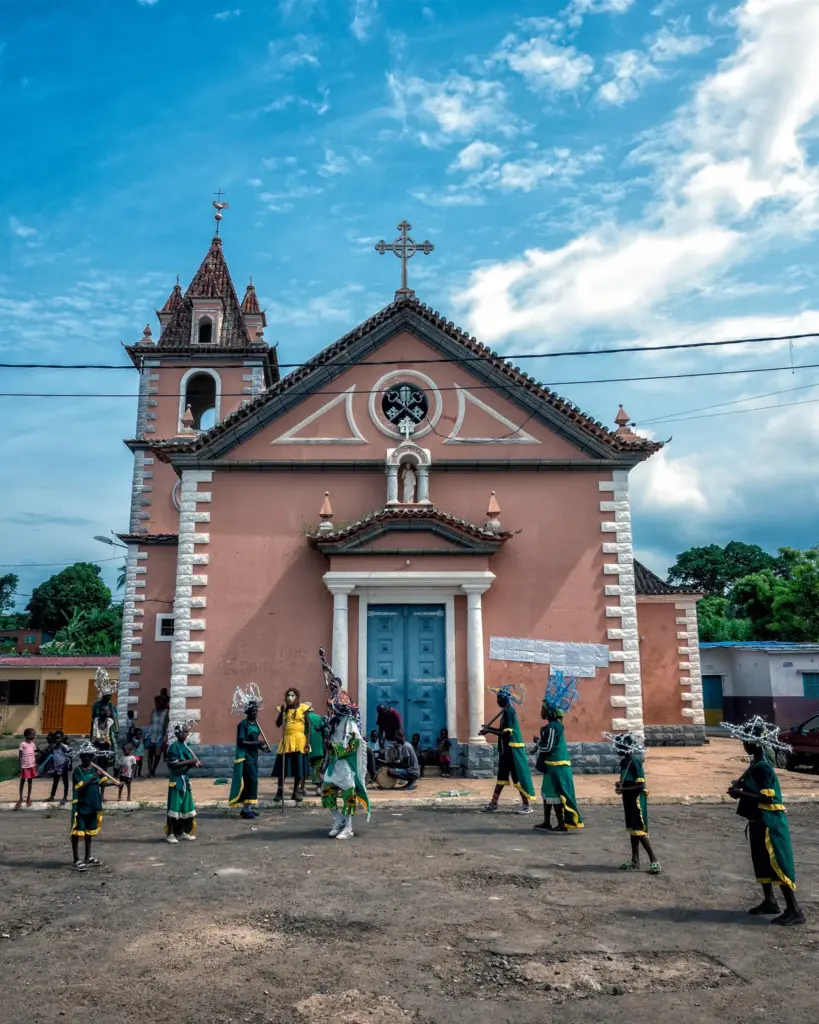
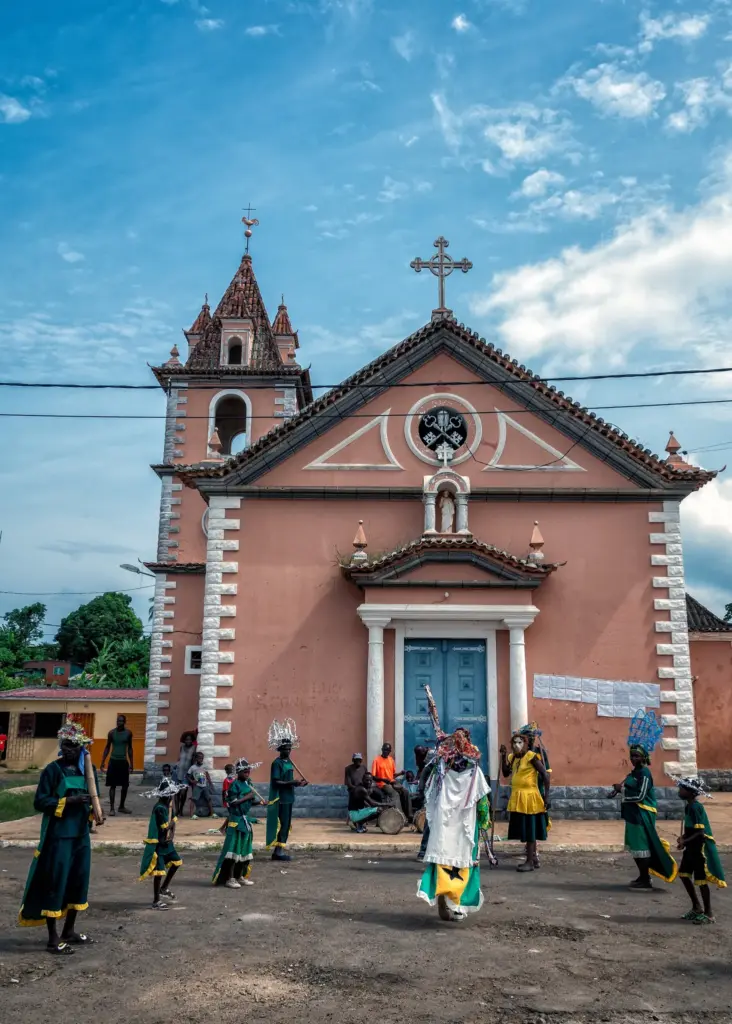
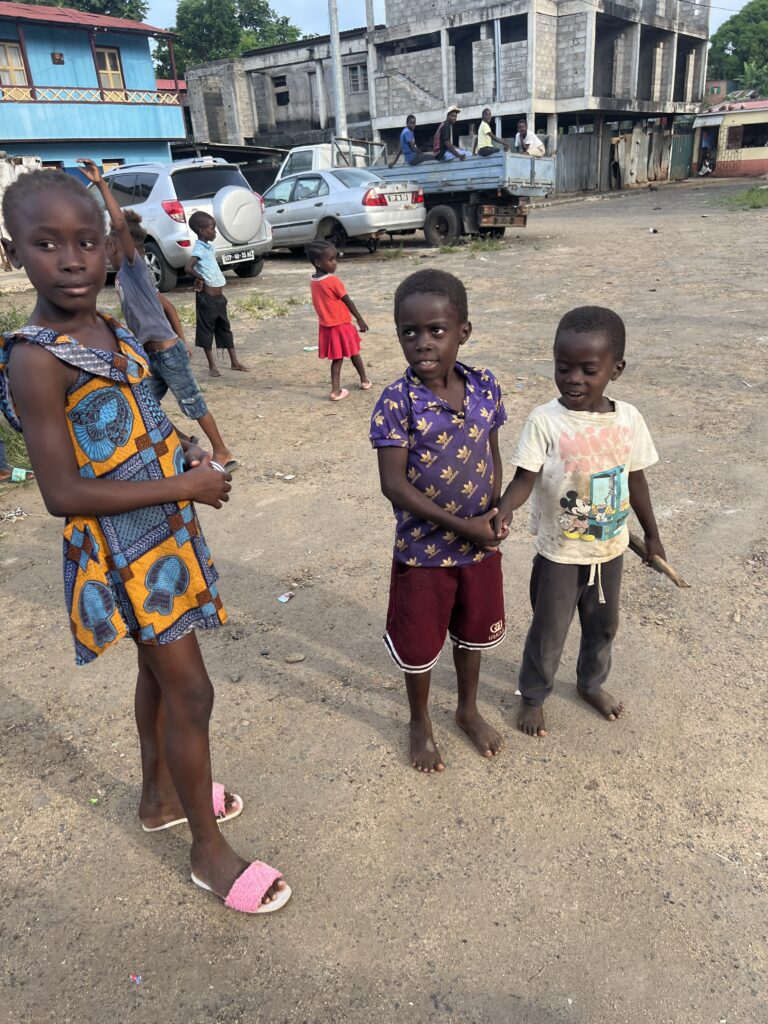
The fun part of this stop was as we were leaving, I remembered that I had candy in the bus that I had brought to give to kids. I asked the guide if it was okay and he said yes so I went get the bag. I had about 50 pieces of candy and there were 7 kids, so I thought no problem. Well, the alarm must have gone off in the small village as I was swallowed up by kids and adults. The guide and I were laughing and after about 30 seconds of both of us trying to develop some order, I just gave him the bag, and I hauled it into the bus. Finally, he just took all the candy and threw the pieces into the air and ran into the bus himself. The sad part is no video or photos of the incident, but it will stay with us in our minds forever.
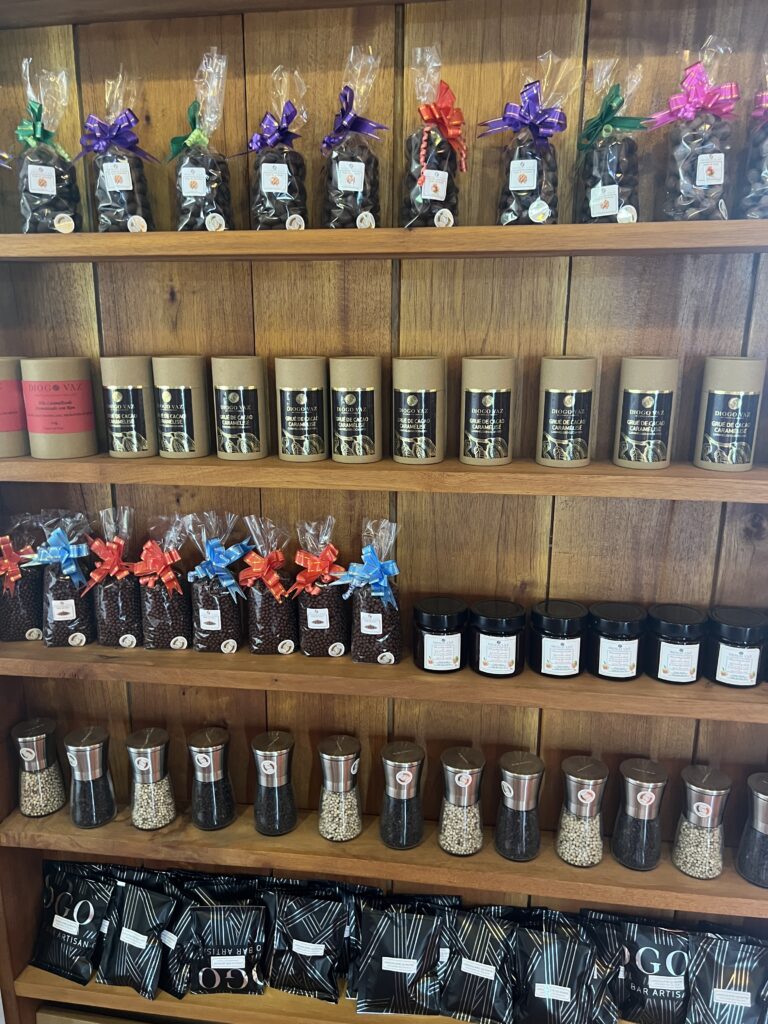
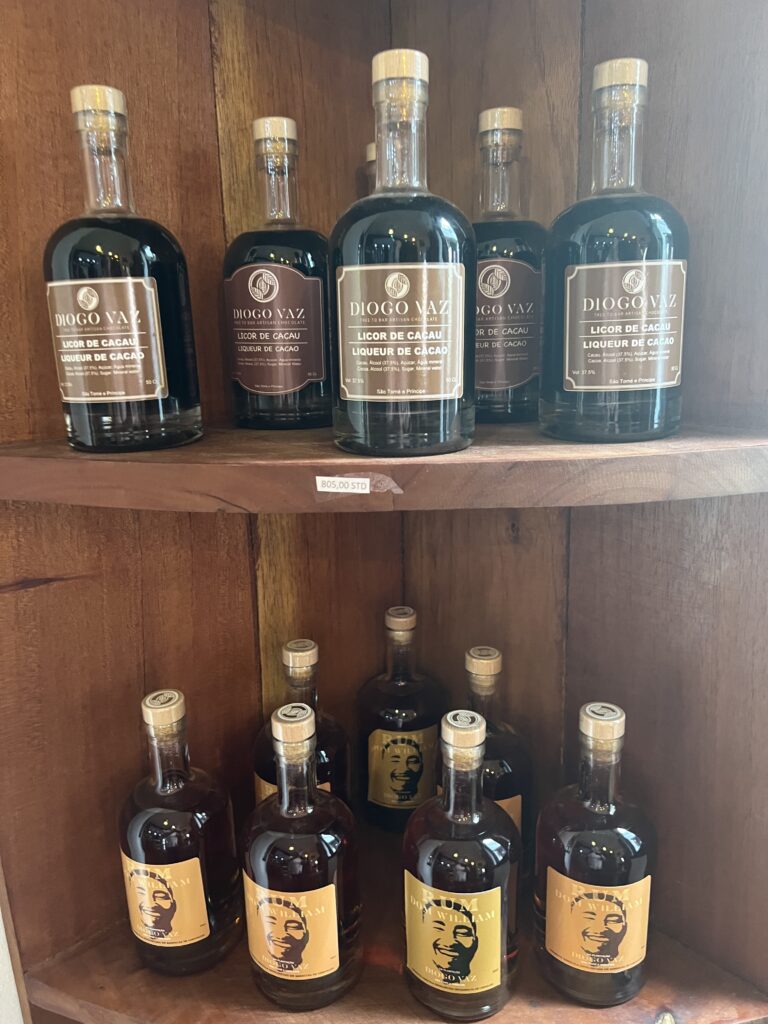
On the way back to the port, the guide and driver brought us to a chocolate store to buy some candy. The Asian passengers were laughing with me and said you need more candy because you gave away all your candy to the village 🙂
We bought about 80 Euro worth of candy and I can say that it is some good stuff. The left some for our cabin staff when we went to dinner tonight. I can’t wait until tomorrow to get their thoughts on the candy.
Diogo Vaz Chocolate | Chocolate from São Tomé – Artisan Chocolatier
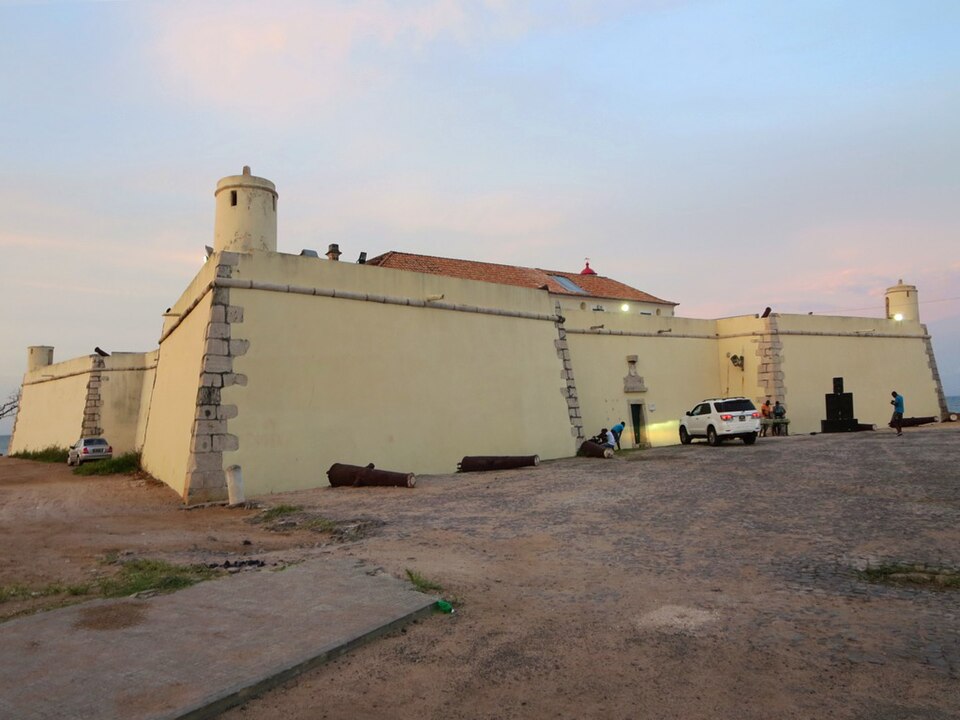
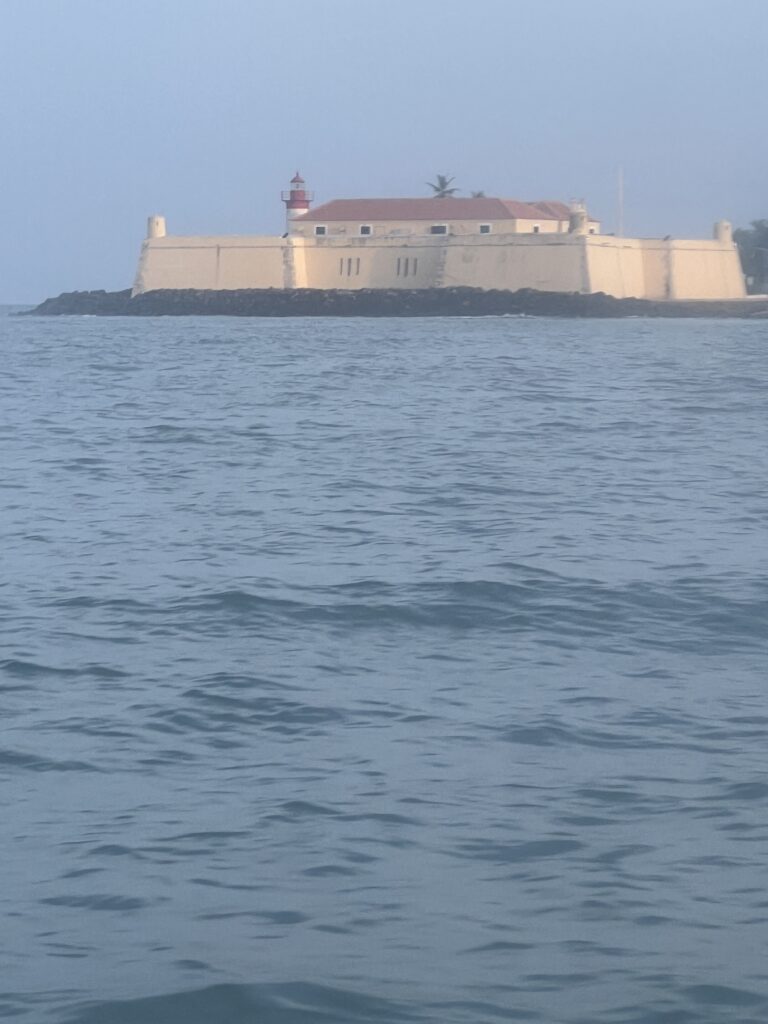
We drove past the fort on Sao Tome and were not able to visit it today.
The Fortress of Saint Sebastian is now São Sebastião Museum, housed in a 16th-century fortress in the city of São Tomé. It lies in the northeastern part of the city center, at the southeastern end of Ana Chaves Bay. It contains religious art and colonial-era artifacts. The fortress was built in 1566 by the Portuguese in order to protect the port and city of São Tomé against pirate attacks. A lighthouse was established in the fortress in 1866; it was rebuilt in 1928. The fortress was restored at the end of the 1950s.
Architecture: Square in shape, featuring three seaward-facing fronts and circular watchtowers.
The Museum: The fort’s interior displays artifacts from the colonial era, religious art, and exhibits on the island’s history.
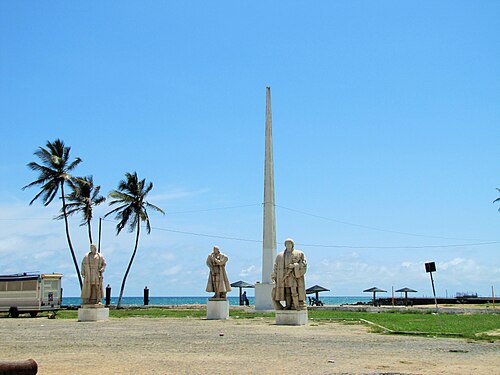
Statues: At the entrance, statues pay homage to Portuguese navigators Pedro Escobar and João de Santarém, along with early governor João de Paiva.
Lighthouse: An operational lighthouse, constructed in 1866, is located within the fort grounds
Forte de São Sebastião
Three of the explorer’s statues in front of the museum
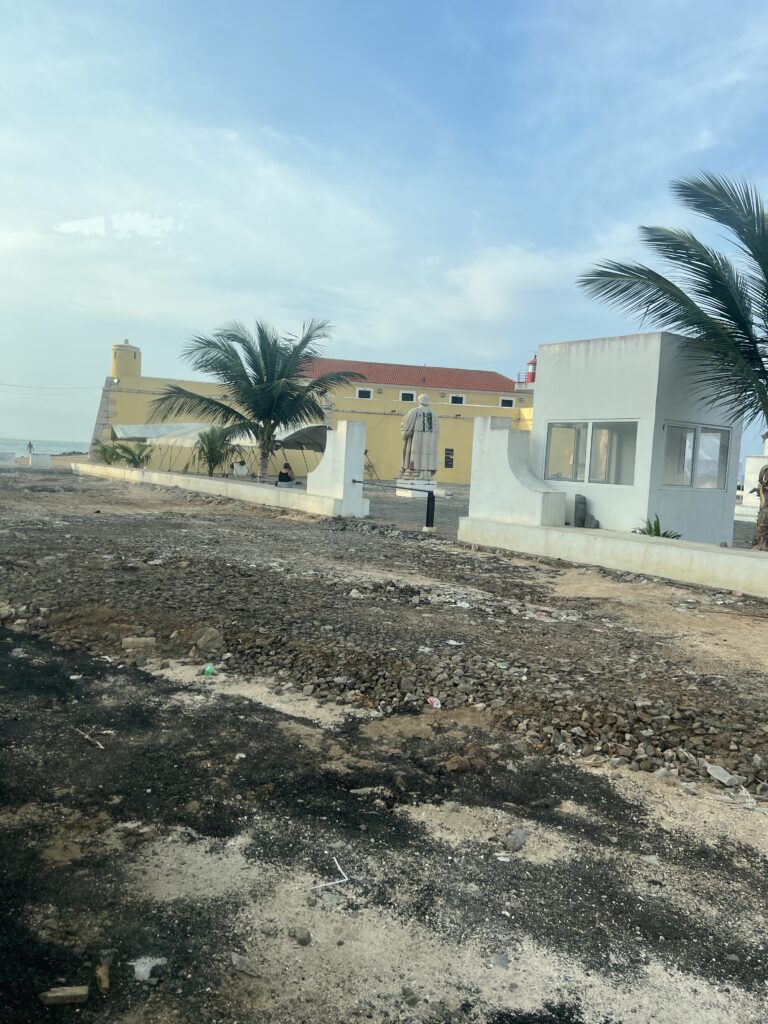
We loaded up on the tender and headed back to the ship after a quick but enjoyable excursion
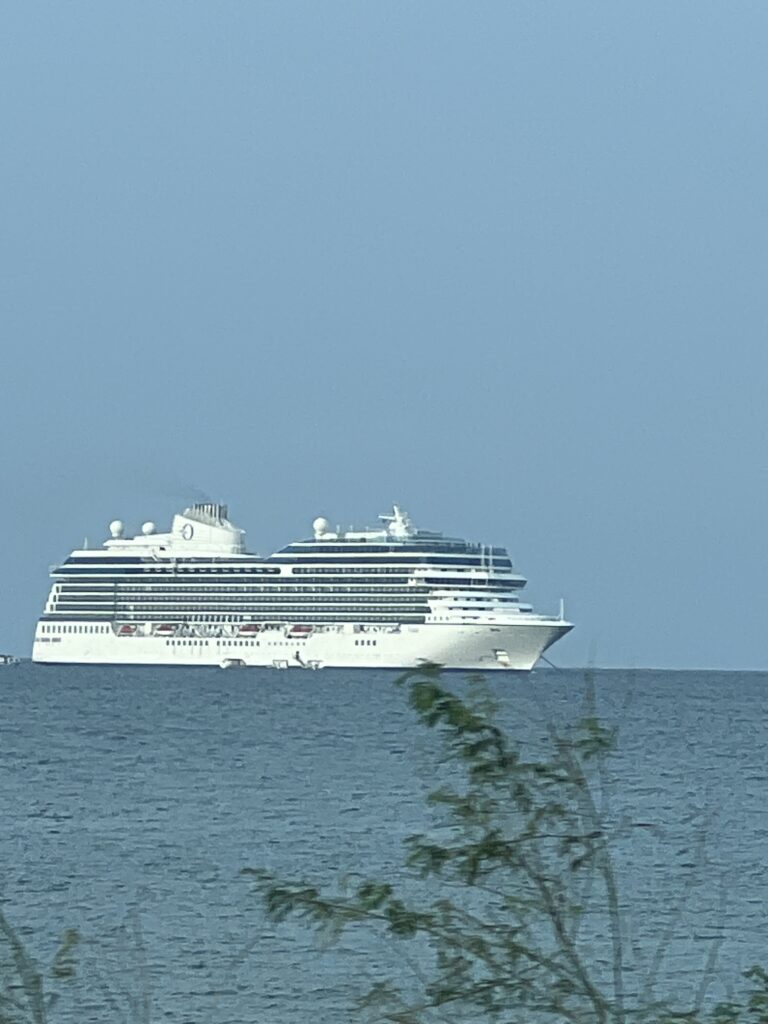
We are at sea for the next two days before reaching Abidjan, Ivory Coast.