
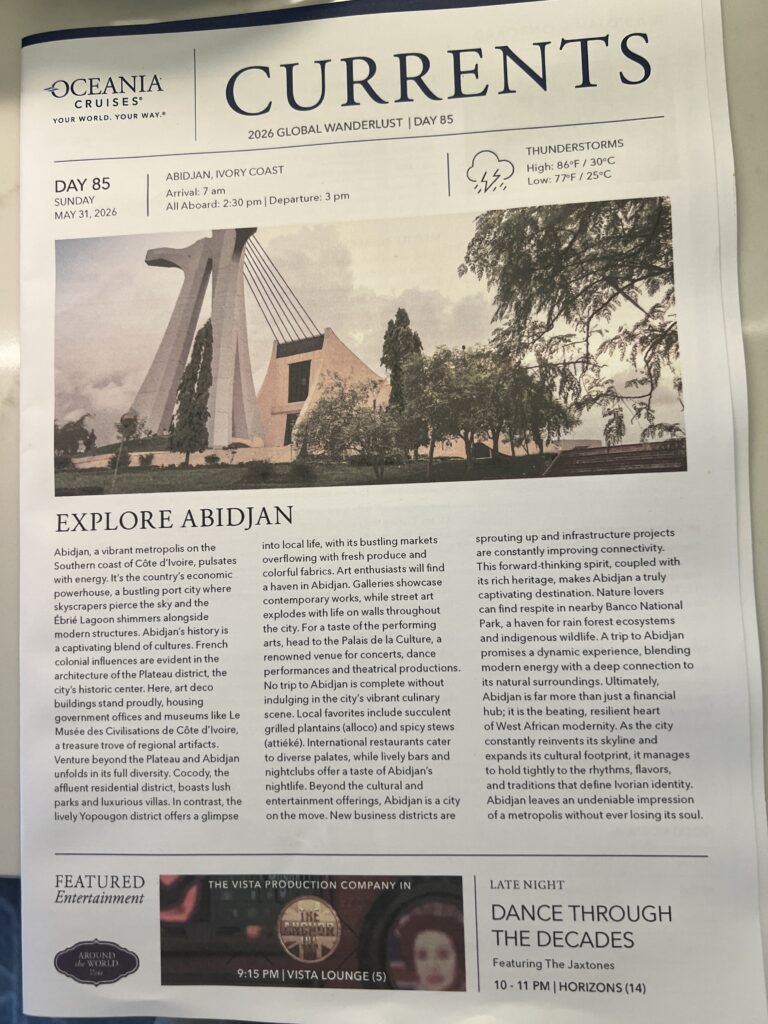
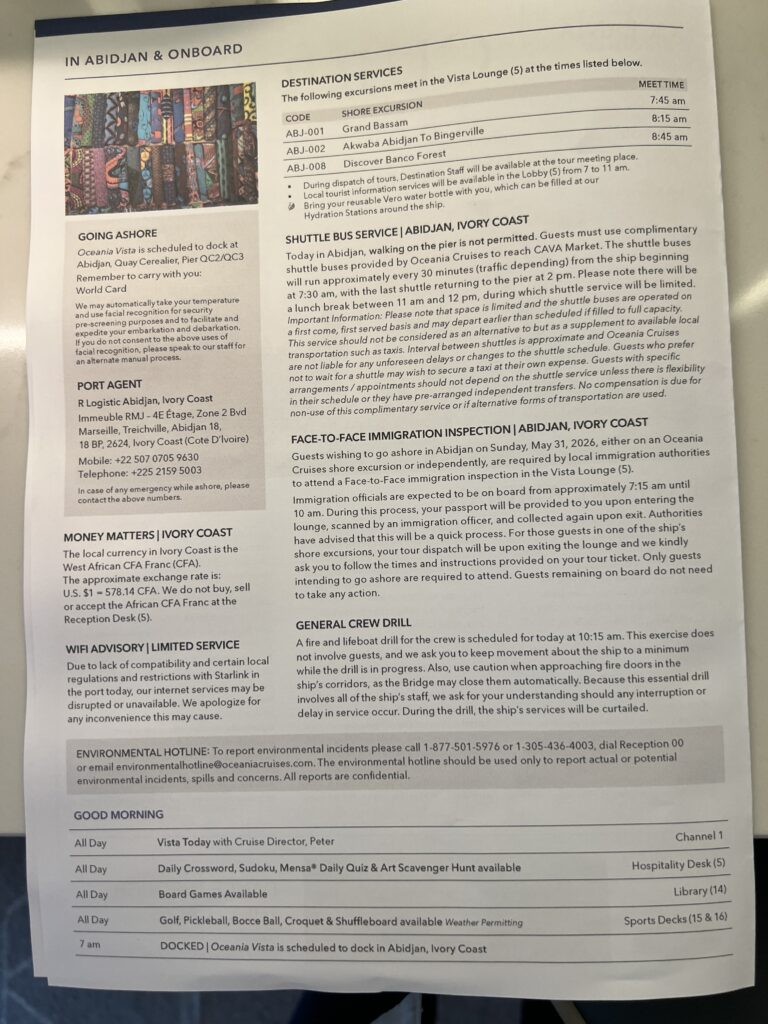
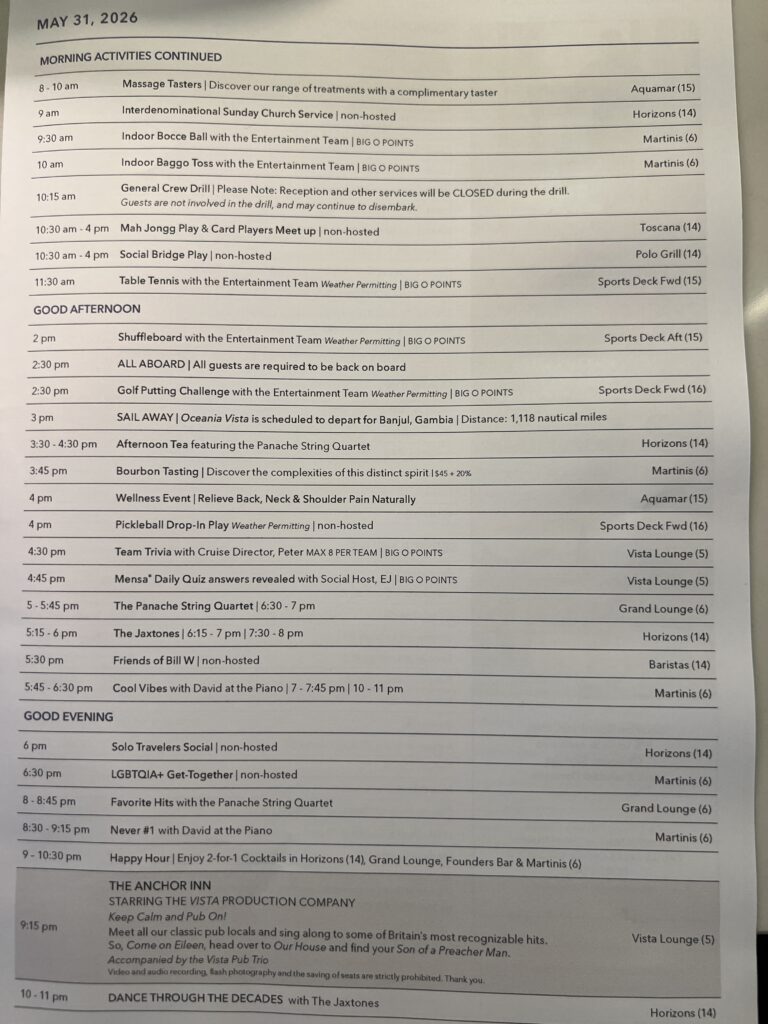
Day 85 Sunday May 31st (35 days to go) — Originally we had an Oceania excursion booked but in reading the description again, we changed to a different excursion as it was to visit St. Paul’s Cathedral in the city of Abidjan. Once the bus left the port the guide informed us we were not going to the Cathedral and gave us a reason that we could not hear. No problem, we continued with the excursion and visited a few sites in and around the large city of Abidjan. As you read below the description of the tour (Akwaba Abdijan to Bingerville) you will notice a number of things we were supposed to do or see did not turn out as expected. I will include some stock photos of the Cathedral in today’s blog. We did visit the Museum of Civilization (it was under renovation, but we got to view a few things from the museum along with a traditional dance. We then drove to Bingerville Town to visit the Charles Combs Museum, the Governor’s House (which is now an orphanage), a botanical garden and finished up with a visit to a market (Artisanal Center).
Overall, it was a good four-hour excursion. Yes, the visit to the Cathedral would have been nice and some of the sites were disappointing, but we enjoyed the visit. It is a matter of not expecting much in these west Africa stops and then you will not be disappointed.
Views of the port of Abidjan, Ivory Coast
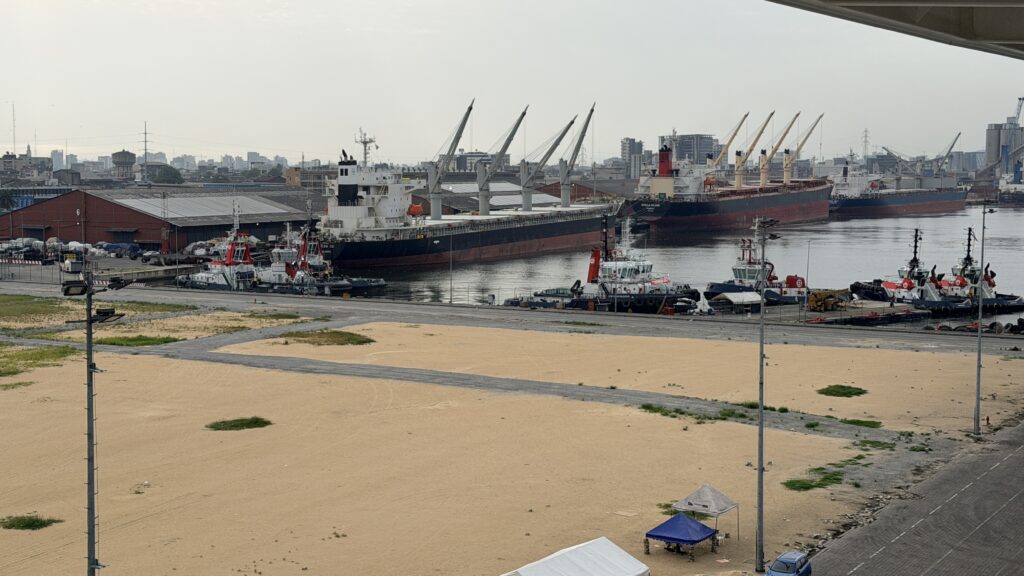
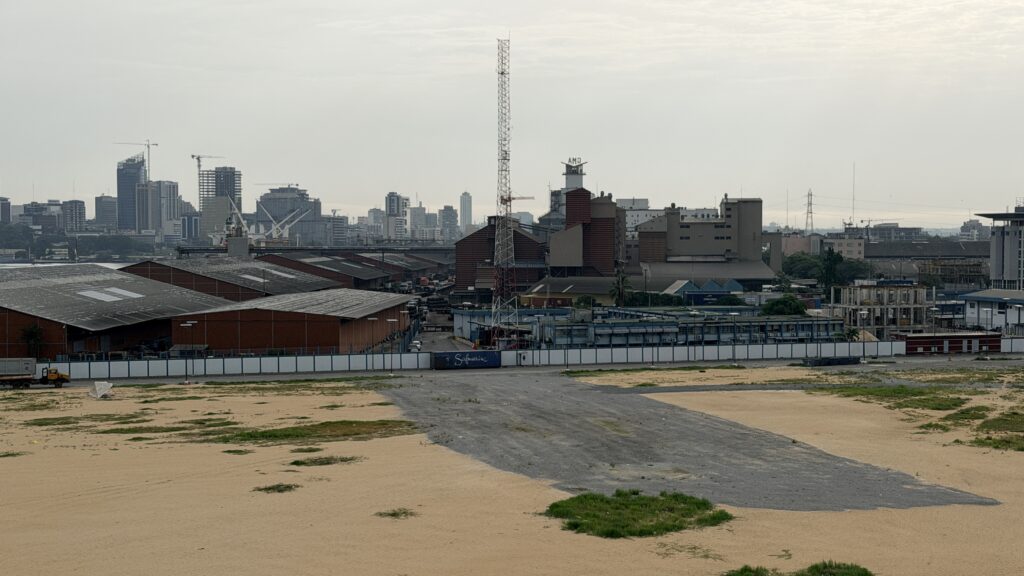
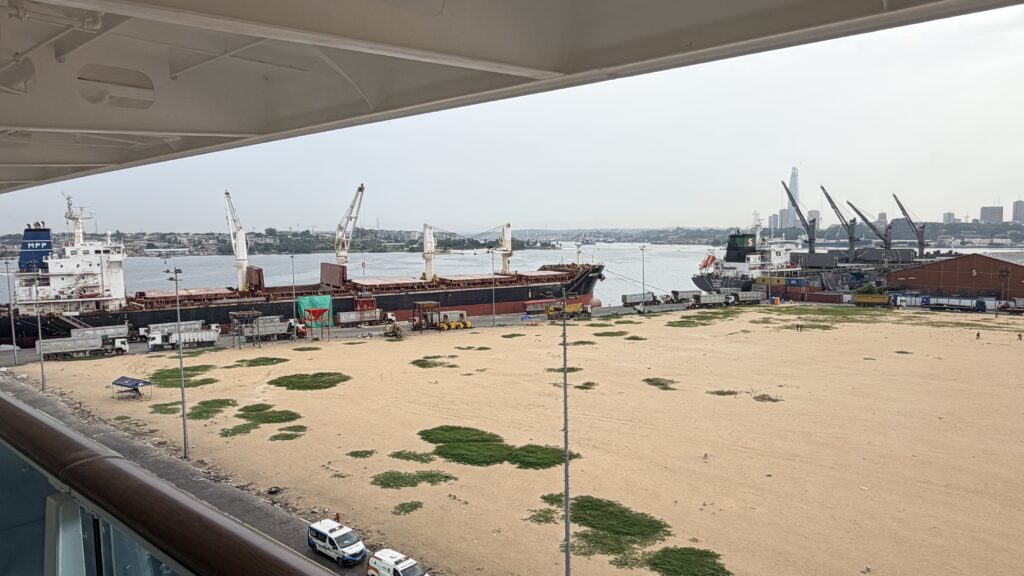
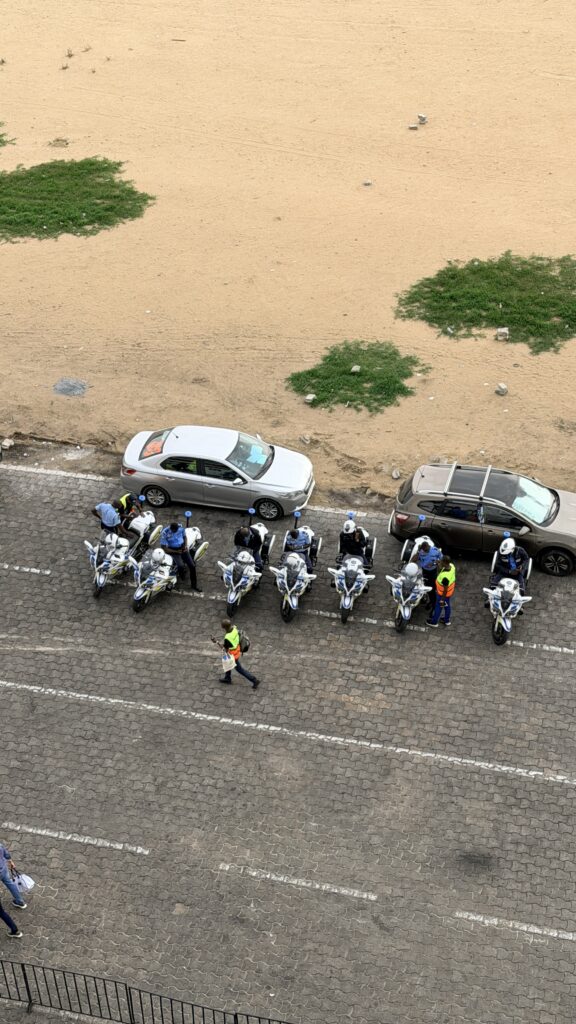
Police guard and military on the dock as the ship arrived
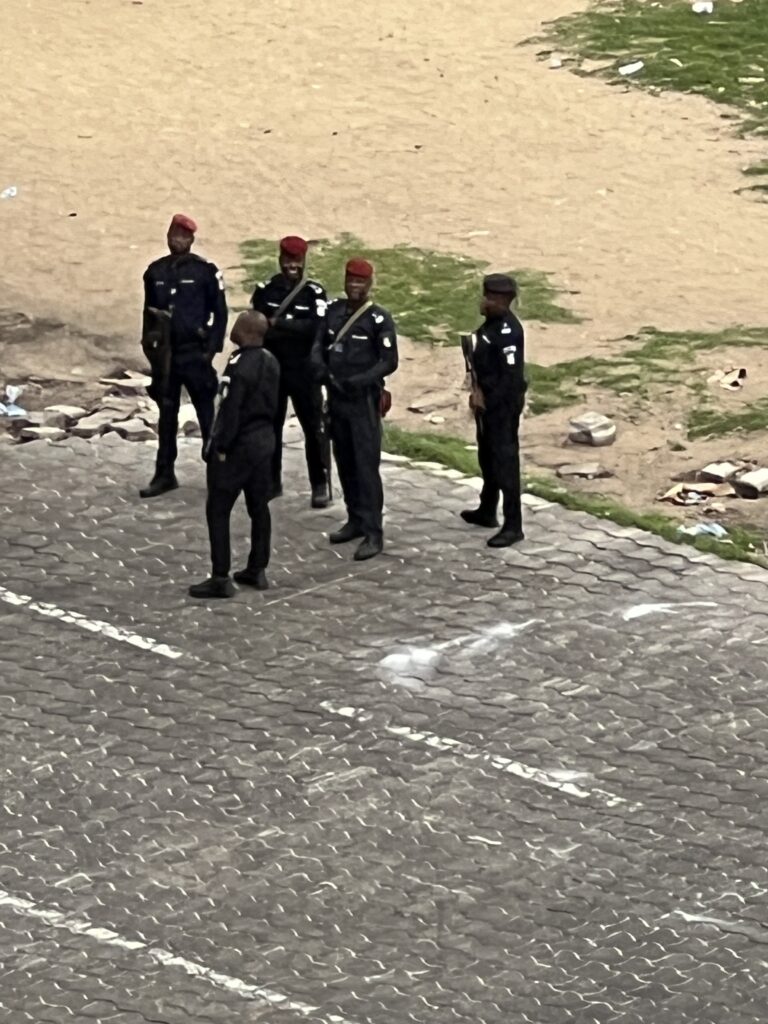
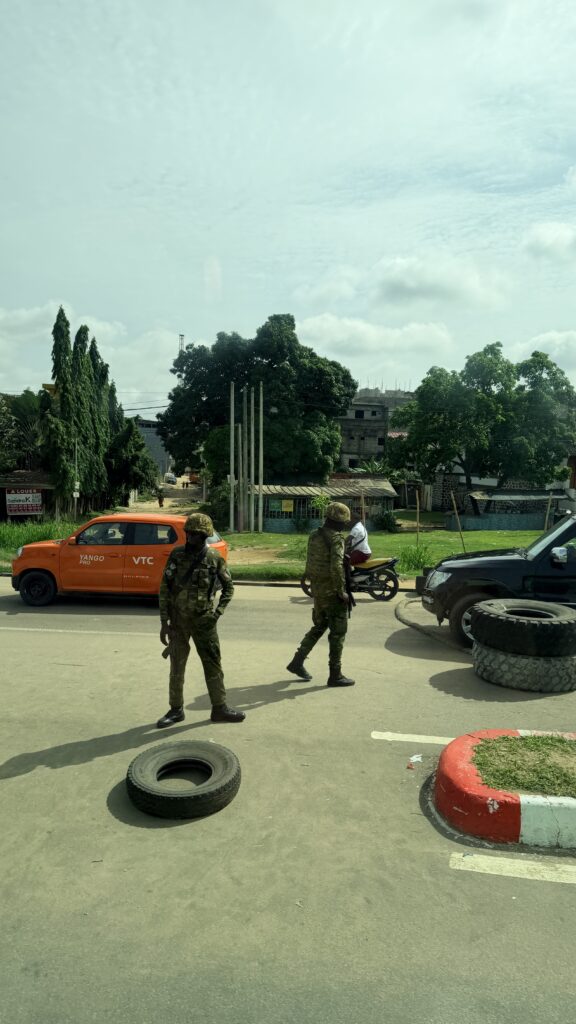
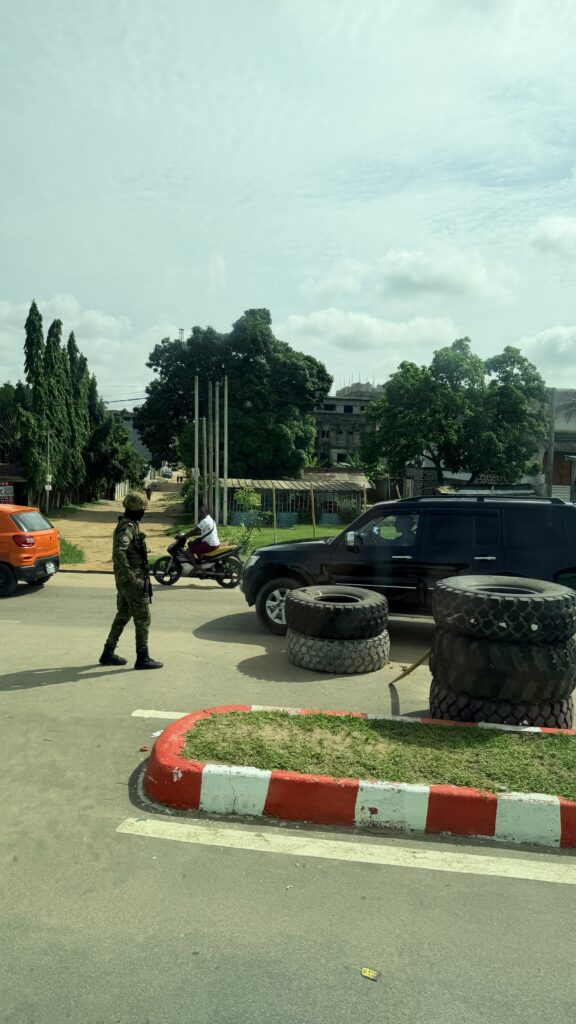
The excursion busses had police escorts the entre excursion allowing us to zip through signal lights
Video of the port this morning
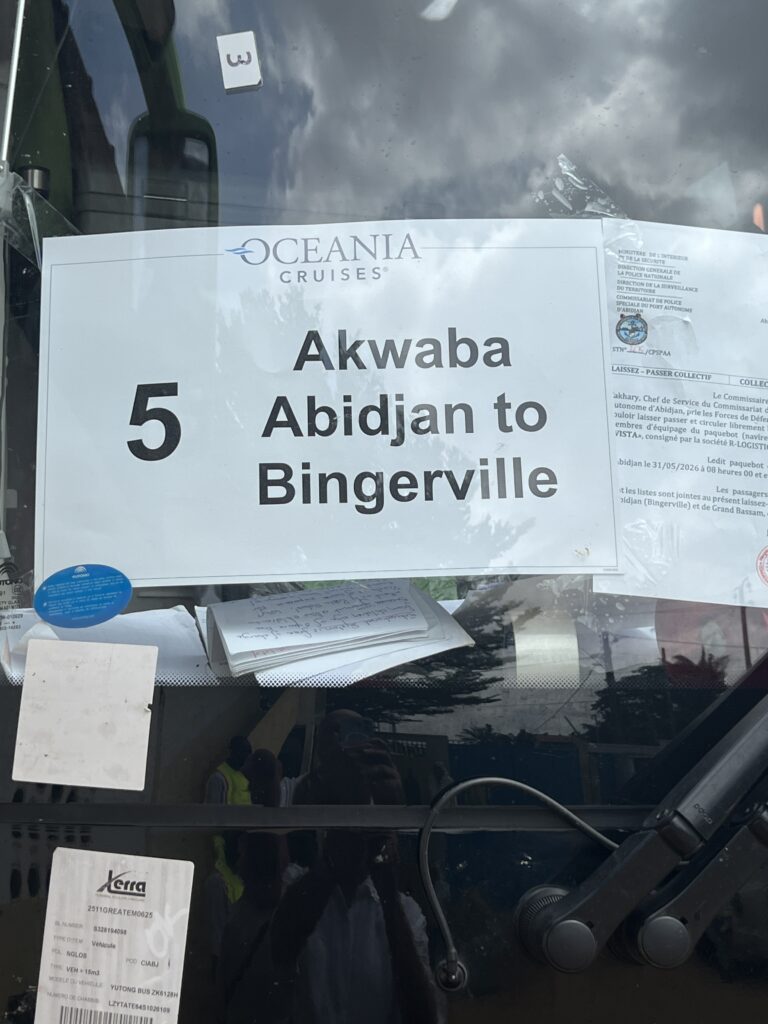
Sign on our bus window for the excursion today
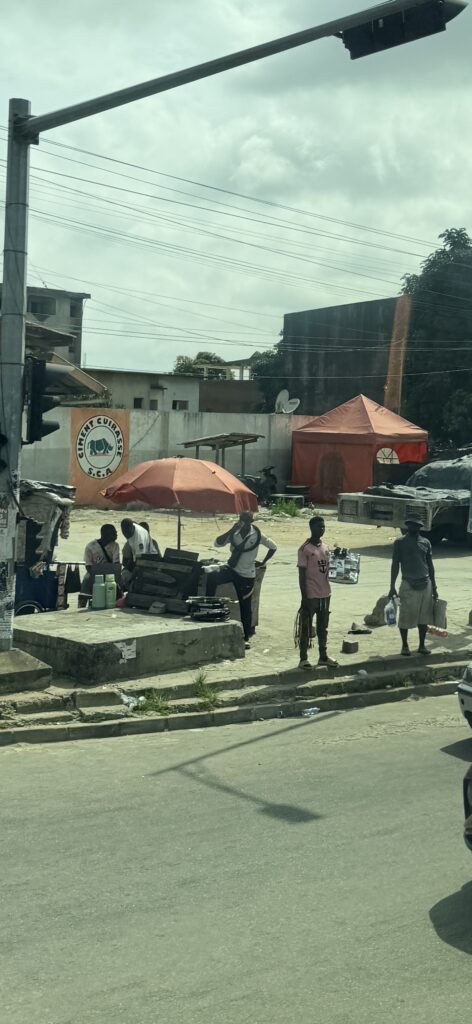
Photos and video as we drove through the city this morning
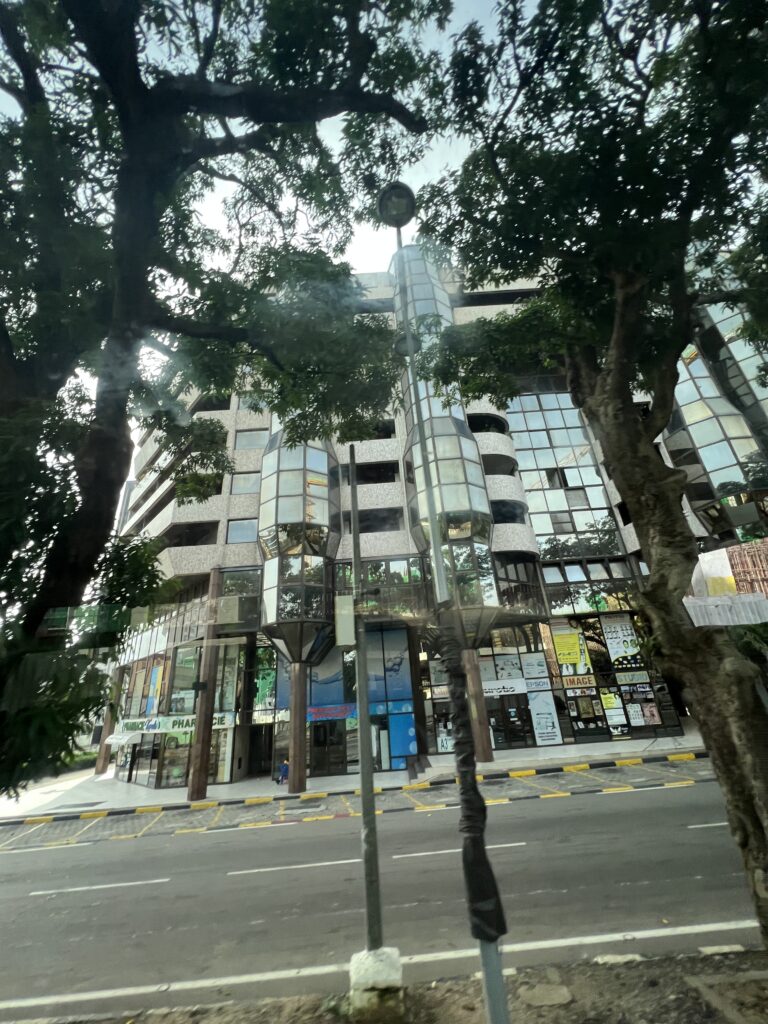
BDU-CI (Banque de l’Union Côte d’Ivoire) is a prominent commercial bank established in Ivory Coast since 2015. A subsidiary of the Banque de Développement du Mali (BDM-SA) group, it offers a full suite of retail and corporate banking, savings, and investment products across the UEMOA region.
Banque De l’Union CI | Vos ambitions n’ont pas de limites !
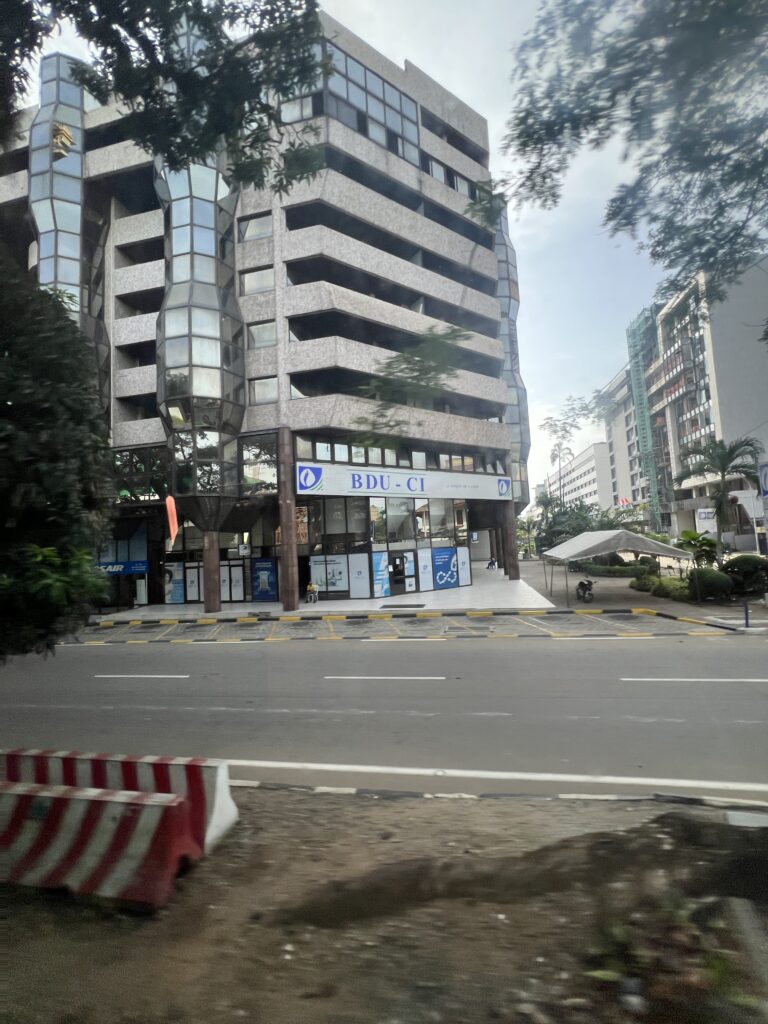
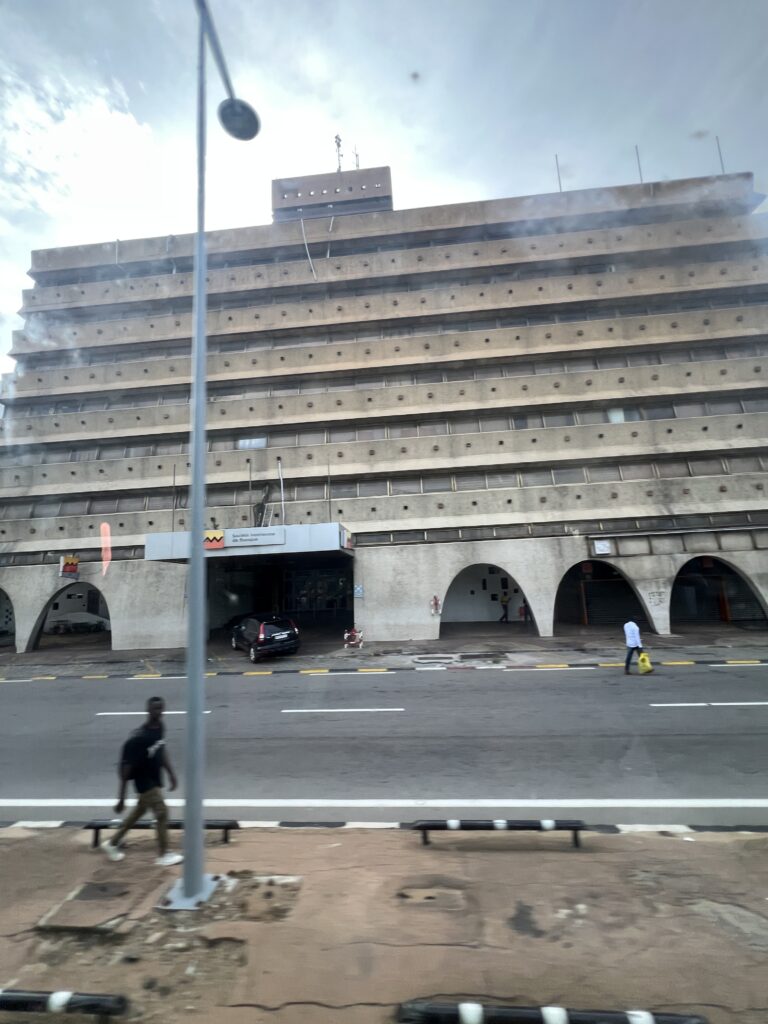
The Société Ivoirienne de Banque (SIB) is a public limited company under Ivorian law created in 1962. It is one of the four main banks in Côte d’Ivoire along with BICICI (a subsidiary of BNP Paribas), SGCI and NSIA bank, formerly BIAO. The bank has a network of 64 branches in 2019.
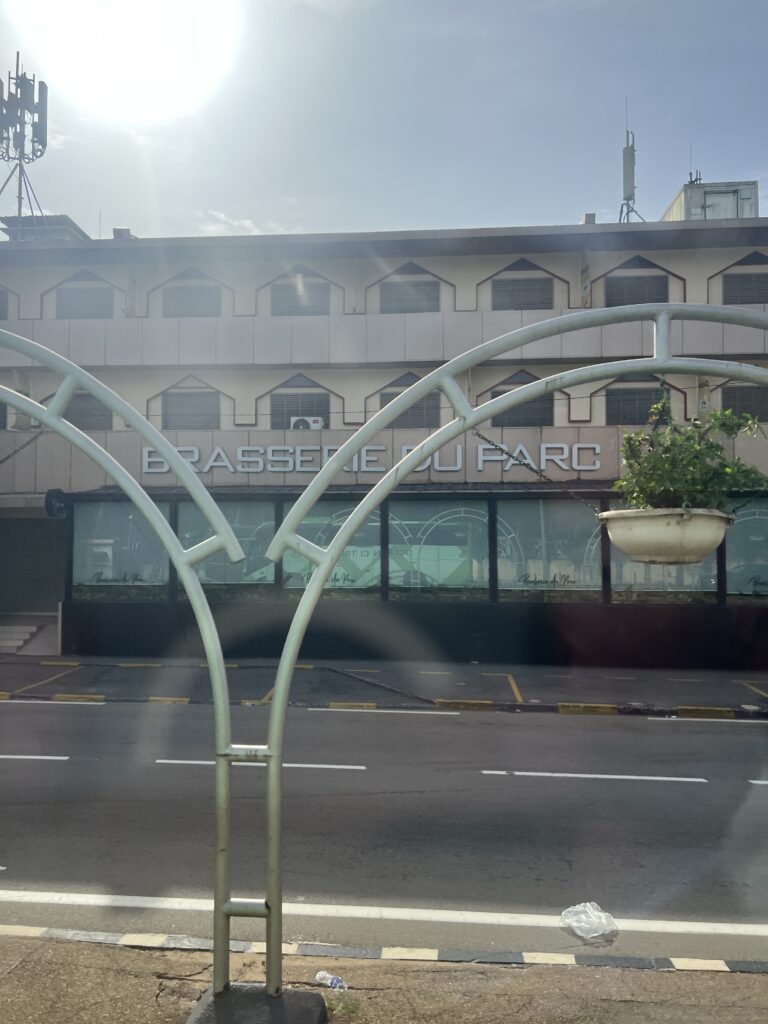
African/Moroccan restaurant
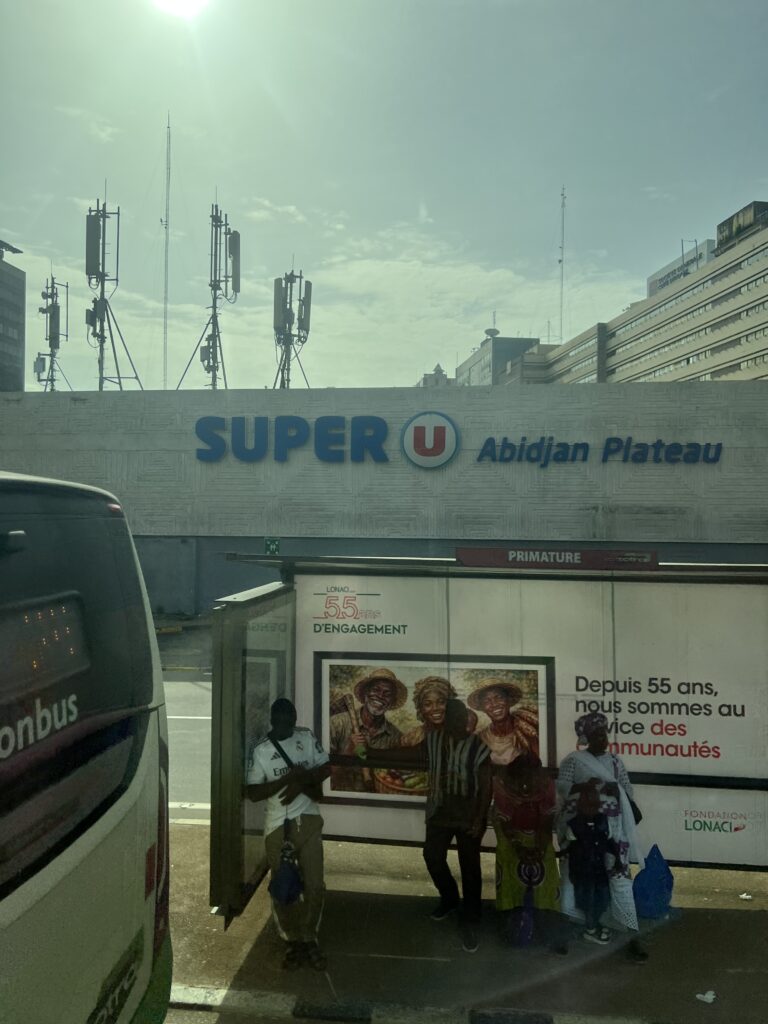
Supermarket/grocery store
TheAir Côte d’Ivoire in the Plateau is ideally located on the Place de la République. It is one of the best points of sale to book your tickets, obtain information on regional or international flights (especially to Paris), or manage your reservations.
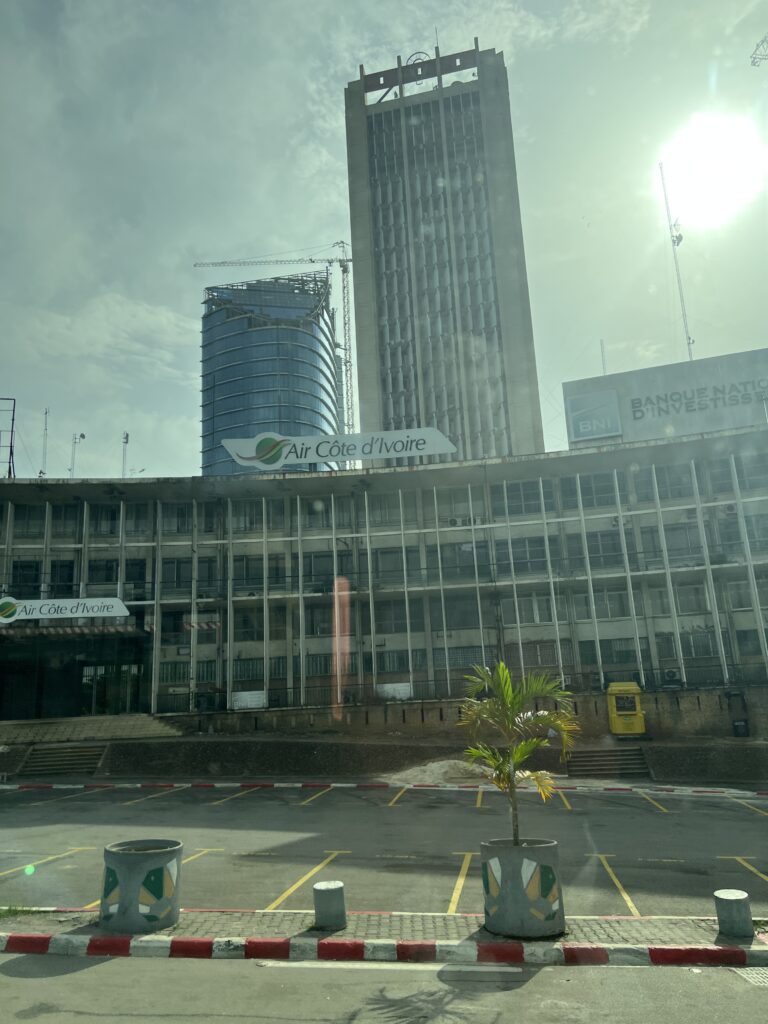
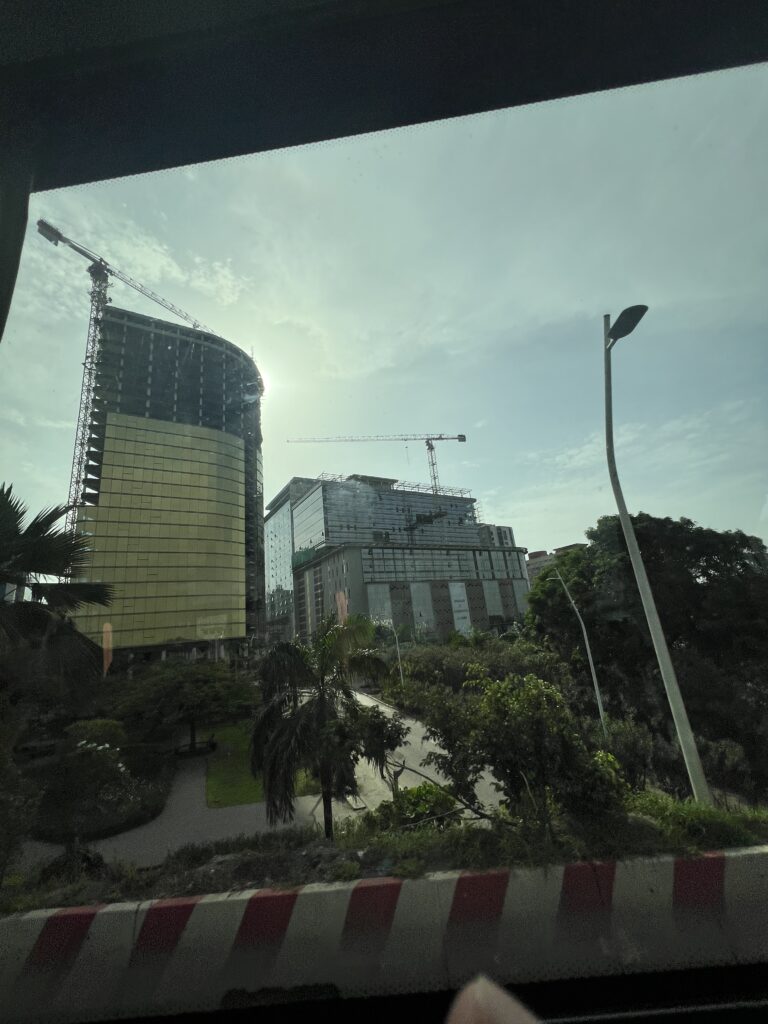
There were many buildings that are either being built, or construction has stopped on the buildings. Since it was Sunday, it was difficult to determine if work was being done on the buildings.
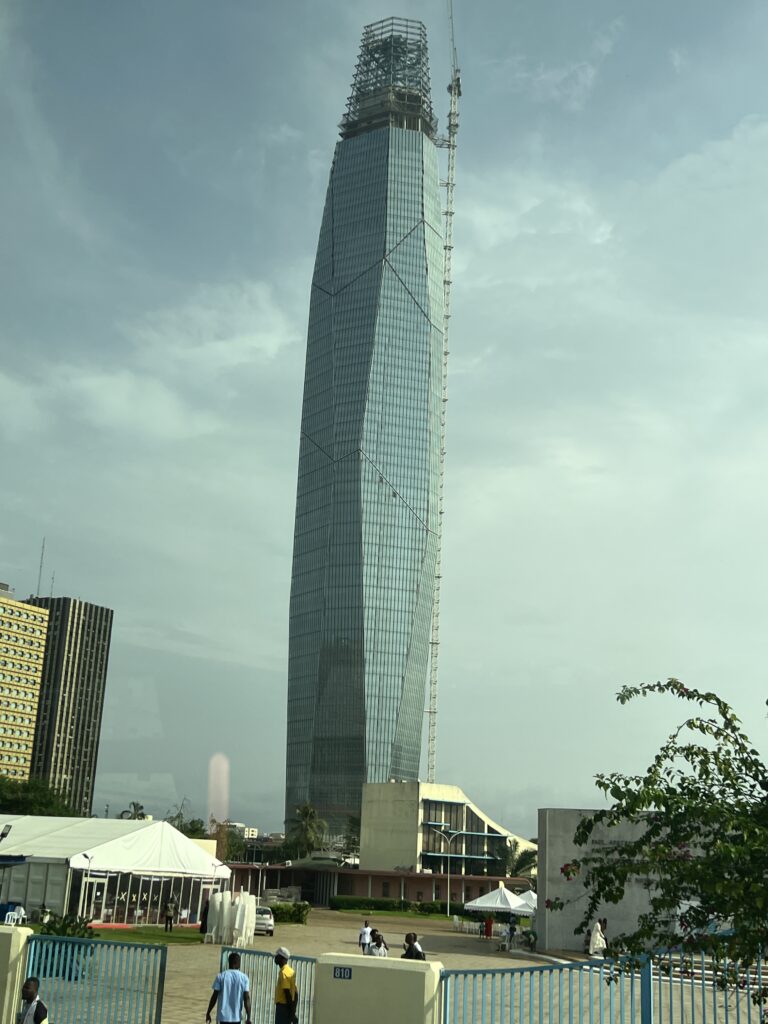
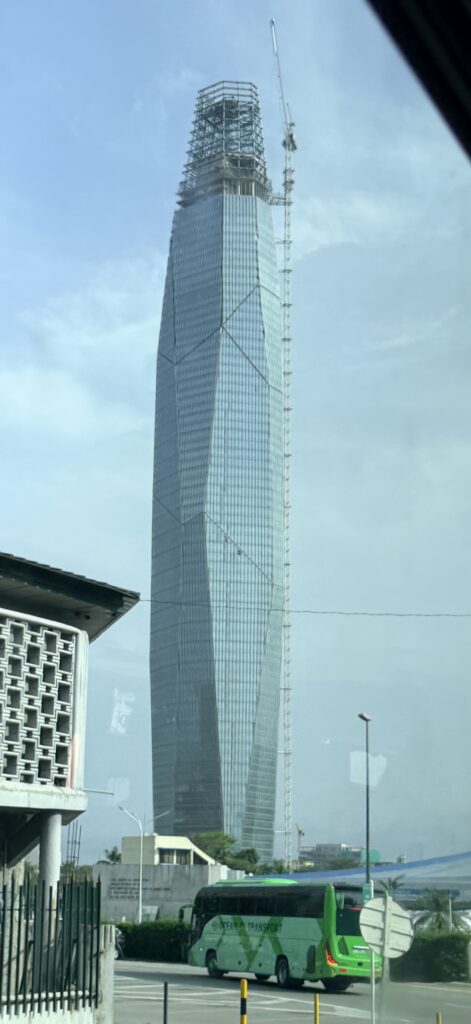
Rising in the Plateau district of Abidjan, Tour F (Tower F) is the tallest building in Africa. Standing at 421 metres (1,381 ft) with 76 floors, the skyscraper nears completion, cementing the city’s status as a booming economic hub. Africa’s tallest skyscraper, soaring at 421 metres with 76 floors. It features a futuristic, sleek design that surpasses Egypt’s Iconic Tower as the tallest structure on the continent.
Abidjan’s central business district, Plateau, is known as the “Manhattan of the Tropics” and is home to the most iconic architecture in Ivory Coast.
Abidjan is the largest city in Ivory Coast. In Abidjan, there are 10 buildings that stand taller than 85 m (279 ft). The tallest building in the city is the 30-storey, 120 m (394 ft) La Cité Administrative Tour D. The second-tallest building in the city is the Tour Postel 2001, standing at 106 m (348 ft) tall with 26 stories.
Abidjan’s history of skyscrapers began with the Ivoire InterContinental Abidjan Hotel Tower I (1969), La Pyramide Building (1973), and Immeuble SCIAM in 1975. Buildings in the city remained relatively short in the city until the late 1960s when the city experienced its first skyscraper boom. From 1969 to 1977, Abidjan witnessed a major expansion of skyscraper and high-rise construction. Many of the city’s office towers were completed during this period, such as the Immeuble SIB. A near short lull in building construction came after this expansion, with a second, larger boom starting in 1982. Though this expansion was much shorter, lasting only two years, most of the city’s iconic buildings were constructed during this time, including La Cité Administrative Tour D, the city’s tallest building.
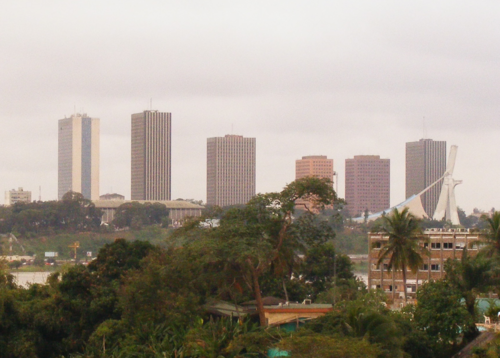
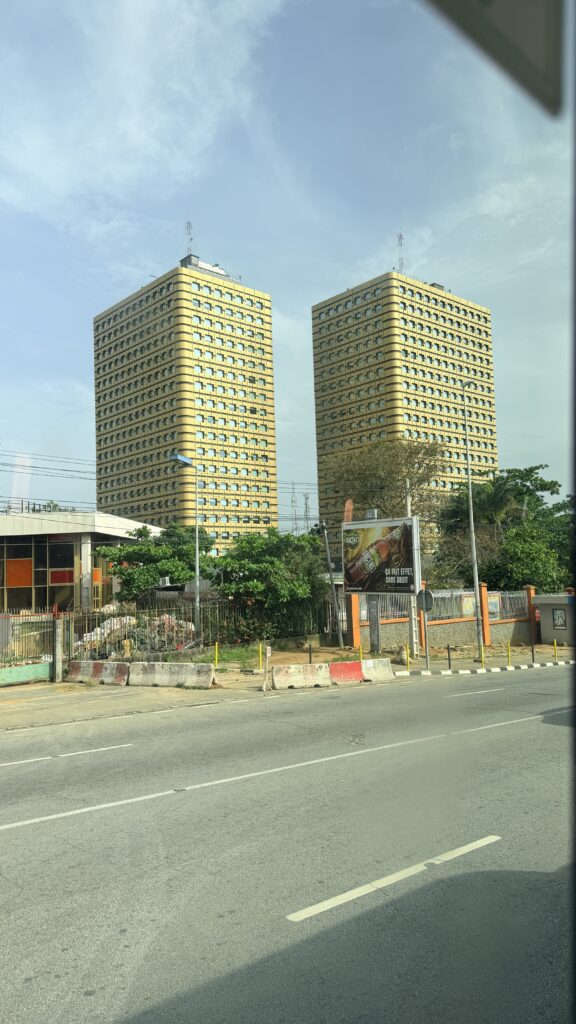
The administrative city of Abidjan is a set of office towers, intended to house the Ivorian administration within the former political capital, Abidjan. Built in the 1970s and 1980s by the Ivorian state, as part of a project to bring together administrations, the city is located in the extreme north of the Plateau commune. The last towers were completed in 1984.
The project to create a complex to centralize all state institutions and agencies dates back to the late 1960s, when the offices of the administration and ministries were spread out in different parts of the city
The construction of the first two towers (A and B) began in the early 1970s and was completed in 1977. They both rise to a height of 70 m. Following these first two, the construction of three new towers (C, D and E) was launched shortly after the completion of towers A and B. These three towers were completed in 1984. While Towers C and E rise to a height of 100 m, Tower D rises to over 120 m, making it the tallest building in the country.
The administrative city is the last modernist and functional urban planning project that the metropolis of Abidjan has experienced. It is thus the most recent witness to the “Ivorian miracle” and the splendour of the Houphouët-Boigny regime, when the country’s debt and public finances were already in a worrying situation at the end of the 1970s
View of the towers of the administrative city
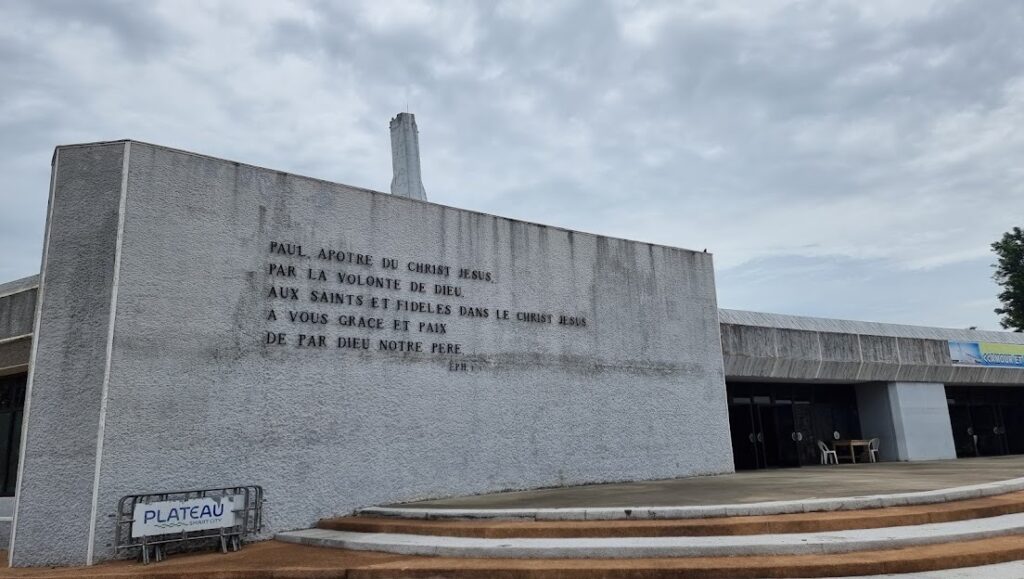
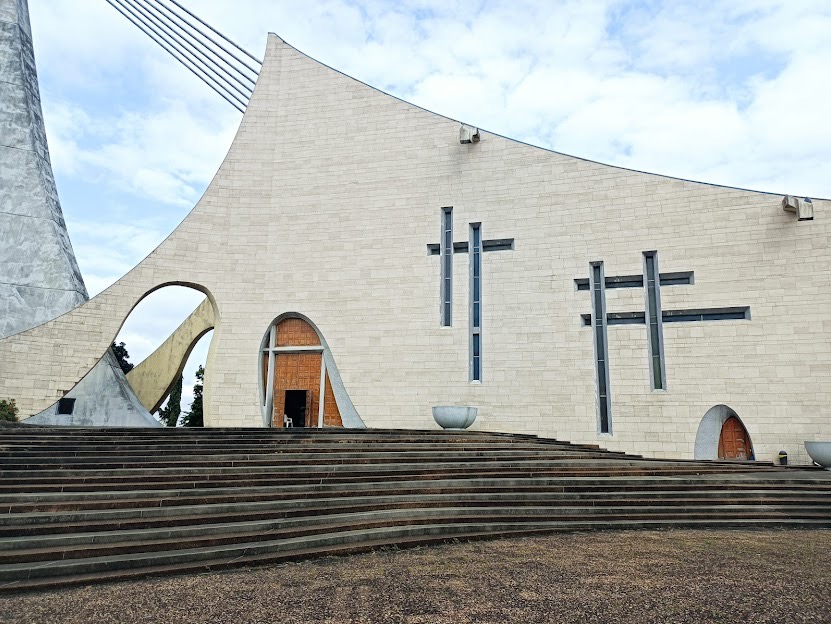
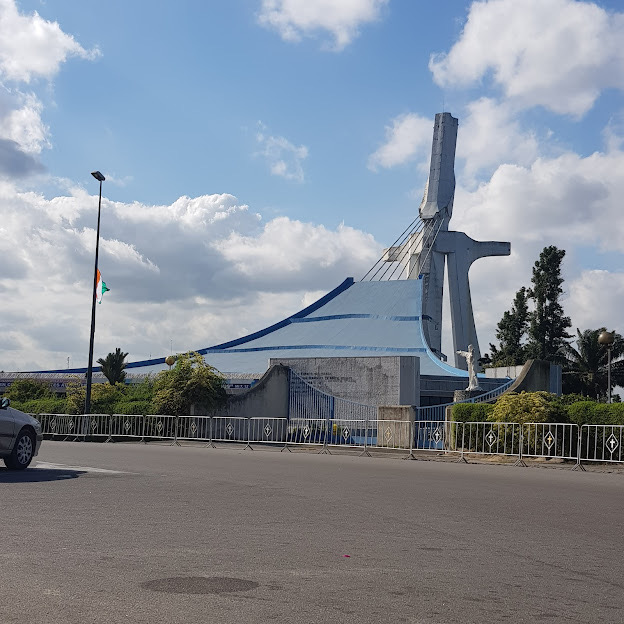
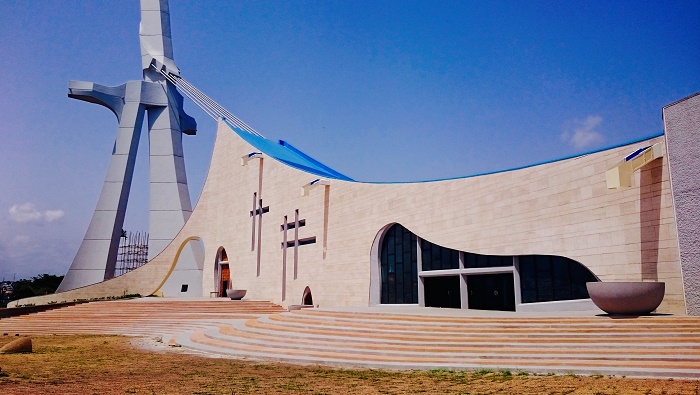
As we driving through the city, we saw St. Paul’s Cathedral. I found some stock photos to place below. Seeing the photos increased the disappointment of not being able to visit today.
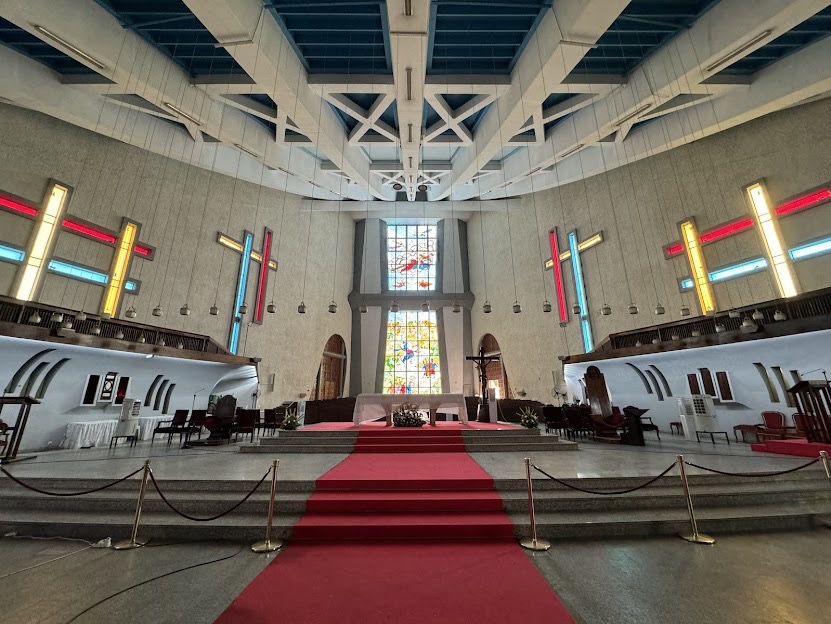
St Paul’s Cathedral (French: Cathédrale Saint-Paul d’Abidjan) is a Roman Catholic cathedral located in the city of Abidjan, Côte d’Ivoire. The cathedral, which was designed by the Italian architect Aldo Spirito, serves as the mother church for the Roman Catholic Archdiocese of Abidjan.
The first stone of the cathedral was consecrated on May 11, 1980, by Pope John Paul II during his first pastoral visit to Côte d’Ivoire. He further dedicated the building upon completion on August 10, 1985, during a second visit to the country to lay the foundation for the Basilica of Our Lady of Peace in Yamoussoukro. The cost of implementing this modern architectural edifice, reputedly the second largest church on the African continent (as of 2002), and one of the largest cathedrals in the world, was estimated at $12 million. Architecturally, the cathedral is unique and modern, built to meet the aspirations of the people of Côte d’Ivoire.
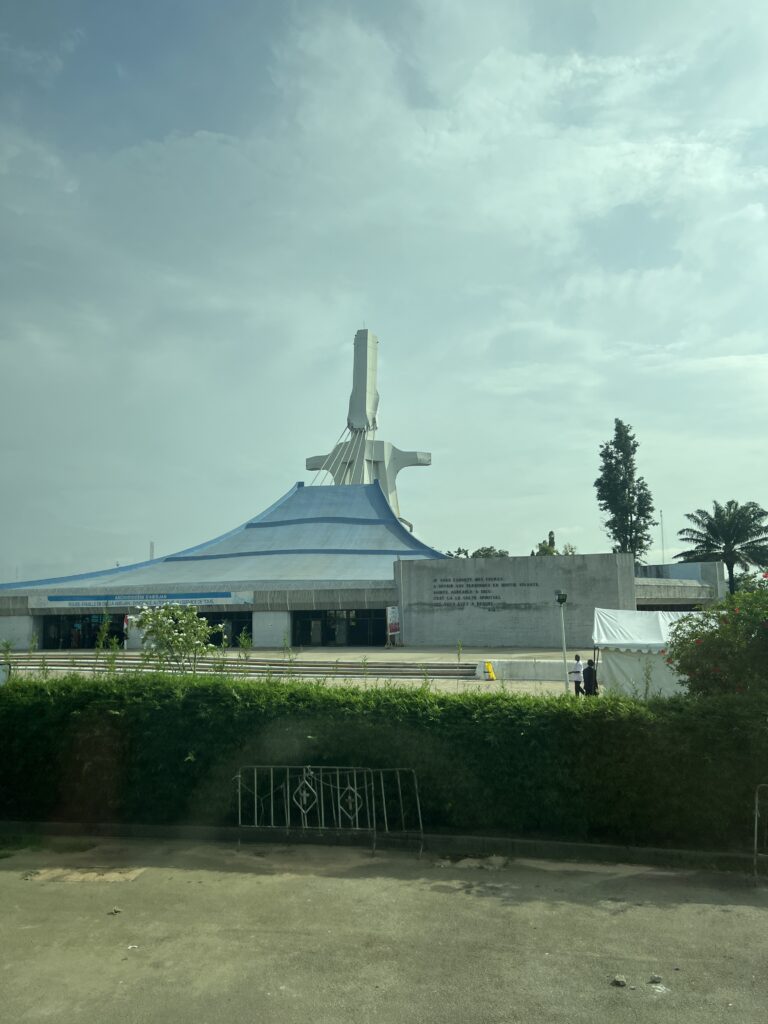
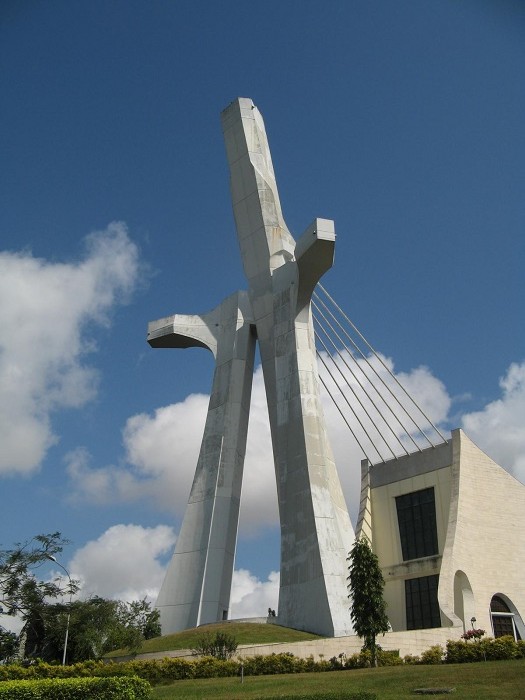
The structure of the Cross, which is winged on both flanks, is held in position through seven cables which are anchored to the main building of the cathedral which is in a triangular shape and it creates an elevated vision that the structure is being tugged towards the lagoon.
Symbolism represented by the overall structure of the cathedral and the cross is of Jesus Christ spreading his arms, akin to the statue of Christ in Rio, with metaphysical significance of pull towards the ultimate trinity. The external feature of the cross of the cathedral is also inferred to depict a view as though a devotee is bent on his knees offering prayers with his cloak flying backwards merging into the attractive concrete slab which is integral to the cathedral’s roof.
The cathedral has a total area of 4,300 metres (14,107.61 ft), with 3,500 metres (11,482.94 ft) of usable space). It can accommodate 5,000 devotees, with seating for 3,500, with the remainder being standing space.
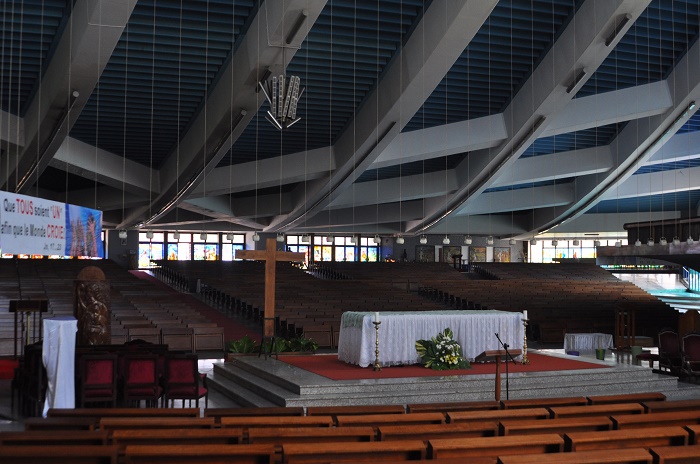
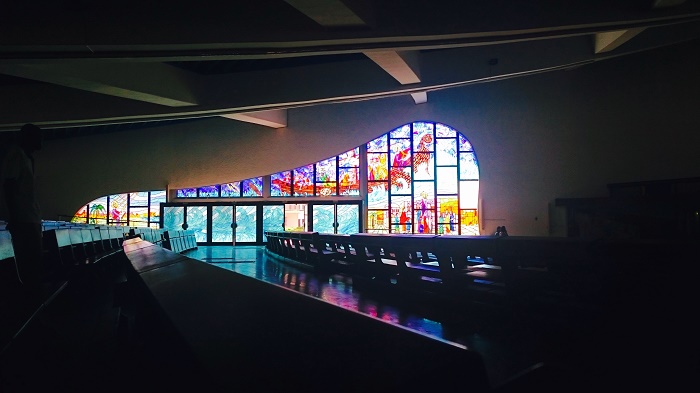
The cathedral has six stained glass windows covering a total surface area of 370 meters (1,213.91 ft), which were also designed by Aldo Spirito. The artistic imagery inside the cathedral is not only Biblical in theme but also has a special focus on the Ivorian peoples’ faith in Christianity.
In addition, the interior of the cathedral is embellished with paintings of the Virtues, mosaics of the Sacraments and twelve panels made in polychrome ceramics. The stained glass panels were designed to withstand a wind pressure caused by wind velocity of 100 kilometers (62 mi)/hour. The themes for each panel are related to the life of St. Paul.

There are large paintings near the altar, 200 centimetres (79 in)x150 centimetres (59 in), which depict themes different from those drawn on the stained glass windows. The themes chosen are specific to the propagation of the Virtues of the Cross – Theological Virtues of Faith, Hope and Charity, and Cardinal Virtues of Temperance, Justice, Prudence and Courage, displayed through abstract and angelic figures. Mixed colour techniques have been used in painting on the canvas; mono or bi-color brushed in asymmetric positions have been used for the background while angels painted in bright colours are highlighted.[13]
The notable feature of the stained glass window near the altar is the journey of St. Paul to Damascus. The stained glass panel on the left side wall facing the altar has features drawn on St Paul’s lifetime activities; on the left side of the panel he is shown penning letters to the people of different denominations; the middle part shows his tour to Rome to be judged by the Pope, and at the lowest part is his giving sermon to people of various denominations. The panel on the right wall facing the altar is similar to that on the left wall but is dated 28 October representing the earliest stage of interaction with the people of Grand Bassam, Côte d’Ivoire and the visiting evangelist in the process of proselytization.
Another alluring stained glass panel is of Jesus showing the way forward with a storm brewing in Lake Galillee. Also is a panel in which the evangelists are shown landing on the shores of Africa, joyously surveying the local people, the wild animals such as elephants and gazelles and the vegetation of palm trees
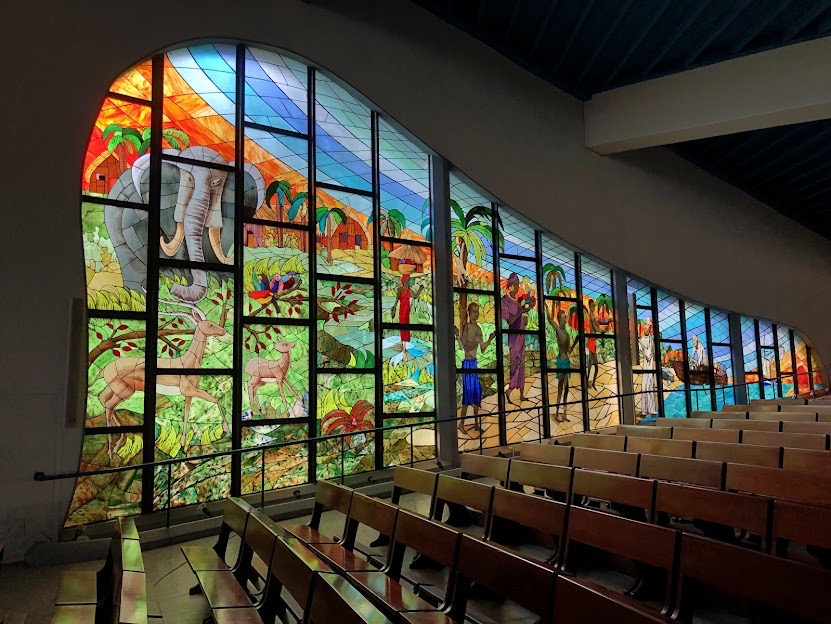
Photos taken as we drove by
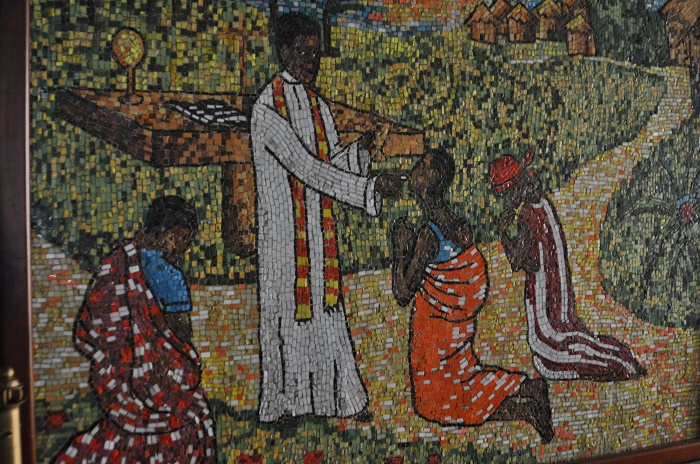
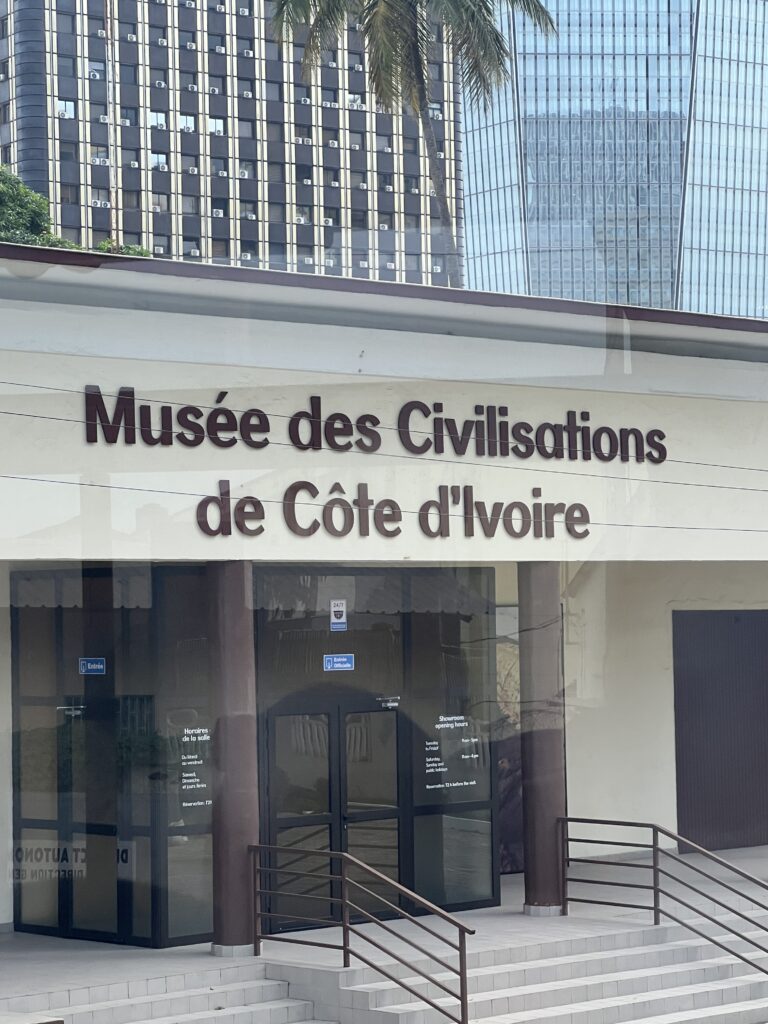
Our first stop was The Museum of Civilization. The Musée des Civilisations de Côte d’Ivoire (MCCI) is a state museum located in Ivory Coast. It is located in Plateau, Abidjan. It exhibits ethnographic, archaeological and iconographic works from Ivory Coast.
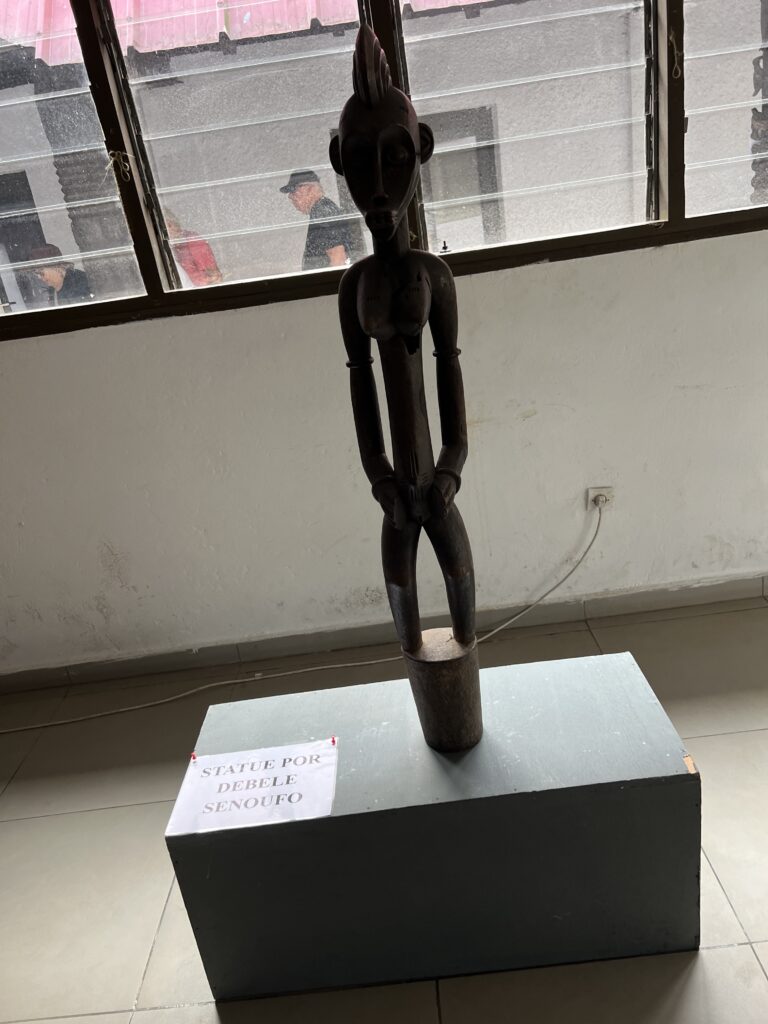
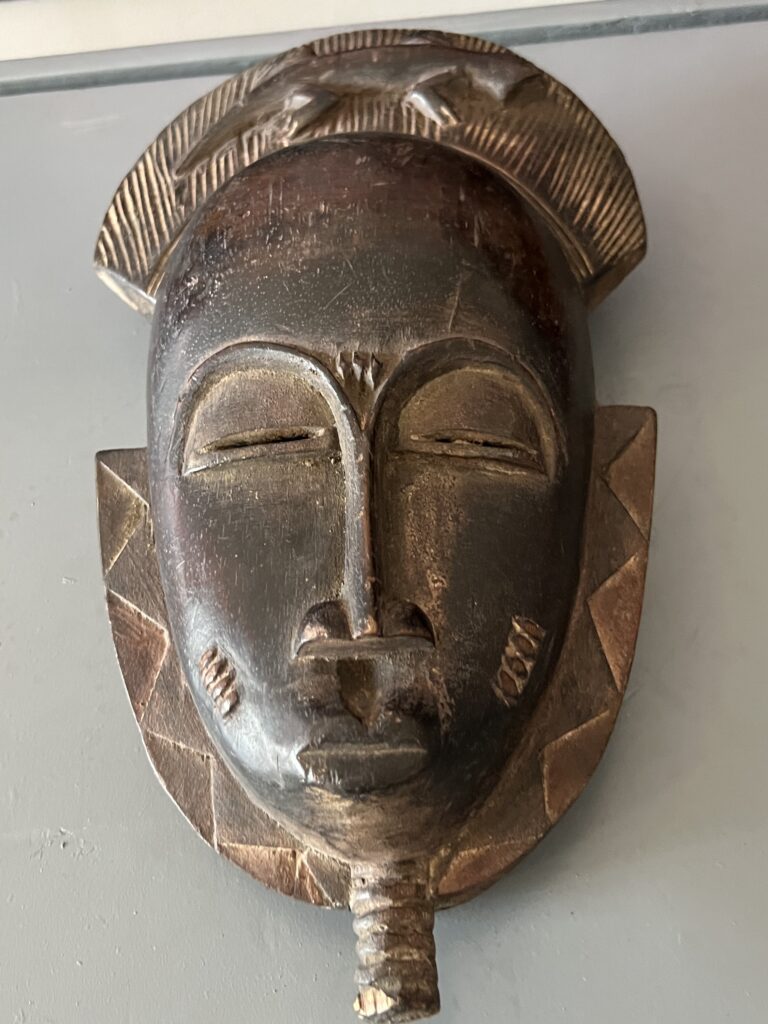
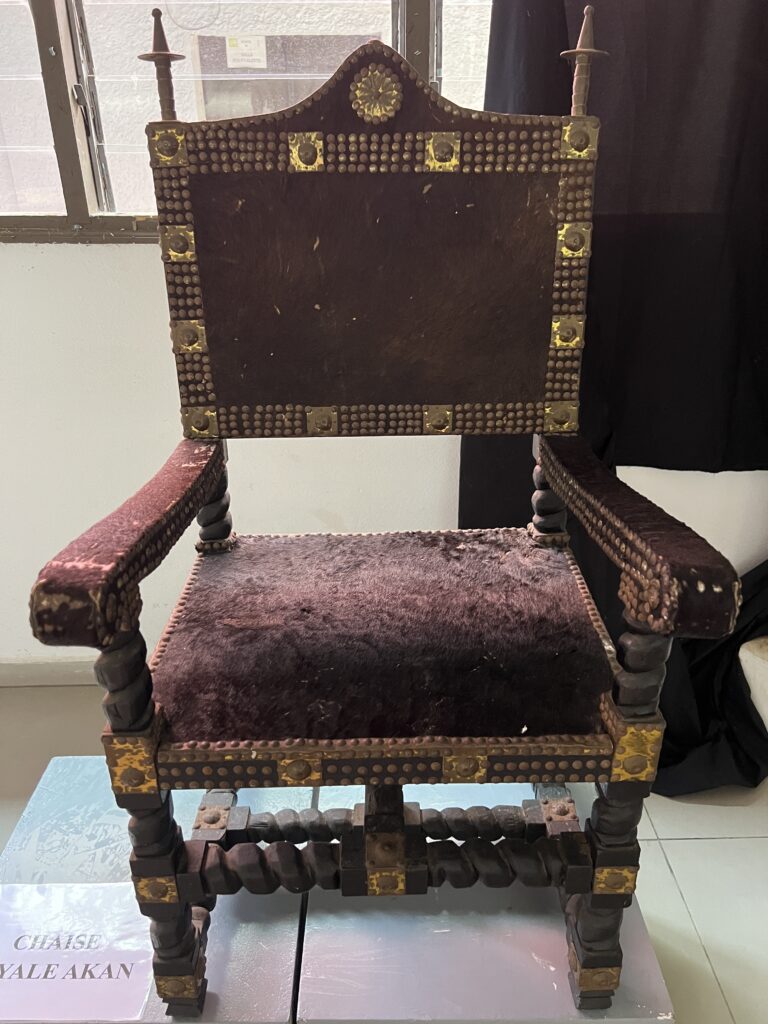
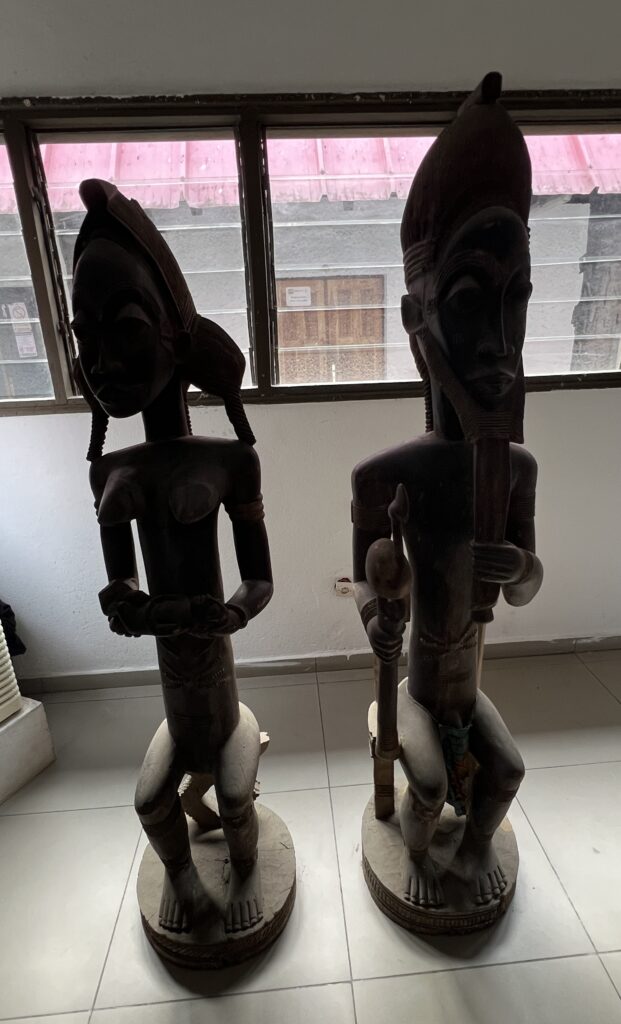
The museum is currently being renovated. There were pieces that were provided for us to view and then a live traditional dance was held for us.
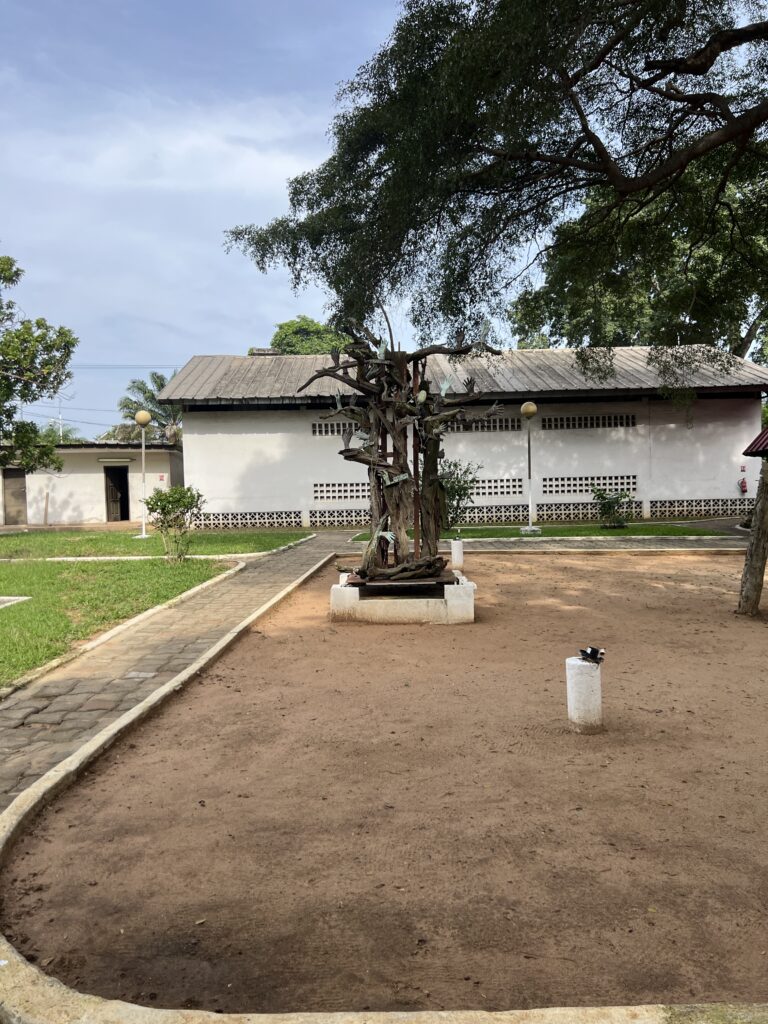
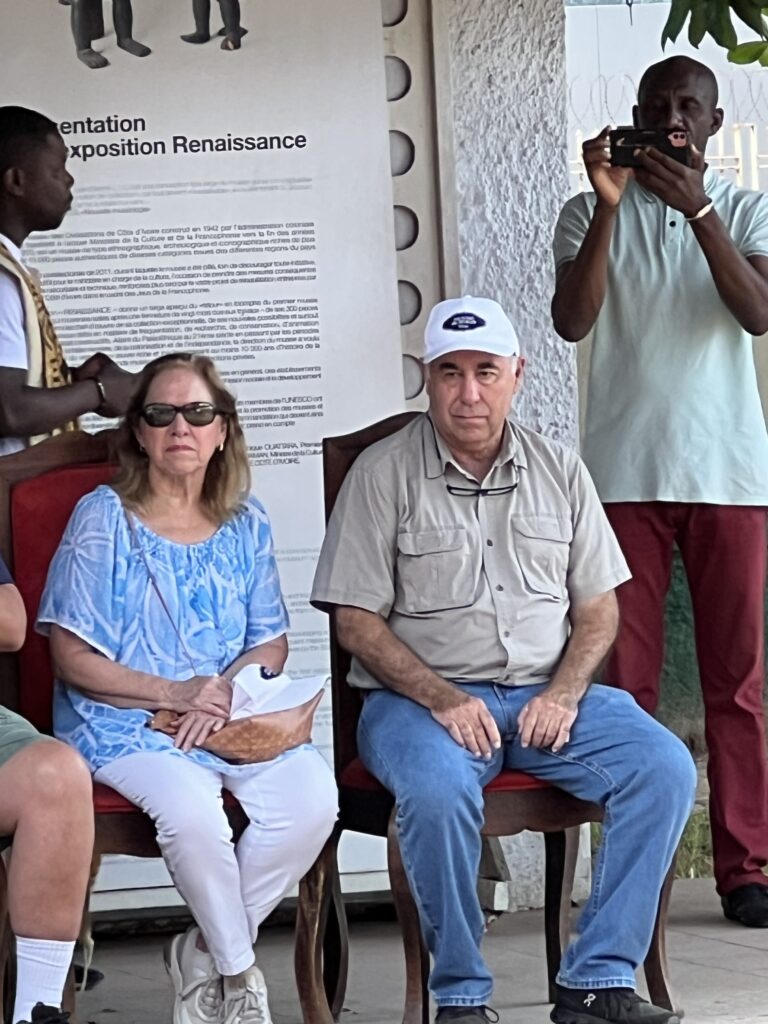
Area where we sat to view the traditional dance
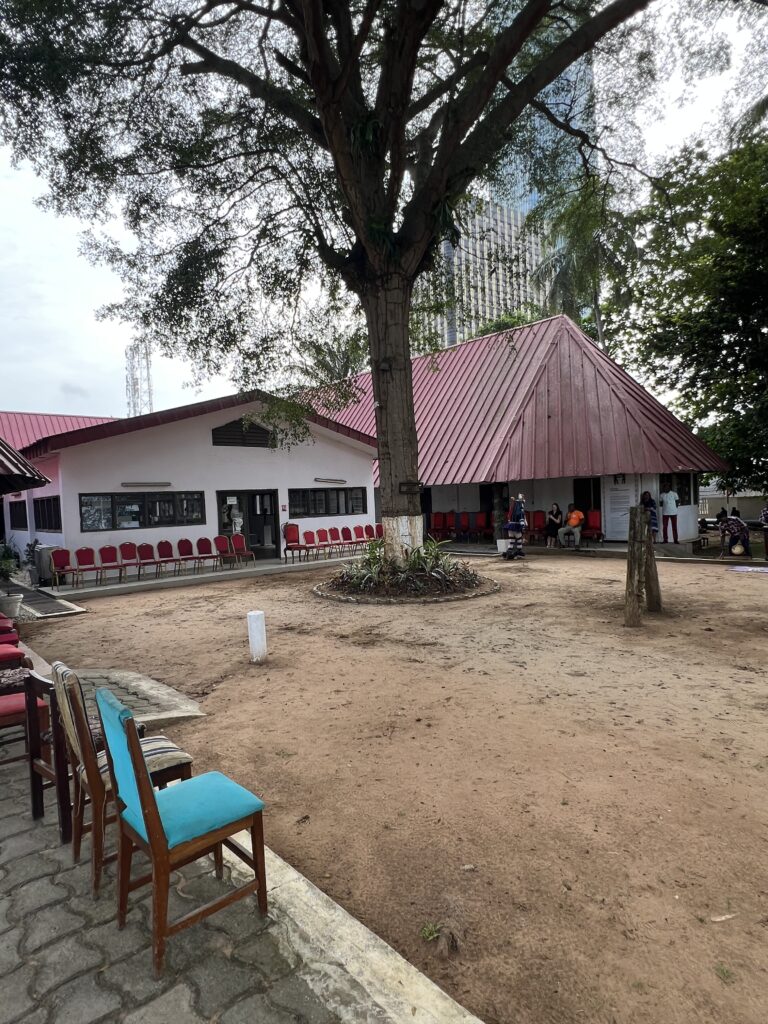
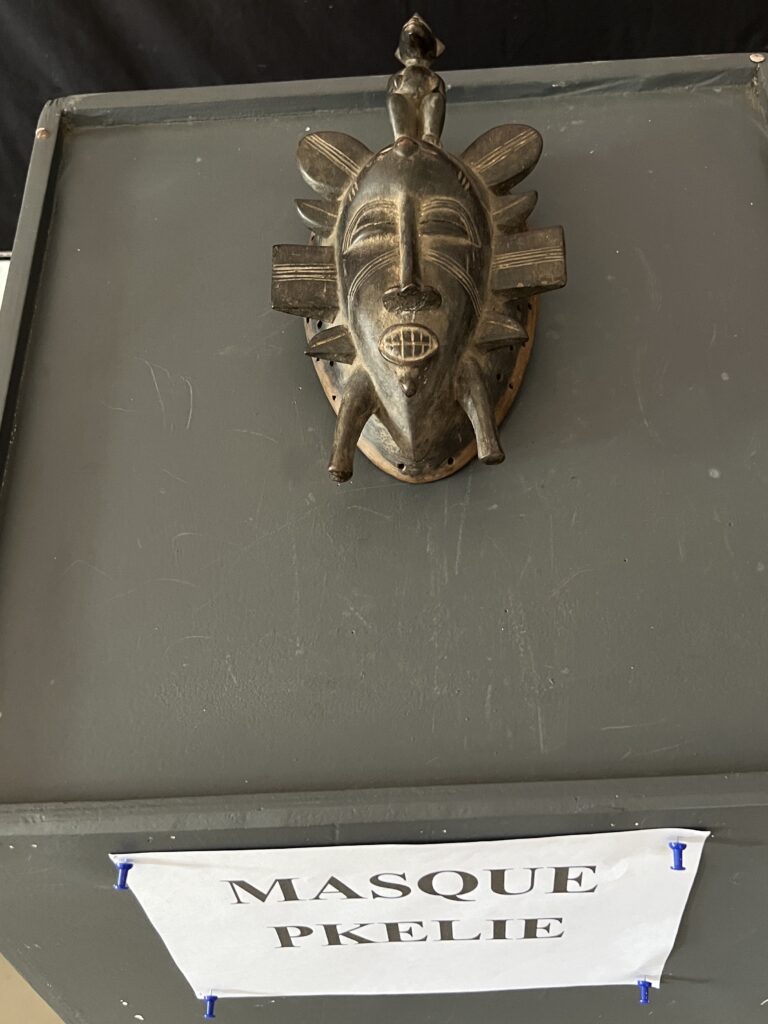
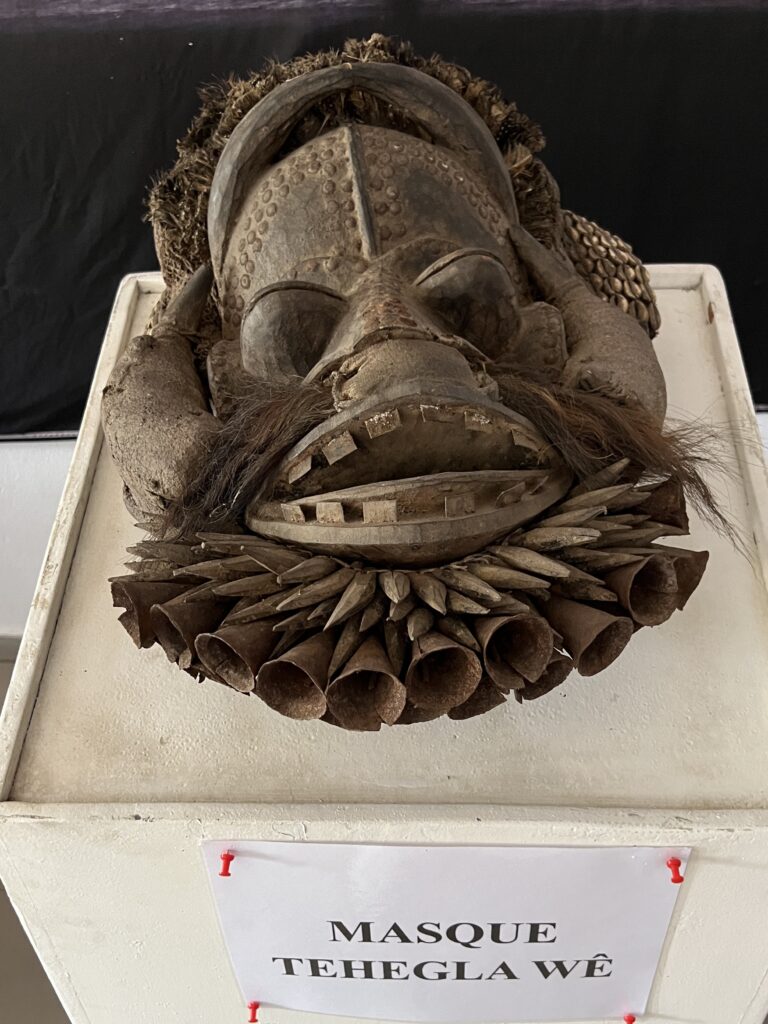
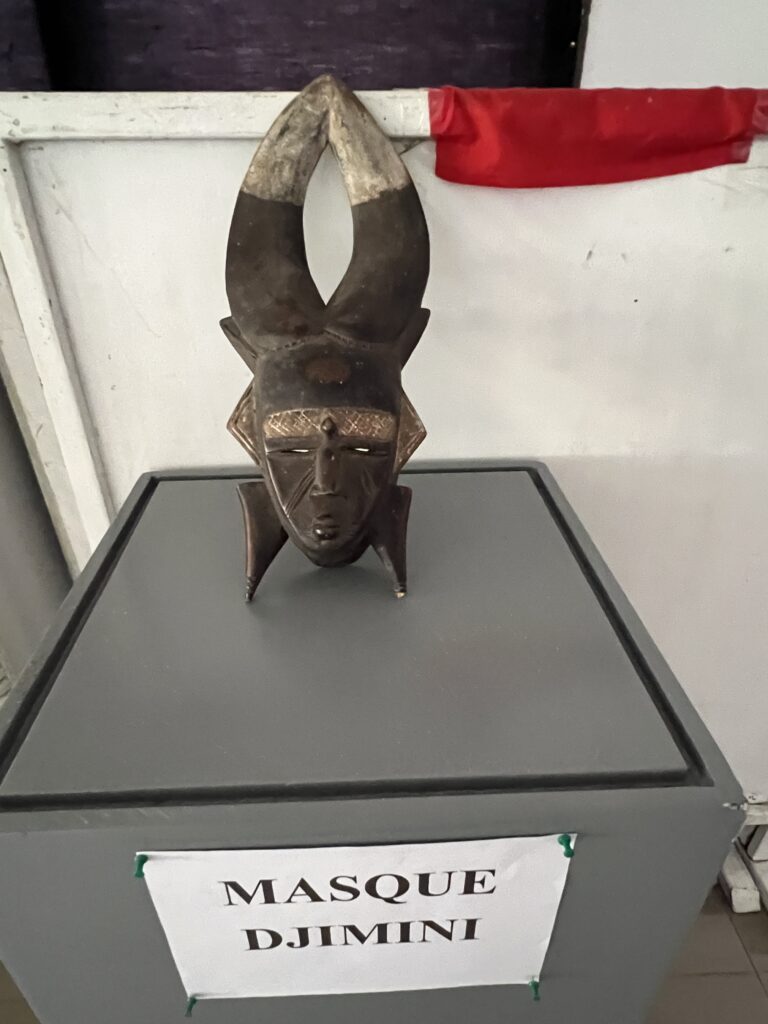
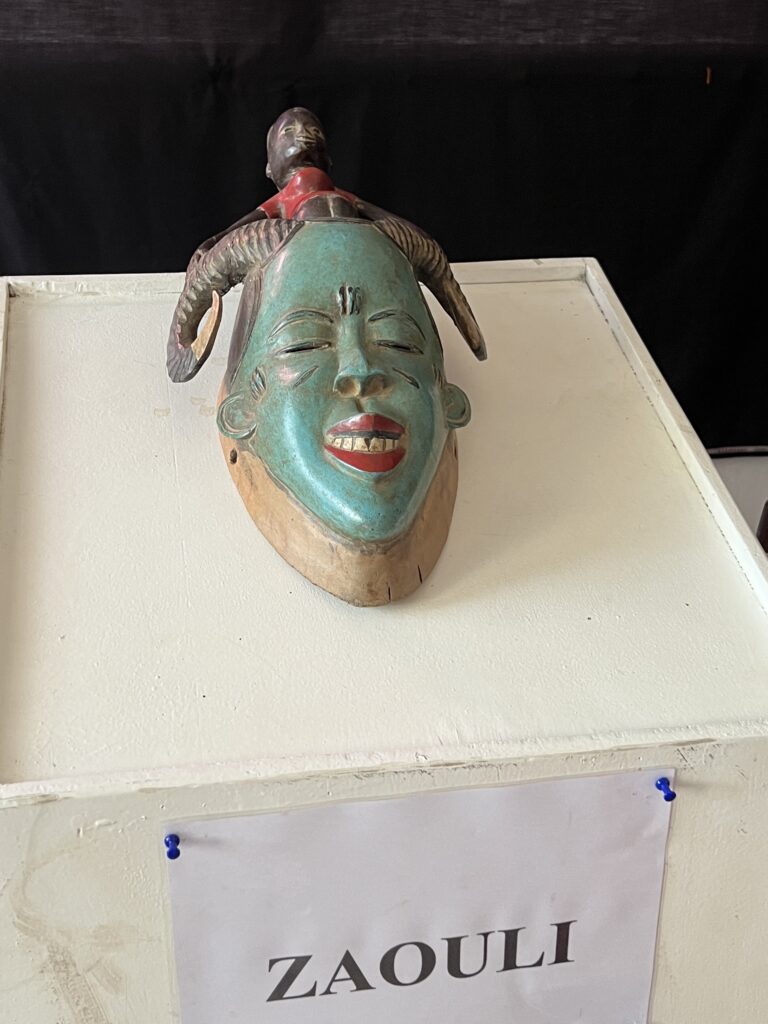
Museum pieces that were laid out in a large room for us to see. A museum employee spoke to us about each of the pieces.
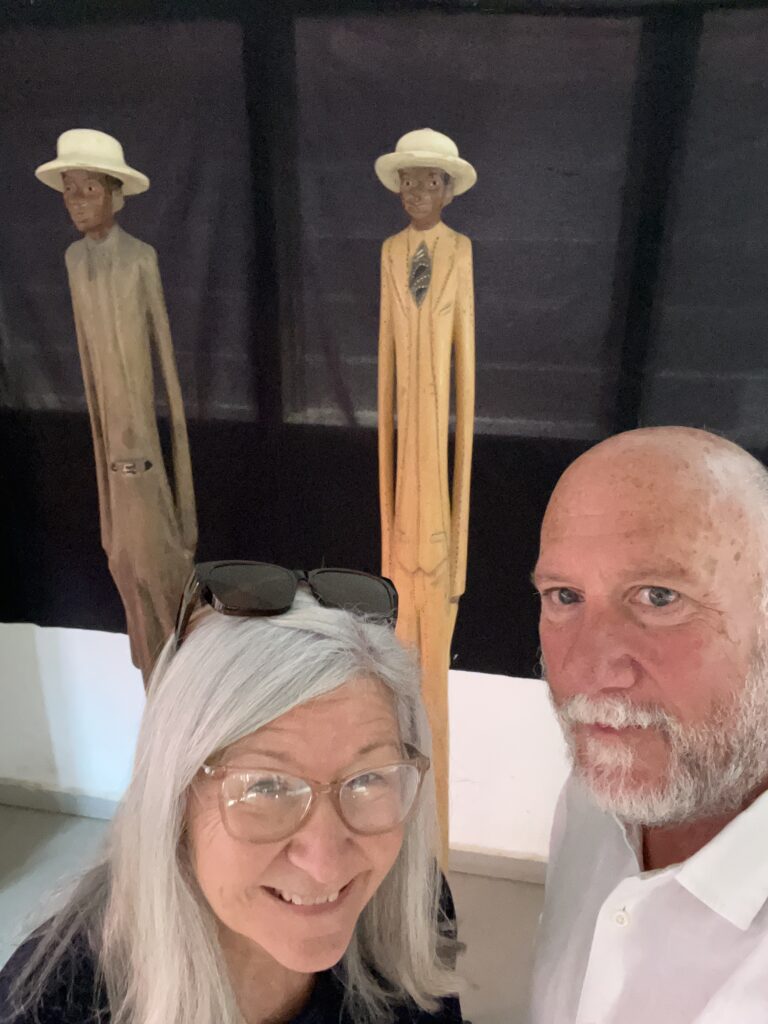
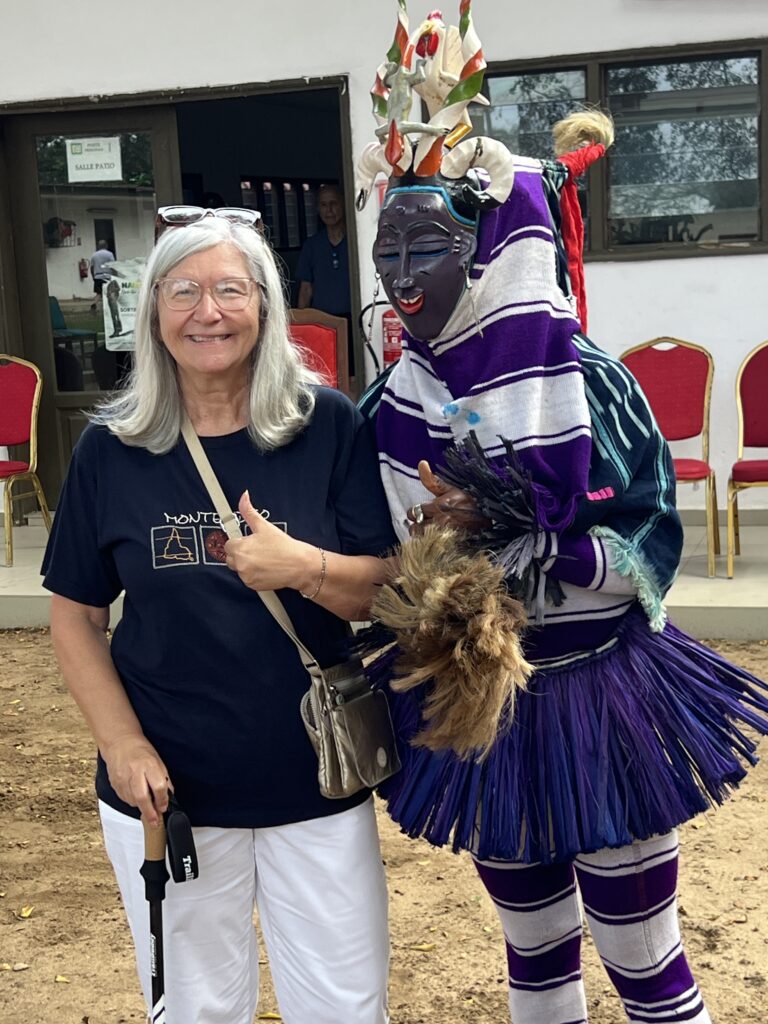
The traditional dance was held outside in the court area. I took this photo of Romolos and Sylvia. They are a couple who live in Monterrey, Mexico. We met them originally in San Diego when we and they were shopping in the CVS that had 75% of the store locked up. We have seen them around the ship a number of times and enjoy visiting with them. Tomorrow night (Monday June 1st) we are having dinner with them. I plan on giving them these two photos and asking what they were laughing about.
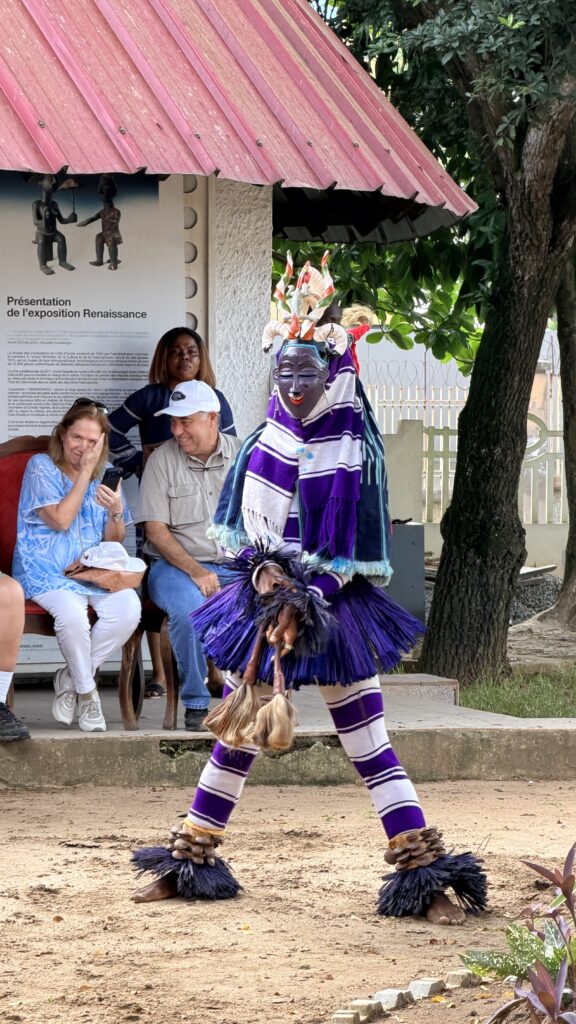
Below are a number of videos of the traditional dance. I am posting all that we had taken as I am unsure what will post and which ones will not post.
Look at his legs!!!! Like with the tango dances, I am not sure how they can bend their legs below their knees.
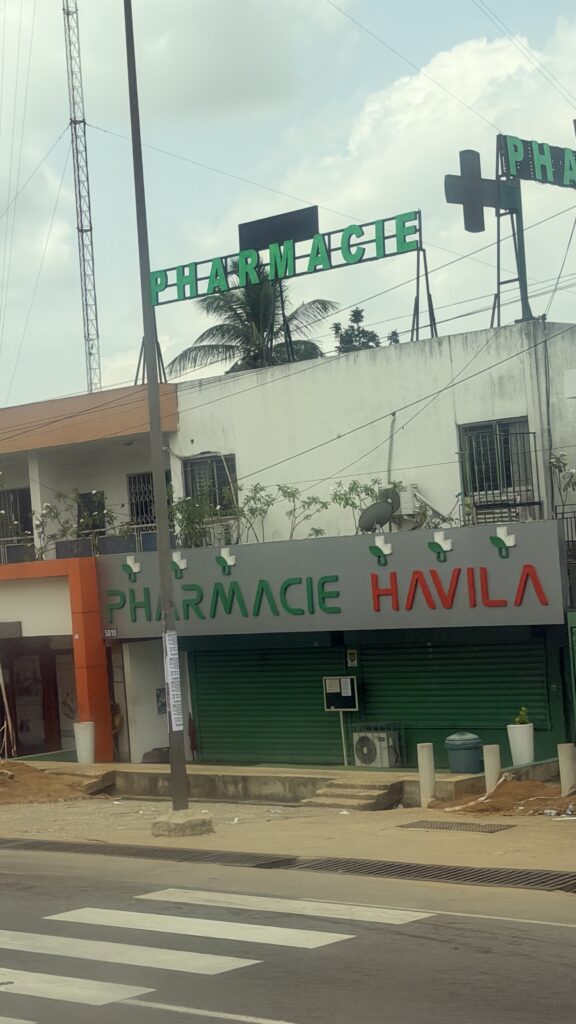
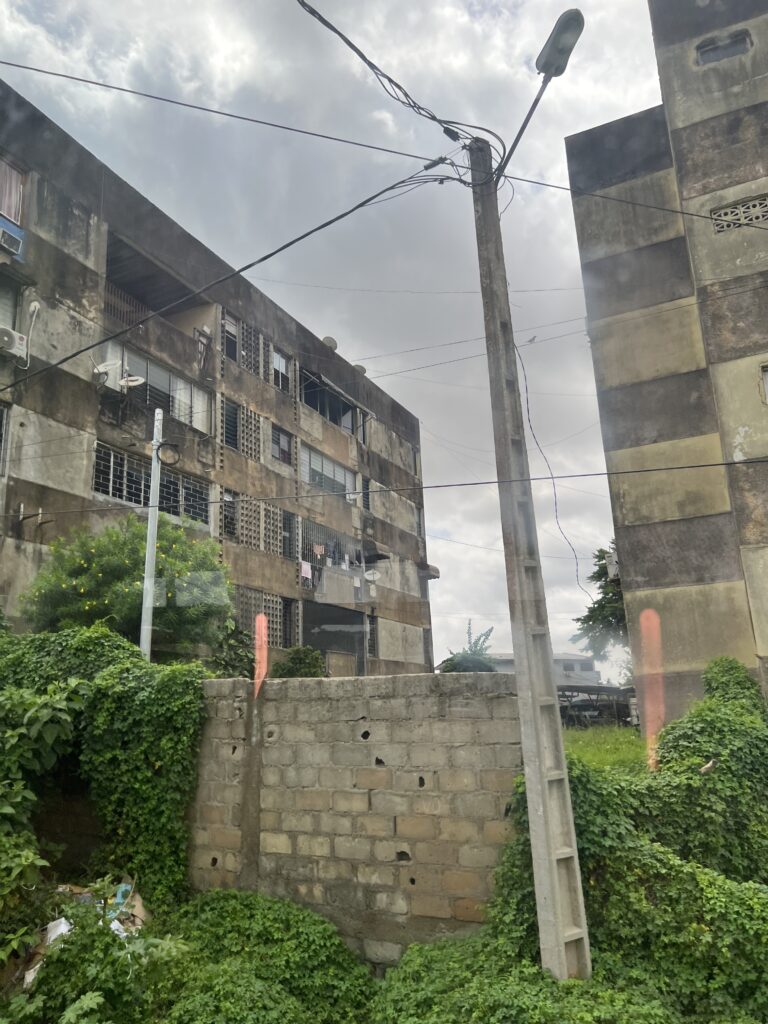
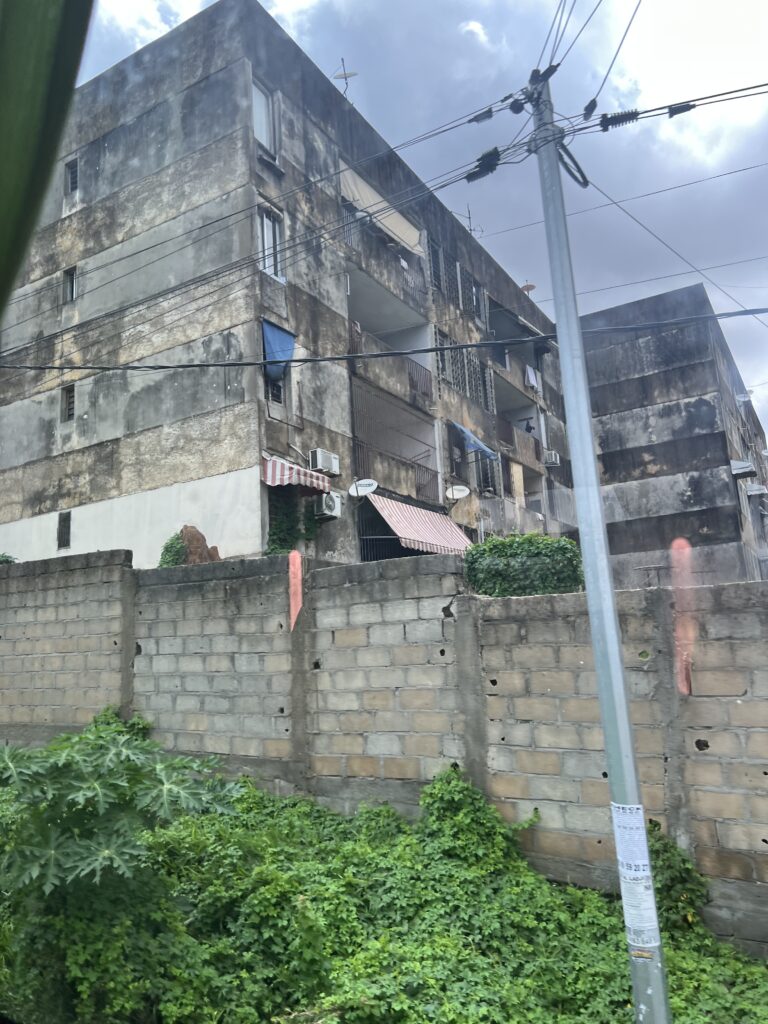
Some more photos as we drove through the streets on our way to the next stop. The city is very poor. You will see old buildings that we believe were apartment buildings.
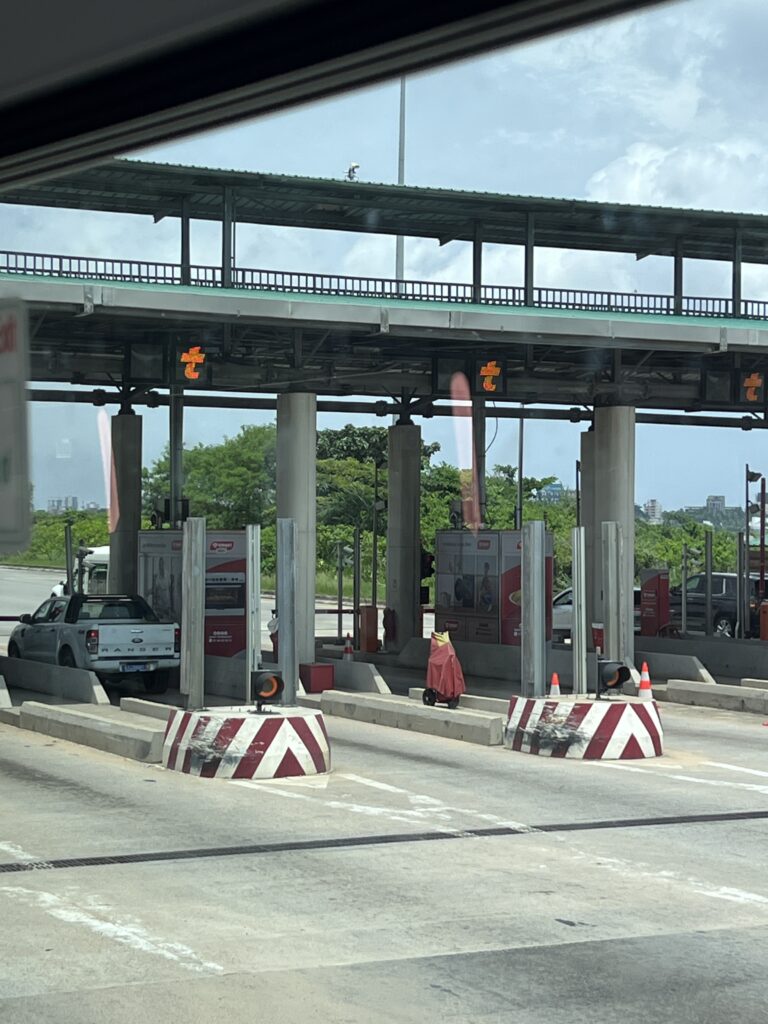
First though we had to pass through a toll to cross a bridge. The Abidjan toll booths are located on the Henri Konan Bédié Bridge (Pont HKB). This bridge and its toll facility are named after the former President of Ivory Coast, Henri Konan Bédié. The other figure below is the current President.
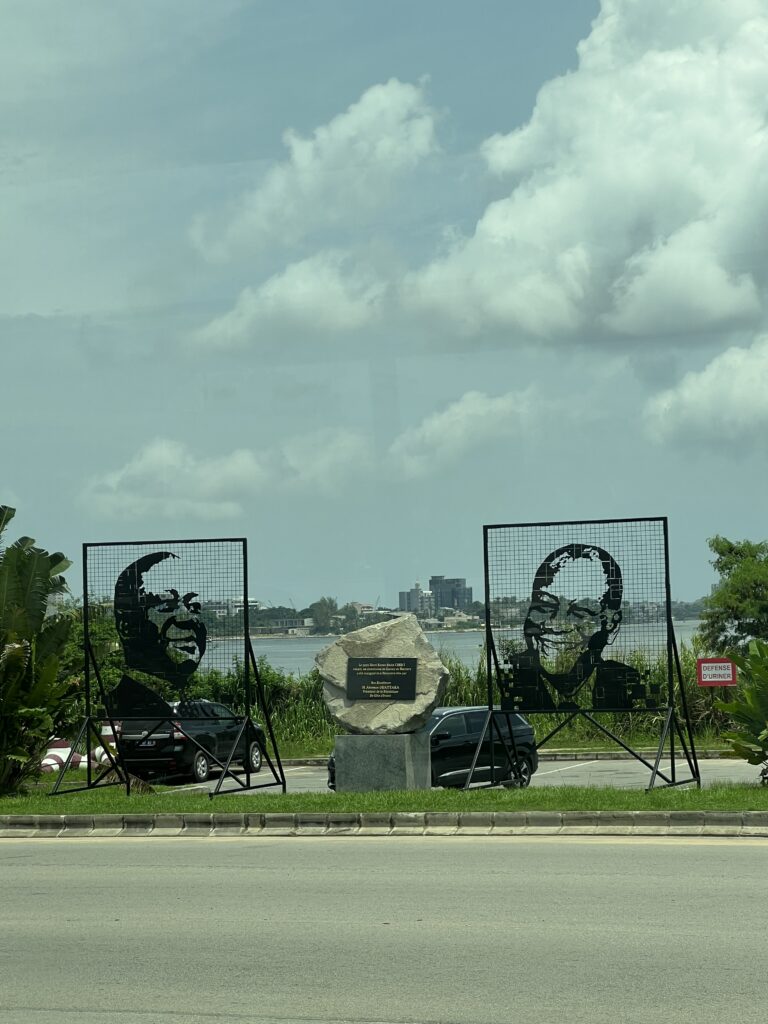
Henri Konan Bédié Bridge, also known as the HKB Bridge or Third Bridge, is a road bridge and expressway linking the north and south of Abidjan. The 1.5 km (0.93 mi) viaduct crosses the Ébrié Lagoon connecting the districts of Cocody and Marcory.
Built, financed and operated as a Public-private partnership, the toll bridge is the third major road crossing of the Ebrié lagoon and was designed to reduce congestion on its two predecessors, the Houphouët-Boigny Bridge and the Charles de Gaulle Bridge, constructed in the 1950s and 1960s respectively.
The bridge was featured in development plans for Abidjan as far back as 1952. In 1997 the Ivorian government signed a concession agreement with a consortium headed by the Bouygues Group for the construction and operation of the bridge and associated expressway project. Due to political instability, major work on the project only got underway in 2011.
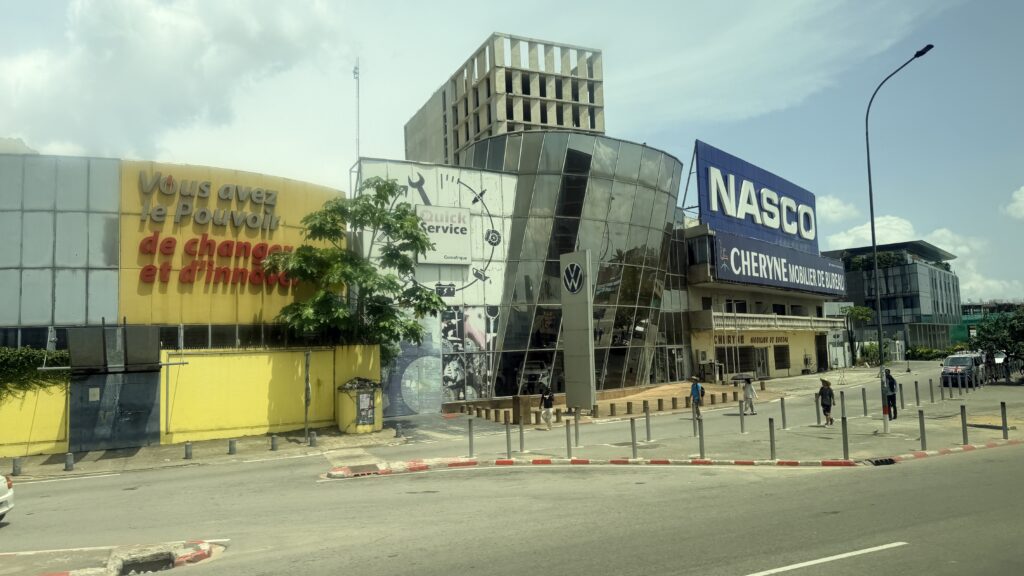
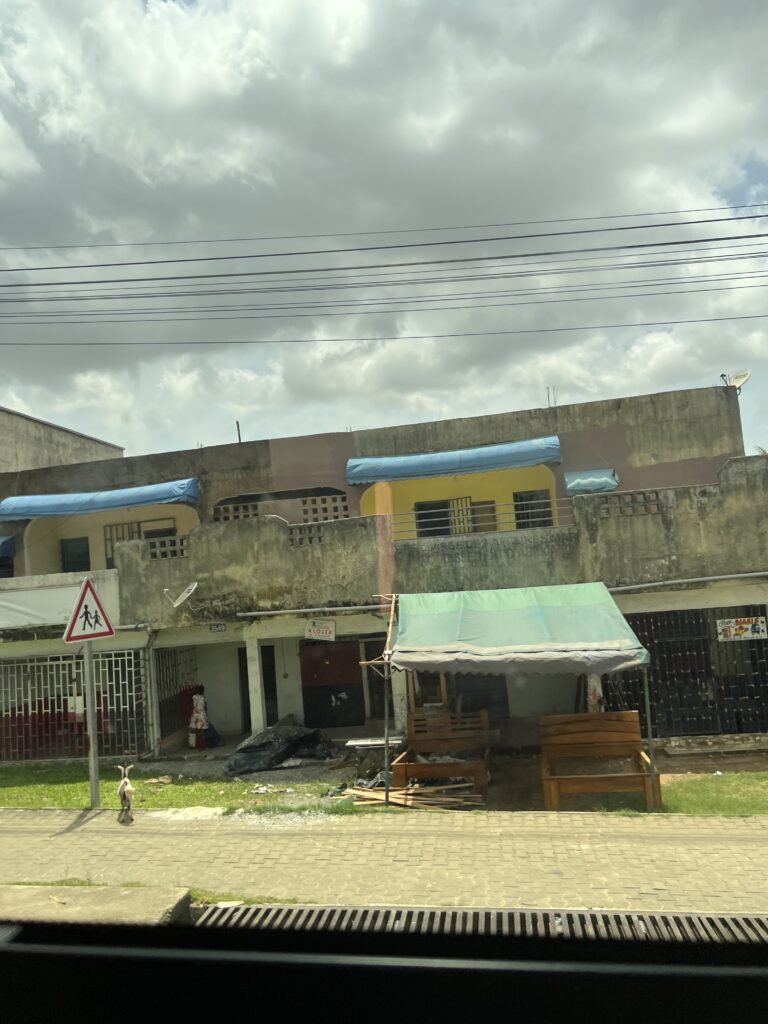
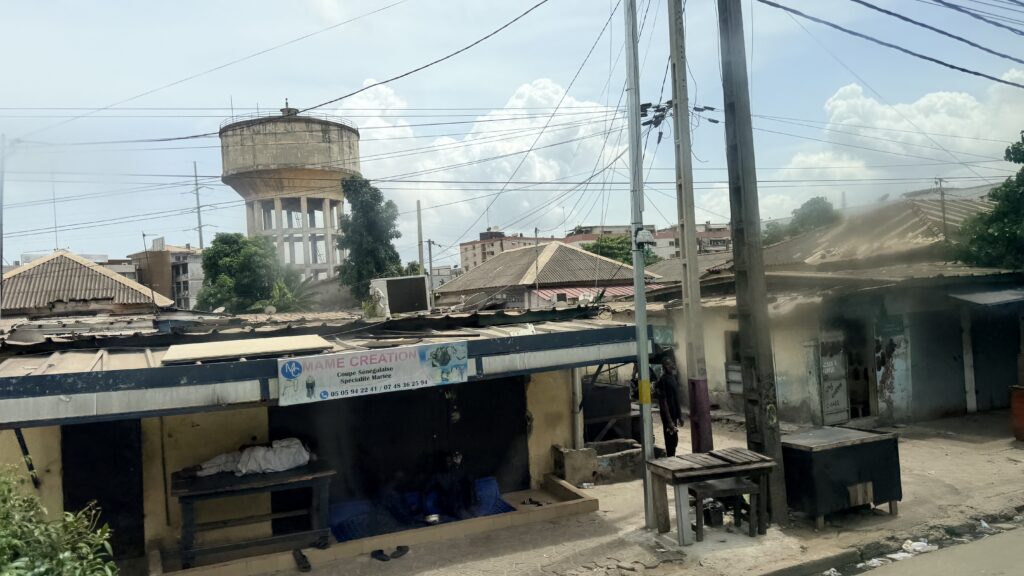
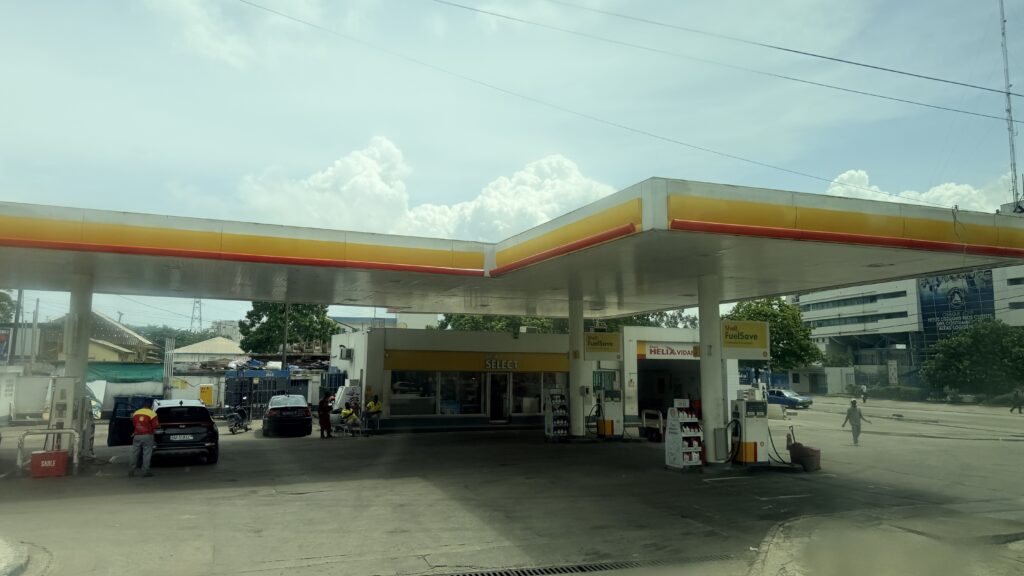
We would see old buildings and then there is a new gas station
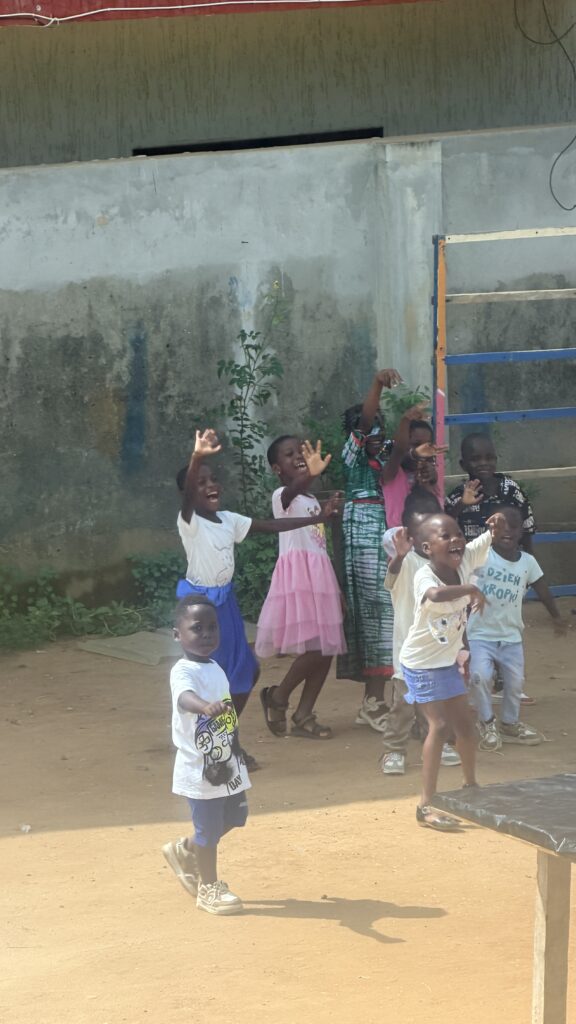
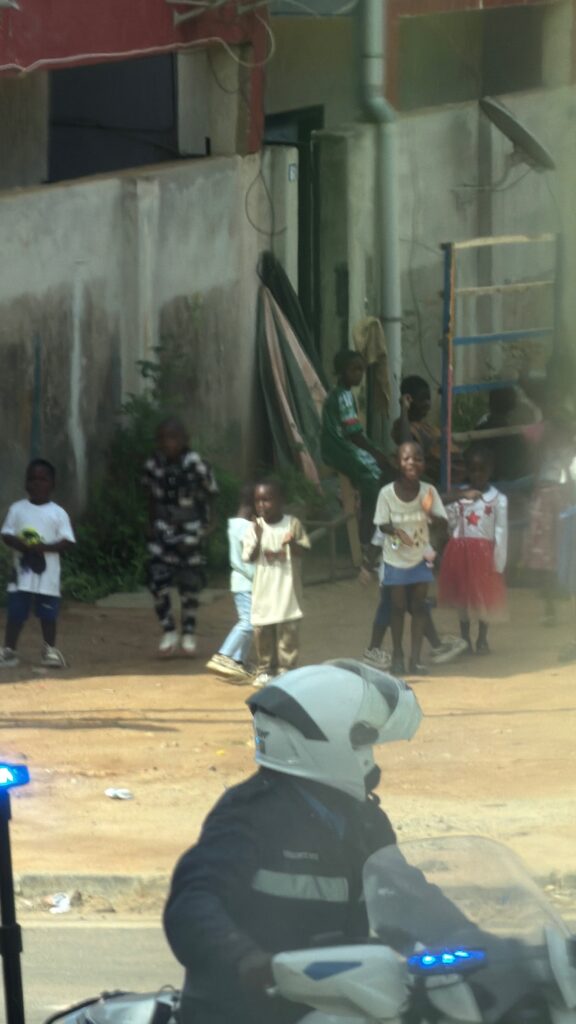
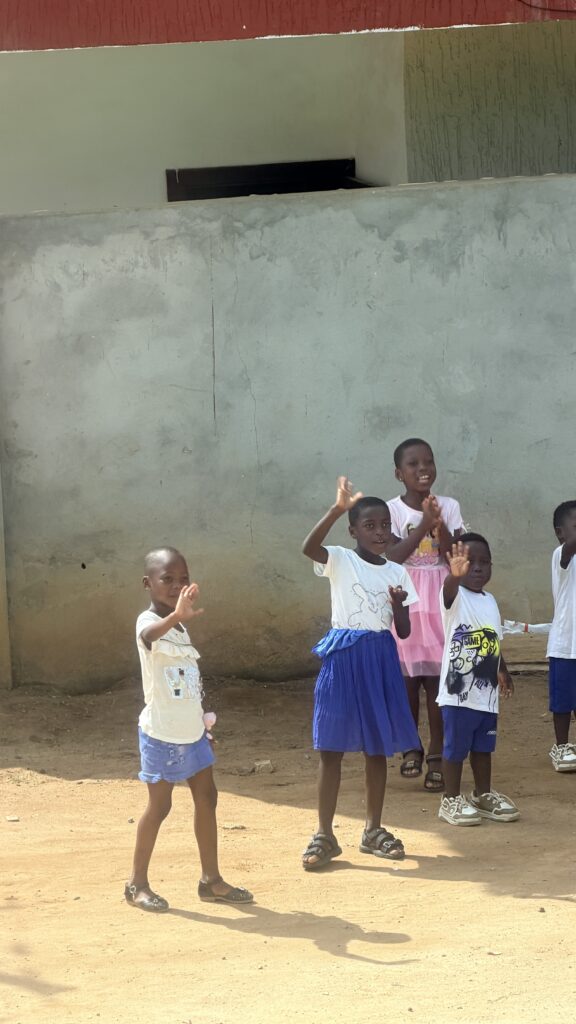
As we got to our next stop, Jackie grabbed these photos and videos of children on the side of the road. They were all excited by the large bus and also the police escort with the lights and sirens.
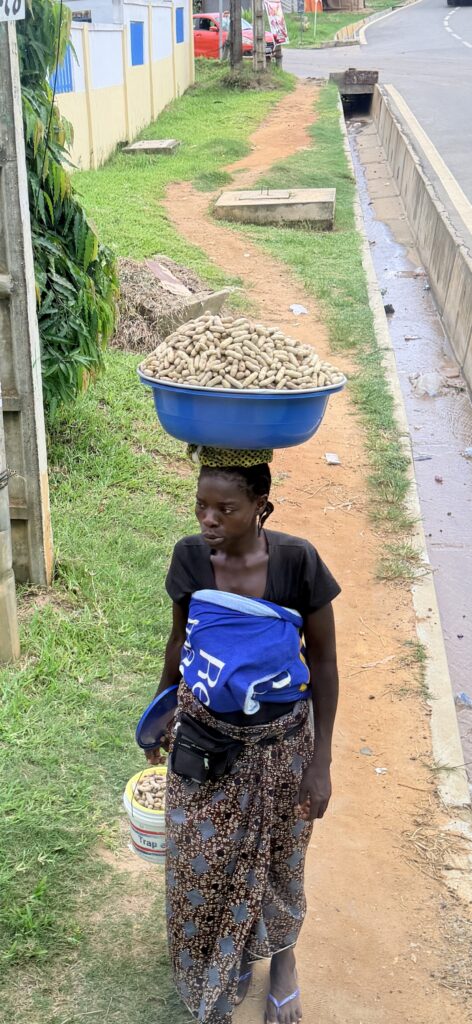
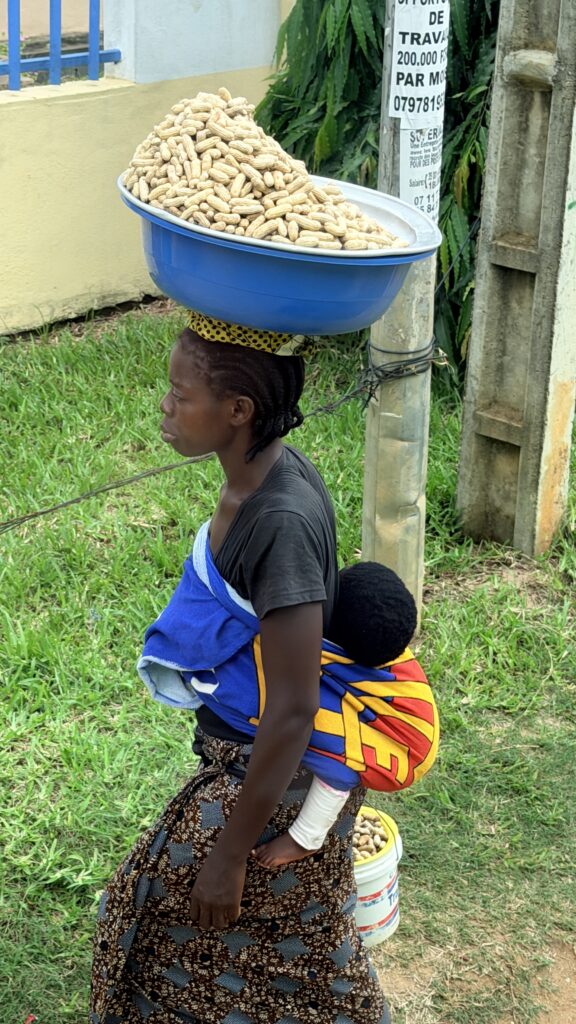
Jackie also captured these photos of a lady carrying a basket of peanuts on her head, a bucket of peanuts in one hand and a baby on her back.
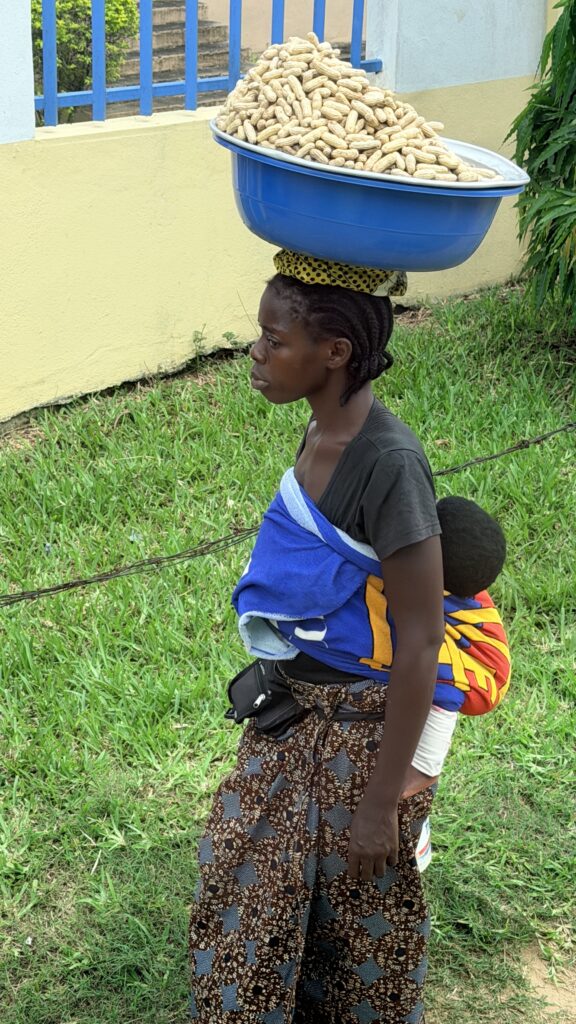
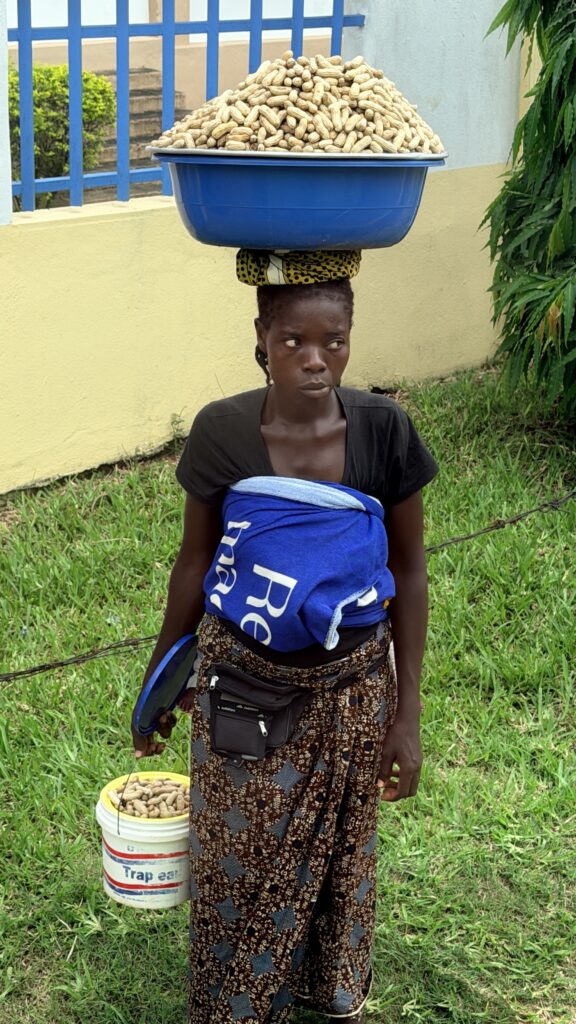
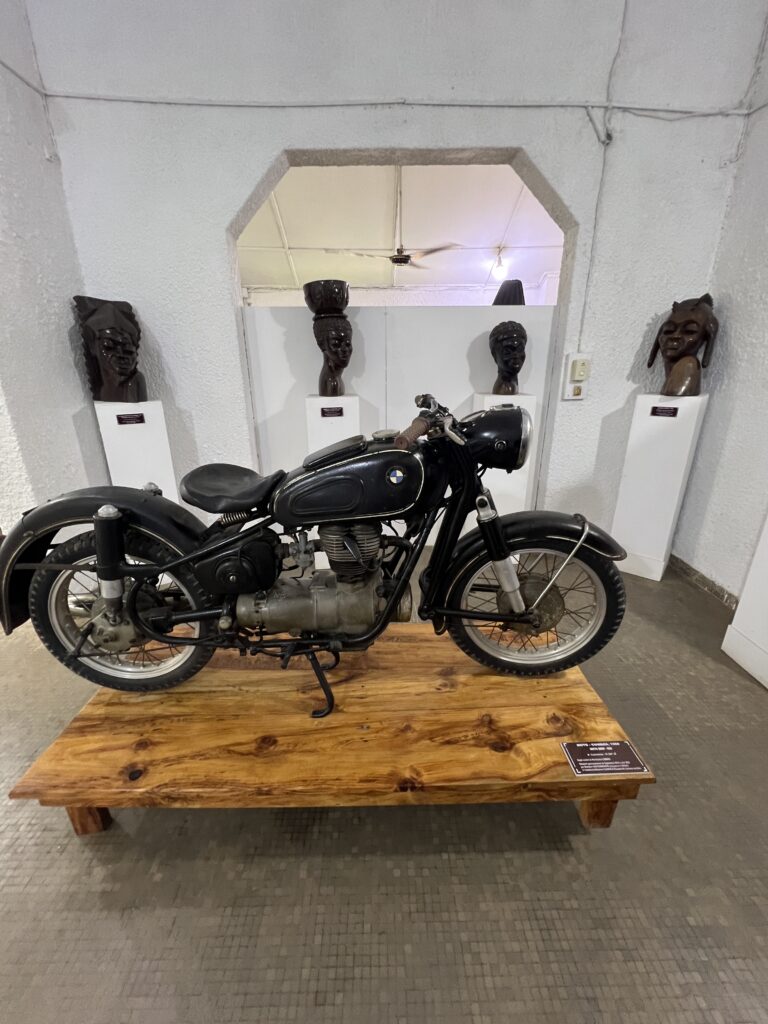
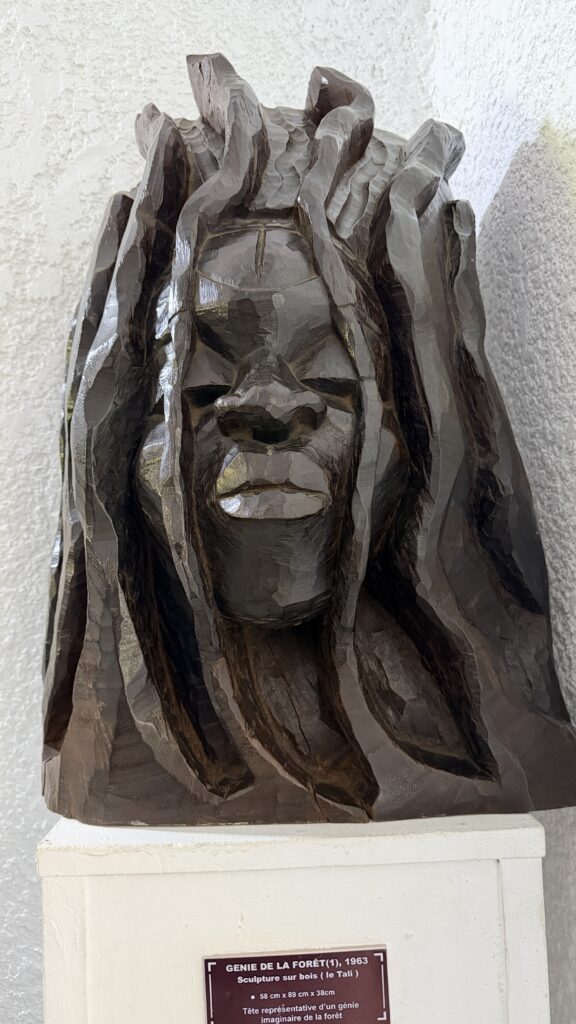
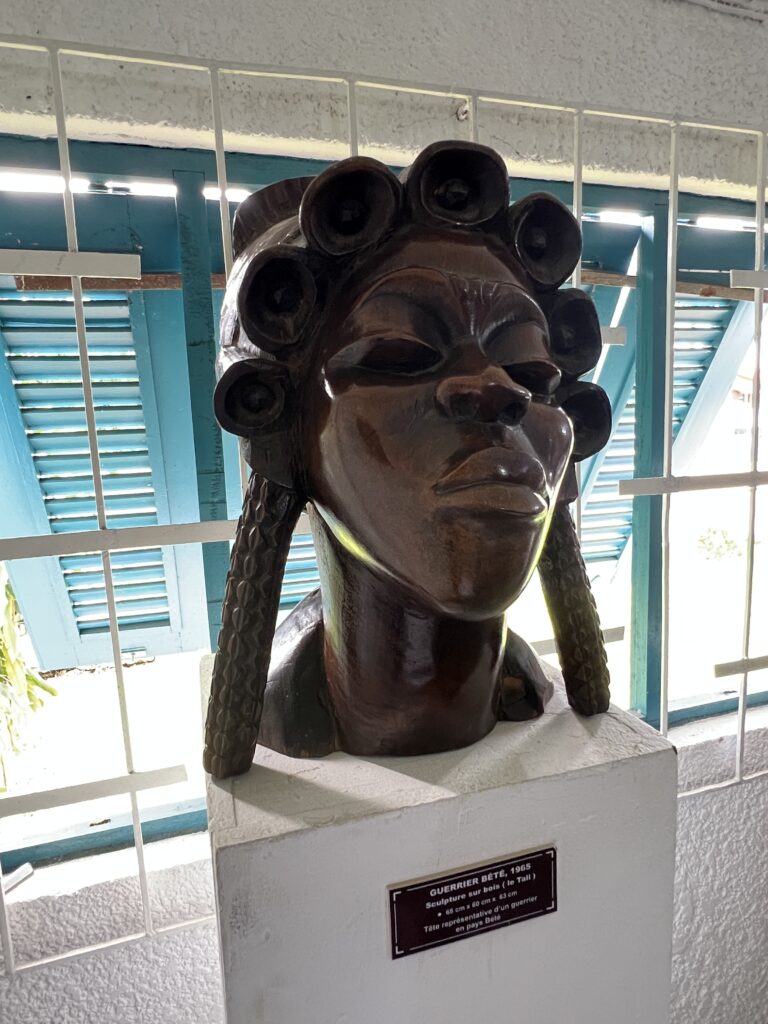
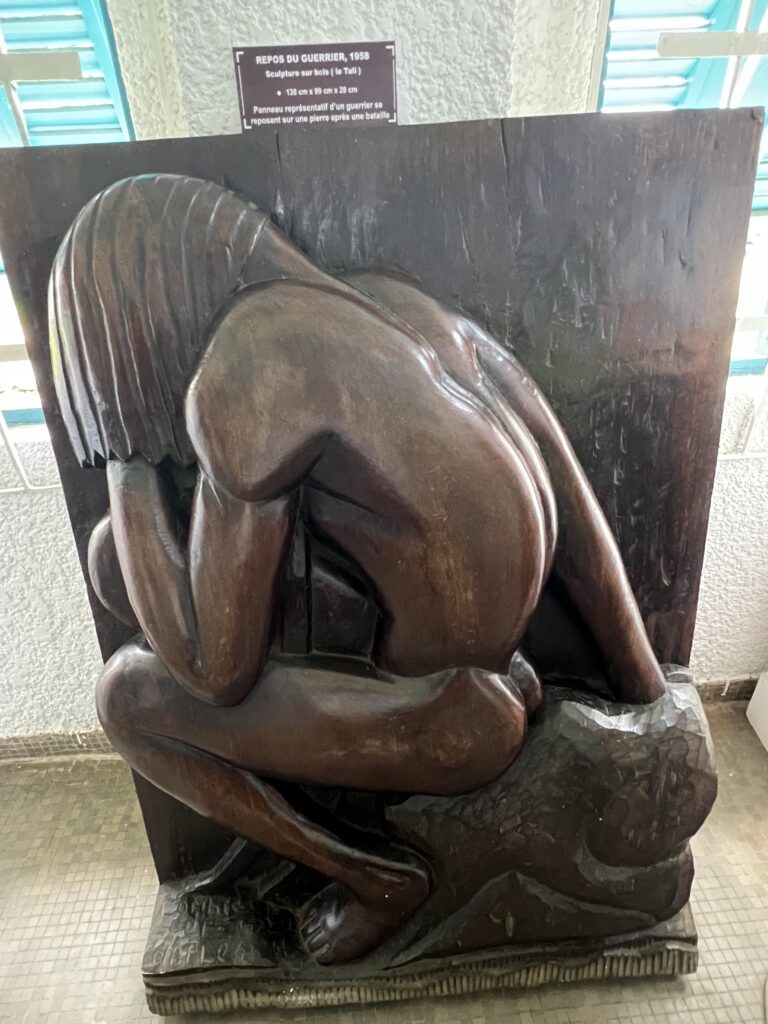
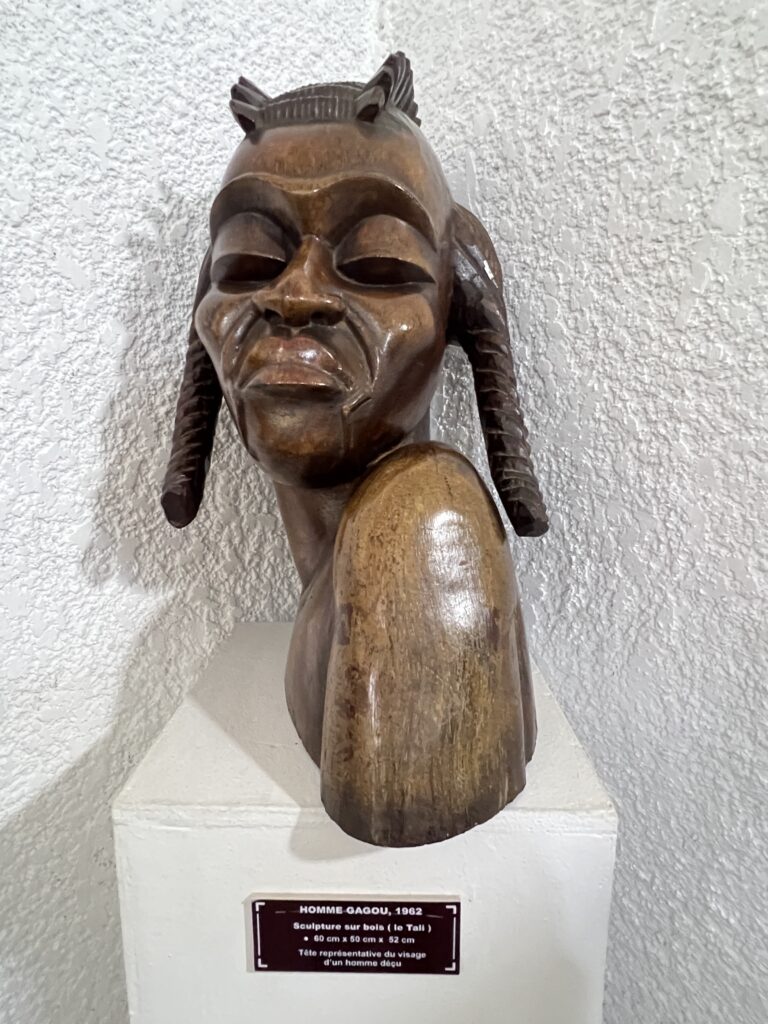
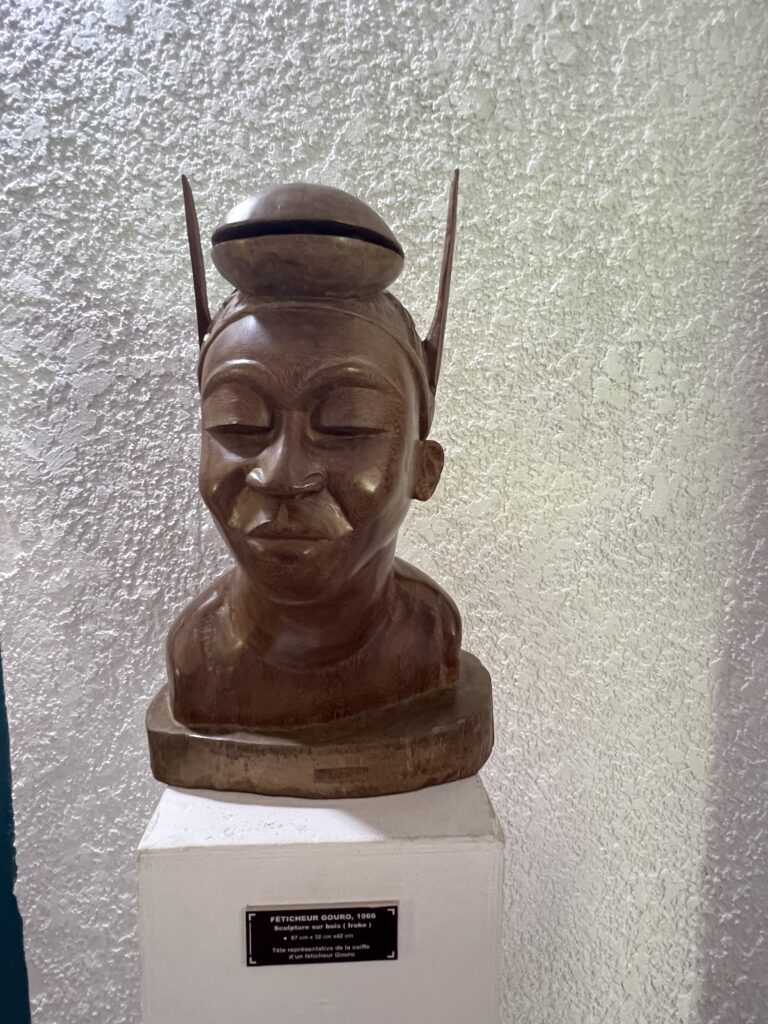
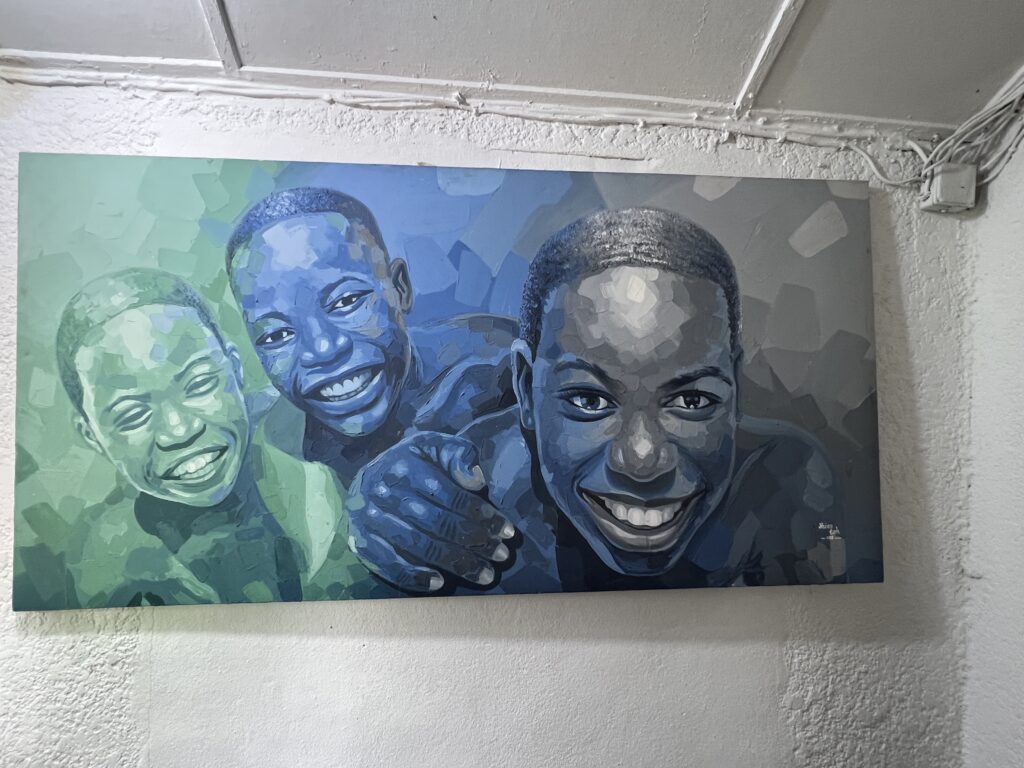
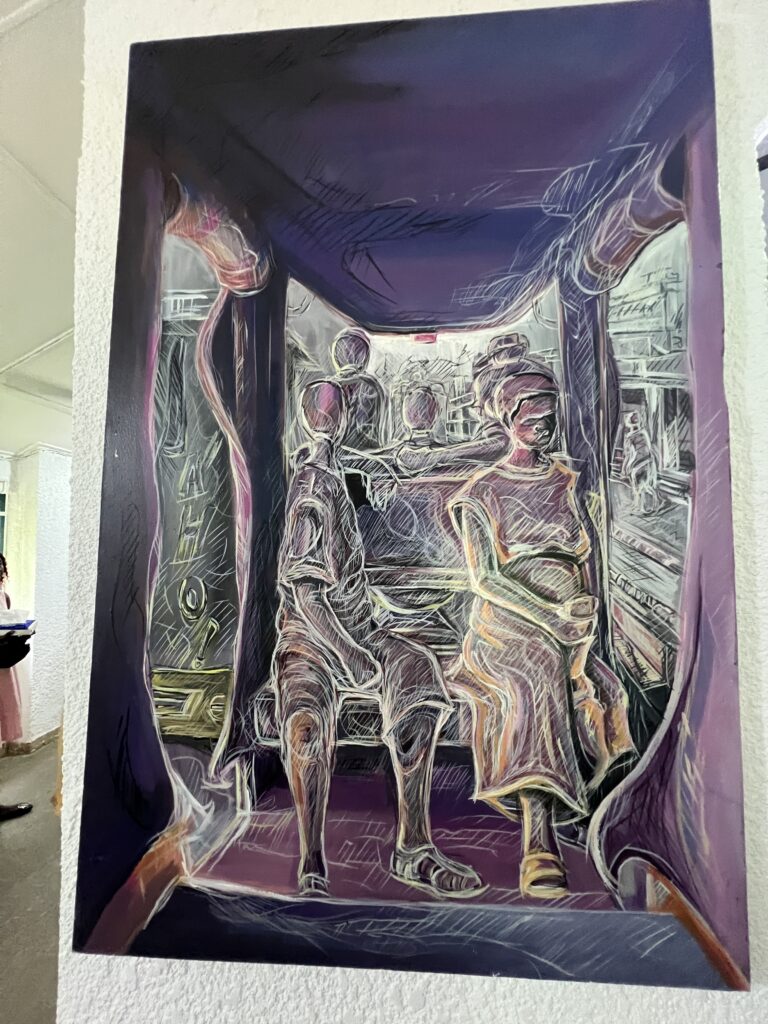
We unloaded the bus and went inside the Charles Combs Museum. The museum had a number of wood carvings that were quite interesting.
The Charles Combes Museum in Bingerville is a contemporary art museum inaugurated in 1975 in honor of the founder of the Technical Center for Applied Arts (CTAA), Charles-Alphonse Combes.
Initially a workshop and then an art school, today it is a national museum with nearly a hundred works of art created by Charles Combes and his students.
The museum is located in Côte d’Ivoire in the commune of Bingerville precisely in the Porquet district. It is bounded to the south by the Ébrié lagoon, by the residential district to the north. To the east by the Bagba district and to the west by the “Sans Loi” district.
The museum was founded in 1937 by Charles Combes under the name of Atelier Privé de l’Art. The following year, in 1938, it was transformed by decree of the colonial government into the Bingerville School of Applied Art, attached to the School of Fine Arts in Abidjan. However, it was not until 1958 that it officially obtained the status of art school, thus becoming the first institution of modern art in Côte d’Ivoire and in the entire West African sub-region
In 1994, the museum was officially established as a technical centre for applied arts by decree. It offers the teaching of specific artistic disciplines such as sculpture, ceramics, stained glass, mosaic, batik, staff, textiles and communication. In addition, general education subjects are also provided, including English, French, art history, law and management.
This contemporary art museum originally had 91 works, all by Charles Combes. This number subsequently increased thanks to the students’ creations. Like any gallery, the Charles Combes Museum in Bingerville promotes the habits and customs of Côte d’Ivoire and actively contributes to the cultural life of the country. Listed as part of the Ivorian heritage, it houses a diversity of works, including sculptures and plastic art creations.
Charles Alphonse Combes (1891-1968), born in Paris, moved to the Côte d’Ivoire in 1925 and never looked back. He began taking art students and in 1937 his studio became the École des Arts Appliques, the first art school in the country. It is now a museum in Abidjan, Musée Charles Alphonse Combes.
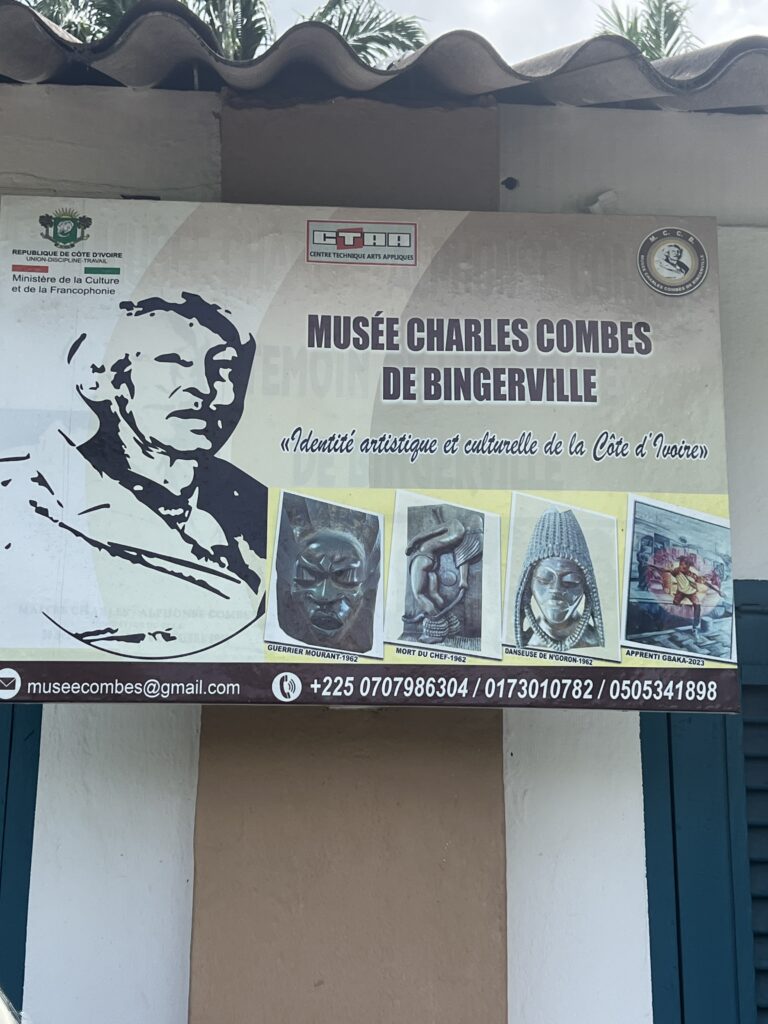
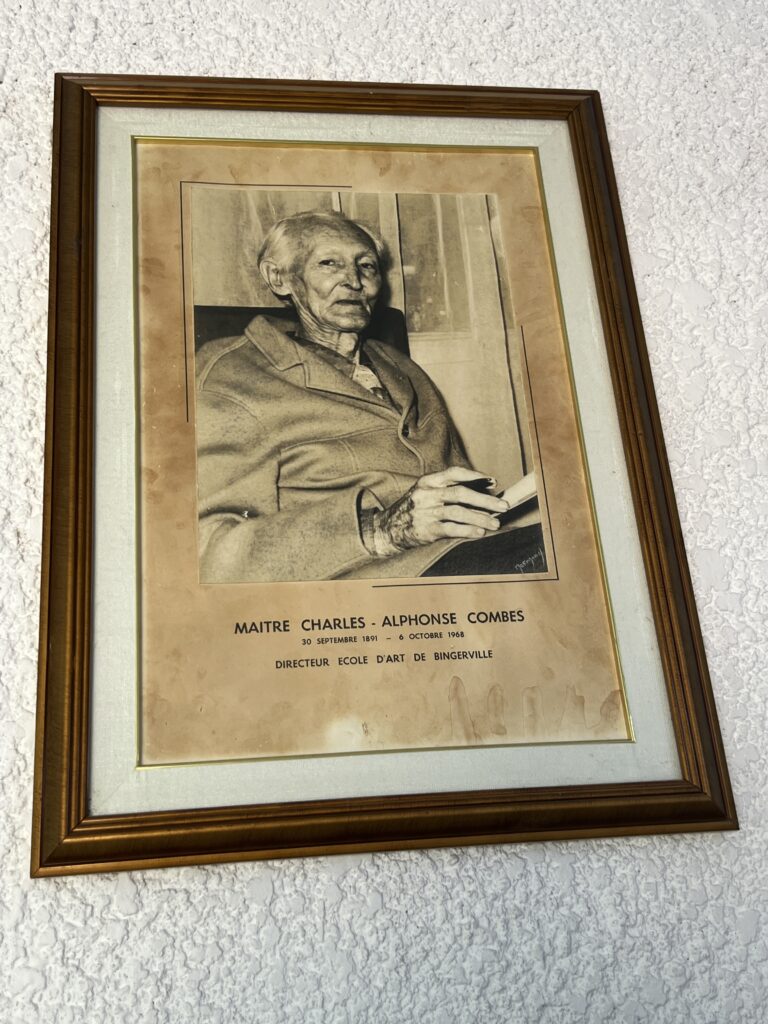
Charles Combs motorcycle that he used in the early 1960’s
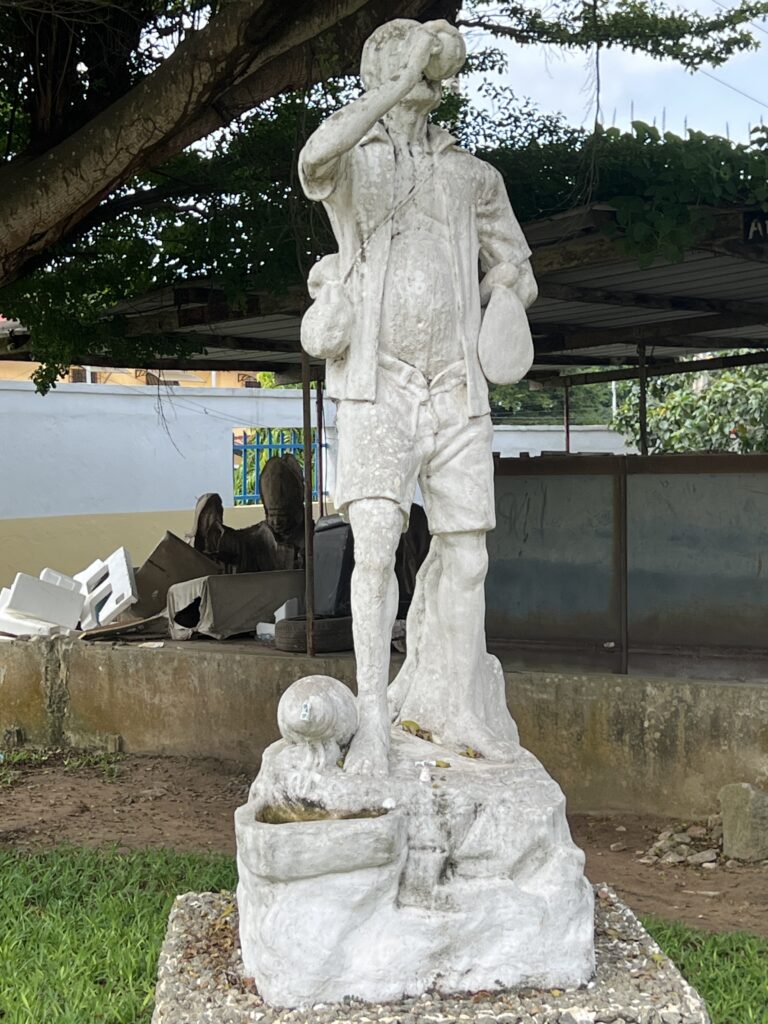
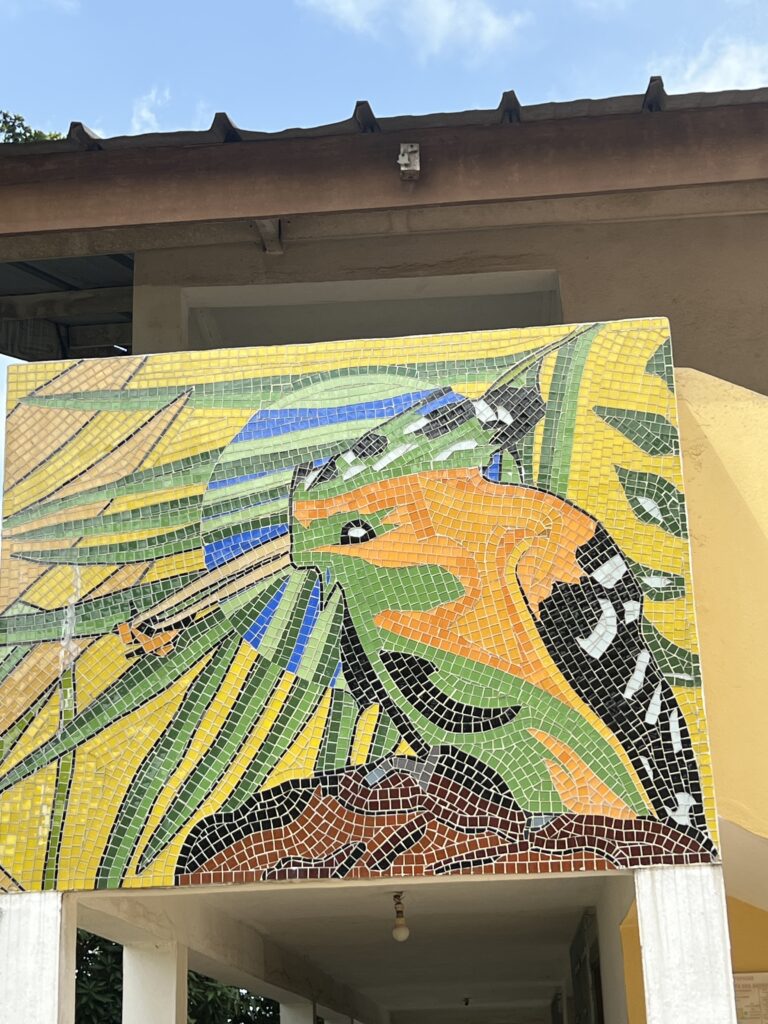
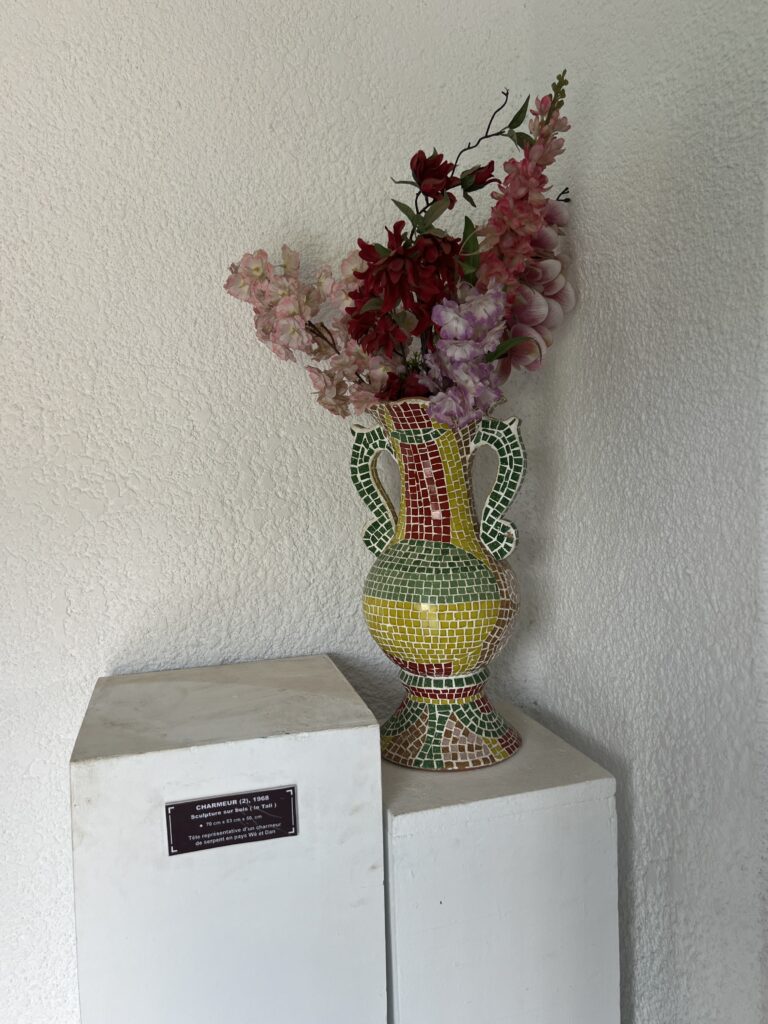
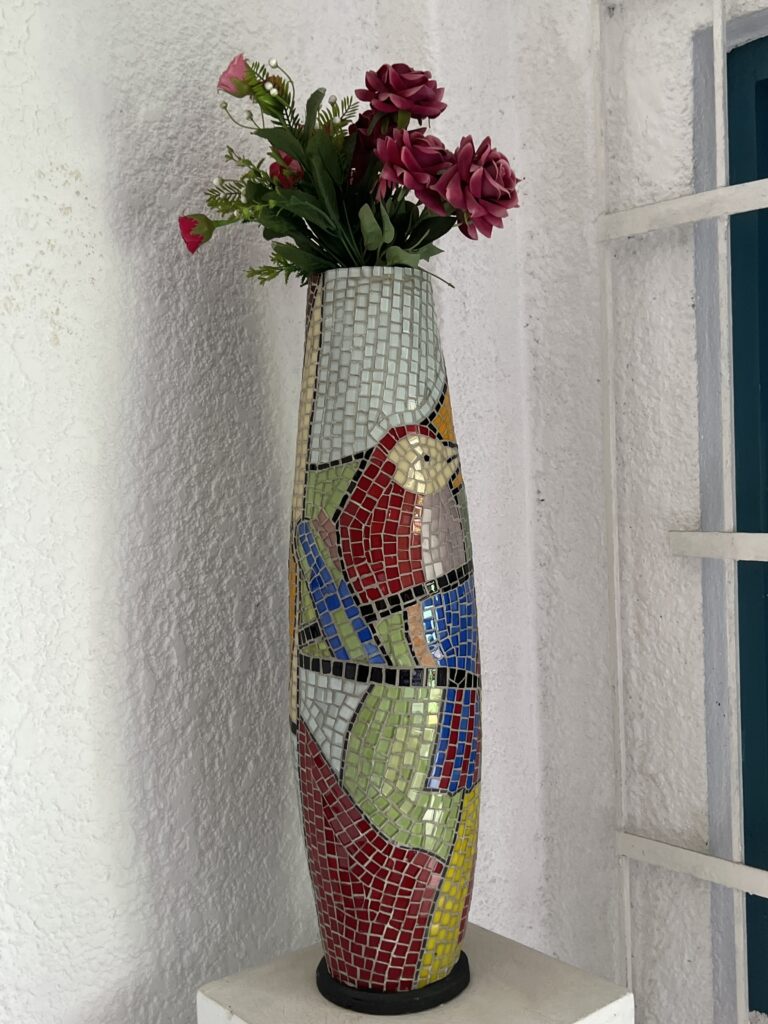
A few of the wood carvings. We have over 30 photos, but I am posting a few. Look at the dates of these carvings.
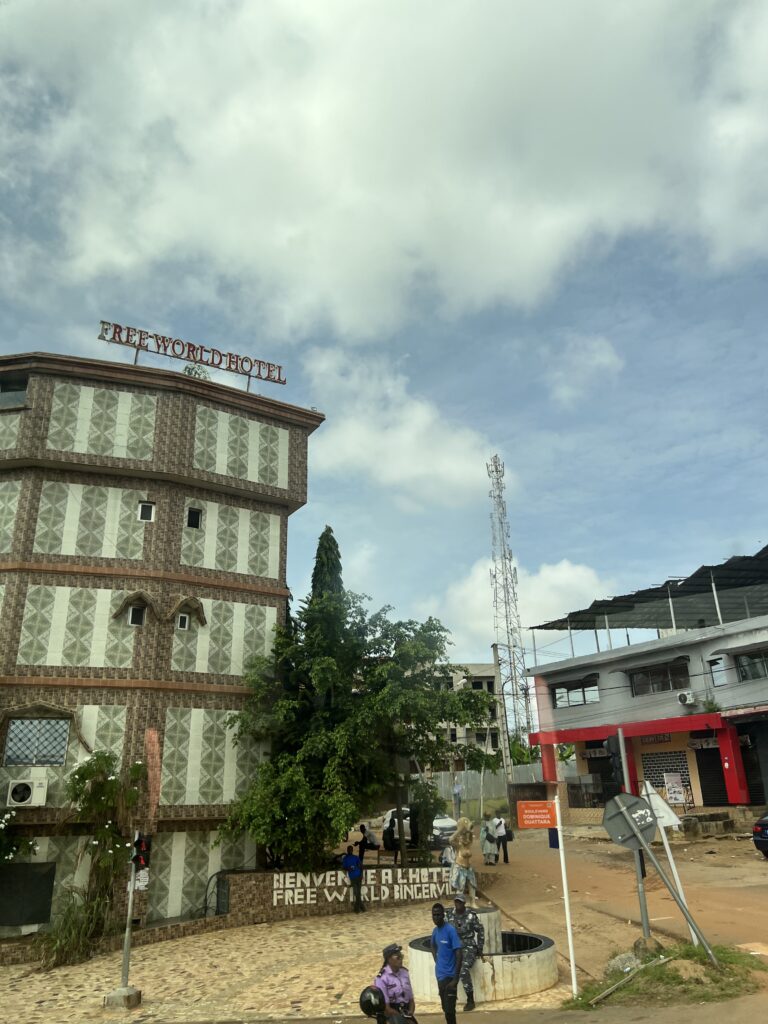
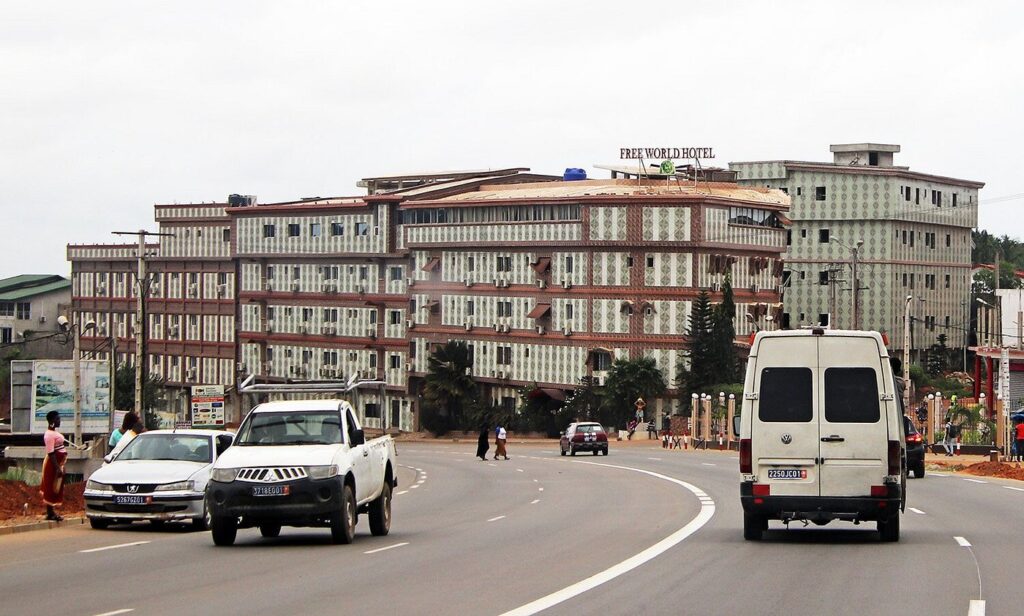
Everyone needs a place to lay their weary head. For travellers visiting Abidjan, Free World Hotel International is an excellent choice for rest and rejuvenation. Well-known for its proximity to great restaurants, Free World Hotel International makes it easy to enjoy the best of Abidjan.
As your “home away from home,” the small hotel rooms offer air conditioning, and getting online is easy, with free wifi available.
Guests have access to 24 hour front desk while staying at Free World Hotel International. In addition, Free World Hotel International offers a pool and a lounge, which will help make your Abidjan trip additionally gratifying. And, as an added convenience, there is free parking available to guests.
Given the close proximity of popular landmarks, such as Grande Mosquée du Plateau (2.7 km) and Treichville (3.1 km), guests of Free World Hotel International can easily experience some of Abidjan’s most well known attractions.
While in Abidjan, you may want to check out some of the restaurants that are a short walk away from Free World Hotel International, including Chez Ambroise (1.2 km), copa d’elio (0.0 km), and Richard’s (2.0 km).
Best of all, Free World Hotel International makes it easy to experience some great Abidjan attractions like Musée des Civilisations de Côte d’Ivoire, which is a popular history museum.
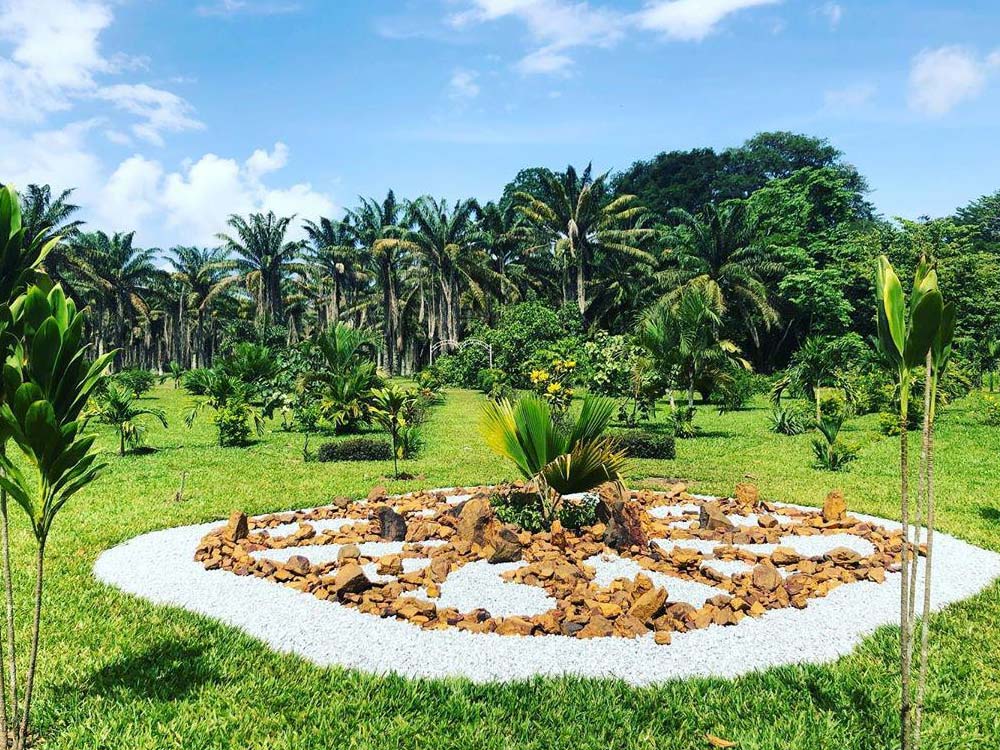
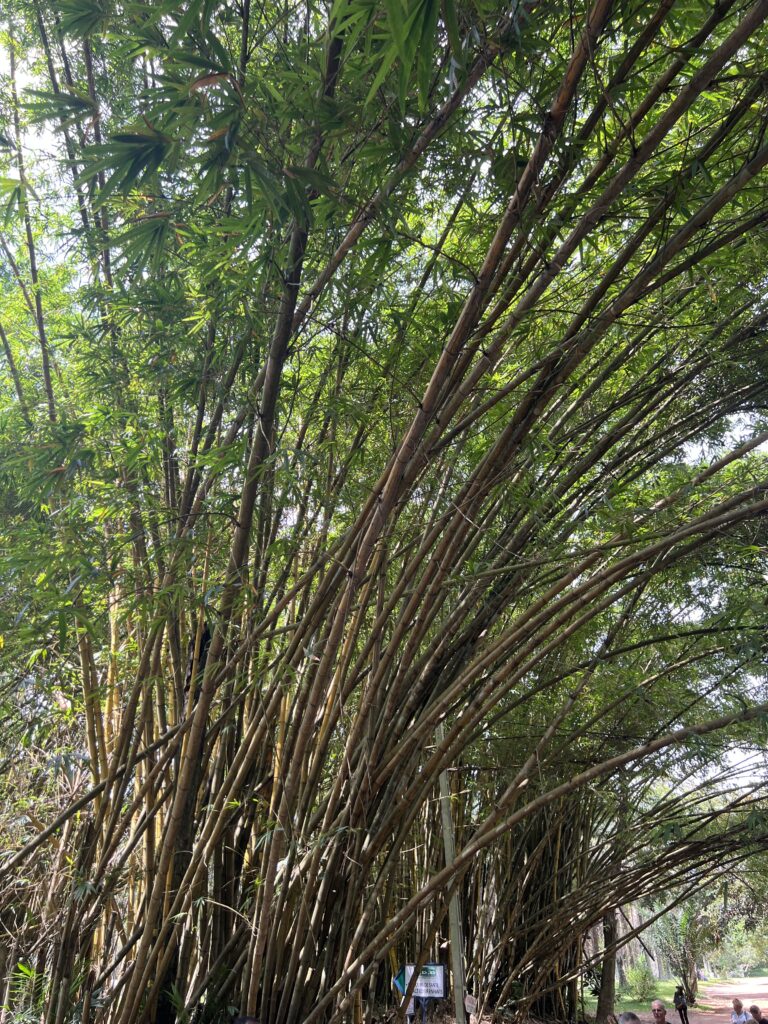
Our next stop was the botanical garden near Abidjan called the Jardin Botanique de Bingerville, a lush 57-hectare sanctuary located approximately 10 to 18 kilometers east of downtown Abidjan. Established in 1904, it is a historic green oasis featuring over 300 plant species, towering old-growth trees, and a popular bamboo pathway.
The Bingerville Botanical Garden (18 km east of Abidjan) has existed since colonial times, more precisely since 1904, when Bingerville was the political capital of the colony of Ivory Coast. It was the private garden of the then French Governor, Gabriel Angoulvant, who wanted to create a garden behind his residence, which has now become an orphanage. The Governor decided to enrich the garden with plant species gathered during his travels within the colony and in the West African sub-region. In 1912, it became an introductory and trial garden for plants brought from other tropical and subtropical regions. It was then directed by the botanist Jolly. During World War II, activities slowed down. Trials on ornamental plants have been stopped, but they are continued on economically profitable plants, namely coffee, cocoa and bananas. In 1952, the trial garden was established as a botanical garden. It thus changes status and becomes a conservation organization, therefore a museum institution. He abandoned the trials in favor of research institutions such as the IRHO (Institute for Research on Oils and Oilseeds), IRFA (Institute for Research on Fruits and Citrus), IRCC (Institute for Research on Coffee and Cocoa, etc. The Governor entrusted it to the Center for Learning and Agriculture, which had become an agricultural college. Subsequently, the need to achieve more effective supervision led the authorities to separate the garden from this professional school and give it its own management. After 1960, the garden was extended to 55.6 ha, including 45 ha for the garden itself and 10 ha for the nursery. The diversification of plant species is also continued. Despite enormous maintenance and therefore conservation problems of this historic site, it has managed to survive. Thus, there are species native to tropical Africa, Asia and the surrounding islands, tropical America and Australia. For example, plants of the family Myristicaceae, Lauraceae, Oxalidaceae, Ochnaceae, etc. As for their function, there are ornamental plants, food plants, medicinal species and plants for textile use. Here is therefore a historic site which can be considered as a sample of heritage resulting from “globalization”, because the fruit of contributions from several parts of the world: located on Ivorian territory, created by a Frenchman and which contains, except for the native plants. Africa, species from America, Asia and Australia.
We did not take many photos as I think we are burned out on botanical gardens on this World Cruise. Below are a few that we did take with an explanation of the photo.
Entrance to the gardens
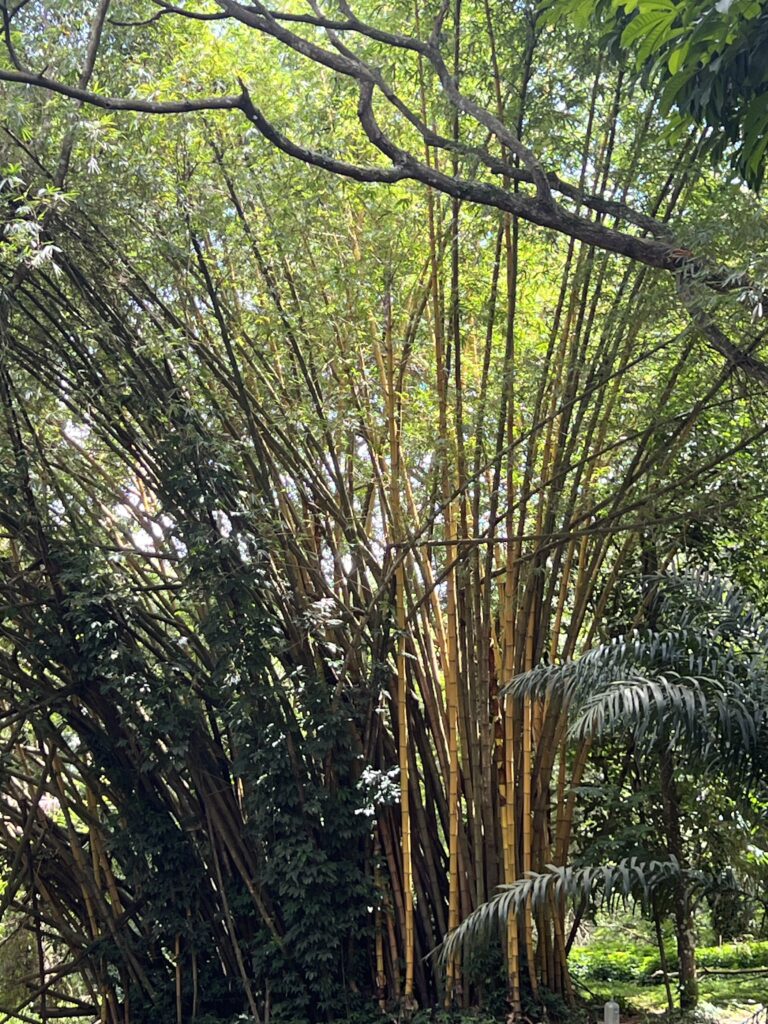
Bamboo trees were high and numerous
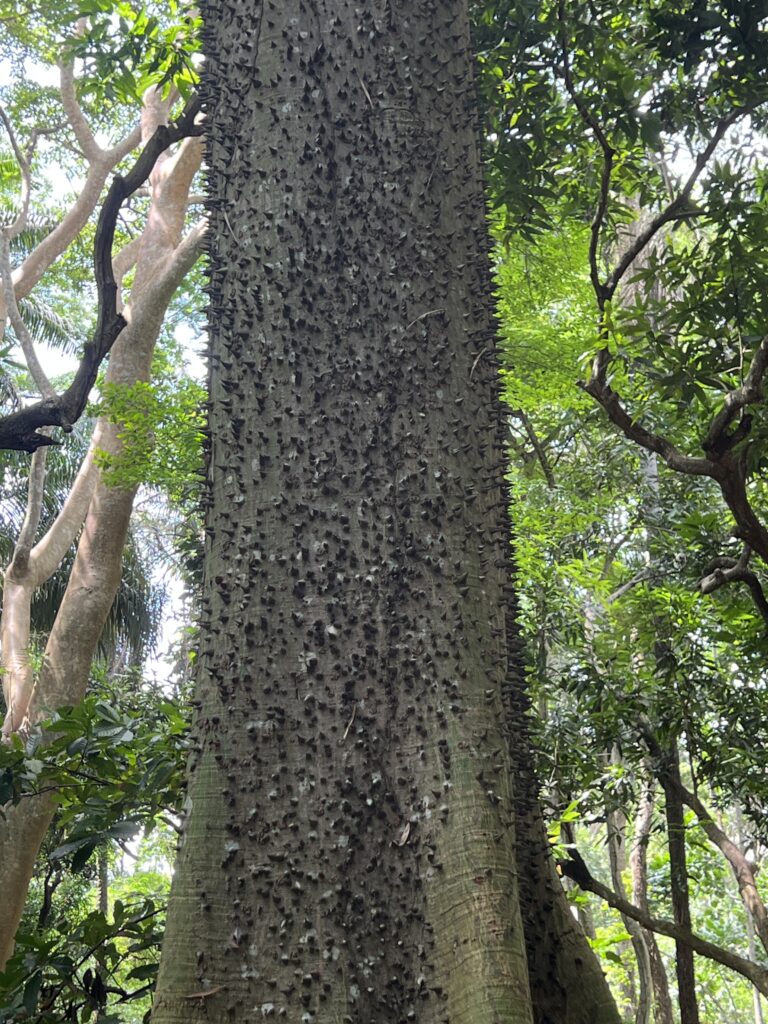
Not sure what this tree is, but it grew spikes on the trunk of the tree
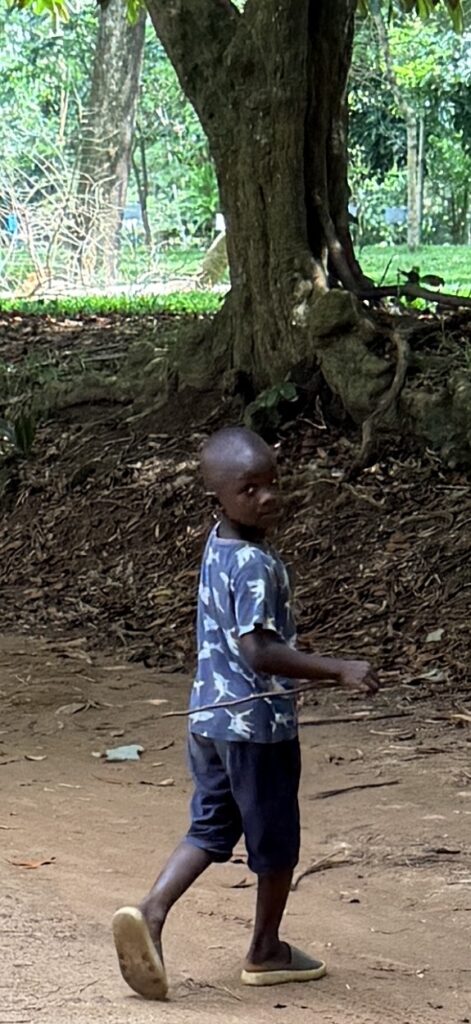
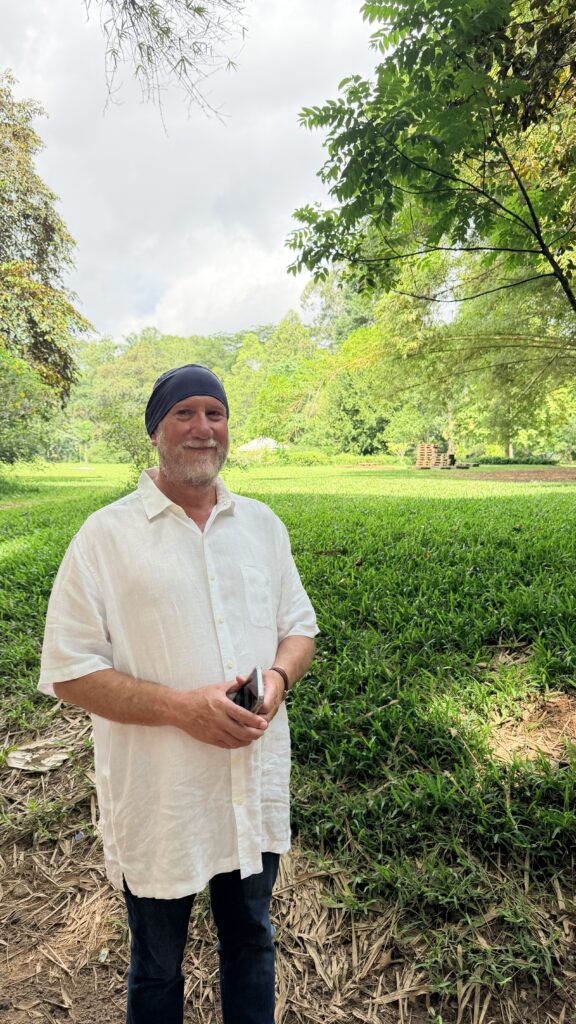
This little boy kept following us around so we spoke to him in French and asked him if we could take his picture. He answered back in French “non” which caused us to laugh. That little shit, Jackie caught him on the camera when she took the photo below and I placed him in Faces Around the World. 🙂
She had me pose so she could get a photo on the boy seen above.
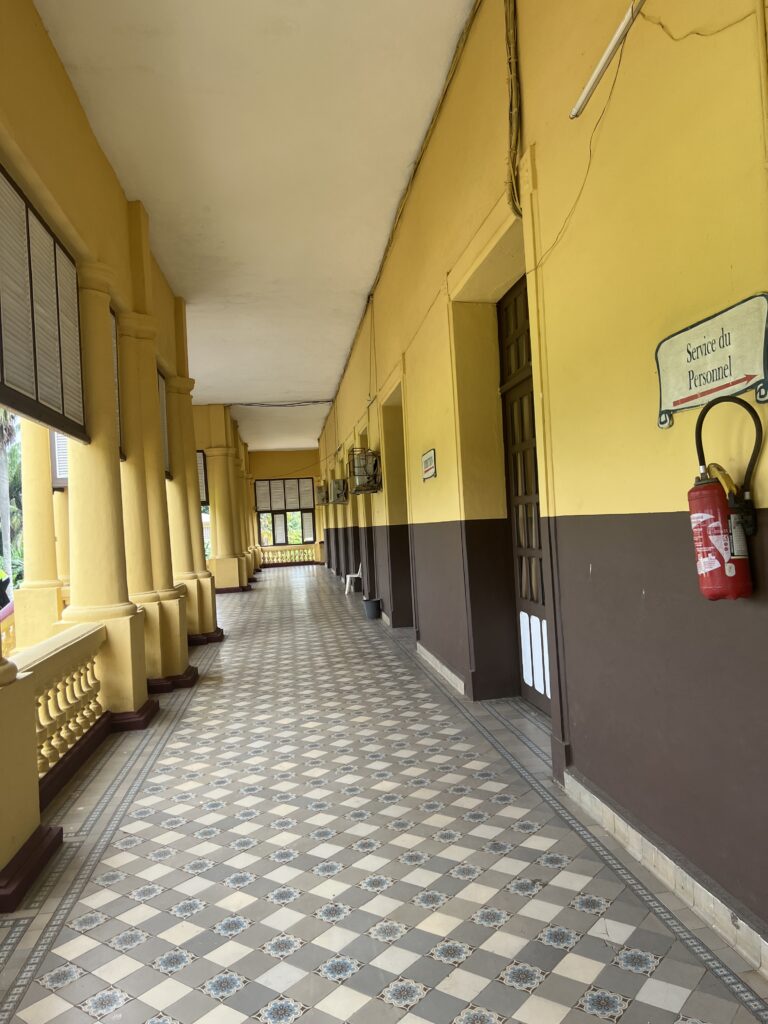
Our next stop was identified in the Oceania description as The Governor’s House, but instead is now an orphanage for boys ages 5-25.
Location: Bingerville, Côte d’Ivoire (approx. 45-minute drive from central Abidjan).
Current Status: The mansion itself is a preserved historic landmark. It currently operates as a boys’ orphanage.
Surroundings: The mansion is situated right next to the renowned Botanical Gardens of Bingerville, which were originally the personal gardens of Governor Angoulvant.
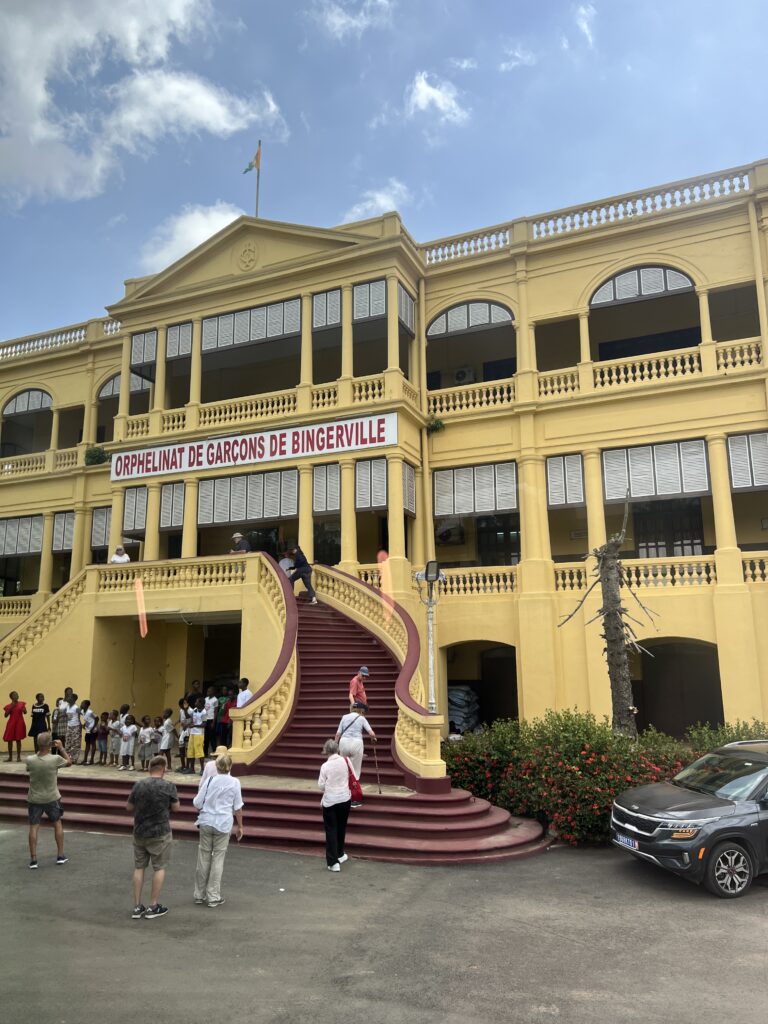
Our welcome from the kids at the orphanage. There are girls in the group as they were allowed to visit today from the orphanage for girls.
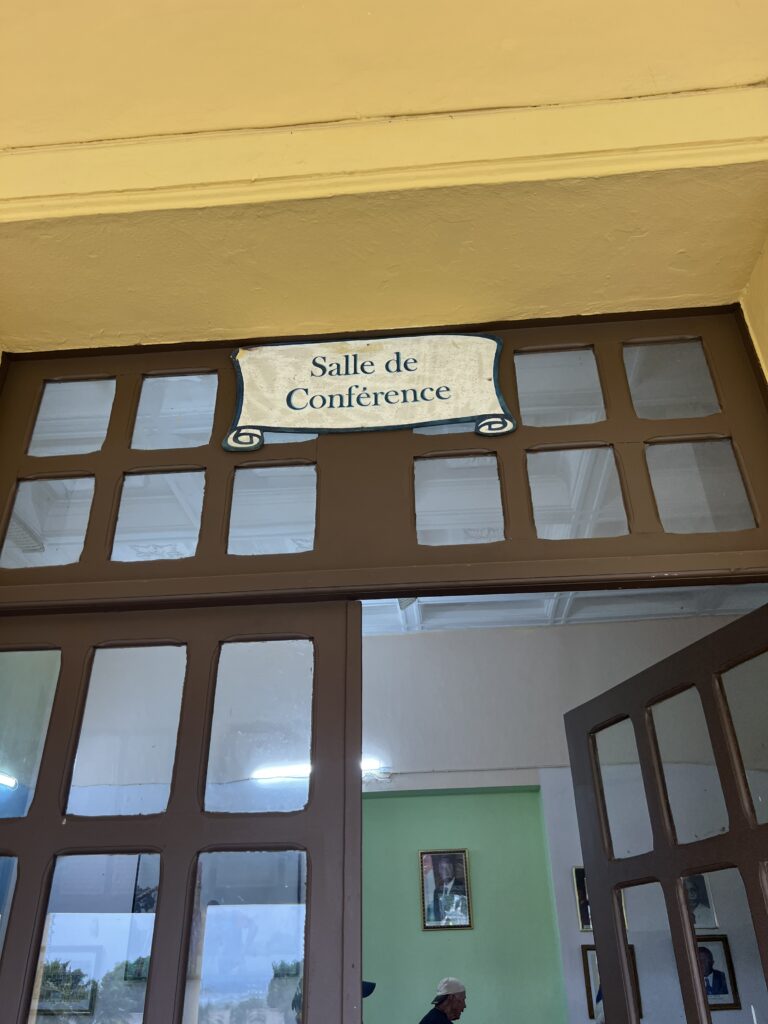
We were brought into a large conference room where the orphanage administrator spoke to us about the home and its history.
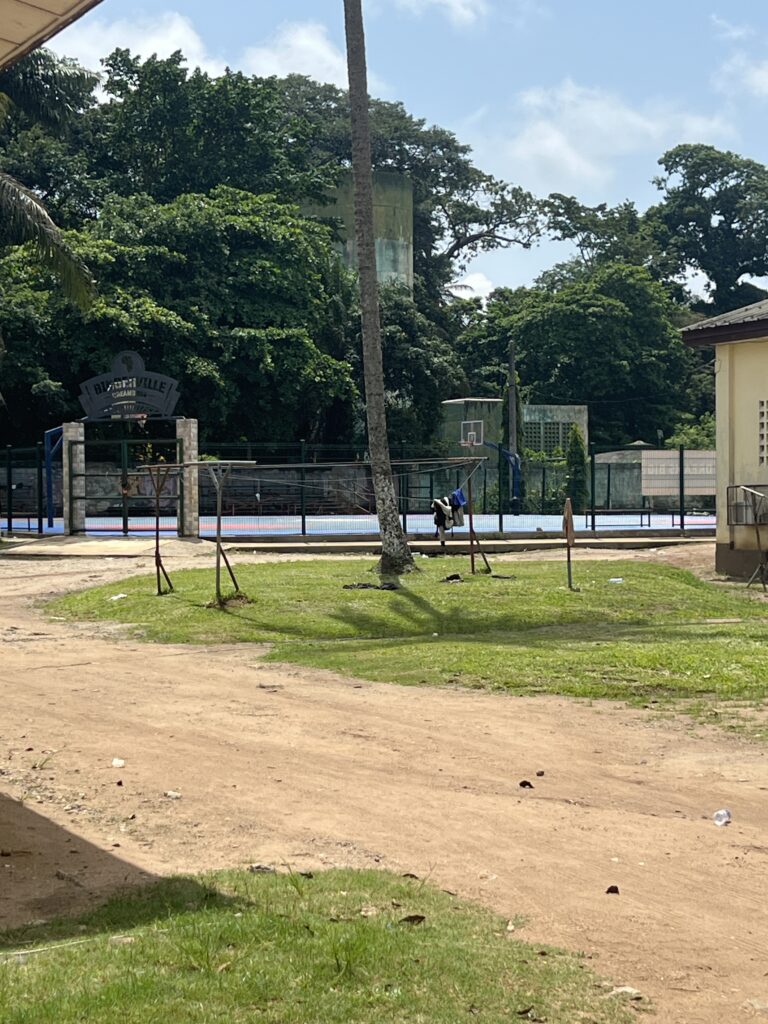
Large play area with basketball courts.
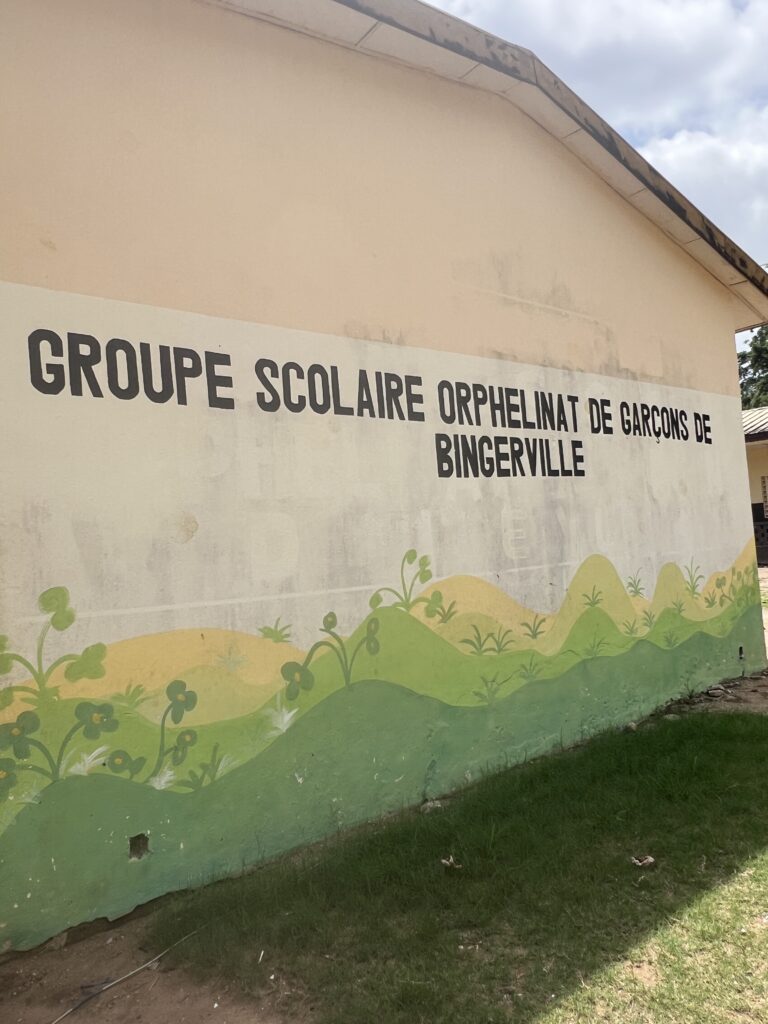
Building which houses the classrooms.
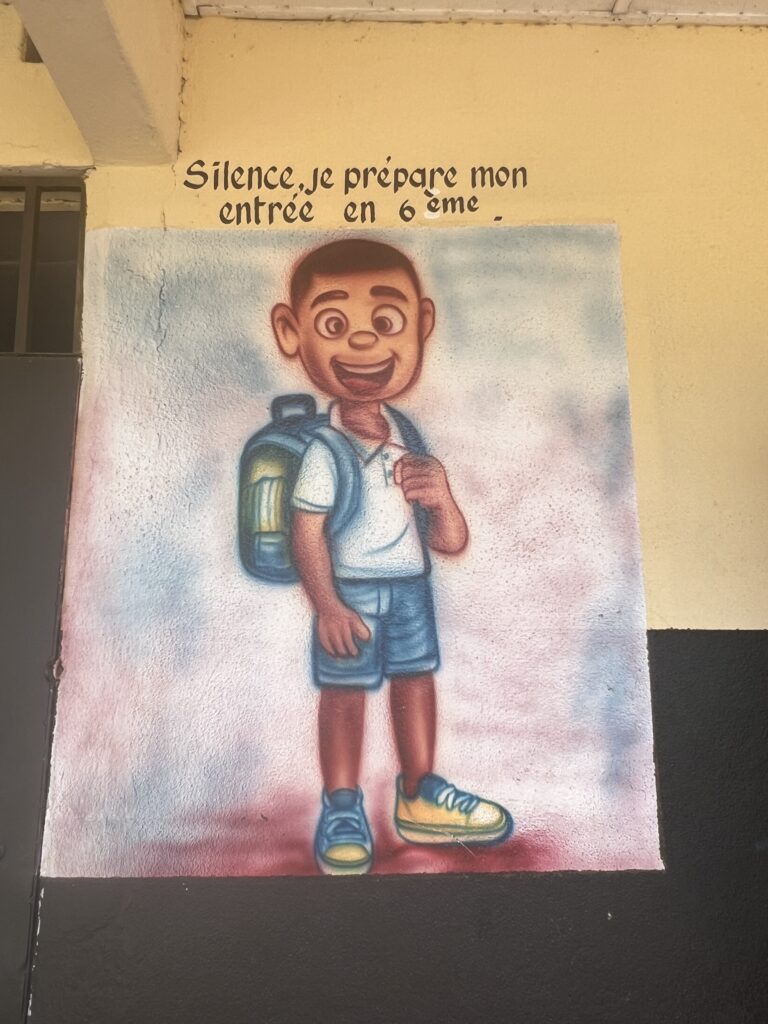
This classroom is for the older boys who take college preparatory courses.
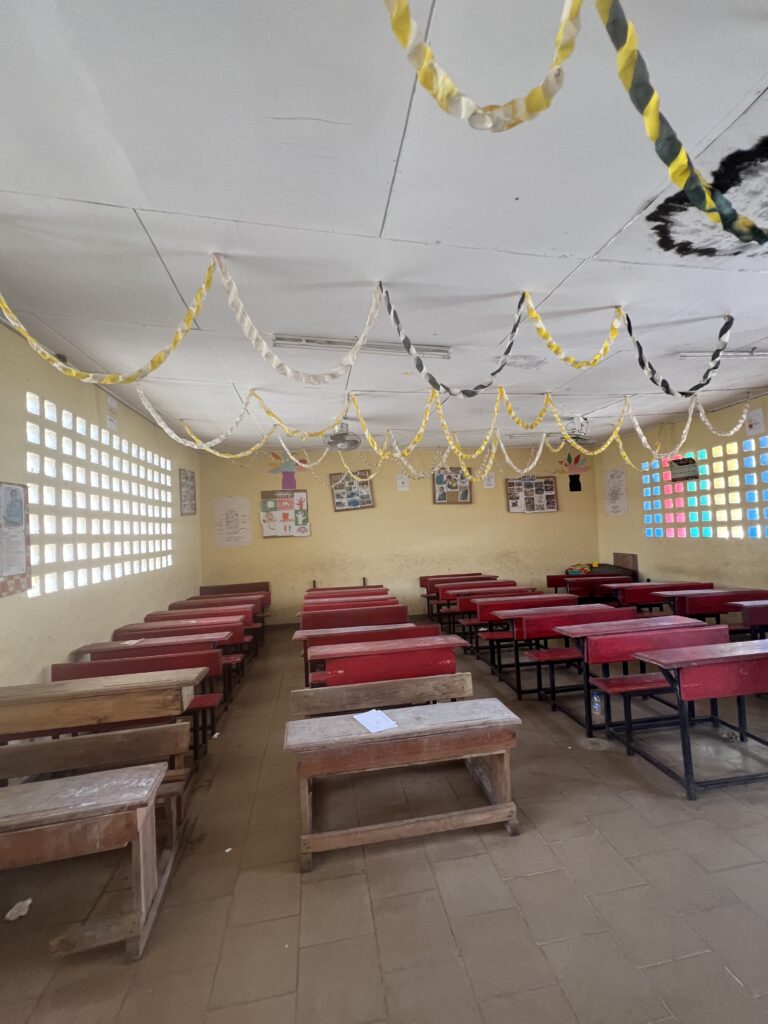
Silence and be prepared for their exams. I am not sure if it is for entrance exams into college or exit exams to advance to the new grade level.
Their dormitories. We did not go inside but it must be an oven in there.
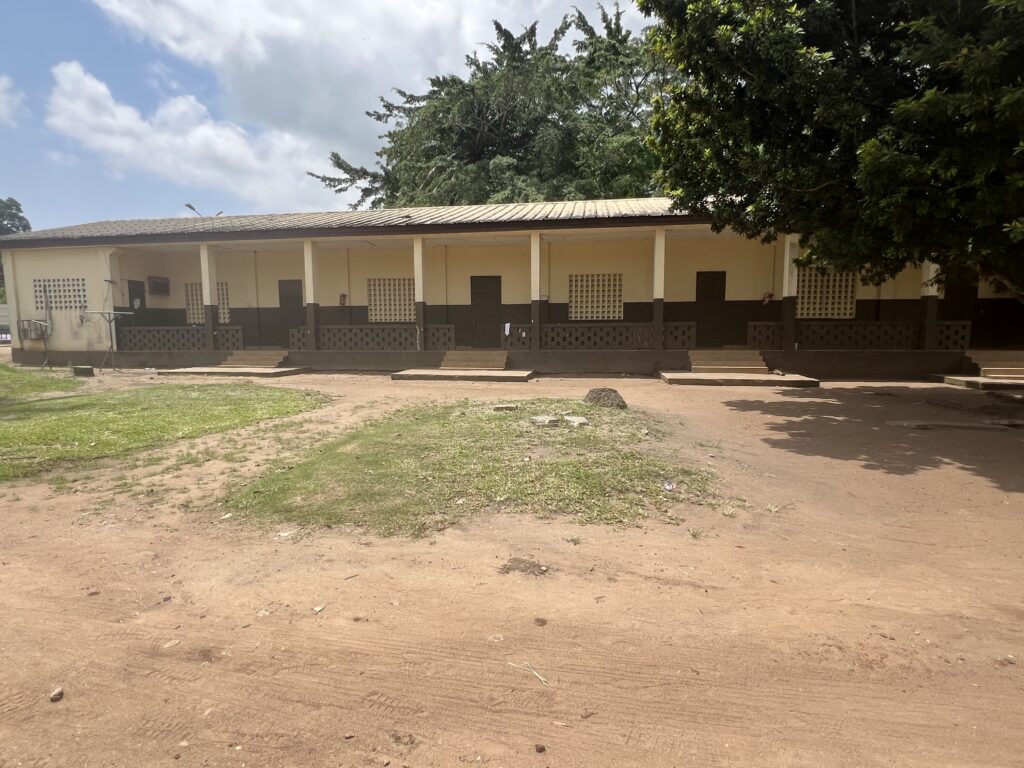
Video showing the front grounds of the orphanage
The courtyard area of the orphanage. It finishes where the classrooms were located.
Telling us good bye
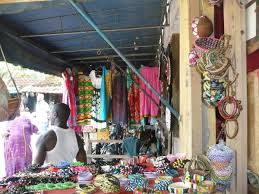
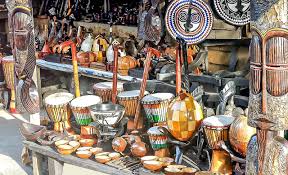
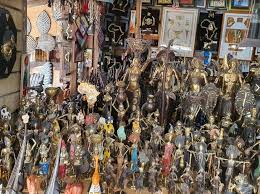
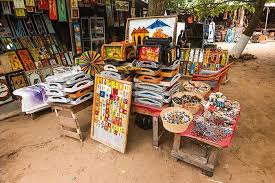
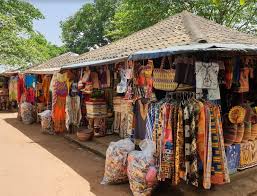
Our last stop for the day was to CAVA. The premier artisanal hub in Abidjan is CAVA (Centre Artisanal de la Ville d’Abidjan). Located in the Marcory commune along the Boulevard du Canal, it features dozens of stalls showcasing authentic Ivorian and West African handicrafts, including wood carvings, Korhogo canvases, bronzes, textiles, and jewelry.
Tips for Visiting
- Bargaining: Haggling is expected. Start negotiations at roughly one-third of the initial asking price.
- Watch & Customize: You can often watch artisans crafting their wares on-site or commission custom paintings.
- Amenities: Small maquis (local eateries) are located within the market to grab a bite or a drink while you shop.
- Payment: Vendors often accept local currency (CFA Francs), US Dollars, and Euros.
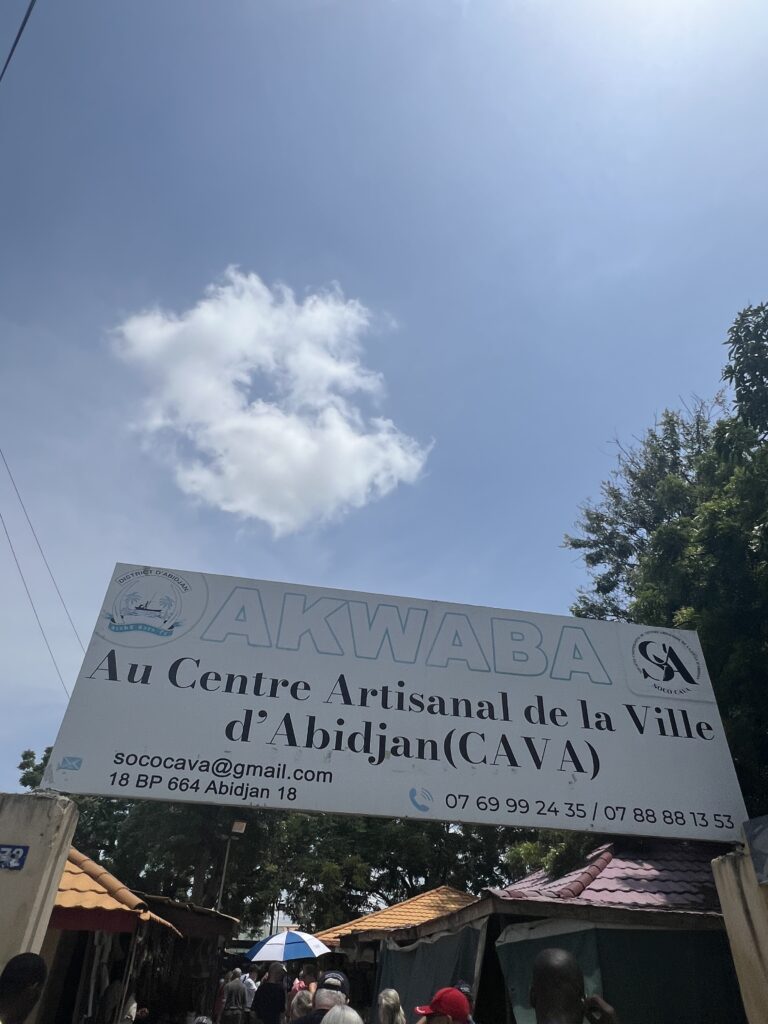
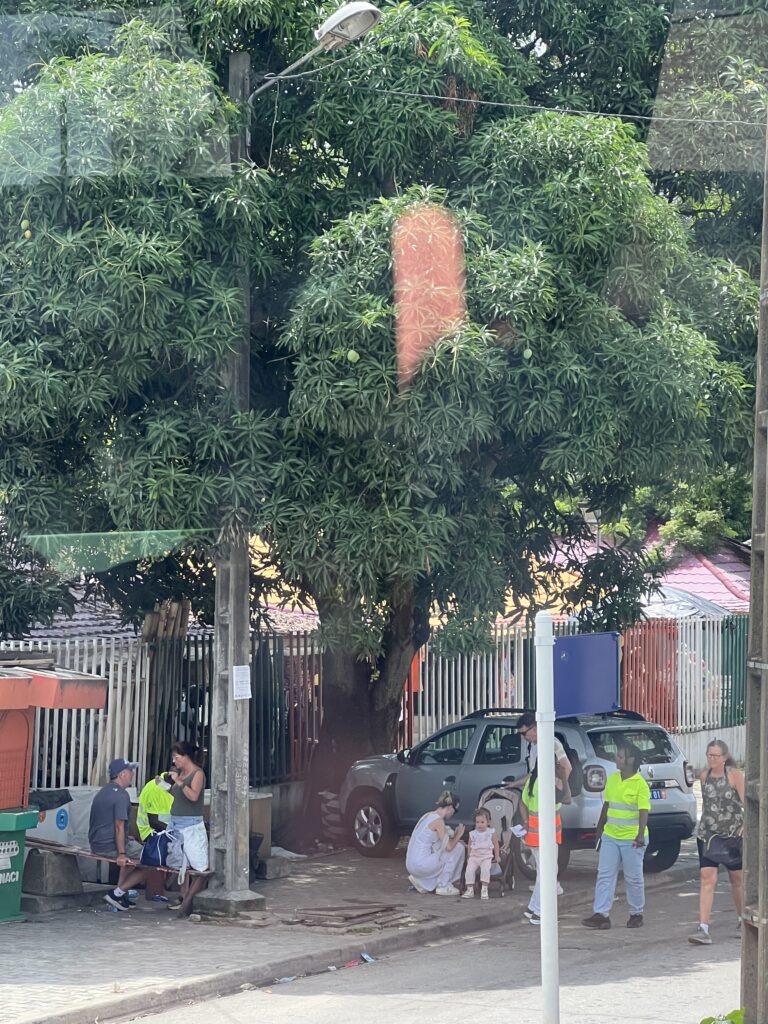
I was not much into haggling over prices after viewing the sites we did today. We picked up a couple of magnets and some pajama pants for me and Robert and also an African shirt for Robert. One old man was so surprised that I paid him the amount he wanted, he insisted that we take any hat in his area for free. I need to ask Jackie, but I think she picked up a hat.
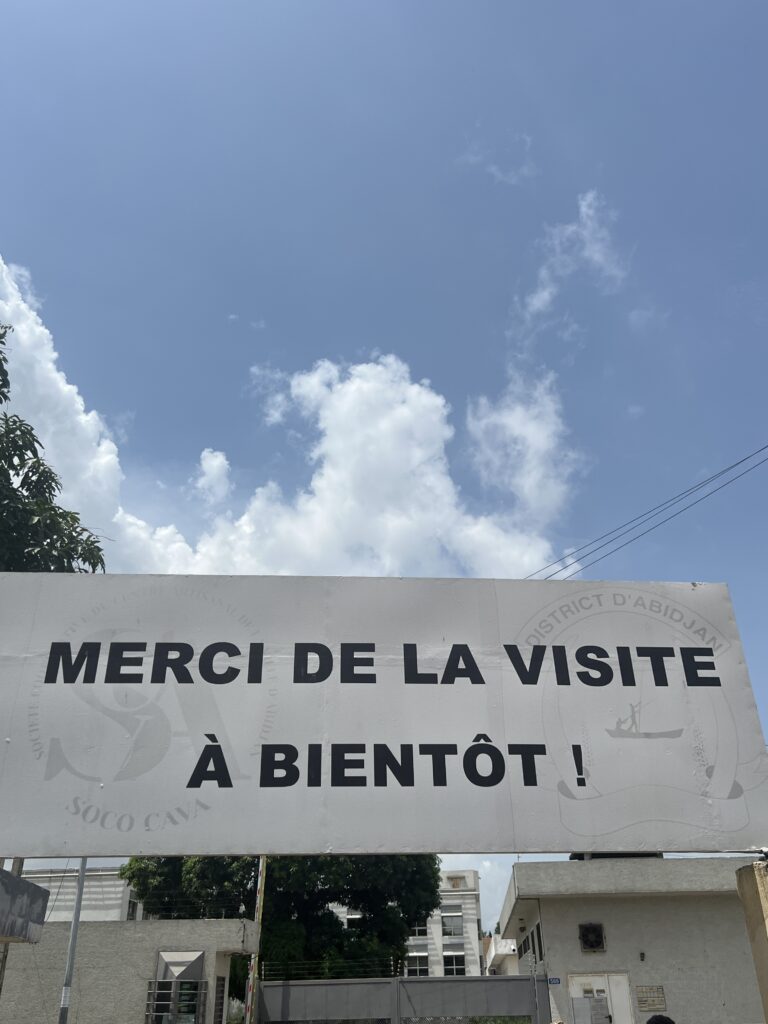
We returned to the ship, ate a quick bite and retreated to the cabin balcony to download and upload photos and videos using cellular before we left the dock. Below are the rest of our photos and videos as we left the city of Abidjan.
Below is a video of the trash in the water as the ship pushed off from the dock.
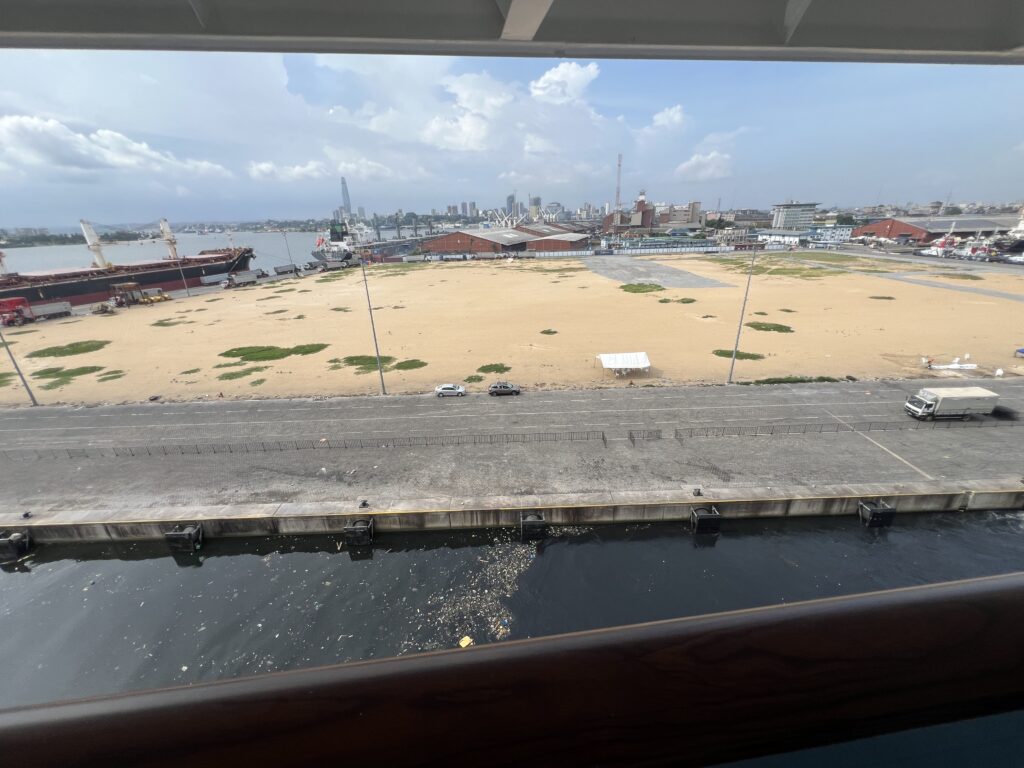
Leaving the port
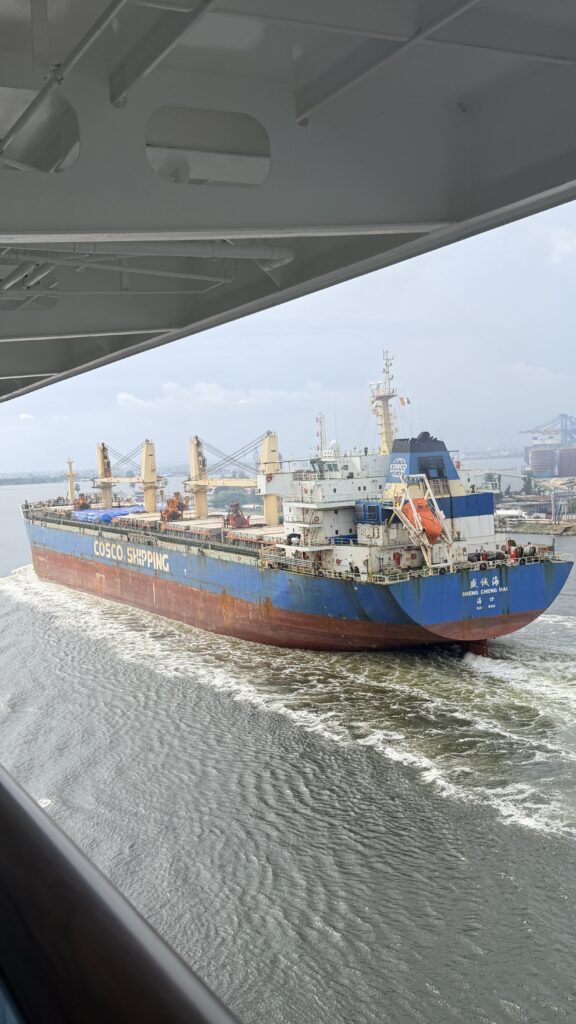
A large ship passes next to us in the ship channel
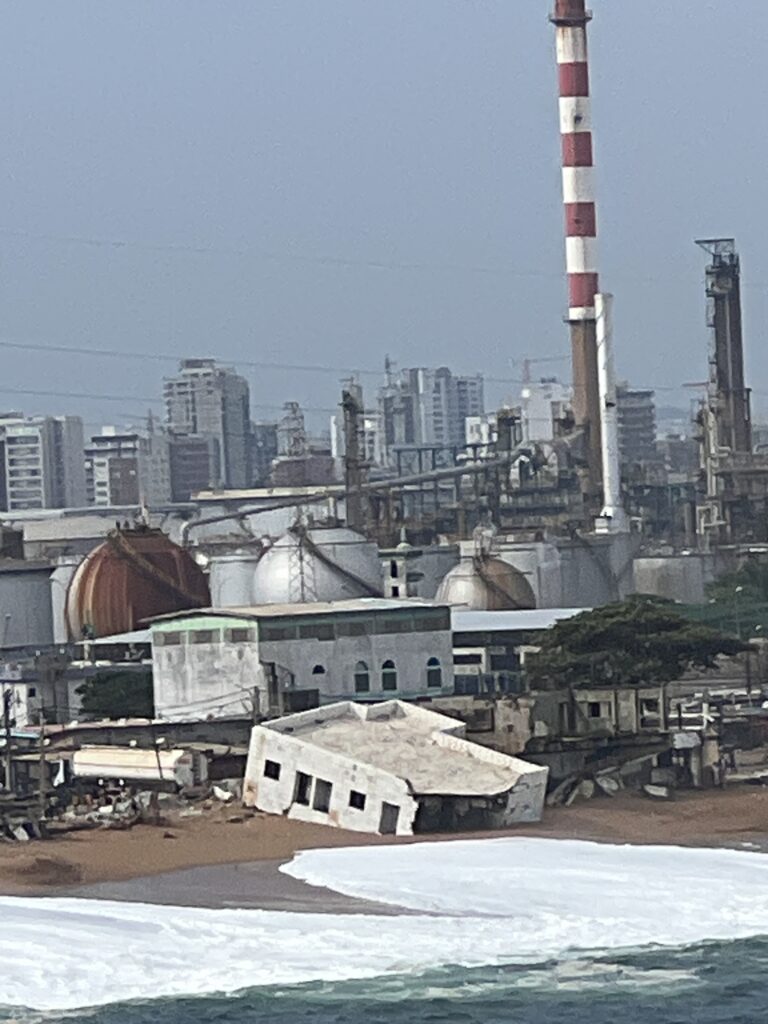
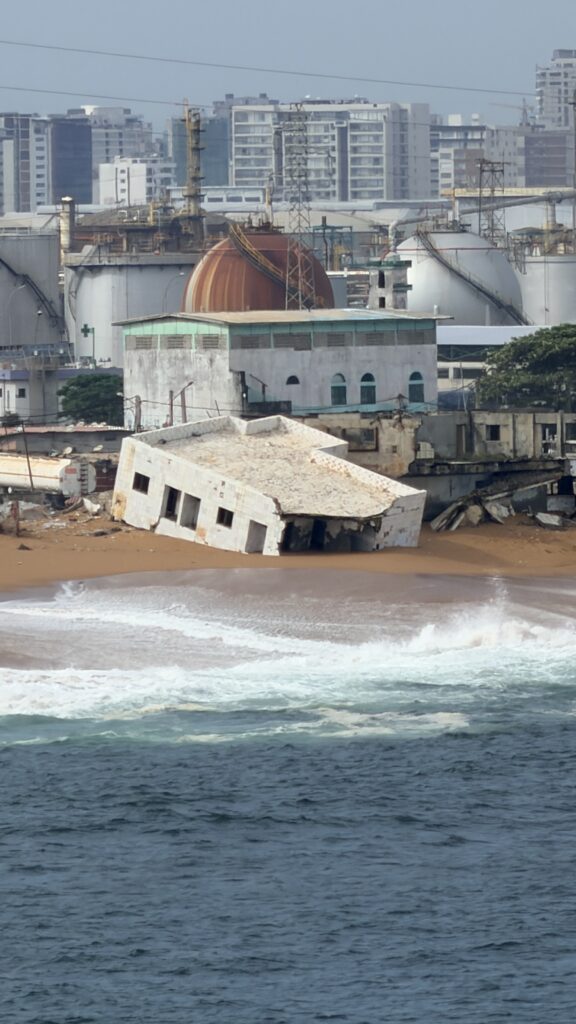
A building on the beach that was washed out by the sea
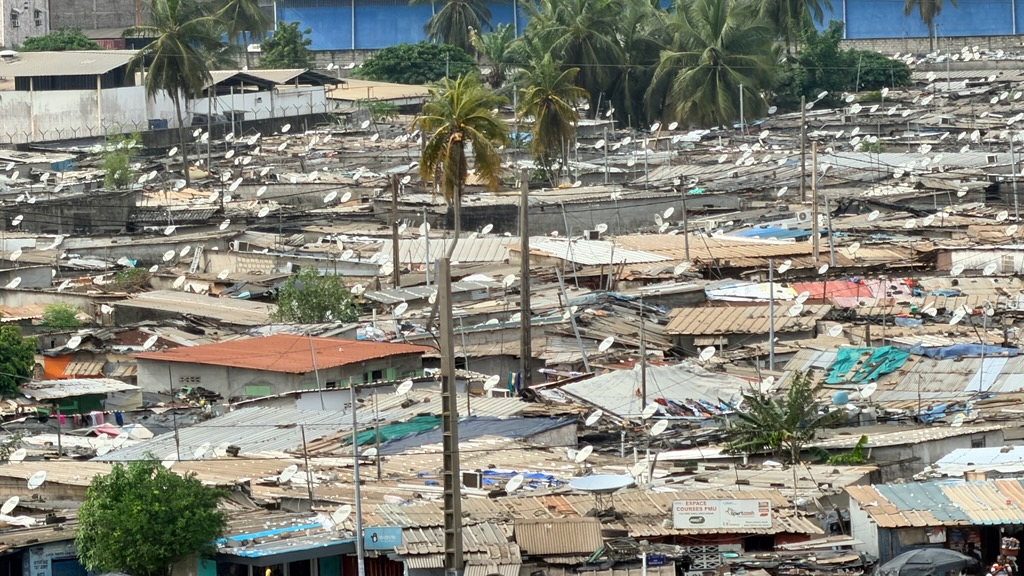
Check out all the dishes on top of the roofs of these shantie homes
People running to see the cruise ship sailing away
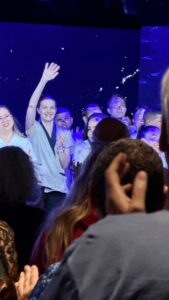
Waving goodbye to the ship
We have two days at sea before we get to our next port The Gambia
4 thoughts on “Day 85 May 31 Abidjan, Ivory Coast (Côte d’Ivoire)”
Do people on land where they live or are they squatters. How do you get money to pay for items purchase. Do they accept US dollars?
We are unsure but think that people own the piece of land where their home is. The piece of land might be 12×12, just enough to place a metal shed. We exchanged for foreign currency before we left home. For the new ports in west Africa, you can get cash at an ATM or we have found people accept US Dollars as long as the bills are new and unmarked.
Nice one Lane and Jackie. Certainly beats our shuttle bus explanation ( got on the shuttle didn’t get off and came back to ship ) looks like you had a decent tour but I still think we could have swerved the port altogether. Well done. IMO the 4g Internet was the best thing about Abidjan lol.
I used the F*** out of that 4G internet while on shore during the excursion. It is funny how we take excursions for two reasons. One is to see the port stop or city and the second reason has become the most important reason which is to use cellular on land to download and upload files. It certainly does suck and remains a complete joke for the price we all paid to take this World Cruise.