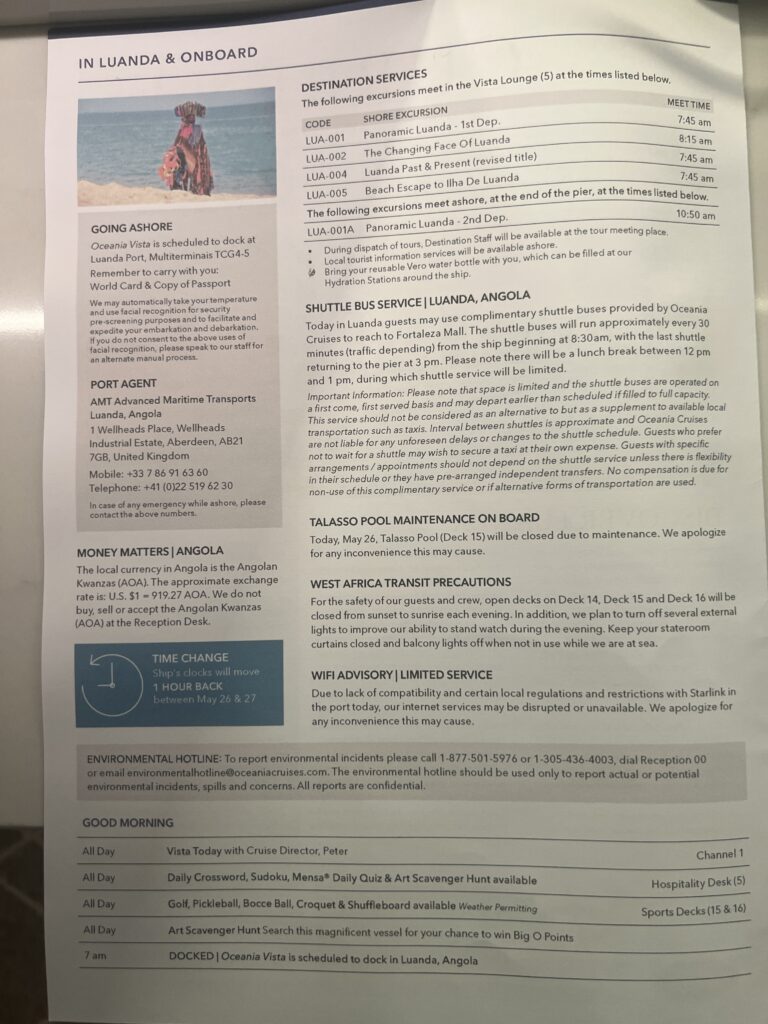
Day 80 Tuesday May 26th (40 days to go) — Today we did an Oceania excursion called The Changing Face of Luanda. We had reviewed the city and learned that there were unsafe areas in the city, so we decided to venture out on the excursion for the additional security. We had a great tour and learned much about this city and country. The country was under Portuguese rule for hundreds of years before gaining their independence in 1976, but then a civil war broke out that last over 20 years. The city and country are still rebuilding, and it is becoming a very modern city. Our excursion stayed away from the problem areas although we did get a few glimpses of the poor areas. The people on the street were very friendly, and we saw smiles throughout the excursion. There is a large military presence on the streets.
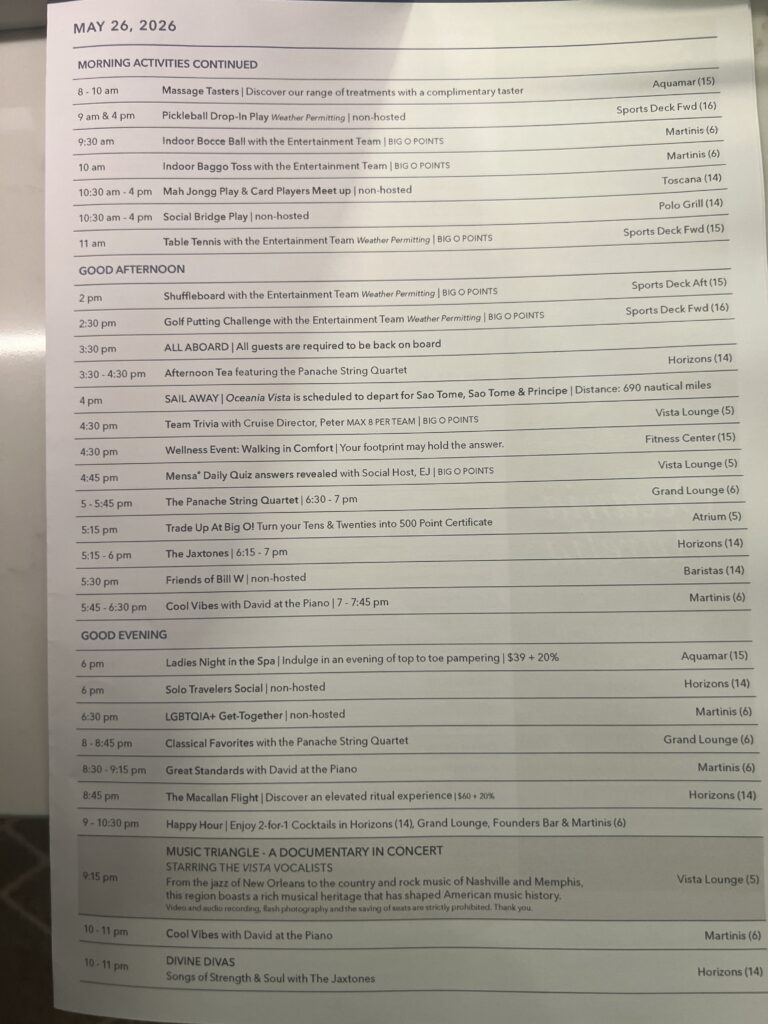
View of the port area we docked in taken from our cabin balcony. There was a strong smell of grains
We saw a small boat being rowed by two men in the bay where the ship was docked
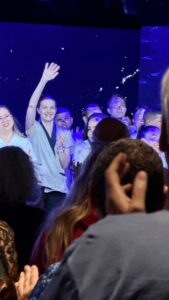
The ship was greeted by these performers. They were performing when we arrived and then left for the excursion and when we returned they were still performing.
View of the performers as we walked off the ship leaving for the excursion
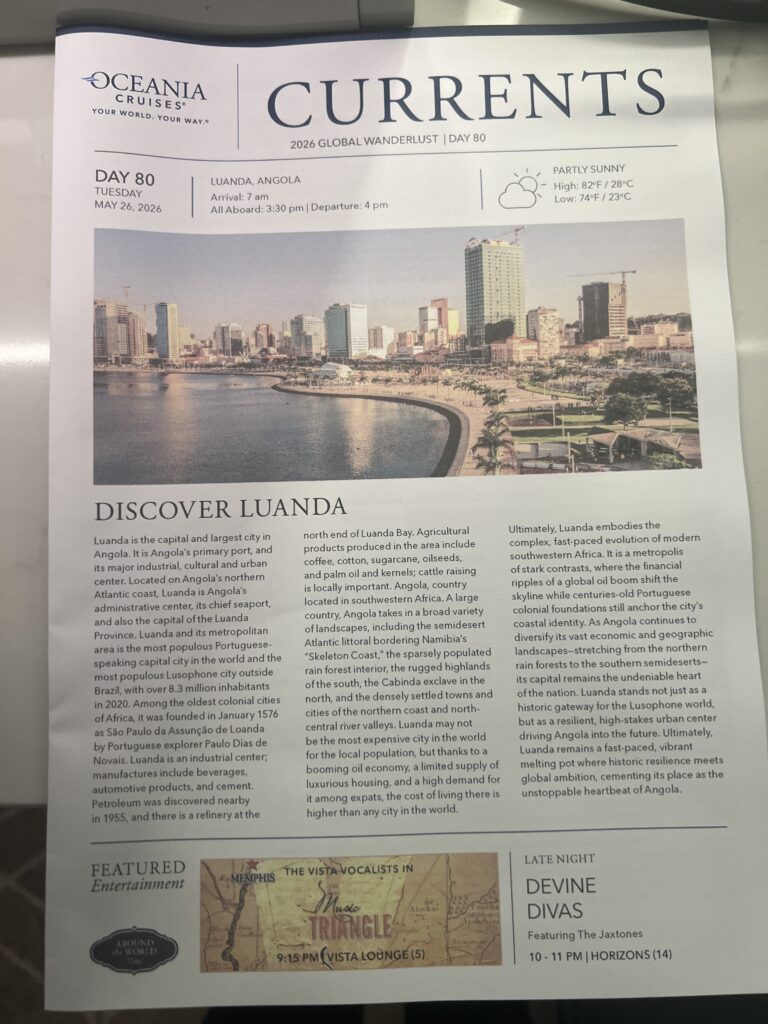
Luanda is the capital and largest city of Angola. It is Angola’s primary port, and its major industrial, cultural and urban centre. Located on Angola’s northern Atlantic coast, Luanda isAngola’s administrative centre, its chief seaport, and also the capital of the Luanda Province. Luanda and its metropolitan area is the most populous Portuguese-speaking national capital in the world and the most populous Lusophone city outside Brazil. In 2024 the population reached more than 8.8 million inhabitants (a third of Angola’s population).
Among the oldest colonial cities of Africa, Luanda was founded in January 1576 as São Paulo da Assunção de Loanda by Portuguese explorer Paulo Dias de Novais, being occasionally called “Leonda” or “St Paul de Leonda” by non-Portuguese sources. The city served as the centre of the slave trade to Brazil before the institution was prohibited.
At the start of the Angolan Civil War in 1975, most of the white Portuguese left as refugees, principally migrating to Portugal. Luanda’s population increased greatly from internal refugees fleeing the war, but its infrastructure was inadequate to handle the increase. This also caused the exacerbation of slums, or musseques, around Luanda.
In the 21st century, the city has been undergoing a major reconstruction. Many new large developments are taking place that will alter its cityscape significantly.
Industries present in the city include the processing of agricultural products, beverage production, textile, cement, new car assembly plants, construction materials, plastics, metallurgy, cigarettes and shoes. The city is also notable as an economic center for oil, and a refinery is located in the city.
Luanda has been ranked as one of the most expensive cities in the world for expatriates. The inhabitants of Luanda are mostly members of the ethnic Ambundu people. In recent decades of the 21st century, the number ofethnic Bakongo and Ovimbundu have also increased. Ethnic Europeans are mainly Portuguese.
Views of the city as we drove to our sites
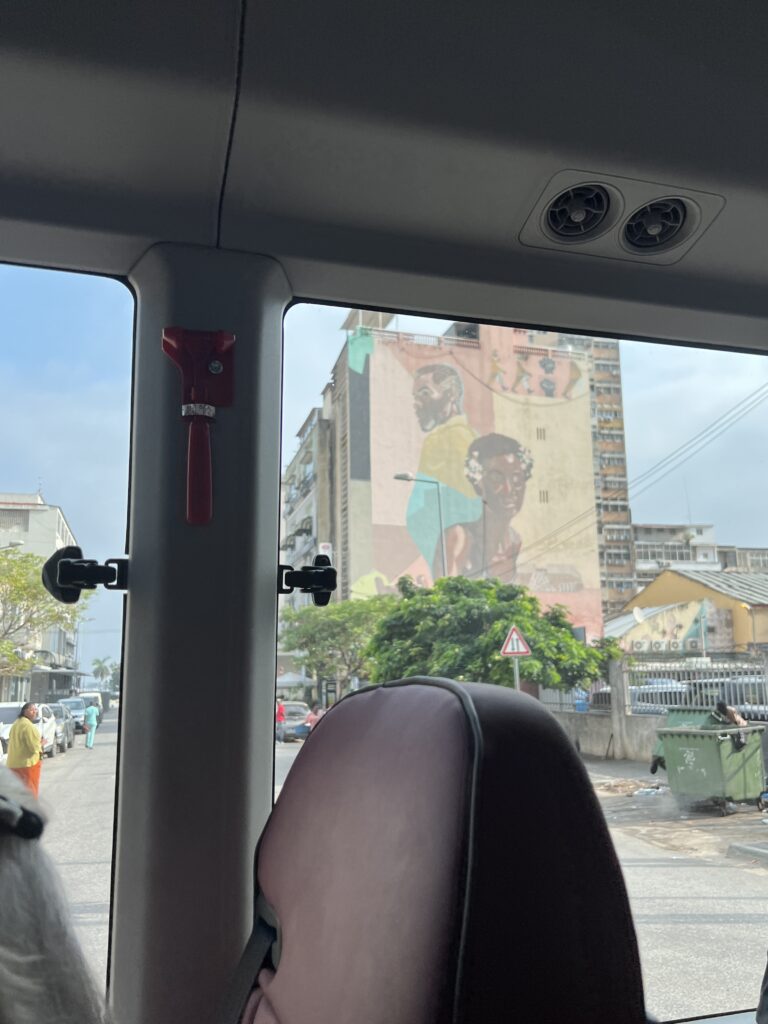
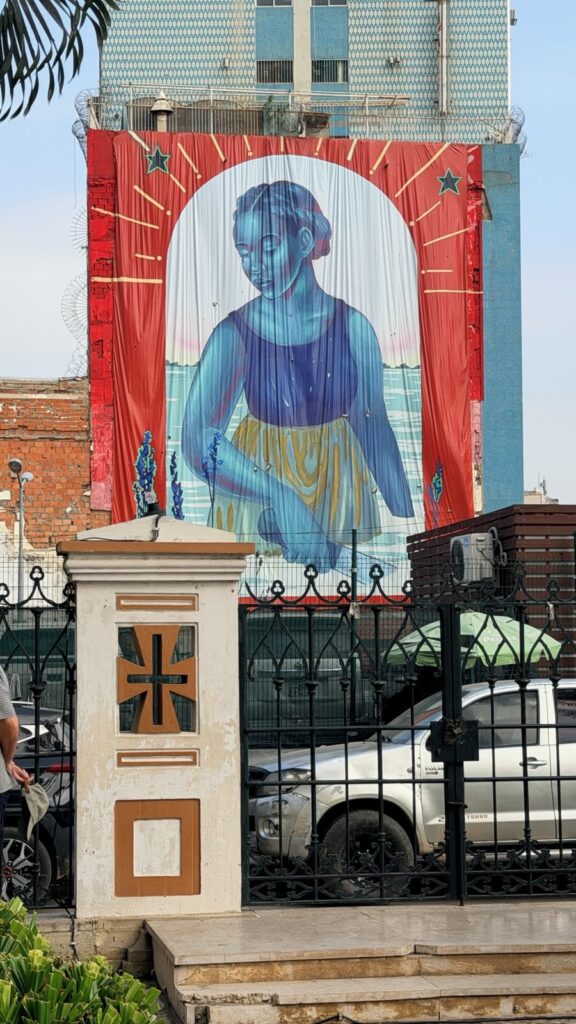
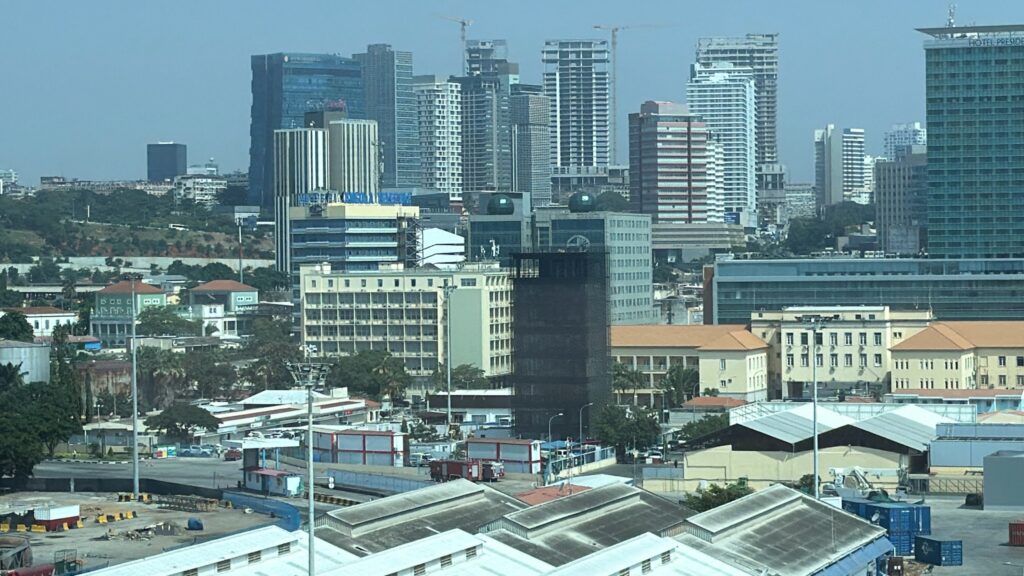
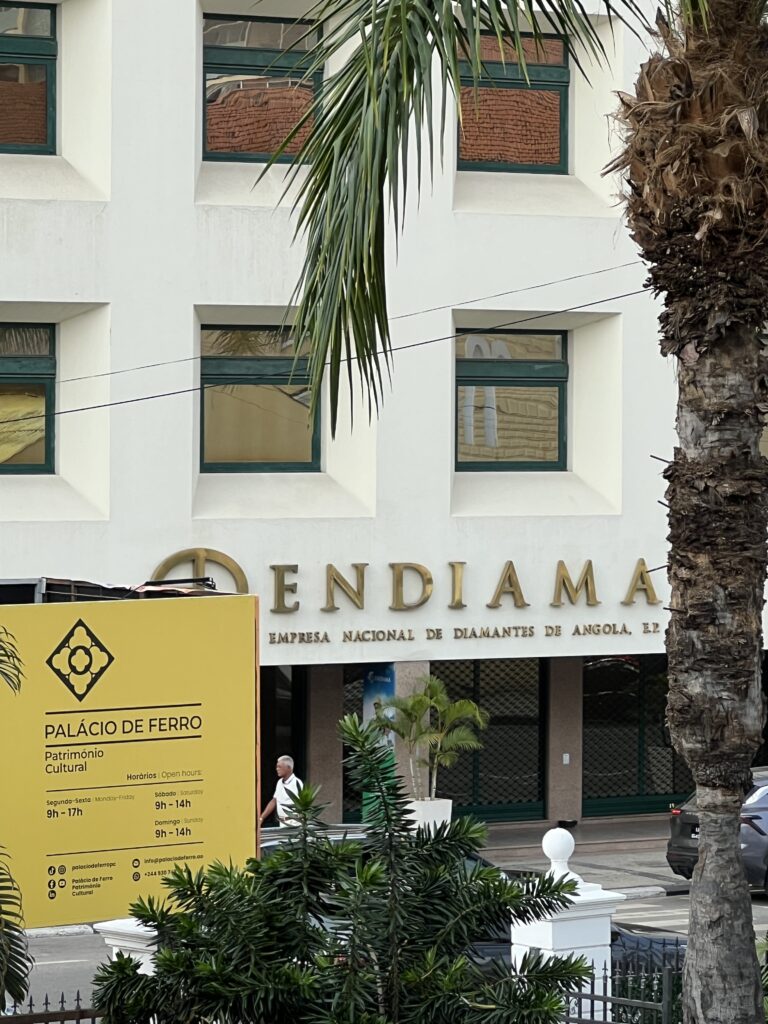
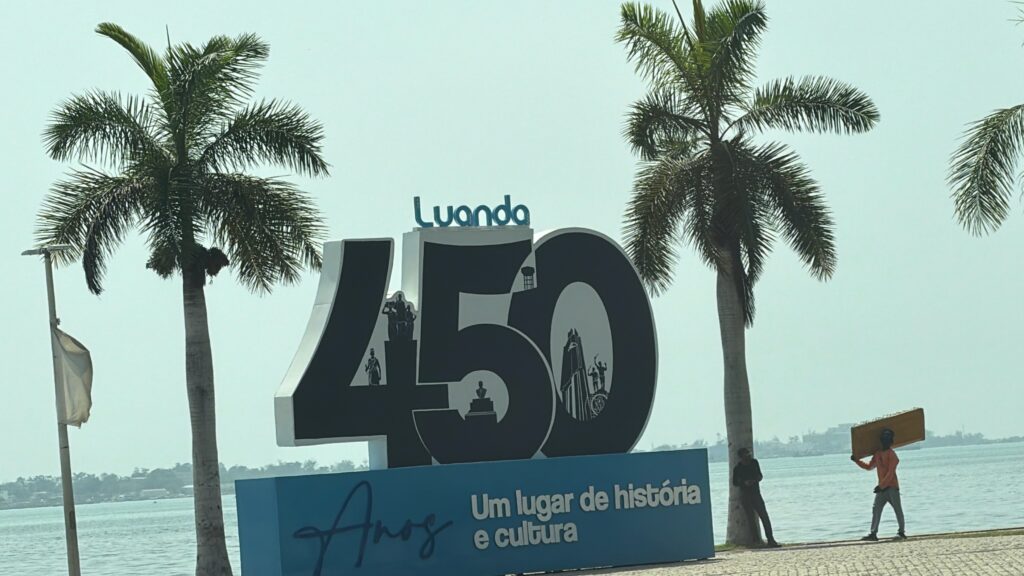
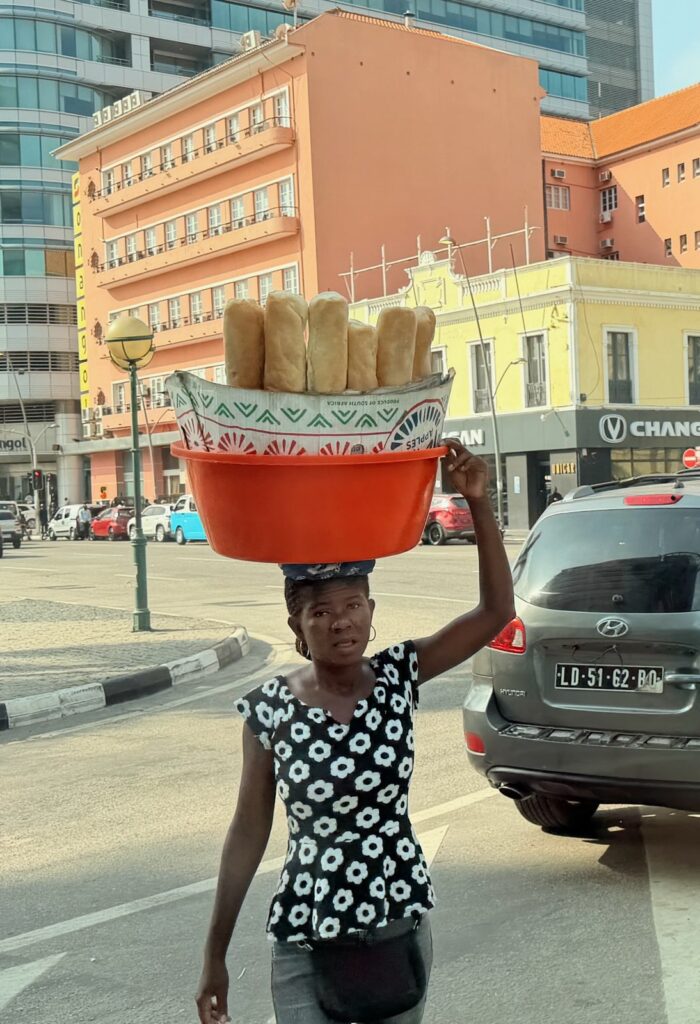
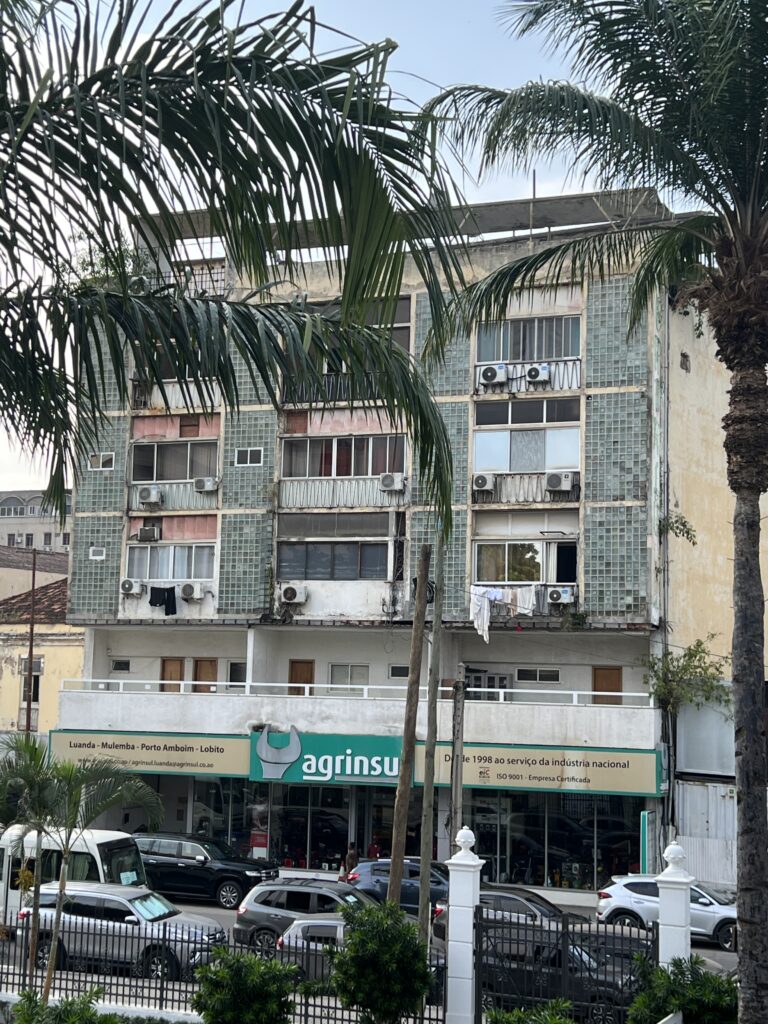
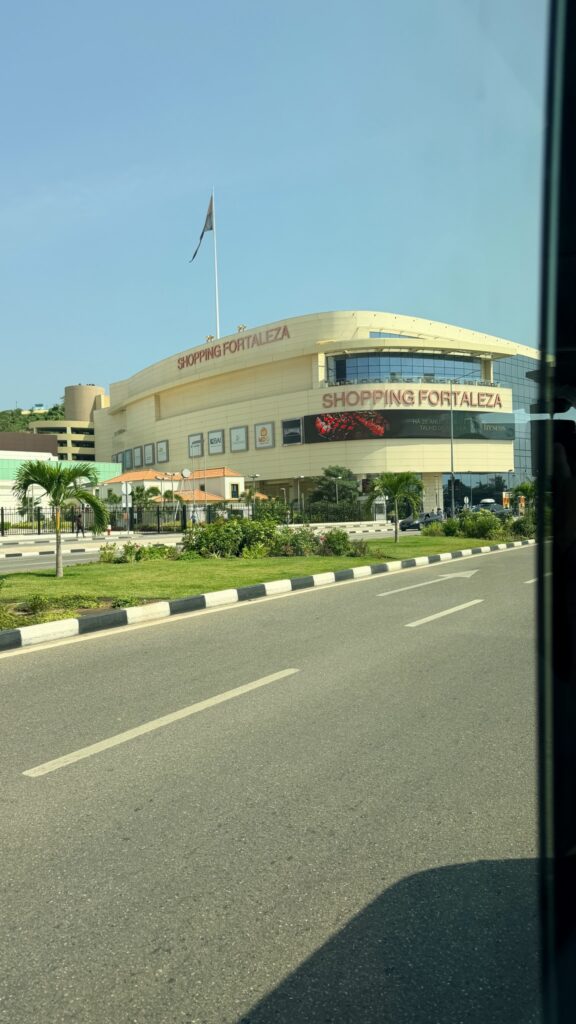
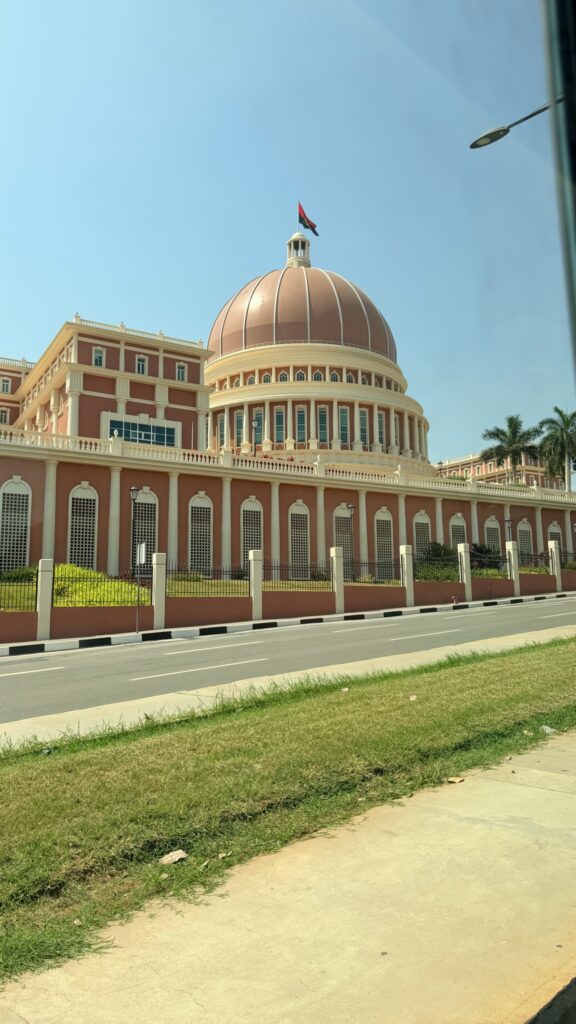
Photo of the Parliament Building. We did not know at the time that photos of this building and others were off limits. Our tour bus was later stopped by the police and military as many of us took illegal photos. Our guide had to speak to the authorities to get our release, and we returned back to the ship.
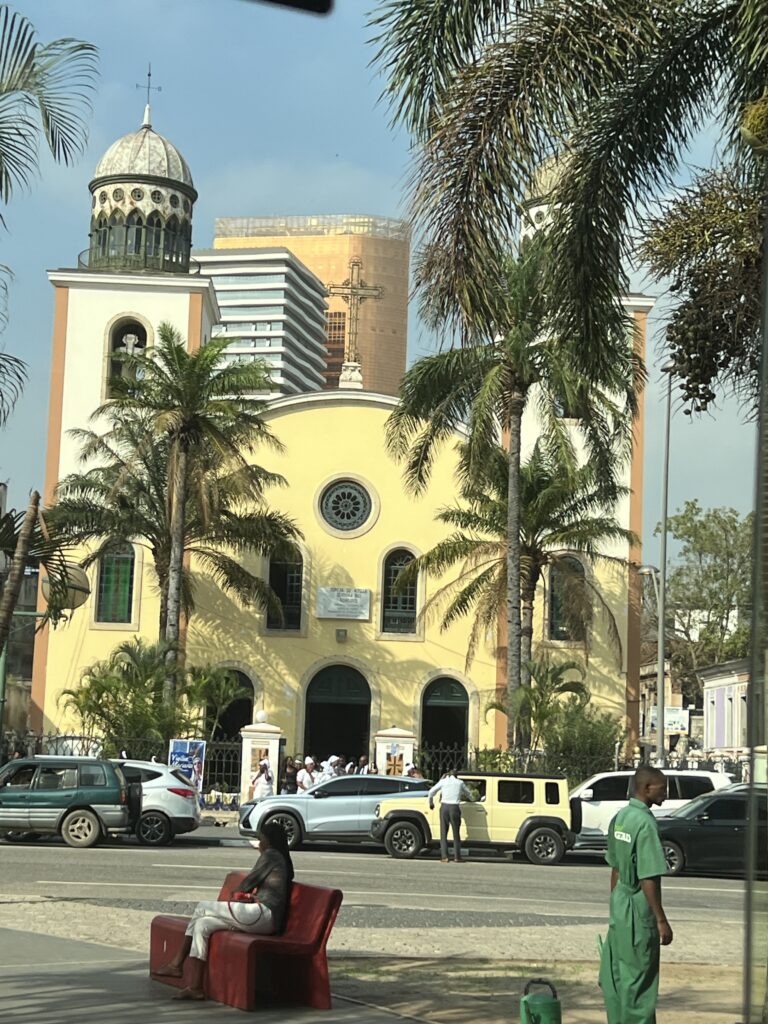
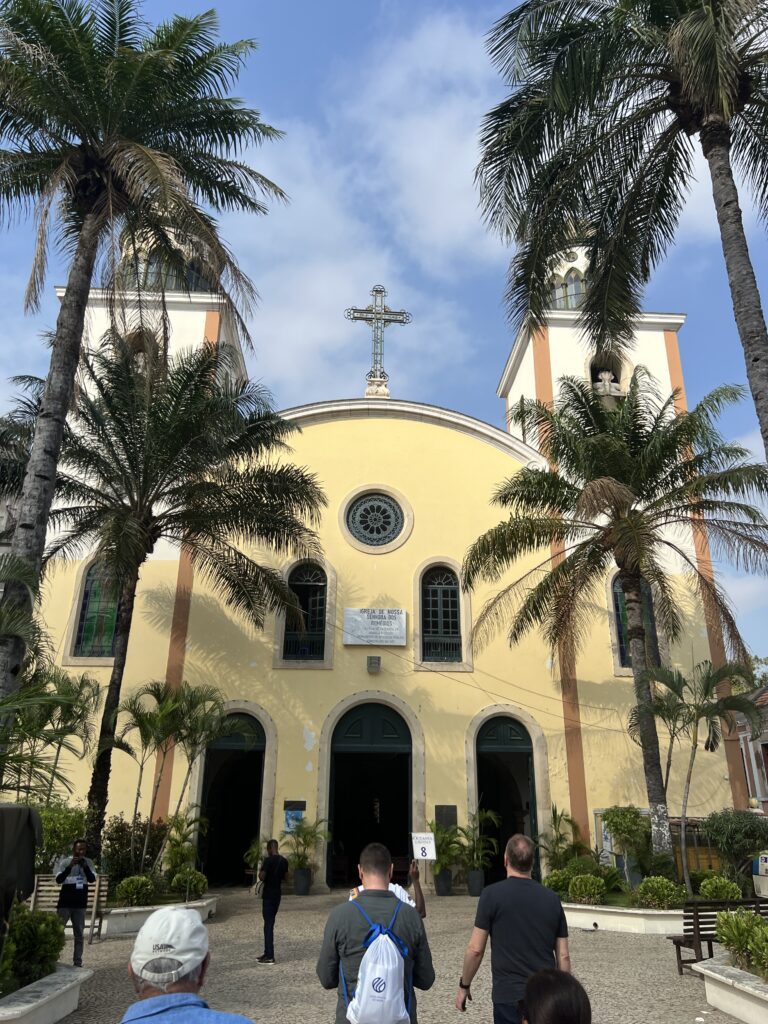
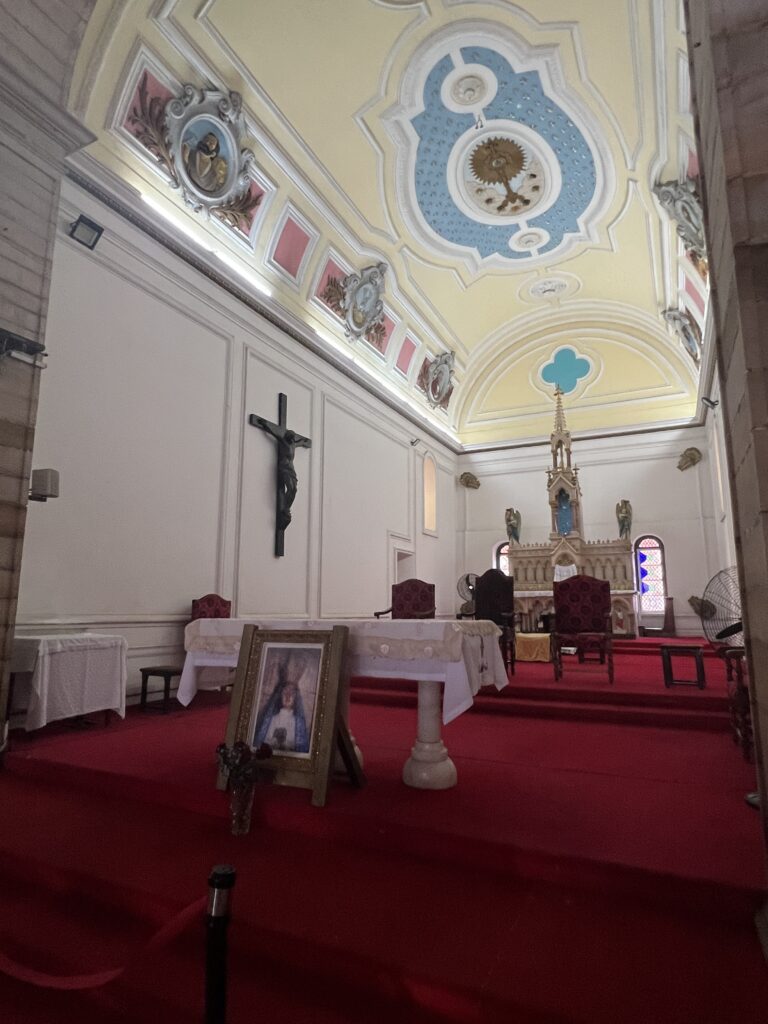
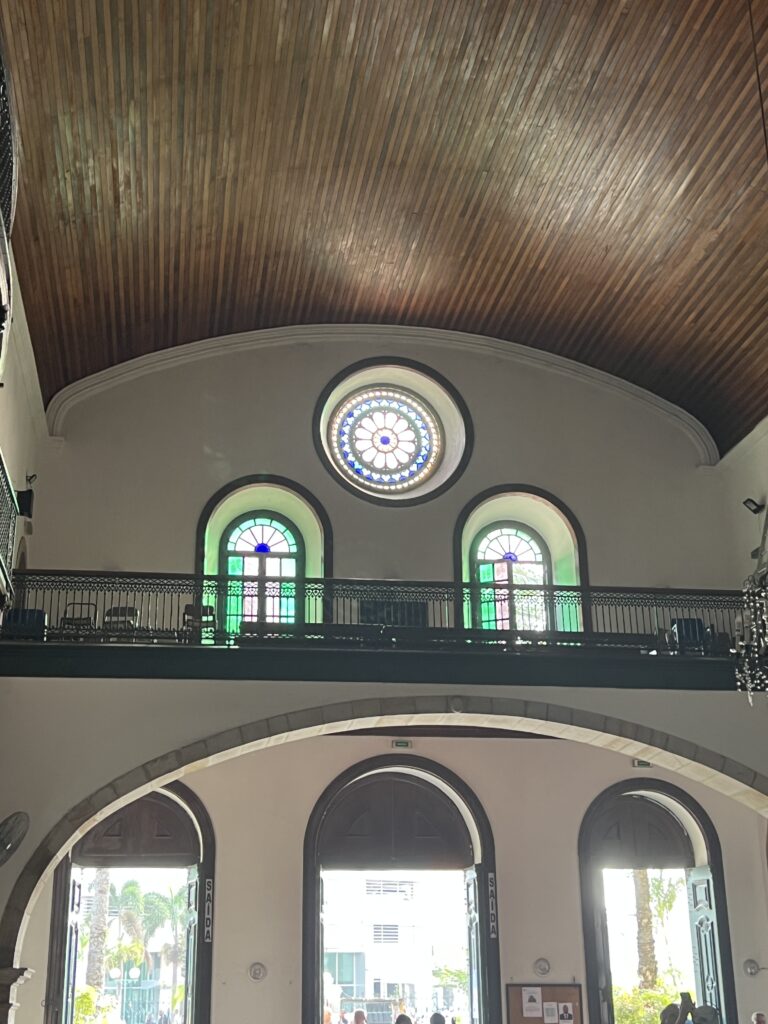
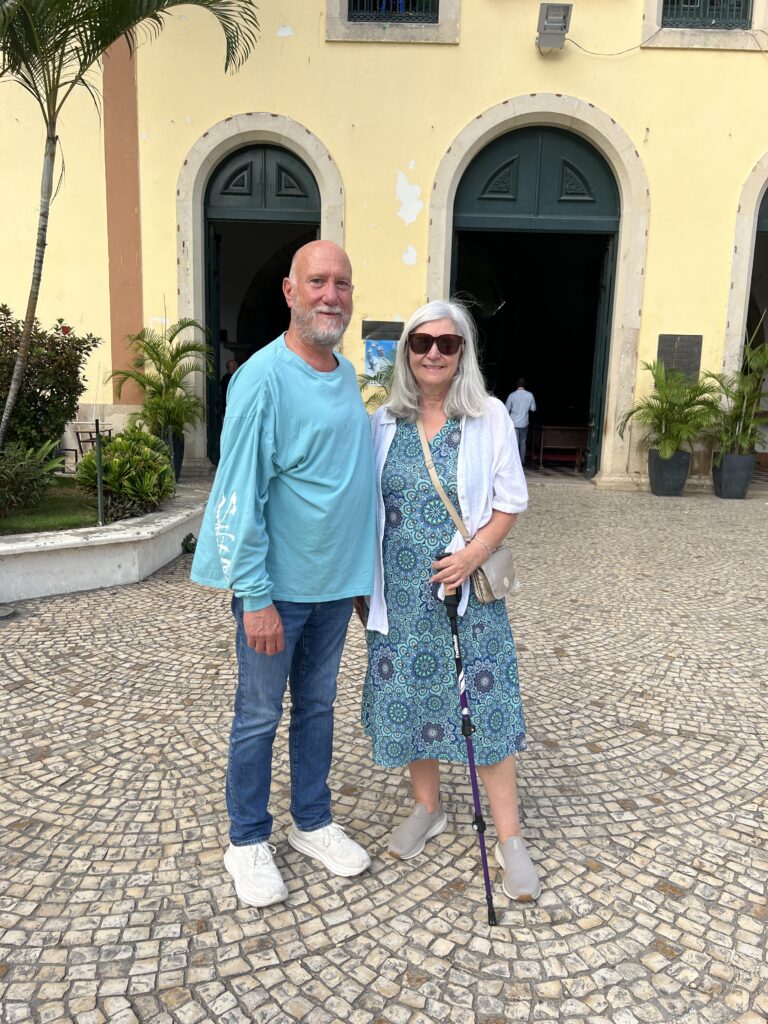
Our first stop was the Igreja de nossa senhora da Nazare (Church of Our Lady of Nazareth). Church of Our Lady of Nazareth is a seventeenth-century church located in Luanda, Angola. It is located next to the Bay of Luanda, in front of Avenida Marginal (Avenida 4 de Fevereiro).
André Vidal de Negreiros, architect of the liberation of Northeast Brazil from Dutch rule and governor of Angola, ordered the construction of the Church of Our Lady of Nazareth in 1664, as indicated on a plaque over the entrance portal. The construction of the church was a way of thanking God for having survived a shipwreck on a voyage from Brazil to Angola, possibly the same one that took him to assume the functions of governor in that territory.
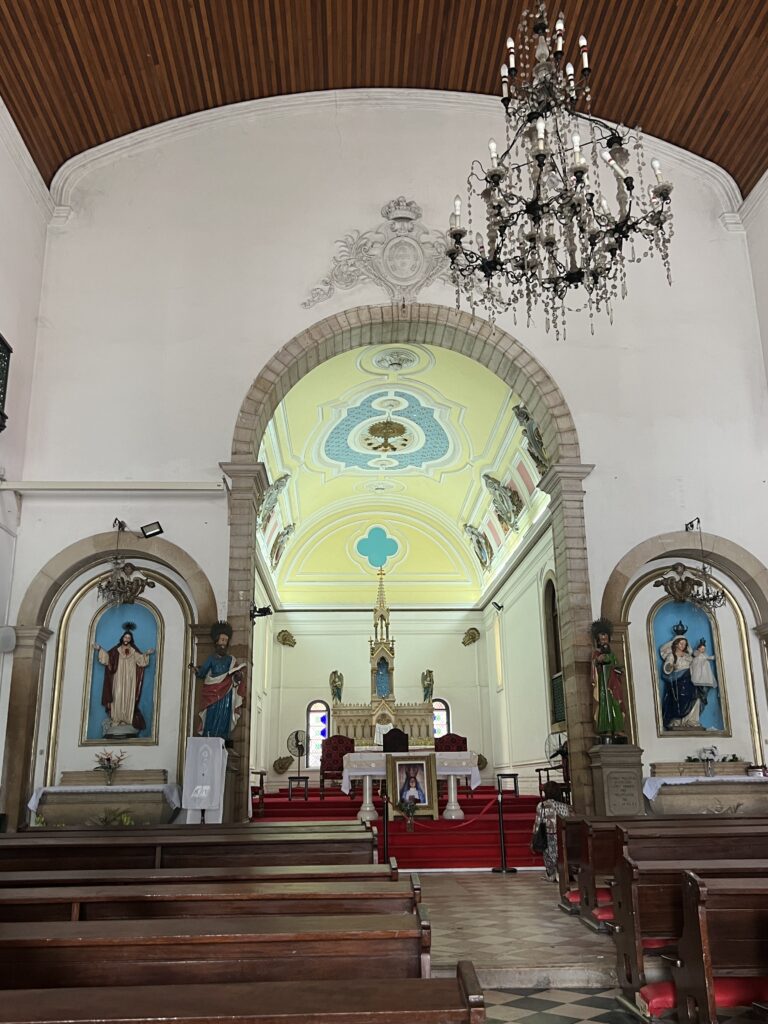
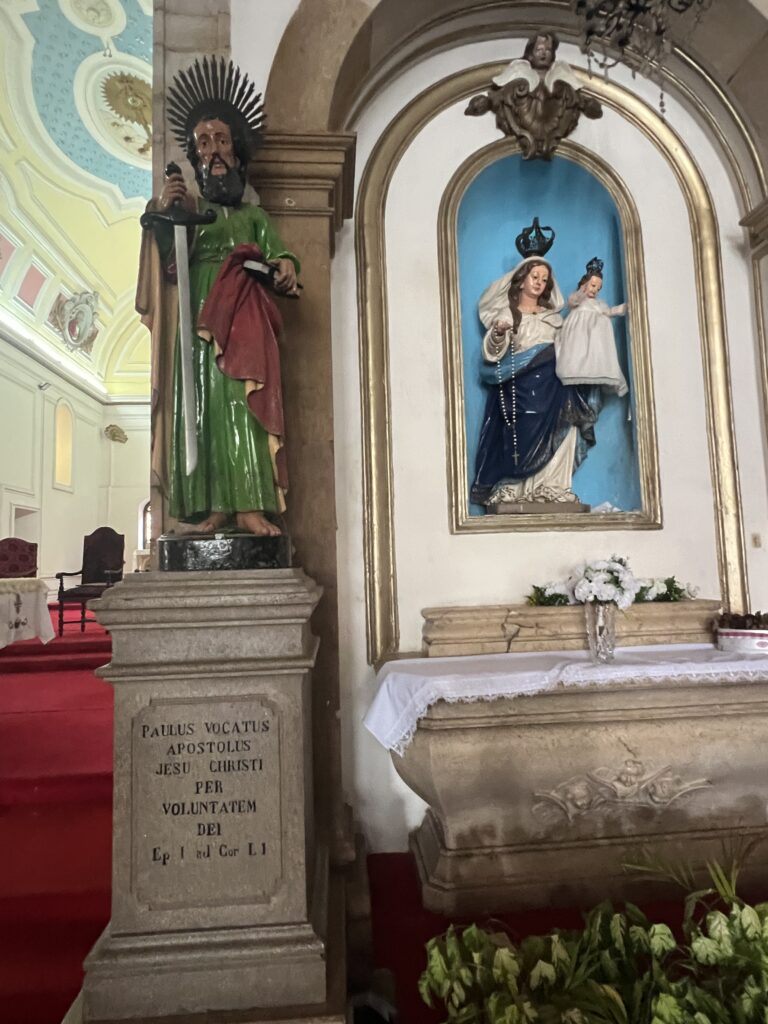
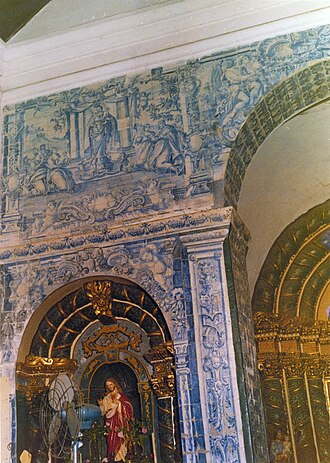
The church was, however, dedicated to victory in the Battle of Ambuíla, as indicated by the historical tiles inside. The head of King Anthony I of Congo, killed in the battle, was buried in the church. The white-blue tiles, which cover the chancel, the triumphal arch and the nave, also contain scenes from the life of Our Lady and Saint Iphigenia of Ethiopia.
n general, the Church of Our Lady of Nazareth preserves its original lines. The façade, with simple lines, has a single portal with a straight lintel, with a commemorative tombstone of the foundation, and is surmounted by a triangular pediment with an oculus. On each side of the church are arcaded porches, which indicates an ancient function as a pilgrimage church. On the right side there is a small bell tower.
The plan is of a rectangular nave. It is decorated with white and blue tiles in the nave, triumphal arch and chancel, as well as ratabulae of Solomonic columns.
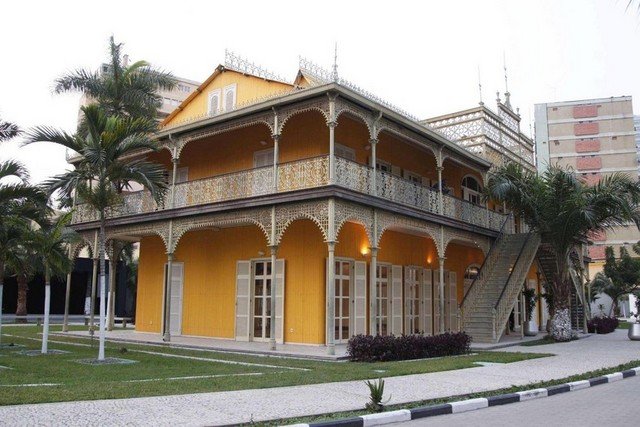
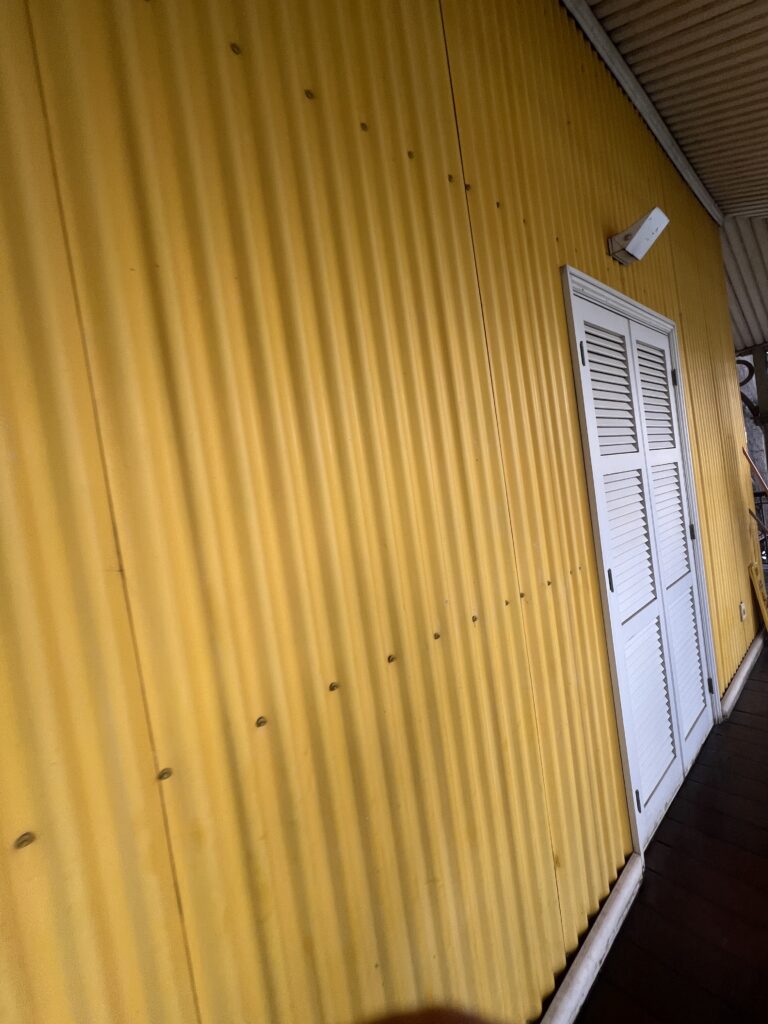
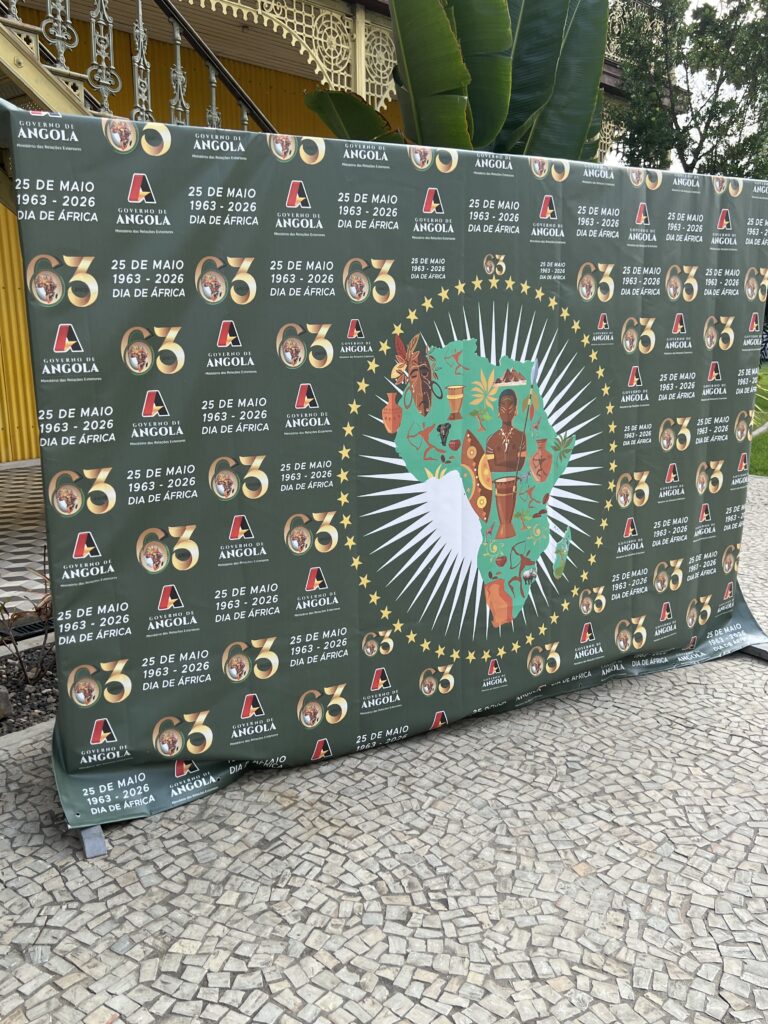
The next stop on the excursion was The Iron Palace. Originally, we were told that we could not visit the grounds as it was being prepared for a celebration, but we were allowed to visit outside and take photos.
The Iron Palace is a historic building of Luanda, in Angola, which according to historical sources, there are strong possibilities of being the author of Gustave Eiffel. This information was confirmed in 2015, when the French embassy in Angola classified the Iron Palace as a work by Gustave Eiffel.
According to the aforementioned sources, the original set of the various pavilions that make up the Palace was designed by Gustave Eiffel for an international exhibition, being later acquired and assembled in Luanda by the Companhia Comercial de Angola, in 1896.
The history of the structure is shrouded in mystery since no official record of it exists. It is believed to have been pre-built in the 1890s in France and was destined to be placed in Madagascar via boat. Instead, the building ended up in Angola‘s Skeleton Coast after the ship carrying it was grounded by the notorious Benguela Current. Portuguese rulers of the colony then claimed the ship along with all its contents, including the palace.
During the Portuguese era, the building had a great deal of prestige and it was used as an art center. But after the independence of Angola, the palace was left in neglect with its surrounding area eventually ending up as a parking lot. It was also heavily damaged during the Angolan Civil War leaving some of its structures in a rusted and rotting condition.
The building was renovated in 2009 funded by profits from Angola’s oil boom with the help of Brazilian construction companies, as many of the reclaimed iron balustrades and floor tiles were individually renovated in Rio de Janeiro. It now stands as the symbol of the city’s rebirth as well as a point of social reference for the future. The Ministry of Culture of Angola is still deciding whether the building is to become a diamond museum or a restaurant.
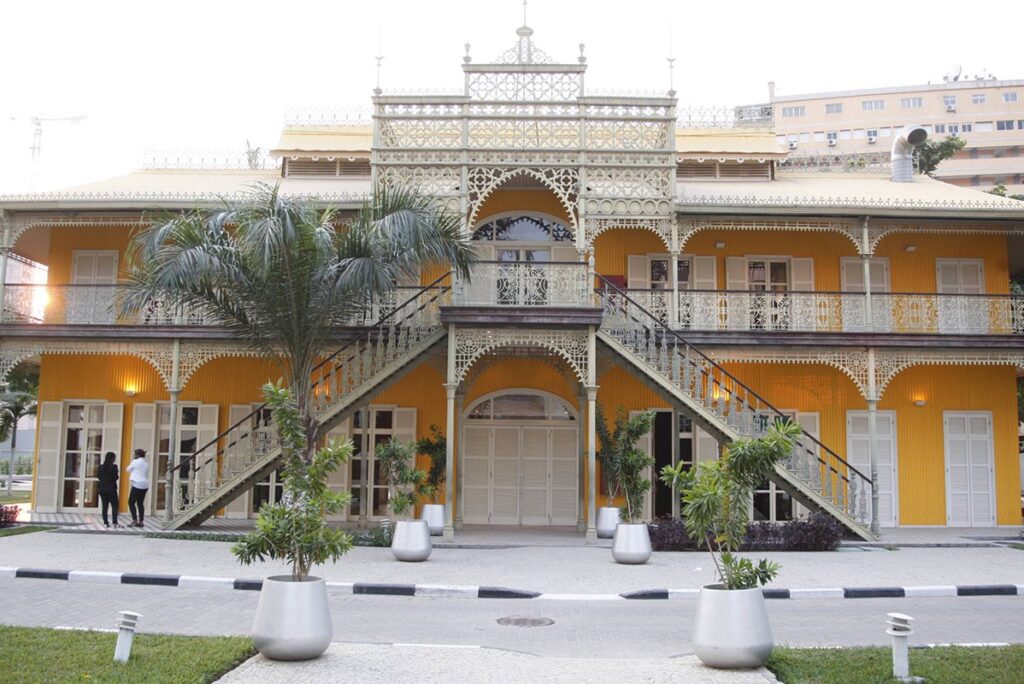
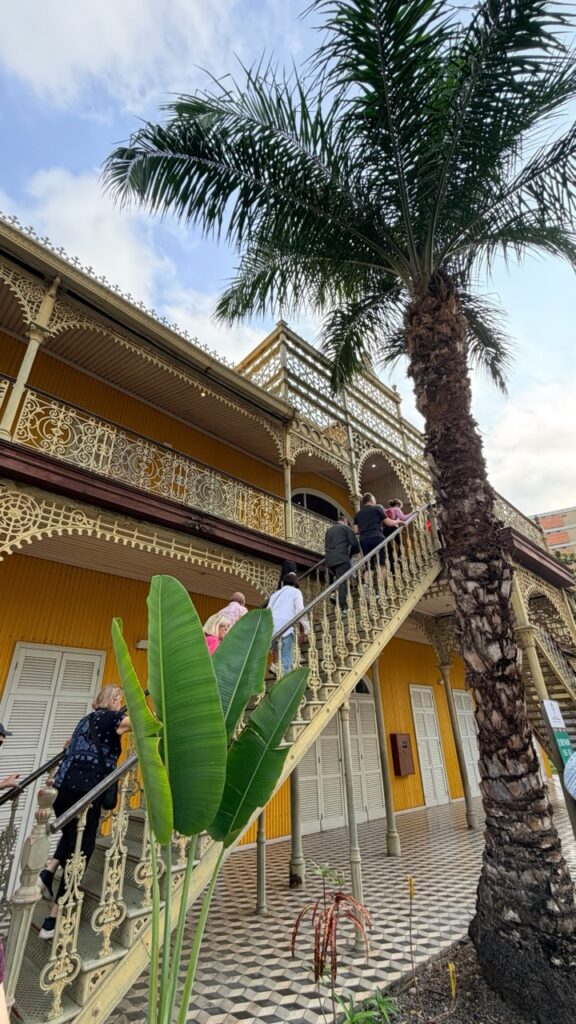
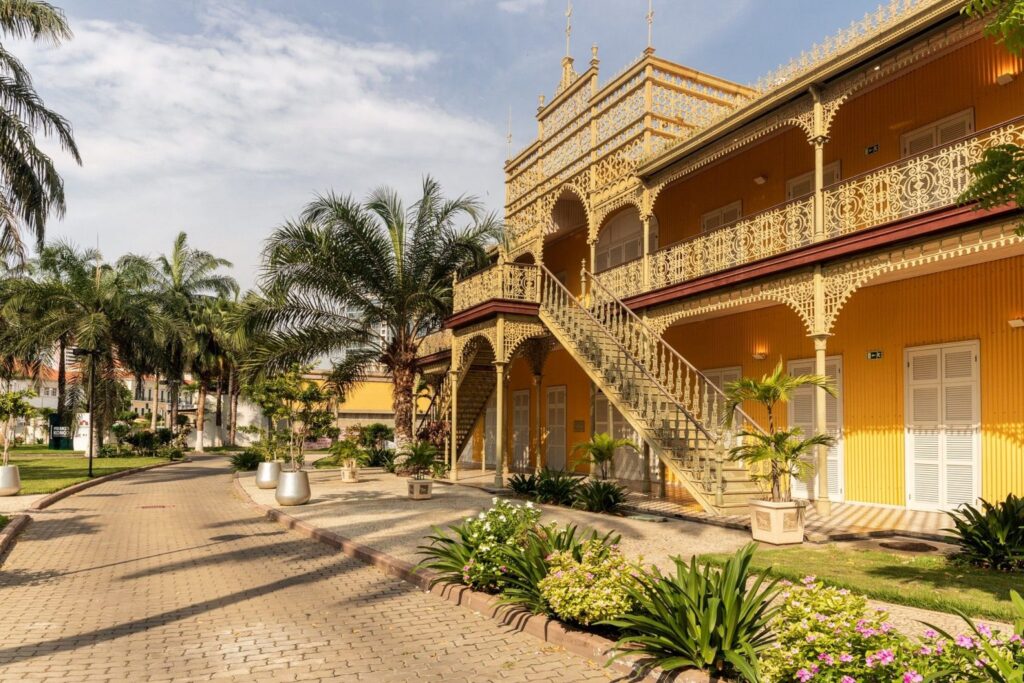
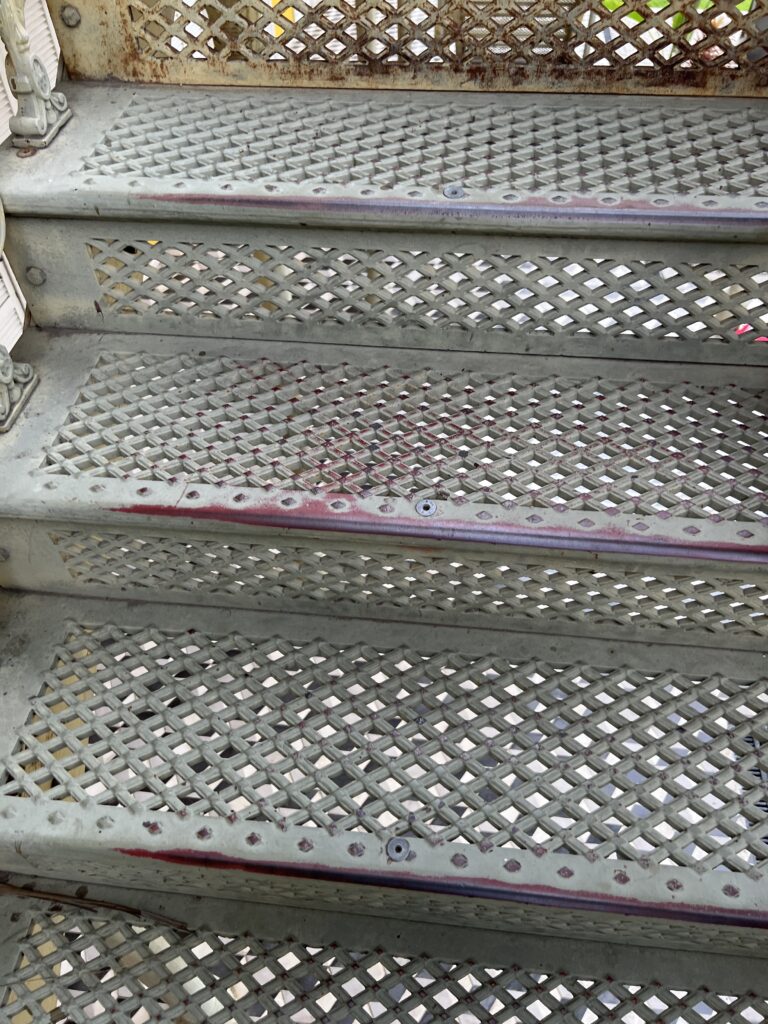
Stairs leading up to the Iron Palace
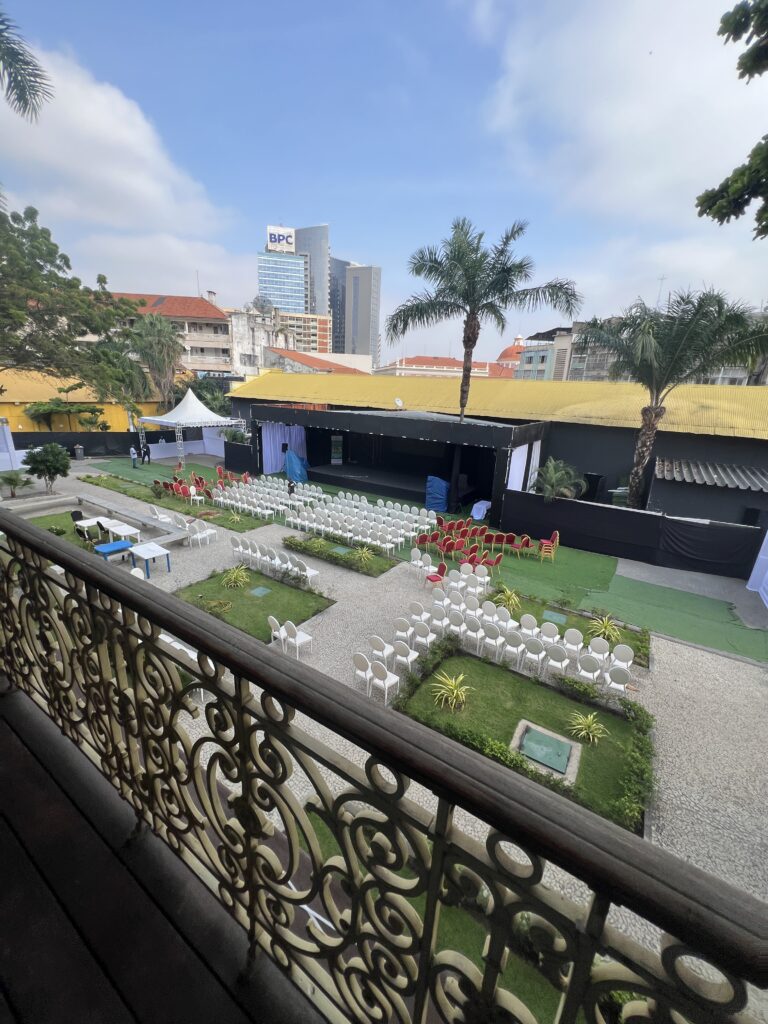
In back of the Iron Palace it was being setup for the celebration
Our next stop was the National Anthropology Museum. We were not sure about this stop, but once inside we loved it and took many photos.
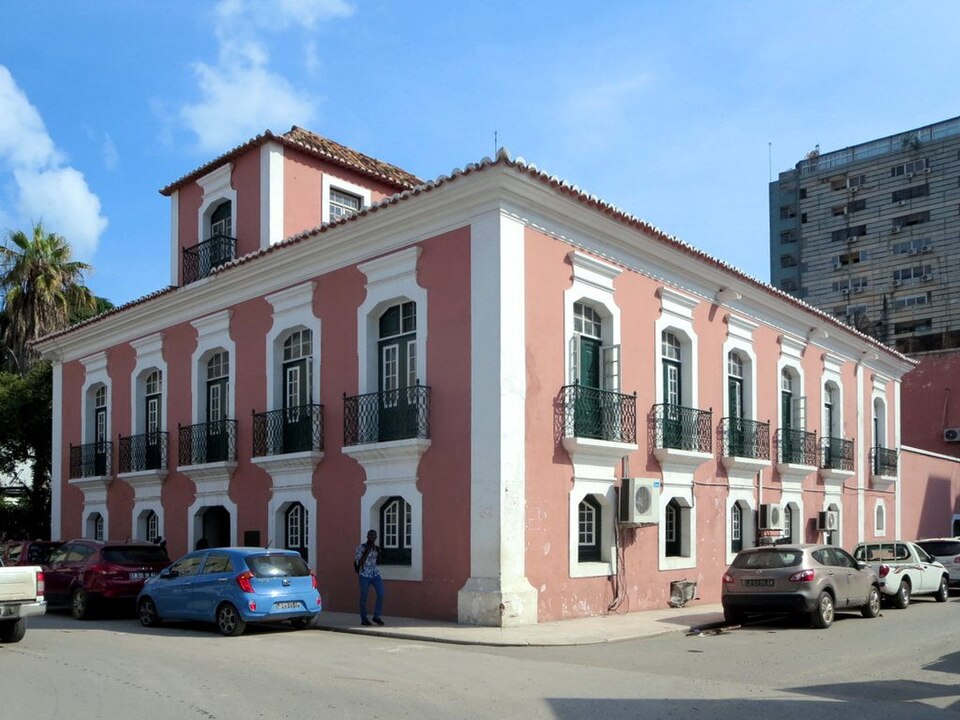
The Museu Nacional de Antropologia (National Museum of Anthropology) is an anthropological museum in the Ingombota District of the city of Luanda, Angola. Founded on 13 November 1976, it is a cultural and scientific institution, dedicated to the collection, research, conservation, presentation and dissemination of the Angolan cultural heritage.
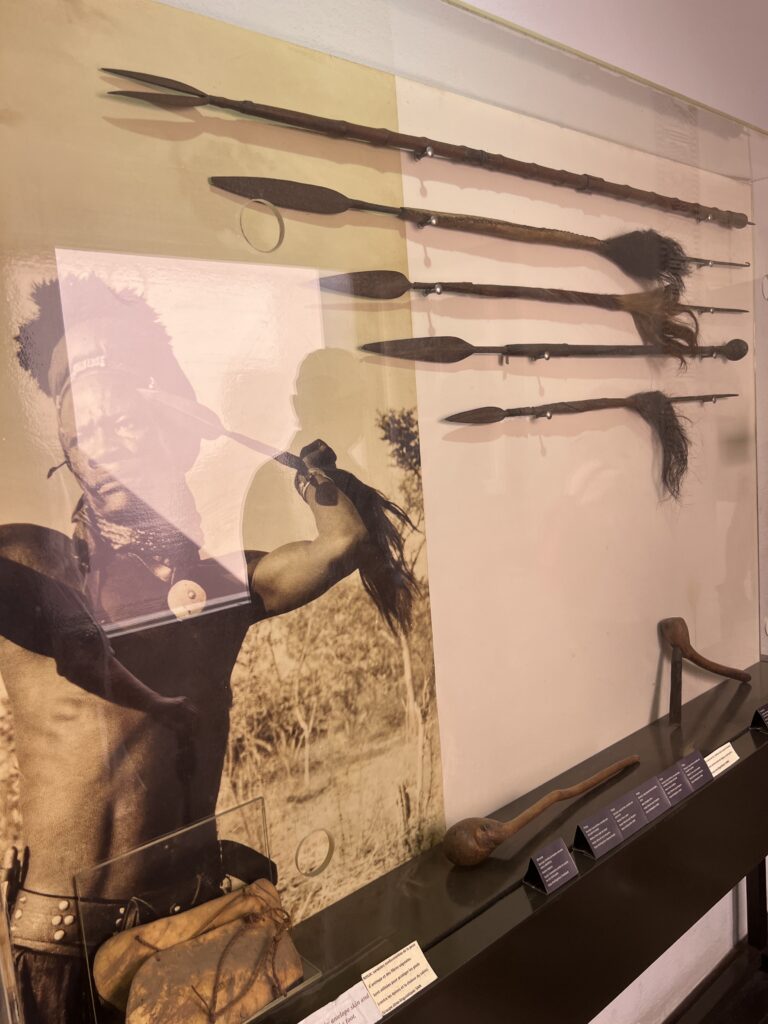
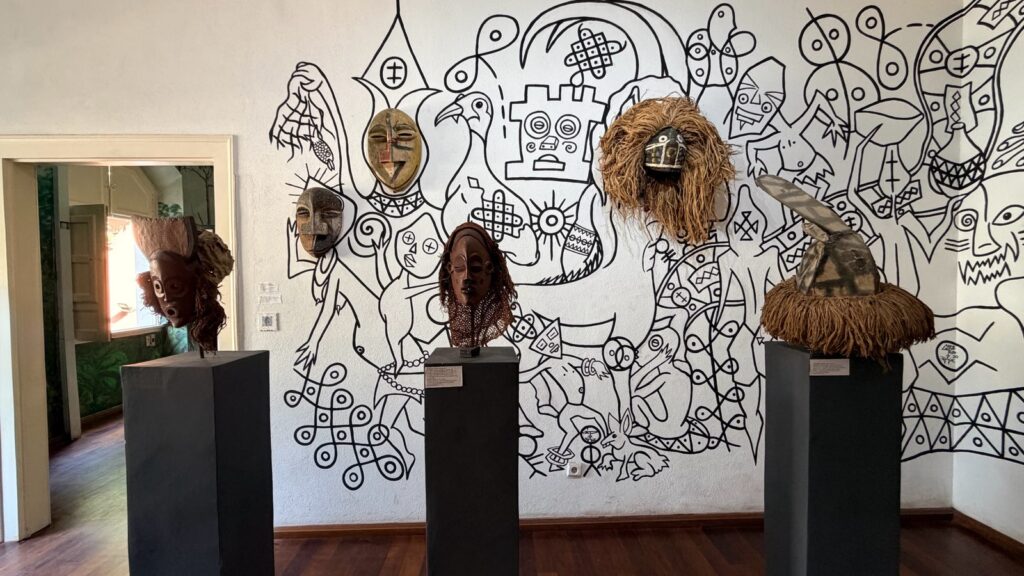
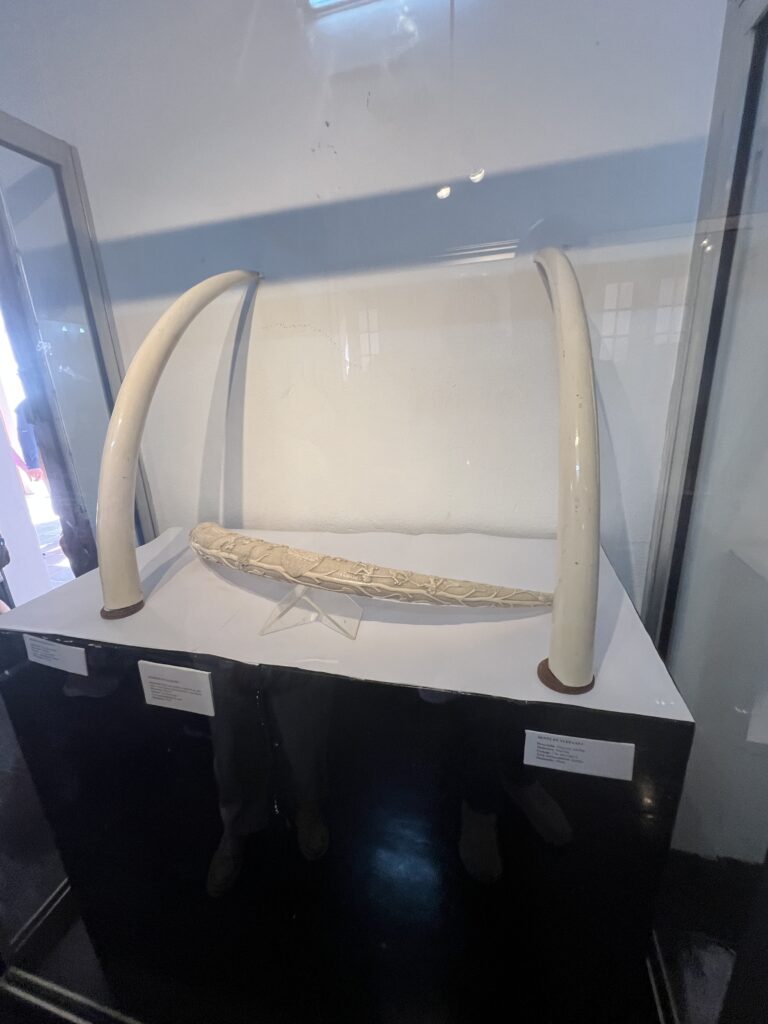
The museum consists of 14 rooms spread over two floors which house over 6000 historical cultural objects, including farm implements, hunting and fishing items, iron foundry, pottery, jewelry, musical instruments, women’s rights memorabilia and photographs of the Khoisan people. Various traditional musical instruments are displayed, and visitors can hear a demonstration of the use of the marimba. Other major attractions of the museum are its rustic furnace for melting iron, and its room of the masks, featuring the symbols of the rituals of the Bantu people. In addition to its permanent collection, the museum also organizes temporary exhibitions.
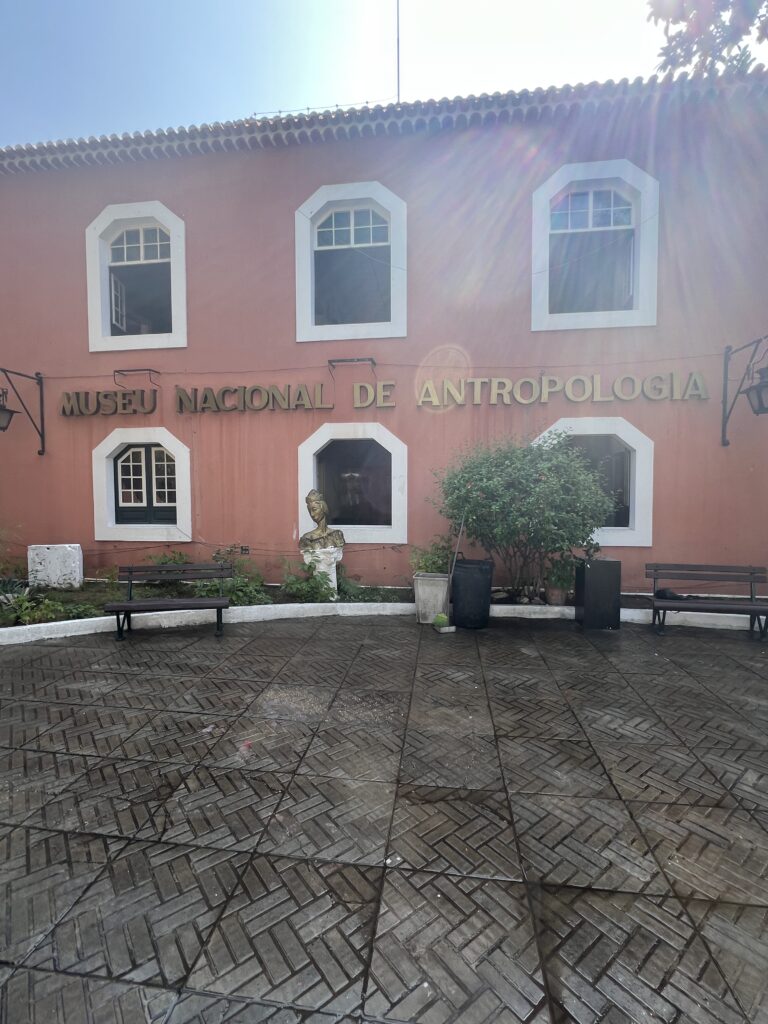
The same equipment used to fix nets found back home on the shrimp boats
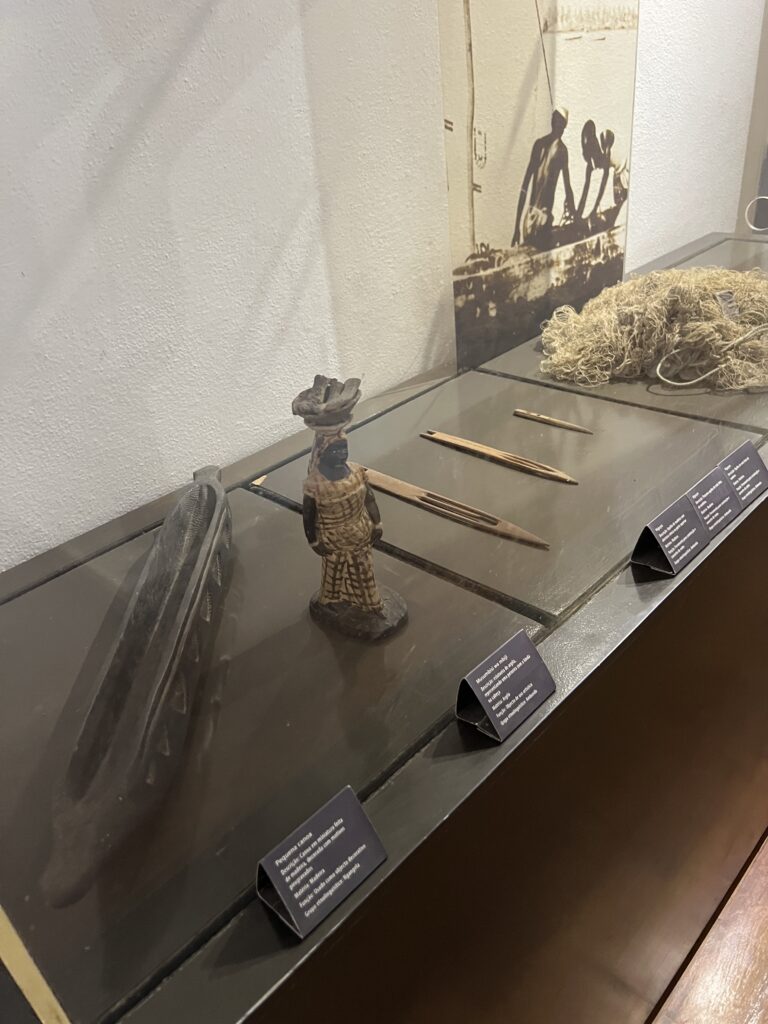
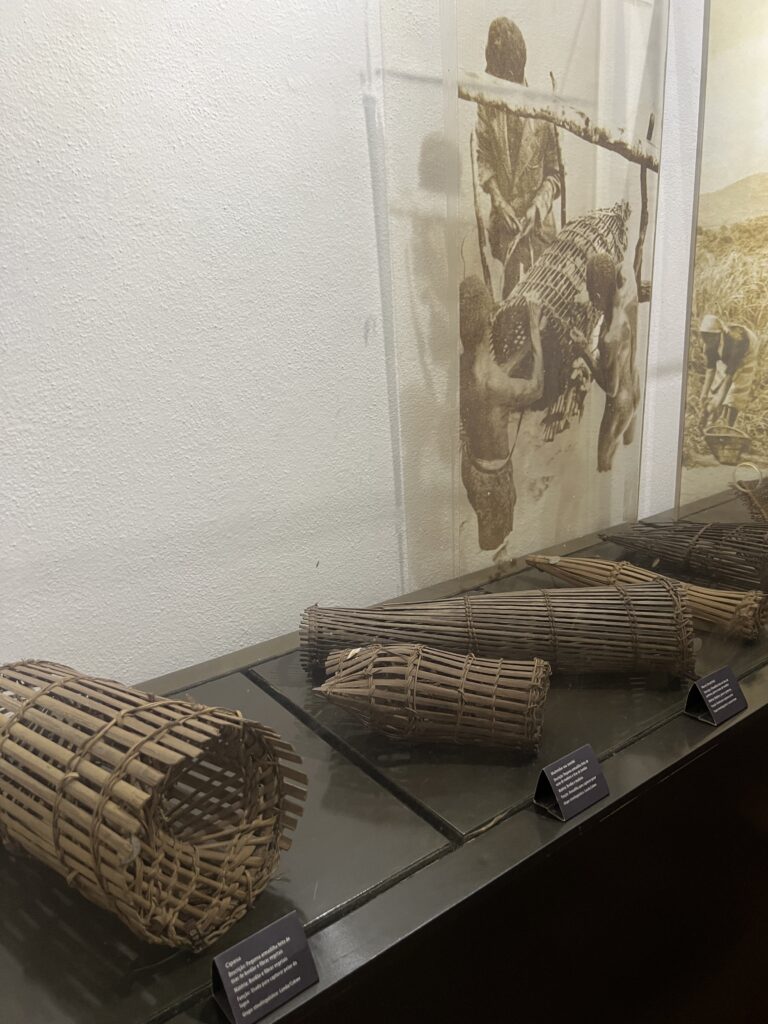
Cages used to catch fish
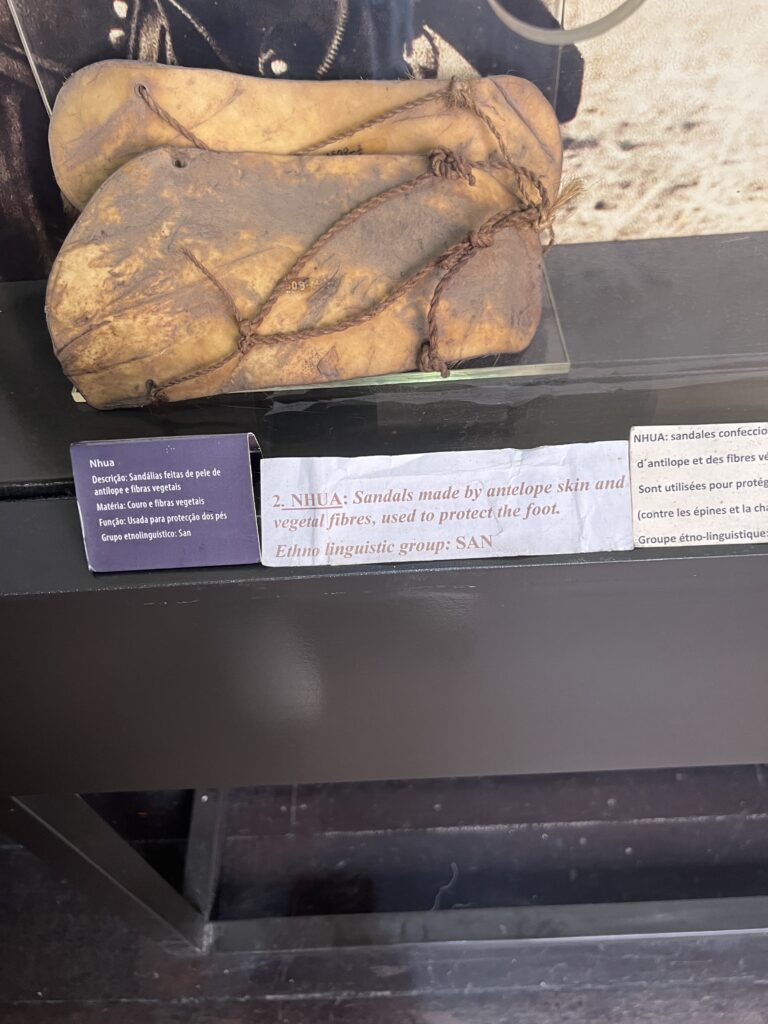
Sandals made from antelope skin
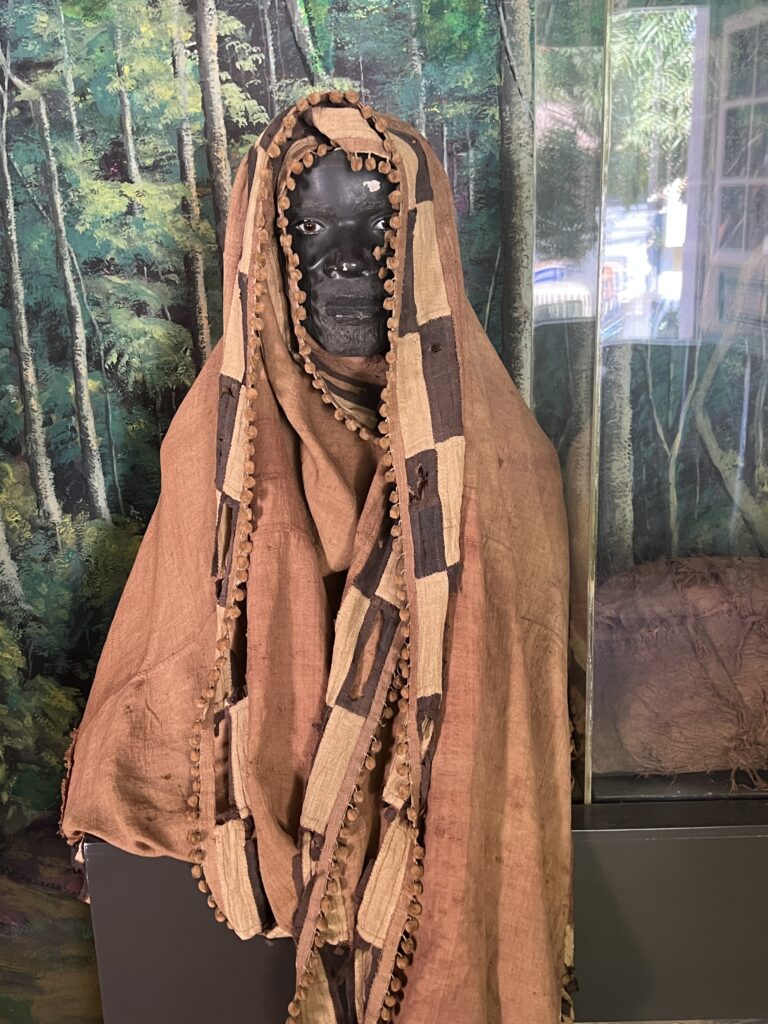
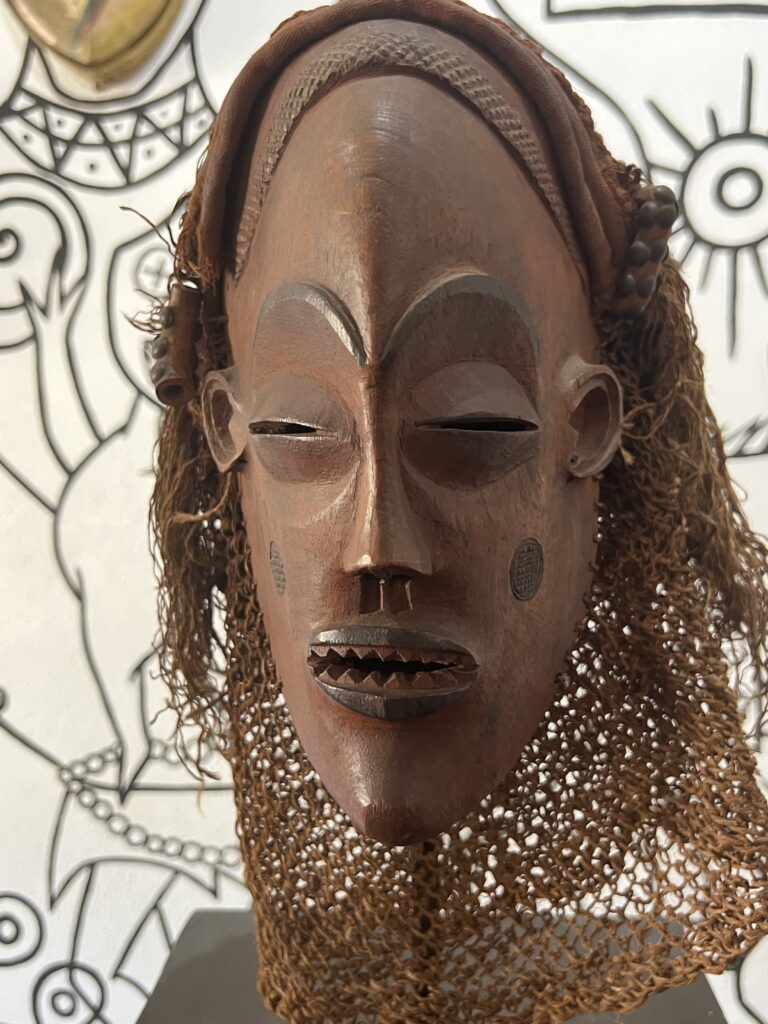
Different masks used in their celebrations. We have 30 photos, but I will post just a few here.
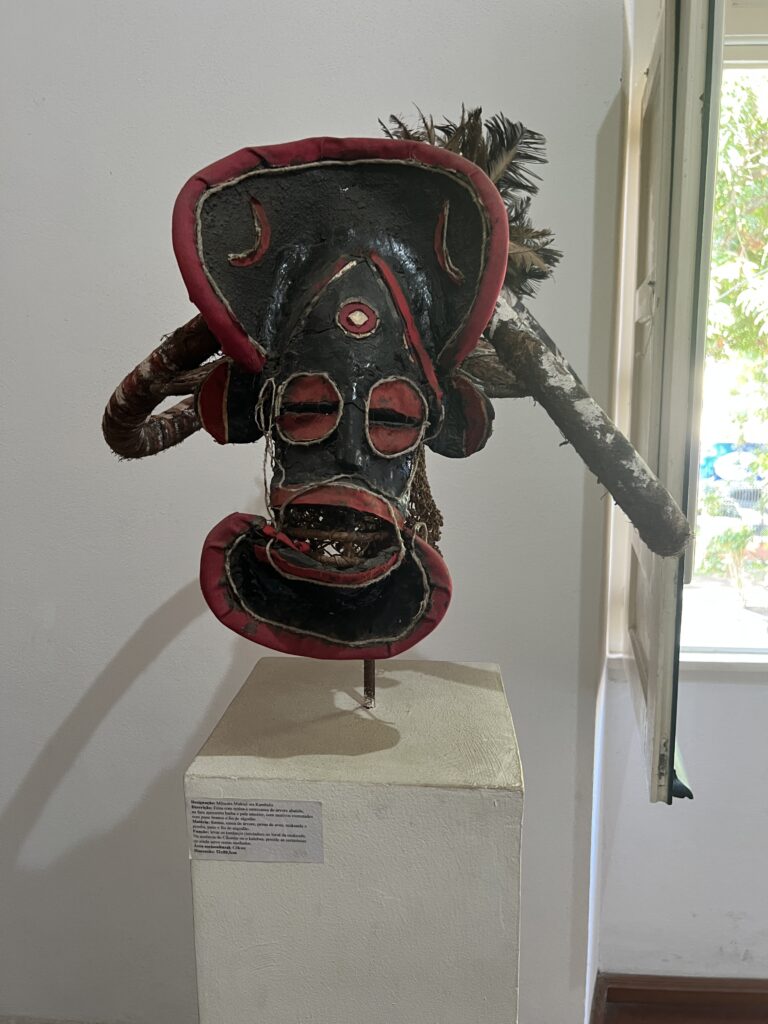
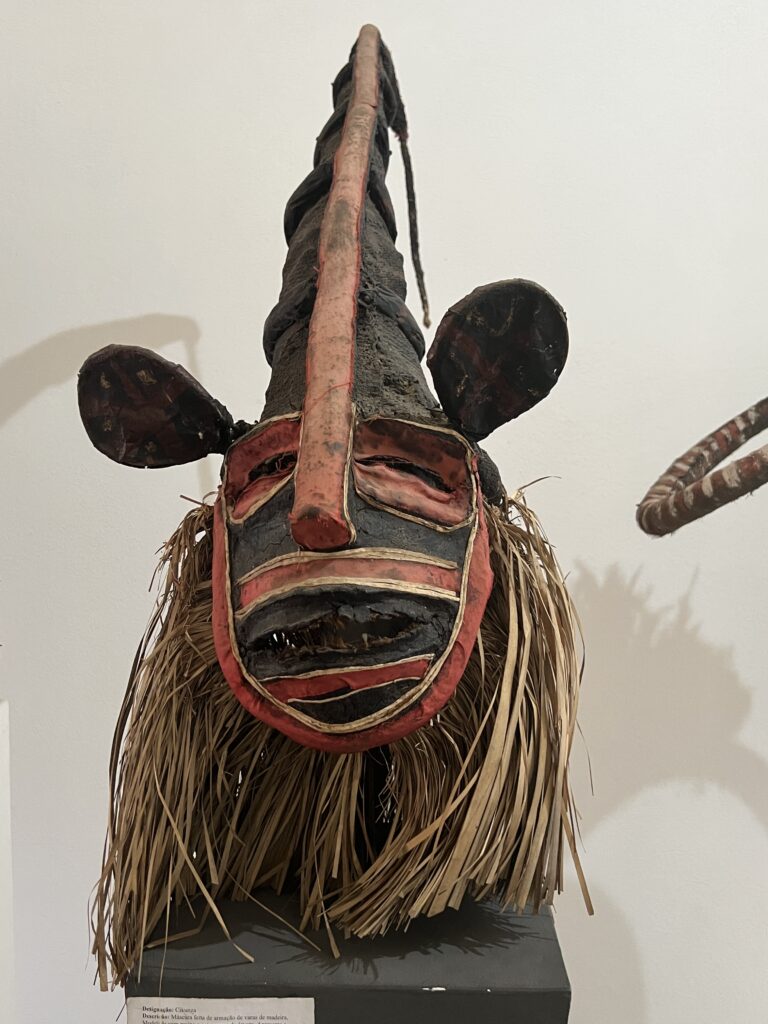
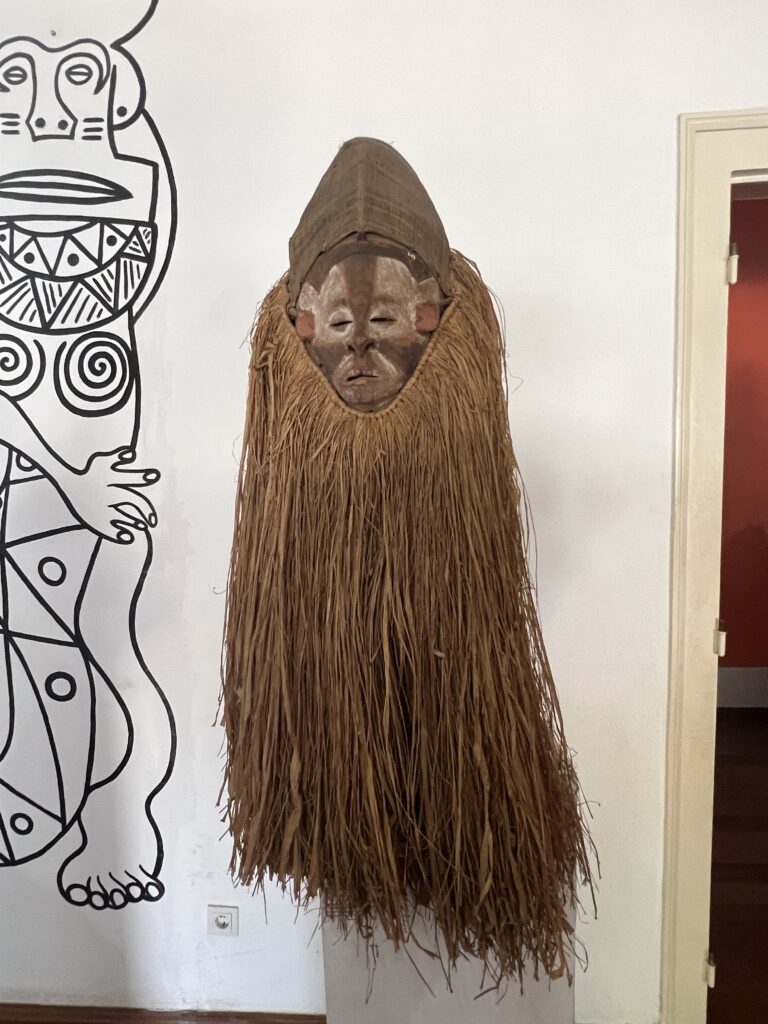
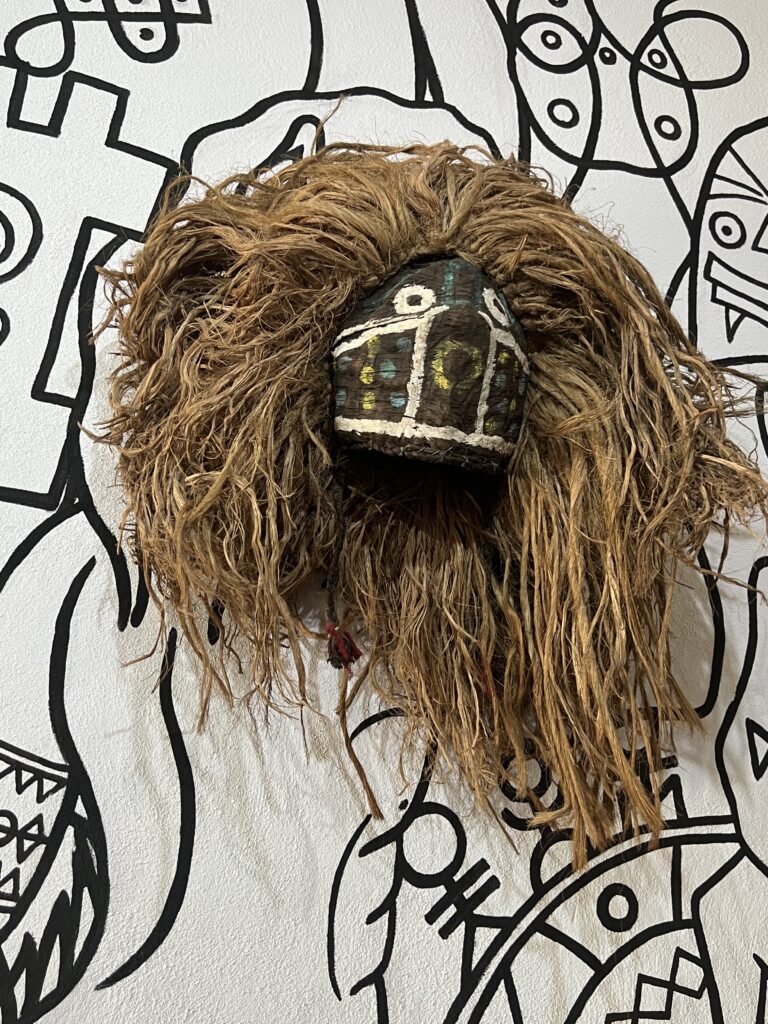
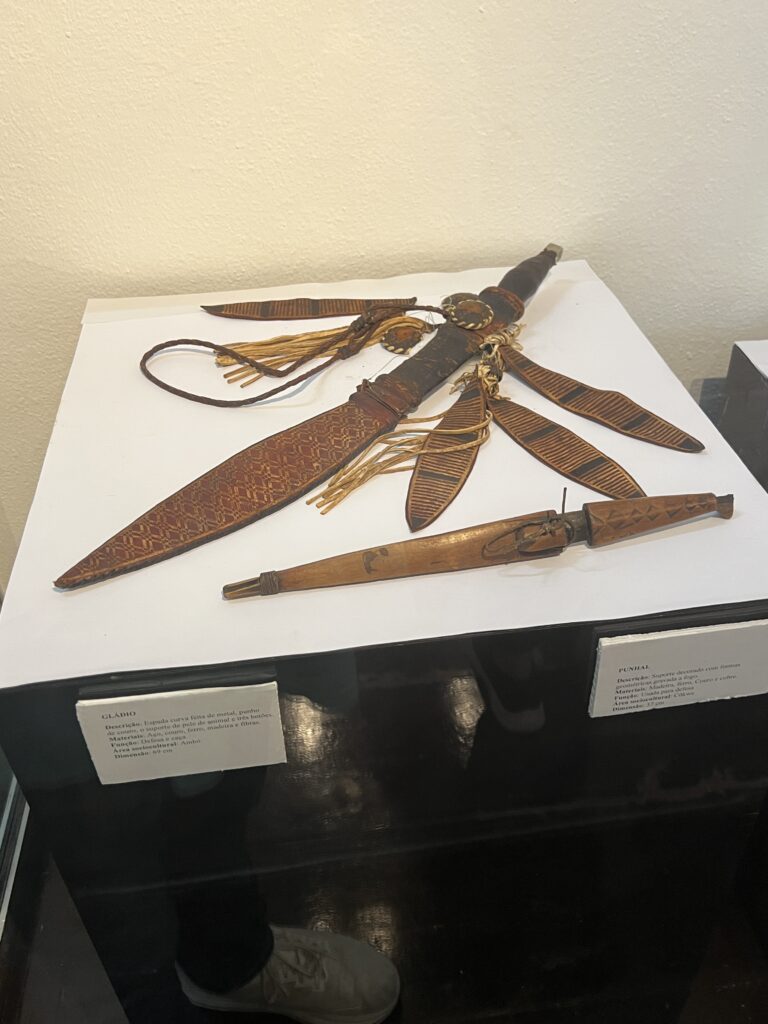
Knives
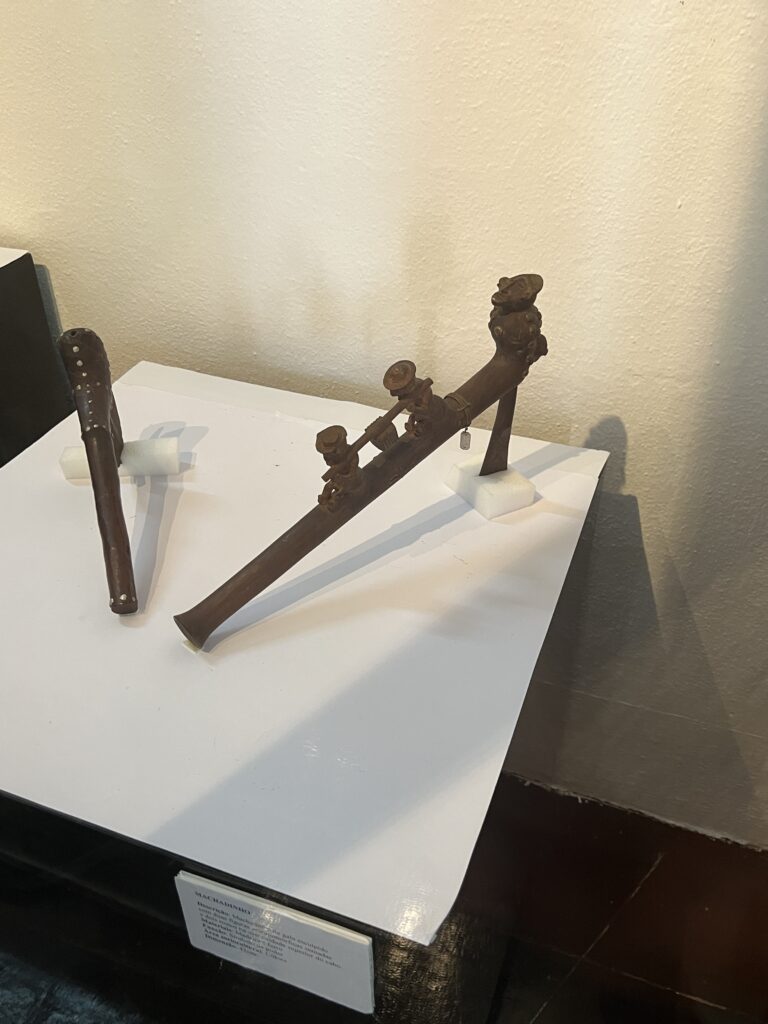
Smoking pipes
Man playing old time musical instrument in the museum
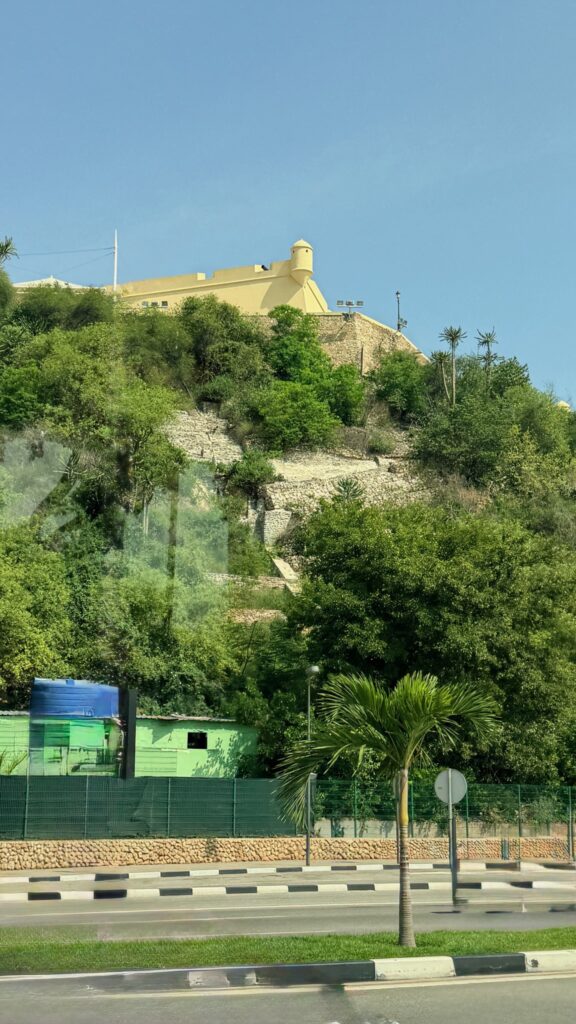
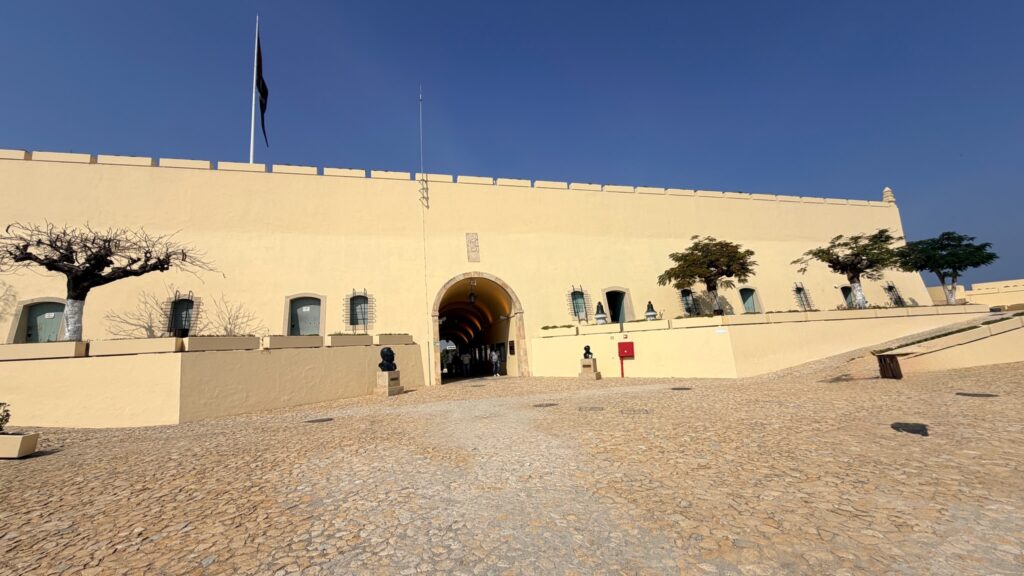
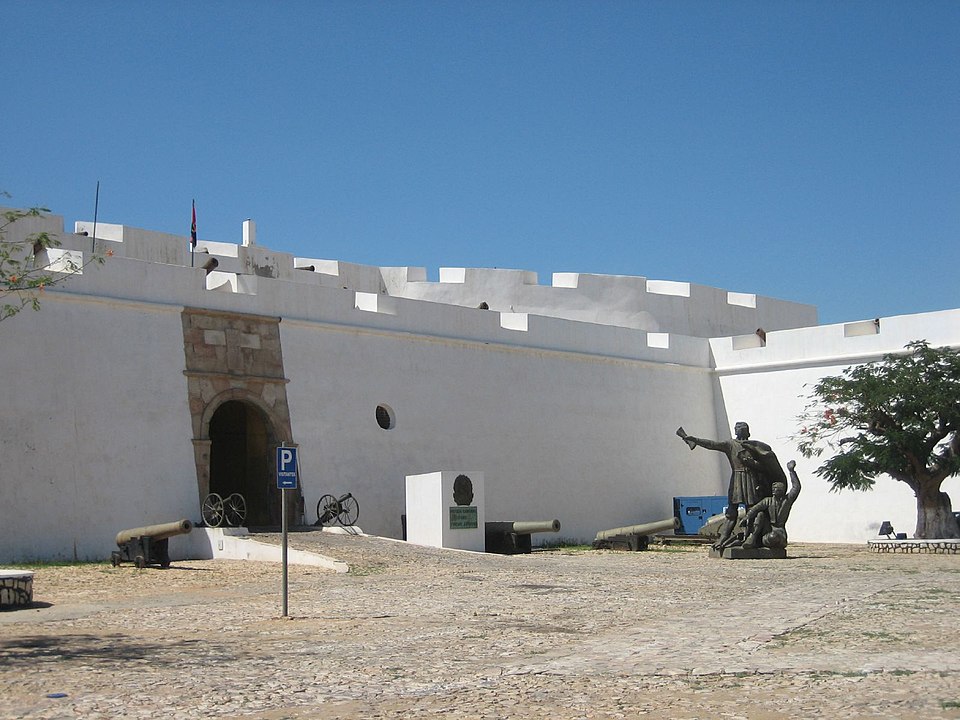
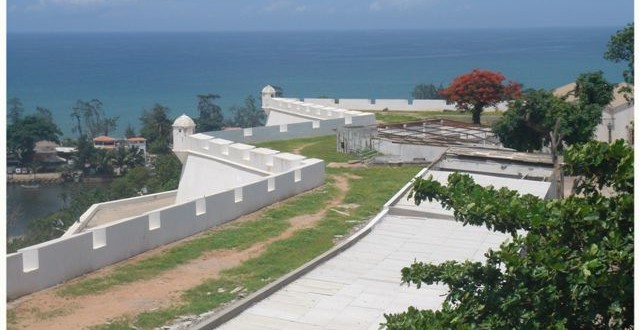
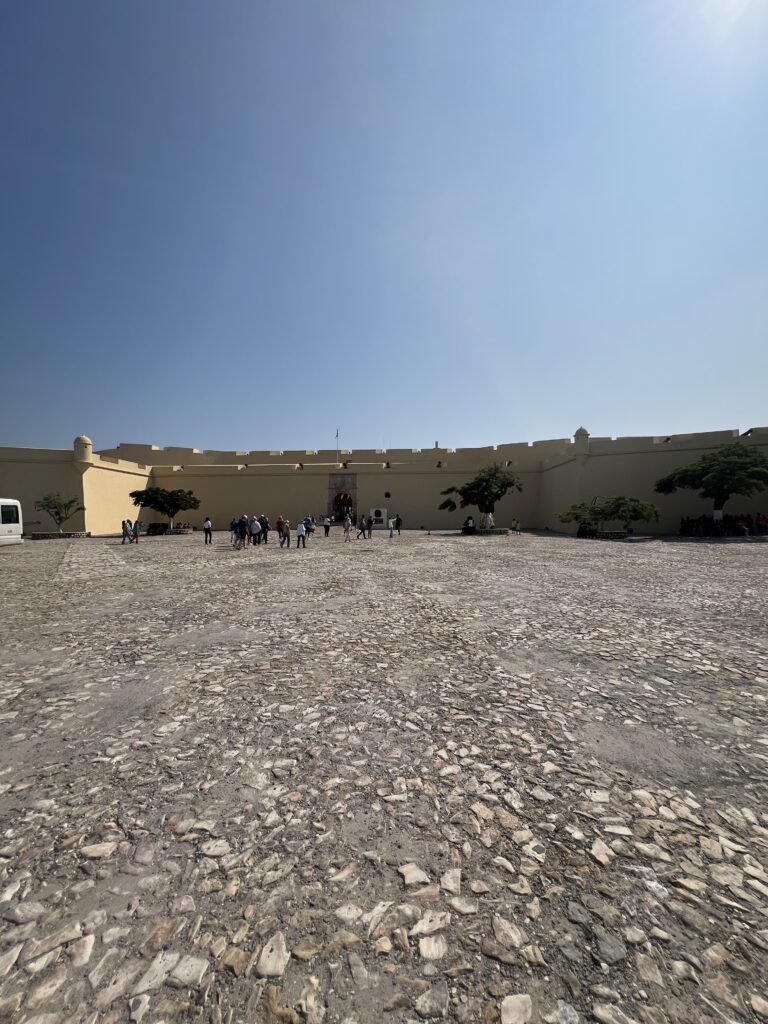
The next stop was the San Miguel Fort. Fortaleza de São Miguel or Saint Michael Fortress was a Portuguese fortress built in 1576 in the Ingombota District of Luanda, Angola. During Dutch rule in Angola between 1641 and 1648, the fort was known as Fort Aardenburgh. The São Miguel Fortress was transformed from a military base to a national historical monument.
Built in the 16th century, more specifically in the year 1575 by determination of the first Governor, Paulo Dias de Novais, the Fortaleza de São Miguel, is the first defensive structure built in Luanda is on Angola.
Around 1641, the fortress came under Dutch rule, having been restored to the Portuguese crown again in 1648.
During the period of Dutch occupation it was called Fort Aardenburgh.
In the 18th and 19th centuries, it underwent several renovations and expansions, which somehow contributed to its being classified as a national monument in 1938.
The following year, and with further improvements, the Museum of Angola was installed in the Fortaleza de São Miguel. However, in 1961, it resumed military functions, having been the headquarters of the Portuguese Military Forces Command.
Shortly after independence, the fortress housed the Angolan Armed Forces Museum.
Considered as one of the main assets of the capital and the country, in 1995 it underwent conservation interventions on the outside of the building, being currently owned by the State, being assigned to the Ministry of Defense and the Ministry of Culture.
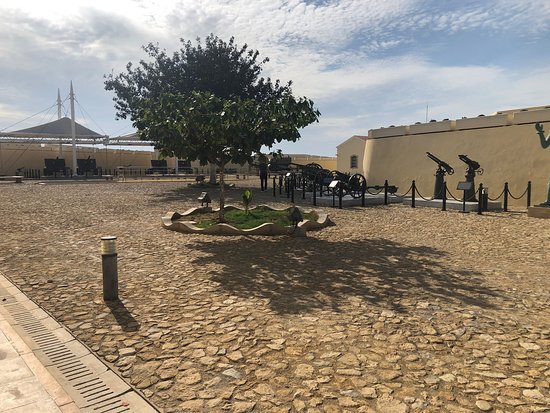
São Miguel fort was built in 1576 by Paulo Dias de Novais. It became the administrative center of the colony in 1627. It was a major site for slave traffic that was exported to Brazil. The fort was for many years a self-contained town protected by thick walls encrusted with cannons.
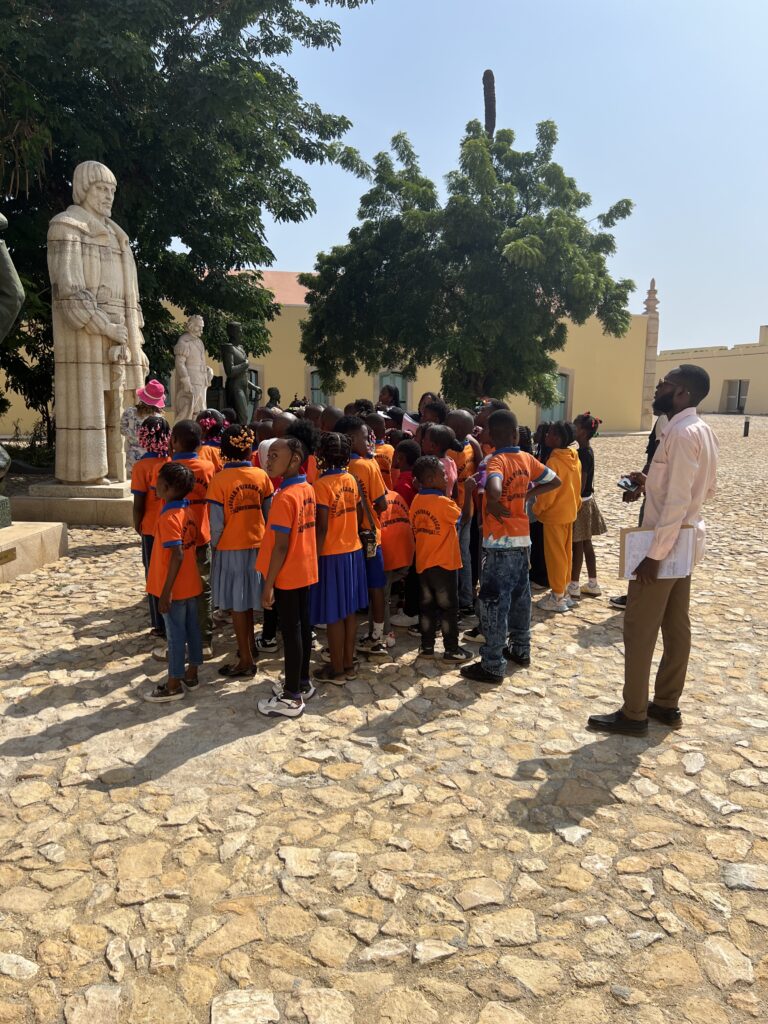
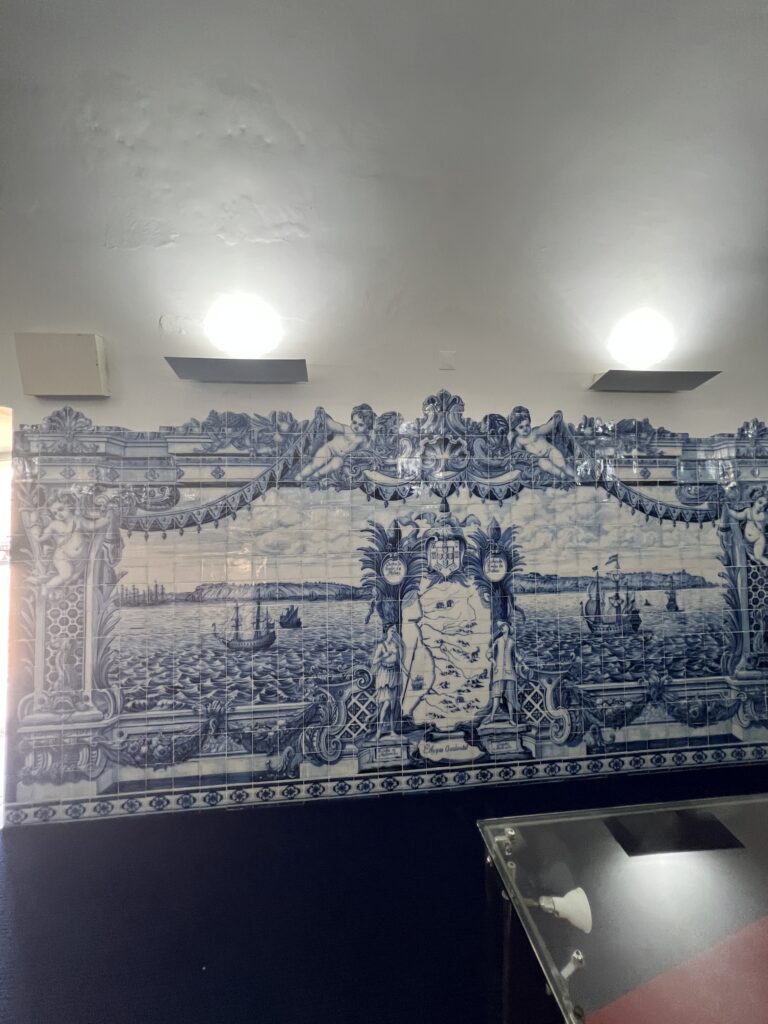
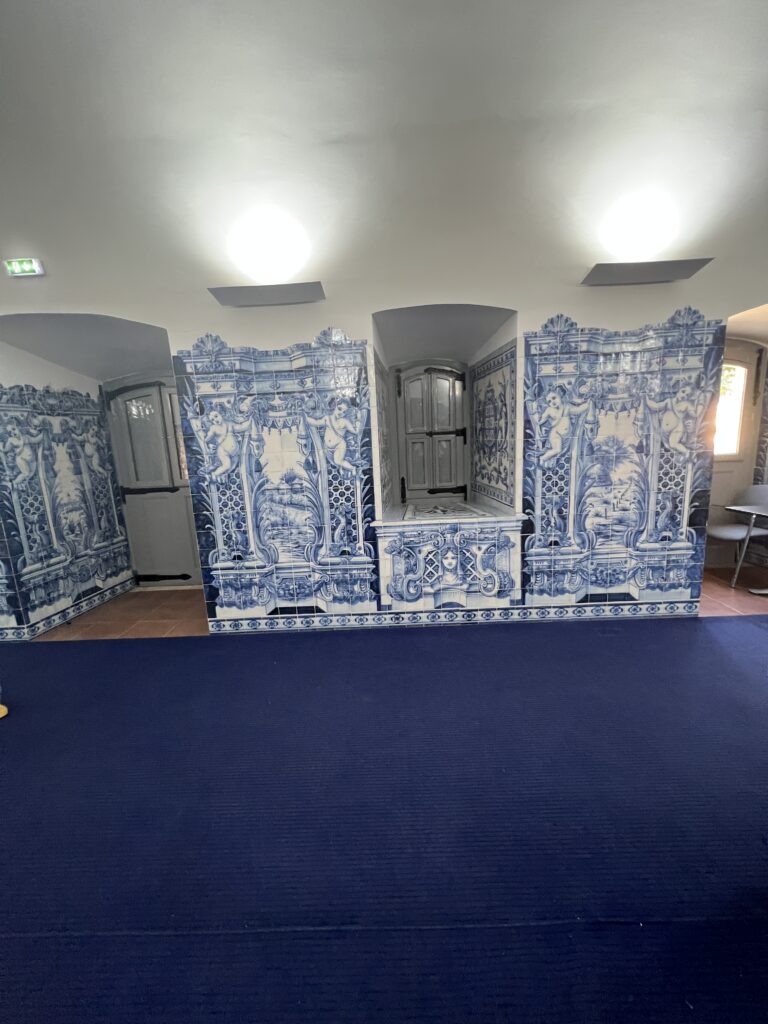
Inside the fort, elaborate ceramic tiles tell the story of Angola from early years. The courtyard has large, imposing statues of Portugal‘s first king, the first European to reach Angola, explorers Diogo Cão and Vasco da Gama, and other notables.
Until 1975, the fortress served as the headquarters of the Commander-in-Chief of the Portuguese Armed Forces in Angola.
Today, it holds the Museum of the Armed Forces. Between 1938 and 1958, it held the Museu de Angola, until that was relocated. The fort was renamed and adapted as the Museu Nacional de História Militar.
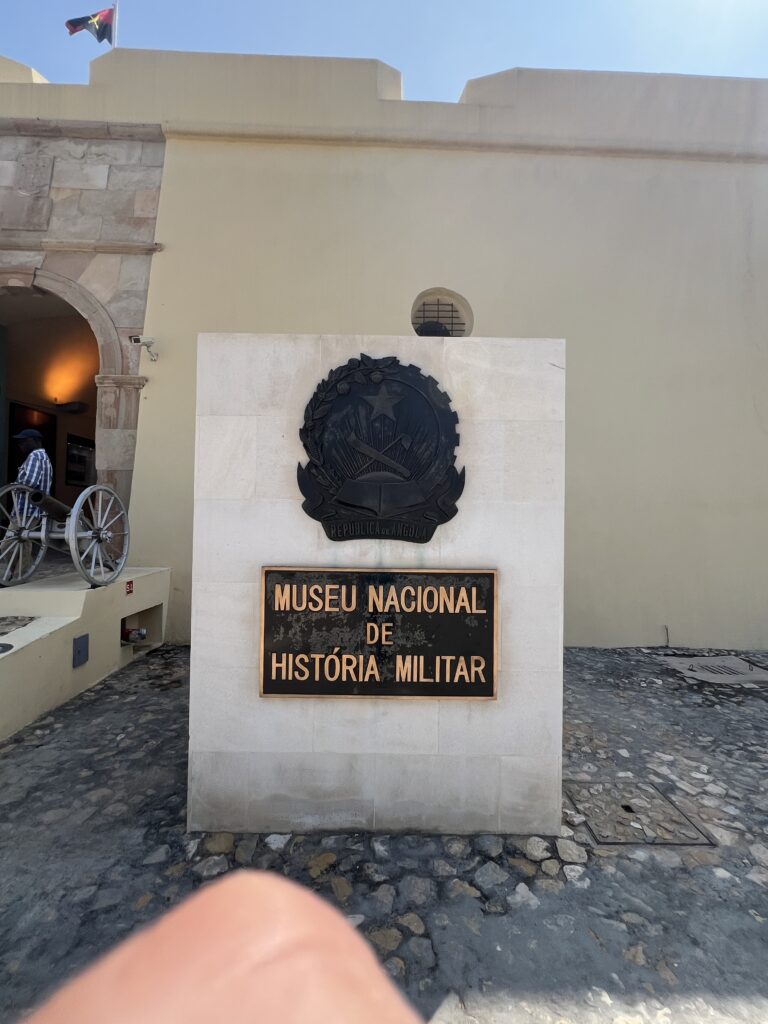
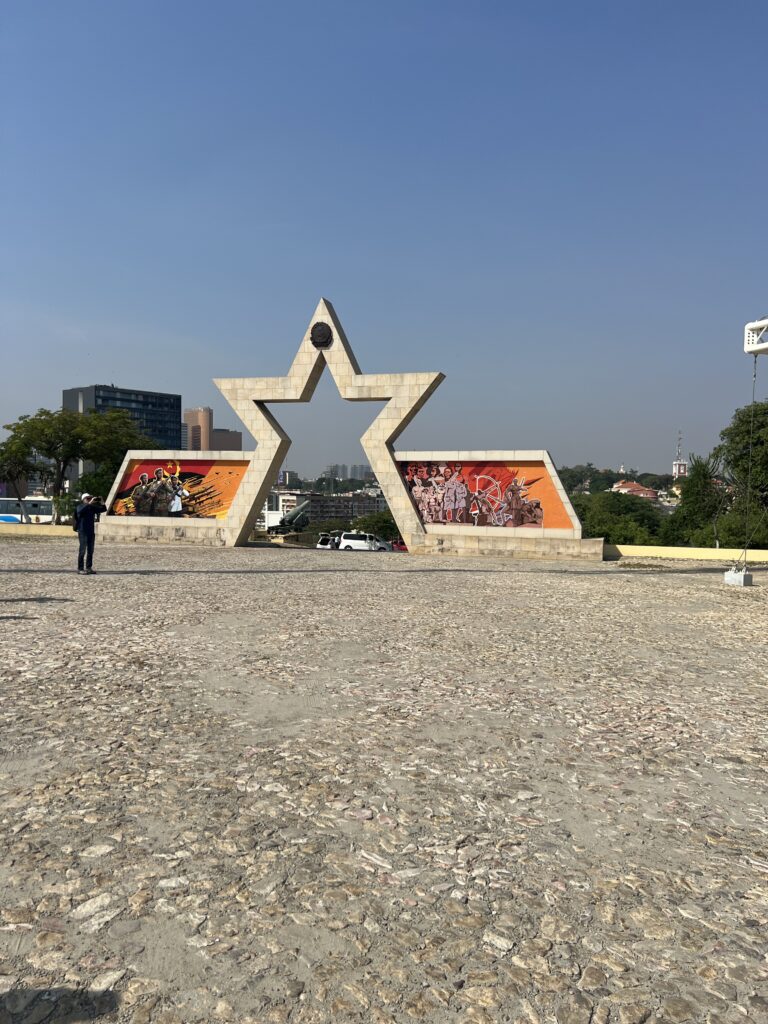
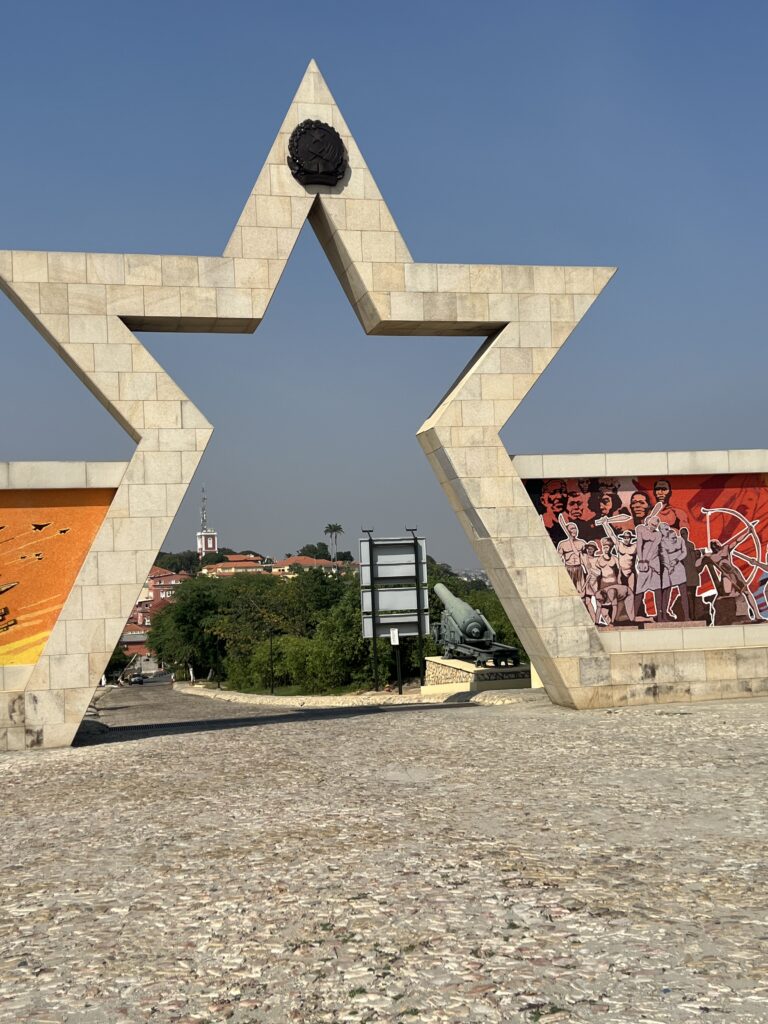
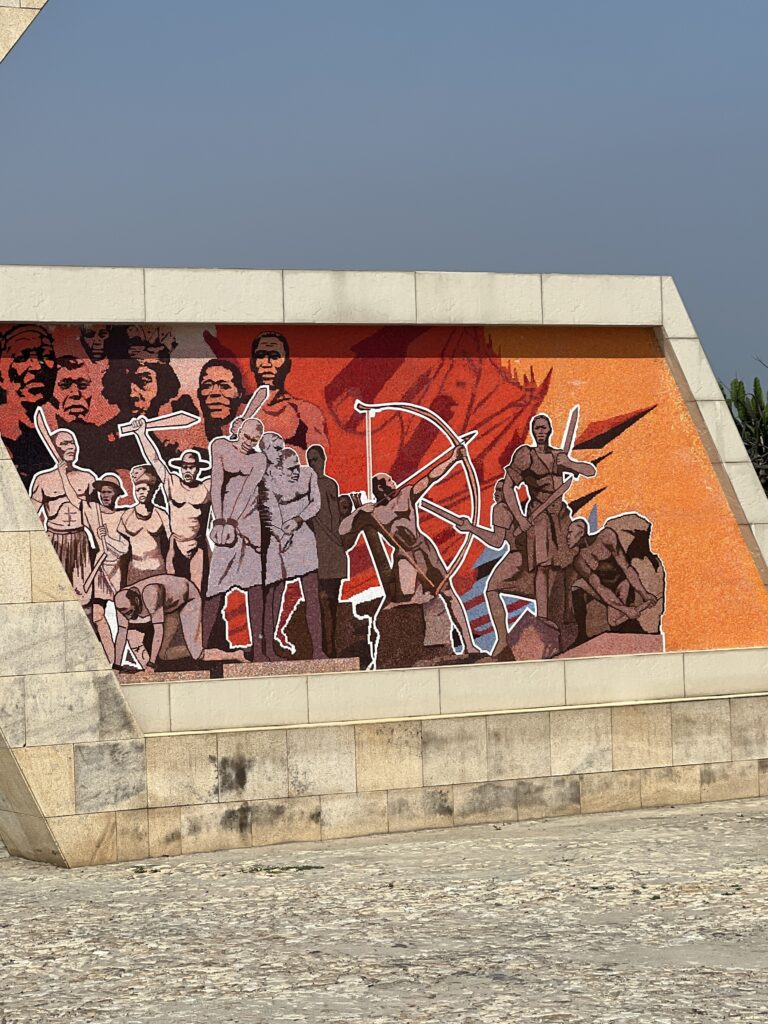
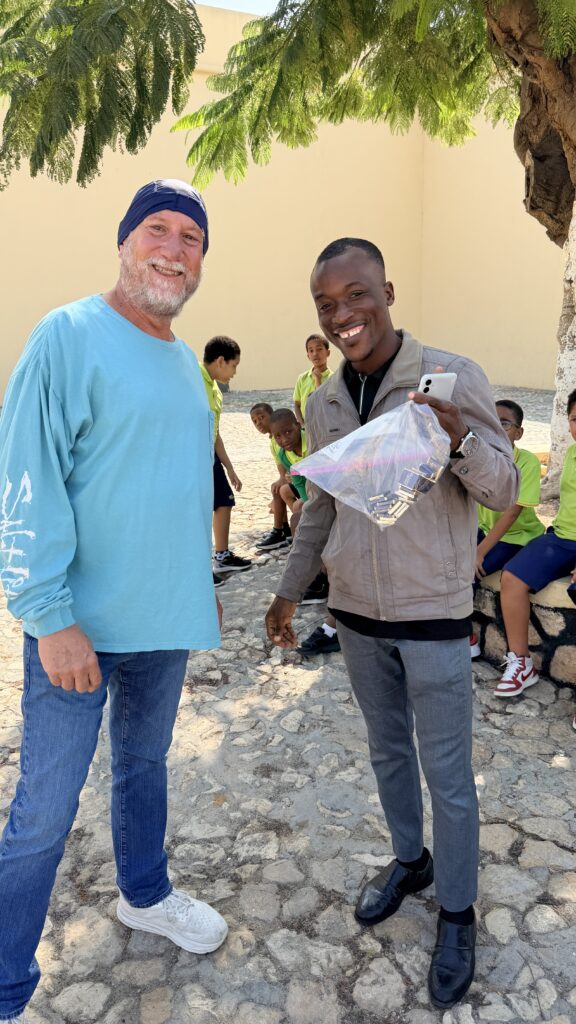
Thinking that we might run into children on the streets I brought a bag of candy with us. At the fort there were a number of school children on field trips. I found one of the teachers and gave him the bag for his students.
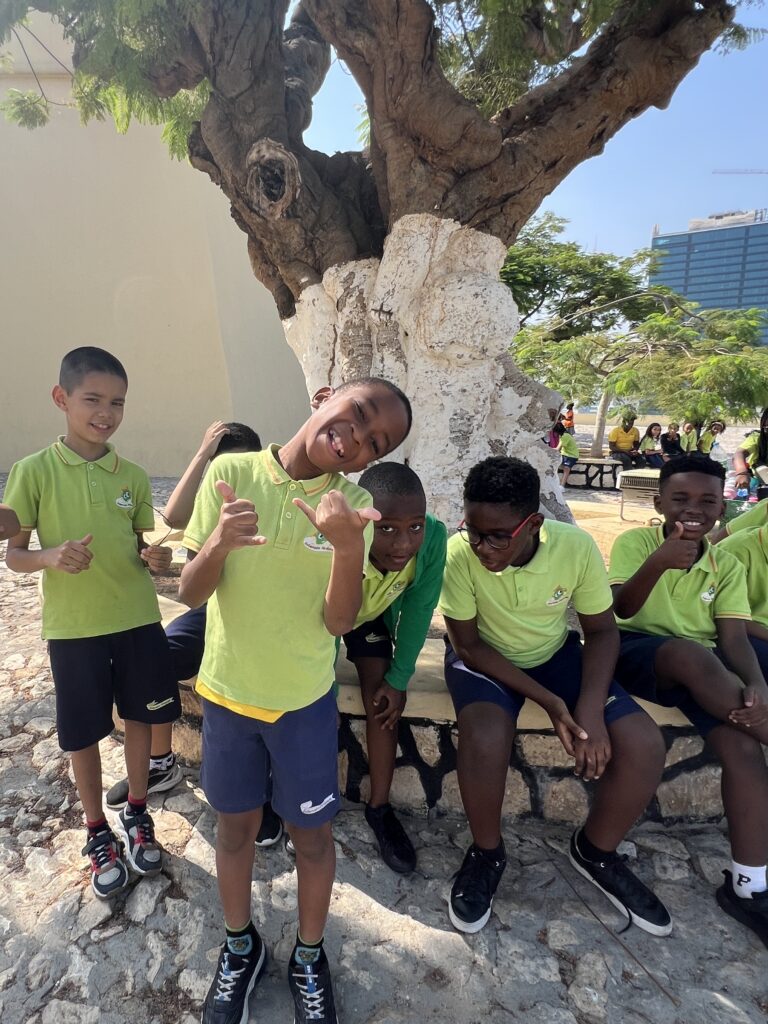
Another group of school children at the fort
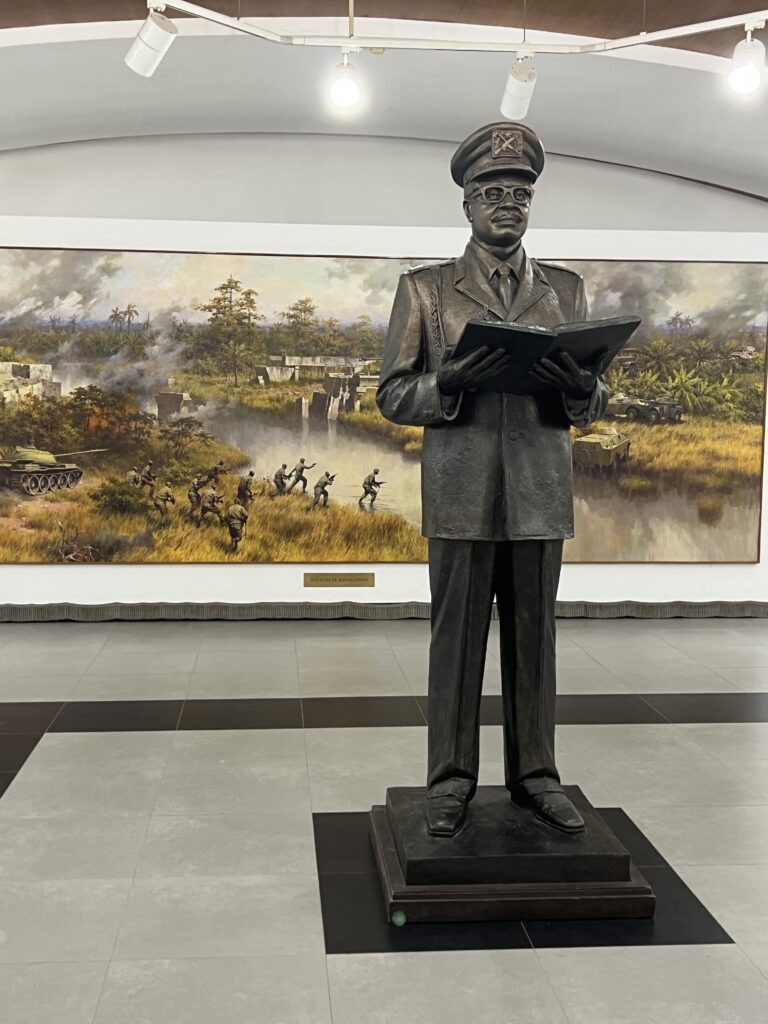
António Agostinho Neto Kilamba (17 September 1922 – 10 September 1979) was an Angolan communist revolutionary, politician and poet. He served as the first president of Angola from 1975 to 1979, after leading the Popular Movement for the Liberation of Angola (MPLA) during the war for independence. He led the MPLA during the beginning of the Angolan Civil War, which began in 1975 and lasted until 2002. An author of several books, he is considered Angola’s preeminent poet. His birthday is celebrated as National Heroes’ Day, a public holiday in Angola. He is like the US George Washington as many buildings such as the airport are named after him. There are also monuments in the city built for him as you will see later.
Agostinho Neto died on 10 September 1979 in Moscow after travelling to the Soviet Union to undergo surgery for cancer and hepatitis. He was a week shy of his 57th birthday at the time of his death. Neto had a long battle with pancreatic cancer, as well as chronic hepatitis that ultimately took his life. Neto had been to the Soviet Union multiple times for treatment because of the high level of medical professionals there. Few people knew about his failing health because he and his colleagues thought it was better to hide this information, as to not show weakness.
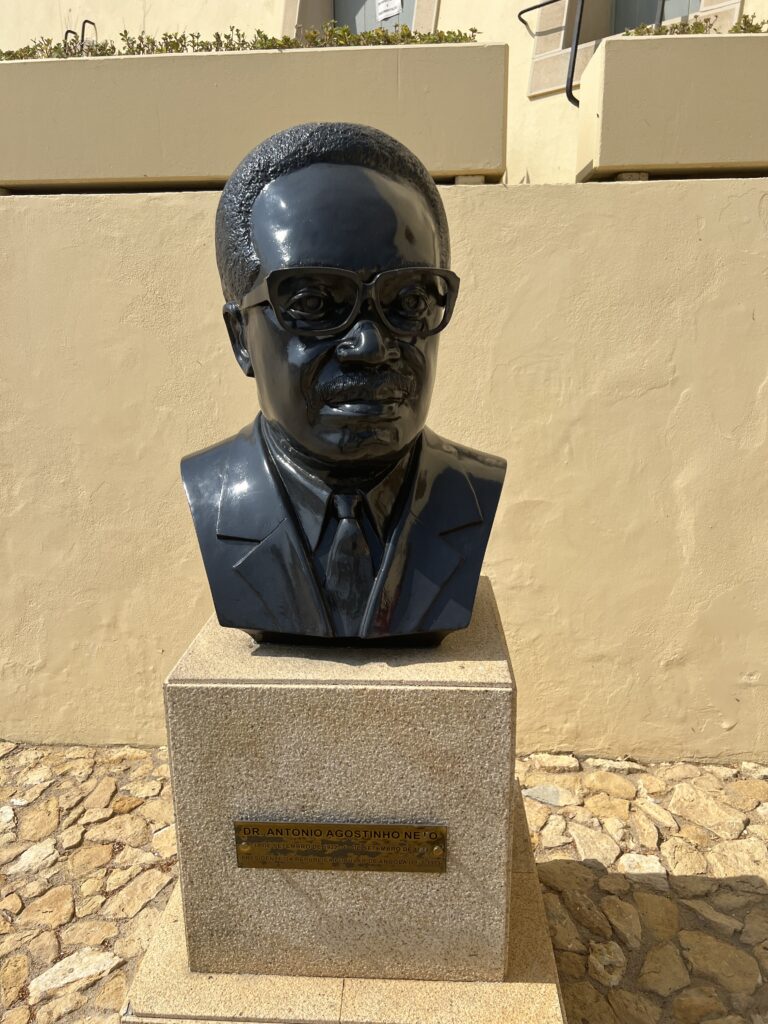
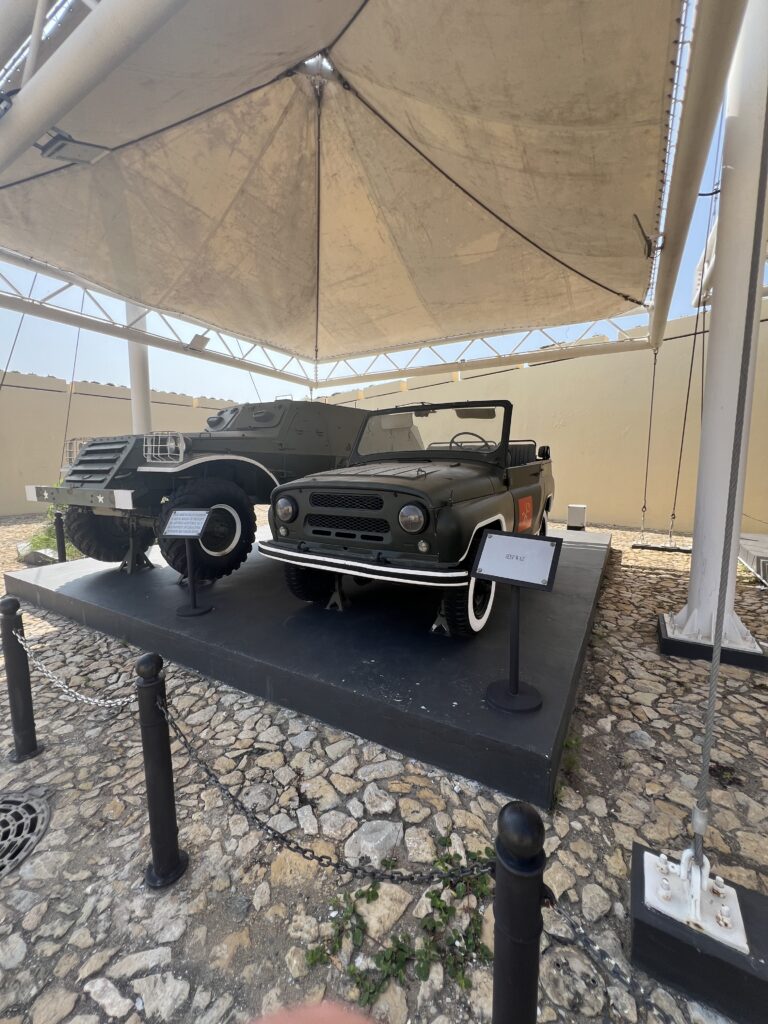
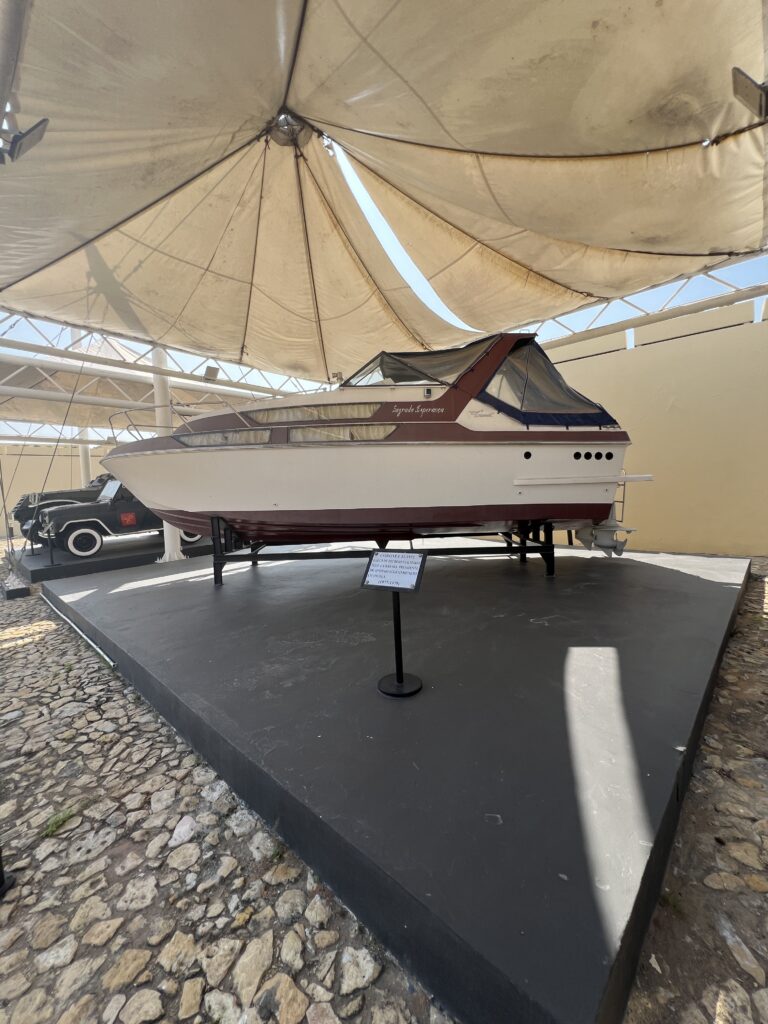
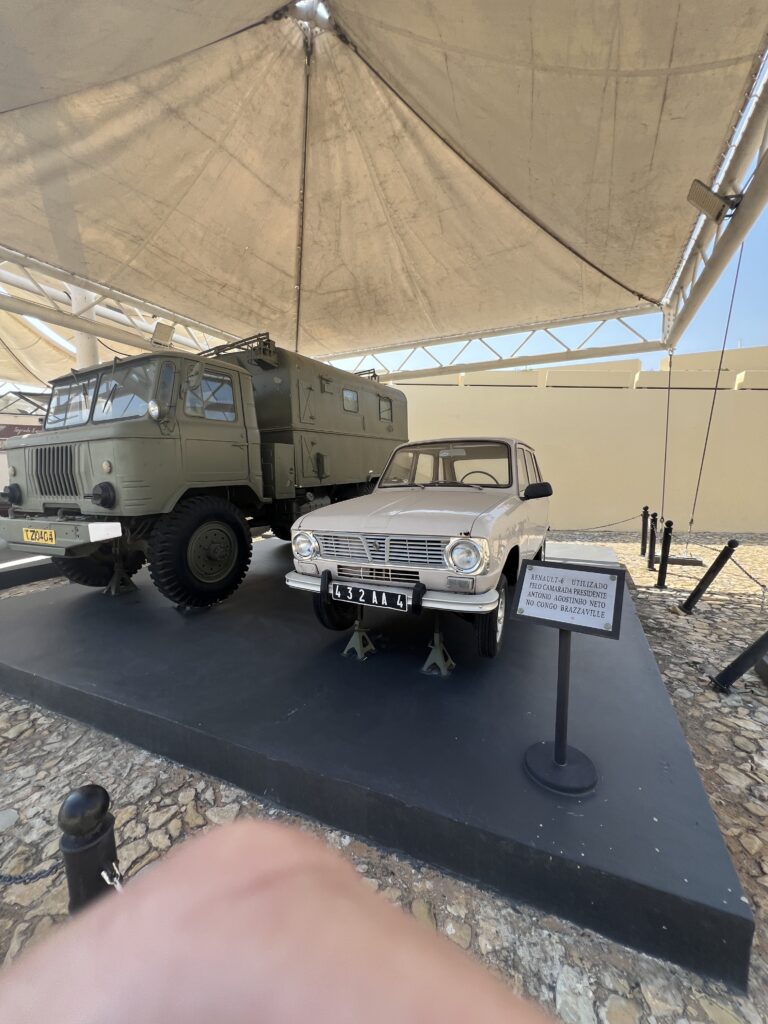
A collection of his vehicles and also a nice yacht that was his
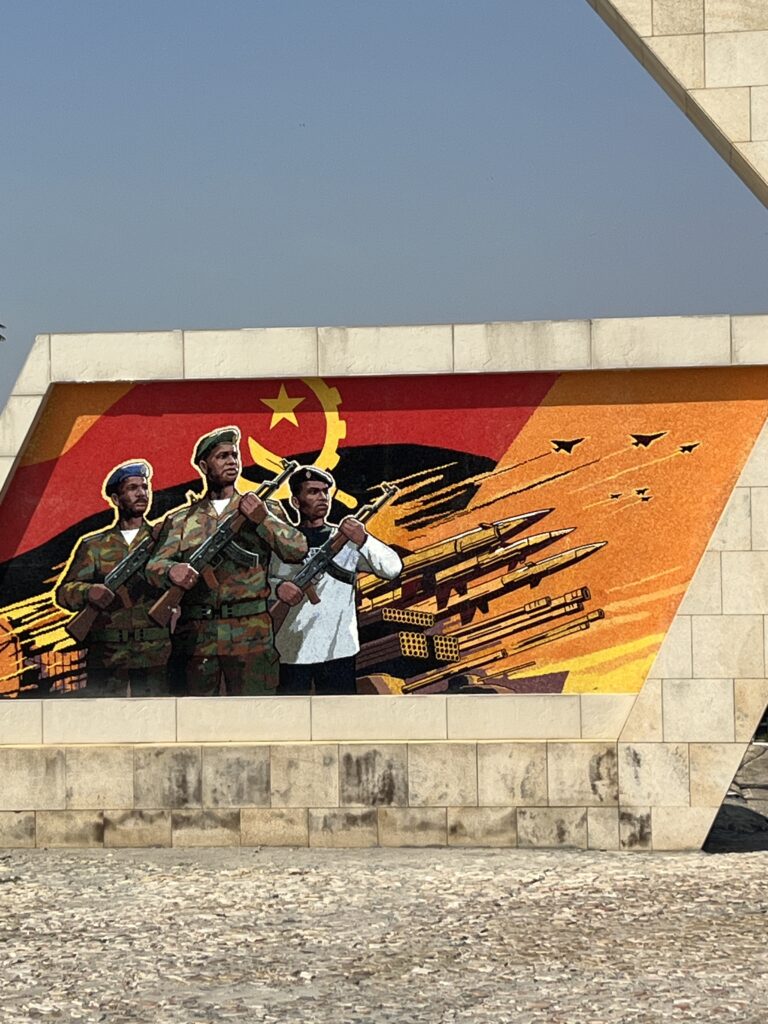
Ceramic mosaics were on the walls of the museum depicting the history of Angola. It was quite impressive
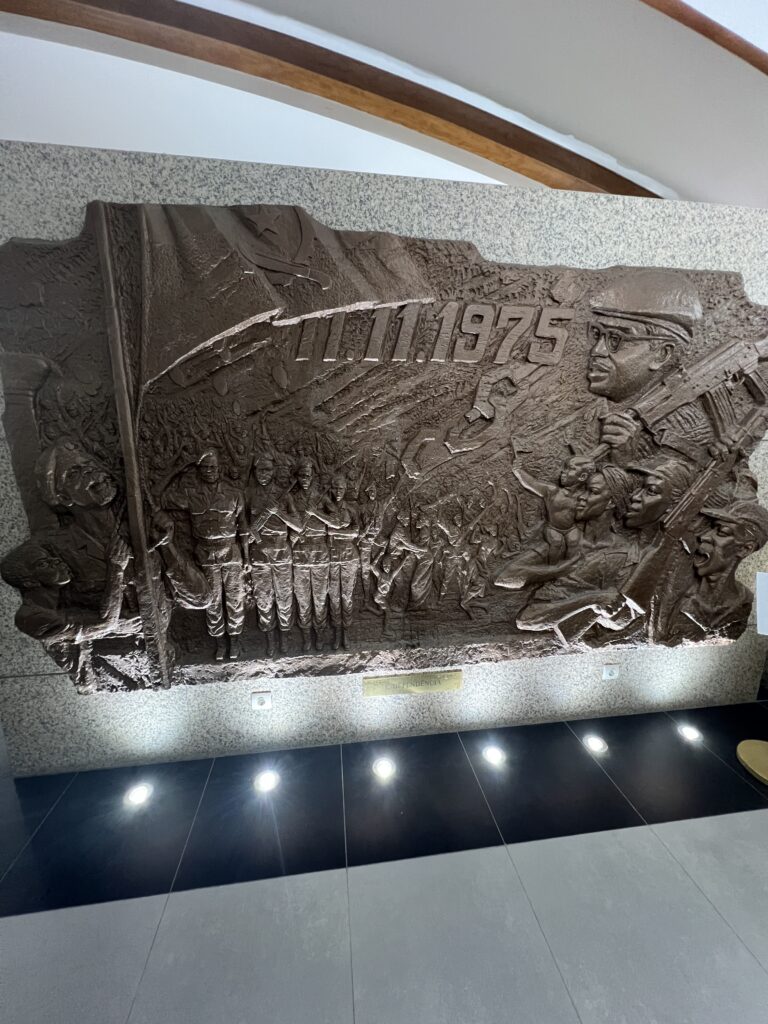
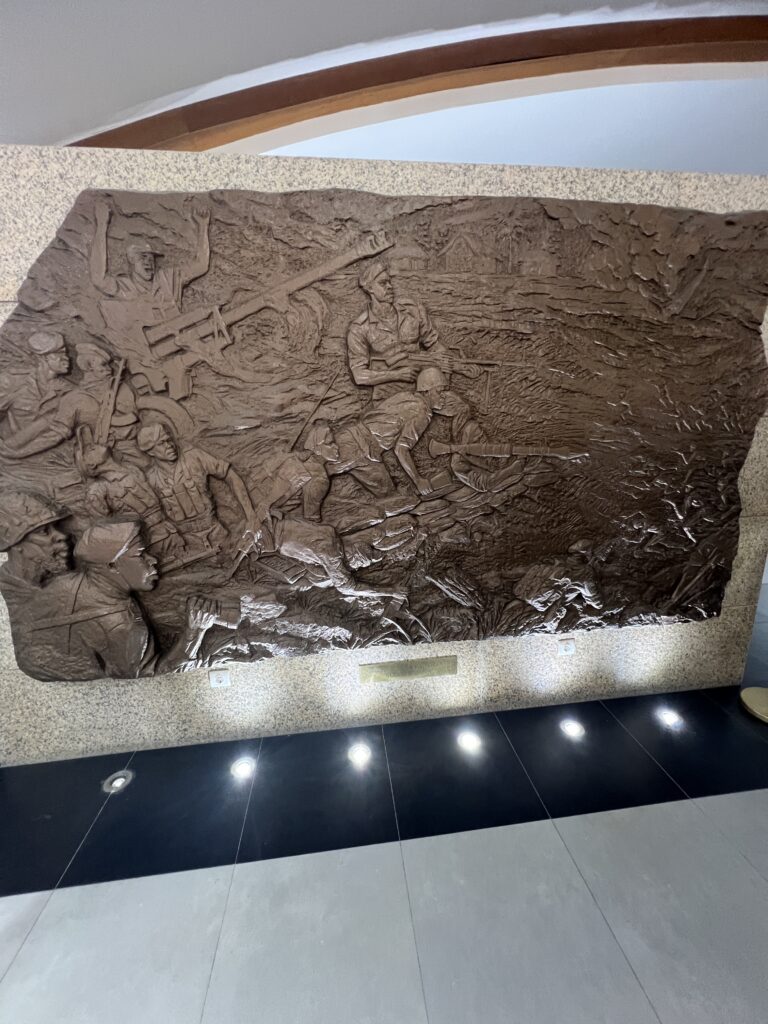
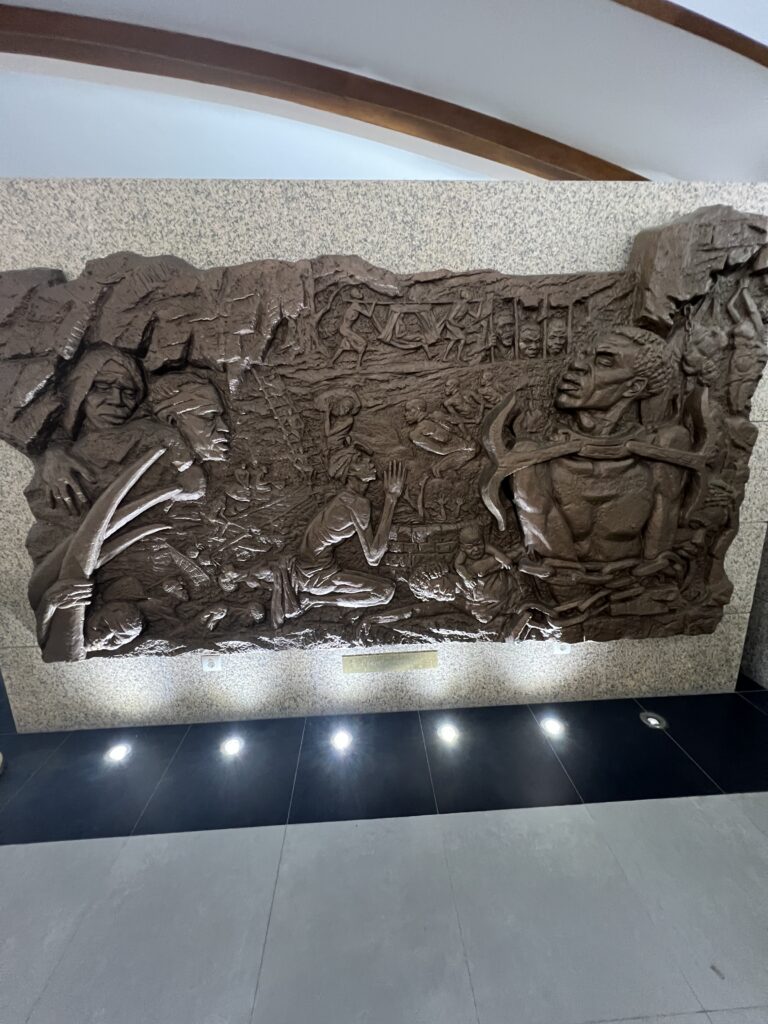
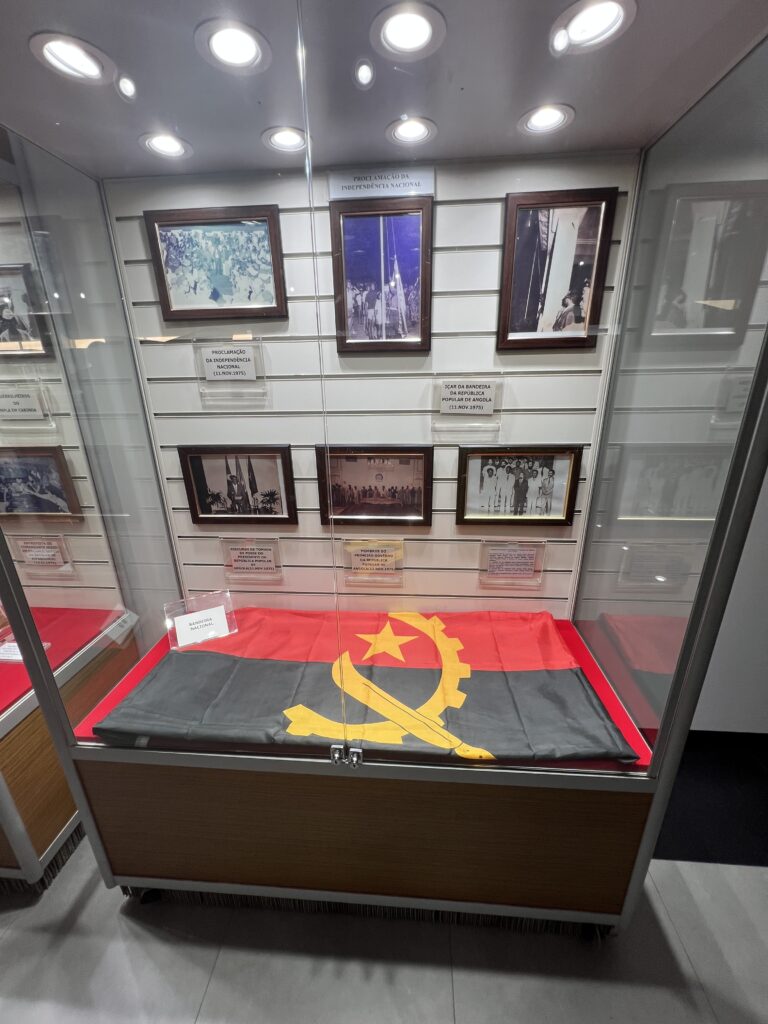
Flag of Angola
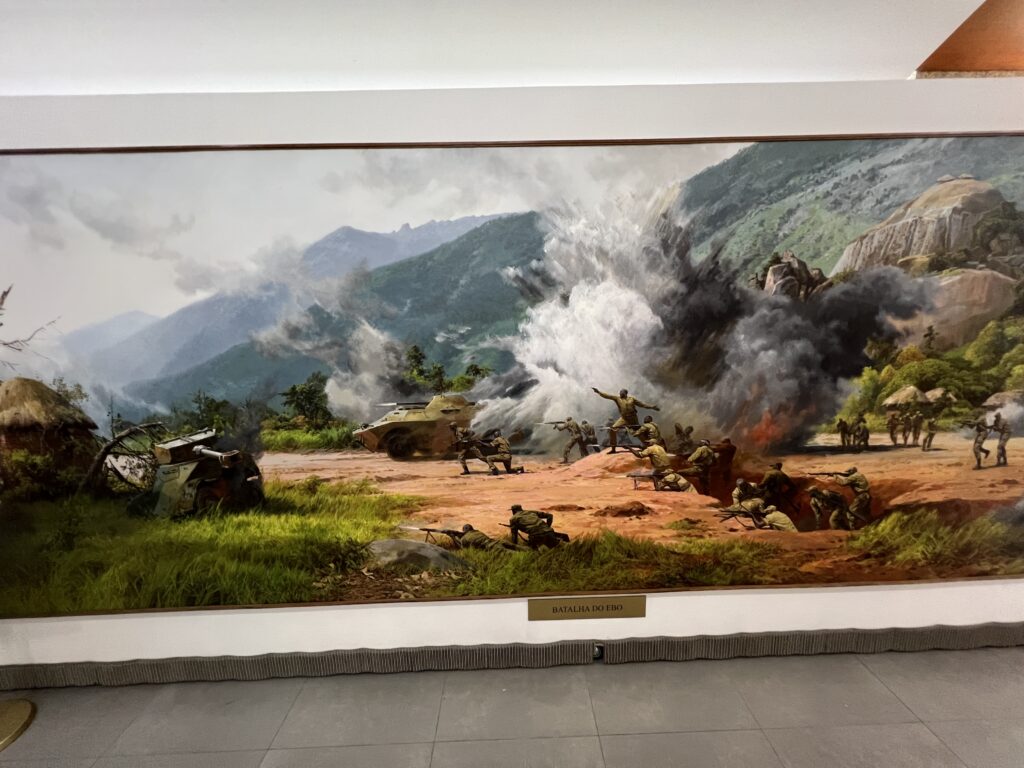
There were a number of impressive paintings hanging in the museum depicting battles in the fight for independence. The paintings were done by a Russian artist
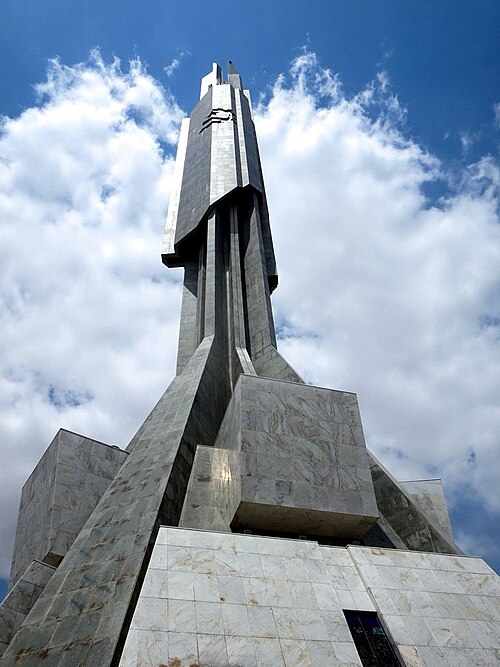
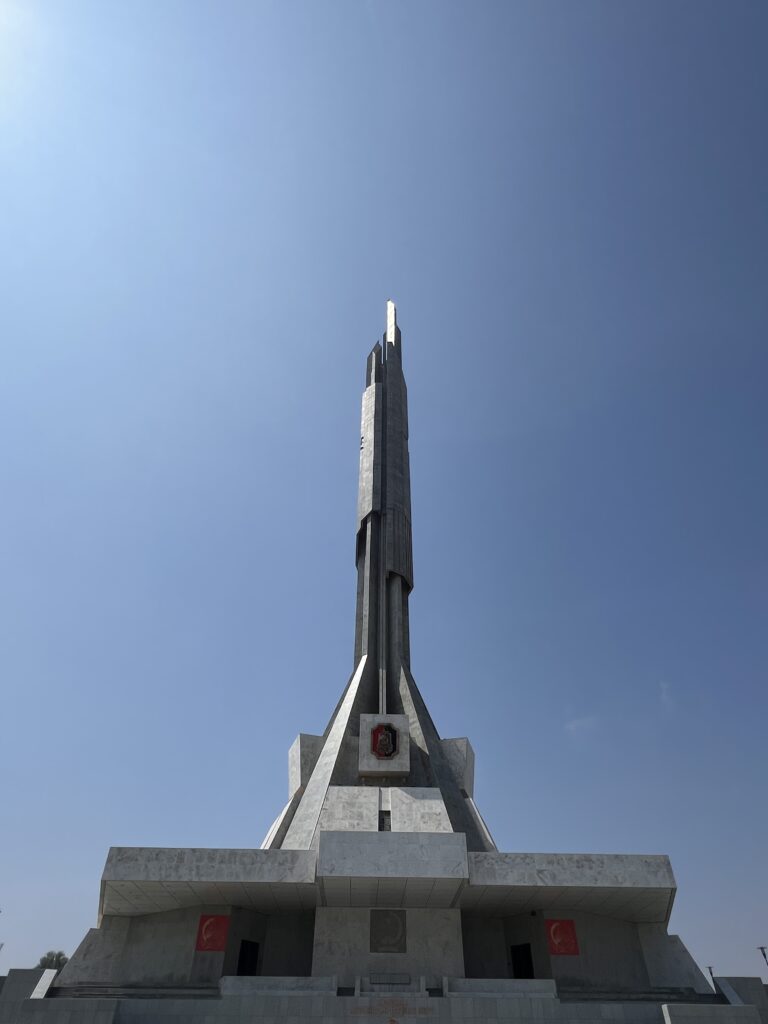
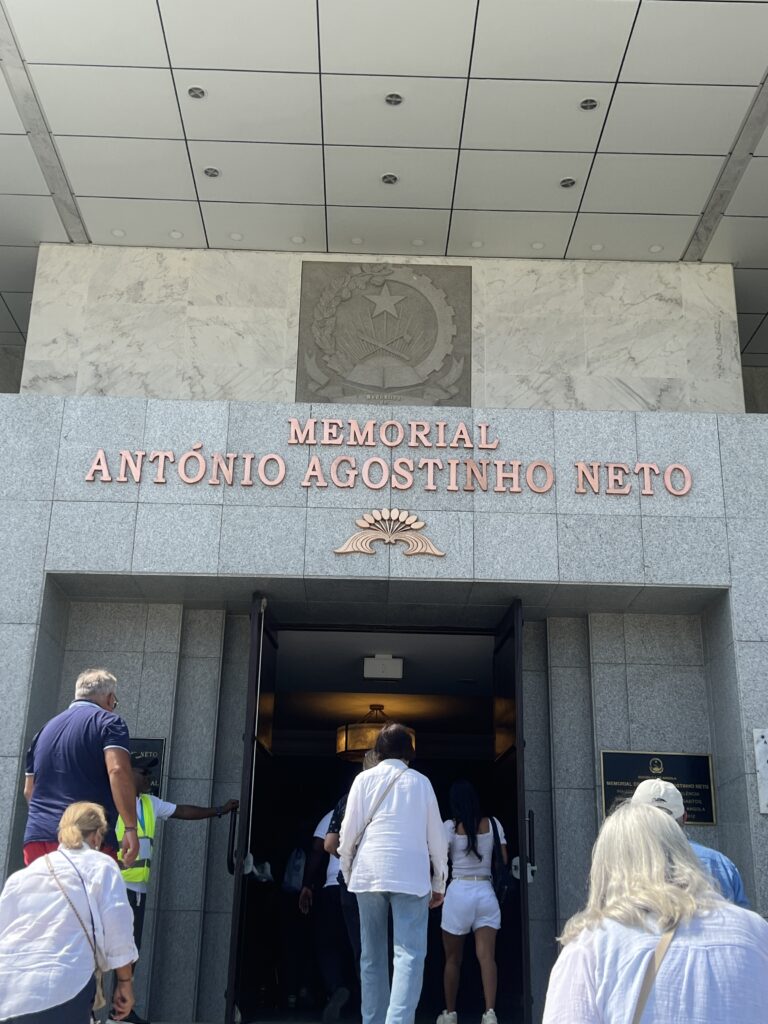
Our next stop was The Mausoleum of António Agostinho Neto (Memorial António Agostinho Neto), known by the acronym MAAN, is a monument in Luanda, Angola, dedicated to and housing the remains of Agostinho Neto, first president of the Republic of Angola. It is one of the tallest and most visible landmarks in the Angolan capital. The Dr. António Agostinho Neto memorial is a historical monument that tells the story of the first president of Angola.
Dr. António Agostinho Neto Memorial, also known as the Rocket, is a monument built in the capital. Luanda in honor of António Agostinho Neto, first president of Republic of Angola.
This important monument was inaugurated on the 17th of September 2012, by the President of the Republic Eng.º José Eduardo dos Santos. With the aim of perpetuating the memory of the first President as Leader of the Liberation Struggle, Statesman, Man of Culture and Humanist.
As established in its Organic Statute, the purpose of the Memorial is to research and preserve the life and work of Dr. António Agostinho Neto, as well as to promote knowledge of African culture and artistic training.
After Neto died of pancreatic cancer in September 1979 in Moscow, Soviet Union, the government of his successor, José Eduardo dos Santos, commissioned the USSR to construct an enormous mausoleum for him. In 1980, designers from the Soviet Union began working on the design. The first stones of the memorial were laid on September 17, 1982, which would have been Neto’s 60th birthday. Work on the MAAN project was suspended in the late 1980s due to multiple economic and political factors including worsening conditions around the Angolan Civil War and the dissolution of the Soviet Union.
In 1998, the Angolan government began working towards restarting construction, with the intent to make the mausoleum into a cultural center with assistance from Brazilian architecture office Willer and Associates. Work resumed in 2005 after the project obtained the necessary funds, and the memorial was completed in January 2011. Dos Santos inaugurated the memorial the following year on September 17, 2012, the 90th anniversary of Neto’s birth.
The MAAN project cost approximately US$40 million and was funded by Angola’s MPLA in partnership with the government of North Korea. MAAN is one of two Angolan monuments built by North Korea-based Mansudae Overseas Projects, the other being the Peace Monument in Luena.
Upon its completion, MAAN was the tallest structure in Luanda until construction of the 145 meter tall IMOB Business Tower in 2018.
MAAN was the site of both the inauguration of President João Lourenço on September 26, 2017 and the wake of former president Dos Santos in 2022.
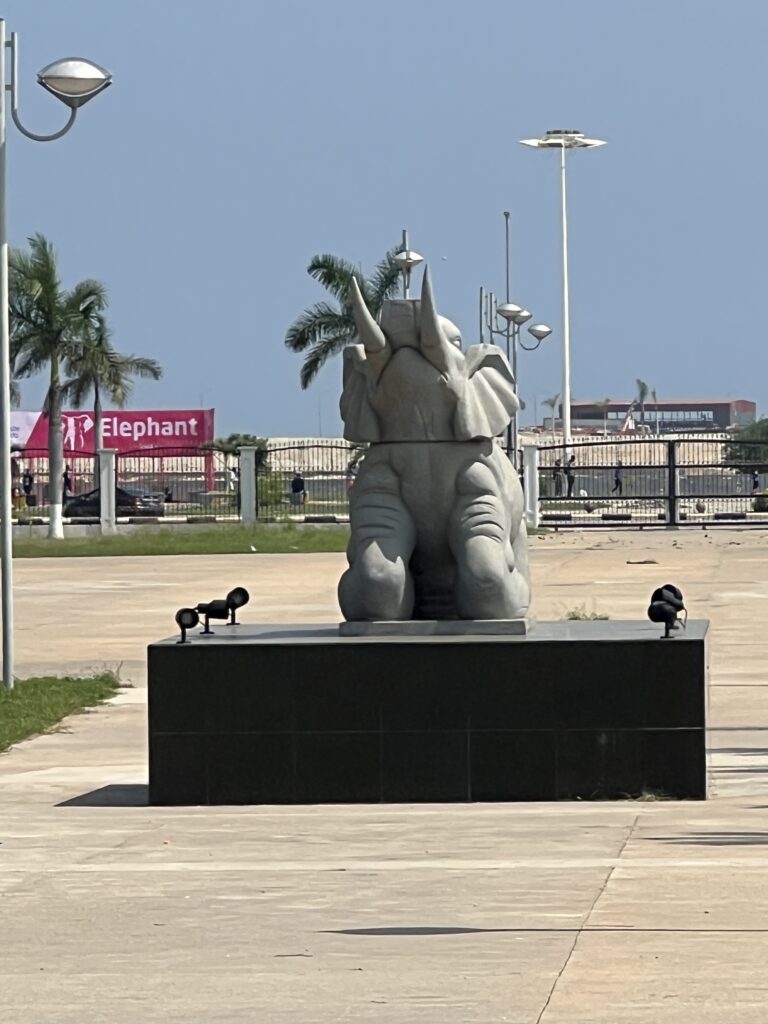
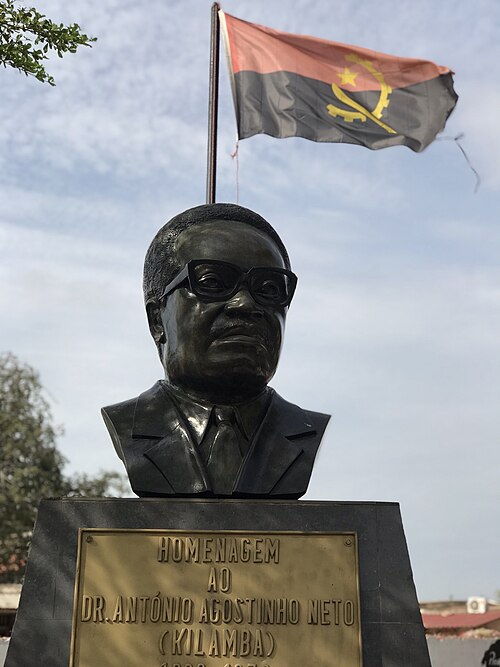
Inside the memorial is his casket. We were not allowed to take photos or videos of this area, but visitors are walked around the casket. The room is impressive as there are floral arrangements from many countries surrounding the casket and the room smells fresh flowers. Below are some photos we were able to take inside the memorial.
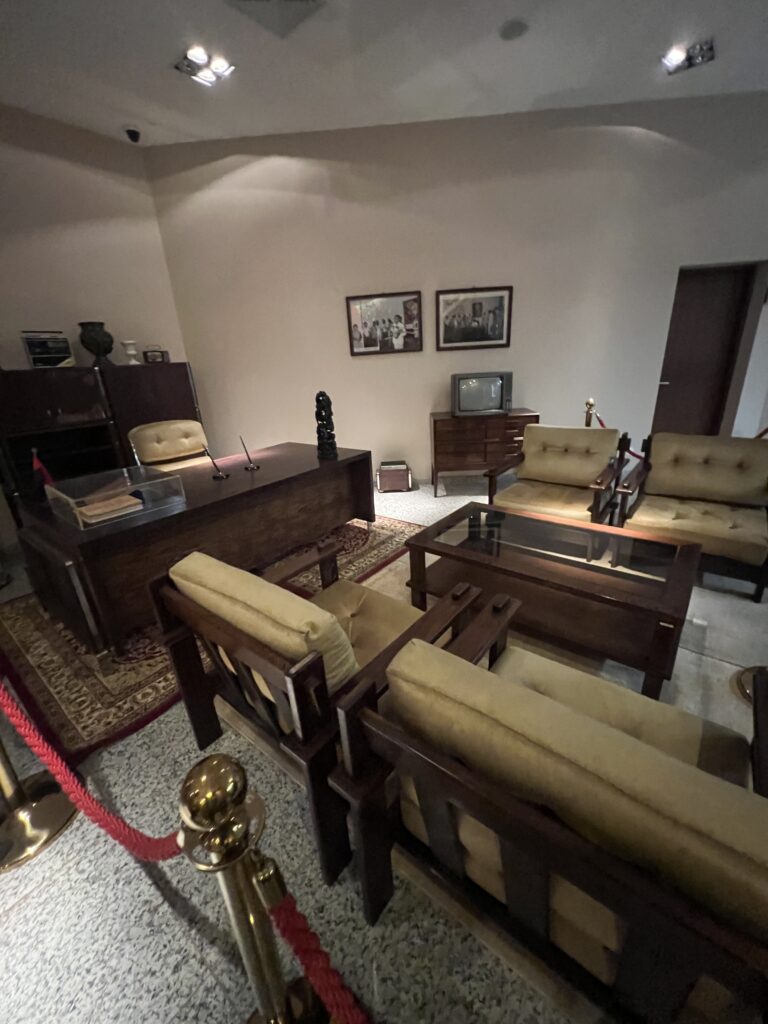
His office was laid out in the memorial
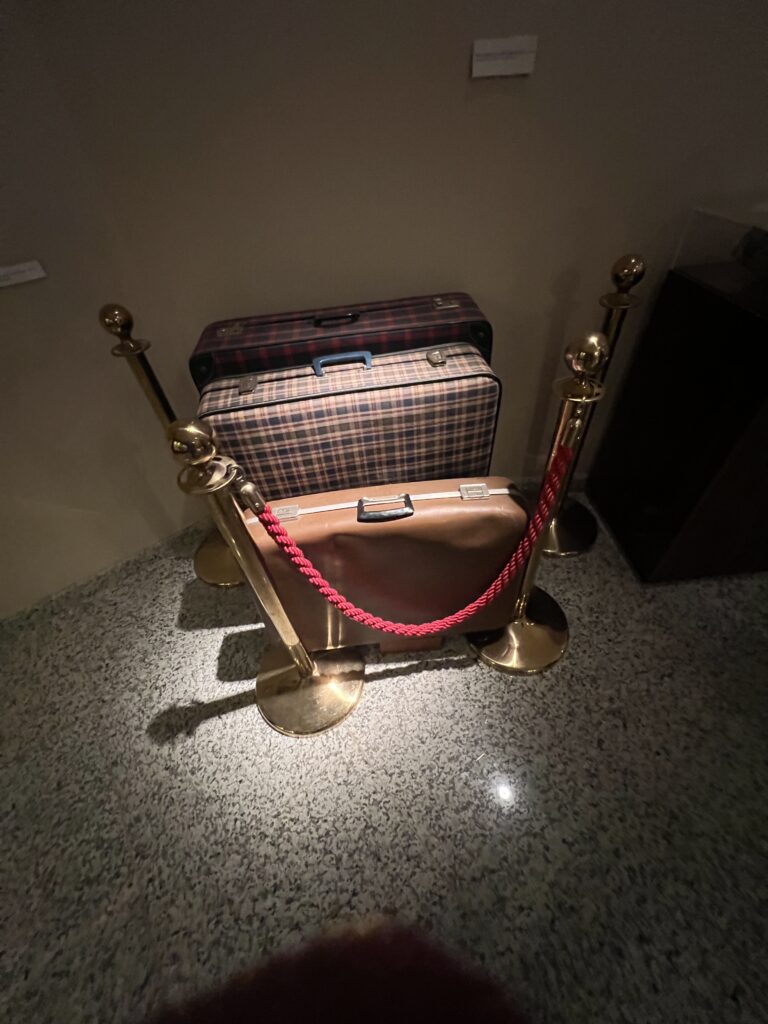
The luggage used in his travels
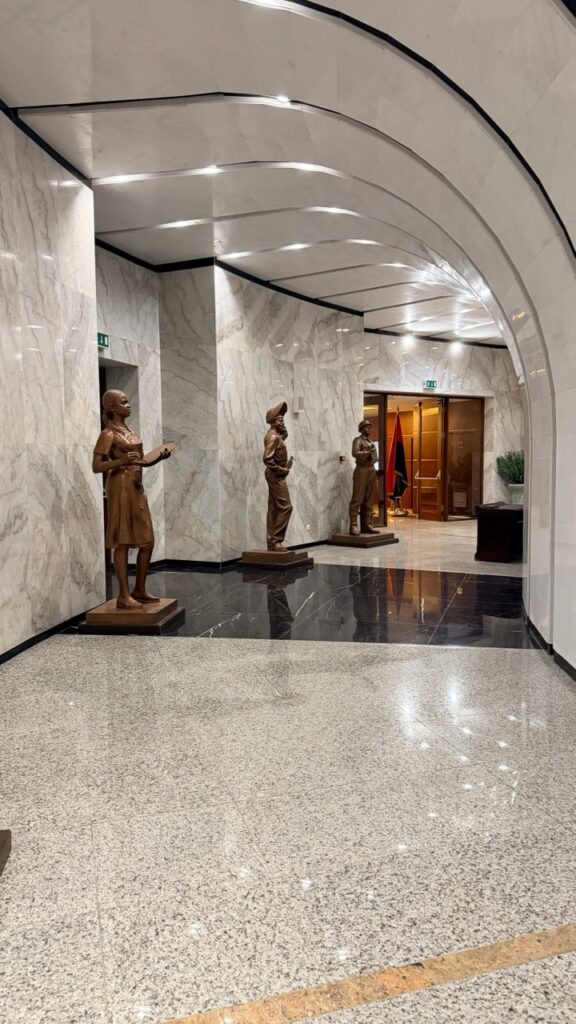
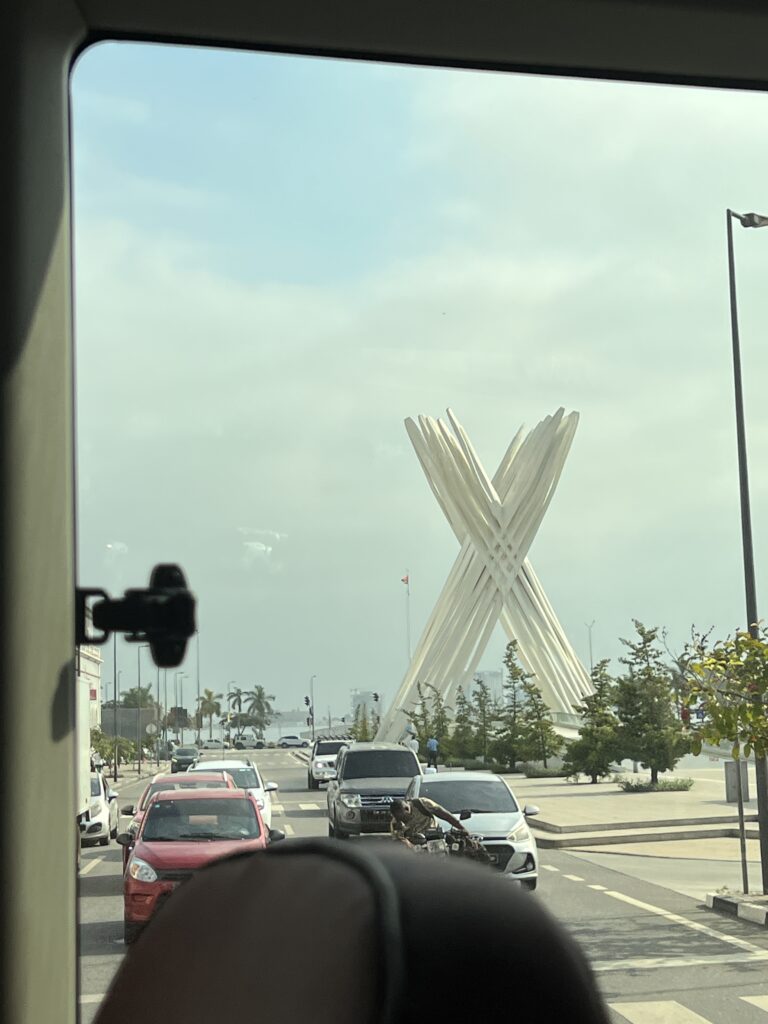
The Monumento do Soldado Desconhecido (Monument to the Unknown Soldier) in Luanda, Angola, is a striking landmark honoring the thousands of fallen Angolan soldiers who lost their lives in the struggle for independence and subsequent civil conflicts.
Video of the performers when we arrived back at the ship
We spent the rest of the afternoon on the ship having lunch and relaxing.
Jackie and I had dinner last night at Toscano, the Italian Specialty Restaurant
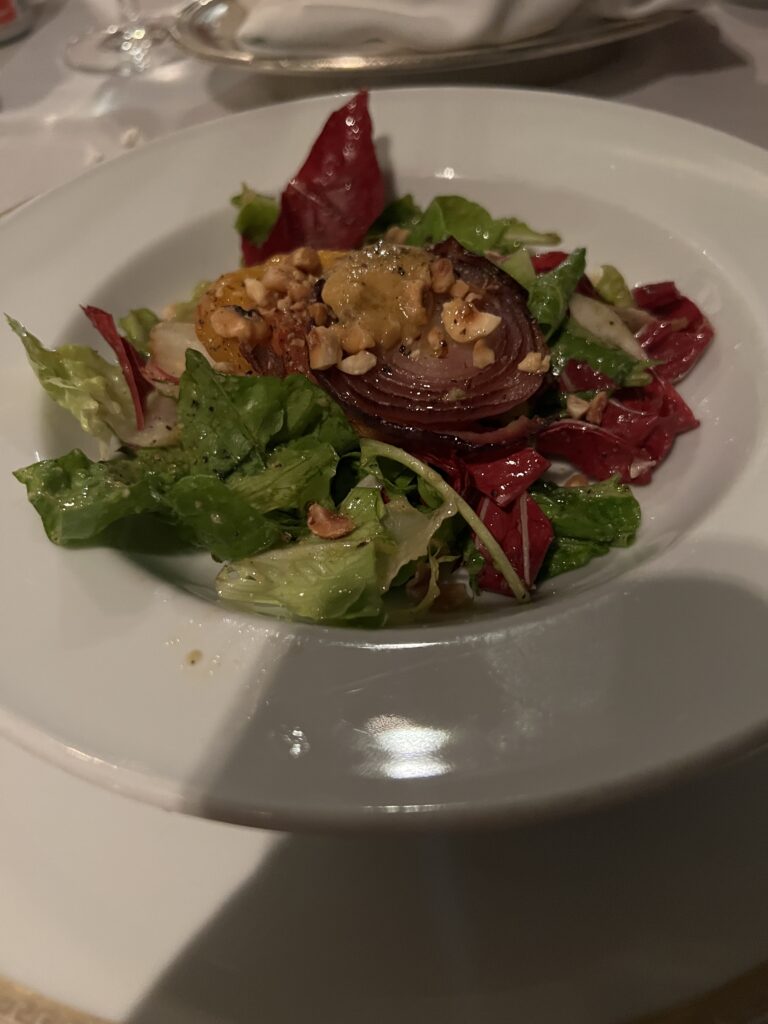
Lane started with Insalata Di Verdure Arrosto, salad with roasted Roma Tomatoes, zucchini, sweet red onions, romaine lettuce, arugula and hazelnut-pepperoncino vinaigrette.
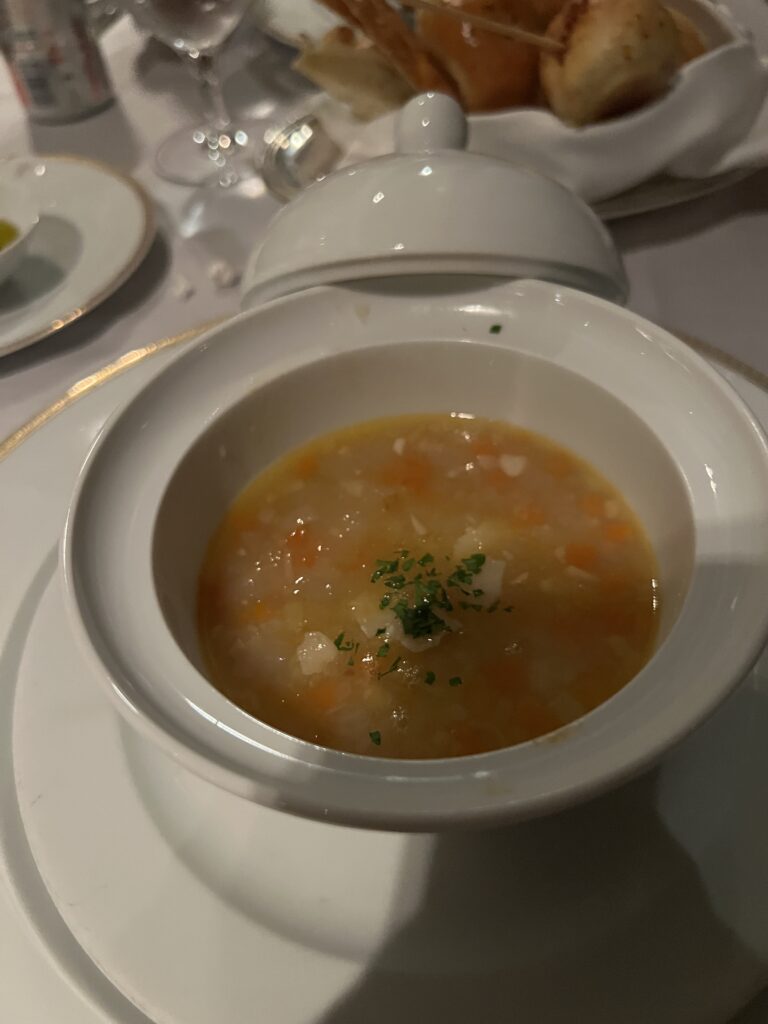
We both had a bowl of Zuppa Di Fagioli E Salciccia, basically white bean soup with sweet sausage and pasta. The bowls are much deeper thn what it appears in this photo. B
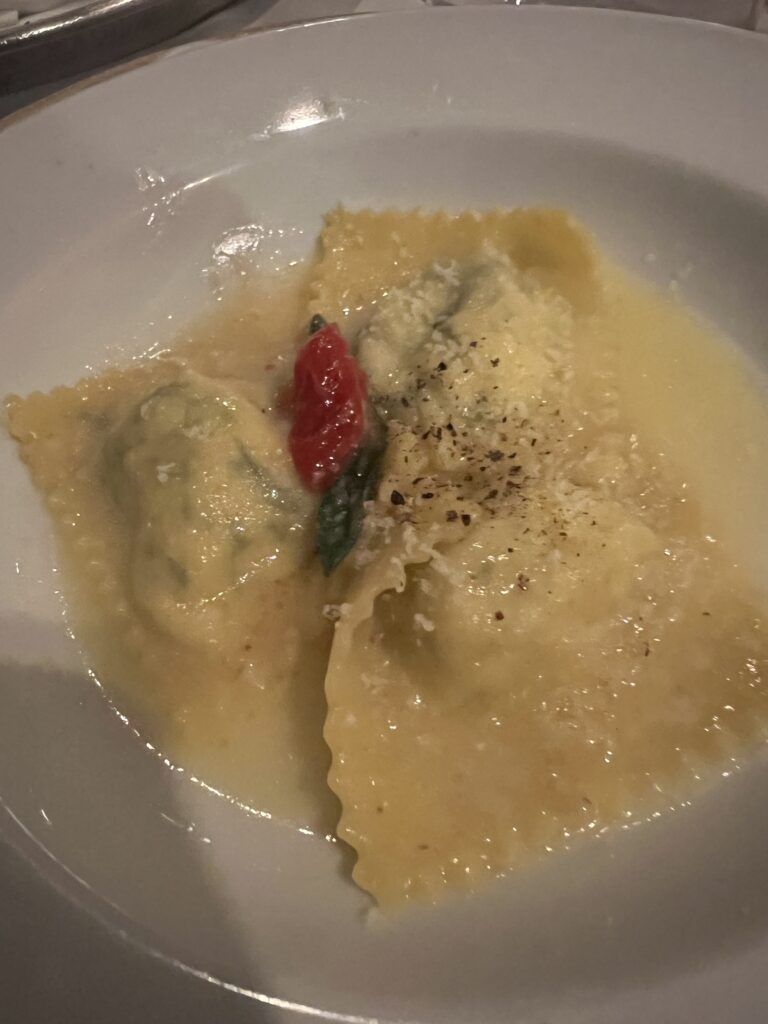
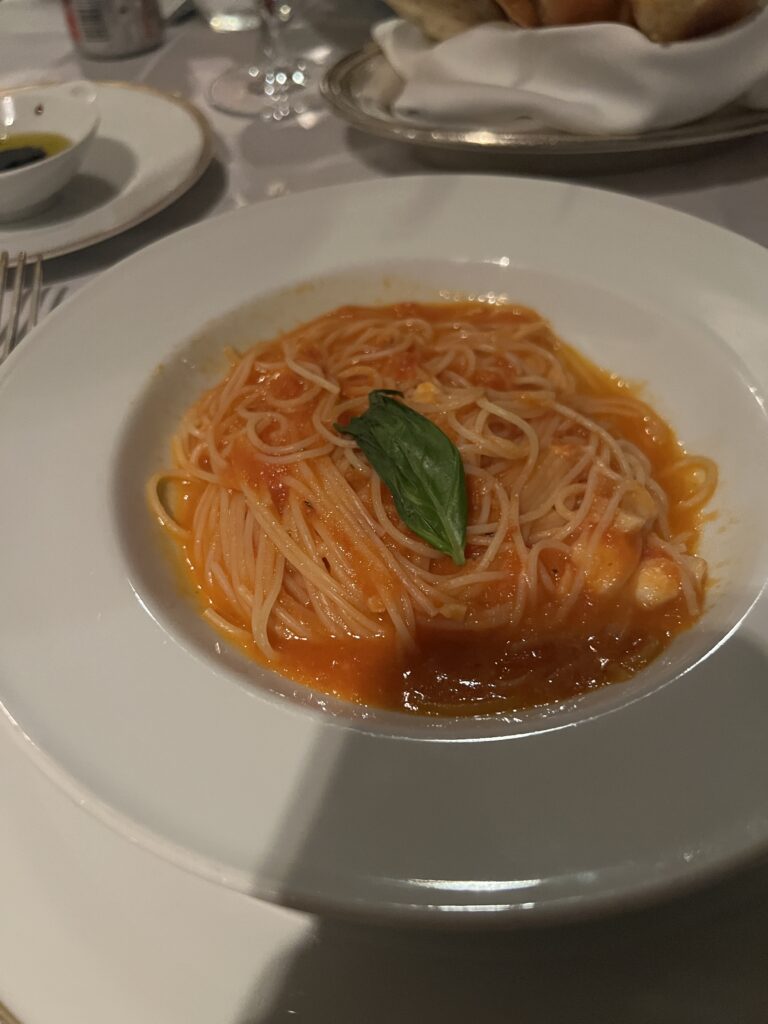
For the entree, Jackie had the chef special which was ravioli with spinach and ricotta cheese. Lane had Capellini D’Angelo Alla Sorrentino which was angel hair pasta, tomato sauce and buffalo mozzarella. We both asked for half orders.
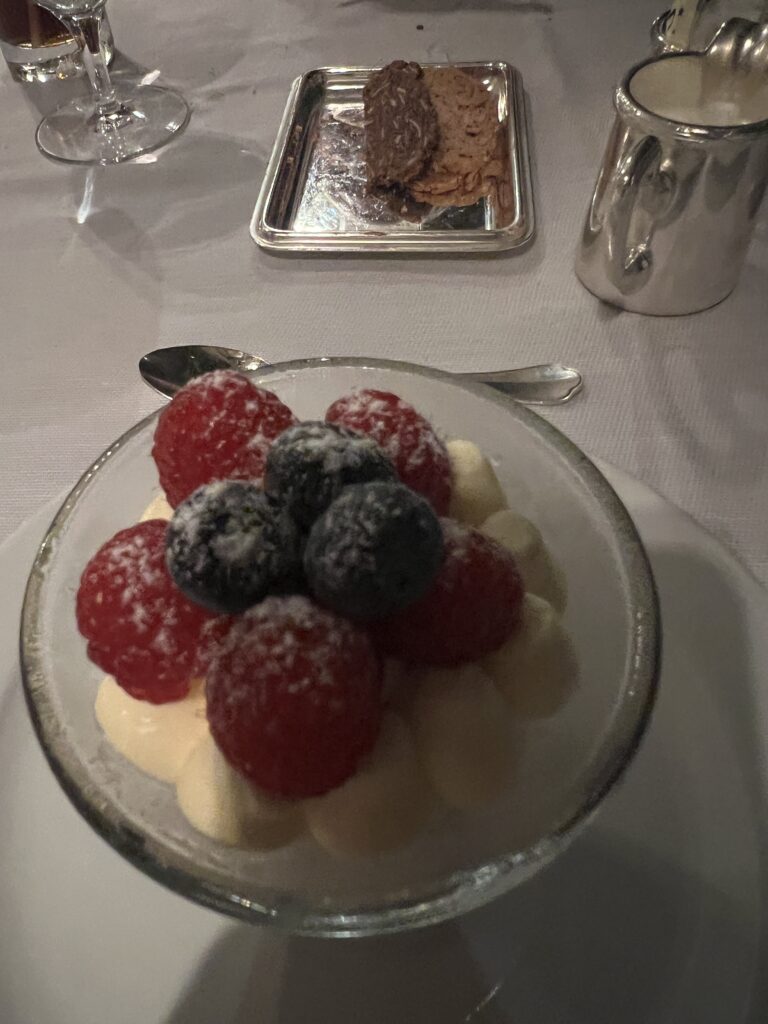
Jackie ate a couple of the cookies provided and Lane ordered the berry tiramisu for dessert
After dinner we attended the performance in the Vista Lounge. It was a musical performance highlighting the music in the musical triangle of New Orleans, Memphis and Nashville. We enjoyed the show as the singers had a great performance.
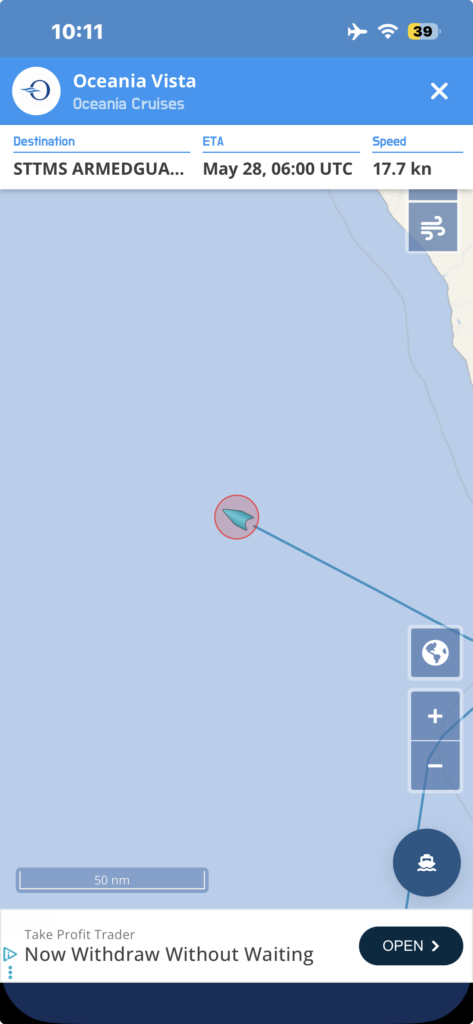
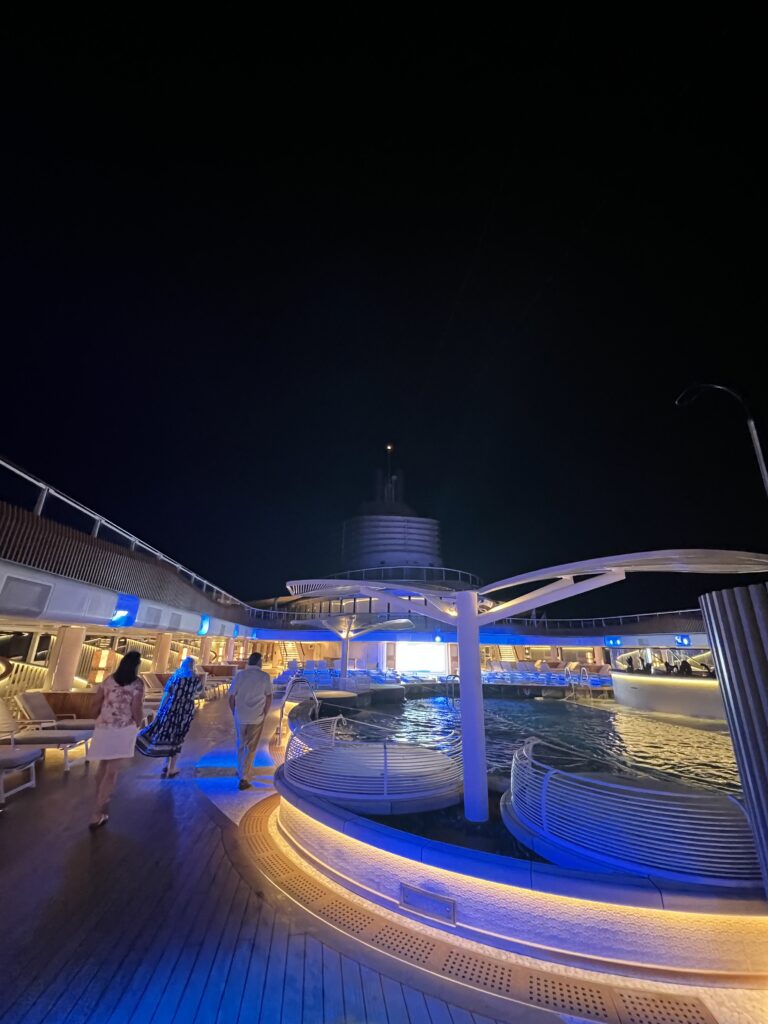
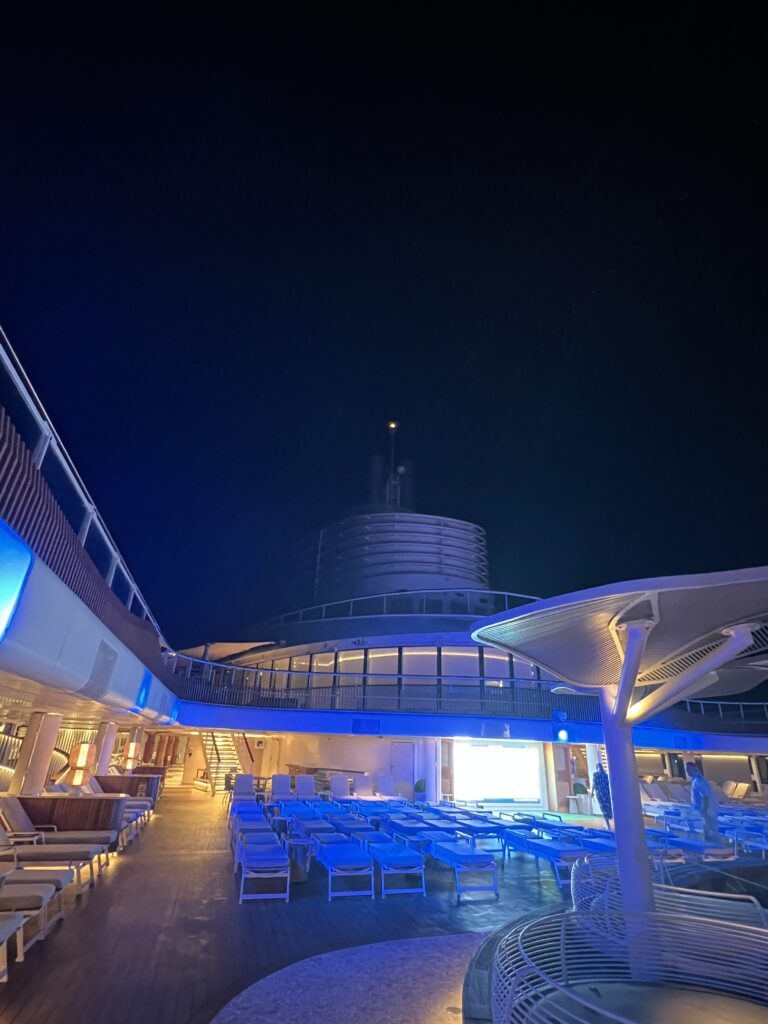
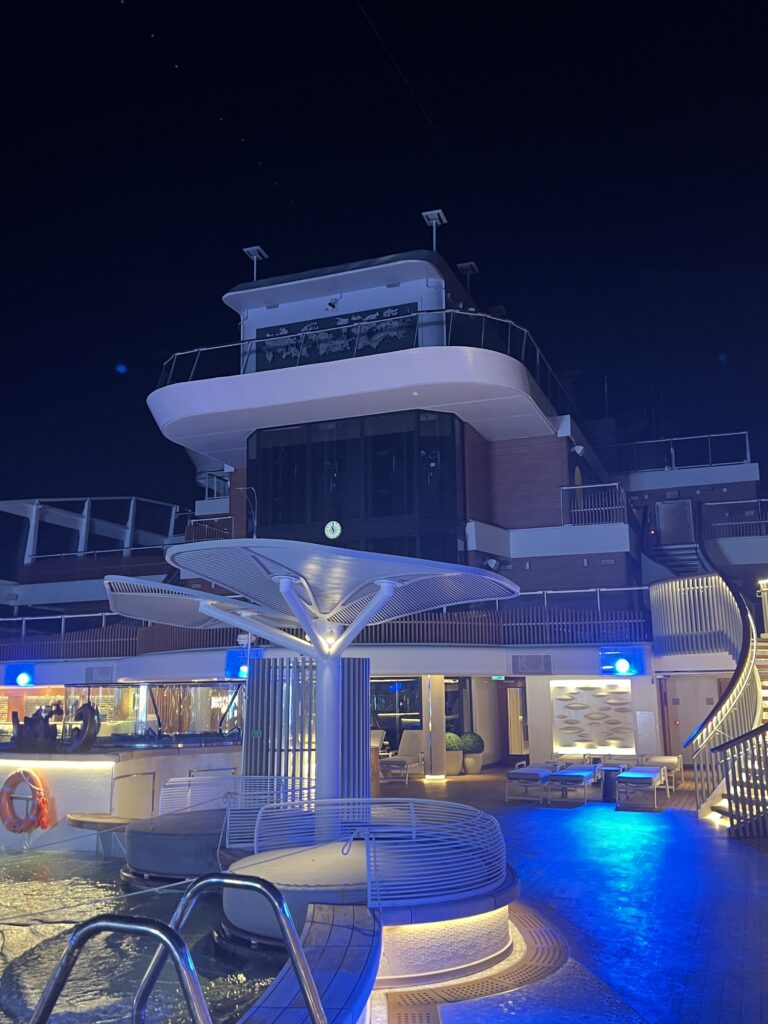
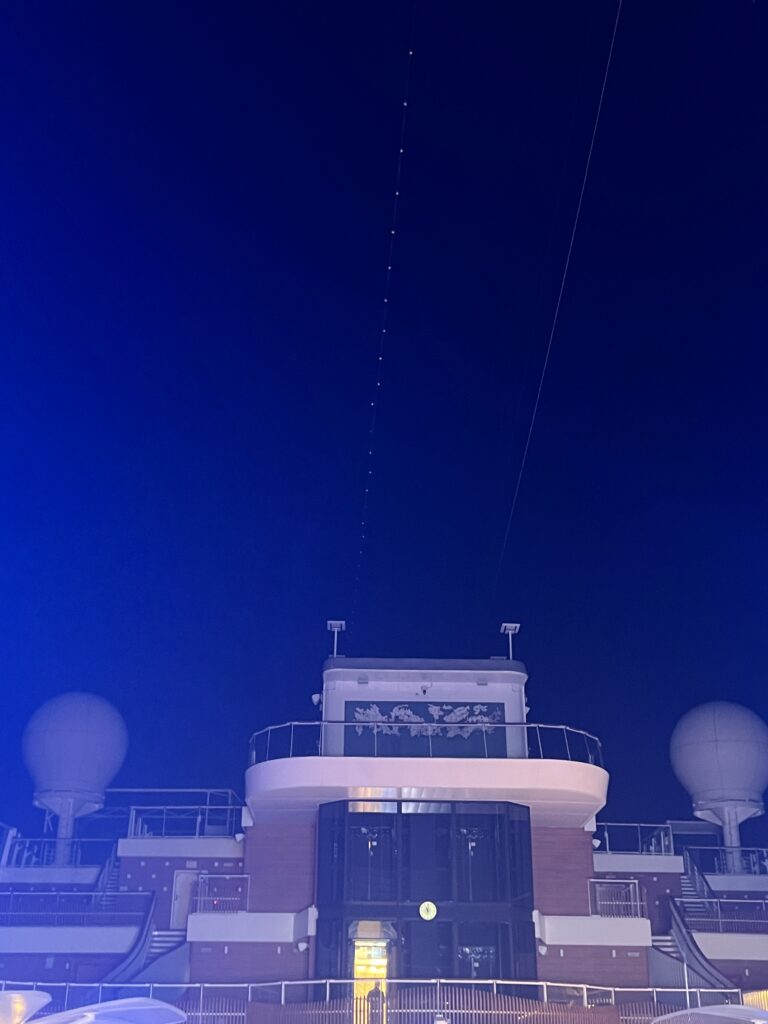
After the performance we looked at cruise mapper to see where the ship was located, and the map below appeared indicating we had armed guards on board the ship. We had received notification of increased security due to possible pirate activity in the area and that the lights on deck 14 & 15 would be turned off. Also, all cabins are to keep the curtains closed during the evening. Here are a few photos.
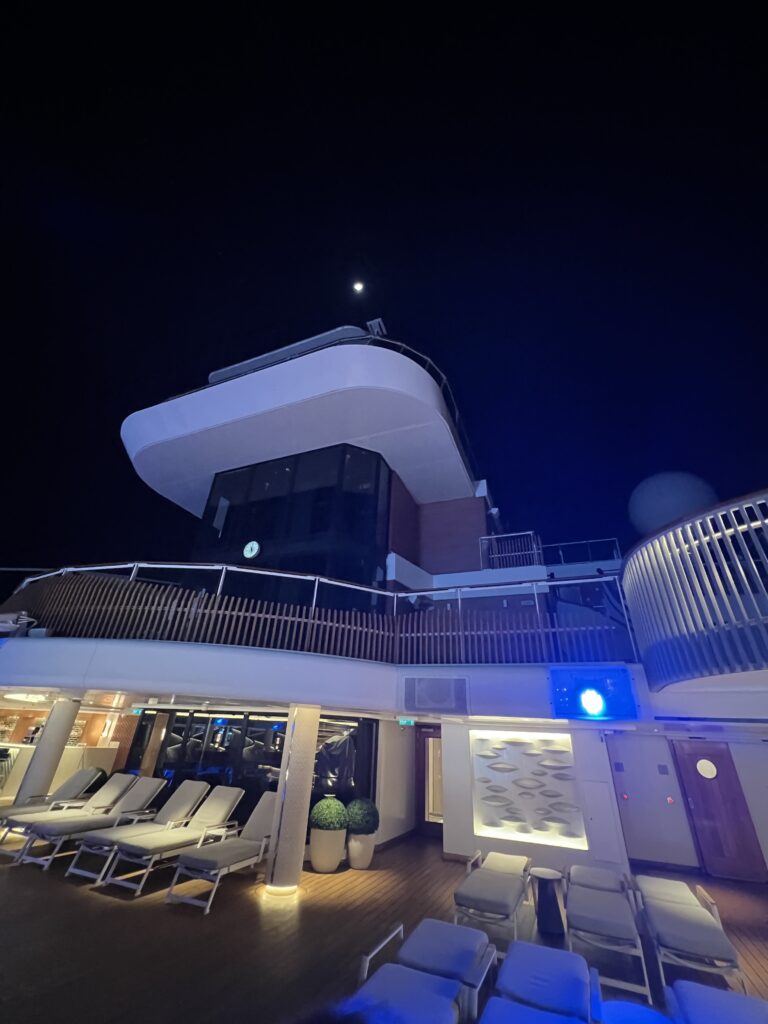
Jackie, Holly and Kevin walking on the pool deck
Tomorrow is a sea day as we head to Sao Tome